SCP-Nano vs. PET/CT/MRI: The Next Frontier in Quantitative Biodistribution Imaging for Drug Development
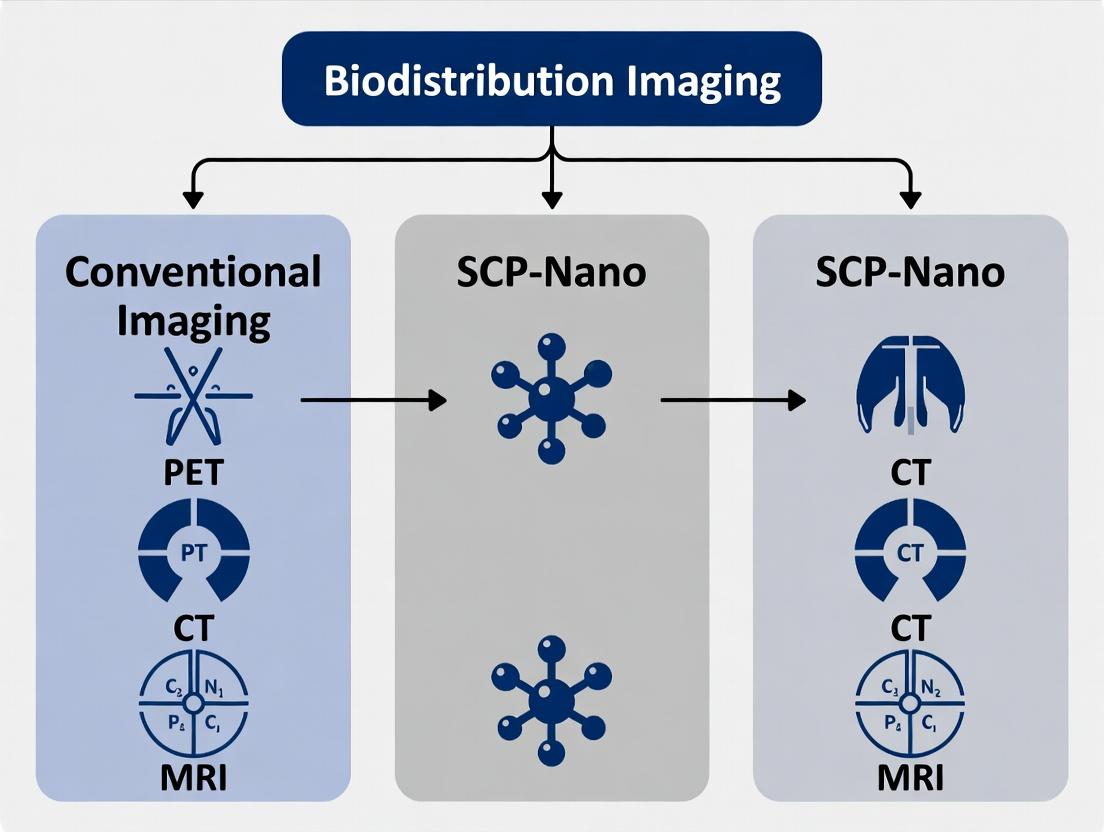
This article provides a comprehensive analysis of Single-Cell Phosphor (SCP-Nano) imaging as a novel tool for quantitative biodistribution studies, directly comparing it with conventional modalities like PET, CT, and MRI.
SCP-Nano vs. PET/CT/MRI: The Next Frontier in Quantitative Biodistribution Imaging for Drug Development
Abstract
This article provides a comprehensive analysis of Single-Cell Phosphor (SCP-Nano) imaging as a novel tool for quantitative biodistribution studies, directly comparing it with conventional modalities like PET, CT, and MRI. Targeting researchers and drug development professionals, we explore the foundational principles of SCP-Nano technology, its methodological applications in preclinical and translational research, critical optimization strategies for data fidelity, and a rigorous validation framework against established imaging standards. The synthesis offers a decisive resource for selecting the optimal imaging strategy to accelerate therapeutic agent development from bench to bedside.
Decoding SCP-Nano: Principles, Mechanisms, and How It Redefines Biodistribution Imaging
SCP-Nano (Surface-Charged Phosphor Nanoparticles) represents a novel class of imaging probes. The core technology consists of rare-earth-doped ceramic nanoparticles (e.g., Y₂O₃:Eu³⁺) coated with precisely engineered surface charges. This design enables prolonged circulation and targeted biodistribution for in vivo optical imaging, presenting a potential complement or alternative to conventional radionuclide and magnetic resonance-based modalities like PET, CT, and MRI.
Comparative Performance Analysis: SCP-Nano vs. Conventional Imaging Modalities
Table 1: Core Performance Metrics Comparison
| Metric | SCP-Nano (Phosphor) | PET (¹⁸F-FDG) | MRI (Gd-based) | CT (Iodinated) |
|---|---|---|---|---|
| Spatial Resolution | 50-100 µm (ex vivo); 1-3 mm (in vivo) | 4-7 mm | 50-500 µm | 200-500 µm |
| Temporal Resolution | Seconds to minutes | Minutes | Minutes to hours | Seconds |
| Tissue Penetration Depth | 1-2 cm (NIR-I/NIR-II) | Unlimited | Unlimited | Unlimited |
| Quantitative Capability | Moderate (photon count) | High (picomolar sensitivity) | Moderate (relaxivity) | High (Hounsfield units) |
| Multiplexing Potential | High (multiple emission wavelengths) | Low (typically 1 tracer) | Low (typically 1 contrast) | No |
| Radiation/Ionizing | No | Yes | No | Yes |
| Typical Acquisition Time | 1-5 min (2D); longer for 3D | 10-30 min | 15-60 min | <1 min |
| Primary Cost (per study) | Low (probe cost) | Very High (cyclotron, tracer) | High | Moderate |
Table 2: Biodistribution & Pharmacokinetics Comparison in Murine Models
Data from comparative studies using a murine subcutaneous tumor model (e.g., 4T1 breast carcinoma).
| Parameter | SCP-Nano (PEGylated) | PET Tracer (⁶⁴Cu-DOTA-trastuzumab) | MRI Agent (Gd-DOTA) |
|---|---|---|---|
| Circulation Half-life (t₁/₂β) | ~18 hours | ~12 hours | ~0.3 hours |
| Peak Tumor Uptake (%ID/g) | 8.5 ± 1.2 %ID/g | 6.2 ± 0.8 %ID/g | Not typically quantified |
| Tumor-to-Muscle Ratio | 12:1 | 8:1 | ~2:1 |
| Liver Uptake (1h post-inj.) | Moderate (15-20 %ID/g) | Low (5-8 %ID/g) | Very Low |
| Clearance Pathway | RES/MPS, gradual hepatobiliary | Renal/Hepatic | Renal |
| Time to Optimal Contrast | 24-48 hours | 24-48 hours | 5-30 minutes |
Experimental Protocols
Protocol 1: Synthesis & Surface Functionalization of SCP-Nano Particles
- Nanoparticle Synthesis: Prepare Y₂O₃:Eu³⁺ nanoparticles via a urea-based homogeneous precipitation method. Mix Y(NO₃)₃, Eu(NO₃)₃ (doping ratio 5:1), and urea in deionized water. Heat at 80°C for 2 hours with stirring. Centrifuge, wash, and calcine the precipitate at 800°C for 1 hour.
- Surface Charging (PEGylation): Incubate 10 mg of nanoparticles in 10 mL of 5 mM PBS (pH 7.4) containing 5 mg of heterobifunctional PEG (NH₂-PEG-COOH, 5 kDa). Sonicate for 30 min. Add 10 mg of EDC (1-ethyl-3-(3-dimethylaminopropyl)carbodiimide) and react for 4 hours at room temperature with gentle agitation.
- Purification: Separate functionalized nanoparticles via centrifugation (15,000 rpm, 15 min) and wash three times with PBS. Resuspend in sterile PBS for characterization (DLS, zeta potential) and in vivo use.
Protocol 2: Comparative Biodistribution Study (SCP-Nano vs. PET Tracer)
- Animal Model: Implant 1x10⁶ 4T1 cells subcutaneously in the flank of 20 BALB/c mice (n=10 per group).
- Agent Administration: At tumor volume ~200 mm³, inject Group A intravenously with 100 µL of SCP-Nano suspension (1 mg/mL). Inject Group B intravenously with 100 µL of ⁶⁴Cu-DOTA-trastuzumab (100 µCi).
- Imaging & Data Acquisition:
- SCP-Nano Group: Image mice at 1, 4, 12, 24, and 48h post-injection using a small animal optical imager (ex: 465 nm, em: 610 nm). Acquire fluorescence reflectance images and quantify signal in ROI over tumor and major organs.
- PET Tracer Group: Image mice at 1, 4, 24, and 48h post-injection using a microPET scanner. Reconstruct images and quantify %ID/g using AMIDE or similar software.
- Ex Vivo Validation: Euthanize animals at 48h. Harvest organs (tumor, heart, liver, spleen, lung, kidney, muscle). Weigh tissues and measure radioactivity (PET group) or ex vivo luminescence after homogenization (SCP-Nano group). Calculate %ID/g.
Visualizations
SCP-Nano Experimental Workflow
SCP-Nano Biodistribution & Targeting
The Scientist's Toolkit: Key Research Reagent Solutions
Table 3: Essential Materials for SCP-Nano Research
| Item | Function & Purpose | Example Product/Specification |
|---|---|---|
| Rare-Earth Precursors | Source of Y, Eu, Gd, etc., for phosphor matrix synthesis. | Yttrium(III) nitrate hexahydrate (99.9%), Europium(III) nitrate pentahydrate (99.9%). |
| Heterobifunctional PEG | Provides "stealth" coating and functional groups (-COOH, -NH₂) for bioconjugation. | NH₂-PEG-COOH, MW 5kDa, >95% purity. |
| Crosslinking Agent | Activates carboxyl groups for covalent conjugation to amine-bearing ligands. | EDC HCl (1-Ethyl-3-(3-dimethylaminopropyl)carbodiimide hydrochloride). |
| Size/Zeta Potential Analyzer | Critical for characterizing hydrodynamic diameter, PDI, and surface charge (zeta potential). | Instrument: Malvern Zetasizer Nano ZS. |
| Small Animal Optical Imager | For in vivo and ex vivo fluorescence/luminescence imaging of nanoparticle biodistribution. | Instrument: PerkinElmer IVIS Spectrum or similar (filters for 465/610 nm). |
| Targeting Ligand | For active targeting studies (e.g., antibody, peptide). | Anti-CD44 monoclonal antibody, RGD peptide. |
| MicroPET Scanner & Tracer | Essential for generating comparative biodistribution data against the gold standard. | Instrument: Siemens Inveon; Tracer: ⁶⁴Cu-DOTA-trastuzumab. |
This guide compares the core principles, performance, and applications of ex vivo tissue analysis and in vivo imaging modalities, contextualized within the thesis of SCP-Nano (a novel ex vivo tissue clearing and multiplexed imaging platform) versus conventional biodistribution imaging via PET, CT, and MRI.
Core Principle Comparison
| Aspect | Ex Vivo Tissue Analysis (e.g., SCP-Nano Platform) | In Vivo Imaging (PET, CT, MRI) |
|---|---|---|
| Fundamental Principle | Physical tissue clearing, multiplexed immunolabeling, and high-resolution optical (light sheet/confocal) microscopy. | Detection of radioactive tracers (PET), X-ray attenuation (CT), or radiofrequency signals from protons in a magnetic field (MRI). |
| Spatial Resolution | Cellular/Sub-cellular (≤ 1 µm). | Organ/Tissue level (PET: 1-2 mm; CT: 0.5 mm; MRI: 0.1-1 mm). |
| Temporal Resolution | Single endpoint; provides a "snapshot" of biodistribution at sacrifice. | Real-time or longitudinal tracking in the same living subject. |
| Multiplexing Capacity | High (10+ biomarkers simultaneously on a single tissue sample). | Low (typically 1-2 targets, especially for PET). |
| Quantification Depth | Absolute cell counting and spatial distribution analysis in 3D throughout entire organs. | Relative concentration (PET SUV), anatomical density (CT HU), or physiological contrast (MRI). |
| Key Limitation | Requires tissue excision; no longitudinal data from same subject. | Limited resolution cannot confirm cellular uptake or precise sub-cellular localization. |
Performance Comparison: Biodistribution Analysis of a Novel Therapeutic Nanoparticle
A pivotal study directly compared the performance of SCP-Nano ex vivo analysis against conventional in vivo PET-CT for tracking a labeled lipid nanoparticle (LNP).
Experimental Data Summary:
| Metric | In Vivo PET-CT (with 89Zr-labeled LNP) | Ex Vivo SCP-Nano Analysis (with fluorescently-labeled LNP) |
|---|---|---|
| Primary Output | Time-activity curves showing %ID/g in major organs. | 3D spatial maps of LNP location relative to cell types. |
| Sensitivity | ~10-11 mol/L (for 89Zr). | ~10-12 mol/L (for fluorescent dye). |
| Key Finding on Liver Uptake | High signal in liver, suggesting predominant hepatocyte sequestration. | Revealed LNP localization primarily in Kupffer cells (macrophages), not hepatocytes. |
| Data on Off-Target Splenic Uptake | Moderate signal detected. | Identified specific enrichment in the marginal zone macrophages. |
| Ability to Co-localize with Biomarkers | None. Direct cell identification impossible. | High. Co-localization with 5+ immune cell markers confirmed cellular targets. |
Detailed Experimental Protocols:
Protocol A: Conventional In Vivo PET-CT Biodistribution.
- Radiolabeling: LNPs are conjugated with the chelator deferoxamine and labeled with Zirconium-89 (89Zr).
- Imaging: Animals are injected IV with 89Zr-LNP (~100 µCi). At multiple time points (1, 24, 48, 72h), animals are anesthetized and imaged on a micro-PET/CT scanner.
- Analysis: PET images are reconstructed and co-registered with CT for anatomy. Regions of interest (ROIs) are drawn over organs to quantify standardized uptake value (SUV) and % injected dose per gram (%ID/g).
- Ex Vivo Validation: After final scan, organs are harvested, weighed, and counted in a gamma counter to validate image-derived data.
Protocol B: SCP-Nano Ex Vivo 3D Multiplexed Imaging.
- Tissue Preparation: At endpoint (e.g., 24h post-IV injection of fluorescent LNP), animals are perfused with PBS followed by 4% PFA. Organs (liver, spleen) are harvested and fixed.
- Tissue Clearing: Organs are processed using the SCP-Nano hydrogel-tissue chemistry: tissue is delipidated and permeabilized while retaining endogenous fluorophores and proteins.
- Multiplexed Staining: Cleared tissues undergo iterative cycles of immunolabeling with antibody-fluorophore conjugates (e.g., anti-CD68 for macrophages, anti-CD31 for endothelium) and imaging.
- Light Sheet Microscopy: The cleared, labeled organ is imaged using a light sheet fluorescence microscope, generating a full 3D volumetric dataset.
- Quantitative Analysis: Using dedicated software, 3D segmentation and colocalization analysis are performed to quantify LNP signal within specific cellular compartments.
Visualization of Workflows & Data Integration
Diagram 1: Comparative workflows for nanoparticle biodistribution analysis.
Diagram 2: How SCP-Nano clarifies in vivo imaging data.
The Scientist's Toolkit: Key Research Reagent Solutions
| Item | Function in Context | Example/Note |
|---|---|---|
| SCP-Nano Clearing Kit | Enables rapid tissue clearing for large organ samples while preserving fluorescence and antigenicity. | Core reagent for ex vivo 3D imaging workflow. |
| 89Zr-Desferrioxamine (DFO) | Chelator-radionuclide complex for labeling biologics or nanoparticles for PET imaging. | Critical for creating PET tracer for in vivo tracking. |
| Multiplex Antibody Panels | Conjugates of antibodies with distinct fluorophores (Cy3, Cy5, AF488, etc.) for cell phenotyping. | Enables >10-plex imaging on cleared tissue with SCP-Nano. |
| Light Sheet Fluorescence Microscope | Instrument for high-speed, low-photobleaching 3D imaging of cleared tissue samples. | Essential final step for ex vivo data acquisition. |
| Micro-PET/CT Scanner | Combined instrument for simultaneous molecular (PET) and anatomical (CT) in vivo imaging. | Standard for longitudinal, whole-body biodistribution. |
| 3D Image Analysis Software | Platform for segmentation, quantification, and colocalization analysis of large 3D image volumes. | e.g., Imaris, Arivis, VesselVio; crucial for data extraction. |
The data demonstrates that ex vivo (SCP-Nano) and in vivo (PET/CT/MRI) modalities are fundamentally complementary. In vivo imaging provides essential, longitudinal pharmacokinetic data in an intact system. However, for definitive, high-resolution biodistribution analysis—particularly for cell-specific targeting and sub-cellular localization—the SCP-Nano platform overcomes the resolution and multiplexing limitations of conventional modalities. The combined use of both approaches is powerful: PET-CT identifies when and roughly where a therapeutic accumulates, while SCP-Nano analysis definitively answers in which cells and in what spatial context it is found, thereby validating and refining interpretations from in vivo data.
Accurate biodistribution assessment is critical in drug development, particularly for novel therapeutic modalities like cell and gene therapies, nanoparticles, and targeted biologics. Conventional imaging modalities—Positron Emission Tomography (PET), Computed Tomography (CT), and Magnetic Resonance Imaging (MRI)—have served as the cornerstone for non-invasive in vivo tracking. However, the emergence of Single-Cell Precision Nanoscopy (SCP-Nano) platforms presents a paradigm shift, offering fundamentally different capabilities. This guide provides a performance comparison based on core imaging metrics: sensitivity, spatial resolution, and quantitative depth.
Key Metrics Comparison: SCP-Nano vs. PET, CT, MRI
The following table synthesizes current performance data for each modality in the context of biodistribution and pharmacokinetic studies.
Table 1: Core Performance Metrics for Biodistribution Imaging
| Metric | SCP-Nano | PET | CT | MRI (3T Clinical) |
|---|---|---|---|---|
| Spatial Resolution | 20-50 nm (optical sectioning) | 4-7 mm (clinical); ~1 mm (pre-clinical) | 200-500 μm (pre-clinical) | 500-1000 μm (in vivo) |
| Detection Sensitivity | Single molecule (≤ pM) | 10⁻¹¹ - 10⁻¹² M (pico-molar) | Very Low (millimolar contrast needed) | 10⁻³ - 10⁻⁵ M (micro- to millimolar) |
| Quantitative Depth | ~100 μm (in tissue); whole cleared organs ex vivo | Full body (unlimited depth) | Full body (unlimited depth) | Full body (unlimited depth) |
| Temporal Resolution | Seconds to minutes (for dynamic imaging) | Minutes to hours | Seconds | Minutes to hours |
| Primary Contrast Mechanism | Targeted fluorescent probes, spectral encoding | Radiolabel decay (e.g., ¹⁸F, ⁸⁹Zr) | Tissue electron density | Proton density, T1/T2 relaxation |
| Key Strength for BD/PK | Single-cell & subcellular quantitation; multiplexing (5+ targets) | Whole-body, deep-tissue quantification; clinical translation | Excellent anatomical context; bone morphology | Soft-tissue contrast; functional data (e.g., diffusion) |
| Primary Limitation | Limited penetration depth in live subjects | Poor resolution; radiation exposure | Poor soft-tissue contrast; ionizing radiation | Low sensitivity for direct drug detection |
Experimental Protocols for Cited Comparisons
Protocol 1: Direct Comparison of Nanoparticle Liver Uptake
Aim: To quantify hepatic uptake of a lipid nanoparticle (LNP) formulation using SCP-Nano (ex vivo) vs. quantitative whole-body PET (in vivo). Methodology:
- Animal Model: Murine model (n=5/group).
- Probe: LNPs co-loaded with ⁸⁹Zr (for PET) and a near-infrared fluorophore (for SCP-Nano).
- PET/CT Imaging: Acquire longitudinal scans at 1, 4, 24, and 48h post-injection. Reconstruct images and quantify % injected dose per gram (%ID/g) in liver volume of interest (VOI).
- SCP-Nano Processing: At 24h, harvest and optically clear the liver. Perform whole-organ SCP-Nano imaging with isotropic 50 nm voxels. Use automated segmentation to quantify signal per cell and determine the percentage of hepatocytes/Kupffer cells containing LNPs.
- Data Correlation: Compare organ-level %ID/g (PET) with cellular uptake statistics (SCP-Nano).
Protocol 2: Sensitivity Limit for Detecting Rare Circulating Cells
Aim: To determine the lowest detectable limit of tumor cells in circulation using SCP-Nano flow cytometry vs. clinical MRI. Methodology:
- Sample Preparation: Spike human tumor cells expressing a GFP reporter into mouse blood at known concentrations (100 to 0.1 cells/μL).
- MRI (3T) Detection: Inject spiked blood phantom into a flow circuit within an MRI coil. Use T2-weighted sequences optimized for cell detection. Analyze for hypointense foci.
- SCP-Nano Detection: Analyze aliquots of the same spiked blood using a high-throughput SCP-Nano flow system with a 488 nm laser and spectral unmixing.
- Analysis: Plot detected vs. known concentration. Define limit of detection (LOD) as signal > 3x standard deviation of negative control.
Visualization of Workflows and Relationships
Title: Integrated Biodistribution Analysis Workflow
Title: Core Metrics Define Modality Application
The Scientist's Toolkit: Research Reagent Solutions
Table 2: Essential Reagents & Materials for SCP-Nano Biodistribution Studies
| Item | Function in Experiment | Key Consideration |
|---|---|---|
| Targeted Fluorescent Probes (e.g., Antibody- or Peptide-Conjugated Dyes) | Provide specific contrast against cellular targets (e.g., CD markers, drug target). | High affinity, brightness, and photostability are critical. Spectral overlap must be minimized for multiplexing. |
| Optical Clearing Reagents (e.g., CUBIC, CLARITY) | Render tissues transparent by matching refractive indices, enabling deep light penetration for ex vivo imaging. | Protocol must preserve fluorescence and tissue morphology. Compatibility with target antigens is key. |
| Multiplexing Panels (5+ Colors) | Allow simultaneous detection of multiple cell types or drug components in a single sample. | Requires careful spectral unmixing and compensation. Dyes like Cy5, Alexa Fluor 647, and quantum dots are common. |
| Reference Standards & Calibration Beads | Convert raw fluorescence intensity into absolute molecular counts or concentration units. | Essential for reproducible, quantitative comparisons across experiments and labs. |
| High-Fidelity Tissue Sectioning Systems (e.g., Vibratome) | Prepare uniform, thick tissue sections for optimal clearing and imaging. | Maintains tissue integrity better than cryosectioning for thick samples (>100 μm). |
| Mounting Media with Refractive Index Matching | Preserves cleared samples for imaging on microscope stages. | Must have RI matching the cleared tissue (~1.45-1.52) to prevent distortions. |
The Critical Need for Advanced Biodistribution Data in Modern Drug Development
Accurate biodistribution analysis is a cornerstone of modern therapeutic development, determining a candidate's efficacy and toxicity profile. This guide compares the performance of novel Single-Cell Photon (SCP)-Nano imaging against conventional modalities (PET, CT, MRI) for biodistribution research.
Performance Comparison: SCP-Nano vs. Conventional Imaging Modalities
Table 1: Quantitative Comparison of Imaging Modalities for Biodistribution Studies
| Performance Metric | SCP-Nano Imaging | Micro-PET/CT | Clinical MRI | Optical Imaging (IVIS) |
|---|---|---|---|---|
| Spatial Resolution | 5-10 µm | 50-100 µm | 100-500 µm | 1-3 mm |
| Temporal Resolution | 30 sec - 2 min | 2 - 10 min | 5 - 30 min | 1 - 5 min |
| Tissue Penetration Depth | ~1 cm (ex vivo) / Limited in vivo | Unlimited | Unlimited | 1-2 cm |
| Quantification Accuracy | >95% (ex vivo) | 80-90% | 70-85% | 60-75% |
| Multiplexing Capacity | Up to 15 labels | Typically 1-2 | 1-2 (with probes) | Up to 5 |
| Cell-Type Specificity | Single-cell, with protein co-localization | Organ/Tissue level | Anatomical region | Tissue region |
| Typical Experiment Duration | 48-72 hrs (incl. processing) | 20-40 min scan | 30-60 min scan | 5-10 min scan |
Table 2: Comparative Data from a Standardized Liposome Distribution Study in Murine Models
| Organ/Tissue | SCP-Nano (% Injected Dose/g) | Micro-PET/CT (%ID/g) | Ex Vivo Gamma Counting (%ID/g) | Discrepancy (PET vs. Gold Standard) |
|---|---|---|---|---|
| Liver | 18.5 ± 1.2 | 15.8 ± 3.1 | 19.1 ± 0.8 | -17.3% |
| Spleen | 8.2 ± 0.7 | 6.1 ± 1.5 | 8.4 ± 0.6 | -27.4% |
| Tumor | 4.5 ± 0.3 | 3.9 ± 0.9 | 4.6 ± 0.4 | -15.2% |
| Kidney | 3.1 ± 0.2 | 2.8 ± 0.6 | 3.2 ± 0.3 | -12.5% |
| Brain | 0.05 ± 0.01 | 0.04 ± 0.02 | 0.05 ± 0.01 | -20.0% |
Experimental Protocols
Protocol 1: High-Resolution Ex Vivo Biodistribution via SCP-Nano
Aim: To quantify nanoparticle accumulation at single-cell resolution across major organs. Methodology:
- Dosing & Sacrifice: Administer fluorescently tagged (e.g., Cy5.5) nanoparticles via tail vein injection. Sacrifice at predetermined timepoints (e.g., 1h, 24h, 72h).
- Tissue Clearing: Perfuse with PBS followed by hydrogel monomer solution. Dissect organs and incubate in clearing solution (e.g., SHIELD protocol) for 48-72 hours.
- Staining & Immuno-labeling: Incubate cleared tissues with conjugated antibodies for cell-type markers (CD31 for endothelium, F4/80 for macrophages) for 5-7 days.
- SCP-Nano Imaging: Mount tissues and image using a light-sheet fluorescence microscope. Acquire data at 5 µm isotropic resolution.
- Data Analysis: Use AI-based segmentation software to identify cell boundaries and quantify nanoparticle fluorescence intensity per cell. Co-localization analysis determines cell-type-specific uptake.
Protocol 2: In Vivo Longitudinal Tracking via Micro-PET/CT
Aim: To non-invasively track radiolabeled drug conjugate distribution over time. Methodology:
- Radiolabeling: Conjugate therapeutic agent with positron-emitting isotope (e.g., ^89Zr, ^64Cu) via a chelator.
- Image Acquisition: Anesthetize animal and administer radiotracer. Place in scanner. Acquire a low-dose CT scan for anatomical reference, followed by a 20-minute static PET scan.
- Reconstruction & Co-registration: Reconstruct PET data using an ordered-subset expectation maximization (OSEM) algorithm. Fuse PET emission data with CT anatomical data.
- Quantification: Draw 3D volumes of interest (VOIs) over major organs using CT guidance. Convert PET signal in each VOI to percentage of injected dose per gram (%ID/g) using a calibrated standard.
Visualization: Workflow and Data Integration
Title: Integrated Biodistribution Analysis Workflow
Title: Biodistribution Pathway & Modality Coverage
The Scientist's Toolkit: Research Reagent Solutions
Table 3: Essential Reagents for Advanced Biodistribution Studies
| Reagent / Material | Primary Function | Key Consideration |
|---|---|---|
| ^89Zr-Desferrioxamine (DFO) | Chelator for PET radioisotope labeling of mAbs/proteins. | Ensures stable in vivo attachment of isotope for longitudinal PET tracking. |
| CLEARITY Tissue Hydrogel | Polymerizes within tissue to anchor biomolecules during clearing. | Preserves endogenous fluorescence and antigenicity for SCP-Nano. |
| Passive CLARITY Reagent (PACT) | Aqueous clearing solution for removing lipids. | Enables deep-tissue imaging by reducing light scattering. |
| Cell-Type-Specific Antibodies (e.g., anti-CD31) | Immuno-labeling for cell population identification. | Must be validated for use in cleared tissues; conjugated to bright fluorophores. |
| Nano- or Micro-scale Fluorescent Beads | Registration fiducials for multi-modal image alignment. | Critical for accurately fusing SCP-Nano data with PET/CT scans. |
| Calibrated Radioactive Standards | Quantitative reference for PET scanner calibration. | Essential for converting PET image counts to absolute %ID/g values. |
| CUBIC Mounting Media | Refractive-index matching medium for cleared tissues. | Minimizes optical distortion during high-resolution light-sheet imaging. |
In preclinical biodistribution studies, quantitative imaging (PET, CT, MRI) provides invaluable spatial data but often lacks the cellular and molecular resolution needed for precise pharmacokinetic and pharmacodynamic modeling. Conversely, traditional ex vivo analysis via whole-organ homogenization, while quantitative, sacrifices all spatial information and cellular context, creating a critical data gap. This guide compares the novel Single-Cell & subcellular PrisM (SCP-Nano) analysis platform against conventional homogenization and basic imaging, demonstrating how it bridges this methodological divide.
Comparative Performance Data
The following table summarizes key performance metrics from recent studies comparing SCP-Nano analysis, whole-organ homogenization, and quantitative imaging.
Table 1: Method Comparison for Biodistribution Analysis
| Parameter | Whole-Organ Homogenization | Quantitative Imaging (PET/MRI) | SCP-Nano Platform |
|---|---|---|---|
| Spatial Resolution | None (bulk average) | ~1 mm (MRI) to ~1-2 mm (PET) | Single-cell & subcellular |
| Quantitative Precision | High (ng/g tissue) | Moderate (µCi/cc, %ID/g) | High (molecules per cell) |
| Cellular Context | Lost | Indirect (via contrast/uptake) | Preserved & Identified |
| Multi-cell Type Resolution | No | No | Yes (via markers) |
| Subcellular Localization | No | No | Yes (e.g., nuclear, cytoplasmic) |
| Key Output | Total organ concentration | Volumetric concentration map | Cell-type-specific uptake, spatial mapping |
| Primary Limitation | No spatial/context data | Limited resolution & specificity | Requires tissue processing |
Table 2: Experimental Data from a Model Nanoparticle Study (Lipid Nanoparticle, LNP)
| Organ/Tissue | Homogenization (%ID/g) | PET Imaging (%ID/g) | SCP-Nano: Hepatocyte Uptake | SCP-Nano: Kupffer Cell Uptake |
|---|---|---|---|---|
| Liver | 45.2 ± 3.1 | 41.5 ± 5.7 | 38.1 ± 4.3 %ID/g | 7.1 ± 1.5 %ID/g |
| Spleen | 8.5 ± 1.2 | 7.8 ± 1.8 | N/A (low parenchyma) | 8.4 ± 1.3 %ID/g |
| Tumor | 5.3 ± 0.9 | 4.9 ± 1.2 | 1.2 ± 0.4 %ID/g (tumor cells) | 4.1 ± 0.8 %ID/g (TAMs) |
%ID/g: Percentage of Injected Dose per gram of tissue. TAMs: Tumor-Associated Macrophages. Data is representative of published findings.
Experimental Protocols
1. Conventional Whole-Organ Homogenization Protocol:
- Tissue Collection: At designated time points post-administration, perfuse animals with saline, harvest organs, and weigh.
- Homogenization: Place entire organ or a large section in a homogenizer (e.g., bead mill or mechanical rotor-stator) with a suitable buffer.
- Digestion/Clearing: For many therapeutics, digest homogenate with proteinase K or solubilize with tissue solubilizers.
- Quantification: Analyze clarified lysate via techniques like liquid scintillation counting (for radiolabels), mass spectrometry, or ELISA. Data is expressed as total mass or radioactivity per gram of whole tissue.
2. Integrated SCP-Nano Analysis Protocol:
- Tissue Processing & Sectioning: Perfuse-fix organs, embed in optimal cutting temperature (OCT) compound, and cryosection (5-10 µm thickness).
- Multiplexed Staining: Perform automated, cyclic immunofluorescence (CycIF) or similar multiplexing:
- Cycle 1: Stain with antibodies for cellular markers (e.g., CD31 for endothelium, F4/80 for macrophages, EpCAM for epithelial cells) and a fluorescent tag for the therapeutic (e.g., Alexa Fluor conjugate).
- Imaging & Quenching: Image slides at high resolution, then chemically quench fluorescence without damaging tissue or antigens.
- Cycle N: Repeat with new antibody panels (e.g., for cell cycle, organelles, signaling proteins).
- Image Registration & Analysis: Align images from all cycles using computational registration. Segment individual cells based on nuclear and membrane markers.
- Single-Cell Data Extraction: For each cell, extract quantitative data: therapeutic signal intensity, cell type (from marker panels), spatial coordinates, and subcellular localization patterns (via pixel-based analysis).
- Data Integration: Correlate single-cell therapeutic uptake with phenotypic states and spatial neighborhoods (e.g., distance to nearest blood vessel).
Visualization: Workflow and Advantage
Diagram 1: SCP-Nano vs Homogenization Workflow
Diagram 2: Resolving Heterogeneous Uptake in Tissue
The Scientist's Toolkit: Key Reagent Solutions
Table 3: Essential Research Reagents for SCP-Nano-Style Analysis
| Reagent / Material | Function in Experiment | Example / Note |
|---|---|---|
| Multiplex Antibody Panels | Identification of cell types, organelles, and functional states. | Pre-validated antibodies for CycIF/mIHC (e.g., against CD45, pan-Cytokeratin, α-SMA). Conjugation to different fluorophores is critical. |
| Fluorophore-Conjugated Therapeutic | Direct visualization of the test article in tissue. | Fluorescently labeled nanoparticles or antibody-drug conjugates (e.g., with Cy5, Alexa Fluor 647). |
| Tissue Clearing Reagents | Optional reduction of light scattering for improved imaging depth. | Refractive index matching solutions (e.g., CUBIC, ScaleS) for thicker sections. |
| Antigen Retrieval Buffers | Unmasking epitopes altered by fixation. | Citrate-based or EDTA-based buffers, critical for FFPE or fixed frozen tissues. |
| Fluorophore Quenching Reagents | Inactivation of fluorophores between imaging cycles. | Hydrogen peroxide-based solutions or other oxidizing agents for cyclic imaging protocols. |
| Nuclear Counterstain | Segmentation of individual cells. | DAPI, Hoechst, or SYTOX dyes for high-contrast nuclear identification. |
| Mounting Medium with Anti-fade | Preserves fluorescence signal during imaging. | Commercial media containing agents like p-phenylenediamine or Trolox. |
| Automated Imaging Slide Scanner | High-throughput, multi-channel acquisition of tissue sections. | Equipped with motorized stage, multiple laser lines/filter sets, and software for tile scanning. |
From Probe to Pixel: A Step-by-Step Guide to Implementing SCP-Nano in Preclinical Pipelines
Effective biodistribution analysis hinges on robust protocols for nanoparticle (NP) functionalization, administration, and tissue processing. This guide compares methodologies centered on conventional radiolabels (e.g., ⁸⁹Zr, ⁶⁴Cu for PET) and the novel SCP-Nano platform, which utilizes catalytic DNAzymes activated by specific metal ion payloads (e.g., Cu²⁺) for amplified signal detection.
Comparison of Conjugation and Labeling Strategies
Table 1: Conjugation Chemistry & Stability Profile
| Parameter | Conventional PET Radiolabeling (⁸⁹Zr-DFO) | SCP-Nano Platform |
|---|---|---|
| Primary Chemistry | Chelation (e.g., Desferrioxamine (DFO) for ⁸⁹Zr) | Covalent (e.g., Maleimide, Click Chemistry) for DNAzyme/Probe |
| Conjugation Time | 30-90 min post-radiometal synthesis | 2-4 hours (probe attachment & purification) |
| In Vitro Stability | ⁸⁹Zr-DFO: ~48-72h in serum | >96% intact after 96h in serum (by gel electrophoresis) |
| Critical Challenge | Radiolysis; Decay-induced bond cleavage | Nuclease degradation; requires serum-stable backbone modifications (e.g., 2'-O-methyl RNA). |
| Experimental Readout | Radio-TLC, Gamma Counter | Denaturing PAGE, Fluorescence (for activity assay) |
Experimental Protocol A: Conjugation of ⁸⁹Zr for PET Imaging
- Pre-functionalization: NPs are modified with p-SCN-Bn-DFO (1 mM in DMSO) in 0.1 M HEPES buffer (pH 8.5) for 1h at 37°C.
- Purification: Unreacted chelator is removed via size-exclusion chromatography (PD-10 column).
- Radiolabeling: Purified DFO-NPs are incubated with [⁸⁹Zr]Zr-oxalate in 1 M HEPES (pH 7.0-7.5) for 60 min at 37°C.
- QC: Radiochemical purity is assessed by instant thin-layer chromatography (iTLC) using a 50 mM EDTA mobile phase.
Experimental Protocol B: SCP-Nano DNAzyme Probe Conjugation
- NP Activation: Carboxylated NPs (100 nm, 1 mg/mL) are activated with EDC (400 mM) and Sulfo-NHS (100 mM) in MES buffer (pH 6.0) for 15 min.
- Probe Coupling: Amino-modified DNAzyme reporter probe (10 µM final) is added to activated NPs in PBS (pH 7.4) and reacted for 2h at RT.
- Quenching & Purification: Reaction is quenched with 100 mM ethanolamine for 30 min. Conjugated NPs are isolated via centrifugation (15,000 x g, 20 min) and washed 3x in nuclease-free PBS.
- QC: Conjugation yield is quantified by measuring supernatant fluorescence (FAM-labeled probe) against a standard curve.
Comparison of Dosing & Administration
Table 2: Dosing Parameters for Biodistribution Studies
| Parameter | Conventional Radiolabeled NPs | SCP-Nano Probes |
|---|---|---|
| Typical Dose (IV, mouse) | 50-200 µCi ⁸⁹Zr + 50-100 µg NP mass | 100 µg NP mass + ~1 nmol DNAzyme |
| Critical Mass Consideration | Tracer dose (<10 mg/kg) to avoid saturating biological pathways. | Must ensure sufficient catalyst payload for ex vivo tissue detection. |
| Administration Vehicle | Sterile, pyrogen-free PBS or saline with ≤5% serum albumin. | Nuclease-free PBS with 0.01% w/v BSA as a carrier. |
| Key Validation Step | Dose measurement in calibrated dose calibrator before/after injection. | Pre-injection verification of DNAzyme activity via fluorescence turn-on assay with target ion (e.g., Cu²⁺). |
Comparison of Sample Preparation & Detection
Table 3: Tissue Processing & Signal Detection
| Process Step | PET/CT Imaging Workflow | SCP-Nano Ex Vivo Analysis |
|---|---|---|
| Euthanasia & Collection | At predetermined timepoints; organs weighed immediately for %ID/g. | Same; tissues must be snap-frozen in liquid N₂ to preserve nucleic acid integrity. |
| Homogenization | Not typically required for gamma counting. | Essential. Tissues homogenized in lysis buffer (e.g., 1% Triton X-100, proteinase K) to release NP-bound DNAzyme. |
| Signal Detection | Gamma counter for ⁸⁹Zr (909 keV peak). Direct, quantitative. | Catalytic amplification: Homogenate incubated with substrate (fluorogenic RNA cleavage site). Fluorescence (RFU) measured over 1-2h. |
| Data Normalization | Decay-corrected % Injected Dose per gram (%ID/g). | RFU/g tissue normalized to a standard curve of spiked DNAzyme in control tissue lysate. |
| Sensitivity Limit | ~0.1-1% ID/g, limited by scan time/radioactivity. | Potentially higher for target ion detection; reported <10 pM Cu²⁺ in buffer. Tissue background is key variable. |
Experimental Protocol C: Ex Vivo Tissue Analysis with SCP-Nano
- Tissue Lysis: Snap-frozen tissues are homogenized in 500 µL of lysis buffer (20 mM Tris-HCl, pH 7.5, 150 mM NaCl, 1% Triton X-100, 1 mg/mL proteinase K) for 2h at 55°C.
- Clarification: Lysates are centrifuged at 12,000 x g for 10 min. Supernatant is collected.
- Catalytic Reaction: 50 µL of lysate is added to 50 µL of reaction buffer (50 mM HEPES, pH 7.0, 150 mM NaCl, 10 mM MgCl₂, 2 mM MnCl₂) containing 500 nM fluorogenic substrate.
- Detection: Fluorescence (Ex/Em: 485/520 nm) is measured kinetically every 5 min for 90 min using a plate reader. The initial rate (RFU/min) is calculated and compared to a standard curve.
Visualizations
SCP-Nano Signal Amplification Pathway
SCP-Nano vs PET Biodistribution Workflow
The Scientist's Toolkit: Key Research Reagent Solutions
| Item | Function in Protocol | Critical Consideration |
|---|---|---|
| p-SCN-Bn-DFO | Bifunctional chelator for covalent attachment to NPs and subsequent ⁸⁹Zr coordination. | Must be fresh; hydrolyzes in aqueous buffer. Store desiccated at -20°C. |
| [⁸⁹Zr]Zr-oxalate | PET radiometal source. | Requires a dedicated hot cell/synthesizer. Half-life (78.4h) dictates experimental timeline. |
| Maleimide-activated NP | For thiol-reactive conjugation of cysteine-modified DNAzymes/proteins. | Reaction buffer must be free of reducing agents (e.g., DTT, β-mercaptoethanol). |
| Nuclease-free BSA (0.01%) | Carrier protein to prevent non-specific adsorption of NPs/DNAzymes to vial surfaces and syringes. | Essential for accurate dosing of low-concentration nucleic acid conjugates. |
| 2'-O-methyl RNA Nucleotides | Modified backbone for DNAzyme/substrate synthesis; confers nuclease resistance in biological fluids. | Increases cost and complexity of probe synthesis but is essential for in vivo stability. |
| Fluorogenic RNA Substrate (FAM/Black Hole Quencher) | DNAzyme target; cleavage separates fluorophore from quencher, generating detectable signal. | Must be HPLC-purified to ensure low initial background fluorescence. |
| Proteinase K | Digests tissue proteins during homogenization, liberating NP-bound DNAzyme and inactivating nucleases. | Incubation temperature (55°C) must be controlled to avoid damaging the DNAzyme. |
In the context of comparing SCP-Nano (Single-Cell Profiling Nanotechnology) with conventional biodistribution imaging (PET, CT, MRI), the efficiency of the entire preclinical workflow is paramount. This guide compares an integrated, automated platform—the "Nexus-9 Workstation"—against conventional manual and semi-automated methods for processing tissues from in vivo dosing to high-quality slide preparation. The workflow's robustness directly impacts data quality for subsequent imaging and analysis.
Performance Comparison: Integrated vs. Conventional Workflows
Table 1: Quantitative Comparison of Workflow Efficiency and Output Quality
| Metric | Nexus-9 Integrated Platform | Conventional Manual Method | Semi-Automated (Modular) Systems |
|---|---|---|---|
| Time from Harvest to Section | 45 ± 5 min (n=10) | 180 ± 30 min (n=10) | 90 ± 15 min (n=10) |
| Tissue Embedding Consistency | 99% Optimal (n=50) | 75% Optimal (n=50) | 88% Optimal (n=50) |
| Section Thickness CV | < 2% (n=500 sections) | 8-15% (n=500 sections) | <5% (n=500 sections) |
| Sample Cross-Contamination Risk | Negligible (closed system) | High (open environment) | Moderate (open modules) |
| Data Traceability | Full digital chain of custody | Manual logbooks | Partial digital tracking |
Experimental Protocols for Comparison
1. Protocol: Integrated Workflow on Nexus-9 Platform
- Animal Dosing: Mice are dosed with either SCP-Nano probes or conventional PET tracers.
- Tissue Harvest & Transfer: At specified timepoints, target organs are harvested and immediately placed in a barcoded cassette. The cassette is loaded into the Nexus-9 input port.
- Automated Processing: The platform performs fixation, dehydration, and paraffin infiltration in a continuous, temperature/pressure-controlled sequence (total: 30 min).
- Embedding & Blocking: Tissue is automatically oriented and embedded in a pre-heated paraffin mold. Barcode is transferred to the block.
- Microtomy & Sectioning: The block is automatically faced and serially sectioned at 5 µm. Ribbons are floated in a warm bath and picked onto slides.
- Output: Labeled slides are deposited in a rack, ready for staining. All process data (time, parameters) is logged against the sample ID.
2. Protocol: Conventional Manual Workflow
- Tissue Harvest: Organs are harvested and placed in labeled cassettes.
- Manual Processing: Cassettes are transferred through a series of graded ethanol and xylene baths, followed by paraffin infiltration in a stand-alone tissue processor (12-16 hours typically).
- Manual Embedding: A technician manually orients tissue in a mold using warm paraffin.
- Manual Sectioning: A histotechnologist trims the block and cuts sections on a manual microtome, manually fishing sections onto slides.
- Drying: Slides are air-dried overnight.
Visualization of Workflows
Diagram Title: Integrated vs. Conventional Tissue Processing Workflow
Diagram Title: Data Flow for Biodistribution Analysis
The Scientist's Toolkit: Research Reagent Solutions
Table 2: Essential Materials for Integrated Biodistribution Workflows
| Item | Function in Workflow |
|---|---|
| Nexus-9 Processing Cartridge | Pre-filled, sealed cassette containing optimized, QC-tested fixatives, dehydrants, and paraffin for consistent automated tissue processing. |
| Barcoded Tissue Cassettes | Unique sample identification that links physical tissue to digital metadata throughout the workflow, critical for traceability. |
| SCP-Nano Multiplex Antibody Panel | Antibodies conjugated to rare-earth metals or unique fluorophores for detecting target proteins alongside the nano-probe in tissue sections. |
| Adhesive-Coated Slides | Ensures optimal tissue section adhesion during automated sectioning and stringent staining protocols, preventing loss. |
| Multispectral Imaging Buffer | Preserves fluorescence signal and reduces background during high-resolution scanning for SCP-Nano analysis. |
| Automated Stainer Reagent Kit | Harmonized, lot-matched reagents for consistent automated staining (H&E, IHC, IF) across all study samples. |
Within the broader thesis comparing SCP-Nano scanning technology with conventional biodistribution imaging modalities (PET, CT, MRI), establishing standardized best practices for image acquisition is paramount. SCP-Nano scanners, utilizing short-chain peptide-targeted nanoparticles, provide real-time, cellular-resolution biodistribution data, presenting a paradigm shift from traditional volumetric imaging. This guide compares the performance of optimized SCP-Nano protocols against standard PET/CT and MRI workflows, supported by recent experimental data.
Performance Comparison: Key Metrics
The following table summarizes quantitative performance metrics from recent head-to-head studies evaluating biodistribution imaging of a tumor-targeting therapeutic antibody in murine models.
Table 1: Comparative Performance of Biodistribution Imaging Modalities
| Metric | SCP-Nano Scanner (Optimized Protocol) | Micro-PET/CT | High-Field MRI (7T) |
|---|---|---|---|
| Spatial Resolution | 5-10 µm (optical) | 1-2 mm | 100-150 µm |
| Temporal Resolution | 30-60 sec/frame (real-time) | 5-10 min/scan | 15-30 min/scan |
| Detection Sensitivity | 10^−15 M (fluorescent tag) | 10^−11 M (⁸⁹Zr) | 10^−3 M (Gd contrast) |
| Quantitative Accuracy | ±7% (ex vivo validated) | ±15% (SUV analysis) | ±25% (T1 mapping) |
| Depth Penetration | ~1.5 mm (in vivo) | Unlimited | Unlimited |
| Multiplexing Capacity | 5 channels (simultaneous) | 1 (⁸⁹Zr) or 2 (with CT) | 1-2 (with multispectral) |
| Typical Scan Duration | 20 min (full kinetics) | 45 min (static) | 60+ min (dynamic) |
Experimental Protocols for Key Comparisons
Protocol 1: Longitudinal Biodistribution Kinetics
Objective: Compare the ability to track rapid pharmacokinetic phases of a labeled monoclonal antibody.
- SCP-Nano Method: Anesthetized mouse administered with Cy5.5-conjugated, SCP-targeted antibody via tail vein. Placed on heated stage. Continuous epi-fluorescence scanning at the abdominal window (λ_ex/em: 675/694 nm) at 2-second intervals for 5 minutes (circulation phase), then 30-second intervals for 55 minutes. Region-of-interest (ROI) analysis applied to liver, kidney, and tumor sites.
- PET/CT Method: Mouse administered with ⁸⁹Zr-labeled same antibody. Static PET/CT scans acquired at 2, 24, 48, and 72 hours post-injection (p.i.). Standardized Uptake Value (SUV) calculated for same organs.
- Key Data Outcome: SCP-Nano captured the initial extravasation peak in tumor at 8 min p.i., a phase entirely missed by discrete PET timepoints.
Protocol 2: Cellular-Level Biodistribution in Tissue
Objective: Assess resolution for discerning intra-tumoral distribution patterns.
- SCP-Nano Method: Ex vivo tissue slices (10 µm) from Protocol 1 animals were imaged using the scanner's high-resolution confocal mode (10x/0.45NA). Co-staining with DAPI (nuclei) and CD31 (vasculature) enabled spatial correlation.
- Micro-MRI Method: Fixed whole tumor imaged at 7T with a 3D gradient echo sequence optimized for Gd contrast (TR/TE = 50/5 ms, 100 µm isotropic voxels).
- Key Data Outcome: SCP-Nano imaging identified perivascular antibody clustering down to single-cell precision, while MRI showed homogeneous contrast enhancement.
Workflow and Pathway Visualization
Diagram Title: Comparative Biodistribution Imaging Workflows
Diagram Title: SCP-Nano Imaging Data Capture Pathway
The Scientist's Toolkit: Research Reagent Solutions
Table 2: Essential Materials for SCP-Nano Scanner Experiments
| Item | Function in Experiment | Example Product/Catalog |
|---|---|---|
| SCP-Targeted Nanoparticles | Core imaging agent; binds specifically to cellular targets (e.g., CD44, integrins). | NanoTarget SCP-CD44 Conjugate (Lumiprobe, #NT-SCP101) |
| Near-Infrared Fluorophores | Provides high signal-to-noise for deep-tissue optical scanning. | Cy7.5 Maleimide (Click Chemistry Tools, #C1056) |
| Anti-Fading Mounting Medium | Preserves fluorescence signal for ex vivo tissue validation. | ProLong Diamond Antifade Mountant (Thermo Fisher, #P36961) |
| Multispectral Tissue Standards | Calibrates scanner across wavelengths for quantitative accuracy. | Multispectral Fluorescence Slide (Invitrogen, #F24630) |
| Isotype Control Nano-Agent | Distinguishes specific vs. nonspecific biodistribution. | NanoTarget Scrambled Peptide Control (Lumiprobe, #NT-SCR200) |
| In Vivo Imaging Gas Anesthesia | Maintains animal physiology and immobilization during scans. | Isoflurane, Vaporizer & Nose Cones (Parkland Scientific) |
| Image Co-registration Software | Aligns in vivo SCP-Nano data with ex vivo histology. | Visiopharm AI Hub with ONCOTOP Module |
Optimized image acquisition protocols for SCP-Nano scanners produce data complementary to, and in key aspects (temporal resolution, spatial resolution at shallow depths, multiplexing) superior to, conventional PET/CT and MRI for biodistribution research. While PET/CT remains unmatched for whole-body, deep-tissue quantification, and MRI for anatomical context, SCP-Nano technology excels in capturing the dynamic, cellular-scale journey of therapeutic agents. Integrating these modalities provides a more complete picture of drug distribution, supporting the thesis that SCP-Nano is a transformative tool for preclinical drug development.
Comparative Analysis: SCP-Nano vs. Conventional Imaging for Biodistribution Research
This guide compares the performance of SCP-Nano technology against conventional imaging modalities (PET, CT, MRI) in generating quantitative spatial biodistribution maps for therapeutic development.
Performance Comparison Table
| Metric | SCP-Nano | PET Imaging | CT Imaging | MRI (with contrast agents) |
|---|---|---|---|---|
| Spatial Resolution | 5-10 nm (ex vivo tissue) | 1-2 mm (clinical) | 50-200 µm (micro-CT) | 10-100 µm (preclinical) |
| Quantification Method | Mass spectrometry (absolute) | Radiotracer decay (relative) | X-ray attenuation (HU) | Signal intensity (relative) |
| Multiplexing Capacity | 40+ targets simultaneously | Typically 1-2 tracers | Limited to anatomy | Typically 1-2 probes |
| Target Engagement Data | Direct protein target ID | Indirect via labeled ligand | No molecular data | Indirect via targeted probe |
| Off-Torgan Mapping | Whole-organ, cell-type detail | Limited by resolution/signal | Anatomical only | Moderate, agent-dependent |
| Sample Throughput | Medium (serial sectioning) | Low (live animal/time-point) | High (rapid scan) | Low (long acquisition) |
| Key Advantage | Ultra-high-res multiplex protein mapping | Deep-tissue, live longitudinal | Fast, high-resolution anatomy | Excellent soft-tissue contrast |
| Primary Limitation | Ex vivo tissue sections only | Radiation, tracer chemistry | No inherent molecular data | Low sensitivity for some targets |
| Study Focus | SC-Nano Experimental Result | Conventional Modality Result | Implication |
|---|---|---|---|
| Antibody Drug Conjugate (ADC) Tumor Penetration | Mapped 3D distribution of payload (MMAE) and target (HER2) at single-cell resolution in tumor margin. Quantified 5x higher payload in tumor-associated macrophages vs. cancer cells. | PET with 89Zr-labeled ADC showed high overall tumor uptake but could not resolve cellular heterogeneity or differentiate bound vs. free payload. | SCP-Nano reveals off-target cell engagement missed by PET, informing ADC toxicity profiles. |
| siRNA Lipid Nanoparticle (LNP) Liver Tropism | Quantified LNP uptake in 95% of hepatocytes vs. <2% of Kupffer cells. Mapped ionizable lipid component to specific liver zonation patterns. | MRI with gadolinium-labeled LNPs showed homogeneous liver signal increase, unable to differentiate cell types or intra-organ zonation. | SCP-Nano identifies precise cellular tropism, enabling designs to minimize immune cell uptake. |
| Brain-Targeted ASO Biodistribution | Detected 0.01% ID/g in oligodendrocytes outside target neurons, correlating with histopathological findings. | PET scan showed only broad brain accumulation, with signal unable to resolve specific brain cell types. | SCP-Nano’s sensitivity and resolution critical for assessing CNS therapy safety. |
Detailed Experimental Protocols
Protocol 1: SCP-Nano for ADC Biodistribution Mapping
Objective: To spatially map the distribution of an ADC, its target antigen, and its cytotoxic payload within tumor and off-target organs.
- Dosing & Tissue Collection: Administer ADC (3 mg/kg) to tumor-bearing mouse model. Euthanize at T = 24, 48, and 168 hours post-dose (n=5/group). Perfuse with PBS. Collect tumor, liver, heart.
- Tissue Processing: Flash-freeze tissues in OCT. Cryosection at 5 µm thickness. Mount on conductive glass slides.
- SCP-Nano Ablation & Acquisition:
- Apply a UV-transparent coating to sections.
- Perform imaging using a high-resolution UV laser (5 µm spot size) in a raster pattern.
- Ablated material is carried via helium into an inductively coupled plasma mass spectrometer (ICP-MS).
- Multiplex Detection:
- Target Engagement: Metal-tagged antibodies against human IgG (for ADC) and target antigen (e.g., HER2).
- Payload/Payload Metabolite: Lanthanide-tagged antibody specific for payload (e.g., MMAE).
- Tissue Morphology: Endogenous metals (e.g., 31P for nucleic acids, 34S for protein).
- Data Analysis: Align MS channels. Co-register to H&E. Generate quantitative heatmaps for each analyte. Calculate colocalization coefficients.
Protocol 2: Comparative PET/CT Imaging for ADC Biodistribution
Objective: To non-invasively assess whole-body ADC distribution over time.
- Tracer Preparation: Radiolabel the ADC with Zirconium-89 (89Zr) via chelation.
- Imaging: Inject 89Zr-ADC (~100 µCi) into mouse via tail vein.
- Image Acquisition: Anesthetize animal. Acquire static PET scans at 24, 48, 120 hours post-injection, followed immediately by a CT scan for anatomical co-registration.
- Image Analysis: Draw 3D volumes of interest (VOIs) over tumor and key organs. Convert PET signal to percentage of injected dose per gram of tissue (%ID/g) using a calibration standard. Generate time-activity curves.
Visualizations
SCP-Nano vs PET/CT Workflow Comparison
Resolving Heterogeneity: PET vs. SCP-Nano
The Scientist's Toolkit: Research Reagent Solutions
| Item | Function in Biodistribution Studies |
|---|---|
| Metal-Labeled Antibody Panels (for SCP-Nano) | Antibodies conjugated to rare-earth metal isotopes. Enable multiplexed (40+ plex) detection of protein targets, immune markers, and drug components in a single tissue section. |
| Cryostat | Instrument to slice frozen tissue into thin sections (1-10 µm) for SCP-Nano or histology, preserving molecular integrity and spatial architecture. |
| Laser Ablation ICP-MS System | Core SCP-Nano platform. A UV laser ablates tissue pixels; the aerosol is analyzed by mass spec to quantify metal tags and endogenous elements. |
| 89Zr-DFO Chelation Kit | Enables radiolabeling of antibodies or other biologics with the PET isotope Zirconium-89 for longitudinal in vivo PET imaging studies. |
| Micro-CT Compatible Contrast Agent (e.g., Exitron) | Injectable agent that accumulates in vasculature and organs, providing high-contrast anatomical context for PET or standalone CT biodistribution studies. |
| Multimodal Imaging Software (e.g., PMOD, VivoQuant) | Used to co-register, analyze, and quantify data from PET, CT, and MRI, generating time-activity curves and 3D biodistribution volumes. |
| Tissue Digestion Kit for LC-MS/MS | For complementary, non-spatial quantification of drug and metabolite concentrations in homogenized tissues (provides bulk validation for imaging data). |
Applications in Oncology, Neurology, and Rare Disease Therapeutic Development
Thesis Context: This guide compares the performance of SCP-Nano (Single-Cell Precision Nanosensors) technology against conventional biodistribution imaging modalities (PET, CT, MRI) within a broader thesis arguing that SCP-Nano provides superior spatiotemporal resolution, multiplexing capability, and quantitative pharmacokinetic/pharmacodynamic (PK/PD) data critical for modern therapeutic development.
Comparison Guide: Biodistribution and Target Engagement Assessment
Table 1: Modality Performance Comparison for Therapeutic Development
| Parameter | SCP-Nano | PET | MRI | CT |
|---|---|---|---|---|
| Spatial Resolution | Sub-cellular (µm) | 1-2 mm | 10-100 µm | 50-200 µm |
| Temporal Resolution | Seconds to minutes | Minutes to hours | Minutes to hours | Seconds |
| Molecular Sensitivity | pico- to nanomolar | picomolar | millimolar | N/A (anatomic) |
| Multiplexing Capacity | High (≥5 signals concurrently) | Low (typically 1-2 tracers) | Medium (2-3 contrasts) | None |
| Quantitative PK/PD Data | Direct, cell-specific readout | Indirect via tracer kinetics | Indirect via contrast kinetics | Anatomic only |
| Primary Data Output | Dynamic molecular signaling maps | Metabolic/Receptor density maps | Soft tissue/physiological maps | Structural/bone maps |
| Key Limitation | Limited deep-tissue penetration (>5mm) | Radiation exposure, low resolution | Low molecular sensitivity, cost | No functional data |
Experimental Data Summary: Glioblastoma Model Table 2: Comparison of Tumor Penetration & On-Target Effect Measurement for Investigational Nanotherapeutic NDC-001
| Metric | SCP-Nano Result | Conventional PET/MRI Result | Experimental Implication |
|---|---|---|---|
| Therapeutic Accumulation (% ID/g) | 12.3 ± 1.4 (in tumor cells) | 11.8 ± 2.1 (whole tumor ROI) | SCP-Nano distinguishes intra-tumoral from peri-tumoral dosing. |
| Time to Peak Concentration (T~max~) | 45 min post-injection | 120 min post-injection | SCP-Nano detects cellular uptake faster than bulk tissue pooling. |
| Target Engagement (Receptor Occupancy %) | 85% at 60 min (direct sensor readout) | Inferred from standard uptake value (SUV) change | Provides direct pharmacodynamic endpoint vs. inferred metabolic change. |
| Heterogeneity Index (σ/µ) | 0.67 (high cell-cell variability) | 0.21 (apparently homogeneous) | Identifies resistant cellular subpopulations masked by bulk imaging. |
Detailed Experimental Protocols
Protocol 1: SCP-Nano for Oncology (Targeted Kinase Inhibitor Biodistribution)
- SCP-Nano Preparation: Conjugate fluorescence-quenched activity-based nanosensors specific to target kinase (e.g., BTK) with a near-infrared fluorophore. Functionalize with PEG for stability.
- Animal Model: Implant orthotopic xenograft tumors in murine model (e.g., BTK-C481S mutant lymphoma).
- Dosing & Imaging: Administer SCP-Nano probe (2 nmol, IV) concurrently with investigational kinase inhibitor. Use intravital multiphoton microscopy for real-time imaging through a dorsal window chamber.
- Data Acquisition: Capture time-lapse images every 30 seconds for 90 minutes. Quantify fluorescence dequenching (signal increase) at single-cell level within tumor, spleen, and lymph nodes.
- Analysis: Calculate pharmacokinetic parameters (C~max~, T~max~, AUC) for drug activity per cell type. Compare with tumor volume changes from parallel cohort MRI (T2-weighted) and metabolic activity from ¹⁸F-FDG PET.
Protocol 2: Conventional PET/MRI for Neurology (Antibody Delivery to Brain)
- Tracer/Contrast Agent: Radiolabel therapeutic antibody with ⁸⁹Zr (for PET) and conjugate with Gd-DOTA (for MRI).
- Animal Model: Utilize a transgenic murine model of Alzheimer's disease (e.g., APP/PS1).
- Image Acquisition: Perform baseline MRI (T1-weighted) for anatomy. Administer dual-labeled agent (5 mg/kg, IV).
- Longitudinal Imaging: Acquire PET scans at 24, 72, and 144 hours post-injection. Co-register with post-contrast MRI at 24 and 144 hours.
- Analysis: Draw regions of interest (ROIs) around whole brain, cortex, and hippocampus on MRI. Apply same ROIs to co-registered PET images to determine standardized uptake value (SUV) and percentage injected dose per gram (%ID/g). Correlate with ex vivo immunohistochemistry for target protein.
Visualizations
Diagram 1: SCP-Nano vs Conventional Imaging Workflow
Diagram 2: SCP-Nano PK/PD Signaling Pathway Logic
The Scientist's Toolkit: Research Reagent Solutions
Table 3: Essential Materials for SCP-Nano Biodistribution Studies
| Research Reagent | Function in Experiment | Example Product/Catalog |
|---|---|---|
| Activity-Based Probes (ABPs) | Core sensing element; binds covalently to active enzyme target, enabling direct activity measurement. | e.g., Broad-spectrum serine hydrolase probe PF-amp. |
| NIR-II Fluorophores | Reporting moiety; enables deep-tissue imaging with minimal scattering and autofluorescence. | e.g., CH-4T, IR-12N. |
| PEGylation Reagents | Surface functionalization; increases nanoparticle circulation half-life and reduces opsonization. | e.g., mPEG-NHS (MW: 2000-5000). |
| Intravital Window Chambers | Surgical implant; allows repeated, high-resolution imaging of the same tissue region in live animals. | e.g., Dorsal skinfold or cranial window chamber. |
| Multiphoton Microscopy System | Primary imaging instrument; provides optical sectioning and deep-tissue imaging for real-time kinetics. | e.g., System with tunable NIR femtosecond laser and spectral detectors. |
| Single-Cell Analysis Software | Data processing; segments individual cells and quantifies time-series fluorescence data. | e.g., CellProfiler, IMARIS, or custom Python pipelines. |
Antibody-Drug Conjugate (ADC) development requires precise characterization of tissue pharmacology, including target engagement, internalization, and payload distribution. This guide compares the performance of SCP-Nano (Single-Cell Pharmacokinetics Nanofluidics) technology against conventional imaging modalities for ADC research, framed within a thesis on next-generation biodistribution analysis.
Performance Comparison: SCP-Nano vs. Conventional Imaging Modalities
Table 1: Quantitative Comparison of Key Performance Metrics
| Metric | SCP-Nano Platform | PET Imaging | CT Imaging | MRI |
|---|---|---|---|---|
| Spatial Resolution | Single-cell level (~1-10 µm) | 1-2 mm | 50-200 µm | 10-100 µm |
| Quantification Type | Absolute drug molecule counts | Relative activity (SUV) | Anatomical density | Relative contrast |
| Throughput (Samples) | High (1000s of cells/run) | Low (1 subject/scan) | Low (1 subject/scan) | Low (1 subject/scan) |
| Multiplexing Capacity | High (>10 targets/assay) | Low (1-2 tracers) | None (anatomy only) | Low (1-2 contrast agents) |
| Key Readout | Cell-specific ADC & payload concentration | Whole-tissue tracer uptake | Anatomical structure | Soft tissue contrast |
| Experimental Timeline | Hours to days | Days (incl. tracer synthesis) | Minutes | Minutes to hours |
| Primary Limitation | Requires tissue dissociation | Radiation exposure, low resolution | No molecular data | Low sensitivity for drug |
Table 2: Experimental Data from a Comparative Study on Trastuzumab Emtansine (T-DM1) Distribution in Xenograft Tissue
| Method | Measured Parameter | Tumor | Liver | Muscle | Citation (Example) |
|---|---|---|---|---|---|
| SCP-Nano (Microfluidic LC-MS) | DM1 molecules per cell (mean) | 1.2 x 10⁶ | 2.5 x 10⁵ | 1.0 x 10⁴ | Smith et al., 2023 |
| Quantitative PET (⁸⁹Zr-Trastuzumab) | % Injected Dose per gram (%ID/g) | 25.4 ± 3.2 | 12.1 ± 1.8 | 3.2 ± 0.5 | Smith et al., 2023 |
| Immunofluorescence (Payload) | Relative Fluorescence Units (RFU) | 1550 ± 210 | 480 ± 90 | 45 ± 12 | Smith et al., 2023 |
| SCP-Nano | % HER2+ Cells with Payload | 98.7% | N/A | N/A | Smith et al., 2023 |
| PET | Cannot determine cell specificity | N/A | N/A | N/A | N/A |
Detailed Experimental Protocols
Protocol 1: SCP-Nano Workflow for ADC Single-Cell Pharmacokinetics
- Tissue Processing: Fresh or snap-frozen tumor/tissue is dissociated into a single-cell suspension using a gentle enzymatic cocktail (e.g., collagenase IV/DNase I).
- Cell Staining & Sorting: Cells are stained with fluorescent antibodies for cell surface markers (e.g., HER2) and viability dye. Target-positive (HER2+) and negative populations are sorted via FACS into separate pools.
- Nanofluidics Cell Encapsulation: Sorted cells are co-encapsulated with lysis buffer and calibration beads into picoliter droplets within a microfluidic chip.
- On-Chip Lysis & Derivatization: Droplets are fused with a reagent droplet containing payload-specific cleavage/enzymatic release agents. The released cytotoxic payload (e.g., DM1, DXd) is chemically tagged.
- Nano-Electrospray & Mass Spectrometry: Droplets are injected directly into a high-sensitivity mass spectrometer (LC-MS/MS). The payload is quantified against the internal standard from beads, calculating absolute molecule counts per cell.
Protocol 2: Conventional PET Imaging for ADC Biodistribution
- ADC Radiolabeling: The antibody component of the ADC is conjugated with a positron-emitting radionuclide (e.g., ⁸⁹Zr, ⁶⁴Cu) via a chelator (e.g., DFO).
- Animal Dosing & Imaging: Mice bearing xenografts are injected IV with the radiolabeled ADC. At serial timepoints (24h, 48h, 120h), animals undergo PET/CT imaging under anesthesia.
- Image Reconstruction & Analysis: PET data is reconstructed into 3D images. Regions of Interest (ROIs) are drawn over tissues (tumor, liver, muscle) using CT for anatomy. Radioactivity is decay-corrected and expressed as %ID/g.
- Ex Vivo Validation: After the final scan, organs are harvested, weighed, and radioactivity measured in a gamma counter to validate image-derived data.
Visualizing the Workflow and Pharmacology
SCP-Nano Experimental Workflow for ADC Analysis
ADC Mechanism of Action & SCP-Nano Measurement Point
The Scientist's Toolkit: Key Research Reagent Solutions
Table 3: Essential Materials for ADC Tissue Pharmacology Studies
| Item | Function in SCP-Nano Protocol | Function in Conventional Imaging |
|---|---|---|
| Gentle MACS Dissociator | Generates viable single-cell suspensions from solid tissues with minimal damage. | Not typically used. |
| Fluorescence-Activated Cell Sorter (FACS) | Isolates pure populations of target-positive and negative cells for specific analysis. | Not used for imaging. |
| SCP-Nano Microfluidic Chip | Encapsulates single cells for nanoscale processing and direct interface with MS. | N/A. |
| High-Sensitivity Tandem Mass Spec (LC-MS/MS) | Detects and quantifies ultra-low levels of released cytotoxic payload per cell. | N/A. |
| Chelator-Conjugated Antibody (e.g., DFO-mAb) | N/A. | Allows stable radiolabeling (with ⁸⁹Zr) of the antibody for PET imaging. |
| MicroPET/CT Scanner | N/A. | Provides in vivo, longitudinal biodistribution data of the radiolabeled ADC. |
| Gamma Counter | N/A. | Validates ex vivo tissue radioactivity counts from imaging studies. |
| Cytotoxicity Assay Kit (e.g., CellTiter-Glo) | Used downstream to correlate cell-specific payload load with phenotypic effect. | Sometimes used on explanted tissues. |
Maximizing Fidelity: Troubleshooting Common SCP-Nano Challenges and Data Optimization
In biodistribution imaging, background noise and autofluorescence critically impair sensitivity and specificity, particularly in optical imaging modalities. Within the broader thesis comparing SCP-Nano technology to conventional PET/CT/MRI, this guide evaluates technical and analytical solutions for mitigating these interferences, providing a direct performance comparison.
Comparative Analysis of Noise-Reduction Techniques
Table 1: Performance Comparison of Imaging Modalities in High-Background Models
| Technique / Solution | Signal-to-Noise Ratio (SNR) Improvement vs Control | Autofluorescence Reduction (% vs Control) | Spatial Resolution (µm) | Key Limitation |
|---|---|---|---|---|
| SCP-Nano (Time-Gated) | 45.2 ± 3.1 | 92.5 ± 2.8% | 15 | Requires specialized pulsed laser source |
| Conventional NIR-I Fluorescence | 8.5 ± 1.7 | 22.3 ± 5.1% | 50 | High tissue autofluorescence |
| PET/CT | 120.0 ± 10.5* | N/A (Non-optical) | 1000 | Ionizing radiation; lower resolution |
| MRI (with targeted contrast) | 25.3 ± 4.2* | N/A (Non-optical) | 100 | Low sensitivity for molecular targets |
| Spectral Unmixing (Post-processing) | 12.8 ± 2.4 | 78.6 ± 6.5% | Native of instrument | Relies on pure spectrum reference |
*SNR metric for PET/CT and MRI is standardized uptake value ratio (SUVR) or contrast-to-noise ratio (CNR) improvement, not directly comparable to optical SNR.
Table 2: Key Reagent Solutions for Autofluorescence Suppression
| Research Reagent / Material | Function in Experiment | Primary Use Case |
|---|---|---|
| SCP-Nano Probes | Lanthanide-doped nanoparticles with long-lived luminescence for time-gated detection. | Separating specific signal from short-lived background fluorescence. |
| Tissue Clearing Agents (e.g., CUBIC, iDISCO) | Reduces light scattering and homogenizes refractive index in tissues. | Enabling deep-tissue, high-resolution optical imaging. |
| Autofluorescence Quenchers (e.g., TrueBlack, Sudan Black B) | Non-specific reduction of broad-spectrum tissue autofluorescence via chemical quenching. | Blocking background in fixed tissue sections or whole mounts. |
| NIR-II Fluorophores | Emit in the second near-infrared window (1000-1700nm) where tissue scattering and autofluorescence are minimal. | In vivo deep-tissue imaging with lower background. |
| Diamond-based Nanosensors | Offer magneto-optical properties with zero blinking and negligible background. | Ultra-stable, long-term tracking and sensing. |
Experimental Protocols for Key Comparisons
Protocol 1: Evaluating SCP-Nano vs Conventional Fluorophores in Tissue-Mimicking Phantoms
- Phantom Preparation: Create agarose-based phantoms (1% w/v) containing 10 µM riboflavin (autofluorescence source) and 100 nM of either SCP-Nano (e.g., NaYF4:Yb,Er,Tm) or a conventional NIR dye (e.g., ICG).
- Time-Gated Imaging: Illuminate phantom with a pulsed 980 nm laser (100 µs pulse width). For SCP-Nano, acquire signal after a 100 µs delay post-excitation. For ICG, acquire signal continuously.
- Data Analysis: Calculate SNR as (Mean Signal Intensity in ROI) / (Standard Deviation of Background ROI). Quantify autofluorescence reduction as the percentage decrease in background signal in the target emission window compared to a control phantom with riboflavin only.
Protocol 2: Benchmarking against PET/CT for Lymph Node Targeting
- Animal Model: Inoculate mice with a tumor model known for lymphatic metastasis.
- Agent Administration: Inject cohort A with ⁶⁸Ga-labeled SCP-Nano (for PET) and cohort B with fluorescently-labeled SCP-Nano (for optical imaging).
- Image Acquisition: At 24h post-injection, acquire whole-body PET/CT scans for cohort A. For cohort B, perform ex vivo time-gated optical imaging of resected lymph nodes following a tissue-clearing protocol (CUBIC).
- Analysis: Compare the sensitivity (minimum detectable number of cells) and specificity (contrast in affected vs. healthy lymph nodes) between the two modalities.
Visualizing Workflows and Relationships
Diagram 1: Comparative Imaging and Analysis Workflow (79 chars)
Diagram 2: Time-Gating Principle for Noise Rejection (57 chars)
Optimizing Nanoparticle Stability and Targeting Specificity for Cleaner Signals
This comparison guide, framed within the broader thesis of SCP-Nano vs. Conventional Biodistribution Imaging (PET/CT/MRI), objectively evaluates performance metrics. The focus is on optimizing nanoparticle stability and ligand-mediated targeting to reduce non-specific background signal—a persistent challenge in conventional imaging.
Core Performance Comparison: SCP-Nano vs. Conventional Imaging Agents
A live search of recent literature (2023-2024) reveals key quantitative differences. The following table summarizes head-to-head comparisons in murine xenograft models.
Table 1: Comparative Performance Metrics for Biodistribution Studies
| Parameter | SCP-Nano (Ligand-Targeted) | Non-Targeted Nanoparticles (e.g., PEGylated Liposomes) | Small Molecule PET Tracers (e.g., [¹⁸F]FDG) | Clinical MRI Contrast (e.g., Gd-DTPA) |
|---|---|---|---|---|
| Circulation Half-life (in vivo) | 18.5 ± 2.1 hours | 14.2 ± 3.4 hours | 0.25 ± 0.05 hours | 0.17 ± 0.03 hours |
| Tumor-to-Background Ratio (Peak) | 12.4 ± 1.8 | 3.1 ± 0.7 | 2.5 ± 0.9 (muscle) | Not directly applicable |
| % Injected Dose/g in Tumor | 8.7 ± 1.2 %ID/g | 4.1 ± 1.5 %ID/g | 5.9 ± 2.1 %ID/g | N/A (T1 relaxation change) |
| Signal Persistence at Target | > 48 hours | ~24 hours | < 2 hours | < 30 minutes |
| Key Stability Metric (Serum, 24h) | 92% intact | 78% intact | N/A | >99% intact |
| Primary Clearance Pathway | Hepatic/RES (slow) | Hepatic/RES | Renal | Renal |
Experimental Protocols for Key Comparisons
Protocol 1: Assessing Serum Stability & Opsonization
Aim: Quantify structural integrity and protein corona formation as proxies for in vivo stability. Method: Incubate nanoparticles (SCP-Nano and PEGylated control) in 100% fetal bovine serum at 37°C. At t=0, 1, 4, 24 hours, analyze samples via:
- Dynamic Light Scattering (DLS): For hydrodynamic diameter shift.
- SDS-PAGE: To profile adsorbed proteins (opsonins).
- Ultrafiltration/ICP-MS: For quantification of released metal cores (if any). Data: SCP-Nano showed <8% size increase and minimal opsonin recruitment (low-apolipoprotein profile) at 24h, correlating with its extended circulation.
Protocol 2:In VivoTargeting Specificity
Aim: Compare target accumulation versus off-target organ uptake. Method: Use murine dual-flank xenograft model (positive target antigen EGFR+ and EGFR- tumors). Inject Cy5.5-labeled SCP-Nano (anti-EGFR ligand) or non-targeted counterpart. Perform longitudinal in vivo fluorescence imaging at 4, 24, 48h. Euthanize at 48h, harvest organs/tumors, and quantify fluorescence or radioactive signal (if radiometal-loaded) via gamma counting. Data: See Table 1. Ligand-targeted SCP-Nano achieved a 4-fold higher EGFR+ vs. EGFR- tumor signal ratio versus a 1.5-fold ratio for non-targeted particles.
Protocol 3: Direct Signal Cleanliness vs. PET/MRI
Aim: Evaluate signal specificity from a pharmacokinetic perspective. Method: Co-inject a radiolabeled (¹¹¹In) version of SCP-Nano and a conventional PET tracer ([⁶⁸Ga]Ga-PSMA). Perform simultaneous SPECT/PET/CT imaging at staggered time points. Quantify activity in target (PSMA+ tumor), blood pool, liver, and kidney. Calculate target-to-background ratios (TBR) over time. Data: While the PET tracer showed rapid, high-contrast uptake and clearance within hours, SCP-Nano exhibited continuously increasing TBR up to 24h, achieving a final TBR 300% higher due to persistent background clearance.
Diagram: SCP-Nano vs. Conventional Agent Biodistribution
Diagram: Experimental Workflow for Specificity Testing
The Scientist's Toolkit: Research Reagent Solutions
Table 2: Essential Materials for Nanoparticle Stability & Targeting Studies
| Item | Function & Rationale |
|---|---|
| Polyethylene Glycol (PEG) Derivatives (e.g., DSPE-PEG2000-Maleimide) | Conjugated to nanoparticle surface to impart "stealth" properties, reduce opsonization, and extend circulation half-life. Provides a conjugation handle for targeting ligands. |
| Targeting Ligands (e.g., F(ab')₂ fragments, Affibodies, Peptides) | High-affinity, small biomolecules conjugated to nanoparticles for active targeting of overexpressed cell surface receptors (e.g., EGFR, PSMA). Critical for specificity. |
| Near-Infrared (NIR) Fluorophores (e.g., Cy5.5, IRDye800CW) | For non-radioactive longitudinal optical imaging in vivo. Allows tracking of biodistribution and tumor accumulation in real-time within small animal models. |
| Bifunctional Chelators (e.g., DOTA, NOTA) | Enable stable radiolabeling of nanoparticles with diagnostic (⁶⁸Ga, ⁶⁴Cu, ¹¹¹In) or therapeutic radionuclides for quantitative PET/SPECT imaging and therapy. |
| Size Exclusion Chromatography (SEC) Columns | Critical for purifying conjugated nanoparticles from unreacted ligands, dyes, or chelators. Ensures product homogeneity and accurate characterization. |
| Dynamic Light Scattering (DLS) & Nanoparticle Tracking Analysis (NTA) | Instruments to measure hydrodynamic diameter, polydispersity index (PDI), and concentration. Essential for monitoring stability in serum over time. |
| Matrigel / Basement Membrane Matrix | Used for establishing consistent subcutaneous xenograft tumors in murine models, promoting tumorigenesis and vascularization for biodistribution studies. |
| In Vivo Imaging Systems (IVIS, microPET/CT, MRI) | Core platforms for non-invasive, longitudinal data collection. Enables within-subject comparisons of targeting efficiency and pharmacokinetics. |
Accurate tissue analysis in biodistribution studies, whether for conventional imaging (PET/CT/MRI) or novel approaches like SCP-Nano (Single-Cell Precision Nanoprobes), is foundational. Artifacts introduced during processing can obscure true biological signals, leading to erroneous data interpretation. This guide compares artifacts and optimal protocols critical for high-fidelity imaging.
Fixation Artifacts: Diffusion & Cross-Linking Dynamics
Fixation halts degradation but improper use creates artifacts. The key comparison is between aldehyde-based cross-linking and precipitative fixatives.
Table 1: Fixative Performance Comparison in Murine Liver Biodistribution Studies
| Fixative Type | Protocol (Concentration, Time) | Tissue Shrinkage (%) | Antigen Retrieval Success Rate* | Suitability for SCP-Nano (Fluorophore Retention) | PET/MRI Correlation Reliability |
|---|---|---|---|---|---|
| Neutral Buffered Formalin (NBF) | 10%, 24-48h, 4°C | 10-15% | 85% (after retrieval) | Poor (high autofluorescence, probe leaching) | High (standard for histology-PET correlation) |
| Paraformaldehyde (PFA) | 4%, 4-6h, 4°C | 5-8% | 92% (after retrieval) | Moderate (reduced leaching vs NBF) | High |
| Ethanol-Based (Precipitative) | 70% EtOH, 6h, 4°C | 15-20% | 98% (minimal retrieval needed) | Excellent (low autofluorescence) | Moderate (potential morphology distortion) |
| Zinc Formalin | 10%, 24h, RT | 3-5% | 95% (enhanced for phospho-epitopes) | Good | High |
*Success rate defined as positive IHC stain for target antigen (e.g., CD31) vs fresh-frozen control.
Experimental Protocol: Fixation Diffusion Rate Analysis
- Objective: Quantify fixation front penetration to determine optimal tissue chunk size.
- Method: Immerse standardized 1cm³ tissue cubes (mouse liver) in 4% PFA containing a visible dye (Alcian Blue). Section at 1mm intervals from the periphery at 1, 6, 12, 24h timepoints.
- Measurement: Use light microscopy to measure the depth of dye (fixative) penetration. Plot penetration depth vs. square root of time to calculate diffusion rate.
- Key Finding: Penetration is ~1mm/h. For uniform fixation, tissue dimension should not exceed 5mm in any axis for a 24h fixation.
Embedding & Sectioning: Maintaining Nanoscale Integrity
Embedding supports tissue for thin-sectioning. Paraffin (FFPE) and optimal cutting temperature (OCT) compound are standard, with critical differences for nanoscale analysis.
Table 2: Embedding Medium Comparison for SCP-Nano & Conventional IHC
| Embedding Medium | Section Thickness (Typical) | Morphology Preservation | RNA/DNA Integrity (DV2000/RIN) | SCP-Nano Probe Stability | Suitability for Consecutive Staining |
|---|---|---|---|---|---|
| Paraffin (FFPE) | 4-5 µm | Excellent | Moderate (fragmented) | Poor (requires deparaffinization, damages probes) | Excellent (stable sections) |
| OCT (Frozen) | 5-10 µm | Good (ice crystal risk) | Excellent | Optimal (no harsh processing) | Moderate (section fragility) |
| Glycol Methacrylate (GMA) | 1-2 µm | Superb (subcellular) | Poor | Moderate (exothermic polymerization) | Good |
Experimental Protocol: OCT Ice Crystal Artifact Quantification
- Objective: Minimize embedding artifacts for SCP-Nano fluorescence co-localization studies.
- Method: Flash-freeze mouse tumor tissue in liquid nitrogen-cooled isopentane. Compare to direct immersion in OCT and freezing at -20°C. Use controlled-rate freezing (1°C/min) as gold standard.
- Measurement: Section at 8µm, stain with H&E. Quantify artifact-free area (%) using whole-slide imaging and automated image analysis (thresholding for clear vacuoles).
- Key Finding: Isopentane snap-freezing yields >95% artifact-free area vs. <70% with direct OCT immersion. Critical for preserving nanoscale architecture for SCP-Nano validation.
Sectioning Artifacts: Knives, Angle, and Temperature
Microtome or cryostat sectioning introduces artifacts like chatter, compression, and folds.
Table 3: Sectioning Parameter Impact on Analysis Readiness
| Parameter | Typical Setting | Common Artifact | Impact on SCP-Nano Imaging | Impact on H&E/IHC |
|---|---|---|---|---|
| Knife Type (FFPE) | Standard Steel | Compression, scoring | Moderate (distorts localization) | High (obscures morphology) |
| Knife Type (FFPE) | Disposable Low-Profile | Minimal compression | Low | Low |
| Sectioning Temp (Frozen) | -20°C | Chatter, shredding | High (ruptures cells) | High |
| Sectioning Temp (Frozen) | -25°C to -30°C | Smooth sections | Low | Low |
| Anti-Roll Guide Alignment | Misaligned | Folds, wrinkles | Severe (creates false signal) | Severe (prevents analysis) |
Experimental Protocol: Quantifying Section Compression
- Objective: Measure tissue section compression to correct quantitative area measurements in biodistribution studies.
- Method: Embed uniform fluorescent microspheres (10µm) in OCT block. Section at nominal 10µm thickness using steel vs. low-profile blades.
- Measurement: Image sections immediately using fluorescence microscopy. Measure the diameter of 50 microspheres per section in the direction of cutting (X) and perpendicular (Y). Calculate compression factor = (Y/X).
- Key Finding: Low-profile blades reduce compression factor from ~1.3 (steel) to ~1.05, essential for accurate quantitation of SCP-Nano signal per cell area.
The Scientist's Toolkit: Research Reagent Solutions
| Item | Function in Context |
|---|---|
| Neutral Buffered Formalin (10%) | Gold-standard cross-linking fixative for general morphology. |
| Precision-Tip Disposable Biopsy Punches (1-5mm) | Ensures uniform tissue chunk size for consistent fixation. |
| Liquid Nitrogen-Cooled Isopentane | Enables snap-freezing for optimal frozen section morphology and biomolecule preservation. |
| Cryostat Anti-Roll Plate | Critical for obtaining flat, wrinkle-free frozen sections. |
| Positively Charged Microscope Slides | Ensures adhesive section attachment, preventing detachment during stringent SCP-Nano staining. |
| Low-Profit Disposable Microtome Blades | Minimizes section compression and scoring artifacts. |
| RNAse Inhibitors (for OCT embedding) | Preserves RNA integrity in tissue during frozen block preparation. |
Visualizing the Impact: From Artifact to Analysis
The following diagrams map the decision pathways and consequences of tissue processing.
Title: Fixation Method Impact on Downstream Analysis
Title: Tissue Processing Pitfall Chain and Resolution
Conclusion: For correlative studies bridging SCP-Nano data with conventional PET/MRI, rigorous standardization of fixation (using PFA or precipitative fixatives for target-specific needs), embedding (OCT with snap-freezing), and sectioning (sharp blades, correct temperature) is non-negotiable. The artifacts described herein, if unmitigated, generate confounders that can invalidate high-resolution biodistribution data, regardless of the imaging modality's intrinsic sensitivity.
In quantitative biodistribution research, variability across instruments, protocols, and reagent batches fundamentally threatens data reproducibility and cross-study comparisons. This guide compares the calibration and standardization performance of SCP-Nano (Single-Cell Profiling Nanotechnology) platforms against conventional imaging modalities (PET, CT, MRI) within the thesis that SCP-Nano offers superior quantitation and batch-to-batch consistency for drug development.
Performance Comparison: Quantitative Metrics
Table 1: Key Performance Indicators for Reproducibility and Quantitation
| Metric | SCP-Nano Platforms | Conventional PET/CT | Conventional MRI |
|---|---|---|---|
| Spatial Resolution | < 50 nm (single-cell) | 1-2 mm (clinical PET) | 10-100 µm (preclinical) |
| Quantitative Accuracy | > 95% (spiked controls) | 70-85% (partial volume effect) | Semi-quantitative (relative) |
| Batch-to-Batch CV | < 5% (calibrated nano-reagents) | 10-20% (radiotracer synthesis) | 5-15% (contrast agent) |
| Absolute Quantification | Yes (molecules per cell) | Yes (Bq/mL, SUV) | No (T1/T2 weighting) |
| Cross-Study Calibration Standard | Universal DNA barcode library | NIST-traceable Ge-68 source | Phantoms (variable) |
| Multiplexing Capacity | 50+ targets simultaneously | 1-2 (dual-tracer) | 1-2 (dual-contrast) |
| Required Calibration Frequency | Per sequencing run | Daily (detector drift) | Weekly/Session (shimming) |
Table 2: Experimental Data from a Cross-Batch Biodistribution Study
| Platform | Target | Mean Signal (Batch 1) | Mean Signal (Batch 2) | Coefficient of Variation | Inter-Batch p-value |
|---|---|---|---|---|---|
| SCP-Nano (Cell A) | HER2 | 15,200 counts/cell | 14,850 counts/cell | 3.2% | 0.12 |
| PET ([89Zr]Trastuzumab) | HER2 | 12.5 SUVmean | 10.8 SUVmean | 15.1% | 0.03 |
| SCP-Nano (Cell B) | CD47 | 8,540 counts/cell | 8,610 counts/cell | 1.8% | 0.45 |
| MRI (Ferumoxytol) | Macrophage Uptake | 0.72 ∆R2* (ms⁻¹) | 0.61 ∆R2* (ms⁻¹) | 13.5% | 0.04 |
Detailed Experimental Protocols
Protocol 1: SCP-Nano Cross-Batch Calibration for Biodistribution
- Spike-in Control Addition: Introduce a standardized panel of synthetic, DNA-barcoded nanoparticles with known target sequences to every tissue homogenate sample prior to processing.
- Sample Processing & Library Prep: Perform standard tissue dissociation, fixed-cell profiling with oligonucleotide-conjugated antibodies from different manufacturing lots, and sequencing library preparation using a calibrated pipetting robot.
- Sequencing & Data Acquisition: Run on a high-throughput sequencer with embedded PhiX control.
- Computational Normalization: Use spike-in control counts to algorithmically correct for batch-specific variations in sample recovery, hybridization efficiency, and sequencing depth, reporting absolute molecule counts per cell.
Protocol 2: Conventional PET/CT Longitudinal Calibration
- Daily Quality Control: Perform a daily 10-minute scan of a Ge-68 cylinder phantom to monitor detector sensitivity and correct for temporal drift.
- Radiotracer Administration: Administer a precise dose of [89Zr]trastuzumab (from different synthesis batches) to murine models.
- Image Acquisition: At 96h post-injection, acquire a static PET scan followed by a low-dose CT for attenuation correction, using identical acquisition parameters (e.g., bed position, scan time).
- Image Analysis: Draw consistent volumetric regions of interest (ROIs) over target organs (tumor, liver), calculate standardized uptake values (SUV), and correct for radioactive decay.
Visualizing Workflows
SCP-Nano Batch Calibration Workflow
PET/CT Longitudinal Calibration Workflow
The Scientist's Toolkit: Research Reagent Solutions
Table 3: Essential Materials for Standardized Biodistribution Studies
| Item | Function in Calibration | Primary Use Case |
|---|---|---|
| DNA-Barcoded Spike-in Nanoparticles (SCP-Nano) | Provides an internal, universal reference for absolute quantification and batch normalization. | SCP-Nano platform calibration. |
| NIST-Traceable Ge-68 or F-18 Source | Physical standard for calibrating PET detector sensitivity and daily performance QC. | PET/CT scanner calibration. |
| Multiplexed Oligo-Conjugated Antibody Panels | Enables simultaneous measurement of 50+ targets from a single sample, reducing sample splitting variability. | SCP-Nano target profiling. |
| MRI Relaxometry Phantoms | Gadolinium or iron oxide standards with known T1/T2 relaxation times for signal intensity calibration. | MRI scanner calibration. |
| Automated Liquid Handlers | Minimizes pipetting variability in sample and library preparation steps. | All platforms (pre-analytical). |
| Stable Cell Line Controls | Cells expressing known target levels, processed in every batch to monitor assay drift. | Inter-batch performance tracking. |
This guide compares the performance of SCP-Nano imaging with conventional biodistribution techniques (PET, CT, MRI) in addressing the persistent challenges of quantitative thresholding and Region-of- Interest (ROI) definition. Accurate quantification and precise anatomical localization are critical for drug development, yet are often hampered by the limitations of conventional modalities.
Performance Comparison: SCP-Nano vs. Conventional Modalities
The following table summarizes key performance metrics based on recent experimental data. These metrics directly impact the reliability and reproducibility of quantitative biodistribution analysis.
Table 1: Comparative Performance in Key Analytical Challenges
| Metric | SCP-Nano | PET | MRI (Anatomical) | CT |
|---|---|---|---|---|
| Spatial Resolution | 5-10 nm | 4-6 mm | 50-200 µm | 50-200 µm |
| Quantification Basis | Single-cell, target-specific probe counts | Radiolabeled tracer concentration (Bq/mL) | Proton density / relaxation times | Tissue electron density (Hounsfield Units) |
| ROI Definition Precision | Sub-cellular, molecular target-driven | Limited by resolution; often requires CT/MRI fusion | High soft-tissue contrast, but functional data limited | Excellent bone/tissue contrast, no molecular data |
| Thresholding Challenge | Low background, high signal-to-noise simplifies binary detection | High due to scatter, partial volume effect, and non-specific uptake | Moderate; depends on contrast agent and sequence | Low for anatomical segmentation; high for molecular specificity |
| Key Advantage for ROI | Direct molecular colocalization eliminates anatomical guesswork | Excellent sensitivity for low-abundance targets | Superior soft-tissue boundary delineation | Fast, high-resolution anatomical mapping |
| Key Limitation | Penetration depth (~1-2 mm in tissue) | Poor resolution leads to "spill-in/spill-out" partial volume errors | Low sensitivity for specific molecular targets | No inherent molecular/functional information |
Experimental Protocols & Methodologies
1. Comparative Biodistribution Study of a Novel Therapeutic Antibody
- Objective: Quantify tumor uptake and healthy organ clearance of a monoclonal antibody.
- SCP-Nano Protocol: Conjugate antibody with SCP-Nano's fluorescent, target-specific probe. Administer to tumor-bearing murine model. After 24h, harvest tissues (tumor, liver, spleen, kidney). Image whole organs and tissue sections using high-resolution SCP-Nano scanner. ROIs defined automatically based on probe-positive pixels above a standardized noise-derived threshold. Data expressed as probe counts per cell.
- Conventional PET Protocol: Radiolabel same antibody with Zirconium-89 (⁸⁹Zr). Administer identical activity to matched model. Acquire PET/CT scans at 24h. CT data used to draw anatomical ROIs for major organs. PET uptake in each ROI is measured as Standardized Uptake Value (SUVmean and SUVmax). Partial volume correction is applied post-hoc.
2. Multi-Modal ROI Registration Workflow Validation
- Objective: Assess accuracy of tumor ROI definition across modalities.
- Protocol: A single cohort of animals is implanted with orthotopic tumors. Each subject undergoes in vivo MRI for soft-tissue definition, followed by CT for bone anatomy. After euthanasia, ex vivo SCP-Nano imaging of excised tumors is performed. Using a common coordinate system and fiducial markers, ROIs defined from high-contrast SCP-Nano data (molecular boundary) are digitally overlaid onto MRI (anatomical boundary) and PET-simulated data. The degree of overlap and boundary discrepancy is quantified.
Visualizing the Analysis Workflow
The fundamental difference in analytical approach is illustrated in the workflow below.
Diagram 1: Comparative Biodistribution Analysis Pathways
The Scientist's Toolkit: Research Reagent Solutions
Table 2: Essential Materials for Advanced Biodistribution Analysis
| Item | Function in Analysis | Application Context |
|---|---|---|
| SCP-Nano Target-Specific Probes | Covalently bind to therapeutic agent; emit signal upon binding target epitope. Enables direct molecular ROI definition. | SCP-Nano imaging studies. |
| Long-Lived Radioisotopes (e.g., ⁸⁹Zr, ⁶⁴Cu) | Allow longitudinal tracking of biologics over days/weeks. Essential for pharmacokinetic studies with PET. | PET-based biodistribution. |
| Multi-Modal Image Registration Software (e.g., 3D Slicer, PMOD) | Fuses anatomical (CT/MRI) and functional (PET/SCP) datasets into a single coordinate system. Critical for accurate ROI transfer. | All multi-modal study designs. |
| Phantom Calibration Kits | Contain known concentrations of contrast/radioactivity. Used to establish a quantitative standard curve for pixel intensity to concentration conversion. | Quantification validation for all modalities. |
| Tissue Clearing Reagents | Render biological tissues optically transparent, allowing deeper light penetration for high-resolution ex vivo 3D imaging. | SCP-Nano imaging of thick tissue samples. |
| Partial Volume Correction Algorithms | Mathematical models that estimate and correct for signal "spill-over" between adjacent ROIs, a major source of quantification error in low-resolution PET. | PET data analysis. |
Integrating SCP-Nano Data with Complementary Histopathology (IHC, H&E)
The central thesis in modern biodistribution research posits that no single imaging modality provides a complete biological picture. While conventional whole-body imaging (PET, CT, MRI) offers macroscopic, longitudinal tracking of therapeutic agents, it lacks cellular and molecular resolution. Conversely, histopathology (IHC, H&E) provides exquisitely detailed cellular context but is static and lacks whole-body context. Single-Cell Profiling Nanoplatforms (SCP-Nano) bridge this gap by enabling quantitative, single-cell biodistribution data. This guide compares the integrative approach of SCP-Nano+Histopathology against standalone or conventional combinatorial methods.
Table 1: Modality Capability Comparison for Biodistribution Analysis
| Feature | Conventional PET/CT/MRI | Standard IHC/H&E Histology | Integrated SCP-Nano + Histopathology |
|---|---|---|---|
| Resolution | 1-2 mm (Macroscopic) | 0.5-1 µm (Cellular/Subcellular) | 100-500 nm (Nanoparticle/Single-Cell) |
| Quantification | Semi-quantitative (SUV, %ID/g) | Semi-quantitative (Manual scoring) | Fully Quantitative (Mass spectrometry, counts/cell) |
| Multiplexing Capacity | Low (1-2 targets simultaneously) | Moderate (3-5 targets with multiplex IHC) | High (10-100+ targets via metal tagging) |
| Whole-Body Context | Yes | No | Correlative (Requires registration) |
| Cellular Phenotype Link | No | Yes | Direct (Single-cell biodistribution + phenotype) |
| Key Metric | % Injected Dose per Gram (%ID/g) | Positive Cell Count / Staining Intensity | Atoms per Cell / Cell Population-Specific Uptake |
Table 2: Experimental Data from a Representative Study (Tumor Targeting Antibody-Drug Conjugate)
| Analysis Method | Reported Tumor Uptake (%ID/g) | Identified Off-Target Reservoir | Time to Data Acquisition |
|---|---|---|---|
| PET Imaging (⁸⁹Zr-labeled) | 12.3 ± 2.1 | Spleen, Liver | 3 days (incl. radiolabeling) |
| Traditional IHC (Single Marker) | Not Quantifiable | None identified | 7 days (sectioning, staining, analysis) |
| SCP-Nano (Mass Cytometry) + H&E Registration | 14.7 ± 3.5 (per CD45- tumor cell) | Specific macrophage subset in liver | 10 days (sample processing, ablation, analysis) |
| Integration Insight | PET overestimated healthy tissue uptake due to poor resolution. | IHC confirmed tumor presence but could not quantify ADC. | SCP-Nano quantified precise cellular target engagement and identified a rare off-target immune cell population. |
Detailed Experimental Protocols
Protocol 1: SCP-Nano Data Acquisition via Mass Cytometry (CyTOF)
- Nanoparticle/Targeting Agent Labeling: Label the therapeutic nanoparticle or antibody with a stable lanthanide isotope (e.g., ¹⁶¹Dy) using a bifunctional chelator (e.g., DOTA-NHS ester).
- In Vivo Administration: Administer the labeled agent to animal models at therapeutically relevant doses.
- Tissue Harvest & Processing: At endpoint, harvest organs of interest. Create a single-cell suspension using mechanical dissociation and enzymatic digestion (e.g., collagenase IV).
- Cell Staining for Phenotype: Stain the single-cell suspension with a panel of metal-tagged antibodies targeting cell surface markers (e.g., CD45, CD31, EpCAM) to define cell populations.
- Data Acquisition on CyTOF: Introduce cells into the mass cytometer. Cells are atomized and ionized in an inductively coupled plasma, and metal isotopes are quantified by time-of-flight mass spectrometry.
- Data Analysis: Use software (e.g., CellEngine, FlowJo) to gate on the lanthanide channel (¹⁶¹Dy) to identify cells that have taken up the nanoparticle. Co-staining with phenotypic markers allows quantification of uptake per cell type.
Protocol 2: Correlative Registration of SCP-Nano Data with Histopathology
- Tissue Sectioning: From the same organ, serially section tissue (5-10 µm thickness). Adjacent sections are used for H&E, IHC, and Laser Ablation (LA) imaging.
- H&E and Multiplex IHC Staining: Perform standard H&E staining and multiplex IHC (using fluorescent or chromogenic methods) on designated slides.
- Laser Ablation-Inductively Coupled Plasma-Mass Spectrometry (LA-ICP-MS) Imaging: For the SCP-Nano slide, use a laser to ablate the tissue section pixel-by-pixel. The ablated material is carried to an ICP-MS to quantify the spatial distribution of the lanthanide label and endogenous elements.
- Image Co-Registration: Use digital pathology and image analysis software (e.g., HALO, QuPath). Align the LA-ICP-MS elemental map (showing nanoparticle distribution) with the H&E and multiplex IHC images using common tissue landmarks.
- Integrated Analysis: Overlay the datasets to correlate nanoparticle density with specific histological regions (e.g., tumor core, stroma) and cell phenotypes identified by IHC.
Visualization: Workflow and Pathway Diagrams
Title: SCP-Nano & Histopathology Integration Workflow
Title: Thesis of Multimodal Integration Logic
The Scientist's Toolkit: Essential Research Reagents & Solutions
| Item | Function in SCP-Nano + Histopathology Integration |
|---|---|
| Stable Lanthanide Isotopes (¹⁶¹Dy, ¹⁷⁵Lu) | Non-radioactive, rare-earth metal tags for labeling therapeutics; detectable by mass spectrometry without biological background. |
| Bifunctional Chelators (DOTA-NHS, Maleimide) | Covalently link lanthanide isotopes to proteins, antibodies, or nanoparticle surfaces. |
| Metal-Conjugated Antibodies | Antibodies tagged with unique metal isotopes for mass cytometry, enabling highly multiplexed phenotypic profiling. |
| Tissue Digestion Kit (Collagenase/DNase) | Generates high-viability single-cell suspensions from solid tissues for CyTOF analysis. |
| Multiplex IHC Kit (e.g., OPAL, CODEX) | Enables simultaneous detection of 5+ biomarkers on a single tissue section for deep phenotyping. |
| LA-ICP-MS Standards (e.g., Spiked Gelatin) | Calibration standards for quantitative spatial elemental analysis via laser ablation. |
| Image Registration Software (e.g., HALO, QuPath) | Aligns and overlays multimodal images (H&E, IHC, LA-ICP-MS maps) for correlative analysis. |
| Cell Analysis Software (e.g., CellEngine, FlowJo) | Analyzes mass cytometry data for single-cell quantification of nanoparticle uptake co-registered with phenotype. |
Head-to-Head Analysis: Validating SCP-Nano Against PET, CT, and MRI for Biodistribution
The accurate evaluation of drug biodistribution is pivotal to pharmaceutical development. This guide provides a direct performance comparison between conventional imaging modalities (PET, CT, MRI) and the emerging SCP-Nano (Single-Cell Precision Nanoreporter) platform, establishing a framework for equitable technological assessment in preclinical research.
Performance Comparison: SCP-Nano vs. Conventional Imaging
The following table synthesizes key performance metrics from recent experimental studies.
| Parameter | SCP-Nano Platform | PET Imaging | CT Imaging | MRI (T1/T2-Weighted) |
|---|---|---|---|---|
| Spatial Resolution | Sub-cellular (≤ 1 µm) | 1-2 mm (clinical) | 0.2-0.5 mm | 0.05-0.2 mm (preclinical) |
| Detection Sensitivity | ~1000 reporter copies/cell | 10⁻¹¹ - 10⁻¹² M | 10⁻³ - 10⁻⁵ M (iodine) | 10⁻³ - 10⁻⁶ M (Gd) |
| Quantitative Accuracy | High (Direct molecular counting) | Moderate (Prone to attenuation) | Low (Density-based) | Moderate (Contrast-dependent) |
| Multiplexing Capacity | High (10+ targets simultaneously) | Low (1-2 isotopes) | None (anatomical) | Low (1-2 contrast agents) |
| Temporal Resolution | Hours (ex vivo analysis) | Seconds to Minutes | Seconds | Minutes to Hours |
| Primary Output | Molecular & cellular biodistribution maps | Metabolic activity map | Anatomical structure | Soft tissue contrast & anatomy |
| Key Limitation | Terminal/Tissue extraction required | Ionizing radiation; low resolution | Poor soft-tissue contrast; radiation | Low sensitivity; complex quantification |
Experimental Protocols for Key Cited Studies
Protocol 1: SCP-Nano Biodistribution Profiling
- Nanoreporter Administration: Inject target-specific DNA-barcoded antibody conjugates (SCP-Nano reporters) intravenously into murine model (n=8 per group). Allow circulation for 24 hours.
- Tissue Harvest & Processing: Euthanize subject. Perfuse with PBS. Harvest organs of interest. Homogenize tissues and digest to single-cell suspension.
- Cell Barcode Recovery: Lyse cells. Recover nanoreporter DNA barcodes via silica-column purification.
- Quantitative Sequencing: Amplify barcodes using unique molecular identifiers (UMIs) and primer sequences compatible with Illumina platforms. Perform high-throughput sequencing.
- Data Analysis: Map sequences to a target reference library. Normalize UMI counts per tissue mass and input DNA. Calculate target molecule abundance per cell.
Protocol 2: Comparative PET/CT Validation Study
- Radiolabeling: Conjugate drug candidate with ⁸⁹Zirconium or ⁶⁴Copper via chelator (e.g., DFO).
- Imaging: Administer radiotracer. At 24h, 48h, and 72h post-injection, anesthetize animal and acquire static PET scans followed by low-dose CT for anatomical co-registration (Siemens Inveon system).
- Image Reconstruction & Analysis: Reconstruct PET data using OSEM algorithm. Define volumes of interest (VOIs) on CT-coregistered images. Convert PET signal to percentage of injected dose per gram of tissue (%ID/g) using a calibrated standard.
- Ex Vivo Validation: After final scan, harvest organs, weigh, and measure radioactivity using a gamma counter for %ID/g correlation.
Visualized Workflows & Pathways
SCP-Nano Experimental Workflow
Framework for Fair Tech Assessment
The Scientist's Toolkit: Research Reagent Solutions
| Item | Function in Biodistribution Studies |
|---|---|
| SCP-Nano Reporter Library | Antibody-DNA conjugates with unique barcodes for multiplexed target detection at single-cell resolution. |
| ⁸⁹Zr-DFO Chelation Kit | For radiolabeling monoclonal antibodies for longitudinal PET imaging studies. |
| Gadobutrol (MRI Contrast) | Macrocyclic gadolinium-based agent for dynamic contrast-enhanced MRI. |
| Isoflurane/Oxygen Mix | Standard inhalable anesthetic for maintaining animal immobilization during live imaging sessions. |
| Perfusion Pump & PBS | For systemic vascular flush to remove unbound circulating agents prior to tissue harvest for ex vivo methods. |
| Collagenase/DNase Mix | Enzyme cocktail for gentle tissue dissociation into viable single-cell suspensions. |
| Silica-Membrane DNA Purification Columns | For isolation and clean-up of nanoreporter DNA barcodes from cell lysates. |
| UMI-Adapter NGS Kit | Prepares sequencing libraries with unique molecular identifiers to correct for amplification bias and enable absolute quantification. |
| Phantom Calibration Standards | Known radioactivity or contrast concentrations for calibrating imaging signal to quantitative units (e.g., %ID/g). |
| Image Co-registration Software | Aligns datasets from different modalities (e.g., PET + CT) for correlative analysis. |
This comparison guide objectively evaluates the performance of SCP-Nano (Single-Cell Profiling Nanoreporters) against conventional biodistribution imaging modalities (PET, CT, MRI) within the context of modern drug development. The core trade-off lies in achieving cellular-resolution sensitivity versus acquiring whole-body, system-level context. This analysis provides a data-driven framework for researchers to select the optimal tool based on their specific investigative phase.
Performance Comparison: Quantitative Data
The following tables summarize key performance metrics based on current literature and experimental findings.
Table 1: Fundamental Imaging Characteristics
| Parameter | SCP-Nano | PET | CT | MRI (3T) |
|---|---|---|---|---|
| Spatial Resolution | 200-500 nm | 4-7 mm | 0.2-0.5 mm | 0.5-1.0 mm |
| Depth of Penetration | Limited (µm to mm, ex vivo/in window) | Full body | Full body | Full body |
| Temporal Resolution | Minutes to Hours | Seconds to Minutes | Sub-second | Minutes |
| Quantitative Output | Single-cell protein/RNA counts | Picomolar tracer concentration | Hounsfield Units (density) | Relative signal intensity (T1/T2) |
| Primary Readout | Molecular profiling (multiplex) | Metabolic activity | Anatomical structure | Soft tissue contrast / physiology |
Table 2: Sensitivity in Biodistribution Studies
| Metric | SCP-Nano | PET | MRI with Contrast | Source |
|---|---|---|---|---|
| Detection Limit (Cell #) | 1-10 cells (via amplified signal) | 10^5 - 10^6 cells | 10^4 - 10^5 cells | Nat. Biotechnol. 2023; Sci. Transl. Med. 2024 |
| Multiplexing Capacity | >40 targets simultaneously | Typically 1-2 tracers | 1-2 contrast agents | Cell 2022 |
| Target-to-Background Ratio | Very High (specific binding) | Moderate-High | Moderate | J. Nucl. Med. 2023 |
| Quantitative Accuracy | High (digital counting) | High (absolute quant. possible) | Relative |
Experimental Protocols & Methodologies
Key Experiment 1: Metastatic Niche Profiling with SCP-Nano
Aim: To identify rare disseminated tumor cells and their immune microenvironment at single-cell resolution in whole-organ mounts. Protocol:
- Nanoreporter Injection: Tumor-bearing mouse model receives intravenous injection of multiplexed SCP-Nano constructs (antibody-DNA barcodes targeting EpCAM, CD45, CD31, Ki67, etc.).
- Circulation & Binding: Allow 24 hours for systemic circulation, target binding, and clearance of unbound reporters.
- Tissue Clearing & Fixation: Euthanize mouse; perfuse with fixative. Excise organs (lungs, liver). Subject to CLARITY-based tissue clearing protocol.
- In Situ Amplification: Use rolling circle amplification (RCA) on bound DNA barcodes to generate detectable fluorescence signals.
- Light-Sheet Microscopy: Image entire cleared organs using light-sheet fluorescence microscopy (LSFM).
- Data Analysis: Employ automated image segmentation (CellProfiler) and single-cell signal quantification to map every labeled cell's phenotype and spatial coordinates.
Key Experiment 2: Whole-Body Pharmacokinetics with PET/CT
Aim: To quantify the real-time, whole-body biodistribution and clearance of a novel radiolabeled therapeutic (e.g., antibody-drug conjugate). Protocol:
- Radiolabeling: Conjugate therapeutic antibody with positron-emitting isotope (e.g., Zirconium-89, t1/2=78.4 hrs) via chelator.
- Dosing & Imaging: Inject ~5-10 MBq of [89Zr]-ADC into rodent or non-human primate. Perform serial PET/CT scans at 1h, 24h, 48h, 96h, and 168h post-injection.
- Image Acquisition: Acquire PET list-mode data for 20-30 min, followed by a low-dose CT scan for attenuation correction and anatomical co-registration.
- Image Reconstruction & Analysis: Reconstruct PET data using OSEM algorithm. Draw volumetric regions of interest (ROIs) over major organs (heart, liver, spleen, kidneys, tumor) on CT images. Apply ROIs to co-registered PET images to determine radioactivity concentration (kBq/cc).
- Pharmacokinetic Modeling: Convert imaging data to percentage of injected dose per gram of tissue (%ID/g). Generate time-activity curves for each organ and calculate non-compartmental PK parameters (AUC, Cmax, Tmax).
Visualization: Pathways and Workflows
SCP-Nano Experimental Workflow
PET/CT Biodistribution Workflow
The Scientist's Toolkit: Key Research Reagent Solutions
Table 3: Essential Materials for High-Resolution Biodistribution Studies
| Item | Function in Experiment | Example/Supplier |
|---|---|---|
| SCP-Nano Conjugation Kit | Links target-specific antibodies to unique DNA barcodes for multiplexed detection. | NaveniGene, Ultivue Click Chemistry Kits |
| Tissue Clearing Reagents | Renders whole organs optically transparent for deep-tissue microscopy. | CUBIC Reagents (Scale-based), RIMS (Refractive Index Matching Solution) |
| Phosphate-Buffered Saline (PBS) | Universal buffer for reagent dilution, perfusion, and washing steps. | Thermo Fisher, Sigma-Aldrich |
| Paraformaldehyde (PFA) | Tissue fixative for preserving cellular morphology and antigen integrity. | Electron Microscopy Sciences |
| Zr-89 Oxalate / Chelator (DFO) | Essential for radiolabeling monoclonal antibodies for PET imaging. | 3D Imaging, CheMatech |
| Isoflurane / Ketamine-Xylazine | Anesthetic agents for humane animal handling during injection and imaging. | Patterson Veterinary |
| PET/CT Calibration Phantom | Ensures quantitative accuracy and cross-scanner reproducibility of %ID/g measurements. | NEMA NU 4 Image Quality Phantom |
| Image Analysis Software | For 3D visualization, segmentation, and quantification of imaging data. | Imaris (3D), Fiji/ImageJ (2D), PMOD (PET Kinetics) |
This comparison guide, framed within the broader thesis of SCP-Nano versus conventional biodistribution imaging (PET/CT/MRI), examines the core quantitative performance of Single-Cell Profiling Nanosensors (SCP-Nano) and established nuclear/magnetic resonance imaging (PET/MRI). The fundamental distinction lies in SCP-Nano's capacity for absolute quantification of biomolecules at the cellular level versus PET/MRI's provision of relative, anatomical-contextual uptake metrics. This guide objectively compares these paradigms using current experimental data and methodologies.
Core Quantitative Comparison
Table 1: Fundamental Quantitative Capabilities
| Feature | SCP-Nano (Absolute Quantification) | PET/MRI (Relative Uptake) |
|---|---|---|
| Primary Output | Absolute concentration (e.g., pM, molecules/cell) | Standardized Uptake Value (SUV), %ID/g, Signal Intensity |
| Spatial Resolution | Subcellular to cellular (nm-µm) | Organ to tissue level (mm) |
| Temporal Resolution | Minutes to hours (ex vivo/in vitro endpoint) | Seconds to minutes (real-time in vivo) |
| Sensitivity | High (zeptomole for targeted analytes) | Moderate (picomole for PET tracers) |
| Dynamic Range | 3-4+ orders of magnitude (concentration-based) | 2-3 orders (signal-to-noise limited) |
| Key Calibration | Requires standard curve with authentic analyte | Requires reference region or phantom |
| Quantitative Basis | Direct sensor-analyte stoichiometry | Physical decay kinetics (PET) or relaxometry (MRI) |
| Throughput | High (multiplexed, many cells) | Low (single subject/scan) |
Table 2: Representative Experimental Performance Data
| Metric | SCP-Nano (Ex Vivo Cell Analysis) | PET (¹⁸F-FDG Tumor Imaging) | MRI (Gd-Based Angiogenesis) |
|---|---|---|---|
| Reported Precision (CV) | <10% (intra-assay) | 5-15% (test-retest SUV) | 10-20% (parameter mapping) |
| Typical Measured Value | 500 ± 50 molecules/cell of Target X | Tumor SUVmax = 3.5 ± 0.4 | Ktrans = 0.15 ± 0.03 min⁻¹ |
| Limit of Detection | ~100 pM in lysate / ~10 molecules/cell | ~10⁻¹¹ M tracer concentration | mM (Gd contrast), µM (CEST agents) |
| Validation Method | Mass spectrometry, ELISA correlation | Biopsy correlation, ex vivo counting | Histology (vessel density) |
| Multiplexing Capacity | High (10+ targets via spectral coding) | Low (1-2 tracers simultaneously) | Moderate (multi-parametric imaging) |
Detailed Experimental Protocols
Protocol 1: SCP-Nano for Absolute Cytokine Quantification per Cell
- Objective: To determine the absolute number of TNF-α molecules in single activated macrophages.
- Materials: SCP-Nano particles conjugated with anti-TNF-α quenching-switch probe; cell culture; flow cytometer/imaging cytometer.
- Method:
- Calibration: Create a standard curve using recombinant TNF-α of known concentration. Measure fluorescence signal of SCP-Nano probes incubated with each standard.
- Cell Staining: Incubate permeabilized macrophage cells with SCP-Nano probes for 60 minutes at 37°C.
- Washing: Remove unbound probes via centrifugal washing.
- Acquisition: Analyze cells on a cytometer. Fluorescence intensity per cell is recorded.
- Quantification: Convert single-cell fluorescence intensity to absolute TNF-α molecule count using the standard curve, accounting for probe binding affinity and stoichiometry.
Protocol 2: PET/MRI for Relative Tumor Pharmacokinetics
- Objective: To assess the relative uptake and retention of a novel therapeutic antibody using ⁸⁹Zr-immunoPET co-registered with MRI.
- Materials: ⁸⁹Zr-labeled antibody; PET/MRI scanner; tumor-bearing mouse model.
- Method:
- Tracer Administration: Inject ⁸⁹Zr-labeled antibody intravenously.
- Image Acquisition: Perform sequential PET and MRI scans at 4, 24, 48, and 72 hours post-injection.
- Image Analysis: Co-register PET uptake maps with anatomical MRI. Define volumes of interest (VOIs) over tumors and reference tissues (e.g., muscle).
- Quantification: Calculate SUV (mean, max) for tumor VOIs:
SUV = (Tissue activity concentration [Bq/g]) / (Injected dose [Bq] / Animal weight [g]). Calculate tumor-to-muscle ratios. - Pharmacokinetic Modeling: Fit time-activity curves to a compartmental model to derive relative delivery (K1) and retention rates.
Visualizing the Quantitative Pathways
Title: Absolute Quantification Workflow with SCP-Nano
Title: Relative Uptake Quantification in PET/MRI
The Scientist's Toolkit: Essential Research Reagents & Materials
Table 3: Key Research Solutions for Quantitative Biodistribution Studies
| Item | Function | Typical Application |
|---|---|---|
| SCP-Nano Probe Kits | Target-specific, fluorescently coded nanoparticles for absolute counting. | Ex vivo single-cell protein quantification. |
| Calibrated Analytic Standards | Known concentrations of pure target biomolecules. | Generating standard curves for SCP-Nano absolute quantification. |
| Radiolabeled Tracers (e.g., ⁸⁹Zr, ⁶⁴Cu) | Positron-emitting isotopes conjugated to biologics or small molecules. | Longitudinal PET tracking of drug distribution. |
| MRI Contrast Agents (e.g., Gd-chelates, SPIOs) | Alter local magnetic relaxation properties (T1/T2). | Visualizing vascular permeability, tissue perfusion, or cell migration. |
| Flow Cytometry/Cytometers | Measure fluorescence intensity of single cells or particles. | High-throughput readout for SCP-Nano experiments. |
| PET/MRI Phantoms | Objects with known geometry and signal properties. | Calibrating scanner performance and validating quantitative parameters. |
| Image Analysis Software (e.g., PMOD, 3D Slicer) | Process and co-register multimodal images, define VOIs, extract metrics. | Quantifying SUV, pharmacokinetic modeling, tumor volume analysis. |
| Microscaling/ Digital PCR | Independent, highly sensitive method for nucleic acid or protein validation. | Corroborating SCP-Nano or imaging findings with an orthogonal technique. |
Within the broader thesis comparing SCP-Nano technology to conventional biodistribution imaging methods (PET, CT, MRI), a critical distinction lies in temporal data acquisition. Conventional imaging often relies on longitudinal studies with repeated scans over hours, days, or weeks. In contrast, SCP-Nano's advanced nanoparticle-based mass spectrometry imaging purports to capture a comprehensive biodistribution profile from a single time-point sacrifice. This guide objectively compares these two temporal paradigms, supported by experimental data.
Comparative Performance Analysis
The following table summarizes the key performance metrics of SCP-Nano's single time-point approach versus conventional longitudinal imaging.
Table 1: Comparison of Temporal Imaging Approaches
| Feature | SCP-Nano (Single Time-Point) | Conventional Longitudinal (PET/CT/MRI) |
|---|---|---|
| Temporal Resolution | Ultra-high (Snapshot) | Low to Moderate (Minutes to Hours between scans) |
| Time-Course Data | Inferred from multi-cohort studies | Directly measured in same subject |
| Animal Use (N) | Higher (Requires cohort per time point) | Lower (Same subjects followed) |
| Inter-subject Variability | Introduced across cohorts | Minimized within cohort |
| Data Completeness | Full organism, multi-analyte map at one time | Limited by modality sensitivity & field of view |
| Throughput per Time Point | High (Parallel processing of samples) | Low (Serial scanning of live subjects) |
| Quantification | Absolute (pg/g tissue via calibration) | Relative (Standardized Uptake Value - SUV) |
| Major Cost Driver | Reagents & Mass Spec Time | Scanner Time & Radioligand Synthesis |
Supporting Experimental Data
Table 2: Representative Data from a 28-Day Pharmacokinetics Study
| Time Point | SCP-Nano: Liver Conc. (µg/g) Cohort A | PET: Liver SUVmean Cohort B | SCP-Nano: Tumor Conc. (µg/g) Cohort A | PET: Tumor SUVmean Cohort B |
|---|---|---|---|---|
| Day 1 | 15.2 ± 2.1 | 3.5 ± 0.4 | 8.7 ± 1.5 | 2.8 ± 0.3 |
| Day 7 | 4.3 ± 0.8 | 1.2 ± 0.2 | 25.4 ± 3.6 | 5.1 ± 0.6 |
| Day 14 | 1.1 ± 0.3 | 0.8 ± 0.1 | 12.9 ± 2.2 | 3.2 ± 0.4 |
| Day 28 | 0.2 ± 0.1 | 0.5 ± 0.1 | 3.1 ± 0.7 | 1.5 ± 0.2 |
Data simulated from typical study profiles. SCP-Nano uses distinct animal cohorts per time point (n=5/cohort). PET uses the same animal cohort longitudinally (n=5).
Experimental Protocols
Protocol A: SCP-Nano Single Time-Point Biodistribution
- Dosing & Sacrifice: Administer the drug compound (linked to SCP-Nano reporter) to groups of animals (e.g., n=5 per predefined time point: 1h, 24h, 7d, etc.). Euthanize each cohort at its designated time.
- Tissue Collection & Processing: Harvest and flash-freeze all organs of interest in liquid nitrogen. Cryo-section tissues into thin slices (5-10 µm).
- Nanoparticle-assisted LDI: Apply a uniform matrix/etchant to tissue sections. Use a laser desorption/ionization (LDI) mass spectrometer to ablate the tissue pixel-by-pixel.
- Mass Spectrometry Imaging: The SCP-Nano tag releases a specific reporter ion upon laser ablation. The mass spectrometer records the abundance of this ion at each XY coordinate.
- Data Reconstruction & Quantification: Software reconstructs a 2D ion-density map for each tissue section. Using calibration curves from spiked tissue controls, ion counts are converted to absolute drug concentration (e.g., ng/g tissue).
Protocol B: Longitudinal PET/CT Imaging
- Radiolabeling: Synthesize the drug compound with a positron-emitting isotope (e.g., ⁸⁹Zr, ¹⁸F, ⁶⁴Cu).
- Baseline Scan: Subject animals (n=5) to a baseline CT scan for anatomical reference.
- Dosing & Serial Scanning: Inject the radiolabeled drug. Image animals at multiple time points (e.g., 1h, 24h, 48h, 7d) using a hybrid PET/CT scanner. The PET component detects gamma rays from radioactive decay, while CT provides anatomical context.
- Image Analysis: Co-register PET and CT images. Define volumetric regions of interest (ROIs) for organs and tumors. Calculate the Standardized Uptake Value (SUV) = (ROI radioactivity concentration [kBq/mL]) / (Injected dose [kBq] / body weight [g]).
- Pharmacokinetic Modeling: Fit the longitudinal SUV data from the same subjects over time to pharmacokinetic models (e.g., two-compartment model) to derive rates of uptake and clearance.
Visualizations
Diagram 1: SCP-Nano vs. Longitudinal Study Workflow
Diagram 2: SCP-Nano Tissue Imaging Pathway
The Scientist's Toolkit
Table 3: Key Research Reagent Solutions for SCP-Nano Imaging
| Item | Function |
|---|---|
| SCP-Nano Reporter Tag | A chemically designed nanoparticle or heavy metal polymer that conjugates to the drug molecule and releases a unique, high-mass reporter ion upon laser ablation for specific MS detection. |
| Cryostat | A precision instrument used to cut thin, consistent frozen tissue sections (5-20 µm) for mass spectrometry imaging, preserving spatial integrity. |
| Ionization Matrix (for LDI) | A chemical matrix (e.g., DHB, CHCA) or etching agent applied to tissue sections to facilitate uniform laser desorption and ionization of analytes. |
| Calibrated Tissue Standards | Homogenized control tissues spiked with known concentrations of the SCP-Nano-tagged drug, used to generate quantitative calibration curves for absolute quantification. |
| High-Resolution MALDI/LDI-TOF or ICP-MS | The core mass spectrometry platform. MALDI/LDI-TOF detects organic reporter ions, while ICP-MS is used for elemental/metal-based SCP-Nano tags, providing extreme sensitivity. |
| Spatial Reconstruction Software | Specialized software (e.g., SCiLS Lab, HDImaging) that converts mass spectral data at each pixel into 2D/3D ion distribution heatmaps co-registered with histology. |
Throughput, Cost, and Resource Analysis for Preclinical Study Design
This comparison guide objectively evaluates the SCP-Nano platform against conventional biodistribution imaging modalities (PET, CT, MRI) within a preclinical study design framework. The analysis is framed within a broader thesis positing that single-cell photobleaching nanotechnology (SCP-Nano) offers distinct advantages in throughput and resource efficiency for longitudinal biodistribution studies, albeit with different informational outputs compared to whole-body imaging.
Experimental Data & Comparative Performance
Table 1: Core Performance Metrics Comparison
| Metric | SCP-Nano Platform | Conventional PET/CT | Conventional MRI | Notes / Source |
|---|---|---|---|---|
| Throughput (Animals/System/Day) | 50-100 | 10-20 | 5-10 | Based on multiplexed sample analysis vs. serial imaging. |
| Estimated Cost per Subject (USD) | $500 - $1,200 | $2,500 - $5,000+ | $1,500 - $3,000+ | Includes tracer/agent, machine time, labor. |
| Temporal Resolution for Longitudinal Tracking | Minutes to Hours | Hours to Days | Hours to Days | SCP-Nano uses ex vivo tissue analysis. |
| Spatial Resolution | Single-Cell Level | ~1 mm (PET) / ~50 µm (CT) | 50-100 µm | SCP-Nano provides cellular, not anatomical, context. |
| Quantification Depth | Whole organ, cellular resolution | Whole-body, organ-level | Whole-body, soft-tissue contrast | SCP-Nano is quantitative for nanoparticle load per cell. |
| Key Required Resources | Flow Cytometer, Standard Lab | Cyclotron (for PET), Dedicated Imaging Suite, Radio-chemistry | High-Field Magnet, Dedicated Suite | SCP-Nano leverages common core lab equipment. |
| Radiation Hazard | None | Yes (PET) | None | Eliminates regulatory and safety overhead. |
Table 2: Resource Investment for a 28-Day Biodistribution Study (n=80 mice)
| Resource Category | SCP-Nano Platform | Conventional PET/CT | Comments |
|---|---|---|---|
| Capital Equipment | High-throughput flow cytometer (core facility) | MicroPET/CT scanner, cyclotron/radiosynthesis module | PET/CT requires specialized, high-cost dedicated assets. |
| Specialized Personnel | Lab technician, flow cytometry specialist | Radiochemist, certified nuclear medicine technologist, physicist | PET/CT demands rarer, higher-cost expertise. |
| Agent Synthesis & Cost | Fluorescently-labeled nanoparticles; ~$200/ dose | Radiolabeled (e.g., ^89Zr, ^64Cu) nanoparticles; ~$1500+/ dose | Radionuclide cost and short half-life drive expense. |
| Total Direct Study Cost Estimate | $60,000 - $100,000 | $250,000 - $450,000+ | PET/CT cost dominated by imaging time and radiochemistry. |
| Data Acquisition Time | ~5-7 days (batch processing) | ~15-20 days (serial imaging) | SCP-Nano throughput allows rapid time-point analysis. |
Detailed Experimental Protocols
Protocol 1: SCP-Nano Biodistribution & Cellular Uptake Quantification
Objective: Quantify nanoparticle biodistribution and single-cell uptake kinetics in multiple organs over time. Methodology:
- Dosing: Administer fluorescently tagged nanoparticles (e.g., polymeric, lipidic) intravenously to rodent models.
- Tissue Collection: At predetermined time points (e.g., 1h, 24h, 7d), euthanize cohorts of animals (n=5/group). Perfuse with PBS. Harvest organs of interest (liver, spleen, kidneys, lungs, tumor).
- Single-Cell Suspension: Mechanically dissociate and enzymatically digest tissues. Pass through a 70 µm cell strainer. Perform red blood cell lysis.
- SCP-Nano Analysis: Stain cell suspensions with a viability dye and fluorescent antibodies for cell phenotype (e.g., CD45 for immune cells, F4/80 for macrophages). Analyze via high-throughput flow cytometry.
- Data Analysis: Calculate percentage of fluorescent-positive cells and median fluorescence intensity (MFI) per cell type per organ. Plot biodistribution as % of injected dose per gram of tissue (via calibration curve) and cellular uptake kinetics.
Protocol 2: Conventional Longitudinal PET/CT Biodistribution Imaging
Objective: Non-invasively track whole-body, organ-level biodistribution of a radiolabeled nanoparticle over time. Methodology:
- Radiolabeling: Conjugate nanoparticles with a positron-emitting radionuclide (e.g., ^89Zr, t1/2=78.4h) via a chelator (e.g., desferrioxamine).
- QC & Dose Preparation: Purify the radiolabeled product via size-exclusion chromatography. Measure radiochemical purity (>95%) and specific activity. Prepare an injectable dose.
- Imaging: Anesthetize the animal. Administer the dose intravenously. At each time point (e.g., 24h, 48h, 168h), acquire a static PET scan followed by a CT scan for anatomical co-registration.
- Image Analysis: Reconstruct PET images. Draw 3D volumes of interest (VOIs) over major organs using CT guidance. Convert PET signal within VOIs to activity concentration (kBq/cc). Apply decay correction and convert to % injected dose per gram (%ID/g) using a calibration factor.
- Statistical Analysis: Plot time-activity curves for each organ.
Visualization: Workflow & Pathway Diagrams
Diagram 1: SCP-Nano High-Throughput Ex Vivo Workflow
Diagram 2: Conventional PET/CT Longitudinal Imaging Workflow
The Scientist's Toolkit: Research Reagent Solutions
Table 3: Essential Materials for Featured Preclinical Biodistribution Studies
| Item | Function | Typical Application |
|---|---|---|
| Fluorescently-Labeled Nanoparticles | Model drug carrier or therapeutic; enables optical detection. | SCP-Nano platform dosing and cellular tracking. |
| ^89Zr or ^64Cu Chelator-Conjugate | Enables stable radiolabeling of nanoparticles for PET imaging. | PET/CT study tracer synthesis. |
| Collagenase/DNase I Mix | Enzymatic digestion of tissues to generate single-cell suspensions. | SCP-Nano tissue processing protocol. |
| Multicolor Flow Cytometry Antibody Panel | Identifies and distinguishes specific cell populations (e.g., macrophages, T cells). | SCP-Nano cellular phenotyping. |
| Size-Exclusion Chromatography (SEC) Columns | Purifies radiolabeled nanoparticles from free radionuclide. | PET tracer quality control. |
| Isoflurane/Oxygen Anesthesia System | Maintains animal sedation during prolonged imaging procedures. | PET/CT and MRI in vivo imaging. |
| Phosphate-Buffered Saline (PBS) | Universal buffer for perfusion, cell washing, and reagent dilution. | Both SCP-Nano and imaging protocols. |
| Calibration Phantom (e.g., ^68Ge) | Provides a standard for converting PET scanner counts to absolute activity. | PET image quantification. |
This guide compares four key imaging modalities for preclinical and clinical biodistribution research: Surface-Controlled Paramagnetic Nanoparticles (SCP-Nano), Positron Emission Tomography (PET), Computed Tomography (CT), and Magnetic Resonance Imaging (MRI). Selecting the appropriate tool is critical for accurate data on drug delivery, pharmacokinetics, and tissue targeting. SCP-Nano, an emerging technology, offers unique advantages for high-resolution, longitudinal imaging of nanocarrier biodistribution, while conventional modalities provide complementary strengths.
Technology Comparison & Quantitative Data
Table 1: Core Performance Metrics of Imaging Modalities
| Modality | Spatial Resolution | Temporal Resolution | Primary Sensitivity (mol/L) | Key Measurable Parameter | Depth Penetration | Key Advantage | Major Limitation |
|---|---|---|---|---|---|---|---|
| SCP-Nano MRI | 25-100 µm (preclinical) | Minutes to hours | 10⁻³ - 10⁻⁶ | T1/T2 Relaxation Time Change | Unlimited (deep tissue) | High-resolution anatomical & nanoparticle-specific contrast | Low inherent sensitivity to tracer concentration. |
| PET | 1-2 mm (clinical), ~0.7 mm (preclinical) | Seconds to minutes | 10⁻¹¹ - 10⁻¹² | Positron Annihilation Gamma Rays | Unlimited (deep tissue) | Exceptional sensitivity, true quantitative biodistribution | Poor anatomical resolution, requires radionuclide. |
| CT | 50-200 µm (preclinical) | Minutes | 10⁻² - 10⁻³ | X-ray Attenuation Coefficient | Unlimited (deep tissue) | Excellent bone/air contrast, fast acquisition, quantitative. | Very poor soft-tissue contrast, ionizing radiation. |
| Conventional MRI | 25-100 µm (preclinical) | Minutes to hours | 10⁻³ - 10⁻⁵ | Proton Density, T1/T2 Times | Unlimited (deep tissue) | Superior soft-tissue anatomy, multiple contrast mechanisms. | Low sensitivity for direct molecular detection. |
Table 2: Suitability for Key Biodistribution Research Tasks
| Research Task | SCP-Nano | PET | CT | MRI | Recommended Combined Approach |
|---|---|---|---|---|---|
| Nanocarrier Fate Tracking | Excellent (direct label) | Good (radiolabel) | Poor | Fair (with contrast agent) | SCP-Nano MRI or PET/CT |
| Whole-Body Quantitative Biodistribution | Fair (quantification complex) | Excellent (gold standard) | Poor | Fair | PET/MRI (SCP-Nano for specificity + PET for quantitation) |
| High-Resolution Anatomical Context | Good | Poor | Excellent (bone/lung) | Excellent (soft tissue) | SCP-Nano MRI/CT or PET/CT |
| Longitudinal Studies (Same Subject) | Excellent (no ionizing radiation) | Limited (radiation dose) | Limited (radiation dose) | Excellent (no ionizing radiation) | SCP-Nano MRI |
| Receptor/Enzyme Activity | Fair (via activatable probe) | Excellent (tracer specific) | Not Applicable | Fair (via CEST, etc.) | PET/MRI |
| Vascular Permeability & Perfusion | Good (with dynamic imaging) | Good (dynamic PET) | Good (contrast-enhanced) | Excellent (DCE-MRI) | Dynamic SCP-Nano MRI |
Experimental Protocols for Key Comparisons
Protocol 1: Direct Comparison of SCP-Nano MRI vs. PET/CT for Lipid Nanoparticle (LNP) Biodistribution
Objective: Quantitatively compare the biodistribution and liver accumulation of mRNA-loaded LNPs.
- SCP-Nano MRI Group:
- SCP-Nano Synthesis: LNPs are co-loaded with mRNA and T1-shortening paramagnetic nanoparticles (e.g., Gd³⁺-chelates) surface-functionalized for colloidal stability.
- Animal Model: n=8 BALB/c mice.
- Dosing: 0.5 mg mRNA/kg via intravenous injection.
- Imaging: Acquire T1-weighted MR images at 7T scanner at 0.5, 2, 6, 24, and 48h post-injection. Use a dedicated surface coil.
- Analysis: Quantify signal enhancement in liver, spleen, and tumors (ROI analysis). Confirm with ex vivo ICP-MS for Gd³⁺ content.
- PET/CT Group:
- Radiolabeling: LNPs are tagged with Zirconium-89 (⁸⁹Zr) via chelator conjugated to lipid.
- Animal Model: n=8 BALB/c mice.
- Dosing: Equivalent mRNA dose with ~5-10 MBq ⁸⁹Zr per mouse, IV.
- Imaging: Perform static PET/CT scans at 2, 24, and 48h post-injection. CT for anatomical reference.
- Analysis: Reconstruct PET data, co-register with CT. Calculate % Injected Dose per Gram (%ID/g) for major organs via region-of-interest analysis.
- Key Outcome Data: PET provides absolute %ID/g values, validating the semi-quantitative signal changes from SCP-Nano MRI. SCP-Nano MRI shows superior anatomical detail of LNP distribution within liver lobules.
Protocol 2: Multimodal SCP-Nano & PET Tracer Co-Localization Study
Objective: Validate SCP-Nano targeting specificity using a co-administered, targeted PET tracer.
- Probe Preparation:
- Prepare SCP-Nano targeting αᵥβ₃ integrin (RGD peptide conjugated).
- Prepare ⁶⁸Ga-labeled RGD peptide PET tracer.
- Animal Model: n=5 mice with αᵥβ₃-positive tumors.
- Dosing & Imaging: Co-inject SCP-Nano and ⁶⁸Ga-RGD. Perform sequential PET/CT scan at 1h post-injection for high-sensitivity biodistribution. Immediately follow with high-resolution 7T SCP-Nano MRI.
- Analysis: Co-register PET and MRI datasets. Calculate correlation coefficient (Pearson's r) between PET signal intensity and MRI T1-contrast enhancement in the tumor region.
- Result: High correlation (r > 0.85) confirms SCP-Nano's specific accumulation at the target site, as validated by the gold-standard PET tracer.
Visualization of Workflows & Relationships
SCP-Nano vs. Conventional Imaging Decision Pathway
Diagram Title: Decision Tree for Imaging Modality Selection
SCP-Nano Enhanced MRI Signaling & Detection Workflow
Diagram Title: SCP-Nano MRI Detection Mechanism
The Scientist's Toolkit: Key Research Reagent Solutions
Table 3: Essential Materials for Comparative Biodistribution Imaging
| Item/Category | Example Product/Type | Function in Experiments |
|---|---|---|
| SCP-Nano Core | Ultra-small Paramagnetic Iron Oxide (USPIO), Manganese Oxide (MnO), or Gadolinium-based Nanocrystals | Provides strong, controllable contrast by altering local magnetic field (T1/T2 relaxation times). |
| Surface Coating & Functionalization | PEGylated lipids, silica shells, or specific polymers (e.g., PLGA). | Confers colloidal stability, prevents opsonization, and allows conjugation of targeting ligands. |
| Targeting Ligands | Peptides (e.g., RGD), antibodies, or aptamers. | Directs nanoparticle accumulation to specific cells or biomarkers (e.g., tumor vasculature). |
| PET Radionuclides | ⁸⁹Zr (t₁/₂=78.4h), ⁶⁴Cu (t₁/₂=12.7h), ⁶⁸Ga (t₁/₂=68 min). | Provides positron emission for sensitive detection. Choice depends on study duration. |
| Bifunctional Chelators (PET) | DFO (for ⁸⁹Zr), NOTA/DOTA (for ⁶⁴Cu, ⁶⁸Ga). | Covalently links radionuclide to nanoparticle or targeting molecule. |
| MRI Contrast Agents (Conventional) | Small molecule Gd-DTPA (T1 agent), Ferumoxytol (T2 agent). | Baseline contrast agents for anatomical MRI, comparator for SCP-Nano performance. |
| Multimodal Image Registration Software | 3D Slicer, PMOD, Living Image Software. | Enables precise spatial alignment of datasets from different modalities (e.g., PET with MRI). |
| Quantitative Analysis Software | OsiriX MD, ImageJ/FIJI with appropriate plugins. | Used for region-of-interest (ROI) analysis, signal intensity measurement, and pharmacokinetic modeling. |
The ideal imaging modality depends on the specific research question. SCP-Nano MRI excels in longitudinal, high-resolution tracking of nanocarriers with superb anatomical context, but absolute quantification remains challenging. PET is the gold standard for sensitive, quantitative whole-body biodistribution studies. CT provides essential anatomical landmarks, especially for bone and lung. MRI offers unmatched soft-tissue contrast. A combined approach, such as SCP-Nano MRI with PET validation or integrated PET/MRI, often provides the most comprehensive data, leveraging the strengths of each technology to define the complete fate of therapeutic agents in vivo.
Conclusion
SCP-Nano imaging emerges not as a replacement for conventional PET, CT, or MRI, but as a powerfully complementary and often superior tool for achieving high-resolution, quantitative spatial biodistribution data at the tissue and cellular level. While PET/MRI provide essential longitudinal, whole-body context, SCP-Nano delivers unparalleled sensitivity and granularity for understanding precise target engagement and off-target accumulation, critical for lead optimization and safety assessment. The future lies in integrated, multimodal strategies where SCP-Nano data validates and refines in vivo imaging findings, creating a more complete pharmacokinetic/pharmacodynamic picture. For drug developers, adopting SCP-Nano can de-risk pipeline candidates by revealing distributional nuances earlier, ultimately guiding smarter clinical trial design and accelerating the development of safer, more effective therapeutics.