SCP-Nano Pipeline: A Comprehensive Framework for Accelerating Nanocarrier Safety Assessment in Drug Development
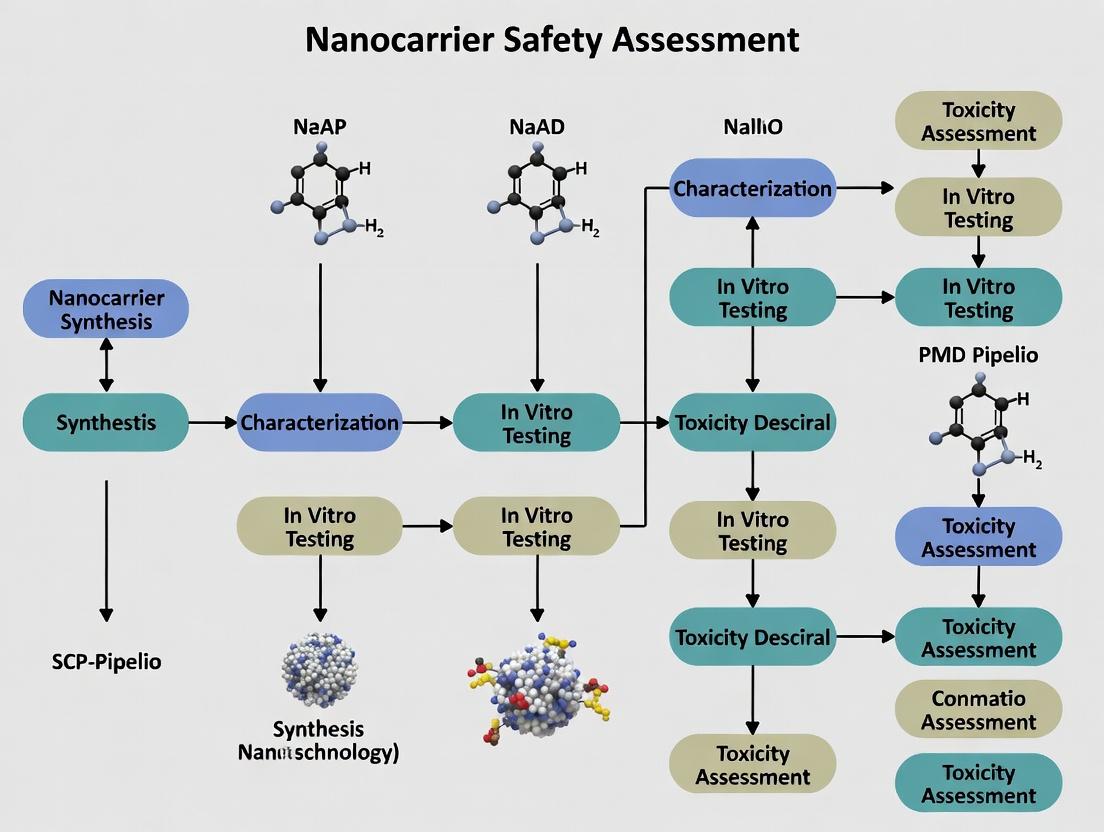
This article presents a detailed exploration of the SCP-Nano (Screening, Characterization, Prediction) pipeline, a structured framework for assessing the safety of nanocarriers in pharmaceutical applications.
SCP-Nano Pipeline: A Comprehensive Framework for Accelerating Nanocarrier Safety Assessment in Drug Development
Abstract
This article presents a detailed exploration of the SCP-Nano (Screening, Characterization, Prediction) pipeline, a structured framework for assessing the safety of nanocarriers in pharmaceutical applications. Targeted at researchers and drug development professionals, it provides a foundational understanding of critical nanotoxicity parameters, a methodological guide to implementing the pipeline's assays, strategies for troubleshooting common experimental challenges, and a comparative analysis of its validation against traditional and emerging safety assessment models. The scope covers in vitro to in silico approaches, offering a practical roadmap to de-risk nanomedicine development and meet evolving regulatory expectations.
Understanding Nanocarrier Risks: The Critical Parameters and Rationale Behind the SCP-Nano Pipeline
Welcome to the SCP-Nano Technical Support Center. This resource is designed to support researchers navigating the unique challenges of nanocarrier safety assessment within the SCP-Nano (Safety Characterization Pipeline for Nanotherapeutics) research framework. Traditional toxicology models often fail to predict nanocarrier behavior due to complex bio-nano interactions. This guide addresses common experimental pitfalls.
Frequently Asked Questions (FAQs)
Q1: Why does my in vitro cell viability assay (e.g., MTT) show high toxicity for a nanocarrier that later proves safe in vivo? A: This is a classic failure of traditional assays. Nanocarriers can interfere with assay readouts through optical interference, adsorption of assay components, or catalytic activity. The SCP-Nano pipeline mandates orthogonal assays to confirm results.
Q2: Our nanocarrier's plasma protein corona formation is highly variable between batches. How do we standardize this for safety testing? A: Batch variability is a critical challenge. The SCP-Nano protocol requires a pre-incubation step in a defined, biologically relevant medium (e.g., 50% human plasma in PBS) for 1 hour at 37°C under gentle rotation before proceeding to in vitro or in vivo experiments. Characterize the corona immediately after this step using DLS and LC-MS/MS.
Q3: Why do traditional pharmacokinetic (PK) models poorly fit our nanocarrier's blood clearance data? A: Traditional PK models assume instant, homogenous distribution and first-order elimination. Nanocarriers exhibit complex, multi-phase clearance involving rapid MPS (mononuclear phagocyte system) uptake, slow release from organs, and nonlinear kinetics. Use multi-compartmental or physiologically based pharmacokinetic (PBPK) modeling.
Q4: We observe unexpected organ accumulation (e.g., in the spleen) not predicted by the drug's solubility. How do we troubleshoot this? A: This is a hallmark of nanocarrier behavior. Accumulation is driven by the carrier's physicochemical properties, not just the drug's. Follow the SCP-Nano diagnostic checklist:
- Measure particle size and surface charge (zeta potential) in biological fluid.
- Check for aggregation post-protein corona formation via DLS/NTA.
- Implement the SCP-Nano Biodistribution Protocol (see below) to quantify carrier vs. drug payload separately.
Troubleshooting Guides & Experimental Protocols
Guide 1: Overcoming Assay Interference in Cytotoxicity Testing
- Problem: False positive/negative toxicity signals.
- Solution: Implement the SCP-Nano Orthogonal Viability Assay Suite.
- Protocol:
- Perform the primary assay (e.g., MTT).
- Conduct an interference control: Incubate nanocarriers with assay reagents in the absence of cells. A significant signal indicates interference.
- Run 2+ orthogonal assays from different detection principles (see table below).
- Use a label-free, impedance-based assay (e.g., xCELLigence) as a gold standard for real-time cell health monitoring.
Guide 2: Standardized Biodistribution & Clearance Protocol
- Problem: Inconsistent biodistribution data.
- Solution: Differentiate carrier from released drug.
- SCP-Nano Dual-Labeling Protocol:
- Label the carrier: Incorporate a near-infrared (NIR) dye (e.g., DiR) into the nanoparticle matrix or covalently tag the polymer/lipid.
- Label the payload: Use a radiolabel (e.g., ³H, ¹⁴C) or a fluorescently tagged (e.g., Cy5) drug analog.
- Administer the dual-labeled construct to the animal model.
- At each time point: Image whole-body NIR signal (carrier location). Then, harvest organs, homogenize, and use scintillation counting or HPLC to quantify the payload.
- Calculate the payload-to-carrier ratio in each organ to identify sites of active drug release.
Data Presentation
Table 1: Comparison of Traditional vs. SCP-Nano Orthogonal Viability Assays
| Assay Type | Traditional Principle | Common Nanocarrier Interference | SCP-Nano Recommended Orthogonal Assay |
|---|---|---|---|
| MTT/MTS | Mitochondrial reductase activity | Adsorption of formazan; redox activity | ATP-based Luminescence (CellTiter-Glo) |
| LDH Release | Membrane integrity | Adsorption of LDH enzyme; serum interference | Real-Time Impedance (xCELLigence) |
| Trypan Blue | Membrane permeability | Nanoparticle adsorption of dye | Flow Cytometry with Propidium Iodide & Annexin V |
Table 2: Key Physicochemical Properties & Their Safety Impact
| Property | Measurement Tool (SCP-Nano Std.) | Target Range for Low MPS Uptake | Primary Safety Impact |
|---|---|---|---|
| Hydrodynamic Size | DLS in 100% FBS | 10-100 nm | Clearance kinetics, organ accumulation |
| Surface Charge (ζ) | ELS in PBS (pH 7.4) | Slightly negative (-10 to -20 mV) | Protein corona composition, cellular uptake |
| Polydispersity Index | DLS | < 0.2 | Batch reproducibility, predictable behavior |
The Scientist's Toolkit: Research Reagent Solutions
| Item | Function in SCP-Nano Pipeline |
|---|---|
| Synthetic Human Plasma | Standardized medium for pre-forming protein corona to reduce experimental variability. |
| Near-Infrared Lipophilic Dyes (DiR, DiD) | For in vivo and ex vivo imaging of nanocarrier biodistribution independently of the drug. |
| PEGylated Lipids / Polymers | To modulate surface hydrophilicity, reduce opsonization, and prolong circulation time. |
| Latex Beads (50nm, 100nm) | Positive controls for phagocytosis and MPS uptake studies in cell models. |
| Recombinant Opsonins (e.g., IgG, Complement C3) | Used in mechanistic studies to deliberately trigger and study specific clearance pathways. |
Mandatory Visualization
Title: Why Traditional PK Models Fail: Nanocarrier Fate vs. Drug
Title: SCP-Nano Core Experimental Workflow for Reliable Safety Data
Troubleshooting & FAQs: SCP-Nano Technical Support Center
FAQ 1: High Variability in Nanoparticle Hydrodynamic Size During DLS Screening
- Issue: Dynamic Light Scattering (DLS) measurements for the same formulation show inconsistent Z-average diameter and Polydispersity Index (PDI) between runs.
- Cause & Solution: This is often due to sample preparation artifacts or instrument settings.
- Cause: Dust contamination, insufficient equilibration temperature, or poorly optimized measurement position/attenuator.
- Solution: Filter all buffers and samples through a 0.1 µm or 0.22 µm syringe filter. Allow samples to equilibrate in the instrument for 5 minutes. Run the "attenuator search" and "measurement position" optimization routines before data collection. Perform a minimum of 3-5 measurements per sample.
FAQ 2: Inconsistent Zeta Potential Values in Different Media
- Issue: Zeta potential values shift dramatically when measured in water vs. biologically relevant buffers (e.g., PBS).
- Cause & Solution: This is an expected phenomenon but must be characterized correctly.
- Cause: High ionic strength buffers compress the electrical double layer, reducing the measured zeta potential magnitude.
- Solution: Always report zeta potential in both 1mM KCl (or pure water) for reference and in the specific buffer/medium relevant to your biological assay. Use the Smoluchowski approximation for aqueous, high-ionic-strength media. Ensure the conductivity is within the instrument's optimal range (add dilution if necessary).
FAQ 3: Low or Unstable Fluorescent Signal in Cellular Uptake Screening
- Issue: Weak fluorescence from labeled nanocarriers during flow cytometry or microscopy, or signal quenching over time.
- Cause & Solution: This relates to dye choice, loading, and nanoparticle stability.
- Cause: Dye may be leaking, self-quenching due to high density, or incompatible with the nanoparticle core.
- Solution: Use dyes matched to the nanoparticle chemistry (e.g., hydrophobic dyes for lipid cores). Optimize dye-to-lipid/polymer ratio to avoid self-quenching. Include a control with free dye to check for dye leakage via dialysis or size exclusion. Use membrane-incorporating dyes (e.g., DiI, DiD) for lipid-based systems for stable integration.
FAQ 4: Poor Correlation Between In Vitro Prediction Models and In Vivo Outcomes
- Issue: The SCP-Nano prediction module (e.g., hemolysis, protein binding, cell viability) fails to forecast in vivo toxicity or efficacy.
- Cause & Solution: The biological complexity of the in vivo environment is not captured.
- Cause: Oversimplified in vitro models lacking immune components, endothelial barriers, or dynamic flow.
- Solution: Implement advanced in vitro models sequentially. Start with simple cell lines, then move to primary cells, co-culture systems, and finally organ-on-a-chip models with fluidic shear stress. Use serum-containing media for protein corona formation studies. Incorporate immune cell assays (e.g., macrophage uptake, complement activation).
FAQ 5: Aggregation During Stability or Serum Incubation Characterization
- Issue: Nanoparticles aggregate when incubated in storage buffers or in serum-containing media for stability tests.
- Cause & Solution: Insufficient steric or electrostatic stabilization upon interaction with biomolecules.
- Cause: Inadequate PEG density or length, or charge neutralization by serum proteins.
- Solution: Increase PEGylation density (>5 mol% for lipids, >10 kDa MW for polymers). Consider using alternative steric stabilizers like poloxamers. For serum studies, perform time-resolved DLS measurements to monitor aggregation kinetics. Pre-incubate nanoparticles with serum to form a "protein corona" and measure the resulting size and zeta potential, as this is the physiologically relevant state.
Table 1: Acceptable Ranges for Core Characterization Parameters
| Parameter | Technique | Optimal Range | Caution Zone | Interpretation for SCP-Nano Pipeline | ||
|---|---|---|---|---|---|---|
| Hydrodynamic Diameter | DLS | 20-200 nm | <10 nm or >300 nm | Ideal for EPR effect; <10 nm may undergo renal clearance, >300 nm may be filtered by spleen. | ||
| Polydispersity Index (PDI) | DLS | < 0.2 | 0.2 - 0.3 | > 0.3 indicates a highly heterogeneous, polydisperse sample unsuitable for prediction modeling. | ||
| Zeta Potential (in water) | ELS | ±30 to ±60 mV | ±10 to ±30 mV | High magnitude (> | 30 | ) indicates good electrostatic stability. Near-neutral (±10) suggests aggregation risk. |
| Zeta Potential (in PBS) | ELS | ±5 to ±15 mV | N/A | Expect magnitude reduction. A shift towards neutral or charge reversal can indicate corona formation. | ||
| Encapsulation Efficiency (EE%) | HPLC/UV-Vis | > 80% | 50-80% | <50% indicates poor drug loading, impacting efficacy predictions and requiring formulation re-design. |
Table 2: In Vitro Prediction Assay Thresholds
| Assay | Measured Endpoint | "Safe" Prediction Threshold | "Toxic" Prediction Flag |
|---|---|---|---|
| Hemocompatibility | % Hemolysis (4h, 37°C) | < 5% | > 10% |
| Plasma Protein Binding | Protein Corona Mass (μg per mg NP) | Varies by material | A > 50% increase from baseline in key opsonins (e.g., IgG, fibrinogen) |
| Cell Viability (MTT/XTT) | % Viability vs. Control (24h) | > 80% | < 70% |
| Immunogenicity Screen | IL-1β/TNF-α secretion from THP-1 cells | < 2x basal level | > 5x basal level |
Experimental Protocols
Protocol 1: Standardized DLS & Zeta Potential Measurement for SCP-Nano Screening
- Sample Prep: Dilute nanoparticle suspension in the desired medium (e.g., 1mM KCl for zeta, PBS for size in physiological buffer) to a final scattering intensity of 200-500 kcps. Filter through a 0.22 µm PVDF syringe filter.
- Instrument Setup: Equilibrate at 25°C for 5 min. Use a disposable cuvette (size) or folded capillary cell (zeta).
- DLS Run: Set measurement angle to 173° (backscatter). Run attenuator optimization. Perform a minimum of 12 sub-runs. Report Z-average diameter and PDI from the intensity distribution.
- Zeta Run: Set the electrode voltage automatically. Conduct a minimum of 30 runs. Report the mean zeta potential and electrophoretic mobility from the phase analysis light scattering (PALS) model.
Protocol 2: Protein Corona Characterization via SDS-PAGE
- Incubation: Incubate 1 mg/mL of nanoparticles with 50% (v/v) human plasma in PBS at 37°C for 1 hour under gentle rotation.
- Isolation: Ultracentrifuge the sample at 100,000 x g for 1 hour at 4°C to pellet the corona-coated nanoparticles.
- Wash: Carefully discard the supernatant. Gently resuspend the pellet in 1 mL of cold PBS and repeat centrifugation (100,000 x g, 45 min).
- Elution: Resuspend the final pellet in 50 µL of 2X Laemmli SDS sample buffer. Heat at 95°C for 10 minutes to denature and elute proteins.
- Analysis: Centrifuge at 16,000 x g for 5 min. Load the supernatant onto a 4-20% gradient polyacrylamide gel. Run at 120V for 90 min. Visualize proteins using a silver or Coomassie blue stain.
Protocol 3: High-Content Cellular Uptake Screening (96-well format)
- Cell Seeding: Seed relevant cells (e.g., HUVECs, HeLa, RAW 264.7) in a black-walled, clear-bottom 96-well plate at 10,000 cells/well. Culture for 24h.
- Dosing: Prepare serial dilutions of fluorescently labeled nanoparticles in complete media. Replace cell media with 100 µL of nanoparticle suspensions. Include a cell-only (no NP) control.
- Incubation: Incubate at 37°C, 5% CO2 for desired time (e.g., 2h, 6h).
- Wash & Stain: Aspirate media. Wash 3x with PBS. Fix with 4% PFA for 15 min. Permeabilize with 0.1% Triton X-100 (optional). Stain nuclei with Hoechst 33342 (1 µg/mL) and actin with phalloidin-AF488 (optional).
- Imaging & Analysis: Image using a high-content imager with 10x or 20x objective. Acquire ≥4 fields/well. Quantify mean cellular fluorescence (NP channel) per cell using image analysis software (e.g., CellProfiler, ImageJ). Normalize to cell count.
Visualizations
Diagram 1: SCP-Nano Core Workflow Pipeline
Diagram 2: Key Nanocarrier-Cell Interaction Pathways
The Scientist's Toolkit: Key Research Reagent Solutions
Table 3: Essential Materials for SCP-Nano Implementation
| Item/Reagent | Function in SCP-Nano Pipeline | Example & Notes |
|---|---|---|
| SZ-100/Zetasizer Nano ZS | Core instrument for Pillar 1 screening. Measures hydrodynamic size (DLS) and zeta potential (ELS). | HORIBA SZ-100 or Malvern Panalytical Zetasizer Nano series. |
| Lipofectamine 3000 | Transfection reagent control for cellular uptake studies; benchmark for comparing nanocarrier efficiency. | Invitrogen, Cat. No. L3000015. |
| Human Platelet-Poor Plasma (PPP) | Critical for in vitro protein corona studies (Pillar 2). Provides physiologically relevant proteins. | Sigma-Aldrich, Cat. No. P9523. Store at -80°C. |
| THP-1 Monocyte Cell Line | Model immune cells for immunogenicity screening within the prediction pillar (Pillar 3). | ATCC TIB-202. Can be differentiated to macrophages with PMA. |
| CellTiter-Glo Luminescent Kit | Homogeneous assay for high-throughput cell viability assessment post-nanocarrier exposure. | Promega, Cat. No. G7570. Measures ATP as viability readout. |
| DiI/DiD/DiO Lipophilic Dyes | Fluorescent labels for tracking lipid-based nanocarriers in uptake and biodistribution studies. | Invitrogen V22885, V22887, etc. Incorporate into lipid bilayer. |
| Amicon Ultra Centrifugal Filters | For buffer exchange, concentration, and purification of nanoparticle suspensions post-formulation. | Millipore Sigma, various MWCO (e.g., 100 kDa). |
| PD-10 Desalting Columns | Size-exclusion chromatography for rapid removal of unencapsulated drug/free dye. | Cytiva, Cat. No. 17085101. |
Technical Support Center: SCP-Nano Pipeline Troubleshooting
FAQs & Troubleshooting Guides
This support center addresses common experimental challenges within the SCP-Nano pipeline, a systematic framework for nanocarrier safety assessment. Issues are categorized by the key physicochemical property under investigation.
1. Size & Size Distribution (Dynamic Light Scattering - DLS)
Q1: My DLS measurements show multiple peaks or a very high polydispersity index (PDI). What could be wrong?
- A: High PDI (>0.3) indicates a non-uniform sample. Potential causes and solutions:
- Aggregation: Filter all buffers and nanocarrier suspensions through a 0.22 µm or 0.1 µm syringe filter prior to measurement. Use fresh samples; avoid freeze-thaw cycles.
- Contamination: Thoroughly clean the cuvette with filtered solvent and ensure it is dust-free.
- Sample Concentration: Too high a concentration can cause multiple scattering. Dilute the sample until the count rate is within the manufacturer's recommended range.
- Improper Settings: Ensure the correct dispersant viscosity and refractive index are set in the software.
- A: High PDI (>0.3) indicates a non-uniform sample. Potential causes and solutions:
Q2: How do I validate my DLS size data for biological nanoparticles (e.g., liposomes, polymeric micelles)?
- A: DLS measures hydrodynamic diameter. Always correlate with a complementary technique.
- Protocol for Transmission Electron Microscopy (TEM) Validation:
- Sample Preparation: Apply 5-10 µL of diluted nanocarrier suspension onto a carbon-coated copper grid. Allow to adsorb for 1-2 minutes.
- Staining: Wick away excess liquid with filter paper. Negative stain with 1% (w/v) uranyl acetate solution for 30-60 seconds. Wick away and air-dry completely.
- Imaging: Image using an accelerating voltage of 80-100 kV. Measure diameters of at least 100 particles using ImageJ software.
- Comparison: TEM will provide the core diameter (typically smaller than DLS). A consistent size distribution profile between techniques confirms accuracy.
- Protocol for Transmission Electron Microscopy (TEM) Validation:
- A: DLS measures hydrodynamic diameter. Always correlate with a complementary technique.
2. Zeta Potential (Electrophoretic Light Scattering)
Q3: My zeta potential readings are inconsistent between replicates or change dramatically with dilution.
- A: Zeta potential is highly sensitive to ionic strength and pH.
- Solution: Always measure in a standardized, low-conductivity buffer (e.g., 1 mM KCl or 10 mM NaCl). The SCP-Nano protocol recommends using 1 mM phosphate buffer, pH 7.4, for consistent biological relevance. Ensure the sample is dialyzed or diluted into this exact buffer before measurement.
- Check Electrode: Clean the capillary cell with detergent and ethanol between samples to prevent cross-contamination.
- A: Zeta potential is highly sensitive to ionic strength and pH.
Q4: What is an acceptable zeta potential for a "stable" nanocarrier formulation?
- A: Stability against aggregation is dictated by the magnitude of zeta potential, as per DLVO theory.
Zeta Potential Range (mV) Stability Interpretation 0 to ±5 Highly prone to aggregation ±10 to ±15 Minimally stable ±20 to ±30 Moderately stable > ±30 Good physical stability Note: For in vivo applications, extreme potentials (>|±30| mV) may promote non-specific protein adsorption and rapid clearance.
3. Surface Chemistry & Functionalization
Q5: My conjugation reaction (e.g., attaching PEG or targeting ligands) fails or yields low efficiency. How can I troubleshoot?
- A: This is often due to inactive reagents or suboptimal molar ratios.
- Protocol for Amine-Carboxylic Acid Coupling (using EDC/sulfo-NHS):
- Activation: In a 2 mL reaction vial, dilute the nanoparticle with carboxyl groups in 0.1 M MES buffer, pH 5.5. Add a 10-20 fold molar excess of sulfo-NHS, followed by a 20-40 fold molar excess of EDC. React for 15 minutes at room temperature with gentle mixing.
- Purification: Immediately purify the activated nanoparticles using a desalting column (e.g., PD-10) or dialysis into a coupling buffer (e.g., PBS, pH 7.4) to remove excess crosslinkers. Do not delay this step.
- Conjugation: Add the amine-containing ligand (e.g., amine-PEG, antibody) at a 50-100 fold molar excess to the estimated number of activated sites. React for 2-4 hours at RT or overnight at 4°C.
- Quantification: Use a colorimetric assay (e.g., TNBSA for residual amines, BCA for conjugated proteins) to determine conjugation efficiency.
- Protocol for Amine-Carboxylic Acid Coupling (using EDC/sulfo-NHS):
- A: This is often due to inactive reagents or suboptimal molar ratios.
Q6: How do I confirm and quantify surface PEG density?
- A: Use a combination of techniques.
- ¹H NMR: Dissolve lyophilized PEGylated nanoparticles in deuterated solvent. Compare the integral of PEG ethylene oxide protons (~3.6 ppm) to a unique nanoparticle core proton signal.
- Colorimetric Assay (for mPEG-NH₂): Use the ninhydrin assay to measure free amine concentration before and after PEGylation. The difference gives the amount of conjugated PEG.
- A: Use a combination of techniques.
4. Degradation & Stability
Q7: How do I design an accelerated stability study for degradable nanocarriers (e.g., PLGA nanoparticles)?
- A: Follow the ICH Q1A(R2) guideline principles. Monitor key parameters over time under stress conditions.
- Protocol:
- Storage Conditions: Aliquot samples and store at: (i) 4°C (refrigerated control), (ii) 25°C/60% RH (accelerated), and (iii) 40°C/75% RH (stress).
- Time Points: Analyze samples at t=0, 1, 2, 4, 8, 12 weeks.
- Analysis Parameters: Measure particle size, PDI, zeta potential, and drug loading (if applicable) at each point. Use HPLC or GPC to quantify degradation products (e.g., lactic acid, glycolic acid for PLGA).
- Data Interpretation: A significant change (>10% increase in size, >5 mV change in zeta potential, or new degradation peaks) indicates instability.
- Protocol:
- A: Follow the ICH Q1A(R2) guideline principles. Monitor key parameters over time under stress conditions.
Q8: My enzymatic degradation assay shows no activity. What controls are essential?
- A: Always include both positive and negative controls.
- Negative Control: Nanoparticles in buffer without enzyme.
- Positive Control 1: A known substrate for the enzyme (e.g., gelatin for collagenase).
- Positive Control 2: Nanoparticles treated with a harsh chemical degradation method (e.g., 1M NaOH for polyesters) to confirm the assay can detect breakdown products.
- A: Always include both positive and negative controls.
The Scientist's Toolkit: Research Reagent Solutions
| Item | Function in SCP-Nano Pipeline |
|---|---|
| Zetasizer Nano ZSP (Malvern) | Integrated system for measuring hydrodynamic diameter (DLS), zeta potential, and molecular weight. |
| Amicon Ultra Centrifugal Filters (MWCO 10-100 kDa) | For concentrating nanocarriers, buffer exchange, and purification post-functionalization. |
| EDC (1-Ethyl-3-(3-dimethylaminopropyl)carbodiimide) | Zero-length crosslinker for conjugating carboxylates to amines; activates carboxyl groups. |
| sulfo-NHS (N-hydroxysulfosuccinimide) | Stabilizes EDC-activated carboxyl groups, forming an amine-reactive ester that improves conjugation efficiency. |
| Dialysis Tubing (SnakeSkin, 10K MWCO) | For slow, gentle buffer exchange to remove unreacted small molecules and salts. |
| TEM Grids (Carbon-coated Copper, 400 mesh) | Support film for high-resolution imaging of nanoparticle morphology and core size. |
| 1% Uranyl Acetate Solution | Negative stain for TEM; enhances contrast by embedding around nanoparticles. |
| PD-10 Desalting Columns | Fast gel filtration for quick buffer exchange or removal of excess crosslinkers post-activation. |
| TNBSA (2,4,6-Trinitrobenzenesulfonic acid) | Colorimetric assay for quantifying primary amine concentration (for surface group or ligand quantification). |
Visualizations
Characterization to Safety Correlation Logic
Technical Support Center: SCP-Nano Pipeline Troubleshooting
Troubleshooting Guide: Common Experimental Issues
Issue 1: Inconsistent Protein Corona Formation on Nanocarriers Q: Why do I observe high variability in protein corona composition between batches of the same nanocarrier in the SCP-Nano pipeline? A: Inconsistent corona formation often stems from variations in nanoparticle synthesis, incubation conditions, or biological fluid source. Ensure: 1) Strict control of nanocarrier size, surface charge (zeta potential), and curvature across batches. 2) Use of standardized, freshly prepared human plasma/serum from a pooled source. 3) Precise control of incubation temperature (37°C), time (typically 60 min), and a consistent particle-to-protein ratio. 4) Thorough purification (e.g., centrifugation with density gradient or size-exclusion chromatography) to remove unbound proteins before analysis.
Issue 2: Low Cellular Uptake Efficiency Q: My nanocarriers show minimal cellular uptake in the *in vitro safety assessment. What could be wrong?* A: Low uptake can be due to an unfavorable protein corona, incorrect cell model, or inappropriate assay. Troubleshoot by: 1) Characterizing the corona; a dense corona of albumin may reduce uptake, while opsonins (e.g., immunoglobulins, complement) may increase it. 2) Verifying cell line relevance (e.g., use HeLa, RAW 264.7, or primary macrophages for phagocytosis studies). 3) Ensuring cells are at an optimal confluence (70-80%) and using serum-free media during uptake incubation to avoid secondary corona formation. 4) Validating your detection method (flow cytometry, fluorescence microscopy) with a positive control (e.g., fluorescent dextran for macrophages).
Issue 3: Unexpected Biodistribution Patterns in In Vivo Studies Q: The biodistribution data from our SCP-Nano animal studies does not match the predicted targeting profile. How should we investigate this? A: Discrepancies often arise from in vivo corona formation, which overrides in vitro targeting. Address this by: 1) Pre-forming a "custom" corona in vitro using mouse plasma to simulate in vivo conditions before injection. 2) Checking for rapid clearance by the mononuclear phagocyte system (MPS); consider PEGylation to reduce opsonization. 3) Using imaging controls (e.g., free dye) to rule out dye leakage. 4) Harvesting organs at consistent time points (e.g., 1h, 4h, 24h) and normalizing data to organ weight and injected dose.
Issue 4: Difficulty Isolating the "Hard" Corona for Analysis Q: I cannot reliably isolate the hard protein corona from the soft corona during sample preparation. A: The hard corona (strongly bound) requires stringent but controlled washing. Follow this protocol: After incubating nanoparticles with plasma (1 mg/mL, 37°C, 1h), centrifuge (21,000 x g, 15 min). Resuspend the pellet in 1 mL of cold, sterile PBS (pH 7.4). Repeat this wash step three times. The final pellet should contain nanoparticles with the hard corona. Use gentle pipetting to avoid aggregation. Validate by SDS-PAGE; the hard corona profile should stabilize after 2-3 washes.
Frequently Asked Questions (FAQs)
Q1: What is the minimum nanoparticle concentration required for reliable protein corona analysis using LC-MS/MS? A: We recommend a minimum of 1 mg/mL nanoparticle concentration during plasma incubation to ensure sufficient protein recovery for downstream mass spectrometry analysis within the SCP-Nano workflow.
Q2: How long should I incubate nanoparticles with plasma to achieve a "steady-state" corona for my cellular uptake experiments? A: Most studies within the SCP-Nano framework use a 60-minute incubation at 37°C with gentle agitation. This allows the corona to reach a biologically relevant steady-state composition before interaction with cells.
Q3: Which is more critical for predicting in vivo biodistribution: the corona formed from human or animal plasma? A: For animal studies in the SCP-Nano pipeline, the corona formed from the species-specific plasma (e.g., mouse, rat) is more predictive. Always use plasma from the same species used in your biodistribution model to account for differences in protein repertoire and concentration.
Q4: What are the key controls for a cellular uptake mechanism study (e.g., clathrin-mediated vs. caveolae-mediated endocytosis)? A: Essential pharmacological inhibitors and their controls include:
- Clathrin inhibition: Pitstop 2 (vs. inactive control Pitstop 2NEG).
- Caveolae inhibition: Methyl-β-cyclodextrin (MβCD) or Genistein.
- Macropinocytosis inhibition: EIPA (5-(N-ethyl-N-isopropyl)amiloride).
- Energy dependence control: Incubate cells at 4°C to inhibit all active uptake. Always assess inhibitor cytotoxicity (e.g., via MTT assay) under your experimental conditions and use a fluorescent negative control (e.g., sucrose).
Table 1: Impact of Core Material on Key Protein Corona Metrics
| Nanocarrier Core Material | Average Hydrodynamic Size Increase Post-Corona (nm) | Average Zeta Potential Shift Post-Corona (mV) | Approx. Number of Major Protein Species Identified (Hard Corona) |
|---|---|---|---|
| Polymeric (PLGA) | +15 to +25 | -30 mV to -10 mV | 50-80 |
| Liposomal | +8 to +15 | -40 mV to -15 mV | 30-60 |
| Gold Nanoparticle | +10 to +20 | -25 mV to -5 mV | 40-70 |
| Silica | +12 to +22 | -35 mV to -10 mV | 60-90 |
Table 2: Correlation between Zeta Potential & Cellular Uptake in Standard Cell Lines
| Initial Nanocarrier Zeta Potential (in water) | Predominant Uptake Mechanism in HeLa Cells | Relative Uptake Efficiency (vs. Neutral Charge) | Primary Corona Proteins Influencing Uptake |
|---|---|---|---|
| Strongly Positive (+30 mV) | Clathrin-mediated endocytosis | High (1.8x) | Albumin, Apolipoproteins, Fibrinogen |
| Slightly Positive (+5 to +10 mV) | Caveolae-mediated endocytosis | Moderate (1.2x) | Albumin, Immunoglobulins |
| Neutral (-5 to +5 mV) | Multiple pathways | Baseline (1.0x) | Diverse, including complement factors |
| Negative (< -20 mV) | Phagocytosis (in macrophages) | Low in HeLa (0.5x), High in RAW 264.7 (2.5x) | Immunoglobulins, Complement Proteins |
Experimental Protocols
Protocol 1: Standardized Protein Corona Formation & Isolation for the SCP-Nano Pipeline
- Nanoparticle Preparation: Dilute purified nanoparticles to a concentration of 1 mg/mL in 1x PBS (pH 7.4).
- Plasma Incubation: Mix 100 µL of nanoparticle suspension with 900 µL of human platelet-poor plasma (pre-warmed to 37°C). Incubate at 37°C for 60 minutes with end-over-end rotation.
- Hard Corona Isolation: Transfer the mixture to a centrifugal filter unit (100 kDa MWCO). Centrifuge at 4,000 x g for 10 minutes. Retain the retentate (nanoparticles with hard corona).
- Washing: Add 1 mL of cold PBS to the retentate and centrifuge again. Repeat this wash step twice.
- Elution: Resuspend the final retentate in 50 µL of 2x Laemmli buffer for SDS-PAGE or 100 µL of MS-compatible buffer (e.g., 2% SDS in 50mM TEAB) for proteomics.
Protocol 2: Inhibitor-Based Screening for Cellular Uptake Mechanisms
- Cell Seeding: Seed relevant cells (e.g., HeLa, RAW 264.7) in 24-well plates at 1x10^5 cells/well. Culture for 24h.
- Pre-treatment: Prepare inhibitor solutions in serum-free media. Pre-treat cells for 30 min at 37°C:
- Pitstop 2 (30 µM) for clathrin inhibition.
- MβCD (5 mM) for caveolae inhibition.
- EIPA (50 µM) for macropinocytosis inhibition.
- Controls: DMSO (vehicle) and 4°C incubation.
- Uptake Assay: Add fluorescently labeled nanocarriers (with or without pre-formed corona) directly to the inhibitor-containing media. Incubate for 1h at 37°C (or on ice for the 4°C control).
- Quenching & Analysis: Remove media, wash cells 3x with cold PBS. Trypsinize, resuspend in PBS containing 0.1% BSA, and analyze by flow cytometry. Express uptake as a percentage of the DMSO vehicle control.
Diagrams
The Scientist's Toolkit: Research Reagent Solutions
Table 3: Essential Materials for SCP-Nano Interaction Studies
| Item & Vendor Example | Function in Experiments |
|---|---|
| Human Platelet-Poor Plasma (e.g., from Sigma-Aldrich) | Standardized biological fluid for in vitro protein corona formation, ensuring reproducibility. |
| Zeta Potential Reference Standard (e.g., Malvern DTS1235) | Calibrates dynamic light scattering (DLS) instruments for accurate surface charge measurement pre- and post-corona. |
| Amicon Ultra Centrifugal Filters (100 kDa MWCO, Millipore) | Isolates nanoparticle-corona complexes from unbound proteins via size-exclusion during washing steps. |
| Protease Inhibitor Cocktail (e.g., Roche cOmplete) | Added to plasma and buffers during corona isolation to prevent protein degradation and preserve corona composition. |
| Pitstop 2 & Pitstop 2 Negative Control (e.g., Abcam) | Specific small-molecule inhibitor pair to selectively block clathrin-mediated endocytosis and serve as an inactive control. |
| Cell Lines: HeLa (ATCC CCL-2) & RAW 264.7 (ATCC TIB-71) | Standard models for studying generalized (HeLa) and phagocytic (RAW 264.7 macrophage) uptake mechanisms. |
| Near-Infrared (NIR) Fluorescent Dye (e.g., DIR, DiR; Thermo Fisher) | Hydrophobic tracer for labeling nanocarriers for sensitive, low-background in vivo biodistribution imaging. |
| IVIS Imaging System (PerkinElmer) or equivalent | Enables quantitative, non-invasive longitudinal tracking of fluorescent nanocarriers in live animals. |
Regulatory Landscape and the Push for Standardized Nanosafety Assessment
Technical Support Center: Troubleshooting Guides & FAQs for the SCP-Nano Pipeline
Framing Context: The SCP-Nano (Screening, Characterization, Prioritization for Nanomaterial safety) pipeline is a systematic research framework designed to standardize nanocarrier safety assessment. This technical support center addresses common experimental challenges encountered within this framework, promoting robust, reproducible data critical for navigating evolving regulatory demands.
FAQs & Troubleshooting
Q1: During in vitro screening (SCP Stage 1), my nanoparticle suspension shows high polydispersity in DLS measurements, confounding toxicity readouts. How can I stabilize it? A: This indicates aggregation. First, verify preparation protocol: 1) Use sterile, particle-free buffers (e.g., filtered PBS). 2) Prioritize serial dilution from a concentrated stock over direct powder dispersion. 3) Implement a consistent sonication protocol (e.g., 30% amplitude, 5 min pulse-on/off on ice using a probe sonicator). 4) Consider adding a sterile, biologically compatible dispersant (e.g., 0.1% w/v bovine serum albumin). Always measure DLS and PDI immediately after preparation.
Q2: In the Characterization phase (SCP Stage 2), my endotoxin/LAL test shows interference from the nanocarrier itself, leading to inconclusive results. How to proceed? A: Nanomaterials often interfere with chromogenic LAL assays. Follow this protocol: 1) Run a spike recovery control: Split your sample, add a known amount of endotoxin standard to one half. Recovery should be 50-200%. 2) If interference is confirmed, perform a sample dilution series to see if recovery improves at lower concentrations. 3) As a confirmatory orthogonal method, use the monocyte activation test (MAT) using human whole blood or THP-1 cells, measuring IL-1β release, which is less prone to nanomaterial interference.
Q3: For Prioritization assays (SCP Stage 3), my protein corona analysis via SDS-PAGE shows smearing, not distinct bands. What is the cause and solution? A: Smearing suggests incomplete protein elution from the nanoparticle surface or protein degradation. Optimize the corona isolation protocol:
- Incubation & Wash: After plasma/serum incubation, centrifuge (e.g., 16,000 x g, 30 min) and wash pellet three times with gentle PBS (pH 7.4) to remove loosely bound proteins.
- Elution: Do not boil the sample in Laemmli buffer directly. First, incubate the nanoparticle-protein pellet in a strong elution buffer (e.g., 2% SDS, 6M Urea) at 60°C for 20 min with vortexing every 5 min.
- Centrifuge: Post-elution, centrifuge at 16,000 x g for 15 min to pellet the bare nanoparticles.
- Transfer & Analyze: Carefully transfer only the supernatant (containing eluted proteins) to a new tube, then mix with Laemmli buffer and proceed to SDS-PAGE.
Q4: How do I determine the appropriate dose range for in vivo studies based on my in vitro SCP-Nano data? A: Use a standardized conversion metric to ensure relevancy. A recommended stepwise protocol is:
- Calculate the Predicted Human Equivalent Dose (HED) from your in vitro IC10 or lowest observed adverse effect level (LOAEL).
- Apply a nanoparticle-specific safety factor (SF) of 10-100, depending on the material's novelty and observed inflammatory potential in Stage 2.
- Benchmark against known clinical doses of similar nanocarriers.
Table: Key Quantitative Benchmarks for Nanosafety Assessment
| Parameter | Target Range | Measurement Technique | Regulatory Relevance | ||
|---|---|---|---|---|---|
| Dispersion PDI | < 0.2 (ideal), <0.7 (acceptable) | Dynamic Light Scattering (DLS) | ICH Q4B, Annex 14 | ||
| Zeta Potential | > | ±30 mV for high colloidal stability | Electrophoretic Light Scattering | ISO 13099 | |
| Endotoxin Limit | < 0.5 EU/mL for parenteral | Chromogenic LAL / MAT | USP <85>, FDA Pyrogen Guideline | ||
| In vitro assay viability threshold (for hit) | > 80% viability at therapeutic dose | MTS, AlamarBlue, etc. | ISO 10993-5 |
Experimental Protocols
Protocol 1: Standardized Dispersion for In Vitro Screening Title: Preparation of Sterile, Monodisperse Nanocarrier Suspensions. Methodology:
- Weigh nanomaterial in a sterile glass vial.
- Add sterile, 0.22 µm-filtered dispersion medium (e.g., cell culture medium without FBS or PBS) to achieve a 10x concentrated stock.
- Sonicate using a probe sonicator on ice: 30% amplitude, pulse cycle 10 sec ON / 20 sec OFF for total ON time of 5 minutes.
- Immediately dilute the stock to desired concentration in complete cell culture medium.
- Characterize hydrodynamic size and PDI via DLS within 15 minutes of preparation. Use this suspension for cell treatment within 1 hour.
Protocol 2: Orthogonal Endotoxin Detection via Monocyte Activation Test (MAT) Title: THP-1 Cell-Based Endotoxin & Pyrogen Detection. Methodology:
- Culture THP-1 cells in RPMI-1640 + 10% FBS.
- Seed cells in a 96-well plate at 2.5 x 10^5 cells/mL (200 µL/well).
- Add nanocarrier samples at the intended test concentration (in triplicate). Include LPS positive control (1 EU/mL) and cell culture medium negative control.
- Incubate for 24 hours at 37°C, 5% CO2.
- Centrifuge plate (300 x g, 5 min). Collect 100 µL of supernatant.
- Quantify IL-1β or TNF-α using a validated ELISA kit.
- A response ≥ 20% of the LPS control indicates significant pyrogenic contamination.
Visualizations
Diagram Title: SCP-Nano Pipeline Core Workflow for Safety Assessment
Diagram Title: Key Nanocarrier-Induced Immune Signaling Pathways
The Scientist's Toolkit: Research Reagent Solutions
Table: Essential Materials for SCP-Nano Pipeline Experiments
| Item (Supplier Examples) | Function in SCP-Nano Pipeline |
|---|---|
| Sterile, Particle-Free Buffer Kits (e.g., Corning PBS Filter Units) | Ensures no background particulates interfere with DLS/NTA characterization and cell assays. |
| Standardized Endotoxin & Pyrogen Detection Kits (e.g., Lonza PyroGene, Hyglos MAT) | Critical for biocompatibility testing per FDA/EMA guidelines for parenteral products. |
| Size & Zeta Potential Reference Standards (e.g., NIST Traceable Polystyrene Nanospheres) | Mandatory for daily calibration of DLS and electrophoretic light scattering instruments. |
| Protein Corona Isolation Kits (e.g., Thermo Fisher Magnetic Bead-Based Pull-down) | Streamlines reproducible isolation of hard corona proteins for proteomic analysis in Stage 3. |
| Ready-to-Use In Vitro Toxicology Assay Panels (e.g., ApoTox-Glo, MultiTox-Glo from Promega) | Multiplexed viability and cytotoxicity assays for high-throughput screening in Stage 1. |
| Reconstituted Human Plasma/Serum (Donor Pooled) (e.g., Sigma, BioIVT) | Standardized medium for protein corona formation studies, improving inter-lab reproducibility. |
| Genotoxicity Testing Kits (e.g., CometChip, NanoAtheros ELISA for γ-H2AX) | Tools for assessing DNA damage, a key regulatory endpoint in Stage 3 prioritization. |
Step-by-Step Guide: Implementing the SCP-Nano Pipeline in Your Lab
Technical Support & Troubleshooting Center
This support center provides solutions for common issues encountered during Phase 1 HTS within the SCP-Nano pipeline for systematic nanocarrier safety assessment. The following FAQs address critical pain points in cytotoxicity, hemocompatibility, and oxidative stress assays.
Cytotoxicity Assays (e.g., MTT, XTT, Resazurin)
Q1: My negative control wells show unexpectedly low absorbance/fluorescence, suggesting low cell viability. What could be the cause? A: This is often due to reagent cytotoxicity or improper handling.
- Check Reagent Preparation: Ensure the tetrazolium dye (MTT/XTT) or resazurin is freshly prepared or properly aliquoted and stored frozen, protected from light. Old or improperly stored reagents lose activity.
- Verify Washing Steps: If your protocol includes a washing step post-nanocarrier exposure and prior to adding the reagent, ensure the washing buffer is pre-warmed to 37°C. Cold buffer can shock cells.
- Confirm Incubation Time: Do not exceed the recommended incubation time with the detection reagent, as prolonged exposure can be toxic.
- Assay Interference: Some nanocarriers can directly reduce tetrazolium dyes. Run an interference check (nanocarrier + dye without cells).
Q2: I observe high variability (high standard deviation) between replicate wells in my 96-well plate. A: This typically stems from cell seeding or reagent dispensing inconsistencies.
- Cell Seeding: Ensure the cell suspension is homogenous by gentle but thorough mixing before seeding. Use an electronic multichannel pipette for consistency.
- Edge Effect: The outer perimeter wells of a 96-well plate can evaporate faster, causing "edge effects." Use a humidified chamber or only employ interior wells for critical assays.
- Bubble Formation: Avoid introducing bubbles when dispensing reagents, as they can distort optical readings.
Hemocompatibility Assays (Hemolysis & Coagulation)
Q3: My hemolysis assay shows high background hemolysis in the PBS negative control. A: This indicates red blood cell (RBC) damage during preparation.
- Gentle Centrifugation: Wash RBCs with PBS using low centrifugal force (e.g., 500 x g for 5 min, not higher). Use a slow acceleration and deceleration setting.
- Fresh Blood: Use human or animal blood that is as fresh as possible (ideally < 48 hours old, correctly anticoagulated).
- Storage: Store washed RBC pellets at 4°C and use within a few hours. Do not freeze-thaw.
- Positive Control: Always include a Triton X-100 (1%) positive control to confirm the RBCs are capable of complete lysis.
Q4: My nanocarrier appears to interfere with the hemoglobin absorbance measurement at 540 nm. A: Nanocarrier absorbance or scattering can skew results.
- Centrifugation: Increase centrifugation speed and time to ensure all nanocarriers and cell debris are fully pelleted before measuring the supernatant absorbance.
- Background Subtraction: Run a parallel set of samples containing nanocarriers at all test concentrations in PBS without RBCs. Subtract these background absorbance values from the corresponding test samples.
Oxidative Stress Assays (e.g., DCFH-DA, ROS GSH/GSSG)
Q5: My DCFH-DA assay shows rapid fluorescence increase in all wells, including untreated controls. A: This signals probe oxidation by ambient light or media components.
- Light Sensitivity: The DCFH-DA probe and loaded cells are extremely light-sensitive. Perform all incubation steps in the dark (wrap plates in foil).
- Serum Interference: Serum esterases can rapidly convert the probe. Reduce the serum concentration during the loading step (e.g., to 1% FBS) or shorten the loading period (30-60 min).
- Positive Control: Include a robust positive control (e.g., 100-200 µM tert-Butyl hydroperoxide (t-BHP)) to validate the assay window.
Q6: The results from my glutathione (GSH/GSSG) assay are inconsistent with my other oxidative stress readouts. A: Glutathione is a dynamic pool and requires careful sample handling.
- Rapid Processing: Cells must be deproteinized immediately after treatment (using meta-phosphoric acid or similar) to freeze the GSH/GSSG ratio. Do not lyse cells and then store samples without deproteinization.
- Avoid Freeze-Thaw: Analyze deproteinized samples immediately or store them at -80°C in single-use aliquots.
Summarized Quantitative Data & Thresholds
Table 1: Key Quantitative Endpoints & Interpretation Guidelines for SCP-Nano Phase 1 HTS
| Assay Category | Key Metric | Acceptable Range (for preliminary safety) | Concern / Toxic Threshold | Critical Positive Control |
|---|---|---|---|---|
| Cytotoxicity | Cell Viability (vs. untreated control) | > 80% | < 70% (ISO 10993-5) | 0.1% Triton X-100 (0% viability) |
| Hemolysis | % Hemolysis | < 5% (ISO 10993-4) | > 10% | 1% Triton X-100 (100% hemolysis) |
| Coagulation | Clotting Time (PT/aPTT) | Within 10% of PBS control | Increase > 20% | Heparin (prolonged time) |
| Oxidative Stress | ROS Fold-Increase (DCF) | < 1.5-fold over control | > 2.0-fold over control | 200 µM t-BHP or H₂O₂ |
| Oxidative Stress | GSH/GSSG Ratio | > 80% of control value | < 50% of control value | 1 mM Diamide or Menadione |
Detailed Experimental Protocols
Protocol 1: High-Throughput Cytotoxicity (Resazurin/Alamar Blue)
Principle: Viable cells reduce non-fluorescent resazurin to fluorescent resorufin.
- Seed cells (e.g., HepG2, THP-1) in 96-well plates at optimal density (e.g., 10,000 cells/well). Incubate 24h.
- Treat cells with nanocarrier serial dilutions in complete medium. Include negative (medium only) and positive (0.1% Triton X-100) controls. Incubate for 24h.
- Prepare working solution: Dilute resazurin sodium salt in PBS to 0.15 mg/mL.
- Add reagent: Remove 100 µL of spent medium from each well and replace with 100 µL of resazurin working solution.
- Incubate: Protect from light, 37°C, 2-4 hours.
- Measure fluorescence: Ex/Em = 560/590 nm. Calculate viability:
(F_sample - F_blank) / (F_negative_control - F_blank) * 100.
Protocol 2: Hemolysis Assay (Spectrophotometric)
Principle: Quantifies hemoglobin release from damaged RBCs.
- Prepare RBCs: Collect fresh human or animal blood in anticoagulant. Centrifuge at 500 x g for 5 min. Aspirate plasma and buffy coat. Wash RBC pellet 3x with PBS.
- Prepare 2% RBC suspension: Dilute packed RBCs in PBS to 2% v/v.
- Incubate with nanocarrier: Mix 100 µL of 2% RBC suspension with 100 µL of nanocarrier dilution in PBS (in microcentrifuge tubes). PBS and 1% Triton X-100 are negative and positive controls, respectively. Incubate at 37°C for 1h with gentle shaking.
- Centrifuge: 800 x g for 5 min.
- Measure supernatant: Transfer 100 µL of supernatant to a 96-well plate. Measure absorbance at 540 nm (reference 650 nm for scattering).
- Calculate:
% Hemolysis = [(Abs_sample - Abs_PBS) / (Abs_Triton - Abs_PBS)] * 100.
Protocol 3: Intracellular ROS Detection (DCFH-DA)
Principle: Cell-permeable DCFH-DA is deacetylated and then oxidized by ROS to fluorescent DCF.
- Seed and treat cells in black-walled, clear-bottom 96-well plates.
- Load probe: After treatment, replace medium with 100 µL of pre-warmed, serum-free medium containing 10-20 µM DCFH-DA. Incubate in the dark, 37°C, for 30-45 min.
- Wash: Remove probe solution and wash cells 2x with PBS.
- Add fresh medium: Add 100 µL PBS or clear medium to wells.
- Measure kinetic fluorescence: Immediately read fluorescence (Ex/Em ~485/535 nm) every 15-30 min for 1-2h. Report results as fold-change over untreated control at a consistent time point.
The Scientist's Toolkit: Key Research Reagent Solutions
Table 2: Essential Materials for Phase 1 HTS in the SCP-Nano Pipeline
| Item | Function & Rationale |
|---|---|
| Resazurin Sodium Salt | Viability probe for HTS; water-soluble, stable, and less toxic than MTT, allowing kinetic reading. |
| Hank's Balanced Salt Solution (HBSS, phenol red-free) | Ideal buffer for ROS and other sensitive assays, minimizing background fluorescence/absorbance. |
| Dimethyl Sulfoxide (DMSO), cell-culture grade | Standard solvent for many positive control compounds (e.g., t-BHP, menadione). Keep final concentration <0.5% in assays. |
| Triton X-100 | Non-ionic detergent used as a positive control for complete cell lysis (cytotoxicity) and RBC lysis (hemolysis). |
| DCFH-DA (2',7'-Dichlorodihydrofluorescein diacetate) | The most common general-purpose ROS-sensitive fluorescent probe. |
| Glutathione Assay Kit (fluorometric) | Essential for measuring the GSH/GSSG ratio, a critical indicator of the antioxidant capacity of cells. Pre-configured kits ensure reliable deproteinization and measurement. |
| Human Platelet-Poor Plasma (PPP) | Required for conducting standardized plasma coagulation tests (PT/aPTT) to assess nanocarrier effects on the coagulation cascade. |
| Electronic Multichannel Pipette (8 or 12 channel) | Critical for ensuring rapid, consistent reagent dispensing across HTS plates, minimizing well-to-well variability. |
Visualized Workflows & Pathways
Title: SCP-Nano Phase 1 HTS Safety Screening Pipeline
Title: DCFH-DA Mechanism for ROS Detection
Technical Support Center: Troubleshooting & FAQs
Q1: During Dynamic Light Scattering (DLS) analysis, my nanocarrier sample shows multiple peaks or a polydispersity index (PDI) > 0.3. What could be the cause and how can I resolve this? A: Multiple peaks or high PDI indicate sample heterogeneity, which compromises SCP-Nano pipeline data integrity.
- Causes:
- Aggregation/Agglomeration: Insufficient stabilization or incompatible buffer conditions.
- Contamination: Presence of dust or large impurities.
- Incorrect Concentration: Sample too concentrated, causing multiple scattering.
- Improper Filtration: Failure to filter buffers or samples.
- Solutions:
- Filter & Centrifuge: Pass buffer and reconstituted sample through a 0.22 µm or 0.45 µm syringe filter. Consider brief, low-speed centrifugation (e.g., 2,000 x g, 5 min) to pellet large aggregates.
- Optimize Dispersion: Sonicate the sample (e.g., bath sonication for 5-10 minutes) before measurement. Ensure consistent sonication protocol across all batches.
- Dilute Sample: Dilute the sample in the same filtered buffer (e.g., 1:10 or 1:100) to achieve an optimal scattering intensity. Avoid over-dilution.
- Buffer Exchange: Perform dialysis or size-exclusion chromatography to transfer nanocarriers into an optimal, filtered buffer (e.g., 10 mM HEPES, 1 mM KCl, pH 7.4).
Q2: I am observing low encapsulation efficiency (EE%) or rapid drug leakage during in vitro sink condition assays. How can I improve formulation stability? A: This points to inadequate drug-excipient compatibility or instability of the nanocarrier core/matrix.
- Causes:
- Poor Drug Solubility in Lipid/Polymetric Core: Drug partitions into aqueous phase during formulation.
- Insufficient Core Viscosity/Hardness: Allows rapid drug diffusion.
- Unstable Bilayer/Shell: Premature disintegration in physiological media.
- Solutions:
- Preformulation Screening: Use saturation solubility studies in various molten lipids or organic solvents (for polymers) to select the core material with highest drug affinity.
- Modify Core Properties: Blend high-melting-point lipids (e.g., Tristearin) with liquid lipids to increase viscosity. For polymers, increase the hydrophobic block length or use polymers with higher glass transition temperature (Tg).
- Stabilize the Interface: Optimize surfactant type and concentration (e.g., use PEGylated lipids or polymers) to create a steric barrier. Consider adding cholesterol to lipid bilayers to increase packing density.
- Protocol - Sink Condition Assay: Use a validated protocol. Place the nanocarrier dispersion (1 mL) in a dialysis cassette (MWCO 3.5-14 kDa) against a large volume of sink medium (e.g., 200 mL PBS with 1% w/v SDS, pH 7.4) at 37°C with gentle agitation. Sample the external medium at predetermined times and quantify drug content via HPLC. Replenish the sink medium at each time point.
Q3: My cell-based assays (e.g., cytotoxicity, uptake) show high variability between replicates when testing nanoformulations. What are the critical steps to ensure consistency? A: Variability often stems from inconsistent nanocarrier-cell interaction or cell handling.
- Causes:
- Nanocarrier Settling: Aggregates settle unevenly across a culture plate well.
- Serum Protein Interference: Variable protein corona formation affects cellular interaction.
- Inconsistent Cell Seeding: Variations in cell number/confluence at time of assay.
- Solutions:
- Ensure Homogeneous Dosing: Gently vortex the nanocarrier dispersion immediately prior to adding to cells. Use a plate shaker (low speed, 5 min) after dosing to ensure even distribution.
- Standardize Serum Conditions: Perform uptake assays in consistent serum concentrations (e.g., 2%, 10% FBS). For critical comparisons, consider pre-incubating nanocarriers with media containing the assay serum concentration for 30 min at 37°C to form a consistent protein corona.
- Validate Cell Seeding: Use an automated cell counter for accurate and consistent seeding density. Allow cells to attach fully (e.g., overnight) before treatment.
Q4: During colloidal stability testing in biological media (e.g., DMEM + 10% FBS), my formulation aggregates instantly. How can I formulate for stability? A: Instant aggregation is typically due to charge-mediated bridging or depletion forces in high ionic strength/media.
- Causes: Bridging flocculation caused by cationic surface charges interacting with anions/proteins, or depletion aggregation induced by polymers/proteins in media.
- Solutions:
- Surface Charge Neutralization/Shielding: Formulate with a near-neutral or slightly negative zeta potential using charge-modifying agents. Incorporate a dense PEG brush layer (≥ 5 mol% PEG-lipid or PEG-polymer) for effective steric stabilization.
- Protocol - Systematic Stability Test: Perform a staggered addition test. Dilute the nanocarrier 1:10 into a series of buffers with increasing complexity: (1) PBS (ionic strength), (2) Cell culture media without serum (organic components), (3) Cell culture media with 10% serum (full protein corona effect). Monitor hydrodynamic diameter by DLS every 15 minutes for 2 hours. This pinpoints the primary aggregation trigger.
Table 1: Typical Target Ranges for Key Physicochemical Parameters in the SCP-Nano Pipeline
| Parameter | Analytical Technique | Target Range for IV Studies | Rationale & Impact | ||
|---|---|---|---|---|---|
| Hydrodynamic Diameter | Dynamic Light Scattering (DLS) | 20 - 150 nm | Balances avoidance of RES clearance (<200 nm) with tissue penetration. | ||
| Polydispersity Index (PDI) | DLS | < 0.2 (Monodisperse) < 0.3 (Acceptable) | Indicates batch homogeneity and reproducibility. | ||
| Zeta Potential | Electrophoretic Light Scattering | -30 mV to +10 mV (Context-dependent) | High negative/positive (> | ±30 | mV) enhances electrostatic stability in vitro. Near-neutral or slightly negative may reduce non-specific interactions in vivo. |
| Encapsulation Efficiency (EE%) | HPLC/UV-Vis after separation | > 80% (Small Molecules) > 70% (Nucleic Acids) | Maximizes payload delivery, minimizes free drug toxicity. | ||
| Drug Loading (DL%) | HPLC/UV-Vis | 1 - 10% (w/w) | High DL reduces excipient burden and potential toxicity. |
Table 2: Common In Vitro Fate Assays and Key Outputs
| Assay Purpose | Standard Method | Key Measurable Outputs | Data Interpretation |
|---|---|---|---|
| Drug Release Kinetics | Dialysis under sink conditions | Cumulative % Released vs. Time; Release rate constant (k). | Fits to kinetic models (Zero-order, First-order, Higuchi, Korsmeyer-Peppas) to infer release mechanism. |
| Colloidal Stability | DLS/Zeta Potential in biorelevant media (PBS, serum) | Change in size (Δ nm) and PDI over time (0-24h). | < 20% size increase & PDI < 0.3 indicates good short-term stability. |
| Protein Corona Analysis | Incubation with serum, centrifugation/SEC, SDS-PAGE/LC-MS | Protein abundance; Identification of key opsonins (e.g., ApoE, IgG) or dysopsonins (e.g., ApoA-I). | Opsonin-rich corona may predict rapid clearance. Corona fingerprint is formulation-specific. |
| Cellular Uptake Efficiency | Flow Cytometry (Fluorescent probes) | Mean Fluorescence Intensity (MFI); % Positive Cells. | Quantifies internalization extent. Use inhibitors (e.g., chlorpromazine, genistein) to probe endocytic pathways. |
Experimental Protocols
Protocol 1: Determination of Encapsulation Efficiency (EE%) and Drug Loading (DL%) via Mini-Centrifugation
- Materials: Nanocarrier dispersion, free drug standard, appropriate buffer, centrifugal filters (MWCO 10-30 kDa, e.g., Amicon Ultra), HPLC system.
- Procedure: a. Prepare a known concentration of nanocarrier dispersion (Ctotal). b. Place 500 µL of dispersion into the sample reservoir of a pre-rinsed centrifugal filter unit. c. Centrifuge at 4,000 x g for 15-30 min (optimize time to achieve ~100 µL retentate). d. Collect the filtrate containing unencapsulated/free drug. e. Dilute the retentate (encapsulated drug) appropriately. f. Quantify drug concentration in both filtrate (Cfree) and retentate/destroyed nanocarriers (C_encapsulated) using a validated HPLC-UV method.
- Calculations:
- EE% = [Cencapsulated / (Cencapsulated + C_free)] x 100
- DL% = [Mass of encapsulated drug / Total mass of drug-loaded nanocarrier (drug + excipients)] x 100
Protocol 2: Colloidal Stability Assessment in Biological Media
- Materials: Nanocarrier dispersion, complete cell culture media (e.g., DMEM + 10% FBS), DLS instrument, thermostated chamber (37°C).
- Procedure: a. Pre-filter all media and buffers through a 0.22 µm filter. b. In a DLS cuvette, mix 20 µL of concentrated nanocarrier dispersion with 980 µL of pre-warmed (37°C) complete media. Gently invert to mix. Final nanocarrier concentration should be suitable for DLS. c. Immediately place the cuvette in the DLS instrument thermostatted at 37°C. d. Measure the hydrodynamic diameter (Z-avg), PDI, and zeta potential at time points: t=0 (immediately), 0.5, 1, 2, 4, 6, and 24 hours. e. Perform each measurement in triplicate.
- Analysis: Plot size and PDI vs. time. A formulation is considered colloidally stable if the increase in Z-avg is < 20% and the PDI remains < 0.3 over the desired time frame (e.g., 4-6h for short-term assays).
Signaling Pathways & Workflows
Phase 2 SCP-Nano Decision Workflow
Key Endocytic Pathways for Nanocarrier Uptake
The Scientist's Toolkit: Research Reagent Solutions
Table 3: Essential Materials for Advanced Characterization
| Item | Function & Relevance to SCP-Nano Phase 2 |
|---|---|
| Zetasizer Nano ZSP (Malvern) or equivalent | Integrated system for measuring hydrodynamic diameter (DLS), zeta potential (ELS), and particle concentration (NTA). Gold standard for physicochemical characterization. |
| HPLC System with UV/FLD/PDA Detector | Quantification of free vs. encapsulated drug (EE%, DL%) and analysis of drug release kinetics. Essential for quality control and fate tracking. |
| Amicon Ultra Centrifugal Filters (MWCO 10-100 kDa) | Rapid separation of free from encapsulated drug or unbound protein from protein-corona-coated nanocarriers. Critical for sample preparation. |
| Dialysis Cassettes (Slide-A-Lyzer, MWCO 3.5-20 kDa) | Performing sink-condition drug release studies. Allows for continuous removal of released drug to maintain sink conditions. |
| Fetal Bovine Serum (Charcoal-Stripped or Standard) | Serum component for protein corona studies and for providing biologically relevant conditions in colloidal stability and cell-based assays. |
| Cell Lines (e.g., HepG2, Caco-2, RAW 264.7, bEnd.3) | Representative models of hepatocytes, intestinal epithelium, macrophages, and blood-brain barrier endothelium for in vitro fate (uptake, toxicity) studies. |
| Specific Endocytic Inhibitors (e.g., Chlorpromazine, Genistein, Amiloride) | Pharmacological tools to deconvolute the primary cellular uptake pathways (clathrin-mediated, caveolae-mediated, macropinocytosis) of the nanocarrier. |
| Fluorescent Probes (DiD, DiI, Coumarin-6, FITC) | Hydrophobic or reactive dyes for labeling nanocarriers to enable tracking via fluorescence microscopy, flow cytometry, or plate readers in uptake and biodistribution studies. |
Technical Support Center: Troubleshooting nSAR Modeling in the SCP-Nano Pipeline
Frequently Asked Questions (FAQs)
Q1: My molecular descriptor calculation for a nanocarrier library fails due to "invalid SMILES string" errors. What are the common causes? A1: This typically stems from non-standard representation of nanocarrier components or metal atoms in SMILES. First, ensure your pre-processing includes:
- Using the "valence correct" option in toolkits like RDKit.
- For dendrimers or polymers, breaking them into canonical repeat unit SMILES.
- For inorganic cores, verify the SMILES uses square brackets for metal atoms (e.g.,
[Au]for gold). Consider using specialized nanomaterial descriptors (e.g., from thenanoSARpackage) if traditional chemical SMILES consistently fail.
Q2: The predictive accuracy (Q²) of my nSAR model for cellular uptake is below 0.5. How can I improve model performance? A2: Low Q² in validation suggests poor model generalizability. Follow this diagnostic checklist:
| Potential Issue | Diagnostic Step | Recommended Action |
|---|---|---|
| Insufficient/Imbalanced Data | Check size and response distribution of training set. | Apply SMOTE for balancing or acquire more data, especially for underrepresented activity classes. |
| Irrelevant Descriptors | Perform descriptor redundancy analysis (e.g., correlation matrix). | Use feature selection (e.g., Recursive Feature Elimination) before modeling. |
| Inappropriate Algorithm | Test model on a simple, known benchmark dataset. | Switch algorithm; try Random Forest or Gradient Boosting for complex nanocarrier data. |
| Presence of Activity Cliffs | Analyze standardized residuals for large errors. | Apply a clustering-based approach to split training/test sets, ensuring structural analogs are in both. |
Q3: When I apply my validated nSAR model to new, external nanocarrier structures, the predictions are biologically implausible. What went wrong? A3: This indicates the new structures are outside the Applicability Domain (AD) of your model. You must define and check the AD. Implement these protocols:
- Descriptor Range: Calculate if the new structure's descriptors fall within the min/max range of the training set for each variable.
- Leverage (h) and Standardized Residuals: Use Williams plot to identify outliers. Structures with high h (> warning leverage) are structurally influential and predictions are unreliable.
- Consensus Prediction: If using multiple models, flag predictions where model outcomes disagree significantly.
Q4: My pathway enrichment analysis from proteomics data post-nanocarrier exposure yields no significant hits. What parameters should I adjust? A4: This is common with subtle or non-canonical nanoparticle-cell interactions. Modify your bioinformatics workflow:
- Background List: Use a custom background gene list specific to your cell type, not the entire genome.
- P-value and Enrichment Thresholds: Loosen the adjusted p-value cutoff to < 0.1 and the minimum gene count to 3.
- Data Source: Combine your proteomics data with transcriptomics data from the same experiment for a multi-omics enrichment approach using tools like
ToppGene. - Pathway Databases: Interrogate specialized databases like
ReactomeorNanoPEARLin addition to KEGG/GO.
Experimental Protocols
Protocol 1: Building a Robust nSAR Model for Nanocarrier Cytotoxicity Prediction
Objective: To construct a validated quantitative nSAR model predicting IC50 values for a polymeric nanocarrier library.
Materials & Reagents: See Scientist's Toolkit below.
Methodology:
- Data Curation: Compile a consistent dataset of IC50 values (µM) from standardized in vitro cytotoxicity assays (e.g., ISO 10993-5). Log-transform the IC50 values to create the response variable pIC50.
- Descriptor Calculation: For each nanocarrier structure (defined as repeat unit for polymers), calculate 2D and 3D molecular descriptors using RDKit and PaDEL-Descriptor. Include nanodescriptors (e.g., core diameter, zeta potential) from experimental characterization if available.
- Data Pre-processing: Remove descriptors with zero variance or >90% missing values. Impute remaining missing values using k-nearest neighbors. Scale all descriptors (standardization).
- Feature Selection: Split data into training (80%) and test (20%) sets. On the training set, apply Recursive Feature Elimination with cross-validation (RFECV) using a Random Forest regressor to select the top 20 most informative descriptors.
- Model Training & Validation: Train a Support Vector Machine (SVM) with RBF kernel on the selected training descriptors. Optimize hyperparameters (C, gamma) via grid search with 5-fold cross-validation on the training set. Validate the final model on the held-out test set. Report R², Q², and Root Mean Square Error (RMSE).
- Applicability Domain Definition: Calculate the leverage matrix for the training set. Determine the warning leverage threshold, h = 3(p+1)/n, where p is the number of descriptors and n is the number of training compounds.
Protocol 2: Integrated Pathway Analysis for Nano-Bio Interactions
Objective: To identify signaling pathways significantly perturbed by a lead nanocarrier using transcriptomics data.
Methodology:
- Data Input: Use the list of differentially expressed genes (DEGs) with adjusted p-value < 0.05 and |log2(fold change)| > 0.58 from RNA-seq analysis.
- Enrichment Analysis: Submit the DEG list to the
clusterProfilerR package. Use theenrichKEGGfunction withorganism = "hsa"and a p-adjust method of "BH". - Visualization: Generate dot plots and enrichment maps using
clusterProfilerandenrichplotto visualize significantly enriched pathways (padj < 0.05). - Upstream Regulator Inference: Use the Ingenuity Pathway Analysis (IPA) or
DoRothEAin R to predict activated or inhibited upstream transcriptional regulators based on the observed DEG pattern.
Diagrams
Title: nSAR Model Development and Application Workflow
Title: Key Signaling Pathways in Nanocarrier-Induced Cellular Stress
The Scientist's Toolkit: Research Reagent Solutions for nSAR Modeling
| Item/Category | Function in nSAR Pipeline | Example Product/Software |
|---|---|---|
| Chemical Informatics Suite | Calculates molecular descriptors (2D/3D) from structure. Essential for feature generation. | RDKit (Open Source), PaDEL-Descriptor, Dragon. |
| Machine Learning Library | Provides algorithms for model building, validation, and feature selection. | Scikit-learn (Python), Caret (R). |
| Nanomaterial-Specific Database | Curated repository of nanomaterial properties and biological endpoints for training data. | caNanoLab, NanoPEARL. |
| Descriptor Calibration Set | Standardized nanoparticles with certified properties (size, ζ-potential) to validate calculated descriptors. | NIST Gold Nanoparticle Reference Materials. |
| Pathway Analysis Tool | Identifies enriched biological pathways from omics data generated during model validation. | clusterProfiler (R), Ingenuity Pathway Analysis (IPA). |
| Applicability Domain Tool | Statistically defines the chemical space where model predictions are reliable. | AMBIT (QSAR Toolbox), in-house scripts based on leverage. |
Technical Support Center
Troubleshooting Guide & FAQs
Q1: In our SCP-Nano pipeline, RNA-seq transcriptomics data shows a significant upregulation of a specific gene, but proteomics (LC-MS/MS) does not show a corresponding increase in protein abundance. What are the potential causes and solutions?
A: This is a common integration challenge. Potential causes and solutions are summarized below.
| Potential Cause | Diagnostic Check | Recommended Solution for SCP-Nano Pipeline |
|---|---|---|
| Post-Transcriptional Regulation | Check miRNA expression data or use prediction tools (e.g., TargetScan) for potential binding sites on the transcript. | Integrate small RNA-seq data if available. Perform Western blot as orthogonal validation. |
| Protein Turnover/Degradation Rates | Review proteomics data for ubiquitination peptides or changes in proteasome subunits. | Conduct a pulse-chase experiment or use metabolic labeling (SILAC, AHA) to measure protein half-life. |
| Technical Discrepancy | Verify transcriptomics FPKM/TPM values are >10 and proteomics has >2 unique peptides with good ion scores. | Re-process raw data with stringent, harmonized QC cutoffs (e.g., FDR <0.01 for both omics). Ensure cell/tissue sampling is simultaneous and matched. |
| Translation Rate Alteration | Analyze ribosome profiling (Ribo-seq) data if available. | Incorporate Ribo-seq into the SCP-Nano multi-omics workflow to assess translation efficiency directly. |
| Isoform-Specific Expression | Check if RNA-seq alignment distinguishes isoforms; see if peptides map to unique isoforms. | Perform isoform-specific RNA quantification (e.g., with StringTie) and target proteomics for isoform-specific peptides. |
Q2: We observe high technical variability in protein quantification across replicates in our nanocarrier-treated samples, more so than in transcriptomics. How can we improve proteomics reproducibility?
A: High proteomics variability often stems from sample preparation. Follow this stringent protocol.
Protocol: Enhanced TMT-based Proteomics Sample Preparation for SCP-Nano
- Cell Lysis: Lyse treated cells in 100 µL of 1% SDS, 100mM TEAB buffer with Halt Protease & Phosphatase Inhibitor Cocktail. Sonicate (10 pulses, 30% amplitude).
- Protein Clean-up: Use the SP3 (Single-Pot Solid-Phase-enhanced Sample Preparation) protocol with Sera-Mag Beads for consistent protein recovery and minimal loss.
- Digestion & Labeling: Digest with Trypsin/Lys-C mix (1:50 enzyme:protein) overnight at 37°C. Label peptides with 11-plex TMTpro reagents for 1 hour at room temperature.
- Pooling & Fractionation: Pool all TMT-labeled samples. Fractionate using high-pH reverse-phase chromatography (8 fractions) to increase depth.
- LC-MS/MS: Analyze on an Orbitrap Eclipse Tribrid MS with a 120-min gradient. Use Real-Time Search (RTS) for dynamic exclusion.
Q3: What are the best bioinformatics tools for the integrated pathway analysis of transcriptomics and proteomics data within the context of nanocarrier safety assessment?
A: Use tools that accept both gene and protein level inputs. Key tools are compared below.
| Tool Name | Primary Function | Suitability for SCP-Nano Pipeline |
|---|---|---|
| IPA (QIAGEN) | Core analysis, causal network, toxicity pathways. | High. Excellent for mechanistic insights into cellular stress and toxicity pathways relevant to nanocarriers. |
| PANTHER | Statistical overrepresentation test of GO terms/pathways. | Medium. Good for initial, rapid assessment of enriched biological processes. |
| MOFA+ (Multi-Omics Factor Analysis) | Unsupervised integration to identify latent factors driving variation. | High. Ideal for discovering co-varying molecular signatures across omics layers in dose- or time-response studies. |
| Cytoscape with OmicsVisualizer | Custom network visualization of multi-omics data on pathways. | High. Essential for building custom mechanistic diagrams of nanocarrier-perturbed pathways. |
Q4: How should we handle missing protein IDs/values when our transcriptomics dataset is more complete?
A: Do not simply ignore missing proteins. Implement the following stratified analysis strategy:
- Stratum 1 (Matched Data): Analyze only genes detected in both datasets for concordant pathway signals.
- Stratum 2 (Transcript-Only): Analyze genes with transcript changes but no protein data. Perform in silico protein activity prediction using tools like PROGENy to infer pathway activity from transcript data.
- Cross-reference Stratum 2 results with proteomics-measured pathways from Stratum 1 for consensus.
The Scientist's Toolkit: Research Reagent Solutions
| Item / Reagent | Function in Multi-Omics for SCP-Nano |
|---|---|
| TMTpro 16-plex Kit (Thermo Fisher) | Enables multiplexed quantitative proteomics of up to 16 samples (e.g., multiple time points/doses of nanocarrier + controls) in a single LC-MS run, minimizing batch effects. |
| SMART-Seq v4 Ultra Low Input RNA Kit (Takara Bio) | Provides full-length cDNA amplification for high-quality RNA-seq from limited cell numbers, crucial for in vivo nanocarrier studies with small tissue biopsies. |
| Pierce Universal Nuclease for Cell Lysis (Thermo Fisher) | Degrades nucleic acids during protein extraction, reducing viscosity and improving protein yield and downstream LC-MS performance. |
| Seer Proteograph Product Suite | Uses nanoparticle beads to perform deep, unbiased plasma proteomics, applicable for biomarker discovery in nanocarrier pharmacokinetic/toxicology studies. |
| CellTiter-Glo 3D Cell Viability Assay (Promega) | Measures cell viability in 3D spheroids/organoids, providing functional cytotoxicity data to correlate with omics perturbations in relevant models. |
Experimental Workflow & Pathway Diagrams
Title: SCP-Nano Multi-Omics Experimental Workflow
Title: NRF2 Pathway in Nanocarrier Response
Technical Support Center: Troubleshooting SCP-Nano Profiling Experiments
FAQs & Troubleshooting Guides
Q1: During in vitro immunotoxicity screening, we observe high variability in cytokine release (e.g., IL-6, TNF-α) between replicates using the same LNP formulation. What could be the cause and how can we mitigate it?
A: High variability often stems from inconsistent cell seeding density or nanoparticle dosing concentration. Implement the following protocol:
- Cell Preparation: Use THP-1 monocytes differentiated with 100 ng/mL PMA for 48 hours. Seed cells at a highly consistent density of 2.0 x 10^5 cells/well in a 96-well plate. Use an automated cell counter.
- Nanoparticle Dosing: Vortex the LNP stock for 30 seconds immediately before serial dilution in complete, particle-free medium. Add 100 µL of the dilution to cells. Include a positive control (1 µg/mL LPS) and negative control (medium only) in triplicate.
- Harvest: Collect supernatant at the 24-hour mark precisely. Centrifuge at 300 x g for 5 minutes to remove any cells/debris before cytokine assay.
Q2: Our in vivo biodistribution data for polymeric micelles shows unexpected accumulation in the spleen, contrary to literature. How should we validate if this is true signal or an artifact of the SCP-Nano imaging protocol?
A: This may indicate off-target delivery or nanoparticle aggregation. Follow this validation workflow:
- Re-process Tissue: Homogenize spleen tissue in 1X PBS (100 mg tissue/mL) using a gentleMACS dissociator. Filter homogenate through a 70 µm cell strainer.
- Confirm Signal: Use an alternative quantification method (e.g., HPLC for fluorescent tag, or ICP-MS for metal-tagged particles) on the homogenate to cross-validate your imaging system's fluorescence or radioactivity readout.
- Check Stability: Perform in vitro serum stability assay: Incubate micelles in 50% FBS at 37°C. Sample at 0, 1, 4, and 24 hours. Run samples via DLS. An increase in polydispersity index (PDI) >0.2 indicates aggregation likely causing splenic sequestration.
Q3: When profiling cellular uptake pathways, the inhibitor-based assay shows inconclusive results. What is a robust, step-by-step protocol to identify the primary endocytic mechanism?
A: Use a panel of inhibitors with strict controls. Key reagents and a detailed protocol are in the "Scientist's Toolkit" below. The critical step is verifying inhibitor toxicity via a parallel viability assay (e.g., MTT) at the exact concentration/duration used in the uptake experiment.
Q4: The hemolysis assay for LNPs yields results above the 5% safety threshold, but the formulation components are GRAS (Generally Recognized As Safe). What are the next steps?
A: High hemolysis can be caused by osmotic imbalance or surface charge. Perform these diagnostic assays:
- Osmolality Check: Measure the osmolality of the final, dialyzed LNP suspension. It should be isotonic (≈300 mOsm/kg). Dialyze against PBS if needed.
- Surface Charge Validation: Re-measure zeta potential. A highly positive charge (>+15 mV) can disrupt erythrocyte membranes. Consider modifying the PEG-lipid ratio to increase shielding.
- Complement Activation (C3a) ELISA: Test supernatant from LNP-blood incubation for complement activation, a related immunotoxicity marker.
Table 1: Comparative Safety Profile of Model LNPs and Polymeric Micelles via SCP-Nano Pipeline
| Assay Endpoint | LNP-A (siRNA Delivery) | Polymeric Micelle-B (Paclitaxel) | Safety Threshold | Unit |
|---|---|---|---|---|
| Hemolysis (2h, 1 mg/mL) | 4.2 ± 0.8 | 1.1 ± 0.3 | <5.0 | % Lysis |
| Cytokine IL-6 Release | 450 ± 120* | 85 ± 25 | <200 (2x baseline) | pg/mL |
| Macrophage Uptake (Flow) | 92 ± 5* | 45 ± 7 | - | % Positive Cells |
| Liver Accumulation (IV) | 65 ± 8* | 25 ± 6 | - | % Injected Dose/g |
| Spleen Accumulation (IV) | 8 ± 2 | 15 ± 4* | - | % Injected Dose/g |
| In Vivo Clearance t₁/₂ | 6.5 ± 1.2 | 12.8 ± 2.5* | - | Hours |
*Indicates a potential concern flag raised by the SCP-Nano pipeline for further investigation.
Table 2: Uptake Pathway Inhibitor Screen Results for LNP-A
| Inhibitor/Treatment | Target Pathway | Uptake vs. Control | Cell Viability |
|---|---|---|---|
| 4°C Incubation | Energy-dependent | 12% | >95% |
| Chlorpromazine (10 µg/mL) | Clathrin-mediated | 38%* | 92% |
| Genistein (200 µM) | Caveolae-mediated | 85% | 90% |
| Amiloride (1 mM) | Macropinocytosis | 91% | 94% |
| Cytochalasin D (2 µM) | Actin Polymerization | 45%* | 88% |
*Significant reduction (>50%) pinpoints clathrin and actin-dependent pathways as primary mechanisms.
Experimental Protocols
Protocol 1: High-Throughput In Vitro Immunotoxicity Profiling
- Objective: Quantify pro-inflammatory cytokine release from human peripheral blood mononuclear cells (PBMCs) upon nanocarrier exposure.
- Materials: Isolated human PBMCs, RPMI-1640 + 10% FBS, 384-well plate, LNP/Micelle stocks, Luminex Human Cytokine 10-Plex Panel.
- Method:
- Seed PBMCs at 1x10^5 cells/well in 50 µL.
- Prepare nanocarrier dilutions in medium. Add 50 µL/well for final tested concentrations (e.g., 10, 50, 100 µg/mL). Include LPS control.
- Incubate for 24h at 37°C, 5% CO₂.
- Centrifuge plate at 300 x g for 5 min. Transfer 80 µL supernatant to a new plate.
- Analyze cytokines per Luminex kit instructions. Report IL-1β, IL-6, IL-8, TNF-α.
Protocol 2: Ex Vivo Hemocompatibility Assay
- Objective: Determine concentration-dependent hemoglobin release from red blood cells (RBCs).
- Materials: Fresh human whole blood (heparinized), PBS, 1% Triton X-100, 96-well V-bottom plate.
- Method:
- Wash RBCs: Centrifuge blood at 2000 x g for 5 min. Aspirate plasma/buffy coat. Wash RBC pellet 3x with PBS.
- Prepare 2% (v/v) RBC suspension in PBS.
- In a V-bottom plate, mix 100 µL RBC suspension with 100 µL of nanocarrier dilution (in PBS). Final concentrations: 0.1, 0.5, 1.0 mg/mL.
- Incubate for 2h at 37°C with gentle shaking.
- Centrifuge at 2000 x g for 5 min. Transfer 100 µL supernatant to a flat-bottom plate.
- Measure absorbance at 540 nm. Calculate % hemolysis = [(Sample - PBS) / (Triton X-100 - PBS)] * 100.
Diagrams
SCP-Nano Safety Profiling Workflow
Nanocarrier Cellular Uptake Pathways
The Scientist's Toolkit: Key Research Reagent Solutions
Table 3: Essential Reagents for Uptake Pathway Inhibition Studies
| Reagent | Target/Function | Key Consideration |
|---|---|---|
| Chlorpromazine HCl | Inhibits clathrin-coated pit formation by preventing clathrin and AP2 recruitment to membranes. | Use at 5-10 µg/mL. Pre-incubate cells for 30-60 min. Can be cytotoxic with prolonged exposure. |
| Genistein | Tyrosine kinase inhibitor that blocks caveolae formation and internalization. | Use at 200-300 µM. Pre-incubate for 60 min. Prepare fresh in DMSO; control for DMSO vehicle. |
| Amiloride HCl | Inhibits Na+/H+ exchange, blocking macropinocytic ruffling and vesicle closure. | Use at 1-2 mM. Pre-incubate for 30 min. High concentrations may affect other transporters. |
| Cytochalasin D | Binds actin filaments, disrupting cytoskeletal dynamics required for multiple endocytic pathways. | Use at 1-5 µM. Pre-incubate for 30 min. Highly toxic; include rigorous viability controls. |
| Dynasore | Cell-permeable inhibitor of dynamin GTPase activity, blocking scission of clathrin and caveolae vesicles. | Use at 80-100 µM. Pre-incubate for 30 min. Can have off-target effects at higher doses. |
| Fluorescent Dextran (70 kDa) | Fluid-phase marker for macropinocytosis. Co-localization studies confirm pathway involvement. | Use at 0.5-1 mg/mL. Incubate with nanoparticles. Measure via fluorescence microscopy or FACS. |
Overcoming Common Hurdles: Troubleshooting and Optimizing Your SCP-Nano Workflow
Technical Support Center: Troubleshooting Guides & FAQs
FAQ: Common Issues & Solutions
Q1: My nanoparticle suspension causes a high background absorbance in colorimetric assays (e.g., MTT, LDH, BCG protein). What is the cause and how can I mitigate it? A: This is often due to light scattering or direct absorbance by nanoparticles at the assay wavelength. Nanomaterials, especially metallic or large polymeric particles, can scatter light, leading to falsely high absorbance readings. Sedimentation during the read can also cause dynamic interference. Troubleshooting Protocol:
- Control Experiment: Run the assay protocol with nanoparticles in buffer (no biological components) to establish the baseline interference.
- Centrifugation: Post-incubation, centrifuge the assay plate (e.g., 10,000g for 10 min) to pellet nanoparticles before transferring supernatant to a new plate for reading.
- Alternative Wavelength: Check the absorbance spectrum of your nanomaterial. If possible, use an assay wavelength where nanoparticle absorbance is minimal.
- Dialysis/Purification: Ensure unencapsulated dyes or reactants are removed from nanoparticle formulations via extensive dialysis or gel filtration before the assay.
Q2: I observe quenching or enhancement of fluorescence in my viability (Calcein AM) or oxidative stress (DCFH-DA) assays. How do I diagnose the issue? A: Nanomaterials can quench fluorescence via inner filter effect (absorption of excitation/emission light) or Förster Resonance Energy Transfer (FRET). Enhancement can occur due to surface plasmon resonance (with metals) or catalytic effects. Diagnostic Workflow:
- Spectral Overlap Check: Compare the absorbance spectrum of your nanomaterial with the excitation/emission spectra of your fluorophore. Significant overlap suggests interference.
- Time-Course Measurement: Measure fluorescence immediately after mixing and over time. A steady increase/decrease may indicate catalytic activity or dye adsorption.
- Reference Dye Method: Use a fluorophore with non-overlapping spectra as an internal control to differentiate real signal from interference.
Q3: My nanoparticles seem to catalytically degrade or reduce the assay reagent itself (e.g., direct reduction of MTT, oxidation of DCFH-DA). How can I confirm this? A: This is a common issue with catalytic nanomaterials (e.g., cerium oxide, gold, some metal oxides). Confirmation Protocol:
- Incubation Test: Incubate nanoparticles with the assay reagent (in absence of cells or biological analyte) in the assay buffer. Measure signal generation over time relative to reagent-only control.
- Surface Passivation: Pre-incubate nanoparticles with inert proteins (e.g., 1% BSA) or PEG to block active surface sites, then repeat the assay.
- Alternative Assay: Switch to an assay with a different mechanism (e.g., switch from MTT to resazurin (Alamar Blue) or ATP-based luminescence).
Experimental Protocols for the SCP-Nano Pipeline
Protocol 1: Quantifying Nanoparticle Interference in Standard Assays Purpose: To establish correction factors for common assays used in the SCP-Nano safety pipeline. Materials: Nanoparticle suspension, assay kits (MTT, LDH, BCA, DCFH-DA), clear/flat-bottom 96-well plates, plate reader. Method:
- Prepare a 2x serial dilution of nanoparticles in assay buffer across a 96-well plate (n=4).
- Add the complete assay reagent mix according to kit instructions. Include reagent-only controls (no nanoparticles).
- Incubate under standard assay conditions (e.g., 37°C, time T).
- Perform any required steps (e.g., add stop solution).
- Critical Step: Centrifuge plate at 10,000g for 15 min to pellet nanoparticles.
- Carefully transfer 80% of the supernatant to a new plate.
- Read absorbance/fluorescence.
- Calculate % interference = (Signal(NP) / Signal(Control) - 1) * 100.
Table 1: Example Interference Data for AuNPs (20 nm) in Common Assays
| Assay | Mechanism | Wavelength (nm) | Signal Change (vs Control) | Recommended Action in SCP-Nano |
|---|---|---|---|---|
| MTT | Formazan crystal absorbance | 570 | +85% (False High) | Use centrifugation or switch to WST-8. |
| BCA Protein | Cu²⁺ reduction | 562 | +45% (False High) | Use Bradford assay or TCA precipitation first. |
| DCFH-DA (ROS) | Fluorescence oxidation | Ex/Em 485/535 | -60% (Quenching) | Use cell lysate & centrifugation; employ internal standard. |
| Alamar Blue | Resazurin reduction fluorescence | Ex/Em 560/590 | -15% (Mild Quenching) | Acceptable with calibration curve using NP controls. |
Protocol 2: Surface Passivation to Mitigate Interference Purpose: To block reactive nanomaterial surfaces and recover assay fidelity. Materials: Nanoparticles, passivating agent (e.g., 1% BSA, 5 mg/mL HS-PEG-COOH), incubation buffer, dialysis tubing. Method:
- Incubate nanoparticle suspension with passivating agent (1:1 v/v) for 1 hour at room temperature with gentle agitation.
- Dialyze the mixture against deionized water or buffer (MWCO appropriate for passivant) for 24h to remove unbound passivant.
- Concentrate nanoparticles if necessary.
- Re-characterize size and zeta potential (DLS).
- Re-run the problematic assay using Protocol 1 to compare interference pre- and post-passivation.
The Scientist's Toolkit: Research Reagent Solutions
| Item | Function in Addressing Interference |
|---|---|
| PEGylated Surfactants (e.g., Pluronic F127) | Stabilize NP suspensions, reduce non-specific adsorption of assay components. |
| Bio-Quench Reagents | Specific additives to quench catalytic activity (e.g., sodium azide for peroxidase-like activity). |
| Detergent-based Lysis Buffers | Ensure complete cell lysis and release of analytes away from internalized nanoparticles before reading. |
| Luminescence Assay Kits (e.g., ATP, Caspase-Glo) | Offer alternative readouts less prone to optical interference from nanoparticles. |
| Density Gradient Media (e.g., Ficoll) | Can separate nanoparticles from cells or proteins post-assay incubation prior to reading. |
| Ultrafiltration Spin Columns | Rapidly separate free dye/nanoparticles from solution for clean measurement. |
| Reference Nanoparticles (e.g., NIST gold standards) | Essential positive controls for interference studies and assay validation. |
Diagram 1: SCP-Nano Assay Interference Decision Tree
Diagram 2: Mechanisms of Nanomaterial Assay Interference
Technical Support Center: Troubleshooting & FAQs
FAQ Category 1: Batch-to-Batch Variability in Nanocarrier Synthesis
Q1: Our cytotoxicity data for the same PLGA-PEG nanocarrier formulation shows significant variation between experiments. We suspect batch-to-batch variability in the raw polymer. How can we diagnose this?
A: Batch-to-batch variability in polymeric raw materials is a primary challenge in the SCP-Nano pipeline. Implement this diagnostic protocol:
Material Characterization: For each new polymer batch, perform:
- Gel Permeation Chromatography (GPC): Determine molecular weight (Mn, Mw) and polydispersity index (PDI).
- Nuclear Magnetic Resonance (NMR): Confirm chemical structure and end-group fidelity.
- Differential Scanning Calorimetry (DSC): Measure glass transition temperature (Tg).
Benchmark Formulation: Prepare a standard nanocarrier batch using a validated protocol. Characterize critical quality attributes (CQAs) and compare against your problematic batches.
Table 1: Diagnostic Characterization Data for Polymer Batches
| Batch ID | Mn (kDa) | Mw (kDa) | PDI | Tg (°C) | NMR Purity | Pass/Fail SCP-Nano Spec |
|---|---|---|---|---|---|---|
| Reference A | 24.5 | 28.1 | 1.15 | 45.2 | >99% | Pass |
| New Batch B | 22.1 | 30.5 | 1.38 | 42.8 | 95% | Fail (High PDI) |
| New Batch C | 25.0 | 29.8 | 1.19 | 45.5 | >99% | Pass |
Q2: We observe inconsistent drug encapsulation efficiency (EE%) across nanocarrier batches, impacting dose in our safety assays. What steps should we take?
A: Inconsistent EE% often stems from variability in the nanoprecipitation or emulsion process. Standardize using the following protocol:
Protocol: Standardized Nanocarrier Preparation for SCP-Nano
- Pre-dissolution: Dissolve polymer and drug in a standardized organic solvent (e.g., acetone) at a fixed concentration (e.g., 10 mg/mL total). Filter through a 0.22 µm PTFE syringe filter.
- Injection Parameters: Use a syringe pump for reproducible injection. Fix parameters: aqueous phase volume (50 mL), stirring rate (800 rpm), injection rate (1 mL/min), temperature (25°C ± 0.5).
- Post-formation: Evaporate organic solvent using a rotary evaporator at fixed pressure and temperature (e.g., 300 mbar, 30°C).
- Purification: Use a single method (e.g., tangential flow filtration with a 100 kDa membrane) with consistent volumetric concentration and diafiltration volumes.
- Analysis: Immediately measure EE% via validated HPLC-UV. Calculate using: EE% = (Mass of drug in nanocarrier / Total mass of drug used) x 100.
FAQ Category 2: Reference Material Selection & Qualification
Q3: For the SCP-Nano pipeline, what criteria should we use to select a positive control/reference material for inflammatory response (e.g., IL-6, TNF-α release)?
A: The reference material must be well-characterized, stable, and generate a reproducible signal within the assay's dynamic range.
Table 2: Criteria for Selecting a Pro-Inflammatory Reference Material
| Criterion | Description | Example for Macrophage Assay |
|---|---|---|
| Mechanistic Relevance | Activates a known pathway relevant to nanocarrier safety. | Ultrafine Carbon Black (UFCB), LPS (Toll-like receptor agonist). |
| Available Characterization | Has published data on size, surface charge, endotoxin level. | NIST-certified or widely published material (e.g., NIST RM 8017). |
| Response Reproducibility | Generates a consistent, moderate cytokine release. | Induces IL-6 release at 150-300 pg/mL in your cell system. |
| Stability | Stable under storage conditions with a defined shelf-life. | Lyophilized, stored at -80°C, reconstituted per protocol. |
| Inter-laboratory Use | Used in benchmark studies to allow data comparison. | Material cited in OECD or ISO guidance documents. |
Q4: How do we qualify a new batch of reference nanomaterial (e.g., 100 nm polystyrene beads) for use in the SCP-Nano assay cascade?
A: Implement a Qualification Protocol prior to use in safety experiments.
Protocol: Reference Nanomaterial Batch Qualification
- Physical Characterization: Dilute in DI water or PBS. Measure in triplicate.
- Size & PDI: Dynamic Light Scattering (DLS). Accept if within 5% of certificate value and PDI < 0.1.
- Surface Charge: Zeta potential in 1 mM KCl. Accept if within 10% of certificate value.
- Functional/Biological Qualification:
- Assay: Perform the standardized in vitro macrophage (THP-1) activation assay.
- Test: Use the new reference batch at two concentrations (e.g., 50 µg/mL, 100 µg/mL).
- Acceptance Criteria: The induced IL-8 secretion (measured by ELISA) must be within 20% of the historical mean value generated by the previous qualified batch.
The Scientist's Toolkit: Research Reagent Solutions
Table 3: Essential Materials for SCP-Nano Standardization Work
| Item | Function in SCP-Nano Pipeline | Key Consideration |
|---|---|---|
| NIST RM 8012 (Gold Nanoparticles) | Reference material for size calibration of DLS, TEM, and SP-ICP-MS instruments. | Provides traceability to SI units for particle size. |
| ERM-FD304 (Silica Nanoparticles) | Certified reference material for zeta potential measurement. | Critical for standardizing surface charge analysis. |
| LPS (Lipopolysaccharide) | Positive control/reference material for innate immune activation assays. | Must be from a single batch, low-endotoxin vehicle controls required. |
| Polymer with Certificate of Analysis (CoA) | Raw material for nanocarrier synthesis (e.g., PLGA-PEG). | CoA must list Mn, Mw, PDI, end-group composition, residual metals. |
| Standardized Fetal Bovine Serum (FBS) | Cell culture supplement for in vitro assays. | Use same lot for an entire project to minimize variability in protein corona formation. |
| ICP-MS Multi-Element Standard Solution | For quantifying elemental impurities in nanomaterials or drug payload. | Enables accurate assessment of heavy metal contaminants. |
Visualizing the SCP-Nano Workflow & Key Pathways
Diagram 1: SCP-Nano Batch Qualification Workflow
Diagram 2: Key Inflammatory Pathway for Reference Material
Technical Support Center: Troubleshooting & FAQs
Frequently Asked Questions
Q1: Within the SCP-Nano pipeline, how do I choose between primary cells and immortalized cell lines for initial nanocarrier cytotoxicity screening?
A: The choice hinges on the balance between physiological relevance and experimental practicality. For high-throughput screening (HTS) in the SCP-Nano pipeline, use well-characterized, relevant immortalized lines (e.g., HepG2 for liver, Caco-2 for gut barrier). Reserve primary cells (e.g., human hepatocytes, HUVECs) for secondary, mechanistic validation. Primary cells show higher metabolic competence and relevant transporter expression but have limited lifespan and donor-to-donor variability.
Q2: My 3D spheroid co-culture shows a necrotic core much earlier than expected. How can I modulate this for longer-term nanocarrier penetration studies?
A: Premature necrosis often results from insufficient nutrient/waste diffusion. Key adjustments:
- Reduce Initial Seeding Density: Start with 500-1,000 cells per spheroid instead of 5,000-10,000.
- Incorporate Perfusion: Use bioreactor or microfluidic chip systems for dynamic medium flow.
- Optimize ECM: Introduce a loose fibrin or collagen I matrix within the spheroid to support structure while allowing diffusion.
- Co-culture with Stromal Cells: Include fibroblasts (e.g., HDFs) at a 1:4 (fibroblast:parenchymal) ratio; they secrete ECM that improves spheroid architecture.
Q3: In a Transwell-based barrier co-culture model (e.g., gut-liver), my test nanocarriers show implausibly high translocation. What are the likely culprits?
A: This indicates a compromised monolayer barrier. Troubleshoot in this order:
- Check Tight Junctions: Measure TEER (Transepithelial Electrical Resistance) daily. Acceptable benchmarks: Caco-2 monolayers > 300 Ω·cm², endothelial monolayers > 30 Ω·cm².
- Validate Permeability: Use negative (large dextran) and positive (mannitol) control molecules in parallel with your nanocarrier.
- Inspect Seeding: Ensure cell density at confluence was sufficient (e.g., 50,000-100,000 cells/cm² for Caco-2).
- Review Medium: For co-culture, ensure basolateral medium supports both cell types; growth factor imbalances can degrade barriers.
Q4: How do I effectively separate different cell types from a complex 3D co-culture for post-exposure analysis (e.g., RNA-seq) in the SCP-Nano workflow?
A: Use a sequential dissociation and sorting protocol.
- Gentle Dissociation: Use a combination of dispase (2-4 U/mL) and collagenase IV (0.5-1 mg/mL) for 30-45 min at 37°C to liberate cells without destroying surface markers.
- Fluorescence-Activated Cell Sorting (FACS): This is the gold standard. Transfer cells with cell-type-specific antibodies conjugated to distinct fluorophores (e.g., CD31-APC for endothelial cells, EpCAM-FITC for epithelial cells).
- Magnetic-Activated Cell Sorting (MACS): A gentler alternative if fluorescence is not needed. Use magnetic bead-conjugated antibodies for rapid separation.
- Immediate Stabilization: Post-sort, immediately lyse cells in appropriate buffer (e.g., RLT for RNA) to preserve molecular profiles.
Troubleshooting Guides
Issue: Inconsistent Size and Shape of 3D Spheroids
- Potential Cause 1: Inconsistent initial cell number.
- Solution: Use automated cell counters. Employ microplate-based methods (e.g., ultra-low attachment round-bottom plates) that force aggregation.
- Potential Cause 2: Aggregation-promoting agent concentration varies.
- Solution: Precisely prepare stock solutions of methylcellulose or other agents. Use a standardized, calibrated protocol.
- Potential Cause 3: Evaporation in outer wells of microplate.
- Solution: Fill perimeter wells with sterile PBS. Use a microplate with a humidity lid or place the plate in a humidified chamber.
Issue: Lack of Expected Paracrine Signaling in a Non-Contact Co-culture
- Potential Cause 1: Medium volume is too large, diluting factors.
- Solution: Reduce medium volume to the minimum required for viability (e.g., 100 µL in a 96-well format). Concentrate conditioned medium before application.
- Potential Cause 2: Cells are at different confluency states.
- Solution: Synchronize cell cycles or standardize the confluency (e.g., 70%) at which conditioned medium is harvested.
- Potential Cause 3: Key signaling molecules are unstable.
- Solution: Add protease inhibitors to conditioned medium collection tubes. Perform medium transfers more frequently (every 12-24h).
Issue: High Background in Viability Assays (e.g., MTT) with 3D Co-cultures Exposed to Nanocarriers
- Potential Cause 1: Nanocarriers or their components interfere with assay chemistry.
- Solution: Include vehicle-only controls (nanocarrier without drug) for all assay points. Wash spheroids 3x with PBS before assay. Switch to an interference-resistant assay (e.g., CellTiter-Glo 3D for ATP).
- Potential Cause 2: Incomplete formazan solubilization from spheroid core.
- Solution: Extend the solubilization period with gentle shaking. For large spheroids (>500µm), mechanically disrupt them before reading.
Table 1: Comparison of Common Cell Lines for SCP-Nano Pipeline Screening
| Cell Line | Tissue Origin | Key Functions/Receptors | Advantages for Nano Studies | Limitations | Primary Cell Counterpart |
|---|---|---|---|---|---|
| Caco-2 | Human colon adenocarcinoma | Forms tight junctions, expresses P-gp, CYP3A4 | Gold standard for intestinal permeability prediction | Long culture time (21d), lacks mucus layer | Primary intestinal epithelial cells |
| HepG2 | Human hepatoblastoma | Expresses some CYPs, albumin secretion | Easy culture, good for uptake/toxicity studies | Low Phase I/II enzyme levels vs. primary | Primary human hepatocytes (PHH) |
| THP-1 | Human monocytic leukemia | Differentiates to macrophage-like state | Uniform, reproducible model for immune cell uptake | May not fully replicate tissue-resident macrophage diversity | Monocyte-derived macrophages (MDMs) |
| hCMEC/D3 | Human brain endothelium | Forms BBB-like barriers, expresses transporters | Best-validated immortalized BBB model | Requires co-culture for optimal barrier function | Primary brain microvascular endothelial cells |
Table 2: Quantitative Metrics for Validating 3D Co-culture Models
| Model Type | Key Validation Metric | Target/Expected Range | Measurement Technique | Frequency |
|---|---|---|---|---|
| Spheroid (Monoculture) | Diameter | 200 - 500 µm (drug penetration studies) | Brightfield microscopy with analysis software | Daily/EOD |
| Spheroid (Co-culture) | Cell Ratio Distribution | <10% variation from seeding ratio | Flow cytometry of dissociated spheroid | Endpoint |
| Transwell Barrier | TEER | Caco-2: >300 Ω·cm²; Endothelial: >30 Ω·cm² | Voltmeter/EVOM2 | Daily, pre-experiment |
| Transwell Barrier | Apparent Permeability (Papp) of control | High: Mannitol Papp ~1-2 x 10⁻⁶ cm/s Low: Dextran (70kDa) Papp <0.1 x 10⁻⁶ cm/s | LC-MS/FL of basolateral samples | Per experiment batch |
| Organ-on-Chip | Flow Rate/Shear Stress | 1-10 µL/min (interstitial); 1-60 dyn/cm² (vascular) | Syringe pump calibration | Continuous/Per run |
Experimental Protocols
Protocol 1: Establishing a Caco-2/THP-1 Co-culture for Simulating Gut Immune-Nanocarrier Interaction Objective: To model the intestinal epithelial barrier with underlying immune cells for nanocarrier translocation and immune activation studies. Materials: Caco-2 cells, THP-1 cells, 12-well Transwell inserts (0.4µm pore), PMA (Phorbol 12-myristate 13-acetate), complete DMEM, RPMI-1640. Procedure:
- Day -3: Differentiate THP-1 cells in the basolateral compartment (lower well) by seeding 2x10⁵ cells/well in RPMI with 100 nM PMA. Incubate for 72h.
- Day 0: Gently wash PMA-differentiated THP-1 cells. Seed Caco-2 cells at a density of 5x10⁴ cells/insert onto the apical side of the Transwell membrane.
- Culture: Change medium in both compartments every 2 days. Use DMEM in the apical insert and co-culture medium (e.g., DMEM/RPMI 1:1 with 1% FBS) in the basolateral well.
- Validation (Day 21): Measure TEER. Confirm monolayer integrity with a low-Papp molecule (FITC-dextran, 70 kDa).
- Experiment: Apply nanocarriers to the apical compartment. Sample from basolateral compartment at timed intervals for translocation analysis. Harvest THP-1 cells for cytokine profiling (ELISA).
Protocol 2: Generating Heterotypic Tumor Spheroids (Cancer Cells + Fibroblasts + Endothelial Cells) Objective: To create a vascularized tumor microenvironment model for studying nanocarrier extravasation and penetration. Materials: Cancer cells (e.g., MCF-7), human fibroblasts (HDFs), human umbilical vein endothelial cells (HUVECs), ultra-low attachment (ULA) round-bottom 96-well plate, growth factor-reduced Matrigel. Procedure:
- Cell Preparation: Trypsinize and count all three cell types. Prepare a master cell suspension at a 1:2:1 ratio (HUVEC:HDF:Cancer) in complete medium. The total cells per spheroid should be 1,000-2,000.
- Seeding: Add 100 µL of the cell suspension (containing the desired cell number) to each well of the ULA plate.
- Spheroid Formation: Centrifuge the plate at 300 x g for 3 min to aggregate cells. Incubate at 37°C, 5% CO₂ for 72h.
- ECM Embedding: Carefully aspirate 80 µL of medium from each well. Add 50 µL of chilled, growth factor-reduced Matrigel (diluted to 4-5 mg/mL) around the pre-formed spheroid. Incubate at 37°C for 30 min to gel.
- Culture & Analysis: Overlay with 100 µL of appropriate medium. Change medium every other day. Image daily for morphology. After 7-10 days, endothelial cells may form cord-like structures within the spheroid.
Visualizations
Title: SCP-Nano Pipeline for Nanocarrier Safety Assessment
Title: Factors Leading to Premature Spheroid Necrosis
The Scientist's Toolkit: Research Reagent Solutions
Table: Essential Materials for Advanced Cell Culture Models
| Item | Function in Model Optimization | Example Product/Catalog |
|---|---|---|
| Ultra-Low Attachment (ULA) Plates | Promotes 3D spheroid formation by inhibiting cell adhesion to the plate surface. | Corning Costar Spheroid Microplates |
| Growth Factor-Reduced Matrigel | Basement membrane extract providing a physiologically relevant 3D extracellular matrix for embedding organoids or spheroids. | Corning Matrigel GFR Membrane Matrix |
| Transwell Permeable Supports | Polyester or polycarbonate membrane inserts for establishing compartmentalized co-culture and barrier function models. | Corning Transwell with 0.4µm pores |
| TEER Measurement System | Voltmeter with chopstick electrodes to quantitatively assess the integrity of tight junction barriers in real-time. | World Precision Instruments EVOM3 |
| Dispase II (Neutral protease) | Enzyme for the gentle dissociation of cells from 3D matrices or for harvesting intact spheroids without single-cell dissociation. | Sigma D4693-1G |
| CellTrace Far Red Cell Proliferation Kit | Fluorescent dye for stable, non-transferable cell labeling to track distinct cell populations in long-term co-cultures. | Thermo Fisher Scientific C34564 |
| Recombinant Human HGF / VEGF | Key paracrine signaling factors to induce angiogenesis or morphogenesis in stromal co-culture systems. | PeproTech 100-39H / 100-20 |
| AlgiMatrix 3D Culture System | Alginate-based scaffold for creating highly porous 3D cultures that enhance diffusion and mimic some tissue structures. | Thermo Fisher Scientific A10310-01 |
Technical Support Center
Troubleshooting Guide
Issue 1: Batch Effect Distortion in High-Throughput Screening (HTS) Viability Data
- Symptoms: Apparent toxicity in negative controls, plate-edge effects, significant Z'-factor deviation between experimental runs.
- Root Cause: Instrumental drift, reagent lot variability, and environmental fluctuations between screening batches.
- Solution: Apply the ComBat (Empirical Bayes) batch correction method before merging with characterization datasets.
- Protocol: Load your normalized viability matrix (e.g., from CellTiter-Glo) into R. Use the
svapackage. Assumebatchis a vector indicating the plate/run ID andmodis a model matrix for any biological condition. - Validation: Post-correction, PCA plots should show clustering by biological condition, not by batch.
Issue 2: Mismatched Dimensionality Between Physicochemical and Biological Readouts
- Symptoms: Unable to perform joint multivariate analysis; each nanocarrier (NC) has 50 characterization features but 5000 genomic response features.
- Root Cause: Datasets exist in different feature spaces.
- Solution: Implement a Multi-Block Partial Least Squares (MB-PLS) regression framework to find latent variables linking the blocks.
- Protocol: Using the
roplspackage in R, structure your data into blocks (X1: Physicochemical, X2: In Vitro Screening, X3: In Vivo PK/PD). Interpret the block weights to understand which characterization and screening blocks drive the prediction of the final safety outcome.
Issue 3: Temporal Data Misalignment from Kinetic and Endpoint Assays
- Symptoms: Incorrelation when merging real-time biosensor data (e.g., impedance for cell health) with endpoint histology scores.
- Root Cause: Data captured at different temporal resolutions and final timepoints.
- Solution: Use Dynamic Time Warping (DTW) to align time-series screening data to a common reference timeline before integration with endpoint data.
- Protocol: In Python, use
dtw-pythonto align a distorted time-series to a reference (e.g., control response curve). The aligned kinetic profiles can then be summarized into features (AUC, slope) compatible with endpoint datasets.
Frequently Asked Questions (FAQs)
Q1: We use different units for particle size (nm from DLS vs. Å from TEM). How do we harmonize this in the SCP-Nano master database? A1: Enforce a unit standardization protocol upon data ingestion. All length measurements must be converted to nanometers (nm). Create a preprocessing rule in your data pipeline: * IF (unit == 'Å' OR unit == 'Angstrom'), THEN value = value / 10. * Store only the standardized value and unit ('nm') in the integrated table.
Q2: How should we handle missing characterization data for some nanocarrier variants in the screening library? A2: Do not use simple mean imputation. Employ a k-Nearest Neighbors (k-NN) imputation based on the available physicochemical descriptors of the incomplete NCs.
- Protocol (Using R): This estimates missing values from the 5 most similar NCs with complete data.
Q3: Our biomarker data (e.g., cytokine levels) is non-normally distributed and on different scales. What is the best normalization for integration?
A3: Apply a two-step transformation:
1. Variance Stabilizing Transformation (VST): For skewed, count-like data (e.g., ELISA reads, cell counts). Use DESeq2::varianceStabilizingTransformation().
2. Robust Scaling (Median & IQR): Scale the VST-outputted data using median and interquartile range, making it comparable to other scaled screening metrics.
Q4: What is the recommended common identifier schema for linking disparate records in the SCP-Nano pipeline?
A4: Implement a tripartite unique identifier for every nanocarrier batch:
[CoreMaterial]_[SurfaceCoating]_[BatchLotID]
Example: PLGA_PEG5000_2025-02B. This must be manually curated and used as the primary key in all source datasets.
Data Summary Tables
Table 1: Common Batch Correction Methods for Screening Data
| Method | Package (R) | Best For | Key Parameter | Output |
|---|---|---|---|---|
| ComBat | sva |
Known batch factors, linear effects | prior.plots = TRUE (to check) |
Batch-corrected matrix |
| Remove Unwanted Variation (RUV) | ruv |
Unknown/unmodeled batch factors | k (factors of variation) |
Corrected, residual matrix |
| Harmony | harmony |
High-dimensional (e.g., cyTOF, scRNA-seq) | theta (diversity clustering) |
Integrated low-dim embedding |
Table 2: Key Data Transformation Protocols for SCP-Nano Integration
| Data Type | Issue | Recommended Transformation | Post-Transformation Validation |
|---|---|---|---|
| Viability (MTT, etc.) | Percentage (0-100%), bounded | Logit Transform | Data should be unbounded (-∞, +∞) |
| Size & PDI | Right-skewed distribution | Log10 Transform | Shapiro-Wilk test p > 0.05 |
| Zeta Potential | Positive/Negative values | No transform; Robust Scale | Median ~0, IQR ~1 |
| Omics (Pathway Scores) | Enrichment scores (-N to +N) | Sigmoidal Scaling | All values bounded (-1, 1) |
Experimental Protocols
Protocol 1: Orthogonal Validation of Integrated Toxicity Signature
- Aim: Validate a computational prediction that links high in vitro ROS generation with in vivo hepatotoxicity.
- Steps:
- Isolate NCs from integrated model predicted as high-risk (ROS+).
- Treat primary hepatocyte spheroids (3D) for 24h.
- Stain with CellROX Green (ROS) and MitoTracker Deep Red (mitochondrial membrane potential).
- Image via high-content confocal microscopy. Quantify fluorescence colocalization (Pearson's coefficient >0.7 indicates mitochondrial ROS).
- Correlate in vitro colocalization score with in vivo serum ALT levels from the corresponding NC batch (Spearman's ρ > 0.8 confirms integration accuracy).
Protocol 2: Standard Operating Procedure (SOP) for Data Ingestion into SCP-Nano Warehouse
- Aim: Ensure consistent data formatting from all instrument sources.
- Steps:
- Template Mapping: Convert all raw instrument output (
.csv,.xlsx,.fcs) to a predefined template.tsvfile. - Metadata Attachment: Mandatory fields:
NC_ID,Researcher_ID,Assay_Date,Instrument_ID,Protocol_Version. - QC Flagging: Automated script checks for value ranges (e.g., PDI must be 0.0-1.0). Flags outliers for manual review.
- Ingestion: Upload flagged-and-approved
.tsvfiles to the central database via a secure API call. Returns a uniqueDataset_ID.
- Template Mapping: Convert all raw instrument output (
Mandatory Visualizations
Title: SCP-Nano Data Harmonization Workflow
Title: MB-PLS Model for Multi-Block Data Integration
The Scientist's Toolkit: Research Reagent Solutions
| Item / Reagent | Vendor (Example) | Function in Integration Context |
|---|---|---|
| Multiplex Cytokine Array | R&D Systems, Bio-Rad | Generates high-dimensional, correlatable protein release data from in vitro screens. |
| CellTiter-Glo 3D | Promega | Provides normalized, high-throughput viability data compatible with batch correction. |
| Zeta Potential Reference Standard | Malvern Panalytical | Ensures instrumental calibration, enabling merging of data collected across different labs/days. |
| Luminex xMAP Beads | Luminex Corp. | Allows concurrent measurement of 50+ biomarkers in microliter sample volumes, linking PK and PD. |
| Lipidomics Internal Standard Mix | Avanti Polar Lipids | Enables precise quantification of lipid-based NC components across characterization assays. |
| NIST Traceable Size Standards | Thermo Fisher | Provides gold-standard nanoparticles for cross-platform harmonization of DLS, NTA, and TEM size data. |
Troubleshooting Guides & FAQs
Q1: During high-throughput screening (HTS) of nanoparticle cytotoxicity, we observe high well-to-well variability in our MTT assay. What are the primary causes and solutions?
A: High variability in HTS MTT assays for nanoparticles is often due to uneven nanoparticle dispersion or sedimentation during the assay incubation period. This leads to inconsistent cell-nanocarrier contact.
- Protocol Adjustment: Implement a "shake-before-reading" step on the microplate reader or use a brief, low-speed orbital shake during incubation. For adherent cells, consider using a spheroid or 3D culture model that better simulates in vivo conditions and reduces sedimentation artifacts.
- Alternative Assay: Switch to a homogenous, fluorescence-based viability assay (e.g., CellTiter-Glo 3D) which is less sensitive to particulate interference and sedimentation.
Q2: Our flow cytometry data for cellular uptake of fluorescently-labeled nanocapsules shows a broad, smear-like population shift instead of distinct positive/negative peaks. How can we resolve this?
A: This indicates a high degree of heterogeneity in the amount of nanoparticles taken up per cell, which is common with polydisperse nanocarrier formulations.
- Primary Cause: Polydisperse nanoparticle batch.
- Troubleshooting Steps:
- Characterize: Perform dynamic light scattering (DLS) and nanoparticle tracking analysis (NTA) on your batch to confirm size distribution. A polydispersity index (PdI) >0.2 is problematic.
- Purify: Use density gradient ultracentrifugation or tangential flow filtration to isolate a more monodisperse fraction.
- Gating Strategy: Instead of a single cutoff, use quantitative median fluorescence intensity (MFI) and report uptake as a continuous variable. Include a "no nanoparticle" control to set the baseline.
Q3: In the pro-inflammatory cytokine release assay (IL-1β, IL-6, TNF-α), our nanoparticle-treated macrophage cells show elevated cytokine levels, but the positive control (LPS) response is also abnormally high. Is the nanoparticle effect valid?
A: This suggests possible lipopolysaccharide (LPS) contamination of your nanoparticle sample, a common confounder in immunotoxicity studies.
- Diagnostic Test: Treat cells with your nanoparticles in the presence of Polymyxin B (an LPS inhibitor). If the cytokine response is abolished or significantly reduced, LPS contamination is likely.
- Preventive Protocol:
- Use endotoxin-free water and reagents for all nanoparticle synthesis and washing steps.
- Sterilize nanoparticles via filtration (if size allows) or autoclaving, and confirm sterility.
- Include a Limulus Amoebocyte Lysate (LAL) assay to quantify endotoxin levels in your final nanoparticle preparation. Acceptable limits are typically <0.25 EU/mL for in vitro immunology work.
Q4: When assessing oxidative stress via the DCFH-DA assay, our nanoparticle formulations cause immediate fluorescence spikes without cellular incubation, suggesting assay interference. How do we control for this?
A: Many nanomaterials can auto-catalyze the oxidation of the DCFH-DA probe or directly react with it, causing false positives.
- Control Experiment: Run the assay in parallel using cell-free, nanoparticle-containing wells with the DCFH-DA probe.
- Alternative Method: Use a more specific probe for mitochondrial superoxide (e.g., MitoSOX Red) or employ a gene expression assay for downstream markers like HMOX1 or SQSTM1.
- Validated Protocol: Always include the following controls:
- Cells + Nanoparticles + Probe
- Cells + Probe only (baseline)
- Nanoparticles + Probe only (artifact control)
- Cells + Positive Control (e.g., tert-Butyl hydroperoxide)
Q5: Our in vitro hemolysis assay results show low hemolytic potential, but in vivo studies indicate complement activation and hematological toxicity. Why the discrepancy?
A: This highlights a key limitation of standard hemolysis assays—they fail to capture immune-mediated (e.g., complement activation-related pseudoallergy, CARPA) and protein corona effects.
- Enhanced In Vitro Protocol: Move beyond the basic PBS-hemolysis test.
- Perform the hemolysis assay in 100% human or relevant animal serum to account for protein corona formation.
- Implement a complement activation assay (e.g., measure SC5b-9 formation via ELISA) using human plasma incubated with your nanoparticles.
- Consider a whole blood cytokine release assay to integrate immune cell responses.
Key Experimental Protocols
Protocol 1: High-Content Analysis (HCA) for Nanocarrier Cytotoxicity and Uptake
Aim: To simultaneously quantify cell viability, nuclear morphology, and nanoparticle uptake in a single, high-throughput assay. Methodology:
- Seed cells in a 96-well optical-bottom plate.
- Treat with nanocarrier gradient for 24h. Include controls.
- Stain with Hoechst 33342 (nuclei, 5 µg/mL), CellMask Deep Red (cytosol, 5 µg/mL), and Annexin V-FITC (early apoptosis, as per kit).
- For fluorescent nanoparticles, uptake is measured directly. For non-fluorescent, use a lysosomal dye (e.g., LysoTracker).
- Image with an automated HCA microscope (≥20x objective, 9 fields/well).
- Analyze using HCA software (e.g., CellProfiler): segment nuclei/cytoplasm, measure intensity, texture, and object counts.
Protocol 2: Protein Corona Characterization via SDS-PAGE and LC-MS/MS
Aim: To identify proteins adsorbed onto the nanocarrier surface from biological fluids. Methodology:
- Incubate nanoparticles (1 mg/mL) with 50% human serum in PBS for 1h at 37°C.
- Separate nanoparticle-protein corona complexes via ultracentrifugation (100,000g, 1h).
- Wash pellet 3x with PBS to remove loosely bound proteins.
- Elute the hard corona proteins using Laemmli buffer at 95°C for 10 min.
- Analyze via SDS-PAGE (silver stain) for a qualitative profile.
- For identification, run eluted proteins on a short gel, excise the lane, digest with trypsin, and analyze via LC-MS/MS. Use software (e.g., MaxQuant) to match against a human proteome database.
Data Presentation
Table 1: Comparison of High-Throughput Viability Assays for Nanocarrier Screening
| Assay Name | Principle | Readout | Advantages for Nano | Disadvantages for Nano | Optimal Throughput (Plates/Day) |
|---|---|---|---|---|---|
| MTT | Mitochondrial reductase activity | Absorbance (570 nm) | Low cost, established. | Formazan crystals can be interfered with by NPs; sedimentation artifact. | 20-30 |
| CellTiter-Glo | ATP quantitation via luciferase | Luminescence | Homogeneous, sensitive, less prone to NP interference. | Can be expensive for large screens. | 40-50 |
| Resazurin (Alamar Blue) | Cellular reduction of dye | Fluorescence (Ex560/Em590) | Homogeneous, safe, real-time kinetics possible. | Fluorescent NPs may interfere. | 30-40 |
| High-Content Imaging | Multiparametric (nuclei, membrane, etc.) | Fluorescent images/quantitation | Provides spatial data, distinguishes true uptake from adhesion. | Low throughput, expensive instrumentation. | 5-10 |
Table 2: Critical Quality Attributes (CQAs) for SCP-Nano Pipeline Batches
| CQA | Target Specification | Analytical Method | Decision Point in Pipeline |
|---|---|---|---|
| Size (Z-Avg.) | 100 ± 20 nm | Dynamic Light Scattering (DLS) | Post-formulation, pre-in vitro |
| Polydispersity (PdI) | ≤ 0.15 | DLS | Post-formulation, pre-in vitro |
| Zeta Potential | ± 30 mV (for stability) | Electrophoretic Light Scattering | Post-formulation, pre-in vitro |
| Endotoxin Level | < 0.25 EU/mL | LAL Chromogenic Assay | Pre-in vitro immunology |
| Sterility | No growth | USP <71> Sterility Test | Pre-in vivo |
| Drug Loading | ≥ 90% of theoretical | HPLC-UV/FL | Post-formulation, pre-release |
Mandatory Visualizations
Diagram Title: Strategic Decision Pipeline for SCP-Nano Safety Assessment
Diagram Title: Key Signaling Pathways in Nanocarrier Immune Recognition
The Scientist's Toolkit: Research Reagent Solutions
Table 3: Essential Materials for SCP-Nano In Vitro Screening
| Item | Function in SCP-Nano Context | Example Product/Catalog |
|---|---|---|
| Endotoxin-Free Water | Prevents false positive immunotoxicity results during NP synthesis/resuspension. | ThermoFisher, UltraPure DNase/RNase-Free Distilled Water (10977015) |
| Density Gradient Medium | Isolates monodisperse NP fractions via ultracentrifugation; removes excess reactants. | OptiPrep (D1556-250ML, Sigma) |
| Polymyxin B Solution | Critical control to rule out LPS contamination in cytokine/immune activation assays. | (5291, Tocris) |
| CellTiter-Glo 3D | Preferred luminescent viability assay for NPs, minimizes interference from sedimentation. | G9681, Promega |
| LysoTracker Deep Red | Stains acidic organelles (lysosomes) to track intracellular NP localization via HCA. | L12492, ThermoFisher |
| Human AB Serum | Provides physiologically relevant protein source for corona formation studies. | H3667, Sigma |
| LAL Chromogenic Assay Kit | Gold-standard for quantifying endotoxin levels in final NP preparations. | Kinetic-QCL, Lonza |
| Annexin V-FITC Apoptosis Kit | Distinguishes necrotic vs. apoptotic cell death mechanisms induced by NPs. | 556547, BD Biosciences |
Benchmarking SCP-Nano: Validation Against Animal Models and Comparative Analysis with Alternative Frameworks
Technical Support Center: Troubleshooting In Vitro to In Vivo Correlation (IVIVC) for Nanocarriers
FAQs & Troubleshooting Guides
Q1: Our in vitro SCP-Nano assay shows excellent cell viability (>90%), but in vivo studies reveal significant hepatotoxicity. What are the primary confounding factors? A: This common disconnect often stems from overlooked dynamic biological processes. Key factors to investigate:
- Protein Corona Formation: The nanocarrier's surface properties in culture media differ from those in blood plasma. The adsorbed protein corona can alter cellular uptake, biodistribution, and immune recognition.
- Immune System Activation: In vitro systems often lack immune components (e.g., complement proteins, macrophages). Check for signs of complement activation-related pseudoallergy (CARPA) or Kupffer cell (liver macrophage) uptake in your in vivo data.
- Hepatic Metabolism & Clearance: Accumulation in the liver via reticuloendothelial system (RES) clearance is a major pathway not captured in standard viability assays.
- Troubleshooting Protocol: Re-run your SCP assay using serum-containing media pre-incubated with the nanocarrier for 1 hour at 37°C to allow corona formation. Additionally, employ a specialized Kupffer cell in vitro model to assess macrophage-specific toxicity.
Q2: Which in vitro assay best predicts in vivo hemolytic outcomes? A: Standard static hemolysis assays have poor predictive value. Implement a dynamic hemodynamic shear stress model.
- Detailed Protocol:
- Prepare a 2% (v/v) suspension of fresh, washed red blood cells (RBCs) in PBS or isotonic buffer.
- Incubate with your nanocarrier at the target concentration in a rocking incubator or a tube rotator (10-20 rpm) for 3-6 hours at 37°C to simulate blood flow shear.
- Centrifuge and measure hemoglobin release via supernatant absorbance at 540 nm.
- Compare against static incubation controls. A strong correlation (R² > 0.8) with in vivo hemolysis is observed when dynamic conditions are used.
Q3: How can we improve the prediction of nanoparticle biodistribution from in vitro data? A: Use a multi-cell type Transwell co-culture system to model organ-specific barriers and uptake.
- Detailed Protocol for a Simple Liver Sinusoid Model:
- Seed endothelial cells (e.g., HUVECs) on the top side of a 3.0 µm pore Transwell insert.
- Seed Kupffer cells (e.g., differentiated THP-1) and hepatocytes (e.g., HepG2) in co-culture on the bottom of the well plate.
- Culture until confluent/ differentiated.
- Apply fluorescently labelled nanocarriers to the top (endothelial) chamber.
- Sample from the bottom chamber at timed intervals and lyse cells to quantify fluorescence (indicative of translocation and uptake).
- The rate and extent of translocation and cell-specific uptake can be correlated with in vivo biodistribution profiles.
Q4: Our in vitro cytokine release assay is negative, but in vivo data indicates inflammation. What's missing? A: You are likely testing on immortalized cell lines. Switch to primary human peripheral blood mononuclear cells (PBMCs) or whole blood assays.
- Detailed Protocol: Human Whole Blood Cytokine Release Assay:
- Collect fresh human blood (with informed consent and IRB approval) in heparin tubes.
- Dilute blood 1:1 with RPMI-1640 medium.
- Add nanocarrier to diluted blood in a 24-well plate. Use LPS (1 µg/mL) as a positive control and PBS as a negative control.
- Incubate for 6 hours (for early markers like IL-1β, TNF-α) and 24 hours (for IL-6) at 37°C, 5% CO₂.
- Centrifuge to collect plasma. Measure cytokine levels via ELISA or multiplex bead array.
- This ex vivo system significantly improves correlation with in vivo cytokine storms.
Table 1: Predictive Power of In Vitro Assays for Common In Vivo Toxicity Endpoints
| In Vivo Toxicity Endpoint | Best Predictive In Vitro Assay | Typical Correlation Coefficient (R²) Range | Key Gap / Mitigation Strategy |
|---|---|---|---|
| Acute Hepatotoxicity | 3D Hepatocyte Spheroid + Kupffer Cell Co-culture | 0.65 - 0.80 | Gap: Metabolic function decline. Mitigation: Measure spheroid albumin/urea production post-exposure. |
| Hemolysis | Dynamic Shear-Stress Hemolysis Assay | 0.75 - 0.90 | Gap: Static conditions. Mitigation: Introduce physiologically relevant flow and shear. |
| Immunotoxicity (Cytokine Storm) | Primary Human Whole Blood Assay | 0.70 - 0.85 | Gap: Use of cell lines. Mitigation: Use primary immune cells in a multi-component system. |
| Complement Activation (CARPA) | In vitro Complement Activation (C3a, SC5b-9 ELISA) | 0.60 - 0.75 | Gap: Species specificity of complement. Mitigation: Use human serum or plasma for testing. |
| Renal Clearance Toxicity | Proximal Tubule Epithelial Cell (PTEC) Barrier Model | 0.50 - 0.70 | Gap: Glomerular filtration not modeled. Mitigation: Incorporate size/zeta potential cutoff studies. |
Signaling Pathways in Nanocarrier-Induced Immunotoxicity
Title: Pathway from Nanocarrier Injection to Immunotoxicity
SCP-Nano Pipeline for Safety Assessment Workflow
Title: SCP-Nano Predictive Safety Assessment Pipeline
The Scientist's Toolkit: Key Research Reagent Solutions
Table 2: Essential Materials for Improved IVIVC Studies
| Reagent / Material | Function in IVIVC | Example / Specification |
|---|---|---|
| Human Platelet-Poor Plasma (PPP) or Serum | Forms physiologically relevant protein corona for in vitro pre-treatment. | Pooled human, single-donor, or disease-specific. Store at -80°C. |
| Primary Human PBMCs or Whole Blood | Gold standard for predicting immunotoxicity and cytokine release. | Must be fresh (<24h old, preferably <6h). Require ethical approval. |
| 3D Cell Culture Matrix | Enables formation of spheroids or complex co-cultures for organ-level response modeling. | Basement membrane extract (BME) or synthetic hydrogels. |
| Transwell Inserts (Multi-pore size) | Models biological barriers (endothelial, epithelial) for translocation studies. | Polycarbonate or PET membranes, 0.4 µm to 3.0 µm pores. |
| Complement Activation Assay Kits | Quantifies complement activation (C3a, C5a, SC5b-9) as a predictor of infusion reactions. | Human-specific ELISA or multiplex assay kits. |
| Dynamic Flow Culture System | Applies physiological shear stress to cells (endothelial, blood cells) during nanocarrier exposure. | Orbital shakers, cone-and-plate viscometers, or pump-driven microfluidic chips. |
| HPLC-MS Grade Solvents & Columns | Critical for accurate quantification of nanocarrier components or adsorbed proteins in corona studies. | Low background, high purity to prevent artifact signals. |
Technical Support Center: Troubleshooting the SCP-Nano Pipeline
FAQs & Troubleshooting Guides
Q1: During the high-content screening (HCS) phase, we observe high background fluorescence in the cellular viability assay, obscuring the readout. What could be the cause and solution? A: High background is often due to inadequate washing steps or nanocarrier auto-fluorescence.
- Protocol Adjustment: Implement three rigorous wash cycles with pre-warmed PBS + 0.1% BSA (bovine serum albumin). BSA helps block non-specific binding of nanocarriers.
- Control Experiment: Include a wells-treated only with nanocarrier (no fluorescent assay dye) to quantify and subtract auto-fluorescence signal. Use a plate reader to confirm wash efficiency.
- Reagent Check: Ensure the fluorescent dye (e.g., Calcein-AM) is aliquoted and stored in anhydrous DMSO at -20°C to prevent hydrolysis and degradation.
Q2: Our proteomics data from the lysate analysis shows poor reproducibility between technical replicates. How can we improve consistency? A: This typically points to inconsistencies in cell lysis or protein digestion.
- Standardized Lysis Protocol:
- Aspirate culture medium and place plates on ice.
- Wash cells twice with ice-cold PBS.
- Add RIPA lysis buffer supplemented with protease/phosphatase inhibitors (100:1 ratio).
- Scrape cells and transfer lysate to a pre-chilled microcentrifuge tube.
- Sonicate on ice (3 pulses of 10 seconds each, 30% amplitude).
- Centrifuge at 16,000 x g for 15 minutes at 4°C.
- Immediately transfer supernatant (protein lysate) to a new tube and quantify concentration via BCA assay in triplicate.
- Digestion Control: Use a standardized kit (e.g., FASP filter-aided sample preparation) and ensure a constant enzyme-to-substrate ratio (1:50 trypsin:protein) with incubation at 37°C for 16 hours in a thermomixer.
Q3: The transcriptomic signature from the oxidative stress pathway is not aligning with the functional ROS (Reactive Oxygen Species) assay data. How should we reconcile this? A: Temporal disconnect is common. Transcript changes (mRNA) precede protein activity and functional outcomes.
- Integrated Timeline Experiment: Design a time-course experiment where you harvest samples for RNA sequencing and perform the ROS assay (using DCFDA or CellROX dye) at the same time points (e.g., 2h, 6h, 12h, 24h post-nanocarrier exposure).
- Pathway Cross-Validation: Use the proteomics data to check for corresponding changes in antioxidant proteins (e.g., NRF2, SOD, Catalase). This multi-omics layer confirms or refutes the transcript data.
Q4: When benchmarking the SCP-Nano pipeline results against OECD Guideline 487 (In Vitro Mammalian Cell Micronucleus Test), the micronucleus frequency is lower in our integrated assay. Why? A: The SCP-Nano pipeline uses a physiologically relevant, sub-cytotoxic concentration (IC10) derived from real-time HCS, while OECD 487 often uses a higher cytotoxicity threshold (e.g., 55±5% viability). This is a key advantage—detecting early genotoxic risk before overt cell death.
Table 1: Comparison of Key Parameters - SCP-Nano Pipeline vs. OECD Guidelines
| Parameter | OECD Guideline 487 (Micronucleus Test) | SCP-Nano Integrated Pipeline | Advantage of SCP-Nano |
|---|---|---|---|
| Exposure Concentration | Often based on 55±5% cytotoxicity (IC50 range). | Based on sub-cytotoxic IC10 from real-time HCS. | Detects earlier, more subtle biological perturbations. |
| Endpoint Measurement | Primarily single endpoint (micronuclei). | Multi-parametric: Viability, ROS, Mitochondrial Health, Genotoxicity, Omics. | Provides mechanistic insight alongside hazard identification. |
| Throughput & Context | Standalone, medium-throughput. | High-throughput, integrated with upstream cellular health data. | More efficient, data-rich, and reduces animal testing needs. |
| Data Output | Binary (positive/negative). | Quantitative, graded risk with mechanistic pathways. | Enables Safety-by-Design for nanocarrier engineering. |
The Scientist's Toolkit: Research Reagent Solutions
| Item | Function in SCP-Nano Pipeline |
|---|---|
| High-Content Imaging System | Automated, multi-parameter cell imaging for viability, morphology, and fluorescent probes. |
| Multiplexed ROS/MMP Assay Kit | Simultaneously measures reactive oxygen species and mitochondrial membrane potential in live cells. |
| Automated Cell Counter (with viability stain) | Provides rapid and accurate cell concentration/viability for seeding consistency. |
| 96-well DNA/RNA Co-isolation Kit | Enables parallel extraction of genomic DNA (for micronucleus analysis) and total RNA (for transcriptomics) from the same sample well. |
| Mass Spectrometry-Grade Trypsin | Ensures complete, reproducible digestion of protein lysates for LC-MS/MS proteomics. |
| NRU Assay Kit (Neutral Red Uptake) | Validated, reproducible method to establish IC10 and IC50 values for nanocarriers. |
Experimental Protocol: Integrated HCS-Genotoxicity Workflow Title: Simultaneous Viability and Genotoxicity Assessment Method:
- Seed cells in a 96-well imaging plate at optimal density (e.g., 10,000 cells/well for HepG2).
- After 24h, treat with nanocarrier serial dilutions. Include negative (vehicle) and positive (e.g., 100 µM ethyl methanesulfonate) controls.
- At 24h post-treatment: Add a pre-mixed staining solution containing Hoechst 33342 (nuclear stain, 1 µg/mL), CellMask Deep Red (membrane/cytosol, 0.5 µg/mL), and a γ-H2AX antibody conjugated to Alexa Fluor 488 (1:500 dilution in culture medium with 0.1% saponin for permeabilization).
- Incubate for 90 minutes at 37°C.
- Wash 3x with PBS + 0.1% BSA.
- Image using a 20x objective on an HCS system. Acquire 9 fields per well.
- Analysis: Use HCS software to segment nuclei (Hoechst), define cytoplasm (CellMask), and quantify γ-H2AX foci count/nucleus. Cytotoxicity is calculated from cell count (nuclei) normalized to the vehicle control.
Diagram Title: SCP-Nano & OECD Guideline Interaction
Diagram Title: Key Nanotoxicity Signaling Pathways
Technical Support Center: SCP-Nano Platform Troubleshooting
Troubleshooting Guides & FAQs
Q1: During the High-Throughput Imaging Analysis, my cell viability data from SCP-Nano shows high variance compared to my manual counts. What could be the issue?
A: This is commonly caused by suboptimal segmentation parameters. The SCP-Nano pipeline uses a convolutional neural network (CNN) for cell nuclei identification. Navigate to the Analysis Module > Settings > Segmentation. Adjust the 'Nuclear Intensity Threshold' and 'Minimum Nuclear Size (px)' based on a preview of your control wells. Re-run the calibration protocol using the provided 96-well plate of fixed, DAPI-stained control cells (Cat #SCP-CAL-001) to optimize parameters for your specific microscope.
Q2: The cytokine multiplex assay (from the Immunophenotyping Panel) is yielding consistently low signals across all experimental conditions, including positive controls. How do I resolve this?
A: This indicates a likely reagent degradation or pipetting error. Follow this protocol:
- Check Reagents: Ensure the detection antibody cocktail was prepared fresh and protected from light. Use the provided Lot Verification Beads (included in SCP-IMM-200 kit) to confirm the assay buffer integrity.
- Centrifuge All Vials: Briefly spin down all antibody and standard vials before opening to ensure liquid is at the bottom.
- Wash Step Verification: Confirm the automated washer (or manual wash) is functioning correctly. Use a plate reader to check for residual wash buffer by measuring absorbance at 340nm; it should be <0.1 AU. If high, increase wash cycles to 3x with a 30-second soak step.
- Run the Embedded QC Curve: The kit includes a pre-dosed quality control standard curve on every plate. If this QC fails, contact support for a reagent replacement.
Q3: When integrating transcriptomics data from the SCP-Nano 'Tox-Transcriptomics' module with proteomics data, the correlation is poor for key markers like IL-6 and TNF-α. Should I be concerned?
A: Not necessarily. This is a known biological discrepancy between mRNA expression and protein secretion/secretion kinetics. The SCP-Nano framework includes a dedicated data reconciliation workflow.
- Access the Workflow: Go to Integrated Analytics > Post-Hoc Analysis > Temporal Lag Alignment.
- Apply Time-Offset Parameters: The pipeline allows you to apply a standard (or custom) 2-4 hour protein secretion lag to mRNA time-course data.
- Review Processed Output: The aligned data will generate a new correlation matrix. Persistent, specific discrepancies are biologically informative and should be noted as part of the mechanism-of-action assessment.
Q4: The oxidative stress ROS detection assay is producing a high background in the nanoparticle-only (no cells) wells. How can I mitigate this?
A: This indicates direct interaction of the nanocarrier with the ROS-sensitive dye (e.g., DCFH-DA). Implement the following experimental protocol:
- Include an Additional Control: Always run a 'Nanoparticle + Dye in Media' control plate.
- Use Centrifugal Filtration: After the nanoparticle incubation period with cells, carefully aspirate the media and wash the cells twice with warm PBS before adding the dye-loading solution. This removes nanoparticles that may be internalizing the dye extracellularly.
- Alternative Dye: Consider switching to the CellROX Deep Red reagent (recommended in SCP-ROS-300 kit), which is less prone to artifact with certain metallic nanomaterials. Validate first with your system.
Platform Comparison: SCP-Nano vs. SAFE-n vs. NANoREG
Table 1: Framework Scope and Regulatory Alignment
| Feature | SCP-Nano Pipeline | SAFE-n Framework | NANoREG Framework |
|---|---|---|---|
| Primary Focus | Therapeutic Nanocarrier Safety & Efficacy | Broad Environmental & Human Health Nanosafety | Regulatory Testing for Risk Assessment |
| Key Output | Biomarker Signature & Go/No-Go Decision Matrix | Hazard Ranking & Safe-by-Design Guidelines | Standardized Protocols for Regulatory Dossiers |
| Regulatory Path | Aligns with FDA ICH S2 & ICH S6 Guidelines | Informs REACH & EPA Assessments | Basis for EU REACH & OECD Test Guidelines |
| Throughput Level | High (96/384-well automated) | Medium (focused testing batteries) | Low (gold-standard, definitive tests) |
| Cost per Data Point (Est.) | $150 - $300 | $500 - $1000 | $2000 - $5000 |
Table 2: Technical Capabilities & Assay Panels
| Assay Domain | SCP-Nano (Core Modules) | SAFE-n Recommended | NANOREG Harmonized |
|---|---|---|---|
| Cytotoxicity | Multiparametric HCS (4+ markers) | ISO 19007 (MTT, etc.) | ISO 10993-5 |
| Genotoxicity | High-Throughput γH2AX & Micronucleus | OECD 487 (in vitro MN) | OECD 487, 489 |
| Immunotoxicity | 12-Plex Cytokine Panel + Cell Subset | Complement activation, ELISA | Limited cytokine panel |
| Oxidative Stress | Kinetic ROS & GSH/GSSG assay | DCFH-DA assay | Standard DCFH-DA |
| ADME/PK Focus | High (Protein corona, uptake kinetics) | Medium | Low |
| Omics Integration | Mandatory Transcriptomics | Optional (Toxicogenomics) | Not required |
Detailed Experimental Protocol: SCP-Nano Immunophenotyping Cascade
Title: Integrated In Vitro Immunotoxicity Assessment for Nanocarriers
Objective: To comprehensively evaluate the immunomodulatory potential of a lipid nanoparticle (LNP) formulation using the SCP-Nano Tier 2 panel.
Materials:
- Primary human peripheral blood mononuclear cells (PBMCs) from ≥3 donors.
- Test LNP formulation and empty LNP control.
- SCP-Nano Immunophenotyping Kit (Cat #SCP-IMM-200).
- U-bottom 96-well tissue culture plates.
- Flow cytometer with 3+ lasers.
- High-throughput plate reader for cytokine analysis.
Procedure: Day 1: Cell Seeding & Stimulation
- Isolate PBMCs via density gradient centrifugation. Resuspend at 1x10^6 cells/mL in complete RPMI.
- Plate 100 μL cell suspension per well in a U-bottom plate.
- Prepare LNP dilutions in serum-free media. Add 100 μL of each dilution to designated wells (final volume 200 μL/well). Include media-only (negative control) and LPS (100 ng/mL, positive control) wells.
- Incubate plate at 37°C, 5% CO2 for 24 hours.
Day 2: Supernatant Collection & Cell Staining
- Carefully transfer 150 μL of supernatant from each well to a V-bottom plate. Store at -80°C for cytokine analysis.
- To the cell pellet, add 200 μL of cold PBS and centrifuge at 300 x g for 5 min. Aspirate supernatant.
- Resuspend cells in 50 μL of Fc block (diluted in staining buffer) for 10 min on ice.
- Add 50 μL of surface antibody cocktail (CD14, CD3, CD19, CD56, CD86, HLA-DR from kit). Incubate 30 min in the dark on ice.
- Wash cells 2x with 200 μL staining buffer. Resuspend in 200 μL fixation buffer. Acquire on flow cytometer or store at 4°C overnight.
Day 2 (Parallel): Cytokine Multiplex
- Thaw supernatants on ice.
- Follow the magnetic bead-based multiplex assay protocol (provided with SCP-IMM-200 kit) for IL-1β, IL-6, IL-8, IL-10, IL-12p70, TNF-α, IFN-γ.
- Run on a compatible multiplex reader. Analyze data using the SCP-Nano cloud software with embedded standard curves.
Visualization: SCP-Nano Tiered Assessment Workflow
Title: SCP-Nano Three-Tier Safety Assessment Pipeline
The Scientist's Toolkit: Key Research Reagent Solutions
Table 3: Essential Materials for SCP-Nano Tier 2 Immunoassay
| Item (Catalog Example) | Function in SCP-Nano Context |
|---|---|
| Primary Human PBMCs (SCP-CEL-110) | Donor-matched cells for reproducible human immune response profiling; avoids cell line artifacts. |
| SCP Immunophenotyping Kit (SCP-IMM-200) | Pre-optimized, lyophilized antibody cocktail for consistent surface marker (CD14, CD86, HLA-DR) and intracellular cytokine staining. |
| Magnetic Bead Multiplex Panel (SCP-CYT-210) | Validated 12-plex panel for simultaneous quantification of pro/anti-inflammatory cytokines from low-volume supernatants. |
| LN2 Control Particles (SCP-NCR-001) | Standardized negative (inert) and positive (reactive) control nanoparticles for assay calibration and cross-experiment benchmarking. |
| High-Content Screening Dye Set (SCP-HCS-101) | Kit containing fixable viability dye, nuclear stain, and mitochondrial membrane potential dye for multiparametric Tier 1 screening. |
| Automated Wash Buffer (10X) (SCP-BUF-050) | Low-foaming, surfactant-free buffer for reliable performance in automated plate washers during multiplex assays. |
Technical Support Center
Troubleshooting Guides & FAQs
Q1: The SCP-Nano software pipeline fails to initialize after installation, displaying a "Dependency Error." What are the steps to resolve this? A: This error typically indicates missing or incompatible system libraries. Follow this protocol:
- Verify system requirements: Ensure your system runs Ubuntu 20.04 LTS or later, or Windows Subsystem for Linux 2 (WSL2). Confirm Python version is 3.9.x.
- Run the dependency check script included in the installation package:
./scripts/check_env.py. - The script will output missing packages. Install them using the provided command:
pip install -r requirements_fix.txt. - For persistent C++ library errors (e.g.,
libstdc++), update your system's base packages:sudo apt-get update && sudo apt-get upgrade.
Q2: During the in vitro immunogenicity module, my nanoparticle sample yields a high rate of false-positive NLRP3 inflammasome activation signals. How can I refine the assay? A: False positives often stem from endotoxin contamination or serum protein corona interference.
- Step 1: Re-test all buffers and nanoparticle suspensions using the Limulus Amebocyte Lysate (LAL) assay. Acceptable endotoxin levels are <0.1 EU/mL.
- Step 2: Implement an additional protein corona characterization step prior to cell exposure. Isolate the corona via centrifugal filtration (100kDa MWCO) and analyze by SDS-PAGE. A dense, denatured protein layer can cause non-specific activation.
- Step 3: Include a control with a known NLRP3 inhibitor (e.g., 10µM MCC950) to confirm signal specificity. See revised protocol below.
Q3: When integrating transcriptomic data (RNA-Seq) from rodent studies, the cross-species mapping to human pathways in SCP-Nano has low alignment scores (<60%). What adjustments can improve this? A: Low scores suggest a need for a more refined orthology mapping.
- Do not rely solely on gene ID conversion. Use the pipeline's advanced option
--orthology-database OrthoFinder. - Prioritize mapping at the pathway level rather than individual genes. Use the
--pathway-centricflag during theintegrate_transcriptomicsstep. - Manually validate top discordant genes using the NCBI HomoloGene database and curate a custom mapping file.
Q4: The predictive model's output shows high accuracy for hepatotoxicity but poor precision for predicting complement activation-related pseudoallergy (CARPA). How can the model be re-balanced? A: This indicates a class imbalance in your training dataset for CARPA events.
- Solution A (Recommended): Use the
scpnano-traincommand with the--weighted-lossflag, which automatically applies class weights inversely proportional to their frequency. - Solution B: Augment your training data with synthetically generated CARPA-positive cases using the SMOTE algorithm integrated in the toolbox:
utils/smote_augment.py --class CARPA --factor 3. - Always validate re-balanced models on a held-out, non-augmented test set.
Experimental Protocols
Protocol 1: Serum Protein Corona Analysis for Immunogenicity Assays Purpose: To isolate and characterize the protein corona formed on nanocarriers prior to in vitro safety assays. Methodology:
- Incubate 1 mL of nanoparticle suspension (1 mg/mL in 1x PBS) with 4 mL of 50% human serum (v/v in PBS) for 1 hour at 37°C with gentle rotation.
- Separate corona-coated nanoparticles from unbound proteins by centrifugal filtration (Amicon Ultra-4, 100kDa MWCO) at 4000 x g for 15 minutes.
- Wash the pellet twice with 4 mL of cold PBS to remove loosely associated proteins.
- Re-suspend the final pellet in 100 µL of 1x PBS. Use 50 µL for downstream cell assays.
- For characterization, elute the corona proteins from the remaining 50 µL using 50 µL of 1% SDS solution. Analyze by SDS-PAGE or LC-MS/MS.
Protocol 2: In Vitro NLRP3 Inflammasome Activation Assay (THP-1 Macrophage Model) Purpose: To specifically detect nanoparticle-induced NLRP3 inflammasome assembly and activity, minimizing false positives. Methodology:
- Differentiate THP-1 cells into macrophages using 100 nM PMA for 48 hours in 96-well plates.
- Pre-treat cells for 1 hour with either vehicle control or 10 µM MCC950 (NLRP3-specific inhibitor) in serum-free media.
- Expose cells to nanoparticles (with pre-formed corona from Protocol 1) at a range of concentrations (10-200 µg/mL) for 6 hours. Include LPS (1 µg/mL, 4 hours) + ATP (5 mM, 30 min) as a positive control.
- Collect cell culture supernatant. Quantify IL-1β release using a validated ELISA kit.
- Key Validation: Activation is considered NLRP3-specific only if the signal is inhibited by >70% in MCC950-pre-treated wells compared to vehicle control.
Data Presentation
Table 1: Performance Metrics of SCP-Nano Predictive Models Across Safety Endpoints
| Safety Endpoint | Training Data Size (n) | Model AUC-ROC (95% CI) | Precision | Recall | F1-Score |
|---|---|---|---|---|---|
| Hepatotoxicity | 12,450 profiles | 0.94 (0.92-0.95) | 0.89 | 0.91 | 0.90 |
| Nephrotoxicity | 8,921 profiles | 0.89 (0.87-0.91) | 0.82 | 0.85 | 0.83 |
| CARPA | 1,150 profiles | 0.76 (0.71-0.80) | 0.61 | 0.88 | 0.72 |
| Immunogenicity | 10,300 profiles | 0.91 (0.90-0.93) | 0.86 | 0.82 | 0.84 |
| Thrombogenicity | 5,467 profiles | 0.87 (0.84-0.89) | 0.91 | 0.78 | 0.84 |
Table 2: Key Research Reagent Solutions for SCP-Nano Validation Workflow
| Reagent / Material | Supplier (Example) | Function in SCP-Nano Context |
|---|---|---|
| Human AB Serum (Pooled) | Sigma-Aldrich | Provides physiologic proteins for in vitro corona formation studies. |
| THP-1 Monocyte Cell Line | ATCC | Differentiable to macrophages for standardized NLRP3 inflammasome assays. |
| MCC950 (CP-456773) | Cayman Chemical | Selective NLRP3 inhibitor for confirming specific inflammasome activation. |
| Limulus Amebocyte Lysate (LAL) Kit | Lonza | Detects endotoxin contamination in nanoparticle preparations. |
| Custom Orthology Mapping File | NCBI HomoloGene | Enables accurate cross-species (rodent-to-human) transcriptomic data translation. |
| Amicon Ultra-4 Centrifugal Filters (100kDa) | MilliporeSigma | Isolates protein corona-nanoparticle complexes from unbound serum proteins. |
Diagrams
Title: SCP-Nano Predictive Validation Workflow
Title: NLRP3 Inflammasome Signaling Pathway
Technical Support Center: SCP-Nano Pipeline Troubleshooting
FAQs & Troubleshooting Guides
Q1: During High-Throughput Screening (HTS) on the SCP-Nano platform, we are observing high background fluorescence in the cell viability assay (e.g., Resazurin), leading to inconsistent data. What could be the cause and solution?
A: High background is often caused by nanocarrier auto-fluorescence or adsorption of the dye. Implement the following protocol:
- Pre-Incubation Centrifugation: Centrifuge your nanocarrier formulation at 100,000 x g for 45 minutes at 4°C. Re-suspend the pellet in fresh, particle-free buffer to remove unencapsulated fluorescent compounds.
- Include a Particle-Only Control: In every assay plate, include wells with nanocarriers (at all tested concentrations) without cells and with the assay reagent. Subtract this background signal from experimental wells.
- Alternative Assay Validation: Validate results with a non-fluorescent endpoint assay, such as the ATP-based CellTiter-Glo 3D, using the protocol below.
Protocol: ATP-based Viability Assay for Fluorescent Nanocarriers
- Seed cells in a 96-well plate and treat with nanocarriers as per SCP-Nano HTS module.
- Equilibrate CellTiter-Glo 3D reagent to room temperature.
- Add a volume of reagent equal to the volume of cell culture medium present in each well.
- Orbital shake for 5 minutes to induce cell lysis.
- Incubate at room temperature for 25 minutes to stabilize luminescent signal.
- Record luminescence using a plate reader.
Q2: Our qPCR data from the Genomic Stability Module shows poor amplification efficiency and erratic Cq values when analyzing DNA from nanocarrier-treated cells. How should we troubleshoot nucleic acid purity?
A: This indicates carryover of nanocarrier components (e.g., cationic lipids, polymers) that inhibit polymerase activity.
- Modified Nucleic Acid Extraction: Use a silica-membrane based kit (e.g., DNeasy Blood & Tissue). Critical Step: Following the first wash buffer (AW1), add an extra wash step with a buffer containing 3M Guanidine HCl (pH 4.5) to dissociate polymers from the DNA-membrane complex.
- Purity Assessment: Measure A260/A230 ratio via spectrophotometry. A ratio below 2.0 indicates organic contaminant (nanocarrier) carryover. Re-purify using the modified protocol.
- SPUD Assay: Include a SPUD (Single Primer Unlabeled Detection) assay in your qPCR run as an internal control for inhibition. A significant shift in the SPUD assay's Cq between your sample and a water control confirms inhibition.
Q3: The Proteomic Profiling workflow is yielding low protein recovery from cells exposed to hydrophobic nanocarriers, compromising subsequent LC-MS/MS analysis. What is the optimal lysis method?
A: Hydrophobic particles can sequester proteins or create pellets that resist standard lysis. Use a reinforced detergent-based lysis buffer.
Protocol: Enhanced Lysis for Hydrophobic Nanocarrier-Treated Cells
- Prepare Lysis Buffer: 50mM Tris-HCl (pH 8.0), 150mM NaCl, 2% Sodium Deoxycholate (SDC), 1% Sodium Lauryl Sulfate (SLS), 1x protease/phosphatase inhibitor cocktail.
- Aspirate culture medium from treated cells and wash twice with ice-cold PBS.
- Add lysis buffer directly to the culture dish (100 µL per 1x10^6 cells).
- Scrape cells and transfer the lysate to a low-protein-binding microcentrifuge tube.
- Sonicate on ice with three pulses of 10 seconds each at 20% amplitude.
- Incubate on a thermomixer at 95°C for 5 minutes with shaking (750 rpm).
- Centrifuge at 16,000 x g for 10 minutes at 4°C. Transfer the clear supernatant to a new tube for protein quantification and tryptic digestion. SDC is compatible with downstream digestion and can be removed by acidification before LC-MS/MS.
Data Presentation: SCP-Nano vs. Manual Workflow Analysis
Table 1: Time-to-Data Comparison for a Comprehensive Nanocarrier Safety Profile
| Assessment Module | Manual Workflow (Duration) | SCP-Nano Integrated Pipeline (Duration) | Time Saved |
|---|---|---|---|
| Cytotoxicity (HTS) | 5-7 days | 2 days | 60-70% |
| Apoptosis/Necrosis (Flow Cytometry) | 3 days | 1 day | 66% |
| Genomic Stability (qPCR array) | 4 days | 1.5 days | 62% |
| Proteomic Profiling (Sample Prep for MS) | 5 days | 2 days | 60% |
| Total Time to Integrated Dataset | ~17-19 days | ~6.5 days | ~65% |
Table 2: Comparative Error Rate & Resource Utilization
| Metric | Manual Workflow | SCP-Nano Pipeline |
|---|---|---|
| Inter-Operator Variability | High (15-25% CV) | Low (<5% CV) |
| Reagent Consumption per 96-well plate | 100% (Baseline) | 70% (Optimized liquid handling) |
| Data Integration Required | Extensive manual curation | Automated, standardized output |
| Critical Path Delay Risk | High | Low |
Mandatory Visualizations
The Scientist's Toolkit: Research Reagent Solutions
Table 3: Essential Reagents for SCP-Nano Pipeline Assays
| Reagent/Material | Function in SCP-Nano Context | Example Product |
|---|---|---|
| 3D Viability Assay (Luminescent) | Quantifies metabolically active cells; immune to nanocarrier auto-fluorescence. | CellTiter-Glo 3D |
| Annexin V Binding Buffer (10X) | Provides optimal Ca²⁺ concentration for Annexin V-FITC/PI apoptosis detection via flow cytometry. | BioLegend Annexin V Binding Buffer |
| Mitochondrial Membrane Potential Dye | Tracks ΔΨm loss (early apoptosis) in live cells; used with FL-2 channel. | JC-1 (5,5',6,6'-tetrachloro-1,1',3,3'- tetraethylbenzimidazolylcarbocyanine iodide) |
| Multi-Effect Lysis Buffer | Ensures complete protein solubilization from cells with internalized hydrophobic nanocarriers. | RIPA Lysis Buffer (Strong) with added 1% SLS |
| Inhibition-Control qPCR Assay | Detects polymerase inhibitors carried over from nanocarrier-treated samples. | SPUD (Single Primer Unlabeled Detection) Assay |
| Silica-Membrane DNA Cleanup Kit | Isolate high-purity genomic DNA; compatible with extra wash steps to remove nanocarrier contaminants. | DNeasy Blood & Tissue Kit |
| MS-Grade Trypsin/Lys-C Mix | Provides efficient, complete protein digestion for deep-coverage LC-MS/MS proteomics. | Trypsin Platinum, Mass Spectrometry Grade |
Conclusion
The SCP-Nano pipeline represents a paradigm shift towards a more predictive, efficient, and mechanism-driven approach to nanocarrier safety assessment. By integrating foundational science, robust methodology, practical troubleshooting, and rigorous validation, it provides a comprehensive toolkit for de-risking nanomedicine development. Key takeaways include the necessity of early and integrated physicochemical characterization, the power of tiered screening strategies, and the growing role of in silico predictions. Future directions involve tighter integration with AI/ML for hazard prediction, development of organ-on-a-chip models for advanced biological relevance, and formal alignment with regulatory pathways to facilitate the translation of safer, more effective nanotherapies from bench to bedside.