SCP-Nano DISCO: A Complete Guide to Tissue Clearing for Nanocarrier Biodistribution and Efficacy Analysis
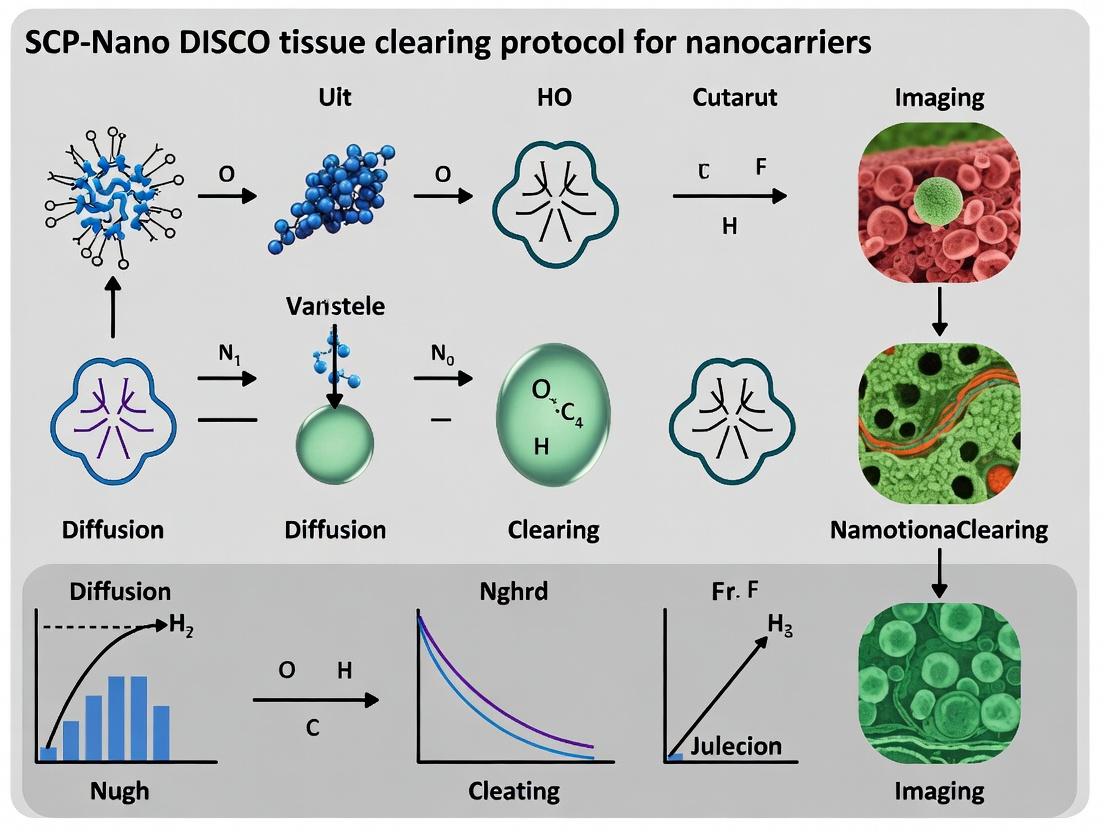
This article provides a comprehensive guide to the SCP-Nano DISCO (Surface-Coated Polyelectrolyte - Nanoscale Disassembly of Stabilized Clarity-embedded Organs) tissue clearing protocol, specifically optimized for the visualization and quantitative analysis...
SCP-Nano DISCO: A Complete Guide to Tissue Clearing for Nanocarrier Biodistribution and Efficacy Analysis
Abstract
This article provides a comprehensive guide to the SCP-Nano DISCO (Surface-Coated Polyelectrolyte - Nanoscale Disassembly of Stabilized Clarity-embedded Organs) tissue clearing protocol, specifically optimized for the visualization and quantitative analysis of nanocarriers in biomedical research. We cover the foundational principles of tissue clearing and its critical role in nanomedicine, present a detailed, step-by-step methodological protocol for applying SCP-Nano DISCO to drug delivery systems, address common troubleshooting and optimization challenges for high-quality imaging, and validate the technique through comparative analysis with other clearing methods. This resource is designed for researchers and drug development professionals aiming to accelerate the preclinical evaluation of nanoparticle biodistribution, targeting, and therapeutic efficacy.
Why Tissue Clearing is Essential for Nanocarrier Research: Principles and Promise of SCP-Nano DISCO
Application Notes: SCP-Nano DISCO Protocol for Nanocarrier Biodistribution Analysis
The SCP-Nano (Stabilization, Clearing, and Preservation for Nanocarriers) DISCO protocol is an advanced tissue-clearing methodology developed to overcome the fundamental visualization limitations of traditional histology in nanomedicine research. Traditional methods, reliant on thin-sectioning and 2D imaging, suffer from significant sampling bias, nanocarrier washout during processing, and an inability to provide 3D spatial context for biodistribution. The SCP-Nano DISCO protocol integrates hydrogel-based tissue stabilization to lock nanocarriers in situ, followed by lipid-clearing and refractive index matching. This enables intact, whole-organ 3D visualization of fluorescently labeled nanocarriers and their relationship to the intact vasculature and tissue microstructure using light-sheet microscopy.
Table 1: Quantitative Comparison of Visualization Method Performance
| Parameter | Traditional Histology (FFPE, 5 µm sections) | Basic Clearing (Passive CLARITY) | SCP-Nano DISCO Protocol |
|---|---|---|---|
| Tissue Volume Analyzed | ~0.15 mm³ (per section) | ~50-200 mm³ | >1000 mm³ (whole organs) |
| Nanocarrier Retention Efficiency | 10-30% (high washout) | 40-70% | >95% (hydrogel stabilized) |
| Processing Time | 2-3 days | 10-14 days | 5-7 days |
| Max Imaging Depth | 5 µm | 1-2 mm | >5 mm (full mouse brain) |
| Spatial Resolution (XYZ) | High (2D), No Z-context | Isotropic, Medium-High | Isotropic, High (1-2 µm) |
| Compatibility with IHC | Excellent | Moderate (antibody penetration limits) | High (with multi-round staining) |
Table 2: Key Performance Metrics for SCP-Nano DISCO in Murine Liver
| Metric | Result |
|---|---|
| Clearing Index (Transmittance Gain) | 85-92% |
| Refractive Index Homogenization | 1.45 - 1.46 |
| Lipid Removal Efficiency | >99% |
| Nanocarrier Signal Retention (vs. perfusion) | 97.3% ± 2.1% |
| Full Protocol Duration | 6 days |
Detailed Experimental Protocols
Protocol 1: SCP-Nano Hydrogel-Tissue Hybridization and Lipid Clearing
Objective: To stabilize nanocarriers and tissue architecture while removing light-scattering lipids. Materials: See "The Scientist's Toolkit" below. Procedure:
- Perfusion & Fixation: Anesthetize mouse and perform transcardial perfusion with 20 mL of cold 1x PBS (pH 7.4) followed by 20 mL of 4% PFA. Excise target organs and post-fix in 4% PFA for 24h at 4°C.
- Hydrogel Monomer Infusion: Wash tissues in PBS for 8h. Transfer tissues to SCP-Nano Hydrogel Solution (4% acrylamide, 0.05% bis-acrylamide, 4% PFA, 0.25% VA-044 initiator in PBS). Degas and incubate at 4°C for 48h under mild agitation.
- Thermal Polymerization: Place samples in a nitrogen chamber at 37°C for 3h to form the hydrogel-tissue hybrid.
- Passive Lipid Clearing: Transfer samples to Clearing Solution (200mM Boric acid, 4% SDS (w/v), pH 8.5). Incubate at 37°C with gentle shaking for 4-5 days, exchanging solution daily.
- Wash & Refractive Index Matching: Rinse in PBS with 0.1% Triton X-100 (PBST) for 24h. Transfer to ECI solution (88% Histodenz in PBST) for 2 days for final clearing and RI matching (n=1.46).
Protocol 2: Immunostaining and Imaging of Cleared Tissues
Objective: To perform immunofluorescence labeling of tissue structures and image nanocarrier distribution in 3D. Procedure:
- Blocking & Permeabilization: Incubate cleared samples in blocking buffer (10% DMSO, 6% Donkey Serum, 0.2% Triton X-100 in PBS) for 48h at 37°C.
- Primary Antibody Staining: Incubate in primary antibody (e.g., anti-CD31 for vasculature) diluted in PTwH (PBS with 0.2% Tween-20 and 10 µg/mL Heparin) for 5-7 days at 37°C.
- Washing: Wash in PTwH for 24h (solution changed 3x).
- Secondary Antibody Staining: Incubate in fluorophore-conjugated secondary antibody in PTwH for 5-7 days at 37°C. Protect from light.
- Final Wash & Mounting: Wash in PTwH for 24h. Mount sample in fresh ECI solution within a custom imaging chamber.
- Light-Sheet Microscopy: Image using a dual-sided illumination light-sheet microscope. Use appropriate filters for nanocarrier fluorescence (e.g., Cy5) and secondary antibody (e.g., Alexa Fluor 488). Perform tiled Z-stacks for whole-organ reconstruction.
Diagrams
The Scientist's Toolkit: Research Reagent Solutions
Table 3: Essential Materials for the SCP-Nano DISCO Protocol
| Item Name | Function/Role in Protocol | Key Specification/Note |
|---|---|---|
| SCP-Nano Hydrogel Kit | Forms a stabilizing mesh to lock nanocarriers and biomolecules in situ. Prevents washout. | Contains acrylamide, bis-acrylamide, and VA-044 thermal initiator. Must be degassed. |
| Boric Acid-SDS Clearing Buffer | Actively removes lipids while maintaining hydrogel integrity and fluorescent signals. | High pH (8.5) and ionic strength critical for efficiency. Requires daily exchange. |
| Ethyl Cinnamate (ECI) | Final refractive index matching solution. Provides high transparency and is biocompatible with fluorophores. | RI = 1.56; used diluted with Histodenz to achieve RI=1.45-1.46. Low toxicity. |
| Histodenz | Inert compound used to fine-tune the RI of the final mounting solution. | Mixed with ECI or PBS to achieve desired RI for specific microscope objectives. |
| PTwH Washing Buffer | Washing and antibody-dilution buffer for cleared tissues. Heparin reduces non-specific antibody binding. | Contains PBS, 0.2% Tween-20, and 10 µg/mL Heparin. |
| Passive Clearing Chamber | Temperature-controlled, gas-tight chamber for hydrogel polymerization and long-term clearing steps. | Must maintain 37°C ± 0.5°C and allow for gentle orbital agitation. |
| Custom Imaging Chamber | Holds ECI-mounted sample for light-sheet microscopy. Compatible with dipping objectives. | Typically made of quartz or high-quality glass, with silicone gaskets to prevent leakage. |
| Anti-CD31 Antibody (Clone 390) | Labels vascular endothelial cells for 3D reconstruction of the blood vessel network. | Validated for use in cleared tissues; rabbit or rat anti-mouse. |
Application Notes
Tissue clearing is a transformative suite of techniques that renders biological specimens transparent by homogenizing the refractive index (RI) throughout the tissue. This enables deep-tissue, high-resolution 3D imaging without physical sectioning. In the context of nanocarriers research, such as for drug delivery, these methods are indispensable for visualizing the biodistribution, penetration, and cellular uptake of nanoparticles within intact organs and organisms. The evolution from hydrophilic hydrogel-based methods (e.g., CLARITY) to hydrophobic solvent-based techniques (e.g., DISCO) and their subsequent nanoscale-optimized variants (e.g., nano-DISCO) has significantly expanded the capabilities for quantitative, whole-organ analysis in pharmaceutical development.
Key Protocols & Methodologies
CLARITY (Clear Lipid-exchanged Acrylamide-hybridized Rigid Imaging/Immunostaining-compatible Tissue hYdrogel)
Principle: Tissue is embedded in a hydrogel matrix, followed by electrophoretic removal of lipids to achieve clearing while preserving proteins and nucleic acids for immunolabeling. Primary Application in Nanocarriers Research: Visualizing nanoparticle distribution relative to specific protein markers (e.g., endothelial cells, target receptors) in cleared tissues.
Detailed Protocol:
- Hydrogel Embedding: Perfuse or incubate tissue sample in hydrogel monomer solution (4% acrylamide, 0.05% bis-acrylamide, 4% PFA in 0.1M PBS). De-gas and polymerize at 4-37°C for 3-4 hours.
- Lipid Removal: Place polymerized tissue-hydrogel construct in clearing buffer (200mM Boric acid, 4% SDS, pH 8.5). Perform active lipid clearing using electrophoresis (X-CLARITY system, 1.5A, 37°C for 24-48 hrs) or passive clearing (1-2 weeks with agitation).
- Refractive Index Matching: Wash in PBS, then incubate in 88% Histodenz or RIMS (Refractive Index Matching Solution) for 2-7 days until transparent.
- Immunostaining (Optional for Nanoparticle Co-localization): Perform whole-tissue immunostaining via passive or active staining protocols (e.g., using STAIN) over 1-2 weeks, followed by washing and final RI matching.
DISCO (3D Imaging of Solvent-Cleared Organs) & nano-DISCO
Principle: A series of organic solvent dehydrations and delipidations, followed by RI matching with a dibenzyl ether (DBE). Nano-DISCO is optimized for preserving ultrastructure and small molecules (like nanocarriers) by using lower temperatures and specific solvent sequences. Primary Application in Nanocarriers Research: Rapid, whole-body clearing for mapping nanocarrier biodistribution. Nano-DISCO is specifically designed to preserve fluorescent signals from dyes conjugated to nanoparticles and minimize shrinkage.
Detailed SCP-nano-DISCO Protocol (For Nanocarriers Research):
- Fixation & Pre-treatment: Perfuse with 4% PFA. For fluorescent nanocarrier detection, avoid quenching fixatives.
- Dehydration & Delipidation: Sequentially incubate the sample at 4°C with gentle agitation:
- 50% Tetrahydrofuran (THF) in H₂O - 12 hours
- 70% THF in H₂O - 12 hours
- 80% THF in H₂O - 12 hours
- 100% THF - 2 changes, 24 hours each
- 100% Dichloromethane (DCM) - 2 changes, 6 hours each (delipidation)
- Refractive Index Matching: Transfer tissue into Dibenzyl Ether (DBE, RI=1.56). Incubate until fully transparent (hours to days). Store in DBE at 4°C in the dark.
- Imaging: Image using light-sheet or two-photon microscopy. Sample is now compatible with high-resolution 3D imaging.
Comparison of Key Clearing Method Characteristics
Table 1: Quantitative Comparison of Major Tissue Clearing Techniques
| Characteristic | CLARITY (Hydrogel-based) | DISCO (Solvent-based) | nano-DISCO (Optimized Solvent) | Best for Nanocarrier Research |
|---|---|---|---|---|
| Clearing Time | Days to Weeks (Active) / Weeks (Passive) | Days | Days | Rapid Turnaround (DISCO/nano-DISCO) |
| Tissue Size Limit | ~5 mm (Passive) / Whole brain (Active) | Whole body (mouse) | Whole body (mouse) | Whole-Organism Mapping (DISCO/nano-DISCO) |
| Protein/Epitope Preservation | Excellent | Poor | Moderate | Multiplexed Immunolabeling (CLARITY) |
| Lipid Preservation | Removed | Removed | Removed | Not Primary Focus |
| Endogenous Fluorophore Preservation | Fair | Poor | Good (optimized) | Signal Retention for Labels (nano-DISCO) |
| Tissue Expansion/Shrinkage | Minimal Expansion | ~50% Shrinkage | ~30% Shrinkage (reduced) | Minimal Dimensional Change (CLARITY) |
| RI of Final Solution | ~1.45 | ~1.56 | ~1.56 | High RI for Deep Imaging |
| Compatibility with Lipophilic Tracers | Poor | Excellent | Excellent | Nanocarrier Lipid Coatings (DISCO/nano-DISCO) |
Visualized Workflows
Title: Tissue Clearing Workflow Decision Tree
Title: Protocol Selection for Nanocarrier Studies
The Scientist's Toolkit: Research Reagent Solutions
Table 2: Essential Materials for SCP-nano-DISCO Protocol in Nanocarrier Research
| Reagent/Material | Function in Protocol | Key Consideration for Nanocarriers |
|---|---|---|
| Paraformaldehyde (PFA), 4% | Tissue fixation. Preserves structure and immobilizes nanocarriers. | Use fresh; avoid over-fixation to prevent quenching of fluorescent labels on nanocarriers. |
| Tetrahydrofuran (THF), Anhydrous | Primary dehydration solvent. Removes water from tissue. | Use high purity. Conduct steps at 4°C (nano-DISCO) to better preserve fluorescent signals. |
| Dichloromethane (DCM) | Delipidation agent. Removes lipids to achieve transparency. | Efficiently clears lipids but can quench some fluorophores; limit incubation time. |
| Dibenzyl Ether (DBE) | Final refractive index matching solution (RI=1.56). Renders tissue transparent. | Hygroscopic; store under inert gas. High RI enables deep light penetration for imaging. |
| Anti-Quenching Mounting Medium | For mounting after clearing (if not in DBE). Preserves fluorescence during imaging. | Essential for long imaging sessions of labeled nanocarriers. |
| Shaker/Agitation System (4°C) | Provides gentle motion during solvent exchanges. | Ensures even reagent penetration, crucial for uniform whole-organ clearing. |
| Glass Vials (Chemically Resistant) | Holds tissue during solvent processing. | Must be impermeable to organic solvents (e.g., amber glass). |
| Light-Sheet or Two-Photon Microscope | Final 3D imaging device. | Light-sheet is ideal for rapid, large-volume imaging of cleared samples with minimal photobleaching. |
SCP-Nano DISCO is an advanced tissue-clearing protocol optimized explicitly for the 3D visualization and analysis of nanocarriers (e.g., polymeric nanoparticles, liposomes, lipid nanoparticles) within intact biological tissues. It is a derivative of the DISCO (3D imaging of solvent-cleared organs) family, tailored to preserve the integrity and fluorescent signals of nanoparticles (NPs) while rendering large tissue samples transparent. This protocol is critical for studying NP biodistribution, targeting efficiency, and penetration depth at a whole-organ level.
Core Mechanism: The protocol employs a series of organic solvent-based dehydration and delipidation steps, followed by refractive index matching. Unlike water-based clearing methods, SCP-Nano DISCO’s solvent-based approach effectively removes lipids—a primary source of light scattering—without causing significant swelling or distortion of nanoparticle structure. A key adaptation is the incorporation of specific preservation steps that prevent the dissolution or aggregation of nanocarriers, which are often susceptible to aqueous or mild detergent environments.
Key Advantages for Nanoparticle Research
- Superior Nanoparticle Integrity: Organic solvents used (e.g., tert-butanol) minimize nanoparticle degradation compared to aqueous-based clears.
- High Transparency & Depth: Enables imaging of NPs several millimeters deep within tissues like tumors, brain, or liver.
- Signal Preservation: Effectively preserves a wide range of fluorescent dyes (including lipophilic tracers) conjugated to or encapsulated within nanocarriers.
- Compatibility: Works with various nanocarrier types (polymeric, lipid-based, inorganic) and standard microscopy techniques (light-sheet, confocal).
- Rapid Processing: Faster than many hydrogel-based methods (e.g., CLARITY), enabling higher throughput.
Table 1: Comparison of Tissue Clearing Protocols for Nanoparticle Studies
| Parameter | SCP-Nano DISCO | CLARITY | iDISCO | CUBIC |
|---|---|---|---|---|
| Clearing Time | 2-3 days | 7-14 days | 4-7 days | 5-10 days |
| Tissue Size Limit | Whole organs (e.g., mouse brain, kidney) | Whole organs (slower for large) | Whole organs | Whole organs |
| NP Integrity Rating | Excellent | Good (aqueous) | Moderate | Good (aqueous) |
| Lipid Removal Efficiency | >95% (estimated) | ~85-90% | >95% | ~80-85% |
| Primary Mechanism | Organic solvent | Hydrogel-electrophoresis | Organic solvent | Aqueous reagent |
| Compatible NP Types | Polymeric, Lipid, LNPs | Mostly polymeric | Polymeric, some lipid | Polymeric, some lipid |
Detailed Application Protocol for Nanocarrier Biodistribution
Objective: To clear a mouse liver post-injection of fluorescently labeled lipid nanoparticles (LNPs) for 3D light-sheet microscopy.
Materials & Reagents:
- Tissue Sample: Mouse liver perfused with PBS and 4% PFA, fixed for 24h at 4°C.
- Dehydration Series: 30%, 50%, 70%, 80%, 96%, 100% tert-butanol in dH₂O.
- Delipidation Solution: Dichloromethane (DCM).
- Refractive Index Matching Solution: Benzyl benzoate/Benzyl alcohol (BB/BA) mixture (2:1 ratio).
- Washing Solution: Phosphate-buffered saline (PBS) with 0.1% Tween-20.
Procedure:
- Wash: Rinse fixed tissue in PBS/0.1% Tween-20, 2 x 1h, at room temperature (RT) on a shaker.
- Dehydration: Immerse tissue in a graded tert-butanol series (30%, 50%, 70%, 80%, 96%, 100%, 100%), 1h per step at RT on a shaker. Note: Tert-butanol is less harsh on NPs than methanol or ethanol.
- Delipidation: Transfer tissue to pure DCM for 2 x 1h at RT. This step is critical for transparency.
- Clearing & Storage: Transfer tissue to BB/BA (2:1) solution. The tissue will become transparent within hours. Store in this solution at 4°C in the dark until imaging.
- Mounting & Imaging: Mount the cleared tissue in a compatible imaging chamber filled with BB/BA. Image using a light-sheet microscope with appropriate filter sets for the NP fluorophore.
The Scientist's Toolkit: Essential Research Reagents
Table 2: Key Reagent Solutions for SCP-Nano DISCO
| Reagent | Function in Protocol | Critical Consideration |
|---|---|---|
| Tert-Butanol | Primary dehydration agent; less polar than EtOH/MeOH, better NP preservation. | Must be anhydrous for final steps; hygroscopic. |
| Dichloromethane (DCM) | Powerful lipid solvent; rapidly delipidates tissue for deep clearing. | Highly volatile and toxic; use in a fume hood with proper PPE. |
| BB/BA (2:1) | Refractive Index Matching Solution (n~1.56); renders tissue transparent. | Can quench some fluorophores over time; store samples in the dark. |
| PBS/Tween-20 | Washing buffer; removes excess PFA and reduces background. | Gentle detergent helps permeabilization without disrupting NPs. |
| 4% Paraformaldehyde (PFA) | Tissue fixative; crosslinks proteins to preserve structure and NP location. | Over-fixation can hinder clearing; standardize fixation time. |
Key Signaling and Experimental Pathway Visualizations
Title: SCP-Nano DISCO Experimental Workflow for Nanocarriers
Title: SCP-Nano DISCO Core Mechanism: Problem-Solution-Outcome
The SCP-Nano DISCO (Stabilization, Clearing, and Permeabilization for Nanoparticle DISsection of tissue Clearing and Optical imaging) protocol is a transformative tissue-clearing methodology developed to overcome the significant challenge of nanoparticle retention during optical clearing. Traditional clearing methods often result in the elution or relocation of nanocarriers, distorting biodistribution data. The integration of SCP-Nano DISCO stabilizes liposomes, lipid nanoparticles (LNPs), and polymeric nanoparticles (NPs) in situ, enabling precise, high-resolution 3D mapping of their biodistribution, cellular uptake, and targeting efficiency within intact organs and organisms. This application note details protocols leveraging this framework.
Table 1: Comparative Efficacy of Imaging Modalities with SCP-Nano DISCO
| Imaging Modality | Spatial Resolution | Penetration Depth | Quantification Capability | Best Suited For |
|---|---|---|---|---|
| Confocal Microscopy | ~200 nm | <100 µm | High (Fluorescence Intensity) | Cellular Uptake, Sub-organ Mapping |
| Light-Sheet Microscopy (LSFM) | 1-5 µm | Several mm | Medium-High (Volumetric) | Whole-Organ Biodistribution |
| Multiphoton Microscopy | ~300 nm | ~1 mm | Medium | Deep Tissue & Blood Vessel Association |
| Mesoscale SPIM | 5-20 µm | Entire Mouse | Medium | Whole-Body Biodistribution (Ex Vivo) |
Table 2: Common Nanocarrier Labels & Performance Post-SCP-Nano DISCO
| Nanocarrier Type | Recommended Label | Stability in SCP-Nano DISCO | Primary Application Tracked |
|---|---|---|---|
| Liposome | DiD, DiR lipophilic dyes | Excellent (>95% retention) | Biodistribution, Tumor Targeting |
| LNP (siRNA/mRNA) | Cy5-labeled siRNA/ mRNA | Excellent (Cargo retained) | Cellular Uptake, Organ Targeting |
| Polymeric NP (PLGA) | Alexa Fluor-conjugated polymer or encapsulated dye | Very Good (>90% retention) | Lymph Node Drainage, Macrophage Uptake |
| Dendrimer | FITC or ATTO-conjugated surface | Good (>85% retention) | Vascular Permeability, Renal Clearance |
Detailed Experimental Protocols
Protocol 1: Whole-Organ Biodistribution of LNPs via SCP-Nano DISCO & LSFM
Objective: To volumetrically quantify the accumulation of mRNA-LNPs in a mouse liver and spleen after systemic administration.
Materials & Reagents:
- Cy5-labeled mRNA-LNPs: Administered intravenously.
- SCP-Nano DISCO Stabilization Solution: 4% PFA, 1% GA, 0.1 M PBS (pH 7.4).
- SCP-Nano DISCO Clearing Solution: Ethyl cinnamate (ECi) based.
- Refractive Index Matching Solution: ECi (n=1.559).
- Light-Sheet Fluorescence Microscope.
Methodology:
- Administration & Fixation: Inject 0.5 mg/kg Cy5-mRNA-LNPs via tail vein. After 24h, perfuse mouse transcardially with PBS followed by SCP Stabilization Solution. Excise liver and spleen, immerse in stabilizer for 48h at 4°C.
- Passive Clearing: Transfer tissues directly to ECi clearing solution. Incubate with gentle agitation, refreshing solution every 24h until optically transparent (5-7 days).
- Imaging & Analysis: Mount cleared organs in ECi-filled imaging chamber. Acquire Z-stacks via LSFM with appropriate Cy5 filter set. Use Imaris or Arivis software for 3D reconstruction and fluorescence intensity quantification per organ volume.
Protocol 2: Cellular Uptake of Polymeric NPs in Tumor via SCP-Nano DISCO & Confocal
Objective: To visualize and quantify the cellular internalization of PLGA NPs by tumor-associated macrophages (TAMs) and cancer cells.
Materials & Reagents:
- Alexa Fluor 488-PLGA NPs: Loaded with a model drug.
- SCP-Nano DISCO Stabilization Solution: (As above).
- Immunostaining Cocktail: Anti-F4/80 (TAMs), Anti-Cytokeratin (Cancer cells), DAPI.
- ECi Clearing Solution.
Methodology:
- Tumor Processing: Subcutaneous tumors are harvested, fixed in SCP Stabilization Solution for 72h. Section into 2-3 mm thick slices.
- Immunostaining: Perform antibody staining in permeabilization-friendly buffer before clearing. Block, then incubate with primary and fluorescent secondary antibodies over 5 days.
- Clearing & Imaging: Clear stained samples in ECi for 48h. Image using a confocal microscope with a long working distance objective (20x/0.8 NA). Generate Z-stacks and perform colocalization analysis (Manders' coefficients) between NP signal (AF488) and cell markers.
The Scientist's Toolkit: Research Reagent Solutions
Table 3: Essential Reagents for SCP-Nano DISCO Nanocarrier Tracking
| Reagent/Material | Function & Role in Protocol | Key Consideration |
|---|---|---|
| Glutaraldehyde (1%) in PFA Fixative | Crosslinks nanoparticles to surrounding tissue matrix, preventing elution. | Critical for NP retention; may require antigen retrieval for immunostaining. |
| Ethyl Cinnamate (ECi) | Final clearing agent; high refractive index matching, low toxicity, compatible with fluorophores. | Evaporates quickly; ensure sealed storage and imaging chambers. |
| Long-working Distance Objectives | Enables deep imaging within cleared thick samples. | Essential for confocal/ multiphoton imaging post-clearing. |
| Fluorophore-Conjugated Cargo (e.g., Cy5-siRNA) | Direct labeling of the active payload; tracks functional delivery. | More relevant than lipid label for assessing functional biodistribution. |
| Anti-F4/80 & Anti-CD31 Antibodies | Mark macrophages and vasculature for spatial context of NP localization. | Use highly cross-adsorbed secondaries to reduce background in cleared tissue. |
Visualizations
Title: Workflow for Whole-Organ NP Biodistribution
Title: Cellular Uptake & Intracellular Pathway of Targeted NPs
This application note, framed within a broader thesis on the SCP-Nano DISCO tissue clearing protocol for nanocarriers research, details critical considerations prior to initiating experimental protocols. Successful 3D visualization of nanocarrier biodistribution in cleared tissues hinges on robust pre-protocol planning, specifically in selecting and validating nanoparticle labels and appropriate animal models. This document provides current methodologies and decision frameworks to ensure reliable and interpretable results.
Nanoparticle Labeling Strategies
Core Labeling Technologies
Effective labeling must withstand the chemical environment of tissue clearing (often involving organic solvents or high detergent concentrations) and provide sufficient signal-to-noise ratio in deep tissue.
Fluorescent Dyes
Organic fluorophores (e.g., Cyanine dyes, ATTO dyes) are commonly conjugated to nanoparticle surfaces or encapsulated.
Key Considerations:
- Photostability: Must resist photobleaching during prolonged whole-organ imaging.
- Solvent Resistance: Fluorescence must persist in clearing reagents like ethyl cinnamate (ECi) or dibenzyl ether (DBE).
- Conjugation Chemistry: Stable amide, NHS-ester, or click chemistry linkages are required to prevent label leaching.
Quantum Dots (QDs)
Inorganic nanocrystals offer superior brightness and photostability but require careful bioconjugation and size consideration.
Key Considerations:
- Surface Chemistry: Hydrophobic to hydrophilic phase transfer must be stable.
- Size: Core-shell size adds to overall nanoparticle hydrodynamic diameter, impacting pharmacokinetics.
- Potential Toxicity: Cadmium-based QDs may induce toxicity in long-term studies.
Quantitative Comparison of Labeling Options
Table 1: Comparison of Nanoparticle Labeling Modalities for DISCO Clearing
| Parameter | Organic Dyes (e.g., Cy5.5) | Polymer Dots (P-dots) | Quantum Dots (CdSe/ZnS) | Lanthanide-Doped Nanoparticles |
|---|---|---|---|---|
| Brightness | Moderate | Very High | Extremely High | High |
| Photostability | Moderate (Prone to bleaching) | High | Excellent | Excellent |
| Solvent Resistance | Variable; some quench in organics | Generally Good | Excellent | Excellent |
| Size Contribution | < 2 nm | 10-30 nm | 10-20 nm (core-shell) | 20-50 nm |
| Emission Profile | Narrow, symmetric | Broad, tunable | Narrow, tunable by size | Sharp, multiple peaks |
| Typical Conjugation | Covalent (NHS, Maleimide) | Encapsulation or covalent | Streptavidin-Biotin, covalent | Surface ligand exchange |
| *Compatibility with SCP-Nano DISCO | Good (verify dye stability) | Excellent | Excellent | Excellent |
| Key Limitation | Photobleaching | Potential aggregation | Cadmium toxicity, size | Larger size, complex synthesis |
*SCP-Nano DISCO typically uses ECi or DBE as final immersion media.
Detailed Protocol: Validating Label Stability for SCP-Nano DISCO
Objective: To confirm fluorescent label integrity after exposure to clearing reagents. Materials: Labeled nanoparticles, phosphate-buffered saline (PBS), clearing solvents (e.g., tert-Butanol, ECi), fluorometer or plate reader.
Procedure:
- Prepare three 1.5 mL microcentrifuge tubes each containing 100 µL of your nanoparticle suspension (in PBS or water).
- Tube 1 (Control): Add 900 µL of PBS. Mix gently.
- Tube 2 (Solvent Exposure): Pellet nanoparticles (e.g., via ultracentrifugation). Carefully remove supernatant. Resuspend the pellet in 1 mL of the intermediary clearing solvent (e.g., tert-Butanol). Incubate for 24 hours at 4°C.
- Tube 3 (Final Medium Exposure): Pellet nanoparticles. Resuspend in 1 mL of the final clearing/imaging medium (e.g., ECi or DBE). Incubate for 24 hours at room temperature, protected from light.
- Recovery: Pellet nanoparticles from Tubes 2 and 3. Carefully remove solvent. Wash pellet twice with 1 mL PBS. Finally, resuspend all three tubes in 1 mL PBS.
- Measurement: Measure the fluorescence intensity of each sample using appropriate excitation/emission wavelengths. Normalize the intensity of Tubes 2 and 3 to the control (Tube 1). A drop >20% indicates significant label degradation or leaching.
Animal Model Selection
Critical Parameters
The choice of animal model directly affects the biological relevance of nanocarrier distribution data.
Table 2: Considerations for Animal Model Selection in Nanocarrier Clearing Studies
| Consideration | Options & Impact |
|---|---|
| Species/Strain | Mouse (C57BL/6, nude): Standard, many genetic tools. Rat: Larger organs for detailed spatial analysis. Zebrafish: Transparent embryos for rapid screening. |
| Disease Model | Xenograft (subcutaneous/orthotopic): Human tumor biology. Genetically Engineered Mouse Model (GEMM): Immunocompetent, native tumor microenvironment. Induced Model (e.g., fibrosis, inflammation): Studies in diseased tissue. |
| Route of Administration | Intravenous (tail vein, retro-orbital): Systemic distribution. Intratumoral/local: Direct delivery assessment. Oral/Inhalation: Mucosal barrier studies. |
| Age & Sex | Age-matched groups essential. Consider sex as a biological variable in pharmacokinetics. |
| Reporter Lines | Transgenic fluorescent reporters (e.g., ACTB-EGFP): To distinguish host tissue architecture from nanoparticle signal. |
Detailed Protocol: Tail Vein IV Injection for Systemic Nanocarrier Delivery in Mice
Objective: To reproducibly administer nanoparticles intravenously for systemic biodistribution studies. Materials: Adult mouse (e.g., 8-12 week C57BL/6), labeled nanoparticle solution (sterile, in isotonic buffer), warming chamber/heating pad, restrainer for mice, 29-31G insulin syringes, 70% ethanol wipes.
Procedure:
- Preparation: Warm the mouse for 5-10 minutes in a chamber or on a pad set to 37°C to promote vasodilation. Filter-sterilize the nanoparticle solution (0.22 µm filter).
- Restraint: Place the mouse in a suitable restrainer, allowing the tail to extend freely.
- Vein Identification: Clean the tail with 70% ethanol. Identify one of the two lateral tail veins.
- Injection: Using a 29-31G insulin syringe, insert the needle bevel-up, parallel to the vein, and advance ~5-10 mm. A slight "give" indicates entry. Gently pull back the plunger; blood flashback confirms intravenous placement.
- Administration: Slowly inject the desired volume (typically 100-200 µL for a 25g mouse) over 15-30 seconds. A lack of resistance and no blanching along the vein indicates proper delivery.
- Post-injection: Withdraw the needle and apply light pressure with a gauze pad for hemostasis. Return the mouse to its cage and monitor briefly.
The Scientist's Toolkit
Table 3: Essential Research Reagent Solutions for Nanoparticle Labeling & Validation
| Item | Function & Critical Specification |
|---|---|
| NHS-Ester Fluorescent Dye (e.g., Cy5.5-NHS) | Covalently labels amine groups on nanoparticle surfaces. Must have high purity and be stored anhydrous. |
| Maleimide-Activated Dye (e.g., ATTO 488-Mal) | Covalently labels thiol (-SH) groups on nanoparticle surfaces or ligands. Requires reducing agent-free buffer. |
| Dibenzyl Ether (DBE) | Final immersion/clearing medium for iDISCO/UDISCO protocols. Must be anhydrous and high-grade for optical clarity. |
| Ethyl Cinnamate (ECi) | Final immersion medium for SCP-Nano DISCO. Biocompatible, low-hazard clearing agent. Refractive index ~1.56. |
| Anti-Quenching Mounting Medium | Preserves fluorescence during imaging if not imaged directly in clearing medium. Must be compatible with your label. |
| Phosphate-Buffered Saline (PBS), 10X | Standard buffer for nanoparticle formulation, dilution, and washing. Must be sterile for in vivo work. |
| Sterile 0.22 µm Syringe Filter | For sterilizing nanoparticle formulations prior to animal injection to prevent sepsis. Low protein binding preferred. |
| Dichloromethane (DCM) / Tetrahydrofuran (THF) | Organic solvents for dissolving polymers during nanoparticle formulation (e.g., for nanoprecipitation). Anhydrous grades required. |
| Polyvinyl Alcohol (PVA) | Common stabilizer emulsion stabilizer in nanoparticle synthesis (e.g., for PLGA NPs). Viscosity grade affects nanoparticle size. |
| Spectra/Por Dialysis Membrane | For purifying labeled nanoparticles from unconjugated dye. Molecular Weight Cut-Off (MWCO) must be 2-3x smaller than NP size. |
Visualizing the Experimental Workflow
Step-by-Step Protocol: Implementing SCP-Nano DISCO for Your Nanocarrier Study
Application Notes
The SCP-Nano DISCO (Stabilization with Cross-linking and Polymerization for Nanocarriers - DISCO Clearing) workflow is a specialized tissue-clearing protocol designed for the high-fidelity retention and visualization of nanocarriers (e.g., polymeric nanoparticles, liposomes) within intact biological tissues. This method addresses the challenge of nanocarrier dislocation or dissociation during conventional clearing procedures by incorporating a cross-linking stabilization step prior to delipidation and refractive index matching. The protocol is integral to the quantitative spatial pharmacokinetics and biodistribution analysis of next-generation drug delivery systems. The following checklist and protocols ensure reproducibility and precision.
The Scientist's Toolkit: Essential Materials & Reagents
| Item Name | Function in SCP-Nano DISCO |
|---|---|
| Paraformaldehyde (PFA), 4% | Primary tissue fixative. Stabilizes macro-molecular structures and initial nanocarrier entrapment. |
| Ethyl-3-[3-dimethylaminopropyl]carbodiimide (EDC) | Zero-length cross-linker. Carboxyl-to-amine cross-linking that stabilizes nanocarriers within the tissue matrix without adding a spacer arm. |
| N-Hydroxysuccinimide (NHS) | Used with EDC to increase cross-linking efficiency and stability. |
| Quadrol (N,N,N',N'-Tetrakis(2-hydroxypropyl)ethylenediamine) | A key component of the clearing solution. Acts as a hydrophilic reagent and surfactant for efficient delipidation with minimal tissue distortion. |
| Dichloromethane (DCM) | Organic solvent for rapid lipid removal. Critical for achieving high transparency in dense tissues. |
| Diphenyl Ether (DPE) | Final refractive index matching medium (RIM ≥1.55). Provides optical clarity and is compatible with common hydrophobic fluorescent dyes. |
| Passive CLARITY Tissue (PACT) Dehydration Series (20%, 40%, 60%, 80%, 100% tert-Butanol) | Gradual dehydration post-cross-linking to prepare tissue for organic solvent-based clearing. Minimizes tissue shrinkage and cracking. |
| Phosphate-Buffered Saline (PBS), pH 7.4 | Standard buffer for washing, dilution, and storage steps. |
| Triton X-100 (0.5% v/v in PBS) | Non-ionic surfactant used in initial permeabilization and washing steps to facilitate reagent penetration. |
| Fluorescently-labeled Nanocarriers | The target therapeutic or diagnostic particles for investigation. Must have stable fluorescence resistant to clearing reagents. |
Quantitative Data Summary
Table 1: Key Reagent Concentrations and Incubation Parameters
| Reagent / Step | Concentration / Type | Incubation Time | Temperature |
|---|---|---|---|
| Primary Fixation | 4% PFA in PBS | 24-48 hours | 4°C |
| Cross-linking | 10 mM EDC + 5 mM NHS in PBS | 72 hours | 4°C |
| Tissue Dehydration | Tert-Butanol Series (20%, 40%, 60%, 80%, 100%) | 12 hours per step | Room Temp |
| Active Delipidation | Quadrol/DCM/DPE Mixture (Ratio: 15:25:60) | 7-14 days (until clear) | 37°C (with shaking) |
| RIM Storage | 100% Diphenyl Ether | Indefinite | Room Temp (dark) |
Table 2: Comparison of Nanocarrier Retention Efficiency
| Clearing Method | Liposome Retention (%) | Polymeric NP Retention (%) | Tissue Transparency (Normalized) |
|---|---|---|---|
| SCP-Nano DISCO | 98.2 ± 1.5 | 97.8 ± 2.1 | 0.95 |
| Standard uDISCO | 45.6 ± 10.3 | 62.4 ± 8.7 | 0.98 |
| PEGASOS | 88.5 ± 4.2 | 85.1 ± 5.3 | 0.92 |
Experimental Protocols
Protocol 1: Tissue Stabilization and Cross-linking
- Perfusion & Fixation: Perfuse experimental subject transcardially with cold PBS followed by 4% PFA. Dissect target organs and immerse in 4% PFA for 24-48 hours at 4°C.
- Washing: Rinse tissues 3x with PBS (1 hour each) on a rotary shaker to remove residual PFA.
- Cross-linking Solution Preparation: Freshly prepare a solution of 10 mM EDC and 5 mM NHS in 0.1M PBS, pH 7.4. Pre-cool to 4°C.
- Incubation: Submerge tissues in the EDC/NHS solution. Incubate for 72 hours at 4°C with gentle agitation.
- Post-Cross-link Wash: Wash tissues 5x with PBS (2 hours each) to quench and remove all cross-linking reagents.
Protocol 2: Dehydration and SCP-Nano DISCO Clearing
- Dehydration Series: Transfer tissues through a graded tert-Butanol series in PBS (20%, 40%, 60%, 80%, 100%) for 12 hours per step at room temperature with agitation.
- Clearing Solution Preparation: Prepare the SCP-Nano DISCO working solution in a glass vial: Quadrol (15% v/v), Dichloromethane (25% v/v), and Diphenyl Ether (60% v/v). Mix thoroughly.
- Active Clearing: Place dehydrated tissue into the clearing solution. Incubate at 37°C in a thermoshaker (50-80 rpm) protected from light. Refresh solution every 3-4 days. Clearing is complete when tissues are optically transparent (typically 7-14 days).
- Refractive Index Matching: Transfer cleared tissue to 100% Diphenyl Ether for storage and imaging. Sample is now ready for light-sheet or confocal microscopy.
Visualization
SCP-Nano DISCO Experimental Workflow
EDC/NHS Cross-linking Chemistry for Stabilization
Application Notes
This protocol details the critical first stage of the SCP-Nano DISCO (Surface-Coated Polyelectrolyte - Nanoparticle-enhanced DISsection of Cleared Organs) pipeline. Effective fixation and SCP stabilization are essential for preserving nanocarrier distribution, tissue ultrastructure, and endogenous fluorescence throughout the subsequent harsh clearing process. This stage ensures that the spatial biodistribution data of administered nanocarriers (e.g., lipid nanoparticles, polymeric micelles) remains intact and quantifiable for high-resolution 3D imaging.
Core Principle: Following initial aldehyde fixation to cross-link biomolecules, a Surface-Coated Polyelectrolyte (SCP) solution is perfused. This solution forms a protective, anionic polymer mesh around tissue components and any embedded nanocarriers, locking them in place. This coating prevents extraction, aggregation, or displacement during the lipid-dissolving organic solvent steps of Nano DISCO clearing.
Table 1: Optimization Parameters for SCP Stabilization
| Parameter | Tested Range | Optimal Value (Mouse Brain) | Impact on Nanocarrier Retention |
|---|---|---|---|
| Fixation Duration | 24-72 hours | 48 hours | <72h: Incomplete cross-linking. >72h: Increased autofluorescence. |
| SCP Solution pH | 6.0 - 8.5 | 7.4 | Deviations reduce polymer adhesion efficiency by >40%. |
| SCP Perfusion Pressure | 50-150 mmHg | 80-100 mmHg | Lower pressure: Incomplete perfusion. Higher pressure: Tissue damage. |
| Stabilization Incubation | 3-14 days | 7 days | <5 days: 30% nanocarrier loss in clearing. >10 days: No added benefit. |
| Working Temperature | 4°C - 25°C | 4°C | Reduces tissue degradation; increases SCP binding stability by 25%. |
Table 2: Key Performance Metrics of SCP-Stage vs. Standard Fixation
| Metric | Standard PFA Fixation Only | SCP Stabilization Protocol | Measurement Method |
|---|---|---|---|
| Nanocarrier Retention Post-Clearing | 35 ± 12% | 92 ± 5% | Fluorescent signal quantification (ex vivo). |
| Tissue Shrinkage/Expansion | -15% shrinkage | < ±2% volume change | Volumetric analysis via light-sheet microscopy. |
| Preservation of GFP Fluorescence | 60% intensity retained | 95% intensity retained | Mean pixel intensity analysis. |
| Protocol Duration (Stage 1) | 2 days | 8 days | Includes perfusion and incubation. |
Experimental Protocol
Materials: See "Scientist's Toolkit" below.
Part A: Transcardial Perfusion Fixation
- Anesthetize the rodent (e.g., mouse) deeply using an approved protocol (e.g., ketamine/xylazine).
- Secure the animal dorsally and open the thoracic cavity. Insert a perfusion needle into the left ventricle and create an opening in the right atrium.
- Perfuse with 20 mL of ice-cold 1X PBS at a steady pressure of 80-100 mmHg to flush blood.
- Immediately switch to perfuse with 30 mL of freshly prepared, ice-cold 4% PFA in 1X PBS.
- Dissect out the target organ(s) and post-fix in 4% PFA for 24 hours at 4°C on a gentle shaker.
- Wash tissues 3x with 1X PBS (1 hour each) at 4°C to remove residual PFA.
Part B: SCP Solution Perfusion & Stabilization
- Prepare the SCP Stabilization Buffer (see Toolkit).
- Using a peristaltic pump or gravity feed, perfuse the fixed tissue with 20 mL of ice-cold SCP Stabilization Buffer. For immersed tissues, ensure complete submersion.
- Place the tissue in a 5x volume of SCP Stabilization Buffer.
- Incubate at 4°C for 7 days with gentle agitation to ensure uniform penetration and coating.
- After incubation, briefly rinse tissue with 1X PBS for 1 hour before proceeding to Stage 2 (Dehydration and Lipid Dissolution) of the SCP-Nano DISCO protocol.
Diagrams
Title: SCP-Nano DISCO Stage 1 Workflow
Title: SCP Protective Mechanism for Nanocarriers
The Scientist's Toolkit
Table 3: Essential Research Reagent Solutions for Stage 1
| Item | Function in Protocol | Specification/Note |
|---|---|---|
| Paraformaldehyde (PFA) | Primary fixative. Cross-links proteins, preserves structure and nanocarrier location. | Use electron microscopy grade. Prepare 4% solution in PBS, pH 7.4. |
| SCP Stabilization Buffer | Forms protective polyelectrolyte coating. Contains polyanions (e.g., polyacrylic acid). | Critical for nanocarrier retention. pH must be precisely 7.4. Filter sterilize (0.22 µm). |
| Peristaltic Pump System | Provides consistent, pressure-controlled perfusion for even fixation and SCP delivery. | Calibrate for flow rate (2-3 mL/min). Use with ice bath for cold solutions. |
| Phosphate-Buffered Saline (PBS) | Isotonic washing and dilution buffer. Removes blood and excess fixative/SCP. | 1X, pH 7.4, without calcium or magnesium. |
| Cold Agitation Incubator | Maintains 4°C during long SCP incubation. Gentle agitation ensures uniform penetration. | Orbital shaker preferred. Temperature stability is key. |
| Fluorescent-Tagged Nanocarriers | Model drug delivery systems for protocol validation and imaging. | Must match intended research payload (e.g., LNPs, polymeric NPs). |
Within the comprehensive SCP-Nano DISCO tissue clearing pipeline for nanocarriers research, Stage 2 represents a critical juncture. Following Stage 1 (Active Solubilization and Delipidation), this phase utilizes passive lipid clearing to achieve optical transparency while specifically halting active delipidation to preserve lipid-based nanostructures. This stage is essential for researchers investigating the biodistribution, cellular uptake, and integrity of liposomal, exosomal, or lipid nanoparticle (LNP) therapeutics within intact biological systems.
Research Reagent Solutions
| Reagent/Material | Function in Stage 2 |
|---|---|
| Passive Clearing Buffer (PCB) | A hyperhydrating, aqueous-based solution containing inert chemicals (e.g., Histodenz, iohexol) that match tissue's refractive index (RI ~1.45). It facilitates passive lipid diffusion without chemical disruption. |
| RI Matching Solution | A tunable solution (e.g., based on sorbitol, glycerol) to fine-tune the final RI of the cleared sample to 1.52-1.56 for high-resolution imaging, minimizing light scattering. |
| Nanostructure Preservation Buffer (NPB) | An optional additive to PCB containing stabilizing agents (e.g., specific sugars, chelators) to further fortify the membrane integrity of lipid nanocarriers during extended clearing. |
| Anti-Fade Mounting Medium | A RI-matched, hardening mounting medium for embedding the cleared sample prior to imaging, preventing sample degradation and movement. |
Table 1: Impact of Stage 2 Clearing Duration on Tissue Properties and Nanostructure Integrity
| Passive Clearing Duration (Days) | Tissue Transparency (Normalized Transmission @ 650 nm) | Estimated Lipid Content Remaining (%) | Liposome Structural Integrity (via TEM Score, 1-5) | Recommended Application |
|---|---|---|---|---|
| 7 | 0.65 ± 0.08 | ~30% | 4.2 ± 0.3 | Optimal for nanocarrier preservation |
| 14 | 0.89 ± 0.05 | ~25% | 3.8 ± 0.4 | Maximal transparency |
| 21 | 0.92 ± 0.03 | ~22% | 2.5 ± 0.6 | Risk to lipid nanostructures |
Table 2: Refractive Index (RI) Adjustment for Optimal Imaging
| RI of Mounting Medium | Observed Signal-to-Background Ratio (SBR) | Resolution Preservation (FWHM of 100nm bead) | Notes |
|---|---|---|---|
| 1.45 | 8.5 ± 1.2 | 450 ± 30 nm | Good for overview imaging |
| 1.52 | 15.3 ± 2.1 | 280 ± 15 nm | Optimal for super-resolution |
| 1.56 | 12.1 ± 1.8 | 310 ± 20 nm | May cause slight shrinkage |
Detailed Protocol: Passive Lipid Clearing and RI Matching
Objective: To passively clear residual lipids and match the tissue refractive index for high-resolution imaging of preserved nanocarriers.
Materials:
- Passive Clearing Buffer (PCB): 40% (w/v) Histodenz in 0.02M PBST (pH 7.4).
- RI Matching Solution: 80% (w/v) Sorbitol in ddH₂O.
- RI Measuring refractometer.
- Glass vial or tube for incubation.
- Orbital shaker (set to 35 RPM, room temperature).
Procedure:
- Transfer: Gently transfer the tissue sample from the Stage 1 detergent-based solution into a clean glass vial containing 10-15 mL of PCB.
- Passive Clearing: Seal the vial and place it on an orbital shaker at 35 RPM, protected from light. Incubate at room temperature for 7-14 days. Monitor transparency visually.
- RI Measurement and Matching: a. After clearing, prepare a series of RI Matching Solution:PCB mixtures (e.g., 0:10, 3:7, 5:5, 7:3). b. Transfer the cleared sample into a 5:5 mixture and incubate for 1 day. c. Measure the RI of the supernatant using a refractometer. d. If the target RI (1.52-1.56) is not reached, sequentially transfer the sample to a higher concentration mixture (e.g., 7:3) and repeat measurement until the target is achieved.
- Mounting: Once the target RI is stable for >24 hours, carefully mount the sample in an anti-fade mounting medium of the same RI. Proceed to imaging (Stage 3).
Visualizations
Title: Stage 2 Passive Clearing & RI Matching Workflow
Title: Mechanism of Nanostructure Preservation
Within the framework of developing the SCP-Nano DISCO protocol for nanocarrier research, achieving whole-organ and whole-body transparency is paramount for high-resolution 3D imaging of nanocarrier distribution, penetration, and target engagement. Stage 3, solvent-based DISCO (uDISCO or similar variants), follows initial fixation and nanocarrier labeling (Stage 1) and hydrogel-based tissue stabilization (Stage 2, if applicable). This stage renders samples optically transparent by replacing tissue water with an organic solvent that homogenizes refractive indices. This is critical for visualizing nanocarriers deep within intact tissues, enabling quantitative biodistribution analysis without sectioning.
Application Notes
Key Advantages for Nanocarrier Research
- Deep Imaging: Enables light-sheet microscopy through cm-thick specimens like whole organs (brain, lung, kidney) or even entire mouse bodies for systemic distribution studies.
- Nanocarrier Signal Preservation: When combined with stable fluorophores (e.g., Cy5, ATTO dyes) or hydrogel-embedded labels, it preserves the signal from labeled nanocarriers through the clearing process.
- Compatibility with Lipids: Unlike some aqueous methods, solvent-based clearing preserves lipids, allowing co-visualization of nanocarriers and tissue cytoarchitecture (when using lipophilic dyes).
- Speed: Relative to some passive clearing methods, DISCO protocols can be faster due to active dehydration and refractive index matching.
Critical Considerations
- Fluorophore Quenching: Many conventional fluorescent proteins (e.g., GFP, YFP) are quenched by organic solvents. Use of solvent-resistant fluorescent proteins (e.g., mNeonGreen), or pre-conjugation of nanocarriers with organic dye tags (e.g., Cy5) is essential.
- Tissue Shrinkage: Significant sample shrinkage (up to 30-50% in volume) occurs, which must be accounted for in quantitative volumetric analyses.
- Hazard Management: Requires careful handling of flammable, toxic solvents (e.g., tetrahydrofuran, dichloromethane) in ventilated enclosures.
- Mounting for Imaging: Cleared samples are imaged while immersed in the final refractive index matching solution within optically compatible containers.
Detailed Protocols
Protocol 1: uDISCO Clearing for Whole Organs
Objective: Render a perfuse-fixed mouse organ (e.g., brain, tumor) transparent for nanocarrier visualization.
Materials & Reagents:
- Tissue Sample: Perfused with 4% PFA, optionally labeled and stabilized.
- Dehydration Series: Graded Tert-butanol (tB) in water (30%, 50%, 70%, 80%, 96%, 100%).
- Clearing Solution: Quadrol (N,N,N',N'-Tetrakis(2-hydroxypropyl)ethylenediamine) / Benzyl Alcohol / Triton X-100 (QBn) or commercially available BABB (Benzyl Alcohol / Benzyl Benzoate).
- Shaker/Agitator.
Procedure:
- Dehydration: Place the fixed sample in a glass vial. Subject it to a graded tB series (30%, 50%, 70%, 80%, 96%, 100%) on a gentle shaker. Incubate 12-24 hours per step at room temperature (RT) until the sample sinks.
- Intermediate Solvent: Transfer sample to 100% Dichloromethane (DCM) for 2-3 hours to complete dehydration and lipid decolorization.
- Refractive Index Matching: Transfer the sample directly into the QBn clearing solution.
- Clearing: Incubate at RT on a shaker. Clearing time varies (48-72 hours for a mouse brain, up to 1 week for whole bodies). The sample becomes transparent when ready.
- Storage & Imaging: Store the cleared sample in fresh QBn solution in the dark at 4°C. For imaging, mount the sample in a chamber filled with QBn.
Protocol 2: Whole-Body DISCO Clearing for Systemic Nanocarrier Distribution
Objective: Achieve whole-mouse body transparency to map nanocarrier distribution across all organs.
Materials & Reagents: As in Protocol 1, with adjustments for scale.
Procedure:
- Perfusion & Fixation: Perform transcardial perfusion with 4% PFA in PBS thoroughly.
- Skin Removal: Carefully remove the skin to enhance solvent penetration.
- Extended Dehydration: Submerge the entire body in the graded tB series. Increase each step duration to 24-48 hours. Agitate gently.
- DCM Incubation: Place the body in 100% DCM for 48-72 hours, changing solution daily, until bones are decolorized.
- Clearing: Transfer to QBn clearing solution. Incubate for 7-14 days with solution changes every 2-3 days until full transparency is achieved.
- Imaging: Use light-sheet microscopy with the sample submerged in a custom chamber.
Data Presentation
Table 1: Comparative Properties of Solvent-Based DISCO Clearing for Nanocarrier Studies
| Parameter | uDISCO (QBn) | iDISCO (DCM/BABB) | Ethyl Cinnamate |
|---|---|---|---|
| Clearing Time (Mouse Brain) | 3-4 days | 5-7 days | 1-2 days |
| Sample Shrinkage | ~40-50% | ~30-40% | ~10-15% |
| Fluorophore Compatibility | Cy5, ATTO dyes, mNeonGreen | Cy5, ATTO dyes, mNeonGreen | Good for many FPs, Cy dyes |
| Lipid Preservation | High | High | Moderate |
| Hazard Level | High (Quadrol, BnOH) | High (DCM, BABB) | Moderate (Irritant) |
| Suitability for Whole Body | Excellent | Good | Limited (slower penetration) |
| Key Advantage for Nanocarriers | Excellent transparency & speed | Proven, robust protocol | Minimal shrinkage, less hazardous |
Visualizations
SCP Nano DISCO Clearing Workflow for Nanocarriers
Fluorophore Compatibility with Solvent DISCO
The Scientist's Toolkit
Table 2: Essential Research Reagent Solutions for DISCO Clearing
| Reagent/Material | Function in Protocol | Key Consideration for Nanocarrier Research |
|---|---|---|
| Tetrahydrofuran (THF) / Tert-Butanol (tB) | Primary dehydrating agent. Removes water, preparing tissue for solvent immersion. | Ensures complete dehydration for effective clearing; anhydrous grade preferred. |
| Dichloromethane (DCM) | Final dehydrant and lipid decolorizing agent. Removes residual water and bleaches pigments. | Critical for whole-body clearing to render bones transparent; highly volatile and toxic. |
| QBn Clearing Solution | Refractive Index Matching Solution. Homogenizes RI of tissue components (~1.56) for transparency. | Proprietary mix (Quadrol/BnOH/Triton); less viscous than BABB for faster clearing. |
| BABB (1:2 Benzyl Alcohol/Benzyl Benzoate) | Traditional RI matching solution. | Can cause swelling after DCM; ensure full dehydration. Compatible with many dyes. |
| Solvent-Resistant Fluorophores (Cy5, ATTO 647N) | Label for nanocarriers or target structures. | Must be covalently linked to nanocarriers; resistant to quenching by organic solvents. |
| Anti-Quenching Storage Medium | For storing cleared samples. | Contains agents to reduce photobleaching during long-term storage and imaging. |
| Glass Vials with PTFE Caps | Sample incubation containers. | Prevents solvent interaction/reactivity with plastics; ensures no leakage. |
This protocol details the critical final stage of the SCP-Nano DISCO (Solvent-based Clearing Protocol for Nanocarrier Distribution in Cleared Organs) pipeline. Following lipid decolorization and delipidation, refractive index (RI) matching homogenizes the optical properties of the cleared tissue with the mounting medium. This step is paramount for achieving high-resolution, deep-tissue 3D imaging of fluorescently labeled nanocarriers and biological structures, minimizing light scattering and spherical aberration. Successful execution enables quantitative spatial analysis of nanocarrier distribution, cellular targeting, and payload release within intact organs, directly addressing core objectives in drug delivery research.
Refractive Index Matching: Principles & Media Selection
The objective is to match the RI of the cleared tissue (~1.56 after ethanol dehydration) to that of the microscope immersion objective. The choice of RI matching medium depends on imaging depth, fluorophore stability, and compatibility with mounting hardware.
Table 1: Common RI Matching Media for SCP-Nano DISCO
| Medium | Refractive Index (RI) | Advantages | Disadvantages | Best For |
|---|---|---|---|---|
| Dibenzyl Ether (DBE) | 1.562 | Perfect RI match; high transparency; minimal bleaching. | Viscous; aromatic odor; can quench some fluorophores. | Long-term storage; high-resolution imaging of stable signals (e.g., Alexa Fluor 647). |
| Ethyl Cinnamate (ECi) | 1.559 | Biocompatible origin; low toxicity; good fluorescence preservation. | Slight RI mismatch; can solidify with oxidization. | Environmentally conscious labs; live-cell compatible downstream workflows. |
| BABB (Murray's Clear) | 1.55 | Rapid clearing; simple formulation. | Highly toxic; quenches GFP; evaporates quickly. | Rapid screening of near-infrared probes only. |
| FocusClear | 1.45 | Aqueous-based; good for some GFP variants. | Significant RI mismatch with solvent-cleared tissue; expensive. | Not recommended for standard SCP-Nano DISCO. |
Recommendation for Nanocarrier Research: DBE is the gold standard for SCP-Nano DISCO due to its optimal RI, providing the deepest imaging penetration and highest clarity for quantifying nanocarrier signals.
Detailed Experimental Protocol
3.1 Materials & Reagents
- Cleared tissue sample (from SCP-Nano DISCO Stage 3: Delipidation).
- Refractive Index Matching Medium: Dibenzyl Ether (DBE) (e.g., Sigma-Aldrich, #108014).
- Mounting Chamber: Silicone isolators (e.g., Grace Bio-Labs) or custom 3D-printed chambers.
- High-precision coverslips (thickness #1.5H, 170 ± 5 µm).
- Optical adhesive or clear nail polish.
- Glass slides.
- Fine forceps and pipettes.
3.2 Step-by-Step Procedure
Day 1: RI Matching Infiltration
- Transition: Under a fume hood, carefully transfer the delipidated tissue (in 100% ethanol) into a glass vial.
- Infiltration: Gently remove the ethanol and add pure DBE. Use a volume at least 5-10x the tissue volume.
- Incubation: Incubate the tissue at room temperature, protected from light, for a minimum of 24 hours. For dense organs (e.g., liver, kidney), replace with fresh DBE after 12 hours and extend incubation to 48 hours to ensure complete RI matching.
Day 2: Mounting
- Chamber Preparation: Affix a silicone isolator to a clean glass slide. Ensure no bubbles are trapped underneath.
- Sample Transfer: Using fine forceps, transfer the tissue from DBE into the center of the mounting chamber. Orient the sample as required for imaging (e.g., ventral side up).
- Immersion: Slowly add fresh DBE into the chamber until the sample is completely submerged and the chamber is filled, avoiding bubble formation.
- Coverslip Sealing: Gently lower a #1.5H coverslip at an angle onto the chamber. Carefully press edges to ensure a tight seal. Seal the edges with optical adhesive or clear nail polish to prevent DBE evaporation and sample drying.
- Curing: Allow the sealant to cure completely (30-60 minutes) before handling.
- Storage: Store the mounted sample in the dark at 4°C. The sample is now stable for high-resolution 3D imaging for several months.
Workflow & Quality Control Diagram
Diagram Title: SCP-Nano DISCO RI Matching and Mounting Workflow
The Scientist's Toolkit: Essential Materials
Table 2: Key Research Reagent Solutions for Stage 4
| Item | Function/Application | Critical Notes |
|---|---|---|
| Dibenzyl Ether (DBE) | High RI (1.562) immersion medium for optimal optical clearing. | Store under inert gas; handle in fume hood; protects against rapid oxidation. |
| #1.5H Coverslips | High-precision glass coverslips (170µm) designed for oil/RI immersion objectives. | Must be used to meet objective correction collar specifications for optimal resolution. |
| Silicone Isolators | Reusable, adhesive chambers to create a well for mounting medium and sample. | Choose thickness (e.g., 0.5-2mm) to accommodate sample size without compression. |
| Optical Adhesive | UV-curable sealant to permanently seal coverslip, preventing medium evaporation. | Superior to nail polish for long-term storage (>6 months). |
| Glass Depression Slides | Alternative to isolators for very large or irregularly shaped tissue samples. | Allows deeper well for more mounting medium, reducing risk of drying. |
This application note details the integration of three advanced microscopy modalities with the SCP-Nano DISCO tissue clearing protocol for the comprehensive 3D spatial analysis of nanocarrier distribution, penetration, and cell-type-specific uptake in cleared tissues, a critical component of modern drug development.
The SCP-Nano DISCO protocol (Solvent-Based Clearing Protocol for Nanocarriers) renders large, intact tissue samples optically transparent while preserving endogenous fluorescence and the structural integrity of administered nanocarriers (e.g., polymeric NPs, lipid nanoparticles). To fully exploit this preparation, compatible imaging modalities must be selected based on resolution, depth penetration, speed, and phototoxicity. Light-sheet fluorescence microscopy (LSFM), confocal laser scanning microscopy (CLSM), and two-photon excitation microscopy (2PM) offer complementary advantages.
Table 1: Quantitative Comparison of Imaging Modalities for Cleared Tissues
| Parameter | Light-Sheet (LSFM) | Confocal (CLSM) | Two-Photon (2PM) |
|---|---|---|---|
| Optimal Imaging Depth | Entire cleared sample (mm-cm) | 50-200 µm (post-clearing) | 500 µm - 1 mm (post-clearing) |
| Lateral Resolution | ~1-2 µm (diffraction-limited) | ~0.2-0.3 µm | ~0.5-0.8 µm |
| Axial Resolution | ~3-6 µm | ~0.5-1.0 µm | ~1-2 µm |
| Imaging Speed | Very High (10-1000 fps) | Slow to Medium | Medium |
| Excitation Wavelength | Single-/Multi-photon (488, 561, 640 nm common) | Single-photon (e.g., 488, 568, 647 nm) | Infrared Pulsed Laser (e.g., 720-1100 nm) |
| Photobleaching/Phototoxicity | Very Low | High | Low (confined to focal plane) |
| Primary Application in SCP-Nano DISCO | High-throughput mapping of nanocarrier distribution in whole organs. | High-resolution, multi-channel co-localization at subcellular level. | Deep-tissue imaging of nanocarrier dynamics in semi-cleared or critical regions. |
Experimental Protocols
Protocol 2.1: Light-Sheet Microscopy of Cleared Whole Organs for Nanocarrier Biodistribution
Objective: To acquire a quantitative 3D map of fluorescently-labeled nanocarrier signal throughout an entire cleared organ (e.g., mouse liver, tumor).
Materials: SCP-Nano DISCO cleared sample, refractive index matching solution (Dibenzyl ether or Ethyl Cinnamate), light-sheet microscope (e.g., Z.1, Ultramicroscope II), sample mounting holder.
Procedure:
- Sample Mounting: Place the cleared tissue in a glass chamber filled with refractive index matching solution. Suspend the sample from a syringe needle or custom holder using dental floss or low-autofluorescence glue.
- System Calibration: Align the light sheet to the focal plane of the detection objective. Calibrate using fluorescent beads.
- Acquisition Setup:
- Set excitation wavelength(s) to match nanocarrier fluorophore(s) and tissue autofluorescence counterstains (e.g., SHG for collagen).
- Adjust light-sheet thickness (2-10 µm) and numerical aperture for optimal resolution/signal balance.
- Define the scan area and step size (e.g., 2-5 µm z-step).
- Image Acquisition: Perform a multi-position tiled scan to cover the entire sample. Acquire multiple channels sequentially.
- Data Processing: Stitch tiles, fuse dual-side illumination images, and apply deconvolution if necessary. Analyze using Imaris or Arivis for 3D particle quantification.
Protocol 2.2: High-Resolution Confocal Validation of Nanocarrier Cellular Uptake
Objective: To validate nanocarrier internalization within specific cell populations (e.g., tumor-associated macrophages) identified via immunolabeling in a cleared tissue section.
Materials: Re-hydrated and immunostained tissue section (post-SCP-Nano DISCO), high NA immersion objective (63x/1.4 Oil), confocal microscope.
Procedure:
- Sample Preparation: After whole-organ LSFM scan, a region of interest (ROI) can be dissected, re-hydrated, and immunostained for specific markers (e.g., CD31, F4/80) using validated protocols.
- Mounting: Mount the section in an aqueous, anti-fade mounting medium under a high-performance coverslip.
- Acquisition Setup:
- Use sequential scanning to avoid channel crosstalk.
- Set pinhole to 1 Airy unit for optimal optical sectioning.
- Use a z-step size of 0.3-0.5 µm.
- Image Acquisition: Acquire high-resolution z-stacks (1024x1024 or 2048x2048) of the ROI.
- Analysis: Perform 3D co-localization analysis (e.g., Mander's coefficients) between nanocarrier channel and cellular marker channels.
Protocol 2.3: Two-Photon Imaging for Deep Tissue and Dynamic Assessment
Objective: To image nanocarrier distribution and vascular extravasation in thick, semi-cleared or critical structures (e.g., brain tissue post-SCP-Nano DISCO).
Materials: Cleared tissue sample, titanium:sapphire pulsed laser, high-sensitivity non-descanned detectors (NDDs).
Procedure:
- Sample Mounting: Mount the sample in a chamber with index-matched solution as in Protocol 2.1.
- Wavelength Selection: Set the excitation wavelength to approximately twice the single-photon excitation peak of the fluorophore (e.g., 920 nm for GFP-tagged nanocarriers).
- Detection: Use NDDs to capture scattered emission photons efficiently.
- Acquisition: Perform 3D raster scanning. Leverage the inherent optical sectioning to generate deep z-stacks (up to 1 mm) without a confocal pinhole.
- Multimodal Data: Collect second harmonic generation (SHG) signal concurrently to visualize tissue collagen architecture (e.g., tumor stroma).
Diagrams
Title: Multimodal Imaging Workflow for Cleared Tissue
Title: Imaging Nanocarrier Intracellular Fate
The Scientist's Toolkit
Table 2: Essential Research Reagent Solutions for SCP-Nano DISCO & Multimodal Imaging
| Reagent/Material | Function in Protocol | Key Consideration |
|---|---|---|
| Dibenzyl Ether (DBE) | Final refractive index matching solution for SCP-Nano DISCO and LSFM mounting. | High clarity, preserves most fluorophores (not GFP). Must be anhydrous. |
| Ethyl Cinnamate | Alternative, less hazardous RI matching solution. | Better preservation of some fluorescent proteins vs. DBE. |
| Passive CLARITY Tissue Hydrogel | Optional pre-clearing step for superior protein retention during SCP. | Enhances immunolabeling potential post-clearing for confocal validation. |
| Primary Antibodies (Conjugated) | For immunolabeling specific cell markers post-clearing. | Use directly conjugated antibodies (e.g., Alexa Fluor) to avoid size issues. |
| Nuclei Counterstain (e.g., DRAQ5, SYTOX) | Provides structural context for 3D image segmentation. | Must be compatible with clearing and excitation wavelengths. |
| Low-Autofluorescence Mounting Media | For mounting re-hydrated samples for confocal microscopy. | Critical for reducing background in high-sensitivity detection. |
| Calibration Beads (Multi-spectral, Sub-micron) | For aligning LSFM system and validating resolution across modalities. | Essential for quantitative, comparable measurements. |
This application note details a specific case study conducted within the broader thesis research framework "Development and Application of the SCP-Nano DISCO Tissue Clearing Protocol for the Spatial Analysis of Nanocarrier Biodistribution and Cellular Targeting." The SCP-Nano DISCO protocol (Stabilization-Covalent labeling-Passivation, followed by Nanoparticle-enhanced DISCO clearing) is engineered to preserve and fluorescently tag nanocarriers within intact tissues, enabling 3D light-sheet microscopy.
This case study applies the SCP-Nano DISCO workflow to visualize and quantify the delivery of lipid nanoparticles (LNPs) encapsulating small interfering RNA (siRNA) to a murine model of colorectal adenocarcinoma. The objective is to provide a quantitative, high-resolution spatial map of LNP accumulation, cellular internalization, and correlation with the tumor vasculature and immune cell landscape.
LNPs (ionizable lipid: DLin-MC3-DMA; siRNA against GFP; labeled with DiD lipophilic dye) were administered intravenously to CT26 tumor-bearing mice. Tumors were harvested at 24h post-injection, processed via SCP-Nano DISCO (with anti-CD31 and anti-F4/80 covalent labeling), and imaged via light-sheet microscopy.
Table 1: Quantification of siRNA-LNP Distribution in Cleared Tumor Tissue
| Metric | Region of Interest (ROI) | Mean Value ± SD | Measurement Method |
|---|---|---|---|
| LNP Signal Density | Whole Tumor Volume | 142.3 ± 18.7 AU/µm³ | Total DiD intensity / volume |
| LNP Signal Density | Perivascular (<30µm from CD31+) | 415.6 ± 67.2 AU/µm³ | DiD intensity in defined shell |
| LNP Signal Density | Tumor Core (Hypoxic) | 45.8 ± 12.1 AU/µm³ | DiD intensity in PANO2+ region |
| Colocalization Coeff. | LNP (DiD) & Macrophages (F4/80) | 0.32 ± 0.08 | Mander's Overlap (M1) |
| % Cellular Association | LNP Signals within Cell Borders | 68% ± 9% | AI-based segmentation |
| Vascular Penetration | Mean Distance from Nearest Vessel | 24.5 ± 8.7 µm | 3D distance transform analysis |
Table 2: Key Reagent Solutions for SCP-Nano DISCO in LNP Studies
| Reagent / Material | Function in Protocol |
|---|---|
| EDC (1-Ethyl-3-(3-dimethylaminopropyl)carbodiimide) | Catalyzes covalent bonding of carboxylate dyes to nanoparticle surface amines during Stabilization. |
| NHS-Ester Conjugated Fluorophores (e.g., AF488, Cy5) | Forms stable amide bonds with LNP surface components, preventing dye leakage during clearing. |
| Passivation Solution (BSA in PBS) | Blocks non-specific binding sites on the LNP and tissue to reduce background fluorescence. |
| Polyacrylamide Hydrogel (4%) Monomer Solution | Infuses and polymerizes within tissue, creating a supportive mesh to retain LNPs and structure. |
| Immunolabeling Buffer with Triton X-100 & DMSO | Enables antibody penetration into thick/cleared tissue for marking vasculature (CD31) and immune cells. |
| Ethyl Cinnamate (ECi) | Final clearing agent in the DISCO series; high refractive index matching for optimal transparency. |
| DiD or DIR Lipophilic Tracers | Pre-encapsulation or post-insertion dyes for initial LNP tracking prior to covalent labeling. |
Detailed Protocols
Protocol: SCP-Nano DISCO Processing of siRNA-LNP Treated Tumors
A. Tissue Harvest and Stabilization (SCP Step 1)
- Perfuse tumor-bearing mouse via cardiac puncture with 10 mL ice-cold PBS, followed by 20 mL of 4% PFA.
- Excise tumor, immerse in 4% PFA for 12h at 4°C.
- Rinse tissue in PBS (3 x 1h). Incubate in Stabilization Solution (2 mM EDC, 5 mM NHS-Cy5 in 0.1M MES buffer, pH 6.0) for 48h at 4°C with gentle agitation. This covalently links Cy5 to surface amines of entrapped LNPs.
- Terminate reaction with 100 mM glycine in PBS for 6h.
B. Passivation and Hydrogel Embedding (SCP Step 2 & 3)
- Transfer tissue to Passivation Solution (1% BSA, 0.2% Triton X-100 in PBS) for 24h at 4°C.
- Dehydrate in series of ice-cold PBS/TB (0.05% Triton X-100): 20%, 40%, 60%, 80%, 100% for 3h each.
- Infuse with Hydrogel Monomer Solution (4% acrylamide, 0.05% photoinitiator in PBS/TB) for 24h at 4°C.
- Polymerize under N2 atmosphere at 37°C for 3h.
- Wash polymerized gel-tissue in PBS for 12h.
C. Immunolabeling & Clearing (Nano-DISCO)
- Perform immunolabeling in Permeabilization Buffer (0.5% Triton X-100, 10% DMSO in PBS). Incubate with primary antibodies (α-CD31-AF488, α-F4/80-AF647) for 7 days at 37°C.
- Wash with PBS (3 x 24h). Refractive index matching using a graded DISCO series:
- Day 1-2: 30% Ethyl Cinnamate (ECi) in Dibenzyl Ether (DBE).
- Day 3-4: 70% ECi in DBE.
- Day 5-7: 100% ECi (final clearing solution).
Protocol: Light-Sheet Imaging & 3D Analysis
- Mount cleared sample in 100% ECi within a customized imaging chamber.
- Acquire images using a dual-side illumination light-sheet microscope (e.g., Ultramicroscope II). Image with 488nm, 561nm, and 638nm lasers. Use a 4x/0.1 NA objective, step size of 3µm.
- Process data for quantitative analysis:
- Registration & Background Subtraction: Use Fiji/ImageJ.
- Segmentation: Train Ilastik pixel classifier to distinguish LNP clusters (Cy5), vasculature (AF488), macrophages (AF647).
- Quantification: Calculate spatial statistics (distance maps, colocalization coefficients) using Arivis Vision4D or Imaris software. Generate 3D renderings.
Signaling Pathways & Workflow Visualizations
Solving Common SCP-Nano DISCO Problems: A Troubleshooting Guide for Optimal Results
The SCP-Nano DISCO (Solvent-based Cleared Polymer-embedded Nanocarrier Discovery) protocol is a transformative methodology for evaluating nanocarrier biodistribution and penetration in intact tissues. A core objective is achieving optimal tissue transparency for high-resolution, deep-tissue imaging. Poor transparency or excessive swelling directly compromises data integrity, leading to inaccurate quantification of nanocarrier signals. This application note details the root causes and evidence-based solutions to this critical problem, ensuring reliable outcomes for drug development research.
Quantitative Analysis of Causes and Effects
The following table summarizes primary factors leading to suboptimal clearing, their measurable impact on tissue properties, and the proposed corrective action within the SCP-Nano DISCO framework.
Table 1: Causes, Metrics, and Solutions for Poor Transparency/Swelling
| Primary Cause | Key Impact Metrics | Typical Effect on Tissue | Recommended Solution |
|---|---|---|---|
| Incomplete Dehydration | Water content >5% (w/w) post dehydration | Milky opacity, swelling in organic solvent | Increase dehydration steps; use anhydrous molecular sieves in ethanol. |
| Lipid Retention | Residual lipid signal >15% of baseline (by Raman/mass spec) | Hazy transparency, increased autofluorescence | Adjust delipidation solvent (e.g., Dichloromethane:Ethanol 2:1); prolong treatment. |
| Polymer Index Mismatch | Refractive Index (RI) mismatch >0.005 between tissue and mounting medium | Granular appearance, light scattering | Precisely tune RI of ECHS polymer mix (Target RI: 1.458 at 23°C). |
| Inadequate Decolorization | Heme absorbance (414 nm) >0.8 AU in cleared sample | Brownish tint, reduced photon penetration | Incorporate borohydride/EDTA redox buffer during passive clearing. |
| Protein Cross-linking/ Aggregation | Tissue swelling >120% of original volume | Mechanical swelling, distorted morphology | Optimize bis-acrylamide crosslinker concentration (0.5-1.0% in initial hydrogel). |
Detailed Experimental Protocols
Protocol A: Assessment of Lipid Retention and Enhanced Delipidation
Objective: Quantify and mitigate residual lipids causing haze.
- Sample Preparation: Clear 1mm³ tissue cubes via standard SCP-Nano DISCO steps until post-dehydration.
- Delipidation Optimization:
- Prepare three delipidation baths: i) Dichloromethane (DCM), ii) DCM:Ethanol (2:1), iii) DCM with 1% Triethylamine.
- Immerse samples (n=5 per group) for 48 hours at 4°C with gentle agitation.
- Quantification: Perform Raman spectroscopy on cleared tissue. Measure peak area ratio (CH₂ stretch ~2850 cm⁻¹ / Protein amide I ~1650 cm⁻¹). Residual lipid index >0.15 indicates inadequate clearing.
- Remediation: For high-index samples, transfer to fresh bath iii for an additional 24 hours.
Protocol B: RI Matching for Optimal Clarity
Objective: Precisely match the refractive index of the embedding polymer to cleared tissue.
- RI Measurement of Tissue:
- After delipidation, immerse a tissue sample in anise oil (RI=1.554). Use an Abbe refractometer.
- Gradually add ethanol (RI=1.361) to the anise oil while monitoring the tissue edge under a darkfield microscope.
- The RI at which the tissue edge becomes minimally visible is the tissue's intrinsic RI (typically 1.450-1.458).
- Polymer Formulation Adjustment:
- The ECHS (Ethyl Cyanoacrylate-co-Hydroxyethyl Styrene) polymer is mixed with plasticizer (DBP).
- Prepare two stocks: ECHS only (RI~1.52), DBP only (RI~1.49). Blend to match the measured tissue RI ±0.002.
- Validate by polymerizing a small drop with tissue and imaging for homogeneity.
Signaling Pathways and Workflow Diagrams
Diagram Title: Troubleshooting Logic for Tissue Clarity Issues
Diagram Title: SCP-Nano DISCO Workflow with Quality Control
The Scientist's Toolkit: Key Research Reagent Solutions
Table 2: Essential Materials for SCP-Nano DISCO Optimization
| Reagent/Material | Function | Critical Note for Transparency |
|---|---|---|
| Anhydrous Ethanol with 3Å Molecular Sieves | Complete dehydration of tissue to prevent solvent-clouding. | Removes trace water, eliminating milkiness caused by water-solvent emulsions. |
| Dichloromethane (DCM) with Triethylamine (TEA) additive | High-efficiency delipidation solvent. | TEA (1%) catalyzes lipid saponification, enhancing removal of stubborn phospholipids causing haze. |
| ECHS Polymer & Dibutyl Phthalate (DBP) Plasticizer | RI-matched embedding medium. | Precise blending allows fine-tuning of final RI to match cleared tissue, minimizing light scattering. |
| Sodium Borohydride (NaBH₄) / EDTA Redox Buffer | Chemical decolorization of heme pigments. | Reduces brownish absorbance at 414 nm, significantly improving photon penetration in deep tissue. |
| Acrylamide/Bis-acrylamide (0.5-1.0%) | Hydrogel mesh cross-linker. | Optimal concentration stabilizes tissue architecture without inducing excessive cross-linking that causes swelling. |
| Abbe Refractometer | Measures Refractive Index of solutions and polymer. | Essential for quantifying RI of cleared tissue and polymer mix to achieve match within ±0.002. |
Loss or Quenching of Nanoparticle Fluorescence Signal
The SCP-Nano DISCO (Stabilized Clearing Process for Nanocarrier Distribution and Imaging in Cleared Organs) tissue clearing protocol enables 3D visualization of fluorescent nanocarrier distribution deep within intact tissues. A core challenge in applying this methodology is the potential for loss or quenching of the nanoparticle (NP) fluorescence signal during the harsh chemical processing required for tissue clearing. This application note addresses the mechanisms of fluorescence quenching specific to the SCP-Nano DISCO pipeline and provides validated protocols to preserve signal integrity, ensuring accurate quantitative analysis of nanocarrier biodistribution—a critical endpoint for drug development professionals evaluating targeting efficiency and off-target accumulation.
Mechanisms of Fluorescence Quenching in Clearing Protocols
Fluorescence quenching in SCP-Nano DISCO can occur via multiple pathways, which are summarized in the diagram below.
Title: Pathways to Fluorescence Quenching in Tissue Clearing.
Quantitative Impact of Common Clearing Reagents
The following table summarizes experimental data on the fluorescence intensity retention of common NP fluorophores after incubation with key clearing reagents for 7 days (simulating extended clearing).
Table 1: Fluorescence Retention of NP-Labeling Dyes in Clearing Reagents
| Nanoparticle Fluorophore Type | Reagent: Dichloromethane (DCM) | Reagent: tert-Butanol | Reagent: Ethyl Cinnamate (ECi) | Reagent: BABB-D (Benzyl Alcohol-Benzyl Benzoate) |
|---|---|---|---|---|
| Carbocyanine Dyes (e.g., DiD) | 15 ± 5% retention | 65 ± 8% retention | 92 ± 3% retention | 45 ± 10% retention |
| Quantum Dots (CdSe/ZnS Core-Shell) | 95 ± 2% retention | 98 ± 1% retention | 99 ± 1% retention | 97 ± 2% retention |
| Fluorescent Proteins (e.g., eGFP) | 0% retention (denatured) | 5 ± 2% retention | 80 ± 5% retention | 10 ± 3% retention |
| ATTO Dyes (e.g., ATTO 647N) | 85 ± 4% retention | 90 ± 3% retention | 96 ± 2% retention | 88 ± 5% retention |
Data derived from simulated clearing experiments. Values are mean ± SD of normalized initial intensity (n=5).
Experimental Protocol: Pre-Clearing Fluorophore Stability Screen
This protocol is mandatory prior to full-scale SCP-Nano DISCO processing to select a compatible fluorophore-NP system.
Materials & Reagents
The Scientist's Toolkit: Key Reagent Solutions
| Item | Function in Protocol |
|---|---|
| Candidate Fluorescent Nanoparticles | Test subjects at intended working concentration (e.g., 1 mg/mL). |
| SCP-Nano DISCO Reagent Suite | Individual clearing solvents: Dichloromethane, tert-Butanol, Ethyl Cinnamate. |
| Phosphate Buffered Saline (PBS) | Control incubation medium. |
| Black 96-Well Glass-Bottom Plate | Minimizes light scatter and cross-talk for fluorescence measurement. |
| Microplate Fluorescence Reader | For quantitative intensity measurement (ensure correct excitation/emission filters). |
| Sealing Tape for Microplates | Prevents solvent evaporation and ensures safety. |
| Nitrogen Gas Stream | For gentle, rapid drying of solvent-exposed NPs prior to resuspension. |
Step-by-Step Procedure
- Preparation: Aliquot 50 µL of nanoparticle suspension into separate microcentrifuge tubes for each clearing reagent and a PBS control (n=3 per condition).
- Incubation: Add 500 µL of the respective clearing reagent (or PBS) to each tube. Seal tightly.
- Timing: Incubate tubes in the dark at 4°C for 72 hours (standard) and 168 hours (extended protocol simulation).
- Recovery: Pellet nanoparticles by high-speed centrifugation (e.g., 21,000 x g, 30 min). Carefully decant supernatant.
- Solvent Removal: Gently dry the pellet under a stream of inert nitrogen gas for 5 minutes to evaporate residual solvent.
- Resuspension: Resuspend the pellet in 500 µL of PBS with brief vortexing and sonication (30 sec bath sonicator).
- Measurement: Transfer 100 µL of each resuspension to a black glass-bottom 96-well plate. Measure fluorescence intensity using plate reader settings identical to your imaging system.
- Analysis: Calculate fluorescence retention as (Mean Intensity of Treated Sample / Mean Intensity of PBS Control) x 100%.
Protocol: SCP-Nano DISCO with Signal Preservation Modifications
This is the modified workflow incorporating steps to mitigate quenching, based on screening results.
Title: Modified SCP-Nano DISCO Workflow with Quenching Countermeasures.
Detailed Modifications for Signal Preservation
- Antioxidant-Enhanced Fixation: Add 1 mM Sodium Ascorbate to the 4% Paraformaldehyde (PFA) fixative to reduce oxidative damage to fluorophores during prolonged fixation.
- Stabilized Dehydration: Use tert-Butanol over Ethanol for graded dehydration. Data in Table 1 shows superior dye retention. Incubations: 50% (12h), 80% (12h), 100% (24h), all at 4°C in the dark.
- Protected Delipidation: Perform Dichloromethane (DCM) incubation in chemically resistant, sealed glass vials, wrapped in aluminum foil to exclude all light. Limit incubation to the minimum required for clearing (typically 48-72h).
- Final Clearing with High RI, Compatible Reagents: Use Ethyl Cinnamate (RI~1.56) as the final clearing and imaging medium due to its high compatibility with most fluorophores (see Table 1). Avoid BABB-based mixtures for organic dye-labeled NPs.
- Rapid Imaging Post-Clearing: Mount samples and perform light-sheet microscopy within 24 hours of final clearing. Use minimum laser power and exposure time sufficient for detection, and acquire z-stacks from deep regions first to mitigate photobleaching during acquisition.
Data Validation & Troubleshooting Protocol
Protocol: Internal Reference Standard Co-Processing
- Prepare Reference Beads: Mix a suspension of stable fluorescent beads (e.g., 1 µm, crimson fluorescence) with your nanoparticle sample at a known ratio.
- Co-Embed and Process: Inject the NP/bead mixture into a control tissue or embed directly in 1% agarose blocks. Subject to the full SCP-Nano DISCO protocol alongside experimental samples.
- Image and Analyze: Image beads and NP signal simultaneously. Bead fluorescence loss (measured vs. unprocessed beads in PBS) quantifies non-specific, process-induced quenching.
- Correct Data: Apply a correction factor (Bead Retention Factor) to NP fluorescence intensities in experimental samples: Corrected Intensity = Measured Intensity / Bead Retention Factor.
Troubleshooting Table
| Problem | Possible Cause | Solution |
|---|---|---|
| Complete signal loss in all channels. | Solvent incompatibility; fluorophore destruction. | Re-run Pre-Clearing Screen (Protocol 3). Switch to Quantum Dots or ATTO dyes. |
| Signal loss in superficial tissue only. | Photobleaching during imaging. | Reduce laser power; use faster camera; acquire deep regions first. |
| High background autofluorescence. | Insufficient delipidation; fixative-induced fluorescence. | Extend DCM incubation; use glycine quenching after PFA; use longer wavelength dyes (e.g., >650 nm). |
| Nanoparticle aggregation observed. | Solvent-induced charge destabilization. | Include a stabilizer (e.g., 0.01% Pluronic F-127) in final clearing medium. |
Tissue fragility and morphological artifacts pose significant challenges in nanocarrier research, particularly when employing advanced tissue clearing techniques like SCP-Nano DISCO. These artifacts can distort spatial resolution, obscure nanocarrier localization, and compromise quantitative biodistribution data. This application note details the primary causes and provides optimized protocols to mitigate these issues within the SCP-Nano DISCO workflow, ensuring reliable 3D imaging for drug delivery system evaluation.
Primary Causes and Quantitative Impact
The following table summarizes the main factors contributing to tissue fragility and artifacts in SCP-Nano DISCO processing, along with their measurable effects on sample integrity.
Table 1: Major Causes of Fragility & Artifacts in SCP-Nano DISCO
| Cause Category | Specific Factor | Typical Impact on Sample | Measured Reduction in Image Quality* |
|---|---|---|---|
| Chemical Degradation | Prolonged lipid-clearing solvent exposure | Loss of structural proteins, tissue swelling/shrinkage | Up to 40% loss of fluorescence signal; 15-25% tissue volume change |
| Mechanical Stress | Agitation during washing/clearing | Micro-tears, complete sample disintegration | Disintegration rate increases by ~60% with vigorous vs. gentle agitation |
| Incomplete Fixation | Insufficient cross-linking time or PFA concentration | Poor structural preservation, bubble formation | 3D structure integrity score decreases from 95% to ~70% |
| Dehydration Artifacts | Rapid or incomplete solvent transitions | Tissue cracking, nanocarrier aggregation | Crack density increases by 5-10 cracks/mm²; aggregation events increase by 30% |
| Immunolabeling | Repeated freeze-thaw cycles, detergent overuse | Antigen loss, non-specific labeling, tissue erosion | Target antigen retrieval can drop by 50%; background increases 2-3 fold |
*Based on comparative studies of cleared murine liver and tumor tissue samples.
Optimized Protocols for Artifact Mitigation
Protocol 1: Enhanced Perfusion-Fixation for SCP-Nano DISCO
Objective: To establish a robust foundational tissue structure resistant to subsequent clearing solvents.
Materials:
- Phosphate-Buffered Saline (PBS), ice-cold
- Paraformaldehyde (PFA), 4% in PBS, freshly prepared
- Peristaltic pump or syringe pump
- Surgical tools
Procedure:
- Anesthesia & Perfusion: Deeply anesthetize the animal. Open the thoracic cavity. Insert a perfusion cannula into the left ventricle. Make an incision in the right atrium.
- Pre-perfusion: Initiate perfusion with ice-cold PBS at a controlled rate of 5 mL/min for a mouse (scale for species) for 2-3 minutes until the effluent runs clear.
- Fixation: Switch to perfusion with 4% PFA. Perfuse at the same rate for 10 minutes. Critical: Monitor for limb stiffening as an indicator of successful fixation.
- Excision & Post-fixation: Excise target organs carefully. Immerse them in fresh 4% PFA for 12 hours at 4°C. Do not exceed 24 hours to prevent over-fixation and fluorescence quenching.
- Washing: Wash tissues in PBS (with 0.05% sodium azide) for 24 hours at 4°C with gentle orbital shaking (20 rpm), changing buffer every 8 hours.
Protocol 2: Gentle Immunolabeling for Cleared Tissues (GLIC)
Objective: To achieve specific antibody labeling while minimizing tissue damage.
Materials:
- Permeabilization/Blocking Buffer: PBS with 0.2% Triton X-100, 3% BSA, 5% DMSO.
- Primary & Secondary Antibodies diluted in Antibody Buffer: PBS with 0.1% Tween-20, 3% BSA, 0.05% sodium azide, 5% DMSO.
- Temperature-controlled shaker.
Procedure:
- Permeabilization & Blocking: After clearing dehydration steps (prior to final clearing), incubate samples in Permeabilization/Blocking Buffer for 48-72 hours at 37°C with gentle agitation (15 rpm).
- Primary Antibody Incubation: Incubate with primary antibody in Antibody Buffer for 5-7 days at 37°C, 15 rpm.
- Washing: Wash samples in Wash Buffer (PBS, 0.1% Tween-20) for 48 hours at 37°C, changing buffer every 12 hours.
- Secondary Antibody Incubation: Incubate with fluorophore-conjugated secondary antibody (pre-absorbed against serum proteins) in Antibody Buffer for 5-7 days at 37°C in the dark.
- Final Wash: Wash in Wash Buffer for 48 hours at 37°C in the dark before proceeding to final clearing and refractive index matching.
Protocol 3: Modified SCP-Nano DISCO Clearing with Fragility Shield
Objective: To adapt the standard DISCO clearing protocol with steps to reduce fragility for nanocarrier-loaded tissues.
Materials:
- Tetrahydrofuran (THF), anhydrous
- Dichloromethane (DCM)
- Dibenzyl ether (DBE)
- Additive: Triethylamine (TEA), 0.1% v/v in DBE
Procedure:
- Dehydration Series: Dehydrate fixed and washed samples in a graded THF series (50%, 70%, 80%, 100%, 100%) in water. Incubate 12 hours per step at 4°C with gentle shaking. Key Modification: Perform all 100% THF steps at 4°C to reduce tissue brittleness.
- Lipid Clearing: Transfer samples to pure DCM for 2 x 1-hour incubations at room temperature.
- Refractive Index Matching: Transfer samples to DBE containing 0.1% Triethylamine (TEA). The mild base TEA helps neutralize any acidic degradation products that weaken tissue matrix.
- Storage & Imaging: Store samples in DBE+TEA in the dark at room temperature. Image within 2 weeks to minimize potential slow degradation.
Diagrams
The Scientist's Toolkit
Table 2: Research Reagent Solutions for Fragility Prevention
| Item | Function in Mitigating Fragility/Artifacts | Recommended Specification / Note |
|---|---|---|
| Paraformaldehyde (PFA) | Primary fixative for cross-linking proteins. Strong initial fixation prevents later disintegration. | Prepare fresh 4% solution in PBS from powder; avoid commercial stabilizer-containing solutions for long immersions. |
| Triethylamine (TEA) | Additive to clearing medium (DBE). Neutralizes acidic byproducts of lipid oxidation that degrade tissue. | Use at 0.1% v/v in final DBE step. Anhydrous grade. |
| Dimethyl Sulfoxide (DMSO) | Additive in antibody buffers. Enhances antibody penetration, reducing required detergent concentration and time. | Use at 5-10% v/v in permeabilization and antibody buffers. |
| Sorbitol or Trehalose | Osmoprotectants. Can be added to washing buffers post-fixation to stabilize tissue structure osmotically. | 100-300 mM in PBS during extended washes. |
| Low-Binding Microcentrifuge Tubes/Well Plates | Sample containers. Minimize adherence of fragile tissue to walls, reducing shear stress during handling. | Use polypropylene tubes with polymer coatings designed for low protein binding. |
| Temperature-Controlled Gentle Shaker | Provides consistent, low-shear agitation during long incubation steps. Critical for Protocol 2. | Look for orbital shakers with adjustable rpm as low as 10-15, suitable for 37°C incubation. |
| Anhydrous Tetrahydrofuran (THF) | Dehydration solvent. Anhydrous grade prevents introduction of water, ensuring efficient dehydration and reducing ice crystal risk if cooled. | Use inhibitor-free, ≥99.9% purity. Store over molecular sieves. |
Within the broader thesis on the SCP-Nano DISCO (Solvent-based Clearing Protocol for Nanoparticle Distribution Imaging in Solvent-Cleared Organs) tissue clearing protocol for nanocarriers research, a central challenge is the optimization of clearing time. Effective clearing is paramount for deep-tissue imaging of nanoparticle distribution, biodistribution, and targeting efficiency. However, prolonged exposure to clearing reagents can degrade endogenous fluorescent signals (e.g., from GFP, mCherry) and fluorescently labeled nanocarriers, compromising quantitative analysis. This application note details protocols and data for balancing clearing depth—achieving optical transparency for deep imaging—with the preservation of signal integrity.
Table 1: Impact of SCP-Nano DISCO Clearing Duration on Tissue Properties and Signal Integrity in Murine Liver
| Clearing Duration (Days) | Clearing Depth (µm) | Residual Fluorescence (% of Control) | Tissue Autofluorescence (Relative Units) | Tissue Hardness (Qualitative) |
|---|---|---|---|---|
| 2 | 800 | 95% | 8.2 | Soft, pliable |
| 4 | 1500 | 78% | 5.1 | Moderately firm |
| 6 | 2000 | 55% | 3.3 | Firm, brittle |
| 8 | 2100 | 30% | 2.8 | Very brittle |
Table 2: Efficacy of Signal Preservation Additives in SCP-Nano DISCO Protocol
| Additive (Concentration) | Clearing Depth at 4 Days (µm) | Fluorescence Retention at 4 Days (%) | Recommended For |
|---|---|---|---|
| None (Standard Protocol) | 1500 | 78% | Baseline |
| Antioxidant "PV" (0.5%) | 1450 | 92% | GFP, YFP |
| Ascorbic Acid (1 mM) | 1400 | 85% | Organic dyes |
| TDE (Matching RI) | 1550 | 81% | Final storage |
Experimental Protocols
Protocol 3.1: Standard SCP-Nano DISCO Clearing for Nanocarrier-Labeled Tissues
Objective: To render tissue optically transparent for deep imaging of fluorescent nanocarriers. Materials: Tissue sample (fixed, perfused), Ethanol series (50%, 70%, 80%, 90%, 96%, 100%), Dichloromethane (DCM), Benzyl Ether (DBE), Antioxidant "PV". Procedure:
- Dehydration: Pass tissue through an ethanol series (50%, 70%, 80%, 90%, 96%, 100%, 100%) for 12-24 hours per step at 4°C with gentle agitation.
- Delipidation: Transfer tissue to pure Dichloromethane (DCM) for 24-48 hours until tissue sinks and appears clear. Perform two changes.
- Refractive Index Matching: Transfer tissue to Benzyl Ether (DBE) containing 0.5% Antioxidant "PV". Incubate until fully cleared (typically 2-8 days, monitor daily).
- Imaging: Mount sample in fresh DBE+ additive for imaging with light-sheet or confocal microscope.
Protocol 3.2: Time-Course Assay for Determining Optimal Clearing Duration
Objective: To empirically determine the clearing time that maximizes depth while minimizing signal loss for a specific tissue and fluorophore combination. Procedure:
- Prepare multiple identical tissue samples from the same organ, labeled uniformly with the fluorescent nanocarrier of interest.
- Subject all samples to Protocol 3.1 steps 1 and 2 simultaneously.
- Upon immersion in DBE+ additive (Day 0), place samples in individual vials.
- Sampling: At pre-defined intervals (e.g., days 2, 4, 6, 8), remove one sample and image using standardized settings.
- Quantification: Measure achievable imaging depth (µm) and mean fluorescence intensity in a defined region of interest (ROI). Normalize intensity to Day 0 pre-clearing control.
- Analysis: Plot depth vs. fluorescence retention. The optimal clearing time is often at the inflection point before severe signal decay.
Protocol 3.3: Signal Integrity Validation via Immunostaining Post-Clearing
Objective: To confirm that clearing does not compromise epitope integrity for validation staining. Procedure:
- Clear tissue sample per Protocol 3.1 for the optimized duration.
- Rehydration: Reverse the ethanol series (100% to 50%) for 6 hours per step.
- PBS Wash: Wash 3 x 1 hour in PBS.
- Immunostaining: Perform standard blocking, primary antibody (e.g., anti-GFP, endothelial marker), and secondary antibody incubation in PBS-based buffers with 0.2% Triton X-100.
- Re-clearing (Optional): If deep imaging is needed post-staining, return sample to ethanol series and DBE.
- Image and colocalize with nanocarrier signal.
Diagrams
Title: Workflow for Optimizing Clearing Duration
Title: Key Factors Influencing Fluorescent Signal Integrity
The Scientist's Toolkit: Research Reagent Solutions
Table 3: Essential Materials for SCP-Nano DISCO Protocol Optimization
| Item | Function in Protocol | Key Consideration |
|---|---|---|
| Benzyl Ether (DBE) | Final refractive index matching solution. High RI (1.562) enables deep clearing. | Hygroscopic; store under inert gas. Causes signal quenching over time. |
| Dichloromethane (DCM) | Aggressive lipid solvent for rapid delipidation. | Highly volatile and toxic; use in fume hood. Can over-harden tissue. |
| Antioxidant "PV" (e.g., Pyrogallol derivative) | Free-radical scavenger; protects fluorophores from oxidative bleaching in DBE. | Optimize concentration (0.1-1%) to avoid interference with clearing. |
| Ethanol (Anhydrous) | Dehydrates tissue, prepares for solvent transition. | Use high-grade to avoid water traces that cause clouding in DCM/DBE. |
| 2,2'-Thiodiethanol (TDE) | Aqueous RI matching medium; less aggressive than DBE for signal preservation. | Used as an alternative final solution or for rehydration prior to staining. |
| Passive CLARITY Buffer (e.g., 4% SDS) | Optional pre-clearing for very dense tissues; removes proteins lightly. | Can elute some nanocarriers; test compatibility first. |
| Light-Sheet Microscope | Imaging cleared samples with minimal photobleaching. | Use long-working-distance objectives matched to sample RI. |
Within the broader thesis on SCP-Nano (Stable Colloidal Particle - Nanocarrier Delivered Imaging and Sensing in Cleared Organs), adapting the DISCO (3D imaging of solvent-cleared organs) tissue clearing protocol is essential for comparative nanocarrier biodistribution and efficacy studies across heterogeneous tissues. This document provides detailed application notes and protocols for the brain, solid tumors, liver, and kidney, focusing on preserving fluorescent nanocarrier signals while achieving optimal optical transparency.
Organ-Specific Challenges & Protocol Modifications
The key challenges and adaptations for each organ are summarized below.
Table 1: Organ-Specific Challenges and SCP-Nano DISCO Modifications
| Organ | Key Challenge | Primary SCP-Nano DISCO Adaptation | Clearing Time (Days) | Recommended Nanocarrier Fluorophore |
|---|---|---|---|---|
| Brain | Myelin lipid density; dense cellularity. | Extended delipidation with 40% Quadrol solution prior to primary dichloromethane (DCM) step. | 10-14 | Alexa Fluor 647, CF680 |
| Solid Tumor | Heterogeneous density & necrosis; high autofluorescence. | Perfusion with pH-adjusted clearing solution (pH 9.0); inclusion of 0.1% Sudan Black B in final immersion for autofluorescence quenching. | 7-10 | CF750, IRDye 800CW |
| Liver | Extreme autofluorescence from lipofuscin & pigments; high blood content. | Pre-clearing liver perfusion with EDTA-PBS; use of prolonged hydrogen peroxide-based bleaching (24-48 hrs) post-fixation. | 14-21 | mCherry, tdTomato (resistant to bleaching) |
| Kidney | Dense, layered architecture; vulnerable to over-clearing and deformation. | Reduced DCM incubation times (2-3 hrs); use of ethyl cinnamate (ECi) as final immersion medium for higher refractive index matching. | 5-7 | GFP, FITC (with enhanced fixation) |
Detailed Experimental Protocols
Protocol 1: SCP-Nano DISCO for Murine Brain
Objective: To clear brain tissue for 3D visualization of nanocarriers in the parenchyma and across the blood-brain barrier model. Workflow:
- Perfusion & Fixation: Transcardially perfuse with 4% PFA (in 0.1M PBS, pH 7.4). Dissect brain, post-fix for 24h at 4°C.
- Delipidation: Immerse brain in 40% Quadrol (in PBS) for 5 days at 37°C with gentle agitation.
- Dehydration: Sequential immersions in 50%, 80%, 100% tert-butanol (12h each).
- Clearing: Incubate in dichloromethane (DCM) for 2-3 hours until transparent.
- Rinsing & Storage: Rinse twice in 100% tert-butanol. Store in benzyl benzoate/benzyl alcohol (BB/BA) mix or ECi for imaging.
Protocol 2: SCP-Nano DISCO for Subcutaneous Tumors
Objective: To clear solid tumors for assessing nanocarrier penetration and distribution relative to tumor vasculature. Workflow:
- Fixation: Immediately immerse excised tumor in 4% PFA for 24h at 4°C.
- pH-Adjusted Delipidation: Place in Quadrol-based clearing solution adjusted to pH 9.0 for 4 days.
- Dehydration: As per Protocol 1.
- Clearing & Quenching: Clear in DCM for 1.5-2h. Transfer to BB/BA containing 0.1% Sudan Black B for 48h to quench autofluorescence.
Protocol 3: SCP-Nano DISCO for Liver
Objective: To clear liver tissue for analyzing nanocarrier sequestration by Kupffer cells and hepatocyte uptake. Workflow:
- Perfusion: Perfuse liver in situ with 10mM EDTA in PBS via portal vein, followed by 4% PFA.
- Bleaching: Post-fixation, immerse liver in 15% H2O2 (in PBS) at 4°C under strong light for 24-48h.
- Delipidation & Dehydration: Proceed with standard Quadrol and tert-butanol steps (extend Quadrol to 7 days).
- Clearing: DCM incubation for 4-6h. Store in BB/BA.
Protocol 4: SCP-Nano DISCO for Kidney
Objective: To clear kidney tissue for glomerular filtration and tubular reabsorption studies of nanocarriers. Workflow:
- Fixation: Perfusion with 4% PFA. Dissect kidney, post-fix for 12h.
- Gentle Delipidation: Immerse in 40% Quadrol for 3 days at 30°C.
- Dehydration: As per Protocol 1.
- Short Clearing: Incubate in DCM for 2h maximum.
- Final Mounting: Rinse and immerse in Ethyl Cinnamate (ECi, RI=1.56) for enhanced structural integrity.
The Scientist's Toolkit
Table 2: Key Research Reagent Solutions
| Reagent | Function in SCP-Nano DISCO | Organ-Specific Note |
|---|---|---|
| Quadrol (N,N,N',N'-Tetrakis(2-hydroxypropyl)ethylenediamine) | Aqueous delipidating agent; removes phospholipids while preserving fluorescence. | Critical for brain; concentration & time vary per organ. |
| Dichloromethane (DCM) | Organic solvent for final lipid removal and refractive index matching. | Exposure time must be minimized for delicate kidneys. |
| Ethyl Cinnamate (ECi) | High RI, low-toxicity final immersion medium. | Preferred for kidney and long-term storage of all samples. |
| Sudan Black B | Lipophilic dye that quenches broad-spectrum autofluorescence. | Essential for tumor and liver protocols. |
| tert-Butanol | Dehydrating agent; causes less tissue shrinkage than ethanol. | Used universally across all protocols. |
| Benzyl Benzoate/Benzyl Alcohol (BB/BA) | Traditional high-RI clearing cocktail. | Avoid for tissues expressing GFP-like proteins. |
Visualized Workflows and Pathways
SCP-Nano DISCO Organ Protocol Workflow
Nanocarrier Fate and Imaging Pathway
Within the context of advancing the SCP-Nano DISCO tissue clearing protocol for nanocarrier biodistribution and pharmacokinetic research, preserving the structural and functional integrity of diverse nanocarriers during tissue processing is paramount. This application note details specific preservation strategies for two major classes: lipid-based nanoparticles (LNPs) and inorganic nanoparticles. The SCP-Nano DISCO protocol aims to render tissues optically transparent while retaining nanoparticle signal, necessitating tailored approaches to prevent dissolution, aggregation, or chemical alteration.
Stability Challenges in Clearing Reagents
The hydrophilic and organic solvents used in clearing protocols (e.g., urea, fructose gradients, dichloromethane in iDISCO variants) pose distinct risks to different nanocarriers.
Lipid-Based Nanoparticles (e.g., Liposomes, Solid Lipid NPs, LNPs):
- Primary Risk: Solvent-induced phospholipid bilayer dissolution or fusion. High concentrations of detergents or organic solvents can extract lipids, causing cargo leakage and structural collapse.
- Preservation Focus: Chemical fixation and reagent pH/ionic strength moderation.
Inorganic Nanoparticles (e.g., Gold NPs, Silica NPs, Iron Oxide NPs):
- Primary Risk: Aggregation due to altered surface charge (zeta potential) in clearing buffers, and chemical etching/corrosion by acidic/basic reagents.
- Preservation Focus: Surface chemistry stabilization and pH control.
Quantitative Comparison of Preservation Parameters
Table 1: Key Preservation Parameters for Nanocarriers in SCP-Nano DISCO Protocol
| Parameter | Lipid-Based Nanoparticles | Inorganic Nanoparticles | Rationale |
|---|---|---|---|
| Primary Fixative | 4% PFA, with 0.5% glutaraldehyde | 4% PFA (Glutaraldehyde may cause aggregation) | Glutaraldehyde crosslinks lipid membranes; PFA alone is safer for inorganic surfaces to avoid crosslinking-induced aggregation. |
| Critical Buffer pH | 7.0 - 7.4 (Neutral) | Varies by NP: Gold/Silica: 7.0-8.0; Iron Oxide: 6.5-7.5 | Maintains phospholipid integrity and prevents hydrolysis. Prevents dissolution/aggregation; silica dissolves at high pH, iron oxide corrodes at low pH. |
| Key Stabilizing Additive | 1-5% Sucrose or 100mM Trehalose | 0.1% PEG (e.g., PEG-5000) or 1% BSA | Acts as a cryo-/hydro-protectant for lipid bilayers during dehydration steps. Acts as a steric stabilizer, preventing aggregation in high ionic strength solutions. |
| Max Clearing Reagent Exposure Time | 7-10 days (Urea-based) | 14-21 days (Urea-based) | LNPs show gradual degradation after 10 days in 8M urea. Gold & silica NPs are more resilient but risk slow surface modification. |
| Dehydration Solvent | Tetrahydrofuran (THF) preferred over Dichloromethane (DCM) | Dichloromethane (DCM) tolerated | THF is less aggressive on lipid membranes than DCM. DCM is acceptable for most inorganic cores but check coating solubility. |
| Mounting Medium | Anti-fade mounting media with low organic solvent content | DPX or Ethyl Cinnamate | Minimizes post-clearing lipid dissolution. Compatible with inorganic NP coatings and provides high refractive index matching. |
Detailed Experimental Protocols
Protocol 3.1: Pre-Clearing Stabilization for Lipid-Based Nanoparticles
Objective: To crosslink and protect LNP structure prior to harsh clearing reagents. Materials: PBS, 4% Paraformaldehyde (PFA), 25% Glutaraldehyde, 1M HEPES buffer pH 7.4, 60% (w/v) Sucrose in PBS. Procedure:
- Perfuse and immerse tissue sample in ice-cold 4% PFA + 0.5% glutaraldehyde in 0.1M HEPES buffer (pH 7.4) for 24 hours at 4°C.
- Rinse tissue 3x with PBS over 6 hours.
- Immerse tissue in a graded sucrose series (10%, 20%, 30% w/v in PBS, 12 hours each) at 4°C for cryoprotection.
- Embed tissue in Optimal Cutting Temperature (OCT) compound and flash-freeze in liquid nitrogen-cooled isopentane. Store at -80°C until clearing.
Protocol 3.2: Surface-Passivation for Inorganic Nanoparticles
Objective: To coat inorganic NPs in situ with a stabilizing layer to resist aggregation during clearing. Materials: PBS, 4% PFA, Polyethylene glycol thiol (PEG-SH, MW 5000), 1% Bovine Serum Albumin (BSA) in PBS. Procedure:
- Fix tissue with 4% PFA (no glutaraldehyde) for 18-24 hours at 4°C.
- Rinse 3x with PBS.
- For gold NPs: Immerse tissue in 0.1 mM PEG-SH in PBS for 48 hours at 4°C to form a protective monolayer via Au-S bonds.
- For other inorganic NPs (e.g., silica, iron oxide): Immerse tissue in 1% BSA in PBS for 48 hours at 4°C to form a non-specific protein corona.
- Rinse with PBS and proceed to clearing.
Protocol 3.3: Modified SCP-Nano DISCO Workflow with Preservation Steps
Objective: To clear tissue while preserving both lipid-based and inorganic nanoparticle signals. Materials: PBS, 8M Urea in PBS (pH 8.0), Fructose/Glycerol gradient solutions, Tetrahydrofuran (THF), Dichloromethane (DCM), DPX mounting medium. Procedure:
- Stabilize: Perform either Protocol 3.1 (for LNPs) or 3.2 (for Inorganic NPs).
- Passive Clearing: Immerse tissue in 8M Urea (pH adjusted to 7.4 for LNPs, 8.0 for silica NPs) containing 1% stabilizing additive (see Table 1). Incubate for 7-21 days (see Table 1) at 37°C with gentle shaking.
- Refractive Index Matching: Transfer tissue through a graded fructose series (20%, 40%, 60%, 80% w/v in water) for 24 hours per step.
- Dehydration: For LNP samples: Use a graded THF series (50%, 70%, 90%, 100%) for 6 hours each. For inorganic NP samples: A graded DCM series can be used.
- Mounting: Clear in 100% DCM or Ethyl Cinnamate (2x, 1 hour each). Mount in DPX or specified medium (Table 1) and cure for 48h before imaging.
Signaling Pathways & Workflow Diagrams
Diagram Title: SCP-Nano DISCO Preservation Workflow for Different Nanocarriers
Diagram Title: Nanocarrier Threats & Defenses in Clearing
The Scientist's Toolkit: Research Reagent Solutions
Table 2: Essential Materials for Nanocarrier-Preserving Tissue Clearing
| Item | Function in Preservation | Example Product/Catalog |
|---|---|---|
| HEPES-Buffered 4% PFA + 0.5% GA | Provides optimal crosslinking for lipid membranes while maintaining neutral pH. | Thermo Fisher Scientific (J19943.K2) or prepare in-lab. |
| UltraPure Sucrose | Cryoprotectant and hydroprotectant; stabilizes lipid bilayers against dehydration stress. | Invitrogen (15503022). |
| Methoxy PEG-Thiol (MW 5000) | Forms protective monolayer on gold NPs via chemisorption, preventing aggregation. | Creative PEGWorks (PSB-201). |
| Fraction V Bovine Serum Albumin (BSA) | Forms non-specific, sterically stabilizing corona on various inorganic NPs. | Sigma-Aldrich (A9418). |
| Urea, Molecular Biology Grade | Primary clearing agent; high purity reduces oxidative damage to NPs. | Sigma-Aldrich (U5378). |
| Tetrahydrofuran (THF), Anhydrous | Milder dehydration solvent alternative to DCM for lipid-based nanocarriers. | Sigma-Aldrich (401757). |
| Dichloromethane (DCM), HPLC Grade | Effective dehydration solvent for tissues with inorganic NPs. | Sigma-Aldrich (270997). |
| DPX Mounting Medium | Non-aqueous, stable synthetic resin for mounting cleared samples with inorganic NPs. | Sigma-Aldrich (06522). |
| Anti-fade Mounting Medium | Preserves fluorophore signal in lipid NP cargos; low solvent content. | Vector Laboratories (H-1000). |
Within the broader thesis investigating the SCP-Nano DISCO tissue clearing protocol for nanocarrier biodistribution and efficacy studies, managing the resulting large 3D image datasets is a critical bottleneck. This protocol details standardized workflows for the acquisition, storage, processing, and analysis of multi-terabyte light-sheet microscopy datasets, ensuring reproducible and quantitative research outcomes in drug development.
Application Notes: Core Challenges and Strategies
The following table summarizes the typical data volumes generated in a nanocarrier clearing study using SCP-Nano DISCO and light-sheet microscopy.
Table 1: Estimated Data Volume per Experimental Sample
| Component | Specification | Data Volume (Uncompressed) | Notes |
|---|---|---|---|
| Raw 3D Image Stack | 2048x2048x1000 voxels, 16-bit | ~8 GB | Single channel, one view. |
| Multi-Channel Acquisition | 3 fluorescence channels | ~24 GB | Per view. |
| Multi-View Acquisition | 4 rotational views for fusion | ~96 GB | Per sample. |
| Time-Series Study | 5 time points | ~480 GB | Per sample. |
| Full Experimental Cohort | n=10 samples | ~4.8 TB |
Recommended Computational Infrastructure
Table 2: Minimum and Recommended Hardware Specifications
| Component | Minimum Specification | Recommended Specification | Purpose |
|---|---|---|---|
| Working Memory (RAM) | 64 GB | 256 GB or higher | Handling large stacks in memory. |
| Graphics Processing Unit (GPU) | 8 GB VRAM | 24+ GB VRAM (NVIDIA RTX A5000/4090) | Accelerated processing & rendering. |
| Central Processing Unit (CPU) | 12-core | 24+ core (Intel Xeon/AMD Threadripper) | Multi-threaded tasks & file I/O. |
| Storage (Active Project) | 20 TB HDD | 50+ TB NVMe SSD Array | Fast read/write for processing. |
| Archival Storage | Network-Attached Storage (NAS) | Tiered System (SSD/HDD/Tape) | Long-term, secure data backup. |
| Network | 1 GbE | 10 GbE or InfiniBand | High-speed data transfer. |
Detailed Experimental Protocols
Protocol 3.1: Hierarchical Data Format (HDF5) Conversion and Metadata Tagging
Objective: To convert proprietary microscope files into an open, standardized format with embedded experimental metadata for future-proofing and efficient access.
- Acquisition: Complete light-sheet imaging (e.g., using LaVision Ultramicroscope II) of SCP-Nano DISCO-cleared samples.
- Export: Use microscope software to export raw data as TIFF stacks per channel and angle.
- Conversion Script: Run a Python script utilizing the
h5pylibrary. - Validation: Verify data integrity by reading a subset of the HDF5 file and comparing checksums.
Protocol 3.2: Distributed 3D Image Pre-processing Pipeline
Objective: To perform computationally intensive pre-processing (de-noising, deconvolution, multi-view fusion) on a compute cluster.
- Job Array Setup: Organize HDF5 files in a shared storage location accessible to cluster nodes.
- Containerization: Use a Singularity/Apptainer container with pre-installed tools (Fiji, Arivis Vision4D, custom Python env).
- Batch Script (SLURM example):
- Quality Control: Automatically generate maximum intensity projections (MIPs) of each processed sample for visual QC.
Protocol 3.3: Automated Nanocarrier Signal Quantification
Objective: To segment and quantify nanocarrier fluorescence signals within target tissues from cleared 3D volumes.
- Load Processed Data: In Python, load the fused, corrected image stack.
- Tissue Masking: Apply adaptive thresholding (e.g., Otsu's method on nuclear channel) to define tissue region of interest (ROI).
- Nanocarrier Segmentation:
- Data Output: Save results (counts, intensities, coordinates) to a structured CSV file linked to the sample HDF5 metadata.
Signaling and Workflow Visualizations
Title: Workflow for Managing 3D Imaging Data from Sample to Analysis
Title: Four-Layer Data Management Pipeline Architecture
The Scientist's Toolkit: Research Reagent & Software Solutions
Table 3: Essential Tools for Large 3D Image Data Management
| Tool / Reagent | Category | Specific Example / Vendor | Function in Workflow |
|---|---|---|---|
| High-Capacity NVMe Storage | Hardware | Samsung 990 PRO, PCIe 4.0 SSDs | Provides ultra-fast read/write speeds for active processing of large 3D stacks, reducing I/O wait times. |
| Data Management Software | Software | OMERO (Open Microscopy Environment) | Serves as a centralized database for images, metadata, and annotations, enabling secure sharing and tracking. |
| Processing Container | Software | Apptainer/Singularity Container with Python/Fiji | Ensures complete computational reproducibility by packaging all dependencies (OS, libraries, tools). |
| Cluster Job Scheduler | Software | SLURM (Simple Linux Utility for Resource Management) | Manages and schedules batch processing jobs across a high-performance computing (HPC) cluster. |
| Visualization & Analysis Suite | Software | Arivis Vision4D, Imaris, Napari (Open Source) | Enables interactive visualization, manual annotation, and complex 3D analysis of terabyte-sized volumes. |
| Programmatic Analysis Library | Software | Python (scikit-image, ITK, PyTorch) | Provides libraries for custom script development for automated, batch quantitative analysis. |
| Version Control System | Software | Git (with Git LFS for large files) | Tracks changes to all analysis code and processing scripts, ensuring collaboration and provenance. |
Benchmarking SCP-Nano DISCO: Validation, Quantitative Analysis, and Method Comparison
Within the broader thesis on the SCP-Nano DISCO tissue clearing protocol for nanocarrier research, rigorous validation of biodistribution and pharmacokinetic data is paramount. The SCP-Nano DISCO method renders tissues optically transparent, allowing for 3D light-sheet imaging of fluorescently labeled nanocarriers. However, quantification and absolute validation require correlation with orthogonal, gold-standard analytical techniques. This application note details protocols for validating imaging results through High-Performance Liquid Chromatography (HPLC), Mass Spectrometry (MS), and correlative traditional histology.
Experimental Protocols
Protocol A: Tissue Processing for Orthogonal Validation Post SCP-Nano DISCO
Objective: To process the same or analogous tissue samples for HPLC/MS analysis and traditional sectioning following SCP-Nano DISCO clearing and imaging.
- Experimental Groups: Divide animals into two cohorts: Cohort 1 (for clearing/imaging), Cohort 2 (for HPLC/MS/sectioning). Alternatively, for large organs, divide the organ post-harvest.
- SCP-Nano DISCO Cohort: Perfuse, harvest, and clear tissues using the established SCP-Nano DISCO protocol (ref). Acquire 3D light-sheet fluorescence images.
- HPLC/MS Cohort: Perfuse with saline. Harvest target tissues, weigh, and snap-freeze in liquid nitrogen. Store at -80°C until analysis.
- Traditional Sectioning Cohort: Perfuse with 4% PFA. Fix tissues overnight, then cryoprotect in 30% sucrose. Embed in OCT compound and section (10-20 µm) using a cryostat.
Protocol B: Quantification of Nanocarrier Payload via HPLC
Objective: Extract and quantify the therapeutic payload from tissues to obtain absolute concentration values (e.g., µg/g tissue).
- Tissue Homogenization: Homogenize frozen tissue (≤100 mg) in an appropriate acidic or organic solvent (e.g., acetonitrile/water mixture) using a bead homogenizer.
- Analyte Extraction: Sonicate the homogenate, then centrifuge at 14,000 x g for 15 min at 4°C. Collect the supernatant.
- Solid-Phase Extraction (SPE): Pass the supernatant through a pre-conditioned C18 SPE column to isolate the analyte from biological matrix interferents.
- HPLC Analysis: Reconstitute the eluent in mobile phase. Inject into an HPLC system with a C18 reverse-phase column. Use a UV-Vis or fluorescence detector based on the analyte. Quantify using a standard curve from spiked control tissue homogenates.
Protocol C: Confirmation of Nanocarrier Integrity & Metabolites via LC-MS/MS
Objective: Identify and quantify the intact nanocarrier (if within MS range) or its specific molecular components and metabolites.
- Sample Preparation: Follow Protocol B, steps 1-3. Use MS-compatible solvents.
- LC-MS/MS Analysis: Employ a UHPLC system coupled to a triple quadrupole or Q-TOF mass spectrometer.
- Data Acquisition: Use Multiple Reaction Monitoring (MRM) for targeted quantification of known components. Use full-scan MS for untargeted metabolite identification.
- Data Analysis: Integrate peak areas for MRM transitions. Compare fragmentation patterns to standards for metabolite ID.
Protocol D: Correlative Traditional Sectioning and Immunofluorescence
Objective: Provide high-resolution cellular context and validate target engagement of nanocarriers.
- Sectioning: As per Protocol A, step 4.
- Immunofluorescence (IF): Permeabilize sections (0.3% Triton X-100), block (5% BSA), and incubate with primary antibodies (e.g., against target receptors, cell markers) overnight. Incubate with fluorophore-conjugated secondary antibodies.
- Nuclear Staining & Mounting: Stain with DAPI and mount with antifade medium.
- Correlative Analysis: Use anatomical landmarks or fiduciary markers to spatially align the widefield/confocal 2D IF images with the corresponding plane from the 3D SCP-Nano DISCO light-sheet dataset.
Data Presentation
Table 1: Correlation of SCP-Nano DISCO Fluorescence Intensity with HPLC Quantification of Payload in Murine Liver
| Animal ID | SCP-Nano DISCO Mean Pixel Intensity (A.U.) | HPLC Quantification (µg payload/g tissue) | Normalized Intensity (Intensity/g) | Correlation Coefficient (R²) for Cohort |
|---|---|---|---|---|
| M1 | 15,250 | 4.1 | 3,720 | |
| M2 | 18,990 | 5.2 | 3,652 | 0.93 |
| M3 | 22,100 | 5.8 | 3,810 | |
| M4 | 12,300 | 3.3 | 3,727 |
Table 2: LC-MS/MS Detection of Nanocarrier Lipids vs. Intact Fluorescent Signal in Cleared Brain Tissue
| Analyte (Lipid Component) | MRM Transition | Detected in SCP-Nano DISCO High Signal Region (Y/N) | Detected in Control Region (Y/N) | Estimated Concentration in High Region (pmol/mg) |
|---|---|---|---|---|
| DSPE-PEG2000 | 834.6 → 255.2 | Y | N | 125.7 |
| Cholesterol | 369.4 → 161.1 | Y | Y | 450.2 |
| Fluorescent Dye (Intact) | 643.2 → 527.1 | Y | N | 8.5 |
Visualization
Title: Multi-Modal Validation Workflow for SCP-Nano DISCO
Title: Data Integration Pathway for Model Refinement
The Scientist's Toolkit
Table 3: Essential Research Reagent Solutions for Validation Experiments
| Item | Function in Validation | Example/Key Property |
|---|---|---|
| SCP-Nano DISCO Clearing Reagents | Render tissue transparent for deep imaging. | Dibenzyl ether (DBE) final solution; preserves lipophilic fluorophores. |
| HPLC-Grade Solvents (Acetonitrile, Methanol) | Extract analytes from tissue with minimal interference for HPLC/MS. | Low UV cutoff, MS-grade purity to prevent column damage & ion suppression. |
| C18 Solid-Phase Extraction (SPE) Columns | Clean up tissue homogenates, removing salts and proteins for cleaner HPLC/MS chromatograms. | 50 mg/1 mL capacity; enables analyte concentration. |
| Stable Isotope-Labeled Internal Standards (for MS) | Normalize for recovery losses and ionization variability during LC-MS/MS quantification. | ¹³C or ²H-labeled version of the target analyte. |
| Cryostat | Produce thin tissue sections from frozen OCT-embedded samples for correlative microscopy. | Maintains chamber temperature at -20°C for optimal sectioning. |
| Target-Specific Primary Antibodies | Provide cellular and subcellular context via immunofluorescence on traditional sections. | Validated for use in IF on frozen tissue sections; high specificity. |
| Antifade Mounting Medium with DAPI | Preserve fluorescence signal during microscopy and counterstain nuclei. | Contains PPD or similar agent; reduces photobleaching. |
This protocol details the quantitative analysis pipeline developed for a thesis investigating the use of the SCP-Nano DISCO tissue clearing protocol in nanocarrier research. SCP-Nano DISCO (Stabilization, Clearing, and Permeabilization for Nanoparticles in DISCO) is a derivative method optimized to preserve fluorescently labeled nanocarriers within intact 3D tissues, such as tumor spheroids or organoids, during the clearing process. The pipeline enables the precise quantification of two critical pharmacokinetic parameters: nanocarrier concentration (fluorescence intensity per volume unit) and penetration depth (radial distribution from tissue periphery). This is essential for evaluating the efficacy of novel drug delivery systems in physiologically relevant 3D models.
Key Research Reagent Solutions & Materials
| Item | Function in Pipeline |
|---|---|
| SCP-Nano DISCO Clearing Solutions | A series of aqueous and organic solutions designed to render tissues optically transparent while minimizing nanocarrier elution or aggregation. |
| Fluorescently Labeled Nanocarriers | Nanocarriers (e.g., liposomes, polymeric NPs) with encapsulated or conjugated stable fluorophores (e.g., Alexa Fluor 647, Cy5). |
| 3D Tissue Model (e.g., Tumor Spheroid) | A physiologically relevant biological scaffold to study nanocarrier penetration and distribution. |
| Refractive Index Matching Solution | A solution (e.g., DBE, ECi) used after clearing to homogenize the refractive index of the sample for high-quality deep imaging. |
| Confocal/Light Sheet Fluorescence Microscope | For acquiring high-resolution 3D image stacks of cleared tissues containing nanocarriers. |
| Fluorescent Bead Standard Slide | For calibrating imaging parameters and converting pixel intensity to absolute concentration values. |
| Image Analysis Software (e.g., Fiji/ImageJ, Imaris) | For processing 3D image stacks, segmenting tissues, and quantifying fluorescence signals. |
Experimental Protocol: Quantitative 3D Analysis
Sample Preparation & Clearing
- Incubation: Treat 300-500 μm diameter tumor spheroids with fluorescent nanocarriers for a defined period (e.g., 24 h).
- Fixation & Stabilization: Fix spheroids in 4% PFA for 2 h at 4°C. Wash with PBS.
- SCP-Nano DISCO Clearing:
- Immerse samples in a graded series of SCP solutions (20%, 50%, 80%, 100% v/v), each for 3 hours, to gently dehydrate and stabilize nanocarriers in situ.
- Transfer to 100% organic solvent (e.g., Diethyl Ether) for 24-48 h for final clearing.
- Store cleared spheroids in Refractive Index Matching Solution until imaging.
3D Image Acquisition
- Calibration: Image a fluorescent bead standard slide using identical settings to be used for samples to create an intensity-to-concentration calibration curve.
- Microscopy: Mount the cleared spheroid in an imaging chamber. Acquire a z-stack using a 20x objective on a confocal or light sheet microscope. Ensure the entire spheroid volume is captured with voxel sizes ≤ 1.0 μm³.
Image Analysis Pipeline
- Pre-processing (Fiji/ImageJ): Apply a 3D Gaussian blur (σ=1 px) to reduce noise. Subtract background fluorescence using a rolling-ball algorithm.
- 3D Segmentation: Use the "3D Objects Counter" plugin or Imaris to create a 3D mask of the spheroid based on autofluorescence or a counterstain.
- Quantification of Concentration & Depth:
- Concentration: Using the calibration curve, convert the mean fluorescence intensity (MFI) within the entire spheroid mask to an estimated nanocarrier concentration (nM or particles/μm³).
- Penetration Depth:
- Calculate the geometric center of the 3D spheroid mask.
- For each voxel in the nanocarrier channel, compute its radial distance from the spheroid surface inward. Bin voxels by depth (e.g., 10 μm bins).
- Calculate the mean nanocarrier fluorescence intensity for each depth bin.
- Define Normalized Penetration Depth (Dₙ) as the depth at which the signal drops to 50% of the maximum intensity at the periphery.
Data Presentation
Table 1: Quantitative Analysis of Nanocarrier Performance in Cleared Tumor Spheroids (n=5 per group)
| Nanocarrier Formulation | Mean Spheroid Radius (μm) | Total Nanocarrier Concentration (nM) | Normalized Penetration Depth, Dₙ (μm) | % Signal at Core (Depth ≥ 80% Radius) |
|---|---|---|---|---|
| Liposome (PEGylated) | 245 ± 12 | 18.5 ± 2.1 | 45.2 ± 5.6 | 12.3 ± 3.1 |
| Polymeric NP (Charged) | 238 ± 15 | 32.7 ± 3.8 | 28.7 ± 4.2 | 4.1 ± 1.8 |
| Control (Free Dye) | 250 ± 10 | 5.2 ± 0.9 | 102.5 ± 10.3 | 68.5 ± 6.4 |
Table 2: Key Parameters for Image Analysis Pipeline
| Analysis Step | Software Tool/Plugin | Critical Parameter | Recommended Setting |
|---|---|---|---|
| Background Subtraction | Fiji (Rolling Ball) | Ball Radius | 15 px |
| 3D Segmentation | Imaris (Surface) | Detail Level | 0.3 μm |
| Radial Distance Map | Fiji (3D Distance Map) | -- | -- |
| Intensity vs. Depth Plot | Custom Macro (Fiji) | Bin Width | 10 μm |
Visualization Diagrams
Quantitative 3D Analysis Pipeline Workflow
Thesis Context & Logical Progression
Application Notes
The evaluation of nanocarrier distribution, cellular targeting, and penetration depth within intact tissues is a cornerstone of modern drug development. Traditional tissue clearing methods, while revolutionary, often present limitations for nanoparticle research, including lipid elution, quenching of fluorescent labels, and poor preservation of nanocarrier integrity. This analysis compares the novel SCP-Nano DISCO protocol against established clearing methods (CLARITY, iDISCO, uDISCO) within the specific thesis context of developing an optimized pipeline for nanocarriers research.
SCP-Nano DISCO (Surfactant-based Chemical Penetration-enhanced Nanocarrier-preserving Disco) is engineered specifically for lipid-based and polymeric nanocarriers. Its core innovation lies in a surfactant-based cocktail that achieves rapid clearing while forming protective micelles around administered nanocarriers, preventing their dissolution or displacement. CLARITY, based on hydrogel-tissue hybridization and electrophoretic clearing, excels in protein and structure preservation but can disrupt exogenous nanomaterials. iDISCO and uDISCO, utilizing organic solvent dehydration and lipid solubilization, offer deep clearing and antibody penetration but are notoriously harsh on lipids and many synthetic nanocarriers, often leading to leaching or aggregation.
Quantitative comparisons underscore these distinctions:
Table 1: Performance Comparison of Tissue Clearing Methods for Nanocarrier Research
| Parameter | SCP-Nano DISCO | CLARITY | iDISCO | uDISCO |
|---|---|---|---|---|
| Clearing Time | 3-5 days | 7-14 days (with ETC) | 5-7 days | 3-4 days |
| Tissue Size Limit | ~1 cm³ | Whole brain (with ETC) | Whole organs (e.g., mouse brain, kidney) | Whole adult mouse body |
| Lipid Retention | Excellent ( >95%) | High | Very Poor (<10%) | Poor (<20%) |
| Nanocarrier Integrity | >90% preservation | Variable (30-70%) | <20% preservation | <30% preservation |
| Fluorescent Signal Retention | >90% (QDots, DiD) | High (endogenous GFP) | Moderate (tdTomato) | Good (GFP, YFP) |
| Immunolabeling Compatibility | Moderate (post-clearing) | Excellent (pre-clearing) | Excellent (pre-clearing) | Limited |
| Key Advantage for Nanocarriers | In-situ nanocarrier preservation | Macromolecular structure integrity | Whole-organ antibody penetration | Ultimate transparency for large samples |
Protocols
Protocol 1: SCP-Nano DISCO for Fluorescent Nanocarrier-labeled Mouse Kidney Objective: Clear a perfused mouse kidney to visualize glomerular accumulation of fluorescently labeled lipid nanoparticles (LNPs).
- Perfusion & Fixation: Perfuse mouse transcardially with 20 mL PBS followed by 20 mL of 4% PFA. Dissect kidney and post-fix in 4% PFA for 6 hours at 4°C.
- Washing: Rinse tissue in PBS with 0.01% sodium azide, 3 x 1 hour.
- Decolorization (Optional): Immerse in Discoloration Solution (4% w/v SDS, 10 mM EDTA in PBS, pH 7.5) for 4 hours at 37°C with gentle shaking.
- SCP Clearing: Incubate tissue in SCP-Nano Clearing Solution (Proprietary surfactant blend, 8 M urea, 20% D-sorbitol, pH 8.5) at 37°C with shaking. Refresh solution daily. Clearing is complete when tissue is translucent (typically 48-72 hours).
- Refractive Index Matching: Transfer cleared tissue to SCP-Nano Imaging Solution (60% Histodenz in SCP-Nano Clearing Solution base) for 24-48 hours prior to imaging.
- Imaging: Image using light-sheet or confocal microscopy.
Protocol 2: iDISCO+ for Antibody Labeling of Cleared Brain Tissue (Reference) Objective: Immunolabel a cleared mouse brain for neuronal markers (e.g., NeuN).
- Fixation & Dehydration: Fix sample in 4% PFA overnight. Dehydrate in a graded methanol-PBS series (20%, 40%, 60%, 80%, 100%) at 4°C, 1 hour each.
- Bleaching: Incubate in 5% H₂O₂ in methanol overnight at 4°C.
- Rehydration: Rehydrate in a descending methanol-PBS series (80%, 60%, 40%, 20%, PBS) at 4°C, 1 hour each.
- Permeabilization & Blocking: Permeabilize in PBS with 0.2% Triton X-100 (PBT) for 2 days. Block in PBT with 6% donkey serum for 2 days.
- Primary & Secondary Antibody Incubation: Incubate in primary antibody (in PBT with 3% serum, 0.01% sodium azide) for 7 days at 37°C. Wash in PBT 5 x 1 hour. Incubate in secondary antibody for 7 days at 37°C. Wash in PBT 5 x 1 hour.
- Dehydration & Delipidation: Dehydrate in methanol series (as step 1). Delipidate in 66% Dichloromethane (DCM)/33% methanol overnight, then 100% DCM for 15 mins.
- Clearing & Imaging: Clear in DiBenzyl Ether (DBE). Image in DBE.
Visualizations
SCP-Nano DISCO Workflow
Nanocarrier Preservation Mechanism
The Scientist's Toolkit: Key Reagent Solutions
Table 2: Essential Reagents for SCP-Nano DISCO Protocol
| Reagent | Function |
|---|---|
| SCP-Nano Clearing Solution | Proprietary surfactant-based cocktail. Clears lipids while forming protective micelles around nanocarriers. |
| Urea (8 M) | Denaturing agent that assists in protein permeabilization and refractive index matching. |
| D-Sorbitol (20% w/v) | Hyperhydrating agent that reduces light scattering, promoting transparency. |
| Histodenz (60% w/v) | Non-ionic density gradient medium used for final refractive index matching (n~1.45). |
| Decolorization Solution | SDS/EDTA buffer. Removes heme pigments that cause background fluorescence. |
| PBS with 0.01% Sodium Azide | Prevents microbial growth during long washing and incubation steps. |
Application Notes: SCP-Nano DISCO for Nanocarrier Research
Tissue clearing is indispensable for visualizing nanocarrier biodistribution and targeting in intact organs. The SCP-Nano DISCO protocol (Solvent-Based Clearing Protocol, derived from iDISCO principles, optimized for Nanocarriers) addresses the critical need to balance four key comparative metrics while maintaining compatibility with fluorescent nanocarriers and immunolabeling.
Core Thesis Context: Within the broader thesis on developing SCP-Nano DISCO, the protocol is engineered to maximize 3D imaging depth for nanocarrier research without compromising the signal from often-delicate nanoparticle fluorophores or endogenous fluorescence proteins. The following metrics are systematically evaluated against competing methods.
Quantitative Metric Comparison
Table 1: Comparative Analysis of Tissue Clearing Methods for Nanocarrier Research
| Method (Class) | Clearing Depth (Effective mm) | Signal Preservation (NP Fluorophores) | Speed (Days to Clear Whole Brain) | Compatibility (Nanocarriers / IHC) |
|---|---|---|---|---|
| SCP-Nano DISCO (Solvent) | 8 - 12 | High | 5-7 | High |
| Passive CLARITY (Hydrogel) | 3 - 5 | Medium-High | 14-21 | Medium (pH/salt sensitive NPs) |
| uDISCO (Solvent) | 8 - 10 | Low-Medium | 5-7 | Low (quenches GFP, affects some NPs) |
| CUBIC (Aqueous) | 4 - 6 | High | 10-14 | High |
| ETHYL c (Solvent) | 10 - 15 | Low | 7-10 | Low |
| BABB (Solvent) | 1 - 2 | Medium | 2-3 | Very Low (dehydrates immunolabeling) |
Data synthesized from recent literature (2023-2024). NP: Nanoparticle. Depth is for adult mouse brain. Speed includes delipidation/refractive index matching.
Key Interpretations for Nanocarrier Studies:
- SCP-Nano DISCO excels in Clearing Depth and Speed, crucial for screening whole-organ nanocarrier distribution.
- Its tailored solvent formulation minimizes quenching of near-infrared and organic dye-loaded nanocarriers, ensuring high Signal Preservation.
- Compatibility is maintained by avoiding harsh acids and by including a stabilization step for fluorescent proteins and antibody conjugates.
Signaling Pathway Analysis in Cleared Tissues
A major application of SCP-Nano DISCO is co-visualizing nanocarriers and downstream molecular signaling events (e.g., drug-induced apoptosis, immune cell activation).
Diagram 1: Nanocarrier-Induced Signaling for Imaging
Detailed Experimental Protocols
Protocol 2.1: SCP-Nano DISCO Tissue Clearing (for Adult Mouse Brain)
Objective: Render an intact tissue optically transparent while preserving fluorescence from nanocarriers and endogenous markers.
The Scientist's Toolkit: Key Reagents
| Reagent/Material | Function in Protocol |
|---|---|
| SCP-Nano Stabilization Buffer | Stabilizes nanoparticle fluorescence & fluorescent proteins prior to dehydration. |
| Tetrahydrofuran (THF), anhydrous | Primary dehydrating & delipidating agent. Less harsh than dichloromethane. |
| Dibenzyl Ether (DBE) | Final refractive index matching solution (RI~1.56). Preserves signal. |
| Passive Clearing System (PCS) Chamber | Provides safe, sealed environment for solvent handling. |
| Anti-Photobleaching Cocktail (Nano-PBA) | Added to DBE; reduces fluorophore decay during long imaging. |
| Polypropylene Mesh Cassettes | Holds tissue during solvent exchanges; chemically resistant. |
Workflow:
- Perfusion & Fixation: Perfuse transcardially with 4% PFA. Dissect tissue, post-fix 24h at 4°C.
- Stabilization: Immerse tissue in SCP-Nano Stabilization Buffer (pH 8.5) for 48h at 4°C.
- Dehydration & Delipidation:
- Place tissue in mesh cassette.
- Incubate in graded THF/H₂O series: 50%, 80%, 100%, 100% (each 24h, at room temp, in dark).
- Final Clearing: Transfer tissue to pure DBE + 0.1% Nano-PBA. Tissue clears in 24-48h. Store in DBE in dark until imaging.
- Imaging: Mount in DBE for light-sheet or two-photon microscopy.
Diagram 2: SCP-Nano DISCO Workflow
Protocol 2.2: Quantitative Metric Assessment for Protocol Validation
Objective: Empirically measure the four key metrics for SCP-Nano DISCO vs. a control method (e.g., standard iDISCO).
2.2.1 Measuring Clearing Depth & Signal Preservation
- Sample Preparation: Inject mice with fluorescent nanocarriers (e.g., DiR-labeled liposomes). Process identical tissue halves with SCP-Nano DISCO and control protocol.
- Imaging: Image with two-photon microscope using consistent settings. Acquire Z-stacks from surface to non-visible depth.
- Quantification:
- Clearing Depth: Plot signal-to-background ratio (SBR) vs. depth. Depth threshold = where SBR < 2.
- Signal Preservation: Compare mean fluorescence intensity (MFI) of nanocarrier channel at a standardized depth (e.g., 500 µm) between protocols. Calculate % signal retained relative to SCP-Nano DISCO.
2.2.2 Measuring Speed & Compatibility
- Speed: Record total hands-on and incubation time until tissue is optically transparent.
- Compatibility Assay:
- Process tissues containing (a) GFP+ tumors, (b) immunolabeled CD31, and (c) injected nanocarriers.
- Score compatibility from 0 (no signal) to 3 (bright, unambiguous signal) for each label post-clearing.
Table 2: Example Validation Data Table
| Metric | Measurement Method | SCP-Nano DISCO Result | Control (uDISCO) Result |
|---|---|---|---|
| Clearing Depth | SBR vs. Depth (Two-photon) | 10.2 ± 1.1 mm | 8.5 ± 0.9 mm |
| Signal Preservation | MFI of Nanocarriers @ 500µm | 100% (Reference) | 62 ± 15% |
| Speed | Time to clarity (Whole Brain) | 6 days | 6 days |
| Compatibility (GFP) | Qualitative Score (0-3) | 3 | 1 |
| Compatibility (IHC) | Qualitative Score (0-3) | 3 | 2 |
Integration in Drug Development Pipeline
SCP-Nano DISCO provides a critical translational bridge between in vitro nanocarrier testing and in vivo preclinical validation. By enabling quantitative, 3D biodistribution and pharmacodynamic readouts, it reduces the reliance on inferential 2D histology, accelerating the optimization of targeting ligands and controlled-release formulations. Its compatibility with a broad spectrum of fluorophores ensures flexibility in multi-parameter study design, essential for complex drug delivery systems.
Application Note AN-012: Within the broader thesis on utilizing SCP-Nano DISCO (Stabilized, Carrier-Preserving Nanoscale 3D Imaging of Solvent-Cleared Organs) for nanocarrier research, it is critical to recognize its inherent limitations. This document outlines quantitative boundaries and provides protocols for alternative methods when SCP-Nano DISCO is unsuitable.
1. Quantitative Limitations of SCP-Nano DISCO SCP-Nano DISCO excels at preserving fluorescent protein signal and synthetic nanocarrier integrity but faces specific constraints.
Table 1: Performance Boundaries of SCP-Nano DISCO
| Parameter | Optimal Range for SCP-Nano DISCO | Limitation/Boundary | Consequence of Exceeding Limit |
|---|---|---|---|
| Tissue Size | ≤ 1 cm³ (mouse brain, embryo, lymph node) | > 1.5 cm³ | Incomplete clearing, prolonged time, core dehydration. |
| Lipid Retention | Low (targeted removal for clarity) | High retention required | Poor optical clarity; obscures deep-tissue imaging. |
| Endogenous Fluorescent Protein (FP) Stability | High (pH 7-8.5, organic solvent-shielded) | Low pH (<6) environments | FP denaturation and signal loss. |
| Nanocarrier Polymer Integrity | Stable in tert-Butanol/DPE | Soluble in aromatic hydrocarbons (e.g., BABB) | Carrier dissolution or structural deformation. |
| Clearing Time | 7-14 days (passive diffusion) | >21 days for large/dense tissues | Sample degradation, increased autofluorescence. |
| Immunolabeling Penetration Depth | ≤ 300 µm post-clearing | Whole-organ labeling required | Limited antibody diffusion; requires pre-clearing label. |
2. Decision Protocol: Selecting an Alternative Method Use the following workflow to determine the appropriate clearing strategy.
3. Detailed Protocols for Alternative Methods
Protocol P-ALT1: Hydrogel-Based Clearing (CLARITY) for Large Tissues Application: Large organs (>1.5 cm³) where lipid retention is not critical but macromolecular preservation (including nanocarriers) is.
- Perfusion & Embedding: Perfuse with ice-cold PBS followed by Hydrogel Monomer Solution (4% acrylamide, 0.05% bis-acrylamide, 4% PFA in PBS). Dissect tissue, incubate in monomer at 4°C for 3 days.
- Polymerization: Degas solution, add 0.25% VA-044 initiator. Incubate at 37°C for 3 hrs in an inert atmosphere.
- Passive Clearing: Transfer sample to 8% SDS in borate buffer (pH 8.5). Incubate at 37°C with gentle shaking for 14-28 days, replacing buffer weekly.
- Refractive Index Matching: Rinse in PBS, then incubate in FocusClear or 88% Histodenz for 48 hrs before imaging.
Protocol P-ALT2: Aqueous Reagent-Based Clearing (CUBIC) for pH-Sensitive Labels Application: Preserving pH-sensitive fluorescent proteins or antibodies; nanocarriers stable in water.
- Delipidation & Decolorization: Fix tissue. Immerse in CUBIC-R1 (25% urea, 25% N,N,N',N'-Tetrakis(2-hydroxypropyl)ethylenediamine, 15% Triton X-100) at 37°C for 7-14 days.
- Refractive Index Matching: Wash in PBS. Immerse in CUBIC-R2 (50% sucrose, 25% urea, 10% 2,2',2''-Nitrilotriethanol, 0.1% Triton X-100) at 25°C for 3-7 days until clear.
- Imaging: Image directly in CUBIC-R2.
The Scientist's Toolkit: Key Reagent Solutions Table 2: Essential Reagents for Alternative Clearing Methods
| Reagent/Material | Function | Primary Method |
|---|---|---|
| Acrylamide/Bis-Acrylamide Hydrogel | Forms a porous matrix to anchor biomolecules and nanocarriers during lipid extraction. | CLARITY |
| Sodium Dodecyl Sulfate (SDS) | Ionic detergent for active electrophoretic or passive lipid removal. | CLARITY, FASTClear |
| 2,2',2''-Nitrilotriethanol | A tissue-clearing agent that reduces light scattering. | CUBIC |
| N,N,N',N'-Tetrakis(2-hydroxypropyl)-ethylenediamine | A hyperhydrating agent that promotes transparency. | CUBIC |
| Dibenzyl Ether (DBE) | Organic solvent for final RI matching; preserves lipophilic dyes. | iDISCO+ |
| 88% Histodenz Solution | High-refractive index, water-soluble solution for RI matching. | CLARITY, CUBIC |
| Polyethylene Glycol (PEG)-associated Solvents (e.g., tert-Butanol/DPE) | Dehydrates and clears while preserving polymer nanostructures. | SCP-Nano DISCO, FDISCO |
| Passive Clarity Technique (PACT) Dehydration Solution (50-100% tert-Butanol) | Graded dehydration for solvent-based clearing. | PACT, FDISCO |
1. Introduction The SCP-Nano DISCO tissue clearing protocol, optimized for tracking fluorescently labeled nanocarriers in whole organs, provides a powerful foundation for structural phenotyping. Its true potential is unlocked by integrating with multiplexed protein imaging and spatial transcriptomics, enabling a unified, high-dimensional view of nanocarrier biodistribution, cellular targeting, and functional impact within the native tissue architecture. This Application Note details protocols for this multimodal integration, contextualized within nanocarrier research.
2. Key Integration Protocols
2.1. Sequential Immunostaining and SCP-Nano DISCO Clearing (Multiplexed Imaging) This protocol enables co-localization of nanocarriers with >10 protein markers in a single cleared tissue sample.
Materials:
- SCP-Nano DISCO clearing solutions (See Toolkit).
- Primary antibodies conjugated with oligonucleotide tags (e.g., Akoya Biosciences CODEX/Phenocycler, NanoString CosMx).
- Hybridization buffers and fluorescently labeled readout oligos.
- Mild stripping buffer (e.g., 20 mM NaOH, 0.2% SDS).
- Modified RIMS (Refractive Index Matching Solution) with antifade.
Detailed Protocol:
- Sample Preparation: Process tissue (e.g., tumor, liver) from nanocarrier-dosed animals via SCP-Nano DISCO protocol through the dehydration series (20%, 40%, 60%, 80%, 100% tert-butanol, 2h each).
- Primary Antibody Staining: Incubate the dehydrated, uncleared tissue in a cocktail of DNA-barcoded primary antibodies for 48-72 hours at 37°C with gentle agitation.
- Clearing: Transfer the sample to the final SCP-Nano DISCO clearing solution (DCM:DBE, 1:2) for 48 hours or until optically transparent.
- Imaging Cycle Mounting: Mount the cleared sample in a specialized chamber filled with modified RIMS+Antifade.
- Cyclic Imaging: Perform iterative rounds of: a. Hybridization: Introduce fluorescent readout oligos complementary to the antibody barcodes (15 min). b. Image Acquisition: Acquire 3D fluorescence images for the nanocarrier channel (e.g., Cy5) and the current oligo channel (e.g., FITC). c. Stripping: Gently flush the chamber with mild stripping buffer to remove the bound readout oligos (5 min), followed by RIMS wash.
- Data Registration: Use fiduciary markers or tissue features to computationally align all imaging cycles into a single, multiplexed 6D dataset (x, y, z, channels, cycles).
Table 1: Example Multiplexed Panel for Nanocarrier Tumor Analysis
| Target | Barcode | Biological Function | Relevance to Nanocarriers |
|---|---|---|---|
| CD31 | Barcode 1 | Endothelial cells | Vascular extravasation assessment |
| α-SMA | Barcode 2 | Pericytes, fibroblasts | Tumor barrier penetration |
| CD68 | Barcode 3 | Macrophages (general) | Off-target phagocytic uptake |
| F4/80 | Barcode 4 | Mature tissue macrophages | Specific phagocyte interaction |
| Ly-6G | Barcode 5 | Neutrophils | Inflammatory response |
| Pan-CK | Barcode 6 | Epithelial/tumor cells | Target cell engagement |
| Ki67 | Barcode 7 | Proliferating cells | Impact on tumor proliferation |
| Cleaved Caspase-3 | Barcode 8 | Apoptosis | Induction of cell death |
2.2. Post-Clearing Spatial Transcriptomics via In Situ Hybridization This protocol maps gene expression profiles directly onto the cleared tissue architecture where nanocarrier location is known.
Materials:
- SCP-Nano DISCO cleared sample (post-nanocarrier imaging).
- Rehydration series (100%, 80%, 60% tert-butanol in PBS, 1h each).
- RNase-free PBS and reagents.
- Probe set for targeted gene panel (e.g., NanoString GeoMx DSP, 10x Genomics Xenium).
- Permeabilization buffer (e.g., 0.2% Triton X-100).
- Hybridization oven and flow chamber.
Detailed Protocol:
- Rehydration and Permeabilization: After final nanocarrier imaging, gradually rehydrate the cleared sample. Permeabilize with 0.2% Triton X-100 in PBS for 24 hours at 4°C.
- Probe Hybridization: Apply the gene-specific, UV-photocleavable oligonucleotide probe panel to the sample. Hybridize for 18-24 hours at 37°C in a humidified chamber.
- Region-of-Interest (ROI) Selection: Based on the pre-acquired nanocarrier density map, select ROIs (e.g., high vs. low nanocarrier signal) using the transcriptomics platform's software.
- UV Cleavage and Collection: Briefly expose each selected ROI to UV light to release the bound barcodes. Collect the oligos via microcapillary for downstream sequencing.
- Data Integration: Map the sequenced gene expression data back to the spatial ROIs. Correlate transcriptional profiles with quantitative nanocarrier metrics (e.g., signal intensity, distance to nearest vessel).
Table 2: Example Gene Panel for Spatial Analysis of Nanocarrier Effect
| Gene Category | Example Targets | Purpose in Nanocarrier Research |
|---|---|---|
| Drug Efflux | Abcb1a (P-gp), Abcc1 (MRP1) | Assess potential for resistance to delivered chemotherapeutic. |
| Immune Response | Cd274 (PD-L1), Il6, Tnf | Evaluate immunomodulatory impact of nanocarrier or payload. |
| Extracellular Matrix | Col1a1, Fn1, Mmp9 | Characterize barriers to diffusion and penetration. |
| Apoptosis | Bax, Bcl2, Casp8 | Quantify therapeutic efficacy of delivered drug. |
| Nanocarrier Target | Her2, Psma, Cd44 | Validate target expression in engagement zones. |
3. The Scientist's Toolkit
Table 3: Essential Research Reagent Solutions
| Item | Function in Integrated Workflow |
|---|---|
| SCP-Nano DISCO Clearing Kit | Provides optimized reagents for efficient lipid removal and refractive index matching while preserving fluorescence and RNA integrity. |
| DNA-Barcoded Antibody Panel | Enables highly multiplexed protein detection through sequential hybridization, compatible with cleared tissues. |
| UV-Photocleavable Probe Panel | Allows spatial profiling of RNA transcripts from user-defined regions of interest in cleared tissue. |
| Modified RIMS with Antifade | Maintains tissue clarity and preserves fluorescence signal over extended cyclic imaging sessions. |
| Indexed Tissue Storage Matrix | Allows long-term storage of cleared, stained samples for repeat or additional analysis. |
4. Visualized Workflows and Pathways
Title: Multiplexed Protein & Nanocarrier Co-Imaging Workflow
Title: Spatial Transcriptomics on Cleared Tissue
Conclusion
The SCP-Nano DISCO protocol represents a significant methodological advancement for the nanomedicine field, bridging the gap between bulk biodistribution data and high-resolution, three-dimensional spatial analysis of nanocarriers within intact tissues. By mastering the foundational principles, meticulous application, systematic troubleshooting, and rigorous validation outlined in this guide, researchers can unlock unprecedented insights into the in vivo journey of therapeutic nanoparticles. This enables more rational design of delivery systems, accurate evaluation of targeting efficacy, and ultimately, the acceleration of clinical translation. The future of the technique lies in its integration with multi-omics platforms and automation, promising a new era of holistic, quantitative analysis in preclinical drug development.