Printable Nanoparticles for Wearable Biosensors: A New Era in Mass-Produced Personalized Health Monitoring
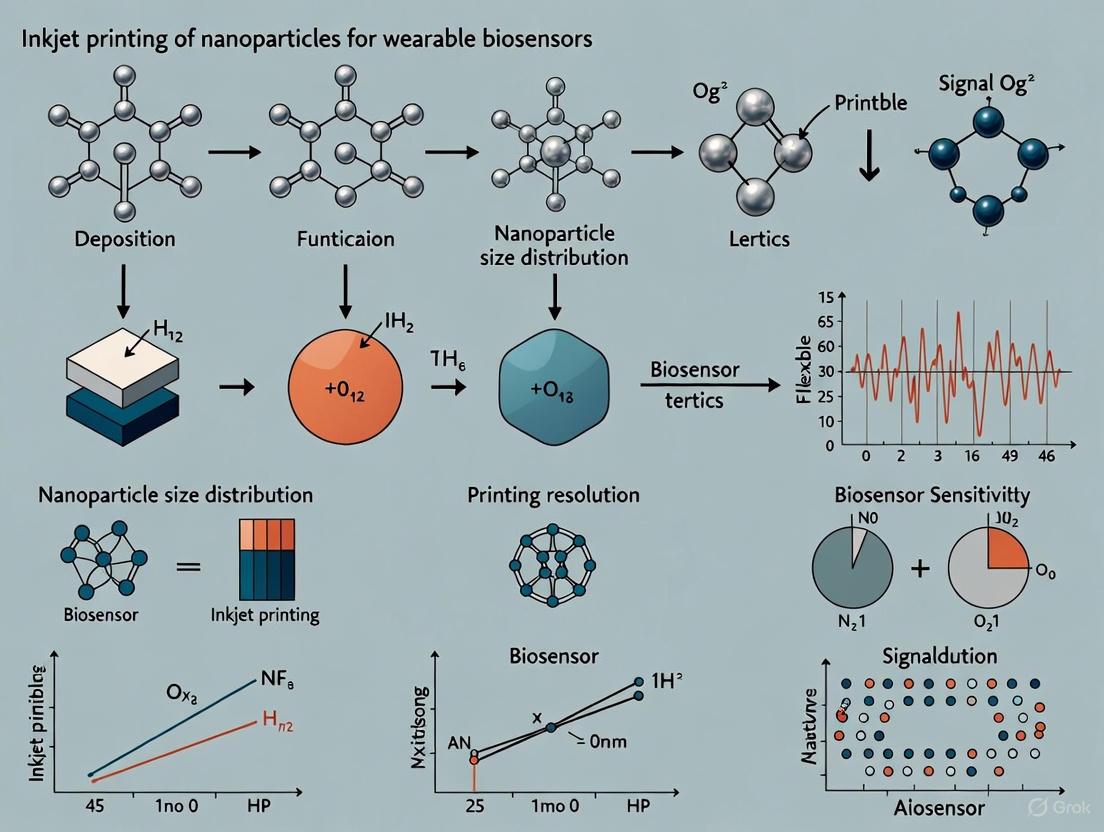
This article explores the groundbreaking convergence of inkjet printing and nanotechnology for the mass production of wearable biosensors.
Printable Nanoparticles for Wearable Biosensors: A New Era in Mass-Produced Personalized Health Monitoring
Abstract
This article explores the groundbreaking convergence of inkjet printing and nanotechnology for the mass production of wearable biosensors. Tailored for researchers and drug development professionals, it delves into the foundational science of core-shell nanoparticles, detailed methodologies for their fabrication and printing, and critical optimization strategies to overcome manufacturing challenges. Further, it provides a rigorous validation of this technology against current standards, highlighting its transformative potential for real-time, non-invasive monitoring of biomarkers in chronic disease management, drug level tracking, and personalized medicine.
The Building Blocks: Core-Shell Nanoparticles and Biosensor Fundamentals
The integration of nanomaterials into biosensing platforms has marked a revolutionary advance in diagnostic technology, particularly for the development of next-generation wearable devices [1]. These materials, typically ranging in size from 1 to 100 nanometers, exhibit unique physical and chemical properties that are harnessed to significantly enhance the sensitivity, stability, and specificity of biosensors [2]. Within the specific context of inkjet printing for wearable biosensors, nanomaterials provide the essential functional inks that enable the precise, scalable, and cost-effective fabrication of conductive and biorecognitive patterns directly onto flexible textile substrates [1] [3]. This document outlines the fundamental properties of key nanomaterials, their advantages in biosensing applications, and provides detailed experimental protocols for their formulation and implementation in wearable devices, framing this discussion within a broader research thesis on advanced manufacturing for health monitoring.
Fundamental Properties of Nanomaterials for Biosensing
The exceptional performance of nanomaterials in biosensing applications is derived from a set of intrinsic properties that become pronounced at the nanoscale. The table below summarizes these core properties and their direct impact on biosensor functionality.
Table 1: Core Properties of Nanomaterials and Their Impact on Biosensing.
| Property | Description | Impact on Biosensor Performance |
|---|---|---|
| High Surface-to-Volume Ratio | Provides a vastly increased surface area for the immobilization of biorecognition elements (enzymes, antibodies, aptamers) per unit mass [2]. | Enhances sensitivity by allowing a higher density of capture probes, leading to a stronger signal per binding event [2]. |
| Excellent Electrical Conductivity | Exhibited by materials like graphene, carbon nanotubes (CNTs), and metal nanoparticles (e.g., Au, Ag), facilitating efficient electron transfer [4] [5]. | Improves the speed and efficiency of electrochemical signal transduction, which is critical for real-time monitoring [4]. |
| Tailorable Surface Chemistry | Surfaces can be functionalized with various chemical groups (-COOH, -NH₂) to covalently attach biomolecules [2]. | Improves selectivity and stability of the biorecognition layer, reducing nonspecific binding and enhancing reproducibility [2]. |
| Plasmonic Properties | Noble metal nanoparticles (e.g., Au, Ag) exhibit localized surface plasmon resonance (LSPR), which alters their optical properties in response to the local environment [6]. | Enables highly sensitive optical detection methods, such as surface-enhanced Raman scattering (SERS) and colorimetric sensing [6]. |
Key Nanomaterial Classes and Their Advantages
Different classes of nanomaterials offer distinct advantages, making them suitable for various roles in biosensor design, from signal transduction to providing a scaffold for biorecognition.
Metal-Based Nanoparticles
- Gold Nanoparticles (AuNPs) and Silver Nanoparticles (AgNPs): These are among the most widely used nanomaterials due to their excellent biocompatibility, stability, and strong plasmonic effects. They serve as excellent platforms for SERS-based immunoassays, as demonstrated by Au-Ag nanostars used for the sensitive detection of the α-fetoprotein cancer biomarker [6]. Their surfaces are easily modified with thiol groups for robust bioconjugation.
- Liquid Metal Nanoparticles (LMPs): Materials like gallium-based alloys are gaining traction for stretchable electronics. They combine high conductivity with mechanical deformability. When formulated into composites, they enable the development of stretchable and conductive inks for wearable sensors that monitor physiological signals like EMG and ECG [4].
Carbon-Based Nanomaterials
- Graphene and Reduced Graphene Oxide (rGO): These two-dimensional materials are prized for their extraordinary electrical conductivity, mechanical strength, and high surface area. They are often used as electrode modifiers in electrochemical sensors. For instance, a novel DyCoO3@rGO nanocomposite has shown high specific capacitance and stability for energy storage applications in electronics [3], while graphene foam electrodes have been used for sensitive tau protein detection [4].
- Carbon Nanotubes (CNTs): CNTs offer high electrical conductivity and a tubular structure that is beneficial for electron transfer and the immobilization of biomolecules, enhancing sensor sensitivity [2].
Polymer-Based Nanoparticles
- Molecularly Imprinted Polymers (MIPs): MIPs are synthetic polymers with tailor-made cavities that mimic natural antibody-antigen interactions. A key advancement is their use in core-shell nanoparticles, where a MIP shell (e.g., nickel hexacyanoferrate) provides specific molecular recognition, and a redox-active core (e.g., Prussian blue analog) enables electrochemical signal transduction. This approach is ideal for the mass production of selective wearable and implantable biosensors via inkjet printing [3].
Experimental Protocols: Inkjet Printing Nanomaterials for Wearable Biosensors
Protocol: Formulation of a Graphene-Based Conductive Ink
This protocol details the synthesis of a stable, water-based graphene oxide (GO) ink suitable for inkjet printing on textile substrates [1] [5].
- Objective: To formulate a conductive ink that maintains colloidal stability, prevents nozzle clogging, and yields highly conductive patterns upon printing and reduction.
- Materials:
- Graphene oxide powder
- Deionized (DI) water
- N,N-Dimethylformamide (DMF) or ethylene glycol (as a stabilizing co-solvent)
- Non-ionic surfactant (e.g., Triton X-100)
- Ultrasonic probe sonicator
- Magnetic stirrer and hotplate
- Vacuum filtration setup (0.22 µm membrane)
- Procedure:
- Dispersion: Disperse 20 mg of graphene oxide powder in 100 mL of a 4:1 (v/v) mixture of DI water and DMF.
- Exfoliation & Homogenization: Subject the mixture to probe sonication in an ice bath for 60 minutes at 500 W, with a 5-second on/2-second off pulse cycle to prevent overheating.
- Surfactant Addition: Add 0.1% (v/v) of non-ionic surfactant to the dispersion and stir magnetically for 12 hours at room temperature.
- Filtration & Characterization: Filter the resulting dispersion through a 0.22 µm membrane to remove any large aggregates. Characterize the ink for viscosity (target: 2-10 cP), surface tension (target: 28-35 mN/m), and particle size distribution (target: Z-Avg < 200 nm) prior to printing.
Protocol: Inkjet Printing and Post-Processing for Textile Electrodes
This protocol covers the printing and processing steps to create functional conductive patterns on a textile substrate [1] [5].
- Objective: To fabricate a durable, flexible, and highly conductive electrode pattern on a polyester/cotton blend fabric.
- Materials:
- Formulated graphene oxide ink
- Piezoelectric inkjet printer (e.g., Dimatix DMP-2831)
- Polyester/cotton blend fabric
- Ascorbic acid (0.1 M solution) or Hydriodic acid (HI) vapor
- Oven or hotplate
- Procedure:
- Substrate Pretreatment: Clean the textile substrate with isopropanol and DI water in an ultrasonic bath for 15 minutes. Dry completely and plasma treat for 2 minutes to increase surface hydrophilicity.
- Printer Setup: Load the ink into a cartridge. Use a 10 pL or 1 pL nozzle. Set the waveform parameters (voltage, pulse duration) as recommended by the printer manufacturer for the specific ink's properties.
- Printing: Print the desired electrode pattern (e.g., interdigitated electrode) onto the pretreated textile. Maintain a substrate temperature of 40°C during printing to facilitate controlled droplet drying. Perform 2-3 print passes to ensure continuity and adequate thickness.
- Post-Printing Reduction: To convert the insulating GO into conductive reduced GO (rGO), either:
- Chemical Reduction: Immerse the printed textile in a 0.1 M ascorbic acid solution at 80°C for 6 hours, or
- Vapor Reduction: Expose the printed textile to HI vapor at 40°C for 30 seconds.
- Curing & Washing: Rinse the reduced electrode thoroughly with DI water and ethanol. Thermally cure the electrode in an oven at 120°C for 15 minutes to enhance adhesion and stability. Test conductivity and mechanical durability under bending cycles (e.g., up to 1200 cycles) [3].
Protocol: Functionalization with a Biorecognition Element
This protocol describes the immobilization of an antibody onto a printed electrode for specific antigen detection [4] [2].
- Objective: To covalently immobilize monoclonal anti-α-fetoprotein antibodies (AFP-Ab) onto a COOH-functionalized printed graphene electrode.
- Materials:
- Printed and reduced graphene electrode
- 1-Ethyl-3-(3-dimethylaminopropyl) carbodiimide (EDC) and N-Hydroxysuccinimide (NHS)
- Monoclonal Anti-AFP antibody
- Phosphate Buffered Saline (PBS, pH 7.4)
- Bovine Serum Albumin (BSA)
- Ethanolamine (1 M, pH 8.5)
- Procedure:
- Surface Activation: Prepare a fresh solution of 2 mM EDC and 5 mM NHS in MES buffer (pH 5.5). Incubate the printed electrode in this solution for 30 minutes at room temperature to activate the surface carboxyl groups, forming amine-reactive NHS esters.
- Antibody Coupling: Rinse the electrode with PBS (pH 7.4). Incubate the activated electrode in a solution containing 50 µg/mL of Anti-AFP antibody in PBS for 2 hours at room temperature.
- Quenching & Blocking: Rinse the electrode to remove unbound antibodies. Incubate the electrode in 1 M ethanolamine (pH 8.5) for 15 minutes to quench any remaining active esters. Then, incubate in a 1% (w/v) BSA solution in PBS for 1 hour to block non-specific binding sites.
- Storage: The functionalized biosensor can be stored in PBS at 4°C until use. Before testing, perform electrochemical impedance spectroscopy (EIS) in a ferri/ferrocyanide solution to confirm successful antibody immobilization.
The Scientist's Toolkit: Research Reagent Solutions
The following table lists essential materials and reagents for developing nanomaterial-based inkjet-printed biosensors.
Table 2: Essential Research Reagents for Nanomaterial Biosensor Fabrication.
| Reagent/Material | Function/Application | Key Characteristics |
|---|---|---|
| Graphene Oxide (GO) Dispersion | Primary ink material for printing conductive electrodes [1] [5]. | High aqueous dispersibility, requires post-print reduction to achieve conductivity. |
| Gold Nanoparticle (AuNP) Ink | Creates highly conductive and plasmonically active patterns for electrochemical and optical sensing [6]. | Excellent biocompatibility and facile surface chemistry for bioconjugation. |
| Molecularly Imprinted Polymer (MIP) Nanoparticles | Provide selective, antibody-like recognition for target molecules in a core-shell sensor design [3]. | High stability and selectivity; customizable for various analytes. |
| EDC/NHS Crosslinker Kit | Standard chemistry for covalent immobilization of antibodies or aptamers onto COOH-functionalized nanomaterial surfaces [2]. | Activates carboxyl groups to form stable amide bonds with amine-containing biomolecules. |
| Liquid Metal (e.g., EGaIn) Particles | Filler for highly stretchable and conductive composite inks for strain or motion sensors [4]. | Combines fluidic behavior with high conductivity, enabling self-healing composites. |
| Nafion Perfluorinated Resin | A permselective polymer membrane coated on electrodes to reduce fouling from biofluids in wearable sensors [2]. | Blocks interfering anions and large molecules (e.g., proteins) while allowing target analytes (e.g., H₂O₂) to pass. |
Workflow and Signaling Pathways in Nanomaterial-Based Biosensing
The following diagram illustrates the sequential workflow for fabricating an inkjet-printed nanomaterial biosensor, from ink formulation to final signal readout, integrating the protocols described above.
Diagram 1: Workflow for fabricating an inkjet-printed nanomaterial biosensor, highlighting key steps from ink formulation to signal readout.
The fundamental signaling mechanism in an electrochemical biosensor, such as one for glucose detection, can be visualized as follows:
Diagram 2: Core signaling pathway of a nanomaterial-based biosensor, showing the sequence from analyte binding to signal generation.
Core-shell cubic nanoparticles represent a significant advancement in nanomaterial design, particularly for applications in wearable and implantable biosensors. These nanoparticles feature a well-defined cubic architecture where a core material is uniformly encapsulated by a shell of another material, creating a single, functionalized unit [7]. This configuration synergistically combines the properties of both components, enabling enhanced functionality that is critical for precise biosensing. In the context of a broader thesis on inkjet printing nanoparticles for wearable biosensors, these structures are paramount. Their design facilitates mass production through printing techniques and allows for the customizable detection of specific biomarkers, including amino acids, vitamins, metabolites, and drugs, directly in complex biological fluids like sweat [7] [8].
The core typically consists of an electroactive material that provides a stable and quantifiable electrochemical signal, acting as the transducer within the sensor [7]. The shell is engineered as a molecularly imprinted polymer (MIP), which functions as a selective capture agent. The cubic morphology is particularly advantageous for manufacturing, as it allows for efficient packing and consistent inkjet printing, enabling the creation of high-density, multiplexed sensor arrays [7]. This architecture is foundational to developing the next generation of personalized health monitoring devices that can provide real-time, continuous biochemical data.
Architectural Deconstruction and Functional Mechanism
The functionality of core-shell cubic nanoparticles is governed by the distinct yet complementary roles of their internal core and external shell.
The Nickel Hexacyanoferrate (NiHCF) Core
The core of these nanoparticles is commonly composed of nickel hexacyanoferrate (NiHCF), a transition metal hexacyanoferrate known for its exceptional electrochemical stability and reversible redox behavior [7]. In a wearable biosensor, this core functions as the signal transduction engine. When the nanoparticle is integrated into an electrochemical sensor and a voltage is applied, the NiHCF core can be cyclically oxidized and reduced. This continuous cycling generates a stable, measurable electrical current, which serves as the baseline signal. The remarkable stability of NiHCF, even in biological fluids, is crucial for the long-term operation of continuous monitoring devices, preventing signal drift and ensuring reliable readings over extended periods [7].
The Molecularly Imprinted Polymer (MIP) Shell
The core is enveloped by a molecularly imprinted polymer (MIP) shell, which is responsible for the sensor's selectivity. The synthesis of this shell involves polymerizing monomers in the presence of the target biomarker, such as vitamin C or a specific drug molecule [7]. This process, known as template-assisted synthesis, traps the target molecules within the forming polymer matrix. Subsequent washing with a solvent specifically removes these template molecules, leaving behind a polymer shell dotted with nanocavities or holes. These cavities have a three-dimensional shape and chemical functionality that is complementary to the target molecule, acting as artificial antibodies [7].
Integrated Sensing Mechanism
The sensing mechanism is a direct result of the synergistic interaction between the core and the shell, as illustrated in the workflow below:
When a biological fluid containing the target biomarker (e.g., vitamin C in sweat) comes into contact with the sensor, the target molecules selectively bind to the complementary cavities in the MIP shell. The binding of these molecules physically blocks the access of the fluid to the underlying NiHCF core. This blockage impedes the redox reaction at the core surface, leading to a measurable decrease in the electrical current [7]. The degree of signal reduction is quantitatively correlated to the concentration of the target biomarker in the fluid. This core-shell architecture thus directly transcribes a molecular binding event into a quantifiable electrical signal, enabling precise and selective biosensing.
Research Reagent Solutions and Essential Materials
The fabrication and operation of biosensors based on core-shell cubic nanoparticles require a specific set of research reagents and materials. The table below details the key items and their functions.
Table 1: Essential Materials and Reagents for Core-Shell Nanoparticle Biosensors
| Item Name | Function / Explanation |
|---|---|
| Nickel Hexacyanoferrate (NiHCF) Core | Serves as the stable electrochemical transducer. Its redox activity generates the primary electrical signal that is modulated by biomarker binding [7]. |
| Molecularly Imprinted Polymer (MIP) Shell | Provides selective recognition. The nanocavities act as artificial antibodies, specifically capturing target biomarkers based on shape and chemical affinity [7]. |
| Target Biomarker Templates | Molecules (e.g., vitamins, drugs, metabolites) used during synthesis to create the specific recognition cavities within the polymer shell [7]. |
| Functional Monomers | Chemical building blocks that polymerize around the template molecules to form the structure of the shell matrix [7]. |
| Nanoparticle Ink Formulation | A stable colloidal suspension of the core-shell nanoparticles, optimized for viscosity and surface tension to enable reliable inkjet printing of sensor arrays [7]. |
| Flexible Electrode Substrate | The physical support (e.g., polyethylene terephthalate) for the printed sensor array, providing mechanical flexibility for wearable applications [7]. |
| Electrochemical Analyzer | Instrumentation used to apply a controlled voltage to the sensor and measure the resulting current, facilitating the quantification of the target biomarker [7]. |
Quantitative Data and Performance Metrics
The performance of biosensors utilizing core-shell cubic nanoparticles can be evaluated through several quantitative metrics. The following table compiles key performance aspects based on demonstrated applications.
Table 2: Quantitative Performance Metrics of Core-Shell Nanoparticle Biosensors
| Performance Metric | Details / Value | Context and Significance |
|---|---|---|
| Detectable Biomarkers | Vitamins (e.g., Vitamin C), Amino Acids (e.g., Tryptophan), Metabolites (e.g., Creatinine), Drugs (e.g., Busulfan, Cyclophosphamide) [7] [8] | Demonstrates broad-spectrum applicability for monitoring nutrition, metabolism, and therapeutics. |
| Sensing Modality | Electrochemical (Redox signal suppression) | The binding event causes a measurable decrease in current, which is highly reproducible and quantifiable [7]. |
| Key Advantage | Operational stability in biological fluids (e.g., sweat) | Enabled by the highly stable NiHCF core, which is critical for long-term, continuous monitoring required for wearable and implantable devices [7]. |
| Manufacturing Technology | Inkjet Printing | Allows for mass production of robust and flexible biosensors, enabling the creation of multiplexed arrays for multiple biomarkers on a single platform [7]. |
| Application Validation | Metabolic monitoring in long COVID patients; Therapeutic drug monitoring in cancer patients [7] [8] | Validates clinical utility in real-world scenarios, moving from laboratory proof-of-concept to practical healthcare applications. |
Detailed Experimental Protocols
Protocol: Synthesis of Molecule-Selective Core-Shell Nanoparticles
This protocol describes the procedure for creating core-shell nanoparticles with a molecularly imprinted polymer shell selective for a target biomarker, adapted from the work of Wang et al. [7].
5.1.1 Materials
- Nickel Hexacyanoferrate (NiHCF) nanocubes
- Target biomarker molecule (e.g., Vitamin C, tryptophan, a chemotherapy drug)
- Functional monomers (e.g., acrylamide, methacrylic acid)
- Cross-linking agent (e.g., N,N'-methylenebisacrylamide)
- Initiator (e.g., ammonium persulfate)
- Solvent (e.g., deionized water or ethanol)
- Washing solvent (specific to the target molecule, for template removal)
5.1.2 Procedure
- Core Dispersion: Disperse the synthesized NiHCF nanocubes in the solvent using sonication to create a homogeneous suspension.
- Template Addition: Add the target biomarker template molecule to the suspension at a defined molar ratio relative to the functional monomers.
- Monomer Assembly: Introduce the functional monomers and cross-linking agent to the solution. Allow the monomers to spontaneously assemble around the template molecules through pre-polymerization interactions.
- Polymerization: Initiate the polymerization reaction by adding the initiator and, if required, applying heat or UV light. This step forms the polymer shell around the NiHCF core, with the template molecules embedded within the polymer matrix.
- Template Extraction: Isolate the nanoparticles via centrifugation and wash them repeatedly with the washing solvent. The solvent is chosen to specifically extract the template molecules without damaging the polymer matrix, leaving behind vacant, shape-complementary cavities.
- Drying and Storage: Re-suspend the nanoparticles in a clean solvent and dry them under an inert atmosphere. Store the finalized core-shell nanoparticles in a desiccator until needed for ink formulation.
Protocol: Inkjet Printing of Biosensor Arrays
This protocol covers the preparation of a nanoparticle ink and its deposition onto a flexible substrate to create a functional biosensor array [7].
5.2.1 Materials
- Synthesized core-shell nanoparticles
- Ink vehicle (e.g., mixture of water, ethylene glycol, and surfactants)
- Flexible polymer substrate (e.g., polyethylene terephthalate (PET))
- Commercial inkjet printer (potentially modified) or specialized industrial printer
- Conducting silver/silver chloride ink (for reference and counter electrodes)
5.2.2 Procedure
- Ink Formulation: Re-disperse the core-shell nanoparticles into the ink vehicle. Optimize the concentration, viscosity, and surface tension of the formulation to prevent clogging of the printer nozzles and to ensure uniform droplet formation.
- Substrate Preparation: Clean the flexible substrate (e.g., PET film) with ethanol and deionized water. Treat the surface with oxygen plasma or a UV-ozone cleaner to enhance the adhesion of the printed ink.
- Printer Setup: Load the formulated nanoparticle ink into the printer cartridge. Use software to design the pattern for the sensor array, defining the location and size of each working electrode.
- Printing: Print the nanoparticle ink onto the predefined areas of the substrate. This step may be repeated to build up multiple layers and increase the density of sensing elements.
- Curing: Dry the printed sensor array at room temperature or in a low-temperature oven (e.g., 60°C) to evaporate the solvent and solidify the film.
- Electrode Completion: Using the conducting ink, print the reference and counter electrodes onto the same substrate to complete the three-electrode electrochemical cell system.
Protocol: Sensor Operation and Data Acquisition for Biomarker Monitoring
This protocol describes the experimental setup and procedure for using the printed biosensor to measure biomarker concentrations in a biological fluid such as sweat [7].
5.3.1 Materials
- Printed biosensor array
- Potentiostat (electrochemical analyzer)
- Phosphate Buffered Saline (PBS) or artificial sweat solution
- Standard solutions of the target biomarker at known concentrations
- Data acquisition software
5.3.2 Procedure
- Calibration Curve:
- a. Apply a small volume (e.g., 50 µL) of standard solutions with known concentrations of the target biomarker to the sensor.
- b. Using a potentiostat, apply a constant low voltage or a cyclic voltammetry sweep to the working electrode.
- c. Record the stable electrical current generated by the NiHCF core for each standard solution.
- d. Plot the measured current (or the percentage of signal reduction) against the biomarker concentration to generate a calibration curve.
- Sample Measurement:
- a. Collect the biological sample (e.g., via sweat induction).
- b. Apply the sample to the sensor and record the resulting electrical current under the same applied voltage.
- c. Use the calibration curve to interpolate the concentration of the target biomarker in the unknown sample.
The logical sequence of this experimental workflow is summarized in the following diagram:
Molecularly Imprinted Polymers (MIPs) are synthetic materials engineered to possess specific recognition sites for target molecules, functioning as artificial antibodies. Their synthesis involves polymerizing functional monomers in the presence of a target template molecule. Subsequent removal of this template leaves behind cavities that are complementary in shape, size, and chemical functionality to the original molecule, enabling selective rebinding [7]. Within the rapidly advancing field of wearable biosensors, MIPs offer a robust and versatile alternative to biological recognition elements, such as antibodies or enzymes. Their integration with nanoparticle cores and inkjet printing technologies is paving the way for the mass production of durable, selective, and highly sensitive biosensing platforms for continuous health monitoring [9].
The significance of MIPs is particularly evident in applications like wearable metabolic monitoring and therapeutic drug monitoring. For instance, sensors incorporating MIPs have been used to monitor biomarkers such as vitamin C, tryptophan, and creatinine in individuals with Long COVID, as well as to track immunosuppressant drug levels in cancer patients [9]. This Application Note details the protocols for fabricating and utilizing core-shell MIP nanoparticles, with a specific focus on their application in inkjet-printed wearable biosensors.
Core-Shell MIP Nanoparticles: Design and Signaling Mechanism
A transformative design in this field incorporates MIPs as a shell surrounding a stable, redox-active nanoparticle core. This core-shell architecture consolidates target recognition and signal transduction into a single, printable entity [9] [7].
Core-Shell Architecture and Signaling Principle
The core typically consists of a Prussian blue analogue (PBA), with nickel hexacyanoferrate (NiHCF) being identified as exceptionally stable for long-term sensing in biological fluids [9]. The shell is a molecularly imprinted polymer containing tailor-made binding cavities for the target analyte.
The signaling mechanism is based on a steric hindrance model:
- In the absence of the target molecule, the NiHCF core is freely exposed to the surrounding biofluid (e.g., sweat or interstitial fluid), resulting in a strong, measurable electrochemical (redox) signal.
- When the target molecule binds to the complementary cavities in the MIP shell, it obstructs electron transfer between the core and the biofluid.
- This binding event causes a quantifiable reduction in the redox signal, which is inversely proportional to the target concentration [9] [7]. This signal is typically measured using techniques like Differential Pulse Voltammetry (DPV).
The following diagram illustrates the core-shell nanoparticle's structure and its signaling mechanism upon target molecule binding:
Research Reagent Solutions
The following table lists the essential materials and reagents required for the synthesis of core-shell MIP nanoparticles and the preparation of printing inks.
Table 1: Key Research Reagent Solutions for Core-Shell MIP Nanoparticle Fabrication
| Reagent/Material | Function/Role | Specific Example / Note |
|---|---|---|
| Nickel Hexacyanoferrate (NiHCF) Nanocubes | Redox-active core for stable electrochemical signal transduction. | Synthesized with citrate chelating agent for uniformity; exhibits zero-strain characteristics for superior longevity [9]. |
| Functional Monomers (e.g., MAA) | Polymer building blocks that form chemical interactions with the target molecule. | Methacrylic acid (MAA) identified via computational docking as optimal for Vitamin C imprinting [9]. |
| Cross-linker (e.g., EGDMA) | Creates a rigid polymer network around the template, stabilizing the imprinted cavities. | Ethylene glycol dimethacrylate (EGDMA) is commonly used. |
| Target Template Molecule | The molecule of interest (analyte) that defines the shape and chemistry of the cavity. | Vitamin C, tryptophan, creatinine, or drugs like cyclophosphamide [9] [7]. |
| Solvent Blend (EtOH, H₂O, NMP) | Dispersion medium for inkjet printing ink; ensures nanoparticle stability and printability. | Optimal blend: Ethanol, Water, and N-Methyl-2-pyrrolidone (NMP) in a 2:2:1 v/v ratio [9]. |
| Poly-L-Lysine (PLL) | Adhesive coating for substrates (e.g., cotton fabric) to enhance ink adhesion and durability. | Positively charged PLL bonds with negatively charged hydroxyl groups on fabrics and CNTs [10]. |
| Carbon Nanotube (CNT) Ink | Establishes primary conductive path on rough textiles and facilitates Ag⁺ reduction. | Used in conjunction with reactive inks on fabric substrates to achieve high conductivity [10]. |
Protocol: Fabrication of MIP/NiHCF Core-Shell Nanoparticles
Synthesis of NiHCF Nanocube Cores
- Solution Preparation: Prepare a solution containing nickel ions and hexacyanoferrate in deionized water. Incorporate sodium citrate as a chelating agent to control the reaction rate and ensure the formation of highly uniform nanocubes [9].
- Reaction and Precipitation: Allow the reaction to proceed under controlled temperature and stirring. The resulting NiHCF nanocubes should be collected via centrifugation.
- Washing and Characterization: Wash the precipitate thoroughly with water and ethanol. Characterize the nanocubes using Dark-Field Scanning Transmission Electron Microscopy (DF-STEM) and Energy Dispersive Spectroscopy (EDS) to confirm a uniform size of approximately 100 nm and an even distribution of metal ions [9].
Molecular Imprinting of the Polymer Shell
- Pre-adsorption: Disperse the synthesized NiHCF nanocubes in a solution containing the target molecule (e.g., vitamin C), a suitable functional monomer (e.g., methacrylic acid), and a cross-linker. Allow for pre-adsorption of the monomers and target onto the nanocube surface [9].
- Thermal Polymerization: Induce polymerization by increasing the temperature. This forms a thin, cross-linked polymer layer around the NiHCF core, with the target molecules embedded within [7].
- Template Extraction: Use a suitable solvent to wash away the target molecules from the polymer matrix. This critical step removes the template, leaving behind specific recognition cavities. The success of extraction can be confirmed using Fourier-Transform Infrared Spectroscopy (FTIR), where characteristic peaks of the target molecule (e.g., C-Cl bond from cyclophosphamide at ~657 cm⁻¹) disappear [9].
Protocol: Inkjet Printing of Biosensor Arrays
This protocol describes the mass production of flexible biosensor arrays using optimized MIP/NiHCF nanoparticle inks [9] [10].
Ink Formulation and Optimization
- Base Formulation: Re-disperse the synthesized MIP/NiHCF core-shell nanoparticles in a custom solvent blend. The optimized blend identified for stable dispersion and jetability is Ethanol : Water : N-Methyl-2-pyrrolidone (NMP) in a 2:2:1 volume ratio [9].
- Optimization Criteria: Tailor the ink's viscosity, density, and surface tension to meet the specifications of the inkjet printer. Solvents with higher dipole moments help shield nanoparticles from self-interaction and aggregation.
Step-by-Step Printing and Fabrication
The following workflow outlines the complete process for fabricating a fully printed, flexible electrochemical biosensor.
Detailed Steps:
- Substrate Preparation: Treat a flexible substrate (e.g., cotton fabric) with Poly-L-Lysine (PLL). This enhances adhesion between the fabric and subsequently printed nanomaterials through ionic bonding, which is crucial for washability [10].
- Print Conductive Tracks: Load a cartridge with gold nanoparticle ink. Print the Working Electrode (WE), Counter Electrode (CE), and conductive paths with a drop spacing (DS) of 15 µm (equivalent to 1693 dpi) [11].
- Print Reference Electrode: Replace the ink cartridge with one containing silver nanoparticle ink. Print the pseudo-reference electrode (pRE) with a DS of 40 µm (635 dpi) [11].
- Thermal Sintering: Sinter the printed metallic structures in an oven at 120°C for 30 minutes to achieve final electrical properties [11]. For fabric-based sensors, a lower temperature of 100°C for 30 minutes can be used to reduce Ag ions in reactive inks to conductive nanoparticles without damaging the textile [10].
- Print Dielectric Layer: Print a dielectric ink (e.g., PriElex SU8) with a DS of 15 µm as a protective layer to define the active electrode areas and insulate the conductive paths. Cure initially on a hot plate at 100°C, then expose to a UV lamp for 30 seconds for polymerization [11].
- Print Sensing Layer: Finally, print the optimized MIP/NiHCF nanoparticle ink onto the active area of the working electrode. Use a DS of 15 µm [9] [11].
- Final Curing: Cure the biosensor at room temperature for 24 hours to preserve the activity of the imprinted sites and avoid damaging the MIP structure [11].
Performance Metrics and Validation
Rigorous validation is essential to confirm the performance of the printed MIP-based biosensors. The following table summarizes key quantitative data from studies utilizing this technology.
Table 2: Performance Metrics of Inkjet-Printed MIP/NiHCF Biosensors
| Analyte/Biomarker | Application Context | Sensing Platform | Key Performance Result |
|---|---|---|---|
| Vitamin C (Ascorbic Acid) | Metabolic monitoring in Long COVID patients [9] | Wearable (Sweat) | Successful continuous monitoring in human trials [9] [7]. |
| Tryptophan, Creatinine | Metabolic monitoring in Long COVID patients [9] | Wearable (Sweat) | Successful continuous monitoring in human trials [9] [7]. |
| Immunosuppressants (Busulfan, Cyclophosphamide, Mycophenolic acid) | Therapeutic drug monitoring in cancer patients and a mouse model [9] | Wearable & Implantable | Real-time analysis demonstrated; Monitors drug levels in body [9] [7]. |
| NiHCF Core Material | Long-term operational stability | Electrochemical Testing | Retained cubic structure and exhibited minimal degradation after 5,000 repetitive cyclic voltammetry scans [9]. |
| Cell Viability | Biocompatibility for implantable use | Live/Dead Assay (HDF cells) | High cytocompatibility demonstrated with robust cell viability after culture with 5 and 20 μg mL⁻¹ nanoparticles [9]. |
| Textile-Adhered Conductive Trace | Washability and durability of e-textiles | Electrical Conductivity | Conductivity of 1.25 × 10⁵ S m⁻¹ achieved; performance maintained after bending, ironing, and washing [10]. |
Experimental Validation Protocols
- In Vitro Calibration: Perform calibration curves by measuring the DPV response of the sensor in standard solutions with known concentrations of the target analyte. The signal decrease (ΔI) is plotted against the logarithm of concentration to establish a linear relationship [9].
- Selectivity Testing: Challenge the sensor with solutions containing potential interferents with similar chemical structures. The high selectivity conferred by the MIP cavities should result in a significantly stronger response to the target molecule than to others [9].
- Stability and Durability Testing:
- Operational Stability: Subject the sensor to repeated CV scans (e.g., 50-5,000 cycles) in a relevant buffer like Phosphate-Buffered Saline (PBS) and monitor the signal retention. The NiHCF core demonstrates superior stability compared to other PBAs [9].
- Mechanical Durability (for textiles): Test the sensor's performance after repeated bending cycles (e.g., radius of 1 mm) and after machine washing with detergent to validate robustness for wearable applications [10].
The integration of the molecular imprinting principle with advanced functional nanomaterials and scalable inkjet printing techniques represents a significant leap forward in biosensor fabrication. The detailed protocols outlined in this document—covering the synthesis of core-shell MIP/NiHCF nanoparticles, the formulation of printable inks, and the step-by-step printing of sensor arrays—provide a roadmap for researchers to develop robust, mass-producible biosensors. These sensors hold immense potential for a wide range of applications, from personalized health monitoring and disease management to fundamental physiological investigation, ultimately contributing to the advancement of precision medicine.
The evolution of biosensing technology has ushered in an era of personalized medicine, enabling real-time health monitoring through wearable and implantable devices. Central to the function of these devices are sophisticated signal transduction mechanisms that convert specific biomarker binding events into quantifiable electrical signals. Within the rapidly advancing field of wearable biosensors, inkjet-printed nanoparticle-based platforms have emerged as a transformative approach, combining scalable manufacturing with precise biomarker detection capabilities [1] [9]. These systems leverage nanomaterial innovations to create highly selective, sensitive, and stable sensing interfaces that operate in complex biological environments.
The fundamental challenge in biosensor design lies in establishing a reliable connection between molecular recognition events and measurable electrical outputs. This process, known as signal transduction, forms the core operational principle of all electrochemical biosensors [12] [13]. Recent breakthroughs in core-shell nanoparticle technology have enabled the development of dual-functional materials that integrate both molecular recognition and signal transduction capabilities within a single printable structure [9]. This integration addresses critical limitations in traditional biosensors, including operational instability, limited target diversity, and manufacturing scalability challenges that have hindered widespread adoption in precision medicine applications.
This Application Note examines the signal transduction mechanisms underlying inkjet-printed nanoparticle biosensors, with particular emphasis on their implementation in wearable platforms for continuous health monitoring. We provide detailed experimental protocols for fabricating and characterizing these devices, along with comprehensive performance data to guide researchers in adapting these technologies for specific biomarker detection applications in drug development and clinical diagnostics.
Technical Background
Fundamental Transduction Principles
Electrical biosensors operate on the principle of converting biological recognition events into measurable electrical signals through various transduction mechanisms. The primary categories include:
- Amperometric biosensors: Measure changes in electrical current resulting from redox reactions involving the target analyte at an electrode surface under applied potential [13].
- Potentiometric biosensors: Detect changes in electrical potential (voltage) accumulation at electrode surfaces due to ion concentration changes from biological recognition events [13].
- Impedimetric biosensors: Monitor changes in electrical impedance (resistance to alternating current) resulting from biomarker binding at the electrode interface [13].
- Field-Effect Transistor (FET) biosensors: Utilize semiconductor channels whose conductivity changes in response to charge variations induced by biomarker binding [13].
For wearable applications, the translation of biomarker binding to electrical readout follows a sequential pathway: (1) selective recognition of the target biomarker at the biosensor interface, (2) physicochemical changes induced by the binding event, and (3) conversion of these changes into measurable electrical signals through specialized transducer materials [13] [9].
Core-Shell Nanoparticle Transduction Mechanism
A groundbreaking approach in wearable biosensor design utilizes printable core-shell nanoparticles with built-in dual functionality for both recognition and transduction [9]. These nanoparticles feature a molecularly imprinted polymer (MIP) shell that provides customizable target recognition, combined with a redox-active Prussian blue analogue (PBA) core, typically nickel hexacyanoferrate (NiHCF), that generates stable electrochemical signals [9].
The transduction mechanism operates as follows: as target molecules adsorb onto specific binding cavities within the MIP shell, electron transfer between the PBA core and the surrounding biofluid becomes impeded. This reduction in electron transfer efficiency directly decreases the redox signal, which can be precisely quantified using differential pulse voltammetry (DPT) [9]. The NiHCF core provides exceptional stability during prolonged operation in biological fluids, maintaining signal integrity through thousands of redox cycles—a critical advantage for both wearable and implantable applications [9].
Table 1: Comparison of Electrical Biosensor Transduction Mechanisms
| Transduction Type | Measured Parameter | Detection Principle | Key Applications |
|---|---|---|---|
| Amperometric | Current | Redox reaction current at fixed potential | Metabolites, glucose, neurotransmitters |
| Potentiometric | Voltage | Accumulated charge at electrode interface | Ions, pH, enzyme substrates |
| Impedimetric | Impedance | Resistance to alternating current | Affinity binding, cell growth, pathogens |
| FET-based | Conductivity | Semiconductor channel modulation | Proteins, exosomes, viruses |
| Core-Shell Nanoparticle | Redox signal decrease | Electron transfer impediment | Metabolites, drugs, vitamins |
Materials and Methods
Research Reagent Solutions
The successful implementation of inkjet-printed nanoparticle biosensors requires carefully selected materials and reagents. The following table outlines essential components and their functions in biosensor fabrication and operation.
Table 2: Essential Research Reagents for Inkjet-Printed Nanoparticle Biosensors
| Reagent/Material | Function | Specific Application Example |
|---|---|---|
| Nickel hexacyanoferrate (NiHCF) nanocubes | Redox-active core for signal transduction | Generating stable electrochemical signals in physiological fluids [9] |
| Molecularly imprinted polymer (MIP) shells | Selective biomarker recognition | Creating target-specific cavities for vitamins, metabolites, or drugs [9] |
| Methacrylic acid (MAA) monomer | Functional monomer for MIP formation | Optimal binding sites for ascorbic acid detection [9] |
| Glutaraldehyde (GLA) | Crosslinking agent | Enzyme immobilization for reagentless biosensors [14] |
| Functionalized MWCNTs | Electron transfer enhancement | Improving electrochemical signal strength in phosphate sensors [14] |
| Pyruvate oxidase (PyOD) | Enzyme recognition element | Phosphate detection in serum [14] |
| Gold and carbon inks | Conductive electrode fabrication | Printing interconnects and electrode substrates [9] |
| Ethanol/water/NMP solvent blend | Inkjet printing vehicle | Optimal dispersion of MIP/NiHCF nanoparticles [9] |
Core-Shell Nanoparticle Synthesis Protocol
NiHCF Nanocube Synthesis
- Prepare a solution containing citrate as a chelating agent to regulate reaction rates [9].
- Synthesize uniform PBA nanocubes (approximately 100 nm) through controlled precipitation of transition metal ions (nickel, cobalt, copper, or iron) with hexacyanoferrate [9].
- Characterize the resulting nanocubes using dark-field scanning transmission electron microscopy (DF-STEM) and energy-dispersive X-ray spectroscopy (EDS) to confirm uniform size distribution and elemental composition [9].
- Perform electrochemical stability testing through repetitive cyclic voltammetry scans (50-5,000 cycles) in phosphate-buffered saline to validate structural integrity, with NiHCF demonstrating superior stability [9].
MIP Shell Formation
- Prepare a solution containing optimal monomer (e.g., methacrylic acid for ascorbic acid detection), crosslinker, and target molecules for pre-adsorption [9].
- Conduct computational screening using automated frameworks such as QuantumDock to identify optimal monomer choices based on binding energies and selectivity against interferents [9].
- Perform thermal polymerization to form a thin MIP layer on the surface of NiHCF nanocubes [9].
- Extract target molecules using appropriate solvents to create selective binding cavities within the MIP shell [9].
- Verify successful MIP formation through Fourier-transform infrared spectroscopy (FTIR), monitoring characteristic peak appearance and disappearance during synthesis and extraction [9].
Inkjet Printing Biosensor Fabrication
Ink Formulation and Optimization
- Prepare MIP/NiHCF nanoparticle ink by dispersing core-shell nanoparticles in an optimized solvent blend of ethanol, water, and N-methylpyrrolidone (2:2:1 v/v ratio) to achieve appropriate viscosity (10-12 cP), surface tension (28-32 mN/m), and nanoparticle dispersion for stable jetting [9].
- Formulate enzyme ink for enzymatic biosensors containing pyruvate oxidase (16 U/mL), cofactors (TPP, FAD, MgCl₂, pyruvic acid), functionalized multiwall carbon nanotubes (0.5 mg/mL), bovine serum albumin (2.4% w/v), and Triton X-100 (0.0075% v/v) [14].
- Prepare crosslinking ink containing glutaraldehyde (2.5% w/v) and Triton X-100 (0.006% v/v) for enzyme immobilization [14].
- Characterize ink properties using a viscosimeter and surface tensiometer before printing [14].
Printing and Sensor Assembly
- Utilize a Fujifilm DIMATIX Materials Printer DMP-2831 or similar piezoelectric inkjet printing system [14].
- Print conductive interconnects and electrode substrates using commercial gold and carbon inks [9].
- Deposit MIP/NiHCF nanoparticle ink or enzyme ink onto working electrode areas with optimized printing parameters (waveform, drop spacing, substrate temperature) [9] [14].
- For enzymatic biosensors, sequentially print enzyme layer followed by crosslinking layer (glutaraldehyde) to create a robust immobilized enzyme matrix [14].
- Implement wax printing passivation to define active sensing areas and reduce parasitic currents in permeable substrates [15].
- Cure printed sensors at room temperature or mild heating (≤60°C) to avoid enzyme denaturation [14].
Signal Transduction Measurement Protocols
Electrochemical Characterization
- Perform cyclic voltammetry (CV) in phosphate-buffered saline (pH 7.4) from -0.2 to +0.6 V (vs. Ag/AgCl) at 50 mV/s scan rate to verify nanoparticle redox activity [9].
- Conduct differential pulse voltammetry (DPV) measurements with parameters: pulse amplitude 50 mV, pulse width 0.05 s, sample width 0.0167 s, pulse period 0.2 s, increment 0.01 V, quiet time 2 s [9].
- For continuous monitoring applications, use chronoamperometry at fixed potential optimal for NiHCF redox reaction (approximately +0.3 V vs. Ag/AgCl) [9].
Biosensor Performance Validation
- Calibrate sensors with standard solutions containing target biomarkers across physiological relevant ranges (e.g., 0-500 μM for metabolites, 0-1000 pg/mL for protein biomarkers) [9] [16].
- Evaluate selectivity by challenging with potential interferents with similar chemical structures [9].
- Assess operational stability through continuous monitoring in artificial biofluids (sweat, serum, urine) for extended periods (24-72 hours) [9].
- Determine shelf-life stability by storing sensors at 4°C and room temperature with periodic performance testing [9] [14].
- Validate clinical performance using human samples (serum, plasma, sweat) from healthy and patient populations with comparison to gold standard methods [9] [16].
Results and Data Analysis
Performance Metrics of Printed Nanoparticle Biosensors
Comprehensive performance characterization of inkjet-printed nanoparticle biosensors reveals their capabilities for diverse biomarker detection applications. The following table summarizes key performance metrics for various biomarker classes.
Table 3: Performance Metrics of Inkjet-Printed Nanoparticle Biosensors for Various Biomarkers
| Target Analyte | Biomarker Class | Linear Detection Range | Limit of Detection | Stability | Application Context |
|---|---|---|---|---|---|
| Vitamin C (Ascorbic acid) | Vitamin | 5-500 μM | 1.2 μM | >5000 CV cycles | Long COVID metabolic monitoring [9] |
| Tryptophan | Amino acid | 10-400 μM | 3.5 μM | >5000 CV cycles | Long COVID metabolic monitoring [9] |
| Creatinine | Metabolite | 20-1000 μM | 8.7 μM | >5000 CV cycles | Renal function assessment [9] |
| Immunosuppressants (Busulfan, Cyclophosphamide) | Drugs | 0.1-100 μM | 0.05 μM | 30-day storage stability | Therapeutic drug monitoring [9] |
| Phosphate | Ion | 0.1-10 mM | 0.05 mM | 85% activity after 30 days | Hyperphosphatemia diagnosis [14] |
| BNP | Protein | 25-1000 pg/mL | 5 pg/mL | N/A | Cardiac dysfunction screening [16] |
Signal Transduction Workflow
The following diagram illustrates the complete signal transduction pathway from biomarker binding to electrical readout in core-shell nanoparticle-based biosensors:
Diagram Title: Core-Shell Nanoparticle Signal Transduction Pathway
Experimental Workflow Visualization
The comprehensive experimental workflow for biosensor fabrication and testing is summarized below:
Diagram Title: Biosensor Fabrication and Testing Workflow
Discussion
Interpretation of Performance Data
The quantitative performance data presented in Table 3 demonstrates the exceptional capability of inkjet-printed nanoparticle biosensors across diverse biomarker classes. The consistently wide linear detection ranges spanning 2-3 orders of magnitude enable monitoring of physiological fluctuations without sample dilution, a critical advantage for continuous monitoring applications [9]. The sub-micromolar limits of detection for metabolites and drugs approach the sensitivity required for tracing subtle metabolic changes in conditions like Long COVID, while the picogram per milliliter sensitivity for protein biomarkers like BNP meets clinical requirements for cardiac assessment [9] [16].
The remarkable stability data, particularly the maintenance of electrochemical signal through >5000 CV cycles for NiHCF-based sensors, represents a significant advancement over traditional Prussian blue (FeHCF) transducers which show substantial degradation after only 50 cycles [9]. This extended operational stability directly addresses one of the fundamental limitations in wearable biosensing—the need for frequent recalibration or replacement due to signal drift [1] [9].
Advantages of Integrated Recognition-Transduction Systems
The core-shell nanoparticle architecture with built-in dual functionality represents a paradigm shift in biosensor design. By integrating molecular recognition (MIP shell) and signal transduction (NiHCF core) within a single nanostructure, these systems eliminate the need for multi-step bioreceptor immobilization procedures that often compromise reproducibility in mass production [9]. The molecular imprinting approach further expands detectable targets beyond the limitations of biological recognition elements (enzymes, antibodies), enabling monitoring of small molecules, vitamins, and drugs that lack natural bioreceptors [9].
The inkjet printing fabrication method provides exceptional manufacturing versatility, allowing rapid prototyping and scale-up with minimal material waste [1] [9] [15]. The compatibility with flexible substrates enables direct integration into wearable platforms such as textiles, skin patches, and implantable devices [1] [17]. The recent demonstration of multiplexed sensor arrays through sequential printing of different MIP/NiHCF formulations further enhances the potential for comprehensive metabolic profiling from minimal sample volumes [9].
Implementation Considerations
Successful implementation of these biosensing platforms requires careful consideration of several practical aspects. The optimization of ink formulations represents a critical step, requiring precise balancing of viscosity, surface tension, and nanoparticle concentration to ensure stable jetting and uniform film formation [9] [14]. For wearable applications, appropriate passivation layers must be incorporated to mitigate biofouling and maintain signal stability in complex biological fluids like sweat and interstitial fluid [17] [9].
The selection of MIP monomers through computational screening approaches significantly enhances development efficiency, enabling rational design of selective recognition interfaces rather than traditional trial-and-error methods [9]. For enzymatic biosensors, the sequential printing of enzyme and crosslinking layers requires precise control of droplet placement and drying conditions to maintain bioactivity while ensuring robust immobilization [14].
Inkjet-printed nanoparticle biosensors represent a transformative technology platform that effectively bridges biomarker binding events with electrical readout through sophisticated signal transduction mechanisms. The core-shell architecture with integrated recognition and transduction functionalities addresses fundamental challenges in biosensor stability, manufacturing scalability, and target diversity. The detailed protocols and performance data provided in this Application Note establish a robust foundation for researchers to implement these technologies across diverse applications in personalized medicine, therapeutic drug monitoring, and clinical diagnostics.
The continued advancement of these systems—through nanomaterial engineering, printing technology optimization, and integration with wireless readout platforms—will further expand their impact in wearable and implantable biosensing. As these technologies mature, they hold significant potential to reshape healthcare monitoring paradigms by providing continuous, real-time molecular data for precision medicine applications.
In the development of inkjet-printed, nanoparticle-based wearable and implantable biosensors, operational stability in biological fluids remains a paramount challenge. The core-shell nanoparticle design, featuring a molecularly imprinted polymer (MIP) shell for target recognition and a redox-active core for signal transduction, presents a compelling solution. The composition of this core is critical. While materials like Prussian blue (FeHCF) are commonly used, they often suffer from performance degradation. This Application Note details how the nickel hexacyanoferrate (NiHCF) core functions as a superior, stable foundation, enabling long-term, reliable biosensing in physiologically relevant environments. The data and protocols herein are essential for researchers aiming to develop robust biosensors for applications such as therapeutic drug monitoring and metabolic tracking.
The NiHCF Advantage: Mechanism and Quantitative Stability Data
The NiHCF core's primary role is to provide a stable, electrochemical signal when an electrical voltage is applied in contact with biofluids [7]. Its stability surpasses that of other Prussian blue analogues (PBAs), which is a decisive factor for the operational longevity of wearable and implantable sensors.
Mechanism of Enhanced Stability: The exceptional stability of NiHCF is attributed to its zero-strain characteristics during the repeated insertion and extraction of ions (e.g., Na+, K+) that occur during electrochemical cycling [9]. Substituting iron in Prussian blue with a small-radius metal atom like nickel enhances lattice stability, resulting in minimal structural deformation and capacity fade over thousands of cycles [9].
The following diagram illustrates the core-shell structure of the nanoparticle and the signaling mechanism, highlighting the role of the stable NiHCF core.
Quantitative Stability Comparison: The superior performance of NiHCF was validated through rigorous electrochemical testing. The following table summarizes key comparative data on the stability of different PBA nanocubes.
Table 1: Electrochemical Stability of Prussian Blue Analogue (PBA) Nanocubes
| PBA Composition | Stability Performance in Physiological Fluids | Key Experimental Findings |
|---|---|---|
| Nickel Hexacyanoferrate (NiHCF) | Exceptionally High | • Retained cubic structure with minimal degradation after 5,000 repetitive CV scans [9]. • Demonstrated the highest stability among tested PBAs (NiHCF > CoHCF > CuHCF > FeHCF) [9]. |
| Cobalt Hexacyanoferrate (CoHCF) | Moderate | • Experienced substantial loss of crystallographic integrity after prolonged cycling [9]. |
| Copper Hexacyanoferrate (CuHCF) | Moderate | • Showed significant structural degradation after prolonged cycling [9]. |
| Prussian Blue (FeHCF) | Low | • Exhibited poor stability in phosphate-buffered saline (PBS) [9]. • Showed reduced redox signals and structural degradation after only 50 repetitive CV scans [9]. |
Experimental Protocol: Assessing NiHCF Core Stability
This protocol details the methodology for synthesizing NiHCF nanocubes and evaluating their electrochemical stability, a critical pre-condition for creating reliable biosensors.
Protocol 2.1: Synthesis and Stability Assessment of NiHCF Nanocubes
Objective: To synthesize uniform NiHCF nanocubes and quantitatively evaluate their electrochemical stability in a physiologically relevant fluid using Cyclic Voltammetry (CV).
Research Reagent Solutions
| Item | Function/Explanation |
|---|---|
| Nickel Precursor (e.g., Nickel Chloride, NiCl₂) | Source of Ni²⁺ ions for the formation of the NiHCF crystal lattice. |
| Hexacyanoferrate Salt (e.g., Potassium Hexacyanoferrate, K₄[Fe(CN)₆]) | Source of the [Fe(CN)₆]⁴⁻ ions that coordinate with nickel to form the PBA structure. |
| Citrate Chelating Agent (e.g., Sodium Citrate) | Regulates the reaction rate during synthesis to ensure the scalable production of highly uniform nanocubes [9]. |
| Phosphate-Buffered Saline (PBS), pH 7.4 | Electrolyte solution that mimics the ionic strength and pH of biological fluids for stability testing. |
Part A: Synthesis of NiHCF Nanocubes [9]
- Solution Preparation: Prepare separate aqueous solutions of the nickel precursor and the hexacyanoferrate salt.
- Controlled Reaction: Under continuous stirring, slowly add the hexacyanoferrate solution to the nickel solution containing a controlled concentration of sodium citrate. The citrate acts as a chelating agent to moderate crystal growth.
- Aging and Purification: Allow the reaction mixture to age at room temperature for several hours to ensure complete crystal formation. Recover the precipitated NiHCF nanocubes via centrifugation.
- Washing: Wash the pellet multiple times with deionized water and ethanol to remove unreacted precursors and by-products.
- Characterization: Confirm the success of the synthesis using Dark-Field Scanning Transmission Electron Microscopy (DF-STEM) and Energy-Dispersive X-ray Spectroscopy (EDS) to verify uniform cubic morphology (approx. 100 nm) and even distribution of Ni and Fe elements [9].
Part B: Electrochemical Stability Testing via Cyclic Voltammetry
- Electrode Modification: Prepare a working electrode (e.g., glassy carbon) by drop-casting a dispersion of the synthesized NiHCF nanocubes.
- Setup: Use a standard three-electrode electrochemical cell with the modified working electrode, a Pt counter electrode, and an Ag/AgCl reference electrode, filled with PBS as the electrolyte.
- Continuous Cycling: Run continuous Cyclic Voltammetry (CV) scans. A typical protocol might involve scanning for 5,000 cycles within a suitable potential window (e.g., 0.0 to 1.0 V vs. Ag/AgCl) at a fixed scan rate (e.g., 50 mV/s) [9].
- Data Analysis: Monitor the decay of the redox peak currents and the shift in peak potentials over the thousands of cycles. As per the referenced study, NiHCF should retain >95% of its initial electrochemical activity after 5,000 cycles, demonstrating superior stability compared to other PBAs [9].
The experimental workflow for the synthesis and stability validation is outlined below.
Integrated Biosensor Fabrication and Cytocompatibility
The stability of the NiHCF core is a foundational property that enables the subsequent steps of biosensor fabrication, including the application of the MIP shell and inkjet printing.
Protocol 3.1: Fabrication of the Complete MIP/NiHCF Core-Shell Nanoparticle
- Core Preparation: Begin with synthesized and purified NiHCF nanocubes.
- Pre-adsorption: Immerse the NiHCF nanocubes in a solution containing the target molecule (e.g., a vitamin, metabolite, or drug), a functional monomer (e.g., Methacrylic Acid), and a cross-linker.
- Polymerization: Induce thermal polymerization to form a thin polymer layer around the NiHCF core, entrapping the target molecules.
- Template Extraction: Wash the particles with a solvent to remove the target molecules, creating specific binding cavities within the polymer (MIP) shell. Successful extraction can be confirmed using Fourier-Transform Infrared Spectroscopy (FTIR) by observing the disappearance of a characteristic peak of the target molecule [9].
Critical Step: Inkjet Printing
- Ink Formulation: Disperse the custom MIP/NiHCF nanoparticles in an optimized solvent blend (e.g., ethanol, water, and N-methylpyrrolidone in a 2:2:1 v/v ratio) to achieve the required viscosity, density, and surface tension for printing while preventing nanoparticle aggregation [9].
- Printing: Use a commercial inkjet printer to deposit the nanoparticle ink onto flexible substrates alongside commercial gold and carbon inks for interconnects and electrodes, enabling mass production of flexible, multiplexed biosensor arrays [9].
Cytocompatibility Assessment: For any implantable application, confirming the biosafety of the nanomaterials is essential.
- Protocol: Culture human dermal fibroblasts (HDF) in media containing MIP/NiHCF nanoparticles at concentrations of 5 and 20 μg mL−1.
- Viability Assay: Use a commercial live/dead assay kit to assess cell viability after extended culture periods (e.g., 24-72 hours).
- Expected Outcome: The nanoparticles should demonstrate robust cell viability, confirming high cytocompatibility and supporting their potential for in vivo use [9].
The integration of a NiHCF core within printable core-shell nanoparticles directly addresses the critical challenge of operational instability in biological fluids. Quantitative data confirms that NiHCF's zero-strain property provides unparalleled electrochemical durability, maintaining structural and functional integrity through thousands of cycles. This stability, combined with scalable inkjet printing and high cytocompatibility, establishes a robust platform for researchers to develop next-generation wearable and implantable biosensors for precision medicine applications, from long COVID metabolite monitoring to personalized cancer therapeutic drug monitoring.
From Lab to Fabrication: Inkjet Printing and Real-World Applications
Inkjet Printing Protocols for Nanoparticle Deposition and Sensor Mass Production
Inkjet printing has emerged as a transformative digital fabrication technology for the mass production of advanced biosensors. This protocol details methodologies for depositing functional nanomaterial inks onto flexible and textile substrates to create wearable and implantable sensing devices. The document provides a comprehensive framework covering ink formulation, printing optimization, and post-processing, specifically framed within the context of scalable manufacturing for physiological monitoring and personalized healthcare applications. By leveraging computer-aided design and drop-on-demand deposition, inkjet printing enables rapid prototyping and high-throughput production of biosensors with minimal material waste, bridging the gap between laboratory innovation and commercial application [1] [12].
Inkjet printing technology offers a viable solution for the low-cost, rapid, flexible, and mass fabrication of biosensors. As a non-contact, additive manufacturing technique, it allows for precise mask-less deposition of picoliter droplets of functional inks according to digital patterns. This approach presents significant advantages over traditional lithographic methods, which are often impractical, expensive, and wasteful for large-area fabrication on flexible substrates [12]. The technology is particularly suited for developing wearable electronics that combine the precision of digital fabrication with the comfort and flexibility of textiles [1]. The ability to print conductive nanomaterials such as metallic nanoparticles and carbon-based materials directly onto flexible substrates like plastics and textiles has driven innovation in personalized health monitoring, enabling real-time tracking of biomarkers in bodily fluids such as sweat [18] [7].
Quantitative Performance Metrics of Printed Biosensors
The table below summarizes key performance data from recent inkjet-printed biosensor developments, illustrating the capabilities of this technology in real-world applications.
Table 1: Performance Metrics of Advanced Inkjet-Printed Biosensors
| Sensor Function / Target Analyte | Printed Nanomaterial | Sensitivity / Limit of Detection (LOD) | Key Application Demonstrated | Manufacturing Scale |
|---|---|---|---|---|
| Neurotransmitter Detection (Serotonin) [19] | Carbon Nanotube (CNT) Ink | 42 pM LOD | Biosensor array for high-throughput bioassays | 4-inch wafer scale |
| Microneedle Mechanical Properties [20] | Silver Nanoparticle (AgNP) Ink | Young's Modulus: 15.6 GPa | Minimally invasive plant and biomedical monitoring | Scalable array fabrication |
| Multi-Biomarker Monitoring (e.g., Vitamins, Drugs) [7] | Molecule-Selective Core-Shell Nanoparticles | Not Specified | Long-COVID metabolite & chemotherapy drug monitoring | Mass-producible sensor arrays |
| Acute Kidney Injury Marker (NGAL) [15] | Inkjet-Printed Electrodes | Detection in clinical range | Smartphone-connected urinalysis | Rapid "office-like" prototyping |
Detailed Experimental Protocols
Protocol 1: Surface Tension-Guided Printing of CNT Transistor Biosensors
This protocol describes an additive method for fabricating carbon nanotube field-effect transistor (CNT FET) biosensors with controlled properties, ideal for high-throughput bioassays [19].
Research Reagent Solutions
Table 2: Essential Materials for CNT FET Biosensor Fabrication
| Reagent/Material | Function/Description |
|---|---|
| Carbon Nanotube (CNT) Ink | The functional nanomaterial providing superior electrical properties for the transistor channel. |
| Pre-patterned Electrode Arrays | Serve as the source and drain contacts on a silicon wafer substrate. |
| DNA Aptamers | Biological recognition elements immobilized on the CNT to selectively bind target analytes like serotonin. |
| Solvent Formulation | Aqueous dispersion medium for the CNT ink, engineered for stable jetting and droplet formation. |
Methodology
- Substrate Preparation: Begin with a 4-inch silicon wafer featuring pre-patterned microelectrode arrays. Ensure the substrate is clean and free of organic contaminants.
- Inkjet Printing Setup: Load the CNT ink into a piezoelectric inkjet printhead. Configure the printer waveform (voltage, pulse duration) to achieve stable droplet ejection without satellite drops.
- Precision Deposition: Program the printer to deposit a series of pico-liter droplets of the CNT ink directly onto the gap between the pre-patterned source and drain electrodes.
- Surface Tension-Driven Assembly: Leverage surface tension-guided flow. As the droplet is deposited, capillary forces guide its spread along the hydrophilic electrode surfaces, ensuring the CNT network forms a bridge specifically between the electrodes and preventing unwanted random networks.
- Drying and Curing: Allow the solvent to evaporate at room temperature or on a heated substrate plate, leaving behind a conductive CNT network.
- Functionalization: Incubate the printed CNT FET array with a solution of DNA aptamers specific to the target molecule (e.g., serotonin) to create the biosensing interface.
The following workflow diagram illustrates the key steps of this fabrication process:
Protocol 2: Mass Production of Wearable Sensors Using Core-Shell Nanoparticles
This protocol outlines the synthesis of molecule-selective core-shell nanoparticles and their implementation in mass-printed wearable sensors for monitoring specific biomarkers in sweat [7].
Research Reagent Solutions
Table 3: Essential Materials for Core-Shell Nanoparticle Sensor Fabrication
| Reagent/Material | Function/Description |
|---|---|
| Nickel Hexacyanoferrate (NiHCF) | The redox-active core material that generates a stable electrical signal in biological fluids. |
| Functional Monomers | Building blocks that polymerize around the target molecule to form a molecularly imprinted polymer (MIP) shell. |
| Target Analyte Molecules | The biomarkers (e.g., Vitamin C, tryptophan, drugs) used as templates during MIP synthesis. |
| Flexible Substrate (e.g., Polyester) | The base material (e.g., textile, plastic) for the wearable sensor patch. |
Methodology
Nanoparticle Synthesis (Creating the Ink):
- Core Formation: Synthesize nanoparticles with a core of nickel hexacyanoferrate (NiHCF), a highly stable redox material.
- Molecular Imprinting: Combine the NiHCF cores in a solution with functional monomers and the target biomarker molecule (e.g., vitamin C).
- Polymerization: Initiate polymerization, causing the monomers to assemble spontaneously around the template molecules, forming a polymer shell.
- Template Extraction: Use a solvent to selectively wash away the template biomarker molecules, leaving behind a shell with cavities ("holes") that are shape-specific to the target molecule. These function as artificial antibodies.
Sensor Fabrication by Inkjet Printing:
- Ink Formulation: Disperse the synthesized core-shell nanoparticles in a biocompatible solvent to create a stable, jettable ink.
- Array Design: Design a sensor layout with multiple electrodes. Using a computer-controlled inkjet printer, deposit different nanoparticle inks (each selective to a different biomarker) onto specific working electrodes in a single print run.
- Integration: Print the sensor array directly onto a flexible, textile-based substrate to form a wearable patch.
Sensing Mechanism:
- When the sensor is exposed to sweat, the bodily fluid reaches the NiHCF core through the unoccupied molecular cavities, generating a baseline electrical signal.
- When the target biomarker (e.g., vitamin C) is present, it binds to the shape-matched cavities in the polymer shell, blocking the sweat from contacting the core and causing a measurable decrease in the electrical signal. The signal reduction is proportional to the analyte concentration.
The logical relationship of the sensing mechanism is shown below:
Protocol 3: All-Inkjet-Printed 3D Conductive Microneedles
This protocol describes a single-step, additive method for fabricating 3D conductive microneedles using silver nanoparticle ink, which can be extended to other metallic inks for implantable or transdermal biosensing [20].
Research Reagent Solutions
- Silver Nanoparticle (AgNP) Ink: Provides the conductive material for the microneedle structure.
- Heated Substrate Plate: Essential for rapid curing of ink droplets to facilitate vertical structure building.
- Flexible Plastic Substrate: The base for the microneedle array.
Methodology
- Printer Setup: Install a thin heater element under the printer's substrate holder. Load a commercial silver nanoparticle ink into a piezoelectric inkjet printhead.
- Temperature Calibration: Set the substrate heater to a temperature high enough to rapidly evaporate the solvent from an incoming droplet (curing it) but low enough to prevent clogging the printhead nozzles with dried ink. This is a critical parameter for successful 3D structuring.
- Digital Fabrication: Program the printer with a series of 2D designs that, when printed layer-by-layer, will form the 3D microneedle structure.
- Layer-by-Layer Printing: Initiate the printing process. The printer jets pico-liter droplets of AgNP ink according to the first layer's design. Upon contact with the heated substrate, the droplets instantly cure, solidifying in place.
- Vertical Construction: The printer proceeds to deposit subsequent layers of ink droplets onto the previously cured layers. The immediate curing upon contact prevents the liquid ink from dripping, allowing for the creation of high-aspect-ratio vertical structures (with height/width ratios up to 20).
- Post-Processing: No thermal sintering is required. The printed microneedles are immediately conductive and ready for mechanical characterization and application testing.
Critical Parameters for Manufacturing Optimization
Successful mass production of inkjet-printed biosensors depends on careful optimization of several inter-related parameters:
- Ink Formulation: The ink must possess the correct viscosity, surface tension, and particle size distribution to ensure reliable jetting and prevent nozzle clogging. The choice of conductive nanomaterial (AgNPs, CNTs, core-shell nanoparticles) determines the sensor's electrical and functional properties [1] [20].
- Substrate-Ink Interaction: The surface energy and porosity of the substrate (textile, plastic, silicon) control droplet spreading and drying dynamics. Pre-treatment or priming of the substrate may be necessary to achieve desired resolution and adhesion [1] [20].
- Printing Dynamics: Waveform parameters (voltage, pulse shape) applied to the printhead piezoelectric element must be tuned for consistent droplet formation and ejection. Nozzle-to-substrate distance and droplet velocity also impact printing quality [19] [12].
- Post-Printing Processing: While some methods enable conductivity without sintering (e.g., chemical sintering or use of heated substrates), others may require mild thermal or photonic treatment to anneal nanoparticles and achieve optimal conductivity and durability, especially for wearable applications that require wash fastness [1] [15].
Inkjet printing provides a robust and scalable protocol set for the deposition of functional nanoparticles and the mass production of biosensors. The techniques detailed herein—from printing 2D CNT transistors and biomarker-selective arrays to 3D conductive microneedles—highlight the versatility of this additive manufacturing approach. The ongoing development of self-healing composites, hybrid printing techniques, and environmentally benign conductive inks is addressing persistent challenges related to durability and sustainability [1]. As the field progresses, cross-disciplinary collaboration and the establishment of standardized testing protocols will be essential to transition these promising laboratory innovations into reliable, commercially available diagnostic and monitoring devices [1] [18].
The advancement of wearable biosensors is intrinsically linked to the development of sophisticated functional inks. Inkjet printing of conductive nanomaterials onto flexible substrates represents a transformative approach for manufacturing next-generation wearable electronics, combining precision digital fabrication with the comfort and flexibility of textiles [1]. The performance of these printed biosensors is fundamentally governed by the stability and printability of the nanoparticle inks used in their fabrication. This document, framed within a broader thesis on inkjet printing for wearable biosensors, provides detailed application notes and experimental protocols for formulating such inks, with a focus on achieving high stability, optimal jetting performance, and excellent post-printing conductivity.
Core Composition and Stabilization Mechanisms
A successful ink formulation is a complex mixture where each component fulfills a specific role. The primary components include the functional nanoparticles (e.g., silver, copper sulfide), the solvent system, and stabilizing agents that prevent aggregation.
Nanoparticle Synthesis and Stabilization
Silver nanoparticles (AgNPs) are a predominant choice due to their excellent electrical conductivity, oxidation resistance, and relatively low sintering temperature [21]. A common synthesis involves a one-pot thermal decomposition method.
- Protocol: Synthesis of Oleylamine-Capped Silver Nanoparticles [21]
- Reagents: Silver nitrate (AgNO₃), Oleylamine (technical grade, 70%), Oleic acid, Toluene, Methanol.
- Procedure:
- Introduce 3.4 g of AgNO₃ into a 100 mL solution of oleic acid and oleylamine in a 9:1 volume ratio within a 200 mL three-neck round-bottom flask.
- Purge the system with nitrogen and maintain continuous magnetic stirring (≤120 rpm).
- Heat the reaction mixture in an oil bath to 90°C and maintain this temperature for 2 hours for complete thermal decomposition.
- Subsequently, increase the temperature to 180°C at a rate of 4°C/min and hold for 5 minutes to promote nanoparticle uniformity.
- Cool the resulting dark-brown solution to room temperature.
- Purification: The product is purified via a precipitation/redispersion process. The reaction mixture is diluted with toluene and precipitated with methanol (1:1 ratio), followed by centrifugation at 6000 rpm for 5 minutes. The precipitate is redispersed in a toluene/butylamine mixture (10:1) and reprecipitated with methanol.
For biosensing applications, core-shell nanoparticles are increasingly important. These can be designed for molecule-selective detection [7].
- Protocol: Molecularly Imprinted Core-Shell Nanoparticles [7]
- Concept: Cubic nanoparticles are formed from a solution containing the target biomarker (e.g., vitamin C, a drug molecule). The solution monomers assemble into a polymer, trapping the target molecules inside.
- Imprinting: A solvent is used to remove the target molecules, leaving behind a polymer shell with molecularly imprinted cavities that function as artificial antibodies.
- Core Integration: This molecularly selective shell is combined with a core of nickel hexacyanoferrate (NiHCF), a stable material that generates an electrical signal when in contact with bodily fluids. When a target molecule occupies its cavity, it blocks fluid contact with the core, modulating the electrical signal in a concentration-dependent manner.
Solvent Systems and Stabilizers
The choice of solvent is critical for eco-friendly formulation, printability, and final film quality. Terpineol, a high-boiling-point, eco-friendly solvent, has emerged as an excellent candidate [21]. It offers suitable viscosity, low cost, and low toxicity compared to conventional organic solvents.
Stabilizers prevent nanoparticle agglomeration through steric or electrostatic mechanisms. A complex stabilization strategy is often employed:
- Primary Stabilizers: Oleylamine and oleic acid control nanoparticle size and morphology during synthesis [21].
- Secondary Stabilizers: Butylamine is added during the ink formulation stage to ensure long-term dispersion stability in the terpineol solvent [21].
Key Ink Properties and Characterization Methods
To ensure reliable jetting and high-quality printed patterns, inks must be characterized for their fundamental properties. The table below summarizes key metrics and their measurement techniques.
Table 1: Key Properties for Inkjet-Printable Nanoparticle Inks
| Property | Target Range | Characterization Technique | Impact on Performance |
|---|---|---|---|
| Viscosity | Low (e.g., 8-15 cP [22]) | Viscometer | Influences droplet formation and jetting stability. |
| Surface Tension | Moderate (e.g., ~36 mN/m [22]) | Tensiometer | Controls wetting on substrate and droplet spread. |
| Nanoparticle Size | < 100 nm (ideally < 10 nm [21]) | TEM, SEM, DLS | Prevents nozzle clogging; affects sintering temperature. |
| Electrical Resistivity | As low as possible (e.g., 5.1 × 10⁻³ Ω·cm [23]) | Four-point probe measurement | Determines conductivity of the final printed pattern. |
| Ink Stability | > 85 days [21] | Visual inspection, DLS over time | Ensures consistent jetting performance and shelf-life. |
- Objective: To prepare a stable, high-conductivity silver nanoparticle ink for inkjet printing.
- Reagents: Purified silver nanoparticles (from Protocol 2.1), Terpineol (mixture of isomers, anhydrous), Butylamine.
- Procedure:
- Disperse the purified Ag nanoparticles (up to 13.0 wt% metal content) in a solvent mixture of terpineol and butylamine (83:17 by volume).
- Subject the ink to mechanical stirring for 10 minutes followed by ultrasonic treatment for 20 minutes at 25°C to ensure uniform dispersion.
- Before printing, filter the ink through a 0.1 µm pore size filter to remove any agglomerates or contaminants.
- Characterization: The resulting ink demonstrated exceptional stability over 85 days and achieved printed patterns with conductivity up to 81% of bulk silver after sintering.
Optimization Strategies for Printability and Functionality
Achieving the desired functional properties often requires optimizing multi-component ink systems.
Hybrid Optimization of Functional Inks
A hybrid multi-objective optimization method can be employed to balance conflicting properties like electrical resistivity and printed line quality [22].
- Approach: Mixture design and response surface methodology are used to model the relationships between ink composition (e.g., ratios of silver ink, carbon nanotube (CNT) ink, and ethanol) and the output responses (resistivity, line quality).
- Outcome: This data-driven approach identifies an optimal operating window for the ink composition, ensuring the best compromise between performance metrics. For instance, incorporating CNTs can act as bridges between silver nanoparticles, enhancing inter-particle connectivity and reducing overall resistivity [22].
Formulating for Specific Printing Techniques
Reverse Offset Printing: For high-resolution patterns, the ligand on copper nanoparticles (CuNPs) can be exchanged from oleate to polyvinylpyrrolidone (PVP). This provides better steric stabilization in polar, eco-friendly solvents required for this printing method [24].
Aerosol Jet 3D Printing: The formulation of a non-metallic, non-carbon conductive ink based on copper sulfide (CuS) nanopetals has been demonstrated [25]. This ink, formulated with hierarchical CuS structures, achieved an electrical conductivity of 1.4 × 10⁴ S/m and exhibited excellent screen-printability and stability, offering a cost-effective alternative to precious metals.
The Scientist's Toolkit: Essential Research Reagents
Table 2: Key Reagents for Nanoparticle Ink Formulation
| Reagent Category | Specific Examples | Function | Example Use-Case |
|---|---|---|---|
| Metal Precursors | Silver Nitrate (AgNO₃) [21], Copper Chloride (CuCl₂) [25] | Source of metallic nanoparticles for conductivity. | Conductive traces and electrodes. |
| Stabilizing Agents | Oleylamine, Oleic Acid [21], Polyvinylpyrrolidone (PVP) [24] [23], Butylamine [21] | Control NP size during synthesis; prevent agglomeration in ink. | Enhancing ink shelf-life and jetting stability. |
| Solvents | Terpineol [21], Ethylene Glycol (EG) [23], Toluene [21] | Liquid carrier medium; determines viscosity and drying kinetics. | Eco-friendly formulations (Terpineol). |
| Reducing Agents | Polyethylene Glycol (PEG) [23], Ascorbic Acid [26] | Convert metal ions to neutral atoms during NP synthesis. | Liquid-phase synthesis of AgNPs. |
| Functional Additives | Carbon Nanotube (CNT) Ink [22], Molecularly Imprinted Polymers [7] | Enhance conductivity or provide specific (bio)recognition. | Creating biosensing interfaces. |
Workflow and Application in Biosensing
The journey from ink formulation to a functional biosensor integrates material synthesis, printing, and sintering. The following diagram visualizes the workflow for creating a wearable biosensor using molecularly imprinted nanoparticles.
A key application of these formulated inks is in the mass production of wearable sweat sensors. As demonstrated by Caltech engineers, inkjet-printed arrays of molecule-selective core-shell nanoparticles can monitor biomarkers like vitamins, hormones, and chemotherapy drugs in real-time [7]. This provides a powerful tool for personalized healthcare, enabling continuous, non-invasive monitoring for conditions such as long COVID or during cancer treatment [7].
Furthermore, the feasibility of all-inkjet-printed conductive microneedles for in-vivo biosensing has been established [20]. Using a layer-by-layer printing method with a heated substrate to rapidly cure silver nanoparticle ink, this technique allows for the fabrication of 3D metallic structures suitable for minimally invasive monitoring applications [20].
The precise formulation of nanoparticle inks is a cornerstone of reliable and high-performance inkjet-printed wearable biosensors. By carefully selecting materials and optimizing synthesis protocols—employing stabilizers like butylamine in eco-friendly solvents such as terpineol, and leveraging advanced functionalization like molecular imprinting—researchers can overcome challenges of ink stability and printability. The protocols and data summarized herein provide a foundation for developing robust inks that meet the demanding requirements of next-generation personalized healthcare devices.
The accurate diagnosis of complex diseases often hinges on the detection of multiple biomarkers, as many individual biomarkers exhibit abnormal expression across several different diseases [27]. For instance, the cancer biomarker miR-21 is dysregulated in pancreatic, breast, lung, and prostate cancers, while carcinoembryonic antigen (CEA) shows elevated levels in colorectal, breast, lung, pancreatic, gastric, liver, and ovarian cancers [27]. Consequently, single-biomarker detection strategies are prone to false-negative results and limited diagnostic accuracy [27]. Multiplexed sensor arrays address this critical limitation by enabling the simultaneous measurement of multiple biomarkers, significantly improving diagnostic reliability while reducing required sample volume, analysis time, and overall cost [27]. The integration of these advanced sensing platforms with inkjet-printed nanoparticle-based technologies represents a transformative approach for developing next-generation wearable and implantable biosensors, combining precision digital fabrication with the capability for continuous, real-time health monitoring [1] [9].
Key Multiplexing Technologies and Performance
Multiplexed biosensing platforms employ various optical and electrochemical readout mechanisms, each with distinct advantages and performance characteristics. The table below summarizes the primary technologies currently advancing multiplexed biomarker detection.
Table 1: Key Multiplexed Biosensing Technologies and Performance Characteristics
| Technology | Readout Method | Key Nanomaterials | Detection Mechanism | Advantages | Representative Performance |
|---|---|---|---|---|---|
| Fluorescence-Based Multiplexing | Emission wavelength & intensity | Noble metal nanoparticles (Au, Ag), Carbon-based nanomaterials [27] | Metal-Enhanced Fluorescence (MEF), Förster Resonance Energy Transfer (FRET) [27] | High sensitivity, wide dynamic range, capability for multiple targets | Detection limit down to 50 fM for HBV DNA with >1500-fold signal amplification [27] |
| SERS-Based Multiplexing | Raman spectral fingerprints | Plasmonic nanoparticles (Au, Ag nanostars) [27] | Surface-Enhanced Raman Scattering (SERS) [27] | Multiplexing capacity, sharp spectral fingerprints, high specificity | Capable of detecting 2+ biomarkers simultaneously with high specificity [27] |
| Colorimetric Multiplexing | Visual color change | Various nanoparticle catalysts [27] | Target-induced color change or nanoparticle aggregation [27] | Simplicity, low cost, suitability for point-of-care testing | Direct visual readout without sophisticated instruments [27] |
| Electrochemical MIP Sensors | Electrochemical signal (DPV) | Molecularly Imprinted Polymer (MIP)/NiHCF core-shell nanoparticles [9] | Target binding impedes electron transfer to redox core [9] | High stability, tunable selectivity, direct printing capability | Continuous monitoring of vitamins, metabolites, and drugs in Long COVID and cancer patients [9] |
Detailed Experimental Protocols
Protocol 1: Fabrication of Inkjet-Printed MIP/NiHCF Core-Shell Nanoparticle Sensors
This protocol details the synthesis of molecularly imprinted polymer-coated nickel hexacyanoferrate (MIP/NiHCF) core-shell nanoparticles and their formulation into printable inks for fabricating multiplexed electrochemical biosensors [9].
Materials and Equipment
- Precursor Solutions: Nickel salts and hexacyanoferrate for NiHCF nanocube synthesis [9]
- Polymerization Mixture: Functional monomer (e.g., methacrylic acid), cross-linker, and target biomarker molecules [9]
- Solvent System: Ethanol, water, and N-methylpyrrolidone (NMP) in 2:2:1 v/v ratio [9]
- Inkjet Printer: Research-grade piezoelectric inkjet printer with waveform control [9]
- Heated Substrate Platform: Temperature-controlled printing stage (40-60°C) [9]
- Flexible Substrates: Polyimide or polyethylene terephthalate films [9]
Step-by-Step Procedure
Synthesis of NiHCF Nanocube Cores:
- Prepare NiHCF nanocubes using a solution-based method with citrate as a chelating agent to regulate reaction rate [9].
- Characterize nanocubes using DF-STEM and EDS to confirm uniform size distribution of approximately 100 nm [9].
- Validate electrochemical stability through cyclic voltammetry (≥5,000 cycles in PBS) [9].
MIP Shell Formation:
- Prepare pre-polymerization solution containing optimal monomer (identified via computational screening), cross-linker, and target biomarker molecules [9].
- Adsorb solution onto NiHCF nanocubes and initiate thermal polymerization to form thin MIP shell [9].
- Extract template molecules to create target-selective binding cavities, confirmed via FTIR spectroscopy [9].
Ink Formulation and Optimization:
Sensor Fabrication via Inkjet Printing:
- Program printer with multiple 2D designs corresponding to sensor array layout [9].
- Maintain substrate temperature at 40-60°C to ensure rapid droplet curing and vertical structure formation [9].
- Print multiple layers to build conductive three-dimensional microstructures [9].
- Complement with commercial gold and carbon inks for interconnects and electrode substrates [9].
Quality Control and Validation:
Protocol 2: Fluorescence-Based Multiplexing with Metal-Enhanced Fluorescence (MEF)
This protocol describes the implementation of metal-enhanced fluorescence for sensitive multiplexed detection of biomarkers, leveraging plasmonic nanomaterials to significantly boost signal intensity [27].
Materials and Equipment
- Plasmonic Nanostructures: Gold nanorods, nanostars, or silver nanoparticles [27]
- Fluorophores: Target-specific probes with non-overlapping emission spectra [27]
- Spacer Molecules: Silica, Al₂O₃, PEG, DNA, or polymers for distance control [27]
- Spectrofluorometer or microarray scanner capable of multiplex detection [27]
Step-by-Step Procedure
Nanostructure Fabrication and Optimization:
Critical Distance Optimization:
Assay Assembly and Detection:
Research Reagent Solutions
Table 2: Essential Research Reagents for Inkjet-Printed Multiplexed Biosensors
| Reagent/Material | Function/Application | Specific Examples | Key Characteristics |
|---|---|---|---|
| NiHCF Nanocubes | Redox-active core for electrochemical transduction [9] | Nickel hexacyanoferrate nanocubes [9] | High stability (>5,000 CV cycles), zero-strain characteristics, uniform ~100 nm size [9] |
| Molecularly Imprinted Polymers (MIPs) | Synthetic recognition element for target capture [9] | MAA-based MIP shells for ascorbic acid [9] | Tunable selectivity, thermal stability, solvent-resistant [9] |
| Gold Nanoparticles | Plasmonic enhancement, conductivity, biocompatibility [27] | Au nanorods, nanostars, nanoclusters [27] | LSPR tunability, strong electromagnetic fields, thiol chemistry for functionalization [27] |
| Silver Nanoparticles | Enhanced plasmonic properties for MEF and SERS [27] | Ag nanocubes, nanoplatelets, nanowires [27] | Strong LSPR fields, high MEF efficiency, superior electrical conductivity [27] |
| Functional Monomers | MIP formulation for specific target recognition [9] | Methacrylic acid (MAA) for ascorbic acid [9] | Computationally screened for optimal binding energy and selectivity [9] |
| Specialized Inks | Sensor fabrication via inkjet printing [1] [9] | MIP/NiHCF nanoparticle dispersions in ethanol/water/NMP [9] | Optimized viscosity, surface tension, and nanoparticle concentration for stable jetting [9] |
Workflow and Signaling Pathways
Inkjet Printing Workflow for Multiplexed Sensor Fabrication
The following diagram illustrates the integrated manufacturing and operational pipeline for creating inkjet-printed multiplexed biosensors.
Core-Shell Nanoparticle Signaling Mechanism
This diagram details the molecular-level signaling mechanism within MIP/NiHCF core-shell nanoparticles, which forms the basis for selective electrochemical detection.
Technical Considerations and Optimization Strategies
Successful implementation of inkjet-printed multiplexed sensor arrays requires careful attention to several technical aspects. For ink formulation, systematic optimization of solvent composition is essential to achieve appropriate viscosity, surface tension, and nanoparticle dispersion stability [9]. Computational screening of monomer-target interactions significantly enhances MIP selectivity and sensitivity, as demonstrated by the QuantumDock framework for identifying optimal functional monomers [9]. Substrate temperature control during printing is critical for achieving three-dimensional microstructure formation, with optimal ranges between 40-60°C enabling rapid droplet curing while preventing nozzle clogging [9]. For optical sensing platforms, precise control of fluorophore-metal separation distance (~7-8 nm) is necessary to maximize metal-enhanced fluorescence effects while avoiding quenching [27]. Additionally, sensor array design should incorporate appropriate spatial separation between detection elements to minimize cross-talk and ensure accurate multiplexed measurement [27] [9].
The integration of inkjet-printed biosensors into clinical practice represents a significant advancement in precision medicine. These devices enable the continuous, non-invasive monitoring of specific biomarkers, offering a powerful tool for managing complex health conditions. This application note details the use of a novel platform—printable molecule-selective core–shell nanoparticles—in two distinct clinical case studies: monitoring metabolic dysregulation in patients with long COVID and tracking chemotherapeutic drug levels in oncology patients [7]. The data and protocols herein are framed within broader research on inkjet printing for wearable biosensors, highlighting a scalable and mass-producible manufacturing technique that is pivotal for translating this technology from the lab to the clinic [12].
The foundation of this clinical application is a wearable electrochemical biosensor fabricated via inkjet printing of specialized nanoparticle inks.
Nanoparticle Design and Sensing Mechanism
The biosensor utilizes core–shell nanoparticles engineered for dual functionality [7] [8]:
- Core: A nanoparticle core made of nickel hexacyanoferrate (NiHCF) acts as a stable electrochemical transducer. It generates a quantifiable electrical signal when oxidized or reduced under an applied voltage.
- Shell: A surrounding molecularly imprinted polymer (MIP) serves as a synthetic antibody. The shell contains cavities shaped to selectively bind to a specific target molecule (e.g., a metabolite or drug).
The sensing mechanism is based on signal attenuation. When the target biomarker is absent, bodily fluids contact the NiHCF core, generating a strong electrical signal. When the target molecule is present, it binds to the MIP shell, blocking fluid access to the core and causing a measurable decrease in signal that is proportional to the analyte concentration [7].
Inkjet Printing for Mass Fabrication
Inkjet printing technology enables the mass production of these sensors by depositing the functional nanoparticle inks onto flexible substrates [12]. This drop-on-demand method is advantageous for its low material waste, high-resolution patterning, and ability to use computer-aided design for rapid prototyping and customization [7] [12]. Multiple nanoparticle "inks," each selective for a different analyte, can be printed into a single sensor array, allowing for the simultaneous monitoring of multiple biomarkers [7].
Case Study 1: Metabolic Monitoring in Long COVID
Background and Rationale
Many individuals with long COVID experience persistent metabolic abnormalities. Continuous monitoring of specific metabolites can provide insights into a patient's nutritional status and overall metabolic health, enabling personalized interventions [7].
Research Reagent Solutions
Table 1: Key Materials for Long COVID Metabolic Monitoring
| Research Reagent | Function in the Experiment |
|---|---|
| Core-Shell Nanoparticles (Vitamin C-selective) | Custom MIP shell selectively binds and detects vitamin C (ascorbic acid) levels in sweat. |
| Core-Shell Nanoparticles (Tryptophan-selective) | Custom MIP shell selectively binds and detects the essential amino acid tryptophan in sweat. |
| Core-Shell Nanoparticles (Creatinine-selective) | Custom MIP shell selectively binds and detects creatinine, a key biomarker for kidney function, in sweat. |
| Optimized Nanoparticle Ink Formulation | A stable suspension of core-shell nanoparticles suitable for inkjet printing. |
| Flexible Sensor Substrate | A soft, stretchable material that serves as the base for the printed sensor array, ensuring comfort and skin adhesion. |
Experimental Workflow
The following diagram illustrates the integrated process of sensor fabrication and deployment for metabolic monitoring:
Key Experimental Findings
Clinical testing of the wearable sensor on individuals with long COVID successfully demonstrated continuous, real-time monitoring of target metabolites. The data revealed dynamic changes in metabolite levels during physical activity and at rest, providing a comprehensive picture of metabolic fluctuations [7].
Table 2: Summary of Monitored Metabolites in Long COVID Case Study
| Biomarker | Clinical Significance | Monitoring Outcome |
|---|---|---|
| Vitamin C | Indicator of nutritional status and antioxidant defense. | Sensor enabled tracking of vitamin C levels, allowing for assessment of nutrient intake and bioavailability. |
| Tryptophan | Essential amino acid precursor for serotonin; imbalances linked to fatigue and mood disorders. | Continuous data showed trends in tryptophan metabolism, potentially informing dietary or therapeutic adjustments. |
| Creatinine | Waste product used to assess kidney function. | Successful monitoring established the sensor's capability to track organ function remotely. |
Case Study 2: Therapeutic Drug Monitoring in Cancer Therapy
Background and Rationale
The efficacy and toxicity of chemotherapeutic agents are highly dose-dependent. Therapeutic Drug Monitoring (TDM) is crucial for personalizing dosing regimens to maximize anti-tumor effects while minimizing adverse reactions [8]. The inkjet-printed biosensor was deployed to monitor levels of specific chemotherapy drugs.
Research Reagent Solutions
Table 3: Key Materials for Chemotherapy Drug Monitoring
| Research Reagent | Function in the Experiment |
|---|---|
| Core-Shell Nanoparticles (Busulfan-selective) | Custom MIP shell for selective detection of the chemotherapeutic drug busulfan. |
| Core-Shell Nanoparticles (Cyclophosphamide-selective) | Custom MIP shell for selective detection of the chemotherapeutic drug cyclophosphamide. |
| Core-Shell Nanoparticles (Mycophenolic Acid-selective) | Custom MIP shell for selective detection of the immunosuppressant mycophenolic acid. |
| Implantable Sensor Format | A miniaturized version of the sensor designed for subdermal implantation for direct monitoring in tissue [7]. |
| Mouse Model | An in vivo model used to validate the sensor's performance for real-time drug monitoring [8]. |
Experimental Protocol: Implantable Sensor for Drug Monitoring
Objective: To validate the functionality of an implantable biosensor for real-time monitoring of chemotherapeutic drug levels in vivo.
Materials:
- Inkjet-printed biosensors specific for busulfan, cyclophosphamide, and mycophenolic acid.
- Mouse model.
- Appropriate chemotherapeutic drugs for administration.
- Wireless potentiostat for data acquisition.
Procedure:
- Sensor Calibration: In vitro calibration of the implantable sensor is performed in a simulated physiological fluid to establish a standard curve for each drug.
- Sensor Implantation: The sterile, miniaturized sensor is implanted subdermally in the mouse model.
- Drug Administration: A controlled dose of the chemotherapeutic drug is administered to the animal.
- Data Collection: The implanted sensor continuously measures drug levels in the interstitial fluid. Data is transmitted wirelessly to an external reader in real time.
- Data Analysis: Pharmacokinetic profiles (e.g., time to peak concentration, elimination rate) are generated from the continuous data stream and analyzed.
Key Experimental Findings
The technology was validated in two settings. In a clinical trial at City of Hope, wearable sensors were used to remotely monitor chemotherapeutic drug levels in cancer patients [7]. Concurrently, studies in a mouse model confirmed the sensor's ability to provide real-time, in vivo pharmacokinetic data for drugs like busulfan, cyclophosphamide, and mycophenolic acid [8]. This demonstrates a direct path toward personalized dosing in oncology.
Table 4: Summary of Monitored Drugs in Cancer Therapy Case Study
| Drug Monitored | Class/Therapeutic Use | Monitoring Outcome |
|---|---|---|
| Busulfan | Chemotherapeutic agent (alkylating agent). | Sensor provided real-time analysis of drug concentration, enabling precise pharmacokinetic profiling. |
| Cyclophosphamide | Chemotherapeutic agent (alkylating agent). | Continuous monitoring demonstrated the potential to tailor dosing for optimal efficacy and reduced toxicity. |
| Mycophenolic Acid | Immunosuppressant. | Successful tracking highlighted the platform's versatility for monitoring different types of therapeutic agents. |
These case studies provide compelling evidence for the clinical utility of inkjet-printed wearable and implantable biosensors. The technology successfully addressed two divergent clinical needs: managing a chronic, multi-system condition (long COVID) and optimizing acute, high-stakes drug therapies (cancer chemotherapy).
The molecularly imprinted core-shell nanoparticles are the cornerstone of this technology, offering customizable target recognition and stable electrochemical transduction [7] [8]. Furthermore, the use of inkjet printing for fabrication is a critical advantage, as it enables the mass production of robust, flexible, and multi-analyte sensors in a scalable and cost-effective manner [7] [12].
In conclusion, this platform technology paves the way for a new paradigm of personalized medicine. It empowers clinicians with continuous, real-time biochemical data, facilitating more dynamic and precise medical interventions. Future work will focus on expanding the library of detectable analytes, conducting larger-scale clinical trials, and further miniaturizing the associated electronics for enhanced patient comfort and accessibility.
Implantable nanosensors represent a transformative advancement in biomedical monitoring, enabling the direct, continuous measurement of physiological parameters from within the body. Unlike wearable devices that interface with the skin surface, these subdermal platforms—typically measuring less than one micron—operate within the complex biochemical environment of living tissues, providing unprecedented access to real-time metabolic and physiological data [28]. This capability is particularly valuable for managing chronic conditions such as diabetes mellitus, renal failure, and cardiovascular diseases, where continuous monitoring of biomarkers like glucose, electrolytes, and reactive oxygen species can dramatically improve treatment outcomes [28]. The integration of nanotechnology with advanced manufacturing techniques like inkjet printing is accelerating the development of these sophisticated biosensing platforms, creating new possibilities for personalized medicine and closed-loop therapeutic systems [12] [29].
Design Considerations for Subdermal Monitoring
Biological Constraints and Biocompatibility
The successful implementation of implantable nanosensors depends critically on their ability to function within the harsh in vivo environment without provoking adverse biological responses. These devices face numerous biological constraints, including direct contact with tissues and bodily fluids, potential immune recognition, and the risk of inflammation or foreign body responses [30]. The mechanical mismatch between conventional electronic materials and soft biological tissues can lead to inflammation, tissue damage, and device failure [30]. Consequently, material selection focuses increasingly on soft, flexible substrates that better conform to tissue mechanics, thereby reducing motion artifacts and improving biocompatibility [30].
Biocompatibility evaluation for nanomaterials follows specialized protocols outlined in ISO/TR 10993-22, which emphasizes thorough physicochemical characterization prior to biological testing [31]. Key parameters include particle size and distribution, aggregation state, surface chemistry, charge, and solubility [31]. Biological testing requires special considerations as well, as summarized in the table below:
Table 1: Biocompatibility Testing Considerations for Implantable Nanomaterials
| Endpoint | Testing Considerations | Justification |
|---|---|---|
| Cytotoxicity | Multiple test methods using phagocytic and non-phagocytic cell lines may be needed [31]. | Nanomaterials are generally taken up by mammalian cells; assay interferences possible [31]. |
| Sensitization | In vivo assays might be ineffective; in vitro assay capability is unclear [31]. | Skin barrier function may prevent nano-objects from reaching target immune cells [31]. |
| Systemic Toxicity | Focus on mononuclear phagocyte system, kidneys, brain; dose metrics may need adjustment [31]. | Nano-objects distribute throughout body; particle number/surface area may be better dose metrics than mass [31]. |
| Genotoxicity | Bacterial reverse mutation test inappropriate; mammalian cell systems recommended [31]. | Uncertainty about nano-object uptake by bacteria strains [31]. |
| Hemocompatibility | Must evaluate complement system activation [31]. | Nanomaterials can cause abnormal complement activation, triggering significant inflammatory reactions [31]. |
Nanomaterial composition significantly influences biological interactions. Polymeric nanomaterials like PLA, PLGA, and PEG offer biocompatibility and biodegradability, making them excellent candidates for drug delivery and sensing applications [32]. Metal and metal-oxide nanomaterials (e.g., gold, silver, iron oxide) provide unique optical and magnetic properties but require careful sizing as toxicity generally increases with decreasing particle size [32]. Carbon-based nanomaterials offer exceptional electrical conductivity and large surface areas for biomolecule immobilization but must be properly functionalized to minimize potential toxicity [32] [29].
Performance Requirements
For continuous physiological monitoring, implantable nanosensors must meet stringent performance criteria beyond basic biocompatibility:
- Reversibility: Sensors must be fully reversible to provide real-time information on fluctuating analyte concentrations [28]. Irreversible sensors function merely as labels rather than continuous monitoring devices, limiting their clinical utility for chronic conditions [28].
- Sensitivity and Selectivity: Sensors must detect physiologically relevant concentrations of target analytes amid complex biological matrices containing numerous potential interferents [28]. The linear response range should be centered around the expected physiological concentration of the target analyte [28].
- Stability: Sensors must maintain performance over clinically relevant timescales (days to months) despite protein fouling, cellular encapsulation, and enzymatic degradation [28] [29].
- Ratiometric Signaling: Optical sensors should employ two-wavelength measurements that normalize for variations in sensor density, excitation intensity, and environmental background [28]. This approach provides more reliable quantification than single-wavelength measurements [28].
Inkjet Printing of Nanomaterial-Based Biosensors
Inkjet printing has emerged as a powerful fabrication technology for biosensors, offering distinct advantages for research and development. As a non-contact, additive manufacturing process, it enables precise digital deposition of functional materials with microscale resolution without the need for masks or complex lithographic steps [12] [29]. This approach significantly reduces fabrication time and costs while allowing customized geometries and rapid prototyping [29]. The drop-on-demand nature of inkjet printing minimizes material waste—a crucial consideration when working with expensive biological reagents and engineered nanomaterials [12].
The versatility of inkjet printing extends to substrate compatibility, accommodating rigid ceramics, flexible polymers, and even biodegradable materials [12] [29]. This flexibility enables the development of biosensing platforms tailored to specific implantation sites and mechanical requirements. Furthermore, the digital nature of the process facilitates rapid design iterations and pattern modifications using computer-aided design software, accelerating the optimization cycle for sensor development [12].
Key Considerations for Bio-Inks
Formulating functional bio-inks presents unique challenges that must be addressed to maintain biological activity throughout the printing process:
- Biomolecule Stability: Enzymes and other biomolecules can suffer activity loss due to non-specific adsorption to chamber walls or degradation from thermal and mechanical stress during printing [29].
- Nanoparticle Dispersion: Aggregation of nanoparticles can clog print heads and create inconsistent sensor properties, requiring optimized surfactants and dispersion techniques [29].
- Rheological Properties: Bio-inks must exhibit appropriate viscosity, surface tension, and evaporation characteristics to ensure reliable jetting and consistent deposition [12] [29].
- Post-Printing Functionality: Printed layers must maintain structural integrity and biological activity after deposition, often requiring cross-linking or special curing processes [29].
Protocol: Inkjet Printing of Enzyme-Based Biosensors Using Silica Nanoparticle Carriers
This protocol describes the fabrication of amperometric biosensors via inkjet printing, utilizing silica nanoparticles as enzyme immobilization carriers to enhance stability and preserve catalytic function [29].
Reagent Preparation
- Silica Nanoparticles (SNPs): Synthesize via sol-gel process by controlled hydrolysis of tetraethyl orthosilicate (TEOS). Combine 13.5 mL deionized H₂O, 24.5 mL anhydrous ethanol, and 1.22 mL concentrated NH₃ in a glass flask. Quickly add 830 µL TEOS under vigorous magnetic stirring (800 rpm). After 15 minutes, a pale blue-white solution indicates colloidal SiO₂ formation. Mix overnight on a rotary mixer [29].
- Functionalized SNPs: Centrifuge SNPs at 3000 rpm for 30 minutes, resuspend in deionized water, and repeat three times. Dry to solid and heat at 120°C under vacuum for 48 hours. Resuspend in 1.5 mL ethanol and add 200 µL (3-aminopropyl)triethoxysilane (APTES). Stir overnight to obtain NH₂-modified silica particles. Centrifuge at 14,000 rpm for 5 minutes, wash with ethanol and dimethylformamide (DMF). Convert amino groups to carboxylic groups by dispersing in DMF with 1% succinic anhydride and 1.9 mL pyridine. Stir overnight, wash twice with DMF, resuspend in 5% HCl for 5 minutes, then centrifuge and resuspend in deionized water to neutral pH [29].
- Enzyme Immobilization: Activate carboxylic groups on SNPs with 0.1 M EDC and 25 mM NHS in phosphate buffer (pH 7.0) for 60 minutes. Wash twice with phosphate buffer and add 80 µL horseradish peroxidase (HRP) solution (0.002 g/80 µL). Stir for 2 hours at room temperature. Centrifuge for 20 minutes at 3000 rpm, remove supernatant, and resuspend in phosphate buffer. Repeat five times, then resuspend in 4 mL phosphate buffer for storage [29].
- Conductive Ink: Prepare aqueous suspension of single-walled carbon nanotubes (SWCNTs) with sodium dodecyl sulfate (SDS) surfactant. Mix SNP-HRP conjugate with SWCNT ink at optimal ratio for printing [29].
Printing Process
- Printer Setup: Configure piezoelectric inkjet printer with appropriate nozzle size (typically 50-100 µm). Maintain chamber temperature at 20-25°C to preserve enzyme activity [29].
- Substrate Preparation: Clean substrate (e.g., polyimide, glass) with oxygen plasma treatment to enhance wettability and adhesion [29].
- Printing Parameters: Set drop spacing to 20-50 µm, waveform voltage to 20-30 V, and jetting frequency to 1-5 kHz. Optimize parameters for consistent droplet formation and alignment [29].
- Pattern Design: Create electrode pattern with working electrode, counter electrode, and reference electrode using CAD software [29].
- Layer-by-Layer Deposition: Print conductive tracks first, followed by enzyme-functionalized layer at working electrode. Cure each layer at mild temperature (40-60°C) to remove solvent without denaturing enzymes [29].
Performance Validation
- Electrochemical Characterization: Perform cyclic voltammetry in solutions containing redox species (e.g., hexacyanoferrate(III/II) ions or hydroquinone) to verify electrode functionality [29].
- Sensor Response: Test amperometric response to hydrogen peroxide. Apply constant potential of -0.3 V to -0.5 V vs. reference and measure current upon successive additions of H₂O₂ standard solutions [29].
- Stability Assessment: Evaluate sensor response periodically over 90 days to demonstrate preserved catalytic activity of immobilized enzymes [29].
Diagram 1: Inkjet Printing Workflow for Enzyme Biosensors. This workflow outlines the key stages in fabricating biosensors using silica nanoparticle carriers for enzyme stabilization.
Sensing Mechanisms and Experimental Approaches
Optical Sensing Systems
Optical nanosensors represent a prominent category of implantable monitoring platforms, particularly advantageous for their ability to avoid the fouling and inflammation issues associated with transdermal electrodes [28]. These systems typically employ fluorescent reporters whose emission properties change in response to target analytes:
- Glucose Sensing: Multiple approaches have demonstrated long-term glucose monitoring capability. One successful design utilized an injectable polyacrylamide hydrogel to immobilize a fluorescent boronic acid derivative, maintaining glucose responsiveness for up to 140 days [28]. Another approach paired boronic acid derivatives with alizarin to create nanosensors fluorescing at 570 nm with selective glucose response [28].
- Enzyme-Based Sensing: A platform combining oxygen-sensitive dyes with oxygen-consuming enzymes demonstrated reversible in vivo detection of small molecules like histamine [28]. While early iterations lacked sufficient sensitivity for physiological concentrations, the approach shows promise with optimized dye selection and ratiometric design [28].
- Reactive Species Detection: Sensors for reactive oxygen and nitrogen species (RONS) have been developed based on FRET between semiconducting polymers and NIR dyes, enabling imaging of inflammatory microenvironments in vivo [28].
Diagram 2: Sensing Mechanisms in Implantable Nanosensors. Both optical and electrochemical approaches convert analyte recognition into detectable signals for external monitoring.
Wireless and Batteryless Operation
Recent advances in implantable electronics have focused on eliminating physical connections and bulky power sources that complicate implantation and long-term use:
- Wireless Communication: Strategies include resonance frequency shifting detectable by external antennas, backscattering techniques, and short-range protocols like NFC [30]. Attenuation by biological tissue must be carefully considered, with some frequencies (e.g., 2.4 GHz) facing challenges transmitting from deep implantation sites [30].
- Power Harvesting: Batteryless operation can be achieved through passive devices, energy harvesting from physiological sources (movement, temperature gradients, biochemical energy), or wireless power transfer [30]. Each approach presents trade-offs between power availability, device complexity, and implantation depth [30].
Table 2: Wireless Technologies for Implantable Nanosensors
| Technology | Principle | Advantages | Limitations |
|---|---|---|---|
| NFC/RFID | Inductive coupling between implanted sensor and external reader [30]. | Well-established technology; minimal heat generation; suitable for shallow implants [30]. | Limited range (typically <10 cm); requires close proximity for reading [30]. |
| Ultrasound | Piezoelectric sensors convert mechanical waves to electrical signals [30]. | Better tissue penetration; minimal attenuation; can power deep implants [30]. | Lower data rates; potential for tissue heating at high intensities [30]. |
| Bioresorbable Electronics | Devices dissolve after useful lifetime [30]. | Eliminates need for explanation surgery; reduces long-term complications [30]. | Limited operational lifetime; complex material requirements [30]. |
The Scientist's Toolkit: Essential Research Reagents and Materials
Table 3: Key Research Reagents for Developing Implantable Nanosensors
| Material/Reagent | Function | Key Considerations |
|---|---|---|
| Silica Nanoparticles | Enzyme immobilization carriers [29]. | Size control (9-800 nm) via Stöber method; surface functionalization with APTES; prevents enzyme aggregation [29]. |
| Single-Walled Carbon Nanotubes (SWCNTs) | Conductive element in printed electrodes [29]. | High surface-to-volume ratio; functionalized with carboxylic groups for biomolecule attachment; surfactant stabilization for dispersion [29]. |
| Polymeric Nanomaterials (PLGA, PEG) | Biocompatible encapsulation; controlled release [32]. | Tunable degradation rates; PEGylation reduces immune recognition; processing via emulsion techniques [32]. |
| Oxygen-Sensitive Dyes | Optical sensing of oxygen-consuming reactions [28]. | Biocompatible variants (Oxyphore series); enable enzyme-based metabolite detection; require ratiometric design [28]. |
| Bioinks with Enzymes | Biorecognition elements for specific analytes [29]. | Horseradish peroxidase for H₂O₂ detection; stability enhanced via nanoparticle immobilization; maintained activity over 3 months [29]. |
| Shape-Memory Polymers | Minimally invasive implantation [30]. | Enable compact delivery with subsequent expansion; reduce implantation footprint; must match tissue mechanics [30]. |
Implantable nanosensors for subdermal monitoring represent a frontier in personalized medicine, offering the potential for continuous, real-time physiological assessment without restricting patient activities. The integration of advanced manufacturing techniques like inkjet printing with nanomaterial science is accelerating the development of these sophisticated platforms, enabling precise deposition of functional elements while maintaining biological activity. Critical challenges remain in ensuring long-term biocompatibility, stable performance in the harsh in vivo environment, and reliable wireless communication—particularly for deep-tissue implantation. However, with continued advances in nanomaterial design, surface functionalization, and power-efficient electronics, these implantable monitoring systems are poised to transform the management of chronic diseases and enable unprecedented insights into human physiology.
Overcoming Hurdles: Strategies for Enhanced Performance and Scalability
Inkjet printing of functional nanomaterials has emerged as a pivotal manufacturing technology for the fabrication of next-generation wearable biosensors. [12] [1] This drop-on-demand, non-contact printing method enables the precise deposition of picoliter volumes of conductive and biological inks onto flexible substrates, facilitating the mass production of low-cost, flexible electrochemical biosensors. [33] [12] However, the transition from laboratory demonstration to reliable industrial manufacturing is significantly hampered by persistent printhead clogging issues. These clogs frequently originate from inadequate colloidal stability of nanoparticle-based inks and the subsequent accumulation of materials on nozzle surfaces. [34] [29] This application note provides a structured framework for understanding clogging mechanisms and details validated protocols for maintaining nozzle integrity within the specific context of wearable biosensor research and development.
Mechanisms of Nozzle Clogging
Understanding the fundamental mechanisms behind printhead clogging is essential for developing effective prevention strategies. Clogging in nanoparticle-based inkjet printing primarily occurs through two distinct pathways: particle-induced air bubble formation and colloidal aggregation.
Particle-Induced Air Bubble Clogging
Research has demonstrated that hydrophobic nanoparticles deposited on the interior surfaces of printhead nozzles can promote rapid clogging by trapped air. [34] Even submonolayer coverages of cationic polystyrene nanoparticles (28-530 nm) adhering to nozzle surfaces can distort the shape of the ink-air meniscus. This distortion potentially causes air entrainment during droplet ejection and promotes the adhesion of air bubbles to the printhead interior. The printer's standard purge-blot cleaning procedure can temporarily remove these air clogs, but they quickly reform when printing resumes because the adsorbed nanoparticles are not removed by standard cleaning. [34] This mechanism is particularly problematic for biosensor inks containing functionalized nanomaterials for electrode modification.
Colloidal Aggregation and Deposition
Ink formulations with inadequate colloidal stability or containing particles too large for the nozzle orifice are susceptible to aggregation and sedimentation, leading directly to physical blockages. [35] [29] For reliable jetting, a general rule dictates that particle sizes must be less than 1-2% of the nozzle diameter (typically 21.5-50 µm); for a 21.5 µm nozzle, this translates to a sub-200 nm particle size limit. [29] The complex composition of biosensor inks—often containing carbon nanotubes, metallic nanoparticles, and immobilized enzymes—further elevates this risk. For instance, enzyme immobilization onto nanocarriers like silica nanoparticles is a common strategy to preserve catalytic activity, but it necessitates rigorous control over the final particle size distribution. [29]
Table 1: Primary Clogging Mechanisms and Contributing Factors
| Clogging Mechanism | Root Cause | Key Characteristics | Common Ink Components Involved |
|---|---|---|---|
| Particle-Induced Air Clogging | Hydrophobic nanoparticles adsorbing to nozzle surfaces | Reforms rapidly after standard cleaning; meniscus distortion | Functionalized polystyrene beads, hydrophobic carbon nanotubes |
| Colloidal Aggregation | Particle agglomeration or oversized particles | Physical blockage; reduced jetting stability | CNT aggregates, enzyme carriers, unstable metallic nanoparticles |
| Ink Film Formation | Solvent evaporation at nozzle plate | Complete cessation of droplet ejection; depends on solvent volatility | Solvent-based inks with low boiling points, improper meniscus maintenance |
The following diagram illustrates the sequential relationship between these clogging mechanisms and their outcomes.
Experimental Protocols for Clogging Mitigation
Protocol: Formulating Stable Nanoparticle Inks
This protocol outlines the synthesis and stabilization of silver nanoparticle (AgNP) ink, a common conductive material for biosensor electrodes, emphasizing strategies to prevent aggregation.
3.1.1 Materials and Reagents
- Silver nitrate (AgNO₃, extrapure crystals)
- Oleylamine (technical grade, 70%)
- Oleic acid (laboratory-reagent-grade)
- Terpineol (mixture of isomers, anhydrous)
- Butylamine (for synthesis)
- Toluene and methanol (analytical-reagent-grade)
3.1.2 Procedure
- Synthesis: In a 200 mL three-neck flask, introduce 3.4 g of AgNO₃ into a 100 mL solution of oleic acid and oleylamine (9:1 ratio). Purge the system with nitrogen and heat to 90°C for 2 hours with continuous stirring (≤120 rpm) for thermal decomposition. [21]
- Growth: Increase temperature to 180°C at 4°C/min and hold for 5 minutes to promote nanoparticle uniformity. [21]
- Purification: Cool the solution and purify the nanoparticles via a precipitation/redispersion process. Dilute the reaction mixture with toluene, precipitate with methanol (1:1 ratio), and centrifuge at 6000 rpm for 5 minutes. Redisperse the precipitate in a toluene/butylamine mixture (10:1) and repeat the precipitation with methanol. [21]
- Ink Formulation: Disperse the final Ag nanoparticles in a solvent mixture of terpineol and butylamine (83:17 by volume) to achieve a metal content of up to 13.0 wt%. [21]
- Filtration: Before printing, filter the ink through a 0.1 µm pore size syringe filter to remove any large agglomerates or contaminants. [21]
3.1.4 Validation and Stability Assessment
- Stability Test: Monitor ink stability over time by measuring rheological properties (viscosity, surface tension). A well-formulated terpineol-based AgNP ink can maintain optimal jetting properties for over 85 days. [21]
- Jettability Test: Perform a jetting test using a drop-watcher camera to ensure the formation of stable, ball-shaped droplets without tails or satellites. [35]
Protocol: Nozzle Health Monitoring and Maintenance
A proactive maintenance routine is critical for minimizing downtime in research and pilot-scale production.
3.2.1 Materials and Equipment
- Dimatix DMP 2831 printer or equivalent piezoelectric inkjet system
- Isopropanol (EMSURE, for analysis)
- Aqueous detergent solution (e.g., Hellmanex III)
- Deionized water
- Ultrasonic bath
- Lint-free wipes
3.2.2 Daily Maintenance Procedure
- Initial Purge: Execute a gentle purge cycle at the start of each printing day to prime the nozzles and remove any air bubbles.
- Nozzle Integrity Check: Print a standard test pattern and inspect it for missing nozzles, droplet misdirection, or velocity changes. Use the built-in optical camera if available.
- Interim Cleaning: For prints lasting several hours, introduce scheduled purge cycles (e.g., every 30 minutes) to prevent the buildup of dried ink at the nozzle plate. [35]
- Shutdown Purge: Perform a final purge cycle followed by a solvent flush (using the ink's base solvent, e.g., terpineol/butylamine mix) before shutting down the printer to leave nozzles in a clean state.
3.2.3 Weekly/Recovery Cleaning Procedure
- Solvent Flush: Flush the printhead and ink line with a compatible, pure solvent to dissolve residual ink.
- Aqueous Detergent Clean: For more stubborn deposits, flush the system with a 10% aqueous detergent solution, followed by extensive rinsing with deionized water. [21]
- Ultrasonic Cleaning (Caution): For severely clogged printheads that have been removed from the printer, submerge the nozzle plate in a mild detergent solution and sonicate in an ultrasonic bath for 1-3 minutes. This method should be used sparingly as it may damage the piezoelectric elements. [29]
- Drying: Ensure the printhead and fluidic path are completely dry by purging with air or nitrogen before storing or re-installing.
The Scientist's Toolkit: Key Research Reagents
The following table catalogues essential materials and reagents referenced in the protocols for formulating stable, clog-resistant inks for biosensor fabrication.
Table 2: Essential Reagents for Stable Nanoparticle Ink Formulation
| Reagent / Material | Function in Ink Formulation | Application Note / Rationale |
|---|---|---|
| Terpineol | Eco-friendly solvent | Provides suitable viscosity, low boiling point, and enhances stability; enables AgNP ink stability for >85 days. [21] |
| Butylamine | Stabilizing agent | Prevents nanoparticle agglomeration and precipitation in solvent-based inks. [21] |
| Oleylamine & Oleic Acid | Surfactants & surface modifiers | Control size and morphology during AgNP synthesis and stabilize particles in suspension. [21] |
| Silica Nanoparticles (SNPs) | Enzyme immobilization carriers | Enable covalent enzyme linking (e.g., Horseradish Peroxidase) preserving activity for months; particle size must be controlled (<200 nm). [29] |
| Single-Walled Carbon Nanotubes (SWCNTs) | Conductive nanomaterial | Provide high conductivity and surface area for biosensors; require functionalization and dispersion to prevent aggregates. [29] |
| Molecularly Imprinted Polymer (MIP)/NiHCF Core-Shell NPs | Sensing element | Combine target recognition and stable electrochemical transduction; ink requires optimized solvent blend (e.g., Ethanol/Water/NMP) for jetting. [9] |
Mitigating printhead clogging requires a holistic strategy that integrates ink formulation, printing operations, and equipment maintenance. Key conclusions from the presented data and protocols are:
- Ink Design is Paramount: colloidal stability is the most critical factor. Use tailored stabilizers and ensure nanoparticle sizes are significantly smaller than the nozzle diameter.
- Surface Chemistry Matters: Prevent nanoparticle adsorption to the printhead by ensuring compatibility between ink particle surfaces and nozzle material chemistry. [34]
- Proactive Maintenance is Non-Negotiable: Implement scheduled cleaning cycles and consistent nozzle health monitoring to prevent the accumulation of deposits that lead to irreversible clogs.
The following workflow diagram integrates these strategies into a continuous cycle for managing printhead health in a research environment.
The development of reliable, high-performance wearable biosensors is intrinsically linked to the formulation of functional inks suitable for inkjet printing. These inks are not merely colorants but complex, multi-component colloidal suspensions designed to deposit electronic, biological, and structural materials with precision. Optimization of these formulations—specifically through meticulous pH control, application of sol-gel chemistry, and the use of specialized additives—is a critical prerequisite for manufacturing biosensors that are sensitive, stable, and mass-producible. This document provides detailed application notes and experimental protocols for researchers and drug development professionals working at the intersection of materials science and biomedical engineering, with a specific focus on inks for nanoparticle-based wearable sensors.
Core Principles: pH and Material Stability
In water-based functional inks, pH is a pivotal parameter that directly influences viscosity, stability, and final print quality [36]. For inks incorporating nanoparticles and biomolecules, maintaining pH within a narrow optimal window is non-negotiable.
The Mechanism of pH Action
Most commercial water-based inks, including those used for electronics, are stable at an alkaline pH, typically between 8.0 and 9.5 [36] [37]. The underlying mechanism involves the ionization of acidic resins. These acrylic resins are insoluble in water alone but become soluble upon neutralization with alkaline substances like ammonium hydroxide or volatile amines, forming soluble salts [36]. This ionization creates a repulsive force between the suspended particles (e.g., nanoparticles, pigments), preventing their aggregation and ensuring a stable colloidal suspension. A drop in pH can cause these resins to become less soluble, leading to particle agglomeration, increased viscosity, and eventual nozzle clogging [36] [37].
pH Implications for Biosensor Performance
For biosensing applications, the consequences of improper pH control are severe:
- Viscosity Shifts: A decrease in pH increases ink viscosity, directly affecting colorant or nanoparticle deposition density and leading to inconsistent sensor performance [36] [37].
- Biomolecule Denaturation: Enzymes and antibodies have specific pH ranges for stability and activity. Deviations can irrevocably denature these sensitive components, rendering the biosensor non-functional [29].
- Operational Issues: Low-pH inks can cause plate buildup, high foam production, and produce an odour, all of which are detrimental to a clean and efficient printing process [36].
Table 1: Effects of pH Deviation in Water-Based Functional Inks
| Parameter | pH Too Low (<8.0) | pH Too High (>9.5) |
|---|---|---|
| Viscosity | Increases significantly [37] | Decreases, becomes too thin [36] |
| Ink Stability | Particles agglomerate; resin solubility drops [36] | May be stable, but amines can volatilize over time |
| Drying Speed | Accelerates, risking plate clogging [37] | Slows down, causing back-side contamination [37] |
| Biomolecule Activity | High risk of denaturation | Can degrade over time |
| Print Quality | Ragged edges, spotting, buildup [36] | Potential for weak colorant deposition |
Sol-Gel Chemistry for Nanoparticle Synthesis
The sol-gel process is a versatile chemical method for synthesizing inorganic and hybrid organic-inorganic materials, notably silica nanoparticles (SNPs), which serve as excellent carriers for biomolecule immobilization in biosensor inks [29].
Protocol: Synthesis of Silica Nanoparticles (SNPs) via Stöber Method
This protocol describes the synthesis of monodisperse, spherical SNPs suitable for enzyme conjugation [29].
Research Reagent Solutions:
- Tetraethyl orthosilicate (TEOS): Precursor for silica network formation.
- Anhydrous Ethanol (EtOH): Solvent for the hydrolysis and condensation reactions.
- Ammonium Hydroxide (NH₄OH): Catalyzes the reaction and promotes condensation.
- Deionized Water: Reacts with TEOS in the hydrolysis step.
Procedure:
- Reaction Mixture Preparation: In a sealed glass flask, combine 13.5 mL of deionized H₂O, 24.5 mL of anhydrous EtOH, and 1.22 mL of concentrated NH₄OH under vigorous magnetic stirring (800 rpm) [29].
- Initiation of Hydrolysis: Quickly add 830 µL of TEOS to the mixture. The solution will turn pale blue-white within 15 minutes, indicating the formation of colloidal SiO₂ [29].
- Condensation and Aging: Leave the covered flask on a rotary mixer overnight at room temperature to allow for the formation of a stable sol.
- Purification: Centrifuge the SNP solution at 3000 rpm for 30 minutes. Carefully discard the supernatant and resuspend the pellet in 10 mL of deionized water. Repeat this washing process three times to remove all reaction by-products [29].
- Drying and Storage: Dry the final SNP pellet to a solid under vacuum at 120°C for 48 hours. The resulting powder can be stored or resuspended in an appropriate buffer for functionalization [29].
Additives and Functionalization for Enhanced Performance
Additives are essential for tailoring ink properties, while surface functionalization is key to creating bioactive interfaces.
Additives for Ink Performance
- Surfactants (e.g., SDS): Reduce surface tension to improve jetting and wetting on substrates [29].
- Adhesion Promoters (e.g., Carboxyl-Functional Resins, Coupling Agents): Form molecular bridges between the ink film and the substrate, critical for flexible biosensors [38].
- Humectants: Prevent ink from drying in the printhead nozzles.
- Volatile Amines: Maintain alkaline pH and control drying time; choice of "fast" or "slow" amine affects the drying kinetics [36].
Protocol: Functionalization of SNPs and Enzyme Immobilization
This protocol details the covalent attachment of horseradish peroxidase (HRP) to SNPs, a strategy that significantly improves the enzyme's stability in ink formulations [29].
Research Reagent Solutions:
- (3-Aminopropyl)triethoxysilane (APTES): Provides surface amine (-NH₂) groups on SNPs.
- Succinic Anhydride: Converts surface amine groups to carboxylic groups (-COOH).
- 1-Ethyl-3-(3-dimethylaminopropyl)carbodiimide (EDC) and N-Hydroxysuccinimide (NHS): Activate carboxylic groups for covalent amide bond formation with enzyme amines.
Procedure:
- Amination of SNPs: Resuspend dried SNPs in 1.5 mL of ethanol. Add 200 µL of APTES and stir the mixture overnight. Centrifuge at 14,000 rpm for 5 minutes and wash with ethanol and dimethylformamide (DMF) to obtain SiO₂-NH₂ nanoparticles [29].
- Carboxylation of SNPs: Disperse the NH₂-modified particles in DMF and add to a solution of 1% succinic anhydride and pyridine. Stir overnight. Wash the particles twice in DMF and resuspend in 5% HCl for 5 minutes. Finally, wash and resuspend in 0.1 M phosphate buffer (pH 7.0) [29].
- Enzyme Immobilization:
- Activation: Mix 500 µL of COOH-modified SNPs with 500 µL of a solution containing 0.1 M EDC and 25 mM NHS in phosphate buffer. Incubate for 60 minutes with gentle vortexing to activate the carboxylic groups [29].
- Conjugation: Wash the activated particles twice with phosphate buffer. Add 80 µL of HRP solution (0.002 g/80 µL) and stir for 2 hours at room temperature [29].
- Purification: Centrifuge the mixture for 20 minutes at 3000 rpm to remove unbound enzyme. Resuspend the HRP-immobilized SNPs (SNP-HRP) in phosphate buffer and repeat washing five times. The final SNP-HRP conjugate can be stored refrigerated in buffer [29].
Table 2: Key Research Reagent Solutions for Biosensor Ink Development
| Reagent/Chemical | Function in Formulation | Exemplary Application |
|---|---|---|
| Silica Nanoparticles (SNPs) | High-surface-area carrier for enzyme immobilization; prevents aggregation and activity loss [29]. | Core support in bio-inks for amperometric biosensors [29]. |
| Single-Walled Carbon Nanotubes (SWCNTs) | Conductive component; provides electron transfer pathways in electrochemical sensors [29]. | Conductive network in printed electrode structures [29]. |
| Nickel Hexacyanoferrate (NiHCF) | Stable redox-active core for molecularly imprinted polymer sensors [7]. | Transducer element in core-shell nanoparticles for wearable sweat sensors [7]. |
| Volatile Amines (e.g., Ammonia) | pH stabilizer and drying-time controller [36]. | Additive in water-based conductive inks to maintain printability. |
| EDC/NHS Chemistry | Enables covalent crosslinking between carboxyl and amine groups [29]. | Immobilization of enzymes onto functionalized nanoparticles [29]. |
Integrated Workflow for Biosensor Fabrication
The following diagram illustrates the logical workflow integrating the concepts of sol-gel synthesis, functionalization, and ink formulation for a fully printed biosensor.
Diagram Title: Biosensor Ink Fabrication Workflow
Advanced Applications: Core-Shell Nanoparticles for Sensing
Moving beyond simple mixtures, core-shell architectures represent the cutting edge of biosensor ink design. As demonstrated by Caltech researchers, these particles consist of a molecularly imprinted polymer (MIP) shell surrounding a functional core [7].
Signaling Mechanism: For a vitamin C sensor, the MIP shell is created with cavities perfectly shaped for vitamin C molecules. The core, made of nickel hexacyanoferrate (NiHCF), generates a stable electrical signal when in contact with sweat. When vitamin C molecules occupy the cavities in the shell, they block sweat from reaching the core, causing a measurable drop in the electrical signal that is proportional to the analyte concentration [7]. This principle can be extended to a multitude of biomarkers, including amino acids, hormones, and drugs [7].
The precision engineering of ink formulations through controlled pH, sophisticated sol-gel chemistry, and strategic use of additives is fundamental to advancing the field of inkjet-printed wearable biosensors. The protocols and application notes detailed herein provide a roadmap for developing stable, sensitive, and reproducible biosensor platforms. By adhering to these guidelines, researchers can accelerate the development of personalized health monitoring devices that are capable of non-invasively tracking a wide array of physiological biomarkers.
The convergence of inkjet printing and nanoparticle-based inks has created a transformative pathway for manufacturing next-generation wearable biosensors [1]. A critical challenge for these devices is maintaining performance under the mechanical stress encountered during real-world use, such as bending, stretching, and flexion [39] [40]. This document provides detailed application notes and experimental protocols for researchers aiming to characterize and ensure the mechanical durability of inkjet-printed, nanoparticle-based conductive patterns on flexible substrates, a core requirement for their integration into reliable wearable health monitoring systems [1] [18].
Key Material Systems and Their Properties
The mechanical reliability of a flexible biosensor is governed by the interplay between the conductive nanomaterial, the flexible substrate, and the fabrication process. The following table summarizes the primary components used in constructing these durable systems.
Table 1: Key Material Systems for Flexible, Inkjet-Printed Biosensors
| Component Category | Example Materials | Key Roles & Properties | Considerations for Mechanical Durability |
|---|---|---|---|
| Conductive Nanomaterials | Silver Nanoparticles (AgNPs) [41], PEDOT:PSS [42], Single-Walled Carbon Nanotubes (SWCNTs) [39] | Provide electrical conductivity; form conductive pathways on flexible substrates [41]. | Nanoparticle size and dispersion affect film continuity and crack resistance under stress [41]. |
| Flexible Substrates | Polyimide (PI) [39], Polydimethylsiloxane (PDMS) [42], Thermoplastic Polyurethane (TPU) [42] | Serve as the foundational, skin-conformable base; must be mechanically robust and biocompatible [42] [40]. | Modulus of elasticity should match human skin to minimize mechanical mismatch and delamination [40]. |
| Conductive Polymers | Polypyrrole (PPy), Polyaniline (PANI) [42] | Offer inherent conductivity and mechanical pliability, often used in composites [42]. | Can be engineered into stretchable hydrogels or blended with elastic polymers for enhanced flexion tolerance [42]. |
| Composite Inks | Graphene-doped PEDOT:PSS [42], SWCNT/P3HT heterostructure [39] | Combine materials to enhance electrical performance, sensitivity, and mechanical properties [42] [39]. | Hybrid composites allow fine-tuning of detection thresholds and mechanical flexibility [42]. |
Quantitative Performance Metrics Under Mechanical Stress
Evaluating mechanical durability requires quantifying performance against standardized stress tests. The following table compiles key metrics from recent research, providing benchmarks for the field.
Table 2: Quantitative Metrics of Mechanical Durability from Recent Studies
| Device/System Description | Mechanical Stress Test | Performance Metric | Key Outcome | Source/Context |
|---|---|---|---|---|
| Fully inkjet-printed Ag₂Se flexible thermoelectric device [43] | Repeated bending cycles | 3,000 cycles at a bending radius of 3-4 mm | Survived without significant performance degradation, demonstrating exceptional device flexibility. [43] | For sustainable power generation on wearable platforms. |
| Polypyrrole (PPy) blended with bacterial cellulose nanofibers [42] | Strain testing | Elongation capability of over 350% while maintaining sensing function. | Created a remarkably stretchable sensor capable of mapping a broad range of body motion. [42] | Used for creating highly sensitive strain sensors on fabrics. |
| All-printed chip-less wearable neuromorphic system (CSPINS) [39] | Conformability to skin | The fully assembled system was "mechanically flexible and adheres well to the skin." | Enabled high-quality signal acquisition by overcoming mechanical mismatches with human skin. [39] | For miniaturized, standalone multimodal health monitoring. |
Experimental Protocols for Assessing Bending and Flexion Durability
This section provides a detailed, step-by-step methodology for evaluating the mechanical durability of inkjet-printed conductive patterns, based on established practices in the field.
Protocol: Cyclic Bending Test for Inkjet-Printed Conductive Traces
Objective: To determine the electrical stability and physical integrity of a printed conductive pattern when subjected to repeated bending deformation.
Materials and Equipment:
- Device Under Test (DUT): Inkjet-printed conductive pattern on a flexible substrate (e.g., PI, PDMS).
- Equipment: Customized or commercial cyclic bending tester, precision sourcemeter (e.g., Keithley 2450), data logging software, mandrels with defined radii.
Procedure:
- Initial Characterization: Measure the baseline electrical resistance (R₀) of the DUT using the sourcemeter.
- Test Setup: Mount the DUT onto the bending tester. Select a mandrel with a defined radius (e.g., 3-4 mm is a standard test condition [43]) to set the bending radius.
- Parameter Definition: Set the bending tester to a specific cycle count (e.g., 3,000 cycles [43]) and a constant cycling frequency (e.g., 1 Hz).
- In-Situ Monitoring: Initiate the bending test while continuously or periodically monitoring the resistance of the DUT using the sourcemeter. Log the resistance at set intervals (e.g., every 100 cycles).
- Post-Test Analysis:
- Calculate the percentage change in resistance: ΔR(%) = [(Rₙ - R₀) / R₀] × 100%, where Rₙ is the resistance after n cycles.
- Visually inspect the DUT under an optical or scanning electron microscope (SEM) to identify microcracks, delamination, or other physical failures.
Protocol: Evaluating Bending Radius and Conformability
Objective: To establish the minimum bending radius a printed device can withstand while maintaining functionality, critical for applications on highly curved body parts.
Materials and Equipment: Cylindrical mandrels of decreasing radii, sourcemeter.
Procedure:
- Wrap the DUT around mandrels of progressively smaller radii.
- At each radius, measure the electrical resistance of the device.
- The critical bending radius is defined as the smallest radius at which the relative change in resistance (ΔR%) remains below a pre-defined failure threshold (e.g., 10%). A system is deemed highly conformal if it can maintain signal quality when bent to radii matching the curvature of human skin, such as on the wrist or forearm [39].
The workflow for fabricating and comprehensively testing a durable, inkjet-printed biosensor is summarized below.
Diagram 1: Workflow for fabricating and testing a durable biosensor.
The Scientist's Toolkit: Essential Research Reagents and Materials
For researchers embarking on experiments in this domain, the following table catalogues essential materials and their specific functions as derived from the literature.
Table 3: Research Reagent Solutions for Durable Inkjet-Printed Biosensors
| Item Name | Function/Application in Research | Specific Example from Literature |
|---|---|---|
| Silver Nanoparticle (AgNP) Ink | Forms highly conductive, printed pathways on flexible substrates for electrodes and interconnects [41]. | Used for printing electrodes and interconnects in an all-printed neuromorphic system [39]. |
| PEDOT:PSS Conductive Polymer | Serves as a transparent, flexible, and stable conductive layer; can be blended to enhance inks [42]. | Graphene-doped PEDOT:PSS was inkjet-printed to create a flexible ammonia gas sensor [42]. |
| Single-Walled Carbon Nanotubes (SWCNTs) | Provide high conductivity and mechanical strength; used in composite channels for thin-film transistors [39]. | Combined with P3HT to form the synaptic channel in a printable artificial synapse [39]. |
| Polyimide (PI) Substrate | Acts as a thin, flexible, and thermally stable base for printing intricate electronic components [39]. | Served as the substrate for the chip-less wearable neuromorphic system (CSPINS) [39]. |
| Elastomeric Substrates (PDMS, TPU) | Provide a soft, stretchable, and biocompatible platform for skin-conformal sensors [42] [40]. | PDMS was used as a flexible substrate for a sensor patch monitoring ECG and PPG signals [42]. |
| Prussian Blue Nanoparticles (PBNPs) | Function as an enzymatic mediator, catalyzing redox reactions for biochemical sensing [39]. | Immobilized on a gate electrode to catalyze peroxide reduction in a synaptic lactate sensor [39]. |
| Ion Gel Dielectric | Acts as a printed gate dielectric in transistor-based devices, enabling synaptic properties [39]. | A photo cross-linkable ion gel was printed as the gate dielectric in artificial synapses [39]. |
Improving Sensor Sensitivity and Selectivity for Low-Abundance Biomarkers
The accurate detection of low-abundance biomarkers is pivotal for the early diagnosis of diseases and the development of personalized medicine. Within the context of advancing inkjet-printed wearable biosensors, the challenges of achieving high sensitivity and selectivity are paramount. Inkjet printing of conductive nanomaterials on textiles represents a transformative approach for manufacturing next-generation wearable electronics, combining precision digital fabrication with the comfort and flexibility of textile substrates [1]. This document provides detailed application notes and protocols centered on the use of innovative core-shell nanoparticle technology and advanced printing methodologies to fabricate biosensors capable of precise, continuous molecular monitoring [9]. The protocols herein are designed for researchers and scientists engaged in the development of high-performance wearable diagnostic platforms.
Core Signaling Mechanism and Sensor Design
The fundamental operation of the featured biosensor relies on a redox-signaling mechanism enabled by a custom core-shell nanoparticle. This design integrates target recognition and signal transduction into a single, robust nanostructure, making it ideal for mass production via inkjet printing.
The following diagram illustrates the core-shell nanoparticle structure and its signaling mechanism when a target biomarker binds.
As depicted, the nickel hexacyanoferrate (NiHCF) core provides an exceptionally stable redox signal, crucial for long-term monitoring in wearable and implantable applications. Computational design of the molecularly imprinted polymer (MIP) shell ensures optimal binding affinity and selectivity for the target biomarker [9]. The binding event directly modulates the electron transfer of the core, generating a quantifiable electrochemical signal.
Detailed Experimental Protocols
Protocol 1: Synthesis of MIP/NiHCF Core-Shell Nanoparticles
This protocol describes the synthesis of the dual-functional core-shell nanoparticles, optimized for high stability and customizable target recognition [9].
- Objective: To synthesize molecularly imprinted polymer (MIP) shells on nickel hexacyanoferrate (NiHCF) nanocubes for target-specific biosensing.
Materials:
- Nickel chloride hexahydrate (NiCl₂·6H₂O)
- Potassium hexacyanoferrate (K₄[Fe(CN)₆])
- Sodium citrate dihydrate (as a chelating agent)
- Methacrylic acid (MAA, monomer)
- Ethylene glycol dimethacrylate (EGDMA, cross-linker)
- 2,2'-Azobis(2-methylpropionitrile) (AIBN, initiator)
- Target analyte molecule (e.g., Vitamin C, tryptophan, creatinine)
- Acetic acid / methanol solution (for template extraction)
- Deionized water, ethanol, N-methylpyrrolidone (NMP)
Procedure:
- Synthesis of NiHCF Core:
- Prepare separate aqueous solutions of 0.1 M NiCl₂ and 0.1 M K₄[Fe(CN)₆], each containing 5 mM sodium citrate.
- Rapidly mix the two solutions under vigorous stirring at room temperature.
- Allow the reaction to proceed for 2 hours. A greenish precipitate indicates the formation of NiHCF nanocubes.
- Collect the nanocubes via centrifugation, wash thoroughly with water and ethanol, and re-disperse in ethanol for storage.
- Computational Monomer Selection (Pre-Synthesis):
- Use a computational framework (e.g., QuantumDock) to identify the optimal monomer for the target molecule via molecular docking and density functional theory (DFT) calculations of binding energies [9].
- MIP Shell Formation:
- Re-disperse the purified NiHCF nanocubes in a non-aqueous solvent (e.g., acetonitrile).
- Add the target molecule (template), the selected monomer (e.g., MAA), and cross-linker (EGDMA) at a pre-optimized molar ratio to the suspension.
- Add the initiator (AIBN) and degas the mixture with nitrogen for 10 minutes.
- Incubate the mixture at 60°C for 12-24 hours with gentle agitation to complete thermal polymerization.
- Template Extraction:
- Collect the core-shell nanoparticles by centrifugation.
- Wash repeatedly with an acetic acid/methanol (e.g., 1:9 v/v) solution to remove the embedded template molecules.
- Continue washing until no template can be detected in the supernatant (e.g., by UV-Vis spectroscopy).
- Dry the resulting MIP/NiHCF nanoparticles under vacuum.
- Synthesis of NiHCF Core:
Validation:
- Confirm successful template removal and cavity formation using Fourier-transform infrared spectroscopy (FTIR) by monitoring the disappearance of characteristic template peaks [9].
- Characterize nanoparticle size and elemental distribution using scanning transmission electron microscopy (STEM) and energy-dispersive X-ray spectroscopy (EDS).
Protocol 2: Inkjet Printing of Biosensor Arrays
This protocol covers the formulation of a stable nanoparticle ink and the subsequent printing process for fabricating flexible, multiplexed biosensor arrays [9].
- Objective: To fabricate flexible, multiplexed biosensor arrays on a substrate using optimized MIP/NiHCF nanoparticle ink.
Materials:
- Synthesized MIP/NiHCF nanoparticles (from Protocol 1)
- Ethanol, deionized water, N-methylpyrrolidone (NMP)
- Commercial conductive inks (gold and carbon)
- Flexible substrate (e.g., polyimide or functionalized textile)
- Piezoelectric inkjet printer
Procedure:
- Ink Formulation:
- Prepare a solvent blend of ethanol, water, and NMP in a 2:2:1 volume ratio. This blend is optimized for polarity to prevent nanoparticle aggregation [9].
- Disperse the MIP/NiHCF nanoparticles in the solvent blend at a concentration of 1-5 mg/mL.
- Sonicate the mixture for 30-60 minutes to ensure a homogeneous, agglomerate-free suspension.
- Printer and Substrate Setup:
- Filter the prepared ink through a 0.45 μm membrane filter into a clean printer cartridge.
- Load commercial gold and carbon inks into separate cartridges for printing interconnects and electrode substrates.
- Clean the flexible substrate with ethanol and plasma treat it to ensure uniform wettability.
- Printing Process:
- First, print the carbon or gold electrode patterns and interconnects onto the substrate.
- Using the cartridge filled with MIP/NiHCF ink, program the printer to deposit microdroplets directly onto the active working electrode areas.
- Optimize printing parameters (waveform, voltage, drop spacing) to achieve a continuous, high-resolution film without coffee-ring effects.
- After printing, cure the sensor array at 60°C for 1 hour to evaporate the solvent and stabilize the nanoparticle film.
- Ink Formulation:
Validation:
- Inspect the printed electrode morphology using optical or electron microscopy to ensure uniformity.
- Test the electrochemical activity of the printed sensor using cyclic voltammetry in a standard electrolyte solution to confirm the functionality of the NiHCF core.
Performance Data and Analysis
The performance of the printed biosensors was rigorously evaluated. The table below summarizes key quantitative data for the detection of various model biomarkers, demonstrating the platform's versatility and high sensitivity [9].
Table 1: Performance Metrics of Printed Core-Shell Nanoparticle Biosensors for Selected Biomarkers [9]
| Target Analyte | Application Context | Linear Detection Range | Reported Limit of Detection (LOD) | Key Performance Features |
|---|---|---|---|---|
| Vitamin C (Ascorbic Acid) | Wearable sweat analysis (Long COVID) | Not Specified | Not Specified | High selectivity via MAA-based MIP; Operational stability in physiologically relevant fluids. |
| Tryptophan | Wearable sweat analysis (Long COVID) | Not Specified | Not Specified | Continuous monitoring capability; High sensor-to-sensor reproducibility. |
| Creatinine | Wearable sweat analysis (Long COVID) | Not Specified | Not Specified | Reliable detection in complex biofluid (sweat); Suitable for implantable monitoring. |
| Immunosuppressants (e.g., Cyclophosphamide) | Therapeutic Drug Monitoring (TDM) | Not Specified | Not Specified | Real-time analysis in serum and mouse models; Validated in cancer patients. |
The exceptional performance is underpinned by the choice of the NiHCF core. Its zero-strain characteristic during ion insertion/extraction results in superior structural and electrochemical stability compared to other Prussian blue analogues. Testing showed that NiHCF retained its cubic structure and redox activity with minimal degradation even after 5,000 repetitive cyclic voltammetry scans, whereas FeHCF, CoHCF, and CuHCF showed significant degradation [9]. This stability is a critical enabler for long-term wearable and implantable sensing applications.
The Scientist's Toolkit: Research Reagent Solutions
The following table details the essential materials and reagents required to implement the protocols described in this document.
Table 2: Essential Research Reagents for Fabricating Core-Shell Nanoparticle Biosensors
| Reagent / Material | Function / Application | Key Characteristics & Notes |
|---|---|---|
| Nickel Hexacyanoferrate (NiHCF) Nanocubes | Redox-active core for signal transduction. | Provides high stability (zero-strain); Superior to FeHCF for long-term use in biofluids [9]. |
| Methacrylic Acid (MAA) | Functional monomer for Molecularly Imprinted Polymer (MIP) shell. | Optimal for many targets (e.g., Vitamin C); selected via computational docking for high affinity [9]. |
| Molecularly Imprinted Polymer (MIP) Shell | Customizable bioreceptor for selective target binding. | Contains synthetic cavities complementary to the target biomarker; replaces biological receptors [9]. |
| Optimized Solvent Blend (EtOH/H₂O/NMP) | Dispersion medium for nanoparticle printing ink. | 2:2:1 v/v ratio; ensures proper viscosity, surface tension, and prevents nanoparticle aggregation [9]. |
| Gold and Carbon Conductive Inks | Printing of electrode interconnects and substrates. | Commercially available; form the foundational conductive elements of the printed sensor array [9]. |
| Flexible Polyimide or Textile Substrate | Support material for the biosensor. | Enables conformal, wearable, and comfortable biosensor devices for continuous monitoring [1] [9]. |
Technology Workflow Integration
The entire process, from nanoparticle synthesis to functional biosensor application, is summarized in the following integrated workflow diagram. This illustrates the streamlined, scalable pipeline from laboratory synthesis to real-world health monitoring.
The protocols and application notes detailed herein demonstrate a robust and scalable framework for enhancing the sensitivity and selectivity of biosensors targeting low-abundance biomarkers. The integration of computationally designed MIP/NiHCF core-shell nanoparticles with optimized inkjet printing techniques enables the mass production of flexible, durable, and high-performance sensing platforms [9]. This approach effectively addresses key challenges in the field of wearable biosensors, including operational stability, manufacturing scalability, and the versatile detection of a broad spectrum of analytes. By adopting these methodologies, researchers can accelerate the development of next-generation diagnostic tools for precision medicine.
Integrating AI and Machine Learning for Data Analysis and Noise Reduction
The convergence of artificial intelligence (AI), advanced manufacturing, and biomedical engineering is creating new paradigms in personalized healthcare. Inkjet-printed wearable biosensors, particularly those incorporating molecule-selective nanoparticles, represent a transformative technology for continuous, non-invasive biomarker monitoring [7] [44]. However, the widespread adoption of these devices hinges on overcoming significant challenges in data integrity and signal processing. The minute electrochemical signals generated by these sensors are susceptible to corruption from various noise sources, including motion artifacts, environmental interference, and physiological variability. This application note details protocols for integrating AI and machine learning (ML) methodologies specifically for analyzing data from and reducing noise in wearable biosensors based on inkjet-printed nanoparticle technology, providing a framework for researchers and drug development professionals.
AI for Data Analysis in Biosensing
The continuous data streams generated by wearable biosensors present both an opportunity and a challenge. AI and ML transform this high-volume, high-frequency data into clinically actionable insights.
Core AI Analytics Capabilities
For biosensor data, three AI capabilities are paramount:
- Pattern Recognition at Scale: ML algorithms can process millions of datapoints to identify subtle correlations and trends in biomarker levels that are imperceptible to manual analysis [45]. This is crucial for detecting gradual shifts in metabolic pathways or drug pharmacokinetics.
- Predictive Intelligence: Instead of merely reporting current biomarker levels, AI models can forecast future concentrations, enabling preemptive interventions. For instance, predicting the time to critical depletion of a chemotherapeutic agent allows for dose personalization [7] [45].
- Real-time Adaptive Learning: Unlike static algorithms, AI systems can continuously learn from new data, improving their predictive accuracy over time without reprogramming. This creates an "organizational memory" for biomarker patterns that persists beyond individual research cycles [45].
Quantitative Performance of AI Data Analytics
The following table summarizes the demonstrated performance of AI analytics in related biomedical and industrial monitoring applications, indicating its potential for biosensor data analysis.
Table 1: Performance Metrics of AI Data Analytics in Monitoring Applications
| Application Area | Key Metric | AI Performance | Context |
|---|---|---|---|
| Manufacturing Predictive Maintenance | Reduction in Unplanned Downtime | 73% reduction in Year 1 [45] | Analysis of sensor data from 340 machines |
| Demand Forecasting (Retail) | Prediction Accuracy | 89% accuracy [45] | Simultaneous analysis of social sentiment and weather data |
| Hospital Readmission Risk | Readmission Reduction | 28% reduction [45] | Analysis of 2.4 million patient records |
| Fraud Detection (Financial) | False Positives | 50% reduction [45] | Machine learning vs. rule-based systems |
Implementation Framework: D.A.T.A.
A structured approach is critical for successful AI integration. The proven D.A.T.A. framework can be adapted for biosensor research [45]:
- Define: Precisely specify the biological question and decision to be improved. Example: "Reduce inter-patient variability in immunosuppressant drug exposure by 20% within 3 months by creating a model that predicts drug clearance from real-time sensor data to guide dosing."
- Acquire: Focus on data quality. For nanoparticle-based sweat sensors, this involves auditing data from the electrochemical transduction system (e.g., signals from the NiHCF core), ensuring consistent calibration, and establishing governance for data generated from the molecularly imprinted polymer shell [7] [45].
- Transform: Select AI tools that match team expertise. Cloud-based AutoML platforms (e.g., Google Cloud AI) can be effective for initial exploration without requiring deep data science expertise [45].
- Act: Establish decision triggers and feedback loops. For example, if the AI model predicts a patient's drug level will fall below the therapeutic threshold in 4 hours with 90% confidence, an automated alert is sent to the clinician for intervention.
Figure 1: AI Data Analysis Workflow for Biosensors. This diagram outlines the cyclic process of defining a goal, acquiring and processing sensor data, training machine learning models, and acting on the generated insights, with a built-in feedback loop for continuous improvement.
AI for Noise Reduction
Noise reduction is critical for obtaining reliable signals from low-power, miniaturized biosensors. AI-driven techniques offer a significant advantage over traditional static filtering.
AI-Driven Noise Reduction Techniques
AI-powered noise reduction leverages deep learning models trained to distinguish between desired signal patterns and unwanted noise [46] [47].
- Real-Time Adaptive Filtering: Unlike traditional noise-cancelling algorithms with fixed parameters, AI models dynamically adapt to the changing acoustic or electrochemical environment. This is particularly useful for wearable sensors where the user moves between different environments [46].
- Selective Signal Isolation: AI models, such as neural networks used in platforms like NVIDIA's RTX Voice and Krisp, are trained on vast datasets to recognize and separate clean speech from background noise [47]. This principle can be directly applied to isolate a specific biomarker's electrochemical signal from background interference in a complex fluid like sweat.
- Micro-Noise Identification: Advanced AI can detect micro-level noise patterns and strains long before they become critical failures. In a biosensing context, this could mean identifying baseline drift or high-frequency interference at its onset, allowing for corrective action in the data pipeline [45].
Protocol for Implementing AI Noise Reduction
Objective: Integrate an AI-based noise reduction model to improve the Signal-to-Noise Ratio (SNR) of data from an inkjet-printed wearable biosensor.
Materials:
- Raw time-series data from nanoparticle-based biosensor (e.g., amperometric or potentiometric signals).
- Computing environment (e.g., Python with TensorFlow/PyTorch, or a cloud AI platform).
- Labeled "clean" and "noisy" sensor data samples for model training (can be generated synthetically in early stages).
Methodology:
- Data Preparation:
- Collect a dataset of raw sensor signals, ideally including periods where the target analyte is absent or at a known, stable concentration to sample pure noise.
- Segment the continuous data stream into fixed-length windows (e.g., 1-5 seconds).
- For supervised learning, create pairs of "noisy" data and corresponding "clean" data (ground truth). Ground truth can be established using laboratory-grade equipment in parallel or via sophisticated simulation.
Model Selection & Training:
- Model Architecture: A U-Net convolutional neural architecture or a recurrent neural network (RNN) like a Long Short-Term Memory (LSTM) network are well-suited for time-series denoising.
- Training Objective: Use a loss function like Mean Squared Error (MSE) to minimize the difference between the model's output and the "clean" ground truth signal.
- Process: Train the model on the prepared dataset, using a portion (e.g., 20%) for validation to prevent overfitting.
Integration & Deployment:
- Convert the trained model to a format optimized for inference (e.g., TensorFlow Lite).
- Integrate the model into the sensor's data processing pipeline. For real-time operation, this may occur on a connected smartphone or a dedicated edge computing chip. For retrospective analysis, data can be processed post-hoc.
- Establish a threshold for the model's confidence in its denoised output; data points below this threshold can be flagged for manual review.
Validation: Validate performance by comparing the coefficient of variation (CV) of analyte measurements and the SNR before and after AI processing. The ultimate validation is the correlation of AI-processed sensor data with gold-standard laboratory measurements (e.g., LC-MS/MS for drug monitoring [7]).
Figure 2: AI Noise Reduction Process. This workflow shows how a raw, noisy signal from a biosensor is processed by an AI model which identifies the noise component and generates an inverse 'anti-noise' signal to cancel it out, resulting in a clean biomarker signal.
The Scientist's Toolkit: Research Reagent Solutions
The development and operation of inkjet-printed, AI-enhanced biosensors rely on a suite of specialized materials and reagents. The following table details the key components.
Table 2: Essential Research Reagents and Materials for Inkjet-Printed Nanoparticle Biosensors
| Item | Function / Role | Example & Key Characteristics |
|---|---|---|
| Core-Shell Nanoparticles | Sensing element; core enables stable electrochemical transduction, shell provides molecular selectivity. | Cubic nanoparticles with a nickel hexacyanoferrate (NiHCF) core and a molecularly imprinted polymer (MIP) shell. The NiHCF core is highly stable in biological fluids, while the MIP shell contains custom-shaped cavities for target molecules (e.g., vitamin C, tryptophan, drugs) [7] [44]. |
| Conductive Nanoparticle Ink | Creates conductive traces and electrodes for the sensor; must be stable and suitable for inkjet printing. | Silver nanoparticle (AgNP) ink. Novel formulations using terpineol as an eco-friendly solvent and butylamine as a stabilizer demonstrate high stability (>85 days) and achieve conductivity up to 81% of bulk silver after sintering [21]. |
| Stabilizers & Surface Modifiers | Prevent nanoparticle agglomeration in ink, ensuring jetting stability and print quality. | Complex stabilizers like oleylamine and oleic acid are used in synthesis to control nanoparticle size and morphology. Butylamine is added as an additional stabilizer in the final ink formulation [21]. |
| AI/ML Software Platforms | For implementing data analysis and noise reduction models. | Cloud-based AutoML platforms (e.g., Google Cloud AI, Azure Machine Learning) for teams with limited data science resources. Advanced frameworks like TensorFlow or PyTorch for building custom models [45]. |
| Validation Assays | Gold-standard methods to validate the accuracy and performance of the biosensor. | For drug monitoring, this involves correlation with standard techniques like Liquid Chromatography-Mass Spectrometry (LC-MS/MS) used in clinical laboratories [7]. |
The integration of AI and machine learning with inkjet-printed wearable biosensors creates a powerful, closed-loop system for precision medicine. AI-driven noise reduction ensures the fidelity of raw signal acquisition, while sophisticated AI data analytics transforms this signal into predictive, actionable insights for researchers and clinicians. The protocols and frameworks outlined provide a roadmap for leveraging this synergistic combination, ultimately accelerating the development of robust, clinically viable monitoring tools for applications ranging from long COVID metabolite tracking to personalized cancer chemotherapy [7]. As both nanoparticle engineering and AI algorithms continue to advance, the potential for truly autonomous, adaptive, and personalized health monitoring systems becomes increasingly attainable.
Benchmarking Performance: Analytical and Clinical Validation
The development of reliable wearable biosensors via inkjet printing of nanoparticle-based inks represents a transformative approach in personalized healthcare. This manufacturing paradigm combines the precision of digital fabrication with the comfort and flexibility of textile substrates to create novel sensing platforms [1]. The transition of these biosensors from laboratory demonstrations to clinically viable tools hinges on the rigorous assessment of their core analytical performance metrics: sensitivity, specificity, and limit of detection (LOD). These parameters collectively define a sensor's ability to accurately and reliably quantify target biomarkers in complex biological matrices such as sweat, saliva, or interstitial fluid [48] [17]. For drug development professionals and researchers, a deep understanding of these metrics is essential for validating new biosensing technologies intended for remote patient monitoring, chronic disease management, and pharmacokinetic studies [49] [50].
This document provides detailed application notes and standardized protocols for evaluating these critical performance parameters within the specific context of inkjet-printed, nanoparticle-based wearable biosensors. It integrates recent advancements in material formulations, printing methodologies, and functional applications that are driving innovation in this field [1].
Core Performance Metrics: Definitions and Significance
For wearable biosensors, the analytical performance must be evaluated under conditions that mimic real-world operation, including mechanical stress, variable temperature, and the complex composition of biological fluids [1] [48].
- Sensitivity refers to the magnitude of the output signal change per unit change in analyte concentration. In electrochemical sensors, this is often represented by the slope of the calibration curve (e.g., current vs. concentration) [49]. High sensitivity is crucial for detecting low-abundance biomarkers.
- Specificity defines the sensor's ability to respond exclusively to the target analyte in the presence of potential interferents commonly found in biological fluids (e.g., ascorbic acid, uric acid, lactate, salts) [48] [49]. This is primarily determined by the selectivity of the biorecognition element.
- Limit of Detection (LOD) is the lowest analyte concentration that can be consistently distinguished from a blank sample. It is a critical metric for assessing the utility of a sensor in diagnosing diseases based on low-concentration biomarkers [51]. The LOD is typically calculated as three times the standard deviation of the blank signal divided by the sensitivity of the calibration curve.
Performance Data from Recent Biosensing Platforms
The following table summarizes the measured analytical performance of various recent biosensor platforms, highlighting the capabilities of state-of-the-art technologies.
Table 1: Analytical Performance of Recent Biosensor Platforms
| Biosensor Platform | Target Analyte | Transduction Method | Limit of Detection (LOD) | Linear Range | Key Material/Feature |
|---|---|---|---|---|---|
| Graphene-QD Hybrid [51] | Biotin-Streptavidin, IgG-anti-IgG | Optical & Electrical (FET) | 0.1 fM (femtomolar) | Not Specified | Charge-transfer quenching; Dual-mode detection |
| Enzyme-based Solid-phase ECL Sensor [51] | Glucose | Electrochemiluminescence (ECL) | 1 µM | 10 µM - 7.0 mM | Bipolar silica nanochannel film (bp-SNA) |
| AgNP-based Electrochemical Immunosensor [51] | BRCA-1 Protein | Electrochemical | 0.04 ng/mL | 0.05 - 20 ng/mL | AuNPs/MoS2 nanocomposite |
| MI-SERS Plasmonic Sensor [51] | Malachite Green | Surface-Enhanced Raman Spectroscopy (SERS) | 3.5x10⁻³ mg/L | Not Specified | Molecularly Imprinted Polymer (MIP) on Au Nanostars |
| Inkjet-Printed AgNPs on Textiles [1] | N/A (Conductive Trace) | Electrical Conductivity | N/A | N/A | Sheet Resistance: 0.57 Ω sq⁻¹ on PET |
Experimental Protocols for Performance Assessment
This section outlines detailed protocols for fabricating inkjet-printed biosensors and evaluating their analytical performance.
Protocol: Inkjet Printing of Nanoparticle-Based Biosensors
This protocol describes the process for formulating a functional ink and printing it onto a flexible substrate to create a biosensor.
Research Reagent Solutions & Materials Table 2: Essential Materials for Inkjet Printing Biosensors
Item Function/Description Amphiphilic Silver Nanoparticles (AgNPs) [52] Conductive nanomaterial; Core component of the functional ink. Biodegradable Polymer-Matrix (e.g., sugar-based polyurethane) [53] Stabilizing agent; prevents nanoparticle aggregation and controls ink rheology. Dispersion Medium (e.g., NMP, Ethylene Glycol/ Terpineol mixture) [52] Solvent; determines viscosity, surface tension, and evaporation rate for stable jetting. Flexible Substrate (e.g., PET, Polyimide, Coated Paper) [1] [52] Support; provides a flexible, biocompatible platform for the printed sensor. Biorecognition Element (e.g., enzyme, antibody, aptamer) [48] [49] Provides specificity; immobilized on the printed electrode to capture the target analyte. Procedure
- Ink Formulation: Synthesize or procure stabilized metal nanoparticles (e.g., Ag, Au). Disperse the nanoparticles at a typical concentration of 10-20 wt% in a suitable solvent mixture (e.g., ethylene glycol/terpineol, NMP) to achieve a viscosity (~10 cP) and surface tension (~30 mN/m) compatible with inkjet printing [52] [53].
- Substrate Preparation: Clean the flexible substrate (e.g., PET) with ethanol and oxygen plasma to ensure uniform surface energy and enhance ink adhesion.
- Printing: Load the ink into a piezoelectric inkjet printer cartridge. Print the desired electrode pattern (e.g., working, reference, and counter electrodes) using optimized waveform parameters to achieve consistent droplet formation and placement.
- Post-Processing: Sinter the printed pattern using intense pulsed light (IPL) or thermal annealing to fuse the nanoparticles and establish high electrical conductivity [52].
- Bioreceptor Immobilization: Functionalize the printed electrode by drop-casting or printing a solution containing the biorecognition element (e.g., glucose oxidase), followed by chemical cross-linking or physical adsorption.
The workflow for this fabrication process is outlined below.
Protocol: Calibration and Determination of LOD & Sensitivity
This protocol describes how to generate a calibration curve and calculate key performance metrics.
- Procedure
- Solution Preparation: Prepare a stock solution of the target analyte and serially dilute it to at least five different concentrations within the expected working range. Use a buffer that mimics the pH and ionic strength of the target biofluid (e.g., artificial sweat).
- Measurement: For each concentration, including a blank (analyte-free buffer), measure the sensor's output signal (e.g., amperometric current, ECL intensity). Perform each measurement in triplicate.
- Data Analysis: Plot the average measured signal versus the analyte concentration. Fit the data with a linear regression model (y = mx + c), where
yis the signal andxis the concentration. - Calculation:
- Sensitivity is given by the slope of the calibration curve,
m. - LOD is calculated as
3.3 * σ / m, whereσis the standard deviation of the blank signal's response.
- Sensitivity is given by the slope of the calibration curve,
Protocol: Evaluating Specificity (Interference Study)
This protocol tests the sensor's ability to distinguish the target analyte from interfering substances.
- Procedure
- Solution Preparation: Prepare solutions containing the target analyte at a fixed, low concentration. Then, prepare separate solutions that also include potential interferents (e.g., uric acid, ascorbic acid, dopamine) at physiologically relevant concentrations.
- Measurement: Measure the sensor response for each solution.
- Data Analysis: Calculate the signal change for each interfering solution relative to the signal from the target analyte alone. A specific sensor will show a response change of less than 5% in the presence of common interferents.
The logical relationship between the performance assessment tests and the final validation of the biosensor is summarized below.
The rigorous assessment of sensitivity, specificity, and LOD is a non-negotiable step in the development of robust and clinically meaningful wearable biosensors. The protocols outlined here, framed within the context of inkjet printing of nanoparticles, provide a standardized framework for researchers and scientists to benchmark their devices. As the field advances, overcoming challenges related to material stability, interfacial adhesion, and wash durability will be paramount for the mass production and commercial acceptance of these transformative healthcare technologies [1]. Future work will focus on integrating AI for data analysis and standardizing testing protocols to bridge the gap between laboratory innovation and real-world clinical application [1] [17] [50].
Comparative Analysis with Traditional Biosensor Manufacturing Techniques
The evolution of biosensor manufacturing is pivoting towards additive manufacturing techniques, with inkjet printing of nanoparticles emerging as a transformative approach for developing wearable and implantable biosensors. This paradigm shift addresses numerous limitations inherent in traditional fabrication methods, offering new possibilities for customization, miniaturization, and functionality. Within the broader context of inkjet printing nanoparticles for wearable biosensors research, this analysis provides a detailed comparison between conventional manufacturing techniques and innovative inkjet printing methodologies, supported by structured quantitative data and detailed experimental protocols. The transition to digital manufacturing platforms enables the creation of highly customized, high-performance biosensing devices that meet the evolving demands of personalized healthcare and point-of-care diagnostics [18].
For researchers and drug development professionals, understanding these manufacturing distinctions is crucial for selecting appropriate fabrication strategies that align with specific application requirements, performance parameters, and scalability needs. This document provides comprehensive application notes and experimental protocols to facilitate the adoption of inkjet printing methodologies in biosensor development workflows.
Comparative Analysis of Manufacturing Techniques
Table 1: Quantitative Comparison of Biosensor Manufacturing Techniques
| Manufacturing Parameter | Traditional Methods (Screen Printing, Lithography) | Inkjet Printing of Nanoparticles |
|---|---|---|
| Feature Resolution | 100 μm - 1 mm [20] | 60-100 μm (2.5D), 20:1 aspect ratio for 3D structures [20] |
| Minimum Tip Size | Not applicable for 3D structures | 60-70 μm [20] |
| Setup Cost | High (cleanroom facilities, photomasks) [20] | Low to moderate (commercial inkjet printers) [20] |
| Material Waste | High (subtractive processes) | Low (additive, drop-on-demand) [18] |
| Production Scalability | Mass production (established) | High potential, emerging [33] [20] |
| Multi-material Capability | Limited (complex processes) | High (multiple printheads, digital switching) [18] |
| Design Flexibility/ Customization | Low (fixed designs, high retooling costs) | High (digital designs, rapid iteration) [33] [18] |
| Typical Conductivity | Bulk material properties | 15.6 GPa Young's Modulus (AgNPs, ~20% bulk silver) [20] |
| Reproducibility Issues | Manual processes, alignment variations | Coffee ring effect (mitigated by parameter optimization) [33] |
Table 2: Application-Specific Performance Comparison
| Performance Characteristic | Traditional Methods | Inkjet Printing |
|---|---|---|
| Electrochemical Performance | Established, reliable | Enhanced surface area with nanomaterial functionalization [33] |
| Reproducibility | Moderate to high | High with parameter optimization [33] |
| Durability on Flexible Substrates | Limited for rigid materials | Excellent (compatible with textiles, flexible plastics) [1] |
| Integration with Nanomaterials | Post-fabrication modification | Direct integration in ink formulation [33] [18] |
| Production Speed for Prototyping | Slow (weeks to months) | Rapid (concept-to-prototype in hours) [20] [18] |
Experimental Protocols
Protocol 1: Inkjet Printing of Nanoparticle-Based Conductive Electrodes
This protocol details the fabrication of conductive electrode patterns using silver nanoparticle (AgNP) ink on flexible substrates, suitable for wearable biosensor applications.
Materials and Equipment:
- Silver nanoparticle ink (20-40 nm particle size, 20-30% wt loading)
- Piezoelectric inkjet printer (research-grade with waveform control)
- Flexible substrate (PET, polyimide, or textile)
- Substrate heater unit (temperature control 30-80°C)
- UV curing station (optional, for UV-curable inks)
- Surface treatment materials (oxygen plasma, corona treater)
- Profilometer for thickness measurement
- Four-point probe for conductivity measurement
Procedure:
- Substrate Preparation: Clean substrate with isopropanol followed by oxygen plasma treatment (100 W, 1 minute) to achieve surface energy >45 mN/m.
- Ink Formulation: Filter AgNP ink through 0.45 μm membrane filter to prevent nozzle clogging.
- Printer Setup: Load ink into cartridge and prime printhead. Set waveform parameters (voltage: 20-30 V, pulse width: 20-40 μs) optimized for specific ink viscosity (8-12 cP).
- Substrate Heating: Activate substrate heater and set to 40°C to promote rapid solvent evaporation.
- Printing Process: Execute printing with drop spacing of 20-25 μm, layer height of 0.5-1 μm. For 3D structures, implement layer-by-layer printing with 5-second interval between layers.
- Post-processing: Sinter printed patterns at 120°C for 30 minutes or using photonic curing (100-500 J/cm²) to achieve conductivity >20% bulk silver.
- Quality Control: Measure film thickness using profilometer (target: 1-5 μm) and sheet resistance using four-point probe (target: <100 mΩ/sq).
Troubleshooting Notes:
- For nozzle clogging, implement regular priming cycles and use ultrasonic agitation of ink cartridges.
- For irregular droplet formation, adjust waveform parameters and maintain ink temperature at 25±2°C.
- For poor adhesion, increase substrate surface energy through extended plasma treatment or chemical priming.
Protocol 2: Functionalization of Printed Electrodes with Biorecognition Elements
This protocol describes the immobilization of enzymes on inkjet-printed electrodes to create biospecific sensing interfaces, using glucose oxidase as a model system.
Materials and Equipment:
- Inkjet-printed electrode (from Protocol 1)
- Pyruvate oxidase (PyOD) or glucose oxidase
- Functionalized multi-walled carbon nanotubes (MWCNTs)
- Cross-linkers: Glutaraldehyde (GLA), 1-ethyl-3-(3-dimethylaminopropyl)carbodiimide (EDC)/N-hydroxysuccinimide (NHS)
- Immobilization matrix components: Bovine serum albumin (BSA), Nafion
- Phosphate buffer saline (PBS, 0.1 M, pH 7.4)
- Piezoelectric inkjet printer with bio-compatible printhead
Procedure:
- Nanomaterial Integration: Disperse functionalized MWCNTs in aqueous solution (0.5 mg/mL) with 0.1% Triton X-100 surfactant. Sonicate for 30 minutes to achieve stable dispersion.
- Enzyme Ink Formulation: Prepare enzyme ink by mixing PyOD or glucose oxidase (5 mg/mL) with MWCNT dispersion (1:1 v/v) in PBS containing 1% BSA as stabilizer.
- Inkjet Deposition: Load enzyme ink into separate printhead. Print directly onto electrode area with optimized parameters (voltage: 15-20 V to prevent enzyme denaturation).
- Cross-linking: For covalently linked enzymes, pre-functionalize electrode surface with COOH groups using 10 mM EDC/5 mM NHS in MES buffer for 30 minutes before enzyme deposition.
- Stabilization: Apply Nafion overlayer (0.5% in ethanol) via inkjet printing to encapsulate and stabilize biological component.
- Curing: Allow assembled biosensor to cure at 4°C for 12 hours in desiccator.
- Validation: Characterize biosensor performance through cyclic voltammetry in analyte solutions and measure sensitivity, linear range, and detection limit.
Optimization Guidelines:
- Maintain enzyme ink temperature below 20°C during printing to preserve activity.
- For multilayer immobilization, implement layer-by-layer approach with drying intervals.
- Validate biological activity after printing through enzyme activity assays.
Signaling Pathways and Workflow Diagrams
Biosensor Manufacturing Decision Workflow
Inkjet-Printed Biosensor Signaling Pathway
Research Reagent Solutions
Table 3: Essential Materials for Inkjet-Printed Biosensor Research
| Research Reagent/Material | Function | Application Example |
|---|---|---|
| Silver Nanoparticle Ink | Conductive traces and electrodes | Printing of electrochemical sensor electrodes [20] |
| Functionalized MWCNTs | Enhanced surface area, electron transfer | Enzyme immobilization matrix in electrochemical biosensors [33] |
| Pyruvate Oxidase (PyOD) | Biological recognition element | Phosphate detection in saliva biosensors [33] |
| Glutaraldehyde (GLA) | Cross-linking agent | Enzyme immobilization on printed electrodes [33] |
| Nafion Polymer | Permselective membrane | Interference rejection in biosensors [33] |
| BSA (Bovine Serum Albumin) | Stabilizing agent | Enzyme stabilization in bio-inks [33] |
| Triton X-100 | Surfactant | Dispersion of nanomaterials in ink formulations [33] |
| EDC/NHS Chemistry | Covalent immobilization | Carboxyl group activation for biomolecule attachment [51] |
The comparative analysis demonstrates that inkjet printing of nanoparticles offers significant advantages over traditional biosensor manufacturing techniques, particularly for research and development of wearable biosensors. The digital nature of inkjet printing provides unparalleled design flexibility, rapid prototyping capabilities, and efficient material usage while enabling the integration of advanced nanomaterials that enhance biosensor performance. Although traditional methods maintain advantages for specific mass production scenarios, the continuing advancement of inkjet printing technologies is rapidly closing this gap.
For researchers and drug development professionals, the adoption of inkjet printing methodologies facilitates the development of highly customized, high-performance biosensing platforms that can integrate multiple functionalities and address specific application requirements. The experimental protocols provided herein offer practical guidance for implementing these advanced manufacturing techniques, while the comparative data enables informed decision-making when selecting fabrication strategies for specific biosensor applications. As inkjet printing technology continues to evolve, its integration with artificial intelligence and advanced nanomaterials promises to further accelerate innovation in wearable biosensor development.
Application Note
This application note summarizes the clinical validation of a novel platform of inkjet-printed, molecule-selective biosensors based on core-shell nanoparticles. The data presented herein demonstrate the successful deployment of these wearable and implantable sensors for the continuous monitoring of a broad spectrum of biomarkers and therapeutics in real-time, within active clinical settings and a mouse model.
The printed biosensors were validated in two primary clinical contexts: metabolic monitoring for patients with Long COVID and therapeutic drug monitoring (TDM) for cancer patients. The table below summarizes the key performance data and clinical contexts from these trials.
Table 1: Summary of Clinical Validation Results for Inkjet-Printed Biosensors
| Application / Study Cohort | Target Analyte(s) | Biological Fluid | Key Quantitative Results | Clinical Context / Trial Site |
|---|---|---|---|---|
| Long COVID Metabolic Monitoring [9] [7] | Vitamin C (Ascorbic Acid, AA), Tryptophan (Trp), Creatinine (CK) | Sweat | Capable of continuous, real-time monitoring of dynamic biomarker profiles in individuals. | Human trial involving healthy participants and individuals with Long COVID [9]. |
| Cancer Therapeutic Drug Monitoring [9] [7] | Busulfan (BU), Cyclophosphamide (CY), Mycophenolic Acid (MPA) | Sweat / Interstitial Fluid | Real-time analysis of immunosuppressant drug levels in patients and a mouse model. | Clinical trial with cancer patients at City of Hope, Duarte, California [9] [7]. |
| Implantable Sensor Validation [9] | Not Specified (Model Drugs) | Interstitial Fluid | Demonstrated utility for subcutaneous implantation for real-time biomarker analysis. | Validated in a mouse model [9]. |
Key Findings and Implications
The clinical studies established that the inkjet-printed biosensors reliably provided high-temporal-resolution data on circulating molecules, facilitating insights into an individual's physiological health and pharmacokinetics [9]. The technology addresses critical challenges in the biosensor field, such as limited detectable targets, operational instability, and production scalability [9].
- For Long COVID Investigations: The sensors enabled non-invasive, wearable monitoring of key metabolites, offering a potential tool for managing chronic conditions and understanding their underlying pathophysiology through automatic and multiplexed sweat analysis [9].
- For Cancer Therapy: The ability to remotely monitor immunosuppressant drug levels in cancer patients in real-time paves the way for personalized dosing, which is crucial for maximizing efficacy and minimizing toxicity [9] [7].
- Scalable Manufacturing: The use of inkjet printing with optimized nanoparticle inks demonstrated the potential for mass production of robust, flexible biosensor arrays with minimal sensor-to-sensor variation, a significant advantage for widespread clinical adoption [9].
Experimental Protocols
Core-Shell Nanoparticle Synthesis and Fabrication
The following protocol details the synthesis of the dual-functional, core-shell nanoparticles and their formulation into a printable ink.
Synthesis of NiHCF Core Nanoparticles
- Objective: To produce highly uniform and electrochemically stable nickel hexacyanoferrate (NiHCF) nanocubes.
- Principle: A solution-based synthetic method incorporating citrate as a chelating agent is employed to regulate the reaction rate, leading to scalable production of uniform Prussian blue analogue (PBA) nanocubes [9].
- Procedure:
- Combine nickel and hexacyanoferrate precursors in an aqueous solution containing citrate.
- Control the reaction temperature and time to promote the formation of ~100 nm NiHCF nanocubes.
- Purify the resulting nanocubes via centrifugation and washing.
- Validation: Characterize the nanocubes using Dark Field Scanning Transmission Electron Microscopy (DF-STEM) and Energy Dispersive Spectroscopy (EDS) to confirm uniform size (~100 nm) and even distribution of metal ions [9]. The superior stability of NiHCF over other PBAs (e.g., FeHCF, CoHCF) should be confirmed via repetitive Cyclic Voltammetry (CV) scans (e.g., 5,000 cycles) in physiologically relevant fluids like phosphate-buffered saline (PBS) [9].
Molecularly Imprinted Polymer (MIP) Shell Formation
- Objective: To create a customizable, target-selective polymer shell around the NiHCF core.
- Principle: A monomer solution undergoes thermal polymerization on the NiHCF core surface in the presence of a target molecule. Subsequent extraction of the target leaves behind selective cavities that function as artificial antibodies [9] [7].
- Procedure:
- Prepare a solution containing the NiHCF nanocubes, a suitable monomer (e.g., methacrylic acid), cross-linker, and the target molecule (e.g., vitamin C, cyclophosphamide).
- Allow for pre-adsorption of the mixture onto the nanocube surface.
- Induce thermal polymerization to form a thin MIP layer encapsulating the core.
- Use a solvent to extract the target molecules, creating specific binding cavities within the polymer shell.
- Validation: Use Fourier-transform infrared spectroscopy (FTIR) to confirm the successful fabrication and subsequent extraction of the target molecule (e.g., disappearance of a characteristic C-Cl bond peak at ~657 cm⁻¹ for cyclophosphamide) [9]. Scanning Transmission Electron Microscopy (STEM) with EDS can confirm the core-shell structure and homogeneous distribution of elements [9].
Computational MIP Optimization (Optional)
- Objective: To identify the optimal monomer for preparing an MIP shell with high sensitivity and selectivity.
- Procedure: Utilize an automated computational framework like QuantumDock for molecular docking and density function theory (DFT) calculations to assess binding energies and selectivity against interferents [9]. Experimentally validate the computational predictions using methods like ultraviolet-visible spectrophotometry to measure target absorption [9].
Ink Formulation and Sensor Printing
- Objective: To create a stable, printable ink from the core-shell nanoparticles and fabricate flexible sensor arrays via inkjet printing.
- Procedure:
- Formulate the MIP/NiHCF nanoparticle ink using an optimized solvent blend (e.g., ethanol, water, and N-methylpyrrolidone in a 2:2:1 v/v ratio) to achieve desired viscosity, density, and surface tension for printing [9].
- Load the customized nanoparticle ink into an inkjet printer.
- Print multiplexed biosensor arrays onto flexible substrates alongside commercially available gold and carbon inks for interconnects and electrodes [9].
In Vitro and In Vivo Sensor Validation
The following protocols describe the procedures for evaluating sensor performance, from benchtop characterization to clinical trials.
In Vitro Electrochemical Characterization
- Objective: To determine the sensitivity, selectivity, and stability of the printed biosensors.
- Principle: Target molecule binding to the MIP shell impedes electron transfer to the NiHCF core, reducing the redox signal measured by Differential Pulse Voltammetry (DPV) [9].
- Procedure:
- Characterize the electrochemical stability of the NiHCF core using Cyclic Voltammetry (CV) with repetitive scans (e.g., 50-5,000 cycles) in PBS [9].
- Perform DPV measurements on sensors exposed to solutions with varying concentrations of the target analyte to generate a calibration curve and determine sensitivity and linear range.
- Test sensor selectivity by challenging with potential interfering molecules of similar structure.
Cytocompatibility Assessment
- Objective: To confirm the biosafety of MIP/NiHCF nanoparticles for in vivo applications.
- Procedure:
- Culture relevant cells (e.g., Human Dermal Fibroblasts, HDF) in media containing different concentrations of nanoparticles (e.g., 5 and 20 μg mL⁻¹) [9].
- Examine cell viability over extended culture periods using a commercially available live/dead assay kit [9].
- Robust cell viability confirms high cytocompatibility, supporting potential use for in vivo monitoring [9].
Clinical Trial Protocols
- A. Wearable Sweat Monitoring (e.g., Long COVID Study) [9]
- Participant Cohort: Include both healthy participants and diagnosed individuals.
- Sensor Deployment: Apply the flexible, printed sensor array to the participant's skin, ensuring good contact for sweat analysis.
- Data Collection: Continuously monitor target biomarkers (e.g., Vitamin C, Tryptophan, Creatinine) via DPV measurements over the desired period. Data can be collected wirelessly for real-time, remote monitoring [7].
- B. Implantable Therapeutic Drug Monitoring (e.g., Cancer Study) [9] [7]
- Preclinical Model: Subcutaneously implant the printed biosensor in a mouse model.
- Clinical Deployment: Validate the sensor in patient trials (e.g., cancer patients at City of Hope).
- Data Collection: In both settings, perform real-time analysis of target drugs (e.g., Busulfan, Cyclophosphamide, Mycophenolic Acid) in interstitial fluid. Correlate sensor readings with blood draws (where applicable) to validate accuracy.
Visualizations
Biosensor Mechanism and Clinical Workflow
Inkjet Printing and Sensor Fabrication Process
The Scientist's Toolkit
Table 2: Essential Research Reagent Solutions for Inkjet-Printed Nanoparticle Biosensors
| Reagent / Material | Function / Role | Key Characteristics & Notes |
|---|---|---|
| Nickel Hexacyanoferrate (NiHCF) Nanocubes | Serves as the redox-active core for stable electrochemical signal transduction. | Superior operational stability in biological fluids compared to other PBAs (e.g., FeHCF) due to zero-strain characteristics [9]. |
| Molecularly Imprinted Polymer (MIP) Shell Components | Provides customizable, target-selective recognition, functioning as an artificial antibody. | Comprises monomer (e.g., Methacrylic Acid) and cross-linker. Target molecule is templated during polymerization and later extracted to create selective cavities [9] [7]. |
| Optimized Nanoparticle Ink | Enables scalable mass production of sensors via inkjet printing. | A solvent blend (e.g., Ethanol, Water, NMP in 2:2:1 ratio) tailored for optimal viscosity, density, and surface tension to prevent nozzle clogging and ensure uniform printing [9]. |
| Flexible Substrate & Conductive Inks | Forms the physical sensor platform and electrical interconnects. | Commercial gold and carbon inks are printed alongside nanoparticle inks to create electrode substrates and interconnects for flexible, multiplexed sensor arrays [9]. |
| Computational Docking Software (e.g., QuantumDock) | Aids in the rational design of the MIP shell by identifying optimal monomers. | Uses molecular docking and density function theory (DFT) to predict monomer-target binding energy and selectivity against interferents before synthesis [9]. |
Long-Term Stability and Reproducibility of Inkjet-Printed Biosensors
Inkjet printing has emerged as a transformative manufacturing technology for the fabrication of next-generation biosensors, particularly for wearable and point-of-care applications. [12] This digital fabrication technique offers unparalleled advantages in rapid prototyping, cost-effectiveness, and design flexibility compared to traditional methods like photolithography and screen printing. [54] [12] However, the widespread adoption of inkjet-printed biosensors in critical biomedical applications has been constrained by challenges in achieving long-term stability and batch-to-batch reproducibility, especially when incorporating biological recognition elements such as enzymes. [29]
Recent advances in nanomaterial engineering and ink formulation strategies have yielded significant improvements in these key performance parameters. This application note synthesizes current research findings and provides detailed protocols for fabricating inkjet-printed biosensors with enhanced operational stability and reproducibility, framed within the broader context of nanoparticle research for wearable biosensing applications.
Stability Challenges and Nanomaterial Solutions
The stability limitations of inkjet-printed biosensors primarily stem from the vulnerability of biological recognition elements to the printing process and operational conditions. Enzymes in suspension rapidly lose catalytic activity and suffer from non-specific adsorption to ink chamber walls, while thermal and mechanical stresses during printing further degrade their functionality. [29]
Nanomaterial-Based Stabilization Strategies
Table 1: Nanomaterial Strategies for Enhancing Biosensor Stability
| Nanomaterial Approach | Stabilization Mechanism | Reported Stability Outcome | Target Analytics |
|---|---|---|---|
| Silica nanoparticle enzyme carriers [29] | Covalent immobilization preserves enzyme structure under stress | Maintained similar sensitivity after 3 months | Hydrogen peroxide |
| Core-shell molecularly imprinted nanoparticles [7] [8] | Molecularly imprinted polymer shell with artificial recognition sites; stable NiHCF core for transduction | Stable continuous monitoring demonstrated | Vitamins, amino acids, metabolites, drugs |
| Copper oxide microparticles [54] | Non-enzymatic electrocatalytic detection eliminates enzyme instability | Stable performance appropriate for tear fluid analysis | Glucose |
| Carbon nanotube-based conductive inks [29] [55] | High surface area for enzyme immobilization; preserved electronic properties | Enhanced electron transfer; reduced response time | Various enzymatic substrates |
Quantitative Stability and Reproducibility Performance
The following table summarizes key performance metrics reported in recent studies for various inkjet-printed biosensor configurations:
Table 2: Quantitative Stability and Reproducibility Performance of Inkjet-Printed Biosensors
| Sensor Type/Configuration | Stability Assessment | Reproducibility Metrics | Key Manufacturing Advantages |
|---|---|---|---|
| HRP-based H₂O₂ biosensor with SiO₂ nanoparticles [29] | Similar sensitivity after 3 months | Uniform enzyme deposition; high reproducibility between printed electrodes | Enzyme activity preserved during printing and storage |
| Non-enzymatic glucose sensor with CuO-μPs [54] | Appropriate stability for tear fluid analysis | Cost-effective manufacturing through versatile printing | Low-curing temperature inks; flexible PET substrates |
| Core-shell nanoparticles for metabolic monitoring [7] [8] | Effective continuous monitoring of long COVID patients | Mass production capability using optimized ink formulations | Customizable target recognition; stable electrochemical transduction |
| Phosphate biosensor with inkjet-printed enzyme crosslinking [55] | High sensitivity in physiological serum range | Elimination of coffee ring effect; uniform deposition | Preloaded substrates; reagentless operation |
Detailed Experimental Protocols
Protocol 1: Fabrication of Enzyme Biosensors Using Silica Nanoparticle Carriers
This protocol details the methodology for creating stable enzyme electrodes using silica nanoparticles as enzyme carriers, based on the approach described by. [29]
Synthesis of SiO₂ Nanoparticles
- Materials: Tetraethyl orthosilicate (TEOS), anhydrous ethanol, concentrated ammonia solution, deionized water
- Procedure:
- Combine 13.5 mL deionized H₂O, 24.5 mL anhydrous ethanol, and 1.22 mL concentrated NH₃ in a glass flask
- Rapidly add 830 µL TEOS under vigorous magnetic stirring (800 rpm)
- Close flask to prevent evaporation and observe solution turning pale blue-white (indicating colloidal SiO₂ formation) after 15 minutes
- Leave solution covered overnight on a rotary mixer
- Centrifuge at 3000 rpm for 30 minutes and resuspend in 10 mL deionized water
- Repeat washing process three times
- Dry nanoparticles at 120°C under vacuum for 48 hours
Enzyme Immobilization on SiO₂ Nanoparticles
- Functionalization:
- Resuspend dried silica nanoparticles in 1.5 mL ethanol
- Add 200 µL (3-aminopropyl)triethoxysilane (APTES) and stir overnight to obtain NH₂-modified particles
- Centrifuge at 14,000 rpm for 5 minutes and wash with ethanol followed by dimethylformamide (DMF)
- Convert amino groups to carboxylic groups using 1% succinic anhydride in pyridine
- HRP Immobilization:
- Activate carboxylic groups with 0.1 M EDC and 25 mM NHS in phosphate buffer (pH 7.0) for 60 minutes
- Wash particles and add 80 µL HRP (0.002 g/80 µL in phosphate buffer)
- Incubate under stirring for 2 hours at room temperature
- Centrifuge for 20 minutes at 3000 rpm and resuspend in phosphate buffer
- Repeat process five times and finally resuspend in 4 mL phosphate buffer for storage
Ink Formulation and Printing
- Prepare SWCNT aqueous ink with functionalized single-walled carbon nanotubes
- Incorporate SNP-HRP conjugates into ink formulation
- Optimize printing parameters (drop spacing, jetting voltage, pulse duration) for specific printer system
- Print electrode patterns on flexible substrates (e.g., PET)
Figure 1. SiO₂ Nanoparticle Enzyme Sensor Fabrication
Protocol 2: Molecularly Imprinted Core-Shell Nanoparticles for Non-Enzymatic Sensing
This protocol describes the creation of molecule-selective core-shell nanoparticles for stable, non-enzymatic biosensing applications. [7] [8]
Core-Shell Nanoparticle Synthesis
- Materials: Nickel salts, hexacyanoferrate, functional monomers, target analyte molecules, crosslinking agents
- Procedure:
- Prepare nickel hexacyanoferrate (NiHCF) core nanoparticles through coprecipitation
- Form molecularly imprinted polymer shell by polymerizing monomers in presence of target molecules
- Remove template molecules using selective solvents to create specific recognition cavities
- Characterize nanoparticle size and distribution using dynamic light scattering and electron microscopy
Ink Formulation and Sensor Printing
- Ink Preparation:
- Disperse core-shell nanoparticles in optimized vehicle solution
- Adjust surface tension and viscosity for stable jetting (typically 10-12 cP viscosity)
- Incorporate conductivity enhancers if necessary
- Filter ink through 0.45 µm membrane before printing
- Printing Parameters:
- Use piezoelectric inkjet printer with appropriate nozzle size (typically 10-50 µm)
- Optimize waveform parameters for stable droplet formation
- Maintain substrate temperature at 40-60°C during printing for controlled drying
- Implement multi-pass printing for desired film thickness
The Scientist's Toolkit: Essential Research Reagents and Materials
Table 3: Key Research Reagent Solutions for Inkjet-Printed Biosensors
| Material Category | Specific Examples | Function/Purpose | Compatibility Considerations |
|---|---|---|---|
| Nanoparticle Carriers | Silica nanoparticles (9-800 nm) [29] | Enzyme stabilization and immobilization | Size must be <200 nm for nozzle clogging prevention |
| Conductive Nanomaterials | Single-walled carbon nanotubes (SWCNTs) [29], functionalized MWCNTs [55] | Enhanced electron transfer; electrode conductivity | Functionalization preserves electronic properties |
| Molecular Recognition Elements | Molecularly imprinted polymers [7] [8], enzymes (HRP, PyOD) [29] [55] | Target analyte recognition and binding | Crosslinking methods improve operational stability |
| Substrate Materials | Flexible PET films [54], textile substrates [1] | Conformable, wearable sensor platforms | Low-temperature curing compatibility required |
| Crosslinking Agents | Glutaraldehyde [55], EDC/NHS chemistry [29] | Enzyme immobilization and stabilization | Viscosity control essential for printability |
| Specialized Inks | Low-curing temperature Au/Ag NP inks [54], carbon-based inks [29] | Conductive traces and electrode fabrication | Compatibility with biological components |
Technological Outlook and Implementation Considerations
The convergence of nanomaterial engineering and advanced printing technologies continues to address the critical challenges of stability and reproducibility in inkjet-printed biosensors. The implementation of nanoparticle-based enzyme stabilization and molecular imprinting strategies has demonstrated remarkable improvements in operational lifetime, with several systems maintaining functionality for months rather than days. [29] [8]
For researchers implementing these technologies, careful attention to ink formulation parameters (viscosity, surface tension, particle size distribution) is essential for achieving both printability and functionality. Additionally, the transition from enzymatic to non-enzymatic recognition systems represents a promising pathway for applications requiring extended stability under challenging operational conditions. [54] [7]
Figure 2. Stability Enhancement Strategy Workflow
As the field advances, the integration of artificial intelligence for printing optimization and the development of environmentally sustainable ink systems will further enhance the translation of these technologies from research laboratories to commercial applications. [1] The standardized testing protocols and detailed methodologies provided in this application note offer researchers a foundation for developing the next generation of stable, reproducible inkjet-printed biosensors for precision medicine applications.
Point-of-care testing (POCT) is revolutionizing healthcare by providing rapid diagnostic results at the location of patient care, significantly enhancing clinical decision-making and patient outcomes [56]. The field is characterized by a dynamic competitive landscape where various emerging technologies vie for dominance. Among these, printable nanoparticle-based biosensors represent a particularly disruptive innovation, offering unique advantages in manufacturing scalability, analytical performance, and multifunctional capabilities [7] [9]. This application note provides a structured comparison of these competing POCT technologies and offers detailed experimental protocols for developing and validating printable nanoparticle-based biosensors, with specific focus on their application in wearable and implantable monitoring devices for research and drug development purposes.
The drive toward personalized medicine and decentralized healthcare has intensified the need for technologies that can continuously monitor biomarkers, nutrients, metabolites, hormones, and medications at a personalized level [9]. Unlike traditional laboratory-based analyses that produce delayed, discrete data points, emerging POCT technologies enable wireless, high-temporal-resolution capture of real-time molecular fluctuations, facilitating early detection of abnormal health conditions and timely interventions [9]. Printable nanoparticles stand at the forefront of this transformation, potentially overcoming critical limitations of existing technologies related to detectable targets, operational stability, and production scalability.
Competitive Analysis of Emerging POCT Technologies
The POCT landscape encompasses multiple technology platforms, each with distinct strengths and limitations. The following table provides a quantitative comparison of key performance metrics across these emerging technologies.
Table 1: Performance Comparison of Emerging POCT Technologies
| Technology | Detectable Targets | Sensitivity & Specificity | Cost Per Device (USD) | Manufacturing Scalability | Key Advantages | Primary Limitations |
|---|---|---|---|---|---|---|
| Printable Nanoparticle Biosensors | Metabolites, vitamins, drugs, hormones [9] | High (molecular imprinting technology) [9] | 1-5 (basic biosensors) [57] | High (inkjet printing compatible) [7] [9] | Mass production, long-term stability, multi-analyte detection [9] | Requires optimized ink formulations [9] |
| Magnetic Nanoparticle (MNP) Biosensors | Nucleic acids, bacteria, viruses, circulating tumor cells [56] | Enhanced sensitivity (magnetic enrichment) [56] | Varies (dependent on MNP functionalization) | Moderate to High | Excellent separation capabilities, high surface area-to-volume ratio [56] | Complex sample preparation in some cases [56] |
| Screen-Printed Electrodes (SPEs) | Various bioanalytes (dependent on functionalization) [58] | Good (enhanced with nanomaterials) [58] | Low to Moderate | High | Portability, cost-effectiveness for single-use devices [58] | Limited multi-analyte detection capabilities [58] |
| Gold Nanoparticle Chemiresistors | Volatile organic compounds (VOCs) [59] | Varies with sensor capacity [59] | Low | Moderate | Low detection limits, tolerance to humidity [59] | Limited to VOC detection, reliability challenges in some configurations [59] |
| 3D-Printed Microfluidic Devices | Multiple analytes (lab-on-chip systems) [57] | Good (miniaturization enhances efficiency) [57] | Varies with complexity | Moderate (dependent on 3D printing technique) | Customization, complex geometries, reduced material wastage [57] | Lower resolution than some other methods [57] |
Printable nanoparticle technology demonstrates distinctive competitive advantages, particularly in the realm of wearable and implantable biosensors. The core-shell nanoparticle architecture—featuring a molecularly imprinted polymer (MIP) shell for selective binding and a redox-active core (e.g., nickel hexacyanoferrate, NiHCF) for signal transduction—enables highly specific and stable monitoring of diverse biomarkers [9]. The inkjet printing manufacturing process offers exceptional scalability and reproducibility while minimizing manual handling, addressing critical bottlenecks in biosensor production [9]. Furthermore, the technology's versatility in targeting various analytes through interchangeable MIP formulations positions it as a platform technology adaptable to numerous applications in research and clinical settings.
Table 2: Application-Based Technology Selection Guide
| Application Domain | Recommended Technology | Key Rationale | Representative Biomarkers |
|---|---|---|---|
| Continuous Metabolic Monitoring | Printable Nanoparticle Biosensors | Multi-analyte capability, operational stability in biofluids [9] | Vitamin C, tryptophan, creatinine [9] |
| Therapeutic Drug Monitoring | Printable Nanoparticle Biosensors or Implantable Formats | Real-time monitoring, customizable recognition [7] [9] | Immunosuppressants, chemotherapeutic agents [9] |
| Infectious Disease Diagnosis | Magnetic Nanoparticle Biosensors | Efficient pathogen separation and concentration [56] | Bacteria, viruses, nucleic acids [56] |
| Respiratory Disease Biomarkers | Gold Nanoparticle Chemiresistors | High sensitivity to VOC profiles in exhaled breath [59] | Volatile organic compounds [59] |
| Cardiac Monitoring | Screen-Printed Electrodes | Cost-effective rapid detection [58] | Cardiac troponins, other cardiac biomarkers [56] |
Experimental Protocols: Printable Nanoparticle Biosensors
Protocol 1: Synthesis of Core-Shell Nanoparticles
Principle: This protocol describes the synthesis of molecule-selective core-shell nanoparticles with a nickel hexacyanoferrate (NiHCF) core and molecularly imprinted polymer (MIP) shell for specific target recognition and signal transduction [9].
Materials:
- Nickel hexacyanoferrate (NiHCF) nanocubes: Serves as the stable redox-active core [9]
- Target analyte molecules: The specific molecules to be detected (e.g., vitamins, metabolites, drugs) [9]
- Functional monomers: Provide binding interactions with target molecules (e.g., methacrylic acid) [9]
- Cross-linking agent: Creates stable polymer network around template molecules [9]
- Citrate chelating agent: Regulates reaction rate during PBA nanocube synthesis [9]
- Thermal polymerization initiator: Initiates polymerization reaction for MIP formation [9]
- Extraction solvents: Remove template molecules to create selective binding cavities [9]
Procedure:
- Synthesis of NiHCF Nanocubes:
- Utilize a solution-based synthetic method incorporating citrate as a chelating agent to regulate reaction rate [9].
- Confirm successful synthesis of uniform nanocubes (approximately 100 nm) using dark field scanning transmission electron microscope (DF-STEM) and energy dispersive spectroscopy (EDS) [9].
- Validate the high electrochemical stability of NiHCF cores through repetitive cyclic voltammetry scans (up to 5,000 cycles) [9].
Molecular Imprinted Polymer Shell Formation:
- Prepare a solution containing suitable monomer, cross-linker, and target molecules for pre-adsorption on NiHCF nanocubes [9].
- Perform thermal polymerization to form a thin MIP layer on the surface of NiHCF nanocubes [9].
- Extract target molecules using appropriate solvents to create target-selective cavities within the MIP shell [9].
- Characterize successful MIP fabrication using Fourier-transform infrared spectroscopy (FTIR) to confirm template removal [9].
Computational Optimization (Optional but Recommended):
Cytocompatibility Testing:
Protocol 2: Inkjet Printing of Biosensor Arrays
Principle: This protocol describes the optimization of core-shell nanoparticle inks and their deposition using inkjet printing for mass production of flexible, multiplexed biosensor arrays [9].
Materials:
- Core-shell nanoparticle ink: Optimized formulation of MIP/NiHCF nanoparticles in solvent system [9]
- Optimal solvent blend: Ethanol, water, and N-methylpyrrolidone (NMP) in 2:2:1 v/v ratio [9]
- Commercial gold and carbon inks: For printing interconnects and electrode substrates [9]
- Flexible substrates: Polyimide or other biocompatible flexible materials [9]
- Inkjet printing system: Capable of handling functional nanoparticle inks [9]
- Curing equipment: For thermal or UV treatment of printed structures [9]
Procedure:
- Ink Formulation Optimization:
- Tailor MIP/NiHCF nanoparticle inks to meet viscosity, density, and surface tension requirements for inkjet printing [9].
- Employ systematic optimization of various solvents with experimental validation to achieve desired viscosity and uniform dispersion [9].
- Utilize solvent blends with higher dipole moments to form strong dipole-dipole interactions with MIP/NiHCF nanoparticles, preventing aggregation [9].
- Confirm optimal ink formulation using the identified solvent blend (ethanol:water:NMP in 2:2:1 v/v ratio) [9].
Printing Process:
- Utilize commercially available gold and carbon inks for printing interconnects and electrode substrates [9].
- Print optimized core-shell nanoparticle inks onto flexible substrates using drop-on-demand inkjet printing [9].
- Adjust printing parameters (drop spacing, waveform, jetting frequency) according to substrate and ink properties to achieve highest resolution [9].
- Implement appropriate curing processes (thermal or UV) to stabilize printed structures [9].
Quality Control:
Protocol 3: Sensor Validation and Performance Assessment
Principle: This protocol describes the quantitative evaluation of printed biosensor performance including sensitivity, selectivity, stability, and real-world applicability [59] [9].
Materials:
- Electrochemical workstation: For differential pulse voltammetry (DPV) and cyclic voltammetry (CV) measurements [9]
- Analyte solutions: Known concentrations of target molecules and potential interferents [9]
- Testing fluids: Phosphate-buffered saline (PBS), artificial sweat, or other relevant biofluids [9]
- Flow cell systems: For controlled analyte exposure [59]
- Data acquisition software: For recording and analyzing sensor responses [59]
Procedure:
- Analytical Performance Characterization:
- Expose sensors to known concentrations of target analytes in relevant biofluids [9].
- Measure electrochemical responses using differential pulse voltammetry (DPV) [9].
- Quantify signal reduction as target molecules occupy binding cavities in MIP shell [9].
- Generate calibration curves by plotting signal response against analyte concentration [9].
- Determine limit of detection (LOD) and dynamic range from calibration data [59].
Selectivity Assessment:
Stability and Reliability Testing:
- Perform repetitive cyclic voltammetry scans (e.g., 5,000 cycles) to assess electrochemical stability [9].
- Monitor sensor response over extended periods (days to weeks) in relevant biological fluids [9].
- Evaluate storage stability under different conditions [9].
- Apply reliability metrics including sensor capacity measurements and adsorption-desorption parameters [59].
Real-World Application Testing:
- Validate sensor performance in actual biological samples (e.g., sweat from human participants) [9].
- Demonstrate utility in specific applications (e.g., metabolic monitoring in Long COVID patients, therapeutic drug monitoring in cancer patients) [7] [9].
- Compare sensor results with gold standard analytical methods for validation [9].
The Scientist's Toolkit: Essential Research Reagents and Materials
Table 3: Essential Research Reagents for Printable Nanoparticle Biosensors
| Category | Specific Materials | Function/Purpose | Technical Considerations |
|---|---|---|---|
| Nanoparticle Components | Nickel hexacyanoferrate (NiHCF) nanocubes [9] | Redox-active core for signal transduction | Provides exceptional electrochemical stability (>5,000 CV cycles) [9] |
| Molecularly imprinted polymer (MIP) precursors [9] | Target-selective recognition shell | Customizable for different analytes via template molecules [9] | |
| Printing Materials | Optimized nanoparticle ink [9] | Functional material for sensor fabrication | Requires specific viscosity/surface tension for inkjet printing [9] |
| Flexible substrates (e.g., polyimide) [9] | Support material for printed sensors | Must balance flexibility, biocompatibility, and printability [9] | |
| Commercial conductive inks (gold, carbon) [9] | Electrodes and interconnects | Compatibility with nanoparticle inks is critical [9] | |
| Characterization Tools | Electrochemical workstations [9] | Sensor performance evaluation | Must support DPV, CV, and impedance measurements [9] |
| DFT computational tools (e.g., QuantumDock) [9] | MIP design optimization | Predicts binding energies and selectivity parameters [9] | |
| STEM/EDS microscopy [9] | Nanoparticle characterization | Verifies size distribution and elemental composition [9] | |
| Biological Validation | Cell culture systems (e.g., HDF cells) [9] | Biocompatibility assessment | Essential for implantable sensor development [9] |
| Artificial biofluids (sweat, ISF, serum) [9] | Real-world performance testing | Validates sensor function in biologically relevant environments [9] |
Printable nanoparticle technology represents a transformative approach in the competitive POCT landscape, offering distinct advantages in manufacturing scalability, multi-analyte detection capability, and operational stability. The experimental protocols detailed in this application note provide researchers with comprehensive methodologies for developing, optimizing, and validating printable nanoparticle-based biosensors. As the field advances, the integration of these technologies with artificial intelligence, Internet of Things, and edge computing will further enhance their capabilities, potentially enabling unprecedented personalized monitoring applications in both clinical and research settings [57] [60]. The unique combination of molecular imprinting for specific recognition and scalable printing for mass production positions printable nanoparticle biosensors as a leading platform for the next generation of POCT devices, particularly in the rapidly expanding fields of wearable and implantable monitoring technologies.
Conclusion
The integration of inkjet printing with molecule-selective nanoparticles marks a pivotal advancement in biosensor technology, paving the way for the mass production of robust, versatile, and low-cost wearable devices. This synthesis of materials science and engineering addresses critical needs in personalized healthcare by enabling continuous, non-invasive monitoring of a wide array of biomarkers, from metabolites to pharmaceuticals. For researchers and drug developers, this technology offers a powerful new tool for real-time therapeutic drug monitoring and chronic disease management, promising to refine drug dosage personalization and improve patient outcomes significantly. Future directions will focus on expanding the library of detectable biomarkers, enhancing the integration of AI for predictive analytics, developing fully biodegradable sensor platforms, and scaling manufacturing processes to make personalized health monitoring universally accessible.
References
- 1. Inkjet printing of conductive nanomaterials on textiles for ... [https://www.sciencedirect.com/science/article/pii/S2590049825000748]
- 2. Recent advances in nanomaterial biosensors for the ... [https://www.sciencedirect.com/science/article/abs/pii/S1385894725074728]
- 3. Top 5 Emerging Trends in Nanotechnology for 2025 [https://www.azonano.com/article.aspx?ArticleID=6865]
- 4. Biosensors, Volume 15, Issue 7 (July 2025) – 74 articles [https://www.mdpi.com/2079-6374/15/7]
- 5. Recent advances in additive manufacturing for nanosensors [https://link.springer.com/article/10.1007/s43995-025-00247-5]
- 6. Biosensors, Volume 15, Issue 9 (September 2025) [https://www.mdpi.com/2079-6374/15/9]
- 7. Printable Molecule-Selective Nanoparticles Enable Mass ... [https://www.caltech.edu/about/news/printable-molecule-selective-nanoparticles-enable-mass-production-of-wearable-biosensors]
- 8. Printable molecule-selective core-shell nanoparticles for ... [https://pubmed.ncbi.nlm.nih.gov/39900737/]
- 9. Printable molecule-selective core-shell nanoparticles for ... [https://pmc.ncbi.nlm.nih.gov/articles/PMC12129624/]
- 10. Washable heat-resistant and inkjet-printed devices on ... [https://www.nature.com/articles/s41467-025-63636-3]
- 11. 2.6. Fabrication of Inkjet Printed Electrode [https://bio-protocol.org/exchange/minidetail?id=10280807&type=30]
- 12. Inkjet Printing: A Viable Technology for Biosensor Fabrication [https://www.mdpi.com/2227-9040/10/3/103]
- 13. Electrical Biosensors - an overview | ScienceDirect Topics [https://www.sciencedirect.com/topics/engineering/electrical-biosensors]
- 14. Enzyme Immobilization by Inkjet Printing on Reagentless ... [https://pmc.ncbi.nlm.nih.gov/articles/PMC11047959/]
- 15. A plug, print & play inkjet printing and impedance-based ... [https://www.sciencedirect.com/science/article/pii/S0956566321007740]
- 16. Rapid ultrasensitive and specific BNP biosensor with LED ... [https://pubmed.ncbi.nlm.nih.gov/38814352/]
- 17. Reshaping healthcare with wearable biosensors [https://www.nature.com/articles/s41598-022-26951-z]
- 18. 3D Printing Assisted Wearable and Implantable Biosensors [https://pmc.ncbi.nlm.nih.gov/articles/PMC12468503/]
- 19. Surface Tension-Guided Drop-and-Spread Inkjet Printing ... [https://pubmed.ncbi.nlm.nih.gov/40767851/]
- 20. Introducing all-inkjet-printed microneedles for in-vivo ... [https://www.nature.com/articles/s41598-024-80840-1]
- 21. Novel Terpineol-Based Silver Nanoparticle Ink with High ... [https://www.mdpi.com/2079-4991/15/13/955]
- 22. A hybrid multi-objective optimization of functional ink ... [https://www.nature.com/articles/s41598-023-29841-0]
- 23. The Preparation of Ag Nanoparticle and Ink Used for Inkjet ... [https://pmc.ncbi.nlm.nih.gov/articles/PMC5615659/]
- 24. From ink formulation and process optimization to application [https://www.sciencedirect.com/science/article/pii/S2238785423030594]
- 25. Self-assembled hierarchical copper sulfide nanopetals [https://www.sciencedirect.com/science/article/abs/pii/S2214993725003756]
- 26. Optimization of Reactive Ink Formulation for Controlled ... [https://pmc.ncbi.nlm.nih.gov/articles/PMC11534006/]
- 27. Multiplexed Optical Nanobiosensing Technologies for ... [https://pmc.ncbi.nlm.nih.gov/articles/PMC12562344/]
- 28. Implantable Nanosensors: Towards Continuous Physiologic Monitoring - PMC [https://pmc.ncbi.nlm.nih.gov/articles/PMC4106471/]
- 29. Fully Inkjet-Printed Biosensors Fabricated with a Highly ... [https://pmc.ncbi.nlm.nih.gov/articles/PMC8303974/]
- 30. Advances in Wireless, Batteryless, Implantable Electronics for Real-Time, Continuous Physiological Monitoring | Nano-Micro Letters [https://link.springer.com/article/10.1007/s40820-023-01272-6]
- 31. Nanomaterials in Medical Devices [https://namsa.com/resources/blog/nanomaterials-medical-devices-biocompatibility-considerations/]
- 32. Biocompatibility of nanomaterials and their immunological ... [https://pmc.ncbi.nlm.nih.gov/articles/PMC8357854/]
- 33. An inkjet-printed smartphone-supported electrochemical ... [https://www.sciencedirect.com/science/article/abs/pii/S0925400521010157]
- 34. Deposited Nanoparticles Can Promote Air Clogging of ... [https://pubmed.ncbi.nlm.nih.gov/30924655/]
- 35. Inkjet Printing of Colloidal Nanospheres [https://pmc.ncbi.nlm.nih.gov/articles/PMC4573088/]
- 36. How pH Monitoring Can Improve Print and Color Quality of ... [https://sensorex.com/ph-monitoring-water-based-inks/?srsltid=AfmBOoqVgbYVqejFswMsxYfGTvSax6SblOoJF4DH3RMc67Xqif-6eqa5]
- 37. The influence of PH value on water-based ink-Blog [https://www.starcolor-ink.com/blog/?id=41]
- 38. Optimizing Ink Adhesion to Metallized Paper - Synponh [https://www.synponh.com/optimizing-ink-adhesion-to-metallized-paper/]
- 39. All-printed chip-less wearable neuromorphic system for ... [https://www.nature.com/articles/s41467-025-60854-7]
- 40. Advances in Medical Wearable Biosensors: Design ... [https://www.mdpi.com/1420-3049/27/1/165]
- 41. How Nanoparticle Conductive Ink Works — In One Simple ... [https://www.linkedin.com/pulse/how-nanoparticle-conductive-ink-works-one-simple-flow-2025-wsgdf/]
- 42. From Polymers to Patients: Plastics in Wearable Tech [https://www.plasticsengineering.org/2025/08/from-polymers-to-patients-plastics-in-wearable-tech-009492/]
- 43. Fully inkjet-printed Ag2Se flexible thermoelectric devices ... [https://www.nature.com/articles/s41467-024-46183-1]
- 44. Wearable Sweat Sensors Made with Inkjet Printing [https://www.azosensors.com/news.aspx?newsID=16203]
- 45. How to Use AI for Data Analytics 2025 | Ultimate Guide [https://sranalytics.io/blog/ai-for-data-analytics/]
- 46. AI Noise Cancelling: A Comprehensive Guide for 2025 [https://www.lenovo.com/us/en/knowledgebase/ai-noise-cancelling-a-comprehensive-guide-for-2025/?srsltid=AfmBOooEmNps17bNn5r5z4h6n3EM1k7m6YyyE88OJTPJ0SXvTdKHF9tj]
- 47. The 2025 Guide to AI-Powered Audio Noise Reduction ... [https://www.braiv.co/articles/the-2025-guide-to-ai-powered-audio-noise-reduction-techniques]
- 48. Wearable Biosensors: An Alternative and Practical ... [https://pmc.ncbi.nlm.nih.gov/articles/PMC7867046/]
- 49. Advances in Medical Wearable Biosensors: Design ... [https://pmc.ncbi.nlm.nih.gov/articles/PMC8746599/]
- 50. Advances in Wearable Biosensors for Healthcare [https://www.mdpi.com/2079-6374/14/11/560]
- 51. Biosensors, Volume 15, Issue 5 (May 2025) – 69 articles [https://www.mdpi.com/2079-6374/15/5]
- 52. Amphiphilic Silver Nanoparticles for Inkjet-Printable ... [https://pmc.ncbi.nlm.nih.gov/articles/PMC9739383/]
- 53. Design of highly stabilized nanocomposite inks based on ... [https://www.nature.com/articles/s41598-019-52314-2]
- 54. Inkjet printed flexible non-enzymatic glucose sensor for ... [https://www.sciencedirect.com/science/article/abs/pii/S2352940717304614]
- 55. Enzyme Immobilization by Inkjet Printing on Reagentless ... [https://www.mdpi.com/2079-6374/14/4/168]
- 56. Advancements in magnetic nanoparticle-based biosensors for ... [https://pmc.ncbi.nlm.nih.gov/articles/PMC11079239/]
- 57. A Review on 3D-Printed Miniaturized Devices for Point-of ... [https://pmc.ncbi.nlm.nih.gov/articles/PMC12191180/]
- 58. Advancing point-of-care testing with nanomaterials-based ... [https://www.sciencedirect.com/science/article/pii/S2666351125000038]
- 59. Quantitative Measures of Reliability and Sensitivity ... [https://pmc.ncbi.nlm.nih.gov/articles/PMC6882141/]
- 60. 2025 Wearable Biosensor Market: The Rise of AI, IoT, and ... [https://www.linkedin.com/pulse/2025-wearable-biosensor-market-rise-ai-iot-intelligent-pn8pf/]