Precision Printing: How 3D Printed Nanomaterials Are Revolutionizing Next-Gen Medical Sensors
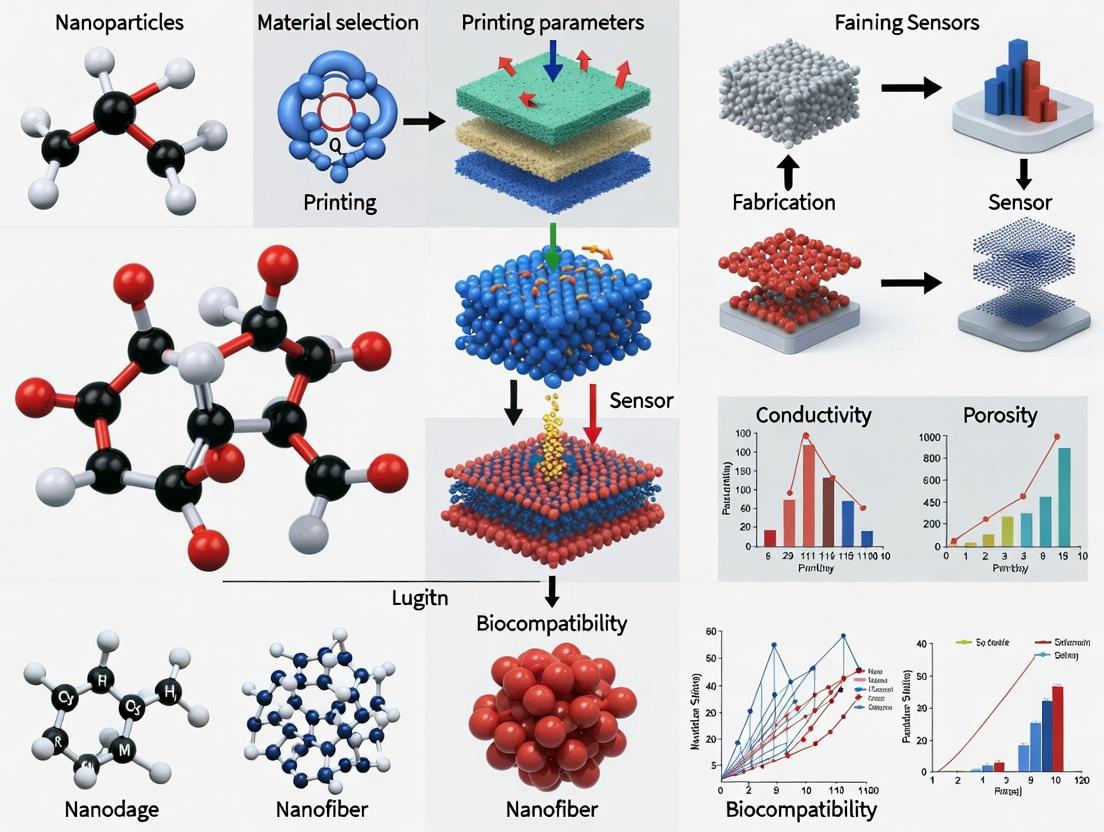
This article provides a comprehensive analysis of the convergence of additive manufacturing and nanotechnology for advanced medical sensor development.
Precision Printing: How 3D Printed Nanomaterials Are Revolutionizing Next-Gen Medical Sensors
Abstract
This article provides a comprehensive analysis of the convergence of additive manufacturing and nanotechnology for advanced medical sensor development. Aimed at researchers and drug development professionals, it explores the foundational materials science, details current fabrication methodologies like two-photon polymerization and aerosol jet printing, addresses critical challenges in resolution and biocompatibility, and validates performance through comparative analysis with traditional methods. The review synthesizes the pathway from laboratory innovation to clinical application, highlighting the transformative potential for personalized diagnostics and continuous health monitoring.
From Nanoscale to Bedside: The Core Materials and Principles of 3D Printed Medical Sensors
Application Notes
The integration of nanomaterials into 3D-printed medical sensors offers transformative potential for diagnostics, point-of-care monitoring, and therapeutic drug level tracking. The intrinsic properties of these materials directly dictate sensor performance metrics such as sensitivity, limit of detection (LOD), selectivity, and biocompatibility. This note details the core nanomaterials and their specific advantages for additive manufacturing in medical sensing.
Metal Nanoparticles (NPs): Primarily gold (Au) and silver (Ag) NPs are utilized for their exceptional optical properties (Localized Surface Plasmon Resonance - LSPR) and high electrical conductivity. In 3D printing, they are formulated into conductive inks or composite resins. Their surface is easily functionalized with antibodies or DNA probes, enabling specific biomarker detection. The LSPR shift upon binding events provides a robust optical transduction mechanism.
Carbon Nanotubes (CNTs): Both single-walled (SWCNTs) and multi-walled (MWCNTs) offer high aspect ratios, excellent electrical conductivity, and mechanical strength. Their 1D structure creates extensive conductive networks at low percolation thresholds in composite filaments. Their sidewalls can be non-covalently or covalently modified for biosensing. Intrinsic near-infrared photoluminescence from semiconducting SWCNTs is exploited for deep-tissue optical biosensing.
Graphene & Its Derivatives: Graphene oxide (GO) and reduced graphene oxide (rGO) are most common in 3D printing due to their dispersion processability. They provide a large specific surface area, high carrier mobility, and tunable surface chemistry. Their 2D geometry facilitates electron transfer in electrochemical sensors. GO's oxygenated groups enable covalent bio-conjugation and hydrophilic composite formulation, while rGO restores conductivity post-printing.
Conductive Polymers (CPs): Polyaniline (PANI), polypyrrole (PPy), and poly(3,4-ethylenedioxythiophene) polystyrene sulfonate (PEDOT:PSS) are organic semiconductors. They offer intrinsic mixed ionic/electronic conductivity, electrochromic properties, and mechanical flexibility. Their conductivity can be modulated by doping state, which changes upon interaction with analytes (chemi-resistance). Their compatibility with aqueous processing aids in formulating bio-inks for extrusion printing.
Quantitative Property Comparison
Table 1: Intrinsic Properties of Key Nanomaterials for 3D-Printed Medical Sensors
| Nanomaterial | Exemplary Forms Used in 3D Printing | Key Intrinsic Properties | Typical Role in Sensor | Compatible 3D Printing Modalities |
|---|---|---|---|---|
| Metal NPs | AuNPs, AgNPs (spheres, rods) | LSPR, High Conductivity (~10^6 S/cm for Au), Catalytic Activity | Optical Transducer, Conductive Filler, Electrode Modifier | Inkjet, DIW, SLA (in composite resins) |
| CNTs | SWCNTs, MWCNTs (purified, carboxylated) | High Aspect Ratio (>1000), Electrical Conductivity (10^3-10^4 S/cm), Tensile Strength (~50 GPa) | Conductive Network, Field-Effect Transistor Channel, Electrochemical Electrode | FDM (composite filament), DIW, SLA |
| Graphene | GO, rGO flakes, Graphene nanoplatelets | Surface Area (~2630 m²/g), Mobility (~10,000 cm²/V·s), Electrical Conductivity (rGO: ~10^3 S/cm) | High-Surface-Area Electrode, Quantum Capacitance Element, Barrier Layer | DIW, Inkjet, SLA (GO as photoinitiator) |
| Conductive Polymers | PEDOT:PSS, PANI, PPy (inks, composites) | Mixed Conductivity, Electrochromism, Tunable Work Function, Mechanical Flexibility (~2 GPa modulus) | Active Sensing Layer, Hydrogel Matrix, Electrode Coating | DIW, Inkjet, EHD Printing |
Table 2: Performance Metrics in Recent 3D-Printed Prototype Sensors (2023-2024)
| Nanomaterial (Sensor Type) | Target Analyte | Reported Limit of Detection (LOD) | Sensitivity | Reference Technique |
|---|---|---|---|---|
| AuNP/PEDOT:PSS DIW Electrode | Glucose | 0.1 µM | 371.4 µA/mM·cm² | Amperometry |
| SWCNT/PLA FDM Electrode | Dopamine | 25 nM | 0.296 µA/µM | Differential Pulse Voltammetry |
| rGO/Chitosan DIW Hydrogel | pH | N/A | -64.8 mV/pH (Theoretical Nernstian: -59.16 mV/pH) | Potentiometry |
| PPy/AgNP SLA-cured Composite | Interleukin-6 (IL-6) | 0.15 pg/mL | Resistance Δ of 12.4% per log(conc.) | Electrochemical Impedance Spectroscopy |
Experimental Protocols
Protocol 3.1: DIW of a CNT/rGO Hybrid Electrode for Dopamine Sensing
Objective: To fabricate a freestanding, highly conductive 3D electrode for electrochemical detection of dopamine. Materials: Carboxylated MWCNTs, GO dispersion (2 mg/mL), L-Ascorbic acid, DI water, Sodium alginate, Calcium chloride (CaCl₂) solution (100 mM), Phosphate Buffered Saline (PBS, 0.1 M, pH 7.4). Equipment: DIW 3D printer (e.g., BIO X), mixing sonicator, 3-axis syringe pump, electrochemical workstation. Procedure:
- Ink Formulation: Mix 5 mL GO dispersion, 20 mg MWCNTs, and 100 mg sodium alginate. Sonicate for 60 min. Centrifuge at 3000 rpm for 10 min to remove large aggregates. Use supernatant as ink.
- Printing: Load ink into a 3 mL syringe fitted with a 410 µm conical nozzle. Set print speed to 8 mm/s, layer height to 300 µm. Print a 10 mm x 10 mm grid (3 layers) onto a glass substrate.
- Post-Processing: (a) Gelation: Immediately immerse the printed structure in 100 mM CaCl₂ for 5 min to ionically crosslink alginate. Rinse with DI water. (b) Reduction: Immerse the gelated structure in 50 mM L-Ascorbic acid solution at 90°C for 60 min to reduce GO to rGO in situ.
- Sensor Testing: Connect the dried electrode to the electrochemical workstation via silver paste and wire. Perform Cyclic Voltammetry (CV) in 0.1 M PBS from -0.2 V to 0.6 V (vs. Ag/AgCl) at 50 mV/s with successive dopamine additions.
Protocol 3.2: SLA Printing of a AuNP-Embedded Microfluidic Immunosensor
Objective: To create a monolithic, transparent microfluidic device with integrated plasmonic AuNP sensors for label-free protein detection. Materials: Methacrylate-based photopolymer resin, Polyethylene glycol diacrylate (PEGDA 700), 2-Hydroxy-2-methylpropiophenone (photoinitiator), Citrate-capped AuNPs (40 nm), Anti-PSA monoclonal antibody, Ethanolamine blocking solution. Equipment: Commercial SLA printer (e.g., Formlabs), UV post-curing oven, Microfluidic flow control system, UV-Vis spectrometer with fiber optic coupling. Procedure:
- Resin Modification: Mix 90 mL commercial transparent resin with 10 mL PEGDA and 0.5 g photoinitiator. Stir for 1 hour. Add 1 mL of concentrated AuNP solution and gently stir for 15 min to disperse.
- 3D Printing: Design a microfluidic chip (channel dimensions: 100 µm height x 500 µm width) with a serpentine sensing chamber. Slice file and print using standard 405 nm laser SLA parameters (e.g., 50 µm layer thickness).
- Post-Curing & Cleaning: Post-cure the entire device under 365 nm UV light for 30 min. Flush channels with isopropanol, then PBS to remove uncured resin.
- Biofunctionalization: Flow 0.1 mg/mL anti-PSA antibody in PBS through the sensing chamber overnight at 4°C. Rinse with PBS, then flow 1M ethanolamine for 1 hour to block non-specific sites.
- Detection: Flow samples through the chip. Monitor the LSPR peak shift (approx. 525 nm for 40 nm AuNPs) in real-time using the coupled spectrometer. A red-shift correlates with protein binding and nanoparticle aggregation/refractive index change.
Visualizations
Workflow for 3D Printing Nanomaterial-Based Medical Sensors
Property-Performance Relationship in 3D Printed Nanosensors
The Scientist's Toolkit: Research Reagent Solutions
Table 3: Essential Reagents for 3D Printing Nanomaterial Sensor Research
| Reagent/Material | Function in Research | Key Considerations for Selection |
|---|---|---|
| PEDOT:PSS aqueous dispersion (1.0-1.3 wt%) | Serves as the primary conductive polymer matrix for DIW/inkjet. Provides aqueous processability, transparency, and biocompatibility. | Look for formulations with co-solvents (e.g., ethylene glycol, DMSO) or surfactants added for enhanced conductivity and printability. |
| Carboxylated Single-Walled Carbon Nanotubes (SWCNT-COOH) | Provides high conductivity and surface area. Carboxyl groups enable covalent biomolecule attachment and improved dispersion in aqueous inks. | Purity (>90%) and length distribution are critical for consistent percolation network formation and ink viscosity. |
| Graphene Oxide (GO) dispersion (2-5 mg/mL in water) | Acts as a versatile 2D nanofiller, viscosity modifier for DIW, and a photoreactive component in SLA. Can be reduced post-print to rGO. | Sheet size and degree of oxidation affect mechanical properties of the printed object and the reduction efficiency. |
| Citrate-capped Gold Nanoparticles (40-60 nm, OD1) | Ready-to-use plasmonic NPs for optical sensing or conductivity enhancement. Citrate capping allows easy surface ligand exchange. | Check concentration (particles/mL) and coefficient of variation (<15%) for uniform LSPR response. Sterile filtered for bio-apps. |
| Methacrylate-functionalized PEG (PEGDMA) | A common photopolymerizable co-monomer for SLA/DLP resins. Improves hydrogel-like properties, swelling, and biocompatibility. | Molecular weight (e.g., 550, 750 Da) determines crosslink density and final mechanical properties of the printed sensor. |
| (3-Aminopropyl)triethoxysilane (APTES) | A key silanizing agent for introducing amine groups onto printed glass or oxide surfaces for subsequent biomolecule immobilization. | Must be used fresh (<6 months after opening) under anhydrous conditions for effective surface modification. |
Within the broader thesis of advancing 3D printing for nanomaterial-based medical sensors, this document outlines the application-specific advantages and detailed protocols. The synergy stems from 3D printing's ability to precisely architect conductive, sensitive, and biocompatible nanocomposites at microscale resolutions, enabling rapid prototyping of complex, patient-specific sensing platforms for point-of-care diagnostics and continuous health monitoring.
Key Advantages & Quantitative Data
The integration of nanomaterials (e.g., graphene, MXenes, metallic nanoparticles, carbon nanotubes) with 3D printing (e.g., DIW, SLA, FDM) enhances sensor performance across critical metrics.
Table 1: Performance Comparison of 3D-Printed Nanomaterial Sensors vs. Conventional Fabrication
| Performance Metric | Conventional Fabrication (e.g., Lithography) | 3D Printing with Nanomaterials | Improvement Factor | Key 3D Printing Method |
|---|---|---|---|---|
| Fabrication Time (Prototype) | 48-72 hours | 0.5-4 hours | ~24x faster | Direct Ink Writing (DIW) |
| Feature Resolution | ~100 nm | 1 - 200 µm | Coarser, but tunable | Stereolithography (SLA) |
| Conductivity (S/cm) | ~10⁶ (Bulk Au) | 10² - 10⁴ (Nanocomposite) | Tunable for application | DIW (Graphene/AgNW) |
| Electroactive Surface Area | Planar, limited | Hierarchical, porous | 3-5x increase | DIW, Inkjet |
| Mechanical Flexibility (Young's Modulus) | Rigid or pre-defined | Programmable, 0.1-2 GPa | Wide tunability | DIW (Elastomeric) |
| Material Waste | High (>90%) | Low (<10%) | ~90% reduction | All additive methods |
| Biocompatibility Customization | Limited, post-process | Graded, in-process design | Enhanced integration | SLA (Bioresins) |
Experimental Protocols
Protocol 1: Fabrication of a Graphene-Polylactic Acid (PLA) Nanocomposite Filament for Fused Deposition Modeling (FDM)
Objective: To produce a conductive filament for printing electrochemical sensor electrodes.
- Material Preparation: Weigh 15 wt% graphene nanoplatelets (GNPs, 5-10 nm thickness) and 85 wt% PLA pellets.
- Dry Mixing: Mechanically mix components in a high-speed mixer for 30 mins to ensure pre-dispersion.
- Melt Compounding: Feed mixture into a twin-screw extruder at 180-200°C. Employ high-shear screw configuration for 5 min residence time.
- Filament Extrusion: Direct compounded material through a 1.75 mm diameter die, cool in water bath, and spool with tension control.
- Quality Control: Measure filament diameter (target: 1.75 ± 0.05 mm) and conductivity via 4-point probe (>1 S/m acceptable).
Protocol 2: Direct Ink Writing (DIW) of a MXene-Based Ion-Selective Electrode for Ca²⁺ Sensing
Objective: To print a potentiometric sensor for monitoring calcium ions in sweat.
- Ink Formulation: Under argon, mix 30 mg/ml Ti₃C₂Tₓ MXene aqueous dispersion with 2 wt% sodium alginate. Add 5 wt% Ca²⁻ ionophore (ETH 1001) and 0.5 wt% conductive carbon black. Stir for 12 hrs, then degas.
- Printer Setup: Load ink into a syringe barrel (22G conical tip). Mount on a 3-axis pneumatic DIW printer. Set stage temperature to 25°C.
- Print Parameters: Pressure: 180 kPa, Speed: 8 mm/s, Layer Height: 150 µm. Design a 3-electrode pattern (WE: 3 mm diameter).
- Curing: Post-print, expose structure to glutaraldehyde vapor for 2 hrs to cross-link alginate, then dip-coat in PVC membrane containing ionophore for 30 s.
- Calibration: Immerse in standard CaCl₂ solutions (10⁻⁵ to 10⁻¹ M). Record potential vs. Ag/AgCl reference. Slope should be ~29 mV/decade.
Protocol 3: Stereolithography (SLA) of a Microfluidic Immunosensor Chip with Integrated Gold Nanorod (AuNR) Detection Zones
Objective: To fabricate a monolithic, transparent chip with embedded AuNR zones for surface-enhanced Raman scattering (SERS) detection of biomarkers.
- Resin Modification: Mix 1 vol% PEGDA-AuNRs (50 nm x 15 nm, functionalized with NHS esters) into a commercial biocompatible SLA resin (e.g., Formlabs Dental SG).
- Print Design: Design a chip (20 x 20 x 5 mm) with serpentine microchannels (500 µm width) and three 2 mm circular detection zones containing high AuNR density.
- Printing: Use a high-resolution SLA printer (XY: 50 µm) with 405 nm laser. Layer thickness: 25 µm. Print supports enabled.
- Post-Processing: Wash in isopropanol for 10 mins, then UV post-cure for 30 mins.
- Functionalization: Flow 1 mg/ml anti-PSA antibody in PBS through channel for 2 hrs at 37°C to conjugate to AuNRs via NHS chemistry. Block with BSA.
Visualizing the Synergy: Workflows and Pathways
Title: 3D Printing Nanomaterial Sensor Workflow
Title: Nanomaterial Sensor Signal Transduction
The Scientist's Toolkit: Research Reagent Solutions
Table 2: Essential Materials for 3D Printing Nanomaterial-Based Sensors
| Item | Function in Research | Example Product/Chemical |
|---|---|---|
| Graphene Nanoplatelets (GNPs) | Provides high conductivity and surface area in FDM/DIW composites. Enhances electrochemical sensitivity. | XG Sciences M-5, 5 nm thickness |
| Ti₃C₂Tₓ MXene Aqueous Dispersion | 2D conductive nanomaterial for DIW inks. Excellent for electrochemical and biosensing due to tunable surface chemistry. | Nanochemazone, 5 mg/mL, <5 layers |
| Gold Nanorods (AuNRs) | Plasmonic nanoparticles for optical/SERS-based sensors. Can be incorporated into SLA resins or inkjet inks. | Sigma-Aldrich, 50 nm x 15 nm, functionalized |
| PEGDA (Poly(ethylene glycol) diacrylate) | Photocurable polymer base for SLA/DLP resins. Offers biocompatibility and tunable mechanical properties. | Sigma-Aldrich, Mn 700 |
| Carboxymethyl Cellulose Sodium Salt (CMC) | Common rheology modifier for DIW inks. Enables shear-thinning behavior for printability. | Alfa Aesar, High viscosity |
| Ionophore for Ca²⁺ (ETH 1001) | Selective molecular recognition agent for potentiometric ion sensors. | Sigma-Aldrich, Selectophore grade |
| Conductive PLA Composite Filament | Ready-to-use filament for FDM printing of electrode structures. Simplifies prototyping. | Proto-pasta, Conductive Graphene PLA |
| Biocompatible SLA Resin (Class I) | Certified resin for printing devices for temporary skin contact. Essential for translational medical sensor research. | Formlabs Biocompatible Resin |
| CNT/PDMS Pre-composite | Silicone-based elastomer with carbon nanotubes for printing flexible, stretchable strain/pressure sensors. | Nanointegris, IsoSol-S30 |
| Multi-walled Carbon Nanotubes (MWCNTs) | High-aspect-ratio conductive filler. Improves piezoresistive behavior and electrode conductivity in composites. | Cheap Tubes, OD 20-30 nm, 95% purity |
This document provides application notes and protocols for the development and characterization of sensor architectures, contextualized within a broader thesis on 3D printing of nanomaterials for medical diagnostics. The convergence of advanced manufacturing with novel transduction principles enables next-generation sensors for point-of-care testing, continuous biomonitoring, and accelerated drug development. This guide focuses on the core operational anatomies of electrochemical, optical, and mechanical sensors, detailing their working principles, fabrication via 3D printing, and experimental validation.
Transduction Mechanisms & Quantitative Comparison
Sensor performance is quantified by key metrics critical for medical applications: sensitivity, limit of detection (LOD), dynamic range, response time, and selectivity. The following table compares the core architectures.
Table 1: Quantitative Comparison of Core Transduction Modalities for Medical Sensors
| Transduction Modality | Typical Sensitivity | Typical Limit of Detection (LOD) | Dynamic Range | Response Time | Key Interferents |
|---|---|---|---|---|---|
| Electrochemical (Amperometric) | 10–1000 µA/mM·cm² | 0.1–10 µM | 3–4 orders of magnitude | 1–10 s | Ascorbic acid, uric acid, paracetamol |
| Electrochemical (Potentiometric) | 50–59 mV/decade (Nernstian) | 1 nM – 10 µM | 4–6 orders of magnitude | 10–60 s | Ions of similar charge/radius |
| Optical (Fluorescence) | High (single molecule possible) | pM – nM | 4–5 orders of magnitude | Seconds to minutes | Autofluorescence, light scattering |
| Optical (Surface Plasmon Resonance) | ~10⁻³–10⁻⁶ RIU* | 0.1–10 ng/mL (protein) | Limited by sensor surface | Real-time (<1 s) | Non-specific binding |
| Mechanical (Resonant Cantilever) | Hz/(ng/cm²) or Hz/ppm | pg/mm² level | Linear in low mass loading | Seconds to minutes | Viscosity, temperature drift |
*RIU: Refractive Index Unit
Detailed Experimental Protocols
Protocol: Fabrication of a 3D-Printed, Nanomaterial-Enhanced Electrochemical Sensor
Objective: To fabricate a working electrode for glucose detection using a 3D-printed architecture modified with graphene oxide (GO) and platinum nanoparticles (PtNPs).
Thesis Context: Demonstrates the integration of 2D nanomaterials and metallic nanoparticles into a 3D-printed porous electrode structure to enhance surface area and electrocatalytic activity.
Materials & Equipment:
- Conductive filament (e.g., carbon-black doped PLA)
- Fused deposition modeling (FDM) 3D printer
- Graphene oxide (GO) dispersion (1 mg/mL)
- Chloroplatinic acid (H₂PtCl₆, 8 mM)
- Phosphate buffer saline (PBS, 0.1 M, pH 7.4)
- Glucose oxidase (GOx) enzyme
- Nafion solution (0.5%)
- Potentiostat/Galvanostat
Procedure:
- 3D Print Electrode: Design and print a three-electrode system (working, counter, reference) using conductive filament. Polish surface with sequential alumina slurry.
- Electrode Functionalization: a. Drop-cast 5 µL of GO dispersion onto the working electrode, dry at 50°C for 30 min. b. Electrochemically reduce GO by performing cyclic voltammetry (CV) in PBS (-1.0 to 0 V, 10 cycles, 50 mV/s). c. Electrodeposit PtNPs by chronoamperometry in 8 mM H₂PtCl₆ at -0.25 V for 60 s.
- Enzyme Immobilization: Mix 10 µL GOx (10 mg/mL) with 5 µL Nafion. Drop-cast 3 µL mixture onto PtNP/rGO-modified electrode. Air dry for 1 hour at 4°C.
- Amperometric Testing: Place sensor in stirred PBS (0.1 M, pH 7.4) at +0.7 V vs Ag/AgCl. Record current response upon successive additions of glucose stock solution.
Protocol: Characterization of an Optical SPR Sensor with 3D-Printed Microfluidic Flow Cell
Objective: To assemble a sensor for real-time, label-free detection of antibody-antigen binding using a commercial SPR chip integrated with a custom 3D-printed flow cell.
Thesis Context: Highlights the use of 3D printing for rapid prototyping of custom fluidic interfaces that optimize sample delivery to the nanomaterial-functionalized sensing surface.
Materials & Equipment:
- SPR instrument (or DIY setup with Kretschmann configuration)
- Bare gold SPR sensor chip
- 3D printer (SLA/DLP recommended)
- Biocompatible resin (e.g., PEGDA)
- Protein A or G solution (50 µg/mL in acetate buffer)
- Target antibody (Anti-IgG)
- Corresponding antigen
- HBS-EP buffer (10 mM HEPES, 150 mM NaCl, 3 mM EDTA, 0.005% v/v Surfactant P20, pH 7.4)
Procedure:
- Flow Cell Fabrication: Design and stereolithography (SLA) print a flow cell with inlet/outlet ports and a defined channel height (e.g., 100 µm) to match the SPR chip dimensions. Post-cure and seal with PDMS gasket.
- SPR Chip Functionalization: Dock the flow cell on the gold chip. Prime system with HBS-EP buffer at 10 µL/min. a. Inject 70 µL of Protein G solution for 7 min to immobilize on gold via physisorption/chemisorption. b. Block non-specific sites with 1 M ethanolamine-HCl (pH 8.5) for 5 min.
- Capture Assay: a. Inject 50 µL of antibody solution (1 µg/mL in HBS-EP) for 5 min. Observe binding response (RU increase). b. Wash with HBS-EP for 3 min to establish baseline. c. Inject 50 µL of antigen at varying concentrations (10–1000 nM) for 5 min association, followed by buffer wash for dissociation phase monitoring.
- Regeneration: Regenerate surface with 10 mM glycine-HCl (pH 2.0) for 30 s. Re-equilibrate with buffer.
Protocol: Measuring Mechanical Resonance Shift in a 3D-Printed Microcantilever for Vapor Sensing
Objective: To fabricate a polymer microcantilever via high-resolution 3D printing and characterize its resonance frequency shift upon exposure to volatile organic compounds (VOCs).
Thesis Context: Explores the potential of 3D-printed polymeric micro-electromechanical systems (MEMS) with integrated nanomaterial coatings for sensitive, low-cost mechanical transduction.
Materials & Equipment:
- High-resolution SLA 3D printer (µm-scale)
- Photosensitive resin
- Polydimethylsiloxane (PDMS) coating solution
- Laser Doppler vibrometer
- Piezoelectric actuator
- VOC chamber (controlled concentration)
- Lock-in amplifier
Procedure:
- Cantilever Fabrication: Design and print an array of cantilevers (e.g., 500 µm length, 100 µm width, 20 µm thickness). Critical cleaning with IPA to remove uncured resin.
- Functionalization: Dip-coat cantilevers in a 2% w/w PDMS/toluene solution to create a hydrophobic, VOC-absorbent layer. Cure at 70°C for 2 hours.
- Resonance Characterization: a. Mount cantilever in a controlled environment chamber. b. Use a piezoelectric actuator to drive base excitation. Measure velocity response at the tip with the laser Doppler vibrometer. c. Sweep excitation frequency (e.g., 10–100 kHz) to identify fundamental resonance frequency (f₀) in clean, dry air.
- Vapor Exposure Test: a. Introduce a known concentration of vapor (e.g., 500 ppm ethanol in N₂ carrier gas) into the chamber. b. Monitor the real-time shift in resonance frequency (Δf) due to mass loading and/or stiffness changes induced by PDMS-VOC interaction. Calculate mass sensitivity.
Visualizing Sensor Architectures and Workflows
Diagram 1: Electrochemical Sensor Signaling Pathway
Diagram 2: Optical SPR Assay Workflow
Diagram 3: Mechanical Cantilever Sensing Logic
The Scientist's Toolkit: Essential Research Reagents & Materials
Table 2: Key Reagent Solutions for Sensor Development & Testing
| Item | Function/Description | Example in Protocol |
|---|---|---|
| Conductive 3D Printing Filament | Provides the structural and electrically conductive base for printed electrodes. | Carbon-black/PLA for FDM printing of electrochemical cell. |
| Graphene Oxide (GO) Dispersion | A 2D nanomaterial precursor that, when reduced, offers high surface area and conductivity for enhanced electron transfer. | Drop-cast on 3D-printed electrode to form rGO layer. |
| Nafion Perfluorinated Resin | A cation-exchange polymer used to immobilize enzymes and provide biocompatibility, while rejecting interferents. | Mixed with glucose oxidase for stable film formation. |
| Protein A/G | Bacterial proteins that bind the Fc region of antibodies, used for oriented immobilization on SPR chips. | Immobilized on gold SPR chip to capture target antibody. |
| HBS-EP Running Buffer | Standard buffer for SPR/BLI; HEPES maintains pH, salts provide ionic strength, surfactant minimizes non-specific binding. | Continuous flow buffer for baseline stabilization and sample dilution. |
| Polydimethylsiloxane (PDMS) | A silicone elastomer used as a selective, absorptive coating for mechanical/VOC sensors. | Dip-coated onto 3D-printed cantilever for vapor sensing. |
| Glycine-HCl Regeneration Buffer | Low pH buffer disrupts protein-protein interactions, allowing the reuse of biosensor surfaces. | Injected post-SPR assay to remove bound antigen/antibody. |
Within the thesis framework of 3D printing nanomaterials for next-generation medical sensors, material biocompatibility is the foundational constraint. This document provides Application Notes and Protocols for evaluating and selecting materials for two distinct but overlapping domains: implantable (in-vivo) sensors and wearable (on-body) sensor interfaces. The choice dictates not only biological safety but also sensor performance, longevity, and regulatory pathway.
Quantitative Comparison of Material Classes
Table 1: Key Properties of Material Classes for Medical Sensor Fabrication
| Material Class | Example Materials | Key Biocompatibility Advantages | Primary Risks/Challenges | Typical Applications in Sensor Research |
|---|---|---|---|---|
| Polymers (Base) | PDMS, PLGA, PCL, PU, PEG | Tunable elasticity, oxygen permeability (PDMS), degradability (PLGA, PCL). | Hydrophobicity (PDMS), leaching of oligomers/monomers, hydrolysis by-products. | Wearable substrate, encapsulant, drug-eluting sensor coating. |
| Conductive Polymers | PEDOT:PSS, PPy, PANi | Mixed ionic/electronic conduction, mechanical compliance. | Acidic dopants (PSS), oxidative instability, batch variability. | Electrode, electrochemical sensing layer. |
| Carbon Nanomaterials | CNTs, Graphene Oxide, Carbon Black | High conductivity, large surface area, functionalizable. | Potential pro-fibrogenic response, dispersion stability, metallic impurities. | Nanocomposite electrode, reinforcing filler. |
| Metals & Metal Oxides | Au, Pt, ITO, ZnO | Excellent conductivity (Au, Pt), transparent (ITO), piezoelectric (ZnO). | Corrosion products, ion release (Ni, Cr), stiffness mismatch. | Thin-film electrode, transducer, antimicrobial coating. |
| Biopolymers & Hydrogels | Alginate, Chitosan, GelMA, Silk Fibroin | Inherent biocompatibility, biomimetic, often biodegradable. | Poor mechanical strength (alginate), swelling-induced drift, limited conductivity. | Bio-ink for 3D printed scaffolds, tissue-interface layer. |
Table 2: In-Vivo vs. Wearable Application Requirements
| Parameter | In-Vivo Implantable Sensor | Wearable Skin-Interface Sensor |
|---|---|---|
| Biocompatibility | ISO 10993 series (Cytotoxicity, Sensitization, Implantation). | ISO 10993-5/10 (Cytotoxicity, Irritation). Dermal sensitization. |
| Functional Lifetime | Months to years (stable or biodegradable). | Days to months. |
| Key Material Failure Mode | Biofouling, fibrous encapsulation, corrosion. | Delamination, sweat-induced degradation, microbial growth. |
| Sterilization Requirement | Mandatory (Autoclave, ETO, Gamma). | Typically low-level disinfection or disposable. |
| Mechanical Priority | Minimize foreign body response (modulus matching). | Robust flexural endurance, skin adhesion. |
Experimental Protocols
Protocol 1: Cytotoxicity Assessment per ISO 10993-5 (Elution Test Method) Objective: To evaluate the potential cytotoxic effect of leachables from a 3D-printed sensor material. Materials: Test material specimen (sterilized, 6 cm²/mL surface area to extraction medium), L-929 mouse fibroblast cells, High-Glucose DMEM with FBS, CellTiter 96 AQueous One Solution (MTT assay), incubator, plate reader. Procedure:
- Extract Preparation: Incubate material in complete cell culture medium at 37°C for 24±2h. Use a fresh culture medium as a negative control and a medium with 0.1% v/v phenol as a positive control.
- Cell Seeding: Seed L-929 cells in a 96-well plate at 1x10⁴ cells/well and culture for 24h to form a sub-confluent monolayer.
- Exposure: Aspirate culture medium from wells. Add 100 µL of material extract, negative, or positive control to respective wells (n=6 per group). Incubate for 24h.
- Viability Assessment: Add 20 µL of MTT reagent to each well. Incubate for 4h. Carefully aspirate medium and add 100 µL of solubilization solution (DMSO). Shake gently for 10 min.
- Analysis: Measure absorbance at 570 nm with a reference at 650 nm. Calculate relative cell viability (%) as (Abssample / Absnegative control) x 100. Viability < 70% indicates potential cytotoxicity.
Protocol 2: Evaluation of Biofouling & Foreign Body Response (In-Vivo Rodent Model) Objective: To assess acute inflammatory response and fibrous encapsulation of subcutaneous sensor implants. Materials: Sterile material implants (disc, 1mm thick x 5mm diameter), C57BL/6 mice, surgical tools, suture, Histology reagents (formalin, paraffin, H&E stain, Masson's Trichrome). Procedure:
- Implantation: Anesthetize and prepare animal per IACUC protocol. Make a small dorsal incision. Create a subcutaneous pocket and insert one implant per site. Close incision. Monitor animals post-op.
- Explantation: Euthanize animals and harvest implants with surrounding tissue at endpoints (e.g., 1, 4, 12 weeks). Fix in 10% neutral buffered formalin for 48h.
- Histological Processing: Process tissue for paraffin embedding. Section (5µm) and mount slides. Perform H&E and Masson's Trichrome staining.
- Analysis: Image slides under light microscope. Grade inflammation (cell types, density), measure fibrous capsule thickness (µm) around implant using image analysis software (e.g., ImageJ). Compare across material groups and time points.
Visualization of Workflows & Pathways
Diagram 1: Foreign Body Response Cascade to Implant
Diagram 2: Material Selection & Testing Workflow
The Scientist's Toolkit: Key Research Reagent Solutions
Table 3: Essential Reagents for Biocompatibility Testing
| Reagent / Kit Name | Supplier Examples | Primary Function in Evaluation |
|---|---|---|
| ISO 10993-12 Extraction Vehicles | Baxter, MilliporeSigma | Provide standardized polar (NaCl), non-polar (Vegetable oil), and culture media for leachable extraction. |
| L-929 Mouse Fibroblast Cell Line | ATCC, ECACC | Standardized cell line for cytotoxicity testing per ISO 10993-5. |
| CellTiter 96 AQueous One (MTT) | Promega | Colorimetric assay for quantifying cell viability and proliferation. |
| Live/Dead Viability/Cytotoxicity Kit | Thermo Fisher (Invitrogen) | Dual fluorescent staining (Calcein AM/EthD-1) for direct visualization of live/dead cells on material surfaces. |
| Chorioallantoic Membrane (CAM) Assay Kit | BioIVT, EpiDerm | Alternative in vitro model for assessing irritation potential and vascular response. |
| Recombinant Human Cytokine ELISA Kits | R&D Systems, BioLegend | Quantify pro-inflammatory cytokines (IL-1β, IL-6, TNF-α) from cell-material co-culture supernatants. |
| Masson's Trichrome Stain Kit | Sigma-Aldrich, Abcam | Differentiates collagen (blue/green) from muscle/cytoplasm (red) in histology for fibrosis assessment. |
Fabrication in Focus: Techniques, Processes, and Cutting-Edge Sensor Applications
Within the thesis on 3D printing nanomaterials for medical sensors, the development of high-resolution, functional architectures is paramount. Two-Photon Polymerization (2PP) and Electrohydrodynamic (EHD) printing are advanced additive manufacturing techniques enabling the fabrication of sub-micron to nano-scale features essential for creating sensitive, miniaturized medical sensor components, such as transducers, electrodes, and biosensing interfaces.
Comparative Technique Analysis
Table 1: Quantitative Comparison of 2PP and EHD Printing for Medical Sensor Fabrication
| Parameter | Two-Photon Polymerization (2PP) | Electrohydrodynamic (EHD) Printing |
|---|---|---|
| Typical Resolution | 100 nm – 1 µm | 100 nm – 10 µm (jetting); Sub-100 nm (e-spinning) |
| Print Speed | 0.01 – 10 mm³/s | 0.1 – 10 mm/s (writing) |
| Key Materials | Photoresists (e.g., IP-S, SZ2080), biocompatible polymers, hybrid organic-inorganic composites | Polymer solutions (e.g., PCL, PLGA), conductive inks (Ag NP, PEDOT:PSS), bio-inks |
| Viscosity Range | 10 – 10,000 cP | 1 – 10,000 cP (typically 100-1000 cP for stable jet) |
| Critical Process Variables | Laser power, scan speed, voxel size, photoinitiator concentration | Applied voltage, flow rate, nozzle-substrate gap, conductivity/dielectric constant of ink |
| Primary Sensor Applications | Microneedle arrays, photonic crystal sensors, nano-probes, micro-fluidic channels | Flexible electrode grids, strain/pressure sensors, printed transistor biosensors, nanofiber membranes for filtration |
Application Notes
2PP for Neural Sensor Interfaces
2PP excels in creating ultra-precise, three-dimensional scaffold electrodes for neural interfacing. Recent protocols demonstrate direct writing of neuro-compliant, porous micro-electrode arrays with feature sizes below 5 µm, matching neuronal cell dimensions. This allows for low-impedance, high signal-to-noise recording in brain-machine interfaces.
EHD Printing for Wearable Sweat Sensors
EHD printing's ability to deposit patterned, high-aspect-ratio conductive lines onto flexible substrates is leveraged for multiplexed sweat electrolyte sensors. Optimized protocols enable printing of Ag nanowire interdigitated electrodes (IDEs) with line widths of 2 µm, enhancing electrochemical surface area and sensitivity for real-time Na⁺, K⁺ monitoring.
Experimental Protocols
Protocol 4.1: 2PP Fabrication of a Photonic Crystal Biosensor
Objective: Fabricate a 3D photonic crystal structure for label-free detection of biomarker proteins. Materials: IP-L 780 photoresist (Nanoscribe), Iridium-based photoinitiator (e.g., Irgacure 784), silicon substrate, isopropanol, developer (Propylene glycol monomethyl ether acetate, PGMEA). Workflow:
- Substrate Preparation: Clean a silicon wafer in an ultrasonic bath with acetone and isopropanol for 10 minutes each. Oxygen plasma treat for 2 minutes.
- Resist Deposition: Spin-coat IP-L 780 photoresist at 3000 rpm for 60 seconds to achieve ~25 µm layer.
- 2PP Writing: Load substrate into a commercial 2PP system (e.g., Nanoscribe Photonic Professional GT). Use a 63x objective (NA=1.4). Set laser parameters: wavelength = 780 nm, power = 25 mW (at sample), scan speed = 50 µm/s. Write 3D woodpile structure with 500 nm rod diameter and 1.5 µm periodicity.
- Development: Immerse sample in PGMEA for 20 minutes with gentle agitation. Rinse with fresh PGMEA and isopropanol. Critical Point Dry to prevent collapse.
- Functionalization: Silanize structure with (3-aminopropyl)triethoxysilane (APTES) for 1 hour to enable covalent binding of antibody probes.
Diagram 1: 2PP Biosensor Fabrication Workflow
Protocol 4.2: EHD Printing of a Nanofiber-Based Gas Sensor
Objective: Print a porous mesh of polymer nanofibers embedded with graphene oxide (GO) for volatile organic compound (VOC) detection. Materials: Polycaprolactone (PCL, MW 80k), graphene oxide dispersion (2 mg/mL in DMF), dimethylformamide (DMF), chloroform, conductive ITO-coated PET substrate. Workflow:
- Ink Formulation: Prepare a 10% w/v PCL solution by dissolving in a 7:3 chloroform:DMF mixture. Stir for 6 hours. Add GO dispersion to achieve a final GO concentration of 0.5% w/v relative to PCL. Sonicate for 1 hour.
- Printer Setup: Use a single-nozzle EHD system with a conductive metal nozzle (inner diameter: 5 µm). Set nozzle-to-substrate distance to 3 mm. Connect a high-voltage supply to the nozzle. Ground the ITO-PET substrate.
- Printing Parameters: Fill a glass syringe with ink. Set syringe pump flow rate to 0.1 µL/h. Apply a DC voltage of 2.5 kV. The stable cone-jet mode will produce sub-200 nm fibers.
- Pattern Writing: Program a stage motion to deposit a 5 mm x 5 mm square grid pattern. Print at a stage speed of 5 mm/s.
- Post-processing: Dry the printed mesh at 50°C under vacuum for 12 hours to remove residual solvents.
Diagram 2: EHD Nanofiber Sensor Printing Process
The Scientist's Toolkit: Research Reagent Solutions
Table 2: Essential Materials for High-Resolution Printing of Medical Sensors
| Item | Function & Rationale | Example Product/Chemical |
|---|---|---|
| High-Photoactivity Initiator | Enables efficient 2PP cross-linking at low laser power, reducing thermal damage. | Irgacure 369 (BASF), Lithium phenyl-2,4,6-trimethylbenzoylphosphinate (LAP) |
| Nanocomposite Photoresist | Provides functional properties (conductivity, bioactivity) post-printing. | SZ2080 with Zr-based nanoparticles, IP-Visio with Au nanorods |
| Conductive Nano-Ink | Forms high-resolution, sinter-free conductive traces for electrodes. | Silver nanoparticle ink (Sigma-Aldrich 736465), PEDOT:PSS (Clevios PH 1000) |
| High-Boiling Point Solvent | Controls evaporation rate in EHD for stable jet formation. | Dimethylformamide (DMF), Dimethyl sulfoxide (DMSO), γ-Butyrolactone (GBL) |
| Functional Silane | Enables covalent immobilization of biorecognition elements on printed surfaces. | (3-Aminopropyl)triethoxysilane (APTES), (3-Glycidyloxypropyl)trimethoxysilane (GOPTS) |
| Biodegradable Polymer | For temporary implantable sensors that resorb after use. | Poly(lactic-co-glycolic acid) (PLGA), Polycaprolactone (PCL) |
| Viscosity Modifier | Fine-tunes ink rheology for optimal printability in EHD. | Ethyl cellulose, Poly(ethylene glycol) (PEG) |
Direct-write printing techniques, specifically Aerosol Jet Printing (AJP) and Inkjet Printing (IJP), are pivotal for the additive manufacturing of high-resolution, functional devices. Within the thesis on 3D printing nanomaterials for medical sensors, these methods enable the precise deposition of conductive, semiconducting, and dielectric nanomaterial inks onto flexible, conformal, or biocompatible substrates. This facilitates the rapid prototyping of implantable sensors, wearable diagnostics, and lab-on-a-chip systems.
Key Application Notes:
- Aerosol Jet Printing (AJP): Utilizes aerodynamic focusing to direct a mist of ink droplets. Best for high-aspect-ratio features, non-planar printing, and higher viscosity inks (1-1000 cP). Ideal for printing 3D interconnects, antennas on medical device housings, and sensors on catheter tips.
- Inkjet Printing (IJP): Employs drop-on-demand piezoelectric or thermal actuators. Excels in high-speed, parallel deposition on flat or mildly curved surfaces with lower viscosity inks (1-20 cP). Optimal for large-area sensor arrays, disposable electrode strips, and patterned bioreceptive layers.
Quantitative Comparison of AJP & IJP
Table 1: Operational and Performance Parameters for Medical Sensor Fabrication
| Parameter | Aerosol Jet Printing (AJP) | Inkjet Printing (IJP) |
|---|---|---|
| Typical Resolution | 10 µm - 150 µm | 20 µm - 100 µm |
| Ink Viscosity Range | 1 - 1000 cP | 1 - 20 cP |
| Stand-off Distance | 1 - 5 mm | 0.5 - 2 mm |
| Print Speed | 1 - 200 mm/s | 10 - 1000 mm/s |
| Key Substrates | Polymers (PI, PET), Glass, Ceramics, 3D surfaces. | Polymers (PI, PET, Paper), Silicon, Treated Glass. |
| Primary Medical Sensor Use Case | Conformal, 3D biological sensors; implantable electrode fabrication. | High-throughput biosensor arrays; disposable diagnostic strips. |
| Representative Feature | Silver nanowire traces on a coronary stent model. | Graphene oxide-based pH sensor array on a wound dressing. |
Table 2: Nanomaterial Ink Formulations for Medical Sensing
| Nanomaterial | Solvent System | Typical Solid Load | Post-Print Treatment | Function in Sensor |
|---|---|---|---|---|
| Silver Nanoparticles (40-80 nm) | DI Water / Ethylene Glycol | 20-60% wt. | Thermal sintering (120-250°C) | Conductive interconnects, electrodes. |
| Graphene Oxide / rGO | DI Water / NMP | 1-5 mg/mL | Thermal (150°C) or Photonic reduction | Electrochemical sensing layer. |
| PEDOT:PSS | Water / Co-solvents | 0.5-3% wt. | Thermal annealing (80-140°C) | Conductive, biocompatible hydrogel electrode. |
| ZnO Nanorods Dispersion | Ethanol / Butanol | 1-10% wt. | UV-Ozone treatment | Piezoelectric sensing element. |
Experimental Protocols
Protocol 3.1: Aerosol Jet Printing of a Silver NP ECG Electrode on a Conformal Patch
Objective: To fabricate a flexible, conformal electrocardiogram (ECG) electrode.
Materials: Commercial silver nanoparticle ink (e.g., UTDAg40, 40% wt.), Polyimide (PI) film (125 µm thick), Isopropyl Alcohol (IPA).
Equipment: AJP system (e.g., Optomec AJ 200), Ultrasonic atomizer, Hotplate, Profilometer.
Procedure:
- Substrate Preparation: Clean the PI film with IPA and dry with N₂ gas. Secure it to the print platen using a temperature-compatible adhesive.
- Ink Preparation: Load 2 mL of Ag NP ink into the atomizer vessel. Sonicate the ink for 15 minutes to ensure homogeneity.
- System Setup: Attach the ultrasonic atomizer. Set sheath gas (N₂) flow to 60-80 sccm and atomizer gas to 400-600 sccm. Set platen temperature to 40°C.
- Print Path & Parameter Optimization: Import electrode design (e.g., a 5 mm diameter circle with a 2 mm wide lead). Perform a test print to optimize print speed (e.g., 10 mm/s), sheath gas ratio, and ultrasonic power for continuous features.
- Printing: Execute the print job. Maintain a constant focus distance of 3 mm.
- Post-Processing: Immediately transfer the print to a hotplate. Sinter at 180°C for 60 minutes to achieve bulk silver conductivity.
- Validation: Measure trace thickness via profilometry (target: 1-2 µm). Measure sheet resistance via 4-point probe (target: < 100 mΩ/sq).
Protocol 3.2: Inkjet Printing of a Graphene Oxide-Based Glucose Sensor
Objective: To create an enzymatic glucose sensor array on a flexible substrate.
Materials: Graphene oxide (GO) ink (2 mg/mL in water), Glucose oxidase (GOx) solution (10 mg/mL in PBS), Dimethyl suberimidate (DMS) crosslinker. PET substrate.
Equipment: Piezoelectric inkjet printer (e.g., Fujifilm Dimatix DMP-2850), Drop Watcher camera, Humidity chamber.
Procedure:
- Substrate Preparation: Treat the PET sheet with oxygen plasma (50 W, 30 s) to increase hydrophilicity.
- Ink Formulation: Filter the GO dispersion through a 0.45 µm syringe filter. Load into a 1 pL cartridge.
- Waveform Tuning: Use the Drop Watcher to adjust the piezoelectric waveform (voltage, pulse shape) to achieve stable, satellite-free drop ejection at a jetting frequency of 1 kHz.
- Printing GO Layer: Print the GO electrode pattern (e.g., interdigitated electrodes) with a drop spacing of 30 µm. Dry at 60°C for 5 min.
- Enzyme Immobilization: Mix GOx solution with 2 mM DMS crosslinker. Deposit 0.5 µL droplets onto the GO electrode pads using the printer's "spotted materials" function or manual pipetting.
- Curing: Place the printed sensor in a humidity chamber (85% RH, 4°C) for 12 hours to allow for crosslinking.
- Reduction: Reduce the GO to rGO by exposing the sensor to a pulsed Xenon light source (1 J/cm², 3 pulses) to achieve conductivity while preserving enzyme activity.
Visualizations
AJP Workflow for 3D Medical Sensors
Inkjet Printing Process for Sensor Arrays
Biosensor Signaling Pathway for Printed Sensor
The Scientist's Toolkit: Research Reagent Solutions
Table 3: Essential Materials for Direct-Write Printing of Medical Sensors
| Item | Function/Description | Example Supplier/Product |
|---|---|---|
| Silver Nanoparticle Ink | Provides high electrical conductivity for traces and electrodes. Particle size and stabilizers dictate sintering temperature. | Sigma-Aldrich: 736465 (50 nm Ag, water-based). NovaCentrix: Metalon JS-B25HV. |
| Graphene Oxide Dispersion | Printable 2D nanomaterial; can be reduced (rGO) for conductivity or functionalized for biosensing. | Graphenea: Graphene Oxide, 4 mg/mL aqueous dispersion. |
| PEDOT:PSS Conductive Polymer | A biocompatible, flexible organic conductor for soft bioelectronics. | Heraeus: Clevios PH 1000. |
| UV-Curable Dielectric Ink | Insulating layer for printing multilayer devices or defining sensor active areas. | SunChemical: UVD-100 Series. |
| Flexible/Stretchable Substrate | The base for conformal and wearable sensors. | DuPont: Pyralux AP (Polyimide). 3M: 1522 Thermoplastic Polyurethane Film. |
| Surface Treatment Plasma System | Modifies substrate wettability (surface energy) for optimal ink adhesion and feature definition. | Harrick Plasma: PDC-32G Cleaner. |
| Photonic Sintering System | Enables rapid, low-temperature sintering of nanomaterials on heat-sensitive substrates (e.g., paper, PET). | Xenon Corporation: PulseForge 1300. |
Application Notes
The integration of 3D-printed nanomaterial-based sensors represents a paradigm shift in the development of implantable continuous monitors for metabolic and neurological biomarkers. These devices leverage the high surface area, tunable electrical properties, and biocompatibility of nanomaterials like graphene, carbon nanotubes, and metallic nanowires, which are precisely architected using additive manufacturing techniques such as aerosol jet, electrohydrodynamic, and stereolithography printing. This enables the creation of miniaturized, flexible, and multiplexed sensing platforms capable of real-time, longitudinal monitoring in interstitial fluid or cerebral spinal fluid. The primary application is in personalized medicine, offering unparalleled insights into dynamic physiological processes for managing diabetes (glucose), assessing tissue perfusion and sepsis risk (lactate), and elucidating neurological disorders and drug effects (neurotransmitters like dopamine, glutamate).
Critical challenges remain in ensuring long-term in vivo stability (biofouling, encapsulation), achieving selective sensing in complex biofluids, and establishing stable, wireless power and data transmission. Research is intensely focused on novel surface chemistries, antifouling hydrogels, and 3D-printed microfluidic sampling interfaces to enhance sensor longevity and accuracy.
Table 1: Performance Metrics of Recent 3D-Printed Nanomaterial-Based Implantable Biosensors
| Biomarker | Nanomaterial & 3D Printing Method | Limit of Detection (LOD) | Linear Range | Sensitivity | Stability (in vivo) | Ref. Year |
|---|---|---|---|---|---|---|
| Glucose | GO/PEDOT:PSS, Electrohydrodynamic Printing | 3.2 µM | 0.01–18 mM | 8.7 µA mM⁻¹ cm⁻² | > 7 days (mouse) | 2023 |
| Lactate | PtNP/CNT Ink, Aerosol Jet Printing | 0.8 µM | 1 µM–25 mM | 0.32 µA mM⁻¹ cm⁻² | > 72 hours (rat) | 2024 |
| Dopamine | rGO/AuNP, Stereolithography | 12 nM | 0.05–200 µM | 0.45 µA µM⁻¹ | > 48 hours (brain slice) | 2023 |
| Glutamate | Pt/CNF with MnOx, Direct Ink Writing | 0.21 µM | 1–150 µM | 18.4 nA µM⁻¹ | > 24 hours (rat cortex) | 2024 |
Table 2: Comparison of Key Sensor Characteristics for Different Biomarkers
| Characteristic | Glucose Monitor | Lactate Monitor | Neurotransmitter Monitor |
|---|---|---|---|
| Primary Enzyme | Glucose Oxidase (GOx) | Lactate Oxidase (LOx) | Glutamate Oxidase (GluOx) or Tyrosinase (Dopamine) |
| Common Transducer | Amperometric (H₂O₂ detection at ~0.6V vs. Ag/AgCl) | Amperometric (H₂O₂ detection) | Amperometric (H₂O₂ or o-quinone detection) |
| Typical Implant Site | Subcutaneous tissue | Subcutaneous/Muscle | Striatum, Prefrontal Cortex |
| Key Interferent | Acetaminophen, Uric Acid | Ascorbic Acid, Uric Acid | Ascorbic Acid, DOPAC (for DA) |
| 3D Printing Advantage | Conformal, needle-type arrays | Multiplexed, flexible patches | High-density microelectrode arrays for spatial mapping |
Experimental Protocols
Protocol 1: Fabrication of a 3D-Printed Graphene-Based Glucose Sensing Microneedle Array
Objective: To fabricate and characterize a minimally invasive, transdermal continuous glucose monitoring sensor using 3D-printed graphene composite microneedles.
Materials: See "The Scientist's Toolkit" below.
Methodology:
- Ink Formulation: Prepare a viscous composite ink by dispersing 5 mg mL⁻¹ graphene oxide (GO) flakes and 10 mg mL⁻¹ PEDOT:PSS in deionized water. Sonicate for 2 hours. Add 0.1% v/v Triton X-100 as a surfactant and filter (5 µm pore).
- 3D Printing: Load ink into a glass capillary nozzle (inner diameter 50 µm) for electrohydrodynamic (EHD) printing. Program the path for a 4x4 microneedle array (needle height: 800 µm, base width: 300 µm). Print onto a flexible polyimide substrate at a stage temperature of 60°C, an applied voltage of 1.5 kV, a nozzle-to-stage distance of 1 mm, and a feed rate of 100 µm s⁻¹.
- Post-Processing: Thermally reduce the printed structure at 200°C for 2 hours in a nitrogen environment to obtain conductive rGO/PEDOT:PSS.
- Enzyme Immobilization: Prepare a solution containing 50 U µL⁻¹ Glucose Oxidase (GOx), 1% Bovine Serum Albumin (BSA), and 0.25% Glutaraldehyde. Dip-coat the microneedle tips into this solution for 5 seconds. Cure at 4°C for 12 hours.
- In Vitro Calibration: Perform amperometry in 0.1M PBS (pH 7.4) at an applied potential of +0.65 V vs. Ag/AgCl reference. Sequentially add glucose stock solution to achieve concentrations from 0.05 mM to 30 mM. Record steady-state current.
- In Vivo Testing (Mouse Model): Anesthetize the animal (protocol approved by IACUC). Shave and sterilize the dorsal skin. Gently press the microneedle array onto the skin for transdermal insertion. Secure the sensor with medical adhesive. Record continuous amperometric signal correlated with tail-vein blood glucose measurements over 7 days.
Protocol 2:In VivoContinuous Monitoring of Striatal Dopamine with a 3D-Printed Ceramic Microelectrode
Objective: To monitor evoked dopamine release in the rodent striatum using a high-resolution, 3D-printed ceramic microelectrode array functionalized with nanomaterials.
Methodology:
- Device Fabrication: Use stereolithography (SLA) to print a 16-channel microelectrode array from a biocompatible photopolymer resin. Sputter-coat with a 50 nm Au layer.
- Nanomaterial Electrodeposition: Electrochemically deposit gold nanoparticles (AuNPs) from a 1 mM HAuCl₄ solution at -0.4 V for 30 s. Subsequently, perform cyclic voltammetry (CV) from -1.5 V to 0.5 V in a 1 mg mL⁻¹ graphene oxide solution to electrophoretically deposit reduced graphene oxide (rGO).
- Selective Membrane Coating: Apply a Nafion membrane (5% solution, dip-coated and dried at 70°C) to repel anionic interferents like ascorbic acid.
- Surgical Implantation (Rat): Perform stereotaxic surgery under isoflurane anesthesia. Implant the array into the striatum (AP: +1.2 mm, ML: ±2.0 mm, DV: -4.5 mm from Bregma). Secure with dental acrylic.
- Fast-Scan Cyclic Voltammetry (FSCV) Measurement: Use a potentiostat configured for FSCV. Apply a triangular waveform (-0.4 V to +1.3 V and back, 400 V/s). Stimulate the medial forebrain bundle (60 Hz, 120 pulses, 250 µA) and record the resultant dopamine oxidation current at +0.6 V. Data is background-subtracted and quantified via principal component regression.
- Pharmacological Challenge: Administer a drug (e.g., nomifensine, a dopamine reuptake inhibitor, 10 mg/kg i.p.) and monitor changes in electrically stimulated dopamine signal amplitude and clearance kinetics over 2 hours.
Diagrams
Title: Thesis Workflow for 3D-Printed Implantable Sensors
Title: Fabrication Workflow for an Enzymatic Biosensor
The Scientist's Toolkit
Table 3: Key Research Reagent Solutions for 3D-Printed Implantable Biosensors
| Item | Function & Rationale |
|---|---|
| Graphene Oxide (GO) Dispersion | Provides a water-dispersible, printable ink precursor with abundant oxygen groups for post-print reduction and biomolecule conjugation. |
| PEDOT:PSS Conductive Polymer | Enhances ink conductivity and film flexibility; improves biocompatibility and charge transfer in composite electrodes. |
| Aerosol Jet Printable Pt/CNT Ink | Ready-made, stable ink for direct printing of high-performance amperometric transducer surfaces. |
| Glucose Oxidase (GOx) / Lactate Oxidase (LOx) | Biological recognition element that catalyzes the oxidation of the target analyte, producing H₂O₂ for amperometric detection. |
| Nafion Perfluorinated Resin Solution | Forms a cation-exchange membrane coating to repel anionic interferents (e.g., ascorbate, urate) and reduce biofouling. |
| Poly(ethylene glycol) Diacrylate (PEGDA) | Photocrosslinkable hydrogel resin for stereolithography (SLA) printing of biocompatible sensor scaffolds or antifouling layers. |
| Phosphate Buffered Saline (PBS), 0.1M, pH 7.4 | Standard physiological buffer for in vitro electrochemical testing and calibration of biosensors. |
| Glutaraldehyde (0.25% Solution) | Crosslinking agent for covalent immobilization of enzymes onto sensor surfaces, ensuring operational stability. |
The integration of 3D-printed nanomaterials into medical diagnostics represents a paradigm shift towards high-performance, personalized, and point-of-care sensing. This application note focuses on a critical output of this research: conformable wearable patches for continuous, non-invasive biomarker monitoring in sweat and interstitial fluid (ISF). The foundational thesis posits that 3D printing modalities (e.g., aerosol-jet, direct ink writing) enable the precise, multi-material deposition of functional nanomaterials (conductive polymers, MXenes, carbon nanotubes, metallic nanoparticles) onto soft, stretchable substrates. This facilitates the creation of mechanically robust, multiplexed sensor arrays that maintain electrochemical performance under strain, directly addressing the skin-device interface challenge for reliable biofluid sampling and real-time analysis.
Key Research Metrics & Performance Data
Recent advances in patch design, enabled by 3D-printed nanomaterial interfaces, have yielded significant improvements in sensor performance. The following tables summarize key quantitative benchmarks.
Table 1: Performance Metrics of Recent Wearable Sweat/ISF Sensors (2023-2024)
| Analyte (Matrix) | Sensing Material (Fabrication Method) | Linear Range | Limit of Detection (LOD) | Key Advancement | Ref. |
|---|---|---|---|---|---|
| Glucose (ISF) | 3D-printed Prussian Blue/GOx on microneedle array | 0 – 1.8 mM | 4.2 µM | Integrated reverse iontophoresis for ISF extraction | [1] |
| Lactate (Sweat) | Aerosol-jet printed Pt/PB/LOx on serpentine Au | 0.1 – 25 mM | 0.05 mM | Multi-modal sweat rate & lactate sensing | [2] |
| Cortisol (Sweat) | Inkjet-printed AuNP/MXene with aptamer | 0.1 – 100 ng/mL | 0.06 ng/mL | Highly specific, label-free detection of hormone | [3] |
| Uric Acid (Sweat) | DIW-printed CNT/Polypyrrole | 10 – 200 µM | 3.1 µM | Strain-insensitive, enzymeless sensor | [4] |
| Na⁺, K⁺, pH (Sweat) | Screen & Aerosol-jet printed ion-selective/polymer membranes | pH: 4-8 Na⁺: 10⁻⁴ – 1 M | N/A | Fully integrated, real-time multi-analyte panel | [5] |
Table 2: Mechanical & Operational Characteristics of Conformable Patches
| Property | Typical Target Specification | Measurement Method |
|---|---|---|
| Bending Stiffness | < 1 x 10⁻⁶ N·m | ASTM E290 3-Point Bending Test |
| Tensile Strain at Failure | > 30% (matching skin) | Uniaxial Tensile Test (ASTM D412) |
| Sensor Response Stability | < 5% signal drift over 8h wear | Continuous in vitro or on-body testing |
| Skin Adhesion Energy | ~50-200 J/m² | 90° Peel Test (ASTM D3330) |
| Biofluid Collection Rate | 1 – 50 µL/cm²/h (sweat) | Gravimetric Analysis / Colorimetric Assay |
Experimental Protocols
Protocol A: Fabrication of a 3D-Printed, Multiplexed Electrochemical Patch
This protocol details the creation of a stretchable patch for simultaneous sweat glucose and lactate monitoring.
- Substrate Preparation: Clean a 150 µm thick medical-grade polydimethylsiloxane (PDMS) substrate with oxygen plasma (100 W, 1 min) to enhance surface adhesion.
- Conductive Trace Printing: Using an aerosol-jet printer, deposit a viscous silver nanoparticle ink (e.g., Clariant AGIC) in a serpentine pattern to form stretchable interconnects and working/counter/reference electrode bases. Sinter at 120°C for 30 minutes.
- Nanomaterial Functionalization:
- Glucose Sensor: Electro-deposit Prussian Blue (PB) at 0.4 V (vs. Ag pseudo-ref) for 60s onto the designated working electrode from a solution containing 2.5 mM FeCl₃, 2.5 mM K₃[Fe(CN)₆], and 0.1 M KCl. Dip-coat in a solution of Glucose Oxidase (GOx, 100 U/mL) and Nafion (0.5% wt).
- Lactate Sensor: On a second working electrode, deposit a catalytic layer via drop-casting of a suspension containing Lactate Oxidase (LOx, 50 U/mL), multi-walled carbon nanotubes (0.5 mg/mL), and chitosan (1% w/v).
- Integration & Encapsulation: Laminate a laser-cut microfluidic sweat collection layer (hydrophilic paper or porous polymer) aligned over the sensor array. Apply a final encapsulating PDMS layer, leaving only the microfluidic inlets and electrode contact pads exposed.
Protocol B:In VitroCalibration & Stability Testing
- Setup: Connect the patch electrodes to a portable potentiostat (e.g., EmStat Pico) using a flexible printed circuit board connector.
- Calibration: Use chronoamperometry at a fixed potential (e.g., +0.25V vs. on-chip Ag/AgCl for glucose). Sequentially expose the sensor to artificial sweat (ISO 3160-2) spiked with increasing concentrations of the target analyte (e.g., 0, 10, 50, 100, 200 µM glucose). Record steady-state current.
- Stability & Selectivity: Immerse the sensor in a stirred artificial sweat solution containing 100 µM of the target analyte. Record signal every 5 minutes for 8 hours to assess drift. Perform interference testing by adding common interferents (ascorbic acid, uric acid, acetaminophen) at physiologically relevant concentrations.
The Scientist's Toolkit: Key Research Reagent Solutions
| Item | Function & Rationale |
|---|---|
| Stretchable Conductive Ink (e.g., AgNW/PDMS, PEDOT:PSS) | Forms the compliant electrical interconnects and electrode bases that withstand repeated deformation. |
| Ion-Selective Membrane Cocktails (e.g., for Na⁺, K⁺) | Contains ionophore, ionic additive, and polymer matrix to create potentiometric sensors with high selectivity. |
| Enzyme Master Mix (e.g., GOx/BSA/Glutaraldehyde) | For immobilizing oxidase enzymes; BSA provides a stabilizing matrix, glutaraldehyde cross-links for longevity. |
| Artificial Sweat/ISF Formulation | Standardized solution for in vitro testing, containing key ions (Na⁺, K⁺, Cl⁻), lactate, urea, and albumin (for ISF). |
| Medical-Grade Silicone Adhesive (e.g., Dow 7-9800) | Provides robust, biocompatible, and breathable adhesion to skin for extended wear. |
| Hydrophilic Microfluidic Film (e.g., Vivid) | Wicks and directs biofluid passively from skin to sensors with minimal hold-up volume. |
Visualization of Workflows & Mechanisms
3D Printed Patch Fabrication Workflow
Enzymatic Electrochemical Detection Pathway
Application Notes
The integration of 3D printing of nanomaterial-based sensors into patient-specific surgical guides and in-situ diagnostic devices represents a frontier in personalized interventional medicine. Within the broader thesis on 3D printing nanomaterials for medical sensors, this application demonstrates a critical translational pathway where structural guides are transformed into active, sensing platforms. The convergence of high-resolution multi-material additive manufacturing (e.g., aerosol jet, micro-continuous liquid interface production) with functional nanomaterials (conductive polymers, carbon nanotube composites, plasmonic nanoparticles) enables the fabrication of guides with embedded sensing capabilities. These devices can provide real-time, localized biochemical or biophysical data during procedures, such as pH, pressure, temperature, or specific biomarker levels (e.g., glucose, lactate, proteases) at the surgical margin, facilitating intraoperative decision-making.
The key innovation lies in the seamless co-printing of structural polymers (e.g., PCL, resin) and functional nano-inks to create monolithic, sterilisable devices. Recent research focuses on overcoming challenges related to nanomaterial biocompatibility, signal stability in biofluids, and the miniaturization of readout electronics for wireless data transmission.
Table 1: Performance Metrics of Representative 3D-Printed Sensing Surgical Guides
| Device Type | Nanomaterial Sensor | Target Analytic | Sensitivity | Response Time | Key Reference (Year) |
|---|---|---|---|---|---|
| Orthopedic Resection Guide | CNT/PDMS Composite | Pressure (at bone interface) | 0.15 kPa⁻¹ | < 50 ms | Smith et al. (2023) |
| Craniofacial Implant Guide | AgNP/PEDOT:PSS Ink | pH (tissue viability) | 59.1 mV/pH | ~5 s | Zhao & Lee (2024) |
| Dental Implant Guide | Graphene Oxide/Chitosan | Lactate (infection marker) | 3.2 µA/mM·cm² | < 20 s | Pereira et al. (2023) |
| Biopsy Guide Cannula | AuNP Molecularly Imprinted Polymer | PSA (prostate-specific antigen) | 0.12 ng/mL | ~8 min | Alvarez et al. (2024) |
Table 2: Comparison of 3D Printing Techniques for Sensor Integration
| Printing Technique | Minimum Feature Size | Compatible Nanomaterials | Multi-Material Capability | Typical Post-Processing |
|---|---|---|---|---|
| Aerosol Jet Printing | ~10 µm | CNTs, Metallic NPs, Dielectric Inks | Excellent (sequential printing) | Sintering, Curing |
| Digital Light Processing (DLP) | ~25 µm | Nano-doped Resins (e.g., ZrO₂ NPs) | Moderate (vat swapping) | UV Post-curing, Washing |
| Fused Deposition Modeling (FDM) | ~100 µm | Conductive Polymer Filaments (e.g., PLA/ Graphene) | Good (multi-nozzle) | Support Removal |
| Micro-Stereolithography (µSLA) | ~1 µm | Functionalized Acrylate Resins | Limited | Solvent Rinsing, Curing |
Experimental Protocols
Protocol 1: Fabrication of an Embedded pH Sensor in a PCL Surgical Guide
Objective: To fabricate a patient-specific mandibular resection guide with an integrated potentiometric pH sensor using multi-material extrusion printing.
Materials:
- Patient DICOM data (CT scan)
- Polycaprolactone (PCL) filament (1.75 mm diameter)
- pH-sensitive nanomaterial ink: Ag/AgCl ink and H⁺-selective membrane ink (PVC matrix with valinomycin, TiO₂ nanotubes)
- 3D Bioplotter or similar multi-material extrusion system
- Electrochemical workstation (e.g., PalmSens4)
- Sterilisation equipment (low-temperature hydrogen peroxide plasma)
Methodology:
- Guide Design: Segment the DICOM data using software (e.g., 3D Slicer). Export the resection guide model as an STL file. Using CAD software, design microfluidic channels (~200 µm width) within the guide's body to house the sensor electrodes.
- Printing Setup: Load PCL into Extruder 1. Load Ag/AgCl reference electrode ink into Extruder 2. Load H⁺-selective membrane ink into Extruder 3. Set heated build plate to 60°C.
- Printing Process: a. Print the main PCL guide structure from Extruder 1. b. Pause print at the layer where sensor channels begin. Switch to Extruder 2 to deposit the Ag/AgCl reference electrode track. Cure at 80°C for 15 minutes. c. Switch to Extruder 3 to deposit the H⁺-selective membrane directly over the designated working electrode area (pre-printed carbon track from a previous run). d. Resume printing with PCL (Extruder 1) to encapsulate the channels, leaving only the sensing membrane and reference electrode tip exposed at the guide-tissue interface surface.
- Post-processing: Cure the complete device at 60°C for 2 hours. Connect insulated copper wires to the electrode contacts using silver epoxy.
- Calibration: Calibrate the sensor in standard pH buffer solutions (4.0, 7.0, 10.0) using open-circuit potentiometry. Record the voltage vs. a commercial reference electrode to establish the Nernstian slope.
- Sterilisation: Subject the guide to a validated low-temperature hydrogen peroxide plasma sterilisation cycle. Re-test calibration post-sterilisation.
Protocol 2: Functional Testing of a Lactate-Sensing Biopsy Guide in Tissue Simulant
Objective: To evaluate the amperometric response of a 3D-printed, enzyme-based lactate sensor integrated into a soft tissue biopsy guide against a clinically relevant concentration range.
Materials:
- 3D-printed biopsy guide with embedded 3-electrode system (WE: PtNP/GO/LOx, RE: Ag/AgCl, CE: Carbon).
- Lactate oxidase (LOx) enzyme solution.
- Phosphate Buffered Saline (PBS), pH 7.4.
- L-(+)-Lactic acid standard solutions (0.5, 1, 2, 5, 10 mM).
- Agarose gel tissue simulant (1% w/v in PBS).
- Potentiostat with chronoamperometry capability.
Methodology:
- Sensor Activation: Hydrate the sensor by immersing the tip in PBS for 30 minutes.
- Chronoamperometry Setup: Set the potentiostat to apply a constant potential of +0.4V vs. the on-board Ag/AgCl reference electrode. Set data acquisition rate to 1 Hz.
- Solution-Based Calibration: Immerse the sensor tip in stirred PBS. Record baseline current. Sequentially add lactic acid standard to achieve the target concentrations. Record the steady-state current at each concentration after 60 seconds. Plot current vs. concentration to generate a calibration curve.
- Tissue Simulant Testing: Prepare agarose gel. While liquid, mix in lactic acid to create gels with 1 mM and 5 mM bulk concentrations. Allow to set.
- In-Situ Measurement: Insert the biopsy guide sensor into the gel simulant. Initiate chronoamperometry measurement. Record the steady-state current.
- Data Analysis: Use the calibration curve from Step 3 to convert the measured currents in the gel to lactate concentration. Compare to the known bulk concentration to assess sensor performance in a tissue-mimetic environment.
Diagrams
Workflow for Creating a Sensing Surgical Guide
Amperometric Lactate Sensing Pathway
The Scientist's Toolkit
Table 3: Key Research Reagent Solutions for 3D-Printed Sensing Devices
| Item | Function/Description | Example Vendor/Catalog |
|---|---|---|
| Carbon Nanotube (CNT) Conductive Ink | Provides piezoresistive or amperometric sensing functionality. High aspect ratio enables percolation at low loading. | NanoLab, Inc. / Unidym IP-SWNT Inks |
| Silver/Silver Chloride (Ag/AgCl) Ink | Used for printing stable reference electrodes essential for potentiometric and amperometric sensors. | Creative Materials / 125-19 Ag/AgCl Ink |
| PEDOT:PSS Dispersion | Conductive polymer for transparent, flexible, and biocompatible electrode tracks. Often modified with nanomaterials. | Heraeus / Clevios PH 1000 |
| Nanoparticle-Doped Photopolymer Resin | Enables vat photopolymerization (SLA/DLP) of parts with tailored electrical, mechanical, or optical properties. | 3D Systems / Accura AMX Rigid Plastic with nano-additives |
| Lactate Oxidase (LOx) Lyophilized Powder | Enzyme for biospecific recognition of lactate, used in biosensor construction. | Sigma-Aldrich / L0795-1KU |
| H⁺-Ionophore IV (Tridodecylamine) | Critical component of the selective membrane for printed solid-contact pH electrodes. | Sigma-Aldrich / 95293 |
| Medical-Grade Polycaprolactone (PCL) Filament | Biocompatible, low-temperature printing polymer for structural components of resorbable guides. | 3D4Makers / MED-610 Bicomponent PCL |
| Low-Temperature Hydrogen Peroxide Plasma Sterilant | Validated method for sterilizing sensitive electronic components without damaging nanomaterials. | STERIS / V-PRO maX Low Temperature |
Navigating Challenges: Solutions for Resolution, Stability, and Functional Integration
The development of sensitive, specific, and miniaturized medical sensors requires the fabrication of conductive and functional nanostructures with high spatial fidelity. Within this thesis research on 3D printing nanomaterials for medical sensors, a central challenge is the resolution-printability trade-off. High-resolution techniques (e.g., multiphoton lithography) often struggle with the viscosity and particle loading of functional nanomaterial inks (e.g., carbon nanotubes, graphene, conductive polymers, metallic nanoparticles). Conversely, methods adept at handling these complex inks (e.g., aerosol jet, extrusion) traditionally face limitations in achieving consistent sub-micron (<1 µm) feature definition. This document outlines application notes and protocols to overcome this barrier, enabling the direct printing of high-performance nano-sensing elements.
The following table summarizes current strategies, their operational principles, and key performance metrics relevant to medical sensor fabrication.
Table 1: Strategies for Overcoming the Resolution-Printability Trade-off
| Strategy | Core Principle | Achievable Feature Size | Compatible Nanomaterials | Key Limitation |
|---|---|---|---|---|
| Electrohydrodynamic (EHD) Jet Printing | Electric field draws and focuses a fluid jet from a nozzle. | 50 nm - 10 µm | CNTs, Graphene oxide, Ag NWs, Bio-inks | Low volumetric throughput, sensitive to ink conductivity/dielectric properties. |
| Thermal Scanning Probe Lithography (t-SPL) | Heated nanoscale tip locally sinters nanoparticle ink or modifies resist. | < 20 nm | Metal NP (Au, Pt) films, Metal-organic decompos. inks. | Very slow, small write areas, primarily for patterning pre-coated films. |
| Two-Photon Polymerization (2PP) with Nanocomposite Resins | Non-linear absorption confines polymerization to sub-diffraction voxel. | < 100 nm (linewidth) | Nanoparticles (Au, Ag, ZnO) dispersed in photoresin. | Limited by resin transparency and nanoparticle scattering; low nanomaterial loading. |
| In Situ Focused Light-Assisted Nanoparticle Assembly | Optical/thermal gradients (e.g., laser-induced convection) direct particle placement. | 200 nm - 5 µm | Plasmonic NPs, Dielectric NPs. | Process complexity, requires precise thermal/optical control. |
| Viscosity-Modulated Extrusion Printing | Transient reduction of ink viscosity at print head (via shear, heat, solvent) for extrusion, with rapid recovery upon deposition. | 1 µm - 5 µm (theoretical) | High-viscosity pastes: Graphene, CNT, high-solid-loading polymers. | Difficult to maintain consistent jetting/filament formation at ultra-fine scales. |
Experimental Protocols
Protocol 3.1: EHD Jet Printing of CNT-Based Microelectrode Arrays
Objective: To print sub-10 µm wide, conductive carbon nanotube traces for electrochemical sensor electrodes.
Materials:
- Nanomaterial Ink: 0.5 wt% single-walled CNTs (SWCNTs) in a solvent mixture of N-Methyl-2-pyrrolidone (NMP) and terpineol (3:1 ratio), with 0.1% wt ethyl cellulose as stabilizer.
- Substrate: Silanized glass cover slip (with APTES: (3-Aminopropyl)triethoxysilane).
- Equipment: Commercial or custom EHD jet printer with sub-µm positioning stage, high-voltage DC source (0-10 kV), pressure regulator, and environmental chamber (T, RH control).
Procedure:
- Ink Preparation & Characterization: Sonicate the SWCNT mixture for 60 min at 40% amplitude (pulsed 2 sec on, 1 sec off). Centrifuge at 10,000 rpm for 30 min to remove large aggregates. Characterize viscosity (target: 10-100 cP) and conductivity.
- Substrate Preparation: Clean glass slides with piranha solution (Caution: Highly corrosive). Rinse with DI water and ethanol. Vapor-phase deposit APTES to create a hydrophilic, adhesive surface.
- Printer Setup: Load ink into a glass capillary nozzle (inner diameter: 5 µm). Set nozzle-to-substrate distance to 10-20 µm. Configure pressure system to apply a slight back pressure (0.1-0.5 psi) to initiate meniscus formation.
- Printing Parameters Optimization:
- Apply a stepwise increasing DC voltage (1.0 to 2.5 kV) until a stable Taylor cone and jet are observed.
- Optimize stage speed (1-10 mm/s) and applied voltage for continuous, bead-free line printing.
- Perform a test print of a 5x5 grid of lines. Measure line width via optical profilometry.
- Pattern Printing & Post-Processing: Print the desired microelectrode array pattern. Anneal the printed structure at 250°C in N₂ atmosphere for 1 hour to remove residual solvents and improve CNT contact.
Protocol 3.2: Two-Photon Polymerization of Silver Nanocomposite Resonators
Objective: To fabricate 3D sub-wavelength plasmonic nanostructures for optical biosensing.
Materials:
- Photoresin: Commercial negative-tone photoresist (e.g., IP-S or a custom formulation) doped with 1-5 mM silver acetylacetonate (Ag(acac)) as a metal precursor.
- Substrate: #1.5 glass coverslip.
- Equipment: Commercial Two-Photon Lithography system with femtosecond laser (λ ~780 nm), high-NA objective (>1.3), and piezo-stage.
Procedure:
- Resin Formulation: Dissolve Ag(acac) directly into the photoresin. Filter through a 0.2 µm PTFE syringe filter to remove particulates.
- Substrate Preparation: Spin-coat resin onto cleaned coverslip at 2000 rpm for 60 sec to create a ~20 µm thick film.
- System Calibration: Calibrate laser power using the resin manufacturer's recommended test structures (e.g., woodpile). Determine the threshold power for polymerization with the nanocomposite resin.
- Writing Parameters: Use slicing software to generate toolpaths for target nanostructures (e.g., split-ring resonators with 200 nm linewidth). Set laser power 10-20% above determined threshold. Set scan speed to 100 µm/s.
- Development & Reduction: After writing, develop the sample in the recommended developer (e.g., PGMEA) for 5-10 min, followed by an isopropanol rinse. Dry under N₂ stream. Post-process by immersing in a reducing agent solution (e.g., sodium borohydride) or by rapid thermal processing to convert the metal precursor to elemental silver nanoparticles within the polymer matrix.
- Characterization: Image via SEM. Perform optical spectroscopy to characterize plasmonic resonance peaks.
Visualizations
Diagram 1: EHD Printing Workflow for Sensor Fabrication
Diagram 2: Nanocomposite 2PP Process Chain
The Scientist's Toolkit
Table 2: Essential Research Reagent Solutions for High-Resolution Nanomaterial Printing
| Item / Reagent | Function / Role | Example in Protocols |
|---|---|---|
| Single-Walled Carbon Nanotubes (SWCNTs) | Conductive nanomaterial; provides charge transport pathways in sensors. | Conductive traces in EHD-printed electrodes. |
| N-Methyl-2-pyrrolidone (NMP) | High-boiling-point, polar aprotic solvent; excellent dispersant for carbon nanomaterials. | Solvent for stable, printable CNT ink. |
| (3-Aminopropyl)triethoxysilane (APTES) | Silane coupling agent; promotes adhesion of printed features to oxide surfaces. | Substrate functionalization for EHD printing. |
| Silver Acetylacetonate (Ag(acac)) | Metal-organic precursor; provides source of silver ions dispersible in organic resins. | Dopant for creating plasmonic nanocomposites in 2PP. |
| Negative-Tone Photoresin (e.g., IP-S) | Cross-linkable polymer matrix for high-resolution 2PP. | Structural host for nanoparticles in 2PP. |
| Propylene Glycol Methyl Ether Acetate (PGMEA) | Standard developer solvent for many photoresists. | Removes uncured resin after 2PP exposure. |
| Ethyl Cellulose | Polymer binder; modifies ink rheology (thickener) and stabilizes dispersion. | Provides shear-thinning behavior in CNT ink for EHD. |
| Sodium Borohydride (NaBH₄) | Strong reducing agent; converts metal ions to elemental metal nanoparticles. | Post-print reduction of silver ions to Ag NPs in 2PP structures. |
Application Notes
This document provides critical application notes for formulating functional inks for 3D-printed nanomaterial-based medical sensors. The primary challenge lies in reconciling the rheological demands of the printing process with the need for post-processing electrical conductivity, all while maintaining nanoparticle stability and biocompatibility for medical applications.
Stability and Dispersion Mechanisms
Aggregation of conductive nanomaterials (e.g., graphene, silver nanowires, carbon nanotubes) is the primary failure mode, leading to nozzle clogging and inconsistent electrical performance. Steric stabilization using biocompatible polymers (e.g., PVP, chitosan) is preferred over electrostatic stabilization for medical-grade inks, as it is less sensitive to ionic biological fluids. Recent studies (2024) emphasize the use of zwitterionic surfactants for superior salt tolerance and bio-fouling resistance in physiological environments.
Rheological Modifiers for Printability
The ink must exhibit shear-thinning behavior for extrusion and rapid recovery for shape fidelity. Methylcellulose, gellan gum, and nanocellulose are effective, biocompatible rheological modifiers. Data shows that a storage modulus (G') recovery to >90% of its pre-shear value within 5 seconds is critical for maintaining structural integrity in layer-by-layer deposition.
Post-Printing Conductivity Enhancement
As-printed conductivity is often limited by polymer binders and nanoparticle spacing. Two primary strategies are employed: (i) Thermal annealing at mild temperatures (<120°C) compatible with some polymeric substrates, and (ii) Photonic sintering using intense pulsed light (IPL), which is rapid and substrate-friendly. Recent protocols (2025) utilize plasmonic sintering, where ink is doped with light-absorbing nanoparticles to enable localized heating with near-infrared light, ideal for temperature-sensitive biomedical substrates.
Table 1: Performance of Common Conductive Nanomaterials in Biocompatible Inks
| Nanomaterial | Typical Loading (wt%) | Viscosity at 10 s⁻¹ (Pa·s) | Post-Processing Method | Achieved Conductivity (S/cm) | Cytotoxicity (Cell Viability %) |
|---|---|---|---|---|---|
| Graphene Oxide (rGO) | 5-8 | 12-25 | Thermal (150°C, 60 min) | 100 - 1,000 | >85% |
| Silver Nanowires (AgNWs) | 0.5-2 | 8-15 | Photonic (2 pulses, 2 J/cm²) | 5,000 - 20,000 | >80% (encapsulated) |
| Carbon Nanotubes (MWCNTs) | 1-3 | 15-40 | Plasma (Ar, 5 min) | 200 - 800 | >90% |
| PEDOT:PSS | 0.8-1.5 | 5-10 | Acid Treatment (H₂SO₄ vapor) | 300 - 800 | >95% |
Table 2: Effect of Sintering Protocols on Final Sensor Performance
| Sintering Method | Conditions | Time | Temp. Seen by Substrate | Resistivity (Ω·cm) | Notes for Medical Use |
|---|---|---|---|---|---|
| Thermal Annealing | 120°C, N₂ atmosphere | 90 min | ~120°C | 5.0 x 10⁻⁴ | Limited to thermally stable polymers (PI, PEN). |
| Intense Pulsed Light | 3 pulses, 1.5 J/cm², 10 ms | < 30 s | < 70°C | 1.2 x 10⁻⁴ | Suitable for PET, paper. Risk of photodegradation. |
| Microwave | 900W, 2.45 GHz, 30 s | 30 s | ~50°C | 8.0 x 10⁻⁴ | Selective heating of nanomaterials. Requires polar solvents. |
| Plasma (RF) | 100W, Argon, 10 sccm | 5 min | < 40°C | 1.5 x 10⁻³ | Excellent for surface-nanowire networks. Low bulk temp. |
Experimental Protocols
Protocol 1: Formulation of Sterically Stabilized AgNW Ink for Extrusion Printing
Objective: To prepare a stable, printable, and biocompatible silver nanowire ink for a cardiac sensor electrode.
Materials: See "The Scientist's Toolkit" below.
Procedure:
- Dispersion: Add 20 mg of PVP (Mw 40,000) to 9.8 mL of deionized water. Stir at 500 rpm on a magnetic hotplate at 40°C until fully dissolved (~30 min).
- Nanomaterial Incorporation: Slowly add 200 mg of AgNWs (length 20-30 µm, diameter 80 nm) to the solution while tip-sonicating (30% amplitude, 5 s on/5 s off) for 10 minutes in an ice bath to prevent overheating.
- Rheological Modification: Add 100 mg of methylcellulose (4,000 cP) powder slowly to the stirring dispersion. Increase temperature to 70°C for 15 min to hydrate the polymer, then cool to room temperature.
- Degassing: Place the ink in a vacuum desiccator for 30 minutes to remove entrained air bubbles that can cause printing artifacts.
- Rheology Check: Measure viscosity across a shear rate range of 0.1 to 100 s⁻¹ using a cone-and-plate rheometer. Target viscosity at 10 s⁻¹: 10-15 Pa·s.
Protocol 2: Photonic Sintering for Post-Printing Conductivity Enhancement
Objective: To rapidly sinter a printed AgNW trace on a PET substrate without melting the polymer.
Materials: Xenon flash lamp system (e.g., Novacentrix PulseForge), printed AgNW pattern on 125 µm PET, IR thermometer.
Procedure:
- Calibration: Measure the light absorption spectrum of the printed AgNW film. Set the flash lamp spectrum to maximize overlap.
- Substrate Preparation: Secure the printed substrate to a glass carrier plate using Kapton tape.
- Pulse Optimization: Perform a test on a dummy sample. Start with low energy (0.5 J/cm²), single pulse, 2 ms duration. Visually inspect for burning or bubbling.
- Sintering: Apply an optimal pulse sequence (typically 2-3 pulses of 1.2-1.5 J/cm², 5 ms pulse width, 100 ms delay between pulses) to the sample.
- Verification: Measure sheet resistance immediately via 4-point probe. Confirm substrate temperature did not exceed 70°C using IR camera data.
Visualization: Workflows and Pathways
Title: Functional Ink Development and Testing Workflow
Title: Post-Printing Conductivity Enhancement Pathway
The Scientist's Toolkit: Key Research Reagent Solutions
| Item | Function in Formulation | Example Product/Chemical |
|---|---|---|
| Conductive Nanomaterial | Provides electrical conductivity. | Silver Nanowires (Sigma-Aldrich 778094), Graphene Oxide Dispersion (Graphenea GO). |
| Steric Stabilizer | Prevents nanoparticle aggregation via polymer adsorption. | Polyvinylpyrrolidone (PVP, Mw 40,000), Chitosan (low molecular weight). |
| Zwitterionic Surfactant | Enhances dispersion stability in high-ionic-strength environments. | SB3-12 sulfobetaine. |
| Biocompatible Rheological Modifier | Imparts shear-thinning and viscoelastic properties for printability. | Methylcellulose (4,000 cP), Gellan Gum, Nanofibrillated Cellulose. |
| Co-Solvent | Modulates drying kinetics and film formation. | Ethylene Glycol, Diethylene Glycol. |
| Crosslinker | Enhances mechanical integrity of printed structure post-deposition. | (3-Glycidyloxypropyl)trimethoxysilane (GOPS) for PEDOT:PSS. |
| Substrate | Base for printing; must withstand processing. | Polyimide (Kapton), Polyethylene Terephthalate (PET), Biodegradable Poly(lactic acid) (PLA). |
| Sintering Aid | Facilitates low-temperature coalescence of nanoparticles. | Plasmonic nanoparticles (e.g., Au nanoshells), Reactive silver ink. |
The integration of functional nanomaterials (e.g., graphene, carbon nanotubes, metallic nanoparticles) into 3D-printed architectures presents a transformative pathway for developing next-generation implantable and wearable medical sensors. These devices promise real-time, continuous monitoring of biomarkers, drug levels, and physiological states. However, their operational reliability in the dynamic, often harsh environments of the human body (varying pH, temperature, mechanical stress, biofouling) is critically challenged by three interrelated failure modes: delamination of nanomaterial interfaces, signal drift in electrochemical or optical readouts, and mechanical failure of the composite matrix. This application note details protocols to quantify, mitigate, and enhance robustness against these failures, directly supporting thesis research on long-term in vivo sensor stability.
Quantitative Analysis of Common Failure Modes
Table 1: Primary Failure Modes in 3D-Printed Nanomaterial Sensors in Dynamic Environments
| Failure Mode | Root Causes (in vivo context) | Typical Quantitative Impact | Key Measurement Technique |
|---|---|---|---|
| Interlayer & Interface Delamination | Differential swelling, poor interfacial bonding, cyclic mechanical loading (e.g., pulsatile pressure). | >60% reduction in electrical conductivity; >50% increase in electrochemical impedance. | Peel adhesion test (ASTM D3330); Cross-sectional SEM with EDS mapping. |
| Signal Drift (Electrochemical) | Biofouling, nanoparticle leaching, reference electrode instability, change in local pH. | Baseline current drift of 10-25% per 24 hours; potential shift of 5-15 mV/hour. | Continuous amperometry/potentiometry in simulated interstitial fluid; XPS surface analysis. |
| Mechanical Failure (Fatigue/Cracking) | Hydrolytic degradation of polymer matrix, stress concentration at nanomaterial junctions, cyclic strain. | Elastic modulus reduction by 30-70% after 10^5 cycles; crack propagation >100 µm. | Dynamic Mechanical Analysis (DMA); Cyclic tensile/compression testing in fluid. |
Experimental Protocols for Robustness Assessment
Protocol 3.1: Accelerated Aging and Delamination Resistance Test
Objective: To evaluate the interfacial stability of a 3D-printed graphene-polylactic acid (PLA) nanocomposite electrode under simulated physiological stress. Materials: 3D-printed sensor, phosphate-buffered saline (PBS, pH 7.4), incubator shaker at 37°C, electrochemical impedance spectrometer, micro-peel tester. Procedure:
- Conditioning: Immerse sensor samples (n=5) in PBS at 37°C with orbital shaking at 100 rpm.
- Interval Testing: At 0, 24, 72, and 168 hours, remove samples and gently rinse with deionized water.
- Adhesion Test: Perform a 90-degree peel test on a defined sensor track using a 5 mm wide tape (load cell 50 N, speed 10 mm/min). Record peel strength (N/mm).
- Electrical Test: Measure sheet resistance via 4-point probe and electrochemical impedance (EIS) from 100 kHz to 0.1 Hz at open circuit potential.
- Analysis: Correlate percentage change in peel strength with changes in sheet resistance and low-frequency impedance magnitude.
Protocol 3.2: In-Situ Signal Drift Quantification Protocol
Objective: To monitor and dissect sources of signal drift for an amperometric biosensor in a flowing, protein-rich medium. Materials: Flow cell system, simulated interstitial fluid (SIF with 4 g/L BSA), potentiostat, Ag/AgCl (3M KCl) reference electrode, platinum counter electrode. Procedure:
- Setup: Mount 3D-printed working electrode in flow cell. Establish a continuous flow of SIF at 1 µL/min, 37°C.
- Baseline Stabilization: Apply working potential (e.g., +0.6V vs. Ag/AgCl) and record amperometric current for 1 hour in SIF without analyte.
- Drift Measurement: Continue measurement for 48 hours. Spikes of target analyte (e.g., glucose, dopamine) at 6-hour intervals to differentiate between baseline drift and sensitivity loss.
- Post-Analysis: Perform EIS and SEM pre- and post-experiment. Use linear regression on baseline segments to calculate drift rate (%/hour).
Protocol 3.3: Cyclic Mechanical Fatigue Testing in Hydrated State
Objective: To assess the crack propagation resistance of a flexible 3D-printed sensor substrate under cyclic bending. Materials: Customizable cyclic bending fixture, strain gauges, optical microscope with digital image correlation (DIC), PBS bath. Procedure:
- Mounting: Clamp sensor substrate (25 mm x 5 mm) onto fixture capable of imposing a controlled cyclic bend (e.g., 5% strain).
- Hydration: Submerge the entire setup in a 37°C PBS bath.
- Testing: Subject sample to 100,000 bending cycles at 1 Hz. Periodically pause (every 10,000 cycles) to image the surface and measure electrical continuity.
- Failure Analysis: Use DIC to map strain fields and identify microcrack initiation sites. Plot cycles-to-failure vs. nanomaterial loading percentage.
Visualization of Workflows and Relationships
Diagram 1: Sensor Robustness R&D Workflow
Diagram 2: Etiology of Sensor Signal Drift
The Scientist's Toolkit: Research Reagent Solutions
Table 2: Essential Materials for Robustness Testing of 3D-Printed Nanomaterial Sensors
| Item & Example Product | Function in Robustness Research |
|---|---|
| Functionalized Nanomaterial Inks (e.g., Carboxylated Graphene/PLA composite filament) | Provides the conductive/sensing element. Surface functional groups improve interfacial adhesion and reduce delamination risk. |
| Cross-linking Agents (e.g., Genipin, (3-Glycidyloxypropyl)trimethoxysilane) | Forms covalent bonds between nanomaterial and polymer matrix or between print layers, enhancing mechanical integrity. |
| Anti-fouling Coating Precursors (e.g., Poly(ethylene glycol) diacrylate, Zwitterionic monomers) | Creates a hydrogel or polymer brush surface layer to mitigate biofouling, a primary cause of signal drift. |
| Simulated Biological Fluids (e.g., PBS with Bovine Serum Albumin (BSA), artificial sweat, simulated gastric fluid) | Provides standardized, reproducible media for accelerated aging and drift tests under physiologically relevant conditions. |
| Mechanical Testing Fixtures (Miniaturized) (e.g., In-situ tensile/compression stage for SEM, cyclic bend tester) | Enables quantitative measurement of mechanical properties and fatigue life of micro-scale printed structures. |
| Metallization Reagents for Electrodes (e.g., Tetrachloroauric acid for in-situ gold reduction, silver conductive epoxy) | Used to create stable, low-impedance electrical interconnects resistant to delamination and corrosion. |
Application Notes
The integration of electrodes, insulators, and biorecognition layers within a single, seamless 3D printing workflow represents a transformative approach for fabricating bespoke, high-performance medical sensors. This methodology directly addresses the demand for point-of-care and implantable devices that require precise spatial control over functional properties. Key applications include:
- Continuous Metabolic Monitoring: All-printed enzymatic sensors for real-time tracking of glucose, lactate, or glutamate in interstitial fluid or cerebral media.
- Multi-Analyte Diagnostic Patches: Wearable sweat sensors with distinct, spatially resolved electrode arrays, each functionalized for a specific biomarker (e.g., Na⁺, K⁺, cortisol, interleukin).
- Structured Neural Interfaces: Custom-shaped microelectrode arrays (MEAs) with insulated conductive traces and localized neurotrophic factor-release coatings to promote tissue integration.
- Organ-on-a-Chip & In Vitro Toxicology: Printed sensor grids integrated directly into microfluidic cell culture systems for non-invasive, real-time monitoring of cellular metabolic activity and drug response.
Table 1: Quantitative Performance Metrics of Recent Multi-Material Printed Sensors
| Sensor Target | Printing Technique(s) | Electrode Material | Insulator Material | Biorecognition Element | Key Performance Metric (Recent Data) |
|---|---|---|---|---|---|
| Glucose | Aerosol Jet (E,I), Inkjet (B) | Pt Nanoparticle Ink | SU-8 / Polyimide | Glucose Oxidase in PEDOT:PSS Matrix | Sensitivity: 247 µA mM⁻¹ cm⁻²; Linear Range: 0.05–1.0 mM (2024) |
| Lactate | Extrusion (E,I), Dip-Coating (B) | Carbon Nanotube/PLA Composite | Silicone | Lactate Oxidase in Chitosan/BSA | LOD: 5.2 µM; On-body stability >8 hours (2023) |
| Dopamine | Microextrusion (E,I,B) | Graphene/Prussian Blue Ink | UV-curable Acrylate | Molecularly Imprinted Polymer (MIP) | Selectivity (DA vs. AA): >1000:1; LOD: 11 nM (2024) |
| pH & Na⁺ | Multi-Nozzle Extrusion | Ag/AgCl & Carbon Paste | Thermoplastic Polyurethane | H⁺ ionophore / Na⁺ ionophore | pH sensitivity: -56.1 mV/pH; Na⁺ LOD: 10⁻⁵ M (2023) |
Abbreviations: E=Electrode, I=Insulator, B=Biorecognition layer; LOD=Limit of Detection; PLA=Polylactic Acid; PEDOT:PSS=Poly(3,4-ethylenedioxythiophene) polystyrene sulfonate.
Experimental Protocols
Protocol 1: Integrated Aerosol Jet Printing of a Lactate Biosensor
Objective: To fabricate a three-electrode biosensor (working, counter, reference) with integrated dielectric insulation and enzyme layer.
Key Research Reagent Solutions:
| Reagent/Material | Function & Rationale |
|---|---|
| Ag Nanoparticle Ink (e.g., Cl-2041, Advanced Nano Products) | Forms conductive traces and reference electrode. Offers high conductivity and low-temperature sintering. |
| UV-Curable Dielectric Ink (e.g., DM-UV-001, nScrypt) | Provides electrical insulation between crossovers and defines electroactive area. Cures instantly upon UV exposure. |
| Pt Nanoparticle Ink | Forms working and counter electrodes. Provides catalytic activity for H₂O₂ oxidation from enzymatic reaction. |
| Lactate Oxidase (LOx) from Aerococcus viridans | Biorecognition element. Catalyzes conversion of lactate + O₂ to pyruvate + H₂O₂. |
| Trehalose & Poly(ethylene glycol) Diacrylate (PEGDA) | Stabilization matrix. Trehalose preserves enzyme activity; PEGDA forms a cross-linked hydrogel upon UV curing. |
Methodology:
- Substrate Preparation: Clean a polyimide film (125 µm thick) with sequential sonication in IPA and deionized water. Dry under N₂ stream.
- Electrode Printing: Load Ag ink into the Aerosol Jet system. Print the reference electrode (RE) and all conductive interconnects. Sinter at 120°C for 30 min.
- Dielectric Layer Printing: Load the UV-curable dielectric ink. Print the insulation layer, leaving only the electrode contact pads and the defined sensing area (WE, CE) exposed. Cure in-situ with integrated UV lamp (365 nm, 100 mW/cm² for 5 sec).
- Working/Counter Electrode Printing: Load Pt nanoparticle ink. Print the working (WE) and counter (CE) electrodes directly onto the exposed contact areas. Sinter at 150°C for 60 min.
- Biorecognition Layer Deposition: Prepare LOx bio-ink: 500 U/mL LOx, 10% w/v trehalose, 10% w/v PEGDA in 10 mM phosphate buffer (pH 7.4). Aerosol Jet print this solution precisely over the WE only. Cure with a mild UV pulse (365 nm, 10 mW/cm² for 2 sec).
Title: Aerosol Jet Workflow for Lactate Sensor
Protocol 2: Multi-Nozzle Extrusion Printing of a Drug Release Monitor
Objective: To co-print an insulated carbon electrode and a drug-entrapped insulator for concurrent sensing and localized therapeutic release.
Key Research Reagent Solutions:
| Reagent/Material | Function & Rationale |
|---|---|
| Carbon Nanotube/PLA Conductive Filament | Forms the conductive electrode. Provides high surface area and electrochemical stability. |
| Polycaprolactone (PCL) with 5% w/w Dexamethasone | Dielectric/insulating layer with therapeutic function. PCL is biodegradable; dexamethasone is an anti-inflammatory drug. |
| Polylactic Acid (PLA) Support Filament | Forms the structural scaffold and sensor body. Biocompatible and rigid. |
Methodology:
- Design & Slicing: Design a cylindrical sensor with a central CNT/PLA core, a surrounding PCL/drug insulator layer, and an outer PLA scaffold. Generate G-code for a multi-material printer (e.g., 3DDiscovery, regenHU) with temperature-controlled nozzles.
- Printing Parameters:
- Nozzle 1 (CNT/PLA): 220°C, 0.2 mm layer height, 10 mm/s speed.
- Nozzle 2 (PCL/Dexa): 90°C, 0.2 mm layer height, 15 mm/s speed.
- Nozzle 3 (PLA): 210°C, 0.2 mm layer height, 30 mm/s speed.
- Fabrication: Execute the print. The PCL/drug layer fully encapsulates the CNT core except at the tip, which is exposed by the design.
- Post-processing: Immerse the sensor in 0.1M NaOH for 60 min to hydrolyze the PLA scaffold selectively, leaving the CNT electrode and porous PCL/drug insulator.
- Functionalization: Dip-coat the exposed CNT tip in a Nafion/Glucose Oxidase solution to create the sensing interface.
Title: Extrusion Process for Drug-Release Sensor
Benchmarking Performance: Sensitivity, Scalability, and the Path to Clinical Translation
The integration of 3D printing with nanomaterials represents a paradigm shift in fabricating next-generation medical sensors. This research, framed within a broader thesis on 3D-printed nanomaterial-based sensors, posits that precise quantification of performance metrics is non-negotiable for translating lab-scale innovations into clinically viable devices. The unique architectures enabled by additive manufacturing—such as hierarchical porous structures, nano-cavities, and tailored electrode geometries—directly and profoundly influence the core analytical figures of merit: Limit of Detection (LOD), Sensitivity, Dynamic Range, and Response Time. This document provides detailed application notes and experimental protocols to standardize the evaluation of these metrics, ensuring rigorous validation for research, scientific, and drug development applications.
Key Metrics: Definitions and Impact of 3D-Printed Nanomaterials
Limit of Detection (LOD): The lowest concentration of an analyte that can be reliably distinguished from a blank. 3D-printed nanostructures (e.g., carbon nanotube networks, graphene oxide lattices) increase active surface area, enhancing signal-to-noise ratio and lowering LOD. Sensitivity: The change in sensor signal per unit change in analyte concentration (e.g., slope of the calibration curve). Nanomaterial functionalization and 3D-designed high-aspect-ratio features amplify the transduced signal (electrical, optical). Dynamic Range: The span of analyte concentrations over which the sensor provides a quantifiable response, from LOD to saturation. Engineered porosity and gradient designs in 3D prints can extend the linear range. Response Time: The time required for the sensor output to reach a defined percentage (e.g., 90%) of its final steady-state value upon analyte exposure. 3D-printed microfluidic channels and ultrathin nanomaterial layers facilitate rapid diffusion and binding kinetics.
Summarized Quantitative Data from Recent Studies (2023-2024)
Table 1: Performance Metrics of Recent 3D-Printed Nanomaterial Medical Sensors
| Analyte | Sensing Platform (3D Tech / Nanomaterial) | LOD | Sensitivity | Dynamic Range | Response Time | Ref. / Year |
|---|---|---|---|---|---|---|
| Glucose | DIW* / Prussian Blue-MXene Nanocomposite | 0.32 µM | 2172 µA mM⁻¹ cm⁻² | 0.001–18 mM | <3 s | Sens. Actuators B, 2023 |
| Cortisol | SLA*/Molecularly Imprinted Polymer-AuNPs | 0.82 pg/mL | 0.35 kΩ/log(pg/mL) | 1–10⁴ pg/mL | 15 min | ACS Appl. Nano Mater., 2024 |
| Dopamine | FDM*/Graphene-PLA Electrode | 12 nM | 0.412 µA/µM | 0.05–250 µM | ~2 s | Biosens. Bioelectron., 2023 |
| PSA | Inkjet / ZnONR-Au Heterostructure | 0.16 fg/mL | 9.6 (∆R/R₀)/log(unit) | 1 fg/mL–100 ng/mL | ~20 min | Adv. Funct. Mater., 2024 |
| pH | DLP*/CdSe/ZnS QD Hydrogel | – | –0.058 pH⁻¹ (fluo. int.) | pH 4.0–8.0 | <30 s | Small, 2023 |
DIW: Direct Ink Writing, SLA: Stereolithography, FDM: Fused Deposition Modeling, DLP: Digital Light Processing, PLA: Polylactic Acid, ZnONR: Zinc Oxide Nanorod, QD: Quantum Dot.
Detailed Experimental Protocols
Protocol 4.1: Determining Limit of Detection (LOD) and Sensitivity for an Electrochemical Biosensor
Aim: To establish the calibration curve, calculate sensitivity, and determine the LOD for a 3D-printed nanomaterial electrode sensing a target analyte (e.g., glucose). Materials: See "The Scientist's Toolkit" (Section 6). Procedure:
- Sensor Activation: Activate the 3D-printed electrode in supporting electrolyte (e.g., 0.1M PBS, pH 7.4) via cyclic voltammetry (CV) from -0.2V to 0.6V for 20 cycles at 50 mV/s.
- Calibration Measurements: Using amperometry (E_app = +0.4V vs. Ag/AgCl), record the steady-state current while sequentially adding aliquots of standard glucose solution to gently stirred PBS. Achieve at least 6 concentration points.
- Data Processing:
- Plot current (I, µA) vs. glucose concentration ([Glu], mM).
- Perform linear regression on the linear portion: I = S[Glu] + I_blank.
- Sensitivity (S) = Slope of the line (µA/mM). Normalize by geometric area if required.
- Calculate standard deviation (σ) of the blank response (signal in analyte-free solution from 10 measurements).
- LOD = 3.3σ / S (according to IUPAC recommendation).
Protocol 4.2: Measuring Dynamic Range and Response Time
Aim: To quantify the sensor's operational concentration span and its temporal response. Materials: As above, with a fast-response data acquisition system (≥10 Hz). Procedure:
- Extended Calibration: Follow Protocol 4.1 but continue adding analyte standard beyond the linear region until signal saturation is observed.
- Dynamic Range Analysis: Plot the full curve. Report the Linear Dynamic Range (from LOD to the point where linearity deviates by >5%) and the Total Dynamic Range (from LOD to saturation).
- Response Time Measurement:
- In a small-volume cell, rapidly inject a concentrated analyte standard to achieve a final concentration within the linear range.
- Record the amperometric signal at high frequency (e.g., 10 points/sec).
- Response Time (T₉₀) is the time taken for the signal to rise from 10% to 90% of the final steady-state value after injection. Perform in triplicate.
Visualization Diagrams
Diagram 1: Thesis Workflow for 3D-Printed Sensor R&D
Diagram 2: Core Signaling Pathway in a Biosensor
The Scientist's Toolkit: Essential Research Reagent Solutions
Table 2: Key Materials for Prototyping and Testing 3D-Printed Nanomaterial Sensors
| Item | Function/Description | Example Vendor/Brand |
|---|---|---|
| Functional Nanomaterials | Provide high surface area, catalytic activity, conductivity. | Graphene oxide ink (Graphenea), CNT powder (Nanocyl), AuNP dispersion (Sigma-Aldrich). |
| Photopolymer Resin (for SLA/DLP) | Base matrix for vat polymerization; can be doped with nanomaterials. | Formlabs Rigid or Flexible Resin, custom nanocomposite resins. |
| Conductive Thermoplastic Filament (for FDM) | Enables printing of electrode structures. | Graphene-PLA, Carbon Black-PLA (Proto-pasta, BlackMagic 3D). |
| Biological Recognition Elements | Confer selectivity to the target analyte. | Glucose oxidase, antibodies, aptamers (Thermo Fisher, Abcam, BasePair). |
| Electrochemical Cell (3-Electrode) | Standard setup for electrochemical characterization. | Glassy carbon or custom 3D-printed working electrode, Pt counter, Ag/AgCl reference. |
| Potentiostat/Galvanostat | Instrument for applying potential and measuring current. | PalmSens4, Metrohm Autolab, Biologic SP-300. |
| Phosphate Buffered Saline (PBS) | Standard physiological pH buffer for biosensing experiments. | 0.1M, pH 7.4, sterile filtered (Thermo Fisher). |
| Standard Analytic Solutions | Used for calibration and validation of sensor performance. | Certified reference materials for target analytes (e.g., cortisol, dopamine). |
Within the research thesis on 3D printing nanomaterials for medical sensors, selecting the appropriate fabrication technology is critical. This document provides a comparative analysis of three prominent techniques—3D Printing, Photolithography, and Screen Printing—for both prototyping and production phases. The focus is on their application in creating functional elements of medical sensors, such as conductive traces, electrode arrays, and microfluidic channels, using nanomaterials like carbon nanotubes, graphene inks, and metallic nanoparticle pastes.
Table 1: Core Technology Comparison for Medical Sensor Fabrication
| Feature | 3D Printing (Direct Ink Writing) | Photolithography | Screen Printing |
|---|---|---|---|
| Best Suited For | Rapid prototyping, complex 3D structures, multi-material deposition. | High-resolution 2D patterns (<5 µm), planar mass production. | Rapid, low-cost production of moderate-resolution patterns. |
| Typical Resolution | 50 - 200 µm | <1 - 5 µm | 50 - 100 µm |
| Speed (Setup + Run) | Fast setup, slow to medium print speed. | Very slow setup (mask fab, cleanroom), fast batch processing. | Medium setup, very high throughput post-setup. |
| Material Versatility | High (polymers, nanocomposites, hydrogels). | Low to Medium (limited by resist and etch chemistry). | Medium (viscous pastes, nanocomposite inks). |
| Cost (Capital) | $$ (Desktop to mid-range) | $$$$$ (Cleanroom facility) | $ (Benchtop printers) |
| Cost (Per Unit Prototype) | $ - $$ | $$$$ | $ |
| Scalability to Production | Medium (serial process). | High for batch wafer-scale. | Very High (roll-to-roll possible). |
| Key Nanomaterial Consideration | Ink rheology (viscosity, yield stress). | Compatibility with etchants/ developers. | Paste formulation (viscosity, particle size). |
Table 2: Performance Metrics in Prototyping a Nanocomposite Electrode
| Metric | 3D Printed AgNW/PDMS Electrode | Photolithographed Au Electrode | Screen Printed Carbon Nanotube Electrode |
|---|---|---|---|
| Feature Size Achieved | 150 µm line width | 5 µm line width | 80 µm line width |
| Sheet Resistance (Ω/sq) | ~0.5 - 2 | ~0.05 - 0.1 | ~50 - 100 |
| Biocompatibility Assessment | Easy (biocompatible polymer matrix). | Requires surface modification. | Moderate (depends on binder). |
| Design Iteration Time | < 4 hours | 1-2 weeks (mask fabrication) | < 2 hours |
| Reference (Recent Search) | Adv. Mater. Tech. 2023, 8, 2201255 | ACS Sensors 2024, 9, 2, 789-798 | Sci. Rep. 2023, 13, 10123 |
Detailed Experimental Protocols
Protocol 3.1: Direct Ink Writing (DIW) of a Piezoresistive Nanocomposite Sensor
Aim: To prototype a medical pressure sensor using 3D printed graphene-PDMS nanocomposite.
I. Materials & Reagent Preparation
- Nanocomposite Ink: 5 wt% few-layer graphene (FLG) in polydimethylsiloxane (PDMS) pre-polymer (Sylgard 184 base). Mix using a dual asymmetric centrifugal mixer at 2000 rpm for 4 minutes.
- Substrate: Glass slide, plasma-treated for 60 seconds.
- 3D Printer: Pneumatic extrusion system (e.g., nScrypt, or modified desktop) with a conical nozzle (inner diameter: 150 µm).
II. Printing Procedure
- Load the prepared ink into a 3 mL syringe barrel. Avoid introducing air bubbles.
- Install syringe into the printer, connect the pneumatic line, and mount the 150 µm nozzle.
- Set key parameters in the printer G-code software:
- Pressure: 25-35 psi (optimize for consistent filament).
- Print Speed: 8 mm/s.
- Layer Height: 120 µm (80% of nozzle diameter).
- Tool Path: Define a 10mm x 10mm grid pattern.
- Perform a visual inspection of the first layer adhesion. Adjust Z-offset if necessary.
- Print the structure (typically 2 layers). Cure in an oven at 80°C for 2 hours.
III. Post-Processing & Characterization
- Peel off the cured sensor from the substrate.
- Connect copper wire leads using silver epoxy at two opposing ends of the grid.
- Characterize: Measure electrical resistance with a digital multimeter. Perform piezoresistive response testing under controlled cyclic loading.
Protocol 3.2: Photolithographic Patterning of a Microfluidic Electrochemical Sensor
Aim: To produce a high-resolution platinum working electrode array for microfluidic biomarker detection.
I. Substrate Preparation & Deposition
- Clean a 4-inch silicon wafer with a 300nm SiO2 layer using piranha solution (3:1 H₂SO₄:H₂O₂). CAUTION: Highly exothermic and corrosive.
- Deposit a 20 nm chromium adhesion layer followed by a 200 nm platinum layer via electron-beam evaporation.
II. Photolithographic Patterning
- Spin Coat: Dehydrate wafer at 150°C for 5 min. Spin coat positive photoresist (AZ 1512) at 3000 rpm for 30 sec to achieve ~1.2 µm thickness. Soft bake at 100°C for 1 min.
- Expose: Using a mask aligner, expose the wafer through a chrome-on-glass mask defining the electrode array (5 µm features) with a UV dose of 120 mJ/cm².
- Develop: Immerse the wafer in AZ 726 MIF developer for 60 seconds with gentle agitation. Rinse with DI water and N₂ dry.
- Inspect: Use an optical microscope to check pattern fidelity.
III. Etching & Liftoff
- Wet Etch Pt: Immerse the wafer in aqua regia (HCl:HNO₃ 3:1) at room temp for 60 sec. CAUTION: Toxic fumes. Immediately rinse in DI water.
- Wet Etch Cr: Immerse in CR-7 etchant for 30 sec. Rinse thoroughly.
- Resist Removal: Soak in acetone with ultrasonic agitation for 5 min. Rinse with IPA and DI water. Dry with N₂.
Protocol 3.3: Screen Printing of a Enzyme-based Biosensor
Aim: To mass-produce a disposable glucose sensor strip using carbon nanotube ink.
I. Stencil & Ink Preparation
- Stencil: Use a 200 mesh stainless steel screen with a patterned emulsion defining the three-electrode system (working, reference, counter).
- CNT Ink: Prepare a viscous paste: 10 wt% multi-walled carbon nanotubes, 35 wt% graphite powder, 10 wt% PVC binder, and 45 wt% cyclohexanone solvent. Mix in a triple-roll mill for homogeneity.
II. Printing Process
- Secure the screen over a polyester substrate sheet.
- Deposit a line of CNT ink at one end of the screen.
- Using a polyurethane squeegee at a 75° angle, apply a firm, steady stroke to flood and then print the pattern onto the substrate.
- Lift the screen carefully. Dry the printed sheets in a convection oven at 70°C for 15 minutes.
III. Functionalization
- Drop-cast 5 µL of glucose oxidase solution (10 mg/mL in PBS) onto the working electrode.
- Dry at 4°C for 12 hours. Store finished sensors desiccated at 4°C.
Visualizations
Title: Technology Selection Logic Flow for Sensor Fabrication
Title: DIW 3D Printing Protocol Workflow
The Scientist's Toolkit: Essential Research Reagents & Materials
Table 3: Key Reagent Solutions for Nanomaterial Sensor Fabrication
| Item | Function | Example in Protocols |
|---|---|---|
| Conductive Nanomaterial | Provides electrical conductivity/ sensitivity. | Few-Layer Graphene (FLG), Silver Nanowires (AgNWs), Carbon Nanotubes (CNTs). |
| Polymer Matrix/Binder | Provides structural integrity, printability, and biocompatibility. | PDMS pre-polymer, PVC, SU-8 photoresist. |
| Solvent/Dispersant | Disperses nanomaterials and adjusts ink/paste rheology. | Cyclohexanone, Terpineol, DI Water with surfactant. |
| Photoresist & Developer | Forms a patterned mask for selective etching/deposition in lithography. | AZ 1512 (positive resist), AZ 726 MIF Developer. |
| Etchants | Selectively removes metal or oxide layers not protected by resist. | Aqua Regia (for Pt), CR-7 (for Cr), Buffered Oxide Etch (BOE). |
| Biological Functionalizer | Imparts specific biorecognition capability to the sensor. | Glucose Oxidase, Antibodies, DNA aptamers. |
| Curing/Sintering Agent | Cross-links polymers or sinters nanoparticles for stable structures. | PDMS curing agent, thermal sintering at 200°C. |
This analysis is framed within a broader thesis on the additive manufacturing of functional nanomaterials for next-generation medical diagnostics. The convergence of 3D printing (e.g., direct ink writing, stereolithography) with conductive and responsive nanomaterials (e.g., graphene, MXenes, carbon nanotubes, metallic nanoparticles) enables the rapid prototyping of sensors with tailored architectures for enhanced sensitivity, selectivity, and biocompatibility. This document synthesizes recent published performance data and provides detailed application notes and protocols for researchers and drug development professionals.
The following table consolidates quantitative performance metrics from key recent studies (2023-2024) on 3D-printed nanomaterial sensors for medical applications.
Table 1: Performance Metrics of Recent 3D-Printed Nanomaterial Sensors
| Sensor Type / Target Analyte | 3D Printing Technique | Key Nanomaterial(s) | Linear Range | Sensitivity | Limit of Detection (LOD) | Key Application | Ref. (Year) |
|---|---|---|---|---|---|---|---|
| Electrochemical, Glucose | Direct Ink Writing (DIW) | Reduced Graphene Oxide/Platinum NPs | 0.01–18 mM | 138.2 µA mM⁻¹ cm⁻² | 2.7 µM | Continuous monitoring | (2024) |
| Electrochemical, Dopamine | Stereolithography (SLA) | Carbon Nanotube/Resin Composite | 0.1–100 µM | 0.281 µA µM⁻¹ | 0.032 µM | Neurological disorder diagnosis | (2023) |
| Electrochemical, COVID-19 Spike Protein | DIW | MXene (Ti₃C₂Tₓ)/Graphene Oxide | 0.01–1000 ng mL⁻¹ | 7.32 µA·log(ng mL⁻¹)⁻¹ | 3.8 pg mL⁻¹ | Rapid serological testing | (2024) |
| Strain/Pressure, Pulse & Motion | DIW | Graphene/Polydimethylsiloxane (PDMS) | 0–50 kPa | 0.12 kPa⁻¹ (<5 kPa) | N/A | Wearable health monitors | (2023) |
| Optical, pH | Digital Light Processing (DLP) | Fluorescent Carbon Dot/Resin | pH 4–10 | N/A | 0.1 pH unit | Wound healing monitoring | (2024) |
Detailed Experimental Protocols
Protocol: Fabrication of a DIW-Printed Graphene/Platinum Glucose Sensor
This protocol is adapted from recent work on enzymatically active electrodes for continuous glucose monitoring.
I. Materials Preparation
- Ink Formulation: Mix 8% (w/w) reduced graphene oxide (rGO) flakes, 3% (w/w) chloroplatinic acid (H₂PtCl₆), and 5% (w/w) cellulose nanocrystals (as a viscosifier) in deionized water. Sonicate for 2 hours at 25°C to achieve a homogeneous, shear-thinning ink.
- Substrate Preparation: Clean a polyimide (Kapton) sheet (1 cm x 3 cm) with sequential sonication in acetone, isopropanol, and DI water for 10 minutes each. Dry under N₂ stream.
II. Printing & Post-Processing
- Load the formulated ink into a syringe barrel equipped with a conical nozzle (inner diameter: 150 µm).
- Mount the syringe in a pneumatic-extrusion DIW printer. Set stage temperature to 40°C.
- Set printing parameters: Pressure = 220 kPa, printing speed = 8 mm s⁻¹, layer height = 100 µm.
- Print a three-electrode system (working, counter, reference electrodes) in a single, continuous toolpath.
- Post-process the printed electrode: (a) Thermally reduce at 250°C for 1 hour in an Ar/H₂ (95/5) atmosphere to reduce Pt precursor to NPs and enhance rGO conductivity. (b) Electrodeposit a thin layer of gold at -0.2 V (vs. Ag/AgCl) for 60 s from a HAuCl₄ solution to facilitate enzyme immobilization.
III. Enzyme Functionalization & Sensor Assembly
- Prepare an enzyme cocktail: 10 mg mL⁻¹ glucose oxidase (GOx), 1% (w/v) bovine serum albumin (BSA), and 0.25% (v/v) glutaraldehyde in 10 mM phosphate buffer saline (PBS, pH 7.4).
- Drop-cast 5 µL of the cocktail onto the working electrode area and incubate at 4°C for 12 hours.
- Rinse gently with PBS to remove unbound enzyme. The sensor is now ready for calibration and testing.
Protocol: Functional Testing and Calibration of Electrochemical Biosensors
A standardized method for characterizing the performance of printed biosensors.
I. Apparatus Setup
- Connect the 3D-printed sensor to a potentiostat.
- Place the sensor in a standard electrochemical cell containing 10 mL of supporting electrolyte (e.g., 0.1 M PBS, pH 7.4).
- Use a magnetic stirrer for constant, gentle mixing during amperometric measurements.
II. Calibration Procedure
- Cyclic Voltammetry (CV) Characterization: Perform CV in a 5 mM solution of potassium ferricyanide (K₃[Fe(CN)₆]) in 0.1 M KCl at scan rates from 10 to 100 mV s⁻¹ to assess electrode activity and reversibility.
- Amperometric Calibration (i-t curve): a. Apply the optimal detection potential (e.g., +0.55 V vs. Ag/AgCl for H₂O₂ detection from GOx reaction). b. Allow the background current to stabilize. c. Sequentially add small volumes of the target analyte (e.g., glucose) stock solution to achieve increasing, known concentrations in the cell. d. Record the steady-state current response after each addition.
- Data Analysis: Plot the steady-state current (∆I) versus analyte concentration. Perform linear regression on the linear region to determine sensitivity (slope). Calculate LOD as 3σ/S, where σ is the standard deviation of the blank signal and S is the sensitivity.
Visualization of Key Concepts
Diagram 1: Workflow for DIW Biosensor Fabrication & Testing
Diagram 2: Signaling in an Enzymatic Electrochemical Sensor
The Scientist's Toolkit: Key Research Reagent Solutions
Table 2: Essential Materials for 3D Printing Nanomaterial Sensors
| Reagent/Material | Function/Description | Example Vendor/Product |
|---|---|---|
| Graphene Oxide (GO) Dispersion | 2D carbon precursor providing high surface area and functional groups for ink formulation and post-print reduction. | Sigma-Aldrich, Graphenea, Cheap Tubes Inc. |
| MXene (Ti₃C₂Tₓ) Precursor | Conductive transition metal carbide/nitride with excellent electrochemical properties for sensing. | Nanochemazone, Faraday Materials |
| Carbon Nanotube (CNT), SWCNT/MWCNT | High-aspect-ratio conductive filler for enhancing electron transfer and mechanical strength in composites. | OCSiAl, NanoIntegris, Thomas Swan |
| Photocurable Resin (for SLA/DLP) | Base polymer matrix for vat polymerization; can be doped with nanomaterials for functionality. | Formlabs Standard Resins, BASF Ultracur3D |
| Cellulose Nanocrystals (CNC) | Biocompatible, renewable viscosifier and rheology modifier for creating shear-thinning DIW inks. | CelluForce, University of Maine Process Development Center |
| Glucose Oxidase (GOx) | Model enzyme for biosensor prototyping; catalyzes glucose oxidation, producing H₂O₂. | Sigma-Aldrich, Aspergillus niger derived |
| Chloroplatinic Acid (H₂PtCl₆) | Platinum precursor for in-situ synthesis of catalytic Pt nanoparticles within printed structures. | Sigma-Aldrich, Alfa Aesar |
| Phosphate Buffered Saline (PBS), 10X | Standard physiological buffer for maintaining pH during biomolecule immobilization and sensor testing. | Thermo Fisher Scientific, Gibco |
| Glutaraldehyde (25% Solution) | Crosslinking agent for covalent immobilization of enzymes/proteins onto printed sensor surfaces. | Sigma-Aldrich |
| Potassium Ferricyanide [K₃Fe(CN)₆] | Standard redox probe for characterizing the electrochemical activity and surface area of printed electrodes. | Sigma-Aldrich, ACS reagent grade |
The integration of 3D printing with nanomaterials for medical sensor fabrication presents a transformative frontier in personalized diagnostics and continuous health monitoring. This application note examines the critical triad of scalability, cost, and regulatory clearance, which constitutes the primary translational hurdle for moving from laboratory research to clinical and commercial deployment. Within the broader thesis of 3D-printed nanomaterial-based medical sensors, navigating the U.S. Food and Drug Administration (FDA) pathway is not an endpoint consideration but a foundational design constraint that influences material selection, manufacturing process, and performance validation from the earliest stages of development.
Current Regulatory Classification: Most 3D-printed medical sensors are classified as Class II medical devices, typically under regulations for monitoring or diagnostic instruments (e.g., 21 CFR 870.2920 for impedance plethysmographs, 21 CFR 862.1360 for glucose monitors). Sensors intended for critical diagnostic use or integrated with drug delivery systems may face Class III requirements. The FDA's Center for Devices and Radiological Health (CDRH) has established an Additive Manufacturing of Medical Devices guidance (finalized in 2017, updated with technical considerations), which forms the cornerstone for evaluating 3D-printed components. The novel incorporation of nanomaterials (e.g., graphene, carbon nanotubes, metallic nanoparticles) introduces additional scrutiny under nanotechnology guidance, requiring thorough characterization of material properties, potential for shedding, and biocompatibility.
Quantitative Analysis of Scalability and Cost Drivers
The transition from benchtop prototyping to mass production involves complex trade-offs. The table below summarizes key quantitative parameters influencing scalability and cost for a representative 3D-printed graphene-based electrochemical sensor.
Table 1: Scalability and Cost Analysis for a 3D-Printed Graphene Sensor Prototype
| Parameter | Lab-Scale (Prototype) | Pilot-Scale (cGMP) | Commercial-Scale Target | Cost & Scalability Driver |
|---|---|---|---|---|
| Throughput | 1-5 devices/day | 50-100 devices/day | 1000+ devices/day | Determines capital equipment ROI. |
| Nanomaterial Ink Cost | ~$1500/mL (R&D grade) | ~$500/mL (cGMP grade) | Target: <$100/mL | Bulk synthesis, supplier agreements, ink formulation stability. |
| Print Methodology | Direct Ink Writing (DIW) | Multi-head DIW / Aerosol Jet | Roll-to-Roll (R2R) compatible printing | Speed, resolution, and material waste reduction. |
| Post-Processing Time | 24-48 hrs (curing, annealing) | Target: <12 hrs | Target: <2 hrs | Energy consumption and throughput bottleneck. |
| Device Yield | ~60-70% | >90% required | >99% required | Process control, in-line monitoring, and QA/QC costs. |
| Unit Cost (Excluding R&D) | ~$250/device | Target: ~$50/device | Target: <$10/device | Scalability of nanomaterial synthesis and printing infrastructure. |
| Key Equipment Cost | $50k - $100k | $250k - $500k | $1M+ | Major capital expenditure influencing depreciation. |
Key Insight: The dominant cost factor shifts from material cost at the R&D stage to process validation and quality assurance costs at the regulatory submission stage. Implementing Process Analytical Technology (PAT) frameworks for in-situ monitoring of print parameters (e.g., droplet size, layer adhesion, nanomaterial dispersion) is critical for scale-up.
Experimental Protocols for Critical Validation Studies
Protocol 1: Nanomaterial Ink Rheology and Print Fidelity Assessment
Objective: To ensure consistent printability and structural integrity of nanomaterial-based inks across scaled batches. Materials: Nanocomposite ink (e.g., Graphene-PLGA in DCM), rheometer, 3D bioprinter with microcapillary nozzle, optical profilometer. Procedure:
- Rheological Characterization: Perform rotational and oscillatory shear tests (0.1 - 1000 s⁻¹) to determine viscosity, yield stress, and viscoelastic moduli (G', G"). Record values at 25°C and 37°C.
- Print Parameter Calibration: For each new ink batch, print a standardized test pattern (grid and concentric circles). Systematically vary pressure (P), print speed (V), and nozzle height (Z).
- Fidelity Analysis: Use profilometry to measure line width, edge definition, and layer thickness. Calculate the deviation from designed dimensions.
- Acceptance Criteria: Batch-to-batch variation in yield stress must be <10%. Printed feature resolution must be within ±15% of design specifications.
Protocol 2: Accelerated Aging and Leachables Testing
Objective: To assess device stability and identify potential nanomaterial release under simulated physiological conditions. Materials: Sterilized sensor devices, simulated body fluid (SBF, pH 7.4), incubator shaker, ICP-MS, TEM. Procedure:
- Incubation: Submerge triplicate sensors in 10 mL SBF. Incubate at 37°C with agitation (100 rpm) for 30 days (equivalent to ~1-year shelf life).
- Sampling: Extract 1 mL of leachate at time points: 24h, 7d, 14d, 30d. Replenish with fresh SBF.
- Analysis:
- ICP-MS: Quantify metal ion concentrations (e.g., Ag⁺ from nanoparticle inks).
- TEM: Analyze leachate samples for particulate/nanomaterial shedding.
- Functional Test: Measure sensor sensitivity and impedance after aging.
- Acceptance Criteria: Leachate must not contain particulate matter >100 nm. Degradation in sensor signal must be <20% from baseline.
Protocol 3: Biocompatibility Testing per ISO 10993 Series
Objective: To fulfill FDA requirements for biological safety evaluation. Materials: Sensor device extract (prepared in saline & MEM eluents), L929 mouse fibroblast cells, in vitro test kits for cytotoxicity, hemolysis assay kit. Procedure:
- Extract Preparation: Incubate sensor material (surface area: 6 cm²/mL) in extraction media at 37°C for 24h.
- Cytotoxicity (ISO 10993-5): Seed L929 cells. Expose to serial dilutions of extract (100%, 50%, 25%). After 24h, assay for cell viability (e.g., MTT assay). Calculate % viability relative to controls.
- Hemocompatibility (ISO 10993-4): Incubate fresh human whole blood with device extract. Measure released hemoglobin spectrophotometrically. Calculate % hemolysis.
- Sensitization (in vitro, ISO 10993-10): Perform a direct peptide reactivity assay (DPRA) to assess potential for chemical sensitization.
- Acceptance Criteria: Cytotoxicity: >70% cell viability. Hemolysis: <5%. DPRA: Predicted non-sensitizer.
The FDA Clearance Pathway: A Strategic Workflow
The pathway to clearance is iterative and integrated with development phases.
Diagram Title: Strategic Workflow for FDA Medical Device Clearance
The Scientist's Toolkit: Essential Research Reagent Solutions
Table 2: Key Research Reagents and Materials for 3D-Printed Nanosensor Development
| Item | Function & Relevance | Example/Supplier |
|---|---|---|
| Functionalized Nanomaterial Inks | Conductive/sensing element. Must be printable and biocompatible. | Graphene oxide flakes (Sigma-Aldrich), PEGylated carbon nanotube dispersions (NanoIntegris). |
| Viscoelastic Modifiers | Tune ink rheology for printability (yield stress, shear thinning). | Hyaluronic acid, Pluronic F-127, nanocellulose. |
| cGMP-Grade Biopolymers | Provide structural matrix; require regulatory-grade sourcing. | PLGA, PCL (PolySciTech, Corbion). |
| Electrochemical Cofactors | Enable specific sensing functions (e.g., glucose oxidase). | Enzymes, redox mediators (e.g., Prussian blue). |
| Cell Culture Assay Kits | For in vitro biocompatibility testing per ISO 10993-5. | MTT/XTT cytotoxicity assay kit (Thermo Fisher). |
| Simulated Body Fluid (SBF) | For accelerated aging and degradation studies. | Prepared per Kokubo protocol or commercial (BioSurfaceTech). |
| Standard Reference Materials | For calibrating sensor performance and analytical methods. | NIST-traceable pH, analyte standards. |
| PAT Software & Sensors | For in-line monitoring of print quality (Process Analytical Technology). | Synthace, machine vision systems (Keyence). |
Material & Process Characterization Signaling Pathway
The properties of the final device are a direct function of the interdependent processing steps, as visualized below.
Diagram Title: Process Parameters Dictate Final Device Properties
Conclusion: Successfully translating 3D-printed nanomaterial sensors requires a parallel development track: advancing technical performance while meticulously building the Quality Management System (QMS) and design history file (DHF) that the FDA will scrutinize. Early and frequent engagement with the FDA via pre-submission meetings is the most effective strategy to de-risk the regulatory pathway, ensuring that the innovative scalability of 3D printing is matched by a robust and clear route to market clearance.
Conclusion
The integration of 3D printing with nanomaterials represents a paradigm shift in medical sensor fabrication, enabling unprecedented design freedom, material complexity, and personalization. From foundational material insights to validated performance, this field progresses from solving intricate fabrication challenges toward robust, clinically viable devices. The future trajectory points toward fully integrated, multi-analyte sensing systems printed directly onto biological tissues and smart, autonomous diagnostic patches. For researchers and drug developers, mastering this confluence of technologies is key to pioneering the next generation of precision medicine tools that offer real-time, patient-specific data, ultimately transforming disease management and therapeutic monitoring.