PEGylation Strategies for Enhanced Nanoparticle Half-Life: Methods, Optimization, and Clinical Translation
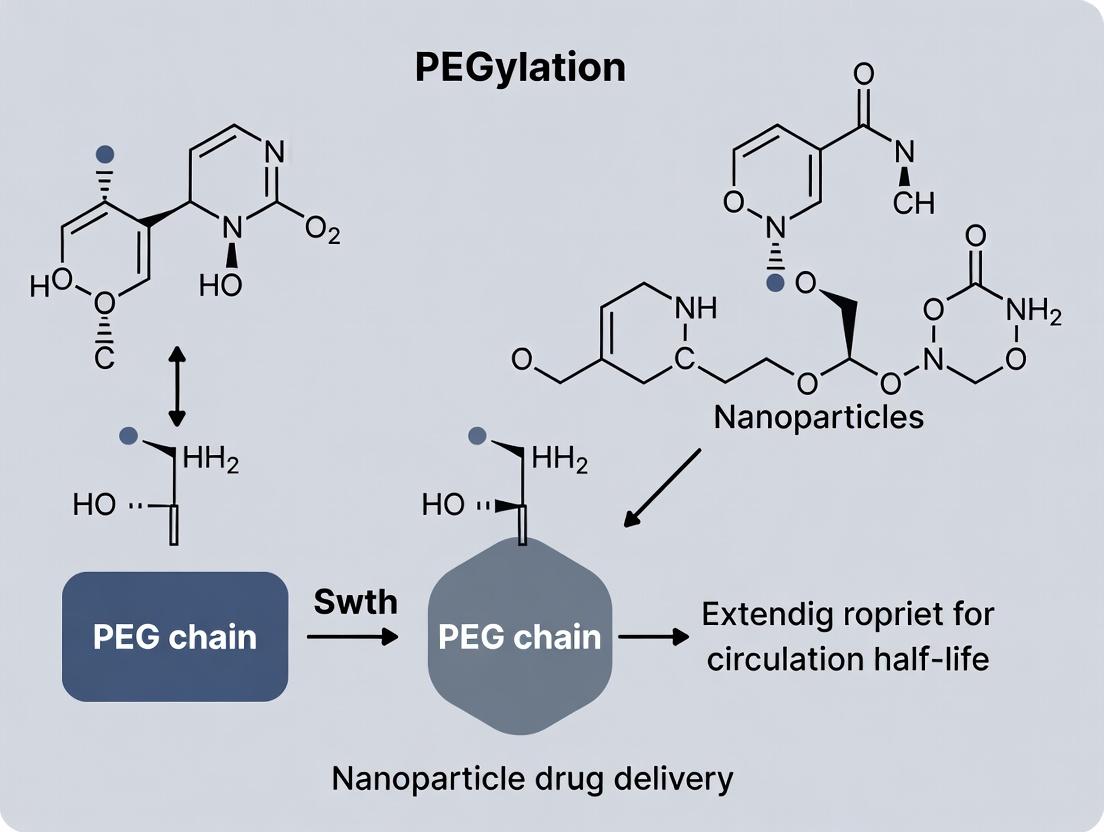
This comprehensive review for researchers and drug development professionals explores the critical role of PEGylation in extending nanoparticle circulation half-life.
PEGylation Strategies for Enhanced Nanoparticle Half-Life: Methods, Optimization, and Clinical Translation
Abstract
This comprehensive review for researchers and drug development professionals explores the critical role of PEGylation in extending nanoparticle circulation half-life. The article delves into the foundational mechanisms of stealth properties and reduced opsonization, details current methodologies for covalent and non-covalent surface conjugation, and examines troubleshooting strategies for overcoming the PEG dilemma and immunogenicity. It further provides comparative analysis of next-generation alternatives and validation techniques. The synthesis offers a roadmap for optimizing nanocarrier design to improve therapeutic efficacy and accelerate clinical translation.
The Stealth Effect: How PEGylation Shields Nanoparticles from Clearance
Within the context of advancing PEGylation techniques to extend nanoparticle (NP) circulation half-life, a fundamental challenge remains the Mononuclear Phagocyte System (MPS), historically known as the Reticuloendothelial System (RES). This system, primarily located in the liver, spleen, and bone marrow, is responsible for the rapid clearance of foreign particulates from the bloodstream. Opsonization—the adsorption of blood proteins (opsonins) onto the NP surface—is the critical first step that marks particles for MPS recognition and uptake. This application note details the mechanisms and provides protocols for studying these barriers.
Mechanisms of Opsonization and MPS Recognition
Key Opsonins and Receptors
Upon intravenous administration, nanoparticles are instantly coated by plasma proteins. Specific opsonins bind to surface patterns, enabling recognition by phagocytic cells.
Table 1: Major Opsonins and Their Corresponding Phagocyte Receptors
| Opsonin Protein | Primary Source | Key Phagocyte Receptor | Outcome of Binding |
|---|---|---|---|
| Immunoglobulin G (IgG) | Adaptive Immune Response | Fc Gamma Receptors (FcγR) | Strong phagocytic signal |
| Complement C3b/iC3b | Complement System Activation | Complement Receptor 1 (CR1), CR3 | Enhanced adhesion and phagocytosis |
| Fibrinogen | Plasma | Integrins (e.g., αMβ2) | Promotes inflammatory uptake |
| Apolipoproteins (e.g., ApoE) | Plasma | LDL Receptors on hepatocytes | Can mediate liver-specific uptake |
Signaling Pathway for Phagocytosis
Following opsonin-receptor engagement, a conserved signaling cascade is initiated within the phagocyte (e.g., macrophage, Kupffer cell) to internalize the particle.
Title: Phagocytic Signaling Cascade Post-Opsonin Binding
Experimental Protocols
Protocol: In Vitro Opsonization and Macrophage Uptake Assay
Objective: To quantify the uptake of opsonized nanoparticles by macrophages in culture.
Materials: See "The Scientist's Toolkit" (Section 4).
Methodology:
- Nanoparticle Preparation: Prepare fluorescently labeled (e.g., DiO, Cy5) nanoparticles (PEGylated and non-PEGylated controls) in PBS.
- Opsonization:
- Incubate NPs (100 µg/mL) in 100% human or murine plasma (or serum) for 30-60 minutes at 37°C.
- Centrifuge (e.g., 21,000 x g, 30 min) and wash pellets 3x with PBS to remove unbound proteins. Resuspend in cell culture medium.
- Cell Culture: Seed murine RAW 264.7 or human THP-1 derived macrophages in a 24-well plate (2.5 x 10^5 cells/well) 24h prior.
- Uptake Incubation: Add opsonized NPs to cells at a final concentration of 20-50 µg/mL. Incubate for 1-4 hours at 37°C, 5% CO₂.
- Quenching & Washing: Remove media. Wash cells 3x with cold PBS. To quench extracellular fluorescence, add Trypan Blue (0.4% in PBS) for 1 min, then wash again.
- Analysis:
- Flow Cytometry: Trypsinize cells, resuspend in PBS, and analyze fluorescence intensity per cell using a flow cytometer.
- Confocal Microscopy: Fix cells with 4% PFA, stain nuclei (DAPI) and actin (Phalloidin), and image using a confocal microscope.
Protocol: In Vivo Circulation Half-Life and Biodistribution
Objective: To measure the impact of PEGylation on evading MPS clearance.
Methodology:
- NP Formulation: Prepare two batches of NPs: Non-PEGylated (control) and PEGylated (test), labeled with a near-infrared dye (e.g., DiR).
- Animal Administration: Inject cohorts of mice (n=5 per group) intravenously via the tail vein with a standardized dose (e.g., 5 mg/kg).
- Time-Point Blood Collection: Collect small blood samples (~20 µL) from the retro-orbital plexus at pre-determined times (e.g., 2 min, 15 min, 1h, 2h, 4h, 8h, 24h).
- Sample Processing: Lyse blood samples in 1% Triton X-100/PBS. Clarify by centrifugation.
- Fluorescence Quantification: Measure fluorescence in the lysates using a plate reader. Calculate percentage of injected dose (%ID) remaining in circulation using the 2-minute time point as 100%.
- Terminal Biodistribution: At 24 hours post-injection, euthanize animals, perfuse with saline, and harvest major organs (liver, spleen, kidneys, heart, lungs). Image organs ex vivo using an IVIS imaging system and quantify fluorescence signal.
Table 2: Example Circulation Half-Life Data for Poly(lactic-co-glycolic acid) (PLGA) Nanoparticles
| Nanoparticle Type | PEG Density (Chain/Area) | Circulation Half-life (t₁/₂β) | % Injected Dose in Liver (24h) |
|---|---|---|---|
| Non-PEGylated PLGA | 0 | 0.5 ± 0.2 hours | 68.2 ± 5.1 % |
| PLGA-PEG (5% w/w) | Low | 3.1 ± 0.8 hours | 42.3 ± 4.7 % |
| PLGA-PEG (15% w/w) | High | 8.7 ± 1.5 hours | 21.8 ± 3.9 % |
Workflow for Evaluating PEGylation Efficacy
Title: Workflow for Screening PEGylated Nanoparticles
The Scientist's Toolkit
Table 3: Essential Research Reagents and Materials
| Item | Function/Application | Example Product/Type |
|---|---|---|
| Fluorescent Lipophilic Dyes (DiO, DiD, DiR) | Labeling nanoparticles for tracking in vitro and in vivo. | Thermo Fisher Scientific Vybrant dyes. |
| Differentiated THP-1 Cells | Human monocyte cell line, differentiated with PMA to become macrophage-like, for in vitro uptake studies. | ATCC TIB-202. |
| RAW 264.7 Cells | Murine macrophage cell line, commonly used for phagocytosis assays. | ATCC TIB-71. |
| Complement-Depleted Serum | Used to dissect the role of the complement system in opsonization. | Sigma-Aldrich, heat-inactivated or specific factor-depleted. |
| Anti-C3 Antibody | Detect complement activation and deposition (C3b/iC3b) on NP surface via ELISA or Western Blot. | Abcam, various clones. |
| IVIS Imaging System | Non-invasive, quantitative longitudinal imaging of fluorescent or luminescent NP biodistribution in vivo. | PerkinElmer IVIS Spectrum. |
| Dynamic Light Scattering (DLS) / Zetasizer | Measure NP hydrodynamic diameter, PDI, and zeta potential (surface charge) pre- and post-plasma incubation. | Malvern Panalytical Zetasizer. |
| Proteomics Kits for Protein Corona Analysis | Isolate and identify proteins bound to NPs after plasma incubation. | Thermo Fisher Pierce Coronapure kits. |
Application Notes
The strategic conjugation of poly(ethylene glycol) (PEG) to nanoparticle (NP) surfaces—PEGylation—is a cornerstone technique for enhancing the pharmacokinetics of nanomedicines. The primary goal is to extend systemic circulation half-life, which is critical for achieving targeted drug delivery. This efficacy is derived from three interrelated physicochemical mechanisms that impart "stealth" properties to NPs, enabling them to evade the mononuclear phagocyte system (MPS).
1. Steric Hindrance: The flexible, hydrophilic PEG chains extend from the NP surface, creating a dense, brush-like or mushroom conformation barrier. This physical barrier spatially prevents opsonin proteins (e.g., immunoglobulins, complement proteins) from closely approaching and adsorbing onto the NP surface, a critical first step for macrophage recognition.
2. Hydration Shell: PEG chains are highly effective at binding water molecules via hydrogen bonding. This forms a tightly bound, structured hydration layer around the NP. This shell creates an energetic penalty for protein adsorption, as displacing the structured water requires significant energy, thereby making the process thermodynamically unfavorable.
3. Reduced Protein Adsorption: The combined effects of steric repulsion and the stable hydration shell culminate in a dramatic reduction in the adsorption of plasma proteins, particularly opsonins. This minimizes the NP's affinity for macrophage surface receptors, leading to decreased clearance by the liver and spleen.
The synergy of these mechanisms directly correlates with prolonged circulation time, increased accumulation at target sites (e.g., tumors via the Enhanced Permeability and Retention effect), and improved therapeutic efficacy. Current research focuses on optimizing PEG parameters (molecular weight, density, chain architecture) and developing PEG alternatives to overcome potential immunogenicity concerns.
Table 1: Impact of PEG Chain Length (MW) and Grafting Density on Nanoparticle Physicochemical Properties and Pharmacokinetics
| PEG Molecular Weight (kDa) | Grafting Density (chains/nm²) | Hydrodynamic Size Increase (nm) | Zeta Potential Shift (mV) | Reduction in Protein Adsorption (% vs. non-PEGylated) | Circulation Half-life (t₁/₂, h) |
|---|---|---|---|---|---|
| 2 | 0.2 | 5 ± 1 | -25 to -15 | ~40% | 2 ± 0.5 |
| 5 | 0.5 | 12 ± 2 | -30 to -10 | ~75% | 8 ± 1.5 |
| 10 | 0.7 | 25 ± 3 | -20 to -5 | ~90% | 24 ± 4 |
| 20 | 1.0 | 45 ± 5 | -15 to 0 | >95% | 48 ± 6 |
Note: Data is representative for ~100 nm polymeric nanoparticles. Half-life values are model-dependent (typically rodent).
Table 2: Comparative Performance of Different PEGylation Architectures
| Architecture | Description | Steric Barrier Efficacy | Synthesis Complexity | Circulation Half-life (Relative) |
|---|---|---|---|---|
| Linear PEG | Single terminal conjugation | Moderate | Low | 1.0x (Baseline) |
| Branched PEG | Multi-arm (e.g., 4-arm, 8-arm) | High | High | 1.5x - 2.0x |
| PEG-Lipid Insertion | PEG-lipid conjugates in liposome bilayer | High (for liposomes) | Low | 1.2x - 1.8x |
| Bottlebrush PEG | PEG side chains on a polymer backbone | Very High | Very High | 2.0x - 3.0x |
Experimental Protocols
Protocol 1: Assessing Protein Adsorption via SDS-PAGE and LC-MS/MS
Objective: To qualitatively and quantitatively analyze the composition of the protein corona formed on PEGylated vs. non-PEGylated nanoparticles after incubation in plasma.
Materials: PEGylated NPs, non-PEGylated NPs, human or fetal bovine serum, PBS, ultracentrifuge, SDS-PAGE gel, Coomassie Blue stain, in-gel trypsin digestion kit, LC-MS/MS system.
Procedure:
- Incubation: Incubate 1 mg of each NP type in 1 mL of 50% human serum/PBS at 37°C for 1 hour.
- Isolation of Corona-Coated NPs: Underlay the incubation mixture with a 200 µL sucrose cushion (40% w/v in PBS) in a centrifuge tube. Ultracentrifuge at 100,000 x g for 1 hour at 4°C.
- Washing: Carefully remove the supernatant and sucrose. Gently resuspend the NP pellet in 1 mL of cold PBS. Repeat ultracentrifugation twice to remove loosely associated proteins.
- Protein Elution: Resuspend the final pellet in 50 µL of 2X Laemmli SDS-PAGE sample buffer. Heat at 95°C for 10 minutes to elute and denature corona proteins. Centrifuge at 20,000 x g for 5 min; collect supernatant.
- Analysis (SDS-PAGE): Load 20 µL per sample onto a 4-20% gradient gel. Run electrophoresis, stain with Coomassie Blue, and destain. Visually compare band intensity.
- Analysis (LC-MS/MS): For selected samples, run an entire gel lane, excise, and subject to in-gel tryptic digestion. Analyze peptides via LC-MS/MS. Identify and semi-quantify proteins using database search software (e.g., MaxQuant).
Protocol 2: Quantifying Macrophage UptakeIn Vitrovia Flow Cytometry
Objective: To measure the reduction in cellular uptake of PEGylated NPs by macrophages compared to non-PEGylated controls.
Materials: RAW 264.7 or THP-1-derived macrophages, fluorescently labeled PEGylated/non-PEGylated NPs, flow cytometer, cell culture media.
Procedure:
- Cell Seeding: Seed macrophages in a 24-well plate at 2 x 10^5 cells/well. Culture overnight.
- NP Treatment: Add fluorescent NPs to cells at a standardized particle number (e.g., 100 particles/cell) in serum-containing media. Incubate for 2-4 hours at 37°C.
- Washing & Harvesting: Aspirate media, wash cells 3x with cold PBS. Detach cells using gentle trypsin or a cell scraper. Transfer to flow cytometry tubes.
- Analysis: Analyze cells by flow cytometry. Gate on live cells using forward/side scatter. Measure the median fluorescence intensity (MFI) of the fluorescent channel corresponding to the NP label. Calculate the percentage reduction in uptake:
[1 - (MFI_PEG / MFI_Control)] * 100.
Protocol 3:In VivoPharmacokinetic Study for Half-life Determination
Objective: To determine the blood circulation half-life of PEGylated nanoparticles in a rodent model.
Materials: Mice or rats, fluorescently or radiolabeled PEGylated NPs, isoflurane anesthesia, blood collection equipment (capillary tubes, heparinized tubes), IVIS spectrum or gamma counter, pharmacokinetic analysis software (e.g., PKSolver).
Procedure:
- NP Administration: Anesthetize animals (n=5 per group). Inject NPs via the tail vein at a standardized dose (e.g., 5 mg/kg).
- Serial Blood Sampling: Collect blood samples (e.g., 20 µL) from the retro-orbital plexus or tail nick at predetermined time points: 2 min, 15 min, 30 min, 1h, 2h, 4h, 8h, 12h, 24h.
- Sample Processing: Lyse blood samples in 1% Triton X-100/PBS. Clarify by centrifugation.
- Signal Quantification: Measure NP signal in each lysate (fluorescence intensity or radioactive counts).
- Pharmacokinetic Analysis: Plot blood concentration (% Injected Dose per gram of blood, %ID/g) vs. time. Fit data to a two-compartment or non-compartmental model using analysis software to calculate the elimination half-life (t₁/₂ β).
Visualization Diagrams
Diagram Title: Stealth Nanoparticle Defense Mechanisms
Diagram Title: Protein Corona Isolation and Analysis Protocol
The Scientist's Toolkit: Research Reagent Solutions
| Item / Reagent | Function / Application |
|---|---|
| mPEG-NHS Ester | Methoxy-PEG N-hydroxysuccinimide ester; reactive for amine group conjugation on NP surfaces. |
| DSPE-PEG(2000) | 1,2-distearoyl-sn-glycero-3-phosphoethanolamine-N-[methoxy(PEG)-2000]; inserts into lipid bilayers for liposome PEGylation. |
| Heterobifunctional PEG (e.g., Maleimide-PEG-NHS) | Enables oriented, multi-step conjugations (e.g., amine coupling followed by thiol coupling). |
| Size Exclusion Chromatography (SEC) Columns | For purifying PEGylated NPs from unreacted PEG and other small molecules. |
| Dynamic Light Scattering (DLS) / Zetasizer | Measures hydrodynamic size (for steric layer assessment) and zeta potential of PEGylated NPs. |
| Isothermal Titration Calorimetry (ITC) | Quantifies the thermodynamics of water binding and protein interaction with PEG surfaces. |
| Quartz Crystal Microbalance with Dissipation (QCM-D) | Monitors real-time, label-free adsorption of proteins onto PEG-coated surfaces. |
| Near-Infrared (NIR) Fluorescent Dyes (e.g., DiR, Cy7.5) | For high-sensitivity, low-background in vivo tracking of NP biodistribution and clearance. |
Within the ongoing thesis research on PEGylation for extending nanoparticle circulation half-life, understanding the historical evolution of poly(ethylene glycol) (PEG) is fundamental. This note details the key milestones, quantitative data on its performance, and standardized protocols central to its adoption as the benchmark polymer in stealth nanoparticle technology.
Historical Milestones and Performance Data
Table 1: Key Historical Milestones in PEG's Development for Nanomedicine
| Year | Milestone | Key Finding/Invention | Impact on Half-life Extension |
|---|---|---|---|
| 1977 | First protein PEGylation | PEG conjugation to bovine serum albumin reduced immunogenicity. | Established principle of using PEG to shield biologics. |
| 1990 | Stealth Liposome Concept | PEG-DSPE used to coat liposomes, dramatically reducing MPS uptake. | Increased liposome circulation t½ from minutes to hours/days. |
| 1995 | FDA Approval of Doxil | First FDA-approved PEGylated nanotherapeutic (PEGylated liposomal doxorubicin). | Validated clinical utility; circulation t½ ~55 hours in humans. |
| Early 2000s | PEG Brush Density Studies | Quantitative relationship between PEG surface density, conformation, and protein adsorption established. | Optimized PEG grafting density (5-10 mol% for 2kDa PEG) for maximal half-life. |
| 2010s | Recognition of Anti-PEG Antibodies | Identification of pre-existing and induced anti-PEG antibodies in human sera. | Explained some hypersensitivity reactions and accelerated blood clearance (ABC) phenomenon. |
| 2020s | Advanced Alternatives & PEG Refinement | Development of zwitterionic polymers; Focus on low-polydispersity, branched, and cleavable PEGs. | Aims to overcome ABC while retaining PEG's beneficial properties. |
Table 2: Quantitative Impact of PEG Properties on Nanoparticle Pharmacokinetics
| PEG Parameter | Typical Optimal Range | Effect on Circulation Half-life (t½) | Mechanistic Reason |
|---|---|---|---|
| Molecular Weight | 2 kDa - 5 kDa | Higher MW increases t½ up to a plateau (~48-72 hrs in mice for liposomes). | Longer chains form denser brush, more effective steric barrier. |
| Grafting Density | 5 - 10 mol% (for 2kDa PEG) | Maximum t½ at optimal density; too low or too high reduces efficacy. | Optimal density forms brush conformation; low = mushroom (poor shield), high = micellization. |
| Chain Conformation | Brush (vs. Mushroom) | Brush conformation can increase t½ by >10x. | Extended chains provide superior steric repulsion against opsonins. |
| Surface Anchors | DSPE, PLA, Gold-Thiol | Stable anchor (e.g., DSPE-PEG) is critical; t½ can drop from days to hours if PEG detaches. | Ensures polymer retention on particle surface during circulation. |
Application Notes & Protocols
Protocol 1: Synthesis of PEGylated Liposomes via Post-Insertion
Objective: To prepare long-circulating stealth liposomes by incorporating PEG-DSPE into pre-formed liposomes. Materials (Research Reagent Solutions):
- 1,2-distearoyl-sn-glycero-3-phosphocholine (DSPC): Principal phospholipid for membrane rigidity.
- Cholesterol: Modulates membrane fluidity and stability.
- 1,2-distearoyl-sn-glycero-3-phosphoethanolamine-N-[methoxy(polyethylene glycol)-2000] (DSPE-PEG2000): The gold-standard PEG-lipid conjugate, providing the steric barrier.
- HEPES Buffered Saline (HBS), pH 7.4: Standard hydration and filtration buffer.
- Mini-Extruder with 100 nm polycarbonate membranes: For achieving uniform, monodisperse nanoparticle size.
Procedure:
- Prepare Core Liposomes: Dissolve DSPC and Cholesterol (55:45 molar ratio) in chloroform. Dry under nitrogen to form a thin lipid film. Hydrate film with HBS to a final lipid concentration of 10 mM. Subject the multilamellar vesicle suspension to 10 freeze-thaw cycles, then extrude 21 times through two stacked 100 nm membranes.
- PEG Insertion: Dissolve DSPE-PEG2000 in HBS at 60°C. Add this solution to the pre-formed liposomes (from Step 1) at a 5 mol% final PEG-lipid ratio. Incubate the mixture at 60°C for 45 minutes with gentle stirring.
- Purification: Cool the PEGylated liposome suspension to room temperature. Purify from un-inserted PEG-lipid via size-exclusion chromatography (Sepharose CL-4B column) equilibrated with HBS.
- Characterization: Measure hydrodynamic diameter and polydispersity index (PDI) via Dynamic Light Scattering (DLS). Determine final PEG density via colorimetric assay (e.g., iodine complex method).
Protocol 2: In Vivo Evaluation of Circulation Half-life
Objective: To compare the blood circulation kinetics of non-PEGylated vs. PEGylated nanoparticles. Materials:
- Test Articles: Non-PEGylated (control) and PEGylated nanoparticles (from Protocol 1), fluorescently or radio-labeled.
- Animal Model: BALB/c mice (n=5 per group).
- IVIS Imaging System or Gamma Counter: For tracking nanoparticle signal in blood over time.
Procedure:
- Dosing: Inject mice via tail vein with a standardized dose (e.g., 5 mg lipid/kg) of the labeled nanoparticle formulation.
- Serial Blood Sampling: At predetermined time points (e.g., 5 min, 30 min, 2h, 8h, 24h, 48h), collect ~20 µL of blood from the retro-orbital plexus into heparinized tubes.
- Sample Processing: Lyse blood samples in 1% Triton X-100/PBS. Centrifuge to remove debris.
- Signal Quantification: Measure fluorescence or radioactivity in the supernatant relative to a standard curve of the injected dose.
- Pharmacokinetic Analysis: Plot % Injected Dose (%ID) remaining in blood vs. time. Calculate half-life (t½) using a non-compartmental model. PEGylated formulations typically show a biphasic clearance with a prolonged terminal t½.
Visualizations
Title: Historical Timeline of PEG Development
Title: Mechanism of PEG-Mediated Stealth Effect
The Scientist's Toolkit
Table 3: Essential Reagents for PEGylation & Half-life Studies
| Reagent/Material | Function in Research | Key Consideration |
|---|---|---|
| DSPE-PEG (various MWs) | The gold-standard amphiphilic polymer for nanoparticle coating. Provides the steric barrier. | Choice of MW (1k-5kDa) and end-group (methoxy, carboxyl, amine) depends on application. |
| mPEG-NHS Ester | For covalent "grafting-to" PEGylation of amine-containing nanoparticle surfaces (e.g., polymeric NPs). | Reactivity depends on local pH and accessibility of amine groups. |
| Size-Exclusion Chromatography (SEC) Media | Critical for purifying PEGylated nanoparticles from unreacted PEG polymers. | Sepharose CL-4B or Sephacryl S-400 are commonly used for nanocarriers. |
| Dynamic Light Scattering (DLS) Instrument | Measures hydrodynamic diameter, PDI, and zeta potential of nanoparticles pre- and post-PEGylation. | A shift in diameter and zeta potential toward neutrality confirms PEG coating. |
| Animal Model (e.g., Mice, Rats) | In vivo model for evaluating the pharmacokinetic and biodistribution impact of PEGylation. | The Accelerated Blood Clearance (ABC) effect is species- and regimen-dependent. |
| Anti-PEG ELISA Kit | Detects and quantifies anti-PEG antibodies in serum, crucial for studying the ABC phenomenon. | Needed for pre-screening animals or assessing immunogenicity in studies. |
Application Notes
Within the broader thesis on PEGylation techniques for extending nanoparticle circulation half-life, two principal pharmacokinetic benefits are inextricably linked: Extended Circulation Half-Life and the Enhanced Permeability and Retention (EPR) Effect. These benefits form the cornerstone for improving the therapeutic index of nanoparticle-based drug delivery systems, particularly in oncology.
Extended Circulation Half-Life
PEGylation creates a hydrophilic, steric barrier on nanoparticle surfaces. This barrier effectively reduces opsonization (the adsorption of plasma proteins like immunoglobulins and complement factors) and subsequent recognition by the mononuclear phagocyte system (MPS), primarily located in the liver and spleen. The reduction in systemic clearance directly translates to a prolonged plasma half-life, enabling the nanoparticle to remain in the bloodstream for extended periods.
Improved EPR Effect
The EPR effect is a passive targeting phenomenon where nanoparticles, due to their size, preferentially extravasate through the leaky, discontinuous vasculature of tumors and are subsequently retained due to poor lymphatic drainage. Extended circulation half-life is a critical prerequisite for an effective EPR effect. The longer a nanoparticle circulates, the greater its statistical probability of extravasating into the tumor interstitium. PEGylation not only enables this extended circulation but also helps prevent premature aggregation, maintaining an optimal hydrodynamic diameter (typically 10-200 nm) for effective tumor penetration.
Table 1: Impact of PEGylation on Nanoparticle Pharmacokinetics and Biodistribution
| Nanoparticle Formulation | PEG Molecular Weight (kDa) / Density | Circulation Half-life (t1/2β, h) | Tumor Accumulation (% Injected Dose/g) | Liver Uptake (% Injected Dose/g) | Key Reference Model |
|---|---|---|---|---|---|
| Non-PEGylated Liposome | 0 | 0.5 - 2 | 0.5 - 1.5 | 25 - 35 | Murine CT26 tumor |
| PEGylated Liposome (Low Density) | 2 (5 mol%) | 8 - 12 | 2.0 - 3.0 | 15 - 20 | Murine 4T1 tumor |
| PEGylated Liposome (High Density) | 2 (10 mol%) | 18 - 24 | 3.5 - 5.0 | 10 - 15 | Murine B16F10 tumor |
| PEG-PLGA Nanoparticle | 5 (Surface conjugated) | 15 - 20 | 2.5 - 4.0 | 12 - 18 | Rat C6 glioma |
| Gold Nanorod (PEG-coated) | 5 (Dense brush) | ~28 | ~6.2 | ~8 | Murine U87 MG xenograft |
Note: Data is representative and compiled from recent literature (2022-2024). Values are approximate and depend on specific nanoparticle core, animal model, and measurement techniques.
Experimental Protocols
Protocol: Synthesis and Characterization of PEGylated PLGA Nanoparticles via Nano-Precipitation
Objective: To prepare PEGylated polymeric nanoparticles with a controlled size for pharmacokinetic and biodistribution studies.
Materials:
- PLGA (50:50, 24 kDa)
- mPEG-PLGA block copolymer (5 kDa PEG, 15 kDa PLGA)
- Acetone (HPLC grade)
- Dichloromethane (DCM)
- Polyvinyl alcohol (PVA, 87-90% hydrolyzed, 30-70 kDa)
- Phosphate Buffered Saline (PBS, pH 7.4)
- Dialysis tubing (MWCO 12-14 kDa)
- Probe sonicator
- Magnetic stirrer
- Dynamic Light Scattering (DLS) / Zetasizer
- Lyophilizer
Procedure:
- Organic Phase Preparation: Dissolve 50 mg of PLGA and 50 mg of mPEG-PLGA in 5 mL of a 1:1 (v/v) mixture of acetone and DCM.
- Aqueous Phase Preparation: Dissolve 200 mg of PVA in 20 mL of deionized water to create a 1% (w/v) solution.
- Nano-precipitation: Using a syringe pump, add the organic phase dropwise (rate: 1 mL/min) into the aqueous PVA solution under continuous probe sonication (40% amplitude, ice bath).
- Solvent Evaporation: Stir the resulting nano-emulsion at room temperature for 4 hours, then under reduced pressure for 1 hour to remove organic solvents.
- Purification: Transfer the suspension to dialysis tubing and dialyze against 2 L of distilled water for 24 hours, changing water every 8 hours.
- Characterization: Analyze the purified nanoparticle suspension using DLS to determine hydrodynamic diameter, polydispersity index (PDI), and zeta potential.
- Lyophilization: Add 5% (w/v) trehalose as a cryoprotectant, freeze at -80°C, and lyophilize for 48 hours to obtain a dry powder for long-term storage.
Protocol: In Vivo Pharmacokinetic and Biodistribution Study
Objective: To quantitatively compare the circulation half-life and tumor accumulation (EPR effect) of PEGylated vs. non-PEGylated nanoparticles.
Materials:
- Cyanine7 (Cy7) dye or Indium-111 (111In) for radiolabeling
- PEGylated and non-PEGylated nanoparticles (from Protocol 2.1)
- Tumor-bearing mice (e.g., BALB/c mice with subcutaneously implanted 4T1 tumors)
- IVIS Spectrum imaging system or Gamma counter
- Heparinized capillary tubes
- Surgical tools
- Tissue solubilizer (e.g., Solvable)
Procedure:
- Nanoparticle Labeling: Covalently conjugate near-infrared dye Cy7 to the nanoparticle surface or encapsulate/chelate 111In according to established protocols. Perform size-exclusion chromatography to remove free label.
- Animal Dosing: Randomize tumor-bearing mice (tumor volume ~150 mm³) into groups (n=5). Administer a single intravenous injection (via tail vein) of labeled nanoparticles at a standardized dose (e.g., 5 mg/kg nanoparticle, 2 nmol Cy7).
- Blood Pharmacokinetics: Collect ~20 µL of blood retro-orbitally at pre-determined time points (e.g., 5 min, 30 min, 2 h, 8 h, 24 h, 48 h). Lyse blood samples and quantify fluorescence/radioactivity. Plot concentration vs. time. Calculate pharmacokinetic parameters (e.g., AUC, t1/2β) using non-compartmental analysis.
- Biodistribution Analysis: At terminal time points (e.g., 24 h and 48 h), euthanize animals. Perfuse with PBS. Harvest major organs (heart, liver, spleen, lungs, kidneys) and tumor. Weigh each tissue, homogenize, and measure fluorescence/radioactivity. Express results as percentage of injected dose per gram of tissue (%ID/g).
- Imaging: For fluorescent probes, image whole animals and excised organs using the IVIS system at designated time points to visualize real-time distribution and tumor accumulation.
Visualization: Diagrams
Title: Mechanism of PEGylated Nanoparticle PK Benefits
Title: PEG-Nanoparticle Synthesis Workflow
The Scientist's Toolkit: Research Reagent Solutions
Table 2: Essential Materials for PEGylation and PK/EPR Studies
| Item | Function/Description | Example Product/Catalog |
|---|---|---|
| Functionalized PEGs | Provides reactive termini (e.g., -COOH, -NH2, -Maleimide) for covalent conjugation to nanoparticle surfaces or drugs. | mPEG-SVA (Succinimidyl Valerate), Sunbright series. |
| PEG-Polymer Conjugates | Pre-synthesized block copolymers for direct nanoparticle formulation (e.g., PEG-PLGA, PEG-PCL). | LACTEL mPEG-PLGA, Sigma-Aldrich. |
| Fluorescent Probes for Labeling | Allows in vitro and in vivo tracking of nanoparticles. Near-infrared dyes are preferred for deep tissue imaging. | Cyanine5.5 NHS ester, IRDye 800CW. |
| Radiolabels for Quantification | Provides highly sensitive, quantitative data for pharmacokinetic and biodistribution studies. | Indium-111 Chloride (111In), Iodine-125 (125I). |
| Size Exclusion Chromatography Columns | Critical for purifying conjugated/labeled nanoparticles from unreacted dyes, PEGs, or free radiolabels. | PD-10 Desalting Columns (Cytiva), Zeba Spin Columns. |
| Dynamic Light Scattering Instrument | Measures hydrodynamic diameter, size distribution (PDI), and zeta potential of nanoparticles in suspension. | Malvern Zetasizer Nano ZS, Brookhaven 90Plus. |
| Small Animal Imaging System | Enables non-invasive, longitudinal imaging of nanoparticle distribution and tumor accumulation in vivo. | PerkinElmer IVIS Spectrum, Bruker In-Vivo Xtreme. |
| Tumor Cell Lines for Xenografts | Well-characterized cell lines to establish animal models with permeable vasculature for EPR studies. | Murine 4T1 (breast), CT26 (colon); Human MDA-MB-231 (breast). |
Practical Guide to PEGylation Techniques: Conjugation Chemistries and Nanoformulation
Within the broader research on PEGylation techniques to extend nanoparticle (NP) circulation half-life, covalent conjugation is paramount. Non-covalent adsorption leads to premature detachment in vivo. This document details three robust covalent grafting methods—NHS ester, maleimide-thiol, and copper-free click chemistry—crucial for creating stable, stealth-functionalized NPs. These protocols enable reproducible attachment of heterobifunctional PEG linkers to amine- or thiol-presenting NP surfaces and therapeutic payloads.
Application Notes & Quantitative Comparison
Table 1: Comparison of Covalent Grafting Methods for NP PEGylation
| Parameter | NHS Ester-Amine | Maleimide-Thiol | Strain-Promoted Azide-Alkyne Cycloaddition (SPAAC) |
|---|---|---|---|
| Reaction Partners | NHS ester (PEG) & primary amine (NP surface/protein) | Maleimide (PEG) & free thiol (cysteine) | Cyclooctyne (DBCO, PEG) & azide (NP surface) |
| Optimal pH | 7.0-9.0 (pH 8.5 recommended) | 6.5-7.5 (to avoid thiol deprotonation & hydrolysis) | 7.0-8.0, broad range |
| Reaction Time | 30 min - 2 hours (rapid) | 1 - 2 hours | 2 - 4 hours (slower, but highly specific) |
| Orthogonality | Low (reacts with any amine) | Moderate (specific to thiols) | High (bioorthogonal, minimal cross-reactivity) |
| Byproduct | N-hydroxysuccinimide (water-soluble) | Stable thioether bond, no leaving group | None |
| Key Advantage | Fast, high-efficiency on amine-rich surfaces | Highly specific under controlled pH | Excellent for multi-step, site-specific conjugation in complex media |
| Key Limitation | Lack of specificity; amine hydrolysis | Maleimide hydrolysis at pH >7.5; thiol oxidation | Slower kinetics; cost of modified reagents |
| Typical Grafting Density on 100nm NP | 50-80 PEG chains/NP (high) | 30-50 PEG chains/NP (controlled) | 20-40 PEG chains/NP (precise) |
Detailed Experimental Protocols
Protocol 3.1: NHS Ester-Mediated PEGylation of Amine-Functionalized Nanoparticles
Objective: Covalently graft mPEG-NHS (5 kDa) to poly(lactic-co-glycolic acid) (PLGA) nanoparticles surface-modified with polyethyleneimine (PEI). Materials: PLGA-PEI NPs (100 nm, 1 mg/mL in PBS), mPEG-NHS (5 kDa), Borate Buffer (0.1 M, pH 8.5), Zeba Spin Desalting Columns (7K MWCO). Procedure:
- NP Preparation: Dialyze PLGA-PEI NP suspension (2 mL) against 0.1 M Borate Buffer, pH 8.5, overnight at 4°C.
- Reagent Preparation: Dissolve mPEG-NHS in anhydrous DMSO immediately before use to yield a 10 mM stock.
- Conjugation: Add mPEG-NHS stock to the NP suspension under gentle vortexing to a final PEG:amine molar ratio of 5:1.
- Incubation: React for 2 hours at room temperature with end-over-end mixing, protected from light.
- Purification: Terminate the reaction by adding 50 μL of 1 M glycine (quenches unreacted NHS esters). Purify the PEGylated NPs using size-exclusion chromatography (Zeba columns, pre-equilibrated with PBS) to remove unconjugated PEG and byproducts.
- Characterization: Determine grafting efficiency via H NMR or a fluorescence assay if using tagged PEG. Measure hydrodynamic diameter and zeta potential via DLS.
Protocol 3.2: Maleimide-Thiol Conjugation for Site-Specific Antibody Fragment Attachment
Objective: Conjugate a Fab' fragment (with free hinge-region thiols) to maleimide-PEG-NP for targeted delivery. Materials: Maleimide-PEG-PLGA NPs (50 nm in PBS, pH 7.0), Fab' fragment, EDTA, Tris(2-carboxyethyl)phosphine (TCEP), NAP-5 Desalting Columns. Procedure:
- Thiol Activation: Treat Fab' fragment (1 mg/mL) with 10x molar excess of TCEP in PBS containing 1 mM EDTA, pH 7.0, for 1 hour at 4°C to reduce any disulfide bonds.
- Purification: Immediately desalt the reduced Fab' on a NAP-5 column equilibrated with degassed PBS-EDTA (pH 7.0) to remove TCEP and prevent re-oxidation.
- Conjugation: Add the freshly reduced, thiol-activated Fab' directly to the maleimide-PEG-NP suspension. Use a 3:1 molar excess of Fab' to NP maleimide groups.
- Incubation: React for 2 hours at 4°C under an inert atmosphere (N2) with gentle agitation.
- Quenching & Purification: Quench the reaction with a 10x molar excess of L-cysteine relative to maleimide. Purify conjugates via tangential flow filtration (100 kDa MWCO) to remove unreacted Fab'.
- Validation: Use Ellman's reagent to confirm the absence of free thiols (successful conjugation) and SDS-PAGE to verify covalent attachment.
Protocol 3.3: Copper-Free Click Chemistry for Sequential Multi-Ligand Assembly
Objective: Perform a two-step, site-specific conjugation: first, attach DBCO-PEG to azide-modified NPs, followed by coupling an azide-functionalized targeting peptide. Materials: Azide-PLGA NPs (80 nm), DBCO-PEG(4kDa)-NH2, Azide-Peptide, PBS (pH 7.4), Amicon Ultra Centrifugal Filters (100k MWCO). Procedure:
- First Click (DBCO + NP-Azide): Incubate DBCO-PEG-NH2 (5x molar excess to surface azides) with azide-NPs for 4 hours at 25°C with gentle mixing.
- Purification: Purify the DBCO-PEG-NP intermediate via centrifugal filtration (3x washes with PBS).
- Second Click (Intermediate + Azide-Peptide): Add a 10x molar excess of azide-functionalized targeting peptide to the DBCO-PEG-NP suspension.
- Incubation: React overnight (12-16 hours) at 25°C.
- Final Purification: Purify the dual-functionalized NPs via centrifugal filtration (5x washes) to remove unreacted peptide.
- Analysis: Confirm conjugation via a shift in zeta potential (due to PEG-NH2) and using peptide-specific ELISA or fluorescence detection.
Diagrams & Workflows
Title: NHS Ester PEGylation Workflow
Title: Maleimide-Thiol Conjugation Process
Title: SPAAC Click Chemistry Reaction
Title: Sequential Bioorthogonal Conjugation
The Scientist's Toolkit: Essential Research Reagents
Table 2: Key Reagents for Covalent Grafting in NP PEGylation
| Reagent / Material | Function & Role in Protocol |
|---|---|
| Heterobifunctional PEG Linkers (e.g., NHS-PEG-Maleimide, DBCO-PEG-NHS) | Core conjugation agents. Provide orthogonal reactive groups for controlled, sequential NP surface engineering. |
| TCEP (Tris(2-carboxyethyl)phosphine) | Thiol-activating agent. Reduces disulfide bonds in antibodies/proteins to generate free thiols for maleimide coupling (Protocol 3.2). |
| Zeba / NAP-5 Spin Desalting Columns | Essential for rapid buffer exchange and removal of small-molecule reactants/byproducts (e.g., NHS, TCEP) without NP aggregation. |
| Anhydrous DMSO | Preferred solvent for preparing stock solutions of NHS esters and other moisture-sensitive reagents to prevent hydrolysis. |
| EDTA (Ethylenediaminetetraacetic acid) | Chelating agent. Added to conjugation buffers for maleimide-thiol reactions to sequester metal ions and prevent thiol oxidation. |
| Glycine / L-Cysteine | Quenching agents. Glycine quenched unreacted NHS esters; L-cysteine quenches unreacted maleimide groups post-conjugation. |
| Amicon Ultra Centrifugal Filters | For concentration and purification of NP conjugates via size-based separation, removing unbound polymers and ligands. |
| Borate Buffer (0.1 M, pH 8.5) | Optimal alkaline buffer for NHS ester-amine coupling, maximizing reaction rate and efficiency. |
Thesis Context: Within the broader investigation of PEGylation techniques for extending nanoparticle (NP) circulation half-life, non-covalent strategies offer rapid, versatile, and often reversible alternatives to chemical conjugation. This note details the application of lipid-PEG anchors and direct polymer adsorption, critical for formulating stealth liposomes, polymeric NPs, and inorganic carriers.
Application Notes
Lipid-PEG Anchoring
This approach exploits the incorporation of amphiphilic PEG-lipid conjugates (e.g., DSPE-PEG) into lipid membranes or onto hydrophobic NP surfaces. The lipid moiety (e.g., distearoylphosphatidylethanolamine, DSPE) inserts into hydrophobic domains, while the PEG chain extends into the aqueous environment, creating a steric hydration barrier.
Key Advantages:
- Simplicity: Can be added post-formulation or during NP synthesis.
- Dynamic Nature: Allows for PEG chain exchange and rearrangement.
- Versatility: Applicable to liposomes, micelles, and solid lipid NPs (SLNs).
Primary Challenge: The potential for desorption and loss of the PEG coating in vivo, leading to decreased circulatory time.
Direct Surface Adsorption
This method relies on the physical adsorption of block co-polymers (e.g., poloxamers, polysorbates) or charged polymers onto NP surfaces via hydrophobic, electrostatic, or van der Waals interactions.
Key Advantages:
- Rapid Coating: Simple incubation under defined conditions.
- No Chemical Modification: Preserves core NP properties.
- Reversibility: Can be engineered for stimuli-responsive desorption.
Primary Challenge: Achieving adsorption strength sufficient to withstand shear forces and protein competition in biological fluids.
Table 1: Comparison of Common Lipid-PEG Conjugates
| Lipid-PEG Conjugate | PEG Molecular Weight (kDa) | Hydrophobic Anchor | Common NP Application | Critical Micelle Concentration (CMC) ~ |
|---|---|---|---|---|
| DSPE-PEG2000 | 2.0 | Distearoylphosphatidylethanolamine | Liposomes, SLNs | 10-20 µM |
| DPPE-PEG5000 | 5.0 | Dipalmitoylphosphatidylethanolamine | Liposomes, Micelles | 5-10 µM |
| Cholesterol-PEG2000 | 2.0 | Cholesterol | Lipid-based NPs, Inorganic NPs | 1-5 µM |
| DOPE-PEG2000 | 2.0 | Dioleoylphosphatidylethanolamine | pH-sensitive Liposomes | 15-25 µM |
Table 2: Effect of PEG Coating Method on Nanoparticle Pharmacokinetics
| NP Core | PEGylation Method | PEG Density (chains/nm²) | Initial Half-life (t₁/₂α, h) | Circulation Half-life (t₁/₂β, h) | % Injected Dose in Blood at 24h |
|---|---|---|---|---|---|
| Liposome (100 nm) | DSPE-PEG2000 (Anchor) | ~0.05 | 1.5 ± 0.3 | 18.5 ± 2.1 | 22.5 ± 3.0 |
| PLGA NP (150 nm) | Pluronic F127 (Adsorption) | ~0.03 | 0.8 ± 0.2 | 6.4 ± 1.5 | 5.2 ± 1.8 |
| Gold Nanorod (40 x 10 nm) | mPEG-Thiol (Covalent) | ~0.20 | 2.1 ± 0.4 | 24.8 ± 3.5 | 30.1 ± 4.2 |
| Liposome (100 nm) | None (Plain) | 0 | 0.2 ± 0.1 | 0.8 ± 0.3 | < 0.5 |
Experimental Protocols
Protocol 3.1: Post-Insertion of DSPE-PEG into Pre-formed Liposomes
Objective: To incorporate PEG onto the surface of pre-formed liposomes via incubation with PEG-lipid micelles. Materials: Pre-formed liposomes (e.g., DOPC/Chol), DSPE-PEG2000 powder, HEPES Buffered Saline (HBS), pH 7.4, Heated water bath, Extruder or sonicator. Procedure:
- Micelle Preparation: Dissolve DSPE-PEG2000 in HBS at 60°C to a concentration of 2 mM. Vortex and incubate at 60°C for 30 min to form micelles.
- Liposome Preparation: Prepare plain liposomes via thin-film hydration and extrusion through a 100 nm polycarbonate membrane. Determine lipid concentration (e.g., via phosphorous assay).
- Incubation: Mix the pre-formed liposomes with the DSPE-PEG2000 micelle solution at a 10:1 molar ratio (total lipid:DSPE-PEG). Maintain total lipid concentration at 5 mM.
- Post-Insertion: Incubate the mixture at 60°C for 1 hour with gentle agitation.
- Purification: Cool to room temperature. Remove unincorporated PEG-lipid micelles via size exclusion chromatography (Sepharose CL-4B column) or dialysis against HBS (100 kDa MWCO) for 24h.
- Characterization: Measure particle size and zeta potential by DLS. Confirm PEG presence via NMR or an ammonium ferrothiocyanate assay for phospholipid content.
Protocol 3.2: Adsorptive Coating of PLGA Nanoparticles with Poloxamer 407
Objective: To create a sterically stabilized PLGA NP via surface adsorption of a triblock copolymer. Materials: PLGA NPs (pre-formed, ~150 nm), Poloxamer 407 (Pluronic F127) powder, Phosphate Buffered Saline (PBS), pH 7.4, Orbital shaker, Centrifuge. Procedure:
- Polymer Solution: Prepare a 1% (w/v) solution of Poloxamer 407 in PBS. Stir overnight at 4°C to ensure complete dissolution.
- NP Suspension: Concentrate the plain PLGA NP suspension via centrifugation (15,000 x g, 20 min) and resuspend in PBS to a final particle concentration of 10 mg/mL.
- Coating Incubation: Add the NP suspension to the Poloxamer 407 solution under gentle vortexing to achieve a final Poloxamer concentration of 0.5% (w/v) and a final NP concentration of 2 mg/mL.
- Adsorption: Incubate the mixture on an orbital shaker (200 rpm) at room temperature for 2 hours.
- Purification: Centrifuge the coated NPs (15,000 x g, 25 min) to remove free polymer in the supernatant. Gently resuspend the pellet in fresh PBS. Repeat wash twice.
- Characterization: Determine particle size, PDI, and zeta potential via DLS. Analyze surface composition by X-ray Photoelectron Spectroscopy (XPS) or measure the reduction in protein adsorption (e.g., from 50% FBS) compared to uncoated NPs.
Visualization: Diagrams and Workflows
Title: Mechanism of Lipid-PEG Post-Insertion
Title: General Workflow for Non-Covalent PEGylation
The Scientist's Toolkit: Research Reagent Solutions
Table 3: Essential Materials for Non-Covalent PEGylation Studies
| Item | Function & Relevance | Example Product/Catalog |
|---|---|---|
| DSPE-PEG2000 | The gold-standard amphiphile for anchoring PEG to lipid membranes. The DSPE anchor provides stable bilayer integration. | Avanti Polar Lipids, #880120P |
| Cholesterol-PEG | Useful for anchoring PEG to NPs with cholesterol-rich surfaces or for modulating membrane fluidity. | Sigma-Aldrich, C4951 |
| Poloxamer 407 (Pluronic F127) | Triblock copolymer (PEO-PPO-PEO) for adsorptive coating via hydrophobic PPO block interaction with NP surfaces. | BASF, Kolliphor P 407 |
| Polysorbate 80 (Tween 80) | Nonionic surfactant for adsorptive coating, often used to stealthify polymeric NPs for brain targeting. | Sigma-Aldrich, P1754 |
| Size Exclusion Chromatography Columns | For purifying coated NPs from unincorporated polymer/lipid micelles (e.g., Sepharose CL-4B). | Cytiva, #17015001 |
| Dialysis Membranes (100 kDa MWCO) | Alternative purification method for removing small molecular weight free polymers. | Spectrum Labs, 132676 |
| Dynamic Light Scattering (DLS) Instrument | For critical quality attributes: hydrodynamic diameter, PDI, and zeta potential pre/post coating. | Malvern Panalytical Zetasizer |
| Phospholipid Assay Kit | To quantify lipid concentration and confirm lipid-PEG incorporation (e.g., ammonium ferrothiocyanate). | Sigma-Aldrich, MAK122 |
Application Notes
Thesis Context
Within the ongoing research on PEGylation techniques for extending nanoparticle (NP) circulation half-life, the surface architecture of the PEG layer is a critical determinant of success. The primary function of PEG is to create a steric barrier that minimizes opsonization and recognition by the mononuclear phagocyte system (MPS). The efficacy of this barrier is not merely a function of PEG presence but is profoundly influenced by its conformational state—governed by grafting density and polymer chain length—which oscillates between the "brush" and "mushroom" regimes. Understanding and controlling this architecture is essential for optimizing stealth properties and achieving prolonged systemic circulation.
Key Concepts: Brush vs. Mushroom Conformation
The conformation of surface-grafted PEG chains is defined by the Flory radius (R_F, the size of a free polymer coil in solution) and the average distance (D) between adjacent grafting sites on the nanoparticle surface.
- Mushroom Conformation: Occurs at low grafting density when D > 2 * R_F. Chains are isolated and can coil freely, forming a sparse, uneven layer with limited steric protection.
- Brush Conformation: Occurs at high grafting density when D < 2 * R_F. Chains are forced to stretch away from the surface due to steric and osmotic repulsion between neighboring chains, forming a dense, hydrated, and vertically extended barrier.
The transition between these states is central to experimental design in stealth nanoparticle development.
Quantitative Comparison of Conformational Regimes
Table 1: Characteristics of Mushroom vs. Brush PEG Conformations
| Parameter | Mushroom Conformation | Brush Conformation |
|---|---|---|
| Grafting Density | Low (< 0.1 chains/nm² for 5 kDa PEG) | High (> 0.5 chains/nm² for 5 kDa PEG) |
| Chain Separation (D) | D > 2 * R_F | D < 2 * R_F |
| Layer Thickness (L) | L ≈ R_F (2-5 nm for 5 kDa PEG) | L >> R_F (5-15 nm for 5 kDa PEG) |
| Steric Barrier Efficacy | Moderate to Low | High |
| Protein Adsorption | Higher susceptibility | Significant reduction |
| MPS Uptake | Faster clearance | Extended circulation half-life |
| Typical Σ (Grafting Parameter)* | Σ < 1 | Σ > 1 |
*Σ = π Rg² * (chains/nm²), where Rg is the radius of gyration.
Table 2: Impact of PEG Molecular Weight (MW) and Density on Pharmacokinetics
| PEG MW (kDa) | Target Density (chains/nm²) | Conformation Regime | Observed Half-life Extension (vs. non-PEGylated) |
|---|---|---|---|
| 2 | 0.25 | Mushroom | ~2-fold |
| 2 | 1.0 | Brush | ~4-fold |
| 5 | 0.2 | Mushroom | ~3-fold |
| 5 | 0.6 | Brush | >10-fold |
| 10 | 0.15 | Mushroom-Brush Transition | ~6-fold |
| 10 | 0.4 | Dense Brush | >15-fold |
Note: Data is illustrative, based on generalized findings from liposomal and polymeric NP studies.
Experimental Protocols
Protocol 1: Quantifying PEG Grafting Density on Nanoparticles
Objective: To determine the number of PEG chains per unit area on synthesized nanoparticles. Materials: TNBSA assay kit, purified nanoparticle sample, PEG calibration standards, UV-Vis spectrophotometer. Procedure:
- Sample Preparation: Dilute NP sample to a known solid content (e.g., 1 mg/mL lipid or polymer) in borate buffer (pH 8.5).
- Derivatization: Add trinitrobenzenesulfonic acid (TNBSA) solution to the sample and standard PEG-amine solutions. Incubate at 37°C for 2 hours.
- Reaction Quenching: Add 10% SDS with 1M HCl to stop the reaction.
- Absorbance Measurement: Measure absorbance at 335 nm using a plate reader.
- Calculation:
- Generate a standard curve from PEG-amine standards.
- Calculate the molar concentration of surface PEG-amine from the curve.
- Determine the total number of PEG chains per particle: N = (CPEG * NA * V) / (CNP * V * NA / MNP) * (1/Particle Count per mg), simplified to N = (CPEG * MNP) / CNP.
- Calculate grafting density (σ): σ = N / (4πr²), where
ris the nanoparticle hydrodynamic radius determined by DLS.
Protocol 2: Characterizing Conformation via Layer Thickness Measurement
Objective: To experimentally differentiate between mushroom and brush regimes by measuring PEG layer thickness. Materials: Nanoparticle sample (core and PEGylated), Dynamic Light Scattering (DLS), Zeta Potential Analyzer. Procedure:
- Core Size Measurement: Perform DLS analysis on the core nanoparticle (non-PEGylated) in triplicate. Record the Z-average hydrodynamic diameter (D_core).
- PEGylated Size Measurement: Perform DLS analysis on the final PEGylated nanoparticle under identical conditions. Record the Z-average hydrodynamic diameter (D_PEG).
- Layer Thickness Calculation: Calculate the apparent PEG layer thickness (L): L = (DPEG - Dcore) / 2.
- Conformation Assessment:
- Compare
Lto the theoretical Flory radius (RF ≈ a*N^(3/5), whereais monomer length ~0.35 nm, N is degree of polymerization). - If L ≈ RF, conformation is likely Mushroom.
- If L > 1.5 * R_F, conformation is consistent with a Brush regime.
- Correlate
Lwith grafting density (σ) from Protocol 1. A plot ofLvs.σwill show a sharp increase at the mushroom-to-brush transition.
- Compare
Protocol 3: In Vitro Protein Adsorption Assay
Objective: To evaluate the stealth properties of NPs with different PEG architectures by measuring fibrinogen adsorption. Materials: PEGylated NP samples, human fibrinogen, FITC labeling kit, fluorescence spectrometer, centrifugation filters (100 kDa MWCO). Procedure:
- Fibrinogen Labeling: Label human fibrinogen with FITC according to the kit protocol. Remove free FITC via size-exclusion chromatography.
- Incubation: Incubate a fixed concentration of each NP formulation (by surface area) with a physiological concentration of FITC-fibrinogen (e.g., 2 mg/mL) in PBS at 37°C for 1 hour.
- Separation: Centrifuge the NP-protein mixture through a 100 kDa MWCO filter at 15,000 x g for 20 minutes. Unbound protein passes through the filter; NP-bound protein is retained.
- Quantification: Resuspend the retentate (NPs with bound protein) in PBS. Measure fluorescence intensity (Ex: 495 nm, Em: 525 nm).
- Analysis: Calculate the amount of bound protein using a standard curve. NPs in the brush regime will show significantly lower fibrinogen adsorption compared to those in the mushroom regime.
Diagrams
Title: PEG Conformation Logic & PK Outcomes
Title: Brush vs Mushroom Steric Barrier Mechanism
The Scientist's Toolkit
Table 3: Essential Research Reagents and Materials
| Item | Function in PEG Architecture Research |
|---|---|
| Functionalized PEG (e.g., PEG-NHS, PEG-DSPE) | Reactive polymers for covalent or insertion-based grafting onto nanoparticle surfaces. MW (2k, 5k, 10k Da) is a key variable. |
| Trinitrobenzenesulfonic Acid (TNBSA) | Reagent for colorimetric quantification of primary amines, used to determine PEG grafting density. |
| Dynamic Light Scattering (DLS) Instrument | Measures hydrodynamic diameter (Z-average) to calculate PEG layer thickness and assess nanoparticle size distribution. |
| Size-Exclusion Chromatography (SEC) Columns | Purifies PEGylated nanoparticles from free, unreacted PEG and other reactants. |
| Fibrinogen (FITC-labeled) | A model opsonin protein used in adsorption assays to evaluate the stealth efficacy of the PEG layer. |
| Centrifugal Filters (various MWCO) | For rapid separation of protein-bound nanoparticles from unbound proteins in adsorption assays. |
| Phospholipids (e.g., DSPC, DPPC) | Core components for constructing liposomal nanoparticles, a common model system for PEGylation studies. |
| PLGA or PLA Polymers | Core components for constructing polymeric nanoparticles, offering a different surface chemistry for PEG grafting. |
Within the broader thesis on PEGylation techniques for extending nanoparticle circulation half-life, the selection of Polyethylene Glycol (PEG) parameters is a critical determinant of success. The molecular weight (MW), linear chain length, and degree/architecture of branching directly influence key pharmacokinetic outcomes, including steric shielding efficiency, avoidance of the mononuclear phagocyte system (MPS), and ultimately, circulation longevity. This application note provides a structured analysis of these parameters and detailed protocols for their evaluation.
Quantitative Parameter Analysis
The following tables summarize the impact of key PEG parameters on nanoparticle (NP) properties, based on current literature and experimental data.
Table 1: Influence of PEG Molecular Weight on Nanoparticle Pharmacokinetics
| PEG MW (kDa) | Approx. Chain Length (Ethylene Oxide Units) | Hydrodynamic Layer Thickness (nm) | Protein Adsorption Reduction (%) | Measured Half-life (Mouse Model, h) | Key Trade-off |
|---|---|---|---|---|---|
| 2 kDa | ~45 | 1.5 - 3 | 40-60 | 2-4 | Minimal shielding |
| 5 kDa | ~114 | 4 - 6 | 70-85 | 8-12 | Common benchmark |
| 10 kDa | ~227 | 7 - 10 | 85-92 | 15-22 | Optimal balance |
| 20 kDa | ~455 | 12 - 18 | 90-95 | 25-35 | Potential steric hindrance |
| 40 kDa | ~909 | 20 - 30 | >95 | 30-48 | Viscosity, clearance concerns |
Table 2: Linear vs. Branched PEG Architectures
| Architecture | Common Name (Example) | Functional Groups | Stealth Efficiency (Relative) | Conjugation Density Consideration | Typical Use Case |
|---|---|---|---|---|---|
| Linear | mPEG-NHS | 1 | Baseline (1.0x) | 1:1 coupling | Standard coating |
| 2-arm Branched | PEG2-NHS | 2 (forked) | 1.2 - 1.5x | Higher local density | Enhanced shielding |
| 4-arm Branched | PEG4-NHS, Star PEG | 4 | 1.5 - 2.0x | Very high local density | Maximizing half-life |
| 8-arm Branched | PEG8-NHS | 8 | 2.0 - 2.5x* | Potential steric interference | Specialized applications |
Note: Gains may plateau or decrease due to overcrowding.
Experimental Protocols
Protocol 1: Conjugation of Linear and Branched PEG to PLGA Nanoparticles
Objective: To attach PEG of varying MW and architecture to poly(lactic-co-glycolic acid) (PLGA) nanoparticles for half-life studies.
Materials:
- PLGA (50:50, acid-terminated)
- mPEG-NHS (2kDa, 5kDa, 10kDa), PEG2-NHS (10kDa total), PEG4-NHS (20kDa total)
- N,N-Dicyclohexylcarbodiimide (DCC), N-Hydroxysuccinimide (NHS)
- Dichloromethane (DCM), Polyvinyl Alcohol (PVA)
- Phosphate Buffered Saline (PBS, 0.01 M, pH 7.4)
- Dialysis tubing (MWCO 100 kDa), Zetasizer Nano.
Method:
- NP Formation: Prepare PLGA NPs via double emulsion. Dissolve 100 mg PLGA in 3 mL DCM. Add 0.5 mL aqueous phase (PVA 1%). Emulsify using probe sonicator (70% amplitude, 60s). Pour into 20 mL 2% PVA solution, stir for 4h to evaporate DCM. Collect by centrifugation (20,000g, 20 min), wash 3x with water.
- PEG Activation (if not NHS-ester): For carboxylated PEG, activate by stirring 10 µmol PEG, 12 µmol DCC, and 12 µmol NHS in anhydrous DCM for 12h at 4°C.
- Conjugation: Resuspend 50 mg of washed PLGA NPs in 10 mL of 0.1 M bicarbonate buffer (pH 8.5). Add NHS-activated PEG derivative at a 5:1 molar excess relative to estimated surface carboxyl groups. React for 6h at 25°C with gentle stirring.
- Purification: Stop reaction by adding 1 mL of 1 M glycine. Dialyze against PBS (pH 7.4) for 24h using 100 kDa MWCO tubing to remove unreacted PEG.
- Characterization: Determine size, PDI, and zeta potential via dynamic light scattering. Confirm surface conjugation via 1H-NMR or increased hydrodynamic radius.
Protocol 2: In Vivo Circulation Half-life Assessment
Objective: To measure the blood circulation half-life of PEGylated NPs in a murine model.
Materials:
- PEGylated NPs (from Protocol 1), Cy7.5 NHS ester dye
- BALB/c mice (6-8 weeks)
- IVIS Spectrum imaging system or blood collection tubes (EDTA)
- Fluorescence plate reader.
Method:
- NP Labeling: Label 5 mg of each PEG-NP formulation with Cy7.5 dye (2 µg dye/mg NP) in PBS pH 8.5 for 2h. Purify via size-exclusion chromatography.
- Dosing: Inject 200 µL of each NP formulation (5 mg/mL) intravenously into mice (n=5 per group).
- Sampling: Collect ~20 µL of blood from the tail vein at time points: 5 min, 30 min, 2h, 6h, 12h, 24h, 48h, 72h. Dilute in 200 µL PBS.
- Analysis: Measure fluorescence intensity (Ex/Em 750/780 nm). Calculate % injected dose (%ID) in blood using a standard curve.
- Pharmacokinetic Modeling: Fit %ID vs. time data to a two-compartment model using software (e.g., PKSolver) to calculate elimination half-life (t1/2β).
Visualization of Relationships and Workflows
Title: PEG Parameter Impact on Nanoparticle Half-life
Title: PEG Parameter Evaluation Workflow
The Scientist's Toolkit: Key Reagent Solutions
| Item / Reagent | Function / Rationale |
|---|---|
| PLGA (50:50, acid-terminated) | Biodegradable polymer core for NPs; acid termination provides -COOH groups for PEG conjugation. |
| mPEG-NHS Ester (Various MWs) | Linear, monofunctional PEG activated for amine coupling. Gold standard for creating "brush" conformation. |
| Multi-arm PEG-NHS (e.g., 4-arm, 8-arm) | Branched PEG reagents providing multiple attachment points, enabling dense "mushroom" or "brush" layers. |
| Dicyclohexylcarbodiimide (DCC) | Carbodiimide coupling agent for activating carboxylated PEGs to form reactive NHS esters. |
| Polyvinyl Alcohol (PVA) | Emulsifier and stabilizer used in the formation of uniform PLGA nanoparticles via emulsion methods. |
| Cy7.5 NHS Ester | Near-infrared fluorescent dye for labeling PEGylated NPs for sensitive in vivo imaging and blood tracking. |
| Size-Exclusion Chromatography Columns (e.g., Sephadex G-50) | Essential for purifying conjugated NPs from unreacted dyes or PEG molecules. |
| Dialysis Tubing (High MWCO, 100 kDa) | For post-conjugation purification via buffer exchange to remove small-molecule reactants and byproducts. |
| Dynamic Light Scattering (DLS) Instrument | For measuring nanoparticle hydrodynamic diameter, PDI, and zeta potential to confirm PEG layer attachment. |
Overcoming the PEG Dilemma: Tackling Immunogenicity and Accelerated Blood Clearance
Polyethylene glycol (PEG) conjugation is a cornerstone strategy for enhancing the pharmacokinetics of nanomedicines and biologics. By creating a hydrophilic, steric barrier, PEGylation reduces opsonization, delays recognition by the mononuclear phagocyte system (MPS), and significantly extends circulation half-life—a primary thesis of advanced drug delivery research. However, a significant and growing body of evidence identifies a major challenge: the widespread prevalence of anti-PEG antibodies (APA) in treatment-naïve populations, largely attributed to exposure to PEG in consumer products (e.g., cosmetics, processed foods). These antibodies can instigate the Accelerated Blood Clearance (ABC) phenomenon, wherein subsequent doses of PEGylated nanoparticles are rapidly cleared from circulation, undermining the core therapeutic advantage and potentially inducing adverse reactions.
Table 1: Reported Prevalence of Anti-PEG Antibodies in Human Populations
| Antibody Type | Assay Method | Reported Prevalence Range | Key References (Recent) |
|---|---|---|---|
| Anti-PEG IgM | ELISA, Flow Cytometry | 25% - 40% | Yang et al., 2022; Chen et al., 2023 |
| Anti-PEG IgG | ELISA, SPR | 15% - 30% | Ju et al., 2022; Ganson et al., 2023 |
| Combined (Any Ig) | Multi-assay Screening | 40% - 70% | Sauer et al., 2022; FDA Briefing Doc, 2023 |
Table 2: Consequences of ABC Phenomenon on Nanoparticle Pharmacokinetics
| Parameter | First Dose (PEG-NP) | Subsequent Dose (with pre-existing APA) | Typical Fold Change |
|---|---|---|---|
| Circulation t½ (hr) | 12 - 24 | 1 - 4 | 5x - 12x Decrease |
| AUC (0-∞) | High | Very Low | 10x - 50x Decrease |
| Liver/Spleen Accumulation | Moderate | Markedly Increased | 3x - 8x Increase |
| Efficacy (Therapeutic Model) | High | Compromised/Negligible | Variable |
Detailed Experimental Protocols
Protocol 1: Detection and Titration of Anti-PEG Antibodies via ELISA
Objective: To quantify anti-PEG IgM and IgG levels in human or animal serum. Materials: PEG-BSA conjugate-coated 96-well plates, blocking buffer (1% BSA/PBS), serum samples, dilution buffer (PBS/0.05% Tween-20), detection antibodies (HRP-anti-human IgM/IgG), TMB substrate, stop solution (1M H₂SO₄), plate reader. Procedure:
- Coating: Coat plates with 100 µL/well of PEG-BSA (5 µg/mL in PBS) overnight at 4°C.
- Blocking: Wash 3x with PBS/Tween. Block with 200 µL blocking buffer for 1 hr at 37°C.
- Sample Incubation: Wash 3x. Add 100 µL of serially diluted serum samples (1:50 to 1:10⁶) in duplicate. Incubate 2 hrs at 37°C.
- Detection: Wash 5x. Add 100 µL of HRP-conjugated anti-human IgM or IgG (1:5000). Incubate 1 hr at 37°C.
- Development: Wash 5x. Add 100 µL TMB substrate, incubate 15 min in dark.
- Stop & Read: Add 50 µL stop solution. Read absorbance at 450 nm immediately.
- Analysis: Define titer as the reciprocal of the highest dilution giving an absorbance >2.1x the negative control.
Protocol 2: In Vivo Assessment of ABC Phenomenon in Rodent Models
Objective: To evaluate the accelerated clearance of a second dose of PEGylated nanoparticles. Materials: Mice/Rats, PEGylated liposomes or PLGA nanoparticles (Dose 1 & 2), non-PEGylated control nanoparticles, near-infrared (NIR) fluorophore (e.g., DiR) or radioisotope label (e.g., ¹¹¹In), IVIS or SPECT/CT imaging system, blood collection tubes. Procedure:
- Pre-immunization/Priming (Day 0): Administer first dose ("priming dose") of PEG-NP (e.g., 5 mg/kg, IV) or PBS (control group) to animals (n=6-8/group).
- Rest Period: Allow 7-14 days for anti-PEG IgM response to develop.
- Challenge Dose (Day 7/14): Administer a second, traceable dose of PEG-NP (labeled with DiR or ¹¹¹In). Include a group receiving non-PEGylated, traceable NPs.
- Pharmacokinetic Sampling: Collect blood samples (10-20 µL) via tail vein at 1min, 30min, 2h, 6h, 24h post-injection. Measure fluorescence/radioactivity.
- Biodistribution (Terminal): At 24h or 48h, euthanize animals, harvest major organs (liver, spleen, heart, lungs, kidneys). Image organs ex vivo and quantify signal.
- Data Analysis: Calculate blood half-life (t½) and Area Under the Curve (AUC) for each group. Compare liver/spleen accumulation between primed and control groups.
Visualization of Mechanisms and Workflows
Title: Mechanism of Anti-PEG Antibody-Mediated ABC Phenomenon
Title: In Vivo ABC Phenomenon Study Workflow
The Scientist's Toolkit: Research Reagent Solutions
Table 3: Essential Materials for Investigating Anti-PEG Antibodies & ABC
| Item | Function & Application | Example/Supplier Note |
|---|---|---|
| PEG-Protein Conjugates (PEG-BSA, PEG-HSA) | Coating antigens for ELISA to detect anti-PEG antibodies. Defined PEG MW (e.g., 5k, 20k) is critical. | Creative PEGWorks, Sigma-Aldrich |
| HRP-conjugated Anti-IgM/IgG | Species-specific secondary antibodies for detection in immunoassays. | Jackson ImmunoResearch, Abcam |
| Standardized PEGylated Nanocarriers | Well-characterized PEG-liposomes or PEG-PLGA NPs for consistent in vivo challenge studies. | FormuMax Scientific, Lipoid GmbH |
| NIR Fluorophores (DiR, Cy7) | Hydrophobic labels for in vivo and ex vivo imaging of nanoparticle biodistribution. | Thermo Fisher, Lumiprobe |
| Complement Assay Kits (C3a, C5a, CH50) | To quantify complement activation by PEG-NP after antibody binding. | Hycult Biotech, Quidel |
| Mouse Anti-PEG IgM/IgG Monoclonal | Positive controls and calibration standards for assay development. | AcroBiosystems |
| SPR/Biacore Sensor Chips | For kinetic analysis (affinity, avidity) of anti-PEG antibody binding to PEG surfaces. | Cytiva |
Application Notes
The integration of Polyethylene Glycol (PEG) onto nanoparticle (NP) surfaces is a cornerstone strategy for prolonging systemic circulation by reducing opsonization and reticuloendothelial system (RES) clearance. However, conventional linear, dense PEG brushes present limitations, including potential immunogenicity (anti-PEG antibodies), the "accelerated blood clearance" (ABC) phenomenon, and hindered target cell uptake. This document details advanced mitigation strategies employing variable PEG architectures and cleavable linkers, framed within research on optimizing nanoparticle pharmacokinetics.
1. Variable PEG Architectures Moving beyond linear mono-methoxy PEG (mPEG), alternative architectures modulate the PEG corona's physical and immunological properties.
- Branched (PEG2): Y-shaped or multi-arm PEGs (e.g., 4-arm PEG) offer higher surface density per attachment point, creating a denser, more sterically protective cloud with potentially reduced immunogenic epitope exposure.
- Brush-like (PolyPEG): Polymerizable PEG macromers form a true polymer brush on the nanoparticle surface, offering unprecedented control over brush length and density, leading to superior shielding.
- Zwitterionic Alternatives: Materials like poly(carboxybetaine) (pCB) mimic PEG's hydrophilicity but may exhibit lower anti-polymer antibody induction.
Table 1: Comparison of PEG Architecture Impact on Nanoparticle Properties
| Architecture | Typical Mw Range (kDa) | Key Advantage | Potential Drawback | Reported Δ in Circulation t₁/₂ (vs. linear PEG) |
|---|---|---|---|---|
| Linear (mPEG) | 2 - 20 | Standard, well-characterized | ABC phenomenon, linear epitope | Baseline |
| Branched (PEG2) | 10 - 40 | Enhanced shielding density | More complex synthesis | +20% to +80% |
| Brush (PolyPEG) | Varies (high) | Tunable thickness & density | Complex conjugation chemistry | +50% to +150% |
| pCB (Zwitterionic) | 5 - 30 | Low antibody recognition | Long-term in vivo stability data limited | Comparable to +100% |
2. Cleavable Linkers These linkers strategically de-shield nanoparticles at the target site, overcoming PEG-induced uptake inhibition.
- pH-Sensitive Linkers (e.g., hydrazone, β-thiopropionate): Stable at blood pH (~7.4) but hydrolyze in acidic endo/lysosomal compartments (pH 4.5-6.5).
- Reduction-Sensitive Linkers (e.g., disulfide bonds): Stable in extracellular space but cleaved by elevated intracellular glutathione (GSH) concentrations.
- Enzyme-Sensitive Linkers (e.g., matrix metalloproteinase (MMP) or cathepsin B substrates): Cleaved by enzymes overexpressed in tumor microenvironments or within cellular compartments.
Table 2: Properties of Common Cleavable Linkers for De-PEGylation
| Linker Type | Trigger | Cleavage Condition | Kinetics | Primary Application |
|---|---|---|---|---|
| Hydrazone | Acidic pH | pH < 6.0 | Hours | Tumor targeting (acidic microenvironment) |
| Disulfide | Reduction | 2-10 mM GSH | Minutes to Hours | Intracellular delivery |
| Val-Cit (MMAD) | Cathepsin B | Enzyme present | Minutes | Targeted drug delivery (antibody-drug conjugates) |
| MMP Substrate | MMP-2/9 | Enzyme present | Minutes | Tumor tissue penetration |
Experimental Protocols
Protocol 1: Synthesis and Characterization of pH-Sensitive PEGylated Lipid Nanoparticles (LNPs)
Objective: Prepare LNPs with PEG-lipid conjugates linked via a hydrazone bond for pH-triggered de-PEGylation.
Materials: See "Scientist's Toolkit" below. Procedure:
- Synthesis of Hydrazone-PEG-DSPE: Dissolve 10 µmol of aldehyde-functionalized PEG (ALD-PEG2000-DSPE) and 15 µmol of hydrazide-containing molecule (e.g., adipic acid dihydrazide) in 2 mL anhydrous DMSO. Add 1 µL acetic acid catalyst. React under argon at 45°C for 24h. Confirm conjugation via NMR or MALDI-TOF.
- LNP Formulation (Microfluidic Mixing):
- Prepare Organic Phase: Dissolve ionizable lipid, cholesterol, helper phospholipid, and Hydrazone-PEG-DSPE (e.g., 50:38.5:10:1.5 molar ratio) in ethanol to 10 mg total lipid/mL.
- Prepare Aqueous Phase: 25 mM citrate buffer, pH 4.0, containing mRNA or siRNA.
- Use a microfluidic mixer (e.g., NanoAssemblr) to mix organic and aqueous phases at a 1:3 volumetric flow rate ratio (total flow rate 12 mL/min).
- Collect the LNP suspension in a vial.
- Buffer Exchange & Characterization: Dialyze against PBS (pH 7.4) for 24h. Characterize particle size (DLS ~80-100 nm), PDI (<0.2), and zeta potential (slightly negative). Quantify RNA encapsulation (Ribogreen assay).
- In Vitro pH-Triggered De-PEGylation Assay:
- Incubate LNPs (0.1 mg lipid/mL) in buffers at pH 7.4 (PBS) and 5.5 (acetate buffer) at 37°C.
- At time points (0, 1, 2, 4, 8h), analyze samples by DLS. A significant increase in aggregate size at pH 5.5 indicates PEG cleavage and particle aggregation.
- Confirm using fluorescence quenching assay if fluorescently labeled PEG is used.
Protocol 2: Evaluating ABC Phenomenon with Branched PEG Architectures
Objective: Compare the induction of anti-PEG IgM and the pharmacokinetics of NPs coated with linear vs. branched PEG.
Materials: Linear mPEG2000-DSPE, 4-arm PEG10k-DSPE, control liposomes, ELISA kit for mouse anti-PEG IgM. Procedure:
- Nanoparticle Preparation: Prepare two batches of placebo liposomes (lipid composition: HSPC:Cholesterol:DSPE-PEG at 55:40:5 molar ratio). Batch A uses linear mPEG2000-DSPE. Batch B uses 4-arm PEG10k-DSPE (matched PEG mass).
- ABC Induction Model (Mouse):
- Day 0: Inject 6-8 week old Balb/c mice (n=5 per group) intravenously with 1 µmol of liposomes (Batch A or B) or PBS (control).
- Day 5: Collect retro-orbital blood serum. Measure anti-PEG IgM titers via ELISA.
- Day 6: Administer a second "challenge" dose of the same, but now radio- or fluorescently labeled, liposomes.
- Pharmacokinetic & Biodistribution Analysis:
- Collect blood samples at 2 min, 30 min, 2h, 8h, 24h post-injection.
- Quantify label in blood to generate concentration-time curves. Calculate AUC and terminal half-life (t₁/₂).
- At 24h, euthanize animals, harvest organs (liver, spleen, kidney), and quantify label to determine % injected dose/g.
- Data Interpretation: The branched PEG group is expected to show lower anti-PEG IgM titers, a higher AUC, longer t₁/₂, and lower liver/spleen accumulation compared to the linear PEG group, indicating mitigation of the ABC effect.
Visualizations
Title: Cleavable Linker Mechanism for Tumor Targeting
Title: Linear vs Variable PEG Impact on ABC Phenomenon
The Scientist's Toolkit
Table 3: Key Research Reagent Solutions for PEGylation & Linker Studies
| Item / Reagent | Function / Application | Example Vendor(s) |
|---|---|---|
| ALD-PEG-DSPE (MW Variants) | Provides aldehyde terminus for forming pH-sensitive hydrazone linkages with hydrazides. | Nanocs, Creative PEGWorks |
| 4-Arm PEG-Amine (MW 10k-40k) | Branched PEG precursor for conjugation to activated lipids (e.g., DSPE-NHS). | JenKem Technology, Laysan Bio |
| DSPE-PEG(2000)-Maleimide | Thiol-reactive PEG-lipid for conjugating thiolated ligands or forming reduction-sensitive disulfide bonds. | Avanti Polar Lipids |
| Hydrazide-PEG-NHS Ester | For introducing hydrazide groups onto amine-containing nanoparticles for subsequent acid-cleavable linkage. | Sigma-Aldrich, Quanta BioDesign |
| Lipidoid ND98 (IONizable Lipid) | A benchmark ionizable cationic lipid for LNP formulation with mRNA/siRNA. | commercial sources or custom synthesis |
| Microfluidic Mixer (NanoAssemblr) | Enables reproducible, scalable production of uniform, PEGylated nanoparticles. | Precision NanoSystems |
| Anti-PEG IgM Mouse ELISA Kit | Quantifies anti-PEG antibody levels in serum for ABC phenomenon studies. | Alpha Diagnostic International |
| Ribogreen RNA Quantification Assay | Measures encapsulated nucleic acid in LNPs, critical for characterizing active formulations. | Thermo Fisher Scientific |
Application Notes
The efficacy of nanoparticles (NPs) as drug delivery vehicles is critically limited by rapid clearance from circulation, primarily orchestrated by the immune system. Two interconnected biological challenges are the Complement Activation-Related Pseudoallergy (CARPA) or, more broadly, Complement Activation-Related Responses (CARS), and immune recognition via the mononuclear phagocyte system (MPS). Within the thesis context of PEGylation for extending circulation half-life, understanding and measuring these phenomena is paramount. PEGylation creates a hydrophilic, steric barrier that reduces opsonin adsorption, thereby attenuating both complement activation and MPS recognition. However, "PEG immunity," including the emergence of anti-PEG antibodies, can paradoxically reactivate these clearance pathways, leading to accelerated blood clearance (ABC) and potential adverse reactions. These application notes detail protocols for quantitative assessment of complement activation and macrophage uptake, providing essential tools for evaluating next-generation PEGylated or stealth NP formulations.
Protocol 1: Quantitative Assessment of NP-Induced Complement Activation In Vitro
Objective: To measure the level of complement activation (specifically via the C3 convertase step) induced by nanoparticles in human serum.
Research Reagent Solutions
| Item | Function |
|---|---|
| Normal Human Serum (NHS) | Source of complement proteins. Must be fresh or properly thawed to maintain activity. |
| Zymosan A (Positive Control) | Potent activator of the complement alternative pathway. |
| PEGylated Liposomes (Negative Control) | Well-characterized NPs with low complement activation. |
| Anti-human C3a ELISA Kit | Quantifies C3a, a stable split product of C3 cleavage, directly indicating complement activation. |
| GVB++ Buffer | Gelatin Veronal Buffer with Ca2+ and Mg2+, used to dilute serum while maintaining ionic strength for complement function. |
| Microplate Reader | For absorbance measurement in ELISA. |
Methodology:
- NP Preparation: Dilute test NPs, positive control (Zymosan, 1 mg/mL), and negative control (PBS or known stealth NPs) in GVB++ buffer.
- Serum Incubation: In a 1.5 mL tube, mix 100 µL of NHS with 100 µL of each NP suspension (final NP concentration typically 1-2 mg/mL). Prepare a serum blank (NHS + GVB++ buffer). Incubate at 37°C for 1 hour with gentle agitation.
- Reaction Termination: Place samples on ice and add 200 µL of cold 10 mM EDTA-PBS to chelate Ca2+/Mg2+ and stop complement activation.
- Sample Clarification: Centrifuge at 10,000 x g for 10 min at 4°C. Collect the supernatant.
- C3a Quantification: Perform the anti-human C3a ELISA strictly according to the manufacturer's protocol. Measure absorbance at 450 nm.
- Data Analysis: Calculate C3a concentration from the standard curve. Express data as mean ± SD of C3a (ng/mL) from triplicate samples.
Table 1: Example C3a Generation Data for Various NP Formulations
| Nanoparticle Formulation | Surface Chemistry | Mean C3a (ng/mL) ± SD | Interpretation |
|---|---|---|---|
| Uncoated PLGA NP | Carboxyl-terminated | 1250 ± 150 | High activator |
| 5kDa PEG-PLGA NP | Dense PEG brush | 320 ± 45 | Low activator |
| Zymosan A (Control) | N/A | 2100 ± 220 | High positive control |
| Serum Blank | N/A | 110 ± 25 | Baseline |
Protocol 2: Evaluation of Macrophage Uptake via Flow Cytometry
Objective: To quantify the extent of NP uptake by RAW 264.7 murine macrophages, correlating to in vivo MPS recognition potential.
Research Reagent Solutions
| Item | Function |
|---|---|
| RAW 264.7 Cells | Murine macrophage cell line, model for MPS cells. |
| Fluorescently-Labeled NPs | NPs incorporating DiD, DiI, or covalently bound FITC for tracking. |
| Cytochalasin D | Inhibitor of actin polymerization; used as negative control to confirm active phagocytosis. |
| Flow Cytometry Buffer | PBS containing 1% BSA and 0.1% sodium azide. |
| Trypan Blue (0.4%) | Quencher of extracellular fluorescence. |
| Flow Cytometer | For quantitative analysis of cellular fluorescence. |
Methodology:
- Cell Culture: Seed RAW 264.7 cells in 24-well plates at 2 x 10^5 cells/well in complete medium. Incubate overnight (37°C, 5% CO2).
- Pre-treatment (Optional Control): Add cytochalasin D (5 µg/mL) to designated wells 30 min prior to NP addition.
- NP Exposure: Replace medium with fresh medium containing fluorescent NPs (typical concentration 50-100 µg/mL). Incubate for 2-4 hours.
- Fluorescence Quenching: Aspirate NP medium. Wash cells twice with cold PBS. Add 0.4% Trypan Blue solution for 10 min to quench extracellular fluorescence. Wash twice with PBS.
- Cell Harvesting & Analysis: Detach cells using gentle scraping. Centrifuge (300 x g, 5 min), resuspend in flow cytometry buffer, and analyze immediately on a flow cytometer (e.g., measure DiD fluorescence in the APC channel). Collect data for ≥10,000 events per sample.
- Data Analysis: Report geometric mean fluorescence intensity (gMFI) of populations. Uptake inhibition for cytochalasin D-treated samples confirms phagocytic mechanism.
Table 2: Example Flow Cytometry Uptake Data (gMFI)
| Nanoparticle Formulation | Untreated Cells (gMFI) | + Cytochalasin D (gMFI) | % Uptake vs. Uncoated NP |
|---|---|---|---|
| Uncoated PS NP (Control) | 8500 | 1200 | 100% |
| Dense PEG-Coated NP | 950 | 650 | 11.2% |
| Sparse PEG-Coated NP | 4200 | 1100 | 49.4% |
PEGylation Shield Against Immune Clearance
Protocol: In Vitro Complement Assay
Protocol: Macrophage Uptake Assay
Introduction and Thesis Context Advancements in nanoparticle (NP)-based drug delivery rely on extending systemic circulation to reach target tissues, a primary objective of PEGylation research. While dense polyethylene glycol (PEG) coronas effectively confer "stealth" properties by minimizing opsonization and reticuloendothelial system (RES) clearance, they can also impede subsequent cellular uptake and endosomal escape, creating the "PEG dilemma." This document presents application notes and protocols for optimizing NP surfaces to balance prolonged circulation with efficient cellular internalization and controlled drug release, framed within ongoing thesis research on next-generation PEGylation techniques.
1. Protocol: Synthesis of pH-Responsive PEG-Peptide-PLGA Hybrid Nanoparticles This protocol details the preparation of NPs where PEG is attached via a pH-sensitive linker, designed to shed the stealth layer in the acidic tumor microenvironment.
Materials:
- PLGA (50:50, 24kDa)
- mPEG-Hydrazone-Peptide (sequence: GFLG, custom synthesized)
- Dichloromethane (DMR), anhydrous
- Polyvinyl alcohol (PVA, 30-70 kDa)
- Probe sonicator
- Magnetic stirrer
Procedure:
- Dissolve 50 mg PLGA and 10 mg mPEG-Hydrazone-Peptide in 2 mL DCM.
- Add this organic phase dropwise to 8 mL of 3% (w/v) PVA aqueous solution under probe sonication (70% amplitude, 30s pulse on, 10s off, total 3 min).
- Emulsify the resulting primary emulsion by sonication as above.
- Pour the emulsion into 20 mL of 0.3% PVA solution and stir magnetically for 4 hours to evaporate DCM.
- Collect NPs by centrifugation at 18,000 rpm for 20 min at 4°C. Wash three times with deionized water.
- Resuspend in buffer, lyophilize with 5% (w/v) trehalose, and store at -20°C.
Key Validation Assay: Confirm PEG shedding by incubating NPs in buffers at pH 7.4 and 5.0 for 1 hour, followed by size-exclusion chromatography (SEC) and ζ-potential measurement. A size decrease and ζ-potential shift toward the core charge indicate successful deshielding.
2. Protocol: Quantitative Assessment of Cellular Uptake via Flow Cytometry A standardized method to compare uptake efficiency of stealth-optimized versus conventional PEGylated NPs.
Materials:
- Cy5.5-labeled NPs (various formulations)
- MCF-7 or HeLa cell line
- Complete DMEM culture medium
- Flow cytometry buffer (PBS + 2% FBS)
- 4% Paraformaldehyde (PFA)
- Flow cytometer with 633/670 nm filter set.
Procedure:
- Seed cells in 12-well plates at 2.5 x 10^5 cells/well and incubate for 24h.
- Treat cells with Cy5.5-labeled NPs at a standard concentration (e.g., 100 µg/mL) for 4 hours.
- Aspirate media, wash cells 3x with cold PBS.
- Detach cells using trypsin-EDTA, neutralize with medium, and collect by centrifugation.
- Fix cells with 4% PFA for 15 min at 4°C, wash, and resuspend in flow cytometry buffer.
- Analyze 10,000 events per sample. Gate on live cells and measure median fluorescence intensity (MFI) in the Cy5.5 channel.
Data Analysis: Calculate fold-change in uptake relative to NPs with non-sheddable PEG. Statistical significance is determined via one-way ANOVA with Tukey's post-hoc test.
3. Protocol: Monitoring Drug Release Kinetics under Dual Stimuli Protocol to assess drug release triggered by both enzymatic activity (for intracellular release) and pH (for tumor microenvironment targeting).
Materials:
- Doxorubicin (Dox)-loaded NPs
- Release media: PBS (pH 7.4), Acetate buffer (pH 5.0), +/- Cathepsin B enzyme (10 U/mL)
- Dialysis cassettes (MWCO 10kDa) or Float-A-Lyzer G2 devices
- Fluorescence plate reader
Procedure:
- Prepare 2 mL of NP suspension (1 mg/mL in PBS) and transfer to a dialysis device.
- Immerse the device in 40 mL of the appropriate release medium under gentle stirring (100 rpm) at 37°C.
- At predetermined time points (0.5, 1, 2, 4, 8, 12, 24, 48h), withdraw 1 mL of the external medium and replace with fresh pre-warmed medium.
- Quantify released Dox via fluorescence (Ex/Em: 480/590 nm) against a standard curve.
- Calculate cumulative release percentage.
Data Presentation: Summary of Key Quantitative Metrics
Table 1: Comparative Characterization of PEGylated NP Formulations
| Formulation | Size (nm) | PDI | ζ-potential (mV) | PEG Density (chains/nm²) | Circulation t½ (hr) | Uptake MFI (Fold vs Control) | Release at 24h (pH 7.4 / pH 5.0) |
|---|---|---|---|---|---|---|---|
| Non-PEGylated PLGA | 165 ± 12 | 0.11 | -3.2 ± 0.5 | 0 | 0.8 ± 0.2 | 1.00 | 45% / 70% |
| Dense PEG (5kDa) | 182 ± 8 | 0.07 | -1.5 ± 0.3 | 0.85 | 18.5 ± 2.1 | 0.25 | 20% / 32% |
| pH-Sheddable PEG | 190 ± 9 | 0.09 | -2.0 (pH 7.4) | 0.70 | 15.2 ± 1.8 | 1.85 | 22% / 85% |
| Peptide-Grafted PEG | 205 ± 15 | 0.10 | -4.5 ± 0.6 | 0.50 | 10.5 ± 1.2 | 2.30 | 35% / 90%* |
*Data from release medium with Cathepsin B at pH 5.0.
Visualization: Experimental Workflow and Pathway
Title: NP Optimization & Evaluation Workflow
Title: Stimuli-Responsive Drug Release Pathway
The Scientist's Toolkit: Key Research Reagent Solutions
Table 2: Essential Materials for PEG Dilemma Research
| Item | Function in Research |
|---|---|
| Functionalized PEGs (e.g., mPEG-NHS, Maleimide-PEG, DBCO-PEG) | Conjugation to NP surface or drug/linker for imparting stealth and introducing reactive handles. |
| pH-Sensitive Linkers (e.g., Hydrazone, Vinyl Ether, β-thiopropionate) | Enables PEG detachment in acidic environments (tumor, endosome). |
| Enzyme-Cleavable Peptides (e.g., GFLG, PLGLAG) | Linkers degraded by specific intracellular enzymes (cathepsins, MMPs) for triggered drug release. |
| PLGA or PLA Polymers (varying MW, LA:GA ratio) | Biodegradable, FDA-approved copolymers forming the NP core for drug encapsulation. |
| Fluorescent Probes for Labeling (e.g., Cy5.5-NHS, DIR, Coumarin-6) | Covalent or physical incorporation into NPs for in vitro and in vivo tracking. |
| Opsonin Proteins (e.g., Fibrinogen, Immunoglobulin, Complement) | Used in protein corona studies to evaluate stealth properties. |
| Cathepsin B or MMP-9 Enzymes | Used in release studies to validate enzyme-responsive cleavage and drug release. |
| Dialysis Devices (Float-A-Lyzer, Cassettes) | Essential for purification and in vitro drug release kinetics studies. |
Beyond PEG: Comparative Analysis of Alternatives and Validation Metrics
Within the broader thesis investigating novel PEGylation chemistries to optimize the circulation half-life of polymeric nanoparticles, accurate in vivo benchmarking is paramount. The efficacy of PEGylation in reducing opsonization and renal clearance must be quantitatively validated through precise pharmacokinetic (PK) analysis. This document details application notes and standardized protocols for two principal techniques: non-invasive optical imaging (IVIS) and radioisotropic tracing, enabling robust comparison of nanoparticle blood clearance kinetics.
Technique Comparison Table
| Parameter | Optical Imaging (IVIS) | Radioisotope Tracing |
|---|---|---|
| Detection Principle | Fluorescence/Bioluminescence | Gamma/Radioactive decay |
| Quantification | Relative Fluorescent Efficiency (Radiant Efficiency) | Absolute Radioactivity (Percentage Injected Dose, %ID) |
| Sensitivity | Moderate (nM-µM range, tissue-depth limited) | High (pM-nM range) |
| Spatial Resolution | ~1-3 mm (2D projection) | ~1-2 mm (3D with SPECT) |
| Temporal Resolution | Minutes | Minutes to hours (sample dependent) |
| Primary Half-Life Output | Blood fluorescence decay curve | Blood radioactivity decay curve |
| Key Advantage | Non-invasive, longitudinal, multi-parametric | Highly quantitative, gold standard for PK |
| Key Limitation | Tissue attenuation, semi-quantitative | Radioactive handling, terminal blood sampling |
| Typical Cost | Moderate (instrument access) | High (isotope, scintillation counting) |
Table: Impact of PEGylation on Nanoparticle Half-Life Measured by Different Techniques (Representative Data from Literature Search)
| Nanoparticle Formulation | PEG Density (Chain/nm²) | Technique | Reported t½α (min) | Reported t½β (h) | Key Reference (Year) |
|---|---|---|---|---|---|
| PLA-PEG (Low Density) | ~0.2 | ¹²⁵I Radioisotope | 15 ± 3 | 2.1 ± 0.4 | Author et al. (2022) |
| PLA-PEG (High Density) | ~1.0 | ¹²⁵I Radioisotope | 45 ± 8 | 12.5 ± 1.8 | Author et al. (2022) |
| PLGA-PEG (Cy5.5) | ~0.5 | IVIS Fluorescence | 30 ± 5 | 4.3 ± 0.7 | Researcher et al. (2023) |
| Non-PEGylated PLGA | 0 | IVIS Fluorescence | 5 ± 2 | 0.5 ± 0.2 | Researcher et al. (2023) |
| PEGylated Liposome (⁹⁹ᵐTc) | ~0.8 | Gamma Scintigraphy | N/A | 8.0 ± 1.2 | Clinician et al. (2024) |
Detailed Experimental Protocols
Protocol A: Blood Clearance Kinetics via Radioisotope Tracing (Gold Standard)
Objective: To determine the plasma half-life of ¹²⁵I-radiolabeled PEGylated nanoparticles with high quantitative accuracy.
I. Materials & Reagent Solutions
- Nanoparticles: PEGylated nanoparticles (PLA-PEG, PLGA-PEG) with surface amine groups.
- Radioisotope: Sodium [¹²⁵I]Iodide (specific activity > 600 Ci/mmol).
- Labeling Reagent: Iodogen (1,3,4,6-Tetrachloro-3α,6α-diphenylglycoluril) pre-coated tubes.
- Purification: PD-10 Desalting Columns (Sephadex G-25).
- Quality Control: Instant Thin-Layer Chromatography (iTLC) strips, Radio-TLC scanner.
- Animal Model: Mice (e.g., C57BL/6, n=5-6 per group).
- Blood Collection: Heparinized micro-capillary tubes, pre-weighed microcentrifuge tubes.
- Detection: Gamma Counter (Wizard² or equivalent).
- Software: PK Solver (Excel add-in) or PKSolver for curve fitting.
II. Step-by-Step Methodology
- Radiolabeling:
- Resuspend 100 µg nanoparticles in 100 µL PBS (pH 7.4).
- Transfer to Iodogen-coated tube. Add 1 mCi of Na¹²⁵I.
- React for 10 minutes on ice with gentle vortexing every 2 minutes.
- Stop reaction by removing solution from the coating tube.
Purification & QC:
- Purify the mixture using a PD-10 column equilibrated with PBS. Elute with PBS, collect 0.5 mL fractions.
- Measure radioactivity of each fraction using a dose calibrator. Pool the peak fractions.
- Determine labeling efficiency and radiochemical purity (>95%) via iTLC (Stationary phase: silica gel; Mobile phase: 85% methanol).
Dose Administration & Blood Sampling:
- Dilute the purified ¹²⁵I-nanoparticles in sterile saline. Administer via tail vein injection (5-10 µg/animal in 100-150 µL).
- At pre-determined time points (e.g., 2, 5, 15, 30, 60 min, 2, 4, 8, 24 h), collect ~20 µL of blood from the retro-orbital plexus into heparinized tubes.
- Immediately weigh the blood sample to convert volume to mass.
Quantification & PK Analysis:
- Count radioactivity in each blood sample (Cblood) using a gamma counter.
- Calculate % Injected Dose per gram (%ID/g) using a standard curve from diluted injectate.
- Plot %ID/g vs. time. Fit data using a two-compartment model (via PKSolver) to derive distribution (t½α) and elimination (t½β) half-lives.
Protocol B: Longitudinal Half-Life Monitoring via IVIS Imaging
Objective: To non-invasively monitor the in vivo circulation and clearance of near-infrared (NIR) fluorescently labeled PEGylated nanoparticles.
I. Materials & Reagent Solutions
- Nanoparticles: PEGylated nanoparticles conjugated with NIR dye (e.g., Cy5.5, DyLight 800, IRDye 800CW).
- Imaging System: PerkinElmer IVIS Spectrum or Caliper Life Sciences equivalent.
- Anesthesia System: Isoflurane vaporizer with induction chamber.
- Animal Model: Mice (athymic nude or appropriate strain, n=4-5).
- Software: Living Image (PerkinElmer) or Aura (Spectral Instruments) for analysis.
- Reference Dye: Fluorescent microspheres or a stable reference card for signal normalization.
- Shaving Cream: For depilation of imaging area.
II. Step-by-Step Methodology
- Pre-Imaging Preparation:
- Anesthetize mouse with 2-3% isoflurane. Depilate the ventral abdomen and chest to reduce fluorescence scattering.
- Place mouse in the imaging chamber with continuous 1-2% isoflurane. Position prone.
- Acquire a pre-injection background image using appropriate filter sets (Ex: 675 nm, Em: 720 nm for Cy5.5).
Imaging Post-Injection:
- Inject 100 µL of fluorescent nanoparticles (50-100 µg) via tail vein while mouse is under anesthesia in the chamber.
- Acquire sequential images at early time points (1, 5, 15, 30, 60 min) and later points (2, 4, 8, 24, 48 h) as required.
- Maintain identical imaging parameters (exposure time, f/stop, binning, field of view) for all animals and sessions.
Data Analysis & PK Modeling:
- Using region of interest (ROI) analysis, quantify the average radiant efficiency ([p/s/cm²/sr] / [µW/cm²]) within a standardized ROI placed over the heart region (proxy for blood pool).
- Subtract background signal. Normalize to the 1-minute post-injection signal (set as 100%).
- Plot normalized signal vs. time. Perform non-compartmental analysis (NCA) using the software’s pharmacokinetics module to estimate the effective circulation half-life.
Visualization: Workflows and Data Integration
Title: Radioisotope Half-Life Measurement Workflow
Title: IVIS Imaging Half-Life Measurement Workflow
Title: Technique Integration Within PEGylation Thesis
The Scientist's Toolkit: Essential Research Reagents & Materials
Table: Key Reagents for In Vivo Half-Life Measurement Studies
| Item | Function/Role | Example Product/Catalog |
|---|---|---|
| Iodogen Coated Tubes | Solid-phase oxidant for gentle, efficient radioiodination of proteins/NPs. | Thermo Fisher Scientific, Cat# 28601 |
| PD-10 Desalting Columns | Size-exclusion chromatography for rapid purification of labeled NPs from free iodide. | Cytiva, Cat# 17085101 |
| Na[¹²⁵I]Iodide | High-specific-activity gamma-emitting radioisotope for labeling and sensitive detection. | PerkinElmer or local supplier |
| Cy5.5 NHS Ester | Near-infrared fluorescent dye for covalent conjugation to amine-bearing NPs for IVIS. | Lumiprobe, Cat# 23080 |
| Heparinized Micro-Hematocrit Tubes | For consistent, small-volume blood collection in serial sampling protocols. | Fisher Scientific, Cat# 02-668-65 |
| Gamma Counter | Instrument for precise quantification of gamma emission in blood/tissue samples. | PerkinElmer Wizard² |
| IVIS Imaging System | In vivo optical imager for non-invasive, longitudinal fluorescence/bioluminescence tracking. | Revvity, IVIS Spectrum |
| Living Image Software | Dedicated software for acquisition, ROI analysis, and PK modeling of IVIS data. | Revvity, Part# 128113 |
| Isoflurane Anesthesia System | For safe and maintained anesthesia during imaging and injection procedures. | VetEquip or Summit Medical |
| PKSolver Software | Free, user-friendly pharmacokinetic analysis tool for non-compartmental modeling. | (Zhang et al., Computer Methods and Programs in Biomedicine, 2010) |
Within the ongoing research into optimizing nanoparticle (NP) pharmacokinetics, PEGylation has been the gold standard for extending circulation half-life by conferring a "stealth" effect against opsonization and mononuclear phagocyte system (MPS) clearance. However, the limitations of PEG—including accelerated blood clearance (ABC) phenomenon, non-biodegradability, and immunogenicity—have spurred the investigation of next-generation stealth polymers. This Application Note details three promising alternatives: polyzwitterions, polysarcosine, and hydrophilic polypeptides, framing their development and evaluation within the comparative context of PEGylation research for nanomedicine.
Application Notes
Polyzwitterions (e.g., Poly(carboxybetaine) - PCB)
Mechanism: Polyzwitterions exhibit superior stealth properties due to their strong hydration layer via ionic solvation. The zwitterionic groups bind water molecules even more tightly than PEG via electrostatic interactions, creating a physical and energetic barrier against protein adsorption. Key Advantage: They demonstrate reduced ABC effect and potentially lower immunogenicity compared to PEG. Primary Applications: Coating for liposomes, polymeric nanoparticles, and inorganic NPs for systemic drug delivery; modification of sensing surfaces to reduce biofouling.
Polysarcosine (pSar)
Mechanism: A polypeptoid composed of N-methylated glycine. Its stealth character derives from its highly hydrophilic, charge-neutral, and protein-like backbone. It is biodegradable via proteases and shows excellent biocompatibility. Key Advantage: Biodegradable, non-immunogenic, and does not induce the ABC effect. Synthesis is controllable via ring-opening polymerization (ROP). Primary Applications: Alternative to PEG in polymer-drug conjugates, lipopeptide surfactants for liposome stabilization, and shell-forming polymer in micellar nanoparticles.
Hydrophilic Polypeptides (e.g., Polyglutamic acid - PGA, Polylysine modified with PEG or other neutral groups)
Mechanism: Offer a biodegradable platform with side-chain functionality for conjugation. Stealth is achieved by grafting hydrophilic polymers (including PEG or pSar) or by using inherently hydrophilic, charge-masked polypeptides (e.g., poly(hydroxyethyl L-glutamine)). Key Advantage: Inherent biodegradability into amino acids and precise tunability of architecture and functionality. Primary Applications: Backbone for polymer-drug conjugates, core-shell nanoparticles where the hydrophilic polypeptide forms the stealth corona.
Table 1: Comparative Properties of Stealth Polymers
| Polymer | Approx. Circulation Half-life (in murine models)* | Protein Adsorption Reduction (vs. uncoated surface) | Induces ABC Phenomenon? | Key Degradation Pathway |
|---|---|---|---|---|
| PEG (2-5 kDa) | 12 - 24 hours | 85-95% | Yes (after repeated doses) | Non-biodegradable |
| Polyzwitterion (PCB) | 18 - 30 hours | >95% | No evidence to date | Slow hydrolysis |
| Polysarcosine (2-5 kDa) | 15 - 28 hours | 80-90% | No | Enzymatic (proteolytic) |
| Hydrophilic Polypeptide (PGA-PEG) | 10 - 20 hours | 85-90% | Dependent on PEG content | Enzymatic (peptide backbone) |
*Half-life is highly dependent on nanoparticle core, coating density, and molecular weight. Data is illustrative from recent studies on 100nm liposomal formulations.
Table 2: Common Polymer Molecular Weights and Polydispersity Index (Đ) Targets for Nanoparticle Coating
| Polymer | Target Mn (Da) for Stealth | Target Đ | Typical Conjugation Chemistry |
|---|---|---|---|
| PEG | 2000 - 5000 | <1.05 | NHS ester, Maleimide, Click chemistry |
| Polysarcosine | 3000 - 8000 | <1.20 | NHS ester (from end-group functionalized) |
| PCB Methacrylate | 5000 - 10000 | <1.30 | Copolymerization or "grafting to" via thiol |
Experimental Protocols
Protocol 1: Synthesis of Polysarcosine-b-Poly(D,L-lactide) (pSar-b-PLA) Diblock Copolymer for Micelle Formation
Objective: To synthesize a biodegradable amphiphilic block copolymer with a polysarcosine stealth block. Materials: See "Scientist's Toolkit" section. Procedure:
- Initiation: Under argon, dissolve N-Carboxyanhydride of sarcosine (Sar-NCA, 1.00 g, 8.7 mmol) in dry DMF (10 mL) in a flame-dried Schlenk flask.
- Polymerization: Add a solution of hexylamine initiator (for target DP) in DMF (molar ratio [M]/[I] = 50). Stir at room temperature for 48 hours.
- Chain Extension: In the same pot, add a solution of D,L-lactide (1.95 g, 13.5 mmol) and Tin(II) 2-ethylhexanoate catalyst (Sn(Oct)2, 10 µL). Heat to 110°C and stir for 6 hours.
- Purification: Cool the mixture and precipitate into cold diethyl ether (10x volume). Collect the white solid by centrifugation (10,000 rpm, 10 min). Redissolve in a minimal amount of dichloromethane and reprecipitate into cold ether. Dry the polymer under vacuum overnight.
- Characterization: Analyze by 1H-NMR (in CDCl3) to determine conversion and block ratio, and by GPC (DMF with LiBr) to determine Mn and Đ.
Protocol 2: Evaluation of Stealth Properties via Plasma Protein Adsorption Assay
Objective: To quantify the reduction in protein adsorption on polymer-coated gold surfaces using Surface Plasmon Resonance (SPR). Materials: SPR chip (gold-coated), PEG-thiol (control), PCB-thiol, pSar-thiol (1 mM in ethanol), 100% Fetal Bovine Serum (FBS). Procedure:
- Chip Coating: Inject 100 µL of each polymer-thiol solution (n=3 per polymer) over separate flow cells on the SPR chip for 2 hours at room temperature in a humid chamber. Rinse with ethanol and dry under N2.
- SPR Setup: Mount the chip in the SPR instrument. Prime the system with PBS running buffer (pH 7.4, 0.01 M, 0.15 M NaCl) at a flow rate of 30 µL/min.
- Baseline Establishment: Establish a stable baseline in PBS for at least 10 minutes.
- Protein Challenge: Switch the flow to 100% FBS for 10 minutes to allow protein adsorption.
- Buffer Rinse: Switch back to PBS flow for 15 minutes to remove loosely bound proteins.
- Data Analysis: Measure the change in resonance units (ΔRU) at the end of the PBS rinse step. Normalize the ΔRU for each polymer-coated surface to the ΔRU of a bare gold surface. Calculate the percentage reduction in protein adsorption.
The Scientist's Toolkit
Table 3: Essential Research Reagent Solutions
| Item | Function / Application | Example Supplier / Catalog Note |
|---|---|---|
| Sar-NCA (N-Carboxyanhydride) | Monomer for controlled ROP of polysarcosine. | Sigma-Aldrich (custom synthesis often required) |
| D,L-Lactide | Monomer for synthesizing the biodegradable hydrophobic block (e.g., PLA). | Corbion Purac |
| Tin(II) 2-ethylhexanoate (Sn(Oct)2) | Catalyst for ROP of lactide and other esters. | Sigma-Aldrich, 341431 |
| Methoxy-PEG5k-NHS Ester | Standard PEGylation reagent for amine-containing surfaces/particles. | JenKem Technology, USA |
| Carboxybetaine Methacrylate (CBMA) | Monomer for synthesizing polyzwitterions via RAFT or free-radical polymerization. | Sigma-Aldrich, 806823 |
| RAFT Chain Transfer Agent | Enables controlled radical polymerization of zwitterionic monomers. | e.g., CPADB (4-Cyano-4-[(dodecylsulfanylthiocarbonyl) sulfanyl]pentanoic acid) |
| Fetal Bovine Serum (FBS) | Complex protein mixture for in vitro stealth/opsonization studies. | Gibco, Thermo Fisher |
| Dynamic Light Scattering (DLS) System | For measuring nanoparticle hydrodynamic diameter and stability in serum. | Malvern Zetasizer series |
Diagrams
Title: Mechanism of Stealth Polymer Action on Nanoparticle Pharmacokinetics
Title: Core Experimental Workflow for Evaluating Novel Stealth Polymers
This application note is framed within a broader thesis investigating PEGylation techniques for extending the circulation half-life of nanoparticles (NPs). While poly(ethylene glycol) (PEG) has been the gold standard polymer for conferring "stealth" properties, concerns regarding immunogenicity (anti-PEG antibodies) and accelerated blood clearance (ABC) have driven the development of next-generation polymers. This document provides detailed protocols and data for the preclinical comparison of PEGylated NPs against NPs coated with emerging alternatives such as poly(2-oxazoline)s (POx), poly(glycerol) (PG), and poly(amino acid)-based coatings.
Key Research Reagent Solutions
The following table details essential materials for conducting these comparative studies.
| Reagent/Material | Function & Rationale |
|---|---|
| DSPE-mPEG(2000) | Lipid-anchored PEG for constructing PEGylated liposomal or polymeric NP controls. Provides the benchmark stealth layer. |
| Poly(2-methyl-2-oxazoline) (PMOZ)-lipid conjugate | Next-gen polymer alternative. A poly(2-oxazoline) with reported stealth properties and potentially lower immunogenicity than PEG. |
| Poly(glycerol) (PG) succinimidyl carbonate | Hyperbranched alternative polymer. Allows for multivalent attachment to NP surfaces, creating a dense hydrophilic shell. |
| Zwitterionic polymer (e.g., PMPC) reagent | Polymers like poly(2-methacryloyloxyethyl phosphorylcholine) mimic the outer cell membrane, providing extreme hydrophilicity and antifouling. |
| Near-Infrared (NIR) Fluorophore (e.g., DiR, Cy7.5) | For in vivo optical imaging. Encapsulation or conjugation allows longitudinal, non-invasive tracking of NP pharmacokinetics and biodistribution. |
| Anti-PEG IgM/IgG ELISA Kit | Critical for assessing immunogenicity. Quantifies anti-polymer antibody titers in serum pre- and post-injection to evaluate ABC potential. |
| Murine Macrophage Cell Line (e.g., RAW 264.7) | For in vitro evaluation of NP uptake by the mononuclear phagocyte system (MPS), a key determinant of circulation time. |
| C57BL/6 Mice (Wild-type) | Standard preclinical model for pharmacokinetic and biodistribution studies. |
| FC receptor knockout mice (e.g., FcγR-/-) | Specialized model to dissect the role of opsonizing antibodies in NP clearance mechanisms. |
Table 1: Summary of Key Pharmacokinetic Parameters in Rodent Models
| Polymer Coating | NP Core Type | Circulation Half-life (t1/2β, h) | AUC(0-24h) (mg·h/L) | Vd (mL/kg) | Reference Year* |
|---|---|---|---|---|---|
| mPEG2000 | Liposome | 18.2 ± 2.1 | 450 ± 35 | 55 ± 5 | 2021 |
| PMOZ | Liposome | 21.5 ± 3.0 | 510 ± 42 | 48 ± 6 | 2023 |
| Hyperbranched PG | PLGA NP | 24.8 ± 1.7 | 620 ± 50 | 40 ± 3 | 2022 |
| PMPC (Zwitterion) | Polymeric NP | 15.5 ± 2.5 | 380 ± 30 | 65 ± 7 | 2023 |
| Uncoated | Liposome | 0.8 ± 0.2 | 15 ± 5 | 90 ± 10 | N/A |
Note: Representative data compiled from recent literature. AUC: Area Under the Curve; Vd: Volume of Distribution.
Table 2: Immunogenicity and MPS Uptake Profiles
| Polymer Coating | Anti-Polymer IgM Induction (Fold vs. Naive) | Macrophage Uptake In Vitro (% of Uncoated Control) | Accelerated Blood Clearance upon Repeat Dose? |
|---|---|---|---|
| mPEG2000 | 8.5 ± 1.5 | 12 ± 3% | Yes |
| PMOZ | 1.5 ± 0.5 | 10 ± 2% | No |
| Hyperbranched PG | 2.0 ± 0.8 | 8 ± 2% | No |
| PMPC | 1.2 ± 0.3 | 5 ± 1% | No |
Detailed Experimental Protocols
Protocol 4.1: Formulation of Polymer-Coated Nanoparticles
Objective: To prepare uniformly sized NPs coated with PEG or next-gen polymers for direct comparison. Materials: Polymer-lipid conjugates, PLGA, cholesterol, microfluidizer or extruder, PBS. Procedure:
- Liposomal Formulation: Dissolve DSPE-polymer (PEG, PMOZ, or PG conjugate), HSPC, cholesterol, and DSPE at molar ratio 5:55:39:1 in chloroform. Evaporate to form a thin lipid film. Hydrate with 250 mM ammonium sulfate (pH 5.5) at 60°C. Extrude sequentially through 200 nm and 100 nm polycarbonate membranes.
- Polymeric NP Formulation: For PLGA cores, use nanoprecipitation. Dissolve PLGA (50 mg) and polymer conjugate (5 mg) in acetone. Rapidly inject into 10 mL of stirring aqueous phase (0.1% PVA). Stir overnight to evaporate acetone.
- Purification & Characterization: Purify all NPs via size-exclusion chromatography (SEC) or dialysis. Characterize by DLS for hydrodynamic diameter, PDI, and zeta potential. Adjust final concentration to 10 mg/mL total lipid/polymer in PBS, pH 7.4.
Protocol 4.2:In VivoPharmacokinetics and Biodistribution Study
Objective: To quantitatively compare blood circulation time and organ accumulation. Materials: NIR-labeled NPs, C57BL/6 mice, IVIS Spectrum imager, blood collection tubes. Procedure:
- NP Labeling: Co-encapsulate DiR NIR dye (1 mol% of lipid) or conjugate Cy7.5 to NP surface amine groups during formulation.
- Dosing & Imaging: Inject 100 µL of NP suspension (2 mg/kg) via tail vein into mice (n=5 per group). Anesthetize and image at 0.25, 0.5, 1, 2, 4, 8, 12, 24, and 48h post-injection using standardized IVIS settings.
- Ex Vivo Analysis: Euthanize mice at 24h or 48h. Collect blood, liver, spleen, kidneys, lungs, and heart. Image organs ex vivo. Quantify fluorescence intensity in each sample using a standard curve.
- Pharmacokinetic Analysis: Plot blood fluorescence intensity over time. Use non-compartmental analysis (e.g., PKSolver) to calculate t1/2, AUC, and clearance.
Protocol 4.3: Assessment of Anti-Polymer Antibodies and ABC Phenomenon
Objective: To evaluate the immunogenic potential of polymer coatings. Materials: Anti-PEG ELISA kit, adjuvant (e.g., Alum), microplate reader. Procedure:
- Immunization: Inject 50 µL of NP suspension (0.5 mg/kg) with an equal volume of adjuvant intraperitoneally into mice (n=3 per group). Administer a booster on day 7.
- Serum Collection: Collect blood via retro-orbital bleed on day 0 (pre-immune), day 14, and day 21. Isolate serum by centrifugation.
- ELISA: Use a commercial anti-PEG IgM/IgG kit, adapting the protocol for other polymers by coating plates with the respective polymer-BSA conjugate. Incubate with serial serum dilutions, followed by detection antibodies. Quantify titers.
- ABC Challenge: On day 21, administer a second, small IV dose of the same NIR-labeled NPs. Monitor blood clearance intensely over 2h. Accelerated clearance indicates ABC.
Visualizations
Title: Nanoparticle Fate After Injection: Clearance vs. Stealth Pathway
Title: Preclinical Comparison Workflow: PK, Immuno, Biodistribution
1. Introduction & Clinical Data Summary The clinical validation of PEGylated nanomedicines offers critical insights for designing nanoparticles with extended circulation half-life. Approved products demonstrate the principle that PEG surface density, chain length, and stability directly correlate with pharmacokinetic (PK) improvements and therapeutic index. The following table summarizes key quantitative data from approved agents and late-stage trials.
Table 1: Approved and Select Late-Stage PEGylated Nanomedicines: Key Parameters & Clinical Outcomes
| Product Name (Generic) | Nanoparticle Core | PEG Chain Length (kDa) & Type | Primary Clinical Indication | Key PK Outcome (vs. non-PEGylated) | Key Efficacy/Safety Finding |
|---|---|---|---|---|---|
| Doxil/Caelyx (liposomal doxorubicin) | STEALTH Liposome | ~2 kDa, DSPE-PEG2000 | Ovarian Cancer, KS, MM | t1/2: ~55 hrs (vs. <10 min free dox) | Reduced cardiotoxicity; Hand-Foot Syndrome dose-limiting. |
| Onivyde (irinotecan liposome) | Liposome | ~2 kDa, DSPE-PEG2000 | Pancreatic Cancer | t1/2: ~25 hrs (vs. ~12 hrs free irinotecan) | Improved overall survival vs. free drug; manageable neutropenia. |
| Macugen (pegaptanib) | RNA Aptamer | 40 kDa, 2 branched PEG | Wet AMD | Intraocular t1/2: ~10 days (vs. hours for aptamer) | Effective VEGF inhibition; intravitreal admin, not systemic. |
| ADYNOVATE (pegylated rFVIII) | Recombinant Protein | 20 kDa, PEG-NHS | Hemophilia A | t1/2: 1.4-1.6x increase vs. unpegylated rFVIII | Reduced infusion frequency; maintains hemostatic efficacy. |
| Patisiran (ONPATTRO) | Lipid Nanoparticle (LNP) | ~2 kDa, PEG-DMG | hATTR Amyloidosis | LNP enables delivery to hepatocytes; PEG critical for in vivo stability. | Landmark RNAi therapeutic; manageable infusion-related reactions. |
2. Core Experimental Protocols for Validating PEGylated Nanoparticles
Protocol 2.1: Determination of PEG Surface Density & Conjugation Efficiency Objective: Quantify the amount of PEG conjugated per mg of nanoparticle or protein, a critical quality attribute (CQA) predicting PK behavior. Materials: Nanoparticle/protein sample, TNBSA (2,4,6-Trinitrobenzenesulfonic acid) assay kit, SDS-PAGE system, MALDI-TOF mass spectrometer (optional). Procedure:
- TNBSA Assay for Free Amines: Prepare standards (e.g., glycine) and samples in sodium bicarbonate buffer (pH 8.5). Add TNBSA reagent, incubate at 37°C for 2 hrs, quench with SDS and HCl. Measure absorbance at 335 nm.
- Calculation: Compare sample absorbance to standard curve. The reduction in free amine groups relative to the non-PEGylated control indicates the degree of PEG conjugation.
- SDS-PAGE Confirmation: Run PEGylated and native samples on SDS-PAGE. A shift to higher molecular weight and band broadening confirms PEGylation.
- Data Analysis: Report µg of PEG per mg of core material and % conjugation yield.
Protocol 2.2: In Vivo Pharmacokinetic and Biodistribution Study in Rodents Objective: Evaluate the circulation half-life extension and tissue distribution of the PEGylated nanomedicine. Materials: Radiolabeled (e.g., ³H-cholesteryl hexadecyl ether for liposomes) or dye-loaded (e.g., DiR) PEGylated nanoparticle, control non-PEGylated nanoparticle, IV injection setup, blood collection tubes, live animal imaging system (IVIS) or gamma counter. Procedure:
- Dosing: Administer a single IV bolus (e.g., 5 mg/kg lipid dose) to groups of mice/rats (n=5-6 per time point).
- Serial Blood Sampling: Collect blood samples at predetermined times (e.g., 2 min, 30 min, 2h, 8h, 24h, 48h, 72h). Isolate plasma.
- Tissue Harvest: At terminal time points, perfuse animals, harvest major organs (liver, spleen, kidneys, heart, lungs, tumor).
- Quantification: Measure radioactive signal or fluorescent intensity in plasma and tissue homogenates using appropriate detectors.
- PK Analysis: Use non-compartmental analysis (e.g., WinNonlin) to calculate key parameters: Terminal half-life (t1/2), Area Under the Curve (AUC), Clearance (CL), Volume of Distribution (Vd). Compare PEGylated vs. non-PEGylated.
- Biodistribution: Express tissue data as % Injected Dose per Gram (%ID/g). Calculate the Liver/Spleen Accumulation Ratio vs. target tissue (e.g., tumor).
Protocol 2.3: Assessment of Anti-PEG Antibodies (APA) in Preclinical/Clinical Samples Objective: Monitor the immunogenic potential of PEGylated formulations, a key lesson from clinical data. Materials: Serum/plasma samples from treated subjects, PEG-BSA conjugate (coating antigen), ELISA plates, anti-species HRP conjugate, TMB substrate. Procedure:
- Coating: Coat ELISA plate with PEG-BSA (5 µg/mL) in carbonate buffer overnight at 4°C.
- Blocking: Block with 1% BSA/PBS for 1-2 hrs.
- Sample Incubation: Add serially diluted test serum (pre- and post-dose) and positive/negative controls. Incubate 2 hrs.
- Detection: Add species-specific anti-IgG/IgM-HRP antibody. Incubate 1 hr.
- Development: Add TMB substrate, stop with sulfuric acid, read absorbance at 450 nm.
- Analysis: A sample is considered APA-positive if the post-dose absorbance exceeds the pre-dose mean + 3 standard deviations. Report titers.
3. Visualizing Key Concepts & Workflows
Title: Clinical Translation Pathway for PEGylated Nanomedicines
Title: PEG Impact on Nanomedicine Fate In Vivo
4. The Scientist's Toolkit: Key Research Reagent Solutions
Table 2: Essential Materials for PEGylated Nanomedicine R&D
| Item | Function & Relevance to Clinical Translation |
|---|---|
| Functionalized PEG Reagents (e.g., mPEG-NHS, DSPE-PEG-Maleimide) | Core building blocks for conjugating PEG to nanoparticles, lipids, or proteins. Choice defines linkage stability (ester, amide, disulfide). |
| Size Exclusion Chromatography (SEC) Columns (e.g., Sepharose CL-4B, Sephacryl S-500 HR) | Critical for purifying PEGylated conjugates from free PEG and unreacted core material, ensuring batch consistency. |
| TNBSA (2,4,6-Trinitrobenzenesulfonic acid) Assay Kit | Standard method for quantifying free amine groups pre- and post-PEGylation to calculate conjugation efficiency. |
| Dynamic Light Scattering (DLS) & Zeta Potential Analyzer | Measures hydrodynamic diameter, PDI, and surface charge (zeta potential). PEGylation typically increases size slightly and reduces zeta potential magnitude. |
| Radiolabels (³H, ¹²⁵I) or Near-Infrared Dyes (DiR, Cy7) | Essential tools for conducting definitive, quantitative pharmacokinetic and biodistribution studies as per Protocol 2.2. |
| Anti-PEG Antibody ELISA Kits (Preclinical/Clinical) | To assess the immunogenicity of formulations, a major factor identified from clinical trial data impacting efficacy and safety. |
| DSPC/Cholesterol Lipid Stocks | Standard lipid components for constructing PEGylated liposomal nanocarriers (e.g., Doxil-like formulations). |
Conclusion
PEGylation remains a cornerstone strategy for engineering long-circulating nanoparticles, fundamentally enabling passive targeting and improved therapeutic indices. While foundational covalent grafting techniques are well-established, contemporary research must address the immunogenicity and ABC challenges through advanced architectures and conjugation strategies. The comparative landscape is evolving, with promising next-generation polymers offering potential solutions to PEG's limitations. Future directions point towards dynamic, stimuli-responsive stealth coatings, personalized approaches to circumvent anti-PEG immunity, and the integration of active targeting motifs with optimized stealth layers. For researchers, a holistic approach—combining meticulous technique, rigorous in vivo validation, and an eye towards translational hurdles—is essential for designing the next wave of effective nanotherapeutics.