Nanoparticle Strategies to Overcome Multidrug Resistance in Cancer Therapy: Mechanisms, Applications, and Clinical Outlook
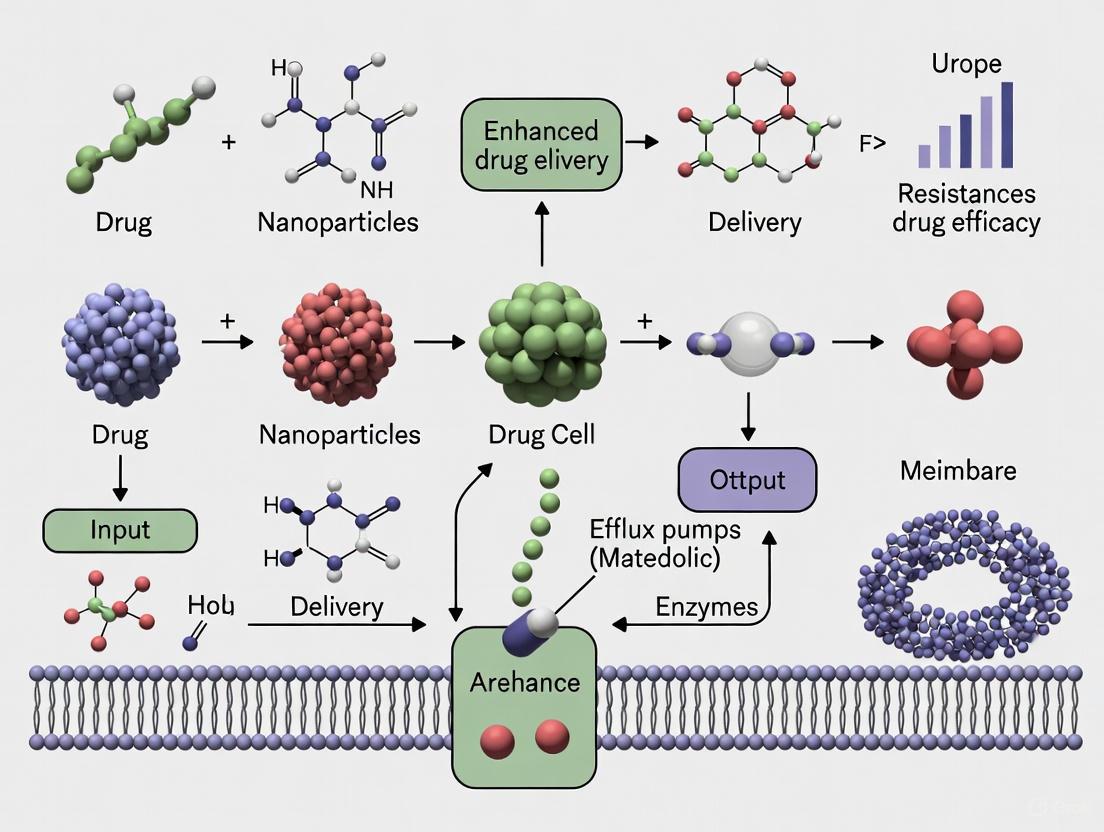
This article provides a comprehensive analysis for researchers and drug development professionals on leveraging nanoparticle (NP) systems to combat multidrug resistance (MDR) in cancer.
Nanoparticle Strategies to Overcome Multidrug Resistance in Cancer Therapy: Mechanisms, Applications, and Clinical Outlook
Abstract
This article provides a comprehensive analysis for researchers and drug development professionals on leveraging nanoparticle (NP) systems to combat multidrug resistance (MDR) in cancer. It explores the foundational science of MDR mechanisms, including ABC transporter-mediated drug efflux and apoptosis evasion. The review details the design, methodology, and application of diverse NP platforms—such as lipid-based NPs, polymeric micelles, and inorganic NPs—for targeted drug delivery. It further addresses key challenges in formulation optimization and scaling, evaluates the comparative efficacy of different nanocarriers through preclinical and clinical data, and discusses the translational pathway and future directions of NP-based therapies for resistant cancers.
Understanding the Multifaceted Mechanisms of Cancer Drug Resistance
The Clinical Burden of Multidrug Resistance (MDR) in Oncology
Multidrug resistance (MDR) represents a fundamental obstacle in oncology, affecting nearly all forms of cancer treatment. MDR is defined as the resistance of cancer cells to a wide range of structurally and functionally unrelated chemotherapeutic drugs. This phenomenon is a major cause of chemotherapy failure in up to 90% of cases for patients with metastatic cancer, presenting a critical barrier to successful treatment outcomes [1]. The clinical burden extends across cancer types, with studies indicating that 30-55% of patients with non-small cell lung cancer (NSCLC) experience relapse followed by death, while 50-70% of ovarian adenocarcinomas recur within one year after surgery and chemotherapy [1]. The problem is particularly pronounced in gastric cancer, which ranks as the fourth most common malignancy worldwide and the third leading cause of cancer-related death [2].
The economic impact of MDR is equally profound, as patients often require extended treatment regimens, alternative therapeutic strategies, and increased supportive care. The relentless progression of MDR cancers necessitates continued research into understanding its complex mechanisms and developing innovative strategies to overcome this challenge, particularly through advanced approaches like nanoparticle-based drug delivery systems [3].
MDR Mechanisms: A Technical Troubleshooting Guide
Frequently Asked Questions: Core MDR Mechanisms
Q: What are the primary mechanisms by which cancer cells develop multidrug resistance?
A: Cancer cells employ multiple sophisticated mechanisms to evade chemotherapy effects. The most well-characterized mechanism involves the overexpression of ATP-binding cassette (ABC) transporter proteins on the cell membrane. These protein pumps use ATP hydrolysis to actively efflux a wide range of chemotherapeutic drugs from cancer cells, significantly reducing intracellular drug accumulation and preventing cytotoxic effects [4] [1] [5]. Additional mechanisms include enhanced DNA repair capacity, alterations in drug targets, reduced drug uptake, defects in apoptotic pathways, and adaptation to the tumor microenvironment [1] [2].
Q: What is the difference between intrinsic and acquired MDR?
A: This distinction is crucial for understanding treatment response:
- Intrinsic resistance refers to pre-existing resistance mechanisms present before drug administration, often driven by genetic alterations, tumor heterogeneity, or cancer stem cells [1].
- Acquired resistance develops during treatment through mechanisms such as activation of alternative oncogenes, modification of drug targets, or changes in the tumor microenvironment induced by therapeutic selection pressure [1].
Q: Which ABC transporters are most clinically significant in oncology?
A: While multiple ABC transporters contribute to MDR, the most significant include:
Table: Key Multidrug Resistance Proteins in Cancer
| Transporter | Gene | Common Cancers Where Expressed | Example Substrate Drugs |
|---|---|---|---|
| P-glycoprotein | ABCB1/MDR1 | Gastric, Breast, Ovarian | Anthracyclines, Vinca alkaloids, Paclitaxel [1] [2] |
| MRP1 | ABCC1 | Lung, Esophageal, Ovarian, Hepatocellular | Etoposide, Vincristine, Anthracyclines [4] |
| MRP2 | ABCC2 | Colorectal, Hepatocellular, Acute Myeloid Leukemia | Cisplatin, Methotrexate [4] |
| MRP4 | ABCC4 | Prostate, Neuroblastoma, Breast, Ovarian | 6-Mercaptopurine, 6-Thioguanine [4] |
| BCRP | ABCG2 | Breast, Gastric, Pancreatic | Mitoxantrone, Topotecan [2] |
Troubleshooting Guide: Identifying MDR in Experimental Models
Problem: Inconsistent MDR induction in cell line models
- Potential Cause: Heterogeneous cell population with varying resistance potential
- Solution: Implement gradual, stepwise drug selection with precise documentation of concentration and exposure time
- Validation: Verify resistance phenotype through:
- IC50 determination compared to parental cells
- Functional efflux assays using fluorescent substrates (e.g., Calcein-AM, Rhodamine 123)
- Protein expression analysis of target transporters (Western blot, flow cytometry)
- Gene expression profiling of resistance markers (qPCR, RNA-seq)
Problem: Off-target effects in MDR inhibition studies
- Potential Cause: Lack of specificity in MDR modulator compounds
- Solution: Utilize combination approaches including:
Nanoparticle Solutions to Overcome MDR
FAQ: Nanoparticle Approaches to Bypass MDR
Q: How can nanoparticle-based drug delivery systems overcome MDR? A: Nanoparticles (NPs) provide multiple strategic advantages:
- Evasion of efflux pumps: NPs enter cells primarily through endocytosis, bypassing transporter-mediated efflux [6] [2]
- Co-delivery capability: NPs can simultaneously deliver chemotherapeutic agents and MDR inhibitors in a single platform [3]
- Enhanced targeting: Surface-functionalized NPs can actively target specific cancer cell receptors [7] [8]
- Controlled release: NP systems enable sustained drug release, maintaining effective intracellular concentrations [6] [7]
Q: What nanoparticle characteristics are optimal for overcoming MDR? A: Key design parameters include:
- Size: 10-100 nm diameter optimal for Enhanced Permeability and Retention (EPR) effect and cellular uptake [6]
- Surface chemistry: PEGylation reduces opsonization and extends circulation half-life [6] [7]
- Drug loading: High encapsulation efficiency for both hydrophilic and hydrophobic agents [6]
- Targeting ligands: Antibodies, peptides, or aptamers for specific cell recognition [7] [2]
Experimental Protocol: Evaluating NP Efficacy in MDR Models
Protocol Title: Assessment of Nanoparticle Efficacy in MDR Cancer Cell Lines
Objective: To evaluate the ability of nanoparticle formulations to overcome transporter-mediated drug resistance compared to free drug.
Materials and Reagents:
- MDR cancer cell lines (e.g., MCF-7/ADR for breast cancer, KB-V1 for gastric cancer)
- Parental sensitive counterparts for control
- Nanoparticle formulations (e.g., PLGA, liposomal, polymeric micelles)
- Free drug equivalent
- MTT or WST-1 cell viability assay kit
- Fluorescent dye for efflux studies (e.g., Calcein-AM, Rhodamine 123)
- Transporter inhibitors (verapamil for P-gp, MK571 for MRP1)
- Flow cytometer with appropriate filters
Procedure:
- Cell Culture: Maintain MDR and parental cells in appropriate media with necessary selection agents.
- Cytotoxicity Assessment:
- Seed cells in 96-well plates (5,000 cells/well)
- Treat with serial dilutions of NP-formulated drug and free drug (24-72 hours)
- Perform viability assay according to manufacturer protocol
- Calculate IC50 values for comparison
- Cellular Accumulation Study:
- Incubate cells with fluorescent NP formulation or free drug (1-4 hours)
- With or without pre-treatment with transporter inhibitors
- Analyze intracellular fluorescence by flow cytometry or fluorescence microscopy
- Efflux Pump Inhibition:
- Load cells with fluorescent substrate (30 minutes)
- Monitor fluorescence retention over time (0-120 minutes)
- Compare NP-treated vs. control cells
Expected Outcomes: Effective NP formulations should demonstrate:
- Lower IC50 values in MDR cells compared to free drug
- Enhanced intracellular drug accumulation regardless of transporter expression
- Reduced dependence on efflux pump inhibitors for efficacy
The Scientist's Toolkit: Essential Research Reagents
Table: Key Research Reagents for MDR and Nanoparticle Studies
| Reagent/Category | Specific Examples | Research Application | Key Function |
|---|---|---|---|
| MDR Cell Lines | MCF-7/ADR, KB-V1, NCI/ADR-RES | In vitro MDR models | Provide standardized systems for evaluating resistance mechanisms and therapeutic efficacy [2] |
| ABC Transporter Inhibitors | Verapamil (P-gp), MK571 (MRP1), Ko143 (BCRP) | Mechanism studies | Chemosensitizers that help characterize specific transporter contributions to MDR [4] |
| Nanoparticle Materials | PLGA, PEG, chitosan, liposomes | Drug delivery system fabrication | Biocompatible materials for constructing stable, effective nanocarriers [6] [7] |
| Fluorescent Substrates | Calcein-AM, Rhodamine 123, Doxorubicin (intrinsic fluorescence) | Efflux transport assays | Enable visualization and quantification of transporter activity and inhibition [4] [2] |
| Targeting Ligands | Folic acid, transferrin, RGD peptides, monoclonal antibodies | Active targeting strategies | Enhance tumor-specific delivery through receptor-mediated endocytosis [7] [2] |
MDR Signaling Pathways and Nanoparticle Intervention
The development of MDR involves complex signaling pathways that regulate transporter expression and activity. Understanding these pathways is essential for designing effective nanoparticle-based interventions.
Diagram 1: MDR Signaling and Nanoparticle Intervention Strategies. This diagram illustrates key signaling pathways (NF-κB, PI3K/Akt, hypoxia) activated by chemotherapy that lead to increased expression of drug efflux pumps and anti-apoptotic proteins. Nanoparticle-based strategies (green nodes) can bypass these resistance mechanisms through endocytic entry, intracellular drug release, and co-delivery of pathway inhibitors.
Advanced Nanoparticle Platforms for MDR Reversal
FAQ: Recent Advances in Nanotechnology for MDR
Q: What are the most promising nanoparticle platforms for overcoming MDR? A: Several advanced platforms show particular promise:
- Hybrid nanoparticles: Combine properties of different nanomaterials for enhanced functionality and stability [6]
- Stimuli-responsive systems: Release payload in response to specific tumor microenvironment triggers (pH, enzymes, redox) [7]
- Theranostic nanoparticles: Integrate therapeutic and diagnostic capabilities for treatment monitoring [8]
- Biomimetic nanoparticles: Utilize cell membranes or bioinspired coatings for improved biocompatibility and targeting [3]
Q: How can nanoparticles target specific resistance mechanisms? A: Advanced NP designs employ mechanism-specific strategies:
- P-gp targeting: NPs co-loaded with chemotherapeutic agents and P-gp inhibitors (e.g., tariquidar) [3]
- Anti-apoptotic protein targeting: NPs delivering Bcl-2 family protein inhibitors or siRNA [3]
- Signaling pathway modulation: NPs carrying PI3K/Akt or NF-κB pathway inhibitors [2]
- Glutathione depletion: NPs that reduce intracellular glutathione to enhance drug sensitivity [2]
Experimental Protocol: Developing MDR-Targeting Nanoparticles
Protocol Title: Formulation and Characterization of MDR-Reversing Nanoparticles
Objective: To develop and characterize nanoparticle systems specifically designed to overcome multidrug resistance.
Materials:
- Biodegradable polymer (e.g., PLGA, PLA)
- Chemotherapeutic drug (e.g., doxorubicin, paclitaxel)
- MDR inhibitor (e.g., verapamil, elacridar)
- Surfactant (e.g., PVA, poloxamer)
- Dialysis membrane (appropriate MWCO)
- Dynamic light scattering (DLS) instrument
- Transmission electron microscope (TEM)
Procedure:
- Nanoparticle Preparation:
- Use double emulsion or nanoprecipitation method for hydrophilic/hydrophobic drugs
- Incorporate both chemotherapeutic and MDR inhibitor in single NP system
- Optimize drug:polymer ratio for maximum encapsulation efficiency
Physicochemical Characterization:
- Size and Zeta Potential: Measure by DLS (target: 80-150 nm, |zeta| >20 mV)
- Morphology: Visualize by TEM or SEM
- Drug Loading: Determine by HPLC after NP dissolution
- Release Kinetics: Use dialysis method in PBS with surfactants (0-72 hours)
In Vitro Efficacy Testing:
- Compare cytotoxicity of dual-loaded NPs vs. single-drug NPs vs. free drugs
- Assess combination index to quantify synergistic effects
- Evaluate cellular uptake and retention in presence of efflux pump inhibitors
Quality Control Parameters:
- Batch-to-batch consistency in size distribution (PDI < 0.2)
- High encapsulation efficiency (>80% for primary drug)
- Sustained release profile (minimal burst release)
- Sterility and endotoxin testing for in vivo applications
The clinical burden of MDR in oncology remains substantial, but nanoparticle-based delivery systems offer promising strategies to overcome these challenges. The field is rapidly evolving, with current research focusing on personalized nanomedicine approaches, biomimetic systems, and combination therapies that target multiple resistance mechanisms simultaneously [3] [8]. As these technologies advance toward clinical translation, they hold significant potential to improve outcomes for cancer patients facing multidrug-resistant disease.
For researchers in this field, key future directions include developing more sophisticated in vitro MDR models that better recapitulate tumor heterogeneity, optimizing nanoparticle designs for enhanced tumor penetration, and establishing standardized protocols for evaluating nanomedicine efficacy in resistant cancers. Through continued innovation and collaboration between material scientists, pharmacologists, and clinical oncologists, nanotechnology may ultimately transform how we address the persistent challenge of multidrug resistance in oncology.
Frequently Asked Questions (FAQs)
Q1: What are the key ABC transporters involved in multidrug resistance (MDR) in cancer, and what are their primary characteristics?
The three most well-studied ABC transporters implicated in cancer MDR are P-glycoprotein (P-gp/ABCB1), the Multidrug Resistance-Associated Proteins (MRPs/ABCC family), and the Breast Cancer Resistance Protein (BCRP/ABCG2). Their core characteristics are summarized in the table below.
Table 1: Key Characteristics of Major ABC Transporters in MDR
| Transporter | Gene | Subcellular Localization | Example Substrates (Chemotherapeutics) | Tissue Distribution (Normal Physiology) |
|---|---|---|---|---|
| P-gp | ABCB1 | Apical Membrane | Doxorubicin, Vincristine, Paclitaxel [9] [10] | Intestine, Liver, Kidney, Blood-Brain Barrier [10] [11] |
| MRP1 | ABCC1 | Basolateral Membrane | Doxorubicin, Etoposide, Vincristine [9] [10] | Ubiquitous [10] |
| BCRP | ABCG2 | Apical Membrane | Mitoxantrone, Topotecan, Irinotecan [12] [13] | Placenta, Intestine, Liver, Breast [10] [12] |
Q2: What is the fundamental molecular mechanism by which these transporters cause drug resistance?
ABC transporters are primary active transporters that use the energy from ATP hydrolysis to pump substrates, including many chemotherapeutic drugs, out of the cell against a concentration gradient. This reduces intracellular drug accumulation and prevents the drugs from reaching their cytotoxic targets, thereby conferring resistance [9] [14] [15]. The general mechanism can be summarized in these steps, as also depicted in Figure 1:
- Drug Binding: The chemotherapeutic drug (substrate) binds to the transmembrane domain (TMD) of the transporter from the inner leaflet of the membrane.
- ATP Binding: Two ATP molecules bind to the nucleotide-binding domains (NBDs), promoting their dimerization.
- Conformational Change: ATP binding induces a conformational shift in the TMDs, changing the binding site's affinity and orientation from inward-facing to outward-facing.
- Drug Efflux: The drug is released into the extracellular space.
- Reset: ATP hydrolysis and release of ADP and inorganic phosphate (Pi) resets the transporter to its inward-facing state, ready for another cycle [9] [14].
Figure 1: General Mechanism of ABC Transporter-Mediated Drug Efflux. TMD: Transmembrane Domain; NBD: Nucleotide-Binding Domain.
Q3: Our research focuses on nanoparticle (NP) delivery systems to overcome resistance. How can NPs circumvent ABC transporter-mediated efflux?
Nanoparticles offer multiple strategic advantages to bypass or inhibit ABC transporter function [16] [17] [13]:
- Bypassing the Efflux Pump: NPs are typically internalized via endocytosis, delivering their drug payload directly into the cytoplasm or other intracellular compartments, thereby avoiding recognition by the transporter's substrate-binding site on the plasma membrane [13].
- Co-delivery of Efflux Inhibitors: NPs can be co-loaded with a chemotherapeutic drug and a specific ABC transporter inhibitor (e.g., Elacridar, Tariquidar). This ensures both agents are delivered to the same cell, simultaneously inhibiting the efflux pump and allowing cytotoxic drug accumulation [14] [13].
- Delivery of Gene-Editing Tools: NPs can deliver siRNA or CRISPR/Cas9 components to directly silence or knock out the genes encoding ABC transporters (e.g., ABCB1, ABCG2), downregulating their expression at the genetic level [16] [13].
Troubleshooting Common Experimental Challenges
Problem: Inconsistent Reversal of MDR in Cell-Based Assays
Potential Causes and Solutions:
Cause 1: Incorrect Inhibitor Selection or Specificity.
- Solution: Ensure the inhibitor used is specific for the ABC transporter overexpressed in your cell model. Many inhibitors can target multiple transporters. Validate the expression profile of P-gp, MRPs, and BCRP in your cells using qPCR or western blot before selecting an inhibitor [9] [12].
- Protocol: Validating Transporter Expression via Western Blot.
- Lysate Preparation: Lyse control (parental) and drug-resistant cell lines in RIPA buffer with protease inhibitors.
- Electrophoresis: Load equal protein amounts (20-40 µg) on an SDS-PAGE gel.
- Transfer: Transfer proteins to a PVDF membrane.
- Blocking: Block membrane with 5% non-fat milk for 1 hour.
- Antibody Incubation: Incubate with primary antibodies (e.g., anti-P-gp, anti-BCRP, anti-MRP1) overnight at 4°C, followed by an HRP-conjugated secondary antibody for 1 hour.
- Detection: Develop using an ECL substrate and image. Use an antibody for a housekeeping protein (e.g., GAPDH) as a loading control.
Cause 2: Inefficient Intracellular Delivery of Inhibitor or Therapeutic.
- Solution: When testing NP-based strategies, confirm that your NPs are effectively taken up by the target cells and that the encapsulated agent is being released. Use fluorescently tagged NPs or drugs and analyze uptake via flow cytometry or confocal microscopy [13].
Problem: Nanoparticle Formulation Exhibits Low Drug Loading or Premature Release
Potential Causes and Solutions:
- Cause: Poor Compatibility between Drug, Inhibitor, and Nanocarrier.
- Solution: Optimize the formulation parameters. The choice of lipid/polymer, drug-to-lipid ratio, and preparation method (e.g., microfluidics) critically impacts loading efficiency and stability [18] [13]. Screening different NP materials (e.g., PLGA, lipids) is often necessary.
- Protocol: Microfluidic Preparation of Liposomal NPs for Co-delivery.
- Preparation: Dissolve the lipid mixture (e.g., DSPC, Cholesterol, PEG-lipid) and drugs (chemotherapeutic + inhibitor) in an organic solvent (e.g., ethanol).
- Aqueous Phase: Prepare an aqueous buffer (e.g., ammonium sulfate for remote loading).
- Mixing: Use a microfluidic device to rapidly mix the lipid/drug stream with the aqueous buffer at a controlled flow rate ratio (FRR) and total flow rate (TFR). This process leads to the instantaneous formation of nanoparticles.
- Dialysis: Dialyze the resulting NP suspension against a suitable buffer to remove organic solvent and unencapsulated drugs.
- Characterization: Measure particle size (DLS), polydispersity (PDI), zeta potential, and drug loading efficiency (HPLC).
The Scientist's Toolkit: Research Reagent Solutions
Table 2: Essential Reagents for Investigating ABC Transporter-Mediated MDR
| Reagent / Tool | Function / Application | Example(s) |
|---|---|---|
| Selective Chemical Inhibitors | To pharmacologically block transporter activity and assess its role in resistance. | P-gp: Tariquidar (3rd gen) [14] [13]BCRP: Ko143 [12] [13] |
| Validated Antibodies | For detecting protein expression and cellular localization of transporters via Western Blot, Immunofluorescence. | Anti-P-gp, Anti-BCRP, Anti-MRP1 antibodies [12] |
| Fluorescent Substrate Probes | For functional efflux assays to measure transporter activity in live cells. | P-gp/BCRP: Mitoxantrone, Hoechst 33342 [12] [15] |
| Nanocarrier Materials | To formulate delivery systems that bypass efflux pumps. | Lipids: (e.g., DSPC, Cholesterol) for liposomes [13]Polymers: PLGA for polymeric NPs [17] [13] |
| Gene-Editing Tools | To genetically knockdown or knockout transporter genes. | siRNA targeting ABCG2; CRISPR/Cas9 components [16] [13] |
Visualizing Nanoparticle Strategies to Overcome Efflux
The following diagram illustrates the multi-faceted approaches of nanoparticle systems to combat ABC transporter-mediated drug resistance.
Figure 2: Nanoparticle Strategies to Overcome ABC Transporter-Mediated Resistance.
Frequently Asked Questions (FAQs)
FAQ 1: What are the primary non-efflux pump mechanisms by which cancer cells develop resistance to therapy? Beyond efflux pumps, cancer cells utilize several key mechanisms to resist treatment. Two of the most significant are the evasion of apoptosis (programmed cell death) and the enhancement of DNA repair capacity [19] [13]. Apoptosis evasion occurs through the overexpression of anti-apoptotic proteins (e.g., Bcl-2) or inactivation of pro-apoptotic pathways, allowing cancer cells to survive the cytotoxic effects of drugs [3]. Enhanced DNA repair involves upregulating pathways like homologous recombination (HR) and non-homologous end joining (NHEJ) to efficiently fix the DNA damage induced by chemotherapeutics or radiotherapy, thereby preventing cell death [20].
FAQ 2: Why is targeting apoptosis evasion so challenging, and how can nanoparticle strategies help? Directly inhibiting anti-apoptotic proteins like Bcl-2 with small-molecule drugs has been hampered by issues of poor bioavailability and systemic toxicity [3]. Nanoparticle-based delivery systems present a promising solution. They can be engineered to co-deliver chemotherapeutic agents alongside Bcl-2 inhibitors (e.g., navitoclax) directly to the tumor site. This approach leverages the Enhanced Permeation and Retention (EPR) effect for accumulation, improving drug solubility and stability while simultaneously reducing off-target toxicity, thereby more effectively triggering apoptosis in resistant cells [3] [13].
FAQ 3: How do alterations in DNA repair pathways contribute to resistance, and what are the strategic implications? Many chemotherapies, such as platinum-based agents, rely on creating DNA damage, particularly double-strand breaks (DSBs), to kill cancer cells [20]. Cancers can develop resistance by upregulating DNA repair pathways like HR or NER to fix this damage before it becomes lethal [20]. Conversely, some cancers have intrinsic DNA repair deficiencies (e.g., BRCA mutations). While this initially confers sensitivity, resistance can be acquired through secondary mutations that restore repair function [20]. The strategic implication is that inhibiting specific DNA repair pathways (e.g., using PARP inhibitors in HR-deficient cancers) can be an effective strategy, and nanoparticles are being explored to deliver such inhibitors or even gene-editing tools like CRISPR/Cas9 to target repair genes [13].
FAQ 4: What are common pitfalls when assessing apoptosis in vitro, and how can they be troubleshooted? A common pitfall is the reliance on a single assay, such as only measuring caspase activity, which may not confirm actual cell death. To obtain robust data, it is crucial to use a combination of complementary assays [19]. The table below outlines key assays and troubleshooting tips for evaluating apoptosis.
Table 1: Troubleshooting Guide for Apoptosis Assays
| Assay Method | What It Measures | Common Issues | Troubleshooting Tips |
|---|---|---|---|
| Caspase-3/7 Activity | Activation of executioner caspases | High background; activity without cell death | Combine with a viability assay (e.g., Annexin V/PI); confirm with Western blot for caspase cleavage. |
| Annexin V/Propidium Iodide (PI) Flow Cytometry | Phosphatidylserine exposure (early apoptosis) and membrane integrity (late apoptosis/necrosis) | False positives from mechanical cell damage; improper staining timing. | Handle cells gently; include unstained and single-stained controls; optimize the time after treatment. |
| Western Blotting for Bcl-2 Family Proteins | Expression levels of anti-apoptotic (e.g., Bcl-2) and pro-apoptotic (e.g., Bax) proteins | Non-specific bands; poor protein transfer. | Use validated antibodies; include positive and negative control lysates; optimize transfer conditions. |
| Mitochondrial Membrane Potential (ΔΨm) Assays | Loss of ΔΨm, an early apoptotic event | Photobleaching; assay interference from compounds. | Use a plate reader with kinetic readings; include a CCCP control; test for compound autofluorescence. |
FAQ 5: My DNA damage assays are inconsistent. What factors should I optimize? Inconsistent results in DNA damage assays often stem from suboptimal timing and inadequate controls [20]. The dynamic nature of the DNA damage response (DDR) means key markers appear and resolve quickly. Furthermore, the choice of DNA-damaging agent will activate different repair pathways. Ensure you are using an appropriate positive control for the specific damage you are studying.
Table 2: Troubleshooting Guide for DNA Damage and Repair Assays
| Assay Method | What It Measures | Common Issues | Troubleshooting Tips |
|---|---|---|---|
| γH2AX Foci Immunofluorescence | Formation of DNA double-strand break (DSB) repair foci | High basal levels; foci not resolving. | Use serum-starved cells as a low-damage control; fix cells immediately after treatment; perform a time-course experiment. |
| Comet Assay (Alkaline) | Single and double-strand DNA breaks | Poor cell lysis; comets with no heads (excessive damage). | Include a control treated with a known agent (e.g., H₂O₂); optimize lysis time and electrophoresis conditions. |
| Clonogenic Survival Assay | Long-term reproductive cell death after DNA damage | Low plating efficiency; overgrown colonies. | Ensure a low, optimized cell density for plating; fix and stain colonies before they merge; normalize to untreated control. |
| Western Blot for DDR Proteins (e.g., p-ATM, p-Chk2) | Activation of DNA damage response kinases | Weak or no signal; high background. | Use phospho-specific antibodies; collect lysates quickly after treatment (15-60 min); include a positive control (e.g., irradiated cells). |
The Scientist's Toolkit: Key Research Reagents
This table lists essential reagents for investigating non-efflux pump resistance mechanisms, with a focus on their application in a nanoparticle research context.
Table 3: Research Reagent Solutions for Studying Apoptosis and DNA Repair
| Reagent / Tool | Function / Target | Application in Resistance Research |
|---|---|---|
| ABT-263 (Navitoclax) | Small-molecule Bcl-2/Bcl-xL inhibitor | Used to sensitize resistant cancer cells to apoptosis; a candidate for co-encapsulation in nanoparticle delivery systems [3]. |
| z-VAD-FMK | Pan-caspase inhibitor | Used as a control to confirm that cell death is occurring via caspase-dependent apoptosis. |
| γH2AX Antibody | Detects histone H2AX phosphorylation at Ser139, a marker of DSBs | Gold-standard reagent for quantifying DNA damage initiation and repair kinetics in response to chemo/radiotherapy [20]. |
| Olaparib | PARP inhibitor | Induces synthetic lethality in HR-deficient (e.g., BRCA-mutant) cells; used to study DNA repair pathways and as a nanotherapeutic agent [20]. |
| siRNA/shRNA Pools | Gene knockdown for targets like Bcl-2, BRCA1, ATM | Used to genetically validate the role of specific anti-apoptotic or DNA repair proteins in mediating resistance [13]. |
| CRISPR/Cas9 System | Gene knockout for targets like BRCA1, BRCA2, or NHEJ factors | Enables creation of isogenic cell lines to study how specific DNA repair gene ablations affect drug sensitivity; can be delivered via nanoparticles [13]. |
Experimental Protocols
Protocol 1: Evaluating Apoptosis Evasion via Nanoparticle-Mediated Co-Delivery
Objective: To determine if nanoparticles co-loaded with a chemotherapeutic agent (e.g., Doxorubicin) and a Bcl-2 inhibitor (e.g., ABT-263) can overcome apoptosis evasion in a resistant cancer cell line.
Materials:
- Resistant cancer cell line (e.g., MCF-7 breast cancer)
- Nanoparticles: Blank, Doxorubicin-loaded, ABT-263-loaded, and Co-loaded
- Annexin V-FITC/PI Apoptosis Detection Kit
- Cell culture reagents and flow cytometer
Methodology:
- Cell Seeding and Treatment: Seed cells in 12-well plates and incubate for 24 hours. Treat cells with the following for 48 hours: a) Untreated control, b) Free Doxorubicin, c) Free ABT-263, d) Free Dox+ABT combination, e) NP-Dox, f) NP-ABT, g) NP-Dox+ABT.
- Cell Harvesting: Gently trypsinize and collect cells, wash with cold PBS.
- Annexin V/PI Staining: Resuspend cell pellet in Annexin V binding buffer. Add Annexin V-FITC and Propidium Iodide (PI) as per kit instructions. Incubate for 15 minutes in the dark.
- Flow Cytometry Analysis: Analyze samples within 1 hour. Distinguish populations: Viable (Annexin V-/PI-), Early Apoptotic (Annexin V+/PI-), Late Apoptotic (Annexin V+/PI+), Necrotic (Annexin V-/PI+).
- Data Interpretation: A significant increase in total apoptosis (Early + Late) in the co-loaded nanoparticle group compared to all other groups indicates successful reversal of apoptosis evasion.
Protocol 2: Profiling DNA Repair Capacity via γH2AX Foci Kinetics
Objective: To assess the DNA repair proficiency of a drug-resistant cell line compared to its sensitive counterpart by monitoring the resolution of DNA double-strand breaks.
Materials:
- Paired sensitive and resistant cell lines
- DNA damaging agent (e.g., 5 Gy Ionizing Radiation or 10 µM Etoposide)
- Anti-γH2AX primary antibody and fluorescent secondary antibody
- Fluorescence microscope with imaging software
Methodology:
- Induction of DNA Damage: Culture cells on glass coverslips. Treat all cells with a standardized DNA damage insult (e.g., IR).
- Time-Course Fixation: Fix cells with 4% paraformaldehyde at key time points post-damage: T=0h (immediately after), 2h, 6h, and 24h. Include an untreated control.
- Immunofluorescence Staining: Permeabilize cells, block, and incubate with γH2AX primary antibody overnight. The next day, incubate with a fluorescent secondary antibody and counterstain nuclei with DAPI.
- Image Acquisition and Quantification: Acquire at least 50 images per condition using a 60x objective. Use automated image analysis software to count the number of γH2AX foci per nucleus.
- Data Interpretation: Plot the average number of foci per nucleus over time. Resistant cells with enhanced DNA repair capacity will show a faster rate of foci resolution (disappearance) compared to sensitive cells, indicating more efficient repair of DSBs [20].
Signaling Pathways and Experimental Workflows
Apoptosis Evasion Signaling Pathway
Diagram Title: Key Pathways in Apoptosis Evasion and Nanoparticle Targeting
DNA Repair Mechanism and Resistance
Diagram Title: DNA Repair Pathways as Targets to Overcome Resistance
Experimental Workflow for Characterizing Non-Efflux Resistance
Diagram Title: Workflow for Analyzing Non-Efflux Pump Resistance
The Role of the Tumor Microenvironment (TME) in Promoting Resistance
Troubleshooting Guide: FAQs on TME and Nanoparticle-Mediated Drug Resistance
FAQ 1: Why do my nanoparticles fail to penetrate deep into the tumor, despite in vitro success?
- Issue: The complex physical and cellular barriers of the TME, such as a dense extracellular matrix (ECM) and high interstitial fluid pressure, can severely impede nanoparticle (NP) penetration [21] [22].
- Solution & Protocol:
- Assess ECM Density: Perform histological staining (e.g., Masson's Trichrome for collagen) on tumor sections to evaluate stromal density [22].
- Modulate the TME: Pre-treat with an ECM-modifying agent. A common protocol is to administer an anti-fibrotic agent like PEGylated hyaluronidase (e.g., PEGPH20) intravenously 24-48 hours before NP administration to degrade hyaluronan and reduce interstitial pressure [22].
- Optimize NP Design: Engineer proteolytic-activated, size-shrinkable NPs that are large enough for long circulation but shrink upon encountering tumor-specific enzymes (e.g., matrix metalloproteinases) for deeper penetration [23].
FAQ 2: Cancer-associated fibroblasts (CAFs) are conferring resistance to my targeted therapy. How can I disrupt this?
- Issue: CAFs promote resistance through ECM remodeling, secreting growth factors like HGF that activate alternative survival pathways in cancer cells, and creating an immunosuppressive niche [22] [24].
- Solution & Protocol:
- Identify Key Pathways: Use a co-culture model of cancer cells and patient-derived CAFs. Perform a phospho-kinase array or RNA sequencing on the cancer cells post-co-culture to identify upregulated resistance pathways (e.g., HGF/MET) [22].
- Implement Combination Therapy: Develop a dual-delivery NP system. One cargo should target the CAFs (e.g., a TGF-β inhibitor to de-activate them), while the other targets the original oncogenic pathway in cancer cells (e.g., an EGFR TKI) [25] [22].
FAQ 3: How is the metabolic landscape of the TME causing my chemotherapeutic NPs to fail?
- Issue: Tumor-associated macrophages (TAMs) and CAFs undergo metabolic reprogramming, leading to lactate accumulation, acidification, and hypoxia. This acidic, hypoxic environment can inactivate drugs, reduce cellular uptake, and promote a stem-like, drug-tolerant state in cancer cells [22] [24].
- Solution & Protocol:
- Measure Metabolites: Use a biochemical assay kit to measure lactate levels in tumor homogenates or in conditioned media from 3D tumor spheroid cultures.
- Target Metabolism: Formulate NPs co-loaded with the chemotherapy drug and a metabolic inhibitor, such as a lactate transporter inhibitor (e.g., AZD3965) or a HIF-1α inhibitor. This can re-sensitize the tumor to treatment [24].
FAQ 4: My immunotherapy is ineffective due to the immunosuppressive TME. Can NPs help?
- Issue: The TME is enriched with immunosuppressive cells like M2-polarized TAMs, Tregs, and Myeloid-Derived Suppressor Cells (MDSCs) that inhibit cytotoxic T-cell function [22] [24].
- Solution & Protocol:
- Profile Immune Populations: Use flow cytometry on dissociated tumor tissue to quantify the ratio of M2/M1 TAMs (CD206+/CD80+) and the presence of Tregs (CD4+/CD25+/FoxP3+).
- Reprogram the TME: Design NPs that selectively deliver a TAM-reprogramming agent (e.g., a TLR7/8 agonist) to the tumor. This can shift M2 TAMs to an M1, tumor-fighting phenotype. Combine this NP with a systemically administered anti-PD-1 antibody for a synergistic effect [25] [22].
Quantitative Data on TME-Mediated Resistance
Table 1: Key Cellular Contributors to TME-Mediated Drug Resistance
| Cell Type | Primary Resistance Mechanisms | Key Signaling Molecules | Impact on Therapy |
|---|---|---|---|
| Cancer-Associated Fibroblasts (CAFs) | ECM remodeling, HGF secretion, CXCL12-mediated Treg recruitment [22] | TGF-β, HGF, CXCL12 [22] | Impaired drug penetration, activation of alternative survival pathways (e.g., MET), immunosuppression [22] |
| Tumor-Associated Macrophages (TAMs, M2) | IL-10/TGF-β secretion, PD-L1 expression, VEGF-induced angiogenesis, exosomal miRNA transfer [22] | IL-10, TGF-β, VEGF, miR-1246 [22] | Suppression of cytotoxic T-cells, reduced drug perfusion, increased P-gp mediated drug efflux [22] |
| Regulatory T Cells (Tregs) | Suppression of CD8+ T-cell activity via cytokine downregulation [22] | IL-10, TGF-β [22] | Failure of immunotherapy and some chemotherapies [22] |
| Myeloid-Derived Suppressor Cells (MDSCs) | Suppression of T-cells via ARG1, iNOS, TGF-β [22] | ARG1, iNOS, TGF-β [22] | Resistance to cisplatin and immune checkpoint inhibitors [22] |
Table 2: Nanoparticle Delivery Challenges in the TME
| Challenge | Quantitative Impact | Potential Nanocarrier Solution |
|---|---|---|
| Poor Tumor Accumulation | Only ~0.7% of the injected NP dose reaches the tumor [21] | Surface functionalization with active targeting ligands (e.g., peptides, antibodies) [21] [23] |
| Rapid Systemic Clearance | Clearance by Mononuclear Phagocyte System (MPS) and kidneys within hours [21] | "Stealth" coating with PEG or cell membranes to reduce opsonization [23] |
| Inefficient Penetration | Hindered by dense ECM and high interstitial pressure [21] [22] | Smaller NPs (<50 nm), ECM-degrading enzymes, and shape-optimized NPs [21] [23] |
| Hypoxia & Acidity | pH can drop to 6.5-6.9; hypoxia stabilizes HIF-1α [24] | pH-sensitive NPs that release drug in acidic conditions, O₂-carrying NPs [23] |
Detailed Experimental Protocols
Protocol 1: Evaluating NP Penetration in a 3D Tumor Spheroid Model This protocol simulates the diffusion barriers of the TME in vitro.
- Spheroid Formation: Seed cancer cells (e.g., MCF-7, U87-MG) in ultra-low attachment 96-well plates (~1000 cells/well) to form spheroids over 3-5 days.
- NP Incubation: Add fluorescently labelled NPs to the mature spheroids and incubate for a set time (e.g., 4-24h).
- Imaging and Analysis: Rinse spheroids, fix with 4% PFA, and image using a confocal microscope with Z-stacking. Quantify fluorescence intensity from the spheroid rim to the core using image analysis software (e.g., ImageJ) to generate a penetration profile [21].
Protocol 2: Analyzing TME-Dependent Resistance In Vivo
- Animal Model: Use a syngeneic mouse model or a Patient-Derived Xenograft (PDX) model that retains a human-like TME.
- Treatment Groups:
- Group 1: Control (saline)
- Group 2: Free drug
- Group 3: Drug-loaded NP
- Group 4: NP + TME-modulating agent (e.g., CAF inhibitor)
- Endpoint Analysis: Monitor tumor volume. At endpoint, harvest tumors for:
TME Signaling Pathways in Drug Resistance
The diagram below illustrates the key cellular interactions and signaling pathways within the Tumor Microenvironment (TME) that contribute to drug resistance.
The Scientist's Toolkit: Research Reagent Solutions
Table 3: Essential Reagents for Investigating TME and Nanoparticle Resistance
| Research Reagent / Material | Function & Application |
|---|---|
| PEGylated Hyaluronidase (PEGPH20) | An enzyme that degrades hyaluronan in the ECM, reducing interstitial pressure and improving NP penetration [22]. |
| TGF-β Receptor Inhibitor (e.g., Galunisertib) | A small molecule inhibitor used to de-activate Cancer-Associated Fibroblasts (CAFs) and reduce fibrosis [22]. |
| CSF-1R Inhibitor (e.g., PLX3397) | Selectively depletes tumor-associated macrophages (TAMs), allowing study of their role in therapy resistance [22]. |
| pH-Sensitive Polymer (e.g., Poly(β-amino ester)) | A polymer used to construct nanoparticles that remain stable at physiological pH but disassemble and release their cargo in the acidic TME [23]. |
| CCR2 Antagonist (e.g., INCB3344) | Blocks the recruitment of monocytic MDSCs to the tumor site, mitigating immunosuppression [22]. |
| HIF-1α Inhibitor (e.g., PX-478) | Targets hypoxia signaling within the TME, reversing a major driver of chemoresistance and stemness [24]. |
| Matrix Metalloproteinase (MMP) Substrate Peptide | A peptide linker incorporated into NP design that is cleaved by tumor-overexpressed MMPs, enabling size-shrinking for deeper penetration [23]. |
Limitations of Conventional Chemotherapy in Overcoming MDR
FAQs on Multidrug Resistance (MDR) Mechanisms
What are the primary cellular mechanisms driving MDR in cancer?
Multidrug resistance (MDR) is primarily driven by cellular mechanisms that prevent chemotherapeutic drugs from achieving effective intracellular concentrations or inducing cell death. The key mechanisms include:
- ABC Transporter Overexpression: ATP-binding cassette (ABC) transporter proteins such as P-glycoprotein (P-gp/ABCB1), multidrug resistance-associated proteins (MRPs/ABCC family), and breast cancer resistance protein (BCRP/ABCG2) are frequently overexpressed in cancer cells. These proteins use ATP hydrolysis to actively efflux a wide range of chemotherapeutic agents out of the cell, reducing intracellular drug accumulation and efficacy. This is one of the most well-characterized mechanisms of MDR [26] [27] [13].
- Defective Apoptotic Pathways: Cancer cells can develop resistance to programmed cell death by upregulating anti-apoptotic proteins (e.g., Bcl-2, Bcl-xL) and downregulating pro-apoptotic proteins (e.g., bax). Alterations in death receptors, p53 genes, and the PI3K/Akt pathway also contribute to an elevated apoptotic threshold, allowing cancer cells to survive despite chemotherapeutic insult [26] [28].
- Enhanced DNA Repair Mechanisms: For chemotherapeutics that target DNA (e.g., alkylating agents, anthracyclines, platinum-based compounds), cancer cells can activate sophisticated DNA repair pathways. This allows them to reverse or bypass the DNA damage intended to trigger cell death [26] [27].
- Alterations in Drug Targets: Mutations or epigenetic changes can modify the molecular targets of chemotherapeutic drugs, reducing drug binding affinity and rendering the treatment ineffective [27] [28].
How does the tumor microenvironment (TME) contribute to MDR?
The tumor microenvironment (TME) creates physiological barriers that contribute significantly to MDR through non-cellular mechanisms:
- Hypoxia: Irregular vasculature in solid tumors leads to areas of low oxygen (hypoxia). This activates hypoxia-inducible factors (HIFs), which can upregulate ABC transporters, enhance DNA repair, and induce cell cycle arrest, all of which contribute to resistance. Hypoxia also reduces the efficacy of oxygen-dependent therapies like radiation [26] [29].
- Acidic Extracellular pH (pHe): Cancer cells often rely on aerobic glycolysis (the Warburg effect), producing excess lactic acid and creating an acidic TME. This low pH can lead to "ion trapping" of weakly basic chemotherapeutic drugs (e.g., doxorubicin, vincristine), preventing their cellular uptake and reducing their effectiveness [26] [29].
- Elevated Interstitial Fluid Pressure (IFP): Leaky, disorganized tumor vasculature allows fluid and proteins to accumulate in the interstitium, raising the IFP. This high pressure opposes the convective inflow of chemotherapeutic agents from blood vessels into the tumor core, limiting drug delivery and distribution [26].
Why do conventional chemotherapeutics fail against MDR cancers?
Conventional chemotherapeutics face several intrinsic limitations that hinder their success against MDR cancers:
- Lack of Specificity: Conventional chemotherapeutics often indiscriminately target all rapidly dividing cells, leading to severe off-target toxicity in healthy tissues (e.g., bone marrow suppression, gastrointestinal reactions, cardiotoxicity). This systemic toxicity limits the maximum tolerable dose, potentially resulting in sub-lethal drug concentrations at the tumor site that can select for resistant clones [6] [28].
- Inability to Overcome Efflux Pumps: Small-molecule chemotherapeutics are often ideal substrates for ABC efflux transporters. Once pumped out, intracellular drug levels fall below the therapeutic threshold, rendering the treatment ineffective [26] [27].
- Poor Pharmacokinetics and Biodistribution: Conventional drugs often have short circulation half-lives, rapid clearance, and poor solubility. Their small size allows for easy diffusion away from the tumor vasculature, and they cannot leverage the Enhanced Permeability and Retention (EPR) effect effectively [6] [29].
- Failure to Penrate Tumor Sanctuaries: The high IFP and dense extracellular matrix of tumors can prevent chemotherapeutics from reaching cancer cells located in the tumor's core or in certain anatomical sanctuaries [26] [1].
Troubleshooting Common Experimental Challenges in MDR Research
Challenge: My in vitro drug screening fails to predict in vivo efficacy.
Potential Causes and Solutions:
Cause 1: Oversimplified 2D Culture Models.
- Issue: Traditional 2D cell cultures lack the physiological TME components (hypoxia, acidity, stromal interactions) that drive MDR in vivo.
- Solution: Transition to more complex 3D models.
- Protocol: Spheroid Formation for MDR Studies
- Seed cells in ultra-low attachment plates to encourage self-aggregation.
- Culture for 3-7 days until compact spheroids form.
- Treat spheroids with nanocarriers and analyze penetration (e.g., via confocal microscopy with fluorescently labeled carriers) and cytotoxicity. Spheroids better mimic the diffusion barriers and gradients found in solid tumors [29].
Cause 2: Lack of MDR-Prone Cell Lines.
- Issue: Using drug-naive cell lines may not reflect the ABC transporter overexpression seen in clinical MDR.
- Solution: Generate or utilize established MDR cell lines.
- Protocol: Development of an MDR Cell Line via Chronic Drug Exposure
- Culture parental cells (e.g., MCF-7, KB-3-1) with a low, sub-lethal concentration of a chemotherapeutic agent (e.g., doxorubicin).
- Gradually increase the drug concentration over 6-9 months.
- Regularly verify the MDR phenotype by confirming reduced intracellular drug accumulation and elevated expression of P-gp via Western blot or flow cytometry [26] [13].
Challenge: My nanoparticle formulation shows high cytotoxicity in vitro but fails in animal models.
Potential Causes and Solutions:
Cause 1: Rapid Clearance by the Mononuclear Phagocyte System (MPS).
- Issue: Nanoparticles without surface modification are often recognized by the immune system and sequestered in the liver and spleen.
- Solution: Functionalize the nanoparticle surface with hydrophilic polymers.
- Protocol: PEGylation of Nanoparticles for Stealth Properties
- Synthesize or purchase phospholipids or polymers functionalized with poly(ethylene glycol) (PEG) (e.g., DSPE-PEG2000).
- Incorporate 1-10 mol% of PEG-lipid/polymer during nanoparticle formulation (e.g., by thin-film hydration or nanoprecipitation).
- Characterize the nanoparticles to confirm PEG incorporation and assess its impact on pharmacokinetics and biodistribution in animal models, noting reduced liver accumulation and prolonged circulation time [6] [30].
Cause 2: Inefficient Tumor Targeting.
- Issue: Reliance solely on the passive EPR effect is often insufficient, as it varies between tumor models and patients.
- Solution: Implement active targeting strategies.
- Protocol: Conjugation of Targeting Ligands to Nanoparticles
- Select a ligand (e.g., folic acid, transferrin, RGD peptide, or an antibody) that binds to receptors overexpressed on your target MDR cancer cells.
- Conjugate the ligand to the terminal group of the PEG chain on your pre-formed nanoparticles using appropriate chemistry (e.g., EDC/NHS coupling for carboxylic acids, maleimide-thiol chemistry).
- Purify the conjugated nanoparticles and validate targeting efficiency through cell uptake studies in receptor-positive vs. receptor-negative cell lines [27] [6] [30].
Quantitative Data on MDR and Nanomedicine
Table 1: Key ABC Transporters in MDR and Their Chemotherapeutic Substrates
| Transporter | Common Name | Key Chemotherapeutic Substrates (Resisted) | Primary Tissue Expression |
|---|---|---|---|
| ABCB1 | P-glycoprotein (P-gp) | Doxorubicin, Paclitaxel, Vinca alkaloids (vincristine, vinblastine), Etoposide [27] [13] | Liver, Intestine, Brain, Kidney [13] |
| ABCC1 | MRP1 | Doxorubicin, Vinca alkaloids, Etoposide, Methotrexate [27] | Lung, Spleen, Testes |
| ABCG2 | BCRP | Topotecan, Irinotecan, Mitoxantrone, Tyrosine Kinase Inhibitors [27] [13] | Placenta, Liver, Intestine, Stem Cells |
Table 2: Advantages of Nanoparticle-Based Delivery Systems Over Conventional Chemotherapy
| Feature | Conventional Chemotherapy | Nanoparticle Drug Delivery | Mechanism & Benefit |
|---|---|---|---|
| Circulation Time | Short (rapid renal clearance) [6] | Long (PEGylation avoids immune clearance) [6] [29] | Enhanced EPR effect; higher tumor drug accumulation. |
| Overcoming Efflux Pumps | Ineffective (small molecule substrates) [26] | Effective (bulk endocytosis, co-delivery of inhibitors) [26] [6] | Bypasses P-gp efflux; increases intracellular dose. |
| Tumor Specificity | Low (systemic toxicity) [6] [28] | High (passive EPR + active targeting) [26] [30] | Reduces off-target effects (e.g., cardiotoxicity). |
| Drug Payload Flexibility | Limited (single drug) | High (co-delivery of multiple agents) [27] [6] | Enables combo therapy (drug + siRNA/gene editor). |
| Controlled Release | No (bolus dose) | Yes (stimuli-responsive release) [6] [30] | Release triggered by tumor pH, enzymes, or hypoxia. |
Key Signaling Pathways and Experimental Workflows
Diagram: Overcoming MDR with Nanoparticle Delivery
Diagram: Key Pathways in Multidrug Resistance
The Scientist's Toolkit: Essential Research Reagents
Table 3: Key Reagents for Investigating MDR and Nanoparticle Solutions
| Reagent / Material | Function in MDR Research | Example Application |
|---|---|---|
| P-gp Antibodies | Detection and quantification of ABCB1 transporter expression. | Confirming P-gp overexpression in MDR cell lines via Western Blot or Flow Cytometry [27]. |
| Verapamil / Tariquidar | Small molecule inhibitors of P-gp efflux activity. | Used as positive controls to reverse P-gp mediated resistance in vitro; co-encapsulated in nanoparticles [27] [13]. |
| pH-Sensitive Polymers (e.g., PEI) | Materials for constructing stimuli-responsive nanocarriers. | Formulating nanoparticles that release their payload in the acidic tumor microenvironment or within endosomes [6] [30]. |
| DSPE-PEG | A PEG-lipid conjugate used for "stealth" coating. | Incorporating into liposomal or polymeric nanoparticles to prolong circulation half-life and improve EPR effect [6] [30]. |
| Fluorescent Dyes (e.g., DiR, Cy5.5) | Hydrophobic or hydrophilic tracers for nanoparticle tracking. | Labeling nanocarriers to visualize their biodistribution in vivo and tumor accumulation using imaging systems [29]. |
| MDR Cell Lines (e.g., MCF-7/ADR) | Pre-established models with validated resistance mechanisms. | Screening the efficacy of novel nanoparticle formulations against a clinically relevant MDR background [26] [13]. |
Engineering Nanoparticle Platforms for Targeted MDR Reversal
Drug resistance remains a formidable barrier in cancer therapy, often leading to treatment failure. Lipid-based nanocarriers have emerged as a powerful platform to overcome this challenge by enhancing intracellular drug accumulation, enabling targeted delivery, and facilitating combination therapy. This technical support center provides troubleshooting guides and FAQs to assist researchers in developing effective nanocarrier systems to combat multidrug resistance.
FAQ: Core Concepts and Applications
What are the primary types of lipid-based nanocarriers and their key characteristics?
Lipid-based nanocarriers are colloidal systems, generally ranging from 1 to 1000 nm in size, designed to improve drug delivery [31]. The main types used in overcoming drug resistance are detailed in the table below.
Table 1: Characteristics of Major Lipid-Based Nanocarriers
| Nanocarrier Type | Key Structural Features | Key Advantages | Common Applications in Drug Resistance |
|---|---|---|---|
| Liposomes | Spherical vesicles with one or more phospholipid bilayers enclosing an aqueous core [31]. | Biocompatibility; ability to carry both hydrophilic (in core) and hydrophobic (in bilayer) drugs; easy surface modification [31]. | First-line treatment with Doxil; co-delivery of chemotherapeutic agents [32]. |
| Solid Lipid Nanoparticles (SLNs) | Nanoparticles with a solid lipid core at room temperature, stabilized by surfactants [31]. | Good biocompatibility; controlled drug release; high physical stability; avoidance of organic solvents in production [31]. | Oral drug delivery; encapsulation of poorly water-soluble antitumor drugs [31]. |
| Nanostructured Lipid Carriers (NLCs) | A blend of solid and liquid lipids, creating a less ordered, amorphous solid matrix [31]. | Higher drug loading capacity than SLNs; reduced drug expulsion during storage; improved stability [31]. | Enhanced delivery of cytotoxic drugs with reduced systemic exposure [31]. |
| Lipid Nanoparticles (LNPs) | A lipid shell surrounding an internal core of reverse micelles, typically containing ionizable lipids [33]. | Efficient encapsulation and delivery of nucleic acids (siRNA, mRNA); high biocompatibility at physiological pH [33]. | Delivery of siRNA/CRISPR to knock out resistance genes; mRNA vaccines [33] [27]. |
How do lipid nanocarriers help overcome mechanisms of cancer drug resistance?
Multidrug resistance (MDR) in cancer can arise from several mechanisms, with enhanced drug efflux being a major factor. Lipid nanocarriers can counteract these mechanisms through multiple approaches [27]:
- Circumventing Efflux Pumps: Nanoparticles can be endocytosed by cells, bypassing efflux pumps like P-glycoprotein (P-gp) that are located on the cell membrane and which pump out small-molecule drugs [27].
- Co-delivery of Therapeutic Agents: They enable the co-encapsulation and simultaneous delivery of a chemotherapeutic drug with a resistance modulator (e.g., efflux pump inhibitor or siRNA against a resistance gene) to the same cell, ensuring a coordinated effect [27].
- Improved Pharmacokinetics: Nanoformulations enhance drug accumulation in tumors via the Enhanced Permeability and Retention (EPR) effect and reduce off-target toxicity, allowing for higher effective doses at the tumor site [32] [27].
Diagram: Key Mechanisms of Drug Resistance and Nanocarrier Solutions
Experimental Protocols and Workflows
Protocol 1: Formulating siRNA-Loaded LNPs for Gene Silencing
This protocol outlines the preparation of Lipid Nanoparticles (LNPs) for encapsulating nucleic acids like siRNA, which can be used to silence genes involved in drug resistance (e.g., those encoding efflux pumps) [33] [27].
1. Lipid Preparation:
- Prepare an ethanolic lipid phase containing:
- Ionizable Cationic Lipid (e.g., DLin-MC3-DMA, 50 mol%): For RNA complexation and endosomal escape.
- Helper Phospholipid (e.g., DSPC, 10 mol%): Enhances bilayer stability and fusion.
- Cholesterol (~38.5 mol%): Improves LNP stability and fluidity.
- PEGylated Lipid (e.g., DMG-PEG 2000, 1.5 mol%): Controls particle size and improves stability [33].
2. Aqueous Phase Preparation:
- Dissolve the siRNA in a sodium acetate buffer (e.g., pH 4.0). The acidic environment promotes the ionizable lipid's positive charge, facilitating electrostatic interaction with the negatively charged siRNA [33].
3. Mixing and Self-Assembly:
- Rapidly mix the ethanolic lipid phase with the aqueous siRNA phase using a microfluidic device or T-junction mixer.
- The mixing process triggers nanoprecipitation, forming stable LNPs with siRNA encapsulated in an internal core of reverse micelles.
- Critical Step: Maintain precise control over flow rates, temperature, and mixing ratio to ensure reproducible particle size and high encapsulation efficiency [33].
4. Purification and Characterization:
- Dialyze the formed LNP suspension against a phosphate-buffered saline (PBS, pH 7.4) to remove residual ethanol and adjust the pH to physiological conditions. This neutralizes the ionizable lipid, reducing toxicity.
- Characterize the final formulation for:
- Particle Size and PDI: Using Dynamic Light Scattering (DLS). Target size is typically 50-200 nm.
- Encapsulation Efficiency (EE): Quantify using a Ribogreen assay. EE should typically be >90% with microfluidics.
- Zeta Potential: Should be near neutral for in vivo applications [33].
Diagram: LNP Formulation Workflow via Microfluidics
Protocol 2: Co-loading a Chemotherapeutic and Efflux Pump Inhibitor in NLCs
This protocol describes creating a combination therapy using Nanostructured Lipid Carriers (NLCs) to deliver a cytotoxic drug alongside an agent that inhibits resistance mechanisms [31] [27].
1. Lipid Matrix and Drug Preparation:
- Melt a mixture of solid lipids (e.g., Glyceryl monostearate) and liquid lipids (e.g., Oleic acid) at a temperature 5-10°C above the solid lipid's melting point.
- Dissolve both the hydrophobic chemotherapeutic drug (e.g., Doxorubicin) and the efflux pump inhibitor (e.g., Elacridar) into the molten lipid mixture [31].
2. Emulsification and Homogenization:
- Prepare a hot aqueous surfactant solution (e.g., Poloxamer 188).
- Add the hot aqueous phase to the molten lipid phase under high-speed homogenization to form a coarse pre-emulsion.
- Process the pre-emulsion using a high-pressure homogenizer (e.g., 3 cycles at 500-1500 bar) to form fine nanoparticles.
- Critical Step: Maintain the temperature above the lipid's melting point throughout the process to prevent premature solidification [31].
3. Cooling and Solidification:
- Allow the hot nanoemulsion to cool down to room temperature. As it cools, the lipid core solidifies, forming stable NLCs that trap the drug and inhibitor within the solid yet imperfect matrix [31].
4. Purification and Characterization:
- Purify the NLC dispersion by ultracentrifugation to remove free, unencapsulated drugs.
- Characterize the final formulation for particle size, PDI, zeta potential, drug loading, and encapsulation efficiency for both active agents [31].
Troubleshooting Guides
Problem 1: Low Encapsulation Efficiency of Nucleic Acids in LNPs
- Potential Cause: Inefficient mixing during formulation, incorrect lipid-to-RNA ratio, or suboptimal pH of the aqueous phase.
- Solution:
Problem 2: Poor Physical Stability and Particle Aggregation
- Potential Cause: Inadequate surface charge (Zeta Potential), insufficient stabilizer, or inappropriate storage conditions.
- Solution:
- For Liposomes/LNPs: Incorporate a small percentage (e.g., 1.5-2.5 mol%) of PEG-lipid to create a steric barrier that prevents aggregation [33].
- For SLNs/NLCs: Optimize the type and concentration of surfactants (e.g., Poloxamer 188, Tween 80) used in the formulation [31].
- Store the formulations at 4°C and avoid repeated freeze-thaw cycles.
Problem 3: Insufficient Therapeutic Effect in Resistant Cancer Cells
- Potential Cause: The nanocarrier is not effectively bypassing efflux pumps or the co-delivered inhibitor is not reaching its target in a synchronized manner.
- Solution:
- Confirm cellular uptake of the nanocarrier via endocytosis using fluorescence microscopy.
- Ensure the release kinetics of the chemotherapeutic drug and the resistance inhibitor are matched. This guarantees that the inhibitor is active when the drug enters the cell [27].
Table 2: Troubleshooting Common Experimental Issues
| Problem | Potential Causes | Recommended Solutions |
|---|---|---|
| Low Drug Loading | Drug solubility mismatch with lipid matrix; too perfect lipid crystal structure in SLNs. | For NLCs: Use a blend of solid and liquid lipids to create a more amorphous matrix [31]. |
| Rapid Drug Leakage | Unstable bilayer (liposomes); lipid matrix polymorphism (SLNs). | Add cholesterol to liposome bilayers to improve packing [31]. Use more complex lipid mixes (NLCs) to create a less ordered matrix [31]. |
| High Cytotoxicity | Use of permanently cationic lipids (non-ionizable). | Switch to ionizable lipids that are neutral at physiological pH (7.4) but charged at low pH for encapsulation and endosomal escape [33]. |
| Large Particle Size & High PDI | Inefficient homogenization/emulsification; aggregation during formation. | Use high-pressure homogenization; optimize process parameters (pressure, cycle number) [31]. Introduce PEG-lipid to reduce size and improve monodispersity [33]. |
The Scientist's Toolkit: Key Research Reagents
Table 3: Essential Reagents for Lipid Nanocarrier Research
| Reagent / Material | Function / Role | Example in Application |
|---|---|---|
| Ionizable Cationic Lipids | Key component for nucleic acid encapsulation in LNPs; enables endosomal escape due to charge shift at low pH [33]. | DLin-MC3-DMA (in Patisiran); ALC-0315 (in COVID-19 vaccines). |
| Phospholipids | Main bilayer-forming lipids; provide structural integrity to vesicles like liposomes and LNPs [31] [33]. | DSPC (1,2-distearoyl-sn-glycero-3-phosphocholine) is commonly used. |
| PEGylated Lipids | Surface-modifying lipid; confers steric stabilization, reduces protein adsorption, and controls nanoparticle size [33]. | DMG-PEG 2000 or ALC-0159, typically used at 1.5-2.0 mol%. |
| Cholesterol | "Helper lipid"; incorporated into bilayers to enhance membrane rigidity, stability, and fluidity [31] [33]. | Naturally derived cholesterol is a standard component. |
| Efflux Pump Inhibitors | Small molecule drugs that inhibit ABC transporters (e.g., P-gp); used as co-delivered payloads to reverse resistance [27]. | Elacridar, Tariquidar, or natural compounds like Curcumin. |
| Targeting Ligands | Molecules attached to the surface for active targeting to specific cell types (e.g., overexpressing receptors). | Antibodies, peptides (e.g., RGD), or small molecules (e.g., folic acid). |
| Microfluidic Devices | Equipment for precise and reproducible mixing of lipid and aqueous phases, producing homogeneous nanoparticles [33]. | Nanoassembler, Ignite; or lab-made chips with staggered herringbone mixers. |
Troubleshooting Guides
Polymeric Micelles: Common Formulation Issues
Table 1: Troubleshooting Polymeric Micelle Formulation
| Problem | Possible Cause | Solution |
|---|---|---|
| Low Drug Loading Efficiency | Low compatibility between drug and core-forming polymer block [34]. | Adjust the hydrophobic block (e.g., switch from PCL to PLA) to improve drug-polymer compatibility [34]. |
| Irregular Micelle Morphology | Deviations in polymer or drug molecular model (e.g., partial charges); low CMC leading to instability [35] [34]. | Validate molecular models against experimental data; use polymers with lower CMC (e.g., higher molecular weight hydrophobic blocks) for improved stability [35] [34]. |
| Premature Drug Leakage | Low kinetic stability of micelles; dilution below CMC in bloodstream [36] [34]. | Employ cross-linked micelles; use ABCs with very low CMC (0.1–1 µM) to enhance thermodynamic stability [36] [34]. |
| Poor Solubilization Capacity | Inadequate core volume or poor drug-polymer interactions [34]. | Use di-block, tri-block, or graft copolymers; consider mixed micelles to optimize core properties [34]. |
Dendrimers: Common Experimental Challenges
Table 2: Troubleshooting Dendrimer-Based Systems
| Problem | Possible Cause | Solution |
|---|---|---|
| Cytotoxicity of Cationic Dendrimers | Positive surface charge disrupting cell membranes [37]. | PEGylate surface groups or conjugate with biocompatible polymers (e.g., polysaccharides) to shield charge [37]. |
| Premature Drug Release from Conjugates | Use of non-cleavable or chemically stable linkers [37]. | Incorporate stimuli-responsive linkers (e.g., disulfide bonds for glutathione, acid-labile bonds for tumor pH) [37]. |
| Low Drug Loading Capacity | Limited interior cavity space, especially in low-generation dendrimers [37]. | Use higher-generation dendrimers (e.g., G4+ PAMAM) or create PEGylated dendrimers for unimolecular micelles with higher capacity [37]. |
| Poor Transfection Efficiency | Inefficient endosomal escape of dendrimer/gene complexes [37]. | Leverage the "proton sponge" effect of amine-terminated PAMAM; ensure optimal N/P ratio for complex formation [37]. |
PLGA Nanoparticles: Overcoming Formulation and Translation Hurdles
Table 3: Troubleshooting PLGA Nanoparticle Development
| Problem | Possible Cause | Solution |
|---|---|---|
| Inconsistent Drug Release Profiles | Variable polymer degradation due to batch-to-batch differences in lactic-to-glycolic acid ratio, molecular weight [38] [39]. | Source PLGA with strict quality control; precisely control the polymer composition and molecular weight during synthesis [39]. |
| Low Encapsulation Efficiency (Hydrophilic Drugs) | Drug leakage into the external aqueous phase during emulsion-based preparation [39]. | Opt for a double emulsion (w/o/w) method instead of a single emulsion to protect the hydrophilic drug [39]. |
| Difficulty in Reproducing Generic PLGA Products | Complex manufacturing processes and lack of standard compendial in vitro release methods for Reference Listed Drugs (RLD) [38]. | Conduct extensive reverse-engineering of the RLD; establish a validated, product-specific in vitro release test (IVRT) protocol [38]. |
| Rapid Clearance from Bloodstream | Opsonization and uptake by the mononuclear phagocyte system [39]. | Modify the surface with hydrophilic polymers like PEG (PEGylation) or use ligands like hyaluronic acid to create a "stealth" effect [39]. |
Frequently Asked Questions (FAQs)
What are the key advantages of using polymeric nanocarriers to overcome cancer drug resistance? Polymeric nanocarriers can overcome multiple drug resistance (MDR) mechanisms by: 1) Enhancing intracellular drug accumulation by bypassing efflux pumps like P-glycoprotein [13]; 2) Enabling co-delivery of chemotherapeutic agents with resistance modulators (e.g., siRNA, CRISPR/Cas9) in a single platform [13]; 3) Providing targeted, controlled release to maintain effective drug concentrations at the tumor site, reducing the selection pressure that drives resistance [39] [13].
How can I improve the stability of polymeric micelles in physiological conditions? Focus on using amphiphilic block copolymers with a very low critical micelle concentration (CMC). A low CMC (e.g., 0.1–1 µM) ensures the micelles remain stable upon significant dilution in the bloodstream. Strategies to lower CMC include increasing the molecular weight and hydrophobicity of the core-forming block [34]. For even greater stability, consider developing cross-linked micelles where the core or shell is chemically stabilized [36].
My drug-polymer conjugate shows low efficacy. What could be wrong? The linker between the drug and polymer may not be cleaving efficiently at the target site. Ensure you are using a stimuli-responsive linker appropriate for the target microenvironment. Common choices include disulfide linkers (cleaved by high intracellular glutathione), acid-labile linkers (e.g., acetal, cleaved in the acidic tumor microenvironment), or enzyme-specific linkers [37].
Why is it so challenging to develop generic PLGA-based long-acting injectables? Developing generic PLGA products is complex due to the difficulty in replicating the exact manufacturing process of the reference product and the lack of a standardized regulatory in vitro release test. Minor changes in process variables (e.g., emulsion method, solvent removal) can significantly alter the drug release profile and in vivo performance. Proving equivalence requires extensive testing and a deep understanding of the product- and process-critical quality attributes [38].
Can these nanocarriers cross biological barriers like the blood-brain barrier (BBB)? Yes, with appropriate surface engineering. Polymeric micelles and nanoparticles can be functionalized with targeting ligands (e.g., peptides, antibodies) that recognize and facilitate transport across specific receptors on the BBB [36]. Surface modification with PEG can also reduce opsonization, prolonging circulation time and increasing the chance of barrier interaction [36] [40].
Experimental Protocols
Protocol 1: Formulating Drug-Loaded Polymeric Micelles via Solvent Evaporation
This protocol describes the preparation of paclitaxel-loaded PEG-PCL micelles, a common system for delivering hydrophobic anticancer drugs [36].
- Key Reagents: PEG-PCL (Polyethylene Glycol-Polycaprolactone) block copolymer, Paclitaxel, Acetone, Phosphate Buffered Saline (PBS).
- Procedure:
- Dissolve 50 mg of PEG-PCL copolymer and 10 mg of paclitaxel in 10 mL of acetone in a round-bottom flask.
- Slowly add 20 mL of PBS under gentle stirring to form a coarse emulsion.
- Remove the organic solvent by evaporation under reduced pressure using a rotary evaporator (e.g., 40 rpm, 40°C, 30 minutes).
- Filter the resulting aqueous micelle dispersion through a 0.22 µm membrane filter to remove any unencapsulated drug aggregates.
- Characterize the micelles for size (e.g., Dynamic Light Scattering, DLS), drug loading, and encapsulation efficiency (via HPLC) [36].
- Expected Outcomes: Mean particle size of ~85 nm, drug loading efficiency of ~17%, and encapsulation yield of ~94% with a sustained release profile over 72 hours [36].
Protocol 2: Preparing Targeted PLGA Nanoparticles using an Emulsion-Solvent Evaporation Method
This protocol outlines the synthesis of ligand-functionalized PLGA nanoparticles for active targeting, crucial for overcoming drug resistance in cancers like colorectal cancer [39].
- Key Reagents: PLGA polymer, Drug (e.g., Doxorubicin), PVA (Polyvinyl Alcohol), Dichloromethane (DCM), Targeting Ligand (e.g., Hyaluronic Acid for CD44 receptors).
- Procedure:
- Dissolve 100 mg of PLGA and 5 mg of doxorubicin in 4 mL of DCM (oil phase).
- Emulsify the oil phase in 20 mL of a 2% w/v PVA solution (aqueous phase) by probe sonication on ice for 2-3 minutes to form a primary water-in-oil (w/o) emulsion.
- This primary emulsion is then poured into 100 mL of a 0.5% w/v PVA solution and stirred vigorously to form a double emulsion (w/o/w).
- Evaporate the DCM overnight with continuous stirring to harden the nanoparticles.
- Collect the nanoparticles by ultracentrifugation (20,000 rpm, 30 minutes), wash twice with distilled water, and re-suspend.
- For active targeting, conjugate the targeting ligand (e.g., hyaluronic acid) to the surface of the pre-formed nanoparticles via carbodiimide chemistry [39].
- Expected Outcomes: Spherical nanoparticles with a size of 100-200 nm, enabling enhanced cellular uptake and cytotoxicity in target cancer cells via the EPR effect and receptor-mediated endocytosis [39].
Visualization: Mechanisms for Overcoming Drug Resistance
The following diagram illustrates how polymeric nanocarriers are engineered to combat different cancer drug resistance mechanisms.
The Scientist's Toolkit: Research Reagent Solutions
Table 4: Essential Materials for Polymeric Nanocarrier Research
| Item | Function | Example Use Case |
|---|---|---|
| PEG-PCL Copolymer | Forms the core-shell structure of micelles; hydrophobic PCL core encapsulates drugs, hydrophilic PEG corona provides steric stabilization [36]. | Primary polymer for creating stable, drug-loaded micelles for cancer therapy (e.g., Paclitaxel delivery) [36]. |
| PLGA (varying ratios) | A biodegradable, FDA-approved copolymer used to form nanoparticle matrix; the lactic acid:glycolic acid ratio controls degradation and drug release kinetics [39] [38]. | Fabricating sustained-release nanoparticles for chemotherapeutics to combat resistance in solid tumors [39]. |
| PAMAM Dendrimer | A highly branched, monodisperse polymer with a multifunctional surface and internal cavities for drug/gene conjugation or encapsulation [37]. | Used as a non-viral gene vector for siRNA/CRISPR delivery or as a platform for creating targeted drug conjugates [37]. |
| Hyaluronic Acid | A natural polysaccharide used as a targeting ligand functionalized onto nanocarriers; binds to CD44 receptors overexpressed on many cancer cells [39] [37]. | Coating PLGA nanoparticles or conjugating to dendrimers to achieve active targeting and enhanced tumor penetration [39] [37]. |
| Cross-linkers (e.g., DSG) | Agents that form covalent bonds within the micelle core or shell, dramatically improving structural stability and preventing premature dissociation [36]. | Creating cross-linked polymeric micelles designed to withstand dilution in the systemic circulation. |
FAQs: Core Concepts and Troubleshooting
Q1: What are the key advantages of using magnetic mesoporous silica nanoparticles (MMS NPs) to overcome drug resistance?
MMS NPs are excellent for targeted chemotherapy due to their unique combination of features. Their high surface area and large pore volume allow for substantial drug loading, while their tunable pore size and versatile surface chemistry enable controlled release kinetics. A critical advantage is the magnetic core, which allows for externally guided localization of the nanoparticles to the tumor site using a magnetic field. This enhances drug accumulation in cancerous tissues and minimizes off-target effects, thereby helping to overcome the challenges of nonspecific drug distribution and multidrug resistance [41].
Q2: During MMS NP synthesis, my nanoparticles are aggregating. What are the potential causes and solutions?
Aggregation is a common issue that can stem from several factors:
- Cause: Incorrect Surface Charge. A low zeta potential (surface charge) reduces electrostatic repulsion between particles, leading to aggregation [42].
- Solution: Optimize the surface functionalization. Modifying the surface with polymers like polyethylene glycol (PEG) provides a steric barrier that prevents aggregation and also extends circulation time [41] [33].
- Cause: Inefficient Purification. Residual solvents or unreacted precursors can destabilize the nanoparticle suspension [42].
- Solution: Implement rigorous purification post-synthesis, such as ultrafiltration or diafiltration, to remove impurities and ensure a stable formulation [42].
Q3: The drug release from my MMS NPs is too rapid. How can I achieve a more controlled, sustained release profile?
A rapid release burst often indicates insufficient gating or pore closure.
- Solution: Implement Stimuli-Responsive Gatekeepers. Functionalize the pore openings with molecules or nanoparticles (e.g., gold NPs or polymers) that act as gatekeepers. These can be designed to respond to specific internal stimuli in the tumor microenvironment, such as low pH or overexpressed enzymes, or to external stimuli like an alternating magnetic field, which can also trigger thermally-induced release [41].
- Solution: Tune Surface Chemistry. The extensive surface chemistry of silica allows for attaching ligands that slow down drug diffusion. A more controlled and sustained release is essential for maximizing therapeutic efficacy and minimizing systemic toxicity [41].
Q4: My lipid nanoparticle (LNP) formulations for nucleic acid delivery have low encapsulation efficiency. How can I improve this?
Low encapsulation efficiency is frequently linked to the formulation process and lipid composition.
- Solution: Utilize Microfluidics for Mixing. Employ microfluidic mixing devices instead of manual methods. Microfluidics offers superior control over mixing conditions (like flow rate ratio), leading to highly uniform nanoparticles with encapsulation efficiencies often exceeding 90% [33].
- Solution: Optimize Lipid Composition. Ensure the use of ionizable cationic lipids, which are positively charged at low pH during synthesis for efficient nucleic acid complexation, but neutral at physiological pH for reduced toxicity. The balance of ionizable lipids, phospholipids, cholesterol, and PEG-lipids is crucial for high encapsulation [33].
Troubleshooting Guides
Table 1: Troubleshooting MMS NP Synthesis and Drug Loading
| Problem | Possible Causes | Suggested Solutions |
|---|---|---|
| Low Drug Loading Capacity | Incorrect pore size for the drug molecule; insufficient functional groups for drug binding. | Synthesize MMS NPs with a larger pore volume; tailor pore size to match drug dimensions; modify silica surface with specific moieties to enhance drug affinity [41]. |
| Irregular NP Morphology/Size | Uncontrolled reaction kinetics; inconsistent heating or stirring during synthesis. | Precisely control reagent addition rates and temperature; use optimized microfluidic mixing techniques for better reproducibility and a narrow size distribution [33]. |
| Premature Drug Leakage | Lack of effective pore capping; weak drug-carrier interaction. | Functionalize with stimuli-responsive gatekeepers (e.g., polymers, gold caps); employ stronger, yet cleavable, covalent bonds for drug attachment [41]. |
| Poor Colloidal Stability | Low surface charge (zeta potential); inadequate steric stabilization. | Functionalize with PEG (PEGylation) to create a steric barrier; adjust synthesis pH to increase surface charge; ensure thorough purification to remove aggregating agents [41] [42]. |
Table 2: Troubleshooting Functionalization and Targeting
| Problem | Possible Causes | Suggested Solutions |
|---|---|---|
| Low Targeting Efficiency | Poor ligand choice or density; non-specific protein adsorption (protein corona). | Conjugate targeting ligands (e.g., antibodies, peptides) specific to receptors overexpressed on target cancer cells; optimize ligand density on NP surface [41] [42]. |
| Inconsistent Functionalization | Irreproducible reaction conditions; incomplete surface activation. | Standardize conjugation protocols (e.g., coupling agent concentration, reaction time); use precise characterization (e.g., FTIR, zeta potential) to confirm functionalization [43]. |
| Rapid Clearance from Bloodstream | Uptake by the reticuloendothelial system (RES); particle size outside optimal range. | PEGylate the surface to impart "stealth" properties and reduce RES clearance; control NP hydrodynamic diameter to be between 10-100 nm for optimal circulation [41]. |
Experimental Protocols
Protocol 1: Synthesis and Drug Loading of Magnetic Mesoporous Silica Nanoparticles (MMS NPs)
This protocol outlines the preparation of core-shell MMS NPs and the subsequent loading of a chemotherapeutic drug.
1. Synthesis of Magnetic Core (Fe₃O₄ NPs):
- Method: Use a co-precipitation method. Dissolve ferric and ferrous chloride in deoxygenated water under an inert atmosphere.
- Procedure: Heat the solution to 70-80°C under vigorous stirring. Add ammonium hydroxide solution rapidly to precipitate the magnetic nanoparticles. Continue stirring for 1 hour. Isolate the black precipitate via magnetic decantation and wash repeatedly with deionized water and ethanol until neutral pH is achieved [41] [43].
2. Coating with Mesoporous Silica Shell:
- Method: Utilize a sol-gel process with a surfactant template (e.g., CTAB).
- Procedure:
- Re-disperse the purified Fe₃O₄ NPs in a mixture of water, ethanol, and CTAB solution using ultrasonication.
- Under mechanical stirring, slowly add a silica precursor, typically tetraethyl orthosilicate (TEOS).
- Allow the reaction to proceed for several hours to form the silica coating.
- Recover the nanoparticles by centrifugation and wash to remove residuals.
- To create mesopores, remove the CTAB template by refluxing the particles in an acidic ethanol solution [41].
3. Drug Loading via Incubation:
- Procedure: Dissolve the chemotherapeutic drug (e.g., doxorubicin) in a suitable solvent. Incubate the porous MMS NPs in this drug solution under gentle stirring for 24-48 hours. Separate the drug-loaded NPs (MMS-Dox) via centrifugation or magnetic separation. Wash gently to remove surface-adsorbed drug and dry under vacuum [41].
The following workflow diagram illustrates the key stages of this synthesis process:
Protocol 2: Formulating Lipid Nanoparticles (LNPs) using Microfluidics
This protocol describes the use of a microfluidic device for the reproducible production of LNPs encapsulating nucleic acids (e.g., mRNA).
1. Lipid Phase Preparation:
- Procedure: Precisely weigh and dissolve the ionizable lipid, phospholipid, cholesterol, and PEG-lipid in ethanol to form the lipid mixture. The typical molar ratio is 50:10:38.5:1.5, respectively [33].
2. Aqueous Phase Preparation:
- Procedure: Dissolve the nucleic acid (e.g., mRNA) in an aqueous citrate buffer (pH ~4.0). The acidic environment helps the ionizable lipid gain a positive charge for efficient complexation with the negatively charged RNA [33].
3. Microfluidic Mixing:
- Procedure:
- Load the lipid solution (organic phase) and the mRNA solution (aqueous phase) into separate syringes.
- Connect the syringes to a microfluidic chip (e.g., a staggered herringbone mixer or turbulent jet mixer).
- Set the syringe pumps to achieve a specific flow rate ratio (typically a 3:1 aqueous-to-organic ratio). The rapid and controlled mixing within the microfluidic channel triggers the nanoprecipitation and self-assembly of LNPs with mRNA encapsulated inside [44] [33].
4. Purification and Buffer Exchange:
- Procedure: Collect the formed LNP suspension and dialyze it against a phosphate-buffered saline (PBS) at physiological pH (7.4) to remove the ethanol, adjust the pH, and exchange the buffer. Alternatively, use tangential flow filtration (TFF) for purification and concentration [42] [33].
Research Reagent Solutions
Table 3: Essential Materials for Nanoparticle Drug Delivery Research
| Reagent / Material | Function in Research | Key Consideration |
|---|---|---|
| Ionizable Cationic Lipid | Core component of LNPs; encapsulates nucleic acids by charge interaction; enables endosomal escape via charge flip at low pH [33]. | pKa should be ~6.5 for optimal performance; highest molar ratio (~50%) in LNP formulation [33]. |
| Polyethylene Glycol (PEG) Lipid | Controls nanoparticle size, reduces aggregation, provides stealth properties to evade immune clearance, prolongs circulation time [41] [33]. | Used in small molar ratios (0.5-2%); PEG chain length and lipid tail structure impact performance [33]. |
| Tetraethyl Orthosilicate (TEOS) | Common silica precursor for synthesizing the mesoporous shell of MMS NPs via sol-gel chemistry [41]. | Hydrolysis and condensation rates must be controlled for uniform, porous shell formation. |
| Cetyltrimethylammonium Bromide (CTAB) | Surfactant template used to create the mesoporous structure in silica nanoparticles; forms micelles around which silica condenses [41]. | Must be completely removed post-synthesis via solvent extraction to open pores and reduce cytotoxicity. |
| Targeting Ligands (e.g., Antibodies, Peptides) | Conjugated to NP surface to enable active targeting of specific cell types (e.g., cancer cells) by binding to overexpressed receptors [41] [42]. | Ligand choice, density, and orientation on the NP surface are critical for binding efficiency and specificity. |
Visualization of Key Concepts
Diagram: Overcoming Drug Resistance with Targeted Nanoparticles
The following diagram illustrates how functionalized nanoparticles overcome biological barriers to combat multidrug resistance in cancer therapy.
Frequently Asked Questions (FAQs)
FAQ 1: Why is the EPR effect heterogeneous in human tumors, and how can this challenge be overcome? The heterogeneity of the EPR effect stems from variations in tumor biology. Key factors include:
- Tumor Vasculature: Irregular blood vessel density, structure, and perfusion lead to uneven nanoparticle extravasation [45] [46].
- Interstitial Fluid Pressure (IFP): High IFP, a common feature in solid tumors, can hinder the convection of nanoparticles from vessels into the tumor interstitium [46].
- Extracellular Matrix (ECM): A dense ECM presents a physical barrier to nanoparticle penetration and diffusion [45]. Solutions: Strategies to modulate the tumor microenvironment are employed. Pharmacological agents (e.g., angiotensin-converting enzyme inhibitors) can normalize blood pressure and improve tumor blood flow [45]. Physical methods like ultrasound can disrupt physical barriers and enhance permeability [47].
FAQ 2: Our nanomedicine shows good tumor accumulation in murine models but poor clinical efficacy. What could be the reason? This common issue often arises from differences between animal models and human patients.
- Physiological Differences: The EPR effect is often more pronounced and uniform in small animal models compared to humans [48].
- Drug Release Kinetics: Successful accumulation is only the first step. The drug must be released in its active form at a therapeutically relevant rate. For example, excessive PEGylation or overly stable nanocarrier designs can significantly retard drug release, compromising cytotoxicity even with high tumor accumulation [48].
- Insufficient Penetration: Nanoparticles may accumulate around tumor vessels but fail to diffuse deeply into the tumor tissue, missing a population of cancer cells [47].
FAQ 3: Which nanoparticle characteristics are most critical for optimizing the EPR effect? Size, surface chemistry, and shape are fundamental.
- Size: Nanoparticles typically between 10-100 nm are large enough to avoid rapid renal clearance but small enough to extravasate through tumor vessel pores [47] [46].
- Surface Chemistry: A neutral or slightly negative surface charge and coating with polymers like polyethylene glycol (PEG) reduce opsonization and clearance by the mononuclear phagocyte system, prolonging circulation time and thus the window for EPR-mediated accumulation [45] [48].
- Shape: This can influence margination, flow dynamics, and cellular uptake [45].
FAQ 4: How can we physically enhance nanoparticle penetration into tumors? Physical methods can force nanoparticles deeper into tumor tissue.
- Ultrasound-Mediated Drug Delivery: Focused ultrasound, especially when combined with microbubbles or phase-change droplets, can mechanically disrupt vessel walls and the ECM via acoustic cavitation. This creates temporary openings that significantly enhance nanoparticle penetration and distribution area compared to the EPR effect alone [47].
- Hyperthermia: Mild heating of tumor tissue can increase blood flow and vascular permeability, enhancing the EPR effect [45].
Troubleshooting Guides
Problem: Low tumor accumulation of nanoparticles despite long circulation half-life.
| Possible Cause | Diagnostic Experiments | Proposed Solution |
|---|---|---|
| High Interstitial Fluid Pressure (IFP) | Measure tumor IFP using a wick-in-needle or micropressure system. | Co-administer angiotensin-converting enzyme (ACE) inhibitors or other agents to modulate tumor blood flow and lower IFP [45]. |
| Dense Extracellular Matrix (ECM) | Histologically analyze tumor sections for collagen (e.g., Masson's trichrome stain) and hyaluronan content. | Use ECM-degrading enzymes (e.g., collagenase, hyaluronidase) or design nanoparticles with ECM-degrading peptides on their surface [45]. |
| Suboptimal Nanoparticle Size/Charge | Analyze biodistribution and tumor accumulation of a library of nanoparticles with varying sizes and surface charges. | Re-formulate nanoparticles to an optimal size (e.g., 50-100 nm) and a neutral, PEGylated surface to improve extravasation and retention [45] [46]. |
Problem: Nanoparticles accumulate in the tumor but show limited therapeutic efficacy.
| Possible Cause | Diagnostic Experiments | Proposed Solution |
|---|---|---|
| Insufficient Drug Release | Perform in vitro drug release studies in simulated tumor conditions (e.g., low pH). Compare cytotoxicity of loaded nanoparticles vs. free drug. | Design stimuli-responsive nanoparticles that release their payload in response to tumor-specific triggers (e.g., low pH, high redox potential, specific enzymes) [45]. |
| Poor Penetration from Vessels | Use intravital microscopy or analyze tumor sections to visualize nanoparticle distribution relative to blood vessels. | Implement physical enhancement strategies like ultrasound-mediated delivery to improve penetration [47]. Alternatively, develop multi-stage systems that release smaller drug carriers upon reaching the tumor [45]. |
| Compromised Drug Potency | Conduct in vitro cytotoxicity assays comparing the IC50 of the nano-formulated drug versus the free drug over 72 hours. | Re-engineer the nanocarrier to facilitate faster and more complete drug release at the target site, even if it slightly reduces circulation time [48]. |
Experimental Protocols for Enhancing and Quantifying the EPR Effect
Protocol 1: Enhancing Drug Penetration via Acoustic Droplet Vaporization
This protocol uses ultrasound to vaporize intravenously injected nanodroplets, disrupting tumor vasculature and improving nanoparticle penetration [47].
Preparation of DiI-labeled Liposomes (DLs) and Nanodroplets (NDs):
- Lipid Mixture: Prepare a phospholipid mixture of DPPC, DSPG, and DSPE-PEG5000 at a 10:4:4 weight ratio in chloroform. Evaporate the chloroform using a rotary evaporator to form a thin lipid film [47].
- Hydration: Hydrate the film with degassed phosphate-buffered saline (PBS) to create a lipid solution.
- DLs: Add the fluorescent dye DiI (0.25 mg) to 1 mL of the lipid solution and homogenize in a sonication bath for 10 minutes to form DLs [47].
- NDs: Mix 0.75 mL of liquid perfluoropentane with 1 mL of the lipid solution. Emulsify using a high-intensity sonicator for 20 minutes (using a cycle of 5 min sonication, 5 min cooling in ice). Centrifuge the emulsion to isolate particles smaller than 1 µm [47].
Animal Model and Injection:
- Utilize a dorsal skinfold window-chamber mouse model bearing a solid tumor for direct observation.
- Inject the prepared NDs and DLs intravenously into the mouse tail vein.
Ultrasound Sonication:
- Use a focused ultrasound transducer (e.g., 2 MHz) targeting the tumor region.
- Parameters: Apply a three-cycle single pulse with a peak negative pressure of 10 MPa to vaporize the NDs [47].
Analysis:
- Use an acousto-optical integrated system to capture intravital fluorescence images over time (e.g., 180 minutes).
- Quantify the cumulative diffusion area and fluorescence intensity of the DLs and compare them to a control group relying on the EPR effect alone [47].
Protocol 2: Quantifying Nanoparticle Accumulation and Penetration in Tumors
This standard protocol assesses the efficiency of the EPR effect for a given nanoparticle formulation.
Nanoparticle Formulation and Labeling:
- Formulate nanoparticles (e.g., polymeric, lipid-based) and label them with a near-infrared (NIR) fluorescent dye (e.g., Cy5.5, DiR) or a radiotracer (e.g., 111In) for sensitive detection.
Biodistribution Study:
- Intravenously inject the labeled nanoparticles into tumor-bearing mice.
- At predetermined time points (e.g., 6, 24, 48 hours) post-injection, euthanize the animals and collect tumors and major organs (liver, spleen, kidney, heart, lung).
Ex Vivo Analysis:
- Fluorescence/Radiocounting: Homogenize the tissues and measure the fluorescence intensity or radioactivity in each sample. Calculate the percentage of injected dose per gram of tissue (%ID/g).
- Immunofluorescence Microscopy: Cryosection tumor tissues into 5-10 µm slices. Stain for endothelial cells (e.g., CD31) and nucleus (DAPI). Image using a confocal microscope to visualize the spatial distribution of nanoparticles relative to tumor blood vessels.
Data Presentation: Nanoparticle Properties and EPR Performance
The following tables summarize critical quantitative data for researchers developing EPR-based nanomedicines.
Table 1: Impact of Nanoparticle Properties on EPR-Mediated Delivery
| Nanoparticle Property | Optimal Range / Type | Influence on EPR Effect & Pharmacokinetics |
|---|---|---|
| Size | 50 - 100 nm [47] [46] | Balances long circulation (avoids renal clearance <10 nm) with efficient extravasation through tumor pores [46]. |
| Surface Charge | Neutral or Slightly Negative [45] | Minimizes non-specific interactions with serum proteins and cell membranes, reducing clearance and promoting deeper penetration. |
| Surface Chemistry | Polyethylene Glycol (PEG) | Creates a hydrophilic "stealth" layer, reducing opsonization and recognition by the Mononuclear Phagocyte System (MPS), thereby extending circulation half-life [45] [48]. |
| Drug Release Kinetics | Stimuli-Responsive | Fast release may cause premature drug leakage; slow release (e.g., from highly stable PEGylated liposomes) can compromise cytotoxicity. Release triggered by tumor microenvironment (pH, enzymes) is ideal [48]. |
Table 2: Efficacy of Physical Methods to Overcome EPR Limitations
| Enhancement Method | Key Parameters / Agents | Outcome & Experimental Evidence |
|---|---|---|
| Acoustic Droplet Vaporization (ADV) [47] | Ultrasound: 2 MHz, 10 MPa peak negative pressure. Agent: Perfluoropentane Nanodroplets (~221 nm). | Result: Significantly increased liposome diffusion area and intensity vs. EPR alone. ADV with NDs achieved 0.63 mm² area vs. 0.08 mm² for EPR at 180 min. |
| Ultrasound with Microbubbles | Mechanical forces from bubble oscillation/collapse cause vascular disruption and sonoporation. | Can increase vascular permeability and improve the penetration of large particles and genes. Limited by short in vivo lifetime of microbubbles (5-20 min) [47]. |
| Vascular Normalization | Anti-VEGF therapy (e.g., Bevacizumab). | Transiently "normalizes" tumor vasculature, improving perfusion and delivery of small particles (<20 nm) but may hinder larger particles (>125 nm) [48]. |
The Scientist's Toolkit: Research Reagent Solutions
Table 3: Essential Materials for EPR Effect Research
| Reagent / Material | Function in EPR Research | Example Application |
|---|---|---|
| PEGylated Liposomes | A benchmark nanocarrier for studying passive targeting. Long-circulating and can be loaded with drugs or fluorescent dyes (e.g., DiI) for biodistribution studies [48] [47]. | Used as a control or drug model to evaluate baseline EPR performance and compare against novel formulations [47]. |
| Poly(lactic-co-glycolic acid) (PLGA) Nanoparticles | Biodegradable and biocompatible polymeric nanoparticles allowing controlled drug release. Surface can be easily modified with targeting ligands or PEG [45]. | Developing sustained-release chemotherapy formulations (e.g., paclitaxel-loaded PLGA) for local targeted delivery [45]. |
| Perfluorocarbon Nanodroplets | Phase-change contrast agents for ultrasound-mediated therapy. Can be vaporized by ultrasound to disrupt vasculature (ADV) and enhance nanoparticle penetration [47]. | Serves as an adjuvant to physically enhance the EPR effect and improve drug distribution in tumors, as detailed in Protocol 1 [47]. |
| Dendrimers (e.g., PAMAM) | Highly branched, monodisperse polymers with multiple surface functional groups for high-density drug conjugation or attachment of targeting moieties [45]. | Creating nanocarriers for optimized targeted therapy, capable of carrying multiple drug molecules per nanoparticle [45]. |
| Gold Nanoparticles (AuNPs) | Inorganic nanoparticles with tunable size and surface chemistry. Useful for studying angiogenesis inhibition and as a platform for photothermal therapy [45]. | Investigating the impact of nanoparticles on tumor vasculature (e.g., by interacting with VEGF) and combining EPR with thermal ablation [45]. |
Signaling Pathways and Experimental Workflows
EPR Effect Workflow and Key Barriers
Ulasonic Enhancement of EPR
In the ongoing research to overcome cancer drug resistance, nanoparticle-based drug delivery systems present a promising solution. A significant challenge, however, lies in ensuring these nanoparticles selectively accumulate in tumor cells while minimizing off-target effects. Active targeting strategies, which involve the functionalization of nanoparticle surfaces with specific ligands and antibodies, are pivotal in addressing this challenge. By enabling precise recognition and binding to overexpressed receptors on cancer cells, surface-engineered nanoparticles can improve therapeutic efficacy, circumvent drug resistance mechanisms, and reduce systemic toxicity. This technical support center provides troubleshooting guides and detailed methodologies to assist researchers in optimizing these sophisticated nanocarriers.
Frequently Asked Questions (FAQs)
FAQ 1: What is the fundamental difference between passive and active targeting in nanoparticle drug delivery?
Passive targeting relies primarily on the Enhanced Permeability and Retention (EPR) effect, where nanoparticles of a specific size (typically 10-200 nm) accumulate in tumor tissue due to its leaky vasculature and impaired lymphatic drainage [49] [50]. Active targeting, in contrast, involves the conjugation of specific ligands (e.g., antibodies, peptides, aptamers) to the nanoparticle surface. These ligands actively bind to receptors that are overexpressed on the surface of target cancer cells, facilitating receptor-mediated endocytosis and enhancing cellular uptake compared to passive targeting alone [51] [50]. The two phenomena often occur simultaneously, with the EPR effect facilitating initial nanoparticle accumulation in the tumor region, and active targeting promoting specific cellular internalization.
FAQ 2: Which surface properties of nanoparticles are most critical for successful active targeting?
The most critical surface properties are size, surface charge, and the presence of functional targeting ligands.
- Size: Nanoparticles between 10 and 100 nm are generally considered optimal. Particles smaller than 10 nm may be rapidly cleared by the kidneys, while those larger than 100 nm are more likely to be cleared by phagocytes [50]. Size also influences the EPR effect and the ability to extravasate into tumors [49].
- Surface Charge: Positively charged nanoparticles often demonstrate enhanced cellular uptake due to electrostatic attraction with negatively charged cell membranes but may also exhibit higher toxicity and rapid clearance. Negatively charged or neutral nanoparticles typically have reduced protein adsorption and longer circulation times [52] [53].
- Targeting Ligands: The choice of ligand (e.g., folic acid, hyaluronic acid, antibodies) determines the specificity for the target receptor on cancer cells. Proper orientation and density of these ligands on the nanoparticle surface are crucial for effective binding [51] [54].
FAQ 3: What are the common challenges associated with the surface functionalization of nanoparticles?
Researchers often encounter several challenges during surface functionalization:
- Stability and Aggregation: Nanoparticles can aggregate due to van der Waals forces or hydrophobic interactions, altering their size distribution and biological behavior [53].
- Protein Adsorption: Upon administration, nanoparticles adsorb biomolecules (proteins, lipids) forming a "protein corona," which can mask the targeting ligands, alter surface properties, and lead to unintended uptake by the mononuclear phagocyte system (MPS), reducing targeting efficiency [53].
- Biocompatibility and Toxicity: The nanomaterials or the functionalization process itself can induce toxicity, including immune responses, reactive oxygen species (ROS) production, and organ damage [52].
- Complex Functionalization Chemistry: The process of conjugating ligands often requires multi-step reactions and careful characterization to ensure successful conjugation while maintaining the stability and activity of both the nanoparticle and the ligand [51].
Troubleshooting Guides
Issue: Poor Cellular Uptake Despite Ligand Conjugation
Potential Causes and Solutions:
- Cause 1: The protein corona is masking the targeting ligands.
- Solution: Improve "stealth" properties by co-functionalizing the surface with polymers like polyethylene glycol (PEG). PEG creates a hydrophilic layer that reduces protein adsorption, helping the targeting ligands remain accessible [50] [53]. Recent advances also suggest using other hydrophilic polymers or biomimetic coatings for this purpose.
- Cause 2: Low density or improper orientation of the targeting ligands on the nanoparticle surface.
- Solution: Optimize the conjugation chemistry. Use heterobifunctional cross-linkers that provide control over the orientation of antibodies or peptides. Quantify ligand density using techniques like colorimetric assays or fluorescence spectroscopy and perform binding assays to find the optimal density for maximal uptake [51].
- Cause 3: Downregulation or mutation of the target receptor in the cancer cell line.
- Solution: Always validate receptor expression levels in your specific cell model using techniques like flow cytometry or Western blot before and during experiments. Consider using a panel of cancer cell lines with known receptor expression profiles.
Issue: Rapid Clearance of Nanoparticles from Circulation
Potential Causes and Solutions:
- Cause 1: Surface charge is highly positive, leading to opsonization and clearance by the Mononuclear Phagocyte System (MPS).
- Cause 2: Nanoparticle size is outside the optimal range.
- Solution: Optimize synthesis and purification protocols to produce nanoparticles with a narrow size distribution between 10-100 nm. Dynamic Light Scattering (DLS) should be used to rigorously characterize the hydrodynamic diameter and polydispersity index (PDI) [50].
- Cause 3: Aggregation of nanoparticles in biological fluid.
- Solution: Enhance colloidal stability through surface modification with charged groups (e.g., carboxylates) or sterically hindering polymers like PEG. Monitor stability in physiologically relevant buffers (e.g., PBS, cell culture media with serum) over time using DLS [53].
Issue: High Non-Specific Toxicity (Off-Target Effects)
Potential Causes and Solutions:
- Cause 1: Non-specific cellular uptake by non-target cells.
- Cause 2: The nanoparticle core material or the linker chemistry is inherently cytotoxic.
- Solution: Switch to more biocompatible materials (e.g., PLGA, lipids, silica) and use biodegradable linkers for ligand conjugation. Perform comprehensive in vitro cytotoxicity assays (e.g., MTT, LDH) on relevant cell lines to evaluate the safety of both the unloaded and drug-loaded nanoparticles [52] [53].
Quantitative Data on Targeting Ligands and Efficacy
The table below summarizes data from recent studies on different targeting ligands and their impact on therapeutic efficacy, particularly in the context of overcoming drug resistance.
Table 1: Summary of Targeting Ligands and Their Experimental Outcomes
| Targeting Ligand | Target Receptor | Nanoparticle Type | Therapeutic Payload | Key Outcome (vs. Non-Targeted) | Citation |
|---|---|---|---|---|---|
| Folic Acid (FA) | Folate Receptor | Polymer-based NPs | Doxorubicin | Increased cellular uptake and cytotoxicity in folate receptor-positive cancer cells. | [54] |
| Hyaluronic Acid (HA) | CD44 | Liposomes | Paclitaxel & siRNA | Enhanced accumulation in tumors and reversal of P-gp mediated drug resistance. | [50] |
| Anti-HER2 Antibody | HER2 | Gold Nanoparticles (AuNPs) | Bcl-2 siRNA & Doxorubicin | Effective co-delivery; demonstrated synergistic increase in apoptosis in resistant cells. | [49] |
| Transferrin | Transferrin Receptor | Lipid-Polymer Hybrid NPs | Docetaxel | Improved targeting and efficacy in prostate cancer models. | [50] |
| Cell-Penetrating Peptides (CPP) | Cell Membrane | Polymeric NPs | Akt Inhibitor (GDC0941) | Promoted intracellular delivery of the resistance inhibitor, overcoming survival signaling. | [49] |
Experimental Protocols
Protocol: Conjugation of Antibodies to PEGylated Nanoparticles via EDC/NHS Chemistry
This protocol details a common method for covalently conjugating antibodies to nanoparticles containing carboxyl groups on their surface.
1. Reagents and Materials:
- Carboxylated PEGylated Nanoparticles (e.g., PLGA-PEG-COOH)
- Purified Antibody (e.g., Anti-HER2)
- EDC (1-Ethyl-3-(3-dimethylaminopropyl)carbodiimide)
- NHS (N-Hydroxysuccinimide)
- MES Buffer (0.1 M, pH 6.0) or other non-amine containing buffer
- Phosphate Buffered Saline (PBS, pH 7.4)
- Centrifugal filters (e.g., 100kDa MWCO) or dialysis tubing
2. Step-by-Step Methodology:
- Step 1: Activation of Carboxyl Groups. Suspend the nanoparticles in ice-cold MES buffer. Add a fresh-prepared solution of EDC and NHS (molar ratio EDC:NHS:COOH often 2:5:1) to the nanoparticle suspension. React for 15-30 minutes on a shaker at room temperature.
- Step 2: Purification of Activated NPs. Remove excess EDC/NHS by centrifugation and washing with MES buffer or using dialysis. This step is critical to prevent cross-linking.
- Step 3: Antibody Conjugation. Re-suspend the activated nanoparticles in PBS (pH 7.4). Add the antibody to the solution at a predetermined molar ratio. Allow the reaction to proceed for 2-4 hours at room temperature or overnight at 4°C with gentle mixing.
- Step 4: Purification of Conjugated NPs. Separate the antibody-conjugated nanoparticles from unreacted antibodies by centrifugation/washing or gel filtration chromatography. The final product should be stored in a suitable buffer at 4°C.
3. Validation Techniques:
- Dynamic Light Scattering (DLS) and Zeta Potential: Confirm an increase in hydrodynamic diameter and a change in surface charge after conjugation [51].
- FTIR (Fourier-Transform Infrared Spectroscopy): Identify new amide bond peaks (around 1650 cm⁻¹ and 1550 cm⁻¹) indicating successful conjugation [51].
- BCA or Bradford Assay: Measure the protein content in the supernatant before and after conjugation to quantify the conjugation efficiency and ligand density.
Protocol: Evaluating Targeting Efficiency in Drug-Resistant Cell Lines
1. Reagents and Materials:
- Drug-resistant cancer cell line (e.g., MCF-7/ADR for breast cancer)
- Targeted and non-targeted nanoparticles (fluorescently labeled, e.g., with Cy5 or FITC)
- Flow Cytometry Buffer (PBS with 1% BSA)
- Confocal Microscope
2. Step-by-Step Methodology:
- Step 1: Cell Seeding. Seed cells in a 12-well or 24-well plate and culture until they reach 70-80% confluence.
- Step 2: Nanoparticle Incubation. Treat cells with a fixed concentration of fluorescently labeled targeted and non-targeted nanoparticles. Include a control group with cells only. Incubate for a predetermined time (e.g., 1-4 hours) at 37°C.
- Step 3: Washing and Harvesting. Wash the cells thoroughly with cold PBS to remove non-internalized nanoparticles. Trypsinize the cells and resuspend them in flow cytometry buffer.
- Step 4: Analysis by Flow Cytometry. Analyze the cell suspension using a flow cytometer to quantify the mean fluorescence intensity (MFI) of each group, which corresponds to the level of cellular uptake.
- Step 5: (Optional) Confocal Microscopy. For visual confirmation, seed cells on glass-bottom dishes. After incubation with nanoparticles and washing, fix the cells and stain the nucleus (DAPI) and actin (Phalloidin). Image using a confocal laser scanning microscope (CLSM) to visualize the intracellular localization of the nanoparticles [52].
Visualization of Key Concepts
Active vs Passive Targeting
Surface Functionalization Workflow
The Scientist's Toolkit: Essential Research Reagents
Table 2: Key Reagents for Nanoparticle Surface Functionalization
| Reagent / Material | Function / Role | Key Consideration |
|---|---|---|
| Heterobifunctional Cross-linkers (e.g., SMCC, NHS-PEG-Maleimide) | Covalently link functional groups on nanoparticles (e.g., -NH₂, -COOH) to ligands (e.g., thiols on antibodies). | Provides control over conjugation orientation and spacing. The PEG spacer can enhance flexibility and binding efficiency. |
| Polyethylene Glycol (PEG) | "Stealth" coating; reduces protein adsorption and opsonization, prolonging circulation half-life. | PEG density and chain length are critical; potential for anti-PEG immunity with repeated dosing. |
| Targeting Ligands (e.g., Folic Acid, Hyaluronic Acid, RGD Peptide, Monoclonal Antibodies) | Mediates specific binding to overexpressed receptors on target cancer cells. | Affinity, density on NP surface, and receptor expression level in the target tissue are key for success. |
| EDC & NHS | Activate carboxyl groups on nanoparticles for efficient conjugation to amine-containing ligands (e.g., antibodies). | Reactions are sensitive to pH. Excess reagent must be thoroughly removed to prevent cross-linking. |
| Characterization Tools (DLS, Zeta Potential Analyzer, FTIR) | Measure nanoparticle hydrodynamic size, surface charge, and confirm chemical conjugation. | Essential for quality control at each functionalization step. DLS should be performed in relevant biological buffers. |
FAQs: Core Concepts and Mechanisms
What is the primary advantage of a nano-scale co-delivery system (NCDS) over conventional combination therapy? Conventional combination therapy administers drugs separately, which leads to differing pharmacokinetic profiles for each agent. This often results in an inaccurate synergistic ratio of drugs reaching the tumor site. An NCDS encapsulates different therapeutic agents within a single nanocarrier, homogenizing their in vivo fate. This ensures the desired synergistic ratio is delivered to the tumor, improving efficacy and reducing systemic toxicity [55].
Which mechanisms of Multidrug Resistance (MDR) can co-delivery systems address? Co-delivery systems can be engineered to target multiple MDR mechanisms simultaneously. Key strategies include:
- Inhibiting Drug Efflux: Co-delivering chemotherapeutics with P-glycoprotein (P-gp) inhibitors to block efflux pumps [55] [56].
- Silencing Resistance Genes: Delivering siRNA or other gene regulators to silence the expression of MDR-associated proteins like P-gp [57] [13].
- Inducing Apoptosis: Combining drugs that trigger different cell death pathways to overcome the evasion of apoptosis [55].
- Targeting the Tumor Microenvironment (TME): Modifying nanoparticles to disrupt the protective TME that contributes to resistance [13].
Why have previous generations of P-gp inhibitors failed in clinical trials, and how can nanocarriers help? Early P-gp inhibitors (e.g., Verapamil) and second-generation inhibitors (e.g., Valspodar) failed due to non-specific toxicity, poor potency, and severe pharmacokinetic interactions that necessitated reducing the dose of the chemotherapeutic drug. Third-generation inhibitors (e.g., Tariquidar, Elacridar) are more specific but still face translation challenges. Nanocarriers help by co-encapsulating the inhibitor and chemotherapeutic, ensuring both agents reach the cancer cell simultaneously. This improves the local concentration of the inhibitor at the tumor site, enhances efficacy, and minimizes systemic toxicity and drug-drug interactions [13] [56].
Troubleshooting Guides: Experimental Design and Execution
Issue: Inadequate Synergistic Effect in vitro
Potential Cause and Solution:
| Potential Cause | Recommended Troubleshooting Action | Supporting Experimental Protocol |
|---|---|---|
| Suboptimal drug ratio | Re-evaluate the synergistic ratio using the Combination Index (CI) method. A CI < 1 indicates synergy. Pre-screen multiple drug ratios in free form before loading into nanocarriers [55]. | CI Assay: Treat resistant cells (e.g., MCF-7/ADR) with a range of concentrations of both free drugs in combination. Analyze data with software like CompuSyn to calculate CI values and identify the most synergistic ratio for encapsulation. |
| Inefficient intracellular drug release | Design a stimulus-responsive nanocarrier. Use linkers or materials that degrade in response to the tumor microenvironment (e.g., low pH or high glutathione) [55] [58]. | pH-Sensitive Liposome Formulation: Prepare liposomes using pH-sensitive lipids (e.g., DOPE/CHEMS). Co-load Doxorubicin and Tariquidar. Characterize drug release profiles at pH 7.4 (physiological) and pH 5.5 (endosomal) to confirm triggered release. |
| Insufficient MDR reversal | Incorporate a potent, new-generation MDR reversal agent. Consider natural products like adjudin or tetrandrine, which are effective P-gp inhibitors with low toxicity [55] [58]. | Cellular Accumulation Assay: Use a P-gp substrate like Rhodamine-123. Pre-treat MDR cells with the nano-formulation. Measure intracellular fluorescence via flow cytometry to confirm inhibited efflux and increased drug retention. |
Issue: Poor Tumor Accumulation or Specificity in vivo
Potential Cause and Solution:
| Potential Cause | Recommended Troubleshooting Action | Supporting Experimental Protocol |
|---|---|---|
| Lack of active targeting | Functionalize the nanoparticle surface with targeting ligands (e.g., folic acid, transferrin antibodies, or RGD peptides) that bind to receptors overexpressed on cancer cells [13] [59]. | Ligand Conjugation: Conjugate a targeting ligand (e.g., folate) to PEGylated lipids or polymers. Use EDC/NHS chemistry. Confirm conjugation efficiency via NMR or a colorimetric assay. Evaluate targeting in vitro by comparing cellular uptake between targeted and non-targeted NPs in receptor-positive vs. receptor-negative cells. |
| Rapid clearance by the immune system | Optimize the surface hydrophilicity and charge. Incorporate a dense layer of polyethylene glycol (PEG) to create "stealth" nanoparticles that evade immune recognition and prolong circulation half-life [13] [59]. | PEGylation of Nanoparticles: Synthesize nanoparticles using PEG-lipid conjugates (e.g., DSPE-PEG). Characterize the particle size, zeta potential, and polydispersity index (PDI) using dynamic light scattering (DLS). Perform pharmacokinetic studies in mice to compare the circulation time of PEGylated vs. non-PEGylated formulations. |
Data Presentation: Key Resistance Mechanisms and Nanoparticle Strategies
Table 1: Key ABC Transporters in MDR and Corresponding Nano-Strategies
| ABC Transporter | Common Substrates (Chemotherapeutics) | Representative Inhibitors | Nano-Based Co-Delivery Strategy |
|---|---|---|---|
| ABCB1 (P-gp) | Doxorubicin, Paclitaxel, Vincristine [13] [56] | Tariquidar, Elacridar, Curcumin, Tetrandrine [13] [58] [56] | Co-encapsulation of Doxorubicin and Tariquidar in pH-sensitive liposomes to simultaneously deliver the drug and inhibitor to the tumor site [55] [56]. |
| ABCG2 (BCRP) | Topotecan, Irinotecan, Mitoxantrone [13] | Ko143, natural products like Quercetin [13] [58] | Formulation of polymeric nanoparticles carrying Irinotecan and a BCRP inhibitor like Quercetin to increase intracellular drug concentration [58]. |
| ABCC1 (MRP1) | Doxorubicin, Etoposide, Vinca alkaloids [56] | Reversin 205, MK-571 [56] | Development of polymer-lipid hybrid nanoparticles (PLNs) for the co-delivery of multiple drugs to combat complex resistance pathways [59]. |
Table 2: Overview of Common Nanocarrier Platforms for Co-Delivery
| Nanocarrier Type | Key Components | Advantages for MDR Reversal | Example Application |
|---|---|---|---|
| Liposomes | Phospholipids, Cholesterol [59] | High biocompatibility; can load hydrophilic (in core) and hydrophobic (in bilayer) drugs; prolonged circulation [60] [59] | pH-sensitive liposomes co-loaded with Doxorubicin and Tariquidar for targeted reversal of P-gp mediated resistance [55]. |
| Polymeric Micelles | PEG-phospholipid, PBAE-g-b-CD [55] | High stability; small size (10-100 nm); can be engineered for stimuli-responsive release [55] [59] | Polymeric micelles for ratiometric co-delivery of Doxorubicin and the P-gp inhibitor Adjudin, with programmed release [55]. |
| Polymer-Lipid Hybrid Nanoparticles (PLNs) | PLGA, lipids [59] | Combine advantages of polymeric and lipid systems; high drug loading; controlled release [59] | DOX and Mitomycin C co-loaded PLN for enhanced antitumor effect in resistant solid tumors [59]. |
| Solid Lipid Nanoparticles (SLNs) | Stearic acid, Lecithin, Triglycerides [59] | Good stability; avoidance of organic solvents; scale-up feasibility [59] | Doxorubicin-loaded SLNs showed enhanced cytotoxicity in MDR1-positive breast cancer cells compared to free drug [59]. |
Visualization of Pathways and Workflows
MDR Reversal via Co-delivery Nanoparticle
Experimental Workflow for NCDS Development
The Scientist's Toolkit: Research Reagent Solutions
Table 3: Essential Materials and Reagents for Co-Delivery Research
| Item | Function/Application | Specific Examples from Literature |
|---|---|---|
| P-gp Inhibitors | Reverse efflux-pump mediated MDR by blocking P-glycoprotein. | Tariquidar (3rd gen) [55] [56], Elacridar (GF120918) [56], Adjudin [55], Natural products (Curcumin, Quercetin, Tetrandrine) [58]. |
| Lipid & Polymer Components | Form the structure of the nanocarrier, enabling drug encapsulation and delivery. | DSPE-PEG (for stealth properties) [59], PLGA (for controlled release) [59], PBAE-g-b-CD (pH-sensitive polymer) [55], DOPE/CHEMS (pH-sensitive lipids) [55]. |
| Targeting Ligands | Attach to nanoparticle surface to enable active targeting to cancer cells. | Folic Acid (targets folate receptor) [59], Anti-transferrin receptor antibodies [59], RGD peptides (target integrins) [13]. |
| MDR Cell Lines | In vitro models for testing the efficacy of co-delivery systems. | Human breast cancer MCF-7/ADR (P-gp overexpressing) [55] [59], Ovarian cancer OVCAR8/ADR [55], Human breast cancer MDA435/LCC6/MDR1 [59]. |
Navigating Formulation Hurdles and Enhancing Therapeutic Efficacy
Troubleshooting Guides
FAQ: Nanoparticle Synthesis and Characterization
Q: My nanoparticles are showing rapid clearance in vivo. What could be the cause? A: Rapid clearance is often due to insufficient stealth properties. Check your PEGylation density and chain length. Low PEG density fails to effectively shield the nanoparticle surface, leading to opsonization and uptake by the Mononuclear Phagocyte System (MPS) [61]. Ensure you are using optimal PEG chain lengths (typically 2-5 kDa) and achieve high surface coverage to minimize protein corona formation and immune recognition [61] [62].
Q: How can I reduce non-specific cellular uptake of my nanoparticles? A: Non-specific uptake is frequently caused by high surface charge. Cationic surfaces strongly interact with negatively charged cell membranes. Employ hydrophilic polymer coatings like PEG to create a neutral or near-neutral surface charge, which minimizes non-specific interactions [61]. Zwitterionic coatings are also advanced alternatives that provide effective stealth properties [61].
Q: I am observing inconsistent tumor targeting results. How can I improve this? A: Inconsistent targeting can arise from the "PEG dilemma," where the stealth layer impedes cellular uptake at the tumor site. Consider implementing stimuli-responsive (e.g., pH-sensitive or enzyme-responsive) PEG shedding strategies [61]. These systems maintain stealth during circulation but shed the PEG layer in the tumor microenvironment, exposing targeting ligands or enhancing cell interaction for improved tumor cell uptake [61].
Q: What are the consequences of the protein corona on my nanoparticle's function? A: The protein corona defines your nanoparticle's biological identity. A dense or poorly regulated corona can mask targeting ligands, diminish receptor interactions, and reduce overall specificity and cellular uptake, especially in protein-rich environments like the bloodstream [61]. Optimizing surface hydrophilicity and polymer density is key to controlling corona formation and composition [61].
Troubleshooting Common NP Experimental Issues
Table 1: Troubleshooting Nanoparticle Performance Issues
| Problem | Potential Causes | Recommended Solutions |
|---|---|---|
| Low/No Signal in Analysis | Protein corona masking tags/epitopes [61]. | Bind under denaturing conditions to expose tags; move tag to opposite terminus [63]. |
| High Background/ Non-specific Binding | High surface charge driving non-specific interactions; insufficient PEG density [61] [64]. | Use affinity-purified antibodies; pre-clear lysate; optimize washing buffer stringency; increase PEG surface density [61] [64]. |
| Rapid Systemic Clearance | Opsonization; MPS uptake; anti-PEG immunogenicity [61] [62]. | Increase PEG chain length and density; explore alternative stealth polymers (e.g., zwitterionic) [61]. |
| Weak Tumor Cell Uptake | Steric hindrance from PEG; masked targeting ligands [61]. | Use stimuli-responsive sheddable PEG coatings; utilize branched PEG architectures to balance stealth and uptake [61]. |
Table 2: Quantitative Impact of PEG Properties on NP Behavior
| PEG Parameter | Impact on Pharmacokinetics | Impact on Immunogenicity | Optimal Range/Strategy |
|---|---|---|---|
| Chain Length | Longer chains prolong circulation half-life [62]. | Potential for increased anti-PEG antibody generation [61] [62]. | 2 kDa - 5 kDa; balance between stealth and steric hindrance [62]. |
| Surface Density | Higher density reduces protein adsorption and opsonization [61] [62]. | High density may mitigate immunogenicity by preventing antibody binding. | Maximize surface coverage; use branched PEG for higher density [61]. |
| Conformation | "Brush" conformation superior to "mushroom" for stealth [61]. | Not well characterized, but conformation affects protein interaction. | Achieve high density to form brush conformation [61]. |
Experimental Protocols
Detailed Protocol: Optimizing PEG Density
Objective: To systematically vary and characterize the surface density of PEG on nanoparticles to achieve optimal stealth properties and minimize the Accelerated Blood Clearance (ABC) phenomenon [61] [62].
Material Preparation:
- Synthesize or acquire nanoparticles (e.g., PLGA, liposomes).
- Prepare heterobifunctional PEG derivatives (e.g., NHS-PEG-Maleimide) for covalent conjugation [62].
- Use amine-terminated PEG for controlled conjugation to carboxylated NP surfaces.
PEG Conjugation:
- Vary Molar Ratios: React nanoparticles with PEG derivatives at different molar ratios (e.g., 1:1, 1:10, 1:100: NP:PEG).
- Control Reaction Conditions: Maintain constant temperature (e.g., 25°C) and pH (e.g., 7.4) with gentle stirring for 2-4 hours.
- Purification: Purify PEGylated NPs via dialysis or size-exclusion chromatography to remove unreacted PEG.
Characterization:
- Quantify PEG Density: Use colorimetric assays (e.g., iodine test for PEG) or 1H NMR to calculate the number of PEG chains per nanoparticle.
- Measure Hydrodynamic Size and Zeta Potential: Use Dynamic Light Scattering (DLS) to confirm size increase and surface charge neutralization post-PEGylation.
- Validate Stealth Properties: Incubate PEGylated NPs with serum and analyze the protein corona composition via SDS-PAGE or LC-MS/MS to confirm reduced protein adsorption [61].
Detailed Protocol: Analyzing Protein Corona Formation
Objective: To isolate and identify proteins that constitute the protein corona on nanoparticles with different surface modifications, linking corona composition to biological outcomes [61].
Corona Formation:
- Incubate your PEGylated and non-PEGylated nanoparticles (at a constant concentration) with 100% fetal bovine serum (FBS) or mouse/rat plasma for 1 hour at 37°C.
Isolation of Corona-Coated NPs:
- Centrifuge the NP-protein complex at high speed (e.g., 100,000 x g for 30 minutes) to pellet the coronas.
- Carefully remove the supernatant and gently wash the pellet with phosphate-buffered saline (PBS) to remove loosely associated proteins.
Protein Elution and Analysis:
- Elute the hard corona proteins by resuspending the pellet in SDS-PAGE sample buffer and heating at 95°C for 5-10 minutes.
- Identification: Analyze the eluted proteins via:
- Gel Electrophoresis: SDS-PAGE to visualize the protein pattern.
- Mass Spectrometry: In-gel digest followed by LC-MS/MS for precise identification of corona proteins.
- Data Correlation: Correlate the presence of specific opsonins (e.g., immunoglobulins, complement factors) with in vivo clearance data from your models [61].
Signaling Pathways and Workflows
Research Reagent Solutions
Table 3: Essential Reagents for Nanoparticle Optimization Research
| Reagent / Material | Function / Application | Key Considerations |
|---|---|---|
| Heterobifunctional PEG (e.g., NHS-PEG-Maleimide) [62] | Covalent, site-specific conjugation to NPs; linker for attaching targeting ligands. | Choose chain length (2-5 kDa) and functional groups compatible with NP surface chemistry. |
| Zwitterionic Polymers (e.g., PMPC, PSBMA) [61] | Alternative stealth coatings to mitigate PEG immunogenicity; provide superior antifouling. | Requires development of new conjugation chemistry; stability and biodegradability need evaluation. |
| Protein A/G Magnetic Beads [63] [65] | Immunoprecipitation to study protein corona composition and protein-NP interactions. | Select based on host species of antibody (Protein A for rabbit, Protein G for mouse). |
| Protease/Phosphatase Inhibitor Cocktails [65] | Preserve protein integrity and post-translational modifications during corona and cell uptake studies. | Essential for studying phosphorylated signaling proteins in apoptotic pathways [66]. |
| Stimuli-Responsive Linkers (e.g., pH-sensitive, enzyme-cleavable) [61] | Enable PEG shedding in the tumor microenvironment to resolve the "PEG dilemma". | Must be stable in blood but efficiently cleaved in the target tissue (e.g., at tumor pH). |
Addressing Stability, Drug Loading Capacity, and Burst Release
Troubleshooting Guides
Guide 1: Nanoparticle Colloidal Stability
Problem: Nanoparticles aggregate in biological or storage buffers. Question: Why do my nanoparticles aggregate in aqueous environments, and how can I improve their colloidal stability?
Diagnosis Steps:
- Measure Zeta Potential: Use dynamic light scattering (DLS). A zeta potential magnitude below ±30 mV indicates insufficient electrostatic repulsion for long-term stability [67].
- Analyze the Environment: Check the pH relative to your nanoparticle's isoelectric point (IEP). Stability is lowest at the IEP. High ionic strength buffers compress the electrical double layer, reducing electrostatic stabilization [67].
- Identify Stabilization Mechanism: Determine if your nanoparticles rely on electrostatic (e.g., citrate-coated), steric (polymer-coated), or electrosteric (combined) stabilization [67].
Solutions:
- For Electrostatic Stabilization: Modify the surface charge. Adjust the pH away from the IEP or use ligands like citrate to increase negative charge [67].
- Introduce Steric Stabilization: Coat nanoparticles with polymers like polyethylene glycol (PEG) or surfactants (e.g., polysorbate 80). This creates a physical barrier and provides stability in high-ionic-strength environments where electrostatic stabilization fails [67].
- Use Hybrid Stabilization: Combine electrostatic and steric methods for electrosteric stabilization, which is more robust against environmental changes [67] [68].
Guide 2: Low Drug Loading Capacity
Problem: The amount of drug encapsulated per unit of nanoparticle is insufficient for therapeutic efficacy. Question: How can I increase the drug loading capacity of my nanoparticle formulation?
Diagnosis Steps:
- Determine Loading Method: Identify if your method is adsorption (post-synthesis) or incorporation (during synthesis). Incorporation typically offers higher loads [69].
- Check Drug-Carrier Compatibility: Assess the hydrophobicity/hydrophilicity match between the drug and nanoparticle core. Mismatches lead to poor encapsulation and drug expulsion [70].
- Quantify Loading: Calculate both Drug Loading Capacity (DLC) and Encapsulation Efficiency (EE) to accurately diagnose the issue [69].
Solutions:
- Optimize the Nanoprecipitation Method: This technique is highly effective for encapsulating drugs with high efficiency. Use controlled mixing methods like flash nanoprecipitation (FNP) or microfluidic nanoprecipitation to achieve more uniform particle size and higher, more reproducible loading [69].
- Select Appropriate Carrier Materials: Use polymers with functional groups that can interact with the drug (e.g., ionic, hydrophobic interactions). Biodegradable polymers like PLGA, PLA, and PCL are widely used [69].
- Engineer Nanoparticle Architecture: Design porous nanoparticles (e.g., mesoporous silica) or use liposome structures that provide a larger internal volume for drug accommodation [71] [69].
Guide 3: Controlling Initial Burst Release
Problem: A large fraction of the encapsulated drug is released too quickly (burst release), rather than in a sustained, controlled manner. Question: What strategies can prevent the initial burst release of drugs from nanoparticles?
Diagnosis Steps:
- Analyze Release Kinetics: Perform an in vitro drug release assay. A release of >30% of the drug within the first few hours often indicates a significant burst effect [70].
- Identify Mechanism: Burst release is primarily caused by diffusion of weakly bound or adsorbed drug molecules on or near the nanoparticle surface [70].
- Inspect Nanoparticle Morphology: Check for a porous or loose matrix structure that facilitates rapid drug diffusion out of the carrier.
Solutions:
- Modify the Surface: Apply a dense coating or shell (e.g., a PEG layer or additional polymer membrane) to act as a diffusion barrier [70].
- Optimize Formulation Parameters: Increase the nanoparticle core density or adjust the drug-polymer ratio to more effectively entrap the drug within the core rather than at the surface [69] [70].
- Use Stimuli-Responsive Materials: Employ polymers that degrade slowly under physiological conditions but remain stable until reaching the target site, thus minimizing premature release [13] [70].
Frequently Asked Questions (FAQs)
FAQ 1: What are the primary mechanisms that control drug release from nanoparticles? The main mechanisms are diffusion, degradation, and stimuli-responsive release. In diffusion-controlled release, the drug diffuses through the nanoparticle matrix or pores. In degradation-controlled release, the drug is released as the polymer backbone erodes (either from the surface or throughout the bulk). Stimuli-responsive systems release their payload in response to specific triggers like pH, enzymes, or temperature at the target site [70].
FAQ 2: How does the nanoparticle synthesis method impact drug loading and release? The synthesis method critically determines particle size, morphology, and drug distribution, which directly affect loading and release. For example, flash nanoprecipitation allows for extremely rapid mixing, leading to highly uniform particles with high drug loading and reduced burst release by trapping the drug more effectively in the core. In contrast, slower batch nanoprecipitation can result in heterogeneous particles with more surface-associated drug, promoting burst release [69].
FAQ 3: Can nanoparticle systems be designed to overcome multidrug resistance (MDR) in cancer? Yes, this is a major application. Nanoparticles can overcome MDR through several strategies:
- Co-delivery: Encapsulating a chemotherapeutic drug with a resistance modulator (e.g., an efflux pump inhibitor like tariquidar) in the same particle [13].
- Passive Targeting: Exploiting the Enhanced Permeability and Retention (EPR) effect for tumor accumulation.
- Active Targeting: Functionalizing the surface with ligands (e.g., antibodies) that bind to receptors overexpressed on cancer cells, enhancing cellular uptake and bypassing efflux pumps [17] [13].
- Gene Editing: Delivering tools like CRISPR/Cas9 to directly knock out genes responsible for drug resistance [13].
Experimental Protocols & Data Presentation
Protocol 1: Evaluating Nanoparticle Stability
This protocol assesses the colloidal stability of nanoparticles under various conditions [67].
- Sample Preparation: Prepare nanoparticle dispersions in buffers of different pH values (e.g., 4, 7.4, 9) and ionic strengths (e.g., by adding NaCl).
- Incubation: Incubate the samples at a controlled temperature (e.g., 37°C) for a set period (e.g., 24 hours).
- DLS Measurement: Use Dynamic Light Scattering to measure the hydrodynamic diameter and polydispersity index (PDI) of the nanoparticles before and after incubation.
- Zeta Potential Measurement: Measure the zeta potential of the samples to understand surface charge.
- Data Analysis: A significant increase in particle size and PDI indicates aggregation and poor stability. High zeta potential magnitude (typically > ±30 mV) correlates with good electrostatic stability.
Table 1: Key Parameters and Methods for Assessing Nanoparticle Stability
| Parameter | Measurement Technique | Interpretation |
|---|---|---|
| Hydrodynamic Size | Dynamic Light Scattering (DLS) | Increase indicates aggregation. |
| Polydispersity Index (PDI) | Dynamic Light Scattering (DLS) | Value <0.2 indicates a monodisperse sample; >0.3 is broad distribution. |
| Zeta Potential | Electrophoretic Light Scattering | Magnitude > ±30 mV indicates good electrostatic stability. |
| Critical Coagulation Concentration (CCC) | DLS with varying salt | The salt concentration at which aggregation begins; higher CCC means better stability. |
Protocol 2: Standard Nanoprecipitation for Drug Loading
This is a fundamental method for preparing drug-loaded polymer nanoparticles [69].
- Preparation of Organic Phase: Dissolve the polymer (e.g., 50 mg PLGA) and drug (e.g., 5 mg) in a water-miscible organic solvent like acetone or tetrahydrofuran (THF).
- Preparation of Aqueous Phase: The aqueous phase (anti-solvent) is typically water, which may contain a stabilizer like polysorbate 80.
- Mixing: Under constant magnetic stirring (500-1000 rpm), quickly inject the organic phase into the aqueous phase. The typical organic-to-aqueous phase ratio is 1:10 v/v.
- Solvent Removal: Stir the mixture for 3-6 hours to allow the organic solvent to evaporate.
- Purification: Purify the nanoparticles by centrifugation or dialysis to remove free drug and solvent residues.
- Lyophilization: The nanoparticle suspension can be lyophilized (freeze-dried) with a cryoprotectant (e.g., sucrose) for long-term storage.
Protocol 3: In Vitro Drug Release Study
This protocol characterizes the drug release profile from nanoparticles [70].
- Setup: Place a known volume of purified drug-loaded nanoparticle suspension into a dialysis membrane tube (with an appropriate molecular weight cutoff).
- Immersion: Immerse the dialysis tube in a large volume of release medium (e.g., phosphate-buffered saline, PBS, at pH 7.4) at 37°C under gentle agitation to maintain sink conditions.
- Sampling: At predetermined time intervals (e.g., 0.5, 1, 2, 4, 8, 24, 48, 72 hours), withdraw a small aliquot of the release medium from the external compartment.
- Replenishment: Replace the withdrawn volume with fresh pre-warmed release medium to maintain constant volume.
- Analysis: Quantify the drug concentration in the samples using a validated analytical method (e.g., HPLC, UV-Vis spectrophotometry).
- Data Modeling: Plot the cumulative drug release (%) over time and fit the data to kinetic models (e.g., zero-order, first-order, Higuchi) to understand the release mechanism.
Table 2: Strategies to Overcome Common Challenges in Nanoparticle Drug Delivery
| Challenge | Root Cause | Proposed Solution | Relevant Nanoparticle System |
|---|---|---|---|
| Rapid Clearance & Low Stability | Opsonization, aggregation in physiological fluids. | Surface functionalization with PEG (PEGylation) or other hydrophilic polymers to create steric stabilization [67]. | Lipid-based, polymeric NPs. |
| Low Drug Loading | Poor drug-polymer affinity, inadequate formulation method. | Use of high-capacity carriers (e.g., mesoporous silica), drug-polymer conjugates, or optimized flash nanoprecipitation [71] [69]. | Mesoporous Silica NPs, Polymer NPs. |
| Initial Burst Release | Drug adsorbed on or near the particle surface. | Application of a coating/shell, designing denser polymer matrices, or using cross-linkers [70]. | Polymer NPs, Nanocapsules. |
| Multidrug Resistance (MDR) | Overexpression of efflux pumps (e.g., P-gp). | Co-delivery of chemotherapeutic agent with an efflux pump inhibitor (e.g., Elacridar) [13]. | Polymeric, Liposomal NPs. |
| Non-Specific Release | Diffusion-based release in off-target tissues. | Formulation of stimuli-responsive nanoparticles (e.g., pH-, enzyme-, or redox-sensitive linkers) [13] [70]. | Smart Polymer NPs. |
Pathway and Workflow Visualizations
Nanoparticle Stabilization Mechanisms
Visualization of the primary mechanisms governing nanoparticle colloidal stability in liquid environments, based on DLVO theory and advanced stabilization approaches [67].
Experimental Workflow for Stability & Release
Integrated experimental workflow for the comprehensive evaluation of nanoparticle stability and drug release performance under different challenging conditions [67] [70].
The Scientist's Toolkit: Research Reagent Solutions
Table 3: Essential Materials for Nanoparticle Formulation and Characterization
| Category & Item | Function / Rationale | Example Uses |
|---|---|---|
| Polymer Matrix | ||
| PLGA (Poly(lactic-co-glycolic acid)) | Biodegradable, FDA-approved polymer for controlled release; degrades by hydrolysis. | Forms the core matrix of nanoparticles for sustained drug delivery [69]. |
| PLA (Polylactic acid) | Biodegradable polymer; slower degradation rate than PLGA. | Used in nanoprecipitation to create drug-loaded particles [69]. |
| PCL (Polycaprolactone) | Biodegradable, biocompatible polyester with slow degradation. | Suitable for long-term drug delivery implants and nanocarriers [69]. |
| Stabilizers & Coating Agents | ||
| Polyethylene Glycol (PEG) | Provides steric stabilization, reduces opsonization, prolongs circulation time ("stealth" effect). | Coated on nanoparticle surface to enhance colloidal and biological stability [67] [13]. |
| Polysorbate 80 | Non-ionic surfactant used as a stabilizer in formulations. | Prevents aggregation during and after nanoparticle synthesis [69]. |
| Surfactants (for Foam/Film Studies) | ||
| DTAB (Dodecyltrimethylammonium bromide) | Cationic surfactant. | Used in composite systems with nanoparticles to stabilize liquid films and interfaces [72]. |
| BS12 (Dodecyldimethylbetaine) | Zwitterionic surfactant. | Often used in mixed surfactant systems with nanoparticles for enhanced stability [72]. |
| Characterization Reagents | ||
| Phosphate Buffered Saline (PBS) | Isotonic buffer; mimics physiological conditions for stability and release studies. | Used as a dispersion medium for stability tests and as a release medium in dialysis assays [70]. |
| Citric Acid / Citrate Salts | Provides pH control and can act as a ligand for electrostatic stabilization of metal nanoparticles. | Used to adjust pH in stability studies and to coat silver or gold nanoparticles [67]. |
Troubleshooting Guide: Frequently Asked Questions
Opsonization and Immune Clearance
Q1: My nanoparticle formulations are being rapidly cleared by the mononuclear phagocyte system (MPS). How can I improve their circulation time?
Answer: Rapid clearance often indicates insufficient stealth properties. Implement these strategies:
- Surface Functionalization: Coat nanoparticles with polyethylene glycol (PEG) to create a hydrophilic layer that reduces protein adsorption and opsonin binding [73].
- Biomimetic Coating: Use cell membrane coatings from erythrocytes or leukocytes. Erythrocyte membranes are particularly effective as they display "self-marker" proteins like CD47, which binds to Signal Regulatory Protein-α (SIRP-α) on macrophages, inhibiting phagocytosis [74].
- Optimize Physicochemical Properties: Aim for a small size (preferably <100 nm), neutral surface charge (zeta potential near 0 mV), and smooth surface morphology to minimize opsonin recognition and MPS uptake [73] [44].
Q2: How can I quantitatively measure the effectiveness of my nanoparticle's stealth properties against opsonization?
Answer: Use the following experimental protocol:
- Opsonophagocytosis Killing Assay (OPKA): This in vitro assay quantitatively measures antibody-mediated opsonophagocytosis. It is a gold standard in vaccine research for evaluating how effectively opsonins tag nanoparticles or pathogens for phagocytosis [75].
- Protocol Summary:
- Incubate your nanoparticles with relevant opsonins (e.g., complement C3b or specific antibodies) and phagocytic cells (e.g., macrophages).
- Measure the rate of phagocytosis using flow cytometry (if nanoparticles are fluorescently labeled) or by quantifying a decrease in cell viability if the nanoparticles carry a cytotoxic payload.
- Compare this rate against uncoated or differently formulated nanoparticles to benchmark performance [75].
Blood-Brain Barrier (BBB) Penetration
Q3: My therapeutic payload cannot cross the BBB. What targeting strategies can I use to facilitate transport?
Answer: Leverage receptor-mediated transcytosis, a primary pathway for crossing the BBB. The table below summarizes key receptors and targeting ligands.
Table 1: Targeting Ligands for Receptor-Mediated Transcytosis Across the BBB
| Target Receptor | Ligand | Mechanism of Action | Key Application |
|---|---|---|---|
| Transferrin Receptor (TfR) | Transferrin (Tf), anti-TfR antibodies [76] | Receptor-mediated transcytosis across brain endothelial cells [76] | Brain tumors, Alzheimer's disease [76] |
| Low-Density Lipoprotein Receptor-Related Protein 1 (LRP1) | Angiopep-2 peptide [74] [77] | Receptor-mediated transcytosis; highly expressed on BBB [77] | Glioma, brain metastases [74] [77] |
| Nicotinic Acetylcholine Receptor | DCDX peptide [74] | Receptor-driven transcytosis on brain endothelial cells [74] | Glioma therapy [74] |
| Integrin αvβ3 | c(RGDyK) peptide [74] [77] | Binds to integrins overexpressed on brain endothelial and tumor cells [77] | Glioma targeting [74] |
Q4: I am using a targeting ligand, but BBB penetration remains low. What could be going wrong?
Answer: This is a common issue. Focus on these troubleshooting aspects:
- Ligand Conformation and Density: The method used to conjugate the ligand to the nanoparticle surface is critical. Traditional lipid insertion can cause electrostatic interference. Use strategies like streptavidin-biotin insertion to preserve ligand function and correct orientation. Optimize ligand density for effective receptor binding [74].
- Check for Efflux Pump Activity: The BBB expresses efflux transporters like P-glycoprotein (P-gp). Ensure your nanoparticle payload is not a substrate for these pumps. Co-delivery of efflux pump inhibitors can be a strategy, but requires careful balancing to avoid toxicity [76] [78].
- Validate Your In Vitro Model: Ensure that the cellular model of the BBB you are using for testing (e.g., bEnd.3 cells) expresses adequate levels of your target receptor. Use immunostaining or Western blot for validation.
Formulation and Manufacturing
Q5: How can I ensure consistent, high-quality nanoparticle batches with minimal size variation?
Answer: Batch-to-batch variability is a major hurdle in nanomedicine. Address it through:
- Advanced Mixing Technologies: Transition from batch manufacturing to continuous processes using turbulent jet mixers. These provide rapid and efficient mixing, producing nanoparticles with a smaller size and narrower size distribution compared to microfluidic mixers and are easier to scale up [44].
- Rigorous Control of Critical Quality Attributes (CQAs): Consistently monitor and control key parameters during manufacturing [73] [44]:
- Size and Polydispersity Index (PDI): Use Dynamic Light Scattering (DLS). Aim for PDI <0.2.
- Surface Charge: Measure zeta potential.
- Drug Loading Capacity and Encapsulation Efficiency
- Sterility and Endotoxin Levels
Table 2: Critical Quality Attributes (CQAs) for Nanoparticle Characterization
| Attribute Category | Specific Parameter | Recommended Analytical Technique |
|---|---|---|
| Physicochemical | Size, Polydispersity Index (PDI) | Dynamic Light Scattering (DLS) |
| Physicochemical | Surface Charge (Zeta Potential) | Electrophoretic Light Scattering |
| Physicochemical | Surface Morphology | Electron Microscopy (SEM/TEM) |
| Drug-related | Drug Loading Capacity | HPLC, UV-Vis Spectroscopy |
| Drug-related | Encapsulation Efficiency | Ultracentrifugation/HPLC |
| Drug-related | Drug Release Kinetics | In vitro dialysis assay |
| Biological | Sterility | Sterility test kits |
| Biological | Endotoxin Levels | LAL Assay |
The Scientist's Toolkit: Research Reagent Solutions
Table 3: Essential Reagents and Kits for Nanoparticle Research
| Reagent/Kits | Primary Function | Application Note |
|---|---|---|
| PEGylated Lipids (e.g., DSPE-PEG) | Imparts "stealth" properties, reduces opsonization, prolongs circulation half-life [73] | Vary PEG chain length (e.g., PEG-1000 to PEG-5000) to optimize steric hindrance and clearance. |
| Stabilizing Agents (e.g., BSA, Trehalose) | Prevents nanoparticle aggregation during storage and freeze-thaw cycles [79] | Trehalose is preferred for long-term storage as it forms a stable glassy matrix. |
| Blocking Agents (e.g., BSA, PEG-based blockers) | Reduces non-specific binding in in vitro and in vivo assays, minimizing false positives [79] | Essential for diagnostic nanoparticles and for accurately assessing targeting efficiency. |
| Conjugation Kits (e.g., Solulink) | Provides optimized buffers and chemistries for covalent attachment of targeting ligands (peptides, antibodies) to nanoparticles [79] | Ensures high conjugation efficiency while maintaining ligand activity and correct orientation. |
| Cell Membrane Extraction Kits | Isitates plasma membranes from source cells (e.g., erythrocytes, platelets) for biomimetic coating [74] | Maintains the integrity and functionality of native membrane proteins during the extraction process. |
Experimental Protocols and Workflows
Detailed Protocol: Fabricating Cell Membrane-Coated Nanoparticles (CNPs)
This protocol outlines the method for creating biomimetic nanoparticles, such as Erythrocyte-derived CNPs, which are known for their prolonged circulation and immune evasion [74].
1. Cell Membrane Isolation:
- Source Selection: Choose parent cells based on the desired function (e.g., erythrocytes for long circulation, macrophages for inflammation targeting) [74].
- Harvesting and Lysis: Isolate cells from whole blood via density gradient centrifugation. Lyse cells using repeated freeze-thaw cycles (for anucleate cells like RBCs) or mechanical homogenization (for nucleated cells) [74].
- Membrane Purification: Separate membrane fragments from intracellular content through a series of differential and sucrose gradient centrifugation steps [74].
2. Nanoparticle Core Synthesis:
- Prepare the synthetic nanoparticle core (e.g., PLGA, liposome) loaded with your therapeutic agent using standard methods like nano-precipitation or thin-film hydration [74] [73].
3. Membrane Coating via Extrusion:
- Co-extrude the pre-formed nanoparticle cores and isolated membrane vesicles together through a polycarbonate porous membrane (e.g., 100-400 nm pore size) for 10-20 passes. This process fuses the membrane onto the nanoparticle core [74].
- Alternative Method: Sonication can also be used, but may risk damaging membrane proteins if not carefully optimized [74].
4. Purification and Characterization:
- Purify the resulting CNPs via density gradient centrifugation to remove uncoated cores and free membrane fragments.
- Characterize the final product for size, PDI, zeta potential, and confirm successful coating using techniques like Western blot for membrane protein markers or cryo-EM [74].
Pathway Diagram: Opsonization and Phagocytosis Signaling
This diagram visualizes the two primary opsonization pathways that lead to phagocytic clearance of nanoparticles.
Workflow Diagram: Developing BBB-Penetrating Nanoparticles
This flowchart outlines the key stages in the rational design and testing of nanoparticles for brain delivery.
Scalability and Manufacturing Challenges in GMP Production
Frequently Asked Questions (FAQs) on GMP for Nanoparticle Delivery Systems
1. What are the most significant GMP challenges when scaling up a lab-scale nanoparticle process to commercial production? A key challenge is effective knowledge management and transfer between Research & Development (R&D) and manufacturing teams. Lab processes may not account for scalability, validation, and documentation requirements of a Good Manufacturing Practice (GMP) environment [80]. The inherent variability of biological starting materials in cell and gene therapies and the compressed timelines for product release add further complexity [80] [81].
2. How can we balance innovation in nanoparticle design with the strict requirements of GMP compliance? Innovation and compliance are not mutually exclusive. The best practice is to integrate GMP considerations early in the process design phase. Think of compliance not as a constraint, but as a design input from day one. Utilizing cross-functional teams that include personnel with expertise in both early-stage development and GMP manufacturing is crucial for designing innovative yet scalable and compliant processes [80].
3. What is the role of real-time analytics in GMP production for advanced therapies? For autologous cell therapies and other products with short shelf-lives, real-time analytics and rapid release testing are critical. Traditional testing timelines do not align with clinical realities. Embedding quality and release readiness directly into the manufacturing process is essential for product viability and patient safety [80].
4. Why are "outdated" GMP maintenance systems a major compliance risk in 2025? Relying on legacy systems, spreadsheets, or paper logs for tracking calibrations and maintenance poses a significant risk. These methods are prone to human error, version control issues, and lack traceability. Regulators now expect more robust, automated systems with full audit trails. Failures can lead to FDA 483 observations, product recalls, and production halts [82].
5. How do the ALCOA+ principles apply to GMP data management for nanoparticle manufacturing? ALCOA+ is a framework for ensuring data integrity, which is a cornerstone of GMP. It stands for making data Attributable, Legible, Contemporaneous, Original, and Accurate, with the "+" representing Complete, Consistent, Enduring, and Available. This applies to all data, from raw material certificates to process validation records and equipment calibration logs [82].
Troubleshooting Guides for Common GMP Scaling Challenges
Challenge 1: Inconsistent Raw Material Quality
The Problem: Variability in the quality of raw materials, such as lipids, polymers, or Active Pharmaceutical Ingredients (APIs), leads to batch failures and impacts the stability and efficacy of the final nanoparticle product [83].
Troubleshooting Strategies:
- Implement Rigorous Supplier Qualification: Conduct audits to assess a supplier's quality systems and GMP compliance before procurement [84] [83].
- Establish Strict Testing Protocols: Define and adhere to detailed specifications for all incoming materials, testing for purity, potency, and other critical quality attributes [84].
- Maintain Alternative Sources: Secure secondary suppliers for critical materials to mitigate supply chain disruptions [83].
Associated Risks and Data: A study by the FDA found that 65% of pharmaceutical recalls were due to raw material quality issues, underscoring the critical nature of this control point [83].
Challenge 2: Contamination and Cross-Contamination Control
The Problem: Nanoparticle manufacturing is susceptible to microbial, particulate, and cross-contamination, which can compromise product safety, especially in multi-product facilities [83].
Troubleshooting Strategies:
- Optimize Facility Design: Employ segregated areas and closed processing systems to minimize contamination risks [84] [83].
- Validate Cleaning Procedures: Develop and validate robust cleaning procedures for equipment to prevent carry-over between batches [83].
- Institute Environmental Monitoring: Routinely monitor air, surfaces, and water in cleanrooms to detect and address contamination proactively [84] [83].
Challenge 3: Equipment Malfunctions and Process Deviations
The Problem: Unplanned equipment downtime or slight deviations in critical process parameters (e.g., mixing speed, temperature, solvent removal rate) can render an entire batch of nanoparticles out of specification [83].
Troubleshooting Strategies:
- Adopt a Preventive Maintenance Program: Schedule regular inspection, calibration, and maintenance of all critical equipment [82] [84] [83].
- Utilize Process Analytical Technology (PAT): Implement in-process monitoring and controls to detect deviations in real-time, allowing for immediate correction [83].
- Conduct Thorough Process Validation: Prior to GMP production, thoroughly validate the manufacturing process to establish a known and controlled design space [84].
Quantifiable Benefit: A pharmaceutical plant using predictive maintenance through IoT sensors reported a 30% reduction in unexpected downtime [83].
Challenge 4: Inefficient Knowledge Transfer from R&D to GMP
The Problem: The "valley of death" between lab-scale development and commercial manufacturing, where critical process knowledge fails to be effectively transferred, leading to scalability failures [80].
Troubleshooting Strategies:
- Deploy Agile MSAT Teams: Utilize Manufacturing Science and Technology (MSAT) teams that act as a bridge, interpreting early-stage process design through a commercial GMP lens [80].
- Implement Digital Knowledge Management: Use AI-enabled systems to organize, surface, and connect knowledge and decisions made throughout the product lifecycle [80].
- Facilitate Cross-Functional Exposure: Create opportunities for R&D scientists and manufacturing staff to work in each other's environments to foster mutual understanding [80].
Essential Experimental Protocols for GMP-Compliant Nanoparticle Development
Protocol 1: Formulation and Characterization of Drug-Loaded Polymeric Nanoparticles
Objective: To reproducibly prepare and characterize nanoparticles co-loaded with a chemotherapeutic agent (e.g., Doxorubicin) and a resistance inhibitor (e.g., a P-gp inhibitor like Elacridar).
Methodology:
- Nanoparticle Synthesis: Use a validated nanoprecipitation or emulsion-solvent evaporation method. Critical parameters to control and document include:
- Aqueous-to-organic phase ratio
- Polymer (e.g., PLGA) and drug concentrations
- Stirring rate and temperature
- Sonication energy and duration (if applicable)
Purification: Purify the nanoparticle suspension using tangential flow filtration (TFF) or continuous centrifugation to remove free drugs and solvents. The process must be validated to ensure consistent particle size and minimal residual solvents.
Critical Quality Attributes (CQA) Testing:
- Particle Size and Polydispersity Index (PDI): Analyze by Dynamic Light Scattering (DLS). Target size: 10-100 nm with PDI <0.2 for narrow distribution [50].
- Zeta Potential: Measure by electrophoretic light scattering to indicate colloidal stability.
- Drug Loading and Encapsulation Efficiency: Quantify using a validated HPLC-UV method after dissolving and extracting the nanoparticles.
- Sterility and Endotoxin: Test according to pharmacopeial methods (e.g., USP <71>).
Diagram 1: Nanoparticle manufacturing and testing workflow.
Protocol 2: In Vitro Efficacy and Resistance Reversal Assessment
Objective: To demonstrate that the nanoparticle formulation can overcome drug resistance in a validated cancer cell model.
Methodology:
- Cell Culture: Maintain a multidrug-resistant cancer cell line (e.g., MCF-7/ADR for breast cancer) under standardized conditions.
- Cytotoxicity Assay: Treat cells with:
- Free chemotherapeutic drug
- Free drug + free inhibitor
- Drug/inhibitor-loaded nanoparticles
- Blank nanoparticles (control) Perform a cell viability assay (e.g., MTT) after 72 hours.
- Data Analysis: Calculate the IC50 for each treatment. A significant decrease in the IC50 for the nanoparticle group compared to the free drug groups indicates successful reversal of drug resistance. Calculate the Resistance Reversal Index (RRI) as RRI = IC50 (Free Drug) / IC50 (Nanoparticle).
Expected Outcome: The nanoparticle formulation should show significantly higher cytotoxicity (lower IC50) in the resistant cell line compared to the free drug controls.
Research Reagent Solutions for Nanoparticle Drug Delivery
The table below lists key materials and reagents essential for developing nanoparticle-based delivery systems to overcome drug resistance.
| Research Reagent / Material | Function in Nanoparticle Development |
|---|---|
| PLGA (Poly(lactic-co-glycolic acid)) | A biodegradable polymer used to form the nanoparticle matrix, enabling controlled release of encapsulated drugs [50]. |
| PEGylated Lipids (e.g., DSPE-PEG) | Used to create "stealth" nanoparticles by forming a hydrophilic corona that reduces opsonization and prolongs circulation half-life [50]. |
| Targeting Ligands (e.g., Folate, Transferrin, Peptides) | Conjugated to the nanoparticle surface to enable active targeting of overexpressed receptors on cancer cells, enhancing specificity and uptake [50] [2]. |
| P-glycoprotein (P-gp) Inhibitors (e.g., Elacridar, Tariquidar) | Co-encapsulated with chemotherapeutic drugs to inhibit efflux pumps on resistant cancer cells, thereby increasing intracellular drug concentration [13]. |
| Small Interfering RNA (siRNA) | Loaded into nanoparticles to silence specific genes responsible for drug resistance (e.g., Bcl-2, survivin) via the RNAi pathway [50] [13]. |
Signaling Pathways in Cancer Drug Resistance and Nanoparticle Targeting
Drug resistance in cancer is mediated by several key cellular mechanisms. Understanding these pathways is crucial for designing effective nanoparticle strategies.
Diagram 2: Drug resistance mechanisms and nanoparticle strategies.
Biocompatibility and Nanotoxicity Assessment for Clinical Translation
Translating nanoparticle-based drug delivery systems from the laboratory to the clinic presents a significant challenge, with only an estimated 50–80 nanomedicines having achieved global approval by 2025 despite extensive preclinical research [85]. This translational gap is often rooted in insufficient focus on the advanced formulation strategies and rigorous safety assessments required to transform nanoparticles into functional, clinically viable drug products [85]. For research focused on overcoming drug resistance, ensuring nanoparticle biocompatibility and thoroughly understanding nanotoxicity are fundamental steps to developing effective and safe therapies. This technical support center provides targeted troubleshooting guidance to help researchers navigate these critical assessments.
Troubleshooting Guides and FAQs
Frequently Asked Questions (FAQs)
Q1: What are the primary biological barriers that affect nanoparticle biocompatibility in vivo? Nanoparticles encounter multiple biological barriers that can impact their safety and efficacy. These include rapid clearance by the mononuclear phagocyte system (MPS), opsonization (where proteins coat the nanoparticle surface marking it for immune clearance), and non-specific distribution to off-target organs. Furthermore, complex interactions with the tumor microenvironment and biological components significantly impact pharmacokinetics and pharmacodynamics, which are crucial for predicting clinical performance [85] [27].
Q2: How can I determine if observed cytotoxicity is due to my therapeutic payload or the nanoparticle carrier itself? To isolate the cause of cytotoxicity, run a controlled dose-response experiment comparing:
- Free drug/therapeutic payload without the nanoparticle.
- Empty nanoparticle carrier (without the payload).
- The complete drug-loaded nanoparticle formulation. If significant cell death occurs with the empty nanoparticles, it indicates carrier-induced nanotoxicity. This necessitates reformulation, potentially by adjusting materials, surface charge, or composition [85] [18].
Q3: What are the critical steps for scaling up nanoparticle formulation while maintaining consistent biocompatibility? Successful scale-up under Good Manufacturing Practice (GMP) standards requires thorough characterization and stringent process control to ensure inter-batch consistency. Key steps include:
- Establishing well-defined Critical Quality Attributes (CQAs) related to safety and function (e.g., size, charge, drug release profile, sterility).
- Implementing robust purification processes to remove toxic solvents, catalysts, or unreacted starting materials.
- Conducting rigorous in-process testing and final product characterization against predefined CQA specifications to guarantee batch-to-batch reproducibility [85] [86].
Q4: My nanoparticle formulation is triggering an unexpected immune response. What could be the cause? Unexpected immunogenicity is a common hurdle. Key suspects include:
- Anti-PEG Immunity: The presence of pre-existing or induced anti-PEG antibodies can trigger hypersensitivity reactions and accelerate blood clearance [85].
- Surface Contaminants: Residual synthetic chemicals or endotoxins from the manufacturing process can act as potent immune activators.
- Innate Immune Recognition: The nanoparticle's core material or surface properties (e.g., cationic surfaces) may be recognized by toll-like receptors (TLRs) or other pattern recognition receptors of the innate immune system [85] [18]. A thorough analysis of serum protein adsorption (the "corona") can provide critical insights.
Troubleshooting Common Experimental Issues
Problem: Nanoparticle Aggregation in Physiological Buffers
- Potential Causes: High ionic strength causing charge screening, presence of divalent cations, or incompatible surface chemistry.
- Solutions:
- Surface Modification: Coat nanoparticles with stealth coatings like polyethylene glycol (PEG) or use non-PEG alternatives such as zwitterionic polymers to improve stability [85] [87].
- Optimize Formulation: Adjust the pH of the suspension medium to maintain particle surface charge away from the isoelectric point. Using buffers designed for conjugation or biological stability can help [87].
- Use Stabilizers: Incorporate stabilizing agents like polysorbates (e.g., Tween 80) or serum albumin to prevent aggregation [87].
Problem: Inconsistent Results in Cytotoxicity Assays (e.g., MTT, LDH)
- Potential Causes: Nanoparticle interference with assay reagents or readouts, adsorption of assay components onto the nanoparticle surface, or inherent optical properties of nanoparticles (e.g., fluorescence, absorbance) that skew the signal.
- Solutions:
- Use Multiple Assays: Confirm cytotoxicity findings with at least two different assays based on distinct principles (e.g., a metabolic activity assay like MTT alongside a membrane integrity assay like LDH).
- Include Appropriate Controls: Always include controls with empty nanoparticles at the same concentrations as your test formulations to account for their intrinsic interference.
- Assay Validation: Validate your assay protocol by confirming that nanoparticles do not directly react with the assay reagents in the absence of cells.
Problem: Poor Cellular Uptake in Target Resistant Cancer Cells
- Potential Causes: Inefficient cellular internalization, potential recognition and expulsion by efflux pumps like P-glycoprotein (P-gp), or lack of targeting specificity.
- Solutions:
- Active Targeting: Functionalize the nanoparticle surface with targeting ligands (e.g., peptides, antibodies, folates) that recognize specific receptors overexpressed on the target resistant cells [27].
- Inhibit Efflux Pumps: Co-deliver efflux pump inhibitors (e.g., tariquidar) alongside the chemotherapeutic agent to increase intracellular drug retention [27].
- Characterize Uptake Pathways: Use specific pharmacological inhibitors to determine the primary endocytosis pathways (e.g., clathrin-mediated, caveolae-mediated) and tailor nanoparticle properties (size, shape, surface chemistry) accordingly [18].
Problem: Rapid Clearance and Short Half-life in Animal Models
- Potential Causes: Opsonization and subsequent phagocytosis by the reticuloendothelial system (RES), primarily in the liver and spleen.
- Solutions:
- Stealth Technology: Employ PEGylation or other "stealth" coatings to create a hydrophilic barrier that reduces protein adsorption and RES recognition [85].
- Biomimetic Coating: Explore advanced strategies like coating nanoparticles with natural cell membranes (e.g., red blood cell membranes) to evade immune detection, a technique that leverages the body's own "self" markers for prolonged circulation [18].
Quantitative Data and Standards
Table 1: Key Physicochemical Properties and Their Impact on Biocompatibility and Toxicity.
| Property | Target Range for IV Administration | Toxicity & Biocompatibility Implications | Key Assessment Techniques |
|---|---|---|---|
| Hydrodynamic Size | 10-100 nm | Size impacts RES clearance, tumor penetration (EPR), and renal filtration. Particles <10 nm may be rapidly cleared by kidneys; >100 nm are more readily recognized by the RES [85] [18]. | Dynamic Light Scattering (DLS) |
| Surface Charge (Zeta Potential) | Near-neutral or slightly negative (e.g., -10 to -20 mV) | Highly positive surfaces (>+20 mV) often cause higher cytotoxicity via membrane disruption and non-specific cell binding, while highly negative surfaces may activate the complement system [18]. | Laser Doppler Velocimetry |
| Polydispersity Index (PDI) | < 0.2 | A high PDI indicates a heterogeneous size population, leading to unpredictable in vivo behavior, inconsistent biodistribution, and challenges in dose reproducibility [85]. | Dynamic Light Scattering (DLS) |
| Drug Loading Capacity | > 5-10% (w/w) | Low loading capacity necessitates administration of a larger quantity of nanocarrier material to achieve a therapeutic dose, increasing the potential for carrier-related toxicity [85]. | HPLC, UV-Vis Spectroscopy |
Table 2: Summary of Common Nanotoxicity Assays and Their Applications.
| Assay Category | Specific Assay Examples | What It Measures | Relevance to Nanotoxicity Assessment |
|---|---|---|---|
| Cell Viability | MTT/XTT, WST-1, LDH Release | Metabolic activity and membrane integrity. | Detects general cytotoxicity and cell death caused by nanoparticles. |
| Oxidative Stress | DCFH-DA, Glutathione (GSH) Assay | Intracellular levels of reactive oxygen species (ROS). | Assesses oxidative stress, a primary mechanism of nanotoxicity for many metal and polymer NPs. |
| Genotoxicity | Comet Assay, γH2AX Staining | DNA strand breaks and damage. | Determines potential for nanoparticles to cause genetic damage, a critical carcinogenicity risk. |
| Hemocompatibility | Hemolysis Assay | Damage to red blood cells. | Essential for intravenous formulations; quantifies rupture of RBCs (hemolysis). |
| Immunotoxicity | Cytokine ELISA, Complement Activation | Activation of immune responses (e.g., inflammation). | Evaluates potential for unintended immune activation, cytokine storms, or complement activation-related pseudoallergy (CARPA). |
Experimental Protocols for Key Assessments
Protocol 1: Hemocompatibility Testing
Objective: To evaluate the compatibility of nanoparticles with blood components, specifically the potential to cause red blood cell (RBC) lysis (hemolysis).
Materials:
- Fresh whole blood (human or relevant animal model) collected with an anticoagulant (e.g., EDTA).
- Nanoparticle suspension at working concentration.
- Positive control (e.g., 1% Triton X-100).
- Negative control (e.g., Phosphate Buffered Saline - PBS).
- Centrifuge and microcentrifuge tubes.
- Microplate reader.
Methodology:
- Preparation of RBC suspension: Centrifuge whole blood at 1500 x g for 10 minutes. Carefully remove the plasma and buffy coat. Wash the pelleted RBCs three times with PBS. Prepare a 5% (v/v) suspension of RBCs in PBS.
- Incubation: Mix 100 µL of the 5% RBC suspension with 100 µL of the nanoparticle suspension at various concentrations. Include positive (100 µL RBC + 100 µL 1% Triton X-100) and negative (100 µL RBC + 100 µL PBS) controls in triplicate.
- Incubation: Incubate all samples at 37°C for 1 hour with gentle agitation.
- Centrifugation: Centrifuge the samples at 1500 x g for 10 minutes.
- Analysis: Transfer 100 µL of the supernatant from each tube to a 96-well plate. Measure the absorbance of the supernatant at 540 nm (the Soret band for hemoglobin).
- Calculation:
- Calculate the percentage hemolysis using the formula:
% Hemolysis = [(Abs_sample - Abs_negative) / (Abs_positive - Abs_negative)] * 100 - A hemolysis value of <5% is generally considered acceptable for intravenous formulations.
- Calculate the percentage hemolysis using the formula:
Protocol 2: Assessing Efflux Pump Inhibition in Resistant Cancer Cells
Objective: To determine if nanoparticle co-delivery of a chemotherapeutic and an efflux pump inhibitor (e.g., an ABCB1/P-gp inhibitor) enhances intracellular drug accumulation.
Materials:
- Drug-resistant cancer cell line (e.g., MCF-7/ADR for breast cancer).
- Fluorescent substrate for the efflux pump (e.g., Calcein-AM for P-gp, Doxorubicin for ABCG2).
- Nanoparticles: (a) Drug-loaded NPs, (b) NPs co-loaded with drug + inhibitor (e.g., Tariquidar), (c) Empty NPs.
- Flow cytometer or fluorescence microscope.
Methodology:
- Cell Seeding: Seed cells in a 24-well plate and culture until 70-80% confluent.
- Treatment: Treat cells with the following for 2-4 hours:
- Group 1: Fluorescent substrate alone.
- Group 2: Free fluorescent substrate + free inhibitor.
- Group 3: Nanoparticles loaded with the fluorescent substrate.
- Group 4: Nanoparticles co-loaded with the fluorescent substrate and the efflux pump inhibitor.
- Washing: After incubation, wash the cells thoroughly with cold PBS to remove all extracellular particles and dye.
- Analysis:
- Flow Cytometry: Trypsinize the cells, resuspend in PBS, and analyze immediately using a flow cytometer to measure the mean fluorescence intensity (MFI) of the intracellular substrate.
- Microscopy: Fix the cells and image using a fluorescence microscope to visualize intracellular accumulation qualitatively.
- Interpretation: A significant increase in MFI in Group 4 compared to Group 3 indicates that the nanoparticle platform successfully delivered the inhibitor and reversed efflux-mediated resistance, leading to higher intracellular drug retention [27].
Diagram 1: Efflux Inhibition Workflow.
Protocol 3:In VitroImmunotoxicity Screening
Objective: To screen for nanoparticle-induced activation of inflammatory immune responses.
Materials:
- Relevant immune cells (e.g., THP-1 cell line differentiated into macrophages, or primary human peripheral blood mononuclear cells - PBMCs).
- Nanoparticle suspensions at relevant concentrations.
- Positive control (e.g., Lipopolysaccharide - LPS).
- Negative control (cell culture medium only).
- ELISA kits for key cytokines (e.g., TNF-α, IL-6, IL-1β).
Methodology:
- Cell Preparation: Differentiate THP-1 cells into macrophages using PMA or isolate PBMCs from donor blood.
- Treatment: Seed cells in a 96-well plate. Treat with nanoparticles, LPS (positive control), and medium (negative control) for 6-24 hours.
- Sample Collection: Centrifuge the plate to pellet cells and collect the supernatant.
- Cytokine Analysis: Analyze the supernatant using commercially available ELISA kits according to the manufacturer's instructions to quantify the levels of secreted pro-inflammatory cytokines.
- Interpretation: A statistically significant increase in cytokine levels compared to the negative control indicates nanoparticle-induced immunotoxicity and inflammatory potential. This data is critical for predicting acute inflammatory reactions in vivo.
The Scientist's Toolkit: Research Reagent Solutions
Table 3: Essential Reagents for Biocompatibility and Nanotoxicity Assessment.
| Reagent / Kit | Primary Function | Application Note |
|---|---|---|
| PEGylation Reagents (e.g., mPEG-NHS) | Imparts "stealth" properties, reduces opsonization, and prolongs circulation half-life by creating a hydrophilic barrier [85]. | Consider emerging non-PEG alternatives (e.g., Zwitterionic polymers, Poly(2-oxazoline)) to mitigate potential anti-PEG immunity [85]. |
| Blocking Agents (e.g., BSA, Casein) | Reduces non-specific binding in assays and on nanoparticle surfaces, minimizing false-positive results and improving targeting specificity [87]. | Essential for diagnostic nanoparticle applications and in vitro binding studies to ensure signal specificity. |
| Cell Viability Assay Kits (e.g., MTT, WST-8) | Quantifies metabolic activity as a proxy for cell health and cytotoxicity. | Always run parallel assays with empty nanoparticles to deconvolute carrier toxicity from drug effect. |
| ELISA Kits for Cytokines (e.g., TNF-α, IL-6) | Quantitatively measures protein biomarkers of immune activation and inflammation. | Crucial for standardized, high-throughput screening of immunotoxicity during preclinical development. |
| Efflux Pump Substrates (e.g., Calcein-AM, Rhodamine 123) | Fluorescent probes used to monitor the functional activity of ABC transporters like P-gp. | A increase in intracellular fluorescence in the presence of your NP indicates successful inhibition of efflux pumps [27]. |
| Stabilizing Agents (e.g., Trehalose, Sucrose) | Protects nanoparticles from aggregation and degradation during long-term storage, particularly during lyophilization. | Critical for maintaining the physicochemical properties and shelf-life of the final drug product [87]. |
Diagram 2: Nanotoxicity Pathways.
Evaluating Preclinical Success, Clinical Efficacy, and Commercial Translation
In Vitro and In Vivo Models for Assessing MDR Reversal Efficacy
Experimental Models and Protocols for MDR Assessment
To evaluate the efficacy of Multidrug Resistance (MDR) reversal agents, researchers employ a structured pipeline of in vitro and in vivo models. The following sections detail established protocols and methodologies.
In Vitro Cellular Models and Core Protocols
In vitro testing forms the foundation for initial screening of MDR reversal agents. The table below summarizes the key cellular models used in this research.
Table 1: Common In Vitro Models for MDR Reversal Studies
| Cell Line | Resistance Induced By | Primary MDR Mechanism | Key Applications | Example from Literature |
|---|---|---|---|---|
| HepG2/DOX [88] | Doxorubicin (DOX) | Overexpression of MDR1/P-gp | Cell-SELEX for aptamer selection; drug accumulation assays. | Aptamer d3 screened against this line. |
| L5178 MDR1 [89] | Transfected with human MDR1 gene | Overexpression of P-gp | Flow cytometric efflux assays; cytotoxicity resensitization. | Used to evaluate TBN derivative. |
| MCF-7/BCRP [90] | Various chemotherapeutics | Overexpression of ABCG2 (BCRP) | Studying nitrofurantoin and mitoxantrone efflux. | Chrysin tested on this line. |
| MDA-MB-231/P-gp [90] | Various chemotherapeutics | Overexpression of ABCB1 (P-gp) | Rhodamine 123 efflux inhibition assays. | Chrysin shown to inhibit efflux. |
Key Experimental Protocol: Flow Cytometric Rhodamine 123 Accumulation Assay
This assay directly measures the functional inhibition of P-gp, which effluxes fluorescent substrates like Rhodamine 123.
- Procedure:
- Cell Preparation: Harvest and resuspend drug-resistant cells (e.g., L5178 MDR1) in serum-free medium at a density of 2 × 10^6 cells/mL [89].
- Treatment: Distribute 0.5 mL aliquots into microvials. Add the candidate MDR reversal agent (e.g., TBN, verapamil) or vehicle control and incubate for 10 minutes at room temperature [89].
- Staining: Add Rhodamine 123 to a final concentration of 5.2 µM. Incubate for 20 minutes at 37°C [89].
- Washing and Analysis: Wash cells twice with PBS to remove extracellular dye. Resuspend in PBS and analyze fluorescence intensity immediately using a flow cytometer [89].
- Data Analysis: Calculate the Fluorescence Activity Ratio (FAR) to quantify reversal activity [89]:
FAR = (MFI_resistant_cells_with_inhibitor - MFI_resistant_cells_control) / (MFI_sensitive_cells - MFI_resistant_cells_control)where MFI is the Mean Fluorescence Intensity. A higher FAR indicates greater inhibition of the P-gp efflux pump.
Key Experimental Protocol: Cytotoxicity Resensitization (MTT) Assay
This assay determines if the MDR reversal agent can restore the cytotoxic effect of a chemotherapeutic drug.
- Procedure:
- Cell Seeding: Seed drug-resistant cells (e.g., HepG2/DOX) in 96-well plates at a density of 1 × 10^4 cells per well [88] [89].
- Treatment: Treat cells with a range of chemotherapeutic drug concentrations (e.g., Doxorubicin), both alone and in combination with fixed, non-toxic concentrations of the MDR reversal agent [89].
- Incubation: Incubate the plates for 48-72 hours at 37°C in a humidified incubator with 5% CO₂ [89].
- Viability Measurement: Add MTT reagent (5 mg/mL) to each well and incubate for 4 hours. The viable cells will convert MTT to purple formazan crystals. Solubilize the crystals by adding SDS solution and incubating overnight. Measure the optical density (OD) at 550 nm with a reference of 630 nm [89].
- Data Analysis: Calculate the percentage of cell growth inhibition and the half-maximal inhibitory concentration (IC₅₀) for the chemotherapeutic drug with and without the reversal agent. A significant decrease in IC₅₀ in the combination group indicates successful reversal of MDR [88] [89].
The workflow for establishing and validating an MDR reversal agent in vitro is summarized in the following diagram:
In Vivo Animal Models and Validation
In vivo models are crucial for confirming MDR reversal efficacy in a complex biological system and are a critical step toward clinical translation.
Key Experimental Protocol: Xenograft Tumor Model for MDR Reversal
This model assesses whether the MDR reversal agent can enhance the antitumor effect of chemotherapy in living animals.
- Procedure:
- Tumor Inoculation: Implant drug-resistant cancer cells (e.g., HepG2/DOX) subcutaneously into immunodeficient mice (e.g., DBA/2 or Balb/c) to establish xenograft tumors [88] [89].
- Grouping and Dosing: Once tumors reach a palpable size (e.g., ~100 mm³), randomize mice into treatment groups:
- Treatment Administration: Administer treatments via intraperitoneal (i.p.) or intravenous (i.v.) injection according to a predefined schedule.
- Monitoring: Monitor tumor volume regularly using calipers and animal body weight to assess toxicity [88].
- Endpoint Analysis: At the end of the study, harvest tumors and weigh them. Tumor growth inhibition is calculated relative to the control group. Further analysis can include measuring intratumoral drug concentration, which is a direct indicator of successful MDR reversal in vivo [89].
- Key Result: A study on aptamer d3 showed that its combination with DOX significantly improved tumor growth suppression compared to DOX alone in HepG2/DOX xenografts [88]. Similarly, the TBN derivative increased tumoral accumulation of doxorubicin and enhanced its antitumor effect without altering the drug's tissue distribution [89].
The Scientist's Toolkit: Essential Research Reagents
Table 2: Key Reagents for MDR Reversal Experiments
| Reagent / Material | Function / Application | Specific Example |
|---|---|---|
| Rhodamine 123 | Fluorescent P-gp substrate for functional efflux assays [89]. | Measuring P-gp activity in L5178 MDR1 cells [89]. |
| Verapamil | First-generation P-gp inhibitor; used as a positive control in efflux assays [89]. | Control in Rhodamine 123 accumulation studies [89]. |
| MTT Reagent | Measures cell viability and metabolic activity in cytotoxicity assays [89]. | Determining IC₅₀ of doxorubicin in resensitization experiments [89]. |
| Cationic PLGA Nanoparticles | Biodegradable polymeric nanocarrier for co-delivering chemotherapeutics and MDR1-targeting siRNA [91]. | Reversing resistance to doxorubicin in breast cancer models [91]. |
| DMAB (Dimethyldidodecylammonium Bromide) | Cationic stabilizer used in nanoparticle formulation to impart positive charge for complexation with nucleic acids [91]. | Formulating cationic PLGA NPs for siRNA delivery [91]. |
| Vitamin E TPGS | Emulsifier in nanoparticle preparation; also has known P-gp inhibition properties [91]. | Used as an emulsifier in PLGA NP formulation to enhance stability and efficacy [91]. |
| Aptamer d3 | DNA aptamer that targets MDR1 protein, functioning as a therapeutic MDR-reversal agent [88]. | Increasing intracellular drug accumulation in HepG2/DOX cells in vitro and in vivo [88]. |
Troubleshooting Guides and FAQs
Common Experimental Issues and Solutions
Q1: My MDR reversal agent shows excellent efficacy in vitro, but fails in the animal model. What could be the reason? A: This is a common translational challenge. Key factors to investigate include:
- Pharmacokinetics (PK)/Pharmacodynamics (PD) Mismatch: The reversal agent and the chemotherapeutic drug may have different half-lives and tissue distribution profiles in vivo. Ensure their exposure windows overlap at the tumor site [89]. Using nanoparticle-based co-delivery systems can ensure both agents reach the tumor simultaneously [50] [91].
- Insufficient Tumor Penetration: The agent might not reach effective concentrations within the core of the tumor. Consider reformulating for improved delivery, for example, using nanocarriers that leverage the Enhanced Permeation and Retention (EPR) effect [3] [50].
- Off-Target Toxicity: The effective dose in vivo might be limited by systemic toxicity, which was not observed in cell culture [90].
Q2: In the Rhodamine 123 assay, I see high background fluorescence and poor signal-to-noise ratio. How can I optimize this? A:
- Thorough Washing: Ensure cells are washed adequately with ice-cold PBS after incubation to remove all traces of extracellular dye.
- Include Proper Controls: Always include a control with a known potent inhibitor (e.g., Verapamil) to define the maximum fluorescence signal, and a control without any inhibitor to define the baseline efflux [89].
- Optimize Incubation Time and Temperature: Standardize the incubation time with the dye (typically 20-30 min at 37°C). Performing the assay on ice can inhibit efflux and serve as an additional control.
- Check Cell Viability: Use only healthy, high-viability cells to avoid non-specific dye uptake from dead cells.
Q3: The MDR reversal agent itself shows high cytotoxicity in the MTT assay. How can I distinguish its own toxicity from its reversal activity? A:
- Dose-Response Curves: First, run a cytotoxicity assay for the reversal agent alone across a wide concentration range to determine its IC₅₀ and select a non-toxic or minimally toxic concentration (e.g., IC₁₀ or below) for combination studies [89].
- Check Specificity: Test the agent on the drug-sensitive parent cell line. An ideal MDR reversal agent should not significantly enhance the cytotoxicity of the chemotherapeutic in sensitive cells, indicating its action is specific to the resistance mechanism [88].
Q4: What are the primary mechanisms of MDR I should investigate for a novel reversal agent? A: While ABC transporter overexpression is a classic mechanism, MDR is multifactorial. Your investigation should include:
- Efflux Pumps: Analyze protein or mRNA levels of ABCB1 (P-gp), ABCC1 (MRP1), and ABCG2 (BCRP) [88] [90].
- Apoptotic Evasion: Check expression of anti-apoptotic proteins (e.g., Bcl-2, IAPs) and pro-apoptotic proteins [3].
- Cellular Adaptation: Investigate pathways related to hypoxia (HIF-1α), oxidative stress, and DNA repair mechanisms [90].
- Other Targets: Consider the role of Cancer Stem Cells (CSCs), autophagy, and alterations in drug targets [90].
The interplay of these mechanisms and the points where reversal agents act are illustrated below:
The emergence of multi-drug resistant (MDR) pathogens and cancer cells represents one of the most significant challenges in modern therapeutics. Nanoparticle (NP)-based drug delivery systems have revolutionized our approach to overcoming drug resistance by providing means for targeted delivery, immune modulation, and personalized therapies [92] [17]. These platforms address the limitations of conventional drug delivery by enhancing therapeutic efficacy through improved solubility, stability, targeted delivery, and controlled release of therapeutic agents [17]. By enabling precise delivery to specific tissues or cells, nanoparticles minimize off-target effects and toxicity, which is particularly valuable in cancer therapy and managing resistant infections [92]. Furthermore, nanomedicine facilitates the delivery of drugs across biological barriers such as the blood-brain barrier, opening new avenues for treating neurological disorders [17]. The ability to co-encapsulate multiple therapeutic agents in nanoparticles also supports combination therapies that target multiple pathways simultaneously, thereby reducing the development of resistance [17]. This technical resource provides a comprehensive comparison of major NP platforms, troubleshooting guidance, and experimental protocols to support researchers in developing next-generation solutions to drug resistance.
Comparative Analysis of Major Nanoparticle Platforms
Efficacy, Toxicity, and Release Profile Characteristics
The selection of an appropriate nanoparticle platform requires careful consideration of efficacy, toxicity, and release profile characteristics. The table below provides a structured comparison of the most clinically relevant NP platforms based on current research.
Table 1: Head-to-Head Comparison of Major Nanoparticle Platforms
| NP Platform | Key Efficacy Advantages | Toxicity Profile | Release Kinetics | Clinical Status & Examples |
|---|---|---|---|---|
| Lipid NPs (LNPs) | Excellent encapsulation efficiency; Efficient cellular uptake and endosomal escape; Protects nucleic acid payloads [92] [42] | Generally favorable biocompatibility; Reduced systemic toxicity compared to free drugs [92] | Controlled release via lipid composition tuning; pH-dependent release in endosomes [92] | Clinically approved; Doxil, Onivyde, mRNA vaccines [92] |
| Polymeric NPs (PNPs) | High drug loading capacity; Tunable degradation rates; Sustained release profiles [92] | Polymer-dependent; PLGA generally biocompatible; degradation products typically safe [93] | Controlled via polymer composition and molecular weight; degradation-controlled release [92] | Extensive research; various candidates in clinical trials [92] |
| Metal NPs (MNPs) | Unique optical properties for theranostics; Enhanced permeability and retention effect; Surface plasmon resonance [93] [92] | Metal-dependent; gold NPs generally low toxicity; silver NPs can show cytotoxicity at high doses [93] | Surface functionalization-dependent; can be engineered for triggered release [93] | Gold NPs in clinical development; various diagnostic applications [92] |
| Ceramic NPs (CNPs) | High thermal stability; biocompatibility; suitability for dual imaging and treatment [92] | Generally favorable due to inert nature; low toxicity profile [92] | Pore structure-dependent release; can be engineered for stimulus-responsive release [92] | Research phase; promising for thermostic applications [92] |
| Carbon-based NPs | Enhanced electrical and mechanical properties; high surface area for drug loading [93] | Varies by type; potential long-term toxicity concerns requiring further study [93] | Controlled through surface functionalization and structure modification [93] | Primarily research phase; limited clinical translation [93] |
| Hybrid NPs (HNPs) | Combination therapy capabilities; simultaneous therapy and imaging; enhanced targeting [92] | Complex profile; requires careful evaluation of all components; potentially reduced off-target effects [92] | Multiple release mechanisms; can be engineered for sequential release [92] | Emerging technology; limited clinical data [94] |
Quantitative Comparison of Key Performance Parameters
Table 2: Quantitative Performance Metrics of Nanoparticle Platforms
| NP Platform | Typical Size Range (nm) | Drug Loading Capacity (%) | Circulation Half-Life | Scalability | Targeting Efficiency |
|---|---|---|---|---|---|
| Lipid NPs | 50-200 [42] | 5-15% [42] | Moderate to long (PEGylated) [92] | High [42] | Moderate (passive targeting) [92] |
| Polymeric NPs | 20-500 [92] | 10-25% [92] | Varies (days to weeks) [92] | Moderate to high [92] | Good with surface modification [92] |
| Gold NPs | 5-100 [93] [92] | 5-20% (surface dependent) [92] | Short to moderate [93] | High [93] | Excellent with antibody conjugation [92] |
| Ceramic NPs | 20-150 [92] | 5-15% [92] | Moderate [92] | Moderate [92] | Moderate [92] |
| Carbon-based | 1-100 [93] | 10-30% (high surface area) [93] | Varies significantly [93] | Challenging [93] | Good with functionalization [93] |
| Hybrid NPs | 50-300 [92] | 15-40% (multiple cargo types) [92] | Tunable [92] | Low to moderate [92] | Excellent (multiple targeting moieties) [92] |
Troubleshooting Guides and FAQs
Common Experimental Challenges and Solutions
Q1: How can I prevent nanoparticle aggregation during conjugation and storage?
A: Aggregation is a common issue that reduces binding efficiency and affects diagnostic test accuracy. Solution strategies include:
- Optimize concentration: Follow recommended concentration guidelines, as aggregation often occurs when nanoparticle concentration is too high [95].
- Use sonication: Employ a sonicator to disperse nanoparticles evenly before starting conjugation processes [95].
- Surface modification: Incorporate PEGylation or use stabilizing agents to create repulsive forces between particles [42].
- Proper storage: Store conjugates at recommended temperatures (typically refrigeration at 4°C) and use appropriate buffers to maintain stability [95].
Q2: What are the best practices for optimizing the antibody-to-nanoparticle ratio?
A: Achieving the optimal ratio is critical for maximizing binding while preventing unbound particles from disrupting assays.
- Follow kit guidelines: Use precise ratio suggestions provided in commercial conjugation kits when available [95].
- Systematic titration: Perform checkerboard titrations with varying antibody concentrations while keeping nanoparticle concentration constant.
- Validation assays: Implement validation methods such as ELISA or flow cytometry to confirm binding efficiency without excess unbound antibody [95].
Q3: How can I minimize non-specific binding in nanoparticle-based assays?
A: Non-specific binding can lead to false-positive results in diagnostics and reduced therapeutic specificity.
- Use blocking agents: Incorporate blocking agents such as BSA or PEG after conjugation to prevent non-specific interactions [95].
- Surface engineering: Modify nanoparticle surfaces with hydrophilic polymers or specific functional groups that resist non-specific protein adsorption.
- Optimize buffer conditions: Adjust pH and ionic strength to create conditions unfavorable for non-specific interactions [95].
Q4: What scaling challenges might I encounter in LNP production and how can I address them?
A: Scaling up LNP manufacturing presents several technical challenges:
- Particle consistency: Maintain consistent particle size and distribution using scalable techniques like microfluidics or high-pressure homogenization [42].
- Encapsulation efficiency: Optimize lipid-to-drug ratio and employ specialized techniques such as ion complexation to maintain high encapsulation efficiency at scale [42].
- Quality control: Implement rigorous characterization techniques including dynamic light scattering, transmission electron microscopy, and zeta potential analysis throughout scale-up [42].
- Regulatory compliance: Ensure adherence to cGMP guidelines and FDA regulations throughout the manufacturing process [42].
Q5: How can I improve the encapsulation efficiency of therapeutic agents in nanoparticles?
A: Maximizing encapsulation efficiency is essential for effective delivery of therapeutics.
- Optimize lipid-to-drug ratio: Systematically test different ratios to identify the optimal balance for your specific therapeutic agent [42].
- Employ co-encapsulation strategies: Use combination approaches that leverage synergistic interactions between carrier and cargo [42].
- Ion complexation: Utilize ion pairing strategies for nucleic acid therapeutics to improve loading efficiency [42].
- Process optimization: Adjust manufacturing parameters such as mixing rate, temperature, and solvent systems to maximize encapsulation [42].
Experimental Protocols for Key Assessments
Protocol: Evaluation of Drug Release Profiles
Objective: To quantitatively assess the release kinetics of therapeutic agents from various nanoparticle platforms under physiological and pathological conditions.
Materials:
- Dialysis membranes with appropriate molecular weight cut-off
- Release media (PBS at pH 7.4, acetate buffer at pH 5.0 simulating endosomal conditions)
- Franz diffusion cell apparatus or similar release system
- HPLC system with UV/VIS detector or other appropriate analytical instrumentation
- Centrifugal filter devices (e.g., Amicon Ultra)
- Water bath or incubator shaker maintained at 37°C
Methodology:
- Nanoparticle Preparation: Prepare standardized nanoparticle suspensions containing the therapeutic agent of interest at a known concentration.
- Dialysis Setup: Place nanoparticle suspension in dialysis membrane bags sealed at both ends. Ensure appropriate molecular weight cut-off to retain nanoparticles while allowing free drug passage.
- Release Study Initiation: Immerse dialysis bags in release media (typically 50-100x volume to maintain sink conditions) pre-warmed to 37°C with constant agitation.
- Sampling Time Points: Collect aliquots of release media at predetermined time intervals (e.g., 0.5, 1, 2, 4, 8, 12, 24, 48, 72 hours) for analysis.
- Replenishment: Replace release media with fresh pre-warmed media after each sampling to maintain sink conditions.
- Analysis: Quantify drug concentration in collected samples using validated analytical methods (HPLC, UV-Vis spectroscopy).
- Data Processing: Calculate cumulative drug release percentage and plot release profiles over time.
Data Interpretation: Compare release profiles across different NP platforms. Note differences in burst release versus sustained release characteristics. Analyze how different environmental conditions (e.g., pH) influence release kinetics, which is particularly relevant for overcoming drug resistance in specific cellular compartments.
Protocol: Cytotoxicity and Efficacy Assessment
Objective: To evaluate the therapeutic efficacy and cytotoxicity of nanoparticle formulations against drug-resistant cell lines.
Materials:
- Drug-resistant cell lines relevant to your research focus
- Cell culture reagents and equipment
- MTT, XTT, or WST-1 cell viability assay kits
- Flow cytometer for apoptosis analysis (Annexin V/PI staining)
- Confocal microscopy system for cellular uptake studies
- Transwell systems for migration/invasion assays
Methodology:
- Cell Culture: Maintain drug-resistant cell lines under standard conditions with appropriate validation of resistance profiles.
- Treatment Groups: Include the following experimental conditions:
- Untreated control
- Free drug at multiple concentrations
- Nanoparticle-encapsulated drug at equivalent concentrations
- Empty nanoparticles (to assess carrier toxicity)
- Positive control for cytotoxicity
- Viability Assay: Plate cells at optimized density and treat with experimental conditions for 24-72 hours. Perform MTT or equivalent assay according to manufacturer instructions.
- Apoptosis Analysis: Harvest treated cells and stain with Annexin V-FITC and propidium iodide for flow cytometric analysis of apoptotic populations.
- Cellular Uptake: Label nanoparticles with fluorescent markers (e.g., Cy5, FITC) or use intrinsically fluorescent carriers. Quantify uptake using flow cytometry and visualize internalization via confocal microscopy.
- Efficacy Against Resistance Mechanisms: Assess impact on drug efflux pumps (e.g., P-glycoprotein inhibition), apoptosis resistance pathways, or other relevant resistance mechanisms.
Data Interpretation: Calculate IC50 values for free drug versus nanoparticle formulations. Significant decreases in IC50 with nanoparticle delivery indicate overcoming of drug resistance. Evaluate correlation between cellular uptake and efficacy.
Visualization of Experimental Workflows and Signaling Pathways
Nanoparticle Drug Delivery Workflow
Diagram 1: Experimental workflow for NP platform evaluation
Mechanisms for Overcoming Drug Resistance
Diagram 2: NP strategies to combat drug resistance
The Scientist's Toolkit: Essential Research Reagents and Materials
Key Research Reagent Solutions
Table 3: Essential Materials for Nanoparticle Drug Resistance Research
| Reagent/Material | Function/Purpose | Application Notes |
|---|---|---|
| Ionizable Lipids | Core component of LNPs; enables encapsulation and endosomal release of nucleic acids [42] | Critical for mRNA/siRNA delivery; selection impacts efficacy and toxicity profiles |
| PEGylated Lipids | Provides stealth properties; reduces immune recognition and extends circulation half-life [92] [42] | Vary PEG chain length and density to optimize pharmacokinetics |
| PLGA Polymers | Biodegradable polymer for sustained drug release; excellent biocompatibility profile [92] | Molecular weight and lactide:glycolide ratio control degradation rate |
| Gold Nanoparticles | Versatile platform for drug delivery and thermostics; easily functionalized surface [93] [92] | Size and shape dictate optical properties and biological behavior |
| BSA or Other Blocking Agents | Reduces non-specific binding in assays and improves targeting specificity [95] | Essential for diagnostic applications and reducing off-target effects |
| Crosslinker Chemistry | Enables surface conjugation of targeting ligands (antibodies, peptides, aptamers) [95] | Selection depends on functional groups available on NP and ligand |
| Cryoprotectants | Maintains nanoparticle stability during freeze-thaw cycles and long-term storage [42] | Critical for preserving encapsulation efficiency and particle properties |
| HEPES or Other Conjugation Buffers | Maintains optimal pH during conjugation reactions; critical for binding efficiency [95] | pH 7-8 generally optimal for antibody-nanoparticle conjugation |
| Stabilizing Agents | Prevents nanoparticle aggregation and maintains colloidal stability [95] | Includes surfactants, polymers, and other dispersion agents |
| Dialysis Membranes | Enables separation of free drugs from nanoparticle-encapsulated drugs in release studies | MWCO selection critical based on nanoparticle size and drug properties |
The strategic selection of nanoparticle platforms is paramount in developing effective solutions to drug resistance. As demonstrated in this technical resource, each platform offers distinct advantages in efficacy, toxicity profiles, and release kinetics that can be leveraged to overcome specific resistance mechanisms. Lipid-based systems excel in nucleic acid delivery and have proven clinical translation, while polymeric nanoparticles offer superior controlled release capabilities. Metallic and hybrid platforms provide unique theranostic opportunities for image-guided therapy against resistant disease. The troubleshooting guides and experimental protocols provided herein address common challenges researchers face in optimizing these systems, from preventing aggregation to scaling manufacturing processes. As the field progresses, the integration of bioresponsive elements [94], advanced targeting strategies, and artificial intelligence in nanoparticle design [92] will further enhance our ability to combat drug resistance. By applying the systematic comparison approaches and methodological frameworks outlined in this resource, researchers can accelerate the development of nanomedicine solutions that effectively address the growing challenge of treatment resistance across various disease contexts.
Nanomedicines represent a transformative approach in modern therapeutics, particularly in oncology and infectious diseases, by improving drug solubility, extending circulation half-life, and enabling targeted delivery to disease sites. This technical resource focuses on three pivotal FDA-approved nanomedicines—Doxil, Abraxane, and mRNA Lipid Nanoparticles (LNPs)—within the context of overcoming multidrug resistance (MDR) in cancer therapy. These formulations exemplify how nanoparticle design can counter specific resistance mechanisms, such as enhanced drug efflux and reduced intracellular drug accumulation [3] [13].
The following sections provide a comparative analysis, troubleshooting guides, and detailed experimental methodologies to support research professionals in developing next-generation nanotherapeutics.
Comparative Analysis of Approved Nanomedicines
Table 1: Key Characteristics of FDA-Approved Nanomedicines
| Feature | Doxil (Pegylated Liposomal Doxorubicin) | Abraxane (Nanoparticle Albumin-Bound Paclitaxel) | mRNA LNPs (COVID-19 Vaccines) |
|---|---|---|---|
| Nanoparticle Type | PEGylated liposome [85] | Protein-based nanoparticle (albumin-bound) [85] | Lipid Nanoparticle (LNP) [85] [96] |
| Key Components | Phospholipids, cholesterol, PEG-lipid, doxorubicin [85] | Human serum albumin, paclitaxel [97] | Ionizable lipids, phospholipids, cholesterol, PEG-lipid, mRNA [85] |
| Primary Mechanism to Overcome Resistance | Avoids P-gp efflux by encapsulating drug; utilizes EPR effect for tumor targeting [3] [13] | Bypasses solubility-related resistance; exploits albumin-binding pathways (e.g., gp60) for tumor uptake [85] [97] | Protects mRNA from degradation; enables efficient intracellular delivery of genetic material [85] [96] |
| Key Resistance Mechanism Addressed | Overexpression of efflux pumps (e.g., P-glycoprotein) [13] | Solubility-limited drug exposure; tumor microenvironment barriers [85] | N/A (Prophylactic vaccine platform) |
| Primary Indication | Ovarian cancer, multiple myeloma, HIV-associated Kaposi's sarcoma [85] [97] | Metastatic breast cancer, pancreatic cancer [85] [97] | Prophylaxis against COVID-19 [96] |
| Major Translational Challenge | Heterogeneous EPR effect in human tumors; hand-foot syndrome [85] | Limited efficacy improvement over solvent-based paclitaxel in some cancers [85] | Immunogenicity, potential anti-PEG antibody responses [85] |
Table 2: Quantitative Data Comparison of Nanomedicines
| Parameter | Doxil | Abraxane | mRNA LNPs |
|---|---|---|---|
| Typical Particle Size | ~80-100 nm [85] | ~130 nm [85] | ~50-200 nm [85] [97] |
| Surface Charge (Zeta Potential) | Near neutral [96] | Negative (inferred from albumin) | Near neutral to slightly negative |
| Drug Payload | Doxorubicin | Paclitaxel | mRNA |
| Circulation Half-Life | Significantly prolonged (days) [85] | Moderate | Moderate (enables vaccine efficacy) |
| Dosage Form | Sterile injectable suspension [85] | Sterile lyophilized powder [85] | Frozen suspension for injection |
Troubleshooting Guides and FAQs
Frequently Asked Questions for Researchers
Q1: Our liposomal doxorubicin formulation shows high uptake by the liver and spleen in murine models, reducing tumor delivery. What are the potential causes and solutions?
A: This is a common issue related to rapid clearance by the reticuloendothelial system (RES).
- Cause 1: Suboptimal PEGylation. Inadequate surface coverage or PEG chain density can fail to prevent opsonin binding.
- Solution: Optimize the mole percentage of PEG-lipid (e.g., DSPE-mPEG2000) in your formulation (typically 5-10%). Ensure robust conjugation chemistry and characterize PEG density using techniques like NMR or colorimetric assays [85].
- Cause 2: Large Particle Size or Polydispersity. Particles >150 nm are more readily filtered by the spleen.
- Cause 3: Positive Surface Charge. Positively charged particles have higher non-specific interactions with negatively charged cell membranes and serum proteins.
- Solution: Aim for a near-neutral or slightly negative zeta potential. This can be achieved by selecting appropriate lipid compositions [97].
Q2: When scaling up LNP production from a microfluidic device for mRNA delivery, we observe a significant increase in particle size and a decrease in encapsulation efficiency. How can this be mitigated?
A: This is a classic scale-up challenge where mixing efficiency is critical.
- Cause: Inefficient Mixing at Larger Scales. The kinetics of lipid self-assembly are sensitive to the mixing time and shear forces, which change with scale.
- Solution 1: Scale-Out, Not Scale-Up. Consider using devices with multiple parallelized microfluidic channels to maintain the same mixing efficiency while increasing throughput, rather than simply increasing the channel dimensions [96].
- Solution 2: Characterize Critical Process Parameters (CPPs). Systematically vary parameters like total flow rate (TFR), flow rate ratio (FRR), and mixer geometry. Use Process Analytical Technology (PAT) to monitor particle size in real-time and establish a design space for consistent production [96] [98].
- Solution 3: Re-optimize Lipid Formulation. The optimal lipid ratio (especially ionizable lipid: PEG-lipid) may differ at different scales. A Design of Experiments (DoE) approach can help identify the new optimal formulation for the scaled process [85].
Q3: Despite promising in vitro data, our targeted nanoparticle shows no efficacy improvement in vivo compared to the non-targeted version. What could explain this lack of translation?
A: This discrepancy often stems from biological barriers not present in simple in vitro systems.
- Cause 1: The "Binding Site Barrier." Nanoparticles with very high affinity for the first target they encounter can become trapped at the periphery of the tumor, failing to penetrate deeply.
- Solution: Systematically vary the ligand density and affinity. A moderate affinity and density may improve tumor penetration and overall efficacy [96].
- Cause 2: Inadequate Tumor Targeting Ligand Selection.
- Solution: Use patient-derived tissues or xenografts to validate target receptor expression levels and heterogeneity. Employ biomarkers for patient stratification, similar to practices for antibody-drug conjugates, to ensure the target is relevant in the disease model used [96].
- Cause 3: Poor Penetration due to Tumor Microenvironment. High interstitial fluid pressure and dense extracellular matrix can hinder nanoparticle diffusion.
Q4: What are the most critical quality attributes (CQAs) to monitor for Abraxane-like albumin nanoparticles to ensure batch-to-batch consistency?
A: For albumin-bound nanoparticles, key CQAs include:
- Particle Size and Size Distribution (PDI): Crucial for biodistribution and EPR effect. Measure via Dynamic Light Scattering (DLS) [99].
- Drug Loading and Binding Efficiency: Quantify the amount of bound vs. free drug using techniques like HPLC or ultracentrifugation followed by analysis.
- Surface Charge (Zeta Potential): Influcludes colloidal stability and protein adsorption [97].
- Albumin Functionality: Confirm the structural integrity and functionality of the albumin carrier, as denaturation can affect drug binding and cellular uptake pathways [85].
- Sterility and Endotoxin Levels: Paramount for all injectable formulations [99].
Experimental Protocols & Methodologies
Protocol: Formulating PEGylated Liposomes via Thin-Film Hydration and Extrusion
This protocol is foundational for creating Doxil-like liposomal formulations for drug encapsulation [85].
1. Lipid Film Formation:
- Weigh and dissolve phospholipids (e.g., HSPC), cholesterol, and PEG-lipid (e.g., DSPE-mPEG2000) in a 50:45:5 molar ratio in chloroform in a round-bottom flask.
- Remove the organic solvent using a rotary evaporator under reduced pressure (e.g., 200 mbar, 40°C) to form a thin, homogeneous lipid film. Further dry the film under a nitrogen stream or vacuum desiccator for 2 hours to remove trace solvent.
2. Hydration and Size Reduction:
- Hydrate the dry lipid film with an ammonium sulfate buffer (250 mM, pH 5.5) pre-heated to 60°C (above the lipid transition temperature). Gently agitate for 1 hour to form large, multilamellar vesicles (LMVs).
- To load doxorubicin, perform remote loading. Dialyze the liposome suspension against an external buffer (e.g., HEPES-buffered saline, pH 7.4) to create a transmembrane pH gradient. Incubate with doxorubicin solution at 60°C for 30-60 minutes. The drug will be actively transported and trapped inside the liposomes.
- Sequentially extrude the liposome suspension through polycarbonate membranes using a lipid extruder. Start with 400 nm, then 200 nm, and finally 100 nm membranes for 10-15 passes each to achieve a uniform size of ~100 nm.
3. Purification and Characterization:
- Purify the resulting liposomes from unencapsulated drug via dialysis or size-exclusion chromatography (e.g., Sephadex G-50 column).
- Characterize the final product for particle size and PDI (by DLS), zeta potential, drug encapsulation efficiency (by HPLC after disruption with Triton X-100), and lamellarity (by cryo-EM).
Protocol: Characterizing Nanoparticle-Host Interaction (Protein Corona Analysis)
Understanding the protein corona is critical for predicting in vivo behavior and explaining RES uptake [85].
1. Incubation with Plasma:
- Incubate a standardized concentration of your nanoparticles (1 mg/mL) with 100% human or fetal bovine serum (or plasma) at a 1:1 v/v ratio for 1 hour at 37°C with gentle shaking.
2. Isolation of Hard Corona:
- Separate the nanoparticle-protein complexes from unbound proteins by ultracentrifugation (e.g., 100,000 x g for 1 hour). Carefully discard the supernatant.
- Wash the pellet gently with cold PBS (pH 7.4) to remove loosely associated proteins. Repeat the centrifugation step.
3. Protein Elution and Identification:
- Resuspend the final pellet in SDS-PAGE loading buffer and denature at 95°C for 5 minutes to elute the proteins.
- Analyze the protein composition using:
- Gel Electrophoresis: SDS-PAGE for a general profile.
- Mass Spectrometry (LC-MS/MS): For precise identification of the specific proteins absorbed onto the nanoparticle surface, which can explain observed biological responses.
Signaling Pathways and Workflows
Nanoparticle Strategies to Overcome Cancer Drug Resistance
LNP-mRNA Delivery Intracellular Pathway
The Scientist's Toolkit: Research Reagent Solutions
Table 3: Essential Reagents for Nanomedicine Formulation Research
| Reagent/Material | Function in Research | Example Application |
|---|---|---|
| DSPE-mPEG2000 | Provides a hydrophilic steric barrier on nanoparticle surfaces ("stealth" property) to reduce protein adsorption and RES clearance [85]. | Critical for creating long-circulating liposomes like Doxil. |
| Ionizable Lipids (e.g., DLin-MC3-DMA) | Key component of LNPs; positively charged at low pH to complex nucleic acids and facilitate endosomal escape [85]. | Essential for efficient mRNA delivery in LNP vaccines. |
| Human Serum Albumin (HSA) | Natural carrier protein used to form nanoparticles for poorly water-soluble drugs via nab-technology [85] [97]. | Core component of Abraxane-like formulations. |
| Microfluidic Mixers | Provides rapid and reproducible mixing for controlled self-assembly of nanoparticles with narrow size distribution [96]. | Scaling up production of LNPs and liposomes. |
| Ammonium Sulfate Buffer | Used to create a transmembrane pH gradient for active loading (remote loading) of weak base drugs like doxorubicin into liposomes [85]. | Achieving high encapsulation efficiency in Doxil-like liposomes. |
| Tariquidar / Elacridar | Third-generation inhibitors of P-glycoprotein (P-gp) efflux pump [13]. | Co-encapsulation with chemotherapeutics in nanoparticles to reverse multidrug resistance. |
Clinical Trial Outcomes and Patents in NP-based Cancer Therapy
The translation of nanoparticle-based therapies from preclinical research to clinical application has yielded promising outcomes in overcoming drug resistance. The following table summarizes key findings from clinical trials and approved nanotherapies.
Table 1: Clinical Outcomes of Nanoparticle-Based Cancer Therapies
| Nanoparticle Platform | Therapeutic Agent | Cancer Type | Key Clinical Outcome | Impact on Drug Resistance |
|---|---|---|---|---|
| PEGylated Liposome [78] | Doxorubicin (Doxil) | Breast, Ovarian | Reduced cardiotoxicity; comparable efficacy to free doxorubicin [50] | Improved therapeutic index allows for sustained drug exposure, countering resistance [78]. |
| Nanoparticle Albumin-Bound (nab) [50] | Paclitaxel (Abraxane) | Breast, Pancreatic | Less side effects; higher tolerated dose than solvent-based taxanes [50] | Bypasses efflux pumps, increasing intracellular drug concentration in resistant cells [27]. |
| Targeted Polymeric NP [50] | Docetaxel (Clinical-stage) | Solid Tumors | Superior efficacy compared to solvent-based docetaxel formulation [50] | Active targeting enhances tumor-specific accumulation, overcoming reduced drug uptake [27]. |
| Lipid Nanoparticle (LNP) [100] | CRISPR/Cas9 (NTLA-2002, Phase 3) | Hereditary Angioedema | Promising reduction in attacks after a single dose [100] | In vivo gene editing to permanently knock out disease-related genes, a novel mechanism to combat resistance [27] [100]. |
The Patent Landscape of Nanomedicine
Intellectual property (IP) protection is a critical driver of innovation and investment in the nanomedicine field. The patent landscape is dynamic and complex, characterized by a few key players, many emerging entrants, and specific technological focus areas.
Table 2: Key Patent Areas and Recent Intellectual Property in Cancer Nanomedicine
| Patent Category | Example Focus Areas | Recent Patent Example (2025) | Significance for Drug Resistance |
|---|---|---|---|
| Lipid Nanoparticles (LNPs) | Novel cationic lipids, formulation ratios, targeted RNA delivery [100] | Patents on biodegradable ionizable lipids for improved mRNA/LNP delivery [100] | Crucial for in vivo delivery of CRISPR-Cas9 components to edit resistance genes [27] [100]. |
| Hybrid & Composite NPs | Lipid-polymer hybrids, organic-inorganic composites, cell-membrane coatings [50] | Conjugates of gold/silver/platinum nanoparticles with platinum derivatives for cancer therapy (US 12364772) [101] | Enables multi-functional platforms for co-delivery of drugs and resistance modulators [27] [50]. |
| Stimuli-Responsive Systems | pH-sensitive, enzyme-activated, or thermally expandable microspheres [102] | Thermally expandable cellulose-based microspheres (US 12338336) [101] | Allows for controlled drug release specifically within the tumor microenvironment (TME) [27] [102]. |
| Targeting Ligands & Surface Engineering | Antibodies, peptides, aptamers for active targeting [27] | Aptamers for recognition of alkaline phosphatase heterodimers for tumor detection (US 12365903) [101] | Enhances specificity to overcome off-target effects and increase drug accumulation in resistant tumors [27] [50]. |
Key Challenges in the Patent Landscape
Researchers and startups face several hurdles in navigating the nanomedicine IP space:
- Patent Thicket: A dense web of overlapping patents, particularly on core nanoparticle materials and methods, can inflate licensing costs and delay product development [103].
- Claim Ambiguity: The multidisciplinary nature of nanomedicine leads to inconsistent terminology, causing ambiguity in patent claims and legal uncertainty [103].
- Translation Gap: Despite thousands of patent filings, only a small proportion of nanomedicines successfully transition from the lab to clinical approval, highlighting a significant translational challenge [103].
Experimental Protocols for Overcoming Drug Resistance
Protocol: Co-delivery of Chemotherapeutic and siRNA to Reverse Efflux Pump-Mediated Resistance
This methodology is designed to silence genes responsible for multidrug resistance (MDR), such as those encoding P-glycoprotein (P-gp).
Workflow Overview
Detailed Steps:
- Formulation of Co-delivery Nanoparticles:
- Materials: Biodegradable polymer (e.g., PLGA) or cationic lipid, chemotherapeutic drug (e.g., Doxorubicin), siRNA targeting the MDR1 mRNA sequence, double-emulsion solvent evaporation equipment or microfluidics device.
- Procedure: Use a double-emulsion (W/O/W) method for polymer-based NPs or microfluidics for LNPs. First, prepare an aqueous solution containing the siRNA. For polymers, this is emulsified into an organic phase (e.g., dichloromethane) containing the polymer and drug. This primary emulsion is then emulsified into a second aqueous phase containing a stabilizer (e.g., PVA). The organic solvent is evaporated, and nanoparticles are collected via ultracentrifugation, then washed and re-suspended in PBS [27] [50].
Physicochemical Characterization:
- Size and Zeta Potential: Use Dynamic Light Scattering (DLS). Aim for a size of 50-150 nm for optimal EPR effect. Zeta potential should be slightly negative or neutral to avoid rapid clearance [50].
- Drug/siRNA Loading: Use HPLC to quantify drug encapsulation efficiency. Use a Ribogreen assay to quantify siRNA loading after NP dissociation [27].
In Vitro Validation in Resistant Cancer Cells:
- Cell Model: Use a validated drug-resistant cancer cell line (e.g., MCF-7/ADR for breast cancer, which overexpresses P-gp).
- Treatment: Incubate cells with (a) Free drug, (b) Drug-loaded NPs, (c) NP-siRNA (non-targeting control), (d) NP-siRNA (MDR1-targeting).
- Efficacy Assessment:
- Gene Knockdown: 48 hours post-treatment, analyze P-gp expression via qRT-PCR and Western Blot.
- Cellular Uptake: Use fluorescently labeled drugs or NPs and measure intracellular fluorescence via flow cytometry or confocal microscopy.
- Cytotoxicity: Perform MTT or CellTiter-Glo assay after 72 hours. Successful reversal of resistance is indicated by a significant decrease in IC50 for the NP-siRNA (MDR1) group compared to controls [27] [50] [78].
In Vivo Efficacy Study:
- Animal Model: Establish a drug-resistant tumor xenograft in immunodeficient mice.
- Dosing: Administer formulations via tail vein injection once or twice weekly.
- Endpoints: Monitor tumor volume and body weight regularly. At endpoint, harvest tumors and key organs (liver, spleen, kidneys, heart) for histopathological analysis to assess toxicity and for ex vivo confirmation of target knockdown [27].
Protocol: Applying Nanoparticle-Mediated Hyperthermia to Sensitize Resistant Tumors
This protocol uses nanoparticles to generate localized heat, disrupting the tumor microenvironment and enhancing cell membrane permeability to chemotherapeutics.
Mechanism of Thermal Sensitization
Detailed Steps:
- Selection and Administration of Nano-thermal Agents:
- Materials: Gold nanorods (for Photothermal Therapy-PTT) or Iron Oxide Nanoparticles (for Magnetothermal Therapy-MTT), NIR laser or Alternating Magnetic Field (AMF) generator.
- Procedure: Synthesize and characterize nanoparticles for strong absorption at a specific wavelength (e.g., ~800 nm for AuNRs) or high specific absorption rate (SAR) for MTT. Administer NPs intravenously to tumor-bearing mice and allow 24-48 hours for accumulation via the EPR effect [102].
Hyperthermia Treatment and Combination Therapy:
- Dosimetry: Optimize laser power density (e.g., 0.5-1 W/cm²) or AMF strength and duration to achieve intratumoral temperatures of 41-45°C, a range that induces sensitization without causing widespread ablation.
- Combination: Immediately following hyperthermia treatment, administer a standard chemotherapeutic agent (e.g., Doxorubicin, Cisplatin) intravenously. The enhanced permeability and inhibited repair mechanisms induced by heat will synergize with the drug [102].
Assessment of Sensitization:
- In Vivo: Compare tumor growth inhibition in groups treated with (a) Hyperthermia alone, (b) Chemo alone, (c) Hyperthermia + Chemo, (d) Untreated control. The combination group should show significant enhancement.
- Ex Vivo Analysis: Analyze tumor tissues for markers of apoptosis (e.g., TUNEL staining, caspase-3 activation), DNA damage (γ-H2AX), and drug concentration to confirm the mechanistic basis of sensitization [102].
The Scientist's Toolkit: Essential Research Reagents & Materials
Table 3: Key Reagents for Nanoparticle Cancer Resistance Research
| Reagent/Material | Function/Application | Example Use in Overcoming Resistance |
|---|---|---|
| PLGA (Poly(lactic-co-glycolic acid)) | Biodegradable polymer for controlled drug release NPs [50]. | Core material for co-delivering chemotherapeutics and siRNA/miRNA to resistant cells [27]. |
| Cationic Lipids (e.g., SM-102, ALC-0315) | Key component of LNPs for encapsulating nucleic acids [100]. | Formulating LNPs to deliver CRISPR-Cas9 ribonucleoproteins for knocking out resistance genes like ABCB1 [27] [100]. |
| PEGylated Lipids (e.g., DMG-PEG, ALC-0159) | Provides a hydrophilic "stealth" coating to reduce immune clearance and prolong circulation [50] [100]. | Surface functionalization of all systemic NPs to enhance their chance of reaching the tumor site [50]. |
| Targeting Ligands (e.g., Folate, RGD Peptide, Aptamers) | Enables active targeting by binding to receptors overexpressed on cancer cells [27] [101]. | Conjugating to NP surface to enhance uptake in resistant cancer cells, bypassing efflux mechanisms [27] [50]. |
| siRNA against MDR1/BCRP | Gene silencing tool to knock down mRNA of efflux transporters [27]. | Co-delivered with chemo drugs in NPs to reduce P-gp levels and increase intracellular drug concentration [27] [78]. |
| CRISPR-Cas9 System (gRNA, Cas9 protein/mRNA) | Gene editing tool to permanently disrupt resistance-associated genes [27] [100]. | Packaged into LNPs for in vivo knockout of ABC transporters or anti-apoptotic genes (e.g., Bcl-2) [27] [100]. |
| Gold Nanorods or Iron Oxide NPs | Mediates thermal energy conversion for hyperthermia applications [102]. | Used in PTT or MTT to disrupt the TME and sensitize resistant tumors to chemotherapy [102]. |
| pH-Sensitive Polymers (e.g., poly(β-amino esters)) | Enables stimulus-responsive drug release in the acidic TME [27]. | Used in NP design to trigger drug release specifically within the tumor, minimizing off-target effects [27]. |
Frequently Asked Questions (FAQs) & Troubleshooting
Q1: Our therapeutic nanoparticles show good efficacy in vitro but fail to inhibit tumor growth in vivo. What could be the issue?
- A: This common problem often relates to in vivo delivery barriers.
- Check NP Stability in Blood: Analyze if NPs aggregate in serum. Increase PEG density or modify surface charge to improve stability.
- Evaluate Targeting Efficiency: Ensure active targeting ligands are not obscured by the "protein corona" formed in blood. Pre-coating with specific proteins or using longer PEG spacers for ligands may help.
- Confirm Tumor Accumulation: Use in vivo imaging (e.g., fluorescently labeled NPs) to verify if NPs are reaching the tumor site via the EPR effect. Tumor model selection (e.g., highly vascularized vs. dense stroma) can greatly impact results [50].
Q2: We are developing a lipid nanoparticle for CRISPR delivery. How can we ensure strong IP protection?
- A: The LNP IP landscape is crowded, so a strategic approach is needed.
- Focus on Novel Components: Prioritize the development and patenting of novel, biodegradable ionizable lipids with demonstrated efficacy and safety advantages over existing lipids like SM-102 [100].
- Patent Compositions and Methods: Claim specific, non-obvious molar ratios of lipid components (ionizable lipid:phospholipid:cholesterol:PEG-lipid) that yield unexpected results [100].
- Conduct a Thorough FTO: Perform an early freedom-to-operate analysis to navigate the existing "patent thicket" and identify potential licensing needs or white spaces for innovation [103].
Q3: Our siRNA-loaded NPs successfully knock down the target resistance gene, but we do not see a corresponding increase in chemosensitivity. Why?
- A: The resistance mechanism you are targeting may not be the dominant one in your model.
- Verify Functional Knockdown: Confirm that protein levels of the target (e.g., P-gp) are reduced by >80% and for a sustained period. Transient knockdown may be insufficient.
- Check for Compensatory Mechanisms: Investigate the upregulation of other ABC transporters (e.g., MRP1, BCRP) or alternative resistance pathways (e.g., anti-apoptotic Bcl-2 proteins, enhanced DNA repair). A multi-targeted approach using NPs to co-deliver multiple siRNAs or a combination of drugs may be necessary [27] [66] [78].
- Assess Apoptotic Competence: Ensure the cell line has an intact apoptotic pathway. If caspases are mutated, overcoming efflux may not be enough to induce cell death [66].
Troubleshooting Guides
LNP-CRISPR Formulation and Assembly
Problem: Low Encapsulation Efficiency of CRISPR Components
- Potential Cause 1: Incorrect ionizable lipid to nucleic acid ratio. An insufficient amount of ionizable lipid can fail to fully complex with the negatively charged CRISPR cargo.
- Solution: Optimize the lipid-to-RNA mass ratio. Typically, ionizable lipids constitute 50 mol% of the total lipid composition [33]. Use microfluidic mixing for precise control.
- Potential Cause 2: Inefficient mixing during nanoparticle formation. Rapid and reproducible mixing is critical for forming homogeneous, stable LNPs with high encapsulation.
- Solution: Employ microfluidic devices instead of manual pipetting or bulk mixing. Microfluidics provides superior control over mixing conditions, yielding LNPs with high encapsulation efficiency (often >90%) and a low polydispersity index [33].
Problem: Poor Storage Stability of Formulated LNPs
- Potential Cause: Lipid composition or particle aggregation over time.
- Solution: Include a PEG-lipid in the formulation (typically 1.5-2.5 mol%). PEG provides a hydrophilic barrier that sterically stabilizes LNPs, preventing aggregation and controlling particle size [104] [33]. Ensure a final purification step (e.g., tangential flow filtration) to remove organic solvents.
Delivery and Editing Efficiency
Problem: Low Gene-Editing Efficiency in Target Cells
- Potential Cause 1: Inefficient endosomal escape. The LNP is trapped and degraded in the endo-lysosomal pathway.
- Solution: Verify the pKa of your ionizable lipid mixture (typically optimal between 6.0-6.5) [105]. The lipid should be neutral at physiological pH but become positively charged in the acidic endosome, destabilizing the endosomal membrane and releasing the CRISPR payload into the cytosol [104] [33].
- Potential Cause 2: Rapid clearance by the immune system or mononuclear phagocyte system before reaching the target.
- Solution: Utilize PEG-lipids to create a "stealth" effect, prolonging circulation time. Furthermore, consider incorporating targeting ligands (e.g., peptides, antibodies) to the LNP surface to enhance specific cell uptake [105].
Problem: High Off-Target Editing
- Potential Cause: Prolonged expression of the Cas9 nuclease.
- Solution: Deliver CRISPR-Cas9 as a ribonucleoprotein (RNP) complex using LNPs. RNP delivery is transient and rapidly cleared, reducing the time window for off-target activity [106] [105]. Alternatively, use chemically modified, high-fidelity sgRNAs to improve specificity [107].
Targeting and Specificity
Problem: Non-Specific Liver Accumulation (When targeting other organs)
- Potential Cause: Natural tropism of conventional LNPs for the liver and spleen.
- Solution: Develop novel LNPs with organ-selective targeting peptides. Recent research has created peptide ionizable lipids and peptide-encoded organ-selective targeting (POST) methods that form specific protein coronas to direct LNPs to organs like the lungs, thymus, and bone following systemic administration [108].
Problem: Premature Payload Release
- Potential Cause: The LNP formulation is not stable in the systemic circulation.
- Solution: Incorporate cholesterol (up to 40 mol%) and phospholipids (e.g., DSPC at ~10 mol%) into the formulation. Cholesterol increases membrane rigidity and stability, minimizing drug leakage in circulation [104] [33].
Frequently Asked Questions (FAQs)
Q1: Why are LNPs preferred over viral vectors for in vivo CRISPR delivery? LNPs offer several key advantages: lower immunogenicity, which allows for potential re-dosing; a larger payload capacity; a transient expression profile that reduces off-target risks; and a manufacturing process that is more scalable and rapid (taking days instead of weeks) compared to viral vectors [105].
Q2: What are the critical quality attributes (CQAs) for LNP-CRISPR formulations? Key CQAs include:
- Particle Size and PDI: Typically 50-120 nm with a low PDI (<0.2) for consistent biodistribution.
- Encapsulation Efficiency: Should be >90% to protect the payload and minimize non-specific effects.
- Zeta Potential: Near-neutral charge at physiological pH to reduce non-specific binding.
- Sterility and Endotoxin Levels: Must be within acceptable limits for clinical administration [33].
Q3: How can I achieve tissue-specific delivery beyond the liver? While conventional LNPs naturally accumulate in the liver, novel strategies are emerging:
- Surface Functionalization: Conjugating targeting ligands (e.g., DARPins, peptides) to the LNP surface.
- Novel Lipid Design: Engineering peptide-ionizable lipids that leverage natural protein corona formation to direct LNPs to specific extrahepatic tissues like the lungs and spleen [108].
Q4: What is the significance of stimuli-responsive nanomaterials in this context? Stimuli-responsive (or "smart") nanomaterials are designed to release their therapeutic payload in response to specific tumor microenvironment (TME) cues, such as low pH, altered redox states, or overexpressed enzymes. This provides spatial control, enhancing drug accumulation at the tumor site while minimizing off-target toxicity and improving therapeutic efficacy against resistant cancers [109] [106].
Experimental Protocols
Protocol 1: Formulating CRISPR-LNPs via Microfluidics
This protocol describes the production of LNPs encapsulating Cas9 mRNA and sgRNA using a microfluidic device [104] [33] [107].
- Lipid Solution Preparation: Dissolve the lipid mixture (Ionizable Lipid:Phospholipid:Cholesterol:PEG-lipid at a molar ratio of 50:10:38.5:1.5) in ethanol to a final concentration of 10-20 mg/mL total lipids.
- Aqueous Solution Preparation: Combine the Cas9 mRNA and sgRNA in a sodium acetate buffer (pH 4.0-5.0). The total RNA concentration should match the flow rate ratio to achieve the desired final parameters.
- Microfluidic Mixing:
- Load the lipid and aqueous solutions into separate syringes.
- Set up the microfluidic device with a combined total flow rate (TFR) of 10-15 mL/min and a flow rate ratio (FRR, aqueous-to-organic) of 3:1.
- Initiate simultaneous pumping to mix the streams, triggering LNP self-assembly.
- Dialyze and Filter: Dialyze the resulting LNP suspension against a PBS buffer (pH 7.4) for at least 18 hours at 4°C to remove ethanol and buffer exchange. Finally, sterilize by passing through a 0.22 µm filter.
Protocol 2: In Vivo Evaluation of Gene Editing in a Mouse Model
This protocol assesses the efficacy and durability of LNP-CRISPR systems in a murine model [107].
- Animal Model Selection: Use an appropriate disease model (e.g., a mouse model for transthyretin (Ttr)-mediated amyloidosis for liver editing studies).
- LNP Administration: Adminulate a single dose of CRISPR-LNPs (e.g., 1-3 mg/kg RNA dose) via intravenous injection into the tail vein.
- Sample Collection: Collect blood serum samples at regular intervals (e.g., day 7, 14, 30, and then monthly).
- Efficacy Analysis:
- Protein Knockdown: Quantify target protein (e.g., TTR) levels in serum using an ELISA kit. Effective editing can result in >97% reduction, persisting for over 12 months [107].
- Genetic Analysis: Upon terminal sacrifice, isolate genomic DNA from the target organ (e.g., liver). Use T7 Endonuclease I assay or next-generation sequencing to quantify insertion-deletion (indel) frequencies at the target locus.
Research Reagent Solutions
Table: Essential Components for LNP-CRISPR Formulation
| Reagent | Function | Example | Key Characteristics |
|---|---|---|---|
| Ionizable Cationic Lipid | Encapsulates nucleic acids; enables endosomal escape [104] [33]. | DLin-MC3-DMA, ALC-0315, ALC-0307 | pKa ~6.0-6.5; biodegradable; >95% purity. |
| Phospholipid | Structural component of LNP bilayer; improves encapsulation [33]. | DSPC (1,2-distearoyl-sn-glycero-3-phosphocholine) | >98% purity; provides membrane stability. |
| Cholesterol | Enhances LNP stability and membrane integrity [104] [33]. | Pharmaceutical grade cholesterol | >99% purity; modulates membrane fluidity. |
| PEG-lipid | Controls LNP size, reduces aggregation, improves stability [104] [33]. | DMG-PEG 2000, ALC-0159 | Typically 1.0-2.5 mol%; PEG chain length 2000 Da. |
| Cas9 mRNA | Template for in vivo production of Cas9 nuclease. | HPLC-purified, base-modified mRNA | 5' and 3' UTRs optimized for expression; chemically modified for reduced immunogenicity. |
| sgRNA | Guides Cas9 to the specific genomic target sequence. | Chemically modified sgRNA [107] | HPLC-purified; contains specific phosphorothioate and 2'-O-methyl modifications to enhance stability and activity. |
Table: Key Clinical Trials for LNP-Delivered CRISPR Therapies (as of 2025)
| Therapy / Trial Sponsor | Target Disease | Target Gene / Protein | Key Results / Status |
|---|---|---|---|
| Intellia Therapeutics [110] | Hereditary Transthyretin Amyloidosis (hATTR) | TTR | ~90% sustained protein reduction for 2+ years; Phase III ongoing. |
| Intellia Therapeutics [110] | Hereditary Angioedema (HAE) | Kallikrein | 86% avg. protein reduction; 8 of 11 patients attack-free in high-dose group. |
| Children's Hosp. of Phila. (CHOP) [110] | CPS1 Deficiency (Single-patient trial) | CPS1 | First personalized in vivo CRISPR therapy; safe administration of 3 LNP doses; patient symptom improvement. |
Signaling Pathways and Workflows
LNP Intracellular Delivery Mechanism
CRISPR-Cas9 Gene Editing Pathway
LNP Formulation Workflow
Conclusion
Nanoparticle-based drug delivery systems represent a paradigm shift in overcoming cancer multidrug resistance. By enabling targeted delivery, circumventing efflux pumps, and facilitating combination therapies, NPs directly address the core mechanisms of MDR. The successful clinical translation of formulations like liposomal doxorubicin and the rapid advancement of lipid nanoparticles for RNA delivery underscore the immense potential of this technology. Future progress hinges on developing smarter, stimuli-responsive systems, tackling scalability and toxicity challenges, and deepening our understanding of NP interactions within the tumor microenvironment. The continued convergence of nanotechnology with fields like gene editing and artificial intelligence promises to usher in a new era of personalized, effective therapies for resistant cancers, ultimately improving patient survival and quality of life.
References
- 1. Multidrug Resistance in Cancer: Understanding Molecular ... [https://pmc.ncbi.nlm.nih.gov/articles/PMC9262248/]
- 2. Nanoparticle-based drug delivery systems to overcome ... [https://www.sciencedirect.com/science/article/pii/S1773224722001411]
- 3. Overcoming Cancer Drug Resistance with Nanoparticle ... [https://pubmed.ncbi.nlm.nih.gov/39274842/]
- 4. Progress and challenges of multidrug resistance proteins in ... [https://pmc.ncbi.nlm.nih.gov/articles/PMC9641395/]
- 5. Overcoming Cancer Multi-drug Resistance (MDR) [https://www.sciencedirect.com/science/article/pii/S0753332223004316]
- 6. Nanoparticle-Based Drug Delivery in Cancer Therapy and ... [https://pmc.ncbi.nlm.nih.gov/articles/PMC7468194/]
- 7. Nanoparticle-based drug delivery: case studies for cancer and ... [https://pmc.ncbi.nlm.nih.gov/articles/PMC11115117/]
- 8. Current perspectives and trends in nanoparticle drug ... [https://www.frontiersin.org/journals/bioengineering-and-biotechnology/articles/10.3389/fbioe.2023.1253048/full]
- 9. Recent advances in the search of BCRP- and dual P-gp ... [https://pmc.ncbi.nlm.nih.gov/articles/PMC8992508/]
- 10. ABC transporters as multidrug resistance mechanisms and the ... [https://pmc.ncbi.nlm.nih.gov/articles/PMC1277830/]
- 11. The role of ABC transporters in drug resistance ... [https://www.solvobiotech.com/scientific-background/the-role-of-abc-transporters-in-drug-resistance-metabolism-and-toxicity]
- 12. Targeting breast cancer resistance protein (BCRP/ABCG2) in ... [https://tcr.amegroups.org/article/view/92836/html]
- 13. Nanoparticle-Based Delivery Strategies for Combating ... [https://www.mdpi.com/2072-6694/17/16/2628]
- 14. The Emerging Roles of ATP-Binding Cassette Transporters ... [https://www.sciencedirect.com/science/article/abs/pii/S136876462500113X]
- 15. ABC-transporters: implications on drug resistance from ... [https://www.sciencedirect.com/science/article/abs/pii/S0924857903002036]
- 16. Strategies for overcoming ABC transporter mediated drug ... [https://pubmed.ncbi.nlm.nih.gov/40668619/]
- 17. Nanoparticle-Based Drug Delivery Systems [https://pubmed.ncbi.nlm.nih.gov/40947723/]
- 18. Nanomaterial-based drug delivery systems in overcoming ... [https://www.sciencedirect.com/science/article/abs/pii/S0882401025001809]
- 19. Hallmarks of cancer resistance - PMC - PubMed Central - NIH [https://pmc.ncbi.nlm.nih.gov/articles/PMC11145355/]
- 20. DNA repair and the contribution to chemotherapy resistance [https://genomemedicine.biomedcentral.com/articles/10.1186/s13073-025-01488-8]
- 21. Advancing Cancer Drug Delivery with Nanoparticles [https://pmc.ncbi.nlm.nih.gov/articles/PMC11763932/]
- 22. Multi-omics dissection of tumor microenvironment ... [https://www.frontiersin.org/journals/pharmacology/articles/10.3389/fphar.2025.1634413/full]
- 23. Engineering precision nanoparticles for drug delivery [https://www.nature.com/articles/s41573-020-0090-8]
- 24. Role of tumor microenvironment in cancer promotion ... [https://jenci.springeropen.com/articles/10.1186/s43046-025-00317-8]
- 25. Drug resistance in cancer: molecular mechanisms and ... [https://pmc.ncbi.nlm.nih.gov/articles/PMC12623568/]
- 26. Engineered nanoparticles against MDR in cancer [https://pmc.ncbi.nlm.nih.gov/articles/PMC5182049/]
- 27. Nanoparticle-Based Delivery Strategies for Combating ... [https://pmc.ncbi.nlm.nih.gov/articles/PMC12384834/]
- 28. Unveiling the mechanisms and challenges of cancer drug ... [https://biosignaling.biomedcentral.com/articles/10.1186/s12964-023-01302-1]
- 29. Emerging Nano-Based Strategies Against Drug Resistance ... [https://www.frontiersin.org/journals/bioengineering-and-biotechnology/articles/10.3389/fbioe.2021.798882/full]
- 30. Smart nanoparticles for cancer therapy [https://www.nature.com/articles/s41392-023-01642-x]
- 31. A Review on Polymer and Lipid-Based Nanocarriers and Its ... [https://pmc.ncbi.nlm.nih.gov/articles/PMC8671830/]
- 32. Recent advanced lipid-based nanomedicines for overcoming ... [https://pmc.ncbi.nlm.nih.gov/articles/PMC11267154/]
- 33. A complete guide to understanding Lipid nanoparticles (LNP) [https://insidetx.com/resources/reviews/complete-guide-to-understanding-lipid-nanoparticles-lnp/]
- 34. General Issues and Status Quo of Polymeric Micelles [https://encyclopedia.pub/entry/42500]
- 35. About micelle problem? - User discussions - GROMACS forums [https://gromacs.bioexcel.eu/t/about-micelle-problem/3608]
- 36. Polymer Micelles: A Beginner's Guide to Polymeric ... [https://resolvemass.ca/polymer-micelles/]
- 37. Dendrimer-based drug delivery systems: history, challenges ... [https://jbioleng.biomedcentral.com/articles/10.1186/s13036-022-00298-5]
- 38. Challenges and Complications of Poly(lactic-co-glycolic acid) [https://pmc.ncbi.nlm.nih.gov/articles/PMC8955085/]
- 39. Advances in PLGA-based polymeric nanocarriers for ... [https://pmc.ncbi.nlm.nih.gov/articles/PMC12613567/]
- 40. Unveiling the power of polymeric nanoparticles [https://www.sciencedirect.com/science/article/abs/pii/S0001868625002179]
- 41. Magnetic mesoporous silica nanoparticles as advanced ... [https://pmc.ncbi.nlm.nih.gov/articles/PMC12076205/]
- 42. Lipid nanoparticle (LNP) manufacturing: Challenges & ... [https://www.susupport.com/blogs/knowledge/lipid-nanoparticle-lnp-manufacturing-challenges-solutions]
- 43. Synthetic Strategies in the Preparation of Polymer ... [https://pmc.ncbi.nlm.nih.gov/articles/PMC5453225/]
- 44. Frequently Asked Questions - Lipid Nanoparticles (LNPs) ... [https://diantpharma.com/?page_id=1308]
- 45. Enhancement of EPR Effect for Passive Tumor Targeting [https://www.mdpi.com/2076-3417/15/6/3189]
- 46. Nano-drug delivery: Is the enhanced permeability and ... [https://pmc.ncbi.nlm.nih.gov/articles/PMC7397928/]
- 47. Improving Nanoparticle Penetration in Tumors by Vascular ... [https://pmc.ncbi.nlm.nih.gov/articles/PMC4737725/]
- 48. The Enhanced Permeability and Retention (EPR) Effect [https://pmc.ncbi.nlm.nih.gov/articles/PMC8402171/]
- 49. Overcoming Cancer Drug Resistance with Nanoparticle ... [https://pmc.ncbi.nlm.nih.gov/articles/PMC11396748/]
- 50. Nanoparticle-Based Drug Delivery in Cancer Therapy and ... [https://www.frontiersin.org/journals/molecular-biosciences/articles/10.3389/fmolb.2020.00193/full]
- 51. Nanoparticle Surface Functionalization: How to Improve ... [https://pmc.ncbi.nlm.nih.gov/articles/PMC7726445/]
- 52. Experimental Methods for the Biological Evaluation of ... [https://pmc.ncbi.nlm.nih.gov/articles/PMC9959606/]
- 53. Recent advances in surface decoration of nanoparticles ... [https://www.frontiersin.org/journals/nanotechnology/articles/10.3389/fnano.2024.1456939/full]
- 54. Ligand-based surface engineering of nanomaterials [https://www.sciencedirect.com/science/article/pii/S2352952023000737]
- 55. Better together: nanoscale co-delivery systems of ... [https://www.frontiersin.org/journals/pharmacology/articles/10.3389/fphar.2024.1389922/full]
- 56. Nanodrug delivery in reversing multidrug resistance ... [https://pmc.ncbi.nlm.nih.gov/articles/PMC4090910/]
- 57. Progress in Research of Nanotherapeutics for Overcoming ... [https://pubmed.ncbi.nlm.nih.gov/39337463/]
- 58. Nanoplatform-based natural products co-delivery system to ... [https://www.sciencedirect.com/science/article/abs/pii/S0168365921003321]
- 59. Applications of nanoparticle drug delivery systems for the ... [https://www.spandidos-publications.com/10.3892/ol.2016.4596]
- 60. Co-delivery nanoparticles of anti-cancer drugs for improving ... [https://pmc.ncbi.nlm.nih.gov/articles/PMC8241150/]
- 61. Beyond PEGylation: nanoparticle surface modulation for ... [https://healthnanotechnology.biomedcentral.com/articles/10.1186/s44301-025-00014-4]
- 62. The Art of PEGylation: From Simple Polymer to ... [https://pmc.ncbi.nlm.nih.gov/articles/PMC11988339/]
- 63. Protein Immunoprecipitation (IP), Co- ... [https://www.thermofisher.com/us/en/home/technical-resources/technical-reference-library/protein-purification-isolation-support-center/protein-ip-coip-pulldown-support/protein-ip-coip-pulldown-support-troubleshooting.html]
- 64. Troubleshooting of Immunoprecipitation (IP) [https://www.antibody-creativebiolabs.com/troubleshooting-of-immunoprecipitation.htm]
- 65. Immunoprecipitation Troubleshooting Guide [https://www.cellsignal.com/learn-and-support/troubleshooting/ip-troubleshooting-guide?srsltid=AfmBOopNE2foPbs1myanY0VHt9kDeI-I7aXtQ7hRTCyCDGEPLtbenDpJ]
- 66. Overcoming cancer drug resistance: insights into Apoptotic ... [https://www.frontiersin.org/journals/oncology/articles/10.3389/fonc.2025.1677380/full]
- 67. Review Fate of nanoparticles in aqueous environments [https://www.sciencedirect.com/science/article/abs/pii/S0048969725025227]
- 68. Challenges and advances in nanolubricants: Stability, ... [https://pubmed.ncbi.nlm.nih.gov/41223744/]
- 69. Recent Advances in Different Nanoprecipitation Methods ... [https://www.scientificarchives.com/article/recent-advances-in-different-nanoprecipitation-methods-for-efficient-drug-loading-and-controlled-release]
- 70. Challenges and Strategies in Nanoparticle-Mediated Drug ... [https://tis.wu.ac.th/index.php/tis/article/view/10344]
- 71. Drug loading methods and kinetic release models using of ... [https://www.sciencedirect.com/science/article/pii/S1026918524001021]
- 72. Influence Mechanism of Nanoparticles on the Stability ... [https://www.mdpi.com/2227-9717/13/11/3555]
- 73. Challenges in Development of Nanoparticle-Based ... [https://pmc.ncbi.nlm.nih.gov/articles/PMC3326161/]
- 74. Recent advances of engineering cell membranes for ... [https://pmc.ncbi.nlm.nih.gov/articles/PMC12235962/]
- 75. Physiology, Opsonization - StatPearls - NCBI Bookshelf [https://www.ncbi.nlm.nih.gov/books/NBK534215/]
- 76. Advances in brain-targeted delivery strategies and natural ... [https://jnanobiotechnology.biomedcentral.com/articles/10.1186/s12951-025-03415-w]
- 77. Challenges and opportunities to penetrate the blood-brain ... [https://pmc.ncbi.nlm.nih.gov/articles/PMC9254248/]
- 78. revolutionizing strategies against drug resistance [https://www.frontiersin.org/journals/bioengineering-and-biotechnology/articles/10.3389/fbioe.2025.1548588/full]
- 79. Top Troubleshooting Tips for Nanoparticle Conjugation ... [https://hiyka.com/tutorials/top-troubleshooting-tips-for-nanoparticle-conjugation-and-application-in-diagnostics/?srsltid=AfmBOoo5LyUaieLsHCZYr3b366-ezJJIl46Y9lLNdqw_nR06NZnFKSXo]
- 80. Strategies for Scalable and GMP-Compliant Drug ... [https://www.bioanalysis-zone.com/from-lab-to-launch-strategies-for-scalable-and-compliant-drug-development-with-lenora-dieyi/]
- 81. Building Quality At The Source Overcoming CGT-Specific ... [https://www.cellandgene.com/doc/building-quality-at-the-source-overcoming-cgt-specific-gmp-challenges-0001]
- 82. Why Your GMP Maintenance System Must Evolve in 2025 [https://mainpac.com/blog/why-gmp-maintenance-system-in-pharma-biotech-must-evolve-in-2025/]
- 83. Troubleshooting Common Pharmaceutical Manufacturing ... [https://globalpharmacenter.com/manufacturing/troubleshooting-common-pharmaceutical-manufacturing-challenges/]
- 84. Comprehensive Guide to GMP: Key Elements, Process ... [https://cgmpconsulting.com/comprehensive-guide-to-gmp/]
- 85. Bridging the Gap: The Role of Advanced Formulation ... [https://pmc.ncbi.nlm.nih.gov/articles/PMC12579833/]
- 86. Bridging the Gap: Regulatory Pathway and Clinical ... [https://link.springer.com/chapter/10.1007/978-981-96-8023-8_12]
- 87. Top Troubleshooting Tips for Nanoparticle Conjugation ... [https://hiyka.com/tutorials/top-troubleshooting-tips-for-nanoparticle-conjugation-and-application-in-diagnostics/?srsltid=AfmBOoqShZ0yOk-ffqdlECuHLGmKH1T5bdWKB2_sAtBLWS_AE01XhZBx]
- 88. Development of an aptamer capable of multidrug ... [https://pmc.ncbi.nlm.nih.gov/articles/PMC11009676/]
- 89. In vitro and in vivo multidrug resistance reversal activity by ... [https://www.nature.com/articles/6605716]
- 90. Reversal of Multidrug Resistance in Cancer by Multi ... [https://pmc.ncbi.nlm.nih.gov/articles/PMC6581719/]
- 91. Reversal of multidrug resistance in vitro by co-delivery of ... [https://www.sciencedirect.com/science/article/abs/pii/S037851731400622X]
- 92. Nanoparticle technologies in precision oncology and ... [https://pmc.ncbi.nlm.nih.gov/articles/PMC12275137/]
- 93. A review on nanoparticles: characteristics, synthesis, ... [https://pmc.ncbi.nlm.nih.gov/articles/PMC10168541/]
- 94. Bioresponsive engineered nanoparticles for immunomodulation [https://bmcmedicine.biomedcentral.com/articles/10.1186/s12916-025-04305-6]
- 95. Top Troubleshooting Tips for Nanoparticle Conjugation ... [https://hiyka.com/tutorials/top-troubleshooting-tips-for-nanoparticle-conjugation-and-application-in-diagnostics/?srsltid=AfmBOoosn0VuhLRJeNDJw8LinQaD5QAf0L_Ah7EyyP5AfJbjclaVS8Gn]
- 96. Q&A Translational Cancer Nanomedicine [https://www.nature.com/articles/s41467-025-63488-x]
- 97. Nano-formulations in disease therapy: designs, advances ... [https://jnanobiotechnology.biomedcentral.com/articles/10.1186/s12951-025-03442-7]
- 98. the transformative potential of nanotechnology in medicine [https://pmc.ncbi.nlm.nih.gov/articles/PMC12360437/]
- 99. Considerations for Drug Products that Contain Nanomaterials [https://www.fda.gov/drugs/cder-small-business-industry-assistance-sbia/considerations-drug-products-contain-nanomaterials]
- 100. The CRISPR therapeutics landscape in 2025 [https://www.kilburnstrode.com/knowledge/european-ip/the-crispr-therapeutics-landscape-in-2025]
- 101. Patent Watch - August 2025 [https://www.controlledreleasesociety.org/news/patent-watch-april-2025-july-2025]
- 102. Nanoparticle-mediated thermal Cancer therapies [https://www.sciencedirect.com/science/article/pii/S0168365924004152]
- 103. The patent landscape of Nanomedicine: Opportunities and ... [https://www.sciencedirect.com/science/article/abs/pii/S0172219025000468]
- 104. Lipid-Nanoparticle-Based Delivery of CRISPR/Cas9 Genome ... [https://pmc.ncbi.nlm.nih.gov/articles/PMC9176214/]
- 105. Advancing gene editing: the role of lipid nanoparticles in ... [https://www.drugtargetreview.com/article/188056/advancing-gene-editing-the-role-of-lipid-nanoparticles-in-crispr-delivery/]
- 106. CRISPR-Cas9 Gene Therapy: Non-Viral Delivery and Stimuli ... [https://pmc.ncbi.nlm.nih.gov/articles/PMC11820414/]
- 107. Report A Single Administration of CRISPR/Cas9 Lipid ... [https://www.sciencedirect.com/science/article/pii/S2211124718301827]
- 108. CMN Weekly (5 September 2025) [https://crisprmedicinenews.com/news/cmn-weekly-5-september-2025-your-weekly-crispr-medicine-news/]
- 109. Stimuli-responsive nanomaterials for the precision delivery ... [https://www.sciencedirect.com/science/article/pii/S2666978125000765]
- 110. CRISPR Clinical Trials: A 2025 Update [https://innovativegenomics.org/news/crispr-clinical-trials-2025/]