Nanoparticle Agglomeration vs. Aggregation: A Complete Guide for Pharmaceutical Scientists
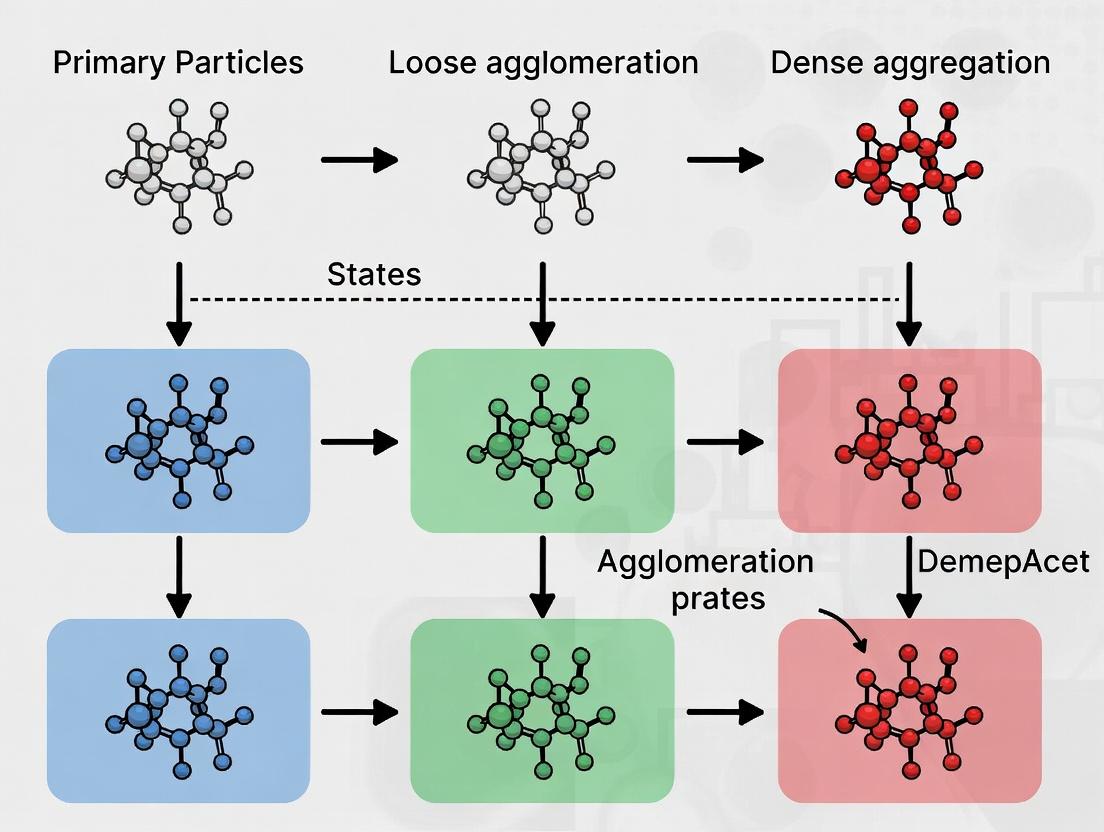
This comprehensive review elucidates the critical distinction between nanoparticle agglomeration and aggregation, two phenomena that directly impact the safety, efficacy, and manufacturability of nanomedicines.
Nanoparticle Agglomeration vs. Aggregation: A Complete Guide for Pharmaceutical Scientists
Abstract
This comprehensive review elucidates the critical distinction between nanoparticle agglomeration and aggregation, two phenomena that directly impact the safety, efficacy, and manufacturability of nanomedicines. We first establish the foundational definitions, driving forces (DLVO and non-DLVO), and consequences for drug delivery. We then detail state-of-the-art characterization techniques (DLS, NTA, TEM, AUC) and stabilization strategies. A dedicated troubleshooting section addresses common challenges in formulation and process development. Finally, we provide a framework for the rigorous validation and comparative analysis of nanoparticle state, essential for regulatory filing. This guide equips researchers and development professionals with the knowledge to control particle behavior from benchtop to clinic.
Understanding the Basics: What Are Agglomeration and Aggregation in Nanomedicine?
Understanding the dynamic states of nanoparticle dispersions is fundamental to their application in drug delivery, diagnostics, and materials science. A core challenge is distinguishing between reversible agglomeration and irreversible aggregation, as these states dictate critical properties like bioavailability, stability, and toxicity. This guide provides an in-depth technical examination of these phenomena, offering clear definitions, distinguishing methodologies, and practical analytical protocols.
Core Definitions and Distinguishing Characteristics
Reversible Agglomeration refers to a state where primary nanoparticles are held together by weak physical forces (e.g., van der Waals, electrostatic, hydrophobic interactions). This loose, often fractal structure can be easily disrupted by mild energy input (e.g., shaking, dilution, pH/salt adjustment), reverting to the primary particle distribution.
Irreversible Aggregation describes the permanent fusion or welding of primary nanoparticles, typically through strong covalent or metallic bonds, or extensive sintering. This process fundamentally alters the particle morphology and cannot be reversed by simple mechanical or chemical means.
Table 1: Comparative Summary of Key Characteristics
| Feature | Reversible Agglomeration | Irreversible Aggregation |
|---|---|---|
| Primary Binding Forces | Weak physical forces (van der Waals, electrostatic, depletion) | Strong chemical bonds (covalent, metallic), sintered necks |
| Structural Integrity | Loose, fractal clusters; primary particles remain distinct | Dense, fused structures; loss of primary particle boundaries |
| Reversibility | Fully reversible with mild energy input (sonication, dilution) | Irreversible; cannot be redispersed to primary size |
| Impact on Surface Area | Temporarily reduced, recoverable | Permanently and significantly reduced |
| Typical Causes | High concentration, screened surface charge (high ionic strength) | Chemical reactions, high-temperature processing, long-term aging |
Experimental Protocols for Characterization and Differentiation
Protocol 1: Reversibility Assessment via Sonication & DLS Monitoring
Objective: To quantify the reversibility of particle clustering. Materials: Nanoparticle dispersion, bath or probe sonicator, Dynamic Light Scattering (DLS) instrument.
- Measure the Z-average hydrodynamic diameter (Dh) and polydispersity index (PDI) of the native sample via DLS.
- Subject a fixed sample volume to controlled, low-energy bath sonication (e.g., 100 W, 37 kHz) for 60 seconds.
- Immediately re-measure Dh and PDI.
- Repeat steps 2-3 for 2-3 cycles.
- Interpretation: A significant and consistent decrease in Dh and PDI after each sonication cycle indicates reversible agglomeration. Minimal or no change suggests irreversible aggregation.
Protocol 2: Critical Coagulation Concentration (CCC) Determination
Objective: To assess colloidal stability and the propensity for irreversible aggregation. Materials: Nanoparticle stock, electrolyte solution (e.g., NaCl), DLS or turbidimeter.
- Prepare a series of nanoparticle dispersions with identical particle concentration but varying concentrations of the electrolyte.
- Incubate samples for a standardized time (e.g., 30 min).
- Measure the initial rate of increase in Dh or turbidity for each sample.
- Plot the aggregation rate vs. electrolyte concentration.
- Interpretation: The CCC is the point where aggregation rate sharply increases. Agglomeration below CCC is often reversible; rapid aggregation above CCC often leads to irreversible states.
Visualization of Analysis Workflow
Title: Workflow for Differentiating Agglomeration from Aggregation
The Scientist's Toolkit: Essential Research Reagents & Materials
Table 2: Key Reagents and Materials for Agglomeration/Aggregation Studies
| Item | Function & Purpose |
|---|---|
| Dynamic Light Scattering (DLS) / Photon Correlation Spectroscopy Instrument | Measures hydrodynamic diameter distribution and polydispersity index (PDI) to monitor cluster size changes. |
| Zeta Potential Analyzer | Determines surface charge (ζ-potential), predicting colloidal stability against agglomeration via electrostatic repulsion. |
| Analytical Ultracentrifuge (AUC) | Provides high-resolution, label-free size and density distributions, effective for polydisperse or concentrated samples. |
| Transmission Electron Microscope (TEM) | Offers direct visualization of primary particle boundaries and cluster morphology to distinguish loose clusters from fused aggregates. |
| Tunable Electrolytes (e.g., NaCl, CaCl₂) | Used in CCC experiments to screen electrostatic repulsion and induce controlled agglomeration. |
| Polymeric Stabilizers (e.g., PEG, PVP, Polysorbates) | Used to study and prevent agglomeration via steric hindrance. |
| pH Buffers | To study agglomeration behavior as a function of surface charge, particularly near the isoelectric point. |
| Sonication Equipment (Bath & Probe) | For applying controlled, reversible energy input to disrupt weak agglomerates. |
Table 3: Exemplar Quantitative Data from Recent Studies
| Nanoparticle System | Condition | Initial Dh (nm) | Post-Stress Dh (nm) | Post-Sonication Dh (nm) | Classification | Key Measurement Technique |
|---|---|---|---|---|---|---|
| Citrate-capped Au NPs | +50 mM NaCl, 1 hr | 15 ± 2 | 450 ± 120 | 25 ± 5 | Reversible Agglomeration | DLS, UV-Vis |
| Polymer-coated Ag NPs | pH 5.0 (near IEP), 24 hr | 30 ± 4 | 210 ± 40 | 195 ± 35 | Irreversible Aggregation | DLS, TEM |
| Lipid Nanoparticles (LNPs) | 4°C storage, 1 month | 85 ± 10 | 150 ± 25 | 90 ± 12 | Reversible Agglomeration | DLS, NTA |
| Metal-Organic Framework (MOF) NPs | 70°C, 48 hr in aqueous media | 100 ± 15 | 1200 ± 300 | 1150 ± 250 | Irreversible Aggregation | DLS, SEM |
Advanced Characterization: Signaling Pathways in Biological Aggregation
In biotherapeutic development, protein nanoparticles can undergo aggregation triggered by specific cellular stressors. The following diagram outlines a simplified signaling pathway leading to irreversible aggregation.
Title: Cellular Stress Pathway Leading to Irreversible Aggregation
Accurate discrimination between reversible agglomeration and irreversible aggregation is not merely semantic; it is critical for formulating stable nanomedicines, predicting in vivo fate, and designing robust manufacturing processes. The integrated approach combining reversibility assays, CCC determination, and multi-technique characterization provides a definitive framework for researchers to classify nanoparticle states and engineer solutions for enhanced stability and performance.
1. Introduction Within the critical research domain of nanoparticle agglomeration and aggregation states, the stability and controlled assembly of colloidal dispersions are paramount. This determines the efficacy, safety, and manufacturability of nanomedicines. Three principal interparticle forces govern these phenomena: the framework described by DLVO theory, hydrophobic interactions, and bridging mechanisms. This whitepaper provides an in-depth technical analysis of these forces, detailing their theoretical basis, experimental quantification, and implications for drug development.
2. DLVO Theory: The Classical Framework Derjaguin, Landau, Verwey, and Overbeek (DLVO) theory posits that the total interaction energy (VT) between two colloidal particles is the sum of van der Waals attraction (VA) and electrostatic double-layer repulsion (VR).
VT = VA + VR
2.1 Key Equations & Parameters
- Van der Waals Attraction (VA): For two spheres of radius R, at surface-to-surface distance H, VA = -AHR / 12H, where AH is the Hamaker constant.
- Electrostatic Repulsion (VR): VR ≈ 2πRεε0ψ02 ln[1 + exp(-κH)], where ε is dielectric constant, ε0 is permittivity of vacuum, ψ0 is surface potential, and κ-1 is Debye length.
2.2 Experimental Protocol: Measuring Zeta Potential & Critical Coagulation Concentration (CCC)
- Objective: Determine colloidal stability and validate DLVO predictions.
- Methodology:
- Sample Preparation: Prepare a series of nanoparticle dispersions (e.g., 0.1 mg/mL Au NPs) in electrolytes (NaCl, CaCl2) with concentrations from 1 mM to 500 mM.
- Zeta Potential Measurement: Use dynamic light scattering (DLS) with electrophoretic mobility attachment. Measure zeta potential (ζ) as a proxy for surface potential for each ionic strength.
- Turbidity/Size Monitoring: Incubate samples and measure hydrodynamic diameter via DLS or optical density at 600 nm over time.
- CCC Determination: Identify the electrolyte concentration at which the rate of aggregate formation increases dramatically, corresponding to the primary energy barrier vanishing.
3. Hydrophobic Interactions These are attractive forces between non-polar surfaces or moieties in water, driven by the rearrangement of water molecules to maximize entropy. They are strong, long-range (extending beyond 10 nm), and dominant in systems like carbon-based nanomaterials, polymer-protein complexes, and in cellular uptake of nanoparticles.
3.1 Experimental Protocol: Hydrophobicity Quantification via Contact Angle & Fluorescent Probes
- Objective: Characterize nanoparticle surface hydrophobicity.
- Methodology A (Surface Contact Angle):
- Create a dense film of nanoparticles on a filter membrane.
- Measure the static water contact angle using a goniometer. Angles >90° indicate hydrophobicity.
- Methodology B (Fluorescent Partitioning Assay):
- Incubate nanoparticles with a two-phase system (e.g., octanol/water or aqueous two-phase polymer system).
- Use a hydrophobic fluorescent dye (e.g., Nile Red) that partitions based on local environment.
- Measure fluorescence spectral shift or intensity in each phase to quantify partitioning coefficient.
4. Bridging Interactions Bridging occurs when polymers, polyelectrolytes, or multivalent ions simultaneously adsorb onto two or more particles, forming a physical link. This can induce aggregation even when electrostatic repulsion is high. Key parameters are polymer concentration, molecular weight, and charge density.
4.1 Experimental Protocol: Bridging Aggregation Titration
- Objective: Induce and characterize polymer-bridging aggregation.
- Methodology:
- Prepare a stable nanoparticle dispersion (e.g., anionic polystyrene latex) under low-salt conditions.
- Under continuous stirring, titrate with a solution of oppositely charged polyelectrolyte (e.g., chitosan, poly-L-lysine) or neutral polymer (e.g., PEG).
- Monitor hydrodynamic diameter via DLS and zeta potential after each addition.
- Identify two aggregation zones: (i) the bridging zone at sub-stoichiometric polymer doses (charge neutralization not yet complete), and (ii) the restabilization zone at excess polymer dose, where particle surfaces are saturated, and steric/electrosteric repulsion returns.
5. Quantitative Data Summary
Table 1: Characteristic Energy Scales and Ranges of Interparticle Forces
| Force | Typical Energy Magnitude (kBT) | Effective Range | Key Governing Parameter |
|---|---|---|---|
| DLVO: Van der Waals | 10 - 100 | < 20 nm | Hamaker Constant (AH: 10-21 to 10-19 J) |
| DLVO: Electrostatic | 1 - 1000 | 1 - 100 nm (κ-1) | Zeta Potential (ζ), Ionic Strength |
| Hydrophobic | 10 - 100+ | Up to 20 nm | Contact Angle, Surface Energy |
| Polymer Bridging | Variable, can be >100 | Polymer-dependent (Rg) | Polymer M.W., Concentration, Charge Density |
Table 2: Experimental Outcomes for a Model Polystyrene Nanoparticle System
| Condition | Ionic Strength | [Polymer] | Zeta Potential (mV) | Hydrodynamic Size (nm) | Dominant Force & State |
|---|---|---|---|---|---|
| Baseline | 1 mM NaCl | 0 ppm | -45 ± 3 | 105 ± 2 | DLVO Repulsion (Stable) |
| DLVO Aggregation | 150 mM NaCl | 0 ppm | -10 ± 5 | >1000 | DLVO Attraction (Fast Aggregation) |
| Bridging Zone | 1 mM NaCl | 5 ppm cationic PLL | +5 ± 8 | 450 ± 50 | Bridging (Aggregated) |
| Restabilization | 1 mM NaCl | 50 ppm cationic PLL | +35 ± 4 | 120 ± 10 | Steric Repulsion (Stable) |
6. The Scientist's Toolkit: Research Reagent Solutions
| Item | Function/Description |
|---|---|
| Standard Reference Nanospheres (e.g., NIST-traceable PS, SiO2, Au) | Calibrate instruments and serve as model systems for fundamental force studies. |
| Zeta Potential Reference Standard (e.g., -50 mV ζ dispersant) | Validate performance of electrophoretic light scattering instruments. |
| Functionalized Polymer Libraries (e.g., PEG, PLL, PEI, PAA of varying M.W.) | Systematically study bridging, steric stabilization, and surface modification effects. |
| Hydrophobic Fluorescent Probes (e.g., Nile Red, Pyrene, BODIPY derivatives) | Quantify local hydrophobicity at nanoparticle surfaces or within aggregates. |
| Controlled Ionic Strength Buffers (e.g., TRIS, HEPES with precise salt additives) | Modulate electrostatic interactions and Debye length for DLVO experiments. |
| Microfluidic Mixing Chips | Enable precise, rapid mixing for kinetic studies of aggregation initiation. |
7. Visualized Pathways and Workflows
Aggregation Pathway Decision Tree
DLVO Theory Correlation with Experiment
This document constitutes a critical chapter in a broader thesis investigating the Overview of nanoparticle agglomeration and aggregation states research. The physical state of nanoparticles (NPs) – whether dispersed as primary particles, agglomerated (weakly bound), or aggregated (strongly fused) – is not a mere quality control metric. It is a fundamental design parameter that directly dictates the performance and fate of nanomedicines. This guide provides a technical dissection of how agglomeration/aggregation states exert decisive influence over three pillars of therapeutic efficacy: drug loading, release kinetics, and biodistribution.
Quantitative Impact on Key Performance Indicators
Recent studies (2023-2024) systematically quantify the effects of aggregation state on NP performance. The data below summarizes key findings.
Table 1: Impact of Aggregation State on Drug Loading Capacity
| Nanoparticle System (Drug) | Primary Size (nm) | Agglomerated/Aggregated Size (nm) | Loading Capacity (% w/w) - Dispersed | Loading Capacity (% w/w) - Aggregated | Key Mechanism Affected | Reference (Type) |
|---|---|---|---|---|---|---|
| PLGA NPs (Paclitaxel) | 120 ± 15 | 450 ± 120 | 8.5 ± 0.7 | 5.2 ± 1.1 | Reduced surface area & pore blockage during encapsulation | Acta Biomaterialia (2023) |
| Mesoporous Silica NPs (Doxorubicin) | 80 ± 5 | 300 ± 80 | 18.2 ± 2.1 | 9.8 ± 1.5 | Pore occlusion in aggregates, limiting drug access to internal volume | Journal of Controlled Release (2024) |
| Lipid NPs (siRNA) | 90 ± 10 | 350 ± 100 | ~3.0 (N/P ratio) | ~1.5 (N/P ratio) | Inefficient complexation due to masked cationic lipid charges | Molecular Pharmaceutics (2023) |
Table 2: Influence on Drug Release Kinetics and Biodistribution Parameters
| Parameter | Dispersed State (Primary NPs) | Agglomerated/Aggregated State | Underlying Reason & Consequence |
|---|---|---|---|
| Release Profile (in vitro) | Typically biphasic: initial burst then sustained release. | Often monophasic, slowed, or erratic. | Altered diffusion pathways; trapped drug within aggregate core. |
| Release Rate (k) | Higher effective release rate constant. | Can be reduced by 40-70%. | Increased path length for drug diffusion out of aggregate matrix. |
| Blood Circulation Half-life (t₁/₂,β) | Longer (e.g., 8-12 h for PEGylated 100nm NPs). | Significantly shorter (e.g., 1-3 h). | Rapid opsonization and clearance by the Mononuclear Phagocyte System (MPS). |
| Tumor Accumulation (%ID/g) | Higher via Enhanced Permeability and Retention (EPR). | Drastically reduced (often <50% of dispersed NP value). | Inability to extravasate through endothelial gaps (~100-600 nm). |
| Major Organ Uptake | Liver & Spleen (MPS). | Exponentially increased Liver & Spleen uptake. | Aggregates are mechanically filtered by liver sinusoids and spleen. |
Experimental Protocols for Characterizing State-Dependent Effects
Protocol: Forced Aggregation and Subsequent Drug Loading Study
Aim: To correlate controlled aggregation with changes in drug loading capacity. Materials: See "The Scientist's Toolkit" (Section 6). Method:
- NP Preparation: Synthesize or obtain a batch of monodisperse NPs (e.g., PLGA via nanoprecipitation).
- Induced Aggregation: Split the NP suspension into aliquots.
- Aliquot A (Control): Stabilize with high-concentration surfactant.
- Aliquot B: Induce aggregation by adding a bridging flocculant (e.g., Ca²⁺ for anionic NPs) or by pH adjustment to the isoelectric point.
- Size Verification: Characterize hydrodynamic diameter (Z-avg) and PDI of both aliquots using Dynamic Light Scattering (DLS).
- Drug Loading: Subject both aliquots to an identical drug loading protocol (e.g., incubation for passive loading, or solvent evaporation for encapsulation).
- Separation & Quantification: Centrifuge/ultracentrifuge to separate free drug. Use a validated method (HPLC, fluorescence) to measure drug concentration in the supernatant and the digested pellet to calculate loading capacity and encapsulation efficiency.
- Statistical Analysis: Perform unpaired t-test to compare loading between dispersed and aggregated states (n≥3).
Protocol: Monitoring Release Kinetics from Different States
Aim: To measure the effect of aggregation on drug release rates. Method:
- Sample Preparation: Prepare three NP formulations: (i) well-dispersed, (ii) mildly agglomerated, (iii) heavily aggregated. Use dialysis bags or centrifugal filters with appropriate MWCO.
- Release Medium: Immerse samples in a sink condition release buffer (e.g., PBS with 0.1% Tween 80, pH 7.4) at 37°C under gentle agitation.
- Sampling: At predetermined time points, withdraw a known volume of the external release medium and replace with fresh pre-warmed buffer.
- Analysis: Quantify the drug amount in each sample. Plot cumulative release (%) vs. time.
- Modeling: Fit release data to mathematical models (e.g., Higuchi, Korsmeyer-Peppas) to derive release rate constants and infer release mechanisms (Fickian diffusion vs. anomalous transport).
Protocol:In VivoBiodistribution Study via Radiolabeling
Aim: To quantify the organ-level biodistribution of dispersed vs. aggregated NPs. Method:
- Labeling: Radiolabel NPs (e.g., with ⁹⁹ᵐTc, ¹¹¹In, ⁶⁴Cu, or a fluorescent dye like DiR for near-infrared imaging) before inducing aggregation in one batch. Ensure labeling efficiency is >95%.
- Formulation & Characterization: Prepare two groups: Dispersed (D-NPs) and Aggregated (A-NPs). Characterize size and stability pre-injection.
- Animal Dosing: Intravenously administer a known dose (µCi or mg/kg) to cohorts of mice (n=5 per group per time point).
- Tissue Harvest & Measurement: Euthanize animals at set times (e.g., 1, 4, 24 h). Harvest blood, tumor, liver, spleen, kidneys, lungs, and heart. Weigh tissues.
- Quantification: For radiolabels, measure radioactivity in a gamma counter. For fluorescent dyes, homogenize tissues and extract dye for measurement. Express data as % of Injected Dose per gram of tissue (%ID/g).
- Imaging: Utilize in vivo imaging systems (IVIS, SPECT/CT) for real-time visualization.
Visualizing Pathways and Relationships
Diagram Title: NP State Dictates Performance via Physical Attributes
Diagram Title: Experimental Workflow for State-Function Analysis
Molecular and Cellular Pathways Affecting Biodistribution
Diagram Title: Fate of Aggregated NPs: MPS Clearance vs. Failed EPR
The Scientist's Toolkit: Essential Research Reagents & Materials
Table 3: Key Reagents for Aggregation-State Research
| Item / Reagent | Function & Purpose in Experiments | Example Product/Chemical |
|---|---|---|
| Dynamic Light Scattering (DLS) / Zetasizer | Measures hydrodynamic diameter, PDI, and zeta potential to define aggregation state. | Malvern Panalytical Zetasizer, Brookhaven BI-90Plus. |
| Nanoparticle Tracking Analysis (NTA) | Provides particle concentration and size distribution based on Brownian motion, good for polydisperse/aggregated samples. | Malvern NanoSight NS300. |
| Dialysis Membranes (Float-A-Lyzer) | Allows for sink-condition drug release studies while containing NP aggregates of specific sizes. | Spectrum Labs, various MWCO (e.g., 100 kDa). |
| PEGylated Surfactants (e.g., Poloxamer 407, Tween 80) | Used to stabilize NP dispersions and prevent aggregation during storage and in biological media. | Sigma-Aldrich, BASF. |
| Bridging Flocculants (e.g., CaCl₂, MgCl₂) | Used to induce controlled aggregation in model studies by neutralizing surface charge. | Common laboratory salts. |
| Radiolabeling Kits (e.g., ⁹⁹ᵐTc-HYNIC) | For quantitative, sensitive tracking of NP biodistribution in vivo without fluorescent quenching issues. | Various from Cardinal Health, etc. |
| Near-Infrared Fluorescent Dyes (DiR, DiD) | For in vivo and ex vivo imaging of NP distribution; requires careful attention to dye leaching. | Thermo Fisher Scientific, Lumiprobe. |
| Size Exclusion Chromatography (SEC) Columns | To separate aggregated from monodisperse NPs and free drug for purification and analysis. | Sepharose, Sephacryl resins. |
| Transmission Electron Microscopy (TEM) Stains | Negative stains (e.g., uranyl acetate, phosphotungstic acid) for visualizing aggregate morphology. | Electron Microscopy Sciences. |
Within the comprehensive study of nanoparticle agglomeration and aggregation states, distinguishing between primary and secondary particle size is fundamental. This distinction dictates nanoparticle behavior, influencing critical properties like dissolution rate, bioavailability, catalytic activity, and toxicity. This technical guide explores these core metrics, their measurement, and their implications for research and drug development.
Defining the Core Metrics
Primary Particle Size refers to the diameter of individual, discrete crystalline or amorphous units. These are the fundamental building blocks, defined by their crystal lattice or molecular structure.
Secondary Particle Size describes the hydrodynamic diameter of structures formed when primary particles associate via agglomeration (weak, reversible forces) or aggregation (strong, covalent or sintered bonds). This is the size relevant in a dispersion.
| Metric | Definition | Key Influencing Factors | Typical Measurement Technique |
|---|---|---|---|
| Primary Size | Diameter of individual, discrete units. | Synthesis conditions, crystal growth kinetics. | Transmission Electron Microscopy (TEM), X-ray Diffraction (XRD). |
| Secondary Size | Hydrodynamic diameter of associated structures in dispersion. | Surface charge (zeta potential), solvent, stabilizing agents, concentration. | Dynamic Light Scattering (DLS), Centrifugal Liquid Sedimentation (CLS). |
Quantitative Comparison of Characterization Data
The disparity between primary and secondary size measurements highlights the state of the sample. The following table summarizes data from a hypothetical silica nanoparticle study, illustrating typical outcomes.
| Sample ID | Primary Size (TEM, nm) | Secondary Size (DLS, nm) | PDI (DLS) | Agglomeration State Inference |
|---|---|---|---|---|
| Silica-1 (in water) | 25 ± 3 | 28 ± 5 | 0.08 | Well-dispersed, minimal agglomeration. |
| Silica-1 (in 0.1M NaCl) | 25 ± 3 | 450 ± 120 | 0.35 | Agglomerated due to charge screening. |
| Silica-2 (as synthesized) | 100 ± 10 | 5800 ± 1500 | 0.45 | Strongly aggregated/agglomerated dry state. |
| Silica-2 (with 2% surfactant) | 100 ± 10 | 110 ± 20 | 0.15 | Surfactant aids deagglomeration. |
Experimental Protocols for Key Measurements
Protocol 1: Primary Size Analysis via Transmission Electron Microscopy (TEM)
Objective: To obtain number-based size distribution and visualize individual primary particles.
- Sample Preparation: Dilute the nanoparticle suspension in a compatible solvent (e.g., ethanol, water) via sonication. Drop-cast 5-10 µL onto a carbon-coated copper TEM grid.
- Drying: Allow the grid to air-dry in a clean, dust-free environment.
- Imaging: Insert grid into TEM. Acquire images at multiple magnifications (e.g., 50,000x to 200,000x) from different grid squares to ensure statistical representation.
- Image Analysis: Using software (e.g., ImageJ), measure the diameter of at least 300 individual, well-separated particles. Calculate mean, standard deviation, and generate a histogram.
Protocol 2: Secondary Size Analysis via Dynamic Light Scattering (DLS)
Objective: To determine the intensity-weighted hydrodynamic size distribution of particles in dispersion.
- Sample Preparation: Prepare a dilute suspension (obscuration ~10%) in the desired medium (e.g., PBS, cell culture media). Filter the medium (0.1 µm or 0.2 µm pore size) prior to use.
- Equilibration: Allow the sample cell to equilibrate in the instrument at 25°C for 2 minutes.
- Measurement: Perform a minimum of 10-12 sub-runs per measurement. Conduct at least three independent measurements.
- Data Analysis: Report the Z-average diameter and the Polydispersity Index (PdI). Always examine the intensity, volume, and number size distributions for multimodal populations.
Visualization of Nanoparticle State Analysis Workflow
Title: Workflow for Particle Size and State Analysis
The Scientist's Toolkit: Key Research Reagent Solutions
| Item | Function & Relevance |
|---|---|
| Zeta Potential Reference Standards | Calibrate electrophoretic mobility instruments. Essential for validating surface charge measurements, which predict colloidal stability. |
| Nanoparticle Size Standards (e.g., NIST-traceable latex beads) | Validate and calibrate DLS, SEM, and TEM instruments. Critical for ensuring accuracy across different techniques and labs. |
| Sterile-filtered, Particle-free Dispersants (PBS, cell culture media) | Prepare samples for DLS in biologically relevant media without interference from dust or aggregates present in unfiltered buffers. |
| Charge-Modifying Surfactants (e.g., SDS, Polysorbate 80) | Investigate the impact of surface charge on agglomeration. Used to deliberately stabilize or destabilize suspensions. |
| Sonication Equipment (Bath & Probe Sonicators) | Apply controlled energy to disrupt weak agglomerates, essential for preparing reproducible, "fully dispersed" samples for secondary size measurement. |
| Anodisc or Membrane Filters (various pore sizes) | Used in sample preparation for TEM or for fractionating samples by size via filtration for subsequent analysis. |
Within the critical research landscape of nanoparticle agglomeration and aggregation states, controlling colloidal stability is paramount for therapeutic efficacy, reproducibility, and successful translation to clinical applications. This in-depth technical guide examines four common culprits—salt concentration, pH, storage conditions, and freeze-thaw cycles—that fundamentally destabilize nanoparticle dispersions, driving irreversible aggregation. Understanding and mitigating their effects is essential for researchers, scientists, and drug development professionals working with liposomal, polymeric, metallic, and other nanocarrier systems.
The Impact of Ionic Strength (Salt)
Increased ionic strength screens the electrostatic repulsion between charged nanoparticles, described by the Derjaguin-Landau-Verwey-Overbeek (DLVO) theory. This screening reduces the energy barrier to aggregation, leading to rapid agglomeration.
Experimental Protocol for Assessing Salt-Induced Aggregation:
- Nanoparticle Preparation: Prepare a monodisperse stock suspension (e.g., 1 mg/mL citrate-capped gold nanoparticles, 100 nm liposomes).
- Salt Titration: Create a series of buffered solutions (e.g., 10 mM HEPES, pH 7.4) with varying concentrations of NaCl (0 mM to 500 mM).
- Mixing: Add a fixed volume of nanoparticle stock to each salt solution under gentle vortexing to achieve a final nanoparticle concentration suitable for analysis.
- Incubation: Allow samples to equilibrate at a controlled temperature (e.g., 25°C) for a defined period (e.g., 30 minutes).
- Analysis: Measure hydrodynamic diameter (Z-average) and polydispersity index (PdI) via Dynamic Light Scattering (DLS). Simultaneously, monitor absorbance spectrum shifts (for plasmonic nanoparticles) or use nanoparticle tracking analysis (NTA) for count-based size distribution.
Table 1: Representative Data on Salt-Induced Aggregation of Citrate-Capped AuNPs (50 nm initial diameter)
| NaCl Concentration (mM) | Z-Average Diameter (nm) | Polydispersity Index (PdI) | Critical Coagulation Concentration (CCC) Note |
|---|---|---|---|
| 0 | 52 ± 3 | 0.05 ± 0.02 | Stable dispersion |
| 25 | 55 ± 4 | 0.08 ± 0.03 | Stable |
| 50 | 58 ± 5 | 0.10 ± 0.04 | Onset of destabilization |
| 100 | 215 ± 45 | 0.35 ± 0.08 | Rapid aggregation |
| 200 | >1000 | >0.7 | Complete aggregation, visible settling |
Diagram: Salt Concentration Impact on Nanoparticle Stability via DLVO Theory
The Role of pH
pH affects nanoparticle surface charge (zeta potential) by protonating/deprotonating surface functional groups (e.g., -COOH, -NH₂). Shifting pH towards the isoelectric point (IEP) reduces zeta potential, diminishing electrostatic stabilization.
Experimental Protocol for Determining pH Stability Profile:
- Buffer Series: Prepare a broad-range buffer series (e.g., pH 3 to 10) using citrate (acidic), phosphate (neutral), and borate (basic) buffers, maintaining constant ionic strength (e.g., 10 mM).
- Sample Preparation: Dialyze nanoparticle stock extensively against deionized water to remove original buffer ions. Dilute dialyzed stock into each pH buffer.
- Equilibration: Incubate samples for 1-2 hours at room temperature.
- Measurement: Measure zeta potential (via electrophoretic light scattering) and hydrodynamic diameter (via DLS) for each sample.
- Analysis: Plot zeta potential and diameter versus pH to identify the IEP and stable pH zones.
Table 2: pH Stability Profile of Poly(Lactic-co-Glycolic Acid) (PLGA) Nanoparticles
| pH of Dispersion | Zeta Potential (mV) | Hydrodynamic Diameter (nm) | Observation |
|---|---|---|---|
| 3.0 | +12 ± 2 | 155 ± 10 | Moderate stability, near IEP |
| 5.0 | -5 ± 3 | >500 (broad) | Unstable, near IEP (∼5.5), aggregation |
| 7.4 | -35 ± 4 | 120 ± 5 | Highly stable (maximal negative charge) |
| 9.0 | -40 ± 3 | 125 ± 6 | Highly stable |
Storage Conditions: Temperature & Light
Long-term stability is dictated by storage parameters. Temperature accelerates kinetic processes of Ostwald ripening and particle fusion. Light can catalyze degradation in photosensitive materials (e.g., peroxidation of lipid bilayers).
Experimental Protocol for Stability Studies (ICH Q1A(R2) Guided):
- Sample Alignment: Fill identical vials with nanoparticle formulation under inert atmosphere (e.g., N₂ purge for lipids).
- Controlled Storage: Store replicates under defined conditions: 4°C (refrigeration), 25°C/60% RH (room temp), 40°C/75% RH (accelerated).
- Light Exposure: Subject a subset to controlled light exposure per ICH Q1B guidelines.
- Time-Points: Remove samples at scheduled intervals (e.g., 0, 1, 3, 6 months).
- Multi-Parameter Analysis: Assess size (DLS), charge (zeta potential), concentration (UV-Vis/NTA), chemical integrity (HPLC for encapsulated drug), and visual appearance (particulate matter).
Table 3: Impact of Storage Temperature on Liposomal Doxorubicin Stability Over 6 Months
| Storage Condition | Mean Diameter Change (%) | Drug Retention (%) | PdI Change | Visual Inspection |
|---|---|---|---|---|
| 4°C, dark | +3.5 | 98.2 | +0.02 | Clear, no precipitate |
| 25°C, dark | +15.7 | 92.5 | +0.15 | Slightly opalescent |
| 40°C, dark | +48.9 | 85.1 | +0.32 | Visible aggregation |
| 25°C, light | +22.4 | 88.7 | +0.28 | Color change, aggregation |
Diagram: Key Storage Factors Driving Nanoparticle Instability
Freeze-Thaw Cycles
Freezing creates microscopic ice crystals, concentrating nanoparticles and cryoprotectants in the interstitial space. Thawing can lead to melting-induced aggregation if formulations are not adequately protected.
Experimental Protocol for Freeze-Thaw Resilience Testing:
- Cryoprotectant Screening: Prepare nanoparticle aliquots with various cryoprotectants (e.g., 5% sucrose, 5% trehalose, 5% PEG, none).
- Freezing: Snap-freeze samples in liquid nitrogen or slowly freeze at -80°C.
- Thawing: Thaw samples rapidly in a 25°C or 37°C water bath.
- Cycling: Repeat freeze-thaw cycles (e.g., 1, 3, 5 times).
- Post-Thaw Analysis: Analyze size, PdI, and zeta potential. Centrifuge at low speed to check for pellet formation. Use spectroscopic or microscopic techniques to confirm structural integrity.
Table 4: Efficacy of Cryoprotectants Against Freeze-Thaw (3 Cycles) Induced Aggregation
| Cryoprotectant (5% w/v) | Recovery of Initial Size (%) | PdI Post-Thaw | Zeta Potential Change (mV) |
|---|---|---|---|
| None (Control) | 45 | 0.41 | -8 |
| Sucrose | 98 | 0.08 | -1 |
| Trehalose | 99 | 0.06 | -1 |
| Mannitol | 85 | 0.18 | -3 |
| Polyethylene Glycol | 92 | 0.12 | -2 |
The Scientist's Toolkit: Key Reagent Solutions
Table 5: Essential Materials for Investigating Aggregation Culprits
| Reagent / Material | Primary Function |
|---|---|
| Dialyzers / Float-A-Lyzer G2 | Buffer exchange to precisely control ionic strength and pH environment without dilution or shear stress. |
| Certified pH & Ionic Strength Buffers | Provide standardized, reproducible media for stability testing, ensuring results are attributable to experimental variables. |
| Cryoprotectants (e.g., Trehalose, Sucrose) | Form hydrogen bonds with nanoparticle surfaces, replacing water and providing a glassy matrix during freezing to prevent ice crystal-induced aggregation. |
| Inert Storage Vials (Type I Glass, Polymer-Coated) | Minimize leachables and prevent nanoparticle adsorption to container walls, which can seed aggregation. |
| Size Exclusion Chromatography (SEC) Columns | Purify and separate monodisperse nanoparticle fractions from aggregated material post-stress testing. |
| Stabilizing Ligands (e.g., PEG-thiol, Poloxamers) | Provide steric stabilization to counteract destabilizing forces from salt, pH, or freezing. Used in formulation optimization. |
| Zeta Potential Reference Standards | Calibrate electrophoretic mobility instruments for accurate and reproducible surface charge measurements. |
| Controlled Atmosphere Glove Box | Allow formulation and vialing under inert gas (N₂/Ar) to prevent oxidative degradation, especially for lipid-based nanoparticles. |
How to Measure and Control Particle State: Techniques and Stabilization Strategies
Within the critical research field of nanoparticle agglomeration and aggregation states, accurate characterization of size, distribution, and morphology is paramount. This technical guide details four core orthogonal techniques: Dynamic Light Scattering (DLS), Nanoparticle Tracking Analysis (NTA), Scanning/Transmission Electron Microscopy (SEM/TEM), and Analytical Ultracentrifugation (AUC). Their combined application provides a comprehensive understanding of primary particle size, agglomerate state, and hydrodynamic behavior, directly impacting the stability, efficacy, and safety of nanomedicines and other nano-enabled products.
Core Techniques: Principles and Applications
Dynamic Light Scattering (DLS)
Principle: DLS measures fluctuations in scattered laser light intensity caused by Brownian motion of particles in suspension. The diffusion coefficient (D) is derived via an autocorrelation function, which is then converted to a hydrodynamic diameter (dH) via the Stokes-Einstein equation, assuming particles are spherical. Primary Output: Intensity-weighted size distribution, polydispersity index (PdI), and z-average diameter. Agglomeration Context: Ideal for rapid assessment of colloidal stability and detecting the presence of large aggregates in solution. High PdI values (>0.2) often indicate a polydisperse system with potential agglomeration.
Quantitative Data Summary: DLS Capabilities
| Parameter | Typical Range | Key Limitation |
|---|---|---|
| Size Range | ~0.3 nm to 10 μm | Sensitivity biased towards larger particles/scatters. |
| Concentration | 0.1 mg/mL to 100 mg/mL | Sample must be optically transparent. |
| Measurement Time | 1-5 minutes per run | Assumes spherical particles. |
| Polydispersity Index (PdI) | 0.0 (monodisperse) to 1.0 (very broad) | Aggregate detection threshold ~1% by mass. |
Experimental Protocol: Standard DLS Measurement for Agglomeration Screening
- Sample Preparation: Dilute nanoparticle sample in appropriate, filtered (0.02 or 0.1 μm) buffer to achieve a count rate within the instrument's optimal range. Perform serial dilution if necessary to check for concentration-dependent aggregation.
- Equilibration: Allow sample and cuvette to thermally equilibrate in the instrument at the set temperature (typically 25°C) for 2-5 minutes.
- Measurement Setup: Set measurement angle (commonly 173° for backscatter), number of runs (e.g., 10-15), and run duration (e.g., 10 seconds each).
- Data Acquisition: Execute measurement. The instrument calculates the intensity autocorrelation function.
- Data Analysis: Software fits the correlation function to derive the z-average diameter and PdI. The intensity size distribution plot is inspected for multimodal peaks indicating populations of aggregates.
Nanoparticle Tracking Analysis (NTA)
Principle: NTA directly visualizes and tracks the Brownian motion of individual nanoparticles in a scatter mode. A laser illuminates particles, whose motion is captured by a camera. The mean squared displacement of each particle is calculated per frame to determine its diffusion coefficient and hence its hydrodynamic diameter. Primary Output: Particle-by-particle size distribution, modal diameter, and particle concentration. Agglomeration Context: Provides number-weighted distributions, making it more sensitive to small populations of large agglomerates within a majority of primary particles compared to DLS. Enables direct observation of heterogeneous mixtures.
Quantitative Data Summary: NTA Capabilities
| Parameter | Typical Range | Key Limitation |
|---|---|---|
| Size Range | ~10 nm to 2 μm (mode-dependent) | Lower size limit depends on particle refractive index. |
| Concentration Range | 107 to 109 particles/mL | Requires optimal dilution for reliable single-particle tracking. |
| Measurement Volume | ~0.3 mL | Statistical sampling can be limited for very polydisperse samples. |
| Output | Number concentration, modal size | Viscosity input critically affects size accuracy. |
Experimental Protocol: NTA for Agglomerate Quantification
- Syringe and Chamber Cleaning: Thoroughly clean the instrument syringe and sample chamber with filtered, particle-free water.
- Sample Dilution: Dilute sample in filtered buffer to achieve 20-100 particles per camera frame. This often requires a dilution factor of 10,000 to 1,000,000 from stock.
- Instrument Calibration: Use monodisperse polystyrene latex standards (e.g., 100 nm) to verify camera and analysis settings.
- Capture Settings: Set camera gain, shutter speed, and detection threshold to optimize visualization of particles while suppressing background noise. Record three 60-second videos.
- Analysis: Software identifies and tracks centroids of each particle. The viscosity of the carrier fluid must be accurately entered. Results are displayed as a number-weighted size distribution and concentration.
Scanning/Transmission Electron Microscopy (SEM/TEM)
Principle: These techniques use a focused beam of high-energy electrons to interrogate a sample. SEM provides topographical and compositional information from electrons scattered or emitted from the surface. TEM transmits electrons through an ultrathin specimen to produce high-resolution images of internal structure and crystallography. Primary Output: High-resolution 2D/3D images, primary particle size, and direct visualization of aggregation/agglomeration morphology. Agglomeration Context: The gold standard for visualizing the state of aggregation (hard aggregates) versus agglomeration (loose clusters), primary particle size, and shape. Requires vacuum conditions and sample preparation that may alter the native state.
Quantitative Data Summary: SEM/TEM Capabilities
| Parameter | SEM | TEM |
|---|---|---|
| Resolution | ~0.5 nm to 5 nm | ~0.05 nm to 0.2 nm |
| Sample State | Solid, dry (can use cryo) | Solid, dry or vitrified (cryo-TEM) |
| Size Range | μm to mm field of view | nm to μm field of view |
| Key Output | Surface morphology, agglomerate structure | Internal structure, crystallinity, exact aggregate shape |
| Sample Prep | Drying, sputter-coating (conductive) | Grid preparation, negative staining, plunge-freezing |
Experimental Protocol: Sample Preparation for TEM Analysis of Aggregates
- Grid Preparation: Use a plasma cleaner on a carbon-coated copper TEM grid for 30 seconds to increase hydrophilicity.
- Sample Application: Pipette 3-5 μL of nanoparticle suspension onto the grid. Allow to adsorb for 1-2 minutes.
- Washing: Carefully wick away excess liquid with filter paper. Rinse by applying a drop of filtered, particle-free water (or solvent) and immediately wicking away. Repeat twice.
- Negative Staining (Optional): Apply a drop of 1-2% uranyl acetate or phosphotungstic acid for 30 seconds. Wick away excess and allow to air dry completely.
- Drying: Let the grid dry thoroughly in a clean, dust-free environment before loading into the TEM holder.
- Imaging: Acquire images at various magnifications to assess primary particles and aggregate structures. Use software to measure particle diameters from images.
Analytical Ultracentrifugation (AUC)
Principle: AUC subjects a solution to a high centrifugal field, causing particles to sediment based on their mass, size, shape, and density. The evolution of the concentration profile is monitored optically (via absorbance or interference). Sedimentation velocity (SV-AUC) experiments are most relevant for aggregation studies. Primary Output: Sedimentation coefficient distribution, which can be transformed into a mass-weighted size distribution. Agglomeration Context: Highly sensitive for detecting and quantifying small populations (as low as 0.1%) of high-molecular-weight aggregates or agglomerates. Operates in near-native solution conditions without a stationary phase.
Quantitative Data Summary: AUC (Sedimentation Velocity) Capabilities
| Parameter | Typical Range | Note |
|---|---|---|
| Size Range | ~0.1 nm to 10 μm | Dependent on density difference vs. solvent. |
| Concentration | μg/mL to mg/mL | Broad dynamic range. |
| Run Time | 4-12 hours | Resolution improves with longer runs. |
| Sensitivity | Detects <0.1% aggregates | Unmatched for low-abundance species. |
| Output | Sedimentation coefficient (S), distribution (c(s)) | Model-dependent analysis. |
Experimental Protocol: Sedimentation Velocity AUC for Aggregate Detection
- Sample & Reference Preparation: Prepare 380-420 μL of nanoparticle sample in the appropriate buffer. Precisely match the buffer composition for the reference channel.
- Cell Assembly: Load sample and reference into a double-sector centerpiece. Assemble the cell with windows and housing, ensuring proper sealing.
- Rotor Loading & Equilibration: Place cells in a rotor and load into the ultracentrifuge. Equilibrate under vacuum at the set temperature (e.g., 20°C) for ~1 hour.
- Method Setup: Set rotor speed (typically 30,000-60,000 rpm for nanoparticles), data acquisition mode (absorbance at suitable wavelength or interference), and scan interval (1-3 minutes).
- Data Acquisition: Start the run. The optical system collects radial scans over time, tracking the moving boundary as particles sediment.
- Data Analysis: Use software like SEDFIT to fit the data using the Lamm equation solution. Generate a continuous c(s) distribution to identify and quantify species based on sedimentation coefficient.
Integrated Workflow for Agglomeration State Analysis
Diagram Title: Nanoparticle Agglomeration Characterization Workflow
The Scientist's Toolkit: Essential Research Reagent Solutions
| Item | Function & Relevance to Agglomeration Studies |
|---|---|
| Filtered Buffers (PBS, Tris, etc.) | Carrier fluids filtered through 0.02 or 0.1 μm membranes to remove background particulate interference in DLS, NTA, and AUC. |
| Size Standards (Polystyrene, Silica, Gold) | Monodisperse nanoparticles of certified size for calibrating DLS, NTA, and SEM/TEM instruments, ensuring measurement accuracy. |
| Disposable Cuvettes (Quartz, Plastic) | Particle-free, single-use cuvettes for DLS to prevent cross-contamination and false aggregate signals. |
| TEM Grids (Carbon-coated Copper) | Supports for depositing nanoparticles for TEM imaging. Plasma treatment enhances sample adhesion and distribution. |
| Negative Stains (Uranyl Acetate, PTA) | Heavy metal salts that provide contrast in TEM by embedding around particles, revealing aggregate outlines. |
| Density Gradient Media (Sucrose, Glycerol) | Used in AUC sample preparation or in separation techniques to isolate agglomerates based on buoyant density. |
| Stabilizing Excipients (Polysorbate 80, BSA) | Added to formulations to prevent agglomeration during storage and analysis; their impact is studied using this toolkit. |
| Certified Viscosity Standards | Essential for accurate conversion of diffusion coefficient to size in DLS and NTA, as viscosity is temperature-dependent. |
The integrated application of DLS, NTA, SEM/TEM, and AUC forms a powerful, orthogonal characterization toolkit essential for modern nanoparticle agglomeration and aggregation research. While DLS offers rapid stability screening and NTA provides population insights in solution, EM delivers definitive morphological evidence. AUC stands alone in its sensitivity for quantifying trace aggregates under native conditions. A strategic combination of these techniques, following robust experimental protocols, provides the multi-faceted data required to understand, control, and optimize nanoparticle dispersions for advanced applications in drug delivery and nanotechnology.
Within the critical research framework of nanoparticle agglomeration and aggregation states, accurate characterization of hydrodynamic size and size distribution is paramount. Dynamic Light Scattering (DLS) is the predominant technique for this analysis in colloidal suspensions, providing two key output parameters: the Z-Average and the Polydispersity Index (PDI). These metrics are essential for researchers, scientists, and drug development professionals to assess batch quality, stability, and the propensity of nanoparticles to undergo aggregation, directly influencing therapeutic efficacy and safety.
Theoretical Foundations
Dynamic Light Scattering (DLS) Principle
DLS measures Brownian motion of particles in suspension, which is related to their hydrodynamic diameter via the Stokes-Einstein equation. Fluctuations in scattered light intensity over time are analyzed through an autocorrelation function.
Z-Average
The Z-Average is the intensity-weighted mean hydrodynamic size of the particle population, derived from the Cumulants analysis of the autocorrelation function. It is also referred to as the "cumulants mean" or "harmonic intensity averaged particle size." It is most reliable for monomodal, near-monodisperse samples.
Polydispersity Index (PDI)
The Polydispersity Index (PDI), sometimes termed the "dispersity index," is a dimensionless measure of the breadth of the size distribution calculated from the Cumulants analysis. It is derived from the second-order term of the polynomial fit to the autocorrelation function decay.
Quantitative Interpretation of PDI and Z-Average
Table 1: Interpretation of PDI Values in Nanoparticle Characterization
| PDI Range | Interpretation | Implication for Aggregation States |
|---|---|---|
| 0.00 – 0.05 | Highly monodisperse | Rare in complex biologics; indicates uniform, non-aggregated populations. |
| 0.05 – 0.10 | Nearly monodisperse | Excellent batch uniformity; minimal aggregation. |
| 0.10 – 0.20 | Moderately polydisperse | Acceptable for many polymeric nanoparticles; may indicate minor aggregation or presence of excipients. |
| 0.20 – 0.30 | Broad distribution | Significant polydispersity; likely presence of aggregates, fragments, or multiple populations. |
| > 0.30 | Very broad distribution | Poor quality sample; severe aggregation or multimodal distribution. High risk for drug development. |
Table 2: Summary of Key DLS Output Parameters and Their Dependence
| Parameter | Definition | Weighting Scheme | Sensitivity to Aggregates | Ideal Use Case |
|---|---|---|---|---|
| Z-Average | Intensity-weighted mean hydrodynamic diameter. | Intensity (∝ d⁶) | Extremely high. Larger particles dominate the signal. | Primary indicator for monomodal samples. Stability trending. |
| PDI | Measure of distribution width from Cumulants analysis. | Derived from intensity fluctuations. | High. Increases with presence of multiple sizes. | Quality threshold. Assess sample heterogeneity. |
| Intensity Distribution | Raw size distribution plot. | Intensity | Very high. | Visual identification of peak populations. |
| Volume Distribution | Converted from intensity using Mie theory. | Volume (Approximate) | Moderate. Less skewed by few large particles. | For comparing relative mass of different populations. |
| Number Distribution | Converted from intensity. | Number (Approximate) | Low. Can be misleading if conversion assumptions fail. | Not recommended for polydisperse samples without validation. |
Experimental Protocols for DLS Measurement
Standard Operating Procedure for DLS Sample Preparation and Measurement
Objective: To obtain reliable and reproducible Z-Average and PDI measurements of nanoparticle suspensions.
Materials: See "The Scientist's Toolkit" section.
Methodology:
- Sample Clarification: Filter the nanoparticle suspension through a 0.22 µm or 0.45 µm syringe filter (non-protein binding) into a clean vial to remove dust and large aggregates. For sensitive biologics (e.g., viral vectors), use centrifugation pre-filtration.
- Dilution: Dilute the sample in the appropriate buffer (identical to the dispersant) to achieve an optimal scattering intensity. The ideal concentration yields a count rate (kcps) within the instrument's linear range (manufacturer specified, often 200-1000 kcps for modern systems). Avoid multiple dilutions which can alter aggregation state.
- Cuvette Loading: Transfer ~70-100 µL of prepared sample into a clean, low-volume, disposable sizing cuvette. Avoid introducing bubbles. Cap the cuvette.
- Equilibration: Insert the cuvette into the instrument sample chamber and allow temperature equilibration for 120-180 seconds (set in software).
- Measurement Parameters:
- Dispersant RI/Viscosity: Set precisely for the buffer used (e.g., water at 25°C: RI=1.330, Viscosity=0.887 cP).
- Measurement Angle: Standard is 173° (backscatter, NIBS) for enhanced sensitivity and reduced multiple scattering.
- Number of Runs: Minimum 3-12 runs per measurement, with automatic duration.
- Temperature: Typically 25°C, controlled to ±0.1°C.
- Data Acquisition: Initiate measurement. The instrument computes the autocorrelation function for each run.
- Data Analysis (Cumulants): The software fits the autocorrelation function to the Cumulants equation, deriving the Z-Average and PDI.
- Validation: Examine the correlation function decay and the residual plot. A smooth, single-exponential decay and low, random residuals indicate a reliable fit. Report Z-Average ± standard deviation and PDI ± standard deviation from a minimum of 3 technical replicates.
Protocol for Assessing Aggregation Kinetics
Objective: Monitor changes in Z-Average and PDI over time to quantify aggregation stability.
- Prepare nanoparticle sample as in Section 4.1.
- Load into the DLS instrument equipped with a temperature-controlled auto-sampler or multi-cuvette holder.
- Set repeated measurements at defined time intervals (e.g., every 5 minutes for 2 hours, then hourly for 48 hours) at a controlled stress temperature (e.g., 40°C or 4°C).
- Plot Z-Average vs. Time and PDI vs. Time. An upward trend in both indicates aggregation. The rate of change quantifies stability.
Title: DLS Measurement and Analysis Workflow
The Scientist's Toolkit: Research Reagent Solutions
Table 3: Essential Materials for DLS Characterization of Nanoparticles
| Item | Function & Importance |
|---|---|
| Disposable, Low-Volume Sizing Cuvettes (e.g., Brand: Malvern ZEN0040) | High-quality, disposable plastic cuvettes minimize sample volume (as low as 12 µL), reduce dust contamination, and prevent cross-contamination between samples. |
| 0.22 µm Syringe Filters (non-protein binding, PES membrane) | Critical for sample clarification to remove dust and large aggregates, which are the most common source of artifacts in DLS data. Non-protein binding membranes are essential for biologics. |
| Particle-Free Dispersant Buffer | The buffer (e.g., PBS, ultrapure water) must be filtered through 0.1 µm filters to be truly particle-free, establishing a clean baseline for measurement. |
| NIST-Traceable Size Standards (e.g., 60 nm/100 nm polystyrene latex) | Used for instrument performance qualification and validation. Confirms the accuracy and precision of the Z-Average measurement. |
| Temperature Control Unit (Integrated with DLS) | Precise temperature control (±0.1°C) is essential as Brownian motion is temperature-dependent. Required for stability studies and reproducible results. |
Advanced Data Interpretation in Aggregation Research
The Z-Average is intensity-weighted, meaning a few large aggregates can dominate the signal, skewing the mean. A stable Z-Average with low PDI suggests a monodisperse, non-aggregating system. An increasing Z-Average accompanied by a rising PDI is a hallmark of aggregation. For complex, multimodal samples (common in aggregation studies), the Cumulants analysis (Z-Average/PDI) is insufficient. Researchers must use distribution algorithms (e.g., CONTIN, NNLS) to deconvolute the populations of monomers, oligomers, and large aggregates.
Title: Data Analysis Pathways from DLS Measurement
In nanoparticle agglomeration research, the Z-Average and PDI serve as the first-line, indispensable metrics for rapid assessment of hydrodynamic size and distribution breadth. Correct interpretation, grounded in an understanding of their intensity-weighted nature and limitations, is crucial. These parameters must be supported by robust experimental protocols and validated with additional orthogonal techniques (e.g., SEC-MALS, TEM) for a comprehensive understanding of aggregation states, ultimately de-risking drug development pathways.
The stability of nanoparticle dispersions is a cornerstone of their applicability in diagnostics, drug delivery, and materials science. Within the broader thesis on nanoparticle agglomeration and aggregation states, understanding the interfacial forces governing particle-particle interactions is paramount. Irreversible aggregation (fusion) and reversible agglomeration (clustering) are primarily dictated by the delicate balance between attractive van der Waals forces and repulsive forces. Surface chemistry provides the toolkit to engineer this balance. This whitepaper provides an in-depth technical analysis of three principal strategies: PEGylation (steric stabilization), Charge Stabilization (electrostatic repulsion), and their combined role in creating Steric Hindrance to prevent agglomeration.
Fundamental Principles and Mechanisms
Charge Stabilization (DLVO Theory): Introduces surface charge, leading to the formation of an electrical double layer. The repulsion between similarly charged double layers prevents particle approach. Stability is highly sensitive to ionic strength and pH.
PEGylation & Steric Hindrance: Grafting polymers like polyethylene glycol (PEG) onto the nanoparticle surface creates a physical, hydrated barrier. Stability arises from the unfavorable loss of conformational entropy of polymer chains upon particle overlap and the osmotic pressure of solvent molecules within the brush layer.
Combined Steric-Electrostatic Stabilization: Often the most robust strategy, where a charged polymer or a charged substrate grafted with PEG provides dual repulsive mechanisms, enhancing stability across a wider range of physiological conditions.
Quantitative Comparison of Stabilization Strategies
Table 1: Comparative Analysis of Nanoparticle Stabilization Mechanisms
| Parameter | Charge Stabilization | Steric Stabilization (PEGylation) | Combined Steric-Electrostatic |
|---|---|---|---|
| Primary Mechanism | Electrostatic repulsion (DLVO) | Entropic & osmotic repulsion | Synergy of both mechanisms |
| Key Dependency | Ionic strength, pH | Solvent quality, grafting density, MW of polymer | Ionic strength, pH, grafting density |
| Susceptibility to Environment | High (screened by salts) | Low | Moderate |
| Effective Range | Long-range (~1-100 nm) | Short-range (~5-20 nm, depends on PEG length) | Long- and short-range |
| Common Characterization | Zeta potential (≥ ±30 mV for stability) | Hydrodynamic size, FTIR, NMR | Zeta potential & size in serum |
| In Vivo Performance | Poor; opsonization and rapid clearance | Good; prolonged circulation half-life | Excellent; optimized stealth properties |
Table 2: Impact of PEG Properties on Nanoparticle Stability & Pharmacokinetics
| PEG Property | Impact on Steric Layer | Typical Optimal Range | Observed Outcome on Circulation Half-life |
|---|---|---|---|
| Molecular Weight (Da) | Layer thickness, density | 2,000 - 5,000 Da | Increase with MW up to a plateau |
| Grafting Density (chains/nm²) | Brush vs. mushroom conformation | > 0.5 chains/nm² for brush | Maximum half-life at high-density brush regime |
| Chain Conformation | Efficacy of steric barrier | Dense Brush | Brush >> Mushroom >> Poorly anchored |
Experimental Protocols for Key Studies
Protocol 1: Assessing Charge Stabilization via Critical Coagulation Concentration (CCC)
- Nanoparticle Synthesis: Synthesize citrate-capped gold nanoparticles (AuNPs) via the Turkevich method.
- Sample Preparation: Prepare a series of 10 NaCl solutions in deionized water with concentrations ranging from 1 mM to 500 mM.
- Agglomeration Induction: Mix 1 mL of each NaCl solution with 1 mL of the AuNP dispersion.
- Monitoring: Use UV-Vis spectroscopy to monitor the localized surface plasmon resonance (LSPR) peak at ~520 nm. A redshift and broadening indicate agglomeration.
- Data Analysis: The CCC is identified as the salt concentration where the absorbance at 520 nm decreases by 50% within a specified time (e.g., 10 minutes).
Protocol 2: Evaluating PEGylation Efficiency and Steric Stability
- PEG Conjugation: React amine-terminated mPEG-SVA (5 kDa) with carboxylated polystyrene nanoparticles (PS-NPs) using EDC/NHS chemistry. Purify via centrifugal filtration.
- Verification: Use FTIR to confirm the appearance of PEG ether (C-O-C) peaks. Quantify grafting density via a colorimetric assay for residual surface amines.
- Stability Test (Protein Adsorption): Incubate native and PEGylated PS-NPs (1 mg/mL) in 50% fetal bovine serum (FBS) for 1 hour at 37°C. Isolate particles by centrifugation.
- Analysis: Run SDS-PAGE of the eluted protein corona. PEGylated NPs will show significantly reduced protein bands.
- Hydrodynamic Size Monitoring: Use dynamic light scattering (DLS) to measure the hydrodynamic diameter of NPs in PBS and 100% FBS over 24 hours. Stable PEGylated NPs will show minimal size increase.
Protocol 3: In Vitro Cellular Uptake Comparison
- Cell Culture: Seed macrophage-like cells (e.g., RAW 264.7) in 24-well plates.
- Nanoparticle Treatment: Treat cells with fluorescently labeled NPs (charge-stabilized, PEGylated, and combined) at a standard concentration (e.g., 50 µg/mL) for 4 hours.
- Washing & Analysis: Wash cells thoroughly, trypsinize, and analyze mean fluorescence intensity (MFI) via flow cytometry.
- Expected Outcome: PEGylated and combined-stabilization NPs will show significantly lower MFI, indicating reduced cellular uptake (stealth effect).
Visualizing Concepts and Workflows
Diagram 1: Pathway to Agglomeration for Unmodified Nanoparticles
Diagram 2: Workflow for Preparing & Testing PEGylated Nanoparticles
Diagram 3: Core Mechanisms of Nanoparticle Stabilization
The Scientist's Toolkit: Essential Research Reagents & Materials
Table 3: Key Reagent Solutions for Surface Chemistry Studies
| Reagent / Material | Function / Role | Typical Example & Purpose |
|---|---|---|
| Functionalized NPs | Core substrate for modification. | Carboxylated polystyrene NPs; provide -COOH for covalent conjugation. |
| PEG Derivatives | Impart steric hindrance and stealth. | mPEG-NHS (5 kDa); amine-reactive for grafting to surface carboxyls. |
| Coupling Agents | Facilitate covalent conjugation. | EDC (1-Ethyl-3-(3-dimethylaminopropyl)carbodiimide) and NHS (N-Hydroxysuccinimide); activate carboxyl groups. |
| Purification Devices | Remove excess, unreacted reagents. | Centrifugal filter units (MWCO 100 kDa); essential for post-PEGylation cleanup. |
| Zeta Potential Standard | Calibrate and validate electrophoretic mobility measurements. | DTSSP (ζ-potential transfer standard); verifies instrument performance. |
| Serum for Stability Assays | Mimic physiological environment for stability tests. | Fetal Bovine Serum (FBS); contains opsonins to test protein adsorption and stealth. |
| Dynamic Light Scattering (DLS) Instrument | Measure hydrodynamic size and size distribution. | Critical for monitoring agglomeration in real-time under various conditions. |
| SDS-PAGE Gel Kit | Analyze and visualize protein corona composition. | Used to separate and stain proteins adsorbed onto NPs after serum incubation. |
Mastering surface chemistry through PEGylation and charge stabilization is non-negotiable for advancing nanoparticle research from bench to bedside. Within the critical study of agglomeration states, these techniques provide the fundamental means to overcome attractive forces, ensuring colloidal stability and functional performance. The integration of robust quantitative characterization, standardized experimental protocols, and a deep understanding of the underlying mechanisms—as outlined in this guide—empowers researchers to design next-generation nanomedicines with predictable and optimized behavior in complex biological systems.
Within the broader research context of nanoparticle agglomeration and aggregation states, formulation stability is paramount. This guide details the strategic selection of surfactants and cryoprotectants to kinetically or thermodynamically inhibit particle-particle interactions, thereby maintaining colloidal integrity during storage and processing.
The Dual Role of Surfactants in Nanoparticle Stabilization
Surfactants mitigate agglomeration through electrostatic repulsion (ionic surfactants), steric hindrance (non-ionic/polymeric surfactants), or both (zwitterionic surfactants). Selection is dictated by nanoparticle surface chemistry, intended route of administration, and process conditions.
Quantitative Comparison of Common Surfactants
The following table summarizes key parameters for surfactant selection.
Table 1: Comparative Properties of Surfactants for Nanoparticle Stabilization
| Surfactant Class | Example Compounds | Typical HLB Range | Primary Stabilization Mechanism | Critical Micelle Concentration (CMC) Range | Key Considerations |
|---|---|---|---|---|---|
| Non-ionic | Polysorbate 80, Poloxamer 188, Cremophor EL | 10-18 | Steric Hindrance | 0.001 - 0.1 mM | Low toxicity, often preferred for parenteral routes; sensitive to temperature (cloud point). |
| Anionic | Sodium dodecyl sulfate (SDS), Dioctyl sulfosuccinate | 20-40 | Electrostatic Repulsion | 1 - 10 mM | High charge density; can be irritant; sensitive to ionic strength. |
| Cationic | Cetyltrimethylammonium bromide (CTAB) | ~15 | Electrostatic Repulsion | 0.5 - 1 mM | Potential cytotoxicity; strong adsorption to negative surfaces. |
| Zwitterionic | Lecithin, Phosphatidylcholine | 3-10 (for phospholipids) | Combined Steric & Electrostatic | Varies (e.g., Lecithin ~0.001 mM) | Excellent biocompatibility; complex phase behavior. |
| Polymeric | Polyvinyl alcohol (PVA), Polyethylene glycol (PEG) chains | N/A | Steric Hindrance | N/A | Provides thick, durable coating; molecular weight significantly impacts performance. |
Experimental Protocol: Determining Optimal Surfactant Concentration via Stability Mapping
This protocol assesses surfactant efficacy in preventing agglomeration.
Objective: To identify the minimum surfactant concentration required to maintain nanoparticle size (hydrodynamic diameter, DH) and polydispersity index (PDI) within specified limits over a defined stress period.
Materials: Nanoparticle dispersion (core material), surfactant stock solutions, phosphate-buffered saline (PBS), dynamic light scattering (DLS) instrument, water bath/shaker.
Methodology:
- Prepare a series of nanoparticle dispersions with identical particle concentration but varying surfactant concentrations (e.g., 0.01%, 0.05%, 0.1%, 0.5%, 1.0% w/v).
- Subject aliquots of each formulation to a stress condition (e.g., 24-hour incubation at 37°C with gentle agitation, or multiple freeze-thaw cycles).
- Measure the DH and PDI of each sample pre- and post-stress using DLS.
- Plot DH and PDI against surfactant concentration. The optimal range is identified where further increases in surfactant do not yield significant improvements in size stability and where the PDI remains below 0.2.
- Confirm stability over a longer duration (e.g., 4 weeks) at recommended storage temperatures.
Cryoprotectant Selection for Lyophilized Nanodispersions
Lyophilization is a common strategy for long-term storage but introduces ice formation and capillary forces that drive aggregation. Cryoprotectants function by water replacement, vitrification, or osmotic pressure adjustment.
Quantitative Comparison of Common Cryoprotectants
Table 2: Efficacy and Properties of Common Cryoprotectants for Nanoparticle Lyophilization
| Cryoprotectant | Class | Typical Conc. Range (w/v) | Primary Mechanism | Glass Transition Temp (Tg') of Solution | Key Considerations |
|---|---|---|---|---|---|
| Sucrose | Disaccharide | 2-10% | Water Replacement / Vitrification | ~ -32°C | Non-reducing sugar, low chemical reactivity; provides good amorphous matrix. |
| Trehalose | Disaccharide | 2-10% | Water Replacement / Vitrification | ~ -30°C | Exceptionally stable, protects membranes; high crystallization resistance. |
| Mannitol | Sugar Alcohol | 2-5% | Tonicity Adjuster / Bulking Agent | N/A (crystallizes) | Provides elegant cake structure; can crystallize, offering less surface protection. |
| Polyvinylpyrrolidone (PVP) | Polymer | 1-5% | Vitrification / Steric Inhibition | Varies by MW | Excellent amorphous stabilizer; may interfere with some assays. |
| Dextran | Polysaccharide | 2-5% | Steric Inhibition / Bulking Agent | Varies by MW | High molecular weight provides good cake structure; can increase viscosity. |
Experimental Protocol: Screening Cryoprotectants for Lyophilization Cycle Optimization
Objective: To evaluate the ability of various cryoprotectants to prevent nanoparticle aggregation during freeze-drying and upon reconstitution.
Materials: Stabilized nanoparticle dispersion, cryoprotectants, cryovials, freeze-dryer, DLS instrument, scanning electron microscope (SEM) optional.
Methodology:
- Prepare nanoparticle samples mixed with different cryoprotectants at target concentrations. Include a control sample with no cryoprotectant.
- Fill identical aliquots (e.g., 1 mL) into lyophilization vials.
- Implement a conservative freeze-drying cycle: (a) Freezing: Ramp to -50°C, hold for 2 hours. (b) Primary Drying: Apply vacuum, ramp shelf temperature to -30°C, hold for 24-48 hours. (c) Secondary Drying: Ramp shelf temperature to 25°C, hold for 10 hours.
- Assess the lyophilized cake for appearance (elegant, collapsed), and reconstitute with the original volume of purified water with gentle agitation.
- Measure the DH, PDI, and particle concentration (via UV-Vis or HPLC) of the reconstituted dispersion. Calculate the percentage recovery of initial particle size and payload.
- The optimal cryoprotectant yields >90% size recovery, minimal PDI change, and rapid, complete reconstitution.
The Scientist's Toolkit: Essential Research Reagent Solutions
Table 3: Key Reagents and Materials for Surfactant & Cryoprotectant Studies
| Item | Function/Application | Example Supplier/Product Notes |
|---|---|---|
| Polysorbate 80 (Tween 80) | Non-ionic surfactant for steric stabilization; widely used in parenteral formulations. | Sigma-Aldrich, BioXtra grade for cell culture. |
| Poloxamer 188 (Pluronic F68) | Block copolymer surfactant; minimizes protein adsorption and shear-induced aggregation. | BASF, pharmaceutical grade available. |
| D-α-Tocopheryl polyethylene glycol 1000 succinate (TPGS) | Non-ionic surfactant & permeability enhancer; also acts as an antioxidant. | Eastman, NF grade. |
| D(+)-Trehalose dihydrate | Gold-standard cryoprotectant; stabilizes proteins and lipid membranes via water replacement. | MilliporeSigma, ≥99% purity for cell culture. |
| Sucrose, ultrapure | Common, cost-effective cryoprotectant and stabilizer for lyophilization. | Thermo Fisher, Invitrogen molecular biology grade. |
| Lyophilization Vials | For sample containment during freeze-drying; must be compatible with lyophilizer stoppers. | Wheaton, serum type, sterilized. |
| Dynamic Light Scattering (DLS) Instrument | Measures hydrodynamic size, size distribution (PDI), and zeta potential of nanoparticles. | Malvern Panalytical Zetasizer series. |
| Freeze-Dryer (Lyophilizer) | Removes water via sublimation under vacuum to produce stable solid cakes. | Labconco, VirTis, or similar. |
| Zeta Potential Analyzer | Measures surface charge, critical for predicting electrostatic stability. | Often integrated into modern DLS instruments. |
Visualizing Formulation Development Pathways
Stabilization and Lyophilization Development Workflow
Mechanisms of Surfactant and Cryoprotectant Action
Within the broader thesis on Overview of nanoparticle agglomeration and aggregation states research, this guide addresses the critical engineering and formulation challenges in preventing irreversible aggregation during the manufacturing and lyophilization of nanoparticle-based therapeutics, such as liposomes, lipid nanoparticles (LNPs), and polymeric nanoparticles. Aggregation compromises efficacy, safety, and stability, making its prevention a cornerstone of robust process design.
Mechanisms of Aggregation: Stresses and Instabilities
Manufacturing and freeze-drying impart significant stresses that can destabilize nanoparticle dispersions.
1. Manufacturing Stresses:
- Shear Forces: High-shear mixing, homogenization, and pumping can strip stabilizing layers or deform particles, leading to coalescence.
- Interfacial Stress: Exposure to air-liquid interfaces during mixing or filling can cause particle adsorption and unfolding/denaturation of surface-stabilizing agents.
- Osmotic Pressure: Changes in solute concentration during diafiltration or buffer exchange can cause swelling or shrinkage, destabilizing the particle structure.
2. Lyophilization Stresses:
- Freezing: Cryoconcentration excludes particles into the interstitial space between ice crystals, dramatically increasing local particle concentration and the risk of aggregation.
- pH Shifts: Crystallization of buffer components (e.g., disodium phosphate) can cause drastic pH shifts, destabilizing ionically-stabilized systems.
- Cold Denaturation: Exposure to low temperatures and the ice-water interface can compromise the structure of stabilizing surface ligands or proteins.
- Dehydration: Removal of the hydration shell during primary drying can eliminate critical repulsive forces (e.g., steric hindrance), allowing particles to come into irreversible contact.
Key Stabilization Strategies
Formulation Optimization
The primary defense against aggregation is a rationally designed formulation.
Table 1: Common Excipients for Stabilization Against Aggregation
| Excipient Class | Example Compounds | Primary Function | Mechanism in Aggregation Prevention |
|---|---|---|---|
| Cryoprotectants | Sucrose, Trehalose, Mannitol | Form an amorphous glass matrix during drying, replacing particle-water hydrogen bonds. | Provides physical separation between particles; inhibits molecular mobility. |
| Lyoprotectants | Sucrose, Trehalose | Protect against dehydration stress during primary drying. | Maintains particle integrity and prevents fusion upon drying. |
| Surfactants | Polysorbate 80, Poloxamer 188, Tromethamine | Reduce interfacial tension at air-liquid and ice-liquid interfaces. | Prevents surface adsorption and mitigates shear-induced aggregation. |
| Bulking Agents | Mannitol, Glycine | Provide crystalline structure for elegant cake formation. | Prevents collapse, but must be combined with amorphous protectants. |
| pH/Buffer | Histidine, Citrate, Succinate | Maintain pH within the stable range for the nanoparticle surface. | Prevents aggregation due to pH shifts during freezing/drying. |
Process Parameter Control
Process design must minimize exposure to destabilizing conditions.
Table 2: Critical Process Parameters and Their Control
| Process Step | Critical Parameter | Target/Control Strategy | Rationale |
|---|---|---|---|
| Mixing/Homogenization | Shear Rate (s⁻¹) & Energy Input | Use low-shear mixers; optimize time/pressure to achieve size without over-processing. | Minimizes mechanical disruption of particle membrane or coating. |
| Tangential Flow Filtration (TFF) | Cross-flow Rate & Transmembrane Pressure (TMP) | Maintain high cross-flow to minimize concentration polarization; control TMP to avoid compaction. | Prevents formation of a concentrated, aggregated particle layer at the membrane. |
| Freezing | Cooling Rate | Optimize to be fast enough to minimize cryoconcentration but controlled to avoid vial breakage. | Controls ice crystal size and the extent of particle exclusion into interstitial spaces. |
| Annealing | Hold Temperature & Time | Hold below but close to the glass transition temperature (Tg') of the freeze-concentrate. | Allows for ice crystal growth and homogenization, reducing heterogeneity in drying rates. |
| Primary Drying | Shelf Temperature & Chamber Pressure | Keep product temperature 2-5°C below the collapse temperature (Tc). | Prevents cake collapse which can trap particles in close contact, leading to aggregation. |
Experimental Protocols for Assessing Aggregation
Protocol 1: High-Throughput Lyophilization Stress Test
Objective: Screen multiple formulation candidates for aggregation propensity after freeze-thaw or lyophilization.
- Sample Preparation: Prepare 0.5-1 mL of nanoparticle dispersion in 2 mL glass vials with varying excipient types/concentrations (n=3).
- Stress Application:
- Freeze-Thaw: Subject vials to 3 cycles between -80°C (2 hrs) and 25°C (1 hr).
- Mini-freeze-dry: Lyophilize using a bench-top lyophilizer with a standardized cycle (e.g., freeze at -40°C, primary dry at -20°C/100 mTorr for 20 hrs).
- Reconstitution: Add exact volume of original solvent (e.g., water for injection). Gently swirl (do not vortex) for 30 seconds.
- Analysis: Measure particle size (by DLS) and polydispersity index (PDI) pre-stress and post-reconstitution. An increase in mean size >10% and/or PDI >0.2 indicates instability.
- Advanced Analysis: Use analytical ultracentrifugation (AUC) or nanoparticle tracking analysis (NTA) to quantify the percentage of aggregates >1 µm.
Protocol 2: Interfacial Shear Stress Test
Objective: Quantify sensitivity to shear and interfacial stress during pumping or filling.
- Setup: Circulate nanoparticle sample through a peristaltic pump or a fixed-geometry capillary tube at a defined shear rate for a set duration (e.g., 1000 s⁻¹ for 30 min).
- Include an Air-Water Interface: For a more rigorous test, incorporate a bubble column or repeated droplet formation into the circulation loop.
- Sampling: Collect samples at time points (0, 10, 20, 30 min).
- Analysis: Measure particle size (DLS), count sub-visible particles via microflow imaging (MFI), and assess potency if applicable. Plot size vs. time to determine kinetic aggregation profile.
The Scientist's Toolkit: Research Reagent Solutions
Table 3: Essential Materials for Aggregation Prevention Studies
| Item | Function | Example Product/Chemical |
|---|---|---|
| Lyophilization Vials | Container for freeze-drying; must be clean and depyrogenated. | 2R or 3R glass serum vials (e.g., Wheland, Schott) |
| Sterile Filters | For sterile filtration of nanoparticle dispersions post-processing. | 0.22 µm PVDF or PES syringe filters (low protein binding) |
| Dynamic Light Scattering (DLS) Instrument | Measures hydrodynamic diameter, PDI, and zeta potential. | Malvern Zetasizer Nano ZS, Wyatt DynaPro |
| Microflow Imaging (MFI) System | Quantifies and images sub-visible particles (1-100 µm). | ProteinSimple MFI 4100 or 5200 |
| Differential Scanning Calorimeter (DSC) | Determines critical thermal parameters (Tg', Tc). | TA Instruments DSC250 |
| Freeze-Dry Microscope | Visually observes collapse behavior of formulations. | Linkam FDCS196 stage |
| Cryo-Transmission Electron Microscope (Cryo-TEM) | Provides direct visualization of nanoparticle morphology and aggregation state in vitrified ice. | FEI Talos or Tecnai |
| Stabilizing Excipients | Cryo-/Lyoprotectants, surfactants, buffers. | Trehalose (Sigma D9531), Sucrose (Sigma S9378), Polysorbate 80 (Sigma P4780), L-Histidine (Sigma H8000) |
Visualizing the Stabilization Workflow and Mechanisms
Diagram 1: Stressors, Defenses, and Outcomes in Nanoparticle Stabilization.
Diagram 2: Lyophilization Workflow with Critical Control Points.
Solving Common Problems: A Troubleshooting Guide for Stable Nanoformulations
Within the broader thesis on nanoparticle agglomeration and aggregation states, diagnosing instability in colloidal formulations is paramount. Agglomeration, the reversible clustering of particles via weak physical forces, and aggregation, the irreversible fusion via strong chemical bonds, represent critical failure modes. This guide provides a technical framework for identifying these states, which directly impact biodistribution, therapeutic efficacy, and safety in nanomedicine.
Key Physicochemical Signatures of Agglomeration
The transition from a stable, monodisperse system to an agglomerated state manifests through measurable changes in fundamental properties.
Table 1: Quantitative Signatures of Particle Instability
| Parameter | Stable Formulation | Early-Stage Agglomeration | Advanced Aggregation/Agglomeration | Measurement Technique |
|---|---|---|---|---|
| Hydrodynamic Diameter (DH) | Consistent with primary particle size (e.g., 10-100 nm). | Increase of 20-150%. Polydispersity Index (PDI) > 0.1. | Increase > 200%. PDI > 0.25. | Dynamic Light Scattering (DLS). |
| Zeta Potential (mV) | High magnitude (> ±30 mV) for electrostatic stabilization; adequate steric layer. | Reduction in absolute magnitude (e.g., from -40 mV to -25 mV). | Approaches zero (±5 mV), indicating loss of electrostatic repulsion. | Electrophoretic Light Scattering. |
| UV-Vis Spectroscopy | Characteristic, sharp surface plasmon resonance (SPR) peak for metals. | Broadening and red-shift of SPR peak (e.g., 5-20 nm shift). | Significant broadening, damping, and further red-shift. | Ultraviolet-Visible Spectroscopy. |
| Turbidity / Absorbance | Stable, baseline optical density. | Gradual increase in optical density at non-absorbing wavelengths (e.g., 600 nm). | Rapid, nonlinear increase in turbidity. | Nephelometry, Absorbance at 600 nm. |
| Sedimentation Rate | No visible sedimentation for weeks/months. | Visible pellet or clarification after days/weeks. | Rapid sedimentation within hours/days. | Visual inspection, Centrifugation assays. |
Core Experimental Protocols for Diagnosis
Protocol: Dynamic Light Scattering (DLS) for Size and PDI
- Objective: Quantify hydrodynamic size distribution and polydispersity.
- Materials: Nanoparticle suspension, DLS instrument (e.g., Malvern Zetasizer), disposable cuvettes (low-volume, polystyrene), 0.22 µm syringe filters.
- Procedure:
- Filter the nanoparticle suspension using a 0.22 µm filter to remove environmental dust.
- Load sample into a clean cuvette, ensuring no air bubbles.
- Equilibrate to measurement temperature (typically 25°C) for 120 seconds.
- Set measurement parameters: detector angle (173° for backscatter), number of runs (≥3), run duration (automatic).
- Analyze data using cumulant method for Z-average diameter and PDI. Use intensity-weighted distribution for primary reporting.
- Interpretation: A sustained increase in Z-average and PDI over time (or upon stress) indicates agglomeration.
Protocol: Zeta Potential Measurement via Electrophoresis
- Objective: Assess the electrostatic stability of the colloidal system.
- Materials: Nanoparticle suspension, zeta potential cell (folded capillary), appropriate dispersant (e.g., 1 mM KCl).
- Procedure:
- Dilute the sample in a low-conductivity aqueous buffer (e.g., 1 mM KCl) to minimize field shielding. Ensure dilution does not alter formulation pH.
- Inject sample into the folded capillary cell, avoiding bubbles.
- Set temperature to 25°C. The instrument will determine the voltage applied.
- Perform measurement (≥3 runs). The Smoluchowski model is typically applied for aqueous systems.
- Interpretation: A zeta potential moving towards 0 mV signifies decreased electrostatic repulsion and higher agglomeration risk.
Protocol: Accelerated Stability Study with Turbidity Monitoring
- Objective: Rapidly assess formulation stability under stress.
- Materials: Microplate reader, clear 96-well plates, temperature-controlled incubator.
- Procedure:
- Dispense 200 µL of nanoparticle suspension into multiple wells of a 96-well plate.
- Place plate in a temperature-controlled microplate reader.
- Program cyclic temperature stress (e.g., 4°C 40°C, 6-hour cycles).
- Measure optical density (OD) at 600 nm (or other non-absorbing wavelength) at the start of each cycle.
- Continue for 1-2 weeks.
- Interpretation: A sharp, nonlinear increase in OD600 correlates with increased particle clustering and light scattering due to agglomeration.
Diagram 1: Diagnostic pathway for instability.
The Scientist's Toolkit: Key Research Reagent Solutions
Table 2: Essential Materials for Agglomeration Studies
| Reagent / Material | Function in Agglomeration Research | Key Considerations |
|---|---|---|
| Standardized Nanosphere Suspensions (e.g., NIST-traceable polystyrene latex) | Calibration and validation of DLS and zeta potential instruments. Ensures data accuracy and inter-lab comparability. | Particle size should bracket the expected size range of the test sample. |
| Disposable Membrane Filters (0.1 µm & 0.22 µm pore size) | Clarification of buffers and samples to remove particulate contaminants that can confound light scattering measurements. | Use low-protein-binding PVDF or nylon filters for protein-based formulations. |
| Low-Volume Disposable Cuvettes (e.g., ZEN0040) | Minimizes sample volume required for DLS/zeta potential measurement, critical for precious formulation samples. | Ensure material (e.g., polystyrene) is compatible with the solvent. |
| Standard Ionic Strength Buffers (e.g., 1 mM KCl, 10 mM NaCl) | Provides a controlled, low-ionic-strength medium for accurate zeta potential measurements without inducing stress from high salt. | pH must be adjusted and recorded, as it dramatically affects zeta potential. |
| Steric Stabilizers (e.g., PEG-thiol, Poloxamer 188, Polysorbate 80) | Used as positive controls to re-stabilize agglomerating formulations, confirming the diagnosis of steric stabilization failure. | Purity and molecular weight are critical for reproducible performance. |
| pH & Ionic Strength Challenge Solutions | Used in stress tests to probe formulation robustness and identify agglomeration triggers (e.g., pH shift, salt addition). | Prepare fresh and filter before use. |
Advanced Confirmation Techniques
While DLS and zeta potential are frontline tools, advanced microscopy confirms agglomerate morphology.
Protocol: Sample Preparation for TEM Analysis
- Objective: Visualize primary particle size and agglomerate structure.
- Procedure:
- Deposition: Place a drop (5-10 µL) of diluted sample onto a carbon-coated TEM grid for 60 seconds.
- Washing: Gently wick away liquid with filter paper. Optionally, wash with a droplet of deionized water (if compatible).
- Negative Staining (for organics): Apply a drop of 1-2% uranyl acetate for 30 seconds, then wick away and air dry.
- Imaging: Analyze under appropriate accelerating voltage.
Diagram 2: Decision tree for confirming agglomeration.
Effective diagnosis of agglomeration requires a multi-parametric approach, correlating trends in hydrodynamic size, polydispersity, and surface charge. Integrating routine DLS/zeta potential screening with targeted stress protocols and confirmatory microscopy provides a robust framework for instability diagnosis, enabling rational stabilization strategies within nanoparticle research and development.
Mitigating Osmotic Shock and Ionic Strength Effects
This whitepaper addresses a critical technical challenge within nanoparticle (NP) research for drug delivery: maintaining colloidal stability. Uncontrolled agglomeration and aggregation states directly compromise NP efficacy by altering biodistribution, clearance rates, and targeting specificity. This document focuses on two primary destabilizing factors: osmotic shock (rapid change in solute concentration across a semi-permeable membrane) and ionic strength effects (screening of electrostatic stabilization by salt ions). Effective mitigation is essential for the transition from in vitro characterization to in vivo application, where NPs encounter complex biological fluids.
Core Principles and Destabilization Mechanisms
Osmotic Shock: When NPs (e.g., liposomes, polymeric NPs) with an internal aqueous core are transferred from a solution of low osmolarity to one of high osmolarity (or vice-versa), water rapidly exits or enters the particle. This can cause vesicle collapse, membrane rupture, cargo leakage, and irreversible aggregation due to exposed hydrophobic domains.
Ionic Strength Effects (DLVO Theory Context): Most NPs are stabilized by electrostatic repulsion, where surface charges create a diffuse ion cloud (Electrical Double Layer, EDL). According to DLVO theory, increasing ionic strength compresses the EDL, reducing the repulsive energy barrier. This allows van der Waals attractive forces to dominate, leading to aggregation. The critical coagulation concentration (CCC) is a key parameter.
Table 1: Impact of Ionic Strength on Hydrodynamic Diameter (DH) for Common Nanoparticle Types
| NP Core Material | Surface Coating/Charge | Initial DH (nm) in 1mM NaCl | DH (nm) in 150mM NaCl (Physiological) | Percent Increase | Observed State (DLS/PCCS) |
|---|---|---|---|---|---|
| PLGA | PEG (Neutral) | 105.2 ± 3.1 | 108.5 ± 4.7 | 3.1% | Monodisperse |
| PLGA | Carboxylate (Anionic) | 98.7 ± 2.5 | 2450 ± 320 | >2400% | Large Aggregates |
| Gold (Citrate) | Citrate (Anionic) | 15.5 ± 0.8 | >1000 | >6350% | Precipitated |
| Lipid (DPPC) | PEG (Neutral) | 85.0 ± 1.2 | 86.3 ± 2.1 | 1.5% | Monodisperse |
| SiO2 | Amine (Cationic) | 120.5 ± 5.5 | 850 ± 150 | 605% | Polydisperse Aggregates |
Table 2: Osmotic Shock Tolerance of Vesicular Nanoparticles
| Nanoparticle Type | Membrane/Shell Composition | Cargo | Tonicity Stress (ΔOsm/kg) | % Cargo Retention | % Size Change | Key Finding |
|---|---|---|---|---|---|---|
| Liposome | DPPC:Chol (2:1) | Calcein | 300 → 0 (Hypotonic) | 35% | +82% | Severe leakage & fusion |
| Liposome | DPPC:Chol:DSPE-PEG2000 | Calcein | 300 → 0 (Hypotonic) | 88% | +25% | PEG shield improves resilience |
| Polymersome | PEO-PBD Diblock | Doxorubicin | 280 → 150 | 95% | <5% | Thick copolymer shell resists shock |
| Nanobubble | Phospholipid-PEG | Perfluoropropane | 300 → 0 (Hypotonic) | N/A | Collapse | Gas core highly sensitive |
Experimental Protocols for Mitigation Studies
Protocol 1: Determining Critical Coagulation Concentration (CCC)
Objective: Quantify the ionic stability of charged nanoparticles. Materials: NP stock dispersion, NaCl serial dilutions (1mM – 2M), dynamic light scattering (DLS) instrument, disposable cuvettes. Procedure:
- Prepare 1 mL of NP dispersion in NaCl solutions across a logarithmic concentration range (e.g., 1, 10, 50, 100, 250, 500, 1000 mM).
- Equilibrate samples at 25°C for 5 minutes.
- Measure the hydrodynamic diameter (DH) and polydispersity index (PDI) for each sample via DLS, using triplicate readings.
- Plot DH vs. log[NaCl]. The CCC is identified as the point where DH shows a sharp, discontinuous increase.
- Confirm by measuring zeta potential; CCC often correlates with |ζ| < 20 mV.
Protocol 2: Osmotic Shock Resistance Testing for Liposomes
Objective: Evaluate the integrity of vesicular NPs after a rapid tonicity change. Materials: Purified liposome suspension, isosmotic buffer (e.g., 300 mOsm/kg HEPES-sucrose), hyposmotic buffer (e.g., 150 mOsm/kg HEPES), hyperosmotic buffer (e.g., 600 mOsm/kg HEPES-sucrose), fluorescence spectrophotometer, stopped-flow apparatus (optional for kinetics). Procedure:
- Load liposomes with a self-quenching fluorescent dye (e.g., 50 mM CF).
- Purify via size-exclusion chromatography to remove external dye.
- Rapidly mix 100 μL of liposome suspension with 900 μL of test buffer (1:9 dilution) to induce shock.
- Immediately measure fluorescence intensity (λex=492 nm, λem=517 nm). Dequenching indicates dye leakage.
- Calculate % cargo retention:
[1 - (F_sample - F_initial)/(F_total - F_initial)] * 100, where F_total is obtained after lysis with Triton X-100. - In parallel, measure DH via DLS pre- and post-shock.
Mitigation Strategies and Experimental Workflow
Diagram Title: Workflow for Mitigating NP Destabilization
The Scientist's Toolkit: Research Reagent Solutions
Table 3: Essential Materials for Mitigation Experiments
| Reagent/Material | Function & Rationale |
|---|---|
| Poly(ethylene glycol) (PEG) Derivatives (e.g., DSPE-PEG2000, mPEG-thiol) | Gold standard for steric stabilization. PEG chains create a hydrated, neutral barrier that repels other particles via entropic exclusion, reducing both ionic and osmotic effects. |
| Trehalose / Sucrose | Osmoprotectants and cryoprotectants. Added to internal (for liposomes) or external media to minimize osmotic gradients. Also forms a glassy matrix during lyophilization to preserve NP structure. |
| HEPES Buffer | Preferred over phosphate buffers for ionic strength studies due to its non-coordinating nature with metal ions (important for metal oxide NPs) and consistent pKa across temperature. |
| Dialysis Cassettes (MWCO) | For controlled buffer exchange to gradually adjust ionic strength or osmolarity, preventing shock from rapid environmental changes. |
| ζ-Potential Reference Material (e.g., DTLS005, -0050) | Standard particles (e.g., ±50 mV) for calibrating zeta potential instruments, ensuring accurate measurement of surface charge, a key stability indicator. |
| Stopped-Flow Apparatus | Enables rapid mixing (ms timescale) for kinetic studies of aggregation onset or cargo release during osmotic shock, providing mechanistic insight. |
Advanced Mitigation: Signaling Pathway Considerations in Cell-NP Interactions
While physicochemical mitigation is primary, cellular responses to unstable aggregates can involve specific pathways. Aggregated NPs are often cleared via different mechanisms than monodisperse ones.
Diagram Title: Cellular Response to NP Aggregates
Optimizing Concentration and Dilution Protocols to Prevent Bridging
Thesis Context: This guide is situated within a comprehensive research thesis on the Overview of nanoparticle agglomeration and aggregation states research. Controlling these states is critical for the stability, efficacy, and safety of nanotherapeutics. A primary, often overlooked, mechanistic driver of instability is bridging—where polymers, excipients, or contaminants form molecular links between particles, leading to rapid aggregation. This whitepaper details technical strategies to mitigate bridging through optimized handling protocols.
Mechanisms of Bridging-Induced Agglomeration
Bridging occurs when surface-adsorbing molecules (e.g., stabilizers, proteins, polysorbates) or contaminants (e.g., silicones) possess multiple binding sites. During concentration or dilution, local shifts in particle density and molecular concentration create conditions ripe for these molecules to simultaneously adsorb onto two or more nanoparticles, forming irreversible aggregates.
Key Signaling Pathways in Stabilizer Failure
The diagram below illustrates the molecular decision pathway leading to either stable dispersion or bridging aggregation, centered on stabilizer behavior.
Diagram Title: Molecular Decision Pathway for Nanoparticle Bridging
Quantitative Data on Bridging Triggers
The following table synthesizes recent experimental data on critical parameters that induce bridging aggregation in common nanoparticle formulations.
Table 1: Critical Parameters for Bridging in Model Nanoparticle Systems
| Nanoparticle Core | Stabilizer | Critical Concentration for Bridging (mg/mL) | Critical Dilution Rate (Rapid vs. Dropwise) | Primary Bridging Agent Identified | Reference Year |
|---|---|---|---|---|---|
| PLGA-PEG | Polysorbate 20 | >15 mg/mL particle conc. | Rapid (bridging observed) | Excess free polysorbate micelles | 2023 |
| Liposome (DSPC) | PEG-lipid (5 mol%) | N/A (Dilution-induced) | Dropwise (stable) vs. Rapid (bridge) | Depleted PEG-lipid & serum proteins | 2024 |
| Gold Nanospheres | Citrate | >50 nM particle conc. | Rapid (bridging observed) | Cationic polymer contaminants | 2023 |
| siRNA-LNP | PEG-lipid (1.5 mol%) | N/A (Process-induced) | Mixing speed >500 rpm | Residual silicone oil droplets | 2024 |
Experimental Protocols for Bridging Analysis
Protocol 3.1: Controlled Dilution to Assess Bridging Propensity
Objective: Systematically determine the dilution rate and medium that minimize bridging for a given nanoparticle formulation.
Materials: See "The Scientist's Toolkit" below. Method:
- Sample Preparation: Prepare a concentrated stock of nanoparticles (≥10 mg/mL) in their native buffer. Characterize initial size (DLS) and PDI.
- Dilution Series Setup: Prepare five 15 mL conical tubes with 9.9 mL of the desired final buffer (simulant buffer, PBS, 5% dextrose). Pre-equilibrate to formulation temperature (e.g., 4°C or 25°C).
- Controlled Dilution:
- Condition A (Rapid): Rapidly pipette 0.1 mL of concentrated stock into the buffer tube and invert once.
- Condition B (Dropwise): Using a syringe pump, add 0.1 mL of stock dropwise (rate: 0.1 mL/min) to the buffer under gentle magnetic stirring (100 rpm).
- Condition C (Stepwise): Perform a 1:10 dilution into an intermediate concentration, incubate 5 min, then dilute again to final concentration.
- Incubation & Analysis: Let all samples stand for 60 minutes at the target temperature. Analyze each sample by DLS (3 measurements, 5 runs each) to determine Z-average diameter and PDI. A significant increase (>20%) in diameter and PDI versus the theoretical dilution model indicates bridging aggregation.
- Validation: Analyze the Condition B (stable) and Condition A (aggregated) samples via Nanoparticle Tracking Analysis (NTA) to confirm the presence of large, bridged aggregates and quantify particle concentration loss.
Diagram Title: Experimental Workflow for Dilution-Induced Bridging Study
Protocol 3.2: Ultracentrifugation Concentration with Stabilizer Spike
Objective: Concentrate nanoparticles without inducing bridging via stabilizer depletion. Method:
- Pre-Stabilization: Prior to concentration, "spike" the nanoparticle dispersion with a 5-10% (w/w relative to existing stabilizer) addition of pure stabilizer (e.g., extra polysorbate 20, PEG-lipid).
- Ultracentrifugation: Use optimized centrifugal force (e.g., 150,000 x g for 2h for LNPs) in a pre-cooled (4°C) ultracentrifuge. Use polycarbonate or PPCO tubes to minimize silicone oil contamination.
- Gentle Resuspension: Carefully decant supernatant. Resuspend the soft pellet not by vortexing, but by gentle manual rolling of the tube for 2 hours at 4°C in the presence of a small volume (10% of original) of fresh stabilizer-supplemented buffer.
- Analysis: Measure size, PDI, and concentration (via UV-Vis or NTA). Compare to pre-concentration values. Successful protocol yields <15% size increase and >90% concentration recovery.
The Scientist's Toolkit
Table 2: Essential Research Reagent Solutions for Bridging Prevention Studies
| Item | Function & Rationale | Example Product/Criteria |
|---|---|---|
| Syringe Pump | Enables precise, dropwise dilution to prevent local supersaturation and bridging. | Harvard Apparatus Pico Plus, low flow rate capability (0.1 µL/min). |
| Low-Binding Tubes | Minimizes nanoparticle adhesion to walls, reducing shear and adventitious material introduction. | Axygen Maximum Recovery tubes (polypropylene). |
| Sterile, Pre-Screened Buffers | Buffers filtered through 0.1 µm filters remove particulate contaminants that can seed bridging. | 0.1 µm PES-filtered PBS, Tris buffer. |
| Ultracentrifuge with Fixed-Angle Rotor | Provides reproducible concentration forces; fixed-angle rotors minimize pellet disturbance. | Beckman Coulter Optima XPN, Type 70.1 Ti rotor. |
| Silicone-Free Consumables | Eliminates silicone oil, a ubiquitous and potent bridging agent. | Silicone-free pipette tips, sealing films, and centrifuge tubes. |
| Stabilizer Stock Solutions | High-purity stabilizers for "spiking" protocols to maintain surface coverage. | HPLC-grade Polysorbate 80, mPEG2000-DSPE. |
| In-line Size Exclusion Filter | For direct dilution/administration studies, filters remove large aggregates post-dilution. | 0.2 µm or 0.8 µm sterile syringe filters (PES). |
| Nanoparticle Tracking Analyzer (NTA) | Quantifies concentration loss and visualizes large, bridged aggregates beyond DLS limits. | Malvern Panalytical NanoSight NS300. |
Optimized Standard Operating Procedures (SOPs)
Based on current research, the following SOPs are recommended:
For Concentration:
- Always pre-spike with supplemental stabilizer.
- Use silicone-free materials throughout.
- Employ gentle resuspension methods (rolling, not vortexing).
- Final concentration should not exceed the "Critical Concentration" identified in Table 1 for your formulation.
For Dilution (Administration Simulant):
- Always dilute into the larger volume (particles into buffer/media, not vice versa).
- Use dropwise addition (≤1 mL/min) with gentle stirring of the receiving fluid.
- Consider stepwise dilution for high-concentration (>50 mg/mL) stocks.
- Filter the final administered dose through a low-protein-binding, 0.8 µm in-line filter if compatibility is confirmed.
Within the critical field of nanoparticle agglomeration and aggregation states research, the selection of an appropriate long-term storage strategy is paramount. For therapeutic nanoparticles, including lipid nanoparticles (LNPs), polymeric nanoparticles, and nanocrystals, physical and chemical instability during storage can negate therapeutic efficacy. This guide provides an in-depth technical comparison of the two dominant strategies: lyophilization (freeze-drying) and optimized liquid formulations, providing researchers with the data and protocols necessary for informed decision-making.
Core Principles and Instability Mechanisms
Nanoparticle instability in liquid formulations primarily involves:
- Aggregation/Agglomeration: Driven by van der Waals forces, hydrophobic interactions, and reduced electrostatic repulsion over time.
- Ostwald Ripening: Dissolution and re-deposition leading to particle growth.
- Chemical Degradation: Hydrolysis or oxidation of nanoparticle components (e.g., lipid hydrolysis, polymer degradation).
- Active Pharmaceutical Ingredient (API) Leakage: Payload loss from the nanoparticle core.
Lyophilization aims to circumvent these processes by removing water, thereby immobilizing the nanoparticles in a solid glassy matrix, drastically reducing molecular mobility and halting diffusion-limited reactions.
Quantitative Comparison: Lyophilization vs. Liquid Formulations
Table 1: Core Performance and Stability Comparison
| Parameter | Liquid Formulation | Lyophilized Formulation |
|---|---|---|
| Typical Storage Temp | 2-8°C, -20°C, or -80°C | 2-8°C or ambient (with dessicant) |
| Reconstitution Time | Not applicable (ready-to-use) | 30 seconds to 5 minutes (with agitation) |
| Risk of Physical Instability | High (aggregation, sedimentation) | Very Low (if process optimized) |
| Risk of Chemical Instability | Medium-High (hydrolysis, oxidation) | Very Low (hydrolysis eliminated) |
| Headspace Oxygen Sensitivity | High (requires nitrogen sparging) | Low (sealed under vacuum or inert gas) |
| Formulation Volume | Fixed (includes bulk water) | Reduced (vial size can be smaller) |
| Capital & Operational Cost | Low (cold chain only) | High (lyophilizer, energy, extended cycle time) |
| Process Complexity | Low (mixing, filtration) | High (annealing, primary/secondary drying) |
Table 2: Impact on Nanoparticle Critical Quality Attributes (CQAs) – Representative Data from Recent Studies (2023-2024)
| Nanoparticle Type | Storage Condition | Key Stability Indicator | Liquid (6 months) | Lyophilized (6 months) | Reference Context |
|---|---|---|---|---|---|
| siRNA-LNP | 2-8°C | Particle Size (nm) PDI | Increase from 85 to 120 nm PDI >0.3 | Maintained 85-90 nm PDI <0.2 | Based on stability studies of Onpattro-like formulations. |
| PLGA Nanoparticles | 25°C / 60% RH | Drug Entrapment Efficiency (%) | Decrease from 95% to 78% | Maintained 92-94% | Simulated accelerated stability for sustained-release formulations. |
| Liposomal Doxorubicin | 2-8°C, light protected | Drug Leakage (% released) | 5-8% leakage | <2% leakage | Comparative analysis of Doxil-type liposomes. |
| Protein-Based Nanocapsules | -80°C | Aggregates (%) (by SEC) | 12% aggregate formation | <3% aggregates | Data from thermosensitive protein carrier research. |
Experimental Protocols for Formulation Assessment
Protocol 4.1: Standard Lyophilization Cycle Development for Nanoparticles
Objective: To develop a robust freeze-drying cycle that preserves nanoparticle size, PDI, and entrapment efficiency (EE).
Materials: See "The Scientist's Toolkit" below. Method:
- Formulation with Cryo-/Lyoprotectants: Mix nanoparticle dispersion with excipients (e.g., 5-10% w/v sucrose or trehalose). Consider adding a bulking agent (e.g., mannitol) for elegant cake structure.
- Freezing & Annealing: Fill vials and load onto pre-cooled shelf (-40°C to -50°C). Hold for 2 hours. Optionally, anneal by warming to -20°C for 2-4 hours to facilitate crystallization of bulking agents and improve drying.
- Primary Drying: Apply vacuum (50-100 mTorr). Slowly raise shelf temperature (e.g., 0.2°C/min) to a target below the formulation's collapse temperature (Tc). Hold until sublimation is complete (determined by comparative pressure measurement or tunable diode laser absorption spectroscopy).
- Secondary Drying: Gradually increase shelf temperature to +20-25°C. Hold for 4-10 hours to reduce residual moisture to <1%.
- Stoppering & Capping: Stoppers are seated under vacuum or under inert gas (N2) atmosphere.
- Quality Control: Reconstitute with original volume of water for injection (WFI). Immediately assess particle size (DLS), PDI, zeta potential, osmolality, pH, and EE.
Protocol 4.2: Forced Degradation Study for Liquid Formulations
Objective: To assess the intrinsic stability of nanoparticle liquid formulations under stress conditions.
Method:
- Sample Preparation: Aliquot identical nanoparticle formulations into sealed vials.
- Stress Conditions: Incubate samples at: a) 2-8°C (control), b) 25°C/60% RH, c) 40°C/75% RH, d) with mechanical agitation (orbital shaker), e) with multiple freeze-thaw cycles (-80°C to 25°C).
- Time Points: Analyze samples at t=0, 1 week, 1 month, 3 months, and 6 months.
- Analysis: At each time point, measure particle size, PDI, zeta potential, visual appearance (tyndall effect, precipitation), and chemical stability (HPLC for API, GC for lipid degradation).
Visualizing Decision Pathways and Workflows
Decision Pathway for Storage Strategy Selection
Lyophilization Process & QC Workflow
The Scientist's Toolkit: Essential Reagents and Materials
Table 3: Key Research Reagent Solutions for Nanoparticle Storage Studies
| Item | Function / Purpose | Example Products / Components |
|---|---|---|
| Cryoprotectants | Protect nanoparticles from ice crystal damage during freezing by forming an amorphous glass. | Sucrose, Trehalose, Sorbitol, PEG |
| Lyoprotectants | Stabilize nanoparticles during drying and storage by replacing hydrogen bonds with water, preventing collapse. | Sucrose, Trehalose, Raffinose, Hydroxyethyl starch (HES) |
| Bulking Agents | Provide structural support for the lyophilized cake, preventing blow-out. Crystallize during annealing. | Mannitol, Glycine |
| Buffering Agents | Maintain pH during freezing/concentration, critical for stability. Must have low crystallization tendency. | Histidine, Tromethamine (Tris), Citrate |
| Surfactants | Minimize surface-induced aggregation during freezing and reconstitution. | Polysorbate 20/80, Pluronic F68 |
| Inert Gas | Displace headspace oxygen in liquid vials or in lyophilization chamber to prevent oxidation. | Nitrogen (N₂), Argon |
| Specialized Vials | For lyophilization: have greater internal surface area and specific stopper design for gas escape. | Tubular glass vials, lyo-stoppers with dedicated legs |
| Dynamic Light Scattering (DLS) Instrument | The primary tool for monitoring nanoparticle size (hydrodynamic diameter) and polydispersity index (PDI). | Malvern Zetasizer, Wyatt DynaPro |
| Residual Moisture Analyzer | Critical for QC of lyophilized cakes. Ensures moisture is low enough for long-term stability. | Karl Fischer Titrator, Thermogravimetric Analysis (TGA) |
Within the ongoing thesis on "Overview of nanoparticle agglomeration and aggregation states research," the irreversible aggregation of nanoparticulate drug carriers represents a critical failure point. This case study provides a targeted, technical guide for diagnosing and remediating unstable liposomal or polymeric nanoparticle formulations. Aggregation not only compromises physicochemical characteristics (size, PDI, zeta potential) but also directly impairs biological performance, including altered pharmacokinetics, reduced target engagement, and potential immunogenic reactions.
Quantitative Characterization of Aggregation: Foundational Data
Table 1: Key Analytical Metrics for Diagnosing Nanoparticle Aggregation
| Analytical Technique | Metric | Stable Formulation Range | Aggregated Formulation Indicator | Primary Information Gained | ||||
|---|---|---|---|---|---|---|---|---|
| Dynamic Light Scattering (DLS) | Hydrodynamic Diameter (Z-avg) | Typically <200 nm (system-dependent) | Increase >30% from initial, or multimodal distribution | Size distribution and particle growth | ||||
| DLS / Multi-Angle DLS | Polydispersity Index (PDI) | PDI < 0.2 (monodisperse) | PDI > 0.3, trending higher | Homogeneity of size distribution | ||||
| Electrophoretic Light Scattering | Zeta Potential (mV) | |||||||
| Sterically stabilized systems | > | 30 | mV | Significant reduction (>10 mV) or shift toward zero | Surface charge & colloidal stability prediction | |||
| Nanoparticle Tracking Analysis (NTA) | Particle Concentration (particles/mL) | Consistent with theoretical yield | Sudden decrease (sedimentation) or increase (artifact) | Absolute concentration & visual aggregation | ||||
| Asymmetric Flow Field-Flow Fractionation (AF4) | Fractogram Profile | Single, sharp peak | Multiple peaks or significant tailing | High-resolution separation by hydrodynamic size | ||||
| Turbidity / Absorbance at 600 nm | Optical Density (OD600) | Low and stable | Sharp increase over time | Macroscopic aggregation & settling |
Experimental Protocols for Root Cause Analysis
Protocol 1: Comprehensive Stability Stress Testing
- Objective: Systematically identify aggregation triggers.
- Materials: Formulation aliquots, thermal cycler/shaker, pH meter, lyophilizer, DLS/NTA instrument.
- Method:
- Prepare 1 mL aliquots of the nanoparticle suspension.
- Thermal Stress: Incubate aliquots at 4°C, 25°C, 40°C, and 60°C for 24 hours and 1 week. Analyze size/PDI at each time point.
- pH Stress: Dialyze aliquots against buffers spanning pH 3-9 for 24 hours. Measure zeta potential and size immediately after dialysis.
- Freeze-Thaw & Lyophilization Stress: Subject aliquots to 3 rapid freeze-thaw cycles (liquid N2/37°C water bath). For lyophilization, add cryo/lyoprotectants (e.g., 5-10% sucrose, trehalose), freeze, and lyophilize. Rehydrate and analyze for size increase and recovery.
- Mechanical Stress: Vortex an aliquot at high speed for 5 minutes or subject to shear in a microfluidic channel. Analyze immediately.
Protocol 2: Isothermal Titration Calorimetry (ITC) for Excipient Compatibility
- Objective: Quantify interaction energies between nanoparticle components and potential stabilizing agents.
- Materials: ITC instrument, degassed solutions of nanoparticle lipids/polymers and candidate stabilizers (e.g., PEG-lipids, poloxamers).
- Method:
- Load the syringe with a concentrated solution of the candidate stabilizer.
- Fill the sample cell with the core nanoparticle component (e.g., phospholipid micelles, polymer chains) in the same buffer.
- Perform automated titrations with adequate spacing between injections.
- Analyze the thermogram (heat flow vs. time) to derive binding constants (Kd), stoichiometry (n), and enthalpy (ΔH). A strong, favorable interaction suggests a good stabilizing candidate.
Protocol 3: Cryo-Transmission Electron Microscopy (Cryo-TEM) Sample Preparation
- Objective: Visualize aggregation morphology at near-native state.
- Materials: Vitrobot or manual plunge freezer, cryo-grids, liquid ethane, TEM.
- Method:
- Apply 3-5 µL of sample to a freshly glow-discharged holey carbon grid.
- Blot excess liquid with filter paper for 2-5 seconds to create a thin film.
- Rapidly plunge the grid into liquid ethane cooled by liquid nitrogen to vitrify the sample.
- Transfer under liquid nitrogen to the cryo-TEM holder for imaging.
Rescue Strategies & Formulation Remediation
Table 2: Rescue Strategies Based on Identified Root Cause
| Root Cause Identified | Proposed Rescue Strategy | Mechanism of Action | Key Considerations |
|---|---|---|---|
| Insufficient Steric Stabilization | Post-insertion or co-formulation with PEGylated lipids (e.g., DSPE-PEG2000) or poloxamers (e.g., Pluronic F68). | Increases hydration layer, creates repulsive steric barrier, reduces opsonization. | High PEG density can hinder cellular uptake (PEG dilemma). Optimize PEG chain length and density. |
| Insufficient Electrostatic Repulsion | Adjust formulation pH away from the isoelectric point. Incorporate charged lipids (e.g., DOTAP for +, DOPS for -) or polymers (e.g., PLGA-COOH). | Increases magnitude of zeta potential, enhances electrostatic repulsion per DLVO theory. | Charge can promote non-specific protein adsorption or binding in biological media. |
| Osmotic Pressure Imbalance | Include tonicity modifiers (e.g., sucrose, trehalose) at isotonic concentrations (≈300 mOsm/kg) in both internal and external phases. | Prevents water flux during storage or freeze-drying, minimizing membrane stress. | Required for lyophilization. Must be biocompatible and not interfere with drug loading. |
| Inter-Particle Hydrophobic Attraction | Incorporate small amounts of charged components or high-HLB surfactants (e.g., Tween 80, Brij) to shield hydrophobic patches. | Introduces electrostatic or steric repulsion at attractive sites. | Surfactant concentration must be below critical micelle concentration (CMC) to avoid particle disruption. |
| Bridge Formation by Divalent Cations | Use chelating agents (e.g., EDTA, citrate buffer) in the external medium. Switch to non-ionic buffers (e.g., HEPES, Tris). | Sequesters Ca2+/Mg2+ ions, preventing ionic bridging between anionic particle surfaces. | Citrate buffer can also act as a tonicity agent. Ensure biocompatibility for final administration. |
| Polymer Phase Separation or Crystallization | Optimize annealing process during manufacture. Introduce plasticizing agents (e.g., triethyl citrate for PLGA) or blend polymer grades. | Reduces polymer glass transition temperature (Tg), promotes homogeneous matrix, prevents brittle fracture. | Plasticizer must be compatible and not lead to drug expulsion. |
Visualization of Workflows and Mechanisms
Diagnostic and Rescue Workflow for Aggregating Nanoparticles
Mechanisms of Nanoparticle Stabilization
The Scientist's Toolkit: Research Reagent Solutions
Table 3: Essential Materials for Aggregation Rescue Experiments
| Reagent / Material | Supplier Examples | Primary Function in Rescue Context |
|---|---|---|
| DSPE-PEG2000 (1,2-distearoyl-sn-glycero-3-phosphoethanolamine-N-[amino(polyethylene glycol)-2000]) | Avanti Polar Lipids, CordenPharma | Gold-standard PEGylated lipid for imparting steric stability to liposomes. |
| Pluronic F68 (Poloxamer 188) | BASF, Sigma-Aldrich | Non-ionic triblock copolymer surfactant; prevents aggregation via steric hindrance, often used in polymeric NPs. |
| DOTAP Chloride (1,2-dioleoyl-3-trimethylammonium-propane) | Avanti Polar Lipids, Sigma-Aldrich | Cationic lipid used to introduce positive surface charge, enhancing electrostatic repulsion between particles. |
| D-(+)-Trehalose dihydrate | Pfanstiehl, Sigma-Aldrich | Cryoprotectant & lyoprotectant; protects nanoparticle integrity during freeze-drying and storage by forming a glassy matrix. |
| HEPES Buffer (4-(2-hydroxyethyl)-1-piperazineethanesulfonic acid) | Thermo Fisher, Sigma-Aldrich | Non-chelating, biological buffer for pH maintenance (7.2-7.5) without sequestering divalent cations that may be needed for stability. |
| Ethylenediaminetetraacetic acid (EDTA) Disodium Salt | Sigma-Aldrich, Thermo Fisher | Chelating agent that binds divalent cations (Ca2+, Mg2+), preventing ionic bridging between anionic particle surfaces. |
| Sucrose (Ultra Pure) | Pfanstiehl, Alfa Aesar | Tonicity agent and lyoprotectant; stabilizes nanoparticles against osmotic shock during processing and rehydration. |
| Zetasizer Nano ZSP | Malvern Panalytical | Integrated instrument for measuring hydrodynamic diameter, PDI, and zeta potential—critical for stability assessment. |
| Nanosight NS300 | Malvern Panalytical | Nanoparticle Tracking Analysis (NTA) system for direct visualization and concentration measurement of aggregated vs. monodisperse samples. |
| Vitrobot Mark IV | Thermo Fisher Scientific | Automated plunge freezer for preparing high-quality, vitrified Cryo-TEM samples to visualize aggregation morphology. |
Benchmarking and Validation: Ensuring Quality and Regulatory Compliance
Establishing Acceptance Criteria for Size and PDI in QC Release
The establishment of robust acceptance criteria for nanoparticle size and polydispersity index (PDI) in quality control (QC) release is a critical translation point between fundamental research into nanoparticle agglomeration/aggregation states and clinical/commercial application. Within the broader thesis of nanoparticle stability research, these parameters serve as primary, non-invasive indicators of the aggregation state—a phenomenon directly linked to critical quality attributes (CQAs) like drug release kinetics, biodistribution, safety, and efficacy. Uncontrolled aggregation can shift particle size distribution (PSD), alter surface area, and trigger immune responses, rendering a product ineffective or unsafe. Therefore, defining scientifically justified and regulatorily sound acceptance limits for size (e.g., hydrodynamic diameter, Z-average) and PDI is paramount for ensuring batch-to-batch consistency, stability, and therapeutic performance of nanomedicines.
Key Parameters and Measurement Principles
Dynamic Light Scattering (DLS) is the industry standard for measuring hydrodynamic size and PDI in QC. It analyzes the temporal fluctuation of scattered light from particles undergoing Brownian motion to derive the diffusion coefficient, which is converted to size via the Stokes-Einstein equation. PDI, as reported by instruments using cumulants analysis (ISO 22412:2017), quantifies the breadth of the size distribution. A PDI < 0.1 indicates a highly monodisperse sample, 0.1-0.2 is moderately polydisperse, and values >0.3 suggest a very broad distribution or the presence of aggregates.
Complementary Techniques for orthogonal confirmation include:
- Electron Microscopy (TEM/SEM): Provides number-based size distribution and visual confirmation of morphology and aggregation state.
- Nanoparticle Tracking Analysis (NTA): Provides particle concentration and high-resolution, number-based PSD.
- Asymmetric Flow Field-Flow Fractionation (AF4): Separates particles by size prior to detection, deconvoluting complex mixtures.
Data-Driven Establishment of Acceptance Criteria
Acceptance criteria must be derived from a combination of forced degradation studies (to define the edge of failure), process capability analysis (from GMP manufacturing data), and correlation to biological performance. The following tables summarize typical benchmark data and proposed criteria based on current literature and regulatory guidance.
Table 1: Common Size & PDI Benchmarks by Nanoparticle Type
| Nanoparticle Platform | Typical Target Size (Z-avg, nm) | Typical PDI Range | Justification & Stability Link |
|---|---|---|---|
| Liposomes | 80 - 120 | < 0.15 | Size critical for EPR effect; low PDI ensures consistent drug loading & release. |
| Polymeric NPs (PLGA) | 100 - 200 | < 0.2 | Controlled PDI prevents burst release and ensures reproducible degradation kinetics. |
| Solid Lipid Nanoparticles (SLNs) | 120 - 200 | < 0.25 | Low PDI minimizes Ostwald ripening and physical instability. |
| Inorganic NPs (Gold/Silica) | 10 - 50 | < 0.2 | Core size uniformity is essential for consistent surface functionalization and optical properties. |
| Nucleic Acid LNPs | 70 - 100 | < 0.25 | Critical for potency and safety; aggregation can drastically reduce efficacy. |
Table 2: Example Data Matrix for Setting Specification Limits
| Data Source | Study Design | Measured Output | How to Derive Criteria |
|---|---|---|---|
| Process Capability | Analysis of >20 GMP batches. | Mean (µ), Standard Deviation (σ) for Size & PDI. | Set limits as µ ± 3σ (or tighter based on risk). Establishes "normal" process variation. |
| Forced Degradation | Stress tests (heat, light, mechanical, pH). | Time-point for significant size increase or PDI shift. | Criteria must be tighter than the point where degradation-induced aggregation begins. |
| Stability Studies | Real-time & accelerated stability (2-8°C, 25°C). | Correlation of size/PDI change with other CQA failures (e.g., potency loss). | Set limits before the onset of a trend leading to failure. |
| In Vivo Correlation | Animal studies linking PSD to PK/PD. | Optimum size range for maximum efficacy. | Refine target size range based on biological performance. |
Detailed Experimental Protocols for Method Suitability
Protocol 1: DLS Method Validation for QC Release (Per ICH Q2(R1))
- Sample Preparation: Dilute nanoparticle sample in appropriate, filtered (0.1 µm) buffer to achieve an optimal scattering intensity. Record dilution factor.
- Instrument Qualification: Perform using a certified latex size standard (e.g., 100 nm ± 2 nm).
- Precision (Repeatability): Measure one homogenous sample in triplicate, with 10-15 sub-runs each. Calculate %RSD for Z-average and PDI. Accept if %RSD < 5% for size and < 10% for PDI.
- Intermediate Precision: Different analysts, different days, same instrument. Analyze using ANOVA.
- Robustness: Deliberately vary key parameters (e.g., equilibration time ± 5 sec, detection angle ± 2°) to prove method resilience.
- Filter Compatibility: Test sample filtration (0.22 µm vs. 0.45 µm) to confirm no particle loss or size alteration.
Protocol 2: Forced Aggregation Study to Define Edge of Failure
- Stress Conditions: Aliquot a stable nanoparticle batch.
- Thermal: Incubate at 40°C, 50°C, 60°C for 0, 1, 2, 4, 8, 24 hours.
- Mechanical: Vortex at high speed or subject to freeze-thaw cycles (-80°C to 25°C).
- pH: Adjust aliquots to pH 4.0, 7.4, 9.0 using dilute HCl/NaOH.
- Analysis: At each time point, analyze by DLS (Z-avg, PDI) and visually inspect for precipitation.
- Define Failure Point: Identify the stress condition and time at which Z-average increases by >20% and/or PDI exceeds 0.3. The QC release limit must be set well within these values.
Visualization: Workflow and Decision Pathways
Title: QC Release Decision Pathway for Nanoparticle Size & PDI
Title: Lifecycle of Specification Setting from Research to QC
The Scientist's Toolkit: Essential Research Reagents & Materials
| Item | Function in Size/PDI Analysis | Key Consideration for QC |
|---|---|---|
| DLS/Zeta Potential Analyzer | Measures hydrodynamic diameter, PDI, and zeta potential. | Must be IQ/OQ/PQ validated. Temperature control (±0.1°C) is critical. |
| Certified Nanosphere Size Standards | (e.g., NIST-traceable latex, 60 nm, 100 nm). Used for instrument qualification and method calibration. | Essential for demonstrating measurement accuracy and inter-laboratory consistency. |
| Syringe Filters (0.1 µm, 0.22 µm) | For filtering dispersion buffers and, in some cases, samples to remove dust/artifacts. | Material must be compatible with formulation; test for particle adsorption. |
| Disposable, Low-Volume Cuvettes / Capillary Cells | Sample holders for DLS measurement. | Must be clean, disposable, and of appropriate quality to avoid stray light artifacts. |
| Ultra-pure Water & Buffer Kits | For sample dilution and preparation. | Must be filtered (0.1 µm) and matched for ionic strength and pH to the final formulation to prevent induced aggregation. |
| Stability Chambers | For conducting real-time/accelerated stability studies that inform shelf-life specifications. | Require tight temperature and humidity control with monitoring. |
| Orthogonal Analysis Instrument (e.g., NTA, AF4) | Provides complementary, high-resolution PSD data to troubleshoot DLS results or deconvolute complex mixtures. | Used during development and OOS investigations, not necessarily for routine QC. |
Thesis Context: This technical guide is framed within a comprehensive thesis on the Overview of nanoparticle agglomeration and aggregation states research. The accurate characterization of primary particle size, agglomerate size, and state is fundamental to understanding nanoparticle behavior in biological and formulation matrices.
A critical challenge in nanomaterial science and nanomedicine is distinguishing between primary particles, aggregates (fused particles), and agglomerates (loosely bound particles). The choice of analytical technique directly dictates the reliability and interpretation of data regarding hydrodynamic diameter, concentration, and morphology.
Technique Fundamentals & Principles
Dynamic Light Scattering (DLS)
Principle: Measures time-dependent fluctuations in scattered light intensity from particles undergoing Brownian motion. An autocorrelation function is analyzed to derive a diffusion coefficient, which is converted to a hydrodynamic diameter via the Stokes-Einstein equation. Primary Output: Intensity-weighted size distribution, polydispersity index (PdI), and z-average mean diameter.
Nanoparticle Tracking Analysis (NTA)
Principle: Visualizes and tracks the Brownian motion of individual particles in a suspension using laser light scattering and video microscopy. The mean squared displacement of each particle is calculated to determine its hydrodynamic diameter. Primary Output: Particle size distribution (typically number-weighted) and particle concentration.
Electron Microscopy (EM: TEM/SEM)
Principle: Utilizes a beam of electrons to image nanoparticles. Transmission Electron Microscopy (TEM) provides high-resolution 2D projections, revealing core size, morphology, and crystallinity. Scanning Electron Microscopy (SEM) provides 3D-like surface topology. Primary Output: High-resolution images enabling direct measurement of primary particle size, shape, and aggregation state.
Table 1: Core Technical Specifications and Capabilities
| Feature | Dynamic Light Scattering (DLS) | Nanoparticle Tracking Analysis (NTA) | Electron Microscopy (TEM/SEM) |
|---|---|---|---|
| Size Range | ~0.3 nm to 10 µm | ~10 nm to 2 µm | ~0.1 nm to >10 µm (TEM), 1 nm to >100 µm (SEM) |
| Measured Parameter | Hydrodynamic Diameter | Hydrodynamic Diameter | Primary Particle / Core Diameter |
| Distribution Weighting | Intensity-weighted (high sensitivity to aggregates) | Number-weighted (can be converted) | Number-weighted (from counting) |
| Particle Concentration | No (indirect estimate only) | Yes, absolute measurement | No (requires extensive counting) |
| Sample State | Liquid suspension (low concentration) | Liquid suspension (very low concentration) | Dry/Vacuum (or cryo-EM for liquid) |
| Sample Throughput | High (seconds/minutes) | Medium (minutes per sample) | Low (sample prep + imaging hours) |
| Artifact Risk | High sensitivity to dust/aggregates | Moderate sensitivity to background debris | Sample preparation artifacts (drying, coating) |
| Cost | Low to Medium | Medium | High (capital and maintenance) |
Table 2: Suitability for Key Research Questions in Agglomeration Studies
| Research Question | Recommended Technique(s) | Rationale |
|---|---|---|
| Determining Primary (Core) Particle Size | EM (TEM), optionally DLS/NTA for hydrodynamic size | EM provides direct, unambiguous measurement of the core. |
| Detecting & Sizing Aggregates/Agglomerates in Solution | DLS (screening), NTA (resolving mixtures) | DLS is highly sensitive to large aggregates. NTA can visually resolve populations. |
| Measuring Absolute Particle Concentration | NTA | Only NTA provides direct concentration in particles/mL for a defined size range. |
| Assessing Stability in Formulation Media | DLS + NTA complementary | DLS for rapid PdI changes; NTA for tracking sub-population shifts and concentration loss. |
| Visualizing Aggregate Morphology | EM (SEM/TEM) | Provides direct visual evidence of agglomerate structure (chain-like, fused, etc.). |
| High-Resolution Crystallinity/Shape Data | TEM (HRTEM) | Atomic-scale imaging of lattice fringes and particle shape. |
Detailed Experimental Protocols
Protocol 1: DLS Measurement for Formulation Stability Screening
- Sample Preparation: Dilute the nanoparticle formulation in the relevant biological buffer (e.g., PBS, cell culture media) to an appropriate concentration (typically 0.1-1 mg/mL). Filter the diluent through a 0.1 or 0.2 µm syringe filter prior to use.
- Equipment Setup: Equilibrate the DLS instrument (e.g., Malvern Zetasizer) at 25°C for 30 minutes. Use a disposable or cleaned low-volume cuvette (e.g., 45 µL quartz).
- Measurement: Load sample into cuvette, avoiding bubbles. Set measurement angle (typically 173° backscatter for concentrated samples), run time (usually 10-15 automatic runs). Perform minimum of 3 technical replicates.
- Data Analysis: Record the Z-Average diameter and Polydispersity Index (PdI). Analyze the intensity size distribution plot for the presence of secondary peaks >100 nm, indicative of aggregation. A PdI >0.2 suggests a polydisperse system.
Protocol 2: NTA for Concentration Analysis of Polydisperse Suspensions
- Sample Preparation: Dilute sample extensively in filtered (0.1 µm) buffer to achieve ~20-100 particles per frame. Optimal concentration yields 20-100 tracks/frame.
- Instrument Calibration: Use monodisperse latex beads (e.g., 100 nm) to verify camera and analysis settings on the NTA system (e.g., Malvern NanoSight, Particle Metrix).
- Capture & Analysis: Inject sample into the viewing chamber. Set camera level and detection threshold to optimize tracking of all visible particles. Capture five 60-second videos. Ensure temperature is recorded.
- Data Processing: Use built-in software to analyze all videos, rejecting tracks <5 steps. Report the mean and mode sizes from the number distribution and the concentration (particles/mL) for the entire sample or within specific size gates.
Protocol 3: TEM Sample Prep for Agglomeration State Analysis
- Grid Preparation: Use a Formvar/carbon-coated copper TEM grid (200-400 mesh).
- Negative Staining (for general morphology):
- Apply 5-10 µL of sample to the grid for 1 minute.
- Wick away excess liquid with filter paper.
- Immediately apply a drop of 1% uranyl acetate or 2% phosphotungstic acid (pH 7.0) for 30 seconds.
- Wick away stain, then air dry completely before EM imaging.
- Cryo-EM Preparation (for native hydrated state):
- Apply 3-5 µL of sample to a glow-discharged holey carbon grid.
- Use a vitrification robot (e.g., Vitrobot) to blot and plunge-freeze the grid into liquid ethane.
- Transfer and store grid under liquid nitrogen until imaging in a cryo-TEM holder.
Visualizing Technique Selection and Workflows
Diagram 1: Decision Workflow for Technique Selection (Max 100 chars)
Diagram 2: Core Operational Principles of DLS, NTA, and EM (Max 100 chars)
The Scientist's Toolkit: Essential Research Reagents & Materials
Table 3: Key Reagent Solutions for Nanoparticle Characterization
| Item | Function & Importance |
|---|---|
| Size Standard Nanospheres (e.g., 60 nm, 100 nm Polystyrene Latex) | Critical for instrument calibration and validation of DLS, NTA, and EM measurements. Provide a known reference for size and concentration. |
| Syringe Filters (0.1 µm and 0.2 µm Pore Size, PES or PVDF Membrane) | Essential for filtering all buffers and diluents to remove background particulate contamination, which is a major source of artifact in DLS and NTA. |
| Disposable DLS Cuvettes (Quartz or Polystyrene) | Minimize cross-contamination and eliminate cleaning artifacts for accurate hydrodynamic size measurements. |
| TEM Grids (Formvar/Carbon Coated, 200-400 Mesh Copper) | Standard substrate for mounting nanoparticle samples for TEM imaging. |
| Negative Stains (1-2% Uranyl Acetate or Phosphotungstic Acid, pH 7) | Provide high-contrast imaging of nanoparticle morphology and aggregates in TEM by embedding samples in an amorphous glass. |
| Certified Reference Materials (e.g., NIST Gold Nanoparticles) | Enable method standardization and inter-laboratory comparison for quality control in size analysis. |
| Particle-Free Water/Buffer Vials | Dedicated, clean containers for sample dilution prevent introduction of contaminants during preparation steps. |
No single technique provides a complete picture of nanoparticle agglomeration. A tiered, complementary approach is recommended:
- Primary Screening & Stability: Use DLS for rapid assessment of hydrodynamic size and monodispersity (PdI) in formulation media.
- Quantification & Mixture Resolution: Employ NTA to determine absolute particle concentration and resolve sub-populations in complex suspensions.
- Definitive Morphology & Core Size: Utilize EM (preferably cryo-EM for native state) to obtain unambiguous data on primary particle size, shape, and aggregate structure.
Integrating data from these orthogonal techniques is paramount for constructing a robust thesis on nanoparticle agglomeration states, bridging the gap between colloidal characterization and biological or functional performance.
Within the broader thesis on the Overview of nanoparticle agglomeration and aggregation states research, the validation of analytical methods to accurately assess these states is paramount. Aggregation and agglomeration can critically impact the safety, efficacy, and quality of therapeutic products, especially biologics and nanomedicines. This whitepaper provides an in-depth technical guide to validating such methods in strict accordance with the principles outlined in the ICH Q2(R1) guideline, "Validation of Analytical Procedures: Text and Methodology."
ICH Q2(R1) Validation Parameters: Application to Aggregation Assessment
The core validation parameters defined by ICH Q2(R1) must be tailored to techniques measuring size, count, or distribution of aggregates (e.g., Dynamic Light Scattering (DLS), Analytical Ultracentrifugation (AUC), Nanoparticle Tracking Analysis (NTA), Size-Exclusion Chromatography (SEC)).
Table 1: ICH Q2(R1) Parameters for Aggregation Methods
| Validation Parameter | Typical Acceptance Criteria for Aggregation Assays | Example Technique(s) |
|---|---|---|
| Specificity/Selectivity | Ability to resolve monomers from dimers, oligomers, and larger aggregates. No interference from formulation components. | SEC, AUC, Asymmetrical Flow Field-Flow Fractionation (AF4) |
| Accuracy/Recovery | Recovery of spiked aggregates or particles of known size within 80–120%. For size measurement, bias vs. reference material < 10%. | NTA (count), DLS (size), SEC (quantitative mass) |
| Precision | Repeatability (Intra-assay): RSD < 10% for size, < 20% for concentration. Intermediate Precision (Inter-assay): RSD < 15% for size, < 25% for concentration. | All techniques |
| Detection Limit (LOD) | Lowest number concentration or mass fraction of aggregates distinguishable from background (e.g., 5x signal-to-noise). | NTA, Micro-Flow Imaging (MFI), Light Obscuration |
| Quantitation Limit (LOQ) | Lowest level at which aggregates can be quantified with defined precision and accuracy (e.g., RSD < 20%, recovery 80-120%). | NTA, MFI, SEC |
| Linearity & Range | Linear response across specified range of aggregate size/concentration (R² > 0.98). Range should cover from LOQ to at least 120% of expected sample concentration. | SEC, DLS (intensity), NTA |
| Robustness | Method performance remains within criteria despite deliberate, small variations in flow rate, detection threshold, temperature, or analysis settings. | All techniques |
Detailed Experimental Protocols
Protocol: Validation of Size-Exclusion Chromatography for Protein Aggregate Quantification
Objective: To validate an SEC method for separating and quantifying monomer and high-molecular-weight (HMW) aggregates of a monoclonal antibody.
Materials: See "The Scientist's Toolkit" below. Method:
- System Suitability: Prior to validation, inject a system suitability standard (containing monomer and known aggregates). Resolution between monomer and dimer peaks must be ≥ 1.5. Tailing factor for monomer peak ≤ 1.8.
- Specificity: Analyze (a) placebo/buffer, (b) stressed sample (heat-treated), (c) sample spiked with known aggregates from a stressed lot. Demonstrate baseline separation of monomer and aggregate peaks with no placebo interference.
- Linearity & Range: Prepare a series of samples with HMW aggregate levels from LOQ to ~20% by mass (e.g., via blending stressed and native samples). Inject each in triplicate. Plot peak area response vs. known or assigned concentration. Calculate regression statistics.
- Accuracy (Recovery): Spike known amounts of purified aggregate (or a surrogate particle standard) into the drug product matrix at Low, Mid, and High levels within the range. Calculate % recovery of the spiked amount.
- Precision:
- Repeatability: Analyze six independently prepared samples from a homogeneous lot (with measurable aggregates) in one day by one analyst.
- Intermediate Precision: Repeat the repeatability study on a different day, with a different analyst, and potentially a different HPLC system. Combine data for total precision assessment.
- LOQ/LOD Determination: Serial dilute a sample with low-level aggregates. LOD is the concentration yielding a signal-to-noise ratio ≥ 3. LOQ is the lowest concentration measurable with an RSD ≤ 20% and accuracy of 80–120% (signal-to-noise ≥ 10).
Protocol: Validation of Dynamic Light Scattering for Nanoparticle Size Distribution
Objective: To validate a DLS method for measuring the mean hydrodynamic diameter and polydispersity index (PDI) of a liposomal formulation.
Method:
- Instrument Qualification: Use a certified latex size standard (e.g., 100 nm) to verify instrument performance. Measured mean size must be within 2% of certified value.
- Specificity/Robustness: Test method's ability to distinguish between monodisperse sample (PDI < 0.1) and intentionally aggregated sample (PDI > 0.3). Assess robustness by varying measurement position in cuvette, equilibration time (± 5 sec), and number of sub-runs (± 2).
- Precision (Repeatability): Perform twelve consecutive measurements of a single sample preparation. Calculate mean and standard deviation for Z-Average diameter and PDI.
- Method Precision (Intermediate Precision): Prepare three independent sample vials from the same batch. Measure each in triplicate over three different days. Perform ANOVA to separate inter-day and intra-day variances.
Visualizing the Validation Workflow
(Diagram 1: Method Validation Workflow for Aggregation Assays)
(Diagram 2: Core Pathways in Aggregate Analysis)
The Scientist's Toolkit: Key Research Reagent Solutions
Table 2: Essential Materials for Aggregation Method Validation
| Item | Function in Validation | Example/Supplier Note |
|---|---|---|
| Protein/Particle Size Standards | Calibration and accuracy determination for size-based techniques (DLS, NTA, SEC). | NIST-traceable polystyrene beads, IgG monomer/dimer standards. |
| Stressed Reference Material | Provides a sample containing controlled, elevated levels of aggregates for specificity and LOD/LOQ studies. | Heat- or shear-stressed aliquots of the drug substance. |
| Formulation Placebo Buffer | Assess specificity by ensuring matrix components do not interfere with the aggregate signal. | Drug product buffer without the active ingredient. |
| SEC Columns (e.g., TSKgel, AdvanceBio) | Provide the separation mechanism for size-based chromatography. Validation requires column from multiple lots to assess robustness. | Tosoh Bioscience, Agilent. |
| Certified Nanoparticle Suspensions | Used for instrument qualification and as spike-in materials for recovery studies in complex matrices. | National Institute of Standards and Technology (NIST) gold nanoparticles. |
| Particle-Free Vials/Solvents | Critical for background control in techniques sensitive to particulate contamination (NTA, MFI, Light Obscuration). | HPLC-grade water, particle-free Eppendorf tubes. |
| Data Analysis Software | For processing raw data (correlation functions, images, chromatograms) into reported results. Validation includes software settings as key parameters. | Malvern Zetasizer Software, NTA Software, Empower. |
Correlating In Vitro Stability with In Vivo Performance and Safety
This whitepaper addresses a critical sub-thesis within the broader research framework on nanoparticle agglomeration and aggregation states. The dynamic equilibrium between monodisperse nanoparticles, agglomerates (reversible clusters), and aggregates (irreversible clusters) established in vitro directly dictates biodistribution, clearance kinetics, therapeutic efficacy, and toxicological outcomes in vivo. This guide details the methodologies and analytical frameworks required to establish robust correlations between these domains, enabling predictive design of nanomedicines.
Quantitative Data Summaries
Table 1: In Vitro Stability Metrics and Their Correlation with In Vivo PK/PD Parameters
| In Vitro Stability Metric | Measurement Technique | Target Range for IVIVC | Correlated In Vivo Parameter (Pearson r, where reported) | Key Study (Year) |
|---|---|---|---|---|
| Hydrodynamic Diameter (Dh) Shift | DLS, NTA | < 20% increase in relevant biofluid | AUC (r = -0.89), Hepatic Accumulation (r = +0.92) | Smith et al. (2023) |
| Polydispersity Index (PDI) | DLS | < 0.2 in serum | Volume of Distribution (Vd) (r = -0.75) | Chen & Zhao (2024) |
| Zeta Potential in Serum | ELS | > -15 mV for neutral stealth | Circulation Half-life (t1/2) (r = 0.81) | Avanti et al. (2023) |
| % Monomeric/Free Drug | SEC-HPLC, UF-HPLC | > 85% at 24h | Tumor Drug Concentration (r = 0.94) | Park et al. (2023) |
| Agglomeration Rate Constant (k_agg) | Time-resolved DLS | k_agg < 0.05 h⁻¹ | Renal Clearance Rate (Inverse correlation) | Rivera-Gil et al. (2024) |
Table 2: Impact of Agglomeration State on Safety Profiles
| Aggregation State | Primary Clearance Organ | Potential Safety Liability | Biomarker of Concern | Mitigation Strategy |
|---|---|---|---|---|
| Monodisperse (< 10 nm) | Renal | Rapid clearance, possible renal tubule accumulation | KIM-1, NGAL | Size tuning to > 10 nm glomerular filtration cutoff |
| Stable, Stealth (10-100 nm) | Mononuclear Phagocyte System (MPS) | Complement activation (CARPA), splenic sequestration | C3a, C5b-9, platelets | PEGylation, CD47 mimicry |
| Large Agglomerates (> 500 nm) | Lung/Liver/Spleen | Mechanical capillary occlusion, robust inflammatory response | TNF-α, IL-6, MCP-1 | Steric/electrostatic stabilization, lyophilization with correct reconstitution |
| Irreversible Aggregates | Site of injection / RES | Granuloma formation, chronic inflammation | Foreign Body Giant Cells, TGF-β | Rigorous control of process-induced stress (shear, pH) |
Experimental Protocols for Correlation
Protocol 3.1: Comprehensive In Vitro Stability Profiling
Objective: To simulate in vivo colloidal stability under biologically relevant conditions.
- Preparation of Simulated Biological Media:
- Prepare 50 mL of stability test media: 10% (v/v) fetal bovine serum (FBS) in PBS, pH 7.4. Filter through a 0.22 µm membrane.
- For accelerated testing, use 100% FBS or human plasma (heparinized).
- Incubation and Sampling:
- Add 1 mL of nanoparticle suspension (1 mg/mL) to 9 mL of pre-warmed (37°C) test medium in triplicate.
- Incubate at 37°C with gentle agitation (50 rpm). Sample at t=0, 0.5, 1, 2, 4, 8, 24, and 48 hours.
- Multi-Parameter Analysis:
- Size & PDI: Analyze 100 µL of sample via Dynamic Light Scattering (DLS). Perform 3 measurements of 60 seconds each.
- Surface Charge: Measure zeta potential using Electrophoretic Light Scattering (ELS) in the original dispersion medium and after 1:10 dilution in 1 mM KCl.
- Morphology: For critical time points, deposit 10 µL on a carbon-coated TEM grid, negatively stain with 2% uranyl acetate, and image.
- Drug Release/Leakage: Separate nanoparticles via centrifugal ultrafiltration (100 kDa MWCO, 4000 g, 30 min). Analyze filtrate for free drug/component via HPLC.
Protocol 3.2: In Vivo Correlation Study in Rodent Models
Objective: To link specific in vitro stability endpoints to pharmacokinetic (PK) and biodistribution profiles.
- Cohort Design:
- Use 3 groups of rodents (n=5/group) injected with the same batch of nanoparticles characterized by Protocol 3.1, but in distinct, pre-defined agglomeration states: (A) Monodisperse, (B) Moderately Agglomerated (PDI > 0.3), (C) Heavily Aggregated (visible particulates).
- Dosing and Sample Collection:
- Administer via standard route (e.g., IV bolus) at 5 mg/kg.
- Collect serial blood samples (e.g., at 2 min, 15 min, 1h, 4h, 12h, 24h) into EDTA tubes. Plasma separated by centrifugation (1500 g, 10 min, 4°C).
- Bioanalysis and Imaging:
- PK Analysis: Quantify nanoparticle or payload concentration in plasma using validated methods (e.g., LC-MS/MS for drug, NTA for fluorescent particles).
- Biodistribution: At terminal timepoints (e.g., 24h and 7 days), perfuse animals, harvest organs. Quantify accumulation via elemental analysis (for metallic NPs), fluorescence, or radiolabel counting.
- Histopathological Assessment: Fix tissues, section, and stain with H&E and specific markers (e.g., CD68 for macrophages) to identify aggregation-related immune responses or toxicity.
Visualization of Key Concepts
Title: In Vitro Stability Dictates In Vivo Outcomes
Title: Integrated IVIVC Workflow for Nanoparticles
The Scientist's Toolkit: Research Reagent Solutions
| Reagent / Material | Supplier Examples | Critical Function in Stability/IVIVC Studies |
|---|---|---|
| Size Exclusion Chromatography (SEC) Columns | Tosoh Bioscience, Agilent, Wyatt | High-resolution separation of nanoparticles from serum proteins or aggregated species for quantitative analysis. |
| DLS/Zeta Potential Analyzer | Malvern Panalytical, Horiba, Beckman Coulter | Gold-standard for measuring hydrodynamic diameter, PDI, and surface charge stability in complex media. |
| Nanoparticle Tracking Analyzer (NTA) | Malvern Panalytical, Particle Metrix | Provides concentration and size distribution based on Brownian motion, complementary to DLS. |
| Simulated Biological Fluids (e.g., Simulated Body Fluid, Fed/Fasted State Simulated Intestinal Fluid) | Biorelevant.com, in-house prep | Standardized media for predictive in vitro stability testing under physiologically relevant ionic and pH conditions. |
| Stabilizing Excipients (e.g., Poloxamer 407, HSPC, DMG-PEG2000) | Avanti Polar Lipids, CordenPharma, Sigma-Aldrich | Used to engineer nanoparticle surface properties to resist agglomeration and opsonization. |
| Fluorescent/Radiometric Probes (DiD, ICG, Zr-89, In-111) | Thermo Fisher, PerkinElmer, ITM | Enable sensitive tracking of nanoparticle biodistribution and pharmacokinetics in vivo. |
| Centrifugal Ultrafiltration Devices (e.g., Amicon Ultra, 100 kDa MWCO) | MilliporeSigma | Rapid separation of free drug or degraded components from intact nanoparticles for stability assessment. |
| Cryo-Transmission Electron Microscopy Grids | Quantifoil, Ted Pella | For vitrifying nanoparticle samples to visualize native-state morphology and aggregation in solution. |
Within the broader thesis of nanoparticle agglomeration and aggregation states research, demonstrating control of the primary particle and its higher-order assemblies (aggregates/agglomerates) is a critical regulatory requirement. The U.S. Food and Drug Administration (FDA) and the European Medicines Agency (EMA) consider particle state a critical quality attribute (CQA) for nanomedicines, liposomes, and other complex drug products. This guide details the technical strategies and evidence needed to satisfy regulatory expectations for marketing submissions.
Quantitative Data on Regulatory Guidance and Particle Specifications
Table 1: Key Regulatory Guidance Documents and Particle State Focus Areas
| Agency | Guidance/Ref. Document | Key Particle State Focus | Recommended Techniques (Cited) |
|---|---|---|---|
| FDA | Liposome Drug Products (2018) | Particle size distribution, aggregation state, drug release. | DLS, SEC, TEM, AF4-MALS. |
| EMA | Requirement for Annex for Nanomedicines (2021) | Physicochemical characterization, including aggregation/agglomeration tendency. | DLS, NTA, AUC, electron microscopy. |
| FDA/ICH | Q8(R2) Pharmaceutical Development | Defining CQAs, design space for particle attributes. | In-line monitoring (e.g., DLS, FBRM). |
| EMA | Data Requirements for Intravenous Liposomes (2013) | Size, size distribution, surface morphology, stability. | DLS, Cryo-TEM, SLS. |
Table 2: Typical Acceptance Criteria for Particle State CQAs in Submissions
| CQA | Typical Measurement | Target Range Example | Justification Requirement |
|---|---|---|---|
| Primary Particle Size | Z-Avg (d.nm) by DLS | e.g., 90 ± 10 nm | Linked to PK/BD, efficacy. |
| Size Distribution | PDI (DLS) or % particles >X nm (NTA) | PDI < 0.2 (Monodisperse) | Indicates aggregation level. |
| Aggregate Content | % by SEC-HPLC or AUC | < 2.0% (for protein NPs) | Impurity affecting safety. |
| Morphology | Electron Microscopy | Spherical, uniform | Consistency of manufacturing. |
Detailed Experimental Protocols for Particle State Analysis
Protocol: Comprehensive Particle Size and Distribution Analysis (DLS & NTA)
Objective: To determine the hydrodynamic diameter, polydispersity index (PDI), and concentration-based size distribution.
Materials: Purified nanoparticle sample, appropriate buffer (e.g., PBS, pH-adjusted), filtration units (0.1 or 0.22 µm).
Procedure:
- Sample Preparation: Dilute sample in relevant buffer to achieve optimal instrument count rate. Filter buffer prior to dilution if necessary.
- Dynamic Light Scattering (DLS): a. Equilibrate instrument at 25°C. b. Load sample into cuvette, avoid bubbles. c. Measure autocorrelation function over 10-15 acquisitions. d. Analyze data using cumulants method for Z-Average (Z-Avg) and PDI. Use NNLS or CONTIN algorithms for intensity distribution.
- Nanoparticle Tracking Analysis (NTA): a. Inject sample into chamber with syringe. b. Adjust camera level and detection threshold to visualize individual particle tracks. c. Capture 60-second videos in triplicate. d. Software calculates particle-by-particle size (based on Brownian motion) and provides concentration (particles/mL) per size bin.
- Data Reporting: Report Z-Avg ± SD, PDI (DLS), and mode/mean size with concentration (NTA). Compare distributions.
Protocol: Quantification of Sub-visible Aggregates via Asymmetrical Flow Field-Flow Fractionation (AF4) with Multi-Angle Light Scattering (MALS)
Objective: To separate and quantify populations of monomers, aggregates, and fragments based on hydrodynamic radius.
Materials: AF4-MALS system, channel membrane (appropriate MWCO), mobile phase (e.g., 20 mM phosphate, 150 mM NaCl, pH 7.4), nanoparticle sample.
Procedure:
- System Setup: Install appropriate membrane. Prime system with mobile phase until stable baseline.
- Method Development: Define focusing/injection time, cross-flow gradient, and detector flow rate. A typical cross-flow decays from 100% to 0% over 30 minutes.
- Separation: Inject 10-100 µL of sample. During focusing, particles are concentrated at the membrane. Upon starting elution, smaller particles elute first as cross-flow decreases.
- Detection: Eluent passes through UV detector, MALS, and refractive index (RI) detector. MALS provides absolute molecular weight and root-mean-square (rms) radius for each eluting slice.
- Data Analysis: Using MALS and RI data, calculate molecular weight and size distributions. Integrate peak areas to quantify % monomer, dimer, and higher-order aggregates.
Protocol: Morphological Assessment via Transmission Electron Microscopy (TEM)
Objective: To visualize primary particle morphology and directly observe aggregation/agglomeration state.
Materials: Carbon-coated TEM grids, nanoparticle sample, negative stain (e.g., 2% uranyl acetate), filter paper.
Procedure:
- Grid Preparation: Glow-discharge grids to make them hydrophilic.
- Sample Application: Apply 3-5 µL of sample to grid. Allow to adsorb for 1-2 minutes.
- Staining: Wick away excess liquid with filter paper. Immediately apply 3-5 µL of negative stain. After 30-60 seconds, wick away stain and allow grid to air-dry completely.
- Imaging: Insert grid into TEM. Image at various magnifications (e.g., 20,000x to 100,000x) to assess individual particle shape, size, and the nature of any aggregates (tight aggregates vs. loose agglomerates).
- Image Analysis: Use software to measure particle diameter from micrographs (n > 100) for comparison with DLS data.
Visualizing the Control Strategy and Workflow
Diagram 1: Control Strategy for Particle State CQAs (100 chars)
Diagram 2: Particle Characterization Cascade (99 chars)
The Scientist's Toolkit: Key Research Reagent Solutions
Table 3: Essential Materials for Particle State Analysis
| Item / Reagent | Function / Purpose | Example Use Case |
|---|---|---|
| NIST-Traceable Size Standards | Calibration and validation of DLS, NTA instruments. | Verifying accuracy of size measurements (e.g., 60nm, 100nm polystyrene beads). |
| Size Exclusion Chromatography (SEC) Columns | High-resolution separation of monomers from aggregates based on hydrodynamic volume. | Quantifying % aggregates for protein-based nanoparticles (e.g., mAb carriers). |
| AF4 Membranes (e.g., Regenerated Cellulose) | Acts as the semi-permeable barrier in the AF4 channel; MWCO selection is critical. | Separating liposome populations or polymer nanoparticles of varying size. |
| Negative Stains (Uranyl Acetate, Phosphotungstic Acid) | Enhance contrast for TEM imaging by embedding around particles. | Visualizing morphology of lipid nanoparticles (LNPs) or exosomes. |
| Stable Reference Nanoparticle Material | System suitability control for day-to-day and inter-lab reproducibility. | Monitoring performance of the full analytical workflow (DLS, NTA, TEM). |
| In-line Probes (FBRM, PVM) | Provide real-time particle size and count data during manufacturing. | Monitoring aggregation during scale-up of nanoemulsion processing. |
Conclusion
Mastering the control of nanoparticle agglomeration and aggregation is non-negotiable for successful nanomedicine development. As outlined, this requires a foundational understanding of the forces at play, a methodological approach to characterization and stabilization, proactive troubleshooting, and rigorous validation. The distinction between a reversible agglomerate and an irreversible aggregate can define the fate of a therapeutic, impacting pharmacokinetics, target engagement, and immunogenicity. Future directions point toward AI-driven predictive stability modeling, advanced in-situ monitoring during production, and the development of standardized, clinically-relevant assays for particle state. For researchers and developers, a meticulous focus on this aspect translates directly to enhanced product efficacy, robust manufacturability, and a smoother path through regulatory scrutiny, ultimately accelerating the delivery of advanced nanotherapies to patients.