Nanoinformatics: The Digital Revolution Safeguarding Our Nanotech Future
Harnessing data science to unlock nanotechnology's potential while ensuring safety for humanity and the environment.
The Invisible Revolution and Its Double-Edged Sword
Imagine a world where doctors deploy microscopic guided missiles to target and destroy cancer cells, where environmental sensors can detect and neutralize pollution at the molecular level, and where materials possess almost magical properties of strength and flexibility. This isn't science fiction—it's the promise of nanotechnology, the science of manipulating matter at the atomic and molecular scale (1 to 100 nanometers) 7 . To put this in perspective, a single nanometer is about 100,000 times smaller than the width of a human hair.

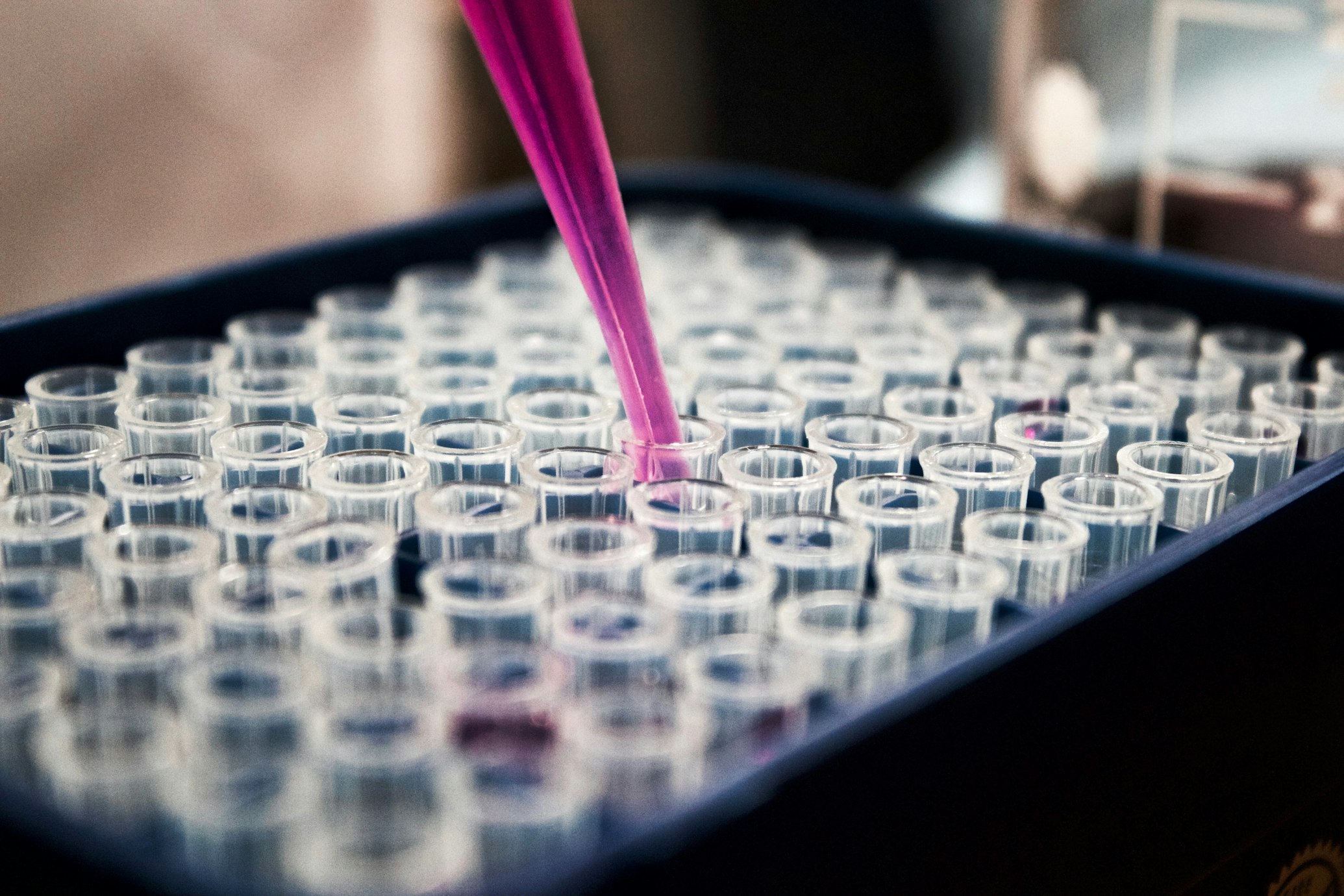
Yet, this extraordinary power comes with pressing questions: How will these infinitesimal particles interact with our bodies and the environment? Could the very materials that promise to revolutionize medicine inadvertently pose health risks? Enter nanoinformatics, an emerging field that applies advanced computational techniques to navigate the complex world of nanomaterials. By harnessing the power of data science, nanoinformatics aims to unlock nanotechnology's full potential while ensuring its safety—creating a future where we can innovate with both ambition and responsibility 1 5 .
What is Nanoinformatics? The Science of Making Sense of the Small
Nanoinformatics is "the science and practice of determining which information is relevant to the nanoscale science and engineering community, and then developing and implementing effective mechanisms for collecting, validating, storing, sharing, analyzing, modeling, and applying that information" 1 3 . In simpler terms, it's the art and science of making sense of nanotechnology data.
While this might sound similar to bioinformatics or cheminformatics, nanoinformatics faces unique challenges. Unlike conventional chemicals that are primarily defined by their molecular structure, nanomaterials require description across multiple physical properties, including size, shape, surface characteristics, crystallinity, and dispersion state 8 . What's more, nanoparticle preparations are often non-uniform, containing distributions of these properties that must be carefully measured and documented 8 .
The Multifaceted Nature of Nanomaterial Data
| Data Category | Specific Properties | Importance |
|---|---|---|
| Physicochemical Properties | Size, shape, surface area, charge, composition | Determine how nanoparticles behave and interact |
| Environmental Properties | Stability, dissolution rate, aggregation | Influence environmental impact and persistence |
| Biological Interactions | Toxicity, cellular uptake, distribution | Critical for medical applications and risk assessment |
| Manufacturing Details | Synthesis method, purification, functionalization | Affect reproducibility and commercial scalability |
The need for nanoinformatics has become increasingly urgent as the volume of nanotechnology research has expanded. With over 35 significant nanoinformatics-related events occurring in just the past five years by 2013, the field has recognized that traditional laboratory notebooks and isolated data storage systems are inadequate for managing the complexity of nanomaterial information . Nanoinformatics provides the essential infrastructure—including standardized data formats, databases, and analysis tools—that enables researchers to translate raw data into meaningful knowledge 8 .
A Deep Dive into a Key Experiment: Predicting Nanomaterial Toxicity in Zebrafish
To understand how nanoinformatics works in practice, let's examine a pivotal experiment that demonstrated the power of computational approaches to predict nanomaterial toxicity. Researchers investigated how various metal oxide nanoparticles affect embryonic zebrafish, a model organism commonly used in toxicology studies due to its genetic similarity to humans and transparent embryos that allow for easy observation of development 1 3 .
Methodology: From Laboratory Bench to Data Analysis
The experiment followed a systematic approach that bridges traditional laboratory science with modern data analytics:
1. Nanomaterial Characterization
Researchers first prepared and thoroughly characterized a library of metal oxide nanoparticles, measuring key properties including size, surface charge, and composition 1 .
2. Biological Exposure
They exposed embryonic zebrafish to these nanomaterials at various concentrations and monitored the embryos throughout their development.
3. Effect Measurement
The team quantified multiple biological endpoints, including:
- 24-hour mortality: Death rate within the first day
- 120-hour mortality: Death rate after five days
- Malformation rates: Incidence of physical deformities, such as heart malformations
- Growth inhibition: Reduced growth compared to unexposed embryos
4. Data Analysis
Using data mining techniques, including regression trees and instance-based learning algorithms, researchers built computational models that connected the nanoparticles' physical properties to the observed biological effects .
Key Experimental Components in the Zebrafish Nanotoxicity Study
| Component | Specific Examples | Role in Experiment |
|---|---|---|
| Nanomaterials | Zinc oxide (ZnO), Titanium dioxide (TiO₂), Cerium oxide (CeO₂) | Test subjects representing different metal oxides |
| Biological Model | Embryonic zebrafish | Vertebrate model with transparent embryos for easy observation |
| Exposure Metrics | Concentration, exposure duration | Standardized conditions for comparing different nanomaterials |
| Assessment Methods | Mortality counts, malformation scoring, growth measurements | Quantitative measures of biological impact |
Results and Analysis: Computational Models Reveal Hidden Patterns
The results demonstrated that nanoparticle characteristics could indeed predict biological effects with significant accuracy. For instance, models could forecast 120-hour mortality rates based on a combination of nanoparticle size and surface properties 1 . The analysis revealed that certain properties—particularly those related to surface characteristics and particle size—were more influential in determining toxicity than the simple chemical composition of the nanoparticles.
Predictive Modeling Success
One study specifically focused on ZnO nanoparticles found that their toxicity to zebrafish could be correlated with two principal components calculated from nanoparticle size and surface properties using Kriging estimations, a sophisticated spatial statistics technique 1 .
This approach allowed researchers to create predictive models that could estimate the potential toxicity of similar nanoparticles without conducting extensive animal testing for each new variant.
Example Results from Nanomaterial Toxicity Modeling
| Nanomaterial Type | Key Predictor Properties | Predicted Biological Effect | Prediction Accuracy |
|---|---|---|---|
| Zinc Oxide (ZnO) | Size, surface properties | Zebrafish mortality | High (specific metrics not provided in sources) |
| PAMAM Dendrimers | Molecular descriptors | Cytotoxicity | Successful model development |
| Metal Oxides | Size, surface charge, composition | Multiple toxicity endpoints | Accurate predictions achieved |
This experiment exemplifies how nanoinformatics can extract meaningful patterns from complex datasets, enabling researchers to predict biological effects based on nanomaterial characteristics rather than relying solely on repetitive and resource-intensive laboratory experiments .
The Scientist's Toolkit: Essential Resources for Nanoinformatics Research
The zebrafish experiment highlights just one application of nanoinformatics. The field has developed a rich toolkit of resources that support various aspects of nanotechnology research and safety assessment. These resources include databases, computational models, and standardized protocols that collectively form the infrastructure of modern nanotechnology research.
Nanomaterial Registry
Type: Database
Primary Function: Curated nanomaterial data
Key Features: Web-based system with quality ratings
How These Tools Work Together
These resources address different aspects of the nanoinformatics workflow:
- Databases serve as centralized repositories for nanomaterial information, with each having a slightly different focus.
- Data standards like ISA-TAB-Nano provide consistent formats for reporting nanomaterial data.
- Ontologies offer formal representations of knowledge in the nanotechnology domain.
This common terminology in a machine-readable framework facilitates data discovery and integration across research institutions and studies.
Conclusion: The Path Forward for Nanoinformatics
Nanoinformatics represents a fundamental shift in how we approach nanotechnology development and safety assessment. By leveraging advanced computational techniques, standardized data collection, and collaborative resources, this emerging field helps researchers navigate the complex landscape of nanomaterial design, characterization, and risk assessment.
Medical Applications
In medicine, nanoinformatics supports the development of safer, more effective nanotherapeutics through better understanding of structure-activity relationships 8 .
Environmental Health
For environmental health, it enables predictive modeling of nanomaterial fate and impact, allowing for proactive risk management 1 .
Data-Driven Design
The field encourages a data-driven approach to nanomaterial design, where researchers can use existing knowledge to guide development.
"The ability to translate nano-level measurements and data into new knowledge can lead to high-quality diagnosis and therapy for patients, demonstrating the transformative potential of nanoinformatics in bridging basic research and clinical applications" .
As nanotechnology continues to evolve and integrate into everything from medical devices to consumer products, nanoinformatics will play an increasingly critical role in ensuring that this powerful technology develops in a responsible and sustainable manner. The future of nanoinformatics may include more sophisticated artificial intelligence applications, enhanced data integration across multiple biological scales, and the development of comprehensive models that can predict nanomaterial behavior across their entire life cycle 5 .
What begins as specialized knowledge for scientists today may well become the foundation for tomorrow's nanotechnology regulations, safety protocols, and design principles—ultimately ensuring that the nanotechnology revolution benefits both human health and our planetary ecosystem.
References
References will be listed here in the final version.