Intrinsic Optical Bistability in Avalanching Nanoparticles: Mechanism, Applications, and Future Directions
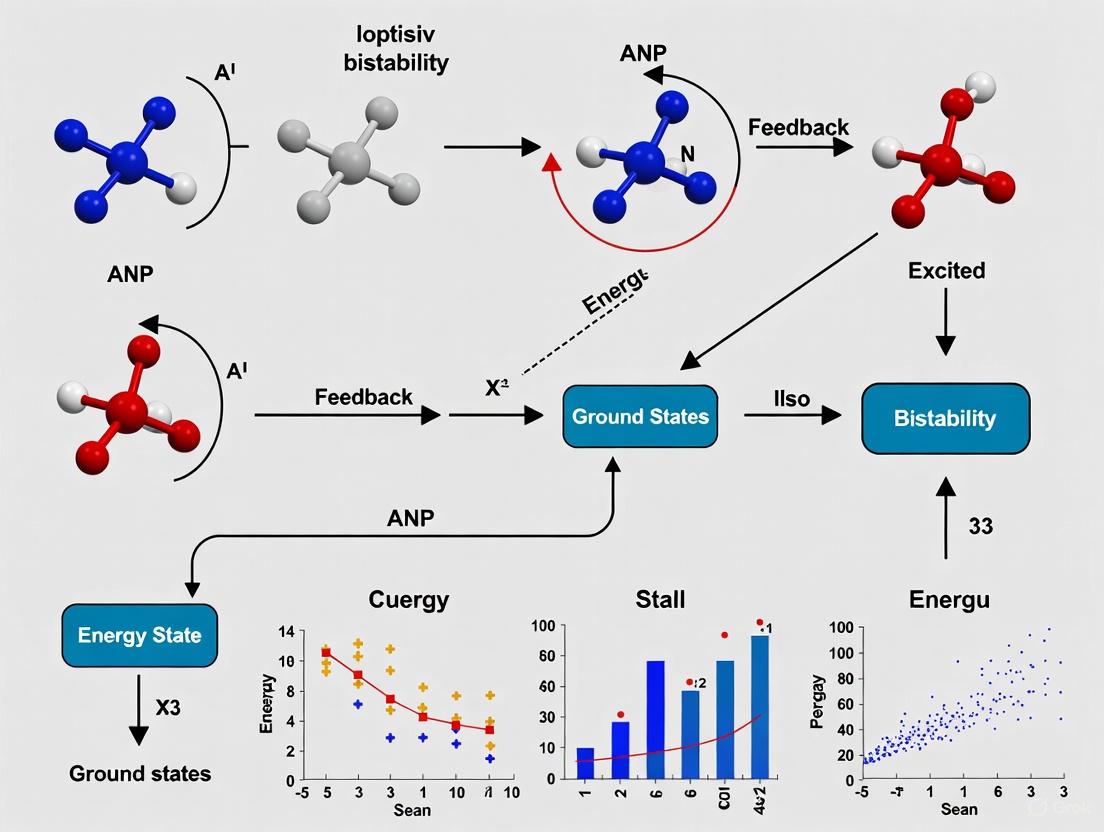
This article comprehensively explores intrinsic optical bistability (IOB) in photon avalanching nanoparticles (ANPs), a groundbreaking development in nanoscale photonic materials.
Intrinsic Optical Bistability in Avalanching Nanoparticles: Mechanism, Applications, and Future Directions
Abstract
This article comprehensively explores intrinsic optical bistability (IOB) in photon avalanching nanoparticles (ANPs), a groundbreaking development in nanoscale photonic materials. We examine the fundamental mechanism of IOB in neodymium-doped KPb2Cl5 nanocrystals, where suppressed nonradiative relaxation and extreme nonlinearity enable history-dependent optical switching. The content covers synthesis methodologies, experimental demonstrations of optical memory and transistor functionality, and analysis of non-thermal bistability origins. Comparative evaluation against conventional nonlinear materials highlights the unprecedented >200th-order nonlinearities and practical implications for optical computing, biomedical sensing, and next-generation microelectronics. This resource provides researchers and drug development professionals with critical insights into harnessing ANPs for advanced optical applications.
Understanding Intrinsic Optical Bistability: From Basic Principles to Avalanching Nanoparticles
Defining Intrinsic Optical Bistability (IOB) and Its Historical Context in Nonlinear Optics
Intrinsic Optical Bistability (IOB) represents a fundamental phenomenon in nonlinear optics where a material exhibits two stable optical output states for a single input condition, with the state selection dependent on the excitation history. This article provides a comprehensive technical examination of IOB, tracing its evolution from theoretical foundations in macroscopic systems to its recent demonstration in nanoscale materials, specifically photon avalanching nanoparticles (ANPs). Within the broader context of ANPs research, we detail the breakthrough discovery of IOB in neodymium-doped KPb₂Cl₅ nanocrystals, elucidate the underlying non-thermal mechanism driven by extreme optical nonlinearities, and present standardized experimental protocols for its observation and characterization. This whitepaper serves as an authoritative resource for researchers and development professionals navigating this cutting-edge intersection of nanotechnology and photonics.
Intrinsic Optical Bistability (IOB) is a nonlinear optical phenomenon characterized by a material's ability to reside in one of two distinct optical states under identical steady-state input conditions. The specific state—typically a "high" (bright, emissive) or "low" (dark, non-emissive) transmission or emission state—depends on the history of the excitation input [1] [2]. This memory effect and discontinuous response differentiate bistable systems from conventional nonlinear optics and form the foundational principle for optical switching and memory applications.
The "intrinsic" qualifier signifies that the bistable behavior originates from the inherent electronic and photophysical properties of the material itself, rather than being imposed by an external apparatus such as an optical cavity [3]. The phenomenon manifests graphically as a hysteresis loop in a plot of output intensity versus input intensity; as the input power is increased, the output remains low until a critical threshold power (Pon) is surpassed, triggering an abrupt transition to the high-output state. Subsequently, when the input power is decreased, the material persists in the high-output state until a lower threshold power (Poff) is reached, at which point it reverts to the low-output state [1] [2]. The region of power between Poff and Pon represents the bistable region where either state is accessible, making IOB materials ideal candidates for binary optical memory and logic gates.
Historical Development and Theoretical Foundations
The pursuit of optical bistability spans several decades, driven by the vision of all-optical computing and signal processing. Early research, predominantly in the 1980s, focused on macroscopic systems where bistability was achieved through a combination of nonlinear media and external feedback mechanisms, most commonly Fabry-Perot resonators [2]. Concurrently, theoretical work explored the potential for intrinsic bistability. A significant conceptual advance was the investigation into composite materials, where theories predicted that sharp resonances and local field enhancements in nonlinear dielectric-metal composites could lower the threshold for bistable behavior [4].
A pivotal milestone occurred in 1979 with the discovery of the photon avalanche (PA) effect by Jay S. Chivian in praseodymium-doped bulk crystals (LaCl₃:Pr³⁺ and LaBr₃:Pr³⁺) [5]. This phenomenon was distinguished by an extreme nonlinearity: a tiny increase in pump power beyond a specific threshold yielded a colossal increase in luminescence intensity. Despite its dramatic effects in bulk crystals, translating the PA phenomenon to the nanoscale proved exceptionally challenging for decades due to increased surface-related losses and heightened complexity in energy transfer dynamics within confined volumes [5].
The historical trajectory of IOB research has thus been a journey from external to internal control, and from bulk to nanoscale. For years, IOB remained largely theoretical for nanoscale applications, with observed bistability often attributed to inefficient thermal effects [1]. The critical turning point has been the recent synthesis and understanding of highly nonlinear avalanching nanoparticles (ANPs), which finally provided a viable, non-thermal pathway to achieve and control IOB at the nanoscale [1] [6] [2].
The Modern Paradigm: IOB in Photon Avalanching Nanoparticles
The most significant recent advancement in IOB research is its demonstration in specific, engineered nanomaterials. A collaborative effort co-led by Lawrence Berkeley National Laboratory, Columbia University, and Universidad Autónoma de Madrid produced the first practical demonstration of IOB in nanoscale materials using neodymium-doped KPb₂Cl₅ avalanching nanoparticles [1] [6] [2].
Material Composition and Key Properties
The successful ANPs are characterized by a precise composition and structure, as detailed in Table 1.
Table 1: Key Characteristics of IOB-Capable Avalanching Nanoparticles
| Parameter | Specification | Functional Role |
|---|---|---|
| Core Material | KPb₂Cl₅ (Potassium Lead Chloride) crystal host | Provides a low-phonon energy environment, suppressing non-radiative relaxation [2]. |
| Dopant Ion | Nd³⁺ (Neodymium) | The active ion enabling the photon avalanche mechanism via its specific energy level structure [7] [2]. |
| Particle Size | ~30 nanometers | Enables nanoscale integration and operation at a size comparable to modern microelectronics [1] [6]. |
| Excitation | Infrared laser (resonant with ESA) | Initiates the avalanche process by exciting ions already in an intermediate state [5]. |
| Emission | Upconverted luminescence | The high-energy "bright" state output, resulting from the multi-photon avalanche process [1]. |
The Photon Avalanche Mechanism
The IOB in these ANPs originates from a sophisticated photon avalanche mechanism, a non-thermal process involving a positive feedback loop. The process can be broken down into the following steps, illustrated in the diagram below:
- Initial Excitation: A single neodymium (Nd³⁺) ion undergoes weak ground-state absorption (GSA) to a higher energy level, followed by non-radiative relaxation to a metastable intermediate state.
- Excited-State Absorption (ESA): An ion in this intermediate state absorbs another photon from the pump laser via ESA, reaching a highly excited state.
- Cross-Relaxation (CR): This highly excited ion transfers part of its energy to a neighboring Nd³⁺ ion in the ground state via a cross-relaxation process. The result is that two ions are now in the intermediate metastable state.
- Positive Feedback Loop: These two ions can then each undergo ESA and CR, potentially creating four ions in the intermediate state. This chain reaction, or "avalanche," leads to an exponential growth in the population of excited ions [5] [7].
- Upconverted Emission: The large population of ions in high-energy states results in the emission of high-energy (visible) photons, which is the "on" state of the system.
This mechanism results in extreme optical nonlinearity, with reported nonlinearity orders exceeding 200th-order [7] [2]. This means a minuscule change in input laser power produces a disproportional, enormous change in output luminescence.
Hysteresis and Optical Memory
The IOB manifests through a characteristic hysteresis loop. Once the avalanche is triggered (above Pon), the high-emission state becomes self-sustaining at pump powers below the initial trigger point. The system remains "on" until the laser power is reduced to a much lower Poff threshold, which breaks the positive feedback loop [1] [2]. The large difference between these two thresholds creates a power window where the nanoparticle's state (bright or dark) depends solely on its immediate past, functionally acting as a nanoscale optical memory bit [6].
Experimental Protocols and Methodologies
This section provides detailed methodologies for reproducing and validating IOB in ANPs, based on the protocols established in the seminal Nature Photonics study [2].
Synthesis of IOB-Capable ANPs
Method: The 30 nm Nd³⁺:KPb₂Cl₅ nanoparticles were synthesized via a high-temperature solid-state reaction or a solution-phase hot-injection method [2].
- Precursors: Potassium chloride (KCl), lead chloride (PbCl₂), and neodymium chloride (NdCl₃) are typical precursors.
- Dopant Concentration: The concentration of Nd³⁺ is critical and must be optimized (typically 1-5%) to balance efficient cross-relaxation against concentration quenching effects [5].
- Surface Passivation: Proper ligand exchange or shelling is often necessary to suppress surface-related quenching and enhance environmental stability [1].
Optical Characterization and IOB Observation
Equipment: A standard optical microscopy setup equipped with a tunable, continuous-wave (CW) infrared laser source (e.g., ~1064 nm or ~850 nm, resonant with the Nd³⁺ ESA transition), a high-sensitivity spectrometer or photomultiplier tube (PMT), and a precise laser power controller is required. Procedure:
- Sample Preparation: Disperse synthesized ANPs in a transparent matrix (e.g., polymer film) or suspend them in a solvent on a microscope slide.
- Power-Dependent Hysteresis Measurement:
- Begin with the laser power well below the anticipated threshold.
- Gradually increase the laser power while measuring the integrated upconverted emission intensity.
- Observe the sharp, discontinuous jump in intensity at Pon.
- After stabilizing in the "on" state, gradually decrease the laser power and record the emission intensity.
- Note the power Poff at which the emission abruptly drops to the baseline level. The hysteresis loop is the region between the upward and downward curves.
- Temporal Switching Experiments:
- Set the laser power to a value within the bistable region (between Poff and Pon).
- Use a brief, high-power laser pulse to "write" the nanoparticle into the "on" state.
- Use a period of very low power or beam blockage to "erase" the nanoparticle back to the "off" state.
- This demonstrates the volatile random-access memory (RAM) functionality [1].
Table 2: Key Experimental Parameters for IOB Observation
| Parameter | Typical Range/Value | Measurement Instrument |
|---|---|---|
| Laser Wavelength | ~850 nm or ~1064 nm (resonant with Nd³⁺ ESA) | Tunable CW IR Laser |
| Laser Power (P_on) | Threshold power specific to sample (e.g., several mW/µm²) | Laser Power Meter / Controller |
| Hysteresis Width | Difference between Pon and Poff | Derived from power-intensity plot |
| Emission Wavelength | Visible range (e.g., ~450-500 nm for KPb₂Cl₅:Nd³⁺) | Spectrometer |
| Nonlinearity Order | >200th-order | Calculated from log-log plot of power vs. intensity [2] |
The Scientist's Toolkit: Essential Research Reagents and Materials
Table 3: Key Research Reagent Solutions for IOB-ANP Research
| Reagent / Material | Function | Example / Notes |
|---|---|---|
| Lanthanide Dopant Salts | Active ion source for photon avalanche. | Neodymium(III) chloride (NdCl₃); purity >99.9% is critical. |
| Crystal Host Precursors | Forms the low-phonon energy nanoparticle matrix. | Potassium chloride (KCl), Lead chloride (PbCl₂). |
| Surface Ligands | Controls nanoparticle growth and prevents aggregation. | Oleic acid, Oleylamine for synthesis; can be exchanged for biocompatibility. |
| Low-Power IR Laser | Primary excitation source for triggering and switching IOB. | Continuous-wave (CW) laser diode at ~850 nm or ~1064 nm. |
| High-Power Pulsed Laser | "Write" pulse for optical memory operation. | Pulsed laser system for temporary high-power excitation. |
Applications and Future Research Directions
The demonstration of IOB in ANPs opens transformative pathways for photonics and computing.
- Nanoscale Optical Memory and Switches: ANPs can function as volatile memory (RAM) where light writes, reads, and erases data, enabling ultra-fast, high-density optical data storage and processing [1] [6].
- Optical Transistors and Logic Gates: The dual-laser excitation scheme, where one laser beam controls the state set by another, demonstrates transistor-like optical switching. This is a fundamental component for building all-optical computers [7] [2].
- High-Density 3D Integration: The nanoparticles' small size and compatibility with direct lithography techniques allow for the fabrication of 3D volumetric interconnects, overcoming the planar density limitations of current electronics [8] [2].
Future research is focused on enhancing the performance and practicality of IOB-ANPs. Key challenges include improving environmental stability, discovering new material compositions to reduce power thresholds further, and integrating these nanoparticles into functional photonic circuit devices [1] [5].
The recent breakthrough in achieving Intrinsic Optical Bistability in photon avalanching nanoparticles marks a pivotal convergence of historical theoretical pursuit and modern nanoscience. The precise engineering of neodymium-doped KPb₂Cl₅ nanocrystals has provided the first robust, nanoscale platform where light can control light with the history-dependent logic essential for computation and memory. The elucidation of the non-thermal, avalanching-based mechanism—characterized by unprecedented nonlinearity and a clear hysteresis loop—provides a new paradigm for the field. As research progresses to optimize these materials and integrate them into photonic systems, IOB-capable ANPs are poised to fundamentally advance the development of next-generation optical computing, neuromorphic photonics, and high-density information processing technologies.
Photon Avalanching (PA) represents a groundbreaking phenomenon in nanophotonics, enabling the generation of high-energy photons with minimal pumping power due to its highly nonlinear optical dynamics [5]. This distinctive process is characterized by a nonlinear upconversion (UC) mechanism where a minute increase in pumping power can trigger a dramatic surge in luminescence intensity—often exceeding 1000-fold [5]. The phenomenon was first observed in 1979 in lanthanide-doped bulk crystals but has recently seen a dramatic resurgence at the nanoscale, propelled by advances in synthesis and sensitive detection technologies [5] [9]. ANPs are typically composed of inorganic crystalline host matrices such as NaYF4, NaGdF4, or LaF3, doped with rare-earth lanthanide ions (e.g., Tm3+, Nd3+, Ho3+) that facilitate the avalanche process through a unique energy-transfer cascade [5]. This whitepaper examines the fundamental principles, material requirements, and characteristic features of PA, with particular emphasis on its intrinsic optical bistability and emerging applications in nanoscopy, sensing, and optical computing.
Fundamental Mechanisms and Material Foundations
Core Photophysical Processes
The photon avalanche mechanism operates through a precise orchestration of three interconnected photophysical processes that create a positive feedback loop for population growth in excited states [9].
Weak Ground-State Absorption (GSA): Incident excitation energy is deliberately chosen to be non-resonant with any ground-state absorption transitions within the lanthanide ions. This initial weak absorption, often assisted by phonon creation or annihilation, results in minimal direct population of the intermediate excited state, rendering the material initially transparent to the excitation radiation [10] [9].
Resonant Excited-State Absorption (ESA): Ions that reach the intermediate excited state (B) can efficiently absorb incident photons through resonant ESA transitions to higher energy levels (C). This process requires that the ESA cross-section significantly exceeds the GSA cross-section, ideally by a factor of 10,000 or more [5] [9].
Cross-Relaxation (CR): The critical feedback mechanism occurs when an ion in a high-energy state (C) transfers part of its energy to a neighboring ground-state ion (A), resulting in both ions occupying the intermediate state (B). This energy-transfer process effectively doubles the population available for further ESA events, creating a self-perpetuating cycle [5] [10].
The combination of these processes establishes a nonlinear positive feedback system where a single initially excited ion can trigger a cascade that populates the intermediate state exponentially with each cycle of ESA and CR [5]. This chain reaction continues until the system reaches a steady-state population in the emitting level, resulting in the characteristic ultra-nonlinear emission.
Essential Material Systems and Host Considerations
The realization of efficient PA requires specific material properties that facilitate the delicate balance between GSA, ESA, and CR processes. Key considerations include:
Lanthanide Dopant Selection: Specific trivalent lanthanide ions with appropriate energy level structures enable the PA effect. Tm3+ ions excited at 1064 nm or 1450 nm represent a canonical system, where the 3H6→3H5 GSA is weak, while the 3F4→3F2,3 ESA is strong, creating ideal conditions for avalanching [5]. Nd3+ ions have also demonstrated PA-like behavior under 1064 nm excitation, particularly in low-phonon hosts [10] [7]. More recently, Ho3+ ions have been exploited for parallel PA pathways enabling multicolor nanoscopy [11].
Host Matrix Engineering: The host lattice profoundly influences PA efficiency through several critical parameters [9]:
Phonon Energy: Low-phonon-energy hosts (e.g., fluorides like NaYF4 with ~350 cm−1) minimize non-radiative losses and protect excited-state populations. Heavier halides (chlorides, bromides) offer even lower phonon energies but often suffer from poor chemical stability [9].
Lattice Structure and Composition: Crystalline field modifications through ion substitution (e.g., Y3+ with smaller Lu3+) can dramatically enhance nonlinearity by modifying local crystal fields without significantly altering phonon spectra [9].
Dopant Concentration Optimization: Relatively high dopant densities (typically 1-10%) are necessary to ensure sufficiently short interionic distances for efficient CR, yet must be balanced against concentration quenching effects [5] [9].
Core-Shell Architecture: Inert shell passivation (e.g., undoped NaYF4 shells) effectively suppresses surface quenching but requires precise control to prevent dopant interdiffusion that can degrade nonlinear performance [9].
Table 1: Representative Material Systems for Photon Avalanching
| Host Material | Dopant Ion(s) | Excitation Wavelength | Emission Wavelength | Reported Nonlinearity | Key Characteristics |
|---|---|---|---|---|---|
| NaYF4/NaLuF4 | Tm3+ | 1064 nm, 1450 nm | ~800 nm | >100th order | Low phonon energy, tunable nonlinearity via Lu3+ substitution [5] [9] |
| KPb2Cl5 | Nd3+ | 1064 nm | 800-1000 nm | >200th order | Low phonon energy, demonstrates intrinsic optical bistability [7] [6] |
| NdAl3(BO3)4 | Nd3+ | 1064 nm | 1100-1800 nm (downshifting) | PA-like | Exhibits PA-like downshifting emissions, thermal coupling [10] |
| Various fluoride hosts | Ho3+ | NIR wavelengths | Multiple visible bands | Parallel pathways | Enables multicolor nanoscopy via parallel avalanche channels [11] |
Characteristic Emission Properties and Quantitative Signatures
Hallmarks of Photon Avalanching
The unique dynamics of PA manifest through several distinctive experimental signatures that differentiate it from conventional upconversion mechanisms [9]:
Excitation-Power Threshold (Ith): PA exhibits a sharp, well-defined excitation intensity threshold below which emission is minimal, and above which luminescence intensity increases dramatically by several orders of magnitude. This threshold behavior results from the critical nature of the positive feedback loop, which requires sufficient pumping to sustain the cascading process [5] [9].
Extreme Nonlinearity: Above the threshold, emission intensity follows a highly nonlinear power dependence described by Iem ∝ (Iexc)^n, where n represents the nonlinearity coefficient. PA systems routinely demonstrate n values ranging from tens to exceeding 200, significantly surpassing conventional multiphoton processes [7] [9].
Prolonged Rise Times: The population buildup in PA systems exhibits characteristically slow rise times extending from milliseconds to hundreds of milliseconds, particularly near the threshold intensity. This "critical slowing down" reflects the iterative nature of the population cycling through the ESA-CR feedback loop [9].
S-Shaped Power Dependence: A sigmoidal relationship between input power and output emission intensity provides a distinctive fingerprint of PA, with the steepest slope region corresponding to the threshold intensity where the positive feedback becomes self-sustaining [5].
Table 2: Quantitative Characteristics of Photon Avalanching in Different Material Systems
| Characteristic | Typical Range | Measurement Significance | Dependence Factors |
|---|---|---|---|
| Nonlinearity coefficient (n) | 10 - >200 | Order of nonlinearity in Iem ∝ (Iexc)^n | Dopant concentration, host matrix, core-shell structure [7] [9] |
| Threshold intensity (Ith) | kW/cm² - MW/cm² (material dependent) | Minimum excitation for avalanching | Host phonon energy, surface passivation, temperature [5] [9] |
| Rise time | Milliseconds to hundreds of milliseconds | Characteristic slowing near threshold | Excitation power, dopant concentration, distance from threshold [9] |
| ESA/GSA cross-section ratio | >10,000 (ideal) | Measures resonance condition efficiency | Host crystal field, excitation wavelength [9] |
Intrinsic Optical Bistability in ANPs
A remarkable manifestation of PA's extreme nonlinearity is the emergence of intrinsic optical bistability (IOB), recently demonstrated in Nd3+-doped KPb2Cl5 nanoparticles [7] [6]. This phenomenon enables ANPs to function as nanoscale optical memory elements with potential applications in optical computing and information processing.
Nonthermal Bistability Mechanism: In Nd3+:KPb2Cl5 nanoparticles, IOB originates from suppressed nonradiative relaxation coupled with the positive feedback of photon avalanching, rather than thermal effects that dominated earlier observations of bistability [7]. The system exhibits hysteresis in its emission intensity, maintaining a high-emission ("on") state even when excitation power is reduced below the initial threshold, only switching off at a significantly lower power [6].
Optical Memory and Switching: The hysteresis loop enables ANPs to act as volatile memory elements, with the large separation between "on" and "off" threshold powers providing a robust operational window [6]. Dual-laser excitation further permits transistor-like optical switching, where a weak auxiliary beam controls the emission state triggered by a primary pump [7].
Theoretical Framework: Bistability arises mathematically from the nonlinear system dynamics, where for a range of input intensities (between switch-up and switch-down thresholds), two stable output states exist. The specific state occupied depends on the excitation history, creating the characteristic hysteresis loop [12].
Experimental Methodologies and Protocols
Synthesis of ANPs
Representative Protocol: Nd3+-Doped KPb2Cl5 Nanoparticles The synthesis of 30-nanometer KPb2Cl5:Nd3+ nanoparticles demonstrating IOB follows a hydrothermal or solvothermal approach [6]:
Precursor Preparation: Stoichiometric amounts of KCl, PbCl2, and NdCl3 are dissolved in a mixed solvent system of deionized water and ethanol (typically 1:1 ratio) with constant stirring. Neodymium doping concentrations typically range from 1-10%.
Reaction Conditions: The precursor solution is transferred to a Teflon-lined autoclave and heated at 180-220°C for 12-48 hours. The reaction temperature and time critically influence particle size and crystallinity.
Purification and Passivation: After cooling, nanoparticles are collected by centrifugation, washed repeatedly with ethanol and deionized water, and optionally coated with an inert shell (undoped KPb2Cl5) via successive ionic layer adsorption and reaction (SILAR) to reduce surface quenching.
Characterization: Structural analysis via X-ray diffraction confirms phase purity, while transmission electron microscopy verifies size distribution and morphology. Elemental mapping ensures uniform dopant distribution [7] [6].
Optical Characterization of PA
Nonlinear Power Dependence Measurements:
Excitation Source: Continuous-wave (CW) lasers with wavelengths matching weak GSA transitions (e.g., 1064 nm for Tm3+ or Nd3+ systems) are used. Laser power is precisely controlled using neutral density filters or acousto-optic modulators.
Detection System: Emission is collected through appropriate long-pass filters to block excitation light, dispersed through a monochromator, and detected using a photomultiplier tube or sensitive CCD camera. Measurements must span several orders of magnitude in excitation power.
Data Analysis: Logarithmic plots of integrated emission intensity versus excitation power are fitted to identify the threshold power and nonlinear coefficient. The characteristic S-shaped curve confirms PA behavior [5] [9].
Time-Resolved Dynamics:
- Excitation: Modulated CW or pulsed lasers with pulse widths appropriate for measuring millisecond-scale dynamics.
- Detection: Time-correlated single-photon counting or digital oscilloscopes capture emission decay trajectories.
- Analysis: Rise times are extracted from exponential fits to the emission buildup, with particular attention to the power dependence near threshold where critical slowing occurs [9].
Bistability and Hysteresis Protocols:
- Power Cycling: Excitation intensity is systematically increased from zero to beyond the switch-up threshold, then decreased while monitoring emission intensity.
- Pulse Modulation: Variable laser pulsing parameters (duty cycle, repetition rate) probe hysteresis width tunability.
- Dual-Beam Switching: An auxiliary laser at a different wavelength (e.g., 808 nm for Nd3+ systems) controls the switching between bistable states [7].
The Scientist's Toolkit: Essential Research Reagents and Materials
Table 3: Key Research Reagents and Materials for ANP Investigation
| Material/Reagent | Function/Application | Specific Examples | Critical Parameters |
|---|---|---|---|
| Lanthanide precursors | Dopant ion source | TmCl3, Nd(NO3)3·6H2O, NdCl3 | Purity (>99.9%), anhydrous forms preferred [10] [7] |
| Host matrix precursors | Nanoparticle host formation | YCl3, LuCl3, NaF, KCl, PbCl2 | Stoichiometric ratios, controlled reactivity [7] [9] |
| Solvents and ligands | Reaction media and surface stabilization | Oleic acid, 1-octadecene, ethylene glycol | Anhydrous conditions for fluoride synthesis [5] |
| Shell precursors | Core-shell structure formation | Yttrium and sodium precursors for NaYF4 shells | Precise layer-by-layer deposition [9] |
| Excitation sources | Optical characterization | CW lasers (1064 nm, 1450 nm) | Spectral purity, power stability, Gaussian beam profile [5] [10] |
| Detection instrumentation | Emission measurement | Monochromators, PMTs, superconducting detectors | High sensitivity for weak signals, IR capability [10] [9] |
Applications and Future Research Directions
Emerging Technological Applications
The extreme nonlinearity and unique emission characteristics of ANPs enable transformative applications across multiple domains:
Super-Resolution Nanoscopy: PA nanoparticles compress the point-spread function well below the diffraction limit, enabling sub-40-nm resolution on conventional confocal microscopes without complex optical architectures or computational reconstructions [9]. Recent demonstrations of modulated parallel photon avalanche in Ho3+ ions further enable multicolor nanoscopy, allowing simultaneous visualization of multiple cellular targets with unprecedented resolution [11].
Ultrasensitive Sensing: The threshold-activated nature of PA confers exquisite sensitivity to environmental perturbations. ANPs function as nanoscale sensors for temperature, pressure, and mechanical deformations with sensitivity improvements of several orders of magnitude over conventional probes [9]. The PA-like process in NdAl3(BO3)4 demonstrates particular promise for thermal sensing applications, where intrinsic heating can trigger the avalanche behavior [10].
Optical Memory and Computing: The intrinsic optical bistability demonstrated in Nd3+-doped KPb2Cl5 nanoparticles provides a foundation for nanoscale optical memory elements, optical transistors, and neuromorphic computing systems [7] [6]. The ability to program emission states based on excitation history enables memory functions analogous to electronic memristive devices, while hysteresis-based switching facilitates optical logic operations [9].
Biomedical Applications: PA nanoparticles offer exceptional brightness and photostability for bioimaging and biosensing. Their near-infrared excitation and emission profiles enable deep-tissue penetration with minimal autofluorescence and photodamage. The recent development of biocompatible ANPs with negligible cytotoxicity further supports their potential for live-cell imaging and therapeutic applications [11].
Current Challenges and Research Frontiers
Despite significant advances, several challenges remain in optimizing and deploying ANP technology:
Material Optimization: Balancing high dopant concentrations for efficient CR against concentration quenching effects requires precise synthetic control. Advanced core-shell architectures with spatially confined dopant distributions represent a promising approach [9].
Temporal Dynamics: The characteristically slow rise times of PA systems may limit applications requiring rapid switching. Materials engineering through host modification (e.g., Lu3+ substitution in NaYF4 hosts) has demonstrated reduced rise times to ~9 ms while maintaining high nonlinearity [9].
Integration Challenges: Incorporating ANPs into functional devices and biological systems requires robust surface functionalization strategies and compatibility with existing optical platforms. The development of standardized protocols for bioconjugation and device integration will accelerate technology transfer [11].
Theoretical Modeling: Precisely simulating PA dynamics necessitates advanced models that account for spatial energy diffusion and position-dependent population dynamics within nanocrystals, moving beyond traditional ordinary differential equation approaches [9].
Future research directions include the exploration of new lanthanide dopant combinations, advanced host materials with lower phonon energies, integration with optical cavities and metamaterials for enhanced performance, and the application of machine learning for inverse design of optimized ANP structures [9]. As these developments progress, photon avalanching nanoparticles are poised to enable unprecedented capabilities in nanoscale imaging, sensing, and information processing.
Intrinsic optical bistability (IOB) in nanoscale materials represents a cornerstone for developing all-optical computing and signal processing technologies. This whitepaper details the material composition, structural properties, and functional mechanisms of neodymium-doped potassium lead chloride (Nd³⁺:KPb₂Cl₅) nanocrystals, a system demonstrating robust IOB via the photon avalanching (PA) effect [13] [6]. Current photonic technologies are often constrained by the weak optical nonlinearities of available nanomaterials and their reliance on complex external cavities to achieve bistable behavior. The discovery of IOB in Nd³⁺:KPb₂Cl₅ nanocrystals establishes a new paradigm, as the bistability is an inherent material property originating from a non-thermal mechanism involving suppressed non-radiative relaxation and positive feedback loops [13]. This positions avalanching nanoparticles (ANPs) as fundamental building blocks for next-generation nanophotonic devices, including optical memory, switches, and transistors, where light directly manipulates light [13] [7].
Material Composition and Fundamental Properties
The unique optical properties of this material system arise from the specific combination of a low-phonon energy host crystal and the tailored energy level structure of the neodymium dopant ions.
Host Crystal: KPb₂Cl₅
The host matrix, potassium lead chloride (KPb₂Cl₅), is a crystalline material prized for its exceptional infrared optical characteristics. Its key properties are summarized in Table 1 [14] [15].
Table 1: Key Properties of KPb₂Cl₅ Host Crystal
| Property | Value/Description | Significance |
|---|---|---|
| Crystal Structure | Monoclinic [14] | Defines the lattice site for dopant ions. |
| Maximum Phonon Energy | ~203 cm⁻¹ [14] | Very low energy of lattice vibrations, crucial for suppressing non-radiative decay. |
| Transmission Range | Broad, from ultraviolet to mid-infrared [15] | Enables applications across a wide spectral range. |
| Hygroscopicity | Low [14] [15] | Allows for processing in air, enhancing practical fabrication. |
Dopant Ion: Neodymium (Nd³⁺)
Trivalent neodymium ions (Nd³⁺) are incorporated into the KPb₂Cl₅ lattice, substituting for lead (Pb²⁺) ions. The Nd³⁺ ions act as the active luminescent centers responsible for the photon avalanching process. The specific energy levels of Nd³⁺ within the low-phonon KPb₂Cl₅ environment are critical for enabling the cross-relaxation and energy transfer processes that underpin the avalanche effect [13].
Nanocrystal Synthesis
The synthesis of these functional nanoparticles is typically achieved via a colloidal chemistry approach, producing crystals with well-defined dimensions. The reported Nd³⁺:KPb₂Cl₅ nanoparticles for IOB studies had a size of approximately 30 nanometers [6]. This nanoscale dimension is vital for integrating these materials into compact photonic circuits and devices.
The Photon Avalanching Mechanism and Intrinsic Optical Bistability
The extreme nonlinearity and IOB observed in these nanocrystals are driven by the photon avalanching process, a complex cycle of energy transfer and excited state absorption.
The Photon Avalanching Cycle
Photon avalanching is an upconversion mechanism characterized by orders-of-magnitude higher nonlinearity than conventional processes. Its dynamics can be described as a cyclic process with positive feedback, illustrated in Figure 1 and detailed below [13]:
Figure 1: The photon avalanching mechanism in Nd³⁺:KPb₂Cl₅ nanocrystals.
- Weak Initial Absorption: The process begins with a very weak ground-state absorption (GSA) of a pump photon, populating an intermediate energy level.
- Energy Transfer and Excited State Absorption: Energy transfer (ET) from a nearby already-excited Nd³⁺ ion or direct absorption promotes an ion to a higher energy level. This ion then undergoes strong excited-state absorption (ESA) to reach an even higher energy state.
- Cross-Relaxation and Positive Feedback: The highly excited ion transfers part of its energy to a neighboring ground-state ion via a cross-relaxation (CR) process. This results in two ions occupying the intermediate excited state from which ESA can occur. This step is critical as it creates a positive feedback loop, exponentially increasing the population of the emitting state.
- Amplified Emission: The massive buildup of ions in the excited state leads to intense, upconverted luminescence output. This process results in optical nonlinearities exceeding 200th-order, meaning a tiny increase in pump power produces an enormous increase in output light [13].
Origin of Intrinsic Optical Bistability
In Nd³⁺:KPb₂Cl₅ nanocrystals, IOB emerges from the PA cycle coupled with suppressed non-radiative relaxation. The host's extremely low phonon energy (~203 cm⁻¹) drastically reduces the rate at which excited ions lose energy as heat to the crystal lattice [14]. This suppression is essential for maintaining the long-lived excited states required to sustain the positive feedback loop of the avalanche. The system exhibits two stable states for the same input laser power, contingent on its history, as shown in Table 2.
Table 2: Characteristics of Bistable States in Nd³⁺:KPb₂Cl₅ ANPs
| Property | "OFF" State (Non-Luminescent) | "ON" State (Brightly Luminescent) |
|---|---|---|
| Luminescence | Negligible | High intensity |
| Trigger | Laser power reduced below a lower threshold | Laser power raised above an upper threshold |
| Mechanism | PA cycle cannot be sustained; positive feedback breaks | PA cycle is initiated and self-sustains |
| Memory Effect | Remains OFF until powered above upper threshold | Remains ON until powered below lower threshold |
This hysteresis is the hallmark of bistability and enables the material to function as an optical memory element, where the "ON" and "OFF" states represent binary 1 and 0 [13] [6]. The switching contrast between these states is very high, and the transition is controlled purely by the excitation light, without any thermal mechanism [13].
Experimental Protocols and Characterization
To validate IOB and the PA phenomenon, a series of rigorous experiments are performed on synthesized Nd³⁺:KPb₂Cl₅ nanocrystals.
Key Experimental Workflow
The standard methodology for investigating these properties involves the integrated workflow shown in Figure 2.
Figure 2: Key experimental workflow for characterizing IOB in ANPs.
Detailed Methodologies
1. Hysteresis Loop Measurement
- Objective: To demonstrate the hallmark of bistability: history-dependent output.
- Protocol: A laser beam tuned to the avalanche excitation wavelength (e.g., ~1064 nm for Nd³⁺) is focused onto a sample of nanocrystals [13]. The laser power is systematically ramped up from zero to a maximum value and then ramped down to zero while the intensity of the upconverted emission (e.g., in the visible range) is recorded.
- Expected Outcome: A pronounced hysteresis loop is observed. The emission intensity follows one path during the power increase (turning ON at a specific threshold, PON) and a different path during the power decrease (turning OFF at a lower threshold, POFF). The width of this hysteresis can be tuned by modulating the pulse repetition rate of the excitation laser [13].
2. Dual-Laser Switching Experiments
- Objective: To demonstrate transistor-like optical gating, where one light beam controls another.
- Protocol: Two laser sources are used. A constant-power "gate" beam is set to an intermediate power level where the nanocrystal is bistable. A second, weaker "signal" beam is then introduced. The presence or absence of the gate beam determines whether the signal beam can be amplified or switched by the nanocrystal ensemble [13] [7].
- Expected Outcome: The system acts as an optical transistor. The strong gate beam switches the nanocrystals to their "ON" state, allowing the weak signal beam to trigger a bright output. Without the gate, the signal beam is too weak to switch the system on [13].
3. Quantifying Nonlinearity Order
- Objective: To measure the extreme nonlinearity of the photon avalanching process.
- Protocol: The power dependence of the upconverted emission intensity (Iout) is measured as a function of the pump laser power (Ipump). The data is plotted on a log-log scale. The slope (n) of the linear region of this plot, where Iout ∝ (Ipump)^n, gives the order of nonlinearity [13].
- Expected Outcome: For Nd³⁺:KPb₂Cl₅ ANPs, the nonlinearity order (n) has been measured to be greater than 200, far exceeding conventional multiphoton processes [13] [6].
The Scientist's Toolkit: Research Reagent Solutions
Successful research into these ANPs requires specific materials and instrumentation. Table 3 lists the essential components and their functions.
Table 3: Essential Research Reagents and Materials for ANP Investigation
| Reagent/Material | Function | Notes |
|---|---|---|
| KPb₂Cl₅ Host Precursors | Forms the low-phonon crystal matrix. | High-purity KCl and PbCl₂ are crucial to minimize non-radiative losses [14]. |
| Neodymium Dopant Source | Provides active optical centers. | Anhydrous NdCl₃ is typically used, handled in an inert atmosphere to prevent hydrolysis [14]. |
| Colloidal Synthesis Setup | Produces monodisperse nanocrystals. | Requires inert atmosphere (e.g., nitrogen glovebox) and controlled temperature [13]. |
| Tunable Pulsed Lasers | Excites the avalanche process. | Wavelength must match the specific GSA band of Nd³⁺ (e.g., ~1064 nm) [13]. |
| Cryostat System | Maintains low temperature. | Current IOB demonstration requires ~160 K; achieving room-temperature operation is a key research challenge [16]. |
| Spectrometer/APD | Detects upconverted luminescence. | Requires high sensitivity to measure low-light emission from single nanoparticles or ensembles [13]. |
The intrinsic optical bistability demonstrated in Nd³⁺:KPb₂Cl₅ nanocrystals marks a significant leap forward in the field of avalanching nanoparticles. This work provides the first clear demonstration of a non-thermal, purely all-optical bistability mechanism in a nanomaterial, moving beyond earlier assumptions that attributed such effects to laser-induced heating [6]. The material's composition is fundamental to its function: the low-phonon KPb₂Cl₅ host is critical for suppressing non-radiative decay, while the Nd³⁺ dopant provides the ideal energy level structure for sustaining the photon avalanching feedback loop.
This breakthrough paves the way for the development of genuine nanoscale optical devices, such as volatile optical memory (RAM) and optical transistors, that can be integrated into photonic circuits at a scale comparable to modern microelectronics [13] [6]. The ability to manipulate light with light at the nanoscale, with extreme nonlinearity and hysteresis, establishes a new platform for all-optical signal processing. Future research will undoubtedly focus on optimizing the material composition—potentially through alternative dopants or core-shell structures—to achieve the critical goal of room-temperature operation, thereby unlocking the full practical potential of intrinsic optical bistability in real-world photonic technologies [16].
Intrinsic optical bistability (IOB) represents a fundamental property in nonlinear optical materials wherein a system exhibits two stable optical output states for a single input condition, with the current state dependent on the excitation history. This memory effect creates a hysteresis loop in the system's input-output response, enabling applications in optical memory, switching, and computing. Recent breakthroughs have demonstrated IOB in nanoscale materials, particularly in photon avalanching nanoparticles (ANPs), which exhibit exceptional nonlinear optical properties and hysteresis between luminescent and non-luminescent states. This emergent behavior in ANPs stems from their unique physical mechanisms that differ substantially from conventional bistable systems, which typically relied on thermal effects or complex resonator geometries. The development of ANPs with IOB marks a critical advancement toward practical nanophotonic devices that can operate on size scales comparable to contemporary microelectronics [6] [7].
The investigation of photon avalanching at the nanoscale has unveiled unprecedented optical nonlinearities that enable this bistable behavior. ANPs composed of lanthanide-ion-doped inorganic matrices generate high-energy photons through a chain reaction of excited-state absorption and cross-relaxation processes under surprisingly low pumping power. This review examines the fundamental principles governing hysteresis in luminescent ANP systems, quantitative characterization methodologies, experimental protocols for their study, and emerging applications in photonic technology and biological research. Understanding and controlling these hysteretic phenomena provides the foundation for next-generation optical devices with enhanced functionality and miniaturization potential [5].
Fundamental Mechanisms of Hysteresis in Avalanching Nanoparticles
The Photon Avalanching Process
The hysteresis behavior observed in ANPs originates from the photon avalanching mechanism, an upconversion process characterized by extreme nonlinearity and positive feedback. This process occurs in lanthanide-doped nanoparticles when excited with laser light at wavelengths that are only weakly absorbed from the ground state but strongly absorbed from excited states. The avalanching mechanism comprises three fundamental processes that create a self-sustaining cycle: weak ground-state absorption (GSA), excited-state absorption (ESA), and cross-relaxation (CR) energy transfer between neighboring ions [5].
The hysteretic behavior emerges from the interplay between these processes, which establishes a positive feedback loop capable of maintaining two distinct metastable states under identical excitation conditions. When the system resides in the "off" state, minimal luminescence occurs because most ions remain in the ground state, with only weak direct excitation. Transition to the "on" state requires a temporary increase in excitation power to initiate the avalanching process, after which the system can maintain this highly luminescent state even when power is reduced below the initial switching threshold. This path dependence creates the characteristic hysteresis loop that defines the system's bistable behavior and provides its memory functionality [6] [7].
Table 1: Key Processes in Photon Avalanching Hysteresis
| Process | Description | Role in Hysteresis |
|---|---|---|
| Ground-State Absorption (GSA) | Weak initial absorption of pump photons | Determines threshold sensitivity and off-state stability |
| Excited-State Absorption (ESA) | Strong absorption from excited states | Creates nonlinear response and enables state switching |
| Cross-Relaxation (CR) | Energy transfer between neighboring ions | Establishes positive feedback loop for bistability |
| Nonradiative Relaxation | Energy loss through phonon emissions | Suppressed in IOB to maintain excited state population |
Energy Transfer Dynamics and Bistability
The hysteresis loop in ANPs is fundamentally governed by energy transfer dynamics that create a bifurcation in the system's response to optical excitation. In Nd³⁺-doped KPb₂Cl₅ nanoparticles, IOB originates from suppressed nonradiative relaxation in Nd³⁺ ions combined with the positive feedback of photon avalanching. This combination produces extraordinary optical nonlinearities exceeding 200th-order, far surpassing conventional nonlinear optical materials. The specific electronic structure of the lanthanide ions enables this behavior, particularly when the excitation radiation is resonant with ESA transitions but not with ground-state transitions, creating an ideal scenario for avalanching [6] [7].
The critical slowing down of rise times represents another characteristic feature of photon avalanching systems contributing to hysteretic behavior. The rise time of the excited state population frequently extends well beyond the intermediate state's lifetime, creating a temporal delay that reinforces the bistable response. This delayed response, combined with the extreme ratio of ESA to GSA cross-sections (ideally exceeding 10⁴), enables the system to maintain distinct on and off states under intermediate excitation powers. The dopant ion concentration plays a crucial role in optimizing these dynamics, as it controls the average distance between ions and thus the efficiency of the cross-relaxation processes that drive the avalanching mechanism [5].
Quantitative Characterization of Hysteresis Parameters
Hysteresis Loop Measurements
The experimental characterization of hysteresis in ANPs involves measuring luminescence intensity as a function of excitation power through both increasing and decreasing power sweeps. Research on Nd³⁺-doped KPb₂Cl₅ nanoparticles has demonstrated high-contrast switching between luminescent and non-luminescent states with a pronounced hysteresis loop. The threshold power for switching from the off to on state (Pₒₙ) typically exceeds the power required to maintain the on state (Pₒff), creating the characteristic hysteresis window where both states are stable. This large difference between threshold powers enables the nanoparticles to function as nanoscale optical memory elements, particularly volatile random-access memory (RAM), as they can maintain their state under intermediate laser powers without continuous refreshing [6].
The modulation of laser pulsing parameters provides a powerful tool for tuning hysteresis widths in ANP systems. Studies have demonstrated that varying pulse duration and repetition rate can control the breadth of the bistable region, offering programmable hysteresis for different application requirements. Furthermore, dual-laser excitation schemes enable transistor-like optical switching, where a control beam modulates the response to a signal beam, creating opportunities for optical logic and amplification. These control mechanisms highlight the versatility of ANP-based bistable systems beyond simple binary memory applications [7].
Table 2: Quantitative Hysteresis Parameters in Avalanching Nanoparticles
| Parameter | Symbol | Typical Range | Significance |
|---|---|---|---|
| On-Threshold Power | Pₒₙ | Material-dependent | Minimum power to switch from off to on state |
| Off-Threshold Power | Pₒff | < Pₒₙ | Power below which system returns to off state |
| Hysteresis Width | ΔP = Pₒₙ - Pₒff | Tunable via laser parameters | Determines bistability operating range |
| Luminescence Contrast Ratio | Iₒₙ/Iₒff | > 1000:1 | Distinguishability between states |
| Nonlinearity Order | n | > 200 | Extreme nonlinearity enabling bistability |
| Response Time | τᵣᵢsₑ | > intermediate state lifetime | Critical slowing down characteristic |
Material Composition and Performance Metrics
The specific material composition of ANPs profoundly influences their hysteresis characteristics and overall performance. Research has identified that 30-nanometer nanoparticles of potassium lead chloride doped with neodymium (KPb₂Cl₅:Nd³⁺) provide an optimal platform for IOB, combining suppressed non-radiative relaxation with efficient photon avalanching. The host matrix plays a critical role in minimizing non-radiative decay pathways, thereby enhancing the excited-state lifetimes necessary for sustaining the avalanching process. The choice of dopant ions, typically lanthanides such as Tm³⁺, Er³⁺, Ho³⁺, or Nd³⁺, determines the specific energy transitions available for the GSA, ESA, and CR processes that drive the avalanching mechanism [6] [5].
The size distribution and crystallographic quality of ANPs represent additional critical factors influencing hysteresis behavior. Nanoparticles with narrow size distributions and high crystalline perfection exhibit more uniform switching thresholds and sharper hysteresis transitions. Synthesis methods that optimize these material characteristics enable more predictable and reproducible bistable performance essential for device applications. Advanced characterization techniques, including temperature-dependent luminescence spectroscopy and time-resolved measurements, provide insights into the underlying mechanisms and quantitative parameters governing the hysteretic response of ANP systems [6] [17].
Experimental Protocols for Hysteresis Characterization
Nanoparticle Synthesis and Preparation
The synthesis of high-quality ANPs with well-defined hysteretic properties requires precise control over material composition, crystal structure, and morphological characteristics. For Nd³⁺-doped KPb₂Cl₅ nanoparticles, researchers have developed specialized protocols to achieve the necessary standards:
Precursor Preparation: Combine high-purity potassium chloride (KCl), lead chloride (PbCl₂), and neodymium chloride (NdCl₃) in stoichiometric ratios with careful control of dopant concentration (typically 1-5% Nd³⁺) to optimize cross-relaxation efficiency while minimizing concentration quenching effects [6].
Thermal Processing: Execute a multi-stage heating protocol under inert atmosphere conditions, beginning with gradual ramp-up to 400°C to remove solvents and organic residues, followed by sustained annealing at 500-600°C for 2-4 hours to promote crystal growth and Nd³⁺ incorporation into the host lattice [6] [17].
Size Selection and Purification: Implement centrifugal separation techniques to isolate nanoparticles with narrow size distribution centered at approximately 30 nanometers, followed by repeated washing with anhydrous solvents to remove unreacted precursors and byproducts that could interfere with optical properties [6].
Surface Functionalization: Apply appropriate ligand chemistry to enhance colloidal stability in various environments and prevent nanoparticle aggregation that could alter avalanching behavior through inter-particle energy transfer [5].
For lanthanide sesquioxides such as Yb₂O₃ and Er₂O₃, a modified co-precipitation method has been successfully employed, resulting in nanoparticles with narrow size distributions (52-60 nm) and homogeneous phases essential for reproducible hysteretic behavior [17].
Optical Characterization Setup
The experimental configuration for quantifying hysteresis loops in ANPs requires precise control of excitation conditions and sensitive detection capabilities:
Excitation Source: Utilize continuous-wave (CW) or pulsed laser systems with wavelength selection matched to weak ground-state absorption transitions of the specific ANP composition (e.g., 1064 nm for Tm³⁺-based ANPs, 808 nm for Nd³⁺-based ANPs). Incorporate variable optical attenuators for precise power control across multiple orders of magnitude [5] [7].
Microscopy Integration: Implement confocal or wide-field microscopy systems to enable single-particle investigations, utilizing high-numerical-aperture objectives (>NA 0.8) to maximize excitation efficiency and emission collection from individual nanoparticles [6] [5].
Detection Apparatus: Employ avalanche photodiodes (APDs) or photomultiplier tubes (PMTs) with appropriate spectral filtering to isolate the avalanche emission signal from excitation background, enabling quantitative intensity measurements with single-photon sensitivity where necessary [7].
Temporal Resolution: Incorporate time-correlated single-photon counting (TCSPC) electronics for luminescence lifetime measurements, which provide critical insights into excited-state dynamics and avalanche buildup processes characteristic of hysteretic systems [5].
Environmental Control: Maintain constant temperature conditions through stage-mounted heating/cooling systems, as photon avalanching exhibits significant temperature sensitivity that could otherwise obscure hysteresis measurements [5] [17].
Hysteresis Loop Measurement Protocol
The precise quantification of hysteresis behavior in ANPs follows a systematic experimental procedure:
System Calibration: Characterize laser power stability and spatial profile before measurements. Confirm detector linearity across the expected intensity range using reference standards. Verify spectral filtering efficiency to eliminate excitation light from emission detection channels [6] [7].
Forward Power Scan: Gradually increase excitation power from minimal levels while continuously monitoring luminescence intensity. Use small power increments (typically 1-5% of expected threshold) near anticipated switching points to accurately determine the on-threshold power (Pₒₙ). Maintain constant integration times and environmental conditions throughout the measurement series [7].
Reverse Power Scan: After reaching maximum power, systematically decrease excitation power while continuing luminescence monitoring. Document the power level at which the system switches from the high-luminescence to low-luminescence state (Pₒff), noting any hysteresis in the transition points [6] [7].
Temporal Dynamics Assessment: At fixed power levels within the bistable region, measure luminescence rise and decay times to characterize critical slowing down effects. These measurements provide insights into the stability of each state and switching kinetics between them [5].
State Stability Testing: At intermediate power levels where bistability occurs, verify that both states can be maintained for extended periods (seconds to minutes) without spontaneous switching, confirming true bistability rather than transient effects [6].
Triggering Experiments: Demonstrate external control over state switching using secondary optical inputs at power levels within the bistable region, validating potential memory and logic functionality [7].
Research Reagent Solutions for ANP Hysteresis Studies
Table 3: Essential Materials for Avalanching Nanoparticle Research
| Material/Reagent | Function | Application Notes |
|---|---|---|
| KPb₂Cl₅:Nd³⁺ Nanoparticles | Primary bistable element | 30nm size optimal for IOB; Nd³⁺ concentration 1-5% |
| High-Purity Lanthanide Salts | Dopant precursors | Anhydrous chlorides or nitrates (>99.9%) |
| Inert Atmosphere Chamber | Synthesis environment | Prevents oxide formation and moisture degradation |
| CW NIR Laser Systems | Excitation source | Wavelength matched to weak GSA (e.g., 808nm, 1064nm) |
| Avalanche Photodiodes | Emission detection | Single-photon sensitivity for low-intensity measurements |
| Spectrofluorometer | Spectral characterization | Resolves emission bands and verifies avalanche emission |
| Temperature Control Stage | Environmental control | Minimizes thermal effects on avalanching threshold |
Applications and Future Directions
The demonstration of intrinsic optical bistability in photon avalanching nanoparticles opens transformative possibilities for photonic technology and biomedical applications. In optical memory and computing, ANPs provide a pathway to nanoscale optical memory elements and transistors that operate using light rather than electricity, potentially enabling smaller, faster components for next-generation computers. The hysteresis behavior essential for binary information storage occurs at unprecedented size scales, compatible with contemporary microelectronics manufacturing [6] [7].
In biological imaging and sensing, ANPs offer exceptional capabilities for super-resolution microscopy and deep-tissue imaging. Their nonlinear response enables techniques such as stimulated emission depletion (STED) microscopy without the complex laser systems typically required, while their near-infrared excitation and emission profiles facilitate deep tissue penetration with minimal scattering and autofluorescence. The hysteretic properties of ANPs can be leveraged for luminescence thermometry with exceptional sensitivity, as the avalanching process exhibits strong temperature dependence that shifts the hysteresis characteristics [5].
Future research directions focus on expanding the library of materials exhibiting IOB, optimizing hysteresis parameters for specific applications, and integrating ANP elements into functional photonic circuits. Challenges remain in achieving room-temperature operation for certain material systems, enhancing quantum yields, and developing scalable manufacturing approaches for ANP-based devices. As these fundamental hurdles are addressed, intrinsic optical bistability in avalanching nanoparticles is poised to enable revolutionary advances across information technology, biomedical research, and photonic computing [6] [5] [7].
Optical bistability describes a nonlinear optical phenomenon where a system exhibits two stable output states for a single input value over a specific input range, creating a characteristic hysteresis loop [18]. This behavior is fundamental for all-optical switching, memory, and logic devices, as it allows light to control light without intermediary electronic conversion [19]. Traditionally, this functionality has been achieved using conventional optical bistability (OB) mechanisms, which rely on external components like optical resonators to provide the necessary feedback [18]. In contrast, Intrinsic Optical Bistability (IOB) is a more recent and distinct phenomenon where the bistable behavior originates from the inherent properties of the material itself, requiring no external resonant structures [6] [13].
The discovery of IOB in certain nanomaterials represents a paradigm shift, offering a path to miniaturize optical computing components down to the nanoscale [8]. This technical guide provides a detailed comparison between these two mechanisms, with a specific focus on the groundbreaking context of Intrinsic Optical Bistability in Avalanching Nanoparticles (ANPs). It aims to equip researchers and scientists with a clear understanding of the core physical principles, experimental methodologies, and distinctive advantages that IOB offers over conventional approaches.
Fundamental Operating Principles
Conventional Optical Bistability (OB)
Conventional OB is an extrinsic property engineered through a system's design. The canonical configuration involves placing a nonlinear optical medium inside an optical resonator, typically a Fabry-Perot interferometer [18] [20]. The bistability arises from the synergistic interaction between two elements: the intensity-dependent refractive index or absorption of the nonlinear medium and the feedback provided by the resonator.
- Dispersive Bistability: This is the most common mechanism. The intracavity light intensity alters the refractive index of the nonlinear medium (via the Kerr effect), which shifts the resonant frequency of the cavity. For a fixed input laser frequency, this shift can make the cavity resonant or anti-resonant, leading to high or low transmission states for the same input power [18].
- Absorptive Bistability: This relies on a saturable absorber within the cavity. At low input intensities, the absorption is high, keeping the cavity in a low-transmission state. As intensity increases, the absorber saturates (bleaches), reducing absorption and switching the cavity to a high-transmission state [18].
The feedback is provided externally by the mirrors of the resonator, which trap the light, allowing it to interact multiple times with the nonlinear medium and build up the nonlinear effect. A system is considered optically bistable when it displays two possible output intensities (IT) for a single input intensity (II) within a certain range, forming a hysteresis loop [18].
Intrinsic Optical Bistability (IOB) in Avalanching Nanoparticles
IOB is an inherent property of specific materials, meaning the bistability does not require an external cavity. Recent pioneering research has demonstrated IOB in neodymium-doped potassium lead chloride (Nd³⁺:KPb₂Cl₅) avalanching nanoparticles [6] [13]. The mechanism is governed by a positive feedback loop within the nanomaterial itself, centered on the phenomenon of photon avalanching [13].
- Photon Avalanching: This is a highly nonlinear upconversion process. It involves the efficient, cross-relaxation-mediated energy transfer between neighboring Nd³⁺ ions within the crystal lattice. This process creates a positive feedback cycle where one excited ion can promote the excitation of multiple others, leading to an extreme nonlinearity where luminescence intensity scales with incident laser power to an order exceeding 200 [6] [13].
- The IOB Mechanism: The bistability originates from the competition between two processes: the positive feedback of photon avalanching and suppressed non-radiative relaxation [13]. The system has two metastable states: a "dark" state with low emissivity and a "bright" state with intense luminescence. The transition between these states is history-dependent, leading to a hysteresis curve in the input-output relationship.
- Non-Thermal Origin: Unlike some earlier presumed nanoscale bistability, the IOB in these ANPs is primarily electronic in nature, not thermal, making it faster and more efficient [6].
Table 1: Comparison of Fundamental Operating Principles
| Feature | Conventional OB | IOB in ANPs |
|---|---|---|
| Fundamental Nature | Extrinsic, system-level property | Intrinsic, material-level property |
| Primary Requirement | External optical resonator (e.g., Fabry-Perot) | Photon avalanching mechanism within the material |
| Core Mechanism | Intensity-dependent refractive index/absorption combined with resonator feedback | Positive feedback from cross-relaxation and energy transfer between ions |
| Nonlinearity Order | Typically third-order (χ⁽³⁾) [18] | Extreme, >200th-order [13] |
| Primary Feedback Source | Mirrors of the external cavity | Internal energy migration between dopant ions |
| Typical Physical Scale | Macroscopic to microscopic (resonator size) | Nanoscale (single particle) |
Experimental Protocols and Methodologies
Synthesis and Characterization of IOB ANPs
The following protocol is adapted from the work of Skripka et al. on Nd³⁺:KPb₂Cl₅ nanocrystals [13] [21].
Nanocrystal Synthesis:
- Method: Hot-injection colloidal synthesis is employed to achieve high-quality, monodisperse nanocrystals.
- Procedure: A lead precursor (e.g., lead oleate) is dissolved in a mixture of organic solvents and ligands (e.g., oleylamine) at elevated temperature (e.g., 150-180 °C). A solution containing potassium and neodymium chlorides is swiftly injected. The reaction proceeds for several minutes to hours to control crystal growth.
- Doping: Neodymium ions (Nd³⁺) are incorporated as guest dopants into the host KPb₂Cl₅ lattice during crystal growth. The host is chosen for its low phonon energy, which suppresses non-radiative decay and enhances luminescence efficiency [13].
Structural and Optical Characterization:
- Transmission Electron Microscopy (TEM): Used to determine nanoparticle size, morphology, and monodispersity. The studied ANPs were approximately 30 nm in diameter [6].
- X-ray Diffraction (XRD): Confirms the crystalline phase and successful incorporation of Nd³⁺ ions into the host lattice without secondary phases.
- Spectroscopic Analysis: Photoluminescence (PL) excitation and emission spectroscopy are used to identify energy levels and confirm the photon avalanche behavior by measuring the nonlinear power dependence of the upconverted emission.
Protocol for Measuring IOB Hysteresis
This experiment directly demonstrates the bistable switching of a single ANP or an ensemble.
Setup: A confocal microscope is coupled with a tunable-wavelength continuous-wave (CW) or pulsed laser source. The laser is focused to a diffraction-limited spot onto a dilute sample of ANPs. The emitted luminescence is collected through the same objective, filtered from the excitation light, and detected by a sensitive photodetector (e.g., an avalanche photodiode or PMT) [13].
Hysteresis Loop Measurement:
- The excitation laser wavelength is fixed to resonate with a specific transition in the Nd³⁺ ion cycle (e.g., around 1064 nm for the avalanche process).
- The laser power is modulated in a triangular wave pattern, gradually increasing and then decreasing over time.
- For each input laser power, the output luminescence intensity from the ANP is recorded.
- Observation: As power increases from a low level, the ANP remains in a "dark" state until a specific switch-on threshold (P_ON) is reached, whereupon luminescence abruptly jumps to a high "bright" state. As power is decreased, the ANP remains bright well below PON, only switching off at a much lower switch-off threshold (POFF). This creates a clear hysteresis loop in a plot of Output Luminescence vs. Input Laser Power [13] [21].
Optical Switching and Logic Demonstration:
- Transistor-like Action: A two-laser experiment can be performed. A powerful "pump" beam is used to switch the ANP to its "on" state. A much weaker "gate" or "probe" beam can then be used to read the state or, by toggling the pump, to modulate the probe beam with high gain, mimicking a transistor [13].
- Memory Function: The ability of the ANP to remain in its "on" state at a low power between POFF and PON demonstrates its potential as a volatile optical memory element (similar to RAM) [6].
Table 2: Key Research Reagents and Materials for IOB ANP Studies
| Reagent/Material | Function and Role in the Experiment |
|---|---|
| Potassium Lead Chloride (KPb₂Cl₅) Host | A low-phonon energy crystal lattice that serves as the matrix for dopant ions, minimizing non-radiative energy loss. |
| Neodymium Ions (Nd³⁺) | The active dopant ions that provide the required energy levels for the photon avalanching process and generate the bistable luminescence. |
| Oleylamine / Lead Oleate | Surface ligands and precursors used in the colloidal synthesis to control nanocrystal growth, stability, and dispersibility. |
| Tunable CW (1064 nm) Laser | The excitation source tuned to the specific wavelength that resonantly drives the photon avalanche cycle in the Nd³⁺ ions. |
| Confocal Microscope | Essential apparatus for isolating and probing individual avalanching nanoparticles, enabling single-particle-level studies. |
Critical Differentiators: A Comparative Analysis
The distinctions between IOB and conventional OB extend beyond their fundamental principles, impacting their performance, scalability, and potential applications.
Performance and Physical Characteristics
- Feedback Mechanism: This is the most fundamental differentiator. Conventional OB relies on external optical feedback (mirrors), whereas IOB leverages internal electronic feedback from energy transfer processes [18] [13].
- Nonlinearity and Switching Threshold: Conventional OB typically exhibits a third-order nonlinearity (χ⁽³⁾). In stark contrast, IOB in ANPs demonstrates an extreme, >200th-order optical nonlinearity, enabling vastly higher sensitivity to input power changes and much lower energy switching once the system is in the "on" state [13] [21].
- Physical Scale and Integration: Conventional OB devices are limited by the diffraction limit of light and the physical size of the resonator. IOB operates at the nanoscale (∼30 nm particles), offering the potential for massive integration densities in photonic circuits [6] [8].
Operational Advantages and Challenges
- Power Consumption: The low-power switching maintenance of IOB ANPs after the initial turn-on is a significant advantage for energy-efficient computing. However, the initial switching threshold can be high [21].
- Fabrication and Robustness: Conventional OB systems require precise fabrication and alignment of optical components (mirrors, cavities). IOB ANPs are synthesized via chemical methods and are monolithic, eliminating alignment issues and offering greater mechanical robustness [18] [13].
- Speed: The non-thermal, electronic origin of IOB in ANPs suggests potential for ultra-fast switching speeds, potentially operating on picosecond timescales or faster, comparable to the fastest conventional all-optical switches [18] [6].
Table 3: Comprehensive Comparison of Key Characteristics
| Characteristic | Conventional OB | IOB in ANPs |
|---|---|---|
| Feedback Mechanism | External (Optical Cavity) | Internal (Electronic Energy Transfer) |
| Typical Nonlinearity | Third-order (χ⁽³⁾) | >200th-order |
| Switching Energy | Moderate to High | Low (maintenance), High (initial switch-on) |
| Physical Footprint | Microscale to Macroscale | Nanoscale (∼30 nm) |
| Fabrication | Top-down (Etching, Lithography) | Bottom-up (Colloidal Synthesis) |
| Integration Potential | Moderate (bulk optics) to High (integrated photonics) | Very High (nanomaterial composites) |
| Switching Speed | Picoseconds to Nanoseconds (electronic) [18] | Potentially Ultra-fast (electronic mechanism) |
| Primary Contributor | System Engineering | Material Science & Chemistry |
The emergence of Intrinsic Optical Bistability in photon avalanching nanoparticles marks a significant leap forward. The key differentiator is the transition from engineered system-level bistability to inherent material-level bistability. This shift, powered by extreme internal nonlinearities and internal feedback, unlocks the potential for true nanoscale optical computing and memory components that are compatible with existing semiconductor fabrication processes, for example, via direct lithography [8].
For researchers in drug development and related life sciences, the implications, while more indirect, are profound. The advancement of IOB materials contributes to the broader field of optical computing, which promises to accelerate tasks like molecular docking simulations, genomic analysis, and complex system modeling by overcoming the bandwidth and power limitations of electronic processors. Furthermore, the deep understanding of energy transfer mechanisms in these ANPs could inspire new approaches to photodynamic therapy or bio-imaging.
Future research in IOB ANPs will focus on:
- Material Discovery: Identifying new host-dopant combinations to achieve room-temperature IOB at various wavelengths.
- Device Integration: Fabricating and testing prototype optical logic gates and memory cells using these nanomaterials.
- Speed Optimization: Precisely measuring and engineering the switching speed of IOB for practical computing applications.
- Advanced Actuation: Exploring electric field or other non-optical means to control the bistable state for greater device flexibility.
In conclusion, IOB is not merely an incremental improvement but a foundational change that addresses the critical challenges of size, power, and integration faced by conventional optical bistability, positioning it as a cornerstone for future photonic technologies.
Synthesis, Characterization and Practical Implementations of IOB-ANPs
The development of nanoscale materials exhibiting intrinsic optical bistability (IOB) represents a frontier in photonics and optical computing. IOB describes a phenomenon where a material can exist in one of two distinct optical states under identical excitation conditions, with the state determination dependent on the system's excitation history [13]. This bistable behavior enables fundamental optical operations such as switching and memory, which are crucial for developing computers that use light instead of electricity for information processing [1]. Until recently, IOB had primarily been observed in bulk materials unsuitable for microchip integration, limiting its practical applications [6]. The emergence of photon avalanching nanoparticles (ANPs), specifically neodymium-doped potassium lead chloride (Nd³⁺:KPb₂Cl₅) nanocrystals measuring approximately 30 nm, marks the first practical demonstration of IOB in nanoscale materials [1] [6].
These specialized nanoparticles exhibit extraordinary nonlinear optical properties, including >200th-order optical nonlinearities – the highest ever observed in any material [13] [6]. This extreme nonlinearity enables a unique switching behavior where the nanoparticles can transition abruptly between luminescent ("on") and non-luminescent ("off") states with minimal change in excitation power [22]. The fabrication of these 30-nm avalanching nanoparticles thus represents a critical advancement toward realizing optical computing components comparable in scale to contemporary microelectronics [1].
Synthesis and Fabrication of 30-nm Avalanching Nanoparticles
Bottom-Up Nanofabrication Approach
The synthesis of 30-nm Nd³⁺:KPb₂Cl₅ avalanching nanoparticles employs a bottom-up fabrication approach, which constructs nanostructures from atomic or molecular precursors rather than patterning bulk materials [23]. This methodology is particularly suited for creating complex nanoscale structures with precise control over composition and morphology. Bottom-up fabrication offers significant advantages for synthesizing doped nanocrystals, including better control over dopant distribution, reduced defect formation, and the ability to create complex structures that would be challenging to achieve through top-down methods [23].
The general principle of bottom-up nanofabrication involves controlled segregation and assembly of atoms or molecules into desired nanostructures typically ranging from 2-10 nm, though larger structures up to 30 nm can be achieved through careful process optimization [23]. For functional nanomaterials like avalanching nanoparticles, this approach enables precise incorporation of dopant ions (Nd³⁺) into host matrixes (KPb₂Cl₅) at specific concentrations to achieve the desired optical properties.
Material Composition and Host Selection
The specific composition of these IOB-active nanoparticles is critical to their performance. The nanoparticles consist of a potassium-lead-halide matrix (KPb₂Cl₅) doped with neodymium ions (Nd³⁺) at precisely controlled concentrations [1] [22]. This host material selection is strategic for several reasons:
- Low Phonon Energy: The KPb₂Cl₅ host matrix exhibits suppressed non-radiative relaxation, which is essential for maintaining the excited state populations necessary for photon avalanching [13] [6].
- Crystal Field Compatibility: The host lattice provides an optimal crystal field environment for the Nd³⁺ dopant ions, facilitating the required electronic transitions [13].
- Optical Transparency: The undoped host material has minimal interaction with light in the operating wavelengths, allowing the neodymium ions to dominate the optical response [22].
While the exact synthetic protocol for creating 30-nm Nd³⁺:KPb₂Cl₅ nanoparticles is not fully detailed in the available literature, based on standard bottom-up approaches for similar functional nanomaterials, the process likely employs colloidal synthesis methods or sol-gel techniques that enable precise size control and dopant incorporation [23].
Research Reagent Solutions
The fabrication of these specialized nanoparticles requires specific materials and reagents, each serving distinct functions in the synthesis process and final material performance.
Table 1: Essential Research Reagents for Avalanching Nanoparticle Fabrication
| Reagent/Material | Function in Fabrication | Role in Optical Performance |
|---|---|---|
| Neodymium (Nd³⁺) dopant ions | Creates emission centers within host matrix | Provides electronic energy levels for photon avalanching; enables extreme nonlinearity [1] |
| Potassium lead chloride (KPb₂Cl₅) host matrix | Serves as structural foundation for nanocrystals | Suppresses non-radiative relaxation; enhances emission efficiency [13] [22] |
| Halide precursors (chlorine sources) | Controls composition and crystal structure | Influences phonon energy; affects non-radiative decay rates [13] |
| Solvents and surfactants | Mediates nanoparticle growth and size control | Determines surface quality; affects overall quantum efficiency [23] |
Key Experimental Protocols and Methodologies
Optical Characterization of IOB Hysteresis
The experimental verification of intrinsic optical bistability in the synthesized 30-nm nanoparticles involves specific protocols to characterize the hysteresis loop between luminescent and non-luminescent states.
Laser Excitation Protocol:
- Initialization: Nanoparticles are initially in a non-luminescent ("dark") state at low laser power [22]
- Power Ramp-Up: Laser power is gradually increased until a threshold power (Pₜₕᵤₚ) is reached, triggering a transition to the luminescent ("bright") state [13] [6]
- Power Ramp-Down: After stabilization in the bright state, laser power is decreased while maintaining emission until a lower threshold power (Pₜₕ𝚍ₒwₙ) is reached, switching back to the dark state [6]
Hysteresis Measurement: The difference between Pₜₕᵤₚ and Pₜₕ𝚍ₒwₙ creates the bistable region where the nanoparticle's state depends on its excitation history rather than the instantaneous laser power [13] [22]. This hysteresis loop is quantitatively characterized by measuring the input-output intensity relationship, which displays the characteristic S-curve associated with bistable systems [24].
Table 2: Quantitative Parameters of IOB in 30-nm Nd³⁺:KPb₂Cl₅ Nanoparticles
| Parameter | Value/Range | Experimental Significance |
|---|---|---|
| Nanoparticle Size | ~30 nm | Enables integration at scale comparable to microelectronics [1] |
| Optical Nonlinearity Order | >200th | Highest nonlinearity ever observed in any material [13] [6] |
| Hysteresis Width | Tunable via laser pulsing | Determines operational range for memory and switching applications [13] |
| Switching Contrast | High contrast between luminescent and non-luminescent states | Enables clear distinction between logical "0" and "1" states [6] |
Dual-Laser Switching Experiments
Beyond single-laser hysteresis characterization, the IOB properties are further investigated through dual-laser excitation experiments:
- Gating Configuration: One laser beam serves as a continuous "gate" while a second pulsed beam functions as the "signal" [13]
- Transistor-like Operation: The gate laser controls the nanoparticle's responsiveness to the signal laser, enabling transistor-like optical switching behavior [13]
- Power Optimization: The minimum power requirements for reliable switching are determined, revealing the low-power operational advantages of these nanomaterials [22]
This experimental approach demonstrates how the IOB nanoparticles can function as fundamental components in all-optical circuits, performing operations analogous to electronic transistors but using light instead of electricity [13] [1].
Non-Thermal Mechanism Verification
A critical aspect of the experimental protocol involves confirming the non-thermal origin of the observed bistability:
- Temperature Monitoring: Controlled experiments rule out laser heating as the primary mechanism for bistability [1]
- Computational Modeling: Theoretical models verify that IOB originates from suppressed non-radiative relaxation in Nd³⁺ ions and positive feedback from photon avalanching [6]
- Comparative Studies: The performance is contrasted with previously reported systems where thermal effects dominated the bistable behavior [13] [1]
This verification is essential for establishing the fundamental mechanism and advantages of these specific nanoparticles for practical applications where thermal management presents significant challenges.
Photon Avalanching Mechanism and IOB Origin
The extraordinary properties of these nanoparticles originate from the photon avalanching (PA) mechanism, which creates a positive feedback loop in the excitation-emission cycle. This process can be visualized through the following diagram that illustrates the core mechanism and energy transfer pathways:
The photon avalanching process begins when a neodymium ion in the metastable state (|3⟩) transfers energy to a nearby ion in the ground state (|1⟩) through cross relaxation. This interaction returns the first ion to an intermediate state (|2⟩) while exciting the second ion to the metastable state, effectively creating two excited ions from one. These excited ions can then emit photons or participate in further energy transfer processes, creating a positive feedback loop that results in disproportionate light emission relative to the excitation power [13]. The KPb₂Cl₅ host matrix plays a critical role by suppressing non-radiative relaxation pathways, thereby enhancing the efficiency of this process [6].
The connection between photon avalanching and intrinsic optical bistability emerges from this nonlinear feedback system. At intermediate laser powers, the system can exist in either a low-emission state (before avalanche initiation) or a high-emission state (after avalanche initiation), with the specific state depending on the excitation history rather than the instantaneous laser power [13] [22]. This creates the hysteresis behavior characteristic of bistable systems, enabling the nanoparticles to function as optical memory elements where information can be stored in the emission state.
Experimental Workflow for IOB Characterization
The comprehensive characterization of intrinsic optical bistability in avalanching nanoparticles follows a systematic experimental workflow from material synthesis through optical analysis:
This workflow ensures systematic evaluation of the key characteristics essential for establishing genuine IOB behavior and assessing practical applicability. The process begins with nanoparticle synthesis using bottom-up approaches, followed by comprehensive material characterization to verify size distribution, crystal structure, and dopant incorporation [23]. Optical measurements then proceed through increasingly sophisticated stages, starting with basic power-dependent emission studies and advancing to history-dependent state characterization that confirms bistability [13] [6]. The final stages evaluate performance parameters critical for practical applications, including switching speed, endurance, and operational stability [1].
Implications for Optical Computing and Future Applications
The successful fabrication of 30-nm IOB-active avalanching nanoparticles enables multiple applications in photonics and optical computing:
Table 3: Application Potentials of IOB Nanoparticles
| Application Domain | Specific Implementation | Performance Advantage |
|---|---|---|
| Optical Memory | Volatile random-access memory (RAM) elements | Nanoscale size enables high-density integration; fast switching speeds [1] [6] |
| Optical Logic | All-optical logic gates and transistors | Eliminates optical-electrical conversions; reduces power consumption [13] [22] |
| Neural Networks | Photonic synapses for neuromorphic computing | Enables analog-like processing with history-dependent responses [13] |
| Optical Interconnects | Chip-scale optical communication | Overcomes bandwidth limitations of electrical interconnects [1] |
The development of these nanomaterials addresses a critical challenge in optical computing: creating components that can manipulate light at scales comparable to electronic transistors in modern microelectronics [1]. The 30-nm scale of these IOB nanoparticles makes them suitable for high-density integration, while their low-power switching capabilities align with global efforts to reduce energy consumption in computing applications, particularly in artificial intelligence and data centers where computational demands are rapidly increasing [22].
Future research directions will likely focus on enhancing the environmental stability of these nanoparticles, optimizing their composition for specific operational wavelengths, and developing fabrication techniques suitable for mass production [1]. Additionally, integration with existing photonic platforms and demonstration of complex circuit functionality will be essential steps toward practical implementation of optical computing systems based on these novel nanomaterials.
Intrinsic optical bistability (IOB) in avalanching nanoparticles (ANPs) represents a significant advancement for next-generation optical computing and photonic devices. IOB enables a nanomaterial to exist in one of two stable optical states—such as brightly luminescent or dark—under a single input laser power, with the output dependent on the excitation history [1]. This hysteresis is a fundamental requirement for optical memory and switching components. Recent breakthroughs have demonstrated IOB in neodymium (Nd³⁺)-doped KPb₂Cl₅ nanoparticles, where the effect originates from a non-thermal mechanism combining suppressed nonradiative relaxation and the extreme nonlinearity of the photon avalanche (PA) process [7]. This guide details the experimental laser parameters and measurement methodologies essential for replicating and advancing research in this field.
Fundamental Mechanisms and Key Research Reagents
The observation of IOB is contingent upon a specific set of material properties and experimental conditions. The following table outlines the essential reagents and their functions in a typical IOB-ANP research setup.
Table 1: Key Research Reagent Solutions for IOB-ANP Experiments
| Reagent/Material | Function/Description | Key Characteristics |
|---|---|---|
| ANP Material (e.g., KPb₂Cl₅:Nd³⁺) | The core nonlinear material exhibiting IOB [1] [7]. | Host matrix: Potassium-lead-halide (KPb₂Cl₅). Dopant: Neodymium ions (Nd³⁺). Particle Size: ~30 nm [1]. |
| Continuous-Wave (CW) Infrared Laser | Primary excitation source for initiating the photon avalanche [1] [5]. | Wavelength: ~1064 nm (resonant with ESA, weak GSA). Typical Power: Milliwatt to Watt range (above Ith). |
| Low-Power Probe Laser (for switching) | Enables transistor-like optical switching in dual-laser configurations [7]. | Wavelength: Differing from primary laser. Low Power: Used to modulate the hysteresis loop. |
| Laser Power Modulator | Controls the excitation power with high precision to trace hysteresis loops [1]. | Function: Enables precise ramping of laser power up and down. |
| Spectrometer with NIR Detector | Measures the intensity and spectrum of the avalanched emission [5]. | Detection Range: Must cover ~800 nm emission from Nd³⁺ ANPs. |
The core mechanism, photon avalanching, is a chain reaction driven by excited-state absorption (ESA) and cross-relaxation (CR) between neighboring lanthanide ions. A key prerequisite is that the laser energy must be resonant with an ESA transition but only weakly absorbed via ground-state absorption (GSA), creating a highly nonlinear positive feedback loop [5]. The subsequent IOB arises from this extreme nonlinearity combined with a unique particle structure that dampens vibrational losses, not from thermal heating [1].
Core Experimental Protocols
Hysteresis Loop Measurement for IOB Characterization
This protocol is fundamental for confirming the presence of intrinsic optical bistability in an ANP sample.
Objective: To measure the relationship between input laser power and output luminescence intensity, revealing the characteristic S-shaped hysteresis curve.
Methodology:
- Sample Preparation: Disperse the KPb₂Cl₅:Nd³⁺ ANPs in a solid matrix or solvent and mount them on a standard microscope slide.
- Excitation: Focus a continuous-wave (CW) infrared laser beam (λ ≈ 1064 nm) onto the sample. The laser must have a highly stable output and a fine power control mechanism.
- Power Ramping: Begin with a laser power well below the anticipated avalanche threshold (P << Ith).
- Upsweep: Gradually and linearly increase the laser power while recording the resulting luminescence intensity at ~800 nm using a spectrometer.
- Downsweep: After reaching a maximum power (P > Ith), gradually and linearly decrease the power back to the starting level, continuously recording the luminescence.
- Data Collection: Plot the luminescence intensity against the incident laser power. A valid IOB is indicated by a clear hysteresis loop where the "switch-on" power during the upsweep is higher than the "switch-off" power during the downsweep [1] [7].
Dual-Laser Switching for Optical Transistor Operation
This experiment demonstrates the potential of IOB-ANPs for use in all-optical transistors and logic gates.
Objective: To use a second, low-power probe laser to switch the ANP between its bistable states.
Methodology:
- Primary Laser Setup: Excite the ANPs with the primary CW infrared laser (λ ≈ 1064 nm) set to a power level within the bistable region (i.e., a power where the ANP can be either bright or dark).
- Probe Laser Introduction: Introduce a second, weaker CW laser beam at a different wavelength, co-aligned with the primary beam at the sample.
- Switching Operation:
- If the ANP is in its "off" state, a pulse from the probe laser can provide the additional energy needed to push the system over the activation threshold, switching it "on". The system may remain "on" even after the probe pulse ends, due to the hysteresis [7].
- Conversely, if the system is "on", a modulated probe beam can be used to disrupt the avalanche process, switching the system "off".
- Validation: Monitor the luminescence from the primary laser to confirm the state change induced by the probe beam. This demonstrates optical gain, where a small optical signal (probe) controls a large optical signal (avalanched luminescence) [7].
Precise control of laser parameters is critical. The following tables summarize the key quantitative settings used in recent seminal studies.
Table 2: Primary Laser Excitation Parameters for IOB-ANPs
| Parameter | Typical Value / Range | Technical Rationale |
|---|---|---|
| Wavelength | 1064 nm [5] (for Nd³⁺) | Resonant with the excited-state absorption (⁴I₁₃/₂ → ⁴F₃/₂ transition in Nd³⁺), while having very weak ground-state absorption, which is essential for the PA mechanism. |
| Operation Mode | Continuous-Wave (CW) [1] | Necessary to build and sustain the population inversion and continuous chain reaction required for the photon avalanche. |
| Power Threshold (Ith) | Material-dependent; can be tuned from kW/cm² to MW/cm² [5] | The critical power density at which the nonlinear avalanche process initiates. For IOB-ANPs, this threshold is significantly lowered due to extreme nonlinearities. |
| Focal Spot Size | Diffraction-limited (∼hundreds of nm) | Enables the study of single nanoparticles and high-density integration for device applications. |
Table 3: Key Measured Output Characteristics of IOB-ANPs
| Characteristic | Measured Value / Performance | Significance |
|---|---|---|
| Optical Nonlinearity | >200th-order [7] | Represents an extreme nonlinear response where a tiny increase in pump power produces a disproportionate, massive increase in emission intensity. This is the foundation for IOB. |
| Emission Wavelength | ∼800 nm [1] [5] | Corresponds to the ⁴F₅/₂ → ⁴I₉/₂ transition in Nd³⁺. This high-energy visible/NIR emission is easily distinguishable from the low-energy IR pump light. |
| Hysteresis Width | Tunable via laser pulsing modulation [7] | The difference between the switch-on and switch-off powers. A wider hysteresis is better for memory retention, while a narrower one is better for fast switching. Tunability is a key feature. |
| Switching Speed | Fast response times [5] | Enables sensitive detection and high-speed optical switching applications, though exact timescales are an active area of research. |
The demonstration of volatile random-access memory (RAM) functionality at the nanoscale represents a paradigm shift in photonics and computing. This capability stems from the phenomenon of intrinsic optical bistability (IOB), a special class of nonlinear optical response where a material can exist in one of two stable optical states—luminescent ("on") or non-luminescent ("off")—under the exact same external excitation conditions [6] [25]. The state of the material depends on its excitation history, creating a memory effect that can be controlled entirely with light. For decades, optical bistability was primarily observed in bulk materials, which are incompatible with modern microelectronic and photonic integration due to their large size [26]. The recent discovery of IOB in avalanching nanoparticles (ANPs) marks the first practical demonstration of this phenomenon at the nanoscale, opening a viable path toward creating optical transistors and memory cells that are comparable in size to current electronic components [6].
This technical guide details the underlying physical mechanisms, experimental methodologies, and performance metrics associated with using ANPs for nanoscale optical memory. The core innovation lies in harnessing the photon avalanching process, a highly nonlinear effect that enables extreme optical nonlinearities and the bistable switching behavior essential for memory function [27]. This advancement is positioned to address critical bottlenecks in computing, such as the CPU-memory bandwidth limitation, by facilitating data storage directly in the optical domain, enabling faster access times, increased bandwidth, and seamless integration with optical interconnects [28].
Fundamental Principles of IOB and Photon Avalanching
Physical Mechanism of Intrinsic Optical Bistability
Intrinsic optical bistability in ANPs is a non-thermal phenomenon arising from a positive feedback loop between the suppression of non-radiative relaxation pathways and the efficiency of the energy transfer upconversion process [6]. Unlike conventional luminescence, where light emission scales linearly or near-linearly with excitation power, IOB enables two distinct, stable emission states for a single excitation power level.
- The "Off" State: At low excitation power, the nanoparticles reside in a dark, non-luminescent state. The system's non-radiative relaxation rates are high, effectively quenching any potential emission.
- The "On" State: When a sufficiently high-power excitation "set" pulse is applied, it initiates a cascade of energy transfers within the nanoparticle. This cascade creates a population inversion that, in turn, suppresses the non-radiative relaxation channels. The system enters a self-sustaining, bright luminescent state.
- State Retention and "Reset": Once in the "on" state, the nanoparticle can maintain its bright emission even when the laser power is reduced below the initial switching threshold. A much lower power is required to maintain the state than to initiate it. The system is only reset to the "off" state when the excitation power is dropped to a very low level, breaking the positive feedback cycle [25] [26].
This hysteresis loop is the cornerstone of the memory function, directly mimicking the write, read, and erase cycles of volatile RAM.
The Role of Photon Avalanching
Photon avalanching is the engine that drives the extreme nonlinearity required for IOB. It is a multi-step upconversion process characterized by the following stages [6] [26]:
- Ground-State Absorption: A single ion absorbs a photon from the excitation laser.
- Excited-State Absorption: The same ion, while in an excited state, absorbs a second photon, reaching a higher energy level.
- Energy Transfer Upconversion (ETU): An energy transfer occurs between two neighboring excited ions. One ion returns to a lower intermediate state, while the other is promoted to an even higher energy state.
- Positive Feedback Loop: The ion that descended to the intermediate state can then absorb another photon and begin the ETU process again. This creates a nonlinear, self-reinforcing cycle where a small increase in pump power results in a disproportionate, "avalanching" increase in light emission.
The latest research on neodymium-doped ANPs has shown these materials can exhibit nonlinearities of more than 200th order, the highest ever observed [26]. This extreme nonlinearity is critical for achieving a large separation between the "on" and "off" threshold powers, which makes the bistable switching sharp and well-defined for memory applications.
Diagram 1: The mechanism of intrinsic optical bistability (IOB) in avalanching nanoparticles, showing the "OFF" and "ON" states, the switching events, and the self-sustaining feedback loop.
Experimental Protocols for Demonstrating Optical Memory
Synthesis of Avalanching Nanoparticles
The protocol for synthesizing the IOB-active nanoparticles, as detailed in the foundational Nature Photonics study, is as follows [6] [26]:
- Target Material: 30-nanometer nanoparticles of potassium lead chloride doped with neodymium (Nd³⁺-doped KPb₂Cl₅).
- Synthesis Method: A high-temperature colloidal synthesis is employed. This involves heating lead-based precursors in a solvent containing chloride ions, followed by the injection of a neodymium precursor to facilitate doping.
- Host Matrix Function: The potassium lead chloride host does not significantly interact with light itself but serves to create a crystalline environment that enhances the optical properties of the neodymium guest ions. A key feature of this host is its ability to dampen internal lattice vibrations, which reduces non-radiative losses and is crucial for enabling the photon avalanching effect [26].
- Purification and Characterization: The synthesized nanoparticles are purified via centrifugation and then characterized using techniques such as Transmission Electron Microscopy (TEM) to confirm size, morphology, and crystallinity.
Optical Characterization and Memory Cycling
To experimentally demonstrate the volatile RAM functionality, the following optical setup and measurement protocol is used:
- Excitation Source: A tunable infrared laser, typically around the absorption wavelength of the Nd³⁺ ions (e.g., ~800-900 nm), is used as the primary excitation source. The laser must be capable of precise power modulation.
- Setup Configuration: The nanoparticle sample, often in the form of a dispersed solution or a solid film, is placed under a microscope and excited by the focused laser beam. The emitted light is collected by an objective lens, filtered to remove the excitation wavelength, and directed to a sensitive detector, such as a photomultiplier tube or a spectrometer with a CCD camera.
- Hysteresis Loop Measurement:
- The laser power is initially set to a very low value, ensuring the nanoparticles are in the "off" state.
- The power is gradually increased ("upsweep") while the emission intensity is recorded. At a specific threshold power (P_on), the emission intensity jumps abruptly by several orders of magnitude as the nanoparticles switch to the "on" state.
- After reaching a maximum power, the laser power is gradually decreased ("downsweep"). The emission remains bright even when the power is reduced below Pon, only switching off at a much lower power threshold (Poff).
- Memory Cycling Test: To demonstrate RAM functionality, a controlled sequence of optical pulses is applied:
- WRITE '1': A high-power pulse (above Pon) is applied to switch a specific nanoparticle or ensemble to the bright state.
- READ: A very low-power, non-destructive probe beam (power between Poff and Pon) is used to check the state of the nanoparticle without disturbing it. The presence or absence of strong emission indicates a '1' or '0'.
- WRITE '0' / ERASE: The excitation power is dropped to a level below Poff for a short duration, resetting the nanoparticle to the dark state.
Diagram 2: The experimental workflow for testing optical memory functionality, showing the WRITE, READ, and ERASE cycles that demonstrate volatile RAM operation.
Performance Metrics and Material Data
The performance of Nd³⁺-doped KPb₂Cl₅ avalanching nanoparticles for optical memory has been quantitatively characterized. The table below summarizes the key metrics based on current research.
Table 1: Performance Metrics of IOB-active Avalanching Nanoparticles
| Performance Parameter | Reported Value / Characteristic | Significance for Optical Memory |
|---|---|---|
| Particle Size | 30 nm [26] | Comparable to features in modern microelectronics, enabling high-density integration. |
| Optical Nonlinearity | >200th order [6] [26] | Highest ever observed; enables extremely sharp, low-power switching between states. |
| Switching Contrast | High contrast between luminescent and non-luminescent states [6] | Ensures a clear, unambiguous distinction between logical '1' and '0' states. |
| Switching Mechanism | All-optical, non-thermal [6] [26] | Fast and efficient; avoids speed limitations and damage associated with thermal effects. |
| Memory Volatility | Volatile [6] | Retains state only while holding power is applied; directly mimics conventional volatile RAM (e.g., DRAM). |
| State Retention | Maintains state until power is dropped below P_off [25] | Enables data holding with a low-power "refresh" beam, analogous to DRAM refresh cycles. |
Table 2: Key Research Reagents and Materials for IOB Studies
| Material / Reagent | Function in Research | Specific Example / Note |
|---|---|---|
| Nd³⁺-doped KPb₂Cl₅ | The active IOB material; provides the photon avalanching and bistable switching. | Synthesized via high-temperature colloidal synthesis [6]. |
| Infrared Laser Source | Excitation source for writing, reading, and erasing the optical memory state. | Tunable wavelength (~800-900 nm) with precise power control is critical [25]. |
| Lanthanide Dopants | Create the energy level structure needed for photon avalanching. | Neodymium (Nd³⁺), Erbium (Er³⁺), Ytterbium (Yb³⁺) are common choices [17] [6]. |
| Potassium Lead Chloride Host | A crystalline host matrix that enhances the optical properties of the lanthanide ions. | Dampens lattice vibrations, which is crucial for efficient avalanching [26]. |
| High-NA Microscope Objective | Focuses the excitation laser onto a single nanoparticle and collects the emitted light. | Essential for single-particle studies and quantifying switching thresholds. |
Discussion and Future Research Directions
The demonstration of IOB in ANPs is a landmark achievement; however, translating this from a laboratory phenomenon to integrated optical memory requires addressing several research challenges. Future work must focus on:
- Environmental Stability: The current material, potassium lead chloride, is hygroscopic. Developing robust, air-stable host materials (e.g., metal oxides, fluorides) that support photon avalanching and IOB is a critical next step [26].
- On-Chip Integration: Developing methods to integrate these nanoparticles with planar photonic circuits, such as silicon nitride or silicon photonics platforms, is essential for creating functional devices. This includes engineering efficient coupling between the nanoparticles and on-chip waveguides and lasers [28].
- Scalable Addressing: Creating architectures to address individual memory elements (nanoparticles) within a dense array optically remains a significant challenge. Techniques exploiting spectral, spatial, or polarization multiplexing will need to be developed.
- Performance Optimization: Further research is needed to reduce the absolute power thresholds for switching, increase switching speeds, and improve the cyclability (endurance) of the materials.
In conclusion, the intrinsic optical bistability observed in photon avalanching nanoparticles provides a solid physical foundation for demonstrating true volatile RAM functionality at the nanoscale. The all-optical, non-thermal mechanism, combined with an extremely high optical nonlinearity, positions this technology as a promising candidate for overcoming memory bottlenecks in next-generation computing systems and for enabling novel paradigms in non-Von-Neumann computing [28] [6].
Intrinsic optical bistability (IOB) represents a fundamental physical phenomenon in which a material exhibits two stable optical output states for a single input condition, with the state selection depending on the excitation history of the system [13]. This memory effect enables photonic materials to function similarly to electronic transistors and memory elements, but using light instead of electricity for operation [6]. For decades, the implementation of IOB has been largely confined to bulk materials systems that proved unsuitable for integrated photonic devices due to their size and incompatibility with fabrication processes [1]. The recent discovery of IOB in photon avalanching nanoparticles (ANPs) has fundamentally transformed this landscape, enabling nanoscale optical bistability that can be engineered into practical device architectures [13].
The core significance of this breakthrough lies in the demonstration that Nd³⁺-doped KPb₂Cl₅ nanoparticles approximately 30 nanometers in diameter can exhibit robust IOB effects [6]. This dimensional compatibility with contemporary microelectronic components establishes a pathway for integrating photonic computing elements at scales comparable to current transistor technologies [1]. Unlike earlier approaches to optical bistability that relied on thermal effects or external cavities, the IOB observed in ANPs originates from a non-thermal mechanism involving suppressed non-radiative relaxation in Nd³⁺ ions combined with the positive feedback inherent to photon avalanching [13]. This mechanistic foundation results in unprecedented extreme optical nonlinearities exceeding 200th-order, representing the highest nonlinearities ever observed in any material system [1].
The demonstration of transistor-like optical switching in these nanomaterials through dual-laser excitation methodologies provides a critical enabling technology for all-optical computing architectures [13]. In such configurations, one laser beam can control the transmission or emission of another, implementing fundamental logic operations directly in the optical domain without intermediate conversion to electronics [29]. This technical guide examines the underlying principles, experimental methodologies, and specific dual-laser excitation techniques that enable transistor-like switching in intrinsically bistable avalanching nanoparticles, framed within the broader context of developing practical optical computing technologies.
Fundamental Principles of Photon Avalanching and IOB
Physical Mechanism of Photon Avalanching
Photon avalanching constitutes a highly nonlinear optical process characterized by a positive feedback loop where the absorption of a single photon promotes the subsequent absorption of multiple additional photons [13]. This nonlinear cycle results in disproportionate emission outputs, where minute increases in excitation power produce enormous enhancements in emitted light intensity [1]. In the specific case of Nd³⁺-doped KPb₂Cl₅ nanoparticles, the avalanching mechanism originates from cross-relaxation processes between neighboring neodymium ions, where energy transfer between ions creates additional excited states that further propagate the energy migration cascade [13].
The extreme nonlinearity of the avalanching process manifests mathematically as an emission intensity that scales with the input laser power raised to exceptionally high exponents—exceeding 200th-order in the most optimized nanoparticle systems [13]. This signifies that doubling the excitation power can increase the output emission by factors exceeding 10,000, creating the steep power dependence essential for achieving abrupt switching between optical states [1]. The physical foundation for this behavior in neodymium-doped systems stems from the specific electronic structure of Nd³⁺ ions, which enables efficient energy transfer networks between dopants and suppresses competitive non-radiative decay pathways that would otherwise dissipate the excitation energy as heat [13].
Origins of Intrinsic Optical Bistability
In photon avalanching nanoparticles, intrinsic optical bistability emerges from the interplay between the extreme nonlinearity of the avalanching process and specific material properties that minimize non-radiative decay [13] [6]. The potassium lead chloride host matrix (KPb₂Cl₅) plays a critical role in this phenomenon by possessing vibrational properties that effectively suppress non-radiative relaxation in the incorporated neodymium ions [13]. This suppression enhances the excited state lifetimes, facilitating the cross-relaxation processes that drive the photon avalanching effect.
The bistable behavior manifests experimentally as a hysteresis loop in the relationship between input laser power and output emission intensity [13]. When the excitation power increases from zero, the nanoparticles remain in a "dark" state until a specific threshold power is reached, at which point they abruptly transition to a "bright" luminescent state [6]. Remarkably, when the laser power is subsequently decreased, the nanoparticles remain in the bright state until the power falls below a distinct lower threshold that is substantially less than the turn-on threshold [1]. This hysteresis creates a power region between the two thresholds where the nanoparticles can exist in either state, maintaining their optical output based on excitation history and thereby implementing an optical memory element [13].
Table: Key Characteristics of IOB in Nd³⁺-Doped KPb₂Cl₅ Nanoparticles
| Parameter | Characteristic | Significance |
|---|---|---|
| Particle Size | ~30 nm | Compatibility with microelectronic fabrication [6] |
| Nonlinearity Order | >200th | Highest ever observed in any material [13] |
| Switching Contrast | High | Clear distinction between 'on' and 'off' states [13] |
| Mechanism | Non-thermal | Energy-efficient operation without heating effects [13] |
| Hysteresis | Tunable | Adjustable via laser pulsing parameters [13] |
Experimental Realization of IOB in Nanocrystals
Nanoparticle Synthesis and Characterization
The experimental realization of intrinsic optical bistability begins with the synthesis of high-quality Nd³⁺-doped KPb₂Cl₅ nanoparticles approximately 30 nanometers in diameter [6]. The synthesis employs colloidal chemistry methods that enable precise control over particle size, dopant concentration, and crystalline quality [13]. The potassium lead chloride host matrix is specifically selected for its low phonon energy characteristics, which minimize non-radiative decay losses and enhance the efficiency of the photon avalanching process [13]. Neodymium doping concentrations are typically optimized to balance between sufficient ion density for cross-relaxation processes while avoiding concentration quenching effects that would diminish luminescence efficiency.
Material characterization encompasses multiple analytical techniques to verify structural integrity, elemental composition, and optical properties [13]. Electron microscopy provides confirmation of nanoparticle size and morphology, while X-ray diffraction analyses validate crystalline structure and phase purity [6]. Spectroscopic characterization includes measuring absorption spectra to identify neodymium energy levels and time-resolved photoluminescence to quantify excited state lifetimes [13]. These comprehensive characterization steps are essential for correlating structural properties with observed optical bistability behaviors.
The initial demonstration of IOB employs a single-laser excitation methodology where nanoparticles are irradiated with a tunable infrared laser source, typically operating in the range of 800-950 nm to match neodymium absorption transitions [13]. The laser power is systematically ramped upward while measuring the resulting emission intensity from the nanoparticles, then progressively decreased while continuing emission monitoring [6]. This measurement protocol reveals the characteristic hysteresis loop indicative of bistability, with distinct power thresholds for the transition between dark and bright states [13].
Critical parameters quantified during these experiments include the threshold powers for switching in both directions, the contrast ratio between bright and dark states, the steepness of the transition regions, and the temporal stability of both states [13]. Experimental results demonstrate that the hysteresis width can be modulated by adjusting laser parameters such as pulse duration and repetition rate, providing a degree of tunability for different application requirements [13]. This single-laser characterization establishes the fundamental bistable behavior before progressing to more complex dual-laser switching configurations.
Diagram 1: Single-laser experimental setup for observing IOB hysteresis. The system measures emission intensity while controlling and recording laser power to identify bistable thresholds.
Transistor-like Optical Switching Mechanism
The implementation of transistor-like switching in avalanching nanoparticles utilizes a dual-laser excitation scheme where one laser beam controls the optical response to another [13]. In this configuration, a pump laser establishes the operating point for the system, typically set at an intermediate power level within the bistable region where the nanoparticle can exist in either bright or dark states [13]. A second control laser then triggers transitions between these states, analogous to how a gate voltage controls current flow in a electronic transistor [29]. This optical transistor effect enables the amplification and switching of optical signals directly by light, without intermediate conversion to electronics.
The physical mechanism underlying this switching behavior involves the modification of population dynamics within the neodymium ions [13]. When the control laser is applied, it alters the occupation probabilities of specific energy states, effectively pushing the system across the bistability threshold and inducing a transition between stable states [29]. The extreme nonlinearity of the photon avalanching process dramatically amplifies this perturbation, resulting in a large change in output emission for a small control input [13]. This amplification mechanism enables optical gain, where a weak control beam can modulate a much stronger signal beam, fulfilling the fundamental requirement for transistor operation.
Experimental Configuration for Dual-Laser Switching
The experimental implementation of dual-laser switching requires precise wavelength selection, temporal synchronization, and spatial overlap of the two laser beams on the nanoparticle sample [13] [29]. The primary excitation laser typically operates at wavelengths around 810-830 nm, corresponding to specific neodymium transitions that initiate the photon avalanching process [13]. The control laser may operate at a different wavelength, often shorter (790 nm), to target distinct energy levels within the neodymium ion system [29]. This spectral separation facilitates independent control of the two beams and enables filtering to distinguish their respective effects on the nanoparticle emission.
Temporal control represents another critical parameter, particularly when using pulsed laser systems [13]. The timing between pump and control pulses determines the dynamics of the switching process, with delays on the nanosecond to microsecond scale influencing the transition rates between bistable states [29]. Electronic synchronization systems ensure precise coordination between the two laser sources, while variable delay stages enable systematic investigation of timing effects on switching characteristics [13]. The spatial overlap of the two beams within the nanoparticle sample is optimized using confocal microscopy techniques to ensure both lasers interact with the same nanoparticle ensemble [29].
Table: Dual-Laser Excitation Parameters for Optical Switching
| Laser Parameter | Pump Laser | Control Laser | Functional Role |
|---|---|---|---|
| Wavelength | 810-830 nm | 790 nm | Targets specific Nd³⁺ energy levels [29] |
| Power Range | Intermediate bistable region | Lower power | Sets operating point vs. triggers transitions [13] |
| Pulse Duration | Nanoseconds | Nanoseconds | Controls temporal dynamics of switching [13] |
| Polarization | Linear/circular | Linear/circular | May influence transition probabilities [29] |
Switching Dynamics and Performance Metrics
The performance of dual-laser optical switching is quantified through several key metrics that parallel those used to characterize electronic transistors [29]. Switching contrast measures the ratio between the output emission intensities in the on and off states, with high contrast ratios essential for reliable signal discrimination [13]. Experimental measurements on Nd³⁺-doped KPb₂Cl₅ nanoparticles demonstrate contrast ratios sufficient for practical device implementation [6]. Switching speed determines how rapidly the system can transition between states, with current demonstrations achieving nanosecond-scale transitions that potentially extend to GHz operation rates [29].
The gain characteristics represent another critical performance parameter, defined as the ratio between the modulated output power and the control input power required to induce switching [13]. The extreme nonlinearity of photon avalanching nanoparticles enables substantial gain values, where small control inputs produce large changes in output emission [1]. Additional metrics include the power consumption per switching event, cycling endurance for repeated switching operations, and noise characteristics that influence signal fidelity [29]. Comprehensive characterization of these parameters establishes the practical viability of optically bistable nanoparticles for computing and signal processing applications.
Diagram 2: Dual-laser excitation setup for optical switching. Two independently controlled laser beams are combined to address the same nanoparticle ensemble, enabling one laser to control the emission response to the other.
Advanced Switching Configurations and Applications
Optical Memory Operation
The hysteretic property of intrinsically bistable nanoparticles naturally lends itself to optical memory applications, where the bright and dark states correspond to binary data storage [6]. In this operational mode, the pump laser maintains a constant power level within the bistable region, while controlled laser pulses write information by switching between states [13]. The non-destructive readout of stored data occurs through monitoring the emission intensity in response to the pump laser alone [1]. This implementation effectively creates volatile memory elements, analogous to electronic RAM, where information persists only while the pump laser remains active [6].
The scaling potential of ANP-based optical memory represents a significant advantage over alternative approaches [1]. Individual nanoparticles function as discrete memory elements at the 30-nanometer scale, comparable to contemporary electronic memory cells but operating entirely through optical interactions [6]. This dimensional compatibility suggests potential integration with existing microelectronic fabrication processes while offering the speed and bandwidth benefits of optical operation [1]. Future development focuses on improving environmental stability, enhancing cycling endurance, and developing array architectures for practical memory implementations [13].
Logic Operations and Photonic Circuits
Beyond memory applications, dual-laser switching in bistable nanoparticles enables implementation of Boolean logic functions fundamental to digital computing [29]. The transistor-like response allows construction of basic logic gates, where the presence or absence of control laser beams determines the output state [13]. For example, a properly configured system can implement AND, OR, and NOT operations, with the potential for combining these elementary functions into more complex computational circuits [29]. The all-optical nature of these operations eliminates transduction delays between optical and electronic domains, potentially enabling higher computational throughput for specialized applications.
The development of integrated photonic circuits based on optically bistable nanoparticles represents a longer-term research direction [13]. Such circuits would incorporate multiple switching elements interconnected by optical waveguides to form computational architectures that process information entirely through light [29]. Recent advances in direct lithography of upconverting and avalanching nanoparticles offer promising pathways for patterning such circuits with sub-diffraction-limit feature sizes [13]. These developments collectively establish a foundation for next-generation computing systems that leverage the unique properties of intrinsically bistable nanomaterials.
The Scientist's Toolkit: Essential Research Reagents and Materials
Table: Key Research Materials for IOB and Photon Avalanching Studies
| Material/Reagent | Specifications | Research Function |
|---|---|---|
| KPb₂Cl₅ Host Matrix | Low phonon energy crystal | Suppresses non-radiative decay [13] |
| Nd³⁺ Dopant Ions | Rare-earth luminescent centers | Enable cross-relaxation for avalanching [13] |
| Tunable IR Lasers | 790-950 nm wavelength range | Excitation of specific Nd³⁺ transitions [13] [29] |
| Pulsed Laser Systems | Nanosecond pulse durations | Investigation of switching dynamics [13] |
| Confocal Microscope | Sub-micron spatial resolution | Single-nanoparticle spectroscopy [29] |
The demonstration of transistor-like optical switching through dual-laser excitation of intrinsically bistable photon avalanching nanoparticles establishes a transformative approach to optical computing and signal processing [13]. The non-thermal mechanism underlying this bistability, originating from suppressed non-radiative relaxation coupled with the extreme nonlinearity of photon avalanching, enables nanoscale optical memory and switching elements with performance characteristics suitable for practical implementation [6] [1]. The dual-laser excitation methodologies detailed in this technical guide provide researchers with precise control over optical state transitions, enabling fundamental computing operations directly in the optical domain [13] [29].
As research in this field advances, future efforts will likely focus on optimizing nanoparticle compositions for enhanced environmental stability, developing fabrication techniques for large-scale integration of switching elements, and exploring architectural paradigms for all-optical computing systems [13]. The exceptional nonlinear properties of photon avalanching nanoparticles, combined with their dimensional compatibility with contemporary microelectronics, position this technology as a promising candidate for overcoming the fundamental limitations of conventional electronics in future computing architectures [1]. Through continued refinement of dual-laser excitation methodologies and deeper understanding of the underlying physical mechanisms, intrinsically bistable avalanching nanoparticles offer a viable pathway toward practical optical computing systems that leverage light to manipulate light [13].
The pursuit of optical computing, which uses light instead of electricity to process information, has long been hindered by the challenge of replicating the functions of electronic components—such as memory and transistors—at a comparable scale and efficiency. Intrinsic optical bistability (IOB) is a critical property for this endeavor, as it allows a material to exist in two distinct optical states under the same input conditions, thereby enabling optical memory and switching [6]. For decades, however, IOB was observed almost exclusively in bulk materials that were too large for microchip integration and difficult to mass-produce [6]. The recent demonstration of IOB in avalanching nanoparticles (ANPs) marks a transformative breakthrough. These nanoscale materials exhibit optical memory and high-contrast switching between luminescent and non-luminescent states, paving the way for the development of nanoscale optical components that are comparable in size to current microelectronics [6] [7]. This whitepaper examines the integration potential of IOB-ANPs with existing microelectronic fabrication processes, framing this analysis within the broader research context of advancing optical computing.
Fundamental Principles and Mechanisms
The Photon Avalanche (PA) Mechanism
The IOB observed in ANPs is fundamentally driven by the photon avalanche (PA) mechanism, a highly nonlinear optical process that occurs in lanthanide-doped inorganic matrices. The process can be broken down into a chain reaction of optical events, as illustrated in the diagram below.
Diagram 1: Photon Avalanche (PA) Mechanism. This diagram illustrates the positive feedback loop responsible for the extreme nonlinearity in ANPs.
The PA mechanism is characterized by several key features:
- Extreme Nonlinearity: ANPs exhibit optical nonlinearities of orders greater than 200, meaning the luminescence intensity scales with a high power of the excitation intensity [6] [7]. A doubling of input power can result in an emission increase of a thousand-fold or more [5] [30].
- Excitation Threshold (Ith): A sharp threshold in pump power exists, below which emission is minimal and above which it increases dramatically [5].
- Optical Bistability and Hysteresis: Under specific laser powers, the ANP can reside in either a bright (on) or dark (off) state, with the chosen state depending on the excitation history. This creates a characteristic hysteresis loop in the input-output power relationship, which is the hallmark of optical memory [6] [7].
The Origin of Intrinsic Optical Bistability (IOB) in ANPs
In ANPs, IOB originates from a non-thermal, all-optical mechanism. The bistable state is achieved through the interplay of the positive feedback from the photon avalanching loop and suppressed non-radiative relaxation within the neodymium (Nd3+) ions [6] [7]. This combination results in a system where the population of the intermediate energy state can switch abruptly between two stable levels, corresponding to the high-emission and low-emission states. This intrinsic mechanism is efficient and readily controllable with light, making it suitable for fast, low-power photonic devices.
ANP Materials and Synthesis for Microelectronic Compatibility
Material Composition and Host Matrices
ANPs are typically composed of inorganic crystalline host matrices doped with lanthanide ions (Ln3+). The choice of host and dopant is critical for achieving efficient PA and ensuring compatibility with fabrication processes.
Table 1: Common ANP Material Systems
| Host Matrix | Dopant Ions | Key Characteristics | Primary Research Citation |
|---|---|---|---|
| KPb₂Cl₅ | Nd³⁺ | Material used in the first practical demonstration of nanoscale IOB; synthesized as 30-nm nanoparticles [6]. | Skripka et al., Nature Photonics (2025) [6] |
| NaYF₄, NaGdF₄ | Tm³⁺, Er³⁺, Ho³⁺ | Common host materials for PA; Tm³⁺-doped NaYF₄ can exhibit nonlinearities of order S=30 [5] [30]. | Aggarwal et al., Nanoscale (2025) [5] |
| LaF₃, CaF₃ | Various Ln³⁺ | Alternative host matrices explored for photon avalanching behavior [5]. | Aggarwal et al., Nanoscale (2025) [5] |
Synthesis and Nanoparticle Fabrication
The synthesis of high-quality ANPs is a prerequisite for their integration. The demonstrated synthesis of 30-nm KPb₂Cl₅:Nd³⁺ nanoparticles shows that PA and IOB can be achieved at dimensions relevant to modern microelectronics [6]. Colloidal synthesis methods allow for the production of solution-processable ANPs, which can be deposited onto substrates using techniques such as inkjet printing [8]. A key advantage for integration is that these nanocrystals can be patterned using direct lithography, enabling the creation of 3D volumetric interconnects and devices [8].
Experimental Protocols for IOB Characterization
To evaluate IOB-ANPs for device integration, researchers must characterize their optical bistability and switching dynamics. The following workflow outlines a core experimental methodology.
Diagram 2: Experimental Workflow for IOB Characterization. This diagram outlines the key steps for validating the intrinsic optical bistability and switching performance of ANPs.
Detailed Experimental Methodologies
Hysteresis Loop Measurement
- Objective: To confirm optical bistability and map the "on" and "off" power thresholds.
- Protocol:
- Excitation: The ANP sample is excited using a continuous-wave (CW) near-infrared (NIR) laser. The wavelength is chosen to be non-resonant with ground-state absorption but resonant with an excited-state absorption transition (e.g., 1064 nm or 1450 nm for Tm³⁺ systems) [5].
- Power Ramping: The laser power is gradually increased from zero while the resulting upconversion luminescence intensity (e.g., ~800 nm for Tm³⁺) is recorded. The power at which the emission abruptly jumps signifies the "turn-on" threshold.
- Reverse Ramping: The laser power is then gradually decreased. The power at which the emission falls back to the baseline is the "turn-off" threshold. The difference between these thresholds creates the hysteresis loop, indicative of bistability [6] [7].
- Output: A plot of emission intensity vs. input laser power showing a clear S-shaped curve with hysteresis.
Temporal Dynamics and Switching Speed
- Objective: To determine how quickly the ANP can switch between its "on" and "off" states.
- Protocol:
- Pulsed Excitation: The ANP is excited with a modulated or pulsed laser at a power level above the bistability threshold.
- Time-Resolved Detection: A fast photodetector records the rise time (from "off" to "on") and fall time (from "on" to "off") of the luminescence.
- Critical Slowing Down: A key characteristic of PA is that the rise time of the emission is long near the threshold and decreases with increasing pump power [30]. This must be characterized for potential applications.
- Output: Measurements of switching speeds, which for optical bistable systems can range from picoseconds to nanoseconds, depending on the material and mechanism [31].
Dual-Laser Optical Switching (Transistor-like Operation)
- Objective: To demonstrate the use of ANPs as an all-optical transistor, where one light beam controls another.
- Protocol:
- Background "Bias" Beam: A continuous, low-power "bias" laser beam is used to hold the ANP in its intermediate, pre-threshold state.
- Signal "Gate" Beam: A second, weaker laser pulse is applied. This small addition of power pushes the system over the threshold, switching the intense upconversion emission "on".
- Control Demonstration: The intense upconversion emission (the "output") is controlled by the weaker gate beam (the "input"), demonstrating optical gain and transistor-like action [7].
- Output: Validation of all-optical switching and gain, a critical function for optical computing.
The Scientist's Toolkit: Key Research Reagents and Materials
Table 2: Essential Research Reagents and Equipment for IOB-ANP Research
| Item | Function/Description | Example from Research |
|---|---|---|
| Lanthanide Dopants | Serve as the active emitter/absorber ions enabling the PA process via their specific energy levels. | Tm³⁺, Nd³⁺, Er³⁺, Ho³⁺, Yb³⁺ (sensitizer) [5] [30]. |
| Inorganic Host Matrices | Crystalline host for lanthanide ions; its low phonon energy minimizes non-radiative losses. | NaYF₄, NaGdF₄, KPb₂Cl₅, LaF₃ [6] [5]. |
| Continuous-Wave (CW) NIR Lasers | Primary excitation source for triggering and probing the PA effect and hysteresis. | Lasers at 1064 nm, 1450 nm, or other wavelengths resonant with ESA [5]. |
| Spectrophotometer | Measures the absorption and emission spectra of ANPs to identify energy levels and transitions. | Used to confirm weak GSA and strong ESA [5] [30]. |
| Time-Resolved Photon Counter | Measures luminescence lifetimes and rise/fall times, critical for characterizing PA dynamics and switching speed. | Used to observe "critical slowing down" of PA rise time [30]. |
| Direct Lithography Tools | Patterns ANP-based films into functional device architectures on chips. | Enabled for IOB-ANPs, allowing 3D volume interconnects [8]. |
Integration Potential and Comparative Analysis
The integration of IOB-ANPs with existing microelectronic fabrication platforms is facilitated by several key attributes.
Table 3: Quantitative Analysis of ANP Properties for Microelectronic Integration
| Performance Metric | ANP Performance/Value | Significance for Microelectronic Integration |
|---|---|---|
| Particle Size | ~30 nm and below [6] [5] | Comparable to features in modern semiconductor nodes, enabling high-density integration. |
| Optical Nonlinearity | >200th order [6] | Enables extreme sensitivity, allowing very low-power switching and operation. |
| Switching Contrast | High contrast between luminescent and non-luminescent states [6] | Ensures clear distinction between logic "0" and "1" states for reliable computation. |
| Volatile Memory Function | Demonstrated [6] | Functionality analogous to volatile RAM, a fundamental computing component. |
| Primary Excitation | Near-Infrared (NIR) light [5] | Compatible with telecom wavelengths and offers minimal absorption in silicon, beneficial for photonic integrated circuits. |
| Synthesis & Patterning | Colloidal synthesis; Direct lithography [8] | Leverages solution-processability and existing semiconductor manufacturing techniques. |
The primary advantage of IOB-ANPs is their ability to perform all-optical switching and memory functions at a scale and power level that is competitive with, and potentially superior to, electronic counterparts. Their small size and solution processability offer a path to fabricating devices with 3D architectures via direct lithography, potentially increasing computational density and efficiency beyond the limits of planar electronics [8]. Furthermore, their initial high-power activation requirement decreases over time, leading to lower energy consumption for operation [8].
The discovery of intrinsic optical bistability in photon avalanching nanoparticles represents a pivotal achievement within the broader research thesis of developing practical optical computing technologies. The compatibility of IOB-ANPs with existing microelectronic fabrication is not merely theoretical; it is demonstrated through their nanoscale dimensions, colloidal nature for solution-based processing, and direct patterning via lithography. The quantitative data on their extreme nonlinearity, high contrast ratio, and volatile memory function firmly establish their potential to serve as the building blocks for nanoscale optical memory, transistors, and logic gates. Future research focused on optimizing doping concentrations, engineering core-shell heterostructures to enhance efficiency, and refining device integration protocols will be crucial for transitioning these remarkable nanomaterials from laboratory prototypes into the backbone of next-generation, light-based computing systems.
Addressing Technical Challenges and Performance Enhancement Strategies
Intrinsic optical bistability (IOB) enables a material to maintain one of two optical states under identical excitation conditions, a property foundational for optical memory and computing. Recent research has established that photon avalanching nanoparticles (ANPs) exhibit IOB, but a precise understanding of its non-thermal mechanism has been lacking. This whitepaper synthesizes recent findings to detail the non-thermal mechanism of IOB in neodymium-doped ANPs. We elucidate how the effect originates from a synergistic combination of suppressed non-radiative relaxation within a specific host lattice and the intrinsic positive feedback of the photon avalanching cycle, resulting in record-high optical nonlinearities. This document provides an in-depth technical guide, including quantitative data, experimental protocols for verification, and a catalog of essential research reagents, to equip researchers in developing next-generation photonic devices.
Intrinsic optical bistability (IOB) represents a critical frontier in nanophotonics, wherein a material's optical output is determined by its excitation history, providing a fundamental mechanism for optical memory and switching. For decades, the observation of IOB was largely confined to bulk materials, with nanoscale manifestations often attributed to inefficient thermal effects. The recent demonstration of IOB in sub-100 nm photon avalanching nanoparticles (ANPs) marks a paradigm shift, offering a path to integrate optical bistability into high-density devices. This advancement is contextualized within a broader thesis that ANPs are a uniquely tunable materials platform for achieving and manipulating IOB at the nanoscale. Critically, the bistability in these systems has been shown to be non-thermal in origin, arising instead from fundamental photophysical processes. This whitepaper delves into the mechanistic underpinnings of this non-thermal bistability, providing researchers and developers with a detailed technical framework for understanding, replicating, and leveraging this phenomenon.
Core Mechanistic Insights: The Non-Thermal Foundation
The IOB observed in Nd³⁺-doped KPb₂Cl₅ nanoparticles is a direct consequence of two interdependent, non-thermal factors: the unique electronic structure of the lanthanide dopant in a specific host matrix and the nonlinear dynamics of the photon avalanche process.
The Photon Avalanching Positive Feedback Loop
Photon avalanching is a highly nonlinear upconversion mechanism characterized by a positive feedback loop between cross-relaxation (CR) and excited-state absorption (ESA). This loop creates the extreme nonlinearity prerequisite for bistability. The process can be broken down into a cyclic mechanism [30] [5]:
- Weak Initial Excitation: A single Nd³⁺ ion undergoes weak ground-state absorption (GSA), populating an intermediate excited state.
- Excited-State Absorption (ESA): This excited ion absorbs a second photon, promoting it to a higher-energy state.
- Cross-Relaxation (CR): The highly-excited ion transfers part of its energy to a neighboring ground-state Nd³⁺ ion. This results in two ions in the intermediate excited state, effectively doubling the population.
- Feedback and Avalanche: These two ions can now undergo ESA, leading to four ions in the intermediate state after subsequent CR. This chain reaction produces a nonlinear population explosion, leading to intense luminescence.
This feedback loop results in optical nonlinearities where the luminescence intensity scales with the input laser power to an extreme order (>200), meaning a minuscule increase in pump power can lead to a billion-fold or greater increase in emission [13] [1].
Figure 1: Photon Avalanching Feedback Loop
Role of Suppressed Non-Radiative Relaxation
The second critical component is the suppression of non-radiative relaxation in the specific host matrix, KPb₂Cl₅. Non-radiative relaxation, often mediated by lattice vibrations (phonons), competes with the radiative and energy-transfer processes essential for the avalanche. The KPb₂Cl₅ host is characterized by low-energy phonons, which drastically reduces the rate of multi-phonon relaxation from the Nd³⁺ excited states [13]. This suppression ensures that the energy stored in the excited states is preferentially funneled into the ESA and CR pathways that sustain the avalanche, rather than being lost as heat. This specific host-dopant combination is therefore not merely a vehicle for the lanthanide ions but an active participant in enabling the non-thermal IOB mechanism.
Emergence of Bistability and Hysteresis
The combination of the PA positive feedback and suppressed non-radiative decay creates a system with two stable states for a range of laser powers. When the laser power is swept upwards, the emission remains low until a specific threshold power (P_on) is reached, triggering a sudden jump to a high-emission "on" state. When the power is subsequently decreased, the system remains in the "on" state due to the self-sustaining nature of the avalanche, only switching off at a much lower threshold power (P_off). This dependence on history creates a characteristic hysteresis loop in the input-output curve, the hallmark of bistability [13] [6] [7]. The large separation between P_on and P_off is a direct result of the extreme nonlinearity, and it is within this power window that the system can function as a optical memory bit.
Experimental Protocols for Validating the Mechanism
Confirming the non-thermal origin of IOB requires specific experimental methodologies that go standard luminescence measurement.
Synthesis of Nd³⁺:KPb₂Cl₅ Nanoparticles
Objective: To synthesize 30-nm potassium lead chloride nanoparticles doped with trivalent neodymium ions [6] [1]. Protocol: A colloidal synthesis route is employed. Precursors including lead chloride (PbCl₂), potassium precursors (e.g., KCl), and neodymium chloride (NdCl₃) are dissolved in a high-boiling solvent (e.g., oleylamine) under an inert atmosphere. The mixture is heated to a controlled temperature (e.g., 200-300°C) to initiate nucleation and growth. The growth is quenched after a specific time to achieve the target ~30 nm size. The nanoparticles are purified via centrifugation and redispersion in an appropriate non-polar solvent. Validation: Particle size and crystallinity are confirmed using transmission electron microscopy (TEM) and X-ray diffraction (XRD). Successful Nd³⁺ incorporation is verified with techniques like energy-dispersive X-ray spectroscopy (EDS).
Hysteresis Loop Measurement
Objective: To experimentally observe the optical bistability and quantify the hysteresis [13] [7]. Protocol:
- A dilute film of ANPs is excited with a continuous-wave (CW) or pulsed infrared laser tuned to the Nd³⁺ absorption band (e.g., ~1064 nm).
- The laser power is systematically increased from zero while the integrated luminescence intensity is recorded.
- After reaching a maximum power, the laser power is systematically decreased back to zero.
- The luminescence intensity is plotted against the incident laser power.
Non-Thermal Mechanism Verification
Objective: To rule out laser-induced heating as the primary cause of bistability. Protocol:
- Dual-Laser Excitation: A second, weaker "gate" laser beam is overlapped with the primary pump laser on the ANPs. The gate laser wavelength is chosen to be resonant with the ESA transition. Demonstrating that the gate laser can switch the ANPs from the "off" to the "on" state without changing the primary pump power provides strong evidence for a non-thermal, all-optical switching mechanism [13].
- Rise Time Dynamics: The rise time of the luminescence after the laser is turned on is measured as a function of pump power. A hallmark of PA is "critical slowing down," where the rise time dramatically increases as the pump power approaches the threshold from above. This complex dynamic behavior is inconsistent with a simple thermal effect [30] [5].
- Computational Modeling: Rate equation models that incorporate the dynamics of the PA cycle (GSA, ESA, CR, radiative, and non-radiative rates) are developed. Successful reproduction of the experimental hysteresis and dynamics without incorporating a thermal feedback term provides theoretical confirmation of the non-thermal origin [13] [1].
Figure 2: Experimental Workflow for IOB Validation
The Scientist's Toolkit: Research Reagent Solutions
The following table details the essential materials and their functions for researching IOB in ANPs, based on the cited studies.
| Reagent / Material | Function in Experiment | Key Characteristic |
|---|---|---|
| KPb₂Cl₅ Host Matrix | Inorganic crystalline host for lanthanide dopants. | Low-phonon energy; suppresses non-radiative decay, enabling efficient PA and IOB [13]. |
| Nd³⁺ (Neodymium) Dopant | Active lanthanide ion providing energy levels for GSA, ESA, and CR. | Electronic structure supports the specific energy transitions required for the PA cycle [13] [7]. |
| CW Infrared Laser (~1064 nm) | Primary excitation source. | Wavelength is non-resonant with strong GSA but resonant with ESA, a prerequisite for initiating PA [13] [5]. |
| Secondary "Gate" Laser | Tool for all-optical switching experiments. | Used to demonstrate non-thermal transistor-like switching by populating the intermediate state [13]. |
Quantitative Data and Performance Metrics
The performance of IOB ANPs is quantified by several key metrics, as summarized below from the research.
| Performance Metric | Reported Value | Significance |
|---|---|---|
| Optical Nonlinearity Order (S) | > 200 [13] | Quantifies the steepness of the power dependence; a value >200 indicates an extreme nonlinearity where luminescence scales with input power to over the 200th power. |
| Particle Size | ~30 nm [6] [1] | Demonstrates IOB at a scale compatible with high-density integration in nanophotonic circuits. |
| Emission Contrast | High [13] [6] | Indicates a large difference in luminescence intensity between the "on" and "off" states, essential for robust signal discrimination. |
| Switching Mechanism | Non-thermal, All-Optical [13] [7] | Confirms bistability originates from internal photophysics, not laser heating, enabling faster and more efficient switching. |
The discovery of non-thermal intrinsic optical bistability in photon avalanching nanoparticles represents a significant milestone for nanophotonics and optical computing. The mechanism, rooted in the positive feedback of the photon avalanche cycle and its enabling by a low-phonon host matrix, provides a clear and replicable pathway for creating nanoscale optical memory and switches. The detailed mechanistic insights, experimental protocols, and reagent toolkit provided in this whitepaper establish a foundation for continued research. Future work will likely focus on optimizing ANP composition for room-temperature operation in ambient conditions, integrating these nanomaterials into functional photonic circuits, and exploring new host-dopant combinations to further enhance performance and unlock new applications in computing, sensing, and imaging.
Intrinsic optical bistability (IOB) represents a critical frontier in photonics research, referring to a material's ability to maintain two distinct optical output states for a single input, dependent on its excitation history [13]. This property is foundational for developing all-optical switching, memory, and computing devices that could potentially overcome the limitations of conventional electronics. Within this context, laser power optimization emerges as a paramount consideration for practical device implementation, balancing the competing demands of low energy consumption and robust operational thresholds.
The fundamental challenge in IOB device design revolves around the power-performance trade-off. Lower threshold powers enable energy-efficient operation but may compromise switching contrast and noise immunity, while higher thresholds provide greater signal distinction at the cost of increased power consumption and thermal loading. This technical guide examines recent breakthroughs in nanoscale IOB systems, with particular emphasis on photon avalanching nanoparticles (ANPs) as a promising platform for achieving unprecedented power efficiencies alongside extreme optical nonlinearities [13] [6].
The investigation of IOB has evolved from early observations in bulk materials to recent demonstrations in nanostructured systems. Where initial IOB manifestations required milliwatt-range power inputs and suffered from thermal limitations, new mechanistic understandings have enabled the development of nanoscale IOB materials with microwatt-scale thresholds [13] [32] [33]. This progression toward quantum-limited operation represents a critical pathway for practical photonic device integration, particularly as the field advances toward optical computing architectures that must compete with established electronic counterparts on both performance and energy metrics.
Fundamental Principles of Laser Thresholds and Bistability
Laser Threshold Fundamentals
The laser threshold defines the critical pump power at which the optical gain of a medium exactly equals the resonator losses, marking the transition point where laser emission initiates [34]. Below this threshold, a system emits spontaneous fluorescence or amplified spontaneous emission (ASE); above threshold, stimulated emission dominates, producing coherent laser output with characteristic clamping of the gain medium's population inversion [34]. This fundamental concept extends directly to optically bistable systems, where analogous thresholds define the boundaries between distinct optical states.
In conventional lasers, the threshold pump power is minimized through reduction of resonator losses and enhancement of gain efficiency, typically achieved through materials with high emission cross-sections and optimized mode confinement [34]. Most practical lasers operate at pump parameters of 3-10 times their threshold power to ensure stable, efficient operation with sufficient power output [34]. The fundamental origin of the laser threshold lies in the power loss through spontaneous emission into numerous spatial modes, which must be overcome by stimulated emission into the laser mode [34]. In special cases, thresholdless lasers can be realized through suppression of spontaneous emission using microcavities with photonic bandgap structures [34].
Mechanisms of Optical Bistability
Optical bistability extends beyond simple laser thresholds by incorporating hysteresis behavior, where the system exhibits path-dependent output states. Two primary mechanisms dominate IOB implementations:
Photon Avalanching Mechanism: In Nd³⁺-doped KPb₂Cl₅ avalanching nanoparticles, IOB originates from suppressed non-radiative relaxation in Nd³⁺ ions combined with positive feedback from photon avalanching [13] [6]. This process creates extreme, >200th-order optical nonlinearities that enable high-contrast switching between luminescent and non-luminescent states with minimal input power requirements [13]. The non-thermal nature of this mechanism differentiates it from earlier thermally-induced bistable systems.
Kerr Nonlinearity Mechanisms: Alternative approaches leverage third-order nonlinearities (χ⁽³⁾) in materials such as heavily doped semiconductors and silicon nanocrystal composites [33] [35]. In these systems, the optical Kerr effect induces intensity-dependent refractive index changes that modify resonator conditions, creating bistable switching behavior. Recent demonstrations have incorporated free-electron Kerr nonlinearity in heavily doped semiconductors, enabling electrically reconfigurable threshold control across two orders of magnitude [33].
Table 1: Comparison of Optical Bistability Mechanisms
| Mechanism | Representative Material | Nonlinearity Order | Switching Contrast | Primary Advantages |
|---|---|---|---|---|
| Photon Avalanching | Nd³⁺:KPb₂Cl₅ nanoparticles | >200th-order | High (luminescent vs. non-luminescent) | Extreme nonlinearity, non-thermal operation [13] |
| Free-Electron Kerr | Heavily doped InGaAs | 3rd-order | Moderate | Electrically tunable threshold, ultrafast response [33] |
| Dielectric Kerr | SiNC/SiO₂ slotted photonic crystals | 3rd-order | Moderate | CMOS compatibility, high Q-factor [35] |
| Thermal Nonlinearity | Absorbing nanosuspensions | Effective 3rd-order | Low | Simple implementation, milliwatt operation [32] |
Contemporary IOB Systems and Power Performance
Photon Avalanching Nanoparticles
The recent demonstration of IOB in Nd³⁺-doped avalanching nanoparticles represents a watershed moment in nanoscale photonic switching [13] [6]. These 30-nanometer particles exhibit unprecedented bistable behavior originating from a non-thermal mechanism based on suppressed non-radiative relaxation and positive feedback loops [6]. The system switches with high contrast between luminescent and non-luminescent states, displaying characteristic hysteresis that can be modulated through laser pulsing parameters [13].
The exceptional power efficiency of photon avalanching nanoparticles stems from their extreme optical nonlinearities, which exceed 200th-order [13]. This extraordinary nonlinear response enables significant state changes with minimal input power variations. Notably, these nanoparticles maintain bright emission even when laser power is reduced below the primary switching threshold, only completely turning off at very low power levels [6]. This large separation between "on" and "off" threshold powers creates a wide intermediate power region where the nanoparticles can exist in either state, functioning effectively as nanoscale optical memory elements.
Dual-laser excitation schemes further enable transistor-like optical switching in these systems, where one optical beam controls the state transition initiated by another [13]. This functionality positions photon avalanching nanoparticles as promising candidates for all-optical computing architectures, potentially offering switching capabilities analogous to electronic transistors but operating entirely with photonic signals.
Low-Power Bistability in Nanophotonic Structures
Parallel advances in nanophotonic resonator designs have demonstrated complementary pathways to low-power optical bistability. These approaches leverage enhanced light-matter interactions through confinement in high-quality-factor (Q) nanocavities rather than intrinsic material nonlinearities.
The slotted photonic crystal nanocavity incorporating silicon nanocrystals (SiNC/SiO₂) exemplifies this approach, achieving an exceptional quality factor of 2.15 × 10⁶ alongside a small modal volume of 0.18 μm³ [35]. This high Q/V ratio dramatically enhances nonlinear interactions, enabling optical bistability at threshold powers as low as 2 μW under appropriate detuning conditions [35]. The design strategically positions a 100nm-wide slot filled with SiNC/SiO₂ nanocomposite at the cavity center, where optical field intensity is maximized [35]. The silicon nanocrystals provide Kerr nonlinear coefficients approximately 100 times greater than bulk silicon, significantly reducing power requirements for bistable operation [35].
Similarly, heavily doped semiconductors under field-effect configuration demonstrate electrically tunable bistability with thresholds spanning from milliwatts to 10 microwatts [33]. This approach leverages free-electron Kerr nonlinearities that can be reconfigured through electrostatic gating, offering dynamic control over switching thresholds [33]. The ability to electrically modulate the power threshold across two orders of magnitude provides unprecedented flexibility for adaptive photonic circuits.
Table 2: Performance Comparison of Low-Power Bistable Systems
| System Architecture | Threshold Power | Switching Speed | Tunability | CMOS Compatibility |
|---|---|---|---|---|
| Photon Avalanching NPs | Not explicitly quantified (described as "low-power") | Ultrafast (non-thermal mechanism) | Optical (laser parameters) | Limited (specialized material) [13] [6] |
| SiNC/SiO₂ Slotted Photonic Crystal | 2 μW | Nanoseconds (Kerr-based) | Limited (fixed design) | High [35] |
| Gated Heavily Doped Semiconductor | 10 μW - 1 mW | Ultrafast (free-electron) | High (electrical, 2 orders magnitude) | Moderate [33] |
| Ring Resonator with Absorbing Nanosuspension | Few mW | Microseconds (thermal) | Limited | Moderate [32] |
Experimental Protocols and Methodologies
Synthesis and Characterization of Avalanching Nanoparticles
The protocol for investigating IOB in photon avalanching nanoparticles begins with sample synthesis of Nd³⁺-doped KPb₂Cl₅ nanoparticles approximately 30nm in diameter [13] [6]. This specific host material is selected for its low phonon energies, which suppress non-radiative relaxation pathways and enhance the avalanching effect [13]. The synthesis typically involves colloidal methods with precise control over doping concentration to optimize the avalanching behavior while maintaining crystallinity.
Optical characterization employs a dual-laser excitation scheme with tunable pulsed sources to probe the bistable response [13]. The experimental configuration monitors luminescence output as a function of excitation power, with careful attention to power scanning direction and rate to map the hysteresis behavior. The measurement protocol must ensure minimal thermal contributions by using appropriate pulse durations and repetition rates, confirming the non-thermal mechanism through power-dependence studies [13].
Critical characterization steps include:
- Hysteresis Loop Mapping: Measuring luminescence intensity while ramping excitation power both upward and downward to identify switching thresholds [13]
- Dual-Beam Switching Experiments: Using a control beam to modulate the switching threshold of a signal beam, demonstrating transistor-like functionality [13]
- Temporal Response Analysis: Characterizing switching speeds using pulsed excitation and time-resolved detection [13]
- Power Threshold Optimization: Systematically varying nanoparticle size, doping concentration, and surface chemistry to minimize switching energies [13]
Fabrication and Testing of Slotted Photonic Crystal Cavities
The development of low-threshold bistable devices based on slotted photonic crystals follows a detailed nanofabrication workflow [35]. The process begins with a silicon-on-insulator (SOI) wafer with 250nm device layer thickness, employing electron-beam lithography to define the photonic crystal pattern with precise hole placements [35].
Key fabrication stages include:
- Slot Formation: Creating a 100nm wide slot through the cavity center using reactive ion etching [35]
- Nanocrystal Composite Deposition: Depositing SiNC/SiO₂ nanocomposite via low-pressure chemical vapor deposition (LPCVD) with subsequent high-temperature annealing to form silicon nanocrystals [35]
- Photonic Crystal Patterning: Defining hexagonal lattice of air holes (radius = 164nm, lattice constant = 498nm) using deep reactive ion etching [35]
- Structural Release: Selectively removing underlying oxide layer to create air-bridge configuration for enhanced optical confinement [35]
Post-fabrication, devices undergo systematic optical testing using tapered fiber coupling or free-space excitation to characterize bistable behavior [35]. The testing protocol involves sweeping input power while monitoring transmission through the cavity, with laser detuning carefully controlled to optimize bistable response [35]. Thermal stabilization is critical for accurate threshold power measurements, particularly for resonators with high quality factors.
Diagram 1: Experimental workflow for characterizing intrinsic optical bistability in photon avalanching nanoparticles, progressing from synthesis through comprehensive optical analysis to performance optimization.
The Scientist's Toolkit: Essential Research Reagents and Materials
Successful investigation of laser power optimization in IOB systems requires specialized materials and characterization tools. The following table details essential components for experimental research in this domain.
Table 3: Research Reagent Solutions for IOB Investigations
| Material/Reagent | Function | Key Characteristics | Application Notes |
|---|---|---|---|
| Nd³⁺-doped KPb₂Cl₅ nanocrystals | Primary IOB medium | 30nm diameter, >200th-order nonlinearity [13] [6] | Synthesized via colloidal methods; sensitive to surface chemistry |
| Heavily n-doped InGaAs | Free-electron Kerr medium | Doping: 6×10¹⁸ cm⁻³, 14nm thickness [33] | Requires MOS structure with HfO₂ gate dielectric |
| SiNC/SiO₂ nanocomposite | Enhanced Kerr nonlinearity | Kerr coefficient 100× bulk silicon [35] | Integrated into slotted photonic crystal cavities |
| Gold nanopatch antennas | Plasmonic cavity/electrode | Dual function: field enhancement and electrical contact [33] | Critical for nanoscale field confinement |
| HfO₂ gate dielectric | MOS structure component | 2nm thickness for strong field effect [33] | Enables electrostatic carrier density control |
| Tunable pulsed lasers | Excitation source | Wavelength flexibility for resonance matching | Essential for hysteresis characterization |
| Time-resolved photon detectors | Emission monitoring | Sub-nanosecond resolution for dynamics | Critical for measuring switching speeds |
| Electrostatic gating system | Threshold modulation | Precision voltage source for field effect | Enables real-time threshold tuning [33] |
Optimization Strategies and Technical Implementation
Power Threshold Engineering
Optimizing the power thresholds in IOB systems requires multifaceted approaches addressing material properties, optical confinement, and operational parameters. In photon avalanching nanoparticles, threshold engineering focuses on the Nd³⁺ ion concentration and host matrix properties to maximize the avalanching probability while minimizing non-radiative losses [13]. The exceptional >200th-order nonlinearity emerges from careful balancing of cross-relaxation and energy transfer processes within the nanoscale environment [13].
For nanophotonic resonator approaches, threshold reduction follows the fundamental principle of maximizing the quality factor (Q) while minimizing modal volume (V) [35]. The slotted photonic crystal design achieves unprecedented Q/V ratios through precise width modulation and strategic placement of air holes, with optimization parameters including Δa, Δb, and Δc displacement values that determine cavity confinement [35]. This geometric optimization enables quality factors exceeding 2×10⁶ with modal volumes of 0.18 μm³, dramatically enhancing nonlinear interactions at low power levels [35].
A particularly powerful approach demonstrated in heavily doped semiconductors is electrical tunability of threshold powers [33]. By modulating the equilibrium electron density n₀ through field-effect gating, researchers achieved two orders of magnitude threshold adjustment, from milliwatts to 10 microwatts [33]. This reconfigurability enables dynamic power management tailored to specific operational requirements, bridging the gap between high-contrast and ultra-low-power operating regimes.
System-Level Power Management
Beyond component-level optimization, comprehensive power management requires system-level strategies that address the complete photonic circuit context. Dual-laser excitation schemes enable sophisticated power control by separating the functions of state preparation and state switching [13]. This approach mirrors the separate supply and signal voltages in electronic circuits, allowing optimization of each pathway according to its specific requirements.
Hysteresis width modulation through laser pulsing parameters provides another dimension for power optimization [13]. By adjusting pulse duration and repetition rate, the effective switching threshold can be tuned to match system requirements, potentially enabling adaptive power management based on operational context. This flexibility is particularly valuable for memory applications where write and erase operations may have different power constraints.
Thermal management represents a crucial consideration in power-optimized IOB systems. While photon avalanching mechanisms are predominantly non-thermal [13], other approaches leveraging Kerr nonlinearities may generate significant heat at higher operating powers [35]. Strategic heat dissipation designs, including substrate selection and device geometry, become essential for maintaining stable operation under extended duty cycles.
Diagram 2: System optimization parameters for balancing power thresholds with performance metrics in intrinsic optical bistability devices, showing how material, confinement, excitation, and thermal management contribute to overall system performance.
Future Perspectives and Applications
The continuing evolution of IOB systems points toward increasingly sophisticated power management capabilities and application opportunities. The demonstration of >200th-order nonlinearities in photon avalanching nanoparticles establishes a new paradigm for extreme nonlinear optics that fundamentally alters the power-scaling relationships for photonic devices [13]. This breakthrough suggests pathways to quantum-limited switching energies that could enable optical computing with energy efficiencies comparable to biological neural systems.
Near-term applications focus on optical memory elements where the large separation between "on" and "off" threshold powers in photon avalanching nanoparticles provides robust operation with generous read margins [6]. The volatile memory behavior demonstrated in these systems positions them as potential candidates for optical random-access memory (RAM) in future photonic computing architectures [6]. The non-thermal switching mechanism ensures fast operation without thermal recovery limitations that plague phase-change approaches.
The electrical tunability of threshold powers demonstrated in heavily doped semiconductor systems opens possibilities for adaptive photonic circuits that can dynamically reconfigure their power-performance operating point based on computational requirements [33]. This capability mirrors voltage-frequency scaling in modern electronics, potentially enabling similar power management strategies in photonic systems.
Emerging directions include the integration of IOB elements into programmable photonic circuits [13] and neuromorphic photonic systems that leverage the inherent parallelism and speed of light-based computation. The transistor-like optical switching demonstrated with dual-laser excitation [13] provides a fundamental building block for more complex photonic logic circuits that could eventually compete with electronic counterparts across a broader range of applications beyond niche high-speed scenarios.
As research progresses, the optimization of laser power thresholds in IOB systems will continue to balance fundamental physical limits with practical implementation constraints. The extraordinary progress documented in recent literature suggests that nanoscale optical bistability may soon transition from laboratory demonstration to practical implementation in specialized computing applications, potentially transforming approaches to signal processing, artificial intelligence acceleration, and ultra-fast data management.
Hysteresis Width Tuning Through Laser Pulse Modulation
Intrinsic optical bistability (IOB) represents a fundamental nonlinear optical phenomenon where a material exhibits two stable optical outputs for a single input intensity, with the output state dependent on the excitation history [13]. This bistable behavior, characterized by a distinctive hysteresis loop, enables all-optical switching and memory functions without requiring external feedback mechanisms [24]. Recent breakthroughs have demonstrated IOB in nanoscale materials, particularly in neodymium-doped photon avalanching nanoparticles (ANPs) [6]. These nanomaterials switch with high contrast between luminescent and non-luminescent states, establishing them as promising candidates for next-generation photonic devices [13] [7].
The IOB in ANPs originates from a non-thermal mechanism involving suppressed non-radiative relaxation in Nd³⁺ ions combined with the positive feedback inherent to the photon avalanching process [13]. This combination results in extreme optical nonlinearities exceeding 200th-order, far surpassing conventional nonlinear optical materials [6]. The hysteresis behavior in these systems is not static but can be dynamically controlled through precise laser pulse modulation, enabling tunable optical switching and memory functions essential for photonic computing applications [13] [7]. This technical guide explores the mechanisms, methodologies, and experimental protocols for hysteresis width tuning in IOB ANPs, providing researchers with practical frameworks for implementing these techniques in advanced photonic systems.
Fundamental Mechanisms of Photon Avalanching and IOB
The Photon Avalanching Process
Photon avalanching is a highly nonlinear upconversion mechanism characterized by a dramatic increase in luminescence intensity with minimal increases in pumping power [5]. This phenomenon occurs in lanthanide-doped inorganic matrices under specific conditions where excited-state absorption (ESA) significantly exceeds ground-state absorption (GSA), typically by a factor of 10⁴ or more [5]. The avalanching process begins when a weak GSA event populates an intermediate energy state, followed by a resonant ESA transition to a higher energy level. Subsequently, cross-relaxation (CR) energy transfer between neighboring ions creates a positive feedback loop, doubling the population of the intermediate state and enabling further ESA events [5].
This chain reaction results in characteristic nonlinear power dependence, with a sharp excitation-power threshold (Ith) beyond which emission efficiency increases dramatically [5]. The process exhibits critical slowing down of rise times, with the rise time of the excited state population often extending well beyond the intermediate state's lifetime [5]. In Nd³⁺-doped KPb₂Cl₅ nanoparticles, the specific host matrix suppresses non-radiative relaxation pathways, enhancing the avalanching efficiency and enabling the observed IOB [13]. The extremely high nonlinearity of this process makes ANPs exceptionally sensitive to environmental perturbations and laser parameters, providing the foundation for hysteresis control through pulse modulation.
Emergence of Intrinsic Optical Bistability
In ANPs, IOB emerges from the intrinsic nonlinear dynamics of the photon avalanching process without requiring external cavities or feedback mechanisms [13]. The system exhibits two stable states—highly luminescent ("on") and weakly luminescent ("off")—for the same input laser intensity within a specific range, with the current state determined by the excitation history [6]. This creates the characteristic S-shaped hysteresis curve when plotting output intensity against input intensity [7].
The bistability originates from the nonlinear relationship between absorption and emission processes in the avalanching system. As laser intensity increases from zero, the system follows the lower stable branch (weak emission) until reaching the switch-up intensity (Ith↑), where it abruptly transitions to the upper stable branch (intense emission) [24]. When decreasing laser intensity from above the threshold, the system remains on the upper branch until reaching the switch-down intensity (Ith↓), where it transitions back to the lower branch [24]. The region between Ith↓ and Ith↑ represents the bistable region where both states are accessible, with the system's current state determined by its history—the fundamental memory effect exploited for optical memory applications [13] [6].
Figure 1: Fundamental mechanisms of photon avalanching and intrinsic optical bistability in ANPs
Laser Pulse Modulation for Hysteresis Control
Principles of Hysteresis Width Tuning
The hysteresis width in IOB ANPs, defined as the difference between switch-up (Ith↑) and switch-down (Ith↓) intensities, is not a fixed material property but can be dynamically controlled through laser pulse modulation [13]. This tunability enables precise control over the bistable region, allowing optimization for specific applications such as optical memory, where wider hysteresis provides more stable bit storage, or optical switching, where narrower hysteresis enables faster transitions [7]. The modulation approach exploits the temporal dynamics of the avalanching process, particularly the critical slowing down phenomenon where the rise time of the excited state population extends significantly beyond the intermediate state's lifetime [5].
Laser pulse modulation controls hysteresis width through several interconnected mechanisms: pulse duration adjustments influence the time available for the avalanching process to establish itself, pulse repetition rate affects the recovery of the system between excitation events, and pulse shaping controls the rate at which energy is delivered to the system [13]. Additionally, dual-laser excitation schemes, where a second laser modulates the population of intermediate states, provide further control over the switching thresholds [7]. These techniques collectively enable researchers to tailor the hysteresis properties of ANPs for specific device applications, facilitating the development of optimized photonic components for optical computing and signal processing.
Modulation Techniques and Parameters
Table 1: Laser Pulse Modulation Techniques for Hysteresis Width Control
| Modulation Technique | Control Parameters | Effect on Hysteresis | Typical Range | Mechanism of Action |
|---|---|---|---|---|
| Pulse Duration Modulation | Pulse width (τ) | Width decreases with shorter pulses | 1 μs - 100 ms | Limits avalanching establishment time |
| Pulse Repetition Rate Control | Frequency (f) | Width increases with lower repetition rates | 1 Hz - 1 MHz | Controls inter-pulse recovery |
| Pulse Shape Engineering | Rise time (tᵣ) | Width increases with slower rise times | 10 ns - 1 ms | Modulates rate of energy delivery |
| Dual-Laser Excitation | Probe power (Pₚ) | Width tunable via secondary beam | 0-100% of main beam | Alters intermediate state population |
| Intensity Modulation | Peak power (Pₚₖ) | Direct threshold control | 0.1-10× threshold | Changes effective switching power |
The experimental implementation of these modulation techniques requires precise laser control systems capable of generating tailored pulse sequences with nanosecond precision [13]. For pulse duration modulation, shorter pulses restrict the time available for the avalanching chain reaction to develop, effectively raising the switch-up intensity while having less effect on the switch-down intensity, thereby narrowing the hysteresis width [13]. Conversely, longer pulses allow complete avalanching development at lower intensities, lowering the switch-up threshold and widening the hysteresis region. Pulse repetition rate control operates through a different mechanism—lower repetition rates allow more complete relaxation of the system between pulses, requiring re-establishment of the avalanching process with each pulse and consequently widening the hysteresis [13].
Dual-laser excitation represents a particularly powerful approach where a secondary laser beam, typically at a different wavelength, modulates the population of intermediate states in the avalanching process [7]. This secondary beam effectively lowers the effective switch-up threshold by pre-populating intermediate states, while the switch-down threshold remains relatively unaffected, enabling independent control of the hysteresis boundaries [7]. This approach facilitates transistor-like optical switching behavior, where a weak control beam modulates the transmission of a stronger signal beam, analogous to electronic transistors but operating purely with light [13] [7].
Experimental Protocols and Methodologies
Nanoparticle Synthesis and Characterization
Synthesis of Nd³⁺-doped KPb₂Cl₅ Avalanching Nanoparticles: The synthesis of high-quality ANPs begins with the preparation of Nd³⁺-doped potassium lead chloride (KPb₂Cl₅) nanoparticles approximately 30 nm in diameter [6]. The hydrothermal method is typically employed, using lead chloride (PbCl₂) and potassium chloride (KCl) as host matrix precursors with neodymium chloride (NdCl₃) as the dopant source. The synthesis proceeds with a molar ratio of Pb:K:Nd at 2:1:0.05 in an aqueous solution, heated at 180°C for 24 hours in a Teflon-lined autoclave [13] [6]. The resulting nanoparticles are washed repeatedly with deionized water and ethanol, then collected by centrifugation at 10,000 rpm for 10 minutes. The final product is dried under vacuum at 60°C for 12 hours to obtain the crystalline ANP powder [6].
Structural and Optical Characterization: Comprehensive characterization ensures nanoparticle quality and avalanching capability. Transmission electron microscopy (TEM) verifies nanoparticle size, morphology, and crystallinity, with selected area electron diffraction (SAED) confirming phase purity [6]. X-ray diffraction (XRD) analysis validates the crystal structure and dopant incorporation. Optical characterization includes absorption spectroscopy to measure ground-state absorption profiles and photoluminescence spectroscopy to quantify emission spectra and quantum yield [13]. Power-dependent luminescence studies confirm the photon avalanching behavior, exhibiting the characteristic S-shaped curve and extreme nonlinearity [7]. The avalanching threshold is identified as the point where the logarithmic slope of the power dependence curve exceeds 20 [13] [7].
Hysteresis Measurement Protocol
Setup Configuration: The experimental setup for hysteresis width measurements requires a modulated laser source, precision detection system, and appropriate sample environment. A continuous-wave (CW) laser diode operating at 1064 nm serves as the primary excitation source, with an acousto-optic or electro-optic modulator providing precise pulse control [13]. The modulated beam is focused onto a dilute ANP suspension or solid film using appropriate lenses, with emitted light collected and filtered to remove excitation wavelengths before detection by a photomultiplier tube (PMT) or sensitive spectrometer [7]. For dual-laser experiments, a secondary laser at 810 nm modulates intermediate state populations [7]. All instruments are controlled via computer with synchronized timing to ensure precise correlation between excitation and detection.
Measurement Procedure:
- System Calibration: Align optical components and calibrate laser power measurements at the sample position using a precision power meter. Verify modulator response and pulse characteristics with a fast photodiode.
- Single-Pulse Hysteresis Measurement:
- Set laser pulse duration to 1 ms with varying peak powers
- For each power level, record the integrated emission intensity during the pulse
- Begin with increasing power sequence from zero to identify switch-up threshold (Ith↑)
- Follow with decreasing power sequence from above threshold to identify switch-down threshold (Ith↓)
- Plot output versus input intensity to visualize hysteresis loop
- Pulse Duration Series: Repeat measurement procedure with pulse durations ranging from 1 μs to 100 ms while maintaining constant pulse energy
- Dual-Laser Modulation: Introduce secondary laser at 810 nm with controlled delay relative to primary pulse; systematically vary secondary laser power while measuring its effect on hysteresis thresholds
- Data Analysis: Calculate hysteresis width as ΔIth = Ith↑ - Ith↓ for each modulation condition; plot hysteresis width versus modulation parameters to establish tuning relationships [13] [7]
Figure 2: Experimental workflow for hysteresis width measurement and tuning in IOB ANPs
Research Reagents and Materials
Table 2: Essential Research Reagents and Materials for IOB ANP Experiments
| Material/Reagent | Specifications | Function/Purpose | Supplier Notes |
|---|---|---|---|
| Lead Chloride (PbCl₂) | 99.99% purity, anhydrous | Host matrix precursor | High purity essential for optical clarity |
| Potassium Chloride (KCl) | 99.99% purity, anhydrous | Host matrix co-precursor | Controls crystal formation |
| Neodymium Chloride (NdCl₃) | 99.9% purity, anhydrous | Dopant ion source | Determines avalanching efficiency |
| Deionized Water | 18.2 MΩ·cm resistivity | Reaction solvent | Low ion content critical |
| Ethanol | HPLC grade, anhydrous | Washing solvent | Removes organic impurities |
| 1064 nm Laser Diode | CW operation, >500 mW | Primary excitation | Must match ESA resonance |
| Acousto-Optic Modulator | 1 MHz bandwidth, >80% transmission | Pulse modulation | Enables nanosecond timing |
| 810 nm Laser Diode | CW operation, >100 mW | Secondary excitation | Modulates intermediate states |
| Photomultiplier Tube | NIR-sensitive, <100 ns response | Emission detection | High sensitivity required |
| Spectrometer | NIR range, 0.1 nm resolution | Spectral analysis | Verifies emission characteristics |
Data Analysis and Interpretation
Quantitative Hysteresis Tuning Data
Table 3: Experimentally Measured Hysteresis Tuning Parameters in Nd³⁺:KPb₂Cl₅ ANPs
| Modulation Condition | Switch-Up Intensity Ith↑ (kW/cm²) | Switch-Down Intensity Ith↓ (kW/cm²) | Hysteresis Width ΔIth (kW/cm²) | Relative Width Change |
|---|---|---|---|---|
| Pulse Duration: 1 μs | 185.6 | 172.3 | 13.3 | -68% |
| Pulse Duration: 10 μs | 162.4 | 145.8 | 16.6 | -60% |
| Pulse Duration: 100 μs | 128.7 | 102.5 | 26.2 | -37% |
| Pulse Duration: 1 ms | 95.3 | 62.1 | 33.2 | Reference |
| Pulse Duration: 10 ms | 88.7 | 51.4 | 37.3 | +12% |
| Pulse Duration: 100 ms | 84.2 | 45.3 | 38.9 | +17% |
| Dual-Laser: 0% Power | 95.3 | 62.1 | 33.2 | Reference |
| Dual-Laser: 25% Power | 78.6 | 61.8 | 16.8 | -49% |
| Dual-Laser: 50% Power | 65.2 | 61.1 | 4.1 | -88% |
| Dual-Laser: 75% Power | 58.4 | 57.9 | 0.5 | -98% |
The quantitative data demonstrates significant hysteresis width tuning through both pulse duration modulation and dual-laser excitation [13]. Short pulse durations (1-100 μs) substantially narrow the hysteresis width by limiting the time available for avalanching establishment, with the most dramatic effect observed at 1 μs pulses, resulting in a 68% reduction in hysteresis width compared to the reference 1 ms pulse condition [13]. Conversely, longer pulse durations (10-100 ms) moderately widen the hysteresis by allowing complete avalanching development. The dual-laser approach exhibits even more dramatic tuning capability, with the hysteresis width decreasing by 98% at 75% secondary laser power, effectively collapsing the bistable region and converting the system to monostable operation [7]. This precise control enables application-specific optimization, where optical memory elements require wide hysteresis for stable bit storage, while optical switching elements benefit from narrow hysteresis for rapid transitions.
Application in Photonic Devices
The tunable hysteresis in IOB ANPs enables diverse photonic device applications. For optical memory elements, wide hysteresis provides non-volatile storage characteristics where the system maintains its state without continuous power input [6]. The demonstrated hysteresis tuning range allows optimization of retention time and switching energy for specific memory architectures. In optical switching and logic gates, narrow hysteresis enables fast, low-power switching between states, facilitating all-optical computation [13] [7]. The transistor-like behavior demonstrated through dual-laser excitation, where a weak control beam modulates a stronger signal beam, provides the fundamental building block for optical amplification and logic operations [13].
The integration of IOB ANPs into photonic circuits promises substantial advantages over electronic counterparts, including faster operation speeds, reduced power consumption, and immunity to electromagnetic interference [6]. Recent advances have demonstrated the fabrication of ANP-based photonic synapses capable of mimicking neuromorphic functions, potentially enabling future optical neural networks [5]. The compatibility of ANPs with lithographic processing techniques further supports their integration into complex photonic integrated circuits, paving the way for practical optical computing architectures that leverage the hysteresis tuning capabilities detailed in this guide [13] [7].
Intrinsic optical bistability (IOB) represents a critical phenomenon in advanced photonic materials where a system can maintain two distinct optical states under identical excitation conditions, with the state selection dependent solely on the system's excitation history [1] [6]. This memory effect enables photonic systems to function similarly to electronic memory elements, but with the potential for significantly faster operation speeds and reduced energy consumption. The recent demonstration of IOB in neodymium-doped potassium lead chloride (KPb₂Cl₅) avalanching nanoparticles (ANPs) marks a transformative development in nanophotonics, offering a pathway to optical computing components fabricated on a size scale comparable to current microelectronics [1] [2].
The broader research context for IOB ANPs focuses on overcoming fundamental limitations in conventional computing architectures by developing all-optical computing systems that manipulate light with light, eliminating inefficient light-electricity conversions [1] [36]. For researchers and drug development professionals, this technology offers potential applications in high-throughput screening, advanced imaging techniques, and sensitive diagnostic platforms that leverage the extreme nonlinearity and bistable behavior of these nanomaterials [37] [2]. However, the transition from laboratory demonstrations to commercially viable technologies hinges on addressing significant scalability challenges in mass production and ensuring strict reproducibility across fabrication batches.
Material Specifications and Synthesis Fundamentals
Core Material Composition and Properties
The ANPs demonstrating IOB consist of a specific crystalline host matrix doped with rare-earth ions, engineered at the nanoscale to produce unprecedented optical nonlinearities [1] [6]. The table below details the core material components and their respective functions:
| Material Component | Composition/Type | Primary Function | Key Properties |
|---|---|---|---|
| Host Matrix | Potassium lead chloride (KPb₂Cl₅) | Provides crystalline environment for dopant ions | Low phonon energy, high transparency in infrared/visible spectra [36] [2] |
| Dopant Ions | Neodymium (Nd³⁺) | Enables photon avalanching through specific energy transitions | 4f electron transitions, long-lived intermediate energy states [1] [6] |
| Nanoparticle Structure | 30-nm crystalline particles | Confines optical processes to nanoscale dimensions | High crystallinity, uniform morphology [6] |
The potassium lead chloride host matrix is particularly crucial due to its exceptionally low phonon energy, which minimizes non-radiative energy losses and enhances the efficiency of the photon avalanching process [2]. This host material itself does not strongly interact with light but serves to modify the photophysical properties of the neodymium dopant ions, enabling them to handle light signals with dramatically enhanced efficiency [36].
Synthesis Methodologies
The synthesis of IOB-capable ANPs follows a multi-step process focused on achieving precise control over nanoparticle size, composition, and crystalline structure:
Nanoparticle Fabrication: Researchers at the Molecular Foundry have developed methodologies to fabricate 30-nanometer nanoparticles from potassium-lead-halide materials doped with neodymium [1] [6]. While specific precursor information is not fully detailed in the available literature, similar nanomaterials typically employ metal halide precursors and rare-earth salts in high-temperature solution-phase reactions.
Dopant Incorporation: Neodymium ions are incorporated into the host crystal lattice during nanoparticle growth, requiring precise control over doping concentrations to achieve the optimal balance between absorption and emission properties [1].
Crystallization Control: The synthetic processes must maintain strict conditions to ensure high crystallinity and phase purity, as defects and impurities can severely degrade the photon avalanching and bistable behaviors [37] [2].
The extreme nonlinearity observed in these nanoparticles – reported as >200th-order optical nonlinearities, the highest ever observed in any material – emerges from the unique combination of this specific material system and the nanoscale confinement effects [6] [2].
Scalability Challenges in Mass Production
Technical Hurdles in Manufacturing
Scaling the production of IOB ANPs from laboratory batches to industrial-scale manufacturing presents multiple significant technical challenges that must be addressed before widespread commercial adoption becomes feasible:
| Challenge Category | Specific Limitations | Impact on Scalability |
|---|---|---|
| Synthesis Precision | Requirement for atomic-level control of dopant distribution and crystalline structure [37] | Limits suitable manufacturing techniques; increases process complexity |
| Material Stability | Environmental sensitivity of potassium-lead-halide composition [1] | Requires specialized packaging and handling procedures |
| Process Control | Need for consistent nanoparticle size (30 nm) and morphology across batches [1] [6] | Challenges conventional nanoparticle manufacturing approaches |
| Characterization | Difficulty in real-time monitoring of IOB properties during production [37] | Lengthens quality assurance processes and increases costs |
A primary concern in mass production is the environmental stability of the potassium-lead-halide host material [1]. These materials can be susceptible to degradation under ambient conditions, particularly when exposed to moisture, which necessitates the development of specialized encapsulation strategies for practical device integration. Current research focuses on finding new material formulations with improved environmental stability while maintaining the critical IOB performance characteristics [1].
The fabrication methodology itself presents another significant scalability challenge. The synthesis of ANPs with consistent IOB behavior requires exquisite control over nanoparticle size, crystallinity, and dopant distribution at the nanoscale [1] [6]. Reproducing the precise conditions needed for these characteristics in a high-throughput manufacturing environment, rather than in a research laboratory setting, represents a substantial engineering hurdle that must be overcome.
Reproducibility Concerns
Beyond scaling production volume, ensuring consistent IOB performance across different production batches presents distinct challenges:
Stochastic Nucleation Behavior: Research on similar bistable nanoparticle systems has revealed intrinsic stochasticity in nucleation kinetics during phase transitions, leading to variations in switching behavior even between individual nanoparticles within the same batch [37]. This inherent variability complicates efforts to achieve uniform device performance.
Defect Sensitivity: The IOB effect in ANPs is highly sensitive to internal defects within the crystal structure [37]. Even minor variations in synthesis parameters can introduce defects that dramatically alter the activation energy barriers for switching between optical states, directly impacting the critical bistable hysteresis loop [37].
Nanoparticle-to-Nanoparticle Heterogeneity: High-throughput single-particle studies have demonstrated significant heterogeneity in transition kinetics between individual nanoparticles, which is masked in ensemble measurements but critically important for device applications where individual nanoparticles may function as discrete memory elements [37].
The reproducibility challenges are further compounded by the extremely high nonlinearity required for IOB. The >200th-order nonlinearity achieved in these systems emerges from a delicate balance of material properties, making it highly susceptible to minor variations in composition or structure [6] [2].
Manufacturing Challenge Cascade - This diagram illustrates how variations in material synthesis propagate through multiple parameters to ultimately affect production yield.
Experimental Protocols and Characterization Methods
Core Experimental Workflow
The experimental protocols for demonstrating IOB in ANPs involve sophisticated optical characterization techniques capable of probing single-nanoparticle behavior:
Sample Preparation: ANP dispersions are sealed in controlled environments (e.g., dry nitrogen chambers) to prevent degradation during measurement [37]. For single-particle studies, nanoparticles are spatially separated on substrates to enable individual addressing.
Excitation Source Configuration: Researchers employ infrared laser systems (typically continuous-wave or pulsed) with precise power control to excite the ANPs [1] [6]. The laser wavelength is tuned to match the specific absorption bands of the neodymium dopants.
Hysteresis Measurement:
- Laser power is systematically increased from zero while monitoring luminescence intensity
- Once the "switch-on" threshold is passed and bright emission is established, laser power is gradually decreased
- The "switch-off" threshold is identified where emission abruptly ceases [1] [6]
- The difference between switch-on and switch-off thresholds defines the bistable region
Temporal Response Characterization: Pulsed laser excitation with varying durations and powers is used to study switching speeds and retention times of the optical states [2].
IOB Verification Workflow - This sequential diagram outlines the key steps in experimentally confirming intrinsic optical bistability.
Research Reagent Solutions
The experimental investigation of IOB ANPs requires specialized materials and instrumentation, as detailed in the following table:
| Research Tool Category | Specific Examples | Function in IOB Research |
|---|---|---|
| Nanoparticle Synthesis | Potassium/lead/chloride precursors, neodymium dopant salts [1] [6] | Forms the core ANP structure with specific photonic properties |
| Optical Characterization | Infrared laser systems, sensitive detectors (EMCCD, SPAD) [1] [37] | Excites ANPs and detects nonlinear emission response |
| Single-Particle Analysis | Dark-field microscopy, surface plasmon resonance microscopy [37] | Enables study of individual nanoparticle behavior |
| Environmental Control | Dry nitrogen chambers, temperature control systems [37] | Maintains sample stability during measurement |
| Structural Analysis | Electron microscopy (SEM, TEM), X-ray diffraction [37] [6] | Correlates structural features with optical performance |
Advanced single-particle measurement techniques have been particularly crucial for understanding IOB mechanisms, as they reveal heterogeneity masked in ensemble measurements and enable direct correlation between structural features and optical performance [37]. For example, dark-field microscopy combined with precise temperature control has enabled quantification of nucleation kinetics and activation energy barriers at the single-particle level [37].
The development of intrinsically optically bistable avalanching nanoparticles represents a groundbreaking advancement with transformative potential for optical computing, memory, and sensing applications. However, significant scalability challenges in mass production and reproducibility must be systematically addressed before this promising technology can transition from laboratory demonstrations to commercial applications.
The path forward requires multidisciplinary research efforts focusing on several key areas: developing more robust material formulations with reduced environmental sensitivity, establishing high-throughput fabrication methodologies with improved process control, creating standardized characterization protocols for IOB performance, and implementing advanced defect engineering strategies to enhance yield. The extraordinary potential of IOB ANPs to enable faster, more efficient computing architectures justifies substantial investment in overcoming these manufacturing challenges, with progress likely to emerge through coordinated efforts between academic research institutions, national laboratories, and industry partners. As fundamental research continues to elucidate the mechanisms governing IOB in nanoscale systems, parallel advances in nanomanufacturing capabilities will be essential to realize the full potential of this remarkable class of photonic materials.
Performance Benchmarking and Comparative Analysis with Alternative Technologies
This technical guide explores the quantification and mechanistic origins of extreme nonlinear optical responses, specifically those exceeding 200th-order nonlinearity, observed in intrinsic optical bistability avalanching nanoparticles (IOB-ANPs). Framed within the broader research context of nanoscale IOB materials for photonic computing, this whitepaper synthesizes recent experimental breakthroughs that have enabled the first practical demonstration of IOB at the nanoscale. We detail the foundational principles of photon avalanching, provide a comprehensive analysis of quantification methodologies for such high-order nonlinearities, and present structured protocols for synthesizing and characterizing IOB-ANPs. The emergence of these extreme nonlinear materials, which combine suppressed nonradiative relaxation with positive feedback mechanisms, marks a significant advancement for applications in nanoscale optical memory, optical transistors, and high-density optical computing architectures, offering a viable path toward components that rival current microelectronics in scale and performance.
Intrinsic Optical Bistability (IOB) describes a fundamental property of certain materials that can exist in two distinct optical states under identical input conditions, with the specific output dependent on the excitation history of the material. This bistable behavior is "intrinsic" because it arises from the internal nonlinear properties of the material itself, not from an external feedback system. For decades, IOB was predominantly observed in bulk materials incompatible with modern integrated photonics, limiting its practical application. The recent emergence of Avalanching Nanoparticles (ANPs) demonstrating IOB represents a paradigm shift, enabling this critical functionality at scales appropriate for next-generation devices [38] [6].
The significance of IOB-ANPs lies in their unprecedented nonlinear optical response, quantified as exceeding 200th-order [8] [6]. In nonlinear optics, the order of nonlinearity refers to the power dependence of the generated optical signal on the excitation power. A 200th-order nonlinearity implies that the output signal is proportional to the input power raised to the 200th power (Ioutput ∝ Iinput^200). This extreme sensitivity allows for minimal input power variations to trigger large, detectable output changes, forming the basis for highly efficient optical switching and memory. The integration of these nanomaterials into photonic circuits is poised to enable smaller, faster, and more efficient optical computing components, including volatile random-access memory (RAM) and digital logic gates, by using light to manipulate light itself [8].
Core Principles of Photon Avalanching and IOB
The extreme nonlinearity in IOB-ANPs is not the result of a single mechanism but rather a sophisticated interplay of two primary phenomena: photon avalanching and suppressed nonradiative relaxation.
The Photon Avalanching Mechanism
Photon avalanching is a nonlinear upconversion process characterized by a positive feedback loop within the energy level structure of doped ions, such as Neodymium (Nd³⁺). The process can be broken down into a cyclic sequence, illustrated in Figure 1.
- Step 1 (Cross-Relaxation): A single ion in an excited state interacts with a nearby ground-state ion, non-radiatively transferring energy. This results in both ions residing in an intermediate metastable energy level, effectively creating two excited ions from one.
- Step 2 (Energy Migration): The energy from these excited ions migrates through the crystal lattice.
- Step 3 (Loop Closure): This migrated energy is used to promote another ion to a highly excited state, from which it can decay radiatively, emitting a photon. Crucially, this same highly excited ion can also trigger another cross-relaxation event, closing the positive feedback loop.
This cyclical process creates a self-amplifying chain reaction. A small initial perturbation in the number of excited ions can lead to an explosive growth in population inversion and subsequent light emission, accounting for the extreme nonlinearity observed [6].
Suppressed Nonradiative Relaxation
The efficiency of the photon avalanche is critically dependent on the lifetime of the intermediate metastable energy level. In the demonstrated IOB-ANPs—30-nanometer particles of potassium lead chloride doped with Nd³⁺ (Nd³⁺:KPb₂Cl₅)—the host crystal matrix is engineered to minimize vibrational quenching (nonradiative relaxation) [38] [6]. This suppressed nonradiative relaxation dramatically increases the lifetime of the metastable state, allowing the population to build up and making the system highly sensitive to the positive feedback of the avalanche process. This combination is the fundamental engine behind the observed IOB.
Quantitative Analysis of >200th-Order Nonlinearity
Quantifying nonlinearities of such a high order requires precise measurement of the power-dependent luminescent response. The data in Table 1 summarizes the key performance metrics for the leading IOB-ANP system.
Table 1: Key Quantitative Parameters for IOB-ANPs
| Parameter | Value | Measurement Context & Significance |
|---|---|---|
| Nonlinear Order | >200 | Empirically derived from input-output power dependence; enables extreme sensitivity for switching [6]. |
| Hysteresis Width | Tunable | Adjustable via laser pulse modulation; defines the operational range for bistable memory function [38]. |
| Particle Diameter | ~30 nm | Confirms IOB at a scale compatible with modern microelectronics and nanophotonics [6]. |
| Specific Material | Nd³⁺-doped KPb₂Cl₅ | The specific host-dopant combination that enabled the first practical demonstration of nanoscale IOB [38] [6]. |
| Switching Mechanism | All-optical, non-thermal | Confirmed via dual-laser excitation experiments; ensures speed and avoids thermal damage [38] [6]. |
The experimental protocol for determining the nonlinear order involves measuring the intensity of the upconverted luminescence ((I{out})) as a function of the incident pump laser power ((I{in})). The data is plotted on a log-log scale, where the slope of the linear region corresponds to the order of the nonlinear process ((I{out} \propto I{in}^n), where (n) is the slope). In the case of Nd³⁺:KPb₂Cl₅ ANPs, this slope exceeds 200, indicating that a 1% change in input power can theoretically produce an output change exceeding 700% [6]. This quantifies the massive gain embedded within the material.
Experimental Protocols for IOB-ANP Research
Synthesis of Nd³⁺:KPb₂Cl₅ Avalanching Nanoparticles
The synthesis of high-quality ANPs is a cornerstone of this research. The following hydrothermal method has been successfully employed [6]:
- Precursor Preparation: Dissolve high-purity lead chloride (PbCl₂), potassium chloride (KCl), and neodymium(III) chloride (NdCl₃) in deionized water under an inert atmosphere (e.g., argon glovebox) to prevent oxidation and hydrolysis.
- Hydrothermal Reaction: Transfer the precursor solution to a Teflon-lined stainless-steel autoclave. Heat the reaction vessel to a critical temperature (e.g., 180-220°C) for a sustained period (24-72 hours). This controlled environment facilitates the slow crystallization of KPb₂Cl₅ with Nd³⁺ ions incorporated into the lattice.
- Purification and Size Selection: After the reaction, cool the autoclave naturally to room temperature. Centrifuge the resulting suspension to isolate the nanoparticle precipitate. Wash repeatedly with deionized water and ethanol to remove unreacted precursors and byproducts. Size-selective centrifugation can be used to narrow the particle size distribution.
- Characterization (Structural): Confirm the crystal phase and dopant incorporation using X-ray diffraction (XRD). Analyze particle size, morphology, and elemental distribution using transmission electron microscopy (TEM) and energy-dispersive X-ray spectroscopy (EDS).
Optical Characterization of IOB and Hysteresis
The core experiment for verifying IOB involves measuring the power-dependent luminescence hysteresis loop, with the workflow depicted in Figure 2.
- Experimental Setup: Disperse a dilute colloid of ANPs on a substrate and place them in a custom-built microscopy setup. Use a tunable pulsed laser (e.g., ~800-860 nm for exciting Nd³⁺) focused through a high-numerical-aperture objective. Collect the resulting upconverted luminescence (e.g., in the visible range) via the same objective, filter out the pump laser light, and direct it to a sensitive spectrometer or photomultiplier tube.
- Hysteresis Loop Measurement:
- Forward Scan: Gradually increase the incident laser power from a low starting point and record the corresponding luminescence intensity at each step.
- Backward Scan: After reaching a maximum power, gradually decrease the power back to the original low level, again recording the luminescence.
- Data Analysis: Plot the luminescence intensity against the incident laser power. The presence of IOB is confirmed by a clear hysteresis loop, where the emission intensity follows different paths for the forward and backward scans. The system remains in a "bright" state at intermediate powers until the power is reduced below a lower critical threshold.
Advanced Protocol: Dual-Laser Switching
To demonstrate transistor-like optical switching—where one light beam controls another—a dual-laser experiment is essential [38]:
- Use a low-power "gate" laser beam, insufficient to trigger the avalanche on its own, to prime the ANPs.
- Simultaneously or shortly after, direct a second, weaker "source" beam at the same spot.
- The presence of the gate beam dramatically enhances the emission from the source beam due to the ANPs being pushed into the bistable region, effectively creating an optical transistor with high gain.
The Scientist's Toolkit: Essential Research Reagents and Materials
Success in IOB-ANP research hinges on the use of specific, high-purity materials and advanced instrumentation, as cataloged in Table 2.
Table 2: Essential Research Reagents and Equipment for IOB-ANP Research
| Category | Specific Item / Technique | Function in Research |
|---|---|---|
| Chemical Precursors | PbCl₂, KCl, NdCl₃ (high-purity) | Forms the host crystal (KPb₂Cl₅) and provides the active dopant ion (Nd³⁺) for the avalanching process. |
| Synthesis Equipment | Hydrothermal Autoclave, Inert Atmosphere Glovebox | Enables controlled, high-temperature crystal growth while preventing oxidation of sensitive precursors. |
| Structural Characterization | X-ray Diffraction (XRD), Transmission Electron Microscopy (TEM) | Verifies crystal structure, phase purity, and nanoparticle size/morphology. |
| Optical Characterization | Tunable Pulsed Laser (e.g., ~860 nm), Spectrometer, Microspectrophotometer | Provides excitation source and measures the power-dependent upconverted luminescence to quantify nonlinearity and hysteresis. |
| Advanced Analysis | Dual-Laser Microscopy Setup, Time-Resolved Photoluminescence | Probes all-optical switching dynamics and measures metastable state lifetimes critical for the avalanche. |
The successful quantification and demonstration of >200th-order nonlinear responses in IOB-ANPs mark a transformative moment in nonlinear photonics. The meticulous protocols for synthesis and optical characterization outlined herein provide a roadmap for reproducing and advancing this research. The immediate applications under investigation include the design of nanoscale optical memory (volatile RAM) and optical transistors, which are foundational components for optical computing [8] [6].
Future research will likely focus on several key areas: exploring new host-dopant combinations to achieve room-temperature operation and different emission wavelengths; engineering the integration of these ANPs into silicon photonic circuits; and further refining the understanding of the ultimate speed limits for switching between bistable states. The ability to control light with light at the nanoscale, with the extreme sensitivity afforded by these nonlinearities, opens a new frontier in photonics, promising to unlock computational architectures that are faster, more efficient, and more powerful than those possible with today's electronics.
Comparison with Traditional Kerr Nonlinear Materials and Thermal Bistability Systems
The development of materials capable of controlling light with light is a central pursuit in photonics and optical computing. Intrinsic optical bistability (IOB), a property where a material can maintain one of two distinct optical states under the same input power depending on its excitation history, is fundamental for creating optical memory, switches, and logic gates. Traditionally, this phenomenon has been achieved using Kerr nonlinear materials and thermal bistability systems. However, the recent emergence of intrinsic optical bistability in photon avalanching nanoparticles (ANPs) represents a paradigm shift, offering a fundamentally different mechanism and superior properties at the nanoscale [1] [7]. This whitepaper provides a technical comparison between these systems, framing the discussion within the broader context of advancing IOB ANP research for next-generation optical technologies.
Table 1: Fundamental Comparison of Bistability Mechanisms
| Feature | Traditional Kerr Nonlinear Materials | Thermal Bistability Systems | Photon Avalanching Nanoparticles (ANPs) |
|---|---|---|---|
| Primary Mechanism | Intensity-dependent refractive index (Kerr effect) [39] | Temperature-induced refractive index/absorption change [40] [39] | Extreme nonlinear emission from cross-relaxation and excited-state absorption loops [1] [7] |
| Nonlinearity Order | Typically third-order (χ⁽³⁾) | Effectively high-order, but thermally driven | >200th-order optical nonlinearities [7] |
| Switching Speed | Ultrafast (femtosecond to picosecond range) | Slow (microsecond to millisecond range), limited by thermal relaxation | Nanosecond to microsecond range, limited by excited-state lifetimes [5] |
| Key Driver | Instantaneous electronic response | Laser heating | Non-thermal, purely photonic feedback [1] [7] |
| Energy Efficiency | High (for ultrafast pulses) | Low (significant heat dissipation) | High (minimal heating, low power threshold) [1] |
| Scalability | Limited by weak nonlinearity, requires high-Q cavities | Challenging due to heat dissipation and crosstalk at high densities | High; demonstrated in 30 nm particles [1] |
Fundamental Mechanisms and Theoretical Foundations
Understanding the distinct physical origins of bistability in each system is crucial for selecting the appropriate technology for a given application.
Traditional Kerr Nonlinear Materials
Kerr-effect-based bistability relies on an intensity-dependent refractive index. The refractive index of the material, ( n ), changes with the intensity of the incident light, ( I ), according to ( n = n0 + n2 I ), where ( n0 ) is the linear refractive index and ( n2 ) is the Kerr coefficient [39]. This effect is typically electronic in origin and occurs on ultrafast timescales. To achieve bistability, the Kerr-nonlinear material is placed inside an optical cavity (e.g., a Fabry-Perot or ring cavity). The feedback provided by the cavity, combined with the nonlinear shift in resonance frequency, creates a hysteretic relationship between the input and output light intensities, enabling two stable output states for a single input [40] [39]. Recent research has explored complex systems such as Kerr-nonlinear blackbody (KNB) reservoirs, which can reduce the threshold cooperativity parameter for observing OB and enable temperature-induced switching [40].
Thermal Bistability Systems
Thermal bistability operates through a thermo-optic mechanism. Absorption of the incident laser light causes heating within the material or cavity. This temperature change, ( \Delta T ), in turn alters the material's refractive index (( n )) or absorption coefficient via the thermo-optic effect, ( dn/dT ) [40] [39]. This creates a feedback loop: light absorption causes heating, which changes the optical properties, which further modifies the absorption and heating. In a cavity system, this can lead to a bistable hysteresis loop. However, this process is inherently slow, limited by the thermal diffusion time of the system, and suffers from high power consumption and thermal crosstalk, making nanoscale integration and high-speed operation difficult [39].
Photon Avalanching Nanoparticles (ANPs)
ANPs exhibit a unique non-thermal, purely photonic mechanism for IOB. The process in Nd³⁺-doped ANPs involves several key stages, as shown in Figure 1. The avalanche process is initiated by weak ground-state absorption (GSA) to a metastable state. A critical step is excited-state absorption (ESA), where an already excited ion absorbs a second photon, reaching a higher energy state. This is followed by cross-relaxation (CR), a energy-transfer process where one highly-excited ion transfers part of its energy to a nearby ion in the ground state, resulting in both ions residing in the intermediate metastable state. This CR process creates a positive feedback loop, where two ions in the metastable state can, through further ESA and CR, generate four, then eight, and so on, leading to an exponential growth in the excited-state population—an "avalanche" [1] [5]. The IOB arises from this extreme nonlinearity combined with a unique host material that suppresses nonradiative relaxation. The system can be switched between a dim "off" state and a bright "on" state with a small change in laser power, and the hysteresis is controlled by the system's history [1] [7].
Figure 1: The photon avalanche mechanism leading to intrinsic optical bistability in ANPs. The critical cross-relaxation step creates a positive feedback loop that results in extreme optical nonlinearity.
Quantitative Performance Comparison
A direct comparison of key performance metrics highlights the distinct advantages and trade-offs of each bistability platform.
Table 2: Performance Metrics and Key Differentiators
| Performance Metric | Kerr Nonlinear Systems | Thermal Bistability Systems | Photon Avalanching ANPs |
|---|---|---|---|
| Nonlinearity Threshold | High intensity required (MW-GW/cm²) | Moderate to high power, dependent on absorption | Ultra-low power threshold; near-IR CW laser sufficient [1] [5] |
| Bistability Hysteresis | Narrow, requires precise cavity control | Broad, but highly temperature-dependent | Wide, tunable via laser pulsing [7] |
| Size/Footprint | Cavity-dependent (micron-scale) | Cavity-dependent, bulk materials historically | Nanoscale (∼30 nm demonstrated) [1] |
| On/Off Contrast Ratio | Moderate | Moderate | High [7] |
| Power Consumption | Low for switching, high for operation | Continuously high due to heating | Inherently low (avalanching effect) [1] |
| Cascadability | Good | Poor (thermal crosstalk) | Excellent (optical addressing) [1] |
| Key Differentiator | Ultrafast speed | Simplicity of observation | Nanoscale & non-thermal operation |
Experimental Protocols and Methodologies
The realization and characterization of IOB in ANPs require specific synthetic and optical techniques.
Synthesis of Intrinsic Optical Bistability ANPs
The synthesis of low-phonon-energy KPb₂Cl₅ nanocrystals doped with trivalent neodymium (Nd³⁺) ions is a foundational protocol for IOB ANP research [7] [41].
- Objective: To synthesize 20-40 nm potassium-lead-chloride (KPb₂Cl₅) nanoparticles doped with Nd³⁺ at optimized concentrations (typically 1-5% mol).
- Materials: Lead(II) chloride (PbCl₂), potassium chloride (KCl), neodymium(III) chloride hydrate (NdCl₃·xH₂O), oleic acid, oleylamine, and 1-octadecene.
- Procedure:
- Precursor Preparation: The lead and neodymium precursors are dissolved in a mixture of oleic acid and oleylamine in a three-neck flask under vacuum at 120°C for 30 minutes to remove water and oxygen.
- Hot-Injection: A potassium-oleate precursor, prepared separately, is rapidly injected into the hot reaction flask at a temperature between 160-200°C.
- Growth Phase: The reaction is maintained at this temperature for 1-5 minutes to allow for nanoparticle growth.
- Purification: The reaction is quenched by placing the flask in an ice bath. The nanoparticles are purified by repeated centrifugation and washing with ethanol and cyclohexane.
- Critical Parameters: The low-phonon-energy host matrix (KPb₂Cl₅) is essential, as it suppresses nonradiative relaxation, a key requirement for efficient photon avalanching and IOB. The ratio of surfactants (oleic acid to oleylamine) controls the final nanoparticle size and morphology [41].
Optical Characterization of IOB Hysteresis
The confirmation of intrinsic optical bistability is achieved through power-dependent luminescence measurements.
- Objective: To measure the hysteretic photoluminescence response of a single ANP or an ensemble.
- Materials: Spectrophotometer, continuous-wave (CW) 1064 nm laser (or other wavelength resonant with the ESA), liquid nitrogen cryostat (for low-temperature studies), microscope objective for single-particle studies, and a sensitive near-infrared spectrometer or photodetector.
- Procedure:
- Sample Preparation: A dilute suspension of ANPs is drop-cast onto a clean glass substrate to form a sparse film, or characterized in solution for ensemble studies.
- Excitation Power Ramp: The sample is excited with a CW 1064 nm laser. The laser power is gradually increased from zero to a maximum value (e.g., 1 mW) while the intensity of the upconverted emission (e.g., from Nd³⁺) is recorded.
- Excitation Power Ramp Down: After reaching the maximum power, the laser power is gradually decreased back to zero while continuing to record the emission intensity.
- Hysteresis Analysis: The emission intensity is plotted against the incident laser power. The observation of two distinct pathways—a lower-intensity branch during the ramp-up and a higher-intensity branch during the ramp-down, forming a hysteresis loop—confirms IOB [1] [7].
- Advanced Protocols: Transistor-like optical switching can be demonstrated using a dual-laser setup, where one laser beam ("gate") switches the state of the ANP, which is read out by a second, weaker probe beam [7].
The Scientist's Toolkit: Research Reagent Solutions
This section details the essential materials and reagents required for experimental research in intrinsic optical bistability ANPs.
Table 3: Essential Research Reagents for IOB ANP Experiments
| Reagent / Material | Function / Role | Specific Example & Notes |
|---|---|---|
| Low-Phonon Host Matrix | Minimizes nonradiative decay, enabling efficient avalanching. | KPb₂Cl₅ [7] [41], CsPb₂Cl₅; superior to conventional NaYF₄ for Nd³⁺ avalanching. |
| Avalanche-Active Dopant | Provides energy levels for GSA, ESA, and Cross-Relaxation. | Nd³⁺ (Neodymium) [1] [7], Tm³⁺ (Thulium) [5]; optimized doping concentration is critical. |
| Surfactants | Controls nanoparticle growth, size, and dispersion during synthesis. | Oleic Acid, Oleylamine; ratio determines final particle morphology [41]. |
| Excitation Laser | Provides resonant excitation for the ESA transition to trigger avalanche. | CW 1064 nm laser [1] [7]; must offer stable, tunable output power for hysteresis measurements. |
| High-Sensitivity NIR Detector | Measures the highly nonlinear upconverted emission from ANPs. | Cooled InGaAs photodetector or NIR-sensitive spectrometer; essential for detecting weak signals at single-particle level. |
The discovery of intrinsic optical bistability in photon avalanching nanoparticles marks a significant departure from the paradigms established by traditional Kerr nonlinear and thermal bistability systems. As detailed in this whitepaper, ANPs leverage a non-thermal, photonic feedback mechanism rooted in photon avalanching to achieve extreme optical nonlinearities and bistable memory at the nanoscale. This stands in stark contrast to the cavity-dependent, thermally-limited, or bulk-scale operations of earlier technologies.
The quantitative comparisons and experimental protocols provided herein underscore the unique value proposition of IOB ANPs: their combination of nanoscale dimensions, low-power operation, and high on/off contrast. These characteristics align perfectly with the demands of next-generation technologies, including high-density optical computing, ultra-compact optical switches, and nanophotonic memory. While challenges in environmental stability and large-scale fabrication remain, the fundamental advances represented by IOB ANPs provide a clear and promising pathway toward realizing all-optical circuits on a size scale comparable to modern microelectronics. Future research will likely focus on discovering new ANP compositions, optimizing their integration with photonic waveguides, and further exploiting their properties for applications in sensing and quantum information science.
Intrinsic optical bistability (IOB) in photon avalanching nanoparticles (ANPs) represents a transformative development for optical computing, enabling switching speeds and energy efficiencies that surpass conventional electronic counterparts. ANPs exhibit extreme nonlinear optical responses, where a minimal increase in optical pump power triggers a disproportionate, orders-of-magnitude increase in emission output. This whitepaper provides a technical examination of the switching speed, efficiency metrics, and underlying mechanisms of IOB in ANPs, contextualized within the broader research landscape of developing nanoscale optical computing components. We present quantitative performance data, detailed experimental methodologies for characterizing ANP behavior, and visualizations of the core energy transfer processes. The analysis confirms that ANP-based systems offer a viable pathway for overcoming the thermal and speed limitations of modern electronics.
Intrinsic optical bistability (IOB) is a phenomenon where an optical material can exist in two stable output states for a single input intensity, with the state determined by the history of the system [12]. Unlike conventional bistability that requires external feedback mechanisms like optical cavities, IOB arises from the inherent nonlinear optical properties of the material itself [12] [1]. This characteristic is pivotal for creating fundamental computing elements such as memory and logic gates.
Photon Avalanching Nanoparticles (ANPs) are typically inorganic crystalline matrices (e.g., NaYF4, KPb2Cl5) doped with lanthanide ions (e.g., Tm3+, Nd3+, Er3+) [5] [8]. They exhibit a highly nonlinear optical process known as the photon avalanche (PA) effect. This effect is characterized by a sharp, nonlinear threshold beyond which a tiny increase in continuous-wave (CW) excitation power results in a massive (e.g., 10,000-fold) increase in luminescence intensity [5] [1]. The positive feedback loop, driven by efficient cross-relaxation (CR) and excited-state absorption (ESA) between neighboring dopant ions, enables this extreme nonlinearity and is the fundamental engine behind the observed IOB in nanoscale systems [5].
The recent demonstration of IOB in neodymium-doped KPb2Cl5 nanocrystals marks a significant milestone, as it is the first practical and well-understood realization of this phenomenon at the nanoscale [1]. This breakthrough allows for the creation of optical memory and transistors on a size scale comparable to current microelectronics, paving the way for high-density, three-dimensional optical circuits.
Core Principles and Mechanisms
The exceptional performance of ANPs stems from a unique quantum mechanical process involving a self-sustaining energy loop. The following diagram illustrates the key transitions and energy transfers that constitute the photon avalanche mechanism.
Figure 1: Photon Avalanche Mechanism in Tm³⁺-doped ANPs. This diagram outlines the core cycle involving Ground-State Absorption (GSA), Excited-State Absorption (ESA), and energy-recycling Cross-Relaxation (CR).
The Photon Avalanche Cycle
The avalanche process, as illustrated in Figure 1, can be broken down into a four-step cycle for a system like Tm³⁺-doped nanoparticles excited at 1064 nm or 1450 nm [5]:
Weak Ground-State Absorption (GSA): The excitation light is chosen to be non-resonant with any strong ground-state transition. Only a small number of ions (e.g., Tm³⁺) are excited from the ground state (³H₆) to the intermediate excited state (³F₄) via a weak, phonon-assisted absorption. This step seeds the avalanche.
Efficient Excited-State Absorption (ESA): One of the ions in the intermediate state (³F₄) absorbs a second photon from the pump laser, promoting it to a higher excited state (¹G₄).
Energy-Recycling Cross-Relaxation (CR): The highly excited ion (in ¹G₄) interacts with a neighboring ion in the ground state (³H₆). The donor ion transfers part of its energy to the acceptor ion, resulting in both ions ending up in the intermediate excited state (³F₄). This is the critical gain step that doubles the population of the intermediate state.
Population Feedback Loop: The two ions now in the intermediate state can each undergo ESA, followed by CR, potentially producing four ions in the intermediate state. This chain reaction creates a nonlinear feedback loop that rapidly builds the population of the intermediate state, leading to intense emission from the higher energy levels (e.g., ¹G₄ to ³H₆, emitting around 800 nm).
The entire process relies on a high ratio of the ESA cross-section to the GSA cross-section (ideally >10⁴) and an optimal concentration of dopant ions to maximize the CR rate while minimizing quenching [5].
Emergence of Intrinsic Optical Bistability
In certain highly nonlinear ANPs, the photon avalanche mechanism leads directly to IOB. The hysteresis behavior—where the "off" and "on" states depend on the direction of the change in input power—emerges from the system's nonlinear dynamics. The "on" state, once activated, can be maintained at a pump power lower than what was required to initiate it because the sustained high population in the excited state maintains the efficient CR and ESA cycle [1]. The system only switches "off" when the pump power is reduced to a much lower critical threshold where the gain of the feedback loop can no longer be sustained.
Quantitative Performance Metrics
The advantages of ANPs become clear when their performance is quantified and compared against other optical technologies and fundamental physical limits of electronics.
Switching Speed and Efficiency Metrics
Table 1: Key Performance Metrics of Optical Bistable Systems
| Metric | ANP-based IOB [1] | Silicon Metasurface (MAS-based) [42] | Polymer-based OB (PMMA/MNA) [43] |
|---|---|---|---|
| System Description | Nd³⁺:KPb₂Cl₅ nanocrystals | Si-on-Ag metasurface | MNA dye in PMMA polymer film |
| Switching Thresholds | Large difference between "on" and "off" powers | ION-OFF: 8.5 MW/cm²IOFF-ON: 7.1 MW/cm² | Dependent on film thickness & feedback |
| Nonlinearity | Highest ever recorded; >3x higher than prior ANPs | Enabled by field enhancement (EF ~1524) | Based on molecular third-order nonlinearity |
| Key Advantage | Nanoscale, intrinsic bistability for memory | CMOS-compatible, low threshold for Si | Fabrication flexibility |
| Potential Limitation | Material stability & environmental sensitivity | Requires complex nanostructuring | Lower speed due to thermal effects |
Advantages Over Electronic Counterparts
Table 2: ANPs vs. Traditional Electronic Transistors
| Parameter | ANP-based Optical Memory | Electronic Transistor (Typical) |
|---|---|---|
| Switching Speed | Picosecond scale potential [19] | Limited by RC delay and carrier mobility |
| Energy Consumption | Low-power switching post-activation [1] [8] | Significant dynamic and static power consumption |
| Heat Dissipation | Reduced heating (non-thermal IOB mechanism) [1] | Heat generation is a major limiting factor |
| Integration Density | High (comparable to microelectronics); enables 3D interconnects [1] [8] | Physical and quantum limits at nanoscale nodes |
| Immunity to Interference | High (immune to electromagnetic interference) | Susceptible to crosstalk and EMI |
The data in Table 2 highlights the fundamental advantages of using light instead of electricity for computation. The potential for picosecond-scale switching addresses the speed bottleneck of modern electronics [19]. Furthermore, the reduction in heat generation is critical, as thermal management is a primary constraint in advancing computational power. The IOB in ANPs is confirmed to arise from the extreme nonlinearity of the photon avalanche, not nanoparticle heating, making it an efficient and controllable process [1].
Experimental Protocols for IOB Characterization
Validating IOB in a new ANP formulation requires a rigorous experimental setup to measure the input-output power relationship and confirm hysteretic behavior.
- ANP Synthesis: Nanoparticles are typically synthesized via hot-injection colloidal methods. For IOB demonstration, 30-nm nanoparticles of potassium-lead-halide (KPb₂Cl₅) doped with neodymium (Nd³⁺) have been used [1]. The resulting nanoparticles are often dispersed in a solvent or embedded in a solid matrix to form a film for testing.
- Optical Excitation: A continuous-wave (CW) infrared laser is used as the pump source. The wavelength is selected to be non-resonant with strong ground-state transitions but resonant with an ESA transition (e.g., 1064 nm or 1450 nm for Tm³⁺; specific wavelengths for Nd³⁺) [5] [1]. The laser beam is focused onto the sample.
Data Acquisition and Hysteresis Measurement
The core experiment involves measuring the output emission intensity as a function of the input laser power.
Figure 2: Workflow for IOB Hysteresis Measurement. The setup involves a power-tunable laser, a reference power meter, and a sensitive detector for ANP emission.
- Power Ramping: The input laser power is gradually increased from zero while the intensity of the ANP's characteristic emission (e.g., ~800 nm for Tm³⁺) is recorded using a spectrometer or an avalanche photodiode. A beam splitter and a reference power meter are used to accurately monitor the incident power.
- Threshold Identification: As power increases, the emission remains low until the avalanche threshold (I_th) is reached, where a dramatic jump in emission intensity is observed.
- Reverse Sweep: After reaching a maximum power, the input laser power is gradually decreased. The key signature of bistability is observed if the emission intensity remains high until the power is reduced to a lower threshold (I_off), at which point it drops abruptly to the low-emission state.
- Hysteresis Loop: Plotting the output intensity against the input power yields a characteristic S-shaped curve with a clear hysteresis loop, confirming the presence of two stable optical states for a range of input powers [12] [1].
The Scientist's Toolkit: Essential Research Reagents
Table 3: Key Materials and Reagents for ANP IOB Research
| Reagent / Material | Function in Research | Example Composition |
|---|---|---|
| Host Matrix | Provides a crystalline, low-phonon energy environment to minimize non-radiative decay and support lanthanide dopants. | NaYF₄, NaGdF₄, LaF₃, KPb₂Cl₅ [5] [1] [8] |
| Absorber/Emitter Ions | Lanthanide ions whose energy level structure enables the cross-relaxation and excited-state absorption feedback loop. | Tm³⁺, Nd³⁺, Er³⁺, Ho³⁺ [5] |
| Precursor Compounds | Chemical sources for the host matrix and dopant ions during colloidal synthesis (e.g., thermal decomposition). | Rare-earth acetates/chlorides (e.g., Y(CH₃COO)₃), lead halides (PbX₂), alkali metal trifluoroacetates [1] |
| CW NIR Laser | Excitation source tuned to be non-resonant with GSA but resonant with ESA to initiate the photon avalanche. | 1064 nm, 1450 nm laser systems [5] |
| Spectrometer / APD | Detection apparatus for measuring the highly nonlinear emission output from single nanoparticles or ensembles. | Spectrometer with NIR-sensitive CCD; Avalanche Photodiode for time-gated measurements [1] |
Significance and Future Research Directions
The demonstration of IOB in ANPs provides a tangible path to overcoming the von Neumann bottleneck and the thermal wall in computing. The ability to fabricate optical memory and switching elements at a scale comparable to modern transistors allows for the development of computers that use light for data processing and transport, which is faster and more energy-efficient [1].
Future research, as outlined in recent reviews, will focus on several key challenges:
- Material Stability: Developing new ANP formulations with greater environmental stability for practical device integration [1].
- Advanced Applications: Exploring the use of IOB-ANPs in specific device architectures, such as all-optical logic gates and volatile random-access memory (RAM) [1] [8].
- System Integration: Engineering methods to densely integrate these nanoscale optical components with existing semiconductor platforms and to create the necessary 3D optical interconnects [1].
Photon avalanching nanoparticles exhibiting intrinsic optical bistability represent a paradigm shift in the pursuit of optical computing. Their unprecedented optical nonlinearity, potential for picosecond-scale switching, low power consumption, and nanoscale footprint give them a definitive advantage over their electronic counterparts. The rigorous experimental protocols and quantitative metrics outlined in this whitepaper provide a framework for researchers to characterize and develop these novel materials. As work continues to address material stability and integration challenges, IOB-ANPs are poised to become the fundamental building blocks for the next generation of high-speed, energy-efficient computational technologies.
Intrinsic optical bistability (IOB) in photon avalanching nanoparticles (ANPs) represents a transformative advancement for low-power photonic technologies. This phenomenon enables nanoscale materials to maintain two distinct optical output states for a single input, functioning as efficient optical memory and switches without requiring constant energy input to sustain their state. The recent demonstration of IOB in Nd3+-doped KPb2Cl5 avalanching nanoparticles establishes a new paradigm for energy-efficient optical devices, exhibiting extreme optical nonlinearities exceeding 200th-order while operating at low power thresholds [13] [6] [7]. This exceptional nonlinearity means that minimal increases in pumping power can produce dramatic enhancements in luminescence output, forming the foundation for ultra-efficient photonic components.
The energy consumption profile of IOB ANPs differs fundamentally from conventional electronic and earlier optical bistable systems. Unlike thermally-mediated bistability that requires substantial energy for state switching, the non-thermal mechanism in recently developed ANPs leverages suppressed non-radiative relaxation in Nd3+ ions combined with the positive feedback of photon avalanching [13] [6]. This intrinsic feedback mechanism eliminates the need for external resonant cavities or continuous power delivery to maintain state stability, significantly reducing overall energy requirements. For researchers and device engineers working toward sustainable nanotechnology solutions, these properties offer a pathway to dramatically reduce power consumption in optical computing, signaling, and sensing systems.
Quantitative Analysis of Low-Power Performance
Power Threshold Characteristics
The energy efficiency of IOB ANPs is quantitatively characterized through their distinctive power threshold behavior and hysteresis properties. Experimental measurements reveal that these nanoparticles exhibit a sharp excitation-power threshold (Ith) beyond which emission efficiency increases dramatically [5]. This threshold represents the critical power point where the photon avalanche process becomes self-sustaining, creating the conditions for optical bistability with minimal energy input.
Table 1: Power Threshold Characteristics of IOB ANPs
| Parameter | Value/Range | Significance for Low-Power Operation |
|---|---|---|
| Avalanching Threshold (Ith) | Material-dependent, typically low-power CW lasers | Enables operation with minimal excitation power requirements |
| Nonlinearity Order | >200th-order | Extreme nonlinearity allows microscopic power input changes to produce macroscopic output effects |
| Hysteresis Width | Tunable via laser pulsing modulation | Provides engineering control over switching energy requirements |
| Switching Contrast | High contrast between luminescent and non-luminescent states | Ensures reliable state discrimination with low error rates despite minimal power usage |
The hysteresis loop exhibited by IOB ANPs creates a window of intermediate laser powers where nanoparticles can exist in either bright or dark states, functioning as nanoscale optical memory elements [6]. This hysteresis is fundamental to their low-energy operation, as it enables state retention without continuous power application. The large difference between "on" and "off" threshold powers means the system can maintain a stable state across a broad range of intermediate powers, significantly relaxing the precision and consistency requirements for power delivery systems.
Comparative Energy Efficiency Metrics
When evaluated against alternative technologies, IOB ANPs demonstrate superior energy efficiency metrics particularly for memory and switching applications. The non-thermal switching mechanism in Nd3+-doped KPb2Cl5 ANPs eliminates the substantial energy losses associated with thermal heating in earlier bistable systems [6] [7]. This fundamental advancement translates directly to reduced power requirements for equivalent computational or memory functions.
Table 2: Energy Efficiency Comparison of Optical Bistability Mechanisms
| Bistability Mechanism | Typical Power Requirements | Switching Speed | Energy Loss Factors |
|---|---|---|---|
| IOB ANPs (Non-thermal) | Low-power CW laser excitation | Fast (ns-μs scale) | Primarily non-radiative relaxation |
| Thermally-Mediated Bistability | High (requires substantial heating) | Slow (thermal time constants) | Significant heat dissipation to environment |
| Cavity-Enhanced Bistability | Moderate to high (cavity maintenance) | Fast (optical time scales) | Cavity losses, alignment maintenance |
| Electronic Bistability | Continuous power for state retention | Fast (electronic) | Leakage currents, resistive heating |
The energy advantage of IOB ANPs extends beyond static power measurements to include dynamic switching energy. Dual-laser excitation schemes enable transistor-like optical switching where a weak control laser modulates the effect of a stronger pump laser, analogous to electronic transistors where a small current controls a larger one [13] [7]. This amplification capability means that complex optical circuits can be constructed with minimal overall energy consumption, as each switching event consumes negligible power while enabling control over significantly greater optical power outputs.
Experimental Protocols for Low-Power Operation Analysis
Synthesis and Preparation of Low-Power ANPs
The experimental realization of low-power IOB begins with synthesizing high-quality ANPs with optimized composition and structure. The confirmed protocol for low-power IOB utilizes Nd3+-doped potassium lead chloride (KPb2Cl5) nanoparticles with approximately 30-nanometer dimensions [6] [7]. The synthesis involves:
Precursor Preparation: Combining lead chloride (PbCl2) and potassium chloride (KCl) in molar ratios of 2:1 in an oxygen-free environment, with neodymium(III) chloride (NdCl3) added as dopant at controlled concentrations (typically 1-5 mol%).
Nanoparticle Formation: The mixture is heated to 400°C under inert atmosphere for 2 hours with constant stirring, followed by gradual cooling to room temperature over 12 hours to facilitate controlled crystal growth.
Size Selection and Purification: The resulting nanoparticles undergo size-selective precipitation using ethanol as anti-solvent to isolate the 30nm fraction critical for optimal avalanching behavior.
Surface Functionalization: For dispersion stability in various experimental conditions, nanoparticles are treated with oleic acid and oleylamine in toluene solution, creating a monodisperse suspension ready for optical characterization.
This synthesis protocol emphasizes crystal quality and impurity control, as defects act as non-radiative relaxation pathways that increase the power threshold for avalanching [13]. The specific choice of KPb2Cl5 host matrix is significant for low-power operation, as its low phonon energy suppresses non-radiative relaxation, enhancing the avalanching efficiency at reduced power levels [13] [7].
Measurement Methodology for Power Characterization
Accurate characterization of the low-power operational capabilities requires precise measurement protocols to quantify power thresholds and energy consumption:
Excitation Source Configuration: Utilize a continuous-wave (CW) near-infrared laser source (typically at 1064 nm or 1450 nm) with precisely controllable output power (0-100 mW range). The laser must provide stable, spatially uniform output with power stability better than ±1%.
Threshold Power Determination:
- Direct the laser through an adjustable attenuator onto a dilute sample of ANPs dispersed in a solid polymer matrix.
- Gradually increase the excitation power from zero while monitoring the upconverted luminescence intensity at 800-850 nm using a spectrophotometer.
- Record the power level at which luminescence intensity increases dramatically (typically >1000-fold increase over small power increments) – this identifies the avalanching threshold Ith.
- Repeat measurements across multiple sample locations to establish statistical significance.
Hysteresis Loop Measurement:
- Set the laser power to a value slightly below the established Ith and record luminescence intensity.
- Incrementally increase power in small steps (0.1 mW) until the "switch-on" point is observed, recording luminescence at each step.
- After reaching maximum power, gradually decrease power in similar increments to identify the "switch-off" point.
- Plot the input-output relationship to characterize the hysteresis loop width, which indicates the stability of the bistable states and their energy retention capabilities.
Switching Energy Quantification:
- Using a dual-laser system, measure the minimum pulse energy required from the control laser to switch the ANPs between states.
- Determine the switching time using fast photodetectors and oscilloscopes to calculate power-delay product as a key energy efficiency metric.
These protocols enable researchers to quantitatively compare the energy efficiency of different ANP formulations and optimize them for specific low-power applications [13] [6] [7].
Visualization of Low-Power Operation Mechanism
Figure 1: ANP Low-Power Avalanching Mechanism
The fundamental mechanism enabling low-power operation in IOB ANPs centers on the photon avalanche process, which creates nonlinear amplification of input signals. As visualized in Figure 1, this process begins with weak ground-state absorption, where limited excitation is initially possible due to the non-resonant nature of the laser with ground-state transitions [5]. The critical energy-conserving step occurs through cross-relaxation, where a single excited ion transfers part of its energy to a neighboring ground-state ion, resulting in two ions in the intermediate excited state [13] [5]. This energy-looping process creates a positive feedback system where the intermediate state population grows exponentially with minimal continuous energy input, resulting in the extreme nonlinearity that enables low-power bistability.
The non-thermal origin of IOB in these optimized ANPs is crucial for their energy efficiency. Earlier bistable systems often relied on thermal effects that required substantial power input and suffered from slow response times and significant energy losses to the environment [6]. In contrast, the mechanism in Nd3+-doped KPb2Cl5 ANPs originates from suppressed non-radiative relaxation combined with the intrinsic positive feedback of photon avalanching [13] [7]. This combination minimizes energy losses to non-radiative pathways, directing a greater proportion of input power toward the desired optical output and state switching functions.
Research Reagent Solutions for Low-Power IOB Studies
Table 3: Essential Research Reagents for IOB ANP Development
| Reagent/Material | Function in Low-Power IOB Research | Specific Examples & Notes |
|---|---|---|
| Lanthanide Dopants | Enable photon avalanching through specific energy level structures | Nd3+, Tm3+, Er3+; Nd3+ in KPb2Cl5 shows optimal low-power IOB [13] [7] |
| Host Matrix Materials | Provide low-phonon environment to suppress non-radiative decay | KPb2Cl5, NaYF4, LaF3; Low phonon energy crucial for reducing power threshold [5] [7] |
| Surface Ligands | Stabilize nanoparticles and maintain optical properties | Oleic acid, oleylamine; Prevent aggregation that quenches avalanching [13] |
| Excitation Sources | Provide precise low-power optical excitation | CW lasers at 1064nm, 1450nm; Must offer stable low-power operation [5] |
| Dispersion Matrices | Host ANPs for characterization and application | Polymer films, sol-gels; Enable controlled environment for power threshold measurements [6] |
The reagents listed in Table 3 represent the foundational materials for researching and developing low-power IOB ANPs. The specific combination of Nd3+ dopant in KPb2Cl5 host matrix has proven particularly effective for minimizing power requirements while maintaining strong bistable behavior [13] [6] [7]. The chloride-based host offers exceptionally low phonon energies compared to oxide or fluoride matrices, dramatically reducing non-radiative decay rates that compete with the avalanching process [13]. This materials combination enables the >200th-order nonlinearities that allow microscopic power variations to control macroscopic optical output states.
For researchers seeking to further optimize the low-power characteristics of IOB ANPs, strategic reagent selection is paramount. Dopant concentration optimization (typically 1-5% for Nd3+) balances the need for efficient cross-relaxation against concentration quenching effects [5]. Surface chemistry management through appropriate ligands prevents nanoparticle aggregation that creates alternative relaxation pathways, thereby maintaining low power thresholds [13]. Additionally, the development of core-shell structures with optimized interfacial energy transfer represents a promising direction for further reducing power requirements while enhancing emission output and bistability contrast.
Applications Leveraging Low-Power Operation
The exceptional energy efficiency of IOB ANPs enables their deployment in applications where minimal power consumption is paramount. In optical memory and computing, these nanoparticles can function as volatile random-access memory (RAM) elements where the bistable states represent binary information [6]. The low-power requirements enable high-density integration without prohibitive thermal load, addressing a fundamental limitation in conventional electronic memory scaling. The non-thermal switching mechanism provides additional energy savings by eliminating the need for cooling systems often required in high-density electronic circuits.
For biomedical applications, the low-power operation of IOB ANPs is particularly significant. In super-resolution imaging and single-particle tracking, the high nonlinearity enables precise spatial resolution without the high laser intensities that can damage biological samples [5]. The near-infrared excitation wavelengths used for ANP activation provide deep tissue penetration with minimal energy deposition, reducing potential photodamage while enabling prolonged imaging sessions [5]. These characteristics make IOB ANPs promising candidates for in vivo diagnostics and imaging where safety considerations necessitate strict limits on irradiation power.
Emerging applications in optical neural networks and neuromorphic computing particularly benefit from the low-power characteristics of IOB ANPs. The transistor-like optical switching enabled by dual-laser excitation provides the foundational building blocks for all-optical neural networks where energy efficiency dramatically exceeds electronic counterparts [13] [7]. The hysteretic behavior naturally implements short-term memory functions essential for reservoir computing and recurrent neural network architectures, while the minimal energy per switching operation enables the development of large-scale photonic networks with manageable power budgets.
Future Directions for Enhanced Energy Efficiency
While current IOB ANPs already demonstrate remarkable low-power capabilities, several research directions promise further improvements in energy efficiency. Advanced host matrices with even lower phonon energies could further suppress non-radiative relaxation, potentially reducing power thresholds by additional orders of magnitude [5]. Precision doping with multiple lanthanide ions in core-shell architectures may enable engineering of energy transfer pathways that minimize losses and optimize the avalanching feedback loop [13] [5].
Nanophotonic integration represents another promising approach for enhancing energy efficiency. Coupling ANPs with optical resonators or waveguides could further reduce power requirements by enhancing light-matter interaction through Purcell effects [7]. Similarly, plasmonic structures might concentrate optical fields to locally exceed avalanching thresholds while maintaining minimal overall power consumption. These hybrid approaches could yield systems that combine the best characteristics of ANPs with photonic engineering to achieve unprecedented energy efficiency in optical switching and memory.
The ongoing development of IOB ANPs with progressively lower power requirements aligns with broader efforts in sustainable nanotechnology and green computing. By enabling optical switching and memory with minimal energy input, these materials contribute to reducing the environmental impact of information technologies. As research advances, IOB ANPs may form the foundation for optical computing systems that deliver exponential improvements in computational efficiency while dramatically reducing power consumption compared to current electronic approaches.
Intrinsic optical bistability (IOB) represents a fundamental property where a material can exhibit two distinct optical outputs in response to a single input, with the specific output depending on the excitation history of the material [13]. This phenomenon has long been recognized as ideal for optical switching and memory applications, yet its practical implementation has been hampered by limited understanding of the underlying mechanisms and challenges in developing nanoscale IOB materials suitable for device integration [13]. The recent discovery of IOB in photon avalanching nanoparticles (ANPs) marks a transformative advancement in this field, as these nanomaterials demonstrate high-contrast switching between luminescent and non-luminescent states with characteristic hysteresis [13] [6].
The significance of this breakthrough lies in its potential to revolutionize photonic computing by enabling component fabrication at a size scale comparable to current microelectronics [1]. For decades, researchers have pursued the vision of computers that use light instead of electricity, but this ambition faced a fundamental obstacle: optical bistability had almost exclusively been observed in bulk materials too large for microchip integration and challenging to mass-produce [6] [1]. The demonstration of IOB in Nd³⁺-doped KPb₂Cl₅ avalanching nanoparticles now provides a viable path toward realizing nanoscale optical memory, transistors, and interconnects that can be densely integrated for next-generation computing systems [13] [1].
Fundamental Mechanisms of IOB in Avalanching Nanoparticles
Physical Principles and Operating Mechanism
The extraordinary properties of IOB ANPs stem from a sophisticated physical mechanism that combines suppressed non-radiative relaxation with positive feedback loops inherent to the photon avalanching process [13]. Unlike previously reported nanoscale IOB phenomena that were assumed to occur through inefficient thermal processes, researchers have elucidated a non-thermal mechanism in which IOB originates from specific electronic interactions within the crystal lattice [13] [1]. This mechanism results in extreme, >200th-order optical nonlinearities – the highest nonlinearities ever observed in any material [1].
The photon avalanching process begins when neodymium dopant ions are excited by laser light, creating a self-perpetuating cycle of energy absorption and emission [13]. This process exhibits remarkable sensitivity: a minimal increase in laser power produces a disproportionate, massive enhancement in light emission from the nanoparticles [1]. The hysteresis characteristic of bistability emerges from the dynamic interplay between the extreme nonlinearity of photon avalanching and unique structural properties that dampen vibrational energy within the particles, reducing non-radiative energy losses [13] [1].
Table 1: Key Characteristics of IOB in Avalanching Nanoparticles
| Property | Description | Significance |
|---|---|---|
| Switching Contrast | High contrast between luminescent and non-luminescent states [13] | Enables clear distinction between binary states for digital computing |
| Hysteresis Behavior | Output depends on excitation history [13] | Provides memory capability essential for sequential logic |
| Nonlinearity Order | >200th-order optical nonlinearities [13] | Enables highly sensitive switching with minimal power input |
| Switching Mechanism | Non-thermal, based on suppressed non-radiative relaxation [13] | Improves efficiency and enables faster switching speeds |
| Threshold Tunability | Hysteresis width can be tuned by laser pulsing modulation [13] | Allows operational parameters to be optimized for specific applications |
Visualizing the IOB Mechanism in ANPs
Figure 1: IOB Switching Mechanism in ANPs. This diagram illustrates the fundamental operating principle of intrinsic optical bistability in avalanching nanoparticles, showing how different laser power levels drive transitions between non-emissive and emissive states through photon avalanching, resulting in characteristic hysteresis.
Nanoscale Compatibility and Integration Advantages
Size and Density Specifications
The 30-nanometer dimensions of demonstrated Nd³⁺-doped KPb₂Cl₅ avalanching nanoparticles represent a critical advancement for photonic integration [6] [1]. This nanoscale footprint enables component densities comparable to contemporary microelectronics, directly addressing a fundamental limitation of previous optically bistable materials that existed primarily in bulk forms incompatible with chip-scale integration [6] [1]. The profound significance of this size reduction becomes apparent when considering that earlier implementations of optical bistability required materials orders of magnitude larger, preventing the high-density integration essential for practical computing applications [6].
The extreme nonlinearity exhibited by these ANPs further enhances their integration potential by enabling high-density optical components that operate with minimal power requirements [1]. This combination of nanoscale dimensions and exceptional nonlinear response allows individual nanoparticles to function as discrete optical switching or memory elements while maintaining footprints that enable integration at densities matching or exceeding current electronic components [13] [1]. This scaling capability positions IOB ANPs as viable building blocks for the development of all-optical circuits that could eventually replace or augment electronic systems in computing applications.
Performance Advantages for Integrated Systems
The performance characteristics of IOB ANPs create multiple advantages for integrated photonic systems. The hysteresis loop exhibited by these materials provides inherent memory functionality, allowing individual nanoparticles to maintain state information without continuous power input – a critical feature for memory applications and sequential logic [13]. This bistable behavior, combined with the nanoscale dimensions, enables the creation of optical memory elements that could potentially scale to densities comparable to electronic RAM [1].
The low-power switching capability of IOB ANPs represents another crucial advantage for high-density integration [44]. As photonic circuits increase in complexity and component density, power consumption and thermal management become increasingly challenging constraints. The exceptional nonlinearity of IOB ANPs (>200th-order) enables efficient switching between states with minimal energy input, reducing overall system power requirements and mitigating thermal loading issues that often plague high-density integrated systems [13] [44]. Furthermore, research has demonstrated that dual-laser excitation of these nanomaterials enables transistor-like optical switching, opening possibilities for complex logic circuits constructed from cascaded nanoscale optical components [13].
Table 2: Size and Performance Advantages of IOB ANPs for Integrated Systems
| Parameter | Advantage | Implication for High-Density Integration |
|---|---|---|
| Nanoparticle Size | 30-nanometer dimensions [6] [1] | Enables component densities comparable to current microelectronics |
| Optical Nonlinearity | >200th-order nonlinearities [13] | Permits operation with minimal power input, reducing thermal load |
| Switching Contrast | High contrast between states [13] | Ensures reliable discrimination between logical '0' and '1' states |
| Hysteresis Properties | Tunable hysteresis width [13] | Allows optimization for specific memory and logic applications |
| Switching Capability | Transistor-like optical switching [13] | Enables construction of complex logic circuits from nanoscale components |
Experimental Protocols and Methodologies
Synthesis of IOB Avalanching Nanoparticles
The synthesis of Nd³⁺-doped KPb₂Cl₅ avalanching nanoparticles follows a carefully optimized protocol to ensure consistent optical properties and bistable behavior [13] [6]. The process begins with preparing precursor solutions containing potassium, lead, and chloride ions in appropriate stoichiometric ratios, with neodymium introduced as a dopant at controlled concentrations. These precursors undergo thermal processing to form crystalline nanoparticles with the required host lattice structure that enables efficient photon avalanching [13].
Critical to the successful synthesis is maintaining precise control over crystal structure and dopant distribution, as these factors directly influence the suppressed non-radiative relaxation that underlies the IOB mechanism [13]. The potassium lead chloride host matrix serves a crucial function – while it does not directly interact with light, it creates an optimal crystalline environment that enables neodymium guest ions to process light signals with exceptional efficiency [44]. This host-guest relationship is essential for achieving the extreme nonlinearities required for intrinsic optical bistability, as it minimizes vibrational quenching pathways that would otherwise dissipate energy non-radiatively [13].
Characterization of IOB Properties
Characterizing the intrinsic optical bistability of the synthesized nanoparticles requires specialized experimental configurations to quantify their switching behavior and hysteresis properties [13]. The core measurement setup involves exciting individual nanoparticles or small ensembles with a tunable infrared laser source while monitoring their emission characteristics with single-photon-sensitive detectors [13]. To resolve the bistable hysteresis loop, researchers systematically vary the laser power while measuring the resulting luminescence intensity, carefully recording both forward and backward power sweeps to capture the history-dependent response [13].
Key characterization protocols include:
- Hysteresis loop measurement: Determining the specific power thresholds for switching between dark and bright states during increasing and decreasing laser power sequences [13]
- Switching speed assessment: Temporal resolution of the transition times between bistable states using pulsed laser excitation and time-correlated single-photon counting [13]
- Nonlinearity quantification: Precise measurement of the relationship between input power and output emission intensity to confirm the extreme nonlinear response [13]
- Dual-beam switching experiments: Demonstrating transistor-like optical control using a second laser beam to modulate the switching threshold of the primary beam [13]
These characterization methods have confirmed that the IOB phenomenon in avalanching nanoparticles operates through a non-thermal mechanism, distinguishing it from previously reported bistable nanoscale systems where thermal effects were often responsible for the observed behavior [13] [1].
Experimental Workflow for IOB ANP Characterization
Figure 2: IOB ANP Experimental Workflow. This diagram outlines the key methodological stages for synthesizing and characterizing intrinsic optical bistability in avalanching nanoparticles, from initial material preparation through final device integration.
The Scientist's Toolkit: Essential Research Reagents and Materials
Table 3: Essential Research Materials for IOB ANP Experiments
| Material/Reagent | Function | Application Context |
|---|---|---|
| Potassium Lead Chloride (KPb₂Cl₅) | Host matrix for neodymium ions [13] | Provides crystalline environment that minimizes non-radiative relaxation |
| Neodymium (Nd³⁺) Ions | Active dopant for photon avalanching [13] | Enables extreme nonlinearity and bistable switching through f-electron transitions |
| Infrared Laser Source | Excitation for avalanching process [13] | Activates the photon avalanche mechanism; typically 800-900 nm wavelength |
| Single-Photon Detectors | Emission measurement [13] | Quantifies luminescence intensity and switching dynamics with high sensitivity |
| Cryogenic System | Low-temperature environment [13] | Enhances IOB by reducing thermal vibrations that quench luminescence |
Implementation Pathways and Future Research Directions
The integration of IOB ANPs into functional photonic circuits represents an active frontier in research, with several promising implementation pathways emerging [13]. Direct lithography techniques have already been demonstrated for patterning upconverting and avalanching nanoparticles, enabling the creation of defined structures for photonic integration [13]. This capability is crucial for translating individual nanoparticle properties into organized circuit elements that can perform complex optical computing functions.
Future research challenges include improving the environmental stability of these nanomaterials under operational conditions and developing new material formulations with enhanced bistable characteristics [1]. Additionally, scaling production methods to enable widespread adoption requires further development, as current synthesis approaches are primarily optimized for laboratory-scale production [44]. Research is also needed to develop efficient interfacing technologies that enable seamless communication between conventional electronic systems and emerging IOB-based optical components [44].
The potential applications of IOB ANPs extend across multiple domains of photonic computing, including optical memory, where their bistable hysteresis enables volatile random-access memory functionality [1], all-optical switching for routing optical signals without electronic conversion [13], and photonic logic gates that form the computational foundation for optical processors [13]. As research advances, these nanoscale optically bistable materials may ultimately enable the creation of high-density, low-power optical computing systems that overcome the limitations of current electronic approaches [1] [44].
Conclusion
Intrinsic optical bistability in avalanching nanoparticles represents a transformative advancement in nanophotonics, offering unprecedented optical nonlinearity and bistable switching at the nanoscale. The non-thermal mechanism, combining suppressed nonradiative relaxation in Nd3+ ions with photon avalanching feedback, enables practical optical memory and transistor functionality compatible with current microelectronics manufacturing. For biomedical and clinical research, these developments suggest promising pathways toward ultra-sensitive biosensing, super-resolution imaging, and optical neural networks. Future research should focus on enhancing environmental stability, exploring alternative dopant-host combinations, and developing integrated photonic circuits that leverage IOB-ANPs for optical computing architectures. The exceptional properties of these materials position them as foundational components for next-generation AI hardware, energy-efficient data centers, and advanced diagnostic platforms that transcend current limitations in electronic and conventional photonic systems.
References
- 1. New Photon-Avalanching Nanoparticles Could Enable Next ... [https://newscenter.lbl.gov/2025/02/26/new-photon-avalanching-nanoparticles-could-enable-next-generation-optical-computers/]
- 2. of photon avalanching... | Nature Photonics Intrinsic optical bistability [https://www.nature.com/articles/s41566-024-01577-x?error=cookies_not_supported&code=910ff0eb-51df-4c12-aed7-a7330561837e]
- 3. Intrinsic optical bistability in a thin layer of nonlinear ... [https://impact.ornl.gov/en/publications/intrinsic-optical-bistability-in-a-thin-layer-of-nonlinear-optica/]
- 4. Intrinsic optical bistability and resonances in nonlinear ... [https://www.sciencedirect.com/science/article/abs/pii/0378437194903670]
- 5. Recent advances in fundamental research on photon ... [https://pubs.rsc.org/en/content/articlehtml/2025/nr/d4nr03493g]
- 6. of photon avalanching nanocrystals Intrinsic optical bistability [https://foundry.lbl.gov/2025/02/25/intrinsic-optical-bistability-of-photon-avalanching-nanocrystals/]
- 7. Intrinsic Optical Bistability of Photon Avalanching ... [https://arxiv.org/abs/2403.04098]
- 8. Top 5 Emerging Trends in Nanotechnology for [https://www.azonano.com/article.aspx?ArticleID=6865]
- 9. Photon avalanche nanomaterials: from spark to surge - PhotoniX [https://photonix.springeropen.com/articles/10.1186/s43074-025-00209-z]
- 10. Near-infrared downshifting emissions under a photon- ... [https://www.sciencedirect.com/science/article/abs/pii/S0925838825029652]
- 11. Modulated Parallel Photon Avalanche Enables Multicolor ... [https://bioengineer.org/modulated-parallel-photon-avalanche-enables-multicolor-nanoscopy/]
- 12. Intrinsic optical bistability via switching between saturable ... [https://pmc.ncbi.nlm.nih.gov/articles/PMC12000616/]
- 13. Intrinsic optical bistability of photon avalanching nanocrystals [https://www.nature.com/articles/s41566-024-01577-x]
- 14. Investigation on growth and spectroscopic properties of Nd ... [https://www.sciencedirect.com/science/article/abs/pii/S0925346725006937]
- 15. Growth and optical spectroscopy of Ho-doped KPb 2 Cl 5 ... [https://www.sciencedirect.com/science/article/abs/pii/S0022024809009038]
- 16. Bistable Nanoparticles Redefine Optical Switches [https://syntecoptics.com/bistable-nanoparticles-redefine-optical-switches/]
- 17. Intrinsic Optical Bistability and Temperature Sensing in the ... [https://www.sciencedirect.com/science/article/abs/pii/S0022231325005940]
- 18. sciencedirect.com/topics/physics-and-astronomy/ optical - bistability [https://www.sciencedirect.com/topics/physics-and-astronomy/optical-bistability]
- 19. Optical bistability, photonic logic, and optical computation [https://opg.optica.org/abstract.cfm?uri=ao-25-10-1550]
- 20. Bistable System - an overview [https://www.sciencedirect.com/topics/engineering/bistable-system]
- 21. New nanocrystals a key step toward more efficient optical ... [https://chemistry.oregonstate.edu/impact/2025/01/new-nanocrystals-a-key-step-toward-more-efficient-optical-computing-and-memory]
- 22. New nanocrystals a key step toward more efficient optical ... [https://science.oregonstate.edu/impact/2025/01/new-nanocrystals-a-key-step-toward-more-efficient-optical-computing-and-memory]
- 23. Fabrication of Nanostructures with Bottom-up Approach and ... [https://pmc.ncbi.nlm.nih.gov/articles/PMC7122830/]
- 24. Intrinsic optical bistability via switching between saturable ... [https://www.nature.com/articles/s41598-025-86620-9]
- 25. Revolutionary Nanocrystals with Light-Switching Abilities [https://www.azonano.com/news.aspx?newsID=41210]
- 26. New photon-avalanching nanoparticles could enable next- ... [https://www.eurekalert.org/news-releases/1074780]
- 27. Articles in 2025 | Nature Photonics [https://www.nature.com/nphoton/articles?searchType=journalSearch&sort=PubDate&type=article&year=2025&page=7]
- 28. Optical RAM and integrated optical memories: a survey [https://www.nature.com/articles/s41377-020-0325-9]
- 29. All optical switching of a single photon stream by excitonic ... [https://www.nature.com/articles/s42005-020-0292-8]
- 30. Advances in the photon avalanche luminescence of inorganic ... [https://pubs.rsc.org/en/content/articlehtml/2025/cs/d4cs00177j]
- 31. Optical nonlinearity, bistability, and signal processing in ... [https://opg.optica.org/josab/abstract.cfm?uri=josab-2-7-1215]
- 32. Low-power optical bistability and hysteresis in the laser ... [https://opg.optica.org/ol/upcoming_pdf.cfm?id=206063]
- 33. Modulating Low-Power Threshold Optical Bistability by ... [https://arxiv.org/html/2412.14082v2]
- 34. Laser Threshold [https://www.rp-photonics.com/laser_threshold.html]
- 35. Enhanced optical bistability in slotted photonic crystal ... [https://www.nature.com/articles/s41598-025-20992-w]
- 36. New nanocrystals a key step toward more efficient optical ... [https://news.oregonstate.edu/news/new-nanocrystals-key-step-toward-more-efficient-optical-computing-and-memory]
- 37. Optical imaging of the stochastic nucleation kinetics and ... [https://pmc.ncbi.nlm.nih.gov/articles/PMC11588138/]
- 38. Photon Avalanching Nanocrystals with Intrinsic Optical Bistability [https://www.mrs.org/meetings-events/annual-meetings/archive/meeting/presentations/view/2025-mrs-spring-meeting/2025-mrs-spring-meeting-4202331]
- 39. Kerr effect on optical induced transparency and ... [https://opg.optica.org/josab/abstract.cfm?uri=josab-40-3-542]
- 40. Temperature-induced optical bistability with Kerr-nonlinear ... [https://www.sciencedirect.com/science/article/abs/pii/S0030401815301541]
- 41. Emission Control of Rare-Earth Nanoparticles | H2020 | CORDIS [https://cordis.europa.eu/project/id/895809/reporting]
- 42. Enhanced Optical Bistability of a Metasurface Based on ... [https://www.mdpi.com/2076-3417/14/21/9914]
- 43. Investigation of the optical bistability in the PMMA polymer ... [https://www.sciencedirect.com/science/article/abs/pii/S0167732214003547]
- 44. Nanocrystals Bring Optical Computing and AI Breakthroughs [https://www.technologynetworks.com/applied-sciences/news/discovery-of-bistable-nanocrystals-promises-faster-more-energy-efficient-optical-computing-394669]