Green Synthesis of Nanoparticles from Natural Materials: Sustainable Approaches for Advanced Drug Delivery
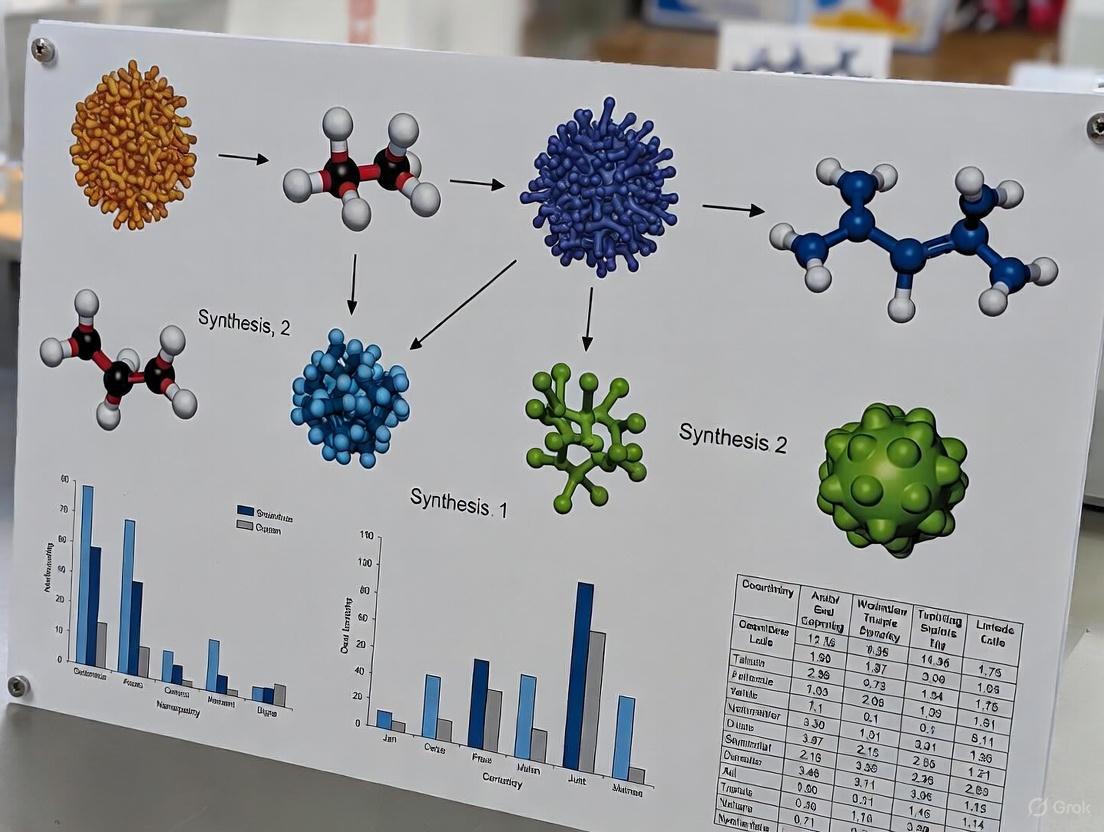
This comprehensive review explores the emerging field of green synthesis of nanoparticles using natural materials, focusing on its transformative potential for biomedical applications and drug delivery.
Green Synthesis of Nanoparticles from Natural Materials: Sustainable Approaches for Advanced Drug Delivery
Abstract
This comprehensive review explores the emerging field of green synthesis of nanoparticles using natural materials, focusing on its transformative potential for biomedical applications and drug delivery. We examine the fundamental principles behind biologically-mediated nanoparticle formation using plant extracts, microorganisms, and biological compounds as eco-friendly alternatives to conventional methods. The article provides detailed methodological approaches for creating various nanoparticle types including metallic, polymeric, and lipid-based systems, with specific applications in drug encapsulation, targeted delivery, and cancer therapy. We address critical optimization parameters and troubleshooting strategies for controlling nanoparticle characteristics, while presenting rigorous validation frameworks and comparative analyses with traditional synthesis methods. This resource equips researchers and drug development professionals with the knowledge to implement sustainable nanotechnology approaches while addressing scalability and clinical translation challenges.
Principles and Potentials: Understanding Green Nanoparticle Synthesis
Green synthesis represents a fundamental paradigm shift in nanomaterial production, moving away from energy-intensive and environmentally harmful traditional methods toward biologically-mediated, sustainable approaches. This framework redefines nanoparticle fabrication by utilizing natural reducing, capping, and stabilizing agents derived from biological systems—including plants, bacteria, fungi, algae, and other biological entities—to transform metal precursors into functional nanoscale structures [1]. The core philosophy centers on implementing the principles of green chemistry throughout the synthesis process, eliminating or significantly reducing the use of hazardous substances, minimizing energy consumption, and ensuring environmental compatibility from inception to final product [2].
The transition to green synthesis methods addresses critical limitations of conventional chemical and physical approaches, which often require high temperatures and pressures, involve toxic reducing agents (e.g., sodium borohydride, hydrazine) and stabilizing chemicals, generate hazardous byproducts, and pose potential environmental and biological risks [3] [4]. In contrast, green synthesis leverages nature's inherent nanofabrication capabilities, utilizing the rich diversity of phytochemicals, proteins, enzymes, and other biological molecules that serve as both reducing agents and natural capping ligands, resulting in nanoparticles with enhanced biocompatibility and functionality for specialized applications [1] [2].
Fundamental Principles and Comparative Advantages
Core Defining Characteristics
Green synthesis of nanoparticles is distinguished by several foundational characteristics. Biological reduction utilizes metabolites from plants, fungi, bacteria, or algae as reducing agents instead of synthetic chemicals, converting metal ions to their zero-valent nanoscale forms through natural biochemical processes [1] [5]. Biological stabilization employs biomolecules that spontaneously adsorb to nanoparticle surfaces, preventing aggregation and controlling growth without additional synthetic capping agents [1] [2]. The approach maintains ambient synthesis conditions, typically proceeding efficiently at room temperature and atmospheric pressure, unlike many conventional methods that require extreme temperatures or pressures [1]. It also ensures renewable sourcing through the use of biologically renewable materials as feedstocks, aligning with circular economy principles [6]. Finally, it minimizes hazardous byproduct generation, significantly reducing or eliminating toxic waste streams associated with traditional nanoparticle synthesis [7] [3].
Quantitative Comparison of Synthesis Methods
Table 1: Comparative analysis of green versus chemical synthesis methods for metallic nanoparticles
| Parameter | Green Synthesis | Chemical Synthesis | Experimental Evidence |
|---|---|---|---|
| Typical Temperature Conditions | Ambient to moderate (25-80°C) [1] | Often elevated (e.g., boiling for citrate method: 100°C) [4] | Turkevich citrate method requires boiling [4] |
| Reducing Agents | Plant phytochemicals (e.g., flavonoids, terpenoids), microbial enzymes [1] [7] | Sodium borohydride, hydrazine, citrate [4] | Neem leaf extract as reducing agent for AgNPs [7] |
| Capping/Stabilizing Agents | Natural biomolecules from extracts (proteins, polysaccharides) [1] | Synthetic polymers, surfactants (e.g., PVP, CTAB) [4] | Withania coagulans extract capping Mn-doped ZnO [3] |
| Particle Crystallite Size | Smaller sizes achievable (e.g., 9.7 nm for green AgNPs) [7] | Typically larger (e.g., 20.6 nm for chemical AgNPs) [7] | XRD analysis confirming size difference [7] |
| Colloidal Stability (Zeta Potential) | Higher stability (e.g., -55.2 mV for green AgNPs) [7] | Lower stability (e.g., -35.7 mV for chemical AgNPs) [7] | DLS measurements showing enhanced stability [7] |
| Environmental Impact | Lower toxicity, biodegradable byproducts [3] | Hazardous waste, toxic reagents [4] | Life cycle assessment studies [4] |
Table 2: Biological performance comparison of green versus chemically synthesized nanoparticles
| Performance Metric | Green-Synthesized NPs | Chemically-Synthesized NPs | Application Context |
|---|---|---|---|
| Germination Rate Enhancement | +19% improvement over chemical AgNPs [7] | Baseline for comparison | Potato seed nanopriming [7] |
| Antioxidant Activity | Up to 43.13% higher [8] | Lower activity | Gold/silver NPs from H. sabdariffa [8] |
| Cytotoxicity | Negligible cytotoxicity, enhanced cell viability [8] | Significant cell death [8] | A549 and HFF cell lines [8] |
| Photocatalytic Efficiency | 53.8% dye degradation [3] | Variable, often lower | Methylene blue degradation [3] |
| Antibacterial Efficacy | Excellent against gram-positive and gram-negative bacteria [3] | Requires higher concentrations | Mn-doped ZnO nanocomposites [3] |
Methodological Approaches and Experimental Protocols
Plant-Mediated Synthesis Protocol
Plant-mediated synthesis represents one of the most widely utilized green synthesis approaches due to its simplicity, scalability, and rich diversity of phytochemicals [1]. The standard experimental workflow involves several key stages. Plant selection and extract preparation begins with washing and drying plant materials (leaves, roots, fruits, or seeds) followed by grinding into fine powder. The material is then mixed with solvent (typically water or ethanol) and heated to 60-80°C for 10-30 minutes to extract bioactive compounds, after which the mixture is filtered to obtain a clear extract [3]. For the reaction mixture preparation, aqueous metal salt solutions (e.g., AgNO₃, HAuCl₄, Zn(CH₃CO₂)₂) are prepared at concentrations ranging from 1-10 mM, then mixed with plant extract in varying ratios (typically 1:1 to 1:10 v/v) [7] [3]. The synthesis reaction proceeds under continuous stirring at room temperature or mild heating (40-80°C), with reaction completion indicated by color change (e.g., colorless to brown for AgNPs, yellow to purple for AuNPs) over minutes to hours [7]. Finally, nanoparticle recovery involves centrifugation at high speeds (6,000-15,000 rpm) for 10-30 minutes to pellet nanoparticles, followed by washing with solvent to remove unreacted components, and drying at elevated temperatures (60-80°C) to obtain powdered nanoparticles [3].
The following workflow diagram illustrates the plant-mediated green synthesis process:
Microbial Synthesis Protocol
Microbial synthesis utilizes bacteria, fungi, yeast, or microalgae for intracellular or extracellular nanoparticle production [1] [5]. The process begins with microbial cultivation, where selected microbial strains are cultured in appropriate growth media under optimized conditions to achieve sufficient biomass density [5]. For biomass preparation, cells are harvested through centrifugation and may be used directly as whole cells or resuspended in sterile water or buffer for reaction. In nanoparticle synthesis, the biomass suspension is exposed to metal salt solutions at specific concentrations, with reaction parameters such as pH, temperature, agitation, and reaction time carefully controlled and monitored [5]. Finally, nanoparticle recovery differs for extracellular synthesis (centrifugation of culture supernatant) versus intracellular synthesis (cell disruption followed by purification), with additional purification steps potentially including washing, filtration, and density gradient centrifugation [5].
Standard Characterization Techniques
Comprehensive characterization of green-synthesized nanoparticles employs multiple analytical techniques. UV-visible spectroscopy monitors surface plasmon resonance peaks during synthesis and determines optical properties and stability [7] [3]. X-ray diffraction (XRD) analyzes crystalline structure, phase identification, and estimates crystallite size using Scherrer equation [7] [3]. Electron microscopy (SEM/TEM) provides direct imaging of nanoparticle size, shape, and morphology at nanoscale resolution [7]. Fourier-transform infrared (FTIR) spectroscopy identifies functional groups of biomolecules capping nanoparticle surfaces [7] [3]. Dynamic light scattering (DLS) measures hydrodynamic size distribution and polydispersity index in solution [7]. Zeta potential analysis determines surface charge and predicts colloidal stability [7]. Energy-dispersive X-ray spectroscopy (EDX) confirms elemental composition and purity [3].
Mechanistic Pathways in Green Synthesis
Molecular Reduction Mechanisms
The biological reduction of metal ions to nanoparticles in green synthesis systems proceeds through multiple simultaneous mechanistic pathways. Plant phytochemicals serve as both reducing and capping agents, where polyphenols, flavonoids, and terpenoids donate electrons to reduce metal ions while simultaneously stabilizing formed nanoparticles through surface coordination [1] [2]. In microbial systems, specific enzymes (e.g., nitrate reductases, dehydrogenases) catalyze metal ion reduction, often coupled with cellular detoxification pathways that sequester metals in nanoparticulate form [5]. Additionally, proteins and peptides present in biological extracts bind to metal ions through functional groups (-SH, -NH₂, -COOH), facilitating nucleation while controlling growth direction and preventing aggregation [2].
The reduction process can be conceptually understood through this mechanistic pathway:
Factors Influencing Nanoparticle Characteristics
Multiple parameters critically influence the properties of green-synthesized nanoparticles. pH variation significantly affects nanoparticle size and shape by altering the charge and reducing power of biological molecules [1]. Reaction temperature controls reduction kinetics and nucleation rates, with higher temperatures typically yielding smaller, more monodisperse particles [7]. Reaction time determines completion of reduction process and can influence crystallinity and stability [3]. Extract concentration affects the number of nucleation sites and capping density, directly impacting final particle size distribution [1] [7]. Metal ion concentration influences nucleation rates and determines the balance between nucleation and growth processes [7] [3]. Finally, incubation conditions (agitation, light exposure) can modify reaction kinetics and particle properties [2].
The Research Toolkit: Essential Reagents and Materials
Table 3: Essential research reagents and materials for green synthesis experiments
| Reagent/Material | Function | Examples & Specifications |
|---|---|---|
| Plant Materials | Source of reducing and capping agents | Neem (Azadirachta indica) leaves [7], Withania coagulans fruits [3], H. sabdariffa flowers [8] |
| Metal Salts | Metal ion precursors for nanoparticles | Silver nitrate (AgNO₃) [7], Gold(III) chloride trihydrate (HAuCl₄·3H₂O) [8], Zinc acetate [3] |
| Solvents | Extraction medium and reaction solvent | Deionized water, ethanol, methanol (analytical grade) [3] |
| pH Modifiers | Optimization of reduction conditions | Sodium hydroxide (NaOH), hydrochloric acid (HCl) [3] |
| Culture Media | Microbial cultivation for biosynthesis | Luria-Bertani (LB) broth, nutrient broth, algal growth media [5] |
| Purification Aids | Separation and cleaning of nanoparticles | Centrifuges, filters (0.22 μm), dialysis membranes [7] [3] |
Applications and Performance Advantages
Agricultural Applications
Green-synthesized nanoparticles demonstrate remarkable efficacy in agricultural applications. As nanopriming agents, they enhance seed germination rates and stress resilience, with green-synthesized silver nanoparticles showing 19% improved germination over chemically-synthesized equivalents and 50% improvement over hydroprimed controls in potato seeds [7]. They also confer thermotolerance, maintaining 10% higher germination rates under elevated temperature stress (32.2°C) through enhanced water uptake capacity (82% increase in seed mass versus 44% in controls) [7]. Additionally, they provide disease resistance through inherent antimicrobial properties that protect seedlings from pathogenic infections [7] [3].
Biomedical Applications
In the biomedical domain, green-synthesized nanoparticles offer significant advantages. They exhibit enhanced biocompatibility, with studies showing negligible cytotoxicity in human cell lines (A549 and HFF) compared to chemically-synthesized nanoparticles that induce significant cell death [8]. Their antioxidant properties are substantially higher (up to 43.13% improvement) compared to chemically-synthesized equivalents, making them valuable for therapeutic applications [8]. They also demonstrate antimicrobial efficacy against both gram-positive and gram-negative bacterial strains, with green-synthesized Mn-doped ZnO nanocomposites showing excellent antibacterial activity [3]. Furthermore, they enable targeted cancer therapy through enhanced permeability and retention effects and functionalization capabilities, with microalgal nanoparticles showing promising results against various cancer cell lines [5].
Environmental Remediation
Green-synthesized nanoparticles effectively address environmental challenges through multiple mechanisms. They enable photocatalytic degradation of organic pollutants, with Mn-doped ZnO nanocomposites demonstrating 53.8% degradation of methylene blue dye [3]. They also facilitate heavy metal removal from contaminated water through high surface area and functionalized surfaces that bind metal ions [1] [9]. Additionally, they provide antimicrobial water treatment using silver and zinc oxide nanoparticles for decentralized water purification systems [6].
Challenges and Future Perspectives
Despite significant advances, green synthesis faces several challenges requiring attention. Standardization issues include batch-to-batch variability in biological sources due to seasonal, geographical, and cultivation variations that affect reproducibility [1] [4]. Scalability limitations involve transitioning from laboratory-scale synthesis to industrial production while maintaining consistent quality and properties [1] [2]. Characterization complexities arise from the biomolecular corona that forms around green-synthesized nanoparticles, complicating precise surface characterization [1]. There are also knowledge gaps regarding the exact mechanistic roles of specific biomolecules in reduction and capping processes [1] [2]. Finally, environmental impact assessments require more comprehensive life cycle analyses to quantitatively validate environmental benefits compared to conventional methods [4].
Future research directions should focus on developing standardized protocols for biological extract preparation and synthesis conditions to minimize variability [1]. Exploring novel biological sources, including extremophiles and agricultural waste products, could yield nanoparticles with unique properties [6] [5]. Integrating advanced technologies like machine learning and robotic automation could optimize synthesis parameters and accelerate discovery of novel green synthesis routes [6]. Engineering microalgae and other microorganisms through synthetic biology approaches could enhance nanoparticle yield and tailor properties for specific applications [5]. Finally, developing comprehensive regulatory frameworks and safety guidelines specifically addressing green-synthesized nanomaterials will be essential for clinical translation and commercial applications [4] [9].
Green synthesis represents a transformative approach to nanoparticle production that fundamentally redefines sustainable nanomaterial fabrication. By harnessing the sophisticated reduction and stabilization capabilities of biological systems, this methodology offers a viable alternative to traditional chemical methods, aligning nanotechnology development with green chemistry principles and circular economy objectives. The demonstrated advantages of green-synthesized nanoparticles—including enhanced biocompatibility, superior biological performance, and reduced environmental impact—position them as enabling technologies across biomedical, agricultural, and environmental applications. As research addresses current challenges in standardization, scalability, and mechanistic understanding, green synthesis is poised to transition from laboratory innovation to mainstream manufacturing, ultimately fulfilling its promise as a truly sustainable platform for advanced nanomaterial production.
The synthesis of nanoparticles (NPs) using natural resources represents a paradigm shift in nanotechnology, moving away from traditional chemical and physical methods that often involve toxic reagents and high energy consumption. Green synthesis leverages biological systems—including plants, microorganisms, and biomolecules—as sustainable factories to produce nanoparticles with controlled characteristics and reduced environmental impact [1]. This approach aligns with the principles of green chemistry and sustainable development, aiming to minimize hazardous waste and energy usage [10]. The inherent biochemical diversity in nature provides a vast toolkit for the reduction and stabilization of metal ions into nanoscale materials, offering a biocompatible and scalable alternative to conventional synthesis routes [11] [1].
The growing interest in biologically synthesized nanoparticles stems from their unique physicochemical properties and broad applicability across fields including biomedicine, agriculture, environmental remediation, and catalysis [12] [1] [10]. Unlike synthetically produced nanoparticles, biogenic nanoparticles often exhibit enhanced biocompatibility and functionalization potential due to the natural capping agents that facilitate their formation [11]. This technical guide explores the fundamental mechanisms, methodologies, and applications of nanoparticle production using plant extracts, microorganisms, and biomolecules, providing researchers with a comprehensive resource for designing green synthesis protocols.
Plant-Mediated Nanoparticle Synthesis
Mechanisms and Principles
Plant-mediated synthesis represents one of the most widely utilized approaches for green nanoparticle production due to its simplicity, cost-effectiveness, and scalability [1]. This method utilizes aqueous extracts derived from various plant parts—including leaves, roots, fruits, and seeds—which serve as both reducing and stabilizing agents [1] [10]. The synthesis process is facilitated by diverse phytochemicals present in plant extracts, including flavonoids, phenols, alkaloids, terpenoids, and other secondary metabolites that possess redox capabilities [1] [13]. These compounds facilitate the reduction of metal ions to their zero-valent nanoscale forms while simultaneously stabilizing the surface to prevent aggregation [10].
The general procedure involves combining plant extract with a metal precursor solution under controlled conditions of temperature, pH, and agitation [1]. The rapid reduction of metal ions is often visually confirmed by color changes in the reaction mixture—for instance, the formation of a black solution when synthesizing iron nanoparticles [12] or a brownish-yellow solution for silver nanoparticles [13]. The concentration of phytochemicals, extraction method, and type of plant material significantly influence the nucleation, growth, and final characteristics of the nanoparticles [1]. However, a critical challenge in plant-based synthesis is the standardization of plant extracts, as variations in plant composition due to seasonality, geographical location, and cultivation practices can introduce inconsistencies in the synthesis process [1].
Experimental Protocols
Protocol for Iron Nanoparticle Synthesis Using Terminalia catappa Leaf Extract [12]:
- Plant Extract Preparation: Collect fresh leaves of Terminalia catappa, wash thoroughly, and air-dry at room temperature. Cut into small pieces and crush in distilled water. Boil the mixture at 70°C for 30 minutes, followed by filtration and centrifugation to remove debris. Store the supernatant as the final extract.
- Nanoparticle Synthesis: Prepare a 0.01 M solution of FeCl₃·6H₂O. Mix the leaf extract with the iron solution at a 1:1 ratio under constant stirring for 30 minutes. Observe color change to black, indicating nanoparticle formation.
- Purification and Recovery: Allow the mixture to stand for 3 hours, then centrifuge at 5000 rpm for 30 minutes. Collect the pellet and dry at 150°C for 2 hours before storage and characterization.
Protocol for Silver Nanoparticle Synthesis Using Cotula cinerea Extract [13]:
- Extract Preparation: Wash aerial parts of Cotula cinerea and prepare an aqueous extract through boiling in distilled water followed by filtration.
- Synthesis Process: Mix the plant extract with silver salt solution (concentration may vary). The reduction occurs rapidly at room temperature with continuous stirring.
- Characterization: Monitor synthesis using UV-Vis spectrophotometry with a characteristic peak observed at approximately 445 nm. Further characterization through XRD, SEM, and TEM confirms crystalline, spherical nanoparticles with sizes under 20 nm.
Table 1: Key Phytochemicals Involved in Plant-Mediated Nanoparticle Synthesis
| Phytochemical Class | Role in Synthesis | Example Sources |
|---|---|---|
| Flavonoids | Reduction of metal ions, stabilization | Terminalia catappa, Cassia tora [12] |
| Phenolic compounds | Primary reducing agents, capping | Cotula cinerea [13] |
| Terpenoids | Stabilization of nanoparticles | Portulaca oleracea [12] |
| Alkaloids | Metal ion reduction | Tinospora cordifolia [12] |
| Polysaccharides | Template for nanoparticle formation | Various plant gums and exudates |
Diagram Title: Plant-Mediated Nanoparticle Synthesis Workflow
Microorganism-Assisted Nanoparticle Synthesis
Bacterial and Microbial Systems
Microorganisms offer a sophisticated biological platform for nanoparticle synthesis through both intracellular and extracellular mechanisms [1]. Among bacterial systems, magnetotactic bacteria represent a particularly remarkable example, producing highly structured magnetic nanoparticles through genetically controlled biomineralization processes [14]. Strains such as Magnetospirillum gryphiswaldense MSR-1 produce chains of magnetite (Fe₃O₄) nanoparticles within specialized organelles called magnetosomes [14]. These structures are enveloped by biological membranes that provide natural functionalization sites for further modification [14].
The biosynthesis of magnetosomes is a complex process governed by specific genomic clusters within the bacterial genome [14]. It begins with iron capture from the environment, followed by precipitation into iron minerals within vesicles formed from the internal bacterial membrane [14]. The resulting nanoparticles exhibit exceptional characteristics including narrow size distribution, consistent particle shape, and high crystalline purity, typically ranging between 30-40 nm in diameter [14]. These uniform biogenic nanomagnets (BMNs) have demonstrated versatile applications in healthcare, environmental remediation, biosensing, and as hyperthermal agents for tumor inhibition [14].
Techno-Economic Analysis of Microbial Production
Scaling up microbial nanoparticle production presents both challenges and opportunities. A techno-economic analysis of magnetite production using Magnetospirillum gryphiswaldense in a 29 m³ bioreactor demonstrated promising economic viability [14]. The simulated plant comprised three sections: an inoculum train, fermentation section, and downstream recovery section [14]. The fed-batch fermentation process operated at 30°C with controlled microaerophilic conditions (0.002-0.003 vvm oxygen supply) and pH range of 6.8-7.0 over 42 hours [14].
Table 2: Techno-Economic Analysis of Magnetosome Production [14]
| Parameter | Single-Stage Fed-Batch | Semicontinuous Process |
|---|---|---|
| Production cost (per kg) | US$ 10,372 | US$ 11,169 |
| Minimum selling price (per gram) | US$ 21-120 | US$ 21-120 |
| Bioreactor volume | 29 m³ | 29 m³ |
| Fermentation time | 42 hours | 42 hours |
| Temperature | 30°C | 30°C |
| Competitive advantage | Consistently below commercial synthetic nanoparticles | Comparable economic viability |
The economic assessment revealed fabrication costs of US$10,372 per kilogram for single-stage fed-batch and US$11,169 per kilogram for semicontinuous processes [14]. With minimum selling prices ranging between US$21-120 per gram—consistently below commercial values for synthetic nanoparticles—microbial production presents an economically competitive alternative for greener manufacturing of magnetic nanoparticles [14].
Biomolecule-Mediated Synthesis and Applications
Agricultural Applications
Green-synthesized nanoparticles show remarkable potential in agriculture as nanofertilizers to enhance crop productivity and mitigate abiotic stress [12] [11] [13]. Research on pigeonpea (Cajanus cajan) demonstrated that green-synthesized iron and zinc nanoparticles significantly improved seed germination, plant growth, and overall productivity [12]. Through optimized seed priming and foliar application, field trials recorded a 77.41% increase in seed yield (1728 kg ha⁻¹), a 77.35% higher stalk yield (4285 kg ha⁻¹), and a 52.20% increase in husk yield (828 kg ha⁻¹) compared to control groups [12]. Additionally, these treatments enhanced SPAD values (chlorophyll content) by 27.82% and NDVI values (vegetation index) by 54.38%, indicating improved plant health and photosynthetic efficiency [12].
In abiotic stress mitigation, silver nanoparticles synthesized using Cotula cinerea extract demonstrated efficacy in enhancing salt tolerance in durum wheat (Triticum durum Desf) [13]. Under saline conditions (150 mM NaCl), seeds treated with 40 mg L⁻¹ of AgNPs achieved 90% germinability compared to 70% in untreated controls [13]. Root length exhibited an 86% increase (7.28 cm vs. 3.9 cm in control), while root fresh weight increased from 0.04g to 0.06g under salt stress [13]. These findings underscore the potential of green-synthesized nanoparticles as effective tools for sustainable crop improvement in challenging environments.
Biomedical Applications
Green-synthesized metal nanoparticles (G-MNPs) have gained significant attention in biomedical fields due to their enhanced biocompatibility and functionalization potential [1]. Their intrinsic properties—including electronic, optical, and physicochemical characteristics coupled with surface plasmon resonance—make them highly tunable for various therapeutic applications [1]. These nanoparticles have demonstrated promising outcomes in targeted drug delivery, biosensing, photothermal and photodynamic therapies, medical imaging, and as antimicrobial agents [1] [10].
The biomedical applicability of green-synthesized nanoparticles stems from their unique advantages over chemically synthesized counterparts, including reduced toxicity, enhanced biodegradability, and the presence of natural capping agents that facilitate further functionalization [1]. Silver nanoparticles synthesized using plant extracts have shown particularly potent antimicrobial efficacy against multidrug-resistant pathogens, making them valuable candidates for combating antibiotic-resistant infections [10]. Additionally, their application in wound healing and tissue engineering demonstrates the versatility of biogenic nanoparticles in addressing diverse medical challenges [1].
Diagram Title: Applications of Green-Synthesized Nanoparticles
Characterization and Analytical Techniques
Comprehensive characterization is essential to confirm the synthesis, determine physicochemical properties, and validate the applicability of biogenic nanoparticles. Multiple analytical techniques provide complementary information about different aspects of the synthesized nanomaterials [12] [13].
UV-Visible Spectrophotometry serves as a preliminary characterization tool that confirms nanoparticle formation through surface plasmon resonance peaks at specific wavelengths—for instance, silver nanoparticles typically exhibit peaks between 400-450 nm [13]. Dynamic Light Scattering (DLS) measures the hydrodynamic diameter and size distribution of nanoparticles in suspension, while Zeta Potential analysis indicates surface charge and colloidal stability [12]. Scanning Electron Microscopy (SEM) and Transmission Electron Microscopy (TEM) provide high-resolution imaging of nanoparticle morphology, size, and distribution at the nanoscale [12] [13]. X-ray Diffraction (XRD) analysis determines the crystalline structure, phase composition, and crystallite size of the nanomaterials [12]. Fourier Transform Infrared Spectroscopy (FTIR) identifies functional groups and biomolecules responsible for reduction and stabilization by analyzing characteristic vibrational frequencies [12].
Table 3: Standard Characterization Techniques for Biogenic Nanoparticles
| Technique | Information Obtained | Typical Results for Green NPs |
|---|---|---|
| UV-Vis Spectroscopy | Surface plasmon resonance, synthesis confirmation | Peak at 445.91 nm for AgNPs [13] |
| Dynamic Light Scattering | Hydrodynamic size, size distribution | 351.6 nm for AgNPs (larger due to hydration) [13] |
| Zeta Potential | Surface charge, colloidal stability | High negative/positive values indicate stability |
| TEM | Morphology, actual particle size, distribution | Spherical particles, ~15.128 nm for AgNPs [13] |
| SEM | Surface morphology, particle shape | Spherical/cuboidal morphology [13] |
| XRD | Crystalline structure, phase identification | Face-centered cubic for AgNPs [13] |
| FTIR | Functional groups, capping agents | Presence of polyphenols, flavonoids [12] |
The Scientist's Toolkit: Essential Research Reagents
Table 4: Essential Research Reagents for Green Nanoparticle Synthesis
| Reagent/Material | Function | Examples/Specifications |
|---|---|---|
| Plant extracts | Reducing and stabilizing agents | Terminalia catappa (iron NPs), Tridax procumbens (zinc NPs) [12] |
| Metal salts | Precursor materials | FeCl₃·6H₂O, Zn(NO₃)₂·6H₂O, AgNO₃ (0.01-0.1 M) [12] [13] |
| Culture media | Microbial growth and NP production | Specific media for magnetotactic bacteria [14] |
| Centrifugation equipment | Nanoparticle recovery and purification | 5000 rpm for 30 minutes [12] |
| pH buffers | Reaction condition control | Maintain pH 6.8-7.0 for bacterial culture [14] |
| Temperature control systems | Optimization of synthesis conditions | 30°C for bacterial fermentation, 70-80°C for extract preparation [14] [12] |
| Filtration membranes | Extract clarification and sterilization | Whatman No. 1 filter paper [12] |
The utilization of natural resources for nanoparticle production represents a transformative approach that effectively bridges nanotechnology with sustainability principles. Plant extracts, microorganisms, and biomolecules offer diverse biological platforms for generating nanoparticles with tailored characteristics and enhanced biocompatibility. The sophisticated biochemical machinery within these biological systems facilitates the precise reduction and stabilization of metal ions into functional nanomaterials, often surpassing the capabilities of conventional synthetic methods. As research in this field advances, optimizing standardization protocols, scaling-up production processes, and conducting comprehensive toxicological assessments will be crucial for fully realizing the potential of biogenic nanoparticles across agricultural, biomedical, and environmental applications.
The green synthesis of nanoparticles represents a paradigm shift in nanotechnology, moving away from traditional chemical and physical methods that often involve hazardous substances, high energy consumption, and toxic byproducts [15] [16]. This eco-friendly approach leverages biological systems—including plants, bacteria, fungi, and algae—as sustainable factories for nanoparticle production [17]. The fundamental superiority of biogenic synthesis lies in its utilization of inherent biological compounds that serve dual roles as reducing and stabilizing agents, forming nanoparticles with enhanced biocompatibility and unique physicochemical properties [18]. Understanding the precise molecular mechanisms through which these biological entities facilitate reduction and stabilization is crucial for advancing green nanotechnology and harnessing its full potential in biomedical applications, drug delivery, and environmental remediation [15] [19].
The synthesis process is essentially a redox reaction where metal ions from precursor salts are reduced to their zero-valent metallic form, followed by nucleation and growth into nanostructures [20]. What distinguishes biogenic synthesis is that this process occurs under ambient conditions, powered by biological molecules rather than harsh chemicals [18]. The resulting nanoparticles are typically capped with biological compounds that impart stability and functionality, making them particularly valuable for biomedical applications where surface characteristics dictate biological interactions [21] [19]. This review comprehensively examines the molecular-level mechanisms underlying these processes, providing researchers with a technical foundation for advancing green nanomaterial design.
Molecular Mechanisms of Metal Ion Reduction
Reduction by Plant Phytochemicals
Plant-mediated synthesis represents the most widely utilized approach in green nanotechnology due to the rich diversity of phytochemicals that facilitate rapid reduction of metal ions [18]. The reduction process is primarily driven by secondary metabolites that possess redox-active functional groups.
Table 1: Key Phytochemical Classes Involved in Nanoparticle Reduction
| Phytochemical Class | Specific Examples | Reduction Mechanism | Metal Ions Reduced |
|---|---|---|---|
| Flavonoids | Quercetin, Kaempferol, Catechin | Electron donation via phenolic OH groups, tautomerization | Ag⁺, Au³⁺, Zn²⁺, Cu²⁺ |
| Terpenoids | Monoterpenoids, Sesquiterpenoids, Diterpenoids | Carbonyl groups undergo tautomerization | Ag⁺, Au³⁺, Pt⁴⁺ |
| Phenolic Acids | Gallic acid, Caffeic acid, Ferulic acid | Oxidation of phenolic groups to quinones | Ag⁺, Au³⁺, Fe³⁺ |
| Alkaloids | Piperine, Caffeine, Theobromine | Tertiary amine oxidation | Ag⁺, Pd²⁺, Cu²⁺ |
| Proteins/Enzymes | NADH-dependent reductases, Catalases | Electron transfer via cofactors | Ag⁺, Au³⁺, Se⁴⁺ |
The reduction mechanism begins with the chelation of metal ions by phytochemicals through their functional groups. Flavonoids and phenolic compounds utilize their hydroxyl groups to coordinate metal ions, facilitating electron transfer from the phenol to the metal ion, thereby reducing the metal and oxidizing the phenol to a quinone [15]. Terpenoids employ their carbonyl groups, which undergo tautomerization to enol forms that donate electrons to metal ions [19]. The efficiency of reduction depends on parameters including pH, temperature, reactant concentrations, and reaction time, which must be optimized for each biological system [18].
Figure 1: Molecular Reduction Pathway for Plant-Mediated Nanoparticle Synthesis
Microbial Reduction Mechanisms
Microorganisms including bacteria, fungi, yeast, and algae employ specialized enzymatic machinery for nanoparticle synthesis, typically as part of detoxification pathways [15] [20]. The microbial reduction mechanisms can be categorized as either intracellular or extracellular processes.
Intracellular reduction involves the transport of metal ions across the cell membrane through membrane transporters or via passive diffusion. Once inside the cell, metal ions are reduced by intracellular enzymes such as NADH-dependent reductases [15]. For instance, Lactobacillus kimchicus demonstrates intracellular synthesis of gold nanoparticles through this mechanism [15]. The resulting nanoparticles are capped with intracellular proteins and peptides, which must then be extracted through cell disruption techniques.
Extracellular reduction occurs outside the microbial cell, where secreted enzymes or metabolic byproducts reduce metal ions. Bacteria such as Shewanella oneidensis secrete extracellular reductases that facilitate the synthesis of nearly monodispersed silver nanoparticles (2-10 nm) [20]. Similarly, the fungus Fusarium oxysporum secretes NADH-dependent nitrate reductases that reduce metal ions extracellularly [22]. This approach is advantageous for large-scale production as it avoids the need for cell disruption to harvest nanoparticles.
Yeast and algae utilize specialized metal-binding peptides called phytochelatins for both reduction and stabilization. These peptides, composed of glutamate, cysteine, and glycine, feature thiol groups that coordinate with metal ions and facilitate reduction through electron transfer [22]. In some photosynthetic algae, siderophores—special iron-chelating molecules—have been reported to mediate nanoparticle formation [22].
Stabilization Mechanisms of Biogenic Nanoparticles
The Role of Capping Agents in Nanoparticle Stability
Stabilization is critical for preventing nanoparticle aggregation and maintaining their nanoscale properties. Biogenic capping agents adsorb onto nanoparticle surfaces, creating a protective layer that provides steric hindrance and/or electrostatic repulsion [19]. These capping agents are inherently present in the biological extracts and spontaneously coordinate with the growing nanoparticles during synthesis.
Table 2: Biological Capping Agents and Their Stabilization Mechanisms
| Capping Agent Category | Specific Examples | Stabilization Mechanism | Functional Groups Involved |
|---|---|---|---|
| Proteins | Collagen, BSA, HSA, Enzymes | Steric hindrance, Electrosteric stabilization | -NH₂, -COOH, -SH |
| Polysaccharides | Starch, Chitosan, Cellulose | Steric stabilization, Viscosity enhancement | -OH, -NH₂ |
| Lipids | Phospholipids, Fatty acids | Hydrophobic interactions, Bilayer formation | -COOH, Hydrocarbon chains |
| Phytochemicals | Flavonoids, Terpenoids, Alkaloids | Electrostatic, Coordination bonds | -OH, C=O, -NH |
| Nucleic Acids | DNA, RNA | Template-assisted, Sequence-specific binding | Phosphate, -NH₂, -OH |
The effectiveness of a capping agent depends on its binding affinity to the nanoparticle surface and its ability to create sufficient repulsive forces between particles. Proteins function as excellent capping agents due to the presence of multiple functional groups (amino, carboxyl, thiol) that can coordinate with metal surfaces [19]. For example, bovine serum albumin (BSA) provides electrosteric stabilization through a combination of electrostatic repulsion from charged amino acid residues and steric hindrance from the protein structure [19]. Similarly, collagen's triple-helical structure creates a stable matrix that controls nanoparticle size and prevents aggregation more effectively than chemical stabilizers like citrate [19].
Molecular Interactions in Biogenic Capping
At the molecular level, stabilization occurs through various interactions between capping agents and nanoparticle surfaces:
Coordination bonds form between metal atoms on the nanoparticle surface and electron-donating groups on biological molecules. Thiol groups (-SH) in cysteine-containing peptides and proteins exhibit particularly strong affinity for noble metal surfaces like gold and silver, forming stable metal-thiolate bonds [22]. Similarly, amine groups (-NH₂) from amino acids and proteins coordinate with metal surfaces through lone pair donation [19].
Electrostatic stabilization occurs when charged functional groups on capping agents create repulsive forces between nanoparticles. Carboxylate groups (-COO⁻) from organic acids and proteins impart negative charges that prevent aggregation through Coulombic repulsion [20]. The surface charge can be modulated by pH adjustment to enhance stability.
Steric stabilization is provided by large biomolecules like proteins and polysaccharides that create physical barriers between nanoparticles, preventing close approach and aggregation [19]. Polymers like starch and chitosan form hydrated layers around nanoparticles that must be disrupted for aggregation to occur.
In many cases, biogenic capping involves multiple stabilization mechanisms simultaneously. For example, serum albumin proteins provide both electrostatic and steric stabilization (electrosteric stabilization), making them particularly effective capping agents [19].
Experimental Protocols for Mechanistic Studies
Standardized Green Synthesis Methodology
To ensure reproducibility in biogenic nanoparticle synthesis, standardized protocols must be implemented with careful control of reaction parameters. The following represents a generalized procedure for plant-mediated synthesis:
Plant Extract Preparation:
- Select and authenticate plant material (leaves, roots, bark, etc.)
- Wash thoroughly with distilled water to remove surface contaminants
- Dry at 40°C in a hot air oven until crisp
- Pulverize using a laboratory blender to fine powder
- Prepare extract by mixing 10 g powder with 100 mL distilled water (1:10 ratio)
- Heat at 60-80°C for 10-15 minutes with continuous stirring
- Filter through Whatman No. 1 filter paper, followed by 0.45 μm membrane filtration
- Store extract at 4°C for maximum stability (use within one week)
Nanoparticle Synthesis:
- Prepare 1-10 mM aqueous solution of metal salt (e.g., AgNO₃, HAuCl₄, ZnSO₄)
- Mix plant extract with metal salt solution in specific ratio (typically 1:9 to 1:1 v/v)
- Adjust pH to optimal range (typically 6-10) using NaOH/HCl
- Incubate reaction mixture at specified temperature (25-80°C) with constant stirring
- Monitor color change visually and spectroscopically
- Continue reaction until completion (5 minutes to 24 hours depending on system)
- Purify nanoparticles by centrifugation (10,000-15,000 rpm for 15-30 minutes)
- Resuspend pellet in distilled water or buffer and repeat 2-3 times
- Characterize using spectroscopic and microscopic techniques
Critical Parameters for Optimization:
- Plant extract concentration and phytochemical composition
- Metal salt concentration and type
- Reaction temperature and pH
- Incubation time
- Mixing speed and efficiency
Advanced Characterization Techniques
Understanding the molecular mechanisms of reduction and stabilization requires sophisticated characterization approaches:
UV-Visible Spectroscopy: Monitors the formation of nanoparticles through surface plasmon resonance measurements, typically in the range of 400-450 nm for silver and 500-550 nm for gold nanoparticles [17]. Kinetics of nanoparticle formation can be tracked using time-dependent measurements.
Transmission Electron Microscopy (TEM): Provides high-resolution imaging of nanoparticle size, shape, and distribution [23]. Sample preparation involves placing a drop of nanoparticle suspension on carbon-coated copper grids, followed by drying under vacuum. For biological samples, fixation with glutaraldehyde and staining with uranyl acetate may be required [23].
Energy-Filtered TEM (EFTEM): Distinguishes nanoparticles from cellular components through elemental mapping, particularly useful for intracellular localization studies [23].
Fourier Transform Infrared Spectroscopy (FTIR): Identifies functional groups of capping agents on nanoparticle surfaces by detecting changes in absorption peaks before and after synthesis.
X-ray Diffraction (XRD): Determines crystallinity and crystal structure of nanoparticles through Bragg's law analysis [17].
Dynamic Light Scattering (DLS): Measures hydrodynamic diameter and size distribution of nanoparticles in suspension [21].
Zeta Potential Analysis: Quantifies surface charge and predicts colloidal stability through electrophoretic mobility measurements.
Table 3: Essential Reagents and Materials for Biogenic Nanoparticle Research
| Reagent/Material | Specifications | Primary Function | Technical Considerations |
|---|---|---|---|
| Metal Salts | AgNO₃, HAuCl₄·3H₂O, ZnSO₄·7H₂O, CuSO₄·5H₂O | Precursor for nanoparticle synthesis | High purity (>99%), light-sensitive, prepare fresh solutions |
| Biological Materials | Plant tissues, Microbial cultures, Purified biomolecules | Source of reducing/capping agents | Standardize growth conditions, extraction methods |
| Buffers | Phosphate, Acetate, Borate buffers | pH control during synthesis | Adjust to optimal pH for specific biological system |
| Centrifugation Equipment | Ultracentrifuge (up to 100,000×g) | Nanoparticle purification and separation | Optimize speed/time to prevent aggregation |
| Filtration Units | 0.22 μm, 0.45 μm membrane filters | Sterilization and purification | Pre-wet membranes to prevent adsorption |
| Spectrophotometer | UV-Vis with kinetic measurement capability | Synthesis monitoring and characterization | Use quartz cuvettes for accurate measurements |
| Microscopy Grids | Carbon-coated copper grids | TEM sample preparation | Plasma clean for improved adhesion |
Biomedical Applications and Functional Advantages
The biological capping agents in green-synthesized nanoparticles provide unique advantages for biomedical applications. In drug delivery, the inherent biocompatibility of biogenic capping reduces immunogenic responses and improves circulation time [21]. For instance, albumin-coated nanoparticles have demonstrated enhanced blood-brain barrier penetration, facilitating drug delivery to the central nervous system [21]. Transferrin-conjugated nanoparticles show significantly higher cellular uptake in brain endothelial cells compared to unconjugated counterparts, highlighting the targeting potential of biological capping [21].
In antimicrobial applications, biogenic silver nanoparticles capped with plant phytochemicals exhibit broad-spectrum activity against pathogenic bacteria, including antibiotic-resistant strains [20]. The capping layer itself can contribute to antibacterial efficacy through membrane disruption and reactive oxygen species generation [20]. Importantly, concentration windows exist where nanoparticles are toxic to bacteria but not mammalian cells, enabling therapeutic selectivity [20].
For wound healing applications, the combination of metallic nanoparticles with biological capping agents accelerates tissue regeneration through antimicrobial, anti-inflammatory, and pro-angiogenic effects [18]. Collagen-capped nanoparticles integrate naturally with the extracellular matrix, promoting cell migration and proliferation at wound sites [19].
The molecular mechanisms underlying biogenic nanoparticle synthesis involve sophisticated redox biochemistry and surface stabilization phenomena. Biological compounds reduce metal ions through electron donation from functional groups including phenols, carbonyls, and thiols, while stabilization is achieved through coordination bonds, electrostatic repulsion, and steric hindrance from capping agents. These natural synthesis pathways offer sustainable alternatives to conventional methods, producing nanoparticles with enhanced biocompatibility and biomedical functionality.
Despite significant advances, challenges remain in standardizing biological sources, scaling up production, and fully elucidating structure-activity relationships. Future research should focus on quantitative analysis of reaction kinetics, systematic evaluation of capping agent effects on biological activity, and detailed investigation of molecular-level interactions between capping agents and nanoparticle surfaces. As characterization techniques advance and our understanding of biological reduction mechanisms deepens, green synthesis promises to play an increasingly pivotal role in sustainable nanotechnology development across biomedical, environmental, and industrial sectors.
The green synthesis of nanoparticles represents a paradigm shift in nanotechnology, offering a sustainable alternative to conventional physical and chemical methods. This whitepaper provides an in-depth technical analysis of the three cornerstone advantages of green synthesis: enhanced sustainability through environmentally responsible production processes, significant cost-effectiveness from resource-efficient methodologies, and substantially reduced toxicity profiles for biomedical and environmental applications. Drawing upon recent advances in the field, we examine the mechanistic foundations of plant-based, microalgal, and other biological synthesis routes, detail standardized experimental protocols for reproducible nanoparticle fabrication, and present quantitative data comparing performance metrics across synthesis methods. The comprehensive data presented herein establishes green synthesis as a technologically viable and economically superior approach for research-scale and industrial nanoparticle production, aligning with global sustainability initiatives while maintaining rigorous performance standards required by pharmaceutical and biotechnology industries.
Green synthesis of nanoparticles utilizes biological resources—including plant extracts, microorganisms, algae, and other biomaterials—as sustainable alternatives to conventional chemical and physical synthesis methods [16]. This approach operates at the intersection of green chemistry and nanotechnology, emphasizing the design of safer chemical products and processes that reduce or avoid the formation and application of hazardous substances [24]. Where traditional nanoparticle synthesis relies on toxic chemicals, high energy inputs, and generates hazardous byproducts, green synthesis employs biologically derived reducing and stabilizing agents under ambient conditions, representing a fundamental shift toward sustainable nanomaterial production [1].
The foundational principle of green synthesis centers on the use of biological metabolites as nanoreactors, where phytochemicals, proteins, enzymes, and other biocompounds facilitate the reduction of metal ions to their nanoscale counterparts while simultaneously stabilizing the resulting structures [1]. This biogenic process occurs through both intracellular and extracellular mechanisms, with plant-mediated synthesis emerging as particularly advantageous due to its simplicity, scalability, and diversity of available biological resources [24]. The strategic deployment of green-synthesized nanoparticles spans multiple high-impact domains, including targeted drug delivery, wound healing, environmental remediation, antimicrobial applications, and agricultural protection [1] [24] [25].
Table 1: Comparative Analysis of Nanoparticle Synthesis Methods
| Parameter | Chemical Synthesis | Physical Synthesis | Green Synthesis |
|---|---|---|---|
| Environmental Impact | Toxic solvents, hazardous byproducts | High energy consumption | Eco-friendly, biodegradable materials |
| Cost Factors | Expensive chemicals, waste management | Specialized equipment, high energy costs | Affordable biological materials, minimal processing |
| Toxicity Profile | Often cytotoxic, requires further functionalization | Variable, depends on method | Generally biocompatible, lower toxicity |
| Energy Requirements | Moderate to high | Very high | Low (ambient temperature/pressure) |
| Scalability | Highly scalable | Limited by energy costs | Highly scalable with biomass resources |
| Sample Applications | Standard metallic NPs | Laser-ablated NPs | Plant-based Ag/Au NPs, microalgal NPs |
Sustainability Advantages
Environmental Compatibility and Resource Efficiency
Green synthesis methodologies fundamentally address sustainability challenges through environmentally responsible production processes that eliminate toxic reagents and minimize energy consumption. Unlike conventional approaches that employ hazardous reducing agents like sodium borohydride or cytotoxic stabilizing compounds, plant-based synthesis utilizes naturally occurring phytochemicals—including flavonoids, phenols, alkaloids, and terpenoids—as reducing and capping agents [1] [24]. This strategic substitution prevents the introduction of persistent pollutants into ecosystems and aligns with circular economy principles by transforming agricultural waste into valuable nanomaterials [26]. The sustainability profile is further enhanced through energy-efficient operations conducted at ambient temperature and pressure, significantly reducing the carbon footprint associated with nanoparticle manufacturing [1].
The integration of green nanoparticles into circular economy models represents a transformative approach to material life cycle management. Current innovations demonstrate the utilization of agricultural waste streams and renewable plant matter as source materials for nanoparticle synthesis, effectively converting low-value biomass into high-value nanomaterials [26]. This waste-to-resource paradigm simultaneously addresses disposal challenges while creating sustainable material sources. Furthermore, the biodegradable and non-toxic properties of green-synthesized nanoparticles make them ideal candidates for applications designed to minimize environmental impact, including eco-friendly packaging, low-impact textiles, and biodegradable medical implants [26]. The compatibility of these nanomaterials with biological systems enables their seamless integration into natural biogeochemical cycles at end-of-life, creating closed-loop systems that dramatically reduce resource strain and waste accumulation.
Sustainable Feedstocks and Scalability
Plant-mediated synthesis leverages global phytodiversity as renewable feedstock, with extensive documentation of successful nanoparticle synthesis using commonly available species such as Moringa oleifera, Psidium guajava, and numerous other agricultural resources [27]. This approach eliminates dependence on geologically scarce or conflict-prone elements that often constrain conventional nanomanufacturing. The extensive biodiversity available provides a virtually unlimited palette of biological reducing agents with distinct biochemical properties, enabling fine-tuning of nanoparticle characteristics without synthetic chemistry [24]. The cultivation of these biological resources simultaneously contributes to carbon sequestration and ecosystem preservation, particularly when utilizing perennial species or integrating nanoparticle production into agroforestry systems.
Scalability remains a critical advantage, with green synthesis demonstrating compatibility with industrial-scale production requirements while maintaining environmental compatibility. Microalgae-based systems exemplify this potential, offering high growth rates, minimal land requirements, and continuous cultivation independent of seasonal variations [5]. Unlike resource-intensive physical methods like laser ablation or chemical vapor deposition, biological synthesis can be implemented with basic laboratory equipment, making the technology accessible across economic contexts [27]. The decentralized production model demonstrated by initiatives such as women-run cooperatives in Sub-Saharan Africa producing plant-based nanoparticles for water purification highlights the potential for distributed manufacturing that reduces transportation emissions while building local economic resilience [26].
Cost-Effectiveness
Economic Advantages in Synthesis and Processing
The economic superiority of green synthesis stems from significant reductions in multiple cost centers: raw material acquisition, specialized equipment requirements, energy consumption, and waste management. Conventional chemical synthesis necessitates expensive metal precursors and toxic reducing agents, while physical methods require capital-intensive equipment for high-energy processes [16]. In contrast, green synthesis utilizes inexpensive biological materials, often sourced from agricultural waste or widely available biomass, dramatically reducing precursor costs [27]. The process operates effectively at ambient temperature and pressure, eliminating the need for energy-intensive heating, cooling, or pressure control systems that contribute substantially to operational expenses in traditional nanoparticle fabrication [1].
Equipment simplification presents another substantial economic advantage, as green synthesis typically requires only basic laboratory apparatus—beakers, stirrers, and standard filtration systems—rather than the specialized reactors, high-vacuum systems, or laser ablation equipment essential for conventional methods [25]. This significantly lowers barriers to implementation for research institutions and production facilities with limited capital resources. Additionally, the elimination of hazardous waste streams removes the substantial costs associated with chemical disposal, environmental monitoring, and regulatory compliance [16]. The cumulative effect of these efficiencies makes green synthesis particularly suitable for scaling to industrial production levels while maintaining favorable economics, especially when implemented in regions with abundant biomass resources [24].
Resource Efficiency and Process Optimization
Green synthesis demonstrates exceptional material efficiency through high atom economy and minimal purification requirements. The biological reducing agents facilitate rapid and complete reduction of metal precursors, with reaction times often ranging from minutes to a few hours [24]. This efficiency is exemplified in synthesis protocols using Bombyx mori cocoon extract, where simple processing yields silver nanoparticles with well-defined characteristics in less than 24 hours total processing time [25]. The capping agents naturally present in biological extracts stabilize the nanoparticles against aggregation, eliminating the need for additional synthetic stabilizers and simplifying downstream processing [1].
The integration of artificial intelligence further enhances cost-effectiveness by accelerating process optimization and reducing experimental overhead. AI-powered tools predict optimal plant extract combinations, metal precursor concentrations, and reaction parameters to maximize yield and control nanoparticle characteristics [26]. This computational guidance minimizes the traditional trial-and-error approach, significantly reducing material and time investments during process development. The economic viability is reinforced by the high reproducibility of green synthesis protocols, with numerous studies demonstrating consistent nanoparticle batches using standardized biological extracts [27]. This reliability ensures minimal production losses and consistent product quality, both critical factors for commercial applications in regulated industries like pharmaceuticals and biomedicine.
Table 2: Cost-Benefit Analysis of Green Synthesis Reagents
| Reagent Category | Traditional Synthesis | Green Synthesis | Economic Impact |
|---|---|---|---|
| Reducing Agents | Sodium borohydride, Hydrazine | Plant extracts (e.g., Moringa, Guava) | 60-80% cost reduction |
| Stabilizing Agents | Synthetic polymers (e.g., PVP) | Natural phytochemicals | 70-90% cost reduction |
| Solvent Systems | Organic solvents (e.g., toluene) | Water-based systems | 50-70% cost reduction, eliminates hazardous waste |
| Energy Input | High temperature/pressure | Ambient conditions | 80-90% energy reduction |
| Waste Management | Toxic byproduct treatment | Biodegradable byproducts | Eliminates specialized disposal costs |
Reduced Toxicity
Biocompatibility and Safety Profiles
Green-synthesized nanoparticles exhibit inherently superior biocompatibility and reduced toxicity compared to their chemically synthesized counterparts, a critical advantage for biomedical applications. This enhanced safety profile originates from the biological capping agents that naturally coat the nanoparticles during synthesis, comprising phytochemicals, proteins, and polysaccharides that are intrinsically compatible with biological systems [1]. These biomolecules create a protective corona that minimizes direct contact between the metal core and biological tissues, reducing oxidative stress and cellular damage [25]. Toxicity assessments across multiple studies consistently demonstrate significantly lower adverse effects for green-synthesized nanoparticles, as exemplified by silk-derived silver nanoparticles showing minimal impact on normal HFB-4 cells (IC₅₀ = 582.33 ± 6.37 µg/mL) while maintaining potent activity against cancer cell lines [25].
The therapeutic index—a quantitative measure of safety efficacy—is substantially widened for green-synthesized nanoparticles, creating enhanced windows for therapeutic intervention. This differential toxicity enables targeted applications where malignant cells are selectively eliminated while healthy tissues remain protected [5]. The mechanism underlying this selectivity involves receptor-mediated interactions and preferential uptake in target cells, contrasted with the non-specific adsorption common to chemically synthesized nanoparticles that lack biological recognition elements [1]. The natural composition of the capping layers also reduces immunogenic responses, making green-synthesized nanoparticles better tolerated for in vivo applications including drug delivery, wound healing, and diagnostic imaging [25].
Environmental Toxicology and Degradation
Beyond biomedical applications, green-synthesized nanoparticles demonstrate markedly reduced ecotoxicity, addressing one of the primary concerns regarding nanotechnology environmental impact. The biological encapsulation facilitates natural degradation pathways through microbial action and environmental processes, preventing persistent accumulation in ecosystems [24]. This contrasts sharply with synthetic stabilizers used in conventional nanoparticles, which can resist degradation and potentially introduce new environmental contaminants. Studies of plant-based nanoparticles in agricultural applications confirm effective nematode control without the soil toxicity associated with chemical nematicides, highlighting their environmental compatibility [24].
The reduced ecological impact extends throughout the nanoparticle lifecycle, from synthesis to disposal. Green synthesis eliminates the hazardous byproducts generated during chemical synthesis, preventing ecosystem contamination at the production phase [16]. The nanoparticles themselves, when released into environmental compartments, undergo more rapid and complete biodegradation into benign constituents [26]. This comprehensive safety profile positions green-synthesized nanoparticles as sustainable alternatives for large-scale environmental applications including water purification, soil remediation, and agricultural management where conventional nanoparticles would pose unacceptable ecological risks [26] [24].
Experimental Protocols and Methodologies
Standardized Plant-Mediated Synthesis Protocol
The plant-mediated synthesis of metal nanoparticles follows a rigorously standardized protocol that ensures reproducibility and consistent quality. The process begins with the preparation of plant extract, typically using 10-50g of thoroughly washed plant material (leaves, roots, or stems) boiled in 100-500mL of deionized water for 10-30 minutes [24] [27]. The resulting extract is filtered through Whatman No. 1 filter paper to remove particulate matter, yielding a clear solution containing the bioactive compounds responsible for metal ion reduction. For the synthesis reaction, a 1-10mM solution of metal salt (e.g., AgNO₃ for silver nanoparticles, HAuCl₄ for gold nanoparticles, FeSO₄·7H₂O for iron nanoparticles) is prepared in deionized water [27]. The critical synthesis step involves combining the plant extract with metal salt solution in ratios typically ranging from 1:9 to 3:7 (v/v) under continuous stirring at ambient temperature [24].
The reaction progress is monitored visually through color change—from pale yellow to brown for silver nanoparticles, to ruby red for gold nanoparticles, and to deep black for iron oxide nanoparticles [25] [27]. Completion typically occurs within minutes to hours, after which the nanoparticles are recovered by centrifugation at 10,000-15,000 rpm for 15-30 minutes. The pellet is washed multiple times with deionized water or ethanol to remove unreacted components and then dried at 60-80°C to obtain the final nanoparticle powder [27]. For enhanced crystallinity, a calcination step may be incorporated, typically at 300-600°C for 2-4 hours in a muffle furnace [27]. This protocol yields well-characterized nanoparticles with controlled sizes between 5-50nm, as confirmed by TEM analysis, with variations dependent on the specific plant extract and metal salt combination [25].
Microalgae-Based Synthesis Protocol
Microalgae-mediated synthesis represents a particularly sustainable approach, leveraging the metabolic activities of photosynthetic microorganisms. The protocol begins with the cultivation of microalgae species such as Chlorella vulgaris or Spirulina platensis in suitable growth media (e.g., BG-11 for freshwater species) under controlled light (100-200 µmol photons/m²/s) and temperature (25-30°C) conditions with continuous aeration [5]. Biomass is harvested during the late exponential growth phase (typically 7-14 days) by centrifugation at 5000-8000 rpm for 10 minutes, followed by washing to remove media components [5]. The cleaned biomass is then used for nanoparticle synthesis through either intracellular or extracellular methods.
For extracellular synthesis, the algal biomass is subjected to extraction using deionized water, ethanol, or methanol at 60-80°C for 1-2 hours to release bioactive compounds [5]. The filtered extract is then combined with metal salt solution as described in the plant-mediated protocol. Intracellular synthesis involves suspending live algal biomass in metal salt solution, where the nanoparticles form within the cells over 24-72 hours [5]. The intracellular nanoparticles are subsequently released through cell disruption methods such as sonication or French press treatment, followed by purification through differential centrifugation. The microalgae-mediated approach is particularly valuable for producing nanoparticles with enhanced biocompatibility for drug delivery applications, as the natural algal metabolites create superior surface functionalization for biological interactions [5].
Characterization and Analytical Methods
Essential Characterization Techniques
Comprehensive characterization of green-synthesized nanoparticles requires a multidisciplinary analytical approach to confirm size, morphology, composition, and surface properties. UV-visible spectroscopy serves as the primary rapid assessment tool, with surface plasmon resonance peaks indicating nanoparticle formation—typically around 420 nm for silver nanoparticles, 520-550 nm for gold nanoparticles, and 300-400 nm for iron oxide nanoparticles [25]. Spectral monitoring throughout the reaction provides insights into nucleation and growth kinetics, with peak sharpness serving as a proxy for size distribution and colloidal stability [27].
Advanced microscopy techniques deliver critical morphological data, with Transmission Electron Microscopy (TEM) providing direct visualization of nanoparticle size, shape, and dispersion at nanometer resolution [25]. Scanning Electron Microscopy (SEM) complements TEM by offering three-dimensional topological information and larger area assessment [27]. Crystalline structure and phase composition are determined through X-Ray Diffraction (XRD), with characteristic peaks confirming specific crystal structures—for instance, the distinctive patterns of magnetite (Fe₃O₄) versus hematite (Fe₂O₃) nanoparticles [27]. Surface functionalization by biological capping agents is verified through Fourier Transform Infrared Spectroscopy (FTIR), identifying characteristic functional groups (hydroxyl, carbonyl, amine) from phytochemical constituents [25].
Performance and Stability Assessment
Dynamic Light Scattering (DLS) provides hydrodynamic size distribution and polydispersity indices in solution, while Zeta potential measurements quantify surface charge and predict colloidal stability, with values exceeding ±30 mV indicating stable suspensions [24]. The biological functionality of green-synthesized nanoparticles is validated through specialized assays tailored to application requirements. Antibacterial efficacy employs standard disc diffusion or broth microdilution methods against Gram-positive and Gram-negative pathogens [25]. Antioxidant capacity is quantified through DPPH radical scavenging assays, with IC₅₀ values comparing favorably to standard antioxidants like ascorbic acid [25]. Cytotoxic activity against cancer cell lines is evaluated through MTT or similar viability assays, establishing dose-response relationships and selective toxicity indices [25].
Table 3: Biological Activity Metrics of Green-Synthesized Nanoparticles
| Nanoparticle Type | Source Material | Antibacterial Activity (Zone of Inhibition) | Antioxidant (DPPH IC₅₀) | Cytotoxicity (Cancer Cell IC₅₀) |
|---|---|---|---|---|
| Silver NPs | Bombyx mori cocoon | 11-20mm against S. aureus, E. coli | 4.94 µg/mL | 177.24 µg/mL (Caco-2) |
| Silver NPs | Cucumis prophetarum leaf | 11-20mm against S. aureus, S. typhi | Not reported | Not reported |
| Iron Oxide NPs | Moringa oleifera | Moderate bioactivity | Not reported | Not reported |
| Iron Oxide NPs | Psidium guajava | Moderate bioactivity | Not reported | Not reported |
| Gold NPs | Plant extracts (various) | Variable based on source | Typically <10 µg/mL | Variable by cancer cell type |
Long-term stability represents a critical performance metric, with green-synthesized nanoparticles typically maintaining structural integrity and functional properties for extended periods when stored under appropriate conditions [1]. The natural capping agents provide superior protection against aggregation and oxidation compared to synthetic stabilizers, particularly for reactive metal nanoparticles. Accelerated stability studies under varying temperature, pH, and ionic strength conditions provide predictive data for real-world application performance [27]. This comprehensive characterization paradigm ensures rigorous quality control and establishes structure-activity relationships that guide the rational design of green-synthesized nanoparticles for specific applications.
The Scientist's Toolkit: Research Reagent Solutions
Table 4: Essential Materials for Green Nanoparticle Synthesis
| Reagent/Material | Specification | Function in Synthesis | Representative Examples |
|---|---|---|---|
| Plant Materials | Fresh or dried leaves, roots, fruits | Source of reducing and stabilizing agents | Moringa oleifera, Psidium guajava [27] |
| Metal Salts | High purity (>98%) water-soluble salts | Precursor for nanoparticle formation | AgNO₃, HAuCl₄, FeSO₄·7H₂O [25] [27] |
| Extraction Solvent | Deionized/Distilled water | Medium for extracting bioactive compounds | DI water (resistivity >18 MΩ·cm) [24] |
| Filtration System | Standard laboratory filter paper | Removal of particulate matter from extracts | Whatman No. 1 or equivalent [27] |
| Centrifugation | Laboratory centrifuge | Nanoparticle recovery and purification | 10-15k rpm capability [25] |
| pH Measurement | Digital pH meter | Monitoring reaction conditions | Standard laboratory pH meter [27] |
| Characterization | Spectrophotometer, TEM, XRD, FTIR | Nanoparticle validation and analysis | UV-Vis, TEM, XRD instrumentation [25] [27] |
The compelling advantages of green nanoparticle synthesis—superior sustainability, demonstrable cost-effectiveness, and significantly reduced toxicity—establish this methodology as the foundation for next-generation nanomaterial production. The technical protocols and empirical data presented in this whitepaper provide researchers and industry professionals with validated approaches for implementing these environmentally responsible synthesis routes. As the field advances, the integration of AI-assisted optimization [26], genetically engineered biological systems [5], and standardized quality control regimes will further enhance the capabilities and applications of green-synthesized nanoparticles. The ongoing translation of these sustainable nanomaterials into commercial products represents a critical pathway toward reconciling technological advancement with ecological stewardship, particularly in sensitive applications including drug development, environmental remediation, and agricultural enhancement.
The synthesis of nanoparticles via green routes has emerged as a reliable, sustainable, and eco-friendly protocol in materials science, representing a crucial tool for reducing the destructive effects associated with traditional synthesis methods [28]. Green synthesis methods utilize biological entities such as plants, algae, bacteria, yeast, and fungi to produce a wide range of nanomaterials, including metal nanoparticles, metal oxides, and semiconductors [29] [30]. This approach is fundamentally aligned with green chemistry principles, emphasizing prevention of waste, resource efficiency, and the use of safer solvents and renewable feedstocks [16] [28]. Unlike conventional chemical and physical methods that often involve toxic chemicals, high energy input, and generate harmful byproducts, green synthesis operates through biological reduction processes that are environmentally responsible, economical, and biologically safe [16] [1] [30].
The growing emphasis on sustainable nanotechnology has positioned green synthesis as an essential methodology for producing nanoparticles with exceptional mechanical, chemical, biological, thermal, and physical qualities [16]. These biogenic nanoparticles demonstrate enhanced biocompatibility and biological activity compared to those produced through chemical routes, making them particularly valuable for pharmaceutical and biomedical applications [29] [1]. The fundamental advantage of green synthesis lies in its utilization of natural biological systems to utilize their intrinsic organic chemistry processes in remodeling inorganic metal ions into nanoparticles, thus opening undiscovered areas of biochemical analysis [30].
Fundamental Mechanisms of Green Synthesis
Biological Reduction Pathways
Green synthesis of nanoparticles occurs through specialized biological reduction mechanisms where biomolecules from various biological entities act as both reducing and stabilizing agents [29] [1]. The process fundamentally involves the bio-reduction of metal precursor salts into their nanoscale forms, followed by stabilization through capping agents present in the biological systems [30]. These reduction capabilities are often part of the organism's resistance mechanisms against metal toxicity [30]. The synthesis can occur either intracellularly (within cells) or extracellularly (outside cells), with extracellular synthesis generally preferred for easier purification and higher production rates [30].
The specific reduction mechanisms vary significantly across different biological systems. Plants typically employ phytochemicals such as polyphenols, flavonoids, alkaloids, terpenoids, amides, and aldehydes to reduce metal ions [29] [28]. These compounds possess oxidation-reduction capabilities that facilitate the conversion of metal ions into stable nanoparticles [1]. Bacteria utilize enzymes like nitrate reductase to reduce metal ions both inside and outside cells [29]. Certain bacterial species, such as Delftia acidovorans, produce specific peptides like delftibactin that induce resistance against toxic metal ions through nanoparticle formation [30]. Fungi employ enzymes including laccase and reductase for metal ion reduction and nanoparticle stabilization [29], while yeast utilizes mechanisms such as nitrate reductase for extracellular synthesis and metallothioneins for intracellular synthesis [29]. Algae harness compounds like chlorophylls and carotenoids in their reduction processes [29].
Key Synthesis Parameters and Control
The properties of green-synthesized nanoparticles—including size, shape, crystallinity, and stability—are significantly influenced by various reaction parameters that must be carefully controlled [29]. pH levels directly affect the reduction rate and nanoparticle stability, with different optimal ranges for various biological systems [29] [28]. Temperature impacts reaction kinetics and nucleation rates, with higher temperatures generally leading to smaller particle sizes [29]. Precursor concentration determines the availability of metal ions for reduction, affecting both yield and particle size distribution [29]. Reaction time influences particle growth and crystallization processes [29]. The type of biological extract and its biochemical composition fundamentally control the reduction potential and stabilizing efficiency [1]. Additionally, the solvent system plays a crucial role, with water being the ideal green solvent according to sustainable principles [28].
Table 1: Key Parameters Controlling Green Nanoparticle Synthesis
| Parameter | Impact on Nanoparticle Properties | Optimal Range Considerations |
|---|---|---|
| pH | Affects reduction rate, stability, and surface charge | Varies by biological system; specific pH ranges yield defined shapes and sizes [29] |
| Temperature | Influences reaction kinetics, nucleation, and particle size | Higher temperatures generally produce smaller particles; biological limits apply [29] |
| Precursor Concentration | Determines nanoparticle yield and size distribution | Optimal molar ratios vary; higher concentrations may lead to aggregation [29] |
| Reaction Time | Controls particle growth and crystallization | Varies from minutes to days depending on biological system [29] [31] |
| Biological Extract Composition | Determines reduction potential and capping efficiency | Standardization challenges due to natural variability [1] |
| Solvent System | Impacts solubility and reactivity of components | Water is preferred as the ideal green solvent [28] |
Types of Nanoparticles via Green Synthesis
Metallic Nanoparticles
Metallic nanoparticles represent the most extensively studied category in green synthesis research, with silver and gold nanoparticles being particularly prominent due to their antimicrobial properties and biomedical applications [30]. Silver nanoparticles (AgNPs) have been successfully synthesized using diverse biological sources including plants (e.g., Aloe barbadensis Miller, Azadirachta indica), bacteria (e.g., Bacillus licheniform, Lactobacillus spp.), and fungi [30]. These nanoparticles typically exhibit strong antimicrobial activity and have applications in wound healing, biosensing, and water purification [1] [30]. Gold nanoparticles (AuNPs) have been synthesized using plant extracts (e.g., Medicago sativa, Cymbopogon flexuosus) and bacteria (e.g., Rhodopseudomonas capsulata, Escherichia coli) [28] [30]. They possess excellent biocompatibility and surface plasmon resonance properties, making them ideal for drug delivery, photothermal therapy, and diagnostic applications [1] [30]. Other metallic nanoparticles such as palladium (Pd), copper (Cu), and platinum (Pt) have also been produced through green routes, demonstrating significant catalytic activities for environmental remediation and industrial processes [30].
Metal Oxide Nanoparticles
Metal oxide nanoparticles synthesized through green methods have gained substantial attention for their versatile applications in environmental remediation, energy storage, and biomedicine [32]. Zinc oxide nanoparticles (ZnO NPs) have been successfully synthesized using plant extracts such as coriander (Coriandrum sativum), crown flower (Calotropis gigantean), copper leaf (Acalypha indica), and Bauhinia forficata leaves [28] [33]. These nanoparticles are n-type semiconductors with a wide band gap (approximately 3.37 eV), exhibiting excellent photocatalytic activity and antibacterial properties [31]. Copper oxide nanoparticles (CuO NPs) are p-type semiconductors with a narrower band gap between 1.3-2.1 eV, making them efficient in visible light photocatalysis and antimicrobial applications [31]. They have been synthesized using plant extracts including Physalis philadelphica peel extract [31]. Other significant metal oxide nanoparticles include titanium dioxide (TiO₂), iron oxide (Fe₂O₃/Fe₃O₄), and tin dioxide (SnO₂), each with distinct properties and applications ranging from water treatment to biomedical diagnostics [28] [32] [34].
Semiconductor Nanoparticles
Semiconductor nanoparticles produced through green synthesis routes have shown remarkable potential in optoelectronics, sensing, and photocatalytic applications [31]. These materials exhibit unique quantum confinement effects and size-tunable band gaps that can be precisely controlled through synthesis parameters [31]. As demonstrated in studies using Physalis philadelphica peel extract, semiconductor nanoparticles like zinc oxide (ZnO), tin dioxide (SnO₂), and copper oxide (CuO) can be synthesized with specific band gaps of 2.95 eV, 2.7 eV, and 1.9 eV respectively [31]. These tailored band gaps enable efficient utilization of different regions of the light spectrum for various applications. Semiconductor nanoparticles are particularly valuable in photocatalytic degradation of organic pollutants, sensing applications, and energy conversion systems such as solar cells [28] [31]. Their biocompatible nature also opens possibilities for biomedical imaging and therapeutic applications [1].
Table 2: Types of Green-Synthesized Nanoparticles and Their Properties
| Nanoparticle Type | Examples | Key Properties | Common Biological Sources |
|---|---|---|---|
| Metallic Nanoparticles | Silver (Ag), Gold (Au), Palladium (Pd) | Antimicrobial activity, Surface Plasmon Resonance, Catalytic activity | Plants (Neem, Aloe vera), Bacteria (Bacillus, Lactobacillus), Fungi [28] [30] |
| Metal Oxide Nanoparticles | ZnO, CuO, Fe₃O₄, TiO₂ | Photocatalytic activity, Semiconductor properties, Magnetic properties (Fe₃O₄) | Plant extracts (Coriander, Crown flower), Bacteria, Fungi [28] [32] [31] |
| Semiconductor Nanoparticles | ZnO, SnO₂, CuO, CdS | Tunable band gaps, Quantum confinement, Photoluminescence | Plant extracts (Physalis philadelphica, Azadirachta indica) [30] [31] |
Experimental Protocols for Green Synthesis
Plant-Mediated Synthesis Protocol
Plant-mediated synthesis represents one of the most widely utilized green approaches due to its simplicity, cost-effectiveness, and scalability [1]. The following detailed protocol for synthesizing semiconductor nanoparticles using Physalis philadelphica peel extract is representative of standard plant-mediated approaches [31]:
Materials Required:
- Plant material: Physalis philadelphica peels
- Metal precursors: Zinc nitrate (Zn(NO₃)₂·6H₂O), Tin (II) chloride (SnCl₂·2H₂O), Copper (II) sulfate (CuSO₄·5H₂O)
- Solvent: Deionized water
- Equipment: Magnetic stirrer, water bath, furnace/ muffle furnace, filtration apparatus (Whatman filter paper No. 4)
Extract Preparation:
- Separate peels from Physalis philadelphica fruits
- Dehydrate peels at 70°C for 24 hours
- Pulverize the dried peels into fine powder
- Prepare aqueous extract at 2% w/v concentration by adding peel powder to deionized water
- Stir magnetically for 2 hours at room temperature
- Heat in water bath at 60°C for 1 hour to enhance biomolecule extraction
- Filter through Whatman filter paper No. 4 to remove solid residues
- Store the clear extract at 4°C for subsequent use
Nanoparticle Synthesis:
- Add 2g of metal precursor (depending on desired nanoparticle) to 50mL of plant extract
- Stir moderately at room temperature away from light for 1 hour
- Transfer solution to water bath maintained at 60°C for 12 hours until viscous consistency forms
- Recover the resulting gel-like material
- Calcinate in furnace at 400°C for 1 hour (ZnO and SnO₂) or 700°C for 2 hours (CuO)
- Grind the calcinated powder using agate mortar
- Store the final nanoparticles in airtight containers
Critical Parameters:
- Plant extract concentration directly affects reduction and stabilization efficiency
- Calcination temperature and duration determine crystallinity and phase formation
- pH adjustment may be necessary depending on the metal precursor used
Bacteria-Mediated Synthesis Protocol
Bacteria-mediated synthesis offers an alternative approach for nanoparticle production, particularly valuable for extracellular synthesis that simplifies downstream processing [30]. The protocol for silver nanoparticle synthesis using lactic acid bacteria illustrates this method [30]:
Materials Required:
- Bacterial strains: Lactobacillus spp., Pediococcus pentosaceus, Enterococcus faecium, or Lactococcus garvieae
- Metal precursor: Silver nitrate (AgNO₃) solution
- Growth media: Appropriate culture medium for selected bacteria
- Equipment: Autoclave, incubator, centrifuge, filtration unit
Procedure:
- Culture bacterial strains in appropriate growth media under optimal conditions
- Harvest cells during late log phase through centrifugation
- Wash biomass with sterile distilled water to remove media components
- Resuspend bacterial biomass in sterile distilled water
- Add filter-sterilized AgNO₃ solution to final concentration of 1-5 mM
- Incubate mixture under dark conditions with mild agitation at room temperature for 24-48 hours
- Monitor color change indicating nanoparticle formation (dark brown for AgNPs)
- Recover nanoparticles through centrifugation at high speed (10,000-15,000 rpm)
- Wash pellets with sterile distilled water to remove unreacted ions
- Lyophilize or suspend in buffer for storage
Mechanistic Insight: This process occurs through a two-step mechanism where bacterial cell walls first adsorb Ag⁺ ions through biosorption, followed by enzymatic reduction to form Ag⁰ nanoparticles. The cell wall components subsequently act as capping agents, stabilizing the nanoparticles and preventing aggregation [30].
Characterization Techniques for Green-Synthesized Nanoparticles
Comprehensive characterization of green-synthesized nanoparticles is essential to determine their physical, chemical, and biological properties. Multiple analytical techniques are employed to obtain a complete understanding of nanoparticle characteristics [31]:
UV-Visible Spectroscopy (UV-Vis) is used for initial confirmation of nanoparticle formation through surface plasmon resonance detection, with specific absorption bands observed at 365 nm for ZnO nanoparticles, for example [31]. This technique also enables band gap calculation using Tauc plot method, revealing values of 2.95 eV, 2.7 eV, and 1.9 eV for ZnO, SnO₂, and CuO semiconductors respectively [31].
Fourier Transform Infrared Spectroscopy (FT-IR) identifies functional groups and biomolecules responsible for reduction and stabilization of nanoparticles by detecting characteristic vibration bands of metal-oxygen bonds and capping agents [31].
X-Ray Diffraction (XRD) determines crystallinity, phase formation, and crystal structure, confirming hexagonal zincite (ZnO), tetragonal cassiterite (SnO₂), and monoclinic tenorite (CuO) structures with crystallite sizes of 12.777 nm, 15.451 nm, and 39.915 nm respectively in studies using Physalis philadelphica extract [31].
Scanning Electron Microscopy (SEM) and Transmission Electron Microscopy (TEM) provide crucial information about surface morphology, shape, size distribution, and agglomeration state of nanoparticles [31]. TEM is particularly valuable for obtaining precise particle size measurements and distribution profiles.
Energy-Dispersive X-ray Spectroscopy (EDX) confirms the elemental composition and purity of synthesized nanoparticles by detecting characteristic X-ray signals from constituent elements [31].
Applications of Green-Synthesized Nanoparticles
Environmental Remediation
Green-synthesized nanoparticles have demonstrated remarkable potential in environmental remediation applications, particularly in water treatment and pollution control [28] [32]. Their high surface area-to-volume ratio and enhanced reactivity make them ideal for removing various contaminants from water systems [28]. Semiconductor nanoparticles such as ZnO, SnO₂, and CuO exhibit excellent photocatalytic properties for degradation of organic dyes including methylene blue, rhodamine B, malachite green, methyl orange, and congo red [31]. Studies show that these nanoparticles can effectively degrade dyes over 180-minute periods under UV radiation through advanced oxidation processes [31]. Metallic nanoparticles like silver and iron nanoparticles have been employed for antimicrobial activity against waterborne pathogens and catalytic reduction of heavy metal ions, respectively [28] [30]. The eco-friendly nature of green-synthesized nanoparticles makes them particularly suitable for environmental applications aligned with sustainability goals [32].
Biomedical Applications
The biomedical sector has significantly benefited from green-synthesized nanoparticles due to their enhanced biocompatibility and biological activity compared to chemically synthesized counterparts [1]. Silver nanoparticles exhibit potent antimicrobial properties against a wide spectrum of pathogens, making them valuable for wound healing, infection control, and antimicrobial coatings [1] [30]. Gold nanoparticles have shown promise in targeted drug delivery, biosensing, photothermal therapy, and imaging applications due to their unique optical properties and surface functionalization capabilities [1]. Metal oxide nanoparticles like ZnO and CuO demonstrate significant antioxidant and anticancer activities, enabling their use in therapeutic formulations and cancer treatment [1] [31]. The green synthesis approach eliminates residual toxic chemicals, addressing a major limitation for biomedical applications of nanoparticles [1] [30].
Energy and Electronics
Green-synthesized semiconductor nanoparticles are finding increasing applications in energy and electronics sectors due to their unique electronic and optical properties [31]. Their tunable band gaps and quantum confinement effects make them valuable for solar cells, where they enhance charge transportation, stability, and photovoltaic performance in perovskite materials [31]. Nanoparticles such as ZnO, SnO₂, and CuO are being integrated into energy storage devices including supercapacitors and batteries due to their high surface area and electronic properties [31]. Additionally, these materials show promise in sensing applications, optoelectronics, and catalysis for more sustainable energy production methods [28] [31].
Table 3: Applications of Green-Synthesized Nanoparticles Across Sectors
| Application Sector | Specific Applications | Key Nanoparticle Types | Performance Examples |
|---|---|---|---|
| Environmental Remediation | Photocatalytic dye degradation, Heavy metal sensing, Antimicrobial water treatment | ZnO, SnO₂, CuO, Ag | Degradation of organic dyes (MB, RhB, MG, MO, CR) over 180-min period [31] |
| Biomedical | Wound healing, Drug delivery, Biosensing, Antimicrobial agents | Ag, Au, ZnO, CuO | Efficacy against human pathogenic microbes; targeted drug delivery systems [1] [30] |
| Energy & Electronics | Solar cells, Supercapacitors, Sensors, Catalysis | ZnO, SnO₂, CuO, TiO₂ | Enhanced charge transportation in perovskite solar cells [31] |
The Scientist's Toolkit: Essential Research Reagents
Successful green synthesis of nanoparticles requires specific reagents and materials that facilitate the biological reduction and stabilization processes. The following table details essential research reagent solutions commonly used in green synthesis protocols:
Table 4: Essential Research Reagents for Green Nanoparticle Synthesis
| Reagent/Material | Function in Synthesis | Specific Examples & Notes |
|---|---|---|
| Plant Extracts | Source of reducing and stabilizing phytochemicals | Physalis philadelphica peel, Bauhinia forficata leaves, Neem leaves; rich in polyphenols, flavonoids [33] [31] |
| Metal Salt Precursors | Provide metal ions for nanoparticle formation | AgNO₃ (AgNPs), HAuCl₄ (AuNPs), Zn(NO₃)₂·6H₂O (ZnO NPs), SnCl₂·2H₂O (SnO₂ NPs), CuSO₄·5H₂O (CuO NPs) [31] |
| Microbial Cultures | Biological entities for reduction and stabilization | Bacteria (Bacillus, Lactobacillus), Fungi, Yeast, Algae; selected based on metal resistance [29] [30] |
| Aqueous Solvents | Green reaction medium for synthesis | Deionized water; ideal solvent according to green chemistry principles [28] |
| pH Modifiers | Control reduction rate and nanoparticle stability | NaOH, HCl, citrate buffers; specific pH optima vary by biological system [29] |
| Purification Aids | Separate and clean synthesized nanoparticles | Centrifugation systems, filtration membranes (Whatman filter papers), dialysis tubing [30] [31] |
Challenges and Future Perspectives
Despite significant advancements in green synthesis of nanoparticles, several challenges remain that require attention for further development and commercialization [29] [1]. A primary concern is batch-to-batch variability due to differences in biological extracts caused by factors such as seasonality, geographical location, and cultivation practices [1]. This variability poses challenges for reproducibility and standardization essential for industrial applications [29]. Precise control over nanoparticle properties including size, shape, and size distribution remains more challenging compared to conventional chemical methods, with green synthesis often resulting in broader size distributions [29]. Scalability issues present significant hurdles for industrial-scale production, as laboratory processes must be adapted for mass production while maintaining consistent quality [29] [1]. Additionally, comprehensive toxicity profiling and long-term stability studies are needed to ensure safety and performance in various applications [1].
Future research directions should focus on developing standardized protocols for biological extract preparation and characterization to minimize variability [1]. Advanced real-time monitoring techniques during synthesis could improve control over nanoparticle size and shape [29]. Integration of bioprocess engineering principles and lifecycle assessments will enhance scalability and sustainability [29]. Exploration of novel biological sources and optimization of synthesis parameters through statistical design of experiments will further advance the field [16] [31]. As green synthesis methodologies mature, they hold tremendous potential to revolutionize nanoparticle production across pharmaceutical, environmental, and energy sectors while aligning with global sustainability goals [16] [29].
Synthesis Protocols and Biomedical Applications
Nanotechnology is revolutionizing diverse scientific fields, yet conventional nanoparticle synthesis remains energy-intensive and environmentally hazardous, fueling a shift toward sustainable, biogenic approaches [35]. Plant-mediated nanoparticle synthesis has emerged as a promising alternative that leverages the rich diversity of plant-derived phytochemicals as natural reducing and stabilizing agents [35]. This method offers a sustainable, cost-effective, and eco-friendly route to nanoparticle production that aligns with the principles of green chemistry [36].
The fundamental advantage of plant-mediated synthesis lies in its utilization of phytochemicals—flavonoids, polyphenols, alkaloids, terpenoids, and proteins—which facilitate the reduction of metal ions to their zero-valent state and subsequently stabilize the formed nanoparticles [37] [38]. This biological reduction pathway eliminates the need for toxic chemical reagents, harsh reaction conditions, and energy-intensive procedures, making it particularly attractive for researchers pursuing environmentally benign nanomaterial production [39]. Additionally, the approach can transform underutilized agricultural residues into valuable nanomaterials, promoting a circular economy and smart waste management systems [36].
Despite its significant potential, the field faces challenges in standardization and scalability. The incomplete characterization of plant extracts often hampers reproducibility, while control over nanoparticle morphology remains difficult to achieve across different batches [35]. Bridging these knowledge gaps is crucial for optimizing nanoparticle properties and expanding their applications across biomedical, catalytic, agricultural, and environmental sectors [35] [11]. This technical guide provides comprehensive protocols and foundational knowledge to advance plant-mediated synthesis methodologies for both leaf extracts and agricultural waste materials.
Fundamental Mechanisms of Phytosynthesis
Biochemical Reduction Pathways
The plant-mediated fabrication of nanoparticles occurs through a complex interplay of biochemical reactions where phytochemicals serve as reducing and capping agents. The process typically follows three distinct stages: activation, growth, and stabilization [39]. During the activation phase, metal ions (e.g., Ag+, Cu2+, Zn2+) in precursor solutions are reduced to their metallic state (Ag0, Cu0, Zn0) by electron transfer from bioactive compounds present in the plant extract [37]. Metallic atoms then undergo nucleation, forming small clusters that serve as seeds for nanoparticle formation [39].
In the growth phase, these nascent nuclei assemble into larger nanoparticles with defined shapes and sizes through Ostwald ripening or coalescence mechanisms [37]. The final stabilization phase involves molecules from the plant extract binding to the nanoparticle surface, preventing agglomeration through electrostatic repulsion or steric hindrance, thereby ensuring colloidal stability [38]. The specific phytochemicals involved—including polyphenols, flavonoids, alkaloids, terpenoids, and proteins—determine the reduction kinetics, morphological characteristics, and functional properties of the resulting nanoparticles [38] [11].
Critical Parameters Influencing Synthesis
Multiple interdependent parameters govern the success of plant-mediated nanoparticle synthesis, each requiring careful optimization to achieve reproducible results with desired characteristics.
Temperature significantly impacts reaction kinetics and nanoparticle properties. Higher temperatures (typically 60-80°C) generally accelerate reduction rates and promote the formation of smaller, more uniform nanoparticles [39] [40]. For instance, synthesis of silver nanoparticles using neem leaf extract demonstrated maximum production at 70°C, with improved stability and controlled size distribution [40].
Reaction time must be optimized for different plant systems. While some extracts rapidly reduce metal ions within minutes, others require several hours for complete reaction. Studies using Tithonia diversifolia for CuO nanoparticle synthesis determined that 2-hour reaction times yielded optimal crystallinity and stability [39].
pH influences the electrical charge of biomolecules, affecting their reducing capacity and capping efficiency. The pH level determines nanoparticle properties and reaction kinetics by modulating the reactivity of various bioactive components [40]. Different pH conditions can produce nanoparticles with varying shapes, sizes, and surface characteristics.
Precursor concentration and plant extract volume ratio critically control nucleation rates and final nanoparticle characteristics. Increasing metal salt concentration typically results in larger particle sizes, while appropriate extract volumes ensure complete reduction and effective stabilization [39] [40]. Systematic optimization of these parameters is essential for reproducible synthesis.
Synthesis Protocols Using Leaf Extracts
Standardized Workflow for Leaf Extract-Mediated Synthesis
The synthesis of nanoparticles using leaf extracts follows a meticulously designed sequence of operations to ensure consistency and reproducibility. The following workflow outlines the standardized protocol from plant material preparation to nanoparticle characterization.
Detailed Experimental Methodology
Plant Material Selection and Extract Preparation Select fresh, healthy leaves of the desired plant species. For Azadirachta indica (neem), mature leaves should be collected, thoroughly washed under running tap water to remove dust and surface contaminants, then air-dried for 24 hours [40]. Subsequently, oven-dry the leaves at 40°C for two days to preserve heat-labile phytochemicals. Grind the dried leaves into a fine powder using a laboratory grinder and sieve through 60-300 μm mesh for uniform particle size [39]. For extraction, mix 20 g of leaf powder with 200 mL of distilled water (1:10 ratio) and heat at 70°C for two hours with continuous stirring. Filter the mixture through Whatman No. 1 filter paper or vacuum filtration using a Buchner funnel to obtain a clear extract [39] [40].
Nanoparticle Synthesis Protocol Combine the plant extract with metal precursor solution under optimized conditions. For silver nanoparticle synthesis using neem extract, mix 10 mL of leaf extract with 10 mL of 1 mM silver nitrate (AgNO₃) [40]. For copper oxide nanoparticles using Tithonia diversifolia, mix 200 mL extract with 200 mL of 5 mM copper sulfate (CuSO₄·5H₂O) [39]. Incubate the reaction mixture at optimal temperature (70-80°C) with continuous stirring at 400 rpm for 1-2 hours. Monitor the reaction visually through color change—from pale yellow to reddish-brown for silver nanoparticles and from blue to greenish-brown for copper oxide nanoparticles [39] [40].
Recovery and Purification Centrifuge the reaction mixture at 10,000-15,650× g for 15 minutes to pellet the nanoparticles [39]. Discard the supernatant and resuspend the pellet in distilled water. Repeat this washing process three times to remove unreacted precursors and non-capping phytochemicals. Finally, dry the purified nanoparticles in an oven at 60°C for four hours to obtain powder form for long-term storage and further characterization [39].
Optimization Parameters for Leaf Extract Synthesis
Table 1: Optimization parameters for plant leaf extract-mediated nanoparticle synthesis
| Parameter | Optimal Range | Impact on Nanoparticle Characteristics | Experimental Example |
|---|---|---|---|
| Temperature | 60-80°C | Higher temperatures yield smaller, more uniform particles with enhanced stability | Maximum AgNP production at 70°C using neem extract [40] |
| Reaction Time | 1-3 hours | Longer durations improve crystallinity and complete reduction; excess time may cause aggregation | 2 hours optimal for CuO NPs using T. diversifolia [39] |
| pH | Neutral to slightly alkaline (7-9) | Affects reduction kinetics and morphological control; influences electrical charge of biomolecules | Varies by plant species and target nanoparticle [40] |
| Precursor Concentration | 1-10 mM | Lower concentrations produce smaller particles; higher concentrations increase yield but may enlarge size | 5 mM CuSO₄ optimal for CuO NPs; 1 mM AgNO₃ for AgNPs [39] [40] |
| Extract Volume Ratio | 1:1 to 1:2 (extract:precursor) | Sufficient extract ensures complete reduction and effective capping; excess may cause instability | 10 mL neem extract with 10 mL 1 mM AgNO₃ [40] |
Synthesis Protocols Using Agricultural Waste
Agricultural Waste Valorization Framework
The utilization of agricultural waste for nanoparticle synthesis represents a sustainable approach to resource management, transforming underutilized biomass into valuable nanomaterials. Crop residues—including leaves, husk, hull, straw, stalk, seeds, stem, shell, bagasse, and stover—are recognized for their renewability and rich phytochemical content [36]. These materials offer dual environmental benefits by reducing waste while providing eco-friendly alternatives to conventional synthesis routes.
The process typically begins with appropriate pretreatment methods to enhance the accessibility of bioactive compounds. Promising approaches include organosolvent treatment, ultrasound-assisted extraction, biological pretreatment, cold plasma application, and deep eutectic solvents [36]. These methods aim to break down lignocellulosic structures, increase extraction efficiency, reduce energy consumption, and minimize hazardous chemical usage, aligning with green chemistry principles [36].
Following pretreatment, the general synthesis protocol involves: (1) washing and drying the agricultural waste material; (2) size reduction through grinding or milling; (3) phytochemical extraction using suitable solvents; (4) filtration to remove particulate matter; (5) mixing with metal precursor solutions under controlled conditions; and (6) recovery and purification of synthesized nanoparticles [36]. The resulting crop residue-derived nanoparticles (CRNs) exhibit diverse applications across agriculture, biomedicine, environmental remediation, and catalysis sectors [36].
Agricultural Waste Pretreatment Methods
Table 2: Pretreatment methods for agricultural waste to enhance nanoparticle synthesis
| Pretreatment Method | Mechanism of Action | Advantages | Considerations |
|---|---|---|---|
| Ultrasound-Assisted | Cavitation effects disrupt cell walls, enhancing phytochemical release | Reduced extraction time, improved yield, lower energy consumption | Parameter optimization needed for different materials [36] |
| Biological Pretreatment | Microbial enzymes degrade lignin and complex polymers | Mild conditions, environmentally friendly, specific action | Longer processing times, sterilization requirements [36] |
| Organosolvent | Organic solvent systems dissolve lignocellulosic components | High delignification efficiency, solvent recovery possible | Solvent cost and potential environmental concerns [36] |
| Cold Plasma | Reactive species modify surface structure and functionality | Non-thermal, energy-efficient, rapid treatment | Specialized equipment required, parameter optimization needed [36] |
| Deep Eutectic Solvents | Green solvent systems with high extraction efficiency | Biodegradable, low toxicity, tunable properties | Cost considerations for large-scale applications [36] |
Characterization Methodologies
Comprehensive characterization of plant-mediated nanoparticles is essential to confirm successful synthesis, determine physicochemical properties, and validate suitability for intended applications. Multiple analytical techniques provide complementary information about different nanoparticle attributes.
UV-Vis Spectroscopy offers preliminary confirmation of nanoparticle formation through surface plasmon resonance (SPR) absorption. Silver nanoparticles typically exhibit SPR peaks between 400-450 nm, while copper oxide nanoparticles show absorbance between 265-285 nm [39] [40]. SPR band position, shape, and intensity provide insights into particle size, size distribution, and stability.
Electron Microscopy techniques including Scanning Electron Microscopy (SEM) and Transmission Electron Microscopy (TEM) reveal morphological characteristics, size, and shape distributions at nanoscale resolution. SEM imaging of Tithonia diversifolia-mediated CuO nanoparticles showed spherical to polygonal morphologies with sizes ranging from 125-150 nm [39]. TEM analysis provides more precise size and shape information, with Cotula cinerea-synthesized AgNPs showing spherical morphology and sizes under 20 nm [13].
X-ray Diffraction (XRD) determines crystallographic structure and phase purity by detecting characteristic diffraction patterns. XRD analysis of green-synthesized nanoparticles typically reveals face-centered cubic (fcc) structures for noble metals and monoclinic structures for metal oxides like CuO [39] [13].
Fourier Transform Infrared (FTIR) Spectroscopy identifies functional groups from plant extracts responsible for reduction and capping. Typical absorption bands correspond to flavonoids, polyphenols, proteins, and other phytochemicals involved in nanoparticle stabilization [39] [40].
Dynamic Light Scattering (DLS) and Zeta Potential measurements provide information about hydrodynamic diameter size distribution and colloidal stability, respectively. Zeta potential values more negative than -20 mV or more positive than +20 mV generally indicate stable nanoparticle suspensions [39].
The Scientist's Toolkit: Essential Research Reagents
Table 3: Essential research reagents and materials for plant-mediated nanoparticle synthesis
| Reagent/Material | Specification | Function | Application Example |
|---|---|---|---|
| Metal Salts | High-purity (>99%) AgNO₃, CuSO₄·5H₂O, HAuCl₄, ZnNO₃ | Precursor source of metal ions for reduction to nanoparticles | 1-10 mM solutions for synthesis [39] [40] |
| Plant Material | Fresh or properly dried leaves, agricultural waste | Source of reducing and stabilizing phytochemicals | Neem leaves, T. diversifolia, crop residues [39] [40] |
| Extraction Solvents | Distilled/deionized water, ethanol, methanol | Medium for phytochemical extraction from plant material | Aqueous extraction at 70°C for 2 hours [39] |
| pH Modifiers | NaOH, HCl, buffers (0.1-1M) | Control reduction kinetics and nanoparticle morphology | Adjustment to optimal pH range (7-9) [40] |
| Centrifugation Equipment | High-speed centrifuge (10,000-15,000× g) | Separation and purification of synthesized nanoparticles | 15,650× g for 15 minutes for CuO NPs [39] |
| Filtration Materials | Whatman filter papers (No. 1), membrane filters (0.22-0.45 μm) | Clarification of extracts and sterilization of solutions | Buchner funnel filtration for leaf extracts [39] |
Applications and Future Perspectives
Plant-mediated nanoparticles demonstrate remarkable versatility across numerous domains. In agriculture, they function as nanofertilizers for efficient nutrient delivery, nanopesticides for targeted pest control, and seed priming agents to enhance germination [11] [24]. Studies demonstrate that green-synthesized silver nanoparticles increase tomato seed germination rates up to 70% while improving shoot length (25-80%), root length (10-60%), and fresh biomass (10-80%) [40]. In environmental remediation, nanoparticles effectively degrade textile dyes and pharmaceutical wastes through photocatalytic activity and adsorptive removal [37]. For biomedical applications, these nanoparticles show promising antimicrobial properties against diverse pathogens and potential in drug delivery systems [38].
Future advancements in plant-mediated synthesis require addressing key challenges in scalability, reproducibility, and mechanistic understanding. Strategies such as protocol harmonization, integration of advanced analytical tools, and artificial intelligence applications can significantly enhance consistency and predictability [35]. Further research should focus on optimizing extraction processes, identifying new plant resources, developing multifunctional nanoparticles, and conducting comprehensive toxicity assessments to ensure safe applications [36] [11]. Through continued innovation and interdisciplinary collaboration, plant-mediated synthesis can transition from empirical approaches to standardized, scalable, and industrially viable green technology, ultimately supporting the development of sustainable nanomaterials [35].
The escalating demand for sustainable nanotechnologies has catalyzed the development of green synthesis methods for metallic nanoparticles (NPs) as alternatives to conventional chemical and physical approaches [16] [29]. Traditional synthesis methods often involve hazardous chemicals, high energy consumption, and generate toxic byproducts, ultimately limiting their utility in biomedical and environmental sectors [41] [42]. In contrast, microorganism-assisted synthesis—utilizing bacteria, fungi, and algae—offers an eco-friendly, economical, and safe approach that aligns with green chemistry principles and global sustainability goals [16] [29].
Microbes possess an innate ability to interact with metal ions in their environment through cellular metabolic processes, enabling them to reduce these ions to elemental nanoparticles with precise nanoscale control [43]. This biological synthesis paradigm provides a low-energy, low-cost pathway that occurs at ambient temperatures and pressures, making it particularly attractive for large-scale production [41]. The resulting nanoparticles exhibit enhanced biocompatibility and biological activity compared to their chemically synthesized counterparts, opening new avenues for applications in drug development, biomedical research, catalysis, and environmental remediation [29] [44].
This technical guide examines the fundamental mechanisms, methodologies, and applications of bacterial, fungal, and algal approaches to nanoparticle synthesis, providing researchers and drug development professionals with a comprehensive framework for leveraging microbial nanotechnology in their work.
Microbial Mechanisms in Nanoparticle Synthesis
Biochemical Pathways and Reduction Mechanisms
Microorganisms synthesize nanoparticles through intricate biochemical pathways involving specific enzymes and metabolic compounds that facilitate the reduction and stabilization of metal ions.
Table 1: Biochemical Mechanisms in Microbial Nanoparticle Synthesis
| Microorganism | Key Reducing Agents | Primary Mechanisms | Localization |
|---|---|---|---|
| Bacteria | Nitrate reductase enzymes, NADH, cytochromes, polysaccharides [29] [45] | Electron transfer via enzymatic action; functional groups (-NH₂, -OH, -SH, -COOH) on proteins provide binding sites [45] | Extracellular (preferred) and intracellular [44] [46] |
| Fungi | Laccase, reductase enzymes, secondary metabolites, proteins [29] [44] | Enzymatic reduction; secretion of abundant proteins and metabolites for stabilization [44] [46] | Primarily extracellular; some intracellular [46] |
| Algae | Chlorophylls, carotenoids, extracellular polymeric substances (EPS), polysaccharides [29] [47] | Photosynthetic pigments and secreted biopolymers act as reducing and capping agents [29] [47] | Extracellular using EPS; intracellular via metabolic activity |
Bacterial synthesis leverages diverse biomolecules, including enzymes and polysaccharides that function as both reducing and stabilizing agents [29] [45]. The extracellular approach is particularly favored due to simpler purification processes compared to intracellular methods [44] [46]. Specific enzymes like nitrate reductase play crucial roles in electron transfer to metal ions, while functional groups on bacterial proteins provide binding sites for metal ion fixation and subsequent reduction [45].
Fungal synthesis (mycosynthesis) employs enzymes such as laccase and reductase, along with secondary metabolites and proteins, to reduce silver ions (Ag⁺) to elemental silver (Ag⁰) [29] [44]. Fungi offer significant advantages through their ability to secrete abundant proteins and metabolites that effectively stabilize nanoparticles, making fungal synthesis particularly suitable for scalable, extracellular production [44] [46].
Algal systems utilize photosynthetic pigments like chlorophylls and carotenoids, along with extracellular polymeric substances (EPS), to reduce and stabilize nanoparticles [29] [47]. Microalgae such as Graesiella emersonii KNUA204 secrete EPS that enables nanoparticle formation under light conditions without extensive biomass pre-processing, showcasing the efficiency of algal-based approaches [47].
Microbial Nanoparticle Synthesis Pathways
Experimental Methodologies
Synthesis Protocols and Optimization
Successful microbial synthesis of nanoparticles requires careful optimization of critical parameters that significantly influence the characteristics and quality of the final product.
Table 2: Key Synthesis Parameters and Their Effects on Nanoparticles
| Parameter | Optimal Range | Impact on Nanoparticles | Microorganism-Specific Considerations |
|---|---|---|---|
| pH | 10-11 (algae) [47] | Affects size, shape, and stability; alkaline pH favors smaller particles [29] [47] | Varies by species; critical for algal EPS-mediated synthesis [47] |
| Temperature | Ambient to moderate (25-30°C) [29] | Higher temperatures accelerate reduction but may affect stability [29] | Fungi generally more tolerant to variations than bacteria [44] |
| Reaction Time | Hours to days [44] | Longer durations increase yield but risk aggregation [44] | Bacterial synthesis typically faster than fungal approaches [46] |
| Precursor Concentration | Species-dependent | Higher concentrations increase yield but may result in polydisperse particles [29] | Must be optimized for each microbial strain to balance toxicity and yield [29] |
| Light Conditions | Required for some algal systems [47] | Essential for light-induced reduction in algal EPS synthesis [47] | Critical parameter for algal systems; less impactful for bacterial/fungal |
Standardized Synthesis Workflow
The following workflow outlines a generalized procedure for microbial nanoparticle synthesis, with microorganism-specific variations noted:
Microbial Nanoparticle Synthesis Workflow
Step 1: Microbial Strain Selection and Cultivation
- Bacteria: Select metal-resistant strains such as Bacillus species, Shewanella loihica PV-4, or Stenotrophomonas sp. BHU-S7 [45]. Culture in appropriate liquid medium with aeration at optimal growth temperature (typically 25-37°C) until mid-logarithmic phase [45].
- Fungi: Choose species with high extracellular enzyme production. Culture in rich media (e.g., Sabouraud dextrose broth) for 24-72 hours to establish mycelial biomass [44].
- Algae: Select EPS-producing strains like Graesiella emersonii. Culture in BG-11 medium under controlled light conditions (16:8 light/dark cycle) at 25°C with continuous shaking [47].
Step 2: Biomass Processing
- Bacteria/Fungi: Harvest cells by centrifugation (1,516 × g for algae, higher for bacteria/fungi). For extracellular synthesis, use cell-free supernatant containing secreted enzymes and metabolites [47] [45].
- Algae: Collect supernatant containing EPS after centrifugation. For some applications, direct use of EPS-rich supernatant without further processing is possible [47].
Step 3: Metal Ion Reduction
- Add filter-sterilized metal salt solution (e.g., AgNO₃ for silver nanoparticles) to the biological extract under optimized conditions [47].
- Monitor reaction progress visually (color change) and spectroscopically. Bacterial systems may show completion within hours, while fungal systems often require longer incubation (48-72 hours) [44] [46].
- For algal systems, light exposure is essential for efficient reduction in EPS-mediated synthesis [47].
Step 4: Nanoparticle Recovery and Purification
- Centrifuge nanoparticle suspension at high speed (typically 10,000-15,000 × g) to pellet nanoparticles.
- Wash with sterile deionized water to remove biological contaminants [45].
- Resuspend in appropriate buffer or solvent for storage and further characterization.
Characterization and Analysis
Comprehensive characterization of biosynthesized nanoparticles is essential for understanding their properties and potential applications. The following analytical techniques provide complementary information about nanoparticle characteristics:
Size and Morphology Analysis:
- TEM/SEM: Transmission Electron Microscopy and Scanning Electron Microscopy provide direct visualization of nanoparticle size, shape, and distribution [41] [45]. For example, biosynthesized silver nanoparticles from Phoma glomerata showed well-defined spherical morphology with narrow size distribution when characterized by TEM [41].
- Photon Correlation Spectroscopy: Also known as Dynamic Light Scattering, this technique measures hydrodynamic size distribution and polydispersity in solution [41].
Structural and Compositional Analysis:
- XRD: X-ray Diffraction determines crystallographic structure and phase purity of nanoparticles [41] [45]. The X-ray diffractometer provides information about crystal structures and phases through distinct diffraction patterns [41].
- XPS: X-ray Photoelectron Spectroscopy reveals elemental composition and oxidation states of surface constituents [41].
- FTIR: Fourier Transform Infrared Spectroscopy identifies functional groups of biomolecules (proteins, enzymes, polysaccharides) responsible for reduction and stabilization of nanoparticles [47] [45].
Stability and Surface Charge:
- Zeta Potential Measurements: Determine surface charge and predict colloidal stability [41] [47]. Voltages typically range from -200 to +200 mV, with higher absolute values (positive or negative) indicating enhanced stability [41].
Applications in Research and Therapeutics
Microbially synthesized nanoparticles demonstrate significant potential across multiple domains, particularly in biomedical research and therapeutic development:
Antimicrobial Applications:
- Silver nanoparticles (AgNPs) synthesized from both bacterial and fungal sources show broad-spectrum activity against multidrug-resistant (MDR) bacterial strains [44] [42]. Their mechanisms include disruption of bacterial cell membranes, generation of reactive oxygen species (ROS), and interference with cellular processes [42].
- AgNPs functionalized with antibiotics like tetracycline demonstrate enhanced antibacterial efficacy through synergistic effects, particularly against resistant pathogens [47].
- Nanoparticles incorporated into coatings and materials show promise for medical devices, wound dressings, and antimicrobial surfaces to prevent biofilm-associated infections [42].
Anticancer Therapeutics:
- AgNPs from microbial sources exhibit effectiveness against various cancer cell lines by increasing ROS formation, inhibiting tumor growth, and triggering apoptosis [44].
- Microbial compounds such as 6-N-hydroxyaminopurine (6-HAP) produced by Staphylococcus epidermidis show selective antiproliferative activity against transformed tumor cell lines [48].
- The combination of green-synthesized nanoparticles with conventional chemotherapeutic drugs offers potential for enhanced treatment efficiency while reducing side effects [44].
Drug Delivery Systems:
- Nanoparticles synthesized through microbial routes serve as attractive drug delivery vehicles due to their larger surface area, enabling functionalization with various bioactive principles, drug molecules, and targeting ligands [43].
- Magnetic nanoparticles from microbial sources exhibit hyperthermia properties and magnetic field-oriented targeting capabilities, useful for simultaneous diagnosis, drug delivery, and treatment monitoring [43].
Environmental and Catalytic Applications:
- Microbial-synthesized nanoparticles serve as efficient catalysts in environmental remediation, showing high efficiency in degrading organic pollutants [45].
- AgNPs demonstrate effectiveness in water treatment through disinfection of wastewater contaminated with bacteria and biofilms, as well as accelerating removal of industrial dyes [44].
Essential Research Reagent Solutions
Table 3: Key Research Reagents for Microbial Nanoparticle Synthesis
| Reagent/Category | Function | Examples/Specifications |
|---|---|---|
| Microbial Strains | Biological nanofactories | Metal-resistant bacteria (Bacillus spp., Shewanella); EPS-producing algae (Graesiella emersonii); filamentous fungi [47] [45] |
| Metal Salts | Nanoparticle precursors | AgNO₃ (for AgNPs), HAuCl₄ (for AuNPs); water-soluble, high-purity grades [47] |
| Culture Media | Microbial growth and metabolite production | BG-11 medium (algae); nutrient/Luria broth (bacteria); Sabouraud dextrose (fungi) [47] [45] |
| Stabilizing Agents | Enhance nanoparticle stability | Tetracycline (secondary stabilizer); algal EPS; bacterial polysaccharides [47] |
| Characterization Tools | Size, morphology, composition analysis | TEM/SEM (morphology); XRD (crystallinity); FTIR (functional groups); Zeta potential (stability) [41] [47] [45] |
Microorganism-assisted synthesis represents a transformative approach to nanoparticle fabrication that aligns with green chemistry principles and sustainability goals. The distinct advantages of bacterial, fungal, and algal systems offer researchers a diverse toolkit for producing nanoparticles with specific characteristics tailored to various applications. Bacterial synthesis provides faster reaction times and genetic manipulability, fungal systems yield superior stability and scalability, while algal approaches leverage photosynthetic efficiency and EPS-mediated reduction.
Despite significant progress, challenges remain in achieving precise control over nanoparticle size and shape, ensuring batch-to-batch reproducibility, and scaling production for industrial applications [29] [44]. Future research directions should focus on genetic engineering of microbial strains for enhanced nanoparticle synthesis, development of real-time monitoring techniques, and comprehensive lifecycle assessments to validate the environmental benefits of microbial approaches over conventional methods [29] [43].
As the field advances, the integration of microbial nanotechnology with drug development pipelines holds exceptional promise for creating novel therapeutic agents, targeted delivery systems, and sustainable healthcare solutions. By leveraging the innate capabilities of microorganisms, researchers can develop innovative nanobiotechnologies that address pressing challenges in medicine, agriculture, and environmental conservation.
The green synthesis of nanoparticles (NPs) using natural materials represents a paradigm shift in nanotechnology, moving away from traditional chemical methods that often rely on hazardous reagents. This approach leverages biological sources like plant extracts and microorganisms as reducing and stabilizing agents, offering a sustainable, eco-friendly, and biocompatible alternative [49]. However, the transition from laboratory-scale curiosity to industrially relevant applications hinges on the precise optimization of critical reaction parameters. The size, morphology, stability, and ultimately the functional properties of the synthesized nanoparticles are profoundly influenced by the conditions under which they are formed [50].
Achieving control over these properties requires a deep understanding of the interplay between pH, temperature, and precursor concentration. These parameters dictate the kinetics of reduction, the dynamics of nucleation and growth, and the effectiveness of the capping agents present in the biological extracts [51]. This technical guide, framed within the broader context of green synthesis research, provides an in-depth analysis of these core parameters. It synthesizes recent experimental data and offers detailed methodologies to equip researchers and scientists with the knowledge to reproducibly synthesize high-quality nanoparticles for advanced applications in biomedicine, drug development, and beyond.
The Critical Role of Key Reaction Parameters
The green synthesis process is a complex interplay of reduction and stabilization reactions mediated by phytochemicals. Even with a potent biological extract, suboptimal conditions can lead to inconsistent results, including polydisperse populations, particle aggregation, or failed synthesis. The following parameters are paramount for control.
pH
The pH of the reaction mixture is a master variable that controls the ionization state and electrochemical activity of the phytochemicals responsible for reducing metal ions. It also governs the surface charge of the nascent nanoparticles, thereby influencing their colloidal stability.
- Mechanism: In alkaline conditions, the deprotonation of phytochemicals like phenols and flavonoids enhances their reducing power, facilitating rapid nucleation and the formation of smaller, more stable nanoparticles [51]. The pH also affects the electric double layer around nanoparticles, preventing aggregation through electrostatic repulsion when the surface charge is high (high zeta potential, typically at pH values away from the isoelectric point) [50].
- Optimal Range: Studies consistently show that a mildly alkaline environment (pH 8-12) is ideal. For instance, synthesis using Aloe vera extract was optimized at pH 11.91, while synthesis with Rosmarinus officinalis (rosemary) produced uniform, spherical nanoparticles with a narrow size distribution (~17.5 nm) at pH 8 [50] [51].
- Extreme pH Effects: At highly acidic pH (≤3), nanoparticle formation is often hindered due to protonation of reducing agents and reduced reduction potential; at highly alkaline pH (≥13), precipitation or uncontrolled aggregation can occur due to the degradation of capping ligands or changes in ion equilibrium [50].
Temperature
Temperature primarily influences the kinetic energy of the reacting species, thereby controlling the rate of reduction, nucleation, and growth.
- Mechanism: Elevated temperatures increase the reaction kinetics, leading to a faster reduction of metal ions. This typically results in a higher number of nucleation sites. When controlled, this can lead to a monodisperse population of small nanoparticles. However, excessive heat can denature the stabilizing biomolecules in the extract, leading to aggregation and loss of colloidal stability [50].
- Optimal Range: A moderate temperature range of 60-80°C is commonly employed. The synthesis of AgNPs with Aloe vera was effective at 60°C, and the study on rosemary extract found that 75°C accelerated the reaction without adversely altering particle morphology [50] [51]. Some robust biological agents can facilitate synthesis at ambient temperatures, though the process is slower [50].
Precursor Concentration
The concentration of the metal salt precursor (e.g., AgNO₃, HAuCl₄) determines the availability of metal ions for reduction, directly impacting the final nanoparticle yield and size.
- Mechanism: An optimal stoichiometric balance exists between the metal ions and the reducing/capping agents in the plant extract. An excess of precursor can lead to incomplete reduction or Ostwald ripening (where larger particles grow at the expense of smaller ones), resulting in polydisperse products. Insufficient precursor limits yield [51].
- Optimization: Response Surface Methodology (RSM) is a powerful statistical tool for finding this balance. For Aloe vera-mediated AgNP synthesis, a concentration of 2.22 mM AgNO₃ was identified as optimal for producing spherical nanoparticles with an average size of 68.79 nm [51].
Table 1: Summary of Optimal Reaction Parameters for Green Synthesis of Silver Nanoparticles
| Biological Reducing Agent | Optimal pH | Optimal Temperature | Optimal [AgNO₃] | Resulting Nanoparticle Size | Key Findings |
|---|---|---|---|---|---|
| Rosmarinus officinalis (Rosemary) Extract | 8 | 75 °C | 50 mg/L | ~17.5 nm | Uniform, spherical nanoparticles with narrow size distribution and excellent 30-day stability [50]. |
| Aloe vera Leaf Extract | 11.91 | 60 °C | 2.22 mM | 68.79 nm | Spherical, crystalline nanoparticles with enhanced antimicrobial activity [51]. |
Experimental Protocols for Parameter Optimization
This section provides detailed methodologies for systematically investigating the effects of pH, temperature, and concentration, based on established experimental designs.
Protocol: Systematic Investigation of pH and Temperature
This protocol, adapted from, outlines a robust procedure for evaluating the synergistic effects of pH and temperature using a plant extract [50].
Materials:
- Metal salt solution (e.g., AgNO₃, 50 mg/L)
- Plant extract (e.g., from dried Rosmarinus officinalis leaves)
- pH adjustment solutions (e.g., 20% HNO₃, 20% NaOH)
- Equipment: Erlenmeyer flasks, water bath, magnetic stirrer, UV-Vis spectrophotometer, TEM.
Procedure:
- Preparation of Precursor Solution: Prepare a silver nitrate (AgNO₃) solution at a fixed concentration (e.g., 50 mg/L). Divide 400 mL of this solution into eight 50 mL Erlenmeyer flasks.
- pH Adjustment: Adjust the pH in each flask to cover a broad range (e.g., pH 3, 4, 5.5, 6, 8, 10, 12, 13) using the HNO₃ and NaOH solutions.
- Heated Synthesis: Place all flasks in a water bath at the target temperature (e.g., 70-80°C) with constant stirring (400 rpm). Once the temperature stabilizes, add a fixed volume of plant extract to each flask (e.g., a 10:2 precursor-to-extract ratio). Continue stirring for 20 minutes.
- Ambient Temperature Synthesis: Repeat steps 1-2 in a separate set of flasks, but allow the reaction to proceed at room temperature without external heating.
- Monitoring and Characterization:
- UV-Vis Spectroscopy: Monitor nanoparticle formation immediately after synthesis (D0) by measuring the Surface Plasmon Resonance (SPR) peak in the 300-850 nm range. Analyze the λmax, peak intensity, and peak symmetry.
- Long-term Stability: Store the colloidal suspensions at room temperature and re-measure the UV-Vis spectra at defined intervals (e.g., D1, D7, D14, D30) to assess stability.
- Morphology Analysis: Use Transmission Electron Microscopy (TEM) on selected samples (e.g., those from optimal pH) to determine particle size, shape, and size distribution.
Protocol: Optimization via Response Surface Methodology
For a more efficient optimization of multiple interacting parameters, a statistical approach like Central Composite Design (CCD) is highly recommended [51].
Materials:
- Metal salt solution (AgNO₃, various concentrations)
- Plant extract (e.g., Aloe vera extract)
- pH adjustment solution (e.g., 0.1 M NaOH)
- Equipment: Water bath, centrifuge, UV-Vis spectrophotometer, Dynamic Light Scattering (DLS) instrument.
Procedure:
- Experimental Design: Using statistical software, design a CCD experiment with three key factors: Precursor Concentration (mM), pH, and Incubation Time (hours). The design will generate a set of experimental runs with different combinations of these factors.
- Synthesis Execution: For each experimental run, mix the specified concentrations of AgNO₃ and plant extract in the required ratio. Adjust the pH to the designated value and incubate the mixture in a temperature-controlled water bath (e.g., 60°C) in the dark.
- Response Monitoring: Sample the reaction mixture periodically. The primary response is often the absorbance intensity from UV-Vis spectroscopy, which correlates with nanoparticle yield.
- Modeling and Optimization: Input the experimental responses into the software to generate a mathematical model. This model will identify the optimal combination of parameters that maximizes yield or minimizes size. For example, the model might pinpoint the optimum at [AgNO₃] = 2.22 mM, pH = 11.91, and Time = 2.91 hours [51].
- Validation: Synthesize nanoparticles at the predicted optimum conditions to validate the model's accuracy. Characterize the final product using DLS for size and PDI, XRD for crystallinity, and SEM/TEM for morphology.
Diagram 1: Experimental optimization workflow for nanoparticle synthesis.
The Scientist's Toolkit: Essential Research Reagents and Materials
A successful green synthesis experiment requires carefully selected materials. The following table details key reagents and their functions based on the cited research.
Table 2: Essential Research Reagents and Materials for Green Nanoparticle Synthesis
| Item | Function in Experiment | Specific Example from Literature |
|---|---|---|
| Plant Material | Source of reducing and stabilizing phytochemicals (e.g., phenols, flavonoids, terpenoids). | Fresh leaves of Rosmarinus officinalis [50] or Aloe vera [51]. |
| Metal Salt Precursor | Provides the metal ions (e.g., Ag⁺, Au³⁺) that are reduced to form nanoparticles (NPs). | Silver nitrate (AgNO₃, >98% purity) [50] [51]. |
| pH Modifiers | Adjust the reaction pH to optimize phytochemical activity and nanoparticle stability. | Nitric acid (HNO₃) and sodium hydroxide (NaOH) solutions [50]. |
| Deionized Water | Solvent for preparing all aqueous solutions, ensuring no interference from ions. | Used as the sole solvent in the preparation of AgNP colloids [50]. |
| Centrifuge | Isolates synthesized nanoparticles from the reaction mixture for purification. | Used to separate AgNPs after synthesis, followed by washing [51]. |
Advanced Optimization and Future Directions
The field is rapidly advancing beyond one-factor-at-a-time experimentation. Machine Learning (ML) is emerging as a powerful tool for navigating complex parameter spaces. For instance, ML-based sequential approximate optimization with a radial basis function network has been used to optimize thermal plasma parameters for silicon nanoparticle synthesis, maximizing production yield while minimizing particle size [52]. This data-driven approach can be adapted to green synthesis, where multiple biological components interact non-linearly with process parameters.
Furthermore, synthesis methodologies continue to evolve. Beyond classic chemical reduction, techniques like laser ablation synthesis (offering pure, ligand-free nanoparticles) and vortex fluidic device synthesis (providing superior mixing and control) are gaining traction for specific applications [49]. The convergence of AI-driven optimization, sustainable green manufacturing, and novel synthesis platforms promises to accelerate the development of next-generation nanomaterials with tailored properties for drug development and other high-precision applications.
Diagram 2: Logical relationship between parameters, optimization methods, and outcomes.
Nanoparticle Functionalization for Drug Delivery Applications
Nanoparticle functionalization represents a pivotal engineering process in nanomedicine, wherein the surface of nanoparticles is chemically modified to impart new biological functions and improve their performance as drug delivery systems. The primary objectives of functionalization include enhancing biocompatibility, achieving targeted delivery to specific tissues or cells, controlling drug release profiles, and overcoming biological barriers [53] [54]. For researchers working within the context of green synthesis, functionalization provides a crucial bridge between environmentally friendly nanoparticle production and clinical applicability, ensuring that biologically-synthesized nanoparticles meet the stringent requirements for therapeutic use [55] [1].
The significance of surface engineering stems from the fundamental interaction between nanoparticles and biological systems, which is predominantly governed by surface properties rather than core composition. When introduced into a biological environment, nanoparticles immediately interact with proteins and cells through their surface interfaces, making superficial characteristics—including charge, hydrophilicity, and functional groups—decisive factors in determining their fate and efficacy [54]. Through strategic functionalization, researchers can transform naturally-synthesized nanoparticles into precision tools capable of navigating the complex biological landscape to deliver therapeutic payloads with enhanced specificity and reduced off-target effects [56].
Green Synthesis of Nanoparticles
Fundamentals of Green Synthesis
Green synthesis of nanoparticles utilizes biological resources—including plants, fungi, bacteria, and algae—as sustainable alternatives to conventional chemical and physical production methods. This approach aligns with green chemistry principles by eliminating or significantly reducing the use of hazardous substances, utilizing mild reaction conditions, and employing biodegradable capping agents [1] [57]. Plant-mediated synthesis has emerged as particularly advantageous due to the rich diversity of phytochemicals—including phenolics, flavonoids, terpenoids, and alkaloids—that serve as both reducing agents for metal ion conversion and stabilizers for the formed nanoparticles [1]. This method offers superior scalability, cost-effectiveness, and simplified handling compared to microbe-based approaches that require stringent culture maintenance [55].
The green synthesis process typically involves washing and preparing biological source material, extracting bioactive compounds using suitable solvents, filtering the extract, and incubating with metal salt solutions under controlled conditions [1]. The subsequent reduction reaction can occur intracellularly or extracellularly, depending on the biological system used, with plant-based synthesis generally proceeding more rapidly due to higher concentrations of reducing metabolites [57]. Despite these advantages, challenges remain in standardizing extracts with variable phytochemical compositions affected by seasonal, geographical, and cultivation factors, which can impact nanoparticle reproducibility without rigorous quality control measures [1].
Green-Synthesized Nanoparticles for Drug Delivery
Various metallic and organic nanoparticles produced through green methods have demonstrated promise for drug delivery applications. Gold nanoparticles synthesized using plant extracts benefit from surface plasmon resonance properties that enable photothermal therapy and drug release triggered by light exposure [55]. Silver nanoparticles biologically reduced from plant extracts exhibit inherent antimicrobial properties alongside their drug carrier capabilities, making them particularly suitable for antibiotic delivery and infection treatment [1]. Zinc oxide and iron oxide nanoparticles produced through green methods show excellent biocompatibility and magnetic responsiveness, allowing for targeted delivery under external magnetic fields [55].
The table below summarizes key types of green-synthesized nanoparticles and their applications in drug delivery:
Table 1: Green-Synthesized Nanoparticles for Drug Delivery Applications
| Nanoparticle Type | Biological Sources | Key Properties | Drug Delivery Applications |
|---|---|---|---|
| Gold nanoparticles | Plant extracts (leaves, roots, fruits) | Surface plasmon resonance, biocompatibility, easy functionalization | Cancer therapy, photothermally-triggered drug release [55] |
| Silver nanoparticles | Plants, fungi, bacteria | Antimicrobial activity, reactivity, plasmonic properties | Antibiotic delivery, wound healing, infection control [1] |
| Iron oxide nanoparticles | Microbial synthesis, plant extracts | Superparamagnetism, biocompatibility, targeting under magnetic fields | Targeted cancer therapy, hyperthermia treatment [55] |
| Zinc oxide nanoparticles | Plant extracts | UV absorption, biodegradability, redox properties | Diabetes management, cancer therapy, topical drug delivery [55] |
| Carbon-based nanoparticles | Plant waste, biomass | High surface area, functionalization versatility, electrical conductivity | Vaccine delivery, gene therapy, diagnostic imaging [57] |
Functionalization Strategies and Techniques
Surface Modification Approaches
Nanoparticle functionalization employs two primary strategies: covalent conjugation, which creates strong, stable bonds between the nanoparticle surface and functional molecules; and non-covalent attachment, which utilizes adsorption, electrostatic interactions, or affinity binding for simpler modification [54]. The selection between these approaches depends on the nanoparticle core material, desired application, and stability requirements for the final construct.
Covalent conjugation typically begins with surface activation using homo- or hetero-bifunctional cross-linkers that introduce reactive functional groups (e.g., amine, carboxyl, thiol) for subsequent bioconjugation [53]. For silica nanoparticles, aminosilanes are commonly employed to establish amine groups on the surface, while noble metals like gold readily form stable bonds with thiol-containing linkers [54]. Metal oxide nanoparticles undergo ligand exchange processes where original surface groups are replaced with diol, amine, carboxylic acid, or thiol functionalities. Carbon-based nanomaterials require initial surface oxidation to generate reactive oxygen species that serve as anchors for further modification [54].
Non-covalent strategies offer simpler alternatives through adsorption, electrostatic interactions, or affinity binding, though these may result in less stable constructs under physiological conditions. This approach particularly benefits green-synthesized nanoparticles that may already possess biologically-derived capping agents, which can be leveraged for direct functionalization without additional surface activation [1].
Targeting Ligands and Functional Molecules
The selection of targeting ligands depends on the specific biological target, with each ligand type offering distinct advantages for different applications:
- Antibodies and antibody fragments: Provide high specificity and affinity for cell surface receptors overexpressed in target tissues, such as HER2 in breast cancer or EGFR in lung cancer [53].
- Peptides: Small size, potential penetration capabilities, and compatibility with solid-phase synthesis make peptides versatile targeting agents, with RGD sequences targeting integrins in tumor vasculature being prominent examples [53].
- Aptamers: Short oligonucleotide or peptide molecules with selective binding capacities offer advantages including thermal stability, reversible denaturation, and chemical production simplicity [53].
- Small molecules: Folate represents a widely utilized targeting moiety for cancer cells overexpressing folate receptors, while vitamins like biotin enable targeting through vitamin receptor-mediated pathways [53].
- Polysaccharides: Hyaluronic acid enables targeting of CD44-overexpressing cancer stem cells, with the additional benefit of enhancing colloidal stability [56].
Table 2: Common Targeting Ligands and Their Applications
| Ligand Type | Specific Examples | Molecular Target | Application |
|---|---|---|---|
| Antibodies | Anti-HER2, Anti-EGFR | HER2, EGFR | Breast cancer, lung cancer targeting [53] |
| Peptides | RGD, iRGD | αvβ3 integrin | Tumor vasculature targeting [53] |
| Aptamers | AS1411, ARC245 | Nucleolin, VEGF | Cancer targeting, anti-angiogenesis [53] |
| Small molecules | Folate, biotin | Folate receptor, vitamin receptors | Cancer targeting, endothelial cell targeting [53] |
| Polysaccharides | Hyaluronic acid | CD44 | Cancer stem cell targeting [56] |
Experimental Protocols for Functionalization and Characterization
Surface Functionalization Methodologies
Antibody Conjugation to Gold Nanoparticles
This protocol describes the covalent attachment of antibodies to gold nanoparticles (AuNPs) using carbodiimide chemistry, suitable for both chemically and green-synthesized AuNPs:
- Surface Activation: Concentrate AuNPs to 1 mg/mL in MES buffer (pH 6.0). Add 1-ethyl-3-(3-dimethylaminopropyl)carbodiimide (EDC) and N-hydroxysuccinimide (NHS) at molar ratios of 100:1 EDC:NHS to nanoparticles and incubate for 30 minutes with gentle agitation to activate surface carboxyl groups [54].
- Purification: Remove excess cross-linkers through gel filtration chromatography or centrifugal filtration using 100 kDa molecular weight cut-off membranes [54].
- Antibody Conjugation: Incubate activated AuNPs with antibodies at 10:1 weight ratio (antibody:AuNP) in PBS (pH 7.4) for 2 hours at room temperature under gentle rotation [54].
- Quenching and Storage: Block unreacted sites with 100 mM ethanolamine (pH 8.5) for 30 minutes. Purify conjugated nanoparticles through centrifugation at 12,000 × g for 20 minutes and resuspend in storage buffer containing 0.1% BSA and 0.05% sodium azide [54].
PEGylation of Green-Synthesized Silver Nanoparticles
PEGylation enhances nanoparticle stability and reduces non-specific interactions:
- Thiolated PEG Addition: Incubate green-synthesized silver nanoparticles with methoxy-PEG-thiol (5 kDa) at 100:1 molar ratio (PEG:NP) in PBS (pH 7.4) for 16 hours at 4°C [53].
- Purification: Remove unbound PEG through dialysis against deionized water using 100 kDa molecular weight cut-off membranes for 24 hours with frequent buffer changes [53].
- Characterization: Confirm PEG conjugation through Fourier transform infrared spectroscopy (FTIR) by detecting characteristic ether peaks (C-O-C) at 1100 cm⁻¹ and measurement of increased hydrodynamic diameter [54].
Characterization Techniques
Comprehensive characterization ensures functionalized nanoparticles meet requirements for drug delivery applications:
- Dynamic Light Scattering (DLS): Measures hydrodynamic diameter, size distribution, and polydispersity index in colloidal suspensions. Samples are diluted in PBS to achieve appropriate scattering intensity and measured at 25°C with backscatter detection [54].
- Zeta Potential Analysis: Determines surface charge through electrophoretic mobility measurements using laser Doppler velocimetry. Samples are diluted in 1 mM KCl and measured in appropriate dip cells at neutral pH [54].
- Transmission Electron Microscopy (TEM): Visualizes core size, morphology, and distribution. Samples are prepared by depositing nanoparticle suspensions on carbon-coated copper grids, negative staining with 2% uranyl acetate, and imaging at accelerating voltages of 80-120 kV [58].
- Fourier Transform Infrared Spectroscopy (FTIR): Identifies functional groups and confirms successful surface modification through characteristic absorption bands. Samples are prepared as KBr pellets or using attenuated total reflection (ATR) mode [54].
- UV-Vis Spectroscopy: Monitors surface plasmon resonance shifts in metallic nanoparticles indicating successful functionalization. Measurements are taken in quartz cuvettes with appropriate solvent blanks [1].
Biocompatibility and Biodistribution Assessment
Biocompatibility Evaluation
Biocompatibility assessment ensures functionalized nanoparticles do not induce adverse effects on biological systems:
- Cytotoxicity Testing: MTT or MTS assays measure mitochondrial activity as an indicator of cell viability. Cells are exposed to nanoparticle concentrations (0.1-100 μg/mL) for 24-72 hours, followed by incubation with tetrazolium dyes and absorbance measurement at 490-570 nm [54].
- Hemocompatibility Assessment: Evaluate nanoparticle effects on red blood cells through hemolysis assays. Nanoparticles are incubated with erythrocyte suspensions at 37°C for 1 hour, followed by centrifugation and measurement of hemoglobin release at 540 nm [54].
- Oxidative Stress Evaluation: Detect reactive oxygen species (ROS) generation using fluorescent probes like DCFH-DA. Cells treated with nanoparticles are incubated with probes, and fluorescence intensity is measured with excitation/emission at 485/535 nm [54].
- Inflammatory Response: Quantify pro-inflammatory cytokine secretion (IL-6, TNF-α) using ELISA kits after exposure of immune cells to nanoparticles for 24 hours [54].
Biodistribution and Targeting Efficiency
Understanding nanoparticle distribution in biological systems is crucial for evaluating targeting efficacy:
- Quantitative Biodistribution: Nanoparticle Biodistribution Coefficients (NBC) represent the percentage of injected dose per gram of tissue (%ID/g). Following intravenous administration, typical distribution shows highest accumulation in liver (NBC = 17.56 %ID/g) and spleen (NBC = 12.1 %ID/g), with tumor accumulation at approximately 3.4 %ID/g [59].
- Imaging Techniques: Fluorescently labeled nanoparticles enable real-time tracking in vivo using fluorescence imaging systems. For deeper tissue penetration, radiolabeling with isotopes (⁶⁴Cu, ⁸⁹Zr, ¹¹¹In) permits quantification through PET or SPECT imaging [56].
- Microscopic Localization: Transmission electron microscopy (TEM) with energy-filtered capabilities provides high-resolution visualization of nanoparticles within cellular compartments. Tissue samples require fixation (vascular perfusion or immersion), resin embedding, ultrathin sectioning (70-90 nm), and appropriate staining [58].
Table 3: Quantitative Biodistribution of Nanoparticles in Mouse Models
| Tissue/Organ | Nanoparticle Biodistribution Coefficient (%ID/g) | Variability Factors |
|---|---|---|
| Liver | 17.56 | Size, surface charge, material type [59] |
| Spleen | 12.1 | Size, shape, surface modification [59] |
| Tumor | 3.4 | Targeting ligands, EPR effect, permeability [59] |
| Kidneys | 3.1 | Size (renal clearance < 8 nm) [59] |
| Lungs | 2.8 | Surface charge, inhalation exposure [59] |
| Heart | 1.8 | Surface functionalization, protein corona [59] |
| Brain | 0.3 | Blood-brain barrier penetration [59] |
The Scientist's Toolkit: Essential Research Reagents
Successful nanoparticle functionalization requires specialized reagents and materials carefully selected based on nanoparticle properties and application requirements:
Table 4: Essential Research Reagents for Nanoparticle Functionalization
| Reagent Category | Specific Examples | Function | Application Notes |
|---|---|---|---|
| Cross-linkers | EDC, NHS, Sulfo-SMCC, SM(PEG)ₙ | Covalent conjugation of ligands to nanoparticle surfaces | EDC/NHS for carboxyl-amine coupling; PEG-based for spacer incorporation [54] |
| Targeting ligands | Folate, RGD peptides, anti-EGFR antibodies, aptamers | Enable specific binding to target cells or tissues | Consider ligand density (typically 10-100 ligands/NP) for optimal targeting [53] |
| Stabilizing agents | mPEG-SH, PLGA, chitosan, albumin | Enhance circulation time, reduce opsonization, improve stability | PEG thickness (2-10 kDa) affects stealth properties [56] |
| Characterization kits | MTT assay, BCA protein assay, ELISA kits | Assess cytotoxicity, quantify conjugation efficiency, evaluate immune response | Include appropriate controls (untreated cells, free drug) for accurate interpretation [54] |
| Purification materials | Centrifugal filters (Amicon), dialysis membranes, size exclusion columns | Remove unreacted reagents, exchange buffers, isolate conjugated nanoparticles | MWCO should be 3-5× smaller than nanoparticle size [54] |
| Cell culture reagents | FBS, cell lines (HeLa, MCF-7), transfection agents | Evaluate targeting efficiency, cellular uptake, and cytotoxicity | Use relevant cell models (e.g., cancer cells for oncology applications) [53] |
Nanoparticle functionalization represents an essential technology for advancing drug delivery systems, particularly when integrated with green synthesis approaches that prioritize environmental sustainability and biological compatibility. The strategic modification of nanoparticle surfaces with targeting ligands, stabilizing polymers, and environmentally-responsive materials enables precise control over biological interactions and drug release profiles [53] [56]. For researchers working with green-synthesized nanoparticles, functionalization provides the critical translation step that bridges eco-friendly production methods with therapeutic efficacy.
Future developments in this field will likely focus on multifunctional systems that combine targeting, imaging, and therapeutic capabilities within single nanoparticle platforms [53]. The integration of artificial intelligence and machine learning approaches will accelerate the design of optimized nanoparticles by predicting structure-activity relationships and simulating biological interactions [60]. Additionally, increased attention to standardization and rigorous toxicity assessment will be essential for clinical translation, particularly for green-synthesized nanoparticles where biological capping agents may introduce additional complexity [1] [60]. As these technologies mature, the combination of green synthesis principles with sophisticated functionalization strategies will enable the development of next-generation nanomedicines that offer enhanced therapeutic efficacy while minimizing environmental impact.
The integration of green chemistry principles into nanotechnology represents a paradigm shift in developing drug delivery systems. Green synthesis of nanoparticles (NPs) using natural materials offers a sustainable, eco-friendly, and economically viable alternative to conventional physical and chemical methods, which often involve toxic chemicals, high energy consumption, and harmful byproducts [16] [1]. This approach utilizes biological entities such as plant extracts, agricultural waste, fungi, and algae as reducing and stabilizing agents, eliminating the need for external capping agents and resulting in nanoparticles with enhanced biocompatibility and therapeutic potential [1] [61]. The resulting nanoparticles exhibit remarkable potential in biomedical applications, particularly for targeted drug delivery, cancer therapy, and combating antimicrobial resistance, while aligning with the principles of sustainability and environmental responsibility that are increasingly crucial in pharmaceutical research and development [62] [1].
The following case studies and technical analyses provide an in-depth examination of successful implementations of green-synthesized nanoparticles in drug delivery systems, with detailed methodologies, characterization data, and performance metrics relevant to researchers and drug development professionals.
Case Study: Mesoporous Silica Nanoparticles from Biowaste for Anticancer Drug Delivery
Experimental Protocol and Synthesis Methodology
A groundbreaking 2025 study demonstrated a standardized, comparative approach for synthesizing mesoporous silica nanoparticles (MSNs) from various agricultural biowastes, including rice husk (RH), wheat husk (WH), wheat stalk (WS), oat husk (OH), oat stalk (OS), and horsetail (HT) [63]. The research established a systematic protocol for evaluating precursor influence on nanoparticle properties and drug delivery efficacy.
Biowaste Preparation and Silica Extraction:
- Raw Material Processing: Biowaste materials were ground, washed with deionized water to remove dust, and dried at 90°C for 3 hours [63].
- Acid Treatment: 5g of each biowaste sample was acid-washed using 300mL of 1M HCl at 100°C for 3 hours with continuous stirring at 600rpm to remove impurities [63].
- Filtration and Washing: Acid-treated samples were filtered and thoroughly rinsed with distilled water until neutral pH was achieved [63].
- Calcination: Samples were calcined at 550°C for 4 hours with a heating rate of 5°C/min, yielding white powder (labeled as RHA, HTA, WHA, WSA, OHA, OSA based on source) [63].
MSN Synthesis:
- Sodium Silicate Solution Preparation: 1g of selected biowaste ash (RHA or HTA) was dissolved in 18mL of 2M NaOH at 80°C for 3.5 hours [63].
- Template Preparation: 4.8g of cetyltrimethylammonium bromide (CTAB) was dissolved in 100mL distilled water at 40°C for 20 minutes [63].
- Combination and Adjustment: Sodium silicate solution was added to CTAB solution, and pH was adjusted to 11.25 [63].
- Reaction and Calcination: The mixture was stirred for 1 hour, transferred to an oven at 100°C for 24 hours, washed multiple times with distilled water, and calcined at 550°C for 4 hours to remove surfactant [63].
Table 1: Physicochemical Properties of Biowaste-Derived Mesoporous Silica Nanoparticles
| Biowaste Source | Surface Area (m²/g) | Pore Size (nm) | Pore Volume (cm³/g) | Silica Purity | Primary Application |
|---|---|---|---|---|---|
| Rice Husk (RH) | High (>800) | 2-5 | >0.8 | High | Drug delivery carrier |
| Horsetail (HT) | High (>750) | 2-5 | >0.75 | High | Drug delivery carrier |
| Wheat Husk (WH) | Moderate | - | - | Variable | Potential precursor |
| Oat Husk (OH) | Moderate | - | - | Variable | Potential precursor |
Drug Loading and Release Performance
The MSNs synthesized from rice husk (RMSN) and horsetail (HMSN) were loaded with doxorubicin (Dox), a widely used chemotherapeutic agent, to evaluate their drug delivery potential [63]. The drug loading and release characteristics were systematically investigated:
Drug Loading Protocol:
- Doxorubicin was dissolved in aqueous solution and incubated with MSNs under gentle stirring [63].
- Drug-loaded MSNs were separated by centrifugation and washed to remove surface-adsorbed drug molecules [63].
- Loading capacity and encapsulation efficiency were calculated using UV-Vis spectroscopy [63].
Table 2: Drug Loading and Release Profile of Biowaste-Derived MSNs
| Parameter | RMSN (Rice Husk) | HMSN (Horsetail) | Experimental Conditions |
|---|---|---|---|
| Drug Loading Capacity | High | High | Doxorubicin loading |
| Encapsulation Efficiency | High | High | Quantitative analysis |
| pH-Responsive Release | Enhanced at acidic pH | Enhanced at acidic pH | pH 5.0 vs. pH 7.4 |
| Cumulative Release (%) | Significantly higher | Significantly higher | Acidic tumor microenvironment |
| Cellular Uptake | Enhanced under flow | Enhanced under flow | Microfluidic simulation |
The drug release studies demonstrated pH-responsive behavior, with significantly enhanced doxorubicin release under acidic conditions (pH 5.0) compared to physiological pH (7.4), which is particularly advantageous for targeted cancer therapy in the acidic tumor microenvironment [63].
Biological Evaluation and Therapeutic Efficacy
The biological performance of the biowaste-derived MSNs was evaluated through comprehensive in vitro assays:
Cytocompatibility Assessment:
- MSNs exhibited excellent biocompatibility with normal cell lines including human dermal fibroblasts (HDFs) and human umbilical vein endothelial cells (HUVECs) [63].
- No significant cytotoxicity was observed in normal cells, indicating favorable safety profile [63].
Anticancer Efficacy:
- Dox-loaded MSNs demonstrated strong anticancer effects against U87 glioblastoma cells at low drug concentrations [63].
- Enhanced cytotoxicity was attributed to efficient cellular uptake and pH-responsive drug release [63].
Advanced Uptake Studies Using Microfluidic Platform:
- A key innovation of this study was the evaluation of MSN cellular uptake under physiologically relevant conditions using a microfluidic platform that mimics blood circulation, in contrast to conventional static assays [63].
- Cellular uptake was analyzed in 2D cultures and 3D microfluidic models, incorporating both static and dynamic conditions using HUVECs and U87 cells [63].
- The dynamic 3D model, which simulates blood circulation, significantly enhanced MSN uptake by HUVECs and U87 compared to static conditions, emphasizing the importance of physiological flow in optimizing nanoparticle-based drug delivery [63].
Diagram: Experimental workflow for biowaste-derived MSN synthesis and evaluation, highlighting the microfluidic platform that revealed enhanced nanoparticle uptake under dynamic conditions mimicking blood flow.
Case Study: Antimicrobial Silver Nanoparticles from Yeast and Plant Extracts
Green Synthesis of Silver Nanoparticles Using Candida parapsilosis
A 2025 study presented a novel approach for synthesizing silver nanoparticles (AgNPs) using Candida parapsilosis, a yeast strain isolated from Sudanese soil, to combat antimicrobial resistance (AMR) [64].
Synthesis Protocol:
- Yeast Isolation and Identification: Soil samples were collected from various locations in Khartoum State, Sudan, at different depths (0-20cm) [64].
- Fungal Isolation: Serial dilutions of soil suspensions were spread-plated on Potato Dextrose Agar (PDA) and incubated at 25°C for 48-72 hours [64].
- Molecular Identification: DNA extraction was performed using CTAB method, followed by PCR amplification of the ITS region with specific primers (ITS1: 5′-CCGTAGGTGAACCTGCGG-3′ and ITS4: 5′-TCCTCCGCTTATTGATATGC-3′) [64].
- AgNP Biosynthesis: The yeast strain was cultivated in appropriate medium, followed by exposure to silver nitrate solution for nanoparticle synthesis [64].
Characterization and Antimicrobial Efficacy:
- UV-Vis spectroscopy confirmed AgNP synthesis with surface plasmon resonance peaks at appropriate wavelengths [64].
- HR-TEM analysis revealed well-defined nanoparticles with controlled size distributions [64].
- The biosynthesized AgNPs exhibited strong antibacterial activity against both ATCC reference strains and multidrug-resistant (MDR) clinical isolates [64].
- Inhibition zones increased in a concentration-dependent manner, reaching 29mm for Pseudomonas aeruginosa (ATCC 27853) [64].
- Clinical isolates of Salmonella typhi (24.5±0.58mm) and Escherichia coli (23.8±0.79mm) exhibited significant susceptibility [64].
- Minimum inhibitory concentration (MIC) and minimum bactericidal concentration (MBC) assays demonstrated potent bactericidal activity, particularly against E. coli and Klebsiella pneumoniae at 0.3125mg/mL [64].
- AgNPs synergistically enhanced the efficacy of conventional antibiotics in a species- and antibiotic-dependent manner [64].
Silver Nanoparticles from Moringa oleifera and Citrus sinensis
Additional studies have demonstrated successful green synthesis of silver nanoparticles using plant extracts:
Moringa oleifera-Mediated Synthesis [65]:
- Protocol: Silver nitrate was used as metallic precursor and Moringa oleifera leaf extract as reducing and capping agent [65].
- Characterization: UV-Vis spectroscopy showed absorption SPR peaks in the range of 415-439nm; SEM analysis revealed spherical particles with size distribution from 10-25nm; XRD confirmed crystalline nature with average crystallite size 7nm [65].
- Antibacterial Performance: AgNPs exhibited significant antibacterial activity against E. coli with zone of inhibition increasing with nanoparticle concentration [65].
Citrus sinensis Peel Extract Synthesis [66]:
- Protocol: Silver nitrate (40g/L) was mixed in deionized water and stirred at 60°C for 30 minutes, followed by slow addition of Citrus sinensis peel extract [66].
- Characterization: Color change to brownish grey indicated nanoparticle formation; UV-Vis spectroscopy showed excitation peak at 415nm [66].
- Applications: Synthesized AgNPs demonstrated effective anti-pathogenic properties against plant and human pathogens, with potential applications in bioactive textiles, surgical gowns, and bandages [66].
Mechanisms of Action: How Green Nanoparticles Enhance Therapeutic Efficacy
Anticancer Mechanisms
Green-synthesized nanoparticles, particularly silver nanoparticles, exhibit multiple mechanisms for anticancer activity:
Reactive Oxygen Species (ROS) Generation:
- AgNPs induce oxidative stress by generating reactive oxygen species in cancer cells [61].
- ROS accumulation causes damage to cellular components including lipids, proteins, and DNA [61].
Apoptosis Induction:
- AgNPs activate both intrinsic and extrinsic apoptosis pathways [61].
- Mitochondrial membrane potential disruption leads to cytochrome c release and caspase activation [61].
DNA Damage and Cell Cycle Arrest:
- Direct interaction with DNA causes strand breaks and genomic instability [61].
- Cell cycle arrest at specific checkpoints (G1/S or G2/M) prevents uncontrolled proliferation [61].
Anti-angiogenic Effects:
- Inhibition of vascular endothelial growth factor (VEGF) signaling suppresses tumor angiogenesis [61].
- Disruption of nutrient and oxygen supply to tumors limits growth and metastasis [61].
Antimicrobial Mechanisms
Green-synthesized metal nanoparticles demonstrate multiple antimicrobial mechanisms:
Membrane Disruption:
- Nanoparticles adhere to microbial cell walls and membranes, causing structural damage and permeability [64].
- Loss of membrane integrity leads to leakage of cellular contents and cell death [64].
Oxidative Stress:
- Generation of reactive oxygen species (ROS) causes oxidative damage to cellular components [64].
- Lipid peroxidation, protein oxidation, and DNA damage contribute to microbial death [64].
Protein and Enzyme Inhibition:
- Interaction with thiol groups in proteins and enzymes disrupts metabolic pathways [64].
- Inhibition of electron transport chain components reduces energy production [64].
Biofilm Prevention:
- Interference with bacterial communication (quorum sensing) reduces biofilm formation [64].
- Enhanced penetration of existing biofilms improves efficacy against persistent infections [64].
Diagram: Multimodal anticancer mechanisms of green-synthesized nanoparticles, including ROS generation, apoptosis induction, DNA damage, cell cycle arrest, membrane disruption, and antiangiogenic effects.
The Scientist's Toolkit: Essential Research Reagents and Materials
Successful research on green nanoparticles for drug delivery requires specific reagents and materials carefully selected for their functions in synthesis, characterization, and biological evaluation.
Table 3: Essential Research Reagents for Green Nanoparticle Drug Delivery Systems
| Reagent/Material | Function | Application Examples | Key Considerations |
|---|---|---|---|
| Plant Extracts (Moringa oleifera, Citrus sinensis, Punica granatum) | Natural reducing and stabilizing agents | Silver, zinc oxide, copper nanoparticle synthesis | Phytochemical composition varies by season, geography; requires standardization [65] [66] [67] |
| Biowaste Materials (Rice husk, wheat husk, horsetail) | Silica source for mesoporous nanoparticles | Mesoporous silica nanoparticle synthesis | Acid pretreatment necessary to remove impurities; calcination conditions affect silica purity [63] |
| Metal Salts (Silver nitrate, zinc acetate, copper chloride) | Metallic precursors for nanoparticle formation | Synthesis of metallic nanoparticles | Concentration, reaction time, and temperature control particle size and morphology [65] [66] [67] |
| CTAB (Cetyltrimethylammonium bromide) | Structure-directing agent for mesoporous materials | Mesoporous silica nanoparticle synthesis | Critical for pore formation; requires careful removal by calcination [63] |
| Cell Cultures (HDF, HUVEC, U87, MCF-7) | In vitro models for biocompatibility and efficacy assessment | Cytotoxicity studies, therapeutic efficacy evaluation | Cell line selection depends on target application; primary cells preferred for translational relevance [63] |
| Microfluidic Systems | Physiologically relevant testing platforms | Cellular uptake studies under flow conditions | Mimics in vivo conditions better than static cultures; provides more predictive data [63] |
Challenges and Future Perspectives
Current Limitations in Green Nanoparticle Drug Delivery
Despite significant advances, several challenges remain in the clinical translation of green nanoparticle-based drug delivery systems:
Reproducibility and Standardization:
- Variations in biological sources due to seasonal, geographical, and cultivation differences affect nanoparticle consistency [1].
- Lack of standardized protocols for extract preparation and synthesis conditions [1].
Scalability and Manufacturing:
- Laboratory-scale processes often face challenges in industrial-scale production [62].
- Cost-effectiveness for large-scale manufacturing needs optimization [62].
Toxicological Profiling:
- Comprehensive understanding of long-term toxicity, biodistribution, and clearance mechanisms is limited [61].
- Potential environmental impact of nanoparticle release requires further assessment [64].
Regulatory Considerations:
- Lack of uniform regulatory guidelines for biologically synthesized nanoparticles [61].
- Complex characterization requirements for approval of nanopharmaceuticals [61].
Emerging Trends and Future Directions
Advanced Synthesis Approaches:
- AI-Guided Optimization: Artificial intelligence and machine learning for predicting optimal synthesis conditions and biological activity [62].
- Genetic Engineering: Genetically modified microorganisms and plants for enhanced nanoparticle synthesis capabilities [5].
Multifunctional Systems:
- Theranostic Platforms: Integration of therapeutic and diagnostic capabilities in single nanoparticle systems [61].
- Stimuli-Responsive Designs: Nanoparticles responsive to specific biological stimuli (pH, enzymes, temperature) for targeted drug release [63].
Personalized Medicine Applications:
- Patient-Specific Formulations: Tailoring nanoparticle properties based on individual patient characteristics and disease profiles [61].
- Combinatorial Therapies: Integration of multiple therapeutic modalities for enhanced efficacy against complex diseases [61].
Green synthesis of nanoparticles for drug delivery systems represents a transformative approach that effectively merges sustainability principles with advanced therapeutic applications. The case studies presented demonstrate that nanoparticles derived from biowaste, plant extracts, and microbial sources can achieve comparable or superior performance to conventionally synthesized counterparts, while offering enhanced biocompatibility and reduced environmental impact. The successful development of mesoporous silica nanoparticles from agricultural waste for anticancer drug delivery, and antimicrobial silver nanoparticles from yeast and plant extracts, highlights the tremendous potential of this approach.
As research advances, addressing challenges related to reproducibility, scalability, and comprehensive safety assessment will be crucial for clinical translation. The integration of green chemistry principles with nanotechnology not only offers promising solutions for current healthcare challenges but also paves the way for more sustainable pharmaceutical development practices. For researchers and drug development professionals, this field presents abundant opportunities for innovation in sustainable nanomedicine, with the potential to significantly impact global health outcomes while minimizing environmental footprint.
While the biomedical applications of green-synthesized nanoparticles (NPs) are widely recognized, their potential in environmental remediation and diagnostic technologies represents an equally transformative frontier. Framed within the broader context of sustainable nanotechnology, this technical guide details how nanoparticles synthesized from natural materials—such as plant extracts and microorganisms—are being engineered to address critical challenges in pollution control and biosensing. By eliminating toxic chemicals, green synthesis methods produce NPs with enhanced biocompatibility, unique surface functionalities, and tunable optical properties, making them particularly suitable for applications requiring direct environmental release or interaction with biological systems. This review provides a comprehensive analysis of the underlying mechanisms, presents detailed experimental protocols, and offers a structured toolkit for researchers to leverage these sustainable nanomaterials beyond conventional drug delivery.
The green synthesis of nanoparticles is an eco-friendly, cost-effective, and sustainable alternative to conventional physical and chemical methods [68] [18]. Conventional synthesis often involves hazardous chemicals, high energy consumption, and generates toxic byproducts, raising significant environmental concerns [69] [70]. In contrast, green synthesis utilizes biological resources—including plant extracts, bacteria, fungi, and algae—as reducing and stabilizing agents to convert metal salts into functional nanoparticles [68] [18]. This approach is favored for its simplicity, reproducibility, and the superior biocompatibility of the resulting nanomaterials, which is crucial for both environmental and diagnostic applications [16] [2].
The core principle of green synthesis lies in the redox chemistry facilitated by phytochemicals or microbial enzymes. Plant extracts, rich in phenolic compounds, flavonoids, terpenoids, and alkaloids, act as potent reducing agents, converting metal ions to their zero-valent states while simultaneously capping the newly formed nanoparticles to prevent aggregation and enhance stability [68] [18]. This one-pot synthesis method not only minimizes waste but also imbues the nanoparticles with specific biological activities. The growing demand for sustainable technologies has propelled the development of these bio-based synthesis methods, opening new avenues for nanoparticles in areas such as environmental monitoring, heavy metal removal, pathogen detection, and catalytic degradation of pollutants [69] [2].
Environmental Remediation Applications
Green-synthesized nanoparticles (G-NPs) serve as powerful tools for environmental cleanup, leveraging their high surface-area-to-volume ratio and catalytic activity to remove pollutants from air and water.
Heavy Metal Removal
G-NPs function as highly efficient nanoadsorbents for the sequestration of toxic heavy metal ions from contaminated water. The mechanism involves surface complexation, ion exchange, and diffusion processes [69]. For instance, nanoadsorbents synthesized from aquatic plants like Piaropus crassipes and Lemna gibba have demonstrated significant feasibility for the removal of Zn(II) ions from aqueous solutions [69]. The adsorption process is often complemented by the inherent reactivity of the nanoparticle core, enabling both adsorption and redox-based transformation of metals like chromium from a more toxic to a less toxic state.
Table 1: Green-Synthesized Nanoparticles for Heavy Metal Remediation
| Nanoparticle Type | Biological Source | Target Pollutant | Key Mechanism | Reported Efficacy |
|---|---|---|---|---|
| Iron-based NPs | Plant Extracts | As(III), Cr(VI), Pb(II) | Adsorption, Reduction | High removal efficiency (>80%) for various metal ions [69] |
| Aquatic Plant NPs | Piaropus crassipes | Zn(II) | Surface Complexation, Ion Exchange | Effective adsorption; potential for recovery via desorption [69] |
| Silver NPs (AgNPs) | Fungi/Algae | Hg(II), Cd(II) | Chelation, Biosorption | High binding capacity due to functional surface groups [18] |
Photocatalytic Degradation of Organic Pollutants
Photosensitive nanoparticles (PSNPs), particularly semiconductor nanoparticles like ZnO and TiO₂ synthesized via green routes, exhibit exceptional photocatalytic activity [2]. Upon exposure to light, these PSNPs generate electron-hole pairs that lead to the production of reactive oxygen species (ROS), such as hydroxyl radicals (•OH) and superoxide anions (O₂⁻). These ROS non-selectively oxidize and mineralize complex organic molecules, including industrial dyes, pharmaceuticals, and pesticides, into less harmful compounds like CO₂ and H₂O [2]. The green synthesis approach often enhances photocatalytic efficiency by doping metals or incorporating carbonaceous materials from the biological extracts.
Table 2: Photosensitive Nanoparticles for Pollutant Degradation
| Photosensitive NP | Green Source | Target Organic Pollutant | Light Source | Efficiency / Outcome |
|---|---|---|---|---|
| ZnO Nanoparticles | Plant Extract | Organic Dyes, Antibiotics | UV/Visible Light | Significant degradation of dye molecules and antibiotic residues [2] |
| TiO₂ Nanoparticles | Plant Extract | Pesticides, Pharmaceuticals | UV Light | Generation of ROS leading to pollutant mineralization [2] |
| CeO₂ Nanoparticles | Rheum turkestanicum | Water Contaminants | UV Light | Demonstrated photocatalytic activity against sewage water contaminants [69] |
Antimicrobial Remediation
The intrinsic antimicrobial properties of certain metallic G-NPs, such as silver and copper, are harnessed to disinfect waterborne pathogens. These nanoparticles attach to microbial cell walls, disrupt membrane permeability, penetrate cells, and induce oxidative stress via ROS generation, leading to protein denaturation, DNA damage, and eventual cell death [70]. This multifaceted mechanism makes it difficult for microbes to develop resistance, offering a robust solution for microbial decontamination.
Diagnostic and Biosensing Applications
The unique optical and electronic properties of G-NPs make them ideal components for next-generation diagnostic platforms and biosensors.
Colorimetric Biosensors
Gold nanoparticles (AuNPs) synthesized using plant extracts exhibit intense surface plasmon resonance (SPR), a phenomenon where conduction electrons oscillate in resonance with incident light [71] [2]. The SPR frequency is exquisitely sensitive to the local dielectric environment, meaning that any change in the surrounding medium—such as the aggregation of AuNPs induced by binding to a specific analyte—causes a distinct, visible color shift from red to blue. This principle is exploited for the detection of a wide range of targets, including metal ions, small molecules, proteins, and DNA sequences, often with naked-eye readability without the need for sophisticated instrumentation [2].
Fluorescent and SERS-Based Sensors
Semiconductor nanoparticles, or quantum dots (QDs), synthesized via green methods offer superior photostability and size-tunable fluorescence compared to traditional organic dyes [2]. They are employed in fluorescence-based assays for highly sensitive detection of biomarkers. Furthermore, plasmonic nanoparticles like AgNPs and AuNPs are used in Surface-Enhanced Raman Spectroscopy (SERS). The intense electromagnetic fields on their surfaces dramatically enhance the Raman scattering signal of molecules adsorbed onto them, allowing for the fingerprint identification of chemical and biological species at ultra-low concentrations [2].
Diagnostic Applications of Other Photosensitive Nanoparticles
- Up-Conversion Nanoparticles (UCNPs): Lanthanide-doped UCNPs synthesized through bio-based methods convert low-energy near-infrared (NIR) light into higher-energy visible or UV light [2]. This property is exploited for deep-tissue bioimaging and biosensing with minimal background autofluorescence from biological tissues, enabling higher signal-to-noise ratios.
- Photochromic Nanoparticles: These nanoparticles, which undergo reversible structural and color changes upon light exposure, can be used in the development of novel environmental sensors and light-controllable systems for diagnostic applications [2].
Table 3: Green-Synthesized Nanoparticles for Diagnostic Applications
| Nanoparticle | Optical Property | Diagnostic Application | Detection Mechanism |
|---|---|---|---|
| Gold (Au) NPs | Surface Plasmon Resonance (SPR) | Biosensors for pathogens, metal ions | Analyte-induced aggregation causes color change [71] [2] |
| Silver (Ag) NPs | SPR, SERS | Pathogen detection, chemical sensing | Enhanced Raman signal for molecule identification [2] |
| Quantum Dots (QDs) | Photoluminescence | Biomarker imaging & detection | Size-tunable fluorescence emission [2] |
| Up-Conversion NPs (UCNPs) | Up-Conversion Luminescence | Deep-tissue bioimaging, biosensors | NIR to Vis/UV light conversion for low-background detection [2] |
Detailed Experimental Protocols
Protocol 1: Plant-Mediated Synthesis of Metal Nanoparticles
This is a standardized method for synthesizing metallic nanoparticles (e.g., Silver, Gold, Zinc Oxide) using plant extracts [68].
Materials:
- Plant Material: Fresh or dried leaves, roots, or seeds of the selected plant (e.g., Caralluma sinaica for AgNPs [70]).
- Metal Salt Precursor: AgNO₃, HAuCl₄, Zn(NO₃)₂, etc.
- Solvents: Deionized water, ethanol.
- Equipment: Beakers, filtration setup (Whatman filter paper No. 1), magnetic stirrer, centrifuge, ultrasonic bath, drying oven.
Methodology:
- Extract Preparation: Wash 10 g of plant material thoroughly. Boil it in 100 mL of deionized water for 20 minutes. Filter the resulting mixture to obtain a clear extract.
- Reaction: Prepare a 1-10 mM aqueous solution of the metal salt. In a standard synthesis, mix 10 mL of plant extract with 90 mL of the metal salt solution under constant stirring (e.g., 500 rpm) at a controlled temperature (e.g., 60-80°C) [68].
- Monitoring and Completion: Observe the color change (e.g., to yellowish-brown for AgNPs, ruby red for AuNPs) which indicates nanoparticle formation. The reaction is typically complete within minutes to a few hours.
- Purification and Recovery: Centrifuge the reaction mixture at high speed (e.g., 15,000 rpm for 15-30 minutes) to pellet the nanoparticles. Discard the supernatant and re-disperse the pellet in deionized water or ethanol. Repeat this washing process 2-3 times. Finally, dry the purified nanoparticles in an oven at 50-60°C to obtain a powder [68].
Protocol 2: Application in Heavy Metal Adsorption
This protocol describes a batch adsorption experiment to evaluate the efficiency of green-synthesized NPs in removing heavy metals like Zn(II) [69].
Materials:
- Adsorbent: Powdered G-NPs (e.g., from Lemna gibba).
- Adsorbate: Stock solution of Zn(II) ions (e.g., 1000 mg/L) prepared from ZnCl₂ or ZnSO₄.
- Equipment: Shaker incubator, centrifuge, Atomic Absorption Spectrophotometer (AAS) or ICP-MS.
Methodology:
- Batch Setup: Prepare a series of flasks containing 50 mL of Zn(II) solution of known concentration (e.g., 10-100 mg/L). Add a fixed dose of G-NPs (e.g., 0.1 g) to each flask.
- Adsorption Process: Agitate the flasks in a shaker incubator at a constant speed (e.g., 150 rpm) and temperature (e.g., 25°C) for a predetermined time to reach equilibrium.
- Separation and Analysis: Centrifuge the samples to separate the NPs. Analyze the supernatant using AAS to determine the residual concentration of Zn(II) ions.
- Desorption Studies (Optional): To assess reusability, treat the metal-loaded NPs with an eluent (e.g., dilute HCl or EDTA), separate them, and re-use them in subsequent adsorption cycles [69].
Protocol 3: Functionalization of NPs for Biosensing
To enhance specificity in diagnostics, as-synthesized G-NPs can be functionalized with biorecognition elements.
Materials:
- As-synthesized G-NPs (e.g., AuNPs).
- Biorecognition molecule (e.g., antibody, DNA probe, aptamer).
- Coupling buffer (e.g., phosphate buffer saline, PBS).
Methodology:
- Activation: Adjust the pH of the G-NP solution to optimize binding with the biomolecule (often near the isoelectric point of the biomolecule).
- Conjugation: Incubate the G-NP solution with a specific concentration of the biorecognition molecule for a set period (e.g., 2 hours at room temperature) under gentle stirring.
- Blocking and Purification: Add a blocking agent (e.g., Bovine Serum Albumin) to cover any remaining active sites on the NP surface and prevent non-specific binding. Purify the conjugated NPs via centrifugation to remove unbound molecules.
- Characterization: Confirm successful functionalization using techniques like UV-Vis spectroscopy (red-shift in SPR peak), Dynamic Light Scattering (increase in hydrodynamic diameter), and FTIR (identification of functional groups) [68].
The Scientist's Toolkit: Essential Research Reagents & Materials
Table 4: Essential Reagents and Equipment for Green NP Research
| Item | Function/Application | Examples/Specifications |
|---|---|---|
| Plant/Microbial Source | Provides reducing/capping agents for synthesis | Medicinal plants (e.g., Aloe vera), fungi (e.g., Fusarium oxysporum), algae [68] [18]. |
| Metal Salt Precursors | Source of metal ions for nanoparticle formation | Silver nitrate (AgNO₃), Chloroauric acid (HAuCl₄), Zinc acetate [68] [70]. |
| Characterization: UV-Vis Spectrophotometer | Confirmation of NP synthesis & SPR analysis | Tracking color change quantitatively; SPR peak for AuNPs ~520-550 nm [68]. |
| Characterization: Electron Microscopy | Determining size, shape, and morphology | SEM and TEM for high-resolution imaging [68]. |
| Characterization: DLS & Zeta Potential | Measuring hydrodynamic size distribution and surface charge/solution stability | Zeta potential > ±30 mV indicates good stability [68]. |
| Characterization: FTIR Spectroscopy | Identifying functional groups of capping agents on NP surface | Detects presence of phenols, carbonyls, amines from biological extract [69] [68]. |
| Centrifuge | Purification and separation of synthesized NPs from reaction mixture | Speeds up to 15,000 rpm for effective pelleting of NPs [68]. |
Workflow and Pathway Visualization
The following diagram illustrates the logical workflow from green synthesis to the final environmental and diagnostic applications, highlighting the key steps and decision points.
Overcoming Synthesis Challenges and Performance Optimization
The precise control over the size and shape of nanoparticles is a cornerstone of modern nanotechnology, particularly within the emerging paradigm of green synthesis. These parameters are not merely physical attributes; they are critical determinants of a nanoparticle's optical, electronic, catalytic, and biological properties [72] [73]. For applications in drug delivery, the ability to fine-tune nanoparticle geometry is paramount, as it directly influences biodistribution, cellular uptake mechanisms, and circulation time within the body [74] [73]. While traditional chemical synthesis methods have enabled significant advancements, they often involve hazardous chemicals and generate toxic byproducts [16]. The contemporary research focus is therefore increasingly directed toward green synthesis—an environmentally responsible, economical, and safe strategy that utilizes natural materials like plant extracts and microorganisms to produce nanoparticles with exceptional control and reproducibility [16] [1]. This in-depth guide explores the strategies and methodologies for achieving uniform nanoparticle production, framed within the context of sustainable and natural material research.
Synthesis Strategies for Uniform Nanoparticles
Achieving monodisperse nanoparticles requires precise control over the synthesis process. The strategies can be broadly categorized into bottom-up and top-down approaches, with green synthesis offering a powerful bottom-up pathway.
Bottom-Up Synthesis
Bottom-up methods construct nanoparticles from molecular precursors and are the most common route for creating nanoscale structures.
- Green Synthesis Using Natural Materials: This method leverages biological entities as nano-factories. Plant extracts, for instance, are rich in phytochemicals like phenolics, flavonoids, and terpenoids that act as both reducing agents—converting metal ions into neutral atoms—and capping agents—stabilizing the newly formed nanoparticles and controlling their growth [1]. The process is favored for its eco-friendliness, cost-effectiveness, and the enhanced stability of the resulting nanoparticles compared to those produced by chemical methods [16] [1]. A typical protocol involves obtaining an aqueous plant extract, mixing it with a metal salt solution under controlled temperature and pH, and filtering the resulting nanoparticles after the reduction is complete [1].
- Controlled Chemical Synthesis: Methods like the combination of low-energy miniemulsion and reversible addition-fragmentation chain-transfer (RAFT) polymerization allow for the precise preparation of uniform polymeric nanoparticles [72]. This approach uses a macromolecular surface-active agent to form nanodroplets, various small-molecule surfactants to control size and charge, and a molecular transformer to dictate final nanoparticle morphology. By simply tuning the amount of surfactant (e.g., SDS, CTAB) and solvent (e.g., toluene), researchers can produce nanoparticles of different sizes (~100 to ~500 nm) and shapes (sphere, worm, vesicle) [72].
Top-Down Synthesis
Top-down methods involve fabricating nanoparticles by breaking down or patterning bulk material into nanoscale features.
- Micro- and Nano-Fabrication Techniques: Advanced methods like nanoimprint lithography (including soft lithography, thermal embossing, and UV embossing) provide pre-designed, precise control over particle geometry that is difficult to achieve with bottom-up approaches [73]. These techniques can generate highly monodisperse, shape-specific nanoparticles from polymer materials, allowing for systematic studies of how geometry affects biological interactions [73]. Another innovative method combines microfluidic channels with projection photolithography to fabricate shape-specific microparticles at high speeds [73].
Table 1: Comparison of Nanoparticle Synthesis Methods
| Method | Key Principle | Advantages | Limitations | Typical Size/Shape Control |
|---|---|---|---|---|
| Plant-Based Green Synthesis [1] | Reduction of metal ions by phytochemicals in plant extracts. | Eco-friendly, cost-effective, non-toxic, uses biological capping agents. | Batch-to-batch variability, requires standardization of extracts. | Good control; depends on phytochemical composition and concentration. |
| Miniemulsion/RAFT [72] | Polymerization within stabilized nanodroplets. | Facile, rapid, uniform polymeric nanoparticles, high control over charge. | Requires specific surfactants and chemical agents. | Excellent control over size (~100-500 nm) and shape (sphere, worm, vesicle). |
| Nanoimprint Lithography [73] | Patterning a polymer resist using a mold. | Highly monodisperse, precise control over complex shapes, high reproducibility. | High cost, low throughput, limited to certain materials. | Exceptional control over pre-defined shapes and sizes. |
Experimental Protocols for Green Synthesis and Purification
Detailed Protocol: Plant-Mediated Synthesis of Metal Nanoparticles
This protocol outlines the synthesis of metal nanoparticles (e.g., silver, gold) using plant extracts, a common green synthesis approach [1].
- Plant Extract Preparation: Fresh plant material (e.g., leaves) is thoroughly washed with distilled water to remove surface contaminants. A specific weight (e.g., 10 g) is boiled in 100 mL of deionized water for 10-20 minutes. The resulting mixture is filtered to obtain a clear extract, which can be stored at 4°C for short-term use.
- Reaction Mixture Preparation: The plant extract is mixed with an aqueous solution of a metal salt (e.g., 1 mM AgNO₃ for silver nanoparticles) in a specific ratio (e.g., 1:9 v/v extract-to-salt solution). The mixture is stirred continuously at room temperature or at an elevated temperature (e.g., 60-80°C).
- Monitoring and Completion: The reduction of metal ions is indicated by a color change in the reaction mixture (e.g., colorless to brown for silver nanoparticles). The reaction is typically allowed to proceed for minutes to hours.
- Purification and Recovery: The nanoparticle suspension is centrifuged at high speed (e.g., 15,000 rpm for 20 minutes). The pellet is collected and washed several times with distilled water or ethanol to remove any unreacted plant metabolites. The purified nanoparticles are then re-dispersed in a buffer or dried for storage.
Post-Synthesis Purification Techniques
Producing monodisperse nanoparticles often requires purification of the as-synthesized product. The following techniques are critical for obtaining homogenous fractions [74].
Density Gradient Centrifugation:
- Method: Solutions of varying density (e.g., 5%, 10%, 15%, 20%, and 25% w/v sucrose in PBS) are carefully layered in a centrifuge tube, with the densest at the bottom. The nanoparticle mixture is deposited on top and centrifuged at high speed (e.g., 20,000 RCF for 2 hours). Nanoparticles separate into distinct bands based on their density and shape.
- Application: Effectively separates spherical vesicles from tubular structures and other morphologies [74].
Size-Exclusion Chromatography (SEC):
- Method: A column is packed with a porous gel (e.g., Sepharose 4B). The nanoparticle mixture is applied to the top, and as an eluent passes through, smaller particles or molecules enter the pores and are delayed, while larger nanoparticles elute first.
- Application: Separates nanoparticles by their hydrodynamic size and is effective for removing unreacted precursors or small aggregates [74].
Differential Centrifugation:
- Method: The nanoparticle solution is subjected to a series of centrifugations at incrementally higher centrifugal forces (e.g., 500, 2,000, 5,000, 10,000, 15,000, and 20,000 RCF), each for a set duration (e.g., 20 minutes). The pellet from each step is collected and resuspended, creating fractions enriched with particles of a specific size range.
- Application: Ideal for separating nanoparticles into discrete size fractions, with larger particles pelleting at lower speeds [74].
The Scientist's Toolkit: Research Reagent Solutions
Successful synthesis and characterization of uniform nanoparticles rely on a specific set of reagents and instruments.
Table 2: Essential Research Reagents and Materials for Nanoparticle Production
| Reagent/Material | Function in Synthesis/Purification |
|---|---|
| Plant Extracts (e.g., leaf, root, seed) [1] | Serves as a source of phytochemicals (e.g., phenolics, flavonoids) that act as reducing and stabilizing/capping agents for metal ions. |
| Surfactants (e.g., SDS, CTAB, Tween, Span 80) [72] | Controls the size and surface charge of nanodroplets in emulsion-based synthesis; critical for determining final nanoparticle size and morphology. |
| Macromolecular Surface-Active Agent [72] | Facilitates the formation and stabilization of nanodroplets in miniemulsion polymerization processes. |
| Sucrose Solutions (for density gradients) [74] | Used to create density gradients for the separation of nanoparticles based on their density and shape via centrifugation. |
| Chromatography Gels (e.g., Sepharose 4B) [74] | The stationary phase in size-exclusion chromatography, separating nanoparticles based on their hydrodynamic size. |
| Block Copolymers (e.g., PMPC-PDPA) [74] | pH-sensitive polymers used as building blocks for self-assembled nanostructures like polymersomes, which are model systems for purification studies. |
Table 3: Key Characterization Techniques for Nanoparticle Size and Shape
| Technique | Primary Measured Parameter(s) | Applicability to Green-Synthesized NPs |
|---|---|---|
| Dynamic Light Scattering (DLS) [74] [75] | Hydrodynamic size distribution and polydispersity in liquid suspension. | Yes, but limited for non-spherical shapes and sizes below ~20 nm [75]. |
| Transmission Electron Microscopy (TEM) [74] [75] | Precise particle size, shape, morphology, and internal crystal structure. | Yes, provides direct visual confirmation of size and shape. |
| Scanning Electron Microscopy (SEM) [75] | Topographical details, size, and shape of nanoparticles. | Yes. |
| UV-Vis Spectroscopy [75] | Concentration and composition; surface plasmon resonance for metals. | Yes, useful for monitoring synthesis and stability. |
| X-ray Diffraction (XRD) [75] | Crystalline phase, purity, and crystal structure. | Yes, for crystalline metallic nanoparticles. |
The pursuit of uniform nanoparticles through precise control of size and shape is a defining challenge in nanotechnology. As research progresses, the integration of green synthesis principles with advanced fabrication and purification techniques presents a powerful and sustainable path forward. By leveraging natural materials and standardized protocols, researchers can overcome the limitations of traditional methods, producing well-defined nanoparticles that are essential for unlocking the full potential of nanomedicine, targeted drug delivery, and other advanced applications. The future of the field lies in refining these strategies to enhance reproducibility, scalability, and functionalization, ultimately enabling the next generation of intelligent nanotherapeutics.
Addressing Batch-to-Batch Variability in Biological Synthesis
In the field of green nanotechnology, batch-to-batch (B2B) variability presents a significant challenge for scientific reproducibility and industrial translation. Biological synthesis of nanoparticles utilizing plant extracts, microorganisms, and natural compounds has emerged as a sustainable alternative to conventional chemical methods [17]. However, this eco-friendly approach is particularly susceptible to variations between production batches that can impact critical quality attributes including nanoparticle size, shape, stability, and biological activity [18]. For biomedical applications such as drug development, where consistency is paramount, controlling these variations becomes essential for ensuring predictable performance and meeting regulatory standards [76].
The inherent complexity of biological systems introduces multiple sources of variability throughout the synthesis process. Unlike chemical synthesis with pure precursors, biological synthesis relies on extracts containing complex mixtures of phytochemicals whose composition fluctuates based on numerous factors [18]. These variations propagate through the synthesis process, resulting in nanoparticles with divergent properties that can ultimately affect their safety and efficacy profiles [77]. This technical guide examines the principal sources of B2B variability in biological synthesis and provides evidence-based strategies to mitigate these challenges, enabling researchers to achieve the reproducibility required for successful translation from laboratory research to commercial applications.
Multiple factors contribute to B2B variability in green nanoparticle synthesis, with several key sources frequently overlooked in conventional research protocols. Understanding these sources is essential for developing effective control strategies.
Biological Agent Composition: The chemical profile of plant extracts varies significantly based on seasonal variations, geographical origin, cultivation conditions, and post-harvest processing methods [18]. These factors influence the concentration and type of phytochemicals (flavonoids, phenols, alkaloids, terpenoids) responsible for reducing metal ions and stabilizing resulting nanoparticles [18]. Without standardized characterization and quantification of these active compounds, the reduction kinetics and nucleation processes differ between batches, leading to inconsistent nanoparticle properties.
Reaction Kinetics and Process Parameters: Many green synthesis protocols insufficiently monitor or control the reaction kinetics during nanoparticle formation [18]. Factors including temperature fluctuation, pH variation, mixing efficiency, and reaction time significantly impact particle size distribution and morphology. The quantitative composition of biological agents is often described qualitatively rather than quantitatively, further contributing to reproducibility challenges [18].
Post-Synthesis Stability: The long-term stability of biologically synthesized nanoparticles is frequently neglected in characterization protocols [18]. Factors such as storage conditions, oxidation potential, and aggregation tendencies over time can alter nanoparticle properties between synthesis and application. Additionally, incomplete analysis of synthesis byproducts leaves gaps in understanding their potential impact on nanoparticle functionality and biological interactions [18].
Impact on Research and Applications
B2B variability introduces significant uncertainty in scientific literature, making it difficult to determine whether reported biological effects stem from intrinsic nanoparticle properties or from batch-specific variations such as impurities or differential agglomeration [77]. In pharmaceutical applications, these variations can affect critical quality attributes including biodistribution, therapeutic efficacy, and toxicity profiles [76]. For industrial translation, inconsistent batches hinder scale-up processes and quality control, creating barriers to commercial implementation of green synthesis technologies [76] [18].
Quantitative Characterization of Variability
Systematic characterization is fundamental to understanding and controlling B2B variability. The Organization for Economic Co-operation and Development (OECD) has established guidelines for prioritizing physicochemical descriptors in nanomaterial characterization [77]. The following table summarizes key parameters and methods for quantifying batch consistency.
Table 1: Essential Characterization Parameters for Assessing Batch-to-Batch Variability
| Particle Property | Analytical Method | Impact of Variability | Acceptance Criteria |
|---|---|---|---|
| Primary particle size | Transmission Electron Microscopy (TEM) | Alters biological interaction, cellular uptake | ≤ 15% coefficient of variation |
| Hydrodynamic diameter | Dynamic Light Scattering (DLS) | Affects colloidal stability, biodistribution | ≤ 20% coefficient of variation |
| Surface charge | Zeta potential | Influences stability, protein corona formation | Consistent polarity & ± 5mV variation |
| Crystalline phase | X-ray Diffraction (XRD) | Impacts reactivity, catalytic properties | Consistent crystal structure |
| Surface area | Gas sorption analysis (BET) | Affects reactivity, drug loading capacity | ≤ 10% variation between batches |
| Trace impurities | ICP-MS, ICP-OES | May cause unexpected toxicity | Below biologically relevant thresholds |
| Reactive oxygen species | DCF assay | Alters oxidative stress potential | Consistent activity profile |
Research indicates that techniques such as mobility spectrometry (SMPS) provide more reliable data on agglomerated nanoparticles compared to dynamic light scattering (DLS) [77]. Additionally, complementary methods including UV-Vis spectroscopy (to monitor surface plasmon resonance), Fourier-transform infrared spectroscopy (to identify capping agents), and X-ray photoelectron spectroscopy (for surface composition) provide comprehensive characterization profiles essential for thorough batch comparison [77] [18].
Experimental Protocols for Variability Reduction
Standardized Biological Extract Preparation
Objective: To minimize variability originating from biological source materials through standardized preparation and characterization protocols.
Materials:
- Plant material from single source and harvest batch
- Solvent (deionized water, ethanol, or hydroalcoholic mixtures)
- Filtration system (0.22μm membrane)
- Lyophilization equipment
- Analytical equipment (HPLC, spectrophotometer)
Procedure:
- Source Authentication: Obtain plant materials from controlled cultivation conditions with documented geography, harvest time, and processing history [18].
- Standardized Extraction: Use fixed plant-to-solvent ratios, extraction temperature (±2°C), time (±5%), and solvent composition for all batches [18].
- Phytochemical Quantification: Characterize extracts using HPLC to quantify major bioactive compounds (e.g., total phenolic content via Folin-Ciocalteu method, flavonoid content via aluminum chloride method) [18].
- Standardized Storage: Lyophilize characterized extracts and store under controlled conditions (-20°C, desiccated) with documented shelf-life [18].
- Pre-synthesis Verification: Confirm phytochemical profile consistency before use in nanoparticle synthesis.
Controlled Synthesis with Process Monitoring
Objective: To produce consistent nanoparticles through controlled reaction parameters and real-time monitoring.
Materials:
- Standardized biological extract
- Metal precursor (silver nitrate, chloroauric acid, etc.)
- pH adjustment solutions (NaOH, HCl)
- Reactor with temperature control (±0.5°C) and stirring control (±10 rpm)
- UV-Vis spectrophotometer for kinetic monitoring
Procedure:
- Precursor Standardization: Prepare fresh metal precursor solutions at fixed concentrations for all batches [77].
- Optimized Reaction Parameters: Maintain fixed extract-to-precursor ratio, temperature, pH, mixing speed, and reaction time based on designed experiments [76].
- Kinetic Monitoring: Withdraw aliquots at predetermined intervals to monitor nanoparticle formation via UV-Vis spectroscopy, establishing characteristic reduction profiles [18].
- Replication Protocol: Execute minimum of three independent synthesis batches using identical materials and parameters.
- Process Documentation: Record all deviations and environmental conditions during synthesis.
Comprehensive Characterization Workflow
Objective: To systematically evaluate critical quality attributes across multiple batches.
Materials:
- Purified nanoparticle suspensions
- Grids for TEM analysis
- Zeta potential cell
- XRD sample holder
- BET analysis equipment
Procedure:
- Primary Characterization: Analyze size, morphology, and aggregation state via TEM [77].
- Colloidal Properties: Determine hydrodynamic size (DLS) and surface charge (zeta potential) in relevant biological buffers [77].
- Crystallographic Analysis: Evaluate crystalline structure and phase purity using XRD [77].
- Surface Area Assessment: Determine specific surface area using BET gas sorption method [77].
- Impurity Profiling: Quantify trace elements and potential contaminants using ICP-MS [77].
- Functional Assessment: Evaluate reactive oxygen species generation potential using DCF assay [77].
Diagram 1: Variability control workflow with critical points.
Statistical and Quality Control Approaches
Data-Centric Quality Management
Implementing a data-centric approach throughout the development lifecycle enables researchers to identify trends, detect deviations early, and make proactive process adjustments to minimize variability [76]. This involves systematic data collection at each stage, from biological source characterization to final nanoparticle properties, facilitating correlation analysis between process parameters and critical quality attributes.
Mixed-effects models provide powerful statistical tools for addressing interbatch variability, particularly when dealing with multiple calibration experiments across batches [78]. These models estimate fixed effects (overall relationships) while accounting for batch-specific random effects, offering quality assurance through measurement of deviations within each batch [78]. When interbatch variability is negligible, models without batch effects may provide more precise estimation by pooling data across all batches [78].
Quality by Design (QbD) Framework
The Quality by Design (QbD) approach, implemented through Design of Experiments (DoE), enables systematic exploration of how variables affect product quality [76]. This methodology identifies critical process parameters and establishes a design space where consistent quality is assured. Key QbD elements include:
- Critical Quality Attribute (CQA) Identification: Early validation and identification of CQAs lay the groundwork for successful scale-up by focusing control efforts on the most impactful parameters [76].
- Process Parameter Optimization: Using factorial designs to determine optimal ranges for critical parameters including extract concentration, pH, temperature, and reaction time [76].
- Raw Material Characterization: Understanding the impact of raw material variability on final product quality [76].
- Control Strategy Implementation: Establishing in-process controls and acceptance criteria for each critical manufacturing step.
Table 2: Research Reagent Solutions for Variability Control
| Reagent/Equipment | Function in Variability Control | Specification Requirements |
|---|---|---|
| Standardized Plant Reference Materials | Provides consistent biological reducing agents | Documented phytochemical profile with quantification of key actives |
| Certified Metal Precursors | Ensures consistent starting materials | High purity (>99.9%) with certified impurity profiles |
| Buffer Systems with Certified pH | Maintains consistent reaction environment | pH accuracy ±0.1 units, low metal ion content |
| Reference Nanoparticle Materials | Enables method calibration and comparison | Certified size, shape, and surface properties |
| Stability Testing Chambers | Assesses shelf-life and storage conditions | Controlled temperature/humidity (±1°C, ±5% RH) |
| Analytical Method Standards | Validates characterization equipment | Certified reference materials for instrument calibration |
Addressing batch-to-batch variability in biological synthesis requires a systematic, multidisciplinary approach integrating standardized biological practices, robust characterization methodologies, and statistical quality control. By implementing the protocols and strategies outlined in this technical guide, researchers can significantly improve reproducibility while maintaining the environmental and safety benefits of green synthesis approaches. The continued development of standardized reference materials, analytical methods, and data-sharing initiatives will further support the nanotechnology community in overcoming variability challenges, ultimately accelerating the translation of green-synthesized nanoparticles from laboratory research to clinical and industrial applications.
Optimizing Lipid Nanoparticle Formulations for RNA Delivery
Lipid nanoparticles (LNPs) have emerged as the leading non-viral delivery system for ribonucleic acid (RNA) therapeutics, a fact dramatically underscored by their role as the delivery vehicle for COVID-19 mRNA vaccines. [79] These nanoparticles protect fragile RNA cargo from degradation and facilitate its cellular uptake and subsequent release into the cytoplasm. [79] [80] The optimization of LNP formulations is a complex, multi-parameter challenge that balances efficacy, stability, and safety. This process involves the careful selection and fine-tuning of lipid components, production methods, and buffer conditions. [81] [82] Furthermore, a growing emphasis on sustainable biomedicine is pushing the field toward "greener" synthesis approaches, including the use of biodegradable lipid materials and processes that reduce environmental impact, aligning with broader principles of green nanotechnology. [83] [84] This guide provides an in-depth technical overview of the key considerations and methodologies for optimizing LNPs for efficient RNA delivery.
Core Components and Rational Design of LNPs
A typical LNP formulation is composed of four key lipid components, each serving a distinct structural or functional role. The selection and ratio of these components fundamentally determine the LNP's efficiency, stability, and toxicity profile. [79] [83]
- Ionizable Cationic Lipids: This is the most critical functional component. These lipids are neutral at physiological pH (reducing toxicity and non-specific interactions) but become positively charged in the acidic environment of the endosome. This positive charge is believed to facilitate endosomal escape, a major barrier to effective delivery, by promoting fusion with or disruption of the endosomal membrane. [79] [83] The ionizable head group, linker, and hydrocarbon tails can all be modified to optimize properties like the acid dissociation constant (pKa), biodegradability, and efficacy. [83] For instance, the optimal pKa range for an ionizable lipid in mRNA vaccines is 6.6–6.9. [83]
- Helper Lipids: Often neutral phospholipids like DOPE (1,2-dioleoyl-sn-glycero-3-phosphoethanolamine), these lipids support the formation of the lipid bilayer and can enhance endosomal escape by promoting the transition to a hexagonal phase structure, which destabilizes the endosomal membrane. [79] [82]
- Cholesterol: A natural sterol, cholesterol is incorporated to stabilize the LNP structure, enhance bilayer integrity, and improve membrane fluidity and fusion, thereby aiding in cellular uptake and endosomal escape. [82]
- PEGylated Lipids: These lipids, with their hydrophilic polyethylene glycol (PEG) chains, are primarily used to control nanoparticle size during formulation, prevent particle aggregation, improve stability, and reduce nonspecific interactions with macrophages, thereby prolonging circulation time. However, PEG can also contribute to immunogenicity. [79] [82]
Table 1: Key Lipid Components in LNP Formulations and Their Functions
| Lipid Category | Key Examples | Primary Function | Impact on LNP Properties |
|---|---|---|---|
| Ionizable Lipids | DLin-MC3-DMA, SM-102, ALC-0315 | Encapsulation, endosomal escape | Efficacy, pKa, biodegradability, toxicity |
| Helper/Structural Lipids | DOPE, DSPC | Bilayer structure, fusion | Stability, endosomal escape efficiency |
| Cholesterol | Natural cholesterol | Membrane integrity & fluidity | Stability, cellular uptake, fusion |
| PEGylated Lipids | DMG-PEG, ALC-0159 | Particle size control, stability | Circulation time, immunogenicity, stability |
The evolution of ionizable lipids demonstrates a trend toward enhanced efficacy and safety. Early cationic lipids like DOTAP and DOTMA had permanent positive charges, which were often associated with higher toxicity. [81] [79] These were succeeded by ionizable lipids like DLin-MC3-DMA (used in the siRNA drug Onpattro), which offered a better safety profile. [79] The most recent advancements focus on biodegradable lipids, which incorporate ester bonds or other cleavable linkages. These lipids maintain high delivery efficacy while being rapidly metabolized and cleared from the body, reducing long-term tissue accumulation and toxicity—a key consideration for both patient safety and environmentally conscious design. [83] [84] For example, the lipid L319, which contains ester bonds, shows better delivery efficacy and faster elimination in vivo compared to MC3. [79]
Critical Formulation Parameters and Optimization Strategies
Key Physicochemical Parameters
Optimizing an LNP formulation requires systematic exploration of a vast parameter space. The following table summarizes the major parameters and their impact on LNP performance and function.
Table 2: Key Parameters for LNP Optimization and Their Functional Impact
| Parameter | Impact on LNP Function | Optimal Range / Considerations |
|---|---|---|
| Lipid Ratio (N:P) | Encapsulation efficiency, complexation stability, cytotoxicity | Must be optimized to balance full RNA protection with acceptable toxicity. [82] |
| Particle Size | Biodistribution, cellular uptake, tissue penetration | ~60-150 nm; affects circulation half-life and target organ accumulation. [85] |
| Surface Charge (Zeta Potential) | Stability, nonspecific binding, cellular interaction | Near-neutral charge in plasma reduces clearance; positive charge aids cell binding but increases toxicity. [85] |
| Buffer Composition | Particle stability, mRNA integrity, in vivo biodistribution | Ions and pH can affect LNP assembly and integrity; SPMCG buffer identified as favorable. [82] |
| pKa of Ionizable Lipid | Endosomal escape efficiency, cellular uptake, toxicity | Optimal pKa range of 6.2-6.9 for intravenous delivery, crucial for protonation in endosomes. [83] |
Analytical and Technical Considerations
Beyond the parameters in the table, several other technical aspects are critical for successful optimization.
- Stability and Lyophilization: LNPs are inherently unstable at room temperature, necessitating cold-chain storage. To improve thermostability, LNPs can be lyophilized with cryoprotectants like sucrose or trehalose. The development of thermostable, lyophilized LNP formulations is a major focus for improving global accessibility of RNA therapeutics. [83] [84] [82]
- Addressing Immunogenicity: LNP components, particularly PEG and cationic lipids, can trigger innate immune responses, leading to local reactogenicity or, more rarely, severe adverse effects like Complement Activation-Related PseudoAllergy (CARPA). Strategies to mitigate this include using biodegradable ionizable lipids and "stealth-like" molecules to reduce immunogenicity for therapeutics requiring repeated dosing. [83]
Advanced Discovery and Screening Technologies
Given the enormous formulation parameter space, traditional one-variable-at-a-time optimization is impractical. The field has therefore adopted high-throughput "top-down" approaches for accelerated discovery. [81]
1. Multiplexed Formulation: Technologies like microfluidic mixing enable the rapid, reproducible, and scalable production of LNP libraries with varying compositions. This allows researchers to generate thousands of distinct LNP formulations for screening. [81] [86]
2. In Vivo Screening with Barcoding: A major bottleneck has been testing these libraries in vivo. Barcoding strategies now allow for the pooling of multiple formulations, each tagged with a unique DNA barcode, which can be administered simultaneously to a single animal. The recovery and quantification of these barcodes from different organs identify which formulations successfully deliver their cargo to the target tissue. [81] [87]
3. Machine Learning (ML) and AI: The large datasets generated from high-throughput screening are fed into ML models (e.g., the AGILE platform). These models can identify non-intuitive structure-function relationships and predict new, high-performing lipid structures, dramatically accelerating the rational design cycle. [81] [84]
The Protein Corona: A Critical Biological Barrier
A critical, often overlooked aspect of LNP optimization is its interaction with the biological environment. Upon intravenous administration, LNPs are immediately coated by a layer of plasma proteins, forming a "protein corona." This corona redefines the LNP's biological identity, impacting its biodistribution, cellular uptake, and ultimately, its efficacy. [88]
Surprisingly, increased cellular uptake driven by the protein corona does not always correlate with higher protein expression. Recent studies show that certain corona proteins, such as vitronectin, can route LNPs to lysosomal degradation pathways, thereby compromising endosomal escape and reducing functional mRNA delivery. [88] This highlights the need to consider protein corona formation during the LNP design process to improve the predictive power of in vitro experiments for in vivo outcomes.
The Scientist's Toolkit: Essential Reagents and Materials
The following table details key reagents and materials essential for research and development in LNP-based RNA delivery.
Table 3: Essential Research Reagents for LNP Development
| Reagent / Material | Function / Application | Key Considerations |
|---|---|---|
| Ionizable Lipids (e.g., DLin-MC3-DMA, SM-102) | Core functional component for RNA complexation and endosomal escape. | pKa, biodegradability, and toxicity profile are critical selection factors. [79] [83] |
| Cationic Lipids (e.g., DOTAP, DOTMA) | Alternative for RNA complexation; used in pre-formed complexes like lipoplexes (LPX). | Can be more toxic than ionizable lipids but are cost-effective for research. [81] [82] |
| Helper Lipids (DOPE, DSPC) | Support lipid bilayer structure and promote membrane fusion. | DOPE is often preferred for its fusogenic properties. [79] [82] |
| DMG-PEG or DSPE-PEG | Controls particle size, prevents aggregation, and improves stability. | PEG content and chain length can influence immunogenicity and pharmacokinetics. [83] [82] |
| Microfluidic Device | Enables rapid, reproducible mixing for LNP formation. | Essential for high-throughput formulation and scalable production. [81] [86] |
| SPMCG Buffer | Optimized buffer for LNP assembly and storage. | Maintains LNP integrity and transfection efficiency better than standard saline. [82] |
| Cryoprotectants (Sucrose, Trehalose) | Protects LNPs during freeze-drying (lyophilization). | Critical for developing thermostable formulations that do not require deep-freeze storage. [83] [82] |
Detailed Experimental Protocol: RNA Transfection into Primary Cells
The following optimized protocol for transfecting primary mononuclear phagocytes (e.g., dendritic cells and macrophages) exemplifies a robust methodology for a challenging cell type, leveraging insights from modern vaccine LNP design. [86]
Objective: To achieve high-efficiency, low-toxicity RNA transfection in primary bone marrow-derived dendritic cells and macrophages using LNPs.
Materials:
- Lipids: A lipid mixture mimicking Moderna's COVID-19 vaccine (e.g., ionizable lipid SM-102, DSPC, Cholesterol, DMG-PEG2000).
- RNA: Chemically modified mRNA (e.g., uridine replaced with N1-methylpseudouridine to reduce immunogenicity and enhance translation).
- Microfluidic Device (e.g., NanoAssemblr, Ignite, or similar).
- Cells: Primary bone marrow-derived dendritic cells or macrophages.
- Buffer: Appropriate sterile aqueous buffer (e.g., citrate buffer, pH ~4).
Methodology:
- LNP Preparation via Microfluidics:
- Prepare an ethanolic lipid mixture containing the ionizable lipid, helper lipid, cholesterol, and PEG-lipid at the desired molar ratio.
- Prepare an aqueous solution of the mRNA in a citrate buffer (pH ~4).
- Use a microfluidic device to rapidly mix the ethanolic and aqueous phases at a defined flow rate ratio (e.g., 3:1 aqueous-to-ethanol) and a total flow rate of ≥12 mL/min. This turbulent flow ensures rapid mixing and homogeneous LNP formation.
- Collect the formed LNPs and dialyze them against a suitable buffer (e.g., PBS) to remove ethanol and adjust the pH to physiological levels.
- Cell Transfection:
- Plate primary cells in appropriate culture media.
- Apply the LNP formulation to the cells. The optimal RNA dose should be determined empirically (e.g., 100-500 ng/mL).
- Optional Enhancement: To further enhance transfection efficiency in a cell-type-dependent manner, add diphenyleneiodonium (DPI) or apocynin to the culture media.
- Incubate cells for 24-48 hours before assaying for transfection efficiency and cytotoxicity.
Key Optimization Steps:
- Lipid Composition: The specified lipid mixture has been shown to outperform others for primary immune cells. [86]
- RNA Modification: The use of methylpseudouridine is critical for enhancing protein expression and reducing innate immune activation. [86]
- Additives: DPI or apocynin can enhance transfection but require validation for each specific cell type.
The optimization of LNPs for RNA delivery has evolved from a purely empirical art to a sophisticated engineering discipline. The convergence of combinatorial chemistry, high-throughput screening, and machine learning is powerfully accelerating the discovery of novel formulations. [81] [84] Future advancements will focus on overcoming remaining challenges, such as targeted extrahepatic delivery, which may be achieved through membrane coating or the use of targeting ligands. [80] [87] Furthermore, the drive for global accessibility is pushing innovation in thermostable lyophilized formulations and fully biodegradable lipids, which not only improve safety but also align with the principles of green synthesis and sustainable biomedicine. [83] [84] As these technologies mature, LNP platforms are poised to unlock a new generation of RNA therapeutics for infectious diseases, cancer, and genetic disorders, moving from emergency-use tools to mainstream, equitable medical solutions.
Enhancing Stability and Shelf-life of Green-Synthesized Nanoparticles
The unique physicochemical properties of green-synthesized nanoparticles (NPs) have propelled their use in diverse fields, including drug development, food science, and biomedical engineering. However, the metastable nature of nanoscale materials presents a significant challenge for their practical application and commercial viability. This technical guide provides an in-depth analysis of the factors governing the stability of biogenic NPs, synthesizing recent research to present a structured framework for defining, evaluating, and enhancing their shelf-life. Framed within the broader context of sustainable nanomaterial research, this whitepaper offers detailed methodologies and protocols aimed at enabling researchers to systematically overcome instability barriers and transition these promising materials from laboratory discoveries to industrial applications.
Nanoparticle stability is a multifaceted concept, broadly defined as the preservation of a specific nanostructure property critical to its application over a relevant period [89]. Unlike bulk materials, all nanoscale objects exist in a metastable, thermodynamically unfavored state, making them inherently prone to change [89]. The definition of stability is therefore intrinsically linked to the property of interest, which can range from aggregation state and core composition to size, shape, and surface chemistry.
For catalytic applications involving Pt or Pd NPs, stability may refer to the retention of specific, highly active crystal facets on the nanoparticle surface [89]. In contrast, for antimicrobial Ag NPs, stability is often directly correlated with the suppression of metal ion dissolution [89]. In food preservation and drug delivery, stability frequently encompasses the prevention of aggregation and the maintenance of colloidal suspension, which directly impacts biological activity and shelf-life [90] [91]. Understanding these context-dependent definitions is the first step in designing effective stabilization strategies.
Mechanisms of Instability and Key Influencing Factors
The high surface energy and surface-area-to-volume ratio that confer unique properties to NPs are the same factors that drive their instability [89]. The primary mechanisms of degradation include:
Aggregation and Agglomeration: Driven by van der Waals attractive forces, this is the most common form of instability where primary nanostructures cluster upon collisions, leading to increased particle size and sedimentation [91] [89]. This process is often modeled using collision and DLVO theory, where the rate of cluster formation depends on both collision frequency and the interaction energetics between particles [89].
Ostwald Ripening: This process involves the dissolution of smaller particles and the re-deposition of material onto larger particles, leading to a gradual shift in size distribution and a loss of the desired nano-specific properties.
Chemical Transformation: Changes in the core composition, such as surface oxidation or sulfidation, can alter the NP's functionality. For instance, surface sulfidation of Ag NPs to form Ag₂S can reduce Ag⁺ ion release, which may be desirable for environmental safety but undesirable for antimicrobial efficacy [89].
Surface Chemistry Degradation: Loss or transformation of the original surface ligands, capping agents, or functional groups can destabilize NPs and reduce their biocompatibility or targeting capability.
The stability of green-synthesized NPs is influenced by the biological reductants and stabilizers used during synthesis. Microorganisms and plants contain biochemicals like flavonoids, terpenoids, alkaloids, and polyphenols that act as both reducing and stabilizing agents [91]. The choice of biological source therefore directly impacts the initial stability and shelf-life of the resulting nanomaterial.
Green Synthesis Protocols and Stability-by-Design
A "stability-by-design" approach, which incorporates stability considerations during the synthesis phase, is crucial for developing robust green NPs. The following protocols highlight methods that inherently promote stability.
Plant-Mediated Phytosynthesis
Plant extracts are a preferred source for green synthesis due to their resistance to metal toxicity and the presence of diverse stabilizing metabolites [90].
Protocol: Synthesis of Silver Nanoparticles using Fruit and Vegetable Peel Waste [92]
- Step 1: Procurement and Preparation of Raw Material: Collect seasonal fruits and vegetables (e.g., apples, tomatoes, carrots). Wash peels with deionized water and dry in sunlight for 10–15 days.
- Step 2: Powder and Extract Preparation: Grind the dried peels into a fine powder. Boil 25 g of powder in 100 mL deionized water for 30 minutes at 60°C. Filter the aqueous extract through Whatman No. 1 filter paper (pore size 0.45 μm) and centrifuge at 1000 rpm for 10 minutes to eliminate heavy biomaterials.
- Step 3: Reduction and Synthesis: Combine 10 mL of peel extract with 90 mL of an aqueous 1 mM silver nitrate (AgNO₃) solution. Incubate the mixture at ambient temperature for 15 hours. A color change from light to dark indicates the formation of silver nanoparticles (AgNPs).
- Step 4: Preliminary Characterization: Confirm synthesis using UV-Vis spectrophotometry, typically observing a surface plasmon resonance (SPR) peak for AgNPs between 400-450 nm.
Microorganism-Mediated Synthesis
Microbes offer an alternative green synthesis route, with intracellular and extracellular pathways for NP formation [93].
Protocol: Fungal-Mediated Synthesis of Metal Oxide Nanoparticles [91] [93]
- Step 1: Culture and Biomass Preparation: Cultivate fungal strains (e.g., Aspergillus fumigatus) under aseptic conditions in a suitable growth medium. Harvest the biomass after a specific incubation period and wash thoroughly with sterile deionized water to remove media components.
- Step 2: Bio-reduction: Suspend the clean biomass in a sterile aqueous solution of the target metal salt (e.g., for CuO NPs, use copper sulfate). Incubate the mixture on a shaker incubator to maintain oxygenation and homogeneity for 24-48 hours.
- Step 3: Extraction and Purification: Following incubation, separate the biomass from the solution via filtration. The NPs may be extracellular (in the filtrate) or intracellular (within the biomass, requiring cell disruption). Recover the NPs by high-speed centrifugation (e.g., 10,000-15,000 rpm) and wash repeatedly with deionized water and/or ethanol to remove biological residues.
- Step 4: Stabilization: Re-disperse the purified NP pellet in a stable medium, which could be a mild buffer or a solution containing a biocompatible stabilizer, and store under optimized conditions.
Quantitative Characterization of Stability
Evaluating stability requires quantitative metrics and robust characterization techniques. The following table summarizes the key parameters and corresponding analytical methods used to assess different aspects of NP stability.
Table 1: Quantitative Metrics and Methods for Characterizing Nanoparticle Stability
| Stability Aspect | Definition | Quantitative Characterization Techniques | Key Metrics and Desired Outcomes |
|---|---|---|---|
| Aggregation State | Preservation of primary, non-aggregated nanoparticles [89]. | Dynamic Light Scattering (DLS): Measures hydrodynamic size distribution. UV-Vis Spectroscopy: Tracks plasmon band shifts (for noble metals). SEM/TEM: Provides direct visualization [89]. | Polydispersity Index (PDI) < 0.2 indicates a monodisperse population. Consistent hydrodynamic diameter over time. |
| Core Composition | Unchanged chemical identity and crystallinity of the NP core [89]. | X-ray Diffraction (XRD): Analyzes crystal structure and phase. Energy-Dispersive X-ray Spectroscopy (EDX): Determines elemental composition [89]. | Sharp, unchanged XRD peaks. Consistent elemental ratios in EDX. |
| Size & Shape | Preservation of nanoparticle dimensions and morphology [89]. | TEM/SEM: Direct imaging for size, shape, and morphology. Atomic Force Microscopy (AFM): Provides topographical data [89]. | Minimal change in mean particle diameter and shape morphology over accelerated shelf-life studies. |
| Surface Chemistry | Retention of original surface potential, chemical identity, and functionality [89]. | Zeta Potential (ζ): Measures surface charge and colloidal stability. X-ray Photoelectron Spectroscopy (XPS): Analyzes surface chemical states [89]. | |Zeta Potential| > 30 mV indicates high electrostatic stability. Consistent XPS spectra confirming surface ligand composition. |
Figure 1: Experimental Workflow for Comprehensive Stability Assessment. This diagram outlines the key characterization techniques and their corresponding stability metrics, providing a logical pathway for systematic evaluation.
Strategies for Enhancing Shelf-life
Stabilizing green-synthesized NPs requires a multi-pronged approach that addresses the various mechanisms of instability.
Optimization of Synthesis Parameters
Controlling synthesis conditions is a primary method for enhancing inherent stability.
- pH Modulation: The pH of the reaction mixture significantly influences the charge of biomolecules involved in reduction and capping, thereby affecting NP size, aggregation, and stability. Optimizing pH is crucial for achieving a high negative zeta potential, which promotes electrostatic repulsion.
- Reaction Temperature and Time: These parameters control the reduction rate of metal ions. Higher temperatures often accelerate reduction but can lead to polydisperse populations, while optimal reaction times prevent incomplete reduction or Ostwald ripening.
- Precursor to Extract Ratio: The concentration of metal salt relative to the biological extract determines the availability of nucleation sites and capping agents. An optimal ratio ensures complete capping of formed NPs, preventing aggregation [92] [91].
Advanced Capping and Functionalization
The capping agents derived from biological extracts are fundamental to stability, but their performance can be enhanced.
- Use of Composite Stabilizers: Combining biogenic capping agents with other biocompatible stabilizers like polysaccharides (chitosan, alginate), or proteins (gelatin, whey protein) can create a stronger steric barrier against aggregation [94].
- Surface Passivation: Intentional creation of a thin, stable layer on the NP surface, such as a silica (SiO₂) shell, can physically isolate the core from the environment, suppressing dissolution and oxidation [89].
- Functionalization with Targeted Ligands: Grafting specific molecules (e.g., PEG for stealth, antibodies for targeting) not only adds functionality but can also improve colloidal stability in complex biological fluids [93].
Post-Synthesis Processing and Storage Conditions
Downstream processing and storage are critical for maintaining long-term shelf-life.
- Purification: Effective purification via centrifugation or dialysis removes unreacted precursors and biological debris that could initiate undesirable reactions during storage [93].
- Lyophilization (Freeze-Drying): Converting NP suspensions into a dry powder is one of the most effective ways to halt all aqueous-based degradation processes. The use of cryoprotectants (e.g., trehalose, sucrose) is essential to prevent aggregation upon reconstitution [91].
- Optimized Storage Medium: For liquid suspensions, storing NPs in a slightly alkaline medium (to prevent acid etching), at low temperature (4°C), and in the dark (to prevent photo-degradation) can significantly extend shelf-life.
Table 2: Stabilization Strategies and Their Mechanisms of Action
| Stabilization Strategy | Specific Action | Mechanism of Stabilization | Applicable NP Types |
|---|---|---|---|
| Electrostatic Stabilization | Optimizing synthesis pH to maximize surface charge. | Increases zeta potential, enhancing repulsion between particles. | Metallic NPs (Ag, Au), Metal Oxides (ZnO, TiO₂). |
| Steric Stabilization | Using biopolymers (chitosan, starch) as capping agents. | Creates a physical barrier that prevents particles from approaching closely. | All, especially for use in biological systems. |
| Electrosteric Stabilization | Employing charged biopolymers (e.g., pectin). | Combines electrostatic repulsion with a physical steric barrier. | All, provides superior stability. |
| Surface Passivation | Coating with a thin silica (SiO₂) shell. | Forms an inert physical barrier that isolates the core from the environment. | Ag, Fe₃O₄, Quantum Dots. |
| Lyophilization | Converting suspension to powder with cryoprotectants. | Removes water to halt chemical and aggregation processes. | All NP suspensions. |
The Scientist's Toolkit: Essential Research Reagents
This section details key reagents and materials crucial for experiments focused on synthesizing and stabilizing green nanoparticles.
Table 3: Essential Research Reagent Solutions for Green NP Stability Studies
| Reagent/Material | Function in Research | Specific Application Example |
|---|---|---|
| Silver Nitrate (AgNO₃) | Precursor salt for silver nanoparticle synthesis. | Serves as the source of Ag⁺ ions reduced by plant extracts or microbes to form AgNPs [92]. |
| Plant/Agricultural Waste | Source of reducing and capping agents. | Fruit/vegetable peels (apple, tomato) provide polyphenols and flavonoids for green synthesis and initial stabilization [92]. |
| Chitosan | Biopolymeric stabilizer and coating material. | Used to form composite coatings or as an additional capping agent to enhance steric stabilization and biocompatibility [94]. |
| Trehalose/Sucrose | Cryoprotectant for lyophilization. | Prevents aggregation and preserves NP properties during the freeze-drying process and upon re-dispersion [91]. |
| Dialysis Tubing / Centrifugal Filters | Purification tools. | Removes unreacted precursors, salts, and small organic fragments from NP suspensions post-synthesis [93]. |
| Buffer Solutions (e.g., Phosphate) | Control of pH in storage medium. | Maintaining a stable, optimal pH (often neutral to slightly basic) in NP suspensions to prevent chemical degradation during storage. |
Applications and Future Research Directions
The stabilization of green-synthesized NPs unlocks their potential across critical domains. In food preservation, stable Ag and ZnO NPs are integrated into edible coatings and packaging films, significantly extending the shelf-life of fruits and vegetables by maintaining titratable acidity and reducing weight loss over storage periods of 15 days or more [92] [94]. In the pharmaceutical and biomedical sectors, stable, well-characterized NPs are imperative for drug delivery, biosensing, and antimicrobial therapies, where consistency in size and surface properties directly correlates with safety and efficacy [93] [95].
Future research must focus on bridging existing gaps to achieve commercial translation. Key areas include:
- Scalability of Green Synthesis: Developing optimized bioreactor systems for microbial synthesis and standardizing plant-based protocols to move from laboratory bench to industrial-scale production [93].
- Omics-Driven Synthesis: Utilizing genomics, proteomics, and metabolomics to precisely identify and engineer the biomolecular mechanisms responsible for reduction and stabilization in biological systems [93].
- Long-Term Toxicity and Fate Studies: Conducting comprehensive in vivo studies and developing models to understand the long-term biological and environmental interactions of green NPs [90] [91].
- Regulatory Harmonization: Establishing standardized characterization protocols and harmonized regulatory frameworks to ensure safety and quality control, as emphasized by updated EFSA guidance for nanomaterials in the food chain [90].
Enhancing the stability and shelf-life of green-synthesized nanoparticles is a complex but surmountable challenge that sits at the critical path between laboratory innovation and real-world application. A systematic approach—embracing stability-by-design during synthesis, employing rigorous quantitative characterization, and implementing robust post-synthesis stabilization and storage protocols—is essential for success. As green chemistry principles continue to gain prominence, the ability to produce stable, safe, and effective nanomaterials will be pivotal in advancing sustainable technologies across drug development, food systems, and environmental science. The future of green nanotechnology hinges on our capacity to control not just the creation, but the enduring stability, of these remarkable materials.
The green synthesis of nanoparticles (NPs) from natural materials represents a transformative approach in nanotechnology, aligning material science with sustainability principles. This method utilizes biological resources such as plant extracts, microorganisms, and biopolymers as reducing and stabilizing agents, offering an eco-friendly alternative to conventional chemical synthesis that often involves toxic reagents and generates hazardous byproducts [96] [16]. The fundamental appeal of green synthesis lies in its adherence to green chemistry principles, including energy efficiency, waste reduction, and the use of benign solvents and renewable feedstocks [18]. The field has witnessed exponential growth, with research publications increasing steadily since the early 2000s and accelerating significantly after 2021, reflecting heightened global interest in sustainable nanotechnology [96].
Despite promising laboratory successes, a critical challenge impedes the widespread adoption of green synthesis: the scalability gap between benchtop experiments and industrial-scale production. While green synthesis is celebrated for its environmental benefits and cost-effectiveness at small scales, translating these advantages to industrial manufacturing presents multifaceted technical and operational challenges [96] [97]. This guide examines these scalability barriers and presents integrated technical strategies to bridge this gap, enabling the transition of green nanoparticles from research curiosities to commercially viable products.
Key Scalability Challenges in Green Nanoparticle Synthesis
Scaling green synthesis protocols introduces several interconnected challenges that must be systematically addressed to ensure consistent, high-quality nanoparticle production.
Raw Material Variability and Process Control
The biological nature of raw materials used in green synthesis introduces inherent variability that complicates standardization. Plant extracts, the most common resources for green synthesis, vary in phytochemical composition due to factors including seasonal variations, geographical origin, cultivation practices, and extraction methods [18]. This variability directly impacts nanoparticle characteristics, as the concentration and type of phytochemicals (e.g., flavonoids, phenols, alkaloids, terpenoids) control reduction rates and stabilization efficacy [96] [38]. This biological variability presents a significant challenge for industrial applications requiring strict quality control and batch-to-batch consistency [18].
Process Parameter Optimization and Monitoring
Green synthesis processes are sensitive to multiple parameters including temperature, pH, reaction time, concentration ratios, and agitation rates [18]. In laboratory settings, these parameters are easily controlled, but maintaining optimal conditions in large-scale reactors presents engineering challenges. Additionally, monitoring reaction kinetics—crucial for achieving uniform particle size and shape—becomes more complex at larger volumes [18]. The neglect of reaction kinetics in many studies further complicates scale-up efforts, as the rate of reduction and nucleation significantly influences final nanoparticle properties [18].
Product Yield and Purification Constraints
Many green synthesis methods report lower product yields compared to conventional chemical synthesis when scaled, increasing production costs per nanoparticle mass unit [98]. Biosynthesis pathways particularly face yield challenges, with optimized laboratory-scale biosynthesis of gold and silver nanoparticles showing lower percentage yields than chemical counterparts [98]. Additionally, purification and separation of nanoparticles from biological reaction mixtures at industrial scales require specialized equipment and processes to ensure product purity while maintaining cost-effectiveness [96].
Hybrid Synthesis: A Strategic Framework for Industrial Scale-Up
A promising solution to overcome scalability limitations lies in hybrid green synthesis approaches that integrate biological methods with advanced chemical or physical techniques [96]. This integrated framework leverages the advantages of green synthesis while incorporating the control and efficiency of conventional methods.
Technical Approaches to Hybrid Synthesis
Hybrid methodologies combine biological components with complementary techniques to enhance scalability and control:
- Plant-Microbial Integrated Systems: Combining plant extracts with microbial agents (bacteria, fungi) provides additional biomolecular tools for nanoparticle formation, potentially enhancing yield and stability [96].
- Physical-Biological Combinations: Integrating physical methods like ultrasound- or microwave-assisted synthesis with biological reduction can accelerate reaction times and improve uniformity [98]. These techniques enhance reaction kinetics but require careful energy input management to maintain sustainability credentials [98].
- Advanced Capping and Stabilization: Using purified biopolymers (chitosan, starch) or specific phytochemical fractions as capping agents, combined with controlled precipitation techniques, offers improved stability and size control compared to crude extracts [96].
Process Intensification Strategies
Reactor design and process optimization play crucial roles in scaling hybrid synthesis:
- Continuous Flow Systems: Transitioning from batch to continuous flow reactors enables better control over reaction parameters, improves mixing efficiency, and supports steady-state production, enhancing consistency and yield [96].
- In-line Monitoring and Control: Implementing real-time monitoring techniques (UV-Vis spectroscopy, dynamic light scattering) allows immediate parameter adjustments during synthesis, maintaining product quality throughout extended production runs [12].
- Design of Experiments (DoE): Statistical optimization approaches systematically evaluate multiple parameters simultaneously, identifying optimal conditions for scale-up while minimizing experimental runs [12].
Experimental Protocols and Methodologies for Scalable Synthesis
This section provides detailed methodologies for reproducible green synthesis approaches with scalability potential, incorporating quantitative data from recent studies.
Standardized Plant-Mediated Synthesis Protocol
A robust methodology for plant-mediated nanoparticle synthesis, adaptable to scale-up, involves these critical steps:
- Plant Selection and Extraction: Select plant species with documented high phytochemical content. Wash plant material thoroughly with deionized water, air-dry at room temperature, and pulverize. Standardize extraction using heated aqueous solution (70-80°C for 30 minutes) at fixed mass-to-volume ratios (e.g., 2g plant material per 200mL distilled water) [12] [99]. Filter through Whatman No. 1 filter paper and centrifuge at 1000-5000 rpm to remove particulate matter [12].
- Metal Solution Preparation: Prepare metal salt solutions (e.g., 0.01M FeCl₃·6H₂O for iron NPs, 0.01M zinc nitrate hexahydrate for zinc NPs) using distilled water [12].
- Reaction and Reduction: Mix plant extract and metal solution at optimized ratios (typically 1:1 to 1:4 v/v) with constant stirring. Maintain temperature between 60-80°C until color change indicates nanoparticle formation (e.g., yellow to dark brown for iron oxide NPs) [12] [99].
- Harvesting and Purification: Centrifuge product mixture at 5000 rpm for 30 minutes, wash precipitate with solvent to remove biological residues, and dry at controlled temperatures (150°C for 2 hours) or calcinate at higher temperatures (500°C for 2 hours) for metal oxide nanoparticles [12].
Quantitative Comparison of Green Versus Chemical Synthesis
The table below summarizes comparative data between green and chemical synthesis methods, highlighting key parameters relevant to scalability and industrial application.
Table 1: Comparative Analysis of Green and Chemical Synthesis Methods for Metallic Nanoparticles
| Parameter | Green Synthesis | Chemical Synthesis | Industrial Implications |
|---|---|---|---|
| Reduction Agents | Plant phytochemicals (e.g., flavonoids, terpenoids) [96] | Strong chemical reductants (e.g., NaBH₄, N₂H₄) [98] | Green approach uses safer, renewable materials |
| Typical Reaction Temperature | 25-80°C (can be higher) [12] [98] | Room temperature to boiling [98] | Energy consumption varies by method |
| Reaction Time | 30 minutes to several hours [12] [98] | Minutes to few hours [98] | Throughput affected by kinetics |
| Yield (%) | Variable; often lower than chemical methods [98] | Typically higher yields [98] | Production efficiency and cost considerations |
| Byproducts | Biodegradable organic compounds [16] | Potentially toxic chemical waste [16] | Waste management and environmental impact |
| Particle Stability | Enhanced by natural capping agents [96] [18] | Requires added stabilizers [18] | Shelf-life and storage conditions |
| Scalability Challenge | Raw material variability [18] | Toxicity and environmental concerns [96] | Different regulatory hurdles |
Agricultural Application Case Study: Iron and Zinc Nanoparticles
Recent research demonstrates the successful scale-up potential of green-synthesized nanoparticles for agricultural applications. A 2025 study compared green-synthesized and commercial iron/zinc nanoparticles for pigeonpea cultivation, showing significant yield improvements [12]. The experimental protocol included:
- Nanoparticle Synthesis: Iron NPs synthesized using Terminalia catappa leaf extract; zinc NPs using Tridax procumbens extract following the standardized protocol above [12].
- Application Method: Combined seed priming and foliar application at critical growth stages [12].
- Performance Results: Green-synthesized NPs demonstrated superior stability and effectiveness compared to commercial variants, with treatments showing 77.41% increase in seed yield (1728 kg ha⁻¹, 77.35% higher stalk yield (4285 kg ha⁻¹), and 27.82% enhancement in SPAD values (indicating improved chlorophyll content) compared to control groups [12].
Table 2: Efficacy Data of Green-Synthesized Nanoparticles in Agricultural Application
| Parameter | Control Group | Green NP Treatment | Percentage Improvement |
|---|---|---|---|
| Seed Yield (kg ha⁻¹) | 974 | 1728 | 77.41% |
| Stalk Yield (kg ha⁻¹) | 2417 | 4285 | 77.35% |
| Husk Yield (kg ha⁻¹) | 544 | 828 | 52.20% |
| SPAD Value | 41.79 | 53.43 | 27.82% |
| NDVI Value | 0.57 | 0.88 | 54.38% |
This case study demonstrates not only the efficacy of green-synthesized nanoparticles but also the successful implementation at field trial scale, providing valuable insights for industrial agricultural applications.
Characterization and Quality Control for Industrial Production
Robust characterization protocols are essential for quality assurance in industrial-scale green synthesis. Standardized characterization should include:
- UV-Vis Spectroscopy: Initial confirmation of nanoparticle formation through surface plasmon resonance monitoring (typically 215-650 nm range) [12].
- Particle Size Analysis: Dynamic light scattering (DLS) via Zetasizer for size distribution measurement [12].
- Stability Assessment: Zeta potential measurements to evaluate colloidal stability [12].
- Morphological Examination: Scanning Electron Microscopy (SEM) and Transmission Electron Microscopy (TEM) for surface morphology and nanostructural analysis [12] [38].
- Crystallographic Analysis: X-ray Diffraction (XRD) to determine crystalline structure and phase composition [12].
- Surface Chemistry: Fourier Transform Infrared Spectroscopy (FTIR) to identify functional groups and capping agents [12] [99].
Implementing these characterization methods as in-process controls ensures consistent product quality and facilitates early detection of deviations from specifications.
The Scientist's Toolkit: Essential Research Reagent Solutions
Successful development of scalable green synthesis methods requires specific reagents and materials. The following table details essential research reagents and their functions in green nanoparticle synthesis.
Table 3: Essential Research Reagents for Green Nanoparticle Synthesis
| Reagent/Material | Function | Examples & Specifications |
|---|---|---|
| Plant Materials | Source of reducing and stabilizing phytochemicals | Terminalia catappa leaves (Fe NPs), Tridax procumbens (Zn NPs), Thevetia peruviana (Fe₃O₄ NPs) [12] [99] |
| Metal Salts | Precursor for nanoparticle formation | FeCl₃·6H₂O (iron NPs), Zn(NO₃)₂·6H₂O (zinc NPs), AgNO₃ (silver NPs), HAuCl₄ (gold NPs) [12] [98] |
| Extraction Solvents | Medium for phytochemical extraction | Deionized water (primary choice for green synthesis), ethanol-water mixtures [12] [99] |
| Purification Aids | Separation and cleaning of nanoparticles | Centrifugation systems (5000 rpm capability), filtration membranes (Whatman No. 1) [12] |
| Stabilizing Additives | Enhanced stability for specific applications | Biopolymers (chitosan, starch), purified phytochemical fractions [96] |
| Characterization Reagents | Functional assessment of nanoparticles | Enzyme substrates for inhibition assays (urease, α-glucosidase) [99] |
Workflow Visualization: Scaling Green Nanoparticle Synthesis
The following diagram illustrates the integrated workflow for scaling up green nanoparticle synthesis from laboratory to industrial production, highlighting critical control points and potential integration of hybrid approaches.
Scalable Green Synthesis Workflow
Bridging the gap between laboratory synthesis and industrial production of green-synthesized nanoparticles requires a systematic approach that addresses fundamental challenges including raw material variability, process control, and yield optimization. The hybrid synthesis framework presented in this guide offers a viable pathway to maintain the environmental benefits of green synthesis while achieving the consistency and scalability demanded by industrial applications. Continued research focus on standardizing biological resources, optimizing reaction kinetics, and developing scalable purification methods will further accelerate the adoption of green nanoparticles across biomedical, agricultural, and environmental sectors. As quantitative data from field trials continues to demonstrate the efficacy of green-synthesized nanoparticles, the foundation strengthens for their widespread industrial implementation, ultimately fulfilling the promise of sustainable nanotechnology.
Characterization Techniques for Quality Assurance
In the rapidly advancing field of green nanotechnology, the synthesis of nanoparticles (NPs) using natural materials presents a sustainable and eco-friendly alternative to conventional chemical and physical methods. The development of reliable and green techniques for nanoparticle synthesis is an emerging step, leveraging natural sources such as plants, bacteria, fungi, and biopolymers as reducing and capping agents [100]. However, the successful application of these biogenic nanoparticles, particularly in sensitive fields like drug development, hinges on rigorous quality assurance. The surface morphology, physicochemical properties, and biological interactions of nanoparticles are significantly influenced by the experimental conditions under which they are synthesized [100]. This makes comprehensive characterization not merely a supplementary analysis but a fundamental component of the research and development pipeline. This guide details the essential characterization techniques required to ensure the quality, safety, and efficacy of nanoparticles derived from green synthesis, providing a structured framework for researchers and scientists.
Fundamental Properties and Corresponding Techniques
The quality assurance of green-synthesized nanoparticles involves a multi-faceted approach to confirm their identity, purity, potency, and performance. The following table summarizes the key properties and the primary techniques used for their evaluation.
Table 1: Core Characterization Techniques for Nanoparticle Quality Assurance
| Property Category | Target Parameter | Characterization Technique | Key Quality Indicators |
|---|---|---|---|
| Identity & Crystallinity | Crystal structure, Phase purity | X-ray Diffraction (XRD) [100] [24] | Distinct diffraction peaks, matching reference patterns, crystallite size. |
| Size & Morphology | Size distribution, Hydrodynamic diameter, Polydispersity | Dynamic Light Scattering (DLS) [100] [101] | Z-Average size, low Polydispersity Index (PDI < 0.3) [102], intensity- or volume-weighted distribution. |
| Particle size, Shape, Morphology | Transmission Electron Microscopy (TEM) [100] [24] [101] | Direct visualization of core size, shape (spherical, rod, etc.), and uniformity. | |
| Surface topology, Agglomeration | Scanning Electron Microscopy (SEM) [100] [24] | 3D surface topography, evidence of aggregation. | |
| Surface Chemistry | Elemental composition | Energy-Dispersive X-ray Spectroscopy (EDS/EDX) [100] [24] | Presence and proportion of expected elements (e.g., Ag, O, Zn). |
| Surface charge, Colloidal stability | Zeta Potential [24] [101] | High magnitude (> ±30 mV) indicates good electrostatic stability. | |
| Functional groups, Capping agents | Fourier Transform Infrared Spectroscopy (FTIR) [100] [24] | Identification of biomolecular fingerprints (e.g., phenols, flavonoids) responsible for reduction and stabilization. | |
| Optical & Biological Properties | Surface Plasmon Resonance (SPR) | UV-vis Spectroscopy [100] [24] | Characteristic absorption peak (e.g., ~400-480 nm for AgNPs), sharp peak indicates monodispersity. |
| Protein Corona | HPLC MS-MS [103] | Identification and quantification of hard and soft corona proteins that define biological identity. |
Detailed Experimental Protocols for Key Techniques
Dynamic Light Scattering (DLS) for Hydrodynamic Size and PDI
Principle: DLS measures fluctuations in scattered light intensity caused by Brownian motion of particles in suspension to determine their hydrodynamic size and size distribution [101].
Protocol:
- Sample Preparation: Dilute the nanoparticle dispersion with a suitable solvent (e.g., Milli-Q water) to a final concentration that avoids multiple scattering effects. For example, dilute to a concentration of 1 mmol Fe/L for iron-based nanoparticles [101]. Filter the sample through a 0.22 µm or 0.45 µm membrane to remove dust and large aggregates.
- Instrument Calibration: Use a standard reference material (e.g., latex beads of known size) to calibrate the Zetasizer instrument according to the manufacturer's instructions.
- Measurement:
- Transfer the diluted and filtered dispersion into a clean, disposable sizing cuvette.
- Place the cuvette in the instrument and set the measurement temperature (e.g., 25°C).
- Set the number of runs (typically 10-15) and the measurement duration per run.
- Initiate the measurement. The instrument will calculate the Z-Average (intensity-weighted mean hydrodynamic diameter) and the Polydispersity Index (PDI).
- Data Analysis: A PDI value below 0.2 is generally considered monodisperse, while values up to 0.3 indicate a moderately narrow distribution suitable for many applications [102]. The software provides size distributions by intensity, volume, and number.
Zeta Potential Measurement
Principle: Zeta potential measures the electrostatic potential at the slipping plane of nanoparticles in suspension, indicating the magnitude of repulsion between adjacent particles and predicting colloidal stability [101].
Protocol:
- Sample Preparation: Dilute the nanoparticle dispersion with a weak electrolyte solution such as 10 mM NaCl to a final concentration of 1 mmol Fe/L. Adjust the pH to a relevant value (e.g., pH 7.2-7.4 for physiological studies) using NaOH or HCl [101].
- Instrument Setup: Use a folded capillary zeta cell. Ensure the cell is clean and free of air bubbles.
- Measurement:
- Load the prepared sample into the zeta cell and place it in the instrument.
- Set the temperature and the appropriate material refractive index and absorption settings.
- The instrument applies an electric field, and the electrophoretic mobility of the particles is measured via laser Doppler velocimetry.
- The software converts the mobility value to zeta potential using the Henry equation.
- Data Analysis: Generally, a zeta potential greater than +30 mV or less than -30 mV suggests good long-term colloidal stability due to strong electrostatic repulsion.
Fourier Transform Infrared (FTIR) Spectroscopy
Principle: FTIR identifies specific molecular bonds and functional groups present on the nanoparticle surface by detecting the absorption of infrared radiation, which is crucial for confirming the role of biomolecules in green synthesis as capping and reducing agents [100].
Protocol:
- Sample Preparation:
- For plant extracts: Dry the extract to a powder.
- For capped nanoparticles: Centrifuge the nanoparticle suspension, wash the pellet repeatedly with solvent to remove unbound compounds, and dry the powder.
- Background Scan: Run a background spectrum with the empty ATR crystal or a pure KBr pellet.
- Measurement:
- Place a small amount of the dried sample powder directly onto the diamond ATR crystal and clamp it down to ensure good contact.
- Acquire the spectrum in transmission or ATR mode. A typical scan range is 4000-375 cm⁻¹ with 23 co-added scans to improve the signal-to-noise ratio [101].
- Apply background correction and atmospheric compensation during data processing.
- Data Analysis: Identify characteristic absorption bands and match them to known functional groups (e.g., O-H stretch at 3200-3600 cm⁻¹, C=O stretch at ~1600-1700 cm⁻¹, C-O stretch at ~1000-1300 cm⁻¹). Compare the spectra of the pure extract and the synthesized nanoparticles to identify shifts or new peaks, indicating binding of biomolecules to the nanoparticle surface.
Workflow Visualization for Quality Assurance
The following diagram illustrates the logical sequence and decision points in a comprehensive quality assurance pipeline for green-synthesized nanoparticles.
Figure 1: Logical workflow for nanoparticle quality assurance.
The Scientist's Toolkit: Essential Research Reagents and Materials
Successful characterization relies on high-quality reagents and materials. The following table lists essential items for a core characterization laboratory.
Table 2: Essential Research Reagents and Materials for Nanoparticle Characterization
| Item/Category | Function/Application | Specific Examples |
|---|---|---|
| Metal Salt Precursors | Source of metal ions for nanoparticle formation. | Silver nitrate (AgNO₃) [100], Chloride salts of zinc, copper, iron. |
| Lipid Components | Form the matrix of lipid and polymeric nanoparticles for drug delivery. | Ionizable lipids (DLin-MC3-DMA, SM-102, LP01) [102], Cholesterol [103] [102], Helper phospholipids (DSPC, DOPE) [102], PEGylated lipid (DMG-PEG) [102]. |
| Biological Reducing Agents | Act as benign reducing and capping agents in green synthesis. | Plant extracts (leaf, root, fruit) [100] [24], Biopolymers, Vitamins (B2, C) [100], Sugars [100]. |
| Characterization Standards & Buffers | Enable accurate and reproducible measurements. | Latex size standards for DLS calibration, 10 mM NaCl for zeta potential dilution [101], Sterile filtered human plasma for protein corona studies [103]. |
| Microfluidic Synthesis Equipment | For reproducible, scalable synthesis of lipid nanoparticles (LNPs). | Syringe pump, Commercially available microfluidic chips [102]. |
Evaluating Efficacy and Comparative Performance Analysis
The synthesis of nanoparticles (NPs) is a foundational process in nanotechnology, with significant implications for their subsequent applications in biomedicine, agriculture, and environmental science. The choice of synthesis method directly dictates the physicochemical properties, biological interactions, and environmental footprint of the resulting nanomaterials. Traditionally, chemical and physical methods have dominated NP production. However, a paradigm shift is underway toward green synthesis—the use of biological organisms or their derivatives—driven by the global push for sustainable and eco-friendly technological practices [16] [18]. This review provides a comparative analysis of green and chemical synthesis methodologies, evaluating their mechanisms, outputs, and suitability within a research framework focused on deriving nanoparticles from natural materials.
Fundamental Principles and Comparative Mechanisms
Chemical Synthesis: A Conventional Approach
Chemical synthesis relies on the reduction of metal ions in solution using strong chemical agents. For silver nanoparticles, sodium borohydride (NaBH₄) or hydrazine (N₂H₄) are typical reductants, while citrate serves as a common reductant and capping agent for gold nanoparticles [98]. These processes often require external stabilizing agents to prevent nanoparticle aggregation.
- Key Features: High precision and control over size and shape; high reaction rates and yields; conducted in controlled environments [98] [104].
- Major Drawbacks: Use of toxic and hazardous chemicals; generation of harmful by-products; high energy consumption; potential environmental contamination [16] [18].
Green Synthesis: A Sustainable Paradigm
Green synthesis utilizes biological resources such as plant extracts, bacteria, fungi, or algae. The primary agents are phytochemicals—flavonoids, polyphenols, alkaloids, and terpenoids—present in plant extracts that act as both reducing and stabilizing (capping) agents [35] [18]. This method is also referred to as biosynthesis or plant-mediated synthesis.
- Key Features: Utilizes non-toxic, biodegradable reagents; energy-efficient, often performed at room temperature; produces biocompatible nanoparticles with inherent biological activity [105] [18].
- Mechanism: Phytochemicals undergo redox reactions with metal salt precursors. The resulting nanoparticles are capped by the plant metabolites, which enhance their stability and can confer biological functionality [99] [18].
Table 1: Core Comparison of Synthesis Methodologies
| Parameter | Green Synthesis | Chemical Synthesis |
|---|---|---|
| Reducing Agents | Plant phytochemicals (e.g., polyphenols, flavonoids) [18] | Synthetic chemicals (e.g., NaBH₄, N₂H₄, citrate) [98] |
| Stabilizing Agents | Intrinsic plant metabolites (proteins, polysaccharides) [35] | External capping agents (e.g., polymers, surfactants) |
| Environmental Impact | Low; biodegradable, non-toxic reagents [16] | High; hazardous chemicals and by-products [98] |
| Energy Requirements | Generally low (often room temperature) [18] | Can be high (e.g., boiling for citrate method) [98] |
| Biocompatibility | Typically high [18] | Often requires further functionalization |
| Reproducibility | Challenged by plant extract variability [35] | Highly reproducible under controlled conditions |
Detailed Experimental Protocols for Green Synthesis
Protocol 1: Synthesis of Iron Oxide Nanoparticles (IONPs) usingThevetia peruviana
This protocol is adapted from a recent study demonstrating the synthesis of magnetite (Fe₃O₄) nanoparticles [99].
- Plant Material Preparation: Fresh T. peruviana plants are collected, washed with deionized water, and shade-dried for several days. The dried material is ground into a fine powder.
- Extract Preparation: Two grams of plant powder are added to 200 mL of distilled water. The mixture is heated with periodic stirring on a hotplate at a controlled temperature for 24 hours. The resulting extract is filtered through Whatman No. 1 filter paper to remove solid residues, producing a clear aqueous extract.
- Nanoparticle Synthesis: A 1 mM solution of iron chloride (FeCl₃) is prepared in distilled water. The plant extract is mixed with the iron chloride solution in varying volume ratios. The mixture is heated at 60°C with constant stirring on a hotplate. The formation of IONPs is indicated by a color change from yellow to dark brown. Synthesis is confirmed by a characteristic absorption peak at approximately 295 nm using UV-Vis spectroscopy [99].
Protocol 2: Synthesis of Iron and Zinc Nanoparticles usingTerminalia catappaandTridax procumbens
This protocol from a 2025 study highlights the synthesis of two different metal NPs for agricultural application [12].
- Leaf Extract Preparation:
- For Iron NPs: Young, healthy leaves of Terminalia catappa are washed, air-dried, and cut into small pieces. The leaves are crushed in distilled water, boiled at 70°C for 30 minutes, and then filtered and centrifuged to remove debris.
- For Zinc NPs: Fresh leaves of Tridax procumbens are processed similarly, but boiled at 80°C for 30 minutes.
- Nanoparticle Synthesis:
- Iron NPs: A 0.01 M solution of FeCl₃·6H₂O is mixed with the T. catappa leaf extract in a 1:1 ratio and stirred for 30 minutes. A black color indicates NP formation. The solution is left undisturbed for 3 hours, then centrifuged at 5000 rpm for 30 minutes. The pellet is dried at 150°C for 2 hours [12].
- Zinc NPs: A 0.01 M solution of zinc nitrate hexahydrate is added dropwise to the T. procumbens extract with stirring for 1 hour. After 3 hours, the mixture is centrifuged at 5000 rpm for 30 minutes. The resulting zinc oxide NPs are calcined at 500°C for 2 hours [12].
The following workflow generalizes the green synthesis process described in these protocols:
Characterization and Performance Evaluation
Analytical Techniques for Nanoparticle Characterization
Rigorous characterization is essential to confirm the successful synthesis of nanoparticles and to determine their properties. Standard techniques include:
- UV-Vis Spectroscopy: Confirms initial NP formation by detecting surface plasmon resonance peaks (e.g., ~400 nm for AgNPs, ~295 nm for IONPs) [105] [99].
- FTIR (Fourier-Transform Infrared Spectroscopy): Identifies functional groups from plant extracts (e.g., -OH, -C=O) responsible for reduction and capping of metal ions [12] [105].
- Electron Microscopy (SEM/TEM): Provides high-resolution imaging of NP size, shape, and surface morphology [12].
- XRD (X-ray Diffraction): Determines the crystalline structure and phase composition of the NPs [12].
- DLS (Dynamic Light Scattering) and Zeta Potential: Measure the hydrodynamic size distribution and colloidal stability of the NPs in suspension [12].
Quantitative Performance Comparison
Comparative studies reveal significant differences in the performance and efficacy of green-synthesized versus chemically synthesized nanoparticles.
Table 2: Quantitative Performance Data from Comparative Studies
| Application Context | Green-Synthesized NPs | Performance Metric | Commercial/Chemical NPs (Comparison) |
|---|---|---|---|
| Agriculture [12](Pigeonpea yield with Fe/Zn NPs) | Seed priming + foliar application | 77.4% increase in seed yield27.8% higher SPAD value (chlorophyll) | "Superior stability and effectiveness" reported for green NPs |
| Enzyme Inhibition [99](Urease Inhibition by IONPs) | Thevetia peruviana IONPs | 94.8% inhibition(IC₅₀ = 24.98 µg/mL) | Not specified in study |
| Antibacterial Activity [105](Against S. aureus by AgNPs) | Operculina turpethum AgNPs | 14 mm inhibition zone | Standard Drug (Linezolid): 25 mm inhibition zone |
| Anticancer Activity [99](Against MDR 2780AD cells) | Thevetia peruviana IONPs | IC₅₀ = 0.39 µg/mL | Not specified in study |
A critical analysis of the environmental claims associated with "green" synthesis is necessary. A 2025 review argues that the term 'green' should not be automatically equated with 'environmentally friendly' [98]. A comprehensive life cycle assessment (LCA) that includes energy inputs, resource use, and waste generation is required for a valid comparison. For instance:
- Energy Input: Some chemical syntheses use NaBH₄ at room temperature, while some green syntheses require prolonged heating or energy-intensive steps like calcination [98].
- Product Yield: Lower yields in biosynthesis can lead to a higher environmental burden per mass of nanoparticle produced if more resources are consumed [98].
The Scientist's Toolkit: Essential Research Reagents and Materials
This section details key reagents and materials required for conducting green synthesis experiments, based on the protocols analyzed.
Table 3: Essential Research Reagents for Green Synthesis
| Reagent/Material | Specification & Function | Example from Literature |
|---|---|---|
| Plant Material | Authenticated species; source of reducing/capping phytochemicals. | Terminalia catappa for Fe NPs [12]; Thevetia peruviana for IONPs [99]. |
| Metal Salts | Analytical grade precursor; provides the metal ion for reduction. | FeCl₃ for iron NPs [99]; Zn(NO₃)₂ for zinc NPs [12]; AgNO₃ for silver NPs [105]. |
| Solvents | High-purity water/methanol; medium for extraction and reaction. | Deionized water for aqueous extracts [12]; Methanol for phytochemical extraction [105]. |
| Characterization Tools | For confirming NP formation and properties. | UV-Vis Spectrophotometer, FTIR, SEM, Zetasizer [12]. |
Challenges and Future Directions in Green Synthesis
Despite its promise, the green synthesis pathway faces several challenges that must be addressed to achieve widespread industrial adoption.
- Scalability and Reproducibility: The chemical composition of plant extracts can vary due to seasonal, geographical, and cultivation differences, leading to batch-to-batch inconsistencies in NP properties [35] [18]. Standardization of plant extracts and synthesis protocols is crucial.
- Incomplete Mechanistic Understanding: The precise identity of the phytochemicals responsible for reduction and stabilization, and the reaction kinetics, are often not fully elucidated [35] [18].
- Cost and Infrastructure for Scaling: While cost-effective at the lab scale, the economic viability and infrastructure needs for large-scale industrial production require further exploration [18].
Future research is focusing on leveraging Artificial Intelligence (AI) and machine learning to predict optimal plant extract and synthesis conditions, thereby moving from empirical trials to a more rational design process [106] [35]. Furthermore, the integration of green nanoparticles into circular economy models, such as sourcing from agricultural waste, is a promising avenue for enhancing sustainability [106].
The following diagram summarizes the main challenges and the proposed future directions to overcome them:
The comparative analysis unequivocally demonstrates that green synthesis offers a compelling, sustainable alternative to conventional chemical methods. Its advantages in reducing environmental toxicity, enhancing biocompatibility, and leveraging cost-effective resources are particularly valuable for biomedical and agricultural applications. However, the field must mature by addressing critical issues of reproducibility, mechanistic understanding, and scalability. The future of green synthesis lies in the convergence of biology with advanced computational and engineering tools, paving the way for a new era of sustainable, efficient, and tunable nanomaterial production that aligns with the principles of green chemistry and a circular economy.
Evaluating Drug Loading Capacity and Release Kinetics
In the evolving landscape of green nanotechnology, the evaluation of drug loading capacity and release kinetics represents a critical frontier for advancing therapeutic applications. Drug loading capacity refers to the maximum amount of therapeutic agent that a nanoparticle can effectively carry, while release kinetics describes the rate and pattern at which the encapsulated drug is released at the target site [107]. For nanoparticles synthesized through green methods—utilizing biological entities like plant extracts, fungi, and bacteria—these parameters are influenced by unique structural properties imparted by natural capping agents [1]. The intrinsic physicochemical characteristics of green-synthesized nanoparticles, including their size, surface charge, and structural morphology, directly impact their performance as drug carriers [108] [107].
Understanding and optimizing these parameters is particularly crucial for green nanoparticles, as their synthesis pathways often result in complex surface chemistries and architectural diversity that differ significantly from conventionally synthesized counterparts [1]. This technical guide provides comprehensive methodologies and analytical frameworks for evaluating these essential pharmaceutical properties within the context of green nanotechnology, offering researchers standardized approaches to assess and optimize green nanoformulations for enhanced therapeutic outcomes.
Characterization Techniques for Drug Loading Capacity
Determining the drug loading capacity of nanoparticles requires sophisticated analytical techniques that can quantify both the encapsulated therapeutic agents and the carrier properties. The selection of appropriate characterization methods depends on the nanoparticle composition, drug properties, and the specific requirements of the delivery system.
Advanced Analytical Methods
Table 1: Techniques for Characterizing Drug Loading Capacity
| Technique | Measured Parameters | Sample Requirements | Green NP Applications |
|---|---|---|---|
| ICP-MS [109] | Elemental composition, metal content, particle concentration | Highly diluted suspension, minimal matrix interference | Quantification of metal-based green NPs (Ag, Au, Fe) |
| Single-particle ICP-MS (spICP-MS) [109] | Particle-by-particle metal mass, size distribution, number concentration | High dilution to ensure single particle detection | Analysis of green-synthesized metal NPs at environmentally relevant levels |
| Chromatography-coupled ICP-MS (HDC/SEC/FFF-ICP-MS) [109] | Size-resolved elemental analysis, separation of ionic and particulate forms | Liquid suspension, appropriate mobile phase | Characterization of green NPs in complex biological matrices |
| Cryo-TEM [110] | Direct visualization of drug encapsulation, particle morphology, lamellarity | ~50μl sample, rapid vitrification | Assessment of drug distribution in green lipid-based NPs |
| UV-Vis Spectroscopy | Drug concentration via absorbance | Clear solution, known extinction coefficient | Determination of encapsulation efficiency in plant-synthesized NPs |
For green-synthesized metal nanoparticles, inductively coupled plasma mass spectrometry (ICP-MS) has emerged as a powerful technique due to its high sensitivity, elemental selectivity, and quantitative capabilities [109]. The single-particle ICP-MS (spICP-MS) variant allows direct determination of particle size, concentration, and metal content at environmentally relevant levels, making it particularly suitable for characterizing green-synthesized nanoparticles intended for biomedical applications [109]. This method works by introducing a highly diluted nanoparticle suspension into the plasma discharge, where each particle is atomized and ionized, generating transient ion signals proportional to the mass of the nanoparticle.
For non-metallic green nanoparticles, such as those based on chitosan or other biopolymers, chromatographic techniques coupled with spectroscopic detection provide valuable information about drug loading capacity [108]. These methods are particularly useful for quantifying the encapsulation of therapeutic agents in polymeric nanoparticle systems derived from natural sources.
Experimental Protocol: Determining Drug Loading Capacity via spICP-MS
Principle: This method determines the metal-based drug loading in green-synthesized nanoparticles by measuring the elemental mass per particle, enabling calculation of drug loading capacity based on the known composition of the therapeutic agent.
Materials and Reagents:
- Green-synthesized nanoparticles (e.g., plant-mediated silver or gold nanoparticles)
- Certified reference nanoparticle standards (e.g., gold NPs of known size)
- High-purity nitric acid (trace metal grade)
- Ultrapure water (18.2 MΩ·cm)
- Appropriate ionic standards for calibration
Procedure:
- Sample Preparation: Dilute the green nanoparticle suspension to an appropriate concentration (typically 100,000-1,000,000 particles/mL) using ultrapure water. The dilution must ensure that particles enter the ICP-MS as discrete entities [109].
- Instrument Calibration: Calibrate the ICP-MS system using ionic standards of the target element. Determine transport efficiency using reference nanoparticles of known size and concentration [109].
- Data Acquisition: Introduce the diluted nanoparticle suspension into the ICP-MS using a peristaltic pump with stable flow rate. Acquire data in time-resolved analysis mode with integration times of 100 μs or less to resolve individual nanoparticle events [109].
- Data Analysis: Process the transient signals to distinguish nanoparticle events from background and dissolved ions. Calculate particle size distribution and number concentration using established algorithms that convert signal intensity to particle mass and diameter [109].
Calculations:
- Drug Loading Capacity (ng drug/mg NP) = (Mass of drug in nanoparticles / Total mass of nanoparticles) × 10⁶
- Encapsulation Efficiency (%) = (Mass of encapsulated drug / Total mass of drug used in formulation) × 100
Analyzing Drug Release Kinetics
Drug release kinetics from green-synthesized nanoparticles is influenced by multiple factors including nanoparticle composition, drug-polymer interactions, environmental conditions, and the specific release mechanisms involved. Understanding these kinetics is essential for predicting in vivo performance and optimizing therapeutic efficacy.
Release Mechanisms and Kinetic Models
Table 2: Drug Release Mechanisms and Kinetic Models
| Release Mechanism | Mathematical Model | Key Parameters | Applications for Green NPs |
|---|---|---|---|
| Diffusion-controlled | Fickian diffusion: ( Mt/M\infty = kt^n ) | Release exponent (n), rate constant (k) | Chitosan NPs, lipid-based carriers [108] |
| Erosion-controlled | Zero-order: ( Mt/M\infty = kt ) | Erosion rate constant (k) | Biodegradable polymer NPs [107] |
| Swelling-controlled | Power law: ( Mt/M\infty = kt^n ) | Swelling exponent (n), rate constant (k) | Hydrogel-based green NPs [1] |
| Stimuli-responsive | Korsmeyer-Peppas: ( Mt/M\infty = kt^n ) | Diffusion exponent (n), rate constant (k) | pH/temperature-sensitive green NPs [111] |
Green-synthesized nanoparticles often exhibit stimuli-responsive release behaviors due to the biological components used in their synthesis. Plant-mediated nanoparticles, for instance, may contain phytochemicals that respond to specific physiological conditions such as pH changes or enzyme activity [1]. Similarly, chitosan nanoparticles derived from crustacean shells demonstrate pH-dependent release patterns, making them suitable for targeted drug delivery to acidic environments like tumor tissues or inflammatory sites [108].
The structural properties of nanoparticle carriers significantly influence release kinetics. Lyotropic liquid crystal nanoparticles, which can be synthesized using green approaches, offer particularly versatile release profiles based on their internal architecture [111]. As detailed in recent advances, cubic phases provide tortuous diffusion pathways for sustained release, while lamellar phases facilitate faster drug release due to their less viscous nature [111].
Experimental Protocol: Evaluating Release Kinetics Using Dialysis Method
Principle: This method determines drug release profiles by placing nanoparticle formulations in a dialysis membrane immersed in release medium, allowing sampling of released drug over time while retaining the nanoparticles.
Materials and Reagents:
- Green-synthesized nanoparticle formulation
- Dialysis membrane with appropriate molecular weight cutoff (typically 12-14 kDa)
- Release medium (e.g., phosphate buffer saline, simulated body fluid)
- Sampling vessel with controlled temperature and agitation
- Analytical instrument for drug quantification (HPLC, UV-Vis spectrophotometer)
Procedure:
- Setup Preparation: Hydrate the dialysis membrane according to manufacturer instructions. Prepare the release medium appropriate for the study conditions (pH, ionic strength).
- Sample Loading: Place a precise volume of nanoparticle formulation (typically 1-2 mL) inside the dialysis membrane. Seal both ends securely to prevent leakage.
- Release Study: Immerse the dialysis bag in an appropriate volume of release medium (typically 50-100 times the sample volume) to maintain sink conditions. Maintain constant temperature (37°C for physiological conditions) and gentle agitation (50-100 rpm) to minimize boundary layer effects.
- Sampling: At predetermined time intervals, withdraw aliquots from the release medium and replace with fresh medium to maintain constant volume. Filter samples if necessary to remove any particulate matter.
- Analysis: Quantify drug concentration in each sample using appropriate analytical methods (HPLC, UV-Vis). Correct for sample replacement in calculations.
- Data Modeling: Fit the cumulative release data to various kinetic models (zero-order, first-order, Higuchi, Korsmeyer-Peppas) to determine the predominant release mechanism.
Calculations:
- Cumulative Drug Release (%) = (Amount of drug released at time t / Total drug loaded) × 100
- Release Rate = Slope of the linear portion of the release curve
- Diffusion Exponent (n) = Determined from Korsmeyer-Peppas model to identify release mechanism
Impact of Green Synthesis on Loading and Release Properties
The green synthesis approach imparts unique characteristics to nanoparticles that directly influence their drug loading capacity and release kinetics. Understanding these structure-property relationships is essential for optimizing green nanoformulations for specific therapeutic applications.
Surface Properties and Biomolecular Corona
Green-synthesized nanoparticles often possess complex surface chemistries due to the biological capping agents derived from plant extracts or microbial metabolites [1]. These natural capping agents can enhance drug loading capacity by providing additional binding sites through functional groups such as phenolics, terpenoids, and flavonoids [1]. However, the variability in these biological components presents challenges in standardizing loading efficiency across different batches.
The biomolecular corona that forms around nanoparticles when introduced to biological fluids is particularly relevant for green-synthesized nanoparticles. The natural capping agents can influence protein adsorption patterns, which in turn affects cellular uptake, biodistribution, and drug release profiles [109]. Advanced characterization techniques like spICP-MS coupled with separation methods are essential for understanding these interactions in complex biological matrices [109].
Structural Considerations for Different Green Nanoparticle Types
Polymeric nanoparticles derived from natural sources like chitosan exhibit versatile drug loading capabilities influenced by their molecular weight, degree of deacetylation, and cross-linking density [108] [107]. These parameters affect both the encapsulation efficiency and the release kinetics through diffusion-controlled mechanisms.
Lyotropic liquid crystalline nanoparticles represent another category of green-compatible carriers with unique structural advantages for drug delivery [111]. Their internal self-assembled structures (cubic, hexagonal, lamellar) provide distinct diffusion pathways that directly influence release kinetics:
Metal nanoparticles synthesized through green approaches, such as silver or gold nanoparticles mediated by plant extracts, offer unique advantages for drug loading through surface conjugation [1]. Their well-defined core-shell structures and tunable surface chemistries enable controlled drug release in response to specific stimuli in the biological environment.
The Scientist's Toolkit: Essential Research Reagents and Materials
Successful evaluation of drug loading capacity and release kinetics for green-synthesized nanoparticles requires specific reagents, materials, and instrumentation. The following toolkit outlines essential components for designing robust experimental studies in this field.
Table 3: Research Reagent Solutions for Evaluating Green Nanoparticles
| Category | Specific Items | Function/Application | Green Synthesis Considerations |
|---|---|---|---|
| Characterization Standards | Certified reference nanoparticles (Au, Ag, SiO₂) | Instrument calibration, method validation | Essential for quantifying green metal-based NPs [109] |
| Separation Materials | Dialysis membranes, size exclusion columns, AF4 channels | Separation of free vs. encapsulated drug, purification | Critical for accurate loading efficiency determination |
| Analytical Reagents | Enzyme extraction cocktails (proteinase K, lipase) | NP extraction from biological matrices | Maintains NP integrity during analysis [109] |
| Green Synthesis Components | Plant extracts (specified species, parts), microbial cultures | NP synthesis, natural capping/stabilizing agents | Standardization challenges affect reproducibility [1] |
| Release Study Materials | Simulated biological fluids (gastric, intestinal, plasma) | Biorelevant release testing | Accounts for environmental-responsive release of green NPs |
The standardization of biological agents used in green synthesis remains a significant challenge in nanoparticle research [1]. Variations in plant source, extraction methods, and seasonal factors can introduce batch-to-batch inconsistencies that affect both drug loading capacity and release kinetics. Implementing rigorous characterization and standardization of these biological components prior to nanoparticle synthesis is essential for obtaining reproducible results [1].
For researchers working with complex biological samples, enzymatic extraction methodologies have proven valuable for recovering nanoparticles from tissues without altering their physicochemical properties [109]. These methods typically employ enzymes like proteinase K in combination with mild detergents to digest biological matrices while preserving nanoparticle integrity for subsequent loading and release studies.
The evaluation of drug loading capacity and release kinetics represents a critical component in the development of effective green-synthesized nanoparticle systems for therapeutic applications. Through the systematic application of advanced characterization techniques like spICP-MS, Cryo-TEM, and chromatographic methods, researchers can obtain comprehensive understanding of these essential pharmaceutical parameters. The unique properties imparted by green synthesis methods—including complex surface chemistries, biomolecular coronas, and stimuli-responsive behaviors—require specialized analytical approaches that account for their distinctive interactions with biological systems.
Future directions in this field should focus on establishing standardized protocols specifically tailored for green nanoparticles, developing more biorelevant release methodologies that better simulate in vivo conditions, and implementing advanced modeling approaches that can predict in vivo performance based on in vitro characterization data. By addressing these challenges, researchers can fully leverage the potential of green-synthesized nanoparticles to create sophisticated drug delivery systems that offer enhanced therapeutic efficacy, reduced side effects, and improved patient outcomes. The integration of these evaluation frameworks will accelerate the translation of green nanopharmaceuticals from laboratory research to clinical applications, ultimately advancing the field of sustainable medicine.
Assessing Biocompatibility and Toxicity Profiles
The rapid advancement of nanotechnology has positioned green-synthesized nanoparticles as transformative tools in biomedicine, drug delivery, and diagnostic applications. For these innovations to transition safely into clinical use, rigorous assessment of their biocompatibility and toxicity profiles is paramount. Biocompatibility refers to the ability of a material to perform with an appropriate host response in a specific application, while toxicity profiling characterizes the potential adverse effects that materials may induce in biological systems. Within the context of green synthesis—which utilizes biological entities like plant extracts, bacteria, and fungi to produce nanoparticles—evaluation must account for unique surface characteristics, biological capping agents, and synthesis-derived impurities that differ from conventionally produced nanomaterials [16] [70] [1]. This guide provides researchers and drug development professionals with a contemporary framework for evaluating these critical safety parameters, aligning with recent regulatory updates including ISO 10993-1:2025 and FDA draft guidance on chemical characterization [112] [113].
Regulatory Framework and Standards
The biological evaluation of medical devices, including nanoparticle-based products, is governed by internationally recognized standards that have recently undergone significant updates. ISO 10993-1:2025 represents a substantial evolution from previous versions by fully integrating the biological evaluation process into a risk management framework aligned with ISO 14971 principles [112]. This updated standard emphasizes:
- Biological Risk Estimation: Systematic assessment of biological hazards, hazardous situations, and potential harms throughout the device lifecycle, considering both severity and probability of harm [112].
- Foreseeable Misuse: Evaluation must now account for "reasonably foreseeable misuse" in addition to intended use, such as applications extending beyond the manufacturer's recommended duration [112].
- Exposure Refinements: The concept of "transitory" contact has been removed, while detailed definitions for "total exposure period," "contact day," "daily contact," and "intermittent contact" provide more precise exposure categorization [112].
Concurrently, the FDA's 2024 draft guidance on "Chemical Analysis for Biocompatibility Assessment of Medical Devices" strengthens requirements for chemical characterization, emphasizing comprehensive extractable studies and rigorous toxicological risk assessment [113].
For green-synthesized nanoparticles, these regulatory frameworks necessitate thorough characterization of biological reducing and stabilizing agents, identification of potential leachables, and demonstration that natural sourcing does not introduce unacceptable biological risks.
Biocompatibility Testing Models and Methodologies
In Vitro Cytotoxicity Assessment
In vitro cytotoxicity testing provides an initial screening platform for evaluating nanoparticle biocompatibility. The MTT assay measures cellular metabolic activity as an indicator of cell viability, proliferation, and cytotoxicity [67]. This method is particularly valuable for assessing dose-dependent effects of nanoparticles.
Standard Protocol for MTT Assay:
- Cell Culture: Seed appropriate cell lines (e.g., HFF-2 human fibroblasts) in multi-well plates and incubate until 70-80% confluent [67].
- Nanoparticle Exposure: Prepare serial dilutions of nanoparticles in culture medium and apply to cells. Include controls (cells with medium only).
- Incubation: Typically 24-72 hours under standard culture conditions (37°C, 5% CO₂).
- MTT Application: Add MTT solution (0.5 mg/mL final concentration) and incubate 2-4 hours to allow formazan crystal formation.
- Solubilization: Replace medium with DMSO or isopropanol to dissolve formazan crystals.
- Absorbance Measurement: Read at 570 nm using a plate spectrophotometer. Calculate cell viability as percentage of control.
Recent research demonstrates that green-synthesized nanoparticles often exhibit enhanced biocompatibility profiles. For example, zinc oxide nanoparticles synthesized using Punica granatum (pomegranate) fruit peel extract showed significantly higher cell viability (approximately 85-90% at moderate concentrations) compared to chemically synthesized counterparts (60-70% viability) in HFF-2 cell lines [67].
Hemocompatibility Assessment
Hemolysis testing evaluates nanoparticle effects on red blood cells, crucial for intravenous applications.
Hemolysis Assay Protocol:
- Blood Collection: Obtain fresh whole blood with anticoagulant.
- Erythrocyte Isolation: Centrifuge blood, collect erythrocytes, and wash with PBS.
- Nanoparticle Incubation: Incurate erythrocytes with nanoparticle suspensions at various concentrations.
- Control Preparation: Include positive control (Triton X-100 for 100% hemolysis) and negative control (PBS for spontaneous hemolysis).
- Centrifugation and Analysis: Measure supernatant absorbance at 540 nm. Calculate hemolysis percentage relative to controls.
Green-synthesized ZnO nanoparticles from Punica granatum exhibited low hemolytic activity (<5% hemolysis at therapeutic concentrations), supporting their blood compatibility [67].
In Vivo Implantation Models
In vivo models provide critical information about host tissue responses that cannot be fully replicated in vitro. The DIN EN ISO 10993-6 standard outlines methodologies for evaluating local effects after implantation [114].
Subcutaneous Implantation Model:
- Procedure: Implant material or nanoparticles in subcutaneous tissue of rodents (typically Wistar rats).
- Evaluation Timepoints: 10, 30, and 60 days post-implantation.
- Assessment Parameters: Inflammation scores, fibrosis, neovascularization, and material degradation.
Calvarial Defect Model (for bone applications):
- Procedure: Create critical-sized defects in rodent calvaria and implant test material.
- Evaluation: Bone regeneration, material integration, and tissue response.
Comparative studies reveal significant differences in host responses between implantation sites. Subcutaneous implants typically elicit stronger inflammatory reactions with higher counts of polymorphonuclear cells, lymphocytes, and plasma cells at early timepoints, while calvarial implants show increased neovascularization reflective of bone-specific regenerative processes [114]. These findings underscore the importance of selecting implantation models relevant to the intended clinical application.
Comparative Toxicity Profiles of Green-Synthesized Nanoparticles
Table 1: Biocompatibility and Toxicity Profiles of Select Green-Synthesized Nanoparticles
| Nanoparticle Type | Synthesis Method | Size Range (nm) | Test Model | Key Findings | Reference |
|---|---|---|---|---|---|
| Zinc Oxide (ZnO) | Punica granatum peel extract | 187 (hydrodynamic) | HFF-2 cell line, Hemolysis assay | High cell viability (>85%), low hemolytic activity (<5%) | [67] |
| Silver (Ag) | Caralluma sinaica extract | 10-50 | Cancer cell lines | Selective cytotoxicity, ROS-induced apoptosis in cancer cells | [70] |
| Hybrid Bone Substitute | Biphasic HA/β-TCP in collagen | 100-500 | Subcutaneous & calvarial implantation (rat) | Site-specific response; greater inflammation subcutaneously | [114] |
Table 2: Comparative Cellular Responses to Implantation in Different Biological Environments
| Response Parameter | Subcutaneous Implantation | Calvarial Implantation | Biological Significance |
|---|---|---|---|
| Polymorphonuclear Cells | Higher at day 10 | Lower at day 10 | Stronger early inflammatory response in connective tissue |
| Lymphocytes | Elevated, especially early phase | Reduced levels | Differential immune activation |
| Neovascularization | Moderate | Significantly increased | Enhanced bone-specific regenerative capacity |
| Material Degradation | Greater at day 60 | Slower resorption | Tissue-specific remodeling processes |
| Fibrosis | Moderate capsule formation | Limited, with direct bone bonding | Functional integration differences |
Chemical Characterization and Toxicological Risk Assessment
Comprehensive chemical characterization forms the foundation for toxicological risk assessment of green-synthesized nanoparticles. The FDA draft guidance emphasizes rigorous extractable studies to identify and quantify chemicals released under exaggerated conditions [113].
Chemical Characterization Workflow
Analytical Techniques for Nanoparticle Characterization
Essential Characterization Methods:
- Dynamic Light Scattering (DLS): Determines hydrodynamic diameter and size distribution in solution [115].
- Nanoparticle Tracking Analysis (NTA): Provides particle size distribution and concentration measurements by tracking individual particle motion [115] [116].
- Electron Microscopy (SEM/TEM): Reveals morphological features, size, and shape at high resolution [67].
- Fourier-Transform Infrared Spectroscopy (FTIR): Identifies functional groups and biomolecules capping nanoparticles [67].
- X-ray Diffraction (XRD): Determines crystalline structure and phase composition [67].
- UV-Vis Spectroscopy: Confirms nanoparticle formation through surface plasmon resonance monitoring [67].
For green-synthesized nanoparticles, particular attention should be paid to identifying and quantifying biological residues from synthesis processes that may contribute to extractable profiles.
The Scientist's Toolkit: Essential Research Reagents and Materials
Table 3: Essential Research Reagents for Biocompatibility Assessment
| Reagent/Material | Function | Application Example |
|---|---|---|
| HFF-2 Cell Line | Human foreskin fibroblast model for cytotoxicity screening | MTT assay for ZnO nanoparticles [67] |
| MTT Reagent (3-(4,5-dimethylthiazol-2-yl)-2,5-diphenyltetrazolium bromide) | Mitochondrial activity indicator for cell viability | Quantitative cytotoxicity assessment [67] |
| DMSO (Dimethyl sulfoxide) | Organic solvent for dissolving formazan crystals | MTT assay solubilization step [67] |
| PBS (Phosphate Buffered Saline) | Isotonic buffer for biological washes | Erythrocyte isolation in hemolysis assay [67] |
| Technovit 9100 | Plastic embedding medium for histology | Tissue processing for implantation studies [114] |
| Hematoxylin & Eosin | Histological staining for tissue morphology | Evaluation of tissue responses to implants [114] |
Experimental Workflow for Comprehensive Biocompatibility Assessment
The biocompatibility and toxicity assessment of green-synthesized nanoparticles requires a multifaceted approach that integrates sophisticated characterization techniques, biologically relevant testing models, and rigorous toxicological risk assessment. The growing regulatory emphasis on chemical characterization and risk-based evaluation underscores the need for thorough, well-documented testing strategies. Green synthesis offers distinct advantages for biomedical applications, including enhanced biocompatibility profiles observed in several nanoparticle systems. However, comprehensive assessment remains essential to fully understand tissue-specific responses, long-term biological interactions, and potential bioaccumulation. As the field advances, standardization of assessment protocols for green-synthesized nanomaterials will be crucial for translating laboratory innovations into safe, effective clinical applications.
Performance Validation in Targeted Drug Delivery Systems
Performance validation is a critical, multi-stage process that ensures targeted drug delivery systems (TDDS) developed via green synthesis meet their predefined specifications for safety, efficacy, and quality. For nanoparticles synthesized from natural materials, validation confirms that the eco-friendly synthesis method does not compromise the precise targeting, controlled release, and therapeutic performance required for clinical application. The expansion of the nano-based drug delivery market, projected to reach $4704.1 million in 2025, underscores the critical importance of robust validation protocols to ensure product safety and efficacy [117]. This guide details the core technical requirements and methodologies for validating the performance of green-synthesized nanoparticle TDDS, providing researchers with a structured framework from initial characterization to functional assessment.
Key Performance Parameters and Quantitative Benchmarks
Validation requires measuring a core set of physicochemical and biological parameters against accepted benchmarks. The following tables summarize key quantitative targets and the analytical techniques required for their measurement.
Table 1: Essential Physicochemical Characterization Parameters
| Parameter | Target Benchmark | Analytical Technique | Significance for Performance |
|---|---|---|---|
| Size (Hydrodynamic Diameter) | 1-100 nm (Size-dependent on application) [118] | Dynamic Light Scattering (DLS) | Influences circulation time, biodistribution, and cellular uptake [118]. |
| Polydispersity Index (PDI) | < 0.3 (Indicates a monodisperse sample) | Dynamic Light Scattering (DLS) | Reflects batch homogeneity and reproducibility. |
| Zeta Potential | > ±30 mV (for high colloidal stability) | Electrophoretic Light Scattering | Predicts colloidal stability and prevents aggregation. |
| Drug Loading Capacity | Application-specific;越高越好 | HPLC, UV-Vis Spectroscopy | Measures the mass of drug per mass of carrier. |
| Entrapment Efficiency | Typically > 80% | HPLC, UV-Vis Spectroscopy | Percentage of the initial drug successfully incorporated. |
Table 2: Key Biological Performance Metrics
| Metric | Validation Goal | Experimental Model | Significance |
|---|---|---|---|
| Cytotoxicity (IC₅₀) | Lower IC₅₀ for targeted vs. non-targeted cells | In vitro cell culture (e.g., MTT assay) | Demonstrates selective toxicity towards diseased cells [105]. |
| Cellular Uptake | Higher uptake in target cells | Flow Cytometry, Confocal Microscopy | Validates targeting moiety functionality. |
| Hemocompatibility | < 5% hemolysis at working concentration | Hemolysis assay with red blood cells | Ensures safety for intravenous administration. |
| Maximum Tolerated Dose (MTD) | Significantly higher than free drug | In vivo animal studies | Indicates reduced systemic toxicity. |
Experimental Protocols for Core Validation Activities
Protocol for Green Synthesis and Basic Characterization of Silver Nanoparticles (AgNPs)
This protocol is adapted from studies using plant extracts like Operculina turpethum for eco-friendly synthesis [105].
- Objective: To synthesize and characterize silver nanoparticles using a natural reducing agent.
- Materials:
- Plant material (e.g., dried root of Operculina turpethum)
- Methanol (analytical grade)
- Silver nitrate (AgNO₃) solution (1-5 mM)
- Deionized water
- Methodology:
- Extract Preparation: Macerate 10 g of dried plant powder in 100 mL of methanol. Shake the mixture continuously at 40°C for 24 hours. Filter the solution using Whatman filter paper to obtain a clear methanolic extract.
- Nanoparticle Synthesis: Mix 2.5 mL of the plant extract with 10 mL of a 5 mM AgNO₃ solution. Stir the reaction mixture at 40°C for 4 hours. Observe the color change to a characteristic brown, indicating the formation of AgNPs.
- Primary Validation (UV-Vis Spectroscopy): Withdraw aliquots and measure the UV-Vis spectrum between 300-600 nm. A distinct surface plasmon resonance (SPR) peak between 400-450 nm confirms AgNP formation.
- Advanced Characterization:
- FTIR: Analyze the extract and the synthesized NPs to identify functional groups (e.g., phenols, flavonoids) from the plant that act as capping and reducing agents.
- FESEM/TEM: To determine the size, morphology, and monodispersity of the nanoparticles.
- EDS: To confirm the elemental composition and purity of the AgNPs.
Protocol for Validating Targeted Delivery and Bio-Efficacy
- Objective: To confirm that the drug-loaded, green-synthesized nanoparticles selectively target and kill cancer cells.
- Materials:
- Cultured target cancer cell lines (e.g., for lung cancer) [119]
- Non-target healthy cell lines
- Drug-loaded nanoparticles and free drug control
- MTT reagent (3-(4,5-dimethylthiazol-2-yl)-2,5-diphenyltetrazolium bromide)
- Flow cytometer or confocal microscope
- Methodology:
- Cytotoxicity Assay (MTT):
- Seed cells in a 96-well plate and incubate for 24 hours.
- Treat cells with a concentration gradient of the nano-formulation and free drug.
- After 48-72 hours, add MTT solution and incubate. The viable cells will convert MTT to purple formazan crystals.
- Dissolve the crystals in DMSO and measure the absorbance at 570 nm. Calculate the % cell viability and the IC₅₀ value.
- Validation: A successful targeted system will show significantly lower IC₅₀ in cancer cells compared to the free drug and minimal toxicity in healthy cells.
- Cellular Uptake Study:
- Label the nanoparticles with a fluorescent dye (e.g., FITC).
- Incubate the labeled NPs with both target and non-target cell lines for a set time.
- Analyze the cells using flow cytometry to quantify fluorescence intensity or use confocal microscopy to visualize the intracellular localization of the NPs.
- Validation: Higher fluorescence intensity in target cells versus non-target cells demonstrates active targeting efficacy.
- Cytotoxicity Assay (MTT):
Workflow Visualization for AI-Enhanced Validation
The validation process is increasingly being augmented by artificial intelligence (AI) to improve predictive power and efficiency. The following diagram illustrates a modern, AI-integrated workflow for the development and validation of targeted drug delivery systems, from initial design to performance feedback [120].
AI-Enhanced Validation Workflow
This workflow demonstrates a closed-loop, data-driven validation process. AI and machine learning (ML) models use data from initial experiments to predict and optimize nanocarrier design, which is then synthesized via green methods and tested. The resulting data is fed back to refine the AI models, creating an iterative cycle that rapidly converges on an optimal formulation [120]. This approach shifts validation from a purely empirical, end-stage process to an integral, guiding component of development.
Advanced Validation: The Bio-Cyber Interface for Targeted Delivery
For highly advanced systems, validation extends to the performance of the entire delivery mechanism. The diagram below outlines the architecture of an Internet of Biological Nano Things (IoBNT) system, which allows for real-time monitoring and control of drug concentration at the target site, representing the cutting edge of performance validation [121].
IoBNT Validation System Architecture
In this system, performance validation occurs in real-time:
- Forward Path: An external command via the bio-cyber interface triggers a smart pump to inject or activate bio-nanomachines (nT₁). These nanomachines, often functionalized with targeting ligands, release their drug payload in response to a specific stimulus (e.g., light, temperature, pH) [121].
- Reverse Path: A bio-nano-sensor continuously monitors the actual drug concentration at the tumor site. This data is sent back through the interface, allowing the external system to adjust the drug release rate dynamically.
- Validation Criterion: The system is validated by its ability to maintain a therapeutically effective drug concentration within a narrow window at the target site while minimizing exposure to healthy tissues, as confirmed by the feedback sensor [121].
The Scientist's Toolkit: Essential Research Reagents and Materials
Table 3: Key Reagent Solutions for Validation Experiments
| Reagent/Material | Function in Validation | Specific Example / Note |
|---|---|---|
| Plant Extracts | Act as reducing and stabilizing agents in green synthesis. Provide capping ligands that can influence targeting. | e.g., Operculina turpethum methanolic extract; characterized for bioactive compounds [105]. |
| Metal Salt Precursors | Source of inorganic nanomaterial. | Silver Nitrate (AgNO₃) for AgNPs; Chloroauric Acid (HAuCl₄) for gold nanoparticles [105]. |
| Targeting Ligands | Functionalized on NP surface to enable active targeting to specific cell receptors. | Antibodies, peptides, folic acid, or transferrin. |
| Fluorescent Dyes | Tag nanoparticles to track and quantify cellular uptake and biodistribution. | FITC, Rhodamine B, Cyanine dyes (e.g., Cy5). |
| Cell Culture Models | In vitro models for assessing targeting, cytotoxicity, and uptake. | Target-specific cancer cell lines (e.g., for lung cancer [119]) and healthy cell controls. |
| Enzymes for Inhibition Studies | Validate therapeutic secondary mechanisms of synthesized NPs. | Urease, α-glucosidase, carbonic anhydrase [105]. |
| AI/ML Modeling Platforms | Predict structure-property relationships and optimize formulation design parameters. | Used for in silico modeling of nanocarrier- biological interactions and performance prediction [120]. |
Analytical Methods for Nanoparticle Characterization and Purity Assessment
The green synthesis of nanoparticles (NPs) from natural materials has emerged as a promising, eco-friendly alternative to conventional chemical and physical methods. This approach utilizes biological resources such as plant extracts, bacteria, fungi, and algae to produce nanoparticles without relying on toxic chemicals or high-energy processes [1]. Unlike chemical synthesis that involves harmful chemicals and leads to toxic byproducts, green synthesis is environmentally responsible, economical, and safe, promoting resource efficiency and reduced waste production [16]. As research in this field expands, comprehensive characterization and purity assessment of the synthesized nanoparticles become paramount to ensure their quality, functionality, and suitability for biomedical applications including drug delivery, biosensing, and wound healing [1]. This technical guide provides an in-depth examination of contemporary analytical methods for nanoparticle characterization and purity assessment, with particular emphasis on their application within green synthesis research.
Key Characterization Techniques for Green-Synthesized Nanoparticles
Complete characterization of nanoparticles requires a multifaceted approach utilizing complementary techniques that provide information on size, morphology, composition, and surface properties. The selection of appropriate methods depends on the specific nanoparticle system and intended applications.
Morphological and Size Analysis Techniques
Understanding nanoparticle size, shape, and distribution is fundamental as these parameters significantly influence their biological behavior and functional properties.
Microscopy Techniques
Transmission Electron Microscopy (TEM) is widely regarded as the "gold standard" for nanoparticle sizing and morphological assessment [122]. TEM provides high-resolution, direct imaging of individual nanoparticles, allowing for precise determination of their core size and shape. For statistically significant results, size distribution histograms should be generated from several hundred particles (typically N > 200) for average size determinations, and several thousand particles (typically N > 3,000) for width of the size distribution determinations [122]. Low-Voltage Electron Microscopy (LVEM) offers enhanced contrast for carbon-based polymer nanoparticles and organic surface coatings, with studies reporting agreement of 2.5% to 15% between TEM and LVEM measurements [122]. LVEM instruments also provide operational advantages including lower initial and operating costs, easier maintenance, and smaller laboratory footprint compared to conventional TEM systems [122].
Atomic Force Microscopy (AFM) generates high-resolution topographical maps of nanoparticles deposited onto atomically smooth surfaces, providing extremely precise z-axis or height data with sub-nanometer resolution [122]. However, AFM is subject to the "tip broadening effect," where the radius of curvature at the end of the tip causes artifacts in lateral dimensions, making accurate width measurements challenging without deconvolution algorithms [122].
Table 1: Comparison of Primary Nanoparticle Sizing Techniques
| Technique | Measures | Sample Requirements | Information Obtained | Limitations |
|---|---|---|---|---|
| TEM | Metal core dimensions in X & Y planes | Dry, solid samples under vacuum | Size, shape, size distribution, crystallinity | Does not account for hydrated surface coatings |
| DLS | Hydrodynamic diameter (equivalent sphere) | Liquid suspension, dilute concentration | Hydrodynamic size, aggregation state, size distribution | Assumes spherical particles; sensitive to aggregates |
| AFM | Height (Z-dimension) | Solid, flat substrate | 3D topography, height distribution, surface roughness | Tip broadening affects lateral measurements |
| spICP-MS | Mass of elemental core | Liquid suspension, extreme dilution | Particle size, concentration, size distribution based on elemental mass | Requires knowledge of composition, shape, density |
Solution-Based Sizing Techniques
Dynamic Light Scattering (DLS) measures the hydrodynamic diameter of nanoparticles in their native liquid environment, including the metal core, organic surface coatings, and any tightly associated solvent molecules [122]. The technique analyzes the Brownian motion of particles in suspension, where larger particles move slower than smaller particles at the same temperature. DLS is particularly sensitive to the presence of aggregates due to its intensity-based measurement principle, where the intensity of scattered light is proportional to the radius of the particle raised to the sixth power [122]. However, DLS assumes spherical particles and may provide inaccurate results for non-spherical nanoparticles or polydisperse samples.
Single-Particle Inductively Coupled Plasma Mass Spectrometry (spICP-MS) has emerged as a powerful technique for detecting, characterizing, and quantifying metallic nanoparticles at environmentally relevant levels [109]. The method introduces highly diluted nanoparticle suspensions into plasma discharge, where each particle is atomized and ionized, generating transient ion signals proportional to the nanoparticle's mass. spICP-MS allows for simultaneous determination of particle size, size distribution, and particle number concentration, with the ability to detect nanoparticles down to 10 nm in size for elements like silver [109]. The technique requires careful calibration with defined NP standards and optimization of parameters including sample uptake, transport efficiency, and analysis time.
Compositional and Purity Assessment Techniques
Establishing nanoparticle purity is crucial for their reliable application in biomedical fields. Thermal analysis and elemental spectrometry techniques provide critical information on chemical composition and impurity profiles.
Thermal Analysis Methods
Thermogravimetric Analysis (TGA) efficiently assesses nanoparticle purity by decomposing the material with minimal specimen preparation [123]. TGA measures mass changes as a function of temperature in a controlled atmosphere, providing quantitative information on composition, thermal stability, and presence of surface coatings or impurities. For carbon-based nanomaterials, TGA can distinguish between different carbon allotropes based on their oxidation temperatures: amorphous carbons oxidize at approximately 200°C, single-wall carbon nanotubes at 400°C, multi-wall carbon nanotubes at 600°C, and residues above 650°C indicate solid catalyst and its oxidants [123]. This enables precise purity assessment by calculating the amount of material that degrades within specific temperature ranges.
Differential Scanning Calorimetry (DSC) complements TGA by measuring heat flows associated with phase transitions and chemical reactions, providing information on crystallinity, glass transitions, and melting behavior of nanoparticles and their coatings [123]. Recent advancements in nano-calorimetry enable measurements of nanoliter volumes or milligram to nanogram masses with transition temperature precision of less than five nW, facilitating analysis of as-produced specimens and their interactions with biological environments [123].
Elemental Analysis Techniques
Inductively Coupled Plasma Mass Spectrometry (ICP-MS) provides exceptional sensitivity, elemental selectivity, and quantitative capabilities for nanoparticle analysis [109]. Beyond single-particle applications, ICP-MS can be hyphenated with separation techniques including hydrodynamic chromatography (HDC), size-exclusion chromatography (SEC), capillary electrophoresis (CE), and field-flow fractionation (FFF) to address complex analytical challenges [109]. These hyphenated approaches enable comprehensive characterization of nanoparticle size distributions, aggregation behavior, and interactions with complex sample matrices, offering a more complete understanding of nanoparticles' fate in biological systems [109].
Table 2: Techniques for Nanoparticle Purity and Composition Assessment
| Technique | Primary Applications | Measurable Parameters | Detection Limits | Complementary Techniques |
|---|---|---|---|---|
| TGA | Purity assessment, coating quantification | Mass loss, decomposition temperatures, composition | Varies by material; minimal sample prep | DSC, TEM, XRD |
| spICP-MS | Elemental nanoparticle analysis | Size, concentration, size distribution based on elemental mass | ppt-ppq for dissolved analytes; ~10 nm for particles | TEM, DLS, separation techniques |
| CE-ICP-MS | Separation of ionic and particulate forms | Size, aggregation state, surface charge | Similar to spICP-MS with separation | spICP-MS, DLS |
| FFF-ICP-MS | Size distribution analysis | Hydrodynamic size, aggregation behavior | Dependent on ICP-MS detection | DLS, TEM |
Experimental Protocols for Nanoparticle Characterization
Standardized protocols are essential for obtaining reliable, reproducible characterization data for green-synthesized nanoparticles. The following section provides detailed methodologies for key experiments.
Sample Preparation for Microscopy Analysis
TEM Sample Preparation Protocol:
- Dilute the nanoparticle suspension to an appropriate concentration (typically 0.1-0.5 mg/mL) using the same solvent as the original suspension.
- Sonicate the diluted suspension for 10-30 minutes to ensure homogeneity and disrupt weak aggregates.
- Place a 5-10 μL aliquot of the suspension onto a carbon-coated TEM grid and allow to settle for 1-2 minutes.
- Carefully wick away excess liquid using filter paper without touching the grid surface.
- Allow the grid to air-dry completely before analysis.
- For nanoparticles with organic coatings, consider negative staining with uranyl acetate or phosphotungstic acid to enhance contrast.
AFM Sample Preparation Protocol:
- Select an atomically smooth substrate such as freshly cleaved mica or silicon wafer.
- Dilute the nanoparticle suspension to approximately 0.01 mg/mL in appropriate solvent.
- Deposit 10-20 μL of diluted suspension onto the substrate and allow to adsorb for 5-10 minutes.
- Rinse gently with purified water to remove non-adsorbed particles and salts.
- Dry under a gentle stream of nitrogen or air.
- Ensure the sample is completely dry before analysis to avoid hydration artifacts.
spICP-MS Method for Metallic Nanoparticle Analysis
Instrument Calibration and Setup:
- Prepare ionic standard solutions at known concentrations (typically 1-10 μg/L) for the element of interest.
- Introduce ionic standards to determine transport efficiency using the particle frequency method or size method.
- Set data acquisition parameters: integration time ≤ 100 μs, analysis time ≥ 60 seconds, and monitor appropriate m/z ratio.
- Optimize plasma conditions and nebulizer gas flow to maximize sensitivity while minimizing oxides and doubly charged ions.
Sample Analysis Protocol:
- Dilute nanoparticle suspensions to appropriate concentration (typically 0.1-10 ng/L for the particulate element) to ensure single-particle detection.
- Introduce blank solution (same matrix as samples) to determine background signal.
- Analyze samples using the established method, collecting time-resolved data.
- Process data using appropriate algorithms to distinguish nanoparticle events from dissolved signal and noise.
- Calculate particle size using the equation: d = ∛(6m/πρ), where m is particle mass determined from calibration and ρ is particle density.
- Determine particle number concentration using transport efficiency and sample flow rate.
Thermal Analysis Protocol for Purity Assessment
TGA Procedure for Carbon Nanotube Purity Assessment:
- Weigh 5-15 mg of sample into a pre-cleaned alumina crucible.
- Place in TGA instrument and establish inert atmosphere (typically N₂ or Ar) at flow rate of 50-100 mL/min.
- Ramp temperature from ambient to 150°C at 10°C/min and hold for 10 minutes to remove moisture.
- Cool to 100°C and switch to oxidative atmosphere (air or O₂) at same flow rate.
- Heat from 100°C to 900°C at 10°C/min in oxidative atmosphere.
- Record mass loss as function of temperature.
- Analyze derivative mass loss curve to identify temperature ranges for amorphous carbon, single-wall CNTs, multi-wall CNTs, and catalyst residues.
- Calculate purity percentage based on mass loss attributed to desired carbon allotrope.
Integrated Workflow for Comprehensive Characterization
A systematic approach combining multiple analytical techniques provides the most complete understanding of green-synthesized nanoparticle properties. The following workflow diagrams illustrate logical relationships between characterization methods for different information goals.
Diagram 1: Comprehensive Nanoparticle Characterization Workflow. This diagram illustrates the integrated approach combining multiple analytical techniques to obtain complete understanding of nanoparticle properties, connecting size/morphology analysis with composition/purity assessment.
Diagram 2: Analysis of Nanoparticles in Biological Matrices. This workflow details the process for characterizing nanoparticles in complex biological samples, highlighting sample preparation requirements and technique selection based on information needs.
Essential Research Reagent Solutions
Successful characterization of green-synthesized nanoparticles requires specific reagents and materials. The following table details essential research solutions for comprehensive nanoparticle analysis.
Table 3: Essential Research Reagent Solutions for Nanoparticle Characterization
| Reagent/Material | Function/Application | Technical Specifications | Characterization Technique |
|---|---|---|---|
| Proteinase K | Enzymatic extraction of nanoparticles from biological matrices | 45 mg/L in buffer solution + 0.5% SDS + 50 mM NH₄HCO₃, pH 8.0-8.2 [109] | Sample preparation for spICP-MS |
| Gold Nanoparticle Standards | Size calibration and transport efficiency determination | Well-characterized, monodisperse suspensions (10-100 nm) with known concentration | spICP-MS, TEM, DLS |
| Carbon-Coated TEM Grids | Sample support for electron microscopy | 200-400 mesh grids with 2-5 nm carbon film | TEM, LVEM |
| Freshly Cleaved Mica | Atomically smooth substrate for AFM | High-grade muscovite mica sheets | AFM |
| Certified Reference Materials | Quality control and method validation | NIST-traceable nanoparticle standards | All techniques |
| Ultrapure Acids and Solvents | Sample preparation and dilution | Trace metal grade, low particulate content | ICP-MS, spICP-MS |
| Size Exclusion Columns | Separation of nanoparticles from ionic species | Appropriate molecular weight cut-off for target nanoparticles | SEC-ICP-MS |
| Reference Nanomaterials | Method development and comparison | Well-characterized nanoparticles of known size and composition | All techniques |
The comprehensive characterization of green-synthesized nanoparticles requires an integrated approach combining multiple analytical techniques to obtain complete understanding of their physical, chemical, and biological properties. Microscopy methods including TEM and AFM provide essential information on size and morphology, while solution-based techniques such as DLS and spICP-MS offer insights into behavior in liquid environments. Purity assessment through thermal analysis and elemental spectrometry ensures nanoparticle quality and suitability for biomedical applications. As green synthesis methods continue to evolve, advanced characterization techniques will play an increasingly vital role in understanding structure-property relationships and optimizing nanoparticles for specific applications in drug development, biomedical imaging, and therapeutic interventions. The standardized protocols and workflows presented in this guide provide researchers with a framework for rigorous characterization of green-synthesized nanoparticles, facilitating their successful translation from laboratory research to clinical applications.
The synthesis of nanoparticles represents a critical junction between technological advancement and environmental stewardship. This technical analysis examines the environmental impacts across the lifecycle of various nanoparticle synthesis approaches, with particular focus on emerging green pathways versus conventional chemical routes. Through systematic lifecycle assessment (LCA) methodology, we demonstrate that plant-mediated synthesis significantly reduces energy consumption, minimizes greenhouse gas emissions, and decreases toxicity impacts compared to traditional methods. The analysis further reveals that the most significant environmental burdens often originate from surprisingly conventional sources rather than nanoscale-specific properties—primarily energy-intensive production processes and precursor materials. This whitepaper provides researchers and drug development professionals with comprehensive experimental protocols, quantitative comparative data, and standardized assessment frameworks to guide sustainable nanomaterial development within the broader context of green synthesis research.
The exponential growth of nanotechnology applications across biomedical, environmental, and industrial sectors has necessitated rigorous assessment of its environmental footprint. Lifecycle assessment (LCA) has emerged as the standardized methodology for quantifying environmental impacts of products and processes from cradle to grave [124]. For nanomaterials, this encompasses all stages from raw material acquisition through manufacturing, use, and ultimate disposal [125]. The unique properties of nanoparticles—including high surface area-to-volume ratio, quantum effects, and distinctive physicochemical behaviors—complicate traditional LCA approaches that were designed for bulk materials [126] [124].
Conventional nanoparticle synthesis methods, including chemical vapor deposition, sol-gel processes, and flame spray pyrolysis, remain energy-intensive and frequently employ hazardous chemicals [35] [127]. In response, green synthesis approaches utilizing biological substrates—particularly plant extracts—have emerged as environmentally compatible alternatives that eliminate toxic reagents, reduce energy requirements, and leverage renewable resources [1] [99]. The fundamental distinction between these paradigms extends beyond the synthesis step alone, influencing environmental impacts across the entire nanoparticle lifecycle.
This technical analysis employs the ISO 14040 standardized framework to evaluate and compare synthesis approaches through four iterative phases: goal and scope definition, lifecycle inventory analysis, impact assessment, and interpretation [124]. Within this structure, we examine quantitative environmental impact data, detailed experimental methodologies, and critical challenges in nanomaterials LCA to provide drug development professionals and researchers with comprehensive guidance for sustainable nanotechnology development.
Comparative Lifecycle Impact Assessment
Quantitative Environmental Impact Profiles
Comprehensive lifecycle assessment studies reveal distinct environmental impact profiles between conventional and green synthesis routes. The following table summarizes key impact category comparisons for prominent nanoparticle types, highlighting the significant advantages of plant-mediated approaches across multiple environmental indicators.
Table 1: Comparative Lifecycle Impact Indicators for Nanoparticle Synthesis Routes
| Impact Category | Conventional Synthesis | Green Synthesis | Key Findings |
|---|---|---|---|
| Global Warming Potential (GWP) | High (e.g., TiO₂ chloride route) | 40-60% reduction (e.g., plant-based TiO₂) | Green synthesis lowers GWP through reduced energy demands and renewable resources [127] |
| Energy Consumption | Extensive (high temp/pressure) | Moderate (ambient conditions) | Up to 65% energy reduction in Fe₃O₄ nano-detergent synthesis [128] |
| Toxicity Impacts | Higher freshwater/marine ecotoxicity | Significant toxicity reduction | Chemical synthesis shows 3-5x greater ecotoxicity potential [128] [127] |
| Resource Depletion | High fossil/mineral depletion | Lower abiotic resource depletion | Sustainable feedstocks minimize resource depletion [128] |
| Acidification/Eutrophication | Elevated potential | Moderate potential | Conventional methods produce more acidifying emissions [128] |
The synthesis of titanium dioxide (TiO₂) nanoparticles exemplifies these distinctions. Traditional chloride and sulfate routes contribute substantially to greenhouse gas emissions and respiratory impacts from inorganic substances, whereas green synthesis using Cymbopogon citratus (lemongrass) extract demonstrates remarkable reductions across these impact categories [127]. Similarly, Fe₃O₄-based nano-detergents synthesized via green routes show favorable environmental profiles, particularly when considering their entire lifecycle from production through use and disposal [128].
Standardized LCA Methodology for Nanomaterials
The lifecycle assessment framework for nanomaterials follows the established ISO 14040 standard but requires specific adaptations to address nanomaterial-specific characteristics [124]. The following diagram illustrates the core LCA methodology as applied to nanoparticle synthesis assessment:
Diagram 1: LCA Methodology for Nanoparticles
The application of this standardized framework to nanomaterials faces particular challenges in the Life Cycle Inventory (LCI) and Life Cycle Impact Assessment (LCIA) phases. The LCI phase encounters data scarcity due to proprietary manufacturing processes and technical difficulties in quantitatively measuring nanoparticle emissions throughout the product lifecycle [125]. The LCIA phase struggles with a critical lack of nano-specific characterization factors, as traditional toxicity models are inadequately equipped to address nanoparticles whose properties and biological impacts vary dramatically based on size, shape, surface coating, and agglomeration state [125] [124].
Synthesis Approaches: Methodologies and Environmental Pathways
Green Plant-Mediated Synthesis
Experimental Protocol: Iron Oxide Nanoparticles
Green synthesis of iron oxide nanoparticles (Fe₃O₄) using plant extracts follows a standardized protocol with minimal environmental burden [99]:
Plant Extract Preparation: Collect and authenticate plant material (e.g., Thevetia peruviana). Wash thoroughly with deionized water and air-dry in shade for several days. Pulverize dried material to fine powder using a mechanical grinder. Prepare aqueous extract by immersing 2g of powder in 200mL distilled water with heating at 60-80°C for 24 hours with periodic stirring. Filter through Whatman No. 1 filter paper to obtain clear extract [99].
Nanoparticle Synthesis: Prepare 1mM metal salt solution (e.g., FeCl₃ for iron oxide NPs). Mix plant extract and metal salt solution in optimized volume ratios (typically 1:1 to 1:4). Heat mixture at 60°C with constant stirring on a hotplate. Observe color change (yellow to dark brown for IONPs) indicating nanoparticle formation. Monitor synthesis via UV-Vis spectrophotometry with characteristic absorption peak at 295nm for IONPs [99].
Nanoparticle Recovery: Centrifuge suspension at 12,000-15,000 rpm for 20 minutes. Wash pellet multiple times with deionized water or ethanol to remove residual biological components. Dry purified nanoparticles at 40-60°C in an oven or lyophilizer [99].
This method eliminates need for high-pressure reactors, extreme temperatures, and toxic chemical capping agents, significantly reducing its environmental footprint compared to conventional approaches [1] [127].
Research Reagent Solutions for Green Synthesis
Table 2: Essential Research Reagents for Plant-Mediated Nanoparticle Synthesis
| Reagent/Material | Function | Environmental Considerations |
|---|---|---|
| Plant Biomass | Source of reducing/stabilizing phytochemicals | Renewable resource; biodegradable; promotes biodiversity [35] [99] |
| Metal Salts | Precursor for nanoparticle formation | Varying toxicity; green synthesis minimizes required quantities [1] |
| Aqueous Solvents | Extraction and reaction medium | Non-toxic; eliminates need for hazardous organic solvents [127] |
| Ethanol | Washing and purification | Biodegradable; can be sourced from renewable biomass [99] |
The bioactive phytochemicals in plant extracts—including flavonoids, polyphenols, alkaloids, and terpenoids—serve dual functions as reducing agents and capping stabilizers, facilitating the conversion of metal ions to nanoparticles while preventing aggregation [35] [1]. This biological cap often enhances nanoparticle biocompatibility, making green-synthesized nanoparticles particularly advantageous for biomedical applications [99].
Conventional Chemical Synthesis
Experimental Protocol: Chloride Route for TiO₂
The chloride process for titanium dioxide nanoparticle synthesis exemplifies conventional approaches with substantial environmental burdens [127]:
Raw Material Processing: Source and refine titanium ore (typically ilmenite or rutile). React ore with chlorine gas at high temperatures (900-1000°C) to form titanium tetrachloride (TiCl₄).
Purification and Oxidation: Purify TiCl₄ through fractional distillation to remove impurities. Oxidize purified TiCl₄ in a high-temperature reactor (1300-1500°C) with oxygen or air to form TiO₂ particles and regenerate chlorine.
Surface Treatment and Finishing: Apply inorganic surface treatments (alumina, silica) to improve nanoparticle performance characteristics. Mill and classify particles to achieve desired size distribution through energy-intensive mechanical processes.
This conventional route consumes substantial energy—particularly for high-temperature steps—and involves hazardous chemicals including chlorine gas and corrosive metal chlorides [127]. The process generates greenhouse gas emissions primarily from energy consumption, alongside potential chlorine emissions with significant respiratory impacts [127].
Environmental Transformation Pathways
Understanding nanoparticle behavior and impact requires analysis of their transformation pathways throughout the lifecycle. The following diagram illustrates key environmental transformation and impact pathways:
Diagram 2: Nanoparticle Environmental Pathways
Nanoparticles undergo significant transformations after environmental release that dramatically alter their bioavailability and toxicity. A critical challenge in nanomaterials LCA is the discrepancy between "pristine" nanoparticles tested in laboratory settings and "aged" or "transformed" particles encountered in actual environmental contexts [125]. These transformations include aggregation with other particles, surface coating with natural organic matter, chemical degradation or dissolution, and changes in surface charge—all modulating biological interactions and potential ecological impacts [125] [129].
Challenges and Future Directions in Nanomaterial LCA
Critical Methodological Limitations
The lifecycle assessment of nanomaterials faces several persistent challenges that limit assessment accuracy and completeness:
Data Scarcity and Inventory Gaps: A comprehensive review of 71 LCA studies found only 18% contained sufficient data on nanomaterial emissions, while 76% had adequate input material coverage [125]. This reflects the technical difficulty in detecting and quantifying nanomaterial releases across product lifecycles.
Uncertainty in Impact Characterization: Standard toxicity models lack appropriate characterization factors for engineered nanomaterials, creating significant uncertainty in impact assessment [124]. This gap is compounded by the transformation of nanoparticles in environmental media, which alters their properties and potential biological effects [125].
Inadequate Functional Units: Over 50% of nanomaterial LCA studies employ mass-based functional units (e.g., 1kg of material) that fail to account for enhanced functionality or performance efficiency of nano-enabled products compared to conventional alternatives [124].
Limited End-of-Life Assessment: Most current LCA studies focus predominantly on the production phase, with inadequate attention to use and disposal stages where significant nanomaterial releases may occur over extended timeframes [125] [124].
Advancing Sustainable Nanotechnology
Addressing these limitations requires coordinated efforts across multiple domains:
Standardized Characterization: Developing harmonized protocols for plant extract composition and synthesis conditions to improve reproducibility and reduce variability in green synthesis outcomes [35].
Advanced Analytical Integration: Incorporating techniques such as LC-MS, FTIR, and NMR for comprehensive characterization of phytochemicals involved in green synthesis to better understand and optimize reaction mechanisms [35].
Safe and Sustainable by Design (SSbD): Implementing SSbD principles early in nanomaterial development to minimize risks throughout the lifecycle while maintaining functionality [128].
Long-Term Monitoring: Establishing systems to track nanoparticle environmental behavior across their complete lifecycle, particularly transformation processes and chronic low-level exposure effects [125].
Future progress depends on bridging the gap between empirical green synthesis approaches and mechanistic understanding of reaction pathways. This will facilitate prediction and optimization of nanoparticle characteristics while minimizing environmental impacts, ultimately supporting the transition from laboratory-scale innovation to industrially viable sustainable nanotechnology [35] [1].
Lifecycle analysis provides indispensable insights for navigating the complex environmental trade-offs between different nanoparticle synthesis approaches. The evidence consistently demonstrates that plant-mediated green synthesis offers substantial environmental advantages over conventional methods, particularly through reduced energy consumption, minimized greenhouse gas emissions, and decreased ecotoxicity impacts. However, significant methodological challenges remain in fully quantifying the environmental footprint of nanomaterials, especially regarding long-term fate and transformation in environmental compartments.
For researchers and drug development professionals, this analysis underscores the importance of adopting standardized LCA methodologies early in nanomaterial development to guide sustainable design choices. Future advancements in nanomaterial LCA will require enhanced characterization techniques, harmonized protocols, and continued development of nano-specific impact assessment factors. By integrating these tools within a comprehensive lifecycle framework, the nanotechnology community can responsibly harness the remarkable potential of nanomaterials while minimizing their environmental impacts across all stages of development and application.
Conclusion
Green synthesis of nanoparticles from natural materials represents a paradigm shift in nanomedicine, offering a sustainable pathway for developing next-generation drug delivery systems. By harnessing biological resources as reducing and stabilizing agents, researchers can create nanoparticles with enhanced biocompatibility and tailored functionality while minimizing environmental impact. The integration of green synthesis principles with precision medicine approaches enables the development of personalized nanotherapeutics with improved targeting capabilities and reduced side effects. Future research should focus on standardizing synthesis protocols, enhancing reproducibility, and addressing scalability challenges to facilitate clinical translation. As characterization techniques advance and our understanding of biological-nanoparticle interactions deepens, green-synthesized nanoparticles are poised to revolutionize biomedical applications from targeted cancer therapies to gene delivery systems, ultimately bridging the gap between sustainable nanotechnology and clinical efficacy.
References
- 1. Green-synthesized metal nanoparticles: a promising approach ... [https://pmc.ncbi.nlm.nih.gov/articles/PMC12307466/]
- 2. Innovative green and bio-based approaches for ... [https://mnsl-journal.springeropen.com/articles/10.1186/s40486-025-00223-7]
- 3. A comparative study on green synthesis and ... [https://www.nature.com/articles/s41598-024-58393-0]
- 4. Is 'Green' Gold and Silver Nanoparticle Synthesis ... [https://www.mdpi.com/2079-4991/15/14/1095]
- 5. Sustainable production of microalgal nanoparticles through ... [https://www.frontiersin.org/journals/bioengineering-and-biotechnology/articles/10.3389/fbioe.2025.1621876/full]
- 6. Green Nanoparticles in 2025: Small Tech, Big Impact [https://www.torskal.com/why-green-nanoparticles-matter-more-than-ever-in-2025/?srsltid=AfmBOoqNdn1NS-W-3TfqHtOaomB3UcRpn6VGsboU54OA1JrIpu2J98TJ]
- 7. Green-synthesized silver nanoparticles for improved heat ... [https://pubs.rsc.org/en/content/articlehtml/2025/ra/d5ra04571a]
- 8. Green synthesis of antioxidant and low-toxicity gold ... [https://www.sciencedirect.com/science/article/pii/S2352952025000271]
- 9. Eco-Friendly ZnO Nanoparticles: Synthesis, Properties, ... [https://bioengineer.org/eco-friendly-zno-nanoparticles-synthesis-properties-and-applications/]
- 10. A review on green synthesis of silver nanoparticles (SNPs ... [https://pubs.rsc.org/en/content/articlehtml/2025/ra/d4ra07519f]
- 11. A review on plant metabolite-mediated nanoparticle ... [https://www.frontiersin.org/journals/nanotechnology/articles/10.3389/fnano.2025.1545413/full]
- 12. Comparative evaluation of green synthesized and ... [https://www.nature.com/articles/s41598-025-96441-5]
- 13. Potential effect of phyto-synthesized silver nanoparticles ... [https://www.nature.com/articles/s41598-025-13681-1]
- 14. Why Does Not Nanotechnology Go Green? Bioprocess ... [https://pmc.ncbi.nlm.nih.gov/articles/PMC8418543/]
- 15. Biofabrication of nanoparticles: sources, synthesis, and ... [https://pmc.ncbi.nlm.nih.gov/articles/PMC10185809/]
- 16. A review on green synthesis of nanoparticles toward ... [https://www.sciencedirect.com/science/article/pii/S2772826925000161]
- 17. Green Synthesis of Nanoparticles: Sustainable Solutions ... [https://pubmed.ncbi.nlm.nih.gov/40976905/]
- 18. Green-synthesized metal nanoparticles: a promising ... [https://www.frontiersin.org/journals/bioengineering-and-biotechnology/articles/10.3389/fbioe.2025.1637589/full]
- 19. Role of Biogenic Capping Agents in the Synthesis ... [https://www.frontiersin.org/journals/nanotechnology/articles/10.3389/fnano.2021.801620/full]
- 20. A Review of Stabilized Silver Nanoparticles [https://www.jscimedcentral.com/jounal-article-info/JSM-Nanotechnology-and-Nanomedicine/A-Review-of-Stabilized-Silver--Nanoparticles-%E2%80%93-Synthesis%2C--Biological-Properties%2C--Characterization%2C-and-Potential--Areas-of-Applications-4104]
- 21. Comparison of Drug Delivery Systems with Different Types of ... [https://pmc.ncbi.nlm.nih.gov/articles/PMC11679882/]
- 22. Biological Entities in Stabilization of Nanomaterials [https://www.azonano.com/article.aspx?ArticleID=2546]
- 23. Visualization and quantitative analysis of nanoparticles in the ... [https://particleandfibretoxicology.biomedcentral.com/articles/10.1186/1743-8977-4-11]
- 24. Recent Advances in Plant-Based Green Synthesis of ... [https://www.mdpi.com/2071-1050/17/9/4152]
- 25. Green synthesis of silver nanoparticles using cocoon extract of ... [https://bmcbiotechnol.biomedcentral.com/articles/10.1186/s12896-025-00971-9]
- 26. Green Nanoparticles in 2025: Small Tech, Big Impact [https://www.torskal.com/why-green-nanoparticles-matter-more-than-ever-in-2025/?srsltid=AfmBOop32Tj3JoL2zBz1w5_DU3iGFGVbOPUAq4mclLOlHs5lBU3yVl8C]
- 27. Green synthesis of magnetite (Fe 3 O 4 ) and hematite ... [https://www.nature.com/articles/s41598-025-21603-4]
- 28. 'Green' synthesis of metals and their oxide nanoparticles [https://jnanobiotechnology.biomedcentral.com/articles/10.1186/s12951-018-0408-4]
- 29. Sustainable green synthesis of metallic nanoparticle using ... [https://www.sciencedirect.com/science/article/pii/S2213343725016173]
- 30. Green Synthesis of Metallic Nanoparticles and Their ... [https://pmc.ncbi.nlm.nih.gov/articles/PMC7658653/]
- 31. Green synthesis of semiconductor nanoparticles (ZnO ... [https://link.springer.com/article/10.1007/s10854-025-15811-x]
- 32. Green synthesis of metal oxide nanoparticles, and their ... [https://www.sciencedirect.com/science/article/pii/S2772416624000020]
- 33. Sustainable and environmentally friendly synthesis of ZnO ... [https://www.sciencedirect.com/science/article/pii/S2772397624000522]
- 34. Green Synthesis of Nanomaterials - PMC [https://pmc.ncbi.nlm.nih.gov/articles/PMC8400177/]
- 35. Harnessing plant extracts for green nanoparticle synthesis [https://www.sciencedirect.com/science/article/pii/S2589234725001241]
- 36. Advances in green synthesis and application of ... [https://www.sciencedirect.com/science/article/pii/S2468227625001243]
- 37. Plant extract-mediated green-synthesized CuO nanoparticles ... [https://pubs.rsc.org/en/content/articlehtml/2025/na/d5na00035a]
- 38. Green Synthesis of Silver Nanoparticles Using Plant Extracts [https://pmc.ncbi.nlm.nih.gov/articles/PMC12250056/]
- 39. Green Synthesis, Optimization, and Characterization of CuO ... [https://pmc.ncbi.nlm.nih.gov/articles/PMC12348417/]
- 40. Plant mediated fabrication of silver nanoparticles, process ... [https://www.nature.com/articles/s41598-023-45038-x]
- 41. Fungal- and Algal-Derived Synthesis of Various ... [https://pmc.ncbi.nlm.nih.gov/articles/PMC9529508/]
- 42. Green Nanotechnology: Naturally Sourced Nanoparticles as ... [https://pmc.ncbi.nlm.nih.gov/articles/PMC11876540/]
- 43. Emerging Trends in Microbial Synthesis of Nanomaterials ... [https://www.frontiersin.org/research-topics/12894/nanomicrobiology-emerging-trends-in-microbial-synthesis-of-nanomaterials-and-their-applications/magazine]
- 44. Microbial-Based Green Synthesis of Silver Nanoparticles [https://pmc.ncbi.nlm.nih.gov/articles/PMC12564174/]
- 45. Microorganism Assisted Synthesized Nanoparticles for ... [https://www.mdpi.com/1996-1073/12/1/190]
- 46. Microbial-Based Green Synthesis of Silver Nanoparticles [https://www.mdpi.com/1422-0067/26/20/10163]
- 47. Microalgae-mediated green synthesis of silver nanoparticles [https://www.frontiersin.org/journals/microbiology/articles/10.3389/fmicb.2025.1589285/full]
- 48. Current Trends and Potential Applications of Microbial ... [https://pmc.ncbi.nlm.nih.gov/articles/PMC5992746/]
- 49. What's The State Of Gold Nanoparticles (AuNPs) Materials ... [https://briandcolwell.com/whats-the-state-of-gold-nanoparticles-aunps-materials-innovation-in-2025/]
- 50. Influence of pH and Temperature on the Synthesis ... [https://www.mdpi.com/2673-3501/6/4/22]
- 51. Aloe vera leaf extract as a sustainable route for silver ... [https://www.nature.com/articles/s41598-025-05070-5]
- 52. Optimization for modulation conditions in nanoparticle ... [https://ui.adsabs.harvard.edu/abs/2025RvMPP...9...11T/abstract]
- 53. Functionalization of Nanoparticulate Drug Delivery ... [https://pmc.ncbi.nlm.nih.gov/articles/PMC9145684/]
- 54. Nanoparticle Surface Functionalization: How to Improve ... [https://www.frontiersin.org/journals/molecular-biosciences/articles/10.3389/fmolb.2020.587012/full]
- 55. Green synthesis of nano-based drug delivery systems ... [https://pmc.ncbi.nlm.nih.gov/articles/PMC10676320/]
- 56. Engineering precision nanoparticles for drug delivery [https://www.nature.com/articles/s41573-020-0090-8]
- 57. Green synthesis of nanomaterials from sustainable ... [https://www.sciencedirect.com/science/article/pii/S2666351122000110]
- 58. Visualization and quantitative analysis of nanoparticles in the ... [https://pmc.ncbi.nlm.nih.gov/articles/PMC2211502/]
- 59. Nanoparticle biodistribution coefficients: A quantitative ... [https://www.sciencedirect.com/science/article/pii/S0169409X23000236]
- 60. Green Nanoparticles in 2025: Small Tech, Big Impact [https://www.torskal.com/why-green-nanoparticles-matter-more-than-ever-in-2025/?srsltid=AfmBOopPPKnnkWiyNMZU85sZRPnDZF6Rc7lWR0ZWOTy8f6u4AazC7BIs]
- 61. New approaches of green silver nanoparticles for cancer ... [https://www.explorationpub.com/Journals/etat/Article/1002341]
- 62. Green Nanoparticles in 2025: Small Tech, Big Impact [https://www.torskal.com/why-green-nanoparticles-matter-more-than-ever-in-2025/?srsltid=AfmBOoouk3fZ7nxLTXs7oxMz3vxdq6sGPlihyV06AWQTQBtagFQx0ZGq]
- 63. Green synthesized mesoporous silica nanoparticles offer a ... [https://pmc.ncbi.nlm.nih.gov/articles/PMC12577714/]
- 64. Green synthesis of silver nanoparticles using Sudanese ... [https://bmcmicrobiol.biomedcentral.com/articles/10.1186/s12866-025-04038-9]
- 65. Green Synthesis of Silver Nanoparticles (AgNPs) ... [https://pmc.ncbi.nlm.nih.gov/articles/PMC9112420/]
- 66. Green synthesis of metal nanoparticles and study their anti ... [https://www.nature.com/articles/s41598-024-61920-8]
- 67. Green synthesis and toxicological evaluation of zinc oxide ... [https://www.nature.com/articles/s41598-025-05544-6]
- 68. Revisiting the Green Synthesis of Nanoparticles [https://pmc.ncbi.nlm.nih.gov/articles/PMC10444627/]
- 69. A comparative analysis of chemical vs green synthesis ... [https://www.sciencedirect.com/science/article/abs/pii/S221515322400076X]
- 70. New approaches of green silver nanoparticles for cancer and ... [https://pmc.ncbi.nlm.nih.gov/articles/PMC12550369/]
- 71. Prediction and Inverse Design of Structural Colors ... [https://pmc.ncbi.nlm.nih.gov/articles/PMC8703294/]
- 72. Controlling size, shape, and charge of nanoparticles via ... [https://www.sciencedirect.com/science/article/pii/S0014305722004219]
- 73. Designer nanoparticles: Incorporating size, shape, and ... [https://pmc.ncbi.nlm.nih.gov/articles/PMC2845970/]
- 74. Purification of Nanoparticles by Size and Shape [https://www.nature.com/articles/srep27494]
- 75. Gold Nanoparticle Characterization Methods [https://www.nanopartz.com/Gold-Nanoparticle-Characterization-Methods.asp?srsltid=AfmBOorGDo14TpXI-aklPxOHYDoS9IusO8boA69GeLJTOjEuXKWj3TJB]
- 76. Navigating Batch-to-Batch Variability with a Data-Centric ... [https://www.zaether.com/resources/navigating-batch-to-batch-variability-with-a-data-centric-approach/]
- 77. Characterization of Nanoparticle Batch-To-Batch Variability [https://pmc.ncbi.nlm.nih.gov/articles/PMC5977325/]
- 78. Treatment of Batch in the Detection, Calibration, and ... [https://pmc.ncbi.nlm.nih.gov/articles/PMC3073366/]
- 79. Lipid nanoparticles for mRNA delivery [https://www.nature.com/articles/s41578-021-00358-0]
- 80. Membrane-modified lipid nanoparticles for RNA delivery [https://www.sciencedirect.com/science/article/pii/S2329050125001007]
- 81. Emerging Approaches for the Discovery of Lipid-Based ... [https://pmc.ncbi.nlm.nih.gov/articles/PMC12473667/]
- 82. Optimization of Lipid Nanoformulations for Effective mRNA ... [https://pmc.ncbi.nlm.nih.gov/articles/PMC9259059/]
- 83. Optimization of Lipid-Nanoparticle Delivery Systems [https://www.bioprocessintl.com/vaccines/bottlenecks-in-rna-delivery-optimization-of-lipid-nanoparticle-delivery-systems]
- 84. Emerging lipid nanoparticle systems capable of efficient ... [https://pubmed.ncbi.nlm.nih.gov/40901740/]
- 85. Natural or Synthetic RNA Delivery: A Stoichiometric ... - PMC [https://pmc.ncbi.nlm.nih.gov/articles/PMC8023702/]
- 86. Optimization of a lipid nanoparticle-based protocol for RNA ... [https://pubmed.ncbi.nlm.nih.gov/38466819/]
- 87. Enhancing RNA-lipid nanoparticle delivery: Organ [https://www.sciencedirect.com/science/article/pii/S0168365924005765]
- 88. Protein corona formed on lipid nanoparticles compromises ... [https://www.nature.com/articles/s41467-025-63726-2]
- 89. What Does Nanoparticle Stability Mean? - PMC [https://pmc.ncbi.nlm.nih.gov/articles/PMC6913534/]
- 90. Green Nanoparticles: Recent Progress in Food Science ... [https://www.sciencedirect.com/science/article/abs/pii/S0889157525012797]
- 91. Recent insights into metallic nanoparticles in shelf-life ... [https://www.frontiersin.org/journals/sustainable-food-systems/articles/10.3389/fsufs.2022.1025342/full]
- 92. Green Synthesis of Nanoparticles in Mitigating Postharvest ... [https://pmc.ncbi.nlm.nih.gov/articles/PMC11808389/]
- 93. Applications of Green Synthesis of Nanoparticles Using ... [https://www.mdpi.com/2227-9717/13/5/1560]
- 94. Application of nanomaterials in fruits and vegetables ... [https://www.sciencedirect.com/science/article/abs/pii/S2212619825000300]
- 95. Green and sustainable synthesis of nanomaterials [https://pubmed.ncbi.nlm.nih.gov/37270084/]
- 96. The latest breakthroughs in green and hybrid nanoparticle ... [https://www.sciencedirect.com/science/article/abs/pii/S187610702500210X]
- 97. Green Nanoparticles in 2025: Small Tech, Big Impact [https://www.torskal.com/why-green-nanoparticles-matter-more-than-ever-in-2025/?srsltid=AfmBOopbBvgFljkkPjp-8NzYSRUg2_UES_wNeIBZM9ierrsNjUg1JXfK]
- 98. Is 'Green' Gold and Silver Nanoparticle Synthesis ... [https://pmc.ncbi.nlm.nih.gov/articles/PMC12299925/]
- 99. Green synthesis an eco-friendly route for the ... [https://www.nature.com/articles/s41598-025-02387-z]
- 100. Green Route Synthesis and Characterization Techniques ... [https://pmc.ncbi.nlm.nih.gov/articles/PMC9366950/]
- 101. 2.3. Nanoparticle Characterization [https://bio-protocol.org/exchange/minidetail?id=10095905&type=30]
- 102. Standardizing a Protocol for Streamlined Synthesis and ... [https://pmc.ncbi.nlm.nih.gov/articles/PMC12324406/]
- 103. Quantitative comparison of the protein corona of nanoparticles ... [https://pmc.ncbi.nlm.nih.gov/articles/PMC9594119/]
- 104. Cutting-Edge Nanoparticle Innovations in Biomedical ... [https://www.scientificarchives.com/article/cutting-edge-nanoparticle-innovations-in-biomedical-science-synthesis-applications-challenges-and-future-prospects]
- 105. Green Synthesis: An Eco-Friendly Approach for the ... [https://pmc.ncbi.nlm.nih.gov/articles/PMC11911826/]
- 106. Green Nanoparticles in 2025: Small Tech, Big Impact [https://www.torskal.com/why-green-nanoparticles-matter-more-than-ever-in-2025/?srsltid=AfmBOoqGFOhJDE1-C9UpjifgkF269C8iyYKwe3pnqUSkSzehg2cseD0P]
- 107. Polymeric Nanoparticles in Targeted Drug Delivery [https://www.mdpi.com/2073-4360/17/7/833]
- 108. Chitosan nanoparticles: Green synthesis, biological ... [https://www.sciencedirect.com/science/article/pii/S2590006425009299]
- 109. Advances in ICP‐MS‐Based Nanoparticle Characterization [https://pmc.ncbi.nlm.nih.gov/articles/PMC12423364/]
- 110. Nanoparticle Characterization [https://www.nanoimagingservices.com/nanoparticle-characterization]
- 111. Recent advances in lyotropic liquid crystal nanoparticle ... [https://www.frontiersin.org/journals/soft-matter/articles/10.3389/frsfm.2025.1658466/full]
- 112. ISO 10993-1:2025 Updates —Top 10 Biological Evaluation ... [https://namsa.com/resources/blog/iso-10993-12025top-10-biological-evaluation-essentials-in-the-update/]
- 113. Biocompatibility Assessment of Medical Devices - Congenius [https://congenius.ch/chemical-analysis-biocompatibility-medical-devices/]
- 114. Comparative Evaluation of Biocompatibility Data from the ... [https://pmc.ncbi.nlm.nih.gov/articles/PMC12588249/]
- 115. Nanoparticle Analysis Market Landscape 2025: Forecast ... [https://www.openpr.com/news/4189159/nanoparticle-analysis-market-landscape-2025-forecast-data]
- 116. Lab Nanoparticle Tracking Analysis System 2025 Trends ... [https://www.archivemarketresearch.com/reports/lab-nanoparticle-tracking-analysis-system-444990]
- 117. Nano-based Drug Delivery System Decade Long Trends, ... [https://www.archivemarketresearch.com/reports/nano-based-drug-delivery-system-139780]
- 118. Advances in nanoparticles in targeted drug delivery–A review [https://www.sciencedirect.com/science/article/pii/S2666845925001163]
- 119. Global research trends and emerging hotspots in nano-drug ... [https://pmc.ncbi.nlm.nih.gov/articles/PMC11724832/]
- 120. Artificial Intelligence‐Driven Nanoarchitectonics for Smart ... [https://pmc.ncbi.nlm.nih.gov/articles/PMC12548523/]
- 121. Intelligent deep learning model for targeted cancer drug ... [https://www.nature.com/articles/s41598-025-96149-6]
- 122. Comparison of Nanoparticle Sizing Techniques: TEM vs. ... [https://delongamerica.com/nanoparticle-sizing-techniques-tem-dls-afm]
- 123. Establishing Nanoparticle Purity with Thermal Analysis [https://www.azonano.com/article.aspx?ArticleID=6062]
- 124. A Content Review of Life Cycle Assessment of Nanomaterials [https://www.mdpi.com/2079-4991/11/12/3324]
- 125. Nanomaterial Life Cycle Environmental Impact Assessment [https://prism.sustainability-directory.com/scenario/nanomaterial-life-cycle-environmental-impact-assessment/]
- 126. Needs and challenges for assessing the environmental ... [https://pmc.ncbi.nlm.nih.gov/articles/PMC5433198/]
- 127. Life Cycle Assessment of Green Synthesis of TiO 2 ... [https://www.mdpi.com/2071-1050/16/17/7751]
- 128. based nano-detergents: A life cycle perspective & scenario ... [https://www.sciencedirect.com/science/article/abs/pii/S2352550925002040]
- 129. Environmental Impact of Nanoparticles' Application as an ... [https://pmc.ncbi.nlm.nih.gov/articles/PMC7795427/]