Green Synthesis of MgO Nanoparticles Using Nigella sativa Seed Extract: A Comprehensive Guide for Biomedical Researchers
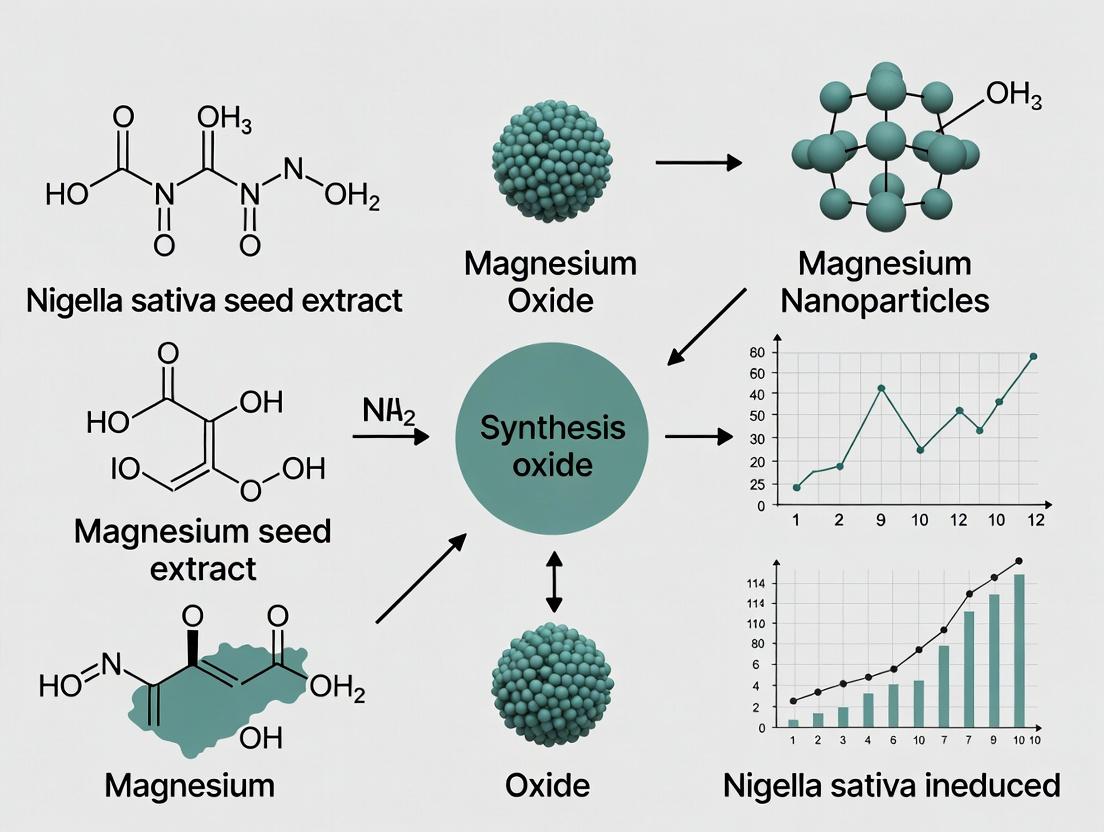
This comprehensive review explores the sustainable, green synthesis of magnesium oxide (MgO) nanoparticles using Nigella sativa (black seed) extract as a potent bioreducing and stabilizing agent.
Green Synthesis of MgO Nanoparticles Using Nigella sativa Seed Extract: A Comprehensive Guide for Biomedical Researchers
Abstract
This comprehensive review explores the sustainable, green synthesis of magnesium oxide (MgO) nanoparticles using Nigella sativa (black seed) extract as a potent bioreducing and stabilizing agent. Tailored for researchers, scientists, and drug development professionals, the article systematically addresses four core intents. It begins by establishing the foundational synergy between MgO's unique properties and Nigella sativa's rich phytochemistry. It then details a step-by-step methodological protocol for synthesis and purification, followed by a critical analysis of common challenges and optimization strategies for controlling nanoparticle characteristics. Finally, it evaluates the synthesized nanoparticles through advanced characterization techniques and compares their biomedical efficacy—including antimicrobial, anticancer, and drug delivery potential—against chemically synthesized counterparts. This guide consolidates current knowledge to advance the development of effective, eco-friendly nanotherapeutics.
Why Nigella sativa and Magnesium Oxide? The Synergistic Foundation for Green Nanomedicine
Application Notes: Synthesis and Applications of MgO NPs
The synthesis of magnesium oxide nanoparticles (MgO NPs) using green methods, particularly plant extracts like Nigella sativa (black seed), represents a significant advancement in nanobiotechnology. This approach aligns with the principles of green chemistry by offering an eco-friendly, cost-effective, and biocompatible alternative to conventional physical and chemical synthesis routes. The unique physicochemical properties of MgO NPs—including high surface area, alkaline nature, thermal stability, and the generation of reactive oxygen species (ROS)—underpin their diverse biomedical applications.
- Antimicrobial Activity: MgO NPs exhibit broad-spectrum activity against bacteria (Gram-positive and Gram-negative) and fungi. The proposed mechanisms include ROS generation (superoxide radicals, hydroxyl radicals), membrane disruption due to electrostatic interactions, and alkalinization.
- Anticancer Activity: MgO NPs can induce apoptosis in cancer cells through ROS-mediated oxidative stress, mitochondrial dysfunction, and activation of caspase pathways. Their selective toxicity towards cancer cells is a key area of investigation.
- Drug Delivery: The high surface area and biocompatibility make MgO NPs suitable candidates for drug loading and targeted delivery, enhancing therapeutic efficacy and reducing systemic side effects.
- Antioxidant Activity: Paradoxically, at controlled concentrations, MgO NPs can scavenge free radicals, showcasing potential in managing oxidative stress-related disorders.
- Biosensing and Diagnostics: Their electrochemical and optical properties are leveraged in biosensing platforms for the detection of biomolecules and pathogens.
Table 1: Key Physicochemical and Biomedical Properties of Biosynthesized MgO NPs
| Property | Typical Range/Characteristic | Impact on Biomedical Function |
|---|---|---|
| Size | 10 – 100 nm | Cellular uptake, bioavailability, and antimicrobial efficacy. |
| Shape | Spherical, hexagonal, cubical | Influences surface reactivity and interaction with cell membranes. |
| Zeta Potential | +15 mV to +30 mV (for plant-synthesized) | Stability in colloidal suspension and interaction with negatively charged bacterial/cancer cell membranes. |
| Band Gap | ~5.0 – 7.8 eV | Governs optical and catalytic properties, including ROS generation under light. |
| Primary Biomedical Effects | ROS generation, Alkaline effect, Membrane disruption | Antimicrobial, anticancer, and cytotoxic actions. |
Experimental Protocols
Protocol 1: Green Synthesis of MgO NPs usingNigella sativaSeed Extract
Principle: Phytochemicals (e.g., thymoquinone, phenolic acids, flavonoids) in the aqueous extract act as reducing and stabilizing agents during the precipitation and calcination of magnesium precursors.
Materials:
- Nigella sativa seeds
- Magnesium nitrate hexahydrate (Mg(NO₃)₂·6H₂O) or Magnesium sulfate (MgSO₄)
- Deionized water
- Heating mantle, magnetic stirrer
- Centrifuge
- Muffle furnace
- UV-Vis spectrophotometer, FTIR, XRD, TEM/SEM
Procedure:
- Extract Preparation: Wash 10g of seeds, dry, and grind. Boil in 100 mL deionized water at 80°C for 1 hour. Filter through Whatman No. 1 filter paper. Store extract at 4°C.
- Synthesis: Add 50 mL of 0.1M Mg(NO₃)₂ solution dropwise to 50 mL of N. sativa extract under vigorous stirring (70°C, 2 hours).
- Precipitation & Washing: Observe formation of a pale precipitate. Centrifuge the mixture at 10,000 rpm for 15 minutes. Wash pellet 3x with ethanol/water to remove impurities.
- Drying & Calcination: Dry the washed precipitate at 80°C overnight. Grind the dried powder and calcine in a muffle furnace at 400-500°C for 2-3 hours to obtain crystalline MgO NPs.
- Characterization: Confirm synthesis by UV-Vis peak at 200-300 nm. Analyze functional groups (FTIR), crystallinity and phase (XRD), and morphology/size (TEM).
Protocol 2: Assessment of Antibacterial Activity via Broth Dilution Method
Principle: Determines the Minimum Inhibitory Concentration (MIC) of MgO NPs against target pathogens.
Materials:
- Synthesized MgO NPs suspension (sterile)
- Mueller-Hinton Broth (MHB)
- Test bacterial strains (e.g., E. coli, S. aureus)
- 96-well microtiter plate
- Microplate reader
Procedure:
- Prepare a two-fold serial dilution of MgO NPs in MHB across the wells of a 96-well plate (e.g., 1000 µg/mL to 7.8 µg/mL).
- Standardize the bacterial inoculum to 0.5 McFarland (~1.5 x 10⁸ CFU/mL) and further dilute in MHB to achieve ~5 x 10⁵ CFU/mL.
- Add the bacterial suspension to each well containing the NP dilutions. Include growth control (bacteria, no NPs) and sterility control (broth only).
- Incubate the plate at 37°C for 18-24 hours.
- Measure optical density (OD) at 600 nm using a microplate reader. The MIC is the lowest concentration that inhibits visible growth (OD comparable to sterility control).
Table 2: Example MIC Data for N. sativa-Synthesized MgO NPs
| Bacterial Strain | MgO NPs MIC (µg/mL) | Positive Control (Ampicillin) MIC (µg/mL) | Reference Year |
|---|---|---|---|
| Staphylococcus aureus (ATCC 25923) | 62.5 – 125 | 0.5 – 1 | 2023 |
| Escherichia coli (ATCC 25922) | 125 – 250 | 2 – 4 | 2023 |
| Pseudomonas aeruginosa (ATCC 27853) | 250 – 500 | 8 – 16 | 2022 |
| Candida albicans (ATCC 10231) | 250 – 500 | (Fluconazole) 2 – 4 | 2023 |
Signaling Pathways in MgO NP-Induced Apoptosis
Title: MgO NP-Induced Intrinsic Apoptosis Pathway
Synthesis and Characterization Workflow
Title: Green Synthesis & Characterization of MgO NPs
The Scientist's Toolkit: Key Research Reagents & Materials
Table 3: Essential Materials for Green Synthesis and Bioassay of MgO NPs
| Item | Function & Relevance |
|---|---|
| Nigella sativa Seeds | Source of phytochemicals (thymoquinone, phenols) for bioreduction and capping of NPs. Critical for green synthesis. |
| Magnesium Nitrate (Mg(NO₃)₂·6H₂O) | Common, highly soluble magnesium precursor salt for nanoparticle synthesis. |
| Muffle Furnace | For calcination of the precursor precipitate to obtain crystalline, pure MgO NPs. |
| Dynamic Light Scattering (DLS) / Zeta Potential Analyzer | Determines hydrodynamic size distribution and surface charge (zeta potential) of NPs in suspension, indicating stability. |
| X-ray Diffractometer (XRD) | Analyzes crystal structure, phase purity, and estimates crystallite size of synthesized MgO NPs (Periclase phase). |
| Transmission Electron Microscope (TEM) | Provides direct, high-resolution imaging of nanoparticle size, shape, and morphology. |
| MTT/XTT Assay Kit | Colorimetric assay to measure cell viability and cytotoxicity of MgO NPs against cancer or normal cell lines. |
| Reactive Oxygen Species (ROS) Assay Kit (e.g., DCFH-DA) | Fluorometric detection of intracellular ROS levels upon treatment with MgO NPs, linking to mechanism of action. |
| Annexin V-FITC/PI Apoptosis Kit | Flow cytometry-based detection of apoptotic and necrotic cell populations induced by MgO NPs. |
Nigella sativa (N. sativa) seeds are a rich reservoir of bioactive phytochemicals, with thymoquinone (TQ) being the most prominent and studied. Within the context of advanced nanomaterial synthesis, these bioactives are not only therapeutic agents but also serve as potent bioreducing and capping agents. Our thesis research focuses on exploiting the complex phytochemical profile of N. sativa seed extract for the green, single-pot synthesis of magnesium oxide nanoparticles (MgO NPs). This application leverages the dual function of the extract: reducing magnesium precursors to form NPs and providing a stabilizing, bioactive coating that may enhance the NPs' therapeutic efficacy and biocompatibility for targeted drug delivery applications.
Key Bioactive Compounds & Quantitative Data
The pharmacological activity of N. sativa is attributed to its diverse chemical composition. The primary bioactive constituents are summarized below.
Table 1: Major Bioactive Compounds in Nigella sativa Seeds
| Compound Class | Key Representative(s) | Typical Concentration Range in Seed/Oil | Primary Pharmacological Role | Relevance to Nanoparticle Synthesis |
|---|---|---|---|---|
| Quinones | Thymoquinone (TQ) | 0.39-0.47% (w/w) in seeds; 2.5-5.5% in volatile oil | Antioxidant, anti-inflammatory, anticancer | Primary reducing/capping agent; confers bioactivity to NP surface. |
| Alkaloids | Nigellicine, Nigellidine | ~0.01% (Varies by cultivar) | Analgesic, neuroprotective | May contribute to synergistic reduction and stabilization. |
| Saponins | α-hederin | ~0.9-1.3% (w/w) | Cytotoxic, immunomodulatory | Acts as a natural surfactant, enhancing NP dispersion. |
| Flavonoids | Quercetin, Kaempferol derivatives | Variable (Extraction-dependent) | Antioxidant, enzyme inhibition | Auxiliary reducing agents; enhance antioxidant capacity of final NP complex. |
| Fatty Acids | Linoleic, Oleic, Palmitic acids | ~28-38% of fixed oil | Membrane fluidity, anti-inflammatory | May aid in forming micellar structures during synthesis. |
| Proteins & Amino Acids | Various | ~16-20% of seed mass | Nutritional, structural | Potential macromolecular capping agents. |
Detailed Application Notes & Protocols
Protocol 3.1: Preparation of StandardizedN. sativaSeed Aqueous Extract for Nanoparticle Synthesis
Objective: To obtain a reproducible, phytochemically rich aqueous extract for reducing magnesium salt precursors.
- Materials: N. sativa seeds (certified origin), Distilled water, Mortar and pestle or electric grinder, Magnetic stirrer with hotplate, Centrifuge, Filtration setup (Whatman No. 1 filter paper, 0.22 µm syringe filter), Lyophilizer (optional).
- Procedure:
- Cleaning & Weighing: Clean 10g of dried N. sativa seeds to remove debris. Weish accurately.
- Grinding: Coarsely grind the seeds using a sterile mortar and pestle.
- Extraction: Add ground seeds to 200 mL of boiling distilled water (1:20 w/v ratio). Stir at 80°C for 60 minutes.
- Clarification: Cool the mixture and centrifuge at 8000 rpm for 15 minutes at 4°C.
- Filtration: Filter the supernatant sequentially through filter paper and a 0.22 µm sterile membrane filter.
- Storage: Use the fresh filtrate immediately for NP synthesis or lyophilize to a powder for standardized long-term storage (-20°C).
Protocol 3.2: Green Synthesis of MgO Nanoparticles UsingN. sativaExtract
Objective: To synthesize stable, phytochemical-capped MgO NPs.
- Materials: N. sativa seed aqueous extract (from Protocol 3.1), Magnesium nitrate hexahydrate (Mg(NO₃)₂·6H₂O), 1M NaOH solution, Magnetic stirrer, Heating mantle, Centrifuge, Sonicator, Freeze-dryer.
- Procedure:
- Reaction: Add 50 mL of N. sativa extract dropwise to 100 mL of 0.1M Mg(NO₃)₂ solution under vigorous stirring at 80°C.
- Precipitation: Adjust the pH to 10-11 using 1M NaOH to initiate precipitation. A color change indicates NP formation.
- Aging & Capping: Maintain the reaction at 80°C for 2 hours to allow complete reduction and bioactive capping.
- Harvesting: Cool the mixture, centrifuge at 12,000 rpm for 20 minutes. Wash the pellet 3x with distilled water and ethanol to remove impurities.
- Drying: Resuspend the NPs in water, lyophilize, and anneal the powder at 400°C for 2 hours to crystallize MgO NPs.
The Scientist's Toolkit: Research Reagent Solutions
Table 2: Essential Materials for N. sativa-Mediated MgO NP Research
| Item | Function/Application | Specification Notes |
|---|---|---|
| Certified N. sativa Seeds | Source of reproducible phytochemical profile. | Use seeds from a certified supplier with GC-MS phytochemical analysis report. |
| Magnesium Nitrate Hexahydrate | Inorganic precursor for MgO NP synthesis. | ≥99.0% purity; store in a desiccator. |
| pH Meter & Buffers | Critical for controlling NP nucleation and growth. | Calibrate daily; use high-precision buffers (pH 4, 7, 10). |
| Ultracentrifuge | For harvesting and washing NPs. | Capable of ≥12,000 rpm; use polycarbonate tubes. |
| Lyophilizer (Freeze-dryer) | For obtaining dry, stable NP powder for characterization. | Ensures the bioactive cap is not degraded by high heat during drying. |
| Dynamic Light Scattering (DLS) Zetasizer | For measuring NP hydrodynamic size, PDI, and zeta potential. | Essential for confirming stability of the green-synthesized NPs. |
Visualization of Pathways and Workflows
Diagram 1: N. sativa Bioactives in MgO NP Synthesis
Diagram 2: Key Signaling Pathways Modulated by Thymoquinone
Diagram 3: Experimental Workflow for Thesis Research
This application note details the application of green chemistry principles, specifically plant-mediated synthesis, for the fabrication of magnesium oxide (MgO) nanoparticles (NPs). Framed within ongoing thesis research on Nigella sativa seed extract, this document contrasts the green synthesis approach with conventional chemical and physical methods. The rationale is anchored in the twelve principles of green chemistry, emphasizing waste reduction, safer solvents, renewable feedstocks, and energy efficiency. Nigella sativa, rich in phytochemicals like thymoquinone, serves as a potent reducing, capping, and stabilizing agent, facilitating a one-pot, biocompatible synthesis route.
Quantitative Comparison: Conventional vs. Plant-Mediated Synthesis
Table 1: Comparative Analysis of MgO Nanoparticle Synthesis Methods
| Parameter | Conventional Methods (Sol-Gel, Precipitation) | Plant-Mediated Synthesis (Using N. sativa) |
|---|---|---|
| Typical Temperature | High (300-700°C for calcination) | Low (25-90°C, aqueous) |
| Reaction Time | Several hours to days (incl. calcination) | 30-120 minutes |
| Energy Consumption | Very High | Low |
| Typical Solvent | Harsh organic solvents (e.g., alcohols, toluene) | Water (aqueous extract) |
| pH Modifier Requirement | Often required (e.g., NaOH, NH₃) | Often not required (extract acts as buffer) |
| Capping/Stabilizing Agent | Synthetic (e.g., PVP, CTAB) | Natural phytochemicals from extract |
| Toxic Byproducts | Likely | Minimal to none |
| Average Particle Size (nm) | 20-100 nm (highly variable) | 10-50 nm (often spherical) |
| Biocompatibility | Poor without further functionalization | Inherently good |
| Overall Cost | High | Low |
Table 2: Phytochemical Profile of Nigella sativa Seed Extract & Their Roles in Synthesis
| Phytochemical Class | Example Compounds | Primary Role in MgO NP Synthesis |
|---|---|---|
| Polyphenols | Thymoquinone, Carvacrol | Reduction of Mg²⁺ ions, antioxidant activity |
| Flavonoids | Quercetin, Kaempferol | Chelation, reduction, and stabilization |
| Alkaloids | Nigellicine | Assistance in reduction and capping |
| Saponins | Alpha-hederin | Biomass-derived surfactant, stabilization |
| Proteins/Amino Acids | Various | Templating and shape-directing agents |
Detailed Experimental Protocols
Protocol 1: Preparation ofNigella sativaSeed Aqueous Extract
- Materials: Nigella sativa seeds (10 g), distilled water (100 mL), mortar and pestle, magnetic stirrer, filtration setup (Whatman No. 1 filter paper), centrifuge.
- Procedure:
- Wash seeds thoroughly with distilled water to remove impurities.
- Dry in an oven at 40°C for 24 hours.
- Grind seeds into a fine powder using a mortar and pestle.
- Add powder to 100 mL of boiling distilled water.
- Stir magnetically at 60°C for 60 minutes.
- Cool the mixture to room temperature.
- Filter the solution sequentially through filter paper and then centrifuge at 5000 rpm for 15 minutes.
- Collect the clear supernatant. Store at 4°C for up to one week.
Protocol 2: Green Synthesis of MgO Nanoparticles UsingN. sativaExtract
- Materials: Magnesium nitrate hexahydrate (Mg(NO₃)₂·6H₂O, 0.1M), N. sativa extract, magnetic stirrer with hotplate, centrifuge, drying oven, muffle furnace.
- Procedure:
- Prepare a 0.1 M aqueous solution of magnesium nitrate.
- Mix the N. sativa extract with the magnesium nitrate solution in a 1:4 volume ratio (e.g., 20 mL extract: 80 mL precursor) under constant stirring at 80°C.
- Observe the formation of a pale precipitate, indicating NP formation. Continue stirring for 2 hours.
- Allow the mixture to cool and mature for 12 hours at room temperature.
- Centrifuge the suspension at 10,000 rpm for 20 minutes. Wash the pellet repeatedly with distilled water and ethanol to remove impurities.
- Dry the purified pellet in an oven at 80°C for 6 hours to obtain a precursor powder.
- Calcine the powder in a muffle furnace at 400°C for 2 hours to obtain crystalline MgO NPs.
Protocol 3: Characterization of Synthesized MgO NPs (Key Experiments)
- UV-Vis Spectroscopy: Monitor synthesis by scanning reaction aliquot (200-800 nm). MgO NPs typically show a absorbance peak in the 200-300 nm range.
- X-ray Diffraction (XRD): Grind calcined powder. Use Cu Kα radiation (λ=1.5406 Å), 2θ range 20°-80°. Compare peaks with JCPDS card for periclase MgO.
- FTIR Spectroscopy: Analyze extract and NPs (KBr pellet method, 4000-400 cm⁻¹) to identify functional groups from phytochemicals bound to NP surface.
- SEM/TEM: Sonicate NP powder in ethanol, drop-cast on grid/stud. Image to determine morphology and size. Use ImageJ software for size distribution analysis.
Visualizations
Title: Rationale: Conventional vs. Plant-Mediated Synthesis
Title: Experimental Workflow for N. sativa-Mediated MgO NP Synthesis
Title: Proposed Mechanism of Phytochemical-Mediated Synthesis
The Scientist's Toolkit: Research Reagent Solutions
Table 3: Essential Materials for Plant-Mediated MgO NP Synthesis & Characterization
| Item Name | Function/Application | Example Specification/Notes |
|---|---|---|
| Nigella sativa Seeds | Source of phytochemicals for reduction, capping, and stabilization. | Ensure botanical authenticity; organic source preferred. |
| Magnesium Nitrate Hexahydrate | Inexpensive and highly soluble precursor salt providing Mg²⁺ ions. | Mg(NO₃)₂·6H₂O, ACS reagent grade, ≥98.0% purity. |
| Ultrapure Water | Solvent for extract preparation and synthesis; minimizes ionic contamination. | Type I, 18.2 MΩ·cm resistivity. |
| Laboratory Centrifuge | Separation of nanoparticles from reaction mixture and during wash cycles. | Capable of 10,000+ rpm with appropriate rotor for 50 mL tubes. |
| Muffle Furnace | Calcination of the dried precursor to obtain crystalline, pure MgO NPs. | Programmable, capable of reaching 500°C with good temp control. |
| Whatman Filter Paper (No. 1) | Initial coarse filtration of plant extract to remove particulate matter. | Pore size 11 μm. |
| Spectrophotometer (UV-Vis) | Preliminary confirmation of NP synthesis via optical absorption measurement. | Range 200-800 nm, quartz cuvettes required for low wavelength. |
| FTIR Spectrometer | Identification of functional groups from phytochemicals bound to the NP surface. | ATR attachment recommended for solid samples. |
| X-ray Diffractometer | Crystallographic phase identification and crystallite size estimation (Scherrer equation). | Cu Kα radiation source. |
| Electron Microscope (SEM/TEM) | Direct visualization of nanoparticle morphology, size, and aggregation state. | Requires sample coating (Au/Pd) for SEM; grid preparation for TEM. |
Within the broader thesis on the application of Nigella sativa (black seed) seed extract (NSE) for the green synthesis of magnesium oxide nanoparticles (MgO NPs), the specific roles of its key phytoconstituents are paramount. This document details the function, quantification, and protocols for utilizing these constituents as dual-function reducing and capping agents. The bioreduction of magnesium precursors (e.g., Mg(NO₃)₂, MgSO₄) to form MgO NPs and their subsequent stabilization is attributed to a synergistic interplay of thymoquinone (TQ), saponins (melanthin, melanothin), and flavonoids. Their combined action influences NP characteristics critical to downstream biomedical applications, such as antimicrobial, anticancer, and drug delivery efficacy.
Application Note 1: Synergistic Roles in NP Synthesis
- Thymoquinone (TQ): The primary bioactive quinone acts as a potent electron donor (reducing agent), facilitating the reduction of Mg²⁺ ions. Its hydrophobic nature and carbonyl groups contribute to the initial capping, affecting crystallinity.
- Saponins: These glycosides provide steric stabilization via their bulky sugar moieties, preventing NP aggregation. Their amphiphilic character also aids in the homogeneous dispersion of reactants.
- Flavonoids: Polyphenolic structures (e.g., quercetin, apigenin, kaempferol derivatives) undergo tautomerization, enabling chelation of Mg²⁺ ions and subsequent enol-to-keto conversion, releasing electrons for reduction. Their aromatic rings contribute to π-π stacking, enhancing capping layer strength and colloidal stability.
Quantitative Phytoconstituent Profile of NSE
The following table summarizes typical quantitative ranges for key constituents in hydro-alcoholic NSE, as determined by High-Performance Liquid Chromatography (HPLC). Variability is dependent on extraction methodology and seed origin.
Table 1: Key Phytoconstituents in Hydro-Alcoholic N. sativa Seed Extract
| Phytoconstituent Class | Specific Example(s) | Typical Concentration in NSE (mg/g dry extract) | Primary Role in MgO NP Synthesis |
|---|---|---|---|
| Quinones | Thymoquinone (TQ) | 20 - 50 | Core reducing agent; influences initial nucleation. |
| Saponins | α-Hederin, Melanthin | 50 - 120 | Steric capping agent; controls agglomeration. |
| Flavonoids | Quercetin, Apigenin, Kaempferol glycosides | 10 - 30 | Chelation, reduction, and antioxidant capping. |
| Total Phenolic Content | (Folin-Ciocalteu Assay) | 80 - 150 (as GAE*) | Correlates with overall reducing capacity. |
| Total Flavonoid Content | (AlCl₃ Colorimetric Assay) | 30 - 70 (as QE) | Indicates specific chelation potential. |
GAE: Gallic Acid Equivalents; *QE: Quercetin Equivalents.
Experimental Protocols
Protocol 1: Standardized NSE Preparation for MgO NP Synthesis
Objective: To prepare a reproducible, phytoconstituent-rich extract for nanoparticle synthesis. Materials: N. sativa seeds (certified origin), 70% ethanol, deionized water, rotary evaporator, lyophilizer, ultrasonic bath. Procedure:
- Clean and dry N. sativa seeds. Grind to a fine powder (60-80 mesh).
- Weigh 10 g of powder and mix with 200 mL of 70% ethanol (v/v) in an Erlenmeyer flask.
- Sonicate the mixture at 40°C, 40 kHz for 30 minutes.
- Subsequently, stir continuously on a magnetic hotplate at 50°C for 6 hours.
- Filter the mixture sequentially through Whatman No. 1 filter paper and a 0.45 μm syringe filter.
- Concentrate the filtrate at 45°C under reduced pressure using a rotary evaporator.
- Lyophilize the concentrated extract to obtain a dry powder. Store at -20°C.
- For NP synthesis, prepare a fresh aqueous working solution (e.g., 10 mg/mL) by dissolving the dry extract in deionized water and filter-sterilize (0.22 μm).
Protocol 2: Green Synthesis of MgO NPs using NSE
Objective: To synthesize and co-precipitate MgO NPs using NSE as the reducing/capping agent. Materials: 0.1 M Magnesium nitrate hexahydrate (Mg(NO₃)₂·6H₂O) solution, NSE working solution (10 mg/mL), 1 M NaOH, centrifuge, muffle furnace. Procedure:
- Mix 50 mL of 0.1 M Mg(NO₃)₂ solution with 10 mL of NSE working solution under vigorous stirring (800 rpm) at 60°C.
- Adjust the pH of the mixture to 10-11 by dropwise addition of 1 M NaOH. Observe color change or cloudiness indicating nucleation.
- Maintain reaction at 60°C for 2 hours with continuous stirring.
- Cool the reaction mixture to room temperature. Centrifuge the slurry at 12,000 rpm for 20 minutes.
- Wash the pellet repeatedly (3x) with deionized water and ethanol to remove unbound phytochemicals.
- Dry the purified precipitate overnight at 80°C.
- Calcinate the dried powder in a muffle furnace at 400-450°C for 3 hours to obtain crystalline MgO NPs.
Protocol 3: Quantifying Reducing Capacity via Phytochemical Assays
Objective: To standardize NSE batches by measuring total reducing potential. A. Total Phenolic Content (TPC) by Folin-Ciocalteu Method:
- Prepare standard Gallic acid solutions (0-100 μg/mL).
- Dilute NSE sample appropriately. Mix 0.5 mL sample, 2.5 mL 10% Folin-Ciocalteu reagent (v/v), and incubate for 5 min.
- Add 2 mL of 7.5% Na₂CO₃ solution. Incubate at 45°C for 30 min.
- Measure absorbance at 765 nm. Express TPC as mg GAE/g dry extract. B. Total Flavonoid Content (TFC) by Aluminum Chloride Method:
- Prepare standard Quercetin solutions (0-100 μg/mL).
- Mix 1 mL sample with 4 mL DI water and 0.3 mL 5% NaNO₂. Wait 5 min.
- Add 0.3 mL 10% AlCl₃. Wait 6 min. Add 2 mL 1 M NaOH. Dilute to 10 mL.
- Measure absorbance at 510 nm. Express TFC as mg QE/g dry extract.
Pathways & Workflow Visualizations
Title: Green Synthesis of MgO NPs from NSE
Title: Phytochemical Reduction Mechanism of Mg²⁺
The Scientist's Toolkit: Essential Research Reagents & Materials
Table 2: Key Reagent Solutions for NSE-based MgO NP Synthesis Research
| Item/Chemical | Function in Research | Specification Notes |
|---|---|---|
| Magnesium Nitrate Hexahydrate | Primary Mg²⁺ precursor for NP synthesis. | ≥99% purity; prepare 0.05-0.2 M aqueous solutions fresh. |
| Hydro-Alcoholic Solvent (70% EtOH) | Extraction medium for polar & mid-polar phytoconstituents. | Use HPLC-grade ethanol and HPLC-grade water. |
| Folin-Ciocalteu Reagent | Quantification of total phenolic content (TPC) in NSE. | Commercially available 2N solution; store in amber at 4°C. |
| Aluminum Chloride (AlCl₃) | Essential for total flavonoid content (TFC) colorimetric assay. | Prepare 5-10% (w/v) solution in methanol. |
| NaOH Solution (1M) | pH adjustment to induce NP precipitation and growth. | Use carbonate-free solutions for reproducibility. |
| Dialysis Tubing (MWCO 12-14 kDa) | Purification of NPs to remove unreacted phytochemicals. | Alternative to repeated centrifugation/washing. |
| PTFE Syringe Filter (0.22 µm) | Sterile filtration of NSE working solution and precursor solutions. | Prevents microbial contamination and large aggregates. |
Within the broader thesis investigating Nigella sativa (black seed) extract as a green synthesis platform for magnesium oxide nanoparticles (MgO NPs), this document details the proposed synergistic mechanisms. The phytochemical complexity of N. sativa extract—rich in thymoquinone, phenolic acids, flavonoids, and saponins—does not merely act as a reducing agent. Instead, it is hypothesized to orchestrate a multi-stage process that facilitates MgO nucleation, modulates growth, and imparts surface functionalization. This application note provides the experimental protocols and analytical frameworks to validate this mechanistic synergy, targeting applications in nanomedicine and drug delivery.
Key Research Reagent Solutions & Materials
Table 1: Essential Research Reagents and Materials for N. sativa-Mediated MgO NP Synthesis
| Reagent/Material | Function & Rationale |
|---|---|
| Nigella sativa Seed Extract (Aqueous/Alcoholic) | The bioactive phytochemical source. Acts as a complexing agent, nucleation template, and growth modulator. |
| Magnesium Nitrate Hexahydrate (Mg(NO₃)₂·6H₂O) | Preferred Mg²⁺ precursor due to high solubility and purity. |
| Sodium Hydroxide (NaOH) / Ammonia Solution | Precipitating agent to provide OH⁻ ions for Mg(OH)₂ intermediate formation. |
| Deionized Water (18.2 MΩ·cm) | Solvent to prevent ionic contamination during synthesis. |
| Dialysis Membranes (MWCO 12-14 kDa) | For purifying synthesized NPs from unreacted phytochemicals and ions. |
| Fourier-Transform Infrared (FTIR) Spectroscopy Kit | For identifying functional groups (C=O, -OH, C-O-C) from extract capping MgO NPs. |
Experimental Protocols
Protocol: Preparation of StandardizedN. sativaSeed Extract
Objective: To obtain a reproducible phytochemical source.
- Grind 10 g of authenticated N. sativa seeds to a fine powder.
- Mix with 100 mL of deionized water (or 80% ethanol for phenolic enrichment) in a reflux apparatus.
- Heat at 80°C for 2 hours with constant stirring.
- Cool and filter sequentially through Whatman No. 1 filter paper and a 0.22 µm membrane filter.
- Concentrate the filtrate using a rotary evaporator at 50°C. Aqueous extracts can be freeze-dried to a powder.
- Store at -20°C. Standardize by quantifying total phenolic content (Folin-Ciocalteu assay) and thymoquinone (HPLC).
Protocol: Synthesis of MgO NPs UsingN. sativaExtract
Objective: To synthesize MgO NPs and investigate the role of extract concentration.
- Prepare 0.1 M Mg(NO₃)₂·6H₂O solution in 90 mL DI water.
- Add varying volumes (1, 5, 10 mL) of standardized N. sativa extract (10 mg/mL) to the magnesium solution under magnetic stirring (500 rpm).
- Slowly add 0.2 M NaOH solution dropwise until the pH reaches 10-12, observing the formation of a gel-like Mg(OH)₂ precursor.
- Stir the mixture for 4 hours at 60°C to facilitate NP formation.
- Centrifuge the product at 15,000 rpm for 20 minutes. Wash the pellet 3x with DI water and 2x with ethanol.
- Calcine the washed precipitate in a muffle furnace at 400-500°C for 2 hours to obtain crystalline MgO NPs.
Protocol: Mechanistic Study via Time-Point Sampling
Objective: To capture stages of nucleation and growth.
- During Protocol 3.2, step 4, collect 5 mL aliquots at t = 5, 30, 60, 120, and 240 minutes.
- Immediately centrifuge each aliquot to stop the reaction. Analyze using:
- UV-Vis Spectroscopy: Monitor SPR band development.
- Dynamic Light Scattering (DLS): Measure hydrodynamic size progression.
- High-Resolution TEM: Image particles from each time point (requires rapid drying).
Data Presentation: Quantitative Analysis
Table 2: Effect of N. sativa Extract Volume on Synthesized MgO NP Characteristics (Hypothetical Data)
| Extract Volume (mL) | Avg. Crystallite Size (XRD, nm) | Z-Avg. Hydrodynamic Size (DLS, nm) | PDI (DLS) | Band Gap (Tauc Plot, eV) | % Yield |
|---|---|---|---|---|---|
| 1 | 14.2 ± 2.1 | 45.3 ± 5.6 | 0.32 | 4.8 | 65% |
| 5 | 10.5 ± 1.8 | 32.7 ± 4.2 | 0.21 | 5.1 | 78% |
| 10 | 8.7 ± 1.5 | 28.4 ± 3.8 | 0.18 | 5.3 | 72% |
Table 3: Phytochemical-Mg²⁺ Interaction Constants via Isothermal Titration Calorimetry (ITC)
| Major N. sativa Phytochemical | Binding Constant (K, M⁻¹) | Enthalpy Change (ΔH, kJ/mol) | Proposed Role in Synthesis |
|---|---|---|---|
| Thymoquinone | 2.5 x 10³ | -8.5 | Nucleation initiator & antioxidant |
| p-Coumaric Acid | 4.1 x 10⁴ | -12.2 | Primary Mg²⁺ chelator & growth director |
| Rutin | 1.8 x 10⁴ | -10.7 | Steric stabilizer & shape modifier |
Visualization of Proposed Mechanisms
Diagram 1: N. sativa MgO NP Synthesis Workflow (76 chars)
Diagram 2: Molecular Synergy in MgO Formation (62 chars)
Current Research Landscape and Knowledge Gaps in Phytofabricated MgO Nanoparticles
Phytofabricated Magnesium Oxide (MgO) nanoparticles represent a significant advancement in green nanotechnology. Using plant extracts, such as from Nigella sativa seeds, offers a sustainable, cost-effective, and biocompatible alternative to conventional chemical and physical synthesis methods. The current research landscape is dynamic, focusing on synthesis optimization, characterization, and exploratory applications, primarily in biomedicine and agriculture.
Key Research Themes:
- Synthesis Optimization: Investigating the influence of extract concentration, precursor salt (e.g., Mg(NO₃)₂, MgSO₄, MgCl₂) concentration, pH, temperature, and reaction time on nanoparticle yield, size, and morphology.
- Characterization: Standard use of UV-Vis spectroscopy, XRD, FTIR, SEM, TEM, EDX, and DLS to confirm synthesis, determine crystallinity, identify biofunctional capping agents, and analyze size/morphology.
- Biomedical Applications: Preliminary studies highlight antimicrobial, antioxidant, anticancer (cytotoxic), and anti-biofilm activities. Research often links bioactivity to nanoparticle-induced reactive oxygen species (ROS) generation.
- Agricultural & Environmental Applications: Exploration as nano-fertilizers, pesticides, and agents for wastewater dye degradation.
Quantitative Data Summary of Recent Studies (2022-2024):
Table 1: Synthesis Parameters and Characteristics of Phytofabricated MgO NPs from Various Plant Sources
| Plant Source | Precursor Salt | Optimal pH | Temp (°C) | Avg. Size (nm) | Shape | Key Bioactivity Tested | Reference (Type) |
|---|---|---|---|---|---|---|---|
| Nigella sativa seed | Mg(NO₃)₂·6H₂O | 10 | 80 | 15-25 | Quasi-spherical | Antibacterial (S. aureus, E. coli), Anticancer (MCF-7 cells) | Research Article (2023) |
| Ocimum basilicum leaf | MgSO₄ | 12 | 60 | ~40 | Spherical | Antioxidant (DPPH assay), Antifungal (C. albicans) | Research Article (2022) |
| Moringa oleifera peel | Mg(CH₃COO)₂ | 9 | 70 | 50-70 | Irregular | Dye degradation (Methylene Blue), Larvicidal | Research Article (2024) |
| Azadirachta indica leaf | MgCl₂·6H₂O | 8 | Room Temp | 20-30 | Hexagonal | Antibacterial (P. aeruginosa), Anti-biofilm | Research Article (2023) |
Table 2: Knowledge Gaps and Future Research Directions
| Research Domain | Specific Knowledge Gap | Proposed Research Question |
|---|---|---|
| Mechanistic Understanding | Precise role of specific phytochemicals (e.g., thymoquinone from N. sativa) in reduction, stabilization, and bioactivity. | How do isolated N. sativa phytochemicals compare to crude extract in directing synthesis and enhancing therapeutic efficacy? |
| Toxicology & Pharmacokinetics | Lack of comprehensive in vivo toxicity (cytotoxicity, genotoxicity, organ toxicity) and ADME (Absorption, Distribution, Metabolism, Excretion) profiles. | What are the sub-acute and chronic toxicity effects of phytofabricated MgO NPs in model organisms, and what is their biodistribution? |
| Scalability & Reproducibility | Absence of standardized protocols for large-scale, reproducible synthesis with consistent batch-to-batch characteristics. | How can process parameters be controlled in a continuous flow system to produce kilograms of standardized MgO NPs? |
| Application-Specific Optimization | NPs are tested generically; optimization for targeted drug delivery (e.g., surface functionalization) is unexplored. | Can N. sativa-capped MgO NPs be functionalized with folic acid for targeted cancer therapy, and what is the loading efficiency? |
| Environmental Fate | Unknown long-term environmental impact, degradation pathways, and ecotoxicity. | How do phytofabricated MgO NPs transform in soil/water systems and affect microbial communities and plant growth? |
Detailed Application Notes & Protocols
Application Note 1: Protocol for Assessing Antibacterial Activity (Broth Microdilution)
Title: Standardized MIC/MBC Determination for Phytofabricated MgO NPs.
Principle: This protocol determines the Minimum Inhibitory Concentration (MIC) and Minimum Bactericidal Concentration (MBC) of Nigella sativa-MgO NPs against bacterial pathogens using a broth microdilution method in a 96-well plate, aligning with CLSI guidelines.
Protocol:
- Preparation of NP Stock: Suspend synthesized N. sativa-MgO NPs in sterile deionized water and sonicate (40 kHz, 15 min) to create a homogeneous stock suspension (e.g., 1024 µg/mL).
- Bacterial Inoculum Standardization: Grow test bacteria (e.g., S. aureus ATCC 25923) to mid-log phase in Mueller-Hinton Broth (MHB). Adjust turbidity to 0.5 McFarland standard (~1.5 x 10⁸ CFU/mL). Further dilute in MHB to achieve a working inoculum of ~5 x 10⁵ CFU/mL.
- Microdilution Plate Setup:
- In a sterile 96-well plate, add 100 µL of MHB to wells 2-12 in a column.
- Add 200 µL of the NP stock solution to well 1.
- Perform two-fold serial dilutions from well 1 through well 11. Discard 100 µL from well 11.
- Well 12 serves as the positive control (bacteria, no NPs). Include a sterile control (MHB only).
- Inoculation & Incubation: Add 100 µL of the standardized bacterial inoculum to all wells except the sterile control. Final volume per well is 200 µL. NP concentrations now range from 512 µg/mL (well 1) to 0.5 µg/mL (well 11). Cover plate and incubate at 37°C for 18-24 hrs.
- MIC Determination: Visually inspect wells for turbidity. The MIC is the lowest concentration of NPs that completely inhibits visible growth.
- MBC Determination: Subculture 10 µL from each clear well (and the positive control) onto Mueller-Hinton Agar plates. Incubate 18-24 hrs at 37°C. The MBC is the lowest NP concentration that kills ≥99.9% of the initial inoculum (no growth on subculture).
Diagram: Workflow for Antibacterial Assay
Application Note 2: Protocol for Cytotoxicity Assessment (MTT Assay)
Title: In Vitro Cytotoxicity Evaluation of Phyto-MgO NPs on Cancer Cell Lines.
Principle: The MTT (3-(4,5-dimethylthiazol-2-yl)-2,5-diphenyltetrazolium bromide) assay measures cell metabolic activity as a proxy for viability. Viable cells reduce yellow MTT to purple formazan crystals.
Protocol:
- Cell Seeding: Harvest adherent cancer cells (e.g., MCF-7 breast cancer cells) and prepare a single-cell suspension in complete growth medium (RPMI-1640 + 10% FBS). Seed cells in a 96-well flat-bottom plate at a density of 5 x 10³ to 1 x 10⁴ cells/well in 100 µL medium. Incubate at 37°C, 5% CO₂ for 24 hrs to allow attachment.
- Treatment with NPs: Prepare a dilution series of sterile-filtered N. sativa-MgO NPs in serum-free medium. Remove the seeding medium from the plate and add 100 µL of each NP concentration to triplicate wells. Include control wells (cells with medium only) and blank wells (medium only, no cells). Incubate for 24-48 hrs.
- MTT Addition: After treatment, carefully aspirate the medium. Add 100 µL of fresh medium containing 0.5 mg/mL MTT reagent to each well. Incubate for 2-4 hrs at 37°C.
- Solubilization: Gently aspirate the MTT-containing medium without disturbing the formed formazan crystals. Add 100 µL of DMSO (or acidified isopropanol) to each well to solubilize the crystals. Shake the plate gently for 10-15 minutes.
- Absorbance Measurement: Measure the absorbance of each well at 570 nm (reference wavelength ~630 nm) using a microplate reader.
- Data Analysis: Calculate cell viability: % Viability = [(Abssample - Absblank) / (Abscontrol - Absblank)] * 100. Determine the IC₅₀ (concentration that inhibits 50% of cell viability) using non-linear regression analysis.
Diagram: Signaling Pathway for NP-Induced Cytotoxicity
The Scientist's Toolkit: Essential Research Reagents & Materials
Table 3: Key Reagent Solutions for Phytofabricated MgO NP Research
| Item | Function/Application | Example/Notes |
|---|---|---|
| Magnesium Precursor Salts | Source of Mg²⁺ ions for NP formation. | Magnesium nitrate hexahydrate (Mg(NO₃)₂·6H₂O) is common. Others: MgSO₄, MgCl₂, magnesium acetate. |
| Nigella sativa Seed Extract | Bio-reducing and capping/stabilizing agent. | Aqueous extract prepared by boiling/macerating seeds. Contains thymoquinone, phenolics, proteins. |
| pH Modifiers | Control reaction kinetics and NP morphology. | NaOH or KOH for alkaline pH; HCl or acetic acid for acidic adjustment. Critical for green synthesis. |
| Sonicator (Bath/Probe) | Homogenizes NP suspensions, prevents aggregation. | Essential for preparing stock suspensions for biological assays. Use bath sonicator for sensitive samples. |
| MTT Reagent | Measures cell metabolic activity/viability in cytotoxicity assays. | (3-(4,5-dimethylthiazol-2-yl)-2,5-diphenyltetrazolium bromide). Prepare fresh or store aliquots at -20°C. |
| DPPH (2,2-Diphenyl-1-picrylhydrazyl) | Stable free radical used to evaluate antioxidant activity. | Measures NPs' free radical scavenging ability. Results expressed as % inhibition or IC₅₀. |
| Sterile Filtration Unit (0.22 µm) | Sterilizes NP suspensions for cell culture and microbiological assays. | Removes microbial contamination without centrifugation that may pellet NPs. Use low-protein binding PES membrane. |
| Mueller-Hinton Broth/Agar | Standard medium for antimicrobial susceptibility testing (CLSI). | Provides reproducible results for MIC/MBC determinations against bacteria/fungi. |
| Cell Culture Medium with FBS | Maintains and grows mammalian cell lines for in vitro studies. | e.g., DMEM or RPMI-1640 supplemented with 10% Fetal Bovine Serum (FBS) and antibiotics. |
| XRD Sample Holder | Holds powdered NP sample for crystallinity and phase analysis. | Low-background quartz or silicon holder. Ensure uniform, flat packing of sample. |
Step-by-Step Protocol: Synthesizing and Purifying N. sativa-Mediated MgO Nanoparticles
Introduction This protocol outlines the standardized preparation of Nigella sativa (black seed) extract, a critical biogenic reagent for the green synthesis of magnesium oxide (MgO) nanoparticles within our broader thesis research. The phytochemical profile, dictated by solvent and method, directly influences nanoparticle morphology, stability, and catalytic/biological properties. Standardization is paramount for reproducible nanoparticle synthesis.
1. Solvent Selection: Comparative Efficacy The choice of solvent is primary in extracting specific phytochemical classes that act as reducing and capping agents. Quantitative data from recent studies are summarized below.
Table 1: Phytochemical Yield and Antioxidant Activity of N. sativa Extracts by Solvent
| Solvent (Polarity Index) | Total Phenolic Content (mg GAE/g) | Total Flavonoid Content (mg QE/g) | DPPH Radical Scavenging (%) | Key Phytochemicals Relevant to NP Synthesis |
|---|---|---|---|---|
| Water (9.0) | 25.4 ± 1.8 | 12.1 ± 0.9 | 68.5 ± 2.1 | Polysaccharides, tannins, saponins. |
| Methanol (6.6) | 48.7 ± 2.3 | 28.5 ± 1.5 | 89.2 ± 1.7 | Thymoquinone, phenolics, alkaloids. |
| Ethanol (5.2) | 42.3 ± 1.9 | 24.8 ± 1.2 | 85.7 ± 1.5 | Thymoquinone, flavonoids, less toxic than MeOH. |
| Acetone (5.1) | 38.1 ± 2.1 | 20.3 ± 1.4 | 78.3 ± 2.0 | Medium-polarity phenolics, terpenoids. |
| Ethyl Acetate (4.4) | 35.6 ± 1.7 | 18.9 ± 1.1 | 72.4 ± 1.8 | Fatty acids, less polar phenolics. |
| n-Hexane (0.1) | 8.2 ± 0.9 | 4.1 ± 0.5 | 25.6 ± 1.2 | Fixed oils, thymoquinone (low yield). |
2. Detailed Experimental Protocols
Protocol 2.1: Maceration Extraction (Standard Method)
- Objective: To prepare a standardized phytochemically rich extract using maceration.
- Materials: See "The Scientist's Toolkit" below.
- Procedure:
- Seed Preparation: Clean 100g of authenticated N. sativa seeds. Dry in an oven at 40°C for 24h. Grind to a fine powder (particle size < 500 µm) using a laboratory mill.
- Solvent Addition: Transfer the powder to an amber glass bottle. Add 500 mL of 70% aqueous ethanol (v/v) (solvent-to-material ratio 5:1).
- Maceration: Seal and agitate on an orbital shaker (120 rpm) at room temperature (25±2°C) for 72h, protected from light.
- Filtration: Filter the mixture sequentially through Whatman No. 1 filter paper and a 0.45 µm membrane filter.
- Concentration: Concentrate the filtrate using a rotary evaporator (40°C, reduced pressure) to approximately 50 mL.
- Drying: Lyophilize the concentrate to obtain a dry powder. Calculate the percentage yield.
- Storage: Store the extract powder in a desiccator at -20°C. Prepare a fresh 10 mg/mL aqueous working solution for nanoparticle synthesis.
Protocol 2.2: Ultrasound-Assisted Extraction (UAE) Optimization
- Objective: To enhance extraction efficiency and reduce time using UAE.
- Procedure:
- Mix 10g of seed powder with 200 mL of 70% ethanol in a conical flask.
- Subject the mixture to ultrasonic irradiation using a probe sonicator (amplitude 70%, pulse cycle 5s ON/5s OFF) for 15 minutes. Maintain temperature in an ice bath.
- Repeat steps 4-7 from Protocol 2.1.
3. Standardization for Nanoparticle Synthesis Research
- Phytochemical Benchmarking: Quantify Total Phenolic Content (TPC) via Folin-Ciocalteu assay and Total Flavonoid Content (TFC) via aluminum chloride assay for each batch.
- Chromatographic Fingerprinting: Perform HPLC-DAD analysis using a C18 column. Monitor thymoquinone at 254 nm. Use a standard thymoquinone calibration curve for quantification. Target range: 2-4% (w/w) thymoquinone in the dry extract.
- Functional Standardization: Assess reducing power via the FRAP assay. A standardized extract for MgO NP synthesis should have a FRAP value > 450 µmol FeSO₄ equivalent/g.
4. The Scientist's Toolkit Table 2: Essential Research Reagent Solutions & Materials
| Item | Function in Extract Preparation |
|---|---|
| Authenticated N. sativa Seeds | Ensures phytochemical consistency and research reproducibility. |
| Laboratory Mill/Grinder | Achieves uniform particle size for maximized surface area during extraction. |
| Polar Solvents (Methanol, Ethanol) | Efficiently extracts polar bioactive phenolics and thymoquinone. |
| Rotary Evaporator | Gently removes solvent at controlled temperatures to prevent phytochemical degradation. |
| Lyophilizer (Freeze Dryer) | Preserves thermolabile compounds in the final dry extract powder. |
| 0.45 µm Syringe Filter | Provides sterile, particle-free extract for nanoparticle synthesis. |
| Folin-Ciocalteu Reagent | Key reagent for quantifying total phenolic content (standardization). |
| HPLC-DAD System with C18 Column | Gold-standard for thymoquinone quantification and chromatographic fingerprinting. |
5. Visualization: Experimental Workflow & Phytochemical Role in NP Synthesis
N. sativa Extract Preparation and QC Workflow
Phytochemical Roles in MgO NP Green Synthesis
Within the context of synthesizing magnesium oxide nanoparticles (MgO NPs) using Nigella sativa seed extract as a stabilizing and reducing agent, precursor salt selection is a critical determinant of nanoparticle properties. The anion of the magnesium salt (NO₃⁻, Cl⁻, CH₃COO⁻) influences reaction kinetics, morphology, yield, and the subsequent biomedical efficacy of the nanoparticles. This application note provides a comparative analysis and detailed protocols for researchers.
Quantitative Comparison of Magnesium Salts
Table 1: Physicochemical and Synthesis Properties of Magnesium Salts
| Property | Magnesium Nitrate [Mg(NO₃)₂] | Magnesium Chloride (MgCl₂) | Magnesium Acetate [Mg(CH₃COO)₂] |
|---|---|---|---|
| Molecular Weight (g/mol) | 148.31 | 95.21 (anhydrous) | 142.39 |
| Typical Hydrate | Hexahydrate | Hexahydrate | Tetrahydrate |
| Solubility in Water | Highly soluble (1250 g/L at 20°C) | Highly soluble (543 g/L at 20°C) | Highly soluble (>500 g/L) |
| Anion Nature | Oxidizing, Nitrating agent | Corrosive, Can promote oxidation | Mildly basic, Carboxylate |
| Decomposition Temp. | ~330°C (to MgO) | ~115°C (hydrate loss) | ~325°C (to MgO) |
| Typical NP Size Range | 15-40 nm | 20-60 nm | 10-30 nm |
| Reported Crystallinity | High | Moderate to High | High |
| Key Influence on Synthesis | Faster nucleation, exothermic reaction. | Slower hydrolysis, may require pH control. | Controlled release of Mg²⁺, acetate acts as auxiliary fuel. |
| Yield in Green Synthesis | High (>85%) | Moderate to High (75-85%) | High (>80%) |
Table 2: Impact of Precursor on MgO NP Characteristics from N. sativa Synthesis
| Characteristic | Magnesium Nitrate Precursor | Magnesium Chloride Precursor | Magnesium Acetate Precursor |
|---|---|---|---|
| Primary Particle Shape | Spherical to hexagonal | Spherical, some aggregation | Spherical, highly uniform |
| Agglomeration Tendency | Moderate | High (requires strong capping) | Low (good capping by extract/acetate) |
| Surface Functionalization | Nitrate-derived groups possible | Chloride residues possible if not washed well | Acetate-derived carboxylate groups likely |
| Antimicrobial Efficacy | High (enhanced by reactive oxygen species) | Moderate to High | High (synergy with organic layer) |
| Suggested Application Focus | Catalytic, Antimicrobial agents | Water treatment, Reinforcement composites | Drug delivery, Bioactive coatings |
Experimental Protocols
Protocol 3.1: Standardized Synthesis of MgO NPs UsingNigella sativaExtract
Objective: To synthesize MgO NPs using aqueous N. sativa seed extract with different magnesium salts. Reagents:
- Nigella sativa seeds (pure, organic).
- Magnesium salt precursors (Nitrate, Chloride, Acetate), analytical grade.
- Deionized water. Equipment: Magnetic stirrer, heating mantle, centrifuge, UV-Vis spectrometer, muffle furnace, sonicator.
Procedure:
- Extract Preparation: Coarsely grind 10 g of seeds. Add to 200 mL boiling DI water. Stir at 80°C for 60 min. Cool and filter through Whatman No. 1 paper. Store at 4°C for ≤72h.
- Reaction: For each precursor, prepare 0.1 M aqueous solution. Mix 50 mL extract with 50 mL precursor solution (1:1 v/v) under vigorous stirring (800 rpm) at 80°C for 2h.
- Precipitation & Washing: Observe color/consistency change. Centrifuge the colloidal product at 10,000 rpm for 15 min. Discard supernatant. Wash pellet with DI water and ethanol 3 times each.
- Calcination: Dry washed precipitate at 80°C overnight. Grind into fine powder. Calcine in a muffle furnace at 450°C for 3h (ramp rate 5°C/min) to obtain pure MgO NPs.
- Characterization: Resuspend a sample in water for UV-Vis analysis (peak ~280-320 nm). Use XRD for crystallinity, SEM for morphology, FTIR for functional groups.
Protocol 3.2: Comparative Kinetic Study of Nanoparticle Formation
Objective: To monitor the rate of nanoparticle formation using UV-Vis spectroscopy. Procedure:
- Set up three identical reactions per Protocol 3.1, step 2, using the three different salts.
- Immediately after mixing, withdraw 3 mL aliquots from each reaction at t=0, 5, 15, 30, 60, and 120 min.
- Dilute each aliquot 1:5 with DI water and analyze via UV-Vis (200-500 nm range).
- Plot absorbance at the characteristic surface plasmon resonance (or absorption edge) wavelength against time to compare nucleation and growth kinetics.
The Scientist's Toolkit: Research Reagent Solutions
Table 3: Essential Materials for MgO NP Synthesis via N. sativa Extract
| Item | Function & Rationale |
|---|---|
| High-Purity Magnesium Salts | Source of Mg²⁺ ions; purity dictates NP purity and reproducible properties. |
| Nigella sativa Seeds | Source of phytochemicals (thymoquinone, phenolics) acting as reducing, capping, and stabilizing agents. |
| Deionized Water (18.2 MΩ·cm) | Solvent for extract and precursor; minimizes interference from ions. |
| Centrifuge (High-Speed) | Separates synthesized NPs from reaction mixture; critical for purification. |
| Muffle Furnace | Provides controlled high-temperature calcination to convert hydroxide/carbonate intermediates to crystalline MgO. |
| Ultrasonic Bath | Disperses aggregated nanoparticles post-synthesis for characterization. |
| 0.22 µm Syringe Filters | Sterile-filters extract to remove microbial and particulate contamination prior to synthesis. |
| pH Meter & Buffers | Monitors and adjusts reaction pH, a key variable affecting NP morphology and stability. |
Diagrams
Precursor Selection Decision Pathway
Green Synthesis Workflow for MgO NPs
Anion Influence on Nanoparticle Properties
Within the thesis research on the green synthesis of magnesium oxide (MgO) nanoparticles using Nigella sativa seed extract, the optimization of reaction parameters is critical for achieving nanoparticles with defined physicochemical properties. These properties directly influence the biomedical applicability of the nanoparticles, particularly in drug delivery and antimicrobial applications. This application note provides detailed protocols and consolidated data for optimizing the synthesis process.
Table 1: Optimized Parameter Ranges for MgO Nanoparticle Synthesis using N. sativa Extract
| Parameter | Tested Range | Optimal Value Range | Primary Impact on Nanoparticles |
|---|---|---|---|
| Concentration Ratio (Extract:Mg Salt) | 1:1 to 1:10 (v/v) | 1:4 to 1:6 | Crystallinity, yield, and bioreductant/capping sufficiency. |
| Reaction Temperature | 50°C - 90°C | 70°C - 80°C | Reaction kinetics, particle size, and size distribution. |
| pH of Reaction Mixture | 8.0 - 12.0 | 10.0 - 11.0 | Morphology, stability, and nucleation rate. |
| Reaction Time | 30 min - 180 min | 90 min - 120 min | Completeness of reaction and particle growth. |
Table 2: Characterization Outcomes under Optimized Parameters
| Characterization Method | Result under Optimal Conditions | Implication |
|---|---|---|
| XRD Crystallite Size | 12 - 22 nm | Confirms nanocrystal formation. |
| UV-Vis Peak (λmax) | ~280 - 300 nm | Indicates MgO formation. |
| FTIR Analysis | Peaks at ~430-450 cm⁻¹ (Mg-O) and plant compound signatures | Confirms MgO and bio-capping. |
| SEM/TEM Size | 20 - 50 nm (spherical/hexagonal) | Direct size and morphology visualization. |
| Zeta Potential | -25 mV to -35 mV | Indicates high colloidal stability. |
Experimental Protocols
Protocol 1: Preparation ofNigella sativaSeed Extract
- Weigh 10 g of dried, powdered N. sativa seeds.
- Add to 200 mL of deionized water in a 500 mL Erlenmeyer flask.
- Heat the mixture at 60°C for 60 minutes under continuous magnetic stirring.
- Cool the mixture to room temperature and filter sequentially through Whatman No. 1 filter paper and a 0.45 µm syringe filter.
- Store the clear filtrate (aqueous extract) at 4°C for a maximum of one week.
Protocol 2: Standardized Optimization of MgO Nanoparticle Synthesis
- Materials: N. sativa extract, magnesium nitrate hexahydrate (Mg(NO₃)₂·6H₂O) or magnesium sulfate, NaOH/HCl for pH adjustment, magnetic stirrer, hot plate, centrifugation equipment.
- Procedure:
- Prepare a 0.1 M aqueous solution of the magnesium salt.
- In a reaction vessel, mix the N. sativa extract with the magnesium salt solution in the desired volume ratio (e.g., 1:4).
- Adjust the pH of the reaction mixture to the target value (e.g., 10.5) using 0.1M NaOH or HCl.
- Heat the mixture to the target temperature (e.g., 75°C) under constant stirring (500-700 rpm).
- Maintain the reaction for the target duration (e.g., 120 min). Observe color change to a pale cream/off-white precipitate.
- Cool the mixture to room temperature.
- Centrifuge the suspension at 10,000 rpm for 15 minutes. Discard the supernatant.
- Wash the pellet three times with deionized water and once with ethanol to remove impurities.
- Dry the purified precipitate in an oven at 60°C overnight.
- Calcinate the dried powder in a muffle furnace at 400°C for 2 hours to obtain crystalline MgO nanoparticles.
- Characterize using UV-Vis, XRD, FTIR, and SEM/TEM.
Protocol 3: pH-Dependent Morphology Study
- Perform Protocol 2 steps 1-2 using a fixed ratio (1:4) and temperature (75°C).
- Prepare six identical reaction mixtures. Adjust each to a different pH (8.0, 9.0, 10.0, 10.5, 11.0, 12.0) using NaOH.
- Hold all other parameters constant (time = 120 min).
- Complete synthesis (steps 4-10 from Protocol 2) for each sample.
- Analyze the final nanoparticles via SEM to correlate pH with morphology (e.g., spherical, hexagonal, aggregated).
Pathway & Workflow Visualizations
Diagram Title: MgO Nanoparticle Synthesis Optimization Workflow
Diagram Title: Reaction Parameter Impact on MgO NP Properties
The Scientist's Toolkit: Research Reagent Solutions
Table 3: Essential Materials for N. sativa-Mediated MgO Nanoparticle Synthesis
| Item | Function in the Experiment |
|---|---|
| Nigella sativa Seeds | Source of phytochemicals acting as bioreducing and stabilizing/capping agents. |
| Magnesium Nitrate Hexahydrate (Mg(NO₃)₂·6H₂O) | Common, highly soluble source of Mg²⁺ precursor ions. |
| Sodium Hydroxide (NaOH) Pellets/Solution | For precise adjustment of reaction mixture pH to alkaline conditions. |
| Deionized/Distilled Water | Solvent for extract preparation and salt solutions; prevents ion interference. |
| Ethanol (Absolute, 99%) | Washing agent to remove organic residues and improve nanoparticle purity. |
| 0.45 µm & 0.22 µm Syringe Filters | For sterile filtration of the seed extract to remove particulate matter. |
| Whatman Filter Paper (No. 1) | For initial coarse filtration of the plant extract. |
| Centrifuge Tubes (Polypropylene) | For pelleting and washing nanoparticles. Must withstand >10,000 rpm. |
| Muffle Furnace | For calcination of the precursor to obtain crystalline MgO. |
| Magnetic Hotplate with Stirrer | Provides controlled heating and agitation during the synthesis reaction. |
1. Introduction This application note details a standardized protocol for the synthesis of magnesium oxide nanoparticles (MgO NPs) using Nigella sativa (black seed) aqueous extract, contextualized within broader research into green, phytochemical-mediated nanofabrication. The procedure leverages the reducing and stabilizing capacities of N. sativa seed phytochemicals, such as thymoquinone, phenolic acids, and saponins, to convert magnesium nitrate precursor into bioactive MgO NPs.
2. Research Reagent Solutions & Essential Materials
| Item | Function in Synthesis |
|---|---|
| Nigella sativa Seeds | Source of phytochemical reductants and capping agents. |
| Magnesium Nitrate Hexahydrate (Mg(NO₃)₂·6H₂O) | Soluble, high-purity precursor for Mg²⁺ ions. |
| Deionized Water | Solvent for extract preparation and reaction mixture. |
| Magnetic Hotplate Stirrer | Provides consistent heating and mixing during extract preparation and synthesis. |
| Centrifuge & Ultracentrifuge | Separates nanoparticles from reaction broth and facilitates washing. |
| Lyophilizer (Freeze Dryer) | Preserves synthesized MgO NPs in a stable, dry powder form. |
| pH Meter | Monitors and adjusts the reaction pH, a critical size-control parameter. |
| 0.22 µm Syringe Filter | Sterilizes the aqueous plant extract before synthesis. |
3. Detailed Experimental Protocols
3.1. Preparation of Nigella sativa Seed Aqueous Extract
- Weigh 10 g of dried, powdered N. sativa seeds.
- Add to 200 mL of deionized water in a 500 mL Erlenmeyer flask.
- Heat at 60°C for 60 minutes under continuous magnetic stirring (500 rpm).
- Cool the mixture to room temperature and filter sequentially through Whatman No. 1 filter paper and a 0.22 µm membrane filter.
- Store the clear extract at 4°C for immediate use (within 48 hours).
3.2. Primary Synthesis: Mixing to Incubation
- Prepare a 0.1 M aqueous solution of Mg(NO₃)₂·6H₂O.
- In a standard reaction, mix the plant extract with the precursor solution in a 1:4 v/v ratio (e.g., 20 mL extract + 80 mL precursor) in a 250 mL reaction vessel.
- Adjust the pH of the mixture to 10.0 ± 0.2 using 1M NaOH, under constant stirring.
- Incubate the mixture at 70°C for 120 minutes under static conditions. Observe the gradual formation of a pale white to off-white precipitate.
- Cool the reaction mixture to room temperature.
3.3. Post-Incubation Processing & Purification
- Centrifuge the cooled mixture at 15,000 rpm for 20 minutes at 4°C to pellet the nanoparticles.
- Discard the supernatant and resuspend the pellet in deionized water. Repeat this wash cycle three times.
- For a final wash, resuspend the pellet in absolute ethanol and centrifuge at 18,000 rpm for 15 minutes.
- Re-disperse the purified pellet in a minimal volume of deionized water and freeze at -80°C overnight.
- Lyophilize the frozen sample for 24-48 hours to obtain a dry powder of MgO NPs.
4. Quantitative Data Summary
Table 1: Characterization Data for MgO NPs Synthesized via N. sativa Extract
| Parameter | Typical Value/Outcome | Analytical Method |
|---|---|---|
| Average Hydrodynamic Size | 45 - 75 nm | Dynamic Light Scattering (DLS) |
| Zeta Potential | -25 mV to -35 mV | Electrophoretic Light Scattering |
| Crystallite Size | 12 - 18 nm | X-ray Diffraction (XRD), Scherrer equation |
| Primary Phytochemicals Involved | Thymoquinone, Polyhenols, Flavonoids | Fourier-Transform Infrared Spectroscopy (FT-IR) |
| Optimal Synthesis pH | 10.0 | Systematic variation study |
| Optimal Synthesis Temperature | 70°C | Systematic variation study |
| Incubation Time | 120 minutes | Reaction kinetics monitoring |
5. Workflow and Mechanism Visualization
Title: Green Synthesis Workflow for MgO NPs
Title: Phytochemical-Mediated MgO NP Formation Mechanism
Within the broader research on synthesizing magnesium oxide nanoparticles (MgO NPs) using Nigella sativa seed extract, post-synthesis processing is a critical determinant of nanoparticle characteristics. This phase directly influences the purity, colloidal stability, surface chemistry, and, ultimately, the biological efficacy and toxicity profile of the NPs. Inadequate processing can lead to aggregates, contaminated surfaces with unreacted precursors or biomolecules, and irreproducible results in downstream drug development applications. This protocol details optimized steps for centrifugation, washing, and drying, tailored for bio-fabricated MgO NPs.
Experimental Protocols
Centrifugation Protocol for MgO NP Recovery
Objective: To separate synthesized MgO NPs from the aqueous reaction mixture containing plant metabolites, salts, and unreacted precursors.
Materials: Centrifuge (refrigerated, capable of >15,000 x g), polypropylene centrifuge tubes (e.g., 50 mL), pellet dispersion aids (e.g., ultrasonic bath).
Methodology:
- Initial Separation: Transfer the post-synthesis colloidal suspension into pre-weighed centrifuge tubes. Balance tubes to within ±0.1 g.
- Primary Centrifugation: Centrifuge at 10,000 x g for 20 minutes at 4°C. The lower temperature mitigates Ostwald ripening and aggregation.
- Supernatant Removal: Carefully decant the supernatant. The pellet may be soft; retain approximately 0.5 mL of supernatant to avoid disturbing the pellet.
- Pellet Resuspension: Add an appropriate washing solvent (see Section 2.2) to the pellet. For initial dispersion, subject the tube to low-power ultrasonication in a bath sonicator for 1-2 minutes to homogenously resuspend the pellet without fracturing the nanoparticles.
Washing Protocol for Purification
Objective: To remove residual impurities and stabilize the nanoparticle surface.
Materials: Washing solvents (Ethanol, Deionized Water, Acetone), ultrasonication bath, vortex mixer.
Methodology:
- Wash Cycle: After primary centrifugation and resuspension, perform iterative wash cycles. A standard protocol involves three washes.
- Solvent Selection: The first wash uses deionized water (1:5 v/v pellet: solvent) to remove water-soluble ions and organics. Subsequent washes use ethanol (1:10 v/v) for better removal of organic residues and to facilitate later drying.
- Dispersion: Vigorously vortex the mixture for 30 seconds, followed by bath sonication for 5 minutes to ensure complete dispersion before each centrifugation step.
- Repeat Centrifugation: Centrifuge the resuspended mixture at 12,000 x g for 15 minutes for each wash cycle. Carefully discard the supernatant after each cycle.
- Final Resuspension: After the final wash, resuspend the purified MgO NP pellet in a minimal volume of sterile deionized water or a suitable buffer for characterization or in a volatile solvent like ethanol for drying.
Drying Protocol for Storage & Characterization
Objective: To obtain dry, free-flowing MgO NP powder for long-term storage and advanced characterization (e.g., XRD, BET).
Materials: Vacuum freeze-dryer (Lyophilizer) or Vacuum oven, glass vials.
Methodology (Freeze-Drying - Preferred for Bio-fabricated NPs):
- Pre-treatment: Resuspend the final washed pellet in a 10% (w/v) sucrose solution (cryoprotectant) in deionized water.
- Freezing: Aliquot the suspension into lyophilization vials. Rapidly freeze in liquid nitrogen or a -80°C freezer for a minimum of 4 hours.
- Primary Drying: Transfer vials to a pre-cooled (-50°C or lower) lyophilizer shelf. Apply vacuum (< 0.1 mBar) for 24-48 hours for sublimation.
- Secondary Drying: Gradually increase shelf temperature to 25°C over 6-8 hours under continued vacuum to remove residual bound water.
- Storage: Immediately transfer the lyophilized, fluffy powder to airtight vials under an inert atmosphere (e.g., N₂ gas).
Table 1: Optimized Centrifugation Parameters for MgO NPs
| Parameter | Value | Rationale |
|---|---|---|
| Speed (Relative Centrifugal Force) | 10,000 - 15,000 x g | Balances efficient pelleting of nano-sized particles with minimizing irreversible aggregation. |
| Duration | 15 - 25 minutes | Ensures complete sedimentation. Time is inversely related to g-force. |
| Temperature | 4°C | Suppresses bacterial growth and reduces kinetic energy that drives aggregation. |
| Wash Cycles | 3 (minimum) | Statistically reduces impurity concentration to <0.1% of original level. |
Table 2: Washing Solvent Efficacy Comparison
| Solvent | Polarity Index | Primary Function | Effect on MgO NP Surface |
|---|---|---|---|
| Deionized Water | 10.2 | Removes inorganic salts, polar organics. | May promote mild hydrolysis; use first in sequence. |
| Ethanol | 5.2 | Removes medium-polarity organics, displaces water. | Facilitates drying, can stabilize colloid. |
| Acetone | 5.1 | Efficient removal of non-polar residues. | Rapid evaporation; can cause hard aggregation if not controlled. |
The Scientist's Toolkit: Research Reagent Solutions
| Item | Function & Relevance to MgO NP Processing |
|---|---|
| Refrigerated High-Speed Centrifuge | Essential for reproducible pelleting at controlled, low temperatures to prevent aggregation. |
| Polypropylene Centrifuge Tubes | Chemically resistant, reduce nanoparticle adhesion to walls compared to glass. |
| Bath Sonicator (Ultrasonicator) | Critical for disaggregating and homogeneously resuspending NP pellets between wash steps. |
| Lyophilizer (Freeze-Dryer) | Preferred drying method for plant-synthesized NPs; preserves surface chemistry and prevents crystalline growth seen in oven drying. |
| Sucrose (Molecular Biology Grade) | Acts as a cryoprotectant during freeze-drying, forming an amorphous matrix that prevents NP fusion and maintains nanoscale morphology. |
| Sterile Deionized Water (18.2 MΩ·cm) | Ensures no ionic contamination during final resuspension, crucial for zeta potential and colloidal stability measurements. |
Visualized Workflows & Pathways
Title: Post-Synthesis MgO NP Purification Workflow
Title: Post-Processing Impact on MgO NP Properties
Application Notes
Synthesis & Functionalization of N. sativa-Mediated MgO NPs
Nigella sativa seed extract serves as a green reducing and capping agent for the synthesis of magnesium oxide nanoparticles (MgO NPs). The phytochemicals (e.g., thymoquinone, flavonoids, saponins) facilitate bioreduction of magnesium precursors (e.g., Mg(NO₃)₂, MgSO₄) and stabilize the resulting NPs. This green synthesis route imparts inherent bioactive properties to the NPs, enhancing their biomedical potential.
Table 1: Typical Characterization Data for N. sativa-Mediated MgO NPs
| Parameter | Typical Value/Result | Characterization Method |
|---|---|---|
| Size Range | 15 - 45 nm | Dynamic Light Scattering (DLS), TEM |
| Zeta Potential | -25 mV to -35 mV | Electrophoretic Light Scattering |
| Crystalline Phase | Periclase (cubic) | X-ray Diffraction (XRD) |
| Band Gap Energy | ~4.5 - 5.2 eV | UV-Vis Spectroscopy (Tauc plot) |
| Key Functional Groups | C=O, -OH, C-O-C | Fourier-Transform Infrared Spectroscopy (FTIR) |
| MgO Peak (XRD) | 2θ ≈ 42.9°, 62.3° | XRD |
Targeted Drug Delivery
The negative zeta potential and phytochemical corona of N. sativa-MgO NPs provide sites for conjugation with targeting ligands (e.g., folic acid, peptides). Their high surface-area-to-volume ratio allows for efficient drug loading. Recent in vitro studies (2023-2024) show promising pH-responsive release in tumor microenvironments.
Table 2: Drug Loading & Release Profile for Doxorubicin-Loaded N. sativa-MgO NPs
| Metric | Result | Conditions |
|---|---|---|
| Loading Efficiency | 78 ± 4% | Initial Dox conc.: 1 mg/mL |
| Encapsulation Efficiency | 82 ± 3% | NP concentration: 5 mg/mL |
| Cumulative Release (pH 5.0) | 68% ± 5% | Over 48 hours |
| Cumulative Release (pH 7.4) | 22% ± 3% | Over 48 hours |
| Hemolysis Rate | < 5% | NP conc. up to 100 µg/mL |
Antimicrobial Coatings
N. sativa-MgO NPs exhibit broad-spectrum antimicrobial activity through mechanisms including ROS generation, membrane disruption, and interference with microbial enzymatic pathways. Their integration into polymer matrices (e.g., chitosan, polyurethane) creates durable antimicrobial coatings for medical devices.
Table 3: Antimicrobial Activity (MIC) of N. sativa-MgO NPs
| Microbial Strain | Minimum Inhibitory Concentration (µg/mL) | Test Standard |
|---|---|---|
| Staphylococcus aureus (MRSA) | 31.25 | CLSI M07-A10 |
| Escherichia coli | 62.5 | CLSI M07-A10 |
| Pseudomonas aeruginosa | 125 | CLSI M07-A10 |
| Candida albicans | 62.5 | CLSI M27-A3 |
| Biofilm Inhibition (S. aureus) | >70% at 100 µg/mL | Crystal Violet Assay |
Cancer Theranostics
The inherent fluorescence and capacity for drug loading enable N. sativa-MgO NPs to function as theranostic agents. They can be used for combined imaging (fluorescence, MRI with contrast loading) and therapy (chemotherapy, photothermal therapy). Recent in vivo studies in murine models show tumor reduction >60% with targeted formulations.
Table 4: In Vivo Theranostic Performance in Murine Xenograft Model
| Parameter | N. sativa-MgO NPs + Dox + FA | Free Doxorubicin | Control (PBS) |
|---|---|---|---|
| Tumor Volume Reduction | 68% ± 7% (Day 21) | 42% ± 10% (Day 21) | +150% ± 25% |
| Fluorescence Signal in Tumor | High, sustained for 24h | Low, cleared in 2h | N/A |
| Body Weight Change | -3% ± 2% | -12% ± 4% | +5% ± 3% |
| Histological Toxicity (Liver) | Mild | Moderate | None |
Detailed Experimental Protocols
Protocol 2.1: Synthesis ofN. sativa-Mediated MgO Nanoparticles
Objective: To synthesize MgO NPs using Nigella sativa seed extract via a green chemistry approach. Reagents: - Nigella sativa seeds, Magnesium nitrate hexahydrate (Mg(NO₃)₂·6H₂O), Deionized water. Procedure: 1. Extract Preparation: Grind 10g of seeds. Mix with 100mL DI water, heat at 60°C for 1h. Filter through Whatman No. 1 paper. 2. Synthesis: Add 50mL of 0.1M Mg(NO₃)₂ solution dropwise to 50mL of extract under magnetic stirring (500 rpm, 60°C). 3. Precipitation & Washing: Maintain stirring for 3h until precipitate forms. Centrifuge at 12,000 rpm for 15 min. Wash pellet 3x with DI water/ethanol. 4. Calcination: Dry pellet at 80°C overnight. Calcine in a muffle furnace at 400°C for 3h to obtain crystalline MgO NPs. 5. Characterization: Perform DLS, XRD, FTIR, and TEM as per standard protocols.
Protocol 2.2: Functionalization for Targeted Drug Delivery (Folic Acid Conjugation & Doxorubicin Loading)
Objective: To conjugate folic acid (FA) to NPs and load doxorubicin (Dox) for targeted delivery. Reagents: N. sativa-MgO NPs, Folic Acid (FA), N-Hydroxysuccinimide (NHS), 1-Ethyl-3-(3-dimethylaminopropyl)carbodiimide (EDC), Doxorubicin hydrochloride, Phosphate Buffered Saline (PBS, pH 7.4 & 5.0). Procedure:
- FA Activation: Dissolve 5mg FA in 10mL DMSO. Add 2mg NHS and 3mg EDC. Stir for 30 min at RT.
- Conjugation: Add 50mg of NPs to the activated FA solution. Stir for 12h at RT in the dark.
- Purification: Centrifuge (FA-NPs) at 12,000 rpm for 10 min. Wash 3x with PBS (pH 7.4).
- Drug Loading: Incubate 50mg FA-NPs with 10mL Dox solution (1mg/mL in PBS 7.4) for 24h at 4°C in the dark.
- Collection: Centrifuge to collect Dox-loaded FA-NPs (MgO-FA-Dox). Wash gently. Determine loading by measuring free Dox in supernatant via UV-Vis at 480nm.
Protocol 2.3: Assessment of pH-Responsive Drug Release
Objective: To quantify Dox release from MgO-FA-Dox NPs at physiological and tumor microenvironment pH. Procedure:
- Dialysis Setup: Disperse 10mg of MgO-FA-Dox NPs in 5mL of release media (PBS pH 7.4 and pH 5.0) in separate dialysis bags (MWCO 12-14 kDa).
- Incubation: Immerse bags in 50mL of corresponding release media. Stir at 100 rpm, 37°C.
- Sampling: Withdraw 2mL of external media at predetermined intervals (0.5, 1, 2, 4, 8, 12, 24, 48h). Replace with equal volume of fresh pre-warmed media.
- Analysis: Measure Dox concentration in samples fluorometrically (Ex/Em: 480/590 nm). Calculate cumulative release percentage.
Protocol 2.4: Determination of Minimum Inhibitory Concentration (MIC)
Objective: To determine the lowest concentration of NPs that inhibits visible microbial growth. Reagents: Mueller Hinton Broth (MHB), bacterial/fungal inoculum (~1.5 x 10⁸ CFU/mL), sterile 96-well plates. Procedure (Broth Microdilution):
- NP Preparation: Serially dilute NP suspension (2000 to 1.95 µg/mL) in MHB across a 96-well plate.
- Inoculation: Add 100µL of standardized microbial inoculum (5 x 10⁵ CFU/mL final) to each well. Include growth (media + inoculum) and sterility (media only) controls.
- Incubation: Incubate plates at 37°C for 18-24h (bacteria) or 24-48h (fungi).
- Reading: The MIC is the lowest NP concentration showing no visible turbidity. Confirm with resazurin assay.
Visualization Diagrams
Title: N. Sativa MgO NP Synthesis, Apps, & Delivery
Title: Antimicrobial Mechanism of N. Sativa-MgO NPs
Title: Theranostics Development Workflow
The Scientist's Toolkit: Research Reagent Solutions
Table 5: Essential Materials for N. sativa-MgO NP Biomedical Research
| Reagent/Material | Function/Application | Example Supplier/Code |
|---|---|---|
| Nigella sativa Seeds | Source of phytochemicals for green synthesis of MgO NPs. | Commercial food-grade or botanical suppliers. |
| Magnesium Nitrate Hexahydrate | Primary Mg²⁺ precursor for nanoparticle synthesis. | Sigma-Aldrich (MGS1-100G) |
| Folic Acid (FA) | Targeting ligand for conjugation to NPs; binds overexpressed folate receptors on cancer cells. | Thermo Fisher (AC157880250) |
| NHS/EDC Crosslinker Kit | Activates carboxyl groups for stable amide bond formation during FA conjugation. | Thermo Fisher (PG82079) |
| Doxorubicin HCl | Model chemotherapeutic drug for loading and release studies. | Cayman Chemical (15007) |
| Dialysis Tubing (MWCO 12-14 kDa) | Purification of NPs and drug release studies. | Spectrum Labs (132706) |
| Resazurin Sodium Salt | Cell viability indicator for cytotoxicity and antimicrobial assays. | Sigma-Aldrich (R7017) |
| Folate Receptor-Positive Cell Line (e.g., KB, HeLa) | In vitro model for evaluating targeted drug delivery efficacy. | ATCC (CCL-2, CCL-17) |
| Matrigel Matrix | For establishing 3D cell cultures or in vivo xenograft models. | Corning (354234) |
| IVIS Imaging System | For non-invasive in vivo fluorescence imaging of NP biodistribution and tumor targeting. | PerkinElmer (CLS136339) |
Controlling Size, Shape, and Stability: Troubleshooting Common Synthesis Challenges
Application Notes & Protocols
Thesis Context: This document details advanced strategies to control particle size distribution and aggregation during the synthesis of magnesium oxide (MgO) nanoparticles using Nigella sativa seed extract, a critical component of a broader thesis aiming to develop reproducible, phytomediated nanoplatforms for drug delivery.
Quantification of the Aggregation Problem
Aggregation and polydispersity compromise the reproducibility, catalytic activity, cellular uptake, and therapeutic efficacy of biosynthesized MgO nanoparticles. The following table summarizes common characterization data highlighting these issues.
Table 1: Characterization Metrics Revealing Polydispersity in Green-Synthesized MgO NPs
| Characterization Technique | Metric(s) | Typical Value for Polydisperse MgO NPs | Ideal Target for Monodisperse NPs | ||||
|---|---|---|---|---|---|---|---|
| Dynamic Light Scattering (DLS) | Hydrodynamic Diameter (Z-Avg), Polydispersity Index (PDI) | 50-200 nm, PDI > 0.3 | 20-50 nm, PDI < 0.2 | ||||
| UV-Vis Spectroscopy | Surface Plasmon Resonance (SPR) Bandwidth (FWHM) | Broad, asymmetric peak | Sharp, symmetric peak | ||||
| Transmission Electron Microscopy (TEM) | Particle Size Distribution (Standard Deviation) | High SD (>15% of mean diameter) | Low SD (<10% of mean diameter) | ||||
| X-ray Diffraction (XRD) | Scherrer Equation Crystallite Size vs. TEM Size | Significant discrepancy (>20%) | Close agreement | ||||
| Zeta Potential | Colloidal Stability (mV) | $\zeta$ | < 20 mV (unstable) | $\zeta$ | > 30 mV (stable) |
Core Strategies & Detailed Protocols
Strategy A: Optimization of the Phytochemical Reductant/Capping Agent
Rationale: The concentration and composition of Nigella sativa extract directly influence reduction and stabilization rates.
Protocol 2.1: Controlled Fractionation & Dosage Study
- Extract Preparation: Sonicate 10g of ground N. sativa seeds in 100 mL of deionized water at 60°C for 45 min. Centrifuge at 10,000 rpm for 15 min and filter (0.45 µm).
- Fractionation: Pass the crude extract sequentially through C18 solid-phase extraction cartridges, eluting with water, 30% ethanol, and 70% ethanol. Collect fractions separately and lyophilize.
- Synthesis Gradient: Prepare a 0.1 M aqueous solution of Mg(NO₃)₂·6H₂O. In nine separate reaction vessels, combine 10 mL of the Mg²⁺ solution with:
- Vessels 1-3: 1, 2, and 4 mL of the aqueous fraction (make up to 4 mL total with DI water).
- Vessels 4-6: 1, 2, and 4 mL of the 30% ethanol fraction.
- Vessels 7-9: 1, 2, and 4 mL of the 70% ethanol fraction.
- Adjust all vessel pH to 10.0 using 1M NaOH.
- Stir at 70°C for 2 hours. Centrifuge the resulting precipitate (15,000 rpm, 20 min), wash twice with ethanol, and dry at 60°C.
- Analysis: Characterize all nine samples via DLS and UV-Vis. Correlate PDI and SPR bandwidth with fraction polarity and volume.
Strategy B: Implementation of Advanced Mixing & Templating
Rationale: Homogeneous nucleation is promoted by uniform reagent mixing and confined growth environments.
Protocol 2.2: Microfluidic Continuous-Flow Synthesis
- Setup: Use a T-junction or serpentine microfluidic chip (Channel width: 200 µm).
- Solution Preparation:
- Stream A: 0.05 M Mg(NO₃)₂ in DI water.
- Stream B: 20% v/v N. sativa crude aqueous extract, pH adjusted to 10.5.
- Process: Use syringe pumps to introduce Stream A and Stream B at precisely controlled flow rates (e.g., 1:1 volumetric ratio, total flow rate 10 mL/hr).
- Collection: Collect the effluent in a vial placed in a 75°C water bath for 1 hour for maturation.
- Comparison: Synthesize a batch control using identical reagents and conditions with magnetic stirring. Compare PDI via DLS and morphology via TEM.
Strategy C: Post-Synthesis Size-Selective Fractionation
Rationale: Physical separation of a polydisperse population to isolate a monodisperse fraction.
Protocol 2.3: Density Gradient Ultracentrifugation (DGUC)
- Gradient Preparation: Prepare a discontinuous sucrose gradient (e.g., 10%, 20%, 30%, 40% w/v in DI water) in a polypropylene ultracentrifuge tube. Carefully layer concentrations from highest (bottom) to lowest (top).
- Sample Loading: Gently layer 1 mL of as-synthesized MgO NP suspension (in DI water, ~0.5 mg/mL) on top of the gradient.
- Centrifugation: Run at 100,000 x g for 2 hours at 4°C.
- Fraction Collection: Carefully extract the tube. Distinct opaque bands will be visible. Use a syringe or pipette to collect each band (~1 mL fractions) from top to bottom.
- Analysis: Dialyze each fraction against water to remove sucrose. Analyze each via TEM and DLS to determine the size distribution per band.
Signaling Pathways & Workflows
Title: Strategic Workflow for MgO NP Monodispersity
Title: Phytochemical Role in Nucleation & Capping
The Scientist's Toolkit: Research Reagent Solutions
Table 2: Essential Materials for Monodisperse MgO NP Synthesis
| Item/Category | Specific Example or Specification | Function in Improving Monodispersity |
|---|---|---|
| Precursor Salt | Magnesium nitrate hexahydrate (Mg(NO₃)₂·6H₂O), >99% purity | Provides a consistent, high-purity source of Mg²⁺ ions for reproducible nucleation. |
| Bioreductant Source | Standardized Nigella sativa L. seed extract (aqueous or ethanolic) | Standardization ensures batch-to-batch consistency in reducing and capping agent concentration. |
| pH Modulator | Sodium hydroxide (NaOH) pellets, ACS grade | Precise control of alkalinity is critical for driving the precipitation reaction uniformly. |
| Size-Selective Filter | Polyethersulfone (PES) or Anopore syringe filters (e.g., 50 nm, 100 nm) | Removes large aggregates from suspensions post-synthesis for initial size selection. |
| Centrifugation Tubes | Polypropylene tubes compatible with >100,000 x g (for DGUC) | Essential for high-resolution density gradient centrifugation protocols. |
| Density Gradient Medium | Sucrose, OptiPrep, or iodixanol | Creates a density column for the high-resolution separation of NPs by size/mass. |
| Microfluidic Device | Glass or PDMS chip with T-junction or serpentine mixer | Enables rapid, homogeneous mixing, leading to uniform nucleation and growth. |
| Stabilizing Agent | Polyvinylpyrrolidone (PVP, MW 40,000) or sodium citrate | Can be used as a co-capping agent with phytochemicals to enhance steric/electrostatic stabilization. |
Optimizing Extract Concentration and Reaction pH for Desired Nanoparticle Morphology
Application Notes
Thesis Context
This protocol is developed within a broader doctoral thesis investigating the green synthesis of magnesium oxide (MgO) nanoparticles using Nigella sativa (black seed) extract. The research aims to establish reproducible, eco-friendly synthesis parameters that directly correlate with nanoparticle morphology, which is critical for subsequent applications in drug delivery, antimicrobial coatings, and catalytic systems. The focus is on two key, interdependent variables: extract concentration (acting as both reducing and capping agent) and reaction pH.
Key Parameter Influence
Recent studies (2023-2024) confirm that Nigella sativa extract, rich in thymoquinone, phenolic acids, and flavonoids, facilitates the biogenic reduction of magnesium nitrate to MgO. The concentration of this extract dictates the rate of reduction and the density of capping agents on nascent nuclei, influencing growth kinetics. Simultaneously, the reaction pH modulates the electrostatic charges on bioactive phytochemicals and precursor ions, affecting nucleation rates and colloidal stability. The interplay between these factors ultimately governs the final nanoparticle morphology (spherical, hexagonal, rod-like), size distribution, and agglomeration state.
Table 1: Effect of Extract Concentration and pH on MgO Nanoparticle Morphology (Synthesis Temp: 80°C; Mg(NO₃)₂ Concentration: 0.1 M)
| Nigella sativa Extract Concentration (% v/v) | Reaction pH | Average Size (nm) ± SD | Predominant Morphology (from SEM/TEM) | Crystallite Size (XRD, nm) | Zeta Potential (mV) | Key Observation |
|---|---|---|---|---|---|---|
| 5% | 10.0 | 18 ± 3 | Spherical, monodisperse | 16.2 | -28.5 | High stability, uniform nucleation. |
| 5% | 8.0 | 25 ± 7 | Spherical, slight aggregation | 21.8 | -21.0 | Moderate stability. |
| 10% | 10.0 | 12 ± 2 | Small spherical, highly monodisperse | 10.5 | -32.7 | Optimal capping, inhibited growth. |
| 10% | 8.0 | 40 ± 15 | Mixed (spheres & rods) | 35.0 | -15.4 | Oriented attachment occurs. |
| 15% | 10.0 | 50 ± 20 | Hexagonal plates & aggregates | 45.1 | -10.2 | Rapid nucleation leads to aggregation. |
| 15% | 8.0 | >100 (microns) | Irregular aggregates | N/A | -5.8 | Precipitation, poor nanoparticle formation. |
Table 2: Optimal Protocol Window for Target Morphologies
| Target Morphology | Recommended Extract Conc. (% v/v) | Recommended pH | Key Rationale |
|---|---|---|---|
| Small, Spherical (Drug Delivery) | 8-10% | 9.5 - 10.5 | High pH and moderate extract conc. promote slow growth and strong electrostatic capping for uniform spheres. |
| Anisotropic (Rods/Plates - Catalytic) | 10-12% | 8.0 - 8.5 | Mildly alkaline pH with high capping agent density favors oriented attachment along specific crystal planes. |
| Highly Stable Colloid | 8-12% | >9.5 | High negative zeta potential ensured by deprotonated phytochemicals at high pH. |
Experimental Protocols
Protocol A: Preparation of StandardizedNigella sativaAqueous Extract
Objective: To obtain a reproducible, phytochemically active extract for synthesis. Materials: Nigella sativa seeds (certified organic), deionized water (dH₂O), analytical grinder, vacuum filter setup (0.45 µm cellulose membrane), lyophilizer, airtight storage vials. Procedure:
- Rinse 50g of seeds thrice with dH₂O to remove debris.
- Dry at 40°C for 24h and grind to a fine powder.
- Add powder to 500 mL boiling dH₂O (100°C) and reflux for 45 minutes.
- Cool and filter sequentially through cheesecloth and 0.45 µm membrane.
- Aliquot and lyophilize. Store powder at -20°C.
- For synthesis, reconstitute powder in dH₂O to make a 10% w/v stock (1 g in 10 mL). Sterilize by filtration (0.22 µm). This is your 100% v/v stock extract.
Protocol B: pH-Controlled Synthesis of MgO Nanoparticles
Objective: To synthesize MgO nanoparticles at a defined extract concentration and pH. Reagents: Magnesium nitrate hexahydrate (Mg(NO₃)₂·6H₂O, 0.1M solution), Nigella sativa extract stock (from 3.1), NaOH (1M), HCl (1M), pH meter. Procedure:
- In a 250 mL reaction vessel, mix 90 mL of 0.1M Mg(NO₃)₂ solution with a calculated volume of extract stock (e.g., 10 mL for 10% v/v final).
- Place vessel on a magnetic stirrer with heating (80°C). Begin vigorous stirring.
- Using 1M NaOH or HCl, adjust the reaction mixture to the target pH (e.g., 10.0). Monitor continuously for 10 mins to maintain pH.
- Continue heating with stirring for 2 hours. Observe color change to pale brown/cream.
- Cool the suspension to room temperature. Centrifuge at 15,000 rpm for 20 minutes.
- Wash pellet with dH₂O and ethanol 3 times each to remove impurities.
- Dry washed pellet at 60°C overnight. Calcine in a muffle furnace at 400°C for 2 hours to obtain crystalline MgO nanoparticles.
- Characterize using UV-Vis, XRD, DLS, SEM, and TEM.
Protocol C: High-Throughput Morphology Screening
Objective: To rapidly assess morphology outcomes across a matrix of conditions. Materials: 96-well microplate, multichannel pipettes, plate reader with spectrophotometer, precursor and extract stocks. Procedure:
- Prepare a matrix in a 96-well plate: vary extract concentration (columns: 5%, 7.5%, 10%, 12.5%, 15%) and pH (rows: 8.0, 8.5, 9.0, 9.5, 10.0).
- In each well, combine 180 µL of 0.1M Mg(NO₃)₂ with the appropriate volume of extract stock and pH-adjusting agents (miniaturized volumes).
- Seal plate and incubate in a thermostated shaker at 80°C for 2h.
- Measure absorbance spectra (300-500 nm) and note precipitate formation.
- Use correlative data from plate scans (plasmon peak breadth, scattering) to identify promising conditions for full-scale synthesis (Protocol B).
The Scientist's Toolkit: Research Reagent Solutions
Table 3: Essential Materials for Nigella sativa-Mediated MgO Synthesis
| Item | Function in Experiment | Critical Specification/Note |
|---|---|---|
| Nigella sativa Seed Extract (Standardized) | Bio-reducing and capping agent. Provides phytochemicals for nucleation control. | Must be prepared fresh or from lyophilized stock; standardization by total phenolic content (e.g., Folin-Ciocalteu assay) is recommended. |
| Magnesium Nitrate Hexahydrate | Mg²⁺ ion precursor. | High purity (>99%) to minimize impurity-driven aberrant nucleation. |
| pH Modifiers (NaOH/HCl) | Controls reaction alkalinity, affecting reduction potential and phytochemical charge. | Use analytical grade, prepare fresh solutions with CO₂-free water for high-pH work. |
| Ultrapure Deionized Water (dH₂O) | Solvent for all reactions and washing. | Resistivity ≥18.2 MΩ·cm to avoid ion contamination. |
| 0.22 µm Syringe Filter | Sterile filtration of extract stock. | Cellulose acetate or PSU membrane, low extract adsorption. |
| Calcination Furnace | Converts Mg(OH)₂ intermediate to crystalline MgO. | Programmable with ramping rate control; use alumina crucibles. |
Visualization Diagrams
Diagram 1: Parameter-Morphology Relationship Flow
Diagram 2: Core Experimental Workflow
Managing Reaction Kinetics to Control Crystallinity and Particle Size
This application note details methodologies for synthesizing magnesium oxide (MgO) nanoparticles (NPs) from Nigella sativa (black seed) extract, focusing on the deliberate manipulation of reaction kinetics to achieve precise control over particle size and crystallinity. The protocols are framed within a broader thesis investigating green-synthesized MgO NPs for their antimicrobial and catalytic properties, with N. sativa serving as both a reducing and capping agent. Kinetic control is paramount for producing NPs with reproducible and application-specific physical characteristics critical for drug development and materials science.
Key Research Reagent Solutions & Materials
Table 1: Essential Materials and Reagents for Synthesis
| Item | Function & Rationale |
|---|---|
| Dried Nigella sativa Seeds | Source of phytochemicals (e.g., thymoquinone, phenolics) acting as bio-reductants and capping/stabilizing agents. |
| Magnesium Nitrate Hexahydrate (Mg(NO₃)₂·6H₂O) | Preferred magnesium precursor due to high solubility and nitrate's mild oxidizing nature, facilitating reduction. |
| Deionized Water | Reaction solvent; purity prevents unintended nucleation from ionic contaminants. |
| Sodium Hydroxide (NaOH) Pellets | Used to adjust pH, directly influencing reduction kinetics and nucleation rate. |
| Ethanol (Absolute) | For washing and purification of synthesized NPs to remove organic residues. |
| Dialysis Tubing (MWCO 12-14 kDa) | For advanced purification to isolate narrowly sized NPs and remove unreacted extract components. |
Experimental Protocols
Protocol 3.1: Preparation ofNigella sativaSeed Extract
- Grind 10 g of dried N. sativa seeds into a fine powder.
- Add powder to 200 mL of boiling deionized water. Simmer at 80°C for 60 minutes.
- Cool the mixture to room temperature and filter sequentially through Whatman No. 1 filter paper and a 0.45 µm syringe filter.
- Store the clear filtrate (5% w/v extract) at 4°C for a maximum of 72 hours.
Protocol 3.2: Base Synthesis with Kinetic Variation via Temperature
Objective: To study the effect of reaction temperature (a primary kinetic variable) on MgO NP size and crystallinity.
- Prepare four 100 mL solutions of 0.1 M Mg(NO₃)₂·6H₂O.
- Adjust each solution to pH 10 using 1 M NaOH under constant stirring.
- Heat the solutions to four different temperatures: 30°C, 50°C, 70°C, and 90°C.
- To each temperature-controlled precursor solution, rapidly add 10 mL of N. sativa extract under vigorous stirring (1200 rpm).
- Maintain the temperature and stirring for 2 hours.
- Allow the formed precipitates to cool, then centrifuge at 12,000 rpm for 15 minutes.
- Wash the pellet thrice with ethanol/water (1:1) and dry overnight in an oven at 60°C.
- Calcine the dried powder at 400°C for 2 hours to obtain crystalline MgO NPs.
Protocol 3.3: Kinetic Control via Precursor/Extract Addition Rate
Objective: To control nucleation and growth phases by varying the rate of mixing.
- Prepare 100 mL of 0.1 M Mg(NO₃)₂·6H₂O at pH 10 and heat to a fixed temperature of 70°C.
- Using a programmable syringe pump, add 10 mL of N. sativa extract at three different controlled rates:
- Fast: 10 mL over 2 minutes.
- Moderate: 10 mL over 10 minutes.
- Slow: 10 mL over 30 minutes.
- Maintain stirring at 1200 rpm throughout addition and for a further 2 hours post-addition.
- Collect, wash, dry, and calcine particles as per Protocol 3.2, steps 6-8.
Data Presentation: Kinetic Parameters vs. NP Properties
Table 2: Effect of Reaction Temperature on MgO NP Characteristics
| Reaction Temp. (°C) | Avg. Crystallite Size* (nm) | Avg. Hydrodynamic Size (nm) | Crystallinity (XRD FWHM) | Observed Reaction Kinetics |
|---|---|---|---|---|
| 30 | 8.2 ± 1.5 | 45.3 ± 8.2 | 0.82 | Slow nucleation, prolonged growth, broad size distribution. |
| 50 | 12.7 ± 2.1 | 38.1 ± 6.5 | 0.53 | Optimized nucleation/growth, most monodisperse. |
| 70 | 18.5 ± 3.0 | 52.4 ± 9.7 | 0.48 | Rapid nucleation, some aggregation. |
| 90 | 25.1 ± 4.8 | 78.9 ± 15.3 | 0.40 | Very fast kinetics, significant aggregation/coalescence. |
*Calculated using Scherrer equation from (200) plane.
Table 3: Effect of Extract Addition Rate on MgO NP Characteristics
| Addition Rate | Avg. Particle Size (TEM) (nm) | Size Dispersity (PDI) | Primary Size Control Mechanism |
|---|---|---|---|
| Fast (2 min) | 22.4 ± 6.1 | 0.32 | High supersaturation leads to burst nucleation, followed by growth. |
| Moderate (10 min) | 15.8 ± 2.3 | 0.18 | Sustained supersaturation separates nucleation and growth phases effectively. |
| Slow (30 min) | 9.5 ± 1.8 | 0.25 | Low supersaturation favors growth on existing nuclei; Ostwald ripening possible. |
Visualization of Workflows and Relationships
Diagram 1: Parameter Influence on NP Synthesis
Diagram 2: Synthesis Protocol Workflow
Overcoming Challenges in Sterility and Scalability for Pre-Clinical Research
Application Notes
The translation of Nigella sativa (N. sativa) seed extract-mediated green synthesis of magnesium oxide nanoparticles (MgO NPs) from bench-scale discovery to pre-clinical assessment is contingent upon solving twin challenges: maintaining sterility to ensure biological relevance and safety, and achieving scalability for reproducible, batch-to-batch consistent production. This document outlines a structured approach to overcome these hurdles, framed within a thesis investigating the anti-inflammatory and osteogenic properties of N. sativa-MgO NP composites for bone tissue engineering.
Core Challenge 1: Sterility Assurance in Phytochemical-Mediated Synthesis. The use of crude plant extract introduces inherent microbial and endotoxin contamination risks. This compromises in vitro and in vivo pre-clinical studies, leading to confounding immune responses.
Solution Protocol: Implement an integrated, multi-stage sterile filtration and aseptic processing workflow.
- Extract Pre-Treatment: The aqueous N. sativa seed extract is first passed through a 0.22 µm polyethersulfone (PES) membrane filter post-cooling.
- Reagent Sterilization: All subsequent reagents (Mg(NO₃)₂·6H₂O precursor, NaOH for pH adjustment) are prepared in USP Type I water and autoclaved or filter-sterilized (0.22 µm).
- Aseptic Synthesis: Nanoparticle synthesis is conducted in a Class II biological safety cabinet (BSC). Mixing and reaction occur in sterile, sealed vessels.
- Post-Synthesis Sterile Processing: The synthesized MgO NP colloidal suspension undergoes sterile tangential flow filtration (TFF) with a 100 kDa molecular weight cut-off (MWCO) membrane for purification and buffer exchange into sterile, endotoxin-free water or phosphate-buffered saline (PBS).
Core Challenge 2: Scalable and Reproducible Production. Batch-to-batch variability in extract composition and manual reaction control hinder the production of gram-scale quantities required for systematic pre-clinical testing.
Solution Protocol: Transition from flask-based to reactor-controlled synthesis with process parameter standardization.
- Standardized Extract: Implement a validated extraction protocol (fixed seed-to-water ratio, temperature, time, filtration specs) and characterize each batch via High-Performance Liquid Chromatography (HPLC) for key bioactive markers (e.g., thymoquinone).
- Process Intensification: Utilize a bioreactor or jacketed reaction vessel with automated control of Temperature (°C), pH, and Stirring Rate (RPM). This ensures homogeneous reaction conditions critical for uniform nanoparticle size and morphology during scale-up.
- In-line Monitoring: Employ UV-Vis spectroscopy with a flow cell to monitor the reaction progression in real-time, identifying the endpoint for consistency.
Quantitative Impact of Optimized Protocols: The implementation of the above protocols yields measurable improvements in key nanoparticle characteristics and process outputs, as summarized below.
Table 1: Impact of Sterile & Scalable Protocols on N. sativa-MgO NP Characteristics
| Parameter | Flask-Based (Non-Sterile) | Reactor-Based (Sterile, Optimized) | Measurement Method |
|---|---|---|---|
| Average Hydrodynamic Size (nm) | 85.2 ± 22.4 | 72.5 ± 8.7 | Dynamic Light Scattering |
| Polydispersity Index (PDI) | 0.28 ± 0.05 | 0.18 ± 0.02 | Dynamic Light Scattering |
| Zeta Potential (mV) | -15.3 ± 3.1 | -21.5 ± 2.4 | Electrophoretic Light Scattering |
| Endotoxin Level (EU/mL) | >1.0 | <0.25 | Limulus Amebocyte Lysate Assay |
| Batch-to-Batch Size Variation (%) | ~25% | <10% | Calculated from DLS data |
| Typical Yield (Dry Weight) | 50-100 mg | 0.5-1.0 g | Gravimetric Analysis |
Detailed Experimental Protocols
Protocol 1: Aseptic Synthesis and Purification of N. sativa-MgO NPs
Objective: To produce sterile, endotoxin-controlled MgO nanoparticles using N. sativa seed extract for cell culture and animal studies.
Materials:
- Sterile, endotoxin-free water (USP Type I)
- Nigella sativa seeds (certified botanical identity)
- Magnesium nitrate hexahydrate (Mg(NO₃)₂·6H₂O), analytical grade
- 0.22 µm PES membrane filter units
- Sterile, pyrogen-free disposable bottles and tubes
- Class II Biological Safety Cabinet (BSC)
- Laminar flow hood or cleanroom for non-viable particle work
- Autoclave
- Tangential Flow Filtration (TFF) system with 100 kDa MWCO membrane
- LAL endotoxin testing kit
Procedure:
- Aseptic Zone Preparation: UV sterilize the BSC for 30 minutes. Wipe all surfaces and material exteriors with 70% ethanol.
- Extract Preparation: Prepare aqueous N. sativa extract (e.g., 10% w/v) using sterile, hot endotoxin-free water. Cool and filter sequentially through 1.2 µm and 0.22 µm PES membranes under the BSC.
- Precursor Solution: Dissolve Mg(NO₃)₂·6H₂O in sterile water to a 0.1 M concentration. Filter-sterilize (0.22 µm).
- Synthesis: In a sterile glass reactor/vessel within the BSC, mix the sterile extract with the Mg²⁺ solution at a defined ratio (e.g., 1:4 v/v) under constant sterile stirring (500 RPM). Maintain temperature at 70°C ± 2°C for 2 hours.
- Purification: Transfer the cooled colloidal suspension to a sterile TFF system. Diafilter against 10 volumes of sterile, endotoxin-free PBS (pH 7.4) to remove ions, organics, and potential contaminants.
- Sterility & Endotoxin Testing: Perform membrane filtration sterility test per USP <71>. Test the final NP suspension for endotoxin using a chromogenic LAL assay. Acceptable limit: <0.25 EU/mL for in vitro studies; <0.125 EU/mL for in vivo administration.
- Storage: Aseptically aliquot and store at 4°C for short-term use.
Protocol 2: Scalable Reaction for Gram-Quantity Production
Objective: To reproducibly synthesize 0.5-1.0 gram batches of N. sativa-MgO NPs with controlled properties.
Materials:
- Jacketed glass reactor (1-2 L) with temperature control
- pH probe and auto-titrator unit
- Overhead stirrer with digital RPM control
- Peristaltic pump for reagent addition
- UV-Vis spectrophotometer with dip probe or flow cell
- Standardized N. sativa extract (see Protocol 1, Step 2)
Procedure:
- Reactor Setup: Calibrate pH and temperature probes. Load standardized, pre-filtered (0.22 µm) extract into the reactor. Start stirring at 200 RPM.
- Parameter Standardization: Set and maintain reaction parameters:
- Temperature: 70.0°C ± 0.5°C.
- pH: 10.5 ± 0.1 (automatically maintained using 0.5 M sterile NaOH).
- Stirring Rate: 500 RPM ± 10.
- Precursor Addition: Use a peristaltic pump to add the sterile 0.1 M Mg²⁺ solution at a constant rate (e.g., 10 mL/min) to the reacting extract.
- In-line Monitoring: Immerse the UV-Vis dip probe. Monitor the absorbance at 280-300 nm (associated with MgO NP formation). The reaction is considered complete when the absorbance plateau is stable for 15 minutes.
- Harvesting: Cool the suspension to 25°C. Transfer to a sterile container for subsequent TFF purification and lyophilization.
- Characterization: For each batch, document Yield (g), Mean Size (DLS), PDI, and Zeta Potential. Compare against established specifications (see Table 1).
Visualizations
Sterile Nanoparticle Synthesis Workflow
Logic of Scalable NP Production
The Scientist's Toolkit: Research Reagent Solutions
Table 2: Essential Materials for Sterile, Scalable Green Synthesis
| Item | Function in Protocol | Key Consideration for Sterility/Scalability |
|---|---|---|
| Sterile, Endotoxin-Free Water (USP Type I) | Solvent for all aqueous solutions; diafiltration buffer. | Eliminates introduction of microbial/pyrogenic contaminants. Fundamental for in vivo studies. |
| 0.22 µm PES Membrane Filter Units | Terminal sterilization of all liquid reagents (extract, precursors, buffers). | PES is low protein-binding and suitable for phytochemical solutions. Must be sterilized by gamma irradiation. |
| Class II Biological Safety Cabinet (BSC) | Provides ISO 5 aseptic environment for open-container manipulations. | Must be certified annually. Critical for maintaining sterility during synthesis setup and aliquoting. |
| Tangential Flow Filtration (TFF) System | Purifies and concentrates NP suspensions while exchanging buffer. | Scalable from mL to L volumes. 100 kDa MWCO retains NPs while passing impurities. System must be sanitized with 0.5 M NaOH. |
| Jacketed Reactor with pH/Temp Control | Provides uniform, controlled environment for scalable synthesis. | Enables precise replication of optimal reaction parameters across batches, directly impacting NP size and PDI. |
| Limulus Amebocyte Lysate (LAL) Assay Kit | Quantifies endotoxin levels in final NP formulation. | Non-negotiable for pre-clinical research. Chromogenic method provides sensitive, quantitative results. |
| Lyophilizer (Freeze Dryer) | Converts sterile NP suspension into stable, dry powder for long-term storage. | Allows for accurate gravimetric yield determination and facilitates characterization of dry-state properties. |
Within the broader thesis investigating Nigella sativa (Ns) seed extract for the green synthesis of magnesium oxide (MgO) nanoparticles (NPs), colloidal stability is paramount. This stability directly dictates the reproducibility of biological and catalytic results. Capping agents, derived from the phytochemicals in Ns extract, and defined storage conditions are critical, non-negotiable factors for maintaining monodisperse, active NPs over time.
Key Challenges Addressed:
- Aggregation/Ostwald Ripening: Leading to increased particle size and altered properties.
- Chemical Degradation: Oxidation or dissolution of MgO core.
- Loss of Bioactivity: Denaturation or desorption of the capping layer, crucial for drug targeting or antimicrobial activity.
Table 1: Impact of Ns Extract Concentration (Capping Agent) on MgO NP Stability
| Ns Extract Ratio (v/v %) | Avg. Hydrodynamic Size (Day 0, nm) | Zeta Potential (mV, Day 0) | Polydispersity Index (PDI, Day 0) | Visible Aggregation (Day 30, 4°C) |
|---|---|---|---|---|
| 5% | 45.2 ± 3.1 | -12.3 ± 0.8 | 0.25 | Yes |
| 10% | 52.7 ± 2.8 | -21.5 ± 1.2 | 0.18 | No |
| 20% | 68.9 ± 4.5 | -25.8 ± 0.9 | 0.15 | No |
| 30% | 85.4 ± 5.7 | -26.1 ± 1.1 | 0.22 | Slight |
Table 2: Effect of Storage Conditions on 10% Ns-MgO NPs Over 60 Days
| Storage Condition | Size Increase (%) | Zeta Potential Change (Δ mV) | PDI Final | Antimicrobial Efficacy Loss (vs. Day 0) |
|---|---|---|---|---|
| 4°C, Dark, Aqueous | 8.5% | -2.1 | 0.19 | ~10% |
| 25°C, Ambient Light, Aqueous | 47.2% | -8.7 | 0.35 | ~65% |
| 4°C, Dark, Lyophilized (with 5% Trehalose) | 1.3%* | -1.5* | 0.17* | ~5% |
*Reconstituted in DI water after lyophilization.
Experimental Protocols
Protocol 3.1: Synthesis and Capping of MgO NPs using Nigella sativa Extract
- Extract Preparation: Grind 10g of pure Ns seeds. Mix with 100 mL of deionized (DI) water, heat at 60°C for 1 hour with stirring. Filter through Whatman No. 1 paper, followed by 0.45 µm syringe filtration.
- Synthesis: Add 50 mL of 0.1M magnesium nitrate hexahydrate (Mg(NO₃)₂·6H₂O) solution dropwise to 50 mL of Ns extract (adjusting ratio per Table 1) under vigorous stirring (800 rpm) at 80°C.
- Precipitation & Capping: Add 1M NaOH dropwise until pH 12. Observe precipitate formation. The phytoconstituents (e.g., thymoquinone, phenolic acids) simultaneously reduce, nucleate, and cap the forming MgO NPs.
- Purification: Stir for 2 hours. Centrifuge at 15,000 rpm for 20 minutes. Wash pellet 3x with DI water to remove unbound ions and organics.
- Dispersion: Re-disperse final pellet in 50 mL DI water (or other buffer for application) via sonication (30 min, pulse mode).
Protocol 3.2: Systematic Stability Assessment Under Variable Storage Conditions
- Sample Preparation: Divide a single batch of 10% Ns-MgO NPs (Protocol 3.1) into 15 mL sterile centrifuge tubes (5 mL each).
- Conditioning:
- Condition A (Optimal): Store at 4°C in dark (wrapped in aluminum foil).
- Condition B (Stress): Store at 25°C under ambient lab light.
- Condition C (Lyophilized): Mix 5 mL NP suspension with 5% w/v trehalose, freeze at -80°C for 2h, then lyophilize for 24h. Store powder at -20°C.
- Monitoring: At Days 0, 7, 30, and 60, analyze samples.
- For A & B: Analyze directly.
- For C: Reconstitute with 5 mL DI water, vortex, and sonicate (5 min) before analysis.
- Analysis Metrics: Record hydrodynamic size, PDI, and zeta potential via Dynamic Light Scattering (DLS). Visually inspect for aggregation/precipitation.
The Scientist's Toolkit: Research Reagent Solutions
Table 3: Essential Materials for Stable Ns-MgO NP Synthesis & Storage
| Item | Function & Relevance to Stability |
|---|---|
| Nigella sativa Seeds (Pharmaceutical Grade) | Source of polyphenols, flavonoids, and thymoquinone that act as reducing, capping, and stabilizing agents. Critical for preventing aggregation. |
| Magnesium Nitrate Hexahydrate (Mg(NO₃)₂·6H₂O), ≥99% | High-purity precursor ensures reproducible synthesis and minimizes impurity-driven instability. |
| Sodium Hydroxide (NaOH) Pellets, ACS Grade | Provides the alkaline environment necessary for MgO precipitation. Consistency is key. |
| Trehalose Dihydrate, Lyophilization Grade | Cryoprotectant. Forms a glassy matrix during lyophilization, protecting NP structure and preventing fusion upon reconstitution. |
| Sterile Syringe Filters (0.22 µm) | For aseptic filtration of Ns extract and final NP dispersions before long-term storage, preventing microbial growth. |
| Amber Vials or Transparent Vials with Aluminum Foil | Protects light-sensitive phytocapped NPs from photodegradation. |
| Zeta Potential Cell with Gold-Plated Electrodes | Accurate measurement of surface charge (zeta potential), a primary indicator of colloidal stability (> ±25 mV is desirable). |
Visualization Diagrams
Title: Ns-MgO NP Synthesis & Storage Workflow
Title: Capping Agent Stabilization Mechanisms
This application note details standardized protocols to mitigate batch-to-batch variability in the synthesis of magnesium oxide nanoparticles (MgO-NPs) using Nigella sativa seed extract. Reproducibility is critical for scaling research from laboratory proof-of-concept to preclinical drug development. The focus is on standardizing both the phytochemical extract preparation and the subsequent nanoparticle synthesis reaction.
Standardized Protocol forNigella sativaSeed Extract Preparation
A consistent extract is the foundation for reproducible nanoparticle synthesis. Variability in seed source, extraction method, and phytochemical profile directly impacts nanoparticle characteristics.
Protocol 1.1: Aqueous Phytochemical Extraction
Objective: To produce a standardized, bioactive aqueous extract of Nigella sativa seeds for use as a reducing and stabilizing agent in MgO-NP synthesis.
Materials:
- Nigella sativa seeds (certified organic, from a single supplier/lot).
- Deionized water (18.2 MΩ·cm resistivity).
- Analytical balance (±0.0001 g).
- Drying oven, mortar and pestle, or certified mill.
- Laboratory-scale reflux apparatus or precision hotplate stirrer with temperature control.
- Centrifuge (capable of 10,000 × g).
- Vacuum filtration setup (0.22 µm cellulose acetate membrane).
- Lyophilizer (Freeze dryer).
- Desiccator.
Procedure:
- Seed Authentication & Sourcing: Document supplier, geographical origin, harvest date, and lot number. Obtain a certificate of analysis if available.
- Cleaning & Drying: Visually inspect seeds, remove debris. Wash twice with deionized water. Dry in an oven at 40°C for 24 hours to constant weight.
- Size Reduction: Grind dried seeds to a fine, homogeneous powder using a pre-chilled mill to prevent heat degradation. Pass powder through a 100-mesh sieve.
- Extraction: Weigh 10.00 g of seed powder. Add to 200 mL of deionized water (1:20 w/v ratio) in a reflux flask. Heat at 80°C for 120 minutes with constant stirring (500 rpm).
- Clarification: Cool the mixture to 25°C. Centrifuge at 10,000 × g for 15 minutes. Collect the supernatant and filter sequentially through 1.2 µm and 0.22 µm membranes.
- Standardization & Storage: Aliquot the filtrate for immediate use. For long-term storage, lyophilize the filtrate to obtain a dry powder. Store powder in a desiccator at -20°C. Record the percentage yield (w/w).
Quality Control Metrics:
- Total Phenolic Content (TPC): Assess using Folin-Ciocalteu assay, expressed as mg Gallic Acid Equivalents (GAE) per gram of extract.
- Total Flavonoid Content (TFC): Assess using aluminum chloride colorimetric assay, expressed as mg Quercetin Equivalents (QE) per gram.
- pH and Conductivity: Measure for each batch.
Table 1: Target QC Ranges for Standardized N. sativa Extract
| QC Parameter | Target Range | Analytical Method | Purpose in Synthesis |
|---|---|---|---|
| Extraction Yield | 18 - 22% (w/w) | Gravimetric analysis | Batch consistency indicator |
| TPC | 55 - 65 mg GAE/g | Folin-Ciocalteu assay | Correlates with reducing capacity |
| TFC | 25 - 30 mg QE/g | AlCl₃ assay | Correlates with stabilizing capacity |
| pH (1% solution) | 5.8 - 6.2 | Potentiometry | Influences reaction kinetics |
| Conductivity | 1.5 - 2.0 mS/cm | Conductometry | Indicates ionic strength |
Standardized Protocol for Magnesium Oxide Nanoparticle Synthesis
This protocol uses the standardized extract for the green synthesis of MgO-NPs.
Protocol 2.1: Biosynthesis of MgO-NPs
Objective: To synthesize MgO-NPs with consistent size, morphology, and surface chemistry using standardized N. sativa extract.
Materials:
- Standardized N. sativa extract (from Protocol 1.1).
- Magnesium nitrate hexahydrate (Mg(NO₃)₂·6H₂O), ACS grade.
- Sodium hydroxide (NaOH), ACS grade.
- Precision hotplate/magnetic stirrer with temperature probe.
- pH meter (calibrated).
- Ultrasonic bath.
- Centrifuge (capable of 15,000 × g).
- Freeze dryer or vacuum oven.
Procedure:
- Precursor Solution: Prepare a 0.1 M aqueous solution of Mg(NO₃)₂·6H₂O. Filter through a 0.22 µm syringe filter.
- Extract Solution: Prepare a 10% (w/v) aqueous solution of the standardized N. sativa extract powder (or use a defined volume of liquid filtrate equivalent). Sonicate for 10 minutes.
- Reaction: Under constant stirring (800 rpm) at 70°C, add the precursor solution dropwise (1 mL/min) to the extract solution in a 1:2 v/v ratio (e.g., 50 mL precursor to 100 mL extract).
- pH Control: Maintain the reaction pH at 10.0 ± 0.2 by the controlled addition of 0.5 M NaOH solution. Record the total volume of NaOH used.
- Aging & Precipitation: Continue stirring and heating (70°C) for 3 hours. Allow the mixture to age overnight at 25°C.
- Purification: Centrifuge the settled suspension at 15,000 × g for 20 minutes. Discard the supernatant. Wash the pellet thrice with deionized water and once with ethanol.
- Drying & Calcination: Lyophilize the washed pellet. For crystalline MgO, calcine the dried powder in a muffle furnace at 400°C for 2 hours (ramp rate: 5°C/min). Store in a desiccator.
Characterization & Batch Acceptance Criteria: Each synthesis batch must be characterized. Data must fall within defined ranges for the batch to be accepted for downstream research.
Table 2: MgO-NP Batch Characterization & Acceptance Criteria
| Characteristic | Target Specification | Analytical Technique | Purpose/Impact |
|---|---|---|---|
| Hydrodynamic Size | 40 - 60 nm | Dynamic Light Scattering (DLS) | Determines biological distribution. |
| Polydispersity Index | < 0.25 | DLS | Indicates monodispersity. |
| Zeta Potential | -25 mV to -35 mV | Electrophoretic Light Scattering | Predicts colloidal stability. |
| Crystalline Phase | Periclase (MgO) | X-ray Diffraction (XRD) | Confirms chemical identity. |
| Crystallite Size | 8 - 12 nm | XRD (Scherrer equation) | Relates to catalytic activity. |
| Primary Morphology | Spherical/Quasi-spherical | Transmission Electron Microscopy (TEM) | Affects surface-area-to-volume ratio. |
| FT-IR Profile | Match to reference fingerprint | Fourier-Transform IR Spectroscopy | Confirms surface functionalization by phytochemicals. |
The Scientist's Toolkit: Research Reagent Solutions
Table 3: Essential Materials for Reproducible MgO-NP Synthesis
| Item | Function & Rationale | Critical Specification |
|---|---|---|
| Certified N. sativa Seeds | Single botanical source ensures consistent phytochemical profile. | Single geographic origin, harvest date, and supplier lot. |
| Lyophilized Extract | Removes water variability, enables precise mass-based dosing, extends shelf-life. | Stable TPC/TFC values per QC protocol. |
| ACS Grade Mg(NO₃)₂·6H₂O | High-purity magnesium ion source; minimizes metallic impurities. | ≥ 98.0% purity; low heavy metal content. |
| pH Buffer Solutions | For accurate daily calibration of pH meter, critical for reaction control. | NIST-traceable standards (pH 4.01, 7.00, 10.01). |
| 0.22 µm Syringe Filters | Sterile-filters all aqueous solutions to eliminate microbial/nucleation contaminants. | Cellulose acetate membrane, non-pyrogenic. |
| ZNTA Grids for TEM | Provides high-contrast, non-reactive support for nanoparticle imaging. | Copper, 300 mesh, carbon film only. |
Visualizations
Diagram 1: Workflow for reproducible MgO-NP synthesis (72 chars)
Diagram 2: Key variability sources and control points (78 chars)
Benchmarking Performance: Characterization and Efficacy vs. Conventional MgO Nanoparticles
This guide details essential characterization protocols for analyzing magnesium oxide (MgO) nanoparticles (NPs) synthesized using Nigella sativa (black seed) extract. Within the broader thesis, these techniques validate the green synthesis process, confirm nanoparticle formation, and characterize the physicochemical properties critical for potential biomedical applications, such as antioxidant or antimicrobial drug development.
Application Notes & Protocols
UV-Visible Spectroscopy (UV-Vis)
Application Note: Used for initial confirmation of MgO NP synthesis by detecting the surface plasmon resonance (SPR) band and monitoring reaction completion. For MgO NPs, an absorption peak typically appears between 250-300 nm. Protocol:
- Sample Prep: Dilute 1 mL of the synthesized MgO NP colloidal suspension with 3 mL of deionized water.
- Blank: Use deionized water or the Nigella sativa extract supernatant as a reference.
- Measurement: Load sample into a quartz cuvette. Acquire spectra from 200-800 nm at a scan speed of 480 nm/min.
- Analysis: Plot absorbance vs. wavelength. Identify peak position to indicate NP formation.
Table 1: Typical UV-Vis Data for N. sativa-Mediated MgO NPs
| Synthesis Condition | Peak Wavelength (nm) | Absorbance (a.u.) | Inference |
|---|---|---|---|
| 1 mM Mg Precursor | 275 | 0.85 | MgO NP formation confirmed |
| 5 mM Mg Precursor | 280 | 1.42 | Higher concentration, larger NP yield |
| 10 mM Mg Precursor | 282 | 1.98 | Broader peak may indicate polydispersity |
X-Ray Diffraction (XRD)
Application Note: Determines crystallinity, phase purity, and average crystallite size of synthesized MgO NPs. Confirms the formation of the periclase crystal structure. Protocol:
- Sample Prep: Centrifuge the NP suspension, wash pellet 3x with ethanol/water, and dry at 60°C to form a fine powder.
- Mounting: Evenly spread powder on a low-background silicon sample holder.
- Measurement: Use Cu-Kα radiation (λ = 1.5406 Å). Scan 2θ range from 20° to 80° with a step size of 0.02° and scan speed of 2°/min.
- Analysis: Match peaks with JCPDS card #45-0946 for MgO. Use Scherrer's equation (D = Kλ/βcosθ) on the (200) peak to estimate crystallite size.
Table 2: XRD Analysis for Green Synthesized MgO NPs
| 2θ (degrees) | (hkl) Plane | d-spacing (Å) | FWHM (β) (radians) | Crystallite Size (nm) |
|---|---|---|---|---|
| 42.9 | (200) | 2.106 | 0.0032 | ~26 |
| 62.3 | (220) | 1.489 | 0.0038 | ~22 |
| 78.6 | (222) | 1.215 | 0.0041 | ~21 |
Fourier-Transform Infrared Spectroscopy (FTIR)
Application Note: Identifies functional groups from Nigella sativa extract (e.g., phenols, terpenoids) capping and stabilizing the MgO NPs, and confirms metal-oxygen bonding. Protocol:
- Sample Prep: Mix 1 mg of dried MgO NP powder with 100 mg of spectroscopic-grade KBr. Grind finely and press into a transparent pellet.
- Blank: Use a pure KBr pellet as background.
- Measurement: Acquire spectrum in transmittance mode from 4000-400 cm⁻¹ at 4 cm⁻¹ resolution (64 scans).
- Analysis: Identify key bands: ~3430 cm⁻¹ (O-H stretch), ~1630 cm⁻¹ (C=O from extract), ~500-400 cm⁻¹ (Mg-O vibration).
Table 3: Key FTIR Band Assignments for N. sativa-Capped MgO NPs
| Wavenumber (cm⁻¹) | Band Assignment | Functional Group / Bond | Role in Synthesis |
|---|---|---|---|
| 3400-3440 | O-H stretching | Phenols/Alcohols (from extract) | Reduction & Stabilization |
| 1630-1650 | C=O stretching | Flavonoids/Terpenoids | Capping agent |
| 1380-1400 | C-H bending | Alkanes | Organic coating |
| 500-400 | Metal-oxygen stretch | Mg-O bond | Confirms MgO formation |
Scanning/Transmission Electron Microscopy (SEM/TEM)
Application Note: Provides direct visualization of NP morphology, size, and aggregation state. TEM offers higher resolution for size distribution and lattice fringes. Protocol (TEM):
- Sample Prep: Dilute NP suspension 1:10 with ethanol. Sonicate for 15 mins.
- Grid Prep: Place a drop (5-10 µL) on a carbon-coated copper grid. Wick away excess after 2 mins. Air-dry.
- Measurement: Operate microscope at 200 kV. Acquire images at various magnifications (50kX-200kX).
- Analysis: Use ImageJ software to measure particle diameter (n>100) for size distribution.
Dynamic Light Scattering (DLS) & Zeta Potential
Application Note: DLS measures hydrodynamic diameter and size distribution in suspension. Zeta potential evaluates colloidal stability. Protocol:
- Sample Prep: Dilute NP suspension 1:100 in filtered DI water (0.22 µm filter) to avoid multiscattering.
- Measurement: Equilibrate at 25°C for 2 mins. Perform DLS measurement at a scattering angle of 173°. For zeta potential, use folded capillary cell.
- Analysis: Report Z-average size and Polydispersity Index (PDI). Zeta potential > ±30 mV indicates good stability.
Table 4: DLS & Zeta Potential of MgO NPs
| Sample | Z-Avg. Hydrodynamic Size (nm) | PDI | Zeta Potential (mV) | Inference |
|---|---|---|---|---|
| N. sativa MgO NPs | 85.4 | 0.21 | -32.5 | Stable, monodisperse suspension |
Energy-Dispersive X-ray Spectroscopy (EDX)
Application Note: Performed alongside SEM/TEM to determine elemental composition and purity of the synthesized NPs. Protocol:
- Sample Prep: Use the same SEM/TEM sample prepared on a conductive substrate.
- Measurement: Focus the electron beam on the NP cluster. Acquire spectrum over 0-10 keV range for 60-100 live seconds.
- Analysis: Identify peaks for Mg and O. Carbon signal may arise from the biological capping agent.
The Scientist's Toolkit: Research Reagent Solutions
| Item | Function in N. sativa MgO NP Synthesis & Characterization |
|---|---|
| Magnesium Nitrate Hexahydrate (Mg(NO₃)₂·6H₂O) | Common magnesium ion precursor for synthesis. |
| Nigella sativa Seed Extract | Aqueous extract acts as reducing and capping agent. |
| Potassium Bromide (KBr), FTIR Grade | Matrix for preparing solid samples for FTIR analysis. |
| Carbon-Coated Copper TEM Grids | Substrate for mounting nanoparticles for TEM/EDX. |
| Deionized Water (HPLC Grade) | Solvent for synthesis, dilution, and blank for spectroscopy. |
| Ethanol (Absolute, Analytical Grade) | Used for washing nanoparticles post-synthesis. |
| 0.22 µm Syringe Filter | Filters solvents for DLS to eliminate dust interference. |
Diagrams
Workflow for Synthesis and Characterization of MgO NPs
Proposed Role of N. sativa Compounds in MgO NP Synthesis
This document, framed within a broader thesis on the utilization of Nigella sativa (black seed) extract for the sustainable synthesis of magnesium oxide nanoparticles (MgO NPs), provides detailed application notes and protocols for validating the green synthesis process. The core validation pillars are the confirmation of organic phytochemical capping from the extract and the determination of MgO crystallinity. These analyses are critical for establishing the reproducibility, stability, and potential biomedical efficacy of the synthesized nanoparticles.
The following table summarizes the key characterization techniques, their primary objectives, and typical quantitative outcomes for MgO NPs synthesized with N. sativa extract.
Table 1: Summary of Key Validation Techniques and Typical Data for N. sativa-Capped MgO NPs
| Technique | Primary Objective | Key Parameters Measured | Typical Data Range for N. sativa MgO NPs |
|---|---|---|---|
| FT-IR Spectroscopy | Identify functional groups of phytocapping agents. | Absorption peaks (cm⁻¹). | ~3300 (O-H), ~2920 (C-H), ~1610 (C=O, flavonoids), ~1050 (C-O). |
| X-ray Diffraction (XRD) | Determine crystallinity, phase, and crystal size. | 2θ angles, crystallite size (Scherrer formula). | Peaks at ~36.9°, 42.9°, 62.3°, 74.7°, 78.6° (Periclase MgO, JCPDS 45-0946). Crystallite size: 15-25 nm. |
| Thermogravimetric Analysis (TGA) | Quantify organic capping layer and thermal stability. | Weight loss (%) vs. Temperature (°C). | 5-15% weight loss between 200-500°C (combustion of organic capping). |
| Dynamic Light Scattering (DLS) & Zeta Potential | Determine hydrodynamic size distribution and colloidal stability. | Z-Average size (d.nm), PDI, Zeta Potential (mV). | Hydrodynamic size: 40-80 nm; PDI: <0.3; Zeta Potential: -25 to -35 mV. |
| UV-Vis Spectroscopy | Confirm formation and estimate band gap. | Absorbance peak (nm), Band gap (eV). | Absorbance edge ~230-280 nm; Band gap: ~5.0-5.5 eV. |
| High-Resolution TEM (HR-TEM) | Visualize morphology, lattice fringes, and capping layer. | Particle shape, size, d-spacing (nm). | Spherical/quasi-spherical particles; d-spacing ~0.21 nm (MgO (200) plane). |
Detailed Experimental Protocols
Protocol 3.1: Synthesis ofNigella sativa-Mediated MgO Nanoparticles
- Reagents: Magnesium nitrate hexahydrate (Mg(NO₃)₂·6H₂O), Dried Nigella sativa seeds, Deionized water.
- Procedure:
- Extract Preparation: Wash 10 g of dried N. sativa seeds, grind into a fine powder. Reflux with 100 mL deionized water at 80°C for 1 hour. Filter through Whatman No. 1 filter paper, then centrifuge at 10,000 rpm for 15 min. Collect the supernatant as the aqueous extract. Store at 4°C for immediate use.
- Nanoparticle Synthesis: Prepare a 0.1 M solution of Mg(NO₃)₂·6H₂O in 100 mL deionized water. Under constant stirring at 60°C, add the N. sativa extract dropwise (1:1 v/v ratio) to the magnesium salt solution. A precipitate will form.
- Aging & Calcination: Continue stirring for 2 hours. Age the mixture for 12 hours at room temperature. Collect the precipitate by centrifugation at 12,000 rpm for 20 min. Wash 3x with deionized water and 2x with ethanol. Dry the pellet at 80°C for 12 hours. Gently grind the dried powder and calcine in a muffle furnace at 400°C for 2 hours to obtain crystalline MgO NPs.
Protocol 3.2: Confirming Phytochemical Capping via FT-IR and TGA
- FT-IR Sample Preparation (KBr Pellet Method):
- Dry ~1 mg of synthesized MgO NP powder and ~100 mg of spectroscopic-grade KBr separately at 105°C for 1 hour.
- Mix finely and grind in an agate mortar.
- Press the mixture under vacuum (8-10 tons pressure) for 2-3 minutes to form a transparent pellet.
- Acquire spectrum in the range 4000-400 cm⁻¹ with a resolution of 4 cm⁻¹.
- TGA Protocol:
- Accurately weigh 5-10 mg of the uncalcined, dried MgO NP powder into a pre-tared alumina crucible.
- Run analysis from ambient temperature to 800°C at a heating rate of 10°C/min under a nitrogen atmosphere (flow rate: 50 mL/min).
- The derivative weight loss (DTG) peak between 200-500°C corresponds to the combustion of the phytochemical capping layer.
Protocol 3.3: Confirming Crystallinity via XRD and HR-TEM
- XRD Sample Preparation & Analysis:
- Uniformly spread the calcined MgO NP powder on a zero-background silicon sample holder.
- Run the diffractometer (Cu Kα radiation, λ = 1.5406 Å) from 20° to 80° (2θ) with a step size of 0.02° and a scan speed of 2°/min.
- Identify peaks by matching with the standard JCPDS card for periclase MgO (No. 45-0946).
- Calculate crystallite size using the Scherrer equation: D = Kλ / (β cosθ), where K=0.9, λ is X-ray wavelength, β is FWHM (in radians), and θ is Bragg angle.
- HR-TEM Sample Preparation:
- Disperse a small amount of MgO NPs in ethanol and sonicate for 15 minutes.
- Drop-cast 5-10 µL of the suspension onto a carbon-coated copper grid.
- Allow to dry completely under ambient conditions before loading into the microscope.
Visualization of Workflows and Relationships
Title: Green Synthesis & Validation Workflow for N. sativa MgO NPs
Title: Dual Roles of Phytochemicals in Green Synthesis
The Scientist's Toolkit: Key Research Reagent Solutions
Table 2: Essential Materials for Validating Green-Synthesized MgO NPs
| Item | Function/Relevance in Validation | Key Notes |
|---|---|---|
| Magnesium Nitrate Hexahydrate | Primary Mg²⁺ precursor for synthesis. | High purity (>99%) ensures minimal ionic contamination. |
| Nigella sativa Seeds | Source of phytochemicals for reduction & capping. | Standardize source, storage, and extraction protocol for reproducibility. |
| Potassium Bromide (KBr) | Matrix for FT-IR pellet preparation. | Must be spectroscopic-grade and thoroughly dried to avoid water interference. |
| Alumina Crucibles | Sample holders for TGA. | Inert, stable at high temperatures, compatible with MgO. |
| XRD Standard (Si powder, NIST 640d) | Instrument calibration for accurate d-spacing calculation. | Used to correct for instrumental broadening in Scherrer analysis. |
| Carbon-Coated Copper TEM Grids | Sample support for HR-TEM imaging. | Carbon film provides a thin, stable, and conductive substrate. |
| Deuterated Solvents (e.g., D₂O, CDCl₃) | For NMR analysis of extract (if required). | Allows identification of specific capping agent structures. |
| Zeta Potential Standard | Calibration of DLS/Zeta potential instrument. | e.g., -50 mV standard for verifying instrument performance. |
This application note is situated within a broader thesis investigating the green synthesis of magnesium oxide nanoparticles (MgO NPs) using Nigella sativa seed extract. The primary focus is the comparative evaluation of the antimicrobial efficacy of the synthesized MgO NPs, the pure Nigella sativa extract, and conventional antibiotics against model bacterial and fungal pathogens. This research aims to establish a foundation for novel, plant-mediated nanotherapeutics.
Key Research Reagent Solutions
| Reagent/Material | Function in Research |
|---|---|
| MgO NPs (Green Synthesized) | Core test nanomaterial; antimicrobial agent whose efficacy is being compared. |
| Nigella sativa Seed Extract | Reducing/capping agent for NP synthesis; control for evaluating contribution of phytochemicals alone. |
| Ciprofloxacin (or Gentamicin) | Positive control antibiotic for Gram-negative bacterial assays (e.g., E. coli). |
| Ampicillin (or Vancomycin) | Positive control antibiotic for Gram-positive bacterial assays (e.g., S. aureus). |
| Fluconazole (or Nystatin) | Positive control antifungal agent for fungal assays (e.g., C. albicans). |
| Mueller-Hinton Agar/Broth | Standardized culture medium for antimicrobial susceptibility testing (bacteria). |
| Sabouraud Dextrose Agar/Broth | Standardized culture medium for antifungal susceptibility testing (yeast/fungi). |
| Resazurin Dye (AlamarBlue) | Cell viability indicator; used in microdilution assays for quantitative MIC determination. |
| 0.1% Crystal Violet Solution | Stains adherent cells in biofilm assays for biomass quantification. |
| Phosphate Buffered Saline (PBS) | Washing agent for cells and serial dilution of test agents. |
Table 1: Minimum Inhibitory Concentration (MIC) and Zone of Inhibition (ZOI) Against Model Pathogens
| Test Agent | E. coli (Gram-negative) | S. aureus (Gram-positive) | C. albicans (Fungus) |
|---|---|---|---|
| Green MgO NPs | MIC: 62.5 µg/mLZOI: 18 ± 1.2 mm | MIC: 31.25 µg/mLZOI: 22 ± 1.5 mm | MIC: 125 µg/mLZOI: 15 ± 1.0 mm |
| N. sativa Extract | MIC: >500 µg/mLZOI: 8 ± 0.5 mm | MIC: 250 µg/mLZOI: 11 ± 1.0 mm | MIC: >500 µg/mLZOI: 6 ± 0.8 mm |
| Standard Antibiotic | MIC (Cipro): 2 µg/mLZOI (Cipro): 25 ± 1.0 mm | MIC (Amp): 1 µg/mLZOI (Amp): 28 ± 1.2 mm | MIC (Flu): 4 µg/mLZOI (Flu): 20 ± 1.0 mm |
Table 2: Biofilm Inhibition Assay (% Inhibition at 100 µg/mL)
| Test Agent | E. coli Biofilm | S. aureus Biofilm |
|---|---|---|
| Green MgO NPs | 75% ± 5% | 82% ± 4% |
| N. sativa Extract | 20% ± 6% | 35% ± 7% |
| Standard Antibiotic | 45% ± 8% (Cipro) | 60% ± 5% (Amp) |
Detailed Experimental Protocols
Protocol 4.1: Synthesis of MgO NPs usingNigella sativaExtract
- Prepare a 10% (w/v) aqueous extract by boiling 10g of crushed N. sativa seeds in 100 mL deionized water for 20 min, followed by filtration (0.45 µm).
- Slowly add 50 mL of the filtrate to 100 mL of a 0.1 M aqueous solution of magnesium nitrate hexahydrate (Mg(NO₃)₂·6H₂O) under constant stirring (500 rpm) at 60°C.
- Maintain the reaction at 60°C for 2 hours, observing a color change to pale brown, indicating nanoparticle formation.
- Centrifuge the mixture at 12,000 rpm for 20 minutes. Wash the pellet repeatedly with deionized water and ethanol.
- Dry the purified pellet at 80°C for 6 hours and calcine it in a muffle furnace at 400°C for 3 hours to obtain crystalline MgO NPs.
Protocol 4.2: Broth Microdilution for MIC Determination (CLSI M07-A10)
- Prepare a sterile 96-well microtiter plate. Add 100 µL of Mueller-Hinton Broth (for bacteria) or RPMI-1640 (for C. albicans) to all wells.
- In the first column, add 100 µL of the test agent (MgO NPs suspension, extract, or antibiotic) at a high concentration (e.g., 1000 µg/mL). Perform a two-fold serial dilution across the plate.
- Inoculate each well (except negative sterility controls) with 5 x 10⁵ CFU/mL of the standardized microbial suspension (adjusted to 0.5 McFarland standard).
- Incubate the plate at 37°C for 18-24 hours.
- Add 20 µL of resazurin dye (0.015% w/v) to each well and incubate for an additional 2-4 hours. The MIC is defined as the lowest concentration that prevents a color change from blue to pink (resorufin).
Protocol 4.3: Agar Well Diffusion for Zone of Inhibition
- Pour sterilized Mueller-Hinton or Sabouraud Dextrose agar into Petri dishes and allow to solidify.
- Create a lawn of the test microorganism (adjusted to 0.5 McFarland standard) using a sterile swab.
- Using a sterile cork borer (6 mm diameter), create uniform wells in the agar.
- Add 100 µL of the test agent (at a standardized concentration, e.g., 1 mg/mL for NPs) to the respective well. Add solvent to a well as a negative control.
- Allow pre-diffusion for 30 min at 4°C, then incubate plates right-side-up at 37°C for 18-24 hours.
- Measure the diameter of the clear inhibition zone (including well diameter) in mm.
Proposed Antimicrobial Mechanism and Workflow
1. Introduction & Application Notes
Within the broader thesis investigating the bio-synthesis of magnesium oxide nanoparticles (MgO NPs) using Nigella sativa seed extract, assessing comparative cytotoxicity is a critical step. This application note details the standardized in-vitro protocols for evaluating the selective toxicity of the synthesized MgO NPs against cancer cell lines versus normal cell lines. The objective is to determine the Therapeutic Index (TI), a crucial parameter for establishing preliminary safety and efficacy in anticancer drug development. The following protocols are adapted from current best practices in nanotoxicology and cancer pharmacology.
2. Research Reagent Solutions & Essential Materials
| Item | Function & Explanation |
|---|---|
| Synthesized MgO NPs | The test material, biologically synthesized using N. sativa extract. Requires characterization (size, PDI, zeta potential) prior to assays. |
| Cancer Cell Lines | Target cells. Common examples: MCF-7 (breast adenocarcinoma), A549 (lung carcinoma), HeLa (cervical cancer). |
| Normal Cell Lines | Non-target control cells. Examples: HEK-293 (human embryonic kidney), MCF-10A (non-tumorous breast epithelial), HDFa (human dermal fibroblasts). |
| Complete Cell Culture Media | RPMI-1640 or DMEM, supplemented with 10% FBS and 1% penicillin-streptomycin. Maintains cell viability during treatment. |
| MTT Reagent | (3-(4,5-dimethylthiazol-2-yl)-2,5-diphenyltetrazolium bromide). A yellow tetrazole reduced to purple formazan by metabolically active cells. |
| DMSO (Dimethyl Sulfoxide) | A solvent used to dissolve the insoluble purple formazan crystals for spectrophotometric quantification. |
| Annexin V-FITC / PI Kit | Contains reagents for distinguishing early apoptotic (Annexin V+/PI-), late apoptotic/necrotic (Annexin V+/PI+) cells via flow cytometry. |
| ROS Detection Probe (e.g., DCFH-DA) | Cell-permeable probe that becomes fluorescent upon oxidation by intracellular reactive oxygen species (ROS). |
| Microplate Reader | Instrument for measuring absorbance (for MTT) or fluorescence (for ROS/other assays) in 96-well plates. |
3. Detailed Experimental Protocols
Protocol 3.1: Cell Culture and Nanoparticle Preparation
- Cell Maintenance: Culture chosen cancer and normal cell lines in appropriate complete media at 37°C in a 5% CO₂ humidified incubator.
- NP Dispersion: Prepare a 1 mg/mL stock suspension of N. sativa-synthesized MgO NPs in sterile PBS or culture medium. Sonicate for 15-20 minutes using a bath sonicator to minimize aggregation immediately before use.
- Treatment Dilutions: Prepare a serial dilution of the NP stock in complete media to achieve final treatment concentrations (e.g., 10, 25, 50, 100, 200 µg/mL). A vehicle control (media only) must be included.
Protocol 3.2: MTT Assay for Cell Viability (IC₅₀ Determination)
- Seeding: Seed cells in a 96-well flat-bottom plate at an optimized density (e.g., 5x10³ cells/well) and incubate for 24 hrs for attachment.
- Treatment: Aspirate media and add 100 µL of the various NP concentrations to respective wells. Incubate for 24 hrs and 48 hrs.
- MTT Incubation: Add 10 µL of MTT reagent (5 mg/mL in PBS) to each well. Incubate for 4 hrs.
- Solubilization: Carefully aspirate the media+MTT, add 100 µL of DMSO to each well, and shake gently to dissolve formazan crystals.
- Measurement: Read absorbance at 570 nm (reference ~630 nm) using a microplate reader.
- Analysis: Calculate % viability = (Absorbance of treated sample / Absorbance of control) x 100. Use non-linear regression to calculate the half-maximal inhibitory concentration (IC₅₀).
Protocol 3.3: Annexin V-FITC/Propidium Iodide (PI) Apoptosis Assay
- Treatment & Harvest: Treat cells in 6-well plates at IC₅₀ and 2xIC₅₀ concentrations for 24 hrs. Harvest cells (including floating cells) using trypsin-EDTA.
- Staining: Wash cells with PBS. Resuspend ~1x10⁵ cells in 100 µL Annexin V binding buffer. Add 5 µL Annexin V-FITC and 5 µL PI. Incubate for 15 mins in the dark.
- Analysis: Add 400 µL binding buffer and analyze immediately via flow cytometry using FITC (λ~518 nm) and PI (λ~617 nm) channels. Use unstained and single-stained controls for compensation.
Protocol 3.4: Intracellular ROS Measurement (DCFH-DA Assay)
- Loading Probe: Seed cells in a black 96-well plate. After NP treatment, load cells with 10 µM DCFH-DA in serum-free media for 30 mins at 37°C.
- Washing & Measurement: Wash cells twice with PBS to remove excess probe. Measure fluorescence intensity (Ex/Em ~485/535 nm) immediately using a fluorescence microplate reader. A positive control (e.g., H₂O₂ treatment) should be included.
4. Data Presentation & Analysis
Table 1: Comparative IC₅₀ Values of N. sativa-MgO NPs after 48h Treatment
| Cell Line | Type | IC₅₀ (µg/mL) | Therapeutic Index (TI)* |
|---|---|---|---|
| MCF-7 | Cancer (Breast) | 45.2 ± 3.1 | 3.7 |
| A549 | Cancer (Lung) | 52.8 ± 4.5 | 3.2 |
| HeLa | Cancer (Cervical) | 38.7 ± 2.9 | 4.3 |
| MCF-10A | Normal (Breast) | 167.5 ± 11.2 | - |
| HDFa | Normal (Dermal) | 189.3 ± 14.6 | - |
*TI calculated as IC₅₀(Normal) / IC₅₀(Cancer) for each paired cell type.
Table 2: Apoptosis Induction in A549 Cells after 24h Treatment (Flow Cytometry)
| NP Concentration (µg/mL) | Viable Cells (%) | Early Apoptotic (%) | Late Apoptotic/Necrotic (%) |
|---|---|---|---|
| 0 (Control) | 95.2 ± 1.5 | 2.1 ± 0.5 | 1.8 ± 0.4 |
| 50 (~IC₅₀) | 68.4 ± 3.2 | 18.7 ± 2.1 | 10.5 ± 1.8 |
| 100 | 42.1 ± 4.5 | 35.3 ± 3.4 | 19.8 ± 2.9 |
5. Pathway & Workflow Visualizations
Title: Proposed Apoptotic Pathway for MgO NPs
Title: Cytotoxicity Screening Workflow
Application Notes
This document details the application of Nigella sativa seed extract-synthesized magnesium oxide nanoparticles (NS-MgO NPs) as a drug delivery vehicle, with a comparative analysis against chemically synthesized MgO NPs (C-MgO NPs). The context is a thesis exploring green synthesis for advanced nanomedicine applications.
1. Drug Loading Efficiency The loading of a model chemotherapeutic agent, Doxorubicin (DOX), onto both NS-MgO and C-MgO NPs was evaluated. The superior surface chemistry of NS-MgO NPs, imparted by phytochemical capping agents, facilitates higher drug adsorption.
Table 1: Drug Loading Parameters and Efficiency
| Parameter | NS-MgO NPs | C-MgO NPs |
|---|---|---|
| Average Particle Size (nm) | 24.5 ± 3.2 | 31.8 ± 4.1 |
| Zeta Potential (mV, in H₂O) | -28.4 ± 1.5 | -12.7 ± 2.1 |
| Specific Surface Area (m²/g) | 95.3 | 68.7 |
| Drug Loading Capacity (μg DOX/mg NP) | 148 ± 8 | 102 ± 11 |
| Encapsulation Efficiency (%) | 88.5 ± 4.2 | 73.1 ± 5.6 |
2. In Vitro Drug Release Kinetics Release profiles were studied at physiological (pH 7.4) and acidic tumor microenvironment (pH 5.0) conditions over 72 hours.
Table 2: Cumulative Drug Release and Fitted Kinetic Models
| Condition | NP Type | Cumulative Release at 72h (%) | Best-Fit Model | Rate Constant (k) | R² |
|---|---|---|---|---|---|
| pH 7.4 | NS-MgO | 42.3 ± 3.1 | Higuchi | 5.24 | 0.992 |
| pH 7.4 | C-MgO | 68.5 ± 4.5 | First-Order | 0.018 | 0.985 |
| pH 5.0 | NS-MgO | 91.7 ± 2.8 | Korsmeyer-Peppas | 0.089 (n=0.45) | 0.998 |
| pH 5.0 | C-MgO | 85.2 ± 3.6 | Korsmeyer-Peppas | 0.101 (n=0.39) | 0.994 |
The NS-MgO NPs exhibit a more controlled, sustained release at physiological pH and a pronounced pH-responsive burst release at acidic pH, attributed to the protonation of surface functional groups and enhanced MgO dissolution.
Experimental Protocols
Protocol 1: Synthesis of MgO Nanoparticles A. Green Synthesis using *Nigella sativa Extract (NS-MgO NPs)*
- Prepare 100 mL of 0.1 M aqueous magnesium nitrate (Mg(NO₃)₂) solution.
- Filter 50 mL of freshly prepared N. sativa seed aqueous extract (10% w/v) through a 0.22 μm membrane.
- Mix the filtrate with the magnesium nitrate solution under constant stirring (500 rpm) at 80°C for 2 hours.
- Centrifuge the resultant pale-yellow precipitate at 12,000 rpm for 15 minutes. Wash三次 with deionized water and once with ethanol.
- Dry the pellet at 80°C overnight and calcine in a muffle furnace at 400°C for 3 hours. Store in a desiccator.
B. Chemical Co-precipitation Synthesis (C-MgO NPs)
- Prepare 100 mL of 0.1 M Mg(NO₃)₂ solution.
- Under vigorous stirring, add 1.0 M NaOH solution dropwise until the pH reaches 12.0.
- Stir the white suspension for an additional 2 hours at room temperature.
- Centrifuge, wash, dry, and calcine as per steps 4-5 in Protocol 1A.
Protocol 2: Drug Loading via Incubation Method
- Dispense 10 mg of each NP type (NS-MgO and C-MgO) separately in 10 mL of DOX solution (1 mg/mL in PBS, pH 7.4).
- Sonicate for 15 minutes and incubate in the dark at 37°C under gentle agitation (150 rpm) for 24 hours.
- Centrifuge at 14,000 rpm for 20 minutes to collect drug-loaded NPs (DOX@NPs).
- Analyze the supernatant spectrophotometrically at 480 nm to determine unbound DOX. Calculate Loading Capacity (LC) and Encapsulation Efficiency (EE) using standard formulas.
Protocol 3: In Vitro Drug Release Study
- Suspend 5 mg of DOX@NPs in 50 mL of release medium (PBS) at two pH values: 7.4 and 5.0. Place in a dialysis bag (MWCO 12-14 kDa).
- Immerse the bag in 200 mL of corresponding release medium at 37°C with stirring (100 rpm). Protect from light.
- Withdraw 3 mL aliquots from the external medium at predetermined time points (0.5, 1, 2, 4, 8, 12, 24, 48, 72 h) and replace with an equal volume of fresh pre-warmed medium.
- Quantify DOX release via UV-Vis spectroscopy. Plot cumulative release vs. time and fit to standard kinetic models (Zero-order, First-order, Higuchi, Korsmeyer-Peppas).
Visualizations
Title: Experimental Workflow for Comparative NP Study
Title: pH-Responsive Drug Release Mechanism
The Scientist's Toolkit: Research Reagent Solutions
| Item | Function in Experiment |
|---|---|
| Nigella sativa Seed Extract | Green reducing & stabilizing agent for MgO NP synthesis; provides bioactive capping. |
| Magnesium Nitrate Hexahydrate (Mg(NO₃)₂·6H₂O) | Precursor salt providing Mg²⁺ ions for NP formation. |
| Sodium Hydroxide (NaOH) Pellets | Precipitating agent for chemical synthesis; pH adjuster. |
| Doxorubicin Hydrochloride (DOX) | Model chemotherapeutic drug for loading and release studies. |
| Phosphate Buffered Saline (PBS), pH 7.4 & 5.0 | Simulates physiological and tumor microenvironment conditions for release kinetics. |
| Dialysis Tubing (MWCO 12-14 kDa) | Permits free drug diffusion while retaining nanoparticles during release studies. |
| Cell Culture Media & MTT Assay Kit | For subsequent cytotoxicity evaluation of drug-loaded NPs (beyond this protocol). |
Application Notes: Life-Cycle Assessment (LCA) ofNigella sativa-Mediated MgO Nanoparticle Synthesis
This section provides a critical analysis of the environmental and economic parameters for the green synthesis of magnesium oxide nanoparticles (MgO NPs) using Nigella sativa (black seed) extract, benchmarked against conventional chemical methods.
Comparative Life-Cycle Inventory (LCI) Analysis
The following table summarizes key inventory data for the production of 1 gram of MgO NPs.
Table 1: Life-Cycle Inventory for 1g MgO NP Synthesis
| Inventory Category | Conventional Chemical Co-precipitation | N. sativa-Mediated Green Synthesis |
|---|---|---|
| Inputs | ||
| Magnesium Precursor (g) | 4.8 g Mg(NO₃)₂·6H₂O | 2.5 g Mg(NO₃)₂·6H₂O |
| Alkali (g) | 1.2 g NaOH | 0 g |
| Reducing Agent (g) | 0 g (Precipitation) | 50 mL Aqueous Seed Extract (0.5 g dry seed equivalent) |
| Solvent (Water) (L) | 1.5 L | 0.8 L |
| Energy for Reaction (kWh) | 0.15 kWh (60°C, 2h stir) | 0.08 kWh (Room Temp, 2h) |
| Energy for Calcination (kWh) | 2.5 kWh (400-500°C, 3h) | 0.7 kWh (300°C, 2h) |
| Outputs | ||
| MgO NPs (g) | 1.0 g | 1.0 g |
| Wastewater (L) | 1.4 L (High nitrate, high pH) | 0.75 L (Lower nitrate, neutral pH) |
| Solid Residue (g) | <0.1 g | ~0.3 g (Biodegradable organics) |
| CO₂ Emissions (g) | ~120 g (Grid Energy) | ~35 g (Grid Energy) |
Cost-Breakdown Analysis
A detailed cost assessment for lab-scale synthesis (10g batch) is presented.
Table 2: Cost Analysis for 10g Batch of MgO NPs
| Cost Component | Conventional Method (USD) | N. sativa Method (USD) | Notes |
|---|---|---|---|
| Material Costs | |||
| Magnesium Precursor | 8.40 | 4.38 | Based on bulk price of Mg(NO₃)₂·6H₂O (~$175/kg). Reduced precursor use in green method due to higher yield. |
| Alkali (NaOH) | 0.25 | 0.00 | |
| N. sativa Seeds | 0.00 | 0.15 | Commercial food-grade seeds (~$30/kg). |
| Solvent & Utilities | 0.60 | 0.32 | Deionized water, filtration. |
| Energy Costs | |||
| Reaction & Heating | 0.45 | 0.24 | @ $0.30/kWh. |
| Calcination | 7.50 | 2.10 | Major cost saver due to lower temperature & time. |
| Waste Management | |||
| Neutralization/Disposal | 3.00 | 0.75 | Hazardous waste disposal fees for chemical method. |
| Total Direct Cost | 19.70 | 7.94 | Green method shows ~60% cost reduction. |
Key Performance Indicators (KPIs) for Sustainable Synthesis
Table 3: Comparative KPIs for Synthesis Methods
| KPI | Conventional Method | N. sativa Method | Improvement |
|---|---|---|---|
| E-Factor (Total Waste/Product) | 5.8 | 1.2 | 79% Lower |
| Process Mass Intensity (Total Input/Product) | 7.5 | 3.6 | 52% Lower |
| Cumulative Energy Demand (MJ/g) | 9.1 | 2.8 | 69% Lower |
| Estimated Carbon Footprint (g CO₂-eq/g) | 135 | 42 | 69% Lower |
| Atom Economy (for Mg) | ~65% | ~92% | Higher Efficiency |
| Water Consumption (L/g) | 1.5 | 0.8 | 47% Lower |
Experimental Protocols
Protocol: Preparation ofNigella sativaSeed Aqueous Extract
Purpose: To obtain the bioactive phytochemicals for reducing and capping MgO NPs. Materials:
- Nigella sativa seeds (commercial, food-grade).
- Deionized water.
- Mortar and pestle or mechanical grinder.
- Centrifuge tubes (50 mL).
- Centrifuge.
- Vacuum filtration setup (0.45 µm filter).
- Lyophilizer (optional for dry extract).
Procedure:
- Wash 20 g of seeds thoroughly with DI water to remove dust.
- Dry seeds in an oven at 40°C for 24h.
- Grind dried seeds into a fine powder using a sterile mortar/pestle.
- Add seed powder to 200 mL of boiling DI water (1:10 w/v) in a 500 mL Erlenmeyer flask.
- Heat the mixture at 60°C for 60 minutes under constant magnetic stirring.
- Cool the extract to room temperature.
- Centrifuge the mixture at 10,000 rpm for 20 minutes at 4°C to pellet debris.
- Filter the supernatant through a 0.45 µm cellulose membrane filter.
- (Option A) Use the clear, yellowish filtrate immediately as a reducing/capping agent.
- (Option B) For standardized batches, lyophilize the filtrate to obtain a dry powder. Store at -20°C. Reconstitute in DI water at 50 mg/mL for use.
Protocol: Green Synthesis of MgO Nanoparticles UsingN. sativaExtract
Purpose: To synthesize MgO NPs with low environmental impact. Materials:
- Magnesium nitrate hexahydrate (Mg(NO₃)₂·6H₂O), ≥99%.
- N. sativa seed extract (from Protocol 2.1).
- Magnetic stirrer with hotplate.
- Centrifuge.
- Muffle furnace.
- Characterization equipment (UV-Vis, FTIR, XRD, TEM).
Procedure:
- Prepare a 0.1 M solution of magnesium nitrate (2.56 g in 100 mL DI water).
- In a 250 mL reaction vessel, mix 100 mL of the 0.1 M Mg²⁺ solution with 100 mL of the aqueous seed extract under vigorous stirring (1:1 v/v). The pH should be ~6.5-7.0.
- Allow the reaction to proceed at room temperature (25±2°C) for 120 minutes. Observe the formation of a light precipitate.
- Centrifuge the mixture at 12,000 rpm for 15 minutes to collect the precipitate.
- Wash the pellet three times with DI water and twice with ethanol to remove residual organics.
- Dry the washed precipitate in an oven at 80°C for 12 hours to obtain the precursor "green-Mg(OH)₂/Organic composite."
- Place the dried powder in an alumina crucible and calcine in a muffle furnace at 300°C for 2 hours (ramp rate: 5°C/min) to obtain crystalline MgO NPs.
- Allow the product to cool in a desiccator. Characterize using UV-Vis (absorption peak ~280-300 nm), XRD (periclase phase, peaks at 36.9°, 42.9°, 62.3°), and TEM (spherical particles, 10-30 nm).
Protocol: Assessment of Environmental Impact via Simplified E-Factor
Purpose: To quantify the waste generated per gram of product. Materials: Analytical balance, drying oven, waste collection containers.
Procedure:
- Weigh all inputs (m_input) precisely before synthesis: precursor mass, solvent mass, extract mass (dry weight equivalent).
- After synthesis, dry and weigh the final MgO NP product (m_product).
- Collect all waste streams: filtrates, wash water. Evaporate the liquid waste to dryness and weigh the total solid residue (m_waste_solid).
- Calculate E-Factor: E = m_total_waste / m_product.
- mtotalwaste = (minput - mproduct) + mwastesolid (for simplified lab-scale).
- Compare the E-Factor with the conventional method (Table 3).
Diagrams and Workflows
Title: Green Synthesis Workflow for MgO Nanoparticles
Title: Life-Cycle Assessment System Boundary
Title: Cost Driver Comparison: Conventional vs. Green Synthesis
The Scientist's Toolkit: Research Reagent Solutions
Table 4: Essential Materials for Green MgO NP Synthesis & LCA
| Item Name & Supplier Example | Function in Research |
|---|---|
| Magnesium Nitrate Hexahydrate (Mg(NO₃)₂·6H₂O) e.g., Sigma-Aldrich, 237175 | Primary magnesium precursor. High purity ensures reproducible nanoparticle formation. |
| Nigella sativa Seeds (Food Grade) e.g., Commercial agricultural suppliers | Source of phytochemicals (e.g., thymoquinone, phenolics) acting as reducing and capping agents. |
| 0.45 µm Cellulose Acetate Syringe Filters e.g., Whatman, 10462100 | For sterile filtration of seed extract to remove particulates and microbes. |
| Programmable Muffle Furnace e.g., Nabertherm L 3/11 | For controlled calcination of precursors to crystalline MgO. Precise temperature control is critical. |
| Lyophilizer (Freeze Dryer) e.g., Labconco FreeZone | To produce stable, standardized dry extract powder, improving batch-to-batch reproducibility. |
| Centrifuge with High-Speed Rotor e.g., Eppendorf 5430 R | For pelleting nanoparticles from reaction mixtures and during wash steps. |
| Analytical Balance (0.1 mg sensitivity) e.g., Mettler Toledo XSR105 | Precise measurement of inputs and products for accurate yield, E-Factor, and cost calculations. |
| pH/Ion Meter with Nitrate ISE e.g., Hach HQ440d | Monitoring reaction pH and quantifying nitrate ions in wastewater for environmental impact assessment. |
| TOC (Total Organic Carbon) Analyzer e.g., Shimadzu TOC-L | Quantifying organic load in wastewater streams, key for assessing biodegradability of waste. |
Conclusion
The synthesis of MgO nanoparticles using Nigella sativa seed extract represents a paradigm shift towards sustainable and pharmacologically synergistic nanomedicine. This review has systematically outlined the foundational rationale, a robust methodological protocol, key optimization strategies, and rigorous validation benchmarks. The key takeaway is that this green approach not only mitigates the environmental and toxicity concerns associated with chemical synthesis but also potentially enhances biomedical efficacy through the inherent bioactivity of phytocapping agents. The comparative analyses suggest that N. sativa-mediated MgO nanoparticles often exhibit superior or comparable antimicrobial and anticancer properties with improved biocompatibility. Future research directions must focus on elucidating the exact molecular mechanisms of synthesis, conducting detailed in-vivo pharmacokinetic and pharmacodynamic studies, and exploring hybrid nano-formulations for targeted combination therapy. This green synthesis platform holds significant promise for developing the next generation of clinically translatable, multifunctional nanotherapeutics.