From Pixels to Predictions: How AI and Deep Learning Are Revolutionizing Nanocarrier Quantification in Drug Delivery
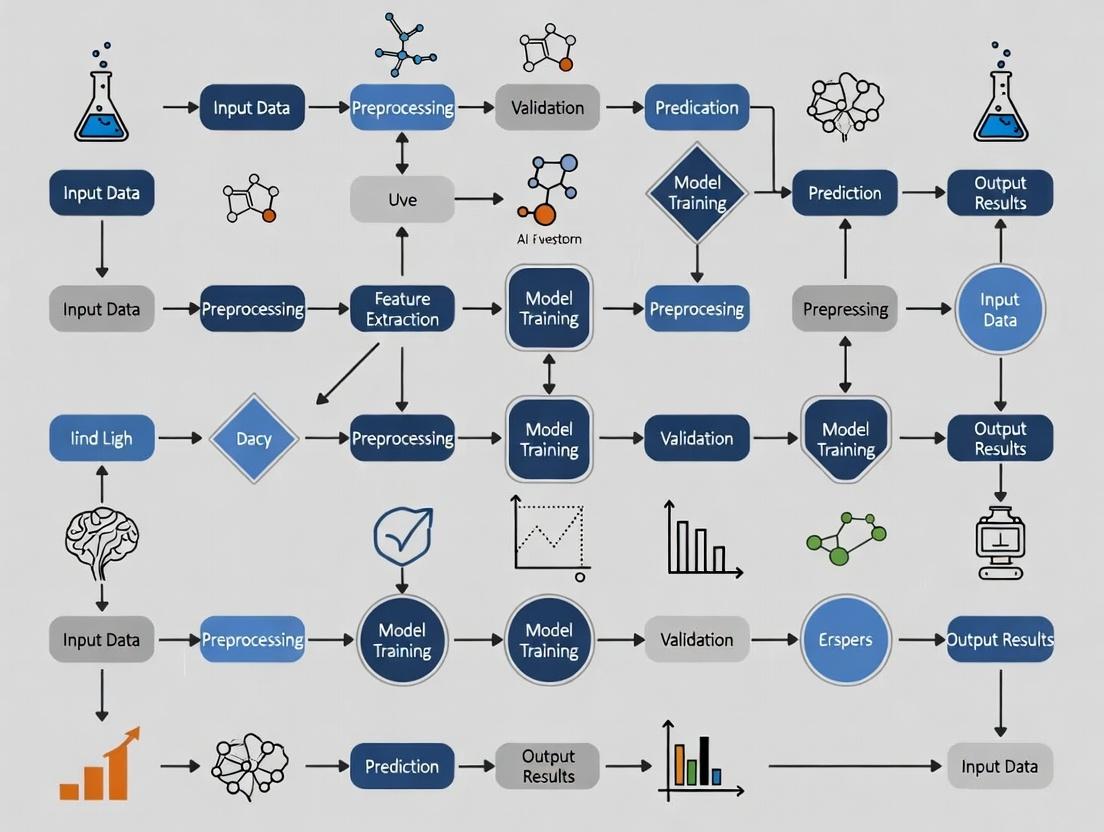
This article provides a comprehensive guide for researchers on implementing AI-driven deep learning pipelines for nanocarrier quantification.
From Pixels to Predictions: How AI and Deep Learning Are Revolutionizing Nanocarrier Quantification in Drug Delivery
Abstract
This article provides a comprehensive guide for researchers on implementing AI-driven deep learning pipelines for nanocarrier quantification. We explore the foundational concepts, detailing why manual analysis fails and how convolutional neural networks (CNNs) offer a superior solution. A step-by-step methodological walkthrough covers dataset creation, model architecture (e.g., U-Net, Mask R-CNN), and training protocols. Critical troubleshooting sections address common pitfalls like limited data, overfitting, and class imbalance. Finally, we discuss rigorous validation metrics and comparative analyses against traditional methods, highlighting the transformative impact on reproducibility and throughput in nanomedicine research and preclinical development.
The Quantification Challenge: Why AI is the Future of Nanocarrier Analysis
Within the broader thesis on developing an AI deep learning pipeline for nanocarrier quantification, this application note details the critical limitations of traditional manual microscopy analysis. As nanomedicine advances, the accurate quantification of nanoparticles (NPs) in biological samples—essential for assessing drug loading, targeting efficiency, and biodistribution—is hampered by subjective, low-throughput manual methods. This document outlines specific bottlenecks, provides protocols for comparative validation experiments, and presents data that underscore the necessity for automated, AI-driven solutions.
Comparative Analysis of Manual vs. Automated Quantification Bottlenecks
The table below summarizes key performance metrics, highlighting the inefficiencies inherent in traditional manual analysis.
Table 1: Quantitative Comparison of Manual vs. Idealized Automated Analysis for Fluorescent Nanocarrier Quantification
| Performance Metric | Traditional Manual Quantification | Target Automated/AI Pipeline |
|---|---|---|
| Analysis Time per Image | 5 - 15 minutes | < 30 seconds |
| Inter-Analyst Variability | 15% - 25% (Coefficient of Variation) | < 5% (Coefficient of Variation) |
| Throughput (Images per Day) | 30 - 80 | 500+ |
| Object Detection Sensitivity | Prone to miss dim or clustered particles | High, consistent across intensity ranges |
| Quantitative Parameters | Typically limited to count and mean size | Multi-parametric (count, size, shape, intensity, spatial distribution) |
| Subjectivity in Thresholding | High - Influenced by user bias | Standardized, reproducible algorithms |
| Fatigue-Induced Error Rate | Increases significantly after 2 hours | Negligible |
Experimental Protocol: Validating Manual Quantification Limitations
This protocol is designed to empirically demonstrate the bottlenecks listed in Table 1.
Protocol 2.1: Inter-Analyst Variability Test
Objective: To quantify the subjectivity and variability in manual thresholding and counting of fluorescent nanocarriers. Materials: See "The Scientist's Toolkit" below. Procedure:
- Sample Preparation: Seed cells in a 24-well plate. Treat with fluorescently labelled lipid nanoparticles (LNPs) for 4 hours. Fix with 4% PFA for 15 minutes and mount with DAPI-containing medium.
- Image Acquisition: Using a confocal microscope, acquire 10 high-resolution (1024x1024) z-stack images (3 slices) from random fields per well for 3 independent replicates. Use consistent settings (e.g., 60x oil objective, laser power, gain).
- Blinded Manual Analysis: Provide the 30 image sets to 3 trained analysts.
- Each analyst processes images using FIJI/ImageJ.
- Apply a Gaussian Blur (σ=2) to reduce noise.
- Manually set a threshold for the fluorescent channel to segment particles. Critically, each analyst does this independently based on their judgment.
- Use the "Analyze Particles" function to count particles (size: 0.1-5 µm², circularity: 0.5-1.0).
- Record counts and the binary mask used.
- Data Compilation: Compile counts from all analysts. Calculate mean, standard deviation, and coefficient of variation (CV) for each image.
Protocol 2.2: Throughput and Fatigue Assessment
Objective: To measure the decline in accuracy and consistency over a continuous analysis period. Procedure:
- Using one analyst from Protocol 2.1, provide a set of 100 pre-acquired images.
- The analyst processes images in a single session, with a 5-minute break every hour.
- Record the time taken per image and the particle count result.
- Ground Truth Generation: Use a consensus mask from 3 analysts or an advanced semi-automated macro as a reference.
- Calculate error rate (deviation from ground truth) and plot it against time into the session and cumulative image number.
Visualizing the Workflow and Limitations
Title: Manual Analysis Workflow and Key Bottlenecks
Title: From Manual Limitations to AI Solutions in Thesis
The Scientist's Toolkit: Essential Research Reagents & Materials
Table 2: Key Reagents and Materials for Manual Quantification Experiments
| Item | Function & Relevance |
|---|---|
| Fluorescently Labelled Lipid Nanoparticles (e.g., DiO-LNPs) | Model nanocarrier system for cellular uptake studies. Fluorescence enables detection by microscopy. |
| Cell Line (e.g., HeLa, HepG2) | Biological model for in vitro assessment of nanocarrier uptake and localization. |
| Confocal Microscope with 60x/100x Oil Objective | Essential for high-resolution imaging of sub-micron nanoparticles within cells. |
| Image Analysis Software (FIJI/ImageJ) | Open-source platform for manual image processing, thresholding, and particle analysis. |
| Cell Culture Plate (24-well/96-well, glass-bottom) | Vessel for cell growth and imaging, glass bottom is optimal for high-resolution microscopy. |
| Paraformaldehyde (4% PFA) | Fixative for preserving cellular architecture and nanoparticle position post-uptake. |
| Mounting Medium with DAPI | Preserves sample and stains nuclei for cell localization reference in images. |
| Standardized Fluorescent Beads (e.g., 0.5 µm) | Critical positive control for validating microscope resolution and quantification settings. |
In the development of AI-driven deep learning pipelines for nanocarrier characterization, precise definition of the target quantifiable parameters is foundational. This document outlines the core physical attributes—size, distribution, concentration, and morphology—that are essential for robust algorithmic training and analysis in therapeutic nanocarrier research.
Core Quantifiable Parameters
The following table summarizes the key parameters, their significance, and standard measurement techniques.
Table 1: Core Quantification Parameters in Nanocarrier Analysis
| Parameter | Definition & Significance | Primary Measurement Techniques |
|---|---|---|
| Size (Hydrodynamic Diameter) | The effective diameter of a particle moving in a fluid, critical for biodistribution, circulation time, and cellular uptake. | Dynamic Light Scattering (DLS), Nanoparticle Tracking Analysis (NTA) |
| Size Distribution (Polydispersity Index - PDI) | A measure of the heterogeneity of particle sizes in a sample. A low PDI (<0.2) indicates a monodisperse population. | DLS, NTA, Electron Microscopy + Image Analysis |
| Concentration | The number of particles per unit volume (particles/mL). Essential for dosing accuracy and in vitro/in vivo correlation. | NTA, Tunable Resistive Pulse Sensing (TRPS), Flow Cytometry |
| Morphology | The shape and structural features (e.g., spherical, rod-like, lamellar) influencing biological interactions and drug loading. | Transmission Electron Microscopy (TEM), Scanning Electron Microscopy (SEM), Atomic Force Microscopy (AFM) |
Detailed Experimental Protocols
Protocol 1: Hydrodynamic Size & PDI Measurement via Dynamic Light Scattering (DLS)
Objective: To determine the intensity-weighted mean hydrodynamic diameter (Z-Average) and polydispersity index (PDI) of a liposomal nanocarrier suspension.
Materials:
- Nanocarrier suspension (e.g., PEGylated liposomes)
- DLS instrument (e.g., Malvern Zetasizer Nano ZS)
- Disposable microcuvettes (low volume, polystyrene)
- 0.1 µm filtered phosphate-buffered saline (PBS) or appropriate buffer
- Micropipettes and tips
Procedure:
- Sample Preparation: Dilute the nanocarrier stock solution in filtered PBS to achieve a recommended concentration within the instrument's sensitivity range (typically 0.1-1 mg/mL for liposomes). Avoid introducing bubbles.
- Instrument Setup: Power on the DLS instrument and software. Allow the laser to warm up for 15-30 minutes.
- Measurement: Load 50 µL of the diluted sample into a clean microcuvette. Place the cuvette in the thermostatted sample holder (set to 25°C). Set the measurement parameters: equilibration time (120 s), number of runs (3-5), run duration (automatic).
- Data Acquisition: Initiate the measurement. The software will report the Z-Average size (in nm) and the PDI.
- Quality Control: Ensure the count rate is stable and within the instrument's optimal range. Examine the correlation function and size distribution plot for artifacts.
- Analysis: Report the Z-Average and PDI as mean ± standard deviation from at least three independent sample preparations.
Protocol 2: Concentration & Size Distribution via Nanoparticle Tracking Analysis (NTA)
Objective: To determine the particle number concentration (particles/mL) and visualize the size distribution profile of extracellular vesicle (EV) samples.
Materials:
- Purified extracellular vesicle sample
- NTA system (e.g., Malvern NanoSight NS300)
- 1 mL sterile syringes
- 0.1 µm filtered PBS
- Laboratory wipes
Procedure:
- System Priming: Flush the instrument's fluidic system with 0.1 µm filtered PBS using a syringe to remove any contaminants.
- Sample Dilution: Serially dilute the EV sample in filtered PBS to achieve an optimal concentration for tracking (typically 10⁷-10⁹ particles/mL). The ideal concentration yields 20-100 particles per frame.
- Loading and Focusing: Inject the diluted sample into the sample chamber using a syringe. Use the software's live view to focus the laser on the particles. Adjust the camera level to clearly visualize particles without saturation.
- Video Capture: Capture five videos of 60 seconds each from different, non-overlapping positions within the sample chamber.
- Processing and Analysis: Process all videos using the same detection threshold and analysis settings (e.g., detection threshold: 5, blur size: auto, max jump distance: auto). The software will generate a mean and mode size (nm) and a concentration (particles/mL) for each video.
- Reporting: Calculate and report the mean concentration and size distribution (mean ± SD) from all captured videos. Export the size distribution histogram for AI pipeline input.
Protocol 3: Morphological Analysis via Transmission Electron Microscopy (TEM)
Objective: To visualize and quantify the morphology and core-shell structure of polymeric nanoparticles (e.g., PLGA NPs).
Materials:
- PLGA nanoparticle suspension
- Carbon-coated copper TEM grids (200 mesh)
| Research Reagent Solutions Toolkit | |
|---|---|
| Reagent/Material | Function in Nanocarrier Quantification |
| Filtered PBS (0.1 µm) | Provides a clean, isotonic suspension medium for dilution and measurement, preventing contamination from dust/aggregates. |
| Uranyl Acetate (2% aqueous) | A common negative stain for TEM; enhances contrast by embedding around particles, revealing surface topography and shape. |
| Phosphotungstic Acid (PTA) | Alternative negative stain for TEM; used particularly for lipid-based systems to improve contrast without disrupting structure. |
| Size Calibration Standards (e.g., 100nm latex beads) | Essential for validating and calibrating DLS, NTA, and TRPS instruments to ensure measurement accuracy. |
| Glow-Discharged TEM Grids | Treatment renders carbon grids hydrophilic, ensuring even sample spread and adhesion of nanoparticles for high-quality TEM imaging. |
- 2% Uranyl acetate stain or 1% Phosphotungstic acid (PTA)
- Parafilm
- Filter paper
- Glow discharge system (optional)
- TEM instrument
Procedure:
- Grid Preparation: (Optional but recommended) Glow-discharge carbon-coated grids for 30-60 seconds to make them hydrophilic.
- Sample Staining (Negative Stain): a. Place a 10 µL droplet of the nanoparticle suspension on a piece of Parafilm. b. Float a TEM grid (carbon side down) on the droplet for 5-10 minutes. c. Blot the grid edge on filter paper to remove excess liquid. d. Immediately float the grid on a 10 µL droplet of uranyl acetate stain for 1-2 minutes. e. Blot excess stain and allow the grid to air-dry completely in a covered petri dish.
- TEM Imaging: Insert the dried grid into the TEM. Using an acceleration voltage of 80-100 kV, image the nanoparticles at various magnifications (e.g., 20,000x to 100,000x). Capture multiple images from different grid squares.
- Image Analysis: Use image analysis software (e.g., ImageJ, proprietary AI tools) to measure particle dimensions (diameter, core diameter), circularity, and assess morphological homogeneity from the TEM micrographs.
Visualizing the AI-Enabled Quantification Pipeline
AI Pipeline for Nanocarrier Quantification
Logical Flow from Parameter Definition to Insight
Core Concepts in the Context of Nanocarrier Quantification
Convolutional Neural Networks (CNNs) are a specialized class of deep neural networks designed for processing structured grid data, such as images. Their architecture is inspired by the biological visual cortex and is exceptionally effective for analyzing microscopy images central to AI-driven nanocarrier quantification research. This analysis is critical for evaluating drug delivery system efficacy, biodistribution, and targeting efficiency in therapeutic development.
Key Architectural Components:
- Convolutional Layers: Apply learnable filters (kernels) to extract hierarchical features (edges, textures, shapes) from input images. This local connectivity and weight sharing drastically reduce parameters compared to fully connected networks.
- Pooling Layers (e.g., Max Pooling): Downsample feature maps, reducing spatial dimensions and computational complexity while introducing translational invariance.
- Activation Functions (ReLU): Introduce non-linearity, allowing the network to learn complex patterns. Rectified Linear Unit (ReLU) is standard.
- Fully Connected Layers: Located at the network's end, these layers integrate extracted features for final classification or regression tasks (e.g., counting nanoparticles, classifying cellular uptake).
Quantitative Performance Data of CNN Architectures
The following table summarizes key performance metrics for modern CNN architectures relevant to biomedical image analysis, based on benchmarks like ImageNet. Accuracy and parameter efficiency are crucial for deploying models in research settings with limited computational resources.
Table 1: Performance Comparison of CNN Architectures for Image Analysis Tasks
| Architecture | Top-1 Accuracy (ImageNet) | Number of Parameters | Key Innovation | Suitability for Microscopy |
|---|---|---|---|---|
| ResNet-50 | 76.0% | ~25.6 M | Residual connections for training very deep networks | High: Excellent for feature extraction from complex bio-images. |
| VGG-16 | 71.3% | ~138 M | Simple, deep stacks of 3x3 convolutions | Moderate: Good performance but parameter-heavy. |
| EfficientNet-B0 | 77.1% | ~5.3 M | Compound scaling of depth, width, and resolution | Very High: State-of-the-art efficiency/accuracy trade-off. |
| U-Net | N/A (Segmentation) | ~31 M | Encoder-decoder with skip connections for segmentation | Essential: Benchmark for semantic segmentation of nanoparticles/cells. |
| DenseNet-121 | 75.0% | ~8.0 M | Dense connectivity between layers, feature reuse | High: Parameter-efficient, good for limited data. |
Note: Accuracy values are indicative. Performance on specific nanocarrier datasets depends on training data quality and quantity.
Experimental Protocol: CNN-Based Quantification of Cellular Nanoparticle Uptake
Aim: To automatically quantify the intracellular uptake of fluorescently labeled nanocarriers from confocal microscopy images.
Materials: Confocal microscopy images (Z-stacks or maximum projections) of treated cells. Ground truth data (manually annotated particle counts or segmentation masks).
Protocol:
Image Preprocessing:
- Channel Alignment & Extraction: Isolate the fluorescent channel corresponding to the nanocarrier signal.
- Background Subtraction: Apply a rolling-ball or top-hat filter to reduce uneven illumination.
- Normalization: Scale pixel intensities to a standard range (e.g., 0-1).
- Patch Generation: For large images, tile into smaller patches (e.g., 256x256 px) compatible with CNN input.
Data Annotation & Augmentation:
- Annotation: Using tools like LabelBox or Fiji, create binary masks outlining individual nanoparticles or regions of uptake.
- Augmentation: Apply real-time transformations (rotation, flipping, minor intensity shifts) during training to improve model generalization.
Model Training (U-Net Architecture for Segmentation):
- Framework: Utilize PyTorch or TensorFlow/Keras.
- Loss Function: Use a combined loss (e.g., Dice Loss + Binary Cross-Entropy) to handle class imbalance (few foreground pixels).
- Optimizer: Adam optimizer with an initial learning rate of 1e-4.
- Training: Train for 50-100 epochs, monitoring validation loss. Implement early stopping to prevent overfitting.
Inference & Post-processing:
- Prediction: Apply trained model to new images to generate probability maps.
- Thresholding: Apply optimal threshold (e.g., 0.5) to create binary segmentation.
- Connected Component Analysis: Use
skimage.measure.labelto identify and count individual segmented objects (nanocarriers). - Size Filtering: Filter objects by area to exclude debris or noise.
Validation:
- Compare automated counts/manual counts from a blinded expert.
- Metrics: Calculate Pearson correlation coefficient, mean absolute error, and Dice similarity coefficient.
Visualization of Workflow and Architecture
Diagram 1: CNN pipeline for nanocarrier image analysis
Diagram 2: U-Net for nanoparticle segmentation
The Scientist's Toolkit: Essential Reagents & Software
Table 2: Key Research Reagent Solutions & Computational Tools
| Category | Item / Software | Function / Purpose in CNN Workflow |
|---|---|---|
| Wet-Lab Reagents | Fluorescently Labeled Nanocarriers (e.g., Cy5, FITC) | Enable visualization and tracking of nanoparticles in cellular and tissue samples via microscopy. |
| Cell Permeability/ Viability Assay Kits (e.g., MTT, LDH) | Assess biological impact of nanocarrier uptake, correlating quantitative imaging data with functional readouts. | |
| Mounting Media with DAPI | Provides nuclear counterstain for cell segmentation and localization context in multi-channel images. | |
| Imaging Software | Fiji/ImageJ | Open-source platform for initial image preprocessing, manual annotation, and basic analysis. |
| Bitplane Imaris, Leica LAS X | Advanced 3D/4D image visualization, manual object tracking, and generation of ground truth data. | |
| Deep Learning Frameworks | PyTorch, TensorFlow | Core open-source libraries for building, training, and validating custom CNN models. |
| Specialized Libraries | Cellpose, StarDist | Pretrained models for general cell and nucleus segmentation, useful for transfer learning. |
| scikit-image, OpenCV | Provide essential algorithms for image preprocessing and post-processing (filters, thresholding). | |
| Annotation Tools | LabelBox, CVAT | Web-based platforms for efficient collaborative labeling of microscopy images to create training datasets. |
| Computational Hardware | GPU (NVIDIA, CUDA-enabled) | Accelerates CNN training and inference by orders of magnitude compared to CPU-only processing. |
Application Notes for AI-Driven Nanocarrier Quantification
Modality-Specific Data Characteristics
The integration of multimodal imaging data is critical for training robust AI models in nanocarrier research. Each modality provides complementary structural and functional information.
Table 1: Quantitative Comparison of Imaging Modalities for Nanocarrier Analysis
| Modality | Resolution (Typical) | Depth of Field | Sample Preparation | Key Data for AI | Throughput | Live-Cell Capability |
|---|---|---|---|---|---|---|
| TEM | < 1 nm | Very Thin | Fixed, dehydrated, stained (negative/positive) | 2D projection, internal morphology, size distribution | Low | No |
| SEM | 1-10 nm | High | Fixed, dehydrated, conductive coating | 3D surface topology, size, aggregation state | Medium | No (except ESEM) |
| Cryo-EM | 2-5 Å (single-particle) | Thin Vitrified Layer | Rapid vitrification, no stain | Near-native 3D structure, conformational heterogeneity | Low-Medium | No (but native-like) |
| Fluorescence Microscopy | 200-300 nm (diffraction-limited) | High (confocal: optical sectioning) | Labeled (fluorescent dyes, proteins) | Dynamic tracking, colocalization, pharmacokinetics | High | Yes |
Table 2: AI-Relevant Data Outputs and Challenges
| Modality | Primary Output Format | Key Quantitative Features for DL | Common Artifacts & Preprocessing Needs |
|---|---|---|---|
| TEM | 2D Grayscale Image | Particle diameter, core-shell distinction, lamellarity, shape eccentricity | Stain precipitation, aggregation during drying, beam damage. Requires contrast normalization, denoising. |
| SEM | 2D/3D Topographic Image | Surface roughness, porosity, particle clustering, size distribution | Charging, edge effects, metal coating thickness. Requires segmentation, edge detection. |
| Cryo-EM | 2D Micrograph Projections → 3D Density Map | High-resolution atomic/molecular contours, ligand binding sites, structural variability | Ice contamination, particle orientation bias, low signal-to-noise. Requires extensive particle picking, classification, 3D reconstruction. |
| Fluorescence Microscopy | 2D/3D/4D (Time) Multi-channel Image | Intensity over time (release kinetics), co-localization coefficients (targeting), particle trajectory & diffusion rates | Photobleaching, background autofluorescence, spectral bleed-through. Requires deconvolution, background subtraction, tracking algorithms. |
Integration into AI/Deep Learning Pipelines
The multimodal data feed into different stages of an AI pipeline for nanocarrier quantification and prediction.
Table 3: Mapping Modalities to AI Pipeline Stages
| Pipeline Stage | TEM/SEM Input Role | Cryo-EM Input Role | Fluorescence Microscopy Input Role |
|---|---|---|---|
| Detection & Segmentation | Ground truth for size/shape; trains U-Net/ Mask R-CNN models. | High-fidelity shape prior for model initialization. | Labels for dynamic object detection in complex backgrounds. |
| Classification & Phenotyping | Classifies based on internal structure (e.g., multilamellar vs. unilamellar vesicles). | Classifies conformational states or ligand-binding occupancy. | Classifies behavior (e.g., bound, internalized, free-diffusing). |
| Quantification & Regression | Measures precise nanoscale dimensions (diameter, membrane thickness). | Quantifies binding site occupancy or structural flexibility. | Quantifies release kinetics, targeting efficiency in cells/organs. |
| Predictive Modeling | Provides structural correlates for in vitro performance (e.g., loading capacity). | Informs structure-activity relationships (SAR) at atomic level. | Generates dynamic data for PK/PD and efficacy prediction models. |
Experimental Protocols for Data Generation
Protocol: TEM Sample Preparation and Imaging for Lipid Nanoparticles (LNPs)
Objective: To obtain high-contrast 2D images of LNP internal structure for AI-based segmentation.
Materials (Research Reagent Solutions Toolkit):
- Phosphotungstic Acid (PTA, 2% w/v, pH 7.0): Negative stain; enhances contrast by embedding around particles.
- Formvar/Carbon-coated Copper Grids (300 mesh): Support film for sample deposition.
- Glow Discharger: Creates hydrophilic grid surface for even sample spread.
- Ultrafiltration Devices (e.g., Amicon filters): For buffer exchange/concentration.
- Transmission Electron Microscope (e.g., JEOL JEM-1400Plus, 120kV).
Procedure:
- Grid Preparation: Glow-discharge grids for 30-45 seconds to create a hydrophilic surface.
- Sample Application: Dilute LNP sample in appropriate buffer (e.g., 10 mM HEPES). Pipette 5-10 µL onto the grid. Allow adsorption for 60 seconds.
- Staining: Blot excess liquid with filter paper. Immediately apply 10 µL of 2% PTA stain for 30 seconds. Blot thoroughly.
- Drying: Air-dry the grid completely in a petri dish.
- Imaging: Insert grid into TEM. Image at 80-120 kV. Acquire multiple micrographs at various magnifications (e.g., 20,000x, 50,000x, 100,000x) across the grid.
- Data Export: Save images in lossless formats (TIFF, DM4) retaining metadata (scale, kV).
Protocol: Cryo-EM Single Particle Analysis of Protein-Conjugated Nanocarriers
Objective: To determine the near-native 3D structure and binding site of a targeting moiety on a nanocarrier.
Materials (Research Reagent Solutions Toolkit):
- Quantifoil R1.2/1.3 or UltrauFoil Grids: Holey carbon grids for vitrification.
- Vitrobot (or equivalent plunge freezer): For controlled, rapid vitrification.
- Liquid Ethane: Cryogen for vitrification.
- Cryo-Electron Microscope (e.g., Thermo Fisher Scientific Titan Krios, 300kV, with Gatan K3 detector).
- Relion/CryoSPARC/EMAN2 Software Suites: For computational processing.
Procedure:
- Grid Preparation: Plasma clean grids to ensure uniform hydrophilicity.
- Vitrification: Apply 3 µL of purified sample (~3 mg/mL) to grid. Blot for 3-6 seconds at 100% humidity (4°C) and plunge freeze into liquid ethane. Store in liquid nitrogen.
- Screening & Data Collection: Screen for ice quality. Collect automated movie data at high defocus range (e.g., -1.0 to -2.5 µm) with dose fractionation (40 frames, 50 e-/Ų total dose).
- AI-Driven Processing (Typical CryoSPARC Workflow):
a. Patch-based motion correction & CTF estimation.
b. Template-free particle picking using
Topaz(deep learning) orBlob picker. c. 2D Classification to remove junk particles. d. Ab initio 3D reconstruction and heterogeneous refinement to separate structural classes. e. Non-uniform refinement and Local resolution estimation. - Model Building & Quantification: Fit atomic models (if available) into density. Analyze density maps for ligand occupancy.
Protocol: Live-Cell Fluorescence Microscopy for Nanocarrier Tracking & Drug Release
Objective: To quantify cellular uptake, intracellular trafficking, and payload release kinetics of fluorescently labeled nanocarriers.
Materials (Research Reagent Solutions Toolkit):
- Cell Culture (e.g., HeLa, HepG2): Relevant cell line for study.
- Fluorescent Nanocarrier: Dual-labeled: lipophilic dye (e.g., DiD) in membrane/coat & encapsulated cargo (e.g., FITC-dextran, Doxorubicin).
- Confocal/Spinning Disk Microscope with environmental chamber (37°C, 5% CO₂).
- Image Analysis Software: (e.g., FIJI/ImageJ, Imaris, CellProfiler).
Procedure:
- Cell Seeding: Seed cells on glass-bottom dishes 24h prior to reach 60-70% confluency.
- Incubation & Imaging: Replace medium with pre-warmed medium containing labeled nanocarriers. Immediately place dish on microscope stage.
- Time-Lapse Acquisition: Acquire multi-channel (e.g., DiD: Ex/Em 644/665 nm, FITC: 494/518 nm) z-stacks every 5-10 minutes for 2-24 hours.
- Data Processing & AI Analysis (using FIJI/TrackMate): a. Background Subtraction (Rolling Ball). b. Deconvolution (if using widefield). c. Particle Detection & Tracking: Use TrackMate's deep learning detector or LoG detector. Apply simple LAP tracker to generate trajectories. d. Colocalization Analysis: Calculate Manders' or Pearson's coefficients between channels over time to quantify payload release. e. Trajectory Analysis: Calculate mean squared displacement (MSD) to classify diffusion modes (confined, directed, free).
Visualizations (Diagrams)
Title: TEM Data Pipeline for AI
Title: Cryo-EM SPA AI Analysis Workflow
Title: Multimodal Data Fusion in AI Model
Within the thesis framework of AI-driven nanocarrier quantification for drug development, this protocol details the integrated pipeline from raw biological image acquisition to statistically validated insights. This pipeline is critical for the high-throughput, reproducible analysis of nanocarrier cellular uptake, distribution, and efficacy, replacing subjective manual quantification with objective, scalable deep learning (DL) methods.
The Integrated AI Pipeline: Protocols and Application Notes
Phase 1: Image Acquisition & Preprocessing
Protocol 2.1.1: Standardized Confocal Microscopy for Nanocarrier Imaging
- Objective: Acquire high-quality, consistent z-stack images of cells incubated with fluorescently labeled nanocarriers.
- Materials: Cell culture (e.g., HeLa, MCF-7), fluorescent nanocarriers, confocal microscope (e.g., Zeiss LSM 980), glass-bottom dishes.
- Procedure:
- Seed cells at defined density (e.g., 50,000 cells/dish) and incubate for 24h.
- Treat with nanocarriers at desired concentration for a set time (e.g., 1-24h).
- Fix with 4% PFA for 15 min, stain nuclei (DAPI) and cytoskeleton (Phalloidin-488).
- Acquire z-stacks (0.5 µm step size) using a 63x oil immersion objective, ensuring non-saturating pixel intensity.
- Export images as 16-bit TIFF files, maintaining consistent naming convention (e.g.,
SampleID_Channel_Date.tif).
Protocol 2.1.2: Image Preprocessing and Augmentation
- Objective: Prepare raw images for DL model training by normalizing data and artificially expanding the dataset.
- Procedure:
- Background Subtraction: Apply rolling ball algorithm (50-pixel diameter).
- Channel Alignment: Correct minor shifts between fluorescence channels using landmark registration.
- Normalization: Scale pixel intensities to a 0-1 range per image batch.
- Data Augmentation (On-the-fly during training): Apply random transformations including rotation (±45°), horizontal/vertical flips, and minor brightness/contrast adjustments (±10%).
Phase 2: Model Training & Segmentation
Protocol 2.2.1: U-Net Model Training for Nanocarrier Instance Segmentation
- Objective: Train a deep learning model to precisely identify and outline individual nanocarriers within cellular images.
- Materials: Ground truth dataset (≥200 manually annotated images), GPU workstation (e.g., NVIDIA A100), Python with PyTorch/TensorFlow.
- Procedure:
- Data Preparation: Split image dataset into Training (70%), Validation (15%), Test (15%).
- Model Architecture: Implement a standard U-Net with ResNet-34 encoder pre-trained on ImageNet.
- Training: Use Adam optimizer (lr=1e-4), Dice-BCE loss function, batch size of 8 for 100 epochs.
- Validation: Monitor validation loss and Dice Coefficient to avoid overfitting; implement early stopping.
- Inference: Apply the trained model on new images to generate binary segmentation masks.
Diagram 1: Core AI Image Analysis Pipeline
Phase 3: Quantitative Feature Extraction
Protocol 2.3.1: Extraction of Morphometric and Intensity Features
- Objective: Convert segmentation masks into quantitative tabular data.
- Procedure: Using Python (scikit-image, pandas), for each detected nanocarrier object, extract:
- Morphometric: Area (µm²), Perimeter, Circularity, Feret Diameter.
- Spatial: Centroid coordinates (x, y, z), Distance to Nucleus.
- Intensity: Mean, Max, and Total fluorescence intensity per particle.
Table 1: Example Feature Extraction Output for Nanocarrier Analysis
| Sample ID | Particle ID | Area (px²) | Circularity | Mean Intensity | Distance to Nucleus (px) | Cellular Region |
|---|---|---|---|---|---|---|
| Ctrl_1 | 1 | 45.2 | 0.87 | 1256.7 | 15.3 | Cytoplasm |
| Ctrl_1 | 2 | 38.9 | 0.91 | 1102.4 | 8.7 | Perinuclear |
| Treat_1 | 1 | 52.3 | 0.78 | 4500.5 | 5.1 | Perinuclear |
Phase 4: Statistical Insight & Biological Interpretation
Protocol 2.4.1: Statistical Workflow for Comparative Studies
- Objective: Determine significant differences in nanocarrier parameters between experimental groups.
- Procedure:
- Data Aggregation: Calculate per-sample metrics (e.g., mean particle count/cell, total fluorescence intensity).
- Normality Test: Perform Shapiro-Wilk test on aggregated data.
- Hypothesis Testing: For normal data, use ANOVA with post-hoc Tukey test; for non-normal, use Kruskal-Wallis with Dunn's test.
- Dimensionality Reduction: Apply Uniform Manifold Approximation and Projection (UMAP) to visualize high-dimensional feature clustering.
- Correlation Analysis: Compute Spearman's correlation between uptake metrics and cellular assay results (e.g., viability).
Diagram 2: From Segmentation to Statistical Analysis
The Scientist's Toolkit: Research Reagent Solutions
Table 2: Essential Materials for AI-Powered Nanocarrier Quantification Research
| Item | Function/Application | Example Product/Brand |
|---|---|---|
| Fluorescent Nanocarriers | Enable visualization and tracking under microscopy. Liposomes, polymeric NPs with Cy5, FITC, or Rhodamine labels. | Merck (Sigma-Aldridge) Liposomes; Creative PEGWorks PLGA-NPs. |
| Cell Line with Fluorescent Organelles | Provide spatial context for co-localization analysis (e.g., LysoTracker, MitoTracker). | Thermo Fisher Scientific CellLight BacMam 2.0 reagents. |
| High-Resolution Confocal Microscope | Acquire high-quality 3D image stacks for precise segmentation. | Zeiss LSM 980 with Airyscan 2; Nikon A1R HD25. |
| Image Annotation Software | Create ground truth data for model training by manually labeling nanocarriers. | Nikon NIS-Elements AR; MIT's Label Studio. |
| DL Training Platform | User-friendly environment to build, train, and deploy segmentation models without extensive coding. | Aivia Cloud (Leica); DeepCell (van Valen Lab); Ilastik. |
| Statistical Analysis Software | Perform advanced statistical testing and data visualization. | GraphPad Prism; R Studio with ggplot2; Python (SciPy, seaborn). |
Building Your Pipeline: A Step-by-Step Guide to AI-Driven Nanocarrier Analysis
Within the AI pipeline for nanocarrier quantification in drug development, the initial curation and preprocessing of a high-quality training dataset is the foundational step determining model success. This dataset, comprising microscopic or spectral images of nanocarriers (e.g., lipid nanoparticles, polymeric micelles), must be meticulously assembled to train deep learning models for tasks like particle counting, size distribution analysis, and morphology classification.
Data Acquisition & Source Curation
Primary data sources for nanocarrier research include experimental imaging techniques. The following table summarizes key modalities:
Table 1: Primary Imaging Modalities for Nanocarrier Dataset Acquisition
| Modality | Typical Resolution | Key Output | Advantage for AI Training | Common Artifacts to Preprocess |
|---|---|---|---|---|
| Transmission Electron Microscopy (TEM) | < 1 nm | 2D grayscale images | High-resolution, detailed morphology | Sample preparation artifacts, staining variability, agglomeration |
| Cryo-Electron Microscopy (Cryo-EM) | ~3-5 Å | 2D particle projections/3D reconstructions | Near-native state, minimal drying artifacts | Vitrification defects, low signal-to-noise in raw micrographs |
| Atomic Force Microscopy (AFM) | ~1 nm (vertical) | 3D height maps (topography) | Quantitative height data, works in liquid | Tip convolution effects, scan line noise |
| Super-Resolution Fluorescence Microscopy (e.g., STORM) | ~20 nm | 2D localization maps | Specific labeling, dynamic tracking | Labeling density issues, blinking artifacts |
| Dynamic Light Scattering (DLS) | Hydrodynamic diameter distribution | Size distribution plots | Rapid, ensemble measurement in solution | Polydispersity skew, dust contamination peaks |
Detailed Preprocessing Protocol
The following protocol details the standard workflow for preparing a raw image dataset for model training.
Protocol 3.1: Standardized Image Preprocessing Pipeline for Nanocarrier TEM Data
Objective: To convert raw TEM micrographs into a normalized, augmented, and annotated dataset suitable for supervised deep learning.
Materials & Input:
- Raw TEM image files (.tiff, .dm3, .mrc formats)
- Annotation software (e.g., Fiji/ImageJ with LabKit, MITK, or commercial solutions)
- Computational environment (Python with libraries: OpenCV, Scikit-image, NumPy, Albumentations)
Procedure:
- Format Standardization:
- Convert all images to a consistent lossless format (e.g., 16-bit PNG or TIFF).
- Extract and log metadata (scale, magnification, detector type).
Quality Control & Filtering:
- Manually or semi-automatically remove images with critical flaws: severe drift, contamination, incorrect defocus, or overcrowding that prevents unambiguous annotation.
- Establish a minimum acceptance criteria (e.g., >80% of nanoparticles in focus, scale bar present).
Basic Intensity Normalization:
- Apply contrast-limited adaptive histogram equalization (CLAHE) to standardize intensity ranges across batches.
- Subtract uneven background illumination using a rolling-ball or top-hat filter.
Noise Reduction:
- Apply a mild non-local means or Gaussian filter to reduce high-frequency noise, balancing detail preservation.
- (For Cryo-EM) Use patch-based denoising algorithms (e.g., Topaz Denoise) as a preprocessing step.
Annotation & Ground Truth Generation:
- For Instance Segmentation: Manually label the boundary of each distinct nanocarrier using a polygon tool. Export masks in COCO or Pascal VOC format.
- For Object Detection: Draw bounding boxes around each particle. Log coordinates and class (e.g., "intact," "aggregated," "ruptured").
- For Size Distribution: Annotate a known number of particles of a reference standard (e.g., gold nanoparticles) to validate scale accuracy per image.
Data Augmentation:
- Using a library like Albumentations, programmatically generate augmented variants to increase dataset robustness. Apply:
- Spatial: Random rotation (±15°), horizontal/vertical flip, slight scaling (±10%).
- Pixel-level: Random brightness/contrast variation (±10%), addition of Gaussian noise, simulated defocus blur.
- Using a library like Albumentations, programmatically generate augmented variants to increase dataset robustness. Apply:
Dataset Splitting:
- Partition the processed and annotated dataset into stratified subsets:
- Training Set: 70% (for model weight optimization).
- Validation Set: 15% (for hyperparameter tuning and epoch selection).
- Test Set: 15% (held-out, for final unbiased performance evaluation).
- Partition the processed and annotated dataset into stratified subsets:
Visualizing the Preprocessing Workflow
Title: AI Training Dataset Preprocessing Pipeline
The Scientist's Toolkit: Key Reagent & Material Solutions
Table 2: Essential Research Reagents for Generating Nanocarrier Imaging Data
| Item | Function in Dataset Creation | Example/Note |
|---|---|---|
| Reference Standards (e.g., Gold Nanoparticles) | Provides scale calibration and validates imaging system resolution. Critical for deriving quantitative size data. | 10 nm, 50 nm, 100 nm citrate-stabilized AuNPs. |
| Negative Stain Reagents (for TEM) | Enhances contrast of biological or soft-matter nanocarriers by embedding them in a heavy metal salt. | 1-2% Uranyl acetate or phosphotungstic acid. |
| Cryo-EM Grids & Vitrification System | Supports nanocarrier sample in near-native, vitrified ice for Cryo-EM imaging. | Quantifoil or C-flat holey carbon grids; Vitrobot. |
| Specific Fluorescent Labels (for SRM) | Enables super-resolution tracking of nanocarrier components (e.g., lipid, payload). | Alexa Fluor dyes, functionalized quantum dots. |
| Size Exclusion Chromatography (SEC) Columns | Purifies nanocarrier formulations to remove aggregates and free ligand before imaging, ensuring a homogeneous dataset. | Sepharose, Superdex columns for in-line purification. |
| AFM Cantilevers & Calibration Gratings | Essential for generating accurate topographic data. Tip shape affects resolution. | Silicon nitride cantilevers; TGZ1/TGQ1 calibration grids. |
Data Annotation & Quality Assurance Protocol
Protocol 6.1: Multi-Expert Consensus Annotation for Ground Truth
Objective: To establish high-fidelity ground truth labels by mitigating individual annotator bias.
Procedure:
- Expert Panel: Engage a minimum of three domain experts (e.g., experienced microscopists).
- Independent Annotation: Each expert annotates the same subset of images (~100-200) using standardized guidelines.
- Consensus Calculation: Use Intersection-over-Union (IoU) for segmentation or F1-score for bounding boxes to measure pairwise agreement.
- Adjudication: For objects where IoU < 0.7, experts review concurrently to reach a consensus label.
- Guideline Refinement: Update annotation guidelines based on adjudication discussions to improve consistency.
- Final Label Generation: Apply the refined guidelines to the full dataset, with periodic cross-checks.
Title: Multi-Expert Consensus Annotation Workflow
Quantitative Dataset Metrics & Logging
A curated dataset must be documented with key metrics to inform users of its characteristics and limitations.
Table 3: Essential Metadata & Quality Metrics for a Curated Dataset
| Metric Category | Specific Metric | Target/Example Value | Purpose |
|---|---|---|---|
| Basic Statistics | Total number of images | e.g., 5,000 | Indicates dataset scale. |
| Number of annotated instances | e.g., 125,000 particles | Indicates label density. | |
| Average instances per image | e.g., 25 ± 10 | Informs minibatch sampling. | |
| Class Balance | Distribution across labeled classes | e.g., Intact: 85%, Aggregated: 10%, Ruptured: 5% | Highlights potential bias. |
| Annotation Quality | Inter-annotator agreement (Mean IoU) | > 0.85 | Quantifies label reliability. |
| Spatial Resolution | Pixel size (nm/pixel) | e.g., 0.5 nm/px (TEM) | Determines detectable features. |
| Split Composition | Instance count per split (Train/Val/Test) | Respects stratification rules | Ensures representative evaluation. |
In the development of an AI-driven deep learning pipeline for the quantification of therapeutic nanocarriers in biological imaging (e.g., TEM, SEM, fluorescence microscopy), the creation of accurate ground truth data is the critical bottleneck. This step directly dictates model performance. Within the thesis framework, this stage follows sample preparation and imaging, and precedes model architecture selection and training. The choice between manual and semi-automated annotation strategies involves a fundamental trade-off between accuracy, time investment, and scalability, directly impacting the research timeline and the reliability of subsequent quantitative analyses (e.g., particle size distribution, count, and morphology).
Comparative Analysis: Manual vs. Semi-Automated Labeling
Table 1: Strategic Comparison of Annotation Approaches
| Parameter | Manual Labeling | Semi-Automated Labeling |
|---|---|---|
| Core Principle | Human expert visually identifies and delineates each nanocarrier object. | Algorithm proposes candidate objects/contours; human expert reviews and corrects. |
| Primary Tools | ImageJ/FIJI, Labelbox, CVAT, Adobe Photoshop. | Ilastik, CellProfiler, specialized pretrained U-Net models, with review in Labelbox or similar. |
| Time per Image (Estimate) | 15-60 minutes, scales linearly with particle density. | 5-20 minutes (including correction), lower scaling factor. |
| Initial Accuracy | High, subject to expert consistency. | Variable; depends on algorithm suitability and image quality. |
| Consistency | Prone to intra- & inter-observer variability. | High for algorithmic pre-selection; final consistency depends on reviewer. |
| Scalability | Low; prohibitive for large datasets (>1000 images). | High; enables annotation of large-scale datasets. |
| Expertise Required | High domain knowledge (biology/materials). | Dual expertise: domain knowledge + tool proficiency. |
| Best Suited For | Small datasets, complex/unpredictable morphologies, low signal-to-noise images, initial model training sets. | Large datasets, consistent and distinct nanocarrier appearance, high-throughput analysis. |
| Key Risk | Labeler fatigue leading to errors and inconsistency. | Algorithm bias or failure modes propagating into ground truth. |
Detailed Experimental Protocols
Protocol 3.1: Manual Annotation for TEM Nanocarrier Images
Objective: To create pixel-accurate ground truth masks for lipid nanoparticles (LNPs) in Transmission Electron Microscopy (TEM) images. Materials: See Scientist's Toolkit (Section 5.0). Procedure:
- Image Pre-processing: Open raw TEM .tif file in FIJI. Apply minimal contrast stretching (
Image > Adjust > Brightness/Contrast) to clarify particle boundaries without creating artifacts. Duplicate the image (Image > Duplicate) for annotation. - Annotation: Select the
Polygon Selectionstool. Manually trace the boundary of each distinct nanocarrier, ensuring to include the entire particle and exclude background membrane or staining artifacts. For dense clusters, trace individual particles to the best ability. - Mask Creation: With all polygons for one image selected, create a binary mask:
Edit > Selection > Create Mask. This generates a new binary image where annotated pixels are white (255) and background is black (0). - Label Export: Save the mask image with a filename linking it to the original (e.g.,
original_name_mask.tif). For object detection models, use theROI Manager(Add [t] after selection) to export coordinates as.csvfiles. - Quality Control: Have a second, independent expert annotate a random subset (10-20%) of images. Calculate Inter-Observer Agreement metrics (e.g., Dice Coefficient) to establish annotation confidence.
Protocol 3.2: Semi-Automated Annotation Using Ilastik + Manual Correction
Objective: To rapidly generate and refine ground truth for fluorescently labeled polymeric micelles in confocal microscopy stacks. Materials: See Scientist's Toolkit (Section 5.0). Procedure: Part A: Pixel Classification Training (Ilastik)
- Project Setup: Open Ilastik, create a new
Pixel Classificationproject. Import a representative subset of raw image stacks (5-10). - Feature Selection: In the
Feature Selectiontab, select relevant 2D/3D features (e.g., Edge, Texture at scales 1.0, 3.0, 5.0 px). - Interactive Training: In the
Trainingtab, using the brush tool, label pixels asNanocarrier (Signal)andBackground(andAmbiguousif needed) across multiple slices and images. Live feedback shows the probabilistic output. - Model Export: Once predictions are stable, go to
Exporttab. ChooseProbabilitiesand export the predicted probability maps for all images as 32-bit .tif files.
Part B: Segmentation & Correction
- Binary Segmentation: In FIJI, open a probability map. Apply a threshold (
Image > Adjust > Threshold, Otsu method often suitable) to create a preliminary binary mask. UseAnalyze Particlesto convert to object labels. - Review & Correct: Import the original image and the preliminary mask into a platform like Labelbox or CVAT as a new project. Use the built-in correction tools (brush, eraser, polygon edit) to fix false positives (non-particle objects) and false negatives (missed particles).
- Finalization: Export the corrected masks and/or bounding boxes in the required format (e.g., COCO JSON, Pascal VOC).
Visualizations
Annotation Strategy Decision Workflow
Semi-Automated Annotation Two-Phase Pipeline
The Scientist's Toolkit
Table 2: Essential Research Reagent Solutions for Annotation
| Item | Function/Description | Example Product/Software |
|---|---|---|
| Image Analysis Suite | Core platform for manual manipulation, basic segmentation, and batch processing. | FIJI/ImageJ (open source), Adobe Photoshop (commercial). |
| Specialized ML Tool | Interactive machine learning for pixel classification, object prediction, and tracking. | Ilastik (open source), CellProfiler (open source). |
| Annotation Platform | Cloud or local platform for collaborative labeling, versioning, and correction of images/videos. | Labelbox, CVAT, Supervisely. |
| High-Resolution Monitor | Accurate visual identification of nanocarrier boundaries and subtle image features. | 4K/UHD IPS or OLED monitors with accurate color calibration. |
| Graphics Tablet | Provides pressure-sensitive, precise drawing for manual segmentation, reducing fatigue. | Wacom Intuos or Cintiq series. |
| Data Storage Solution | Secure, high-capacity storage for large raw image sets and derived annotation files. | RAID-configurated NAS (Network Attached Storage) with automated backup. |
Within the broader thesis on developing an AI deep learning pipeline for automated nanocarrier quantification in microscopic images, the selection of an appropriate neural network architecture is critical. This stage directly impacts the accuracy, speed, and reliability of detecting and segmenting lipid nanoparticles (LNPs), polymeric micelles, and other drug delivery vehicles from complex biological backgrounds (e.g., tissue sections, cell cultures). U-Net, Mask R-CNN, and YOLO represent three dominant paradigms for image analysis, each with distinct strengths for semantic segmentation, instance segmentation, and real-time detection, respectively. The choice hinges on specific research questions: whether precise pixel-wise segmentation of individual nanocarriers is required (for size/morphology analysis) or if rapid counting and coarse localization suffice.
Architecture Comparison: Application Notes for Nanocarrier Analysis
The following table summarizes the core attributes, quantitative performance benchmarks (where applicable from recent literature), and suitability for nanocarrier research.
Table 1: Comparative Analysis of Architectures for Nanocarrier Image Analysis
| Feature | U-Net | Mask R-CNN | YOLO (v8-Seg) |
|---|---|---|---|
| Primary Task | Semantic / Instance Segmentation | Instance Segmentation | Real-time Detection & Segmentation |
| Core Strength | High-precision pixel-level segmentation, especially with limited data. | Simultaneous object detection, classification, and mask generation. | Extreme inference speed with competitive accuracy. |
| Typical mIoU/Dice Score (on biomedical datasets) | 0.85 - 0.95 | 0.78 - 0.90 (Mask mAP) | 0.75 - 0.85 (Mask mAP) |
| Inference Speed (FPS on 512x512 image) | ~10-20 (CPU), ~50-100 (GPU) | ~5-10 (GPU) | ~50-120 (GPU) |
| Data Efficiency | Excellent; performs well with hundreds of annotated images. | Requires larger datasets (thousands) for robust performance. | Requires large, diverse datasets; benefits from pre-training. |
| Output for Quantification | Pixel-wise segmentation mask. | Bounding box, class label, and segmentation mask per instance. | Bounding box, class label, and optional segmentation mask. |
| Best Suited for Nanocarrier Use-Case | Quantifying nanocarrier area/loading in a region, dense clustering analysis. | Differentiating & quantifying individual nanocarriers in aggregates, morphological classification. | High-throughput screening, real-time analysis in live-cell imaging, initial rapid detection. |
Experimental Protocols for Model Training & Validation
Protocol 3.1: Dataset Preparation for Nanocarrier Instance Segmentation
Objective: To create a standardized dataset from Transmission Electron Microscopy (TEM) or Scanning Electron Microscopy (SEM) images for training segmentation models.
- Image Acquisition: Acquire ≥100 high-resolution (≥1024x1024) TEM/SEM images of nanocarriers under various conditions (e.g., different formulations, incubation times).
- Annotation:
- For U-Net: Use LabelMe or ITK-SNAP to create pixel-perfect binary masks. Annotate all nanocarriers as a single class (e.g., 'nanocarrier' vs. 'background').
- For Mask R-CNN/YOLO: Use VGG Image Annotator (VIA) or COCO Annotator to draw polygons around each individual nanocarrier. Assign instance IDs.
- Pre-processing: Resize images to a uniform size (e.g., 512x512). Apply stain normalization (for TEM) and augmentations: random rotation (±15°), horizontal/vertical flips, mild Gaussian blur, and contrast adjustment.
- Splitting: Split dataset 70:15:15 (Train:Validation:Test), ensuring no data leakage from the same sample across splits.
Protocol 3.2: Transfer Learning Protocol for Mask R-CNN on Nanocarrier Data
Objective: To adapt a pre-trained Mask R-CNN model (on COCO) for nanocarrier instance segmentation.
- Base Model: Initialize with a Mask R-CNN model with a ResNet-50-FPN backbone pre-trained on MS COCO.
- Model Modification: Replace the head classifiers to predict only 2 classes: 'background' and 'nanocarrier'.
- Training Regime:
- Hardware: Single NVIDIA RTX A6000 GPU (or equivalent with ≥24GB VRAM).
- Phase 1 (Frozen Backbone): Train only the head layers for 10 epochs. Use SGD optimizer with LR=0.001, momentum=0.9, weight decay=0.0001.
- Phase 2 (Fine-tuning): Unfreeze all layers. Train for 40 more epochs with a reduced LR=0.0001. Use a batch size of 2-4 depending on image size and memory.
- Loss Function: Combined loss: L = Lclass + Lbox + L_mask.
- Validation: Monitor Mask Average Precision (Mask AP) at IoU threshold 0.5 on the validation set after each epoch. Early stopping if no improvement for 10 epochs.
Protocol 3.3: Quantitative Evaluation Protocol for Segmentation Outputs
Objective: To quantitatively assess model performance on the held-out test set.
- Metrics Calculation (per image, then averaged):
- For Segmentation Quality: Calculate Dice Similarity Coefficient (DSC) = (2 * |Pred ∩ GT|) / (|Pred| + |GT|), where GT is ground truth mask.
- For Detection/Instance Segmentation: Calculate Average Precision (AP) metrics using the COCO evaluation toolkit: AP@[.50:.95], AP@0.50, AP@0.75.
- Nanocarrier-Specific Metrics:
- Particle Count Accuracy: (1 - |PredCount - GTCount| / GT_Count) * 100%.
- Size Distribution Correlation: Calculate Pearson's R between predicted nanocarrier diameter (from mask area) and ground truth diameter.
- Statistical Reporting: Report all metrics as mean ± standard deviation across the entire test set.
Visual Workflows & Architectures
Diagram 1: AI Pipeline for Nanocarrier Image Analysis
Diagram 2: Model Training & Validation Workflow
The Scientist's Toolkit: Key Research Reagents & Solutions
Table 2: Essential Materials for AI-Driven Nanocarrier Quantification Experiments
| Item / Reagent | Function in the Experimental Pipeline | Example Product / Specification |
|---|---|---|
| High-Resolution Microscopy | Generates the primary input data (images) for AI analysis. | TEM (Jeol JEM-1400Flash), SEM with cryo-stage, Super-resolution Confocal Microscopy. |
| Image Annotation Software | Enables creation of accurate ground truth labels for model training. | VGG Image Annotator (VIA) (free), COCO Annotator (web-based), LabelBox (commercial). |
| Deep Learning Framework | Provides libraries and tools to build, train, and evaluate models. | PyTorch (preferred for research flexibility) or TensorFlow/Keras. |
| Specialized Model Code | Pre-implemented architectures for rapid prototyping. | Detectron2 (FAIR) for Mask R-CNN, MMDetection (OpenMMLab), Ultralytics YOLOv8. |
| GPU Computing Resource | Accelerates model training, reducing time from weeks to hours. | NVIDIA GPU (e.g., RTX 4090, A100, H100) with CUDA and cuDNN support. |
| Data Augmentation Library | Artificially expands training dataset to improve model robustness. | Albumentations (optimized for images), Torchvision Transforms. |
| Evaluation Toolkit | Standardized code to compute accuracy metrics for fair comparison. | COCO Evaluation API (for detection/segmentation), custom scripts for Dice Score. |
| High-Performance Workstation | Local machine for development, testing, and small-scale training. | CPU: ≥16 cores (Intel i9/AMD Ryzen 9), RAM: ≥64GB, SSD: ≥2TB NVMe. |
Application Notes
Within the AI pipeline for nanocarrier quantification, the training phase translates curated data into a predictive model. Hyperparameter tuning is the systematic search for the optimal architectural and training parameters that govern the learning process, directly impacting model accuracy, generalizability, and computational efficiency. For drug development professionals, this step is critical to ensure the model reliably quantifies nanocarrier uptake and distribution in biological samples, a prerequisite for pharmacokinetic and biodistribution studies.
Core Hyperparameters in Deep Learning for Image-Based Quantification
The following table summarizes key hyperparameters, their typical search ranges for convolutional neural networks (CNNs) common in image analysis, and their impact on the model and computational load.
Table 1: Key Hyperparameters for Nanocarrier Quantification CNNs
| Hyperparameter | Typical Search Range/Options | Impact on Model Performance | Computational Consideration |
|---|---|---|---|
| Learning Rate | 1e-4 to 1e-2 (log scale) | Controls step size in weight updates. Too high causes divergence; too low leads to slow convergence. | Central to training stability. Requires careful tuning, often via scheduling. |
| Batch Size | 16, 32, 64, 128 | Affects gradient estimation smoothness and memory use. Smaller batches can regularize but increase noise. | Directly determines GPU/CPU memory footprint. Larger batches speed up epochs but may reduce generalization. |
| Number of Epochs | 50 - 500+ | Defines how many times the model sees the entire dataset. Insufficient epochs underfit; too many overfit. | Primary driver of training time. Must be paired with early stopping. |
| Optimizer | Adam, SGD, RMSprop | Algorithm for updating weights. Adam is often default; SGD with momentum can generalize better. | Adam is memory-intensive but typically converges faster. SGD may require more epochs. |
| Network Depth/Width (e.g., # of CNN layers/filters) | 8-50+ layers, 32-512 filters | Determines model capacity. Deeper/wider networks learn complex features but risk overfitting on smaller datasets. | Increases parameters, memory, and compute time quadratically. Requires significant GPU RAM. |
| Weight Decay (L2 Reg.) | 1e-5 to 1e-3 | Penalizes large weights to prevent overfitting. | Adds minor compute overhead. |
| Dropout Rate | 0.2 to 0.5 | Randomly drops neurons during training to prevent co-adaptation and overfitting. | Effectively creates an ensemble of networks; increases training time slightly. |
Computational Considerations for Research Labs
Training state-of-the-art deep learning models requires significant resources. The choice of hardware and parallelization strategy is often dictated by the model's size and dataset.
Table 2: Computational Hardware & Strategy Comparison
| Resource Type | Typical Specs | Pros for Nanocarrier Research | Cons / Limitations |
|---|---|---|---|
| High-End Consumer GPU (e.g., NVIDIA RTX 4090) | 24 GB VRAM | High memory for moderate 3D image batches; cost-effective for single-lab use. | Limited multi-GPU scaling; not ideal for very large 3D volumes. |
| Data Center GPU (e.g., NVIDIA A100) | 40-80 GB VRAM | Massive memory for large 3D datasets; superior FP16 performance; NVLink for multi-GPU scaling. | Prohibitive cost; requires specialized infrastructure (cooling, power). |
| Cloud Computing (AWS, GCP, Azure) | Scalable GPU instances | No upfront capital cost; elastic scaling for hyperparameter sweeps; access to latest hardware. | Recurring costs can be high; data transfer and security protocols for clinical images are crucial. |
| CPU Cluster (Fallback) | High-core count CPUs | Can run any model without GPU dependency; good for preprocessing. | Orders of magnitude slower for deep learning training; not feasible for extensive tuning. |
Experimental Protocols
Protocol: Systematic Hyperparameter Tuning Using Bayesian Optimization
Objective: To efficiently find the optimal combination of hyperparameters (e.g., learning rate, batch size, dropout) for a CNN model quantifying nanocarrier fluorescence in confocal microscopy images.
Materials & Software:
- Trained/validated dataset from Step 3 (Pipeline).
- Deep Learning Framework (PyTorch or TensorFlow).
- Hyperparameter tuning library (Optuna, Ray Tune).
- Computational resource (GPU-enabled workstation or cloud instance).
Procedure:
- Define Search Space: Specify the range for each hyperparameter in the tuning library's syntax (see Table 1 for guidance).
- Set Objective Function: Create a function that, given a set of hyperparameters, (a) instantiates the model, (b) trains it for a predetermined number of epochs, and (c) returns the validation loss or metric (e.g., validation set Dice score for segmentation).
- Configure Sampler: Use a Tree-structured Parzen Estimator (TPE) sampler (Bayesian optimization) to intelligently select the next hyperparameter set based on previous results, maximizing efficiency over grid/random search.
- Execute Trial: Launch the tuning job. The system will automatically run multiple training trials, each with a different hyperparameter combination.
- Implement Pruning: Integrate asynchronous successive halving pruning to terminate poorly performing trials early, saving computational resources.
- Analysis: Upon completion, extract the trial with the best validation performance. Retrain the model using these optimal hyperparameters on the combined training and validation set for final evaluation on the held-out test set.
Protocol: Implementing Mixed-Precision Training to Reduce Memory Footprint
Objective: To train larger models or use larger batch sizes by reducing GPU memory consumption, potentially speeding up training.
Materials & Software: NVIDIA GPU (Pascal architecture or newer), PyTorch with AMP (Automatic Mixed Precision) or TensorFlow with tf.keras.mixed_precision.
Procedure:
- Enable AMP: In PyTorch, initialize a GradScaler and wrap the forward pass and loss computation in
autocast.
- Modify Optimizer: Use the scaled loss to perform optimizer steps.
- Monitor: Ensure no instability (NaN values) appears in the loss. The GradScaler handles scaling the loss to prevent underflow in FP16 gradients.
- Benefit: This allows the use of 16-bit floating-point (FP16) for activations and gradients, halving memory usage and often increasing training throughput.
Visualizations
Diagram 1: Bayesian Hyperparameter Tuning Loop
Diagram 2: Mixed Precision Training Data Flow
The Scientist's Toolkit
Table 3: Essential Research Reagent Solutions for AI Model Training
| Item | Function in the AI Pipeline | Specification Notes |
|---|---|---|
| GPU-Accelerated Workstation/Server | Provides the parallel computational power required for training deep neural networks on large image datasets (e.g., 3D confocal stacks). | Minimum 8 GB VRAM (e.g., NVIDIA RTX 3070). For larger 3D datasets, 24+ GB VRAM (e.g., RTX 4090, A100) is recommended. |
| Cloud Compute Credits | Enables access to scalable, high-end hardware (multi-GPU, TPU) for large-scale hyperparameter sweaks and training without upfront capital investment. | Available via AWS, Google Cloud, Azure. Budget management and data egress cost controls are essential. |
| Deep Learning Framework | Provides the libraries and APIs to define, train, and evaluate neural network models. | PyTorch or TensorFlow are industry standards. Choose based on research community adoption and deployment needs. |
| Hyperparameter Tuning Library | Automates the search for optimal training parameters, drastically improving research efficiency over manual tuning. | Optuna (user-friendly), Ray Tune (scalable for distributed computing). |
| Experiment Tracking Platform | Logs hyperparameters, code versions, metrics, and model artifacts for reproducibility and comparison. | Weights & Biases (W&B), MLflow, TensorBoard. Critical for collaborative drug development projects. |
| Containerization Software | Packages the complete training environment (OS, libraries, code) into a container for seamless deployment across different compute environments. | Docker, Singularity. Ensures consistent results from a researcher's laptop to a high-performance cluster. |
Within the broader thesis on developing an AI deep learning pipeline for automated nanocarrier quantification in drug delivery research, Step 5 represents the critical transition from model validation to practical utility. This phase involves deploying the trained and validated convolutional neural network (CNN) model to analyze new, unseen experimental microscopy images. The primary objective is to quantify nanocarrier attributes—such as size distribution, concentration, and morphology—from fluorescence or electron microscopy data of novel nanoparticle formulations, enabling rapid assessment for research and development scientists.
Core Deployment Architecture & Workflow
Table 1: Deployment System Components
| Component | Specification | Function in Inference |
|---|---|---|
| Trained Model | TensorFlow/Keras or PyTorch .h5 or .pt file |
Contains learned weights for nanocarrier detection/segmentation. |
| Preprocessing Module | Python script using OpenCV & NumPy | Standardizes new images (resizing, normalization, background subtraction) to match training data. |
| Inference Engine | TensorFlow Serving or ONNX Runtime | High-performance environment for executing model predictions on new data batches. |
| Post-processing Script | Custom Python module | Converts model output (e.g., segmentation masks) into quantitative data (count, size in nm, polydispersity). |
| Results Database | SQLite or PostgreSQL table | Stores quantitative results, image metadata, and timestamps for traceability. |
Title: Inference Pipeline for New Experimental Data
Detailed Experimental Protocol for Inference
Protocol 3.1: Running Analysis on New TEM/Confocal Images
Objective: To use the deployed AI model to automatically quantify nanocarriers from a new batch of Transmission Electron Microscopy (TEM) or confocal microscopy images.
Materials:
- New experimental image set: TEM images (.tif/.nd2) of novel polymeric nanocarriers.
- Deployment workstation: Computer with GPU (e.g., NVIDIA T4) and ≥16 GB RAM.
- Software environment: Docker container with all dependencies (Python 3.9, TensorFlow 2.13, OpenCV 4.8).
Procedure:
- Data Transfer & Organization:
- Transfer new microscopy images to a designated input directory (e.g.,
/data/new_images/). - Ensure images are in a supported format (TIFF, PNG, ND2). Use a Bio-Formats converter if necessary.
- Transfer new microscopy images to a designated input directory (e.g.,
- Configuration:
- Open the configuration file (
config_inference.yaml). - Set the
input_dirpath to the new image directory. - Verify the
model_pathpoints to the correct deployed model file. - Set output directory (
output_dir) for results.
- Open the configuration file (
- Run Inference Batch Script:
- Execute the main inference script from the terminal:
- Execute the main inference script from the terminal:
- Post-processing & Quantification:
- The post-processing module analyzes each mask using connected component analysis.
- For each detected object, it calculates:
- Area (pixels): Converted to nm² using the image's pixel-to-nanometer calibration value (e.g., 0.78 nm/pixel for TEM).
- Equivalent circular diameter (nm).
- Morphological descriptors (e.g., circularity).
- Output Generation:
- Results are compiled into a
results.csvfile in the output directory. - A summary PDF report with overlaid detection masks and histograms of size distribution is generated.
- Results are compiled into a
Table 2: Example Inference Output for a New Image Set (Simulated Data)
| Image ID | Nanocarrier Count | Mean Diameter (nm) | Std Dev (nm) | Polydispersity Index | Analysis Time (s) |
|---|---|---|---|---|---|
| EXPTEM001 | 247 | 112.3 | 18.7 | 0.166 | 3.4 |
| EXPTEM002 | 198 | 108.9 | 22.1 | 0.203 | 3.1 |
| EXPTEM003 | 312 | 115.4 | 25.6 | 0.222 | 3.8 |
| Batch Average | 252.3 | 112.2 | 22.1 | 0.197 | 3.4 |
Validation of Inference Results
Protocol 4.1: Spot-Check Validation Against Manual Analysis
To ensure inference reliability, a subset of new images must be validated against manual quantification.
- Random Sampling: Randomly select 5-10 images from the new experimental set.
- Manual Annotation: An experienced researcher will use ImageJ/Fiji to manually count and measure ≥50 nanocarriers per selected image.
- Comparison: Calculate the percentage error between AI and manual counts, and the correlation coefficient for size measurements.
Title: Inference Validation Workflow
The Scientist's Toolkit: Key Research Reagent Solutions
Table 3: Essential Materials for Nanocarrier Experimentation & AI Analysis
| Item | Function in Experiment/Analysis | Example Product/ Specification |
|---|---|---|
| Polymeric Nanoparticle Formulation | The nanocarrier of interest; provides the sample for imaging. | PLGA-PEG nanoparticles, loaded with fluorescent dye (e.g., Cy5) for tracking. |
| TEM Grids (Carbon-coated) | Support film for high-resolution imaging of nanocarrier morphology. | 300-mesh copper grids with continuous carbon film. |
| Negative Stain (e.g., Uranyl Acetate) | Enhances contrast of nanocarriers in TEM imaging. | 2% aqueous uranyl acetate solution. |
| Confocal Microscopy Slide | Chambered slide for imaging fluorescent nanocarriers in solution or cells. | #1.5 cover glass, 8-well chambered slide. |
| Calibration Standard (for size) | Provides reference for pixel-to-nanometer conversion, critical for AI quantification. | TEM grating replica (e.g., 2160 lines/mm) or fluorescent nanosphere size standard (100 nm). |
| Model Deployment Environment | Containerized software to ensure reproducible inference across lab computers. | Docker image with Python, TF, OpenCV, and the trained model. |
| High-Performance Storage | Stores large volumes of raw microscopy images and inference results. | Network-attached storage (NAS) with ≥10 TB capacity. |
Troubleshooting & Best Practices
- Mismatched Image Contrast: If the model performs poorly, ensure the new image preprocessing matches the training data (e.g., use histogram matching).
- Handling Very Large Images: For whole-slide scans, implement a tiling strategy where the image is split into overlapping patches for analysis, then results are stitched.
- Version Control: Always log the model version, preprocessing parameters, and software environment used for each inference batch to ensure reproducibility.
The deployment and inference step operationalizes the AI deep learning pipeline, transforming it from a research project into a practical tool for nanocarrier quantification. By following the protocols outlined, researchers can obtain rapid, reproducible, and quantitative analysis of new experimental formulations, accelerating the iterative design and optimization cycle in nanomedicine development.
Overcoming Obstacles: Solving Common Problems in AI-Based Quantification
Within the AI-driven deep learning pipeline for nanocarrier quantification, a critical bottleneck is the scarcity of high-quality, annotated experimental data. Acquiring labeled transmission electron microscopy (TEM) or cryo-EM images of lipid nanoparticles (LNPs) and polymeric micelles is resource-intensive. This application note details proven and emerging techniques for data augmentation and synthetic data generation to combat data limitations, thereby enhancing model robustness, generalizability, and predictive accuracy in quantitative nanomedicine research.
Core Techniques & Quantitative Comparison
Data Augmentation Techniques
Data augmentation applies label-preserving transformations to existing datasets to increase their effective size and variability.
Table 1: Common Image-Based Augmentation Techniques for Nanocarrier Imaging
| Technique | Typical Parameter Range | Primary Benefit | Risk for Nanocarrier Data |
|---|---|---|---|
| Geometric: Rotation | ±10–30° | Invariance to orientation | May distort anisotropic structures |
| Geometric: Flipping | Horizontal/Vertical | Doubles dataset | Can create non-physical orientations |
| Geometric: Scaling | 0.8–1.2x | Size invariance | May confuse size distribution analysis |
| Photometric: Brightness/Contrast | Δ ±20% | Robustness to staining variations | Can obscure low-contrast particles |
| Photometric: Gaussian Noise | σ: 0.01–0.05 | Robustness to sensor noise | Excessive noise hides morphological detail |
| Elastic Deformations | Alpha: 10–50, Sigma: 4–8 | Realistic membrane/texture variation | Computationally intensive |
Synthetic Data Generation Techniques
Synthetic generation creates entirely new, annotated data samples from models or simulations.
Table 2: Synthetic Data Generation Methods for Nanocarrier Quantification
| Method | Principle | Data Fidelity | Annotation Cost | Suitability |
|---|---|---|---|---|
| Physics-Based Simulation (e.g., TEM simulator) | Simulates imaging physics (e.g., electron scattering). | High (if calibrated) | Automatic | High-fidelity structural analysis |
| 3D Model Rendering | Renders 3D models of nanocarriers with realistic materials. | Medium-High | Automatic | Morphology & aggregation studies |
| Generative Adversarial Networks (GANs) | AI model learns data distribution and generates new samples. | Medium (needs large seed data) | Automatic | Expanding heterogeneous populations |
| Diffusion Models | Progressive denoising to generate data from noise. | High (needs large seed data) | Automatic | Generating high-resolution images |
| Style Transfer | Imposes image "style" (e.g., staining) on synthetic structures. | Medium | Automatic | Domain adaptation (e.g., lab-to-lab variance) |
Experimental Protocols
Protocol 3.1: Physics-Based Synthetic TEM Image Generation
Objective: Generate synthetic TEM images of LNPs for training a segmentation model. Materials: 3D structural models of LNPs (from MD simulations or idealized shapes), TEM simulation software (e.g., abTEM, TEMUL, or custom MATLAB/Python with CTF models).
Procedure:
- Model Preparation: Define LNP core-shell geometry (core diameter, lipid bilayer thickness) using coordinate files or parametric equations.
- Potential Map Calculation: Convert the structural model into an electrostatic potential map. For lipid membranes, use a constant potential value for the lipid headgroup and tail regions.
- Microscope Parameter Setting: Configure simulation parameters:
- Acceleration Voltage: 80-120 kV
- Spherical Aberration (Cs): 1.0 mm
- Defocus: -1 to -3 µm (underfocus)
- Pixel Size: 0.5-2.0 Å/pixel
- Dose: 20-40 e⁻/Ų
- Wave Propagation: Use the Multislice algorithm to simulate the interaction of the electron wave with the potential map.
- Contrast Transfer Function (CTF) Application: Apply the CTF to the exit wave to simulate lens aberrations and defocus.
- Noise Injection: Add Poisson noise proportional to the electron dose and Gaussian readout noise to mimic detector noise.
- Dataset Curation: Generate 5,000-50,000 images with randomized parameters (defocus, particle orientation, aggregation state, background impurities). Automatically save corresponding ground truth masks.
Protocol 3.2: Advanced Augmentation Pipeline for Cryo-EM Particle Stacks
Objective: Augment a limited set of cryo-EM particle images to improve 3D classification and reconstruction. Materials: Extracted particle image stacks (.mrc or .star files), Relion, CryoSPARC, or custom Python scripts (NumPy, scikit-image, Albumentations).
Procedure:
- Base Data Load: Load 2D particle images and their associated alignment parameters (Euler angles, shifts).
- Label-Preserving Augmentation (On-the-Fly):
- Apply random in-plane rotations (0-360°) and translations (±2-5 pixels). Update alignment parameters mathematically.
- Apply mild Gaussian blur (σ=0.5-1.0) and adjustable dose-dependent noise (using cisTEM's noise model).
- Simulate varying ice thickness by linearly attenuating signal and adding variable Gaussian noise.
- Generative Augmentation (Offline): Train a Conditional GAN (e.g., StyleGAN2-ADA) on the extracted particles. Use the trained generator to create novel particle images with controlled attributes (e.g., particle size, class).
- Validation Split: Strictly separate a non-augmented validation set before any augmentation to prevent data leakage.
- Pipeline Integration: Integrate the augmentation steps into the training data loader of the deep learning model (e.g., a convolutional neural network for particle picking or a variational autoencoder for heterogeneous reconstruction).
Visualizations
Diagram 1: Data Expansion Pipeline for AI Quantification
Diagram 2: GAN Training for Synthetic Nanocarrier Images
The Scientist's Toolkit: Research Reagent Solutions
Table 3: Essential Tools for Data Augmentation & Generation in Nanocarrier Research
| Tool / Reagent | Function in Pipeline | Example Vendor/Software | Key Consideration |
|---|---|---|---|
| Albumentations | Efficient, GPU-accelerated library for image augmentation. | GitHub (Albumentations) | Optimized for deep learning pipelines; supports mask/bbox transformation. |
| TensorFlow TF-Augment / Torchvision | Built-in augmentation modules within major ML frameworks. | Google, PyTorch | Seamless integration but may be less flexible than specialized libraries. |
| abTEM | Python library for simulating TEM/STEM imaging. | Open Source | Essential for physics-based synthetic data of atomic/nanoscale structures. |
| Blender with Molecular Scripts | 3D modeling and photorealistic rendering of nanocarriers. | Blender Foundation | Requires 3D model input; excellent for control over scene (aggregates, substrates). |
| NVIDIA TAO Toolkit / MONAI | Domain-specific AI frameworks with generative AI tools. | NVIDIA, Project MONAI | Provides pre-trained GANs and diffusion models adaptable to medical/STEM images. |
| CryoSPARC/Relion | Cryo-EM processing suite with built-in particle augmentation. | Structura Biotechnology, MRC-LMB | Contains noise models and CTF simulators specific to cryo-EM. |
| Synthetic Datasets (LNPs, Exosomes) | Pre-generated public datasets for benchmark/model pretraining. | Zenodo, EMPIAR | Can mitigate initial data scarcity; may require domain adaptation. |
In the development of deep learning pipelines for quantitative analysis of nanocarriers in drug delivery research, model overfitting is a critical barrier to clinical and translational relevance. Overfit models, which memorize training data artifacts rather than learning generalizable features from microscopy or spectral data, fail to accurately quantify nanocarrier size, distribution, or drug loading efficacy in novel experimental batches. This document details the regularization strategies and validation protocols essential for building robust, generalizable AI models within a thesis focused on end-to-end deep learning for nanocarrier characterization.
Core Regularization Strategies: Theory & Application
The following table summarizes key regularization techniques, their mechanistic role in preventing overfitting, and their specific applicability to nanocarrier image or signal data.
Table 1: Regularization Strategies for Deep Learning in Nanocarrier Quantification
| Strategy | Mechanism | Hyperparameter Typical Range | Suitability for Nanocarrier Data | ||
|---|---|---|---|---|---|
| L1 / L2 Weight Decay | Adds penalty to loss function: L1 ( | weights | ) encourages sparsity; L2 (weights²) discourages large weights. | 1e-4 to 1e-2 | High. Useful for regression CNNs predicting particle diameter or concentration. |
| Dropout | Randomly drops units (and connections) during training, preventing co-adaptation. | Rate: 0.2 to 0.5 | Very High. Effective for fully connected layers following feature extraction from micrographs. | ||
| Early Stopping | Monitors validation loss; stops training when performance plateaus or degrades. | Patience: 5 to 20 epochs | Essential. Prevents over-iteration on limited experimental datasets. | ||
| Data Augmentation | Artificially expands training set via label-preserving transformations (rotate, flip, noise). | N/A | Critical. Mimics real-world variance in sample prep, imaging angle, and staining. | ||
| Batch Normalization | Normalizes layer inputs, reduces internal covariate shift, allows higher learning rates. | Momentum: 0.9 to 0.99 | High. Stabilizes training on heterogeneous data from different microscope modalities. |
Validation Strategies: Protocols for Robust Evaluation
A stringent validation framework is non-negotiable. The following protocols must be integrated into the experimental pipeline.
Protocol 3.1: Nested Cross-Validation for Small-Scale Nanocarrier Studies
- Objective: To provide an unbiased estimate of model generalizability when total dataset size is limited (e.g., < 5000 images from TEM/SEM).
- Materials: Labeled dataset of nanocarrier images with ground truth quantification (size, count).
- Procedure:
- Split the entire dataset into K outer folds (e.g., K=5).
- For each outer fold iteration: a. Designate the fold as the hold-out test set. b. Use the remaining K-1 folds as the model development set. c. Further split the development set into L inner folds (e.g., L=3). d. Perform a grid/random search over hyperparameters (e.g., dropout rate, L2 lambda), training on L-1 inner folds and validating on the held-out inner fold. e. Select the best hyperparameter set based on average inner validation performance. f. Retrain a model with the best hyperparameters on the entire development set. g. Evaluate this final model on the held-out outer test fold.
- The final model performance is the average metric (e.g., Mean Absolute Error in nm) across all K outer test folds.
Protocol 3.2: Temporal/Hold-Out Validation for Progressive Studies
- Objective: To simulate real-world deployment where the model predicts on future, unseen experimental batches.
- Materials: Chronologically ordered datasets from nanocarrier synthesis batches.
- Procedure:
- Order all data by the date of synthesis or imaging.
- Designate the first 70-80% of chronological data as the training/validation set.
- Designate the most recent 20-30% as the strict hold-out test set. This set is never used for any tuning.
- Within the training/validation set, perform a standard random train/validation split (e.g., 80/20) for hyperparameter tuning.
- After final model selection, perform a single evaluation on the chronological hold-out test set. This is the reported performance metric.
Nested Cross-Validation Workflow for Robust AI Model Selection
The Scientist's Toolkit: Key Research Reagent Solutions
Table 2: Essential Materials & Reagents for Implementing Regularization & Validation
| Item / Reagent | Function in the Regularization/Validation Context | Example/Note |
|---|---|---|
| High-Performance Computing (HPC) Cluster or Cloud GPU | Enables rapid iteration of hyperparameter tuning and cross-validation, which is computationally intensive. | AWS EC2 (p3/p4 instances), Google Cloud TPU, or local cluster with NVIDIA A100/V100 GPUs. |
| Experiment Tracking Software | Logs hyperparameters, validation metrics, and model artifacts for reproducibility across complex validation splits. | Weights & Biases (W&B), MLflow, or TensorBoard. |
| Automated Data Augmentation Pipeline (e.g., Albumentations) | Programmatically applies realistic transformations to nanocarrier imaging data to expand the effective training set. | Must use label-preserving ops for segmentation/regression tasks. |
| Stratified Sampling Scripts | Ensures that train/validation/test splits maintain the same distribution of critical features (e.g., nanocarrier type, stain intensity). | Crucial for imbalanced datasets (e.g., rare aggregation events). |
| Benchmark Nanocarrier Datasets | Provides a standardized, public dataset for initial method validation and comparison. | Often from published studies with open-source TEM/SEM images and manual quantifications. |
Integrated Experimental Protocol: Regularized Model Training
Protocol 5.1: End-to-End Training of a CNN for Nanocarrier Size Estimation
- Objective: Train a convolutional neural network (CNN) to predict hydrodynamic diameter from TEM images while avoiding overfitting.
- Materials:
- Dataset: TEM images (
X_train,X_val,X_test) with corresponding DLS-measured diameters (y_train,y_val,y_test). Pre-split via Protocol 3.1 or 3.2. - Software: Python 3.9+, PyTorch/TensorFlow, scikit-learn, augmentation library.
- Dataset: TEM images (
- Procedure:
- Preprocessing & Augmentation: Normalize pixel intensities. For each training epoch, apply a random combination of: ±10° rotation, horizontal flip, Gaussian noise (σ=0.01max intensity), and random brightness adjustment (±15%). *Do not augment validation/test sets.
- Model Architecture: Implement a CNN (e.g., ResNet-18 backbone) with a regression head. After each fully connected layer, insert a Dropout layer (p=0.3).
- Loss Function & Optimizer: Use Mean Squared Error (MSE) loss. Use the Adam optimizer with weight decay (L2 penalty) set to 1e-4.
- Training Loop: Train for a maximum of 200 epochs. After each epoch, calculate MSE on the
X_valset. - Early Stopping: Implement a callback that monitors validation loss. If the loss does not improve for 15 epochs, stop training and restore the model weights from the best-validation-loss epoch.
- Final Evaluation: Load the best model and calculate the final Mean Absolute Error (MAE) and R² score on the held-out
X_testset. Report performance asMAE ± Std Devacross multiple runs or folds.
Regularized Training Pipeline for Nanocarrier Quantification AI
Within the AI deep learning pipeline for nanocarrier quantification research, a critical pre-analytical challenge is the accurate differentiation and counting of single particles versus aggregates in heterogeneous samples. This class imbalance—where aggregates are often the minority class but significantly impact therapeutic efficacy and safety—biases model training and compromises the accuracy of size distribution and concentration predictions. This document provides application notes and detailed protocols for addressing this imbalance through sample preparation, data acquisition, and algorithmic correction.
Quantitative Impact of Aggregates on Nanocarrier Analysis
Table 1: Comparative Impact of Particle Aggregates on Key Nanocarrier Metrics
| Analytical Metric | Single Particles (Ideal) | 5% Aggregate Population | 10% Aggregate Population | Measurement Technique |
|---|---|---|---|---|
| Mean Hydrodynamic Size (nm) | 100.0 ± 2.5 | 112.4 ± 8.7 | 125.8 ± 15.2 | Dynamic Light Scattering |
| Polydispersity Index (PDI) | 0.08 ± 0.02 | 0.21 ± 0.05 | 0.33 ± 0.08 | Dynamic Light Scattering |
| Concentration (particles/mL) | 1.00 x 10^12 | 9.2 x 10^11 | 8.5 x 10^11 | Nanoparticle Tracking Analysis |
| AI Model Accuracy (F1-Score) | 0.97 | 0.82 | 0.71 | Convolutional Neural Network |
Experimental Protocols
Protocol 1: Sequential Filtration for Aggregate Minimization Prior to Analysis
Objective: To physically reduce the prevalence of aggregates in liposomal or polymeric nanocarrier samples, creating a more balanced dataset for AI training.
Materials: See "Scientist's Toolkit" below. Procedure:
- Initial Characterization: Analyze the raw sample via DLS to determine baseline PDI and size distribution.
- Filter Preparation: Hydrate and pre-rinse the 200 nm polycarbonate membrane syringe filter with particle-free buffer (e.g., 1x PBS, pH 7.4).
- Sequential Filtration: a. Pass the sample gently through the 1 µm filter, discarding the first 200 µL of filtrate. b. Immediately pass the resulting filtrate through the 200 nm filter. c. Apply minimal, consistent pressure to avoid shear-induced deformation.
- Post-Filtration Analysis: Immediately analyze the final filtrate via NTA and TEM grid preparation.
- AI Training Set Curation: Use the filtered sample (enriched single particles) and the material retained on the 1 µm filter (enriched aggregates) to generate balanced image datasets for segmentation models.
Protocol 2: Dual-Modality Image Acquisition for Aggregate Labeling
Objective: To generate ground truth data for single particles vs. aggregates using correlative microscopy.
Procedure:
- NTA Video Capture: Dilute the sample to an ideal concentration of ~10^8 particles/mL. Acquire a 60-second video at 30 frames per second under standardized camera level and detection threshold.
- TEM Grid Preparation: Apply 5 µL of the same diluted sample to a glow-discharged carbon-coated TEM grid. Blot after 60 seconds and negative stain with 1% uranyl acetate for 45 seconds.
- Correlative Labeling: Use particle coordinates and motility from NTA analysis (where single particles show Brownian motion, aggregates show lower diffusivity) to inform the identification of corresponding structures in TEM images.
- Dataset Assembly: Manually label TEM images into "Single" and "Aggregate" classes. Aggregate classification requires clear identification of merged membranes or continuous polymer matrices.
Algorithmic Strategies for Class Imbalance in AI Pipelines
Synthetic Minority Oversampling Technique (SMOTE): Generate synthetic aggregate images by interpolating between feature vectors of real aggregate images in a latent space of a variational autoencoder (VAE).
Focal Loss Implementation: Use a loss function that down-weights the loss assigned to well-classified single particles (majority class), focusing training on hard-to-classify aggregates.
Loss(pt) = -αt(1 - pt)^γ log(pt)
where αt is a balancing factor (e.g., 0.75 for aggregates), pt is the model's estimated probability, and γ is the focusing parameter (γ=2 is typical).
Visualizations
Diagram Title: AI Pipeline with Imbalance Correction Module
Diagram Title: Experimental Workflow for Balanced Dataset Creation
The Scientist's Toolkit: Research Reagent Solutions
Table 2: Essential Materials for Aggregate Handling Protocols
| Item Name | Supplier Example | Function & Role in Imbalance Handling |
|---|---|---|
| Polycarbonate Membrane Filters (200 nm, 1 µm) | Merck Millipore | Physical separation of aggregates >200 nm to generate single-particle-enriched fractions for balanced AI training sets. |
| Uranyl Acetate (1% Aqueous) | Electron Microscopy Sciences | Negative stain for TEM; enhances contrast to definitively visualize membrane fusion in aggregates, providing critical ground truth labels. |
| NanoSight NS300 / NTA Software | Malvern Panalytical | Captures particle motility; slower diffusion of aggregates provides a pre-labeling identifier for correlative microscopy. |
| Carbon-Coated TEM Grids (400 mesh) | Ted Pella Inc. | Support film for high-resolution imaging, enabling visual confirmation of single vs. aggregated particle morphology. |
| Focal Loss Optimizer (PyTorch/TF Module) | Custom / Open Source | Algorithmically penalizes model for misclassifying the minority 'aggregate' class, directly addressing class imbalance during CNN training. |
Within the broader thesis on developing robust AI deep learning pipelines for nanocarrier quantification in drug development, a significant challenge is the analysis of images from modalities like cryo-electron microscopy (cryo-EM) or in vivo fluorescence imaging. These images are often characterized by low signal-to-noise ratios (SNR) and low contrast, complicating accurate particle detection and size distribution analysis. This document outlines preprocessing strategies and model architectural adjustments to optimize deep learning models for such challenging image data.
Preprocessing Techniques for Enhanced Feature Extraction
Effective preprocessing is critical for improving input data quality before model training.
Denoising Protocols
Experiment 1: Comparative Evaluation of Denoising Filters Objective: To quantitatively assess the impact of various denoising algorithms on the Peak Signal-to-Noise Ratio (PSNR) and Structural Similarity Index (SSIM) of simulated noisy nanocarrier TEM images. Methodology:
- Image Simulation: Generate a ground truth dataset of 100 synthetic TEM-style images containing spherical nanoparticles (50-200 nm) using the nanoparticlesizer Python library. Add Gaussian noise (σ=25) and Poisson noise to simulate low-dose imaging conditions.
- Denoising Application: Apply the following filters to each noisy image:
- Gaussian Blur (kernel size 3x3)
- Median Filter (kernel size 3x3)
- Non-Local Means Denoising (cv2.fastNlMeansDenoising, h=30)
- Wavelet Denoising (pywt.threshold, 'soft' thresholding)
- Deep Learning-Based: Pre-trained Noise2Void model.
- Quantitative Analysis: Calculate PSNR and SSIM for each processed image against the ground truth.
Results: Table 1: Performance of Denoising Algorithms on Simulated TEM Images
| Denoising Algorithm | Average PSNR (dB) | Average SSIM | Computational Time (s/img) |
|---|---|---|---|
| Noisy Input (Baseline) | 18.7 | 0.45 | - |
| Gaussian Blur | 22.1 | 0.62 | 0.01 |
| Median Filter | 23.4 | 0.68 | 0.02 |
| Non-Local Means | 26.8 | 0.82 | 1.35 |
| Wavelet Denoising | 25.3 | 0.78 | 0.45 |
| Noise2Void (DL) | 27.5 | 0.84 | 0.80* |
*Time includes GPU inference.
Protocol: For cryo-EM nanocarrier images, implement a Non-Local Means denoising step using OpenCV with h=30 (strength) and a 7x7 search window. This effectively reduces Gaussian-like noise while preserving particle edges.
Contrast Enhancement Protocols
Experiment 2: Optimization of Local Histogram Equalization Objective: To determine the optimal tile grid size for Contrast Limited Adaptive Histogram Equalization (CLAHE) for enhancing local contrast in heterogeneous nanocarrier fields. Methodology:
- Data Preparation: Use 50 low-contrast, in vivo fluorescence microscopy images of liposomal nanocarriers.
- CLAHE Application: Apply CLAHE (clip limit=2.0) using varying tile grid sizes:
4x4,8x8,16x16, and32x32. - Evaluation Metric: Calculate the Local Contrast Gain (LCG) metric, defined as the average gradient magnitude within regions of interest around nanocarriers, normalized to the original image.
Results: Table 2: Effect of CLAHE Tile Size on Local Contrast Gain
| CLAHE Tile Grid Size | Average LCG | Visual Artifact Score (1-5) |
|---|---|---|
| Original Image | 1.00 | 1 (None) |
| 4x4 | 1.85 | 4 (High) |
| 8x8 | 2.10 | 2 (Low) |
| 16x16 | 1.65 | 1 (None) |
| 32x32 | 1.40 | 1 (None) |
Protocol: For fluorescence images with uneven illumination, apply CLAHE with an 8x8 tile grid and a clip limit of 2.0 using the cv2.createCLAHE() function. This maximizes local contrast improvement while minimizing blocky artifacts.
Model Architectural Adjustments
Adjusting neural network architectures can improve feature extraction from preprocessed, challenging images.
Enhanced Feature Fusion with Dense Connections
Experiment 3: Integrating Dense Blocks into a U-Net for Segmentation Objective: To compare the segmentation performance (Dice coefficient) of a standard U-Net versus a Dense-U-Net on a dataset of low-contrast nanocarrier microscopy images. Methodology:
- Dataset: 500 annotated TEM images of polymeric nanoparticles (80% train, 20% validation).
- Models: Train two models from scratch:
- Baseline: Standard U-Net with 4 encoding/decoding levels.
- Modified: Dense-U-Net, where each encoder block is replaced with a 4-layer Dense Block (growth rate k=12). Feature maps from all preceding layers are concatenated as input to each subsequent layer within the block.
- Training: Use Adam optimizer, Dice loss, for 100 epochs.
- Evaluation: Calculate Dice coefficient on the validation set.
Results: Table 3: Segmentation Accuracy of U-Net Architectures
| Model Architecture | Validation Dice Coefficient | Model Parameters | Training Time (epoch, min) |
|---|---|---|---|
| Standard U-Net | 0.891 | 7.8M | 3.5 |
| Dense-U-Net | 0.923 | 9.1M | 4.8 |
Protocol: Implement Dense Blocks in the encoder path of your segmentation network. This encourages feature reuse, strengthens gradient flow, and improves the model's ability to aggregate multi-scale contextual information from noisy inputs.
The Scientist's Toolkit: Research Reagent Solutions
Table 4: Essential Materials for Nanocarrier Imaging & AI Analysis
| Item / Reagent | Function in Pipeline |
|---|---|
| Uranyl Acetate (2% aq.) | Negative stain for TEM; increases contrast of nanocarriers against the background. |
| Cryo-EM Grids (Quantifoil) | Gold support grids with a regular holey carbon film for plunge-freezing nanocarrier solutions. |
| Anti-bleaching Mountant | Preserves fluorescence signal during prolonged microscopy (e.g., for 3D Z-stacks). |
| PyTorch / TensorFlow | Deep learning frameworks for implementing and training custom model architectures. |
| OpenCV-Python | Library for implementing standard image preprocessing algorithms (denoising, CLAHE). |
| NOISE2VOID Pre-trained Model | Ready-to-use deep learning denoiser for microscopy images, useful when training data is scarce. |
| Albumentations Library | Tool for advanced, real-time data augmentation during model training to improve robustness. |
Visualized Workflows & Architectures
Title: Image Preprocessing Pipeline for Low-Quality Inputs
Title: Dense-U-Net Architecture for Segmentation
This document details the application of iterative model refinement through active learning (AL) and human-in-the-loop (HITL) feedback within a broader AI deep learning pipeline for nanocarrier quantification in drug development. The primary objective is to accelerate and improve the accuracy of quantifying nanoparticle characteristics—such as size, distribution, morphology, and loading efficiency—from complex imaging data (e.g., TEM, SEM, Cryo-EM) while minimizing expert annotation effort.
A live search confirms that integrating AL and HITL is a cutting-edge approach to overcome data bottlenecks in biomedical AI. Key trends include:
- Hybrid Query Strategies: Combining uncertainty sampling with diversity sampling to select the most informative unlabeled images for expert review.
- Focus on Micrograph Analysis: Applied to segment and classify nanoparticles in transmission electron microscopy (TEM) images, a critical step in nanomedicine quality control.
- Real-World Implementation Gaps: While proven in concept, detailed, reproducible protocols for integrating these loops into a scalable research pipeline are sparse.
Quantitative benchmarks from recent literature (2023-2024) are summarized below:
Table 1: Performance Metrics of AL/HITL Models in Nanoparticle Image Analysis
| Study Focus (Model Type) | Baseline mIoU (Full Dataset) | mIoU after AL/HITL (with 30% labels) | Annotation Time Saved | Key AL Strategy |
|---|---|---|---|---|
| Lipid NP Segmentation (U-Net) | 0.89 | 0.85 | ~65% | Uncertainty + Representative |
| Polymeric NP Classification (CNN) | 96.5% Acc | 94.2% Acc | ~50% | Margin Sampling (Least Confidence) |
| Viral Vector Quantification (Mask R-CNN) | 0.91 Precision | 0.88 Precision | ~70% | Query-by-Committee |
Detailed Experimental Protocol: Iterative Refinement Cycle
Protocol Title: Integrated Active Learning and HITL Feedback for TEM-based Nanocarrier Segmentation.
Objective: To refine a U-Net-based segmentation model iteratively for precise nanocarrier boundary identification with minimal expert-labeled data.
Materials & Reagent Solutions: Table 2: Research Reagent Solutions & Essential Materials
| Item Name | Function/Brief Explanation |
|---|---|
| Nanocarrier Sample Grids (e.g., Lacey Carbon TEM Grids) | Support film for depositing nanocarrier suspensions for imaging. |
| Negative Stain (2% Uranyl Acetate) or Cryo-Preservation | Enhances contrast in TEM or preserves native state for Cryo-EM. |
| TEM Imaging System (e.g., FEI Tecnai) | Generates high-resolution digital micrographs. |
| Annotation Software (e.g., CVAT, Labelbox) | Platform for experts to provide segmentation masks (ground truth). |
| Model Training Framework (PyTorch/TensorFlow) | Environment for implementing U-Net and AL query logic. |
| Unlabeled Image Pool Database (≥10,000 images) | Raw, unannotated TEM images serving as the pool for AL selection. |
Methodology:
- Initial Seed Model Training:
- Randomly select and expertly annotate 100 TEM images from the pool (~2% of total).
- Train a U-Net model on this seed set using a combined loss (Dice + Cross-Entropy) for 100 epochs.
Active Learning Query Cycle (Per Iteration):
- Inference on Pool: Use the current model to generate predictions (segmentation masks) for all images in the unlabeled pool.
- Query Strategy: Calculate an "informativeness score" for each image. Use a hybrid strategy:
- Uncertainty Score (80% weight): Compute the average entropy across all pixels.
- Diversity Score (20% weight): Use feature extraction from the model's penultimate layer and apply a clustering-based distance to existing labeled data.
- Selection: Rank all images by the combined score and select the top 50 for expert review.
Human-in-the-Loop Feedback & Annotation:
- Present the 50 selected images and their model-predicted masks to the domain expert via the annotation platform.
- Protocol for Expert: The expert must either (a) Correct the predicted mask using editing tools, or (b) Approve the mask if accurate. All interactions are logged.
Model Retraining & Update:
- Add the newly human-validated/corrected 50 images to the training dataset.
- Fine-tune the existing model on the expanded dataset for 50 epochs with a reduced learning rate (1e-5).
Evaluation & Loop Termination:
- After each iteration, evaluate the model on a static, held-out validation set of 500 expertly annotated images.
- Termination Criteria: Proceed until either (a) the mean Intersection-over-Union (mIoU) plateaus (<0.5% improvement over 3 cycles), or (b) a pre-defined performance target (e.g., mIoU > 0.90) is met.
Visualization of Workflows
Title: Active Learning & HITL Iterative Refinement Workflow
Title: Core HITL Feedback Loop Cycle
Proving Performance: Validation, Benchmarks, and Comparative Advantages
In the validation of AI deep learning pipelines for nanocarrier quantification in drug delivery research, the selection of appropriate performance metrics is critical. These metrics quantitatively assess how well a model identifies, segments, and measures nanocarriers from complex microscopy images (e.g., TEM, SEM, fluorescence). Precision, Recall, Dice Score, and Correlation Coefficients serve as the cornerstone for evaluating model accuracy, reliability, and biological relevance, directly impacting the interpretation of biodistribution, drug loading, and release kinetics.
Core Metric Definitions and Mathematical Formulations
The following metrics are defined in the context of a binary segmentation task where the goal is to classify each pixel as either "nanocarrier" (positive) or "background" (negative).
Table 1: Definitions and Formulas for Key Segmentation Metrics
| Metric | Mathematical Formula | Interpretation in Nanocarrier Research |
|---|---|---|
| Precision | ( \frac{TP}{TP + FP} ) | The fraction of AI-predicted nanocarrier pixels that are truly nanocarriers. Measures model's tendency for false positives (e.g., mislabeling debris). |
| Recall (Sensitivity) | ( \frac{TP}{TP + FN} ) | The fraction of actual nanocarrier pixels correctly identified by the AI. Measures model's ability to capture all nanocarriers, avoiding false negatives. |
| Dice Score (F1-Score) | ( \frac{2 \times TP}{2 \times TP + FP + FN} ) | The harmonic mean of Precision and Recall. Provides a single balanced score for segmentation quality, especially with class imbalance. |
| Jaccard Index (IoU) | ( \frac{TP}{TP + FP + FN} ) | The area of overlap between prediction and ground truth divided by the area of union. A stringent measure of spatial accuracy. |
TP: True Positives; FP: False Positives; FN: False Negatives.
Correlation Coefficients for Quantitative Validation
Beyond pixel-wise classification, correlating AI-derived measurements with gold-standard physical measurements is essential.
Table 2: Correlation Coefficients for Method Validation
| Coefficient | Formula | Use Case in Nanocarrier Analysis |
|---|---|---|
| Pearson's r | ( r = \frac{\sum (xi - \bar{x})(yi - \bar{y})}{\sqrt{\sum (xi - \bar{x})^2 \sum (yi - \bar{y})^2}} ) | Assesses linear relationship between AI-counted nanocarrier size/concentration and DLS/NTA data. |
| Spearman's ρ | ( \rho = 1 - \frac{6 \sum d_i^2}{n(n^2 - 1)} ) | Assesses monotonic relationship for ranking/ordinal data (e.g., AI vs. manual ranking of aggregation states). |
| Intraclass Correlation (ICC) | (Formulas vary by model) | Evaluates absolute agreement between AI and multiple human experts in quantifying nanocarrier counts per image. |
Experimental Protocols for Metric Calculation
Protocol 4.1: Generating Ground Truth Data for Segmentation Metrics
Objective: Create a pixel-accurate ground truth dataset for training and evaluating nanocarrier segmentation models.
- Image Acquisition: Acquire TEM/SEM images of nanocarriers (e.g., LNPs, polymeric micelles) under standardized conditions (fixed magnification, staining).
- Expert Annotation: Have at least two independent experts manually segment nanocarrier boundaries using software (e.g., ImageJ, MATLAB).
- Consensus Ground Truth: Resolve discrepancies between annotators via discussion or a third expert adjudicator to produce a single consensus mask per image.
- Data Partitioning: Split the image set into Training (70%), Validation (15%), and Test (15%) sets, ensuring representative distribution of nanocarrier sizes and densities.
Protocol 4.2: Benchmarking AI Model Performance
Objective: Systematically evaluate a trained deep learning model (e.g., U-Net, Mask R-CNN) on the held-out test set.
- Model Inference: Run the trained model on test images to generate binary prediction masks.
- Pixel-Wise Comparison: For each test image, compute TP, FP, FN by comparing the prediction mask to the consensus ground truth mask.
- Calculate Metrics: Compute Precision, Recall, Dice Score, and Jaccard Index for each image.
- Aggregate Reporting: Report the mean ± standard deviation of each metric across the entire test set. Provide a per-image analysis to identify failure modes.
Protocol 4.3: Validating Quantification via Correlation Analysis
Objective: Validate AI-derived quantitative parameters against established laboratory techniques.
- AI-Derived Measurements: Use the validated segmentation model to process a new image series. For each sample, extract mean particle diameter and particle count per unit area.
- Physical Measurements: For the same nanocarrier batch, obtain hydrodynamic diameter via Dynamic Light Scattering (DLS) and concentration via Nanoparticle Tracking Analysis (NTA).
- Statistical Correlation:
- Perform Pearson correlation between AI-derived mean diameter and DLS Z-average.
- Perform Spearman correlation between AI particle count rank and NTA concentration rank across a dilution series.
- Calculate ICC (two-way, absolute agreement) between AI counts and manual counts from 3 experts for 30 randomly selected images.
- Acceptance Criterion: A successful validation is typically indicated by Pearson's r > 0.9, Spearman's ρ > 0.85, and ICC > 0.75.
Visualizing the Evaluation Workflow
Title: Workflow for AI Nanocarrier Quantification Validation
The Scientist's Toolkit: Essential Research Reagents & Materials
Table 3: Key Reagents and Materials for Nanocarrier Quantification Studies
| Item | Function/Justification |
|---|---|
| Standard Reference Nanocarriers (e.g., NIST-traceable polystyrene beads) | Provide a known size distribution for calibrating both imaging systems and AI model outputs. Essential for establishing baseline accuracy. |
| Negative Stain Reagents (e.g., Uranyl acetate, Phosphotungstic acid) | Enhance contrast in TEM imaging for clear visualization of nanocarrier boundaries, critical for generating high-quality ground truth data. |
| Cryo-EM Grids & Vitrification System | Enable imaging of nanocarriers in a native, hydrated state, providing the most physiologically relevant structural data for model training. |
| Dynamic Light Scattering (DLS) Instrument | Provides the gold-standard hydrodynamic size distribution in suspension for correlation with AI-derived size from static images. |
| Nanoparticle Tracking Analysis (NTA) System | Measures particle concentration and size distribution in solution, serving as a key validation dataset for AI counting algorithms. |
| High-Performance GPU Workstation | Enables the training and inference of complex deep learning segmentation models (e.g., U-Net, DeepLab) within a practical timeframe. |
| Image Annotation Software (e.g., ITK-SNAP, LabelBox, MATLAB Image Labeler) | Allows experts to create precise pixel-wise ground truth masks for training supervised AI models. |
This application note details the experimental protocols and quantitative benchmarking essential for validating novel AI/Deep Learning (DL)-based nanocarrier quantification pipelines. The evaluation against established physical characterization techniques—Dynamic Light Scattering (DLS), Nanoparticle Tracking Analysis (NTA), and Manual Counting (e.g., via Transmission Electron Microscopy, TEM)—is a critical step in proving the accuracy and utility of AI models within the broader thesis on AI-driven nanomedicine development.
Table 1: Comparative Summary of Key Characterization Techniques for Nanocarrier Quantification
| Parameter | Dynamic Light Scattering (DLS) | Nanoparticle Tracking Analysis (NTA) | Manual Counting (TEM) | AI/Deep Learning Pipeline |
|---|---|---|---|---|
| Primary Output | Hydrodynamic diameter (Z-average), PDI | Particle size distribution, concentration (particles/mL) | Primary particle size, morphology | Size, count, morphology, aggregation state |
| Size Range | ~1 nm to 10 µm | ~50 nm to 1 µm | ~1 nm to >1 µm | Configurable, typically 10 nm - 10 µm |
| Concentration Range | Not direct; requires dilution | 10^7 to 10^9 particles/mL | Not a bulk technique | Wide, limited by image field/sample prep |
| Key Advantage | Fast, robust, high-throughput | Individual particle sizing & counting | Gold standard for morphology | High-throughput, automated, rich feature extraction |
| Key Limitation | Intensity-weighted, poor for polydisperse samples | Lower throughput, sensitive to settings | Low throughput, subjective, 2D projection | Requires large, labeled training datasets |
| Sample Throughput | Very High (minutes) | Medium (minutes per sample) | Very Low (hours/days) | High after model training (seconds per image) |
| Resolution | Ensemble average, low | Single-particle, medium | Single-particle, very high | Single-particle, can approach TEM with sufficient resolution |
| Required Sample Volume | Low (µL) | Low (µL) | Very Low (nL) | Low (µL, depends on imaging) |
Table 2: Example Benchmarking Results for 100 nm Liposomes (Hypothetical Data)
| Method | Mean Diameter (nm) | Standard Deviation (nm) | Concentration (particles/mL) | Time per Analysis |
|---|---|---|---|---|
| DLS | 112 | 35 (PDI: 0.12) | N/A | 2 min |
| NTA | 102 | 18 | 2.1 x 10^11 | 5 min |
| Manual TEM Counting | 99 | 12 | N/A (relative count) | 4 hours |
| AI Pipeline (TEM-based) | 101 | 14 | 2.0 x 10^11 (extrapolated) | 30 sec (post-training) |
Detailed Experimental Protocols
Protocol 3.1: Sample Preparation for Cross-Method Comparison
Objective: Ensure identical nanocarrier suspensions are analyzed by all techniques to enable direct comparison.
- Material: Liposomal or polymeric nanocarrier suspension.
- Dilution Series: Prepare a master batch in appropriate buffer (e.g., PBS, filtered 0.1 µm). Create a dilution series in the same buffer.
- For DLS: Use optically clear dilution (no dust). Standard concentration ~0.1-1 mg/mL.
- For NTA: Dilute to ~10^8-10^9 particles/mL (optimized for ~20-100 particles per frame).
- For TEM: Apply 5-10 µL of sample onto a carbon-coated grid, blot, and negative stain with 2% uranyl acetate.
- For AI Imaging: Prepare identical TEM grids or use alternative imaging substrates (e.g., silicon chips).
Protocol 3.2: Dynamic Light Scattering (DLS) Measurement
Objective: Obtain intensity-weighted size distribution and polydispersity index (PDI).
- Equipment: Malvern Zetasizer Nano ZS or equivalent.
- Procedure: a. Equilibrate instrument at 25°C for 5 min. b. Load diluted sample into a disposable microcuvette. c. Set measurement parameters: 173° backscatter detection, automatic attenuation selection, minimum 3 runs per measurement. d. Perform size measurement using the "General Purpose" analysis model. e. Record Z-average diameter, PDI, and intensity size distribution.
Protocol 3.3: Nanoparticle Tracking Analysis (NTA) Measurement
Objective: Obtain particle-by-particle size and concentration data.
- Equipment: Malvern Nanosight NS300 or equivalent.
- Procedure: a. Prime the fluidic system with filtered buffer. b. Inject diluted sample using a syringe pump. c. Adjust camera level to ~14-16 and detection threshold to ~5 to optimize particle identification. d. Capture five 60-second videos at 25 frames per second. e. Analyze all videos with identical settings using NTA software (e.g., version 3.4). f. Report the mean and mode size, standard deviation, and estimated concentration.
Protocol 3.4: Manual Counting via Transmission Electron Microscopy (TEM)
Objective: Generate ground truth data for size and morphology.
- Equipment: TEM (e.g., JEOL JEM-1400) with CCD camera.
- Procedure: a. Image stained grids at a calibrated magnification (e.g., 40,000x). b. Systematically acquire 20-30 non-overlapping fields of view. c. Manually trace the perimeter of at least 500 distinct, well-dispersed particles using image analysis software (e.g., ImageJ). d. Calculate Feret's diameter or equivalent for each particle. e. Compute mean, standard deviation, and size distribution histogram.
Protocol 3.5: AI/Deep Learning Pipeline Training & Validation
Objective: Train a model to segment and quantify nanocarriers from TEM images.
- Data Curation: Use manually annotated TEM images from Protocol 3.4 as the ground truth dataset. Split data (70% train, 15% validation, 15% test).
- Model Architecture: Implement a U-Net convolutional neural network for semantic segmentation.
- Training: a. Use Adam optimizer with an initial learning rate of 1e-4. b. Train for 100 epochs with a batch size of 8, using a combined loss function (Dice + Binary Cross-Entropy). c. Validate model performance after each epoch on the held-out set.
- Inference & Benchmarking: Apply the trained model to the test set and new images. Output particle masks, compute size statistics, and compare results directly against NTA and manual TEM data.
Visualization of the Benchmarking Workflow
Title: Cross-Method Benchmarking Workflow for AI Validation
The Scientist's Toolkit: Essential Research Reagents & Materials
Table 3: Key Reagents and Solutions for Nanocarrier Characterization Benchmarking
| Item | Function & Application |
|---|---|
| Phosphate Buffered Saline (PBS), 0.1 µm filtered | Universal diluent for nanocarriers to maintain pH and ionic strength, filtered to remove particulate background. |
| Uranyl Acetate (2% aqueous) | Negative stain for TEM sample preparation; enhances contrast by embedding nanocarriers in an electron-dense material. |
| Formvar/Carbon-coated Copper TEM Grids | Support film for TEM sample deposition, providing a stable, electron-transparent substrate. |
| Disposable Microcuvettes (ZEN0040) | Low-volume, disposable cuvettes for DLS measurements to prevent cross-contamination. |
| NTA Syringe Kit (for NS300) | Sterile, single-use syringes and tubing for sample introduction in NTA, ensuring cleanliness. |
| Liposomal Standard (e.g., 100 nm) | Commercially available size standard (e.g., from Malvern) for instrument calibration and method validation. |
| Deep Learning Framework (PyTorch/TensorFlow) | Software libraries for building, training, and deploying the AI segmentation models. |
| Image Annotation Software (e.g., LabelBox, VGG Image Annotator) | Tool for manually outlining nanocarriers in TEM images to create ground truth data for AI training. |
Within the broader thesis on developing an AI deep learning pipeline for automated nanocarrier quantification, precise and standardized experimental protocols are paramount. This case study details the application notes and protocols for quantifying key physicochemical parameters of liposomal and polymeric nanoparticles (NPs). The generated high-fidelity datasets serve as the essential training and validation foundation for convolutional neural networks (CNNs) designed to analyze microscopy images and spectral data, ultimately predicting NP concentration, size distribution, and encapsulation efficiency.
The critical quality attributes (CQAs) for nanocarrier formulations are quantified as follows.
Table 1: Summary of Key Quantification Parameters & Techniques
| Parameter | Technique(s) | Typical Data Output | Relevance to AI Pipeline |
|---|---|---|---|
| Size & PDI | Dynamic Light Scattering (DLS) | Z-Average (nm), PDI | Ground truth for training size-prediction models from TEM/SEM images. |
| Surface Charge | Laser Doppler Microelectrophoresis | Zeta Potential (mV) | Feature for classification algorithms predicting colloidal stability. |
| Concentration | Nanoparticle Tracking Analysis (NTA), UV-Vis | Particles/mL, mg/mL | Training data for regression models estimating count from absorbance/fluorescence. |
| Encapsulation Efficiency (EE%) | Spectrophotometry, HPLC | Percentage (%) | Target output for deep learning models analyzing release kinetics data. |
| Lamellarity / Morphology | Cryogenic TEM, Small-Angle X-Ray Scattering | Bilayer count, Images | Labeled image datasets for CNN-based structural classification. |
Table 2: Representative Quantitative Data from Model Formulations
| Formulation Type | Size (nm) | PDI | Zeta Potential (mV) | Concentration (particles/mL) | EE% (Model Drug) |
|---|---|---|---|---|---|
| Liposome (DOPC/Chol) | 112.4 ± 3.2 | 0.08 ± 0.02 | -2.5 ± 0.8 | 2.1E+11 ± 0.3E+11 | 78.5 ± 2.1 (Doxorubicin) |
| PLGA-PEG NP | 158.7 ± 5.6 | 0.12 ± 0.03 | -25.4 ± 1.5 | 5.8E+10 ± 0.9E+10 | 92.3 ± 1.8 (Paclitaxel) |
| Chitosan NP | 245.9 ± 12.3 | 0.21 ± 0.05 | +32.7 ± 2.1 | 1.4E+10 ± 0.4E+10 | 85.4 ± 3.5 (siRNA) |
Detailed Experimental Protocols
Protocol 1: Dynamic Light Scattering (DLS) for Size & PDI
Objective: Measure hydrodynamic diameter and polydispersity index. Materials: NP suspension, suitable buffer (e.g., 1x PBS, 10 mM HEPES), DLS instrument. Procedure:
- Sample Preparation: Dilute NP suspension in filtered (0.1 µm) buffer to achieve a count rate within instrument's optimal sensitivity.
- Instrument Equilibration: Allow laser to warm up for 15-30 minutes. Set temperature to 25.0°C.
- Measurement: Load diluted sample into a clean, disposable sizing cuvette. Insert into instrument.
- Data Acquisition: Perform minimum 3 sequential measurements, each consisting of 10-15 sub-runs.
- Analysis: Use instrument software to calculate the intensity-weighted Z-Average diameter and PDI via the cumulants method. Report mean ± SD of triplicate samples.
Protocol 2: Nanoparticle Tracking Analysis (NTA) for Concentration
Objective: Determine particle number concentration and visualize size distribution. Materials: NTA system, syringe pump, 1 mL syringes, 0.1 µm filtered buffer. Procedure:
- System Setup: Calibrate camera with monodisperse 100 nm polystyrene beads. Ensure laser alignment.
- Sample Dilution: Serially dilute NPs in filtered buffer until ~20-100 particles are visible per frame.
- Video Capture: Inject sample with syringe pump. Capture five 60-second videos under consistent camera gain and detection threshold settings.
- Data Processing: Software identifies and tracks Brownian motion of individual particles to calculate size and concentration. Export mean and mode size and concentration (particles/mL) from all captured videos.
Protocol 3: Spectrophotometric Determination of Drug Encapsulation Efficiency (EE%)
Objective: Quantify percentage of drug encapsulated within nanoparticles. Materials: NP dispersion, ultracentrifuge, spectrophotometer, release medium. Procedure:
- Separation of Free Drug: Centrifuge NP dispersion at 150,000 x g for 60 min at 4°C. Alternatively, use size-exclusion chromatography.
- Analysis of Free Drug: Collect supernatant. Measure absorbance of supernatant at drug-specific λmax (e.g., 480 nm for doxorubicin).
- Analysis of Total Drug: Lyse a separate aliquot of the original NP dispersion with 1% Triton X-100. Measure total drug absorbance.
- Calculation:
Free Drug (mg) = [Supernatant] x Total Volume Total Drug (mg) = [Lysate] x Total Volume Encapsulation Efficiency (%) = [(Total Drug - Free Drug) / Total Drug] x 100%
Visualization: Workflows & Relationships
Title: From Nanoparticle Synthesis to AI Model Training
Title: DLS Protocol Flowchart for AI Data Generation
The Scientist's Toolkit: Research Reagent Solutions
Table 3: Essential Materials for Nanoparticle Quantification Protocols
| Item / Reagent | Function in Quantification | Example Product/Catalog |
|---|---|---|
| Phospholipids (e.g., DOPC, DSPC) | Primary lipid component for constructing liposome bilayers. Key variable for size and stability. | Avanti Polar Lipids: 850375C |
| Polymeric Resin (e.g., PLGA) | Biodegradable polymer backbone for forming solid-core nanoparticles. Determines drug release kinetics. | Lactel Absorbable Polymers: B6010-1 |
| Size Exclusion Columns (e.g., Sephadex G-50) | Purification of formulated NPs from free, unencapsulated drug or unincorporated materials. | Cytiva: 17004201 |
| NanoSight / Malvern Panalytical NTA System | Instrument for direct visualization and particle-by-particle sizing and concentration measurement. | Malvern Panalytical: NanoSight NS300 |
| Zetasizer Nano ZSP | Integrated instrument for DLS, zeta potential, and molecular weight measurement. | Malvern Panalytical: ZEN5600 |
| Spectrophotometer Plate Reader | High-throughput measurement of drug absorbance/fluorescence for encapsulation efficiency. | BioTek: Synergy H1 |
| Cryo-TEM Grids (Quantifoil) | Sample support for flash-freezing NP suspensions to preserve native-state morphology for imaging. | Quantifoil: R2/2 300 mesh Cu |
| Filtered Buffer (0.1 µm PES) | Essential for all dilutions to eliminate dust and particulates that interfere with light scattering. | Thermo Scientific: F2500-1 |
Assessing Reproducibility and Inter-Operator Variability Elimination
Within the broader thesis on AI-driven deep learning pipelines for nanocarrier quantification in drug delivery research, a critical bottleneck is experimental reproducibility. Variability introduced by manual image acquisition, processing, and analysis across different operators can compromise the validity of high-throughput screening data used to train predictive models. This Application Note details protocols and solutions designed to assess and systematically eliminate inter-operator variability, ensuring robust, reproducible quantitative data for machine learning input.
The following table summarizes key sources of inter-operator variability identified in recent literature concerning nanocarrier characterization via microscopy and image analysis.
Table 1: Primary Sources of Inter-Operator Variability in Manual Nanocarrier Quantification
| Variability Source | Typical Impact (Coefficient of Variation) | Effect on AI Pipeline Data |
|---|---|---|
| Sample Preparation & Staining (e.g., dye concentration, incubation time) | 15-25% | Inconsistent signal-to-noise, affects feature extraction. |
| Microscope Acquisition (e.g., laser power, gain, focal plane) | 10-20% | Intensity and spatial data drift, corrupts training labels. |
| Manual Thresholding & Segmentation | 20-35% | Largest source of error; directly alters particle size/count. |
| Region of Interest (ROI) Selection | 5-15% | Introduces sampling bias, non-uniform population statistics. |
| Manual Gating in Flow Cytometry | 15-30% | Alters population distributions for polymeric nanoparticles. |
Core Protocol: Standardized Operator-Independent Image Acquisition
Objective: To eliminate variability in raw image data generation for nanocarrier (e.g., lipid nanoparticles, polymeric micelles) quantification.
Protocol Steps:
- Sample Preparation:
- Use a fixed nanocarrier staining protocol. Example: For fluorescently labeled LNPs, incubate with 1µM membrane dye (e.g., DiO) for 15 minutes at 37°C, followed by two washes with PBS.
- Use multi-well plates with pre-defined, laser-etched grid locations for consistent positioning.
- Instrument Calibration:
- Prior to each session, image a certified reference material (e.g., fluorescent beads of known size/intensity) using the exact settings to be used for samples.
- Record the measured values (diameter, fluorescence intensity) to track instrument drift.
- Automated Acquisition Setup:
- On a confocal or high-content microscope, define the acquisition protocol once and save it as a software preset.
- Critical Parameters to Lock:
- Excitation laser power or lamp intensity (%).
- Detector gain and offset.
- Pinhole size (confocal).
- Z-stack range and step size (define relative to a coverslip-locked position).
- Image bit-depth (e.g., 16-bit).
- Execution:
- Operators load the saved preset.
- Use software-driven automated stage movement to pre-defined grid locations.
- Initiate acquisition. No manual adjustments are permitted during the run.
Core Protocol: Automated Segmentation & Analysis Workflow
Objective: To remove subjective manual decision-making from image analysis.
Protocol Steps:
- Image Pre-processing (Standardized):
- Apply a uniform Gaussian blur (σ=1) to all images to reduce high-frequency noise.
- Use flat-field correction to eliminate illumination artifacts.
- Automated Segmentation:
- Implement an Otsu's thresholding algorithm or a pre-trained U-Net model specific to the nanocarrier type.
- The segmentation model/algorithm parameters are fixed after validation and saved as a script.
- Quantitative Feature Extraction:
- The script automatically extracts features for each detected object:
- Morphological: Area, perimeter, circularity, Feret's diameter.
- Intensity: Mean, max, and total fluorescence per particle.
- Spatial: Nearest neighbor distance.
- The script automatically extracts features for each detected object:
- Data Output:
- Results are exported to a structured table (e.g., .csv) with metadata (date, plate ID, protocol version). No manual filtering is applied at this stage.
Visualization of the Standardized AI-Ready Pipeline
Title: AI Pipeline: High Variability vs. Standardized Workflow
The Scientist's Toolkit: Essential Reagents & Materials
Table 2: Key Research Reagent Solutions for Reproducible Nanocarrier Quantification
| Item Name | Function & Rationale |
|---|---|
| Fluorescent Nanoscale Reference Beads (e.g., 100nm, 500nm) | Provide a size and intensity calibration standard for daily instrument validation and segmentation algorithm tuning. |
| Multi-Well Plates with Grids | Ensure consistent sample positioning for automated microscopy, eliminating ROI selection bias. |
| Validated Fluorescent Stains/Dyes (e.g., DiO, BODIPY, CellMask) | Consistent, specific labeling of nanocarrier membranes or cores. Batches should be QC'd for intensity. |
| Flat-Field Correction Slides | Used to generate a reference image for correcting uneven illumination across the microscope field of view. |
| Automated Liquid Handling System | Minimizes variability in sample preparation steps like staining, washing, and reagent dispensing. |
| Version-Controlled Analysis Scripts (Python/ImageJ macros) | Ensure every operator uses the identical, validated image processing and analysis code. |
| Laboratory Information Management System (LIMS) | Tracks sample provenance, protocol versions, and instrument logs, linking all metadata to final data. |
Validation Protocol: Assessing Reproducibility Gains
Objective: To quantify the reduction in inter-operator variability after implementing the above protocols.
Protocol Steps:
- Experimental Design:
- Prepare a single, large batch of fluorescent nanocarriers.
- Aliquot into identical samples for n operators (e.g., 3-5).
- Phase 1 (Baseline Variability):
- Each operator processes and analyzes their sample using their traditional, personal methods.
- Record key output metrics: particle concentration (particles/mL), mean particle size (nm), and mean fluorescence intensity (a.u.).
- Phase 2 (Standardized Protocol):
- The same operators process a new aliquot using the full standardized protocol (Sections 2 & 3).
- No deviations are allowed.
- Statistical Analysis:
- For each output metric, calculate the Coefficient of Variation (CV) across operators for both Phase 1 and Phase 2.
- Perform an F-test to compare the variances between the two phases.
- Success Criterion: A statistically significant (p < 0.05) reduction in CV for all primary metrics.
Table 3: Example Validation Results (Simulated Data)
| Output Metric | Phase 1 (Traditional) CV | Phase 2 (Standardized) CV | % Reduction in CV | p-value (F-test) |
|---|---|---|---|---|
| Particle Concentration | 22.5% | 6.8% | 69.8% | 0.008 |
| Mean Particle Diameter | 18.7% | 4.2% | 77.5% | 0.002 |
| Mean Fluorescence Intensity | 25.1% | 5.5% | 78.1% | 0.001 |
Integrating these standardized application notes and protocols into the nanocarrier quantification workflow is non-negotiable for constructing reliable AI/Deep Learning pipelines. By systematically replacing high-variability manual steps with locked-down, automated processes, researchers can generate the consistent, high-fidelity ground-truth data required to train robust predictive models, accelerating rational nanomedicine design.
Application Notes
The integration of high-content imaging systems, automated sample handling, and deep learning-based analysis represents a paradigm shift in nanocarrier quantification research. This revolution directly accelerates the AI deep learning pipeline by providing the massive, high-quality, annotated datasets required for robust model training. The transition from manual quantification to automated, intelligent systems has yielded dramatic gains in throughput and data scalability, as quantified below.
Table 1: Throughput Comparison: Manual vs. Automated Deep Learning Pipeline
| Metric | Manual Microscopy & Analysis | Automated HCS with DL Analysis | Improvement Factor |
|---|---|---|---|
| Cells Analyzed per Hour | 50 - 200 | 10,000 - 50,000 | 200x - 1000x |
| Images Processed per Day | 20 - 50 | 5,000 - 20,000 | 250x - 400x |
| Researcher Hands-on Time | 6-8 hours per condition | ~1 hour for setup & QC | ~85-90% reduction |
| Key Parameters Quantified | 2-3 (e.g., intensity, count) | 15+ (morphology, spatial, intensity) | 5x - 7x |
Table 2: Data Volume and Model Performance Impact
| Data Dimension | Traditional Study (Manual) | DL-Optimized Study (Automated) | Implication for AI Pipeline |
|---|---|---|---|
| Total Images per Experiment | 100 - 500 | 50,000 - 500,000 | Enables use of complex architectures (e.g., ResNet, U-Net). |
| Annotations for Training | Limited, sparse | Massive, pixel-/object-level | Reduces overfitting; improves model generalizability. |
| Experiment Duration | 2-3 weeks | 2-3 days | Rapid iteration for hypothesis testing and model refinement. |
| Data Diversity | Low (few replicates/conditions) | High (multi-well, dose-response, time-course) | Models learn invariant features, robust to biological noise. |
Experimental Protocols
Protocol 1: High-Content Screening for Nanocarrier Uptake and Intracellular Fate
- Objective: To generate a high-throughput, quantitative dataset of nanocarrier cell association, internalization, and co-localization with organelle markers.
- Materials: Adherent cell line (e.g., HeLa, HUVEC), fluorescently labeled nanocarriers, organelle-specific dyes (LysoTracker, MitoTracker), live-cell imaging medium, 96- or 384-well microplates, high-content imaging system (e.g., ImageXpress, Operetta), automated liquid handler.
- Procedure:
- Seed cells in microplates at optimal density and incubate for 24h.
- Treat cells with nanocarriers across a concentration gradient (e.g., 0-100 µg/mL) using an automated liquid handler. Include controls (untreated, dye-only).
- Incubate for defined time points (e.g., 1, 4, 24h).
- Stain live cells with organelle markers according to manufacturer protocols.
- Image acquisition: Automatically acquire 20+ sites/well using a 40x or 60x objective. Capture channels for: nuclei (Hoechst), nanocarrier (e.g., Cy5), organelle markers (e.g., FITC, TRITC).
- Data export: Save images and metadata in a structured format (e.g., .TIF with OME-XML).
Protocol 2: Deep Learning Model Training for Single-Cell Nanocarrier Quantification
- Objective: To train a convolutional neural network (CNN) to segment single cells and quantify intracellular nanocarrier parameters.
- Materials: Image dataset from Protocol 1, high-performance computing cluster or cloud GPU instance, Python environment (PyTorch/TensorFlow), annotation software (e.g., CellPose, LabelBox), analysis libraries (scikit-image, NumPy).
- Procedure:
- Data Curation: Randomly split dataset (70% train, 15% validation, 15% test).
- Annotation: Use a pre-trained cytoplasm segmentation model (e.g., CellPose) to generate initial masks. Manually correct a subset (500-1000 cells) for high-quality ground truth.
- Model Selection & Training:
- Implement a U-Net architecture for segmentation.
- Use cross-entropy loss and Adam optimizer.
- Train on GPU for 50-100 epochs, validating after each epoch.
- Apply data augmentation (rotation, flips, intensity variation).
- Inference & Analysis: Apply trained model to full dataset. Extract per-cell metrics: nanocarrier fluorescence intensity, puncta count, co-localization coefficients with organelle channels.
- Statistical Output: Export results to a database (e.g., SQL) for downstream analysis and visualization.
Visualizations
High-Throughput DL Pipeline Workflow
Nanocarrier Intracellular Trafficking & DL Metrics
The Scientist's Toolkit: Key Research Reagent Solutions
Table 3: Essential Materials for High-Throughput Nanocarrier Quantification
| Item | Function in the Experiment |
|---|---|
| Multi-well Microplates (384-well) | Enables high-density experimental design, minimizing reagent use and maximizing condition throughput. |
| Automated Liquid Handler | Provides precise, reproducible nanocarrier dosing and staining across hundreds of wells, eliminating pipetting error. |
| High-Content Imaging System | Automated microscope capable of rapid, multi-channel fluorescence imaging of entire microplates with environmental control. |
| Live-Cell Organelle Probes (e.g., LysoTracker) | Fluorescent dyes that specifically label intracellular compartments (lysosomes, mitochondria) for fate-tracking studies. |
| Fluorescent Nanocarrier Label (e.g., Cy5-PLGA) | A stable, bright fluorophore conjugated to the nanocarrier polymer to enable detection and quantification. |
| GPU Computing Instance (Cloud/Local) | Provides the necessary parallel processing power for training deep learning models on large image datasets. |
| Cell Segmentation Software (e.g., CellPose) | Pre-trained or trainable AI tool for generating initial single-cell masks, drastically reducing annotation time. |
Conclusion
The integration of AI deep learning pipelines into nanocarrier quantification marks a paradigm shift, moving the field from subjective, low-throughput analysis to objective, high-content characterization. This synthesis enables robust, reproducible, and richly detailed assessment of critical quality attributes, directly accelerating formulation optimization and preclinical evaluation. Future directions point toward multimodal data integration, real-time analysis for process analytical technology (PAT), and predictive modeling of in vivo performance based on quantitative morphological data. Ultimately, this technological leap is essential for translating complex nanomedicines from the lab bench to reliable clinical applications.