From Infection to Innovation: How Viruses Became Nature's Perfect Nanocarriers
Exploring the remarkable architecture of viral capsids and their revolutionary applications in medicine and biotechnology
Introduction: More Than Just a Pathogen
Imagine a microscopic shipping container so perfectly designed that it can protect its valuable cargo in the harshest environments, then deliver it with pinpoint accuracy to a specific destination. Now imagine this container assembles itself from identical building blocks, following an architectural blueprint that has been refined over billions of years of evolution. This isn't science fiction—this is the remarkable reality of viral capsids, the protein shells that protect viral genetic material 1 .
While viruses are often viewed through the lens of disease, scientists are now looking at them differently: not as enemies to be eliminated, but as master architects of nature's most efficient nanoscale containers. The ability of viruses to assemble and disassemble their protective shells and incorporate foreign genetic material represents one of the most exciting frontiers in nanotechnology and medicine . Understanding this process could revolutionize how we deliver gene therapies, target cancer cells, and develop new vaccines.
Recent breakthroughs have begun to unravel the mysteries of how these complex structures form. As Roya Zandi, a professor of physics and astronomy who led groundbreaking research on viral assembly, explains: "Until now, most studies have focused on simpler systems or relied on artificial constraints. Our research makes a major leap by simulating, for the first time, the spontaneous formation of larger and biologically relevant capsids around flexible genomes" 2 .
Viral Capsids
Protein shells that protect viral genetic material and self-assemble with remarkable precision.
Nanocarriers
Engineered viral capsids can deliver therapeutic agents to specific cells in the body.
The Perfection of Icosahedral Architecture
Nature's Favorite Shape
If you examine the structure of many viruses under powerful microscopes, you'll notice a recurring geometric pattern: the icosahedron. This twenty-sided shape, composed of equilateral triangles, provides the most efficient way to enclose space using identical protein subunits 2 . The icosahedral design follows the mathematical principles of genetic economy—it minimizes the number of different protein types needed while maximizing stability and interior space 6 .
"The geometric constraints that govern these viral capsids remain open questions in virology," note researchers exploring synthetic assemblies that mimic viral structures 6 . This structural efficiency is why icosahedral symmetry has become so widespread in the viral world, from the smallest satellite tobacco necrosis virus (approximately 17 nm in diameter) to giant mimiviruses 5 6 .
Icosahedral symmetry in viral capsids provides maximum efficiency and stability
Cracking the Quasi-Equivalence Code
In 1962, scientists Donald Caspar and Aaron Klug proposed a revolutionary theory to explain how viruses build larger structures from identical proteins. Their concept of "quasi-equivalence" suggested that identical protein subunits could occupy slightly different positions in the capsid by forming flexible bonds with their neighbors 5 .
The complexity of an icosahedral capsid is described by its triangulation number (T), which indicates how many smaller triangles form each face of the icosahedron. The T number follows the formula T = h² + hk + k², where h and k are integers 5 .
| Triangulation Number | Number of Protein Subunits | Example Viruses | Structural Significance |
|---|---|---|---|
| T=1 | 60 | Parvoviruses | Simplest possible icosahedral capsid |
| T=3 | 180 | Cowpea chlorotic mottle virus, Sesbania mosaic virus | Most common structure in nature |
| T=4 | 240 | Hepatitis B virus | Larger, more complex assembly |
| T=13 | 780 | Infectious bursal disease virus | Complex capsids requiring scaffolding proteins |
The T number essentially represents a geometric amplification system that allows viruses to create larger containers while using the same basic building block. "In geometry, an icosahedron is a solid with twenty equilateral triangular faces. Many viruses package their genome inside an icosahedral protein shell, which provides both stability and efficiency in enclosing the genetic material," explains Zandi 2 .
T=1
Simple structure
T=3
Most common
T=4
Larger assembly
T=13
Complex structure
The Self-Assembly Mystery: From Chaos to Perfect Order
The Conformation-Switching Subunit Model
For decades, how viral proteins self-assemble into perfectly symmetrical icosahedral shells remained one of virology's most perplexing mysteries. The process seemed impossibly complex: hundreds of identical protein subunits floating randomly in a cellular environment somehow organizing themselves into mathematically precise structures 1 .
Recent research has revealed a fascinating mechanism: proteins that change shape upon contact with other proteins or genetic material. In this innovative model, free-floating proteins remain rigid while diffusing through solution, but undergo a conformational switch when they begin interacting with other components, becoming elastic and capable of forming the curved surfaces necessary for capsid formation 1 .
This conformational switching mimics allosteric regulation in enzymes, where binding at one site affects activity at another site. "This transition enables subunits to undergo a conformational change reminiscent of an allosteric response, activating specific binding capabilities upon interaction," researchers noted in a recent study published in Science Advances 1 .

Protein subunits undergo conformational changes during capsid assembly
The Genome's Crucial Role as a Scaffold
The viral genome plays an active role in capsid assembly, serving as a scaffold that guides the process. "The genome pulls proteins together, raises their local concentration, and acts as a scaffold to strengthen interactions, aiding shell assembly," explains Zandi 2 . This scaffolding function explains why capsid proteins tend to assemble more reliably around appropriately sized genetic material than they do alone.
Surprisingly, the assembly process isn't a single narrow pathway. Research has revealed that "multiple pathways in which numerous fragments—containing varying numbers of subunits and defects—merge to form a perfectly closed icosahedral shell" 1 . The system has built-in error correction, where "elasticity allows for self-correction, as neighboring forces break faulty bonds" 2 .
Viral Capsid Assembly Process
1. Protein Synthesis
Capsid proteins are synthesized in the host cell and remain in a rigid conformation while diffusing.
2. Initial Contact
Proteins make contact with viral genetic material or other proteins, triggering conformational changes.
3. Nucleation
Small clusters of proteins form around the genome, acting as nucleation sites for further assembly.
4. Growth & Curvature
The protein shell grows, with subunits adopting slightly different positions to create curvature (quasi-equivalence).
5. Error Correction
Elastic properties allow for self-correction of faulty bonds and structural defects.
6. Completion
A perfectly closed icosahedral shell encapsulates the genetic material.
A Groundbreaking Experiment: Repurposing the IBDV Capsid
Methodology: Taking Apart and Rebuilding a Virus
To understand how viruses might be engineered to carry foreign genetic material, let's examine a key experiment with the Infectious Bursal Disease Virus (IBDV), a complex icosahedral virus with a T=13 capsid approximately 70 nm in diameter .
The research team established a reversible assembly system that could disassemble and reassemble viral capsids in controlled laboratory conditions:
- Capsid Production: Researchers first expressed a modified form of the IBDV capsid protein (HT-VP2-466) in cells to produce empty virus-like particles (VLPs).
- Disassembly: The preformed capsids were taken apart by dialyzing them against a low-salt, basic pH buffer, causing the protein subunits to separate.
- Reassembly with Foreign Cargo: The disassembled proteins were then mixed with heterologous DNA (genetic material not naturally belonging to the virus) and dialyzed against a high-salt, acidic pH buffer to trigger reassembly.
- Analysis: The resulting structures were examined using various biophysical techniques to confirm successful incorporation of the foreign genetic material .

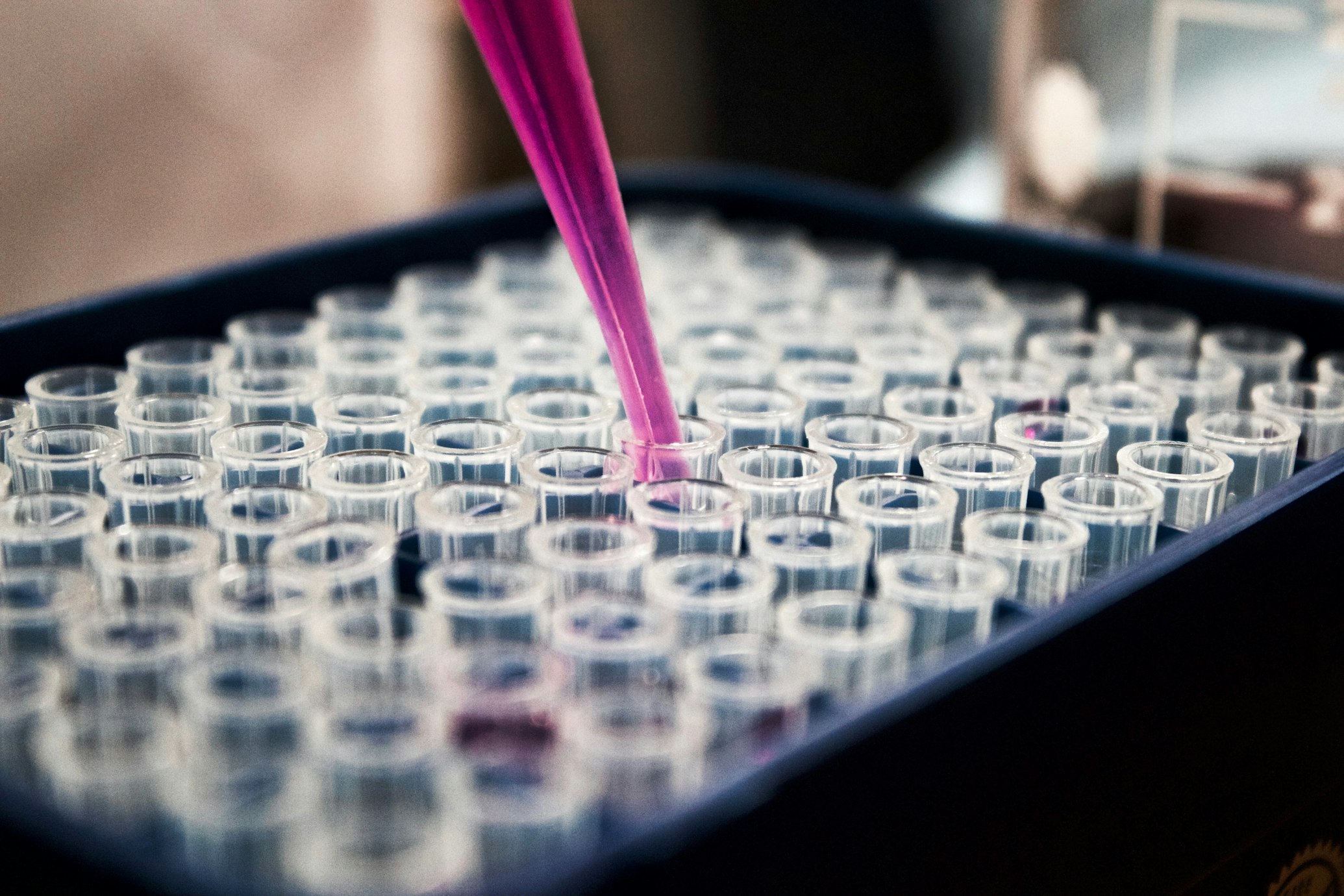
Experimental setup for viral capsid assembly studies
Results and Significance: A Versatile Nano-Container
The experiment demonstrated that IBDV capsids could successfully package foreign DNA through non-specific confinement during the reassembly process. The empty capsids provided an impressive cargo space of approximately 78,000 nm³—large enough to accommodate significant genetic payloads or other molecules .
| Virus/VLP | Triangulation Number | Diameter (nm) | Cargo Capacity | Key Advantages |
|---|---|---|---|---|
| IBDV VLP | T=13 | ~70 | ~78,000 nm³ | Large capacity, reversible assembly |
| Parvoviruses | T=1 | 18-26 | Limited | Small size, simple structure |
| Adenovirus (modified) | Pseudo T=25 | 90-100 | ~90,000 nm³ | Well-studied, efficient delivery |
| Hepatitis B VLP | T=4 | ~30 | ~30,000 nm³ | Proven vaccine platform |
Reversible Assembly
The ability to disassemble and reassemble capsids enables the incorporation of foreign genetic material.
Large Cargo Capacity
IBDV VLPs offer approximately 78,000 nm³ of space for therapeutic payloads.
This reversible assembly system established the foundation for using viral capsids as programmable nanocontainers for various applications. The ability to package heterologous nucleic acids means these engineered capsids could potentially deliver therapeutic genes to treat genetic disorders or target cancer cells .
The success of this experiment also provided crucial insights into the fundamental principles of viral assembly. The fact that capsid proteins could reassemble correctly after disassembly, even with foreign genetic material, suggests that assembly instructions are encoded in the inherent biophysical properties of the proteins themselves .
The Scientist's Toolkit: Essential Tools for Capsid Engineering
| Research Tool | Primary Function | Specific Examples/Applications |
|---|---|---|
| Virus-like Particles (VLPs) | Non-infectious capsid platforms for safe experimentation | IBDV HT-VP2-466 VLPs for reversible assembly |
| Molecular Dynamics Models | Simulate capsid assembly pathways and dynamics | Conformation-switching subunit models for T=3 and T=4 capsids 1 |
| Cryo-Electron Microscopy (cryo-EM) | Visualize capsid structures at near-atomic resolution | Studying CP-CP and CP-nucleic acid interactions 5 |
| Small-Angle X-ray Scattering (SAXS) | Analyze particle size, shape, and structure in solution | Characterizing VLP formation and integrity 1 |
| Modified Capsid Proteins | Engineered subunits with altered assembly properties | His6-tagged VP2 proteins for controlled VLP formation |
| Bioinformatics Databases | Access and analyze viral structural data | VIPERdb, VirusMED, Viralzone for capsid information 5 |
This toolkit enables researchers to not only understand natural viral assembly processes but also to redesign these platforms for novel functions. As noted in virology research, "Study of capsid protein self-assembly into monodispersed particles, and of VLP structure and biophysics is necessary not only to understand natural processes, but also to infer how these platforms can be redesigned to furnish novel functional VLP" .
Cryo-EM
Reveals capsid structures at near-atomic resolution for detailed analysis.
Molecular Dynamics
Simulates assembly pathways and protein interactions computationally.
VLPs
Non-infectious platforms for safe experimentation with capsid assembly.
Beyond the Lab: The Future of Viral Nanotechnology
Medical Applications: From Gene Therapy to Targeted Treatments
The ability to engineer viral capsids for precise delivery of genetic material has profound implications for medicine. "By tuning the elasticity of proteins and the properties of the cargo inside, researchers could design stable protein shells that package and deliver drugs or genetic therapies safely into cells," suggests Zandi 2 . This approach opens doors to creating nanoscale delivery systems for various applications, from targeted medicine to smart materials.
Viral vectors have already shown remarkable success in gene therapy. "As of January 2025, seven AAV-based viral vectors that facilitate the addition of genes for long-term expression of therapeutic proteins have been approved by global regulators for clinical use in humans," including treatments for inherited vision loss, spinal muscular atrophy, and hemophilia B 4 .

Engineered viral capsids could revolutionize targeted drug delivery
Antiviral Strategies and Beyond
Understanding capsid assembly also creates opportunities to disrupt harmful viruses. "By uncovering the short-lived intermediate steps of assembly, we can identify where the process is most vulnerable," explains Zandi. "Drugs could interfere with these steps by preventing proteins from breaking incorrect bonds, disrupting the elastic corrections they need to self-assemble, or blocking the genome from acting as a scaffold" 2 .
The potential applications extend beyond medicine. Engineered capsids could serve as templates for nanomaterials, molecular containers for chemical reactions, or building blocks for larger structures. The same physical rules that viruses use to build their shells can be harnessed for various technologies 2 6 .
Gene Therapy
Delivering therapeutic genes to treat genetic disorders.
Targeted Drug Delivery
Precisely delivering medications to specific cells.
Vaccine Development
Creating safer, more effective vaccine platforms.
Nanomaterials
Building blocks for advanced materials and devices.
Conclusion: Nature's Blueprint for Tomorrow's Nanotechnology
The study of viral capsid assembly and disassembly represents a perfect marriage of basic scientific curiosity and practical application. What begins as a question about how viruses build their protective shells evolves into a toolkit for designing the next generation of nanomedicine.
The journey from disordered proteins to perfectly symmetrical containers mirrors our own scientific journey—starting with disconnected facts and observations that gradually self-assemble into a coherent understanding of nature's principles. As research continues to unravel the mysteries of viral assembly, we move closer to harnessing these natural blueprints to solve some of medicine's most challenging problems.
In the words of researchers exploring synthetic viral mimics, "The design of assemblies that mimic the viral shapes and sizes is crucial for advancing our understanding of biological systems" 6 . The humble virus, long viewed only as a cause of disease, may well hold the key to revolutionary advances in how we treat disease and engineer materials at the nanoscale.