Cytometry and Single Cell Analysis: 30 Years of Coevolution
From population averages to individual cellular insights - how three decades of technological advancement revolutionized our understanding of biology
The Invisible Universe Within Us
Imagine trying to understand a bustling city by only measuring the average height of its citizens or their cumulative food consumption—you would miss the vibrant diversity of individuals, their unique behaviors, and complex interactions. For decades, this was precisely how biologists studied cells—using "bulk" methods that masked fundamental differences between individual cells. The coevolution of cytometry and single-cell analysis over the past thirty years has transformed this picture, allowing us to explore the human body at unprecedented resolution, cell by individual cell. This journey hasn't just improved our tools—it has fundamentally reshaped our understanding of health, disease, and what makes us who we are.
This revolutionary perspective couldn't have come at a more critical time. When SARS-CoV-2 began its global spread, scientists witnessed a dramatic evolutionary arms race: the human immune system generating antibodies to target the virus while the virus evolved to escape recognition 4 . This biological drama didn't occur in bulk populations but through countless individual cellular interactions. Only through advanced single-cell analysis could researchers properly decipher this complex dance, leading to insights that would ultimately inform vaccine and therapeutic development 4 .
Cellular Diversity
Revealing the hidden heterogeneity within seemingly uniform cell populations
Precision Medicine
Enabling targeted therapies based on individual cellular profiles
Dynamic Processes
Tracking cellular changes over time in response to stimuli and disease
The Resolution Revolution: From Population Averages to Individual Characters
Why Single-Cell Analysis Matters
Traditional bulk analysis methods, which grind up tissue and average measurements across millions of cells, presented a significant limitation: they completely obscured the rare but critical cells that often drive biological processes. Think of a basketball team—the average height might be 6'5", but this tells you nothing about the point guard's unique skills or the center's role. Similarly, in cancer, a few drug-resistant cells can survive treatment and cause relapse, while in immunology, rare antigen-specific cells mount targeted responses against pathogens.

Single-cell analysis has revealed that what we often call "cell types" are actually continua of cellular states with subtle but important differences in function, potential, and vulnerability. This revelation has been particularly transformative in:
- Cancer Research: Discovering rare drug-resistant subclones within tumors
- Immunology: Identifying specialized immune cell subtypes with different functions
- Neurobiology: Mapping diverse neuron types with distinct roles
- Developmental Biology: Tracing the precise lineage from stem cells to specialized tissues
The Coevolutionary Partnership
The relationship between cytometry and single-cell analysis represents a true coevolutionary partnership, much like the molecular arms races they often study. As biological questions demanded greater resolution, cytometry technologies advanced to provide finer cellular characterization. These technological advances, in turn, enabled scientists to ask more sophisticated questions, further driving technological innovation.
Cytometry and Single-Cell Analysis: A Coevolutionary Timeline
1990s: Early Flow Cytometry
Limited to a few fluorescent parameters, basic cell sorting capabilities
2000s: Multiparameter Flow Cytometry
Expansion to 8-12 colors, improved detection sensitivity
2010s: Mass Cytometry & scRNA-seq
Breakthrough technologies enabling 40+ parameters and transcriptome-wide analysis
2020s: Multi-Omics Integration
Combining genomics, transcriptomics, proteomics from the same single cells
This virtuous cycle has transformed both fields over three decades, moving from simple cell counting to multi-dimensional analyses that simultaneously measure dozens of parameters across thousands of cells per second.
The Technological Leap: Evolving Our View of Cellular Worlds
The journey to modern single-cell analysis represents a symphony of interdisciplinary innovation, with each technological advance opening new windows into cellular biology.
| Technology | Key Advance | Parameters Measured | Impact |
|---|---|---|---|
| Flow Cytometry | Multi-parameter analysis of single cells in fluid | Protein expression, cell size, granularity | Enabled immunophenotyping and cell sorting |
| Mass Cytometry (CyTOF) | Metal-tagged antibodies + mass spectrometry | 40+ proteins simultaneously without spectral overlap | Revolutionized high-dimensional single-cell proteomics |
| scRNA-seq | RNA sequencing of individual cells | Whole transcriptome (thousands of genes) | Revealed complete cellular identities and states |
| Multi-omics | Combined approaches from single cells | DNA, RNA, protein, epigenetics simultaneously | Provided holistic view of cellular regulation |
Traditional fluorescence-based flow cytometry faced a fundamental physical constraint: spectral overlap. When too many fluorescent tags are used simultaneously, their light emissions overlap, making distinguishing signals difficult. This limited researchers to approximately 12-15 parameters simultaneously.
Mass Cytometry (CyTOF) shattered this barrier by replacing fluorescence with metal isotopes and detectors with mass spectrometers 5 . Cells are labeled with antibodies conjugated to rare metal isotopes rather than fluorescent dyes, and the abundance of each metal tag is quantified by mass spectrometry. Since mass detectors don't confuse different metals the way optical detectors confuse overlapping colors, CyTOF enables the simultaneous measurement of over 40 parameters at single-cell resolution 3 5 .
Perhaps the most significant evolution in recent years has been the move toward multi-omics—combining multiple measurement types from the same single cells. Techniques like CITE-seq allow simultaneous measurement of RNA and protein, while platforms like GoT-Multi enable linking somatic mutations with transcriptional states 1 6 .
This integration has proven particularly powerful in cancer research, where it can connect genetic mutations to their functional consequences. As one study demonstrated, "Distinct subclonal genotypes, including therapy-resistant mutations, converged on an inflammatory state" 1 . This means that different genetic pathways can lead to the same problematic cellular behavior—a insight only possible through multi-omic single-cell approaches.
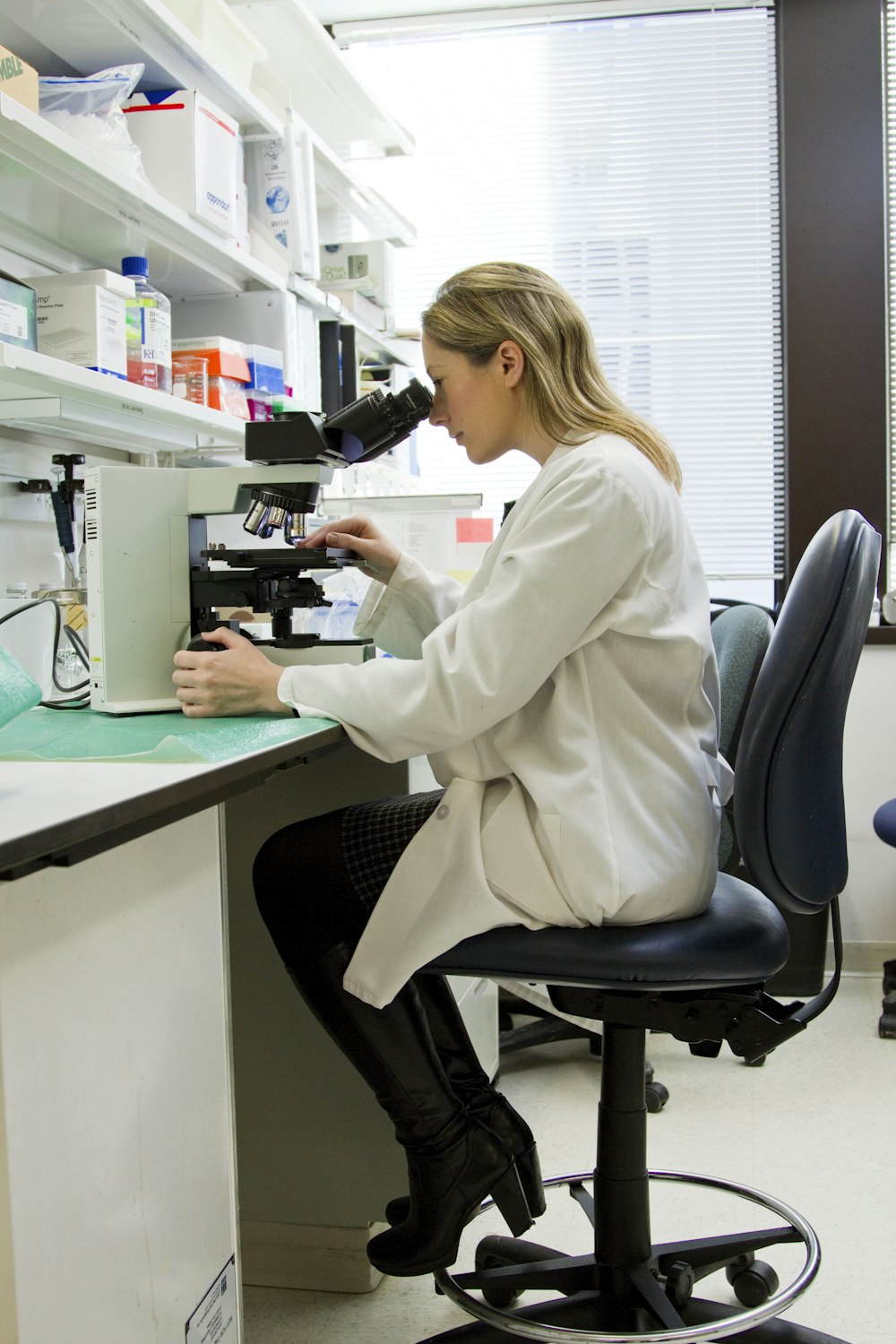
In-Depth Look: Decoding the Cell Cycle in High Definition
The Experimental Framework
To understand how modern single-cell analysis works in practice, let's examine a landmark mass cytometry study recently published in Nature Communications that profoundly expanded our understanding of the cell cycle 3 .
The research team designed a comprehensive experimental approach to capture the full complexity of cell cycle states. They began by developing an expanded panel of 48 cell cycle-related molecules, organized into three tiers:
Core proteins and phosphoproteins controlling cell cycle checkpoints
Minimal targets plus DNA content and replication measurements
Extended array including transcription factors and chromatin states
This tiered approach allowed both focused and exploratory analysis of cell cycle biology. The researchers applied this panel to diverse cell systems, including suspension and adherent cell lines, plus stimulated primary human T cells 3 .
Methodology: A Step-by-Step Journey
Cell Preparation and Barcoding
Different cell types were processed and labeled with palladium barcodes
Staining with Metal-Tagged Antibodies
Cells incubated with panel of metal-tagged antibodies
Mass Cytometry Analysis
Individual cells vaporized and metal tags quantified by mass spectrometry
Computational Analysis
Advanced algorithms identified canonical and non-canonical cell cycle states
Results and Analysis: Beyond the Textbook Cell Cycle
The findings dramatically expanded our understanding of cell division. Where traditional models presented the cell cycle as a simple four-stage process (G1, S, G2, M), the single-cell analysis revealed a spectrum of distinct molecular states, including previously uncharacterized "non-canonical" phases 3 .
| Cell Cycle State | Traditional Definition | New Single-Cell Insights |
|---|---|---|
| G0/G1 Phase | Resting/Gap phase | Substates with different commitment to division |
| S Phase | DNA synthesis | Variations in replication speed and fidelity |
| G2 Phase | Preparation for division | Early/late substates with different checkpoint activities |
| M Phase | Active division | Distinct molecular patterns in normal vs. stressed cells |
| Non-Canonical States | Not previously described | Aberrant states induced by drugs or disease |
When researchers applied various cell cycle inhibitors, they discovered that these perturbations didn't just arrest cells at checkpoints—they induced previously unobserved aberrant states 3 . Even more remarkably, cells that managed to "escape" cell cycle inhibition occupied these strange molecular states rather than returning to normal cycling.
The implications are profound: we now understand that the cell cycle is not a rigid predetermined sequence but a dynamic landscape of molecular states that can be disrupted in precise ways by different drugs, genetic mutations, and environmental stresses.
The Scientist's Toolkit: Essential Technologies Driving Discovery
Modern single-cell biology relies on an sophisticated ecosystem of technologies and reagents that have coevolved to enable increasingly sophisticated experiments.
| Tool Category | Specific Examples | Function and Application |
|---|---|---|
| Single-Cell Platforms | 10x Genomics Chromium, BD Rhapsody, Mission Bio Tapestri | Partition individual cells for parallel analysis |
| Antibody Technologies | Metal-tagged antibodies (CyTOF), DNA-barcoded antibodies (CITE-seq) | Multiplexed protein detection at single-cell resolution |
| Genetic Profiling | scRNA-seq, scDNA-seq, scATAC-seq | Measure gene expression, mutations, and chromatin accessibility |
| Computational Tools | cyCONDOR, Seurat, Cell Ranger | Analyze high-dimensional single-cell data |
| Functional Assays | Real-time live cell analysis, cytokine secretion assays | Measure dynamic cellular behaviors over time |
The integration across these tool categories is particularly important. As one researcher noted, "The current frontier is dynamic functional analysis, capturing how individual cells behave over time by measuring effector functions like cytokine secretion, cytotoxic synapse formation, and cell–cell interactions in real time" 7 .
Computational Advances
Computational tools have become especially critical as data complexity has grown. Platforms like cyCONDOR provide "an easy-to-use computational framework covering not only all essential steps of cytometry data analysis but also including an array of downstream functions and tools to expand the biological interpretation of the data" . These tools have become the bridge between raw data and biological insight, enabling researchers to detect subtle patterns across millions of individual cells.
Experimental Integration
The true power of modern single-cell analysis emerges when multiple technologies are integrated. For example, combining CITE-seq (cellular indexing of transcriptomes and epitopes by sequencing) with functional assays allows researchers to connect transcriptional states with protein expression and cellular behavior. This multi-modal approach provides a more comprehensive understanding of cellular identity and function than any single technology could achieve alone.
Future Horizons: Where the Coevolution is Heading
The coevolution of cytometry and single-cell analysis shows no signs of slowing. Several exciting frontiers are currently taking shape:
Real-Time Dynamic Analysis
The next evolutionary leap is shifting from static "snapshots" to dynamic observations of living cells. Current single-cell tools predominantly rely on "destructive, endpoint assays, whether lysing cells for transcriptomics or fixing them for microscopy" 7 . This precludes observing how cells change over time—their responses to stimuli, their division dynamics, their functional kinetics.
New technologies are emerging that "capture how individual cells behave over time by measuring effector functions like cytokine secretion, cytotoxic synapse formation, and cell–cell interactions in real time" 7 . This temporal dimension adds a crucial layer to our understanding, revealing not just what cells are, but what they do.
Clinical Translation
As single-cell technologies become more accessible and scalable, they're rapidly moving toward clinical applications. The market for single-cell sequencing is projected to grow from $1.95 billion in 2025 to $3.46 billion by 2030, reflecting rapid adoption across pharmaceutical and clinical settings 6 .
The cyCONDOR platform exemplifies this transition, specifically designed for "clinically relevant settings, where scalability and disease classification are paramount for the widespread adoption of HDC in clinical practice" . We're approaching a future where single-cell analysis will guide cancer treatment, autoimmune therapy, and infectious disease management.
Multi-System Integration
The ultimate frontier is the simultaneous measurement of multiple biological layers—genome, transcriptome, proteome, metabolome—from the same single cells, across time and space. This holistic approach will finally let us understand how genetic information flows through molecular networks to create cellular behavior, and how cellular communities form functional tissues.
Emerging technologies are pushing toward comprehensive multi-omic profiling from the same individual cells, enabling researchers to connect genetic variation with transcriptional regulation, protein expression, and ultimately cellular function in unprecedented detail.
The Incredible Journey Ahead
The thirty-year coevolution of cytometry and single-cell analysis has transformed biology from a science of averages to a science of individuals. We've progressed from struggling to measure a handful of proteins per cell to seamlessly integrating dozens of parameters across millions of cells, connecting genetics to function, and mapping cellular landscapes in health and disease.
This journey has revealed that cellular identity is not a fixed destination but a dynamic interplay of molecular components—that different genetic paths can lead to similar functional states, and that individual cells within seemingly uniform populations can have dramatically different behaviors, potentials, and vulnerabilities.
Perhaps most excitingly, this coevolutionary process continues. Each technological breakthrough enables new biological questions, and each biological discovery inspires new technological innovation. As this virtuous cycle continues, we move closer to a comprehensive understanding of life at its most fundamental level—one cell at a time.