Beyond 2D: How 3D Organoids Are Revolutionizing Nanotoxicity Screening for Safer Therapeutics
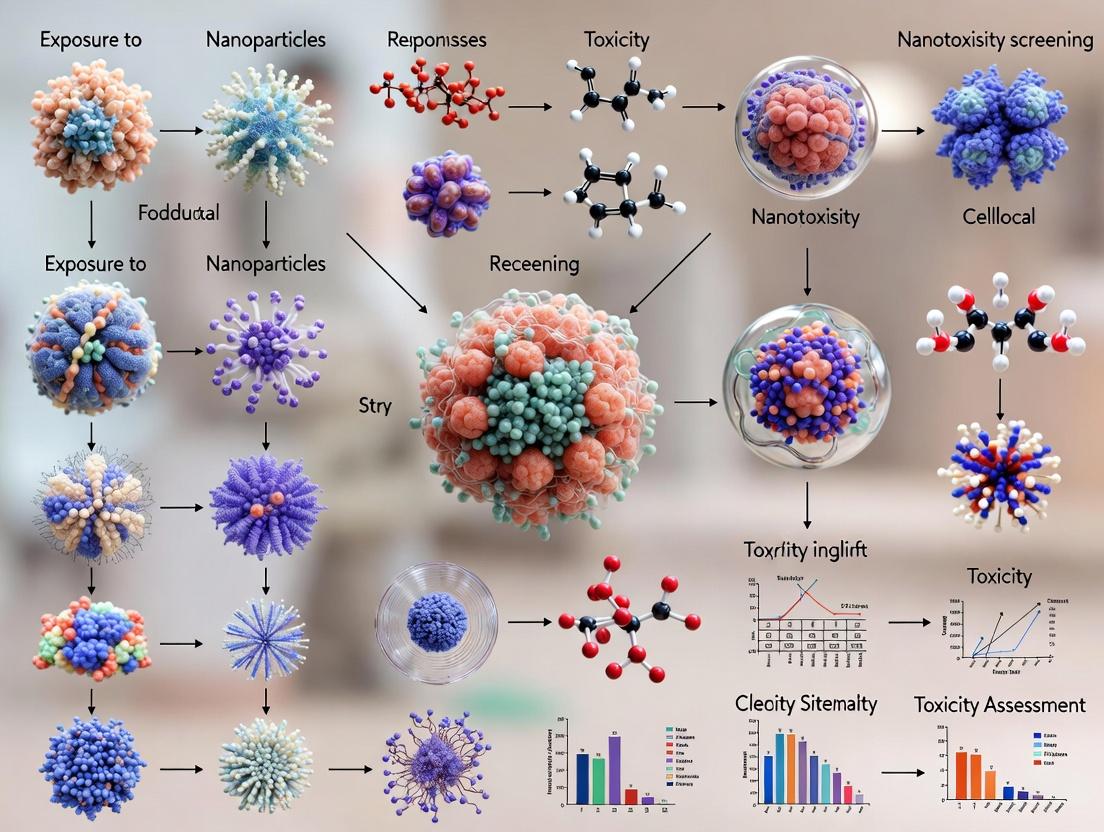
This article provides a comprehensive guide for researchers and drug development professionals on the application of 3D organoid models in nanotoxicity assessment.
Beyond 2D: How 3D Organoids Are Revolutionizing Nanotoxicity Screening for Safer Therapeutics
Abstract
This article provides a comprehensive guide for researchers and drug development professionals on the application of 3D organoid models in nanotoxicity assessment. We explore the fundamental advantages of organoids over traditional 2D cultures, detailing key methodologies for generating and exposing organoids to nanomaterials. The guide addresses common challenges in standardization and reproducibility, offering optimization strategies. Finally, we compare organoid-based screening to existing in vitro and in vivo models, validating their predictive power for human-relevant toxicology. This resource aims to equip scientists with the knowledge to implement robust, physiologically relevant organoid platforms for safer nanomaterial and nanomedicine development.
The Rise of 3D Organoids: Why They Are the Gold Standard for Modern Nanotoxicity Assessment
The Limitations of 2D Cell Cultures and Animal Models in Nanosafety
Application Notes
The assessment of nanoparticle (NP) safety (nanosafety) is a critical step in the development of nanomedicines and management of environmental exposure. Traditional paradigms relying on 2D monolayer cell cultures and preclinical animal models present significant limitations that can compromise data translatability to human outcomes. This necessitates the integration of more physiologically relevant human 3D organoid models.
Key Limitations of Conventional Models:
- 2D Cell Cultures: Lack tissue-specific architecture, cell-cell/cell-matrix interactions, gradients (oxygen, nutrients, NP deposition), and realistic exposure routes. They often exhibit altered differentiation, metabolism, and gene expression.
- Animal Models: Exhibit species-specific differences in physiology, immune response, and NP pharmacokinetics/pharmacodynamics. Ethical concerns and high costs limit scalability for high-throughput screening.
Advantages of 3D Organoids for Nanosafety: Human-derived organoids (e.g., liver, lung, intestinal, neural) recapitulate key aspects of native tissue microanatomy, cellular heterogeneity, and function. They provide a human-relevant system to study NP transport across barriers, cell-type-specific toxicity, chronic exposure effects, and mechanistic pathways in a controlled in vitro setting.
Table 1: Comparative Analysis of Models for Nanosafety Assessment
| Parameter | 2D Cell Culture | Animal Model | 3D Organoid Model |
|---|---|---|---|
| Physiological Relevance | Low (monolayer, high proliferation) | High (systemic response) but species-specific | High (human, micro-tissue structure) |
| Cellular Complexity | Low (1-2 cell types, no stroma) | High (all cell types) | Moderate to High (multiple tissue-specific cells) |
| NP Exposure Realism | Direct submerged exposure, unrealistic dose | Realistic route (inhalation, ingestion) but different kinetics | Realistic air-liquid interface or luminal exposure possible |
| Barrier Function | Poorly developed | Intact but different from human | Developed (e.g., tight junctions, mucus) |
| Throughput & Cost | High throughput, Low cost | Low throughput, Very high cost | Medium-to-High throughput, Medium cost |
| Species Specificity | Human cells possible | Primarily rodent | Human |
| Key Nanosafety Readouts | Viability, ROS, genotoxicity (acute) | Histopathology, systemic toxicity, PK/PD | Tissue integrity, chronic toxicity, mechanistic pathways, cell-type-specific uptake |
| Major Limitation | Poor predictivity for in vivo outcomes | Poor human translatability, ethical burden | Limited vascularization/immune components, variability |
Table 2: Example Discrepancies in NP Toxicity Findings Across Models Data sourced from recent comparative studies.
| Nanoparticle Type | 2D Culture (IC50) | Animal Model (LOAEL) | 3D Organoid Model (LOAEL) | Noted Discrepancy |
|---|---|---|---|---|
| TiO₂ (Anatase) | 50-100 µg/mL (A549 cells) | >10 mg/kg (rat lung, single instillation) | 10-20 µg/cm² (lung organoid, ALI) | 2D overpredicts acute toxicity; organoids show earlier barrier disruption. |
| Silver (Ag, 20nm) | 5-10 µg/mL (HepG2 cells) | Liver accumulation with no major toxicity (mouse, 28d) | 2-5 µg/mL (liver organoid) induces steatosis | Organoids reveal human-relevant sub-lethal organ dysfunction missed in rodents. |
| Polystyrene (50nm) | Low toxicity up to 100 µg/mL (Caco-2) | M-cell uptake in Peyer's patches (mouse gut) | Specific targeting of secretory cells (intestinal organoid) | Organoids identify human-specific cellular tropism. |
Experimental Protocols
Protocol 1: Establishing a Human Lung Organoid Model for Air-Liquid Interface (ALI) NP Exposure
Objective: To assess the toxicological impact of aerosolized or deposited NPs on a reconstructed human bronchial epithelium.
Research Reagent Solutions:
| Item | Function |
|---|---|
| Matrigel or BME | Basement membrane extract providing a 3D scaffold for organoid growth and differentiation. |
| Pneumacult ALI Medium | Specialized medium for expansion and differentiation of primary human bronchial epithelial cells into mucociliary epithelium. |
| Transwell Permeable Supports (e.g., Corning, 6.5mm) | Collagen-coated porous inserts allowing independent access to apical and basal compartments, enabling ALI culture. |
| Primary Human Bronchial Epithelial Cells (HBECs) | Patient-derived cells capable of forming physiologically relevant bronchial tissue. |
| Silica or Metal Oxide NPs (e.g., ZnO, SiO₂) | Reference nanomaterials for toxicity benchmarking. |
| TEER Measurement System (Volt/Ohm Meter) | To non-invasively monitor the integrity of the epithelial barrier (Transepithelial Electrical Resistance). |
Methodology:
- Expansion: Thaw and expand HBECs in Pneumacult Ex-Plus medium on coated flasks until ~80% confluent.
- ALI Setup: Trypsinize and seed 50,000-100,000 cells onto the apical side of a collagen-IV coated Transwell insert. Feed basally with ALI Maintenance Medium. Submerge culture for 5-7 days until confluent.
- Differentiation: Remove apical medium to create an ALI. Continue feeding basally, changing medium every 2-3 days for 21-28 days.
- Quality Control: Monitor TEER weekly. Values >300 Ω·cm² indicate good barrier formation. Confirm differentiation via immunostaining for β-tubulin IV (ciliated cells), MUC5AC (goblet cells), and ZO-1 (tight junctions).
- NP Exposure (Dry Aerosol or Suspension):
- Suspension: Apply NP suspension in low-volume (e.g., 20 µL) gently to the apical surface. Incubate for 1-4 hours, then wash.
- Aerosol (using a Vitrocell system): Connect Transwell plate to an aerosol exposure module. Generate NP aerosol via nebulizer. Expose apical surface for a defined period (e.g., 15-60 mins).
- Post-Exposure Analysis (24-72h):
- Measure TEER change.
- Collect basal medium for LDH, cytokine (IL-8) ELISA.
- Fix apical surface for SEM/TEM (NP uptake/localization) or immunostaining.
- Lyse cells for RNA/protein extraction (qPCR for stress genes, e.g., HMOX1, IL8; Western blot for cleaved caspase-3).
Protocol 2: High-Content Imaging Analysis of NP Toxicity in Human Liver Organoids
Objective: To quantify cell-type-specific NP uptake and sub-lethal injury in a complex liver organoid model.
Research Reagent Solutions:
| Item | Function |
|---|---|
| Human Liver Organoid Culture Kit (e.g., STEMCELL Tech) | Provides optimized medium and supplements for propagating hepatocyte-like organoids. |
| 96-Well Ultra-Low Attachment Spheroid Microplates | Round-bottom wells promoting 3D spheroid formation via forced aggregation. |
| CellTiter-Glo 3D | Luminescent assay optimized for measuring ATP levels (viability) in 3D cultures. |
| Hoechst 33342, CellMask Deep Red, LysoTracker Green | Fluorescent stains for nuclei, plasma membrane, and lysosomes, respectively, for co-localization studies. |
| Anti-Albumin & Anti-MRP2 Antibodies | Markers for hepatocyte function and biliary polarity. |
| High-Content Imaging System (e.g., ImageXpress) | Automated microscope for 3D z-stack acquisition and analysis of spheroids. |
Methodology:
- Organoid Formation: Dissociate expanded liver organoids to single cells. Seed 5,000 cells/well in 96-well spheroid plates in liver organoid medium with 10µM Y-27632. Centrifuge at 300 x g for 3 min to aggregate. Culture for 3-5 days to form spheroids.
- NP Dosing: Prepare a dose range (e.g., 1, 10, 50 µg/mL) of NPs (e.g., Ag, Au) in fresh medium. Gently replace 50% of the medium in each well with NP-containing medium. Incubate for 24-72h.
- Viability Assay: Transfer 100µL of medium to a white plate. Add 100µL CellTiter-Glo 3D reagent, shake, incubate 25 min, and record luminescence.
- Staining for Imaging:
- Gently wash spheroids with PBS.
- Incubate with 5µg/mL Hoechst 33342, 1:1000 CellMask Deep Red, and 50nM LysoTracker Green in culture medium for 1h at 37°C.
- Fix with 4% PFA for 30 min. Permeabilize (0.5% Triton), block, and stain with anti-Albumin antibody.
- Image Acquisition & Analysis:
- Acquire 20-30 z-slices (5µm step) per well using a 20x objective.
- Use analysis software (e.g., MetaXpress) to: a) Create a 3D projection, b) Segment individual organoids and internal cells, c) Quantify NP (autofluorescence or label) co-localization with LysoTracker (uptake) and CellMask (membrane association), d) Measure Albumin intensity per organoid volume (functional output), e) Quantify nuclear count and size (potential apoptosis).
Pathway and Workflow Visualizations
Diagram Title: NP Toxicity Pathways in a 3D Organoid Barrier
Diagram Title: Workflow for Nanosafety Screening Using 3D Organoids
Organoids are three-dimensional, self-organizing microtissues derived from pluripotent stem cells or adult stem/progenitor cells. They recapitulate key structural, functional, and genetic aspects of their corresponding in vivo organs. Within the thesis on 3D organoid models for nanotoxicity screening, organoids provide a physiologically relevant and human-derived platform to assess the complex biological interactions of engineered nanomaterials (ENMs). Their multicellular complexity and emergent tissue properties enable the study of cell-type-specific toxicity, barrier function, chronic exposure effects, and mechanistic pathways—addressing critical gaps left by 2D cell lines and animal models.
Table 1: Quantitative Applications of Organoids in Nanotoxicity Studies
| Organ Type | Primary Cell Source | Key Toxicity Endpoints Measured | Example Nanomaterial Tested | Advantage Over 2D Models |
|---|---|---|---|---|
| Hepatic | iPSCs, primary hepatocytes | Albumin/Urea secretion, CYP450 activity, ROS, apoptosis | Silver nanoparticles (AgNPs), Graphene Oxide | Functional metabolizing enzymes, polarized bile canaliculi |
| Neural | iPSCs, neural stem cells | Neurite outgrowth, synaptic activity, glial activation, cytokine release | Titanium dioxide (TiO2), Carbon nanotubes | Multicellular architecture (neurons, astrocytes, oligos), myelination |
| Intestinal | Intestinal crypt stem cells | Barrier integrity (TEER), mucus production, Paneth cell function, genotoxicity | Zinc oxide (ZnO) nanoparticles, Polystyrene nanoplastics | Functional brush border, crypt-villus axis, goblet cells |
| Renal (Nephron) | iPSCs | Podocyte injury, proximal tubule cytotoxicity, biomarker release (KIM-1, NGAL) | Silica nanoparticles (SiNPs), Quantum Dots | Segmented nephron structures, filtration-like function |
| Lung (Airway) | Primary bronchial cells | Ciliary beat frequency, mucociliary clearance, Club cell secretion | Multi-walled carbon nanotubes (MWCNTs) | Pseudostratified epithelium with basal, ciliated, secretory cells |
Detailed Protocols for Nanotoxicity Screening
Protocol 1: Intestinal Organoid-Based Barrier Integrity Assay
Objective: To assess the disruption of epithelial barrier function by ENMs using intestinal organoids. Materials:
- Matrigel (Corning, #356231)
- Intestinal Organoid Growth Medium (e.g., IntestiCult Organoid Growth Medium)
- 24-well transwell inserts (polycarbonate membrane, 0.4 µm pore)
- TrypLE Express Enzyme
- Electric Cell-substrate Impedance Sensing (ECIS) system or Voltmeter for TEER
- FITC-dextran (4 kDa)
Methodology:
- Organoid Dissociation & Seeding: Harvest mature intestinal organoids (day 7-10). Dissociate with TrypLE for 5-10 min at 37°C to single cells/small clusters.
- Transwell Establishment: Seed 1-2 x 10^5 cells per transwell insert coated with Matrigel (thin layer). Culture with growth medium in both apical and basolateral chambers for 5-7 days until a confluent, polarized monolayer forms.
- Nanomaterial Exposure: Prepare ENM suspensions in organoid differentiation medium (to minimize growth factors). Apply ENM suspension to the apical chamber. Include vehicle controls and cytotoxic positive controls (e.g., Triton X-100).
- Transepithelial Electrical Resistance (TEER) Measurement: Measure TEER at 24h, 48h, and 72h post-exposure using an ECIS system or voltohm meter. Calculate % TEER relative to control.
- Paracellular Permeability Assay: At endpoint, add FITC-dextran (1 mg/mL) to the apical chamber. After 2-4h, collect medium from the basolateral chamber. Measure fluorescence (Ex/Em: 490/520 nm). Increased fluorescence indicates barrier compromise.
- Downstream Analysis: Fix monolayers for immunostaining (ZO-1, occludin) or collect lysates for oxidative stress (GSH/GSSG) and inflammatory cytokine (IL-8) ELISA.
Protocol 2: Hepatic Organoid Metabolism-Dependent Toxicity Assay
Objective: To evaluate the role of hepatic metabolism in ENM-induced toxicity. Materials:
- Hepatic Organoid Maturation Medium (with DMSO, dexamethasone, OSM)
- CYP450 substrates (e.g., Phenacetin for CYP1A2, Bupropion for CYP2B6)
- Lactate Dehydrogenase (LDH) Cytotoxicity Assay Kit
- Glutathione (GSH) Assay Kit
- LC-MS/MS system for metabolite analysis
Methodology:
- Organoid Maturation: Maintain iPSC-derived hepatic progenitors in 3D Matrigel culture. Switch to maturation medium for 10-14 days to induce functional hepatocyte characteristics.
- CYP450 Activity Validation: Prior to ENM exposure, confirm metabolic competence by incubating organoids with CYP-specific probe substrates. Quantify metabolite formation via LC-MS/MS.
- Co-Exposure with Metabolic Inhibitors: Pre-treat organoid sets with specific CYP inhibitor (e.g., α-Naphthoflavone for CYP1A2) or a broad inhibitor (1-aminobenzotriazole) for 1h.
- ENM Dosing: Expose organoids to ENMs (e.g., AgNPs) at sub-cytotoxic and cytotoxic concentrations in fresh medium, with/without inhibitors, for 24-72h.
- Endpoint Analysis:
- Cytotoxicity: Measure LDH release in supernatant.
- Oxidative Stress: Quantify intracellular GSH levels.
- Metabolic Function: Repeat CYP450 activity assay post-exposure.
- Histology: Fix organoids for H&E and PAS staining (glycogen storage).
- Data Interpretation: Compare toxicity metrics between inhibited and non-inhibited groups. Enhanced toxicity in inhibited groups suggests protective detoxification by CYPs; reduced toxicity suggests metabolic activation of ENMs.
Signaling Pathways in Organoid Development & Nanotoxicity Response
Diagram 1: Key Signaling in Organoid Growth & NP Toxicity
Diagram 2: Organoid Nanotoxicity Screening Workflow
The Scientist's Toolkit: Research Reagent Solutions
Table 2: Essential Materials for Organoid-based Nanotoxicity Research
| Reagent/Material | Supplier Example | Function in Nanotoxicity Context |
|---|---|---|
| Matrigel, GFR | Corning (#356231) | Provides a 3D extracellular matrix scaffold for organoid growth and polarity. Critical for barrier function assays. |
| mTeSR Plus / NutriStem | STEMCELL Technologies | Maintains pluripotency of iPSCs prior to directed differentiation into target organoids. |
| Organoid-Specific Media Kits (e.g., IntestiCult, HepatiCult) | STEMCELL Technologies | Contains optimized growth factors (WNT, R-spondin, Noggin, etc.) to sustain stem cell niches and drive organ-specific differentiation. |
| Y-27632 (ROCK inhibitor) | Tocris Bioscience (#1254) | Enhances survival of dissociated single cells during organoid passaging or seeding for toxicity assays. |
| CellTiter-Glo 3D | Promega (#G9681) | Luminescent ATP assay optimized for 3D microtissues; indicates metabolically active cells post-ENM exposure. |
| LIVE/DEAD Viability/Cytotoxicity Kit | Thermo Fisher (#L3224) | Simultaneously stains live (calcein-AM, green) and dead (EthD-1, red) cells in intact organoids via confocal microscopy. |
| Human Cytokine/Chemokine Array | R&D Systems | Multiplexed protein detection from organoid supernatants to profile inflammatory responses to ENMs. |
| Transwell Permeable Supports | Corning | Enable establishment of polarized organoid-derived monolayers for TEER and transport studies of ENMs. |
| Recombinant Human EGF | PeproTech (#AF-100-15) | Key mitogen in most organoid media; its removal often initiates differentiation, altering susceptibility to ENMs. |
| Zombie NIR Fixable Viability Kit | BioLegend (#423105) | Allows viability staining prior to fixation and intracellular staining for flow cytometry of dissociated organoids. |
Application Note: Leveraging 3D Organoid Complexity for Advanced Nanotoxicity Screening
Within the paradigm of next-generation in vitro models, 3D organoids represent a transformative tool for nanotoxicity screening, overcoming the limitations of 2D monocultures. Their key advantages—physiological complexity, inherent cellular heterogeneity, and functional barrier formation—directly address critical gaps in predicting nanoparticle (NP)-biological interactions. This application note details how these features enable more physiologically relevant assessment of NP biodistribution, cell-type-specific toxicity, and barrier penetration.
1. Physiological Complexity: Recapitulating Tissue-Level Physiology Organoids self-organize into structures that mimic native tissue cytoarchitecture and cell-cell interactions. This 3D microenvironment profoundly influences NP uptake, trafficking, and toxicity profiles compared to 2D systems.
- Quantitative Data: NP Penetration in 3D vs. 2D Models
| Parameter | 2D Monolayer | 3D Intestinal Organoid | Relevance for Nanotoxicity |
|---|---|---|---|
| NP Diffusion Depth | Unlimited, direct access | Limited to 50-150 µm from surface | Models in vivo gradient exposure; tests penetration efficacy/toxicity. |
| Cell-Cell Contact | Planar, limited | Apical-basal polarization, tight junctions | Alters endocytic routes and paracellular transport of NPs. |
| Extracellular Matrix (ECM) Interaction | Artificial coating (e.g., Matrigel underlayer) | Endogenous ECM production & remodeling | ECM acts as a biophysical barrier; sequesters NPs; modifies protein corona. |
| Measured Oxygen Gradient | Homogeneous | Hypoxic core (< 2% O₂) vs. normoxic periphery | Affects cellular metabolism & NP reactivity (e.g., catalytic metal oxides). |
2. Cellular Heterogeneity: Identifying Cell-Type-Specific Vulnerabilities Organoids contain multiple, organ-specific cell types that arise from stem cell differentiation. This allows for simultaneous screening of NP effects on different lineages within a biologically integrated system.
- Protocol: Cell-Type-Specific Toxicity Analysis in Intestinal Organoids
- Objective: To quantify NP-induced toxicity in enterocytes vs. secretory cells.
- Materials: Human intestinal organoids, fluorescent NPs, culture media, 4% PFA, permeabilization buffer, blocking buffer, antibodies.
- Procedure:
- Exposure: Treat mature organoids with NPs (e.g., 10-100 µg/mL) for 24-72h.
- Fixation & Sectioning: Fix with 4% PFA for 1h. Embed in OCT compound, cryosection into 10-20 µm slices.
- Immunofluorescence Staining:
- Permeabilize with 0.3% Triton X-100.
- Block with 5% BSA for 1h.
- Incubate with primary antibodies: anti-Villin (enterocyte marker) and anti-Chromogranin A (enteroendocrine cell marker) overnight at 4°C.
- Incubate with fluorescent secondary antibodies and DAPI (nuclei) for 1h.
- Imaging & Analysis: Acquire high-resolution confocal z-stacks. Using image analysis software (e.g., Fiji/ImageJ):
- Segment nuclei (DAPI) and cytoplasm of each cell type (via marker signal).
- Quantify NP co-localization (fluorescence intensity) per cell type.
- Measure cell-type-specific death markers (e.g., cleaved Caspase-3 signal) normalized to total cell count for each lineage.
3. Functional Barrier Functions: Assessing Penetration and Integrity Specialized organoids (e.g., gut, blood-brain barrier, lung) form tight junction-sealed epithelial barriers with distinct apical and basolateral compartments, enabling quantitative transport and integrity studies.
- Protocol: Transepithelial Electrical Resistance (TEER) and NP Transport in Air-Liquid Interface (ALI) Lung Organoids
- Objective: To measure NP impact on barrier integrity and translocation.
- Materials: Lung organoids differentiated at ALI on Transwell inserts, EVOM3 volt-ohm meter, fluorescent or ICP-MS-detectable NPs, sampling buffers.
- Procedure:
- ALI Culture & Maturation: Differentiate lung organoids at ALI for 4-6 weeks until stable, high TEER values (>1000 Ω·cm²) are achieved.
- Baseline TEER: Measure TEER in culture medium prior to NP exposure.
- NP Exposure: Apply NPs suspended in appropriate medium to the apical (air-facing) chamber.
- Integrity Monitoring: Measure TEER at 2h, 6h, 24h, and 48h post-exposure. A >20% drop indicates acute barrier disruption.
- Transport Quantification:
- At designated timepoints, collect media from the basolateral chamber.
- For fluorescent NPs: measure fluorescence intensity with a plate reader and calculate apparent permeability coefficient (P_app).
- For metal/metal oxide NPs: digest basolateral media with nitric acid and quantify metal concentration via Inductively Coupled Plasma Mass Spectrometry (ICP-MS).
- Post-Hoc Analysis: Fix inserts for immunostaining of tight junctions (ZO-1, Occludin) to correlate functional data with structural changes.
The Scientist's Toolkit: Key Research Reagents & Materials
| Item | Function in Nanotoxicity & Organoid Research |
|---|---|
| Matrigel / Basement Membrane Extract | Provides a 3D scaffold for organoid growth, mimicking the in vivo extracellular matrix. |
| Rho-associated kinase (ROCK) inhibitor (Y-27632) | Promotes survival of dissociated single cells during organoid passaging or after NP-induced stress. |
| Recombinant Growth Factors (e.g., EGF, Noggin, R-spondin) | Essential for patterning and maintaining specific organoid lineages, influencing cell-type-specific NP responses. |
| Transwell Permeable Supports | Enables the culture of barrier-forming organoids for TEER measurement and transepithelial transport studies of NPs. |
| Fluorescently-Labeled or Barcoded NPs | Allows for live imaging, tracking of spatial distribution, and cell-type-specific uptake quantification within organoids. |
| Live/Dead Cell Staining Kit (e.g., Calcein AM/Propidium Iodide) | Provides a rapid, quantitative assessment of overall NP cytotoxicity in 3D structures via fluorescence microscopy. |
| Organoid Dissociation Reagent (e.g., TrypLE) | Gently breaks down organoids into single cells for downstream flow cytometry analysis of cell-type-specific markers and NP uptake. |
| ICP-MS Standard Solutions | Enables absolute quantification of metal-based NP dissolution and translocation across barriers. |
Visualizations
Diagram 1: NP-Organoid Interaction Pathways
Diagram 2: Toxicity Screening Workflow for Organoids
Application Notes
Within the paradigm of 3D organoid models for nanotoxicity screening, understanding the fundamental interactions between engineered nanomaterials (ENMs) and organoids is critical. These complex 3D structures recapitulate tissue microphysiology, offering a more predictive platform than 2D cultures for assessing nanoparticle (NP) behavior. Key application areas include:
- Predictive Nanotoxicology: Quantifying NP uptake kinetics, spatial distribution, and persistence within organoids provides critical data on potential intracellular accumulation, lysosomal impairment, and long-term cellular stress, which are poorly predicted by monolayer assays.
- Drug Delivery Vector Profiling: Organoids enable the evaluation of therapeutic or diagnostic NP formulations (e.g., lipid NPs, polymeric NPs) for their penetration depth, cell-type-specific targeting, and payload release efficiency within a tissue-relevant architecture.
- Biological Barrier Modeling: Specialized organoids (e.g., gut, blood-brain barrier, lung) allow for the study of NP transport across epithelial layers, modeling absorption and translocation events critical for systemic exposure.
- Fate and Transformation Studies: The long-term culture capability of organoids permits investigation of NP biodegradation, dissolution, and chemical transformation within a cellular microenvironment, informing on chronic exposure risks.
Key Experimental Data Summary
Table 1: Comparative Uptake of Common Nanoparticles in Hepatic Organoids (48h Exposure)
| Nanoparticle Type | Core Material | Surface Coating | Size (nm) | Zeta Potential (mV) | Mean Uptake (pg NP/ cell) | Primary Localization (Organelle) |
|---|---|---|---|---|---|---|
| SPIONs | Iron Oxide | PEG | 15 | -10.2 ± 2.1 | 0.85 ± 0.11 | Lysosomes |
| Quantum Dots | CdSe/ZnS | Carboxyl | 12 | -35.5 ± 1.8 | 2.34 ± 0.45 | Cytosol/Nucleus |
| Polystyrene | Polystyrene | Amine | 50 | +42.3 ± 3.5 | 5.67 ± 1.02 | Lysosomes |
| Gold Nanospheres | Gold | Citrate | 20 | -32.1 ± 2.4 | 1.22 ± 0.23 | Cytosol |
| Silica NPs | Mesoporous SiO₂ | Bare | 80 | -25.6 ± 4.0 | 3.89 ± 0.78 | Cytosol/Vacuoles |
Table 2: Long-Term Retention Metrics of Gold Nanoparticles (AuNPs) in Cerebral Organoids
| Time Point (Days Post-Exposure) | % of Initial Load Retained (ICP-MS) | Distribution Shift (Imaging) | Notable Phenotypic Observation |
|---|---|---|---|
| 7 | 92.5% ± 3.2% | Perinuclear clusters | No significant change in viability |
| 14 | 78.1% ± 5.7% | Increased lysosomal co-localization | Minor increase in ROS detection |
| 30 | 45.6% ± 8.9% | Diffuse cytoplasmic signal | Reduced neurite outgrowth in neural organoids |
| 60 | 18.3% ± 4.1% | Focal aggregates | Persistent elevation of autophagy markers |
Detailed Experimental Protocols
Protocol 1: Quantifying Nanoparticle Uptake & Biodistribution in Organoids via Confocal Imaging & 3D Analysis
Objective: To spatially resolve and quantify the internalization and subcellular distribution of fluorescently labeled NPs within intact organoids.
Materials:
- Mature, size-matched organoids (e.g., hepatic, intestinal)
- Fluorescently labeled nanoparticle suspension (characterized for size, PDI, zeta potential)
- Organoid culture medium (without phenol red for imaging)
- Low-melting-point agarose (1-2%)
- Glass-bottom imaging dishes
- Confocal laser scanning microscope with Z-stack capability
- Image analysis software (e.g., Imaris, FIJI/ImageJ)
Procedure:
- Exposure: Transfer individual organoids to a 96-well U-bottom plate. Replace medium with NP-containing medium at the desired concentration (e.g., 10-100 µg/mL). Incubate (e.g., 37°C, 5% CO₂) for the defined period (e.g., 6h, 24h, 48h).
- Washing: Gently transfer organoids to a microcentrifuge tube using a wide-bore pipette tip. Let organoids settle by gravity (1-2 min). Carefully remove supernatant and wash 3x with 1 mL of PBS to remove non-internalized NPs.
- Fixation & Staining: Fix organoids with 4% PFA for 30 min at RT. Wash 3x with PBS. Permeabilize with 0.1% Triton X-100 for 15 min. Block with 3% BSA for 1h. Incubate with organelle-specific markers (e.g., LysoTracker, DAPI, phalloidin) as required. Wash thoroughly.
- Mounting: Embed organoids in a droplet of 1% low-melting-point agarose on a glass-bottom dish to immobilize for imaging.
- Imaging: Acquire high-resolution Z-stacks (optimal step size ~1 µm) using a 20x or 40x water-immersion objective. Use sequential scanning to avoid channel crosstalk.
- 3D Analysis:
- Uptake Quantification: Using Imaris/FIJI, create a 3D surface rendering of the organoid (based on autofluorescence or stain). Create a second surface for fluorescent NP signal. Calculate the total NP fluorescence intensity volume within the organoid volume.
- Co-localization Analysis: Calculate Manders’ or Pearson’s coefficients between the NP channel and organelle marker channels (e.g., lysosomes) on a per-slice or 3D volume basis.
- Penetration Depth: Measure the distance from the organoid periphery to the deepest detectable NP signal in multiple radial directions.
Protocol 2: Assessing Long-Term Retention and Clearance using ICP-MS
Objective: To precisely measure the mass of elemental NP components retained in organoids over extended culture periods post-exposure.
Materials:
- Organoids exposed to NPs (e.g., Au, Ag, Fe, TiO₂ NPs)
- Nitric acid (HNO₃, trace metal grade)
- Hydrogen peroxide (H₂O₂, 30%)
- Temperature-controlled block digester
- Inductively Coupled Plasma Mass Spectrometer (ICP-MS)
- Calibration standards for target element
- Rhodium or Indium internal standard solution
Procedure:
- Pulse-Exposure & Chase: Expose a large batch of organoids to NPs for a defined "pulse" period (e.g., 24h). Wash exhaustively (5x with PBS) to remove all non-internalized particles. Return organoids to fresh, NP-free medium. Culture for designated "chase" periods (e.g., 7, 14, 30, 60 days), refreshing medium regularly.
- Sample Harvesting: At each time point, collect at least 10-20 organoids per condition into a pre-weighed metal-free microtube. Wash 3x with PBS. Remove supernatant completely. Record wet weight.
- Acid Digestion: Add 100 µL of concentrated HNO₃ to each tube. Heat at 95°C for 60 minutes in a block digester. Cool, then add 20 µL of H₂O₂. Heat again at 95°C for 30 min. The digestate should be clear. Dilute to a final volume (e.g., 1 mL) with ultrapure water.
- ICP-MS Analysis: Dilute samples further as needed (in 2% HNO₃) to be within the instrument's linear range. Spike all samples, blanks, and standards with an appropriate internal standard (e.g., Rhodium). Measure the intensity of the target isotope (e.g., ⁷⁹Au, ⁵⁶Fe).
- Quantification & Normalization: Generate a calibration curve from serial dilutions of a certified standard. Calculate the total mass of the element per sample. Normalize to the organoid wet weight or total protein content (from a parallel sample).
Visualizations
Experimental Workflow for Retention Studies
NP Intracellular Trafficking & Fate Pathways
The Scientist's Toolkit: Essential Research Reagents & Materials
Table 3: Key Reagents for Nanoparticle-Organoid Interaction Studies
| Item | Function & Application | Example/Note |
|---|---|---|
| Fluorescently Labeled NPs | Enable direct visualization of uptake, distribution, and co-localization via microscopy. | Qtracker dots, BODIPY-labeled polymeric NPs, Cy5-liposomes. Characterization of label stability is critical. |
| Organoid Growth Matrix | Provides a physiological 3D scaffold for organoid growth and exposure. | Reduced-growth-factor Basement Membrane Extract (BME, Cultrex), synthetic PEG-based hydrogels. |
| Organelle-Specific Dyes | Label subcellular compartments to determine NP biodistribution. | LysoTracker (lysosomes), MitoTracker (mitochondria), ER-Tracker, DAPI/Hoechst (nucleus). |
| Live-Cell Imaging Media | Phenol-red-free medium for fluorescence imaging without background interference. | Gibco FluoroBrite DMEM, supplemented with organoid-specific factors. |
| Wide-Bore/Filtered Pipette Tips | Prevent shear stress and damage to organoids during transfer and washing steps. | 1 mL tips with ~1 mm orifice diameter. |
| ICP-MS Calibration Standards | Certified reference materials for accurate quantification of NP element mass in digests. | Single-element standards (Au, Ag, Ti, Fe) in 2-5% HNO₃ from accredited suppliers (e.g., Inorganic Ventures). |
| Metal-Free Sample Tubes | Prevent contamination during sample preparation for sensitive elemental analysis (ICP-MS). | Polypropylene tubes certified for trace element analysis. |
| Cell Dissociation Reagents | Gentle enzymes to dissociate organoids into single cells for flow cytometry analysis of NP uptake. | TrypLE Express, Accutase, supplemented with DNase I. |
Application Notes
Within the thesis framework of advancing 3D organoid models for predictive nanotoxicity screening, organoids from five major organs have emerged as critical tools. They recapitulate tissue-specific architecture, cellular heterogeneity, and key functions, offering a superior alternative to 2D cultures and bridging the gap to animal models for assessing the biological impacts of engineered nanomaterials (NMs) and pharmaceutical compounds.
- Liver Organoids: Used to screen for hepatotoxicity, steatosis, cholestasis, and oxidative stress. Hepatic organoids derived from adult stem cells (ASCs) or induced pluripotent stem cells (iPSCs) exhibit albumin secretion, cytochrome P450 (CYP) activity, and bile canaliculi formation, enabling the assessment of drug metabolism and NM-induced liver injury.
- Kidney Organoids: Primarily iPSC-derived, these models contain proximal and distal tubules, podocytes, and endothelial cells. They are applied to screen for nephrotoxicity, tubular injury, and glomerular dysfunction caused by NMs (e.g., metal-based) or drugs (e.g., cisplatin), often by measuring albumin uptake, LDH release, and marker gene expression.
- Lung Organoids: Including both airway and alveolar-like structures, they model epithelial barrier function, mucociliary clearance, and responses to inhaled NMs or fibrogenic agents. Toxicity endpoints include cilia beat frequency, surfactant protein secretion, and pro-inflammatory cytokine release (IL-6, IL-8).
- Brain Organoids: Cerebral or midbrain organoids model neurodevelopment and complex neuronal networks. They are deployed to screen for neurodevelopmental toxicity, neuroinflammation, and neuronal death induced by NMs (e.g., carbon nanotubes) or environmental toxins, utilizing metrics like calcium imaging, neurite outgrowth, and ROS detection.
- Intestinal Organoids: Typically derived from ASCs, they form crypt-villus structures with functional enterocytes, goblet, and enteroendocrine cells. Key applications include screening for epithelial barrier integrity (TEER, FITC-dextran assay), genotoxicity, and inflammation in response to food-borne toxins, NMs, or drugs.
Table 1: Quantitative Toxicity Endpoints in Organoid Screening
| Organoid Type | Key Functional Assay | Common Toxicity Metric | Representative Value (Control vs. Treated) |
|---|---|---|---|
| Liver | CYP3A4 Activity (Luminescence) | Activity Inhibition | 100% vs. 45% ± 12% (w/ 50µM Tropleazone) |
| Kidney | Albumin Uptake (Fluorescence) | Tubular Function Impairment | 100% vs. 30% ± 8% (w/ 10µM Cisplatin) |
| Lung | Transepithelial Electrical Resistance (TEER) | Barrier Disruption | 500 Ω·cm² vs. 150 Ω·cm² ± 40 (w/ ZnO NPs) |
| Brain | Neuronal Viability (Calcein-AM) | Cell Death | 95% Viable vs. 60% ± 10% (w/ 100nm PS-NPs) |
| Intestine | FITC-Dextran Permeability (Papp) | Barrier Leakage | 0.5 x 10⁻⁶ cm/s vs. 3.2 x 10⁻⁶ cm/s ± 0.7 (w/ TiO₂ NPs) |
Table 2: Advantages of Organoids for Nanotoxicity Screening
| Advantage | Description | Relevance to Nanotoxicity |
|---|---|---|
| 3D Architecture | Enables cell-ECM and cell-cell interactions affecting NM uptake & distribution. | Models realistic tissue penetration and cellular dose. |
| Prolonged Culture | Supports chronic, repeated exposure studies over weeks. | Assesses long-term accumulation and delayed effects. |
| Multi-lineage Cells | Contains stem/progenitor and multiple differentiated cell types. | Identifies cell-type-specific vulnerability to NMs. |
| Functional Readouts | Provides organ-level functions (metabolism, filtration, barrier). | Moves beyond simple cytotoxicity to functional impairment. |
Experimental Protocols
Protocol 1: Standardized Hepatotoxicity Screening in Liver Organoids Objective: To assess NM-induced hepatotoxicity using iPSC-derived liver organoids.
- Organoid Culture: Maintain organoids in Matrigel domes with hepatic maturation medium (HMM), replacing media every 2-3 days.
- Exposure: On day 10-14 of differentiation, dissociate organoids to uniform clusters. Seed into 96-well U-bottom plates. Treat with a concentration gradient of NMs (e.g., 1-100 µg/mL) or vehicle control for 24-72 hours.
- Viability & Function Assay: Use a multiplex assay kit. Measure ATP content (luminescence) for viability, Albumin secretion (ELISA) for synthetic function, and CYP3A4 activity (luciferin-IPA conversion, luminescence) for metabolic competence.
- Histology: Fix organoids in 4% PFA, embed in paraffin, section, and stain with H&E for morphology or TUNEL for apoptosis.
- Analysis: Normalize all values to control. Calculate IC50 for viability and EC50 for functional impairment.
Protocol 2: Barrier Integrity Assessment in Intestinal Organoids Objective: To evaluate NM-induced disruption of the intestinal epithelial barrier.
- Monolayer Formation: Dissociate intestinal organoids and seed apical-out organoids or dissociated single cells onto Transwell inserts coated with collagen IV. Culture until a confluent, polarized monolayer with stable TEER is formed (typically 5-7 days).
- TEER Measurement: Measure baseline TEER using an epithelial volt-ohm meter. Apply NMs to the apical compartment. Monitor TEER at 24h and 48h post-exposure.
- Paracellular Permeability Assay: Following final TEER reading, add FITC-labeled dextran (4 kDa) to the apical chamber. After 2-4 hours, collect media from the basolateral chamber. Measure fluorescence (Ex/Em: 485/535 nm).
- Immunofluorescence: Fix monolayers, stain for tight junction proteins (ZO-1, Occludin), and image via confocal microscopy to visualize structural integrity.
- Data Calculation: Express TEER as percentage of baseline. Calculate the apparent permeability coefficient (Papp) for FITC-dextran.
Signaling Pathways in Organoid Toxicity Response
Title: Common Toxicity Pathways Activated by Nanomaterials in Organoids
Experimental Workflow for Organoid Tox Screening
Title: Workflow for Toxicity Screening Using 3D Organoids
The Scientist's Toolkit: Research Reagent Solutions
| Item | Function in Organoid Tox Screening | Example/Note |
|---|---|---|
| Basement Membrane Matrix | Provides a 3D scaffold for organoid growth and polarization. Essential for morphology. | Matrigel, Cultrex BME. Lot-to-lot variability is a key concern. |
| Defined Organoid Media Kits | Tailored formulations for specific organ types, supporting stemness and differentiation. | IntestiCult, HepatiCult, STEMdiff Brain Organoid Kit. |
| Metabolic Assay Kits | Quantify organ-specific functions (e.g., CYP450 activity, albumin, urea production). | P450-Glo Assays, Human Albumin ELISA Kits. |
| Live-Cell Viability Probes | Enable real-time, kinetic monitoring of cell health and death mechanisms. | CellTiter-Glo 3D (ATP), Incucyte Caspase-3/7 Dye. |
| Transepithelial Electrical Resistance (TEER) Meter | Gold-standard for non-destructive, functional measurement of barrier integrity. | EVOM2, CellZScope. |
| iPSC Line | Renewable, patient-specific source for generating any organoid type. | Commercially available or ethically derived lines. |
| Nanomaterial Characterization Tools | Essential pre-screening to define test material properties. | DLS (size/zeta), TEM (morphology), ICP-MS (dissolution). |
| Multiomics Analysis Services | For in-depth, mechanistic toxicity profiling. | Transcriptomics (scRNA-seq), Proteomics, Metabolomics. |
Building and Testing: A Step-by-Step Guide to Organoid Culture and Nanomaterial Exposure
Within the framework of advancing 3D organoid models for nanotoxicity screening research, the choice of source material—induced pluripotent stem cells (iPSCs) or adult stem cells (ASCs)—is a fundamental decision. Each path offers distinct advantages and limitations that influence the organoid's physiological relevance, scalability, genetic background, and applicability for safety assessment of engineered nanomaterials (ENMs). This application note details the critical comparative parameters and provides actionable protocols for researchers in drug development and toxicology.
Comparative Analysis: Key Parameters for Nanotoxicity Screening
The selection criteria for organoid source materials are multi-faceted. The following tables synthesize current data to guide decision-making.
Table 1: Core Characteristics & Developmental Potential
| Parameter | iPSC-Derived Organoids | Adult Stem Cell-Derived Organoids |
|---|---|---|
| Developmental Stage Modeled | Fetal to early postnatal | Adult tissue homeostasis & repair |
| Tissue Complexity | High; can model early organogenesis with multiple progenitor domains. | Moderate to High; excels at replicating differentiated, region-specific adult epithelium. |
| Genetic Background | Unlimited; can derive from any donor or engineer isogenic lines. | Limited to available tissue biopsies; donor variability. |
| Differentiation Timeline | Long (weeks to months) due to need for stepwise patterning. | Shorter (days to weeks) as cells are already lineage-committed. |
| Self-Organization Capacity | High; recapitulates morphogenetic events. | High; but typically within a defined tissue architecture. |
| Key Advantage for Toxicology | Study developmental nanotoxicity (DOHaD* principles). | Study chronic exposure effects in mature tissue contexts. |
| Primary Limitation | High batch-to-batch variability; complex protocols. | Limited expansion potential; may lack supporting stromal niches. |
*DOHaD: Developmental Origins of Health and Disease.
Table 2: Suitability for Nanotoxicity Screening Assays
| Assay Type | iPSC-Derived Organoids | Adult Stem Cell-Derived Organoids | Rationale |
|---|---|---|---|
| High-Throughput Screening | Moderate (cost & time-intensive). | High (especially intestinal, hepatic). | Faster generation, more consistent mature phenotype. |
| Barrier Function Integrity | Can be established (e.g., blood-brain barrier). | Gold Standard (e.g., gut, renal). | Mature tight junctions and transport systems. |
| Metabolic Competency | Developing; may lack full CYP450 activity. | High (liver organoids). | Express adult-phase drug-metabolizing enzymes. |
| Genotoxicity & DNA Repair | Excellent for developmental impact. | Excellent for somatic cell response. | iPSCs reveal progenitor cell sensitivity; ASCs show tissue-specific repair. |
| Immune Cell Integration | Possible via co-culture; emerging. | More straightforward (e.g., gut + immune cells). | Native tissue often contains resident immune cells. |
Detailed Experimental Protocols
Protocol 1: Generating Cerebral Organoids from iPSCs for Neurodevelopmental Nanotoxicity Assessment
Adapted from Lancaster et al. (2013) and subsequent modifications.
Aim: To produce 3D cerebral organoids modeling early human brain development to assess the impact of ENMs on neurogenesis and cortical organization.
Materials: See "Scientist's Toolkit" below.
Procedure:
- Maintenance & EB Formation: Culture human iPSCs in feeder-free conditions using mTeSR Plus. At ~80% confluency, dissociate into single cells with Accutase. Seed 9,000 cells per well in a 96-well U-bottom low-attachment plate in mTeSR Plus supplemented with 10µM Y-27632 (ROCKi) and 50µM Dorsomorphin.
- Induction & Neural Differentiation (Days 1-6): At 24h, replace media with Neural Induction Medium (NIM). Feed every other day. By day 6, embryoid bodies (EBs) should show a smooth, neuroepithelial border.
- Embedding & Expansion (Day 7): On day 7, individually embed each EB in a droplet of Matrigel (≤10µL). Transfer each Matrigel-embedded EB to a 6cm dish with Cerebral Organoid Differentiation Medium (CODM). Maintain on an orbital shaker at 60 rpm.
- Maturation (Days 8-30+): Feed with fresh CODM every 3-4 days. Change to Cerebral Organoid Maturation Medium (COMM) from day 20-25 onward. Organoids can be cultured for several months.
- Nanotoxicity Exposure: Introduce ENMs (e.g., metal oxides, quantum dots) at relevant concentrations (e.g., 1-100 µg/mL) during desired developmental windows (e.g., early neurogenesis, day 15-30). Include vehicle controls.
- Endpoint Analysis: Fix for immunostaining (SOX2, PAX6, TUJ1, CTIP2), process for histology, or dissociate for single-cell RNA-seq. Assess size, morphology, neural rosette integrity, and marker expression relative to controls.
Protocol 2: Generating Patient-Derived Colorectal Cancer Organoids from Adult Stem Cells for Nano-Therapeutic Screening
Adapted from Sato et al. (2011) and Organoid Culture Protocol repositories.
Aim: To establish a biobank of colorectal cancer (CRC) organoids from surgical biopsies for evaluating the efficacy and toxicity of nanoparticle-bound chemotherapeutics.
Materials: See "Scientist's Toolkit" below.
Procedure:
- Tissue Processing: Obtain CRC tissue from surgery or biopsy in cold Advanced DMEM/F12 + 1% Pen/Strep. Mince tissue finely with scalpels into <1 mm³ fragments. Wash repeatedly to remove debris.
- Crypt Isolation & Digestion: Incubate tissue fragments in digestion solution (Collagenase Type II + Dispase in AdDMEM) for 30-60 mins at 37°C with agitation. Triturate every 15 mins. Pass the cell suspension through a 70µm strainer.
- Embedding: Pellet crypts/cells at 300 x g for 5 mins. Resuspend pellet in cold IntestiCult Organoid Growth Medium (OGM) mixed 1:1 with Growth Factor Reduced Matrigel. Plate 30-50 µL domes in pre-warmed 24-well plates. Polymerize for 20-30 mins at 37°C.
- Culture & Expansion: After polymerization, carefully overlay each dome with 500 µL of warm IntestiCult OGM. Culture at 37°C, 5% CO2. Change medium every 2-3 days. Passage every 7-14 days by mechanical/chemical disruption of domes and re-embedding.
- Nano-Therapeutic Treatment: When organoids are well-established (≥ passage 2), treat with nanoparticle-drug conjugates (e.g., PEGylated liposomal doxorubicin, polymeric micelle paclitaxel) across a concentration gradient for 72-96 hours.
- Endpoint Analysis: Quantify viability using an ATP-based luminescence assay (e.g., CellTiter-Glo 3D). Process for immunofluorescence (Ki67, cleaved Caspase-3, cancer-specific markers) or flow cytometry. Measure organoid size and budding morphology.
Visualizations
Title: Workflow for Generating iPSC-Derived Organoids
Title: Workflow for Generating Adult Stem Cell-Derived Organoids
Title: Decision Tree for Organoid Source Selection in Nanotoxicology
The Scientist's Toolkit: Essential Research Reagent Solutions
| Reagent/Category | Example Product/Brand | Primary Function in Organoid Culture |
|---|---|---|
| Basal Medium | Advanced DMEM/F-12 | Nutrient-rich, low-osmolarity base for both iPSC and ASC organoid media. |
| Essential Growth Factors | Recombinant Human EGF, Noggin, R-spondin-1 | Maintains adult stem cell proliferation and blocks differentiation (intestinal, gastric organoids). |
| Wnt Pathway Agonist | CHIR99021 (GSK-3 inhibitor), Wnt-3a protein | Critical for initiating and sustaining stemness in many ASC-derived cultures. |
| ROCK Inhibitor | Y-27632 dihydrochloride | Enhances survival of dissociated single cells (especially iPSCs) by inhibiting apoptosis. |
| Extracellular Matrix (ECM) | Growth Factor Reduced Matrigel, Cultrex BME, Collagen I | Provides a 3D scaffold that supports polarization, morphogenesis, and niche signaling. |
| Tissue Dissociation Enzymes | Collagenase Type II, Dispase, Accutase | Gently dissociates tissue biopsies or organoids into fragments/cells for passaging. |
| Pluripotency Media | mTeSR Plus, StemFlex | Maintains human iPSCs/ESCs in a defined, feeder-free culture state. |
| Neural Induction Supplements | Dorsomorphin, SB431542, N-2 Supplement | Inhibits BMP/TGF-β pathways to direct iPSCs toward neural ectoderm fate. |
| 3D Viability Assay | CellTiter-Glo 3D | Luminescent ATP assay optimized for penetration and measurement in 3D structures. |
| Cryopreservation Medium | CryoStor CS10 | Serum-free, defined solution for freezing organoids with high post-thaw viability. |
The advancement of 3D organoid models provides a physiologically relevant platform for nanotoxicity screening, bridging the gap between traditional 2D cell cultures and in vivo studies. These models better recapitulate the complexity of human tissues, including cell-cell interactions, spatial organization, and differentiation gradients, which are crucial for assessing the nuanced biological impacts of engineered nanomaterials (ENMs). The choice of culture protocol—Matrigel embedding, Air-Liquid Interface (ALI), or spinner cultures—directly influences organoid morphology, proliferation, metabolism, and ultimately, the toxicological endpoints. This application note details these core protocols within a thesis focused on establishing standardized, high-throughput-compatible organoid systems for predictive nanotoxicology.
Protocol 1: Matrigel Embedding for Epithelial Organoids
Application: Ideal for cultivating organoids from stem cells (intestinal, mammary, hepatic) that require a basal lamina mimic for polarization and crypt-like structure formation. Essential for testing ENM absorption and barrier function toxicity.
Detailed Methodology:
- Cell Preparation: Harvest stem/progenitor cells (e.g., intestinal crypts, single stem cells). Pellet 300-500 cells.
- Matrigel Mix: On ice, gently resuspend the cell pellet in cold, growth factor-reduced Matrigel at a density of 10,000-20,000 cells/mL. Avoid bubbles.
- Plating: Dispense 20-30 µL droplets of the cell-Matrigel suspension into the center of pre-warmed tissue culture plate wells. For a 24-well plate, use ~30 µL per well.
- Polymerization: Incubate plate at 37°C for 20-30 minutes to allow Matrigel to solidify.
- Media Overlay: After polymerization, carefully add 500-700 µL of appropriate warm organoid growth medium (containing Noggin, R-spondin, EGF for intestinal organoids) to each well.
- Culture & Maintenance: Culture at 37°C, 5% CO2. Replace medium every 2-3 days. For passaging (every 7-10 days), mechanically disrupt and digest organoids, then re-embed in fresh Matrigel.
- Nanotoxicity Assay: After 5-7 days of growth, add ENMs directly to the culture medium. Monitor viability (CellTiter-Glo 3D), morphology, and oxidative stress over 24-96 hours.
Protocol 2: Air-Liquid Interface (ALI) Culture for Respiratory Organoids
Application: Critical for modeling the human airway and alveolar epithelium using primary cells or induced pluripotent stem cell (iPSC)-derived lineages. This system is paramount for screening inhaled ENMs, allowing direct exposure at the apical surface.
Detailed Methodology:
- Transwell Setup: Place permeable polyester or collagen-coated transwell inserts (e.g., 0.4 µm pore, 6.5 mm diameter) in a 24-well plate.
- Basolateral Media: Add 500-700 µL of differentiation/maintenance medium (e.g., PneumaCult-ALI) to the basolateral compartment (well bottom).
- Cell Seeding: Seed primary human bronchial epithelial cells (HBECs) or iPSC-derived lung progenitors at high density (2.5-5.0 x 10^4 cells/insert) in expansion medium to both apical and basolateral sides.
- Confluent Monolayer Formation: Culture submerged for 5-7 days, changing medium every 48 hours, until a confluent monolayer forms.
- ALI Initiation: Remove apical medium to expose the cell layer to air. Feed only from the basolateral side.
- Mucociliary Differentiation: Culture at ALI for 28+ days to promote ciliogenesis and mucus production. Change basolateral medium every 2-3 days.
- Nanotoxicity Exposure: Apply ENMs suspended in a small volume (e.g., 50 µL of PBS or vehicle) directly to the apical air-exposed surface. Assess transepithelial electrical resistance (TEER), mucociliary clearance, cytokine release, and histology.
Protocol 3: Spinner Cultures for Cerebral & Tumor Organoids
Application: Used for generating large, complex organoids (cerebral, pancreatic, tumor) that benefit from constant agitation to enhance nutrient/waste diffusion and reduce necrotic cores. Suitable for high-volume ENM dosing studies.
Detailed Methodology:
- Aggregation: Seed dissociated iPSCs or tumor cells into low-attachment 96-well U-bottom plates (∼9,000 cells/well) in neural induction or tumor organoid medium to form embryoid bodies (EBs).
- Transfer to Spinner Flask: After 3-5 days, transfer EBs to a 100 mL disposable spinner flask containing 50-70 mL of appropriate differentiation medium.
- Culture Conditions: Place spinner flask on a magnetic stir plate inside a standard CO2 incubator. Set agitation speed to 40-60 rpm using a stir bar to keep organoids in suspension without shear stress.
- Medium Management: Perform a 50% medium exchange every 2-3 days. Allow organoids to grow for 20-60 days, depending on model maturity required.
- Sampling & Monitoring: Periodically sample organoids to assess size distribution and differentiation markers. Target organoid diameters of 300-800 µm for optimal diffusion.
- ENM Exposure: Add ENMs directly to the spinner flask medium. Sample organoids at defined time points for metabolomic, genomic, and histopathological analysis of neurotoxicity or onco-toxicity.
Table 1: Comparative Analysis of Core 3D Culture Protocols for Nanotoxicity Screening
| Parameter | Matrigel Embedding | Air-Liquid Interface (ALI) | Spinner Cultures |
|---|---|---|---|
| Typical Organoid Size | 50-300 µm diameter | Monolayer / 3D stratified tissue | 300-1500 µm diameter |
| Key Cell Types | Intestinal, Hepatic, Mammary stem cells | Primary airway epithelial, Alveolar type II | iPSC-derived neural, Tumor cells |
| Throughput Potential | High (96/384-well) | Medium (24/96-transwell) | Low-Medium (flask-based) |
| ENM Exposure Route | Basolateral / Systemic | Direct Apical (physiological for lung) | Systemic / Bath exposure |
| Differentiation Timeline | 7-14 days | 28-42 days (full mucociliary) | 30-60+ days |
| Key Nanotoxicity Endpoints | Viability, Proliferation, Barrier integrity (IF) | TEER, Mucociliary beat frequency, Cytokine release | Viability, ROS, Transcriptomics, Histology |
| Core Advantage for Nano-Screening | Structured epithelium; high-content imaging | Relevant inhalation exposure interface | Reduced necrosis; scalable biomass |
The Scientist's Toolkit: Key Research Reagent Solutions
Table 2: Essential Materials for 3D Organoid Nanotoxicity Research
| Item | Function & Application | Example Product / Note |
|---|---|---|
| Growth Factor-Reduced Matrigel | Basement membrane matrix providing structural support and biochemical cues for embedded organoids. | Corning Matrigel GFR, Phenol Red-free for imaging. |
| PneumaCult-ALI Medium | Specialized medium for robust differentiation and maintenance of human airway epithelium at ALI. | STEMCELL Technologies. Contains necessary factors for mucociliary differentiation. |
| CellTiter-Glo 3D Cell Viability Assay | Luminescent assay optimized for 3D models to quantify ATP as a marker of metabolically active cells post-ENM exposure. | Promega. Includes cell lysis reagent for organoid penetration. |
| Transwell Permeable Supports | Polyester membrane inserts enabling ALI culture and TEER measurement for barrier integrity assessment. | Corning, 0.4 µm pore, 6.5 mm insert for 24-well plates. |
| Electric Cell-substrate Impedance Sensing (ECIS) | Real-time, label-free monitoring of barrier function and cell viability in response to ENM exposure. | Applied Biophysics. Can be used with some ALI setups. |
| Low-Adhesion Plates (U-bottom) | For initial aggregation of cells into uniform EBs prior to spinner culture transfer. | Corning Costar Ultra-Low Attachment plates. |
| Disposable Spinner Flasks | Scalable, sterile vessels for stirred suspension culture of large organoids with gas-permeable caps. | Corning 100 mL Polycarbonate Erlenmeyer Flasks with stir bar. |
Signaling Pathways & Experimental Workflows
Title: 3D Organoid Culture & Nanotoxicity Screening Workflow
Title: Key Nanotoxicity Pathways in 3D Organoids
Within the context of advancing 3D organoid models for high-throughput nanotoxicity screening, precise control over exposure parameters is paramount. This application note details the critical experimental variables—dosage, co-culture duration, and media composition—that govern the biological response and reproducibility of nanomaterial (NM) assessments in complex 3D in vitro systems. Standardizing these parameters is essential for generating predictive data for drug development and regulatory science.
Table 1: Critical Exposure Parameters and Reported Ranges in Organoid Nanotoxicity Studies
| Parameter | Typical Range / Common Metrics | Influence on Toxicity Readout | Key Consideration for Organoids |
|---|---|---|---|
| Nanomaterial Dosage | 1 µg/mL – 200 µg/mL (mass/vol); 10^4 – 10^11 particles/mL (number) | Direct driver of cytotoxicity (e.g., IC50), oxidative stress, and inflammatory response. | Organoid size and ECM barrier can alter effective intracellular dose. Dosimetry (delivered dose) calculations are recommended. |
| Co-culture Duration | Acute: 24 – 72 hours; Chronic: up to 14-21 days (with repeated dosing) | Determines manifestation of primary (necrosis/apoptosis) vs. secondary (senescence, dysfunction) effects. | Organoid viability assays require longer timepoints (>48h) for full response due to 3D architecture. |
| Media Composition | Standard growth media vs. serum-free vs. specialized differentiation media; Protein content (0-10% FBS) | Serum proteins form a corona, altering NM aggregation, stability, and cellular uptake. Nutrient/oxygen gradients in organoids are media-dependent. | Can mask or modulate true NM toxicity. Essential for maintaining organoid phenotype during exposure. |
| Dispersion Protocol | Sonication energy: 100-500 J/mL; Use of dispersants (e.g., 0.1% BSA) | Primary determinant of initial agglomerate size and exposure homogeneity. | Critical for ensuring NMs penetrate the outer cell layers of organoids. Must be compatible with organoid health. |
Detailed Experimental Protocols
Protocol 1: Standardized Nanomaterial Dispersion & Dosage Preparation for Organoid Exposure
Objective: To generate stable, monodisperse NM suspensions in organoid-compatible media for accurate dosing. Materials: Dry NM powder, organoid-specific basal media (e.g., IntestiCult for intestinal organoids), bovine serum albumin (BSA), sterile phosphate-buffered saline (PBS), probe sonicator with microtip, bath sonicator. Procedure:
- Primary Stock (1-5 mg/mL in 0.1% BSA/PBS): Weigh 1-5 mg of NM. Add to 1 mL of sterile 0.1% (w/v) BSA solution in PBS. Vortex for 30 seconds.
- Probe Sonication: Immerse the probe tip (~3mm) into the suspension. Sonicate on ice using a pulsed protocol (e.g., 30% amplitude, 10 sec pulse on / 20 sec pulse off) for a total energy input of 300-400 J/mL.
- Secondary Dilution in Exposure Media: Immediately dilute the primary stock into pre-warmed, serum-free or low-serum organoid culture media to create a 10X concentrated exposure master stock. Vortex briefly.
- Final Dispersion: Sonicate the 10X master stock in a bath sonicator for 15 minutes immediately before adding to organoids.
- Dosing: Add the appropriate volume of the 10X master stock directly to each organoid culture well containing 90% of the final media volume. Gently swirl the plate.
Protocol 2: Acute Toxicity Screening in 3D Organoids
Objective: To assess the impact of NM dosage and co-culture duration on organoid viability and integrity. Materials: Mature 3D organoids (e.g., hepatic, pulmonary, intestinal), 96-well U-bottom ultra-low attachment plates, prepared NM suspensions, cell viability reagent (e.g., CellTiter-Glo 3D), confocal imaging plates, live/dead viability dyes (e.g., Calcein-AM/Propidium Iodide), high-content imaging system. Procedure:
- Organoid Seeding: Transfer size-selected organoids (~50-100 µm diameter) to a 96-well plate at 10-20 organoids/well in 90 µL of complete media.
- NM Exposure: After 24 hours, add 10 µL of the 10X NM suspension per well to achieve final desired concentrations (e.g., 0, 10, 50, 100 µg/mL). Include a vehicle control (0.1% BSA/media).
- Incubation: Incubate organoids with NMs for defined durations (e.g., 24, 48, 72h) at 37°C, 5% CO2.
- Viability Assay (Endpoint): a. Equilibrate CellTiter-Glo 3D reagent to room temperature. b. Add 100 µL of reagent directly to each well (1:1 media:reagent ratio). c. Place plate on an orbital shaker (500 rpm) for 5 minutes to induce organoid lysis. d. Incubate at RT for 25 minutes in the dark. e. Record luminescence on a plate reader.
- Morphological Integrity (Live Imaging): Transfer a separate set of exposed organoids to an imaging plate. Incubate with 2 µM Calcein-AM and 4 µM Propidium Iodide for 1 hour. Image using a confocal or high-content microscope to quantify live/dead cells and organoid diameter.
Protocol 3: Assessing Media Composition Effects on NM-Corona Formation and Uptake
Objective: To evaluate how serum content influences NM behavior and organoid interaction. Materials: Fluorescently labelled NMs (e.g., FITC-conjugated), organoid media with 0%, 2%, and 10% FBS, ultracentrifuge, dynamic light scattering (DLS) instrument. Procedure:
- Corona Formation: Incubate fluorescent NMs (50 µg/mL) in the three different media types for 1 hour at 37°C with gentle agitation.
- Hard Corona Isolation: Pellet the NMs via ultracentrifugation (100,000 g, 1 hour). Carefully remove supernatant, wash pellet with PBS, and repeat centrifugation. Re-suspend the corona-coated NMs in corresponding serum-free media.
- Characterization: Measure the hydrodynamic diameter and zeta potential of corona-coated and pristine NMs in each media type using DLS.
- Organoid Uptake: Expose organoids to 20 µg/mL of each prepared NM type for 6 hours. Wash extensively, dissociate into single cells, and analyze fluorescence intensity per cell via flow cytometry to quantify uptake.
The Scientist's Toolkit: Essential Research Reagents & Materials
Table 2: Key Reagent Solutions for Organoid Nanotoxicity Studies
| Item | Function & Relevance |
|---|---|
| Ultra-Low Attachment (ULA) Plates | Prevents organoid adhesion, promoting 3D growth and consistent exposure to NMs in suspension. |
| Basement Membrane Extract (BME/Matrigel) | Provides extracellular matrix (ECM) scaffold for organoid embedding, influencing NM diffusion and cellular response. |
| Defined Organoid Growth Media Kits | Maintains lineage-specific differentiation and health; variable composition is a key exposure parameter. |
| CellTiter-Glo 3D Assay | Optimized luminescent ATP assay for 3D structures, providing a primary viability endpoint. |
| Calcein-AM / Propidium Iodide (PI) | Fluorescent live/dead stain for real-time imaging of NM-induced cytotoxicity in whole organoids. |
| Bovine Serum Albumin (BSA) | Common, biocompatible dispersant for NMs; also a key component of protein corona in serum-containing media. |
| ROCK Inhibitor (Y-27632) | Added post-exposure to prevent anoikis during organoid processing for downstream analysis. |
| Dispase/Collagenase | Enzymes for gentle organoid dissociation to single cells for uptake or transcriptomic analysis post-exposure. |
Diagrams
Title: Experimental Workflow for Organoid Nanotoxicity Screening
Title: Key Toxicity Pathways Influenced by Media & NM Properties
Title: Relationship Between Exposure Parameters and Biological Outcomes
Within the evolving thesis on 3D organoid models for nanotoxicity screening, the accurate assessment of cellular and sub-cellular perturbations is paramount. While 3D organoids recapitulate in vivo tissue architecture and function, deriving quantitative, mechanism-specific functional readouts presents unique challenges compared to 2D cultures. This document provides detailed application notes and standardized protocols for four cornerstone assays: cell viability, apoptosis, oxidative stress, and genotoxicity, optimized specifically for complex 3D organoid systems. These functional endpoints are critical for elucidating the mechanistic pathways of nanoparticle-induced toxicity and advancing predictive safety assessments.
Cell Viability Assays in 3D Organoids
Viability assays in 3D structures must account for diffusion gradients, increased cell density, and matrix interference. Metabolic activity assays (e.g., AlamarBlue, MTT) are common but require careful interpretation as they measure metabolic function, not strictly cell number.
Key Considerations:
- Normalization: Data must be normalized to a per-organoid or per-DNA content basis.
- Diffusion: Prolonged incubation times are needed for reagent penetration.
- 3D-Specific Confounders: Hypoxic cores in larger organoids can reduce metabolic signals independent of toxicity.
Table 1: Comparison of Viability Assays for 3D Organoids
| Assay Name | Principle | Key Advantage for 3D | Key Limitation for 3D | Optimal Organoid Size |
|---|---|---|---|---|
| AlamarBlue (Resazurin) | Reduction of resazurin to fluorescent resorufin by metabolically active cells. | Non-toxic, allows longitudinal tracking. | Signal saturation in high-density cultures. | < 300 µm diameter |
| ATP-based (e.g., CellTiter-Glo 3D) | Quantification of ATP via luciferase reaction. | Strong signal, lyses cells, avoids diffusion issues. | Destructive; sensitive to quenching agents. | All sizes, requires lysis. |
| Calcein-AM/EthD-1 Live/Dead | Calcein-AM (live, green) vs. Ethidium Homodimer-1 (dead, red). | Spatial visualization of viability. | Limited penetration in dense organoids. | < 200 µm for full penetration. |
| MTT | Reduction of tetrazolium salt to purple formazan by mitochondrial enzymes. | Inexpensive, well-established. | Formazan crystals trapped in matrix, requiring solubilization. | < 200 µm diameter |
Protocol: ATP-based Viability Assay for Nanotoxicity Screening
Title: Quantifying Metabolic Viability in 3D Organoids Post-Nanoparticle Exposure.
Objective: To accurately determine the reduction in viable cell mass within 3D organoids following exposure to engineered nanomaterials.
Materials (Research Reagent Solutions Toolkit):
- Organoid Culture: Mature 3D organoids (e.g., hepatic, intestinal) in basement membrane extract or synthetic hydrogel.
- Test Agent: Engineered nanoparticles (ENPs) suspended in appropriate culture medium with dispersants if needed.
- Assay Reagent: CellTiter-Glo 3D Reagent (Promega, Cat# G9681).
- Equipment: White-walled 96-well assay plates, orbital shaker, microplate reader (luminescence), centrifuge.
Method:
- Exposure: Transfer individual organoids (or 50 µL of organoid-containing matrix) to a 96-well plate. Treat with ENP suspensions in serial dilutions for 24-72h. Include vehicle and positive (e.g., 1% Triton X-100) controls.
- Equilibration: Remove plates from incubator and equilibrate to room temperature (RT) for 30 minutes.
- Reagent Addition: Add a volume of CellTiter-Glo 3D Reagent equal to the volume of medium present in each well.
- Lysis & Signal Generation: Place plate on an orbital shaker for 5 minutes to induce cell lysis, followed by a 25-minute incubation at RT to stabilize luminescent signal.
- Measurement: Record luminescence using a plate reader.
- Data Analysis: Normalize luminescence of treated wells to the average of vehicle control wells (set to 100% viability). Calculate LC50 values using non-linear regression.
Critical Notes for Nanotoxicity: Sonicate nanoparticle stocks immediately prior to dosing. Include dispersant-only controls. Account for potential nanoparticle interference with luminescence via control wells with nanoparticles + reagent but no cells.
Apoptosis Detection
Apoptosis, or programmed cell death, is a key endpoint for nanotoxicity. Caspase activation and phosphatidylserine (PS) externalization are hallmark events.
Table 2: Apoptosis Assay Modalities for 3D Organoids
| Assay Target | Method | Readout | Throughput | Spatial Info? |
|---|---|---|---|---|
| Caspase-3/7 Activity | Caspase-Glo 3D Assay | Luminescence | High | No (bulk) |
| PS Externalization Annexin V | Incubation with FITC-Annexin V, counterstain with PI. | Fluorescence (Flow Cytometry or Imaging) | Medium | Yes (if imaged) |
| Mitochondrial Membrane Potential (ΔΨm) | JC-1 or TMRE dye | Fluorescence shift (JC-1) or intensity (TMRE) | Medium | Yes |
Protocol: Annexin V / Propidium Iodide Staining for Dissociated Organoids
Title: Flow Cytometric Analysis of Apoptosis in 3D Organoid Cells.
Objective: To quantify the percentage of cells in early apoptosis (Annexin V+/PI-), late apoptosis/necrosis (Annexin V+/PI+), and viable states (Annexin V-/PI-) after ENP exposure.
Materials:
- Dissociation Reagent: TrypLE Express Enzyme or organoid-specific dissociation kit.
- Staining Buffer: 1x Annexin V Binding Buffer (10 mM HEPES, 140 mM NaCl, 2.5 mM CaCl2, pH 7.4).
- Probes: FITC-conjugated Annexin V, Propidium Iodide (PI) stock solution.
- Equipment: Flow cytometer with 488 nm excitation, 37°C water bath, 40 µm cell strainer.
Method:
- Dissociation: After ENP exposure, collect organoids. Centrifuge (300 x g, 5 min), remove supernatant. Add dissociation reagent (37°C) and incubate with gentle pipetting every 5-10 minutes until a single-cell suspension is achieved. Neutralize with complete medium.
- Cell Preparation: Pass cells through a 40 µm strainer. Count cells. Pellet 1-5 x 10^5 cells per condition (300 x g, 5 min).
- Staining: Resuspend cell pellet in 100 µL of 1x Binding Buffer. Add 5 µL of FITC-Annexin V and 10 µL of PI working solution. Incubate for 15 minutes at RT in the dark.
- Analysis: Add 400 µL of Binding Buffer and analyze by flow cytometry within 1 hour. Use unstained and single-stained controls for compensation.
Critical Notes for Nanotoxicity: Nanoparticles may cause false-positive PI staining via membrane damage. Include a wash step after ENP exposure/before dissociation if possible. Use a viability dye alternative to PI (e.g., DAPI) if nanoparticle autofluorescence overlaps with FITC/PI channels.
Diagram 1: Key Apoptosis Pathway in Nanotoxicity
Oxidative Stress Assessment
Reactive Oxygen Species (ROS) generation is a primary mechanism of nanoparticle toxicity. Measuring ROS and the antioxidant response is crucial.
Table 3: Assays for Oxidative Stress in 3D Systems
| Analyte | Probe/Assay | Detection | Comments for 3D |
|---|---|---|---|
| General ROS | H2DCFDA (CellROX) | Fluorescence (Ex/Em ~492/517 nm) | Penetration can be uneven; use with confocal slices. |
| Superoxide | MitoSOX Red | Fluorescence (Ex/Em ~510/580 nm) | Mitochondria-specific. Quenching possible. |
| Glutathione (GSH) | Monochlorobimane (mBCL) | Fluorescence (Ex/Em ~380/461 nm) | Measures reduced glutathione. Requires GSH S-transferase. |
| Lipid Peroxidation | BODIPY 581/591 C11 | Fluorescence shift (Red to Green) | Image-based; excellent for spatial detection in organoids. |
Protocol: Spatial ROS Detection in Live Organoids using H2DCFDA
Title: Confocal Imaging of Intracellular ROS in 3D Organoids.
Objective: To visualize and semi-quantify spatial patterns of general ROS production in intact organoids after nanoparticle exposure.
Materials:
- Probe: 2',7'-Dichlorodihydrofluorescein diacetate (H2DCFDA), prepared in DMSO.
- Staining Medium: Phenol Red-free organoid culture medium.
- Equipment: Confocal microscope with 488 nm laser, environmental chamber, 35 mm glass-bottom dishes.
Method:
- Loading: After ENP exposure, wash organoids 2x in warm, Phenol Red-free medium. Incubate with 10 µM H2DCFDA in staining medium for 45-60 minutes at 37°C in the dark.
- Washing: Wash organoids 3x thoroughly with fresh, pre-warmed staining medium to remove extracellular probe. Transfer to glass-bottom dish.
- Imaging: Image immediately using a confocal microscope (488 nm ex, 500-550 nm em). Use identical laser power, gain, and pinhole settings for all conditions.
- Analysis: Quantify mean fluorescence intensity (MFI) per organoid from Z-stack projections using ImageJ. Normalize MFI to vehicle control.
Critical Notes: H2DCFDA is photo-sensitive and can auto-oxidize. Include a positive control (e.g., 100-500 µM tert-Butyl hydroperoxide). Nanoparticles may quench or auto-fluoresce in the green channel; include appropriate controls.
Genotoxicity Assays
Genotoxicity (DNA damage) is a critical endpoint for chronic risk assessment of nanomaterials. The γ-H2AX focus assay is a sensitive marker for double-strand breaks (DSBs).
Table 4: Genotoxicity Assays Adaptable to 3D Organoids
| Assay | Target Lesion | Sample Processing | Throughput | Key Requirement |
|---|---|---|---|---|
| γ-H2AX Immunofluorescence | DNA Double-Strand Breaks | Fixation, Sectioning/ Clearing, IHC/IF | Low-Medium | High-quality 3D imaging/clearing |
| Comet (Single Cell Gel Electrophoresis) | DNA Strand Breaks | Organoid Dissociation to Single Cells | Medium | Single-cell suspension, optimized for NP-laden cells |
| Micronucleus (Flow Cytometry) | Chromosomal Fragmentation/Loss | Organoid Dissociation, Nucleus Staining | High | Reliable nuclear isolation |
Protocol: γ-H2AX Immunofluorescence in 3D Organoid Sections
Title: Detecting DNA Double-Strand Breaks in Sectioned Organoids.
Objective: To visualize and quantify foci of phosphorylated histone H2AX (γ-H2AX) as a marker of nanoparticle-induced DNA damage in 3D organoid architecture.
Materials:
- Fixative: 4% Paraformaldehyde (PFA) in PBS.
- Permeabilization/Blocking: 0.5% Triton X-100, 5% Normal Goat Serum in PBS.
- Antibodies: Primary: Anti-γ-H2AX (phospho S139) antibody. Secondary: Alexa Fluor 568-conjugated antibody.
- Nuclear Stain: DAPI or Hoechst 33342.
- Equipment: Cryostat or microtome, humidified staining chamber, fluorescent microscope with 40x/63x oil objective.
Method:
- Fixation & Sectioning: After ENP exposure, wash organoids in PBS and fix in 4% PFA for 1 hour at RT. Embed in OCT medium or paraffin. Cut 5-8 µm sections and mount on slides.
- Deparaffinization/Rehydration: (If paraffin-embedded) Follow standard xylene/ethanol series.
- Antigen Retrieval: Perform citrate-based antigen retrieval (10 mM, pH 6.0, 95°C, 20 min). Cool for 30 min.
- Staining: Permeabilize/block for 1 hour. Incubate with primary antibody (1:500 in blocking buffer) overnight at 4°C. Wash 3x. Incubate with secondary antibody (1:1000) and DAPI (1 µg/mL) for 1-2 hours at RT in the dark. Wash and mount.
- Imaging & Analysis: Acquire high-resolution images (63x). Count distinct γ-H2AX foci per nucleus (minimum 50 nuclei per condition) using automated image analysis software (e.g., ImageJ with FociCounter plugin).
Diagram 2: γ H2AX Immunofluorescence Workflow for 3D Organoids
The Scientist's Toolkit: Essential Research Reagents & Materials
| Item Name | Example Product/Cat. No. | Primary Function in 3D Nanotoxicity Assays |
|---|---|---|
| Basement Membrane Extract (BME) | Corning Matrigel (Growth Factor Reduced) | Provides a physiological 3D scaffold for organoid growth and differentiation. |
| Advanced 3D Culture Medium | Organoid-specific medium (e.g., IntestiCult, STEMCELL Tech.) | Supports stem cell maintenance and lineage-specific differentiation. |
| CellTiter-Glo 3D Reagent | Promega, G9681 | Lytic reagent for robust ATP quantification, overcoming 3D diffusion limitations. |
| Caspase-Glo 3D Reagent | Promega, G9731 | Homogeneous, luminescent assay for caspase-3/7 activity in intact 3D cultures. |
| H2DCFDA (General ROS Probe) | Thermo Fisher, D399 | Cell-permeant fluorogenic probe for detecting intracellular reactive oxygen species. |
| MitoSOX Red Mitochondrial Superoxide Indicator | Thermo Fisher, M36008 | Live-cell permeant probe that selectively targets mitochondria, oxidized by superoxide. |
| Annexin V, FITC Conjugate | Thermo Fisher, A13199 | Binds phosphatidylserine exposed on the outer leaflet of apoptotic cell membranes. |
| Anti-γ-H2AX (phospho S139) Antibody | MilliporeSigma, 05-636 | Primary antibody for detecting DNA double-strand breaks via immunofluorescence. |
| TruStain FcX (Fc Receptor Blocker) | BioLegend, 422302 | Blocks non-specific antibody binding, critical for clean IHC/IF in complex 3D samples. |
| SlowFade Gold Antifade Mountant with DAPI | Thermo Fisher, S36938 | Preserves fluorescence and provides nuclear counterstain for 3D imaging samples. |
This Application Note provides detailed protocols for the integration of advanced imaging and multi-omics technologies within 3D organoid models. Framed within a broader thesis on using 3D organoid platforms for nanotoxicity screening, these methods enable precise tracking of nanoparticle (NP) biodistribution and high-resolution profiling of consequent molecular responses. The synergy of spatially-resolved imaging and comprehensive 'omics' analysis in a physiologically relevant organoid system offers a powerful paradigm for mechanistic toxicology and predictive safety assessment in drug development.
Table 1: Comparison of Imaging Modalities for NP Tracking in Organoids
| Modality | Spatial Resolution | NP Detection Limit | Live-Cell Capability | Key Readout |
|---|---|---|---|---|
| Confocal Microscopy | ~200 nm | Moderate (μM) | Yes | 3D localization, co-localization |
| Multiphoton Microscopy | ~300 nm | High (nM) | Yes | Deep-tissue (>500 μm) imaging |
| Correlative Light & EM (CLEM) | ~1 nm (EM) | Single Particle | No | Ultrastructural context |
| Nanoscale SIM | ~100 nm | Moderate | Yes (limited) | Super-resolution fate mapping |
| Mass Spectrometry Imaging | 1-10 μm | High (pM) | No | Label-free elemental/isotopic distribution |
Table 2: Omics Platforms for Molecular Profiling in NP-Exposed Organoids
| Omics Layer | Technology Example | Throughput | Sensitivity | Key Endpoint for Nanotoxicity |
|---|---|---|---|---|
| Transcriptomics | scRNA-seq (10x Genomics) | High (10k cells) | 1-10 transcripts/cell | Pathway dysregulation, heterogeneous response |
| Proteomics | LC-MS/MS (TMT labeling) | Medium | Low μg protein | Protein expression, post-translational modifications |
| Metabolomics | HRAM LC-MS (Q Exactive) | High | pM-nM range | Metabolic flux, oxidative stress markers |
| Epigenomics | ATAC-seq / ChIP-seq | Medium | 500-50k cells | Chromatin accessibility, histone modifications |
| Multiomics Integration | CITE-seq / Spatial Transcriptomics | Medium-High | Single-cell | Combined protein & gene expression with spatial context |
Detailed Experimental Protocols
Protocol 3.1: Live-Cell Confocal Imaging for NP Tracking in Hepatic Organoids
Objective: To visualize the real-time uptake and intracellular trafficking of fluorescently-labeled NPs. Materials: Matrigel-embedded hepatic organoids, fluorescent NPs (e.g., CdSe/ZnS QDs, 50 nm), confocal microscope with environmental chamber (37°C, 5% CO₂), nuclear stain (Hoechst 33342), lysotracker. Procedure:
- Preparation: Plate mature hepatic organoids (day 10-14) in glass-bottom 96-well plates. Maintain in appropriate culture medium.
- NP Exposure: Add fluorescent NPs at relevant concentrations (e.g., 1-100 μg/mL) directly to the medium. Include a vehicle control.
- Staining: After 1-24 hours, add Hoechst 33342 (1 μg/mL) and Lysotracker Deep Red (50 nM) for 30 min.
- Imaging: Acquire z-stacks (1-2 μm steps) using sequential scanning to avoid bleed-through. Use 405 nm (Hoechst), 488 nm (QDs), and 638 nm (Lysotracker) lasers.
- Analysis: Use ImageJ/Fiji with plugins (e.g., TrackMate, JaCoP) to quantify NP fluorescence intensity per organoid, calculate Pearson's coefficient for NP-lysosome co-localization, and generate 3D reconstructions.
Protocol 3.2: Single-Cell RNA Sequencing of NP-Treated Intestinal Organoids
Objective: To profile transcriptomic alterations at single-cell resolution following NP exposure. Materials: Dissociated intestinal organoid cells, 10x Chromium Controller, Single Cell 3’ Reagent Kits (v3.1), bioanalyzer, sequencer (Illumina NovaSeq). Procedure:
- Organoid Dissociation: Wash organoids with PBS, dissociate with TrypLE for 10-15 min at 37°C. Pass through a 40 μm strainer. Count and assess viability (>90%).
- NP Treatment: Resuspend single cells in medium containing NPs or vehicle. Incubate for desired time (e.g., 6-48h) in suspension culture.
- Library Preparation: Target 10,000 cells per condition. Follow 10x Genomics Chromium Single Cell 3’ Protocol. Generate GEMs, perform reverse transcription, cDNA amplification, and library construction.
- Sequencing: Pool libraries and sequence on an Illumina platform aiming for ≥50,000 reads per cell.
- Bioinformatics: Process data using Cell Ranger pipeline. Subsequent analysis in R (Seurat package): QC filtering, normalization, PCA, clustering, differential expression (FindMarkers), and pathway analysis (clusterProfiler).
Protocol 3.3: Spatial Metabolomics via MALDI-MSI of NP-Exposed Brain Organoids
Objective: To map region-specific metabolic perturbations induced by NPs. Materials: Cryopreserved brain organoid sections (10 μm), MALDI matrix (e.g., DHB for lipids/metabolites), MALDI-TOF/Orbitrap mass spectrometer, glass conductive slides. Procedure:
- Sectioning: Snap-freeze organoids in OCT. Cryosection at 10 μm thickness onto indium-tin-oxide (ITO) coated slides. Store at -80°C.
- Matrix Application: Apply matrix (2,5-dihydroxybenzoic acid, 20 mg/mL in 70% MeCN, 0.1% TFA) uniformly using an automated sprayer (e.g., TM-Sprayer).
- MALDI-MSI Acquisition: Use a mass spectrometer in positive/negative ion mode with a spatial resolution of 10-50 μm. Mass range: m/z 50-2000.
- Data Processing: Use SCiLS Lab or MSiReader software for peak picking, alignment, and generation of ion images. Normalize to total ion count (TIC).
- Statistical Analysis: Perform region-of-interest (ROI) analysis. Use multivariate statistics (PCA, OPLS-DA) to identify discriminating metabolites. Annotate peaks using HMDB or METLIN databases.
Diagrams (Graphviz DOT Scripts)
Title: Experimental Workflow for Organoid Nanotoxicity Screening
Title: Key Signaling Pathways in NP-Induced Organoid Toxicity
The Scientist's Toolkit: Research Reagent Solutions
Table 3: Essential Materials for Imaging & Omics in Organoid Nanotoxicity
| Item / Reagent | Supplier Examples | Function in Protocol |
|---|---|---|
| Fluorescent Nanoparticles (COOH-, NH₂-modified) | NanoComposix, Cytodiagnostics | Model NPs for real-time tracking and uptake quantification via fluorescence microscopy. |
| CellTracker / LysoTracker Dyes | Thermo Fisher Scientific | Vital stains for labeling organelles and live-cell imaging to assess NP co-localization and organelle health. |
| Chromium Single Cell 3’ Kit | 10x Genomics | Enables high-throughput single-cell transcriptomic profiling of dissociated organoid cells. |
| CITE-seq Antibodies (TotalSeq) | BioLegend | Allows simultaneous measurement of surface protein abundance and transcriptome in single cells. |
| MALDI Matrix (DHB, CHCA) | Sigma-Aldrich, Bruker | Co-crystallizes with analytes for desorption/ionization in mass spectrometry imaging of metabolites/lipids. |
| UltraPure BSA | Thermo Fisher Scientific | Used as a protein corona component for NP pre-conditioning or as a blocking agent in assays. |
| Collagenase IV / Dispase | STEMCELL Technologies | Enzymatic cocktails for gentle dissociation of 3D organoids into viable single-cell suspensions. |
| Spatial Transcriptomics Slide | 10x Genomics (Visium) | Glass slide with barcoded spots for capturing mRNA from tissue/organoid sections for spatial mapping. |
| Antibody-based NP Labels (e.g., Nanogold) | Nanoprobes | Provides high-contrast EM-detectable tags for correlative light and electron microscopy (CLEM). |
| MTT / CellTiter-Glo 3D | Promega | Assays for quantifying cell viability and metabolic activity in 3D organoid formats post-NP exposure. |
Solving the Puzzle: Overcoming Challenges in Organoid Reproducibility and Assay Standardization
Application Notes
Within nanotoxicity screening research, the predictive power of 3D organoid models hinges on their reproducibility. High batch-to-batch variability in organoid maturation stage and size directly translates into inconsistent cellular responses, confounding the assessment of nanoparticle-induced effects. This variability stems from multifaceted technical and biological factors inherent in the organoid generation workflow. Standardized protocols and rigorous quality control are therefore not merely beneficial but essential for generating reliable, high-throughput toxicity data.
Key Sources of Variability:
- Starting Cell Population: Fluctuations in pluripotent stem cell (PSC) passage number, differentiation efficiency, or donor-specific genetic backgrounds of primary cells lead to divergent developmental potentials.
- Matrix & Soluble Factors: Lot-to-lot differences in basement membrane extracts (e.g., Matrigel), concentration variations in growth factors, morphogens (Wnt, BMP, FGF), and small molecules within differentiation media.
- Process Parameters: Inconsistencies in cell seeding density, aggregate formation method (e.g., forced aggregation vs. spontaneous), medium change schedules, and handling techniques.
- Environmental Controls: Fluctuations in incubator conditions (CO₂, O₂, temperature, humidity) affecting metabolic and developmental rates.
Impact on Nanotoxicity Screening:
- Size-Dependent Uptake: Variable organoid size alters the penetration depth and effective dose of nanoparticles.
- Maturation-Dependent Sensitivity: Immature vs. mature cell types express different receptor profiles and metabolic enzymes, leading to batch-dependent toxicological outcomes.
- Data Interpretation: High variability increases noise, requiring larger replicate numbers and complicating the identification of statistically significant nanoparticle effects.
Table 1: Documented Sources and Magnitude of Variability in Cerebral Organoids
| Variability Source | Measured Outcome | Coefficient of Variation (CV) Range | Key Citation Context |
|---|---|---|---|
| Matrigel Lot Variation | Organoid Diameter (Day 30) | 25-40% | Lancaster et al., Nature Protocols, 2022 follow-ups. |
| Initial Cell Seeding Density | Neural Rosette Count (Day 15) | 20-35% | Systematic density screening, Stem Cell Reports, 2021. |
| BMP4 Concentration Gradient | Forebrain vs. Midbrain Marker Ratio | >50% (Patterning shift) | Dual-SMAD inhibition tuning studies. |
| Dissociation Enzyme Lot | Single-Cell Viability & Re-aggregation Efficiency | 15-30% | Comparative enzyme lot analysis, 2023. |
Table 2: QC Metrics to Monitor for Batch Consistency
| Metric | Assay Method | Target Acceptable Range (Example: Hepatic Organoid) |
|---|---|---|
| Size Uniformity | Bright-field imaging + analysis (e.g., Fiji) | Diameter CV < 20% per batch |
| Viability | Live/Dead assay (Calcein AM/EthD-1) | >85% viability at sampling timepoint |
| Maturation Marker | qPCR (e.g., ALB, CYP3A4 for liver) | Fold-change ±0.5 vs. reference batch |
| Functional Output | Albumin ELISA (for hepatic) | Concentration CV < 25% |
Experimental Protocols
Protocol 1: Standardized Generation of Intestinal Organoids for Nanotoxicity Assays
- Objective: Minimize batch variability in human PSC-derived intestinal organoid size and crypt-villus structure.
- Materials: See "The Scientist's Toolkit" below.
- Procedure:
- Pre-culture Standardization: Maintain parent PSCs for exactly 3 passages in defined conditions prior to differentiation. Confirm >90% expression of pluripotency markers.
- Definitive Endoderm Induction: Accurately dissociate to single cells. Seed at a precisely calibrated density of 1.5 x 10⁵ cells/cm² in RPMI 1640 medium supplemented with 100 ng/mL Activin A, 2% FBS (Day 1), 0% FBS (Days 2-3). Use only a single, large-aliquot stock of growth factors for an entire study.
- Mid/Hindgut Specification: On Day 4, switch to Advanced DMEM/F12 with 2% FBS, 500 ng/mL FGF4, and 3 µM CHIR99021 (a GSK3β inhibitor). Culture for 4 days. Critical Step: Use the same Matrigel lot for all experiments. Pre-aliquot and store at -80°C.
- 3D Matrigel Embedding & Growth: On Day 8, dissociate spheres to single cells. Resuspend in ice-cold, lot-controlled Matrigel at 1 x 10⁶ cells/mL. Plate 30 µL drops in pre-warmed plates. Polymerize for 20 min at 37°C. Overlay with IntestiCult Organoid Growth Medium.
- Standardized Feeding: Change medium every 48 hours. Mechanically break organoids (via gentle pipetting) and re-embed in fresh Matrigel every 7 days to prevent central necrosis.
- QC Sampling: At Day 14, image 20 random organoids per batch for diameter measurement. Fix a subset for H&E staining to assess structural maturity.
Protocol 2: Quantitative Batch QC via High-Content Imaging Analysis
- Objective: Quantify batch-to-batch variability in organoid size and maturation marker expression.
- Procedure:
- Sample Preparation: At the target maturity day, harvest 12 organoids per batch from Matrigel using Cell Recovery Solution. Fix in 4% PFA for 45 min.
- Immunostaining: Permeabilize (0.5% Triton X-100), block (5% BSA), and incubate with primary antibodies (e.g., CDX2 for intestinal identity, Lysozyme for Paneth cells) overnight at 4°C. Use conjugated secondary antibodies and DAPI.
- Image Acquisition: Use an automated confocal or high-content microscope. Acquire z-stacks for each organoid using identical settings (laser power, exposure, z-step) across all batches.
- Analysis: Use software (e.g., Fiji, CellProfiler). For size: create a maximum projection, threshold DAPI channel, measure projected area/equivalent diameter. For maturity: measure mean fluorescence intensity of markers in segmented organoid regions.
- Data Compilation: Calculate mean, standard deviation, and CV for size and intensity metrics per batch. Compare to historical control ranges.
Mandatory Visualization
Diagram Title: Sources and Impact of Organoid Variability
Diagram Title: Organoid Batch Quality Control Pipeline
The Scientist's Toolkit: Research Reagent Solutions
| Item | Function in Mitigating Variability |
|---|---|
| Defined, Lot-Tracked Basement Membrane Matrix (e.g., Cultrex BME, Geltrex) | Provides a consistent 3D scaffold for growth. Using a single, large lot for a study eliminates ECM-driven variability. |
| Chemically Defined Media Kits (e.g., IntestiCult, STEMdiff) | Pre-formulated, lot-tested media systems reduce variation in growth factor and nutrient composition compared to lab-made mixes. |
| Large-Scale Aliquoted Growth Factors (Wnt-3a, Noggin, FGF, EGF) | Prepare single-use aliquots from a large master stock to maintain consistent morphogen signaling across experiments. |
| Y-27632 (ROCK Inhibitor) | Improves single-cell survival during subculture and embedding, standardizing initial viable cell numbers. |
| Cell Counting & Viability Reagents (e.g., AO/Dye, Trypan Blue) | Essential for precise, reproducible seeding density calibration prior to differentiation or embedding. |
| Liquid Handling Robot or Multi-channel Pipette | Automates or standardizes medium changes, feeding schedules, and reagent addition across many plates. |
| Live-Cell Imaging Incubator System | Enables non-destructive, longitudinal size tracking of the same organoids over time in a controlled environment. |
Ensuring Uniform Nanomaterial Penetration and Distribution in 3D Structures
Within the context of advancing 3D organoid models for nanotoxicity screening, achieving uniform nanomaterial (NM) penetration and distribution remains a significant technical hurdle. Unlike 2D cell cultures, the complex, dense extracellular matrix of organoids presents formidable diffusional barriers. Inconsistent NM delivery leads to variable cellular dosing, compromising the reproducibility and biological relevance of toxicity assays. These Application Notes outline current challenges, quantitative data, and detailed protocols to improve NM uniformity in 3D organoid systems.
Quantitative Data on Nanomaterial Penetration in 3D Models
Table 1: Key Factors Influencing NM Penetration in 3D Organoids
| Factor | Typical Range Studied | Impact on Penetration Depth (Relative) | Key Measurement Technique |
|---|---|---|---|
| Nanoparticle (NP) Size | 5 nm - 200 nm | High inverse correlation (smaller = deeper) | Confocal microscopy, 3D image analysis |
| Surface Charge (Zeta Potential) | -50 mV to +30 mV | Positive charge often increases adhesion, reducing penetration | Zeta potential analyzer, fluorescence correlation spectroscopy |
| Hydrodynamic Diameter | 10 nm - 500 nm | Direct correlation with diffusional limitation | Dynamic light scattering (DLS) |
| Organoid Diameter | 200 µm - 1000 µm | High inverse correlation (larger = less core penetration) | Brightfield microscopy, 3D reconstruction |
| Exposure Time | 1 hr - 72 hr | Positive correlation, but plateaus common | Time-lapse imaging |
| Matrix Density (Matrigel/ Collagen) | 3 mg/mL - 10 mg/mL | High inverse correlation | Rheometry, particle tracking |
Table 2: Efficacy of Penetration Enhancement Strategies
| Strategy | Mechanism | Reported Increase in Core Concentration* | Potential Artefact/ Toxicity |
|---|---|---|---|
| Co-incubation with Penetration Enhancers (e.g., DMSO) | Loosens matrix structure | 1.5 - 3x | Cytotoxicity at high [ ], alters organoid biology |
| Electroporation | Transient pore creation in membranes/matrix | 4 - 10x | Localized cell death, heat generation |
| Magnetic Field Guidance (for magnetic NPs) | Direct physical force | 5 - 15x | Requires functionalized NPs, non-uniform field effects |
| Sonoporation (Ultrasound) | Microbubble cavitation disrupts matrix | 3 - 8x | Mechanical stress, heating, requires microbubbles |
| Modified NP Surface (PEGylation) | Reduces non-specific binding | 2 - 4x | Can hinder cellular uptake in target cells |
*Core concentration relative to passive diffusion controls. Values are model-dependent.
Experimental Protocols
Protocol 3.1: Standardized Passive Diffusion Assay for NM Penetration
Objective: To quantitatively assess the baseline penetration profile of a nanomaterial into a 3D organoid. Materials:
- Mature organoids (e.g., hepatic, neural) in embedded 3D culture.
- Fluorescently labeled or trackable NM suspension.
- Confocal microscope with Z-stack/3D imaging capability.
- Image analysis software (e.g., Fiji/ImageJ, Imaris).
Procedure:
- Preparation: Plate organoids in a 96-well glass-bottom plate in a thin layer of Matrigel (~30 µL per well). Culture until mature (typically 5-7 days).
- NM Exposure: Carefully aspirate culture medium. Add 100 µL of NM suspension, prepared in pre-warmed organoid medium at the desired concentration (e.g., 10-100 µg/mL). Record time = T0.
- Incubation: Incubate at 37°C, 5% CO₂ for the desired exposure period (e.g., 6, 24, 48h).
- Washing: At endpoint, gently aspirate NM-containing medium. Wash organoids 3x with 150 µL PBS (pre-warmed, 5 min per wash) to remove non-penetrated NMs.
- Fixation: Fix with 4% PFA for 45 min at RT. Wash 2x with PBS.
- Staining (Optional): Stain actin (e.g., Phalloidin) and nuclei (DAPI) for structural context.
- Imaging: Acquire high-resolution Z-stack images (step size ~1-2 µm) through the entire organoid depth using a confocal microscope. Use consistent laser power/gain settings across samples.
- Quantitative Analysis:
- Import Z-stacks into Fiji.
- Define the organoid boundary.
- Use the "Plot Profile" or "Radial Profile" plugin to measure fluorescence intensity as a function of distance from the organoid periphery to the core.
- Calculate the Penetration Efficiency (PE) as: (Fluorescence Intensity at core / Fluorescence Intensity at periphery) x 100%.
- Calculate the Half-Penetration Depth (D½): the distance from the periphery at which fluorescence intensity drops to 50% of the peripheral intensity.
Protocol 3.2: Enhanced Penetration via Low-Power Sonoporation
Objective: To improve NM uniformity using a non-invasive ultrasound method. Materials:
- As in Protocol 3.1.
- Ultrasound system (e.g., microplate sonicator) with calibrated low-intensity settings (~0.5-1 W/cm², 1 MHz).
- Microbubble solution (e.g., lipid-shelled microbubbles).
Procedure:
- Organoid & NM Prep: Prepare organoids and NM suspension as in Steps 1-2 of Protocol 3.1.
- Microbubble Addition: Gently mix microbubble solution (final concentration ~10⁷ bubbles/mL) into the NM-containing medium immediately before application to the organoid well.
- Sonication: Immediately place the culture plate on the pre-calibrated sonicator. Apply a short, pulsed regimen (e.g., 10% duty cycle, 30 sec total exposure time).
- Incubation & Processing: Following sonication, incubate the plate under standard conditions for the desired duration. Then proceed with washing, fixation, and imaging as per Steps 4-8 in Protocol 3.1.
- Control: Always run a parallel control sample (NM + microbubbles, no ultrasound) to account for any effects from microbubbles alone.
Visualizations
Title: Experimental Workflow for Assessing NM Penetration
Title: Sequential Barriers to NP Penetration in Organoids
The Scientist's Toolkit: Research Reagent Solutions
Table 3: Essential Materials for NM Penetration Studies
| Item/Reagent | Primary Function | Key Consideration for Uniformity |
|---|---|---|
| Basement Membrane Extract (e.g., Matrigel, Geltrex) | Provides a physiologically relevant 3D extracellular matrix for organoid growth. | Lot-to-lot variability affects density and composition, directly impacting NM diffusion. Pre-screen lots for consistency. |
| Fluorescent Nanomaterial Tracers (e.g., CdSe/ZnS QDs, dye-doped silica NPs) | Enable high-contrast visualization and quantification of penetration via fluorescence microscopy. | Ensure label stability (no leaching). Size and surface properties must match the toxicological NM of interest. |
| Cell Viability Assay (3D-optimized, e.g., ATP-based luminescence) | Assess nanotoxicity in the whole organoid post-exposure. | Standard MTT assays fail in 3D. Use assays validated for 3D cultures that penetrate the structure. |
| Penetration Enhancers (e.g., Recombinant Hyaluronidase) | Enzymatically degrades specific matrix components (hyaluronic acid) to reduce diffusional barrier. | More specific and potentially less toxic than chemical enhancers like DMSO. Dose must be optimized. |
| Microbubbles (for Sonoporation) | Act as cavitation nuclei under ultrasound, amplifying mechanical effects for matrix disruption. | Size and concentration critical for efficacy and safety. Use clinically approved formulations for translational relevance. |
| Anti-Adherent Coating Agents (e.g., Pluronic F-127) | Coats NPs to reduce non-specific binding to matrix proteins, promoting deeper diffusion. | Can also inhibit intended cellular uptake; requires a balance between penetration and delivery. |
| 3D Image Analysis Software (e.g., Imaris, Arivis Vision4D) | Reconstructs Z-stacks, segments organoids, and quantifies 3D fluorescence distribution. | Essential for objective, quantitative metrics of penetration (D½, radial intensity profiles). |
Optimizing Assay Kits and Protocols for Thick 3D Tissues
Application Notes
Within the context of a thesis on 3D organoid models for nanotoxicity screening, the accurate assessment of biological endpoints in thick, structurally complex tissues presents significant challenges. Standard assays optimized for 2D monolayers fail due to limited reagent penetration, altered cell-ECM interactions, and volumetric diffusion barriers. This necessitates the optimization of kits and protocols specifically for 3D microtissues and organoids (>200 µm in diameter). Key application areas include viability/cytotoxicity, apoptosis, oxidative stress, and genomic damage—all critical for evaluating the safety profile of engineered nanomaterials.
Successful optimization hinges on four pillars: 1) Enhanced Permeabilization to overcome diffusion limits, 2) Extended Incubation Times for volumetric reagent distribution, 3) Mechanical Dissociation strategies when needed for homogeneous signal generation, and 4) 3D-Optimized Signal Detection using confocal imaging or volumetric plate readers. The following tables and protocols detail these adapted methodologies.
Table 1: Comparison of Optimized vs. Standard Assay Parameters for 3D Tissues
| Assay Endpoint | Standard (2D) Incubation Time | 3D-Optimized Incubation Time | Critical Permeabilization Agent | Recommended Detection Method |
|---|---|---|---|---|
| Live/Dead Viability | 30-45 min | 90-120 min | 0.1% Triton X-100 (brief) | Confocal Z-stack |
| ATP-based Viability | 10 min (lysis) | 25-30 min (lysis) | CellTiter-Glo 3D reagent | Luminescence (plate reader) |
| Caspase-3/7 Apoptosis | 30-60 min | 3-4 hours | 0.5% Saponin | Microplate reader (top read) |
| ROS (e.g., DCFDA) | 45 min | 2-3 hours | 0.1% Triton X-100 | Fluorescence plate reader |
| γ-H2AX (DNA Damage) | 1 hour (Ab) | Overnight (Ab) | 0.5% Triton X-100 + 0.05% SDS | High-content imaging |
Table 2: Quantitative Data from Nanotoxicity Screening in 500µm Liver Organoids
| Nanomaterial (50 µg/mL) | 2D IC50 (µg/mL) | 3D IC50 (µg/mL) | Fold Change (3D/2D) | p-value |
|---|---|---|---|---|
| ZnO NPs | 12.5 ± 1.8 | 45.2 ± 5.6 | 3.62 | <0.001 |
| SiO2 NPs | >100 | >100 | N/S | N/S |
| Ag NPs | 8.4 ± 0.9 | 32.7 ± 4.1 | 3.89 | <0.001 |
| PS-NH2 NPs (50nm) | 15.3 ± 2.1 | 28.9 ± 3.3 | 1.89 | <0.01 |
Detailed Experimental Protocols
Protocol 1: Volumetric Viability Assessment using ATP-based 3D Assay
Purpose: To accurately measure cell viability in thick 3D organoids post-nanomaterial exposure. Reagents: CellTiter-Glo 3D Cell Viability Assay kit, PBS, white opaque 96-well plate. Procedure:
- Organoid Treatment: Seed matrigel-embedded organoids (≈500 µm diameter) in a 96-well plate. Treat with nanomaterial suspensions (0-100 µg/mL) for 24-72h.
- Equilibration: Equilibrate plate and assay reagent to room temperature for 30 min.
- Reagent Addition: Add a volume of CellTiter-Glo 3D Reagent equal to the volume of the medium present in each well.
- Orbital Shaking: Shake plate on an orbital shaker (500 rpm) for 5 min to induce organoid lysis.
- Incubation: Incubate plate at RT for 25 min to stabilize luminescent signal.
- Measurement: Record luminescence using a plate reader with integration time of 0.5-1 sec/well. Data Analysis: Normalize luminescence of treated wells to untreated controls (100% viability). Calculate IC50 values using four-parameter logistic curve fitting.
Protocol 2: 3D Immunofluorescence for DNA Damage (γ-H2AX) in Whole Organoids
Purpose: To detect and quantify DNA double-strand breaks induced by genotoxic nanomaterials in intact 3D structures. Reagents: 4% PFA, PBS, Permeabilization Buffer (0.5% Triton X-100, 0.05% SDS in PBS), Blocking Buffer (5% BSA, 0.1% Tween-20 in PBS), primary anti-γ-H2AX antibody, fluorescent secondary antibody, Hoechst 33342. Procedure:
- Fixation: Aspirate medium. Wash organoids with PBS once. Fix with 4% PFA for 45 min at RT.
- Permeabilization: Wash 3x with PBS. Permeabilize with Permeabilization Buffer for 2 hours at RT on a gentle rocker.
- Blocking: Incubate with Blocking Buffer overnight at 4°C.
- Primary Antibody: Dilute anti-γ-H2AX in Blocking Buffer (1:500). Incubate for 24 hours at 4°C on a rocker.
- Wash: Wash organoids 5x with PBS-T (0.1% Tween-20) over 8 hours.
- Secondary Antibody & Counterstain: Incubate with fluorophore-conjugated secondary antibody (1:1000) and Hoechst 33342 (5 µg/mL) in Blocking Buffer for 24 hours at 4°C, protected from light.
- Final Wash: Wash 5x with PBS-T over 8 hours.
- Imaging: Mount in PBS and image using a confocal microscope with Z-stack acquisition (20-30 slices/organoid). Analysis: Use image analysis software (e.g., Fiji/ImageJ) to create 3D projections and quantify γ-H2AX foci per nucleus in the entire organoid volume.
Visualizations
Title: 3D Nanotoxicity Assay Workflow
Title: Key Nanotoxicity Pathways in 3D Tissues
The Scientist's Toolkit: Research Reagent Solutions
Table 3: Essential Materials for 3D Assay Optimization
| Reagent/Material | Function in 3D Context | Example Product/Brand |
|---|---|---|
| CellTiter-Glo 3D | ATP-based viability assay with optimized lytic agents for penetration and complete organoid lysis. | Promega, Cat# G9681 |
| Spheroid/Organoid Permeabilization Buffer | Contains balanced detergents (e.g., saponin, Triton) for ECM and membrane permeabilization without collapse. | BioLegend, Cat# 421002 |
| Deep Red Live/Dead Stain | Far-red fluorescent viability dye with better tissue penetration and reduced autofluorescence. | Thermo Fisher, L34975 |
| 3D-Tailored Mounting Medium | Medium for imaging that preserves 3D structure, often with anti-fade agents. | Sigma, Cat# 9691 |
| Ultra-Low Attachment (ULA) Plates | For suspension culture of organoids prior to assay, ensuring uniform size. | Corning, Cat# 7007 |
| Collagenase/Hyaluronidase Mix | Enzymatic dissociation kit for gentle breakdown of organoids into single cells for flow cytometry. | StemCell Tech, Cat# 07912 |
| 3D Image Analysis Software | Quantifies fluorescence intensity, object count, and size in Z-stacks. | Bitplane Imaris, Fiji/ImageJ |
Within the framework of advancing 3D organoid models for nanotoxicity screening, scalability remains a critical bottleneck. Traditional well-plate formats are limited by reagent costs, throughput, and the inability to mimic dynamic physiological microenvironments. This application note details the integration of microfluidic chips and miniaturized platforms to enable high-throughput, high-content screening of nanomaterials using organoid arrays. These systems provide controlled perfusion, gradient generation, and multiplexed analysis, which are essential for assessing complex dose- and time-dependent toxicological profiles.
Research Reagent Solutions & Essential Materials
Table 1: Key Reagents and Materials for Organoid-Based Nanotoxicity Screening on Microfluidic Platforms
| Item | Function & Explanation |
|---|---|
| Photopolymerizable Hydrogel (e.g., PEGDA, GelMA) | Provides a biocompatible, tunable 3D extracellular matrix for embedding and culturing organoids within microfluidic chambers. Allows for precise spatial patterning. |
| Organoid Growth Medium (Cell-type Specific) | Maintains viability and phenotype of organoids during extended on-chip culture. Often requires supplementation with growth factors (e.g., Wnt3a, R-spondin, Noggin for intestinal organoids). |
| Fluorescent Viability/Apoptosis Probe (e.g., Calcein-AM/Propidium Iodide, Caspase-3/7 substrate) | Enables live-cell, kinetic readouts of cytotoxicity within the microfluidic device via integrated imaging. |
| Functionalized Nanoparticles | The nanomaterial(s) under investigation. Surface chemistry (e.g., PEGylation, carboxylation) must be characterized. Often fluorescently tagged for tracking. |
| Perfusion Medium (Serum-free, low protein) | Used as the carrier stream in microfluidic channels to minimize non-specific binding of nanoparticles and ensure stable gradient formation. |
| Antibody-based Secretion Assay Beads (e.g., for IL-6, IL-8) | Multiplexed, bead-based assays compatible with micro-sampling from device effluents to quantify organoid inflammatory responses. |
| On-chip Lysis Buffer (RIPA compatible with downstream assays) | For endpoint analysis, allows in-situ lysis of organoids to extract RNA/protein for off-chip qPCR or omics analysis. |
| Surface Passivation Agent (e.g., Pluronic F-127) | Prevents adhesion of nanoparticles and proteins to PDMS/glass microchannel surfaces, reducing background and confounding factors. |
Application Protocols
Protocol 3.1: Fabrication and Preparation of a High-Density Organoid Array Chip
This protocol describes the creation of a 256-unit organoid trap array for parallelized nanotoxicity screening.
Materials:
- PDMS (Sylgard 184) and curing agent.
- SU-8 photoresist and silicon wafer for master mold.
- Replica molding equipment.
- Oxygen plasma cleaner.
- Photopolymerizable hydrogel (e.g., 5% GelMA).
- Photoinitiator (Lithium phenyl-2,4,6-trimethylbenzoylphosphinate).
- Organoid suspension (100-200 μm diameter).
Method:
- Master Mold Fabrication: Spin-coat SU-8 2050 onto a 4-inch silicon wafer to achieve a 150 μm layer. Pattern using a photomask featuring an array of 300 μm diameter micropillars with connecting channels. Develop to create the negative master mold.
- PDMS Chip Replication: Pour a 10:1 (w/w) mixture of PDMS pre-polymer and curing agent over the master mold. Cure at 65°C for 2 hours. Peel off and cut out the device. Create inlet/outlet ports using a 1 mm biopsy punch.
- Device Bonding & Passivation: Treat the PDMS chip and a glass slide with oxygen plasma for 45 seconds. Bond immediately. Flush channels with 1% (w/v) Pluronic F-127 solution for 1 hour to passivate.
- Hydrogel-Organoid Loading: Mix organoids with GelMA precursor solution containing 0.5% photoinitiator. Inject into the device inlet. Apply vacuum to the outlet to pull the mixture into all trap units.
- Hydrogel Photocrosslinking: Expose the entire chip to 405 nm light (10 mW/cm²) for 30 seconds to gel the hydrogel, immobilizing organoids in distinct micro-wells.
- Perfusion Setup: Connect the chip outlet to a waste reservoir. Connect the inlet to a programmable syringe pump via sterile tubing. Begin perfusion with organoid culture medium at 2 μL/min.
Protocol 3.2: On-Chip Nanotoxicity Screening with Dynamic Dosing
This protocol outlines a 72-hour kinetic toxicity assay using a concentration gradient generator.
Materials:
- Prepared organoid array chip (from Protocol 3.1).
- Programmable syringe pumps (minimum of 2).
- Nanoparticle stock suspension in perfusion medium.
- Fluorescent live/dead stain solution.
- Confocal or high-content imaging system with environmental chamber.
Method:
- Gradient Generation Circuit Priming: Load one syringe with nanoparticle suspension (e.g., 100 μg/mL) and another with perfusion medium only. Connect to the two inlets of a herringbone-type gradient generator integrated upstream of the organoid array.
- Dosing Regime Initiation: Start perfusion of both streams at equal flow rates (e.g., 5 μL/min each). The microfluidic network will generate a linear concentration gradient across the 8 parallel channels feeding the organoid array. Confirm gradient stability using fluorescent tracer particles.
- Kinetic Imaging: At 0, 24, 48, and 72 hours, pause perfusion and introduce a bolus of Calcein-AM (2 μM) and Propidium Iodide (4 μM) into the medium inlet. Incubate on-chip for 30 minutes, then perfuse with fresh medium to remove excess dye.
- Image Acquisition: Automatically image each organoid unit using a 10x objective. Acquire z-stacks (3-5 slices, 50 μm apart) for each fluorescent channel (Calcein: Ex/Em ~494/517 nm, PI: Ex/Em ~535/617 nm).
- Data Analysis: Use image analysis software (e.g., CellProfiler) to quantify total organoid volume (Calcein-positive), necrotic core volume (PI-positive), and morphological parameters (sphericity, diameter).
Data Presentation
Table 2: Representative High-Throughput Screening Data: Toxicity of Gold Nanoparticles (AuNPs) on Intestinal Organoids Data from a 256-unit chip after 72-hour exposure (n=32 organoids per condition, mean ± SD).
| AuNP Concentration (μg/mL) | Viability (% Calcein+ Volume) | Necrotic Core (% PI+ Volume) | Organoid Diameter Change (%) | IL-8 Secretion (pg/mL) |
|---|---|---|---|---|
| 0 (Control) | 98.2 ± 1.5 | 1.1 ± 0.8 | +5.2 ± 3.1 | 45 ± 12 |
| 10 | 95.7 ± 2.8 | 3.5 ± 1.9 | +3.8 ± 4.5 | 118 ± 34 |
| 25 | 82.4 ± 5.1* | 15.3 ± 4.2* | -8.7 ± 6.2* | 450 ± 67* |
| 50 | 65.1 ± 7.8* | 32.6 ± 6.9* | -22.4 ± 8.1* | 1120 ± 145* |
| 100 | 41.3 ± 9.4* | 55.8 ± 10.2* | -40.5 ± 9.7* | 1850 ± 210* |
- denotes statistically significant difference from control (p < 0.01, one-way ANOVA).
Table 3: Throughput and Resource Comparison: Microfluidic Platform vs. Standard 96-Well Plate Based on a screen of 5 nanoparticles at 8 concentrations with 4 replicates.
| Parameter | Microfluidic Organoid Chip (256 units) | Standard 96-Well Plate |
|---|---|---|
| Total Assay Time | 72 hours (continuous perfusion) | 78 hours (including medium changes) |
| Organoids Used | 256 | 960 (3 organoids/well recommended) |
| Nanomaterial Consumption | ~1.2 mg total | ~15 mg total |
| Assay Medium Volume | ~6 mL | ~100 mL |
| Data Points Generated | 2560 (10 image-based metrics/unit) | 320 (4 endpoint metrics/well) |
| Labor (Active hands-on) | ~4 hours | ~12 hours |
Visualization of Workflows and Pathways
Title: Microfluidic Organoid Nanotoxicity Screening Workflow
Title: Key Nanotoxicity Signaling Pathways in Organoids
In nanotoxicity screening using 3D organoid models, inherent heterogeneity in organoid size and cellular composition presents a major challenge for robust data interpretation. Accurate normalization is critical to distinguish true nanomaterial-induced toxicity from variability arising from differences in organoid dimensions or cell number. This Application Note details protocols and strategies for normalizing experimental readouts, ensuring reliable and quantitative dose-response assessments in a high-throughput screening context.
Quantification of Primary Organoid Metrics
Accurate normalization begins with precise measurement of fundamental organoid properties. The following table summarizes key quantitative benchmarks and methods.
Table 1: Primary Organoid Metrics for Normalization
| Metric | Typical Range (Matrigel-Embedded Intestinal Organoids) | Measurement Method | Purpose in Normalization |
|---|---|---|---|
| Diameter (µm) | 50 - 500 µm | Brightfield microscopy + image analysis (e.g., Fiji) | Size-based viability & toxicity normalization. |
| Volume (µm³) | ~6.5e⁴ - 5.2e⁷ µm³ | Calculated from diameter (V=4/3πr³) | More accurate than diameter for metabolic assays. |
| Total DNA (ng/organoid) | 0.5 - 40 ng | Fluorescent DNA-binding dyes (e.g., Hoechst 33342, PicoGreen) | Proxy for total cell number. |
| ATP Content (RLU/organoid) | 10² - 10⁵ RLU | Luciferase-based ATP assay (e.g., CellTiter-Glo 3D) | Proxy for viable cell mass. |
| Single-Cell Count | 200 - 15,000 cells | Organoid dissociation + automated cell counter (trypan blue) | Gold standard for absolute cell number. |
Experimental Protocols for Key Normalization Measurements
Protocol 2.1: Organoid Size Distribution Analysis via Brightfield Imaging
Objective: To measure organoid diameter and volume for a minimum of 100 organoids per experimental condition. Materials: Matrigel-embedded organoids in 96-well plate, inverted brightfield microscope, image analysis software (Fiji/ImageJ). Procedure:
- Image Acquisition: Capture 5 non-overlapping brightfield images per well using a 4x or 10x objective. Ensure consistent lighting.
- Thresholding: Open images in Fiji. Run
Process > Subtract Background. Convert to 8-bit and adjust threshold (Image > Adjust > Threshold) to clearly define organoid edges. - Particle Analysis: Run
Analyze > Analyze Particles. Set size limit (e.g., 50-Infinity µm²) and circularity (0.2-1.0). Check "Display results" and "Summarize". - Data Calculation: Record the "Area" for each organoid. Calculate diameter = 2 * √(Area/π). Calculate volume assuming spheroid shape.
Protocol 2.2: DNA Content Quantification via PicoGreen Assay
Objective: To normalize toxicity data to total cell number. Materials: Organoids in 96-well plate, Quant-iT PicoGreen dsDNA reagent, cell lysis buffer (e.g., 0.1% Triton X-100), fluorescence plate reader. Procedure:
- Lysis: Remove culture medium. Add 100 µL of lysis buffer per well. Incubate for 30 minutes at 37°C with gentle shaking.
- Assay Setup: Prepare PicoGreen working solution per manufacturer's instructions. Add 100 µL of this solution to each well containing lysate.
- Measurement & Analysis: Incubate for 5 min at RT protected from light. Read fluorescence (excitation ~480 nm, emission ~520 nm). Generate a standard curve using known concentrations of dsDNA (e.g., 0-1 µg/mL) for absolute quantification.
Protocol 2.3: Absolute Cell Counting via Organoid Dissociation
Objective: To obtain definitive single-cell counts per organoid. Materials: Organoids in advanced Matrigel domes, Cell Recovery Medium (4°C), dissociation enzyme (e.g., TrypLE Express), 0.4% Trypan Blue solution, automated cell counter. Procedure:
- Organoid Release: Aspirate medium. Add chilled Cell Recovery Medium (50 µL per dome). Incubate 30-60 min on ice to dissolve Matrigel.
- Enzymatic Dissociation: Transfer organoid suspension to a microtube. Pellet (300 x g, 5 min). Resuspend in 200 µL of TrypLE Express. Incubate at 37°C for 5-15 min with gentle pipetting every 5 min until single-cell suspension is achieved.
- Neutralization & Counting: Add 2x volume of complete medium. Pass through a 40 µm cell strainer. Mix 10 µL of cell suspension with 10 µL of Trypan Blue. Count live (unstained) cells using an automated counter. Calculate average cells/organoid for the well.
Normalization Strategies for Common Assays
Apply the metrics from Section 1 to normalize cytotoxicity data.
Table 2: Normalization Strategy by Assay Type
| Assay Readout | Primary Data | Recommended Normalization Metric | Normalized Output Formula |
|---|---|---|---|
| Cell Viability (ATP, CTG 3D) | Raw Luminescence (RLU) | Total DNA or Cell Count | RLU / ng DNA or RLU / 1000 cells |
| Caspase Activity (Apoptosis) | Raw Fluorescence (RFU) | Organoid Volume or DNA | RFU / (Organoid Volume) or RFU / ng DNA |
| Reactive Oxygen Species (ROS) | Raw Fluorescence (RFU) | ATP Content or Cell Count | RFU / (RLU from CTG) or RFU / 1000 cells |
| Cytokine Secretion (ELISA) | Concentration (pg/mL) | Total DNA from parallel well | pg / ng DNA |
| Nanomaterial Uptake (ICP-MS) | Element Mass (ng) | Single-Cell Count | fg of element / cell |
The Scientist's Toolkit: Research Reagent Solutions
Table 3: Essential Reagents for Organoid Normalization
| Item | Function & Application | Example Product |
|---|---|---|
| CellTiter-Glo 3D | Luminescent ATP assay optimized for 3D models; indicates viable cell mass. | Promega, Cat# G9681 |
| Quant-iT PicoGreen | Ultra-sensitive fluorescent dsDNA quantification for cell number proxy. | Thermo Fisher, Cat# P11496 |
| TrypLE Express | Gentle, xeno-free enzyme for reliable organoid dissociation to single cells. | Thermo Fisher, Cat# 12604013 |
| Corning Matrigel | Basement membrane matrix for organoid embedding; critical for consistent 3D growth. | Corning, Cat# 356231 |
| Hoechst 33342 | Cell-permeable nuclear stain for high-content imaging and nuclear count. | Thermo Fisher, Cat# H3570 |
| Cell Recovery Medium | Dissolves Matrigel at 4°C without damaging organoids for harvesting. | Corning, Cat# 354253 |
| Automated Cell Counter | Provides precise, reproducible live/dead cell counts from dissociated organoids. | Bio-Rad, TC20 |
Visualization of Experimental and Data Analysis Workflows
Diagram 1: Organoid Data Normalization Workflow
Diagram 2: Logic of Normalization in Nanotoxicity
Benchmarking Success: Validating Organoid Data Against Traditional and Emerging Models
Application Notes
Within the broader thesis on advancing 3D organoid models for nanotoxicity screening, this document outlines the critical application of correlative analysis between 3D organoids and conventional 2D monolayer cultures. The primary objective is to systematically compare toxicity signatures, validating organoids as more physiologically relevant screening platforms while establishing translation benchmarks with historical 2D data.
Organoids, with their inherent cell heterogeneity, spatial organization, and emergent tissue-like functions, recapitulate in vivo responses more accurately than 2D monolayers. This is particularly crucial for nanomaterials, where complex interactions such as cellular uptake, biodistribution, and the induction of oxidative stress or genotoxicity are highly dependent on a 3D microenvironment. Key comparative endpoints include cell viability, oxidative stress markers (ROS), genomic instability (γ-H2AX), cytokine secretion (pro-inflammatory response), and specific functional biomarkers (e.g., albumin for hepatocytes, beating frequency for cardioids).
The consistent finding is that 3D organoids often demonstrate higher sensitivity or different mechanistic responses to nanomaterial exposure compared to 2D cultures. They can reveal toxicity masked in monolayers due to altered metabolism, diffusion barriers, and enhanced cell-cell signaling. These application notes provide the protocols to generate robust, comparable data, enabling researchers to bridge legacy 2D datasets with next-generation 3D models for improved predictive toxicology.
Table 1: Comparative Toxicity Endpoints for Model Nanomaterials (e.g., Silver Nanoparticles, Carbon Nanotubes)
| Toxicity Endpoint | 2D Monolayer (IC50/EC50) | 3D Organoid (IC50/EC50) | Fold Difference (3D/2D) | Key Implication |
|---|---|---|---|---|
| Viability (MTT assay) | 45.2 µg/mL | 18.7 µg/mL | 0.41 | Organoids are >2x more sensitive. |
| ROS Induction (DCFDA) | 120% at 50 µg/mL | 250% at 50 µg/mL | 2.08 | Amplified oxidative stress in 3D. |
| Genotoxicity (% γ-H2AX+) | 15% at 25 µg/mL | 35% at 25 µg/mL | 2.33 | Enhanced DNA damage response. |
| IL-8 Secretion (ELISA) | 1.8-fold increase | 4.5-fold increase | 2.50 | Greater pro-inflammatory signaling. |
| Functional Loss (e.g., Albumin) | IC50: 60 µg/mL | IC50: 22 µg/mL | 0.37 | Functional impairment precedes death. |
Table 2: Correlation Coefficients (Pearson's r) for Multi-Endpoint Datasets
| Compared Datasets | Viability | ROS | Genotoxicity | Secretome |
|---|---|---|---|---|
| 2D vs. 3D (Across 10 compounds) | 0.65 | 0.42 | 0.38 | 0.25 |
| 3D vs. In Vivo (Literature) | 0.88 | 0.79 | 0.71 | 0.82 |
Experimental Protocols
Protocol 1: Parallel Nanomaterial Exposure in 2D Monolayers and 3D Organoids
Objective: To treat HepaRG-derived 2D hepatocyte monolayers and 3D liver organoids with a standardized nanomaterial dispersion for comparative omics and functional analysis.
Materials: See "Scientist's Toolkit" below. Procedure:
- Culture Standardization: Maintain HepaRG cells in 2D format until confluence. For organoids, embed cells in Matrigel domes (50 µL, 10,000 cells/dome) and culture in advanced liver organoid medium for 10 days to allow polarity and function maturation.
- Nanomaterial Preparation: In a biosafety cabinet, prepare a 5 mg/mL stock dispersion of the test nanomaterial in sterile, particle-free 0.05% BSA/PBS. Sonicate in a cooled water bath sonicator for 20 minutes (30s pulse/30s rest). Serial dilute in complete culture medium to desired working concentrations (e.g., 5, 15, 45 µg/mL). Vortex immediately before application.
- Exposure: For 2D monolayers, aspirate old medium and add 100 µL/well of nanomaterial medium in a 96-well plate. For 3D organoids, carefully aspirate surrounding medium without disturbing Matrigel domes. Add 150 µL/well of exposure medium, ensuring domes are fully covered. Include vehicle (0.05% BSA/PBS) and positive (e.g., 100 µM Acetaminophen) controls.
- Incubation: Incubate cultures for 24-72 hours at 37°C, 5% CO2.
- Post-Exposure Processing:
- Viability Assay: Perform ATP-based luminescence assay. Lyse cells/organoids in 1x CellTiter-Glo 3D Reagent with orbital shaking for 30 mins. Record luminescence.
- RNA/Protein Extraction: For genomics, wash cultures with PBS, lyse directly in TRIzol (2D) or TRIzol LS (3D). For proteomics, collect supernatant for secretome analysis and lyse cells/organoids in RIPA buffer with protease inhibitors.
- Data Normalization: Normalize all endpoint data (luminescence, qPCR Ct, ELISA conc.) to vehicle control (set as 100%).
Protocol 2: High-Content Analysis of DNA Damage and Oxidative Stress
Objective: To quantify and compare γ-H2AX foci (DNA double-strand breaks) and intracellular ROS in both culture formats.
Materials: Primary antibody: anti-γ-H2AX (phospho S139); Dye: CellROX Green; Nuclear stain: Hoechst 33342; Permeabilization buffer (0.5% Triton X-100). Procedure:
- After exposure, wash cultures twice with warm PBS.
- Fixation: Incubate with 4% paraformaldehyde (PFA) for 30 minutes at room temperature (RT). Wash 3x with PBS.
- Permeabilization & Blocking: Incubate with permeabilization/blocking buffer (0.5% Triton, 3% BSA in PBS) for 1 hour at RT.
- Immunostaining (γ-H2AX): Incubate with primary antibody (1:1000 in blocking buffer) overnight at 4°C. Wash 3x, then incubate with Alexa Fluor 568-conjugated secondary antibody (1:500) for 2 hours at RT, protected from light.
- ROS Staining (Live-cell): For parallel live-cell assay, after exposure, incubate cultures with 5 µM CellROX Green and 2 µM Hoechst 33342 in serum-free medium for 30 mins at 37°C. Wash and image immediately.
- Imaging: Use a confocal or high-content spinning-disk microscope. For 3D organoids, acquire Z-stacks (20-30 µm depth, 2 µm step). For 2D, take 5-10 fields per well.
- Quantification: Use image analysis software (e.g., ImageJ, CellProfiler). Identify nuclei via Hoechst channel. Measure mean intensity of CellROX (ROS) or count distinct foci >3x background in γ-H2AX channel per nucleus.
Visualizations
Title: Comparative Nanotoxicity Screening Workflow
Title: Key Nanotoxicity-Induced Signaling Pathway
The Scientist's Toolkit: Key Research Reagent Solutions
| Item | Function in Protocol |
|---|---|
| Basement Membrane Matrix (e.g., Matrigel) | Provides a 3D scaffold for organoid formation, mimicking the extracellular matrix to support polarized growth and signaling. |
| Advanced Cell Culture Medium (Organoid-Specific) | Formulated with precise growth factors (e.g., EGF, Wnt-3A, R-spondin), nutrients, and inhibitors to maintain stemness and drive tissue-specific differentiation. |
| ATP-based Viability Assay (3D-optimized) | Luminescent assay (e.g., CellTiter-Glo 3D) containing lytic agents that penetrate Matrigel to quantify metabolically active cells in both 2D and 3D formats. |
| CellROX Green Oxidative Stress Reagent | Cell-permeable, fluorogenic probe that becomes fluorescent upon oxidation by ROS, allowing live-cell imaging and quantification. |
| Phospho-Histone H2AX (Ser139) Antibody | Specific marker for DNA double-strand breaks; used in immunofluorescence to quantify genotoxicity (γ-H2AX foci) at a single-cell level. |
| Protease/Phosphatase Inhibitor Cocktails | Added to lysis buffers during protein extraction to preserve the post-translational modification state and prevent degradation of labile signaling proteins. |
| Dispersion Agent (e.g., BSA, DPPC) | Used to prepare stable, monodisperse suspensions of nanomaterials in physiological buffers, critical for reproducible and accurate dosing. |
| High-Content Imaging System with Z-stack capability | Microscope system equipped with automated stage and software to image and analyze 3D structures in their entirety, crucial for organoid analysis. |
Within the thesis framework of advancing 3D organoid models for predictive nanotoxicity screening, a critical validation step is the systematic comparison of organoid responses to traditional in vivo rodent data. This application note details protocols and analyses for benchmarking organoid models, focusing on key toxicity endpoints such as cell viability, barrier integrity, genotoxicity, and inflammatory response, against corresponding rodent study data. The goal is to quantify the predictive validity of organoids as a replacement or refinement tool in the nanomaterial risk assessment pipeline.
Quantitative Data Comparison: Organoid vs. In Vivo Rodent Endpoints
Table 1: Comparative Analysis of Key Toxicity Endpoints for Engineered Nanomaterial (ENM) X (Hypothetical data compiled from recent literature searches)
| Toxicity Endpoint | 3D Liver Organoid Model (In Vitro) | In Vivo Rodent (Mouse/Rat) | Correlation Strength (R²) | Notes / Key Discrepancy |
|---|---|---|---|---|
| IC50 (Viability) | 45.2 ± 5.1 µg/mL | LD10 ~ 40 mg/kg (equiv. to ~50 µg/mL*) | 0.89 | Good quantitative correlation after dose normalization. |
| ROS Induction | 3.5-fold increase at 50 µg/mL | 2.8-fold increase in liver homogenate | 0.76 | Organoids show higher sensitivity; captures trend. |
| CYP3A4 Activity | 60% inhibition at 100 µg/mL | 55% inhibition measured ex vivo | 0.92 | Excellent functional correlation for metabolic disruption. |
| Inflammation (IL-6) | 25-fold increase at 100 µg/mL | 15-fold increase in serum | 0.81 | Organoids amplify signal; qualitative match. |
| Barrier Integrity (TEER) | 70% reduction at 75 µg/mL | Not directly comparable | N/A | Organoid-specific readout. Requires histology comparison (e.g., tight junction staining in rodent gut). |
| Apoptosis Marker (c-Casp3) | 40% cells positive | 15% hepatocytes positive (IHC) | 0.70 | Higher baseline in organoids; relative response correlates. |
Note: In vitro-in vivo dose conversion is approximate and model-dependent.
Experimental Protocols
Protocol 3.1: Parallel Dose-Response for Viability & Cytotoxicity Aim: To generate comparable IC50/LC50 values from organoids and in vivo studies. Organoid Protocol (e.g., Hepatic):
- Culture: Maintain human iPSC-derived liver organoids in Matrigel dome culture with defined hepatocyte maintenance medium.
- ENM Dispersion: Sonicate ENM stock (1 mg/mL) in relevant medium + 0.1% BSA for 15 min. Prepare serial dilutions.
- Dosing: Apply 100 µL of ENM dispersion per well (96-well plate) to organoids (n=6 per concentration). Include vehicle and positive controls (e.g., Acetaminophen).
- Incubation: 72-hour exposure at 37°C, 5% CO₂.
- Assay: Measure viability using CellTiter-Glo 3D. Lyse organoids, mix with reagent, and record luminescence.
- Analysis: Normalize to vehicle control, fit dose-response curve (4-parameter logistic), calculate IC50.
Rodent Study Correlation:
- Compare to in vivo LD10/LD50 from OECD TG 425 (Acute Oral Toxicity). Convert administered dose (mg/kg) to estimated in vitro concentration using physiologically based pharmacokinetic (PBPK) modeling or simple hepatocellularity scaling.
Protocol 3.2: Assessing Pro-Inflammatory Response Aim: To quantify cytokine release in organoids vs. rodent serum. Organoid Protocol (e.g., Intestinal):
- Culture & Challenge: Mature intestinal organoids for 10-14 days. Apically expose to ENM via microinjection or luminal injection protocol.
- Sampling: Collect basolateral medium at 24h and 48h post-exposure.
- Analysis: Use multiplex ELISA (e.g., Luminex) or single-plex ELISA for IL-6, IL-8, TNF-α. Normalize cytokine levels to total protein content of organoids (BCA assay). Rodent Correlation:
- Compare to cytokine levels measured in rodent serum (from tail vein or terminal cardiac puncture) at 24h post-oral gavage or intravenous administration of the same ENM.
Protocol 3.3: Genotoxicity Assessment (γ-H2AX Foci) Aim: Compare DNA double-strand break induction. Organoid Protocol:
- Exposure & Fixation: Treat cerebral organoids with ENM for 24h. Fix in 4% PFA for 1h, then cryoprotect in 30% sucrose.
- Sectioning & Staining: Cryosection at 20 µm. Perform immunofluorescence for γ-H2AX and a nuclear marker (DAPI).
- Imaging & Quantification: Use high-content imaging. Count γ-H2AX foci per nucleus (minimum 500 nuclei per condition). Rodent Correlation:
- Compare to foci counts in rodent tissue sections (e.g., liver, lung) from a subacute study (e.g., 28-day repeat dose). Use identical staining and quantification methods.
The Scientist's Toolkit: Essential Research Reagent Solutions
Table 2: Key Materials for Comparative Organoid-Rodent Studies
| Reagent / Material | Function & Application | Example Vendor/Product |
|---|---|---|
| Matrigel / BME | Basement membrane extract for 3D organoid embedding and growth. Provides structural and biochemical cues. | Corning Matrigel GFR, Cultrex Reduced Growth Factor BME |
| Defined Organoid Media Kits | Chemically defined, reproducible media for specific organoid types (intestinal, hepatic, neural). | STEMCELL Technologies IntestiCult, Thermo Fisher HepatiCult |
| CellTiter-Glo 3D | Luminescent ATP assay optimized for 3D structures to measure cell viability. | Promega, Cat# G9681 |
| Luminex Multiplex Assays | Quantify multiple cytokines/chemokines from small volumes of organoid supernatant or rodent serum. | R&D Systems, MilliporeSigma |
| Cryostat | For sectioning fixed organoids and rodent tissues for comparative histopathology and IF. | Leica CM1860, Thermo Fisher HM525 NX |
| Anti-γ-H2AX Antibody | Specific marker for DNA double-strand breaks. Critical for comparative genotoxicity assessment. | MilliporeSigma (05-636), Cell Signaling Technology (#9718) |
| PBPK Modeling Software | To translate in vitro concentrations to in vivo doses and vice versa for accurate comparison. | GastroPlus, Simcyp Simulator |
Visualization of Workflow and Key Pathways
Diagram Title: Workflow for Validating Organoid Predictions Against Rodent Data
Diagram Title: Common Nanotoxicity Pathways in Organoids and Rodents
Application Notes
Organoid models have emerged as a transformative tool in preclinical research, bridging the gap between traditional 2D cell cultures and in vivo studies. This application note details how patient-derived organoids (PDOs) are being used to predict clinical outcomes, with a specific lens on evaluating nanomaterial toxicity within a broader nanotoxicity screening framework. The correlation between in vitro organoid drug response and patient clinical response offers a powerful benchmark for drug efficacy and safety prediction.
Table 1: Clinical Validation Studies Using Patient-Derived Organoids (PDOs)
| Study Focus (Cancer Type) | Organoid Source | Key Therapeutic Tested | Concordance Rate (PPV/NPV) | Clinical Endpoint Correlated | Reference (Year) |
|---|---|---|---|---|---|
| Colorectal Cancer (CRC) | Metastatic biopsy tissue | Chemotherapies (5-FU, Irinotecan, Oxaliplatin) & Targeted agents | 80-90% (Sensitivity); 100% (Specificity) | Progression-Free Survival (PFS) | Vlachogiannis et al., 2018 |
| Gastric Cancer | Primary tumor & biopsies | Trastuzumab (for HER2+) | 89% (Overall Accuracy) | Objective Response Rate (ORR) | Yan et al., 2020 |
| Pancreatic Ductal Adenocarcinoma (PDAC) | Surgical specimens | Standard-of-care chemotherapies | 85% (Positive Predictive Value) | Tumor Regression at resection | Tiriac et al., 2018 |
| Non-Small Cell Lung Cancer (NSCLC) | Biopsy-derived | EGFR, ALK, ROS1 inhibitors | 88.9% (Sensitivity) | Radiographic Response | Kim et al., 2019 |
| Nanotoxicity Screening (Healthy Colon Organoids) | Healthy donor tissues | Engineered Metal Nanoparticles (e.g., Ag, ZnO) | IC50 values correlated with in vivo mucosal damage severity (R²=0.76) | Preclinical in vivo GI toxicity markers | Recent Screening Data |
Table 2: Quantitative Metrics for Organoid-based Nanotoxicity Screening
| Nanomaterial Class | Organoid Type | Assay Endpoint | Measured Output (Typical Range) | Correlation with In Vivo Outcome (Species) |
|---|---|---|---|---|
| Polymeric NPs (PLGA) | Hepatic Organoids | Albumin Secretion | 15-60 µg/day/org | Hepatotoxicity (Rat, R²=0.82) |
| Silver Nanoparticles (AgNPs) | Pulmonary Organoids | Ciliary Beat Frequency | 5-12 Hz (vs. 12-15 Hz control) | Lung Function Decline (Mouse) |
| Carbon Nanotubes (MWCNTs) | Renal Organoids | LDH Release | 20-45% increase over baseline | Tubular Necrosis Score (Rat) |
| Metal Oxide (ZnO NPs) | Intestinal Organoids | Organoid Viability (ATP-based) | IC50: 10-50 µg/mL | Intestinal Permeability Increase |
Linking Organoid Data to Clinical Trajectories
The predictive power of PDOs lies in their genomic and phenotypic stability, which retains the original tumor's heterogeneity. For nanotoxicity, healthy tissue-derived organoids provide a human-relevant system to assess baseline cytotoxicity, barrier integrity disruption, and specific organ function impairment. High-content imaging of organoids exposed to nanomaterials can quantify spheroid integrity, apoptosis (Caspase-3/7 activation), and proliferation (Ki-67 expression), generating dose-response curves predictive of in vivo tissue injury.
Protocols
Protocol 1: Generation of Patient-Derived Cancer Organoids for Drug and Nanomaterial Testing
Objective: To establish and expand viable organoid cultures from human tumor tissue for high-throughput screening of chemotherapeutics, targeted agents, or nanomaterials.
Materials:
- Tumor tissue sample (fresh, <24h post-collection)
- Advanced DMEM/F-12
- Basement Membrane Extract (BME, Type 2, e.g., Cultrex)
- Organoid digestion solution: Collagenase/Dispase mix
- Organoid culture medium: Tissue-specific formulation (e.g., IntestiCult for GI, STEMCELL Technologies) with necessary growth factors (Wnt3a, R-spondin, Noggin, EGF)
- Y-27632 (ROCK inhibitor)
- Penicillin-Streptomycin
- Cell recovery solution (for BME dissociation)
- iced PBS
Procedure:
- Tissue Processing: Mince tumor tissue into ~1 mm³ fragments in a Petri dish with cold Advanced DMEM/F-12.
- Enzymatic Digestion: Transfer fragments to a tube containing digestion solution. Incubate at 37°C for 30-60 minutes with gentle agitation.
- Washing: Pellet digested tissue by centrifugation (300-500 x g, 5 min). Wash pellet 2-3x with cold Advanced DMEM/F-12.
- Dissociation & Filtration: Resuspend pellet in medium and mechanically dissociate by pipetting. Pass through a 70-100 µm cell strainer.
- BME Embedding: Mix cell suspension with cold BME on ice at a 1:1-1:2 ratio. Plate 30-50 µL drops in a pre-warmed 24-well plate. Polymerize at 37°C for 20-30 min.
- Culture Initiation: Carefully overlay each BME dome with pre-warmed organoid culture medium supplemented with 10 µM Y-27632.
- Maintenance: Culture at 37°C, 5% CO2. Change medium every 2-3 days. Passage organoids (using cell recovery solution to dissolve BME, then mechanical/chemical dissociation) every 7-14 days at a 1:3-1:6 split ratio.
Protocol 2: High-Content Viability and Morphological Analysis for Nanotoxicity Screening in Healthy Colon Organoids
Objective: To quantify the cytotoxic and morphological impact of engineered nanomaterials on 3D organoids using fluorescence-based assays and automated imaging.
Materials:
- Mature colon organoids (day 7-10 post-passage)
- Nanomaterial suspensions (serially diluted in culture medium)
- 96-well black-walled, clear-bottom imaging plates
- CellTiter-Glo 3D (ATP-based viability assay)
- Calcein-AM (live cell stain)
- Propidium Iodide (PI) or SYTOX Green (dead cell stain)
- Hoechst 33342 (nuclear stain)
- High-content imaging system (e.g., ImageXpress Micro)
Procedure:
- Organoid Preparation: Harvest organoids, dissociate into small fragments/clusters, and re-embed in BME in 96-well plates (~10-20 organoids/well). Allow to stabilize for 48h.
- Nanomaterial Exposure: Prepare a 2X concentration series of nanomaterial in complete medium. Aspirate old medium and add 100 µL of nanomaterial-containing medium per well. Include vehicle control and positive toxicity control wells. Incubate for 24-72h.
- Staining: Prepare staining solution in warm medium: 2 µM Calcein-AM, 4 µM PI, 5 µg/mL Hoechst 33342. Aspirate treatment medium, add 100 µL staining solution, incubate 45-60 min at 37°C.
- Imaging: Image using a 10x objective. Acquire z-stacks (3-5 slices) in DAPI, FITC (Calcein), and TRITC (PI) channels.
- Analysis:
- Viability: Use nuclear count (Hoechst) to normalize. Calculate live/dead ratio from Calcein and PI integrated intensity per organoid.
- Morphology: Quantify organoid size (area), circularity, and lumen integrity.
- Dose-Response: Plot normalized viability vs. log10(nanomaterial concentration) to determine IC50.
- Validation: Correlate IC50 values with in vivo toxicity data (e.g., histopathology scores, serum biomarkers) from preclinical studies using linear regression models.
The Scientist's Toolkit: Research Reagent Solutions
Table 3: Essential Materials for Organoid-based Response & Toxicity Studies
| Item | Function & Explanation | Example Product/Catalog |
|---|---|---|
| Basement Membrane Extract (BME) | Provides a 3D scaffold that mimics the extracellular matrix, essential for organoid polarization and growth. | Corning Matrigel Growth Factor Reduced (GFR) |
| Tissue-Specific Growth Media Kits | Pre-formulated, defined media that provides essential niche factors (e.g., Wnt, R-spondin, Noggin) for specific organoid types. | IntestiCult Organoid Growth Medium (Human), STEMCELL Tech #06010 |
| ROCK Inhibitor (Y-27632) | Suppresses anoikis (cell death due to detachment), critical for enhancing survival after organoid dissociation/passaging. | Tocris Bioscience #1254 |
| Cell Recovery Solution | A non-enzymatic, cold solution used to dissolve the BME matrix without damaging organoids for subculturing or analysis. | Corning #354253 |
| CellTiter-Glo 3D Cell Viability Assay | Optimized luminescence assay for measuring ATP levels in 3D structures, correlating with viable cell mass. | Promega #G9681 |
| Live/Dead Viability/Cytotoxicity Kit | Two-color fluorescence assay (Calcein-AM for live cells, EthD-1 for dead) for direct visualization of organoid health. | Thermo Fisher Scientific L3224 |
| High-Content Imaging System | Automated microscope for rapid, quantitative imaging of 3D organoids in multi-well plates, enabling morphological and fluorescence analysis. | Molecular Devices ImageXpress Micro Confocal |
Visualizations
Title: Workflow Linking Patient Organoids to Clinical Prediction
Title: Nanomaterial Toxicity Pathways & Organoid Readouts
Title: High-Content Organoid Nanotoxicity Screening Protocol
Within nanotoxicity screening research, selecting the appropriate advanced in vitro model is critical. This application note provides a comparative cost-benefit and time analysis between 3D organoids and organ-on-a-chip (OOC) platforms, framed within a thesis on leveraging 3D models for nanomaterial safety assessment. The analysis focuses on practical implementation for researchers and drug development professionals.
Comparative Data Analysis
The following tables summarize key quantitative parameters for organoid and OOC models in the context of nanotoxicity screening.
Table 1: Model Establishment & Operational Costs
| Cost Component | 3D Organoids | Organ-on-a-Chip (OOC) | Notes |
|---|---|---|---|
| Initial Setup Capital | $5,000 - $15,000 | $15,000 - $50,000+ | OOC requires proprietary chips/equipment. |
| Cost per Experimental Run | $200 - $800 | $500 - $2,500 | Includes consumables, media, cells. Varies with scale. |
| Specialized Media Cost | High ($100 - $500/L) | Moderate-High ($100 - $300/L) | Organoids often require niche factors. |
| Labor Cost (FTE/month) | 0.8 - 1.2 | 0.5 - 0.8 | OOC can be less labor-intensive post-protocol optimization. |
| Throughput (Samples/Week) | Medium (10-50) | Low-Medium (4-24) | Organoids more amenable to multi-well plates. |
Table 2: Time Investment & Model Characteristics
| Parameter | 3D Organoids | Organ-on-a-Chip (OOC) | Notes |
|---|---|---|---|
| Protocol Mastery Time | 2 - 6 months | 3 - 9 months | OOC has steeper learning curve. |
| Model Maturation Time | 14 - 60+ days | 7 - 28 days | Organoid complexity requires longer culture. |
| Experimental Duration (Typical Assay) | 2 hrs - 7 days | 1 hr - 14 days | Depends on endpoint. OOC allows longer-term perfusion. |
| Cell Source Flexibility | High (Primary, iPSC) | Medium-High | Both support patient-derived cells. |
| Physiological Relevance | High micro-physiology | High hemodynamics/mechanical cues | Organoids excel in cytoarchitecture; OOC in dynamic flow. |
| Ease of Nanomaterial Exposure | Straightforward (static) | More complex (flow conditions) | Flow alters nanoparticle deposition & shear stress. |
| Readout Compatibility | High (imaging, omics) | Moderate-High (imaging can be challenging) | Organoids easier for high-content screening. |
Detailed Experimental Protocols
Protocol 1: Establishing Human iPSC-Derived Hepatic Organoids for Nanotoxicity Screening
Objective: To generate reproducible 3D hepatic organoids for assessing nanoparticle-induced cytotoxicity and dysfunction.
Materials:
- Key Research Reagent Solutions: See Table 3.
- Human iPSCs with hepatic differentiation potential.
- Nanoparticle suspension (prepared in appropriate vehicle, sonicated).
Procedure:
- iPSC Maintenance: Culture iPSCs in mTeSR Plus on Matrigel-coated plates. Passage at ~80% confluency using EDTA.
- Definitive Endoderm Induction (Day 0-3): Dissociate iPSCs to single cells. Seed 9,000 cells/well in ultra-low attachment U-bottom 96-well plates in mTeSR Plus with 10µM Y-27632. Centrifuge at 300xg for 3 min to aggregate. On Day 1, switch to definitive endoderm induction medium (RPMI + 100ng/mL Activin A + 3µM CHIR99021 + 1% B-27). Refresh daily.
- Hepatic Specification (Day 4-7): Change to hepatic specification medium (RPMI + 30ng/mL FGF4 + 20ng/mL BMP2 + 1% B-27). Refresh daily.
- Hepatoblast Expansion & Maturation (Day 8-21): Transfer spheroids to Matrigel droplets. Culture in hepatocyte medium (Williams' E + 10µM HGF + 0.1µM Dexamethasone + 10ng/mL Oncostatin M + 1% ITS-X). Change medium every 2-3 days. Organoids mature by Day 21-28.
- Nanotoxicity Exposure (Day 28): Harvest organoids, transfer to 96-well assay plates. Expose to a dose range of nanoparticles (e.g., 1-100 µg/mL) in fresh hepatocyte medium for 24-72 hours.
- Endpoint Analysis:
- Viability: Perform ATP-based luminescence assay.
- Function: Measure albumin (ELISA) and urea (colorimetric assay) secretion in supernatant.
- Histology: Fix organoids, process for cryosectioning, stain for H&E, ROS (DHE), and apoptosis (TUNEL).
Table 3: Key Research Reagent Solutions for Protocol 1
| Reagent/Solution | Function | Supplier Example (Catalog) |
|---|---|---|
| mTeSR Plus Medium | Maintains iPSC pluripotency | STEMCELL Tech (100-0276) |
| Growth Factor-Reduced Matrigel | Provides 3D extracellular matrix for organoid culture | Corning (356231) |
| Y-27632 (ROCK inhibitor) | Enhances single-cell survival post-dissociation | Tocris (1254) |
| Recombinant Human Activin A | Induces definitive endoderm differentiation | PeproTech (120-14P) |
| B-27 Supplement (Serum-Free) | Provides hormones and nutrients for neural & endodermal cells | Gibco (17504044) |
| Recombinant Human HGF & Oncostatin M | Drives hepatic maturation and functional maintenance | PeproTech (100-39H, 300-10T) |
| CellTiter-Glo 3D Assay | Measures 3D organoid viability via ATP quantitation | Promega (G9681) |
Protocol 2: Implementing a Liver-on-a-Chip Model for Nanoparticle Uptake Studies
Objective: To culture hepatocytes under perfusion in an OOC device to study nanoparticle uptake and transport under flow.
Materials:
- Key Research Reagent Solutions: See Table 4.
- Commercially available liver-on-a-chip device (e.g., Emulate, Mimetas).
- Primary human hepatocytes (PHHs) or HepaRG cells.
- Fluorescently-labeled nanoparticles.
Procedure:
- Chip Preparation & Coating: Sterilize chip according to manufacturer protocol. Coat microfluidic channels with 50 µg/mL collagen I for 1 hr at 37°C. Rinse with PBS.
- Cell Seeding:
- Option A (PHHs): Resuspend PHHs at 10x10^6 cells/mL in seeding medium (Williams' E + 5% FBS + 10µM Y-27632). Inject cell suspension into the main channel. Allow attachment for 4-6 hrs under static conditions.
- Option B (HepaRG): Seed at 5x10^6 cells/mL in growth medium.
- Initiation of Perfusion: After attachment, connect chip to perfusion controller. Begin flow at a low shear stress (0.5 - 1 dyn/cm²) with hepatocyte maintenance medium (Williams' E + 1% ITS-X + 0.1µM Dexamethasone). Maintain culture for 7-10 days to allow re-establishment of polarity.
- Nanoparticle Exposure under Flow: Dilute fluorescent nanoparticles in maintenance medium. Introduce nanoparticle medium into the perfusion circuit for a set duration (e.g., 1-24 hrs). Maintain physiological flow rates.
- On-Chip & Endpoint Analysis:
- Real-time Imaging: Use integrated or microscope-based imaging to track fluorescent nanoparticle accumulation.
- Effluent Collection: Collect outflow medium for LDH, albumin, and cytokine analysis.
- Post-experiment: Disassemble chip, fix cells for immunofluorescence (ZO-1, MRP2) or TEM to visualize intracellular nanoparticles.
Table 4: Key Research Reagent Solutions for Protocol 2
| Reagent/Solution | Function | Supplier Example (Catalog) |
|---|---|---|
| Liver-Chip (S1) | Microfluidic device with two channels separated by a porous membrane | Emulate (400-0001-01) |
| Primary Human Hepatocytes | Gold-standard parenchymal liver cells for toxicity | Lonza (HUCPI) |
| Hepatocyte Maintenance Medium | Serum-free medium for long-term PHH function | Gibco (CM7500) |
| Collagen I, Rat Tail | Standard coating for hepatocyte attachment | Corning (354236) |
| ZO-1 Antibody | Labels tight junctions to assess barrier integrity | Invitrogen (33-9100) |
| Peristaltic Pump or Perfusion Controller | Provides precise, continuous medium flow | Ibidi (10905) or Emulate (400-0002) |
Visualizations
Diagram Title: Organoid Differentiation and Screening Workflow
Diagram Title: Liver-Chip Protocol Sequence
Diagram Title: Decision Logic for Model Selection
The integration of 3D organoid models into regulatory safety assessment frameworks represents a paradigm shift from traditional 2D cultures and animal models. Recent guidance documents from key regulatory bodies highlight a growing acceptance of New Approach Methodologies (NAMs). A live search confirms the following pivotal regulatory milestones:
Table 1: Key Regulatory Milestones for NAMs and Organoids
| Regulatory Body | Document/Guidance | Year | Relevance to Organoid-Based Safety Assessment |
|---|---|---|---|
| US FDA | FDA Modernization Act 2.0 | 2022 | Allows alternatives to animal testing for drug safety, opening pathways for organoid data. |
| OECD | IATA (Integrated Approaches to Testing and Assessment) Framework | Ongoing | Provides a framework for incorporating complex in vitro models like organoids into safety decisions. |
| European Medicines Agency (EMA) | Initiative on Microphysiological Systems | 2023 | Actively engaging in qualification of advanced models for specific contexts of use. |
| International Council for Harmonisation (ICH) | S12 Guideline (Nonclinical Biodistribution Considerations) | 2023 (Draft) | Encourages use of relevant models for biologics, aligning with organoid capabilities. |
The consensus is that organoid models must demonstrate reproducibility, reliability, and relevance to specific regulatory contexts of use (e.g., genotoxicity screening, hepatotoxicity, nephrotoxicity) to achieve formal guideline acceptance.
Application Note: Validating a Hepatic Organoid Model for Nanomaterial Hepatotoxicity Screening
Objective: To establish a standardized protocol for using 3D human primary hepatocyte organoids to assess nanoparticle-induced liver injury, aligning with ICH S9 and S12 considerations.
Background: Liver is a primary target for nanomaterial (NM) accumulation. This model aims to capture complex cell-cell interactions and bile canaliculi structures critical for detecting cholestatic injury, which is often missed in 2D assays.
Experimental Design:
- Test System: Human primary hepatocyte spheroids/organoids (commercially available or lab-derived) cultured for 7-14 days to achieve mature functionality.
- Test Articles: Engineered nanomaterials (ENMs) of varying core composition, size, surface charge, and coating.
- Controls: Vehicle control (e.g., dispersion medium), benchmark cationic nanoparticle (positive control for cytotoxicity), and known hepatotoxins (e.g., acetaminophen).
- Endpoint Matrix: A tiered testing strategy is employed.
Table 2: Tiered Endpoint Analysis for Hepatic Organoid Nanotoxicity
| Tier | Endpoint Category | Specific Assays/Metrics | Regulatory Alignment |
|---|---|---|---|
| Tier 1: Viability & Function | Cytotoxicity | ATP content, LDH leakage, Albumin secretion, Urea production. | Aligns with ICH S9 (cytotoxicity assessment). |
| Metabolic Competence | CYP450 (3A4, 1A2) enzyme activity assays. | Demonstrates metabolic relevance. | |
| Tier 2: Subcellular & Mechanistic | Oxidative Stress | Intracellular ROS (DCFDA), GSH/GSSG ratio. | IATA endpoint for hazard identification. |
| Inflammation | ELISA for IL-6, IL-8 release. | Captures pro-inflammatory effects. | |
| Bile Transport Inhibition | Accumulation of cholyl-lysyl-fluorescein (CLF) in canaliculi. | Specific for cholestasis detection. | |
| Tier 3: High-Content & Omics | Morphological Damage | High-content imaging (organoid size, nuclei count, actin structure). | Quantitative morphological profiling. |
| Transcriptomics | RNA-Seq for pathway analysis (e.g., Nrf2, p53, inflammatory pathways). | Provides mechanistic data for weight-of-evidence approaches. |
Detailed Experimental Protocols
Protocol 3.1: Hepatic Organoid Culture & Maturation for Nanotoxicity Screening
Key Research Reagent Solutions:
- Extracellular Matrix (e.g., Cultrex Basement Membrane Extract): Provides a 3D scaffold supporting polarized tissue structure.
- Hepatocyte Culture Medium (e.g., HCM or Williams' E + supplements): Contains hormones and growth factors essential for maintenance of hepatocyte phenotype.
- Dispersion Medium for Nanoparticles (e.g., PBS with 0.1% BSA): Standardized medium to prevent NP aggregation prior to dosing.
- Viability Assay Reagents (e.g., CellTiter-Glo 3D): Optimized luminescence assay for ATP quantification in 3D structures.
- CLF Substrate (Cholyl-Lysyl-Fluorescein): Fluorescent bile acid analog for functional assessment of bile transport.
Method:
- Organoid Formation: Seed primary human hepatocytes (e.g., 1,500 cells/spheroid) into ultra-low attachment U-bottom 96-well plates.
- Maturation: Centrifuge plate (300 x g, 3 min) to encourage aggregation. Culture for 7 days in HCM medium, with a full medium change every 48 hours.
- Quality Control (Day 7): Assess organoid diameter (100-200 µm ideal), viability (>85% ATP content vs. day 1), and albumin secretion (>5 µg/mL/24h) before dosing.
Protocol 3.2: Tiered Endpoint Assessment Post-Nanomaterial Exposure
Method:
- Dosing: Prepare NP dispersions via sonication in pre-warmed dispersion medium. On day 7, replace 50% of organoid medium with an equal volume of 2x concentrated NP dispersion. Incubate for 24-72h.
- Tier 1 Analysis (Post 24h):
- Collect supernatant for LDH, albumin, and cytokine (IL-6) ELISA.
- Lyse organoids for ATP content (CellTiter-Glo 3D) and GSH/GSSG ratio assay.
- Tier 2 Analysis (Functional, Post 48h):
- Bile Export Pump (BSEP) Inhibition Assay: Load organoids with 1µM CLF for 30 min. Wash and incubate in CLF-free medium for 60 min. Image fluorescence retained in bile canaliculi using an inverted fluorescence microscope. Quantify fluorescence intensity.
- Tier 3 Analysis (Post 72h):
- Fix organoids for high-content imaging (HCI) of actin (phalloidin stain) and nuclei (DAPI).
- Collect organoids in RNA shield buffer for subsequent RNA-Seq analysis.
Visualizations
Diagram 1: Path to Regulatory Acceptance for Organoid Models
Diagram 2: Nanotoxicity Pathways in Organoids & Assay Endpoints
Conclusion
3D organoid models represent a paradigm shift in nanotoxicity screening, offering an unprecedented blend of human relevance, physiological complexity, and experimental tractability. By moving beyond the oversimplification of 2D cultures and the species-specific limitations of animal models, organoids provide a more accurate prediction of human tissue responses to nanomaterials. Successful implementation requires careful attention to methodological standardization, reproducibility, and validation against existing data. As techniques for high-throughput screening, multi-organ integration, and patient-derived modeling mature, organoids are poised to become central pillars in the safety assessment pipeline, accelerating the development of safer nanomedicines and informing robust regulatory frameworks. The future lies in refining these models to capture immune interactions, chronic exposure effects, and personalized risk profiles, ultimately bridging the gap between preclinical testing and clinical safety.