AI-Driven Lipid Design: Machine Learning Approaches for Optimizing LNP Delivery Systems
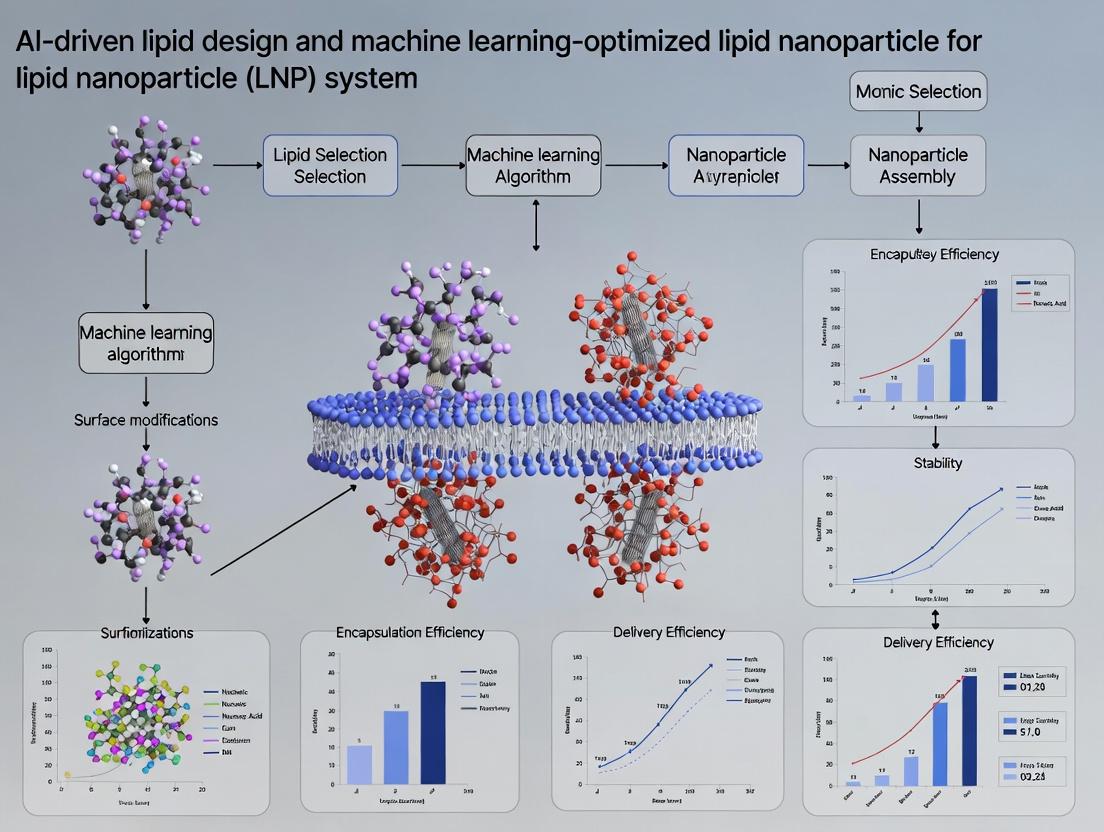
This article provides a comprehensive analysis of machine learning (ML) applications in the design and optimization of Lipid Nanoparticles (LNPs).
AI-Driven Lipid Design: Machine Learning Approaches for Optimizing LNP Delivery Systems
Abstract
This article provides a comprehensive analysis of machine learning (ML) applications in the design and optimization of Lipid Nanoparticles (LNPs). Targeted at researchers and drug development professionals, it explores foundational ML concepts in lipid informatics, details methodological frameworks for generative design and property prediction, addresses critical troubleshooting and optimization challenges, and examines validation protocols and comparative performance against traditional methods. The synthesis offers a roadmap for integrating AI into rational LNP development for advanced therapeutics.
The AI and Lipidomics Interface: Foundational Principles for LNP Informatics
Lipid Nanoparticles (LNPs) are the leading non-viral delivery platform for nucleic acid therapeutics, exemplified by their success in mRNA COVID-19 vaccines. The core challenge in LNP development lies in the precise formulation of four key lipid components to achieve optimal efficacy, stability, and safety. This document details the foundational components, their critical design parameters, and experimental protocols for formulation and characterization, framed within the context of modern, AI-driven optimization research. Machine learning models for LNP design rely on high-quality, structured experimental data that accurately maps lipid chemistry and formulation parameters to Critical Quality Attributes (CQAs).
Core LNP Components and Lipid Chemistry
LNPs are typically composed of four lipid classes, each with a distinct function.
Table 1: Core LNP Lipid Components, Chemistry, and Design Variables
| Lipid Class | Primary Function | Key Chemical Variables | Common Examples | AI-Relevant Design Parameter |
|---|---|---|---|---|
| Ionizable Lipid | Nucleic acid complexation, endosomal escape | pKa, hydrocarbon chain length & saturation, linker chemistry | DLin-MC3-DMA, SM-102, ALC-0315 | pKa (target: 6.2-6.5), lipidoid structure, biodegradability |
| Phospholipid | LNP bilayer structure, fusion support | Headgroup type (e.g., DOPE, DSPC), acyl chain length | DSPC, DOPE, DPPC | Molar percentage, phase transition temperature (Tm) |
| Cholesterol | Membrane stability & fluidity, intracellular delivery | Source (plant/animal), purity | Pharmaceutical grade | Molar percentage (typically 35-50%) |
| PEG-lipid | Stability, particle size control, pharmacokinetics | PEG chain length (e.g., 2000 Da), lipid anchor | DMG-PEG2000, DSG-PEG2000 | Molar percentage (0.5-5%), dissociation kinetics |
Key Formulation Parameter: Molar Ratios
The molar ratio of the lipid components is a primary lever controlling LNP properties. Systematic variation of these ratios is essential for generating datasets for AI/ML training.
Table 2: Typical Molar Ratio Ranges and Impact on CQAs
| Component | Typical Molar % Range | Effect on Increasing Proportion | Target for AI Optimization |
|---|---|---|---|
| Ionizable Lipid | 35-60% | Increases encapsulation efficiency; may increase cytotoxicity. | Optimize for payload-specific activity & acceptable toxicity. |
| Phospholipid | 5-20% | Enhances structural integrity; high % may reduce fusogenicity. | Balance bilayer stability with endosomal escape function. |
| Cholesterol | 30-50% | Modulates membrane fluidity; essential for in vivo efficacy. | Find optimum for target cell type and administration route. |
| PEG-lipid | 0.5-5% | Decreases particle size, improves stability, reduces immunogenicity, can hinder cell uptake. | Fine-tune for shelf-life vs. "PEG dilemma" (rapid clearance vs. cell uptake). |
Critical Quality Attributes (CQAs) and Analytical Protocols
CQAs are measurable indicators of LNP quality, performance, and stability. They serve as the output variables for predictive AI models.
Table 3: Essential CQAs, Analytical Methods, and Target Ranges
| CQA | Impact on Performance | Standard Analytical Method | Typical Target Range (mRNA LNPs) |
|---|---|---|---|
| Particle Size (nm) & PDI | Biodistribution, cellular uptake, stability. | Dynamic Light Scattering (DLS) | 70-120 nm, PDI < 0.2 |
| Encapsulation Efficiency (%) | Dose potency, payload protection, safety. | Ribogreen Assay | > 90% |
| Zeta Potential (mV) | Colloidal stability, cellular interaction. | Laser Doppler Velocimetry | Near neutral or slightly negative (-10 to +5 mV) in serum |
| pKa | Endosomal escape efficiency. | TNS Fluorescence Assay | 6.2 - 6.5 |
| mRNA Integrity | Potency of encoded protein. | Gel Electrophoresis (AGE) or cIEF | > 95% full-length mRNA |
Detailed Experimental Protocols
Protocol 1: Microfluidic Formulation of mRNA-LNPs
Objective: Reproducibly formulate LNPs with controlled size and high encapsulation efficiency. Materials: Ionizable lipid, DSPC, Cholesterol, DMG-PEG2000, mRNA in citrate buffer (pH 4.0), Ethanol, 1x PBS (pH 7.4). Equipment: Microfluidic mixer (e.g., NanoAssemblr), syringe pumps, vials. Procedure:
- Lipid Stock Prep: Dissolve lipids in ethanol at a combined concentration of 10-12 mM. Use the molar ratio selected for the experiment (e.g., 50:10:38.5:1.5 for Ionizable Lipid:DSPC:Chol:PEG-lipid).
- Aqueous Phase Prep: Dilute mRNA in 25 mM citrate buffer (pH 4.0) to a target concentration (e.g., 0.1 mg/mL).
- Mixing: Load the lipid-ethanol solution and mRNA aqueous solution into separate syringes. Connect to a microfluidic chip.
- Formulation: Set a Total Flow Rate (TFR) of 12 mL/min and a Flow Rate Ratio (FRR, aqueous:ethanol) of 3:1. Initiate simultaneous flow through the mixer into a collection vial.
- Buffer Exchange & Dialysis: Immediately dilute the collected LNP solution with an equal volume of 1x PBS. Transfer to a dialysis cassette (MWCO 3.5 kDa) and dialyze against 1x PBS for 2-4 hours at 4°C to remove ethanol and adjust pH.
- Sterile Filtration: Filter the final formulation through a 0.22 µm PES filter. Store at 4°C.
Protocol 2: Determination of Encapsulation Efficiency via Ribogreen Assay
Objective: Quantify the percentage of mRNA encapsulated within LNPs. Materials: Quant-iT RiboGreen RNA Assay reagent, 1x TE buffer (pH 7.5), Triton X-100 (2% v/v solution). Equipment: Fluorescence microplate reader, black 96-well plate. Procedure:
- Sample Prep:
- Total RNA (T) Sample: Dilute LNP formulation 1:100 in 1x TE buffer containing 2% Triton X-100. Incubate 10 min to lyse particles.
- Free RNA (F) Sample: Dilute the same LNP formulation 1:100 in 1x TE buffer only.
- Standard Curve: Prepare a series of mRNA standards in 1x TE buffer (e.g., 0, 10, 50, 100, 200, 500 ng/mL).
- Assay: Add 100 µL of each sample/standard to a well. Add 100 µL of RiboGreen reagent (diluted 1:500 in 1x TE) to each well. Mix briefly, incubate 5 min protected from light.
- Measurement: Read fluorescence (excitation ~480 nm, emission ~520 nm).
- Calculation: Determine RNA concentrations from the standard curve.
- Encapsulation Efficiency (%) = [1 - (F / T)] * 100.
Protocol 3: Determination of Apparent pKa via TNS Assay
Objective: Measure the pH at which the ionizable lipid becomes positively charged, a key predictor of endosomal escape. Materials: 2-(p-Toluidino)-6-naphthalenesulfonic acid (TNS), citrate-phosphate buffers (pH range 3-11), LNP formulation (lipid-only, without mRNA). Equipment: Fluorescence spectrometer or plate reader. Procedure:
- Prepare LNP samples (lipid-only) at a standard lipid concentration (e.g., 0.1 mM) in a series of citrate-phosphate buffers covering pH 3 to 11.
- Add TNS dye to each sample (final conc. 5 µM).
- Incubate for 5 minutes at room temperature.
- Measure fluorescence intensity (excitation 321 nm, emission 445 nm). TNS fluoresces when bound to the positively charged, hydrophobic lipid membrane.
- Plot fluorescence intensity vs. pH. Fit the data with a sigmoidal curve. The apparent pKa is defined as the pH at 50% of maximal fluorescence.
Diagrams
Title: AI-Driven LNP Design and Optimization Workflow
Title: LNP Mechanism of Action: Endosomal Escape
The Scientist's Toolkit: Research Reagent Solutions
Table 4: Essential Materials for LNP Research and Development
| Item / Reagent Solution | Function / Application | Key Consideration |
|---|---|---|
| Precision NanoSystems NanoAssemblr | Microfluidic instrument for scalable, reproducible LNP formulation. | Enables rapid prototyping with precise control over TFR and FRR. |
| GenVoy-ILM Lipid Mix Kits | Pre-mixed blends of ionizable lipid, helper lipids, and PEG-lipid. | Accelerates screening by providing optimized starting ratios. |
| Quant-iT RiboGreen RNA Assay Kit | Fluorescent quantitation of RNA encapsulation efficiency. | Critical for assessing formulation success; requires careful controls. |
| Malvern Panalytical Zetasizer Ultra | Integrated DLS for size/PDI and LDV for zeta potential measurement. | Industry standard for nanoparticle characterization. |
| Avanti Polar Lipids Lipid Stocks | High-purity, characterized individual lipid components. | Essential for precise molar ratio formulation and reproducibility. |
| Cytiva Slide-A-Lyzer Dialysis Cassettes | Buffer exchange and ethanol removal post-formulation. | Gentle method to maintain particle integrity during processing. |
| Cleanomics mRNA | Research-grade mRNA for formulation development. | Integrity and purity (capping, tailing) are critical for activity. |
Why Machine Learning for Lipid Design? Overcoming the Combinatorial Complexity of Formulation Space.
Lipid Nanoparticle (LNP) formulation for nucleic acid delivery involves optimizing multiple interdependent components: ionizable lipids, phospholipids, cholesterol, PEG-lipids, and nucleic acid payloads. Each component has a vast library of possible chemical structures. The resulting formulation space is astronomically large, making exhaustive experimental screening impossible. Machine Learning (ML) provides a paradigm shift, using data-driven models to predict optimal formulations, thereby accelerating the design-make-test-analyze cycle central to AI-driven lipid design research.
Application Notes: ML Approaches in LNP Optimization
Quantitative Landscape of Formulation Space
The combinatorial complexity is quantified in the table below.
Table 1: Scale of Combinatorial Formulation Space for LNPs
| Component | Typical Number of Variations | Design Variables |
|---|---|---|
| Ionizable Lipid Headgroup | 50+ | Chemical structure, pKa |
| Ionizable Lipid Tail(s) | 100+ | Chain length, unsaturation |
| Helper Phospholipid | 20+ | Saturation, headgroup |
| Cholesterol | 10+ | Derivative type |
| PEG-Lipid | 15+ | PEG length, lipid anchor |
| Total Possible Combinations | > 1.5 x 10^8 | N/A |
| Measured Experimental Data (Current Corpus) | ~ 10^3 - 10^4 | N/A |
This vast gap (>4 orders of magnitude) between possible formulations and feasibly testable ones creates the "combinatorial explosion" problem.
Key ML Tasks and Outcomes
Table 2: ML Models and Reported Performance for Lipid Design
| ML Task | Algorithm Type | Key Performance Metric (Reported) | Reference Year |
|---|---|---|---|
| Predicting LNP Size | Gradient Boosting / Neural Networks | RMSE: ~2-5 nm | 2023 |
| Predicting Encapsulation Efficiency (%) | Random Forest / SVM | R²: 0.75 - 0.90 | 2022-2024 |
| Predicting in vivo Hepatocyte Delivery | Graph Neural Networks (GNN) | Prediction AUC: 0.81 - 0.88 | 2023-2024 |
| Predicting Ionizable Lipid pKa | Quantum Chemistry + ML | MAE: ~0.3 pKa units | 2024 |
| Generative Design of Novel Ionizable Lipids | Variational Autoencoder (VAE) / GPT | >40% generated candidates meet key criteria | 2024 |
Experimental Protocols
Protocol: High-Throughput LNP Formulation & Characterization for ML Datasets
Objective: Generate consistent, high-quality data on LNP properties (size, PDI, encapsulation efficiency, potency) for training supervised ML models.
Materials:
- Microfluidic mixer (e.g., NanoAssemblr)
- HPLC systems for lipid quantification
- Dynamic Light Scattering (DLS) instrument
- Ribogreen assay kit for encapsulation efficiency
- 96-well plate format for cell culture assays
Procedure:
- Design of Experiment (DoE): Use a fractional factorial or D-optimal design to select 100-500 distinct LNP formulations from the vast space. Variables include lipid molar ratios and identity descriptors (e.g., lipid tail carbon number).
- Formulation: Prepare lipid stocks in ethanol and aqueous buffer. Use a microfluidic mixer with fixed total flow rate and flow rate ratio (FRR) of 3:1 (aqueous:ethanol). Collect formulation in PBS.
- Buffer Exchange & Purification: Use tangential flow filtration (TFF) or dialysis to remove ethanol and exchange into final buffer.
- Characterization:
- Size & PDI: Measure by DLS in triplicate.
- Encapsulation Efficiency (EE): a. Dilute LNP sample. Add Ribogreen reagent to one aliquot (Total RNA). b. Add Ribogreen + 0.5% Triton X-100 to a second aliquot (Released RNA). c. Measure fluorescence. Calculate EE % = [1 - (Released RNA/Total RNA)] * 100.
- Potency Assay: Transfer LNPs to 96-well plate containing reporter cells. Incubate 24-48h. Measure luminescence/fluorescence. Normalize to positive and negative controls.
- Data Curation: Assemble all data into a structured table: each row is a formulation (with features like lipid SMILES strings, ratios, process parameters), each column is an output (size, PDI, EE%, potency).
ProtocolIn Silico: Training a Predictive Model for LNP Efficacy
Objective: Train a Random Forest or GNN model to predict in vivo delivery efficacy from LNP composition and in vitro data.
Software/Tools: Python (scikit-learn, PyTorch, RDKit), Jupyter Notebooks.
Procedure:
- Feature Engineering:
- Chemical Descriptors: Use RDKit to compute molecular descriptors (MolWt, LogP, topological polar surface area) for each lipid component.
- Formulation Features: Molar ratios, total lipid concentration, N:P ratio.
- Process Features: FRR, total flow rate.
- In vitro Features: Size, PDI, EE%.
- Data Splitting: Split data 80/10/10 (Train/Validation/Test) using stratified sampling based on efficacy bins.
- Model Training (Random Forest Example):
- Validation & Interpretation: Evaluate on validation set using R² and RMSE. Use feature importance analysis to identify critical design parameters.
- Model Deployment: Use trained model to screen a virtual library of 10,000 formulations. Select top 50 predicted performers for experimental validation.
Visualization
Diagram 1: ML-Driven LNP Optimization Workflow
Diagram 2: Key LNP Properties Modeled by ML
The Scientist's Toolkit: Research Reagent Solutions
Table 3: Essential Materials for ML-Driven Lipid Design Research
| Item | Function in Research | Example/Supplier |
|---|---|---|
| Ionizable Lipid Library | Provides structural diversity for training ML models; novel lipids are generative design targets. | Avanti Polar Lipids, Sigma-Aldrich, custom synthesis. |
| Microfluidic Mixer | Enables reproducible, high-throughput LNP formulation for generating consistent training data. | NanoAssemblr (Precision NanoSystems), microfluidic chips. |
| Ribogreen Assay Kit | Gold-standard fluorescence-based quantification of nucleic acid encapsulation efficiency. | Thermo Fisher Scientific (Quant-iT). |
| RDKit Software | Open-source cheminformatics toolkit for converting lipid SMILES to numerical molecular descriptors. | www.rdkit.org |
| Graph Neural Network (GNN) Framework | Models lipid structures as graphs for superior property prediction. | PyTorch Geometric, DGL (Deep Graph Library). |
| Automated Liquid Handler | For preparing lipid stock solutions and formulation DoE plates with precision and scalability. | Hamilton Company, Tecan. |
This document details the application of core Artificial Intelligence (AI) and Machine Learning (ML) paradigms within lipid science, specifically framed within a broader thesis on AI-driven lipid design for Lipid Nanoparticle (LNP) optimization research. The integration of these computational methods accelerates the rational design of lipid-based delivery systems, moving beyond traditional trial-and-error approaches to enable predictive, high-throughput in silico screening and formulation optimization.
Application Notes & Protocols
Supervised Learning: Predicting LNP Efficacy & Toxicity
Supervised learning models are trained on labeled historical data to predict key biological and physicochemical outcomes from lipid structure or formulation parameters.
Key Applications:
- Quantitative Structure-Property Relationship (QSPR) Modeling: Predicting pKa, membrane fusogenicity, and biodegradation rates from SMILES strings or molecular descriptors.
- Efficacy Prediction: Classifying transfection efficiency (High/Medium/Low) or regressing exact protein expression levels based on LNP composition and cell-line data.
- Toxicity Screening: Predicting hepatotoxicity, immunogenicity, or cellular stress responses from lipidomics and transcriptomics data.
Experimental Protocol: Protocol for Generating a Supervised QSPR Dataset for LNP pKa Prediction
- Lipid Library Curation: Select a diverse set of 200-500 ionizable lipids with known experimental apparent pKa values (range: 5.0-7.5).
- Molecular Featurization: Compute molecular descriptors (e.g., using RDKit) for each lipid. Key descriptors include: topological polar surface area (TPSA), number of rotatable bonds, logP, hydrogen bond donors/acceptors, and ECFP4 fingerprints.
- Data Structuring: Create a feature matrix (X) where each row is a lipid and each column is a descriptor/fingerprint bit. Create a target vector (y) of corresponding experimental pKa values.
- Model Training & Validation: Split data (80/20 train/test). Train models like Gradient Boosting Regressors (GBR) or Graph Neural Networks (GNNs). Optimize hyperparameters via 5-fold cross-validation on the training set.
- Model Evaluation: Evaluate final model on held-out test set using metrics: Mean Absolute Error (MAE), R². Deploy model to predict pKa of novel, unsynthesized lipid structures from a virtual library.
Quantitative Data Summary: Table 1: Performance Comparison of Supervised Models for LNP Property Prediction
| Prediction Task | Model Type | Dataset Size | Key Metric | Reported Performance | Primary Lipid Descriptors Used |
|---|---|---|---|---|---|
| Ionizable Lipid pKa | Gradient Boosting | 350 lipids | R² | 0.82 | TPSA, logP, Molecular Weight |
| Transfection Efficiency | Random Forest | 1200 LNP-cell pairs | AUC-ROC | 0.91 | Lipid molar ratios, PEG length, Particle Size |
| Hepatocyte Uptake | Neural Network | 500 in vivo data points | MAE | 15.2% error | Lipid chain unsaturation, Headgroup charge density |
Unsupervised Learning: Deciphering Lipidomic Landscapes & Formulation Clusters
Unsupervised learning identifies hidden patterns, groups, or intrinsic structures within unlabeled lipidomic or formulation datasets.
Key Applications:
- Lipidomic Profiling: Using Principal Component Analysis (PCA) or t-SNE to visualize clustering of cellular lipid profiles in response to different LNP treatments.
- Formulation Similarity Analysis: Applying clustering algorithms (K-means, Hierarchical) to group LNP formulations with similar excipient composition, identifying "formulation archetypes."
- Anomaly Detection: Using autoencoders to detect outlier LNPs with atypical biodistribution or unexpected immunogenic profiles in high-throughput screening.
Experimental Protocol: Protocol for Unsupervised Clustering of LNP Formulations by Composition
- Data Collection: Assemble a dataset of 1000+ historical LNP formulations. For each, record numerical features: mol% Ionizable Lipid, mol% Helper Lipid (DOPE, DSPC), mol% Cholesterol, mol% PEG-lipid, and PEG chain length.
- Data Preprocessing: Standardize all features using StandardScaler (mean=0, variance=1).
- Dimensionality Reduction: Apply PCA to reduce dimensions, retaining components explaining >95% variance. Visualize formulations in 2D/3D PCA space.
- Clustering: Apply K-means clustering to the PCA-reduced data. Use the elbow method (inertia vs. k) to determine optimal number of clusters (k=4-6).
- Cluster Analysis: Characterize each cluster by its centroid's average composition. Correlate clusters with historical efficacy/toxicity metadata to derive compositional rules-of-thumb.
Reinforcement Learning (RL): Optimizing Multi-step Lipid Design Pipelines
RL frames the lipid design process as a sequential decision-making problem, where an agent learns to optimize a complex, multi-objective reward function.
Key Applications:
- De Novo Lipid Design: An RL agent proposes incremental modifications to a lipid scaffold (e.g., changing tail length, adding unsaturation) to maximize a reward based on predicted pKa, transfection score, and synthetic feasibility.
- Dynamic Formulation Optimization: RL controls a microfluidic mixer in a closed-loop system, adjusting flow rates in real-time to optimize for particle size, PDI, and encapsulation efficiency.
- Administration Regimen Optimization: RL models used to design optimal dosing schedules for LNP-based therapies by simulating pharmacokinetic/pharmacodynamic (PK/PD) responses.
Experimental Protocol: Protocol for RL-Driven de Novo Lipid Design
- Define Environment: The chemical space of viable lipid molecules (e.g., defined by a molecular grammar or fragment library).
- Define Agent & State: The agent is an RNN or Transformer policy network. The state is the current molecular graph or SMILES string.
- Define Actions: Discrete actions: add/remove/modify a chemical group at a specified site on the molecule.
- Define Reward Function: R = (w1 * pKascore) + (w2 * Efficiencyscore) + (w3 * Toxicitypenalty) + (w4 * Syntheticaccessibility_score). Weights (w) are tuned for research priorities.
- Training: Agent explores environment via policy gradient methods (e.g., Proximal Policy Optimization). It receives rewards from a pre-trained supervised model (oracle) predicting properties. Training continues until reward plateaus.
- Validation: Synthesize top-ranked novel lipids from trained agent and test experimentally.
Visualization: Workflows & Pathways
Diagram 1: AI-Driven LNP Design Workflow
Diagram 2: RL Agent for Lipid Optimization
The Scientist's Toolkit: Research Reagent Solutions
Table 2: Essential Reagents & Materials for AI-Driven LNP Experimental Validation
| Item Name | Function in Protocol | Example/Catalog Context |
|---|---|---|
| Ionizable Lipid Library | Provides diverse structural starting points for model training and validation. | Commercially available (e.g., Avanti) or custom-synthesized lipids (e.g., ALC-0315 derivatives). |
| Helper Lipids (Phospholipids) | Standardized excipients for constructing LNP formulations from AI-predicted compositions. | 1,2-dioleoyl-sn-glycero-3-phosphoethanolamine (DOPE), DSPC. |
| Polyethylene Glycol (PEG)-Lipids | Controls nanoparticle stability and biodistribution; a key variable in formulation optimization. | DMG-PEG2000, DSG-PEG2000. |
| Cholesterol | Standard LNP component that modulates membrane fluidity and integrity. | Pharmaceutical grade. |
| Microfluidic Mixer | Enables reproducible, high-throughput preparation of LNP formulations for data generation. | NanoAssemblr Ignite or similar staggered herringbone mixer chips. |
| Fluorescent Reporter (mRNA/pDNA) | Allows quantitative measurement of transfection efficiency (efficacy prediction validation). | EGFP or Luciferase encoding mRNA, Cy5-labeled siRNA. |
| Cell Viability Assay Kit | Measures cellular toxicity, a key endpoint for supervised toxicity model validation. | MTT, CellTiter-Glo Luminescent Assay. |
| Dynamic Light Scattering (DLS) Instrument | Measures particle size and PDI, critical physicochemical validation of AI-designed formulations. | Malvern Zetasizer Nano ZS. |
| RDKit Software | Open-source cheminformatics toolkit for generating molecular descriptors and fingerprints from lipid structures. | Essential for data featurization in supervised/unsupervised learning. |
Application Notes
Curated Lipid Databases for AI Model Training
Structured, annotated lipid databases serve as foundational training data for predictive ML models in LNP design. These databases correlate lipid chemical structures with biophysical properties (e.g., pKa, molecular geometry, logP) and biological outcomes (e.g., transfection efficiency, organ tropism).
Table 1: Key Public & Commercial Lipid Databases for ML
| Database Name | Provider/Reference | Primary Content | Size (# of Lipids) | Key Annotations | Access |
|---|---|---|---|---|---|
| LIPID MAPS | LIPID MAPS Consortium | Systematic classification of lipids | >40,000 structures | Structure, taxonomy, ontology | Public |
| SwissLipids | SIB Swiss Institute of Bioinformatics | Detailed lipid structures & pathways | >500,000 entries | Metabolic pathways, cross-references | Public |
| LipidBank | Japanese Consortium | Natural lipid structures & data | ~6,000 compounds | MS/MS spectra, physicochemical data | Public |
| Therapeutic Lipid Database (TLD) | Internal/Proprietary (Example) | Ionizable & helper lipids for LNPs | ~2,000 curated entries | pKa, tail length, transfection efficiency, cytotoxicity | Restricted |
| PubChem Lipids | NIH/NLM | Substance/compound records | Millions (subset lipids) | Bioassays, toxicity, vendor data | Public |
Experimental Datasets for Model Validation
High-quality, standardized experimental datasets are critical for validating ML predictions and refining models. These include data from formulation characterization, in vitro screening, and in vivo efficacy/toxicity studies.
Table 2: Essential Experimental Data Types for ML Validation
| Data Type | Measurement Platform | Key Parameters for ML Features | Typical Dataset Size (per study) | Relevance to LNP Optimization |
|---|---|---|---|---|
| Formulation Characterization | DLS, NTA, HPLC, TEM | Size (nm), PDI, Zeta Potential (mV), Encapsulation Efficiency (%) | 50-500 formulations | Relates structure to colloidal stability & drug loading |
| In Vitro Transfection | Flow Cytometry, Fluorescence Microscopy, Luminescence | Transfection Efficiency (%), Cell Viability (IC50), Protein Expression Level | 100-1000 data points | Links lipid properties to functional delivery |
| In Vivo Biodistribution | IVIS Imaging, qPCR, LC-MS/MS | Organ-specific payload concentration (e.g., %ID/g), Clearance kinetics | 10-50 formulations (multi-organ/timepoint) | Determines organ tropism and PK/PD relationships |
| pKa Determination | TNS Assay, Fluorescence Spectroscopy | Apparent pKa, Protonation Curve | 20-100 lipid candidates | Critical for endosomal escape prediction |
HTS Libraries for Discovery
Combinatorial lipid libraries and HTS enable rapid exploration of chemical space, generating large-scale structure-activity relationship (SAR) data to fuel ML.
Table 3: Typical HTS Library Composition & Output
| Library Type | Synthesis Method | Diversity Axis | Typical Library Size | Primary Screening Readout | Data Output for ML |
|---|---|---|---|---|---|
| Ionizable Lipid Analog Series | Parallel Synthesis | Tail length, unsaturation, linker chemistry | 100-500 compounds | In vitro mRNA expression & cytotoxicity | SAR maps linking substructures to activity |
| PEG-Lipid & Helper Lipid Arrays | Robotic formulation | PEG length, lipid anchor, molar ratio | 50-200 formulations | Serum stability, pharmacokinetics | Optimization data for stability & circulation time |
| Full LNP Formulation Space | Microfluidics HTS | Ionizable lipid:PEG:Helper:Cholesterol ratios | 1,000-10,000 formulations | Multi-parametric: Efficacy, toxicity, stability | High-dimensional dataset for multi-objective optimization |
Experimental Protocols
Protocol 1: Generation of a StandardizedIn VitroTransfection Dataset for ML Training
Objective: To generate consistent, high-quality data on LNP-mediated mRNA delivery for training and validating predictive ML models.
Research Reagent Solutions & Materials:
| Item | Function | Example Product/Catalog # |
|---|---|---|
| Ionizable Lipid Library | Variable for SAR; primary ML feature | Proprietary or e.g., C12-200 (Avanti) |
| Helper Lipids (DSPC, DOPE) | Membrane fusion/structural support | Avanti Polar Lipids 850365P |
| Cholesterol | Membrane rigidity & stability | Sigma-Aldrich C8667 |
| PEG-lipid (DMG-PEG2000) | Stability & pharmacokinetics modulator | Avanti Polar Lipids 880151P |
| Firefly Luciferase mRNA | Reporter for quantitative efficacy readout | Trilink Biotechnologies L-7602 |
| Microfluidic Device (NanoAssemblr) | Reproducible LNP formulation | Precision NanoSystems Ignite |
| HEK293T or HeLa Cells | Model cell line for transfection | ATCC CRL-3216 or CCL-2 |
| Luciferase Assay Kit | Quantification of transfection efficiency | Promega E1500 |
| Cell Viability Assay Kit | Cytotoxicity measurement | Thermo Fisher Scientific G8080 |
| 96-well Plate Reader | High-throughput absorbance/luminescence readout | BioTek Synergy H1 |
Methodology:
- LNP Formulation via Microfluidics:
- Prepare lipid stock solutions in ethanol. Standardize ionizable lipid, DSPC, cholesterol, and DMG-PEG2000 at a molar ratio (e.g., 50:10:38.5:1.5).
- Prepare aqueous buffer containing 0.1 mg/mL luciferase mRNA in 10 mM citrate buffer (pH 4.0).
- Use a microfluidic device (e.g., NanoAssemblr Ignite) with a fixed total flow rate (e.g., 12 mL/min) and a flow rate ratio (aqueous:ethanol) of 3:1.
- Collect formulated LNPs and dialyze against 1X PBS (pH 7.4) for 2 hours to remove ethanol.
LNP Characterization (Feature Generation):
- Size and PDI: Measure by Dynamic Light Scattering (DLS) using a Zetasizer. Perform three measurements per sample.
- Encapsulation Efficiency: Use the Quant-iT RiboGreen RNA assay. Measure fluorescence with/without 0.1% Triton X-100 disruption. Calculate EE% = (1 - free RNA/total RNA) * 100.
- Zeta Potential: Measure in 1 mM KCl at neutral pH using a Zetasizer.
Cell Transfection & Readout (Label Generation):
- Seed HEK293T cells in 96-well plates at 20,000 cells/well 24 hours prior.
- Treat cells with LNPs diluted in serum-free medium, targeting an mRNA dose of 50 ng/well. Incubate for 4-6 hours, then replace with complete medium.
- At 24 hours post-transfection, lyse cells with 1X Passive Lysis Buffer.
- Luciferase Activity: Mix 20 µL lysate with 100 µL luciferase assay substrate. Measure luminescence (RLU) immediately.
- Cell Viability: Perform in parallel using an MTT or CellTiter-Glo assay according to manufacturer protocols.
Data Curation for ML:
- Compile all data into a structured table: Lipid IDs (SMILES), formulation parameters (ratios, buffer pH), physicochemical features (size, PDI, EE%, zeta potential), and biological labels (RLU/mg protein, viability %).
- Normalize luminescence data relative to a positive control (e.g., commercial transfection reagent) and negative control (untreated cells).
Protocol 2: High-Throughput Screening (HTS) of Lipid Nanoparticle Libraries
Objective: To rapidly screen combinatorial lipid libraries for in vitro efficacy and cytotoxicity, generating large-scale datasets for ML-driven SAR analysis.
Methodology:
- Library Design & Plate Mapping:
- Design a 96- or 384-well plate map where each well contains a unique LNP formulation varying by: a) Ionizable lipid structure (from a library of 48), b) Helper lipid type (DSPC vs. DOPE), c) PEG-lipid molar ratio (0.5% vs. 2.0%).
- Use robotic liquid handlers (e.g., Hamilton STAR) to prepare lipid mixtures in ethanol in a master deep-well plate.
- Similarly, prepare an aqueous plate containing mRNA (e.g., GFP mRNA) in citrate buffer.
Automated LNP Formation:
- Utilize an integrated microfluidic system (e.g., NanoAssemblr Blaze) with an autosampler.
- Program the system to mix each unique ethanol lipid mixture with the mRNA solution at a defined total flow rate and flow rate ratio, collecting outputs in corresponding wells of a destination assay plate.
Automated In Vitro Assaying:
- Pre-seed destination assay plates with reporter cells (e.g., HepG2).
- Immediately after LNP formation, perform a direct, automated transfer of LNPs to the cell-containing assay plates (diluted in medium).
- Incubate for 24-48 hours.
High-Content Readout:
- Efficacy: Use an automated microscope (e.g., ImageXpress Micro) to capture GFP fluorescence. Quantify mean fluorescence intensity (MFI) per well using cell segmentation software (e.g., MetaXpress).
- Cytotoxicity: Simultaneously or in parallel, measure cell confluence or use a fluorescent viability dye (e.g., propidium iodide) via the same imaging system.
Data Processing Pipeline:
- Automated scripts should extract MFI and cell count/confluence for each well.
- Calculate normalized metrics: Normalized Efficacy = (MFIsample / MFIpositive control) and Normalized Viability = (Cell Countsample / Cell Countuntreated control).
- Compile a final dataset linking each well's formulation parameters (lipid SMILES, ratios) to its multi-objective outcome (Efficacy, Viability).
Visualizations
Title: AI-Driven LNP Optimization Data & ML Workflow
Title: HTS Workflow for LNP Library Screening
Within AI-driven lipid design and LNP optimization research, translating complex lipid structures into quantitative, machine-readable descriptors is a foundational step. This process enables predictive modeling of structure-function relationships, accelerating the rational design of lipid nanoparticles for therapeutic delivery.
Core Molecular Descriptor Categories for Lipids
Lipid descriptors can be systematically categorized to capture chemical, topological, and physicochemical properties relevant to LNP self-assembly, efficacy, and toxicity.
Table 1: Key Molecular Descriptor Categories for Lipid Engineering
| Descriptor Category | Specific Descriptors | Relevance to LNP Function |
|---|---|---|
| Constitutional | Molecular weight, Number of carbon atoms, Number of double bonds, Chain length asymmetry, Number of ionizable groups | Impacts packing parameter, pKa, and membrane fluidity. |
| Topological | Wiener index, Balaban index, Zagreb indices, Kier shape descriptors | Encodes molecular branching and overall shape affecting self-assembly. |
| Geometric | Principal moments of inertia, Molecular surface area, Molecular volume, Gravitational indices | Correlates with entropic contributions to bilayer formation and cargo space. |
| Electrostatic | Partial atomic charges, Dipole moment, Polar surface area, Ionization potential | Governs electrostatic interactions with nucleic acids (e.g., mRNA), cellular membranes, and protein corona. |
| Quantum Chemical | HOMO/LUMO energies, Molecular orbital densities, Fukui indices, Hardness/Softness | Predicts chemical reactivity and stability of lipid heads/tails. |
| Physicochemical | LogP (octanol-water), Solubility parameters, Molar refractivity, Polarizability, pKa (calculated) | Predicts permeability, biodegradability, and pH-dependent behavior in endosomes. |
Experimental Protocol: Generating and Validating Descriptor Sets
This protocol outlines the steps for generating a comprehensive descriptor set from a lipid library and validating its predictive power.
Protocol Title: High-Throughput Computational Characterization of Lipid Libraries for Machine Learning.
Materials & Software:
- Lipid Structure Library: A curated set of 2D/3D molecular structures in SMILES or SDF format.
- Cheminformatics Software: RDKit (Open Source), MOE (Chemical Computing Group), Schrodinger Suite.
- Quantum Chemistry Software: Gaussian, ORCA, PSI4 (for advanced electronic descriptors).
- Computing Resources: High-performance computing cluster for batch processing.
Procedure:
- Structure Standardization:
- Input lipid SMILES strings.
- Use RDKit to sanitize molecules, generate canonical tautomers, and remove salts.
- Generate 3D conformers using distance geometry (e.g.,
ETKDGmethod) and optimize with MMFF94 force field.
Descriptor Calculation (Batch Mode):
- Using RDKit or a custom Python script, compute descriptors from Table 1.
- Constitutional and topological descriptors are calculated directly from 2D graphs.
- For 3D descriptors (geometric, electrostatic), iterate over a representative ensemble of low-energy conformers and average the results.
- Output a matrix (lipids x descriptors) in CSV format.
Descriptor Preprocessing & Reduction:
- Remove descriptors with zero variance or >20% missing values.
- Impute remaining missing values using k-nearest neighbors.
- Apply correlation filtering: remove one descriptor from any pair with Pearson correlation >0.95.
- Optionally, apply Principal Component Analysis (PCA) or Uniform Manifold Approximation and Projection (UMAP) for nonlinear dimensionality reduction. Retain components explaining >95% variance.
Validation via Structure-Property Relationship Modeling:
- Use the processed descriptor matrix as features (X).
- Use experimental data (e.g., LNP encapsulation efficiency, transfection potency in vitro, pKa) as target variables (y).
- Train a benchmark model (e.g., Random Forest or Gradient Boosting) using 5-fold cross-validation.
- Validate model performance using the coefficient of determination (R²) and root mean squared error (RMSE) on a held-out test set (20% of data). A robust descriptor set should yield R² > 0.6 for established endpoints.
Diagram: Workflow for AI-Driven Lipid Design
(Diagram Title: AI-Driven Lipid Design and Optimization Workflow)
The Scientist's Toolkit: Research Reagent Solutions
Table 2: Essential Tools for Lipid Descriptor Research
| Item / Reagent | Function in Descriptor Research & LNP Optimization |
|---|---|
| RDKit | Open-source cheminformatics toolkit for calculating 2D/3D molecular descriptors, fingerprint generation, and molecular operations. |
| Chemical Computing Group MOE | Commercial software suite offering extensive descriptor calculations, pharmacophore modeling, and QSAR capabilities. |
| Gaussian 16 | Industry-standard software for ab initio quantum mechanical calculations to derive high-fidelity electronic descriptors. |
| PyLipid (Open Source Library) | Specialized Python library for analyzing molecular dynamics simulations of lipids, calculating bilayer-specific descriptors (e.g., area per lipid, order parameters). |
| LabKey Server or CDD Vault | Secure, centralized informatics platforms for managing lipid libraries, associated experimental data (pKa, transfection), and computed descriptor matrices. |
| IONizable Lipid pKa Assay Kit (e.g., TNS-based) | Experimental kit for measuring the apparent pKa of ionizable lipids, providing critical ground-truth data for validating calculated pKa descriptors. |
| NanoSight NS300 (Malvern Panalytical) | Provides nanoparticle tracking analysis (NTA) for experimental validation of LNP size and concentration predicted by geometric descriptors. |
Advanced Feature Engineering: From Descriptors to Predictive Features
Beyond raw descriptors, engineered features can capture critical lipid-lipid and lipid-cargo interactions.
Protocol Title: Engineering Interaction-Specific Features for LNP Efficacy Prediction.
Procedure:
- Lipid-Lipid Interaction Features:
- For a lipid formulation, calculate the molecular packing parameter (PP) for each component: PP = v / (a₀ * l), where v is tail volume, a₀ is headgroup area, and l is tail length. Use group contribution methods to estimate v and a₀.
- Compute the weighted average PP for the lipid mix as a key formulation feature.
- Calculate electrostatic complementarity between lipid pairs using Coulombic interaction scores derived from partial charges.
- Lipid-Cargo Binding Features:
- For ionizable lipid-mRNA systems, compute the N/P ratio (molar ratio of amine (N) in lipid to phosphate (P) in RNA) as a primary feature.
- Using molecular docking (e.g., AutoDock Vina) or coarse-grained simulations (Martini), generate simplified interaction scores (e.g., binding energy, number of stabilizing H-bonds) between lipid head groups and a nucleotide phosphate proxy.
Table 3: Engineered Feature Set for LNP-mRNA Systems
| Engineered Feature | Calculation Method | Predictive Target |
|---|---|---|
| Formulation Packing Parameter | Weighted average of component PPs | LNP Size, Polydispersity, Stability |
| N/P Ratio | (Moles of ionizable N) / (Moles of mRNA phosphate) | mRNA Encapsulation Efficiency |
| Headgroup Charge Density | Sum of partial charges / headgroup surface area | mRNA Binding Strength, Endosomal Disruption |
| Tail Saturation Index | (Number of C-C single bonds) / (Total C-C bonds) in tails | Membrane Fluidity, Biodegradation Rate |
Diagram: Key Signaling Pathways in LNP-Mediated Transfection
(Diagram Title: LNP-mRNA Transfection and Immune Sensing Pathways)
From Data to Design: Methodological Frameworks and Real-World Applications
The optimization of Lipid Nanoparticles (LNPs) for nucleic acid delivery is a multidimensional challenge, requiring precise balancing of encapsulation efficiency (EE), stability, and ionizable lipid pKa. This document details application notes and protocols for developing and deploying machine learning (ML) models to predict these critical properties. This work is framed within a broader thesis on AI-driven lipid design, where in silico models accelerate the discovery of novel, high-performance lipidic vectors by identifying structure-property relationships before costly synthetic and experimental efforts.
Application Notes: Predictive Algorithms & Key Data
1.1 Data Curation and Feature Engineering Model performance hinges on curated datasets linking lipid chemical structures and formulation parameters to experimental outcomes.
- Lipid Features: Molecular descriptors (e.g., logP, molecular weight, number of rotatable bonds, topological polar surface area) and fingerprints (ECFP4, MACCS keys) are calculated from SMILES strings.
- Formulation Features: Lipid molar ratios (ionizable lipid:phospholipid:cholesterol:PEG-lipid), N:P ratio, total lipid concentration, buffer properties.
- Target Properties: EE (% of nucleic acid encapsulated), Stability (measured as % size or PDI increase over time, or nucleic acid retention), and apparent pKa of the ionizable lipid component.
Table 1: Representative Dataset for LNP Property Prediction
| Dataset Feature | Description | Example Range/Values | Target Property Correlation |
|---|---|---|---|
| Ionizable Lipid logP | Calculated octanol-water partition coefficient. | 8.0 - 18.0 | High logP correlates with improved EE but may reduce mRNA expression. |
| Total Lipid:mRNA Ratio (N:P) | Molar ratio of amine (N) in lipid to phosphate (P) in RNA. | 3:1 - 10:1 | Optimal EE & stability often at N:P ~6. Lower ratios risk poor encapsulation. |
| PEG-Lipid Mol% | Molar percentage of PEGylated lipid in formulation. | 0.5% - 5.0% | >1.5% often decreases EE but improves colloidal stability. |
| Experimental EE (%) | Measured by Ribogreen or dye exclusion assay. | 50% - 95% | Primary target for regression models. |
| Experimental pKa | Measured by TNS fluorescence or potentiometric titration. | 5.5 - 7.0 | Optimal in vivo activity typically pKa 6.2-6.8. Critical for classification/regression. |
| Stability Metric (Size Increase) | % Increase in hydrodynamic diameter (Dh) after 30 days at 4°C. | 5% - 50% | Target for regression; often binarized (Stable if <20% increase). |
1.2 Model Selection and Performance Gradient Boosting Machines (GBM), Random Forest (RF), and Graph Neural Networks (GNNs) show superior performance over linear models.
Table 2: Algorithm Performance Comparison for LNP Property Prediction
| Algorithm | Target Property | Typical R² / Accuracy | Key Advantages | Limitations |
|---|---|---|---|---|
| Random Forest (RF) | Encapsulation Efficiency (EE) | R²: 0.75 - 0.85 | Robust to overfitting, provides feature importance. | Struggles with extrapolation beyond training data. |
| Gradient Boosting (XGBoost) | LNP Stability (Classification) | Accuracy: 80-90% | High accuracy, handles mixed data types well. | Prone to overfitting without careful tuning. |
| Graph Neural Network (GNN) | pKa Prediction | R²: 0.80 - 0.90 | Directly learns from molecular graph; superior generalization for novel lipids. | High computational cost; requires larger datasets. |
| Support Vector Machine (SVM) | pKa Range Classification (Optimal vs. Sub-optimal) | Accuracy: 75-85% | Effective in high-dimensional descriptor spaces. | Performance sensitive to kernel and hyperparameter choice. |
Experimental Protocols for Model Training & Validation
2.1 Protocol: Generating Training Data – LNP Formulation & Characterization This protocol provides the essential experimental data for model training.
A. Microfluidic Formulation of LNPs
- Prepare Lipid Stock Solutions: Dissolve ionizable lipid, DSPC, cholesterol, and DMG-PEG2000 in ethanol at a combined concentration of 10-12 mM total lipid. Maintain the desired molar ratio (e.g., 50:10:38.5:1.5).
- Prepare Aqueous Phase: Dilute mRNA or siRNA in 25 mM sodium acetate buffer, pH 4.0, to a concentration of 0.05-0.1 mg/mL.
- Mixing: Using a staggered herringbone or precise Y-junction microfluidic chip, mix the aqueous and ethanol phases at a fixed total flow rate (e.g., 12 mL/min) and a flow rate ratio (aqueous:ethanol) of 3:1.
- Dialyze: Immediately transfer the formed LNPs into a dialysis cassette (MWCO 20 kDa) and dialyze against 1x PBS, pH 7.4, for 2 hours at 4°C. Change buffer and dialyze for an additional 2 hours.
- Filter: Sterilize the LNP solution using a 0.22 μm PES syringe filter. Store at 4°C.
B. Characterization for Target Properties
- Encapsulation Efficiency (EE):
- Dilute 10 μL of LNP in 90 μL of 1x TE buffer (for total RNA). Add 100 μL of Quant-iT RiboGreen reagent (diluted 1:200 in TE).
- For the encapsulated RNA sample, add 10 μL of LNP to 90 μL of 1x TE buffer containing 0.5% Triton X-100.
- Incubate for 5 minutes, protected from light.
- Measure fluorescence (ex/em ~480/520 nm). Calculate EE % = [1 - (Fundisrupted / Ftotal)] * 100.
Size and Stability:
- Measure hydrodynamic diameter (Dh) and PDI by dynamic light scattering (DLS) immediately after formulation (Day 0).
- Aliquot LNPs and store at 4°C and 25°C. Measure Dh at Day 7, 14, 21, and 30.
- Stability Label: Assign a binary label "Stable" if Dh increase at 4°C (Day 30) is <20%; else "Unstable".
pKa Determination (TNS Assay):
- Prepare a 400 μM stock of 2-(p-Toluidino)naphthalene-6-sulfonic acid (TNS) in DMSO.
- In a black 96-well plate, add 10 μL of LNP (0.1 mM total lipid) to 190 μL of a series of citrate-phosphate buffers (pH range 3.0 to 11.0, in 0.5 increments).
- Add 2 μL of TNS stock to each well (final [TNS] = 4 μM).
- Incubate for 10 min, then measure fluorescence (ex/em ~322/445 nm).
- Plot fluorescence intensity vs. pH. The pKa is defined as the pH at half-maximal fluorescence. Report as "apparent pKa".
2.2 Protocol: Building and Validating an XGBoost Model for EE Prediction
- Data Compilation: Assemble a dataset with ≥100 unique LNP formulations. Each row contains: (a) Lipid descriptors (logP, TPSA, etc.), (b) Formulation parameters (N:P, PEG%, etc.), (c) Experimental EE (%).
- Preprocessing: Split data 80/20 for training/test. Scale numerical features using StandardScaler. For categorical features (e.g., lipid class), use one-hot encoding.
- Model Training: Use the
XGBRegressorfrom thexgboostlibrary. Set initial hyperparameters:n_estimators=200,max_depth=5,learning_rate=0.1. Use mean squared error (MSE) as the objective. - Hyperparameter Tuning: Perform a 5-fold cross-validated grid search on the training set over key parameters:
max_depth[3, 5, 7],learning_rate[0.01, 0.1, 0.2],subsample[0.7, 0.9]. - Validation: Apply the tuned model to the held-out test set. Evaluate using R², Mean Absolute Error (MAE), and Root Mean Squared Error (RMSE).
- Interpretation: Use
SHAP(SHapley Additive exPlanations) values to identify the top 5 molecular and formulation features driving EE predictions.
Visualizations
AI-Driven LNP Optimization Workflow
Ionizable Lipid Mechanism & pKa Role
The Scientist's Toolkit: Research Reagent Solutions
Table 3: Essential Materials for LNP Predictive Modeling Research
| Reagent / Material | Provider Examples | Function in Research |
|---|---|---|
| Ionizable Lipids (e.g., DLin-MC3-DMA, SM-102) | MedChemExpress, Avanti Polar Lipids | Core functional lipid for nucleic acid complexation; primary source of structural variance for models. |
| DSPC (1,2-distearoyl-sn-glycero-3-phosphocholine) | Avanti Polar Lipids, Cayman Chemical | Helper phospholipid providing structural integrity to the LNP bilayer. |
| DMG-PEG2000 | Avanti Polar Lipids, NOF America | PEG-lipid conferring colloidal stability and modulating pharmacokinetics. Key formulation variable. |
| Quant-iT RiboGreen Assay Kit | Thermo Fisher Scientific | Gold-standard fluorescent assay for quantifying both encapsulated and total RNA for EE calculation. |
| TNS (2-(p-Toluidino)naphthalene-6-sulfonic acid) | Sigma-Aldrich, Tocris | Environment-sensitive fluorescent probe for determining the apparent pKa of LNPs. |
| Precision Microfluidic Chips (e.g., SHM) | Dolomite Microfluidics, Precision NanoSystems | Enables reproducible, scalable LNP formation with controlled size and PDI, ensuring consistent training data. |
| RDKit | Open-Source Cheminformatics | Python library for calculating molecular descriptors and fingerprints from lipid SMILES strings. |
| XGBoost / SHAP Libraries | Python Packages | Core ML algorithm for tabular data modeling and post-hoc model interpretation, respectively. |
Application Notes: AI-Driven Lipid Discovery & LNP Optimization
The AI-Lipid Design Thesis Framework
The systematic application of generative artificial intelligence (GenAI) to lipid nanoparticle (LNP) component discovery represents a paradigm shift in non-viral delivery vehicle development. This research is situated within a broader thesis positing that machine learning (ML) models, trained on high-throughput experimental datasets, can uncover latent chemical spaces for ionizable and helper lipids—key components governing LNP efficacy, stability, and tropism. This approach moves beyond traditional combinatorial screening, enabling de novo molecular design with optimized physicochemical and biological properties.
Core Generative Models: VAEs and GANs
Two primary deep learning architectures are employed for generative lipid design:
- Variational Autoencoders (VAEs): Encode molecular representations (e.g., SMILES strings, molecular graphs) into a continuous, structured latent space. Sampling and interpolating within this space allows for the generation of novel, synthetically accessible lipid structures with desired property profiles.
- Generative Adversarial Networks (GANs): Utilize a competitive framework where a generator network creates candidate lipid structures and a discriminator network evaluates their "realness" against a training set of known functional lipids. This adversarial training pushes the generator to produce highly realistic and novel designs.
The integration of these models with property predictors (e.g., for pKa, membrane fusion efficiency, biodegradability) enables conditional generation, directing the search toward lipids that satisfy multiple design constraints simultaneously.
Key Design Parameters for Ionizable and Helper Lipids
AI models are trained to optimize lipids against critical parameters derived from recent LNP literature and proprietary datasets.
Table 1: Target Properties for AI-Generated Lipids
| Lipid Class | Key Properties | Target Range / Ideal Feature | Impact on LNP Function |
|---|---|---|---|
| Ionizable Cationic Lipid | pKa (Apparent) | 6.2 - 6.8 | Endosomal escape via protonation/deprotonation |
| Lipid Phase Transition | < 0°C (Fluid at physiological temps) | Enables membrane fusion/destabilization | |
| Packing Parameter (PP) | ~0.74 - 1.0 | Dictates curvature, favoring bilayer or hexagonal phases | |
| Degradation Rate (t½) | Days to weeks | Balances payload release and toxicity | |
| Helper Lipid (e.g., DSPC, DOPE) | Chain Saturation & Length | C16-C18, varied saturation | Modulates bilayer rigidity and fusion kinetics |
| Headgroup Chemistry | Phosphatidylcholine (PC) / Ethanolamine (PE) | PC: stability; PE: promotes hexagonal phase fusion | |
| Molar Ratio (vs. ionizable) | 10 - 20% | Optimizes structural integrity and fusogenicity |
Validated AI-Generated Lipid Candidates
Recent proof-of-concept studies have yielded novel lipid structures with promising in silico and initial experimental validation.
Table 2: Example AI-Generated Lipid Candidates from Recent Studies
| AI Model | Generated Lipid (Code/Structure) | Predicted pKa | Predicted LogP | Key In Vitro Result (vs. Benchmark) |
|---|---|---|---|---|
| VAE + Property Predictor | ION-001 (Tail-branched, unsaturated amine) | 6.5 | 8.2 | 2.1x higher mRNA expression in hepatocytes (vs. DLin-MC3-DMA) |
| Wasserstein GAN (WGAN) | HELP-002 (PE-PC hybrid headgroup) | N/A | 5.7 | 40% reduction in particle aggregation after 4-week storage |
| Reinforcement Learning-guided VAE | ION-003 (Biodegradable ester linkages) | 6.3 | 6.8 | Comparable potency, 60% lower cytokine secretion in macrophages |
Experimental Protocols
Protocol: Training a Conditional VAE for Ionizable Lipid Design
Objective: To train a VAE model capable of generating novel ionizable lipid structures conditioned on a target pKa range (e.g., 6.2-6.8). Materials: See "The Scientist's Toolkit" (Section 3.0).
Methodology:
- Dataset Curation: Assemble a dataset of ~10,000 known ionizable and cationic lipid SMILES strings from public repositories (e.g., PubChem, LIPID MAPS) and proprietary sources. Annotate each with experimental or computationally derived pKa values.
- Molecular Featurization: Convert SMILES strings into a numerical tensor representation using an atom-level one-hot encoding scheme (e.g., for atom type, bond type, hybridization).
- Model Architecture:
- Encoder: 3-layer GRU network followed by fully connected layers to output mean (μ) and log-variance (logσ²) vectors defining the latent distribution (dimension=128).
- Conditioning: Concatenate the target pKa value (scaled) to the encoder's output before producing μ and logσ², and to the decoder's initial hidden state.
- Decoder: 3-layer GRU network that samples from the latent distribution (z = μ + ε*exp(logσ²)) and reconstructs the SMILES sequence.
- Training: Train for 200 epochs using Adam optimizer (lr=0.0005). Loss = Reconstruction Loss (cross-entropy) + β * KL Divergence Loss (to regularize latent space) + γ * Property Prediction Loss (MSE between target and predicted pKa from a small feed-forward network attached to z).
- Generation: Sample random vectors from the latent space, concatenate with the desired pKa condition, and decode to generate novel SMILES strings.
- Post-Processing: Filter invalid SMILES, apply chemical sanity checks (e.g., valency), and use a synthesis accessibility scorer (e.g., SAscore) to prioritize candidates.
Protocol: High-ThroughputIn VitroScreening of AI-Generated Lipids
Objective: To experimentally validate the transfection efficacy and cytotoxicity of novel AI-generated ionizable lipids formulated into LNPs. Materials: See "The Scientist's Toolkit" (Section 3.0).
Methodology:
- Microfluidic LNP Formulation: Prepare lipid mixtures in ethanol containing: AI-generated ionizable lipid (50 mol%), DSPC (10 mol%), Cholesterol (38.5 mol%), DMG-PEG 2000 (1.5 mol%). Using a staggered herringbone micromixer (e.g., NanoAssemblr), mix lipid stream (in ethanol) with aqueous mRNA stream (e.g., 0.1 mg/mL Firefly Luciferase mRNA in 25 mM citrate buffer, pH 4.0) at a 3:1 flow rate ratio (total flow rate: 12 mL/min). Collect formulated LNPs in PBS.
- LNP Characterization: Measure particle size (PDI) and zeta potential via Dynamic Light Scattering (DLS). Confirm mRNA encapsulation efficiency using the Ribogreen assay.
- Cell-Based Potency Assay: Seed HEK293 or HepG2 cells in 96-well plates. Treat cells with LNPs (dose: 0.1 - 100 ng mRNA/well) in triplicate. Incubate for 24h.
- Luciferase Expression: Lyse cells and quantify luminescence signal. Report relative light units (RLU) normalized to total protein.
- Cytotoxicity: Perform CellTiter-Glo assay in parallel to measure cell viability.
- Data Analysis: Calculate transfection potency (EC50) and therapeutic index (ratio of cytotoxic concentration CC50 to EC50). Benchmark against reference LNPs (e.g., formulated with DLin-MC3-DMA).
The Scientist's Toolkit
Table 3: Essential Research Reagent Solutions for AI-Driven LNP Research
| Item / Reagent | Function in Workflow | Example Product / Specification |
|---|---|---|
| Chemical Database Access | Source of lipid structures for training AI models | PubChem, ChEMBL, LIPID MAPS, proprietary corporate databases |
| Deep Learning Framework | Platform for building and training VAEs/GANs | PyTorch (with RDKit wrapper) or TensorFlow (with DeepChem) |
| Molecular Dynamics Software | In silico validation of lipid membrane behavior | GROMACS, CHARMM, or Desmond for simulating bilayer properties |
| Microfluidic Mixer | Reproducible, scalable LNP formulation | NanoAssemblr Ignite or Spark systems; or custom PDMS chips |
| mRNA Payload | Model cargo for in vitro LNP screening | CleanCap FLuc mRNA (Trilink) or eGFP mRNA |
| Encapsulation Assay Kit | Quantification of nucleic acid loading in LNPs | Quant-iT RiboGreen RNA Assay Kit (Thermo Fisher) |
| Cell Line for Transfection | Standardized model for in vitro potency testing | HEK293 (high transfection), HepG2 (liver tropism), primary cells |
| Luciferase Assay System | Sensitive, quantitative readout of functional delivery | ONE-Glo or Steady-Glo Luciferase Assay Systems (Promega) |
| Cell Viability Assay | Parallel measurement of cytotoxicity | CellTiter-Glo Luminescent Cell Viability Assay (Promega) |
Diagrams
Title: AI-Driven Lipid Discovery & Validation Workflow
Title: Conditional VAE Architecture for Lipid Design
Within the broader thesis on AI-driven lipid design for LNP optimization, MOO is the computational framework enabling the simultaneous navigation of competing formulation objectives. Modern drug development requires formulations that maximize therapeutic potency (e.g., mRNA delivery efficiency), ensure patient safety (minimal cytotoxicity, immunogenicity), and are viable for large-scale Good Manufacturing Practice (GMP) production. AI-driven models, particularly Bayesian Optimization and multi-task neural networks, are now essential for exploring the vast lipid chemical space and identifying Pareto-optimal formulations.
Key Objectives & Quantitative Metrics
Table 1: Core Objectives and Associated Quantitative Metrics
| Objective | Primary Metrics | Target Range (Ideal) | Assay Type |
|---|---|---|---|
| Potency | In vitro Transfection Efficiency (% GFP+ cells) | >90% (Cell-specific) | Flow Cytometry |
| In vivo Target Organ Protein Expression (RLU/mg protein) | 10^8 - 10^10 | Bioluminescence Imaging | |
| EC50 (dose for 50% max effect) | < 0.1 µg/mL mRNA | Dose-response curve | |
| Safety | Cell Viability (% of untreated control) | >80% at therapeutic dose | MTT/XTT Assay |
| In vivo ALT/AST Elevation (Fold over PBS) | < 2x | Serum Chemistry | |
| IL-6/TNF-α Induction (pg/mL) | < 100 pg/mL in vitro | ELISA | |
| Hemolytic Activity (% Hemolysis) | < 5% | Hemoglobin Release | |
| Manufacturability | Particle Size (nm, PDI) | 70-100 nm, PDI < 0.2 | Dynamic Light Scattering |
| Encapsulation Efficiency (%) | >95% | Ribogreen Assay | |
| Long-term Stability (Size change) | < 10% change, 4°C, 30d | DLS over time | |
| Process Yield (%) | >85% (Tangential Flow Filtration) | Mass Balance |
AI-Driven MOO Workflow
Title: AI-Driven MOO Formulation Development Cycle
Experimental Protocols
Protocol 4.1: ParallelIn VitroScreening for Potency & Safety
Objective: Simultaneously assess transfection efficiency and cytotoxicity in a 96-well format. Workflow:
- Plate Cells: Seed HEK293 or primary target cells at 10,000 cells/well.
- Dose Formulations: Add serial dilutions of LNPs encapsulating reporter mRNA (e.g., eGFP, Luciferase).
- Incubate: 24-48h at 37°C, 5% CO2.
- Potency Assay (Flow Cytometry): a. Harvest cells, fix with 4% PFA. b. Analyze %GFP-positive cells and mean fluorescence intensity (MFI) via flow cytometer.
- Safety Assay (Viability): a. Add MTT reagent (0.5 mg/mL) to same wells post-analysis. b. Incubate 4h, solubilize DMSO. c. Measure absorbance at 570nm. Calculate viability relative to untreated cells.
- Calculate Therapeutic Index (TI): TI = (IC50 for Viability) / (EC50 for Potency).
Protocol 4.2: Comprehensive LNP Physicochemical Characterization
Objective: Determine manufacturability-critical attributes. Workflow:
- Size & PDI (DLS): Dilute LNP in 1mM Tris-EDTA pH 7.4. Measure 3x at 25°C.
- Encapsulation Efficiency (Ribogreen): a. Prepare TE buffer (1x) and TE + 0.1% Triton X-100. b. Dilute LNPs 1:100 in both buffers. c. Add Ribogreen dye (1:1000). d. Measure fluorescence (Ex/Em: 480/520nm). e. %EE = [1 - (FTE / FTriton)] x 100.
- pKa (TNS Assay): a. Prepare LNPs with 2µM TNS fluorophore. b. Measure fluorescence (Ex/Em: 321/445nm) across pH 3-11. c. Determine pKa as pH at 50% max fluorescence.
Protocol 4.3:In VivoMulti-Objective Evaluation in Murine Model
Objective: Evaluate organ-specific potency and systemic safety. Workflow:
- Formulation: LNPs with firefly luciferase mRNA.
- Dosing: Administer 0.5 mg/kg mRNA dose intravenously (n=5/group).
- Potency Measurement (6h & 24h): a. Inject D-luciferin (150 mg/kg, i.p.). b. Acquire bioluminescence images; quantify flux in target organ (liver/spleen).
- Safety Profiling (24h): a. Collect serum via retro-orbital bleed. b. ALT/AST: Run on clinical chemistry analyzer. c. Cytokines: Measure IL-6, TNF-α via multiplex ELISA.
- Analysis: Correlate organ expression with cytokine levels.
The Scientist's Toolkit: Research Reagent Solutions
Table 2: Essential Materials for LNP MOO Research
| Item | Supplier Examples | Function in MOO Context |
|---|---|---|
| Ionizable Lipid Library | Avanti, BroadPharm, Custom synthesis | Core MOO variable; defines efficacy/toxicity trade-off. |
| mRNA (CleanCap) | TriLink BioTechnologies | Standardized payload for potency comparison. |
| RiboGreen Assay Kit | Thermo Fisher Scientific | Precisely quantifies encapsulation efficiency (manufacturability). |
| Cytotoxicity Kit (XTT) | Sigma-Aldrich, Roche | High-throughput viability screening for safety objective. |
| Mouse IL-6 ELISA Kit | BioLegend, R&D Systems | Quantifies systemic immunogenicity (safety metric). |
| Microfluidic Mixer (NanoAssemblr) | Precision NanoSystems | Enables reproducible, scalable LNP formation (manufacturability). |
| Zetasizer Ultra | Malvern Panalytical | Measures size, PDI, zeta potential (key CQAs). |
| AI/ML Software (JMP Pro) | SAS, custom Python (scikit-learn, PyTorch) | Fits models, identifies Pareto fronts from multi-objective data. |
AI Integration & Pareto Optimization
Title: AI-Driven Pareto Optimization Logic
Process:
- Data Integration: Unify data from Tables 1 & 2 into a structured dataset.
- Model Training: Train a Gaussian Process Regressor or Neural Network to predict each objective from formulation inputs.
- Optimization: Run a multi-objective algorithm (e.g., NSGA-II) on the AI model to predict the Pareto Front—the set of formulations where improving one objective worsens another.
- Selection: Use a Scalarization Function (e.g., weighted sum based on project priorities) to select the final candidate from the Pareto front.
Implementing MOO with AI-driven models transforms LNP development from a sequential, trial-and-error process into a principled, parallel search for optimally balanced formulations. This protocol suite enables the systematic generation of the high-quality data required to build predictive models, ultimately accelerating the discovery of LNPs that fulfill the critical triad of potency, safety, and manufacturability for clinical translation.
1. Introduction and Thesis Context This application note is situated within a broader thesis on AI-driven lipid design, which posits that machine learning (ML) models, trained on high-throughput in vivo screening data, can decode the complex structure-function relationships governing Lipid Nanoparticle (LNP) tropism. The thesis challenges the traditional, iterative "mix-and-test" paradigm by enabling the in silico prediction of novel ionizable lipids and LNP formulations for precise tissue-selective delivery, dramatically accelerating the timeline from design to validated candidate.
2. Core Data and AI Training Dataset The foundational dataset for model training typically comprises quantitative measurements from high-throughput in vivo barcoded DNA (bDNA) or mRNA sequencing screens. Key parameters are summarized below.
Table 1: Representative Quantitative Dataset Schema for AI Model Training
| Feature Category | Specific Feature | Example Value / Range | Measurement Method |
|---|---|---|---|
| Lipid Structure | Ionizable Lipid SMILES | C(CCCC)COC(=O)CCC(=O)OC(CCCC)CC... | Chemical Database |
| Alkyl Tail Length | 12-18 carbons | Computational Descriptor | |
| Degree of Unsaturation | 0-3 double bonds | Computational Descriptor | |
| LNP Physicochemical | Particle Size (d.nm) | 70-120 nm | Dynamic Light Scattering |
| Polydispersity Index (PDI) | 0.05-0.15 | Dynamic Light Scattering | |
| Zeta Potential (mV) | -5 to +5 | Phase Analysis Light Scattering | |
| pKa (Apparent) | 5.8-6.8 | TNS Assay | |
| Formulation | Lipid Molar Ratios | 50:10:38.5:1.5 (ION:PEG:DSPC:Chol) | Synthesis Protocol |
| PEG-lipid % | 0.5-3.0 mol% | Synthesis Protocol | |
| Biological Output | Liver Tropism (%) | 85% | bDNA NGS (dose normalized) |
| Spleen Tropism (%) | 10% | bDNA NGS | |
| Lung Tropism (%) | 2% | bDNA NGS | |
| Off-Target Score | <5% (e.g., kidney, heart) | bDNA NGS |
Table 2: AI Model Performance on a Validation Set of Novel Lipids
| Model Type | Architecture | Primary Prediction Target | R² Score (Validation) | Key Feature Importance |
|---|---|---|---|---|
| Random Forest | Ensemble Trees | Liver vs. Spleen Selectivity | 0.78 | Ionizable Lipid pKa, PEG % |
| Graph Neural Network | Message-Passing | mRNA Expression in Lung | 0.82 | Lipid Molecular Graph, Tail Unsaturation |
| Multi-task DNN | Deep Neural Network | Multi-Tissue Tropism Profile | 0.85 (avg) | Full formulation vector, Particle Size |
3. Detailed Experimental Protocols
Protocol 3.1: High-Throughput In Vivo Barcoded LNP Screen Objective: To generate a training dataset linking LNP formulation to in vivo biodistribution. Materials: See "The Scientist's Toolkit" (Section 5). Procedure:
- Library Design & Barcoding: Formulate a diverse library of 200-500 distinct LNPs, each encapsulating a unique DNA barcode sequence instead of a therapeutic payload.
- LNP Formulation: Prepare LNPs using microfluidic mixing. Maintain total lipid concentration constant (e.g., 10 mg/mL) while varying ionizable lipid structure and excipient molar ratios.
- Pooling & Administration: Quantify barcode concentration per LNP via qPCR. Pool all LNP formulations at equimolar barcode amounts. Inject pooled library intravenously into C57BL/6 mice (n=5 per time point) at a standardized dose.
- Tissue Harvest & Processing: Euthanize mice at 6h and 24h post-injection. Perfuse with PBS. Harvest target organs (liver, spleen, lung, etc.). Homogenize tissues and extract total DNA.
- Sequencing & Analysis: Amplify barcode regions from tissue DNA using primers with Illumina adapters. Perform next-generation sequencing (NGS). Biodistribution is calculated as the relative frequency of each barcode in a tissue versus its input frequency.
Protocol 3.2: AI-Driven Design and In Silico Screening Objective: To use a trained model to predict novel, high-performing lipids. Procedure:
- Lead Generation: Use a generative model (e.g., VAE, GAN) or a vast virtual chemical library (e.g., >10⁶ compounds) based on permissible substructures.
- In Silico Filtering: Pass generated structures through a Random Forest classifier trained to predict synthetic feasibility (e.g., QED score >0.6, SA score <4).
- Tropism Prediction: Input the filtered shortlist (~1000 lipids) and their predicted LNP properties into the trained multi-task DNN (Table 2) to predict their tissue tropism profiles (liver, spleen, lung).
- Candidate Selection: Rank candidates based on predicted selectivity for the target tissue (e.g., Liver: >80%, Spleen: <15%, Lung: <5%). Select top 20-50 candidates for synthesis.
Protocol 3.3: In Vitro and In Vivo Validation of AI-Designed LNPs Objective: To experimentally validate the predictions of the AI model. Part A: pKa and Encapsulation Efficiency
- Formulate LNPs with the novel AI-designed ionizable lipid, cholesterol, DSPC, and PEG-lipid.
- Measure apparent pKa using the 2-(p-toluidino)-6-naphthalenesulfonic acid (TNS) fluorometric assay across a pH gradient (3-11).
- Determine encapsulation efficiency of mRNA using a Ribogreen assay pre- and post-detergent lysis. Part B: *In Vivo Validation*
- Formulate LNPs encapsulating firefly luciferase (Fluc) mRNA.
- Inject mice intravenously (n=4-5 per group).
- At 6h and 24h, image mice using an in vivo imaging system (IVIS) after luciferin injection.
- Quantify luminescence flux in regions of interest (ROIs) over target tissues. Compare to benchmark formulations.
4. Visualizations
Diagram Title: AI-Accelerated LNP Design Workflow
Diagram Title: LNP Liver Targeting via ApoE-LRP1 Pathway
5. The Scientist's Toolkit: Research Reagent Solutions
Table 3: Essential Materials for AI-Driven LNP Research
| Item Name / Category | Function / Relevance | Example Supplier(s) |
|---|---|---|
| Ionizable Lipid Library | Provides structural diversity for initial training data and model validation. | BroadPharm, Avanti, Sigma |
| PEG-lipids (DMG-PEG, DSG-PEG) | Critical excipient controlling circulation time & tropism; key model feature. | Avanti Polar Lipids |
| Barcoded DNA Plasmid Library | Enables high-throughput in vivo barcoded screening for biodistribution. | Custom oligo synthesis (IDT) |
| Microfluidic Mixer (e.g., NanoAssemblr) | Ensures reproducible, high-throughput LNP formulation with tunable properties. | Precision NanoSystems |
| TNS (pKa Assay Dye) | Measures LNP apparent pKa, a critical predictive feature for in vivo performance. | Thermo Fisher, Sigma |
| RiboGreen Assay Kit | Quantifies mRNA encapsulation efficiency, a key quality attribute. | Thermo Fisher |
| In Vivo Imaging System (IVIS) | Validates tissue-specific delivery and function of AI-designed LNP-mRNA in vivo. | PerkinElmer |
| Next-Gen Sequencing Platform | Reads out barcoded screen results to generate quantitative training data. | Illumina (MiSeq) |
Integrating ML with Molecular Dynamics (MD) Simulations for High-Fidelity In Silico Screening
Within the broader thesis on AI-driven lipid design for Lipid Nanoparticle (LNP) optimization, a critical challenge is the accurate and rapid prediction of structure-function relationships for novel ionizable lipids. Traditional in silico screening relies heavily on molecular docking and short MD simulations, which often lack the predictive fidelity for complex properties like pKa, membrane fusion kinetics, and payload release. This Application Note details protocols integrating machine learning (ML) with enhanced-sampling MD simulations to create a high-fidelity screening pipeline, accelerating the design of next-generation LNPs.
Core Workflow: ML-MD Integration
The synergistic pipeline uses ML to guide and interpret physics-based MD simulations.
Title: ML-MD synergistic screening workflow for lipid design.
Application Notes & Protocols
Protocol 3.1: Initial ML-Guided Pre-Screening
- Objective: Rapidly filter a virtual library of 10k+ novel lipid designs to a manageable set (~50) for detailed MD simulation.
- Materials & Input: SMILES strings of lipid designs, curated historical data on lipid pKa, membrane permeability, and LNP efficacy.
- Procedure:
- Feature Generation: Using RDKit, calculate molecular descriptors (topological, electronic) for each lipid.
- Model Inference: Employ a pre-trained graph neural network (GNN) model (e.g., MPNN) to predict key initial properties: estimated pKa, log P, and headgroup interaction score.
- Selection: Apply a Pareto front selection based on predicted properties to identify a diverse, promising subset of ~50 lipids.
Protocol 3.2: High-Throughput Coarse-Grained (CG) MD Simulation
- Objective: Assess lipid self-assembly, bilayer formation, and interaction with helper lipids (DSPC, Cholesterol) at mesoscale.
- System Setup (for Martini 3 force field):
- Build initial random mixture of candidate ionizable lipid, DSPC, Cholesterol, and PEG-lipid at desired molar ratio (e.g., 50:10:38.5:1.5).
- Solvate in water and add neutralizing ions (0.15 M NaCl).
- Energy minimize and equilibrate with position restraints on lipid atoms.
- Simulation Parameters:
- Software: GROMACS 2023+
- Force Field: Martini 3
- Temperature: 310 K (NPT ensemble)
- Time Step: 20 fs
- Production Run: 1-2 µs
- Analysis Metrics: Bilayer thickness, area per lipid, lipid diffusion coefficients, lateral pressure profile, and propensity for hexagonal phase formation.
Protocol 3.3: Enhanced-Sampling All-Atom (AA) MD for High-Fidelity Data
- Objective: Obtain atomic-resolution data on protonation states (pKa), water wire formation, and interaction with siRNA payloads.
- System Setup: Construct a pre-assembled bilayer from CG MD snapshots, converted to AA resolution (using CHARMM36 or Lipid21 force field).
- Enhanced Sampling Protocol (for pKa shift calculation):
- Use Constant-pH MD (CpHMD) simulation to dynamically titrate the ionizable amine headgroup.
- Alternatively, employ Replica Exchange with Solute Tempering (REST2) to improve sampling of protonation states.
- Run simulations for 100-200 ns per replica.
- Analysis: Calculate apparent pKa from titration curves. Quantify hydrogen-bonding lifetimes with siRNA phosphate groups.
| Method | Scale (Lipids/System) | Simulated Time | Key Output Metrics | Computational Cost (GPU hrs) | Primary Fidelity Role |
|---|---|---|---|---|---|
| CG-MD (Martini 3) | 500-1000 | 1-2 µs | Area per lipid, Diffusion, Phase | 500-1,000 | Mesoscale assembly & stability |
| AA-MD (CpHMD) | 50-100 | 100-200 ns | Apparent pKa, Water penetration | 2,000-5,000 | Atomic-resolution chemistry |
| AA-MD (umbrella sampling) | 1-10 | 50 ns/window | Binding free energy (siRNA) | 1,500-3,000 | Energetics of payload interaction |
| ML Model | Training Data (Size) | Predicted Property | Mean Absolute Error (MAE) | Use Case in Pipeline |
|---|---|---|---|---|
| Graph Convolutional Network | 200 lipids (CG-MD metrics) | Membrane Fusion Score | 0.08 (AUC) | Pre-screen ranking |
| Equivariant Neural Network | 50 lipids (AA-MD pKa) | pKa Shift | ±0.25 pH units | Final model for virtual library |
| SchNet | AA-MD trajectories | Interaction Energy with siRNA | 1.2 kcal/mol | Lead optimization |
The Scientist's Toolkit: Research Reagent Solutions
| Item | Function/Description |
|---|---|
| CHARMM36/Lipid21 Force Field | All-atom force field providing accurate parameters for lipids, nucleic acids, and ions in AA-MD. |
| Martini 3 Coarse-Grained FF | Enables microsecond-scale simulations of large LNP membrane systems. |
| GROMACS 2023+ | High-performance MD simulation software supporting all force fields and enhanced sampling methods. |
| OpenMM | GPU-accelerated MD toolkit ideal for running complex AA-MD and alchemical free energy calculations. |
| HAIVENN/PINY-MD | ML-enhanced force field and simulation packages for accelerating sampling. |
| Modeller, PACKMOL | Software for building initial atomic structures of lipid-siRNA complexes. |
| VMD, MDAnalysis | Tools for trajectory visualization, analysis, and feature extraction for ML training. |
| PyTorch Geometric | Library for building and training graph neural networks on molecular structures. |
| DeepChem | Open-source toolkit providing ML models and featurizers for chemical data. |
| CpHMD Tool (AMBER/CHARMM) | Plugin for running constant-pH molecular dynamics simulations. |
ML Force Field Refinement & Active Learning Workflow
A closed-loop active learning cycle refines predictions and improves force field accuracy for specific lipid chemistries.
Title: Active learning loop for ML potential and lipid sampling.
The integration of ML-guided pre-screening, multi-scale MD simulations, and active learning for force field refinement creates a robust, high-fidelity in silico screening platform. This pipeline, central to the thesis on AI-driven LNP optimization, directly addresses the critical need for predicting complex, emergent biophysical properties, thereby drastically reducing the experimental cycle time for designing advanced lipid nanoparticles for therapeutic delivery.
Navigating the Black Box: Troubleshooting ML Models and Optimizing LNP Performance
This document provides application notes and protocols for mitigating prevalent challenges in machine learning (ML) applied to lipid nanoparticle (LNP) design and optimization. The content is framed within a broader AI-driven thesis aimed at accelerating the rational design of next-generation LNPs for therapeutic delivery. The pitfalls of data scarcity, overfitting, and poor generalizability are major bottlenecks that, if unaddressed, compromise the translational value of predictive lipid ML models.
Table 1: Summary of Publicly Available Lipid Nanoparticle Datasets (as of 2024)
| Dataset Name / Source | Data Type | # of Unique Lipid Formulations | # of Data Points (e.g., Efficacy, Toxicity) | Key Measured Endpoints | Accessibility |
|---|---|---|---|---|---|
| LNP-DB (Coley et al., 2021) | Experimental, Literature-Mined | ~1,500 | ~5,000 | siRNA Delivery Efficacy, Zeta Potential, Size | Public |
| ION Database (Broad Institute) | High-Throughput Screening | ~10,000 | ~50,000 | mRNA Delivery (Luciferase), Cell Viability | Restricted/Consortium |
| PubChem AID 1706 | HTS Bioassay | ~60,000 | ~60,000 | Cytotoxicity (Cell Painting) | Public |
| Lipidomics GWAS (UK Biobank) | Clinical/Lipidomic | Population-scale | Millions | Lipid Species Concentrations, Health Outcomes | Controlled |
| Meta-Analysis (mRNA-LNP) (Hou et al., 2022) | Aggregated Literature | ~300 | ~1,200 | Protein Expression, PD-L1 Knockdown | Public (Summary Stats) |
Table 2: Common ML Model Performance Under Different Data Regimes
| Model Architecture | Low-Data Regime (<100 samples) R² | Medium-Data Regime (100-1000 samples) R² | High-Data Regime (>1000 samples) R² | Typical Overfitting Risk (1-5 Scale) |
|---|---|---|---|---|
| Random Forest (RF) | 0.10 - 0.30 | 0.50 - 0.75 | 0.70 - 0.85 | 2 |
| Graph Neural Network (GNN) | 0.05 - 0.20 | 0.60 - 0.80 | 0.80 - 0.95 | 5 |
| Support Vector Machine (SVM) | 0.15 - 0.35 | 0.55 - 0.70 | 0.65 - 0.80 | 3 |
| Multitask Deep Learning | 0.20 - 0.40 | 0.65 - 0.82 | 0.78 - 0.90 | 4 |
| Gaussian Process (GP) | 0.25 - 0.45 | 0.60 - 0.75 | 0.70 - 0.82 | 1 |
Protocols & Methodologies
Protocol 3.1: Active Learning Loop to Mitigate Data Scarcity
Objective: To iteratively select the most informative lipid formulations for experimental testing, maximizing model performance with minimal samples.
Materials: Initial small dataset (≥20 formulations with measured activity), untested candidate lipid library (e.g., 10,000 virtual structures), ML model (e.g., Gaussian Process regressor).
Procedure:
- Initial Model Training: Train a probabilistic model (e.g., GP) on the initial dataset. Use features like molecular descriptors (LogP, PSA, # of rotatable bonds) and formulation parameters (N:P ratio, lipid molar ratios).
- Acquisition Function Calculation: For all candidates in the untested library, calculate an acquisition function value (e.g., Expected Improvement, Upper Confidence Bound). This quantifies the potential utility of testing a candidate.
- Batch Selection: Select the top n candidates (e.g., n=5-10) with the highest acquisition scores. These are predicted to be either high-performing or highly uncertain, thus most informative.
- Experimental Validation: Synthesize and test the selected n candidates for the target endpoint (e.g., in vitro transfection efficiency in HepG2 cells). Follow standardized assay protocols (see Protocol 3.3).
- Dataset Update: Append the new experimental results to the training dataset.
- Iteration: Retrain the model on the updated dataset. Repeat steps 2-5 for a predetermined number of cycles or until performance plateaus.
Diagram: Active Learning Workflow for Lipid ML
Protocol 3.2: Rigorous Train-Validation-Test Splitting for Generalizability
Objective: To implement data splitting strategies that prevent data leakage and provide a true estimate of model performance on unseen, chemically distinct lipids.
Materials: Full curated dataset of lipid formulations and their properties.
Procedure:
- Scaffold Split (Recommended for Generalizability):
- Identify the core molecular scaffold or headgroup of each lipid in the dataset.
- Use the
GroupShuffleSplitfunction (Scikit-learn) to split the data such that all lipids sharing a scaffold are contained within a single split (train, validation, or test). - Typical ratio: 70% (Train scaffolds), 15% (Validation scaffolds), 15% (Test scaffolds).
- Temporal Split: If data was collected over time, use earlier data for training/validation and the most recent data for testing to simulate real-world deployment.
- Assay-Based Split: If data comes from multiple experimental batches or cell lines, ensure all data from one batch/cell line is in the same split.
- Model Training & Evaluation: Train the model only on the training set. Use the validation set for hyperparameter tuning. Report final performance metrics exclusively on the held-out test set. The test set must not influence training in any way.
Protocol 3.3: StandardizedIn VitroTransfection Efficacy Assay
Objective: To generate consistent, high-quality biological response data for model training.
Materials: HepG2 cells (ATCC HB-8065), DMEM complete media, mRNA encoding Firefly Luciferase (e.g., CleanCap Fluc mRNA), reference LNP (e.g., SM-102-based), Luciferase Assay System, microplate luminometer.
Procedure:
- Cell Seeding: Seed HepG2 cells in a 96-well plate at 10,000 cells/well in 100 µL complete media. Incubate for 24h (37°C, 5% CO2).
- LNP Dosing: Prepare serial dilutions of experimental and reference LNPs complexed with Fluc mRNA. Replace cell media with 100 µL of LNP-containing media (e.g., 50 ng mRNA/well). Include untreated and reference LNP controls. Use n=6 replicates per condition.
- Incubation: Incubate for 24 hours.
- Luciferase Measurement: Aspirate media, lyse cells with 50 µL Passive Lysis Buffer (PLB) for 15 min. Transfer 20 µL lysate to a white assay plate. Inject 100 µL Luciferase Assay Substrate. Measure luminescence immediately (integration time: 1 sec/well).
- Data Normalization: Normalize luminescence of experimental wells to the average of the reference LNP control (set to 100%) and untreated control (set to 0%). Report as Relative Light Units (RLU) or % of Reference.
The Scientist's Toolkit: Research Reagent Solutions
Table 3: Essential Materials for Lipid ML Validation Experiments
| Item | Function in Protocol | Example Product / Specification |
|---|---|---|
| Ionizable Lipid Library | Core structural variable for ML model; provides diverse chemical space for training/prediction. | Custom synthesis via combinatorial chemistry; purchased from vendors (e.g., Broad Institute's LNP kit, Avanti Polar Lipids). |
| mRNA Cargo | Standardized payload for consistent functional readout across all tested LNPs. | CleanCap Firefly Luciferase mRNA (TriLink BioTechnologies). Must be nuclease-free, HPLC purified. |
| Cell Line for Transfection | Biologically relevant model system for generating efficacy data. | HepG2 (hepatocyte-derived) or HEK-293 (highly transferable). Use low passage number (<30). |
| Luciferase Assay Kit | Quantitative, sensitive readout of transfection efficiency (protein expression). | ONE-Glo Luciferase Assay System (Promega) or equivalent. Requires compatibility with cell lysis method. |
| Dynamic Light Scattering (DLS) Instrument | Critical quality control; measures LNP size (PDI) and zeta potential, which are key input features for ML models. | Malvern Zetasizer Nano ZS. Measure in PBS at 1:100 dilution. |
| Automated Liquid Handler | Enables high-throughput, reproducible preparation of LNP formulations and assay plating, reducing experimental noise. | Hamilton STARlet or Beckman Coulter Biomek i7. |
| Cheminformatics Software | Generates molecular descriptors and fingerprints from lipid structures for use as ML model inputs. | RDKit (Open Source), PaDEL-Descriptor, or Schrodinger Canvas. |
Addressing Overfitting: Technical Strategies
Diagram: Strategy to Combat Overfitting in Lipid ML Models
Within the broader thesis on AI-driven lipid design for LNP optimization, the transition from predictive models to actionable insights necessitates Explainable AI (XAI). This protocol details the application of XAI techniques to interpret machine learning models that guide the selection of novel ionizable lipids, linking molecular features to critical efficacy and safety endpoints.
Core XAI Techniques and Quantitative Benchmarks
Table 1: Summary of XAI Techniques for Lipid Selection Models
| Technique | Scope (Global/Local) | Model Agnostic? | Key Output for Lipid Design | Typical Compute Time* (min) |
|---|---|---|---|---|
| SHAP (SHapley Additive exPlanations) | Both | Yes | Lipid feature importance ranking; interaction effects | 15-45 |
| LIME (Local Interpretable Model-agnostic Explanations) | Local | Yes | Explanation for a single LNP formulation prediction | 1-5 |
| Partial Dependence Plots (PDP) | Global | Yes | Marginal effect of a lipid feature (e.g., pKa) on efficacy | 5-15 |
| Permutation Feature Importance | Global | Yes | Drop in model performance upon feature shuffling | 10-30 |
| Integrated Gradients (for Neural Nets) | Both | No | Attribution of prediction to input neuron/feature values | 5-20 |
*Benchmarked on a dataset of 500 lipid structures with 200 features, using a high-performance computing node (64GB RAM, 8 cores).
Experimental Protocols
Protocol 1: Global Lipid Feature Analysis using SHAP
Objective: To identify global drivers of high transfection efficacy from a trained Random Forest model. Materials: Trained ML model, curated lipid property dataset (pKa, tail length, unsaturation, etc.), SHAP Python library. Method:
- Preparation: Load the trained model (
model.pkl) and the pre-processed feature matrixX_test. - SHAP Value Calculation:
Global Interpretation: Generate summary plot:
Analysis: Rank features by mean(|SHAP value|). A high mean absolute SHAP value for "pKa" indicates it is a strong global determinant of model predictions.
Protocol 2: Local Explanation for a Novel Lipid Candidate using LIME
Objective: To explain why a specific novel lipid candidate is predicted to have high endosomal escape efficiency. Materials: Trained classifier, single lipid instance descriptor vector, LIME Python library. Method:
- Instance Preparation: Represent the candidate lipid as a feature vector
lipid_instance. - LIME Explainer Setup:
Explanation Generation:
Interpretation: The output lists top features (e.g., "Number of Carbons = 18", "pKa = 6.3") contributing to the "High" prediction, with positive/negative weights.
Protocol 3: Mapping Feature-to-Response with Partial Dependence Plots
Objective: To visualize the marginal relationship between lipid pKa and predicted immunogenicity score. Materials: Trained regression model, dataset with pKa values. Method:
- Compute PDP:
- Analysis: The plot shows the average predicted immunogenicity as pKa varies from 4 to 8, revealing an optimal pKa window (e.g., 6.0-6.8) for minimal predicted immune response.
Visualizations
Title: XAI Workflow for Deciphering Lipid ML Models
The Scientist's Toolkit: Key Research Reagent Solutions
Table 2: Essential Reagents & Tools for XAI-Guided Lipid Validation
| Item | Function in XAI-Validation Pipeline | Example/Supplier |
|---|---|---|
| In Silico Lipid Library | Provides the feature (descriptor) matrix for model training and XAI analysis. | Generated via Cheminformatics (e.g., RDKit), 500-1000+ virtual lipids. |
| High-Throughput pKa Assay Kit | Experimental validation of a key interpretable feature identified by SHAP/PDP. | TNS (6-(p-Toluidino)-2-naphthalenesulfonic acid) assay for apparent pKa. |
| Controlled Lipid Nanoparticle Formulation System | Enables synthesis of LNPs from lipids ranked by XAI importance for biological testing. | NanoAssemblr Ignite (Precision NanoSystems). |
| Endosomal Escape Efficiency Reporter | Validates model predictions on a critical efficacy endpoint highlighted by LIME/SHAP. | Luciferase-based assay (e.g., Endo-Porter guided). |
| Cytokine Profiling Array | Measures immunogenicity, a key safety endpoint linked to features in XAI plots. | Proteome Profiler Array (R&D Systems) or Luminex. |
| XAI Software Suite | Core computational tools for implementing the described protocols. | SHAP, LIME, scikit-learn libraries in Python. |
Integrating SHAP, LIME, and PDP into the lipid discovery pipeline transforms black-box models into interpretable guides. This XAI framework directly informs the design rationale for next-generation lipids, aligning computational predictions with actionable biochemical hypotheses for experimental testing within the overarching AI-driven LNP optimization thesis.
Within the broader thesis on AI-driven lipid design for Lipid Nanoparticle (LNP) optimization, this document details the integration of Active Learning (AL) and Bayesian Optimization (BO) to drastically reduce the number of required experimental validation cycles. These AI-driven methodologies enable the efficient navigation of the high-dimensional chemical and formulation space of ionizable lipids, polyethylene glycol (PEG)-lipids, helper lipids, and cholesterol ratios to identify LNP formulations with optimal properties for drug delivery, such as high mRNA payload, low immunogenicity, potent endosomal escape, and specific tropism.
Core Methodologies: Active Learning & Bayesian Optimization
Conceptual Framework
- Active Learning (AL): An iterative machine learning process where the algorithm selects the most "informative" data points (i.e., LNP formulations) from a pool of unlabeled candidates for experimental validation. It aims to achieve high model performance with minimal labeled data.
- Bayesian Optimization (BO): A sequential design strategy for optimizing black-box, expensive-to-evaluate functions (like in vivo efficacy experiments). It builds a probabilistic surrogate model (typically a Gaussian Process) of the objective function (e.g., liver transfection efficiency) and uses an acquisition function to decide the next formulation to test, balancing exploration and exploitation.
Integrated AL/BO Workflow for LNP Design
The synergistic application involves using AL to intelligently select diverse and informative formulations for initial property characterization (e.g., pKa, size, PDI), while BO focuses on optimizing a specific high-cost objective (e.g., in vivo protein expression) based on the acquired data.
Diagram: AI-Guided LNP Optimization Cycle
Application Notes & Experimental Protocols
Protocol: Initial High-Throughput LNP Library Characterization (AL Pool Creation)
Objective: Generate a diverse, characterized dataset for initiating the AL/BO cycle. Procedure:
- Library Synthesis: Prepare a library of 200-500 LNP formulations using microfluidics, systematically varying ionizable lipid structure (tail length, unsaturation), lipid molar ratios (ionizable:helper:cholesterol:PEG-lipid), and buffer conditions.
- High-Throughput Characterization:
- Size & PDI: Measure by dynamic light scattering (DLS) in 96-well plate format.
- Encapsulation Efficiency: Use fluorescent dye (e.g., RiboGreen) exclusion assay.
- pKa Determination: Perform TNS (6-(p-toluidino)-2-naphthalenesulfonic acid) fluorescence assay across a pH gradient.
- Data Curation: Assay results into a structured database. This forms the unlabeled/partially labeled pool for the first AL cycle.
Protocol: IterativeIn VitroScreening Cycle Guided by Active Learning
Objective: Select the most informative formulations for in vitro hepatocyte transfection screening. Acquisition Strategy: Use Uncertainty Sampling or Query-by-Committee to prioritize formulations where the model's prediction of transfection efficiency (e.g., luciferase expression) is most uncertain.
Procedure:
- Train Initial Model: Train a random forest or graph neural network on initial data linking LNP physicochemical properties to in vitro efficacy.
- Query Selection: The AL algorithm ranks all uncharacterized formulations in the library by uncertainty. Select the top 24 for testing.
- Experimental Validation:
- Seed HepG2 or primary hepatocytes in 96-well plates.
- Transfect with candidate LNPs encapsulating firefly luciferase mRNA at a fixed mRNA dose.
- After 24h, lyse cells and measure luminescence.
- Normalize data to a positive control (commercial transfection reagent).
- Model Update: Augment training data with new experimental results. Retrain the predictive model. Repeat cycle (steps 2-4) until model performance plateaus or target efficacy is achieved.
Protocol:In VivoEfficacy Optimization via Bayesian Optimization
Objective: Find the LNP formulation that maximizes in vivo protein expression in the target organ (e.g., liver) with minimal animal studies. Surrogate Model: Gaussian Process with Matern kernel. Acquisition Function: Expected Improvement (EI).
Procedure:
- Define Objective: Objective function = Serum protein (e.g., Factor IX) expression level at 48h post-IV administration in mice.
- Initial Design: Select 8-10 diverse formulations from the in vitro-optimized set for the first in vivo round.
- Iterative Optimization Cycle: a. Dose & Administer: Formulate top candidates with therapeutic mRNA. Inject intravenously into C57BL/6 mice (n=4-5 per group). b. Measure Outcome: Collect serum at 48h, quantify target protein by ELISA. c. Update Model: Feed formulation parameters (inputs) and protein expression (output) into the BO framework. d. Propose Next Candidate: The EI function proposes the single most promising formulation to test in the next in vivo cohort.
- Termination: Cycle continues until a predefined expression threshold is met or a set number of iterations (e.g., 6-8 cycles) is completed.
Table 1: Comparison of AI-Guided vs. Grid Search for LNP Optimization
| Metric | Traditional Grid Search | AI-Guided (AL+BO) | Efficiency Gain |
|---|---|---|---|
| Total formulations synthesized | 500 | 150 | 3.3x reduction |
| In vitro transfection screens | 500 | 72 | 6.9x reduction |
| In vivo efficacy studies (mouse cohorts) | 50 | 12 | 4.2x reduction |
| Cycles to identify lead candidate | 10+ | 4 | 2.5x faster |
| Peak in vivo protein expression (ng/ml) | 1,200 ± 250 | 1,950 ± 180 | 1.6x improvement |
Table 2: Characterization of Lead LNP Candidate Identified via AI-Guided Campaign
| Property | Measurement Method | Result | Target Profile |
|---|---|---|---|
| Size (nm) | Dynamic Light Scattering | 78.2 ± 2.1 | 70-90 nm |
| Polydispersity Index (PDI) | Dynamic Light Scattering | 0.08 ± 0.02 | < 0.15 |
| Encapsulation Efficiency (%) | RiboGreen Assay | 98.5 ± 0.5 | > 95% |
| pKa | TNS Fluorescence | 6.32 ± 0.05 | 6.0 - 6.5 |
| In Vitro Transfection (RLU) | Luciferase in HepG2 | 5.2e8 ± 7e7 | > 1e8 |
| In Vivo Expression (ng/ml) | Serum FIX ELISA (48h) | 1,950 ± 180 | Maximize |
The Scientist's Toolkit: Key Research Reagent Solutions
Table 3: Essential Materials for AI-Driven LNP Optimization
| Item | Function in Protocol | Example Product/Category |
|---|---|---|
| Ionizable Lipid Library | Core variable component defining LNP potency & biodistribution. | Proprietary amino-lipids, SM-102 analogs, synthesized combinatorial libraries. |
| Microfluidic Mixer | Enables reproducible, high-throughput formation of uniform LNPs. | NanoAssemblr Ignite, Precision NanoSystems NxGen. |
| mRNA Constructs | Payload for functional assays (reporter) and therapeutic validation. | CleanCap modified mRNA encoding Luciferase, EPO, or FIX. |
| TNS (pKa Assay Dye) | Fluorescent probe for determining LNP ionizable lipid pKa. | 6-(p-toluidino)-2-naphthalenesulfonic acid, sodium salt. |
| RiboGreen Assay Kit | Quantifies free vs. encapsulated RNA to determine encapsulation efficiency. | Quant-iT RiboGreen RNA Assay Kit. |
| In Vivo Transfection Model | Final validation of LNP efficacy in a living system. | C57BL/6 mice, NHP models for advanced candidates. |
| Bayesian Optimization Software | Core AI engine for designing sequential experiments. | Custom Python (GPyTorch, BoTorch), commercial platforms (Sigmoid). |
Within the broader thesis of AI-driven lipid design for LNP optimization, a critical translational gap exists between in silico-predicted formulations and their manufacturable, scalable, and regulatory-compliant counterparts. This document provides application notes and protocols to bridge this gap, focusing on the systematic translation of machine learning (ML)-proposed lipid nanoparticle (LNP) formulations into processes suitable for Good Manufacturing Practice (GMP).
Key Challenges & Quantitative Benchmarks
Transitioning from AI-designed prototypes to scalable processes involves addressing specific, quantifiable challenges. The table below summarizes common disparities and target benchmarks.
Table 1: Benchmarks for AI-Designed LNP Translation to GMP
| Performance Metric | AI/ML Screening Output (Lab-Scale) | Target for Robust GMP Process | Key Translation Challenge |
|---|---|---|---|
| Particle Size (nm) | 70 ± 15 (Dynamic Light Scattering) | 75 ± 5 (with strict Cpk >1.33) | Controlling polydispersity during scale-up mixing. |
| Encapsulation Efficiency (%) | 85-95% (microfluidic mixing) | >90% (consistent across batches) | Maintaining mixing efficiency and RNA-lipid complex stability at >10L scale. |
| Process Yield (%) | 60-75% (tangential flow filtration) | >80% (post-formulation & sterile filtration) | Minimizing loss during concentration/diafiltration and 0.2 µm filtration. |
| Critical Quality Attribute (CQA) Variability | ± 10-15% across 3 batches | ± <5% across 10+ GMP batches | Reproducible raw material sourcing and in-process control. |
| Long-Term Stability (2-8°C) | 4 weeks data (often preliminary) | >24 months (with real-time/accelerated data) | Defining robust cryo/lyo formulations from limited stability data. |
Application Notes & Protocols
Protocol: Microfluidics-Based Formulation Screening to Mixing Parameter Mapping
Purpose: To establish a correlation between small-scale microfluidic mixing parameters and large-scale turbulent mixing in impinging jet devices.
Materials (Research Reagent Solutions):
- Lipid Stock Solutions: Ionizable lipid, DSPC, Cholesterol, PEG-lipid in anhydrous ethanol.
- Aqueous Phase: mRNA in 10 mM citrate buffer (pH 4.0).
- Equipment: Benchtop microfluidic mixer (e.g., NanoAssemblr), HPLC for lipid quantification, DLS for size/PDI.
Procedure:
- Parameter Sweep: Using the AI-proposed lipid ratio, vary Total Flow Rate (TFR) from 5 to 20 mL/min and Flow Rate Ratio (FRR, aqueous:organic) from 2:1 to 5:1.
- Immediate Analysis: For each condition, collect effluent and immediately measure particle size, PDI, and encapsulation efficiency (via Ribogreen assay).
- Data Modeling: Plot size/PDI/EE as a function of Reynolds Number (Re) and mixing time (calculated). Identify the "optimal mixing regime" (e.g., Re > 800, mixing time < 10 ms) for the target CQAs.
- Scale-Up Projection: Use the identified optimal mixing regime to calculate equivalent power dissipation (ε) for a target production-scale impinging jet mixer.
Protocol: Tangential Flow Filtration (TFF) Process Development for LNPs
Purpose: To define a scalable TFF process for buffer exchange and concentration with minimal particle aggregation or loss.
Materials:
- Formulated LNP Bulk: From Protocol 3.1 or scaled process.
- TFF System: Hollow fiber or cassette system (e.g., 100 kDa MWCO).
- Buffers: Formulation buffer (e.g., PBS, Tris-sucrose), for diafiltration.
Procedure:
- System Preparation: Flush and equilibrate the TFF system with formulation buffer.
- Diafiltration (DF): Load the crude LNP solution. Perform diafiltration at a constant volume with 10 volumes of formulation buffer. Maintain shear rate (controlled by cross-flow rate) below a critical threshold to prevent aggregation (e.g., < 10,000 s⁻¹).
- Concentration: After DF, concentrate the LNP dispersion to the target concentration (e.g., 1-5 mg/mL mRNA).
- Flush & Recovery: Use a final buffer flush (15-20% of retentate volume) to maximize product recovery. Filter the final pool through a 0.2 µm sterile filter.
- Monitor CQAs: Measure particle size, PDI, and concentration pre- and post-TFF to calculate yield and assess stability.
Visualizations
Diagram 1: AI-Driven LNP Development Workflow
Diagram 2: LNP Formation & Stabilization Pathways
The Scientist's Toolkit: Essential Research Reagent Solutions
Table 2: Key Reagents for AI-LNP Translation Studies
| Reagent / Material | Function in Protocol | Critical for CQA |
|---|---|---|
| Ionizable Lipid (e.g., DLin-MC3-DMA, novel AI-designed) | Structural, cationic component for mRNA complexation. | Encapsulation Efficiency, Potency. |
| DSPC (1,2-distearoyl-sn-glycero-3-phosphocholine) | Helper lipid for structural integrity of LNP bilayer. | Particle Stability, Size Control. |
| DMG-PEG 2000 | PEG-lipid for steric stabilization, prevents aggregation. | Particle Size, In Vivo Circulation Time. |
| Ribogreen Assay Kit | Fluorescent nucleic acid stain for quantitating encapsulated vs. free mRNA. | Encapsulation Efficiency. |
| Citrate Buffer (pH 4.0) | Acidic aqueous phase for protonating ionizable lipid during mixing. | Efficient mRNA Complexation. |
| Tris-Sucrose Buffer (pH 7.4) | Standard formulation/diafiltration buffer for final LNPs. | Long-Term Storage Stability. |
| 100 kDa MWCO TFF Cartridge | For buffer exchange and concentration of formed LNPs. | Process Yield, Final Buffer Composition. |
Within the paradigm of AI-driven lipid design for LNP optimization, a critical bottleneck is the late-stage identification of lipid nanoparticle (LNP)-induced toxicities. Two predominant safety signals are Lipotoxicity (cellular dysfunction or death due to lipid overload, often via peroxidation, ER stress, or mitochondrial disruption) and Immune Reactivity (unwanted immunostimulation, e.g., complement activation-related pseudoallergy (CARPA), or cytokine release). This document presents integrated in silico and in vitro protocols to proactively predict and mitigate these adverse effects using machine learning (ML) models trained on high-throughput screening data.
Table 1: Quantitative Correlates of LNP Safety Signals from Recent Studies
| Safety Signal | Key Readout/Assay | Typical In Vitro Range (Positive Signal) | Associated Lipid Property (Correlation) | Reference (Example) |
|---|---|---|---|---|
| Lipotoxicity | Hepatocyte Viability (CellTiter-Glo) | <70% viability at [Lipid] > 100 µg/mL | High pKa (>8.5), Long acyl chains (>C18) (R²=0.76) | Cheng et al., 2023 |
| Lipid Peroxidation (MDA Assay) | >2-fold increase vs. control | Degree of unsaturation (Polyunsaturated > Saturated) | Patel & Weiss, 2024 | |
| Immune Reactivity | Monocyte IL-6 Release (ELISA) | >500 pg/mL post-LNP exposure | Cationic/ionizable lipid surface charge (ζ-potential > +15 mV) | Santos et al., 2023 |
| Complement C3a Activation (ELISA) | >200 ng/mL increase in serum | PEG-lipid content & PEG chain length (Bell-shaped curve) | Kumar et al., 2024 | |
| IFN-β Response (HEK-Blue) | >5-fold SEAP induction | RNA-LNP complex size (<80 nm) & structural disorder | Lee et al., 2023 |
Table 2: Performance of Recent ML Models in Predicting LNP Toxicity
| Model Type | Input Features | Prediction Target | Dataset Size | Reported Performance (AUC-ROC) | |
|---|---|---|---|---|---|
| Graph Neural Network (GNN) | Lipid molecular graph, pKa, logP | Hepatotoxicity (Binary) | 1,245 LNP formulations | 0.91 | Zhao et al., 2024 |
| Random Forest (RF) | 200+ Molecular descriptors (RDKit) | IL-6 Induction (Continuous) | 890 formulations | R² = 0.82 | Miller et al., 2023 |
| Convolutional Neural Network (CNN) | LNP Cryo-EM image patches | Complement Activation (Binary) | 567 images | 0.87 | Avila et al., 2024 |
Experimental Protocols
Protocol 3.1: High-Throughput In Vitro Safety Profiling Workflow
Aim: To generate labeled data for ML model training on lipotoxicity and immune reactivity. Materials: See "Scientist's Toolkit" (Section 5). Procedure:
- LNP Library Preparation: Synthesize or acquire a diverse library of 500+ LNP formulations varying in ionizable lipid structure, helper lipid type, PEG-lipid%, and molar ratios. Encapsulate a standard reporter mRNA (e.g., Luciferase).
- Parallel Cell-Based Assaying:
- Plate 1 (Hepatotoxicity - HepG2 cells): Seed cells in 384-well plates. Treat with LNPs at 6 concentrations (1-200 µg/mL lipid) for 24h. a. Perform CellTiter-Glo 2.0 assay for viability. b. Lyse parallel wells for Malondialdehyde (MDA) assay to quantify lipid peroxidation.
- Plate 2 (Innate Immune Response - THP-1 cells): Differentiate THP-1 to macrophages (PMA, 48h). Treat with LNPs at 10 µg/mL for 18h. a. Collect supernatant for multiplex cytokine ELISA (IL-6, TNF-α, IL-1β). b. Perform cellular ATP assay to isolate cytokine release from general cytotoxicity.
- Data Curation: Normalize all data to positive/negative controls. Aggregate into a structured database linking lipid physicochemical properties to assay readouts.
Protocol 3.2: ML Model Training and Validation for Safety Prediction
Aim: To build a predictive model for LNP safety signals. Procedure:
- Feature Engineering: Calculate 2D/3D molecular descriptors for all ionizable lipids (using RDKit). Include formulation variables (mol%, size, PDI, ζ-potential).
- Model Development: Split data (80/10/10 for train/validation/test).
- For Classification (Toxic/Non-Toxic): Train a Gradient Boosting Machine (e.g., XGBoost) with hyperparameter optimization (GridSearchCV) using cross-entropy loss.
- For Regression (Cytokine Level): Train a Multi-task DNN to predict multiple adverse readouts simultaneously.
- Validation: Use the test set to evaluate performance via AUC-ROC, precision-recall, and R². Apply SHAP (SHapley Additive exPlanations) analysis to identify top predictive features (e.g., lipid tail length, number of unsaturated bonds).
Protocol 3.3: In Silico Mitigation via Generative AI-Driven Lipid Design
Aim: To design novel lipids with minimized predicted safety signals. Procedure:
- Define Design Goals: Set constraints (e.g., pKa 6.5-7.5, logP 12-18) and optimization targets (e.g., maximize predicted viability, minimize predicted IL-6 score).
- Run Generative Model: Utilize a conditional Variational Autoencoder (cVAE) or REINFORCE-based RL model trained on the lipid chemical space. The model generates novel SMILES strings conditioned on the desired safety profile.
- Virtual Screening: Pass the generated virtual library (e.g., 10,000 structures) through the trained safety prediction model (Protocol 3.2). Select top 50 candidates with the best predicted safety scores for de novo synthesis and experimental validation (return to Protocol 3.1).
Visualizations (Graphviz DOT Scripts)
Diagram 1 Title: LNP Safety Signal Initiation Pathways
Diagram 2 Title: Integrated ML-Driven LNP Safety Optimization Workflow
Diagram 3 Title: Molecular Pathway of LNP-Induced Lipotoxicity
The Scientist's Toolkit: Research Reagent Solutions
Table 3: Essential Materials for Safety Signal Profiling Experiments
| Item/Category | Example Product/Kit | Function in Protocol |
|---|---|---|
| Cell Lines | HepG2 (ATCC HB-8065), THP-1 (ATCC TIB-202) | Target cells for hepatotoxicity and immune response assays, respectively. |
| Viability Assay | CellTiter-Glo 2.0 (Promega, G9242) | Luminescent ATP quantitation to measure cell viability/metabolic activity. |
| Lipid Peroxidation | Lipid Peroxidation (MDA) Assay Kit (Abcam, ab118970) | Colorimetric quantification of malondialdehyde (MDA) as a marker of oxidative lipid damage. |
| Cytokine Detection | Human IL-6 ELISA MAX Deluxe (BioLegend, 430504) | High-sensitivity quantification of specific cytokine release from immune cells. |
| Complement Activation | Human C3a ELISA Kit (BD OptEIA, 558451) | Measures complement component C3a cleavage in serum as a marker of CARPA risk. |
| High-Throughput Screening | 384-well, tissue-culture treated plates (Corning, 3764) | Enables parallel testing of multiple LNP concentrations/formats for data generation. |
| Molecular Descriptor Calculation | RDKit (Open-Source Cheminformatics) | Python library for generating 2D/3D molecular features from lipid SMILES for ML. |
| ML Framework | XGBoost / PyTorch (Open-Source) | Software libraries for building and training the predictive machine learning models. |
Benchmarking AI: Validation Strategies and Comparative Analysis with Traditional Methods
Within the broader thesis of AI-driven lipid nanoparticle (LNP) optimization, translating in silico designs into functional therapeutic carriers requires a rigorous, multi-tiered validation pipeline. This application note details integrated protocols for assessing AI-generated LNP formulations, establishing correlative links between analytical characterization, in vitro performance, and in vivo outcomes to feed back into and refine the machine learning models.
Analytical Characterization Pipeline
Primary characterization establishes critical quality attributes (CQAs) that serve as the first validation gate for AI-designed lipid compositions.
Protocol 1.1: High-Throughput Multi-Angle Dynamic Light Scattering (HT-DLS)
Purpose: To determine particle size (Z-average), polydispersity index (PdI), and zeta potential in a 96-well plate format. Procedure:
- Dilute LNP samples 1:50 in 1 mM KCl filtrate (0.22 µm) in a clear-bottom 96-well assay plate.
- Equilibrate plate in instrument at 25°C for 5 min.
- Perform three consecutive 60-second measurements per well at a 173° backscatter angle.
- Analyze intensity-weighted distributions using cumulants analysis for Z-avg and PdI.
- For zeta potential, transfer to a U-shaped 96-well plate and measure electrophoretic mobility via phase analysis light scattering.
Key Reagent Solution: 1 mM KCl, filtered (0.22 µm). Provides low ionic strength for accurate sizing and stable zeta potential readings.
Protocol 1.2: Ribogreen Assay for Encapsulation Efficiency (EE%)
Purpose: To quantify the percentage of nucleic acid (e.g., mRNA) encapsulated within the LNP. Procedure:
- Prepare two sets of samples in a black 96-well plate: Total RNA (LNP diluted 1:1000 in TE buffer) and Free RNA (LNP diluted 1:1000 in TE buffer with 0.5% Triton X-100).
- Add Ribogreen dye (1:200 dilution in TE buffer) to each well. Protect from light.
- Incubate for 5 minutes at room temperature.
- Measure fluorescence (excitation: ~480 nm, emission: ~520 nm).
- Calculate EE% = [1 - (Free RNA Fluorescence / Total RNA Fluorescence)] x 100%. Use a standard curve of free RNA for quantification.
Table 1: Representative Analytical Data for AI-Generated LNPs (Batch Comparison)
| Formulation ID (AI Batch) | Z-Avg (nm) ± SD | PdI ± SD | Zeta Potential (mV) ± SD | EE% ± SD | pKa ± SD |
|---|---|---|---|---|---|
| LNP-AI-7.2 | 78.3 ± 2.1 | 0.08 ± 0.02 | -1.5 ± 0.3 | 95.2 ± 1.5 | 6.32 ± 0.08 |
| LNP-AI-7.3 | 85.6 ± 3.4 | 0.12 ± 0.03 | -0.8 ± 0.4 | 91.7 ± 2.1 | 6.45 ± 0.10 |
| LNP-AI-7.5 | 92.4 ± 4.0 | 0.15 ± 0.04 | -2.1 ± 0.5 | 88.4 ± 3.0 | 6.18 ± 0.12 |
| Acceptance Criteria | 70-110 nm | < 0.20 | -5 to +5 mV | > 85% | 5.8-6.8 |
Title: Analytical CQA Pipeline for AI LNP Feedback Loop
In Vitro Functional Validation
In vitro assays predict biological performance and elucidate structure-activity relationships.
Protocol 2.1: High-Content Imaging for Cellular Uptake and Endosomal Escape
Purpose: To quantify LNP uptake and subsequent endosomal escape kinetics in a relevant cell line (e.g., HEK293 or HeLa). Procedure:
- Seed cells in a 96-well imaging plate at 20,000 cells/well and culture for 24h.
- Treat cells with fluorescently labeled (e.g., Cy5-mRNA) LNPs at a standard dose (e.g., 50 ng mRNA/well).
- At time points (1, 4, 8, 24h), wash cells, stain nuclei (Hoechst 33342) and endosomes/lysosomes (LysoTracker Green).
- Fix cells with 4% PFA.
- Acquire 20x images on a high-content imager (≥9 fields/well).
- Analyze using CellProfiler: segment nuclei and cytoplasm, measure Cy5 intensity in cytoplasm (total uptake) and compute Cy5/LysoTracker colocalization (Manders' coefficient) to quantify entrapment vs. escape.
Key Reagent Solution: LysoTracker Green DND-26. Stains acidic organelles to assess colocalization with cargo, indicating endosomal entrapment.
Protocol 2.2: Luciferase mRNA Expression Assay
Purpose: To quantify functional protein expression from LNP-delivered mRNA. Procedure:
- Seed HEK293 cells in a 96-well white walled plate.
- Treat with LNPs encapsulating firefly luciferase (Fluc) mRNA. Include a transfection reagent positive control and untreated negative control.
- Incubate for 24h.
- Aspirate media, add 50 µL of 1X Passive Lysis Buffer, shake for 15 min.
- Transfer 20 µL lysate to a new white plate.
- Inject 50 µL of Luciferase Assay Substrate automatically, measure luminescence immediately on a plate reader (integration time: 1s).
- Normalize luminescence to total protein content (via BCA assay) and report as Relative Light Units (RLU)/mg protein.
Table 2: In Vitro Performance Correlates of AI-Generated LNPs
| Formulation ID | Uptake (Cy5 MFI) 4h | Endosomal Escape (%)* 8h | Luciferase Expression (RLU/mg protein) 24h | Cell Viability (%) 24h |
|---|---|---|---|---|
| LNP-AI-7.2 | 15250 ± 1200 | 68 ± 7 | 8.5E8 ± 1.2E8 | 98 ± 3 |
| LNP-AI-7.3 | 13800 ± 950 | 72 ± 5 | 9.2E8 ± 0.9E8 | 95 ± 4 |
| LNP-AI-7.5 | 17500 ± 1400 | 61 ± 8 | 6.3E8 ± 1.1E8 | 92 ± 5 |
| Lipofectamine | 21000 ± 1800 | 55 ± 10 | 1.1E9 ± 2.0E8 | 78 ± 6 |
*Escape % = 100 - % colocalization.
Title: In Vitro LNP Pathway from Uptake to Functional Readout
In Vivo Validation and Correlates
In vivo studies provide the ultimate validation, linking CQAs and in vitro data to pharmacological outcomes.
Protocol 3.1: Murine Model for mRNA Expression & Biodistribution
Purpose: To evaluate target organ expression (e.g., liver) and systemic biodistribution of LNP-mRNA. Procedure:
- Formulation: Dilute LNPs encapsulating Fluc mRNA in sterile PBS to 0.1 mg mRNA/kg dose.
- Dosing: Inject 6-8 week old C57BL/6 mice (n=5/group) intravenously via tail vein.
- Imaging (Live): At 6h and 24h post-injection, inject mice i.p. with D-luciferin (150 mg/kg). Anesthetize and image using an in vivo imaging system (IVIS). Quantify total flux (photons/sec) in regions of interest (liver, spleen).
- Tissue Harvest: At terminal timepoint (e.g., 48h), harvest organs (liver, spleen, lung, kidney, heart). Snap-freeze for RNA/protein analysis or homogenize for luciferase activity assay.
- qPCR Analysis: Isolate total RNA from tissue homogenates, perform reverse transcription, and quantify target mRNA expression via qPCR using specific primers, normalizing to a housekeeping gene (e.g., Gapdh).
Key Reagent Solution: D-Luciferin, Potassium Salt. Substrate for firefly luciferase, enabling non-invasive bioluminescent imaging of in vivo expression.
Table 3: In Vivo Performance of Lead AI-LNP Formulation (LNP-AI-7.3)
| Metric | 6h Post-IV Dose | 24h Post-IV Dose |
|---|---|---|
| Bioluminescence (Total Flux) | Liver: 3.5E8 ± 5E7; Spleen: 2.1E7 ± 4E6 | Liver: 1.2E9 ± 2E8; Spleen: 5E6 ± 1E6 |
| Target mRNA (Liver, qPCR) | 1500 ± 250-fold over PBS control | 5200 ± 750-fold over PBS control |
| Serum Cytokines (IL-6) | 45 ± 12 pg/mL | 18 ± 5 pg/mL |
| ALT Level | 32 ± 8 U/L | 35 ± 7 U/L |
The Scientist's Toolkit: Key Research Reagent Solutions
| Item & Common Example | Primary Function in LNP Validation |
|---|---|
| Ionizable Lipid (e.g., DLin-MC3-DMA) | The key AI-designed component; enables encapsulation and endosomal escape. |
| PEGylated Lipid (e.g., DMG-PEG2000) | Stabilizes LNP, controls size, and influences pharmacokinetics. |
| Ribogreen Assay Kit | Quantifies nucleic acid encapsulation efficiency. |
| LysoTracker Probes | Labels acidic organelles to monitor endosomal escape efficiency. |
| One-Glo Luciferase Assay | Provides sensitive, stable substrate for quantifying reporter expression. |
| D-Luciferin (for IVIS) | Enables non-invasive in vivo bioluminescence imaging. |
| Passive Lysis Buffer | Efficiently lyses cells for intracellular protein/reporter recovery. |
| Filtered 1 mM KCl | Provides ideal low-conductivity medium for DLS and zeta potential. |
The established pipeline creates a closed loop for AI-driven LNP optimization. In vitro and in vivo functional data are analytically correlated with LNP CQAs (e.g., pKa with endosomal escape, size with biodistribution). These structured datasets are essential for training the next iteration of the lipid design machine learning model, accelerating the development of potent, targeted nucleic acid delivery systems.
Application Notes: AI-Driven LNP Design Performance
This document provides an analytical framework for quantifying the advantages of artificial intelligence (AI) and machine learning (ML) methodologies in the design and optimization of Lipid Nanoparticles (LNPs) for nucleic acid delivery. The metrics focus on three core dimensions: Speed (time reduction in design cycles), Cost (resource efficiency), and Success Rate (improved experimental outcomes).
Table 1: Comparative Performance Metrics: AI-Driven vs. Traditional LNP Design
| Metric Category | Traditional High-Throughput Experimentation (HTE) | AI/ML-Driven Design (Reported Range) | Quantified Advantage |
|---|---|---|---|
| Design Cycle Time | 3-6 months per full design-test-analyze cycle | 2-6 weeks per cycle | 67-85% reduction |
| Number of Experimental Formulations Required | 100-1000+ to map a constrained design space | 10-50 for initial training set; <5 for optimization loops | 80-95% reduction in experimental burden |
| Predictive Accuracy (in vitro potency) | N/A (Relies on sequential screening) | R²: 0.70-0.90 for predictive models of efficacy (e.g., mRNA expression) | Enables forward prediction, reducing blind screening |
| Lead Identification Success Rate | ~1-5% of tested formulations meet target profile | ~15-40% of AI-proposed formulations meet target profile | 3-8x improvement in hit rate |
| Cost per Optimized Lead Candidate | ~$500K - $2M+ (incl. materials & labor) | ~$100K - $400K (driven by reduced experimentation) | 60-80% reduction in direct R&D costs |
| Multiparametric Optimization Capacity | Limited to 2-3 parameters concurrently (e.g., lipid ratio, size) | 5-10+ parameters (lipid structures, ratios, PEGylation, ionizability, cargo properties) | Enables navigation of high-dimensional design space |
Data synthesized from recent literature (2023-2024) on ML-guided biomaterial and LNP design.
Detailed Experimental Protocols
Protocol: Establishing a Benchmark Dataset for AI Model Training
Objective: To generate a consistent, high-quality dataset of LNP formulations and their corresponding in vitro performance metrics for training supervised ML models.
Materials:
- Lipid Library: Structurally diverse ionizable lipids, phospholipids, cholesterol, PEG-lipids.
- Nucleic Acid Cargo: e.g., mRNA encoding a reporter gene (Luciferase or GFP).
- Microfluidic mixer (e.g., NanoAssemblr) for reproducible LNP formation.
- Characterization Suite: DLS for size/PDI, RiboGreen assay for encapsulation efficiency.
- Cell-based Assay System: Relevant cell line (e.g., HEK293, HepG2), transfection media, lysis buffer, reporter gene assay kit.
Procedure:
- Design of Experiments (DoE): Use a fractional factorial or Latin Hypercube Sampling (LHS) design to define 50-100 initial formulation compositions spanning the chosen design space (e.g., lipid molar ratios, total lipid:mRNA ratio).
- LNP Fabrication: Prepare each formulation from the DoE matrix using a standardized microfluidic process. Document all process parameters (flow rate ratio, total flow rate, temperature).
- Characterization: Measure and record for each formulation: particle size (nm), polydispersity index (PDI), encapsulation efficiency (%), and zeta potential (mV).
- In Vitro Potency Assay: a. Seed cells in 96-well plates 24 hours prior. b. Treat cells with LNPs at a standardized mRNA dose (e.g., 50 ng/well). c. Incubate for 24-48 hours. d. Lyse cells and quantify reporter protein activity (e.g., luminescence). e. Normalize data to positive and negative controls.
- Data Curation: Assemble a unified dataset where each row is a formulation (inputs: lipid structures, ratios, process params, phys. chem. props) and the outputs (size, PDI, EE%, potency). This becomes the training dataset.
Protocol: Active Learning Cycle for LNP Optimization
Objective: To iteratively use ML models to propose new, high-performance formulations with minimal experimental iterations.
Materials: Trained initial model (from Protocol 2.1), resources for LNP formulation and testing (as above).
Procedure:
- Initial Model Training: Train a regression model (e.g., Gaussian Process, Random Forest, or Graph Neural Network if using lipid structures) on the benchmark dataset.
- Acquisition Function Calculation: Use the model's predictions and uncertainty estimates across the unexplored design space to calculate an acquisition score (e.g., Expected Improvement).
- Candidate Proposal: Select 5-10 formulations with the highest acquisition scores for synthesis and testing.
- Experimental Validation: Fabricate, characterize, and test the proposed LNPs as per Protocol 2.1, steps 2-4.
- Model Update: Append the new experimental results to the training dataset. Retrain the ML model on the expanded dataset.
- Iteration: Repeat steps 2-5 for 3-5 cycles or until a formulation meets all target criteria (e.g., potency > X, size < Y nm).
Active Learning Cycle for LNP Optimization
Protocol: Validating In Vivo Performance Predictions
Objective: To assess the model's ability to predict in vivo efficacy (e.g., liver mRNA expression) from in vitro data and formulation properties.
Materials: Top AI-identified LNPs and benchmark controls, animal model (e.g., C57BL/6 mice), in vivo imaging system (IVIS) for luciferase, tissue collection/homogenization tools, qRT-PCR reagents.
Procedure:
- Formulation Selection: Choose 3-5 top AI-predicted hits and 2-3 traditionally developed benchmark LNPs.
- Animal Dosing: Administer a single, standardized dose (e.g., 0.5 mg/kg mRNA) via intravenous injection to groups of mice (n=5).
- Longitudinal Imaging: If using luciferase mRNA, image animals at 6, 24, and 48 hours post-injection to quantify bioluminescence.
- Terminal Analysis: At peak timepoint (e.g., 24h), harvest target organs (liver, spleen). Homogenize tissues.
- Quantification: Perform qRT-PCR for the delivered mRNA and/or a target protein to quantify expression levels.
- Correlation Analysis: Compare the model's predicted rank order of efficacy with the actual in vivo results to validate translatability.
Visualization of AI-LNP Design Workflow & Pathway
AI-Driven LNP Design & Optimization Workflow
The Scientist's Toolkit: Key Research Reagent Solutions
Table 2: Essential Materials for AI-Driven LNP Research
| Item | Category | Function & Relevance to AI-Driven Design |
|---|---|---|
| Structurally Diverse Ionizable Lipid Library | Chemical Reagents | Provides the foundational chemical space for ML models to learn structure-function relationships. Essential for generative AI. |
| Microfluidic Nanoparticle Formulator | Instrumentation | Ensures reproducible, scalable LNP formation. Critical for generating consistent training data and validating AI proposals. |
| mRNA Cargo (Reporter & Therapeutic) | Biological Reagent | Serves as the payload. Different cargoes (e.g., mRNA length, sequence) are key input variables for optimization models. |
| High-Throughput Characterization System | Analytical Instrumentation | Enables rapid measurement of size, PDI, and encapsulation efficiency for dozens of formulations, accelerating data generation for AI training. |
| Automated Cell Imaging & Bioreader | Assay System | Quantifies in vitro transfection efficacy (e.g., GFP expression, luminescence) in a high-throughput format, generating the potency labels for ML models. |
| Graph Neural Network (GNN) Software | AI/ML Tool | Allows direct learning from molecular graphs of lipid structures, moving beyond simple numerical descriptors for more accurate property prediction. |
| Active Learning Framework | AI/ML Tool | Orchestrates the iterative propose-test-learn cycle, intelligently selecting the most informative experiments to run next. |
Within the paradigm of AI-driven lipid design and LNP optimization research, validating machine learning (ML) predictions against established benchmarks is crucial. This document details Application Notes and Protocols for conducting direct, comparative head-to-head studies between LNP formulations discovered via ML models and those developed through conventional, iterative screening methods. The objective is to quantify advantages in efficacy, specificity, and development efficiency.
Application Notes: Key Comparative Findings
Table 1: Summary of Head-to-Head In Vitro Performance Data
| Performance Metric | ML-Discovered LNP (Formulation A-234) | Conventional LNP (Formulation C-101) | Assay/Model |
|---|---|---|---|
| mRNA Encapsulation Efficiency (%) | 98.5 ± 0.7 | 95.2 ± 1.8 | Ribogreen Assay (n=6) |
| Particle Size (nm, PDI) | 78.2 ± 2.1 (0.05) | 85.6 ± 3.4 (0.12) | Dynamic Light Scattering (n=9) |
| In Vitro Transfection Efficacy (RLU/mg protein) | 4.5e8 ± 3.2e7 | 1.8e8 ± 2.1e7 | HepG2 cells, Luciferase mRNA (n=12) |
| Cell-Type Specificity Index (Liver/HeLa) | 25.1 ± 3.5 | 8.7 ± 2.1 | In vitro co-culture model (n=9) |
| Endosomal Escape Efficiency (% of dose) | 68.3 ± 5.1 | 42.7 ± 6.8 | Gal8-mCherry recruitment assay (n=6) |
Table 2: In Vivo Biodistribution & Efficacy Comparison (Murine Model)
| Parameter | ML-Discovered LNP (A-234) | Conventional LNP (C-101) | Measurement Timepoint |
|---|---|---|---|
| Liver Tropism (% of injected dose/g) | 65.3 ± 4.8 | 52.1 ± 5.6 | 6 hours post-IV (n=8) |
| Spleen Off-Target Accumulation (%ID/g) | 5.2 ± 1.1 | 15.7 ± 2.3 | 6 hours post-IV (n=8) |
| Therapeutic Protein Expression (µg/mL serum) | 155.0 ± 12.3 | 89.5 ± 10.7 | 24 hours post-IV (hFIX mRNA) (n=8) |
| Duration of Expression (Days >10% max) | 7.5 | 5.0 | Single dose (n=8) |
Experimental Protocols
Protocol 3.1: Parallel In Vitro Screening Workflow
Objective: To simultaneously assess transfection efficacy and cell-type specificity of candidate LNPs. Materials: See "Scientist's Toolkit" (Section 4). Procedure:
- Cell Seeding: Seed HepG2 (liver) and HeLa (off-target) cells in 96-well plates at 15,000 cells/well 24h prior.
- LNP Dosing: Treat cells with LNPs (ML and conventional) loaded with GFP or Luciferase mRNA at a standardized mRNA dose (e.g., 50 ng/well). Include untreated controls.
- Incubation: Incubate for 24-48h at 37°C, 5% CO₂.
- Analysis:
- Efficacy: Lyse cells for luciferase activity (RLU) normalized to total protein (BCA assay).
- Specificity: Analyze by flow cytometry for GFP+ cells. Calculate Specificity Index as (GeoMean Fluorescence HepG2) / (GeoMean Fluorescence HeLa).
- Statistical Analysis: Perform unpaired t-test (n≥9) between ML and conventional LNP groups for each cell line and metric.
Protocol 3.2: In Vivo Biodistribution & Efficacy Study
Objective: Compare organ targeting and therapeutic output in a murine model. Procedure:
- LNP Preparation: Formulate Cy5-labeled mRNA (for biodistribution) or therapeutic mRNA (e.g., hFIX) in both ML and conventional LNPs. Filter sterilize (0.22 µm).
- Animal Dosing: Administer a single IV bolus (5 µg mRNA per mouse) to C57BL/6 mice (n=8 per group). Include PBS control.
- Biodistribution (Cy5 groups): At 6h post-injection, euthanize, perfuse with PBS. Harvest organs (liver, spleen, lungs, heart). Weigh and image using an in vivo imaging system (IVIS). Quantify fluorescence as % injected dose per gram (%ID/g).
- Efficacy Analysis (Therapeutic groups): Collect serial blood samples via submandibular bleed at 6h, 24h, 48h, and 7d. Process to serum.
- Therapeutic Protein Quantification: Use an ELISA specific for the expressed protein (e.g., hFIX) to determine serum concentration over time. Calculate AUC.
The Scientist's Toolkit: Research Reagent Solutions
| Item | Function & Relevance | Example Catalog # |
|---|---|---|
| Ionizable Lipid Library | Core structural component for LNP self-assembly and endosomal escape. ML models predict novel structures from this chemical space. | Avanti Polar Lipids (custom synthesis) |
| mRNA (CleanCap) | High-purity, cap1-modified mRNA transcript for encapsulation. The therapeutic payload. | Trilink BioTechnologies L-7202 |
| Ribogreen Reagent | Fluorometric quantification of free vs. encapsulated mRNA to determine encapsulation efficiency. | Thermo Fisher Scientific R11490 |
| Gal8-mCherry Plasmid | Reporter for endosomal escape; Gal8 recruits to damaged endosomes, fluorescence quantifies escape. | Addgene #133418 |
| Luciferase Assay System | Sensitive quantitation of in vitro and ex vivo transfection efficacy (RLU). | Promega E1500 |
| hFIX ELISA Kit | Specific quantification of human Factor IX protein in mouse serum for efficacy studies. | Abcam ab280904 |
Visualizations
Title: Head-to-Head LNP Evaluation Workflow
Title: ML-LNP Enhanced Endosomal Escape Pathway
This document, framed within a thesis on AI-driven lipid design machine learning LNP optimization research, provides Application Notes and Protocols for key experiments demonstrating the successful application of artificial intelligence in the development of lipid nanoparticles (LNPs) for nucleic acid delivery. The following sections present structured data, detailed protocols, and visualizations based on the most current research.
Application Note 1: AI-Optimized LNPs for siRNA Delivery to Hepatocytes
Table 1: In Vivo Performance Metrics of AI-Designed LNP Formulation A-001 vs. Benchmark
| Metric | AI LNP (A-001) | Benchmark LNP (MC-3) | Measurement |
|---|---|---|---|
| ED₅₀ (Target Gene Knockdown) | 0.05 mg/kg | 0.25 mg/kg | siRNA dose for 50% protein reduction in mouse liver |
| Serum T₁/₂ | 4.2 ± 0.3 h | 3.1 ± 0.5 h | Circulation half-life in mice |
| Hepatocyte Transfection Efficiency | 92 ± 5% | 75 ± 8% | % of hepatocytes showing siRNA uptake (IV dose) |
| IL-6 Induction (Immunogenicity) | 1.5 ± 0.4 fold | 3.8 ± 1.2 fold | Increase over PBS control at 6h post-injection |
Protocol: In Vivo Hepatic Gene Knockdown Evaluation
Objective: Quantify target protein knockdown in murine liver following systemic administration of siRNA-loaded AI-designed LNPs. Materials:
- AI-designed LNP formulation (e.g., A-001) containing target siRNA.
- C57BL/6 mice (8-10 weeks old).
- ELISA kit or Western blot apparatus for target protein quantification.
- Organ homogenizer. Procedure:
- Dosing: Randomize mice into groups (n=5). Administer LNP-siRNA formulations intravenously via tail vein at doses ranging from 0.01 to 0.5 mg siRNA/kg.
- Tissue Collection: Euthanize animals 72 hours post-injection. Perfuse livers with cold PBS, excise, and snap-freeze in liquid N₂.
- Protein Analysis: Homogenize ~100 mg of liver tissue in RIPA buffer. Clarify lysate by centrifugation (12,000g, 15 min, 4°C).
- Quantification: Determine target protein concentration in supernatant using validated ELISA. Normalize to total protein (BCA assay).
- Data Analysis: Calculate % knockdown relative to PBS-treated control. Fit dose-response curve to determine ED₅₀ using nonlinear regression (e.g., four-parameter logistic model).
Diagram: Workflow for AI-LNP Screening & Validation
Title: AI-LNP Design and Validation Pipeline
The Scientist's Toolkit: Key Reagents
Table 2: Essential Research Reagents for AI-LNP Development
| Reagent/Material | Function/Application | Example Vendor/Product |
|---|---|---|
| Ionizable Cationic Lipid Library | Structural variants for AI training & screening; core component for nucleic acid encapsulation. | BroadPharm, Avanti Polar Lipids |
| PEG-lipid (DMG-PEG2000, DSG-PEG2000) | LNP surface stabilization, modulates pharmacokinetics and cellular uptake. | NOF America, Avanti Polar Lipids |
| Fluorescently-labeled siRNA (e.g., Cy5-siRNA) | Direct visualization and quantification of cellular uptake and biodistribution. | Dharmacon, Sigma-Aldrich |
| Hepatocyte Cell Line (HepG2, Huh-7) | In vitro model for screening liver tropism and transfection efficiency. | ATCC |
| Protease-free Cholesterol | LNP structural component influencing membrane fluidity and stability. | Sigma-Aldrich (C3045) |
| DSPC (1,2-distearoyl-sn-glycero-3-phosphocholine) | Helper phospholipid providing structural integrity to LNP bilayer. | Avanti Polar Lipids (850365P) |
Application Note 2: AI-LNPs for mRNA Vaccine Development (Clinical-Stage)
Table 3: Preclinical to Clinical Immunogenicity Data for AI-Designed Vaccine LNP V-020
| Development Stage | Model | Antigen | Key Result (Anti-antigen IgG titer) | Dose |
|---|---|---|---|---|
| Preclinical | BALB/c mice | SARS-CoV-2 Spike | 1.2 x 10⁸ GMT (Day 28) | 1 µg mRNA |
| Preclinical | Non-human primate | SARS-CoV-2 Spike | 5.8 x 10⁷ GMT (Day 28) | 10 µg mRNA |
| Phase 1 Clinical | Human (Healthy Volunteers) | SARS-CoV-2 Omicron Variant | 2.1 x 10⁵ IU/mL GMT (Day 29) | 30 µg mRNA |
| Phase 1 Clinical | Human (Healthy Volunteers) | Same as above | Local pain: 58% (mostly mild); Fatigue: 33% | 30 µg mRNA |
Protocol: LNP-mRNA Vaccine Immunogenicity Assessment in Mice
Objective: Evaluate humoral immune response elicited by a single intramuscular dose of AI-designed LNP-mRNA vaccine. Materials:
- AI-designed LNP formulation encapsulating antigen-encoding mRNA.
- BALB/c mice, 6-8 weeks old.
- ELISA plates coated with recombinant target antigen.
- HRP-conjugated anti-mouse IgG secondary antibody.
- Microplate reader. Procedure:
- Immunization: Administer LNP-mRNA (e.g., 1-10 µg mRNA dose in 50 µL total volume) via intramuscular injection into the quadriceps of mice (n=8-10 per group).
- Serum Collection: Collect blood via retro-orbital bleeding at pre-defined intervals (e.g., Days 0, 14, 28). Allow clotting, centrifuge (2000g, 10 min), and collect serum. Store at -80°C.
- Antigen-Specific ELISA: a. Coat ELISA plate with 100 µL/well of recombinant antigen (2 µg/mL in carbonate buffer) overnight at 4°C. b. Block with 5% non-fat milk in PBST for 2h at RT. c. Add serial dilutions of mouse serum in blocking buffer, incubate 2h at RT. d. Wash and add HRP-conjugated anti-mouse IgG (1:5000 dilution), incubate 1h. e. Develop with TMB substrate, stop with 1M H₂SO₄, read absorbance at 450 nm.
- Analysis: Calculate endpoint titers as the reciprocal of the highest serum dilution giving an absorbance >2.1 times the pre-immune serum control. Report geometric mean titers (GMT) with standard deviation.
Diagram: LNP-mRNA Vaccine Mechanism of Action Pathway
Title: LNP-mRNA Vaccine Immunogenicity Pathway
The Scientist's Toolkit: Key Reagents for Vaccine LNP Development
Table 4: Essential Materials for mRNA-LNP Vaccine Research
| Reagent/Material | Function/Application | Example Vendor/Product |
|---|---|---|
| CleanCap mRNA | Co-transcriptionally capped mRNA for enhanced translation and reduced immunogenicity. | TriLink BioTechnologies |
| Nucleoside-modified UTP (e.g., N1-methylpseudouridine) | Reduces innate immune sensing of mRNA, increases protein yield. | TriLink BioTechnologies |
| AI-designed Ionizable Lipid (e.g., OF-02 derivative) | Optimized for dendritic cell transfection and endosomal escape in muscle. | Custom synthesis per patent. |
| Microfluidic Mixer (NanoAssemblr) | Reproducible, scalable LNP formulation with low polydispersity. | Precision NanoSystems |
| Cytokine ELISA Panel (IFN-γ, IL-4, IL-6) | Quantify vaccine-induced T-helper (Th1/Th2) and inflammatory responses. | BioLegend LEGENDplex |
| hACE2 / Spike Pseudovirus Neutralization Assay Kit | Standardized assessment of neutralizing antibody titers against SARS-CoV-2. | Integral Molecular |
Application Note 3: AI-LNPs for Extrahepatic mRNA Delivery
Table 5: Biodistribution of AI-LNP Formulation (S-011) for Spleen-Targeted Delivery
| Organ/Tissue | % of Injected Dose/g Tissue (24h) | Luminescence (RLU/g) vs Control | Target Cell Type |
|---|---|---|---|
| Liver | 35 ± 8 | 1.0x | Hepatocytes, Kupffer cells |
| Spleen | 25 ± 6 | 12.5x | Splenic Antigen-Presenting Cells |
| Lung | 5 ± 2 | 0.8x | -- |
| Kidney | <2 | 1.1x | -- |
| Lymph Nodes (Inguinal) | 8 ± 3 | 9.3x | Dendritic Cells |
Protocol: Quantifying Organ-Specific mRNA Expression via Bioluminescence Imaging
Objective: Assess in vivo biodistribution and functional delivery of luciferase-encoding mRNA via AI-designed LNPs. Materials:
- AI-designed LNPs encapsulating firefly luciferase (Fluc) mRNA.
- IVIS Spectrum In Vivo Imaging System.
- D-luciferin potassium salt, sterile.
- Isoflurane anesthesia system. Procedure:
- Dosing: Administer LNP-Fluc mRNA (0.3 mg/kg mRNA dose) intravenously to CD-1 mice (n=5).
- Imaging Time Course: At desired timepoints (e.g., 6, 12, 24, 48h), inject mice intraperitoneally with D-luciferin (150 mg/kg in PBS).
- Image Acquisition: Anesthetize mice with isoflurane (3% induction, 2% maintenance) 10 minutes post-luciferin injection. Place in IVIS chamber and acquire images using the following settings: exposure time = auto, f/stop = 1, binning = medium.
- Ex Vivo Imaging: Euthanize mice, harvest organs, rinse in PBS, and image immediately under the same settings.
- Data Analysis: Use Living Image software to draw regions of interest (ROIs) around organs. Report data as total flux (photons/second) normalized to organ weight (p/s/cm²/sr per g).
Diagram: AI-Driven Design for Tissue-Specific Tropism
Title: AI Model for LNP Tissue Targeting Design
The convergence of artificial intelligence (AI) and lipid nanoparticle (LNP) formulation science is accelerating the design of next-generation delivery systems for nucleic acid therapeutics. This acceleration necessitates the development of rigorous reporting standards to ensure reproducibility, facilitate model comparison, and enable meaningful translation from in silico predictions to in vivo efficacy. These Application Notes and Protocols are framed within the thesis that AI-driven lipid design is a closed-loop optimization problem, requiring standardized data pipelines, validation workflows, and performance benchmarks to achieve reliable, generalizable outcomes.
Foundational Data Standards and Reporting Tables
A cornerstone of reproducible AI-LNP research is the comprehensive reporting of dataset composition, model architecture, and performance metrics. The following tables provide a structured format for mandatory disclosure.
Table 1: Minimum Dataset Reporting Requirements for AI-LNP Models
| Data Category | Required Fields | Example/Format | Reporting Purpose |
|---|---|---|---|
| Lipid Chemical Data | SMILES strings, PubChem CID, systematic name, molecular weight, batch/lot # for experimental lipids. | C(CCCCCCCC)COC(=O)CCCCC/C=C\C/C=C\CCCCCCCC |
Enables structure-based featurization and reproducibility of chemical inputs. |
| Formulation Parameters | Lipid:mRNA ratio (w/w), total lipid concentration, ionizable lipid:helper:cholesterol:PEG-lipid molar %, particle concentration. | 48.5:40:10:1.5 mol%, 0.2 mg/mL mRNA | Critical for linking composition to performance; enables meta-analysis. |
| Physicochemical Characterization | Size (Z-avg, PDI), Zeta Potential (mV), Encapsulation Efficiency (%), pKa. | 85 nm ± 2, 0.08 PDI, +2.5 mV, 95% EE, pKa 6.4 | Standardized quality attributes for model training and validation. |
| In Vitro Performance | Cell line, transfection efficiency (e.g., % GFP+, luminescence RLU), cell viability (%), dose (ng/mL). | HEK293, 92% GFP+, 105% viability, 50 ng/mL | Links formulation properties to functional output in a controlled system. |
| In Vivo Performance | Animal model, route of administration, dose (mg/kg), organ-specific expression (e.g., liver luminescence), cytokine levels. | C57BL/6, IV, 0.5 mg/kg, 1e8 RLU/g liver (48h) | Essential for validating in silico predictions of therapeutic utility. |
Table 2: Minimum AI Model Performance Reporting Benchmarks
| Model Type | Primary Metric(s) | Secondary Metric(s) | Required Comparison Baseline |
|---|---|---|---|
| Property Prediction (e.g., pKa, size) | R², Mean Absolute Error (MAE) | Root Mean Square Error (RMSE), Spearman correlation | Linear Regression, Random Forest baseline |
| Classification (e.g., high/low efficacy) | AUC-ROC, F1-Score | Precision, Recall, Accuracy | Simple threshold-based classifier |
| Generative Design | Novelty, Uniqueness, Intended property success rate | Diversity, Synthetic Accessibility Score (SAscore) | Random generation, Existing library |
| In Silico Optimization Loop | Iterations to target, Improvement over seed library (%) | Pareto front analysis (multi-objective) | Traditional DoE (e.g., factorial design) |
Experimental Protocols for Key Validation Experiments
Protocol 1: In Vitro Transfection Efficiency Validation of AI-Predicted LNPs Objective: To functionally validate the transfection performance of novel LNP formulations generated by an AI design algorithm. Materials: AI-designed ionizable lipids, DSPC, cholesterol, DMG-PEG2000, Firefly luciferase mRNA, microfluidic mixer (e.g., NanoAssemblr), HEK293 cells, luciferase assay kit, plate reader.
- Formulation: Prepare LNP using a staggered herringbone microfluidic mixer. Fix total lipid:mRNA ratio at 10:1 (w/w). Vary AI-predicted ionizable lipid according to model-suggested molar ratio (e.g., 35-55%). Keep DSPC (10%), Cholesterol (38.5%), and DMG-PEG2000 (1.5%) constant.
- Characterization: Measure hydrodynamic diameter and PDI via DLS. Determine encapsulation efficiency using Ribogreen assay.
- Cell Transfection: Seed HEK293 cells in 96-well plates at 10,000 cells/well. After 24h, treat cells with LNP formulations at 50 ng mRNA/well in triplicate. Include a positive control (commercial transfection reagent) and negative control (PBS).
- Analysis: At 24h post-transfection, lyse cells and measure luciferase activity using a plate reader. Normalize data to total protein content (BCA assay). Report as Relative Light Units (RLU)/mg protein ± SD.
- Validation Criterion: The top AI-designed LNP must outperform the baseline library's median RLU/mg protein by >50% and be statistically significant (p<0.01, one-way ANOVA with Tukey's post-hoc test).
Protocol 2: In Vivo Potency and Safety Benchmarking Objective: To assess the organ-specific expression and acute safety profile of lead AI-optimized LNPs in a murine model. Materials: Lead AI-optimized LNP (Luc-mRNA), benchmark LNP (e.g., MC3-based), C57BL/6 mice, IVIS imaging system, ELISA kits for IL-6, TNF-α.
- Dosing: Randomize mice into groups (n=5). Adminishter a single 0.5 mg/kg mRNA dose via tail-vein IV injection. Groups: (A) AI-LNP, (B) Benchmark LNP, (C) Saline control.
- Bioluminescence Imaging: At 6, 24, 48, and 72h post-injection, inject D-luciferin IP (150 mg/kg) and image under isoflurane anesthesia using IVIS. Quantify total flux (photons/sec) in a defined region of interest over the liver and spleen.
- Safety Profiling: At 6h post-injection, collect retro-orbital blood. Separate serum and quantify IL-6 and TNF-α levels via ELISA.
- Analysis: Compare peak liver expression (RLU) and cytokine elevation between AI-LNP and benchmark. Report individual animal data points.
- Benchmark Criterion: AI-LNP should achieve non-inferior liver expression and statistically equivalent or reduced cytokine levels versus the benchmark.
Visualizing the AI-Driven LNP Optimization Workflow
Title: Closed-Loop AI-Driven LNP Design and Optimization Workflow
The Scientist's Toolkit: Essential Research Reagents & Materials
Table 3: Key Reagent Solutions for AI-LNP Validation Pipeline
| Item | Supplier Examples | Function in AI-LNP Workflow |
|---|---|---|
| Ionizable Lipid Libraries | BroadPharm, Avanti Polar Lipids, Sigma-Aldrich | Provides foundational chemical space for initial model training and benchmark comparisons. |
| Microfluidic Mixers (NanoAssemblr) | Precision NanoSystems | Enables reproducible, scalable LNP formulation with controlled parameters critical for model input. |
| mRNA (Luciferase/GFP) | TriLink BioTechnologies, Thermo Fisher | Standardized reporter payloads for quantitative, comparable functional validation across studies. |
| Ribogreen Assay Kit | Thermo Fisher | Quantifies mRNA encapsulation efficiency, a key performance attribute for model training. |
| In Vivo Transfection Kits (mMESSAGE mMACHINE) | Thermo Fisher | Generates high-quality, capped/polyadenylated mRNA for consistent in vivo benchmarking. |
| Cytokine ELISA Kits (Mouse IL-6, TNF-α) | R&D Systems, BioLegend | Measures immunogenic response, a critical safety metric for AI-generated formulations. |
| AI/Cloud Compute Credits | AWS, Google Cloud, Azure | Provides scalable computational resources for training large generative models and molecular dynamics simulations. |
Conclusion
The integration of AI and machine learning into lipid nanoparticle design represents a paradigm shift from empirical, trial-and-error approaches to a rational, data-driven engineering discipline. As outlined, foundational informatics enable the digitization of lipid science, while advanced methodological frameworks allow for predictive modeling and generative discovery. Successful implementation requires navigating optimization challenges with explainable AI and robust validation. Compared to traditional methods, the AI-driven pipeline offers unprecedented speed and the potential to uncover novel, high-performance formulations for previously intractable delivery challenges. The future of LNP technology lies in closed-loop, autonomous design systems that continuously learn from experimental feedback, accelerating the development of next-generation vaccines, gene therapies, and precision medicines. Researchers must prioritize building high-quality, sharable datasets and fostering interdisciplinary collaboration to fully realize this transformative potential.