Aerogel vs. Traditional Insulation: A Scientific Breakdown for Advanced Material Applications
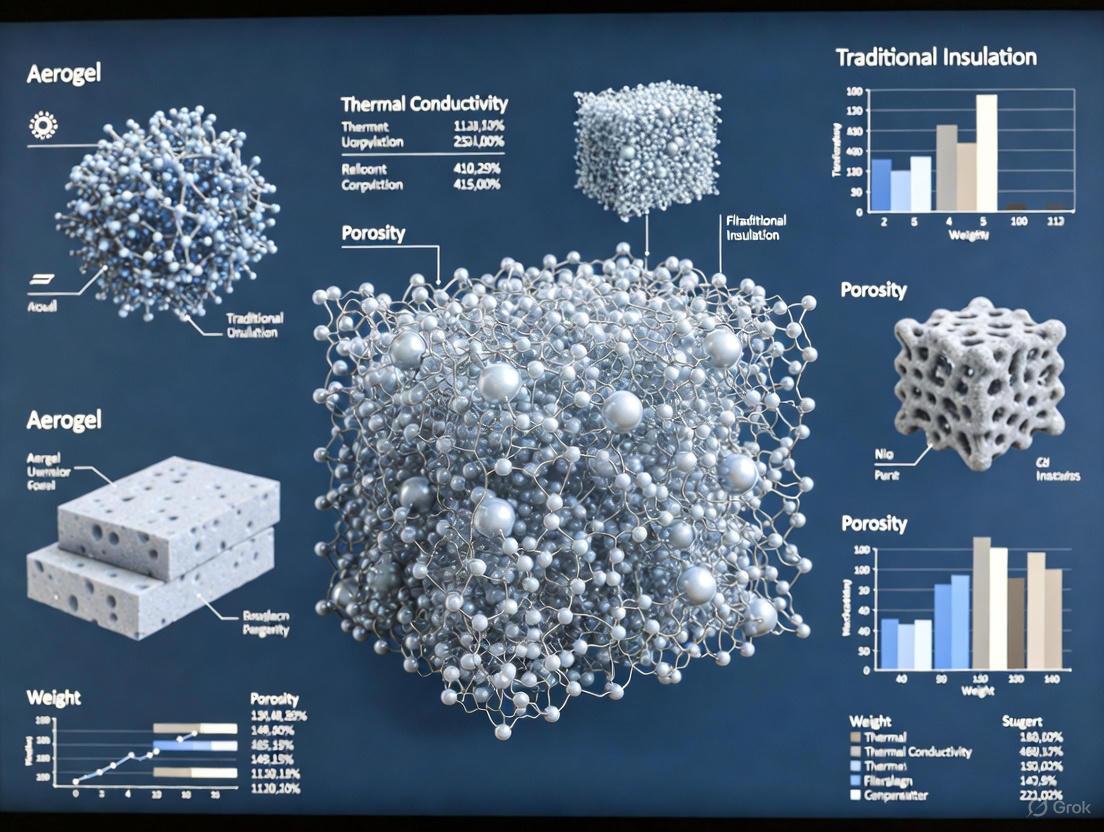
This article provides a comprehensive, science-driven analysis for researchers and technical professionals comparing next-generation aerogel insulation with traditional materials.
Aerogel vs. Traditional Insulation: A Scientific Breakdown for Advanced Material Applications
Abstract
This article provides a comprehensive, science-driven analysis for researchers and technical professionals comparing next-generation aerogel insulation with traditional materials. We examine the fundamental material science, including nanostructure and thermal conductivity mechanisms. The analysis covers advanced manufacturing techniques, real-world performance validation across industries like EV batteries and construction, and addresses key challenges such as production scalability and mechanical fragility. Finally, we explore emerging applications in biomedical fields, including drug delivery and tissue engineering, positioning aerogels as a transformative multi-functional material for future R&D.
The Material Science Foundation: Deconstructing Aerogel Nanostructure and Traditional Insulation Mechanisms
The pursuit of energy efficiency and thermal performance in building design, industrial applications, and scientific equipment has elevated the importance of advanced insulation materials. This guide provides a systematic comparison of traditional insulation materials, such as fiberglass and foams, against innovative aerogel technology, framing the analysis within the broader context of materials science research. The performance of these materials is primarily governed by their thermal conductivity, with lower values indicating superior insulating performance [1]. While traditional materials have long been the standard due to their cost-effectiveness and established manufacturing processes, aerogels represent a significant leap in insulation technology, offering exceptional thermal resistance in extremely thin profiles [2]. This analysis synthesizes current experimental data and research trends to offer researchers and scientists a clear, objective evaluation of these competing material systems, focusing on quantitative performance metrics, experimental methodologies for characterization, and emerging applications.
Material Contenders at a Glance
The following table summarizes the core properties of the primary insulation materials discussed in this guide, providing a high-level overview for initial comparison.
Table 1: Core Properties of Insulation Materials for Research Applications
| Material | Typical Thermal Conductivity (W/m·K) | Typical Density (kg/m³) | Key Characteristics | Primary Research Applications |
|---|---|---|---|---|
| Silica Aerogel | 0.011 - 0.020 [3] [4] [1] | <40 - 80 [3] [5] | Ultra-lightweight, highly porous (>99%), nanoporous structure [3] [4] | High-performance building envelopes, nuclear pipeline insulation, cryogenics [6] [3] |
| Fiberglass (Standard) | 0.030 - 0.040 [1] [2] | 9 - 16 [7] | Fibrous, non-combustible, cost-effective [1] | General building insulation, thermal and acoustic buffering |
| Fiberglass (High-Density) | 0.021 - 0.029 (estimated from R-value) [7] | 24 - 32 [7] | Higher R-value per unit thickness, improved sound control [7] | Space-constrained builds requiring higher performance |
| Spray Foam (Open-Cell) | 0.040 (approx.) [1] | 8 - 12 (approx.) | Expands to fill cavities, good air sealing [1] | Residential wall cavities, attic insulation |
| Spray Foam (Closed-Cell) | 0.022 - 0.028 (approx.) [1] | 30 - 50 (approx.) | High R-value, adds structural strength, moisture-resistant [1] | Roofing, below-grade insulation, high-humidity environments |
| Cellulose | 0.035 - 0.040 [1] | 25 - 50 (approx.) | Composed of recycled paper, eco-friendly [1] [8] | Blown-in attic insulation, wall retrofits |
Quantitative Performance Comparison
For research and development purposes, a deeper understanding of material performance across multiple metrics is essential. The following table consolidates key quantitative data from recent studies and industry specifications to facilitate direct comparison.
Table 2: Comprehensive Performance and Experimental Data for Insulation Materials
| Material | Thermal Conductivity (W/m·K) | R-Value per Inch (hr·ft²·°F/BTU) | Compressive Strength | Fire Resistance | Moisture Response |
|---|---|---|---|---|---|
| Silica Aerogel | 0.011 (Powder) [3] - 0.024 (Blanket) [4] | R-10 to R-20 (calculated) | Low (standalone) [9], Enhanced in composites (e.g., 1.2 - 8.3 MPa) [9] | High (inorganic base) [5] | Hydrophobic, minimal impact on performance [2] |
| Fiberglass (Standard) | 0.030 - 0.040 [1] [2] | R-2.9 to R-3.3 [7] | Not Structural | Non-combustible [1] | Can absorb moisture, leading to performance loss [1] |
| Fiberglass (High-Density) | Information Missing | R-4.2 to R-5.0 [7] | Not Structural | Non-combustible [7] | Improved moisture resistance over standard [7] |
| Spray Foam (Closed-Cell) | 0.022 - 0.028 [1] | R-6.0 to R-7.0 (approx.) | Adds structural strength [1] | Often includes fire retardants [1] | Highly moisture-resistant [1] |
| Cellulose | 0.035 - 0.040 [1] | R-3.2 to R-3.8 (approx.) | Not Structural | Treated with fire retardants [1] | Can absorb moisture, may settle over time [1] |
| Aerogel-Cement Composite | 0.065 - 0.400 [9] | R-1.4 to R-8.7 (calculated) | 1.2 - 8.3 MPa [9] | High (inorganic matrix) | Durability maintained in freeze-thaw cycles [9] |
Experimental Protocols and Methodologies
Thermal Conductivity Measurement via Heat Flow Meter
The thermal conductivity of insulating materials like aerogel blankets and fiberglass boards is commonly determined using a Heat Flow Meter (HFM) in accordance with ASTM C518-15 [4]. This method establishes a steady-state, one-dimensional heat flux through a flat slab specimen.
- Procedure: The specimen is placed between two parallel plates maintained at constant but distinct temperatures (e.g., 10°C and 30°C). The instrument's plates automatically adjust to the sample's thickness. Once steady-state conditions are achieved, the heat flux through the sample, the plate separation (sample thickness), and the temperature difference are measured.
- Calculation: Thermal conductivity (λ) is calculated using Fourier's law of heat conduction, incorporating the calibrated heat flux, temperature gradient, and material thickness [4].
- Apparatus: Instruments like the Thermtest HFM are designed for this purpose, with an reported accuracy of ≤3% and precision of ≤0.5% for materials with thermal conductivities between 0.005 and 0.5 W/m·K [4].
Deep Learning-Driven Thermal Conductivity Evaluation
For materials in service under extreme conditions, such as aerogel composites in nuclear power pipelines, non-destructive evaluation methods are critical. A novel approach uses Graph Neural Networks (GNNs) to predict thermal conductivity based on accessible physical measurements [6].
- Node Feature Construction: A graph dataset is created where nodes represent data points. Node features include the heating surface temperature, the back-surface temperature of the aerogel composite felt, ambient temperature, and humidity [6].
- Graph Formation: Nodes are connected based on shared features, such as insulation felt thickness, to create a graph structure that captures complex, non-linear relationships [6].
- Model and Training: A dual-channel model is employed. A Graph Transformer captures global features via an attention mechanism, while a Generalized PageRank GNN (GPR-GNN) captures local graph structures. This model is trained on historical service data to learn the mapping between temperature/humidity profiles and thermal conductivity, eliminating the need for destructive specimen extraction [6].
Synthesis and Testing of Aerogel-Composite Materials
Research into integrating aerogel into matrices like cement involves specific protocols for evaluating mechanical and thermal properties.
- Specimen Fabrication (Aerogel-Cement): Ductile aerogel powder cement-based composites (DACC) are fabricated by mixing aerogel powder into a cementitious matrix, often with polyvinyl alcohol (PVA) fibers to enhance ductility. Specimens are molded, compressed, and dried at 60°C for 48 hours before curing [9].
- Pore Structure Analysis: Mercury Intrusion Porosimetry (MIP) is used to characterize the pore structure of composites, providing data on porosity, average pore size, and pore size distribution, which directly influence thermal and mechanical properties [9].
- Mechanical and Durability Testing: Standard compressive and flexural strength tests are performed. Durability is assessed through methods like freeze-thaw cycling, where the mass loss and strength retention of samples are measured after multiple cycles [9].
Research Reagents and Materials Toolkit
For scientists designing experiments involving advanced insulation materials, the following table outlines key materials and their functions as derived from the cited research.
Table 3: Essential Research Reagents and Materials for Insulation Studies
| Material/Reagent | Function in Research Context | Example Application |
|---|---|---|
| Powdered Silica Aerogel | The primary insulating agent due to its nanoporous structure and ultra-low thermal conductivity. | Functional filler in cement composites [9] and cellulose matrices [3] to drastically reduce thermal conductivity. |
| Expandable Graphite | Acts as a flame retardant additive; expands upon heating to form a protective char layer. | Improves fire resistance in cellulose-based composite insulation panels [3]. |
| Ceramic Binder | An inorganic binder providing structural integrity and enhanced fire resistance to composite materials. | Used to bond aerogel and cellulose in composite insulation specimens [3]. |
| Polyvinyl Alcohol (PVA) Fibers | Enhances the tensile strength, ductility, and crack resistance of brittle composite matrices. | Incorporated into aerogel-cement composites to create ductile aerogel cement composites (DACC) [9]. |
| Cardboard-Derived Cellulose | A sustainable, recycled base material derived from pulped cardboard for creating eco-friendly composites. | Serves as the main matrix material for porous, lightweight insulation panels when mixed with aerogel [3]. |
Visualization of Experimental Workflows
The following diagrams illustrate key experimental and data analysis processes described in this guide.
Aerogel Composite Analysis Workflow
Deep Learning Prediction Model
The data and methodologies presented in this guide objectively delineate the performance boundaries between traditional insulation materials and advanced aerogel technology. Aerogels unequivocally offer superior thermal resistance per unit thickness, a critical property for space-constrained and high-performance applications. However, traditional materials like fiberglass and spray foam remain highly relevant, offering robust, cost-effective solutions for less demanding scenarios. The ongoing integration of aerogels into composite systems, such as aerogel-cement and aerogel-cellulose, represents a promising research vector, aiming to balance exceptional insulation with improved mechanical properties and manufacturability. For researchers, the choice of material is not a simple substitution but a strategic decision based on a clear understanding of the trade-offs between thermal performance, mechanical integrity, cost, and application-specific requirements.
Aerogels are nanostructured materials characterized by an ultra-porous, three-dimensional network where the dispersing medium is gas, resulting in some of the lowest solid densities known to materials science [10] [11]. This nanoscale architecture, often comprising 90–99.8% air by volume, is directly responsible for the material's exceptional performance profile, including its legendary status as the best solid thermal insulator known [12]. The term "frozen smoke" aptly describes its spectral appearance, a visual testament to its ethereal porosity [12]. The performance of any aerogel—be it silica-based, polymer-based, carbon, or biopolymer—is not a product of its chemical composition alone but is fundamentally dictated by the intricate, porous nanostructure meticulously engineered through sol-gel chemistry and preserved via specialized drying techniques [13] [10]. This guide delves into the core relationship between this nanoscale architecture and the resulting macroscopic performance, providing researchers with a structured comparison to traditional insulation materials and the experimental protocols needed to characterize them.
Performance Comparison: Aerogel vs. Traditional Insulation Materials
The properties of aerogels are a direct physical manifestation of their nanoscale architecture. The extremely high porosity and nanopore sizes (typically 5-50 nm) dramatically reduce heat transfer by minimizing solid conduction, suppressing gaseous convection, and scattering photons [14]. Similarly, the vast internal surface area (often exceeding 600 m²/g) enables remarkable performance in applications like drug delivery and catalysis [13] [10]. The following tables provide a quantitative comparison of key properties between aerogels and traditional alternatives.
Table 1: Comparative Analysis of Fundamental Material Properties
| Property | Silica Aerogel | Fiberglass | Expanded Polystyrene (EPS) | Mineral Wool |
|---|---|---|---|---|
| Density (kg/m³) | 3–500 [10] | 10–120 [15] | 15–30 [15] | 20–200 [15] |
| Porosity (%) | 95–99.8 [12] [16] | N/A | N/A | N/A |
| Specific Surface Area (m²/g) | 150–1000 [13] [16] | Low (Typically <5) | Low (Typically <1) | Low (Typically <5) |
| Primary Pore Size | Nanoscale (5–50 nm) [14] | Macroscale (Fibrous) | Macroscale (Cellular) | Macroscale (Fibrous) |
Table 2: Comparative Analysis of Functional Performance Properties
| Performance Metric | Silica Aerogel | Fiberglass | Expanded Polystyrene (EPS) | Mineral Wool |
|---|---|---|---|---|
| Thermal Conductivity (W/m·K) | 0.012–0.020 [12] [17] | 0.030–0.040 [2] | 0.030–0.040 [15] | 0.030–0.040 [2] |
| Moisture Resistance | Excellent (Inherently Hydrophobic) [12] [2] | Poor (Absorbs moisture) [2] | Good [15] | Poor (Absorbs moisture) [2] |
| Fire Retardancy | Excellent (Withstands up to 1000°C) [12] | Good | Poor (Melts and releases toxic gases) | Excellent |
| Compressive Strength | Low (Pure), Improved in Composites [17] [11] | N/A (Non-structural) | Medium | N/A (Non-structural) |
| Key Performance Driver | Nanoscale pores suppress all heat transfer modes [14]. | Trapped air in fibrous matrix. | Trapped air in closed cells. | Trapped air in fibrous matrix. |
Experimental Protocols: Probing the Nanoscale
Understanding and validating the structure-property relationship of aerogels requires a suite of characterization techniques. The following are detailed methodologies for key experiments cited in comparative analyses.
Protocol for Thermal Conductivity Measurement
Objective: To determine the effective thermal conductivity (keff) of an aerogel sample under ambient conditions, a critical parameter for insulation performance [14].
Methodology:
- Sample Preparation: Cut the aerogel monolith or composite to fit the specific dimensions of the chosen testing apparatus (e.g., a guarded hot plate or heat flow meter). Ensure the surfaces are parallel and smooth.
- Instrument Calibration: Calibrate the thermal conductivity meter using standard reference materials with known thermal properties.
- Measurement Setup: Place the sample between a hot and a cold plate, establishing a steady, one-dimensional heat flux through the sample. The standard test condition is often a mean temperature of 24°C with a temperature gradient of 10–20°C.
- Data Acquisition: Apply the temperature gradient and allow the system to reach steady state. The instrument measures the heat flux (Q) through the sample, the thickness (L), and the temperature difference (ΔT) across it.
- Calculation: The thermal conductivity (k) is calculated using Fourier's law: ( k = \frac{Q \cdot L}{\Delta T} ), where the result is reported in W/m·K. Multiple measurements should be taken to ensure reproducibility [15] [14].
Protocol for Microstructural Analysis via Gas Sorption
Objective: To characterize the porous network of the aerogel, including specific surface area, pore volume, and pore size distribution [13].
Methodology:
- Sample Outgassing: A small, precisely weighed aerogel sample is placed in a sealed tube and heated under vacuum (e.g., 150°C for 12 hours) to remove any adsorbed moisture or contaminants from the surface.
- Cryogenic Conditions: The sample tube is then immersed in a cryogenic bath (typically liquid nitrogen at 77 K).
- Gas Adsorption: An inert gas (usually N₂) is introduced into the sample tube in controlled increments. At each step, the pressure is measured, and the quantity of gas adsorbed by the sample is determined.
- Data Analysis: The resulting adsorption-isotherm data is analyzed using theoretical models like the Brunauer-Emmett-Teller (BET) theory to calculate the specific surface area. The pore size distribution is typically derived from the adsorption branch of the isotherm using methods such as Barrett-Joyner-Halenda (BJH) or Non-Local Density Functional Theory (NLDFT) [13].
Protocol for Fabricating a Fiber-Reinforced Aerogel Composite
Objective: To synthesize a mechanically robust aerogel composite with enhanced thermal and structural properties, addressing the inherent brittleness of pure silica aerogel [17] [14].
Methodology:
- Sol Preparation: Hydrolyze a silica precursor, such as Tetraethyl orthosilicate (TEOS), in a mixture of ethanol, water, and a catalytic acid (e.g., acetic acid) to form a silica sol.
- Fiber Incorporation: Immerse a porous, ultra-light glass fiber wool (UGFW) felt substrate into the prepared sol. Ensure complete infiltration.
- Gelation and Aging: Induce gelation within and around the fiber network by adding a base catalyst like ammonium hydroxide. The resulting wet gel is then aged in the solution for 24-48 hours to strengthen the network.
- Surface Modification (Hydrophobization): Exchange the pore liquid with a hydrophobic agent, such as Hexamethyldisilazane (HMDS), in an organic solvent like acetonitrile. This step passivates the silica surface, making it hydrophobic.
- Drying: Dry the gel using a supercritical CO₂ drying process. The sample is placed in a high-pressure vessel, and liquid CO₂ is used to displace the solvent. The vessel is then brought above the critical point of CO₂ (31.1°C, 73.9 bar), and the supercritical fluid is slowly vented off, avoiding liquid-vapor meniscus and thus preserving the nanostructure.
- Outcome: The final product is a flexible, hydrophobic aerogel composite (SA@UGFW) with a sandwich structure, exhibiting improved compressive strength (~0.1 MPa) while maintaining low thermal conductivity and high surface area (~500 m²/g) [17].
Visualizing the Structure-Performance Relationship
The logical pathway from nanoscale architecture to macroscopic performance is governed by fundamental principles of heat and mass transfer. The following diagram maps this critical relationship.
The Scientist's Toolkit: Essential Research Reagents & Materials
The synthesis and characterization of aerogels require specific chemical precursors and instrumentation. The table below details essential items for a research laboratory focused on aerogel technology.
Table 3: Key Research Reagent Solutions for Aerogel Synthesis and Analysis
| Reagent / Material | Function in Research | Specific Example |
|---|---|---|
| Tetraethyl Orthosilicate (TEOS) | A common molecular precursor for creating the silica (SiO₂) sol-gel network via hydrolysis and condensation reactions [17]. | Used in the protocol for fiber-reinforced composites (Section 3.3). |
| Hexamethyldisilazane (HMDS) | A functional silane used for surface modification (silylation) to impart hydrophobicity and improve mechanical stability during drying [17]. | Critical for ambient pressure drying; replaces surface silanol (Si-OH) groups with non-polar trimethylsilyl groups. |
| Polyimide (PI) Precursors | Used to synthesize polymer-based aerogels, which offer superior mechanical flexibility compared to silica [11]. | Components like polyamic acid are used to create aerogels with high thermal stability and strength. |
| Ultra-Light Glass Fiber Wool (UGFW) | A fibrous substrate used as a scaffold to reinforce the brittle aerogel matrix, enhancing mechanical integrity [17]. | Serves as the base material in the SA@UGFW composite protocol (Section 3.3). |
| Graphene Oxide (GO) / Nanotubes | Nanocarbon additives used to enhance electrical conductivity, mechanical strength, or to act as radiative opacifiers [14]. | Incorporated into aerogel matrices to create conductive composites or to block infrared radiation. |
| Supercritical CO₂ Dryer | Essential instrumentation for removing the solvent from the wet gel without collapsing the delicate nanoporous structure [10] [11]. | The industry standard for producing high-quality, low-shrinkage aerogels. |
Core Principles of Thermal Insulation in Solids and Gases
The pursuit of energy efficiency and sustainable building practices has placed a strong emphasis on advancing thermal insulation technologies. Within this context, aerogel technology has emerged as a leading contender, challenging the dominance of traditional insulation materials. This guide provides an objective, data-driven comparison of these material classes, framing the analysis within ongoing research on their fundamental operational principles and performance. The core objective is to delineate the scientific basis for thermal insulation and evaluate how different materials inhibit heat flow, supported by experimental data and detailed methodologies relevant to researchers and scientists.
Fundamental Principles of Thermal Insulation
Thermal insulation functions by impeding the transfer of heat, which occurs through three primary mechanisms: conduction, convection, and radiation [18].
Conduction is the transfer of kinetic energy through a material via molecular collisions. It is the dominant form of heat transfer through solid materials and is quantified by a material's thermal conductivity (λ-lambda). A lower λ-value indicates a better insulating capability [18].
Convection involves heat transfer through the bulk movement of a fluid (air or liquid). In insulation, this is minimized by creating small, discontinuous pockets of gas that disrupt the buoyancy-driven flow of air [18].
Radiation is the transfer of heat by electromagnetic waves. In high-temperature applications or materials with high porosity, radiative heat transfer becomes more significant.
The overall thermal performance of an insulation material in a specific application is expressed as its Thermal Resistance or R-value, which incorporates both the material's thermal conductivity and its thickness. The relationship is given by: Thermal Resistance (R) = Thickness (m) / Thermal Conductivity (W/m·K) [18]. A higher R-value signifies superior insulating performance.
Material Comparison and Performance Data
Quantitative Performance of Insulation Materials
The following table summarizes the key thermal properties of aerogel and traditional insulation materials, providing a basis for direct comparison.
Table 1: Thermal Properties of Insulation Materials [19] [20] [21]
| Material | Thermal Conductivity (λ) (W/m·K) | Typical R-Value per Inch (hr·ft²·°F/Btu) | Density (kg/m³) | Primary Composition |
|---|---|---|---|---|
| Silica Aerogel | 0.011 - 0.020 [3] [19] | ~10.3 [22] | <40 - 100 [3] [19] | Silica (SiO₂) nanostructure |
| Aerogel Blanket | 0.015 - 0.025 [19] [23] | N/A | ~100 [19] | Aerogel + fibrous matrix |
| Polyurethane Foam (Closed-cell) | 0.022 - 0.035 [20] [24] | 6.0 - 7.0 [20] | ~30 (varies) | Organic polymer foam |
| Polystyrene (XPS) | ~0.035 [18] | 5.0 [20] | 28 - 45 [18] | Organic polymer foam |
| Cellulose (Blown) | 0.035 - 0.040 [18] | 3.2 - 3.8 [20] | 27 - 65 [18] | Recycled paper fiber |
| Wood Fiber | 0.038 [18] | N/A | 50 - 160 [18] | Natural wood fiber |
| Fiberglass | 0.035 - 0.040 [18] [25] | 3.1 - 3.4 [20] | 10 - 50 (for batts) [18] | Glass fibers |
| Mineral Wool | 0.035 - 0.040 [24] [18] | N/A | 23 - 80 [18] | Rock or slag fibers |
Comparative Analysis of Key Attributes
Table 2: Performance and Safety Attribute Comparison [20] [21] [22]
| Attribute | Aerogel | Fiberglass | Cellulose | Polyurethane Foam |
|---|---|---|---|---|
| Fire Resistance | Excellent (inorganic) [21] | Good (non-flammable) [21] | Good (with fire retardants) [21] | Poor (requires additives) [21] [24] |
| Moisture Resistance | Excellent (hydrophobic) [19] [21] | Poor (absorbs moisture) [24] | Poor (absorbs moisture) [20] | Excellent (closed-cell) [24] |
| Longevity/Durability | Excellent (does not settle) [21] | Fair (can settle over time) [20] | Fair (can settle over time) [20] | Good (maintains shape) [24] |
| Environmental Impact | Evolving production [21] | Energy-intensive production [21] | Excellent (recycled content) [21] | Not eco-friendly [21] |
| Handling/Safety | Requires PPE (respiratory irritation) [22] | Requires PPE (skin/lung irritation) [21] | Minimal risk [21] | Professional installation recommended [25] |
Experimental Protocols and Research Methodologies
Protocol: Fabrication of Cellulose-Aerogel Composite Insulation
This protocol is adapted from a 2024 study evaluating the thermal insulation performance of cellulose-based silica aerogel composites [26] [3].
Objective: To fabricate and test composite insulation panels from recycled cardboard and silica aerogel powder.
Materials (Research Reagent Solutions):
- Cellulose Raw Material: Recycled cardboard, pulped into fine particles [26] [3].
- Silica Aerogel Powder: White, translucent powder with a thermal conductivity of ~0.011 W/mK, porosity >99%, and density <40 kg/m³ [3].
- Ceramic Binder: Composed primarily of MgO, SiO₂, and Al₂O₃, used at 30 wt% to provide structural integrity and fire resistance [26] [3].
- Expandable Graphite (100-mesh): Added at 40 wt% as a flame retardant, which expands upon heating to form a protective char layer [26] [3].
- Deionized Water: Used in the pulping and mixing process.
Methodology:
- Pulping: Shred and pulp the recycled cardboard into fine particles in an aqueous solution [26] [3].
- Mixing:
- Molding and Compression: Transfer the mixture into a standard 100 mm x 100 mm panel mold. Compress the material using an electric compressor to achieve the desired density and panel form [26] [3].
- Drying and Curing: Dry the molded specimens in a controlled oven at 60°C for 48 hours to remove moisture [26] [3].
- Conditioning: Condition the dried specimens in a constant temperature and humidity chamber (23 ±2°C, 50 ±5% relative humidity) for 48 hours prior to testing to ensure stability [26] [3].
Workflow Diagram:
Protocol: Thermal Performance Measurement
Objective: To determine the thermal conductivity and diffusivity of the fabricated composite specimens.
Standard: ISO 22007-2 (for solids, paste, and powders) [26] [3].
Method: The transient plane source (TPS) method is commonly used. A planar sensor, acting as both a heat source and a resistance thermometer, is placed between two identical samples. A constant electrical power is applied to the sensor, generating heat that flows into the samples. The resulting temperature increase of the sensor is recorded over time. The thermal conductivity and diffusivity are simultaneously calculated from the temperature-time relationship [26] [3].
Key Parameters Measured:
- Thermal Conductivity (λ): The primary indicator of a material's ability to conduct heat.
- Thermal Diffusivity: The measure of how quickly a material can adjust its temperature to that of its surroundings.
Findings: The incorporation of aerogel improved the thermal insulation performance of the pure control and experimental groups by 16.66%, and the mixed control and experimental groups by 17.06% [26] [3].
The Scientist's Toolkit: Essential Research Reagents and Materials
Table 3: Key Research Materials for Insulation Development
| Material/Reagent | Function in Research | Key Characteristics |
|---|---|---|
| Powdered Silica Aerogel | The active insulating component in composites; its nanoporous structure is critical for reducing thermal conductivity [3]. | Very low density (<40 kg/m³), high porosity (>99%), ultra-low thermal conductivity (~0.011 W/mK) [3]. |
| Expandable Graphite | A flame-retardant additive that expands when heated, forming an intumescent char layer that delays fire spread [26]. | Expands several hundred times upon heating; reduces Heat Release Rate (HRR) and Total Heat Release (THR) in composites [26] [3]. |
| Ceramic Binder | An inorganic binder that provides structural integrity and enhances fire resistance in composite specimens [26] [3]. | Typically composed of metal oxides (e.g., MgO, SiO₂, Al₂O₃); withstands high temperatures [26] [3]. |
| Surfactant Micelles (e.g., SDS) | Used as a template in the sol-gel process to modify aerogel surface chemistry and control pore size during ambient pressure drying [19]. | Hydrophobic properties help maintain aerogel nanostructure during drying; minimizes pore size [19]. |
Mechanisms and Material Structures
The superior performance of aerogels can be understood by examining their structure. The following diagram illustrates the fundamental mechanisms of heat transfer and how different material architectures impede them.
The experimental data and comparative analysis confirm that aerogel technology represents a significant advancement in insulation material science. Its defining characteristic is an nanoporous solid structure that delivers ultra-low thermal conductivity (~0.011-0.020 W/m·K), substantially outperforming traditional materials like fiberglass and cellulose [19] [3]. While challenges remain regarding production costs and specific handling requirements, the integration of aerogel as a component in composites, such as aerogel-enhanced blankets and cellulose matrices, demonstrates a viable path for enhancing performance in specialized applications. For the research community, the ongoing work focuses on optimizing the synthesis for cost-effective scaling, developing novel composite architectures, and further enhancing fire-retardant properties without compromising the exceptional thermal performance that defines this material class.
This guide provides an objective comparison of the key material properties—thermal conductivity, density, and porosity—between innovative aerogel technology and traditional insulation materials. The data and experimental methodologies presented are intended to inform material selection and research directions for scientists and engineers.
Quantitative Comparison of Insulation Materials
The following tables summarize core properties and performance data for a range of insulation materials, from traditional options to advanced aerogels.
Table 1: Core Material Properties of Insulation Materials
| Material Category | Specific Material | Thermal Conductivity (W/m·K) | Density (kg/m³) | Porosity (%) | Key Characteristics |
|---|---|---|---|---|---|
| Aerogel & Composites | Silica Aerogel (Ambient) | < 0.020 [14] | Variable (e.g., ~200 [27]) | >90% [28] | Nanoporous structure, ultra-low conductivity. |
| Silica Aerogel (Fiber-reinforced) | As low as 0.016 [14] | Varies with fiber type/loading | High, tunable [14] | Enhanced mechanical strength, reduced radiative heat transfer. | |
| Pyrogel-type Aerogel | Slight increase (~5%) after 250°C annealing [29] | Not Specified | Not Specified | Good thermal stability up to 250°C. | |
| Advanced Inorganics | Porous Geopolymer | 0.00998 [30] | 525 [30] | 68.3 [30] | Salt-activated, made from ceramic waste. |
| Light-weight Porous Ceramic (Dolomite-Granite) | ~0.1 (estimated from data) [31] | ~525 [31] | High closed-cell [31] | Made from solid waste, high closed-pore porosity. | |
| Sawdust-Clay Composite | 0.044 [32] | Not Specified | Not Specified | Eco-friendly, low-cost composite. | |
| Traditional & Organic | Advanced Flexible Reusable Surface Insulation (AFRSI) | 0.033 [27] | 128 [27] | Not Specified | Ceramic fiber felt for aerospace. |
| Still Air (for reference) | 0.026 [14] | ~1.2 | - | Baseline for performance comparison. | |
| Fiberglass / Foam | 0.030 - 0.040 [2] | Variable | Variable | Common traditional insulation. |
Table 2: Performance Data under Specific Experimental Conditions
| Material | Test Conditions | Key Performance Outcome | Experimental Methodology |
|---|---|---|---|
| Sawdust-Clay Composite | Field test in hot-arid climate; 20% sawdust + 80% clay mix [32]. | Reduced cooling energy consumption by up to 37% compared to uninsulated baseline [32]. | Three test rooms built; power consumption monitored over 22 days under varying weather [32]. |
| Fiber-Aerogel Composite | Incorporation of ~10% fiber volume fraction [14]. | Thermal conductivity reduced by up to 30%; radiative heat transfer reduced by ~40% [14]. | FTIR spectroscopy to measure emissivity/transmittance; numerical heat transfer models [14]. |
| Pyrogel-type Aerogel | Thermal annealing at 250°C for 1 day [29]. | Thermal conductivity increased by ~5%; specific heat capacity increased by ~6% [29]. | Thermal analysis pre-/post-annealing; micro/macro-structural characterization (XRD, DSC, IR) [29]. |
| Light-weight Porous Ceramic | Sintering with SiC foaming agent [31]. | Achieved low density (~525 kg/m³) and high closed-pore porosity for good insulation [31]. | Sintering conditions varied; properties like density, porosity, thermal conductivity analyzed [31]. |
Detailed Experimental Protocols
To ensure reproducibility and provide insight into data collection methods, here are the protocols for key experiments cited in this guide.
1. Protocol for Assessing Thermal Stability of Aerogels This methodology is used to evaluate the change in thermal properties of aerogel materials after high-temperature exposure [29].
- Sample Preparation: Aerogel samples (e.g., Pyrogel-type) are cut to specified dimensions.
- Thermal Treatment: Samples are subjected to heat treatment in a controlled furnace at target temperatures (e.g., 150°C and 250°C) for a defined period (e.g., 1 day).
- Thermal Property Measurement: Post-annealing, thermal conductivity, diffusivity, and specific heat capacity are measured using standardized techniques (e.g., guarded hot plate or heat flow meter).
- Microstructural Characterization: To understand the microscopic reasons for property changes, samples are analyzed using several complementary techniques:
- X-ray Diffraction (XRD): Identifies crystallization and phase changes.
- Differential Scanning Calorimetry (DSC): Measures thermal transitions and heat capacity changes.
- Infrared (IR) & Raman Spectroscopy: Reveals changes in chemical bonding and amorphous structure.
- Data Analysis: Changes in thermal properties are correlated with structural changes observed during characterization.
2. Protocol for Forming and Testing Porous Geopolymers This protocol outlines the synthesis of porous geopolymers via salt activation and foaming, an alternative to traditional alkali activation [30].
- Raw Material Preparation: Ceramic waste (e.g., waste bricks) is processed into a fine powder.
- Activation and Mixing: The precursor powder is mixed with a sodium dihydrogen phosphate solution (salt activator). A foaming agent (e.g., calcium carbonate) and a foaming activator (e.g., citric acid) are added to the slurry.
- Curing and Foaming: The mixture is poured into molds and cured at elevated temperatures (e.g., 80°C), allowing the geopolymerization and foaming reactions to occur simultaneously.
- Property Testing:
- Bulk Density & True Porosity: Measured using geometric volume and mass, or pycnometry.
- Thermal Conductivity: Measured using a thermal conductivity analyzer (e.g., hot disk or heat flow meter).
- Compressive Strength: Determined using a universal testing machine.
- Microstructural Analysis: Scanning Electron Microscopy (SEM) is used to analyze pore morphology and the aluminosilicate-phosphate network.
3. Protocol for Field Testing Insulation Energy Efficiency This method evaluates the real-world performance of insulation materials, particularly in building applications [32].
- Test Structure Construction: Multiple identical, small-scale test rooms are constructed (e.g., on a building rooftop). Their walls are insulated with the material under investigation (e.g., sawdust-clay composite, sawdust-glue, Styrofoam), with one room left uninsulated as a baseline.
- Environmental Control & Monitoring: A constant heating or cooling load is applied inside each room using a controlled system. The external and internal temperatures are monitored.
- Data Collection: The power consumption required to maintain a set internal temperature is recorded for each test room over an extended period (e.g., 22 days) encompassing various weather conditions (sunny, cloudy, rainy).
- Performance Calculation: The energy consumption of the insulated rooms is compared to the uninsulated baseline to calculate the percentage reduction in energy use, directly quantifying the material's impact on energy efficiency.
Heat Transfer Mechanisms in Porous Insulation
The following diagram illustrates the fundamental heat transfer pathways within a porous insulation material like aerogel, which underpins its performance.
Diagram Title: Heat Transfer in Porous Insulation. This diagram visualizes the three primary heat transfer pathways—solid conduction, gas conduction, and radiative transfer—within a nanoporous material. The Knudsen Effect, which is dominant in materials with nanopores like aerogel, acts to suppress the gas conduction pathway, leading to extremely low effective thermal conductivity [14] [28].
The Scientist's Toolkit: Research Reagent Solutions
This table details key reagents, materials, and instruments essential for the synthesis and characterization of advanced insulation materials, as featured in the cited research.
Table 3: Essential Research Reagents and Materials
| Item Name | Function / Relevance | Example Context |
|---|---|---|
| Silica Sol-Gel Precursors | Forms the nanoporous silica network backbone of the aerogel via sol-gel polymerization. | Base material for silica aerogel synthesis [14]. |
| High-Temperature Foaming Agent (e.g., SiC) | Decomposes or reacts at high temperatures to release gas, creating pores in a ceramic matrix. | Used to create closed-pore foamed ceramics from granite and dolomite waste [31]. |
| Salt Activators (e.g., Sodium Dihydrogen Phosphate) | Activates geopolymerization in precursor materials like ceramic waste, an alternative to corrosive alkali activators. | Key component in synthesizing salt-activated porous geopolymers [30]. |
| Fiber Reinforcements (e.g., Glass, Ceramic Fibers) | Enhances mechanical strength and reduces infrared radiative heat transfer in aerogel composites. | Added to aerogel matrix to create fiber-aerogel composites for high-temperature stability [14]. |
| Fourier Transform Infrared (FTIR) Spectrometer | Characterizes the radiative properties (emissivity, transmittance) of materials, crucial for understanding high-temperature insulation performance. | Used to measure how fiber additions reduce radiative heat transfer in aerogel composites [14]. |
| X-ray Diffractometer (XRD) | Identifies crystalline phases and structural changes (e.g., crystallization) in materials after thermal treatment or synthesis. | Used to analyze microstructural changes in aerogels after thermal annealing [29]. |
In the pursuit of energy efficiency across industries from construction to transportation, thermal insulation materials play a pivotal role in controlling heat transfer and reducing energy consumption [33]. However, the long-term performance and durability of these materials are critically compromised by a pervasive and often overlooked factor: moisture absorption [34]. Traditional insulation materials, including fiberglass, cellulose, and mineral wool, inherently struggle with moisture management, leading to significant degradation of their thermal and structural properties over time [1] [2]. This review systematically examines the inherent limitations of traditional insulation materials regarding moisture absorption and degradation, while evaluating how aerogel technology addresses these challenges through its unique nanoporous structure and hydrophobic properties. By comparing experimental data on performance metrics under various environmental conditions, this analysis provides researchers and material scientists with a comprehensive understanding of moisture-induced degradation mechanisms and the potential of advanced aerogel composites to overcome these limitations in demanding applications.
Material Properties and Moisture Sensitivity
Traditional Insulation Materials
Traditional insulation materials dominate markets due to cost-effectiveness and established manufacturing processes, but share fundamental vulnerabilities to moisture:
Fiberglass: Composed of fine glass fibers, this material is prone to moisture retention and compaction over time, significantly reducing its insulating effectiveness when wet [1] [2].
Cellulose: Manufactured from recycled paper products, cellulose insulation readily absorbs moisture unless treated with chemical additives, potentially leading to mold growth and settling that creates thermal bridges [1].
Mineral Wool: While more moisture-resistant than fiberglass or cellulose, mineral wool can still experience performance degradation under prolonged exposure to humid conditions or direct wetting [1] [2].
These materials primarily function by trapping air within their porous structures, but this same porosity becomes a liability when water infiltrates the matrix, as water possesses significantly higher thermal conductivity than air [34].
Aerogel Technology
Aerogels represent a fundamentally different approach to insulation through their nanostructured porous networks, which are typically over 90% air enclosed within a solid scaffold [35]. The material's exceptional properties stem from this unique architecture:
Hydrophobic Composition: Most commercial silica aerogels are chemically modified to create strongly water-repellent surfaces that prevent liquid water infiltration [34].
Nanopore Structure: The extremely small pore size (typically 20-50 nm) significantly restricts capillary action that draws moisture into traditional insulation materials [2].
Moisture Resistance: The hydrophobic nature combined with the nanoporous structure enables aerogels to maintain performance in high-humidity environments where traditional materials degrade [2] [34].
Table 1: Fundamental Properties of Insulation Material Categories
| Material Type | Primary Composition | Moisture Response | Key Limitations |
|---|---|---|---|
| Fiberglass | Fine glass fibers | Prone to moisture retention and compaction | Performance degradation when wet, potential for mold |
| Cellulose | Recycled paper with fire retardants | High moisture absorption, can settle when wet | Requires chemical treatments, may need replenishment |
| Mineral Wool | Basalt rock or slag | Absorbs moisture over time, especially if damaged | Heavy, requires precise installation to prevent thermal bridging |
| Spray Foam | Polyurethane or latex compounds | Varies by type (closed-cell highly resistant) | Higher cost, professional installation required, chemical emissions during curing |
| Aerogel | Silica, polymer, or carbon nanostructures | Inherently hydrophobic, minimal moisture uptake | Higher initial cost, specialized application requirements |
Experimental Investigations of Moisture Effects
Standardized Testing Methodologies
Research on moisture degradation typically employs accelerated aging protocols to simulate long-term environmental exposure. Standard experimental approaches include:
Freeze-Thaw Cycle (FTC) Testing: Specimens undergo repeated cycling between sub-freezing and above-freezing temperatures while in hydrated states, per standards such as GB/T 33011-2016 [34]. This procedure evaluates material durability in cold climates where water infiltration leads to repetitive freeze-thaw stress.
Volumetric Water Absorption Measurements: Samples are immersed or exposed to high humidity environments, with weight changes monitored over time to quantify moisture uptake capacity and rate [34].
Thermal Conductivity Assessment: Using guarded hot plate or heat flow meter methods, researchers measure thermal performance before and after moisture exposure to quantify degradation [34].
A typical experimental workflow for evaluating moisture resistance follows this systematic process:
Figure 1: Experimental workflow for evaluating moisture resistance of insulation materials
Comparative Performance Data
Recent investigations have quantified the dramatic differences in how insulation materials respond to moisture exposure. A 2025 study examining aerogel-enhanced cement boards under freeze-thaw conditions demonstrated that incorporating just 3-5% hydrophobic aerogel reduced compressive strength attenuation from 40% to 24% after extensive cycling, while simultaneously suppressing the increase in thermal conductivity by approximately 58% compared to non-aerogel composites [34].
The relationship between moisture content and thermal performance reveals why traditional materials suffer significant functional degradation:
Figure 2: Moisture-induced degradation pathways in traditional insulation materials
Table 2: Quantitative Performance Comparison After Moisture Exposure
| Material | Thermal Conductivity Dry (W/m·K) | Thermal Conductivity Wet (W/m·K) | Compressive Strength Retention After FTCs | Volumetric Water Absorption |
|---|---|---|---|---|
| Fiberglass | 0.030-0.040 [2] | Increases significantly [2] | Degrades over time due to moisture and compaction [2] | High [2] |
| Cellulose | 0.035-0.040 [1] | Can double when saturated | Settles and compacts, reducing effectiveness [1] | Very high without treatments [1] |
| Mineral Wool | 0.035-0.040 [1] | Increases with moisture exposure | Loses integrity with prolonged moisture exposure [2] | Medium-High [2] |
| XPS Board | 0.025-0.035 | Up to 100% increase after 300 FTCs with immersion [34] | ~40% reduction after 400 FTCs [34] | Low, but increases with microstructural damage [34] |
| Aerogel Composite | 0.015-0.020 [2] | Minimal change (0.0055 W/(m·K) increase after FTCs) [34] | 76% retention with 5% aerogel content after FTCs [34] | Very low (hydrophobic) [34] |
Mechanisms of Moisture-Induced Degradation
Thermal Performance Degradation
The primary mechanism through which moisture compromises insulation effectiveness involves the displacement of air within the material matrix. Since water possesses approximately 25 times higher thermal conductivity than stagnant air (0.60 W/m·K versus 0.024 W/m·K), even minimal moisture infiltration significantly increases overall heat transfer [34]. In freezing conditions, this effect intensifies as ice formation further elevates thermal conductivity to 2.2 W/m·K [34]. Research demonstrates that after maximum water absorption, the thermal conductivity of traditional materials like polyurethane foam can nearly double, with even more dramatic increases observed in materials like polyphenolic foam (11.52-fold increase) [34].
Structural Integrity Compromise
Beyond thermal performance, moisture initiates and accelerates several degradation pathways that undermine material structure:
Freeze-Thaw Damage: Repeated freezing and thawing of absorbed water generates internal stresses from expansion and contraction cycles, leading to microcrack formation and propagation that ultimately compromises mechanical strength [34].
Chemical Degradation: In cellulose-based materials, moisture can promote biological growth, chemical breakdown of fire retardants, and acidic conditions that accelerate deterioration [1].
Dimensional Instability: Many traditional insulation materials experience swelling, warping, or settling when exposed to moisture, creating thermal bridges and reducing overall system effectiveness [1].
Research Reagents and Materials for Moisture Resistance Studies
Table 3: Essential Research Materials for Insulation Performance Testing
| Reagent/Material | Function in Experimental Protocols | Application Context |
|---|---|---|
| Hydrophobic Silica Aerogel | Primary insulating component with moisture resistance | Modified composite development, typically 3-5% by weight [34] |
| Cementitious Binder | Inorganic matrix for composite samples | Aerogel-cement board fabrication [34] |
| Expanded Polystyrene (EPS) | Lightweight aggregate providing thermal resistance | Base material for aerogel-enhanced insulation boards [34] |
| Freeze-Thaw Chamber | Environmental simulation of seasonal temperature cycling | Accelerated aging studies per GB/T 33011-2016 [34] |
| Guarded Hot Plate Apparatus | Standardized thermal conductivity measurement | Performance evaluation before/after moisture exposure [34] |
| Water Immersion Tank | Saturation conditioning of test specimens | Volumetric water absorption measurements [34] |
The experimental evidence clearly demonstrates that moisture absorption represents a fundamental limitation of traditional insulation materials, leading to significant deterioration in both thermal performance and structural integrity over time. Aerogel technology, with its inherent hydrophobicity and nanoporous architecture, offers a promising solution to these challenges by maintaining stable thermal properties even under demanding environmental conditions. While cost considerations currently limit widespread adoption, ongoing advancements in manufacturing processes—including ambient pressure drying and bio-based precursors—are progressively improving the economic viability of aerogel composites [36] [35]. For researchers and material scientists, these findings highlight the importance of continued investigation into hybrid materials that leverage the moisture resistance of aerogels while optimizing for specific application requirements across construction, transportation, and industrial sectors.
Synthesis, Processing, and Cutting-Edge Applications Across Industries
Aerogel technology represents a revolutionary advancement in the field of insulation materials, offering exceptional thermal performance that significantly surpasses traditional options like fiberglass, foam, or mineral wool. The manufacturing of aerogels centers on two critical processes: the sol-gel reaction, which builds the material's foundational nanoporous network, and the drying technique, which preserves this delicate structure while replacing the liquid solvent with air [37] [38]. The choice of drying method is particularly crucial, as conventional evaporation creates destructive capillary forces that can collapse the fragile gel network, leading to dense, less porous materials known as xerogels [37] [38]. Supercritical drying stands as the benchmark technique for producing high-quality aerogels, effectively eliminating this liquid-vapor interface and the associated damaging forces [37]. This guide provides a detailed comparison of supercritical drying against alternative methods, offering experimental data and protocols to inform researchers and industry professionals in their material selection and process development.
Core Drying Methodologies in Aerogel Production
Three primary drying techniques are employed in aerogel production, each with distinct mechanisms, advantages, and limitations. The following workflows and comparative data illustrate these key differences.
Comparative Performance Data
The selection of a drying method profoundly impacts the final material's properties. The following table summarizes key performance metrics and characteristics for aerogels produced by each primary technique.
Table 1: Comparative Performance of Aerogel Drying Methods
| Property | Supercritical Drying | Freeze Drying | Ambient Pressure Drying |
|---|---|---|---|
| Thermal Conductivity (mW/m·K) | 23.6 [38] | 23.0 [38] | 23.6 [38] |
| Specific Surface Area (m²/g) | 473.8 [38] | 369.4 [38] | 473.8 [38] |
| Porosity (%) | 97.4 [38] | 96.7 [38] | 97.4 [38] |
| Bulk Density (g/cm³) | ~0.06 [38] | ~0.10 [38] | ~0.06 [38] |
| Typical Pore Structure | Nanometric, intact network [37] | Larger pores, potential for ice crystal damage [37] [38] | Nanometric, some shrinkage possible [38] [39] |
| Mechanical Integrity | High, maintains monolithic form [39] | Often brittle, can fracture [39] | Good, but can vary with formulation [38] |
| Surface Chemistry | Native (e.g., hydrophilic for LT-SCD) [39] | Native, unmodified [38] | Hydrophobic (due to modification) [38] [39] |
Experimental Protocols for Drying Methods
Low-Temperature Supercritical Drying (Using CO₂)
Principle: This method utilizes supercritical carbon dioxide (scCO₂), which has a low critical temperature (31.1°C) and moderate critical pressure (7.4 MPa), to remove the pore liquid without creating a liquid-vapor interface [37] [38] [40].
Detailed Protocol:
- Solvent Exchange: Place the synthesized wet gel (e.g., an alcogel like silica hydrogel after solvent exchange with ethanol) into a high-pressure vessel. Gradually displace the original pore liquid (e.g., ethanol) with liquid CO₂ through a series of washes or a continuous flow. This step is critical because water has low solubility in scCO₂ [37] [40].
- Pressurization and Heating: After solvent exchange, seal the vessel. Pressurize it with CO₂ to a pressure above the critical point (typically ~8-10 MPa) and simultaneously heat it to a temperature above 31.1°C (often 40-50°C) [37] [38].
- Holding/Extraction: Maintain the system in this supercritical state. Continuously flow fresh scCO₂ through the vessel for a set period (typically 4-6 hours) to extract and remove all the residual solvent from the gel's pores [37] [40].
- Depressurization: Slowly and controllably release the pressure from the system at a constant rate (e.g., over 1-2 hours) back to atmospheric pressure. This slow release prevents the re-formation of a liquid-vapor interface and the development of stress within the nanoporous structure [37].
- Product Recovery: Once at ambient pressure and temperature, open the vessel and retrieve the resulting aerogel, which retains the original porous network of the wet gel [37].
Freeze Drying
Principle: This technique removes the solvent via sublimation, transitioning it directly from a solid to a gas, thereby bypassing the liquid phase and its associated capillary forces [37] [38].
Detailed Protocol:
- Freezing: Rapidly freeze the wet gel at very low temperatures, typically between -20°C and -80°C. The freezing rate can impact ice crystal size and, consequently, the final pore structure [38] [39].
- Primary Drying: Transfer the frozen gel to a freeze-drying chamber. Apply a vacuum, reducing the pressure below the sublimation point of the frozen solvent (e.g., ~0.014-0.018 mBar for ice). The solvent then sublimates directly from solid to vapor over an extended period, which can be several days [38].
- Secondary Drying (Optional): Some protocols include a secondary drying step with slight heating to remove any bound or unfrozen solvent residues [38].
- Product Recovery: The resulting material, sometimes termed a "cryogel," is collected. It may have a more macroporous structure due to potential ice crystal growth during freezing [37] [38].
Ambient Pressure Drying
Principle: This method allows for evaporation at atmospheric pressure but relies on chemical modification of the gel's internal surface to drastically reduce capillary forces, enabling a "spring-back effect" after initial shrinkage [38] [39].
Detailed Protocol:
- Solvent Exchange: Similar to the first step of supercritical drying, the water in the hydrogel is exchanged for a solvent with lower surface tension, such as ethanol or hexane [38].
- Surface Modification: The alcogel is then treated with a silylating agent like trimethylchlorosilane (TMCS) or hexamethyldisilazane (HMDS) in a non-polar solvent. This reaction replaces surface hydroxyl groups (-OH) with hydrophobic trimethylsilyl groups (-Si(CH₃)₃), making the surface non-wettable [38] [39].
- Controlled Drying: The modified gel is dried under controlled conditions at ambient pressure and moderate temperatures (40-80°C). During drying, the gel initially shrinks but, due to the hydrophobic repulsion between the modified surfaces, the network subsequently re-expands—a phenomenon known as the "spring-back effect" [38] [39].
- Product Recovery: The final aerogel is hydrophobic and possesses a highly porous structure, though it may exhibit slightly higher density and some linear shrinkage (30-50%) compared to supercritically dried samples [38].
The Scientist's Toolkit: Essential Research Reagents & Materials
Successful aerogel production requires specific chemical precursors and reagents for both sol-gel synthesis and the subsequent drying process. The table below lists key materials and their functions.
Table 2: Key Reagents and Materials for Aerogel Research
| Item | Function/Description | Common Examples |
|---|---|---|
| Silica Precursors | Forms the oxide network of the gel via hydrolysis and condensation. | Tetraethyl orthosilicate (TEOS), Tetramethoxysilane (TMOS), Methyltrimethoxysilane (MTMS) [41] [39]. |
| Crosslinkers / Gelation Agents | Promotes the formation of the 3D network from biopolymer solutions. | For bioaerogels: calcium chloride (for alginate), genipin (for chitosan) [40]. |
| Silylating Agents | Imparts hydrophobicity for Ambient Pressure Drying, enabling the spring-back effect. | Trimethylchlorosilane (TMCS), Hexamethyldisilazane (HMDS) [38] [39]. |
| Drying Media | Fluid used to displace pore liquid without collapse. | Supercritical CO₂ (for LT-SCD), Ethanol/Methanol (for HT-SCD) [37] [38] [40]. |
| Reinforcement Fibers/Scaffolds | Integrated into the gel to enhance mechanical strength and reduce brittleness. | Glass fibers, Mullite fibers, polymer scaffolds [41] [37]. |
Discussion: Comparative Analysis and Application Outlook
The data reveals that while supercritical drying produces aerogels with the most exceptional and reproducible properties, recent advances in ambient pressure drying have narrowed the performance gap significantly [38]. The choice of method involves a multi-faceted trade-off.
Performance vs. Practicality: Supercritical drying (especially LT-SCD with CO₂) remains the "gold standard" for research requiring the highest possible surface area and most intact pore structure, making it ideal for applications in catalysis, sensing, and high-performance insulation [37] [39]. However, its high capital cost, energy intensity, and safety requirements for high-pressure equipment are significant barriers to scaling [38]. Ambient pressure drying offers a compelling alternative for cost-sensitive and large-volume applications, such as building insulation and some industrial uses, where its slightly higher density is an acceptable trade-off for drastically lower production costs and easier scalability [12] [38]. Freeze drying occupies a niche, particularly suitable for temperature-sensitive materials (e.g., biopolymer-based bioaerogels) and applications where larger pores are acceptable, such as in acoustic insulation [12] [38] [40].
Material and Environmental Impact: The surface chemistry of the gel precursor directly influences the success of the drying method. For instance, gels made from methyltrimethoxysilane (MTMS) are inherently hydrophobic and better suited for ambient pressure drying, while those from TEOS are hydrophilic and may require surface modification or supercritical drying to achieve optimal properties [39]. From a sustainability perspective, the environmental impact of these methods varies widely. Life-cycle assessments indicate that freeze drying generally has the lowest global warming potential (4.41-9.90 kg CO₂eq), while supercritical drying has the highest (23.6-164.9 kg CO₂eq), primarily due to its high energy demands [38]. The development of ambient pressure drying and the use of bio-based precursors are key trends aimed at improving the sustainability of aerogel production [12] [40].
Within the broader thesis of aerogel technology versus traditional insulation, the manufacturing process—specifically the drying method—is a critical determinant of both material performance and commercial viability. Supercritical drying produces materials with unparalleled insulating performance per unit thickness, a decisive advantage over traditional materials like fiberglass or foam in space-constrained applications. However, the ongoing maturation of ambient pressure drying is the key development that promises to bridge the gap from a high-priced laboratory curiosity to a broadly adopted industrial and construction material. Future research will continue to optimize these drying protocols, reduce their environmental footprint, and tailor them for novel aerogel compositions, further solidifying aerogel's role as a next-generation insulation material.
Aerogel, a nanoporous solid material composed of over 90% air, possesses an exceptionally low thermal conductivity, making it one of the most effective insulating materials known [42] [43]. Its performance stems from a structure where heat transfer is severely limited by nanopores that restrict gas molecule movement and a solid skeleton that elongates the heat transfer path [44]. However, the pristine, monolithic silica aerogel is brittle and fragile. To overcome this for practical applications, aerogels are integrated into various functional forms, including blankets, panels, plasters, and composites, each designed to enhance durability and facilitate integration into different systems [35] [4]. This guide objectively compares these aerogel form factors, providing researchers and scientists with experimental data and methodologies essential for evaluating their performance against traditional insulation in advanced research and development contexts.
Comparative Analysis of Aerogel Form Factors
The integration of aerogel into different matrices creates products with a unique balance of properties. The following table provides a quantitative comparison of the primary aerogel-enhanced forms available to researchers and industrial applications.
Table 1: Performance Comparison of Aerogel Form Factors and Traditional Materials
| Form Factor | Typical Composition | Thermal Conductivity (W/m·K) | Key Characteristics | Primary Applications |
|---|---|---|---|---|
| Aerogel Blanket | Silica aerogel infused in fiber matrix [35] [4] | 0.013 - 0.024 [42] [4] [43] | Flexible, hydrophobic, good handling strength [2] [4] | HVAC duct insulation, industrial piping, building envelopes [2] [35] |
| Aerogel Panel | Aerogel composite core with facing materials [1] | ~0.015 [2] | Rigid, high structural integrity, slim profile [2] [1] | Space-constrained building walls, roofs, and floors [2] [1] |
| Aerogel Plaster | Aerogel particles mixed into render/grout [35] | Information missing | Applied like mortar, combines thermal insulation and coating | Interior wall coatings, historical building retrofits |
| Aerogel Composite (e.g., Fiber) | Aerogel particles/polymers in textiles [35] [43] | 0.017 - 0.020 [43] | Flexible, breathable, excellent thermal retention [43] | High-performance apparel, technical textiles, protective gear [35] [43] |
| Fiberglass Batts | Fine glass fibers | 0.030 - 0.040 [2] | Cost-effective, non-combustible, prone to gaps [2] [8] | Residential wall and attic insulation [1] |
| Spray Foam | Polyurethane or latex | 0.025 - 0.030 [42] | Expands to seal air leaks, high R-value, complex installation [1] [45] | Sealing irregular cavities, wall and roof insulation [1] [8] |
| Mineral Wool | Stone or slag fibers | 0.030 - 0.040 (comparable to fiberglass) [2] | Fire-resistant, soundproofing, heavier [1] | Fire-stopping, high-temperature industrial insulation [1] |
Aerogel blankets, one of the most common forms, integrate silica aerogel with a reinforcing fibrous matrix, creating a flexible, durable, and hydrophobic insulation felt [35] [4]. In contrast, aerogel panels provide a rigid solution for applications demanding structural integrity and a slim profile, often incorporating facers to enhance vapor resistance and mechanical strength [2] [1]. Aerogel composites represent a broader category, including materials like aerogel-enhanced fibers or textiles. These incorporate aerogel particles into polymers or fabrics, yielding flexible materials with high thermal retention for apparel [43] or other specialized composites for technical applications [35]. The plaster or render form factor, where aerogel particles are mixed into a binder, allows for easy application as a thermal coating, which is particularly useful for retrofitting buildings where altering the interior space is not feasible [35].
Experimental Protocols for Thermal Performance Evaluation
Evaluating the thermal properties of insulation materials requires standardized, reproducible methods. The following sections detail two primary experimental protocols for measuring thermal conductivity.
The Heat Flow Meter (HFM) Method
The HFM method is a standard steady-state technique for determining the thermal conductivity of flat slab insulating materials, including aerogel blankets and panels, following ASTM C518-15 [4].
Protocol:
- Sample Preparation: Cut the aerogel blanket or panel to fit the specific dimensions of the HFM apparatus plates.
- Instrument Calibration: Perform a preliminary test using a known standard reference material to calibrate the instrument's heat flux transducers.
- Mounting: Place the specimen between the HFM's parallel plates. The upper plate will automatically adjust to the sample's thickness using digital encoders.
- Establishing Steady State: Set the plates to distinct, constant temperatures (e.g., 10°C and 30°C) to create a steady-state, one-dimensional heat flux through the sample.
- Data Collection: The instrument records the heat flux, the temperature difference across the sample, and the sample thickness.
- Calculation: Thermal conductivity (λ) is calculated based on Fourier's law of heat conduction using the calibration data, plate temperatures, and thickness measurement [4]. The reported accuracy for this method is typically better than 3% [4].
The Protective Heat Flow Meter Device (PHFMD) for Varied Conditions
For testing under non-ambient conditions, a modified setup like the Protective Heat Flow Meter Device (PHFMD) can be used. This apparatus allows for the measurement of thermal conductivity across a range of temperatures and pressures, which is crucial for characterizing performance in extreme environments [44].
Protocol:
- Performance Characterization: Prior to testing, analyze the sample's microstructure using techniques like Scanning Electron Microscopy (SEM) and N₂ Adsorption-Desorption to determine parameters like pore size distribution and specific surface area.
- Model Selection: Select mathematical models for the different components of thermal conductivity (gas, solid, radiation, coupling).
- Controlled Testing: Place the sample in the PHFMD and expose it to a range of temperatures (e.g., from 293 K to 1273 K) and pressures (e.g., from low vacuum to above atmospheric). The heat flow and temperatures are measured at each set point.
- Model Modification: The experimental data is used to modify and calibrate the theoretical decoupling models, particularly for the solid and radiation thermal conductivities (λs and λr), to account for the influence of micro-scale additives and real-world nanostructures [44].
The Scientist's Toolkit: Key Research Reagents and Materials
Research and development in aerogel form factors require specific materials and analytical tools. The following table details essential items for experimental work in this field.
Table 2: Essential Research Reagents and Materials for Aerogel Insulation Studies
| Item Name | Function/Application | Relevance to Research |
|---|---|---|
| Silica Aerogel Precursors (e.g., MTMS) | Base materials for synthesizing silica aerogel matrices [35]. | Fundamental for creating and modifying the nanoporous aerogel structure. |
| Reinforcing Fibers (e.g., glass, polyester) | Provide mechanical support within aerogel blankets and composites [35] [43]. | Critical for studying the trade-offs between thermal performance and mechanical durability. |
| Heat Flow Meter (HFM) | Measures thermal conductivity of flat slab materials per ASTM C518 [4]. | The primary instrument for standardized, steady-state thermal performance evaluation. |
| Protective HFM Device (PHFMD) | Measures thermal conductivity under extreme temperatures and pressures [44]. | Essential for characterizing material performance in non-ambient, application-specific conditions. |
| Scanning Electron Microscope (SEM) | Characterizes the micro-nano porous structure and morphology of aerogel samples [44]. | Key for correlating material microstructure with macroscopic thermal properties. |
Performance Data and Comparative Analysis
The superior thermal performance of aerogel form factors is quantitatively clear when compared to traditional insulation. Aerogel blankets and panels typically possess thermal conductivities between 0.013 and 0.016 W/m·K, significantly lower than fiberglass (0.030-0.040 W/m·K) and spray foam (0.025-0.030 W/m·K) [2] [42]. This translates to achieving the same thermal resistance (R-value) with a much thinner layer, a critical advantage in space-constrained applications [2] [1].
Experimental data from controlled tests highlights this performance gap. For instance, in a test at -20°C with a 5 m/s wind speed, a 3mm layer of aerogel fiber maintained an internal temperature of +15°C, while the same thickness of premium down insulation managed only +8°C [43]. Beyond thermal metrics, aerogels offer complementary properties vital for industrial and scientific applications. They are inherently hydrophobic, resisting moisture absorption and preventing the degradation in performance and mold growth associated with wet traditional materials like fiberglass and cellulose [2] [43]. Furthermore, they are non-combustible and can withstand extreme temperatures without degrading, unlike many foam plastics [2] [35].
Aerogel form factors—blankets, panels, plasters, and composites—offer a suite of high-performance insulation solutions that objectively outperform traditional materials in key metrics, most notably thermal conductivity. For the research community, the selection of a specific form factor is a function of the application's mechanical, environmental, and thermal requirements. The experimental protocols and data presented provide a foundation for rigorous, comparative evaluation.
Future research is poised to enhance the accessibility and functionality of these materials. Key focus areas include reducing manufacturing costs through innovations like ambient pressure drying [35], developing more robust and flexible polymer aerogels [35], and creating intelligent hybrid systems. The integration of aerogels with phase change materials or smart sensors could lead to next-generation insulation that dynamically responds to environmental changes, opening new frontiers in energy management for scientific and industrial applications [35] [8].
The global push for electric vehicles (EVs) hinges on solving one critical challenge: ensuring the thermal safety of high-energy-density lithium-ion batteries. Thermal runaway (TR), a chain reaction of internal exothermic processes, presents a severe safety risk, capable of propagating from a single cell to an entire battery pack, resulting in fire or explosion [46] [47]. The core of mitigating this risk lies in advanced insulation materials that can block or delay this heat transfer. Within this context, a clear technological divergence exists between traditional insulation materials and emerging aerogel technology. Traditional materials like polymer foams and fiber mats have been the industry's mainstay, but their performance is increasingly inadequate for next-generation batteries [47]. Aerogels, with their nanoporous structure, represent a paradigm shift, offering an unparalleled combination of ultra-low thermal conductivity, extreme temperature resistance, and lightweight properties [47]. This guide provides an objective, data-driven comparison of these material classes, framing their performance within the broader thesis of an ongoing materials science revolution aimed at making EV batteries inherently safer.
Material Comparison: Performance Metrics and Experimental Data
The selection of insulation material for a battery thermal management system (BTMS) is guided by a set of critical performance metrics. These metrics determine the material's effectiveness in suppressing thermal runaway propagation (TRP), its impact on the overall system's weight and volume, and its long-term reliability.
Quantitative Performance Comparison
The following table summarizes key properties of aerogel versus traditional insulation materials, based on experimental data and manufacturer specifications.
Table 1: Comparative Properties of Insulation Materials for EV Batteries
| Material Property | Silica Aerogel | Polyurethane Foam | Mineral Wool | Fiberglass |
|---|---|---|---|---|
| Thermal Conductivity (W/m·K) | 0.013 - 0.021 [48] [49] | 0.020 - 0.030 [48] | 0.035 - 0.045 [48] | 0.040 - 0.050 [48] |
| Typical Density (kg/m³) | 3 - 150 [47] | 30 - 60 | 20 - 100 | 10 - 50 |
| Operating Temperature Limit (°C) | >1100 (V-0 Flame Retardant) [47] | ~150 (Decomposes) | ~600 | ~540 |
| Required Thickness for Equivalent R-Value | 1x (Baseline) | ~1.5x - 2x [2] | ~2x - 3x [2] | ~2x - 3x [2] |
| Hydrophobicity | Excellent (Contact Angle >135°) [49] | Varies | Poor (Absorbs Moisture) [2] | Poor (Absorbs Moisture) [2] |
Experimental Suppression of Thermal Runaway
The ultimate validation of an insulation material's performance is its ability to suppress TRP in controlled experiments. Recent scientific studies provide quantitative data on the efficacy of aerogel composites.
Table 2: Experimental Results in Thermal Runaway Suppression
| Experiment Focus | Material Tested | Key Experimental Parameters | Results and Findings |
|---|---|---|---|
| TRP Inhibition Efficiency | Fiber/SiO₂ Aerogel Composite [49] | • Thickness: 2-10 mm• SOC: 0%, 50%, 75%, 100%• Thermal Conductivity: 0.021 W/m·K | A 6 mm thickness prevented TRP at 100% SOC. A dynamic risk-matrix model quantified suppression efficiency. |
| Comparative Material Screening | Aerogel Blanket, Stainless Steel, Epoxy Panel, Nickel Foam [49] | Series of experiments on battery module designs. | Aerogel blankets were found to be the most effective at decelerating TRP. |
| Advanced Composite Performance | Paraffin/SiO₂ Aerogel Composite [49] | Thermal Conductivity: 0.051 W/m·K | A 3 mm layer was sufficient to block TRP. |
| Industrial Application | PyroThin (Aspen Aerogels) [46] | Applied as a cell-to-cell barrier. | Repeatedly stopped TRP in cell-to-cell testing, acting as both a thermal insulator and fire barrier. |
Experimental Protocols: Methodologies for Evaluating Insulation Materials
To ensure the reproducibility and scientific rigor of the data presented, this section outlines the detailed experimental methodologies employed in key studies.
Protocol 1: Synthesis and Characterization of SiO₂ Aerogel Composites
This protocol is based on the work of Huang et al., which focused on preparing a low-cost, high-performance aerogel composite [49].
- Objective: To synthesize a fiberglass-reinforced silica aerogel composite and characterize its physical, thermal, and hydrophobic properties.
- Materials Preparation:
- Sol Preparation: A silica sol is prepared using a silica precursor (e.g., tetraethyl orthosilicate) under controlled pH and temperature conditions.
- Fiberglass Matrix: A fiberglass mat is used as a reinforcing scaffold to improve the mechanical durability of the final aerogel composite.
- Drying Process: The gel, formed within the fiberglass network, is dried via ambient pressure drying. This is a critical step, as it is a more cost-effective and scalable alternative to supercritical drying. Surface modification agents are used prior to drying to prevent pore collapse.
- Material Characterization:
- Scanning Electron Microscopy (SEM): Used to confirm the successful incorporation of the silica aerogel into the interstitial gaps of the fiberglass blanket, revealing the nanoscale porous structure.
- Thermal Conductivity Analysis: Measured using a standardized heat flow meter, confirming an ultra-low value of 0.021 W/m·K.
- Hydrophobicity Test: A water contact angle exceeding 135° is measured, demonstrating excellent hydrophobic properties.
- Thermal Stability: Analyzed via Thermogravimetric Analysis (TGA), showing mass loss below 4% and stability up to 300°C.
Protocol 2: Thermal Runaway Propagation Testing
This protocol describes the standard method for evaluating the efficacy of insulation materials in preventing TRP in a battery module.
- Objective: To quantify the ability of an insulation barrier to prevent thermal runaway from propagating from a triggered cell to adjacent cells.
- Battery Sample Preparation:
- Cell Type: Commercial ternary polymer lithium-ion pouch cells.
- State of Charge (SOC): Cells are conditioned to specific SOC levels (e.g., 0%, 50%, 75%, 100%) using a constant current-constant voltage (CC-CV) protocol.
- Experimental Setup:
- A mini-module is constructed with two or more cells.
- The insulation material under test (e.g., the aerogel composite) is placed as a barrier between the cells.
- Thermal runaway is initiated in the "trigger cell" using a standard abuse method, such as localized heating via a heater or nail penetration.
- Data Acquisition:
- An array of K-type thermocouples is installed on the surface of the trigger cell and adjacent cells to monitor temperature in real-time.
- A data acquisition system records the temperature history at a high sampling rate.
- Analysis and Evaluation:
- The peak temperature of the adjacent cell is measured.
- The time delay before the adjacent cell reaches a critical temperature (e.g., the start of its own thermal runaway) is recorded.
- Success is defined by the adjacent cell never reaching thermal runaway or experiencing a significant delay, allowing the heat to dissipate.
Figure 1: Experimental workflow for evaluating thermal runaway propagation (TRP) suppression, showing the sequence from preparation to data analysis.
The Scientist's Toolkit: Key Research Reagents and Materials
For researchers developing and testing next-generation insulation materials for battery safety, the following reagents and equipment are essential.
Table 3: Essential Research Materials for Insulation and TRP Studies
| Research Reagent / Material | Function and Application in Research |
|---|---|
| Silica Precursors (e.g., Tetraethyl Orthosilicate) | The molecular building block for creating the silica sol-gel matrix, forming the foundational structure of the aerogel. |
| Fiberglass or Ceramic Fiber Mat | Serves as a mechanical reinforcement scaffold, composited with the aerogel to improve durability, flexibility, and handling. |
| Surface Modification Agents (e.g., Silylating Agents) | Used to render the aerogel's internal surface hydrophobic before drying, preventing liquid surface tension from collapsing the nanoporous structure during ambient pressure drying. |
| Lithium-Ion Pouch Cells (NCM/LFP Chemistry) | The standard test subject for TRP experiments. Cells are used at various States of Charge (SOC) to understand the impact of energy content on runaway severity. |
| K-Type Thermocouples | The primary sensor for high-frequency, real-time temperature monitoring during thermal abuse testing. Critical for capturing the rapid dynamics of thermal runaway. |
| High-Wattage Cartridge Heaters | A standardized and controllable method for initiating thermal runaway in a trigger cell within a battery module by applying localized heat. |
The Aerogel Advantage: Mechanisms of Superior Performance
The experimental data consistently points to the superior performance of aerogels. This performance is not incidental but is rooted in the fundamental material structure and its interaction with heat transfer pathways.
Intrinsic Material Properties and Heat Suppression
Aerogels possess a unique set of intrinsic properties that make them exceptionally effective at suppressing heat transfer:
- Nanoporous Network Structure: Aerogels are composed of a three-dimensional network of nanoscale particles (typically 2–20 nm) that create pores smaller than 100 nm [47]. This structure is so fine that it severely limits the mean free path of gas molecules, drastically reducing gaseous conduction, which is the primary mode of heat transfer in insulation materials.
- Ultra-High Porosity: With a porosity often exceeding 90% [47], the solid content in aerogels is minimal. This drastically reduces solid conduction through the material itself.
- Low Radiative Thermal Conductivity: The nanoporous structure also effectively scatters infrared radiation, suppressing radiative heat transfer, especially at high temperatures.
This combination of effects results in a "nanoscale Knudsen effect," yielding the lowest documented thermal conductivity of any solid material [48] [47].
Application in Multi-pathway Thermal Runaway Mitigation
Thermal runaway propagation is not a single-threaded threat but occurs through multiple, simultaneous pathways. The following diagram and analysis illustrate how aerogel technology addresses this complex challenge.
Figure 2: Aerogel mitigation strategies against multi-pathway thermal runaway threats, showing how material properties address each propagation vector.
Mitigating Cell-to-Cell Conduction: As a primary firewall, an aerogel barrier like PyroThin is placed directly between cells [46]. Its ultra-low thermal conductivity (as low as 0.013 W/m·K) creates a highly resistant barrier to conductive heat flow from a runaway cell to its neighbor, delaying or completely preventing the adjacent cell from reaching its critical temperature [49] [46].
Resisting High-Temperature Gas and Flame: During the violent venting stage, the trigger cell releases flammable gases and intense flames. Aerogels maintain structural integrity and insulation performance at temperatures exceeding 1100°C, providing continuous protection where polymer foams would instantly combust or degrade [47].
Blocking Erosive Hot Particulates: The ejected particulates are subjected to the same nanoscale barriers within the aerogel matrix. The porous structure acts as a filter, absorbing the kinetic and thermal energy of these solids and preventing them from directly impinging on and heating adjacent cells.
Integrating Against Secondary Pathways: While a cell-to-cell barrier is primary, the exceptional space-efficiency of aerogel allows for more versatile integration. Its ability to provide high R-value in thin profiles means it can be more readily incorporated into designs that address thermal bridging via busbars and cooling plates, contributing to a more holistic pack-level safety architecture [46].
The objective, data-driven comparison presented in this guide substantiates a clear conclusion: aerogel technology represents a fundamental and necessary evolution in the quest for ultimate EV battery safety. While traditional insulation materials like foams and fiber mats have a historical role, their thermal performance, temperature resistance, and volumetric efficiency are insufficient to meet the demands of high-energy-density battery systems [47]. Experimental data confirms that aerogel composites, with their ultra-low thermal conductivity and exceptional stability, are uniquely capable of effectively suppressing thermal runaway propagation, often with thinner layers than previously thought possible [49]. The higher initial cost of aerogels must be evaluated against the total system value, including weight reduction, increased energy density, and, most critically, the prevention of catastrophic safety failures. As research continues to focus on reducing production costs and developing advanced composites, the integration of aerogel technology is poised to become a standard and indispensable pillar in the design of safe, reliable, and high-performance electric vehicles.
The building sector accounts for approximately 40% of global energy consumption and related CO₂ emissions, creating an urgent need for advanced insulation technologies to improve energy efficiency [17]. Building envelopes—the physical separators between conditioned interior and unconditioned exterior environments—play a crucial role in determining a structure's thermal performance. Traditional insulation materials like fiberglass and foam have historically dominated this market, but their performance limitations have driven research into nanotechnology-enabled solutions.
Aerogel technology represents a paradigm shift in insulation materials science. Initially developed in 1931 and later adopted by NASA for space exploration applications, aerogels are synthetic porous ultralight materials derived from gels in which the liquid component has been replaced with gas [21] [22]. The result is a solid with exceptionally low density and thermal conductivity, earning it the nickname "frozen smoke." Within the broader context of insulation materials research, aerogel technology offers the potential to overcome fundamental performance limitations of traditional materials while enabling thinner, more efficient building envelopes that contribute significantly to energy conservation goals.
Material Properties: Fundamental Performance Comparisons
Composition and Structural Characteristics
Aerogels are created through a sophisticated synthesis process involving the formation of a gel followed by specialized drying techniques that preserve its delicate nanostructure. The most common type is silica aerogel, characterized by a nanostructured porous network with 97% porosity and pore sizes typically ranging from 10-100 nanometers [4]. This unique structure creates numerous air pockets that dramatically inhibit heat transfer. The material's extremely high specific surface area (436.7–532.3 m²/g) further enhances its insulating properties by creating extensive solid-gas interfaces that scatter heat carriers [17].
Traditional insulation materials operate on fundamentally different structural principles. Fiberglass consists of fine glass fibers woven into batts or rolls, creating air pockets between the fibers [21] [1]. Cellulose insulation is made from recycled paper products treated with fire retardants and blown into wall cavities [1]. Polyurethane foam provides insulation through closed-cell structures filled with gas-blowing agents [21] [50]. Each of these traditional materials relies on macroscopic rather than nanoscale structures to trap air and reduce heat transfer.
Thermal Performance Metrics
Table 1: Comparative Thermal Performance of Insulation Materials
| Material | Thermal Conductivity (W/m·K) | R-Value per Inch | Thermal Performance Relative to Fiberglass |
|---|---|---|---|
| Aerogel | 0.012–0.024 [4] [17] | 10.3 [22] | 4x more efficient |
| Fiberglass | 0.030–0.040 [2] | 4.0 [22] | Baseline |
| Cellulose | 0.035–0.040 | 3.6–3.8 | Comparable |
| Polyurethane Foam | 0.020–0.030 [50] | 5.6–6.2 | 1.5x more efficient |
| Mineral Wool | 0.030–0.040 | 3.8–4.2 | Slightly better |
| Polystyrene (XEPS) | 0.029–0.035 | 4.0–5.0 | Comparable to slightly better |
The exceptional thermal performance of aerogels stems from their ability to minimize all three heat transfer mechanisms: conduction, convection, and radiation. The nanoscale pores (mesopores) are smaller than the mean free path of air molecules (70 nm), which significantly reduces gaseous conduction through the Knudsen effect [50]. The tortuous solid network minimizes solid conduction, while the small pore size eliminates convective heat transfer [51]. This multi-mechanism approach to heat resistance distinguishes aerogels from traditional materials that primarily address only one or two heat transfer pathways.
Experimental Data: Comparative Performance Validation
Standardized Testing Methodologies
The thermal performance data cited in commercial and research contexts typically derives from standardized testing methodologies, primarily the Heat Flow Meter (HFM) method in accordance with ASTM C518-15 [4]. This technique measures steady-state thermal transfer properties by establishing a controlled temperature gradient across a material sample and quantifying the resulting heat flux.
The experimental protocol involves placing the insulation specimen between two parallel plates maintained at different temperatures (e.g., 10°C and 30°C) to simulate realistic environmental conditions [4]. The system achieves steady-state one-dimensional heat flux through the material, after which thermal conductivity (λ) is calculated using Fourier's law of heat conduction. The accuracy of this method is reported at ±3% with precision of ±0.5% or better, making it suitable for comparative analysis of insulation materials [4].
Table 2: Comprehensive Performance Comparison of Insulation Materials
| Property | Aerogel | Fiberglass | Spray Foam | Cellulose | Mineral Wool |
|---|---|---|---|---|---|
| Thermal Conductivity (W/m·K) | 0.012–0.024 [4] [17] | 0.030–0.040 [2] | 0.020–0.035 | 0.035–0.040 | 0.030–0.040 |
| Moisture Resistance | Excellent (Hydrophobic) [2] | Poor (absorbs moisture) [2] | Good (closed-cell) | Poor (absorbs moisture) [1] | Moderate [1] |
| Fire Resistance | Excellent (fireproof) [21] | Good (non-combustible) [21] | Varies (may emit chemicals) [1] | Excellent (fire resistant) [21] | Excellent (fire-resistant) [1] |
| Lifespan (years) | 50+ [1] | 20-30 [1] | 50+ [1] | 20-30 [1] | 30+ [1] |
| Space Efficiency | Excellent (thin profiles) [2] | Poor (thick batts needed) | Good (expands to fill cavities) | Poor (settles over time) [1] | Poor (thick batts needed) |
| Environmental Impact | Improving (eco-friendly processes) [2] | High energy use, non-biodegradable [2] | High GWP blowing agents [2] | Excellent (recycled content) [1] | Good (recycled content) |
| Installation Requirements | Professional recommended [1] | DIY possible (with precautions) [21] | Professional required [1] | Professional recommended [1] | DIY possible (with skill) |
| Safety Considerations | Respiratory protection needed [22] | Skin, eye, lung protection needed [21] | Chemical protection during installation [1] | Dust protection needed | Dust protection needed |
Advanced Composite Performance
Recent research has focused on overcoming aerogel's mechanical limitations through composite approaches. One study embedded silica aerogel within ultralight glass fiber wool felt (UGFW) to create a sandwich structure (SA@UGFW) that maintained excellent thermal performance (low thermal conductivity) while significantly improving mechanical properties, achieving a compressive strength of 0.1 MPa despite a density of just 58 kg/m³ [17].
Another innovative approach synthesized polyurethane foam-polyurethane aerogel (PUF-PUA) composites, demonstrating how the foam scaffold significantly enhances the mechanical properties of the aerogel. The composites showed an elastic modulus increase from 0.03-0.08 MPa to 0.85 MPa while maintaining thermal conductivity values of approximately 16 mW/(m·K)—a reduction of 53-68% compared to the original foams [50]. This research demonstrates that hybrid approaches can successfully balance the exceptional thermal performance of aerogels with improved mechanical characteristics suitable for building envelope applications.
Application in Building Envelopes
Wall Systems
Aerogel-enhanced wall systems typically incorporate aerogel in several configurations: as blanket insulation between studs, as particle-filled renders for exterior applications, or as panel systems for both interior and exterior use [52]. The high R-value per unit thickness (R-10.3 per inch) enables designers to achieve superior insulation performance in limited space, which is particularly valuable in retrofitting applications where maintaining interior floor space is crucial [22].
In building construction, aerogels help address thermal bridging—a significant limitation of traditional insulation approaches. The combination of high thermal resistance and minimal thickness allows aerogel panels to effectively insulate structural elements that would otherwise create heat leakage pathways [1]. Furthermore, aerogel-based renders and boards can maintain the authenticity and reversibility of historical building elements while providing 21st-century energy performance, offering significant advantages for heritage conservation projects [52].
Window and Glazing Systems
For fenestration applications, aerogel technology enables significant advances in window performance. Translucent silica aerogel can be incorporated between glass panes to create highly insulating glazing units that simultaneously provide daylighting and thermal resistance. The nanoporous structure of aerogel allows diffuse light transmission while strongly inhibiting heat transfer, addressing a fundamental limitation of conventional windows.
When used in specialized glazing systems, aerogel-filled windows can achieve center-of-glass U-values below 0.3 W/m²K while maintaining visible light transmittance of 20-40%, dramatically outperforming conventional double glazing and approaching the performance of triple-glazed units with less complexity and weight [52]. This application is particularly valuable in commercial buildings where curtain wall systems typically represent significant thermal weaknesses in the building envelope.
The Researcher's Toolkit
Experimental Workflow for Aerogel Composite Development
Essential Research Materials and Reagents
Table 3: Essential Research Reagents for Aerogel Development
| Material/Reagent | Function | Application Example | Key Properties |
|---|---|---|---|
| Tetraethyl Orthosilicate (TEOS) | Silica precursor for sol-gel synthesis | SiO₂ aerogel production [17] | High purity, hydrolyzable alkoxide |
| Polymeric MDI (p-MDI) | Isocyanate component for polyurethane aerogels | PUF-PUA composites [50] | High reactivity, polymeric structure |
| Pentaerythritol | Polyol component for crosslinking | Polyurethane aerogel synthesis [50] | Tetrafunctional, high hydroxyl value |
| Hexamethyldisilazane (HMDS) | Surface modification agent | Hydrophobic treatment [17] | Silylation agent, reduces surface tension |
| Acetonitrile/Tetrahydrofuran | Solvent system | Reaction medium for polymerization [50] | Appropriate polarity, purity |
| Ultralight Glass Fiber Wool (UGFW) | Reinforcement scaffold | SA@UGFW composites [17] | Low density, high porosity |
| CO₂ (supercritical) | Drying medium | Supercritical drying process [50] [17] | Supercritical conditions: 100 bar, 40°C |
Challenges and Research Directions
Current Limitations
Despite their exceptional thermal performance, aerogel-enhanced building envelope systems face several significant challenges that have limited widespread adoption. The most substantial barrier remains cost competitiveness, with aerogel insulation typically commanding a significant price premium over conventional insulation materials [52] [1]. This cost differential stems from the energy-intensive production processes, particularly the supercritical drying step which requires specialized equipment and significant energy inputs [52].
Mechanical fragility represents another challenge, though ongoing composite research is steadily addressing this limitation. Pure silica aerogels are inherently brittle materials with limited tensile strength, necessitating careful handling during installation [17]. Additionally, safety considerations require attention, as some studies have reported potential upper respiratory tract irritation from handling aerogel insulation, necessitating appropriate personal protective equipment during installation [22].
Emerging Research Frontiers
Current research is actively addressing these limitations through multiple approaches. Reducing production costs through ambient pressure drying methods represents a major focus area, with researchers developing novel surface modification techniques that prevent pore collapse without requiring supercritical conditions [51]. Alternative precursor materials from bio-based sources are also being explored to improve sustainability and reduce raw material costs.
The development of multifunctional composites represents another active research frontier. Recent studies have demonstrated successful integration of aerogels with phase change materials (PCMs) to create systems that combine superior insulation with thermal energy storage capacity [1]. Similarly, research into self-cleaning, energy-saving aerogel composites with sandwich structures shows promise for creating building envelopes that provide simultaneous thermal insulation, acoustic damping, and air purification functionalities [17].
Advanced modeling of heat transfer mechanisms in aerogel composites is enabling more precise material design [51]. Researchers are developing sophisticated effective thermal conductivity models that account for nanoscale effects, interfacial thermal resistance, and composite microstructure to guide the development of next-generation aerogel insulation materials with optimized performance characteristics.
Aerogel-enhanced walls and windows represent a transformative approach to high-performance building envelopes, offering substantially improved thermal performance compared to traditional insulation materials. The exceptional thermal resistance of aerogels—typically 2-8 times greater than conventional materials per unit thickness—enables building designers to achieve superior energy efficiency while minimizing material thickness [21] [2].
Ongoing research in composite development has successfully addressed early limitations regarding mechanical fragility, with recent PUF-PUA and SA@UGFW composites demonstrating excellent thermal performance (∼16 mW/m·K) alongside significantly improved mechanical properties [50] [17]. These advances position aerogel technology to play an increasingly important role in achieving global energy efficiency targets and reducing the building sector's environmental footprint.
For researchers continuing to explore aerogel technology for building applications, the most promising directions include the development of multifunctional composite systems, optimization of production processes to reduce costs, and advanced modeling of nanoscale heat transfer mechanisms. As these efforts progress, aerogel-enhanced building envelopes are poised to transition from specialized applications to mainstream construction practice, fundamentally reshaping our approach to building energy efficiency.
Aerogels, first developed from silica in 1931, are nanostructured materials characterized by their ultra-lightweight, highly porous structure, synthesized from a gel where the liquid component is replaced with a gas [53] [54]. Traditionally renowned for their exceptional thermal insulation properties—evidenced by their use in NASA space suits and spacecraft—these materials are defined by a dendritic microstructure consisting of pores smaller than 100 nm and 90 to 99.8% empty space [53]. While this structure makes them highly effective insulators, the true frontier of aerogel research lies in leveraging their high specific surface area, low density, and tunable surface chemistry for advanced technological applications. This guide objectively compares the performance of aerogel-based materials against traditional alternatives in three critical domains: filtration, catalysis, and energy storage, providing researchers with experimental data and methodologies to inform their material selection.
The following diagram illustrates the logical relationships between the core properties of aerogels and their resulting advanced applications beyond traditional insulation.
Aerogels in Filtration and Separation
Performance Comparison: Aerogel-Modified Filters vs. Traditional Materials
The application of aerogels in filtration, particularly for air and water purification, leverages their ultra-high surface area and the ability to engineer super-hydrophobic surfaces. Silica aerogels, when applied to nonwoven textile filters, impart exceptional hydrophobic properties while maintaining breathability, making them ideal for capturing fine particulate matter without significant pressure drop.
Table 1: Performance comparison of silica-aerogel treated filters versus traditional filtration materials
| Material Type | Filtration Efficiency for PM2.5 (%) | Pressure Drop (Pa) | Water Contact Angle (°) | Dust-Holding Capacity (particles/cm²) |
|---|---|---|---|---|
| Silica-Aerogel Treated Nonwoven [55] | 99.07 - 99.21 | 72.83 - 79.71 | 154.2 - 154.79 | 3,459,520 - 3,472,060 |
| Untreated Needle-Punched Nonwoven (Control) [55] | Data not specified | Comparable to treated (no significant difference) | Not Super-hydrophobic | Lower than treated |
| Conventional Activated Carbon Filter | High for VOCs, lower for PM | Varies with thickness | Hydrophilic | Lower, prone to clogging |
| Standard HEPA Filter | >99.97 (for 0.3µm particles) | Typically >100 (for standard thickness) | Hydrophilic (unless treated) | High, but performance decreases with loading |
Experimental Protocol: Fabrication and Testing of Aerogel-Modified Filters
The following methodology outlines the process for creating and evaluating silica-aerogel enhanced filters, as derived from recent experimental work [55].
1. Materials:
- Needle-punched nonwoven substrate: Composed of blended fibers (e.g., Polylactic Acid (PLA), Polyphenylene Sulfide (PPS), Polyacrylonitrile (PAN), Polypropylene (PP), Polyester (PET)).
- Tetraethylorthosilicate (TEOS, >99%): Primary precursor for silica sol.
- Ethyl alcohol (EtOH, ≥ 99.5%): Solvent.
- Hydrochloric acid (HCl, 36-38%): Acid catalyst for hydrolysis.
- Ammonium hydroxide (NH₄OH, 25%): Base catalyst for gelation.
- N, N-dimethylformamide (DMF, ≥ 99.0%): Pore-forming agent.
- Hexamethyldisilazane (HMDS, ≥ 99%): Hydrophobic surface modifying agent.
2. Silica-Hydrogel Synthesis (Two-stage Sol-Gel Process):
- Stage 1 - Hydrolysis: Dissolve 111.1 ml TEOS in 694.4 ml ethanol with stirring for 30 minutes. Slowly add an acid solution (27.8 ml HCl in 83.3 ml deionized water) while stirring. Maintain the reaction at 60°C for 60 minutes.
- Stage 2 - Gelation and Modification: To the hydrolyzed solution, add 27.8 ml NH₄OH and stir for 30 minutes. Introduce 27.8 ml DMF to facilitate nanopore formation. Finally, add 27.8 ml HMDS and stir for 120 minutes at 60°C to form the final silica-hydrogel and impart hydrophobicity.
3. Substrate Impregnation and Drying:
- Pre-condition the nonwoven fabric at 20°C and 65% relative humidity for 24 hours.
- Cut samples to desired size (e.g., 35 cm x 35 cm) and fully submerge in the silica-hydrogel until saturated.
- Remove excess gel by hanging samples for 8-10 minutes.
- Age the wet-gelled samples at 25°C for 24 hours to integrate the gel with the fabric structure.
- Dry and cure using a two-step process: first, dry at 50°C for 5 hours, then cure at 100°C for an additional 5 hours to transform the hydrogel into a stable aerogel within the fabric matrix.
4. Performance Characterization:
- Filtration Efficiency & Pressure Drop: Test using an aerosol particle sizer and a pressure gauge, measuring the percentage removal of PM2.5 particles and the resistance to airflow.
- Hydrophobicity: Measure the Water Contact Angle (WCA) using a goniometer. A WCA >150° confirms super-hydrophobicity.
- Dust-Holding Capacity: Challenge the filter with a known concentration of test dust and monitor the particle count downstream over time to determine the maximum loading before failure.
Aerogels in Catalytic Applications
Performance Advantages of Aerogel Catalysts
In catalysis, the immense surface area and porous structure of aerogels provide an ideal platform for supporting active catalytic sites and facilitating mass transport of reactants and products. Metal oxide and composite aerogels excel in this role due to their thermo-chemical stability and functionalizable surfaces [53].
Table 2: Comparison of aerogel catalysts versus traditional catalyst supports
| Catalyst Type | Specific Surface Area (m²/g) | Key Characteristics | Exemplary Applications |
|---|---|---|---|
| Metal Oxide Aerogels (e.g., Al₂O₃, TiO₂) [53] | 500 - 1000+ | Exceptional thermo-chemical stability, tunable surface chemistry. | Heterogeneous catalysis, photocatalysis, electrocatalysis. |
| Chalcogenide Aerogels [53] | High | Composition of high-quality semiconductor materials. | Sensors, LEDs, photovoltaics, photocatalysis. |
| Aerogel-MOF Composites [53] | Very High | Integration of MOF micro/mesoporosity with aerogel meso/macroporosity. | Catalysis, gas storage, drug delivery, sensing. |
| Traditional Alumina Pellets | 150 - 300 | Moderate surface area, potential for diffusion limitations. | Fixed-bed reactors in petrochemical refining. |
| Activated Carbon Powder | 500 - 1500 | High surface area, but can be mechanically unstable and suffer from attrition. | Liquid-phase reactions, decolorization. |
Experimental Workflow for Aerogel-Supported Catalyst Synthesis
The synthesis of aerogel catalysts typically employs a sol-gel route, which allows for molecular-level mixing of precursors and precise control over the final material's nanostructure. The general workflow is depicted below.
Detailed Protocol for a Metal Oxide Aerogel Catalyst (e.g., Alumina):
1. Sol-Gel Synthesis:
- Prepare a solution of aluminum alkoxide (e.g., aluminum sec-butoxide) in a suitable solvent (e.g., ethanol or propanol).
- Add a controlled amount of water with an acid or base catalyst to initiate hydrolysis and condensation reactions. The rate of addition and catalyst type control the pore size and surface area of the final aerogel.
- Allow the mixture to gel at room temperature. The gelation time can range from minutes to hours.
2. Aging and Solvent Exchange:
- Age the resulting wet gel (alcogel) in the mother liquor for 24-72 hours to strengthen the network.
- Perform solvent exchange by immersing the gel in a fresh solvent (e.g., ethanol) multiple times to remove water and reaction by-products from the pores. This step is crucial for preventing pore collapse during drying.
3. Drying and Activation:
- Supercritical Drying: Transfer the gel to an autoclave and bring the solvent to its supercritical state (e.g., for CO₂: ~31°C, 73.8 bar). In this state, there is no liquid-vapor interface, preventing capillary forces and preserving the porous network [54] [56].
- Alternative - Ambient Pressure Drying: For some systems, surface modification of the gel (e.g., with HMDS) followed by careful drying at ambient pressure can be used, reducing cost and complexity [56].
- Finally, calcine the dried aerogel at elevated temperatures (e.g., 400-600°C) in air to remove organic residues and crystallize the metal oxide phase, creating the active catalyst.
Aerogels in Energy Storage Systems
Quantitative Performance in Supercapacitors and Batteries
Carbon aerogels are at the forefront of energy storage research due to their exceptionally high specific surface area, electrical conductivity, and open-cell microstructure that allows for efficient ion transport [57] [58]. They are primarily used as electrode materials in supercapacitors and lithium-ion batteries (LIBs).
Table 3: Performance of carbon aerogel electrodes versus traditional materials in energy storage
| Electrode Material | Specific Surface Area (m²/g) | Specific Capacitance (F/g) | Key Characteristics for Energy Storage |
|---|---|---|---|
| Carbon Aerogel [57] [58] | Very High (Often >1000) | Outperforms conventional carbons | Excellent electrical conductivity, mechanical robustness, high specific capacitance, 3D porous network. |
| MXene-based Aerogel Composite [53] | High | Outstanding | Strategic integration of 2D MXene sheets into a 3D aerogel, exceptional conductivity. |
| Conventional Activated Carbon | 500 - 1500 | Baseline for comparison | Moderate conductivity, microporous structure can limit ion transport. |
| Graphite (LIB anode) | ~10-20 (theoretical) | N/A | Good conductivity, but limited capacity and rate performance. |
Key Research Reagent Solutions for Aerogel Energy Storage Materials
The table below lists essential materials and their functions for developing aerogel-based electrodes, as used in cited research.
Table 4: Essential research reagents for synthesizing carbon and composite aerogels for energy storage
| Reagent / Material | Function in Synthesis | Exemplary Application Context |
|---|---|---|
| Resorcinol-Formaldehyde (RF) Resin | Organic polymer precursor for carbon aerogels. Forms the gel network that is subsequently pyrolyzed. | Classic route for producing conductive carbon aerogel monoliths [58]. |
| Graphene Oxide (GO) | 2D nanomaterial building block. Can be assembled into a 3D porous network (e.g., hydrogel) and reduced. | Fabrication of graphene aerogels with high conductivity and surface area [53]. |
| MXenes (e.g., Ti₃C₂Tₓ) | 2D transition metal carbides/nitrides. Imparts high electronic conductivity and redox activity. | Creating composite aerogels for flexible supercapacitors with outstanding performance [53]. |
| Polyacrylonitrile (PAN) | Polymer precursor that can be electrospun or gelled and then stabilized and carbonized. | Production of carbon nanofiber-based aerogels [59]. |
| Propylene Oxide | Gelation agent in the epoxide addition method, particularly for inorganic aerogels. | Synthesis of monolithic metal oxide aerogels from inorganic salts [54]. |
Aerogels have unequivocally transcended their traditional role as superior insulators. As demonstrated by the experimental data and performance comparisons in this guide, their unique nanostructure empowers breakthrough performance in filtration, catalysis, and energy storage. Silica aerogels enable super-hydrophobic, high-efficiency filters; metal oxide and composite aerogels provide stable, high-surface-area platforms for catalysis; and carbon-based aerogels form the basis for next-generation, high-power energy storage devices.
The primary challenges for widespread commercialization remain the high production costs associated with complex synthesis and drying processes, and the inherent mechanical fragility of some aerogel types [53] [56]. Future research is intensely focused on overcoming these hurdles through the development of eco-friendly synthesis routes, ambient pressure drying techniques, and the creation of robust composite or polymer aerogels [54] [60]. Furthermore, emerging applications in biomedicine (e.g., drug delivery) and cosmetics highlight the expanding utility of these remarkable materials [53] [54]. As manufacturing innovations reduce costs and performance is further enhanced, aerogels are poised to become indispensable materials across a vast spectrum of advanced technologies.
Overcoming Technical Hurdles: Cost, Fragility, and Scalability Solutions
Addressing Mechanical Fragility with Composite and Polymer Aerogels
Aerogels, often termed "frozen smoke," represent a class of remarkable materials known for their extremely low density, high porosity, and exceptional thermal insulation properties. These nanostructured porous materials, first developed in the 1930s, have garnered significant attention across industries ranging from construction and aerospace to pharmaceuticals and environmental protection [61]. Their unparalleled thermal performance, with conductivity as low as 0.012 W/(m·K) for silica aerogels, positions them as superior alternatives to traditional insulation materials like fiberglass, foam, and mineral wool [17] [2]. This exceptional insulating capability stems from their unique structure—a three-dimensional network with nanoscale pores that significantly hinder heat transfer through both conduction and convection [17].
Despite these advantageous properties, the widespread commercialization and practical application of aerogels have been severely hampered by an inherent mechanical limitation: extreme fragility. The fundamental architecture of silica aerogels consists of pearl-necklace-like structures where secondary nanoparticles connect through minimal contact points with weak bond forces [61]. This structural arrangement creates a critical weakness where external stress concentrates at these neck regions, leading to catastrophic failure under minimal mechanical load [61]. This mechanical fragility presents a significant bottleneck for engineers and researchers seeking to leverage aerogels' exceptional properties in real-world applications where durability matters alongside performance.
The pursuit of overcoming this limitation has catalyzed innovative approaches focused on creating composite and polymer-reinforced aerogels that retain the desirable characteristics of pure aerogels while substantially improving mechanical robustness. These advanced material strategies form the core focus of this comparison guide, examining how different reinforcement methodologies transform fragile aerogel structures into viable materials for demanding applications across insulation, pharmaceutical, and biomedical fields.
Reinforcement Strategies: Composite vs. Polymer-Enhanced Aerogels
Composite Aerogel Reinforcement Approaches
Composite aerogels incorporate reinforcing scaffolds or matrices that provide structural support to the fragile aerogel network. One prominent strategy involves using ultra-light glass fiber wool (UGFW) with a laminated structure as a template for embedding silica aerogel [17]. This approach creates a sandwich structure where alternating layers of monolayer SiO₂ aerogel composites and pure aerogel work synergistically to enhance mechanical integrity while maintaining excellent thermal performance. The resulting composite exhibits dramatically improved mechanical properties, achieving a compressive strength of 0.1 MPa even at a remarkably low density of 58 kg/m³ [17]. This represents a substantial improvement over pure silica aerogels while maintaining thermal conductivity values between 0.0214–0.0270 W/(m·K)—significantly lower than traditional insulation materials [17].
Another composite approach utilizes natural and sustainable materials as reinforcement scaffolds. Research has demonstrated successful synthesis of environmentally friendly aerogel composites using diatomite—a natural, inexpensive silica source derived from fossilized remains of marine diatoms [62]. When combined with binders like polyvinyl alcohol (PVA) and carboxymethyl cellulose (CMC), these composites achieve low density (0.114 g/cm³), high porosity (91.50%), and thermal conductivity as low as 0.041 W/(m·K) [62]. This approach not only addresses mechanical limitations but also improves sustainability and cost-effectiveness—two significant barriers to widespread aerogel adoption.
Table 1: Performance Comparison of Composite Aerogel Reinforcement Strategies
| Reinforcement Approach | Density | Compressive Strength | Thermal Conductivity (W/m·K) | Key Advantages |
|---|---|---|---|---|
| Glass Fiber Wool Sandwich [17] | 58 kg/m³ | 0.1 MPa | 0.0214–0.0270 | Excellent mechanical stability, hydrophobic (∼152.44° contact angle) |
| Diatomite-Based Composite [62] | 0.114 g/cm³ | Not specified | 0.041 | Sustainable, cost-effective, uses natural silica source |
| Traditional Fiberglass [2] | Higher than aerogels | Higher than pure aerogels | 0.030–0.040 | Established technology, lower cost |
| Pure Silica Aerogel [61] | 0.003–0.200 g/cm³ | Very low | 0.015–0.030 | Benchmark thermal performance, high surface area (500–1500 m²/g) |
Polymer Reinforcement Approaches
Polymer reinforcement represents a fundamentally different strategy that enhances aerogel mechanics at the molecular level by strengthening the internal network structure rather than providing external scaffolding. This approach involves incorporating polymers either during the sol-gel process or through post-synthesis treatment to create cross-linked networks that fortify the delicate pearl-necklace structure of pure silica aerogels [61]. The polymers effectively increase the contact area between secondary particles and create additional bonding sites, distributing stress more evenly throughout the structure and preventing localized failure.
Research has identified several effective polymer systems for aerogel reinforcement, including polyvinyl alcohol (PVA), cellulose derivatives, and various cross-linking agents that form covalent bonds with the silica network [61] [62]. These polymers can be introduced through different chemical strategies, including direct addition to the precursor solution, surface functionalization of formed aerogels, or in-situ polymerization within the porous network. The resulting materials demonstrate remarkable improvements in mechanical properties, with some polymer-reinforced aerogels achieving elastic modulus values of 10-18 MPa and significant enhancements in flexibility and strain tolerance compared to their pure silica counterparts [61].
The versatility of polymer reinforcement allows for precise tuning of mechanical properties based on application requirements. For instance, incorporating flexible polymer chains can produce aerogels with enhanced elasticity suitable for compression-based applications, while rigid, highly cross-linked polymers can create aerogels with improved structural stability for building insulation. This tunability, combined with the potential for functionalization to introduce properties like stimuli-responsiveness or specific binding sites, makes polymer reinforcement particularly valuable for specialized applications in drug delivery and biomedical devices [63] [64].
Table 2: Performance Comparison of Polymer-Reinforced Aerogels Using Different Precursors
| Precursor/Reinforcement | Density (g/cm³) | Mechanical Properties | Thermal Conductivity (W/m·K) | Specific Surface Area (m²/g) |
|---|---|---|---|---|
| MTES-based [61] | 0.1 | Unrecoverable strain loss: 10% | 0.038 | Not specified |
| APTES-based [61] | Not specified | Young's modulus: 18 MPa | 0.037 | 150.9 |
| VTMS-based [61] | Not specified | Elongation at break: 40–50% | 0.06 | Not specified |
| VTES-based [61] | Not specified | Compressive stress: 0.571 MPa | 0.024 | 321 |
| Pure Silica Aerogel [61] | 0.003–0.200 | Very fragile | 0.015–0.030 | 500–1500 |
Experimental Protocols and Methodologies
Synthesis of Sandwich-Structured Composite Aerogels
The development of sandwich-structured SA@UGFW (silica aerogel @ ultra-light glass fiber wool) composites follows a meticulously optimized protocol that integrates sol-gel chemistry, functional silane modification, and specialized drying techniques [17]. The process begins with preparing a silica sol through controlled hydrolysis and condensation of tetraethyl orthosilicate (TEOS) precursors in an ethanol/water solvent system, with acetic acid (HAc) serving as a catalyst to achieve optimal gelation kinetics. The ultra-light glass fiber wool (UGFW) with its inherent laminated structure is immersed in the prepared sol, allowing complete infiltration of the nanoprecursors into the fibrous network.
A critical step in this protocol involves functionalization with hexamethyldisilazane (HMDS), a silane coupling agent that modifies the surface chemistry to reduce interfacial tension and promote stronger bonding between the silica aerogel and glass fiber matrix [17]. The modified wet gel undergoes controlled aging to strengthen the network through additional siloxane bond formation, followed by supercritical CO₂ drying—a process that eliminates liquid surface tension effects responsible for pore collapse in conventional drying [17]. This protocol yields a robust sandwich structure with alternating layers of SA/UGFW composites and pure aerogel domains, creating a material that synergistically combines the thermal performance of aerogels with the mechanical resilience of fiber networks.
Synthesis of Polymer-Reinforced Aerogels
The preparation of polymer-reinforced aerogels follows alternative protocols tailored to create molecular-level integration between the organic polymer and inorganic silica networks. For diatomite-based aerogel composites, researchers have employed a sustainable approach using raw diatomite as a silica source without pretreatment, significantly reducing material costs [62]. In this protocol, aqueous solutions of polyvinyl alcohol (PVA) and carboxymethyl cellulose (CMC) serve as dual binders, creating an interpenetrating polymer network that reinforces the natural diatomite skeleton.
The experimental process involves preparing a homogeneous sol by mixing PVA (2% by mass), CMC (0.5% by mass), and deionized water at 80°C until complete dissolution, followed by the addition of diatomite (3% by mass) with continuous stirring for 3 hours to ensure uniform distribution [62]. The resulting mixture is homogenized at 2000 rpm and then cast onto substrate materials such as plasterboard for composite formation. Instead of energy-intensive supercritical drying, this protocol employs freeze-drying (lyophilization) to remove the solvent phase while preserving the porous microstructure [62]. This method offers advantages in scalability and cost-effectiveness for industrial production while still achieving excellent material properties, including 91.50% porosity and thermal conductivity of 0.041 W/(m·K).
Comparative Performance Analysis
Thermal Insulation Performance vs. Traditional Materials
When evaluated against traditional insulation materials, both composite and polymer-reinforced aerogels demonstrate superior thermal performance metrics. Aerogel-based materials typically exhibit thermal conductivity values ranging from 0.015 W/(m·K) to 0.041 W/(m·K), significantly outperforming conventional options like fiberglass (0.030–0.040 W/m·K), foam insulations, and mineral wool [17] [62] [2]. This advanced thermal performance translates directly to practical advantages in application, allowing equivalent insulation performance with substantially thinner layers—a critical benefit in space-constrained applications like aircraft, vehicles, and building retrofits.
The exceptional thermal resistance of aerogel composites stems from their nanoscale porous structure which effectively minimizes heat transfer through solid conduction, gas conduction, and convection simultaneously. In building applications, test structures incorporating diatomite-based lightweight aerogel (LWA) composites demonstrated temperature differentials of approximately 7°C compared to non-insulated assemblies, highlighting their real-world efficacy in reducing heat transfer [62]. Beyond mere R-value comparisons, aerogel composites offer additional functional advantages including hydrophobicity (water contact angles of ∼152.44°) and moisture resistance—addressing common failure modes of traditional insulation materials that absorb water and lose thermal performance over time [17] [2].
Mechanical Performance Enhancement
The primary limitation of pure aerogels—brittleness—is effectively addressed through both composite and polymer reinforcement strategies, though through different mechanisms and with varying outcomes. Composite approaches utilizing fiber scaffolds create macroscopic reinforcement networks that bear mechanical loads, enabling sandwich-structured aerogels to achieve compressive strength of 0.1 MPa despite low density (58 kg/m³) [17]. This represents orders of magnitude improvement over pure silica aerogels while maintaining excellent thermal performance.
Polymer reinforcement operates at the molecular level, creating flexible linkages within the silica network that distribute stress more effectively and allow for greater deformation before failure. The results include dramatically improved flexibility, with some vinyl-functionalized aerogels achieving 40–50% elongation at break [61]. Different polymer systems offer distinct mechanical advantages: some enhance compressive modulus (e.g., APTES-based systems achieving Young's modulus of 18 MPa), while others improve flexibility or impact resistance. This tunability allows researchers to tailor mechanical properties for specific applications, from rigid structural insulation to flexible pharmaceutical carriers.
Table 3: Comprehensive Performance Comparison Across Material Classes
| Material Type | Thermal Conductivity (W/m·K) | Mechanical Strength | Moisture Resistance | Space Efficiency | Key Applications |
|---|---|---|---|---|---|
| Pure Silica Aerogel [61] | 0.015–0.030 | Very poor | Hydrophobic with modification | Excellent | Specialized insulation, research |
| Composite Aerogel [17] | 0.0214–0.0270 | Good (0.1 MPa compressive) | Excellent (∼152.44° contact angle) | Excellent | Building insulation, industrial |
| Polymer-Reinforced Aerogel [61] [62] | 0.024–0.041 | Good to excellent | Good to excellent | Excellent | Drug delivery, specialized insulation |
| Fiberglass [2] | 0.030–0.040 | Fair | Poor (absorbs moisture) | Poor | General building insulation |
| Foam Insulation [2] | 0.030–0.040 | Good | Fair (may require vapor barrier) | Fair | Building insulation, refrigeration |
| Mineral Wool [2] | ~0.040 | Fair | Poor (absorbs moisture) | Poor | High-temperature industrial |
Application-Specific Performance
Building and Industrial Insulation Applications
In building and industrial insulation contexts, composite aerogels demonstrate compelling advantages over traditional materials, particularly in applications where space constraints, moisture exposure, or extreme temperature conditions present challenges for conventional options. The integration of aerogel composites into plasterboard systems for building envelopes has shown approximately 7°C temperature differentials in controlled experiments, translating to significant reductions in heating and cooling energy requirements [62]. Beyond mere thermal performance, these materials contribute to sustainability goals by potentially reducing greenhouse gas emissions by up to ~65% in building operations compared to traditional insulation materials [62].
Industrial applications, particularly in petrochemical facilities, power generation plants, and aerospace systems, benefit from the unique combination of properties offered by composite aerogel blankets. In these demanding environments, traditional insulation materials face challenges including degradation under thermal cycling, moisture absorption, and thickness constraints. Composite aerogel insulation blankets address these limitations with superior thermal performance (0.010-0.015 W/(m·K)), enabling 15-20% operational cost reductions in petrochemical plants through reduced heat loss and enhanced safety [65]. The thin profile of these materials (as thin as 3mm) allows effective insulation of complex geometries in space-constrained industrial settings, potentially reducing installation time by up to 30% compared to rigid insulation systems [65].
Pharmaceutical and Biomedical Applications
In pharmaceutical applications, polymer-reinforced aerogels, particularly those based on polysaccharides, have demonstrated exceptional capabilities for drug delivery systems that leverage their large specific surface area (>200 m²/g), high porosity (>90%), and biocompatibility [63] [64]. These materials excel at improving the bioavailability of poorly water-soluble drugs (BCS Class II and IV) by stabilizing the amorphous state of active pharmaceutical ingredients, thereby enhancing dissolution rates and absorption [63] [64]. The tunable surface chemistry of polymer aerogels allows for functionalization with drug-binding moieties or stimuli-responsive components, enabling precise control over release profiles for targeted therapeutic interventions.
For biomedical applications such as wound healing and tissue engineering, aerogel composites offer unique advantages including exudate absorption capacity, controlled hydration, and the ability to incorporate bioactive molecules [66]. Polymer aerogels based on alginate, chitosan, pectin, and other biocompatible polymers can be engineered to form gels upon contact with wound exudates, creating protective barriers while delivering therapeutic payloads [63] [66]. In tissue regeneration, biodegradable aerogel scaffolds provide the morphological, mechanical, and biological properties necessary for bone repair and osteointegration, supporting cell infiltration and colonization through their interconnected porous networks [66].
The Researcher's Toolkit: Essential Materials and Methods
Key Research Reagent Solutions
Developing advanced aerogel composites requires specific reagents and materials that enable precise control over structure, mechanics, and functionality. The following research reagent solutions represent critical components for synthesizing and characterizing composite and polymer-reinforced aerogels:
Silicon Precursors: Tetraethyl orthosilicate (TEOS) and tetramethyl orthosilicate (TMOS) serve as high-purity silicon sources for controlled sol-gel synthesis, while methyltrimethoxysilane (MTMS) and vinyltrimethoxysilane (VTMS) offer functional groups for enhanced mechanical properties and cross-linking capabilities [61].
Reinforcement Scaffolds: Ultra-light glass fiber wool (UGFW) with laminated structures provides macroscopic reinforcement, while natural materials like diatomite offer sustainable, cost-effective alternatives with intrinsic porous structures [17] [62].
Polymer Binders and Cross-linkers: Polyvinyl alcohol (PVA) and carboxymethyl cellulose (CMC) serve as effective binders for composite formation, while functional silanes like hexamethyldisilazane (HMDS) facilitate surface modification and cross-linking [17] [62].
Drying Mediums: Supercritical CO₂ enables surface-tension-free drying for maximal pore preservation, while alternative solvents like ethanol and acetonitrile facilitate solvent exchange processes that minimize structural collapse during ambient pressure drying [17] [61].
Characterization Tools: Nitrogen adsorption-desorption apparatus for surface area and porosity analysis (BET method), thermal conductivity analyzers, scanning electron microscopy for structural morphology, and mechanical test systems for compressive and tensile property evaluation [17].
The strategic integration of composite scaffolds and polymer networks has fundamentally transformed the mechanical limitations of pure aerogels, creating materials that retain exceptional thermal and functional properties while achieving viable mechanical robustness for practical applications. Composite approaches utilizing fiber networks and natural scaffolds excel in insulation applications where structural integrity and thermal performance are paramount, while polymer reinforcement strategies offer superior tunability for specialized applications in drug delivery and biomedical devices where specific chemical functionality and controlled degradation are required.
Future developments in aerogel technology will likely focus on multifunctional systems that combine thermal insulation with additional capabilities such as fire resistance, self-cleaning properties, and stimuli-responsive behavior [17]. Advances in sustainable manufacturing, including the use of agricultural waste streams as silicon sources and the development of water-based synthesis routes, will address current limitations in cost and environmental impact [62]. As processing methods evolve and production scales increase, these remarkable materials are poised to transition from specialized applications to broader implementation across construction, energy systems, pharmaceutical products, and transportation—ultimately fulfilling their potential as transformative materials for twenty-first century technology.
The pursuit of energy efficiency in construction, industrial applications, and aerospace engineering relentlessly drives the development of advanced thermal insulation materials. Within this context, aerogel technology emerges as a pinnacle of performance, boasting thermal properties that significantly outperform traditional materials [52]. However, its adoption is tempered by substantial production costs, creating a critical field of research focused on balancing exceptional performance with economic feasibility [67]. This economic analysis provides a comparative evaluation of aerogel against established insulation alternatives, examining the quantitative performance metrics, experimental methodologies for their determination, and the underlying cost-benefit analysis essential for researchers, scientists, and development professionals navigating this complex landscape. The broader thesis frames aerogel not merely as a material but as a technological paradigm shift, whose widespread adoption hinges on innovative approaches that can bridge the gap between its superior insulating capabilities and its current economic constraints.
Performance Comparison: Aerogel vs. Traditional Insulation
A objective comparison of insulation materials is fundamental to understanding their respective value propositions. Performance is primarily quantified by thermal conductivity (λ, measured in W/m·K), where a lower value indicates superior insulating performance [68]. The following table synthesizes experimental data for a direct comparison.
Table 1: Thermal Performance and Key Characteristics of Insulation Materials
| Material | Thermal Conductivity (λ) [W/m·K] | Typical Application Form | Key Characteristics |
|---|---|---|---|
| Silica Aerogel Blanket | 0.023 - 0.024 (at 20-100°C) [4] | Flexible Blanket | Ultra-lightweight, hydrophobic, high porosity (~90% air) [69] [4] |
| Vacuum Insulation Panel (VIP) | ~0.004 - 0.008 [68] | Rigid Panel | Highest performance, but susceptible to puncture and performance loss [1] |
| Polyurethane (PUR) Foam | Information Missing | Spray Foam, Rigid Board | High R-value, good air sealing, adds structural strength [1] |
| Extruded Polystyrene (XPS) | Information Missing | Rigid Board | Moisture resistant, high mechanical strength [68] |
| Expanded Polystyrene (EPS) | Information Missing | Rigid Board, Loose Beads | Cost-effective, versatile [68] |
| Mineral Wool (Rock Wool) | Information Missing | Batt, Roll, Loose-fill | Fire-resistant, excellent soundproofing [1] [70] |
| Cellulose | Information Missing | Loose-fill, Dense-pack | Eco-friendly (high recycled content), good air sealing [8] [70] |
| Fiberglass | Information Missing | Batt, Roll, Loose-fill | Cost-effective, non-combustible, prone to air gaps if poorly installed [1] [70] |
The data unequivocally demonstrates the superior insulating performance of advanced materials like aerogel and VIPs. Aerogel's performance stems from its nanostructure, where the characteristic size of its internal pores and solid skeleton is on a nanoscale, close to or less than the mean free path of energy carriers. This structure drastically reduces heat transfer by conduction, convection, and radiation [71]. While VIPs can show lower thermal conductivity, their performance is fragile and can degrade permanently if the vacuum is compromised, whereas aerogel maintains its performance under normal conditions [1].
Experimental Protocols for Determining Thermal Performance
Accurately determining the thermal conductivity of insulation materials, particularly semi-transparent ones like aerogels, requires carefully selected experimental methods. Different heating methods simulate different real-world conditions and can yield varying results [71].
The Heat Flow Meter (HFM) Method
The HFM is a steady-state method used to measure the thermal transmission properties of flat slab specimens like aerogel blankets, panels, and comparable traditional materials [4] [68].
Protocol Summary (Based on ASTM C518-15):
- Principle: Establishes a steady-state, one-dimensional heat flux through a parallel-sided specimen.
- Apparatus: A Heat Flow Meter apparatus with two parallel plates maintained at different but constant temperatures (e.g., 10°C and 30°C). The plate assembly contains heat flux transducers.
- Procedure: The test specimen is placed between the plates, which automatically adjust to the specimen's thickness. The system is allowed to reach thermal equilibrium.
- Measurement & Calculation: The heat flux through the specimen, the plate temperatures, and the specimen thickness are measured. Thermal conductivity (λ) is calculated using Fourier's law of heat conduction. The reported accuracy for this method is within 3% [4].
The Convection Heating Method (CHM)
For materials like aerogels used in high-temperature airflow environments (e.g., aerospace), the Convection Heating Method more accurately simulates real-world boundary conditions [71].
Protocol Summary (Based on Combustion-Gas Wind Tunnel Testing):
- Principle: Uses high-temperature gas flow (combustion-gas) to convectively heat a specimen, replicating conditions like aerodynamic heating.
- Apparatus: A combustion-gas wind tunnel device (e.g., a two-stage atomization, two-stage combustion/mixing mode device). The system includes gas/oil supply, a combustor, a test section, and measurement/control systems [71].
- Procedure: The aerogel composite specimen is placed in the test section and exposed to a uniform, stable flow of high-temperature combustion-gas. Temperature sensors record the hot and cold surface temperatures of the specimen under steady-state conditions.
- Measurement & Calculation: The effective thermal conductivity (ETC) is derived from the measured temperatures, heat flux, and material thickness. Research indicates that for aerospace thermal protection materials, CHM provides more reliable results than methods that do not simulate convective boundary conditions [71].
Comparative Experimental Findings
Studies directly comparing these methods highlight the importance of protocol selection. Experimental tests on aerogel materials using a combustion-gas wind tunnel (CHM) have been compared with results from the hot plate method (a TCHM). The findings show a divergence in results, attributed to the different heat transfer mechanisms. For instance, the cold surface temperature of an aerogel under infrared radiation heating (IRHM) was significantly higher than under CHM, due to the semi-transparent nature of aerogel allowing radiation to "penetrate" more deeply [71]. This underscores that the most appropriate test method depends on the material's intended application environment.
Economic and Production Cost Analysis
The production cost constitutes the most significant barrier to the widespread adoption of aerogel insulation. The process of creating aerogels is complex, energy-intensive, and time-consuming, resulting in high costs compared to traditional insulation materials [52] [67]. This economic reality creates a clear market segmentation.
Table 2: Economic and Application-Based Comparison of Insulation Materials
| Material | Initial Cost | Production Cost Drivers | Ideal Application Niches |
|---|---|---|---|
| Aerogel | Very High [1] | Complex, energy-intensive drying processes (e.g., supercritical drying); specialized equipment; raw material costs [52] [67] | Aerospace, high-performance automotive (EVs), industrial pipe insulation, historical building retrofits where space is limited [52] [71] |
| VIP | Very High [1] | Vacuum enclosure technology, core material, getters, specialized sealing processes [68] | Appliances, high-performance building envelopes where maximum R-value per inch is critical |
| Spray Foam | High [1] | Chemical raw materials, professional installation equipment, skilled labor | Building roofs and walls, air sealing applications, complex cavities |
| Fiberglass / Cellulose | Low [1] [8] | Mature, scaled manufacturing; readily available raw materials (esp. for cellulose) [70] | Cost-sensitive residential and commercial construction, standard wall and attic insulation |
The market growth trajectory for aerogel insulation reflects a concerted effort to overcome these cost challenges. The global aerogel insulation market, valued at USD 983.71 million in 2024, is anticipated to grow at a CAGR of 21.26% to reach USD 6,761.49 million by 2034 [52]. Another analysis estimates the market will grow from USD 1.4 billion in 2025 to USD 3.7 billion by 2035 [67]. This growth is fueled by advancements in manufacturing, such as ambient pressure drying, which aim to reduce production costs and improve scalability [67]. Furthermore, the integration of AI and machine learning is being leveraged to optimize manufacturing processes, minimize waste, and predict material behavior, which can further help in reducing overall production costs over time [52].
Decision Framework and Research Reagents
The choice between high-performance aerogel and traditional insulation is not a simple binary decision but a structured trade-off. The following diagram visualizes the logical decision pathway for researchers and developers.
Figure 1: Material Selection Decision Pathway
The Scientist's Toolkit: Key Research Reagents and Materials
To conduct experimental analysis and development in the field of high-performance insulation, the following reagents and materials are essential.
Table 3: Essential Research Materials for Insulation Development and Testing
| Item / Reagent | Function in Research & Development |
|---|---|
| Silica-based Precursor | Primary raw material for synthesizing silica aerogel, forming the solid nanostructure. |
| Solvent (e.g., Ethanol) | Used in the gelation and aging process of aerogels; removed during drying. |
| Surface Modification Agents | Chemicals used to treat the aerogel surface pre-drying to minimize pore collapse and reduce shrinkage. |
| Supercritical Drying Apparatus | Critical system for removing solvent from the aerogel gel without destroying the porous nanostructure. |
| Heat Flow Meter (HFM) | Instrument for measuring thermal conductivity (λ) of flat slab specimens under steady-state conditions. |
| Hot Plate Apparatus | Instrument for determining thermal conductivity based on the guarded hot plate method. |
| Combustion-Gas Wind Tunnel | Advanced apparatus for testing Effective Thermal Conductivity (ETC) under convective high-temperature gas flow, simulating aerospace conditions. |
| Opaque Additives (e.g., Graphite, SiC) | Additives dispersed within insulation materials to scatter and absorb infrared radiation, reducing radiative heat transfer, especially at high temperatures. |
The economic analysis of aerogel insulation reveals a market in a dynamic state of transition. The material's unparalleled performance, characterized by its ultra-low thermal conductivity, lightweight nature, and multifunctional properties, is firmly established through rigorous experimental protocols. However, its economic viability is still constrained by substantial production costs that limit its application to high-value, performance-critical niches. The future trajectory of aerogel technology hinges on continued research and development focused on two parallel fronts: first, the relentless innovation in manufacturing processes, such as ambient pressure drying and AI-driven optimization, to drive down costs and enhance scalability; and second, the exploration of new composite materials and application spaces that can fully leverage its unique property set. For researchers and industry professionals, the decision to utilize aerogel will continue to be a calculated balance between the imperative for peak performance and the constraints of budget, a balance that is increasingly tipping in aerogel's favor as production efficiencies improve and the total cost of ownership for energy-critical systems is more thoroughly evaluated.
Scalability Challenges in Manufacturing and Ambient Pressure Drying Innovations
Aerogel technology represents a revolutionary advancement in the field of thermal insulation, offering exceptional properties that significantly outperform traditional materials. However, the transition from laboratory-scale production to industrial-scale manufacturing has presented substantial challenges, primarily centered around the complex and costly drying processes required to maintain aerogel's nanoporous structure. Within the broader thesis of aerogel versus traditional insulation materials research, scalability remains the critical bottleneck limiting widespread adoption across industries. The evolution of drying technologies, particularly the development of ambient pressure drying (APD) as an alternative to supercritical drying, stands as a pivotal innovation with the potential to democratize access to aerogel performance. This comparison guide objectively examines these manufacturing challenges and technological innovations, providing researchers and industrial scientists with experimental data and methodological frameworks to evaluate aerogel production techniques within the context of performance optimization and economic viability. As the global aerogel market continues its projected growth at a CAGR of 12.2% from 2025 to 2035, understanding these manufacturing paradigms becomes increasingly essential for research direction and technology implementation [35].
Manufacturing Scalability: Technical Hurdles and Economic Realities
The Supercritical Drying Bottleneck
Traditional aerogel manufacturing relies heavily on supercritical drying processes, which present significant scalability challenges despite producing materials with exceptional properties. This method involves subjecting the gel precursor to temperatures and pressures exceeding the critical point of the solvent (typically around 31°C and 7.4 MPa for CO₂), creating a supercritical fluid that eliminates liquid-gas phase boundaries and prevents pore collapse through capillary forces. While this process preserves the delicate nanoporous structure essential for aerogel's ultra-low thermal conductivity (as low as 0.015 W/m·K), it imposes substantial constraints on manufacturing scalability [2]. The requirement for high-pressure equipment capable of maintaining supercritical conditions significantly increases capital expenditure and operational costs compared to traditional insulation manufacturing. Additionally, batch processing limitations, extended cycle times, and safety considerations surrounding high-pressure operations collectively restrict production throughput and economic viability at scale.
The economic impact of these technical constraints is reflected in the historical market penetration rates of aerogel products. Despite demonstrating performance characteristics 2-4 times superior to traditional insulation materials like fiberglass (0.030-0.040 W/m·K) and mineral wool, aerogel adoption has been limited to high-value applications where performance advantages justify premium pricing [2] [21]. Industrial sectors such as oil and gas, aerospace, and increasingly electric vehicle battery fire protection have driven market growth, with the global aerogel insulation market valued at USD 1.3 billion in 2024 [72]. However, the scalability limitations of supercritical drying have historically prevented cost-competitive positioning against traditional insulation materials in broader construction and industrial markets.
Ambient Pressure Drying: A Path to Scalability
Ambient pressure drying has emerged as the most promising innovation for addressing the scalability challenges inherent in supercritical processing. This alternative approach utilizes specialized surface modification techniques to reinforce the gel structure prior to conventional evaporation drying, preventing pore collapse without requiring expensive high-pressure equipment. The APD process involves chemical functionalization of the gel's internal surface with hydrophobic groups (typically trimethylsilyl groups) that reduce surface tension during solvent evaporation, maintaining structural integrity under ambient pressure conditions [35]. This fundamental innovation transforms aerogel manufacturing from a capital-intensive batch process to a more continuous, scalable production methodology compatible with conventional industrial equipment.
Leading manufacturers have developed proprietary APD implementations to overcome scalability barriers. Cabot Corporation has pioneered ambient drying processes for silica aerogel powder production, while other industry players including Westwood Aerogel and Enersens have implemented variations of this technology for commercial-scale manufacturing [35]. The economic implications are substantial, with APD reducing both capital expenditure (through elimination of high-pressure vessels) and operational costs (through reduced energy consumption and increased throughput). These advancements have contributed to the projected growth of the aerogel market, which is forecast to reach USD 3.5 billion by 2034 [72]. The geographic concentration of manufacturing capacity expansion in China, where approximately 97% of global production capacity currently resides, further underscores the scalability advantages of next-generation drying technologies [35].
Table 1: Comparative Analysis of Aerogel Drying Technologies
| Parameter | Supercritical Drying | Ambient Pressure Drying | Traditional Insulation Manufacturing |
|---|---|---|---|
| Process Pressure | High (7.4 MPa for CO₂) | Ambient (0.1 MPa) | Ambient (0.1 MPa) |
| Process Temperature | Elevated (31-270°C) | Moderate (25-180°C) | Variable |
| Cycle Time | Extended (hours to days) | Reduced (hours) | Minimal (seconds to minutes) |
| Capital Intensity | High | Moderate | Low |
| Scalability Limit | Batch processing | Continuous potential | Highly continuous |
| Typical Thermal Conductivity | 0.015-0.020 W/m·K | 0.018-0.025 W/m·K | 0.030-0.045 W/m·K |
Performance Comparison: Aerogel Versus Traditional Insulation Materials
Thermal Performance Metrics
The exceptional thermal performance of aerogel materials justifies the manufacturing complexities involved in their production. Experimental data consistently demonstrates that aerogel insulation achieves thermal conductivity values between 0.015-0.020 W/m·K, substantially lower than traditional insulation materials including fiberglass (0.030-0.040 W/m·K), mineral wool (0.029-0.041 W/m·K), polyurethane foam (0.020-0.030 W/m·K), and expanded polystyrene (0.031-0.038 W/m·K) [2] [21] [73]. This performance advantage translates directly to thinner insulation profiles required to achieve equivalent thermal resistance (R-value). For building applications, aerogel-enhanced plasters or fibrous composites can achieve the same thermal resistance as traditional materials with 50-80% reduced thickness, enabling space-efficient insulation solutions particularly valuable in retrofitting scenarios [2].
Research comparing different aerogel application forms has identified performance variations with significant implications for manufacturing optimization. Aerogel fibrous composites (AFC) demonstrate superior thermal insulation performance per unit mass of aerogel used, achieving approximately 50% cost reduction to reach the same thermal resistance compared to aerogel plasters (AP) or aerogel concrete (AC) [74]. In experimental assessments, adding a 20mm thickness of aerogel to a reference wall without aerogel resulted in AFC walls exhibiting the highest improvement in thermal insulation performance (46.0-53.5%), followed by AP walls, then AC walls [74]. This performance hierarchy aligns with microstructural considerations and thermal resistance distributions, providing crucial guidance for manufacturing prioritization and resource allocation.
Multi-Functional Performance Characteristics
Beyond thermal conductivity, aerogel materials demonstrate superior performance across multiple functional parameters that impact overall system efficiency and lifetime cost. Unlike traditional insulation materials that experience significant performance degradation under realistic environmental conditions, aerogels maintain their thermal properties through inherent hydrophobicity (water contact angles >90°), high temperature stability (up to 650°C for some forms), and non-combustibility (Class A fire rating) [21] [73]. Experimental protocols for evaluating long-term performance involve accelerated aging tests under controlled temperature and humidity cycling, with results indicating that aerogel insulation felt maintains structural integrity and thermal performance for over 15 years, compared to 3-5 year lifespan for traditional materials like aluminum silicate and rock wool that suffer from structural collapse and increased thermal conductivity over time [73].
The economic value proposition of aerogel insulation incorporates these multi-functional characteristics through reduced replacement costs, lower maintenance requirements, and enhanced safety profiles. In cryogenic applications such as LNG transportation, fiber-reinforced aerogel blankets (FRABs) demonstrate superior thermal insulation performance compared to traditional perlite-based systems, achieving lower boil-off rates without requiring deep vacuum conditions in the annular space of storage tanks [75]. Computational modeling using finite element method (FEM) simulations confirms that FRAB technology provides adequate thermal performance with reduced insulation thickness, enabling weight reduction and increased payload capacity for transportation applications [75].
Table 2: Comprehensive Performance Comparison of Insulation Materials
| Performance Characteristic | Aerogel | Fiberglass | Mineral Wool | Polyurethane Foam | Experimental Measurement Method |
|---|---|---|---|---|---|
| Thermal Conductivity (W/m·K) | 0.015-0.020 | 0.030-0.040 | 0.029-0.041 | 0.020-0.030 | Guarded hot plate apparatus (ASTM C177) |
| Service Temperature Range (°C) | -200 to 650 | -30 to 230 | -150 to 760 | -200 to 120 | Thermal gravimetric analysis |
| Water Absorption | Hydrophobic (<5%) | High (>15%) | High (>20%) | Variable (5-30%) | Immersion test (ASTM C610) |
| Fire Resistance | Class A non-combustible | Non-combustible | Non-combustible | Flammable (requires additives) | Cone calorimeter (ASTM E1354) |
| Lifespan (years) | >15 | 5-10 | 5-10 | 10-15 | Accelerated aging chamber |
| Acoustic Insulation | Excellent (NRC 0.8-0.9) | Good (NRC 0.7-0.8) | Excellent (NRC 0.9-1.0) | Good (NRC 0.6-0.7) | Impedance tube method (ASTM E1050) |
Experimental Protocols and Research Methodologies
Thermal Performance Assessment Protocol
Standardized experimental protocols enable objective comparison between aerogel materials produced via different manufacturing methods and traditional insulation alternatives. The thermal conductivity measurement methodology employs guarded hot plate apparatus following ASTM C177 or ISO 8302 standards, which determine heat flux through parallel plates maintained at precise temperature differentials [74]. For building material applications, experimental setups typically utilize a resistance-capacitance network model to predict thermal insulation performance, validated against computational fluid dynamics simulations (e.g., Fluent software) in terms of surface temperature predictions [74]. Sample preparation requires conditioning at standard temperature and humidity (23±2°C, 50±5% RH) for 24 hours prior to testing, with minimum sample dimensions of 300×300mm to ensure representative results.
Large-scale performance validation for building integration involves monitoring calibrated hot boxes containing prototype wall assemblies with integrated aerogel insulation. These experiments measure heat flux under controlled temperature differentials (typically 20-40°C) across the assembly, calculating overall thermal transmittance (U-value) in accordance with ASTM C1363 [74]. Complementary methodologies include infrared thermography for qualitative visualization of thermal bridges and heat leakage paths, providing insights beyond standardized quantitative metrics. For high-temperature applications, testing extends to elevated temperature regimes using heated plates or cylinders, with careful attention to interfacial contact resistance that can significantly impact measured performance.
Material Characterization and Durability Testing
Comprehensive material characterization forms an essential component of aerogel performance assessment, particularly regarding structural integrity under manufacturing scalability constraints. Nitrogen adsorption porosimetry following ISO 9277 standards quantifies specific surface area (typically 600-800 m²/g for silica aerogels), pore volume, and pore size distribution, with the characteristic nanoporous structure (pore diameters 20-50nm) directly influencing thermal performance [35]. Scanning electron microscopy (SEM) validates structural preservation across different drying methodologies, with critical comparison of supercritical-dried versus ambient pressure-dried aerogels at equivalent magnifications (typically 50,000-100,000×).
Durability assessment protocols subject aerogel materials to accelerated environmental aging, including thermal cycling (-40°C to +80°C, 100 cycles), freeze-thaw cycling (ASTM C666), and UV exposure (ASTM G154) [73]. Performance retention metrics monitor changes in thermal conductivity, compressive strength (10MPa for aerogel concrete versus 1.12MPa for foam concrete variants), and mass loss [74]. Hydrophobicity verification employs water contact angle measurements (≥90° for hydrophobic grades) before and after aging, with spray tests quantifying water absorption during simulated rainfall events. These comprehensive experimental protocols provide the rigorous, comparative data necessary to evaluate manufacturing innovations within the context of application requirements and lifetime performance expectations.
The Researcher's Toolkit: Essential Materials and Methods
Table 3: Research Reagent Solutions for Aerogel Development
| Research Reagent | Function in Aerogel Development | Application Context |
|---|---|---|
| Tetraalkoxysilanes | Primary silica source for sol-gel synthesis | Base-catalyzed precursor solution |
| Surface Modification Agents | Hydrophobic functionalization for APD | Hexamethyldisilazane, trimethylchlorosilane |
| Solvent Exchange Medium | Replaces pore liquid prior to drying | Ethanol, acetone, heptane |
| Catalyst Systems | Controls gelation kinetics | Acid (HCl) and base (NH₄OH) catalysts |
| Reinforcement Fibers | Enhances mechanical properties for blankets | Glass fibers, ceramic wool, polymer mats |
| Ambient Pressure Drying Additives | Prevents cracking during drying | Surfactants, plasticizers |
The comparative analysis of aerogel manufacturing technologies reveals a dynamic landscape where innovation in drying methodologies directly addresses historical scalability limitations. Ambient pressure drying emerges as a transformative technology that maintains the exceptional performance characteristics of aerogel insulation—including thermal conductivity values 2-4 times superior to traditional materials—while significantly improving manufacturing economics and production scalability [2] [35] [21]. This technological progression enables expanded market penetration beyond specialty applications into broader construction, industrial, and transportation sectors, supported by projected market growth at 12.2% CAGR through 2035 [35]. The continued optimization of APD parameters and integration with sustainable manufacturing practices represents a promising research direction that further enhances the economic viability and environmental profile of advanced insulation materials.
For researchers and industrial scientists, the experimental data and performance comparisons presented provide a rigorous foundation for technology selection and development prioritization. The demonstrated advantages of aerogel fibrous composites (AFC) for maximizing insulation performance per unit mass of aerogel used offer strategic guidance for resource-efficient material development [74]. As manufacturing innovations continue to reduce costs and improve scalability, aerogel technology is positioned to transition from premium specialty applications to mainstream adoption, ultimately contributing significantly to global energy efficiency goals through superior thermal insulation performance that persists throughout extended service life exceeding 15 years [73].
The pursuit of energy efficiency and thermal performance across industries—from building construction to industrial applications and high-tech apparel—relies fundamentally on the capabilities of insulation materials. For decades, the market has been dominated by traditional materials like fiberglass, cellulose, and mineral wool, which provide adequate performance for many applications but possess inherent limitations in thermal efficiency, moisture resistance, and space requirements. Within this context, aerogel technology has emerged as a revolutionary approach, offering unprecedented thermal performance through its unique nano-porous structure. This comparison guide objectively analyzes the performance of aerogel insulation against traditional alternatives, focusing specifically on how hybrid systems and multi-functional designs leverage the strengths of different materials to achieve optimized performance characteristics unattainable by any single material alone. By examining experimental data and methodological approaches, this analysis provides researchers and scientists with a rigorous foundation for evaluating these advanced material systems.
Material Properties Comparison
The fundamental properties of insulation materials determine their applicability across different scenarios. Aerogels, first developed for space exploration, exhibit exceptional thermal resistance due to their composition of over 90% air trapped within a nano-porous solid structure [43]. This structure minimizes heat transfer through conduction, convection, and radiation simultaneously, yielding thermal conductivity values as low as 0.015 W/m·K [2]. In practical terms, this enables insulation performance that is two to eight times more effective per unit thickness compared to traditional materials [21].
Table 1: Comparative Thermal Properties of Insulation Materials
| Material | Thermal Conductivity (W/m·K) | Typical R-value per Inch | Optimal Temperature Range |
|---|---|---|---|
| Aerogel | 0.015 - 0.024 [4] [2] | R-10 to R-16 [1] | -40°C to +50°C [43] |
| Polyurethane Foam | 0.030 - 0.040 [2] | R-5.5 to R-6.5 [76] | Varies by formulation |
| Cellulose | Information missing | R-3.1 to R-3.8 [76] | Limited by moisture sensitivity |
| Mineral Wool | Information missing | R-3.0 to R-3.3 [76] | Up to 1000°F (fire resistant) |
| Fiberglass | Information missing | R-2.2 to R-2.7 [76] | Standard building environments |
Table 2: Physical Properties and Durability Characteristics
| Material | Moisture Resistance | Fire Resistance | Lifespan (Years) | Key Limitations |
|---|---|---|---|---|
| Aerogel | Excellent (hydrophobic) [2] | Excellent (withstands up to 2000°F) [21] | 50+ [1] | Higher cost, fragility during handling [1] |
| Polyurethane Foam | Good (with vapor barrier) [2] | Varies by formulation | 50+ [1] | May emit chemicals during curing [1] |
| Cellulose | Poor (absorbs moisture) [1] | Good (fire retardant treated) [21] | 20-30 [1] | Settles over time, may need replenishment [1] |
| Mineral Wool | Good (moisture resistant) [1] | Excellent (fire resistant) [1] | 30+ [1] | Heavier, harder to install [1] |
| Fiberglass | Poor (retains moisture) [1] | Good (non-combustible) [1] | 20-30 [1] | Prone to air gaps, thermal bridging [1] |
Beyond thermal performance, aerogels provide exceptional multi-functionality, offering superior moisture resistance due to their hydrophobic nature [2], maintaining structural integrity from cryogenic temperatures to extreme heat exceeding 500°C [6], and demonstrating remarkable durability with lifespans exceeding 50 years [1]. These characteristics make them particularly valuable for applications where space constraints, environmental challenges, or multi-functional requirements preclude the use of traditional insulation materials.
Experimental Protocols for Performance Evaluation
Standardized Thermal Conductivity Measurement
The evaluation of insulation materials requires rigorous methodological approaches to ensure accurate and comparable results. The Heat Flow Meter (HFM) method, compliant with ASTM C518-15 standard, represents one of the most established protocols for measuring thermal conductivity of flat slab insulation materials [4]. This steady-state method involves placing a specimen between two parallel plates maintained at constant but distinct temperatures (typically 10°C and 30°C) to establish a one-dimensional heat flux through the material. The thermal conductivity (λ) is then calculated using Fourier's law of heat conduction based on calibration data from heat flux transducers, plate temperature recordings, and plate separation measurements [4]. This method provides high accuracy (3%) and precision (0.5%) for materials with thermal conductivities ranging from 0.005 to 0.5 W/m·K [4], making it suitable for evaluating both traditional insulation materials and advanced aerogel composites.
Advanced Evaluation Techniques for Hybrid Systems
For complex hybrid systems and applications in extreme environments, researchers have developed advanced evaluation methodologies. In nuclear power applications, where pipelines operate at temperatures exceeding 500°C with alternating heat flux and vibration, traditional contact-based measurement techniques present significant challenges [6]. Researchers have addressed this through non-contact approaches utilizing infrared thermography and graph neural networks (GNNs) [6]. This methodology constructs node features from heating surface temperatures, corresponding back-surface temperatures of aerogel composite felt, and ambient conditions, connecting nodes based on thickness features to create thermal conductivity prediction datasets [6]. A dual-channel model employing Graph Transformer for global features and Generalized PageRank Graph Neural Network (GPR-GNN) for local structures has demonstrated robust thermal conductivity evaluation without specimen extraction [6].
Hybrid Systems and Multi-Functional Design Applications
Aerogel Composite Felt for Extreme Environments
In nuclear power pipeline insulation, glass fiber-reinforced aerogel composites represent a successful hybrid design addressing multiple performance requirements [6]. These materials combine the exceptional thermal properties of aerogel with the mechanical robustness of glass fibers, creating a composite capable of withstanding temperatures exceeding 500°C, alternating heat flux, and persistent vibration [6]. Experimental analysis reveals that after one year of service in nuclear power environments, the original aerogel felt maintains its structural integrity with clearly defined glass fibers supporting the thermal resistance layer, while the SiO₂ aerogel appears as nanoporous spherical clusters uniformly distributed on the fiber surfaces [6]. This hybrid approach demonstrates the principle of combining materials to achieve both superior thermal performance (thermal conductivity of 0.023-0.024 W/m·K) and necessary mechanical durability for extreme operational conditions.
Textile Integration for Personal Protection
Another innovative application of hybrid design principles emerges in personal protective equipment, where aerogel fibers are integrated with traditional textiles to create ultra-lightweight garments with exceptional insulation properties [43]. Research demonstrates that jackets constructed with 20D ultralight nylon fabric filled with a blend of 0.9D aerogel fiber and 3D polyester achieve a 92% thermal retention rate while weighing only 280 grams (38% lighter than traditional down jackets) and maintaining just 8mm thickness [43]. This hybrid approach enables multi-functional performance, maintaining 90% of insulating capability when wet (compared to 80% loss for down), providing effective protection across a wider temperature range (-25°C to +10°C), and offering significantly faster drying times (2-3 hours versus 24-36 hours) [43]. These characteristics highlight how hybrid material systems can optimize multiple performance parameters simultaneously.
Performance Data Analysis
Quantitative Comparison of Insulation Efficiency
The performance advantages of aerogel-based systems become particularly evident when examining quantitative experimental data across multiple metrics. When tested under controlled conditions at -20°C with 5m/s wind speed, a 3mm layer of aerogel fiber maintained an internal temperature of +15°C, while the same thickness of premium down insulation managed only +8°C, and standard polyester barely reached +2°C [43]. This performance differential demonstrates the practical significance of aerogel's lower thermal conductivity, particularly in extreme environmental conditions.
Table 3: Cost-Benefit Analysis of Insulation Materials
| Material | Initial Cost | Energy Savings Potential | Return on Investment Period | Maintenance Requirements |
|---|---|---|---|---|
| Aerogel | Very High [1] | Extreme [1] | Long-term (5+ years) | Low (durable, no replenishment) [1] [43] |
| Spray Foam (Closed-cell) | High [1] | Very High [1] | Medium-term (3-5 years) | Low (long-lasting) [1] |
| Cellulose | Low-Medium [1] | Moderate-High [1] | Short-term (1-3 years) | Medium (may settle, need replenishment) [1] |
| Mineral Wool | Medium [1] | High [1] | Medium-term (2-4 years) | Low (durable) [1] |
| Fiberglass Batts | Low [1] | Moderate [1] | Short-term (1-3 years) | Medium (can deteriorate, prone to gaps) [1] |
Multi-Parameter Performance Assessment
Beyond thermal metrics, comprehensive performance assessment requires evaluation across multiple parameters. Aerogel composites demonstrate exceptional fire resistance, withstanding temperatures up to 2000°F with minimal heat transfer [21], making them valuable for applications where fire safety is paramount. Additionally, their hydrophobic properties maintain performance in humid environments where traditional materials like fiberglass and cellulose would experience significant degradation [2]. When evaluating total lifecycle performance, aerogel's durability (maintaining 95% of performance after 50 wash cycles in textile applications) [43] and long service life (50+ years) [1] offset its higher initial cost for applications requiring long-term reliability with minimal maintenance.
The Researcher's Toolkit: Experimental Materials and Methods
Table 4: Essential Research Reagents and Equipment for Insulation Studies
| Item | Function/Application | Representative Examples |
|---|---|---|
| Heat Flow Meter (HFM) | Measures thermal conductivity of flat slab materials per ASTM C518-15 [4] | Thermtest HFM [4] |
| Aerogel Composite Felts | High-temperature insulation specimens for extreme environment testing [6] | Glass fiber-reinforced SiO₂ aerogel [6] |
| Graph Neural Network (GNN) Models | Non-contact thermal conductivity evaluation using inverse methods [6] | Dual-channel GNN with Graph Transformer and GPR-GNN [6] |
| Infrared Thermography | Non-contact surface temperature measurement for insulation systems [6] | High-precision IR cameras for pipeline monitoring [6] |
| Kolmogorov-Arnold Networks (KAN) | Enhanced feature selection in thermal prediction models [6] | KAN with B-spline activation functions [6] |
| Environmental Chambers | Controlled temperature and humidity testing | Chambers capable of -40°C to +50°C ranges [43] |
| Microstructural Analysis Tools | Characterization of nanoporous structures | SEM for analyzing aerogel matrix [6] |
The experimental data and performance comparisons presented in this analysis demonstrate that hybrid systems and multi-functional designs incorporating aerogel technology offer significant advantages over traditional insulation materials across multiple parameters. While traditional materials continue to serve effectively in cost-sensitive applications with standard performance requirements, aerogel-based composites provide unparalleled thermal performance, space efficiency, and durability for demanding applications. The development of advanced evaluation methodologies, including non-contact techniques utilizing graph neural networks, further enables accurate performance assessment in complex operational environments. For researchers and scientists pursuing optimized insulation solutions, the integration of aerogel technology into hybrid material systems represents a promising pathway for achieving multi-functional performance characteristics that address the increasingly complex requirements of modern industrial, construction, and personal protection applications.
Standardization and Handling Protocols for Research and Industrial Use
The pursuit of energy efficiency and safety in both industrial and research settings hinges critically on the performance of insulation materials. The landscape is broadly divided between traditional materials like fiberglass, mineral wool, and foam, and advanced aerogel technology. Aerogels, solid materials with nanoscale porous networks, exhibit unparalleled thermal performance due to their unique structure, which almost nullifies heat transfer by conduction and convection [77]. This guide provides an objective, data-driven comparison between these material classes, focusing on the stringent standardization and handling protocols essential for their effective application in scientific and industrial domains.
Performance Comparison: Quantitative Data Analysis
A critical evaluation of insulation materials is based on key performance metrics, including thermal conductivity, fire resistance, and mechanical properties. The following tables summarize experimental and manufacturer-reported data for a direct comparison.
Table 1: Comparative Thermal Performance and Physical Properties of Insulation Materials
| Material | Thermal Conductivity (W/m·K) | Typical Density (kg/m³) | Primary Material Composition | Key Thermal Performance Notes |
|---|---|---|---|---|
| Silica Aerogel | 0.012 - 0.020 [48] [78] | ~100 [77] [79] | Silica (SiO₂) nanostructure | Performance degrades at high temperatures (>500°C) due to radiative heat transfer [77]. |
| Fiberglass | 0.040 - 0.050 [48] | 10-120 (varies by product) | Fine glass fibers | Prone to thermal bridging and air gaps if not installed perfectly [1]. |
| Mineral Wool | 0.035 - 0.045 [48] | 30-200 (varies by product) | Basalt rock or steel slag | Good fire resistance; denser and harder to install [1]. |
| Cellulose | ~0.040 (estimated from R-value) | 25-75 | Recycled paper | Can settle over time and absorb moisture, reducing effectiveness [1]. |
| Polyurethane Foam | 0.020 - 0.030 [48] | ~30 (for rigid foam) | Organic polymer | Can emit VOCs; may degrade under UV exposure [2] [21]. |
Table 2: Fire Safety and Environmental Performance Comparison
| Material | Combustibility | Melting Point/ Degradation Temperature | Smoke/Toxic Gas Production | Environmental & Handling Notes |
|---|---|---|---|---|
| Silica Aerogel | Non-combustible (Euroclass A2) [80] | > 1200°C [80] | Very Low [80] | Inorganic and hydrophobic; dust may require respiratory protection during handling [79]. |
| Fiberglass | Non-combustible [21] | ~850°C [80] | Low | Dust from fibers is a respiratory, skin, and eye irritant; mandates PPE [21]. |
| Mineral Wool | Non-combustible [1] | ~1000°C [80] | Low | More durable and moisture-resistant than fiberglass [1]. |
| Cellulose | Fire-retardant treated [21] | N/A (chars) | Low (when treated) | Made from recycled paper; some may have allergy concerns from paper dust [21]. |
| Polyurethane Foam | Highly Flammable (requires additives) [80] | ~200°C [80] | High (emits toxic gases) [81] [80] | May contain blowing agents with high global warming potential [2]. |
Experimental Insights and Testing Protocols
Assessing Thermal Conductivity Under Hygrothermal Stress
Objective: To evaluate the stability of thermal conductivity in aerogel-enhanced materials under varying temperature and humidity conditions, simulating real-world environmental stress.
Methodology: As detailed in experimental studies, aerogel-enhanced insulating boards are prepared by mixing granular silica aerogels with a cementitious binder [82]. The protocol involves:
- Sample Conditioning: Specimens are placed in controlled environmental chambers that systematically vary temperature and relative humidity (RH). Key test conditions include elevated temperatures (e.g., up to 70°C) and high humidity levels (e.g., 95% RH) [82].
- Thermal Conductivity Measurement: The effective thermal conductivity (λ-value) of the conditioned samples is measured using a standardized heat flow meter apparatus, following norms such as ISO 8301 or ASTM C518 [82].
- Pore Structure Analysis: To correlate performance with structure, the porosity and pore diameter distribution of specimens are analyzed using Scanning Electron Microscopy (SEM) and Mercury Injection Porosimetry (MIP) [82].
Key Findings: Research shows that while aerogel-enhanced materials experience an increase in thermal conductivity under extreme hygrothermal stress, the degradation is manageable. One study reported a maximum increase of below 10% for aging exposure corresponding to 20 years in typical conditions, and the material's conductivity remained significantly lower than that of non-aged traditional insulation [82]. This demonstrates superior long-term performance stability.
Evaluating Fire Retardancy and Toxicity
Objective: To determine the combustion behavior and toxic gas emissions of insulation materials during a fire event.
Methodology: This involves standardized fire safety tests, which are critical for regulatory compliance and risk assessment [81] [80].
- Non-Combustibility Test: Per standards like KS F ISO 1182 or ASTM E136, a small specimen is heated in a furnace to 750°C. A material is classified as non-combustible if the furnace temperature rise and mass loss are within specified limits [81].
- Cone Calorimetry: This test (e.g., ISO 5660) subjects a sample to a controlled radiant heat flux. It measures critical parameters including:
- Heat Release Rate (HRR): The primary indicator of fire growth and size.
- Total Heat Release (THR): The cumulative heat energy released.
- Smoke Production: The amount of smoke generated [81].
- Toxic Gas Analysis: Gas analyzers are used in conjunction with calorimetry to quantify the concentration of specific toxic gases (e.g., CO, HCN, NOx) emitted during combustion. The Fractional Effective Dose (FED) model is then applied to assess the cumulative threat to human life from inhaled toxic gases [81].
Key Findings: Silica aerogels, being inorganic, typically achieve top-tier ratings (e.g., Euroclass A2) in non-combustibility tests, with minimal smoke production [80]. In contrast, many organic foams, even when flame-retardant, can produce high levels of toxic gases upon decomposition, which is a leading cause of fire-related fatalities [81].
Essential Research Reagent Solutions and Materials
The following toolkit outlines critical materials and reagents required for the synthesis, testing, and application of aerogel insulation in a research and development context.
Table 3: Research Reagent Solutions for Aerogel Development and Testing
| Reagent/Material | Function/Description | Application Context |
|---|---|---|
| Silica Source (Water Glass/Organosilicate) | Precursor for the sol-gel synthesis of the silica backbone. Inorganic sources (water glass) are low-cost; organic sources (e.g., TMOS, TEOS) offer higher purity [79]. | Aerogel Synthesis |
| Ethanol (Supercritical Fluid) | Used in supercritical drying to replace the liquid within the gel network with gas without causing pore collapse, maintaining the nanostructure [79]. | Aerogel Drying Process |
| Hydrophobic Agent (e.g., HMDS) | A chemical like Hexamethyldisilazane used to functionalize the silica surface, making the aerogel hydrophobic and resistant to moisture degradation [79]. | Aerogel Post-Treatment |
| Reinforcing Fibers (e.g., Rock Wool Fiber) | Macroscopic scaffolds integrated into the aerogel matrix to enhance mechanical strength and handleability without drastically compromising thermal performance [79]. | Aerogel Composite Fabrication |
| Cone Calorimeter | An instrument that exposes a material sample to a predetermined heat flux to measure its fire properties (HRR, THR, smoke toxicity) [81]. | Fire Performance Testing |
| Heat Flow Meter Apparatus | Standardized equipment for the direct determination of thermal conductivity (λ-value) under controlled laboratory conditions [82]. | Thermal Performance Testing |
Workflow and Property Relationships
The development and evaluation of high-performance insulation follow a logical progression from material synthesis to final performance assessment. The diagram below illustrates this integrated workflow and how different material properties interconnect to determine overall efficacy.
Standardized Handling and Safety Protocols
Material Handling and Storage
- Aerogels: While monolithic aerogels are fragile, commercial aerogels are often embedded in fiber mats to enhance durability [1] [79]. They should be handled to minimize flexing and physical impact. As a hydrophobic material, storage in a dry environment is sufficient, with no special humidity controls needed [2].
- Traditional Fibrous Insulations (Fiberglass, Mineral Wool): Mandatory use of personal protective equipment (PPE) is required, including respirators (N95 minimum), gloves, and long-sleeved clothing, to prevent irritation from airborne fibers [21]. Materials should be stored in a dry place to prevent moisture absorption, which can compromise performance and promote mold [1].
Industrial and Laboratory Safety
- Fire Safety: Aerogels, being inorganic silica-based materials, are inherently non-combustible and do not require additional fire retardant chemicals, simplifying their safety profile [80] [21]. For organic foams like polyurethane, verify the fire retardant additives used and be aware of the potential for toxic fume emission during a fire event [81] [80].
- Dust Control: During the cutting or machining of any insulation material, including aerogel composites, engineering controls such as local exhaust ventilation should be used to control dust levels [79].
The choice between aerogel and traditional insulation is a strategic decision balancing performance, safety, and cost. Aerogels offer a technologically superior solution with unmatched thermal efficiency, exceptional fire resistance, and space-saving benefits, making them ideal for demanding R&D and industrial applications where performance and safety are paramount. Traditional materials like fiberglass and mineral wool remain cost-effective for applications where their lower R-value and greater thickness are not constraining. The decision framework should integrate the quantitative performance data, safety protocols, and lifecycle cost analysis presented herein to ensure optimal and safe material selection.
Quantitative Performance Benchmarking and Validation Metrics
The pursuit of energy efficiency across aerospace, construction, and industrial sectors has intensified the focus on advanced thermal insulation materials. The thermal conductivity (λ-value) of a material, measured in W/m·K, is a critical property quantifying its ability to conduct heat; lower values indicate superior insulating performance. This guide provides an objective, data-driven comparison of traditional insulation materials—fiberglass, mineral wool, and polymeric foams—against high-performance aerogel, framed within the broader context of aerogel technology research. The analysis is grounded in experimental data and standardized testing protocols to serve the needs of researchers, scientists, and technical professionals engaged in material selection and development for thermal management systems.
The following table summarizes the typical dry-state thermal conductivity ranges and key characteristics of the insulation materials under review, compiled from experimental data.
Table 1: Thermal Performance and Characteristics of Insulation Materials
| Material | Typical Dry Thermal Conductivity (W/m·K) | Key Characteristics | Density | Moisture Sensitivity |
|---|---|---|---|---|
| Aerogel | 0.013 – 0.020 [48] [4] | Hydrophobic, high fire resistance, excellent performance in thin layers/cryogenic environments | Very Low | Very Low (Hydrophobic) |
| Fiberglass | 0.040 – 0.050 [48] | Low cost, requires careful handling due to irritant fibers, non-flammable | Low | Moderate |
| Polyurethane Foam (PUR) | 0.020 – 0.030 (Closed-cell) [48] | Lightweight, rigid, thermal performance depends heavily on cell structure (open/closed) | Low | Low (Closed-cell) |
| Mineral Wool | 0.035 – 0.045 [48] | Good fire resistance and soundproofing, bulkier than aerogel | Medium | High |
Table 2: Impact of Environmental and Structural Factors on Thermal Performance
| Material | Impact of Moisture Ingress | Impact of Temperature | Impact of Material Structure |
|---|---|---|---|
| Aerogel | Minimal due to hydrophobicity [48] | Stable performance over a wide range [4] | Nano-porous structure drastically reduces gas conduction and radiation [4] |
| Fiberglass | Increases with moisture content | Increases with temperature | Fiber orientation and volume fraction affect anisotropy [83] |
| Polyurethane Foam | Sharp increase for open-cell foams (e.g., from 0.039 to 0.61 W/m·K); minimal for closed-cell [84] | Increases with temperature | Cell size is dominant factor; smaller cells (0.725 mm) yield λ=0.0287 vs 0.0452 for larger cells (3.1 mm) [84] |
| Mineral Wool | Severe degradation; from ~0.041 (dry) to 0.9 W/m·K (saturated) [85] | Increases with temperature; high moisture content at high T can cause rapid conductivity increase [86] | Less significant than moisture content; density has minor effect in dry state [86] |
Experimental Protocols and Methodologies
A rigorous comparison of thermal insulation materials requires understanding the standardized experimental methods used to generate performance data. Researchers employ several techniques to determine thermal conductivity, diffusivity, and specific heat capacity.
Diagram 1: Experimental Methodology Overview (Method: 6.5/10)
Heat Flow Meter (HFM) Method
The HFM method operates on steady-state heat transfer principles according to ASTM C518. The insulation sample is placed between two parallel plates maintained at different temperatures, creating a known, constant temperature gradient. The instrument measures the heat flux passing through the sample to calculate thermal conductivity directly using Fourier's law of heat conduction. This method is particularly effective for measuring low-conductivity materials like fiberglass and aerogel blankets. For instance, one study measured aerogel blanket thermal conductivity at 0.024 W/m·K at 20°C using an HFM, closely matching manufacturer-reported values of 0.023 W/m·K at 100°C [4]. The reported accuracy of this method is typically ≤3% with precision ≤0.5% [4].
Laser Flash Analysis (LFA)
LFA, governed by ASTM E1461, is a transient technique for measuring thermal diffusivity. A small, disc-shaped sample is subjected to a short laser pulse on one surface, and an infrared detector records the temperature rise on the opposite surface. The thermal diffusivity is calculated from the time-dependent temperature response. To determine thermal conductivity (λ), this method requires additional independent measurements of specific heat capacity (Cp) via Differential Scanning Calorimetry (ASTM E1269) and material density (ρ), using the relationship λ = α × ρ × Cp [87]. This approach is particularly valuable for characterizing anisotropic composite materials like GFRPs, where fiber orientation significantly influences thermal performance [87] [83].
Guarded Heat Flow Meter (GHFM)
The GHFM technique, following ASTM E1530, is specifically engineered for measuring rigid materials with thermal conductivities ranging from 0.1 to 30 W/(m·K). This method incorporates additional guarding elements to minimize lateral heat loss, ensuring one-dimensional heat flow through the sample. It is particularly suited for evaluating rigid polymer composites like GPO-3 fiberglass, which present measurement challenges for traditional HFM due to their relatively high conductivity and rigid structure [87]. Proper calibration using reference standards such as Vespel SP-1 or borosilicate glass is critical for measurement accuracy across all methods [87].
Comparative Thermal Performance Analysis
Performance Under Ideal (Dry) Conditions
Under controlled, dry conditions, aerogel demonstrates a distinct thermal performance advantage with the lowest documented thermal conductivity among solid materials (0.013-0.020 W/m·K) [48] [4]. This exceptional performance originates from its nanostructure: a porous network comprising ~97% air-filled nano-pores within a silica matrix that effectively inhibits heat transfer through gaseous conduction and radiation [4].
Polyurethane foam shows considerable performance variation depending on its cellular architecture. Closed-cell polyurethane foam typically ranges from 0.020-0.030 W/m·K [48], while open-cell structures exhibit higher conductivity. Research confirms that cell size significantly influences thermal performance, with smaller cells (0.725 mm) achieving λ=0.0287 W/m·K compared to 0.0452 W/m·K for larger cells (3.1 mm) at 50°C [84].
Mineral wool and fiberglass demonstrate comparable mid-range performance in dry states (0.035-0.045 W/m·K and 0.040-0.050 W/m·K respectively) [48]. For fiberglass composites like GPO-3, thermal conductivity remains relatively consistent across different measurement methods (GHFM, LFA, HFM), showing less than 5% variation when properly measured [87].
Performance Degradation Under Moisture Exposure
Moisture ingress represents the most significant factor degrading insulation performance, particularly for fibrous materials.
Diagram 2: Moisture Impact Pathways (Moisture: 7/10)
Mineral wool experiences the most severe performance degradation when wet. Experimental data shows thermal conductivity can increase from 0.041 W/m·K (dry) to 0.9 W/m·K at full saturation—a performance loss of over 2000% [85]. Even at modest moisture contents (5-12% by weight), thermal conductivity can increase by 90-165% depending on temperature [86].
Open-cell polyurethane foam shows similar vulnerability, with studies documenting thermal conductivity increases from 0.039 W/m·K to 0.61 W/m·K when moisture content rises from 2% to 41% [84]. The interconnected pore structure facilitates capillary water transport throughout the material.
Closed-cell foam and aerogel demonstrate superior moisture resistance. Aerogel's hydrophobic composition actively repels water [48], while closed-cell foam's discontinuous pore structure limits moisture penetration. Expanded polystyrene (a closed-cell foam) shows only a 38% conductivity increase (0.037 to 0.051 W/m·K) when saturated [85].
Temperature-Dependent Performance
All insulation materials exhibit temperature-dependent thermal conductivity, typically increasing with rising temperatures. This relationship is particularly pronounced in moist insulation, where elevated temperatures can trigger phase change mechanisms that dramatically increase effective thermal conductivity. One study of mineral wool pipe insulation demonstrated that at 12% moisture content, thermal conductivity reached 0.077-0.109 W/m·K at elevated temperatures compared to 0.042-0.050 W/m·K in low-temperature regimes [86].
The Scientist's Toolkit: Research Reagent Solutions
Table 3: Essential Materials and Reference Standards for Insulation Research
| Material/Standard | Function in Experimental Research | Application Context |
|---|---|---|
| Vespel SP-1 | Calibration reference standard for GHFM | Provides known thermal conductivity for instrument calibration per ASTM E1530 [87] |
| Borosilicate Glass | Calibration reference for HFM | Standard material for verifying HFM accuracy per ASTM C518 [87] |
| Graphite Coating (≈5 μm) | Surface treatment for LFA samples | Enhances laser energy absorption and emissivity for accurate temperature detection [87] |
| Silicone Sheets & Thermal Joint Compound | Interface resistance reduction | Minimizes thermal contact resistance between sample and instrument plates [87] |
| GFRP (GPO-3) Composite Samples | Anisotropic material reference | Tests methodology accuracy with fiber-reinforced composites of known layup [87] [83] |
| Protein-Based Foaming Agent | Foam concrete specimen preparation | Creates controlled porous structures in cementitious composites for insulation studies [88] |
Application-Specific Selection Guidelines
The optimal insulation material depends heavily on the specific application requirements and environmental conditions.
Diagram 3: Material Selection Framework (Select: 7.5/10)
High-Performance Applications
Aerogel insulation delivers exceptional value in high-performance applications where space constraints, extreme temperatures, or moisture exposure present challenges. With thermal performance 2-8 times more efficient than traditional insulation at equivalent thickness, aerogel enables thinner insulation profiles—particularly valuable in aerospace applications and industrial settings where maintaining operational capacity is critical [48] [4]. Although aerogel carries higher initial costs (3-5× fiberglass), its total cost of ownership often proves advantageous in demanding applications due to reduced energy loss, lower maintenance, and long-term reliability [48].
Building and Construction Applications
In building envelope applications, closed-cell polyurethane foam provides an effective balance of performance and moisture resistance with typical thermal conductivity of 0.020-0.030 W/m·K [48]. Its rigid structure and resistance to water ingress make it suitable for wall insulation and roofing systems. Fiberglass remains prevalent in cost-sensitive residential and commercial construction where initial budget constraints dominate and moisture exposure can be controlled [21] [48].
Industrial and High-Temperature Applications
Mineral wool offers effective thermal performance in high-temperature industrial applications such as piping and equipment insulation, provided service conditions remain dry. However, its pronounced susceptibility to moisture degradation necessitates robust protective cladding and vapor barriers in environments with humidity fluctuation [86] [85]. Research confirms that hydrophobic treatments provide limited benefit at elevated temperatures where rapid moisture removal occurs after short-term ingress [86].
The experimental data confirms a clear performance hierarchy with aerogel establishing the benchmark for thermal insulation efficiency. The selection between aerogel and traditional insulation materials ultimately depends on a systematic evaluation of thermal performance requirements, environmental exposure conditions, space constraints, and life-cycle cost considerations. For applications where maximum thermal efficiency, moisture resistance, and space minimization are critical, aerogel technology represents the optimal solution despite its premium initial cost. In less demanding environments with budget constraints, traditional materials like closed-cell foam and fiberglass remain viable options, provided their performance limitations under moisture exposure are properly addressed through system design and protective measures.
Aerogel insulation materials demonstrate exceptional durability and longevity under extreme conditions, outperforming traditional materials in high-temperature thermal stability and mechanical resilience. This comparison guide objectively evaluates their performance against traditional alternatives, supported by experimental data and methodologies relevant to scientific and industrial applications.
The following table summarizes the key performance metrics of aerogel materials compared to traditional insulation alternatives under extreme conditions.
| Material Type | Max Service Temperature (°C) | Compressive Strength (kPa) | Thermal Conductivity (W/m·K) | Key Limitations |
|---|---|---|---|---|
| Silica Aerogel | ~700 [89] | Varies by form | 0.011 - 0.015 [2] [3] | Structural brittleness, low temperature resistance [89] |
| Advanced Composite Aerogel (e.g., ZrO₂@SiO₂) | 1300 [89] | 389 [89] | 0.092 [89] | Specialized synthesis required |
| Graphene-Ceramic Aerogel | 2000 [90] | Maintains elasticity under 99% compression [90] | 0.0134 (at room temperature) [90] | Complex manufacturing process |
| Fiberglass | Varies | Not Specified | 0.030 - 0.040 [2] | Degrades over time due to moisture/compaction [2] |
| Foam Insulation (e.g., Polyurethane) | Varies | Not Specified | 0.030 - 0.040 [2] | Breaks down under UV/extreme temps, may emit chemicals [2] [1] |
| Mineral Wool | Varies | Not Specified | Slightly better than fiberglass [2] | Loses integrity with moisture/physical stress [2] |
Experimental Protocols and Methodologies
Synthesis of Biomimetic ZrO₂@SiO₂ Aerogels
Inspired by the skin-core structure of alpaca wool, researchers developed a two-layer, heterogeneous ZrO₂@SiO₂ nanofiber aerogel for enhanced high-temperature resilience [91].
- Preparation: The aerogel was fabricated using sol-gel, coaxial electrospinning, and freeze-drying methods. SiO₂ was selected as the inner layer material for high-temperature resistance, while ZrO₂ formed the outer layer for mechanical strength [91].
- Characterization: The precursor fibers were calcined at high temperature to remove organic components. Structural and chemical analysis was performed using Scanning Electron Microscopy (SEM), Fourier Transform Infrared Spectroscopy (FTIR), Thermogravimetric Analysis (TGA), and X-ray Diffraction (XRD) [91].
- Performance Testing:
- Mechanical: Compressive resilience and dynamic thermomechanical performance were tested at normal and extreme temperatures [91].
- Thermal: Four burn-in evaluation experiments using a butane torch (~1200°C) assessed insulation performance. Thermal shielding, water resistance, and flame retardancy were also evaluated [91].
Development of Dome-Celled Graphene-Ceramic Aerogels
This breakthrough focuses on overcoming the innate brittleness of traditional aerogels to achieve superelasticity at extreme temperatures [90].
- Fabrication: A novel graphene oxide-based two-dimensional (2D) channel-confined foaming method was employed. This process is analogous to the "elephant toothpaste" experiment, where a gas-forming reaction is confined within graphene oxide layers to create a micro-dome pore structure, eliminating the need for complex freeze-drying or supercritical drying equipment [90].
- Characterization: The micro-dome structure was analyzed via SEM, and its mechanical properties were simulated via computer modeling [90].
- Performance Testing:
- Mechanical: Sheets of the aerogel were compressed up to 99% deformation, with elasticity tested over tens of thousands of cycles at temperatures from cryogenic -268.8°C (4.2 K) to 2000°C (2273 K) [90].
- Thermal: Thermal conductivity was measured from room temperature up to 2000°C. The material was also subjected to 100 cycles of thermal shock at 2000°C to test stability [90].
Experimental Workflow: Synthesis & Testing
The following diagram illustrates the generalized experimental workflow for developing and validating high-performance aerogels, synthesizing the methodologies described above.
The Scientist's Toolkit: Key Research Reagents & Materials
This table details essential materials and their functions for the synthesis and testing of high-performance aerogels, as cited in the referenced research.
| Material/Reagent | Function in Research | Example Usage |
|---|---|---|
| Tetraethyl Orthosilicate (TEOS) [91] | Precursor for silica (SiO₂) network formation | Synthesis of SiO₂ aerogels and composite fibers [91] [89] |
| Zirconium Acetate [91] | Precursor for zirconia (ZrO₂) phase to enhance temperature resistance | Creating ZrO₂@SiO₂ composite aerogels [91] [89] |
| Graphene Oxide [90] | Building block for creating elastic 3D porous structures | Fabrication of dome-celled, superelastic aerogels via 2D confined foaming [90] |
| Poly(Ethylene Oxide) (PEO) [91] | Polymer used in electrospinning to form nanofiber membranes | Serves as a component in the precursor solution for coaxial electrospinning [91] |
| Expandable Graphite [3] | Additive to improve flame retardancy in composite materials | Used in mixed control groups to delay fire spread [3] |
| Ceramic Binder (e.g., MgO/SiO₂-based) [3] | Inorganic binder to enhance structural integrity and fire resistance | Consolidating aerogel composites for improved mechanical strength [89] [3] |
| Sol-Gel Chemistry [91] [92] | Fundamental process for creating the initial porous wet gel | Standard method for producing the nanostructured network of most aerogels [91] [92] |
Interpretation of Performance Data
The experimental data reveals that while traditional silica aerogels have limitations in mechanical strength and upper-temperature resistance, advanced composite and graphene-ceramic aerogels successfully address these weaknesses. The biomimetic ZrO₂@SiO₂ structure demonstrates that integrating multiple inorganic phases can significantly enhance compressive strength and high-temperature stability up to 1300°C [89]. Furthermore, the paradigm-shifting micro-dome architecture in graphene-ceramic aerogels provides a pathway to achieve unprecedented superelasticity over an astonishing temperature range from -268.8°C to 2000°C, a critical feature for applications in aerospace and other extreme environments [90].
In the fields of construction, aerospace, and industrial design, the efficiency of insulation materials is critically evaluated based on their ability to provide maximum thermal resistance with minimal spatial occupancy and weight. The thickness-to-performance ratio serves as a key metric for this assessment, directly influencing structural design, material logistics, and operational energy efficiency [2] [42]. Aerogel technology, with its nanoporous solid structure, represents a significant departure from traditional insulation materials, offering a performance paradigm that aligns with the stringent demands of modern engineering applications where space and weight are constrained resources [93] [21]. This guide provides an objective, data-driven comparison of aerogel against traditional insulation materials, contextualized within broader research on advanced thermal solutions.
Quantitative Performance Comparison of Insulation Materials
The thermal performance of insulation is quantified by its thermal conductivity (λ, measured in W/m·K) and its R-value (thermal resistance per unit thickness). Lower thermal conductivity and a higher R-value indicate superior performance [1]. The following table summarizes the key performance metrics of aerogel versus common traditional insulation materials.
Table 1: Thermal Performance and Physical Properties of Insulation Materials
| Material | Thermal Conductivity (W/m·K) | Approximate Thickness for R-20 (m) | Space Efficiency vs. Fiberglass | Key Characteristics |
|---|---|---|---|---|
| Aerogel | 0.013 - 0.024 [4] [42] | ~0.02 | 4x more efficient [2] [21] | Hydrophobic, high fire resistance, very low density |
| Polyurethane Foam (Closed-Cell) | 0.025 - 0.030 [42] | ~0.04 | 2x more efficient [21] | Good moisture resistance, requires blowing agents |
| Expanded Polystyrene (EPS) | ~0.037 [1] [21] | ~0.055 | ~1.3x more efficient | Low cost, versatile, can require fire retardants |
| Fiberglass Batt | 0.035 - 0.040 [2] [42] | ~0.07 | Baseline | Low cost, non-combustible, can settle and absorb moisture |
| Mineral Wool | 0.030 - 0.040 [2] [1] | ~0.065 | Comparable to fiberglass | Excellent fire resistance, dense, good soundproofing |
| Cellulose | ~0.040 [1] | ~0.08 | Less efficient | Eco-friendly (recycled content), can settle and absorb moisture |
The data demonstrates that aerogel provides the highest space efficiency, requiring significantly less thickness to achieve the same thermal resistance (R-value) as traditional materials. For instance, achieving an R-value of 20 would require an aerogel layer approximately 2 cm thick, whereas fiberglass would need about 7 cm [2]. This 4x efficiency enables slimmer building envelopes, greater interior space, and more compact system designs in industrial and aerospace applications [2] [93].
Experimental Analysis of Aerogel Performance
Experimental Protocol: Heat Flow Meter Method for Thermal Conductivity
The primary method for determining the thermal conductivity of flat insulation materials like aerogel blankets is the Heat Flow Meter (HFM) method, conforming to standard ASTM C518-15 [4].
1. Principle: The method establishes a steady-state, one-dimensional heat flux through a flat slab specimen. Thermal conductivity is derived from Fourier's law of heat conduction using the measured heat flux, specimen thickness, and temperature difference across the parallel plates.
2. Apparatus:
- Heat Flow Meter (e.g., Thermtest HFM) with parallel temperature-controlled plates.
- Temperature sensors (e.g., thermocouples or resistance temperature detectors) with high accuracy (±0.01°C).
- Data acquisition system.
3. Procedure:
- Calibration: The HFM is calibrated using a standard reference material with known thermal properties to calibrate the heat flux transducers [4].
- Specimen Preparation: A sample of aerogel blanket is cut to fit the plate dimensions. The thickness of the specimen is measured.
- Mounting: The specimen is placed between the HFM's parallel plates.
- Test Conditions: The plates are set to specific, constant temperatures (e.g., 10°C and 30°C) to create a known temperature gradient. The system is allowed to reach thermal steady-state [4].
- Data Collection: The heat flux, plate temperatures, and specimen thickness are recorded once steady-state is achieved. These values are used to calculate thermal conductivity (λ).
4. Key Parameters:
- Measured Precision: < 0.5% [4]
- Reported Accuracy: < 3% [4]
- Typical Aerogel Result: 0.024 W/m·K at 20°C [4]
Experimental Protocol: Evaluating Optimal Coating Thickness
A 2025 study investigated the heat transfer law and optimal thickness for aerogel coatings applied to cement boards, relevant for building wall applications [94].
1. Apparatus:
- Graphite electric heating plate (heat source).
- Aerogel-insulated wall specimen (cement board with aerogel coating).
- Temperature sensors and data logger.
- Stand and vacuum insulation board for non-contact tests.
2. Specimen Preparation:
- A rectangular cement board (1 m x 1 m x 6 cm) served as the substrate.
- The surface was cleaned to ensure it was free of dust and oil.
- Silicone tape strips (1 mm thick) were applied as guides. Aerogel coating was uniformly applied over the board and tape.
- After drying, the tape was removed, and the process was repeated to build up coating thickness from 1 mm to 8 mm in 1 mm increments. Surface leveling was performed as needed [94].
3. Test Procedure:
- Temperature sensors were placed at the center of each coating layer and on the cement board surfaces.
- The specimen was heated using the graphite plate at set temperatures (60°C, 70°C, 80°C).
- Tests were conducted via both contact (specimen directly on heater) and non-contact (specimen separated by a gap and vacuum board) methods.
- Temperatures at all sensor locations were recorded every 10 seconds until stability was achieved [94].
4. Analysis & Finding:
- Thermal conductivity of the aerogel coating was calculated from the temperature data.
- The study concluded that a 4 mm thickness was the recommended optimal thickness for the aerogel coating, providing the best balance of performance and material usage [94].
Research Reagent Solutions and Materials
The following table details key materials and reagents essential for working with and evaluating aerogel insulation in a research and development context.
Table 2: Essential Research Materials for Aerogel Insulation Studies
| Material/Reagent | Function/Description | Application in Research |
|---|---|---|
| Silica Aerogel Blanket | A flexible composite integrating silica aerogel into a fibrous matrix, overcoming the innate fragility of pure aerogel [4]. | The primary test specimen for evaluating thermal, physical, and mechanical properties in insulation applications. |
| Silica Aerogel Powder | Hydrophobic, nanoporous powder with low density and high surface area [94]. | Used as an additive in composite materials (e.g., concrete, coatings) to enhance their thermal insulation properties [94]. |
| Pyrogel XT | A commercial, industrial-grade aerogel insulation blanket [95] [21]. | Serves as a benchmark material in comparative performance studies against both traditional and emerging insulation products. |
| Heat Flow Meter (HFM) | Instrument for measuring thermal conductivity of flat slab specimens per ASTM C518 [4]. | Essential for the accurate and standardized determination of a material's core thermal performance metric. |
| Graphite Electric Heating Plate | A uniform surface heat source capable of maintaining stable temperatures [94]. | Used in custom experimental setups to simulate heat flow through composite wall assemblies under controlled conditions. |
Visualization of Performance and Methodology
The following diagram illustrates the significant difference in material thickness required to achieve an equivalent R-value, highlighting the core concept of space efficiency.
Diagram 1: Comparative Insulation Thickness.
The experimental workflow for determining the optimal coating thickness, as described in the 2025 study, is outlined below.
Diagram 2: Aerogel Coating Test Workflow.
The experimental data and comparative analysis confirm that aerogel insulation possesses a superior thickness-to-performance ratio, typically being two to four times more efficient than the best traditional materials [2] [21]. This exceptional space and weight efficiency, coupled with properties like hydrophobicity and high fire resistance, establishes aerogel as a transformative material for applications where premium performance is critical. While current cost factors may influence broad adoption, ongoing research and development into manufacturing processes and hybrid materials are steadily enhancing its accessibility and applicability across diverse scientific and industrial fields [95] [93].
The global push for energy-efficient building materials has intensified the scrutiny of insulation products through the lens of lifecycle assessment (LCA). This comprehensive analysis evaluates environmental impacts from raw material extraction through manufacturing, use, and final disposal. Aerogel insulation, with its exceptional thermal performance, presents a compelling case study when compared against traditional materials like fiberglass, cellulose, and spray foam. The central paradox under examination is whether aerogel's superior operational energy savings can offset its historically high embodied energy and carbon emissions from production. Understanding this balance is critical for researchers, building scientists, and policymakers aiming to optimize insulation choices for sustainable construction. This review synthesizes experimental data and LCA findings to provide a scientifically-grounded comparison of these material systems, focusing on quantifiable environmental metrics and methodological approaches relevant to ongoing research and development.
Performance Comparison: Aerogel vs. Traditional Insulation
The evaluation of insulation materials hinges on multiple performance criteria, including thermal properties, environmental impact, durability, and economic factors. The data below, synthesized from recent studies, provides a comparative overview.
Table 1: Thermal and Physical Properties Comparison
| Property | Aerogel | Fiberglass | Cellulose | Spray Foam (Closed-Cell) | Mineral Wool |
|---|---|---|---|---|---|
| Thermal Conductivity (W/m·K) | 0.012 - 0.020 [2] [96] | 0.030 - 0.040 [2] | 0.035 - 0.040 | 0.020 - 0.030 | 0.030 - 0.040 |
| R-Value per Inch | R-10 [97] | R-2.9 - R-3.8 [1] | R-3.2 - R-3.8 [1] | R-6.0 - R-7.0 [97] | R-3.3 - R-4.2 [1] |
| Density (kg/m³) | ~150 (blanket) [96] | 10-50 (batts) | 25-50 (blown) | ~35 (closed-cell) | 30-50 |
| Moisture Resistance | Excellent (Hydrophobic) [2] | Poor (absorbs moisture) [1] | Poor (absorbs moisture) [1] | Excellent [1] | Good [1] |
| Longevity (Years) | 50+ [1] | 20-30 [1] | 20-30 [1] | 50+ [1] | 30+ [1] |
Table 2: Environmental and Economic Lifecycle Comparison
| Parameter | Aerogel | Fiberglass | Cellulose | Spray Foam |
|---|---|---|---|---|
| Embodied Carbon (Production Phase) | 2838 - 8139 kg CO₂/m³ [98] | Lower than aerogel [98] | Lower than aerogel [98] | Lower than aerogel [98] |
| Recycled Content | Varies (can be made from waste [99]) | 40-60% [100] | 80%+ [100] | Very low [100] |
| Global Warming Potential (GWP) of Blowing Agents | Low (none used) | N/A | N/A | High (for some formulations) [2] |
| Initial Cost ($/sq. ft. installed) | $2.00 - $5.00 [97] | $0.80 - $1.20 [97] | $1.20 - $2.00 [97] | $1.50 - $3.50 [97] |
| Typical Payback Period | 8-12 years [97] | 7-10 years [97] | 5-8 years | 3-7 years [97] |
A critical finding from LCA studies is that while the production phase of aerogel is carbon-intensive, its operational phase can compensate over time. One study on aerogel glazing (AGS) found that while its production carbon emissions were significantly higher (4.3 kg CO₂/kg) compared to conventional insulation, its application in buildings could reduce operational carbon emissions by up to 9% to 15% through improved energy efficiency [98]. The ultimate environmental benefit is highly dependent on the building's location and climate, with greater savings in regions with extreme temperatures [98].
Lifecycle Assessment Methodologies
Lifecycle Assessment is a standardized methodology (ISO 14040/14044) for evaluating the environmental impacts of a product or system across its entire life. For insulation materials, this "cradle-to-grave" analysis typically includes raw material acquisition, manufacturing, transportation, installation, use, and end-of-life disposal or recycling [101].
Critical LCA Stages for Insulation Materials
- Goal and Scope Definition: The functional unit must be defined to allow for a fair comparison. For insulation, this is often the thermal resistance (R-value) or the heat transfer coefficient for a given area over the building's lifetime, rather than a simple mass or volume of material [101]. This accounts for the fact that a thinner layer of aerogel can provide the same insulation value as a much thicker layer of fiberglass.
- Lifecycle Inventory (LCI): This phase involves collecting data on energy and material inputs and environmental outputs for all stages. For aerogels, key inventory data includes:
- Precursors: Traditional silica precursors like tetraethyl orthosilicate (TEOS) are energy-intensive, whereas sodium silicate or bio-based precursors (e.g., cellulose from agricultural waste) have a lower footprint [101] [99].
- Solvents: Large volumes of organic solvents are often used in gelation and solvent exchange [101].
- Drying Process: The most energy-intensive step. Supercritical drying (especially with CO₂) and ambient pressure drying are common, with ongoing research into less energy-intensive freeze-drying [101] [99].
- Lifecycle Impact Assessment (LCIA): Inventory data is translated into impact categories. Key mid-point categories for insulation include [101]:
- Global Warming Potential (GWP)
- Abiotic Depletion Potential (ADP for fossils and elements)
- Acidification Potential (AP)
- Eutrophication Potential (EP)
- Interpretation: Results are analyzed to identify environmental "hotspots" and improvement opportunities. For aerogels, the manufacturing stage, particularly drying and precursor synthesis, is consistently identified as the primary hotspot [101].
The following diagram illustrates the core LCA workflow and its application to insulation materials.
Diagram: LCA Workflow for Insulation. The standardized LCA process (center) is applied to key lifecycle stages of insulation materials (dashed box).
Experimental Protocols for Insulation Evaluation
Thermal Conductivity Measurement (Guarded Hot Plate Method)
The guarded hot plate is a standard ASTM method (C177) for determining the steady-state thermal transmission properties of insulation materials.
- Principle: A thin, flat sample is placed between two plates. The main hot plate in the center is kept at a constant temperature above the cold plates. A guard section, surrounding the main hot plate, is maintained at the same temperature to prevent lateral heat flow, ensuring unidirectional heat transfer through the sample.
- Procedure:
- Sample specimens are cut to the precise dimensions required by the test apparatus.
- The specimen is placed between the hot and cold plates, ensuring good contact.
- The system is brought to steady-state conditions, where temperatures and electrical power input to the main heater stabilize.
- The thermal conductivity (k-value) is calculated from the measured power input, the temperature difference across the specimen, its thickness, and the area. The R-value is derived as thickness divided by k-value.
- Note on Real-World Performance: Laboratory R-value tests are conducted at 75°F with no air movement. Real-world conditions, such as cold temperatures and air infiltration, can significantly reduce the effectiveness of some materials like fiberglass, while materials like aerogel and spray foam that act as air barriers maintain their performance [102].
Lifecycle Inventory Data Collection for Aerogel Production
This protocol outlines the data gathering for the inventory phase of an aerogel LCA, crucial for identifying environmental hotspots.
- Objective: To quantify all material and energy inputs, as well as emission outputs, for the production of a functional unit (e.g., 1 m² of aerogel blanket with a specified R-value).
- System Boundaries: A "cradle-to-gate" approach is common for material comparison, encompassing raw material extraction, transport, and manufacturing.
- Data Collection Points:
- Precursor Preparation: Mass of silica precursor (e.g., TEOS, sodium silicate), solvents (e.g., ethanol, water), catalysts, and any hydrophobic agents.
- Gelation and Aging: Energy consumption for mixing tanks and temperature-controlled aging baths.
- Solvent Exchange: Volumes of solvents used and waste solvent generated.
- Drying: Energy consumption of the drying apparatus (supercritical CO₂ dryer, freeze dryer, etc.) over a full cycle. This is a major data point [101].
- Post-Processing: Energy for cutting and forming final products, and mass of any scrap material.
- Data Sources: Primary data from pilot or industrial-scale production facilities is ideal. When unavailable, peer-reviewed literature and LCA databases (e.g., Ecoinvent) serve as secondary sources, though they may carry uncertainties [101].
Research Reagent Solutions and Materials
This section details key materials and reagents used in the fabrication and analysis of aerogel insulation, providing a reference for researchers.
Table 3: Key Reagents and Materials for Aerogel Research
| Item | Function in Research/Production | Notes & Sustainability Considerations |
|---|---|---|
| Silica Precursors (Tetraethyl Orthosilicate - TEOS) | High-purity silicon source for sol-gel synthesis of silica aerogels. | Expensive and energy-intensive to produce. A significant contributor to embodied energy and cost [101]. |
| Sodium Silicate (Water Glass) | Low-cost, alternative silica precursor. | More environmentally friendly than TEOS, especially if produced with renewable energy. Can be derived from industrial waste streams [101]. |
| Cellulose (from Wood Pulp or Waste) | Primary precursor for bio-aerogels. | Renewable resource. Using agricultural or municipal waste (e.g., paper, textiles) enhances sustainability and reduces cost [99]. |
| Supercritical CO₂ | Solvent for low-temperature supercritical drying. | Extracts organic solvents from the gel network without causing pore collapse. Preferable to high-temperature organic solvent drying due to lower critical point and safer profile [101] [99]. |
| Surface Modification Agents (e.g., Trimethylsilyl chloride) | Imparts hydrophobic properties to the gel surface before ambient pressure drying. | Prevents pore collapse during drying by reducing capillary forces. These agents are often volatile organic compounds [101]. |
| Guarded Hot Plate Apparatus | Standard equipment for measuring thermal conductivity (k-value) of insulation materials. | Provides fundamental data for comparing material performance and defining the functional unit in LCA studies [102]. |
The lifecycle assessment of aerogel versus traditional insulation materials reveals a complex trade-off between superior operational performance and significant upfront environmental impacts. Aerogel's exceptional thermal efficiency, durability, and moisture resistance offer compelling long-term energy savings, particularly in space-constrained or high-performance applications. However, its widespread adoption is currently constrained by high production-related carbon emissions and cost, primarily linked to energy-intensive drying and precursor materials. The future of sustainable aerogel technology lies in overcoming these challenges through innovative manufacturing, such as the utilization of bio-based precursors from waste streams and the development of less energy-intensive drying processes. For researchers and professionals, the choice of insulation must be context-specific, weighing initial embodied carbon against long-term operational savings across the entire lifecycle of the building.
Aerogels, first created in the 1930s, are nanoporous solid materials known as "frozen smoke" due to their translucent, lightweight structure [42]. Composed of up to 99.8% air, they represent a revolutionary advancement in insulation technology [42]. This guide objectively compares aerogel performance against traditional insulation materials—including fiberglass, cellulose, mineral wool, and spray foam—across aerospace, construction, and biomedical applications. The analysis is contextualized within broader research on thermal insulation materials, focusing on experimental data and standardized testing protocols relevant to scientists and research professionals.
Aerogels are characterized by extremely low density (0.0011-0.5 g/cm³) and high surface area (up to 800 m²/g), contributing to exceptional thermal performance [42]. Their unique microstructure minimizes all three heat transfer modes: conduction, convection, and radiation [42]. As global industries prioritize energy efficiency and sustainability, understanding the comparative performance of these materials through validated experimental data becomes crucial for research and development professionals across sectors.
Comparative Performance Data
Quantitative Material Properties Comparison
Table 1: Fundamental properties of aerogel versus traditional insulation materials
| Material Property | Aerogel | Fiberglass | Spray Foam | Cellulose | Mineral Wool |
|---|---|---|---|---|---|
| Thermal Conductivity (W/m·K) | 0.013-0.016 [42] | 0.030-0.040 [2] | 0.025-0.030 [42] | 0.035-0.040 | 0.030-0.035 |
| Density (kg/m³) | 3-150 [42] | 10-50 | 8-40 | 25-45 | 20-160 |
| Porosity (%) | 85-99.8 [42] | 80-90 | 90-95 | 85-90 | 85-90 |
| Specific Surface Area (m²/g) | 600-800 [42] | 0.1-0.2 | 0.5-2.0 | 1.0-1.5 | 0.5-1.5 |
| Fire Resistance | Non-combustible [42] | Non-combustible | Flame retardant additives | Fire retardant treated | Non-combustible |
Table 2: Application-specific performance metrics across industries
| Performance Metric | Aerogel | Traditional Materials | Test Method | Application Field |
|---|---|---|---|---|
| Thermal Resistance (m²·K/W) per 25mm | 0.35-0.45 | 0.20-0.30 [2] | ASTM C518 [103] | Construction |
| Weight Savings (%) | 50-80 | Baseline | ASTM C303 | Aerospace |
| Moisture Resistance | Hydrophobic [2] | Varies (absorption issues) [2] | ASTM C272 | Construction |
| Compressive Strength (kPa) | 100-5000 (varies by type) | 20-500 | ASTM C165 | All Applications |
| Lifespan (years) | 50+ [1] | 20-30 [1] | Accelerated aging tests | Construction |
| Energy Savings Potential | Up to 50% [42] | 10-30% [1] | Building energy modeling | Construction |
Performance Analysis by Application
Experimental data confirms aerogel's superior thermal insulation properties, with thermal conductivity values as low as 0.013 W/m·K—approximately two to three times more effective than traditional materials [42]. This performance advantage enables thinner insulation layers while maintaining equivalent R-values, a critical factor in space-constrained applications [2]. Testing according to ASTM C518 standards demonstrates that a 10mm aerogel blanket provides equivalent insulation to approximately 20mm of fiberglass or 15mm of foam insulation [103].
In construction applications, studies document that buildings incorporating aerogel insulation achieve energy consumption reductions of up to 50% compared to conventional insulation materials [42]. This performance advantage stems from aerogel's combination of low thermal conductivity, continuous insulation properties without thermal bridging, and long-term stability without degradation [2]. For aerospace applications, aerogel provides weight savings of 50-80% compared to traditional insulation while maintaining equivalent thermal protection—a critical factor for payload optimization [104].
Experimental Protocols
Standardized Testing Methodologies
Thermal Performance Testing
Protocol 1: Thermal Conductivity Measurement (ASTM C518)
- Purpose: Determine steady-state thermal transmission properties of insulation materials
- Sample Preparation: Prepare minimum three 30cm × 30cm specimens of uniform thickness
- Test Conditions: Condition specimens at 23±2°C and 50±5% RH for 24 hours prior to testing
- Procedure:
- Mount specimen between hot and cold plates with mean temperature of 24°C (ΔT=22°C)
- Achieve steady-state conditions (heat flux variation <±1% over 30 minutes)
- Record heat flux, temperature differential, and thickness measurements
- Calculate thermal conductivity (λ) using: λ = (Q × d) / (A × ΔT) Where Q = heat flow (W), d = thickness (m), A = area (m²), ΔT = temperature difference (K)
- Reporting: Average results from three specimens, noting standard deviation
Protocol 2: Accelerated Aging (ASTM C1363)
- Purpose: Evaluate long-term performance under simulated environmental conditions
- Cycling Parameters:
- Thermal: -40°C to +80°C (500 cycles, 2-hour dwell at extremes)
- Humidity: 10% to 95% RH (100 cycles, 8-hour period)
- Performance Metrics: Measure thermal conductivity pre- and post-testing, visual inspection for degradation, dimensional stability assessment
Material Characterization
Protocol 3: Microstructural Analysis
- SEM Sample Preparation: Sputter-coate with gold/palladium (5-10nm thickness)
- Imaging Parameters: 5kV accelerating voltage, 10,000-50,000× magnification
- Pore Structure Analysis: ImageJ software with nanoparticle analysis plugin
- Measurement Outputs: Pore size distribution, particle size, network connectivity
Protocol 4: Mechanical Property Assessment
- Compressive Strength: ASTM C165, 10mm × 10mm specimens, 1mm/min strain rate
- Flexural Strength: ASTM C203, 250mm × 60mm specimens, third-point loading
- Tensile Strength: ASTM C297, 50mm × 50mm specimens, 1mm/min crosshead speed
Application-Specific Testing
Aerospace Thermal Protection Testing
Protocol 5: Extreme Temperature Performance
- Thermal Cycle Testing: -196°C (liquid N₂) to +300°C, 100 cycles
- Vacuum Stability: Outgassing measurement per ASTM E595 (TML<1.0%, CVCM<0.1%)
- Radiation Resistance: Gamma irradiation at 1-100 kGy doses, post-irradiation property retention
Building Energy Efficiency Validation
Protocol 6: Mock-Up Wall Assembly Testing (ASTM C1363)
- Test Wall Construction: 2.4m × 2.4m wood or steel stud wall with specified insulation
- Instrumentation: Heat flux transducers (5 positions), thermocouples (15 positions)
- Environmental Chambers: Maintain indoor side at 21°C, outdoor side at -18°C to +40°C
- Data Collection: Continuous monitoring for 72 hours at steady-state conditions
Biomedical Compatibility Assessment
Protocol 7: Cytotoxicity Testing (ISO 10993-5)
- Cell Culture: L929 mouse fibroblast cells, DMEM with 10% FBS
- Extract Preparation: 0.1g material in 1mL culture medium, 24h extraction at 37°C
- Exposure: 24h exposure to extract dilutions (100%, 50%, 25%)
- Viability Assessment: MTT assay, spectrophotometric measurement at 570nm
- Acceptance Criteria: >70% cell viability relative to negative control
Experimental Workflows and Application Pathways
Aerospace Material Qualification Workflow
Construction Application Validation Pathway
Biomedical Application Development Pathway
Research Reagent Solutions
Table 3: Essential research materials for aerogel experimentation
| Reagent/Material | Specifications | Research Function | Supplier Examples |
|---|---|---|---|
| Silica Precursor | Tetraethyl orthosilicate (TEOS) ≥99.9%, Tetramethyl orthosilicate (TMOS) | Aerogel synthesis via sol-gel process | Sigma-Aldrich, Gelest |
| Surface Modification Agents | Hexamethyldisilazane (HMDS), Trimethylchlorosilane (TMCS) ≥98% | Hydrophobic functionalization | TCI Chemicals, Alfa Aesar |
| Drying Solvents | Ethanol (absolute), Acetone (HPLC grade), CO₂ (supercritical grade) | Solvent exchange and supercritical drying | Fisher Scientific, Airgas |
| Reinforcement Materials | Glass fiber mats, Polyester fleece, Carbon nanofibers | Composite aerogel fabrication | Owens Corning, Toray |
| Catalysts | Ammonium hydroxide (28%), Hydrofluoric acid (0.1M) | Sol-gel reaction control | VWR, MilliporeSigma |
| Characterization Standards | NIST reference materials 1450-1456 | Instrument calibration | National Institute of Standards |
| Cell Culture Reagents | DMEM, Fetal Bovine Serum, MTT assay kit | Biocompatibility testing | Thermo Fisher, ATCC |
Application-Specific Case Studies
Aerospace Thermal Protection System
Case Study 1: Mars Rover Instrument Insulation
- Challenge: Protect sensitive electronics from extreme temperature variations (-120°C to +20°C) in Martian environment
- Material Solution: Silica aerogel composite with polyimide reinforcement
- Experimental Results:
- Thermal conductivity: 0.015 W/m·K at Mars atmospheric pressure (0.6 kPa)
- Mass savings: 3.2 kg compared to multilayer insulation alternative
- Performance validation: 500 thermal cycles (-120°C to +20°C) with <2% performance degradation
- Test Methodology: NASA GSFC-STD-7000, thermal vacuum cycling with instrumentation
Case Study 2: Commercial Aircraft Composite Structure
- Challenge: Reduce condensation and thermal bridging in composite airframe structures
- Material Solution: Aerogel-enhanced fiberglass blankets (10mm thickness)
- Experimental Results:
- 45% weight reduction compared to conventional insulation
- Noise reduction: 3-5 dB improvement in cabin noise levels
- Fire resistance: FAR 25.853 compliant, zero flame spread, minimal smoke density
- Validation Method: ASTM E296, ISO 11925-2, SAE AIR 825
Construction Building Envelope Optimization
Case Study 3: Historic Building Retrofit
- Challenge: Improve energy efficiency without altering historic facade or reducing interior space
- Material Solution: 10mm aerogel plaster system applied to interior walls
- Experimental Results:
- U-value improvement: from 1.8 to 0.6 W/m²·K
- Energy savings: 42% reduction in heating energy consumption
- Moisture management: No interstitial condensation observed
- Monitoring Protocol: Heat flux sensors, thermographic imaging, energy meter analysis
Case Study 4: High-Performance Commercial Building
- Challenge: Achieve net-zero energy performance in cold climate
- Material Solution: Aerogel-enhanced wall panels and roof insulation
- Experimental Results:
- Whole-building energy consumption: 68 kWh/m²/year (below net-zero threshold)
- R-value consistency: Maintained design R-value without thermal bridging
- Space savings: 40% thinner walls compared to conventional insulation
- Validation Method: ASHRAE 90.1 performance rating method, continuous energy monitoring
Biomedical Applications
Case Study 5: Drug Delivery System
- Challenge: Develop controlled-release platform for hydrophobic pharmaceuticals
- Material Solution: Surface-functionalized silica aerogel with tailored pore architecture
- Experimental Results:
- Loading capacity: 35-40% w/w for model drug (ibuprofen)
- Release profile: Sustained release over 24-48 hours (pH-dependent)
- Cytocompatibility: >85% cell viability in L929 fibroblast assay (ISO 10993-5)
- Characterization Methods: HPLC analysis, BET surface area, MTT assay
Case Study 6: Tissue Engineering Scaffold
- Challenge: Create highly porous, biocompatible scaffold for bone tissue regeneration
- Material Solution: Chitosan-silica hybrid aerogel with calcium phosphate incorporation
- Experimental Results:
- Porosity: 92-95% with interconnected pore network (100-300μm)
- Mechanical properties: Compressive modulus 120-150 kPa (matching trabecular bone)
- Bioactivity: Hydroxyapatite formation in simulated body fluid (7 days)
- Osteoblast response: Enhanced proliferation and alkaline phosphatase expression
- Assessment Methods: Micro-CT imaging, compression testing, cell culture studies
Experimental validation across aerospace, construction, and biomedical applications confirms aerogel's superior performance compared to traditional insulation materials. The case studies demonstrate consistent advantages in thermal performance (2-3× improvement in insulation value), weight reduction (50-80% in aerospace applications), space efficiency (30-50% thinner installations), and functional versatility across extreme environments.
While initial costs remain higher than traditional materials (2-5× premium), the total lifecycle value proposition—including energy savings, space utilization, durability, and performance consistency—positions aerogel as an enabling technology for advanced applications where conventional materials reach performance limits. Ongoing research in manufacturing scalability, bio-based precursors, and multifunctional composites addresses current limitations and expands application potential across scientific and industrial domains.
For researchers, the standardized experimental protocols and characterization methodologies provide a framework for consistent comparative evaluation of insulation materials. The essential research reagents and validation pathways support reproducible experimentation and technology development in this rapidly advancing field.
Conclusion
The comparative analysis conclusively demonstrates aerogel's superior thermal performance, with conductivity as low as 0.015 W/m·K—up to four times more effective than traditional materials—while offering multifunctional potential. For researchers and drug development professionals, the future extends far beyond insulation. The high surface area, tunable porosity, and biocompatibility of organic and composite aerogels present transformative opportunities in drug delivery systems, tissue engineering scaffolds, and biomedical devices. Overcoming current cost and scalability barriers through continued R&D will be crucial to fully realizing aerogel's potential as a cornerstone material in both industrial and advanced biomedical applications, paving the way for a new generation of high-performance, multi-functional materials.
References
- 1. Traditional vs. Innovative Wall Insulation Methods 2025 [https://stellrr.com/comparing-traditional-and-innovative-wall-insulation-methods-in-2025/]
- 2. Comparing Aerogel to Traditional HVAC Insulation Materials [https://solarcore.tech/blog/comparing-aerogel-to-traditional-hvac-insulation-materials/]
- 3. A Study on the Evaluation of Thermal Insulation ... [https://pmc.ncbi.nlm.nih.gov/articles/PMC11244357/]
- 4. Thermal Conductivity of Aerogel [https://thermtest.com/application/aerogel-thermal-conductivity-hfm]
- 5. Traditional, state-of-the-art and renewable thermal building ... [https://www.sciencedirect.com/science/article/pii/S0950061819309845]
- 6. Deep learning-driven thermal conductivity evaluation of ... [https://www.sciencedirect.com/science/article/abs/pii/S221499372500497X]
- 7. High Density Fiberglass: Get More R-Value in Less Space [https://sinoinsulation.com/what-is-high-density-fiberglass-insulation-and-why-should-you-consider-it-for-your-building-project/]
- 8. Best Insulation Types for Energy Efficiency in 2025 [https://usainsulation.net/blog/best-insulation-types-for-energy-efficiency-in-2025]
- 9. Investigation on the physical, mechanical, and durability ... [https://www.sciencedirect.com/science/article/abs/pii/S0950061825024298]
- 10. Aerogel-Based Materials for Biomedical Applications [https://pmc.ncbi.nlm.nih.gov/articles/PMC10058649/]
- 11. Flexible Aerogels for Thermal Insulation - PubMed Central - NIH [https://pmc.ncbi.nlm.nih.gov/articles/PMC12516678/]
- 12. Why Is Aerogel the Future of Sustainable Insulation? [https://bisresearch.com/insights/why-is-aerogel-the-future-of-sustainable-insulation]
- 13. Exploring the Versatility of Aerogels: Broad Applications in ... [https://www.sciencedirect.com/science/article/pii/S2405844023103100]
- 14. Radiative Heat Transfer Properties of Fiber–Aerogel ... [https://pmc.ncbi.nlm.nih.gov/articles/PMC12296195/]
- 15. Comparative analysis of building insulation material ... [https://www.sciencedirect.com/science/article/abs/pii/S1364032120303294]
- 16. Aerogels as porous structures for food applications [https://www.sciencedirect.com/science/article/pii/S2213329121000149]
- 17. Self-cleaning, energy-saving aerogel composites ... [https://www.sciencedirect.com/science/article/abs/pii/S0378778824002147]
- 18. Insulation materials and their thermal properties [http://www.greenspec.co.uk/building-design/insulation-materials-thermal-properties/]
- 19. A scalable crosslinked fiberglass-aerogel thermal ... [https://www.sciencedirect.com/science/article/abs/pii/S2352940720302912]
- 20. Polyurethane PU Foam vs Traditional Insulation: Which Saves ... [https://donyanchem.com/polyurethane-pu-foam-vs-traditional-insulation/]
- 21. The Advantages of Aerogel Insulation Compared to Other ... [https://www.pacorinc.com/the-advantages-of-aerogel-insulation-compared-to-other-types-of-insulation/]
- 22. Pros & Cons of Aerogel as Insulation [https://shannonglobalenergy.com/a-look-at-aerogel-as-insulation/]
- 23. Deformation and thermal resistance study of aerogel ... [https://www.sciencedirect.com/science/article/abs/pii/S0378778816307502]
- 24. Polyurethane Boards vs. Traditional Insulation [https://www.generalplastics.com/blog/polyurethane-boards-vs-traditional-insulation-which-offers-better-value]
- 25. Types of Insulation [https://www.energy.gov/energysaver/types-insulation]
- 26. A Study on the Evaluation of Thermal Insulation ... [https://www.mdpi.com/2073-4360/16/13/1848]
- 27. Review of Lightweight, High-Temperature Thermal ... [https://pmc.ncbi.nlm.nih.gov/articles/PMC12113059/]
- 28. Microscopic revelation of the solid–gas coupling and ... [https://www.nature.com/articles/s41598-022-24133-5]
- 29. Identifying the alteration in the thermal properties of ... [https://www.sciencedirect.com/science/article/pii/S2352710225003857]
- 30. Synthesis and foaming of a novel type of porous ... [https://pubs.rsc.org/en/content/articlelanding/2025/ra/d5ra05707h]
- 31. Light-weight high strength porous thermal insulation ... [https://www.sciencedirect.com/science/article/abs/pii/S0272884224049605]
- 32. Enhancing energy efficiency in buildings using sawdust ... [https://www.nature.com/articles/s41598-025-92924-7]
- 33. Thermal Insulation Material Market Global Outlook Report ... [https://finance.yahoo.com/news/thermal-insulation-material-market-global-103000439.html]
- 34. Study on Freeze–Thaw Cycle Performance and Regional ... [https://pmc.ncbi.nlm.nih.gov/articles/PMC12155739/]
- 35. Aerogels 2025-2035: Technology, Market, Forecasts [https://www.idtechex.com/en/research-report/aerogels-2025-2035-technology-market-forecasts/1076]
- 36. Aerogel Market Trends, Applications, Regulations and ... [https://www.globenewswire.com/news-release/2025/09/17/3151911/0/en/Aerogel-Market-Trends-Applications-Regulations-and-Growth-Strategies-2025-2034.html]
- 37. Kinetics of Supercritical Drying of Gels - PMC [https://pmc.ncbi.nlm.nih.gov/articles/PMC6318630/]
- 38. The Ultimate Guide to Aerogel Drying Methods [https://aerogelmachinery.com/aerogel-drying-methods-compared/]
- 39. Insights on the Influence of the Drying Method and Surface ... [https://pmc.ncbi.nlm.nih.gov/articles/PMC12295117/]
- 40. The potential of supercritical drying as a “green” method for ... [https://www.sciencedirect.com/science/article/abs/pii/S0268005X23002849]
- 41. A Review of High-Temperature Aerogels: Composition, ... [https://pmc.ncbi.nlm.nih.gov/articles/PMC11121034/]
- 42. How Aerogel Insulation Revolutionizes Thermal Performance [https://vision-constructors.com/sustainable-design/aerogel-insulation-energy-efficiency-thermal-performance/]
- 43. Thermal Insulation vs Heat Retention: How Aerogel Fiber ... [https://www.smartexyarn.com/blog/thermal-insulation-vs-heat-retention-how-aerogel-fiber-blocks-heat-transfer-in-extreme-conditions/]
- 44. Thermal conductivity test and model modification of SiO2 ... [https://www.sciencedirect.com/science/article/abs/pii/S135943112401545X]
- 45. Traditional vs. Innovative Home Insulation - Elite Restoration [https://www.eliteroseburg.com/article/home-insulation-comparison-traditional-vs-innovative-materials-what-s-best-for-your-home]
- 46. It's About Time: The 6 Phases of Thermal Runaway ... [https://www.aerogel.com/resources-library/thermal-runaway-phases-and-preventing-runaway-propagation/]
- 47. Thermal Insulation and Fireproof Aerogel Composites for ... [https://pmc.ncbi.nlm.nih.gov/articles/PMC12564297/]
- 48. Aerogel vs Traditional Insulation: Cost and Efficiency ... [https://www.aerohik.ch/post/aerogel-vs-traditional-insulation-cost-and-efficiency-compared]
- 49. Mechanism of heat transfer suppression and safety ... [https://www.sciencedirect.com/science/article/abs/pii/S0360544225033262]
- 50. Improving the Insulating Capacity of Polyurethane Foams ... [https://pmc.ncbi.nlm.nih.gov/articles/PMC9268151/]
- 51. Effective thermal conductivity model of aerogel ... [https://www.sciencedirect.com/science/article/abs/pii/S1290072922001910]
- 52. Aerogel Insulation Market Size and Forecast 2025 to 2034 [https://www.precedenceresearch.com/aerogel-insulation-market]
- 53. Beyond insulation: New applications for aerogels [https://www.cas.org/resources/cas-insights/aerogel-applications]
- 54. Aerogels Part 1: A Focus on the Most Patented Ultralight ... [https://www.mdpi.com/2310-2861/11/9/718]
- 55. Super-hydrophobic blended needle-punched nonwovens ... [https://www.eeer.org/journal/view.php?number=1616]
- 56. Aerogel Market Size, Share, Growth & Trends Report 2025 [https://www.mordorintelligence.com/industry-reports/aerogel-market]
- 57. Emerging frontiers in aerogel-based energy storage [https://www.sciencedirect.com/science/article/pii/S2590174525003526]
- 58. Carbon Aerogel Market Size, Share, Trends | Growth [2025 ... [https://www.fortunebusinessinsights.com/carbon-aerogel-market-114001]
- 59. Biomimetic functional Aerogels: From design Strategy ... [https://www.sciencedirect.com/science/article/abs/pii/S1385894725013166]
- 60. Aerogel-Based Phase Change Materials Meet Flame ... [https://www.mdpi.com/2310-2861/11/11/923]
- 61. The Synthesis and Polymer-Reinforced Mechanical ... [https://pmc.ncbi.nlm.nih.gov/articles/PMC10384082/]
- 62. high insulation performance and application potential [https://link.springer.com/article/10.1007/s13762-025-06506-1]
- 63. Aerogels as Carriers for Oral Administration of Drugs [https://pmc.ncbi.nlm.nih.gov/articles/PMC10674668/]
- 64. Silica Aerogels in Nano Drug Delivery Systems [https://www.mdpi.com/2310-2861/11/11/859]
- 65. Composite Aerogel Insulation Blanket Market Consumption ... [https://www.marketreportanalytics.com/reports/composite-aerogel-insulation-blanket-152560]
- 66. Pharmaceutical and Biomedical Applications of Aerogels [https://cost-aerogels.eu/wgs/wg1/]
- 67. Aerogel Insulation Market | Global Market Analysis Report [https://www.futuremarketinsights.com/reports/aerogel-insulation-market]
- 68. Numerical and experimental determination of thermal ... [https://link.springer.com/article/10.1007/s10973-025-14241-5]
- 69. How Aerogel Insulation Works — In One Simple Flow (2025) [https://www.linkedin.com/pulse/how-aerogel-insulation-works-one-simple-flow-2025-gzhjf]
- 70. Insulation Materials [https://www.energy.gov/energysaver/insulation-materials]
- 71. Experimental study on the thermal insulation performance ... [https://www.sciencedirect.com/science/article/abs/pii/S1359431124025766]
- 72. Aerogel Insulation Market Size, Growth Analysis 2025-2034 [https://www.gminsights.com/industry-analysis/aerogel-insulation-market]
- 73. Performance comparison of aerogel insulation felt [https://www.tchaintech.com/NDETAIL/Performance-comparison-of-aerogel-insulation-felt]
- 74. A Comparative Assessment of Different Aerogel-Insulated Building Walls for Enhanced Thermal Insulation Performance - PMC [https://pmc.ncbi.nlm.nih.gov/articles/PMC10742779/]
- 75. Aerogel Technology for Thermal Insulation of Cryogenic Tanks-Numerical Analysis for Comparison with Traditional Insulating Materials - PubMed [https://pubmed.ncbi.nlm.nih.gov/37102919/]
- 76. Different Types of Insulation and Their Efficiency [https://www.rivercityroofs.com/blog/different-types-of-insulation-and-their-efficiency/]
- 77. Thermal Insulation Performance of Aerogel Nano-Porous ... [https://pmc.ncbi.nlm.nih.gov/articles/PMC10048302/]
- 78. Study on Thermal Insulation Performance of Silica Aerogel ... [https://www.mdpi.com/2310-2861/10/11/707]
- 79. Structural properties and barrier performance of low-cost ... [https://www.sciencedirect.com/science/article/abs/pii/S2352710224010532]
- 80. Fire Resistance in Aerogel Insulation: Safety Beyond ... [https://www.aerohik.ch/post/fire-resistance-in-aerogel-insulation-safety-beyond-efficiency-with-aerohik]
- 81. Toxicity characteristics and fire retardant performance of ... [https://www.sciencedirect.com/science/article/abs/pii/S0950061822015719]
- 82. Experimental study on the thermal conductivity of aerogel ... [https://www.sciencedirect.com/science/article/abs/pii/S037877881931549X]
- 83. Experimental Evaluation of Thermal Conductivity in Glass ... [https://www.ijraset.com/research-paper/experimental-evaluation-of-thermal-conductivity-in-glass-fiber-reinforced-polymer-composites]
- 84. Experimental Studies of the Effective Thermal Conductivity ... [https://www.mdpi.com/2227-9717/10/11/2257]
- 85. A thermal conductivity model for insulation materials ... [https://www.sciencedirect.com/science/article/abs/pii/S0165232X22002890]
- 86. Comparative Experimental Analysis of Wet-State Thermal ... [https://www.mdpi.com/1996-1073/18/22/6074]
- 87. Thermal Conductivity Measurements of GPO-3 Fiberglass by ... [https://analyzing-testing.netzsch.com/en/application-literature/consistency-between-methods-thermal-conductivity-measurements-of-gpo-3-fiberglass-by-ghfm-lfa-and-hfm]
- 88. Influence of foam content on mechanical properties and ... [https://www.nature.com/articles/s41598-025-00389-5]
- 89. Researchers Provide Synergistic Aerogel Materials for ... [https://english.cas.cn/newsroom/research_news/phys/202408/t20240813_682806.shtml]
- 90. Scientists develop ultra-resilient “frozen smoke” aerogel for ... [https://www.zju.edu.cn/english/2025/0811/c19573a3073996/page.psp]
- 91. Preparation and performance of Zr-Si based ultra thermal- ... [https://www.sciencedirect.com/science/article/abs/pii/S1385894725028591]
- 92. Exploring the Versatility of Aerogels: Broad Applications in ... [https://pmc.ncbi.nlm.nih.gov/articles/PMC10754877/]
- 93. High-Performance Insulation Materials Market [https://www.futuremarketinsights.com/reports/high-performance-insulation-materials-market]
- 94. Experimental study of heat transfer in aerogel-coated ... [https://jeas.springeropen.com/articles/10.1186/s44147-025-00682-0]
- 95. Insulation Market: Industry Analysis And Forecast (2025- ... [https://www.maximizemarketresearch.com/market-report/global-insulation-market/15235/]
- 96. Study on Thermal Insulation Performance of Silica Aerogel ... [https://pmc.ncbi.nlm.nih.gov/articles/PMC11593504/]
- 97. Home Insulation Technologies: Innovations vs. Proven ... [https://greenstarfoaminsulation.com/uncategorized/insulations-trends-and-new-technologies/]
- 98. Evaluation the life cycle carbon emissions of the aerogel ... [https://www.sciencedirect.com/science/article/abs/pii/S0959652624000982]
- 99. Recent Progresses in Eco-Friendly Fabrication and ... - PMC [https://pmc.ncbi.nlm.nih.gov/articles/PMC8560886/]
- 100. Home Insulation: Environmental Considerations [https://insulationinstitute.org/im-a-homeowner/about-insulation/environmental-considerations/]
- 101. Life cycle assessment of aerogels: a critical review [https://link.springer.com/article/10.1007/s10971-024-06455-0]
- 102. R-Values in the Real World [https://www.sips.org/resources/r-values-in-the-real-world]
- 103. Aerogel Market Expected to Reach USD 6.08 Billion by ... [https://finance.yahoo.com/news/aerogel-market-expected-reach-usd-085500838.html]
- 104. Aerogel Market Forecast 2025-2035: Key Trends, ... [https://www.globenewswire.com/news-release/2025/02/26/3032734/28124/en/Aerogel-Market-Forecast-2025-2035-Key-Trends-Applications-Growth-Drivers-Aerogel-Market-Sees-Strong-Growth-with-China-North-America-Driving-Production-Expansion.html]