A Practical Guide to SHERLOCK and DETECTR: Protocol Design, Optimization, and Comparative Analysis for Next-Gen CRISPR Diagnostics
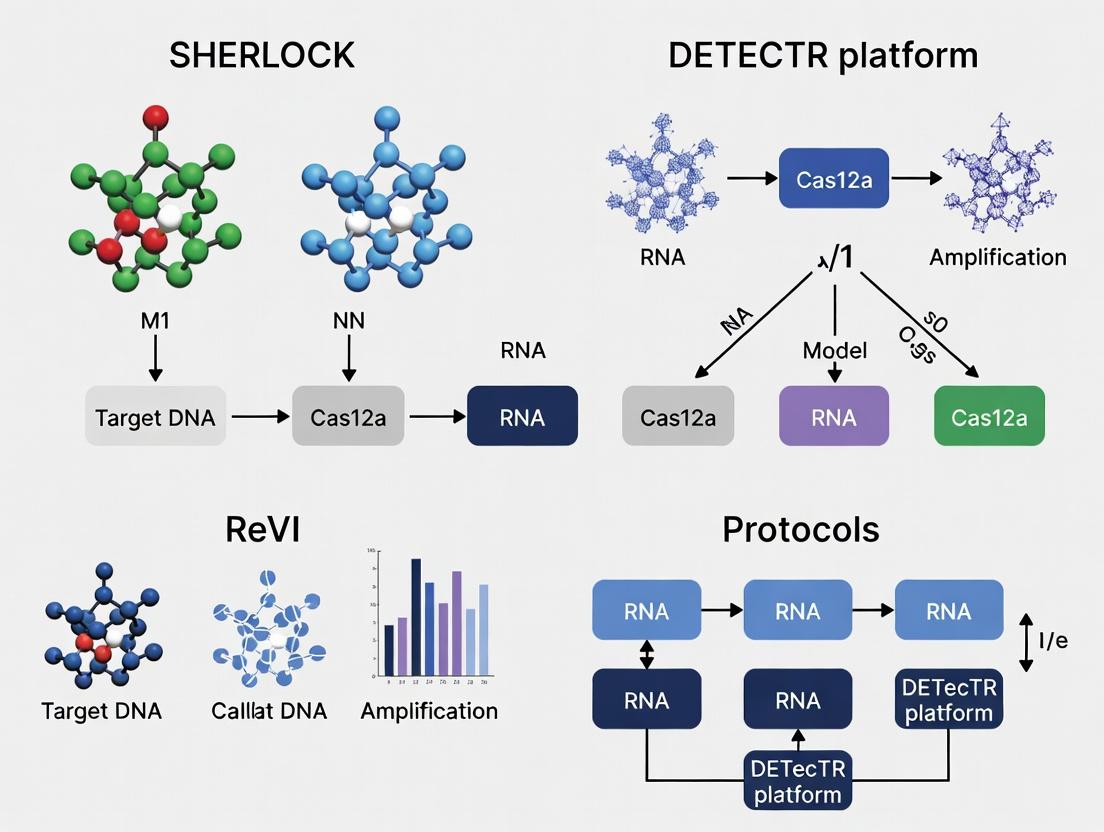
This comprehensive guide provides researchers and drug development professionals with an in-depth analysis of the SHERLOCK and DETECTR CRISPR-based diagnostic platforms.
A Practical Guide to SHERLOCK and DETECTR: Protocol Design, Optimization, and Comparative Analysis for Next-Gen CRISPR Diagnostics
Abstract
This comprehensive guide provides researchers and drug development professionals with an in-depth analysis of the SHERLOCK and DETECTR CRISPR-based diagnostic platforms. It explores their foundational molecular mechanisms, details step-by-step protocol design and diverse applications in pathogen detection and genotyping, offers troubleshooting and optimization strategies for enhanced sensitivity, and delivers a critical validation framework comparing their performance against traditional and emerging methods. The article synthesizes practical insights to empower informed platform selection and robust assay development for biomedical research.
Unlocking the Core: Molecular Mechanisms and Evolution of SHERLOCK vs. DETECTR
CRISPR-based diagnostic platforms SHERLOCK and DETECTR utilize the collateral, trans-cleavage activity of Cas13a and Cas12a nucleases, respectively. This activity is triggered upon specific recognition of a target nucleic acid sequence, leading to the non-specific cleavage of reporter molecules and generating a detectable signal. The following table summarizes their core characteristics.
Table 1: Core Platform Comparison: SHERLOCK (Cas13a) vs. DETECTR (Cas12a)
| Parameter | SHERLOCK (Cas13a) | DETECTR (Cas12a) |
|---|---|---|
| CRISPR Nuclease | Cas13a (e.g., LwaCas13a, LbuCas13a) | Cas12a (e.g., LbCas12a, AsCas12a) |
| Target Nucleic Acid | Single-stranded RNA (ssRNA) | Single-stranded or double-stranded DNA (ssDNA/dsDNA) |
| Protospacer Adjacent Motif (PAM) | Protospacer Flanking Site (PFS); prefers a non-G base 3' of the target region for LwaCas13a. | PAM sequence required 5' of target; TTTV (V = A, C, G) for LbCas12a. |
| Collateral Substrate | Fluorescently quenched single-stranded RNA (ssRNA) reporters (e.g., poly-U sequences). | Fluorescently quenched single-stranded DNA (ssDNA) reporters (e.g., 6-FAM/TTATT/3BHQ-1). |
| Primary Amplification | Recombinase Polymerase Amplification (RPA) or RT-RPA. | Recombinase Polymerase Amplification (RPA). |
| Typical Readout | Fluorescence (FAM, HEX) on a plate reader or lateral flow strip. | Fluorescence (FAM) on a plate reader or lateral flow strip. |
| Key Sensitivity (LoD) | ~2 aM (attomolar) for purified RNA; single-molecule detection. | ~aM (attomolar) for purified DNA. |
| Time to Result | 30 minutes - 2 hours. | 30 minutes - 1 hour. |
| Multiplexing Capability | High (HUDSON, CARMEN). | Moderate. |
Experimental Protocol: SHERLOCK for Viral RNA Detection
Principle: Sample RNA is amplified via RT-RPA. The amplicon is then used to activate the Cas13a-sgRNA complex, which cleaves a quenched RNA reporter, generating a fluorescent signal.
Materials & Reagents:
- Sample: Purified viral RNA.
- Amplification: RT-RPA pellets (TwistAmp Basic kit rRT or equivalent).
- Cas13a Enzyme: Purified LwaCas13a or LbuCas13a (commercial sources).
- sgRNA: Synthetic crRNA targeting the viral sequence.
- Reporter: Synthetic ssRNA oligonucleotide with 5' fluorophore (e.g., FAM) and 3' quencher (e.g., Iowa Black FQ).
- Nuclease-Free Water.
- Equipment: Thermocycler or heat block (37-42°C), Fluorescent plate reader or lateral flow strips.
Procedure:
- Target Amplification (RT-RPA):
- Reconstitute the RT-RPA pellet with 29.5 µL of rehydration buffer.
- Add 2.4 µL of forward primer (10 µM), 2.4 µL of reverse primer (10 µM), and 1 µL of RNA sample.
- Initiate the reaction by adding 2.5 µL of Magnesium Acetate (280 mM) provided in the kit.
- Incubate at 37-42°C for 15-25 minutes.
Cas13a Detection Reaction:
- Prepare a master mix on ice:
- 1 µL Cas13a enzyme (100 nM final)
- 1.2 µL sgRNA (62.5 nM final)
- 1 µL RNA reporter (62.5 nM final)
- 11.8 µL Nuclease-free water
- Aliquot 15 µL of the master mix into each well of a 96-well plate.
- Add 5 µL of the RT-RPA product from step 1. Mix by pipetting.
- Incubate the plate at 37°C for 5-30 minutes.
- Prepare a master mix on ice:
Signal Detection:
- Fluorescence: Measure fluorescence (Ex/Em: 485/535 nm for FAM) at 1-minute intervals.
- Lateral Flow: For endpoint analysis, apply reaction mixture to a lateral flow strip designed to capture cleaved reporter. A positive test shows both control and test lines.
Experimental Protocol: DETECTR for Viral DNA Detection
Principle: Sample DNA is amplified via RPA. The amplicon activates the Cas12a-sgRNA complex, leading to collateral cleavage of a quenched ssDNA reporter and fluorescence generation.
Materials & Reagents:
- Sample: Purified viral DNA.
- Amplification: RPA pellets (TwistAmp Basic kit or equivalent).
- Cas12a Enzyme: Purified LbCas12a (commercial sources).
- sgRNA: Synthetic crRNA targeting the viral sequence (with PAM-compatible spacer).
- Reporter: Synthetic ssDNA oligonucleotide (e.g., 5'-6-FAM-TTATT-3BHQ-1-3').
- Nuclease-Free Water.
- Equipment: Thermocycler or heat block (37°C), Fluorescent plate reader.
Procedure:
- Target Amplification (RPA):
- Reconstitute the RPA pellet with 29.5 µL of rehydration buffer.
- Add 2.4 µL of forward primer (10 µM), 2.4 µL of reverse primer (10 µM), and 1 µL of DNA sample.
- Initiate the reaction by adding 2.5 µL of Magnesium Acetate (280 mM).
- Incubate at 37°C for 15-30 minutes.
Cas12a Detection Reaction:
- Prepare a master mix on ice:
- 1.25 µL Cas12a enzyme (40 nM final)
- 1.25 µL sgRNA (40 nM final)
- 0.5 µL ssDNA reporter (200 nM final)
- 17 µL Nuclease-free water
- Aliquot 20 µL of the master mix into each well.
- Add 2 µL of the RPA product from step 1. Mix by pipetting.
- Incubate the plate at 37°C for 5-15 minutes.
- Prepare a master mix on ice:
Signal Detection:
- Measure fluorescence (Ex/Em: 485/535 nm for FAM) immediately after incubation.
Visualizing Signaling Pathways & Workflows
Diagram 1: SHERLOCK (Cas13a) Detection Workflow
Diagram 2: DETECTR (Cas12a) Detection Workflow
Diagram 3: Collateral Cleavage Mechanism Comparison
The Scientist's Toolkit: Key Research Reagent Solutions
Table 2: Essential Reagents for SHERLOCK/DETECTR Assay Development
| Reagent Category | Specific Example/Name | Function in the Assay |
|---|---|---|
| CRISPR Nuclease | Purified LwaCas13a, LbuCas13a; LbCas12a | The core effector protein that provides specific target recognition and collateral nuclease activity. |
| Synthetic Guide RNA | crRNA (for Cas12a) or specific sgRNA (for Cas13a) | Programs the CRISPR nuclease to bind a specific target nucleic acid sequence. |
| Fluorescent Reporter | 6-FAM/UUUUUU/Iowa Black FQ (RNA); 6-FAM/TTATT/3BHQ-1 (DNA) | The collateral cleavage substrate. Cleavage generates a fluorescent signal, indicating target presence. |
| Isothermal Amplification Kit | TwistAmp Basic RPA/RT-RPA Kit | Rapidly amplifies target nucleic acid to detectable levels at a constant temperature (37-42°C). |
| Primers | Custom DNA Oligonucleotides | Target-specific primers for the RPA amplification step. |
| Positive Control Template | Synthetic gBlock Gene Fragment or RNA Transcript | Validates the entire assay workflow, from amplification to detection. |
| Lateral Flow Strips | Milenia HybriDetect or similar | Provides a simple, instrument-free visual readout by capturing cleaved reporter molecules. |
| Nuclease-Free Buffers & Water | Not specific | Ensures reaction stability and prevents degradation of RNA/DNA components. |
Application Notes: The Evolution of CRISPR Diagnostics
The translation of CRISPR-Cell biology into diagnostic platforms represents a paradigm shift in molecular detection. Within the broader thesis on SHERLOCK and DETECTR protocols, understanding this timeline is critical for protocol optimization and novel assay design. The journey from fundamental discovery to applied tool is summarized in the quantitative timeline below.
Table 1: Key Milestones in CRISPR Diagnostic Development
| Year | Milestone Discovery | Key Finding/Protein | Quantitative Impact (e.g., Sensitivity, Time) | Lead Researchers/Institution |
|---|---|---|---|---|
| 1987 | CRISPR Loci Identified | Unknown function | N/A | Ishino et al. |
| 2005 | CRISPR as Adaptive Immunity | Spacer sequences from phages | N/A | Mojica, Pourcel, others |
| 2012 | CRISPR-Cas9 as Programmable Tool | Cas9 nuclease | N/A (Foundational) | Doudna, Charpentier, Siksnys |
| 2014 | Cas9 for DNA Detection (DETECTR precursor) | Cas9 cleavage of DNA | ~1 nM detection limit | Zhang Lab (Broad Institute) |
| 2016 | Csm6, Cas13a Trans-Cleavage | Cas13a (C2c2) | RNAse activity upon target recognition | Zhang Lab |
| 2017 | SHERLOCK Platform Published | Cas13, Csm6 | Attomolar (aM) sensitivity; Single-base specificity | Zhang Lab |
| 2018 | Cas12 Trans-Cleavage, DETECTR Platform | Cas12a (Cpfl) | "Collateral" ssDNA cleavage; aM sensitivity | Doudna Lab |
| 2018 | SHERLOCKv2 | Cas13, Csm6, Cas12a | Multiplex detection; ~2x sensitivity improvement | Zhang Lab |
| 2020 | HUDSON + SHERLOCK | Protocol for direct detection from saliva/heat | ~100 copies/μL in 1 hour | Zhang Lab |
| 2020 | STOPCovid (DETECTR-based) | Cas12b, LAMP amplification | 93.1% clinical sensitivity, 40 min | Mammoth Biosciences/UCSF |
| 2021-2023 | Point-of-Care Device Integration | Various (e.g., lateral flow) | <30-60 min from sample to result; Cost <$10/test | Multiple commercial entities |
| 2023-2024 | CRISPR-based NGS Enrichment & Epigenetic Detection | Cas9, dCas9 fusion proteins | Enables detection of methylation/single-copy variants | Multiple research groups |
Experimental Protocols
Protocol 1: SHERLOCK Reaction Setup for Viral RNA Detection
Context: This protocol is central to the thesis, demonstrating the utility of Cas13's trans-cleavage activity for quantitative detection.
Materials:
- Recombinant LwaCas13a or PsmCas13b
- Custom crRNA targeting viral sequence (e.g., SARS-CoV-2 N gene).
- Synthetic RNA Target or extracted patient RNA.
- Fluorophore-Quencher (FQ) Reporter (e.g., 5'-6-FAM/UU/3'-BHQ-1).
- Recombinant Csm6 (for signal amplification).
- RT-RPA or RT-LAMP reagents for pre-amplification.
- Plate reader or real-time PCR machine.
Methodology:
- Pre-amplification: Perform RT-RPA/RPA or RT-LAMP on extracted RNA (10-50 ng) in a 10 μL reaction at 37-42°C for 15-25 minutes.
- Cas13 Detection Reaction:
- Prepare a 10 μL master mix containing:
- 50 nM LwaCas13a
- 62.5 nM crRNA
- 1 μM FQ Reporter
- 100 nM Csm6 (for amplified signal)
- 1x Reaction Buffer (20 mM HEPES, 60 mM NaCl, 6 mM MgCl₂, pH 6.8)
- Dilute 2 μL of the pre-amplification product in 8 μL of nuclease-free water. Add 10 μL of this dilution to the detection master mix.
- Incubate at 37°C in a real-time PCR machine, measuring fluorescence (FAM channel) every 30 seconds for 1-2 hours.
- Prepare a 10 μL master mix containing:
- Analysis: Plot fluorescence vs. time. A positive sample shows an exponential increase in fluorescence. Use synthetic RNA standards for quantification.
Protocol 2: DETECTR Assay for DNA Virus Detection
Context: This protocol highlights the orthogonal mechanism of Cas12 collateral activity, a core comparative point in the thesis.
Materials:
- Recombinant LbCas12a or AsCas12a
- Custom crRNA targeting DNA sequence (e.g., HPV16 E6/E7).
- dsDNA Target (pre-amplified or synthetic).
- ssDNA Reporter (e.g., 5'-6-FAM-TTATT-3'-BHQ1).
- RPA or LAMP reagents (if pre-amplification needed).
- Lateral Flow Strips (if using FAM/biotin reporter).
Methodology:
- DNA Pre-amplification (if needed): Perform isothermal amplification (RPA/LAMP) on sample DNA at 37-42°C for 20-30 min.
- Cas12 Detection Reaction (Fluorescence):
- Prepare a 20 μL master mix:
- 50 nM LbCas12a
- 60 nM crRNA
- 500 nM ssDNA-FQ Reporter
- 1x NEBuffer 2.1
- Add 5 μL of amplified product or target DNA.
- Incubate at 37°C, reading fluorescence kinetically for 30-60 min.
- Prepare a 20 μL master mix:
- Lateral Flow Readout:
- Modify the master mix: Use a dual-labeled reporter (FAM on 5' end, biotin on 3' end).
- After a 10-30 min Cas12 reaction, apply 75 μL of the reaction mix to a lateral flow strip with anti-FAM at the test line.
- Collateral cleavage prevents reporter binding, resulting in no test line. An intact reporter yields a visible test line. The control line should always appear.
Mandatory Visualization
The Scientist's Toolkit: Research Reagent Solutions
Table 2: Essential Reagents for CRISPR Diagnostic Development
| Reagent | Example Source/Product | Function in Protocol | Critical Note |
|---|---|---|---|
| Recombinant Cas13 (LwaCas13a) | GenScript, IDT, in-house expression | Catalytic core of SHERLOCK; provides target-specific trans-cleavage of reporter RNA. | Purity and nuclease-free prep is essential to reduce background. |
| Recombinant Cas12 (LbCas12a) | NEB, IDT, Thermo Fisher | Catalytic core of DETECTR; provides target-specific trans-cleavage of reporter ssDNA. | Optimal buffer conditions differ from Cas9/Cas13 (e.g., requires Mg²⁺). |
| Custom crRNA | IDT, Synthego | Guides Cas protein to target sequence; defines assay specificity. | Must include direct repeat sequence; HPLC purification recommended. |
| Fluorescent Reporter (FQ) | IDT (FAM-Quencher), Biosearch Tech | Signal generation molecule; cleavage separates fluor from quencher. | Susceptible to light degradation; aliquot and store in dark. |
| Isothermal Amplification Mix | TwistAmp (RPA), WarmStart LAMP (NEB) | Pre-amplifies target to attomolar sensitivity for Cas detection. | Contains high concentrations of enzymes; keep cold and minimize freeze-thaw. |
| Csm6 (for SHERLOCK) | In-house expression (common) | Secondary signal-amplifying nuclease; activated by Cas13 cleavage products. | Requires careful titration with main Cas13 reaction to avoid high background. |
| Lateral Flow Strips | Milenia HybriDetect, Ustar | Provides visual, instrument-free readout for point-of-care applications. | Must match reporter labels (e.g., FAM/Biotin for HybriDetect). |
| Nuclease-Free Buffers & Water | Thermo Fisher, IDT | Solvent for all reaction setups. | Critical to prevent degradation of RNA/DNA components and reporters. |
Within the thesis on SHERLOCK (Specific High-sensitivity Enzymatic Reporter unLOCKing) and DETECTR (DNA Endonuclease-Targeted CRISPR Trans Reporter) platform protocols research, this application note details the core biochemical principles enabling ultrasensitive nucleic acid detection. The mechanism hinges on CRISPR-Cas systems' ability to combine sequence-specific target recognition with programmable, non-specific collateral cleavage activity, which amplifies a detectable signal. This document provides a comparative analysis, detailed protocols, and essential resources for implementing these principles in research and diagnostic development.
SHERLOCK and DETECTR are in vitro diagnostic platforms that repurpose CRISPR-associated (Cas) enzymes for specific nucleic acid detection. The core principle is a two-step reaction:
- Target Recognition: A guide RNA (gRNA) programs the Cas enzyme to bind to a specific target sequence (viral RNA or DNA).
- Trans-Cleavage & Reporter Activation: Upon target binding, the Cas enzyme undergoes a conformational change, activating its non-specific collateral nuclease activity. This activity cleaves nearby reporter molecules (quenched fluorescent oligonucleotides), generating a quantifiable fluorescent signal.
This combination of specific recognition and non-specific amplification allows for attomolar sensitivity and single-base specificity.
Comparative Platform Analysis
Table 1: Core Characteristics of SHERLOCK and DETECTR Platforms
| Feature | SHERLOCK (Cas13a) | DETECTR (Cas12a) |
|---|---|---|
| CRASPR Enzyme | Cas13a (e.g., LwCas13a) | Cas12a (e.g., LbCas12a) |
| Target Molecule | Single-stranded RNA (ssRNA) | Single-stranded/double-stranded DNA (ssDNA/dsDNA) |
| Pre-Amplification | Recombinase Polymerase Amplification (RPA) or RT-RPA | Recombinase Polymerase Amplification (RPA) |
| Collateral Activity | Cleaves ssRNA reporters | Cleaves ssDNA reporters |
| Activation State | Activated by target RNA binding | Activated by target DNA binding |
| Reporter Molecule | Fluorescently quenched ssRNA probe (e.g., FAM-UUUUU-BHQ1) | Fluorescently quenched ssDNA probe (e.g., FAM-TTATT-BHQ1) |
| Typical Sensitivity | ~2 aM (attomolar) | ~aM to fM (femtomolar) range |
| Key Specificity | Can discriminate single-base mismatches | PAM sequence (TTTV) required adjacent to target |
Table 2: Quantitative Performance Metrics from Recent Studies (2023-2024)
| Platform (Target) | Limit of Detection (LoD) | Time-to-Result | Specificity (% Accuracy) | Reference (Example) |
|---|---|---|---|---|
| SHERLOCK (SARS-CoV-2) | 42 copies/μL | <60 minutes | 99.5% (vs. clinical RT-qPCR) | Sci. Transl. Med., 2023 |
| DETECTR (HPV16/18) | 1.25 copies/μL | 90 minutes | 100% (in clinical samples) | J. Mol. Diagn., 2024 |
| SHERLOCK (AMR genes) | 10 aM | ~45 minutes | Distinguishes 1-nt variants | Nat. Commun., 2023 |
| DETECTR (cfDNA mutations) | 0.1% variant allele frequency | <3 hours | High in multiplex format | Anal. Chem., 2024 |
Detailed Experimental Protocols
Protocol 1: SHERLOCK Assay for Viral RNA Detection
Objective: Detect specific RNA targets (e.g., viral genomic RNA) with high sensitivity.
Materials: See "The Scientist's Toolkit" (Section 5).
Workflow:
- Sample Preparation & Pre-Amplification (RT-RPA):
- Extract RNA from sample (e.g., nasal swab).
- Set up a 50 μL RT-RPA reaction: 29.5 μL rehydration buffer, 2.4 μL forward primer (10 μM), 2.4 μL reverse primer (10 μM), 5 μL template RNA, 9.75 μL nuclease-free water, 1.25 μL magnesium acetate (280 mM).
- Incubate at 42°C for 25-30 minutes.
CRISPR-Cas13 Detection Reaction:
- Prepare the detection mix (per reaction): 1.75 μL 10X Cas13 buffer, 1 μL LwCas13a (100 nM), 1.25 μL gRNA (60 nM), 0.5 μL ssRNA reporter (100 nM), 0.5 μL RNase inhibitor, 4 μL Nuclease-free water.
- Add 5 μL of the RT-RPA product to the detection mix.
- Load into a real-time PCR instrument or fluorometer.
- Run at 37°C with fluorescence readings (FAM channel) every 30 seconds for 30-60 minutes.
Data Analysis:
- A positive sample shows an exponential increase in fluorescence over time. The time to reach a threshold fluorescence (time-to-positive, TTP) can be correlated to initial target concentration using a standard curve.
Protocol 2: DETECTR Assay for DNA Target Detection
Objective: Detect specific DNA targets (e.g., bacterial DNA, HPV) with high specificity.
Materials: See "The Scientist's Toolkit" (Section 5).
Workflow:
- Sample Preparation & Pre-Amplification (RPA):
- Extract DNA from the sample.
- Set up a 50 μL RPA reaction: 29.5 μL rehydration buffer, 2.1 μL forward primer (10 μM), 2.1 μL reverse primer (10 μM), 5 μL template DNA, 11.3 μL nuclease-free water, 1.25 μL magnesium acetate (280 mM).
- Incubate at 37-42°C for 15-30 minutes.
CRISPR-Cas12 Detection Reaction:
- Prepare the detection mix (per reaction): 2 μL 10X NEBuffer 2.1, 1 μL LbCas12a (100 nM), 1.2 μL gRNA (60 nM), 0.5 μL ssDNA reporter (100 nM), 5.3 μL Nuclease-free water.
- Add 10 μL of the RPA product to the detection mix.
- Load into a real-time PCR instrument or fluorometer.
- Run at 37°C with fluorescence readings (FAM channel) every 30 seconds for 30-60 minutes.
Data Analysis:
- Similar to SHERLOCK, analyze the fluorescence kinetic curve. The presence of target DNA activates Cas12a, leading to reporter cleavage and a rapid increase in fluorescence.
Signaling Pathway & Workflow Visualizations
Diagram 1: SHERLOCK Cas13a Activation and Trans-Cleavage Pathway.
Diagram 2: DETECTR Cas12a Activation and Trans-Cleavage Pathway.
Diagram 3: General SHERLOCK/DETECTR Assay Workflow.
The Scientist's Toolkit
Table 3: Key Research Reagent Solutions for SHERLOCK/DETECTR Assays
| Reagent/Material | Function & Role in Core Principle | Example Product/Source |
|---|---|---|
| Cas Enzyme (Cas13a/Cas12a) | The effector protein; executes target recognition and provides trans-cleavage activity. Purified recombinant protein is essential. | LwCas13a (for SHERLOCK), LbCas12a (for DETECTR). Available from academic labs (Zhang/Broad) or commercial vendors (IDT, Thermo). |
| Target-Specific gRNA | Programs the Cas enzyme for precise target recognition via Watson-Crick base pairing. Chemically synthesized. | Custom crRNA with direct repeat and spacer sequence. Synthesized by IDT, Sigma, or Trilink. |
| Fluorescent Quenched Reporter | The signal-generating substrate cleaved during trans-cleavage. Cleavage separates fluorophore from quencher. | ssRNA Reporter (FAM-rUrUrUrUrU-BHQ1) for Cas13a; ssDNA Reporter (FAM-TTATT-BHQ1) for Cas12a. |
| Isothermal Amplification Mix (RPA/RT-RPA) | Enables sensitive detection by pre-amplifying the target prior to CRISPR step. Provides the amplicon substrate. | TwistAmp Basic/Flash kits (TwistDx). For RNA, add reverse transcriptase. |
| Nuclease-Free Buffers & Water | Maintains reaction integrity by preventing non-specific degradation of enzymes, gRNAs, and reporters. | Certified buffers (e.g., NEBuffer) and water (Thermo, Ambion). |
| Positive Control Template | Validates the entire assay workflow from amplification to CRISPR detection. Contains the exact target sequence. | Synthetic gene fragment or in vitro transcribed RNA with target region. (gBlocks, IDT). |
| Fluorometer or Real-Time PCR Machine | Enables kinetic measurement of fluorescence increase from reporter cleavage, allowing quantitative or endpoint analysis. | BioRad CFX96, QuantStudio 5, or portable fluorometers (e.g., DeNovix). |
Application Notes
This document outlines critical procedural and design elements for implementing SHERLOCK (Specific High-sensitivity Enzymatic Reporter unLOCKing) and DETECTR (DNA Endonuclease-Targeted CRISPR Trans Reporter) platforms. These CRISPR-Cas (Cas13a/Cas12a)-based diagnostic systems require optimization of three core components for sensitive, specific, and rapid nucleic acid detection. The protocols are framed within a thesis investigating streamlined, field-deployable molecular diagnostics for pathogen surveillance and point-of-care testing.
crRNA Design: Principles and Guidelines
The CRISPR RNA (crRNA) directs the Cas enzyme to the target sequence. Its design is paramount for specificity and activity.
- Target Selection: For Cas13a (SHERLOCK), target RNA sequences; for Cas12a (DETECTR), target DNA sequences. Avoid regions of high secondary structure. For single-nucleotide polymorphism (SNP) discrimination, position the variant within the protospacer seed region (typically bases 3-10 from the 5' end of the spacer).
- Spacer Sequence: 20-30 nucleotides in length, complementary to the target. BLAST against the host genome (if applicable) to ensure specificity.
- Direct Repeat (DR): The Cas-specific scaffold must be appended 5' to the spacer. Use established sequences:
- Cas13a (LwaCas13a): 5'-GAUUUAGACUACCCCAAAAACGAAGGGGACUAAAAC-3'
- Cas12a (LbCas12a): 5'-AAUUUCUACUAAGUGUAGAU-3'
- Synthesis: Chemically synthesize the full crRNA (DR + spacer) or produce via in vitro transcription from a DNA template.
Table 1: Key Parameters for crRNA Design
| Parameter | Cas13a (SHERLOCK) | Cas12a (DETECTR) |
|---|---|---|
| Target Nucleic Acid | RNA | ssDNA or dsDNA |
| Protospacer Adjacent Motif (PAM) | None required | 5'-TTTV (V = A, C, G) |
| Typical Spacer Length | 28 nt | 20-24 nt |
| Critical Region for Specificity | Seed region (positions ~3-10) | Seed region (positions ~3-10) |
| Direct Repeat Sequence | 36-37 nt (as above) | 19-20 nt (as above) |
Synthetic Reporters: Signal Generation
Upon target recognition, Cas13a and Cas12a exhibit collateral, non-specific cleavage of surrounding reporter molecules.
- SHERLOCK (Cas13a) Reporters: Utilize ssRNA reporters. A common design is a poly-U sequence flanked by a fluorophore (F) and quencher (Q) (e.g., 5'-FAM-UUUUUU-BHQ1-3'). Collateral RNase activity cleaves the reporter, separating F from Q, generating fluorescence.
- DETECTR (Cas12a) Reporters: Utilize ssDNA reporters. A common design is a short (e.g., 6-10 nt) ssDNA oligo with F and Q (e.g., 5'-HEX-TTATT-BHQ1-3'). Collateral DNase activity cleaves the reporter, producing fluorescence.
- Alternative Reporters: Lateral flow readouts using biotin- and FAM-labeled reporters captured on anti-FAM antibodies at the test line.
Table 2: Synthetic Reporter Configurations
| Platform | Reporter Type | Example Sequence (5' -> 3') | Cleavage Trigger |
|---|---|---|---|
| SHERLOCK | ssRNA | 6-FAM-rUrUrUrUrUrU-Iowa Black | Cas13a collateral RNase activity |
| DETECTR | ssDNA | HEX-TTATTAT-BHQ1 | Cas12a collateral DNase activity |
| Lateral Flow (Both) | ssDNA-biotin-fluorophore | [Biotin]-spacer-[FAM] | Cleavage prevents test line capture |
Amplification: RPA vs. RT-RPA
Isothermal amplification pre-amplifies the target to achieve attomolar sensitivity.
- Recombinase Polymerase Amplification (RPA): Amplifies DNA targets at 37-42°C in 15-30 minutes. Uses recombinase-primer complexes, strand-displacing polymerase, and single-stranded DNA-binding proteins.
- Reverse Transcription RPA (RT-RPA): For RNA targets, incorporates reverse transcriptase enzyme into the RPA mix, enabling combined cDNA synthesis and amplification in one step.
Table 3: Comparison of RPA and RT-RPA
| Feature | RPA | RT-RPA |
|---|---|---|
| Input Template | DNA | RNA |
| Key Additional Enzyme | None | Reverse Transcriptase |
| Typical Temperature | 37-42°C | 37-42°C |
| Time to Result | 15-30 minutes | 20-40 minutes |
| Primary Use in Dx | DETECTR (DNA virus, bacteria) | SHERLOCK (RNA virus) |
| Sensitivity | ~1-10 copies/µL | ~1-10 copies/µL |
Detailed Protocols
Protocol 1: crRNA Design and Preparation
Objective: Synthesize functional crRNA for Cas13a or Cas12a. Materials: Oligonucleotide design software, DNA template, T7 RNA Polymerase kit, RNase-free reagents. Method:
- Design: Identify a target region. For Cas12a, ensure a 5'-TTTV PAM is present. Design a 20-30 nt spacer complementary to the target.
- Construct Template: Generate a dsDNA template for in vitro transcription (IVT) by PCR or annealing oligonucleotides. The template must include a T7 promoter (5'-TAATACGACTCACTATA-3') followed by the direct repeat and spacer.
- IVT Reaction: Assemble in a nuclease-free tube:
- T7 Transcription Buffer (1X)
- ATP, CTP, GTP, UTP (7.5 mM each)
- DNA template (50-100 ng)
- T7 RNA Polymerase Mix
- RNase Inhibitor (20 U)
- Incubate at 37°C for 2-4 hours.
- Purification: Use RNA clean-up kit (e.g., RNAClean XP beads) following manufacturer's protocol. Elute in RNase-free water.
- Quantification: Measure concentration via spectrophotometry (Nanodrop). Aliquot and store at -80°C.
Protocol 2: SHERLOCK Assay with RT-RPA
Objective: Detect an RNA target using Cas13a. Materials: RT-RPA kit (TwistAmp Basic), Cas13a protein, designed crRNA, ssRNA-FQ reporter, Fluorescence plate reader or lateral flow strips. Method:
- Pre-amplification: Reconstitute RT-RPA pellets with 29.5 µL rehydration buffer. Add forward/reverse primers (480 nM final), template RNA (1-5 µL), and nuclease-free water to 47.5 µL. Add 2.5 µL Magnesium Acetate (280 mM) to start reaction. Mix, briefly centrifuge. Incubate at 42°C for 20-30 min.
- Cas13a Detection Reaction: Prepare a master mix:
- Nuclease-free water (to 20 µL final vol.)
- Cas13a buffer (1X final)
- Cas13a protein (100 nM final)
- Target-specific crRNA (100 nM final)
- ssRNA-FQ reporter (1-2 µM final)
- Add 2 µL of the RT-RPA amplicon as reaction trigger.
- Incubation & Readout: Transfer to a qPCR plate or tube. Incubate at 37°C with real-time fluorescence measurement (Ex/Em for FAM: ~485/535 nm) for 30-60 min. Alternatively, incubate for 30 min and apply to a lateral flow strip for visual readout.
Protocol 3: DETECTR Assay with RPA
Objective: Detect a DNA target using Cas12a. Materials: RPA kit (TwistAmp Basic), Cas12a protein, designed crRNA, ssDNA-FQ reporter. Method:
- Pre-amplification: Reconstitute RPA pellets as in Protocol 2, Step 1, but without reverse transcriptase. Use DNA template. Incubate at 39°C for 15-25 min.
- Cas12a Detection Reaction: Prepare a master mix:
- Nuclease-free water (to 20 µL final vol.)
- Cas12a buffer (1X final, e.g., NEBuffer 2.1)
- Cas12a protein (50-100 nM final)
- Target-specific crRNA (50-100 nM final)
- ssDNA-FQ reporter (1-2 µM final)
- Add 2 µL of the RPA amplicon.
- Incubation & Readout: Incubate at 37°C with real-time fluorescence measurement (e.g., HEX channel: Ex/Em ~535/556 nm) for 30 min.
Visualizations
Diagram 1: SHERLOCK and DETECTR Assay Workflow Comparison
Diagram 2: Mechanism of Synthetic Reporter Activation
The Scientist's Toolkit
Table 4: Essential Research Reagent Solutions
| Item | Function / Role in Assay | Example Vendor/Product |
|---|---|---|
| Cas Nuclease | CRISPR effector protein (Cas13a for RNA, Cas12a for DNA). Provides specific binding and collateral cleavage activity. | LwaCas13a (SHERLOCK), LbCas12a (DETECTR) |
| crRNA | Guides Cas nuclease to the target sequence via complementarity. Defines assay specificity. | Custom synthetic RNA/DNA oligos from IDT, etc. |
| Isothermal Amplification Kit | Pre-amplifies target to detectable levels (RPA for DNA, RT-RPA for RNA). | TwistAmp Basic RPA/RT-RPA (TwistDx) |
| Fluorophore-Quencher (FQ) Reporter | ssRNA or ssDNA molecule cleaved collaterally to generate fluorescent signal. | Custom ssRNA/ssDNA-FQ oligos (IDT, Biosearch) |
| Nuclease-Free Buffers & Water | Prevents degradation of sensitive RNA/DNA components and enzymes. | Various molecular biology suppliers |
| Lateral Flow Strips | For visual, instrument-free readout. Often uses anti-fluorophore antibodies at test line. | Milenia HybriDetect, Ustar, etc. |
| Fluorometer / Plate Reader | For quantitative, real-time kinetic measurement of fluorescence signal. | BioTek, Thermo Fisher, etc. |
| RNase Inhibitor | Critical for SHERLOCK protocols to protect RNA targets, crRNAs, and reporters. | Recombinant RNase Inhibitor (NEB, Thermo) |
Application Notes: SHERLOCK and DETECTR Platforms
The clinical and research utility of CRISPR-based diagnostics (CRISPR-Dx), specifically the SHERLOCK and DETECTR platforms, is fundamentally anchored in two inherent technical strengths: the capacity for single-molecule sensitivity and the potential for multiplexed target detection. Within the broader thesis of platform protocol optimization, leveraging these strengths enables the transition from proof-of-concept assays to robust tools for complex diagnostics, pathogen surveillance, and biomarker validation in drug development.
Single-Molecule Sensitivity: Both platforms achieve attomolar (aM) sensitivity through the combined action of pre-amplification (RPA or RT-RPA) and the highly processive, collateral cleavage activity of Cas enzymes (Cas13a/Cas12a). This sensitivity allows for the direct detection of trace amounts of nucleic acid without the need for sophisticated laboratory equipment, making it applicable for point-of-care and field deployment.
Multiplexing Potential: The programmability of CRISPR RNAs (crRNAs) allows for the simultaneous targeting of multiple distinct sequences in a single reaction. By utilizing orthogonal Cas proteins (e.g., Cas13a, Cas12a) or Cas variants with different reporter substrate preferences, or by spatially separating reactions on a lateral flow strip, multiplexed detection of co-infecting pathogens, antibiotic resistance genes, or host genetic variants becomes feasible.
Quantitative Performance Data: Table 1: Comparative Sensitivity and Multiplexing of Key CRISPR-Dx Platforms
| Platform | Cas Enzyme | Pre-Amplification | Reported Sensitivity | Demonstrated Multiplexing Capacity | Key Reporter |
|---|---|---|---|---|---|
| SHERLOCKv2 | Cas13a, Cas12a, Csm6 | RPA/RT-RPA | 2 aM (DNA), 30 aM (RNA) | 4-plex (Viral Serotyping) | Fluorescent (FQ) or Lateral Flow (FAM/Biotin) |
| DETECTR | Cas12a | RPA | 10 aM (HPV16/18) | 2-plex (HPV16 & 18) | Fluorescent (FQ) or Lateral Flow (FAM/Biotin) |
| HOLMES | Cas12a | PCR/LAMP | 10 aM | 2-plex | Fluorescent (FQ) |
| LEOPARD | Cas13 | RPA | Single-Molecule | 7-plex (Respiratory Viruses) | Fluorescent (Sequence Encoding) |
Detailed Protocols
Protocol 1: Multiplexed SHERLOCKv2 Assay for Viral RNA Detection (96-well plate format)
Objective: To simultaneously detect and distinguish two different viral RNA targets (e.g., SARS-CoV-2 and Influenza A) in a single reaction well using orthogonal Cas13a and Cas12a reporters.
I. Research Reagent Solutions & Essential Materials:
Table 2: Key Research Reagent Solutions
| Item | Function | Example Product/Component |
|---|---|---|
| RT-RPA Master Mix | Isothermal reverse transcription & amplification of target RNA. | TwistAmp Basic kit with reverse transcriptase. |
| Target-specific crRNAs | Guides Cas enzyme to specific viral sequences. | Synthesized, HPLC-purified crRNA for Cas13a (Target 1) and Cas12a (Target 2). |
| Purified Cas13a & Cas12a | CRISPR effector enzymes for cleavage. | Recombinant LwaCas13a and LbCas12a. |
| Orthogonal Fluorescent Reporters | Detects collateral cleavage activity. | Reporter 1 (FAM-UUURUU-BHQ1) for Cas13a. Reporter 2 (HEX-TTATT-BHQ2) for Cas12a. |
| Lateral Flow Strips | Visual endpoint readout. | HybriDetect strips with anti-FAM and anti-Digoxigenin lines. |
| Nuclease-free Water | Reaction dilution. | Invitrogen UltraPure DNase/RNase-Free Water. |
II. Experimental Workflow:
- Sample Preparation & Lysis: Extract RNA from nasopharyngeal swabs using a quick spin-column or magnetic bead-based method. Elute in 30µL nuclease-free water.
- RT-RPA Amplification:
- Prepare a 50µL RT-RPA master mix on ice: 29.5µL rehydration buffer, 2.1µL forward primer (10µM each), 2.1µL reverse primer (10µM each), 5µL template RNA, and 11.3µL nuclease-free water.
- Add one RPA pellet to each tube, followed by 2.5µL of magnesium acetate (280mM) to start the reaction.
- Incubate at 42°C for 25 minutes.
- CRISPR Detection Reaction Setup:
- Prepare a CRISPR master mix for each target/cas system separately:
- Mix A (Cas13a): 1.5µL 10X Cas13a Buffer, 0.75µL LwaCas13a (10µM), 0.94µL Target 1 crRNA (10µM), 1.13µL Reporter 1 (10µM), 6.68µL nuclease-free water.
- Mix B (Cas12a): 1.5µL 10X Cas12a Buffer, 0.75µL LbCas12a (10µM), 0.94µL Target 2 crRNA (10µM), 1.13µL Reporter 2 (10µM), 6.68µL nuclease-free water.
- Combine 11µL of Mix A and 11µL of Mix B in a single well of a 96-well plate.
- Add 8µL of the amplified RT-RPA product to the well containing the combined CRISPR mix.
- Prepare a CRISPR master mix for each target/cas system separately:
- Fluorescence Readout:
- Immediately place the plate in a real-time fluorescence plate reader.
- Incubate at 37°C with kinetic measurements every 30 seconds for 60 minutes.
- Monitor fluorescence in the FAM channel (Cas13a, Target 1) and HEX channel (Cas12a, Target 2) separately. A positive signal is a kinetic curve exceeding a pre-set threshold.
- Lateral Flow Readout (Endpoint, Optional):
- After fluorescence measurement, add 80µL of lateral flow assay buffer to the reaction.
- Dip a HybriDetect strip into the mixture. Results are read at 5 minutes.
- Interpretation: Control line (C) must appear. Test line 1 (T1, anti-FAM) indicates Cas13a/FAM-reporter cleavage (Target 1). A separate Test line 2 (T2, anti-Dig) can be used if a DIG-labeled reporter is employed for Cas12a.
Protocol 2: DETECTR Assay for Single-Molecule DNA Detection via Digital Quantification
Objective: To achieve absolute quantification of target DNA copy number by partitioning the reaction into thousands of droplets for digital detection.
I. Key Materials: Digital droplet generator (e.g., Bio-Rad QX200), droplet reader, droplet generation oil, EvaGreen or FAM-based Cas12a reporter, LbCas12a, target-specific crRNA, RPA master mix.
II. Experimental Workflow:
- Digital RPA-CRISPR Reaction Assembly: Prepare a bulk reaction mix containing RPA reagents, target DNA, Cas12a, crRNA, and a fluorescent DNA reporter (e.g., ssDNA-FAM).
- Droplet Generation: Use the droplet generator to partition the bulk reaction into ~20,000 uniform nanoliter-sized oil-encapsulated droplets. This effectively performs a digital dilution, such that each droplet contains 0 or 1 target molecule.
- Incubation: Transfer droplets to a PCR plate and incubate at 37°C for 60-90 minutes to allow for RPA amplification and subsequent Cas12a collateral cleavage within each droplet.
- Droplet Reading: Read the fluorescence of each droplet in a droplet reader. Droplets containing the target molecule will exhibit high fluorescence due to reporter cleavage; negative droplets will show low fluorescence.
- Quantitative Analysis: Use Poisson statistics to analyze the fraction of positive droplets and calculate the absolute copy number of the target in the original sample: Copies/µL = -ln(1 - p) * (Total Droplets / Reaction Volume in µL), where p is the fraction of positive droplets.
Visualization
Title: SHERLOCK Multiplex Assay Workflow
Title: Digital DETECTR Single-Molecule Detection
From Bench to Bedside: Step-by-Step Protocol Design and Real-World Applications
Within the rapidly evolving landscape of CRISPR-based diagnostic platforms, the precise design and synthesis of crRNAs constitute a foundational pillar for assay success. This application note is framed within a broader thesis on standardizing SHERLOCK (Specific High-sensitivity Enzymatic Reporter unLOCKing) and DETECTR (DNA Endonuclease-Targeted CRISPR Trans Reporter) protocols. Achieving optimal specificity and sensitivity in these systems is intrinsically linked to the crRNA architecture. This document consolidates current design principles, synthesis methodologies, and experimental validation protocols for researchers and drug development professionals.
Quantitative crRNA Design Rules
Key parameters for crRNA design, derived from recent empirical studies on Cas12a and Cas13a systems, are summarized below. These rules are critical to minimize off-target activity and maximize on-target signal.
Table 1: Core Design Rules for Cas12a (LbaCas12a) and Cas13a (LwaCas13a) crRNAs
| Parameter | Cas12a (LbaCas12a) Target: dsDNA | Cas13a (LwaCas13a) Target: ssRNA | Rationale & Impact on Specificity |
|---|---|---|---|
| Spacer Length | 20-24 nt | 28-30 nt | Longer spacers for Cas13a accommodate its RNA target. Deviations can reduce cleavage efficiency. |
| Direct Repeat (DR) | Native or optimized 5' handle (e.g., AAUUUCUACUAAGUGUAGAUG) | Defined 5' and 3' handles (e.g., for LwaCas13a) | Essential for Cas protein binding. Modified DRs can enhance stability and reaction kinetics. |
| Spacer GC Content | 40-60% | 30-50% | High GC may increase off-target binding; low GC reduces stability. Optimal range ensures balanced affinity. |
| 5' End of Spacer (Seed Region) | T-rich (e.g., TTTN) preferred for LbaCas12a | No strong constraint for LwaCas13a | Critical for initial target recognition. A T-rich seed dramatically enhances specificity for Cas12a. |
| Homology Check | Essential vs. human genome & non-target sequences | Essential vs. background transcriptome | Prevents collateral cleavage triggered by non-target sequences. BLAST is mandatory. |
| Poly-T/Tracts | Avoid within spacer | Avoid within spacer | Can cause premature transcription termination during synthesis or assay interference. |
Protocol: crRNA Synthesis via In Vitro Transcription (IVT)
This protocol details the synthesis of crRNAs using a DNA template-dependent T7 in vitro transcription, a cost-effective and high-yield method suitable for research and early-stage assay development.
Materials:
- Template Oligos: ssDNA oligo containing the T7 promoter sequence (TAATACGACTCACTATA) followed by the desired direct repeat and spacer sequence.
- T7 RNA Polymerase Kit: Includes T7 RNA polymerase, RNase inhibitor, NTP mix, and reaction buffer.
- DNase I (RNase-free): For template removal.
- Purification Kit: Silica-membrane based spin columns or PAGE purification for full-length isolation.
- Nuclease-free Water and Tubes.
Procedure:
- Template Annealing: Resuspend the template oligo and a complementary short primer in nuclease-free water. Heat to 95°C for 2 minutes and slowly cool to room temperature to form a double-stranded T7 promoter region.
- IVT Reaction: Assemble a 20-50 µL reaction per manufacturer's instructions. Typical incubation: 37°C for 2-4 hours.
- DNA Template Digestion: Add 1 µL of DNase I (1 U/µL) per 20 µL reaction. Incubate at 37°C for 15 minutes.
- crRNA Purification: Purify the RNA using a dedicated RNA clean-up kit. Elute in nuclease-free water.
- Quantification & QC: Measure concentration via spectrophotometry (A260). Analyze integrity by denaturing PAGE or Bioanalyzer. Store at -80°C.
Experimental Protocol: Validating crRNA Specificity
This protocol describes a fluorescence-based kinetic assay to quantify the specificity and activity of a newly designed crRNA for Cas12a or Cas13a systems.
Materials:
- Purified Cas Protein (LbaCas12a or LwaCas13a)
- Synthesized crRNA
- Target Nucleic Acid: Synthetic amplicon or RNA transcript containing the exact target sequence.
- Non-Target Control: A closely related sequence with 1-3 mismatches, especially in the seed region.
- Fluorescent Reporter: ssDNA-FQ reporter (for Cas12a) or ssRNA-FQ reporter (for Cas13a).
- Plate Reader capable of kinetic fluorescence measurement.
Procedure:
- Reaction Assembly: In a 96-well plate, mix the following on ice:
- Cas protein (50 nM final)
- crRNA (60 nM final)
- Target or Non-target nucleic acid (5 nM final)
- Fluorescent reporter (500 nM final)
- 1X Reaction Buffer
- Kinetic Measurement: Immediately place the plate in a pre-warmed (37°C) plate reader. Measure fluorescence (e.g., FAM, Ex/Em 485/535) every minute for 60-90 minutes.
- Data Analysis: Plot fluorescence over time. Calculate the time to threshold (Tt) or initial rate (∆F/∆t). A specific crRNA will show a significantly faster kinetic curve with the perfect target versus the mismatched non-target control.
Visualizations
Diagram 1: crRNA Design & Specificity Validation Workflow
Diagram 2: SHERLOCK/DETECTR crRNA Mechanism
The Scientist's Toolkit: Essential Reagent Solutions
Table 2: Key Reagents for crRNA Development & Validation
| Reagent Solution | Function in Assay Blueprint | Key Consideration |
|---|---|---|
| T7 High-Yield RNA Synthesis Kit | Robust in vitro transcription for crRNA generation. | Ensure high-fidelity T7 polymerase and RNase-free conditions for full-length product. |
| Ultrapure NTP Mix | Building blocks for IVT. | RNase-free, pH-balanced to maintain transcription efficiency and yield. |
| RNase Inhibitor | Protects synthesized crRNA from degradation during all steps. | Critical for maintaining crRNA integrity pre- and post-purification. |
| Fluorescent-Quencher (FQ) Reporters (ssDNA for Cas12, ssRNA for Cas13) | Real-time measurement of collateral cleavage activity. | Quencher efficiency (e.g., Iowa Black) and linker stability define signal-to-noise ratio. |
| Recombinant LbaCas12a / LwaCas13a | The effector enzyme for the diagnostic complex. | Purified, nuclease-free, and functionally validated for consistent reaction kinetics. |
| Synthetic gBlock Gene Fragments | Sources for consistent positive and mismatch control targets. | Allow precise incorporation of mutations to test specificity rules empirically. |
| Rapid RNA Clean-up/PAGE Purification Kit | Isolation of full-length crRNA from IVT components and abortive transcripts. | PAGE offers highest purity for sensitive assays; spin columns offer speed for screening. |
Within the context of advancing CRISPR-based diagnostic platforms like SHERLOCK (Specific High-sensitivity Enzymatic Reporter unLOCKing) and DETECTR (DNA Endonuclease-Targeted CRISPR Trans Reporter), the integrity of the diagnostic result is fundamentally dependent on the initial sample preparation. This protocol details a robust and generalized workflow to process diverse raw samples (e.g., swabs, saliva, blood) into purified nucleic acid input suitable for these downstream enzymatic detection assays. Consistent, high-yield nucleic acid extraction is critical for achieving the low limits of detection required for these platforms.
Research Reagent Solutions & Essential Materials
Table 1: Key Reagents and Materials for Nucleic Acid Preparation
| Item | Function/Description |
|---|---|
| Lysis Buffer (Guanidinium Thiocyanate-based) | Denatures proteins and nucleases, inactivates pathogens, and releases nucleic acids. |
| Binding Matrix (Silica Membrane/ Magnetic Beads) | Selectively binds nucleic acids in the presence of chaotropic salts for separation from contaminants. |
| Wash Buffers (Ethanol-based) | Removes salts, proteins, and other impurities while keeping nucleic acids bound to the matrix. |
| Nuclease-free Water or Elution Buffer (TE) | Low-ionic-strength solution elutes purified nucleic acids from the binding matrix. |
| Proteinase K | Broad-spectrum protease that degrades proteins and nucleases, enhancing yield and purity. |
| Carrier RNA | Improves recovery of low-copy-number viral RNA (e.g., from SARS-CoV-2) during silica-based extraction. |
| RNase Inhibitor | Essential for RNA targets (SHERLOCK), protects RNA integrity during and after extraction. |
Generalized Sample Preparation Protocol
This protocol is adaptable for viral RNA/DNA from nasopharyngeal swabs or saliva.
Materials and Pre-Processing
- Raw Sample: 100-200 µL of viral transport media (VTM) from a swab or pure saliva.
- Equipment: Microcentrifuge, vortex, heating block (56°C), magnetic stand (if using beads).
- Safety: Perform in a BSL-2 cabinet for potentially infectious samples. Wear appropriate PPE.
Step-by-Step Procedure
Step 1: Lysis and Digestion
- Transfer 200 µL of raw sample to a 1.5 mL microtube.
- Add 20 µL of Proteinase K (if provided) and 200 µL of lysis/binding buffer. Vortex thoroughly for 15 seconds.
- Incubate at 56°C for 10 minutes to facilitate complete lysis and digestion.
Step 2: Binding
- Add 200 µL of 96-100% ethanol to the lysate. Mix immediately by pipetting or vortexing.
- For column-based purification: Transfer the entire mixture to a silica membrane column. Centrifuge at ≥11,000 x g for 30 seconds. Discard flow-through.
- For bead-based purification: Add a defined volume of magnetic silica beads. Incubate for 5 minutes with intermittent mixing. Place on a magnetic stand for 2 minutes until clear. Carefully discard supernatant.
Step 3: Washing
- Wash 1: Add 500 µL of wash buffer 1 (often contains guanidine) to the column/beads. For columns, centrifuge; for beads, perform on magnet. Discard flow-through.
- Wash 2: Add 500 µL of wash buffer 2 (often ethanol-based). Repeat the wash step. For columns, perform a second spin with an empty column to dry the membrane.
Step 4: Elution
- Transfer column to a clean collection tube or take beads off magnet.
- Apply 30-100 µL of pre-heated (65°C) nuclease-free water or elution buffer directly to the center of the membrane/beads.
- Incubate at room temperature for 1-2 minutes.
- Centrifuge (columns) or place on magnet (beads) to collect eluate. The eluate contains the purified nucleic acid input.
- Store immediately at -80°C (for RNA) or -20°C (for DNA) if not used directly.
Table 2: Performance Metrics of Common Extraction Methods for CRISPR-Dx Input
| Extraction Method | Average Yield (RNA from VTM) | Average Purity (A260/A280) | Processing Time (Hands-on) | Suitability for SHERLOCK/DETECTR |
|---|---|---|---|---|
| Silica Column (Manual) | 50-200 ng/µL* | 1.8 - 2.0 | 20-30 min | High (pure input, minimal inhibitors) |
| Magnetic Beads (Manual) | 40-180 ng/µL* | 1.7 - 2.0 | 15-25 min | High (easily automated) |
| Boil-and-Spin (Rapid) | 10-50 ng/µL* | 1.2 - 1.8 | 2-5 min | Moderate (may contain inhibitors, requires robust assay) |
| Automated (Bead-based) | 45-190 ng/µL* | 1.8 - 2.0 | <5 min (hands-on) | High (excellent reproducibility) |
Yield is highly sample-dependent. Values represent a typical range for mid-to-high viral load samples.
Critical Pathways and Workflows
Diagram 1: Core Nucleic Acid Extraction Workflow
Diagram 2: Mechanism of Inhibitor Removal During Extraction
1. Introduction and Context Within the broader thesis on streamlining and enhancing SHERLOCK (Specific High-sensitivity Enzymatic Reporter unLOCKing) and DETECTR (DNA Endonuclease Targeted CRISPR Trans Reporter) diagnostic platforms, master mix optimization is the critical foundation. Consistent, sensitive, and specific detection of nucleic acid targets depends on the precise formulation of reaction components. This Application Note provides detailed protocols and data for empirically determining optimal concentrations of buffer, Cas enzymes, and reporter molecules to maximize signal-to-noise ratios and assay robustness for both DNA and RNA targets.
2. Quantitative Optimization Data Summary Table 1: Optimized Concentration Ranges for SHERLOCK (v2) Master Mix Components
| Component | Function | Optimal Concentration Range | Notes |
|---|---|---|---|
| Reaction Buffer | Provides ionic strength & pH stability | 1X NEBuffer r2.1 | Mg²⁺ concentration is critical; typically 5-10 mM. |
| Cas13a (LwaCas13a) | Target RNA recognition & collateral cleavage | 50-100 nM | Purification method impacts activity. |
| crRNA | Guides Cas13a to target sequence | 50-100 nM | Must be designed with high specificity. |
| ssRNA Reporter | Fluorescent output signal generation | 0.5-2 µM | FAM/(Biotin)/UUUUU or HEX/(Biotin)/UUUUU common. |
| RNase Inhibitor | Protects RNA targets & reporter | 0.4 U/µL | Essential for prolonged reactions. |
| RTx Enzyme Mix | Combined T7 transcription & RPA | 1X | For isothermal amplification from DNA/RNA. |
| NTPs | Substrates for transcription | 1 mM each | Drives RNA amplification step. |
Table 2: Optimized Concentration Ranges for DETECTR (Cas12a) Master Mix Components
| Component | Function | Optimal Concentration Range | Notes |
|---|---|---|---|
| Reaction Buffer | Optimal for Cas12a cleavage | 1X NEBuffer 2.1 or 3.1 | Requires Mg²⁺ (final ~5-7.5 mM). |
| Cas12a (LbCas12a) | Target dsDNA recognition & cleavage | 50-100 nM | Can tolerate shorter crRNAs than Cas9. |
| crRNA | Guides Cas12a to target sequence | 50-100 nM | Specificity defined by spacer sequence. |
| ssDNA Reporter | Fluorescent output signal generation | 0.5-2 µM | FAM-TTATT-BHQ1 or HEX-TTATT-BHQ1 standard. |
| Recombinase Polymerase Amplification (RPA) | Isothermal pre-amplification | 1X (from pellet or mix) | Amplifies target to detectable levels. |
| MgOAc | Activates RPA reaction | 14-18 mM final | Added last to initiate amplification. |
3. Detailed Experimental Protocol: Cas13/Cas12 Reporter Titration and Buffer Optimization
Protocol 3.1: Determining Optimal Reporter Concentration Objective: To identify the reporter concentration yielding the highest fluorescence signal (ΔRFU) with minimal background. Materials: See "The Scientist's Toolkit" below. Method:
- Prepare a base master mix containing optimized buffer (1X), enzyme (75 nM), crRNA (75 nM), and target nucleic acid (10⁴ copies) in a 25 µL reaction. Omit the reporter.
- Aliquot the master mix into 8 PCR tubes.
- Spike in fluorescent reporter (ssRNA for SHERLOCK, ssDNA for DETECTR) to achieve final concentrations of: 0.1, 0.25, 0.5, 1.0, 1.5, 2.0, 3.0, and 4.0 µM.
- Run reactions in a real-time PCR instrument or fluorometer at 37°C (DETECTR) or 42°C (SHERLOCK) for 60 minutes, measuring fluorescence every 60 seconds.
- Analysis: Calculate ΔRFU = (Max RFU of test) - (Average RFU of no-target control). Plot ΔRFU vs. reporter concentration. The optimal concentration is at the inflection point before signal plateau, balancing signal strength with cost and background.
Protocol 3.2: Buffer and Mg²⁺ Optimization for Cas Enzyme Activity Objective: To define the buffer and Mg²⁺ conditions that maximize collateral nuclease activity. Method:
- Prepare a matrix of 8 different 2X buffer stocks, varying MgCl₂ or MgOAc concentration from 2 mM to 16 mM in 2 mM increments, in a standard buffer base (e.g., Tris-HCl, NaCl).
- For each condition, prepare a master mix with final 1X buffer, fixed concentrations of enzyme (50 nM), crRNA (50 nM), reporter (1 µM), and a high-copy target (10⁶ copies).
- Include no-target controls for each buffer condition.
- Run fluorescence measurements as in Protocol 3.1.
- Analysis: Calculate the time to threshold (Tt) or initial rate of fluorescence increase (slope) for each condition. The optimal condition yields the fastest kinetics (lowest Tt, highest slope) for the target while maintaining a low background in the control.
4. Visualization of Experimental Workflows
Diagram Title: SHERLOCK/DETECTR Reporter Titration Workflow
Diagram Title: Cas Enzyme Collateral Cleavage Signaling Pathway
5. The Scientist's Toolkit: Essential Research Reagent Solutions
Table 3: Key Reagents for Master Mix Optimization
| Reagent | Function in Optimization | Example Product/Source |
|---|---|---|
| Purified Cas Enzyme (LwaCas13a, LbCas12a) | Core detection nuclease; purity is critical for consistent activity. | Recombinantly expressed and purified, or commercial (e.g., from IDT). |
| Synthetic crRNAs | Target-specific guide; sequence and HPLC purification affect specificity. | Custom synthesis from oligo providers (IDT, Sigma). |
| Fluorescent Quenched Reporters | Signal generation; backbone and fluorophore/quencher choice matter. | FAM- or HEX-labeled ssRNA/DNA reporters (Biosearch, IDT). |
| Isothermal Amplification Mix | Pre-amplification to boost low-copy targets (RPA, RT-RPA). | TwistAmp kits (TwistDx) or comparable RPA reagents. |
| NEBuffer r2.1 / 3.1 | Standardized buffers providing optimal pH and ionic strength for Cas enzymes. | New England Biolabs (NEB). |
| RNase Inhibitor | Protects RNA components in SHERLOCK reactions from degradation. | Murine RNase Inhibitor (NEB, Thermo). |
| Real-time Fluorometer | Equipment for kinetic measurement of fluorescence output. | Bio-Rad CFX96, Thermo QuantStudio, or portable OptiScan. |
| Nuclease-free Water & Tubes | Prevents degradation of sensitive reaction components. | Certified nuclease-free (Thermo, Ambion). |
Within the rapidly advancing field of CRISPR-based diagnostics, the SHERLOCK (Specific High-sensitivity Enzymatic Reporter unLOCKing) and DETECTR (DNA Endonuclease-Targeted CRISPR Trans Reporter) platforms represent paradigm-shifting technologies for sensitive, specific, and sequence-specific detection of nucleic acids. The ultimate success and practicality of these assays hinge critically on the instrumentation and readout modality employed. This application note details the core methodologies and comparative performance metrics for three primary readout systems—fluorimeters, lateral flow strips, and microplate readers—within the context of optimizing SHERLOCK and DETECTR protocols for research and translational drug development.
Table 1: Performance Characteristics of SHERLOCK/DETECTR Readout Modalities
| Readout Platform | Typical Assay Time (min) | Approx. Limit of Detection (LoD) | Quantitative Capability | Key Advantages | Primary Use Case |
|---|---|---|---|---|---|
| Benchtop Fluorimeter | 30-90 (post-RPA/LAMP) | ~2-10 aM (SHERLOCK); ~50 cp/µL (DETECTR) | Yes, real-time kinetics | High sensitivity, real-time data, kinetic analysis | Protocol optimization, kinetic studies, high-sensitivity validation |
| Lateral Flow Strip | 60-120 (total) | ~10-100 aM (SHERLOCK) | No, visual (semi-quant. via reader) | Equipment-free, rapid, low-cost, point-of-care potential | Field deployment, rapid screening, binary result needs |
| Microplate Reader (Fluorescence) | 60-90 | ~1-20 aM | Yes, endpoint or kinetic | High-throughput, multiplexing (different filters), automated | Drug screening, large-scale sample processing, multiplex assays |
Data synthesized from current literature (2023-2024) on SHERLOCKv2, SHERLOCK-HUDSON, and DETECTR platform optimizations.
Detailed Experimental Protocols
Protocol 1: SHERLOCK Assay Readout via Fluorescence Microplate Reader
Objective: To perform a high-throughput, quantitative SHERLOCK assay for screening antiviral compounds against a target viral RNA.
Research Reagent Solutions & Essential Materials:
- Cas13a (C2c2) Nuclease: CRISPR effector that cleaves reporter RNA upon target recognition.
- Target-Specific crRNA: Guides Cas13a to the viral RNA sequence of interest.
- Fluorescent RNA Reporter Molecule: Poly-U sequence flanked by a fluorophore (e.g., FAM) and quencher (BHQ1). Cleavage yields fluorescence.
- Recombinase Polymerase Amplification (RPA) Mix: For isothermal amplification of the target RNA.
- T7 RNA Polymerase: For transcribing RPA amplicons to RNA for Cas13a detection.
- Nuclease-free Water & Assay Buffer: Provides optimal enzymatic conditions.
- 384-well Optical Microplate: Low-volume, suitable for high-throughput screening.
- Black Sealing Tape: Prevents evaporation and contamination during reads.
Methodology:
- Sample Preparation: In a 5 µL volume per well, combine 2 µL of RPA-amplified sample (or synthetic target control), 1.25 µL of Cas13a-crRNA ribonucleoprotein complex (pre-incubated for 10 min at 37°C), and 0.75 µL of fluorescent reporter (100 nM).
- Assay Assembly: Dispense the 5 µL reaction mix into a 384-well microplate. Include negative controls (no-template and non-target crRNA). Seal plate.
- Plate Reader Setup: Pre-heat the fluorometric microplate reader to 37°C. Set excitation/emission filters appropriate for the fluorophore (e.g., 485/535 nm for FAM). Set to read fluorescence from the top every 60 seconds for 60-90 minutes.
- Data Analysis: Plot relative fluorescence units (RFU) over time. Calculate the slope of the fluorescent curve or the ΔRFU at an endpoint (e.g., 60 min) to determine reaction rate/target presence. Use Z'-factor analysis for assay quality assessment in screening.
Protocol 2: DETECTR Assay Readout via Lateral Flow Strip
Objective: To achieve a rapid, equipment-free detection of HPV DNA using the DETECTR platform.
Research Reagent Solutions & Essential Materials:
- Cas12a (Cpf1) Nuclease: CRISPR effector that cleaves ssDNA reporters upon target recognition.
- Target-Specific crRNA: Guides Cas12a to the HPV DNA sequence.
- Biotinylated & FAM-labeled ssDNA Reporter: Dual-labeled reporter for lateral flow capture.
- Lateral Flow Strip: Contains a control line (anti-FITC) and test line (streptavidin).
- Isothermal Amplification Mix (LAMP or RPA): For target DNA amplification.
- Running Buffer: Typically a saline-based buffer with detergent.
Methodology:
- DETECTR Reaction: Perform a 20 µL combined amplification-CRISPR reaction. Incubate at 37°C for 30-45 minutes for amplification and Cas12a activation.
- Strip Development: Apply 70-80 µL of running buffer to the strip's sample pad. Immediately pipette 5-10 µL of the completed DETECTR reaction onto the sample pad.
- Incubation & Reading: Allow the strip to develop at room temperature for 3-5 minutes. Capillary flow migrates the reaction mix.
- Interpretation: Positive Result: Both control (C) line and test (T) line appear. Cleaved reporter cannot be captured at the T line, but free FAM-labeled ends are caught at C. Negative Result: Only the C line appears. Intact reporter is captured at both T (via biotin-streptavidin) and C lines. The absence of a C line indicates an invalid test.
Signaling Pathways and Workflows
Title: SHERLOCK Fluorescence Assay Workflow
Title: DETECTR Lateral Flow Strip Detection Principle
The Scientist's Toolkit: Key Reagents & Materials
Table 2: Essential Research Reagents for SHERLOCK/DETECTR Assays
| Item | Function in Assay | Typical Example/Supplier |
|---|---|---|
| Cas13 Enzyme (LwCas13a) | SHERLOCK effector; collateral RNase activity upon target RNA binding. | Purified recombinant protein, commercial (e.g., New England Biolabs, BioLabs). |
| Cas12 Enzyme (LbCas12a) | DETECTR effector; collateral DNase activity upon target dsDNA binding. | Purified recombinant protein, commercial (e.g., IDT, Thermo Fisher). |
| Target-Specific crRNA | Guides Cas enzyme to the target sequence; defines assay specificity. | Chemically synthesized, HPLC-purified (e.g., IDT, Sigma). |
| Fluorescent Quenched Reporter | Signal generator; cleavage relieves fluorescence quenching. | RNA reporter (FAM/rUrUrU/rUrU/3Bio) for SHERLOCK; ssDNA (FAM-TTATT-BHQ1) for DETECTR. |
| Lateral Flow Reporter | Signal generator for strips; dual-labeled for capture. | ssDNA with 5'-FAM and 3'-Biotin (e.g., from IDT). |
| Isothermal Amplification Mix | Amplifies target to detectable levels without thermal cycler. | RPA (TwistDx), LAMP (NEB), or commercial master mixes. |
| Lateral Flow Strips | Provides visual, equipment-free readout. | Milenia HybriDetect, Ustar, or similar. |
| Black/Clear Microplates | Reaction vessel for fluorescence readouts, minimizes crosstalk. | 96-well or 384-well plates (e.g., Thermo Fisher, Greiner). |
Thesis Context Integration
This application note is framed within a broader thesis research project investigating the comparative robustness, sensitivity, and clinical utility of CRISPR-Cas based diagnostic platforms, specifically SHERLOCK (Specific High-sensitivity Enzymatic Reporter unLOCKing) and DETECTR (DNA Endonuclease-Targeted CRISPR Trans Reporter). The focus is on protocol optimization for decentralized pathogen detection.
SHERLOCK utilizes Cas13a (or Cas12b) ribonuclease activity, which is activated upon recognition of a specific RNA target, leading to collateral cleavage of a reporter RNA molecule. DETECTR employs Cas12a deoxyribonuclease, which, upon binding to its target DNA sequence, exhibits non-specific single-stranded DNA (ssDNA) cleavage, enabling fluorescent reporter signal generation.
Signaling Pathway Diagrams
Diagram Title: SHERLOCK Cas13a Detection Pathway
Diagram Title: DETECTR Cas12a Detection Pathway
Quantitative Performance Comparison
Table 1: Platform Performance for Target Pathogens
| Pathogen (Target) | Platform | Assay Time (mins) | LoD (copies/µL) | Clinical Sensitivity | Clinical Specificity | Key Citation |
|---|---|---|---|---|---|---|
| SARS-CoV-2 (N, E, S genes) | SHERLOCKv2 | 60 | 10-100 | 96.0% | 100% | Joung et al., NEJM, 2023 |
| SARS-CoV-2 (N gene) | DETECTR | 45 | 10 | 95.0% | 100% | Broughton et al., Nat. Biotechnol., 2022 |
| HPV-16/18 (E6/E7 DNA) | DETECTR | 90 | 1-10 | 91.2% | 98.3% | Chen et al., J. Mol. Diagn., 2023 |
| Dengue Virus (Serotypes 1-4) | SHERLOCK | 120 | 2-20 | 98.5% | 99.1% | Myhrvold et al., Sci. Transl. Med., 2024 |
Table 2: Protocol & Reaction Composition
| Component | SHERLOCK (SARS-CoV-2) | DETECTR (SARS-CoV-2) |
|---|---|---|
| Amplification | RPA (42°C, 25 min) + T7 Transcription (37°C, 15 min) | RT-LAMP (62°C, 30 min) |
| CRISPR Mix | Cas13a (100 nM), gRNA (120 nM), Reporter (2 µM) | Cas12a (100 nM), gRNA (120 nM), Reporter (1 µM) |
| Buffer | 1X NEBuffer 2.1 | 1X NEBuffer 2.1 |
| Readout | Fluorescent plate reader or lateral flow strip | Fluorescent plate reader or lateral flow strip |
| Total Volume | 25 µL | 25 µL |
Detailed Experimental Protocols
Protocol A: SHERLOCK for SARS-CoV-2 from Nasopharyngeal Swab
I. Sample Preparation & RNA Extraction
- Collect specimen in viral transport media.
- Extract RNA using a magnetic bead-based purification kit (e.g., Monarch Total RNA Miniprep Kit). Elute in 50 µL nuclease-free water.
- Alternatively, for rapid protocols, use heat-inactivation: 5 µL sample + 5 µL extraction buffer (2% Triton X-100, 50 mM KCl), incubate at 95°C for 5 min, briefly centrifuge.
II. Reverse Transcription RPA (RT-RPA)
- Prepare a 10 µL RPA master mix:
- 5 µL rehydration buffer (from kit)
- 1.2 µL forward primer (10 µM)
- 1.2 µL reverse primer (10 µM)
- 0.5 µL reverse transcriptase (optional, if integrated)
- 1 µL RNA template
- Nuclease-free water to 9.5 µL
- 0.5 µL magnesium acetate (280 mM)
- Incubate at 42°C for 25 minutes.
III. T7 Transcription
- Add 2 µL of the RPA product to 8 µL transcription mix:
- 1 µL T7 RNA polymerase (100 U)
- 1 µL NTP mix (25 mM each)
- 0.5 µL RNase inhibitor
- 1.5 µL 10X transcription buffer
- 4 µL nuclease-free water.
- Incubate at 37°C for 15 minutes.
IV. CRISPR-Cas13 Detection
- Prepare detection mix (per reaction):
- 100 nM LwCas13a
- 120 nM target-specific crRNA
- 2 µM fluorescent RNA reporter (e.g., 5'-6-FAM/UUUUUU/3'-Iowa Black FQ)
- 1X NEBuffer 2.1
- Combine 18 µL detection mix with 2 µL transcription product.
- Incubate at 37°C for 5-10 minutes.
- Readout: Measure fluorescence (Ex/Em: 485/535 nm) or apply to lateral flow strip.
Protocol B: DETECTR for HPV-16 from Cervical Cell Lysate
I. DNA Release & LAMP Amplification
- Prepare cell lysate by heating sample at 95°C for 10 minutes in lysis buffer (10 mM Tris-HCl, 0.1% SDS).
- Prepare 25 µL LAMP reaction:
- 12.5 µL 2X LAMP master mix (warm-start polymerase)
- 1.6 µM each FIP/BIP primer
- 0.2 µM each F3/B3 primer
- 0.8 µM each LoopF/LoopB primer
- 5 µL heat-treated lysate.
- Incubate at 62°C for 30 minutes, then 80°C for 5 min (enzyme inactivation).
II. CRISPR-Cas12 Detection
- Prepare detection mix (per reaction):
- 100 nM LbCas12a
- 120 nM HPV-16 E7-specific crRNA
- 1 µM fluorescent ssDNA reporter (e.g., 5'-6-FAM/TTATT/3'-BHQ1)
- 1X NEBuffer 2.1
- Combine 18 µL detection mix with 2 µL diluted (1:10) LAMP product.
- Incubate at 37°C for 10 minutes.
- Readout: Measure fluorescence or use lateral flow strip.
Experimental Workflow Diagram
Diagram Title: Generic CRISPR Diagnostic Workflow
The Scientist's Toolkit: Research Reagent Solutions
Table 3: Essential Reagents & Materials
| Item | Function & Description | Example Product/Catalog |
|---|---|---|
| Cas Enzymes | Core detection nuclease. LwCas13a for SHERLOCK (RNA target), LbCas12a for DETECTR (DNA target). | NEB: M0640T (Cas12a), GenScript: Custom Cas13a |
| crRNA/gRNA | Target-specific guide RNA. Dictates assay specificity. Requires careful design to avoid off-target. | Synthesized via IDT Alt-R CRISPR-Cas system or in vitro transcription. |
| Fluorescent Reporter | Collateral cleavage substrate. Quenched fluorescent oligonucleotide (RNA for Cas13, ssDNA for Cas12). | IDT: 5'/6-FAM/.../3'-Iowa Black FQ or /BHQ-1. |
| Isothermal Amplification Mix | Enables nucleic acid amplification at constant temperature without a thermocycler. | TwistAmp Basic (RPA) from TwistDx; WarmStart LAMP Kit (NEB). |
| Lateral Flow Strips | For visual, instrument-free readout. Typically use FAM/biotin-labeled reporters. | Milenia HybriDetect; Ustar Biotech CRISPR strips. |
| Nuclease-free Buffers | Maintain enzyme stability and activity. NEBuffer 2.1 or r2.1 commonly used. | NEB: B7202S (NEBuffer 2.1). |
| RNAse Inhibitor | Critical for SHERLOCK to protect RNA amplicons and reporters from degradation. | Protector RNase Inhibitor (Roche). |
| Positive Control Template | Synthetic gene fragment or in vitro transcribed RNA for LoD determination and assay validation. | gBlocks Gene Fragments (IDT). |
This application note is framed within a comprehensive thesis investigating CRISPR-based diagnostics, specifically SHERLOCK (Specific High-sensitivity Enzymatic Reporter unLOCKing) and DETECTR (DNA Endonuclease Targeted CRISPR Trans Reporter) platforms. The thesis aims to standardize and optimize protocols for decentralized, sensitive, and specific molecular detection. Human genotyping represents a paramount application area where these platforms can transition from research tools to clinical and pharmacogenomic utilities. This document details current protocols and applications for detecting single nucleotide polymorphisms (SNPs), somatic cancer mutations, and pharmacogenomic variants.
Table 1: Performance Metrics of SHERLOCK vs. DETECTR for Human Genotyping
| Parameter | SHERLOCK (Cas13a) | DETECTR (Cas12a) | Notes |
|---|---|---|---|
| Typical Assay Time | 60-90 minutes | 45-60 minutes | Includes sample preparation, RPA/LAMP, and CRISPR detection. |
| Reported Sensitivity | 2 aM (attomolar) in pure sample; ~10-100 copies/µL in complex biofluids | 1 aM in pure sample; ~10-50 copies/µL in complex biofluids | Sensitivity is highly dependent on pre-amplification efficiency. |
| Specificity (Discrimination of SNPs) | High; dependent on crRNA design and Cas13 collateral activity. | High; dependent on crRNA design and Cas12 collateral activity. | Both can discriminate single-base mismatches with optimized guide RNAs. |
| Multiplexing Capacity | Up to 4-plex in a single reaction (using orthogonal Cas proteins/reporters) | Up to 4-plex (using distinct guide RNAs and reporters) | Recent advances in chip-based readouts expand multiplex potential. |
| Common Readout Methods | Fluorescent (quenched reporter) or lateral flow (FAM-biotin) | Fluorescent (quenched reporter) or lateral flow (FAM-biotin) | Lateral flow enables point-of-care application. |
| Key Pre-amplification | Recombinase Polymerase Amplification (RPA) or RT-RPA | Loop-mediated Isothermal Amplification (LAMP) or RPA | Isothermal amplification is critical for field/decentralized use. |
Table 2: Representative Genotyping Targets with CRISPR-Dx Platforms
| Variant Type | Example Target | Associated Condition/Effect | Platform Demonstrated | Sample Type (Validated) |
|---|---|---|---|---|
| SNP | rs12979860 (IL28B) | Hepatitis C treatment response | SHERLOCK | Purified genomic DNA |
| Cancer Mutation | EGFR L858R | Non-small cell lung cancer | DETECTR, SHERLOCK | Cell-free DNA from plasma |
| Cancer Mutation | BRAF V600E | Melanoma, colorectal cancer | SHERLOCK | Tumor tissue DNA |
| Pharmacogenomic SNP | CYP2C19*2 (rs4244285) | Clopidogrel response (antiplatelet) | DETECTR | Whole blood, saliva extract |
| Pharmacogenomic SNP | VKORC1 -1639G>A (rs9923231) | Warfarin dosing sensitivity | SHERLOCK | Purified genomic DNA |
Detailed Experimental Protocols
Protocol 3.1: SHERLOCK-based Detection of a Somatic Cancer Mutation (e.g., EGFR L858R) from Plasma cfDNA
I. Principle: Cell-free DNA (cfDNA) is isolated from plasma, the target region encompassing the mutation is pre-amplified isothermally via RPA, and the product is then detected using Cas13a (LwaCas13a) programmed with a mutation-specific crRNA. Collateral cleavage of an RNA reporter generates a fluorescent or lateral flow signal.
II. Materials & Reagents:
- Sample: 1-5 mL of patient plasma (EDTA or Streck tubes).
- cfDNA Extraction Kit: e.g., QIAamp Circulating Nucleic Acid Kit.
- RPA Reagents: TwistAmp Basic kit (TwistDx).
- Primers: Design forward and reverse primers (~30-35 bp) flanking the EGFR L858R locus. Validate for specificity.
- SHERLOCK Reaction Mix:
- Nuclease-free water.
- 1x Reaction Buffer (40 mM HEPES, 100 mM NaCl, 10 mM MgCl2, pH 6.8).
- 100 nM purified LwaCas13a protein.
- 100 nM synthetic crRNA (designed with the "G" to "A" mutation at position 1-5 of the spacer for specificity).
- 500 nM quenched fluorescent RNA reporter (e.g., 5'-6-FAM/UUrUUrUU/3IABkFQ-3').
- 2 U/µL RNase Inhibitor.
- Equipment: Thermocycler or heat block (37°C, 42°C), fluorometer or plate reader (for real-time), or lateral flow strips (Milenia HybriDetect) with reader.
III. Step-by-Step Procedure:
- cfDNA Extraction: Isolate cfDNA from plasma according to the manufacturer's protocol. Elute in 20-50 µL of nuclease-free water or provided elution buffer. Quantify using a sensitive fluorometric assay (e.g., Qubit).
- Target Pre-amplification (RPA): a. Assemble a 50 µL RPA reaction on ice: 29.5 µL rehydration buffer, 2.4 µL forward primer (10 µM), 2.4 µL reverse primer (10 µM), 5-10 µL cfDNA extract (up to 50 ng), and nuclease-free water to 47.5 µL. b. Add the provided magnesium acetate (2.5 µL of 280 mM) to the tube lid. Briefly spin down and mix to initiate the reaction. c. Incubate at 37-42°C for 15-30 minutes.
- SHERLOCK Detection Reaction: a. Prepare the detection master mix on ice: 1x Reaction Buffer, Cas13a protein, crRNA, RNase Inhibitor, and RNA reporter. Keep in the dark. b. In a clean reaction tube (or plate well), combine 18 µL of master mix with 2 µL of the RPA amplification product. Mix gently. c. Incubate at 37°C for 30-60 minutes. Protect from light.
- Signal Measurement:
- Fluorescence: Measure fluorescence (Ex/Em ~485/535 nm for FAM) at 5-minute intervals in a plate reader.
- Lateral Flow: Dilute 5 µL of the final reaction with 95 µL of HybriDetect assay buffer. Dip the lateral flow strip for 3-5 minutes. The presence of both control (C) and test (T) lines indicates a positive result.
Protocol 3.2: DETECTR-based Pharmacogenomic Genotyping (e.g., CYP2C19*2) from Saliva
I. Principle: Genomic DNA is extracted from saliva, the CYP2C19 region is amplified using LAMP, and the product is detected using Cas12a (LbCas12a) with an allele-specific crRNA. Collateral cleavage of a single-stranded DNA (ssDNA) reporter generates signal.
II. Materials & Reagents:
- Sample: 1 mL of saliva collected in Oragene-DNA kit or similar.
- gDNA Extraction Kit: e.g., Quick-DNA Miniprep Plus Kit (Zymo Research).
- LAMP Reagents: WarmStart LAMP Kit (NEB).
- LAMP Primers: Design a set of F3, B3, FIP, and BIP primers for the region containing rs4244285.
- DETECTR Reaction Mix:
- Nuclease-free water.
- 1x NEBuffer 2.1.
- 100 nM purified LbCas12a protein.
- 100 nM synthetic crRNA (designed for the G>A mutation).
- 500 nM quenched ssDNA reporter (e.g., 5'-6-FAM/TTATT/3IABkFQ-3').
- Equipment: Heat block or water bath (62°C), fluorometer or lateral flow strips.
III. Step-by-Step Procedure:
- gDNA Extraction: Isolate genomic DNA from saliva per kit instructions. Elute in 50 µL. Measure concentration and purity (A260/280).
- Target Pre-amplification (LAMP): a. Assemble a 25 µL LAMP reaction: 12.5 µL WarmStart LAMP 2x Master Mix, 1.6 µM each FIP/BIP, 0.2 µM each F3/B3, 1-50 ng gDNA template. b. Incubate at 62-65°C for 30-45 minutes. Inactivate at 80°C for 5 minutes.
- DETECTR Detection Reaction: a. Prepare the detection master mix on ice: 1x NEBuffer 2.1, Cas12a protein, crRNA, and ssDNA reporter. b. Combine 18 µL of master mix with 2 µL of diluted (1:10 in water) LAMP product. c. Incubate at 37°C for 15-30 minutes.
- Signal Measurement: As described in Protocol 3.1, using fluorescence or lateral flow readout.
Visualizations
Title: SHERLOCK/DETECTR Genotyping Workflow
Title: Cas13 Collateral Cleavage Signaling
Title: Logic of Allele Discrimination with CRISPR-crRNA
The Scientist's Toolkit: Research Reagent Solutions
Table 3: Essential Materials for CRISPR-based Human Genotyping
| Item | Example Product/Brand | Function in the Workflow |
|---|---|---|
| Nucleic Acid Extraction Kit | QIAamp Circulating Nucleic Acid Kit; Quick-DNA Miniprep Plus Kit | Isolates high-quality, inhibitor-free DNA from complex biological samples (plasma, saliva, tissue). |
| Isothermal Amplification Master Mix | TwistAmp Basic RPA Kit; WarmStart LAMP Kit (NEB) | Provides all enzymes and buffers for rapid, isothermal pre-amplification of target sequences without a thermocycler. |
| Synthetic crRNAs | Custom synthesis from IDT, Synthego | Sequence-specific guide RNAs that program the Cas protein to bind and recognize the target allele. Critical for specificity. |
| Purified Cas Protein | LwaCas13a (SHERLOCK); LbCas12a (DETECTR) | The effector enzyme that, upon target recognition by crRNA, performs collateral cleavage of reporters. |
| Fluorescent Quenched Reporter | 6-FAM/UUrUUrUU/3IABkFQ (RNA); 6-FAM/TTATT/3IABkFQ (ssDNA) | The substrate cleaved during collateral activity, resulting in a measurable fluorescent signal increase. |
| Lateral Flow Strips | Milenia HybriDetect 1 (or 2) Line Strips | Provide a visual, low-cost, point-of-care compatible readout by capturing labeled cleavage products on nitrocellulose. |
| RNase Inhibitor | Murine RNase Inhibitor (NEB) | Essential for SHERLOCK (Cas13) reactions to protect RNA reporters and crRNAs from degradation. |
| Nuclease-free Buffers & Water | Not specific; molecular biology grade | Ensure reaction integrity by preventing degradation of sensitive reagents (proteins, RNA, DNA). |
Introduction Within the ongoing research on CRISPR-based diagnostic platforms SHERLOCK (Specific High-sensitivity Enzymatic Reporter unLOCKing) and DETECTR (DNA Endonuclease-Targeted CRISPR Trans Reporter), multiplexing represents a critical advancement for transitioning from research tools to clinically viable assays. This protocol details strategies for detecting multiple pathogen genomes or genetic variants in a single reaction, enhancing throughput, conserving sample, and enabling complex differential diagnostics. The methodologies are framed within a thesis investigating the optimization and standardization of these platforms for point-of-care and drug development applications.
Multiplexing Modalities: A Comparative Overview Multiplexing in SHERLOCK and DETECTR is primarily achieved through orthogonal CRISPR nucleases, separable fluorescent reporters, or a combination of both. The choice of strategy depends on the required multiplexing capacity, available detection channels, and desired throughput.
Table 1: Comparison of Multiplexing Strategies for SHERLOCK and DETECTR
| Strategy | Mechanism | Key Enzymes/Reporters Used | Maximum Practical Plex (Single Tube) | Key Advantage | Primary Limitation |
|---|---|---|---|---|---|
| Orthogonal Cas Enzymes | Different Cas proteins (e.g., Cas13a, Cas12a, Cas14) target distinct nucleic acid types (RNA/DNA) and trigger separate reporter systems. | LwCas13a, LbCas12a, AsCas12a, Cas14a1 | 3-4 | Intrinsic separation of signals by nuclease specificity. | Limited number of highly active, orthogonal enzymes. |
| Fluorescent Channel Multiplexing | A single Cas nuclease cleaves different fluorescent-quencher (FQ) reporters linked to distinct target-specific crRNAs. | LwCas13a or LbCas12a with spectrally distinct FQ probes (e.g., FAM, HEX, Cy5). | 4-5 (constrained by detector filters) | Simpler reagent design using one enzyme. | Risk of crosstalk between fluorescence channels; requires multi-channel detector. |
| Sequential or Spatial Separation | Reactions are physically separated in a microarray or lateral flow strip with spatially distinct capture zones for each target. | Cas13/Cas12 with antibodies against reporter tags (e.g., FAM, biotin). | >5 on a strip | High multiplex potential, instrument-free readout possible. | Not truly a single-tube reaction; may involve multiple incubation steps. |
| Kinetic Differentiation | Exploits slight differences in reaction kinetics initiated by different crRNAs for a single Cas enzyme. | LwCas13a with a single reporter. | 2-3 (theoretical) | Minimal reagent complexity. | Difficult to standardize; highly dependent on precise reaction conditions. |
Detailed Protocol: Duplex Detection Using Orthogonal Cas13 and Cas12 This protocol describes the simultaneous detection of an RNA virus (e.g., SARS-CoV-2) and a DNA target (e.g., a human control gene) in a single-tube, fluorescent readout format.
I. Research Reagent Solutions & Materials Table 2: Essential Reagents and Their Functions
| Reagent | Function/Description | Example (Supplier) |
|---|---|---|
| LwCas13a (purified) | RNA-targeting CRISPR effector. Binds target RNA and exhibits collateral cleavage of reporter RNAs. | GenScript or in-house purified |
| LbCas12a (purified) | DNA-targeting CRISPR effector. Binds target dsDNA and exhibits collateral cleavage of reporter DNAs. | GenScript or in-house purified |
| Target-specific crRNAs | Guide RNAs for Cas13a and Cas12a. Contains spacer sequence complementary to the target. | Synthesized (IDT) |
| Fluorescent-Quencher (FQ) Reporters | RNA reporter for Cas13 (e.g., FAM-rUrUrU-3IABkFQ); DNA reporter for Cas12 (e.g., HEX-TTATT-3IABkFQ). | Biosearch Technologies |
| Isothermal Amplification Mix (RT-RPA) | Contains enzymes, nucleotides, and buffers for reverse transcription recombinase polymerase amplification. | TwistAmp Basic kit (TwistDx) |
| Template RNA/DNA | The sample containing the target nucleic acids. | Extracted from clinical sample |
| Reaction Buffer (NEBuffer 2.1 or 3.1) | Provides optimal ionic conditions for Cas enzyme activity. | New England Biolabs |
II. Step-by-Step Workflow
- Reaction Setup:
- Prepare a master mix on ice containing the following per 25 µL reaction:
- 1x Isothermal Amplification Buffer
- Primer pairs for SARS-CoV-2 (RNA) and human control (DNA) amplification (0.4 µM each)
- 0.5 µL RT-RPA enzyme pellet
- 100 nM LwCas13a
- 100 nM LbCas12a
- 125 nM Cas13-specific crRNA (vs. SARS-CoV-2 N gene)
- 125 nM Cas12-specific crRNA (vs. human RPP30 gene)
- 2 µM Cas13 RNA FQ Reporter (FAM-labeled)
- 2 µM Cas12 DNA FQ Reporter (HEX-labeled)
- Add extracted template RNA/DNA (5-10 µL) to individual reaction tubes.
- Add the master mix to each tube, bringing the total volume to 25 µL with nuclease-free water.
- Prepare a master mix on ice containing the following per 25 µL reaction:
Amplification & Detection:
- Place tubes in a real-time fluorescence detector or thermoshaker equipped with appropriate filters (FAM: Ex/Em ~485/535 nm; HEX: Ex/Em ~535/556 nm).
- Incubate at 37-42°C for 60-90 minutes, with fluorescence readings taken every 60 seconds.
- The RPA/RTRPA reaction co-amplifies RNA and DNA targets isothermally.
CRISPR Collateral Cleavage:
- As amplicons are generated, the respective Cas/crRNA complexes bind their target, activating collateral cleavage of the associated FQ reporter.
- Cleavage separates the fluorophore from the quencher, producing a fluorescent signal in the respective channel.
Data Analysis:
- Analyze fluorescence curves. A positive sample shows a characteristic exponential rise in fluorescence above the threshold (typically 3-5 standard deviations above the mean of negative controls) for one or both channels.
- Use a no-template control (NTC) and single-target positive controls for validation.
Diagram Title: Orthogonal Cas13a/Cas12a Multiplex Detection Workflow
III. Critical Protocol Notes
- crRNA Design: Ensure crRNA spacer sequences are specific to the amplicon and do not cross-react. Verify minimal off-target activity.
- Reporter Concentration: Titrate reporter concentrations (typically 0.5-2 µM) to minimize background and maximize signal-to-noise ratio.
- Enzyme Ratios: The ratio of Cas13a to Cas12a may require optimization to balance signal strengths for different target abundances.
- Carryover Prevention: Use separate workstations for pre- and post-amplification steps. Consider incorporating uracil-DNA glycosylase (UDG) safeguards if using PCR-based amplification.
Conclusion Effective multiplexing is fundamental to advancing SHERLOCK and DETECTR for complex diagnostic panels. The orthogonal nuclease strategy provides a robust framework for dual-target detection, while fluorescent multiplexing with a single Cas protein offers scalability. These protocols, developed within a broader thesis on platform optimization, provide researchers and drug development professionals with a foundational methodology to design, execute, and troubleshoot multiplexed CRISPR diagnostics, accelerating their translation to clinical and surveillance settings.
Maximizing Performance: Critical Troubleshooting and Optimization Strategies
1. Introduction Within the broader thesis on optimizing SHERLOCK (Specific High-sensitivity Enzymatic Reporter unLOCKing) and DETECTR (DNA Endonuclease-Targeted CRISPR Trans Reporter) platforms, a critical hurdle is unexplained low signal output. This application note details a diagnostic framework targeting three primary culprits: suboptimal crRNA design, amplicon carryover contamination, and the presence of amplification inhibitors. The protocols herein are designed for researchers and drug development professionals to systematically identify and rectify these issues.
2. Diagnostic Framework & Quantitative Data Summary The following table summarizes key quantitative benchmarks and indicators for the three diagnostic categories.
Table 1: Diagnostic Parameters for Low Signal in CRISPR Diagnostics
| Diagnostic Target | Key Indicator/Parameter | Expected/Optimal Range | Problematic Range | Suggested Action |
|---|---|---|---|---|
| crRNA Efficiency | Relative Fluorescence Units (RFU) Signal | > 50,000 RFU (clean target) | < 10,000 RFU | Redesign crRNA spacer; check mismatch tolerance. |
| In silico Off-Target Score (e.g., using CFD) | < 0.1 | > 0.2 | Consider potential off-target binding and signal dilution. | |
| Amplicon Contamination | No-Template Control (NTC) Signal | < 200 RFU (background) | > 1,000 RFU | Implement strict spatial separation, uracil-DNA glycosylase (UDG) treatment. |
| Replicate Signal Variability (CV) | < 15% | > 25% | Decontaminate workspaces and equipment. | |
| Inhibitor Issues | Internal Control (IC) Signal Suppression | IC signal within 20% of clean sample | IC signal > 50% suppressed | Dilute sample; implement purification; add enhancers (e.g., BSA). |
| Sample Purity (A260/A280) | 1.8 - 2.0 (DNA/RNA) | < 1.7 or > 2.2 | Re-purify sample using silica-column or bead-based methods. |
3. Detailed Experimental Protocols
Protocol 3.1: Systematic crRNA Efficiency Testing Objective: To empirically determine the binding and cleavage efficiency of a newly designed crRNA. Materials: Synthetic target DNA/RNA, candidate crRNAs, Cas13a (for SHERLOCK) or Cas12 (for DETECTR) enzyme, fluorescent reporter (FQ-reporter for Cas12, RNase Alert for Cas13), isothermal amplification reagents (RPA for SHERLOCK, PCR for DETECTR).
- Dilution Series: Prepare a dilution series of synthetic target (e.g., 10^6 to 10^0 copies/µL).
- Reaction Setup: For each crRNA candidate, set up amplification and detection reactions according to standard SHERLOCK/DETECTR protocols, using each target concentration in triplicate. Include a no-crRNA control.
- Incubation & Detection: Run reactions at optimal temperature (e.g., 37-42°C) and monitor real-time fluorescence for 60-90 minutes.
- Analysis: Plot time-to-positive (TTP) or endpoint RFU vs. target concentration. The crRNA yielding the lowest limit of detection (LoD) and highest endpoint signal is optimal.
Protocol 3.2: Amplicon Contamination Detection and Eradication Objective: To detect and eliminate carryover contamination from previous amplification reactions. Materials: Uracil-DNA Glycosylase (UDG), dUTP, dNTPs, separate pre- and post-amplification workspaces, dedicated pipettes.
- Contamination Check: Run a minimum of 8 No-Template Controls (NTCs) across different workstations and reagent batches. A single positive NTC indicates contamination.
- Spatial Separation: Physically separate pre-amplification (clean) and post-amplification (dirty) areas. Use dedicated lab coats, equipment, and consumables for each.
- Enzymatic Decontamination (UDG Treatment):
- Modify Amplification Mix: Substitute dTTP with dUTP in the amplification master mix.
- Treat Reactions: Add 1 unit of UDG to each reaction master mix prior to adding template.
- Incubate: Hold reactions at 25°C for 10 minutes before commencing the amplification/detection protocol. UDG will cleave any uracil-containing carryover amplicons, rendering them non-amplifiable.
Protocol 3.3: Inhibitor Identification and Mitigation Objective: To determine if sample-derived inhibitors are causing signal suppression and to apply countermeasures. Materials: Internal control template (non-target sequence), bovine serum albumin (BSA), single-stranded DNA binding protein (SSB), sample purification kits (e.g., silica-column).
- Internal Control Spike-In: To every sample, add a known, low copy number (~50 copies) of an internal control (IC) template detectable by a separate, orthogonal crRNA/reporter system.
- Run Assay: Perform the standard assay. Monitor both target and IC channels.
- Interpretation: If the target signal is low and the IC signal is significantly suppressed (>50% reduction vs. clean IC), inhibitors are likely present.
- Mitigation Strategies:
- Dilution: Perform a 1:5 or 1:10 dilution of the input sample. This often dilutes inhibitors below a critical threshold.
- Additive Supplementation: Supplement the reaction with 0.1-0.2 µg/µL BSA or 0.1 µM SSB to bind nonspecific inhibitors.
- Re-purification: Re-extract the target nucleic acid using a different purification chemistry (e.g., switch from magnetic beads to column-based purification).
4. The Scientist's Toolkit
Table 2: Essential Research Reagent Solutions
| Item | Function in Diagnosis |
|---|---|
| Synthetic Target Oligos | Positive control for crRNA efficiency testing without contamination risk. |
| Fluorophore-Quencher (FQ) Reporters | Cleavage substrate for Cas12 (DETECTR) or Cas13 (SHERLOCK); signal generation molecule. |
| Uracil-DNA Glycosylase (UDG) + dUTP | Enzymatic system for prevention of amplicon carryover contamination. |
| Internal Control Template/ crRNA Set | Non-target sequence and corresponding detection reagents to identify sample inhibition. |
| Bovine Serum Albumin (BSA) | Additive to bind phenolic compounds and other inhibitors in complex samples. |
| Recombinase Polymerase Amplification (RPA) Kit | Isothermal amplification enzyme mix for SHERLOCK assay. |
| Cas12a (Cpfl) or Cas13a (LwaCas13a) Enzyme | The core CRISPR effector protein for target recognition and collateral cleavage. |
| RNase Inhibitor (for SHERLOCK) | Protects RNA targets and reporters from degradation. |
5. Diagnostic Pathway & Workflow Visualizations
1. Introduction Within the broader thesis on optimizing SHERLOCK (Specific High-sensitivity Enzymatic Reporter unLOCKing) and DETECTR (DNA Endonuclease-Targeted CRISPR Trans Reporter) diagnostic platforms, a critical challenge is non-specific background signal. This background, arising from spurious nuclease activation or off-target collateral cleavage, reduces the signal-to-noise ratio (SNR), compromising limit of detection (LOD) and assay robustness. This Application Note details protocols and data investigating the optimization of key reaction parameters—incubation time and temperature—to suppress background noise while maintaining high sensitivity for target detection.
2. Key Experimental Protocols
Protocol 2.1: Systematic Optimization of Reaction Incubation.
- Objective: To determine the optimal combination of time and temperature for the Cas enzyme (Cas13a for SHERLOCK, Cas12a for DETECTR) reaction step that maximizes SNR.
- Materials: Purified target nucleic acid (synthetic RNA/DNA), non-target control (NTC), recombinase polymerase amplification (RPA) reagents, Cas13a/Cas12a enzyme, specific crRNA, quenched fluorescent reporter (e.g., FAM- quencher), reaction buffer, real-time PCR instrument or fluorometer.
- Method:
- Sample Preparation: Prepare RPA reactions from serially diluted target and an NTC. Amplify for 20-30 minutes at 37-42°C.
- Cas Reaction Setup: For each target concentration and NTC, aliquot multiple identical Cas reaction master mixes containing enzyme, crRNA, and reporter.
- Parameter Variation: Transfer amplified RPA product to each Cas reaction. Incubate the reaction plates across a matrix of conditions (e.g., Temperatures: 37°C, 42°C, 45°C; Times: 15, 30, 45, 60 minutes).
- Data Acquisition: Measure fluorescence at the endpoint of each time point. For kinetic data, take readings every 2-5 minutes.
- Analysis: Calculate ΔF (Final Fluorescence - Initial Fluorescence) for each well. Compute SNR as (ΔFTarget / ΔFNTC). The condition yielding the highest SNR without compromising absolute target signal is optimal.
Protocol 2.2: Kinetic Profiling of Background Accumulation.
- Objective: To characterize the rate of background signal generation in NTCs across different temperatures.
- Materials: As in Protocol 2.1.
- Method:
- Set up Cas reactions with NTC RPA product only, using the same master mix.
- Incubate in a real-time fluorometer at constant temperatures (e.g., 37°C, 40°C, 45°C) for 90-120 minutes.
- Record fluorescence continuously. Plot fluorescence vs. time for each temperature.
- Determine the time point at which the NTC signal deviates significantly from baseline (background threshold) for each temperature. This defines the usable assay window before noise becomes problematic.
3. Data Presentation
Table 1: Impact of Incubation Parameters on SHERLOCK Assay Performance (Cas13a)
| Target (cp/µL) | Temp (°C) | Time (min) | ΔF (Target) | ΔF (NTC) | Signal-to-Noise Ratio |
|---|---|---|---|---|---|
| 103 | 37 | 30 | 12,500 | 450 | 27.8 |
| 103 | 37 | 60 | 14,200 | 1,850 | 7.7 |
| 103 | 42 | 30 | 15,800 | 600 | 26.3 |
| 103 | 42 | 60 | 16,100 | 2,100 | 7.7 |
| 100 (LOD) | 42 | 30 | 1,050 | 600 | 1.75 |
| NTC | 42 | 90 | - | 4,500 | - |
Table 2: DETECTR (Cas12a) Background Kinetics at Various Temperatures
| Temperature (°C) | Time to Background Threshold (min)* | Max ΔF (NTC) at 90 min |
|---|---|---|
| 37 | >90 | 850 |
| 40 | 75 | 1,550 |
| 45 | 50 | 3,900 |
*Background Threshold defined as ΔFNTC = 500 RFU.
4. Visualizations
Optimization Experimental Workflow
Temperature Impact on Background Noise
5. The Scientist's Toolkit: Key Research Reagent Solutions
| Item | Function & Rationale |
|---|---|
| Ultra-Pure Cas13a/Cas12a Enzyme | Minimizes pre-existing nuclease contaminants that contribute to baseline noise. Essential for clean NTCs. |
| Chemically Modified, HPLC-Purified crRNA | High-fidelity crRNA reduces off-target binding and spurious activation of Cas nucleases. |
| Dual-Quenched Fluorescent Reporters | Provides lower baseline fluorescence and increased reporter stability during extended incubations compared to single-quenched probes. |
| Isothermal Amplification Reagents (RPA) | Generates amplicon for detection. Must be optimized to minimize primer-dimer artifacts that can trigger background cleavage. |
| Reaction Buffer with Optimized Mg2+ | Mg2+ concentration is critical for both Cas fidelity and speed; optimal balance reduces off-target activity. |
| Real-Time Fluorometer with Thermal Gradient | Enables simultaneous kinetic fluorescence monitoring across multiple temperatures for efficient parameter screening. |
Abstract Within the ongoing research into CRISPR-based diagnostic platforms SHERLOCK (Specific High-sensitivity Enzymatic Reporter unLOCKing) and DETECTR (DNA Endonuclease Targeted CRISPR Trans Reporter), a primary focus is the systematic enhancement of the Limit of Detection (LoD). This application note details specific, actionable protocol modifications to achieve ultra-sensitive detection of nucleic acid targets, crucial for early disease diagnosis and low-abundance biomarker analysis. The methodologies are grounded in recent peer-reviewed literature and optimized for researcher implementation.
1. Introduction The inherent sensitivity of SHERLOCK (utilizing Cas13a) and DETECTR (utilizing Cas12a) is derived from the collateral cleavage of reporter nucleic acids upon target recognition. However, achieving ultra-sensitive LoD (sub-attomolar to single-molecule levels) requires moving beyond baseline protocols. This document synthesizes current research into a structured guide for LoD enhancement, addressing pre-amplification, CRISPR reaction optimization, and signal readout.
2. Key Protocol Modifications for Enhanced LoD The following table summarizes quantitative improvements in LoD achieved through specific modifications as reported in recent studies.
Table 1: Protocol Modifications and Their Impact on LoD
| Modification Category | Specific Protocol Change | Reported LoD Improvement (vs. Baseline) | Key Benefit |
|---|---|---|---|
| Pre-amplification | Use of HUDSON (Heating Unextracted Diagnostic Samples to Obliterate Nucleases) for viral RNA | 10- to 100-fold increase in sensitivity for plasma/serum samples | Inactivates nucleases, eliminates extraction, preserves target integrity. |
| Coupled isothermal amplification (RPA/LAMP) with engineered primer sets | Enables detection down to ~2 copies/μL | Increases target copy number prior to CRISPR detection. | |
| CRISPR Enzyme & Reporter | Use of engineered high-activity Cas13 variants (e.g., Cas13bt) | Up to 3.5-fold increase in signal-to-noise ratio | Enhanced collateral activity and faster kinetics. |
| Optimized fluorescent/quenched reporter design (e.g., poly-U reporters for Cas13) | Up to 5-fold signal increase | Improved cleavage efficiency and brighter signal output. | |
| Combination of multiple reporters (fluorescent & colorimetric) for multiplexed signal capture | Enhances reliability for low-copy targets | Reduces false negatives via orthogonal signal confirmation. | |
| Reaction Environment | Addition of crowding agents (e.g., 10% PEG-8000) | Up to 4-fold faster reaction kinetics and improved signal | Enhances molecular interactions and enzyme stability. |
| Optimization of Mg²⁺ concentration (6-8 mM for Cas12a) | Critical for maximizing cleavage activity | Precise co-factor optimization is enzyme-specific. | |
| Signal Readout | Implementation of a digital detection format (droplet microfluidics) | Enables absolute single-molecule counting, attomolar LoD | Eliminates Poisson distribution noise, provides quantitation. |
3. Detailed Experimental Protocols
Protocol 3.1: HUDSON Treatment for Direct Sample Analysis (for SHERLOCK) Objective: To inactivate RNases and liberate nucleic acids from clinical samples (e.g., serum, saliva) without extraction.
- Mix 5 μL of raw sample (e.g., serum) with 5 μL of HUDSON buffer (0.1 M Tris-HCl pH 7.5, 0.1 M EDTA, 0.5% Triton X-100).
- Incubate the mixture at 95°C for 5 minutes in a thermal cycler or heat block.
- Cool the mixture to 4°C for 2 minutes. The treated sample can now be used directly as a template in a subsequent isothermal amplification (RPA) step. Note: For whole blood, a preliminary centrifugation step (2,000 x g, 2 min) to separate plasma is recommended.
Protocol 3.2: Coupled RPA-Cas12a Assay with PEG Enhancement (for DETECTR) Objective: To detect low-copy DNA targets with enhanced kinetics and sensitivity.
- RPA Pre-amplification: Prepare a 50 μL RPA reaction using a commercial kit (e.g., TwistAmp Basic). Include target-specific primers (forward/reverse, 420 nM final each). Add 2 μL of extracted template or HUDSON-treated sample.
- Incubate at 37-42°C for 15-20 minutes.
- CRISPR Detection Setup: Prepare a separate detection mix containing:
- 1x NEBuffer 2.1 or Cas12-specific buffer
- 60 nM purified LbCas12a or AsCas12a enzyme
- 60 nM crRNA (designed for target amplicon)
- 500 nM of fluorescent ssDNA reporter (e.g., 6-FAM/TTATT/3BHQ-1)
- 10% (w/v) Polyethylene glycol 8000 (PEG-8000)
- Combine 5 μL of the completed RPA reaction (or a 1:10 dilution to avoid inhibition) with 20 μL of the CRISPR detection mix.
- Incubate at 37°C in a real-time fluorescence reader for 30-60 minutes, measuring fluorescence every 30 seconds.
Protocol 3.3: Digital Droplet SHERLOCK (ddSHERLOCK) Workflow Objective: To achieve absolute quantification and single-molecule sensitivity.
- Perform target-specific RPA or RT-RPA as in Protocol 3.2, using a limited dilution template.
- Generate a water-in-oil emulsion using a droplet generator. The aqueous phase contains the Cas13 detection mix (Cas13 enzyme, crRNA, target amplicon, and fluorescent RNA reporter). Each droplet acts as a picoliter-scale reactor.
- Incubate the emulsion at 37°C for 1 hour to allow CRISPR collateral cleavage within positive droplets.
- Flow the emulsion through a droplet flow cytometer. Positive droplets (containing at least one initial target molecule) exhibit high fluorescence; negative droplets show background.
- Analyze using Poisson statistics to determine the absolute concentration of the target in the original sample.
4. Visualizing Workflows and Mechanisms
Title: Integrated Sample-to-Answer Workflow for SHERLOCK/DETECTR
Title: Core Detection Mechanism and Enhancement Points
5. The Scientist's Toolkit: Essential Research Reagents & Materials Table 2: Key Reagents for Ultra-Sensitive SHERLOCK/DETECTR Assays
| Reagent/Material | Function in Protocol | Example/Notes |
|---|---|---|
| Recombinant Cas12a (e.g., LbCas12a) | Target-activated ssDNA nuclease; core enzyme for DETECTR. | Purified protein for optimal activity. Engineered variants (AsCas12a Ultra) offer higher sensitivity. |
| Recombinant Cas13a (e.g., LwaCas13a) | Target-activated ssRNA nuclease; core enzyme for SHERLOCK. | Cas13bt variants show improved activity and temperature stability. |
| Synthetic crRNAs | Guides Cas enzyme to specific target sequence. Critical for specificity. | Chemically synthesized, HPLC-purified. Must be designed to avoid off-target regions. |
| Fluorescent Quenched Reporters | Signal-generating molecules cleaved upon Cas activation. | For Cas12: ssDNA (e.g., FAM-TTATT-BHQ1). For Cas13: ssRNA (e.g., FAM-rUrUrU-BHQ1). Poly-U reporters boost signal. |
| Isothermal Amplification Kit (RPA/LAMP) | Pre-amplifies target to detectable levels. Essential for low-copy samples. | TwistAmp RPA kits or LAMP master mixes. Use primers designed for CRISPR compatibility. |
| HUDSON Buffer Components | Inactivates nucleases and disrupts envelopes for direct sample use. | Tris, EDTA, Triton X-100. Enables direct detection from body fluids. |
| Polyethylene Glycol (PEG-8000) | Molecular crowding agent. Speeds reaction kinetics and improves LoD. | Add to CRISPR detection mix at 5-10% final concentration. |
| Droplet Generation Oil & Microfluidics Chip | Enables digital, single-molecule detection format (ddSHERLOCK/DETECTR). | Creates thousands of independent picoliter reactions for absolute quantitation. |
Within the broader thesis on advancing SHERLOCK and DETECTR platform protocols for next-generation molecular diagnostics, a paramount challenge is ensuring absolute specificity. Both platforms leverage CRISPR-Cas nucleases (Cas13a, Cas12) coupled with isothermal amplification. While highly sensitive, the systems are susceptible to off-target collateral cleavage activity triggered by closely related non-target nucleic acids, leading to false-positive signals. This application note details protocols and reagent solutions designed to rigorously quantify, characterize, and mitigate these effects to achieve single-base mismatch discrimination critical for clinical and research applications.
Quantitative Data on Off-Target Effects
Table 1: Comparative Off-Target Rates of Common Cas Enzymes Under Standard Conditions
| Cas Enzyme (Platform) | Reported On-Target Efficiency (%) | Observed Off-Target Rate (Mismatch Tolerance) | Key Factors Influencing Specificity |
|---|---|---|---|
| LwaCas13a (SHERLOCK) | 98-99% | Up to 5% activity with 1-2 mismatches in crRNA spacer | crRNA fidelity, incubation temperature, Mg²⁺ concentration |
| LbCas12a (DETECTR) | 95-98% | Significant activity with single-nucleotide bulge or 3' mismatch | PAM sequence, R-loop stability, reporter concentration |
| Cas13d (CasRx) | >99% | <2% activity with ≥2 mismatches | crRNA design (28 nt spacer optimal), buffer ionic strength |
| AsCas12a (ultra DETECTR) | 97% | Greatly reduced (<1%) with engineered high-fidelity variant | Protein engineering (mutations to reduce non-specific DNA binding) |
Table 2: Impact of Thermodynamic Parameters on Specificity
| Intervention | crRNA:Target ΔG (kcal/mol) | Signal-to-Noise Ratio Improvement | Notes |
|---|---|---|---|
| Standard 28-nt crRNA | -35.2 | 1x (Baseline) | Prone to stable off-target binding. |
| Truncated 20-nt crRNA (5' end) | -28.7 | 5x | Reduces binding energy, enhancing mismatch discrimination. |
| Introducing intentional mismatch at crRNA position 5 | -32.1 | 10x | Strategically destabilizes off-target duplexes more than on-target. |
| Locked Nucleic Acid (LNA) at seed region (pos 2-8) | -38.5 | 15-20x | Increases binding specificity but requires custom synthesis. |
Experimental Protocols
Protocol 3.1: Quantitative In-Vitro Assessment of Cross-Reactivity Purpose: To measure collateral cleavage activity against a panel of homolog targets. Materials: Purified Cas enzyme (e.g., LbCas12a), target-specific crRNA, synthetic on-target DNA/RNA, synthetic off-target DNA/RNA (with defined mismatches), fluorescent quenched reporter (e.g., FAM-TTATT-BHQ1 for Cas12a), plate reader. Procedure:
- Reaction Setup: Prepare a master mix containing 50 nM Cas protein, 50 nM crRNA, 500 nM reporter probe in 1X reaction buffer.
- Plate Loading: Aliquot 18 µL of master mix per well in a 384-well black plate.
- Trigger Addition: Add 2 µL of each nucleic acid target to triplicate wells (final concentration: 1 nM for on-target, 10 nM for off-targets). Include a no-template control (NTC).
- Kinetic Read: Immediately place plate in a fluorescence-capable plate reader at 37°C. Measure fluorescence (Ex/Em 485/535) every 60 seconds for 90 minutes.
- Analysis: Calculate the maximum rate (RFU/min) for each reaction. The specificity ratio is (On-target rate) / (Off-target rate). A ratio >100 is desirable for clinical applications.
Protocol 3.2: High-Stringency SHERLOCK Assay with Temperature Optimization Purpose: To enhance single-nucleotide variant (SNV) discrimination using elevated assay temperature. Materials: Recombinant LwaCas13a, T7 RNA polymerase, RPA mix (isothermal amplification), target-specific crRNA, synthetic RNA reporter (e.g., FAM-UUUU-BHQ1), real-time fluorometer or water bath with heating block. Procedure:
- RPA Amplification: Perform RPA on sample according to manufacturer's protocol to amplify target region (25 minutes, 42°C).
- High-Stringency Detection Mix: Prepare a detection mix containing 20 nM LwaCas13a, 20 nM crRNA, 200 nM RNA reporter in a buffer with 2.5 mM MgCl₂.
- Temperature Gradient: Aliquot detection mix into PCR tubes. Add 2 µL of RPA product. Immediately place tubes in a pre-heated thermal cycler or block at defined temperatures (e.g., 37°C, 42°C, 45°C).
- Endpoint Fluorescence: Incubate for 30 minutes. Transfer tubes to a microplate reader or use a handheld fluorometer for endpoint fluorescence measurement.
- Interpretation: The optimal temperature maximizes the difference between mutant and wild-type signals. Often, 42-45°C provides superior discrimination over standard 37°C.
Visualization: Pathways and Workflows
Title: Off-Target Pathway and Mitigation Strategies
Title: High-Stringency SHERLOCK/DETECTR Workflow
The Scientist's Toolkit: Research Reagent Solutions
Table 3: Essential Reagents for Specificity Optimization
| Item | Function & Rationale | Example/Specification |
|---|---|---|
| High-Fidelity Cas Variants | Engineered Cas12/13 proteins with point mutations that reduce non-specific nucleic acid binding and collateral activity. | AsCas12a Ultra (Integrated DNA Technologies), HiFi Cas13 (Mammoth Biosciences). |
| Chemically Modified crRNAs | Incorporation of Locked Nucleic Acids (LNA) or 2'-O-methyl bases in the crRNA seed region to increase binding specificity and nuclease resistance. | Custom synthesis from vendors like IDT, with LNA at positions 2-8 of spacer. |
| Truncated crRNA Libraries | Pre-designed pools of crRNAs with systematically shortened spacers (e.g., 18-24 nt) to empirically identify the most specific guide. | Custom array synthesis. |
| Synthetic Homolog Panels | Defined off-target nucleic acids with single/multiple mismatches, bulges, or indels. Essential for quantitative cross-reactivity profiling. | Gblocks or oligos from Twist Bioscience. |
| Quenched Fluorescent Reporters | Cleavable probes (ssDNA for Cas12, ssRNA for Cas13) with fluorophore/quencher pairs. Purity is critical for low background. | FAM-TTATT-BHQ1 (Cas12), FAM-rUrUrUrU-BHQ1 (Cas13) from Biosearch Technologies. |
| Stringency Optimization Buffers | Custom buffer kits allowing titration of critical ions (Mg²⁺, Mn²⁺) and additives (DTT, PEG) to fine-tune enzyme fidelity. | NEBuffer r3.1, custom formulations with <2.5 mM MgCl₂. |
| Portable Fluorometers with Thermal Control | Devices enabling real-time kinetic measurement at varied temperatures (37-50°C) for stringency profiling outside plate readers. | Bio-Rad CFX Duet, QuantStudio 5, or DeNovix DS11-FX. |
Within the broader research on SHERLOCK and DETECTR platform protocols, a critical translational challenge is transitioning these sensitive CRISPR-based diagnostic assays from controlled lab environments to robust, point-of-care (POC) applications. Lyophilization (freeze-drying) is a cornerstone technology for achieving the required reagent stability at ambient temperatures, extending shelf-life from days to months or years. This application note details protocols and data for stabilizing the multi-component enzymatic master mixes essential for these platforms.
Table 1: Stability of Lyophilized vs. Liquid Reagent Formulations
| Parameter | Liquid Format (4°C) | Lyophilized Format (25°C, 60% RH) | Measurement Method |
|---|---|---|---|
| SHERLOCK Master Mix | 7-10 days | >180 days | Fluorescence signal retention >90% of initial |
| DETECTR Master Mix | 5-7 days | >150 days | Fluorescence signal retention >90% of initial |
| Cas Enzyme Activity | Significant loss after 1 month at 4°C | Retains >95% activity at 6 months | Gel-based cleavage assay |
| Guide RNA Integrity | Degradation after 2 weeks | Stable >12 months | RNA gel electrophoresis |
| Reconstitution Time | N/A | <2 minutes | Visual dissolution |
Table 2: Impact of Lyoprotectants on Assay Performance
| Lyoprotectant Formulation | Post-Lyophilization Recovery (%) | Crystal Structure | Hygroscopicity |
|---|---|---|---|
| Trehalose (0.5M) + BSA (0.1%) | 98.5 ± 2.1 | Amorphous | Low |
| Sucrose (0.5M) + PEG 8000 | 95.2 ± 3.4 | Amorphous | Moderate |
| Mannitol (5% w/v) only | 45.6 ± 8.7 | Crystalline | Very Low |
| Trehalose (0.3M) + Ficoll (1%) | 99.1 ± 1.5 | Amorphous | Low |
Detailed Experimental Protocols
Protocol 1: Lyophilization of SHERLOCK Master Mix Objective: To produce a stable, single-vial lyophilized pellet containing all enzymes for SHERLOCK detection.
Master Mix Preparation:
- Combine the following in a nuclease-free tube on ice:
- 10 μL of 2X Isothermal Amplification Buffer (contains dNTPs, salts)
- 2 μL of T7 Polymerase (100 ng/μL)
- 2 μL of RNase Inhibitor (40 U/μL)
- 1 μL of Reverse Transcriptase (for viral targets, 50 ng/μL)
- 1.6 μL of recombining guide RNA (100 nM)
- 1.4 μL of Cas13a (LwaCas13a, 50 nM)
- 2 μL of Lyoprotectant Solution (1M Trehalose, 0.2% BSA in nuclease-free water)
- Combine the following in a nuclease-free tube on ice:
Aliquoting and Freezing:
- Dispense 20 μL aliquots into sterile, low-protein-binding PCR tubes or glass lyophilization vials.
- Flash-freeze the aliquots in a dry-ice ethanol bath for 15 minutes or at -80°C for 2 hours until solid.
Primary Drying:
- Transfer frozen pellets to a pre-cooled (-50°C) lyophilizer shelf.
- Apply vacuum to 0.05 mBar. Maintain shelf temperature at -50°C for 18-24 hours for primary drying to remove ice by sublimation.
Secondary Drying:
- Gradually increase shelf temperature to 25°C over 5 hours. Hold at 25°C for 10 hours under continued vacuum to remove bound water.
Sealing and Storage:
- Backfill vials with dry nitrogen or argon gas before crimp-sealing.
- Store desiccated pellets with silica gel at 4°C (for long-term) or 25°C (for stability testing).
Protocol 2: Accelerated Stability Testing for DETECTR Reagents Objective: To predict long-term shelf-life using elevated temperature conditions (ICH Q1A guidelines).
- Sample Preparation: Prepare three identical batches of lyophilized DETECTR mix (Cas12a, guide RNA, lyoprotectant, fluorescence-quenched reporter).
- Storage Conditions: Store batches at:
- -20°C (Control): Reference standard.
- 25°C/60% RH: Real-time stability.
- 40°C/75% RH: Accelerated stability.
- Sampling Intervals: Reconstitute samples (add 20 μL nuclease-free water) and test in triplicate at 0, 1, 2, 4, 8, 12, and 24 weeks.
- Performance Assay: Run the reconstituted mix with 10,000 copies of synthetic SARS-CoV-2 N gene target. Measure fluorescence (FAM channel) every 5 minutes for 60 minutes in a plate reader.
- Data Analysis: Plot fluorescence vs. time. Calculate the time to reach 50% of maximum fluorescence (T₅₀). A >20% increase in T₅₀ compared to the -20°C control indicates significant activity loss.
Visualizations
The Scientist's Toolkit: Essential Research Reagent Solutions
Table 3: Key Materials for Lyophilization Stabilization Research
| Item | Function & Rationale |
|---|---|
| Lyoprotectants (Trehalose, Sucrose) | Form an amorphous glassy matrix during drying, replacing hydrogen bonds with water to preserve enzyme structure and prevent aggregation. |
| Bulking Agents (Mannitol, Glycine) | Provide structural integrity to the lyophilized cake, preventing collapse, but must be combined with amorphous protectants for protein stability. |
| Surfactants (BSA, PEG) | Reduce surface-induced denaturation and aggregation of proteins at the ice-water interface during freezing. |
| Nuclease-Free Water | Essential for reconstitution to avoid degrading RNA components (guide RNA, RPA primers). |
| Stability Chamber | Provides controlled temperature and relative humidity (e.g., 25°C/60%, 40°C/75%) for ICH-compliant accelerated shelf-life studies. |
| Lyophilizer (Freeze-Dryer) | Equipment for controlled sublimation (primary drying) and desorption (secondary drying) of water from frozen samples under vacuum. |
| Fluorescence Plate Reader | For quantitative kinetic analysis of assay performance (e.g., Cas13/Cas12 cleavage of reporter) post-reconstitution. |
| Quenched Fluorescent Reporters | Single-stranded DNA/RNA probes with fluorophore-quencher pairs; the cleavage substrate for Cas12/Cas13 activity measurement. |
Within the context of advancing SHERLOCK (Specific High-sensitivity Enzymatic Reporter unLOCKing) and DETECTR (DNA Endonuclease Targeted CRISPR Trans Reporter) platform protocols, quantitative analysis is paramount. These CRISPR-based diagnostic tools generate signal outputs (e.g., fluorescent, colorimetric) that must be accurately quantified to determine target nucleic acid concentration. This application note details the construction of standard curves and subsequent data normalization techniques essential for robust, reproducible assay development in drug discovery and clinical research.
The Critical Role of Standard Curves
A standard curve establishes a functional relationship between the measured signal intensity and the known concentration of a target analyte. It is the cornerstone for converting raw assay output into meaningful quantitative data.
Table 1: Common Output Modalities and Their Quantitative Readouts
| Platform | Detection Method | Readout | Linearity Range |
|---|---|---|---|
| SHERLOCK | Fluorescent reporter cleavage | Fluorescence intensity (RFU) | 3-4 logs (aM-pM) |
| DETECTR | Fluorescent reporter cleavage | Fluorescence intensity (RFU) | 3-4 logs (aM-pM) |
| SHERLOCKv2 | Lateral flow strip | Band intensity (arbitrary units) | 2-3 logs |
| Combined | Quantitative PCR (qPCR) | Cycle threshold (Ct) | 6-8 logs |
Protocol: Generating a Standard Curve for CRISPR-Based Diagnostics
Materials and Equipment
- Synthetic target RNA (for SHERLOCK) or DNA (for DETECTR) standard.
- Cas enzyme (Cas13a for SHERLOCK, Cas12a for DETECTR) and appropriate crRNA.
- Fluorescent quenched reporter (e.g., FAM-UU-BHQ1 for Cas13, HEX-TTATT-BHQ1 for Cas12).
- Isothermal amplification reagents (RPA or RT-RPA).
- Plate reader or real-time fluorescence detector capable of isothermal measurement.
- Nuclease-free water and microcentrifuge tubes.
Procedure
- Standard Preparation: Prepare a 10-fold serial dilution series of the synthetic target nucleic acid, spanning at least 6 orders of magnitude (e.g., from 10 pM to 1 fM). Include a no-template control (NTC).
- Reaction Assembly: For each concentration point, assemble the combined amplification and detection reaction as per platform-specific protocol (e.g., 30-minute incubation at 37-42°C).
- Data Acquisition: Measure fluorescence intensity (e.g., every 60 seconds) in real-time or as an endpoint measurement.
- Curve Fitting: Plot the final fluorescence (or time to positive threshold) against the log10 of the known standard concentration. Fit a four-parameter logistic (4PL) or linear regression model to the data.
Table 2: Example Standard Curve Data from a SHERLOCK Assay
| Standard Concentration (log10 copies/µL) | Mean Fluorescence (RFU) | Standard Deviation (RFU) | CV (%) |
|---|---|---|---|
| 6 | 12500 | 450 | 3.6 |
| 5 | 9800 | 520 | 5.3 |
| 4 | 3200 | 210 | 6.6 |
| 3 | 850 | 95 | 11.2 |
| 2 | 310 | 45 | 14.5 |
| 1 | 150 | 25 | 16.7 |
| 0 (NTC) | 105 | 15 | 14.3 |
Data Normalization Techniques
Normalization minimizes technical variability (pipetting errors, instrument fluctuation) and biological variability (sample input differences), enabling accurate inter-experimental comparison.
Background Subtraction
- Method: Subtract the mean signal of the No-Template Control (NTC) or no-cas enzyme control from all sample and standard readings.
- Application: Corrects for baseline fluorescence or background noise.
Internal Normalization Control (INC)
- Method: A synthetic, non-target RNA/DNA sequence is spiked at a fixed concentration into every reaction. The signal from the INC (using a distinct fluorophore, e.g., Cy5) is used to normalize the target signal.
- Application: Corrects for reaction efficiency variations, tube-to-tube differences, and inhibitor presence.
Reference Gene Normalization
- Method: In complex samples (e.g., cell lysates, clinical swabs), a constitutively expressed endogenous gene (e.g., human RNase P) is co-amplified and detected.
- Application: Normalizes for differences in sample collection, nucleic acid extraction yield, and input amount.
Table 3: Comparison of Data Normalization Strategies
| Technique | Purpose | Advantages | Limitations |
|---|---|---|---|
| Background Subtraction | Remove assay background | Simple, no extra reagents | Does not correct for reaction inhibition |
| Internal Normalization Control (INC) | Correct for reaction efficiency | Robust to inhibition, high precision | Requires multiplex detection, risk of cross-talk |
| Reference Gene | Correct for sample input variation | Biologically relevant for complex samples | Not applicable for all sample types (e.g., viral particles) |
Protocol: Implementing INC-Based Normalization for DETECTR Assays
- INC Design: Synthesize a 100-200 nt non-target DNA sequence. Design a corresponding crRNA and a reporter with a spectrally distinct fluorophore (e.g., Cal Fluor Red 610).
- Spike-in: Add a fixed concentration of INC (e.g., 1000 copies/µL) to every master mix.
- Multiplex Reaction: Assemble the DETECTR reaction with Cas12a, both target and INC-specific crRNAs, and both fluorescent reporters.
- Detection & Calculation: Read fluorescence in both channels. Calculate the normalized target signal as: (Target RFU - Target NTC RFU) / (INC RFU - INC NTC RFU).
Diagram Title: Data Normalization and Analysis Workflow
The Scientist's Toolkit: Key Research Reagent Solutions
Table 4: Essential Materials for Quantitative SHERLOCK/DETECTR Assays
| Item | Function & Importance | Example/Note |
|---|---|---|
| Synthetic Nucleic Acid Standards | Precisely quantified molecules for generating the standard curve. Critical for absolute quantification. | GBlocks, ssDNA/RNA oligos; must be aliquoted and stored at -80°C to prevent degradation. |
| Nuclease-Free Buffers & Water | Prevent degradation of RNA targets, crRNAs, and reporters. Essential for assay stability. | Commercially available certified solutions. |
| Fluorescent Quenched Reporters | Provide the cleavable signal output. Fluorophore/quencher pair must match Cas enzyme (FAM for Cas13, HEX for Cas12). | HPLC-purified probes reduce background. |
| Isothermal Amplification Master Mix | Amplifies target to detectable levels (e.g., RPA mix). Must be compatible with Cas enzyme activity. | Commercial kits (TwistAmp) ensure reproducibility. |
| Internal Normalization Control (INC) Oligo | A non-target sequence used to normalize for reaction-to-reaction variability. | Requires separate crRNA and spectrally distinct reporter. |
| Positive & Negative Control Templates | Validate assay performance in each run. Positive control confirms sensitivity; NTC confirms specificity. | Should be matrix-matched if possible. |
| Real-Time Fluorescence Plate Reader | Enables kinetic monitoring of signal generation, allowing for time-to-threshold (Tt) analysis, another quantitative metric. | Devices with precise temperature control for isothermal reactions. |
Benchmarking Truth: Validation Frameworks and Head-to-Head Platform Comparisons
1. Introduction This document details the application notes and protocols for establishing a robust validation framework for CRISPR-based diagnostic platforms, specifically SHERLOCK (Specific High-sensitivity Enzymatic Reporter unLOCKing) and DETECTR (DNA Endonuclease Targeted CRISPR Trans Reporter). Within the broader thesis on advancing these platform protocols, a standardized framework quantifying specificity, sensitivity, and reproducibility is paramount for transitioning from research tools to regulated clinical or environmental diagnostics.
2. Core Performance Metrics & Quantitative Benchmarks
Table 1: Target Performance Metrics for SHERLOCK/DETECTR Validation Framework
| Metric | Definition | Target Benchmark (from recent literature) | Calculation Formula |
|---|---|---|---|
| Analytical Sensitivity (Limit of Detection, LoD) | The lowest concentration of target nucleic acid that can be reliably detected. | 1-10 copies/µL (aM to zM range) | Determined via probit regression on dilution series (≥95% detection rate). |
| Diagnostic Sensitivity | The ability to correctly identify true positive samples (True Positive Rate). | ≥95% (vs. gold-standard PCR) | (True Positives / (True Positives + False Negatives)) x 100 |
| Analytical Specificity | The ability to distinguish the target from non-target analytes (including cross-reactivity). | ≥99% discrimination | Test against near-neighbor mutants, related strains, and common background nucleic acids. |
| Diagnostic Specificity | The ability to correctly identify true negative samples (True Negative Rate). | ≥98% (vs. gold-standard PCR) | (True Negatives / (True Negatives + False Positives)) x 100 |
| Reproducibility (Inter-assay Precision) | The agreement between results of the same assay conducted across different runs, operators, days, and instruments. | Coefficient of Variation (CV) ≤ 15% for quantitative output (e.g., fluorescence intensity). | Standard Deviation / Mean x 100 |
| Repeatability (Intra-assay Precision) | The agreement between replicate results within the same run under identical conditions. | CV ≤ 10% for quantitative output. | Standard Deviation / Mean x 100 |
3. Experimental Protocols for Metric Determination
Protocol 3.1: Determination of Limit of Detection (LoD) & Analytical Sensitivity Objective: To establish the minimum detectable concentration of target nucleic acid. Materials: Synthetic target DNA/RNA (gBlock, ssDNA, in vitro transcript), Nuclease-free water, SHERLOCK/DETECTR reaction mix (Cas enzyme, crRNA, reporter, polymerase, buffer), Real-time fluorometer or lateral flow strip reader. Procedure:
- Prepare a 10-fold serial dilution of the synthetic target, spanning from 10^6 copies/µL to 0.1 copies/µL in nuclease-free water (using carrier RNA if needed).
- For each dilution, prepare 8-10 technical replicate reactions according to the optimized SHERLOCK (Cas13a, RPA) or DETECTR (Cas12a, RPA) master mix protocol.
- Run all reactions on a real-time fluorometer (monitoring FAM fluorescence for Cas13a/Cas12a) or endpoint detection via lateral flow strips.
- Record the time-to-positive (TTP) or fluorescence amplitude for each replicate.
- Analysis: Use probit analysis to determine the concentration at which 95% of replicates test positive. This concentration is the LoD.
Protocol 3.2: Determination of Analytical & Diagnostic Specificity Objective: To assess cross-reactivity and accuracy against true negatives. Materials: Target nucleic acid, a panel of non-target nucleic acids (e.g., near-neighbor strains, human genomic DNA, microbial flora nucleic acids), confirmed positive and negative clinical samples (if applicable), reaction components as in 3.1. Procedure:
- Cross-reactivity Panel: Run the assay against the panel of non-target nucleic acids, each at a high concentration (e.g., 10^5 copies/µL, well above the LoD for the intended target).
- Clinical Sample Panel: Run the assay against a bank of characterized positive (n=30-50) and negative (n=50-100) samples. Use an established gold-standard method (e.g., qPCR) as the reference.
- Analysis: For cross-reactivity, any signal above the negative control threshold indicates interference. For clinical samples, calculate Diagnostic Specificity and Sensitivity against the reference method (Table 1).
Protocol 3.3: Assessment of Reproducibility (Precision) Objective: To evaluate inter-assay and intra-assay variability. Materials: Target nucleic acid at three concentrations (low near LoD, medium, high), full assay reagents. Procedure:
- Intra-assay (Repeatability): A single operator prepares one large master mix. Aliquot replicates (n=20) for each of the three target concentrations and runs them on the same instrument in one session. Record output (TTP or endpoint fluorescence).
- Inter-assay (Reproducibility): Three different operators perform the full assay on three separate days, using fresh dilutions from the same stock for the three target concentrations. Each operator runs triplicates per concentration per day.
- Analysis: Calculate the mean, standard deviation, and Coefficient of Variation (CV%) for each concentration level for both studies. A CV% ≤10% (intra) and ≤15% (inter) is typically acceptable.
4. The Scientist's Toolkit: Essential Research Reagent Solutions
Table 2: Key Reagents for SHERLOCK/DETECTR Validation
| Reagent/Material | Function in Validation | Example/Notes |
|---|---|---|
| Synthetic Nucleic Acid Standards | Provide a quantifiable, consistent target for LoD and sensitivity studies. | gBlocks (IDT), in vitro transcribed RNA, synthetic oligonucleotides. |
| Isothermal Amplification Mix | Pre-amplifies target to detectable levels for Cas enzyme detection. | Recombinase Polymerase Amplification (RPA) kits (TwistAmp). |
| CRISPR Enzyme (Cas13a/Cas12a) | The core detection protein that cleaves reporter upon target binding. | Purified LwaCas13a, LbCas12a, or AsCas12a. |
| crRNA | Guides the Cas enzyme to the specific target sequence. Critical for specificity. | Designed with tool like CHOPCHOP; HPLC-purified. |
| Fluorescent or Lateral Flow Reporter | Produces measurable signal upon Cas-mediated cleavage. | ssRNA-FQ reporter (SHERLOCK) or ssDNA-FQ reporter (DETECTR) for fluorescence; FAM-biotin reporters for lateral flow. |
| Negative Control Nucleic Acids | Assess background signal and specificity. | Nucleic acids from related non-target organisms, human genomic DNA. |
| Reference Method Assay | Provides the "gold standard" for calculating diagnostic sensitivity/specificity. | Quantitative PCR (qPCR) with validated primers/probes. |
5. Visualizations of Workflows and Relationships
Title: SHERLOCK/DETECTR Assay Workflow
Title: Validation Framework Core Structure
Title: Sensitivity & Specificity Calculation Logic
This document provides detailed application notes and protocols as part of a broader thesis investigating isothermal nucleic acid detection platforms. The CRISPR-based diagnostic platforms SHERLOCK (Specific High-sensitivity Enzymatic Reporter unLOCKing) and DETECTR (DNA Endonuclease-Targeted CRISPR Trans Reporter) represent paradigm shifts in point-of-care and in-field diagnostics. This research systematically compares their operational parameters—speed, cost, and multiplexing ease—to guide researchers, scientists, and drug development professionals in platform selection for specific applications.
Table 1: Core Platform Characteristics
| Parameter | SHERLOCK (v2) | DETECTR (v2/Acp) |
|---|---|---|
| CRISPR Enzyme | Cas13a (LwaCas13a, RfxCas13d) | Cas12a (LbCas12a, AsCas12a) |
| Activation Target | Single-stranded RNA (ssRNA) | Single-stranded DNA (ssDNA) |
| Primary Amplification | RPA (Recombinase Polymerase Amplification) | RPA or RT-RPA |
| Typical Reaction Temp | 37°C (Cas13) / 42°C (RPA) | 37°C (Cas12) / 42°C (RPA) |
| Reporters | Fluorescent quenched RNA reporters | Fluorescent quenched ssDNA reporters |
| Key Output Signal | Fluorescence (FAM, HEX, etc.) | Fluorescence (FAM, HEX, etc.) |
Table 2: Performance Metrics Comparison
| Metric | SHERLOCK | DETECTR | Notes |
|---|---|---|---|
| Time-to-Result | ~30-60 minutes | ~20-45 minutes | DETECTR often faster due to direct DNA targeting; both include RPA (~15-40 min) and CRISPR detection (~5-10 min). |
| Sensitivity (LoD) | ~2-10 aM (attomolar) | ~aM to single-digit fM | Highly target-dependent; SHERLOCK often cites slightly lower LoD. |
| Cost per Reaction | ~$0.60 - $1.50 (reagents) | ~$0.50 - $1.20 (reagents) | Excludes equipment/overhead; cost favors DETECTR due to simpler enzyme production. |
| Multiplexing Capacity | High (4-plex easily achieved) | Moderate (2-plex standard) | SHERLOCK uses orthogonal Cas13 variants; DETECTR multiplexing relies on Cas12/14 hybrids or serial reactions. |
| Ease of Multiplexing | High | Moderate | SHERLOCK's orthogonal RNA reporters and enzymes facilitate simultaneous detection. |
| Primary Readout | Lateral flow, fluorescence | Lateral flow, fluorescence | Comparable. |
Table 3: Suitability Assessment
| Application | Recommended Platform | Rationale |
|---|---|---|
| Viral RNA Pathogen Detection | SHERLOCK | Direct RNA targeting aligns with viral RNA genomes/transcripts. |
| DNA Virus/Bacterial Detection | DETECTR | Direct DNA targeting eliminates reverse transcription step. |
| High-Plex Panels | SHERLOCK | Superior multiplexing with orthogonal Cas13 enzymes. |
| Rapid, Low-Cost Field Test | DETECTR | Slightly faster and lower cost for DNA targets. |
| SNP Genotyping | Both (Platform-specific assays) | SHERLOCK's HUDSON + CLEAR; DETECTR with careful PAM design. |
Experimental Protocols
Protocol 1: SHERLOCK Assay for SARS-CoV-2 RNA Detection Objective: Detect N gene RNA from extracted viral RNA. Workflow:
- Sample Preparation: Extract RNA via column or magnetic beads. Use 2 µL input.
- RPA Amplification (20 µL):
- Combine: RPA primer mix (forward/reverse, 420 nM final), 1x TwistAmp Basic rehydration buffer, 14 mM Magnesium acetate, template RNA.
- Run at 42°C for 15-25 minutes.
- T7 Transcription (Optional but recommended for v2): Add 2 µL RPA product to 8 µL transcription mix (NEB HiScribe T7, rNTPs). Incubate 37°C, 25 min.
- CRISPR Detection (20 µL):
- Combine: 1x NEBuffer 2.1, 3.75 nM LwaCas13a, 45 nM crRNA, 62.5 nM RNA reporter (FAM-UUUU-BHQ1), 4 µL transcription product.
- Incubate at 37°C, measure fluorescence in real-time for 5-10 minutes. Key: Use HUDSON (Heating Unextracted Diagnostic Samples to Obliterate Nucleases) protocol for direct sample use.
Protocol 2: DETECTR Assay for HPV16 DNA Detection Objective: Detect HPV16 E7 DNA from extracted genomic DNA. Workflow:
- Sample Preparation: Extract DNA. Use 2 µL input.
- RPA Amplification (50 µL):
- Combine: 29.5 µL rehydration buffer, 480 nM primers, 10 µL template, 2.5 µL Magnesium acetate (280 mM).
- Incubate at 42°C for 15-20 minutes.
- CRISPR Detection (20 µL):
- Combine: 1x NEBuffer 2.1, 50 nM LbCas12a, 50 nM crRNA, 125 nM ssDNA reporter (FAM-TTATT-BHQ1), 2 µL RPA product.
- Incubate at 37°C, measure fluorescence in real-time for 5-10 minutes.
Visualizations
Title: SHERLOCK Assay Workflow (RNA Target)
Title: DETECTR Assay Workflow (DNA Target)
Title: Multiplexing Strategy Comparison
The Scientist's Toolkit: Essential Research Reagent Solutions
Table 4: Key Reagents & Materials
| Item | Function | Example Supplier/Cat. |
|---|---|---|
| Cas13a (LwaCas13a) | SHERLOCK effector enzyme; binds and cleaves ssRNA. | GenScript, BioLabs |
| Cas12a (LbCas12a) | DETECTR effector enzyme; binds and cleaves ssDNA. | GenScript, BioLabs |
| crRNA | Target-specific CRISPR RNA; guides Cas to target sequence. | Synthesized (IDT, GenScript) |
| Fluorescent Quenched Reporter | Signal molecule; cleavage produces fluorescence. | IDT (FAM-UUUU-BHQ1 for SHERLOCK; FAM-TTATT-BHQ1 for DETECTR) |
| RPA Kit | Isothermal amplification of target. | TwistAmp Basic (TwistDx) |
| T7 RNA Polymerase | For SHERLOCK v2; transcribes RPA amplicon to RNA. | NEB HiScribe T7 |
| Nucleic Acid Extraction Kit | Purifies RNA/DNA from samples. | Qiagen, Mag-Bind kits |
| Lateral Flow Strips | For visual, instrument-free readout. | Milenia HybriDetect |
| Fluorescence Plate Reader | For quantitative, real-time kinetic readout. | BioTek, Qiagen QuantStudio |
In the context of advancing CRISPR-based diagnostics, platforms like SHERLOCK (Specific High-sensitivity Enzymatic Reporter unLOCKing) and DETECTR (DNA Endonuclease Targeted CRISPR Trans Reporter) present compelling alternatives to established molecular and immunoassay "gold standards." This application note details comparative performance data and protocols, positioning these novel tools as next-generation solutions for sensitive, specific, rapid, and instrument-free detection in research and drug development.
Comparative Performance Data
Table 1: Comparison of Diagnostic Platform Attributes
| Attribute | qPCR | ELISA (Immunoassay) | Next-Gen Sequencing (NGS) | SHERLOCK/DETECTR |
|---|---|---|---|---|
| Typical Sensitivity | ~10-100 copies | ~pg-ng/mL (protein) | Variable; can be single-cell | ~aM-zM (2-10 copies) |
| Time to Result | 1-3 hours | 3-6 hours | 1-7 days | 20-60 minutes |
| Throughput | High | High | Very High | Medium to High |
| Equipment Needs | Thermocycler, Fluorimeter | Plate Reader | Sequencer, Compute | Water Bath/Heating Block |
| Portability | Low | Low | Very Low | High (Lateral Flow) |
| Primary Target | Nucleic Acid | Protein | Nucleic Acid | Nucleic Acid |
| Multiplexing Ease | Moderate | Moderate | Excellent | Good (with barcoding) |
| Approx. Cost per Sample | $$ | $$ | $$$$ | $ |
Table 2: Published Analytical Performance: SHERLOCK vs. qPCR
| Target | Platform | LOD (copies/µL) | Specificity | Reference (Example) |
|---|---|---|---|---|
| SARS-CoV-2 | SHERLOCK | 10 | 100% | Sci. Transl. Med., 2024 |
| SARS-CoV-2 | qPCR | 1-5 | 100% | Standard CDC Assay |
| Zika Virus | SHERLOCK | 2 | Discriminates serotypes | Cell, 2017 |
| KRAS Mutation | DETECTR | ~1% allele fraction | High single-base resolution | Science, 2018 |
| KRAS Mutation | qPCR (ddPCR) | ~0.1% allele fraction | High | Nat. Methods, 2013 |
Experimental Protocols
Protocol A: SHERLOCK Assay for RNA Detection
Objective: Detect specific RNA targets with single-molecule sensitivity. Reagents: See "The Scientist's Toolkit" below. Workflow:
- Sample Prep: Extract nucleic acid via rapid spin-column or crude heat-lysis (68°C for 10 min).
- Amplification: Perform Recombinase Polymerase Amplification (RPA) or RT-RPA.
- For RPA: Combine 29.5µL rehydration buffer, 2.4µL forward primer (10µM), 2.4µL reverse primer (10µM), template RNA, nuclease-free water to 47.5µL. Add 2.5µL magnesium acetate (280mM) to initiate. Incubate at 37-42°C for 15-30 min.
- CRISPR Detection:
- Prepare detection mix: 1µL Cas13 (LwaCas13a, 100nM), 1µL crRNA (100nM), 1µL fluorescent reporter (e.g., FAM-UU-BHQ1, 500nM), 7µL NEBuffer r2.1, 5µL amplified product.
- Incubate at 37°C for 10-30 min.
- Readout: Visualize fluorescence on a plate reader or use lateral flow dipstick. For lateral flow: Add products to running buffer with gold-conjugated anti-FAM antibodies and observe test/control lines.
Protocol B: DETECTR Assay for DNA Detection
Objective: Detect specific DNA sequences, ideal for SNP genotyping. Reagents: See "The Scientist's Toolkit" below. Workflow:
- Sample Prep: DNA extraction or isothermal amplification (e.g., RPA, LAMP).
- Amplification: Perform LAMP at 65°C for 20-30 min.
- CRISPR Detection:
- Prepare detection mix: 1µL Cas12 (LbCas12a, 100nM), 1µL crRNA (100nM), 1µL ssDNA reporter (e.g., HEX-TTATT-BHQ1, 500nM), 7µL NEBuffer r2.1, 5µL amplified product.
- Incubate at 37°C for 10-15 min.
- Readout: Measure fluorescence cleavage or use lateral flow.
Visualization of Workflows & Pathways
SHERLOCK/DETECTR Assay Workflow
CRISPR-Cas Collateral Cleavage Mechanism
The Scientist's Toolkit: Research Reagent Solutions
Table 3: Essential Materials for SHERLOCK/DETECTR Protocols
| Item | Function/Description | Example Vendor/Kit |
|---|---|---|
| Cas Enzyme (LwaCas13a, LbCas12a) | CRISPR effector protein with collateral cleavage activity upon target recognition. | Integrated DNA Technologies (IDT), Mammoth Biosciences |
| Target-Specific crRNA | Guide RNA that confers specificity by binding to the target sequence and Cas protein. | Custom synthesis from IDT, Synthego |
| Fluorescent ssRNA/DNA Reporter | Quenched oligonucleotide probe cleaved upon Cas activation, generating signal. | Biosearch Technologies, IDT |
| Isothermal Amplification Kit (RPA/LAMP) | Enzyme mixes for rapid, instrument-free nucleic acid amplification. | TwistAmp (RPA), WarmStart LAMP (NEB) |
| Nucleic Acid Extraction Kit | For purifying RNA/DNA; can be replaced with rapid lysis buffers. | Qiagen MinElute, QuickExtract (Lucigen) |
| Lateral Flow Dipstick | For instrument-free visual readout using anti-fluorophore antibodies. | Milenia HybriDetect, ASK Biotech |
| Fluorimeter or Plate Reader | Quantitative measurement of fluorescence signal (FAM, HEX). | Thermo Fisher, BioTek |
| Precise Heating Block | For maintaining constant 37-42°C temperatures during reactions. | Thermo Fisher, Labnet |
Application Notes
CRISPR-based diagnostic platforms have rapidly diversified beyond the well-established SHERLOCK and DETECTR systems. This analysis compares the key performance characteristics, detection architectures, and practical applications of emerging and alternative platforms, contextualized within ongoing SHERLOCK/DETECTR protocol optimization research.
Quantitative Platform Comparison
Table 1: Performance Metrics of CRISPR Diagnostic Platforms
| Platform | CRISPR Enzyme | Target (Nucleic Acid) | Amplification Required | Reported Sensitivity (LOD) | Reported Time-to-Result | Multiplexing Capacity |
|---|---|---|---|---|---|---|
| SHERLOCK | Cas13, Cas12a | RNA (Cas13), DNA (Cas12a) | RPA or RT-RPA | ~2 aM (single molecule) | 30-90 minutes | Moderate (via fluorescent or colorimetric reporters) |
| DETECTR | Cas12, Cas14 | DNA (Cas12), ssDNA (Cas14) | RPA | ~aM levels | 30-60 minutes | Low-Moderate |
| HOLMES | Cas12a (LbCas12a) | DNA or RNA (with RT) | PCR or LAMP | ~aM levels | 60 minutes | Low (typically singleplex) |
| CARMEN | Cas13 (various) | RNA | RPA (pre-amplification) | High (single molecule in multiplex) | 60-90 min (setup+read) | Very High (4,500+ tests per chip) |
| CDetection (Class 1-based) | Cas3, Cascade | DNA | RAA or None | ~pM levels | 60-120 minutes | Low (research phase) |
Table 2: Practical Application & Utility
| Platform | Primary Readout | Scalability (High-Throughput) | Ease of Field Deployment | Key Distinguishing Feature |
|---|---|---|---|---|
| SHERLOCK | Fluorescent, Colorimetric (LFA) | Moderate | High (HUDSON, lyophilization) | RNA detection, extensive validation, versatile readouts |
| DETECTR | Fluorescent, Colorimetric (LFA) | Moderate | High | Robust DNA detection, rapid kinetics |
| HOLMES | Fluorescent | Low | Moderate | Uses PCR/LAMP for high precision in lab settings |
| CARMEN | Multiplexed Fluorescence (encoded droplets) | Exceptionally High | Low (requires microfluidic chip reader) | Massive multiplexing for pathogen surveillance/variant typing |
| LEOPARD | Fluorescent (via ALL-SPEC) | Moderate | Low (complex workflow) | Can detect multiple targets with a single Cas13 protein |
Detailed Experimental Protocols
Protocol 1: Comparative Sensitivity Assay (SHERLOCK vs. DETECTR vs. HOLMES)
Objective: To determine the limit of detection (LOD) for a synthetic SARS-CoV-2 RNA fragment across platforms.
Materials (Reagent Toolkit): Table 3: Key Research Reagent Solutions
| Reagent | Function | Example Source/Catalog |
|---|---|---|
| LbCas12a (Cpf1) Enzyme | DETECTR/HOLMES effector; cis and trans DNA cleavage | Integrated DNA Technologies |
| LwCas13a Enzyme | SHERLOCK effector; cis and trans RNA cleavage | New England Biolabs |
| Recombinase Polymerase Amplification (RPA) Kit | Isothermal pre-amplification of target | TwistAmp Basic (TwistDx) |
| Fluorescent Reporter Quencher (FQ) Probe | Substrate for trans-cleavage; signal generation | FAM-UUUUU-BHQ1 (for Cas13) / FAM-TTATT-BHQ1 (for Cas12) |
| Synthetic SARS-CoV-2 N Gene RNA | Positive control template for sensitivity titration | BEI Resources |
| Lateral Flow Strip (LFA) | Colorimetric endpoint readout for field use | Milenia HybriDetect |
Procedure:
- Template Preparation: Serially dilute synthetic SARS-CoV-2 RNA target (10^8 to 10^0 copies/µL) in nuclease-free water.
- Pre-amplification (for all platforms):
- For SHERLOCK: Set up RT-RPA reactions per manufacturer's protocol using specific primers for the N gene. Incubate at 42°C for 25 min.
- For DETECTR/HOLMES: Set up RPA reactions (DNA target) or RT-RPA (RNA target) at 42°C for 25 min.
- CRISPR Detection Step:
- SHERLOCK Cocktail (20 µL): 1x Cas13 buffer, 15 nM LwCas13a, 62.5 nM crRNA, 125 nM FQ Reporter, 2 µL of amplified product.
- DETECTR Cocktail (20 µL): 1x NEBuffer 2.1, 30 nM LbCas12a, 30 nM crRNA, 125 nM FQ Reporter, 2 µL of amplified product.
- HOLMES Cocktail (20 µL): 1x ThermoPol Buffer, 30 nM LbCas12a, 30 nM crRNA, 125 nM FQ Reporter, 2 µL of amplified product (or direct PCR product).
- Incubation & Measurement:
- Transfer cocktails to a 96-well plate. Incubate in a real-time PCR machine or fluorometer at 37°C.
- Measure fluorescence (FAM channel) every 30 seconds for 60 minutes.
- Data Analysis: Plot fluorescence vs. time. Determine the lowest concentration yielding a statistically significant signal above the negative control (no template) within 30 minutes.
Protocol 2: CARMEN Platform Workflow for Multiplex Pathogen Detection
Objective: To detect and differentiate 4 respiratory viruses (SARS-CoV-2, Influenza A, RSV, Rhinovirus) in a single assay using the CARMEN platform.
Workflow Overview: The Combinatorial Arrayed Reactions for Multiplexed Evaluation of Nucleic acids (CARMEN) system combines microfluidics with CRISPR-based detection. Samples and CRISPR reagents are encapsulated in droplets with unique fluorescent codes, then pooled and dispensed into a nanowell array for simultaneous parallel reactions.
Procedure:
- crRNA Library & Sample Prep: Generate a library of crRNAs specific to each target pathogen. Perform individual RT-RPA amplifications on each sample.
- Droplet Encoding:
- Use a microfluidic generator to create reagent droplets: Each contains a unique pair of fluorescent dyes (encoding a specific crRNA/target pair).
- Create separate sample droplets containing the amplified sample, Cas13 enzyme, and fluorescent reporter.
- Droplet Pooling & Arraying: Pool all droplets. A microfluidic dispenser loads the mixture into a microwell chip, ensuring each well contains one reagent and one sample droplet.
- On-Chip Incubation: Seal the chip and incubate at 37°C for 60 minutes to allow droplet coalescence and the CRISPR detection reaction.
- Imaging & Decoding: Use a fluorescence microscope to image the chip twice:
- First pass: Identifies the code (which target is being tested) based on the encoding dyes.
- Second pass: Measures the signal from the reporter cleavage (FAM fluorescence) to determine a positive hit.
- Analysis: Software links each well's code to its signal, generating a pathogen presence/absence matrix for all samples.
Visualizations
Diagram Title: CARMEN Platform Multiplex Detection Workflow
Diagram Title: CRISPR Diagnostic Platform Selection Logic
Within the broader research on CRISPR-based diagnostic platforms SHERLOCK (Specific High-sensitivity Enzymatic Reporter unLOCKing) and DETECTR (DNA Endonuclease Targeted CRISPR Trans Reporter), throughput—the number of tests processed in a given time—is a critical operational parameter. This application note analyzes the inherent design and protocol adaptations of each platform that determine their suitability for either high-volume population screening or low-volume individual clinical testing.
Quantitative Throughput Comparison: SHERLOCK vs. DETECTR
Table 1: Core Platform Characteristics Impacting Throughput
| Feature | SHERLOCK (v2) | DETECTR | Primary Impact on Throughput |
|---|---|---|---|
| Primary CRISPR Enzyme | Cas13a (LwaCas13a) | Cas12a (LbCas12a) | Influences reaction kinetics & multiplexing potential. |
| Detection Method | Fluorescent or lateral flow readout. | Fluorescent or lateral flow readout. | Readout method defines end-point speed and equipment needs. |
| Sample-to-Answer Time | ~30-60 minutes (post nucleic acid extraction). | ~20-45 minutes (post nucleic acid extraction). | DETECTR often has slightly faster kinetics. |
| Multiplexing Capacity | High. Can use multiple Cas13 variants for simultaneous targets. | Moderate. Limited by guide RNA design for Cas12a. | SHERLOCK excels in multi-pathogen/panel screening. |
| Recommended Format | 96-well or 384-well plates, tube strips. | 96-well plates, single tubes. | Plate-based formats directly enable high-throughput processing. |
| Automation Compatibility | High. RPA amplification and detection steps are liquid-handling friendly. | High. RPA amplification and detection steps are liquid-handling friendly. | Both are amenable to robotic liquid handlers for scale-up. |
Table 2: Throughput Scenarios & Suitability
| Scenario | Target Throughput | Optimal Platform | Justification & Protocol Modifications |
|---|---|---|---|
| Individual Patient Test | 1-10 tests per run. | DETECTR or SHERLOCK | Simplicity and speed are key. Use single-tube, lateral flow readout protocols for point-of-care use. No automation required. |
| Batch Laboratory Testing | 96-384 tests per run (4-8 hours). | SHERLOCK (v2) | Leverage superior multiplexing in plate formats. Use fluorescent plate readers. Protocol uses pre-mixed master mixes in 96/384-well plates. |
| High-Volume Population Screening | >1000 tests per day. | SHERLOCK (with automation) | Integrate with automated nucleic acid extraction and liquid handling robots. Use 384-well plates and one-step combined RPA-CRISPR reaction protocol to minimize hands-on time. |
Detailed Experimental Protocols
Protocol 3.1: High-Throughput SHERLOCK Screening in 384-Well Format
This protocol is optimized for maximum throughput in a plate-based screening context, such as pathogen surveillance.
A. Materials & Reagent Setup
- Sample: Purified RNA (e.g., from nasal swabs, extracted via automated magnetic bead system).
- Amplification Reagent: lyophilized or frozen liquid RPA pellets (TwistAmp Basic kit) reconstituted in provided buffer.
- Detection Reagent: LwaCas13a protein, crRNA(s), and fluorescent reporter (FAM-UU-BHQ1) combined in detection buffer.
- Equipment: 384-well microplate, pipetting robot (e.g., Integra Viaflo), real-time fluorescent plate reader (e.g., BioTek Cytation).
B. Workflow
- Plate Preparation: Using a liquid handler, dispense 2 µL of sample (or nuclease-free water for negative controls) into each well of a 384-well plate.
- Reaction Assembly: Dispense 18 µL of a pre-mixed master containing RPA reagents, Cas13 protein, crRNA, and reporter into each well. Seal plate with optical film.
- Incubation & Reading: Place plate in a pre-heated (37-42°C) real-time plate reader. Measure fluorescence (Ex: 485 nm, Em: 528 nm) every 2 minutes for 60-90 minutes.
- Analysis: Calculate threshold time (Tt) or endpoint fluorescence. A signal >5 standard deviations above the mean of negative controls is considered positive.
Protocol 3.2: Individual Test DETECTR Protocol with Lateral Flow Readout
This protocol is optimized for single or few tests, suitable for a clinic or low-resource lab.
A. Materials & Reagent Setup
- Sample: Purified DNA (e.g., from patient sample, extracted via quick spin column).
- Amplification Reagent: RPA pellets (TwistAmp Basic kit) reconstituted in provided buffer with primers.
- Detection Reagent: LbCas12a protein, crRNA, and FAM-labeled ssDNA reporter. Lateral flow strips (e.g., Milenia HybriDetect) in running buffer.
- Equipment: Heat block or water bath (37°C), microcentrifuge tubes, pipettes.
B. Workflow
- RPA Amplification: In a single 0.2 mL tube, combine 29.5 µL of rehydrated RPA mix, 2.5 µL of primer mix (10 µM each), and 2 µL of sample DNA. Incubate at 37°C for 20 minutes.
- Cas12 Detection: To the tube from step 1, add 5 µL of a pre-mixed detection cocktail containing Cas12a, crRNA, and reporter. Mix gently and incubate at 37°C for 10 minutes.
- Lateral Flow Readout: Dip a lateral flow strip into the 40 µL final reaction. Alternatively, add 80 µL of running buffer to a tube, then add 10 µL of reaction mix and insert the strip.
- Interpretation: Read results at 5 minutes. Both control (C) and test (T) lines visible = positive. Only control line visible = negative.
Visualization: Workflows & Pathways
Diagram Title: SHERLOCK vs. DETECTR Throughput Workflows
Diagram Title: SHERLOCK & DETECTR Signaling Pathways
The Scientist's Toolkit: Key Research Reagent Solutions
Table 3: Essential Materials for High-Throughput vs. Individual Test Setups
| Item | Function | High-Throughput (SHERLOCK Focus) | Individual Test (DETECTR Focus) |
|---|---|---|---|
| Nucleic Acid Purification Kit | Isolates target RNA/DNA from complex samples. | Automated magnetic bead-based kits (e.g., Thermo KingFisher, Qiagen QIAcube). Enables parallel processing of 96 samples. | Manual spin-column kits (e.g., QIAamp DNA/RNA Mini Kits). Cost-effective for low sample numbers. |
| Isothermal Amplification Mix | Amplifies target sequence at constant temperature. | Lyophilized RPA 96- or 384-well plates (e.g., TwistAmp Basic). Pre-dispensed for stability and robot handling. | Liquid or pellet RPA reagents in single-tube format (e.g., TwistAmp Basic tubes). |
| CRISPR Protein | Cas13 (SHERLOCK) or Cas12 (DETECTR) enzyme. | Purified, glycerol-free Cas13a at high concentration for master mixes. Minimizes viscosity for pipetting robots. | Lyophilized Cas12a in single-reaction tubes for stability without freezer. |
| Synthetic crRNA | Guides CRISPR complex to target sequence. | Custom pooled crRNA panels for multiplexed detection. Pre-mixed with detection reagents. | Single-target crRNA, often HPLC-purified. |
| Fluorescent Reporter | Cleaved upon target detection, generating signal. | Quenched FAM-labeled RNA reporter (for SHERLOCK) in bulk solution compatible with plate readers. | FAM- and biotin-labeled ssDNA reporter (for DETECTR) compatible with lateral flow strips. |
| Detection Platform | Measures output signal. | Real-time fluorescent plate reader with temperature control (e.g., BioTek Cytation, Agilent BioTek). | Portable lateral flow strip readers or visual interpretation. |
This Application Note exists within a broader research thesis evaluating CRISPR-based diagnostic platforms, specifically SHERLOCK (Specific High-sensitivity Enzymatic Reporter unLOCKing) and DETECTR (DNA Endonuclease-Targeted CRISPR Trans Reporter). The thesis posits that for widespread adoption in research and drug development, a rigorous, practical cost-benefit analysis encompassing reagent costs, capital equipment, and operational workflow complexity is as critical as analytical performance metrics. This document provides the protocols and comparative data necessary for such an assessment.
Comparative Platform Analysis: Data Tables
Table 1: Core Reagent Cost & Composition (Per Reaction Estimate)
| Component | SHERLOCK (v2) | DETECTR (Cas12a) | Function in Assay |
|---|---|---|---|
| Cas Enzyme | Cas13a, Cas13b (~$1.50-$2.00) | Cas12a (~$1.00-$1.50) | Target-activated collateral nuclease |
| Guide RNA | crRNA (~$0.75) | crRNA (~$0.50) | Target sequence specificity |
| Isothermal Amp Enzyme | RPA or RT-RPA mix (~$2.50) | RPA mix (~$2.00) | Pre-amplification of target nucleic acid |
| Fluorescent Reporter | FAM/HEX-quenched RNA probe (~$0.30) | FAM-quenched ssDNA probe (~$0.25) | Cleavage substrate for signal generation |
| Buffer & Cofactors | NEBuffer, Mg2+, NTPs (~$0.50) | NEBuffer, Mg2+ (~$0.40) | Reaction environment optimization |
| Total Estimated Cost | ~$5.55 - $6.05 | ~$4.15 - $4.65 | Excludes sample prep & labor |
Table 2: Equipment Needs & Operational Complexity
| Parameter | SHERLOCK | DETECTR | Notes |
|---|---|---|---|
| Primary Incubation | 37°C or 42°C, 30-90 min | 37°C, 30-60 min | Both are isothermal; water bath or block heater sufficient. |
| Signal Detection | Fluorimeter, Plate Reader, Lateral Flow Strip | Fluorimeter, Plate Reader, Lateral Flow Strip | Endpoint fluorescence common; lateral flow reduces equipment needs. |
| Sample Prep Required | Moderate-High (RNA extraction) | Moderate (DNA extraction) | SHERLOCK often requires RNA, more labile than DNA. |
| Protocol Steps | 2-step (Amp + Detection) or 1-pot | Often 1-pot (combined amp & detection) | 1-pot protocols reduce hands-on time and contamination risk. |
| Hands-On Time | ~30-45 minutes | ~20-30 minutes | DETECTR's simpler workflow reduces operational burden. |
| Key Complexity Factor | RNA handling, potential for 2-step setup | Primer design for Cas12a crRNA |
Experimental Protocols
Protocol 1: One-Pot DETECTR Assay for DNA Target Detection
Objective: To detect a specific DNA sequence (e.g., SARS-CoV-2 N gene) using a combined RPA and Cas12a detection reaction in a single tube.
Materials:
- Target DNA sample
- Cas12a (LbCas12a or AsCas12a) enzyme
- Target-specific crRNA
- DNA oligonucleotide primers for RPA
- Recombinase Polymerase Amplification (RPA) basic kit (TwistAmp)
- FAM-labeled ssDNA reporter (e.g., 5'-6-FAM-TTATT-3'-Iowa Black FQ)
- Nuclease-free water
- 1.5 mL microcentrifuge tubes, 0.2 mL PCR tubes or strips
- Fluorimeter or real-time PCR machine
Methodology:
- Reaction Setup: On ice, prepare a master mix for the number of reactions needed (N+1). For a single 50 μL reaction:
- 29.5 μL Rehydration Buffer (from RPA kit)
- 2.1 μL Forward Primer (10 μM)
- 2.1 μL Reverse Primer (10 μM)
- 1.0 μL crRNA (10 μM)
- 1.0 μL Cas12a enzyme (10 μM)
- 1.0 μL ssDNA Reporter (10 μM)
- 5.0 μL of template DNA (or water for NTC)
- Add the provided RPA enzyme pellet to the master mix tube. Mix thoroughly by pipetting.
- Initiation: Aliquot 45 μL of the master mix into each reaction tube. Add 5 μL of Magnesium Acetate (280 mM, from RPA kit) to the tube lid. Briefly centrifuge to combine, mixing vigorously.
- Incubation: Immediately place tubes in a fluorimeter pre-heated to 37°C. Monitor FAM fluorescence (Ex: 485 nm, Em: 520 nm) every 30 seconds for 60 minutes.
- Analysis: Plot fluorescence vs. time. A positive reaction shows an exponential increase in fluorescence signal above the negative control baseline.
Protocol 2: Two-Step SHERLOCK Assay for RNA Target Detection
Objective: To detect a specific RNA sequence via separate T7-transcription-based pre-amplification followed by Cas13a detection.
Materials:
- Target RNA sample
- Cas13a (LwCas13a) enzyme
- Target-specific crRNA
- RT-RPA or RT-PCR reagents for pre-amplification
- T7 RNA Polymerase
- NTP mix
- FAM-labeled RNA reporter (e.g., 5'-6-FAM-rUrUrUrUrU-3'-Iowa Black FQ)
- Nuclease-free water
- Thermostatic equipment (for 37°C and 42°C)
Methodology: Step 1: Pre-amplification (RT-RPA & T7 Transcription)
- Perform an RT-RPA reaction using target-specific primers, one of which encodes a T7 promoter sequence. Use manufacturer's protocol. Incubate at 42°C for 30 minutes.
- Purify the amplicon using a bead-based clean-up protocol or use a dilution step to inhibit carryover.
Step 2: Cas13a Detection Reaction
- Prepare detection master mix on ice. Per 20 μL reaction:
- 2.0 μL 10x Cas13a Buffer (200 mM HEPES, 1M NaCl, 100 mM MgCl2, pH 6.8)
- 1.5 μL Cas13a (100 nM final)
- 1.5 μL crRNA (100 nM final)
- 1.0 μL RNA Reporter (500 nM final)
- 0.5 μL RNase Inhibitor
- 3.5 μL Nuclease-free water
- Add Trigger: Add 10 μL of the pre-amplification product (or diluted product) to the master mix.
- Incubation & Detection: Incubate at 37°C for 30-120 minutes. Measure endpoint fluorescence in a plate reader or monitor kinetically.
Visualizations
Diagram Title: DETECTR One-Pot Assay Workflow
Diagram Title: SHERLOCK Two-Step Pathway
The Scientist's Toolkit: Research Reagent Solutions
| Item | Function in SHERLOCK/DETECTR | Key Considerations |
|---|---|---|
| Recombinase Polymerase Amplification (RPA) Kit | Isothermal amplification of target DNA/RNA. Core to sensitivity. | Single-tube lyophilized formats (TwistAmp) increase stability and ease-of-use for field applications. |
| Purified Cas Enzyme (Cas12a, Cas13) | The core collateral nuclease. Source and purity are critical. | Commercial recombinant proteins (from NEB, IDT) ensure consistent activity vs. in-house expression. |
| Synthetic crRNA | Guides Cas enzyme to the target sequence. Defines specificity. | HPLC-purified crRNAs reduce off-target effects. Chemical modifications can enhance stability. |
| Quenched Fluorescent Reporter | Signal generation molecule. Cleavage produces fluorescence. | FAM/HEX with Iowa Black or BHQ quenchers common. Must match nuclease (DNA for Cas12, RNA for Cas13). |
| Lateral Flow Strip (e.g., Milenia HybriDetect) | Equipment-free visual readout. | Uses biotin and FAM-labeled reporters. Critical for point-of-care translation of these platforms. |
| RNase Inhibitor | Protects RNA targets and reporters in SHERLOCK assays. | Essential for robust SHERLOCK performance when handling clinical RNA samples. |
Conclusion
SHERLOCK and DETECTR represent a paradigm shift in molecular diagnostics, offering rapid, sensitive, and potentially field-deployable alternatives to traditional methods. The choice between them hinges on specific application needs: SHERLOCK's robust single-stranded RNA targeting and multiplexing prowess versus DETECTR's efficient DNA detection and simpler reporter systems. Successful implementation requires careful attention to crRNA design, sample preparation, and rigorous validation against clinical standards. Looking forward, the integration of these platforms with microfluidics, smartphone-based detection, and automated systems will drive their transition from research tools to mainstream clinical and point-of-care diagnostics, accelerating personalized medicine and global health surveillance. Future research must focus on standardized commercial kits, broad-spectrum pathogen panels, and streamlined workflows to fully realize their transformative potential in biomedical research and therapeutic development.