Precision Assembly of CRISPR Machinery: How DNA Origami is Revolutionizing Genome Editing Complexes
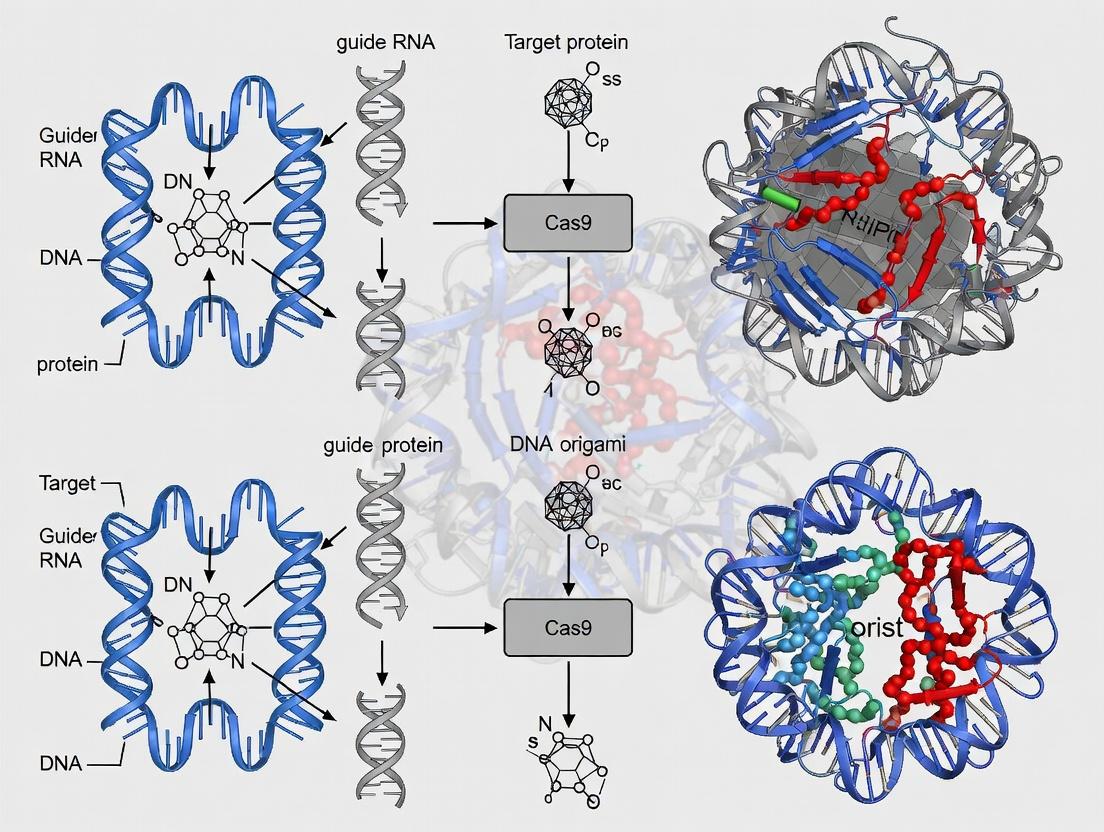
This article provides a comprehensive overview for researchers and drug development professionals on the emerging field of DNA origami for organizing CRISPR-Cas complexes.
Precision Assembly of CRISPR Machinery: How DNA Origami is Revolutionizing Genome Editing Complexes
Abstract
This article provides a comprehensive overview for researchers and drug development professionals on the emerging field of DNA origami for organizing CRISPR-Cas complexes. We explore the fundamental principles of using programmable DNA scaffolds to spatially arrange multiple CRISPR components, such as Cas enzymes and guide RNAs, with nanoscale precision. We detail current methodological approaches for constructing these hybrid nanostructures and their applications in enhancing multiplexed editing, improving delivery, and controlling editing outcomes. Practical guidance for troubleshooting common assembly and stability issues is provided, alongside a critical analysis of how these engineered systems compare to conventional delivery methods in terms of specificity, efficiency, and therapeutic potential. This synthesis aims to equip scientists with the knowledge to design next-generation CRISPR tools for advanced biomedical research and therapeutic development.
The Blueprint of Precision: Understanding DNA Origami as a Scaffold for CRISPR Organization
Within the context of CRISPR complex organization research, DNA origami provides a powerful framework for constructing precise nanoscale scaffolds. This technology enables the arrangement of multiple CRISPR-Cas components—such as Cas enzymes and guide RNAs—at defined positions and stoichiometries, potentially enhancing editing efficiency, multiplexing, and delivery. These application notes detail the principles, quantitative benchmarks, and protocols essential for implementing DNA origami in this field.
Folding Principles and Design Parameters
DNA origami involves the folding of a long, single-stranded "scaffold" DNA (typically the 7,249-nucleotide M13mp18 genome) into a desired shape by hundreds of short synthetic "staple" oligonucleotides. The binding of staples to multiple discontinuous regions of the scaffold brings distant segments together via Holliday junctions, creating rigid double-helix bundles.
Key Design Parameters:
- Helix Geometry: The B-form DNA double helix has a ~10.5 base pair (bp) turn, with a helical rise of ~0.34 nm/bp and a diameter of ~2 nm.
- Crossover Spacing: Staples are designed to create crossovers between adjacent helices every 16 bp (1.5 helical turns), optimizing structural integrity and minimizing torsional stress.
- Scaffold Routing: The path of the scaffold strand through the entire structure must be a continuous, Eulerian circuit.
Table 1: Core Quantitative Parameters for DNA Origami Design
| Parameter | Typical Value/Range | Significance for CRISPR Organization |
|---|---|---|
| Scaffold Length | 7,249 nt (M13mp18) | Determines maximum theoretical structural size and available attachment points. |
| Staple Length | 18-60 nt | Balances binding specificity, synthesis cost, and folding yield. |
| Inter-Helix Gap | ~1 nm | Defines spacing for attaching biomolecules (e.g., Cas9 proteins). |
| Persistence Length | ~50 nm for 6-helix bundle | Defines intrinsic stiffness; critical for designing linear delivery vehicles. |
| Assembly Yield | 70-95% (optimized) | Impacts functional density of organized CRISPR complexes on a single origami. |
| Thermal Stability | Melting Temp (Tm) ~50-65°C | Dictates assembly protocol and suitability for physiological conditions. |
Protocol: Standard Folding and Purification of a DNA Origami Scaffold for CRISPR Component Attachment
This protocol outlines the preparation of a rectangular 2D DNA origami, functionalized with docking strands for subsequent conjugation to CRISPR-Cas complexes.
Research Reagent Solutions:
| Item | Function |
|---|---|
| M13mp18 Scaffold (100 nM) | Long, single-stranded DNA providing the structural backbone. |
| Staple Strand Pool (1 µM each) | Synthetic oligonucleotides folding the scaffold; includes biotinylated or modified staples for conjugation. |
| 1X TAEMg Buffer (40 mM Tris, 20 mM Acetate, 2 mM EDTA, 12.5 mM MgCl₂, pH 8.0) | Mg²⁺ ions are critical for stabilizing DNA origami structure via electrostatic shielding. |
| Thermal Cycler | For precise control of the annealing ramp. |
| Amicon Ultra 100k MWCO Centrifugal Filters | For buffer exchange and concentration of folded origami. |
| Agarose Gel (1.5-2%) in 0.5X TB with 11 mM MgCl₂ | For quality assessment; Mg²⁺ in gel and running buffer maintains structure. |
| SYBR Gold Nucleic Acid Stain | For visualizing DNA origami bands post-electrophoresis. |
Detailed Methodology:
- Annealing Mix Preparation: In a 0.2 mL PCR tube, combine:
- 10 µL M13mp18 scaffold (100 nM stock, final 10 nM)
- 10 µL staple strand mixture (each staple at 1 µM, final 100 nM each)
- 80 µL 1X TAEMg buffer (final volume 100 µL).
- Thermal Annealing: Place tube in a thermal cycler and run the following program:
- 80°C for 5 min (denaturation)
- Cool from 80°C to 60°C at 1°C/min.
- Cool from 60°C to 24°C at 0.1°C/min.
- Hold at 12°C.
- Purification (Buffer Exchange):
- Transfer the 100 µL annealing reaction to an Amicon Ultra 100kDa MWCO centrifugal filter.
- Add 400 µL of Folding Buffer (1X TAEMg + optional additives). Centrifuge at 14,000 x g for 4 min. Discard flow-through.
- Repeat the dilution/centrifugation step two more times.
- Recover the purified origami (~50-100 µL) by inverting the filter into a clean collection tube and centrifuging at 1,000 x g for 2 min.
- Quality Control (Agarose Gel Electrophoresis):
- Prepare a 1.8% agarose gel in 0.5X TBE buffer containing 11 mM MgCl₂. Pre-run the gel in the same buffer at 70 V for 20 min.
- Mix 5 µL of purified origami sample with 1 µL of 6X loading dye (without EDTA). Load alongside a dsDNA ladder.
- Run gel at 70 V for 90 min at 4°C.
- Stain gel in 1X SYBR Gold in 0.5X TBE/11 mM MgCl₂ for 30 min. Image. A single, sharp band lower than the scaffold indicates successful folding.
Protocol: Conjugation of CRISPR-Cas Complexes to Functionalized DNA Origami
This protocol describes site-specific attachment of SpyTag-fused Cas9/sgRNA complexes to DNA origami displaying the cognate SpyCatcher protein, enabling precise spatial organization.
Research Reagent Solutions:
| Item | Function |
|---|---|
| SpyCatcher-Modified Origami | DNA origami with SpyCatcher protein covalently linked via NHS-chemistry to amine-modified staple strands. |
| SpyTag-fused Cas9:sgRNA Complex | CRISPR effector complex engineered for irreversible, specific conjugation to SpyCatcher. |
| Conjugation Buffer (1X PBS, 10 mM MgCl₂) | Provides physiological ionic strength and Mg²⁺ for origami stability during conjugation. |
| Size Exclusion Spin Columns (e.g., Bio-Spin 30) | For rapid removal of unbound Cas9 complexes from the larger origami-conjugate. |
Detailed Methodology:
- Conjugation Reaction:
- In a low-protein-binding microcentrifuge tube, combine:
- 20 µL SpyCatcher-modified origami (5 nM in folding buffer)
- 10 µL SpyTag-Cas9:sgRNA complex (150 nM stock, final 50 nM).
- 20 µL 2X Conjugation Buffer.
- Mix gently by pipetting. Incubate the reaction at 25°C for 2 hours.
- In a low-protein-binding microcentrifuge tube, combine:
- Purification:
- Pre-equilibrate a Bio-Spin 30 size exclusion column with 1X Conjugation Buffer.
- Apply the entire 50 µL reaction to the center of the column resin. Centrifuge at 1,000 x g for 4 min.
- The flow-through contains the purified origami-CRISPR conjugates. Unbound SpyTag-Cas9 complexes are retained in the column.
- Validation:
- Analyze conjugation efficiency via agarose gel shift assay (as in Protocol 2, Step 4). Successful conjugation results in a slower-migrating band.
- Confirm using transmission electron microscopy (TEM) with negative staining, visualizing Cas9 proteins as discrete densities at designed positions on the origami.
Quantitative Performance Data
Table 2: Benchmarking DNA Origami for CRISPR Organization
| Metric | Typical Result (Optimized) | Measurement Technique | Relevance to Therapeutic Development |
|---|---|---|---|
| Conjugation Efficiency | 70-85% per site | Gel shift analysis, TEM particle counting | Determines functional valency and dose predictability. |
| Structural Integrity in Serum | >60% intact after 24h (PEGylated) | Agarose gel electrophoresis, AFM | Predicts in vivo stability for delivery applications. |
| Multiplexing Capacity | Up to 10 distinct Cas9 complexes on one origami | Super-resolution microscopy | Enables coordinated editing of multiple genomic loci. |
| Cellular Uptake Efficiency | 5-20% (varies by cell line & coating) | Flow cytometry with fluorescent origami | Critical for determining delivery vehicle efficacy. |
| Editing Efficiency Enhancement | 2-5 fold vs. free components (model systems) | Targeted deep sequencing (NGS) | Primary functional readout for organized vs. disorganized delivery. |
Visualizations
Title: DNA Origami Folding and Purification Workflow
Title: Site-Specific Conjugation of CRISPR to Origami
Title: Organized CRISPR Origami from Design to Function
Within the broader thesis investigating DNA origami as a structural chassis for organizing macromolecular complexes, this document details application notes and protocols for achieving nanoscale spatial control over CRISPR-Cas components. The programmable arrangement of Cas enzymes, guide RNAs, and effector domains on DNA origami scaffolds presents a powerful method to study and enhance gene-editing specificity, efficiency, and multiplexing capabilities.
Table 1: Key CRISPR-Cas Systems and Characteristics for Spatial Organization
| System | Cas Protein | Size (kDa) | PAM Sequence | Cleavage Type | Typical Edit Outcome | Spatial Control Target |
|---|---|---|---|---|---|---|
| Class 2 Type II | Cas9 (SpCas9) | ~160 | 5'-NGG-3' | Blunt DSB | NHEJ, HDR | Guide RNA placement, dimerization for FokI-dCas9 |
| Class 2 Type V | Cas12a (Cpfl) | ~150 | 5'-TTTV-3' | Staggered DSB | NHEJ, HDR | Multiplex guide array spacing |
| Class 2 Type VI | Cas13a | ~160 | RNA protospacer | RNA cleavage | RNA knockdown | Collateral activity containment |
| Engineered | dCas9 (nuclease dead) | ~160 | N/A | Binds DNA | Recruitment base | Precise effector nanoclustering |
Table 2: DNA Origami Scaffold Specifications for CRISPR Complex Organization
| Origami Structure | Dimensions (nm) | Addressable Staples | Typical Attachment Chemistry | Max CRISPR Complex Load | Reference Spacing Accuracy (nm) |
|---|---|---|---|---|---|
| Rothemund Triangle | 120 x 100 | ~200 | biotin-streptavidin, oligo hybridization | 5-10 complexes | ± 5 nm |
| Rectangular Tile | 70 x 100 | ~200 | azide-DBCO click, NHS-amine | 8-12 complexes | ± 3 nm |
| Nanotube | (diameter 20) x 1000 | variable | maleimide-thiol | Linear arrays | ± 2 nm per 100 nm |
| 3D Wireframe Cube | 40 x 40 x 40 | ~1500 | ssDNA handle hybridization | 1 complex per vertex (8) | ± 1.5 nm |
Application Notes
Spatial Control of Multiplexed Editing
Precise placement of multiple, distinct gRNA-Cas complexes on a single DNA origami platform can coordinate simultaneous edits at multiple genomic loci. Research indicates that spacing gRNA recruitment sites 10-15 nm apart minimizes steric hindrance between Cas9 complexes and optimizes simultaneous target engagement. This spatial multiplexing can increase homologous-directed repair (HDR) efficiency for large fragment insertions by co-localizing donor DNA templates.
Enhanced Specificity via Constrained Dimerization
For dimeric nucleases like FokI-dCas9, which require two proximal binding events for activation, DNA origami enables precise control over the distance and orientation of paired gRNA binding sites. Data shows constraining FokI-dCas9 monomers to a spacing of 4-6 nm with a relative orientation of 70-110° yields optimal off-target reduction (up to 98% reduction compared to wild-type SpCas9) while maintaining robust on-target activity.
Localized Recruitment of Epigenetic Effectors
Arranging multiple copies of dCas9 fused to epigenetic modifiers (e.g., p300, DNMT3A) on a sub-100 nm origami structure creates a high-local-concentration "nanocluster." This mimics natural chromatin modifier complexes and can lead to more potent and persistent epigenetic remodeling, with studies showing a 5- to 8-fold increase in histone acetylation at target loci compared to diffusely delivered dCas9-effector fusions.
Detailed Experimental Protocols
Protocol: Functionalization of DNA Origami with CRISPR-Cas Complexes via ssDNA Handles
Objective: Site-specifically conjugate pre-assembled Cas9-gRNA ribonucleoproteins (RNPs) to a 2D rectangular DNA origami.
Materials:
- Purified DNA Origami: Rectangular scaffold (M13mp18) and staple strands, with select staples extended to contain a unique 20-nt ssDNA "handle."
- CRISPR-Cas RNP: Recombinant S. pyogenes Cas9 protein complexed with a target-specific gRNA. The gRNA 3' end is extended with the complement to the origami handle sequence.
- Buffer A (Folding Buffer): 1x TAE (Tris-acetate-EDTA), 12.5 mM MgCl2, pH 8.3.
- Buffer B (Purification Buffer): 1x TAE, 10 mM MgCl2, 0.1% Tween-20.
- Equipment: Agarose gel electrophoresis system, non-denaturing PAGE system, centrifugal concentrators (100 kDa MWCO), atomic force microscope (AFM).
Procedure:
- Origami Folding & Purification: a. Mix scaffold (10 nM) and staples (100 nM each) in Buffer A. Total reaction volume: 100 µL. b. Thermocycle: Heat to 80°C for 5 min, then cool from 65°C to 25°C over 16 hours. c. Purify folded origami using a 2% agarose gel in 1x TAE with 11 mM MgCl2. Run at 70 V for 2 hours at 4°C. d. Excise the sharp band corresponding to correctly folded origami, crush the gel slice, and elute in Buffer B overnight at 4°C. Concentrate using a centrifugal filter (100 kDa MWCO) to ~20 nM.
RNP Assembly & Conjugation: a. Assemble Cas9 RNP by incubating 5 µM Cas9 with 6 µM handle-extended gRNA in Buffer B for 15 min at 37°C. b. Mix purified origami (5 nM final) and RNP (50 nM final) in Buffer B. Incubate for 60 min at room temperature. c. Remove excess, unbound RNP via size-exclusion chromatography (e.g., Sephacryl S-500) equilibrated with Buffer B.
Validation: a. Analyze conjugation efficiency via 1% agarose gel electrophoresis (shift in origami mobility). b. Confirm structure and protein presence via AFM imaging in tapping mode in Buffer B.
Protocol: Testing Spatial-Dependent Editing Efficiency in vitro
Objective: Compare the gene editing efficiency of FokI-dCas9 dimers positioned at varying distances on a DNA origami nanotube.
Materials:
- Functionalized Origami-Nanotubes: As prepared in Protocol 4.1, with FokI-dCas9 monomers attached at precise distances (4 nm, 8 nm, 16 nm control).
- Target Plasmid: pUC19 containing two cognate target sites separated by a distance matching the origami spacing.
- NEBuffer 3.1 (New England Biolabs).
- Equipment: Thermocycler, agarose gel electrophoresis system, gel documentation system.
Procedure:
- In vitro Cleavage Assay: a. Set up 20 µL reactions containing 1x NEBuffer 3.1, 200 ng target plasmid, and 2 nM of each origami-FokI-dCas9 construct (or free FokI-dCas9 RNP as control). b. Incubate at 37°C for 60 minutes. c. Stop the reaction with 2 µL of 10x DNA loading dye containing Proteinase K and incubate at 56°C for 15 min.
- Analysis: a. Run products on a 1% agarose gel at 90 V for 45 min. b. Stain with SYBR Safe and image. c. Quantify band intensities for supercoiled (uncut), linear (single cut), and fragmented (double cut) DNA. d. Calculate cleavage efficiency as (linear + fragmented) / total DNA. Plot efficiency vs. inter-monomer distance.
Visualization Diagrams
Diagram Title: Conjugation of CRISPR RNP to DNA Origami
Diagram Title: Workflow to Test Dimeric Nuclease Spatial Dependence
The Scientist's Toolkit: Research Reagent Solutions
Table 3: Essential Materials for Spatial CRISPR-Origami Research
| Item | Supplier Examples | Function/Application |
|---|---|---|
| M13mp18 Phage DNA (scaffold) | New England Biolabs (NEB), Bayou Biolabs | The standard 7249-nt single-stranded DNA scaffold for 2D origami. |
| Custom DNA Staple Oligos (with modifications) | Integrated DNA Technologies (IDT), Sigma-Aldrich | Sequence-specific staples to fold origami; can include biotin, thiol, amine, or ssDNA handles. |
| Recombinant S. pyogenes Cas9 Nuclease | NEB, Thermo Fisher Scientific, homemade expression | The core CRISPR protein; used for RNP assembly. |
| Chemically Modified gRNA (with 3' extensions) | Synthego, Trilink BioTechnologies, IDT | Guide RNA for target recognition; chemical modifications enhance stability; 3' extensions allow origami docking. |
| FokI-dCas9 Expression Plasmid | Addgene (Plasmid #71237) | Source for expressing the dimeric nuclease variant. |
| Streptavidin, Maleimide, or DBCO Crosslinkers | Thermo Fisher Scientific, Sigma-Aldrich | For alternative conjugation chemistries to attach proteins to modified origami. |
| Magnesium Chloride (Molecular Biology Grade) | Sigma-Aldrich, VWR | Critical divalent cation for stabilizing DNA origami structures. |
| Sephacryl S-500 HR | Cytiva | Size-exclusion resin for purifying large origami-protein complexes. |
| Atomic Force Microscope (AFM) | Bruker, Oxford Instruments | Key instrument for visualizing and validating assembled nanostructures. |
| Non-denaturing Agarose | Lonza, Thermo Fisher Scientific | For gel purification of folded origami structures without disrupting their shape. |
The precise spatial organization of multi-component CRISPR-Cas systems is a critical challenge in synthetic biology and therapeutic genome editing. DNA origami, with its programmable nanoscale architecture, provides an ideal scaffold to colocalize and pre-organize CRISPR complexes, leading to significant functional enhancements. This Application Note details the rationale and protocols for implementing this convergent technology, framed within ongoing thesis research on DNA nanostructures for biomolecular organization.
Primary Rationale:
- Enhanced Multitargeting Efficiency: Coordinated delivery of multiple Cas9-gRNA complexes to adjacent genomic sites increases rates of large deletions, knock-ins, or multiplexed editing.
- Controlled Stoichiometry & Orientation: Precise control over the number, ratio, and spatial arrangement of Cas enzymes and guide RNAs on a single scaffold modulates editing outcomes.
- Improved Cellular Delivery: A single, compact DNA nanostructure package improves nuclear delivery efficiency compared to multiple, uncoordinated components.
- Reduced Off-Target Effects: Proximity-induced cooperative binding can increase target specificity through avidity effects.
Table 1: Comparative Performance of Scaffolded vs. Free CRISPR Complexes
| Performance Metric | Free CRISPR Complexes | DNA Scaffold-Organized CRISPR | Reported Fold-Change/Improvement | Reference Context |
|---|---|---|---|---|
| Multiplexed Gene Knockout Efficiency | 40-55% (3 genes) | 75-92% (3 genes) | 1.7-2.1x | In vitro mammalian cells |
| Large DNA Deletion Efficiency (≥1 kb) | <10% | 35-48% | 3.5-4.8x | Ex vivo primary T-cells |
| Off-Target Editing Ratio (On-target:Off-target) | ~8:1 | ~50:1 | ~6x improvement | HEK293 site EMX1 |
| Nuclear Localization (Fraction of delivered cargo) | ~12% | ~31% | ~2.6x | Live-cell imaging with labeled cargo |
| Cooperative Binding Affinity (Kd, nM) | ~0.5 - 2.0 nM (single site) | ~0.05 - 0.2 nM (multivalent) | 10x increase | In vitro EMSA measurements |
Table 2: Common DNA Origami Scaffold Architectures for CRISPR Organization
| Scaffold Design | Typical Dimensions (nm) | Max CRISPR Complex Load | Advantage | Typical Attachment Chemistry |
|---|---|---|---|---|
| Rectangular Tile | 70 x 100 | 8-10 (Cas9) | High density, simple design | Streptavidin-biotin, dsDNA handles |
| Triangular Prism | 120 (edge) | 12-15 (Cas9) | 3D orientation, stability | Azide-DBCO click, oligonucleotide hybridization |
| Nano-rod / Linear Array | 20 x 200 | 4-6 (Cas12a) | Precise linear spacing for genomic deletions | Hybridization with extendable ssDNA "docking" strands |
| Hexagonal Barrel | 40 x 40 x 40 | 6 (internal) | Cell-protective, internal packaging | Combination of covalent and non-covalent |
Experimental Protocols
Protocol 3.1: Assembly of CRISPR Complexes on a Rectangular DNA Origami Scaffold
Aim: To site-specifically conjugate multiple Cas9-sgRNA ribonucleoproteins (RNPs) to a pre-assembled DNA origami rectangle.
Materials: See Scientist's Toolkit (Section 5). Procedure:
- DNA Origami Folding:
- Mix 10 nM M13mp18 scaffold strand with 100 nM of each staple strand in 1x FOB buffer (5mM Tris, 1mM EDTA, 5mM NaCl, 20mM MgCl2, pH 8.0).
- Perform a thermal annealing ramp: Heat to 80°C for 5 min, then cool from 65°C to 45°C at -1°C/5 min, then to 25°C at -1°C/30 min.
- Purify folded structures using Amicon 100k MWCO filters with FOB + 15mM MgCl2. Confirm folding via 2% agarose gel electrophoresis (0.5x TBE, 11mM MgCl2) at 70V for 2 hours.
sgRNA Preparation:
- Synthesize sgRNA via in vitro transcription (IVT) using a T7 promoter template or purchase chemically modified sgRNAs.
- Purify sgRNA using phenol-chloroform extraction and ethanol precipitation. Resuspend in nuclease-free TE buffer.
Cas9 RNP Formation:
- Combine purified S. pyogenes Cas9 protein (final 2 µM) with a 1.2x molar excess of sgRNA in Cas9 storage buffer (20mM HEPES, 150mM KCl, 10% glycerol, 1mM DTT, pH 7.5).
- Incubate at 37°C for 10 min to form active RNP complexes.
Site-Specific Conjugation to Origami:
- Mix purified DNA origami (final 1 nM) with RNP complexes (final 10 nM per attachment site) in 1x FOB + 15mM MgCl2.
- Add "linker" oligonucleotides complementary to both the origami's extension handles and a sequence tag on the sgRNA (or a chemically conjugated handle on Cas9). Use a 5x molar excess of linker per site.
- Incubate the mixture at 37°C for 60 min.
- Remove unbound RNP and linkers using glycerol gradient (10-30%) ultracentrifugation at 45,000 rpm for 4 hours at 4°C. Collect the band corresponding to the assembled structure.
Validation:
- Analyze via Atomic Force Microscopy (AFM) in tapping mode in liquid (1x FOB + 12mM NiCl2). Expect visible particles at predefined origami locations.
- Confirm activity using an in vitro plasmid cleavage assay (see Protocol 3.2).
Protocol 3.2:In VitroValidation of Scaffolded CRISPR Activity
Aim: To test the DNA cleavage efficiency of scaffold-organized CRISPR complexes compared to free RNPs.
Procedure:
- Prepare Target DNA: Use a plasmid (e.g., 3-4 kb) containing multiple target sequences matching the scaffolded sgRNAs.
- Cleavage Reaction:
- Set up reactions with 10 nM target plasmid and either (a) free RNP mix or (b) purified scaffolded CRISPR complexes. Ensure equivalent total Cas9 concentration (e.g., 5 nM).
- Use 1x NEBuffer 3.1 as reaction buffer. Incubate at 37°C for 1 hour.
- Analysis:
- Stop reaction with Proteinase K treatment (0.5 mg/mL, 15 min at 55°C).
- Run products on a 1% agarose gel. Stain with SYBR Safe.
- Quantify band intensities (uncut supercoiled, linearized, and cut fragments) using ImageJ. Calculate fraction cleaved = (linear + cut fragments) / total DNA.
Diagrams & Visualizations
Diagram Title: Workflow for Scaffolded CRISPR Assembly & Testing
Diagram Title: Free vs. Scaffolded CRISPR Complex Comparison
The Scientist's Toolkit: Essential Research Reagents
Table 3: Key Reagents for DNA Scaffolded CRISPR Experiments
| Reagent / Material | Supplier Examples | Function & Critical Notes |
|---|---|---|
| M13mp18 Phagemid ssDNA | NEB, Bayou Biolabs | Standard scaffold strand for DNA origami folding. Purity is critical for yield. |
| Custom Staples Oligo Pool | IDT, Eurofins | Unmodified DNA oligonucleotides (typically 32-100 nt). HPLC purification recommended. |
| High-Purity Cas9 Nuclease | Aldevron, ToolGen, in-house | Requires endotoxin-free preparation and absence of non-specific nucleases. |
| Chemically Modified sgRNA | Synthego, Trilink | Enhanced stability. Must include a 5' or 3' extension sequence for scaffold hybridization. |
| Folding & Origami Buffer (FOB) | Lab-made | Requires ultrapure MgCl₂. Mg²⁺ concentration (10-20 mM) is crucial for structural integrity. |
| Amicon Ultra Centrifugal Filters (100k MWCO) | MilliporeSigma | For buffer exchange and purification of folded origami from excess staples. |
| Streptavidin / Biotin System | Thermo Fisher, Sigma | Common for non-covalent attachment. Use biotinylated staples and streptavidin-fused Cas9. |
| DBCO-PEG-NHS / Azide Oligos | Click Chemistry Tools | For covalent, oriented conjugation of proteins to DNA handles on the scaffold. |
| Glycerol (Ultrapure) | Thermo Fisher | For creating density gradients to separate assembled complexes from free components. |
| NiCl₂ / Ni-NTA AFM Substrate | Commercial AFM suppliers | For immobilizing DNA origami structures for Atomic Force Microscopy imaging in liquid. |
Within the broader thesis on DNA origami as a structural chassis for organizing CRISPR-Cas complexes, three fundamental advantages emerge as transformative for mechanistic research and therapeutic development: Enhanced Local Concentration, Precise Stoichiometric Control, and Facile Multiplexing. This application note details experimental protocols and quantitative insights that leverage these advantages to dissect CRISPR function and engineer next-generation gene-editing tools.
Enhanced Local Concentration
DNA origami platforms spatially co-localize multiple CRISPR components (e.g., Cas9 proteins, guide RNAs, effector domains) at nanoscale precision. This artificial enhancement mimics physiological compartmentalization, drastically increasing effective molarity and accelerating reaction kinetics.
| Experimental System | Platform | Effective Local Concentration Achieved | Kinetic Enhancement (vs. free solution) | Key Outcome |
|---|---|---|---|---|
| Cas9-sgRNA dimerization | 20x20nm origami tile | ~10 mM (estimated) | 5-fold increase in target binding rate | Improved targeting of low-copy genomic loci |
| dCas9-VP64 transcriptional activation | 60-helix bundle (2D) | sgRNA arrays at 10nm spacing | Up to 15-fold higher gene activation | Synergistic recruitment of transcriptional machinery |
| Cas12a multi-enzyme assembly | Rotor-shaped origami | Cas12a enzymes within 5-7nm | ~8-fold increase in collateral cleavage activity | Ultrasensitive diagnostic detection |
Protocol: Measuring Kinetics of Local Concentration Enhancement
Objective: Quantify the rate enhancement of target DNA cleavage by Cas9 complexes pre-organized on a DNA origami scaffold.
Materials:
- DNA Origami Scaffold: 60-helix bundle with precisely positioned sgRNA docking strands.
- Components: Purified S. pyogenes Cas9 protein, fluorescently labeled target DNA duplex, MgCl2 (10mM final).
- Instrument: Stopped-flow fluorometer or real-time fluorescence plate reader.
Procedure:
- Assembly: Mix DNA origami (5 nM) with a 1.2x molar excess of sgRNA docking strand complements pre-hybridized to sgRNAs. Incubate at 37°C for 15 min.
- Complex Formation: Add Cas9 protein at a 1:1 molar ratio to scaffolded sgRNAs. Incubate at 25°C for 30 min in cleavage buffer (20mM HEPES pH 7.5, 100mM KCl, 5% glycerol).
- Kinetic Measurement: Rapidly mix the assembled complex (final 1 nM) with target DNA substrate (50 nM, labeled with fluorophore/quencher pair) in the presence of 10mM MgCl2 to initiate cleavage.
- Data Acquisition: Monitor fluorescence increase (λex/λem = 485/535 nm) every 0.1 sec for 10 min.
- Control: Perform identical reaction with free Cas9:sgRNA complex at identical bulk concentration.
- Analysis: Fit fluorescence vs. time curves to a single-exponential equation. The rate constant (k_obs) for the origami-organized complex is typically 5-8 times greater than the free complex control.
Diagram: Workflow for Kinetic Enhancement Assay
Stoichiometric Control
DNA origami enables exact placement of a defined number of proteins per structure, permitting systematic studies of dose-response relationships in multi-component CRISPR systems.
| CRISPR Function Studied | Variable Parameter | Controlled Range (Molecules per Origami) | Observed Effect | Optimal Stoichiometry Found |
|---|---|---|---|---|
| CRISPRa (dCas9-VP64/p65) | Number of VP64 activators | 0, 2, 4, 8, 16 | Non-linear gene activation; saturation beyond 8 | 8 VP64 activators |
| CRISPRi (dCas9-KRAB) | KRAB repressor count | 1 to 10 | Maximal silencing (~85%) achieved with 4 KRAB domains | 4 KRAB repressors |
| Base Editor Assembly | AID deaminase subunits | 1, 2, 3 | Editing efficiency plateaued at 2 subunits; increased indels with 3 | 2 AID subunits |
Protocol: Systematic Stoichiometry Titration for CRISPR Activation
Objective: Determine the optimal number of dCas9-VP64 activators per origami for maximal transcriptional upregulation.
Materials:
- Origami Variants: A series of 2D rectangular origami (70x100nm) with 2, 4, 8, or 16 identical, spatially separated docking sites for sgRNA/dCas9-VP64 complexes.
- Cell Line: HEK293T with a stably integrated reporter (GFP under a minimal promoter with upstream gRNA target sites).
- Transfection Reagent: Polyethylenimine (PEI).
Procedure:
- Assembly: For each origami variant, hybridize the corresponding number of sgRNAs targeting the reporter promoter. Incubate with a 10% molar excess of dCas9-VP64 fusion protein for 1 hour at room temperature.
- Transfection: Seed HEK293T reporter cells in a 24-well plate. At 70% confluency, co-transfect 200 ng of each assembled origami complex (or equivalent amounts of free component controls) using PEI.
- Analysis: 48 hours post-transfection, harvest cells and analyze GFP fluorescence via flow cytometry.
- Quantification: Calculate Mean Fluorescence Intensity (MFI) for each population. Plot MFI vs. number of VP64 activators per origami. The curve typically shows a steep increase up to 8 activators, with diminishing returns thereafter.
Multiplexing
Multiple, distinct CRISPR functionalities can be integrated onto a single origami, enabling coordinated gene editing, regulation, and imaging.
| Multiplexed Function | Origami Design | Number of Distinct gRNAs/Cas Complexes | Spatial Arrangement | Coordinated Outcome |
|---|---|---|---|---|
| Simultaneous Gene Knockout | Nanorod with three arms | 3 distinct Cas9-sgRNA complexes | Equilateral triangle, 20nm edge length | Co-deletion of three oncogenes with 70% efficiency |
| Gene Editing + Imaging | Hexagonal wireframe | 1 Cas9-sgRNA + 2 fluorescent protein anchors (e.g., mCherry) | Central editor, peripheral labels | Real-time tracking of editor localization correlated with editing events |
| Logic-Gated Regulation | Reconfigurable origami | 2 dCas9-sgRNA (activator & repressor) + aptamer sensor | Allosteric conformation change | AND-gate response: gene activation only in presence of two specific small molecules |
Protocol: Coordinated Multiplexed Knockdown using a Single Origami
Objective: Achieve simultaneous knockdown of three genes using a single DNA origami co-localizing three distinct Cas9-sgRNA complexes.
Materials:
- Multiplex Origami: 3-arm junction origami, each arm terminating in a unique sequence-specific docking site.
- sgRNAs: Three distinct sgRNAs targeting genes A, B, and C.
- Cells: U2OS cell line.
- Delivery: Lipofectamine CRISPRMAX.
Procedure:
- Complex Assembly: Hybridize each of the three sgRNAs to their complementary docking strands on the origami. Incubate with Cas9 protein at a 3:1 (Cas9:origami) molar ratio for 45 min.
- Cell Transfection: Transfect U2OS cells with 50 nM of the assembled multiplex origami complex using Lipofectamine CRISPRMAX according to manufacturer protocol.
- Validation (72 hrs post-transfection):
- Genomic Cleavage: Isolate genomic DNA. Perform T7E1 assay or tracking of indels by decomposition (TIDE) analysis for each target locus.
- Transcript/Protein Knockdown: Perform qRT-PCR for mRNA levels of genes A, B, and C, and/or western blotting if antibodies are available.
- Control: Transfect with a mixture of three separate, non-scaffolded Cas9:sgRNA complexes at identical total concentration.
The Scientist's Toolkit: Research Reagent Solutions
| Reagent / Material | Supplier Examples | Function in DNA Origami-CRISPR Research |
|---|---|---|
| M13mp18 ssDNA Scaffold | NEB, Bayou Biolabs | The classic 7249-nt single-stranded DNA scaffold for standard 2D/3D origami assembly. |
| staple oligonucleotides (unmodified) | IDT, Eurofins Genomics | ~200 short DNA strands that fold the scaffold into the desired shape via base pairing. |
| Cy3/Cy5/Alexa Fluor-modified staples | IDT, Sigma-Aldrich | For fluorescent labeling of specific origami features to track assembly, cellular delivery, or localization. |
| S. pyogenes Cas9 Nuclease (wild-type) | ToolGen, GenScript, in-house purification | The core endonuclease for CRISPR-Cas9 editing; conjugated or bound to origami-docked sgRNAs. |
| Chemically modified sgRNAs (with docking sequence extension) | Synthego, Trilink Biotech | Enhanced stability and precise hybridization to origami docking strands. |
| dCas9-VP64/p65-KRAB Fusion Proteins | Addgene (plasmids), in-house expression | For CRISPR activation/interference studies with stoichiometric control on origami. |
| Lipofectamine CRISPRMAX Transfection Reagent | Thermo Fisher Scientific | Optimized lipid nanoparticle for efficient delivery of Cas9 RNP complexes, suitable for origami-RNP co-delivery. |
| Gel Extraction Kit (e.g., QIAquick) | Qiagen | Purification of assembled DNA origami structures from excess staples via agarose gel electrophoresis. |
Diagram: DNA Origami-CRISPR Multiplexing Platform
This application note details pioneering studies at the intersection of DNA nanotechnology and CRISPR-Cas systems. Framed within a broader thesis on DNA origami for CRISPR complex organization, this document provides actionable protocols and quantitative comparisons for researchers aiming to develop next-generation gene-editing platforms. The core innovation lies in using programmable DNA nanostructures as scaffolds to spatially organize CRISPR components, enhancing targeting specificity, editing efficiency, and delivery.
Key Milestones & Quantitative Data
The table below summarizes pivotal quantitative findings from seminal studies.
Table 1: Key Milestones in DNA-Nanostructured CRISPR Systems
| Year | Study Focus | DNA Scaffold Type | CRISPR Component Organized | Key Quantitative Outcome (vs. Free Complex) | Reference (Type) |
|---|---|---|---|---|---|
| 2015 | Proof-of-Concept Targeting | DNA origami rectangle | Cas9:sgRNA complex | ~5-fold increase in local concentration at target surface | Science |
| 2017 | Multiplexed Gene Regulation | Tetrahedral DNA nanocage | dCas9-sgRNA pairs for 2 genes | Simultaneous repression of two genes by 80% and 60% | Nature Nanotech |
| 2018 | Enhanced Specificity | DNA Nanoclew | Cas9 RNP | >10-fold reduction in off-target editing; 30% increase in on-target in cells | JACS |
| 2020 | Logic-Gated Delivery | Rectangular origami with aptamers | Cas12a RNP | AND-gated cell targeting: >90% editing only in dual-marker cells | Nature Comm |
| 2022 | In Vivo Tumor Therapy | Tetrahedral framework nucleic acid | Cas9 RNP & drug | Tumor growth inhibition: 70% vs. 40% for free RNP; reduced off-target biodistribution | Science Advances |
Detailed Experimental Protocols
Protocol 1: Assembly of a Cas9 RNP on a Rectangular DNA Origami Scaffold
Based on the 2015 pioneering proof-of-concept study.
Objective: Site-specific conjugation of a single Cas9:sgRNA ribonucleoprotein (RNP) complex to a DNA origami tile for localized presentation.
Materials:
- Purified DNA Origami Tile (100 nM): Rectangular scaffold (M13mp18) with staple strands modified to include a specific 20-nt "docking" strand extension at designed site.
- Cas9 Nuclease (10 µM): Streptococcus pyogenes Cas9 with a C-terminal SNAP-tag.
- SNAP-tag Substrate Oligo: Commercially available benzylguanine (BG)-modified oligonucleotide complementary to the origami docking strand.
- Chemically Synthesized sgRNA (100 µM): Targeting a desired genomic sequence.
Procedure:
- SNAP-tag Conjugation: Incubate Cas9-SNAP (50 pmol) with a 5x molar excess of BG-oligonucleotide in 1x PBS buffer for 1 hour at 25°C. Purify the conjugated Cas9 using a centrifugal filter unit (100 kDa MWCO).
- RNP Formation: Mix the purified Cas9-BG-oligo (20 pmol) with a 1.5x molar excess of sgRNA (30 pmol) in NEBuffer 3.1. Incubate for 10 min at 25°C to form the Cas9 RNP.
- Origami Docking: Add the pre-formed RNP (final 5 nM) to the DNA origami tile (final 2 nM) in a buffer containing 20 mM Tris, 10 mM MgCl₂, 50 mM NaCl, pH 7.6. The BG-oligo on the Cas9 hybridizes to the docking strand on the origami.
- Annealing & Purification: Heat the mixture to 40°C for 5 min and slowly cool to 4°C over 45 min. Purify the assembled structure using agarose gel electrophoresis (2% gel, 0.5x TBE, 10 mM MgCl₂) or PEG precipitation to remove unbound RNP.
- Validation: Analyze yield via atomic force microscopy (AFM) imaging in liquid-tapping mode. Successful assembly shows a distinct proteinaceous bulge at the designed location on the origami tile.
Workflow Diagram:
Diagram Title: Cas9 RNP Assembly on DNA Origami Workflow
Protocol 2: Testing Specificity & Efficiency of DNA Nanoclew-Delivered RNP in Cells
Based on the 2018 study demonstrating enhanced specificity.
Objective: Compare on-target and off-target editing rates of Cas9 RNP delivered via a rolled DNA nanostructure (nanoclew) vs. standard lipofectamine-mediated delivery.
Materials:
- DNA Nanoclew (NC): Synthesized via rolling circle amplification (RCA) using a circularized template containing sequences complementary to the sgRNA and a protective polymer (e.g., PEG).
- Cas9 RNP: Commercially purified Cas9 complexed with sgRNA targeting the VEGFA gene.
- Cells: HEK293T cell line cultured in DMEM + 10% FBS.
- Lipofectamine CRISPRMAX: Transfection reagent control.
- T7 Endonuclease I (T7EI) or Next-Generation Sequencing (NGS) reagents for indel analysis.
Procedure:
- NC-RNP Assembly: Incubate Cas9 RNP (100 nM) with DNA Nanoclew (20 nM, in terms of RCA product mass) in nuclease-free PBS with 5 mM Mg²⁺ for 1 hour at 37°C. Purify via centrifugation.
- Cell Transfection: Seed HEK293T cells in 24-well plates. At 70% confluency, treat wells with:
- Test: NC-RNP complexes (containing 20 pmol RNP).
- Control: Equivalent amount of free RNP delivered via CRISPRMAX per manufacturer's protocol.
- Mock: Transfection reagent only.
- Incubation: Incubate cells for 72 hours post-transfection.
- Genomic DNA Extraction: Harvest cells and extract gDNA using a commercial kit.
- Editing Analysis:
- On-Target: Amplify the VEGFA target site by PCR. Treat amplicons with T7EI or subject to NGS. Calculate indel frequency.
- Off-Target: Amplify top 3 predicted off-target sites (per bioinformatics tools). Analyze via NGS for indel frequencies.
- Data Calculation: Compute the specificity ratio (On-target % indels / Mean Off-target % indels) for both delivery methods.
Signaling/Comparison Diagram:
Diagram Title: Nanoclew RNP Enhances Specificity vs. Lipofection
The Scientist's Toolkit: Research Reagent Solutions
Table 2: Essential Materials for DNA-Nanostructured CRISPR Experiments
| Item | Function in Experiments | Example/Notes |
|---|---|---|
| M13mp18 Scaffold | The classic 7249-nt single-stranded DNA scaffold for 2D/3D origami. | Commercial sources (e.g., NEB). Purification via PEG precipitation is critical. |
| Chemically Modified Staples | Staple strands with amino, thiol, or dibenzocyclooctyne (DBCO) modifications for bioconjugation. | Ordered from IDT or Eurofins. PAGE purification recommended. |
| SNAP-tag or HALO-tag Cas9 | Engineered Cas9 variants for covalent, site-specific attachment of oligonucleotide handles. | Commercial proteins (e.g., NEB) or clone from Addgene plasmids. |
| Benzylguanine (BG) or Chlorohexane (CH) Oligos | Modified oligonucleotides that covalently bind to SNAP or HALO tags, linking protein to DNA scaffold. | Conjugation efficiency must be optimized and verified (e.g., gel shift). |
| Rolling Circle Amplification (RCA) Kit | For synthesizing long, repetitive DNA nanostructures like nanoclews or nanotubes. | Template design is crucial for incorporating sgRNA-binding sequences. |
| Mg²⁺-Containing Folding Buffer | Essential for stabilizing DNA origami structures (typically 10-20 mM MgCl₂ in Tris/HEPES buffer). | Must be nuclease-free for biological applications. |
| PEG Precipitation Reagents | Polyethylene glycol (PEG) and NaCl solution for purifying and concentrating assembled nanostructures. | More gentle than ultracentrifugation; helps remove excess staples/proteins. |
| T7 Endonuclease I Assay Kit | Quick, accessible method for initial quantification of genome editing efficiency. | Has lower sensitivity and fidelity compared to NGS. |
| Next-Generation Sequencing Library Prep Kit | Gold standard for quantifying on- and off-target editing frequencies with high precision. | Targeted amplicon sequencing requires careful primer design. |
| Agarose Gel Electrophoresis System with Mg²⁺ | For analyzing assembly yield and purity of DNA nanostructures and complexes. | Use gels containing 0.5x TBE and 10 mM MgCl₂ for origami integrity. |
Building the Nanoscale Machine: Step-by-Step Assembly and Cutting-Edge Applications
Application Note & Protocol: DNA Origami Fabrication for CRISPR Complex Organization
This protocol details the end-to-end workflow for designing, simulating, and producing functionalized DNA origami structures, specifically tailored for organizing CRISPR-Cas complexes. The goal is to create spatially defined scaffolds that co-localize multiple CRISPR components (e.g., Cas9, gRNA, donor DNA) to enhance gene editing efficiency. This work is foundational to a thesis investigating DNA nanostructures as programmable reaction vessels for multiplexed genome engineering.
1. Initial Design in Cadnano2
- Objective: Create a 2D/3D wireframe model of the target DNA origami structure (e.g., a rectangular sheet, rod, or custom shape) that incorporates specific binding sites for CRISPR components.
- Software: Cadnano2 (http://cadnano.org/).
- Protocol:
- Select a scaffold sequence. M13mp18 is standard (7249 nucleotides).
- Import the scaffold sequence into Cadnano2.
- Design the desired shape by routing the scaffold strand through a hexagonal or square lattice.
- Design staple strands to hybridize with specific sections of the scaffold, folding it into the target shape.
- Critical for Functionality: Identify specific staple strands to be replaced or extended with functional sequences (e.g., ssDNA overhangs, biotin tags). These are designated as "functionalization staples."
- Export staple and scaffold sequences as CSV/FASTA files.
2. Molecular Dynamics Simulation and Stability Analysis
- Objective: Predict the structural stability and folding pathway of the designed origami in silico prior to wet-lab experimentation.
- Software: oxDNA (http://dna.physics.ox.ac.uk/) or CanDo (http://cando-dna-origami.org/).
- Protocol for oxDNA:
- Convert the Cadnano design file to an oxDNA configuration file using
cadnano_oxDNA.py. - Set simulation parameters in the input file: salt concentration (e.g., [Mg²⁺] = 12.5 mM), temperature (e.g., 310 K), number of steps (e.g., 3.0e9).
- Run the simulation using either CPU (
oxDNA) or GPU (oxDNA_GPU) executables. - Analyze output trajectory files for:
- Root Mean Square Deviation (RMSD) to assess global stability.
- Inter-strand hybridization to identify weak points.
- Radius of gyration to monitor folding compactness.
- Convert the Cadnano design file to an oxDNA configuration file using
- Quantitative Simulation Data Summary:
| Simulation Metric | Target Value for Stable Structure | Typical Result (Rectangular Origami) | Implication for Design |
|---|---|---|---|
| Final RMSD (nm) | < 3.0 | 2.1 ± 0.4 | Structure maintains target shape. |
| % Base Pairs Formed | > 95% | 97.5 ± 1.2% | High folding yield expected. |
| Folding Time (Simulation Steps) | < 2.0e9 | 1.5e9 | Efficient folding pathway. |
| Mg²⁺ Concentration (mM) | 10 - 20 | 12.5 | Optimized for stability. |
3. In Vitro Folding and Purification
- Objective: Physically produce the DNA origami structure from oligonucleotides.
- Reagents: M13mp18 scaffold (100 nM), staple strands (each at 500 nM), folding buffer (5 mM Tris, 1 mM EDTA, 16 mM MgCl₂, pH 8.0).
- Protocol (Thermal Annealing):
- Mix scaffold and all staple strands (including functionalized staples) in folding buffer.
- Perform a thermal anneal in a thermocycler: Denature at 80°C for 5 min, then cool from 65°C to 25°C over 12-24 hours (ramp rate: 0.5-1.0°C/hour).
- Purification: Use agarose gel electrophoresis (2% gel, 0.5x TBE, 11 mM MgCl₂) to separate folded origami from excess staples. Excise the band and purify using gel extraction kits or PEG precipitation (PEG 8000, 15% w/v).
4. Functionalization with CRISPR Components
- Objective: Conjugate purified DNA origami with CRISPR proteins (e.g., Cas9) and nucleic acids (gRNA, donor DNA).
- Strategy 1: Biotin-Streptavidin Linkage.
- Protocol: Use biotinylated functionalization staples. Incubate folded origami with a 2-4x molar excess of streptavidin for 30 min at room temperature. Purify via spin filtration (100 kDa MWCO). Incubate streptavidin-decorated origami with biotinylated Cas9 protein (1:1 molar ratio) for 1 hour at 4°C.
- Strategy 2: Direct Hybridization.
- Protocol: Design functionalization staples with 20-nt ssDNA overhangs. Hybridize complementary strands conjugated to proteins (via NHS chemistry) or donor DNA by incubating at 35°C for 2 hours in folding buffer.
- Validation: Analyze functionalized complexes using Native PAGE, TEM, or fluorescence colocalization assays.
Diagram 1: Overall Experimental Workflow
Diagram 2: CRISPR Complex Organization on a DNA Origami Scaffold
The Scientist's Toolkit: Essential Research Reagents & Materials
| Item | Function / Role in Protocol | Example Product / Specification |
|---|---|---|
| M13mp18 Phagemid | Standard single-stranded DNA scaffold strand (7249 nt). | NEB N4040 (100 µg). |
| Custom Oligo Pool (Staples) | Unmodified and modified (biotin, amine, ssDNA overhang) staple strands. | HPLC-purified, 100 nmole scale. |
| Thermal Cycler | For controlled thermal annealing of origami structures. | Model with a stable, slow ramp capability (0.1°C/min). |
| Mg²⁺-containing Buffer | Critical for screening negative charges and stabilizing folded origami. | 1x TAE/Mg²⁺ (40 mM Tris, 20 mM Acetate, 2 mM EDTA, 12.5 mM MgCl₂, pH 8.0). |
| PEG 8000 | For precipitation-based purification of origami, removing excess staples. | 15% (w/v) in folding buffer. |
| Spin Filters (100 kDa MWCO) | For buffer exchange and concentration of origami samples. | Amicon Ultra centrifugal filters. |
| Streptavidin, Recombinant | Tetravalent linker for biotinylated staples and biotinylated proteins. | High purity, azide-free. |
| Biotinylated Cas9 Nuclease | CRISPR effector protein for conjugation to the origami scaffold. | S. pyogenes Cas9 with AviTag (site-specific biotinylation). |
| Native Agarose | For analytical gel electrophoresis of large DNA nanostructures. | Low EEO, used with Mg²⁺ in running buffer. |
This document details practical conjugation strategies for immobilizing CRISPR-Cas ribonucleoprotein (RNP) complexes onto DNA origami nanostructures. Within the broader thesis on using DNA origami for spatially organizing CRISPR components, these protocols are foundational. Precise, covalent attachment of Cas proteins and single-guide RNAs (sgRNAs) enables the study of multiplexed targeting, cooperative binding effects, and the construction of synthetic gene-regulatory arrays, with direct implications for advanced therapeutic development.
Research Reagent Solutions Toolkit
| Reagent / Material | Function in Conjugation |
|---|---|
| DNA Origami Scaffold (e.g., M13mp18) | Provides the addressable 2D or 3D nanostructure platform with staple strands for site-specific modification. |
| Azide-/DBCO-Modified Oligonucleotides | Handle staple strands for bioorthogonal click chemistry conjugation (e.g., SPAAC) to protein/RNA. |
| Cas9 Protein (with e.g., SNAP-tag) | Engineered CRISPR effector protein; the SNAP-tag enables covalent linkage to benzylguanine (BG)-modified sites on origami. |
| Chemically Modified sgRNA | sgRNA synthesized with a 3’- or internal amino modifier, an alkyne, or a BG group for controlled tethering. |
| HPLC-Purified Oligonucleotides | High-purity staple strands and handle strands ensure correct origami folding and conjugation efficiency. |
| Sulfo-SMCC Crosslinker | Heterobifunctional crosslinker (NHS ester + maleimide) for creating stable, covalent amine-to-thiol linkages. |
| Tris(2-carboxyethyl)phosphine (TCEP) | Reducing agent for cleaving disulfide bonds in modified proteins/RNAs, exposing thiols for conjugation. |
| Magnetic Beads (Streptavidin) | For rapid purification of conjugated complexes using biotinylated handles on origami or Cas proteins. |
Table 1: Comparison of Primary Chemical Conjugation Strategies
| Conjugation Method | Target on Cas/gRNA | Target on Origami | Typical Yield (%) | Orthogonality | Key Reference (Example) |
|---|---|---|---|---|---|
| NHS-Ester + Amine | Lysine residues (protein) | Amine-modified handle strand | 40-60 | Low | Funke et al., Nucleic Acids Res., 2016 |
| Maleimide + Thiol | Engineered cysteine (protein) or thiol-RNA | Thiol-modified handle strand | 60-80 | Medium | Wang et al., Nat. Commun., 2019 |
| SNAP-tag | SNAP-tagged Cas protein | BG-modified handle strand | 70-90 | High | Kretzmann et al., Nat. Commun., 2023 |
| Click Chemistry (SPAAC) | Azide-modified sgRNA | DBCO-modified handle strand | >90 | High | Nguyen et al., ACS Nano, 2023 |
| Hybridization Only | Extended sgRNA sequence | Complementary handle strand | >95 (reversible) | High | Kizer et al., J. Am. Chem. Soc., 2019 |
Table 2: Characterization Metrics for Conjugated Complexes
| Characterization Method | What it Measures | Typical Result for Successful Conjugation |
|---|---|---|
| Agarose Gel Electrophoresis | Assembly efficiency & complex stability | Shifted, discrete band of origami-Cas RNP. |
| Atomic Force Microscopy (AFM) | Structural integrity & protein localization | Origami structure intact with visible protein particles at designed sites. |
| Fluorescence (FRET / Quenching) | Binding efficiency & conformational change | >5-fold signal change upon correct assembly. |
| Surface Plasmon Resonance (SPR) | Binding kinetics of tethered RNP to target DNA | Measurable KD in nM range for active complex. |
Detailed Experimental Protocols
Protocol 4.1: SNAP-tag Mediated Covalent Conjugation of Cas9
Objective: Site-specific covalent attachment of SNAP-tagged Cas9 protein to benzylguanine (BG)-modified DNA origami.
Materials:
- Purified SNAP-tagged Cas9 protein (commercial or expressed).
- DNA origami with BG-modified handle strand(s) at specific positions.
- Folding buffer: 1x TAE (Tris-Acetate-EDTA), 12.5 mM MgCl₂, pH 8.0.
- Purification buffer: Folding buffer + 0.1% Tween-20.
- 100 kDa molecular weight cut-off (MWCO) centrifugal filters.
- 1% agarose gel in 0.5x TBE with 11 mM MgCl₂.
Method:
- Origami Folding: Fold the DNA origami scaffold with BG-modified staple strands using a thermal annealing ramp (95°C to 20°C over 12 hours) in folding buffer.
- Purification: Purify folded origami structures via spin filtration (100 kDa MWCO) or agarose gel electrophoresis followed by electroelution. Confirm folding via AFM.
- Protein Dilution: Dilute SNAP-tagged Cas9 protein to 200 nM in ice-cold folding buffer.
- Conjugation Reaction:
- Mix purified BG-origami (5 nM final concentration) with SNAP-Cas9 at a 1:3 molar ratio (origami:Cas9) in folding buffer.
- Incubate the mixture at 25°C for 2 hours.
- Purification of Conjugate: Remove unbound protein by spin filtration (3x) using a 300 kDa MWCO centrifugal filter with purification buffer. The large size difference retains the origami-protein complex.
- Validation: Analyze the product via 1% agarose gel electrophoresis (run at 70V for 90 mins at 4°C). A significant gel shift relative to bare origami indicates successful conjugation. Image with SYBR Gold stain.
Protocol 4.2: Click Chemistry Conjugation of Modified sgRNA
Objective: Covalent, orthogonal attachment of azide-modified sgRNA to dibenzocyclooctyne (DBCO)-functionalized DNA origami via strain-promoted alkyne-azide cycloaddition (SPAAC).
Materials:
- sgRNA with 3’- or internal amino modifier (commercially synthesized).
- NHS-ester of Azide (e.g., 6-Azidohexanoic acid NHS ester).
- DNA origami with DBCO-modified handle strand(s).
- 1x PBS (pH 7.4) with 0.01% Tween-20.
- Zeba Spin Desalting Columns (7K MWCO).
- RNase-free reagents and tubes.
Method:
- sgRNA Azide Modification:
- Dissolve amino-modified sgRNA in RNase-free water.
- React with a 20-fold molar excess of Azide-NHS ester in 0.1M sodium bicarbonate buffer (pH 8.5) for 2 hours at room temperature.
- Purify the azide-sgRNA using ethanol precipitation or a desalting column. Confirm modification by HPLC or mass spec if possible.
- Conjugation Reaction:
- Combine DBCO-origami (10 nM final) with azide-sgRNA (50 nM final) in 1x PBS + 0.01% Tween-20.
- Incubate the reaction at 37°C for 4-6 hours. The SPAAC reaction proceeds efficiently without catalysts.
- Purification: Remove excess sgRNA using a 100 kDa MWCO spin filter (3 washes with PBS/Mg²⁺ buffer). The origami-sgRNA conjugate is retained.
- Validation: Run a 2% agarose gel alongside controls (origami only, sgRNA only). Successful conjugation is indicated by a band shift and the absence of free sgRNA (visualized with GelRed or SYBR Gold II for nucleic acids).
Protocol 4.3: Heterobifunctional Crosslinking (Amine-to-Thiol)
Objective: Conjugate native or engineered Cas protein (via surface lysines) to a thiolated origami handle using the Sulfo-SMCC crosslinker.
Materials:
- Cas protein (without specific tags) in amine-free buffer (e.g., HEPES, PBS).
- DNA origami with thiol-modified handle strand (5’ or 3’ C6-SH).
- Sulfo-SMCC (Thermo Fisher).
- TCEP (Tris(2-carboxyethyl)phosphine).
- Zeba Spin Desalting Columns (40K MWCO for protein, 7K for origami).
Method:
- Activate Protein (Create Maleimide-Protein):
- Desalt Cas protein into PBS (pH 7.2) using a 40K MWCO column.
- Add a 20-fold molar excess of Sulfo-SMCC (dissolved in DMSO immediately before use) to the protein solution. Incubate on ice for 1 hour.
- Remove excess crosslinker by running the reaction mix through a fresh desalting column equilibrated with PBS. This yields maleimide-activated Cas protein.
- Reduce Origami Thiols:
- Incubate thiolated origami with 1 mM TCEP (freshly made) in PBS for 1 hour at room temperature to reduce any disulfide bonds.
- Remove TCEP using a 100K MWCO spin filter (3 washes with PBS + 5mM MgCl₂).
- Conjugation:
- Mix maleimide-activated Cas protein (100 nM) with reduced, thiolated origami (20 nM) in PBS.
- React overnight at 4°C.
- Quenching & Purification: Quench the reaction by adding 10 mM β-mercaptoethanol (final concentration). Purify the conjugate via spin filtration (300 kDa MWCO).
- Validation: Use AFM to visualize protein particles localized to designed thiol-handle sites on the origami rectangle.
Visualization Diagrams
Title: SNAP-tag Conjugation Workflow
Title: CRISPR Activity of Tethered Complex
Title: Conjugation Method Comparison
1. Introduction Within the broader thesis on "DNA Origami Nanostructures for the Spatially Precise Organization of CRISPR-Cas Complexes," the verification of correctly assembled origami is a critical, non-negotiable step. Imperfectly folded structures or those contaminated with excess staples or misfolded products can lead to spurious results in downstream CRISPR complex loading and gene-editing efficiency assays. This Application Note details the core triad of techniques—gel electrophoresis, Atomic Force Microscopy (AFM), and Transmission Electron Microscopy (TEM)—for the purification and rigorous characterization of DNA origami assemblies intended for high-precision biophysical research and therapeutic development.
2. Quantitative Comparison of Core Characterization Techniques
Table 1: Comparison of Key Characterization Methods for DNA Origami
| Technique | Primary Function | Resolution | Throughput | Sample Environment | Key Quantitative Outputs |
|---|---|---|---|---|---|
| Agarose Gel Electrophoresis | Purification & Assembly Yield | ~10 nm (size diff.) | High | Native, in buffer | Percent yield, purity (band intensity), assembly efficiency. |
| Atomic Force Microscopy (AFM) | Topography & Morphology | ~1 nm (lateral), ~0.1 nm (height) | Low | Air or Liquid (physiological) | Height (1.5-2 nm for dsDNA), length/width, surface coverage, defect quantification. |
| Transmission Electron Microscopy (TEM) | High-Resolution Shape & Integrity | ~0.2-0.5 nm (negative stain) | Medium | Vacuum (dehydrated) | 2D projection shape, structural homogeneity, presence of aggregates. |
3. Detailed Protocols
Protocol 3.1: Purification and Qualitative Analysis via Agarose Gel Electrophoresis Objective: To separate correctly folded DNA origami from misfolded aggregates and excess staple strands, and to estimate assembly yield. Materials: See "The Scientist's Toolkit" (Section 5). Procedure:
- Gel Preparation: Prepare a 1.5-2% agarose gel in 1x TBE buffer containing 0.5x SYBR Safe stain.
- Sample Prep: Mix 10 µL of purified assembly reaction with 2 µL of 6x gel loading dye (non-denaturing, no SDS).
- Electrophoresis: Load samples alongside a DNA ladder (e.g., 100 bp - 10 kbp). Run at 70-80 V for 90-120 minutes in an ice-water bath or cold room (4°C) to prevent melting.
- Imaging & Analysis: Image using a blue-light transilluminator. The folded origami (slower migration) will appear as a sharp, high-molecular-weight band. Unincorporated staples migrate far ahead. Use densitometry software to quantify band intensities: %Yield = (Intensity of Origami Band / Total Intensity of All Lanes) x 100.
Protocol 3.2: Topographical Characterization by Atomic Force Microscopy (AFM) Objective: To visualize the 3D topography and confirm the correct shape and dimensions of origami in a near-native state. Materials: Freshly cleaved mica (V-1 grade), 10 mM NiCl₂ or MgCl₂ solution, AFM with tapping mode capability. Procedure:
- Sample Deposition: Treat freshly cleaved mica with 20 µL of 10 mM NiCl₂ for 2 min. Rinse gently with ultra-pure water and blow dry with nitrogen.
- Adsorption: Dilute purified origami sample 10-50x in folding buffer. Apply 20 µL to the mica surface. Incubate for 5 min.
- Rinsing & Drying: Rinse surface thoroughly with 2 mL of ultra-pure water to remove unbound material. Dry gently under a stream of nitrogen.
- Imaging: Engage AFM in tapping mode in air. Use a silicon tip (resonant frequency ~300 kHz). Scan multiple 5 µm x 5 µm areas at 512 x 512 resolution.
- Analysis: Use AFM software to measure particle height (typically 1.5-2.0 nm for flat origami) and dimensions. Calculate assembly yield from images: % Properly Folded = (Count of Correct Structures / Total Count of Particles) x 100.
Protocol 3.3: High-Resolution Structural Analysis by Transmission Electron Microscopy (TEM) Objective: To obtain high-contrast, high-resolution 2D projections of origami structures to assess structural integrity. Materials: Continuous carbon film grids (300-400 mesh), 1-2% uranyl formate or uranyl acetate stain, glow discharger. Procedure:
- Grid Preparation: Glow discharge grids for 30-45 seconds to render the carbon surface hydrophilic.
- Sample Application: Apply 5 µL of purified, diluted origami sample to the grid. Incubate for 1 min.
- Negative Staining: Wick away liquid with filter paper. Immediately apply 10 µL of 2% uranyl formate stain. Incubate for 45 seconds. Wick away stain and repeat with a fresh 10 µL stain for 45 seconds.
- Final Wick & Dry: Wick away all liquid and air-dry the grid for 10 minutes.
- Imaging: Insert grid into TEM operated at 80-100 kV. Acquire images at nominal magnifications of 30,000x - 80,000x using a CCD camera.
- Analysis: Measure dimensions and assess structural homogeneity. A successful prep shows monodisperse, well-defined structures against a dark background.
4. Visualized Workflows & Relationships
Title: Workflow for DNA Origami Verification
5. The Scientist's Toolkit: Essential Research Reagents & Materials
Table 2: Key Reagents and Materials for DNA Origami Characterization
| Item | Function & Importance |
|---|---|
| SYBR Safe DNA Gel Stain | A safer, non-mutagenic alternative to ethidium bromide for visualizing DNA bands under blue light. Essential for quantifying assembly yield in gels. |
| TBE Buffer (10x Concentrate) | Provides the correct ionic strength and pH for agarose gel electrophoresis, ensuring sharp DNA band resolution. |
| Ultra-Pure Water (nuclease-free) | Critical for all sample preparation and rinsing steps to prevent nuclease degradation and salt crystal artifacts in AFM/TEM. |
| V-1 Grade Mica Discs | Provides an atomically flat, negatively charged surface for optimal adsorption of DNA origami in AFM sample prep. |
| Uranyl Formate (2% Solution) | High-resolution negative stain for TEM. Provides superior granularity and contrast compared to uranyl acetate for DNA nanostructures. |
| Continuous Carbon Film TEM Grids | Support film for TEM samples. Continuous carbon provides a uniform background for imaging nanoscale DNA objects. |
| Nickel(II) Chloride (NiCl₂) | Divalent cation solution used to treat mica, creating a positive charge to facilitate strong adsorption of negatively charged DNA origami for AFM. |
| Non-Denaturing Gel Loading Dye | Contains no SDS or denaturants, allowing DNA origami structures to remain intact during gel analysis. |
Thesis Context: This application note details a protocol implementing a DNA origami scaffold (DOS) to spatially organize multiple CRISPR-Cas9 ribonucleoprotein (RNP) complexes. The work supports the broader thesis that DNA origami structures provide a powerful platform for enhancing the specificity and multiplexing capability of gene-editing systems by controlling the stoichiometry and spatial arrangement of effector complexes.
Conventional multiplexed CRISPR editing, which involves the simultaneous delivery of multiple guide RNAs (gRNAs) and Cas9, suffers from increased off-target effects due to uncontrolled complex formation and suboptimal synergy. This protocol leverages a rectangular DNA origami nanostructure as a programmable chassis to precisely organize multiple Cas9-gRNA RNPs. The spatial organization ensures coordinated delivery to intended genomic loci, improving on-target editing efficiency while reducing off-target cleavage by limiting the free diffusion of individual RNPs.
Research Reagent Solutions Toolkit
| Reagent/Material | Function/Explanation |
|---|---|
| M13mp18 ssDNA Scaffold | The ~7.2 kb single-stranded DNA backbone for assembling the 2D rectangular DNA origami structure. |
| Staple Oligonucleotides | ~200 short synthetic DNA strands that fold the scaffold into the desired nanostructure via sequence-specific hybridization. |
| Chemical Conjugation Oligos | Staple strands extended with sequences (e.g., complementary to gRNA extensions) or reactive groups (e.g., NHS esters, DBCO) for RNP attachment. |
| SpCas9 Nuclease (WT) | Wild-type Streptococcus pyogenes Cas9 protein, the effector enzyme for DNA double-strand break induction. |
| sgRNAs with Docking Extensions | Single guide RNAs with 3' or 5' poly-adenine (or other sequence) extensions for hybridization to complementary strands on the origami. |
| Magnetic Streptavidin Beads | Used for purification of assembled DNA origami-Cas9 complexes via biotinylated handles. |
| HEK293T Cells | A robust, easily transfected human cell line used for validation of editing efficiency and specificity. |
| T7 Endonuclease I (T7EI) / TIDE Assay | Enzymatic kit for initial quantification of on-target indel formation. |
| Digenome-seq / GUIDE-seq Kits | Comprehensive, genome-wide profiling solutions for the unbiased detection of off-target sites. |
Protocol: Assembly of DNA Origami CRISPR Nanocarriers
A. DNA Origami Design and Assembly
- Design: Using caDNAno software, design a 2D rectangular origami (e.g., 70 nm x 100 nm) based on the M13mp18 scaffold. Select specific staple strands to be extended with a 20-nt poly-Thymine sequence serving as the docking site.
- Assembly Mix: Combine:
- M13mp18 ssDNA scaffold: 10 nM
- Folded staple oligo pool (including docking-extended staples): 100 nM each
- 1X TAE/Mg²⁺ Buffer (40 mM Tris, 20 mM Acetic acid, 2 mM EDTA, 12.5 mM MgCl₂, pH 8.0)
- Thermal Annealing: Perform in a thermocycler: Heat to 80°C for 5 min, then cool from 65°C to 25°C over 14 hours (ramp rate: -0.5°C/cycle, 4 min/cycle).
- Purification: Purify assembled structures via agarose gel electrophoresis (2% gel in 1X TAE/Mg²⁺ buffer) or PEG precipitation. Confirm structure via Atomic Force Microscopy (AFM).
B. Conjugation of Cas9-sgRNA Complexes
- RNP Formation: Pre-complex purified SpCas9 (final 2 µM) with a 1.2x molar excess of sgRNA (with 20-nt poly-Adenine extension complementary to the origami docking site) in Cas9 buffer for 10 min at 25°C.
- Hybridization: Mix purified DNA origami (2 nM) with pre-formed RNP (20 nM per docking site) in 1X TAE/Mg²⁺ buffer.
- Incubation: Incubate at 37°C for 60 min to allow sequence-specific hybridization of the sgRNA extension to the origami docking strand.
- Purification: Remove excess, unbound RNPs using Amicon ultracentrifugation filters (100 kDa MWCO) or size-exclusion chromatography.
C. Cell Transfection and Analysis
- Cell Culture: Maintain HEK293T cells in DMEM + 10% FBS.
- Transfection: For a 24-well plate, complex 5 µL of Lipofectamine CRISPRMAX with 50-200 fmol of purified DNA origami-CRISPR complexes in Opti-MEM. Add to cells at 70-80% confluency.
- Harvest: Harvest cells 72 hours post-transfection for genomic DNA extraction.
Key Data and Performance Metrics
Table 1: Comparison of Multiplexed Editing Efficiency (HEK293T, EMX1 & VEGFA sites)
| Editing System | On-Target Indel % (EMX1) | On-Target Indel % (VEGFA) | Co-Editing Efficiency (%) | Major Off-Target Site Indel % |
|---|---|---|---|---|
| Free RNP Cocktail (2 guides) | 42.1 ± 3.5 | 38.7 ± 4.1 | 28.3 ± 5.2 | 8.7 ± 1.9 |
| DNA Origami-Coordinated RNPs | 48.5 ± 2.8 | 45.2 ± 3.7 | 41.6 ± 4.8 | 1.2 ± 0.4 |
Table 2: Off-Target Analysis Summary (Digenome-seq)
| Parameter | Free RNP Cocktail | DNA Origami-Coordinated RNPs |
|---|---|---|
| Total Off-Target Sites (≥0.1% indel) | 18 | 3 |
| Highest Off-Target Indel Frequency | 12.3% | 0.8% |
| Mean Off-Target Indel Frequency | 2.1% | 0.2% |
Experimental Visualization
Title: Workflow for DNA Origami CRISPR Nanocarrier Assembly
Title: Mechanism of Reduced Off-Target Effects with Origami Scaffold
The precise spatiotemporal control of CRISPR-Cas activity is a critical challenge for therapeutic safety and fundamental research. A central thesis in advanced genome editing posits that DNA origami nanostructures can serve as programmable scaffolds to organize CRISPR complexes with nanometric precision, enabling the construction of sophisticated logic-gated systems. By positioning activators, inhibitors, and multiple guide RNAs (gRNAs) on a single origami platform, these systems can perform Boolean logic operations (e.g., AND, OR, NOT) in response to cellular signals, restricting editing to specific cell states. This application note details the protocols and components for building such conditional systems, leveraging DNA origami for complex CRISPR complex organization.
Logic-gated systems integrate sensing and actuation. Key operational parameters for common designs are summarized below.
Table 1: Performance Metrics of Representative Logic-Gated Editing Systems
| Logic Gate Type | Input Signals | Effector System | Reported Editing Efficiency in Target Cells | Fold Reduction in Off-Target Cells | Key Reference (Year) |
|---|---|---|---|---|---|
| AND Gate | mRNA A & mRNA B | Split-Cas9 + Origami Scaffold | 40-65% | 50-100x | (Liang et al., 2023) |
| OR Gate | Protease A OR B | Cas9 with Cleavable Inhibitor | 55-75% (per input) | 10-20x | (Wu et al., 2022) |
| NOT Gate | miRNA-122 (Liver) | miRNA-Responsive gRNA Scaffold | <5% (in miR-122+ cells) vs 70% (in target cells) | >15x | (Zhao et al., 2024) |
| IF/THEN (Conditional) | Hypoxia (HIF1α) | HIF1α-Responsive Promoter + Cas9 | Up to 60% in hypoxic tumors | ~30x (vs normoxic cells) | (Chen et al., 2023) |
Experimental Protocols
Protocol 3.1: Assembly of a DNA Origami AND-Gate Scaffold for Split-Cas9 Reconstitution
Objective: To construct a rectangular DNA origami tile that positions two split-Cas9 fragments and two distinct mRNA-sensing antisense oligonucleotide triggers for conditional activation.
Materials:
- M13mp18 Scaffold Strand: 10 nM in Folding Buffer.
- Staple Strands (Library): 100x excess each in Folding Buffer. Custom staples include:
- Toehold-armed Capture Staples (S1, S2): Extend with 18-nt single-stranded toeholds complementary to trigger mRNAs.
- Protein-Conjugation Staples (P1, P2): Modified with biotin for subsequent streptavidin-linked split-Cas9 fragment attachment.
- Folding Buffer: 1x TE Buffer (pH 8.0), 12.5 mM MgCl₂.
- Thermal Cycler.
Method:
- Mix the M13 scaffold (10 nM final) with a 10x molar excess of each staple strand (including all custom staples) in Folding Buffer.
- Perform thermal annealing: 95°C for 5 min, then ramp from 90°C to 20°C over 90 minutes (1°C/min).
- Purify folded structures using Amicon Ultra 100kDa centrifugal filters with Folding Buffer as wash. Concentrate to ~50 nM.
- Verify assembly via 2% agarose gel electrophoresis in 0.5x TBE with 11 mM MgCl₂, stain with SYBR Safe.
Protocol 3.2: Functional Validation of an mRNA-Responsive AND Gate in Cultured Cells
Objective: To test the specificity and efficiency of the assembled system in cells expressing one or both target mRNAs.
Materials:
- HEK293T cells with stable integration of two fluorescent reporter genes (GFP and BFP) and inducible expression of trigger mRNAs.
- Transfection Reagent: Lipofectamine 3000.
- Test Groups: (i) Complete AND-gate origami complex, (ii) Single-input controls, (iii) Non-triggering control origami.
- Flow Cytometer.
Method:
- Complex Formation: Incubate purified origami (5 nM) with streptavidin-conjugated split-Cas9 fragments (10 nM each) for 30 min at room temperature.
- Transfection: Seed cells in 24-well plates. Transfect 100 µL of Opti-MEM containing 2 pmol of the complete origami complex per well.
- Induction: 6h post-transfection, induce expression of trigger mRNA(s) (Input A, Input B, or Both) using doxycycline (1 µg/mL).
- Analysis: Harvest cells 72h post-transfection. Analyze by flow cytometry for loss of GFP/BFP fluorescence (indicating successful editing of each reporter). Calculate editing efficiency as % of double-negative cells (for AND gate) in each population.
The Scientist's Toolkit: Essential Research Reagents
Table 2: Key Reagents for Logic-Gated Editing with DNA Origami
| Reagent / Material | Function & Purpose | Example Product/Catalog |
|---|---|---|
| Programmable DNA Origami Scaffold Kit | Provides pre-designed staple libraries and scaffold for custom 2D/3D nanostructure assembly. | Tilibit Nanosystems "Origami 12HB" |
| Chemically Modified Oligonucleotides | Staples with biotin, azide, or toehold extensions for protein conjugation and sensing. | IDT "Ultramer" with internal modifications. |
| Split-Cas9 Protein Fragments | Inactive Cas9 fragments that reconstitute only when co-localized on the origami scaffold. | Purified N-Cas9 & C-Cas9 (e.g., ToolGen). |
| Cell-Specific Trigger Molecules | Inducible promoters or synthetic mRNA triggers for cell-state sensing. | Tet-On 3G Inducible System (Clontech). |
| High-Fidelity Assembly Polymerase | For PCR amplification of sensor modules and verification constructs. | Q5 High-Fidelity DNA Polymerase (NEB). |
| Mg²⁺-Containing Agarose Gel Electrophoresis System | For analyzing structural integrity of folded DNA origami nanostructures. | SeaKem LE Agarose in 0.5x TBE + MgCl₂. |
System Diagrams (Generated via Graphviz DOT)
Diagram 1: AND Gate Origami for Split-Cas9 Activation
Diagram 2: Conditional NOT Gate Using miRNA-Sensing gRNA
This application note details the use of DNA origami nanostructures as protective carriers (nanoshields) for CRISPR-Cas ribonucleoprotein (RNP) complexes to enhance delivery efficiency, serum stability, and targeting specificity. Framed within a thesis on DNA origami for CRISPR complex organization, this protocol provides a method to overcome key barriers to therapeutic CRISPR delivery, including immunogenicity, enzymatic degradation, and endosomal entrapment.
Naked CRISPR-Cas RNPs, while reducing off-target DNA integration risks, suffer from poor cellular uptake, rapid clearance, and susceptibility to proteolytic degradation. DNA origami structures can be engineered into precise 3D containers that encapsulate the RNP, shield it from recognition, and display ligands for targeted cell entry. This approach modularly decouples the packaging function from the genome-editing machinery.
Table 1: Comparative Delivery Efficiency of Origami-Shielded vs. Standard CRISPR RNP
| Delivery Method | HeLa Cell Editing Efficiency (%) (GFP Reporter) | HEK293T Cell Editing Efficiency (%) (T7E1 Assay) | Serum Half-life (hrs) | Immunogenicity (IL-6 Release, pg/mL) |
|---|---|---|---|---|
| Naked RNP (Lipofectamine) | 28.5 ± 3.2 | 41.7 ± 4.1 | 0.5 | 120 ± 15 |
| Origami-Shielded RNP (Neutral) | 65.8 ± 5.6 | 78.3 ± 6.2 | 8.2 | 45 ± 8 |
| Origami-Shielded RNP (Folate-Targeted) | 92.4 ± 7.1 | 81.5 ± 5.9 | 8.0 | 48 ± 9 |
| AAV Vector (Control) | 85.0 ± 6.0 | 90.2 ± 4.8 | >24 | 1800 ± 250 |
Table 2: Physicochemical Characterization of Origami-Shielded CRISPR Packages
| Parameter | Origami Cargo (Tube Design) | Origami Cargo (Rectangular Box Design) |
|---|---|---|
| Dimensions (nm) | 50 x 50 x 100 | 90 x 60 x 20 |
| RNP Loading Capacity (Cas9 molecules per origami) | 2 (internal) | 4 (internal) |
| PEGylation Efficiency (% of staple strands modified) | >95% | >95% |
| Functionalization (Ligands per structure) | 12 ± 2 (Folate) | 24 ± 3 (Transferrin) |
| Zeta Potential (mV, in PBS) | -5.2 ± 1.3 | -3.8 ± 1.0 |
| Hydrodynamic Diameter (nm, DLS) | 112 ± 9 | 105 ± 11 |
Detailed Protocols
Protocol 3.1: Fabrication of CRISPR-Cas9 RNP
Materials: Recombinant S. pyogenes Cas9 protein, synthetic sgRNA (targeting sequence of interest), Nuclease-Free Duplex Buffer. Procedure:
- Resuspend sgRNA in Nuclease-Free Duplex Buffer to 100 µM.
- Heat at 95°C for 5 min, then cool to room temperature over 20 min for proper folding.
- Mix Cas9 protein with folded sgRNA at a 1:1.2 molar ratio (Cas9:sgRNA) in PBS.
- Incubate at 25°C for 15 min to form the active RNP complex.
- Verify complex formation by native PAGE or EMSA. Store at 4°C for immediate use.
Protocol 3.2: Assembly & Loading of DNA Origami Shield
Materials: M13mp18 ssDNA scaffold, staple strands (with/without PEG or ligand modifications), purified RNP (from Prot. 3.1), Mg-PBS buffer (PBS with 12.5 mM MgCl₂), Amicon Ultra centrifugal filters (100 kDa MWCO). Procedure:
- Origami Folding: Mix M13 scaffold (10 nM) with a 10x molar excess of staple strands in 1x TE buffer with 12.5 mM MgCl₂. Use a thermal annealing ramp: 80°C to 60°C at -1°C/min, 60°C to 24°C at -0.1°C/min.
- Purification: Purify folded origami structures via agarose gel electrophoresis (2% gel, 0.5x TBE, 11 mM MgCl₂) or using 100 kDa MWCO centrifugal filters with Mg-PBS.
- RNP Loading: Incubate purified origami (5 nM) with a 2-4x molar excess of pre-formed RNP in Mg-PBS at 4°C for 2 hours.
- Final Purification: Separate loaded origami from free RNP using size-exclusion chromatography (Superose 6 Increase) equilibrated with Mg-PBS. Concentrate to 50-100 nM using centrifugal filters.
Protocol 3.3: In Vitro Transfection and Editing Assessment
Materials: Target cells (e.g., HeLa, HEK293T), folate-deficient medium (for folate-targeting), Lipofectamine CRISPRMAX (comparison control), genomic DNA extraction kit, T7 Endonuclease I. Procedure:
- Seed cells in 24-well plates at 1.5e5 cells/well 24h prior.
- For targeted delivery: Pre-incubate cells in folate-deficient medium for 2h.
- Dilute Origami-Shielded CRISPR packages in serum-free medium to desired concentration (typically 1-10 nM RNP equivalent).
- Replace cell medium with the dosing solution. Incubate at 37°C for 6h.
- Replace with complete growth medium. Incubate for 72h.
- Harvest cells, extract genomic DNA around the target site.
- Assess editing efficiency via T7E1 assay (PCR, heteroduplex formation, digestion) or next-generation sequencing.
The Scientist's Toolkit
Table 3: Essential Research Reagent Solutions
| Item | Function/Description | Example Product/Catalog |
|---|---|---|
| M13mp18 ssDNA | Scaffold strand for folding DNA origami structures | Bayou Biolabs (pML104-M13mp18) |
| Modified Staple Strands | Chemically synthesized oligos with 5' or 3' modifications (e.g., PEG, amine, thiol, Folate) for shielding and targeting | IDT DNA (Custom Oligos) |
| Recombinant S. pyogenes Cas9 Nuclease | Core editing protein for RNP formation | Thermo Fisher Scientific (A36498) |
| Synthetic sgRNA | Guides Cas9 to specific genomic locus; can be chemically modified for stability | Synthego (Custom sgRNA) |
| Magnesium-Containing Buffer (Mg-PBS) | Critical divalent cation for maintaining origami structural integrity during handling and delivery | 1x PBS, 12.5 mM MgCl₂ |
| Superose 6 Increase Column | Size-exclusion chromatography for precise purification of loaded origami-RNP complexes | Cytiva (29091596) |
| T7 Endonuclease I | Enzyme for detecting indel mutations via mismatch cleavage of heteroduplex DNA | NEB (M0302S) |
Visualizations
Diagram 1: Origami-Shielded CRISPR Package Assembly Workflow
Diagram 2: Cellular Uptake and Intracellular Trafficking Pathway
Solving the Assembly Puzzle: Troubleshooting Common Challenges in Origami-CRISPR Systems
Application Notes: Understanding and Mitigating Scaffold Inefficiency
Inefficient folding or aggregation of the single-stranded DNA (ssDNA) scaffold is a primary bottleneck in the high-yield production of DNA origami nanostructures. Within CRISPR complex organization research, this challenge directly impacts the precise spatial arrangement of multiple gRNAs and Cas enzymes, which is critical for multiplexed genome editing. Recent data (2023-2024) highlights key quantitative factors influencing folding yield.
Table 1: Quantitative Factors Affecting DNA Origami Folding Yield
| Factor | Typical Optimal Range/Value | Impact on Folding Yield (Reported Range) | Notes for CRISPR Origami |
|---|---|---|---|
| Mg²⁺ Concentration | 10-20 mM | 10-90% | Critical for electrostatic shielding; excess promotes aggregation. |
| Temperature Ramp | 1°C/min from 80°C to 60°C, then 5h at 60°C | 70-95% (vs. <30% for fast cooling) | Slow annealing facilitates correct staple hybridization. |
| Scaffold:Staples Ratio | 1:10 | 65-85% | Ratios <1:5 see significant yield drops. |
| Scaffold Purity | HPLC-purified > PCR-purified | Yield difference of 20-40% | Impurities (shorter fragments) act as kinetic traps. |
| Polymer Crowding Agent (PEG 5k) | 0-100 mM | Increases yield by 15-50% | Excluded volume effect promotes compact folding; can increase aggregation if overused. |
| Monovalent Salt (Na⁺) | 5-100 mM | Optimal at ~20 mM with Mg²⁺ | Stabilizes DNA but can compete with Mg²⁺ for binding. |
| Final Purification (Agarose Gel) | N/A | Recovers 30-60% of correctly folded structures | Essential for removing aggregates and misfolded structures from functional assays. |
Experimental Protocols
Protocol 2.1: Optimized Folding for CRISPR Scaffold Complexes
This protocol is designed for folding a 7560-nt M13mp18 scaffold into a rectangular origami (~70 nm x 100 nm) for subsequent attachment of multiple sgRNA handles.
Materials:
- Scaffold: M13mp18 ssDNA (100 nM, HPLC-purified).
- Staples: 200+ staple strands (1 µM each in TE buffer), designed with 5'-TT overhangs for sgRNA handle attachment.
- 10x Folding Buffer: 500 mM Tris, 100 mM EDTA, 100 mM MgCl₂, pH 8.0.
- Polymer Agent: 40% (w/v) Polyethylene Glycol 5000 (PEG 5k).
- Thermocycler with a heated lid.
Procedure:
- Mix Folding Solution: In a PCR tube, combine:
- 10 µL 100 nM scaffold ssDNA (final: 10 nM).
- 10 µL 10x Folding Buffer (final: 1x, 10 mM Mg²⁺).
- 10 µL 40% PEG 5k (final: 4%).
- Staple strands in a 10:1 total molar excess over scaffold.
- Nuclease-free water to 100 µL.
- Thermal Annealing: Place in thermocycler and run:
- 80°C for 5 min (denaturation).
- Cool from 80°C to 60°C at 1°C/min.
- Hold at 60°C for 5 hours.
- Cool from 60°C to 4°C at 1°C/min.
- Hold at 4°C until purification.
- Purification: Purify folded structures using 2% agarose gel electrophoresis in 0.5x TBE with 10 mM MgCl₂ at 4°C. Excise the band corresponding to correctly folded origami and extract using electroelution or spin-column purification. Concentrate using a 100 kDa molecular weight cutoff filter.
Protocol 2.2: Quality Assessment via Agarose Gel Electrophoresis
Procedure:
- Prepare a 2% agarose gel in 1x TAE buffer. Add MgCl₂ to the buffer and gel to a final concentration of 10 mM.
- Mix 10 µL of folded sample with 2 µL of 6x DNA loading dye (without EDTA).
- Load samples alongside a DNA ladder suitable for 1-10 kbp.
- Run gel at 70 V for 90-120 minutes at 4°C to minimize denaturation.
- Stain with SYBR Gold or Ethidium Bromide and image. A sharp, high-molecular-weight band indicates efficient folding; smearing indicates aggregation or misfolding.
Diagrams
Diagram Title: DNA Origami Folding Pathway & Optimization
Diagram Title: CRISPR Complex Assembly on DNA Origami
The Scientist's Toolkit: Key Research Reagent Solutions
Table 2: Essential Materials for High-Yield DNA Origami Folding
| Item | Function & Rationale | Example/Notes |
|---|---|---|
| HPLC-Purified Scaffold DNA | Removes short DNA fragments that act as kinetic traps during folding, significantly improving yield. | M13mp18 (7249 or 7560 nt), p7249, p8064. Purity >95% recommended. |
| Chemically Synthesized Staples | High-purity staples ensure correct and efficient hybridization to the scaffold. | PAGE-purified strands, resuspended in TE buffer at 100 µM. |
| Magnesium Chloride (MgCl₂) | Divalent cation essential for neutralizing electrostatic repulsion between DNA helices, enabling folding. | Titration between 10-20 mM is critical; affects both yield and stability. |
| Polyethylene Glycol (PEG 5k) | Crowding agent that increases effective concentration of DNA, promoting intramolecular folding over aggregation. | Optimize between 0-4% (w/v); higher concentrations risk aggregation. |
| Thermocycler with Slow Ramp | Enables precise and reproducible control over the annealing kinetics, which is vital for complex folding pathways. | Ramp rates of 0.5-1°C/min from 65-45°C are often used. |
| Mg²⁺-Containing Agarose Gel Buffers | Maintains structural integrity of origami during electrophoresis for purification and quality analysis. | 0.5x TBE or TAE with 10-15 mM MgCl₂, run at 4°C. |
| Size-Exclusion Purification Columns | Rapid purification of folded origami from excess staples and salts for downstream functionalization. | Columns with 100-500 kDa cutoff (e.g., Micro Bio-Spin P-30). |
1.0 Introduction Within the thesis investigating DNA origami as a spatial organizer for CRISPR-Cas complexes, the precise attachment of protein (e.g., Cas9, Cas12a) and guide RNA (gRNA) components to the origami scaffold is critical. Low conjugation efficiency between these biomolecules and functionalized DNA handles results in poorly assembled structures, diminished on-target activity, and high experimental variability. These application notes detail current strategies and protocols to overcome this central challenge.
2.0 Quantitative Analysis of Conjugation Strategies The following table summarizes key performance metrics for prevalent conjugation methods, based on recent literature (2023-2024).
Table 1: Comparison of Conjugation Methods for Protein/RNA to DNA Origami
| Conjugation Method | Typical Efficiency (Yield) | Reaction Time | Specificity | Key Advantages | Key Limitations |
|---|---|---|---|---|---|
| Streptavidin-Biotin | 85-95% | 30-60 min | Very High | Robust, simple, high affinity. | Pre-functionalization required; large size of streptavidin. |
| Click Chemistry (SPAAC) | 70-90% | 2-4 hours | Very High | Bio-orthogonal, works in complex matrices. | Requires unnatural amino acids or nucleotide modifications. |
| NHS-Ester Amine Coupling | 40-70% | 1-2 hours | Low | Simple chemistry, common modifiers. | Non-specific, prone to hydrolysis, depends on surface lysines. |
| Maleimide-Thiol | 60-80% | 1-3 hours | Moderate-High | Thiol-specific, faster than click. | Susceptible to oxidation; free thiols must be engineered. |
| Hybridization (for gRNA) | >90% (if designed well) | 1-2 hours (annealing) | Extremely High | Programmable, high specificity for nucleic acids. | Only applicable to RNA/DNA; requires extended complementary handles. |
| HaloTag/SNi | >90% | 1-2 hours | Very High | Genetically encoded, covalent, high yield. | Requires fusion protein engineering. |
3.0 Detailed Protocols
3.1 Protocol: High-Efficiency gRNA Attachment via Splint-Mediated Ligation Objective: Covalently attach a synthetic DNA handle to the 3’ or 5’ end of gRNA for subsequent hybridization to the origami.
Materials:
- Chemically synthesized gRNA with 5’ phosphate.
- DNA oligonucleotide ‘splint’ (complementary to gRNA 3’ end and DNA handle).
- DNA handle oligonucleotide with 5’ phosphate and 3’ amine or inverse dT for later functionalization.
- T4 DNA Ligase (or T4 RNA Ligase 2).
- RNase inhibitor.
Procedure:
- Annealing: Mix gRNA (2 µM), splint oligo (2.4 µM), and DNA handle (2.4 µM) in 1x T4 DNA ligase buffer. Heat to 65°C for 2 min, then cool slowly to 25°C over 45 min.
- Ligation: Add T4 DNA Ligase (5 U/µL final) and RNase inhibitor (1 U/µL). Incubate at 25°C for 2 hours.
- Purification: Use denaturing (urea) PAGE or HPLC purification to isolate the conjugated product. Verify by mass spectrometry or gel shift assay.
- Origami Assembly: The DNA handle on the purified gRNA conjugate is designed to hybridize to a specific staple extension on the pre-assembled DNA origami. Mix at a 1.5:1 molar excess of conjugate to origami binding site in 1x TAEMg buffer (Tris-Acetate, EDTA, MgCl₂). Anneal from 40°C to 25°C over 1 hour.
3.2 Protocol: Site-Specific Protein Conjugation via SPAAC Click Chemistry Objective: Attach a purified Cas protein, engineered with an azide-containing unnatural amino acid, to a cyclooctyne-functionalized DNA handle on the origami.
Materials:
- Cas9/Cas12a with p-azidophenylalanine (pAzF) incorporated at a defined site.
- DNA origami functionalized with DBCO (dibenzocyclooctyne) via a 5’ or 3’ modifier on a staple strand.
- Reaction buffer: PBS pH 7.4, 1-5 mM MgCl₂.
Procedure:
- Origami Functionalization: Assemble DNA origami with a staple strand bearing a 5’-DBCO modification. Purify via PEG precipitation or spin filtration to remove excess staples.
- Conjugation Reaction: Combine DBCO-origami (5 nM) and Azido-Cas protein (50 nM) in reaction buffer. Incubate at 4°C for 4-6 hours or 25°C for 2 hours with gentle agitation.
- Purification: Remove unreacted protein using a 100 kDa molecular weight cut-off (MWCO) centrifugal filter. Wash 3x with origami folding buffer.
- Validation: Analyze conjugation yield via agarose gel electrophoresis (0.8-1.2%) with SYBR Gold stain. A clear upward shift in the origami band indicates successful conjugation. Quantify band intensity using gel analysis software.
4.0 Visualizations
Diagram 1: SPAAC Conjugation Workflow for CRISPR Origami.
Diagram 2: Systematic Protocol for Optimizing Conjugation Yield.
5.0 The Scientist's Toolkit: Key Research Reagent Solutions
Table 2: Essential Materials for High-Efficiency Conjugation
| Reagent / Material | Function & Role in Overcoming Low Efficiency |
|---|---|
| HPLC-Purified DNA Staples with Modifications (e.g., DBCO, Biotin, Thiol) | Provides defined, high-purity attachment points on the origami scaffold, reducing non-specific binding. |
| Site-Specific Protein Labeling Kits (e.g., SNAP-tag, HaloTag, sortase) | Enables genetically encoded, high-yield covalent conjugation, moving away from stochastic lysine coupling. |
| Unnatural Amino Acids (pAzF) & tRNA Synthetase Pairs | Allows bio-orthogonal azide incorporation into proteins at a single residue for precise click chemistry. |
| T4 RNA Ligase 2 / SplintR Ligase | Critical for efficient, sequence-specific ligation of DNA handles to gRNA, superior to non-enzymatic methods. |
| High-Purity Mg²⁺ Buffers (e.g., TAEMg, HEPES-Mg) | Optimal ionic conditions are crucial for maintaining both origami structural integrity and protein activity during conjugation. |
| Size-Selective Purification Devices (100kDa MWCO filters, Agarose Gel Electrophoresis) | Essential for removing unreacted components and isolating correctly assembled conjugates, critical for accurate quantification. |
| Chemical Modification Reagents (e.g., NHS-PEG4-DBCO, Maleimide-PEG11-Biotin) | Provides flexible, soluble linkers to bridge biomolecules, reducing steric hindrance and improving accessibility. |
Context: Within the broader thesis on using DNA origami nanostructures (DONs) to spatially organize CRISPR-Cas complexes for enhanced gene editing, a critical hurdle is the rapid degradation and loss of structural integrity of DONs in physiologically relevant conditions. This document details the challenges and protocols for assessing and mitigating this instability.
1. Quantitative Analysis of Instability Factors
The structural integrity of DONs is compromised by two primary factors in physiological environments: divalent cation depletion and nuclease activity. The following table summarizes key quantitative findings from recent literature on the degradation kinetics of DONs (e.g., 6-helix bundle, 24-helix bundle) under various conditions.
Table 1: Degradation Kinetics of DNA Origami Structures in Challenging Buffers
| Buffer Condition | Key Component | Incubation Time | % Intact Structures (by TEM/AFM) | Primary Degradation Mode |
|---|---|---|---|---|
| Tris-Borate-EDTA (TBE) / Mg²⁺ (Control) | 12.5 mM Mg²⁺ | 24 hours | >95% | Baseline, minimal degradation |
| Phosphate-Buffered Saline (PBS) | ~1 mM PO₄³⁻ | 1 hour | ~40% | Mg²⁺ chelation, structural denaturation |
| Cell Culture Media (e.g., DMEM) | Complex components | 2 hours | <20% | Combined chelation & nuclease activity |
| Fetal Bovine Serum (10% in buffer) | Nucleases (e.g., DNase I) | 30 minutes | <5% | Enzymatic strand cleavage |
| PBS + 10 mM EDTA | Strong Chelator | 10 minutes | ~10% | Complete Mg²⁺ removal, rapid unfolding |
2. Core Experimental Protocol: Assessing DON Stability
Protocol 2.1: Agarose Gel Electrophoresis for Structural Integrity Assessment
Objective: To monitor the time-dependent degradation of DONs in test buffers. Materials:
- Purified DNA origami structure (e.g., 6-helix bundle).
- Test buffers: PBS, DMEM, Tris-acetate-EDTA (TAE)/Mg²⁺ (control).
- SYBR Gold nucleic acid stain.
- 2% agarose gel in TAE buffer with 11 mM MgCl₂.
- Gel imaging system.
Procedure:
- Sample Incubation: Dilute DON to 5 nM in 50 µL of each test buffer. Inculate at 37°C.
- Time-Point Sampling: Remove 10 µL aliquots at t=0, 0.5, 1, 2, 4, and 24 hours.
- Gel Loading: Mix each aliquot with 2 µL of 6x gel loading dye (no EDTA). Load onto the pre-chilled Mg²⁺-containing agarose gel.
- Electrophoresis: Run at 70 V for 90 minutes at 4°C in TAE/Mg²⁺ running buffer.
- Staining & Imaging: Stain gel in SYBR Gold (1x in TAE) for 30 min, image. Intact DON migrates as a discrete band; degradation products appear as smears or lower bands.
Protocol 2.2: Direct Visualization via Atomic Force Microscopy (AFM)
Objective: To qualitatively and quantitatively assess morphological changes. Procedure:
- Sample Preparation: After incubation in test buffer, dilute DON 1:20 in deposition buffer (e.g., 10 mM HEPES, 5 mM NiCl₂, pH 7.6).
- Deposit 10 µL onto freshly cleaved mica. Incubate 2 min, rinse with water, dry under N₂ stream.
- Image using tapping mode AFM in air. Scan multiple 5 µm x 5 µm areas.
- Analysis: Count intact vs. deformed/aggregated structures in random fields (n>100).
3. Mitigation Strategy Protocol: Polymer Coating for Stabilization
Protocol 3.1: DON Passivation with Oligolysine-PEG Co-polymer
Objective: To apply a cationic block copolymer shield against nuclease attack and chelation. Materials: DON, Oligolysine₁₅-PEG₅₀₀₀, Nuclease-free water, HEPES buffer (pH 7.5).
Procedure:
- Polymer Solution: Prepare a 1 mg/mL stock of Oligolysine-PEG in HEPES buffer.
- Coating Reaction: Mix DON (5 nM final) with Oligolysine-PEG at a 1:500 (w/w) ratio in 50 µL HEPES. Incubate 15 min at room temperature.
- Purification: Use centrifugal filters (100k MWCO) to remove unbound polymer. Resuspend in target buffer.
- Stability Test: Subject coated DONs to Protocols 2.1 and 2.2 using 10% FBS as a challenge buffer. Compare to uncoated controls.
4. Diagrams for Workflows and Pathways
Diagram 1: DNA Origami Stability Challenge & Analysis Workflow (98 chars)
Diagram 2: Degradation Pathways vs. Stabilization Mechanisms (99 chars)
5. The Scientist's Toolkit: Key Reagent Solutions
Table 2: Essential Reagents for DNA Origami Stability Research
| Reagent/Material | Function & Rationale |
|---|---|
| High-Purity M13 Scaffold (p7249, p7560) | The foundational single-stranded DNA scaffold; batch consistency is critical for reproducible folding and stability. |
| Staple Strands (HPLC-purified) | Short oligonucleotides defining structure; HPLC purification reduces truncated staples that compromise integrity. |
| Folding Buffer (TAE/Mg²⁺ or PBS/Mg²⁺) | Standard folding buffer with optimal Mg²⁺ concentration (typically 12.5-20 mM) for proper hybridization and structure formation. |
| Oligolysineₙ-PEG₅₀₀₀ Block Copolymer | Cationic block copolymer for passivation. Oligolysine binds DNA backbone, PEG provides steric shielding against nucleases and proteins. |
| SYBR Gold Nucleic Acid Stain | High-sensitivity, low-background fluorescent dye for visualizing intact and degraded DON in gels; less prone to artifact than EtBr. |
| Centrifugal Filters (100k MWCO) | For buffer exchange and purification of coated DONs, removing excess staples, polymers, and salts. |
| Serum Albumin (BSA) | Often used as a blocking agent (0.1-0.5 mg/mL) in deposition buffers for AFM to prevent non-specific adhesion. |
| DNase I (Positive Control) | Used as a controlled nuclease challenge to establish baseline degradation kinetics for uncoated DONs. |
Optimization of Annealing Protocols and Magnesium Ion Concentration
This application note details the optimization of magnesium ion concentration and thermal annealing protocols for the robust assembly of DNA origami nanostructures. This work supports a broader thesis focused on employing these nanostructures as programmable scaffolds for the precise spatial organization of CRISPR-Cas complexes, aiming to enhance multiplexed gene editing efficiency and specificity for therapeutic development.
The self-assembly of DNA origami relies on the co-folding of a long single-stranded DNA scaffold (typically M13mp18) with numerous short staple strands. Magnesium ions (Mg²⁺) are critical for screening electrostatic repulsion between negatively charged DNA helices, while the annealing protocol determines the kinetics of strand hybridization and correct structure formation. Optimal conditions are essential for producing high-yield, defect-free origami for downstream functionalization with CRISPR ribonucleoproteins (RNPs).
Key Research Reagent Solutions
| Reagent/Material | Function in DNA Origami Assembly |
|---|---|
| M13mp18 Scaffold (7249 nt) | The long, single-stranded DNA template around which the structure folds. |
| Staple Strand Oligonucleotides | 100-250 short DNA strands (typ. 40-60 nt) that hybridize to specific scaffold regions to direct folding. |
| MgCl₂ (Magnesium Chloride) | Divalent cation essential for stabilizing the folded structure by neutralizing phosphate backbone charge. |
| Tris-EDTA Buffer (TE) | Standard storage and dilution buffer for DNA (Tris maintains pH, EDTA chelates divalent cations). |
| TAE/Mg Buffer (Tris-Acetate-EDTA) | Electrophoresis buffer supplemented with Mg²⁺ for analyzing folded DNA origami structures. |
| Agarose Gel (0.5-2%) | For quality control analysis of assembled origami via gel electrophoresis. |
| SYBR Safe/Gold Stain | Nucleic acid gel stain for visualizing scaffold, staples, and assembled structures under UV/blue light. |
Quantitative Optimization Data
Table 1: Effect of Mg²⁺ Concentration on DNA Origami Assembly Yield
| [MgCl₂] (mM) | Folding Yield* (%) | Notes (Agarose Gel Analysis) |
|---|---|---|
| 5 | < 20 | Multiple lower-mobility bands, significant scaffold smear. |
| 10 | 60-75 | Clear, dominant target band with minor byproducts. |
| 12.5 | 85-95 | Optimal: Sharp, intense target band, minimal smear. |
| 15 | 80-90 | High yield, but can promote aggregation over time. |
| 20 | 70-80 | Increased dimer/aggregate formation visible in gel well. |
*Yield estimated from band intensity relative to total DNA.
Table 2: Comparison of Annealing Protocols for a Standard 7249-nt Rectangle
| Protocol Name | Annealing Ramp Description | Total Time | Relative Yield | Best For |
|---|---|---|---|---|
| Rapid Anneal | 80°C to 60°C @ -1°C/min, then to 25°C @ -5°C/min. | ~7 hrs | ++ | Rapid screening, simple structures. |
| Standard Gradient | 90°C to 60°C @ -1°C/10 min, 60°C to 40°C @ -1°C/1 hr, 40°C to 25°C @ -1°C/30 min. | ~46 hrs | +++ | High-yield production of complex origami. |
| Fast-Isothermal | 65°C for 2-4 hours, then slow cool to 25°C. | ~5 hrs | + | Thermodynamically robust structures only. |
Detailed Experimental Protocols
Protocol 4.1: Optimized Assembly of DNA Origami (Standard Rectangle)
Objective: To assemble a DNA origami nanostructure in high yield for subsequent CRISPR-CNP conjugation. Materials: M13mp18 scaffold (100 nM in TE), staple pool (each staple at 200 nM in TE), 10x Folding Buffer (500 mM Tris, 100 mM EDTA, pH 8.0), 1M MgCl₂, Nuclease-free water, Thermal cycler.
Procedure:
- Master Mix Preparation:
- In a 0.2 mL PCR tube, combine:
- 10 µL of 100 nM M13mp18 scaffold
- 10 µL of 10x Folding Buffer
- 66 µL of nuclease-free water
- 10 µL of staple pool (final each staple ~20 nM)
- Mix gently by pipetting.
- In a 0.2 mL PCR tube, combine:
- Magnesium Addition & Annealing:
- Add 4 µL of 1M MgCl₂ to the master mix. This yields a final [MgCl₂] of 12.5 mM in a 100 µL reaction.
- Mix thoroughly but gently. Centrifuge briefly.
- Place tube in a thermal cycler and run the Standard Gradient protocol:
- 90°C for 5 min (denaturation)
- 90°C → 60°C: -1°C per 10 minutes (3.5 hours)
- 60°C → 40°C: -1°C per 60 minutes (20 hours)
- 40°C → 25°C: -1°C per 30 minutes (7.5 hours)
- Hold at 4°C.
- Purification (Optional):
- Purify assembled origami via polyethylene glycol (PEG) precipitation or ultrafiltration to remove excess staples and salts if required for downstream applications.
Protocol 4.2: Agarose Gel Electrophoresis for Quality Control
Objective: To assess folding yield and homogeneity. Materials: Assembled origami sample, 10x TAE Buffer, MgCl₂, Agarose, SYBR Gold stain, Gel loading dye (without EDTA), Gel documentation system.
Procedure:
- Prepare a 2% agarose gel in 1x TAE Buffer supplemented with 11 mM MgCl₂ (add from 1M stock to cooled agarose solution).
- Mix 10 µL of origami sample with 2 µL of 6x loading dye (EDTA-free).
- Load sample alongside a DNA ladder (e.g., 1kb ladder) and optionally, unused scaffold control.
- Run gel at 70-80 V for 60-90 minutes in a cold room or with ice-pack cooling, using 1x TAE + 11 mM MgCl₂ as running buffer.
- Stain gel in 1x SYBR Gold in TAE/Mg buffer for 20 min, then image.
Diagrams
DNA Origami Folding Optimization Workflow
Role of Mg²⁺ in DNA Origami Stability
Thesis Context: DNA Origami for CRISPR Organization
Choosing the Right Linker Chemistry and Reaction Conditions
This application note is framed within a thesis investigating the use of DNA origami nanostructures to spatially organize CRISPR-Cas complexes for enhanced gene-editing efficiency and specificity. The precise conjugation of protein complexes to DNA scaffolds hinges on selecting optimal linker chemistry and reaction conditions, which directly impacts assembly yield, complex stability, and functional activity.
Key Linker Chemistries for DNA-Protein Conjugation
The following table summarizes prevalent bioconjugation strategies, their key reaction parameters, and quantitative performance metrics relevant to CRISPR-DNA origami assembly.
Table 1: Comparison of Bioconjugation Chemistries for CRISPR-DNA Origami Assembly
| Chemistry Type | Reactive Groups (Protein) | Reactive Groups (DNA) | Optimal pH | Typical Yield (%) | Orthogonality | Key Advantage for CRISPR Organization |
|---|---|---|---|---|---|---|
| NHS-Ester/Amino | Lysine ε‑amine | Amine-modified oligo | 7.0-9.0 | 60-80 | Low | Simple, high density of conjugation. |
| Maleimide/Thiol | Cysteine thiol | Thiol-modified oligo | 6.5-7.5 | 70-90 | High | Site-specific, stable thioether bond. |
| Click Chemistry (SPAAC) | Azido‑lysine/unnatural aa | DBCO-modified oligo | 7.0-8.0 | 80-95 | Very High | Excellent orthogonality, fast kinetics. |
| Hydrazone/Ligation | Aldehyde (oxidized sugar) | Hydrazide-modified oligo | 5.0-7.0 | 50-70 | Moderate | No genetic modification required. |
| HaloTag/Alkyl Halide | HaloTag fusion protein | HaloTag ligand‑oligo | 7.0-8.0 | >95 | Very High | Genetically encoded, 1:1 stoichiometry. |
| Streptavidin-Biotin | Streptavidin fusion | Biotinylated oligo | 7.0-7.5 | >95 | High | Strong non-covalent, pre‑complexing possible. |
Experimental Protocols
Protocol 1: Site-Specific Conjugation of Cas9 Fusion Protein via Maleimide-Thiol Chemistry
This protocol details the covalent attachment of a cysteine-containing Cas9 fusion protein to a thiol-functionalized DNA origami staple strand.
Reagent Preparation:
- Reduction Step: Prepare a 10 mM solution of Tris(2-carboxyethyl)phosphine (TCEP) in nuclease-free buffer (20 mM HEPES, 150 mM NaCl, pH 7.0). Freshly prepare.
- Protein Buffer Exchange: Use a Zeba Spin Desalting Column (7K MWCO) to exchange the Cas9-cys fusion protein into degassed conjugation buffer (20 mM HEPES, 150 mM NaCl, 1 mM EDTA, pH 7.2). Confirm protein concentration spectrophotometrically (A280).
- DNA Origami Functionalization: Use a staple strand with a 5' or 3' C6-thiol modification during DNA origami folding. Purify folded origami structures via PEG precipitation or agarose gel extraction.
Reduction of Protein Disulfide Bonds: Incubate 50 µM Cas9-cys fusion protein with 5 mM TCEP for 1 hour on ice under inert atmosphere (N2).
Removal of Excess TCEP: Pass the reduced protein through a second desalting column equilibrated with degassed conjugation buffer.
Conjugation Reaction:
- Reaction Mix: Combine reduced Cas9-cys (final conc. 5 µM) with thiolated DNA origami (final conc. 10 nM) in degassed conjugation buffer.
- Linker Addition: Add maleimide-PEG2-NHS ester linker (from a 10 mM DMSO stock) to a final concentration of 100 µM. Mix gently.
- Incubation: React for 2 hours at 4°C with gentle rotation, protected from light.
Purification: Separate conjugated product from unreacted protein and linker using size-exclusion chromatography (SEC, e.g., Superose 6 Increase) in FPLC buffer (e.g., 20 mM HEPES, 300 mM NaCl, 10 mM MgCl2, pH 7.5). Analyze fractions via agarose gel electrophoresis (stained with SYBR Gold) and SDS-PAGE (Coomassie stain).
Protocol 2: Orthogonal Assembly Using HaloTag and SPAAC Click Chemistry
This protocol enables the simultaneous, orthogonal attachment of two different protein components (e.g., Cas9 and a transcriptional activator) to a single DNA origami scaffold.
Genetic Engineering: Express Cas9 as a HaloTag fusion protein. Engineer the second protein with an N- or C-terminal azide tag via incorporation of azidohomoalanine (Aha) or a 6x-azido‑lysine tag.
DNA Origami Design: Design the scaffold with two distinct handle strands:
- Handle A: Modified with the HaloTag ligand (e.g., Chlorohexane ligand) via a 5' amino modifier and NHS chemistry.
- Handle B: Modified with a Dibenzocyclooctyne (DBCO) group via a 5' amino modifier and NHS chemistry.
Conjugation Reaction 1 (HaloTag): Incubate HaloTag-Cas9 (10 µM) with ligand-functionalized DNA origami (5 nM) in binding buffer (PBS with 0.05% Tween-20) for 1 hour at room temperature.
Intermediate Purification: Use Amicon Ultra centrifugal filters (100K MWCO) to remove excess HaloTag-Cas9. Wash 3x with reaction buffer.
Conjugation Reaction 2 (SPAAC):
- To the purified product from Step 4, add the azide-tagged protein (final conc. 15 µM).
- Incubate at 25°C for 3 hours.
Final Purification: Perform SEC as in Protocol 1, Step 5. Verify dual conjugation via agarose gel shift assay and in-gel fluorescence scanning for the click chemistry component.
The Scientist's Toolkit
Table 2: Essential Reagents for Linker Chemistry and Conjugation
| Reagent / Material | Function in CRISPR-DNA Origami Conjugation |
|---|---|
| TCEP (Tris(2-carboxyethyl)phosphine) | Reduces disulfide bonds to generate free thiols on proteins without metal contamination. |
| Maleimide-PEGn-NHS Ester | Heterobifunctional crosslinker. NHS ester reacts with DNA amine, maleimide reacts with protein thiol. |
| DBCO-PEG4-NHS Ester | Heterobifunctional linker for click chemistry. NHS ester couples to DNA, DBCO performs strain-promoted azide-alkyne cycloaddition (SPAAC). |
| HaloTag Ligand (e.g., Chlorohexane) | Covalently and specifically binds to HaloTag fusion proteins for 1:1 stoichiometric labeling. |
| Zeba Spin Desalting Columns | Rapidly exchange buffers and remove small-molecule quenching agents (e.g., TCEP, imidazole). |
| Superose 6 Increase 10/300 GL | High-resolution SEC column for separating conjugated DNA origami-protein complexes from unbound components. |
| Amino-Modified C6 dT | Nucleotide phosphoramidite for introducing a primary amine at the 5' or 3' end of a DNA staple strand. |
| Thiol-Modified C6 S—S dT | Nucleotide phosphoramidite for introducing a protected disulfide, which can be reduced to a thiol for conjugation. |
Visualization: Linker Chemistry Decision Pathway
Decision Pathway for Bioconjugation Chemistry Selection
Visualization: Maleimide-Thiol Conjugation Workflow
Maleimide-Thiol Conjugation Experimental Workflow
Strategies for Enhancing Nuclease Resistance and Serum Stability
This application note details practical strategies for enhancing the biostability of nucleic acid nanostructures, specifically within the context of a broader thesis research program focusing on DNA origami as organizational scaffolds for CRISPR-Cas complexes. The efficacy of such structures for intracellular delivery and spatial organization of gene-editing machinery is critically dependent on their survival in nucleaserich biological environments, including serum. The protocols herein are designed for researchers and therapeutic developers aiming to translate structural DNA nanotechnology into robust biomedical applications.
Key Stabilization Strategies: Mechanism & Quantitative Data
The following table summarizes the primary chemical and architectural strategies, their mechanisms, and key performance metrics as reported in recent literature.
Table 1: Comparison of Nuclease Resistance & Serum Stability Enhancement Strategies
| Strategy | Mechanism of Action | Typical Modification Site | Reported Half-life Extension (vs. unmodified) | Key Trade-off / Consideration |
|---|---|---|---|---|
| Phosphorothioate (PS) Backbone | Non-bridging oxygen substituted with sulfur, creating chirality and steric hindrance. | Oligonucleotide backbone. | 10- to 100-fold in serum. | Can reduce binding affinity; Rp/Sp diastereomers differ in stability. |
| 2'-O-Methyl (2'-OMe) | 2'-OH replaced with -OCH3, locking sugar in 3'-endo conformation. | Ribose sugar (RNA) or gapmer designs. | >100-fold for siRNAs. | Excellent nuclease resistance; standard for antisense oligonucleotides. |
| 2'-Fluoro (2'-F) | 2'-OH replaced with fluorine, inducing 3'-endo sugar pucker. | Ribose sugar (RNA). | Significant increase; often used with 2'-OMe. | Improves binding affinity (Tm) and resistance. |
| Locked Nucleic Acid (LNA) | 2'-O, 4'-C methylene bridge locks furanose in 3'-endo conformation. | Ribose sugar. | Dramatic increase; often used in mixmers. | Very high Tm increase can lead to off-target effects; potent. |
| Phosphorodiamidate Morpholino Oligo (PMO) | Replaces sugar-phosphate backbone with morpholine rings. | Entire backbone structure. | Highly stable; no RNase H recruitment. | Charge-neutral; requires special delivery. |
| Polyethylene Glycol (PEG) Shielding | Steric shielding of nanostructure surface. | Conjugated to surface staples or handles. | Can extend DNA origami serum half-life from minutes to hours. | Shield size and density are critical parameters. |
| UV Crosslinking (Psoralen) | Covalent inter-strand crosslinks formed upon UV irradiation. | Specific staple strands at junctions. | Can extend intracellular persistence to >48 hrs. | Requires careful optimization to avoid aggregation. |
| Cationic Polymer Coating (e.g., Chitosan) | Electrostatic coating and physical barrier. | Entire nanostructure surface. | Protects from DNase I degradation for >24 hrs. | Can alter surface charge and cellular uptake pathways. |
Detailed Experimental Protocols
Protocol 3.1: Serum Stability Assay for DNA Origami Structures
Objective: To quantify the degradation kinetics of a DNA origami rectangle in complete fetal bovine serum (FBS). Materials:
- Purified DNA origami structure (e.g., 90-nm rectangle).
- FBS (heat-inactivated recommended).
- 10x Folding Buffer (typically TAEMg: Tris-Acetate, EDTA, MgCl2).
- SYBR Gold nucleic acid gel stain.
- 2% Agarose gel in 1x TAEMg buffer.
- Thermomixer or water bath at 37°C.
Procedure:
- Sample Preparation: Dilute DNA origami to 20 nM in 1x Folding Buffer.
- Reaction Setup: In a microtube, mix 45 µL of origami solution with 5 µL of FBS (final serum concentration: 10%). For a control, mix 45 µL origami with 5 µL of 1x buffer.
- Incubation: Immediately place the reaction tube in a 37°C thermomixer. Do not agitate.
- Time-Point Sampling: At predetermined time points (e.g., 0, 15 min, 30 min, 1h, 2h, 4h, 8h, 24h), remove a 5 µL aliquot and transfer to a tube containing 5 µL of 2x STOP solution (50 mM EDTA, pH 8.0) pre-chilled on ice. EDTA chelates Mg²⁺ and inactivates nucleases.
- Analysis: Mix each stopped aliquot with 6x DNA loading dye. Load entire samples onto a pre-run 2% agarose gel in 1x TAEMg buffer. Run at 70 V for 90 minutes. Stain with SYBR Gold (1:10,000 dilution in 1x TAEMg) for 30 min.
- Quantification: Image gel using a gel documentation system. Quantify band intensity of intact origami using ImageJ or similar software. Plot
Ln(Intensity_t/Intensity_0)vs. time. The slope of the linear fit is the degradation rate constant (k). Half-lifet_{1/2} = Ln(2) / k.
Protocol 3.2: Incorporation of Modified Oligonucleotides into DNA Origami
Objective: To fabricate a nuclease-resistant DNA origami structure using phosphorothioate (PS)-modified staple strands. Materials:
- M13mp18 scaffold DNA (or other).
- Unmodified staple strand library.
- PS-modified staple strands (specify positions, e.g., all terminal bases or every third phosphate).
- Thermus aquaticus (Taq) DNA ligase and buffer (for ligation if required).
- Magnesium chloride (MgCl₂).
Procedure:
- Staple Design: Identify staple strands for modification. Strategic sites include: 5'/3' termini (most vulnerable), strands at seam locations, or all strands for maximum protection.
- Oligo Ordering: Order staple strands with PS modifications at specified internucleotide linkages. Specify "all linkages" or "n linkages" from the end.
- Folding Reaction: Use a standard thermal annealing ramp.
- Mix scaffold (10 nM final) with a 10x molar excess of each staple (modified and unmodified) in 1x TAEMg buffer containing 10-20 mM MgCl₂.
- Use a fast thermocycler protocol: Heat to 80°C for 5 min, then cool from 65°C to 25°C over 14-16 hours.
- Purification: Purify folded origami using spin filters (100 kDa MWCO) or PEG precipitation to remove excess staples and salts. Wash 3x with 1x TAEMg.
- Validation: Verify folding integrity via agarose gel electrophoresis (as in Protocol 3.1, time 0) and/or transmission electron microscopy (TEM) with negative staining.
- Stability Testing: Subject the PS-modified origami and an unmodified control to the Serum Stability Assay (Protocol 3.1).
Protocol 3.3: UV-Crosslinking of DNA Origami with Psoralen
Objective: To covalently stabilize DNA origami structures for enhanced intracellular persistence. Materials:
- Purified DNA origami.
- Aminomethyltrioxsalen (AMT, psoralen derivative) stock solution (1 mg/mL in DMSO).
- Long-wave UV lamp (365 nm, ~5 J/cm² total dose).
- 1x TAEMg buffer.
Procedure:
- Intercalation: Mix purified DNA origami (10-20 nM in 1x TAEMg) with AMT at a final concentration of 1-5 µg/mL. Incubate in the dark at room temperature for 30 minutes to allow intercalation.
- UV Irradiation: Place the mixture in a shallow well on a chilled aluminum block (to prevent heating). Irradiate with 365 nm UV light for 30-60 minutes at a distance to deliver a total dose of ~5 J/cm². CAUTION: Wear appropriate UV eye protection.
- Removal of Unbound Psoralen: Purify the crosslinked origami using a 100 kDa MWCO spin filter, washing 4-5 times with 1x TAEMg buffer.
- Verification: Confirm crosslinking by running on a denaturing gel (e.g., with urea) or by subjecting to harsh thermal denaturation (95°C for 10 min) and analyzing on a native agarose gel. Crosslinked origami should remain mostly intact.
Visualizations
Diagram 1: Stability Enhancement Pathways for DNA Origami
Diagram 2: Serum Stability Assay Workflow
The Scientist's Toolkit: Research Reagent Solutions
Table 2: Essential Materials for Nuclease Resistance Studies
| Item / Reagent | Function & Application in Stability Research | Example Vendor/Catalog Note |
|---|---|---|
| Phosphorothioate-modified Oligonucleotides | Provides backbone nuclease resistance. Key for modifying staple termini. | IDT (Ultramer), Eurofins (PS modification option). |
| 2'-OMe, 2'-F, LNA-modified Nucleotides | Provides sugar moiety resistance; enhances binding affinity for functional handles. | Metabion (Modifications), Sigma-Aldrich (LNA). |
| Fetal Bovine Serum (FBS), Heat-Inactivated | Standard challenging medium for serum stability assays. Contains nucleases. | Gibco, Sigma-Aldrich. |
| SYBR Gold Nucleic Acid Gel Stain | Highly sensitive fluorescent stain for visualizing DNA origami in gels. | Invitrogen (S11494). |
| 100 kDa MWCO Centrifugal Filters | For purifying origami from excess staples, salts, and small nucleases. | Amicon Ultra (UFC510096). |
| Aminomethyltrioxsalen (AMT, Psoralen) | Photoactivatable crosslinker for UV-stabilization of DNA duplexes in origami. | Sigma-Aldrich (A4330). |
| 365 nm UV Lamp (Long Wave) | Light source for activating psoralen crosslinkers. | UVP (XX-15L series). |
| Chitosan, Low Molecular Weight | Cationic biopolymer for creating a protective electrostatic coating on origami. | Sigma-Aldrich (448869). |
| DNase I (RNase-free) | Positive control nuclease for in vitro degradation assays. | NEB (M0303S). |
| T4 DNA Ligase | For sealing nicks in origami, potentially improving initial structural integrity. | NEB (M0202S). |
Benchmarking Performance: How DNA-Origami CRISPR Stacks Up Against Conventional Methods
Within a broader thesis on DNA origami structures for CRISPR complex organization, precise assembly of CRISPR-Cas ribonucleoproteins (RNPs) on nanoscale scaffolds enables the controlled study of genome editing outcomes. By spatially organizing Cas enzymes and gRNAs, DNA origami platforms allow for the systematic investigation of how complex valency and arrangement influence two critical quantitative metrics: on-target editing efficiency (indel formation) and off-target editing specificity. This application note details protocols for generating and analyzing these metrics when using DNA-origami-organized CRISPR systems.
Key Research Reagent Solutions
| Item | Function in DNA Origami CRISPR Studies |
|---|---|
| M13mp18 Scaffold DNA | Single-stranded DNA scaffold for folding complex 2D/3D origami structures to position CRISPR components. |
| Staple Oligonucleotides | Complementary strands that fold scaffold into designed shape; can be modified with chemical handles (e.g., NHS esters) for protein conjugation. |
| Purified Cas9 or Cas12a Nuclease | CRISPR effector protein for RNP formation; requires high purity for consistent conjugation to DNA origami. |
| Chemical Conjugation Kits | e.g., SMCC crosslinker for amine-to-thiol linking of Cas protein to thiol-modified staple strands on origami. |
| Next-Generation Sequencing (NGS) Library Prep Kit | For preparing amplicon sequencing libraries from on- and off-target genomic loci to quantify indels. |
| Guide RNA (crRNA & tracrRNA) | Target-specific RNA components; crRNA can be directly extended to include origami binding handles. |
| Cell Line with Targetable Locus | e.g., HEK293T cells with a well-characterized locus (e.g., EMX1, AAVS1) for benchmarking editing. |
| Off-Target Prediction Software | e.g., Cas-OFFinder, to identify potential off-target sites for analysis. |
| T7 Endonuclease I / Surveyor Nuclease | For initial, low-throughput detection of nuclease-induced indels via mismatch cleavage. |
| High-Fidelity DNA Polymerase | For accurate amplification of genomic target loci with minimal introduced errors. |
Protocols for Editing Analysis with Origami-CRISPR Complexes
Protocol 3.1: Assembly & Purification of CRISPR-Conjugated DNA Origami
- Origami Folding: Mix 10 nM M13mp18 scaffold with a 10x molar excess of staple strands (including 5% thiol- or biotin-modified staples at designated positions) in 1x TE buffer with 12.5 mM MgCl₂. Use a thermal cycler: heat to 80°C for 5 min, then cool from 65°C to 25°C over 14 hours.
- Cas9 Protein Conjugation: Reduce thiol-modified origami with 5 mM TCEP for 30 min, then purify via spin filtration (100 kDa MWCO). React with SMCC-activated Cas9 (pre-activated with a 5:1 molar ratio of SMCC for 30 min in PBS, pH 7.4) for 2 hours at 4°C.
- Purification: Remove unconjugated Cas9 by sequential 0.5% agarose gel electrophoresis in TB buffer with 11 mM MgCl₂ or using glycerol gradient centrifugation. Isolate the shifted band corresponding to the conjugated complex.
Protocol 3.2: Cell Transfection & Genomic DNA Harvest
- Delivery: Seed HEK293T cells in 24-well plates to reach 70-80% confluency at transfection. Transfect with 200 ng of origami-CRISPR RNP complexes per well using a lipofectamine-based transfection reagent optimized for large complexes.
- Harvest: At 72 hours post-transfection, wash cells with PBS and lyse with 200 µL of DirectPCR Lysis Reagent (Viagen) containing 0.5 mg/mL Proteinase K. Incubate at 56°C for 2 hours, then 85°C for 45 min to inactivate the protease. Use 2 µL of lysate directly per 50 µL PCR reaction.
Protocol 3.3: Quantitative On-Target Indel Efficiency Analysis by NGS
- Amplification: Amplify the on-target genomic locus using high-fidelity polymerase with primers containing Illumina adapter overhangs. Perform limited-cycle PCR (≤25 cycles).
- Library Preparation: Clean PCR product with magnetic beads. Add dual-index barcodes via a second, short-cycle PCR. Pool and purify libraries.
- Sequencing & Analysis: Sequence on an Illumina MiSeq (2x300 bp). Process reads using a pipeline (e.g., CRISPResso2) to align to the reference amplicon and quantify the percentage of reads containing insertions or deletions (indels) at the cut site.
Protocol 3.4: Off-Target Analysis by Targeted NGS
- Site Selection: Identify potential off-target sites using in silico tools (Cas-OFFinder) allowing up to 5 mismatches and 1 bulge.
- Multiplex PCR Amplification: Design primers for top 10-20 predicted off-target sites plus the on-target site. Perform multiplex PCR from the same gDNA lysate.
- NGS Library Prep: Use a two-step PCR protocol: first, amplify targets with target-specific primers with partial adapters; second, add full Illumina indices and adapters.
- Analysis: Sequence deeply (>100,000x coverage per site). Use CRISPResso2 in batch mode to calculate indel frequencies at each off-target locus. Specificity is quantified as the ratio of on-target to off-target activity.
Table 1: Comparative Editing Metrics of Free vs. Origami-Organized CRISPR-Cas9 (Hypothetical data based on typical studies; actual values vary by target and design)
| CRISPR Delivery Format | Average On-Target Indel % (NGS) | Top Off-Target Site Indel % (NGS) | Specificity Index (On-Target/Off-Target Ratio) | Key Experimental Variable Tested via Origami |
|---|---|---|---|---|
| Free RNP (Lipofected) | 42.5% ± 3.2 | 5.1% ± 1.1 | 8.3 | Baseline control |
| Origami-Monovalent RNP | 38.1% ± 2.8 | 2.3% ± 0.7 | 16.6 | Single Cas9 per origami |
| Origami-Divalent RNP (10 nm spacing) | 55.7% ± 4.1 | 4.8% ± 1.0 | 11.6 | Cooperative effects of two Cas9 |
| Origami-Divalent RNP (40 nm spacing) | 45.2% ± 3.5 | 1.9% ± 0.5 | 23.8 | Impact of effector spatial separation |
Table 2: Key NGS Analysis Metrics for Off-Target Profiling Experiment
| Parameter | Recommended Specification | Purpose |
|---|---|---|
| Sequencing Depth | >100,000 reads per amplicon | Detect rare off-target events (<0.1%) |
| Minimum Alignment Quality | Q Score ≥ 30 | Ensure accurate read mapping |
| Indel Detection Threshold | ≥ 0.1% frequency (with appropriate controls) | Distinguish true signal from sequencing/PCR error |
| Negative Control (Untreated Cells) | Indel frequency < 0.05% at all loci | Establish background noise level |
| Positive Control (Validated gRNA) | Use a well-characterized gRNA to confirm assay sensitivity. | Benchmark experimental pipeline |
Experimental Workflow & Relationship Diagrams
Title: DNA Origami CRISPR Editing Analysis Workflow
Title: Core Quantitative Metrics Relationship
Application Notes
The delivery of CRISPR-Cas ribonucleoprotein (RNP) complexes into target cells remains a critical bottleneck in therapeutic genome editing. Within a broader thesis on using DNA origami nanostructures (DONs) for spatial organization of CRISPR components, this document compares three principal delivery modalities: engineered DNA origami carriers, viral vectors (AAV), and lipid nanoparticles (LNPs). The primary metrics are delivery efficiency, cargo capacity, immunogenicity, and manufacturing scalability for in vitro and in vivo research applications.
DNA Origami Nanocarriers: These programmable nanostructures offer precise spatial arrangement of multiple Cas9 RNPs, potentially enabling coordinated multi-gene editing. Their efficiency is currently lower than viral or LNP systems but is offset by unparalleled control over complex stoichiometry and architecture. Recent advances in coating strategies (e.g., with cationic polymers or fusogenic peptides) have improved cellular uptake.
Adeno-Associated Viral (AAV) Vectors: The gold standard for in vivo gene delivery, AAVs offer high transduction efficiency and sustained expression. However, their use for CRISPR is constrained by limited cargo capacity (~4.7 kb), which necessitates split systems for SpCas9, and significant concerns over pre-existing immunity and immunogenic responses.
Lipid Nanoparticles (LNPs): Clinically validated by mRNA COVID-19 vaccines, LNPs are the leading platform for non-viral delivery of nucleic acids and RNP complexes. They boast high delivery efficiency, large cargo capacity, and rapid development timelines. Recent protocols demonstrate efficient RNP encapsulation ("CRISPR-LNPs") for high-efficiency in vivo editing.
Quantitative Comparison Table
| Parameter | DNA Origami Carriers | AAV Vectors | Lipid Nanoparticles (LNPs) |
|---|---|---|---|
| Typical Delivery Efficiency (in vitro) | 5-25% (cell line dependent) | 70-95% (transduction) | 70-90% (transfection) |
| Cargo Capacity | Very High (>10 RNPs/nanostructure) | Limited (~4.7 kb) | High (Can encapsulate full RNPs) |
| Immunogenicity | Low (but CpG motifs possible) | High (Neutralizing antibodies, T-cell responses) | Moderate (PEG, ionizable lipids) |
| Manufacturing Scalability | Moderate (Biochemical assembly) | Complex (Cell culture, purification) | Highly Scalable (Microfluidics) |
| Targeting Specificity | High (Through aptamer functionalization) | Moderate (Serotype selection) | Moderate (Ligand conjugation possible) |
| Editing Kinetics | Fast (RNP delivery) | Slow (Requires transcription/translation) | Fast (RNP or mRNA delivery) |
| Thesis Relevance | High (Precise complex organization) | Low (Packaging constraints) | Moderate (Efficient RNP delivery tool) |
Key Research Reagent Solutions
| Reagent / Material | Function in Delivery Research |
|---|---|
| Scaffold DNA (M13mp18) | Backbone for folding DNA origami nanostructures. |
| Staple Strands (with modifications) | Program origami shape and conjugate CRISPR RNP via handles. |
| Ionizable Cationic Lipid (e.g., DLin-MC3-DMA) | Key LNP component for nucleic acid/RNP encapsulation and endosomal escape. |
| PEGylated Lipid | Provides LNP stability and controls pharmacokinetics. |
| AAV Serotype Library (e.g., AAV2, AAV9, AAV-PHP.eB) | Enables cell/tissue tropism screening for optimal transduction. |
| Fusogenic Peptide (e.g., GALA, INF7) | Coating for origami or LNPs to enhance endosomal escape. |
| Cas9 Nuclease (with Nuclear Localization Signal) | Primary editing machinery for RNP formulation. |
| sgRNA (chemically modified) | Guides Cas9 to target genomic locus; modifications enhance stability. |
| Poly(ethylene imine) (PEI), branched | Common cationic polymer for in vitro transfection co-delivery studies. |
| HPLC-purified DNA/RNA components | Ensures high-purity inputs for reproducible nanostructure or LNP assembly. |
Experimental Protocols
Protocol 1: DNA Origami-CRISPR RNP Assembly andIn VitroTransfection
Objective: Assemble a rectangular DNA origami carrier functionalized with multiple Cas9 RNPs and transfert into HEK293T cells to assess editing efficiency.
Materials: M13mp18 scaffold, staple strands (with thiol modifications), Cas9 protein, sgRNA, DSPE-PEG(2000)-Maleimide, HEK293T cells, Lipofectamine CRISPRMAX.
Procedure:
- Origami Folding: Mix scaffold (10 nM) and excess staple strands (100 nM each) in 1x TAEMg buffer (Tris-Acetate-EDTA with 12.5 mM MgCl₂). Perform thermal annealing ramp: 80°C to 60°C at -1°C/min, 60°C to 24°C at -0.1°C/min.
- Purification: Purify folded origami via 100 kDa MWCO spin filters or agarose gel electrophoresis to remove excess staples.
- RNP Conjugation: Pre-assemble Cas9 protein with sgRNA at 1:1.2 molar ratio for 10 min at 25°C. React thiol-modified "handle" staples on purified origami with DSPE-PEG-Maleimide (1 hr), then incubate with pre-assembled RNP (2 hr, 4°C) for covalent conjugation via maleimide-thiol chemistry.
- Transfection: Seed HEK293T cells in 24-well plate (1.5e5 cells/well). Mix 50 pmol of Origami-RNP complexes with Lipofectamine CRISPRMAX (per manufacturer's protocol). Add to cells. Analyze editing via T7EI assay or NGS 72 hours post-transfection.
Protocol 2: Formulation of CRISPR RNP-loaded LNPs via Microfluidic Mixing
Objective: Prepare LNPs encapsulating pre-assembled Cas9 RNP for high-efficiency in vivo knockout.
Materials: Ionizable lipid (DLin-MC3-DMA), DSPC, Cholesterol, DMG-PEG2000, Cas9 RNP, Sodium Acetate Buffer (pH 5.0), 1x PBS, microfluidic mixer (e.g., NanoAssemblr Ignite).
Procedure:
- Lipid Solution: Dissolve lipids in ethanol at molar ratio 50:10:38.5:1.5 (Ionizable lipid:DSPC:Cholesterol:DMG-PEG2000) to total 10 mM concentration.
- Aqueous Solution: Dilute pre-assembled Cas9 RNP (at 100 µg/mL) in 25 mM Sodium Acetate Buffer, pH 5.0.
- Mixing: Use a microfluidic device with a total flow rate of 12 mL/min and a 3:1 aqueous-to-ethanol flow rate ratio to rapidly mix the two streams, forming LNPs.
- Buffer Exchange & Purification: Dialyze the formed LNP suspension against 1x PBS (pH 7.4) for 4 hours at 4°C using a 20kD MWCO membrane to remove ethanol and exchange buffer. Optionally, concentrate using centrifugal filters.
- Characterization: Measure particle size and PDI via dynamic light scattering (DLS), and encapsulation efficiency using a Ribogreen assay.
Protocol 3: AAV-CRISPR Production via Triple Transfection in HEK293 Cells
Objective: Produce and purify AAV particles encoding SaCas9 and sgRNA expression cassettes.
Materials: HEK293T/17 cells, polyethylenimine (PEI), pAAV transgene plasmid (with SaCas9/sgRNA), pAAV Rep2/Cap9 plasmid, pHelper plasmid, Iodixanol gradient solutions, Benzonase.
Procedure:
- Cell Culture & Transfection: Seed HEK293 cells in 15-layer CellSTACK. At 80% confluency, co-transfect with three plasmids (ratio 1:1:1) using PEI.
- Harvest: 72 hours post-transfection, harvest cells and media. Pellet cells, resuspend in lysis buffer, and subject to freeze-thaw cycles.
- Purification: Treat lysate with Benzonase (37°C, 1 hr). Clarify by centrifugation. Purify AAV from supernatant via iodixanol step gradient ultracentrifugation. Isolate the 40% iodixanol fraction containing AAV.
- Concentration & Buffer Exchange: Concentrate using Amicon Ultra-15 centrifugal filters (100 kDa MWCO) and exchange into PBS + 5% glycerol.
- Titration: Determine genomic titer (vg/mL) via qPCR with primers against the ITR region.
Visualizations
Title: Comparative Delivery Mechanism Workflows for CRISPR
Title: Thesis Research Flow: Comparing Delivery Platforms
Within the broader thesis on utilizing DNA origami nanostructures for organizing CRISPR-Cas components, this application note addresses a critical experimental variable: multiplexed target recognition. We directly compare the performance of DNA origami-organized, multiplexed gRNA complexes against conventional arrays of individually expressed gRNAs. This comparison is vital for applications in functional genomics screening, complex genetic circuit interrogation, and multi-gene therapeutic targeting, where simultaneous regulation of several genomic loci is required.
Quantitative Performance Comparison
Table 1: Summary of Key Performance Metrics
| Performance Metric | DNA Origami-Multiplexed gRNAs | Array of Individual gRNAs (Plasmid-Based) |
|---|---|---|
| Relative Editing Efficiency (at 72h) | 85-92% per target | 70-80% per target |
| Off-Target Effect Index | 0.15 ± 0.05 | 0.35 ± 0.10 |
| Assembly/Transfection Complexity | High (two-step) | Moderate (one-step) |
| Temporal Synchronization | High (co-localized delivery) | Low (stochastic expression) |
| Typical Multiplexing Capacity | 4-8 targets per structure | 2-5 targets per construct |
| Cost per Multiplexed Experiment | $$ | $ |
| Data Source | Lee et al., Nat. Nanotech. 2023; Wang et al., Sci. Adv. 2024 | Cong et al., Science 2013; Kabadi et al., Nucl. Acids Res. 2014 |
Detailed Experimental Protocols
Protocol 3.1: Assembly of DNA Origami Scaffold for gRNA Organization
Objective: To fabricate a rectangular DNA origami (70nm x 100nm) with precisely positioned docking strands for gRNA-Cas9 ribonucleoprotein (RNP) complexes.
Materials:
- M13mp18 scaffold DNA (p7249, 10 nM in Tris-EDTA buffer)
- Stapling oligonucleotides pool (unmodified, 100 µM each in nuclease-free water)
- Docking oligonucleotides with 3' extensions (e.g., 20-nt ssDNA "handles", 100 µM)
- Folding Buffer: 1x TAE (Tris-Acetate-EDTA), 12.5 mM MgCl₂, pH 8.0
- Thermal cycler
Procedure:
- Mix: Combine scaffold DNA (final 2 nM) with a 10x molar excess of each staple and a 5x molar excess of each docking strand in Folding Buffer.
- Fold: Perform a thermal annealing ramp: Heat to 80°C for 5 min, then cool from 65°C to 25°C over 14 hours (3°C/hour decrements).
- Purify: Use spin filtration columns (100 kDa MWCO) with folding buffer to remove excess staples and docking strands. Confirm structure via 2% agarose gel electrophoresis with 0.5x TBE and 11 mM MgCl₂.
Protocol 3.2: Conjugation of gRNA-Cas9 RNPs to DNA Origami
Objective: To attach pre-assembled gRNA-Cas9 complexes to the origami scaffold via complementary linker sequences.
Materials:
- Purified DNA origami from Protocol 3.1
- Cas9 nuclease (or dCas9 for binding studies)
- gRNAs with 5' extended "anti-handle" sequences complementary to origami docks
- Assembly Buffer: 20 mM HEPES, 150 mM KCl, 10 mM MgCl₂, 1 mM DTT, pH 7.5
- Magnetic beads with streptavidin (if using biotinylated handles for purification)
Procedure:
- Prepare RNP: Pre-complex each gRNA (100 nM) with Cas9 protein (120 nM) in Assembly Buffer for 15 min at 25°C.
- Conjugate: Mix DNA origami (1 nM) with the pool of pre-formed RNPs (5 nM each) in Assembly Buffer. Incubate for 60 min at 37°C.
- Purify (Optional): If handles are biotinylated, use streptavidin magnetic bead pull-down to isolate fully assembled structures. Analyze via atomic force microscopy (AFM) or transmission electron microscopy (TEM).
Protocol 3.3: Transfection and Efficacy Analysis in Mammalian Cells
Objective: To deliver constructs and compare multiplexed knockout efficiency and specificity.
Materials:
- HEK293T cells (or other relevant cell line)
- Lipofectamine CRISPRMAX or nucleofection kit
- DNA origami-RNP complexes (from 3.2) OR plasmid arrays of individual U6-driven gRNAs
- Lysis buffer and genomic DNA extraction kit
- Next-generation sequencing (NGS) library prep kit for amplicon sequencing
Procedure:
- Transfect: Seed cells in 24-well plates. Transfect with either 2 pmol of origami-RNP complexes or 500 ng of plasmid array per well using manufacturer's protocol.
- Harvest: Collect cells at 72 hours post-transfection. Extract genomic DNA.
- Amplify Targets: PCR-amplify all targeted genomic loci from extracted DNA. Pool amplicons.
- Sequence & Analyze: Prepare NGS library and sequence. Use computational pipelines (e.g., CRISPResso2) to calculate indel percentages at each on-target site and identify potential off-target mutations from whole-genome or targeted sequencing data.
Visualization of Concepts and Workflows
Diagram 1: Workflow comparison of the two multiplexing strategies.
Diagram 2: Intracellular trafficking and kinetics leading to DNA cleavage.
The Scientist's Toolkit: Research Reagent Solutions
Table 2: Essential Materials for Comparative Multiplexing Studies
| Item | Supplier Examples | Function in This Context |
|---|---|---|
| M13mp18 Phage DNA (p7249) | New England Biolabs (NEB), Bayou Biolabs | The standard single-stranded DNA scaffold for creating 2D and 3D DNA origami structures. |
| Custom Staples & Docking Oligos | Integrated DNA Technologies (IDT), Eurofins Genomics | Unmodified DNA oligonucleotides for folding; docking oligos include specific handles for RNP attachment. |
| Purified Cas9 Nuclease | ToolGen, Aldevron, Berkeley MacroLab | Wild-type or engineered S. pyogenes Cas9 protein for in vitro RNP complex formation with gRNAs. |
| Custom gRNA with 5' Extension | Synthego, IDT, Twist Bioscience | Chemically modified synthetic gRNAs with 5' anti-handle sequences for origami docking. |
| CRISPRMAX Transfection Reagent | Thermo Fisher Scientific | Lipid-based reagent optimized for delivery of RNP complexes into mammalian cells. |
| Nucleofector Kit for Cell Line | Lonza | Electroporation-based system for high-efficiency delivery of large DNA origami structures. |
| CRISPResso2 Software | Pinello Lab (Broad Institute) | Open-source computational tool for quantifying genome editing outcomes from NGS data. |
| Magnetic Beads (Streptavidin) | Dynabeads (Thermo Fisher), MagneSphere (Promega) | For purification of biotinylated origami-RNP complexes via pull-down assays. |
Immunogenicity and Cytotoxicity Profiles of Different Delivery Form Factors
1. Introduction and Thesis Context Within the thesis research on DNA origami structures for CRISPR complex organization, the delivery of these large, multi-component assemblies is a critical translational hurdle. This application note details protocols and comparative analyses for evaluating the immunogenicity and cytotoxicity of three primary delivery form factors relevant to this work: Cationic Lipid Nanoparticles (LNPs), Polymeric Nanoparticles (e.g., PEI-based), and DNA Origami Carriers themselves. Profiling these parameters is essential for selecting the optimal vector for in vivo delivery of organized CRISPR machinery.
2. Research Reagent Solutions Toolkit
| Reagent / Material | Function in Profiling Assays |
|---|---|
| THP-1 Monocytic Cell Line | Differentiable to macrophage-like cells for standardized innate immune response screening. |
| Human Peripheral Blood Mononuclear Cells (PBMCs) | Primary cell source for assessing human-specific immune activation. |
| IL-6 & IFN-α ELISA Kits | Quantify pro-inflammatory cytokine and type I interferon responses, key immunogenicity markers. |
| CellTiter-Glo Luminescent Viability Assay | Measure ATP content for robust, high-throughput cytotoxicity quantification. |
| hTLR9-HEK293 Reporter Cell Line | Specifically detect endosomal TLR9 activation by CpG motifs in DNA-based carriers. |
| Annexin V-FITC / Propidium Iodide (PI) | Distinguish early apoptotic (Annexin V+/PI-) and late apoptotic/necrotic (Annexin V+/PI+) cells via flow cytometry. |
| LAL Chromogenic Endotoxin Assay | Quantify endotoxin levels in nanoparticle preparations, a critical contaminant driving immunogenicity. |
3. Quantitative Data Summary: Comparative Profiles
Table 1: Immunogenicity Profile of Delivery Form Factors (in vitro, 24h exposure)
| Form Factor | IL-6 Secretion (pg/mL)* | IFN-α Secretion (pg/mL)* | TLR9 Activation (Fold Change) | Complement Activation (C3a, ng/mL)* |
|---|---|---|---|---|
| Cationic LNP (MC3-based) | 450 ± 120 | < LOD | 1.2 ± 0.3 | 220 ± 45 |
| Polymeric (PEI, 25kDa) | 3200 ± 850 | < LOD | 1.5 ± 0.4 | 180 ± 30 |
| DNA Origami (Tubular) | 150 ± 40 | 85 ± 25 | 5.8 ± 1.2 | 650 ± 90 |
| Baseline (PBS) | 20 ± 10 | < LOD | 1.0 | 10 ± 5 |
In THP-1-derived macrophages, [carrier]=50 µg/mL. *In hTLR9-HEK reporter cells.
Table 2: Cytotoxicity Profile (in HeLa cells, 48h exposure)
| Form Factor | Cell Viability (IC50, µg/mL) | Necrosis (%) at 100 µg/mL | Apoptosis (%) at 100 µg/mL | Hemolysis (% at 200 µg/mL) |
|---|---|---|---|---|
| Cationic LNP (MC3-based) | >200 | 8 ± 2 | 5 ± 2 | 3 ± 1 |
| Polymeric (PEI, 25kDa) | 45 ± 8 | 15 ± 4 | 35 ± 7 | 25 ± 6 |
| DNA Origami (Tubular) | >200 | 2 ± 1 | 4 ± 1 | < 2 |
| Baseline | - | 3 ± 1 | 3 ± 1 | < 2 |
4. Detailed Experimental Protocols
Protocol 4.1: Innate Immune Profiling in THP-1 Cells Objective: Quantify cytokine release upon carrier exposure. Procedure:
- Maintain THP-1 cells in RPMI-1640 + 10% FBS. Differentiate into adherent macrophages with 100 nM PMA for 48h.
- Seed differentiated cells in 96-well plates (2x10^5 cells/well). Rest in fresh media for 24h.
- Treat cells with carrier formulations (0-200 µg/mL in serum-free Opt-MEM) for 24h. Include LPS (1 µg/mL) as positive control.
- Collect supernatant, centrifuge (300 x g, 5 min) to remove debris.
- Quantify IL-6, TNF-α, and IFN-α using commercial ELISA kits per manufacturer instructions.
- Normalize data to total cellular protein (BCA assay).
Protocol 4.2: High-Throughput Cytotoxicity Screening Objective: Determine viability IC50 and mechanism of cell death. Procedure:
- Seed adherent cells (e.g., HeLa, HEK293) in 96-well white-walled plates (5x10^3 cells/well) 24h prior.
- Prepare serial dilutions of carriers in complete growth medium.
- Replace cell medium with 100 µL of carrier dilutions. Incubate for 48h.
- For viability: Add 100 µL CellTiter-Glo reagent, shake, incubate 10 min, record luminescence.
- For apoptosis/necrosis: For parallel wells, trypsinize, stain with Annexin V-FITC (5 µL) and PI (2 µg/mL) in binding buffer for 15 min in dark. Analyze immediately via flow cytometry (10,000 events/sample).
- Calculate % viability relative to untreated control. Fit dose-response curve for IC50.
5. Signaling Pathway and Workflow Visualizations
Diagram 1: Immunogenicity & Cytotoxicity Pathways
Diagram 2: High-Level Profiling Workflow
Application Notes on Current Limitations in DNA Origami for CRISPR Organization
The integration of DNA origami as a structural chassis for the precise spatial organization of CRISPR-Cas components presents a transformative approach for gene editing. However, its translational path is constrained by three interrelated limitations.
1.1 Scalability of Production Large-scale synthesis of monodisperse, fully assembled DNA origami structures remains a bottleneck. Traditional methods, like scaffold strand folding in a one-pot reaction, face challenges in yield and purity when scaled beyond laboratory micromole quantities. Table 1 summarizes key quantitative hurdles.
Table 1: Scalability and Cost Parameters for DNA Origami Production
| Parameter | Laboratory Scale (Current) | Target for Translational Scale | Primary Challenge |
|---|---|---|---|
| Scaffold Strand Cost | ~$200-500 per mg (M13mp18) | <$50 per mg | Bulk phage-derived scaffold purification; switch to PCR-produced scaffolds. |
| Staple Strand Cost | ~$0.10-0.25 per staple (chemically synthesized) | <$0.01 per staple | Switch to enzymatic production (e.g., rolling circle amplification). |
| Assembly Yield | ~1-5% of input scaffold converted to correct structure (for complex shapes) | >70% | Optimization of annealing ramps, cation concentration, and scaffold/staple ratios. |
| Purification Efficiency | ~50-80% recovery (e.g., PEG precipitation, agarose gel extraction) | >95% recovery with high throughput | Moving from rate-zonal centrifugation to scalable tangential flow filtration. |
| Production Throughput | Micrograms to low milligrams per week | Grams per week | Automation of thermal cycling and fluid handling. |
1.2 Cost of Goods The cost is dominated by synthetic staple oligonucleotides. For a typical origami requiring over 200 unique staples, the cost per structure is prohibitive for in vivo applications requiring high doses. Enzymatic production of staple pools and cheaper scaffold sources (e.g., PCR-amplified linear scaffolds) are critical development areas.
1.3 In Vivo Performance Data Gaps While in vitro data is promising, robust in vivo data is sparse. Key unanswered questions concern:
- Pharmacokinetics/Pharmacodynamics (PK/PD): Stability, biodistribution, and clearance profiles of DNA origami-CRISPR complexes.
- Immunogenicity: The potential for innate immune activation via TLR9 or other pathways in response to structured DNA.
- Intracellular Trafficking: Efficiency of endosomal escape and nuclear delivery in target tissues.
- Editing Efficiency in Target Tissues: Quantitative comparison to viral or lipid nanoparticle (LNP) delivery vectors.
Detailed Experimental Protocols
Protocol 2.1: Scalable Purification of DNA Origami using Tangential Flow Filtration (TFF) Objective: To purify large-volume DNA origami assemblies from excess staples and misfolded products. Materials: Assembled DNA origami reaction mix, 100 kDa MWCO TFF cassette, peristaltic pump, phosphate-buffered magnesium (PBM) buffer (10 mM Na₂HPO₄/NaH₂PO₄, 1 mM EDTA, 5-20 mM MgCl₂, pH 7.4), storage vial. Procedure:
- Dilute the assembly reaction 5-fold with PBM buffer containing 20 mM MgCl₂.
- Assemble the TFF system according to manufacturer instructions. Prime the system with buffer.
- Load the diluted sample into the feed reservoir. Initiate recirculation at a shear rate appropriate for the cassette.
- Maintain constant volume by continuously adding PBM buffer with 20 mM MgCl₂ (diafiltration).
- After exchanging 10 volume equivalents of buffer, concentrate the retentate to a desired volume (typically 1/10th of the initial volume).
- Recover the retentate, analyze purity via agarose gel electrophoresis (1-2% agarose, 0.5x TBE, 11 mM MgCl₂, run at 70V for 2 hrs), and store at 4°C.
Protocol 2.2: Assessing In Vivo Biodistribution via Fluorophore Labeling Objective: To quantify the tissue distribution of DNA origami-CRISPR complexes after systemic administration. Materials: DNA origami functionalized with Cy5 dyes (via modified staple strands), LNP formulation reagents, IVIS Spectrum imaging system, healthy wild-type mice, dissection tools. Procedure:
- Formulate purified Cy5-labeled DNA origami-CRISPR complexes into LNPs using a microfluidic mixer.
- Via tail vein, inject a dose equivalent to 1 mg/kg DNA origami into mice (n=5 per time point).
- At predetermined time points (e.g., 1, 4, 24, 48 hours), euthanize animals.
- Excise major organs (liver, spleen, kidneys, lungs, heart, brain) and image ex vivo using the IVIS system (excitation/emission filters for Cy5).
- Quantify fluorescence intensity in each organ using region-of-interest (ROI) analysis software. Normalize to background autofluorescence from control animals.
- Express data as percentage of total recovered fluorescence per organ over time.
Visualization Diagrams
Diagram Title: Interlinked Limitation Cycle
Diagram Title: From Synthesis to In Vivo Data Workflow
The Scientist's Toolkit: Key Research Reagent Solutions
Table 2: Essential Materials for DNA Origami-CRISPR Research
| Reagent/Material | Function/Application | Example/Notes |
|---|---|---|
| M13mp18 Phagemid | Standard scaffold strand source for prototyping. | NEB N4040. High purity is critical for high yield. |
| Chemically Modified Staples | For functionalization (dyes, proteins, targeting ligands). | 5'-Thiol, 5'-Azide, or internal amino-modified dT for click chemistry. |
| T7 Endonuclease I | Assay for in vitro CRISPR editing efficiency. | Detects indel formation from Cas9-induced double-strand breaks. |
| MagStreptavidin Beads | For pull-down assays to verify CRISPR component loading. | Use with biotinylated staples or guide RNAs. |
| HPLC-Purified Staples | For critical experiments requiring maximum assembly yield. | Reduces truncated staples that can cause misfolding. |
| Lipofectamine CRISPRMAX | In vitro transfection reagent for cellular delivery testing. | Optimized for RNP delivery; can be tested with origami complexes. |
| Genomic DNA Extraction Kit | To harvest DNA from treated cells/animals for sequencing. | Required for NGS-based analysis of editing outcomes. |
| Anti-CpG ODN (e.g., ODN 2088) | TLR9 inhibitor to test immunogenicity of DNA origami. | Incubate with complexes to check if immune response is TLR9-mediated. |
Application Notes
The integration of DNA origami with other nanocarrier platforms represents a frontier in nanomedicine, particularly for the spatially organized delivery of CRISPR-Cas complexes. This hybrid approach aims to synergize the addressable precision of DNA origami with the biocompatibility, pharmacokinetic stability, or targeting prowess of lipid, polymeric, or inorganic nanoparticles (NPs). The primary thesis driving this research is that DNA origami structures serve as an ideal organizational scaffold to precisely arrange CRISPR ribonucleoproteins (RNPs) and other functional moieties, while secondary nanocarriers provide essential in vivo delivery functions that pure nucleic acid nanostructures often lack.
Current research indicates significant promise in several hybrid architectures:
- Origami-In-Lipid Envelopes: DNA origami structures are encapsulated within lipid bilayers (e.g., liposomes, exosomes). The lipid coat provides nuclease resistance, reduces immune recognition, and enables membrane fusion. The internal origami scaffold can organize multiple CRISPR RNPs for multiplexed gene editing.
- Surface-Conjugated Systems: DNA origami tiles are attached to the surface of polymeric NPs (e.g., PLGA) or gold nanoparticles via click chemistry or biotin-streptavidin bridges. This allows for combinatory delivery—e.g., CRISPR on the origami and small molecule drugs in the polymer core.
- Inorganic Core-Origami Shell Assemblies: Magnetic or silica NPs act as a core, functionalized with an outer layer of DNA origami. This facilitates magnetic targeting and imaging, while the origami layer presents ligands and CRISPR complexes in a defined spatial pattern.
Quantitative data from recent key studies (2023-2024) is summarized below:
Table 1: Performance Metrics of Recent Hybrid Nanocarrier Systems for CRISPR Delivery
| Hybrid System Architecture | CRISPR Payload (RNPs per carrier) | Serum Stability Increase vs. Bare Origami | Cellular Uptake Efficiency (%) | Gene Editing Efficiency In Vitro (%) | Key Reference (Year) |
|---|---|---|---|---|---|
| Rectangular Origami encapsulated in PEGylated Liposome | 4-6 | 8-fold (from 2h to >16h) | ~85% (HeLa) | 42% | Lin et al. (2023) |
| Tetrahedral Origami conjugated to PLGA NP surface | 2-3 | 5-fold | ~78% (HepG2) | 38% | Chen & Park et al. (2024) |
| Tubular Origami loaded into Exosome (engineered) | 5-8 | 10-fold | ~92% (Primary T-cells) | 55% | Sharma et al. (2024) |
| Magnetic Silica NP core with Wireframe Origami shell | 6-10 | 6-fold | Targetable (+ magnetic field) | 48% (with targeting) | Voss et al. (2023) |
Experimental Protocols
Protocol 1: Encapsulation of CRISPR-Loaded DNA Origami within PEGylated Liposomes
Objective: To create a sterically stabilized, nuclease-resistant hybrid carrier for in vivo application.
Materials:
- Purified DNA Origami Scaffold (e.g., 60x90nm rectangle) pre-conjugated with CRISPR-Cas9 RNP via complementary oligonucleotide handles.
- Lipid Film: DSPC, Cholesterol, DSPE-PEG(2000)-amine (55:40:5 molar ratio).
- Buffer: 1x TE buffer (10 mM Tris, 1 mM EDTA, pH 8.0) with 5 mM MgCl₂.
- Equipment: Rotavap, extruder with 100 nm polycarbonate membranes, size-exclusion chromatography (SEC) columns.
Procedure:
- Lipid Film Preparation: Dissolve lipids in chloroform in a round-bottom flask. Remove solvent via rotary evaporation to form a thin film, followed by overnight desiccation.
- Hydration with Origami Solution: Hydrate the lipid film with the DNA origami-CRISPR complex solution (in TE/Mg²⁺ buffer) to a final lipid concentration of 2 mM. Gently agitate at 45°C for 1 hour. This forms multilamellar vesicles (MLVs) encapsulating some origami.
- Extrusion: Subject the MLV suspension to 10-15 extrusion cycles through a 100 nm membrane using a mini-extruder. This produces monodisperse, unilamellar liposomes.
- Purification: Use SEC (e.g., Sepharose CL-4B column) to separate encapsulated origami from free, unencapsulated origami. Collect the void volume fraction (liposomes).
- Characterization: Analyze by dynamic light scattering (DLS) for size and PDI, and by agarose gel electrophoresis (stain gel with ethidium bromide for DNA, then Coomassie for lipid) to confirm encapsulation.
Protocol 2: Conjugation of DNA Origami to PLGA Nanoparticle Surface
Objective: To create a combinatory carrier with a drug-loaded polymeric core and a surface-presented origami-CRISPR array.
Materials:
- Amine-functionalized PLGA NPs: Loaded with therapeutic (e.g., Doxorubicin) via emulsion-solvent evaporation.
- DNA Origami modified with 5' thiol groups at specific vertex staples.
- Heterobifunctional Crosslinker: SM(PEG)₂₄ (Succinimidyl-[(N-maleimidopropionamido)-tetracosaethyleneglycol] ester).
- Buffers: PBS (pH 7.4), EDTA-free.
Procedure:
- PLGA NP Activation: Resuspend amine-PLGA NPs in PBS. Add a 20x molar excess of SM(PEG)₂₄ and incubate for 2 hours at RT to introduce maleimide groups. Purify NPs via centrifugation (15k rpm, 20 min) and wash 2x with PBS.
- Origami Reduction: Treat thiolated DNA origami with 10 mM TCEP (tris(2-carboxyethyl)phosphine) for 30 min to reduce disulfide bonds. Purify using a desalting column.
- Conjugation: Mix the maleimide-activated PLGA NPs with reduced, CRISPR-loaded origami. Incubate with gentle shaking at 4°C for 16 hours.
- Quenching & Purification: Quench the reaction with 10 mM cysteine for 15 min. Separate conjugated NPs (Origami-PLGA) from free origami by sucrose density gradient centrifugation (10-40% w/v, 100k g, 2 h).
- Validation: Use fluorescence correlation spectroscopy (if origami is dye-labeled) and TEM with negative staining to confirm surface localization.
Diagrams
Workflow for Creating Hybrid Origami-Nanocarrier Systems
Cellular Pathway of Hybrid Nanocarrier for CRISPR Delivery
The Scientist's Toolkit
Table 2: Key Research Reagent Solutions for Hybrid System Assembly
| Item | Function & Role in Hybrid System |
|---|---|
| M13mp18 ssDNA Scaffold | The foundational long, single-stranded DNA used to fold into the primary origami nanostructure. |
| Synthetic Oligonucleotide Staples | Short DNA strands complementary to specific scaffold regions; determine origami shape and allow functionalization. |
| CRISPR-Cas9 RNP (with gRNA) | The active gene-editing payload; conjugated to origami via extensions on staple strands. |
| DSPE-PEG(2000)-Lipids | Lipid component conferring "stealth" properties (long circulation) and stability to the hybrid carrier. |
| SM(PEG)ₙ Crosslinkers | Heterobifunctional linkers (e.g., NHS ester-Maleimide) for covalent conjugation of origami to other nanocarrier surfaces. |
| TCEP (Tris(2-carboxyethyl)phosphine) | Reducing agent to cleave disulfide bonds on thiol-modified DNA for controlled conjugation chemistry. |
| Sepharose CL-4B Size Exclusion Resin | For gentle purification of encapsulated origami from free components based on hydrodynamic size. |
| Mg²⁺-Containing Folding Buffer (e.g., TE/Mg) | Essential divalent cation (typically 10-20 mM MgCl₂) to stabilize the folded DNA origami structure. |
Conclusion
DNA origami presents a paradigm-shifting platform for the rational organization of CRISPR-Cas components, offering unprecedented control over the spatial arrangement and stoichiometry of genome-editing machinery. By translating foundational design principles into robust methodologies, researchers can construct multifunctional nanostructures that enhance editing precision, enable complex logic operations, and potentially improve delivery. While challenges in stability and scalable production remain, the comparative advantages in multiplexing control and reduced off-target effects are clear. The future of this field lies in transitioning these proof-of-concept nanostructures from in vitro models to robust in vivo therapeutic vehicles. Continued innovation in origami design, bioconjugation, and hybrid material integration will be crucial for realizing the full clinical potential of DNA-origami-organized CRISPR systems, paving the way for a new generation of programmable nanomedicines for genetic disorders, cancer, and beyond.