DLVO Theory Demystified: Predicting and Controlling Nanoparticle Stability for Drug Delivery
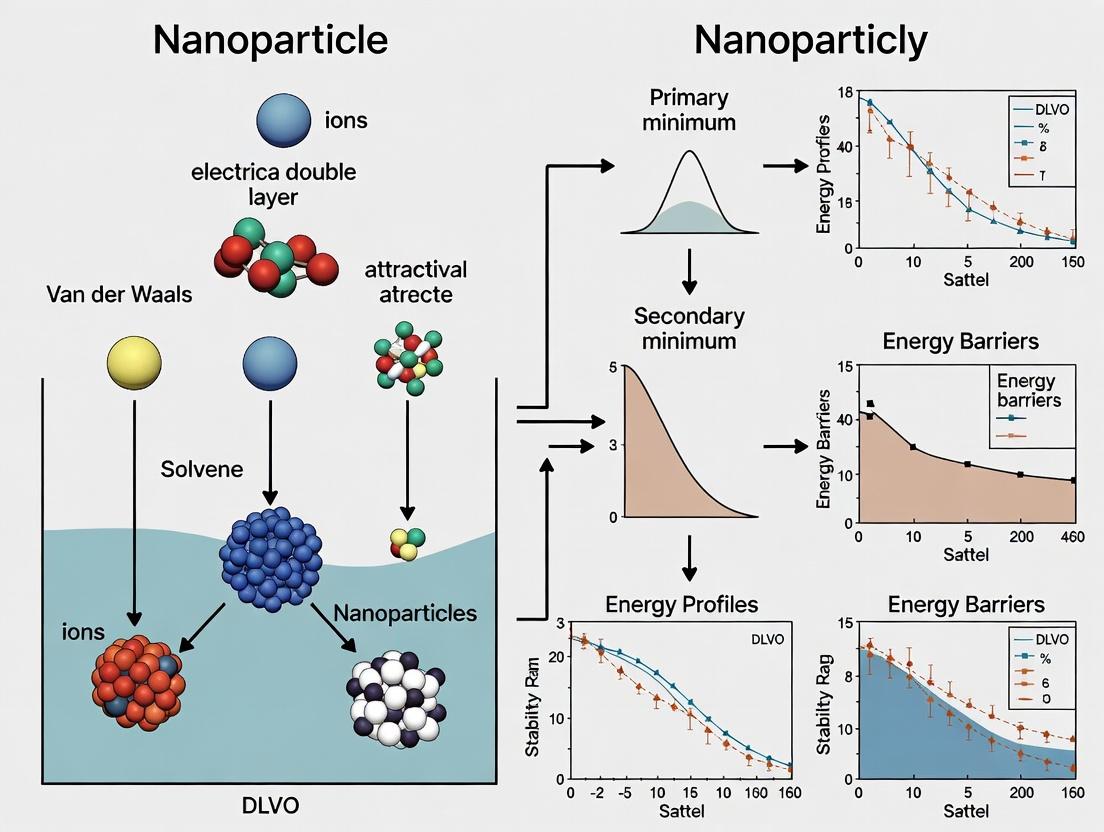
This comprehensive guide explores the DLVO theory as the cornerstone for understanding nanoparticle colloidal stability, crucial for advanced drug delivery systems.
DLVO Theory Demystified: Predicting and Controlling Nanoparticle Stability for Drug Delivery
Abstract
This comprehensive guide explores the DLVO theory as the cornerstone for understanding nanoparticle colloidal stability, crucial for advanced drug delivery systems. We delve into its foundational principles, detailing the interplay of van der Waals attraction and electrostatic repulsion forces. The article provides a methodological framework for applying DLVO calculations to real-world formulation challenges, including strategies to troubleshoot aggregation and optimize stability through surface potential and ionic strength modulation. We compare DLVO predictions with experimental validation techniques and assess its limitations against modern extended theories. Aimed at researchers and formulation scientists, this article synthesizes classical theory with contemporary applications to empower the rational design of stable nanomedicines.
The DLVO Blueprint: Understanding the Fundamental Forces Governing Nanoparticle Behavior
Colloidal stability, the resistance of nanoparticles to aggregation and sedimentation, is the foundational pillar of effective nanomedicine. Within drug delivery, diagnostic imaging, and therapeutic applications, nanoparticle performance is inextricably linked to its behavior in a biological milieu. This stability is quantitatively described and predicted by the Derjaguin-Landau-Verwey-Overbeek (DLVO) theory, which frames nanoparticle interactions as a balance between attractive van der Waals forces and repulsive electrostatic double-layer forces. This whitepaper details the critical role of colloidal stability, framed within DLVO theory, and provides a technical guide for its assessment and preservation in nanoparticle research and development.
The DLVO Theory Framework: A Primer for Nanomedicine
DLVO theory provides the quantitative framework for understanding colloidal stability. The total interaction energy (VT) between two spherical particles as a function of separation distance (h) is given by:
VT(h) = VvdW(h) + VEDL(h)
Where:
- VvdW(h) is the attractive van der Waals energy, typically modeled for spheres using the Hamaker approximation.
- VEDL(h) is the repulsive electrostatic energy, described by the overlapping of electrical double layers, dependent on surface potential and ionic strength.
A primary maximum in VT creates an energy barrier preventing aggregation. The height of this barrier dictates kinetic stability. In physiological environments (high ionic strength), double-layer compression reduces VEDL, lowering the barrier and promoting aggregation—a primary challenge for in vivo applications.
Table 1: Impact of Key Parameters on DLVO Interaction Energy
| Parameter | Effect on Attractive VvdW | Effect on Repulsive VEDL | Net Impact on Colloidal Stability |
|---|---|---|---|
| Increased Ionic Strength | No direct effect | Severe decrease (double-layer compression) | Lowered stability barrier, risk of aggregation |
| Increased Surface Potential (ζ) | No direct effect | Significant increase | Higher stability barrier, improved stability |
| Increased Particle Size | Proportional increase | Moderate increase (linear with size) | Complex; barrier height scales with size, but VvdW dominates at close range |
| Increased Hamaker Constant | Proportional increase | No direct effect | Lowered stability barrier, increased attraction |
Experimental Protocols for Assessing Colloidal Stability
Protocol 1: Dynamic Light Scattering (DLS) for Hydrodynamic Size & PDI
Objective: Measure the intensity-weighted hydrodynamic diameter (Z-average) and polydispersity index (PDI) to monitor aggregation over time.
- Sample Preparation: Dilute the nanoparticle dispersion in the relevant medium (e.g., PBS, cell culture media) to an appropriate concentration (typically 0.1-1 mg/mL). Filter the dispersant medium through a 0.1 µm or 0.22 µm syringe filter.
- Instrument Calibration: Use a standard latex reference material (e.g., 60 nm or 100 nm) to verify instrument performance.
- Measurement: Equilibrate sample at 25°C (or 37°C for biorelevant conditions). Perform a minimum of 3-12 measurement runs per sample. Set the detector angle (commonly 173° for backscatter).
- Data Analysis: Report the Z-average diameter and the PDI. A PDI < 0.2 indicates a monodisperse sample. Monitor changes in size and PDI over time (e.g., 0, 1, 7, 24 hours) under storage or physiological conditions.
Protocol 2: Zeta Potential Measurement via Electrophoretic Light Scattering (ELS)
Objective: Determine the surface charge (ζ-potential) as a proxy for electrostatic repulsion, a key component of DLVO theory.
- Sample Preparation: Dilute nanoparticles in a low-conductivity buffer (e.g., 1 mM KCl) or specific biological buffer. Ensure conductivity is within instrument limits (< 20 mS/cm typically).
- Cell Loading: Rinse the folded capillary cell thoroughly with filtered dispersant, then load the nanoparticle sample, avoiding bubbles.
- Measurement Settings: Set the temperature (25°C). Apply an appropriate voltage (automatic titration recommended). The software will calculate the ζ-potential from the measured electrophoretic mobility using the Henry/Smoluchowski equation.
- Data Interpretation: A ζ-potential magnitude > |±30| mV typically indicates strong electrostatic stabilization. In biological fluids, a shift towards neutral ζ-potential signals potential destabilization.
Protocol 3: Accelerated Stability Studies
Objective: Simulate long-term storage or in vivo challenges to predict stability.
- Stress Conditions: Expose nanoparticles to elevated temperatures (e.g., 4°C, 25°C, 37°C, 55°C), freeze-thaw cycles, or varying pH.
- Monitoring: At predetermined intervals, aliquot samples and analyze via DLS (Protocol 1) and ζ-potential (Protocol 2).
- Analysis: Plot size and PDI over time. Use the Arrhenius equation models to extrapolate shelf-life from high-temperature data.
Stabilization Strategies Rooted in DLVO Theory
To overcome the collapse of electrostatic repulsion in vivo, steric stabilization is employed. This involves grafting polymers (e.g., PEG, poloxamers) to the nanoparticle surface, introducing a repulsive steric component (Vsteric) to the DLVO framework: VT(h) = VvdW(h) + VEDL(h) + Vsteric(h). Vsteric arises from osmotic and elastic effects as polymer layers overlap, providing stability independent of ionic strength.
Title: DLVO Theory and Steric Stabilization Strategy for Nanoparticles
The Scientist's Toolkit: Key Reagent Solutions
Table 2: Essential Research Reagents for Nanoparticle Stability Studies
| Reagent / Material | Primary Function in Stability Research |
|---|---|
| Polyethylene Glycol (PEG) Derivatives (e.g., PEG-SH, PEG-NH2) | Gold-standard polymer for imparting steric stabilization and reducing protein opsonization ("stealth" effect). |
| Poloxamers (Pluronics) | Triblock copolymers (PEO-PPO-PEO) used for steric stabilization, often through physical adsorption onto nanoparticle surfaces. |
| Common Salts (KCl, NaCl, PBS) | Used to modulate ionic strength in stability challenges, simulating physiological conditions and testing DLVO predictions. |
| Buffers (HEPES, Tris, Citrate) | Maintain pH during synthesis and characterization, as pH strongly influences surface charge (ζ-potential) and stability. |
| Fluorescent Dyes (e.g., Cy5, FITC, DiO) | Conjugated to nanoparticles to enable tracking of stability indirectly via fluorescence change upon aggregation. |
| Size-Exclusion Chromatography (SEC) Columns | Purify nanoparticles to remove unreacted stabilizers or aggregates, ensuring a monodisperse starting population. |
| Dialysis Membranes / Cassettes | Remove excess reagents, exchange dispersion media, or concentrate samples post-synthesis. |
| Serum & Plasma Proteins (FBS, BSA, Human Serum) | Critical for studying biomolecular corona formation and its destabilizing effect in biologically relevant media. |
Title: Core Workflow for Nanoparticle Stability Assessment
Colloidal stability is not a mere formulation detail but a non-negotiable prerequisite for successful nanomedicine. DLVO theory provides the essential physical framework to understand, predict, and engineer this stability. Through rigorous characterization of size, surface charge, and behavior under physiological stress, and by employing steric stabilization strategies, researchers can design nanoparticles that maintain their integrity and function in vivo. The experimental protocols and tools outlined here form the basis for a systematic approach to achieving this critical objective.
The DLVO theory, named after Boris Derjaguin, Lev Landau, Evert Verwey, and Theodoor Overbeek, provides the fundamental framework for understanding the stability of colloidal dispersions, including nanoparticles central to modern drug delivery systems. This whitepaper elucidates the core principles of the theory within the context of nanoparticle stability research, detailing experimental protocols for its application and providing current data and visualizations for researchers and pharmaceutical scientists.
Theoretical Foundations
DLVO theory describes the total interaction energy (VT) between two particles as the sum of attractive van der Waals (VA) and repulsive electrostatic double-layer (VR) forces as a function of interparticle distance (H): VT = VA + VR. Stability is achieved when a sufficiently high energy barrier (> ~15-20 kBT) prevents aggregation.
Quantitative Parameters in DLVO Calculations
| Parameter | Symbol | Typical Range/Value | Description |
|---|---|---|---|
| Hamaker Constant | A | 0.5 - 10 × 10-20 J | Material-specific measure of van der Waals attraction. |
| Surface Potential | Ψ0 | ±10 - ±100 mV | Electric potential at particle surface. |
| Debye Length | κ-1 | 1 - 100 nm | Characteristic thickness of the electrical double layer; inversely proportional to ionic strength. |
| Boltzmann Constant | kB | 1.38 × 10⁻²³ J/K | Relates particle energy to thermal energy. |
| Temperature | T | 298 K | Standard experimental condition. |
| Primary Maximum | Vmax | > 15-20 kBT | Energy barrier for long-term stability. |
| Secondary Minimum | Vsec | -1 to -5 kBT | Weak, reversible aggregation well. |
Experimental Protocols for DLVO Analysis
Protocol 1: Measuring Zeta Potential for Ψ0Estimation
Objective: Determine the surface potential via zeta potential (ζ) to calculate VR.
- Sample Preparation: Dilute nanoparticle suspension (e.g., 0.1 mg/mL) in the desired medium (e.g., 1 mM NaCl). Filter through a 0.2 µm or 0.02 µm syringe filter.
- Instrument Calibration: Use a standard ζ-potential reference material (e.g., -50 ± 5 mV).
- Measurement: Load sample into a clear disposable zeta cell. Use a Zetasizer or similar instrument. Set temperature to 25°C, equilibrium time 120 s.
- Data Acquisition: Perform at least 3 runs with >10 sub-runs each. Report mean and standard deviation. The measured ζ is used as an approximation for Ψ0 in DLVO calculations.
Protocol 2: Determining Hamaker Constant via Surface Tension
Objective: Calculate the non-retarded Hamaker constant (A121) for particles (1) in a medium (2).
- Measure Surface Tension: Determine the apolar (γLW) and polar (γAB) components of the surface tension for both particle material and dispersion medium using contact angle measurements with three diagnostic liquids.
- Calculation: Use the combining relation: A121 ≈ 24πℓ02(√γ1LW - √γ2LW)2, where ℓ0 is the minimum equilibrium distance (~0.157 nm).
Protocol 3: Critical Coagulation Concentration (CCC) Determination
Objective: Experimentally validate DLVO predictions by finding the electrolyte concentration at which Vmax = 0.
- Titration: To a series of identical nanoparticle suspensions, add increasing volumes of a concentrated salt solution (e.g., NaCl, CaCl2).
- Monitoring: After each addition, measure the hydrodynamic diameter (DH) via Dynamic Light Scattering (DLS) every minute for 10-15 minutes.
- Analysis: Plot initial rate of increase in DH or turbidity against salt concentration. The CCC is identified by a sharp increase in aggregation rate. Compare with theoretical CCC prediction: CCC (mol/m³) ∝ (γ4)/(A2 z2), where γ = tanh(zeΨ0/4kBT).
Visualizing DLVO Interactions and Workflows
DLVO Stability Assessment Workflow
DLVO Energy vs. Distance Profile
The Scientist's Toolkit: Key Research Reagents & Materials
| Item | Function in DLVO/Nanoparticle Stability Research |
|---|---|
| Zetasizer Nano ZSP | Measures zeta potential (ζ), size (DLS), and molecular weight for calculating Ψ0 and monitoring aggregation. |
| Diethylene Glycol (DEG) / Glycerol | High-viscosity media for studying aggregation kinetics in a controlled, slowed manner. |
| Sodium Chloride (NaCl), 1M Stock | Monovalent electrolyte for screening electrostatic repulsion and determining CCC. |
| Calcium Chloride (CaCl2), 0.1M Stock | Divalent electrolyte for studying ion-specific effects and stronger charge screening. |
| Polyethylene Oxide (PEO) Brushes | Model steric stabilizers to study combined DLVO + steric (non-DLVO) stabilization. |
| Sodium Polystyrene Sulfonate (PSS) | Model polyelectrolyte for studying charge reversal and electrosteric effects. |
| 0.02 µm Anodisc/Alumina Filter | For precise filtration of nanoparticle samples to remove dust/aggregates prior to DLS/ζ. |
| pH Buffer Standards (pH 4, 7, 10) | To control and study the profound effect of pH on surface charge (Ψ0). |
| Atomic Force Microscope (AFM) with Colloidal Probe | Directly measures particle-surface interaction forces, validating DLVO predictions. |
The stability of colloidal dispersions, including nanoparticle formulations in drug delivery and nanomedicine, is primarily governed by the balance of forces described by the Derjaguin, Landau, Verwey, and Overbeek (DLVO) theory. This foundational theory posits that the net interaction energy between two particles is the sum of two competing contributions: an attractive van der Waals (vdW) force and a repulsive electrostatic double-layer force. While electrostatic repulsion can be modulated by ionic strength and pH, the van der Waals attraction is an inherent, ever-present quantum mechanical force arising from electromagnetic interactions between temporary or permanent dipoles. Its omnipresence is the key destabilizing factor in nanoparticle systems, driving aggregation unless sufficiently counterbalanced.
The Physical Origin and Nature of vdW Forces
Van der Waals forces encompass three distinct but related interactions:
- Keesom Forces: Orientation forces between two permanent dipoles.
- Debye Forces: Induction forces between a permanent dipole and an induced dipole.
- London Dispersion Forces: Forces between instantaneous dipoles in non-polar atoms or molecules, arising from correlated fluctuations of electron density.
For most materials, especially in aqueous media, London dispersion forces constitute the dominant component of the total vdW attraction. These forces are long-range, effective from separation distances of up to ~10 nm, and are always attractive between identical particles in a medium.
Quantitative Formulation for Nanoparticles
The attractive potential energy (V_vdW) between two spherical particles of radius R separated by a distance h (where h << R) is given by the approximate Hamaker expression:
V_vdW(h) = - (A * R) / (12h)
Where A is the system-specific Hamaker constant, which dictates the strength of the interaction. The negative sign indicates attraction. A more rigorous treatment uses the full Lifshitz theory, which calculates A based on the frequency-dependent dielectric properties of the particles and the intervening medium.
Table 1: Representative Hamaker Constants for Nanoparticle Systems
| Material 1 | Material 2 | Medium | Hamaker Constant (A) [10⁻²⁰ J] | Key Implication for Stability |
|---|---|---|---|---|
| Gold (Au) | Gold (Au) | Water | ~200-400 | Very strong attraction, requiring robust stabilization. |
| Silica (SiO₂) | Silica (SiO₂) | Water | ~0.3-1.0 | Relatively weak inherent attraction. |
| Polystyrene | Polystyrene | Water | ~0.9-1.4 | Moderate attraction, common for polymer nanoparticles. |
| Lipid (Phospholipid) | Lipid (Phospholipid) | Water | ~0.5-0.7 | Weak attraction, favorable for stable liposome formation. |
| Iron Oxide (Fe₃O₄) | Iron Oxide (Fe₃O₄) | Water | ~20-40 | Significant attraction, challenging for magnetic NP stability. |
Experimental Protocol: Measuring vdW Forces via Atomic Force Microscopy (AFM)
Direct measurement of vdW forces between nanoparticles or surfaces is achieved using AFM force spectroscopy.
Materials:
- Atomic Force Microscope with a liquid cell.
- Cantilever with a colloidal probe (a single nanoparticle or a microsphere of the material of interest attached to the tip).
- Substrate of the same or different material.
- Relevant buffer or liquid medium.
- Vibration isolation table.
Detailed Protocol:
- Probe and Substrate Preparation: Clean the substrate (e.g., silica wafer, gold film) via plasma oxidation or solvent cleaning. Calibrate the AFM cantilever's spring constant using the thermal tune method.
- Colloidal Probe Attachment (if not pre-functionalized): Using a micromanipulator, attach a silica or polystyrene microsphere (2-10 µm) to a tipless cantilever with a UV-curable epoxy. Cure and confirm attachment.
- System Assembly: Mount the colloidal probe cantilever and the substrate into the AFM liquid cell. Introduce the desired fluid medium carefully to avoid bubbles.
- Force-Distance Measurement: Approach the probe to the substrate at a controlled rate (typically 10-100 nm/s). Record the cantilever deflection (force) as a function of piezo displacement.
- Data Analysis: Convert the deflection vs. displacement curve into a force vs. separation curve. In the non-contact regime as the probe approaches, a sudden "jump-to-contact" is often observed due to vdW attraction. Fit the attractive region of the curve prior to contact with the theoretical vdW expression to estimate the effective Hamaker constant for the system.
- Control Experiments: Repeat measurements in different media (e.g., water, electrolyte solutions, ethanol) to observe the medium's effect on the measured attraction.
Visualizing DLVO Theory and vdW Interactions
Diagram 1: DLVO Energy Balance Dictates Nanoparticle Fate
Diagram 2: Three Components of Van der Waals Forces
The Scientist's Toolkit: Key Reagents & Materials for vdW/DLVO Studies
Table 2: Essential Research Reagents and Materials
| Item | Function in Experiment |
|---|---|
| Atomic Force Microscope (AFM) | Primary instrument for direct force measurement between surfaces at nanoscale separation. |
| Colloidal Probe Cantilevers | Cantilevers with a single spherical particle attached, enabling defined particle-particle or particle-surface force measurements. |
| Standard Latex/Polymer Nanospheres (e.g., Polystyrene, Silica) | Well-characterized model particles for calibration and fundamental studies of vdW forces. |
| Zeta Potential Analyzer | Measures the electrostatic potential (zeta potential) at the slipping plane, critical for calculating the V_EDL component of DLVO theory. |
| UV-Vis/NIR Spectrophotometer with Dynamic Light Scattering (DLS) | Monitors nanoparticle size and aggregation state in real-time, providing indirect evidence of the net DLVO interaction outcome. |
| High-Purity Salts (e.g., NaCl, KCl) | Used to precisely control ionic strength (κ⁻¹, Debye length) and systematically screen electrostatic repulsion, revealing underlying vdW attraction. |
| Surface Coating Ligands (e.g., PEG-thiols, PVA, Citrate) | Agents used to sterically stabilize nanoparticles, providing a repulsive force that is not accounted for in classical DLVO but is essential to overcome vdW attraction. |
| Optical Tweezers System | An alternative tool for measuring pico-Newton scale forces between trapped particles, including vdW attraction at close range. |
Within the framework of DLVO (Derjaguin-Landau-Verwey-Overbeek) theory, nanoparticle stability in colloidal suspensions is governed by a balance of forces. While van der Waals attractions promote aggregation, the stabilizing electrostatic repulsion force, originating from the electrical double layer (EDL), provides the primary barrier against coagulation. This principle is foundational for designing stable nano-formulations in drug delivery, diagnostics, and material science.
Theoretical Foundation of the Electrical Double Layer
When a nanoparticle is immersed in a polar medium (e.g., water), its surface acquires a charge through mechanisms such as ionization of surface groups, adsorption of ions, or crystal lattice defects. This charged surface attracts counter-ions from the solution, forming a structured region—the electrical double layer.
The Stern-Grahame Model modernizes the classic Gouy-Chapman model by dividing the EDL into two regions:
- Stern Layer: Ions strongly adsorbed to the surface, essentially immobile.
- Diffuse Layer: A cloud of ions distributed under the influence of electrostatic forces and thermal motion, decaying exponentially with distance.
The potential at the boundary between the Stern and diffuse layers, the zeta potential (ζ), is the key experimentally accessible parameter correlating with colloidal stability.
Quantitative Description of Repulsive Energy
The electrostatic repulsive energy ((V_R)) between two identical spherical nanoparticles of radius (a) is described by the expression derived from DLVO theory:
[ VR = 2\pi \epsilonr \epsilon0 a \psi0^2 \ln[1 + \exp(-\kappa H)] ]
Where:
- ( \epsilonr \epsilon0 ): Dielectric permittivity of the medium.
- ( a ): Particle radius.
- ( \psi_0 ): Surface potential (often approximated by ζ-potential).
- ( H ): Shortest distance between particle surfaces.
- ( \kappa^{-1} ): Debye length, the characteristic thickness of the diffuse double layer.
The Debye Length (( \kappa^{-1} )) is critically dependent on solution ionic strength ((I)): [ \kappa^{-1} = \sqrt{\frac{\epsilonr \epsilon0 kB T}{2 NA e^2 I}} ] where (kB) is Boltzmann's constant, (T) is temperature, (NA) is Avogadro's number, (e) is electron charge, and (I = \frac{1}{2} \sum ci zi^2).
Table 1: Dependence of Debye Length on Ionic Strength in Aqueous Medium at 298K
| Ionic Strength (M) | Debye Length, ( \kappa^{-1} ) (nm) | Implication for Nanoparticle Stability |
|---|---|---|
| 0.001 | ~9.6 | Thick diffuse layer, strong long-range (V_R) |
| 0.01 | ~3.0 | Moderate stabilization |
| 0.1 | ~0.96 | Thin diffuse layer, weak (V_R), prone to aggregation |
| 0.5 | ~0.43 | Very weak electrostatic stabilization |
Table 2: Guideline for Zeta Potential and Colloidal Stability
| Zeta Potential (mV) | Stability Prediction |
|---|---|
| 0 to ±5 | Rapid aggregation or coagulation |
| ±10 to ±30 | Incipient instability |
| Beyond ±30 | Good electrostatic stability |
Experimental Protocols for Characterization
Protocol 3.1: Measurement of Zeta Potential via Electrophoretic Light Scattering
Objective: Determine the zeta potential of nanoparticles in suspension. Principle: Charged particles move (electrophorese) under an applied electric field. Their velocity is measured via laser Doppler velocimetry. Procedure:
- Sample Preparation: Dilute nanoparticle suspension in appropriate buffer (e.g., 1 mM KCl) to a count rate suitable for the instrument. Ensure conductivity is <5 mS/cm.
- Cell Loading: Rinse the folded capillary cell (zeta cell) with filtered diluent, then load 0.5-1 mL of sample, avoiding bubbles.
- Instrument Setup: Enter medium viscosity, refractive index, dielectric constant, and temperature. Set voltage (typically 40-150 V).
- Measurement: Run 10-20 sequential measurements, repositioning the cell between runs for statistical rigor.
- Data Analysis: The instrument uses the Henry equation ((UE = \frac{2 \epsilonr \epsilon0 \zeta f(\kappa a)}{3 \eta})) to calculate ζ from electrophoretic mobility ((UE)), where (\eta) is viscosity. Report mean ± standard deviation.
Protocol 3.2: Critical Coagulation Concentration (CCC) Determination
Objective: Find the ionic strength at which electrostatic stabilization fails (V_R barrier ≈ 0). Principle: Monitor aggregation rate as a function of added electrolyte (e.g., NaCl, CaCl₂). Procedure:
- Prepare a stable, monodisperse nanoparticle stock.
- Prepare a series of vials with increasing concentrations of salt.
- Rapidly mix equal volumes of nanoparticle stock and salt solution to initiate aggregation.
- Monitor Aggregation: Use dynamic light scattering (DLS) to measure the hydrodynamic diameter increase over the first 5-10 minutes.
- Analysis: Plot initial aggregation rate (or inverse stability ratio, 1/W) vs. salt concentration. The CCC is identified as the point where 1/W sharply increases to 1 (diffusion-controlled aggregation).
- Validation: CCC should follow the Schulze-Hardy rule for indifferent electrolytes: (CCC \propto 1/z^6), where (z) is the counter-ion valence.
Visualizing the Double Layer and DLVO Balance
Title: Structure of the Electrical Double Layer and Its Role in DLVO Theory
The Scientist's Toolkit: Essential Research Reagents & Materials
Table 3: Key Reagents for Electrostatic Stability Studies
| Reagent/Material | Function & Purpose |
|---|---|
| Potassium Chloride (KCl) | Low-conductivity electrolyte for zeta potential measurements; provides defined ionic strength without specific ion adsorption. |
| Sodium Chloride (NaCl) | Monovalent salt for Critical Coagulation Concentration (CCC) experiments and screening. |
| Calcium Chloride (CaCl₂) | Divalent salt for testing the Schulze-Hardy rule and studying charge screening/ion bridging. |
| Phosphate Buffered Saline (PBS) | Common physiological buffer; used to test nanoparticle stability in biologically relevant ionic strength. |
| Zeta Potential Standard (e.g., -50 mV latex) | Calibration and validation of electrophoretic light scattering instrument performance. |
| Disposable Zeta Cells (folded capillary) | Sample cells for zeta potential measurement with integrated electrodes. |
| Nanoparticle Filters (e.g., 0.1 µm PVDF) | For filtering buffers and samples to remove dust, a critical step for accurate DLS and ELS. |
| pH Adjusters (HCl, NaOH, buffers) | To control surface charge, as ζ-potential is highly sensitive to pH for ionizable surfaces. |
Thesis Context: This whitepaper details the mathematical synthesis of the total interaction potential energy curve, a cornerstone of DLVO (Derjaguin-Landau-Verwey-Overbeek) theory, as applied to modern nanoparticle stability research in drug delivery systems. Accurate prediction of colloidal stability—whether for aggregation or dispersion—is paramount for the formulation and shelf-life of nanomedicines.
Core DLVO Theory and Mathematical Formulation
DLVO theory describes the total interaction energy ((VT)) between two spherical nanoparticles in a dispersing medium as the sum of attractive van der Waals ((VA)) and repulsive electrostatic double-layer ((V_R)) potentials:
[ VT(h) = VA(h) + V_R(h) ]
where (h) is the separation distance between particle surfaces.
Van der Waals Attraction ((V_A))
For two identical spheres of radius (R), the approximate form (Hamaker, 1937) is: [ VA(h) = -\frac{A{H} R}{12h} ] where (A_H) is the Hamaker constant, specific to the particle and medium.
Electrostatic Repulsion ((V_R))
Using the linear superposition approximation (LSA) valid for moderate potentials and (\kappa R > 5): [ VR(h) = 2\pi R \epsilonr \epsilon_0 \zeta^2 \ln[1 + \exp(-\kappa h)] ] where:
- (\epsilonr \epsilon0): Permittivity of the medium.
- (\zeta): Zeta potential (approximation for surface potential).
- (\kappa^{-1}): Debye length, the double-layer thickness: (\kappa^{-1} = \sqrt{\frac{\epsilonr \epsilon0 kB T}{2 NA e^2 I}}). (I) is ionic strength.
Quantitative Parameter Data
Table 1: Typical Hamaker Constants for Drug Delivery Systems
| Material System | Hamaker Constant (A_H) (×10⁻²⁰ J) | Conditions (Medium) |
|---|---|---|
| TiO₂ (Titanium Dioxide) | 15.3 - 43.7 | Water (range depends on crystallinity) |
| Polystyrene (Latex) | 6.5 - 7.8 | Water |
| PLGA (Poly(lactic-co-glycolic acid)) | 6.0 - 8.5 | Phosphate Buffer Saline (PBS) |
| Gold (Au) | 20 - 45 | Water |
| Lipid Bilayer (DOPC) | ~5.0 | 0.1 M NaCl |
Table 2: Impact of Ionic Strength on DLVO Parameters (Example: Au NP, R=10 nm, ζ= -35 mV)
| Ionic Strength (M) | Debye Length, (\kappa^{-1}) (nm) | Primary Maximum Height ((V{max})) (kB T) | Secondary Minimum Depth ((V{min})) (kB T) |
|---|---|---|---|
| 0.001 | 9.6 | ~150 | Negligible |
| 0.01 | 3.0 | ~50 | Shallow (< 2) |
| 0.1 | 0.96 | ~5 | Deep (~10) |
| 0.15 (PBS-like) | 0.78 | < 1 (Unstable) | Deep (>15) |
Experimental Protocol for Energy Curve Construction
Objective: To experimentally validate a calculated DLVO curve for a model nanoparticle suspension.
Materials: See "Scientist's Toolkit" below.
Methodology:
Nanoparticle Characterization:
- Size & PDI: Determine hydrodynamic radius ((R_h)) and polydispersity index via Dynamic Light Scattering (DLS). Measure in dilute, relevant buffer.
- Zeta Potential ((\zeta)): Measure via Phase Analysis Light Scattering (PALS) in the same buffer across a range of ionic strengths (0.001 M to 0.15 M NaCl). Perform minimum 5 replicates.
Stability Assessment (Critical Coagulation Concentration - CCC):
- Prepare 10 mL aliquots of nanoparticle dispersion (0.1 mg/mL).
- Titrate with concentrated NaCl solution to achieve a defined ionic strength range (e.g., 0.001 M to 0.5 M).
- Incubate at 25°C for 1 hour.
- Measure the hydrodynamic diameter ((D_h)) by DLS immediately after incubation.
- CCC Determination: The CCC is identified as the ionic strength at which (D_h) increases by 50% within 10 minutes, indicating rapid aggregation.
Theoretical Curve Synthesis:
- Input experimental (R) and (\zeta) into the DLVO equations.
- Calculate (A_H) using Lifshitz theory or use literature values for the material.
- Compute (VA), (VR), and (V_T) across separation distances from 0.5 nm to 30 nm.
- Plot (VT) vs. (h). Identify key features: primary maximum ((V{max})), secondary minimum ((V_{min})), and primary minimum.
Validation:
- Compare the predicted stability from the curve ((V{max} > 15 kB T) for stability) with the observed CCC.
- The ionic strength at which (V_{max} \approx 0) should correspond closely to the experimentally determined CCC.
Diagram: Synthesis of DLVO Energy Curves
Title: Workflow for Synthesizing a DLVO Energy Curve
The Scientist's Toolkit: Key Research Reagents & Materials
| Item / Reagent | Function in DLVO Experiment |
|---|---|
| Model Nanoparticles (e.g., Polystyrene, Au, PLGA) | Well-characterized, monodisperse systems to test theory. Surface chemistry dictates ζ potential. |
| Ionic Salts (NaCl, KCl, CaCl₂) | Modulate ionic strength (I) to control Debye length (κ⁻¹) and compress the electrical double layer. |
| pH Buffers (e.g., Phosphate, Citrate) | Maintain constant pH, which critically influences surface charge and ζ potential. |
| Zeta Potential Reference Standard (e.g., DTS1235) | Calibrate and validate electrophoretic mobility measurements. |
| Ultrapure Water (18.2 MΩ·cm) | Prepare all solutions to avoid contamination by ions or organics that alter interfacial properties. |
| Disposable Zeta Cells & Clear Disposable Cuvettes | For accurate, contamination-free measurements of ζ potential and size via DLS/PALS. |
| Dynamic Light Scattering (DLS) / Zeta Potential Analyzer | Core instrument for measuring hydrodynamic size (R_h) and zeta potential (ζ). |
| Data Synthesis Software (e.g., MATLAB, Python with NumPy/SciPy, Origin) | Perform iterative calculations of DLVO equations and plot high-resolution energy curves. |
The stability of nanoparticle dispersions is fundamentally governed by the balance between attractive van der Waals forces and repulsive electrostatic forces, as described by the Derjaguin-Landau-Verwey-Overbeek (DLVO) theory. A core tenet of this theory is the concept of an interparticle potential energy curve, where the "minima"—regions of low potential energy—define states of aggregation. The primary minimum represents irreversible, strong aggregation at very short separation distances, while the secondary minimum represents reversible, weak flocculation at larger separations. Accurately defining and distinguishing these minima is critical for predicting and controlling nanoparticle behavior in applications ranging from drug delivery to advanced materials synthesis.
Quantitative Definition of the Minima
The total interaction energy ((V_T)) between two spherical particles of radius (a) as a function of surface-to-surface separation distance ((H)) is given by:
[ VT(H) = VA(H) + V_R(H) ]
Where (VA) is the attractive van der Waals energy and (VR) is the repulsive electrostatic energy. The minima are identified by solving (dV_T/dH = 0).
| Parameter | Symbol | Typical Range (Primary Min.) | Typical Range (Secondary Min.) | Role in Minima Definition |
|---|---|---|---|---|
| Separation Distance | (H) | 0.1 - 0.5 nm | 2 - 10 nm | Defines location of minima on the curve. |
| Depth of Minimum | (V_{min}) | -(kT) to -100(kT) | -0.1(kT) to -5(kT) | Magnitude dictates stability/strength of aggregation. |
| Hamaker Constant | (A) | 0.5 - 10 × 10⁻²⁰ J | 0.5 - 10 × 10⁻²⁰ J | Scales attraction; larger values deepen minima. |
| Surface Potential | (\psi_0) | 0 - ±100 mV | 20 - 60 mV | Scales repulsion; larger values suppress primary, can create secondary. |
| Debye Length | (\kappa^{-1}) | 0.3 - 100 nm | 3 - 30 nm (Low Ionic Str.) | Defines repulsion decay; shorter lengths promote secondary minima. |
Table 1: Key quantitative parameters defining the primary and secondary minima in DLVO theory. (k) is Boltzmann's constant and (T) is absolute temperature.
Experimental Protocol for Mapping Interaction Minima
Protocol Title: Determination of DLVO Minima via Critical Coagulation Concentration (CCC) and Dynamic Light Scattering (DLS).
Objective: To experimentally identify conditions leading to primary and secondary minimum aggregation for a model nanoparticle dispersion.
Materials & Reagents: See "The Scientist's Toolkit" below.
Procedure:
- Nanoparticle Preparation: Prepare a monodisperse stock suspension of nanoparticles (e.g., 100 nm polystyrene latex, citrate-coated gold) in deionized water at a known concentration (e.g., 0.01% w/v). Filter through a 0.2 μm membrane.
- Ionic Strength Titration: Prepare a series of 10 NaCl solutions (0.001 M to 1.0 M). Into a series of vials, add 2 mL of nanoparticle stock to 2 mL of each NaCl solution. Mix thoroughly.
- Incubation: Allow vials to stand undisturbed for 2 hours at constant temperature (25°C).
- Primary Minimum Detection (CCC):
- Measure the hydrodynamic diameter ((Dh)) of each sample by DLS immediately after gentle inversion.
- The Critical Coagulation Concentration (CCC) is identified as the lowest [NaCl] where (Dh) increases dramatically (>50%) and irreversibly over time. This indicates primary minimum aggregation.
- Validate by centrifuging a sample at low speed (1000 x g); primary aggregates are not redispersible.
- Secondary Minimum Detection:
- For samples at ionic strengths just below the CCC, monitor (Dh) over 24 hours.
- Observe for a moderate, time-dependent increase in (Dh) (e.g., 20-50%).
- Confirm reversibility: Subject the aggregated sample to gentle sonication (bath, 30s) or dilution with deionized water. A return to near-original (D_h) indicates secondary minimum flocculation.
- Zeta Potential Measurement: Measure the zeta potential ((\zeta)) of samples across the ionic strength series to parameterize (V_R).
- Data Fitting: Use measured (\zeta), known (A), and varied ionic strength to calculate theoretical (V_T) vs. (H) curves. Correlate observed aggregation states with the presence/absence of minima on the calculated curve.
Diagram Title: Experimental workflow for mapping primary and secondary DLVO minima.
Visualizing the Minima: The DLVO Energy Profile
Diagram Title: Conceptual DLVO energy profile defining stability minima.
The Scientist's Toolkit: Key Research Reagent Solutions
| Item / Reagent | Function in Experiment | Key Consideration |
|---|---|---|
| Monodisperse Nanoparticle Standards (e.g., Polystyrene Latex, Citrate-Au) | Model colloidal system with well-defined size, shape, and surface chemistry. | Choose appropriate material (polymer, metal, ceramic) relevant to your research. |
| High-Purity Salts (e.g., NaCl, CaCl₂, Na₂SO₄) | To vary ionic strength and screen electrostatic repulsion, probing the minima. | Use analytical grade; prepare with ultrapure water to avoid contaminants. |
| Ultrapure Water (18.2 MΩ·cm) | Prevents unintended ion contamination that alters Debye length and aggregation kinetics. | Use fresh from a purification system; filter through 0.2 μm. |
| pH Buffers (e.g., Phosphate, Carbonate, Citrate) | To control and maintain surface charge (zeta potential) of particles independently of ionic strength. | Ensure buffers do not complex with nanoparticle surface or introduce unwanted ions. |
| Dynamic Light Scattering (DLS) / Zeta Potential Analyzer | Measures hydrodynamic size distribution (aggregation) and surface zeta potential. | Instrument must be calibrated with a known size standard. Sample must be free of dust. |
| Bath Sonicator | Gently applies shear energy to disrupt weak, reversible aggregates from the secondary minimum. | Use low power and short duration to avoid altering primary aggregates or degrading particles. |
| Disposable Membrane Filters (0.1 μm or 0.2 μm pore) | Removes dust and large aggregates from all solutions to ensure accurate DLS measurements. | Pre-rinse filters with the solvent to remove surfactants or glycerin. |
Within the framework of the Derjaguin-Landau-Verwey-Overbeek (DLVO) theory, the stability of nanoparticle dispersions is governed by a delicate balance between attractive van der Waals forces and repulsive electrostatic double-layer forces. This whitepaper provides an in-depth technical guide to the three core parameters that quantify these interactions: Zeta Potential, Hamaker Constant, and Debye Length. A precise understanding of these parameters is critical for researchers and drug development professionals designing stable nano-formulations, where aggregation can compromise efficacy and safety.
Zeta Potential: The Electrokinetic Potential
Zeta potential (ζ) is the electric potential at the slipping plane of a nanoparticle in suspension. It is a key indicator of colloidal stability, with magnitudes typically above |±30| mV conferring strong electrostatic stabilization.
Measurement Protocol: Phase Analysis Light Scattering (PALS)
Principle: Measures the electrophoretic mobility of particles under an applied electric field using laser Doppler velocimetry.
- Sample Preparation: Dilute nanoparticle suspension in the desired aqueous medium (e.g., 1 mM NaCl) to an appropriate concentration for light scattering.
- Instrument Calibration: Use a standard reference material (e.g., polystyrene latex) with a known zeta potential.
- Loading: Inject sample into a clean, disposable folded capillary cell.
- Measurement: Apply a fixed voltage (e.g., 150 V). The instrument measures the frequency shift of scattered light from moving particles.
- Data Analysis: The electrophoretic mobility (μ) is calculated from the measured velocity. Zeta potential is derived using the Henry equation: ζ = (3ημ)/(2εf(κa)), where η is viscosity, ε is permittivity, and f(κa) is Henry's function (Smoluchowski approximation, f(κa)=1.5, is typically used for aqueous systems).
Table 1: Zeta Potential Stability Guide
| Zeta Potential Range (mV) | Stability Interpretation |
|---|---|
| 0 to ±5 | Rapid aggregation or flocculation |
| ±10 to ±30 | Incipient instability |
| ±30 to ±40 | Moderate stability |
| ±40 to ±60 | Good stability |
| > ±61 | Excellent stability |
Hamaker Constant: The van der Waals Attraction
The Hamaker constant (A) quantifies the magnitude of van der Waals attraction between two particles in a medium. It is a material-specific property dependent on the dielectric spectra of the particle and the medium.
Experimental Determination via Surface Force Apparatus (SFA)
Principle: Directly measures force vs. distance between two atomically smooth, crossed-cylindrical surfaces coated with the material of interest.
- Substrate Preparation: Deposit a thin, uniform film of the nanoparticle material onto molecularly smooth mica sheets.
- Assembly: Mount the coated mica sheets in a crossed-cylinder geometry inside the SFA liquid cell.
- Medium Introduction: Fill the cell with the suspending medium (e.g., water, buffer).
- Approach/Retraction: Use piezoelectric actuators to bring the surfaces together while measuring the force via spring deflection or interferometry.
- Data Fitting: The measured force-distance profile, F(D)/R, is fitted to the theoretical van der Waals interaction energy (e.g., F(D)/R = -A/(6D²) for short distances) to extract the effective Hamaker constant.
Table 2: Representative Hamaker Constants
| Material 1 | Material 2 | Medium | Hamaker Constant (×10⁻²⁰ J) |
|---|---|---|---|
| Gold | Gold | Water | 40 - 45 |
| Silica (SiO₂) | Silica | Water | 0.3 - 0.8 |
| Polystyrene | Polystyrene | Water | 0.9 - 1.6 |
| Lipid Bilayer | Lipid Bilayer | Water | 0.3 - 0.7 |
| TiO₂ (Rutile) | TiO₂ | Water | 40 - 50 |
Debye Length: The Double-Layer Thickness
The Debye length (κ⁻¹) characterizes the thickness of the electrostatic double layer. It is inversely related to the ionic strength of the medium, defining the distance over which the surface potential decays.
Calculation from Solution Ionic Strength
Principle: For a symmetric (z:z) electrolyte at 25°C, the Debye length is calculated directly from solution properties. Protocol:
- Ionic Strength Determination: Measure or calculate the total ionic strength (I) of the suspension medium: I = ½ Σ cᵢzᵢ², where cᵢ and zᵢ are the concentration and valence of ion i.
- Calculation: Compute the Debye length using the formula: κ⁻¹ = √( εᵣε₀kBT / (2NA e² I) ), where εᵣ is relative permittivity, ε₀ is vacuum permittivity, kB is Boltzmann's constant, T is temperature, NA is Avogadro's number, and e is elementary charge.
- Simplified Form: At 298 K in water, κ⁻¹ (nm) ≈ 0.304 / √I, where I is in mol/L.
Table 3: Debye Length vs. Ionic Strength (in Water at 25°C)
| Electrolyte | Concentration (M) | Ionic Strength (M) | Debye Length (nm) |
|---|---|---|---|
| Monovalent (e.g., NaCl) | 0.001 | 0.001 | ~9.6 |
| Monovalent (e.g., NaCl) | 0.01 | 0.01 | ~3.0 |
| Monovalent (e.g., NaCl) | 0.1 | 0.1 | ~0.96 |
| Divalent (e.g., MgCl₂) | 0.001 | 0.003 | ~5.5 |
| Phosphate Buffer (pH 7.4) | 0.01 | ~0.016 | ~2.4 |
Integrating Parameters in DLVO Theory
The total interaction energy (Vtotal) between two spherical nanoparticles of radius *R* as a function of surface-to-surface distance (*H*) is: Vtotal(H) = VEDL(H) + VvdW(H) Where:
- V_EDL (Electrostatic): ≈ 2πRεᵣε₀ζ² ln[1 + exp(-κH)] (approx. for constant potential, κR >> 1).
- V_vdW (van der Waals): = - (A R) / (12H) for two spheres (approx. for H << R).
The interplay of these components, dictated by ζ, A, and κ⁻¹, determines the presence and height of an energy barrier preventing aggregation.
The Scientist's Toolkit: Essential Research Reagents & Materials
Table 4: Key Reagents for Nanoparticle Stability Analysis
| Item | Function & Relevance |
|---|---|
| Zeta Potential Reference Standard (e.g., DTAP-005) | Calibrates and validates electrophoretic mobility measurements. |
| Ionic Strength Adjusters (High-purity NaCl, KCl, buffers) | Controls Debye length for systematic stability studies. |
| pH Buffers (Citrate, Phosphate, TRIS, HEPES) | Modulates surface charge (zeta potential) of ionizable particles. |
| Dynamic Light Scattering (DLS) / Zeta Potential Analyzer | Measures particle size distribution and zeta potential in one platform. |
| Surface Force Apparatus (SFA) or Atomic Force Microscope (AFM) | Directly measures interaction forces to determine Hamaker constants. |
| Ultrapure Water System (18.2 MΩ·cm) | Provides consistent, low-ionic-strength medium for baseline experiments. |
| Stable Reference Nanomaterials (e.g., NIST-traceable Au, SiO₂, PS) | Serve as positive controls for method development and validation. |
| Centrifugal Filters (Amicon, Nanosep) | Concentrates or purifies nanoparticle suspensions prior to analysis. |
From Theory to Bench: Applying DLVO Calculations to Nanoparticle Formulation
The stability of nanoparticle dispersions in colloidal systems, such as those used in drug delivery, is predominantly governed by the balance of attractive and repulsive forces. The DLVO theory (Derjaguin, Landau, Verwey, Overbeek) provides the foundational framework for quantifying this balance by summing van der Waals (vdW) attraction and electrostatic double-layer (EDL) repulsion. This guide provides a step-by-step protocol for calculating the total interaction potential energy between two spherical nanoparticles, a critical analysis for predicting aggregation stability in pharmaceutical formulations.
Core DLVO Potential Equations
The total DLVO interaction energy (VTotal) between two identical spheres of radius R separated by distance H is: VTotal(H) = VvdW(H) + VEDL(H)
Van der Waals Attraction (VvdW)
For two spheres in a medium, using the Hamaker approximation: VvdW(H) = - (A132 / 6) * [ (2R2) / (H2 + 4RH) + (2R2) / (H2 + 4RH + 4R2) + ln( (H2 + 4RH) / (H2 + 4RH + 4R2) ) ]
For H << R, this simplifies to: VvdW(H) ≈ - (A132 R) / (12H)
Where A132 is the composite Hamaker constant for particles (1) interacting across medium (3).
Electrostatic Repulsion (VEDL)
For constant surface potential (Ψ0) and κR > 10, using the linear superposition approximation: VEDL(H) ≈ [64π R εrε0 (kBT/e)2 γ2 / κ2] * exp(-κH)
Where: γ = tanh(z e Ψ0 / (4 kBT)) κ-1 = Debye length = √( εrε0 kBT / (2 NA e2 I) )
Step-by-Step Calculation Protocol
Step 1: System Characterization Measure or define the following parameters for your nanoparticles and dispersion medium. Table 1: Essential System Parameters
| Parameter | Symbol | Unit | Typical Measurement Method |
|---|---|---|---|
| Particle Radius | R | m | Dynamic Light Scattering (DLS), TEM |
| Surface Potential | Ψ0 | mV | Zeta Potential (via Electrophoresis) |
| Ionic Strength | I | mol/m³ | Conductivity, Recipe Calculation |
| Medium Dielectric Constant | εr | - | Literature, Reference Tables |
| Temperature | T | K | Thermocouple |
Step 2: Calculate the Hamaker Constant (A132) Use the Lifshitz theory or approximate from dielectric data. A common approximation for particles (1) in medium (3) is: A132 ≈ (√A11 - √A33)² Table 2: Representative Hamaker Constants (in 10⁻²⁰ J)
| Material (1) | Medium (3) | A11 | A33 | A132 |
|---|---|---|---|---|
| Gold | Water | 45.3 | 3.7 | ~30.2 |
| Silica (SiO₂) | Water | 6.5 | 3.7 | ~0.46 |
| Polystyrene | Water | 7.9 | 3.7 | ~0.95 |
| Lipid (typical) | Water | 7.5 | 3.7 | ~0.7 |
Step 3: Calculate the Debye Length (κ⁻¹) κ⁻¹ = √( (εrε0 kBT) / (2 NA e² I) ) At 298 K in water (εr≈78.5), this simplifies to: κ⁻¹ (nm) ≈ 0.304 / √I (M)
Step 4: Choose Appropriate Equation Form Validate the condition for the EDL equation: Ensure κR > 10. For R=20 nm and I=10 mM, κ⁻¹≈3.04 nm, so κR≈6.6 (<10). In this case, use numerical solutions or exact expressions.
Step 5: Compute VvdW, VEDL, and VTotal vs. H Calculate potentials over a relevant separation distance (e.g., H = 0.1 to 20 nm). Use software (Python, MATLAB, Excel) for iterative calculation. Table 3: Example Calculation Output for Silica NPs (R=50 nm, I=1 mM, Ψ0=-35 mV, T=298K)
| H (nm) | VvdW (10⁻²¹ J) | VEDL (10⁻²¹ J) | VTotal (10⁻²¹ J) |
|---|---|---|---|
| 0.5 | -96.5 | 1850.2 | 1753.7 |
| 1.0 | -48.2 | 1250.8 | 1202.6 |
| 2.0 | -24.1 | 571.2 | 547.1 |
| 5.0 | -9.6 | 84.1 | 74.5 |
| 10.0 | -4.8 | 5.2 | 0.4 |
Step 6: Analyze the Energy Profile Identify key features from the VTotal vs. H curve:
- Primary Minimum: Deep attraction at very short range (often irreversible aggregation).
- Energy Barrier (Vmax): Maximum repulsive peak. Stability requires Vmax > 10-15 kBT.
- Secondary Minimum: Shallow attraction at larger separations (reversible flocculation).
Advanced Considerations & Experimental Validation
Non-DLVO Forces: Include steric (for polymers) or hydration repulsion terms if relevant: VTotal = VvdW + VEDL + VSteric. Experimental Protocol: Critical Coagulation Concentration (CCC) Measurement
- Objective: Determine the ionic strength at which the energy barrier vanishes (Vmax=0), leading to rapid aggregation.
- Materials: See "Scientist's Toolkit" below.
- Procedure:
- Prepare a series of 10 mL nanoparticle dispersions with identical particle concentration but varying salt (e.g., NaCl) concentrations.
- Measure the zeta potential of each dispersion.
- Aggregation is initiated under controlled stirring. Monitor the hydrodynamic radius (Rh) via DLS every 30 seconds for 20 minutes.
- The initial slope of Rh vs. time (dRh/dt) is the aggregation rate.
- Plot aggregation rate vs. salt concentration. The CCC is the concentration where a sharp increase (diffusion-limited aggregation) occurs.
- Validate by comparing the experimental CCC with the theoretical CCC predicted from DLVO calculations where Vmax=0.
The Scientist's Toolkit: Essential Reagents & Materials
Table 4: Key Research Reagent Solutions
| Item | Function in DLVO/Stability Studies |
|---|---|
| Monodisperse Nanoparticle Standards (e.g., NIST-traceable) | Provide known size and shape for calibrating calculations and instrumentation. |
| Analytical Grade Salts (NaCl, KCl, CaCl₂) | Precisely control ionic strength (I) to manipulate EDL repulsion. |
| pH Buffers (e.g., Citrate, Phosphate, Tris) | Control surface charge (Ψ0) by maintaining constant pH. |
| Zeta Potential Reference Standard (e.g., ζ=-50 mV latex) | Calibrate electrophoretic mobility measurements. |
| Ultrapure Water (18.2 MΩ·cm) | Minimize unknown ions for baseline measurements. |
| Steric Stabilizers (e.g., PEG, PVP, Poloxamers) | Investigate or implement non-DLVO (steric) stabilization. |
Visualizing the DLVO Workflow and Energy Profile
Title: Step-by-Step DLVO Calculation Workflow
Title: Components of the DLVO Interaction Energy Profile
Note: The image link in the second diagram is a placeholder. In a real implementation, a generated or uploaded plot image URL should be used.
This technical guide applies Derjaguin-Landau-Verwey-Overbeek (DLVO) theory as the central framework for predicting the colloidal stability of nanoparticle formulations critical to nanomedicine. By modeling the interplay of van der Waals attraction and electrostatic repulsion, we provide a quantitative methodology for researchers to forecast aggregation behavior and shelf-life. This case study contrasts the stability profiles of liposomal and polymeric PLGA nanoparticles, emphasizing experimental validation.
The long-term stability of nanocarriers is a prerequisite for clinical translation. DLVO theory provides the fundamental physicochemical model, stating that the total interaction energy (VT) between two spherical nanoparticles is the sum of van der Waals attractive energy (VA) and electrostatic repulsive energy (VR), with a potential secondary steric term (VS) for coated systems: VT = VA + VR + VS A high energy barrier (>15-20 kBT) predicts stability, while a dominant primary minimum leads to irreversible aggregation. This guide details the application of this model to two dominant nanoparticle classes.
Quantitative Stability Parameters: Liposomal vs. Polymeric Nanoparticles
Table 1: Core Material Properties and DLVO Parameters
| Parameter | Liposomal (DOPC/Chol) | Polymeric (PLGA) | Measurement Technique |
|---|---|---|---|
| Typical Hydrodynamic Diameter (nm) | 80 - 120 | 150 - 200 | Dynamic Light Scattering (DLS) |
| Surface Potential (mV, in Water) | -35 to -50 | -25 to -40 | Laser Doppler Micro-electrophoresis |
| Hamaker Constant (×10⁻²¹ J) | 5.0 - 7.0 | 6.5 - 8.5 | Spectral Lifshitz calculation / AFM |
| Debye Length, κ⁻¹ (nm, in 1mM NaCl) | ~9.6 | ~9.6 | Calculated from ionic strength |
| Typical Energy Barrier (kBT) | 25 - 40 | 15 - 30 | DLVO modeling from ζ-potential & size |
Table 2: Stability Indicators Under Stress Conditions
| Stress Condition | Liposomal Formulation Stability Indicator | Polymeric (PLGA) Formulation Stability Indicator |
|---|---|---|
| pH 5.0 (Acidic) | Particle size increase ~15% over 48h; ζ-potential modulates | Significant aggregation (PDI >0.4); hydrolysis accelerates |
| pH 7.4 (Physiological) | Stable; size change <5% over 1 week | Stable; slow size increase due to polymer degradation |
| 150 mM NaCl (High Ionic) | Aggregation due to charge screening; barrier <10 kBT | Moderate aggregation; combined charge screening & hydrophobicity |
| 4°C Storage (4 weeks) | Highly stable; minimal size/PDI change | Stable; potential for burst release if encapsulated |
| 37°C Storage (4 weeks) | Oxidation risk; size increase possible | Significant size increase/degradation dependent on MW |
Experimental Protocols for Stability Prediction
Protocol 1: Comprehensive DLVO Energy Profile Calculation
Objective: To compute the total interaction energy between two identical spherical nanoparticles as a function of separation distance. Materials: Zetasizer Nano ZSP (Malvern Panalytical) or equivalent, pH/conductivity meter, purified nanoparticle dispersion. Method:
- Characterization: Measure the harmonic intensity-weighted mean diameter (Z-average, dH) and polydispersity index (PDI) via DLS at 25°C.
- Surface Potential: Determine the electrophoretic mobility and convert to ζ-potential using the Smoluchowski approximation. Perform in triplicate across relevant pH and ionic strength conditions.
- Hamaker Constant Estimation: Use the Lifshitz approach for multi-phase systems. For liposomes (lipid/water/lipid), A131 ≈ 5×10-21 J. For PLGA/water/PLGA, A131 ≈ 7×10-21 J.
- Calculation: Implement the following equations in computational software (Python, MATLAB):
- VA = - (A131 * dH) / (24 * h), for h << dH (where h is separation distance).
- VR = 2π * εrε0 * dH * ψ02 * ln[1 + exp(-κh)], where ψ0 ≈ ζ-potential, ε is permittivity, and κ-1 is Debye length.
- VT = VA + VR.
- Output: Plot VT vs. h. The maximum of the curve is the energy barrier (ΔVmax). ΔVmax > 15-20 kBT predicts stability.
Protocol 2: Accelerated Stability Testing via Dynamic Light Scattering
Objective: To monitor colloidal stability in real-time under stressed conditions. Materials: Nanoparticle dispersion, DLS instrument with temperature-controlled auto-titrator, stock solutions of NaCl, HCl, NaOH. Method:
- Prepare 1 mL of nanoparticle dispersion at 1 mg/mL in low-ionic-strength buffer (e.g., 1 mM HEPES).
- Load into the instrument. Set temperature to 25°C and 37°C for parallel runs.
- For ionic strength stress: Program the titrator to add 0.5 M NaCl in stepwise increments, allowing 2-minute equilibration before a 3-run DLS measurement at each step.
- Monitor the Z-average, PDI, and derived count rate. A sharp increase in size and count rate indicates aggregation onset.
- The critical coagulation concentration (CCC) is identified as the ionic strength where the derived count rate first increases sharply.
Visualizing Stability Pathways and Workflows
Diagram Title: DLVO-Based Stability Prediction Workflow
Diagram Title: DLVO Interaction Energy Profile
The Scientist's Toolkit: Key Research Reagent Solutions
Table 3: Essential Materials for Nanoparticle Stability Research
| Item / Reagent Solution | Function in Stability Studies | Example Supplier / Product |
|---|---|---|
| Lipid Components (DOPC, DSPC, Cholesterol) | Building blocks for liposomes; define membrane fluidity, charge, and integrity. | Avanti Polar Lipids, NOF Corporation |
| Biodegradable Polymers (PLGA, PLA, PGA) | Core matrix for polymeric nanoparticles; molecular weight & copolymer ratio dictate degradation rate. | Evonik (RESOMER), Corbion |
| PEGylated Lipids (DSPE-PEG) | Provides steric stabilization ("stealth" effect), increasing VS and circulation time. | Nanocs, Creative PEGWorks |
| Charge Modifiers (Stearylamine, Dicetyl Phosphate) | Imparts positive or negative surface charge to modulate electrostatic repulsion (VR). | Sigma-Aldrich, Tokyo Chemical Industry |
| Size/ζ-Potential Standards | Calibration and validation of DLS and electrophoretic mobility measurements. | Malvern Panalytical (e.g., ζ-potential transfer standard) |
| Controlled-Release Dialysis Membranes | For in vitro release kinetics studies under sink conditions, linked to stability. | Spectrum Labs (Float-A-Lyzer) |
| Stabilizing Cryoprotectants (Trehalose, Sucrose) | Prevents fusion and aggregation during lyophilization for long-term storage. | Pfanstiehl Laboratories, Ferro Pfanstiehl |
| High-Purity Organic Solvents (Chloroform, Acetonitrile) | Critical for reproducible nanoparticle fabrication via methods like nanoprecipitation or thin-film hydration. | Honeywell (Chromasolv) |
The Derjaguin-Landau-Verwey-Overbeek (DLVO) theory provides the fundamental framework for understanding colloidal stability, including nanoparticles in pharmaceutical formulations. It posits that the total interaction energy between particles (( \Psi{Total} )) is the sum of attractive van der Waals forces (( \Psi{vdW} )) and repulsive electrostatic double layer forces (( \Psi{EDL} )): ( \Psi{Total} = \Psi{vdW} + \Psi{EDL} ).
The medium's physicochemical properties, primarily pH and ionic strength (I), are master variables that dictate the ( \Psi_{EDL} ) term, thereby shaping the energy landscape—the profile of interaction energy versus interparticle distance. This guide details how researchers can manipulate and characterize this landscape to predict and control nanoparticle stability, aggregation, and dispersion for drug delivery applications.
Core Principles: pH and Ionic Strength as Landscape Architects
pH governs the surface charge (( \sigma )) of ionizable functional groups (e.g., -COOH, -NH₂) on nanoparticles by determining their protonation state. The point of zero charge (PZC) is a critical pH where ( \sigma = 0 ), leading to minimized electrostatic repulsion.
Ionic Strength (I), defined as ( I = \frac{1}{2} \sum ci zi^2 ) (where ( ci ) and ( zi ) are the concentration and charge of ion i), compresses the electrostatic double layer. According to the Debye-Hückel theory, the inverse Debye length (( \kappa )), which characterizes double-layer thickness, scales with ( \sqrt{I} ): ( \kappa \propto \sqrt{I} ). Higher ( I ) leads to a thinner double layer, reducing the range of repulsion.
The combined effect defines the energy barrier (( \Psi_{max} )) preventing aggregation. At high ionic strength or at the PZC, this barrier can be eliminated, leading to rapid aggregation (diffusion-limited cluster aggregation). At moderate barriers, aggregation is reaction-limited.
Table 1: Effect of Ionic Strength on Double Layer Parameters (for 1:1 Electrolyte at 25°C)
| Ionic Strength (M) | Debye Length, ( \kappa^{-1} ) (nm) | Approximate Critical Coagulation Concentration (CCC)* for Typical Latex NPs (mM) |
|---|---|---|
| 0.001 | 9.6 | ~50 - 100 |
| 0.01 | 3.0 | ~10 - 20 |
| 0.1 | 0.96 | ~1 - 5 |
| 1.0 | 0.3 | < 1 |
*CCC is highly dependent on surface potential and Hamaker constant.
Table 2: Impact of pH Relative to PZC on Nanoparticle Stability
| pH Condition | Surface Charge (( \sigma )) | Zeta Potential (( \zeta )) Magnitude | Expected Stability (DLVO) |
|---|---|---|---|
| pH << PZC | Highly Positive | High (> ±30 mV) | High (Strong Electrostatic Repulsion) |
| pH ≈ PZC | ~0 | Low (< ±10 mV) | Low (Dominant van der Waals Attraction) |
| pH >> PZC | Highly Negative | High (> ±30 mV) | High (Strong Electrostatic Repulsion) |
Experimental Protocols for Characterizing the Energy Landscape
Protocol 1: Zeta Potential vs. pH Titration to Determine PZC
- Preparation: Disperse purified nanoparticles in a low-ionic-strength background electrolyte (e.g., 1 mM KCl).
- Titration: Use an automated titrator or manual addition of small volumes of HCl (e.g., 0.1 M) and KOH (e.g., 0.1 M) to adjust pH across a range (e.g., 3-11).
- Measurement: At each pH increment, allow equilibration (2-5 min), then measure zeta potential (( \zeta )) via electrophoretic light scattering (laser Doppler velocimetry).
- Analysis: Plot ( \zeta ) vs. pH. The pH where ( \zeta = 0 ) is the isolectric point (IEP), often used interchangeably with PZC for inert electrolytes.
Protocol 2: Determining Critical Coagulation Concentration (CCC)
- Stock Solutions: Prepare a series of electrolyte solutions (e.g., NaCl) spanning concentrations (0.1 mM to 1 M).
- Mixing: Mix equal volumes of nanoparticle dispersion and electrolyte solution in a cuvette.
- Monitoring: Immediately track the initial aggregation rate by measuring the time-dependent increase in hydrodynamic diameter (( D_h )) via dynamic light scattering (DLS) or the increase in absorbance/turbidity.
- Analysis: Plot initial aggregation rate constant (( k )) vs. electrolyte concentration. The CCC is identified as the concentration where ( k ) sharply increases, transitioning from reaction-limited to diffusion-limited aggregation.
Protocol 3: Direct Energy Landscape Profiling via Optical Tweezers
- Sample Prep: Dilute nanoparticle/colloid suspension to allow optical trapping of individual particles.
- Trapping & Approach: Use two optically trapped particles or one trapped and one fixed particle.
- Force Measurement: Bring particles together controllably. Measure the interaction force (( F )) as a function of separation distance (( D )) by analyzing displacements from trap centers.
- Energy Calculation: Integrate the force-distance profile: ( \Psi(D) = -\int_{\infty}^{D} F(d) \, dd ). Repeat under varying pH and ( I ) conditions.
Visualization of Concepts and Workflows
Diagram 1: How pH and Ionic Strength Shape Stability
Diagram 2: Energy Landscape Experimental Workflow
The Scientist's Toolkit: Key Research Reagent Solutions
Table 3: Essential Materials for pH & Ionic Strength Stability Studies
| Reagent / Material | Function in Experiments |
|---|---|
| Model Nanoparticles (e.g., Polystyrene latex, silica, Au citrate-coated) | Well-characterized, monodisperse systems for foundational DLVO studies and protocol validation. |
| High-Purity Salts (KCl, NaCl, CaCl₂, Na₂SO₄) | To systematically vary ionic strength and study the effect of ion valence (Schulze-Hardy rule). |
| pH Buffers (e.g., citrate, phosphate, Tris, borate) at low concentration (< 10 mM) | To stabilize pH during measurements without introducing high, confounding ionic strength. |
| HCl / KOH Titrants (0.1 - 1.0 M, low in carbonate) | For precise pH adjustment in PZC/IEP determination experiments. |
| Ultrapure Water (Resistivity > 18.2 MΩ·cm) | Prevents contamination by unintended ions, ensuring baseline medium control. |
| Disposable Membrane Filters (0.1 or 0.22 µm pore size) | For removing dust and aggregates from all solutions prior to DLS/ELS measurements. |
| Zeta Potential Reference Standard (e.g., -50 mV ± 5 mV latex) | To validate the performance and calibration of the electrophoretic light scattering instrument. |
Within the broader thesis of understanding and predicting nanoparticle stability in research and drug development, DLVO (Derjaguin-Landau-Verwey-Overbeek) theory provides the fundamental framework. This guide details the practical software tools and calculators that enable researchers to translate this theory into quantitative predictions of colloidal stability, a critical factor in nanomedicine formulation and biophysical analysis.
Foundational Theory & Calculation Components
The total interaction energy (VT) between two spherical particles is given by: VT = VA + VR + VS Where:
- VA is the attractive van der Waals energy.
- VR is the repulsive electrostatic double-layer energy.
- VS is the steric contribution (often considered separately in extended DLVO).
Key input parameters for calculation include particle radius (R), surface potential (ψ), Hamaker constant (A), ionic strength (I), and temperature (T).
Software & Online Calculator Toolkit
The following table summarizes the core available tools, their features, and primary use cases.
Table 1: DLVO Modeling Software and Online Calculators
| Tool Name | Type / Platform | Key Features | Primary Use Case | Cost / Access |
|---|---|---|---|---|
| Java Applet DLVO | Online Calculator (Web) | Interactive, plots VT, VA, VR vs. distance. Simple parameter input. | Quick educational visualization and basic stability assessment. | Free |
| Nanoparticle DLVO Calculator (NanoDLVO) | Online Calculator (Web) | Handles spherical particles, constant potential/charge models. Calculates energy barrier height & secondary minimum. | Applied research for nano-formulations. | Free |
| Hamanaker | Web App | Specialized for calculating Hamaker constants for material pairs across media using Lifshitz theory. | Determining critical A input parameter from dielectric data. | Freemium |
| COMSOL Multiphysics | Desktop Software (with AC/DC, CFD modules) | Finite element analysis for complex geometries, coupled phenomena (electrostatics, fluid flow). | Advanced research on non-ideal particles or dynamic systems. | Paid License |
| MATLAB/Python | Scripting (Custom Code) | Full customization. Libraries (SciPy, NumPy) for numerical solving of Poisson-Boltzmann, Hamaker integration. | Developing bespoke models, integrating DLVO into larger simulations. | Open Source / Paid |
| DLVO Explorer | Desktop Application (Windows) | Dedicated GUI for DLVO, includes steric and hydrophobic terms. Parameter sensitivity analysis. | Detailed investigation of interaction profiles for R&D. | Freeware |
Standardized Protocol for DLVO Analysis
This protocol outlines the steps for using online calculators to generate a DLVO interaction profile.
Aim: To determine the colloidal stability of two identical spherical nanoparticles in aqueous suspension. Materials: See Research Reagent Solutions table. Procedure:
- Parameter Determination:
- Measure particle radius (R) via Dynamic Light Scattering (DLS) or Transmission Electron Microscopy (TEM).
- Determine surface potential (ζ) via Electrophoretic Light Scattering (ELS).
- Obtain Hamaker constant (A) for the particle material in the medium from literature or calculate using a tool like Hamanaker.
- Calculate ionic strength (I) from the electrolyte composition: I = 0.5 * Σ ci zi2.
- Tool Selection & Input: Navigate to a chosen calculator (e.g., NanoDLVO). Input the gathered parameters into the respective fields.
- Calculation Execution: Set the distance range (typically 0-30 nm). Run the calculation.
- Output Interpretation: Analyze the generated plot of VT vs. distance. Identify:
- Primary Maximum (Vmax): A high barrier (> 15-20 kBT) indicates kinetic stability.
- Secondary Minimum: A deep minimum at larger distances may indicate reversible flocculation.
- Primary Minimum: Deep attraction at very short distances indicates irreversible aggregation.
Workflow and Logical Pathway
DLVO Stability Assessment Workflow
Research Reagent Solutions & Essential Materials
Table 2: Key Research Reagents and Materials for DLVO Experiments
| Item | Function in DLVO Context | Typical Example / Specification |
|---|---|---|
| Monodisperse Nanoparticles | The colloidal system under study. Requires well-characterized size and composition. | Polystyrene latex beads (100 nm), silica nanoparticles, lipid nanoparticles. |
| Buffer Salts | To control ionic strength (I) and pH, which directly affects surface potential (ζ). | Phosphate Buffered Saline (PBS), Tris-HCl, NaCl solutions. |
| pH Adjusters | To modulate surface charge of particles with ionizable groups. | HCl, NaOH solutions (high purity). |
| Zeta Potential Standard | To validate the performance of the electrophoretic light scattering instrument. | Latex standard with certified ζ-potential (e.g., -50 mV ± 5). |
| DLS/Size Standard | To verify the accuracy of the hydrodynamic size measurement. | NIST-traceable nanosphere size standards. |
| Ultrapure Water | Solvent medium for preparing suspensions, minimizing unknown ionic contaminants. | 18.2 MΩ·cm resistivity, 0.22 μm filtered. |
| Disposable Cuvettes & Cells | For holding samples during DLS and ELS measurements. | Zeta potential cells (folded capillary), disposable sizing cuvettes. |
The stability of colloidal dispersions, particularly nanoparticle (NP) suspensions, is a critical determinant of their efficacy in applications ranging from drug delivery to diagnostic imaging. The Derjaguin-Landau-Verwey-Overbeek (DLVO) theory provides the fundamental physical-chemical framework for understanding and predicting colloidal stability. This guide frames DLVO theory within nanoparticle stability research, detailing how its principles directly inform rational design strategies for surface coatings and functionalization to achieve desired dispersion behavior.
DLVO theory posits that the total interaction energy (VT) between two particles in a medium is the sum of attractive van der Waals (VA) and repulsive electrostatic double layer (VR) forces.
VT = VA + VR
A high-energy barrier (> 15-20 kBT) prevents particle aggregation, ensuring kinetic stability. The primary goal of surface engineering is to modulate these interaction potentials.
Core DLVO Components and Their Modifiers
Table 1: Core DLVO Interaction Potentials and Design Levers
| Interaction Component | Governing Equation (Simplified) | Key Parameters | Surface Coating Strategy to Modulate It |
|---|---|---|---|
| Van der Waals Attraction (VA) | VA = -AHR / (12H), for sphere-sphere | Hamaker Constant (AH), Particle Radius (R), Separation (H) | Use polymeric or surfactant coatings to increase effective separation H. Select coating material with AH close to the solvent to reduce effective AH. |
| Electrostatic Repulsion (VR) | VR = 2πRεε0ψ02 ln[1 + exp(-κH)] | Surface Potential (ψ0), Debye Length (κ-1), Solvent Permittivity (ε) | Graft charged ligands (e.g., COO⁻, NH₃⁺, SO₄²⁻) to increase ψ0. Control ionic strength of medium to maximize κ-1 (Debye length). |
| Steric Repulsion (VS)* | VS ≈ (4πRkBTΓ² / δ²) exp(-H/δ) for polymers | Hydrophilic Coating Thickness (δ), Surface Coverage (Γ) | Craft dense brushes of hydrophilic polymers (e.g., PEG, PVP). Ensure sufficient coating thickness (δ > 5-10 nm) and irreversible adsorption/grafting. |
Note: Steric repulsion is a non-DLVO force but is critical in modern coating strategies and often combined with electrostatic stabilization (electrosteric).
Experimental Protocol: Quantifying Stability via DLVO Parameters
This protocol outlines how to experimentally determine key DLVO parameters to validate coating performance.
Protocol 1: Measurement of Zeta Potential and Debye Length
- Objective: Determine the electrostatic repulsion component (ψ0 and κ-1).
- Materials: Purified nanoparticle suspension, Zeta potential analyzer, pH meter, conductivity meter, electrolyte solutions (e.g., NaCl).
- Procedure:
- Disperse coated NPs in a buffer of known, low ionic strength (e.g., 1 mM NaCl, pH 7.4).
- Measure the electrophoretic mobility using a laser Doppler velocimeter.
- Calculate the zeta potential (ζ) using the Henry equation (Smoluchowski approximation).
- Measure the conductivity of the suspension to calculate the ionic strength (I).
- Calculate the Debye screening length: κ-1 = (εε0kBT / 2NAe²I)1/2.
- Data Interpretation: A high magnitude of zeta potential (> |±30| mV) and a long Debye length (> a few nm) indicate strong electrostatic stabilization.
Protocol 2: Determining Hamaker Constant via Surface Energy Analysis
- Objective: Estimate the effective Hamaker constant (AH,eff) for a coated nanoparticle.
- Materials: Coated nanoparticle powder, Contact angle goniometer, Three probe liquids (water, diiodomethane, formamide).
- Procedure:
- Create a compacted pellet of the coated NP powder.
- Measure the contact angle (θ) for each probe liquid on the pellet surface.
- Calculate the surface energy components (γLW, γ+, γ-) using the van Oss-Chaudhury-Good (vOCG) method.
- The Lifshitz-van der Waals component γLW relates to the Hamaker constant in medium 3: A131 ≈ 24πγ1LW (where material 1 is the coated surface, and medium 3 is water).
Protocol 3: Direct Stability Assessment via Time-Resolved Dynamic Light Scattering (TR-DLS)
- Objective: Measure stability kinetics (aggregation rate) and correlate with DLVO predictions.
- Materials: NP suspension, Dynamic Light Scattering (DLS) instrument with autotitrator, High-concentration electrolyte stock.
- Procedure:
- Load the NP suspension into the DLS cuvette at the target pH and low ionic strength.
- Initiate DLS size measurement (hydrodynamic diameter, Dh) every 30 seconds.
- At t=60s, inject a volume of concentrated salt solution (e.g., 2M NaCl) to achieve a final, aggregation-inducing ionic strength (e.g., 150 mM).
- Monitor the increase in Dh over time (typically 30-60 minutes).
- The initial slope of the Dh vs. time plot is proportional to the aggregation rate constant, which is inversely related to the stability ratio (W). W can be linked to the DLVO energy barrier.
Coating Strategy Selection Workflow
(Diagram Title: Decision Workflow for Nanoparticle Coating Strategy)
The Scientist's Toolkit: Essential Research Reagent Solutions
Table 2: Key Reagents for DLVO-Informed Coating and Analysis
| Item | Function in DLVO/Stability Research | Example Products/Formats |
|---|---|---|
| Polyethylene Glycol (PEG) Thiols/Aminosilanes | Forms dense, hydrophilic steric brush on Au or SiO₂ NPs. Increases coating thickness (δ), reduces AH, and provides steric barrier (VS). | HS-PEG-COOH (MW: 2k-5k Da), (MeO)₃-Si-PEG-NH₂. |
| Charged Ligand Solutions | Imparts high surface potential (ψ0) for electrostatic stabilization (VR). | Sodium citrate (for Au/Ag NPs), Poly(acrylic acid) (PAA), Cetyltrimethylammonium bromide (CTAB). |
| Zeta Potential Reference Standards | Calibrates and validates electrophoretic mobility measurements. Essential for accurate ψ0 estimation. | DTSSP (ζ ≈ -50 mV in 10 mM NaCl), Zeta Potential Transfer Standard (±42 mV). |
| Size Standards for DLS | Verifies instrument performance for accurate hydrodynamic diameter (Dh) and aggregation monitoring. | Monodisperse polystyrene latex beads (e.g., 60 nm, 100 nm). |
| Controlled Ionic Strength Buffers | Allows systematic study of Debye screening (κ⁻¹). Critical for mapping stability versus ionic strength. | Tris, HEPES, or phosphate buffers at precisely prepared molarities (1 mM to 500 mM). |
| UltraPure Water (RNase/DNase free) | Essential for preparing all solutions to minimize contaminant ions that affect κ⁻¹ and nonspecific adsorption. | Resistivity > 18 MΩ·cm. |
| Contact Angle Probe Liquids Kit | Used in surface energy analysis to estimate the Hamaker constant component (γLW). | High-purity water, diiodomethane, and formamide. |
Advanced Strategy: Energy Profile Diagrams for Coating Optimization
(Diagram Title: DLVO Energy Profiles for Different Coating Strategies)
Table 3: Measured Impact of Common Coatings on DLVO Parameters
| Nanoparticle Core | Coating Strategy | Measured Zeta Potential (ζ, mV) | Effective Hamaker Constant (AH,131 x10²¹ J) | Critical Coagulation Concentration (CCC, mM NaCl) | Reference Class |
|---|---|---|---|---|---|
| Gold (20 nm) | Citrate (Electrostatic) | -38 ± 5 | ~40 (bulk Au) | 25-40 | (Classic) |
| Gold (20 nm) | PEG-Thiol (MW 5k) | -10 ± 3 | Reduced (~5-15) | > 1000 | (Steric) |
| Iron Oxide (10 nm) | PAA (Electrosteric) | -45 ± 4 | Reduced (~20) | > 500 | (Electrosteric) |
| Polystyrene (100 nm) | Sulfate (Electrostatic) | -65 ± 8 | ~7 (bulk PS) | 150 | (Model Colloid) |
| Silica (50 nm) | Aminosilane-PEG (Electrosteric) | +25 ± 4 (at low pH) | Reduced (~10) | > 600 (across pH) | (Cationic Steric) |
Note: CCC is the ionic strength at which the energy barrier vanishes and rapid aggregation occurs. It is a direct experimental measure of electrostatic stabilization efficacy.
The Derjaguin-Landau-Verwey-Overbeek (DLVO) theory provides the foundational framework for understanding colloidal stability by balancing attractive van der Waals (vdW) forces and repulsive electrostatic double-layer interactions. While effective for isotropic spherical particles, its application to anisotropic (rods, plates, cubes) and core-shell nanoparticles requires significant modifications. These complex geometries introduce directional dependencies in vdW attraction, heterogeneous surface potentials, and additional steric and depletion forces from surface coatings, critically impacting stability in biomedical and catalytic applications.
Theoretical Modifications to DLVO for Anisotropic Geometries
For non-spherical particles, the Hamaker constant becomes a function of orientation. The retarded vdW interaction energy between two anisotropic bodies is calculated using a tensor formulation, where the interaction depends on the relative alignment of principal axes.
Table 1: Modified DLVO Components for Complex Nanoparticles
| Component | Simple Sphere (Classic DLVO) | Anisotropic Particle | Core-Shell Particle |
|---|---|---|---|
| vdW Attraction | A_H * R / (12*D) (R: radius, D: distance) |
Orientation-dependent Hamaker tensor; proximity approximations (e.g., surface element integration). | Multilayer Hamaker calculation (e.g., 5-layer model: medium-core-shell-medium). |
| Electric Double Layer | Constant surface potential (Ψ₀) or charge. | Location-dependent surface potential (Ψ(x,y,z)); non-uniform charge distribution affects Debye length penetration. | Potential across dielectric interfaces; distinct Ψ₀ for core and shell materials. |
| Total Energy (V_T) | V_vdW + V_EDL |
V_vdW(θ) + V_EDL(heterogeneous) + V_Steric (if coated). |
V_vdW(multilayer) + V_EDL(composite) + V_Steric/Depletion. |
| Primary Challenge | Identifying secondary minima. | Predicting orientation at aggregation. | Defining effective radius and interfacial potential. |
Experimental Protocols for Stability Assessment
Protocol for Time-Resolved Dynamic Light Scattering (TR-DLS) for Aggregation Kinetics
Purpose: To measure the hydrodynamic size evolution of anisotropic nanoparticles under varying ionic strength. Materials: Nanoparticle dispersion, NaCl or PBS stock solutions, disposable cuvettes, TR-DLS instrument (e.g., Zetasizer Nano). Procedure:
- Prepare 1 mL of nanoparticle sample at standard concentration (e.g., 0.1 mg/mL in deionized water).
- Filter sample through a 0.1 µm syringe filter into a clean cuvette.
- Initiate size measurement every 30 seconds for a baseline (5 minutes).
- Rapidly inject a calculated volume of high-concentration salt stock to achieve the desired final ionic strength (e.g., 150 mM NaCl). Mix via gentle pipetting.
- Immediately recommence DLS measurements every 30 seconds for 60+ minutes.
- Plot hydrodynamic diameter (Z-average) vs. time. The slope indicates aggregation rate; critical coagulation concentration (CCC) is identified as the salt concentration where the slope sharply increases.
Protocol for Zeta Potential Mapping via Electrokinetic Measurements
Purpose: To characterize surface charge heterogeneity on anisotropic or core-shell particles. Materials: Nanoparticle dispersion, electrophoresis cell, phase analysis light scattering (PALS) instrument. Procedure:
- Dilute sample in 1 mM KCl (low ionic strength buffer for clear double-layer).
- Inject into a clear disposable zeta cell, ensuring no air bubbles.
- Apply an alternating electric field (e.g., ± 2 V).
- Use PALS to measure electrophoretic mobility at multiple angles or using rotating cell geometry for non-spherical particles.
- Convert mobility to zeta potential via Smoluchowski or Hückel model, noting variance in measured values which may indicate surface charge patchiness.
- Repeat at different pH values (using HCl/KOH) to generate a pH-ζ profile and identify isoelectric points of different surface facets or materials.
Protocol for Quantitative Core-Shell Interface Analysis
Purpose: To validate shell uniformity and measure thickness, critical for DLVO calculations. Materials: Core-shell nanoparticle sample, TEM grid, spectroscopic ellipsometer, X-ray photoelectron spectroscopy (XPS) tool. Procedure:
- TEM Imaging: Deposit nanoparticles on a carbon-coated grid. Use high-resolution TEM (HR-TEM) to directly image core and shell lattice fringes. Measure shell thickness at >50 particles for statistical analysis.
- Ellipsometry (for thin shells on flat analogues): Coat a silicon wafer with a monolayer of core particles. Deposit shell material. Use variable-angle spectroscopic ellipsometry to model and fit shell thickness and refractive index.
- XPS Depth Profiling: Drop-cast a dense film of nanoparticles. Use argon ion sputtering in intervals with intermittent XPS analysis. Track the atomic concentration ratio of core element to shell element over sputtering time to profile shell thickness and integrity.
Visualizing Interactions and Workflows
Diagram Title: Forces Governing Complex NP Stability
Diagram Title: NP Stability Assessment Workflow
The Scientist's Toolkit: Research Reagent Solutions
Table 2: Essential Materials for Nanoparticle Stability Research
| Reagent/Material | Function & Explanation |
|---|---|
| Gold Nanorods (e.g., CTAB-coated) | Model anisotropic nanoparticle. Citrate or Cetyltrimethylammonium Bromide (CTAB) coating provides initial stability and allows for surface ligand exchange studies. |
| Silica Shell Precursors (TEOS, APTES) | Tetraethyl orthosilicate (TEOS) forms inert silica shells for core-shell systems. (3-Aminopropyl)triethoxysilane (APTES) adds amine groups for functionalization and zeta potential modification. |
| Polyethylene Glycol (PEG) Thiols (SH-PEG-COOH) | Provides steric stabilization ("stealth" effect). Thiol anchors to metal surfaces (Au, Ag). Carboxyl end-group allows further conjugation. Critical for biomedical application stability. |
| Sodium Citrate | Common reducing agent & stabilizer for spherical noble metal NPs. Used in salt titration experiments to determine CCC and study electrostatic stabilization. |
| Phosphate Buffered Saline (PBS), 10X | Standard physiologically relevant ionic strength medium (∼150 mM). Used to test nanoparticle stability under simulated biological conditions. |
| Zeta Potential Reference Standard (e.g., -50 mV ± 5) | Colloidal standard (often polystyrene) for calibrating electrophoretic mobility measurements, ensuring instrument accuracy. |
| Anodisc Aluminum Oxide Filters (0.02 µm) | For sample purification via dialysis or filtration to remove excess ligands, salts, and byproducts that interfere with DLS and zeta measurements. |
| UV-vis Cuvettes & Disposable Zeta Cells | High-quality, disposable plastic cells prevent cross-contamination and ensure consistent light scattering measurements for DLS and zeta potential. |
Diagnosing Aggregation: A DLVO-Based Framework for Troubleshooting and Optimization
Abstract: Within the framework of DLVO theory, rapid nanoparticle aggregation is a critical failure mode in pharmaceutical development. This whitepaper provides a technical guide for diagnosing the root cause of rapid aggregation by analyzing the total interaction energy curve. We detail methodologies for curve deconvolution, present current quantitative data on material-specific Hamaker constants and decay lengths, and outline experimental protocols to validate hypothesized causes.
The stability of colloidal nanodispersions, such as those used in drug delivery systems, is classically described by the DLVO theory (Derjaguin, Landau, Verwey, Overbeek). This theory posits that the total interaction energy (VT) between two particles as a function of separation distance (h) is the sum of van der Waals attractive (VA) and electrostatic repulsive (VR) energies: VT(h) = VA(h) + VR(h)
A primary barrier prevents aggregation. "Rapid aggregation" (diffusion-limited aggregation) occurs when this barrier is absent or negligibly small (typically Vmax < 1-2 kBT), leading to irreversible particle coalescence. The shape of the VT(h) curve is a direct diagnostic tool for the physical origin of instability.
Deconvoluting the Energy Curve: Symptomatic Diagnosis
The table below correlates specific distortions in the total energy curve with their physical causes and governing parameters.
Table 1: Diagnosis of Rapid Aggregation from Energy Curve Features
| Energy Curve Symptom | Primary Suspect Cause | Key Governing Parameter(s) | Typical Quantitative Range for Instability | ||||
|---|---|---|---|---|---|---|---|
| No barrier, deep primary minimum | High Hamaker constant (material property) | Hamaker constant (A) | A > 10-19 J for many organics in water; A for metals/oxides can be 10-19 - 10-18 J. | ||||
| Low, shallow barrier (< 5 kBT) | Low surface potential / charge | Zeta potential (ζ) | ζ | < | 20 | mV (in 1-10 mM electrolyte). | |
| Barrier present but shifted to very short range (< 1 nm) | High ionic strength screening | Debye length (κ-1) | κ-1 < 1 nm (Ionic strength > 100 mM for 1:1 electrolyte). | ||||
| Secondary minimum aggregation at moderate separation | Large particle size & moderate screening | Particle radius (R), Debye length | For R > 100 nm & κ-1 ~ 1-5 nm, Vsec min can be several kBT. |
Experimental Protocols for Cause Validation
Protocol: Measuring Hamaker Constant via SPR/VDW Fitting
Objective: Determine the non-retarded Hamaker constant (A) for nanoparticle material in the relevant medium. Materials: Nanoparticle dispersion, Atomic Force Microscope (AFM) with colloidal probe, liquid cell. Method:
- Functionalize an AFM cantilever tip with a single particle of the material of interest.
- Approach the tip to a flat substrate of the same material in the liquid medium.
- Record force (F) vs. separation (h) curve in non-ionic, low-electrolyte solution (e.g., 1 mM NaCl) to minimize VR.
- Fit the linear region of the F(h) curve (h < 10 nm) to the van der Waals force equation for a sphere-flat geometry: F(h) = -A*R/(6h2), where R is the probe radius.
- Extract A from the fit. A value > 5x10-20 J suggests inherently strong attraction.
Protocol: Titrating Electrostatic Repulsion
Objective: Systematically assess the role of surface potential and ionic strength. Materials: Nanoparticle dispersion, zeta potential analyzer, NaCl/MgCl2 stock solutions, dynamic light scattering (DLS) for size vs. time. Method:
- Dialyze nanoparticles into 1 mM NaCl, pH-adjusted buffer to establish baseline.
- Measure zeta potential (ζ) via electrophoretic light scattering.
- In separate vials, add concentrated salt stock to achieve a logarithmic series of ionic strengths (e.g., 1, 10, 50, 100, 500 mM NaCl).
- Immediately measure initial hydrodynamic radius (Rh) via DLS.
- Monitor Rh over 1-24 hours. Rapid increase at a specific ionic strength identifies the critical coagulation concentration (CCC).
- Correlate CCC with ζ-potential decay. A low CCC (< 50 mM for monovalent salt) indicates poor electrostatic stabilization.
The Scientist's Toolkit: Research Reagent Solutions
Table 2: Essential Materials for DLVO-Based Stability Analysis
| Reagent / Material | Function in Diagnosis | Key Considerations |
|---|---|---|
| AFM with Colloidal Probe Kit | Directly measures VA and VR forces at nanoscale separation. | Requires expertise in probe functionalization and force calibration in liquid. |
| Zeta Potential Analyzer | Quantifies effective surface potential (ζ), the key input for VR calculation. | Use appropriate dispersant dielectric constant and viscosity. Measure at multiple pH values. |
| Dynamic/Static Light Scattering (DLS/SLS) | Monomers particle size (Rh) and aggregation rate in real-time. | Provides aggregation rate constant (kagg). Use high-quality, dust-free cuvettes. |
| Reference Latex Nanoparticles (e.g., PS, SiO2) | Positive/Negative controls with well-characterized Hamaker constants and surface chemistry. | NIST-traceable standards validate instrument performance and experimental protocols. |
| High-Purity Salts (NaCl, MgCl2, Na2SO4) | To titrate ionic strength and determine the CCC for different ion valencies (Schulze-Hardy rule). | Use >99.5% purity to avoid unknown contaminants. Prepare with ultrapure water (18.2 MΩ·cm). |
| pH Buffers (e.g., Citrate, Phosphate, Tris) | To control and manipulate surface charge density independently of ionic strength. | Ensure buffer ions are not specifically adsorbing (non-complexing). Dialyze nanoparticles into buffer. |
Framing within DLVO Theory The stability of colloidal dispersions, such as nanoparticle (NP) suspensions in drug delivery, is classically described by Derjaguin-Landau-Verwey-Overbeek (DLVO) theory. This framework posits that the total interaction energy between particles is the sum of van der Waals (vdW) attraction and electrostatic double-layer repulsion. For long-term stability against aggregation—a critical parameter for nanomedicines—the repulsive energy must dominate and present a significant energy barrier (>15–20 kT). This guide focuses on the primary optimization lever: precise control of the surface charge, quantified via zeta potential (ζ-potential), to maximize this electrostatic repulsion.
Core Principles: Zeta Potential and the Electrostatic Barrier
Zeta potential is the electric potential at the slipping plane of a particle in suspension. Its magnitude is directly proportional to the repulsive force between similarly charged particles. Within DLVO, the electrostatic repulsive energy (VR) for two spherical particles is approximated by: VR = [2π εr ε0 R ψ0^2 ln(1 + exp(-κh))] where R is particle radius, εr is the dielectric constant, ε0 is permittivity of free space, ψ0 is surface potential (often approximated by ζ), κ is the Debye-Hückel parameter (inverse of double-layer thickness), and h is inter-particle distance.
A high magnitude of zeta potential (positive or negative) increases VR, thereby elevating the energy barrier. The Debye length (1/κ) is critically dependent on ionic strength; high ionic strength compresses the double layer, reducing the range of repulsion.
Table 1: Zeta Potential Ranges and Colloidal Stability Interpretation
| Zeta Potential (mV) | Stability Prognosis | Expected State |
|---|---|---|
| 0 to ±5 | Highly Unstable | Rapid aggregation or flocculation |
| ±10 to ±30 | Incipient Stability | Slow aggregation, sensitive to environment |
| ±30 to ±40 | Moderately Stable | Good stability for many applications |
| ±40 to ±60 | Excellent Stability | High electrostatic dominance, robust dispersion |
| > ±60 | Exceptional Stability | Maximum electrostatic repulsion, may be difficult to achieve |
Experimental Protocols for Measurement and Optimization
Protocol: Dynamic Light Scattering (DLS) for Zeta Potential Measurement
Principle: Measures the electrophoretic mobility of particles under an applied electric field, which is converted to zeta potential via the Henry equation (Smoluchowski approximation is typical for aqueous systems).
Materials & Procedure:
- Sample Preparation: Dilute nanoparticle suspension in the exact medium of interest (e.g., 1 mM NaCl, specific pH buffer) to achieve a count rate of 200-500 kcps. Critical: Filter all buffers (0.22 µm) to remove dust.
- Instrument Calibration: Use a standard zeta potential reference (e.g., -50 mV ± 5 mV polystyrene latex).
- Loading: Fill a clean, electrophoretic cell (folded capillary cell) ensuring no air bubbles.
- Measurement: Set temperature to 25°C. Perform at least 3 runs of 10-15 sub-runs each. Apply a field strength (voltage) automatically determined by the instrument.
- Data Analysis: Report zeta potential as the mean ± standard deviation from multiple runs. Always report the dispersant conductivity and pH.
Protocol: Systematic Optimization of Zeta Potential via pH Titration
Objective: Identify the pH of maximum surface charge for ionizable functional groups (e.g., -COOH, -NH2).
Procedure:
- Prepare 10 identical aliquots of NP dispersion (e.g., 2 mL each) in a low-ionic-strength background electrolyte (1 mM KCl).
- Using dilute HCl or KOH, adjust the pH of each aliquot across a range (e.g., pH 3 to 10). Use a calibrated micro-pH meter.
- Measure the zeta potential of each aliquot immediately after pH adjustment (Protocol 2.1).
- Plot ζ-potential vs. pH. The point where the curve crosses zero is the isoelectric point (IEP). Maximum magnitude is typically several pH units away from the IEP.
- For stable formulations, select a pH where the ζ-potential magnitude is > |30| mV and the slope of the curve (dζ/dpH) is not too steep, ensuring robustness against minor pH fluctuations.
Protocol: Surface Modification with Ionic Surfactants/Polymers
Objective: Engineer surface charge by adsorption of charged molecules.
- Cationic Coating (e.g., with CTAB): To anionic NPs, add 0.1-1% w/v cetyltrimethylammonium bromide (CTAB) under stirring. Incubate for 2h at relevant temperature. Purify via centrifugation/ultrafiltration to remove excess surfactant. Measure ζ-potential shift from negative to positive.
- Anionic Coating (e.g., with PAA): To cationic NPs, add poly(acrylic acid) (PAA, 10 kDa, 0.5% w/v) at pH 9 to ensure ionization of carboxyl groups. Stir for 12h. Purify via dialysis against adjusted pH water. Confirm negative ζ-potential increase.
The Scientist's Toolkit: Research Reagent Solutions
Table 2: Essential Materials for Zeta Potential Control Experiments
| Reagent/Material | Function & Rationale |
|---|---|
| Zeta Potential Analyzer | Instrument (e.g., Malvern Zetasizer Nano) to measure electrophoretic mobility and calculate ζ-potential. |
| Disposable Folded Capillary Cells | High-quality, clean cells for electrophoretic measurements; prevent cross-contamination. |
| pH/Conductivity Meter | To precisely characterize and adjust the dispersant medium, critical for interpreting ζ data. |
| Ionic Surfactants (CTAB, SDS) | Cetyltrimethylammonium bromide (cationic) and Sodium dodecyl sulfate (anionic) for direct surface charge modification via adsorption. |
| Charged Polymers (PSS, PAH) | Polystyrene sulfonate (PSS, anionic) and Polyallylamine hydrochloride (PAH, cationic) for forming robust, charged multilayer coatings via Layer-by-Layer assembly. |
| Functionalized PEGs (e.g., COOH-PEG-SH) | Provide steric stabilization while adding surface charge; thiol group binds to gold NPs, PEG spacer reduces non-specific binding, COOH provides pH-tunable charge. |
| Low-Ionic-Strength Buffers | e.g., 1 mM HEPES or NaCl. Essential for accurate ζ measurement as high salt compresses double layer and can mask true surface potential. |
| Ultrafiltration Devices (MWCO) | Centrifugal filters with appropriate molecular weight cut-off for purifying NPs post-surface modification, removing unbound charge agents. |
Visualization of Key Concepts and Workflows
Diagram 1: Zeta potential's role in DLVO stability.
Diagram 2: Systematic optimization workflow.
Advanced Considerations in Complex Media
For drug development, stability in physiological media (e.g., phosphate-buffered saline, serum) is paramount. High ionic strength and the presence of charged biomolecules (proteins) can screen surface charge and alter ζ-potential via adsorption (forming a protein corona). Strategies to maintain repulsion include:
- Polyelectrolyte Multilayers: Using Layer-by-Layer (LbL) assembly of alternating polycations and polyanions to build a robust, charged shell.
- Stealth with Charge: Combining polyethylene glycol (PEG) for steric stabilization with a terminal charged group (e.g., -COOH) to maintain an electrostatic component ("electrosteric" stabilization).
Table 3: Impact of Biological Media on Zeta Potential
| Dispersant | Typical Ionic Strength | Effect on Measured ζ | Recommendation |
|---|---|---|---|
| Deionized Water | Very Low | Highest | Useful for intrinsic surface characterization. |
| 1 mM NaCl Buffer | Low | Slightly attenuated | Standard for reproducible DLVO-based analysis. |
| Phosphate Buffered Saline (PBS) | High (~150 mM) | Greatly reduced (magnitude) due to screening. | Measure to anticipate in-vivo stability challenges. |
| Cell Culture Media (with serum) | High + Charged Biomolecules | Unpredictable shift; protein adsorption dominates. | Critical to assess "biological identity" of NPs. |
Conclusion Maximizing electrostatic repulsion via zeta potential control is a foundational and powerful lever for ensuring nanoparticle stability, directly grounded in DLVO theory. Successful implementation requires precise measurement, systematic optimization of surface chemistry (via pH, surfactants, or polymers), and validation in relevant biological media. By targeting a zeta potential magnitude > |30| mV in the formulation's storage buffer and understanding its behavior in complex media, researchers can significantly enhance the shelf-life and performance consistency of nanomedicines.
Within the Derjaguin-Landau-Verwey-Overbeek (DLVO) theory framework governing nanoparticle colloidal stability, the van der Waals (vdW) attraction is a primary driver of aggregation. The magnitude of this attraction is quantified by the Hamaker Constant (A). For two identical particles (1) interacting across a medium (3), the non-retarded Hamaker constant A₁₃₁ is approximated by: A₁₃₁ ≈ (√A₁₁ - √A₃₃)² where A₁₁ and A₃₃ are the Hamaker constants of the particle and medium materials in vacuum. This reveals a critical design principle: the effective Hamaker constant, and thus vdW attraction, can be minimized by matching the optical properties (dielectric responses) of the particle and the medium.
For core-shell nanoparticles, the effective Hamaker constant becomes a composite function, offering a powerful engineering lever: A_eff = f(A_core, A_shell, thickness, layering) By strategically selecting core and shell materials, one can synthesize particles with an A_eff significantly lower than that of the core material alone, thereby enhancing thermodynamic stability against aggregation.
Material Selection: Core, Shell, and Medium Triad
The goal is to engineer a low A_eff. Key strategies include:
- Low-Index Shells on High-Index Cores: Encapsulating a high A core (e.g., metal, metal oxide) with a low A shell (e.g., silica, polymer, lipid) dramatically reduces the effective constant.
- Matching Shell and Medium: Selecting a shell material with a Hamaker constant close to that of the aqueous or biological medium further minimizes A₁₃₁.
- Using Hydrophilic Polymers: Shells like polyethylene glycol (PEG) not only provide steric stabilization but also have a low A and incorporate significant water, effectively "masking" the core.
Table 1: Representative Hamaker Constants of Common Materials in Water (≈ 4.0×10⁻²⁰ J at 300K)
| Material | Formula | Approx. Hamaker Constant in Vacuum (A₁₁ ×10⁻²⁰ J) | Approx. Hamaker Constant in Water (A₁₃₁ ×10⁻²⁰ J) | Key Property/Note |
|---|---|---|---|---|
| Water | H₂O | 3.7 | ~0 | Reference medium |
| Fused Silica | SiO₂ | 6.5 | 0.5 - 0.8 | Common low-index shell |
| Polystyrene | (C₈H₈)ₙ | 6.5 - 7.9 | 0.7 - 1.4 | Common polymer particle |
| Polyethylene Glycol | H-(O-CH₂-CH₂)ₙ-OH | ~4.0 - 5.0 | ~0.1 - 0.5 | Hydrated, steric stabilizing shell |
| Gold | Au | 45 - 50 | 25 - 40 | High-index core |
| Titania (Rutile) | TiO₂ | 23 | ~5 - 10 | High-index metal oxide |
| Hydrogenated Lipid | e.g., DPPC | ~5 - 7 | ~0.1 - 0.5 | Forms low-index bilayer shells |
| Air/Vacuum | - | 0 | - | Reference |
Table 2: Effective Hamaker Constant (A_eff) for Selected Core-Shell Geometries in Water
| Core Material | Shell Material | Shell Thickness (Typical) | Calculated A_eff (×10⁻²⁰ J) | Relative Attraction vs. Bare Core |
|---|---|---|---|---|
| Gold (A~40) | Silica (5nm) | 5 nm | 1.2 - 2.5 | ~90% Reduction |
| Gold (A~40) | PEG (5nm hydrated) | 5 nm (dry 2nm) | 0.5 - 1.5 | ~95% Reduction |
| Titania (A~10) | Silica (10nm) | 10 nm | 0.8 - 1.2 | ~85% Reduction |
| Polystyrene (A~1.4) | Lipid Bilayer | 4 nm | 0.2 - 0.5 | ~70% Reduction |
| Iron Oxide (A~20) | Oleic Acid | 2 nm | 5 - 8 | ~65% Reduction |
Experimental Protocols for Measurement and Validation
Protocol: Determining Effective Hamaker Constant via Atomic Force Microscopy (AFM)
Objective: To measure the vdW attraction force between a colloidal probe and a flat substrate, both coated with the core-shell material of interest, and back-calculate A_eff.
Key Reagents & Materials:
- AFM with colloidal probe attachment
- Functionalized colloidal probe (e.g., silica sphere, 2-10µm diameter)
- Atomically smooth substrate (e.g., mica, silicon wafer)
- Materials for depositing core-shell coating via CVD, spin-coating, or Langmuir-Blodgett trough.
Procedure:
- Sample Preparation: Coat both the colloidal probe and the flat substrate with a uniform, ultra-thin layer of the core-shell nanomaterial. Thickness must be characterized via ellipsometry or SEM.
- AFM Force Measurement: Immerse the system in the relevant medium (e.g., buffer). Approach the probe to the substrate at a controlled rate (e.g., 20 nm/s) in force spectroscopy mode.
- Data Collection: Record the deflection (force) vs. piezo displacement curve. Collect multiple curves at different locations.
- Data Analysis: Convert the raw curve to force (F) vs. separation (D) using appropriate models (e.g., Hertzian, Sader method for probe calibration). Fit the non-contact, attractive region of the curve (typically D < 10nm) to the vdW force equation for a sphere near a flat plate: F(D) = - (A_eff * R) / (6D²) where R is the probe radius. The fitting parameter yields A_eff.
Protocol: Validating Stability via Time-Resolved Dynamic Light Scattering (TR-DLS)
Objective: To correlate engineered A_eff with colloidal stability by measuring the change in hydrodynamic diameter over time under aggregating conditions.
Procedure:
- Sample Preparation: Prepare monodisperse suspensions of core and core-shell nanoparticles at identical core concentrations (e.g., 0.1 mg/mL) in a controlled ionic strength buffer (e.g., 10 mM NaCl).
- Induce Aggregation: Add a controlled volume of high-concentration salt solution (e.g., 1M NaCl) to all samples to achieve a final ionic strength known to destabilize the bare core particles (e.g., 150 mM NaCl).
- Kinetic Measurement: Immediately transfer samples to a DLS cuvette. Perform sequential size measurements (e.g., 5-10 runs per measurement) every 30-60 seconds for 1-2 hours. Maintain constant temperature (25°C).
- Data Analysis: Plot the intensity-weighted mean diameter (Z-avg) vs. time. The initial slope of this curve is proportional to the aggregation rate constant. Compare the rates for core vs. core-shell particles. A significantly lower rate for core-shell particles confirms the stabilizing effect of a reduced A_eff.
The Scientist's Toolkit: Essential Research Reagents & Materials
Table 3: Key Reagent Solutions for Core-Shell Synthesis & Hamaker Constant Studies
| Item | Function/Description | Example Product/Chemical |
|---|---|---|
| Precursor for Silica Shell | Hydrolyzes to form a low-index SiO₂ coating via the Stöber process. | Tetraethyl orthosilicate (TEOS) |
| PEG-Thiol (SH-PEG-COOH) | Forms a dense, hydrated polymer brush shell on gold/semiconductor NPs via thiol-gold chemistry. Reduces A_eff and provides steric stabilization. | HS-(CH₂)₁₁-(EG)₆-OH (EG: ethylene glycol) |
| Functional Monomers | For controlled radical polymerization (RAFT, ATRP) to grow tunable, low-index polymer shells. | Acrylic acid, Hydroxyethyl methacrylate (HEMA) |
| Lipid Film (for Bilayer Shell) | Forms a biomimetic, low-index bilayer shell via sonication or extrusion. | 1,2-dipalmitoyl-sn-glycero-3-phosphocholine (DPPC) |
| AFM Colloidal Probe | Spherical tip for direct force measurement. Must be coatable. | Silica microsphere (5µm) on nitride cantilever |
| QCM-D Sensor Chips (SiO₂ coated) | For in-situ monitoring of shell adsorption and viscoelastic properties related to interaction forces. | SiO₂-coated gold sensors |
| Reference Latex Nanoparticles | Calibrated, monodisperse particles for validating DLS and stability assays. | NIST-traceable polystyrene nanospheres |
Visualization: The Engineering Logic of Hamaker Constant Optimization
Diagram Title: Logic Flow for Hamaker Constant Optimization via Core-Shell Design
Diagram Title: Core-Shell-Media Interaction Model and vdW Energy Equation
The stability of colloidal nanoparticle dispersions, central to applications in drug delivery and nanomedicine, is classically described by Derjaguin-Landau-Verwey-Overbeek (DLVO) theory. This theory posits that the total interaction energy between particles is the sum of van der Waals attractions and electrostatic repulsions. The electrostatic component is governed by the electrical double layer (EDL) surrounding each particle. This whitepaper focuses on the third optimization lever: the deliberate engineering of the EDL through manipulation of the dispersing medium's ionic strength and the valency of the ions present. By modulating these parameters, researchers can predictably control the range and magnitude of repulsive forces, thereby tuning nanoparticle stability against aggregation.
Core Principles: Ionic Strength and Valency
Ionic Strength (I): A quantitative measure of the concentration of ions in solution, defined as ( I = \frac{1}{2} \sum ci zi^2 ), where ( ci ) is the molar concentration and ( zi ) is the charge of ion i. Increasing ionic strength compresses the EDL, reducing the Debye length (( \kappa^{-1} )), which is the characteristic thickness of the diffuse layer.
Valency (z): The charge number of the counter-ions. According to the Schulze-Hardy rule, the critical coagulation concentration (CCC)—the ionic concentration at which aggregation becomes rapid—scales approximately as ( CCC \propto 1/z^6 ) for indifferent electrolytes. High-valency ions are dramatically more effective at screening surface charge and compressing the double layer.
Quantitative Effects on Double Layer Parameters
The following table summarizes the impact of ionic strength and valency on key DLVO parameters.
Table 1: Impact of Ionic Strength and Valency on EDL and Stability
| Parameter | Low Ionic Strength (Monovalent) | High Ionic Strength (Monovalent) | Divalent Ions (e.g., Mg²⁺, Ca²⁺) | Trivalent Ions (e.g., Al³⁺, Cit³⁻) |
|---|---|---|---|---|
| Debye Length (κ⁻¹) | Long (e.g., >10 nm) | Short (e.g., <1 nm) | Very Short | Extremely Short |
| Electrostatic Potential Decay | Slow, long-range | Rapid, short-range | Very rapid | Nearly immediate |
| Energy Barrier (Vmax) | High | Low to Moderate | Very Low | Often Eliminated |
| Critical Coagulation Conc. (CCC) | High (~100 mM for NaCl) | Not Applicable | Low (~1-10 mM) | Very Low (~0.1-1 mM) |
| Primary Mechanism | Extended repulsion | Diffuse layer compression | Charge screening & compression | Strong screening, possible specific adsorption |
| Typical Stability Outcome | Stable dispersion | Conditionally stable | Aggregation prone | Rapid aggregation |
Experimental Protocols for Systematic Investigation
Protocol 4.1: Determining the Critical Coagulation Concentration (CCC)
Objective: To find the minimum electrolyte concentration at which rapid aggregation occurs. Materials: Purified nanoparticle suspension, series of electrolyte solutions (NaCl, CaCl₂, AlCl₃), zeta potential analyzer, dynamic light scattering (DLS) instrument, UV-Vis spectrometer. Procedure:
- Prepare a stock nanoparticle suspension at standard concentration.
- Create a dilution series of the electrolyte (e.g., 0.1 mM to 500 mM) in identical buffer.
- Mix equal volumes of nanoparticle suspension and each electrolyte solution.
- Immediately measure the hydrodynamic diameter (Dh) via DLS every 30 seconds for 10 minutes.
- Plot the initial rate of increase in Dh (or turbidity) vs. electrolyte concentration.
- The CCC is identified as the concentration where a sharp increase in aggregation rate is observed.
Protocol 4.2: Mapping Zeta Potential vs. Ionic Strength
Objective: To quantify surface charge screening as a function of ionic environment. Materials: Nanoparticle suspension, electrolyte solutions, zeta potential cell, pH meter. Procedure:
- Adjust the ionic strength of nanoparticle samples incrementally using a monovalent salt (e.g., NaCl).
- Measure the zeta potential (ζ) for each sample using electrophoretic light scattering.
- Plot ζ vs. log(Ionic Strength). The curve will typically show a decay in magnitude of ζ with increasing I due to double layer compression.
The Scientist's Toolkit: Key Research Reagent Solutions
Table 2: Essential Materials for Double Layer Engineering Experiments
| Reagent/Material | Function & Rationale |
|---|---|
| Monovalent Salts (NaCl, KCl) | Model electrolytes for establishing baseline ionic strength effects without significant specific ion adsorption. |
| Divalent Cations (MgCl₂, CaCl₂) | To probe the strong screening effect per the Schulze-Hardy rule and study cation-induced bridging or specific interactions. |
| Trivalent Ions (AlCl₃, Citrate³⁻) | To induce aggregation at very low concentrations or, in the case of anions like citrate, to act as stabilizers via enhanced electrostatic and steric effects. |
| pH Buffers (e.g., phosphate, acetate) | To maintain constant proton concentration, isolating the effect of ionic strength from pH changes which affect surface charge. |
| Purified/Deionized Water | Essential for preparing all solutions to minimize contamination from unknown ions that alter ionic strength. |
| Dialysis Cassettes/Tubing | For exchanging the dispersing medium of synthesized nanoparticles into a defined, low-ionic-strength baseline buffer. |
| Zeta Potential Reference Standard | (e.g., polystyrene latex) To validate instrument performance prior to sample measurement. |
Visualization of Concepts and Workflows
Diagram 1: Logical flow from ionic manipulation to nanoparticle stability outcome.
Diagram 2: Experimental workflow for determining Critical Coagulation Concentration (CCC).
Strategic Application in Drug Development
In formulating nanoparticle-based therapeutics (e.g., lipid nanoparticles, polymeric micelles), the ionic environment must be engineered for the intended application. For long-term storage, a low-ionic-strength buffer with monovalent ions may maximize stability. For in vivo delivery, formulators must account for physiological ionic strength (~150 mM NaCl) and the presence of divalent cations like Mg²⁺ and Ca²⁺, which can trigger destabilization. Pre-emptive stabilization strategies include:
- Surface PEGylation: Adds steric repulsion, complementing or surpassing electrostatic stability.
- Use of Chelators: EDTA can sequester divalent cations, mitigating their destabilizing effect.
- Optimal Buffer Selection: Choosing buffers that provide some ionic strength for pH control but avoid salts that approach the CCC.
Deliberate engineering of the double layer through control of ionic strength and counter-ion valency provides a powerful, predictable lever for tuning nanoparticle stability within the DLVO framework. Quantitative data, such as CCC values and zeta potential trends, enable rational design of dispersion media. This control is critical for transitioning nanoparticle research from bench-scale synthesis to robust, pharmaceutically viable formulations, ensuring stability from manufacturing through administration.
This whitepaper, framed within a comprehensive thesis on DLVO theory for nanoparticle stability, addresses its fundamental limitation: the omission of short-range, non-electrostatic interactions. While DLVO elegantly describes the balance between electrostatic repulsion and van der Waals attraction, it fails to predict colloidal behavior in systems dominated by steric, hydration, or depletion forces. Recognizing and quantifying these non-DLVO forces is critical for researchers and drug development professionals designing stable nano-formulations, biomimetic interfaces, and advanced delivery systems.
The Limits of DLVO Theory
The Derjaguin-Landau-Verwey-Overbeek (DLVO) theory provides a quantitative framework for colloidal stability by calculating total interaction energy (VT) as the sum of van der Waals attraction (VA) and electrostatic double-layer repulsion (VR). Its failure modes are systematic:
- At Very Small Separations (h < 1-2 nm): DLVO often predicts irreversible aggregation (primary minimum) due to dominant VA, yet many systems remain stable.
- In High-Ionic-Strength Media: VR is screened, yet particles (e.g., lipid bilayers, certain polymers) resist aggregation.
- In the Presence of Polymers/Non-Ionic Surfactants: Observed stabilization or destabilization has no correlate in classical VR or VA.
These discrepancies necessitate the inclusion of additional interaction potentials.
Core Non-DLVO Forces: Mechanisms and Quantification
Steric Forces
Originating from the physical presence and conformational freedom of adsorbed or grafted polymers, surfactants, or biomolecules on particle surfaces.
- Mechanism: Upon overlap of polymer layers, osmotic pressure increases due to rising local polymer concentration, and polymer chain entropy decreases due to conformational restriction.
- Range: Scales with the thickness of the adsorbed/grafted layer (δ), typically 1-100 nm.
- Key Feature: Provides robust, salt-independent stabilization.
Hydration Forces
Repulsive forces arising from the energy required to displace strongly bound, ordered water molecules from hydrophilic, often charged, surfaces.
- Mechanism: Polar surface groups (e.g., -OH, -PO4-) induce water structuring. Dehydration during particle approach is energetically unfavorable.
- Range: Very short-range, usually < 2-3 nm.
- Key Feature: Critical for the stability of lipid bilayers, vesicles, and nanoparticles in aqueous media.
Depletion Forces
An attractive non-DLVO force induced by the presence of non-adsorbing polymers or small particles in solution.
- Mechanism: Depletants are excluded from a region between particle surfaces. An osmotic pressure gradient pushes particles together to increase the volume accessible to depletants.
- Range: Scales with the size (radius of gyration, Rg) of the depletant.
- Key Feature: Can cause controlled, reversible aggregation or phase separation.
Quantitative Comparison of Interaction Potentials
Table 1: Characteristics of DLVO and Non-DLVO Interaction Potentials
| Force Type | Sign (Typical) | Functional Form (Simplified) | Range | Key Governing Parameters |
|---|---|---|---|---|
| DLVO: vdW Attraction | Attractive | VA ∝ -AH/h (for plates) | ~1-100 nm | Hamaker Constant (AH), medium |
| DLVO: Electrostatic | Repulsive | VR ∝ ψ02 exp(-κh) | 1/κ (Debye length) | Surface potential (ψ0), ionic strength |
| Steric | Repulsive | VSteric ∝ Γ3/2 kT (for overlap) | ~δ (layer thickness) | Grafting density (Γ), polymer Mw, solvent quality |
| Hydration | Repulsive | VHyd ∝ λH exp(-h/λH) | ~1-3 nm | Hydration decay length (λH), surface hydrophilicity |
| Depletion | Attractive | VDep ∝ -Π Rg (for spheres) | ~2 Rg | Depletant conc. (c), Rg, osmotic pressure (Π) |
Experimental Protocols for Probing Non-DLVO Forces
Protocol 1: Surface Forces Apparatus (SFA) for Hydration/Steric Force Measurement
Objective: Directly measure force vs. distance between two molecularly smooth surfaces.
- Surface Preparation: Coat back-silvered mica sheets with the material of interest (e.g., lipid bilayer, polymer brush).
- Mounting & Approach: Mount surfaces in a crossed-cylinder geometry in the SFA liquid chamber. Control separation (h) via piezoelectric crystal with Ångström resolution.
- Force Measurement: Measure bending of a spring supporting one surface via interferometry (fringes of equal chromatic order, FECO) as surfaces approach.
- Data Analysis: Convert fringe shift to force (F) using Hooke's law. Normalize F by mean radius (R) to calculate interaction energy per unit area (E) via the Derjaguin approximation: E(h) = F(h)/2πR.
Protocol 2: Dynamic Light Scattering (DLS) for Depletion Aggregation Kinetics
Objective: Quantify depletion-induced aggregation rate as a function of depletant concentration.
- Sample Preparation: Prepare a stable colloidal dispersion (e.g., polystyrene latex, 100 nm) in a background electrolyte (e.g., 1 mM NaCl). Prepare separate solutions of non-adsorbing polymer (e.g., PEG 20kDa) at varying concentrations (cPEG).
- Mixing & Incubation: Mix colloid and polymer solutions in a 1:1 ratio to achieve final desired concentrations. Incubate for 60 seconds.
- DLS Measurement: Use a DLS instrument to measure the hydrodynamic radius (Rh) every 30 seconds for 30 minutes at a fixed scattering angle (e.g., 173°).
- Data Analysis: Plot Rh vs. time. The initial slope (dRh/dt) is proportional to the aggregation rate constant, which peaks at the critical depletion concentration.
Visualization of Concepts and Workflows
Diagram 1: DLVO vs. Total Interaction Potential with Non-DLVO Contributions
Diagram 2: Key Experimental Techniques for Force Measurement
The Scientist's Toolkit: Key Research Reagent Solutions
Table 2: Essential Materials for Non-DLVO Force Research
| Item | Function & Rationale |
|---|---|
| Poly(ethylene glycol) (PEG) | Model non-adsorbing polymer for depletion studies; widely varying Mw allows control of Rg and depletion range. |
| Grafted Polymer Brushes (e.g., PEO, PNIPAM) | Covalently attached to particle surfaces (gold, silica) to create well-defined steric stabilization layers. |
| Supported Lipid Bilayers (SLBs) | Formed on mica or silica to create a model biological surface for studying hydration and steric forces from membrane proteins. |
| Monodisperse Polystyrene Latex Nanospheres | Standard colloidal particles with well-characterized surface chemistry for DLS aggregation and AFM probe studies. |
| Atomic Force Microscope (AFM) Colloidal Probe | A single micron-sized sphere attached to an AFM cantilever to measure particle-surface or particle-particle forces. |
| Molecularly Smooth Mica Sheets | The standard substrate for SFA due to its atomically flat cleavage plane, essential for precise distance measurement. |
The Derjaguin-Landau-Verwey-Overbeek (DLVO) theory provides a quantitative physicochemical framework for understanding colloidal stability, central to nanoparticle-based drug product development. Within a Quality by Design (QbD) paradigm, DLVO principles transition from abstract theory to actionable design space parameters. This guide details protocols for integrating DLVO insights into QbD workflows to systematically control stability, a Critical Quality Attribute (CQA) for nanomedicines.
Core DLVO Parameters as QbD Critical Material Attributes (CMAs)
DLVO theory describes total interaction energy (VT) between particles as the sum of attractive van der Waals (VA) and repulsive electrostatic (VR) potentials. Controlling these energies is key to preventing aggregation.
Total Interaction Energy: VT = VA + VR
Table 1: Key DLVO Parameters and Their Role in QbD
| Parameter (Symbol) | Role in DLVO Theory | QbD Classification | Typical Target Range for Nano-Formulations | Measurement Technique | ||
|---|---|---|---|---|---|---|
| Zeta Potential (ζ) | Determines magnitude of electrostatic repulsion (VR). | Critical Material Attribute (CMA) / Process Parameter (PP) | ±30 mV | for stable dispersions. | Electrophoretic Light Scattering (ELS) | |
| Hamaker Constant (A) | Material-specific constant governing van der Waals attraction (VA). | CMA | ~0.5–5 × 10-20 J for pharmaceuticals. | Lifshitz theory calculation / AFM. | ||
| Ionic Strength (I) | Affects Debye length (κ-1), screening electrostatic repulsion. | CPP / CMA | Optimized to maintain sufficient κ-1 (e.g., >2 nm). | Conductivity measurement. | ||
| Debye Length (κ-1) | Distance over which electrostatic potential decays; dictates range of VR. | Derived CQA | 1–10 nm in physiological buffers. | Calculated from ionic composition. | ||
| Particle Radius (a) | Influences magnitude of both VA and VR. | CMA | Defined by formulation design (e.g., 50-200 nm). | Dynamic Light Scattering (DLS). | ||
| Surface Potential (Ψ0) | Related to ζ; primary driver for VR. | CMA | Often inferred from ζ-potential. | Calculated from ζ measurements. |
Experimental Protocols for DLVO-Informed QbD
Protocol 3.1: Mapping the Stability Design Space via Zeta Potential & Ionic Strength
Objective: To experimentally define the design space (combinations of CMA/CPP) that ensures colloidal stability (VT > 0 with a significant barrier) using DLVO principles.
Materials: See "The Scientist's Toolkit" (Section 6).
Method:
- Formulation Array Preparation: Prepare a matrix of nanoparticle formulations varying two key parameters:
- Factor A: Ionic strength of the dispersion medium (e.g., 1, 10, 50, 150 mM NaCl).
- Factor B: pH (e.g., 4, 7, 9) to modulate surface charge.
- Characterization: For each formulation (n=3), measure:
- Hydrodynamic diameter (DLS) at t=0, 24h, 1 week.
- Zeta potential (ELS) at t=0.
- Polydispersity Index (PDI) (DLS).
- DLVO Calculation:
- Use measured ζ to approximate Ψ0.
- Calculate VA and VR using standard DLVO equations for spherical particles.
- Plot VT vs. distance (H) for each condition.
- Design Space Definition: Correlate calculated interaction curves with observed physical stability. The design space is defined by the region of factor combinations where a significant energy barrier (>15 kBT) prevents aggregation.
Protocol 3.2: High-Throughput Screening of Stabilizers Using DLVO Principles
Objective: To efficiently screen excipients (e.g., polymers, surfactants) for their ability to modulate DLVO parameters and enhance stability.
Method:
- Primary Screen: Incubate nanoparticles with a library of stabilizers at a fixed concentration. Measure ζ-potential and size after 2 hours.
- Secondary (DLVO) Screen: For stabilizers that prevent aggregation in the primary screen, prepare a concentration series. Measure ζ and size over time.
- Energy Landscape Modeling: Input the ζ and size data into DLVO calculations. Identify stabilizers that not only provide charge but also increase the repulsive range (Debye length consideration) or introduce steric contributions (non-DLVO).
- Validation: Subject top candidates to stressed stability studies (e.g., thermal cycling, freeze-thaw).
Visualizing the QbD-DLVO Workflow
Diagram Title: QbD Workflow Integrated with DLVO Theory
Diagram Title: DLVO Energy Profiles Link to QbD Formulation States
Data Integration and Control Strategy
Table 2: Example DLVO-QbD Control Strategy for a Liposomal Formulation
| CQA | Related DLVO Parameter | Control Measure (CMA/CPP) | Target Range | Rationale & DLVO Insight |
|---|---|---|---|---|
| Mean Particle Size | Particle Radius (a), VT barrier height. | Homogenization pressure & cycles. | 80 - 120 nm | Controls initial 'a'. Smaller 'a' reduces VA magnitude. |
| Size Distribution (PDI) | Homogeneity of surface potential (Ψ0). | Mixing speed/time during lipid hydration. | ≤ 0.15 | Ensures uniform surface charge, leading to consistent VR. |
| Colloidal Stability (no aggregation) | Net Zeta Potential (ζ), Debye Length (κ-1). | 1. Formulation pH.2. Ionic strength of buffer.3. Steric stabilizer concentration. | 1. pH 6.5 ± 0.32. [NaCl] ≤ 25 mM3. 5.0% w/w ± 0.5% | Maintains high energy barrier (VT > 15 kBT). Low I preserves κ-1. Steric layer adds non-DLVO stability. |
The Scientist's Toolkit: Key Research Reagent Solutions
| Item / Reagent | Function in DLVO-QbD Studies |
|---|---|
| Zetasizer Nano Series (or equivalent) | Integrated instrument for measuring hydrodynamic diameter (DLS), zeta potential (ELS), and molecular weight. Primary tool for DLVO parameter acquisition. |
| Standard Zeta Potential Transfer Standard (e.g., -50 mV latex) | Validates instrument performance for the critical ζ-potential measurement. |
| pH/Ion/Meter & Conductivity Meter | Precisely monitors and controls pH (affects surface charge) and ionic strength (affects Debye length), both critical CPPs. |
| Phospholipids (e.g., HSPC, DPPC) | Common CMA for lipid nanoparticles; their composition affects Hamaker constant and surface charge. |
| Ionic & Non-ionic Stabilizers (e.g., Polysorbate 80, PEG-lipids) | Modulate both DLVO (charge) and non-DLVO (steric) forces. Key materials for design space exploration. |
| Controlled Ionic Strength Buffers | Allow systematic variation of Debye length (κ-1) to map its effect on stability as per DLVO predictions. |
| High-Throughput Dialysis/Desalting Plates | Enable rapid buffer exchange for screening formulations across different ionic strength conditions. |
| Nanosight NS300 (or equivalent) | Provides nanoparticle tracking analysis (NTA) for direct visualization of particle concentration and size distribution, complementing DLS data. |
Validating Predictions: How DLVO Compares to Experiments and Modern Extensions
The DLVO theory, describing the balance between van der Waals (vdW) attraction and electrostatic double-layer (EDL) repulsion, is foundational for predicting nanoparticle stability in drug formulations. This whitepaper bridges theoretical predictions with experimental validation by detailing techniques to measure core DLVO parameters: surface potential (ζ-potential) and Hamaker constant. Accurate measurement is critical for rational design of stable nanotherapeutics.
Table 1: Core DLVO Parameters and Measurement Techniques
| Parameter | Symbol | Typical Range (Aqueous Systems) | Primary Experimental Technique | Key Output for DLVO Calculation |
|---|---|---|---|---|
| Surface/Zeta Potential | ψ₀ / ζ | ± 10 to ± 60 mV | Electrophoretic Light Scattering (ELS) | Decay constant (κ) & repulsive energy (Vₑ) |
| Hamaker Constant | A | 0.5 to 10 kT (≈ 2-40 zJ) | Surface Force Apparatus (SFA) / Atomic Force Microscopy (AFM) | Attractive energy (Vₐ) |
| Ionic Strength | I | 1 - 100 mM | Conductivity Measurement | Directly determines EDL thickness (κ⁻¹) |
| Particle Radius | a | 10 - 200 nm | Dynamic Light Scattering (DLS) | Scales both Vₐ and Vₑ |
Experimental Protocols for Key Techniques
Protocol: Measuring ζ-Potential via Electrophoretic Light Scattering (ELS)
Objective: Determine the effective surface potential (ζ) governing electrostatic repulsion. Methodology:
- Sample Preparation: Dilute nanoparticle suspension in the exact buffer of intended use (e.g., 10 mM NaCl, pH 7.4) to a count rate within instrument specifications. Filter buffer (0.1 µm) to remove dust.
- Cell Loading: Load sample into a clean, dedicated electrophoretic cell. Avoid bubbles.
- Measurement Settings: Set temperature to 25°C. Apply a calibrated electric field (e.g., ~5 V/cm). The instrument uses a laser to detect the Doppler shift of light scattered by particles moving under the field.
- Data Analysis: The software calculates electrophoretic mobility (µE). The ζ-potential is derived via the Henry equation: µE = (2εrε0ζ/3η) f(κa), where εr is dielectric constant, η is viscosity, and f(κa) is Henry's function (Smoluchowski approximation for κa >> 1).
- Validation: Measure at least three times; report mean ± standard deviation. Include reference material (e.g., latex standard) for validation.
Protocol: Determining Effective Hamaker Constant via AFM Force Spectroscopy
Objective: Directly measure vdW attraction to derive the system-specific Hamaker constant. Methodology:
- Probe & Substrate Functionalization: Immobilize nanoparticles of interest onto an AFM cantilever tip (e.g., via epoxy glue) and a flat substrate (e.g., mica). Use the same batch for both surfaces.
- Force-Distance Measurement: Engage the nanoparticle-coated tip toward the substrate in the relevant liquid medium. Record the deflection of the cantilever vs. piezo displacement to generate force-distance (F-D) curves.
- Data Collection: Acquire 100+ curves at different locations to ensure statistical significance.
- Analysis for Hamaker Constant:
- Convert F-D curves to force-separation (F-h) curves using appropriate contact point detection and deflection sensitivity.
- Fit the non-contact, attractive region of the curve (jump-to-contact) to the theoretical vdW force for a sphere-flat geometry: F(h) = -AR / (6h²), where A is the Hamaker constant, R is tip radius, and h is separation.
- The fit yields the effective Hamaker constant (A) for the nanoparticle-medium-nanoparticle system.
Visualization of Experimental Workflows
Diagram Title: Workflow for Measuring Key DLVO Parameters
Diagram Title: From Measurement to DLVO Stability Prediction
The Scientist's Toolkit: Research Reagent Solutions
Table 2: Essential Materials for DLVO Parameter Measurement
| Item / Reagent | Function in Experiment | Critical Specification / Note |
|---|---|---|
| Zeta Potential Standard (e.g., Polystyrene Latex) | Calibration and validation of ELS instrument. | Known ζ-potential (e.g., -50 mV ± 5 mV) in specified buffer. |
| Ultrapure Water (Type I, 18.2 MΩ·cm) | Preparation of all buffers and diluents. | Minimizes ionic contaminants that alter EDL. |
| Analytical Grade Salts (e.g., NaCl, KCl) | To prepare buffers of defined ionic strength (I). | Determines Debye length (κ⁻¹). Must be dried before use. |
| pH Buffers (e.g., Phosphate, Citrate) | Control and stabilize pH, a primary factor affecting ζ. | Low ionic strength to avoid compressing EDL excessively. |
| Functionalized AFM Cantilevers | Serve as force sensors for Hamaker constant measurement. | Spring constant must be calibrated (typically 0.01-0.1 N/m). |
| Epoxy Adhesive | For immobilizing nanoparticles onto AFM tips/substrates. | Must be inert, non-swelling, and provide strong adhesion in liquid. |
| Flat Substrates (e.g., Mica, Silicon Wafer) | Provide atomically smooth surface for AFM/SFA force measurements. | Critical for unambiguous data interpretation. |
The Derjaguin-Landau-Verwey-Overbeek (DLVO) theory remains a cornerstone for predicting the stability of colloidal dispersions, including nanoparticle formulations critical to drug delivery and diagnostics. It conceptualizes the total interaction energy between particles as a sum of van der Waals (vdW) attraction and electrostatic double-layer (EDL) repulsion. While foundational, a persistent challenge in applied research is the frequent divergence between DLVO-based predictions and experimental stability observations. This guide examines the conditions for alignment, providing a technical roadmap for researchers.
Core DLVO Theory: Mathematical Foundations and Typical Divergences
The total DLVO interaction energy (VT) between two spherical particles of radius a at surface-to-surface separation H is:
VT(H) = VvdW(H) + VEDL(H)
Where:
- VvdW = - (AH * a) / (12H) (for H << a, non-retarded, sphere-plate)
- VEDL = 2πεrε0aψ02 ln[1 + exp(-κH)]
Key parameters are the Hamaker constant (AH), surface potential (ψ0), and the inverse Debye length (κ).
Primary Sources of DLVO-Experiment Divergence:
- Non-DLVO Forces: Steric, hydration, hydrophobic interactions.
- Parameter Uncertainty: Inaccurate AH or ψ0 values.
- Dynamic Conditions: Theory assumes equilibrium, not dynamic biological/media environments.
- Surface Heterogeneity: Assumption of smooth, uniform surfaces is often invalid.
Quantitative Comparison: DLVO Predictions vs. Experimental Stability Metrics
The following table synthesizes conditions and outcomes from recent literature, highlighting areas of alignment and divergence.
Table 1: Alignment of DLVO Predictions with Experimental Data Across Systems
| Nanoparticle System & Medium | Key DLVO Parameters (Predicted) | Predicted Stability | Experimental Stability Metric (Observed) | Alignment? | Likely Reason for (Mis)Alignment |
|---|---|---|---|---|---|
| Citrate-Au NPs in 1mM NaCl | AH: 2.5 x 10⁻¹⁹ J, ψ0: -35 mV, κ-1: 9.6 nm | Stable (Vmax > 15 kBT) | DLS size stable over 30 days; no aggregation by TEM | Strong | Ideal conditions: dominant EDL, negligible non-DLVO forces. |
| PLGA-PEG NPs in PBS (pH 7.4) | AH: 5 x 10-20 J, ψ0: -10 mV, κ-1: 0.7 nm | Unstable (Vmax ≈ 0) | DLS shows low PDI; stable in serum for 24h | None | Steric stabilization from PEG dominates; DLVO irrelevant. |
| Lipid Nanoparticles (LNPs) in 150mM NaCl | AH: 6 x 10-21 J, ψ0: +25 mV, κ-1: 0.8 nm | Metastable (Vmax ≈ 5 kBT) | Aggregation kinetics slow; fusion events observed by cryo-EM | Partial | DLVO predicts barrier; experimental instability from fusion (non-DLVO process). |
| Silica NPs in Cell Culture Media | AH: 6.5 x 10⁻²⁰ J, ψ0: -20 mV, κ-1: ~0.8 nm | Unstable (Deep primary min.) | Rapid protein corona formation; size increases, then stabilizes. | None | Biofouling alters surface potential and introduces steric/electrosteric forces. |
Detailed Experimental Protocols for Validation
To systematically test DLVO predictions, controlled experiments are essential.
Protocol 4.1: Determining Critical Coagulation Concentration (CCC) Objective: Experimentally find the salt concentration at which rapid diffusion-limited aggregation begins, comparing to DLVO-predicted CCC. Materials: Monodisperse nanoparticle stock, purified salts (NaCl, CaCl2), zeta potential analyzer, dynamic light scattering (DLS). Procedure:
- Dialyze NP stock against deionized water for 24h.
- Prepare a series of salt solutions (e.g., 0.1-500 mM NaCl).
- Mix 1 mL of each salt solution with 1 mL of NP stock to initiate aggregation.
- Immediately transfer to a DLS cuvette.
- Measure the hydrodynamic diameter (Dh) every 30 seconds for 10 minutes.
- Plot initial slope of Dh vs. time (aggregation rate) vs. salt concentration.
- The CCC is identified by the sharp increase in aggregation rate.
- Compare to theoretical CCC: CCC (mol/L) ∝ (γ4) / (AH2), where γ = tanh(zeψ0/4kBT).
Protocol 4.2: Direct Force Measurement via AFM Objective: Measure interaction force vs. distance profiles to compare with DLVO curves. Materials: Atomic Force Microscope (AFM), NP-functionalized AFM probe, flat substrate coated with same NPs, relevant electrolyte solutions. Procedure:
- Functionalize AFM probe and substrate with a dense, uniform layer of NPs using chemical grafting or adsorption.
- Mount the probe and substrate in the AFM fluid cell.
- Fill cell with background electrolyte at desired concentration and pH.
- Approach the probe to the substrate at a controlled rate (e.g., 1 nm/s) while recording deflection.
- Convert deflection vs. piezo displacement data into force vs. separation (F-D) curves using appropriate models (e.g., Hertz, Sader).
- Average hundreds of curves to obtain a clean profile.
- Integrate the F-D curve to obtain potential energy (V) vs. distance (D).
- Fit the data with DLVO theory models to extract effective AH and surface potential.
Visualizing the DLVO Validation Workflow
Diagram 1: DLVO Validation Workflow (79 chars)
Diagram 2: DLVO Interaction Energy Profile (52 chars)
The Scientist's Toolkit: Essential Research Reagents and Materials
Table 2: Key Reagent Solutions for DLVO-Experimental Studies
| Item | Function & Relevance to DLVO | Example Product/ Specification |
|---|---|---|
| Monodisperse Nanosphere Standards | Provide a model system with known size, shape, and composition for foundational DLVO tests. | Citrate-coated gold nanoparticles (e.g., 50nm, 100nm); Polystyrene latex beads (NIST-traceable). |
| High-Purity Electrolytes | Control ionic strength (κ) and valence (affecting CCC) without introducing confounding impurities. | NaCl, KCl, CaCl2 (TraceSELECT, ≥99.99% purity). |
| pH Buffers (Low Ionic Strength) | Adjust and maintain surface potential (ψ0) without significantly altering κ. | 2-(N-morpholino)ethanesulfonic acid (MES), 4-(2-hydroxyethyl)-1-piperazineethanesulfonic acid (HEPES) at ≤10mM. |
| Zeta Potential Reference Standard | Calibrate electrophoretic mobility measurements to ensure accurate ψ0 estimation. | -50 mV ± 5 mV Latex Dispersant (NIST SRM 1987). |
| Functionalization Reagents | Graft specific chemical groups (e.g., -COOH, -NH2) to NPs for controlled surface charge and AFM probe functionalization. | (3-Aminopropyl)triethoxysilane (APTES), 11-Mercaptoundecanoic acid (MUA). |
| AFM Cantilevers (Colloidal Probe) | Enable direct force measurement; tips can be functionalized with a single NP or a layer. | Silicon nitride cantilevers with 2-10 μm silica or polymer microspheres attached. |
| Size-Exclusion Chromatography (SEC) Columns | Purify NP samples to remove aggregates, surfactants, or excess ions prior to DLVO experiments. | Sephacryl S-500 HR, Superose 6 Increase for large NPs/protein complexes. |
DLVO theory aligns well with experimental data for simple, well-defined nanoparticle systems in controlled electrolytes where EDL and vdW forces dominate. In complex, biologically relevant media—characterized by high ionic strength, serum proteins, and polymeric stabilizers—non-DLVO forces frequently govern stability. The path forward requires an Extended DLVO (XDLVO) approach that quantitatively incorporates steric, hydration, and hydrophobic interactions. For applied researchers in drug development, the prudent approach is to use DLVO as an initial screening tool for understanding electrostatic contributions, but to rely on experimental stability studies under in vivo-mimetic conditions for definitive formulation development.
Within the broader thesis on DLVO theory for nanoparticle stability research, it is critical to understand its foundational limitations. The classic Derjaguin-Landau-Verwey-Overbeek (DLVO) theory, which describes colloidal stability through a balance of van der Waals attraction and electrostatic double-layer repulsion, fails to capture the complexities of nanoscale interactions in physiologically or industrially relevant complex media. This whitepaper details these shortcomings and modern experimental and theoretical approaches to address them.
Core Limitations of Classic DLVO
The classic framework makes assumptions that break down at the nanoscale.
2.1. Neglect of Non-DLVO Forces At separations below a few nanometers, other forces dominate stability.
- Solvation/Hydration Forces: Oscillatory structural forces arise from solvent ordering. In aqueous systems, hydrophilic surfaces induce strong, monotonic hydration repulsion.
- Hydrophobic Forces: Between hydrophobic surfaces, attraction is an order of magnitude greater than van der Waals, leading to irreversible aggregation.
- Steric Forces: From adsorbed polymers or biomolecular coronas, not accounted for in classic theory.
2.2. Continuum Assumption Breakdown DLVO treats solvent as a continuous medium with a bulk dielectric constant. At the nanoscale, especially near surfaces or in confined geometries, water structure, ion polarization, and dielectric properties are spatially inhomogeneous.
2.3. Point-Charge and Mean-Field Approximations The Poisson-Boltzmann equation assumes point charges and a mean-field average of ion distributions. For multivalent ions, high surface potentials, or in concentrated electrolytes, ion-ion correlations and finite ion size lead to effects like charge inversion and like-charge attraction.
2.4. Dynamic and Non-Equilibrium Interactions Classic DLVO is an equilibrium theory. In biological media or under flow, interactions are dynamic. The formation of a biomolecular corona (protein, lipid) creates a time-dependent interaction potential.
Quantitative Comparison of DLVO vs. Extended Models
Table 1: Comparison of Interaction Potentials at Nanoscale Separations (<5 nm)
| Interaction Force | Classic DLVO Treatment | Reality at Nanoscale | Typical Magnitude (kT per nm²) | Relevant Scale |
|---|---|---|---|---|
| Van der Waals | Continuum Hamaker approach, additive. | Retardation effects significant; electromagnetic anisotropy matters. | 1-10 | All separations |
| Electrostatic | Poisson-Boltzmann, constant charge/ pot. | Ion correlations, hydration of ions, dielectric saturation. | 0.1-100 (highly variable) | >1-2 nm |
| Hydration | Ignored. | Monotonic repulsion (hydrophilic) or attraction (hydrophobic). | 10-1000 | <2-3 nm |
| Steric | Ignored. | Depends on polymer grafting density, length, and solvation. | 10-1000 | <2 x polymer layer thickness |
Table 2: Key Parameters Where Continuum Assumptions Fail
| Parameter | Classic Assumption | Nanoscale Specifics | Experimental Method for Assessment |
|---|---|---|---|
| Dielectric Constant (ε) | Bulk, constant (ε~80 for water). | Spatially varying near interface; can drop to ~2-30 in first hydration layer. | Terahertz spectroscopy, Molecular Dynamics (MD) simulation. |
| Ion Size & Polarizability | Point charges, non-polarizable. | Finite size effects; polarizability alters ion distribution & adsorption. | X-ray reflectivity, MD with polarizable force fields. |
| Surface Charge/H Potential | Constant, smooth distribution. | Discrete charge distribution, chemical heterogeneity, pH-dependent dynamics. | Surface force apparatus (SFA), AFM with chemical mapping. |
| Hamaker Constant | Constant for a material pair. | Function of separation due to retardation; affected by intervening media. | Spectroscopic ellipsometry for optical constants. |
Experimental Protocols for Probing Beyond-DLVO Interactions
4.1. Direct Force Measurement via Atomic Force Microscopy (AFM)
- Objective: Measure force vs. distance (F-D) curves between a nanoparticle-functionalized tip and a substrate in relevant media.
- Protocol:
- Probe Functionalization: Immobilize nanoparticles of interest onto a tipless AFM cantilever using poly-dopamine coating or specific covalent chemistry (e.g., silanization for silica, SAMs for gold).
- Substrate Preparation: Create a smooth, relevant substrate (e.g., mica for bilayer studies, gold for SAMs, or the same nanoparticle layer).
- Medium Exchange: Use a fluid cell to introduce simple electrolytes, followed by complex media (e.g., serum, simulated lung fluid).
- Data Acquisition: Acquire multiple F-D curves at different locations. Control approach/retract speed to assess dynamics.
- Data Analysis: Convert deflection vs. piezo displacement to force vs. true separation. Fit with DLVO model; deviations at short range indicate non-DLVO forces.
4.2. Characterizing Time-Dependent Corona Formation & Impact
- Objective: Quantify protein corona formation kinetics and its subsequent effect on colloidal stability.
- Protocol:
- Incubation: Incubate nanoparticles (e.g., 100 µg/mL) in complete cell culture medium or human plasma (e.g., 50% v/v) at 37°C.
- Hard Corona Isolation: At time points (5 min, 30 min, 1h, 4h, 24h), pellet particles via ultracentrifugation (e.g., 100,000 g, 1h). Wash pellet gently with PBS to remove loosely associated proteins.
- Protein Elution & Analysis: Dissociate proteins from nanoparticle surface using SDS-PAGE loading buffer. Analyze via gel electrophoresis (SDS-PAGE) and liquid chromatography-mass spectrometry (LC-MS/MS) for identification.
- Stability Assessment in Parallel: Using DLS, measure the hydrodynamic size and zeta potential of nanoparticles in the same medium over the same time course. Correlate aggregation onset with specific corona composition.
Visualizing Concepts and Workflows
Diagram 1: Classic DLVO Theory Logic Flow
Diagram 2: Nanoscale Specifics Breaking DLVO
Diagram 3: Experimental Workflow for Beyond-DLVO Analysis
The Scientist's Toolkit: Research Reagent Solutions
Table 3: Essential Materials for Advanced Nanoparticle Stability Studies
| Item | Function & Relevance |
|---|---|
| Standard Reference Nanoparticles (e.g., NIST Gold NPs, Silica NPs) | Provide a benchmark for comparing experiments across labs; essential for method validation and probing specific surface chemistries. |
| Complex Media Simulants (e.g., Simulated Body Fluids, Lung Fluid, Sea Water) | Standardized, reproducible media that mimic key ionic and macromolecular components of real environments, enabling controlled study. |
| AFM Cantilevers & Functionalization Kits (tipless, with specific chemistry) | Enable direct force measurement. Kits for dopamine-based adhesion, silanization, or carbodiimide crosslinking simplify NP attachment to probes. |
| Microfluidic Devices with Mixing & Observation Cells | Allow study of stability and interaction dynamics under controlled flow conditions, mimicking vascular or industrial processing flows. |
| Advanced Electrolytes (e.g., ionic liquids, multivalent ions like Mg2+, SO42-) | Used to probe specific limitations of Poisson-Boltzmann theory, such as ion correlation and charge inversion effects. |
| Label-Free Biosensing Chips (SPR, QCM-D) | Monitor real-time adsorption of biomolecules (proteins, polymers) onto NP surfaces, providing kinetics and mass of corona formation. |
| Molecular Dynamics Simulation Software & Force Fields (e.g., GROMACS, LAMMPS with polarizable models) | Computational tool to probe interactions at the atomic scale, informing theory beyond continuum approximations. |
The DLVO (Derjaguin, Landau, Verwey, Overbeek) theory has long been the cornerstone for understanding the stability of colloidal dispersions, including nanoparticle (NP) suspensions. It posits that the net interaction energy between particles is the sum of attractive van der Waals (vdW) forces and repulsive electrostatic double-layer (EDL) forces. For nanoparticle stability research in fields like drug delivery and nanomedicine, classical DLVO theory often fails to accurately predict behavior in complex, aqueous biological or physiological media. This discrepancy arises from its omission of other critical non-covalent interactions. The Extended DLVO (XDLVO) theory addresses this by incorporating additional interaction components—specifically polar (acid-base), and steric interactions—providing a more comprehensive framework for predicting aggregation, adhesion, and stability of nanoparticles.
Core Components of XDLVO Theory
The total interaction energy (ΔGTotal) in XDLVO is the sum of four primary components: ΔGTotal = ΔGLW + ΔGEL + ΔGAB + ΔGS
2.1 Lifshitz-van der Waals (LW) Interactions (ΔGLW) This is the refined component of the classical vdW attraction, calculated using the Lifshitz macroscopic approach, which is more suitable for condensed media.
2.2 Electrostatic Double Layer (EL) Interactions (ΔGEL) Identical to classical DLVO, this is the repulsive (or occasionally attractive) energy due to overlapping electrical double layers, commonly modeled using the Poisson-Boltzmann equation.
2.3 Lewis Acid-Base (AB) Interactions (ΔGAB) This is the most significant addition in XDLVO. It accounts for polar interactions, primarily hydrogen bonding, due to electron-acceptor (acid, γ⁺) and electron-donor (base, γ⁻) properties of surfaces and the liquid medium. It is highly sensitive to the polarity of the medium (e.g., water) and is often the dominant short-range interaction in aqueous systems.
2.4 Steric Interactions (ΔGS) This component accounts for the repulsive forces generated when nanoparticles are coated with polymers, surfactants, or proteins (e.g., PEGylation). As surfaces approach, the entropy of the tethered molecular chains decreases, generating a repulsive force.
Quantitative Formulae and Data
The interaction energy per unit area for two identical spheres of radius R at separation distance h is summarized below.
Table 1: Core XDLVO Interaction Energy Formulae (Sphere-Sphere Geometry)
| Component | Formula (Key Variables) | Typical Range & Sign |
|---|---|---|
| LW | ΔGLW(h) = - (A121 * R) / (12h) A121: Hamaker constant in medium 3. | -1 to -100 kT at contact; Always attractive. |
| EL | ΔGEL(h) = 64πϵrϵ0 R (kBT/e)2 tanh(zeψ1/4kBT)2 exp(-κh) κ: Debye length-1, ψ: Surface potential. | +1 to +1000 kT; Usually repulsive. |
| AB | ΔGAB(h) = 2πR λ ΔGAB0 exp[(h0-h)/λ] λ: Decay length (~0.2-1.0 nm in water), h0: minimum cut-off distance (~0.157 nm), ΔGAB0: AB energy at h0. | -10 to +100 kT at contact; Can be repulsive or attractive. |
| Steric | ΔGS(h) = (50πkBT R L2 ρ2 / h) exp(-h/L) (for mushroom regime) L: Brush thickness, ρ: Grafting density. | +10 to >1000 kT; Always repulsive. |
Table 2: Measured Surface Energy Parameters for Common Materials in Water
| Material | γLW (mJ/m²) | γ+ (mJ/m²) | γ- (mJ/m²) | Hydrophobicity (ΔGh0AB) |
|---|---|---|---|---|
| Polystyrene | 42.0 | ~0.0 | ~1.1 | Hydrophobic (-) |
| SiO2 (Glass) | 39.0 | 0.8 | 41.0 | Hydrophilic (+) |
| TiO2 | 42.5 | 0.6 | 46.5 | Hydrophilic (+) |
| Polyethylene | 33.0 | ~0.0 | ~0.0 | Strongly Hydrophobic (--) |
| PEG Coating | 43.0 | 0.0 | 64.0 | Strongly Hydrophilic/Hydrated (++) |
Experimental Protocols for XDLVO Analysis
Protocol 4.1: Determining Surface Energy Parameters via Contact Angle Goniometry
- Objective: Measure the Lifshitz-van der Waals (γLW) and Acid-Base (γ+, γ-) components of a nanoparticle film.
- Materials: Nanoparticle film on a smooth substrate, Contact Angle Goniometer, Three diagnostic liquids (e.g., Water, Diodomethane, Ethylene Glycol).
- Procedure:
- Create a smooth, homogeneous film of the nanoparticles on a substrate (e.g., via spin-coating or filtration).
- Measure the advancing contact angle (θ) for each of the three diagnostic liquids on the film. Perform at least 10 measurements per liquid.
- Use the van Oss-Chaudhury-Good (vOCG) equation for each liquid: (1 + cosθ) γLTot = 2( √(γSLWγLLW) + √(γS+γL-) + √(γS-γL+) )
- Solve the resulting set of three simultaneous equations to obtain the unknown solid surface energy parameters: γSLW, γS+, and γS-.
Protocol 4.2: Direct Measurement of Nanoparticle Interaction Forces via AFM
- Objective: Quantify the force-distance profile between a nanoparticle probe and a substrate to validate XDLVO models.
- Materials: Atomic Force Microscope (AFM), NP-functionalized cantilever, Relevant liquid cell, Substrate of interest.
- Procedure:
- Probe Functionalization: Attach a single nanoparticle or a layer of nanoparticles to an AFM cantilever tip using a suitable epoxy or bio-conjugation chemistry.
- System Setup: Fill the liquid cell with the experimental medium (e.g., PBS, buffer). Mount the substrate.
- Force Measurement: Approach and retract the NP-probe towards/from the substrate at a constant rate (e.g., 1 nm/s) in force spectroscopy mode. Record the deflection vs. piezo displacement.
- Data Conversion: Convert the raw deflection-displacement data into a force-distance (F-D) curve using the cantilever's spring constant.
- Model Fitting: Fit the resultant F-D curve with a sum of the derivatives of the XDLVO energy terms (F = -d(ΔGTotal)/dh) to extract parameters like surface potential, decay length, or grafting density.
Visualizations
Title: Summation of XDLVO Interaction Energy Components
Title: XDLVO Experimental Validation and Design Workflow
The Scientist's Toolkit: Key Research Reagents & Materials
Table 3: Essential Reagents and Materials for XDLVO Experiments
| Item | Function in XDLVO Research | Example Brands/Types |
|---|---|---|
| Contact Angle Goniometer | Measures contact angles of diagnostic liquids on nanoparticle films to determine surface energy parameters (γLW, γ+, γ-). | Krüss, Dataphysics, Ramé-hart. |
| Atomic Force Microscope (AFM) | Directly measures force-distance profiles between nanoscale probes and surfaces to quantify LW, EL, AB, and steric interactions. | Bruker, Asylum Research, NT-MDT. |
| Diagnostic Liquids Set | High-purity liquids with known surface energy components for contact angle analysis. Standard set: Water, Diodomethane, Ethylene Glycol. | Sigma-Aldrich (HPLC grade). |
| Zeta Potential Analyzer | Measures the electrostatic surface potential (ζ-potential), a key input for the ΔGEL calculation. | Malvern Panalytical Zetasizer, Beckman Coulter DelsaMax. |
| Dynamic Light Scattering (DLS) Instrument | Measures nanoparticle hydrodynamic size and monitors aggregation kinetics over time to validate stability predictions. | Malvern Panalytical Zetasizer, Wyatt DynaPro. |
| Functionalization Reagents | Chemicals to modify nanoparticle surface chemistry (and thus AB component) or graft polymer brushes (steric component). | PEG-thiols, Silane-PEG, Pluronic surfactants, various silanes. |
The stability of nanoparticle (NP) dispersions is a critical factor in applications ranging from drug delivery to advanced materials. Predicting and controlling stability requires robust theoretical frameworks. The Derjaguin-Landau-Verwey-Overbeek (DLVO) theory has long been the cornerstone for describing colloidal stability, primarily focusing on electrostatic and van der Waals forces. However, its limitations in complex biological or polymeric media necessitate the use of complementary theories and empirical approaches.
Core Tenets of DLVO Theory
DLVO theory posits that the total interaction energy (VT) between two spherical particles is the sum of the attractive van der Waals energy (VA) and the repulsive electrostatic double-layer energy (V_R).
- V_A = - (A * R) / (12 * D), where A is the Hamaker constant, R is particle radius, and D is inter-particle distance.
- V_R = 2π ε R ζ^2 exp(-κD), for low surface potential, where ε is permittivity, ζ is zeta potential, and κ is the Debye-Hückel parameter (inverse Debye length).
A primary barrier to flocculation exists when V_R dominates, but a "secondary minimum" at larger distances can lead to reversible aggregation.
Limitations of Classical DLVO
- Neglects non-DLVO forces (e.g., steric, hydration, hydrophobic).
- Assumes uniform surface charge and smooth spheres.
- Poor predictor in high ionic strength or with adsorbing polymers.
Alternative Stability Theories
Steric Stabilization Theory: Explains stability imparted by polymers or surfactants grafted/adsorbed onto NP surfaces. The repulsive force arises from the unfavorable loss of conformational entropy and osmotic pressure as polymer layers overlap during particle approach. It is dominant in non-aqueous media and for PEGylated ("stealth") nanoparticles.
Extended DLVO (XDLVO) Theory: Incorporates additional surface interaction components, most notably the acid-base (polar) interaction energy, which accounts for hydrogen bonding and hydration effects. The total energy becomes: VT = VEL + VLW + VAB, where LW is Lifshitz-van der Waals and AB is acid-base.
Hydration Force Theory: Describes strong, short-range repulsion between hydrophilic surfaces in water due to the energetic cost of displacing bound water molecules. Critical for understanding lipid bilayer and certain nanomaterial stability.
Depletion Attraction Theory: Describes an attractive force induced by dissolved non-adsorbing polymers or small colloids, which generate an osmotic pressure gradient pushing particles together.
Empirical and Computational Approaches
Colloidal Stability Scoring (CSS): An empirical metric integrating zeta potential, hydrodynamic size, and polydispersity index (PDI) shifts over time under stress (temperature, dilution).
Molecular Dynamics (MD) Simulations: Atomistic or coarse-grained simulations that explicitly model solvent, ions, and surface moieties to compute free energy profiles of nanoparticle interaction, capturing all forces beyond mean-field approximations.
Machine Learning (ML) Models: Trained on large datasets of NP properties (size, charge, core material, coating, medium) and experimental stability outcomes to predict shelf-life or aggregation propensity.
Quantitative Comparison of Theories
Table 1: Comparative Analysis of Stability Frameworks
| Theory/Approach | Primary Forces Considered | Key Parameters Required | Optimal Application Context | Major Limitations |
|---|---|---|---|---|
| Classical DLVO | Electrostatic, van der Waals | ζ-potential, Hamaker constant, Ionic strength | Simple electrolytes, inorganic NPs, low ionic strength | Ignores steric/solvation forces; fails for macromolecules. |
| Steric | Osmotic, Elastic (Entropic) | Grafting density, polymer MW, solvency | Polymer-coated NPs, non-aqueous media, bioconjugates | Requires detailed polymer characterization; complex modeling. |
| XDLVO | Electrostatic, LW, Acid-Base | ζ-potential, Surface tension components | Complex media, biological surfaces, hydrophilic NPs | Difficult to obtain accurate surface tension parameters. |
| MD Simulation | All-atom (explicit) | Force field, atomic coordinates | Detailed mechanism insight, specific ion effects | Computationally expensive; limited to short timescales. |
| ML Empirical | Data-driven correlations | Large dataset of NP features & stability | High-throughput screening, formulation optimization | "Black box"; requires extensive training data. |
Table 2: Typical Experimental Parameters & Outcomes
| NP System | DLVO Prediction | XDLVO/Steric Prediction | Empirical Result (30-day shelf-life) | Dominant Stabilizing Force |
|---|---|---|---|---|
| Citrate-AuNPs (10mM NaCl) | Stable (High barrier) | Stable | Stable (>95% size retention) | Electrostatic |
| Citrate-AuNPs (150mM NaCl) | Unstable (No barrier) | Unstable | Aggregated (<1 day) | None (DLVO accurate) |
| PEGylated Liposome | Unstable (Vdw dominant) | Stable | Stable (>90% retention) | Steric |
| SiO2 in PBS | Unstable (Shielded) | Stable (Hydration) | Stable (87% size retention) | Hydration (Non-DLVO) |
Experimental Protocols for Stability Assessment
Protocol 1: Zeta Potential Measurement via Phase Analysis Light Scattering (PALS)
- Dilution: Dilute NP sample 1:100 in the relevant medium (e.g., 1 mM KCl for standard comparison) to avoid multiple scattering.
- Equilibration: Load into folded capillary cell, allow temperature to equilibrate to 25°C for 2 minutes.
- Measurement: Set voltage according to conductivity (typically 40-150 V). Perform at least 10 runs with automatic count rate selection.
- Analysis: Use Smoluchowski or Hückel model based on particle size and electrolyte. Report mean and standard deviation of zeta potential from 3 replicates.
Protocol 2: Time-Resolved Dynamic Light Scattering (TR-DLS) for Stability Kinetics
- Sample Preparation: Prepare NP dispersion at target concentration. Filter through 0.2 µm (or appropriate) syringe filter directly into a low-volume quartz cuvette.
- Instrument Setup: Set thermostat to 37°C (or stress temperature). Set measurement angle to 173° (backscatter) for high concentration tolerance.
- Data Acquisition: Program automated measurements every 30 minutes for 48-72 hours. Each measurement consists of 15 sub-runs.
- Data Processing: Plot hydrodynamic diameter (Z-average) and PDI over time. A >10% increase in diameter or PDI >0.25 indicates instability.
Protocol 3: Critical Coagulation Concentration (CCC) Determination
- Series Preparation: Prepare 10 mL aliquots of NP dispersion with increasing concentrations of electrolyte (e.g., NaCl, from 1 mM to 1 M).
- Incubation: Vortex mix each aliquot for 10 seconds and let stand for 15 minutes.
- Measurement: Measure zeta potential and hydrodynamic size for each aliquot via DLS/PALS (Protocols 1 & 2).
- Analysis: Plot zeta potential vs. log(ionic strength). The CCC is identified as the point where ζ ≈ ±10 mV, coinciding with a rapid increase in hydrodynamic size.
Visualization of Theoretical and Experimental Relationships
Title: Integrated Stability Analysis Workflow
Title: DLVO vs. XDLVO Energy Composition
The Scientist's Toolkit: Key Research Reagents & Materials
Table 3: Essential Reagents for Nanoparticle Stability Research
| Item | Function/Description | Example Product/CAS |
|---|---|---|
| Standard Ionic Solutions | For CCC experiments and controlled ionic strength. | NaCl (7647-14-5), KCl (7447-40-7), CaCl₂ |
| pH Buffers | To decouple pH effects from ionic strength effects. | Phosphate (PBS), HEPES, Citrate buffers |
| Model Polymers for Steric Studies | To graft/adsorb and study steric stabilization mechanisms. | Methoxy-PEG-Thiol (mPEG-SH), PVP, Pluronic F-127 |
| Fluorescent Dyes | For tracking NP fate in complex media or for imaging. | Cy5-NHS ester, Dil lipid dye, FITC |
| Size & Zeta Standards | To calibrate and validate DLS & PALS instruments. | Polystyrene Latex Beads (e.g., 100 nm, ±30 mV) |
| Dialysis Cassettes/Filter Membranes | For buffer exchange, purification, and separation. | MWCO 10kDa-100kDa cassettes, 0.02µm filters |
| Static/Dynamic Light Scattering Instrument | For measuring hydrodynamic size, PDI, and molecular weight. | Malvern Zetasizer Ultra, Wyatt DynaPro NanoStar |
| Electrophoretic Light Scattering Instrument | For measuring zeta potential and surface charge. | Malvern Zetasizer Ultra, Beckman Coulter DelsaMax Pro |
The Gold Standard? DLVO's Enduring Role in the Age of Machine Learning and High-Throughput Screening
Within the dynamic field of nanoparticle stability research for drug delivery and diagnostics, the Derjaguin-Landau-Verwey-Overbeek (DLVO) theory remains the foundational physicochemical framework. This whitepaper posits that DLVO theory is not obsolete but has evolved into an indispensable, interpretable model that provides the physical grounding for data-driven approaches. In an era dominated by machine learning (ML) and high-throughput screening (HTS), DLVO offers the causal understanding and parameter constraints necessary to design intelligent experiments and build reliable predictive models. It is the gold standard against which new computational predictions are validated.
Core DLVO Theory: A Technical Primer
DLVO theory describes the total interaction energy (VT) between two colloidal particles in a dispersing medium as the sum of attractive van der Waals (VA) and repulsive electrostatic double layer (VR) forces.
1. Van der Waals Attraction (VA): For two identical spherical particles of radius a, at surface-to-surface distance H:
Where A is the effective Hamaker constant for the particle-medium-particle system.
2. Electrostatic Repulsion (VR): For constant surface potential (ψ) and low potential (Debye-Hückel approximation):
Where:
- εr is the relative permittivity of the medium.
- ε0 is the vacuum permittivity.
- κ-1 is the Debye screening length, critical for stability.
3. Total DLVO Interaction:
The balance of these forces determines stability: a high energy barrier (> ~15-20 kBT) prevents aggregation.
Quantitative DLVO Parameter Table
| Parameter | Symbol | Typical Range (Aqueous Systems) | Key Influence |
|---|---|---|---|
| Hamaker Constant | A | 0.5 - 10 × 10-21 J | Magnitude of attraction |
| Surface Potential | ψ | ±10 to ±100 mV | Magnitude of repulsion |
| Debye Length | κ-1 | 0.3 - 100 nm | Range of repulsion; controlled by ionic strength |
| Particle Radius | a | 5 - 200 nm | Scales both attraction and repulsion |
| Energy Barrier | ΔVmax | 0 - 50 kBT | Direct predictor of stability |
Integration with Modern Methods: A Synergistic Workflow
The modern application of DLVO is embedded within iterative, data-rich workflows.
Essential Experimental Protocols
Protocol 1: Measuring Core DLVO Parameters via Electrophoretic Light Scattering (Zeta Potential)
Objective: Determine the effective surface potential (ζ-potential, a proxy for ψ) of nanoparticles.
Methodology:
- Sample Preparation: Dilute nanoparticle suspension in relevant buffer (e.g., 10 mM NaCl, pH 7.4) to obtain a count rate within instrument limits.
- Instrument Setup: Load sample into clear disposable zeta cell. Set temperature to 25°C. Select appropriate material model (e.g., dielectric constant, viscosity).
- Measurement: Apply an electric field (~5-20 V/cm). The instrument uses Laser Doppler Velocimetry to measure electrophoretic mobility (UE).
- Analysis: Use the Henry equation, typically the Smoluchowski approximation (κa >>1), to convert mobility to ζ-potential: ζ = (UEη) / (εrε0), where η is viscosity.
- Reporting: Perform ≥ 3 runs, report mean ± standard deviation. Measure as a function of pH and ionic strength to map stability domains.
Protocol 2: High-Throughput Stability Screening via Dynamic Light Scattering (DLS)
Objective: Rapidly assess colloidal stability (aggregation) across a matrix of formulation conditions.
Methodology:
- Plate Design: Prepare a 96-well plate with variations in: pH (e.g., 4-10), ionic strength (e.g., 1-500 mM NaCl), and polymer/excipient concentration.
- Dispensing: Use a liquid handler to dispense nanoparticles into each well with the varying buffers.
- Incubation: Seal plate and incubate at target temperature (e.g., 25°C, 37°C) for a defined period (e.g., 0, 24, 48h).
- Automated DLS: Use a plate-based DLS reader to sequentially measure the hydrodynamic diameter (DH) and polydispersity index (PDI) in each well.
- Data Processing: Aggregation is flagged by a significant increase in DH and PDI over time. Output is a stability heatmap.
The Scientist's Toolkit: Key Research Reagent Solutions
| Item | Function in DLVO/Stability Research |
|---|---|
| Standard Ionic Solutions (NaCl, KCl, buffers) | Precisely control ionic strength (κ-1) and pH (affects ψ) for systematic DLVO testing. |
| Charge Modifiers (Citrate, CTAB, SDS, PEG-sh) | Adsorb to nanoparticle surfaces to alter surface potential (ψ) or provide steric stabilization beyond DLVO. |
| NIST-Traceable Size/Zeta Standards (e.g., polystyrene latex) | Calibrate and validate DLS and zeta potential instruments for accurate core parameter measurement. |
| High-Throughput Screening Plates (Low-volume, clear bottom) | Enable rapid, parallel stability testing across hundreds of formulation conditions with minimal sample. |
| Stability-Indicating Dyes | Fluorescent probes that change signal upon aggregation, allowing rapid optical stability assessment in HTS. |
Machine Learning Enhanced by DLVO Physics
ML models trained on HTS data predict stability but often lack physical insight. DLVO bridges this gap:
Data Table: ML vs. DLVO Performance Benchmark
| Model Type | Input Data | Accuracy | Key Advantage | Key Limitation |
|---|---|---|---|---|
| Pure DLVO | A, ψ, κ, a | ~70-80% | Fully interpretable, causal | Assumes ideal surfaces, ignores sterics |
| Pure ML (Black Box) | HTS formulation matrix | ~85-95% | Captures complex, non-DLVO interactions | Low interpretability, extrapolation risk |
| Physics-Informed ML | HTS data + DLVO parameters | ~90-98% | High accuracy with physical plausibility | Requires careful feature engineering |
DLVO theory endures not as a standalone predictor, but as the essential physical scaffold for modern nanoparticle research. It provides the interpretable, causal framework that guides experimental design, constrains machine learning models, and validates high-throughput screening outputs. In the age of data-driven discovery, the integration of DLVO's fundamental principles with ML and HTS represents the true gold standard—a synergistic approach that combines predictive power with deep physical understanding for robust nanoparticle formulation.
Conclusion
The DLVO theory remains an indispensable, quantitative framework for predicting and controlling nanoparticle colloidal stability, providing a foundational language for formulators across biomedical research. By mastering its foundational forces, methodological applications, and troubleshooting levers, scientists can move beyond trial-and-error to rationally design stable nanocarriers. While its limitations in complex biological media are acknowledged—prompting the use of extended theories (XDLVO) and complementary experimental validation—DLVO's core principles continue to underpin modern formulation science. Future directions involve integrating DLVO with computational modeling and AI-driven design to accelerate the development of next-generation, clinically viable nanotherapeutics with precisely engineered in vivo fate.