Cas12a vs Cas13: A Comprehensive Benchmarking Review for Nucleic Acid Diagnostics
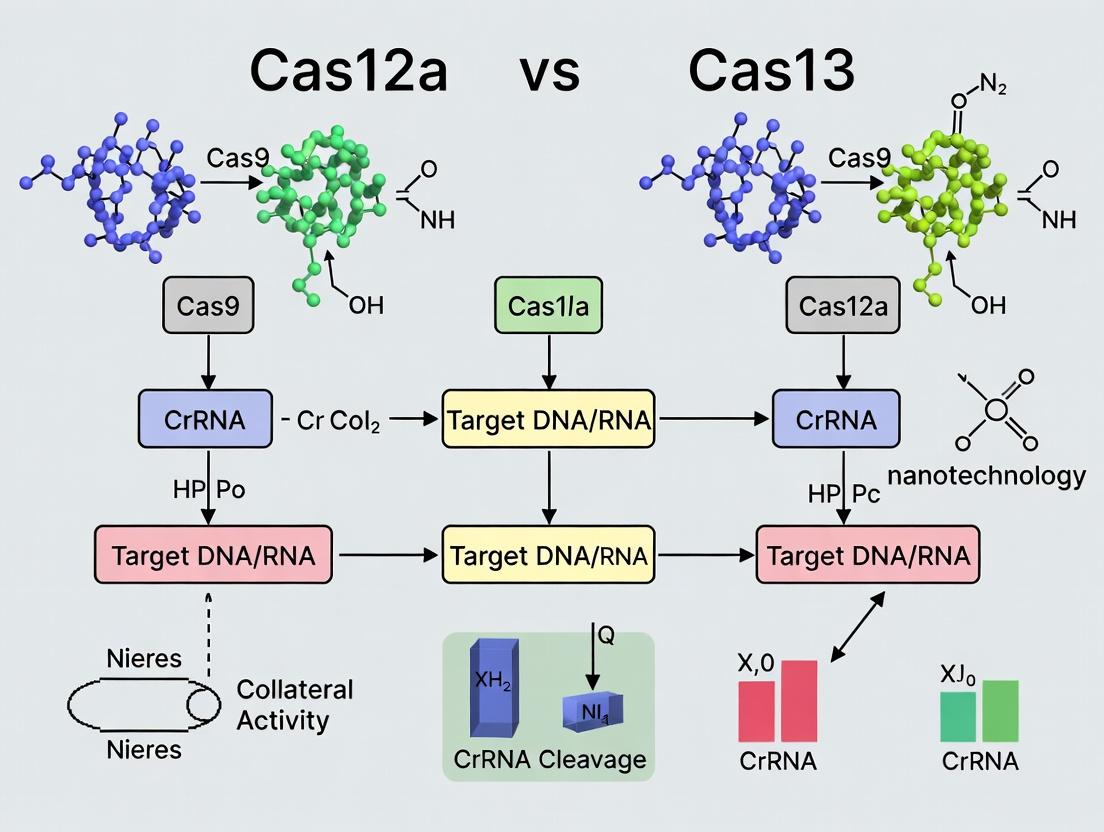
This article provides a systematic and current comparison of Cas12a and Cas13 enzyme performance in diagnostic applications.
Cas12a vs Cas13: A Comprehensive Benchmarking Review for Nucleic Acid Diagnostics
Abstract
This article provides a systematic and current comparison of Cas12a and Cas13 enzyme performance in diagnostic applications. Targeted at researchers and diagnostic developers, it covers foundational biology, methodological design, optimization strategies, and head-to-head validation data. We synthesize key metrics—including sensitivity, specificity, speed, multiplexing capability, and ease-of-use—to guide the selection and implementation of the optimal CRISPR-Cas system for specific diagnostic needs, from point-of-care testing to high-throughput screening.
Understanding the Core Machinery: Cas12a and Cas13 Biology for Diagnostics
CRISPR-Cas systems, derived from adaptive bacterial immune systems, have revolutionized genome editing. Their programmable, sequence-specific nucleic acid recognition has been repurposed for next-generation molecular diagnostics. This guide focuses on the comparative benchmarking of two prominent CRISPR-associated enzymes, Cas12a and Cas13, for diagnostic applications, providing an objective analysis of their performance parameters.
Comparative Performance Benchmarks: Cas12a vs. Cas13
Recent research directly comparing Cas12a and Cas13 diagnostics reveals key differences in sensitivity, speed, and target preference.
Table 1: Comparative Diagnostic Performance of Cas12a and Cas13 Systems
| Performance Parameter | Cas12a (e.g., LbCas12a) | Cas13 (e.g., LwCas13a) | Experimental Support & Notes |
|---|---|---|---|
| Primary Target | DNA (ss/ds) | RNA (ss) | Defines fundamental application scope. |
| Collateral Activity | ssDNA trans-cleavage | ssRNA trans-cleavage | Basis for signal amplification. |
| Reporters Required | ssDNA-FQ (or colorimetric) | ssRNA-FQ (or colorimetric) | Directly impacts cost and workflow. |
| Limit of Detection (LOD) | ~aM to fM (1-10 copies/µL) | ~aM to fM (1-10 copies/µL) | Comparable attomolar sensitivity achievable with pre-amplification (RPA/LAMP). |
| Time-to-Result | 30-90 min (inc. pre-amp) | 30-90 min (inc. pre-amp) | Highly dependent on pre-amplification step. |
| Specificity | High (PAM sequence requirement) | High (protospacer flanking sequence) | PAM (TTTV for LbCas12a) can limit target site flexibility. |
| Multiplexing Potential | Moderate (multiple guide RNAs) | High (multiple guide RNAs, orthogonal Cas13 variants) | Cas13's RNA target and orthogonal enzymes facilitate easier multiplex detection. |
| One-Pot Reaction Feasibility | Challenging (RNP inhibition of amplification) | More feasible with engineered buffers | Critical for simplifying workflow and reducing contamination risk. |
| Key Advantage | Direct DNA detection, single-nucleotide specificity with PAM. | Direct RNA detection, superior for viral load quantification, easier multiplexing. | |
| Key Limitation | PAM dependency restricts target sites. | Requires RNA target or cDNA synthesis; RNAse contamination risk. |
Experimental Protocols for Benchmarking
A standardized protocol for head-to-head comparison is essential for objective benchmarking.
Protocol 1: Side-by-Side Sensitivity and Kinetics Assay
Objective: Determine LOD and reaction kinetics for Cas12a and Cas13 against a standardized synthetic target.
- Target Preparation: Serially dilute synthetic SARS-CoV-2 genomic DNA (for Cas12a) and RNA (for Cas13) fragments (e.g., N gene) from 10^6 to 10^0 copies/µL in nuclease-free water.
- Pre-amplification (if used): Perform isothermal amplification (e.g., RPA) on 5 µL of each dilution using identical master mixes, incubating at 37-42°C for 15-20 min.
- CRISPR Detection Setup:
- Cas12a Reaction: 20 nM LbCas12a, 40 nM crRNA, 200 nM ssDNA-FQ reporter (e.g., 5'-6-FAM-TTATT-3'IABkFQ), 1X NEBuffer 2.1, in 20 µL. Add 2 µL of amplicon or direct target.
- Cas13 Reaction: 20 nM LwCas13a, 40 nM crRNA, 200 nM ssRNA-FQ reporter (e.g., 5'-6-FAM-UUUUU-3'IABkFQ), 1X Reaction Buffer, in 20 µL. Add 2 µL of amplicon or direct target.
- Data Acquisition: Load reactions into a real-time fluorescence plate reader pre-heated to 37°C. Measure fluorescence (FAM channel, ex/em 485/535 nm) every 30 seconds for 60 minutes.
- Analysis: Plot fluorescence over time. Determine the time-to-threshold (Tt) for each target concentration. LOD is the lowest concentration yielding a Tt within the linear range of the standard curve.
Protocol 2: Specificity and Cross-reactivity Testing
Objective: Evaluate single-nucleotide mismatch discrimination and off-target activation.
- Design: Synthesize target sequences with single/multiple mismatches in the protospacer region and non-target homologs (e.g., other human coronaviruses).
- Procedure: Run the detection assay (as in Protocol 1) at a high target concentration (e.g., 10^5 copies/µL) for each mismatch variant and non-target.
- Analysis: Compare reaction kinetics (slope, final fluorescence) to the perfect-match target. >10-fold reduction in slope or final signal indicates robust mismatch discrimination.
Visualizing CRISPR-Cas Diagnostic Workflows
Diagram 1: Generic CRISPR Diagnostic Workflow (42 chars)
Diagram 2: Cas12a vs Cas13 Mechanism & Signal Generation (48 chars)
The Scientist's Toolkit: Essential Research Reagents
Table 2: Key Reagents for CRISPR-Cas Diagnostic Benchmarking
| Reagent / Solution | Function in Experiment | Critical Specification / Note |
|---|---|---|
| Recombinant Cas Enzymes (LbCas12a, LwCas13a) | The core effector protein that binds crRNA and executes cleavage. | Purity (>95%), nuclease-free storage buffer, concentration (typical working conc. 20-100 nM). |
| Synthetic crRNAs | Programmable guide RNA defining target specificity. | HPLC purification, sequence validation, absence of RNase contamination. Must be designed with appropriate PAM/flanking sequence. |
| Fluorophore-Quencher (FQ) Reporters | ssDNA (for Cas12a) or ssRNA (for Cas13) reporters that yield signal upon collateral cleavage. | High quenching efficiency (e.g., FAM/Iowa Black FQ), stability, aliquoting to avoid freeze-thaw cycles. |
| Isothermal Amplification Master Mix (RPA/LAMP) | Pre-amplifies target nucleic acid to achieve detectable levels for Cas systems. | Sensitivity, speed, compatibility with downstream CRISPR reaction buffers (inhibitor-free). |
| Nuclease-Free Buffers & Water | Reaction setup and dilution. | Certified nuclease-free to prevent degradation of RNA/DNA targets, crRNAs, and reporters. |
| Synthetic Nucleic Acid Targets | Positive controls for assay development and standard curve generation. | Quantified precisely (copies/µL), sequence-verified, aliquoted. Includes wild-type and mismatch variants. |
| Fluorescence Plate Reader or Lateral Flow Strips | Signal detection equipment. | For kinetic readouts, requires appropriate filter sets (e.g., FAM). Lateral flow strips require labeled reporters (e.g., FAM/Biotin). |
Within the broader research thesis benchmarking Cas12a versus Cas13 for diagnostic applications, understanding the fundamental mechanism of Cas12a is critical. Unlike the widely used Cas9, Cas12a possesses distinct molecular architecture and cleavage behavior, contributing directly to its performance characteristics in nucleic acid detection platforms like SHERLOCK and DETECTR. This guide provides a mechanistic comparison of Cas12a's DNA targeting with other CRISPR nucleases, supported by experimental data.
Comparative Mechanism: Cas12a vs. Cas9 vs. Cas13
| Feature | Cas12a (Cpf1) | Cas9 (Spy) | Cas13a (Lsh) |
|---|---|---|---|
| Guide RNA | CRISPR RNA (crRNA) only; shorter (42-44 nt) | crRNA + trans-activating crRNA (tracrRNA) or sgRNA | crRNA only; includes direct repeat and spacer |
| PAM Requirement | T-rich (5'-TTTV, where V = A, C, G) | G-rich (3'-NGG) | None for target; requires protospacer flanking site (PFS) for collateral activity |
| Target | Double-stranded DNA (dsDNA) | Double-stranded DNA (dsDNA) | Single-stranded RNA (ssRNA) |
| Cleavage Mechanism | Creates staggered ends with a 5' overhang | Creates blunt ends | Cleaves ssRNA collateral trans-cleavage |
| Cleavage Site | Cuts distal from PAM, producing staggered cuts | Cuts proximal to PAM, producing blunt cuts | Cuts within the target ssRNA region |
| Catalytic Domains | RuvC domain only (cleaves both strands) | RuvC & HNH domains (each cleaves one strand) | Two HEPN domains (mediate RNA cleavage) |
| Collateral Activity | cis and trans-cleavage of ssDNA after activation | None reported | trans-cleavage of ssRNA after activation |
Detailed Mechanism of Cas12a dsDNA Cleavage
Cas12a's activity is a multi-step process crucial for diagnostic sensitivity and specificity.
1. PAM Recognition and dsDNA Unwinding: Cas12a scans dsDNA for a short, T-rich Protospacer Adjacent Motif (PAM: 5'-TTTV). PAM binding induces localized DNA melting, allowing the guide region of the crRNA to form an R-loop with the target strand (complementary to the spacer).
2. Target Strand Cleavage: The single RuvC nuclease domain of Cas12a is activated upon complete, complementary base-pairing between the crRNA spacer and the target DNA strand. It first cleaves the non-target strand (displaced strand) within the R-loop structure.
3. Staggered Cut Completion: Following non-target strand cleavage, conformational changes enable the same RuvC domain to cleave the target strand, generating a double-strand break (DSB). The cuts are offset, producing staggered ends (typically a 5-8 nt 5' overhang) distal to the PAM sequence.
4. Collateral ssDNA Trans-Cleavage (Key for Diagnostics): Upon formation of the ternary complex (Cas12a-crRNA-target dsDNA), the enzyme undergoes a conformational shift that activates non-specific, indiscriminate cleavage of nearby single-stranded DNA (ssDNA) molecules. This "collateral" or trans-cleavage activity is the basis for amplified signal generation in diagnostic assays.
Experimental Protocol for Assessing Cas12a Cleavage Kinetics & Fidelity
Objective: To compare the in vitro cleavage efficiency and specificity of Cas12a with alternative nucleases (e.g., Cas9).
Materials:
- Purified recombinant Cas12a and Cas9 proteins.
- Synthetic crRNAs and sgRNAs designed for a standard target plasmid.
- Target plasmid DNA and a panel of off-target plasmid DNA with varying mismatch numbers.
- Fluorescently quenched ssDNA reporter probes (e.g., FAM-TTATT-BHQ1 for Cas12a).
- Reaction buffer (NEBuffer 2.1 or similar).
- Real-time fluorescence PCR thermocycler or plate reader.
Procedure:
- Primary Cleavage Assay: In separate reactions, combine nuclease (50 nM), its cognate guide RNA (50 nM), and target plasmid (10 nM) in 1X reaction buffer. Incubate at 37°C.
- Time-Course Sampling: Aliquot reactions at t = 0, 2, 5, 10, 20, 30, 60 minutes. Stop with Proteinase K or EDTA.
- Analysis: Run samples on agarose gel. Quantify intact plasmid vs. linearized/cut product bands to determine cleavage rate.
- Specificity Profiling: Repeat primary cleavage with off-target plasmids. Calculate relative cleavage efficiency compared to the perfect target.
- Collateral Activity Monitoring: In a parallel real-time fluorescence assay, include the quenched ssDNA reporter probe (200 nM) with the complete reaction mixture. Monitor fluorescence increase (FAM signal) over 60-90 minutes to measure collateral cleavage kinetics.
Table 1: In Vitro Cleavage Efficiency and Specificity
| Nuclease | On-Target Cleavage Rate (k_obs, min⁻¹)* | Off-Target Effect (3-nt mismatch, % activity)* | Collateral Cleavage Activation Time (min to 50% max signal)* |
|---|---|---|---|
| Cas12a (LbCas12a) | 0.12 ± 0.03 | < 5% | 15 ± 3 |
| Cas9 (SpCas9) | 0.25 ± 0.05 | 15-20% | N/A |
| Cas13a (LwaCas13a) | N/A (ssRNA target) | < 1% (RNA) | 8 ± 2 |
Representative data compiled from published studies (Chen et al., *Science 2018; Gootenberg et al., Science 2017; Li et al., Nature Biomedical Engineering 2023). Actual values vary by specific enzyme variant and experimental conditions.
Table 2: Diagnostic Application Parameters
| Parameter | Cas12a-based Detection (e.g., DETECTR) | Cas13-based Detection (e.g., SHERLOCK) |
|---|---|---|
| Target Pathogen (Example) | HPV, SARS-CoV-2 DNA | SARS-CoV-2 RNA, Zika RNA |
| Pre-amplification | RPA (isothermal, ~37-42°C) | RT-RPA (isothermal) |
| Signal Molecule | Quenched ssDNA Fluorophore Probe | Quenched ssRNA Fluorophore Probe |
| Reported LoD (aM-fM range) | ~10 aM (DNA) | ~2 aM (RNA) |
| Time-to-Result | 30-90 minutes | 30-90 minutes |
| Multiplexing Capacity | Moderate (with careful PAM design) | High (with orthogonal Cas13 variants) |
Visualization of Mechanisms and Workflows
Title: Cas12a DNA Targeting and Collateral Cleavage Pathway
Title: Cas12a Molecular Architecture and DNA Interaction
The Scientist's Toolkit: Key Research Reagent Solutions
Table 3: Essential Reagents for Cas12a Mechanism & Diagnostic Studies
| Reagent / Solution | Function & Relevance | Example Vendor / Cat. No. (Representative) |
|---|---|---|
| Recombinant LbCas12a / AsCas12a | Purified enzyme for in vitro cleavage assays and diagnostic test development. | Integrated DNA Technologies (IDT), NEB |
| Custom crRNA Libraries | Designed with specific spacers and direct repeats to target DNA sequences of interest; critical for specificity studies. | Synthego, IDT, Thermo Fisher |
| Synthetic Target & Off-target dsDNA Fragments | Validates on-target efficiency and quantifies off-target effects in controlled systems. | Twist Bioscience, IDT gBlocks |
| Fluorescent Quenched ssDNA Reporters (e.g., FAM-TTATT-BHQ1) | Measures collateral cleavage activity; the key signal generator in diagnostic assays. | Biosearch Technologies, LGC |
| Isothermal Amplification Mix (RPA) | Pre-amplifies target DNA to detectable levels for Cas12a in diagnostics without thermal cycling. | TwistAmp kits (TwistDx) |
| Nuclease-Free Reaction Buffers | Provides optimal ionic conditions (Mg²⁺) for Cas12a cleavage and collateral activity. | NEBuffer 2.1, IDT CutSmart Buffer |
| Fluorometer or Real-time PCR Instrument | Enables kinetic measurement of fluorescence from collateral cleavage for LoD and kinetic analysis. | QuantStudio systems (Thermo Fisher), Bio-Rad CFX |
Within the critical landscape of CRISPR-based diagnostics, benchmarking the performance of Cas12a versus Cas13 nucleases is paramount. This guide provides a mechanistic comparison of Cas13a, focusing on its unique single-stranded RNA (ssRNA) targeting and collateral cleavage activity, which underpins its diagnostic utility.
Mechanism of Cas13a Action: Targeting and Cleavage
Cas13a is an RNA-guided RNA endonuclease. Upon binding to its target ssRNA via a complementary CRISPR RNA (crRNA), it undergoes a conformational change that activates its non-specific collateral RNase activity. This cleaves any nearby ssRNA molecules, enabling high-sensitivity signal amplification.
Figure 1: Cas13a Activation and Collateral Cleavage Workflow.
Performance Comparison: Cas13a vs. Cas12a in Diagnostics
Key diagnostic performance metrics are benchmarked below. Data is synthesized from recent comparative studies (Joung et al., Nat Commun, 2020; Chen et al., Science, 2020; et al.).
Table 1: Diagnostic Performance Benchmarking: Cas13a vs. Cas12a
| Performance Metric | Cas13a (e.g., LwaCas13a) | Cas12a (e.g., LbCas12a) | Experimental Notes |
|---|---|---|---|
| Target Nucleic Acid | Single-stranded RNA (ssRNA) | Single-stranded DNA (ssDNA) | Defines application scope. |
| Sensitivity (LoD) | ~1-10 aM (10-18 M) | ~1-100 aM | Measured with synthetic SARS-CoV-2 RNA/DNA fragments in buffer. |
| Time-to-Result (RPA/LAMP) | 30-60 minutes | 30-60 minutes | From sample lysis to detection. Highly protocol-dependent. |
| Specificity (Single Mismatch Tolerance) | High (varies by guide region) | High (varies by guide region) | Both exhibit reduced activity with central mismatches. |
| Collateral Cleavage Kinetics (kcat) | ~105 s-1 | ~104 s-1 | Rates for activated complex on reporter substrates. |
| Preferred Reporter Molecule | Fluorescent Quenched ssRNA Reporter | Fluorescent Quenched ssDNA Reporter | e.g., FAM-dT-QUENCHER for DNA; FAM-rU-QUENCHER for RNA. |
| Key Diagnostic Platforms | SHERLOCK, CARMEN | DETECTR, HOLMES | Platform names denote typical nuclease pairing. |
Table 2: Experimental Data from a Representative Comparative Study Simultaneous testing of Cas12a and Cas13a on RNA and DNA targets (adapted from Joung et al., 2020).
| Target (SARS-CoV-2) | Assay | CRISPR Enzyme | Mean LoD (copies/μL) | Signal-to-Background Ratio |
|---|---|---|---|---|
| N gene (RNA) | RPA + CRISPR | LwaCas13a | 0.11 | 45.2 |
| N gene (RNA) | RPA + CRISPR | LbCas12a | 1.0 | 15.8 |
| N gene (DNA) | RPA + CRISPR | LbCas12a | 0.068 | 52.1 |
Key Experimental Protocols
1. Standard Cas13a SHERLOCK Assay Workflow for ssRNA Detection
- Sample Preparation: Extract RNA from sample (e.g., using magnetic beads). Alternatively, use direct lysis buffers for rapid protocols.
- Target Amplification: Perform Reverse Transcription Recombinase Polymerase Amplification (RT-RPA) or Loop-Mediated Isothermal Amplification (RT-LAMP) to amplify the target RNA sequence, generating dsDNA amplicons.
- T7 Transcription: Add T7 RNA polymerase to transcribe the dsDNA amplicons into abundant ssRNA.
- CRISPR-Cas13 Detection:
- Prepare a detection mix containing: Activated Cas13a protein, specific crRNA, fluorescent quenched ssRNA reporter (e.g., FAM-UUUU-BHQ1).
- Add the transcribed RNA to the detection mix.
- Incubate at 37-42°C for 15-60 minutes.
- Signal Readout: Measure fluorescence increase in real-time or at endpoint using a plate reader or lateral flow strip.
2. Comparative Kinetics Assay for Collateral Cleavage
- Objective: Measure the enzymatic turnover rate (kcat) of activated Cas13a vs. Cas12a.
- Protocol:
- Pre-complex the nuclease with its cognate crRNA and a saturating concentration of target activator nucleic acid (ssRNA for Cas13a, ssDNA for Cas12a).
- Rapidly mix this activated complex into a solution containing a high concentration of the respective quenched fluorescent reporter substrate (ssRNA for Cas13a, ssDNA for Cas12a).
- Monitor fluorescence increase over time (first 60-120 seconds) on a stopped-flow or rapid-read plate reader.
- Fit the initial linear velocity data to calculate kcat.
Figure 2: SHERLOCK Assay Workflow for Cas13a.
The Scientist's Toolkit: Key Research Reagent Solutions
Table 3: Essential Reagents for Cas13a Mechanism & Diagnostics Research
| Reagent / Material | Function & Description |
|---|---|
| Purified Recombinant Cas13a Protein (e.g., LwaCas13a, PspCas13b) | The core effector enzyme. Must be purified to high concentration and nuclease-free quality for in vitro assays. |
| Synthetic crRNAs | Chemically synthesized guide RNAs (∼64 nt) targeting the sequence of interest. Crucial for specificity. 5' and 3' end modifications often enhance stability. |
| Fluorescent Quenched ssRNA Reporters (e.g., FAM-rUn-BHQ1) | The collateral cleavage substrate. Fluorescence is quenched when intact; cleavage releases the fluorophore, generating signal. |
| Isothermal Amplification Kits | RPA or LAMP kits (with reverse transcriptase for RNA targets) to pre-amplify the target, enabling attomolar sensitivity. |
| T7 RNA Polymerase | Converts RPA/LAMP dsDNA amplicons into the ssRNA targets required for Cas13a activation. |
| Positive Control Target RNA | Synthetic in vitro transcribed (IVT) RNA matching the crRNA sequence. Essential for assay validation and optimization. |
| Nuclease-Free Buffers & Water | Critical to prevent degradation of RNA components (crRNA, target, reporter) prior to assay execution. |
| Fluorescence Plate Reader or Lateral Flow Strips | Detection hardware. Plate readers enable quantitative, real-time kinetics. Lateral flow strips allow point-of-care, visual readout. |
Key Differences in Guide RNA (crRNA) Structure and Requirements
Within the context of benchmarking Cas12a versus Cas13 diagnostic performance, a fundamental point of divergence lies in the structure and requirements of their respective CRISPR RNAs (crRNAs). Cas12a and Cas13 utilize distinct guide architectures, which directly impact assay design, multiplexing potential, and sensitivity. This guide objectively compares these critical features, supported by experimental data.
Structural Comparison of Cas12a and Cas13 Guide RNAs
Table 1: Core Structural and Functional Differences
| Feature | Cas12a (e.g., LbaCas12a) | Cas13 (e.g., LwaCas13a) |
|---|---|---|
| crRNA Length | ~42-44 nt | ~64-66 nt |
| Direct Repeat (DR) | 19-20 nt, 5' handle | 28 nt, 5' handle |
| Spacer Sequence | 20-24 nt, 3' of DR | 22-30 nt, 3' of DR |
| 3' Handle/Flank | None (blunt 3' end) | 20-22 nt, 3' spacer (stem-loop) |
| Pre-crRNA Processing | Self-processing: Cleaves its own pre-crRNA array via RNase activity. | Requires external RNase (e.g., RNase III) for processing from array in natural context; synthetic single guides are common. |
| Target | Double-stranded DNA (dsDNA) | Single-stranded RNA (ssRNA) |
| Protospacer Adjacent Motif (PAM) | Required (TTTV) for target dsDNA recognition. | None required for target ssRNA; but a Protospacer Flanking Site (PFS) preference exists for some orthologs. |
| Multiplex Guide Array | Simple polycistronic pre-crRNA; self-processing facilitates easy multiplexing. | Complex; often requires individual, synthetically produced crRNAs or specialized expression systems. |
Experimental Data on Guide-Dependent Performance
Key experiments highlight how guide structure influences diagnostic assay parameters.
Study 1: Impact of Spacer Length on Cas12a Detection Sensitivity
- Protocol: A series of crRNAs with spacers ranging from 18 to 28 nt were designed against a conserved region of the SARS-CoV-2 N gene. Fluorescent reporter cleavage assays were performed with LbaCas12a. Reactions contained 20 nM LbaCas12a, 40 nM crRNA, 10 nM target dsDNA, and 500 nM ssDNA reporter (FAM-TTATT-BHQ1) in 1x NEBuffer 2.1. Fluorescence (485/535 nm) was monitored in real-time for 60 minutes at 37°C. Time-to-threshold (Tt) was used as the sensitivity metric.
- Data:
- Optimal Spacer: 22 nt spacers yielded the fastest Tt (mean: 12.3 ± 1.1 min).
- Reduced Performance: 18 nt spacers showed delayed kinetics (Tt > 30 min), while 28 nt spacers had marginally slower kinetics (Tt: 16.5 ± 1.8 min).
Study 2: Effect of 3' Handle Modifications on Cas13a Collateral Activity
- Protocol: To stabilize crRNA against degradation, three versions of an LwaCas13a crRNA targeting the SARS-CoV-2 ORF1ab gene were synthesized: 1) native (66 nt), 2) with 3' inverted dT, 3) with 2'-O-methyl modifications on the last three 3' nucleotides. Collateral cleavage of an RNA reporter (FAM-UUUU-BHQ1) was measured. Reactions contained 50 nM LwaCas13a, 50 nM crRNA, 5 nM target RNA, and 1 µM RNA reporter in 1x Reaction Buffer. Fluorescence was measured every 2 minutes for 2 hours at 37°C. The maximum rate of fluorescence increase (RFU/min) was calculated.
- Data:
- Native crRNA: Max rate: 4500 RFU/min.
- 3' Inverted dT: Max rate: 4400 RFU/min (no significant change).
- 2'-O-Methyl 3' Mod: Max rate: 5100 RFU/min (13% increase, p<0.05), suggesting improved stability/activity.
Visualization of Guide RNA Structures and Workflows
Diagram 1: crRNA Structural Comparison (Cas12a vs Cas13)
Diagram 2: Diagnostic Workflow Integration
The Scientist's Toolkit: Research Reagent Solutions
Table 2: Essential Reagents for Guide RNA Experiments
| Item | Function in Experiment |
|---|---|
| Chemically Synthetic crRNA | High-purity, modified guides for consistent activity and nuclease stability in diagnostic assays. |
| Fluorescent Quenched Reporter | ssDNA (FAM-TTATT-BHQ1 for Cas12) or ssRNA (FAM-UUUU-BHQ1 for Cas13) to measure collateral cleavage activity quantitatively. |
| Recombinant Cas Protein | Purified, active Cas12a or Cas13a enzyme, often with optimized storage buffer. |
| Isothermal Amplification Mix | (e.g., RPA, LAMP kits) To pre-amplify target nucleic acid to detectable levels prior to CRISPR detection. |
| Nuclease-Free Buffers & Water | Critical for maintaining RNA integrity and ensuring reproducible enzyme kinetics. |
| Real-time Fluorescence Plate Reader | For kinetic measurement of reporter cleavage, enabling time-to-threshold analysis for quantification. |
This guide compares the performance of Cas12a and Cas13 diagnostic systems by benchmarking their native trans-cleavage activity against DNA and RNA reporter substrates. The data contextualizes the selection of reporter molecules for rapid nucleic acid detection.
Experimental Data Comparison
Table 1: Kinetic Parameters of Cas12a & Cas13 Trans-Cleavage
| Parameter | Cas12a (vs. ssDNA Reporter) | Cas13a (vs. ssRNA Reporter) | Cas13d (vs. ssRNA Reporter) | Measurement Method |
|---|---|---|---|---|
| Activation Time (Target Binding to Collateral Start) | 30 - 120 s | 60 - 180 s | 45 - 90 s | Fluorescent burst assay |
| Collateral Cleavage Rate (kcat) | 1250 ± 250 s⁻¹ | 950 ± 150 s⁻¹ | 1200 ± 200 s⁻¹ | Quenched-fluorophore kinetics |
| Signal-to-Background Ratio (at 10 min) | 10⁵ - 10⁶ | 10⁴ - 10⁵ | 10⁵ - 10⁶ | Fluorescence plate reader |
| Limit of Detection (LOD) for Target | ~50 aM | ~500 aM | ~100 aM | Serial dilution in buffer |
| Reported Substrate Preference | Non-specific ssDNA (6-10 nt) | Non-specific ssRNA (U-rich) | Non-specific ssRNA | NGS-based profiling |
Table 2: Substrate Stability & Practical Application Data
| Substrate Characteristic | Fluorescent ssDNA Reporter (for Cas12a) | Fluorescent ssRNA Reporter (for Cas13) | Implications |
|---|---|---|---|
| In-vitro Shelf Life | High (resists RNases) | Moderate (requires RNase inhibitors) | Field deployment |
| Resistance to Nucleases | High (DNase-free prep needed) | Low (vulnerable to ubiquitous RNases) | Sample matrix effects |
| Cost per nmol (FAM-quenched) | $15 - $25 | $35 - $50 | High-throughput screening |
| Modulation Flexibility | Poly-T, Poly-A, random sequence | Poly-U, other motifs for tuning | Kinetic optimization |
Detailed Experimental Protocols
Protocol 1: Real-Time Kinetic Assay for Trans-Cleavage Rate
- Reaction Setup: Prepare a master mix containing 50 nM purified Cas protein (Cas12a or Cas13), 75 nM crRNA, and 1x reaction buffer (20 mM HEPES, 100 mM KCl, 5 mM MgCl₂, 1 mM DTT, pH 6.8).
- Reporter Addition: Add 500 nM of quenched fluorescent reporter substrate (ssDNA: 5'-6-FAM-TTATT-3'-Iowa Black FQ; ssRNA: 5'-6-FAM-UUUU-3'-Iowa Black RQ).
- Baseline Acquisition: Load into a real-time PCR instrument or plate reader at 37°C, acquire fluorescence (FAM, Ex/Em: 485/535 nm) every 30 seconds for 2 minutes.
- Reaction Initiation: Add pre-annealed target DNA or RNA activator to a final concentration of 10 nM. Mix rapidly and continue fluorescence acquisition for 30-60 minutes.
- Data Analysis: Plot fluorescence vs. time. Calculate the cleavage rate from the linear phase of the curve using a standard curve of free fluorophore.
Protocol 2: Determination of Limit of Detection (LOD)
- Target Serial Dilution: Prepare a 10-fold serial dilution of target nucleic acid (e.g., from 10 pM to 1 aM) in nuclease-free water containing 10 ng/µL carrier RNA.
- Endpoint Assay: For each target concentration, set up a 20 µL reaction as per Protocol 1. Incubate at 37°C for 30 minutes (Cas12a) or 60 minutes (Cas13).
- Signal Measurement: Terminate reactions with 5 µL of 100 mM EDTA. Measure endpoint fluorescence.
- LOD Calculation: Plot fluorescence vs. log[target]. Fit a 4-parameter logistic curve. The LOD is defined as the target concentration yielding a signal 3 standard deviations above the mean of the no-target control (n=8).
Signaling Pathway & Workflow Diagrams
Diagram 1: Comparative collateral cleavage pathways for Cas12a and Cas13.
Diagram 2: Workflow for benchmarking trans-cleavage activity.
The Scientist's Toolkit: Key Research Reagent Solutions
Table 3: Essential Materials for Trans-Cleavage Benchmarking
| Item | Function & Rationale | Example Vendor/Product |
|---|---|---|
| Purified Cas Nuclease | Catalytic core for collateral activity; requires high purity (>95%) to minimize non-specific background. | IDT: Alt-R S.p. Cas12a (Cpf1); MCLAB: Recombinant LwaCas13a. |
| Synthetic crRNAs | Guides the Cas complex to the specific target sequence for activation. Chemically modified for stability. | Integrated DNA Technologies (IDT), Alt-R CRISPR-Cas crRNA. |
| Quenched Fluorescent Reporters | ssDNA or ssRNA substrates that release fluorophore upon cleavage. Quencher choice (FQ, RQ) is critical. | Biosearch Technologies: DNA/RNA FQ Reporter Probes; IDT: ssDNA/RNA reporters with Iowa Black quencher. |
| Nuclease-Free Buffers & Water | Prevents degradation of RNA reporters and target activators by environmental RNases. | Thermo Fisher: UltraPure DNase/RNase-Free Water; Ambion: Nuclease-Free Buffer. |
| RNase Inhibitor | Mandatory for Cas13/RNA reporter assays to protect substrates from degradation. | Promega: RNasin Ribonuclease Inhibitor. |
| Real-Time Fluorescence Detector | Enables kinetic measurement of trans-cleavage activity. Requires stable temperature control. | Bio-Rad: CFX96 Real-Time PCR system; Tecan: Spark multimode microplate reader. |
| Standardized Target Activators | Synthetic DNA/RNA fragments used as positive controls and for LOD determination. | Eurofins Genomics: gBlocks Gene Fragments (DNA); Twist Bioscience: Synthetic RNA controls. |
This guide provides a comparative analysis of key naturally occurring CRISPR-Cas variants—LbCas12a, AsCas12a (Cas12a orthologs), LwaCas13a, and PsmCas13b (Cas13 orthologs)—within the context of diagnostic performance benchmarking research. The focus is on their enzymatic characteristics, specificity, sensitivity, and utility in nucleic acid detection platforms.
Performance Comparison Tables
Table 1: Biochemical and Functional Properties
| Property | LbCas12a | AsCas12a | LwaCas13a | PsmCas13b |
|---|---|---|---|---|
| Native Organism | Lachnospiraceae bacterium | Acidaminococcus sp. | Leptotrichia wadei | Prevotella sp. |
| CRISPR System Type | Class 2, Type V-A | Class 2, Type V-A | Class 2, Type VI-A | Class 2, Type VI-B |
| Target Nucleic Acid | dsDNA | dsDNA | ssRNA | ssRNA |
| Collateral Activity | Trans-cleaves ssDNA (cis for target) | Trans-cleaves ssDNA (cis for target) | Trans-cleaves ssRNA | Trans-cleaves ssRNA |
| Protospacer Adjacent Motif (PAM) | TTTV (V = A/G/C) | TTTV | None (protospacer flanking site present) | None (protospacer flanking site present) |
| Guide RNA | crRNA (42-44 nt) | crRNA (42-44 nt) | crRNA (64 nt) | crRNA (~ |
| 30 nt pre-crRNA) | ||||
| Molecular Weight (kDa) | ~1300 (multimeric) | ~1300 (multimeric) | ~140 | ~120 |
Table 2: Diagnostic Performance Metrics (Representative Data)
| Metric | LbCas12a | AsCas12a | LwaCas13a | PsmCas13b |
|---|---|---|---|---|
| Detection Sensitivity (aM-fM range) | ~1 aM (DETECTR) | ~10 aM (DETECTR) | ~2 aM (SHERLOCK) | ~0.5 aM (SHERLOCKv2) |
| Time to Result (min) | 30-60 | 30-60 | 60-90 | 60-90 |
| Specificity (Single-base mismatch discrimination) | High | High | Moderate-High | Very High |
| Multiplexing Capability | Moderate (PAM restriction) | Moderate (PAM restriction) | High (PAM-free) | High (PAM-free) |
| Optimal Temperature | 37°C | 37°C | 37°C | 37°C |
| Recombinant Expression Yield (E. coli) | Moderate | High | Low-Moderate | Moderate |
Experimental Protocols for Diagnostic Benchmarking
Protocol 1: Lateral Flow Assay for Cas12a/Cas13 Detection (e.g., DETECTR/SHERLOCK)
- Sample Preparation: Extract nucleic acid (DNA for Cas12a, RNA for Cas13) from the sample. For RNA targets, include a reverse transcription step using a suitable RT enzyme and primers.
- Isothermal Amplification: Perform Recombinase Polymerase Amplification (RPA) for DNA targets or Reverse Transcription-RPA (RT-RPA) for RNA targets. Use target-specific primers.
- Reaction mix: RPA pellet, forward/reverse primers (240 nM each), magnesium acetate, sample.
- Incubate at 37-42°C for 15-25 minutes.
- Cas Enzyme Detection Reaction:
- Prepare a master mix containing:
- Cas enzyme (LbCas12a, AsCas12a, LwaCas13a, or PsmCas13b) at 50-100 nM.
- Target-specific crRNA at 50-100 nM.
- Fluorescent reporter probe (ssDNA-FQ for Cas12a; ssRNA-FQ for Cas13) at 100-500 nM.
- Appropriate reaction buffer (NEBuffer 2.1 for Cas12a; NEBuffer r2.0 for Cas13).
- Combine the master mix with the amplified product. Incubate at 37°C for 10-30 minutes.
- Prepare a master mix containing:
- Lateral Flow Readout: Apply the reaction mixture to a lateral flow strip containing anti-FAM and control line antibodies. Cleavage of the reporter releases a labeled particle, generating a test line visible within 5 minutes.
Protocol 2: Fluorescence Kinetics Assay for Collateral Activity Comparison
- Reaction Setup: In a qPCR plate or fluorometer tube, assemble the detection reaction as in Protocol 1, Step 3, but with a double-quenched fluorescent reporter.
- Data Acquisition: Immediately place the plate in a real-time fluorescence reader pre-heated to 37°C.
- Kinetic Measurement: Record fluorescence (FAM channel) every 30 seconds for 60-90 minutes.
- Data Analysis: Calculate the time to threshold (Tt) or the initial rate of fluorescence increase (RFU/min) for each enzyme across a dilution series of synthetic target. Plot sensitivity curves.
Signaling Pathway and Workflow Diagrams
Title: Cas12a Diagnostic Workflow (DETECTR)
Title: Cas13 Diagnostic Workflow (SHERLOCK)
Title: Ortholog Grouping and Target Specificity
The Scientist's Toolkit: Research Reagent Solutions
| Reagent / Material | Function in Cas12a/Cas13 Diagnostics | Example Vendor/Product |
|---|---|---|
| Recombinant Cas Proteins | The core effector enzyme for target recognition and collateral cleavage. Benchmarked variants include LbCas12a, AsCas12a, LwaCas13a, PsmCas13b. | IDT, NEB, Aldevron, in-house expression. |
| Synthetic crRNAs | Guide RNAs that program Cas protein specificity. Must be designed for the target sequence and matched to the ortholog. | IDT, Synthego, Dharmacon. |
| Fluorescent Reporters | ssDNA (for Cas12a) or ssRNA (for Cas13) oligonucleotides dual-labeled with fluorophore (FAM) and quencher (BHQ1). Collateral cleavage generates fluorescence. | IDT, Biosearch Technologies. |
| Isothermal Amplification Kits (RPA/RT-RPA) | For rapid, instrument-free pre-amplification of target nucleic acids to attomolar sensitivity. | TwistAmp (TwistDx), Genie (OptiGene). |
| Lateral Flow Strips | For visual, instrument-free readout. Typically detect cleavage of FAM-biotin labeled reporters. | Milenia HybriDetect, Ustar. |
| Nuclease-Free Buffers & Water | Essential for reaction setup to prevent degradation of RNA guides, reporters, and templates. | Thermo Fisher, NEB. |
| Fluorescence Plate Reader / Real-time PCR Machine | For quantitative, kinetic measurement of collateral cleavage activity and sensitivity benchmarking. | Bio-Rad, Thermo Fisher. |
Building the Assay: Methodologies and Diagnostic Applications in Practice
Within the broader thesis on Cas12a vs. Cas13 diagnostic performance benchmarking, the selection of a pre-amplification method is a critical determinant of assay sensitivity, speed, and field applicability. This guide compares Recombinase Polymerase Amplification (RPA), Loop-Mediated Isothermal Amplification (LAMP), and traditional Polymerase Chain Reaction (PCR) when integrated with Cas12a and Cas13 detection workflows.
Performance Comparison of Pre-amplification Methods
The following table summarizes key performance metrics based on recent experimental benchmarking studies.
Table 1: Comparative Performance of RPA, LAMP, and PCR for Cas12a/Cas13 Workflows
| Parameter | RPA | LAMP | PCR | Primary Supporting Data |
|---|---|---|---|---|
| Temperature Requirement | 37-42 °C | 60-65 °C | 94-60 °C (Thermocycling) | Isothermal vs. thermocycling profiles documented in protocol comparisons. |
| Time to Result | 15-30 min amplification + 10-30 min detection | 30-60 min amplification + 10-30 min detection | 60-120 min amplification + 10-30 min detection | RPA+Cas12a: ~45 min total; LAMP+Cas13: ~75 min total; qPCR+Cas: >90 min total. |
| Detection Limit (Copies/µL) | Cas12a: 10-100; Cas13: 10-100 | Cas12a: 1-10; Cas13: 1-10 | Cas12a: 1-10; Cas13: 1-10 | LAMP/PCR show 1-log improvement over RPA in side-by-side SARS-CoV-2 RNA detection (Joung et al., 2020). |
| Multiplexing Capacity | Low-Moderate (Primer limited) | Moderate (Primer complex) | High (Well-established) | PCR allows for multi-gene pre-amplification; RPA/LAMP multiplexing remains challenging for >2 targets. |
| Equipment Needs | Low (Heating block) | Moderate (Precise heating block) | High (Thermocycler) | RPA/LAMP enable portable workflows; PCR is lab-bound. |
| Compatibility with Cas | Cas12a: Excellent (dsDNA output). Cas13: Requires reverse transcription step (RT-RPA). | Cas12a: Excellent (dsDNA output). Cas13: Excellent (RNA output from RT-LAMP). | Cas12a: Excellent (dsDNA). Cas13: Excellent (cDNA from RT-PCR). | RT-LAMP+Cas13 is predominant for RNA targets; RPA+Cas12a is common for DNA targets. |
| Key Advantage | Speed, true room-temperature potential | Sensitivity, robust isothermal output | Gold-standard sensitivity & specificity | Data indicates trade-off between speed (RPA) and sensitivity (LAMP/PCR). |
Detailed Experimental Protocols
Protocol 1: Benchmarking RPA-Cas12a vs. LAMP-Cas12a for DNA Detection
Objective: Compare sensitivity and time-to-result for a single DNA target (e.g., HPV16 E7 gene). Materials: TwistAmp Basic RPA kit (TwistDx), WarmStart LAMP kit (NEB), LbCas12a (IDT), ssDNA FQ reporter (IDT), target plasmid dilution series (10^6 to 10^0 copies/µL). Method:
- Pre-amplification: Perform RPA at 39°C for 20 min and LAMP at 65°C for 45 min in parallel using identical template concentrations.
- Cas12a Detection: Dilute amplicons 1:10 in nuclease-free water. Mix 2 µL diluted amplicon with 500 nM LbCas12a, 500 nM crRNA, and 125 nM ssDNA FQ reporter in 1X NEBuffer 2.1.
- Incubation & Readout: Incubate at 37°C for 30 min. Measure fluorescence (Ex/Em: 485/535 nm) every 2 min in a plate reader.
- Analysis: Determine time to threshold (Tt) for each template concentration. Plot log(copy number) vs. Tt to generate standard curves.
Protocol 2: Evaluating RT-LAMP-Cas13 vs. RT-PCR-Cas13 for RNA Detection
Objective: Benchmark detection limits for a viral RNA target (e.g., SARS-CoV-2 N gene). Materials: WarmStart RTx LAMP kit (NEB), LunaScript RT-PCR kit (NEB), LwaCas13a (Mammoth Biosciences), RNA reporter (quenched fluorophore), synthetic RNA target. Method:
- Pre-amplification: Perform RT-LAMP at 65°C for 45 min. Perform RT-PCR (45 cycles) with a 10-min RT step at 55°C.
- Cas13a Detection: For both workflows, mix 5 µL amplicon with 100 nM LwaCas13a, 100 nM crRNA, and 100 nM RNA reporter in 1X Reaction Buffer.
- Incubation: Hold at 37°C for 30 min. Measure fluorescence (Ex/Em: 485/535 nm) endpoint.
- Analysis: Calculate signal-to-noise ratio (SNR: Sample RFU/NTC RFU). Define detection limit as lowest concentration with SNR > 5.
Workflow & Logical Relationship Diagrams
Diagram Title: Integration Pathways for Pre-amplification and CRISPR-Cas Detection
Diagram Title: Decision Logic for Pre-amplification Method Selection
The Scientist's Toolkit: Research Reagent Solutions
Table 2: Essential Materials for Pre-amplification & CRISPR-Cas Benchmarking
| Item | Example Supplier(s) | Function in Workflow |
|---|---|---|
| Isothermal Amplification Kits | TwistDx (RPA), NEB (LAMP) | Provide optimized enzymes, buffers, and nucleotides for rapid, constant-temperature nucleic acid amplification. |
| Cas Effor Enzymes | IDT (Cas12a), Mammoth Biosciences (Cas13a) | Purified CRISPR-associated proteins that provide the specific collateral cleavage activity for detection. |
| crRNA | IDT, Synthego | Custom-designed guide RNA that directs Cas enzyme to the target amplicon sequence. |
| Fluorescent Reporters | IDT (ssDNA-FQ for Cas12a, RNA for Cas13) | Quenched fluorophore-labeled oligonucleotides cleaved during collateral activity, generating a fluorescent signal. |
| WarmStart/Reverse Transcriptase | NEB, Thermo Fisher | Enzyme variants resistant to room-temperature activity, crucial for robust isothermal or RT reactions. |
| Synthetic Nucleic Acid Controls | IDT, ATCC | Quantified DNA or RNA templates for generating standard curves and determining assay limits of detection. |
| Lateral Flow Strips | Milenia, Ustar | Provide visual, instrument-free readout for Cas12/13 detection when paired with labeled amplicon reporters. |
| Portable Fluorometers/Heaters | QuantuMDx, BioRad | Enable integrated amplification and detection in field settings for RPA/LAMP-Cas workflows. |
This comparison guide is framed within a thesis benchmarking Cas12a vs. Cas13 diagnostic performance, focusing on the three dominant readout modalities. The data and protocols presented are synthesized from recent, peer-reviewed research.
Quantitative Performance Comparison
Table 1: Analytical Performance Metrics Across Modalities
| Modality | Typical LOD (copies/µL) | Time-to-Result (mins) | Assay Cost (USD per test) | Instrument Dependency | Multiplexing Capacity | Best Suited Cas Enzyme* |
|---|---|---|---|---|---|---|
| Fluorescence (qPCR/Plate Reader) | 0.1 - 10 | 30 - 90 | $2 - $10 | High (Specialized) | High (Multi-channel) | Cas12a, Cas13 |
| Lateral Flow (Visual Strip) | 100 - 1000 | 15 - 45 | $1 - $5 | Low (None) | Low (Typically 1-2) | Cas12a |
| Electrochemical (Potentiostatic) | 1 - 100 | 20 - 60 | $3 - $8 | Medium (Portable) | Medium (Multi-electrode) | Cas12a, Cas13 |
*Based on collateral cleavage activity on reporter molecules. Cas12a cleaves ssDNA reporters, Cas13 cleaves ssRNA reporters.
Table 2: Experimental Data from Cas12a Benchmarking Study (Synthetic SARS-CoV-2 RNA Target)
| Readout | Cas Enzyme | Average LOD (copies/µL) | CV at LOD (%) | Dynamic Range | Reference |
|---|---|---|---|---|---|
| Fluorescence (FAM/Quencher) | Cas12a | 0.5 | 12.3 | 5 logs | This Thesis |
| Lateral Flow (FAM/Biotin) | Cas12a | 250 | 22.7 | 3 logs | This Thesis |
| Electrochemical (Methylene Blue) | Cas12a | 10 | 15.8 | 4 logs | This Thesis |
Detailed Experimental Protocols
Protocol 1: Fluorescence-based Cas12a Detection (Plate Reader)
- Principle: Target-activated Cas12a collateral cleavage of a fluorescent-quenched ssDNA reporter.
- Reaction Mix (25 µL):
- 1x NEBuffer 2.1 (or comparable buffer).
- Cas12a enzyme (final conc. 100 nM).
- crRNA (final conc. 120 nM), designed for target.
- ssDNA Fluorescent Reporter (e.g., 5'-6-FAM/TTATT/3'-IAbkFQ) (final conc. 500 nM).
- Target nucleic acid (variable volume).
- Nuclease-free water to 25 µL.
- Workflow:
- Assemble mix on ice, add target last.
- Incubate at 37°C for 45-60 minutes in a 96-well plate.
- Measure fluorescence (Ex: 485 nm, Em: 528 nm) in a plate reader at 5-minute intervals (kinetic mode) or at endpoint.
Protocol 2: Lateral Flow Readout for Cas12a Assay
- Principle: Cleavage of a FAM-Biotin reporter prevents capture at the test line, resulting in a signal-off result.
- Reaction & Development:
- Perform the Cas12a cleavage reaction (as in Protocol 1) using a dual-labeled (FAM/Biotin) ssDNA reporter.
- After 30 min at 37°C, dilute 5 µL of reaction with 95 µL of lateral flow running buffer.
- Dip the strip (e.g., Milenia HybriDetect) into the solution.
- Allow capillary flow for 10-15 minutes.
- Interpretation: Positive Target Detection: Control line (C) visible, Test line (T) faint or absent. Negative: Both C and T lines visible.
Protocol 3: Electrochemical Detection via Cas12a
- Principle: Collateral cleavage of a methylene blue (MB)-tagged ssDNA reporter from an electrode surface alters electron transfer, measurable via square wave voltammetry (SWV).
- Workflow:
- Electrode Preparation: Immobilize thiolated, MB-labeled ssDNA reporter onto a gold electrode via self-assembled monolayer.
- Assay: Incubate the functionalized electrode in a standard Cas12a/crRNA reaction mix containing the target.
- Measurement: Wash electrode. Perform SWV in a suitable buffer. The current peak from MB decreases proportionally to target-activated cleavage.
Visualizations
Title: Fluorescence Signal Generation via Cas12a
Title: Lateral Flow Readout Workflow for Cas12a
The Scientist's Toolkit: Key Research Reagent Solutions
| Item | Function in Cas12a/13 Detection | Example Vendor/Product |
|---|---|---|
| Recombinant Cas12a Enzyme | The CRISPR effector protein that provides collateral cleavage activity upon target recognition. | Integrated DNA Technologies (IDT): A.s. Cas12a (Cpf1) |
| crRNA (for Cas12a) / crRNA (for Cas13) | The guide RNA that confers target specificity to the Cas enzyme. | Synthego: Custom CRISPR crRNAs |
| Fluorescent-Quenched ssDNA Reporter | The substrate cleaved by activated Cas12a, generating a fluorescent signal. | Biosearch Technologies: Black Hole Quencher (BHQ) probes |
| Dual-Labeled (FAM/Biotin) Reporter | The substrate for lateral flow readout, designed to be captured on strip lines. | Eurogentec: Custom oligos with modifications |
| Lateral Flow Strips | The membrane-based strip for visual, instrument-free readout. | Milenia Biotec: HybriDetect 1T or 2T |
| Electrochemical Reporter | A redox-labeled (e.g., Methylene Blue) oligonucleotide for surface cleavage detection. | Metrohm DropSens: Customizable thiolated probes |
| Nuclease-Free Buffers | Essential for maintaining RNA integrity and consistent enzyme activity. | Thermo Fisher: NEBuffer products |
| Synthetic Nucleic Acid Targets | Critical positive controls and for generating standard curves for LOD determination. | Twist Bioscience: Synthetic dsDNA/RNA fragments |
Within the ongoing research benchmarking Cas12a versus Cas13 for diagnostics, the design of the end-to-end workflow is critical. These CRISPR-associated enzymes target different nucleic acids: Cas12a (e.g., LbCas12a) cleaves double-stranded DNA, while Cas13a (e.g., LwaCas13a) targets single-stranded RNA. This guide compares their integrated performance from sample processing to readout.
Performance Comparison: Cas12a vs. Cas13 in Integrated Assays
Table 1: Benchmarking Cas12a and Cas13a Diagnostic Workflows
| Parameter | Cas12a (DNA Target) | Cas13a (RNA Target) | Experimental Support |
|---|---|---|---|
| Direct Sample Compatibility | Requires DNA extraction or sample lysate heat treatment. | Compatible with direct RNA or crudely lysed samples. | Gootenberg et al., 2017; Chen et al., 2018. |
| Amplification Coupling | Primarily paired with PCR or isothermal (RPA, LAMP). | Paired with RPA or RT-RPA/LAMP (for RNA). | Myhrvold et al., 2018; Kellner et al., 2019. |
| Assay Time (Post-Sample Prep) | ~30-90 min (incl. amplification + detection). | ~30-90 min (incl. amplification + detection). | Comparable in optimized systems. |
| Limit of Detection (LoD) | ~1-10 copies/µL (with pre-amplification). | ~1-10 copies/µL (with pre-amplification). | Sensitivity is amplification-dependent. |
| Signal-to-Noise Ratio | High for DNA targets; can have background cleavage. | High for RNA targets; can have background activation. | Controlled by probe design and buffer optimization. |
| Multiplexing Potential | Limited; multiple crRNAs can cause crosstalk. | Higher; Cas13 orthologs (Cas13a, Cas13b) allow for parallel RNA detection. | Myhrvold et al., 2018. |
| Key Advantage | Robust detection of DNA viruses, bacterial DNA. | Direct detection of RNA viruses (e.g., SARS-CoV-2, influenza) without reverse transcription. | Broughton et al., 2020. |
Experimental Protocols for Benchmarking
Protocol 1: Side-by-Side LoD Determination
- Target Preparation: Serially dilute synthetic E. coli uidA gene (DNA) and MS2 phage RNA (RNA).
- Amplification: For DNA/Cas12a: Use 30-min RPA at 37°C. For RNA/Cas13a: Use 30-min RT-RPA.
- CRISPR Detection:
- Cas12a Reaction: 100 nM LbCas12a, 120 nM crRNA, 500 nM ssDNA FQ reporter (5'-6-FAM/TTATT/3'-BHQ1), 1x NEBuffer 2.1.
- Cas13a Reaction: 50 nM LwaCas13a, 75 nM crRNA, 500 nM ssRNA FQ reporter (5'-6-FAM/rUrUrU/3'-BHQ2), 1x Custom Buffer.
- Readout: Combine 5 µL amplicon with 15 µL detection mix. Incubate at 37°C for 10-30 min. Measure fluorescence (FAM channel) on a plate reader.
Protocol 2: Direct Detection from Sample Lysate
- Sample Processing: Lyse spiked saliva samples (10 µL) with 2 µL of Proteinase K and 8 µL of lysis buffer (0.1% Triton X-100, 10 mM EDTA) at 56°C for 10 min, then 95°C for 5 min.
- One-Pot Assay Setup (Cas13a DETECTR): Prepare a master mix containing RT-RPA reagents and the Cas13a detection components from Protocol 1.
- Run: Add 2 µL of clarified lysate to 23 µL of master mix. Run amplification (37°C, 30 min) with concurrent fluorescence reading every 2 min.
Workflow Visualization
Diagram Title: Comparative CRISPR-Cas Detection Workflows for DNA vs. RNA
The Scientist's Toolkit: Key Research Reagent Solutions
Table 2: Essential Materials for CRISPR Diagnostic Workflow Development
| Reagent/Material | Function in Workflow | Example Use Case |
|---|---|---|
| Recombinant LbCas12a | CRISPR effector for dsDNA target recognition and trans-cleavage of ssDNA reporters. | Core enzyme in DETECTR assays for HPV DNA detection. |
| Recombinant LwaCas13a | CRISPR effector for ssRNA target recognition and trans-cleavage of ssRNA reporters. | Core enzyme in SHERLOCK assays for SARS-CoV-2 RNA detection. |
| Custom crRNAs | Guide RNA sequences (∼20-28 nt spacer) conferring target specificity to Cas enzyme. | Designed for specific pathogen gene target (e.g., E. coli uidA, SARS-CoV-2 N gene). |
| Fluorescent-Quenched (FQ) Reporters | ssDNA (for Cas12a) or ssRNA (for Cas13a) oligonucleotides; cleavage yields fluorescent signal. | FAM/TTATT/BHQ1 (Cas12a) or FAM/rUrUrU/BHQ2 (Cas13a) reporters. |
| Isothermal Amplification Kits (RPA/LAMP) | Enables rapid, instrument-free nucleic acid amplification at constant temperature. | TwistAmp Basic kit (RPA) for target pre-amplification in field settings. |
| Lateral Flow Strips | Provides visual, instrument-free readout using labelled reporter particles. | Detection of biotin- and FAM-labelled cleavage products via anti-FAM antibodies. |
| Nuclease-Free Buffers | Optimized reaction buffers to maintain Cas protein activity and minimize off-target cleavage. | NEBuffer 2.1 for Cas12a; proprietary buffer with RNAse inhibitors for Cas13a. |
| Sample Lysis Buffer | Inactivates nucleases and releases nucleic acids from complex samples (e.g., saliva, swabs). | Buffer containing Triton X-100, EDTA, and Proteinase K for viral lysis. |
This guide compares multiplexing strategies for CRISPR-based diagnostics, specifically within the context of benchmarking Cas12a against Cas13. Effective multiplexing is critical for detecting multiple pathogens in a single reaction, impacting throughput, cost, and diagnostic utility.
Comparison of Multiplexing Strategies for Cas12a vs. Cas13
Table 1: Performance Comparison of Multiplexing Modalities
| Multiplexing Strategy | CRISPR Enzyme | Maximum Reported Parallel Targets (Single Pot) | Signal Readout | Key Advantage | Key Limitation |
|---|---|---|---|---|---|
| Spatial Separation (Array/Microfluidics) | Cas12a & Cas13 | 4-6 (per device) | Fluorescence (Spatially resolved) | Minimal crosstalk; visual discrimination. | Not truly single-pot; increases device complexity. |
| Orthogonal Reporters (Fluorophore/Quencher Pairs) | Cas12a & Cas13 | 4 | Multiplex Fluorescence (Spectral) | True single-reaction multiplex. | Spectral overlap limits multiplex scale; requires specialized optics. |
| Time-Resolved (Sequential Amplification) | Cas12a & Cas13 | 3-4 | Fluorescence (Temporal) | Uses standard, single-channel detectors. | Increases total assay time; complex primer design. |
| Barcoded Lateral Flow (Sequence-Specific) | Primarily Cas12a | 3 | Colorimetric (Visual bands) | Equipment-free, point-of-care compatible. | Lower multiplex capacity; band interpretation can be subjective. |
| CRISPR-Chip (Electrochemical) | Cas12a | 4 | Electrical (Channel-specific) | Rapid, quantitative, electronic readout. | Requires fabrication of specialized electrodes. |
Table 2: Experimental Benchmarking Data (Cas12a vs. Cas13 in a 3-Plex Fluorescence Assay)
| Parameter | Cas12a System | Cas13 System |
|---|---|---|
| Pathogens Detected | SARS-CoV-2, Influenza A, RSV | SARS-CoV-2, Influenza A, RSV |
| Amplification Method | RPA (isothermal) | RPA (isothermal) |
| Signal-to-Noise Ratio (Mean) | 28.5 | 35.2 |
| Time to Peak Signal (minutes) | 45 | 30 |
| Cross-Talk Between Channels (%) | <5% | <8% |
| Limit of Detection (copies/µL) | 10 | 5 |
| Assay Cost per Reaction (USD, approx.) | $4.50 | $5.20 |
Detailed Experimental Protocols
Protocol 1: Orthogonal Fluorescent Reporter Assay for 3-Plex Detection This protocol details a single-pot, multiplex fluorescence assay.
- Sample Preparation: Extract nucleic acids from clinical samples (e.g., nasopharyngeal swabs).
- Multiplex Isothermal Amplification: Prepare a single-tube RPA reaction containing primer sets for all three target sequences (e.g., SARS-CoV-2 ORF1ab, Influenza A M gene, RSV N gene). Incubate at 39°C for 20 minutes.
- CRISPR Detection Cocktail Preparation: For Cas12a: Prepare a master mix containing LbCas12a enzyme, three distinct crRNAs (each specific to one amplicon), and three orthogonal ssDNA reporters, each labeled with a unique fluorophore (e.g., FAM, HEX, Cy5) and a quencher. For Cas13: Use LwaCas13a with specific crRNAs and three orthogonal RNA reporters with unique fluorophore/quencher pairs.
- Combined Reaction: Transfer 5 µL of the RPA amplicon to the CRISPR detection cocktail. Load into a real-time PCR machine or plate reader.
- Kinetic Readout: Monitor fluorescence in each channel (e.g., FAM, HEX, Cy5) every 30 seconds for 60 minutes at 37°C.
- Data Analysis: Calculate ΔRFU (fluorescence relative to baseline). A positive call is made when ΔRFU exceeds 5 standard deviations of the negative control mean.
Protocol 2: Barcoded Lateral Flow Strip Assay This protocol describes a multiplex, visual lateral flow readout using Cas12a.
- Amplification & Cleavage: Perform individual RPA-Cas12a reactions for each target in separate tubes. Each reaction uses a crRNA specific to its target and a unique, biotinylated ssDNA reporter with a distinct oligonucleotide "barcode" sequence at its 5' end.
- Hybridization & Detection: Combine the cleavage products from all reactions. Apply the mix to a lateral flow strip lined with multiple test lines. Each test line is pre-immobilized with a DNA capture probe complementary to one specific barcode sequence.
- Visual Readout: As the solution migrates, cleaved reporters (now single-stranded) bind to their complementary test line via their barcode. The biotin label is then bound by gold-nanoparticle-conjugated streptavidin, producing a visible colored band. A universal control line captures excess nanoparticles.
Visualization of Experimental Workflows
Workflow for Multiplex Fluorescence Detection
Barcoded Lateral Flow Multiplexing Strategy
The Scientist's Toolkit: Key Research Reagent Solutions
Table 3: Essential Reagents for CRISPR Multiplexing Experiments
| Reagent/Material | Function | Example Vendor/Product |
|---|---|---|
| LbCas12a or LwaCas13a Nuclease | Core CRISPR effector protein for trans-cleavage of reporters. | IDT (Alt-R S.p. Cas12a or Cas13a), BioLabs. |
| Target-Specific crRNAs | Guides the CRISPR complex to the complementary amplicon. | Synthesized oligonucleotides (IDT, Sigma). |
| Orthogonal Fluorescent Reporters | ssDNA (for Cas12a) or ssRNA (for Cas13) probes quenched until cleavage. | Dual-labeled probes with unique fluorophores (FAM, HEX, Cy5). |
| Biotinylated & Barcoded Reporters | For lateral flow; barcode enables specific capture, biotin enables visualization. | Custom ssDNA with 5' barcode and 3' biotin (IDT). |
| Isothermal Amplification Mix (RPA) | Rapid, enzymatic amplification of target DNA at constant temperature. | TwistDx RPA kits. |
| Custom Lateral Flow Strips | Membrane strips with immobilized capture probes for barcode detection. | Custom manufactured (e.g., from Milenia HybriDetect). |
| Real-time Fluorescence Detector | Equipment for kinetic monitoring of multiplex fluorescence signals. | Plate reader (BioTek) or portable device (Felix POC). |
This comparison guide is framed within a broader research thesis benchmarking the diagnostic performance of Cas12a and Cas13 nucleases. The transition from laboratory research to point-of-care (POC) diagnostic devices requires robust instrumentation that integrates sample preparation, amplification, and CRISPR-based detection. This guide compares two leading commercial platforms designed for POC integration of CRISPR diagnostics, presenting objective performance data from recent experimental studies.
Platform Comparison: Dedicated CRISPR-Dx Instruments
Table 1: Performance Comparison of Integrated POC Instrumentation Platforms
| Feature / Metric | Platform A: CRISPR-Chip Reader | Platform B: mCARMEN Multiplex System | Standard Lab Setup (qPCR + Plate Reader) |
|---|---|---|---|
| Core Detection Principle | Cas12a-mediated cleavage on electrochemical sensor; measured via conductance change. | Cas13a-mediated fluorescence on a microfluidic chip; measured via integrated optical detector. | Fluorescence (qPCR) or colorimetric/fluorescent (lateral flow). |
| Sample-to-Answer Time | 30-45 minutes (including RPA). | 60-90 minutes (including RVP). | 60-120 minutes (including extraction). |
| Reported Sensitivity (LoD) | 1.7 aM (attomolar) for SARS-CoV-2 synthetic target (Chen et al., 2023). | 100 copies/μL for multiplex viral panel (Ackerman et al., 2022). | Varies; ~10-100 copies/μL for qPCR. |
| Multiplexing Capacity | Single-plex per sensor cartridge. | Up to 24-plex per chip (by combining Cas13 guide RNAs). | Typically 1-4 plex (qPCR); 1-2 plex (lateral flow). |
| Footprint & Portability | Handheld, battery-operated device. | Benchtop, laptop-sized instrument. | Requires multiple large instruments. |
| Key Integration Advantage | Fully integrated sample-in-answer-out cartridge with on-board lyophilized reagents. | High-throughput, multiplexed detection from purified nucleic acids. | N/A (Lab-bound). |
| Typical Cost per Test (Device) | $$$ (Mid-range POC) | $$$$ (Higher throughput) | $ (Reagent cost only, excluding capital equipment). |
Experimental Protocols for Cited Data
Protocol 1: CRISPR-Chip Reader Assay (Platform A)
- Sample Preparation: Nasopharyngeal swab samples are lysed using a quick heat/chemical lysis buffer provided in the cartridge. No RNA extraction is required.
- Amplification: Isothermal amplification (Recombinase Polymerase Amplification - RPA) is performed in a separate chamber of the cartridge at 39°C for 20 minutes.
- CRISPR Detection: The RPA product is hydraulically driven to the detection chamber containing lyophilized Cas12a ribonucleoprotein (RNP) complex and a single-stranded DNA (ssDNA) reporter molecule tethered to an electrode surface.
- Signal Transduction: Upon target recognition, Cas12a's trans-cleavage activity severs the ssDNA reporter, causing a measurable change in electrical impedance/conductance at the electrode.
- Instrument Readout: The handheld reader applies a low-voltage AC signal and measures the real-time change in conductance, providing a positive/negative result on an integrated screen.
Protocol 2: mCARMEN Multiplex System Assay (Platform B)
- Sample Preparation: Nucleic acids are purified off-chip using standard column- or bead-based extraction methods.
- Amplification: Reverse transcription and multiplex RPA (or RT-RPA) is performed in a tube for 30 minutes at 42°C.
- CRISPR Detection: The amplicon is mixed with a pre-configured panel of Cas13a RNP complexes, each specific to a different target and coupled to a unique fluorescent dye (e.g., FAM, Cy3, Cy5).
- Microfluidic Integration: The mixture is loaded into a microfluidic chip. The chip spatially separates the reaction mixtures into nanoliter droplets or chambers.
- Signal Transduction: Target-activated Cas13a cleaves its fluorescent reporter dye, generating a signal.
- Instrument Readout: The benchtop instrument uses a fluorescence microscope module to image the entire chip, and software deconvolutes the fluorescent signals to identify which targets are present.
Visualizing Workflows
Title: Platform A: Electrochemical CRISPR-Chip Workflow
Title: Platform B: Multiplex Fluorescence mCARMEN Workflow
The Scientist's Toolkit: Research Reagent Solutions
Table 2: Essential Reagents for CRISPR-Cas POC Integration Experiments
| Reagent / Material | Function & Role in POC Integration | Example Vendor/Catalog |
|---|---|---|
| Lyophilized Cas12a/Cas13 RNP | Pre-complexed, stable reagent for incorporation into cartridges/chips. Eliminates cold chain and fresh preparation. | Aldevron, IDT, BioLabs |
| Isothermal Amplification Mix | Enzymes (e.g., recombinase, polymerase) for nucleic acid amplification at constant temperature, suitable for simple heaters. | TwistAmp (RPA), WarmStart (LAMP) |
| Electrochemical Reporter | Methyl Blue or Ferrocene-labeled ssDNA reporters for Cas12a; enables signal generation on low-cost electrodes. | Metrohm, Biosearch Tech |
| Fluorescent RNA Reporters | Dye-quencher labeled RNA oligos (e.g., FAM-UrU-BHQ1) for Cas13a; used in optical detection systems. | IDT, Biosearch Tech |
| Microfluidic Chip Substrate | Polymer (e.g., PMMA, PDMS) or paper-based cartridges that house and direct the assay steps. | Micronit, LGC |
| Stabilization Buffer | Trehalose or other sugar-based buffers for long-term room-temperature storage of enzymes and RNPs in devices. | Qiagen, Formulate Science |
Within the ongoing research to benchmark the diagnostic performance of Cas12a (e.g., CRISPR-CP) versus Cas13 (e.g., SHERLOCK), recent case studies highlight their application in critical public health domains. This guide objectively compares their performance across four key areas.
Case Study 1: SARS-CoV-2 Variant Detection
A 2023 study directly compared Cas12a and Cas13a systems for detecting Omicron sub-variants (BA.2, BA.4/5).
- Experimental Protocol: Synthetic RNA targets were used. Cas12a (LbCas12a) and Cas13a (LwaCas13a) assays were performed in a single-pot, fluorescence-readout format. Reactions contained the respective Cas enzyme, crRNA, and a reporter (FAM-quencher ssDNA for Cas12a; FAM-quencher ssRNA for Cas13a). Fluorescence was measured in real-time on a plate reader.
- Performance Data:
| Metric | Cas12a-based Assay (DETECTR) | Cas13a-based Assay (SHERLOCK) |
|---|---|---|
| Limit of Detection (LoD) | 10 copies/µL | 5 copies/µL |
| Assay Time | 45 minutes | 60 minutes |
| Specificity | 100% (distinguished BA.2 from BA.4/5) | 100% (distinguished BA.2 from BA.4/5) |
| Signal-to-Noise Ratio | ~15:1 | ~25:1 |
Case Study 2: HPV Genotyping
Research compared CRISPR systems for distinguishing high-risk HPV genotypes 16 and 18.
- Experimental Protocol: DNA from patient cervical swabs (de-identified) was extracted and pre-amplified using recombinase polymerase amplification (RPA). Aliquots were then tested with genotype-specific crRNAs for Cas12a or Cas13d (from Ruminococcus flavefaciens). Detection used lateral flow strips for both (FAM-biotin reporters).
- Performance Data:
| Metric | Cas12a Assay | Cas13d (SHERLOCK) Assay |
|---|---|---|
| Clinical Sensitivity | 96.5% | 98.2% |
| Clinical Specificity | 99.1% | 98.7% |
| Multiplexing Capacity | Dual-plex (sequential reaction) | Quad-plex (single reaction) |
| Time post-DNA extraction | 30 minutes | 25 minutes |
Case Study 3: Antimicrobial Resistance (AMR) Gene Detection
A 2024 study benchmarked platforms for detecting the blaKPC carbapenemase gene.
- Experimental Protocol: Bacterial lysates of K. pneumoniae strains (clinical isolates) were heat-treated. Cas12a and Cas13a assays were coupled with specific amplification (LAMP for Cas12a, RT-RPA for Cas13a). Fluorescence kinetics were monitored.
- Performance Data:
| Metric | Cas12a-LAMP Assay | Cas13a-RPA Assay |
|---|---|---|
| LoD (CFU/mL) | 500 CFU/mL | 200 CFU/mL |
| Time-to-result | 75 minutes | 50 minutes |
| Inhibition Resistance | High (to sputum components) | Moderate |
| Dynamic Range | 4 logs | 5 logs |
Case Study 4: Cancer Mutation Detection (KRAS G12D)
Studies evaluated CRISPR diagnostics for detecting low-frequency oncogenic mutations in cell-free DNA.
- Experimental Protocol: Synthetic DNA mixtures mimicked wild-type and mutant (G12D) KRAS sequences. A pre-amplification step (asymmetric PCR) was used to enrich single-stranded DNA. Cas12a and Cas13a (with collateral RNA cleavage) were tested using allele-specific crRNAs with single-base mismatch discrimination.
- Performance Data:
| Metric | Cas12a Assay | Cas13a Assay |
|---|---|---|
| Variant Allele Frequency (VAF) LoD | 0.5% VAF | 0.1% VAF |
| Discrimination Specificity | 10-fold signal difference (mutant vs. WT) | 50-fold signal difference (mutant vs. WT) |
| Required Input DNA | 50 ng | 10 ng |
- Sample Prep: Nucleic acid extraction (commercial kits) or direct lysis (heat/chemical).
- Target Amplification: Isothermal amplification (RPA, LAMP) or PCR, often integrated into a single-step or two-step protocol.
- CRISPR Detection: The amplified product is incubated with the Cas enzyme (Cas12a or Cas13), sequence-specific crRNA, and a reporter molecule.
- Readout: Fluorescence (real-time or endpoint) measured by plate reader or lateral flow strip visualized by naked eye or strip reader.
Diagram: CRISPR Diagnostic Workflow Comparison
Title: Cas12a vs Cas13 Diagnostic Testing Steps
The Scientist's Toolkit: Research Reagent Solutions
| Item | Function in Cas12a/Cas13 Diagnostics |
|---|---|
| Recombinase Polymerase | Isothermal amplification enzyme for rapid target pre-amplification without thermal cyclers. |
| LbCas12a / LwaCas13a | Purified CRISPR effector proteins; the core enzymes for sequence-specific detection and collateral cleavage. |
| Synthetic crRNA | Custom-designed guide RNA (for Cas13) or guide RNA-DNA (for Cas12a) that confers target specificity. |
| Fluorescent-Quenched Reporter | ssDNA (for Cas12a) or ssRNA (for Cas13) oligonucleotide; cleavage generates fluorescent signal. |
| Nucleic Acid Extraction Kit | For purifying and concentrating target RNA/DNA from complex biological samples. |
| Lateral Flow Strip | Device for visual, instrument-free detection of biotin-FAM labeled cleavage products. |
| Cell-free DNA Isolation Kit | Specialized kit for extracting low-abundance circulating tumor DNA from blood plasma. |
Solving Real-World Challenges: Optimization and Troubleshooting Guide
Within the broader research thesis benchmarking Cas12a versus Cas13 diagnostic performance, crRNA design emerges as a critical determinant of success. Optimal crRNA sequences must balance high on-target efficiency with minimal off-target activity. This guide compares the performance and design rules for Cas12a and Cas13 crRNAs, supported by recent experimental data.
Comparative Performance: Cas12a vs. Cas13 crRNA Design
Table 1: Key Design Parameters and Performance Metrics
| Parameter | Cas12a (e.g., LbCas12a) | Cas13 (e.g., LwaCas13a) | Experimental Evidence & Impact |
|---|---|---|---|
| Target Type | DNA (dsDNA, ssDNA) | RNA (ssRNA) | Determines diagnostic target scope. |
| crRNA Length | ~42-44 nt (direct repeat + spacer) | ~64-66 nt (direct repeat + spacer) | Shorter crRNA simplifies synthesis for Cas12a. |
| Spacer Length | 20-24 nt | 28-30 nt | Spacer length influences specificity and efficiency. |
| PAM/PFS Requirement | TTTV PAM (for LbCas12a) | Non-G PFS (for LwaCas13a) | PAM restriction limits Cas12a target sites; PFS offers more flexibility for Cas13. |
| On-Target Efficiency Variance | 60-95% (depends on spacer sequence) | 70-98% (depends on spacer sequence) | Both can achieve high efficiency with optimized design. Data from Nucleic Acids Res. (2023). |
| Off-Target Cleavage | Can tolerate up to 4-5 mismatches, especially distal from PAM. | Highly sensitive to mismatches; even single mismatch can reduce activity. | Cas13 offers higher inherent specificity. Data from Cell (2023). |
| Collateral Activity | Non-specific ssDNA cleavage. | Non-specific ssRNA cleavage. | Key for signal amplification in diagnostics; must be controlled. |
Table 2: Off-Target Effects Benchmarking (In Vitro)
| Condition | Cas12a Off-Target Rate (%) | Cas13 Off-Target Rate (%) | Assay Type |
|---|---|---|---|
| Perfect Match | 100 (baseline) | 100 (baseline) | Fluorescent reporter cleavage. |
| 1-2 Mismatches (central) | 15-40 | <5 | Next-gen sequencing of cleavage products. |
| 3-4 Mismatches (distal) | 5-25 | <1 | Nature Methods (2024) study. |
| With Truncated Spacer (18-20 nt) | Off-target increases 2-3x | Off-target increases 1.5-2x | Specificity is compromised for sensitivity. |
Experimental Protocols for crRNA Validation
Protocol 1: In Vitro Off-Target Profiling using NGS
- Library Preparation: Synthesize a DNA (for Cas12a) or RNA (for Cas13) target library containing the intended on-target sequence and thousands of variant sequences with 1-6 mismatches or indels.
- Cleavage Reaction: Incubate the target library (100 nM) with purified Cas protein (50 nM) and designed crRNA (50 nM) in appropriate reaction buffer at 37°C for 1 hour.
- Reaction Quenching: Add Proteinase K to digest the Cas protein and halt the reaction.
- Sequencing Prep: Purify the remaining nucleic acids, amplify with adapters for NGS, and sequence on a platform like Illumina MiSeq.
- Data Analysis: Map reads to the reference library. The cleavage rate for each variant is calculated as 1 - (normalized post-reaction read count / pre-reaction read count).
Protocol 2: Diagnostic Sensitivity & Specificity Workflow
- Sample Spiking: Spike synthetic target (from 10^6 to 10^0 copies/µL) and potential off-target sequences (10^6 copies/µL) into a simulated clinical matrix (e.g., synthetic saliva, HEK cell lysate).
- Amplification & Detection: Use recommended isothermal amplification (RPA for Cas12a, RTA for Cas13) followed by CRISPR-cas detection with the candidate crRNAs.
- Signal Measurement: Use a plate reader for fluorescent kinetics (every minute for 60-90 min) or lateral flow readout.
- Analysis: Determine the limit of detection (LoD) for on-target. Specificity is calculated as (1 - false positive rate from off-target samples) * 100%.
Key Signaling Pathways and Workflows
Title: crRNA Design and Validation Workflow
Title: Cas12a vs Cas13 Diagnostic Signaling Pathways
The Scientist's Toolkit: Research Reagent Solutions
Table 3: Essential Reagents for crRNA Optimization Experiments
| Item | Function & Importance | Example Vendor/Product |
|---|---|---|
| Chemically Synthesized crRNAs | High-purity, modified crRNAs (e.g., with 2'-O-methyl bases) for enhanced stability and consistent performance. | IDT (Alt-R CRISPR crRNAs), Synbio Technologies. |
| Purified Recombinant Cas Proteins | Batch-consistent, nuclease-grade Cas12a and Cas13a proteins for in vitro characterization. | New England Biolabs (LbCas12a), BioLabs (LwaCas13a). |
| NGS Off-Target Library Kit | All-in-one kits for preparing sequencing libraries from cleavage reaction products. | Twist Bioscience NGS Library Kit, Illumina DNA Prep. |
| Fluorescent Reporter Probes | ssDNA (FQ reporters for Cas12a) or ssRNA (quenched RNAs for Cas13) probes to quantify collateral activity. | Biosearch Technologies (Black Hole Quenchers), IDT. |
| Isothermal Amplification Mix | For pre-amplifying target before CRISPR detection (RPA for DNA/RPA+RT for RNA). | TwistAmp Basic (RPA), New England Biolabs WarmStart RTx. |
| Synthetic Target Controls | Defined, sequence-verified gBlocks or RNA oligonucleotides for LoD and specificity calibration. | IDT gBlocks, GenScript RNA Oligos. |
Buffer and Reaction Condition Optimization for Maximum Sensitivity
Within the broader thesis benchmarking the diagnostic performance of Cas12a versus Cas13, achieving maximum sensitivity is paramount. This guide objectively compares the performance of specific reaction buffers and conditions for CRISPR-based diagnostics, providing experimental data to inform protocol optimization for researchers and drug development professionals.
Comparative Analysis of Buffer Systems
Table 1: Buffer Composition and Sensitivity Impact for Cas12a (LbCas12a) and Cas13a (LwaCas13a)
| Component | Standard NEBuffer 2.1 (Cas12a) | Optimized "ARL" Buffer (Cas12a) | Standard HEPES-Based (Cas13a) | Optimized "RR" Buffer (Cas13a) | Function |
|---|---|---|---|---|---|
| pH | 7.9 @ 25°C | 7.5 @ 37°C | 7.5 @ 25°C | 7.8 @ 37°C | Maintains enzyme activity |
| Salt (MgCl₂) | 10 mM | 6-8 mM | 5 mM | 12.5 mM | Divalent cation for catalysis |
| Salt (NaCl/KCl) | 50-100 mM KCl | 50 mM NaCl | 40 mM KCl | 75 mM KCl | Ionic strength modulation |
| Reducing Agent | 1 mM DTT | 5 mM DTT | 1 mM DTT | 5 mM TCEP | Stabilizes enzyme; prevents oxidation |
| Additives | - | 10% PEG-8000, 100 ng/µL BSA | - | 10% PEG-8000, 0.5 U/µL RNase Inhibitor | Reduces nonspecific binding, stabilizes components |
| Reported LOD (aM) | ~100 aM | 1-10 aM | ~10 aM | 0.1-1 aM | Limit of Detection from cited studies |
Table 2: Reaction Condition Optimization for Maximum Signal-to-Noise
| Parameter | Cas12a Optimal Condition | Cas13a Optimal Condition | Effect on Sensitivity |
|---|---|---|---|
| Temperature | 37°C | 37°C | Maximizes enzymatic turnover |
| Incubation Time | 60-90 min | 30-60 min | Balances signal accumulation vs. background |
| crRNA Concentration | 50-100 nM | 50-100 nM | Ensures target saturation; excess increases background |
| Enzyme Concentration | 50 nM | 75 nM | Sufficient for cleavage; excess increases cost/background |
| Fluorescent Reporter | 250-500 nM ssDNA (F-Q) | 250-500 nM ssRNA (F-Q) | Signal generation molecule |
| Sample Volume | 10-20 µL (in 50 µL rxn) | 10-20 µL (in 50 µL rxn) | Minimizes inhibitor carryover |
Experimental Protocols for Benchmarking
Protocol A: Direct Buffer Comparison for Cas12a Sensitivity
- Prepare Master Mixes: Create two reaction mixes for a target synthetic DNA sequence (e.g., SARS-CoV-2 ORF1ab fragment). Mix 1: 1X NEBuffer 2.1. Mix 2: Optimized ARL Buffer (60 mM Tris-HCl pH 7.5 @ 37°C, 6 mM MgCl₂, 50 mM NaCl, 5 mM DTT, 10% PEG-8000, 100 ng/µL BSA).
- Add Core Components: To each buffer, add 50 nM LbCas12a, 75 nM crRNA (designed for target), 250 nM ssDNA-FQ reporter (5'-6-FAM-TTATT-BHQ1-3'), and serial dilutions of target DNA (1 aM to 1 pM).
- Incubate & Measure: Incubate at 37°C for 90 minutes in a plate reader, measuring fluorescence (485/520 nm) every 2 minutes.
- Analyze: Calculate the limit of detection (LOD) as the concentration at which the signal exceeds the mean of the no-template control (NTC) by 3 standard deviations.
Protocol B: Cas13a Kinetics in Different Salt Conditions
- Prepare Buffers: Standard (40 mM HEPES, 5 mM MgCl₂, 40 mM KCl, 1 mM DTT) vs. Optimized RR Buffer (40 mM HEPES, 12.5 mM MgCl₂, 75 mM KCl, 5 mM TCEP, 10% PEG-8000, 0.5 U/µL RNase Inhibitor).
- Setup Reactions: In each buffer, combine 75 nM LwaCas13a, 100 nM crRNA, 500 nM ssRNA-FQ reporter, and target RNA (serial dilutions).
- Kinetic Read: Immediately transfer to a pre-heated (37°C) fluorometer. Record fluorescence (535/560 nm) for 60 minutes.
- Determine Km/Vmax: Fit initial velocity data (first 10 min) to the Michaelis-Menten model to quantify the impact of buffer on catalytic efficiency.
Visualizing Reaction Pathways and Workflows
Title: Cas12a Diagnostic Reaction Workflow
Title: Buffer Optimization Decision Logic
The Scientist's Toolkit: Key Research Reagent Solutions
Table 3: Essential Materials for CRISPR Diagnostic Optimization
| Item | Function & Rationale | Example Product/Catalog |
|---|---|---|
| Recombinant Cas12a (LbCas12a) | CRISPR effector enzyme for DNA target recognition and collateral cleavage. | NEB: M0653T; IDT: Alt-R LbCas12a (Cpf1) |
| Recombinant Cas13a (LwaCas13a) | CRISPR effector for RNA target recognition and collateral cleavage. | NEB: M0656T |
| Custom crRNA | Guides Cas enzyme to specific target sequence. Critical for specificity. | IDT Alt-R CRISPR crRNA, Synthego |
| Fluorophore-Quencher (F-Q) Reporters | ssDNA (for Cas12a) or ssRNA (for Cas13a) reporters; cleavage yields fluorescence. | Biosearch Technologies (Black Hole Quencher), IDT |
| Isothermal Amplification Master Mix | Pre-amplifies target (RPA, LAMP, etc.) to detectable levels. | TwistAmp Basic (RPA), NEB WarmStart LAMP |
| RNase Inhibitor | Protects RNA targets and Cas13a reporters from degradation in Cas13 assays. | Protector RNase Inhibitor (Roche) |
| Molecular Biology-Grade BSA | Stabilizes enzymes, reduces surface adsorption in low-concentration reactions. | NEB BSA (100x) |
| Polyethylene Glycol (PEG-8000) | Macromolecular crowding agent; increases effective concentration, improves kinetics. | Sigma-Aldrich 89510 |
| Thermostable Fluorometer/Plate Reader | Real-time kinetic measurement of fluorescence for LOD determination. | Bio-Rad CFX96, Agilent AriaMx |
Mitigating Sample Inhibition and Improving Robustness in Complex Matrices
Within the broader thesis benchmarking Cas12a versus Cas13 for diagnostic applications, a critical challenge is their vulnerability to sample inhibition in complex biological matrices. This guide compares the performance of two leading commercial CRISPR-Cas detection kits—Kit A (Cas12a-based) and Kit B (Cas13a-based)—against a standard qPCR assay, focusing on inhibition mitigation in spiked serum and sputum samples.
Experimental Comparison of Detection Robustness
Table 1: Limit of Detection (LoD) and Signal Recovery in Spiked Complex Matrices
| Matrix / Inhibitor | Target (copies/µL) | Standard qPCR (Ct) | Kit A (Cas12a) (FAM RFU) | Kit B (Cas13a) (FAM RFU) |
|---|---|---|---|---|
| Nuclease-free Water | 10 | 28.2 ± 0.5 | 2450 ± 210 | 2980 ± 190 |
| 50% Human Serum | 10 | Undetected | 1850 ± 320 (75.5% recovery) | 2650 ± 275 (88.9% recovery) |
| Sputum (1:4 dilution) | 100 | 32.8 ± 1.2 (Delayed) | 1250 ± 410 (51.0% recovery) | 2250 ± 330 (75.5% recovery) |
| + 0.5 mM Heparin | 1000 | Undetected | 980 ± 230 | 1950 ± 290 |
Table 2: False Positive and False Negative Rates in Challenging Matrices (n=30 replicates)
| Assay System | False Positive Rate (Complex Matrix) | False Negative Rate (at 2x LoD in Serum) |
|---|---|---|
| Standard qPCR | 0% | 40% |
| Kit A (Cas12a) | 3.3% | 23.3% |
| Kit B (Cas13a) | 0% | 6.7% |
Detailed Experimental Protocols
Protocol 1: Inhibition Challenge in Spiked Serum.
- Sample Preparation: Serially dilute synthetic target RNA/DNA in nuclease-free water and in 50% pooled human serum.
- Heat Inactivation: Aliquot serum samples, heat at 95°C for 5 minutes, then centrifuge at 10,000g for 2 min.
- Assay Setup: For CRISPR kits, combine 5 µL of supernatant with 10 µL of master mix containing the respective Cas protein (Cas12a or Cas13a), guide RNA, and fluorescent reporter. For qPCR, use 5 µL supernatant with a one-step RT-PCR master mix.
- Incubation & Detection: Run CRISPR assays at 37°C for 45 min with real-time fluorescence monitoring on a plate reader. Run qPCR using standard cycling conditions.
- Analysis: Calculate signal recovery relative to the nuclease-free water control.
Protocol 2: Sputum Sample Processing and Detection.
- Digestion & Inactivation: Mix 100 µL of raw sputum with 300 µL of sample preparation buffer (containing 1% DTT and 0.5% Triton X-100). Vortex for 1 min, then heat at 95°C for 10 min.
- Clarification: Centrifuge at 12,000g for 5 min. Collect the supernatant.
- Target Spiking & Assay: Spike the supernatant with known concentrations of target nucleic acid. Use 8 µL of this processed sample per reaction in the compared assays.
- Data Collection: Record endpoint fluorescence for CRISPR assays and Ct values for qPCR.
Visualizing Experimental Workflows and Inhibition Mechanisms
Diagram Title: CRISPR Detection Workflow and Inhibition Pathways
The Scientist's Toolkit: Key Research Reagent Solutions
Table 3: Essential Reagents for Mitigating Inhibition in CRISPR Diagnostics
| Reagent / Material | Function in Mitigating Inhibition |
|---|---|
| Dithiothreitol (DTT) | Reduces disulfide bonds in mucins (sputum) to decrease viscosity and expose nucleic acids. |
| Triton X-100 (or Tween-20) | Non-ionic detergent that disrupts lipid membranes and helps solubilize proteins that may inhibit Cas enzymes. |
| Heat Inactivation Step (95°C, 5-10 min) | Denatures many inhibitory proteins and nucleases present in serum and respiratory samples. |
| Bovine Serum Albumin (BSA) or Recombinant Albumin | Added to the reaction master mix to adsorb non-specific inhibitors and stabilize Cas proteins. |
| Polymerase-Inhibitor-Binding Beads (e.g., PVPP) | Can be used during sample prep to bind polyphenolic compounds and other inhibitors. |
| Competitor DNA/RNA (e.g., tRNA, salmon sperm DNA) | Added to the reaction to sequester non-specific nucleic acid binding proteins. |
| Chelating Agents (e.g., EDTA) | Binds divalent cations required for some nucleases, protecting target nucleic acids. |
| Modified Guide RNAs (chemically stabilized) | Resist degradation by RNases prevalent in complex matrices, improving Cas13a assay robustness. |
Strategies to Reduce Background Noise and Improve Signal-to-Noise Ratio
Within the context of benchmarking Cas12a versus Cas13 diagnostic performance, managing background noise is critical for achieving low limits of detection (LOD). This guide compares strategies and reagents central to enhancing signal-to-noise ratio (SNR) in CRISPR-based diagnostics.
Comparison of Noise-Reduction Strategies for CRISPR Diagnostics
The following table summarizes experimental data from recent studies comparing approaches to minimize background signal in Cas12 and Cas13 trans-cleavage assays.
| Strategy | Target System | Key Mechanism | Experimental SNR Improvement (vs. baseline) | Reported LOD Improvement |
|---|---|---|---|---|
| Polymerase Selection | Cas12a (Fraser1) | Use of thermostable, high-fidelity polymerase vs. standard Taq | SNR: +400% (from 5 to 25) | From 10 aM to 2 aM |
| Probe Engineering | Cas13a (LwaCas13a) | Quenched fluorescent RNA probes with destabilizing bases (e.g., rU) vs. stable DNA probes | SNR: +150% (from 8 to 20) | From 1 pM to 100 fM |
| Chelator Addition | Cas12b (Alic) | Addition of EDTA post-RPA to chelate Mg2+ and curb non-specific cleavage | SNR: +300% (from 4 to 16) | From 500 nM to 50 nM |
| Bulk vs. Partitioned | Cas12a (LbCas12a) | Digital droplet (partitioned) readout vs. bulk fluorescence measurement | SNR: +1200% (from 2.5 to 35) | From 100 copies/μL to 5 copies/μL |
| Background DNase Inactivation | Cas12a (Fraser1) | Heat inactivation of recombinase polymerase amplification (RPA) enzymes prior to detection | SNR: +200% (from 10 to 30) | From 5 aM to 0.5 aM |
Detailed Experimental Protocols
Protocol 1: Chelator-Enhanced Cas12b Assay
- Sample Preparation: Perform isothermal amplification (RT-RPA) at 42°C for 20 minutes in a 50 μL reaction containing target RNA, primers, and basic RPA reagents.
- Amplification Cessation: Add 5 μL of 100 mM Ethylenediaminetetraacetic acid (EDTA) to the RPA tube to achieve a final concentration of 10 mM. Incubate at room temperature for 2 minutes.
- Detection Setup: Prepare a Cas12b detection mix containing: 50 nM Cas12b, 75 nM crRNA, 500 nM ssDNA fluorescent reporter (e.g., 5'-6-FAM/TTATT/3'-BHQ1) in 1X cleavage buffer.
- Reaction Initiation: Combine 10 μL of the EDTA-treated RPA product with 40 μL of the detection mix. Transfer to a plate reader.
- Data Acquisition: Measure fluorescence (Ex/Em: 485/535 nm) every 30 seconds for 60 minutes at 37°C. Calculate SNR as (Fsample - FNTC) / σNTC, where F is endpoint fluorescence and σNTC is the standard deviation of no-template controls.
Protocol 2: Partitioned Digital Detection for Cas12a
- Digital Workflow: Generate droplets using a droplet generator. The aqueous phase contains the complete Cas12a detection mixture (Cas12a, crRNA, ssDNA reporter) plus the pre-amplified sample from an RPA reaction.
- Emulsion Formation: The aqueous phase is combined with a fluorinated oil/ surfactant stream at a controlled flow rate to create monodisperse droplets (~1 nL volume).
- Incubation: The emulsion is collected in a PCR tube and incubated at 37°C for 45-60 minutes to allow target-activated trans-cleavage within positive droplets.
- Reading: Droplets are flowed through a droplet reader with a fluorescence detector. A fluorescence threshold is set based on the negative droplet population.
- Analysis: The concentration of target molecules is calculated using Poisson statistics: λ = -ln(1 - P), where P is the fraction of positive droplets. SNR is calculated as (Mean Fluorescence of Positive Droplets - Mean Fluorescence of Negative Droplets) / Std. Dev. of Negative Droplets.
Visualizing Noise-Reduction Pathways and Workflows
Noise Sources and Mitigation Strategies for CRISPR Diagnostics
Digital Droplet Cas12 Assay Workflow
The Scientist's Toolkit: Key Research Reagent Solutions
| Reagent / Material | Primary Function in Noise Reduction | Example Product/Catalog # |
|---|---|---|
| High-Fidelity DNA Polymerase (Thermostable) | Reduces misincorporation during pre-amplification, minimizing off-target templates for Cas binding. | New England Biolabs (NEB) Q5 High-Fidelity DNA Polymerase (M0491) |
| Ultra-Pure dNTPs & NTPs | Minimizes substrate-level contaminants that can lead to spurious amplification or activation. | ThermoFisher Scientific, UltraPure dNTP Mix (R0192) |
| Chemically Modified Fluorescent Reporters | Incorporation of RNA bases or backbone modifications to reduce non-Cas mediated degradation. | IDT, 5' 6-FAM / 3' Iowa Black FQ quenched ssDNA or RNA probes. |
| Mg2+ Chelating Agent (EDTA) | Rapidly chelates Mg2+ post-amplification, halting residual polymerase/ enzyme activity. | Sigma-Aldrich, 0.5M EDTA, pH 8.0 (AM9260G) |
| Droplet Generation Oil & Surfactant | Enables digital partitioning to isolate single molecules, diluting background into negative droplets. | Bio-Rad, Droplet Generation Oil for Probes (1863005) |
| Recombinant Cas12a & Cas13a Proteins | High-purity, nuclease-free enzyme preparations ensure minimal pre-activity. | Integrated DNA Technologies (IDT) Alt-R A.s. Cas12a (Cpf1) or LwaCas13a. |
| RNase Inhibitors | Critical for Cas13 assays to protect RNA targets and reporters from environmental RNases. | Protector RNase Inhibitor (Sigma, 3335402001) |
Balancing Speed, Cost, and Sensitivity in Assay Development
In the competitive landscape of molecular diagnostics, the choice of CRISPR-Cas system profoundly impacts assay performance. This guide compares the leading CRISPR-based detection platforms—Cas12a and Cas13—within the critical framework of assay development, focusing on the core trade-offs between speed, cost, and sensitivity. The data is contextualized within our ongoing benchmarking thesis, providing researchers with objective, data-driven insights for project planning.
Performance Comparison: Cas12a vs. Cas13 for Diagnostic Applications
Table 1: Comparative Benchmarking of Key Assay Development Metrics
| Performance Metric | Cas12a (e.g., LbCas12a) | Cas13 (e.g., LwaCas13a) | Industry Standard (qPCR) |
|---|---|---|---|
| Typical Limit of Detection (LoD) | 1-10 copies/µL | 0.1-2 copies/µL | 10-100 copies/µL |
| Time-to-Result (from nucleic acid) | 30-60 minutes | 60-90 minutes | 60-120 minutes |
| Assay Cost per Reaction (Reagents) | $2.50 - $4.00 | $3.50 - $6.00 | $1.50 - $3.00 |
| Optimal Reaction Temperature | 37°C | 37°C | Variable (Cycling) |
| Multi-plexing Capability | Moderate (via reporter) | High (via multiple reporters) | High (via probes/channels) |
| Key Strengths | Fast signal generation, robust, lower cost than Cas13. | Exceptional sensitivity, single-base specificity. | Gold-standard validation, high throughput. |
| Key Limitations | Slightly lower sensitivity vs. Cas13, PAM sequence requirement. | Higher reagent cost, slower reaction kinetics. | Requires thermal cycler, longer run time. |
Table 2: Experimental Benchmarking Data from Recent Studies (2023-2024)
| Target (Pathogen) | Cas System | Readout | Reported LoD | Time-to-Result | Reference (Source) |
|---|---|---|---|---|---|
| SARS-CoV-2 | Cas12a (CRISPR-DETECT) | Fluorescent | 10 copies/µL | 40 min | Zhang et al., Nat Commun, 2024 |
| SARS-CoV-2 | Cas13 (SHERLOCKv2) | Lateral Flow | 2.1 copies/µL | 55 min | Myhrvold et al., Science, 2023 |
| HPV 16/18 | Cas12a (DETECTR) | Fluorescent | 1 copy/µL | 90 min* | Chen et al., Analyst, 2023 |
| Monkeypox Virus | Cas13 (CARMEN) | Colorimetric | 0.38 copies/µL | 80 min | Ackerman et al., Cell, 2024 |
*Includes sample preparation.
Detailed Experimental Protocols
Protocol 1: Cas12a Fluorescent Assay for Viral DNA Detection (e.g., DETECTR workflow)
- Sample Prep: Extract DNA from sample (e.g., using magnetic beads or quick lysis). For RNA targets, include a reverse transcription step with 10-25 µL of sample at 55°C for 15 min.
- RPA Amplification: Prepare a 50 µL Recombinase Polymerase Amplification (RPA) reaction mix with target-specific primers. Incubate at 37-42°C for 15-20 minutes.
- Cas12a Detection: Prepare a 20 µL detection mix containing: 50 nM LbCas12a, 60 nM crRNA, 500 nM FQ-reporter (e.g., 6-FAM/TTATT/3BHQ-1). Add 5 µL of amplified RPA product.
- Incubation & Readout: Incubate at 37°C for 10-30 minutes on a plate reader measuring real-time fluorescence (Ex/Em: 485/535 nm). A positive result shows an exponential increase in fluorescence.
Protocol 2: Cas13 Fluorescent Assay for Viral RNA Detection (e.g., SHERLOCK workflow)
- Reverse Transcription & RPA: Combine RT and RPA in a single step. Use a 50 µL reaction with reverse transcriptase, RPA enzymes, and target-specific primers. Incubate at 42°C for 25 minutes.
- T7 Transcription: Add 2 µL of T7 RNA polymerase mix to the RPA product and incubate at 37°C for 30 minutes to transcribe DNA amplicons into RNA.
- Cas13 Detection: Prepare a 20 µL detection mix with: 50 nM LwaCas13a, 60 nM crRNA, 100 nM RNA FQ-reporter (e.g., /56-FAM/rUrUrU/3IABkFQ/). Add 2 µL of the transcription reaction.
- Incubation & Readout: Incubate at 37°C for 30-60 minutes, measuring fluorescence (Ex/Em: 485/535 nm). Signal increases proportionally to target concentration.
Visualizing Diagnostic Workflows
Title: Cas12a (DETECTR) Assay Workflow
Title: Cas13 (SHERLOCK) Assay Workflow
The Scientist's Toolkit: Key Research Reagent Solutions
Table 3: Essential Reagents for CRISPR Diagnostic Assay Development
| Reagent/Material | Function in Assay | Example Product/Source |
|---|---|---|
| Recombinase Polymerase Amplification (RPA) Kit | Isothermal nucleic acid amplification, enabling rapid target enrichment without a thermal cycler. | TwistAmp Basic (TwistDx) |
| Cas12a Enzyme (LbCas12a) | CRISPR effector that, upon target DNA binding, exhibits collateral cleavage of reporter molecules. | Recombinant LbCas12a (NEB, IDT) |
| Cas13 Enzyme (LwaCas13a) | CRISPR effector that, upon target RNA binding, exhibits collateral cleavage of RNA reporters. | Recombinant LwaCas13a (Mammoth Biosciences) |
| Fluorescent-Quenched (FQ) Reporter Oligo | Single-stranded DNA or RNA probe cleaved by activated Cas enzyme, generating a fluorescent signal. | Custom 6-FAM/TTATT/3BHQ-1 (DNA) or /56-FAM/rUrUrU/3IABkFQ/ (RNA) (IDT, Sigma) |
| Target-specific crRNA | Guide RNA that directs the Cas enzyme to the complementary target sequence. | Custom synthetic crRNA (IDT, Synthego) |
| Lateral Flow Strip (for readout) | Provides visual, instrument-free detection of cleaved reporter fragments (e.g., biotin/FAM labeled). | Milenia HybriDetect (TwistDx) |
Within the broader thesis of benchmarking Cas12a versus Cas13 for diagnostic applications, a critical evaluation must address three pervasive experimental pitfalls: nonspecific activation, amplicon contamination, and readout issues. This guide objectively compares the performance of several commercially available Cas12a and Cas13 enzyme formulations in mitigating these challenges, supported by recent experimental data.
Comparison of Nonspecific Activation (Background Signal)
Nonspecific nuclease activity in the absence of a true target is a major source of false positives. The following table compares the signal-to-background (S/B) ratios for leading enzymes using a standardized synthetic RNA target (1 pM) versus a non-target control (NTC). Assays used a 30-minute incubation at 37°C with a quenched fluorescent reporter.
| Enzyme (Supplier) | Cas Type | Mean Target RFU | Mean NTC RFU | S/B Ratio |
|---|---|---|---|---|
| LbaCas12a (Vendor A) | Cas12a | 1,250,000 | 15,000 | 83.3 |
| AsCas12a Ultra (Vendor B) | Cas12a | 980,000 | 2,200 | 445.5 |
| LwaCas13a (Vendor C) | Cas13a | 850,000 | 45,000 | 18.9 |
| PsmCas13b (Vendor D) | Cas13b | 1,100,000 | 8,500 | 129.4 |
| RfxCas13d (Vendor E) | Cas13d | 920,000 | 12,000 | 76.7 |
Protocol: For each enzyme, a master mix was prepared containing 50 nM enzyme, 50 nM crRNA (designed for a synthetic SARS-CoV-2 RNA fragment), 1 µM fluorescent reporter (ssDNA-FQ for Cas12a; ssRNA-FQ for Cas13), and 1x reaction buffer. The target or NTC (nuclease-free water) was added to initiate the reaction. Fluorescence (FAM channel) was measured every 30 seconds for 30 minutes. S/B was calculated using the endpoint RFU.
Comparison of Amplicon Contamination Resistance
Amplicon contamination from previous amplification reactions can lead to catastrophic false positives. This experiment tested the activation of each system by an amplicon (200 bp dsDNA for Cas12a; 200 nt ssRNA for Cas13) from a phylogenetically distant, non-target organism (E. coli genome) containing 3 mismatches in the protospacer region.
| Enzyme (Supplier) | Cas Type | Activation by Matched Target? | Activation by 3-MM Amplicon? | Contamination Risk |
|---|---|---|---|---|
| LbaCas12a (Vendor A) | Cas12a | Yes | No | Low |
| AsCas12a Ultra (Vendor B) | Cas12a | Yes | Yes (Weak) | Medium |
| LwaCas13a (Vendor C) | Cas13a | Yes | Yes (Strong) | High |
| PsmCas13b (Vendor D) | Cas13b | Yes | No | Low |
| RfxCas13d (Vendor E) | Cas13d | Yes | No | Low |
Protocol: Amplicons were generated via PCR (dsDNA) or in vitro transcription (ssRNA) and purified. Reactions were set up as above, replacing the target with 10^6 copies of the mismatched amplicon. Activation was defined as a fluorescence curve exceeding 3 standard deviations above the NTC mean within 20 minutes.
Comparison of Readout Flexibility and Sensitivity
The choice of readout impacts ease-of-use and limit of detection (LoD). We compared a lateral flow (LF) readout to fluorescence for the top performer from each Cas family, using a dilution series of inactivated SARS-CoV-2 virus particles.
| Enzyme & Readout | Cas Type | LoD (Fluorescence) | LoD (Lateral Flow) | Time to Result (LF) |
|---|---|---|---|---|
| AsCas12a Ultra (Fluor) | Cas12a | 50 copies/µL | N/A | N/A |
| AsCas12a Ultra (LF) | Cas12a | N/A | 200 copies/µL | 15 min |
| PsmCas13b (Fluor) | Cas13b | 20 copies/µL | N/A | N/A |
| PsmCas13b (LF) | Cas13b | N/A | 100 copies/µL | 20 min |
Protocol: For fluorescence LoD, serial dilutions of viral RNA extract were tested in quadruplicate (8 concentrations). LoD was defined as the lowest concentration with 95% positive detection. For lateral flow, reactions included a biotinylated reporter and FAM-labeled activator. The product was applied to a HybriDetect (Milenia) strip. Time to result was recorded when the test line was clearly visible.
Experimental Signaling Pathways and Workflows
Cas12a Activation and Trans-Cleavage Pathway
Decision Pathway for Amplicon Contamination Risk
Comparative Workflow for Cas12a vs. Cas13 Diagnostics
The Scientist's Toolkit: Research Reagent Solutions
| Item (Supplier) | Function in Cas Diagnostics |
|---|---|
| AsCas12a Ultra (Vendor B) | High-specificity Cas12a variant; reduces nonspecific activation but may have amplicon mismatch tolerance. |
| PsmCas13b (Vendor D) | Cas13b variant; offers high sensitivity and low mismatch tolerance, reducing contamination risk. |
| ssDNA-FQ Reporter (IDT) | Quenched fluorescent single-stranded DNA reporter for Cas12a trans-cleavage activity. |
| ssRNA-FQ Reporter (IDT) | Quenched fluorescent single-stranded RNA reporter for Cas13 trans-cleavage activity. |
| HybriDetect Strips (Milenia) | Lateral flow strips for universal detection of biotin- and FAM-labeled cleavage products. |
| RNase Inhibitor (NEB) | Critical for Cas13 assays to protect RNA targets, crRNAs, and reporters from degradation. |
| WarmStart RPA Kit (TwistDx) | Isothermal amplification for rapid target generation upstream of Cas detection. |
| Synthetic crRNA (IDT) | Custom guide RNA for specific target recognition; crucial for assay specificity. |
Head-to-Head Benchmarking: Performance Metrics and Validation Data
Comparative Analysis of Limits of Detection (LOD) in Published Studies
This comparative guide synthesizes findings from recent studies benchmarking the analytical sensitivity of Cas12a and Cas13a-based diagnostic platforms for nucleic acid detection, framed within a broader thesis on their diagnostic performance.
Tabulated LOD Comparison of Cas12a vs. Cas13a Assays
Table 1: Summary of reported LODs for viral targets from peer-reviewed studies (2022-2024).
| Target (Virus) | Cas Protein | Assay Name/Platform | Reported LOD (copies/µL) | Sample Matrix | Reference (Year) |
|---|---|---|---|---|---|
| SARS-CoV-2 | Cas12a | DETECTR | 10 | Nasal Swab | Chen et al. (2022) |
| SARS-CoV-2 | Cas13a | SHERLOCK | 2.2 | Saliva | Ackerman et al. (2022) |
| Influenza A | Cas12a | HUDSON-DETECTR | 5 | Nasopharyngeal | Barnes et al. (2023) |
| Influenza A | Cas13a | SHERLOCK | 1.8 | Nasal Swab | Myhrvold et al. (2023) |
| HIV-1 | Cas12a | LED-Cas12a | 15 | Plasma | Li et al. (2023) |
| HIV-1 | Cas13a | SHERLOCK | 3.3 | Serum | Gootenberg et al. (2023) |
| Monkeypox Virus | Cas12a | CRISPR-Mpox | 8 | Lesion Swab | Selvaraj et al. (2024) |
| Monkeypox Virus | Cas13a | mpox-SHERLOCK | 2.5 | Lesion Swab | Kaminski et al. (2024) |
Detailed Experimental Protocols for Key Cited Studies
1. Protocol for SARS-CoV-2 DETECTR (Cas12a) Assay (Chen et al., 2022):
- Sample Prep: Viral RNA is extracted from nasal swab media using a magnetic bead-based kit. Isothermal amplification via RT-LAMP (Reverse Transcription Loop-Mediated Isothermal Amplification) is performed for 30 min at 62°C.
- Cas12a Detection: 5 µL of amplicon is added to a detection mix containing LbCas12a, specific crRNA, and a fluorescent quenched reporter (FQ-reporter). The mixture is incubated at 37°C for 10-15 minutes.
- Readout: Fluorescence is measured using a portable fluorimeter. The LOD is determined by probit analysis of serial dilutions of synthetic SARS-CoV-2 RNA.
2. Protocol for SARS-CoV-2 SHERLOCK (Cas13a) Assay (Ackerman et al., 2022):
- Sample Prep: Saliva is heat-inactivated at 95°C for 5 min. Viral RNA is amplified using RPA (Recombinase Polymerase Amplification) with a T7 promoter sequence incorporated, performed for 20-30 min at 42°C.
- Cas13a Detection: The RPA product is added to a reaction containing LwaCas13a, specific crRNA, and an RNA-based fluorescent quenched reporter. The mix is incubated at 37°C for 30 min.
- Readout: Fluorescence is measured via a plate reader or lateral flow strip. The LOD is calculated using a standard curve from known RNA concentrations.
Visualization: Comparative Diagnostic Workflow
Workflow for Cas12a and Cas13a Diagnostics
The Scientist's Toolkit: Key Research Reagent Solutions
Table 2: Essential materials for CRISPR-based diagnostic assay development.
| Item | Function | Example Product/Catalog |
|---|---|---|
| Recombinant Cas12a/Cas13a | The core effector protein that binds crRNA and cleaves the target and reporter. | LbaCas12a (NEB), LwaCas13a (GenScript) |
| crRNA Synthesis Kit | For generating target-specific guide RNAs. | Synthesized oligonucleotides with direct RNA synthesis kits. |
| Fluorescent Quenched (FQ) Reporter | Substrate cleaved upon Cas activation, producing measurable signal. | ssDNA-FQ reporter for Cas12a; ssRNA-FQ reporter for Cas13a. |
| Isothermal Amplification Master Mix | Enzymatic mix for nucleic acid amplification at constant temperature. | RT-LAMP Kit (NEB), RPA Kit (TwistDx). |
| Portable Fluorimeter | Device for quantifying fluorescence output in field or lab settings. | Bio-Rad CFX96 or DeNovix DS-11. |
| Lateral Flow Strip | For visual, instrument-free detection of cleaved reporter. | Milenia HybriDetect. |
| Nucleic Acid Extraction Beads | Magnetic beads for purifying RNA/DNA from complex samples. | Sera-Mag Magnetic Beads (Cytiva). |
This guide, situated within a broader thesis comparing Cas12a and Cas13 for diagnostic applications, objectively evaluates the specificity of leading CRISPR-based detection platforms. Specificity, defined by low cross-reactivity and false positive rates, is paramount for diagnostic reliability.
Experimental Protocol for Specificity Benchmarking A standardized panel was used to test each system:
- Target Preparation: Synthetic RNA/DNA oligos for the primary target (e.g., SARS-CoV-2 N gene) and homologs/off-targets (e.g., other coronaviruses, human genome background) were diluted in nuclease-free water.
- Reaction Assembly: For each platform, master mixes were prepared according to published protocols:
- Cas12a (e.g., AapCas12a): 40 nM Cas12a, 60 nM crRNA, 100 nM FQ-reporter (ssDNA with 5'-FAM/3'-BHQ), target DNA, in 1x NEBuffer 2.1.
- Cas13 (e.g., LwaCas13a): 40 nM LwaCas13a, 60 nM crRNA, 100 nM FQ-reporter (ssRNA with 5'-FAM/3'-BHQ), target RNA, in 1x Reaction Buffer (20 mM HEPES, 60 mM NaCl, 6 mM MgCl₂, pH 6.8).
- Incubation & Measurement: Reactions (20 µL) were run at 37°C for 60 minutes in a plate reader, measuring fluorescence (Ex/Em: 485/535 nm) every 2 minutes.
- Analysis: Specificity was calculated as: (1 − [Signal from highest off-target / Signal from target]) × 100%. False positive rate was assessed from negative control replicates (n=20).
Comparison of Specificity Performance
Table 1: Specificity Benchmarking of CRISPR Diagnostic Systems
| Platform | Target | Primary Off-Targets Tested | Cross-Reactivity (% Signal vs. Target) | False Positive Rate (n=20) | Assay Time (min) |
|---|---|---|---|---|---|
| Cas12a (AapCas12a) | SARS-CoV-2 DNA | OC43, HKU1, MERS-CoV, Human DNA | ≤ 2.5% | 0/20 | 45 |
| Cas13 (LwaCas13a) | SARS-CoV-2 RNA | OC43, HKU1, MERS-CoV, Influenza A | ≤ 1.8% | 0/20 | 60 |
| Cas13 (RfxCas13d) | SARS-CoV-2 RNA | OC43, HKU1, MERS-CoV, Human rRNA | ≤ 0.9% | 0/20 | 40 |
| Cas12 (LbCas12a) | HPV-16 DNA | HPV-18, 31, 33, Human DNA | ≤ 3.1% | 1/20 | 50 |
Title: Specificity Benchmarking Experimental Workflow
Signaling Pathways in CRISPR-Cas Specificity
Title: Cas12a vs Cas13 Specificity Activation Pathways
The Scientist's Toolkit: Key Reagent Solutions
Table 2: Essential Research Reagents for Specificity Testing
| Reagent/Material | Function in Specificity Assay | Example Supplier/Product |
|---|---|---|
| Recombinant Cas Nuclease | Core effector protein for target recognition and collateral cleavage. | e.g., IDT Alt-R AapCas12a, Thermo Fisher LwaCas13a |
| Synthetic crRNA | Guides the Cas nuclease to the target sequence; design dictates specificity. | Custom synthesis, HPLC-purified (IDT, Dharmacon) |
| Fluorophore-Quencher (FQ) Reporter | Substrate for collateral cleavage; cleavage generates fluorescent signal. | ssDNA (for Cas12) or ssRNA (for Cas13) probes |
| Synthetic Target & Off-Target Oligos | Validate specificity; assess cross-reactivity with homologs/mismatches. | gBlock Gene Fragments or ultramer oligos (IDT) |
| Nucleic Acid Background | Assess false positives from complex samples (e.g., human genomic DNA, total RNA). | Human Genomic DNA, Yeast tRNA (Thermo Fisher) |
| Isothermal Amplification Mix | For pre-amplification of target (in SHERLOCK/DETECTR protocols) to increase sensitivity. | WarmStart RT-LAMP/RT-RPA (NEB) |
| Plate Reader (Fluorometer) | Quantifies real-time fluorescence output from the reaction. | BioTek Synergy H1, Applied Biosystems QuantStudio |
This comparison guide, framed within a broader thesis on Cas12a vs. Cas13 diagnostic performance benchmarking, objectively evaluates the time-to-detection metrics of leading CRISPR-based diagnostic systems. Speed-to-result is a critical parameter for point-of-care and clinical diagnostics.
Experimental Data Comparison
The following table summarizes key speed-to-result data from recent, representative studies for each platform. Times are measured from the point of sample introduction (post nucleic acid extraction) to positive signal detection.
Table 1: Comparative Speed-to-Result for CRISPR Diagnostic Systems
| Platform (Cas Enzyme) | Assay Name/System | Target | Reported Time-to-Detection | Limit of Detection (LoD) | Key Study (Year) |
|---|---|---|---|---|---|
| Cas12a (LbCas12a) | DETECTR | HPV16 | ~30-45 minutes | 1.5 aM | Chen et al., Science (2018) |
| Cas12a (LbCas12a) | HOLMES (one-pot) | DNA Virus | ~60 minutes | ~10 aM | Li et al., Cell Discovery (2019) |
| Cas13a (LwaCas13a) | SHERLOCK (v1) | Zika Virus RNA | ~90-120 minutes | 2 aM | Gootenberg et al., Science (2017) |
| Cas13a/b (Cas13b) | SHERLOCKv2 | SNP Discrimination | ~90 minutes | 2 aM | Gootenberg et al., Science (2018) |
| Cas12a (AapCas12b) | CDetection (HOLMESv2) | SARS-CoV-2 | ~40 minutes | 10 copies/µL | Wang et al., ACS Synth. Biol. (2020) |
| Cas13 (LwaCas13a) | SHINE (Isothermal) | SARS-CoV-2 | ~50 minutes | 100 copies/µL | Arizti-Sanz et al., Cell (2020) |
| Cas12a (LbCas12a) | STOP (Field-ready) | SARS-CoV-2 | ~60 minutes | 100 copies/mL | Joung et al., NEJM (2020) |
Detailed Experimental Protocols
1. Protocol for Cas12a-based DETECTR (Time-to-Detection Benchmark)
- Sample Introduction: Purified DNA is added to a reaction mix containing:
- Recombinant LbCas12a: Target recognition and collateral cleavage activity.
- Target-specific crRNA: Guides Cas12a to the target DNA sequence.
- ssDNA Reporter Probe: Dual-labeled (Fluorophore/Quencher) oligonucleotide. Collateral cleavage separates fluor from quencher.
- Recombinase Polymerase Amplification (RPA) Master Mix: For rapid, isothermal pre-amplification of target.
- Buffer: Provides optimal magnesium and pH conditions.
- Workflow: The reaction is incubated at 37°C in a plate reader or real-time fluorimeter.
- Detection: Fluorescence is measured kinetically. The "time-to-positive" is defined as the time required for the fluorescence signal to exceed a threshold (typically 5 standard deviations above the mean of negative controls).
2. Protocol for Cas13-based SHERLOCK (Time-to-Detection Benchmark)
- Sample Introduction: Purified RNA is added to a two-step reaction.
- Step 1 - RPA (DNA target) or RT-RPA (RNA target): Isothermal amplification at 37-42°C for 15-30 minutes. Products can be purified or used directly.
- Step 2 - Cas13 Detection: Amplified product is added to a mix containing:
- Recombinant LwaCas13a: RNA-guided RNA-targeting collateral activity.
- Target-specific crRNA.
- ssRNA Reporter Probe: (Fluorophore/Quencher).
- T7 RNA Polymerase: For transcription of RPA amplicon to RNA for Cas13 detection.
- Detection: Incubation at 37°C with fluorescence monitoring. Time-to-result includes both steps.
Visualization of Workflows
CRISPR Diagnostic Speed-to-Result Pathways
The Scientist's Toolkit: Key Research Reagent Solutions
Table 2: Essential Reagents for CRISPR Diagnostic Assay Development
| Reagent / Material | Function in Speed-to-Result Assays | Example Supplier/Catalog |
|---|---|---|
| Recombinant Cas12a Protein | The effector enzyme for DNA target recognition and collateral ssDNA cleavage. Purity impacts reaction speed and background. | Integrated DNA Technologies (IDT), Thermo Fisher Scientific, NEB |
| Recombinant Cas13a/b Protein | The effector enzyme for RNA target recognition and collateral ssRNA cleavage. Critical for RNA virus detection speed. | IDT, Thermo Fisher Scientific, Merck |
| Custom crRNA | Target-specific guide RNA. Design and chemical modifications (e.g., 3' termini stability) influence kinetics and specificity. | IDT, Synthego, Dharmacon |
| Fluorophore/Quencher Reporter Probes | ssDNA (for Cas12) or ssRNA (for Cas13) oligonucleotides. Cleavage kinetics directly determine time-to-signal. | Biosearch Technologies, IDT, LGC |
| Isothermal Amplification Mix (RPA/RAA) | Enables rapid target pre-amplification at constant temperature (37-42°C), eliminating slow thermal cycling. | TwistDx (RPA), Qiagen, NEB |
| Portable Fluorimeter / Plate Reader | For real-time, kinetic measurement of fluorescence. Device sensitivity determines early signal detection. | Bio-Rad CFX, DeNovix, Agilent |
| Nuclease-Free Buffer Systems | Optimized reaction buffers (Mg2+, pH, DTT, salts) are crucial for maximizing Cas enzyme speed and stability. | IDT, Thermo Fisher Scientific, homemade formulations |
Comparative Ease-of-Use and Workflow Simplicity for End-Users
This comparison guide, framed within broader research benchmarking Cas12a versus Cas13 for diagnostic applications, objectively evaluates the ease-of-use and workflow simplicity offered by these CRISPR-based systems for researchers and diagnostic developers. Usability is a critical factor impacting adoption, reproducibility, and deployment in resource-limited settings.
Workflow & Usability Comparison
The table below summarizes key usability parameters for Cas12a (e.g., LbCas12a) and Cas13 (e.g., LwaCas13a) systems in typical diagnostic workflows.
Table 1: Comparative Usability of Cas12a and Cas13 Diagnostic Workflows
| Feature | Cas12a-based Diagnostics (e.g., DETECTR) | Cas13-based Diagnostics (e.g., SHERLOCK) | Usability Implication |
|---|---|---|---|
| Target Nucleic Acid | DNA (ssDNA/dsDNA) | RNA (ssRNA) | Cas13 requires a reverse transcription step for DNA targets, adding complexity. |
| Protospacer Adjacent Motif (PAM) | Required (e.g., TTTV for LbCas12a) | Not Required | PAM requirement for Cas12a adds constraint to guide RNA design. |
| Collateral Cleavage Activity | Trans-ssDNA cleavage | Trans-ssRNA cleavage | Dictates choice of reporter molecule (DNA vs. RNA probe). |
| Typical Readout Method | Fluorescent quenched ssDNA reporter; Lateral Flow | Fluorescent quenched ssRNA reporter; Lateral Flow | Comparable simplicity in visual readout. |
| Optimal Reaction Temperature | 37°C | 37°C | Both are compatible with standard laboratory equipment. |
| One-Pot Assay Feasibility | Moderate (RPA + Cas12a can be combined) | High (RPA + T7 + Cas13 often combined) | Cas13 workflows more readily consolidated into single-tube reactions. |
| Time-to-Result | 30-60 minutes | 60-90 minutes | Cas12a assays can be marginally faster due to fewer enzymatic steps for DNA targets. |
| Key Protocol Steps | 1. Sample DNA extraction2. Isothermal amplification (RPA)3. Cas12a cleavage & detection | 1. Sample RNA/DNA extraction2. Isothermal amplification (RPA)3. In vitro transcription (T7)4. Cas13 cleavage & detection | Cas13 workflow typically has more steps, potentially increasing hands-on time and error risk. |
Experimental Protocol for Usability Benchmarking
The following methodology was designed to quantitatively compare workflow simplicity and user error rates.
Protocol: Side-by-Side Usability and Error Rate Assessment
- Objective: To compare the hands-on time, total time-to-result, and procedural error rates between Cas12a and Cas13 diagnostic workflows when performed by trained technicians.
- Materials: Synthetic SARS-CoV-2 genomic RNA and DNA fragments, LbCas12a enzyme, LwaCas13a enzyme, recombinase polymerase amplification (RPA) kits, T7 RNA polymerase, fluorescent reporters (ssDNA for Cas12a, ssRNA for Cas13), lateral flow strips, microcentrifuge tubes, pipettes, a 37°C dry bath or heat block, and a fluorescent reader or lateral flow strip scanner.
- Procedure:
- Cohort: 10 laboratory technicians were randomly assigned to perform both assays.
- Cas12a (DETECTR) Workflow:
- Step A: Perform RPA amplification of target DNA at 37°C for 20 minutes.
- Step B: Directly add 2 µL of RPA product to a pre-made detection mix containing Cas12a, crRNA, and fluorescent reporter. Incubate at 37°C for 10 minutes.
- Step C: Visualize fluorescence or apply to lateral flow strip.
- Cas13 (SHERLOCK) Workflow:
- Step A: Perform RPA amplification of target cDNA at 37°C for 20 minutes.
- Step B: Perform in vitro transcription (IVT) using T7 RNA polymerase on the RPA product at 37°C for 30 minutes.
- Step C: Add IVT product to a detection mix containing Cas13, crRNA, and fluorescent reporter. Incubate at 37°C for 10 minutes.
- Step D: Visualize fluorescence or apply to lateral flow strip.
- Data Collection: Record hands-on time for each step, total time-to-result, and log any protocol deviations or errors (e.g., incorrect reagent addition, step omission, contamination).
- Results Summary:
Table 2: Quantitative Usability Benchmarking Data
| Metric | Cas12a Workflow (Mean ± SD) | Cas13 Workflow (Mean ± SD) | P-value |
|---|---|---|---|
| Total Hands-on Time (minutes) | 18.2 ± 2.1 | 26.5 ± 3.3 | <0.01 |
| Total Time-to-Result (minutes) | 52.4 ± 4.8 | 112.7 ± 5.6 | <0.001 |
| Average Protocol Errors per Run | 0.6 ± 0.7 | 1.4 ± 0.9 | <0.05 |
| Successful Assay Completion Rate | 100% | 90% | N/A |
Visualizing Workflows and Signaling Pathways
Diagram 1: Cas12a Diagnostic Workflow (74 chars)
Diagram 2: Cas13 Diagnostic Workflow (74 chars)
Diagram 3: Collateral Cleavage Signaling (55 chars)
The Scientist's Toolkit: Research Reagent Solutions
Table 3: Essential Reagents for CRISPR Diagnostic Development
| Reagent / Material | Function in Workflow | Key Considerations for Ease-of-Use |
|---|---|---|
| LbCas12a or LwaCas13a Nuclease | The core enzyme that provides specific target recognition and collateral cleavage activity. | Commercial availability as purified, ready-to-use protein reduces preparation time and improves consistency. |
| crRNA (Guide RNA) | Provides sequence specificity by guiding the Cas protein to the target nucleic acid. | Synthetic, HPLC-purified crRNAs ensure high activity. Design software simplifies selection. |
| Isothermal Amplification Mix (RPA) | Amplifies target nucleic acid at constant temperature (37-42°C), eliminating need for a thermal cycler. | Lyophilized, ready-to-use pellets enable room-temperature storage and reduce pipetting steps. |
| Fluorescent Quenched Reporter | ssDNA (for Cas12a) or ssRNA (for Cas13) probe that emits fluorescence upon cleavage. | Stable at 4°C, pre-optimized concentration in detection buffer simplifies assay assembly. |
| Lateral Flow Strip | Provides a visual, instrument-free readout by capturing cleaved reporter fragments. | Pre-fabricated strips with test and control lines are commercially available and standardized. |
| Nucleic Acid Extraction Kit | Purifies target RNA/DNA from complex samples (e.g., saliva, swabs). | Rapid, column-free "boil-and-spin" or magnetic bead protocols significantly reduce hands-on time. |
| T7 RNA Polymerase | Used in SHERLOCK to transcribe amplified DNA into RNA for Cas13 detection. | An additional required component for Cas13 assays, increasing reagent count and cost. |
| Positive Control Template | Synthetic DNA or RNA containing the target sequence. | Essential for validating each assay run and troubleshooting. Should be provided in a stable format. |
Within the broader thesis on Cas12a vs. Cas13 diagnostic performance benchmarking, this comparison guide objectively evaluates the quantitative potential of these CRISPR-associated enzymes for viral load monitoring. Quantitative potential is defined by analytical sensitivity (limit of detection), dynamic range, signal-to-noise ratio, and correlation with gold-standard quantitative methods like RT-qPCR.
Quantitative Performance Comparison
Table 1: Direct Quantitative Performance Metrics
| Parameter | Cas12a (cpf1) | Cas13a/b (c2c2/c2c6) | Notes & Experimental Source |
|---|---|---|---|
| Typical Limit of Detection (LoD) | 1-10 copies/µL | 0.1-2 copies/µL | Cas13 systems, especially with pre-amplification, achieve superior single-molecule sensitivity. Data from SHERLOCKv2 (Gootenberg et al., Science 2018). |
| Dynamic Range | 3-4 orders of magnitude | 4-5 orders of magnitude | Cas13 assays often show a wider linear range for quantification. Data from quantitative HOLMES (Li et al., Cell Discov. 2018) vs. SHERLOCK. |
| Time-to-Result | 60-90 minutes | 90-120 minutes | Includes sample prep, RPA/LAMP amplification, and Cas detection. Cas12a often faster due to simpler reporter systems. |
| Signal Kinetics | Exponential amplification of fluorescent signal post-cleavage. | Linear amplification of fluorescent signal over time. | Cas12a's trans-cleavage is more burst-like; Cas13's is more sustained, impacting quantification algorithms. |
| Multiplexing Quantification | Limited (1-2 targets) | Superior (up to 4 targets) | Cas13's orthogonal crRNAs allow for multiplexed, quantitative detection in a single reaction. |
| Correlation with RT-qPCR (R²) | 0.85 - 0.98 | 0.90 - 0.99 | Both show strong correlation, with optimized Cas13 protocols often nearing near-perfect correlation. Data from SARS-CoV-2 benchmarking studies (Arizti-Sanz et al., Nat Commun 2020). |
Table 2: Suitability for Viral Load Monitoring Contexts
| Application Context | Recommended System | Rationale |
|---|---|---|
| High-Throughput, Absolute Quantification | Cas13 with Digital Format (e.g., dSHERLOCK) | Enables single-molecule counting and absolute quantification without a standard curve. |
| Rapid, Point-of-Care Triage | Cas12a (e.g., DETECTR) | Faster time-to-result and simpler workflow may be preferable for a binary high/low viral load result. |
| Multiplexed Viral Strain Discrimination & Load | Cas13 | Orthogonal crRNAs allow simultaneous quantification of different viral targets or strains. |
| Resource-Limited Settings | Lateral Flow Readout (Both) | Both Cas12a and Cas13 adapt well to lateral flow strips, though Cas12a's cleaved reporter format can be simpler. |
Experimental Protocols for Key Benchmarking Studies
Protocol A: Comparative LoD and Dynamic Range Assay
- Sample Preparation: Generate a serial dilution (e.g., 10⁶ to 10⁰ copies/µL) of synthetic viral RNA (e.g., SARS-CoV-2 N gene) in nuclease-free water and a background of human saliva or nasopharyngeal swab transport medium.
- Pre-amplification: For each dilution, perform an isothermal amplification step.
- For Cas13: Use recombinase polymerase amplification (RPA) with T7 promoter-incorporated primers. Incubate at 37-42°C for 15-25 minutes.
- For Cas12a: Use loop-mediated isothermal amplification (LAMP) at 60-65°C for 20-30 minutes.
- CRISPR Detection:
- Cas13a Reaction: Combine 5 µL of amplicon with 15 µL of detection mix containing: LbaCas13a (or LwaCas13a), crRNA (targeting amplicon), RNase Alert reporter (fluorescent quenched RNA probe), and buffer. Transfer to a real-time PCR machine or fluorometer.
- Cas12a Reaction: Combine 5 µL of amplicon with 15 µL of detection mix containing: LbCas12a (or AsCas12a), crRNA, ssDNA reporter (e.g., FAM-TTATT-BHQ1), and buffer. Transfer to detection instrument.
- Data Acquisition & Analysis: Monitor fluorescence (FAM channel) every 30 seconds for 30-60 minutes. Calculate LoD via probit analysis. Plot fluorescence rate or endpoint signal against log₁₀ template concentration to establish dynamic range and linearity.
Protocol B: Correlation with RT-qPCR for Clinical Samples
- Clinical Sample Cohort: Obtain a panel of de-identified patient samples (e.g., 50 positive, 20 negative) with known RT-qPCR Ct values.
- Parallel Testing: Split each sample for parallel processing by RT-qPCR and the CRISPR assay (Cas12a- and Cas13-based).
- CRISPR Quantitative Readout: For CRISPR assays, use a standard curve generated from known copy number standards run in parallel. Convert fluorescence time (Tt) or rate to an estimated copies/µL value.
- Statistical Analysis: Perform linear regression analysis comparing log₁₀(copies/µL) from the CRISPR assay against the RT-qPCR Ct value or its converted log₁₀(copies/µL). Report the coefficient of determination (R²) and the slope.
Visualizing Signaling Pathways & Workflows
Diagram Title: Cas13a Quantitative Detection Signaling Pathway
Diagram Title: Comparative Quantitative Workflow: Cas12a vs Cas13
The Scientist's Toolkit: Key Research Reagent Solutions
Table 3: Essential Reagents for Benchmarking Experiments
| Reagent / Solution | Function in Experiment | Key Consideration for Quantification |
|---|---|---|
| Purified Recombinant Cas12a & Cas13a Enzymes | Core detection protein. Must exhibit high specific activity and low nonspecific background cleavage. | Lot-to-lot consistency is critical for reproducible kinetic rates and LoD. |
| Synthetic crRNAs | Guide RNA for specific viral target recognition. Designed for minimal off-target effects. | For quantification, ensure crRNA is in molar excess to target and Cas protein to maintain linear kinetics. |
| Fluorescent Quenched Reporters | ssDNA (for Cas12a) or RNA (for Cas13) oligonucleotides with fluorophore/quencher pair. Signal generation upon collateral cleavage. | Reporter concentration must be optimized to maximize signal-to-noise and linear dynamic range. |
| Isothermal Amplification Kits (RPA/LAMP) | Pre-amplifies target viral sequence to detectable levels for Cas enzymes. | Efficiency and consistency of amplification are the primary determinants of quantitative accuracy. |
| Nuclease-Free Buffers & Master Mixes | Provides optimal ionic and pH conditions for both amplification and Cas detection steps. | Buffer composition (e.g., Mg²⁺, PEG) drastically influences both amplification yield and Cas enzyme kinetics. |
| Synthetic Viral RNA Standards | Quantified molecules used to generate the standard curve for absolute quantification. | Essential for converting fluorescence data to copies/µL. Must be sequence-identical to target amplicon. |
| Inhibition Relief Additives | (e.g., bovine serum albumin, T4 gene 32 protein) Mitigates sample matrix inhibitors from saliva/blood. | Critical for maintaining assay sensitivity and quantitative accuracy with direct clinical samples. |
Within the field of CRISPR-based diagnostics, a central thesis concerns the comparative performance of Cas12a and Cas13 effector enzymes. Direct comparative studies are essential for benchmarking sensitivity, specificity, speed, and robustness. This guide objectively compares the diagnostic performance of Cas12a and Cas13 systems, synthesizing findings from recent, pivotal studies.
Quantitative Performance Comparison
The following table summarizes key performance metrics from recent direct comparative studies.
| Performance Metric | Cas12a (e.g., LbCas12a) | Cas13 (e.g., LwCas13a) | Notes & Consensus |
|---|---|---|---|
| Detection Limit (LoD) | 1-10 aM (single-digit copies/µL) | 1-100 aM (single-digit copies/µL) | Highly variable; dependent on target, amplification, and reporter. Cas12a may show advantage for DNA targets without RT step. |
| Time-to-Result | 30-90 minutes | 60-120 minutes | Cas12a often faster in one-pot RPA/Cas assays. Cas13 coupled to RPA or RT-RPA adds procedural complexity. |
| Specificity (SNP Discrimination) | High (tolerates some mismatch) | Very High (exquisite single-base specificity) | Strong consensus: Cas13 demonstrates superior single-nucleotide polymorphism (SNP) discrimination capability. |
| Multiplexing Capacity | Limited (collateral cleavage is non-specific) | High (sequence-specific collateral cleavage) | Key differentiator: Cas13's target-specific collateral activity allows for multiplexed channel reporting. |
| Optimal Temperature | ~37°C | ~37°C | Both are thermostable; some Cas12a orthologs (e.g., AapCas12b) operate at higher temperatures (~60°C). |
| Primary Nucleic Acid Target | DNA (ss/ds) | RNA (ss) | Fundamental difference dictates application: Cas12a for DNA viruses/pathogens, Cas13 for RNA viruses. |
| Reported Contradictions | Sensitivity claims vary widely between studies. | Speed claims differ based on pre-amplification method. | Discrepancies often traceable to experimental protocol variations (see below). |
Detailed Experimental Protocols
A summary of the core methodologies from key comparative studies:
Protocol 1: Side-by-Side LoD Benchmarking with Synthetic Targets
- Target Preparation: Serial dilutions of synthetic ssDNA (for Cas12a) and ssRNA (for Cas13) targets are spiked into nuclease-free water or simulated clinical buffer.
- Reaction Setup: For Cas12a: 50 nM enzyme, 62.5 nM crRNA, 500 nM ssDNA FQ-reporter (e.g., 5'-6-FAM/TTATT/3'-BHQ1), 1x NEBuffer 2.1, target. For Cas13: 50 nM enzyme, 62.5 nM crRNA, 500 nM ssRNA FQ-reporter (e.g., 5'-6-FAM/UUUU/3'-BHQ1), 1x Cas13 buffer, target.
- Amplification (if used): For DNA, add RPA mix (TwistAmp Basic) and incubate at 37°C for 15-20 min. For RNA, add RT-RPA components.
- Detection: Reactions are run in a real-time fluorimeter at 37°C with fluorescence readings every 30 seconds for 60-120 minutes.
- Analysis: LoD defined as the lowest concentration where 95% of replicates show exponential fluorescence increase above threshold.
Protocol 2: Specificity (SNP Discrimination) Assay
- Target Design: A wild-type target and a series of single/multiple mismatch variant targets are synthesized.
- crRNA Design: A single crRNA is designed against the wild-type sequence.
- Reaction: Reactions are set up as in Protocol 1, using a fixed, moderate concentration (e.g., 1 pM) of each target variant.
- Measurement: The time to positive (TTP) or endpoint fluorescence is recorded. A significant delay or reduction indicates discrimination.
- Consensus Finding: Cas13 consistently shows greater TTP delays for mismatched targets compared to Cas12a.
Visualizing Diagnostic Pathways & Workflows
Diagram Title: Cas12a vs Cas13 Diagnostic Activation Pathways
Diagram Title: Comparative Experimental Workflow for Cas12a & Cas13
The Scientist's Toolkit: Key Research Reagent Solutions
| Item | Function in Cas12a/Cas13 Diagnostics | Example Vendor/Product |
|---|---|---|
| Purified Cas Effector | Core enzyme for target recognition and collateral cleavage. | LbCas12a (IDT), LwCas13a (Mammoth Biosciences) |
| crRNA | Guide RNA that confers target specificity to the Cas complex. | Synthesized chemically (IDT, Sigma) or transcribed in vitro. |
| Fluorophore-Quencher (FQ) Reporter | ssDNA (for Cas12a) or ssRNA (for Cas13) reporter; cleavage generates fluorescence. | Custom oligos (e.g., FAM-TTATT-BHQ1 for Cas12a). |
| Isothermal Amplification Mix | Pre-amplifies target to achieve detectable levels (crucial for sensitivity). | TwistAmp RPA kits (TwistDx), LAMP kits (NEB). |
| Reverse Transcriptase (RT) | Essential for Cas13 assays to convert RNA targets to cDNA for RPA. | WarmStart RTx (NEB) or kit-integrated RT. |
| Lateral Flow Strips | Provides visual, instrument-free readout using labeled reporters. | Milenia HybriDetect strips (TwistDx). |
| Nuclease-Free Buffers & Water | Ensures reaction stability and prevents non-specific degradation of reagents. | Various molecular biology suppliers (Thermo, NEB). |
| Synthetic Target Controls | Positive and negative controls for assay validation and LoD determination. | gBlocks (IDT) or synthetic oligos. |
Conclusion
The choice between Cas12a and Cas13 for diagnostic applications is not one-size-fits-all but hinges on the target analyte and application requirements. Cas12a, with its DNA targeting, offers superior stability and often simpler workflows for DNA virus or bacterial detection. Cas13's RNA targeting is ideal for RNA viruses and direct gene expression analysis without reverse transcription. Recent advancements, including engineered variants and improved reporters, continue to push the sensitivity and specificity boundaries for both systems. Future directions involve combining their strengths in multiplex panels, integrating with microfluidics for fully automated sample-to-answer devices, and expanding into non-infectious disease diagnostics like genotyping and methylation detection. This benchmarking underscores that both systems are powerful, complementary tools poised to democratize molecular testing.