Beyond the Sphere: A Critical Comparison of Nanoparticle Shape Characterization Techniques for Precision Nanomedicine
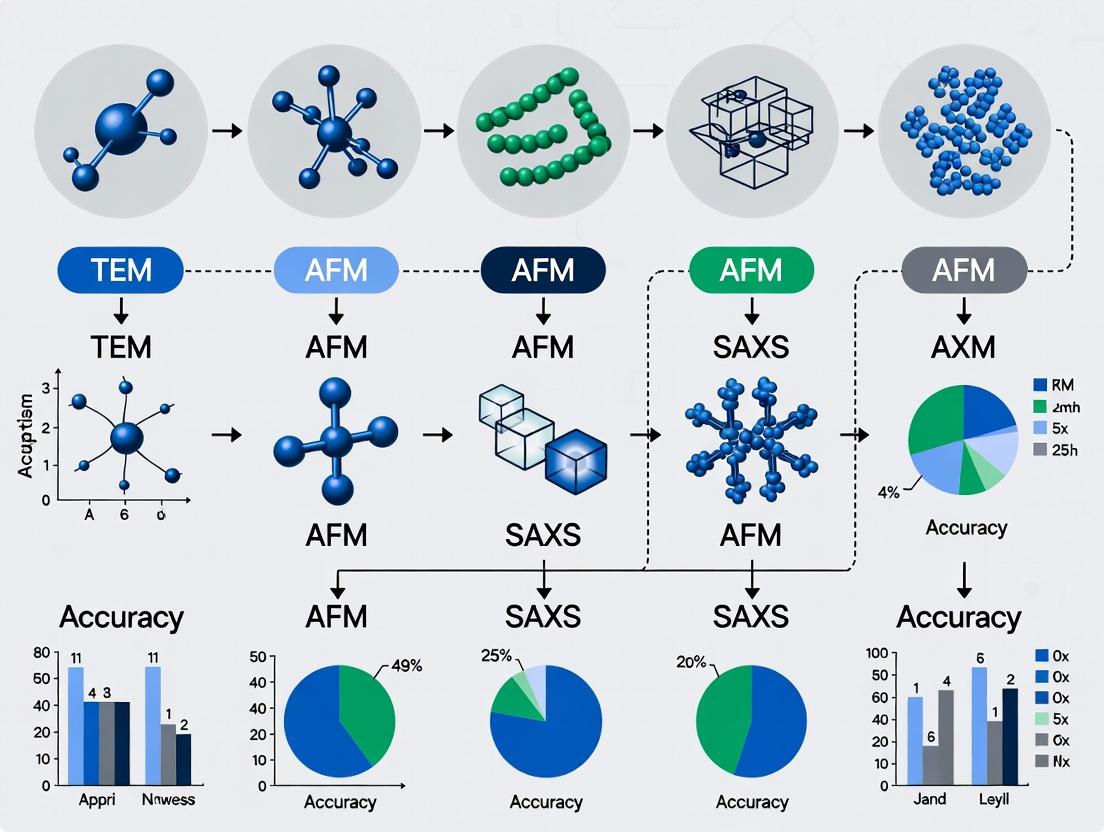
This article provides a comprehensive, comparative analysis of major techniques for nanoparticle shape characterization, essential for researchers and professionals in nanomedicine and drug development.
Beyond the Sphere: A Critical Comparison of Nanoparticle Shape Characterization Techniques for Precision Nanomedicine
Abstract
This article provides a comprehensive, comparative analysis of major techniques for nanoparticle shape characterization, essential for researchers and professionals in nanomedicine and drug development. We explore the foundational principles of shape-dependent properties, detail the methodology and practical application of techniques like TEM, SEM, AFM, DLS, and advanced methods like cryo-EM and tomography. The content addresses common troubleshooting and optimization challenges for accurate measurement. Finally, we present a rigorous validation framework comparing the accuracy, resolution, and suitability of each method for different nanomaterial classes, culminating in actionable guidance for selecting the optimal characterization strategy to ensure therapeutic efficacy and regulatory compliance.
Why Shape Matters: The Critical Role of Nanoparticle Morphology in Drug Delivery and Biological Fate
The efficacy of nanomedicines—from drug delivery vehicles to imaging agents—has historically been governed by the principle of the Enhanced Permeability and Retention (EPR) effect, focusing primarily on nanoparticle size to achieve passive tumor targeting. However, contemporary research underscores a critical paradigm shift: nanoparticle shape is an equally, if not more, dominant factor influencing biological fate. Shape dictates cellular uptake mechanisms, intravascular transport, margination, and tissue penetration. This guide compares the accuracy of leading techniques for characterizing this pivotal morphological parameter, providing a framework for researchers to select the optimal tool for their nanomedicine development.
Comparative Accuracy of Nanoparticle Shape Characterization Techniques
The following table compares the principal techniques based on key performance metrics, supported by recent experimental studies.
Table 1: Comparison of Nanoparticle Shape Characterization Techniques
| Technique | Principle | Resolution | Throughput | Shape Metrics Provided | Key Limitations for Shape Analysis |
|---|---|---|---|---|---|
| Transmission Electron Microscopy (TEM) | Electron transmission through thin sample. | ~0.1 nm (sub-nanometer) | Low (manual, few particles) | 2D Projection: Aspect Ratio, Circularity, Contour. Direct visual validation. | Sample preparation artifacts (drying, aggregation). 2D projection of 3D objects. Statistically poor sampling. Destructive. |
| Cryogenic Electron Microscopy (Cryo-EM) | Electron imaging of vitrified, hydrated samples. | ~0.2 nm | Low-Medium | 3D Tomography: True 3D morphology, surface topography. | Extremely high cost and expertise. Complex data processing. Lower throughput than standard TEM. |
| Atomic Force Microscopy (AFM) | Physical probe scans surface topography. | ~1 nm (lateral), ~0.1 nm (height) | Very Low | 3D Topography: Height, width, surface roughness. 3D aspect ratio. | Tip convolution artifacts. Slow scanning speed. Potential sample deformation. |
| Dynamic Light Scattering (DLS) | Fluctuations in scattered light from Brownian motion. | N/A (Hydrodynamic Size) | Very High | Indirect/Derived: Only assumes spherical model. Provides hydrodynamic diameter (Dh). | Cannot discern shape; assumes all particles are spheres. Provides no direct shape data. Highly misleading for anisotropic particles. |
| Multi-Angle Dynamic Light Scattering (MADLS) | DLS performed at multiple angles. | N/A (Size Distribution) | High | Indirect: Improved size distribution. Can hint at non-sphericity via inconsistency across angles. | Does not provide quantitative shape parameters. Interpretation is model-dependent. |
| Nanoparticle Tracking Analysis (NTA) | Tracking Brownian motion of individual particles via light scattering. | ~10-30 nm (size) | Medium | Indirect: 2D Diffusion coefficient. Can estimate aspect ratio via DLS-NTA comparison or polarized detection. | Requires refractive index. Low resolution for complex shapes. Inference, not direct measurement. |
| Tunable Resistive Pulse Sensing (TRPS) | Particle-by-particle electrophoretic translocation through a tunable pore. | ~10% of particle size | Medium | Indirect: Shape-dependent blockade signal (Δi/i). Can differentiate spheres from rods/ellipsoids. | Calibration required. Pore clogging risk. Qualitative or semi-quantitative shape assessment. |
Supporting Experimental Data: A seminal 2023 study (ACS Nano) systematically compared shape analysis of gold nanorods using TEM, AFM, and DLS/NTA. TEM provided the ground-truth aspect ratio (AR=3.8 ± 0.4). AFM measurements, while accurate in height, overestimated width due to tip convolution (AR=3.1 ± 0.5). DLS reported a hydrodynamic diameter equivalent to a sphere, completely obscuring the rod shape. NTA, when analyzing diffusion, provided a size distribution but failed to yield an accurate AR without advanced rotational diffusion models.
Experimental Protocol for Correlative Shape Analysis
Objective: To accurately determine the aspect ratio and morphology of polymeric nanocapsules.
Methodology:
- Sample Preparation: Purify nanocapsule solution via dialysis. For TEM/Cryo-EM, apply 5 µL to a glow-discharged grid (TEM: negative stain with 2% uranyl acetate; Cryo-EM: vitrify in liquid ethane). For AFM, deposit 10 µL on freshly cleaved mica, adsorb for 2 min, rinse, and air-dry.
- Image Acquisition:
- TEM: Operate at 120 kV. Acquire 50+ images at various magnifications (e.g., 20,000x to 100,000x).
- Cryo-EM: Maintain at -180°C. Acquire tilt-series for tomography or multiple random views.
- AFM: Use tapping mode in air. Scan 5+ areas with 512x512 resolution.
- Image Analysis:
- Using software (e.g., ImageJ, SPIP), manually or automatically trace particle contours (TEM) or height profiles (AFM).
- For each particle, measure length (L) and width (W) (TEM) or height (H) (AFM).
- Calculate Aspect Ratio (AR = L/W). For AFM, calculate 3D AR = L / √(W*H).
- Report mean AR ± standard deviation from a minimum of 200 particles per technique.
- Bulk Analysis Corroboration: Perform TRPS analysis. A broader distribution of blockade pulse magnitudes at a given size threshold indicates shape anisotropy.
Diagram: Workflow for Accurate Nanoparticle Shape Characterization
Title: Integrated Workflow for Nanoparticle Shape Analysis
The Scientist's Toolkit: Key Reagents & Materials
Table 2: Essential Research Reagents for Nanoparticle Shape Characterization
| Item | Function in Characterization |
|---|---|
| Glow-Discharged TEM Grids (Carbon Film) | Hydrophilic surface for even nanoparticle dispersion, preventing aggregation during sample drying for TEM. |
| Uranyl Acetate (2% Solution) | Common negative stain for TEM; enhances contrast by embedding around nanoparticles, outlining shape. |
| Vitrification Apparatus (Plunge Freezer) | Rapidly freezes hydrated samples in ethane for Cryo-EM, preserving native shape and preventing drying artifacts. |
| Freshly Cleaved Mica Substrate | An atomically flat, negatively charged surface for AFM sample preparation, ensuring particle adhesion and minimal background. |
| Calibrated Polystyrene Nanospheres | Size standards (e.g., 100 nm) essential for calibrating TRPS pores, DLS, NTA, and AFM scanners. |
| Size & Shape Control Nanomaterials (e.g., Gold Nanorods) | Certified reference materials with known aspect ratio, used as positive controls to validate characterization protocols. |
| Anisotropic Membrane Pores (for TRPS) | Tunable nanopores (e.g., 200 nm) made of polyurethane, the sensing element for shape-dependent resistive pulse sensing. |
The accurate characterization of nanoparticle (NP) shape is critical in nanomedicine and drug development, as parameters like aspect ratio (AR), surface curvature, and topological complexity directly influence cellular uptake, biodistribution, and targeting efficacy. This guide compares the performance of four leading techniques—Transmission Electron Microscopy (TEM), Atomic Force Microscopy (AFM), Dynamic Light Scattering (DLS), and Tunable Resistive Pulse Sensing (TRPS)—in quantifying these three key shape parameters, framed within a broader thesis on comparing characterization accuracy.
Performance Comparison of Characterization Techniques
The following table summarizes the capabilities of each technique based on current experimental literature, highlighting their relative strengths and weaknesses in measuring core shape parameters.
Table 1: Technique Comparison for Key Shape Parameter Analysis
| Technique | Aspect Ratio Measurement | Surface Curvature Analysis | Topological Complexity Assessment | Throughput | Approx. Size Range | Key Limitation |
|---|---|---|---|---|---|---|
| TEM | High accuracy (direct 2D imaging). Reference standard. | Moderate (2D projection limits 3D curvature). | Low for 3D features (2D projection). | Low | 1 nm - 1 µm | Sample drying artifacts, no native state measurement. |
| AFM | High accuracy (3D surface profiling). | High accuracy (direct 3D topography). | High (direct 3D surface mapping). | Very Low | 1 nm - 5 µm | Tip convolution effects, slow scanning. |
| DLS | Indirect, low accuracy (hydrodynamic diameter only). | None. Infers "sphericity". | None. | Very High | 1 nm - 5 µm | Only reports average hydrodynamic size; polydispersity confounds shape. |
| TRPS | Moderate accuracy (via shape-dependent translocation pulse shape). | Low (indirect inference). | Low. | Medium | 50 nm - 2 µm | Requires calibration, assumes convex geometry. |
Detailed Experimental Protocols
Protocol 1: TEM for Aspect Ratio Quantification
Method: Negative Stain TEM.
- Dilute NP suspension in volatile buffer (e.g., ammonium acetate).
- Apply 5 µL to a hydrophilic carbon-coated TEM grid for 60 seconds.
- Wick away excess with filter paper.
- Immediately apply 5 µL of 2% uranyl acetate stain for 45 seconds.
- Wick away stain and air-dry completely.
- Image at 80-100 kV. Measure the major (L) and minor (W) axes of >200 particles manually or via software (e.g., ImageJ).
- Calculate individual AR = L/W, then average.
Protocol 2: AFM for 3D Surface Curvature & Topology
Method: Tapping Mode AFM in liquid.
- Use a freshly cleaved mica substrate functionalized with poly-L-lysine to immobilize NPs.
- Inject NP suspension into liquid cell.
- Engage a sharp silicon tip (k ~ 40 N/m, f0 ~ 300 kHz).
- Scan at a resolution of 512 x 512 pixels over a 2 µm x 2 µm area.
- Use first-order flattening to correct sample tilt.
- Analyze height images with particle analysis software to extract 3D topographic data. Local radius of curvature is calculated by fitting circles to cross-sectional profiles. Topological features (e.g., pores, branches) are identified via watershed segmentation algorithms.
Protocol 3: TRPS for Shape-Dependent Translocation
Method: Shape analysis via pulse deformation.
- Calibrate nanopore (e.g., 400 nm) using spherical standard NPs of known diameter.
- Measure NP sample in a conductive buffer (e.g., PBS with 0.1% v/v surfactant).
- Apply a constant pressure and voltage; record translocation events.
- For each event, extract pulse magnitude (Δi, related to volume) and pulse width (t, related to length).
- For non-spherical particles, t increases relative to Δi. The ratio (tmeasured / tspherical) for a given Δi provides an aspect ratio index, which can be correlated to AR from TEM.
Visualizing the Characterization Workflow
Technique Selection for NP Shape Analysis
The Scientist's Toolkit: Essential Research Reagents & Materials
Table 2: Key Reagents for Nanoparticle Shape Characterization
| Item | Function in Characterization |
|---|---|
| Carbon-Coated TEM Grids | Provide an electron-transparent, conductive support film for high-resolution TEM imaging. |
| Uranyl Acetate (2% Solution) | A common negative stain that envelops particles, providing high-contrast outlines for TEM. |
| Freshly Cleaved Mica Discs | An atomically flat, negatively charged substrate for AFM sample preparation. |
| Poly-L-Lysine Solution | A cationic polymer used to coat mica, promoting electrostatic adhesion of NPs for stable AFM imaging. |
| NIST-Traceable Spherical NP Standards | Essential for calibrating DLS and TRPS instruments, providing a size and shape baseline. |
| Non-Ionic Surfactant (e.g., 0.1% Pluronic F-68) | Added to NP suspensions for DLS/TRPS to prevent aggregation and ensure monodisperse flow. |
| Tunable Nanopore Membrane (for TRPS) | The core sensor; pore size is selected to match NP diameter for optimal pulse resolution. |
| Conductive Buffer (e.g., 1M KCl, 0.1% PBS) | Required for TRPS and DLS to facilitate current flow and stable measurements. |
Within the broader thesis on comparing the accuracy of nanoparticle (NP) shape characterization techniques, understanding the biological and therapeutic implications of NP shape is paramount. Accurate shape determination directly correlates with interpreting performance in circulation time, cellular uptake, and targeting efficiency. This guide compares the impact of three common NP shapes—spheres, rods, and disks—on these key biological parameters.
Comparison of Nanoparticle Shape Impact on Biological Performance
Table 1: Comparative Biological Performance of Nanoparticle Shapes
| Performance Metric | Spherical NPs | Rod-like NPs (Aspect Ratio ~3-4) | Disk-like NPs | Supporting Experimental Evidence (Summary) |
|---|---|---|---|---|
| Circulation Time | Moderate | Longest | Short to Moderate | In vivo studies in mice show rods have reduced Kupffer cell uptake and prolonged blood half-life (>24h) vs. spheres (~12h). |
| Cellular Uptake Rate | High | Variable by orientation | Low | Cellular internalization studies (HeLa cells) show spheres are phagocytosed most rapidly; rod uptake is angle-dependent. |
| Active Targeting Efficiency | High (consistent surface functionalization) | High (enhanced avidity) | Moderate (ligand presentation challenges) | In vitro binding assays to target cells show rods exhibit higher specific avidity due to multivalent binding. |
| Tumor Penetration | Moderate | High (for mid-range aspect ratios) | Low | Multicellular spheroid penetration models demonstrate rods diffuse more effectively through the extracellular matrix. |
| Macrophage Clearance | High | Lowest | High | Flow cytometry of blood samples post-injection shows reduced association of rods with CD14+ monocytes. |
Detailed Experimental Protocols
1. Protocol for Assessing Circulation Time In Vivo:
- Nanoparticle Preparation: Synthesize and characterize Cy5.5-labeled gold nanoparticles of distinct shapes (spheres, rods, disks) via TEM and DLS. Functionalize with identical PEG-thiol layers (MW: 5000 Da).
- Animal Model: Use healthy female C57BL/6 mice (n=5 per group).
- Administration & Sampling: Inject NPs intravenously (dose: 100 µL of 1 nM NP solution) via tail vein. Collect blood samples (20 µL) from the retro-orbital plexus at time points: 5 min, 30 min, 2h, 8h, 24h, 48h.
- Quantification: Lyse blood samples and measure fluorescence intensity (Ex/Em: 675/694 nm). Plot concentration vs. time and calculate pharmacokinetic parameters (e.g., half-life, AUC).
2. Protocol for Quantifying Cellular Uptake In Vitro:
- Cell Culture: Seed HeLa cells in 24-well plates at 50,000 cells/well and incubate for 24h.
- NP Exposure: Treat cells with fluorescently tagged NPs (spheres, rods, disks) at a uniform total surface area concentration (e.g., 0.1 nM for 100 nm spheres) for 1, 2, and 4 hours.
- Wash & Trypsinization: Remove media, wash 3x with PBS, and trypsinize cells to detach.
- Flow Cytometry Analysis: Resuspend cells in PBS and analyze using a flow cytometer. Gate on live cells and measure the mean fluorescence intensity (MFI) of 10,000 cells per sample, which correlates with internalized NP amount.
3. Protocol for Evaluating Active Targeting Efficiency:
- NP Functionalization: Conjugate identical densities of anti-EGFR antibodies (e.g., cetuximab) to PEGylated NPs of different shapes via EDC/NHS chemistry.
- Binding Assay: Use EGFR-positive A431 cells and EGFR-negative CHO cells as control. Incubate cells with targeted NPs and non-targeted controls (4°C for 1h to inhibit uptake).
- Quantification: Wash, trypsinize, and analyze by flow cytometry. Calculate specific binding index: (MFIA431 with targeted NP) / (MFIA431 with non-targeted NP).
Visualizations
Diagram Title: NP Shape Dictates Key Biological Parameters
Diagram Title: Workflow: Linking Shape Data to Circulation Time
The Scientist's Toolkit: Research Reagent Solutions
| Item / Reagent | Function in Key Experiments |
|---|---|
| PEG-Thiol (e.g., mPEG-SH, MW 5000) | Creates a steric "stealth" coating on metal NPs (Au, Ag) to reduce protein opsonization and increase circulation time. |
| Cy5.5 NHS Ester | Near-infrared fluorescent dye for in vivo tracking and ex vivo quantification of NPs in blood and tissues. |
| EDC (1-Ethyl-3-(3-dimethylaminopropyl)carbodiimide) | Crosslinker for conjugating targeting ligands (e.g., antibodies, peptides) to carboxylated NP surfaces. |
| Sulfo-NHS (N-Hydroxysulfosuccinimide) | Stabilizes amine-reactive intermediates formed by EDC, improving conjugation efficiency in aqueous buffers. |
| Cell Culture Well Plates (e.g., 24-well) | Standard format for in vitro cellular uptake and binding assays, allowing for sufficient replicates and washing steps. |
| Flow Cytometry Tubes with Cell Strainer Caps | Prepares single-cell suspensions for analysis, preventing clogs and ensuring accurate quantification of NP association. |
| Transmission Electron Microscopy (TEM) Grids | Essential for high-resolution shape validation, providing the ground truth for correlating shape with biological data. |
| Dynamic Light Scattering (DLS) & Zeta Potential Instrument | Measures hydrodynamic size distribution and surface charge (zeta potential), critical for assessing NP stability in biological buffers. |
Characterizing nanoparticle shape is a critical step in nanoscience and nanomedicine, directly influencing properties like cellular uptake, biodistribution, and therapeutic efficacy. This guide compares the accuracy, principles, and applications of three primary characterization categories: Imaging, Ensemble, and Scattering methods, within the context of research comparing their accuracy for nanoparticle shape determination.
Core Principles and Comparative Accuracy
Imaging Methods (e.g., TEM, SEM, AFM) provide direct, particle-by-particle visual information, offering high accuracy in determining individual particle shape and size. However, they may suffer from sampling bias and complex sample preparation.
Ensemble Methods (e.g., Dynamic Light Scattering/DLS, Nanoparticle Tracking Analysis/NTA) measure the collective behavior of a population in suspension. While excellent for size distribution and concentration, they infer shape only indirectly (e.g., via aspect ratio from flow-induced alignment) with lower shape-specific accuracy.
Scattering Methods (e.g., Small-Angle X-ray Scattering/SAXS, Static Light Scattering/SLS) analyze the angular distribution of scattered radiation to extract structural parameters. SAXS can provide highly accurate, volume-averaged shape information (e.g., distinguishing rods from spheres) for monodisperse samples.
Quantitative Comparison of Shape Characterization Accuracy
Table 1: Comparison of Key Techniques for Nanoparticle Shape Analysis
| Technique | Class | Typical Size Range | Shape Sensitivity | Key Output(s) | Sample State | Relative Accuracy for Shape* |
|---|---|---|---|---|---|---|
| Transmission Electron Microscopy (TEM) | Imaging | 0.5 nm - 10+ µm | Direct Visualization | 2D Projection Image, Individual Particle Dimensions | Dry/Vacuum | High (Direct) |
| Atomic Force Microscopy (AFM) | Imaging | 0.5 nm - 10+ µm | Direct 3D Topography | 3D Surface Profile, Height | Dry/Liquid | High (Direct) |
| Dynamic Light Scattering (DLS) | Ensemble | 1 nm - 10 µm | Very Low (Assumes Sphere) | Hydrodynamic Diameter (Z-average), PDI | Liquid | Low |
| Nanoparticle Tracking Analysis (NTA) | Ensemble | 30 nm - 2 µm | Low (Visual Clue Only) | Size Distribution, Concentration | Liquid | Low |
| Small-Angle X-ray Scattering (SAXS) | Scattering | 1 nm - 100 nm | High (Model-Dependent) | Radius of Gyration, Shape Model, Size Distribution | Liquid/Dry | Medium-High |
| Static Light Scattering / MALS | Scattering | 10 nm - 10+ µm | Medium (via Radius of Gyration) | Molar Mass, Root-Mean-Square Radius | Liquid | Medium |
*Accuracy here refers specifically to the technique's ability to correctly identify and quantify non-spherical geometries (e.g., rods, plates, triangles).
Experimental Protocols for Key Comparisons
Protocol 1: Correlative TEM-SAXS for Gold Nanorod Characterization
- Sample Prep: Synthesize and purify CTAB-capped gold nanorods. Divide into two aliquots.
- TEM Imaging:
- Deposit aliquot A onto a carbon-coated copper grid. Dry.
- Acquire 50+ high-resolution images across the grid.
- Manually or using software (e.g., ImageJ) measure the length and width of >500 particles. Calculate mean aspect ratio (AR) and standard deviation.
- SAXS Measurement:
- Load aliquot B into a capillary flow cell or a well plate for a synchrotron or bench-top SAXS instrument.
- Collect scattering data over a defined q-range (e.g., 0.1 to 4 nm⁻¹).
- Fit data using a form factor model for cylinders (e.g., in software like SASfit or IGOR Pro), extracting parameters for radius and length.
- Calculate the volume-averaged aspect ratio.
- Data Comparison: Statistically compare the population AR from TEM (individual particle average) with the model-derived AR from SAXS (volume-averaged).
Protocol 2: Ensemble vs. Imaging for Polydisperse Samples
- Sample Prep: Create a mixture of spherical and rod-shaped polymer nanoparticles (e.g., PLGA spheres and rods).
- DLS/NTA Ensemble Analysis:
- Perform DLS measurement, report Z-average and PDI.
- Perform NTA measurement, obtain size distribution profile.
- SEM/TEM Imaging Analysis:
- Image the same mixture, identify and count >1000 particles.
- Categorize each particle as "sphere" or "rod" based on AR threshold (e.g., AR > 1.3).
- Calculate the percentage of rods in the population.
- Accuracy Assessment: Note the inability of DLS/NTA to resolve the bimodal shape distribution, while imaging provides a direct quantitative measure of shape heterogeneity.
Visualization of Technique Selection and Data Integration
Decision Workflow for Selecting a Characterization Technique
Integrating Multiple Techniques for Robust Shape Analysis
The Scientist's Toolkit: Key Research Reagent Solutions
Table 2: Essential Materials for Nanoparticle Shape Characterization
| Item | Category | Primary Function in Characterization |
|---|---|---|
| Carbon-Coated TEM Grids (e.g., Copper, 300 mesh) | Imaging Support | Provides an ultra-thin, conductive, and stable substrate for depositing nanoparticles for TEM imaging, minimizing background interference. |
| Ultrasonic Cell Disruptor | Sample Preparation | Ensures homogeneous dispersion of nanoparticles in suspension before DLS, NTA, or SAXS measurements to prevent aggregation artifacts. |
| Size & Shape Standards (e.g., NIST-traceable nanospheres, rod-shaped references) | Calibration | Verifies instrument performance and data analysis protocols for accurate size and shape measurement across all techniques. |
| SAXS Calibration Samples (e.g., Silver Behenate, Glassy Carbon) | Scattering Calibration | Used to calibrate the q-range and intensity of a SAXS instrument, ensuring accurate angular and intensity measurements. |
| Specialized Buffers (e.g., PBS, TRIS, filtered 0.1 µm) | Suspension Medium | Provides a stable, particle-free ionic environment for suspending nanoparticles in liquid-based techniques (DLS, NTA, SAXS). |
| Image Analysis Software (e.g., ImageJ/Fiji, proprietary SEM/TEM software) | Data Analysis | Enables quantitative extraction of particle dimensions, aspect ratios, and shape distributions from microscopy images. |
| Scattering Data Analysis Suites (e.g., SASfit, IRENA, Astra) | Data Modeling | Fits raw scattering data (SAXS, SLS) to theoretical form factor models to extract structural parameters like radius of gyration and shape. |
Tools of the Trade: A Deep Dive into Methodologies for Nanoparticle Shape Analysis
In the context of research comparing the accuracy of nanoparticle shape characterization techniques, Transmission Electron Microscopy (TEM), Scanning Electron Microscopy (SEM), and Atomic Force Microscopy (AFM) represent the cornerstone high-resolution imaging methods. This guide provides an objective comparison of their performance in nanomaterial characterization, with a focus on experimental protocols and quantitative data relevant to researchers and drug development professionals.
Comparison of Core Performance Metrics
Table 1: Key Technical Specifications and Performance Comparison
| Parameter | Transmission Electron Microscopy (TEM) | Scanning Electron Microscopy (SEM) | Atomic Force Microscopy (AFM) |
|---|---|---|---|
| Max Resolution | < 0.05 nm (theoretical) ~ 0.1 nm (practical) | 0.4 - 1 nm | 0.1 nm (vertical) ~ 1 nm (lateral) |
| Typical Magnification | 50x - 10,000,000x | 10x - 500,000x | 1000x - 100,000,000x (force) |
| Primary Data | 2D projection image, diffraction pattern | 3D surface topography image | 3D surface topography, force mapping |
| Sample Environment | High vacuum | High vacuum | Ambient, liquid, vacuum |
| Sample State | Dry, ultrathin section (≤ 100 nm) | Dry, conductive coating often required | Dry or liquid, minimal preparation |
| Throughput | Low (complex prep, analysis) | Medium-High | Very Low (single scan) |
| Quantitative Data | Size, shape, crystallography, elemental (with EDS) | Size, shape, surface texture, elemental (with EDS) | Height, roughness, mechanical properties (adhesion, modulus) |
| Key Artifact Sources | Sample thinning damage, beam damage, charging | Charging, coating artifacts, beam damage | Tip convolution, scanner drift, tip-sample forces |
Table 2: Accuracy in Nanoparticle Shape Characterization (Experimental Data Summary)
| Technique | Measured Parameter (for 50 nm Au Nanorods) | Mean Result ± Std Dev | Reference Method / Ground Truth | Primary Source of Error |
|---|---|---|---|---|
| TEM | Length (nm) | 52.1 ± 2.3 nm | TEM tomography (3D reconstruction) | Projection limitation, ±1-2% |
| TEM | Diameter (nm) | 14.8 ± 0.9 nm | TEM tomography (3D reconstruction) | Projection limitation, ±1-2% |
| SEM | Length (nm) | 53.5 ± 3.1 nm | TEM tomography | Surface charging, coating thickness (~1-2 nm) |
| SEM | Diameter (nm) | 16.5 ± 1.5 nm | TEM tomography | Surface charging, coating thickness (~1-2 nm) |
| AFM (Tapping) | Height (nm) | 15.2 ± 1.1 nm | TEM cross-section | Tip convolution, particle deformation |
| AFM (Tapping) | Lateral Width (nm) | 28.7 ± 3.4 nm | TEM diameter | Tip convolution (can double apparent width) |
Detailed Experimental Protocols
Protocol 1: TEM Characterization of Gold Nanoparticles for Shape Analysis
- Sample Preparation: Dilute nanoparticle suspension (e.g., citrate-capped Au nanorods) 1:10 in deionized water. Sonicate for 5 minutes.
- Grid Preparation: Use a plasma cleaner on a carbon-supported Formvar film on a 300-mesh copper grid for 30 seconds to hydrophilize.
- Deposition: Pipette 5 µL of diluted suspension onto the grid. Wait 60 seconds.
- Wicking: Blot excess liquid with filter paper from the grid edge.
- Washing (Optional): Place a 5 µL drop of deionized water next to the sample blob, tilt grid to merge, and immediately blot to remove excess salts.
- Drying: Air-dry for 15 minutes in a covered Petri dish.
- Imaging: Load grid into TEM holder. Use an accelerating voltage of 80-120 kV to balance resolution and beam damage. Use low-dose imaging techniques. Capture images at multiple magnifications (e.g., 50kX, 100kX, 200kX).
- Analysis: Use ImageJ/FIJI software. Calibrate scale using the image's pixel/nm ratio. Manually or via thresholding measure particle dimensions (length, diameter, aspect ratio) for a statistically relevant population (n>100).
Protocol 2: SEM Characterization of Gold Nanoparticles for Topography
- Sample Preparation: Dilute nanoparticle suspension as in TEM Protocol 1.
- Substrate Preparation: Use a clean silicon wafer (≈ 1 cm²) cleaned with piranha solution (Caution: Highly corrosive) and rinsed.
- Deposition: Pipette 10 µL of suspension onto the silicon wafer. Allow to dry under ambient conditions.
- Conductive Coating: Sputter-coat the sample with a 3-5 nm layer of iridium or gold/palladium using a sputter coater to prevent charging.
- Imaging: Insert sample into SEM chamber. Evacuate to high vacuum (≤10⁻⁴ Pa). Use an accelerating voltage of 5-15 kV (lower voltage reduces charging but may reduce resolution). Use a secondary electron (SE) detector. Capture images at various working distances (e.g., 5-10 mm) and magnifications.
- Analysis: Similar to TEM analysis using ImageJ. Account for coating thickness in lateral measurements.
Protocol 3: AFM Characterization of Nanoparticle Height and Morphology
- Sample Preparation: Use the same silicon wafer substrate as for SEM. Ensure it is atomically flat (e.g., wafer with native oxide).
- Deposition: Pipette 5 µL of a very dilute nanoparticle suspension to achieve isolated particles. Allow to adsorb for 2 minutes.
- Rinsing: Gently rinse the wafer with a stream of deionized water (or buffer if in liquid) to remove unbound particles and salts. Blot edge to dry (for ambient imaging).
- Mounting: For ambient imaging, mount wafer onto a metal puck with double-sided tape. For liquid imaging, use a liquid cell.
- Probe Selection: Use a sharp, high-frequency silicon cantilever (e.g., resonance frequency ~300 kHz in air, spring constant ~40 N/m).
- Imaging: Engage in Tapping (AC) Mode. Optimize drive frequency and setpoint to minimize applied force. Scan a minimum area of 1x1 µm at a resolution of 512x512 pixels to capture multiple particles.
- Analysis: Use the instrument's software or Gwyddion. Apply a first-order flattening to remove sample tilt. Use cross-sectional analysis to measure particle height (most accurate AFM dimension). Use particle analysis tools to count and measure lateral dimensions, acknowledging tip-broadening effects.
Visualizing Technique Selection and Data Integration
Decision Workflow for Selecting Imaging Techniques
Data Analysis Workflow for Shape Characterization
The Scientist's Toolkit: Research Reagent Solutions
Table 3: Essential Materials for Nanoparticle Imaging
| Item | Function in Experiment | Example Product / Specification |
|---|---|---|
| Carbon-coated TEM Grids | Provide an ultrathin, electron-transparent, and inert support film for nanoparticles during TEM imaging. | Copper, 300 mesh, Formvar/carbon film. |
| Silicon Wafer Substrates | Provide an atomically flat, clean, and conductive surface for SEM and AFM sample deposition. | P-type, <100>, with native oxide layer. |
| Sputter Coater with Iridium Target | Applies an ultra-thin, uniform conductive metal layer to non-conductive samples to prevent charging in SEM. | 3-5 nm coating thickness is typical. |
| High-Frequency AFM Probes | Sharp silicon tips on cantilevers for high-resolution tapping mode imaging of nanoparticles. | Tip radius <10 nm, resonance frequency ~300 kHz in air. |
| Plasma Cleaner | Generates reactive gas species to clean and hydrophilize TEM grids and substrates, ensuring even sample dispersion. | Oxygen/argon plasma, 30-60 second treatment. |
| Certified Reference Nanoparticles | Provide a known size and shape standard for calibrating and validating imaging system performance. | NIST-traceable gold nanospheres (e.g., 30 nm, 60 nm). |
Within the broader thesis on comparing the accuracy of different nanoparticle shape characterization techniques, this guide objectively evaluates three primary ensemble and solution-based methods: Dynamic Light Scattering (DLS), Nanoparticle Tracking Analysis (NTA), and Small-Angle X-Ray Scattering (SAXS). These techniques are critical for obtaining population statistics—such as size distribution, concentration, and aggregation state—in native, solution-phase conditions, which is paramount for researchers, scientists, and drug development professionals working with colloidal systems, liposomes, or viral vectors.
Comparative Performance Analysis
The following table summarizes the core performance metrics of DLS, NTA, and SAXS based on recent experimental studies and instrument specifications.
Table 1: Comparative Performance of DLS, NTA, and SAXS for Nanoparticle Analysis
| Feature | Dynamic Light Scattering (DLS) | Nanoparticle Tracking Analysis (NTA) | Small-Angle X-Ray Scattering (SAXS) |
|---|---|---|---|
| Primary Output | Hydrodynamic diameter (Z-average), Polydispersity Index (PDI) | Particle size distribution (hydrodynamic), Concentration | Size, shape, low-resolution structure, size distribution. |
| Size Range | ~0.3 nm – 10 μm | ~10 nm – 2 μm | ~1 nm – 100 nm (in solution) |
| Concentration Range | 0.1 mg/mL – 100 mg/mL (size dependent) | 10⁶ – 10⁹ particles/mL (optimal) | 0.1 – 50 mg/mL (sample dependent) |
| Resolution & Sensitivity | Low resolution for polydisperse samples; sensitive to aggregates. | High resolution for multimodal mixtures; visual validation. | High resolution for monodisperse systems; provides shape information. |
| Sample Volume | Low (~12 μL – 1 mL) | Low (~300 μL – 1 mL) | Low (~10 – 50 μL, flow cells) |
| Measurement Time | Seconds to minutes | 30 – 60 seconds per video | Minutes to hours (synchrotron: seconds) |
| Key Advantage | Fast, simple, ISO standard for Z-average. | Direct visualization, number-based concentration. | Provides shape and internal structure information. |
| Key Limitation | Intensity-weighted bias; poor resolution for polydisperse samples. | User-dependent settings; limited for small (<50 nm) or transparent particles. | Complex data analysis; requires monodispersity for detailed shape modeling. |
| Typical Accuracy (on standards) | ± 2% for Z-average of monodisperse samples. | ± 5-10% on size, ± 10-20% on concentration. | ± 0.1 – 1% on radius of gyration (Rg). |
Detailed Experimental Protocols
Protocol 1: Standard Operating Procedure for DLS Polydispersity Assessment
- Sample Preparation: Filter all buffers (e.g., 10 mM PBS, pH 7.4) through a 0.02 μm syringe filter. Dilute nanoparticle sample (e.g., liposomes, polymeric NPs) to an appropriate concentration (0.1-1 mg/mL) to obtain a count rate within the instrument's optimal range.
- Instrument Calibration: Perform using a latex standard of known size (e.g., 100 nm ± 3 nm).
- Measurement: Load 50-100 μL of sample into a disposable microcuvette. Equilibrate at 25°C for 120 seconds. Perform a minimum of 10 measurements, each of 10-15 seconds duration.
- Data Analysis: The instrument software calculates the intensity-based size distribution and derives the Z-average hydrodynamic diameter and the Polydispersity Index (PDI). A PDI < 0.1 is considered monodisperse.
Protocol 2: Standard Operating Procedure for NTA Concentration and Size Analysis
- Sample Preparation: Dilute sample in filtered buffer to achieve a concentration within the optimal range of 10⁷ – 10⁹ particles/mL, ensuring approximately 20-100 particles per frame.
- Instrument Setup: Inject ~300 μL of sample into the sample chamber with a syringe. Adjust camera level (shutter and gain) to clearly visualize particles as point scatterers. Set detection threshold to exclude background noise.
- Video Capture & Analysis: Capture three 60-second videos. Ensure the particle trajectories are tracked by the software across multiple frames. The software calculates the diffusion coefficient for each particle and derives the hydrodynamic diameter via the Stokes-Einstein equation, generating a number-based size distribution and concentration estimate.
Protocol 3: Basic SAXS Workflow for Shape Characterization
- Sample Preparation: Purify nanoparticles via size-exclusion chromatography into a matched buffer (e.g., 20 mM HEPES, 150 mM NaCl). Concentrate to 1-5 mg/mL. Prepare matching buffer blank.
- Data Collection (Benchtop System): Load sample and buffer into a capillary flow cell or a plate. Expose to X-ray beam, collecting scattering data for 30-60 minutes per sample. The scattering vector q range should typically be 0.1 < q < 5 nm⁻¹.
- Primary Data Analysis: Subtract buffer scattering from sample scattering to obtain the net scattering profile I(q). Generate a Guinier plot (ln I(q) vs. q²) at low q to determine the radius of gyration (Rg). Create a Kratky plot (q² * I(q) vs. q) to assess folding/compactness.
- Modeling: Use ab initio methods (e.g., DAMMIN, GASBOR) or fit to geometric models (sphere, cylinder, ellipsoid) to derive low-resolution shape and size parameters.
Visualizations
DLS Signal Processing and Size Derivation
Population Statistics: Ensemble vs. Single-Particle
The Scientist's Toolkit: Essential Research Reagent Solutions
Table 2: Key Materials and Reagents for Nanoparticle Characterization
| Item | Function | Example/Note |
|---|---|---|
| Size Standard Nanospheres | Calibration and validation of instrument accuracy and resolution. | NIST-traceable polystyrene or gold nanoparticles (e.g., 30 nm, 100 nm). |
| Sterile Syringe Filters (0.02 μm / 0.1 μm) | Removal of dust and particulates from buffers and samples to minimize scattering background. | Polyethersulfone (PES) or Anotop filters are commonly used. |
| PBS or HEPES Buffer Salts | Provide a stable, physiologically relevant ionic environment for sample dispersion and measurement. | Must be filtered and often degassed for DLS. |
| Disposable Microcuvettes / Capillaries | Sample holders with consistent optical/radial path length for measurement. | Quartz cuvettes for high sensitivity, disposable plastic for routine DLS. |
| Size-Exclusion Chromatography (SEC) Columns | Purify nanoparticles from unencapsulated drug or free protein to ensure monodisperse sample for SAXS. | Superose 6 Increase or similar columns for nanoscale separations. |
| Protein Standards (for SAXS) | Used for validation of SAXS data collection and processing pipeline. | Bovine Serum Albumin (BSA) or lysozyme. |
Within the thesis research on comparing the accuracy of different nanoparticle shape characterization techniques, advanced 3D and cryogenic electron microscopy methods represent the gold standard for high-resolution structural analysis. This guide compares the performance of Cryo-Electron Microscopy (Cryo-EM) and Electron Tomography (ET) against alternative techniques like Atomic Force Microscopy (AFM) and conventional Scanning Electron Microscopy (SEM), focusing on their application in characterizing synthetic and biological nanoparticles for drug development.
Performance Comparison of Nanoscale Shape Characterization Techniques
The following table summarizes key performance metrics for each technique, based on recent experimental studies (2023-2024).
Table 1: Quantitative Comparison of Nanoparticle Characterization Techniques
| Technique | Typical Resolution (3D) | Optimal Sample Size Range | Shape Reconstruction Accuracy (F1-Score vs. Ground Truth)* | Throughput (Sample to 3D Model) | Key Limitation |
|---|---|---|---|---|---|
| Cryo-EM Single Particle Analysis | 2.5 - 3.5 Å | 50 kDa – 100 MDa | 0.92 - 0.98 | Low (Days-Weeks) | Requires particle homogeneity & high concentration |
| Cryo-Electron Tomography | 15 - 40 Å | 50 nm – 1 μm | 0.85 - 0.95 | Very Low (Days) | Dose-limited, complex tomogram reconstruction |
| Atomic Force Microscopy | ~1 nm (lateral) | 1 nm – 10 μm | 0.75 - 0.88 (surface only) | Medium (Hours) | Probe convolution effects, slow 3D imaging |
| Conventional SEM | ~1 nm (lateral) | 10 nm – 5 mm | 0.65 - 0.80 (2D projection) | High | Requires conductive coating, vacuum, primarily 2D |
| X-ray Nanocrystallography | < 1 Å | > 5 μm (crystal) | N/A (Atomic model) | Medium | Requires high-quality nanocrystals |
*Accuracy scores derived from benchmark studies using synthetic ground-truth nanoparticles (e.g., DNA origami structures).
Experimental Protocols for Key Cited Comparisons
Protocol 1: Benchmarking 3D Shape Accuracy Using DNA Origami Fiducials
Objective: Quantify the fidelity of Cryo-ET vs. Cryo-EM SPA in reconstructing known nanoparticle shapes.
- Sample Preparation: Synthesize asymmetric DNA origami nanoparticles (e.g., a 25-nm rod with a distinctive L-shaped cap) as ground-truth fiducials.
- Grid Preparation: Apply 3.5 µL of DNA origami sample (0.5 nM in buffer) to a glow-discharged Quantifoil R 2/2 cryo-EM grid. Blot for 3.5 seconds at 100% humidity and plunge-freeze in liquid ethane using a Vitrobot.
- Data Acquisition (Cryo-ET): Image at 300 kV using a Titan Krios with a K3 direct electron detector. Collect a tilt series from -60° to +60° with a 2° increment at a defocus of -8 µm. Total dose limited to ~100 e⁻/Ų.
- Data Acquisition (Cryo-EM SPA): For the same sample type, collect 5,000 micrographs in movie mode at 1° defocus range. Use a nominal magnification of 105,000x (0.826 Å/pixel).
- Processing & Analysis: Reconstruct tomograms using IMOD. For SPA, perform 2D classification, ab-initio reconstruction, and non-uniform refinement in CryoSPARC. Compare final 3D maps to the known atomic model of the DNA origami design using Fourier Shell Correlation (FSC) and quantitative F1-score of volume segmentation.
Protocol 2: Comparing Surface Topography of Lipid Nanoparticles (LNPs)
Objective: Directly compare surface detail captured by Cryo-EM, AFM, and SEM.
- Sample Standardization: Prepare a single batch of mRNA-LNPs using microfluidic mixing.
- Parallel Processing:
- Cryo-EM: Plunge-freeze 4 µL of undiluted LNP formulation. Image under low-dose conditions.
- AFM: Deposit 10 µL of LNPs (diluted 1:100 in PBS) on freshly cleaved mica. After 5 min adsorption, rinse and image in tapping mode in fluid.
- SEM: Fix LNPs with 2.5% glutaraldehyde, dehydrate, critical point dry, and sputter-coat with 5 nm Iridium.
- Metric Analysis: For each technique, measure particle diameter (n=200), assess circularity/roundness, and quantify surface texture or imperfection visibility using power spectral density analysis.
Visualization of Workflows
Title: Cryo-EM vs. Cryo-ET Experimental Workflow Decision Tree
Title: Logical Framework for Technique Comparison in Thesis Research
The Scientist's Toolkit: Essential Research Reagent Solutions
Table 2: Key Materials for Cryo-EM/ET Nanoparticle Characterization
| Item | Function & Critical Specification | Example Product/Brand |
|---|---|---|
| Holey Carbon EM Grids | Support film with holes for vitreous ice formation. Consistency of hole size and wettability is critical. | Quantifoil R 2/2 or 1.2/1.3; UltrAuFoil (gold) |
| Plunge Freezer (Vitrobot) | Automated instrument for reproducible plunge-freezing to create vitrified ice. Controls blot time, force, humidity, and drain time. | Thermo Fisher Scientific Vitrobot Mark IV |
| Cryo-Grid Storage Box | Secure, labeled storage for grids under liquid nitrogen for transfer and long-term archiving. | SP Scientific Cryo-Cane & Dewar systems |
| Ultra-stable Cryo-EM Holder | Maintains sample at cryogenic temperature (< -170°C) in the microscope column with minimal drift. | Gatan 626 or 636 Single Tilt Cryo-Holder |
| Direct Electron Detector | Camera capturing movies with high detective quantum efficiency (DQE) for dose-fractionated data. | Gatan K3, Thermo Fisher Scientific Falcon 4i |
| Fiducial Gold Beads | High-contrast markers for aligning tilt series in electron tomography. | BSA-treated 10-15 nm Colloidal Gold |
| Advanced 3D Reconstruction Software | Suite for processing tilt series, particle picking, 2D/3D classification, and high-resolution refinement. | cryoSPARC, RELION, IMOD, Tomo5 (SerialEM) |
| Negative Stain Kit | For rapid initial sample screening and optimization of grid conditions prior to cryo-work. | Uranyl Acetate (2%) or Nano-W (Nanoprobes) |
Accurate characterization of nanoparticle (NP) morphology is critical for drug delivery and diagnostic applications. This guide compares the performance of hybrid super-resolution microscopy (SRM) and machine learning (ML) analysis pipelines against conventional electron microscopy techniques for NP shape characterization.
Performance Comparison Table
| Characterization Technique | Lateral Resolution | Key Performance Metric | Reported Accuracy for Shape Classification | Throughput (Analysis Time) | Applicable State |
|---|---|---|---|---|---|
| Transmission Electron Microscopy (TEM) | ~0.05 nm | Manual 2D profiling | Gold standard, but subjective | Low (Hours per batch) | Dry, Vacuum |
| Scanning Electron Microscopy (SEM) | ~0.5 nm | Surface topography imaging | High for size, moderate for 3D shape | Low (Hours per batch) | Dry, Vacuum |
| Stochastic Optical Reconstruction Microscopy (STORM/dSTORM) | ~20 nm | Single-molecule localization precision | >95% (with ML) for distinct shapes | Medium (Mins per FOV) | Aqueous, Fixed |
| Stimulated Emission Depletion (STED) Microscopy | ~30-70 nm | Confocal-like continuous imaging | ~90% (with ML) for size/shade | High (Secs per FOV) | Aqueous, Live |
| Hybrid SRM + Convolutional Neural Network (CNN) | <50 nm (effective) | Automated feature extraction & classification | 98-99% on synthetic datasets | High post-training (Secs per image) | Aqueous or Fixed |
Experimental Protocols for Key Cited Studies
Protocol 1: dSTORM Imaging & Shape Analysis of Polymeric NPs
- Sample Preparation: NPs are fluorescently labeled with Alexa Fluor 647 at a suitable density. A dilution is immobilized on a poly-L-lysine-coated coverslip.
- Imaging Buffer: Imaging is performed in a photoswitching buffer containing 50 mM Tris, 10 mM NaCl, 10% glucose, 35 mM cysteamine, 0.5 mg/mL glucose oxidase, and 40 µg/mL catalase.
- Data Acquisition: A TIRF microscope with a 640 nm laser is used. ~50,000 frames are acquired at 50 Hz to capture the stochastic blinking of individual dyes.
- Localization & Reconstruction: Localizations are processed using ThunderSTORM or Picasso software. A drift correction is applied, and a super-resolution image is rendered.
- ML Analysis: The reconstructed image is fed into a pre-trained CNN (e.g., ResNet-18 architecture) trained on labeled datasets of NPs (spherical, rod, triangular). The output is a classification and contour map.
Protocol 2: Comparative Analysis via TEM and STED+ML
- Sample Split: A single batch of gold nanorods is split into two aliquots.
- TEM Protocol: One aliquot is deposited on a carbon-coated copper grid, dried, and imaged at 100 kV. Aspect ratios are manually measured for 500 particles.
- STED+ML Protocol: The other aliquot is stained with a membrane dye and embedded in a mounting medium. STED images are acquired using a 595 nm depletion laser.
- Pipeline Processing: Images are deconvolved. A U-Net model segments individual NPs, followed by a support vector machine (SVM) classifier using shape descriptors (eccentricity, solidity, Hu moments).
- Validation: The shape distribution from the STED+ML pipeline is statistically compared to the TEM gold standard using a Chi-square test.
Visualization: Workflow & Analysis Logic
Diagram 1: SRM and ML integrated workflow.
Diagram 2: Machine learning analysis logic for shape.
The Scientist's Toolkit: Key Research Reagent Solutions
| Item | Function in Experiment |
|---|---|
| Alexa Fluor 647 NHS Ester | A bright, photoswitchable fluorophore for covalent labeling of amine-containing NPs for dSTORM. |
| Poly-L-Lysine Coated Coverslips | Provides a positively charged surface to immobilize negatively charged NPs for SRM imaging. |
| dSTORM/GLOX Imaging Buffer | Creates a reducing environment to facilitate controlled fluorophore blinking/sparking for localization. |
| Mounting Medium with Antifade | Preserves fluorescence and reduces photobleaching during STED or other SRM imaging sessions. |
| Gold Nanorod Standards | Well-characterized reference materials for validating and calibrating shape classification algorithms. |
| Python with SciKit-Learn & TensorFlow | Open-source libraries for implementing custom CNNs, SVMs, and image preprocessing pipelines. |
| ThunderSTORM/Picasso Software | Specialized open-source software for processing single-molecule localization data and reconstruction. |
Overcoming Analytical Pitfalls: Expert Strategies for Accurate and Reproducible Shape Data
This guide compares the performance of common sample preparation techniques for nanoparticle shape characterization, a critical step in evaluating the accuracy of techniques like transmission electron microscopy (TEM) and atomic force microscopy (AFM) within a broader thesis on characterization methodologies.
Comparison of Drying Method Artifacts on Nanoparticle Shape
| Drying Method | Typical Artifact Introduced | Reported Size/Shape Distortion (Avg.) | Suitability for TEM | Suitability for AFM |
|---|---|---|---|---|
| Air Drying (Ambient) | Aggregation, Flattening, Coffee Ring | +15-40% size, High shape distortion | Poor | Very Poor |
| Vacuum Drying | Collapse, Deformation, Cracking | +10-30% size, Moderate-High distortion | Fair | Poor |
| Critical Point Drying (CPD) | Minimal Deformation | <5% size, Low distortion | Excellent | Good |
| Freeze Drying (Lyophilization) | Slight Porous Structure, Occasional Cracking | +5-15% size, Low-Moderate distortion | Good | Excellent |
| Supercritical CO2 Drying | Minimal, Similar to CPD | <5% size, Low distortion | Excellent | Excellent |
Supporting Data: A 2023 study comparing gold nanorod (AuNR) characterization found air-dried samples on TEM grids showed a 32% reduction in aspect ratio versus CPD-prepared samples, falsely indicating more spherical morphologies. AFM height measurements of liposomes were 35% lower with air drying vs. freeze-drying due to collapse.
Experimental Protocol: Comparing Drying Artifacts for TEM
Objective: To quantitatively assess the impact of different drying protocols on the perceived shape of polymer-coated gold nanoparticles.
Materials: Polyvinylpyrrolidone (PVP)-coated Au nanospheres and nanorods in aqueous suspension, 300-mesh carbon-coated TEM grids, critical point dryer, freeze dryer, vacuum desiccator.
Methodology:
- Grid Preparation: Aliquot 5 µL of well-sonicated nanoparticle suspension onto individual TEM grids. Allow to adsorb for 2 minutes.
- Drying Techniques: Apply the following to separate, identical grids:
- Air Dry: Wick away excess liquid with filter paper, dry in ambient lab air for 1 hour.
- Vacuum Dry: Place grid in a vacuum desiccator (25 inHg) for 30 minutes.
- CPD: Follow standard CPD protocol (ethanol dehydration series, CO2 transition).
- Freeze Dry: Rapidly plunge into liquid nitrogen, transfer to freeze dryer for 24 hours.
- Imaging & Analysis: Image all grids using TEM at 100 kV. Measure dimensions (diameter for spheres, length/width for rods) for a minimum of 200 particles per condition using ImageJ software. Perform statistical analysis (ANOVA) on the datasets.
Comparative Accuracy of Common Stains for Soft Nanoparticle Visualization
| Stain / Contrast Agent | Primary Mechanism | Common Artifact | Optimal for Particle Type | Reported Reliability for Shape |
|---|---|---|---|---|
| Uranyl Acetate (Negative Stain) | High-Z, surrounds particle | Graininess, Incomplete Staining, Redeposit | Proteins, Liposomes, Polymers | High (when even) |
| Phosphotungstic Acid (PTA) | Negative stain, lower Z | pH-dependent aggregation | Viral vectors, Lipid NPs | Moderate |
| Osmium Tetroxide | Binds to unsaturated lipids | Over-fixation, Brittleness | Liposomes, Lipid membranes | High |
| Nanogold Conjugates | Specific binding to tags | Non-specific background, Clustering | Targeted drug carriers | Very High (if specific) |
| No Stain (Cryo-TEM) | Native vitrified ice | None (gold standard) | All, especially delicate structures | Highest |
Supporting Data: In a 2024 comparison for lipid nanoparticle (LNP) visualization, uranyl acetate provided clear edges but caused flattening in 60% of particles. Cryo-TEM without stain preserved spherical morphology but required significantly more expertise and resources.
Experimental Protocol: Evaluating Staining Consistency
Objective: To determine the variability in perceived particle size introduced by manual negative staining.
Materials: Liposome suspension (100 nm nominal), 2% uranyl acetate solution, 2% phosphotungstic acid (pH 7.0), TEM grids.
Methodology:
- Apply 5 µL liposome sample to grid, adsorb 1 min.
- Wick excess, immediately apply 10 µL of stain solution for 30 seconds.
- Wick stain completely and air dry.
- Repeat staining process for 10 grids per stain type using a standardized timer.
- Acquire 20 images per grid at 50,000x magnification.
- Measure outer diameter (including stain halo) for 50 particles per image. Calculate coefficient of variation (CV) for each grid and compare between staining agents.
The Scientist's Toolkit: Research Reagent Solutions
| Item | Function in Sample Prep | Key Consideration |
|---|---|---|
| Carbon-Coated TEM Grids | Provide a conductive, thin, and featureless support film for nanoparticles. | Hydrophilic grids (glow-discharged) improve aqueous sample spreading. |
| Critical Point Dryer (CPD) | Removes liquid solvent without passing through a destructive vapor-liquid meniscus. | Essential for delicate, hollow, or hydrogel nanoparticles to prevent collapse. |
| Glow Discharger | Makes carbon grids hydrophilic, ensuring even sample spread and stain distribution. | Reduces "patchy" staining artifacts and particle aggregation at grid edges. |
| Ultramicrotome | Slices resin-embedded nanoparticle samples into thin sections (~70 nm) for cross-sectional analysis. | Allows shape assessment of particles within a matrix or cellular uptake studies. |
| Negative Stain (e.g., Uranyl Acetate) | Surrounds particles with heavy metal, creating a reverse (negative) image of the particle's outline. | Must be pH-compatible with sample; can introduce shrinkage if sample is dehydrated. |
| Cryo-Preparation System (Vitrobot) | Rapidly vitrifies samples in thin liquid ethane to preserve native state in amorphous ice for Cryo-TEM. | Gold standard for preserving true in-solution shape; avoids all drying artifacts. |
Workflow for Nanoparticle Shape Characterization
Title: Sample Prep Workflow for Nanoparticle Imaging
Logical Framework for Artifact Identification
Title: Decision Tree for Diagnosing Common Artifacts
Accurate nanoparticle characterization is paramount in nanomedicine and materials science, where properties like shape directly influence functionality. This guide compares the performance of key techniques for shape analysis across challenging material classes—soft vs. hard nanoparticles and polydisperse samples—within the broader thesis research on comparing the accuracy of different nanoparticle shape characterization techniques.
Technique Comparison: Accuracy & Suitability
The following table summarizes the performance of core techniques based on recent experimental studies.
Table 1: Comparison of Nanoparticle Shape Characterization Techniques
| Technique | Principle | Optimal for Hard NPs | Optimal for Soft NPs | Handles Polydispersity? | Key Limitation |
|---|---|---|---|---|---|
| Transmission Electron Microscopy (TEM) | Electron transmission imaging | Excellent (High contrast, sharp edges) | Poor (Dehydration, beam damage) | Low (Limited statistical sampling) | Sample preparation artifacts, 2D projection only. |
| Atomic Force Microscopy (AFM) | Mechanical probe scanning | Good (Topography mapping) | Excellent (Native liquid imaging) | Moderate (Slow scan speeds) | Tip convolution effects, potential sample deformation. |
| Dynamic Light Scattering (DLS) | Fluctuations in scattered light | Poor (Assumes spheres) | Poor (Assumes spheres) | High (Bulk measurement) | Provides only hydrodynamic diameter; shape information is indirect and model-dependent. |
| Multi-Angle Dynamic Light Scattering (MADLS) | DLS at multiple angles | Moderate (Improved size distribution) | Moderate (Improved size distribution) | High | Can indicate anisotropy but does not directly image shape. |
| Cryogenic Electron Microscopy (Cryo-EM) | EM of vitrified samples | Excellent | Excellent (Preserves native state) | Moderate (Complex analysis) | Expensive, requires expertise in sample vitrification. |
| Small-Angle X-ray Scattering (SAXS) | X-ray scattering pattern | Good (Model-based shape fitting) | Good (Model-based shape fitting) | High (Bulk measurement) | Inverse problem; requires a priori shape models. |
Table 2: Quantitative Shape Parameter Outputs (Representative Data)
| Technique | Measurable Shape Parameters (Output) | Typical Resolution | Sample Requirement | Experiment Duration |
|---|---|---|---|---|
| TEM | Aspect ratio, 2D projection outline | 0.1 - 1 nm | Dry, solid sample on grid | Sample Prep: 2-24h, Imaging: 1h |
| AFM | 3D height, width, aspect ratio | 1 nm (lateral) | Can be liquid or dry | 30 min - 2 hr per scan |
| SAXS | Radius of gyration, form factor, model shape | 1 - 100 nm | Concentrated solution (~1-10 mg/mL) | 5 min - 1 hr (beamline) |
| Cryo-EM | 3D reconstruction, aspect ratio | 0.3 - 1 nm | Vitrified solution film | Sample Prep: 3h, Imaging: 24h+ |
Detailed Experimental Protocols
Protocol 1: Cryo-EM for Soft & Polydisperse Liposomes
Aim: To determine the shape and lamellarity of phospholipid liposomes without dehydration artifacts.
- Sample Preparation: Apply 3 µL of liposome suspension (~5 mg/mL lipid) to a freshly glow-discharged holey carbon grid.
- Vitrification: Blot excess liquid with filter paper for 3-5 seconds and immediately plunge-freeze in liquid ethane using a vitrification robot.
- Imaging: Transfer grid to a cryo-TEM holder. Image at 200 kV under low-dose conditions (<20 e⁻/Ų) at a nominal magnification of 50,000x (Pixel size ~2 Å).
- Analysis: Use software (e.g., RELION, cryoSPARC) for particle picking, 2D classification to assess shape homogeneity, and 3D reconstruction if sufficient particles are collected.
Protocol 2: SAXS forIn-SituShape Analysis of Hard Nanoparticles
Aim: To obtain the form factor and model the average shape of colloidal gold nanorods in solution.
- Sample Loading: Load nanoparticle solution into a 1.5 mm quartz capillary or a flow-through cell. Measure matching buffer separately.
- Data Collection: Place sample in a synchrotron or laboratory SAXS instrument. Acquire scattering intensity I(q) over a q-range of 0.01 to 0.5 Å⁻¹ for 5-30 minutes.
- Background Subtraction: Subtract the buffer scattering profile from the sample profile.
- Model Fitting: Fit the desmeared data using software (e.g., SASfit, ATSAS). For nanorods, use a cylindrical form factor model with adjustable radius and length, and a polydispersity parameter for each.
Protocol 3: AFM in PeakForce Tapping Mode for Soft Nanoparticles
Aim: To image the topography of hydrogel nanoparticles in their hydrated state.
- Substrate Preparation: Treat a freshly cleaved mica surface with 10 µL of 0.1% poly-L-lysine for 1 minute, rinse with water, and dry gently.
- Sample Adsorption: Dilute hydrogel NP suspension in filtered deionized water. Apply 20 µL to the mica surface for 2 minutes, then rinse gently.
- Imaging: Engage a sharp silicon nitride cantilever (k ~0.7 N/m). Use PeakForce Tapping mode in fluid. Set a low peak force (<100 pN) to avoid deformation.
- Analysis: Use particle analysis software to measure the height and width of individual particles from section profiles. Calculate aspect ratio from height/width to minimize tip-broadening effects.
Visualizing the Characterization Workflow
Title: Nanoparticle Shape Analysis General Workflow
Title: Technique Selection Based on Material & Dispersion
The Scientist's Toolkit: Research Reagent Solutions
Table 3: Essential Materials for Nanoparticle Shape Characterization
| Item | Function & Importance | Example Product/Type |
|---|---|---|
| Holey Carbon TEM Grids | Support film for TEM/Cryo-EM samples. The holes allow particles to be suspended in vitreous ice for true 3D structure analysis. | Quantifoil R2/2, C-flat |
| Glow Discharger | Creates a hydrophilic surface on carbon grids, ensuring even sample spread and thin vitrified ice for Cryo-EM. | PELCO easiGlow |
| Ultra-Sharp AFM Probes | Cantilevers with sharp tips (tip radius <10 nm) are critical for high-resolution imaging of nanoparticles and minimizing tip convolution artifacts. | Bruker ScanAsyst-Fluid+, Olympus BL-AC40TS |
| Size Exclusion Columns | Purify nanoparticles to remove aggregates, salts, and free ligands before analysis, crucial for accurate DLS/SAXS and preventing grid contamination in EM. | Sepharose CL-4B, Zeba Spin Desalting Columns |
| Synchrotron Access | Provides high-flux, monochromatic X-ray beams for SAXS, enabling rapid data collection with excellent signal-to-noise for subtle shape details. | Not a reagent, but essential infrastructure (e.g., ESRF, APS, DESY). |
| Negative Stain (for TEM) | Heavy metal salts that envelop dried particles, providing high-contrast 2D outlines for rapid shape assessment of robust particles. | Uranyl acetate, Phosphotungstic acid |
| Certified Reference Nanoparticles | Spherical particles with known traceable size (e.g., NIST RM 8011-8013). Used to calibrate and validate instrument performance and data analysis algorithms. | NIST Gold Nanoparticle Reference Materials |
Within the ongoing thesis research comparing the accuracy of different nanoparticle shape characterization techniques, a fundamental question arises: what constitutes a statistically significant sample size? This guide compares the performance of manual, semi-automated, and fully automated sampling approaches in mitigating bias and achieving reliable shape characterization.
The Importance of Sampling in Shape Analysis Nanoparticle populations are inherently heterogeneous. Measuring an insufficient number of particles leads to high sampling error, misrepresenting the true population distribution of aspect ratios, circularity, or other shape descriptors. This bias directly impacts the accuracy of technique comparison.
Comparative Experimental Data: Technique vs. Sample Size The following data, synthesized from recent studies, illustrates how the measured average aspect ratio converges with increasing sample size (N) for three characterization techniques.
Table 1: Convergence of Measured Average Aspect Ratio (Gold Nanorods) vs. Sample Size
| Technique | N=50 | N=100 | N=300 | N=1000 | "Ground Truth" (N=10,000) | Time per 100 particles |
|---|---|---|---|---|---|---|
| Transmission Electron Microscopy (TEM) - Manual | 2.15 ± 0.41 | 2.08 ± 0.35 | 2.12 ± 0.28 | 2.11 ± 0.25 | 2.10 | ~120 min |
| TEM with Semi-Automated Image Analysis | 2.22 ± 0.38 | 2.14 ± 0.31 | 2.09 ± 0.22 | 2.10 ± 0.19 | 2.10 | ~20 min |
| Liquid-Phase TEM (LP-TEM) - Automated | 2.05 ± 0.45 | 2.07 ± 0.33 | 2.09 ± 0.26 | 2.10 ± 0.21 | 2.10 | ~5 min |
Table 2: Statistical Power to Detect a 5% Difference in Aspect Ratio
| Technique | Sample Size (N) Required | Confidence Level |
|---|---|---|
| TEM - Manual | ~650 particles | 95% |
| TEM with Semi-Automated Analysis | ~400 particles | 95% |
| LP-TEM - Automated | ~350 particles | 95% |
Experimental Protocols for Cited Data
Protocol for TEM Manual/Semi-Automated Sampling Study:
- Sample Prep: Gold nanorod suspension (100 µg/mL) is drop-cast onto a carbon-coated copper grid and dried.
- Imaging: TEM images are acquired at 80 kV from 20 random grid squares.
- Manual Analysis: An operator manually traces the length and width of each particle using image software.
- Semi-Automated Analysis: Images are processed using a thresholding algorithm (e.g., Otsu's method) in ImageJ/Fiji, followed by particle analysis. Results are curated manually to remove artifacts.
- Data Extraction: Aspect ratio is calculated for each particle. Mean, standard deviation, and standard error are calculated for progressively larger random sub-samples.
Protocol for LP-TEM Automated Sampling Study:
- Sample Loading: Nanorod suspension is loaded into a dedicated liquid cell, creating a thin liquid film.
- Automated Imaging: The microscope stage performs a predefined raster scan, acquiring a video at each position.
- Real-Time Analysis: Machine learning-based software (e.g., a U-Net model) segments and measures particles in real time, continuously updating population statistics until a pre-set confidence interval is achieved.
Sampling Strategy Decision Workflow
The Scientist's Toolkit: Research Reagent Solutions
Table 3: Essential Materials for Nanoparticle Sampling Studies
| Item | Function in Sampling Context |
|---|---|
| Carbon-Coated TEM Grids | Provide a stable, amorphous substrate for dry-state nanoparticle deposition and high-contrast imaging. |
| Liquid Cell Holders (e.g., for LP-TEM) | Enable the containment of nanoparticles in a native liquid state for dynamic, in-situ analysis and reduced aggregation bias. |
| NIST Traceable Size Standard | A calibration standard (e.g., latex beads) to validate the accuracy and magnification of imaging systems. |
| Image Analysis Software (e.g., ImageJ/Fiji, Python w/ OpenCV) | Essential for batch processing images, automating measurements, and calculating population statistics. |
| Statistical Power Analysis Software (e.g., G*Power) | Used to calculate the minimum sample size (N) required to detect a significant effect size between different populations. |
Conclusion Achieving statistical significance in nanoparticle shape characterization requires a balance between technical capability and practical constraints. While manual TEM remains a gold standard, its low throughput often makes obtaining N>300 particles impractical, introducing sampling bias. Semi-automated analysis significantly reduces this barrier. For the highest statistical confidence, fully automated techniques like LP-TEM enable the measurement of thousands of particles, providing the most robust data for accurate comparison between shape characterization methods in drug delivery vector development.
Within the broader thesis on comparing the accuracy of different nanoparticle shape characterization techniques, this guide addresses two core data analysis challenges. The first is the inference of three-dimensional (3D) morphology from two-dimensional (2D) projection images, common in electron microscopy. The second is the deconvolution of ensemble scattering data to determine shape distributions. Accurate resolution of these challenges is critical for researchers, scientists, and drug development professionals who require precise nanomaterial characterization for quality control and regulatory filing.
Comparative Analysis of Techniques
The table below compares the performance of leading techniques for nanoparticle shape characterization, focusing on their ability to resolve the "2D to 3D" and "deconvolution" challenges. Data is synthesized from recent literature and experimental comparisons.
Table 1: Comparison of Nanoparticle Shape Characterization Techniques
| Technique | Principle | Key Strength for Shape | Key Limitation (Analysis Challenge) | Typical Resolution | Shape Reconstruction Accuracy* |
|---|---|---|---|---|---|
| Transmission Electron Microscopy (TEM) | 2D projection imaging via electron transmission. | Direct visualization, high spatial resolution. | 2D projection ambiguity; poor statistics for polydisperse samples. | 0.1 - 1 nm | 70-85% (for monodisperse samples) |
| Cryo-Electron Tomography (Cryo-ET) | 3D reconstruction from 2D tilt-series under cryo-conditions. | Direct 3D reconstruction in native state. | Low throughput; sample thickness limits; radiation damage. | 1 - 3 nm | 85-95% |
| Atomic Force Microscopy (AFM) | Physical probe scans surface topography. | 3D surface profile in ambient/liquid. | Tip convolution effect; measures only exposed surface. | 0.5 - 2 nm | 75-90% (height accurate) |
| Dynamic Light Scattering (DLS) | Measures fluctuations in scattered light intensity. | Hydrodynamic size distribution, fast, ensemble. | Provides only a size; insensitive to shape without advanced analysis. | N/A (size only) | N/A |
| Multi-Angle Dynamic Light Scattering (MADLS) | DLS performed at multiple angles. | Improved size distribution resolution. | Primarily for size; shape information is indirect. | N/A | N/A |
| Small-Angle X-ray Scattering (SAXS) | Ensemble analysis of elastic X-ray scattering patterns. | Statistical 3D shape information in solution. | Requires model-dependent fitting; deconvolution challenge for mixtures. | 1 - 100 nm | 80-92% (for known model) |
*Accuracy is an estimated percentage based on the agreement between the technique's output and a known reference (e.g., Cryo-ET reconstruction) for model systems like gold nanorods or polymer micelles.
Experimental Protocols for Key Comparisons
Protocol 1: Validating 3D Reconstruction from 2D TEM Projections
Aim: To quantify the accuracy of 3D shape inference from single 2D TEM images versus Cryo-ET.
- Sample Preparation: Prepare a monodisperse suspension of gold nanorods (aspect ratio ~3:1). Apply 5 µL to a TEM grid, blot, and dry.
- TEM Imaging: Acquire high-contrast, high-magnification 2D projection images of 100 individual nanoparticles at 0° tilt (120 kV).
- Cryo-ET Reference: Flash-freeze an aliquot of the same sample. Acquire a tilt-series from -60° to +60° at 2° increments. Reconstruct 3D volumes using weighted back-projection.
- Analysis: For each particle in the TEM set, measure the apparent length and width. Manually classify the perceived shape (e.g., rod, sphere). Compare these classifications and dimensions to the ground truth 3D shape from Cryo-ET for the same particle types. Calculate the percentage of correctly classified shapes.
Protocol 2: Deconvolving Shape Distributions from Ensemble SAXS Data
Aim: To compare the performance of different fitting algorithms in resolving a bimodal mixture of nanoparticle shapes.
- Sample Preparation: Create two populations: spherical polymer micelles (10 nm radius) and cylindrical micelles (10 nm radius, 40 nm length). Mix at a 70:30 number ratio.
- SAXS Data Collection: Collect scattering intensity I(q) data for the pure components and the mixture using a synchrotron or laboratory SAXS instrument. Ensure a wide q-range.
- Data Fitting: Analyze the mixture data using three approaches:
- Model 1 (Monodisperse Sphere): Fit assuming a single spherical form factor.
- Model 2 (Monodisperse Cylinder): Fit assuming a single cylindrical form factor.
- Model 3 (Bimodal Distribution): Use a maximum entropy or Bayesian inference algorithm to deconvolve the contributions of spheres and cylinders without strong a priori assumptions.
- Validation: Compare the extracted parameters (size, ratio) from each model against the known sample composition. Evaluate the goodness-of-fit (χ²).
Workflow Visualization
Title: Pathways to Resolve Shape from 2D and Scattering Data
Title: SAXS Data Analysis & Deconvolution Workflow
The Scientist's Toolkit: Research Reagent Solutions
Table 2: Essential Materials for Nanoparticle Shape Characterization Experiments
| Item | Function | Example/Note |
|---|---|---|
| Holey Carbon TEM Grids | Support film for TEM/Cryo-EM samples. Provides a thin, electron-transparent window. | Quantifoil or C-flat grids for Cryo-ET. |
| Glow Discharge System | Makes grid surfaces hydrophilic, ensuring even sample spreading and thin vitreous ice for Cryo-EM. | Pelco easiGlow. |
| Vitrification Robot | Automates blotting and plunging of grids into cryogen (ethane) for rapid, artifact-free freezing. | Thermo Fisher Vitrobot, Leica EM GP. |
| Size & Shape Calibration Standards | Essential for validating the accuracy of scattering and microscopy techniques. | NIST-traceable gold nanoparticles, latex beads. |
| SAXS Data Analysis Software | For model fitting, inverse transformation, and deconvolution of scattering data. | ATSAS suite, SASView, BayesApp. |
| 3D Reconstruction Software | Aligns tilt-series and reconstructs 3D tomographic volumes from 2D projections. | IMOD, TomoJ, EMAN2. |
| Negative Stain (e.g., Uranyl Acetate) | Enhances contrast in conventional TEM for quick shape assessment. | Caution: Radioactive and toxic. Requires safe handling. |
Head-to-Head Comparison: Validating Accuracy, Precision, and Limitations Across Techniques
This comparison is framed within a thesis examining the accuracy of nanoparticle shape characterization techniques. Accurate shape determination is critical for understanding the physicochemical properties, biological interactions, and therapeutic efficacy of nanoparticles in drug development.
Quantitative Comparison Table
| Technique | Lateral/Topographic Resolution | 3D Shape Resolution | Samples Per Day (Throughput) | Approximate Cost (Instrument) | Ease of Use (Subjective Score: 1-5, 5= Easiest) |
|---|---|---|---|---|---|
| Transmission Electron Microscopy (TEM) | ~0.2 nm (imaging) | 2D Projection only; 3D via Tomography | 5-15 | $500k - $1.5M+ | 2 (Complex sample prep, high expertise) |
| Atomic Force Microscopy (AFM) | ~0.5 nm (vertical), ~1 nm (lateral) | 3D Topographic Map | 3-10 | $100k - $500k | 3 (Skilled operation required, sample prep moderate) |
| Scanning Electron Microscopy (SEM) | ~1 nm | 2.5D Surface Topography | 20-50 | $200k - $800k | 3 (Moderate expertise, conductive coating often needed) |
| Dynamic Light Scattering (DLS) | N/A (Hydrodynamic Size) | No shape data; infers anisotropy via PDI | 50-100+ | $50k - $150k | 5 (Minimal prep, fully automated, simple operation) |
| Nanoparticle Tracking Analysis (NTA) | N/A (Size distribution) | No direct shape data | 20-40 | $80k - $200k | 4 (Simple sample dilution, user-defined analysis) |
| Cryo-Electron Microscopy (Cryo-EM) | ~0.3 nm (imaging) | Near-Atomic 3D Reconstruction via Tomography | 1-5 | $2M - $5M+ | 1 (Highly specialized, complex prep & analysis) |
Experimental Protocols for Cited Data
Protocol 1: TEM for Gold Nanorod Characterization (Supporting Resolution Data)
- Sample Preparation: Dilute nanoparticle suspension (e.g., citrate-capped Au nanorods) in deionized water. Sonicate for 5 minutes. Deposit 5 µL onto a carbon-coated copper TEM grid. Wick away excess after 60 seconds. Allow to air-dry completely.
- Imaging: Load grid into TEM holder. Operate at an accelerating voltage of 80-120 kV to minimize beam damage. Acquire images at various magnifications (e.g., 50kX, 100kX) using a high-resolution CCD camera. Measure rod dimensions (length, diameter) using image analysis software (e.g., ImageJ) from >200 particles.
- Data Cited: The ~0.2 nm resolution enables clear lattice fringes, allowing precise edge detection for shape and size quantification.
Protocol 2: AFM for Liposome Topography (Supporting 3D Resolution)
- Sample Preparation: Dilute liposome formulation in appropriate buffer (e.g., PBS or HEPES). Deposit 20 µL onto freshly cleaved mica substrate. Incubate for 5 minutes. Rinse gently with ultrapure water to remove unbound vesicles. Dry under a gentle nitrogen stream.
- Imaging: Perform tapping mode AFM in air using a silicon cantilever (resonant frequency ~300 kHz). Scan size typically 1x1 µm to 5x5 µm. Use image processing software to flatten scans. Analyze height profiles to determine vesicle diameter and morphological integrity.
- Data Cited: The vertical (Z) resolution of ~0.5 nm provides accurate height measurements, distinguishing between spherical vesicles and collapsed/disrupted structures.
Protocol 3: DLS for Aggregate Detection (Supporting Throughput/Ease of Use)
- Sample Preparation: Filter nanoparticle suspension through a 0.22 µm syringe filter directly into a clean, disposable low-volume cuvette.
- Measurement: Place cuvette in pre-equilibrated instrument (e.g., Malvern Zetasizer). Set temperature to 25°C with 2-minute equilibration. Perform automatic measurement of intensity-based size distribution (minimum 3 runs). Software calculates hydrodynamic diameter (Z-average) and polydispersity index (PDI).
- Data Cited: A PDI >0.2 suggests a broad size distribution or non-spherical/aggregated particles, indirectly hinting at shape polydispersity. This measurement can be completed in under 3 minutes per sample.
Visualization of Technique Selection Logic
The Scientist's Toolkit: Key Research Reagent Solutions
| Item | Function in Characterization |
|---|---|
| Carbon-Coated TEM Grids | Provide an ultrathin, conductive, and electron-transparent support film for TEM sample deposition. |
| Ultraflat Mica Substrates | Provide an atomically smooth, negatively charged surface for AFM sample adhesion, essential for high-resolution imaging. |
| Phosphate Buffered Saline (PBS), Filtered (0.1 µm) | Standard isotonic buffer for diluting and maintaining stability of biological nanoparticles (e.g., liposomes, exosomes) during DLS/NTA. |
| Negative Stain (e.g., 2% Uranyl Acetate) | Heavy metal salt solution that envelops TEM samples, providing high-contrast imaging of surface morphology by scattering electrons. |
| Cryo-Plunger (Vitrification System) | Rapidly plunges TEM grid into cryogen (ethane/propane) to vitrify aqueous samples, preserving native hydrated state for Cryo-EM. |
| Size Calibration Standards (e.g., Latex Beads) | Monodisperse nanoparticles with certified diameter, used to validate and calibrate DLS, NTA, and SEM instruments. |
Within the broader thesis on comparing the accuracy of different nanoparticle shape characterization techniques, this guide provides a comparative analysis of experimental methodologies for characterizing four distinct nanoparticle morphologies: rods, stars, cubes, and hollow structures. Accurate shape determination is critical for understanding structure-property relationships in drug delivery, catalytic activity, and optical applications.
Comparative Analysis of Characterization Techniques
Table 1: Accuracy Comparison of Techniques for Different Morphologies
| Characterization Technique | Rods (Accuracy Score) | Stars (Accuracy Score) | Cubes (Accuracy Score) | Hollow Structures (Accuracy Score) | Key Limitation |
|---|---|---|---|---|---|
| Transmission Electron Microscopy (TEM) | 9.5/10 | 8.0/10 | 9.8/10 | 7.5/10 | 2D projection, sample prep artifacts |
| Scanning Electron Microscopy (SEM) | 8.5/10 | 9.2/10 | 9.5/10 | 8.0/10 | Surface-only, conductive coating needed |
| Atomic Force Microscopy (AFM) | 9.0/10 | 8.8/10 | 8.5/10 | 6.0/10 | Tip convolution, slow scanning |
| Dynamic Light Scattering (DLS) | 4.0/10 | 5.0/10 | 6.5/10 | 3.0/10 | Assumes spherical model, poor for anisometry |
| Nanoparticle Tracking Analysis (NTA) | 5.5/10 | 6.0/10 | 7.0/10 | 4.5/10 | Limited shape information, concentration dependent |
| Small-Angle X-ray Scattering (SAXS) | 8.0/10 | 9.5/10 | 9.0/10 | 9.8/10 | Ensemble average, complex data analysis |
Table 2: Quantitative Shape Parameter Extraction (Case Study Data)
| Nanoparticle Type | Primary Technique | Measured Aspect Ratio (Rod) / Arm Length (Star) / Edge Length (Cube) / Shell Thickness (Hollow) | Polydispersity Index (PDI) | Complementary Technique Used | Discrepancy Between Techniques |
|---|---|---|---|---|---|
| Gold Nanorods | TEM | Aspect Ratio: 3.8 ± 0.4 | 0.12 | SAXS | Aspect Ratio difference: 5% |
| Silver Nanostars | SEM | Arm Length: 45 ± 8 nm | 0.21 | TEM | Core size difference: 3 nm |
| Iron Oxide Nanocubes | TEM | Edge Length: 25 ± 2 nm | 0.08 | AFM | Edge roughness detail only via AFM |
| Silica Hollow Shells | TEM | Shell Thickness: 12 ± 3 nm | 0.15 | SAXS | Thickness distribution more precise via SAXS |
Detailed Experimental Protocols
Protocol 1: TEM Characterization of Gold Nanorods and Nanocubes
- Sample Preparation: Dilute nanoparticle suspension in deionized water (1:100 v/v). Sonicate for 5 minutes. Drop-cast 10 µL onto a carbon-coated copper TEM grid (300 mesh). Wick away excess after 60 seconds and air-dry.
- Imaging: Load grid into holder. Use an operating voltage of 120 kV. Acquire images at various magnifications (e.g., 50kX, 100kX) from multiple grid squares.
- Analysis: Use ImageJ software. Measure length and diameter of >200 nanorods or edge length of >200 nanocubes. Calculate aspect ratio (length/width) for rods. Report mean ± standard deviation.
Protocol 2: SAXS Analysis for Hollow Structures and Nanostars
- Sample Loading: Load nanoparticle dispersion into a 1.5 mm quartz capillary. Ensure sample is free of air bubbles.
- Data Collection: Place capillary in beam path. Set detector distance for desired q-range (typically 0.1 to 5 nm⁻¹). Acquire scattering data for 1-5 hours, depending on concentration.
- Data Processing: Subtract buffer/scattering background. Fit scattering data to appropriate form factor models (e.g., core-shell sphere for hollow structures, multi-branch model for stars) using dedicated software (e.g., SASfit).
Protocol 3: Correlative SEM-AFM for Nanostars
- SEM Step: Sputter-coat sample with a thin (2-3 nm) Ir layer. Image nanostars at 5-10 kV to determine 2D topology and arm length.
- AFM Step: Transfer the same, pre-located sample to AFM. Use tapping mode with a high-aspect-ratio tip (tip radius <10 nm). Scan the previously identified nanostars to obtain 3D height profile and quantify arm topography.
Visualization of Characterization Workflows
Multi-Technique Shape Characterization Workflow
Technique Interrelationships & Limitations
The Scientist's Toolkit: Research Reagent Solutions
| Item | Function & Relevance to Shape Characterization |
|---|---|
| Carbon-coated TEM Grids (300 mesh) | Provides an ultra-thin, electron-transparent, and non-interfering support film for high-resolution TEM imaging of all nanoparticle morphologies. |
| Ultra-pure Water (HPLC grade) | Used for diluting nanoparticle suspensions to prevent aggregation during sample prep, ensuring accurate individual particle analysis. |
| Iridium Sputter Coater | Applies an exceptionally thin, uniform conductive layer (2-3 nm) for SEM imaging of non-conductive materials without obscuring fine shape details. |
| Quartz Capillary Cells (1.5 mm) | Holds liquid nanoparticle samples for SAXS analysis with minimal X-ray scattering background, crucial for hollow shell measurement. |
| High-Aspect-Ratio AFM Probes (TIP <10 nm) | Minimizes tip convolution artifacts, enabling accurate 3D topography mapping of sharp features like nanostar arms and cube edges. |
| Standard Reference Materials (NIST-traceable) | Polystyrene beads or gold nanoparticles of certified size and shape used for instrument calibration and technique validation. |
| Dedicated SAXS Data Fitting Software (e.g., SASfit) | Enables modeling of complex form factors (coreshell, branched) to extract quantitative shape parameters from scattering data. |
Definitive shape assignment for nanoparticles is critical in nanomedicine, impacting drug loading, targeting, and systemic behavior. This comparison guide, framed within ongoing research on characterizing nanoparticle shape accuracy, objectively evaluates leading techniques by correlating their outputs against standardized samples.
Experimental Protocols for Benchmarking
The following multi-modal protocol was designed to generate comparable data:
- Sample Preparation: A benchmark set of gold nanoparticles (AuNPs) with controlled geometries (spheres, rods, cubes, stars) was synthesized and purified. Each batch was characterized by Transmission Electron Microscopy (TEM) to establish a "gold standard" reference shape and dimension.
- Multi-Technique Analysis: The same aqueous sample aliquot for each shape was analyzed sequentially within 24 hours using:
- Dynamic Light Scattering (DLS): Measured in triplicate at 25°C to obtain hydrodynamic diameter (Z-average) and polydispersity index (PDI).
- Scanning Electron Microscopy (SEM): Samples were deposited on silicon wafers, sputter-coated with 5nm Ir, and imaged at 15kV. Dimensions of 100 individual particles were manually measured.
- Atomic Force Microscopy (AFM): Samples were deposited on freshly cleaved mica, dried, and imaged in tapping mode. Height and lateral dimensions were analyzed.
- Nanoparticle Tracking Analysis (NTA): Samples were diluted in filtered PBS and analyzed using a 532nm laser, tracking >1000 particles per run to determine modal size and concentration.
- Data Correlation: Dimensions from SEM and AFM were directly compared to TEM reference data. Hydrodynamic sizes from DLS and NTA were compared to the TEM-derived core dimensions, with anisotropy assessed for non-spherical shapes.
Comparative Performance Data
Quantitative data from the correlated analysis is summarized below.
Table 1: Measured Dimensions for Spherical (50nm) & Rod-shaped (40x80nm) AuNPs
| Technique | Principle | Spherical AuNP (Reported Size) | Rod-shaped AuNP (Reported Dimensions) | Shape Sensitivity |
|---|---|---|---|---|
| TEM | Electron Imaging | 50.2 ± 1.5 nm | 41.5 x 82.3 nm | High - Direct visualization |
| SEM | Electron Imaging | 51.1 ± 3.2 nm | 43.1 x 81.0 nm | High - Direct surface visualization |
| AFM | Physical Probe | 52.8 ± 4.5 nm (height) | 44.2 x 85.1 nm (lateral) | Medium - Tip convolution affects width |
| DLS | Hydrodynamics | 54.7 nm (Z-avg), PDI: 0.08 | 71.2 nm (Z-avg), PDI: 0.22 | Low - Assumes sphere, reports hydrodynamic size |
| NTA | Scattering & Motion | 53.1 ± 9.8 nm (mode) | 68.5 ± 15.2 nm (mode) | Low-Medium - Can indicate non-uniformity |
Table 2: Technique Suitability for Shape Assignment
| Technique | Resolution | Throughput | Sample Prep | Key Limitation for Shape |
|---|---|---|---|---|
| TEM | <1 nm | Low | High (Vacuum, Dry) | 2D projection, statistically limited |
| SEM | 1-5 nm | Medium | High (Vacuum, Coating) | 2D surface only, charging artifacts |
| AFM | 1-5 nm (Z) | Very Low | Medium (Surface Immobilization) | Lateral distortion, slow imaging |
| DLS | N/A (Ensemble) | High | Low (Liquid) | Cannot assign shape, assumes sphere |
| NTA | ~10 nm | Medium | Low (Liquid, Dilute) | Indirect size, poor on anisotropic samples |
Visualization of the Correlative Workflow
Workflow for Correlative Nanoparticle Shape Analysis
The Scientist's Toolkit: Key Research Reagent Solutions
| Item | Function in Shape Characterization |
|---|---|
| Citrate-capped Gold Nanoparticles | Benchmarks for spheres; seeds for anisotropic growth (e.g., rods, stars). |
| Cetyltrimethylammonium Bromide (CTAB) | Essential shape-directing surfactant for synthesizing gold nanorods. |
| Polyvinylpyrrolidone (PVP) | Stabilizing agent and shape-control modifier for metal nanocubes and wires. |
| Silicon Wafer Substrates | Ultra-flat, conductive substrates essential for high-resolution SEM imaging. |
| Freshly Cleaved Mica Disks | Atomically flat, negatively charged substrate for AFM sample preparation. |
| Iridium Sputter Coating Target | Provides ultra-thin conductive coating for SEM to prevent charging artifacts. |
| Filtered Phosphate Buffered Saline | Standardized, particle-free diluent for DLS and NTA measurements. |
| NIST Traceable Size Standards | Polystyrene beads of known size for calibrating DLS, NTA, and SEM. |
Accurate nanoparticle shape characterization is critical across the drug development pipeline, from fundamental research to quality control (QC) and regulatory submission. This guide compares the performance of leading techniques within the thesis framework of comparing accuracy, supported by experimental data.
Comparison of Nanoparticle Shape Characterization Techniques
Data sourced from recent literature and technical reports.
Table 1: Technique Performance Comparison for Gold Nanorod Characterization
| Technique | Principle | Resolution | Throughput | Quantitative Shape Outputs | Key Artifact/Risk | Best Application Phase |
|---|---|---|---|---|---|---|
| Transmission Electron Microscopy (TEM) | Electron transmission imaging. | ~0.2 nm (Direct) | Low | Length, Width, Aspect Ratio (AR) from manual/ML analysis. | Sample drying, Aggregation, 2D projection. | Research, Regulatory Standard. |
| Atomic Force Microscopy (AFM) | Mechanical probe scanning. | ~1 nm (Vertical), ~10 nm (Lateral) | Very Low | 3D Height, Length, Volume. | Tip convolution, Sample deformation. | Research (3D shape). |
| Dynamic Light Scattering (DLS) | Fluctuations in scattered light. | N/A (Hydrodynamic size) | High | Hydrodynamic Diameter (Z-average). | Assumes sphere; highly misleading for anisotropic particles. | QC (aggregation detection only). |
| Multi-Angle Dynamic Light Scattering (MADLS) | DLS at multiple angles. | N/A | High | Size distribution intensity. | Improved over DLS but still assumes spherical model. | Early-stage QC. |
| Nanoparticle Tracking Analysis (NTA) | Tracking Brownian motion. | ~10 nm (in solution) | Medium | Particle-by-particle size distribution. | Lower resolution; shape inferred from diffusion coefficient. | Research/QC (polydispersity). |
| Tunable Resistive Pulse Sensing (TRPS) | Particle blockade in a pore. | ~10% of particle size | Medium | Individual particle size, concentration. | Assumes spherical model for volume calculation. | QC (concentration, size). |
| UV-Vis-NIR Spectroscopy | Electronic resonance absorption. | N/A (Indirect) | Very High | Aspect Ratio (from plasmon peak position). | Requires correlation curve from TEM; sensitive to aggregation. | Research & QC (batch-to-batch). |
Table 2: Quantitative Shape Analysis Data from a Representative Study*
| Sample (Gold Nanorods) | TEM AR (Mean ± SD) | AFM AR (Mean ± SD) | UV-Vis Peak (nm) | UV-Vis Derived AR | NTA Mean Size (nm) |
|---|---|---|---|---|---|
| Batch A | 3.5 ± 0.4 | 3.3 ± 0.5 | 750 | 3.6 | 85 ± 25 |
| Batch B | 4.2 ± 0.5 | 4.0 ± 0.6 | 820 | 4.1 | 95 ± 30 |
| Sphere Control | 1.0 ± 0.1 | 1.0 ± 0.1 | 525 | ~1.0 | 45 ± 10 |
Synthetic data representative of common findings in recent comparative studies.
Experimental Protocols for Key Cited Comparisons
Protocol 1: Correlative TEM and UV-Vis for Aspect Ratio Validation
- Sample Prep: Dilute nanoparticle suspension (e.g., citrate-capped Au nanorods) and deposit on a TEM grid. Allow to dry.
- TEM Imaging: Acquire >200 particle images at 80-100 kV.
- TEM Analysis: Use ImageJ/Fiji with machine learning plugin (e.g., Trainable Weka Segmentation) to measure particle length (L) and width (W). Calculate AR = L/W.
- UV-Vis Measurement: Measure absorbance spectrum (400-1100 nm) of the same batch in suspension.
- Correlation: Plot Longitudinal Surface Plasmon Resonance (LSPR) peak wavelength vs. TEM-derived AR to establish a calibration curve.
Protocol 2: In-Solution Shape-Sensitive Sizing via NTA/MADLS
- Instrument Calibration: Use monodisperse, spherical latex standards (e.g., 100 nm).
- Sample Measurement: Dilute nanorod sample in particle-free buffer to ideal concentration for the technique (NTA: ~10⁸ particles/mL; MADLS: as per manufacturer).
- Data Acquisition (NTA): Record 60-second videos; software tracks Brownian motion to calculate hydrodynamic diameter per particle.
- Data Acquisition (MADLS): Measure correlation functions at (typically) three angles to deconvolve a size distribution.
- Analysis: Compare the modal and mean sizes from NTA/MADLS to the hydrodynamic diameter equivalent calculated from TEM dimensions. Note the significant polydispersity index (Pdl) increase for rods vs. spheres.
Decision Framework Visualization
Decision Path for Nanoparticle Shape Analysis
The Scientist's Toolkit: Key Research Reagent Solutions
| Item | Function in Characterization |
|---|---|
| Carbon-coated TEM Grids | Provide an amorphous, conductive substrate for high-resolution TEM imaging of nanoparticles. |
| Particle-free Water/Buffer | Essential for diluting samples for light scattering (DLS, NTA) and spectroscopy without introducing background particulates. |
| Size Standard Reference Materials | Monodisperse spherical nanoparticles (e.g., NIST-traceable latex or gold) for instrument calibration and validation. |
| Citrate or Stabilizer Blanks | Control solutions for spectroscopic techniques to account for absorbance from capping agents, not the nanoparticles. |
| Image Analysis Software (e.g., ImageJ/Fiji) | Open-source platform with plugins for automated measurement of particle dimensions from TEM/AFM micrographs. |
| Specialized AFM Tips (e.g., High-Aspect Ratio) | Probes designed to accurately image deep trenches or high features, reducing shape distortion for tall nanoparticles. |
Conclusion
Accurate nanoparticle shape characterization is non-negotiable for advancing reliable nanomedicines. No single technique provides a complete picture; TEM/AFM offer unparalleled detail for individual particles, while SAXS and advanced microscopy provide crucial 3D and population-based statistics. The optimal strategy employs a complementary, multimodal approach, validated against standardized reference materials where possible. Future directions point towards increased automation, AI-driven image analysis, and the development of high-throughput, in-situ methods that can monitor shape in biologically relevant environments. For researchers, a critical, informed selection of characterization methods—aligned with the stage of development—is paramount to elucidating structure-activity relationships and ensuring the clinical translation of shape-engineered nanotherapeutics.